new posts in all blogs
Viewing: Blog Posts Tagged with: Alan Moore, Most Recent at Top [Help]
Results 1 - 25 of 59
How to use this Page
You are viewing the most recent posts tagged with the words: Alan Moore in the JacketFlap blog reader. What is a tag? Think of a tag as a keyword or category label. Tags can both help you find posts on JacketFlap.com as well as provide an easy way for you to "remember" and classify posts for later recall. Try adding a tag yourself by clicking "Add a tag" below a post's header. Scroll down through the list of Recent Posts in the left column and click on a post title that sounds interesting. You can view all posts from a specific blog by clicking the Blog name in the right column, or you can click a 'More Posts from this Blog' link in any individual post.

By:
Heidi MacDonald,
on 6/21/2016
Blog:
PW -The Beat
(
Login to Add to MyJacketFlap)
JacketFlap tags:
Interviews,
Music,
Graphic Novels,
Uncategorized,
1984,
George Orwell,
Culture,
Fandom,
90s Comics,
harlan ellison,
Alan Moore,
John Higgs,
Kilgore Trout,
Larry Wallis,
Max Wall,
Metal Urbain,
Mink De Ville,
Patrik Fitzgerald,
Penetration,
Phillip José Farmer,
Public Image Ltd,
Robert Sheckley,
Stiff Records,
Teenage Jesus and the Jerks,
The Adverts,
The Blockheads,
The Slits,
TRVSAMSG,
Wreckless Eric,
X-Ray Spex,
brave new world,
Elvis Costello,
Blondie,
Gang of Four,
Ian Dury,
Top News,
Television,
New Scientist,
Punk Rock,
Billy Bragg,
Biros,
Black Dossier,
DEVO,
Eric Frank Russell,
Fortean Times,
Handsome Dick Manitoba and The Dictators,
Jarvis Cocker,
John Cooper Clarke,
Private Eye,
watchmen,
Kurt Vonnegut,
Pulp,
Talking Heads,
Michael Moorcock,
Patti Smith,
Providence,
Wire,
The Ramones,
Nineteen Eighty-Four,
Sex Pistols,
The Residents,
The Only Ones,
The Clash,
Kieron Gillen,
Richard Brautigan,
The Man from U.N.C.L.E.,
The Wicked + The Divine,
Add a tag
Deep in the grubby sump of one of those so-called ‘Social Media’ sites, there is a clump of aging comics fanboys called The Really Very Serious Alan Moore Scholars’ Group, known to its sad and lonely adherents as TRVSAMSG. When they’re not annotating everything in sight, or calling down ancient evils on the heads of […]
By:
Heidi MacDonald,
on 6/10/2016
Blog:
PW -The Beat
(
Login to Add to MyJacketFlap)
JacketFlap tags:
End of the World,
Lovecraft,
The Show,
nemo,
Alan Moore,
Dagon,
Providence,
Literary Comics,
Heart of Ice,
Top News,
Top Comics,
HPL,
Thomas Ligotti,
FHTAGN!,
Jacen Burrows,
Jimmy's End,
Neonomicon,
Nyarlathotep,
Pärnu-Jaagupi,
Robert Aickman,
Interviews,
Books,
Uncategorized,
Comics,
Cthulhu,
Avatar,
Culture,
Breaking News,
Add a tag
Somewhere deep in the bowels of the Internet, unbeknownst to all but the initiated, there’s an organisation that calls itself the Really Very Serious Alan Moore Scholars’ Group. Occasionally they get to actually communicate with the object of their adoration, The Great Moore himself. The most recent manifestation was in December 2015, when The Master […]
By:
Heidi MacDonald,
on 6/2/2016
Blog:
PW -The Beat
(
Login to Add to MyJacketFlap)
JacketFlap tags:
DC,
Controversy,
rebirth,
watchmen,
Alan Moore,
DC Comics,
dave gibbons,
Zack Snyder,
before watchmen,
Add a tag
The comic book Watchmen, penned by Alan Moore and drawn by artist Dave Gibbons, is one of the most revered books in DC Comics’ nearly century-spanning catalogue. However, their treatment of the work’s creators has always been more than a little murky. Many people both within and outside the industry know that DC’s relationship with Moore […]
Here's the behind the scenes story of Rebirth, from spoilers to battlelines. Whose side are you on?
By:
Heidi MacDonald,
on 4/15/2016
Blog:
PW -The Beat
(
Login to Add to MyJacketFlap)
JacketFlap tags:
Joker,
Warner Bros.,
Alan Moore,
Showbiz,
Bruce Timm,
Top News,
mark hamill,
Tara Strong,
Kevin Conroy,
Brian Bolland,
DC Universe,
Batman: The Killing Joke,
Ray Wise,
News,
DC,
Cartoons,
Announcements,
Breaking News,
Batman,
Add a tag
DC Universe announced today they've accepted an "R" rating from the MPAA for the upcoming animated release Batman: The Killing Joke.
The cover has just been revealed for Jerusalem, Alan Moore's long, long brewing novel about 6000 years in the life of his hometown Northhampton. There's a good reason writing it took so long. it's one million words long, longer than Moby Dick, longer than Lord of the Rings, longer than the Bible. It's TWICE AS LONG as these behemoths. It's Moore' second novel after Voice of The Fire from 1996, and he considers it one of his life's works.

By: Maryann Yin,
on 2/11/2016
Blog:
Galley Cat (Mediabistro)
(
Login to Add to MyJacketFlap)
JacketFlap tags:
Robert Jordan,
George R. R. Martin,
Sir Arthur Conan Doyle,
Quentin Tarantino,
Humble Bundle,
Neil Gaiman+,
Bookselling,
Lewis Carroll,
Digital,
Dean Koontz,
Tom Clancy,
Charlaine Harris,
Alan Moore,
Kevin Smith,
Add a tag
 Dynamite Entertainment has established a new partnership with Humble Bundle. The two collaborators will offer a deal called the “Best-Selling Authors Bundle.”
Customers can choose between the publisher or a non-profit as the recipient of their money. They will have three charity options: the Comic Book Legal Defense Fund, Doctors Without Borders (a.k.a. Médecins Sans Frontières), and the Make-A-Wish Foundation.
Here’s more from the press release: “The ‘pay what you want’ model offers readers the chance to unlock over 120 comics, and over 3,500 pages of content. This will give graphic lit fans access to: Charlaine Harris’ Grave Sight Part 1 by Charlaine Harris, The Shadow Vol 1: Fire of Creation by Garth Ennis and Aaron Campbell, Patricia Briggs’ Mercy Thomson: Hopcross Jilly by Patricia Briggs, The Complete Alice in Wonderland by Lewis Carroll, Leah Moore, and John Reppion, Sherlock Holmes: Year One by Sir Arthur Conan Doyle and Scott Beatty, The Spider Vol. 1: Terror of the Zombie Queen by David Liss and Francesco Francavilla, and Tom Clancy’s Splinter Cell: Echoes by Tom Clancy. As the bundle progresses, there will be a running average.”
Avatar Press might not be a publisher that most fans keep their eye on, however the company publishes key titles from important creators like Alan Moore (V for Vendetta) and Kevin O’Neil (The League of Extraordinary Gentlemen). Avatar recently launched a Kickstarter for the newest project from the two creators titled Cinema Purgatorio with a […]
The final nominees for this year's Angouleme Grand Prix have been announced and they are Hermann, Alan Moore & Claire Wendling
By:
Heidi MacDonald,
on 1/8/2016
Blog:
PW -The Beat
(
Login to Add to MyJacketFlap)
JacketFlap tags:
Monster,
Comics,
Breaking News,
Publishers,
2000AD,
Moore,
Alan Moore,
Top News,
Top Comics,
John Wagner,
Rick Clark,
Scream!,
Add a tag
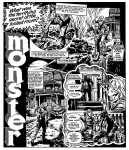
Monster, a comic strip published by Scream! from authors Alan Moore (Watchmen) and John Wagner (Judge Dredd) is coming back to store shelves this July. After being out of print since the ‘80s, the series is coming back via 2000 A.D.. The title is being printed in an 190-page graphic novel. The Guardian has the […]
By:
Heidi MacDonald,
on 10/7/2015
Blog:
PW -The Beat
(
Login to Add to MyJacketFlap)
JacketFlap tags:
Marvel,
Webcomics,
Alan Moore,
david lloyd,
v for vendetta,
Digital Comics,
Top News,
herb trimpe,
Aces Weekly,
Batton Lash,
J.C. Vaughn,
James Hudnall,
Mark Wheatley,
Add a tag
by Nicky Wheeler-Nicholson David Lloyd is known for his innovative creativity drawing V for Vendetta along with writer Alan Moore. David’s use of the Guy Fawkes mask for the main character has become a political archetype that has gone far beyond the comic. In person David is a lovely man who is passionate about his art. It’s […]
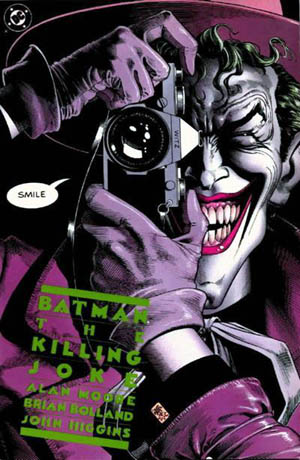
After Justice League: Gods and Monsters hits stores on July 28th, DC Animation has another attention-grabbing project in the works. It was announced on stage at the Gods & Monsters premiere, that the studio would next be tackling Alan Moore and Brian Bolland‘s The Killing Joke, the most infamous of Joker stories.
There’s been no word on casting, but if I had to predict, I could easily see this as the final pairing of Kevin Conroy and Mark Hamill as Batman and the Joker respectively. Hamill has long wanted to voice his iconic role in an adaptation of this story, and even took to twitter a few years back in response to a fan on the topic:
Though, SPOILERS…………………………………..
He’s already come back, if you count his performance in Batman: Arkham Knight, which of course you should.
We’ll see how it shakes out, I’m not a fan of the Moore-Bolland story, though I appreciate the elements that the “One Bad Day/Multiple Choice” side of the story have brought to the Batman mythos. I’m just a little surprised, given the recent controversy surrounding the Rafael Albuquerque‘s Batgirl variant cover, and some of the thoughtful discussions around the content of The Killing Joke that it inspired, that DC would move forward with such an adaptation. I’m also not sure there’s enough there fill up 75 minutes of movie, but perhaps they’ll add in some b-plot.
But, as always, sales talk and the last few releases, Justice League: Throne of Atlantis and Batman vs. Robin, each sold a bit over 3 million units respectively. Given that the first part of Batman: The Dark Knight Returns moved over 5 million units, I imagine the studio is trying to recapture that same audience.
On that same note, DC also announced that following The Killing Joke, their next projects to follow would be Batman: Bad Blood and Justice League vs. Titans. Both are set to release in 2016, with the former focusing on Batwoman.
More Batwoman anywhere is a very good thing.
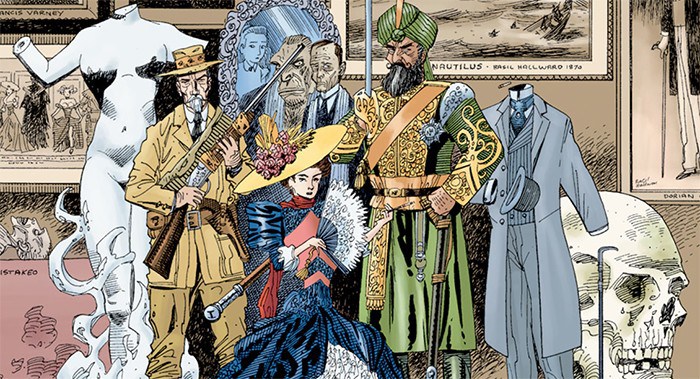
I distinctly remember going to the theater in 2003 to see the James Robinson-written adaptation of The League of Extraordinary Gentlemen. At the time, I hadn’t read the Alan Moore/Kevin O’Neill series, I just happened to be drawn in by what I saw as an ingenious premise: the Justice League of Victorian literature.
Even my dad, who had no use for superhero movies pre Iron Man/Dark Knight/Avengers, was excited about the prospect.
You can imagine how deflating that day actually was: a gun-wielding Tom Sawyer, a barely interested Sean Connery, and so. much. camp. When the released just a few months later Underworld was more entertaining by comparison, you know there’s a problem.
I eventually discovered the source material and devoured it voraciously. I even love the somewhat more divisive Century volume. For a good long while I yearned for Fox to go back and correct this grievous cinematic misstep. Then Showtime introduced Penny Dreadful, which took the same basic concept with a number of different characters (Mina Harker’s father, Dr. Frankenstein, another live action shot at Dorian Gray, vampires, witches, etc) and toned down the broader action elements in favor of a healthy dose of “Hammer horror”. It was the League adaptation I always wanted, just without the name or central characters, and it is perhaps the strongest series that the premium channel has ever produced.
And of course now, Fox has announced plans to reboot The League of Extraordinary Gentlemen for the big screen per Variety. Just two years ago, there was talk of it becoming a television series with apparent go-to genre guy Michael Green as the showrunner, but that ended up not moving forward. Now producer John Davis will be teaming with Ira Napoliello and Matt Reilly to bring this new version to fruition, though no writers have been announced as of yet.
Can it succeed? Possibly! But given how Fox has generally mishandled its comic book franchises and fumbled with the League before, it’s tough to get excited on my end. Then again, we are talking about what I think is Moore’s best work from the ABC era to the current period, so the studio definitely has a tough row to hoe. In the meantime, season 2 of Penny Dreadful is wonderful thus far.
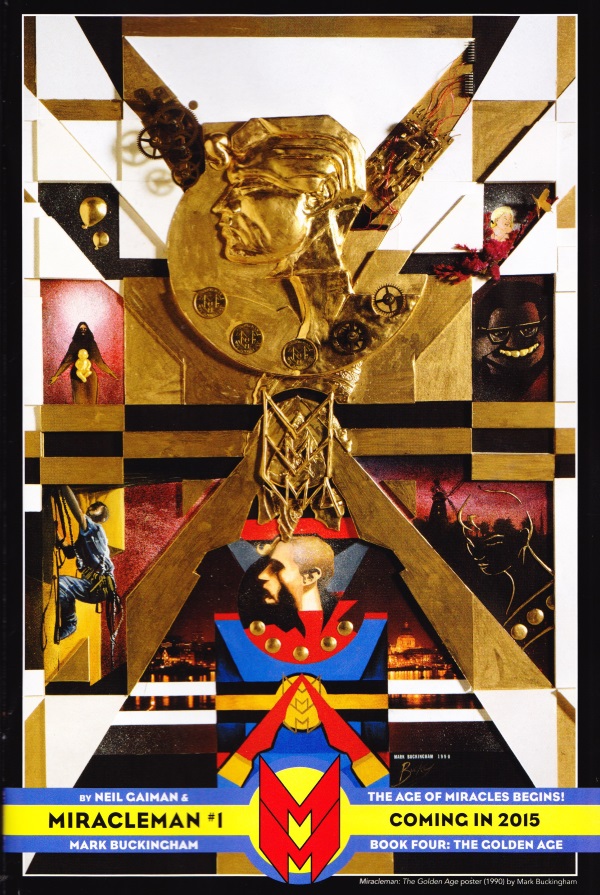
This announcement is somewhat confusing, but so is the entire legacy of Miracleman, one of the most interesting heroes that Marvel has ever published. First off, the run with The Original Writer (Alan Moore) has come to an end with issue #16 that Marvel started printing after they acquired the rights to the character again. Instead of just continuing the book, the publisher has decided to renumber the title starting with Neil Gaiman’s first issue #17 and changing it to Miracleman by Gaiman & Buckingham #1.
However, the news does not stop yet, at C2E2’s Marvel Next Big Thing panel, the run with Gaiman (drawn by Fables artist Mark Buckingham) was announced to debut September 2015. The original comic ended before the run came to an end with Miracleman #24. There were originally only seven issues of the tale, but Marvel is now attempting to publish the rest of the saga written by Gaiman.
Unfortunately, it’s unclear whether there are any issues done, or whether Gaiman and Buckingham could perhaps start creating material with the character? Marvel already scraped Grant Morrison material from the vault with All-New Miracleman #1. Who’s to say they can’t publish more? Thanks to CBR for originally reporting on the news — and thanks to Miracleman for being one of the most interesting and convoluted characters in comics both in front of and behind-the-scenes of comics history.
For an incredible history lesson on the birth and death of Miracleman, take a look at our own Poison Chalice pieces.
By:
Heidi MacDonald,
on 4/25/2015
Blog:
PW -The Beat
(
Login to Add to MyJacketFlap)
JacketFlap tags:
Interviews,
Books,
Comics,
Jack the Ripper,
London,
Grant Morrison,
Bloomsbury,
British Library,
Ramsey Campbell,
Lost Girls,
Alan Moore,
AARGH,
Iain Sinclair,
Michael Moorcock,
Kickstarter,
Joyce Brabner,
Mad Love,
Patricia Cornwell,
steve moore,
Top News,
Dobby the House Elf,
Crowdfunding,
Robin Ince,
Melinda Gebbie,
from hell,
Controversy!,
Flann O'Brien,
Golliwogg,
gorse,
Horse Hospital,
John Clare,
Kirsten Norrie,
Richard Coles,
Second Avenue Caper,
Swandown,
The Cardinal and the Corpse,
The Communards,
Toby Jones,
The Infinite Monkey Cage,
Walter Sickert,
Add a tag
Previous parts of this interview: Part I – Steve Moore, River of Ghosts, The Show, and Twinkle Twinkle Little Star, and Part II – Punk Rock, Crossed, and Providence. Now read on…
 PÓM: A few other things… Yes, now. Have you been following any of the latest revelations on Jack the Ripper? Do you keep an eye on that?
AM: [Laughs] No, because it’s all going to be bollocks.
PÓM: Oh yeah.
AM: Alright, I stand to be corrected, but what are the latest revelations on Jack the Ripper?
PÓM: Somebody claimed to have bought a scarf, a very expensive scarf…1
AM: Oh yeah, I read about that. And obviously at the time, that’s bollocks…
PÓM: Oh yes, absolutely and complete bollocks!
AM: And they’ve since proved that it’s bollocks – I think that they’ve just said that, no, there’s no connection at all between Catherine Eddowes and the stain on this scarf.
PÓM: I do remember thinking that they seemed to be in possession of an awful lot of information about DNA and all of that that seemed… unlikely.
AM: Unlikely at the time, yes. No no, that – these are always going to be non-starters. Alright, unless there is some brilliant piece of evidence waiting to be discovered that – how likely is that?
PÓM: I know. I just wondered if – ‘cause you did From Hell, I presume you still have some interest in the subject.
 AM: Well, with From Hell, at the end of it, in The Dance of the Gull Catchers, there is that statement about – Look, how long can this go on? About Koch’s Snowflake2, about the increasing trivia applied around the crinkly edges of this case, but the area of the case cannot exceed the original events and consequently, new books about Jack the Ripper, they’re less about Jack the Ripper than they are about keeping the Jack the Ripper industry going, because it’s been quite lucrative for a few years, you know? And I honestly think that that is the truth.
So, no, I tend to be dismissive of – every four or five years there will be ‘At last, the final truth!’ And it never is. And it’s very often preposterous, or a deliberate hoax. Or you’ll get, say, Patricia Cornwell, with her vandalisation of a Walter Sickert painting in the ridiculous hope that she could match the DNA to that on the letters received the police, which were not from the killer anyway.3
PÓM: I remember when the documentary was on the telly, I saw it was coming up…
AM: Yeah, I saw that, and I saw at the end of it, all she’d got was some footage of Walter Sickert being led out, probably in his eighties, to be filmed in a garden somewhere, and she said, ‘Yes, look at those eyes – pure evil.’ Ignorant woman.
PÓM: I remember she said something like ‘I knew as soon as I looked into his eyes that it had to be him.’4 And this is a woman who…
AM: That was all the evidence that she’d got, and – the thing is, that Patricia Cornwell is apparently supposed to be an actual real-life pathologist…5
PÓM: Yeah!
AM: …apparently cases in the American legal system have presumably depended upon her evidence – I hope she was doing a little bit more than looking in people’s eyes.
PÓM: I know! I have never been so disappointed with something on the television – in my life! Because I expected – because of who she was, and what she was, I expected this was going to be really incisive and good and interesting.
AM: I had read some of her books, so perhaps I wasn’t expecting quite as much as you were.
PÓM: [Laughs] Fair enough!
AM: I read a few of her books with the beautiful woman pathologist…6
PÓM: Oh, I know who you mean…
AM: …who somehow always ends up at the centre of every case. She’s always the one that the serial killer gets an obsession with, even though there’s no way in the real world that he would ever know who she was. She’s always smarter than the police. And then when I found out that Patricia Cornwell was herself a pathologist at some point I thought, ‘Yes, I think I can see where this is going.’
PÓM: Yes. It did seem as well the whole Jack the Ripper thing was kind of because her father had left home when she was five, and there were some elements of that in there, which is where it started getting strange.
AM: Yeah, well a lot of these people who get obsessed with true crimes, they’re – sometimes, they can be working out something in their own psychology, rather than anything to actually do with the crime that they are officially dealing with. I haven’t really taken a great deal of interest in Jack the Ripper since finishing From Hell – probably more in Psychogeography and London.
 PÓM: I must say, we’ve been spending a fair bit of time in London, Deirdre and myself. We were over there last week. We went to see – do you know the Reverend Richard Coles?7
AM: Oh yes, I met him once. I met him with Robin Ince.8
PÓM: Yeah. He was doing a thing in the British Library, he was doing – because he’s got a first volume of his autobiography out – another good Northampton lad!
AM: Is he? Yeah, he’s from out in the outskirts, I think he’s from one of the villages.
PÓM: That’s where he’s being a Rev these days. A thoroughly lovely man.
AM: He seemed really nice when I met him, and of course he was great in The Communards.
PÓM: Well, he was. He was. Not a great dancer, but a charming human being. But, yeah, I’ve recently joined the British Library, which is completely fantastic.9 I’m doing research into Flann O’Brien, and The Cardinal and the Corpse, all of that.
 [There’s actually a part of the interview missing here, because I felt it was so far removed from having even the slightest relevance to this particular site that it was best elsewhere. It concerns English writer Iain Sinclair‘s 1992 documentary film The Cardinal and the Corpse, which almost no-one has seen besides Alan and myself. It also peripherally concerns Irish writer Flann O’Brien, about whom I have been spending quite a lot of time reading and researching of late. The interview is here, on the gorse website. By absolutely no coincidence whatsoever I have an essay on Flann O’Brien in gorse #3, entitled The Cardinal & the Corpse, A Flanntasy in Several Parts, which I commend to you all. End of outrageous and gratuitious self-promotion.]
PÓM: Are you doing some series of things with Joyce Brabner?10
AM: There is a work that I’m – I’m doing a work with Joyce, but I’m starting that at the moment. I can’t tell you much about that, because it will be sometime this year – I’m more or less starting work on it now, over the next – probably over the weekend, and it’s likely to be something to do with identity, but I really can’t tell you much more than that – I’ve got my ideas, but they’re not really well formed enough yet, but later in the year I’ll be able to fill you in more with that.

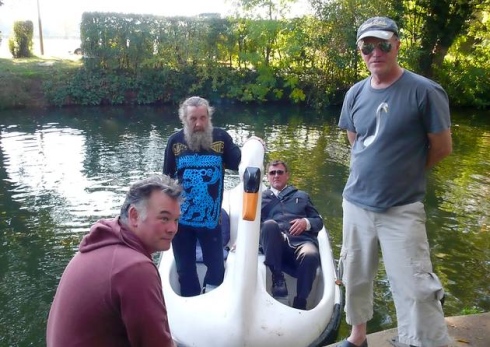
A 4-seater swan pedalo
: Ok, cool. Sure, we’ll talk again, undoubtedly. And I think I’m going to wrap it up – I must say, when you’re talking about doing
Swandown, and things like that – that’s the thing with the pedalo, isn’t it? With the swan-shaped pedalo?
11
AM: That is one of the sweetest films I’ve ever seen, and not just because I’m in it. In fact, I think that my contribution is one of the more negligible aspects of it. It’s English poetry. It shows you that there is no landscape that cannot be made poetic with the addition of a big plastic swan. And in fact, since then I also earlier this year – no, last year, last year. Spring or Summer, I went and filmed a bit with Andrew and Iain for their next project, which is called By Our Selves, and it’s all about John Clare12, and it’s got Andrew mucking about dressed as a straw bear, and recreating John Clare’s limping walk from Epping Forest and Matthew Arnold’s mental asylum back to Helpston in Northampton. Eighty miles or something, where he was eating grass and hallucinating. Yeah, so Andrew and Iain came up to Northampton, I spent a lovely afternoon sitting pretending to be a version of John Clare. They’ve got Toby Jones
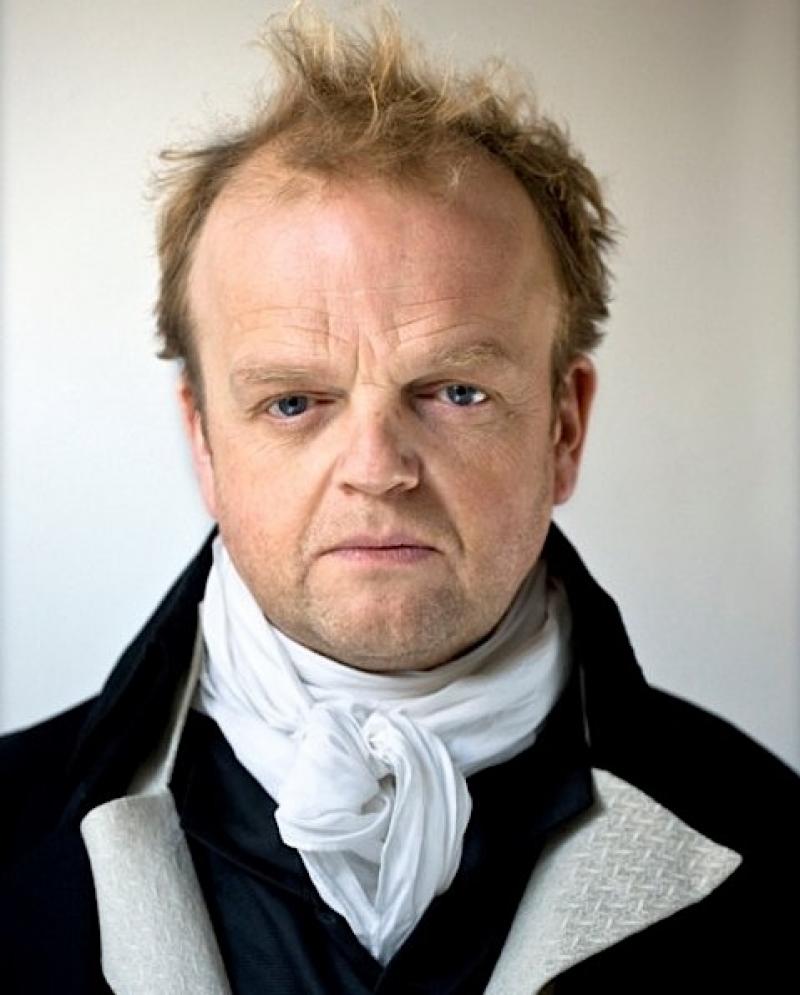
13 doing all the heavy lifting in terms of being John Clare, so that should be – ‘cause he’s an incredible actor…

Alan Moore and a Straw Bear, borrowed from here
: What I was going to say about that is, you do really seem to be having far too much fun, still – you’re doing everything you want to.
AM: That stuff is the best. Things like that that just come out of the blue. I still enjoy me comics work, I still enjoy the ordinary writing that I do, but – the little surprising things like that, that I’ve not done before, that are a great afternoon out, seeing lovely people, and knowing that it’s going to end up as a really poetic cinematic document, yeah, I am having a lot of fun with that, when it happens. It’s irregular, but charming when it does.
PÓM: Well, good. And I think that’s it. Is there anything that you’re doing that I should know about that I don’t know about?
AM: Yeah, probably. Whether I actually consciously know about it, is the big question. There must be some – did you hear about The Dying Fire?
PÓM: Nooooo…
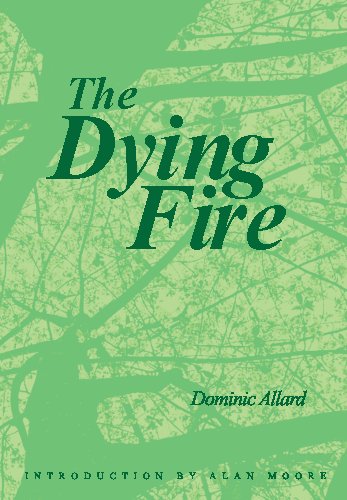
AM: This was a book that I’ve just brought out from Mad Love Publishing, it’s the collected poetry of Dominic Allard…14
PÓM: Yes, I did, because I have a copy inside. Yes, of course.
 AM: Ah right. With the big introduction. That seems to be going quite well, and Dominic seems a bit stupefied by the sudden exposure – mind you, Dominic seems a bit stupefied by most things, it has to be said. But, no, that was really good, taking the books down to him, and giving him a load of copies, so there’s that. What else have I been doing? I’ve been reading through Steve Moore’s journals, which I collected from his house, and that’s bittersweet. There’s some incredible information in there, things that I’d forgotten about. Just day-by-day stuff in Steve’s life, but he was meticulous about listing it all.
PÓM: Do you do that? Do you keep a journal, or anything like that?
AM: No I don’t. And Steve’s journals are part of the reason why I don’t.
PÓM: Oh yes, one other thing I did want to ask you. Do you remember our last interview? That was the written interview.15
AM: Yes…?
PÓM: Did you ever get any feedback on that, or did you hear – there was a certain amount of…
AM: I don’t know if I did or not, Pádraig. Where would I have got it from?
AM: Well, indeed. There was huge amounts of hoopla on the internet about it, which – it was interesting. It was…
AM: Oh, that was the stuff about the Golliwogg?
PÓM: Yes, the Golliwogg, and…
AM: Yes, that was when I wrote my – Yes, I remember – that was when I spent the Christmas writing the rejoinder?
PÓM: Yes, yes!
AM: Yeah, I didn’t hear much about it, to tell the truth, once I’d got it out of me system, and I thought that the issues had been addressed, I just kind of let it go. Why, did – you say that there was a lot of furore?
PÓM: Oh, I had – when I put it up on my blog, and it just spread out everywhere, and I was getting hundreds of comments and replies. It was all quite fascinating – it genuinely didn’t bother me in any way, shape, or form. The people who said rude things, I just deleted them, because people have strange notions about what the right to free speech actually means. And it was just – it was interesting – it was great. It was a fantastic piece of, em…
AM: Invective?
PÓM: I was going to say a fantastic piece of writing, of a thing to put out there, and I was delighted to be in that way involved with it but, yes, a fine piece of invective, and all the better for it.
AM: I was talking with somebody who read it, and he was saying ‘I think you might have revived a kind of literary form, that has not been really practiced since the eighteenth century,’ the really crushing, bitter, stinging satire, if you will. Yeah, I was quite pleased with it. After doing it, I tended to put it out of me mind.
PÓM: No harm in that. I must say…
AM: Was any of the response positive?
PÓM: Oh yeah! Oh Christ, yes! Plenty of it. There was lots of people who are just happy to do down anything that turns up, but there was a lot of people that thought you gave someone a kickin’ that deserved a kickin’.
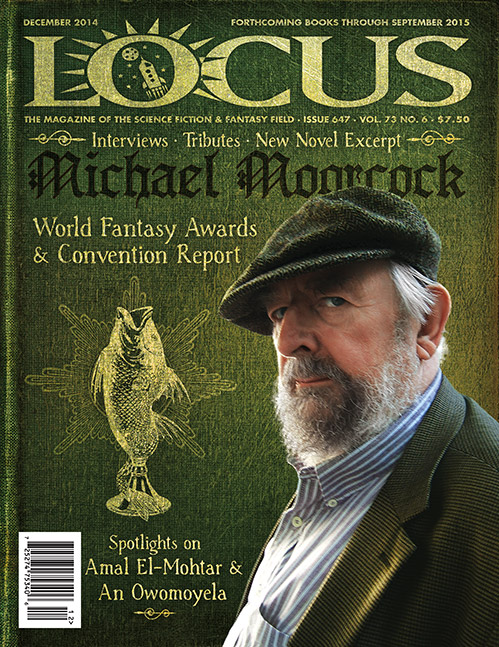
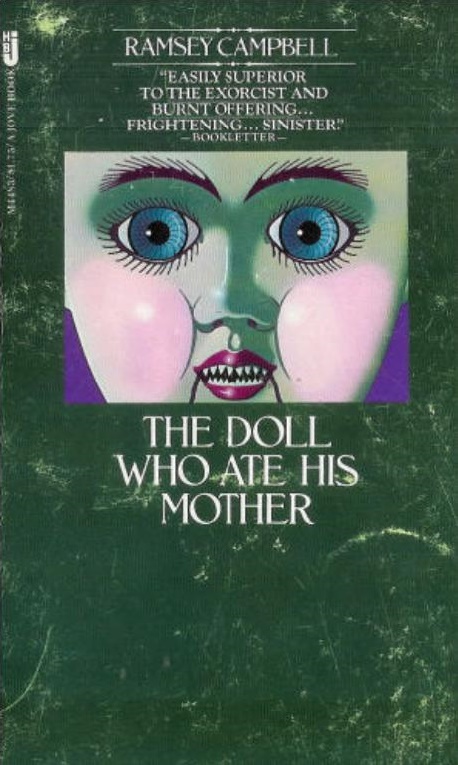
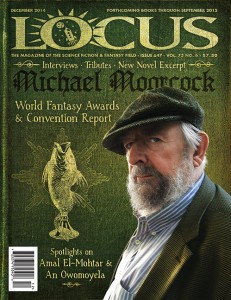 AM: Well, that’s good. I had a very nice comment from Ramsey Campbell16. He said, pretty much, ‘Right on, Alan,’ so that was nice. I did see, in the Michael Moorcock issue of Locus that came out recently that Mike, he was talking a little bit about Grant Morrison as well, just because he was asked some question about why he doesn’t encourage other people to do Jerry Cornelius stories these days, which apparently does rather connect up with some of Morrison’s work. Ah, I thought it needed saying, and it was better out than in.
PÓM: Well, indeed. Sure, it’s all part of life’s rich pageant.
AM: Absolutely.
 PÓM: How’s Melinda?17
AM: Mel’s fine – oh, yes, that’s something that I should probably tell you about. Mel is preparing for her first spectacular exhibition. This will be at the Horse Hospital in Bloomsbury.
PÓM: Oh, I love Bloomsbury, I have to say. I could live in Bloomsbury.18
AM: Have you been to the Horse Hospital?
PÓM: I don’t think we have, no.
AM: Well, I did a gig there with the lovely Kirsten Norrie19 – which also, she appears with me in that, By Our Selves, the John Clare film. But I did a gig where Kirstin was singing, and I was reading a part of Jerusalem, so I went to the Horse Hospital, and in there, I knew that our gig was underground, in the basement, and I thought, ‘Oh, this is a bit weird, there’s no stairs, there’s just these ramps.’ And then I thought ‘Horse Hospital!’
But it’s a lovely little space, and I believe that Mel will be doing her exhibition there on April the 10th, and there’s tons and tons of drawings, there’s seven or eight of her paintings, and I believe that there might be some bronze busts that she’s done of the three main characters from Lost Girls. So, if anyone reading this happens to be in the Bloomsbury area around April 10th this year, they could do worse than to drop in.
PÓM: I shall be sure to tell people.
AM: OK, you take care, like I say, Pádraig, and love to Deirdre – and that’s what Mel’s doing, she’s preparing that.
———————————————————————————————————-
FOOTNOTES:
1On the 6th of September 2014 the Daily Mail carried a story that DNA evidence had been found on a scarf – allegedly once the property of Catherine Eddowes, the fourth of the five ‘canonical’ victims of the serial killer known as Jack the Ripper, whose exploits set Victorian London into a frenzy of speculation which has still not died away – which proved that the killer was actually Polish immigrant Aaron Kosminski. The story is here, although you really also need to read the refutation, here, as well.
2I refer you to the Koch’s Snowflake page on Wikipedia, because they explain it better than I ever will.
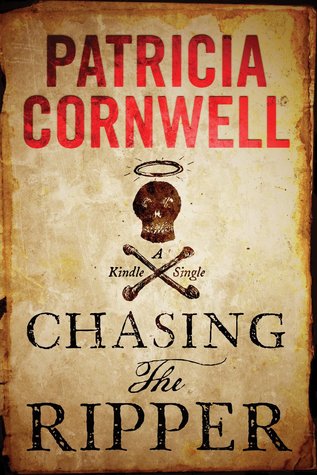
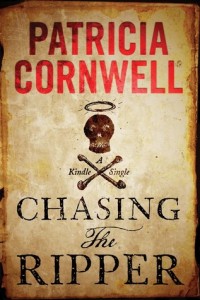 3Crime writer Patricia Cornwell wrote a book called Portrait of a Killer — Jack the Ripper: Case Closed, published in 2002, where she claimed that British painter Walter Sickert was the Whitechapel murderer, and went to extraordinary – and, frankly, borderline insane – lengths to prove it, including supposedly cutting up one of his paintings in an effort to find clues of some kind. There’s an excellent piece about it on the Casebook: Jack the Ripper website, here. In the meantime, Cornell has written more on the subject, a Kindle Single called Chasing the Ripper, published in 2014, and available here, if you’re feeling brave.
4 Yes, she really says something almost exactly like that. Here‘s the relevant bit from the documentary, courtesy of those nice people over at YouTube.
5Patricia Cornwell isn’t actually a ‘real-life pathologist,’ although she did work in the Office of the Chief Medical Examiner of Virginia for six years, first as a technical writer and then as a computer analyst, so had at least some input into their findings, one imagines.
6Dr Kay Scarpetta, the protagonist of twenty-two Cornwell novels thus far.
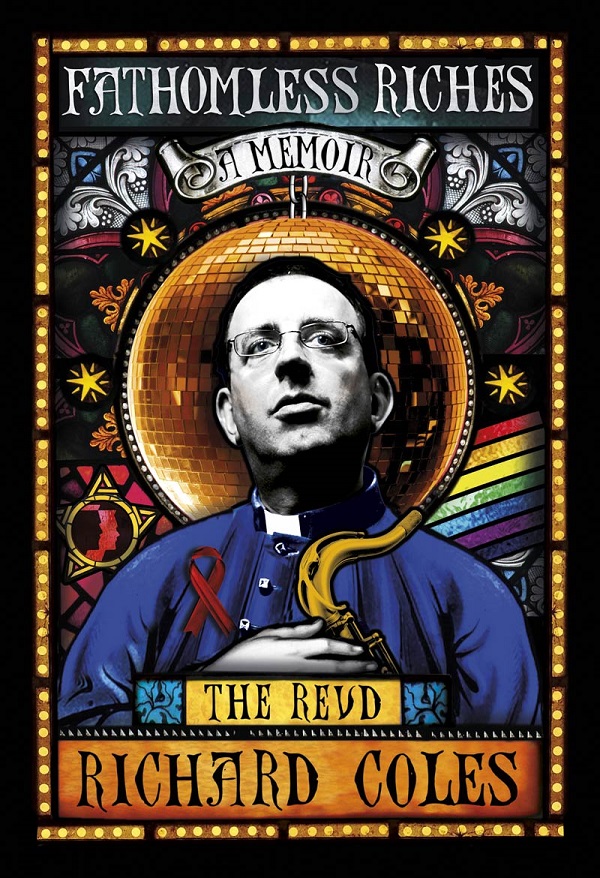
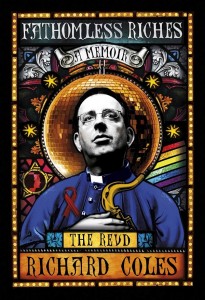 7The Reverend Richard Coles is a Church of England priest, currently working as the parish priest of St Mary the Virgin, Finedon, Northampton, in the Diocese of Peterborough. He was previously in The Communards with Jimmy Somerville, formerly of The Bronsky Beat, with whom Coles had also occasionally played. He is openly gay and lives with his civil partner in a celibate relationship, although they have four dachshunds, and he remains the only vicar in Britain to have had a Number 1 hit single. Above and beyond all that, he does regular appearances on the television and radio in Britain, and is a thoroughly lovely human being. He did an appearance in the British Library on Friday the 20th of February 2015 to publicise his autobiography, Fathomless Riches, which I attended with my wife Deirdre.
8Robin Ince is an English Science-Comedian and renowned Atheist. He is involved with the occasionally annual Christmastime event Nine Lessons and Carols for Godless People, as well as the radio programme The Infinite Monkey Cage, both of which have included Alan Moore on occasion.
9If you think I’m being overly mean in describing the Rev. Coles as a bad dancer, I suggest you go look at this video of The Communards performing Never Can Say Goodbye
, and make up your own mind.
The British Library, by the way, is one of my favourite places in the whole wide world. If Heaven is not very like it, I shall be very disappointed.
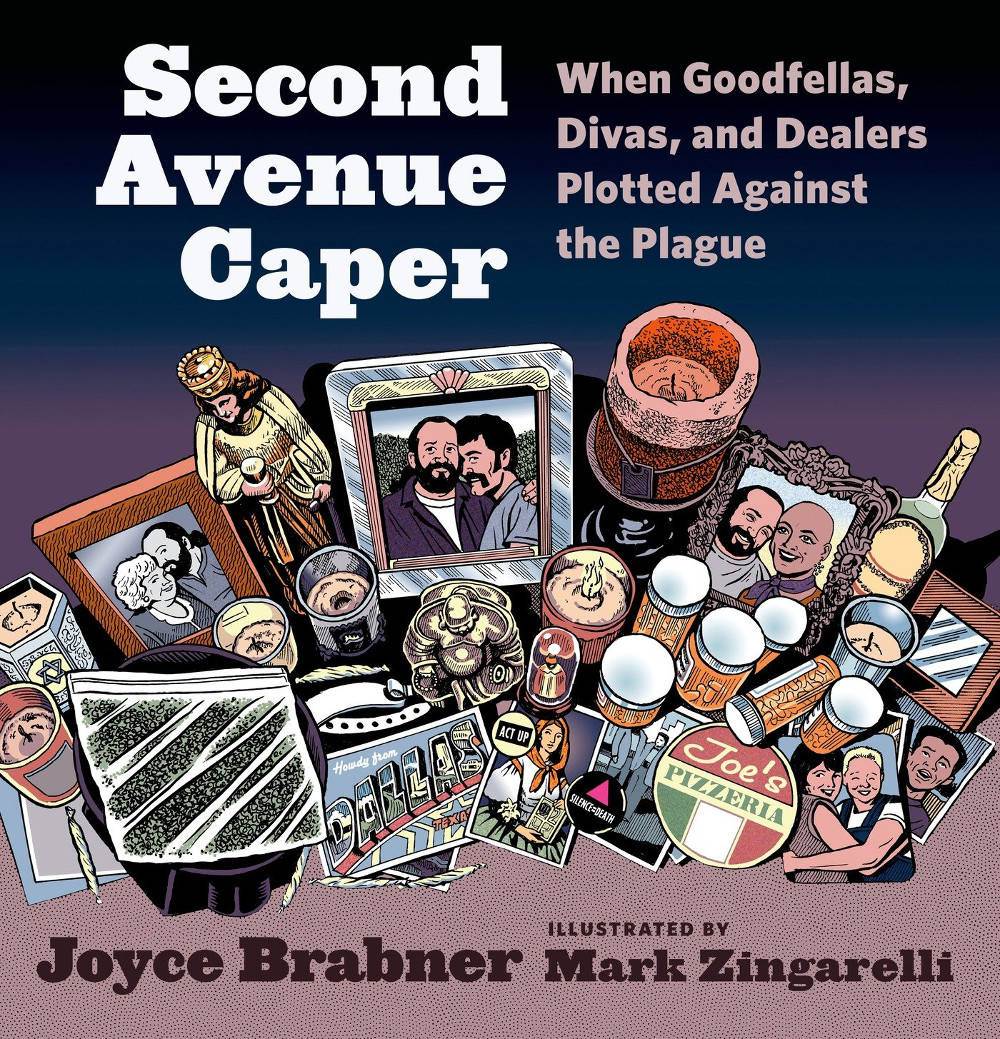
 10Joyce Brabner is an American comics writer, and the widow of the late Harvey Pekar. She has collaborated with Moore before, on Brought to Light, and on Real War Comics. Most recently she has written the non-fiction graphic novel Second Avenue Caper: When Goodfellas, Divas, and Dealers Plotted Against the Plague, about the real-life efforts of people caught up in the AIDS epidemic in New York in the early 1980s. It’s good stuff, and you all need to go read it.
 11Swandown is a 2012 film in which Andrew Kötting and Iain Sinclair pedaled a swan pedalo down the Thames from the Hastings, on the sea, to Hackney, in London, occasionally joined by people like Alan Moore and comedian Stewart Lee. Look, I promise I’m not making this stuff up, and there’s a photograph to prove it. From left to right we have Lee, Moore, Kötting, and Sinclair.
12John Clare, known as The Northamptonshire Peasant Poet, was the writer of collections like Poems Descriptive of Rural Life and Scenery and Village Minstrel and other Poems. The film By Our Selves is in part based on Iain Sinclair’s book The Edge of the Orison: In the Traces of John Clare’s ‘Journey Out of Essex’. More information can be found on the By Our Selves Kickstarter page. It was successfully funded, and the project is ongoing.
 13Toby Jones is an excellent English actor. Amongst other things, he has done the voice of Dobby the House Elf in the Harry Potter films, appeared in an episode of Doctor Who, and had parts in films like Captain America: The First Avenger, Tinker Tailor Soldier Spy, The Hunger Games, and Captain America: The Winter Soldier, and many many more.
14Mad Love Publishing is a publishing company Moore set up in the late 1980s with others, originally to publish AARGH (Artists Against Rampant Government Homophobia), and subsequently the first two issues of Big Numbers. The company had a long hiatus, but has reappeared recently as the publisher of Dodgem Logic, and most recently of The Dying Fire, a poetry collection by Moore’s old school friend Dominic Allard. The Northants Herald & Post reported on the story here.
15The interview referred to hear, which Alan doesn’t at first realise I’m referring to, is the infamous Last Alan Moore Interview?, which some of you may have already read, or at least read about. It has, to date, a bit over 100,000 views, and 350 replies, which is not too bad for the first post on a new blog!
 16Ramsey Campbell is an English horror writer who has written numerous novels, including The Doll Who Ate His Mother, The Face That Must Die, and The House on Nazareth Hill, as well as numerous collections of short stories. He has a list of awards for his work as long as your arm, including the British Fantasy Award, the World Fantasy Award, the International Horror Guild Award, and the Bram Stoker Award.
17Melinda Gebbie is an American comics creator, now settled with her husband, Alan Moore, in the heart of England. They’ve worked together on various things, including Lost Girls.
18Bloomsbury is the bit of London that contains the British Museum, occasional headquarters of the Victorian version of the League of Extraordinary Gentlemen, and the British Library. It’s full of culturally wonderfully stuff, parks with friendly squirrels in, and lots of Blue Plaques to all sorts of writers and the like. I recommend you go visit, at least once in your life. The exhibition in the Horse Hospital runs until the 9th of May, so there’s time to see it yet.
19Kirsten Norrie is a Scottish artist and musician, and a member of Wolf in the Winter, an international performance collective.
By:
Heidi MacDonald,
on 3/26/2015
Blog:
PW -The Beat
(
Login to Add to MyJacketFlap)
JacketFlap tags:
nemo river of ghosts,
super sooty xylophone,
magic,
Interviews,
90s Comics,
Alan Moore,
Kickstarter,
league of extraordinary gentlemen,
steve moore,
Top News,
Add a tag
It’s the 26th of February, and the time is 7.00pm, the usual time for all my telephone interviews with Alan Moore, since the first one we did, back in March 2008. This is something like the eighth time I’ve interviewed him 1, but I still get nervous. There’s the usual fumbling around with a voice recorder, and making sure I know how to put the phone on speaker – I’m totally technically incompetent, so Deirdre, my wife, has to come and oversee all this, to make sure I don’t do something stupid.
Pádraig Ó Méalóid: I’m going to get stuck into this thing because I’ve a long list of questions, at least some of which we’ll get to. OK, I was going to ask you about Steve. Obviously Steve Moore’s death must have been an enormous blow to you. 2
 Alan Moore: Well, yeah, obviously, and it – it was a period of massive shock, and of course a few marvels in there. There was an ethereal period. We managed to follow Steve’s instructions, and scattered his ashes on the burial mound in Shrewsbury Lane by the light of, not only a full moon, but of a Supermoon, which is when the Moon is full at its perigee, which is apparently its closest approach to Earth, and it was just at the tail end of Hurricane Bertha so we didn’t think that we were going to be able to really do it successfully, but as it happened, the hurricane had blown all the clouds out of the sky by the time we got down to Shooters Hill, and it was a – a rather magical night in its way, even though I managed to end up wearing at least a small portion of Steve, when we had a difficulty transferring him to the scattering tube. Funnily enough, I’d said on the way down there that I hope this doesn’t end up like The Big Lebowski, with me kind of going on inappropriately about Steve’s service in Vietnam, while getting ashes all over me, but apart from me going on inappropriately about Steve’s service in Vietnam, that was pretty much what happened. But otherwise it was a great night and, yeah, I suppose that after Steve’s death I kind of hurled myself into a great deal of creative work – it’s just my way of dealing with things, you know? Or perhaps my way of not dealing with things, I don’t know. But, yeah, it still goes on, like at the moment I’m, I just went down last weekend to Steve’s place to talk with Bob Rickard3.
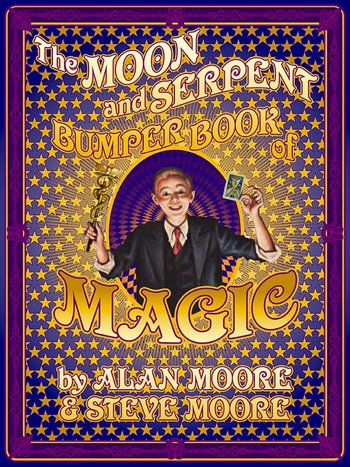
I went to the burial mound – it’s been padlocked since we did the scattering there, which – I don’t think it was in response to our scattering, probably more in response to some of the empty cider bottles that I’d noticed around the site, but I suppose in its way it’s fortuitous – if Steve had died a year later it probably wouldn’t have been anywhere near as – convenient? – to honour his final wishes, but – no, he’s still an immense presence in my life. I’m still, I’m wrapping up dealing with his estate – and I shall be dealing with that for a number of years, I’m sure. But, yeah, we’ve still got the Book of Magic to come out, which is very very much a joint venture, even if – even if one of the members of The Moon and Serpent is now only active upon the Inner Plane, it’s still going to be both of us on the cover, there. It’s going OK, Pádraig.
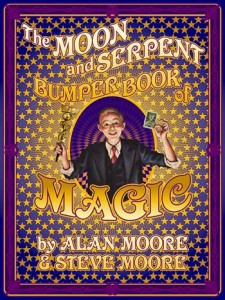 PÓM: Good, I’m glad. As you mentioned the book, The Moon and Serpent Bumper Book of Magic, is there any kind of a timescale for that?
AM: Well, at the moment I have just finished the final article, the big concluding essay that me and Steve had been working on for about six months before last March and that leaves me one episode of The Soul4 to do, and then I’ve got to go back and tinker with the Tarot Card, and the Kabala Boardgame, and some of the other, more art-centred things, and less text-centred – most of the text-centred stuff is completed. As to when that will come out – we would like to get it out in 2016, but that is not a promise, that is an aspiration5.
PÓM: [laughter]
AM: I’m sure that – yeah, you know what that means – we’ve been living under a coalition for some several years now, so we will know what we mean by promises and aspirations.
PÓM: Somebody was suggesting – are you likely to do a performance related to that when it’s finally finished?
AM: Don’t know. Don’t know – I hadn’t been thinking of a performance related to it. Eh, don’t know, is the answer to that, it is nothing that I’d actually considered. These things tend to come in seasons. There was a period when I was closer to Tim Perkins – Tim moved to Oxford – me and Tim still communicate, and we still talk about possible projects together, but it doesn’t feel like the time at the moment when performance stuff is probably at the forefront. I had a very very nice offer from Paul Smith of Blast First records, talking about the possibility of getting some satellite time for something live, but, quite honestly, it would be filling three hours of live – no. It’s not like I – my urges at the moment are not really towards live performance. That said, tomorrow night I shall be going down to the local café, and me and Robin Ince and Grace Petrie will be doing another one of our, just impromptu little events6 which Robin is – we’re recording them all, Joe Brown is doing all of the mixing and everything, and they will eventually be released as podcasts. But that’s pretty much the extent of my public appearances at the moment.
PÓM: I met Tim Perkins for the first time in August. Worldcon – that’s the World Science Fiction Convention – was on in London, and myself and himself and Gary Lloyd ended up doing a panel about your musical output.7
AM: Aw, brilliant! And how is Tim? I haven’t spoken to him for ages.
PÓM: Tim was good! I was delighted to meet him, because I have a lot of his work, but I’ve one question I was asking him that I had always been interested in, which was, in all the musical work that you did, did you play a musical instrument at all?
AM: Oh, no. No, I never played a musical instrument. I am – yeah, I know I’m a fairly multi-competent kind of individual, but no, no. Playing a musical instrument has always been beyond me, and I have nothing but the greatest of respect for those that can, and I tend to – even if I could play a musical instrument, I’ve known such brilliant musicians that it would have been foolish not to leave that side of things to them, and to play to my strengths.
PÓM: Yeah, I know. He did say something about your playing – was it with one hand, was it Twinkle Twinkle Little Star, something like that, on a piano?
 AM: Oh, I can actually – because when I was a child, I had a Sooty Xylophone, with numbered keys, and the actual score to Twinkle Twinkle Little Star, with numbered keys on xylophone, is 1155665 – it’s been a long time since I played it, but I could remember it all the way through, on my Sooty Xylophone. So, yes, I suppose technically, if there is ever any need for a kind of Twinkle Twinkle Little Star refrain on xylophone, then you’ve got my number.8
PÓM: Fair enough. I always wanted to clear that one up.
AM: Well, it’s an important point, Pádraig. No, I’m surprised that Tim remembered that.
PÓM: Yes. Well, it obviously made an impression.
AM: Yeah, obviously, obviously.
PÓM: Tell me about The Show. What’s happening?
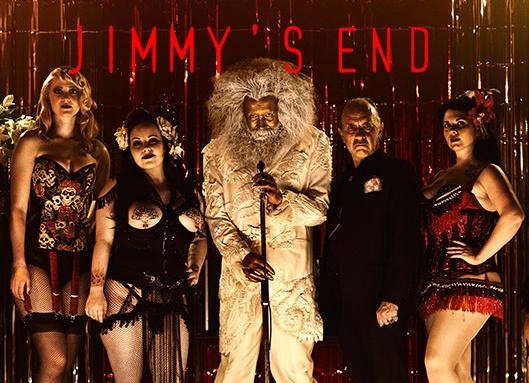
AM: The Show. Well, The Show is the name of the project that follows on from the Jimmy’s End films – which, surely to Christ, should be out soon. It should be very very soon – I’ve been kicking up a fuss, Mitch [Jenkins] has been kicking up a fuss…9
PÓM: This is the stuff from Lex Records?
AM: Apparently there’s been unavoidable delays on the packaging side. I don’t know!
PÓM: Yeah, I know, I know. It’s bad enough having to always wait for your comics to come out, but really…!
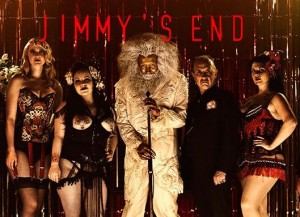 AM: It’s this film business, it’s – and I am kind of limited in what I can actually do. And it’s the same with the comics business, I suppose. Anyway, that should be out soon, and I have written a screenplay for a feature film, called The Show, which is designed to follow on from that. We have been talking with various parties about maybe making that screenplay into the first two episodes of a serial, which – we could probably have done it, but that doesn’t seem to be – that’s not technically gonna happen. At the moment we’re talking about maybe doing what we had originally intended to do, which is to bring out The Show as a feature film, and then to launch The Show as a television series, so at the moment, that’s all up in the air, and in my experience of these things, some things just remain up in the air forever, in defiance of gravity. So, who knows? But there are talks going on, it’s looking quite promising, and I’m sure that one way or another there’ll be – we’re asking for so little, to do this film, at least in terms of money. We’re asking for complete control, and complete ownership. But financially we’re asking for very little. It would be a very good film – it’d need me writing a few more songs, and it would be very differently paced to the five short films, because short films, they can be as long as you want them to be, and you can linger, whereas a feature film, that’s got to have – I’m not saying that it’s gonna be kind of action/thriller paced, but certainly a lot more conventionally paced for a feature film, put it like that.
PÓM: Yeah, of course.
AM: Yeah, that’s all going on as we speak – there might be more news – I’m sure if there is any more news, that’ll be in a couple of – in a couple of months we might know more.
PÓM: OK, fair enough. Emmm, what was I gonna ask? The League. The next – the third part of the Janni Nemo trilogy is coming out soon…?10
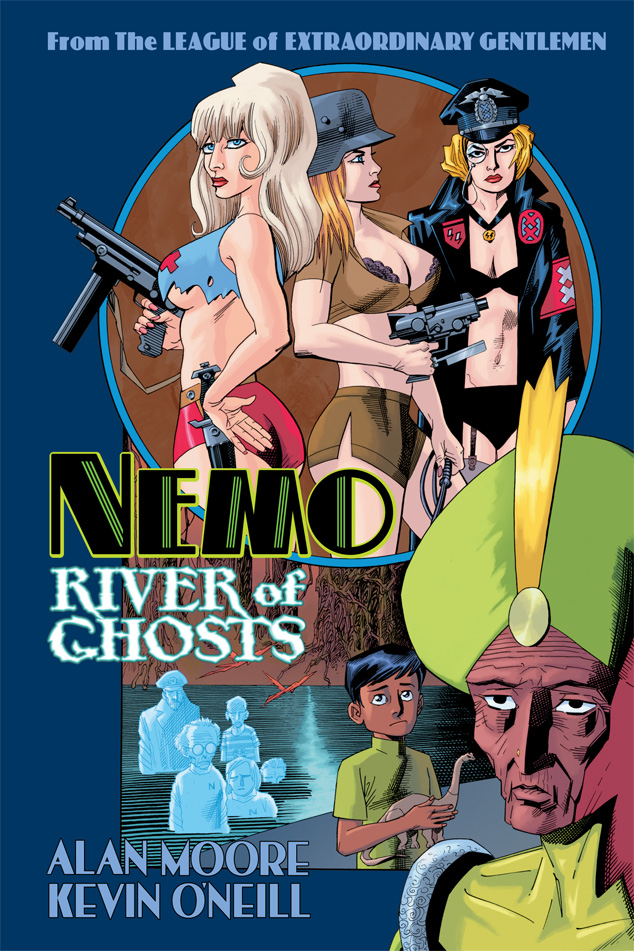
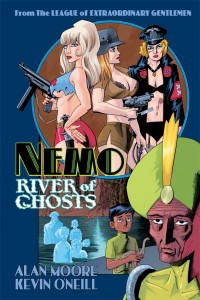 AM: River of Ghosts. I’ve just looked in the box that I got from Knockabout the other day, and I’ve got – yes, very soon, I’ve got my copies already. We are very pleased with it. It’s funny – when me and Kevin O’Neill first got our complimentary copies, we both looked through it, skimmed through it, independently, and when we were talking on the phone later I was – he was saying that he’d been – he’d felt that his art really, it was a bit tired-looking, and I was saying, ‘Yeah,’ I said, ‘I thought your art was great,’ I said, ‘but I don’t know with my script – I’m not sure that the ending’s not rushed, or something.’ Like, all these little things. And then, after that, I was still a bit despondent, but I sat down, and picked up the copy again, and started reading it. And I got to the end, and I went and phoned Kevin and left an answer phone message saying, ‘Actually, Kevin, I should go back and having another look at River of Ghosts, I think that it might be about the best run of the League since the first couple of volumes.’ And I got a phone call back from Kevin about ten minutes later, saying ‘Actually, I was going to call you and say the same thing! ’ It’s just that, when your expectations are up, and you first see the thing in print – I should know by now that very often my first reaction is disappointment. But then, you read it again and, yes, this is – it’s a bit of a corker. I think, beautifully rounds off the Nemo trilogy, and I hope will put the other two books into perspective, ‘cause I did hear a couple of comments saying, ‘Oh well, we’ve read Heart of Ice, good story and all that, but it does seem a bit – a bit slender, a bit thin, a bit inconsequential, compared to other graphic novels.’ It’s forty-eight pages, it’s like two issues of a comic and, really, it’s not until the River of Ghosts that we get to the end of the story – yes, they are all self-contained episodes, but there is an over-all story that’s going on, which I think we tie up quite nicely in River of Ghosts.
The story opens upon Lincoln Island in 1975, so this is six years after we saw Janni in League volume three in 1969. She’s now – what? – around eighty, and it’s been very interesting – I’ve always wanted, since I started writing Halo Jones, I always intended to have that conclude with Halo Jones as a very old woman, and I – I don’t know, I think that there is something magnificent about old women, and I’ve always wanted to do one with a very old woman in the main role. So, with River of Ghosts I think I’ve accomplished that.
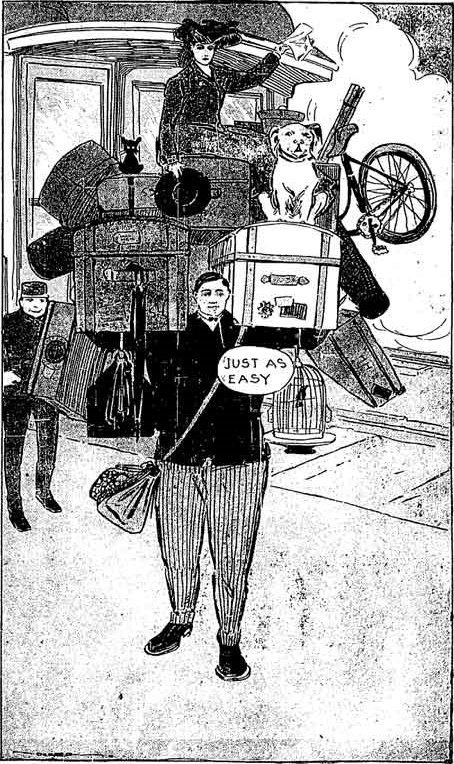
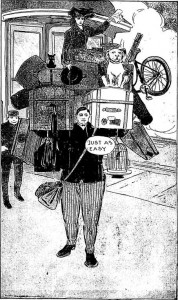 There’s – we see a couple of old characters. There’s a couple of interesting new characters, one of whom might be of interest to you. Kevin found an American newspaper strip from, I think, 1902, that was entitled Hugo Hercules, and this is a very very big, very very strong man. I think it lasted for six or seven episodes – it wasn’t very long-lived. But, yeah, the first American superhero, I think, pretty much. I can’t imagine any earlier than that. Certainly earlier than Hugo Danner in Gladiator, a long while earlier than Superman.
So, yeah, I had a look at some of these early strips, which generally don’t have much in the way of dialogue balloons, but put most of the dialogue into captions under the panels, and from that, in the transcriptions of whatever the accent was supposed to be that Hugo Hercules was speaking in, I finally figured out that it was probably a racist and ill-informed transliteration of an Irish accent. It could just as easily have been Polish, or possibly Trinidadian, but I think probably it was meant to be Irish. So, we’ve kind of worked out, yeah, all right, if this Hugo Hercules, so-called, was Irish, what might be his backstory. Me and Kevin are very pleased with him as a character, and he plays quite a major part in River of Ghosts – which deals with, as you might expect from the first two volumes, it deals with a conclusion to the Ayesha question. Just kind of tying it all up in a neat and somewhat blood-stained bow.
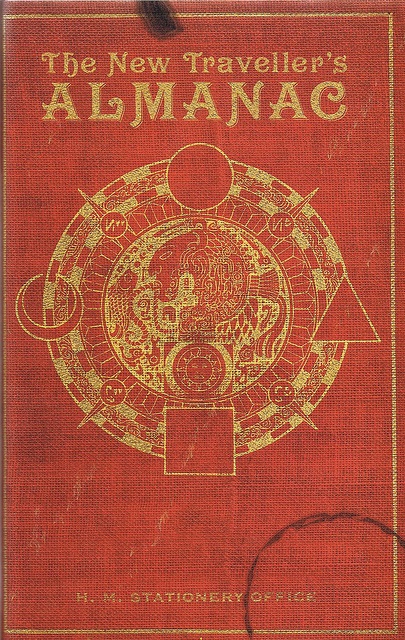
The River of Ghosts in question is the Amazon, which means that we get to – as we did with Heart of Ice, less so, perhaps, with Roses of Berlin – but with Heart of Ice we were very much depending upon the New Travellers’ Almanac, and its gazetteer of fictional sights, and we’ve fallen back upon that quite a bit for this exploration of the Amazon. So, if that gives you any hints as to what sort of things we might be running into…
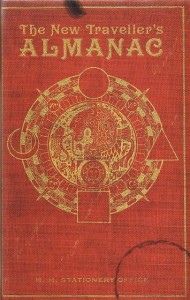 PÓM: It does! I actually find, I go back and I reread the New Travellers’ Almanac and the Black Dossier quite a bit, because I think that there’s a huge amount more information, a huge amount more stuff, about various adventures that’s coded into those than you’re probably ever going to put down on the comics page.
AM: Well, that’s true. And also, because we were very specific – I think back in the New Travellers’ Almanac there’s already bits talking about Jenny Diver…?
PÓM: Yes, yes.
AM: And we did have this fairly fully planned out, right from the start. One of the things that I’ve thought about is the possibility at some point in the future, of an actual integrated volume of the League of Extraordinary Gentlemen, in chronological order, to see how that reads? I don’t know. This is nothing I’ve discussed with anybody else, so I’m going off the menu here, a little bit. But…
PÓM: I know – from all the stuff, there’s all sorts of bits and pieces, and there’s dates, and it is possible to build up quite a detailed chronology of – particularly from the beginning of the Victorian League, and Mina Murray and all of that, upwards. It’s remarkable how much little bits and pieces fit in. Like the current volumes, the Janni Diver stuff, is filling in more little odds – and you go back and look at something and say, ‘Ah, that was there all along.’
AM: This is it, this is what we’re trying to do. And, actually, having said that it would be nice to put it all in chronological order, there is a lot to be said for the way that we’re doing it, where we’re jumping back and forth a little bit. Jack Nemo, whom we glimpse at the end of volume three, and in River of Ghosts, it’s almost like an origin story. Jack Nemo features in it – he’s a very small boy, a couple of years older than when we saw him as a five- or six-year-old running around on the Nautilus in 1969. We’re stitching all of this together, and we’re doing it all for a reason. One thing that might be of note is that this will be the last piece of work that me and Kevin will be doing on the League for a little while. We – this is largely because – me and Kevin have both been doing the League for fifteen years now. I know it doesn’t seem like it, but it actually is.
PÓM: I know. It’s 1999, wasn’t it?
AM: Something like that. Fifteen or sixteen years? And during that time I’ve been doing quite a bit of other work, but Kevin, the League has been pretty much the only thing that he’s been doing, so it’s more like – it’s a long-term sentence. And although me and Kevin are both in love with what we’re doing on the League, I could see that, it was a bit of an unfair strain upon Kevin, because the League might not be the only thing he wanted to do with the rest of his life. So, anyway, I can’t tell you very much about what we’re doing – in fact, I can barely tell you anything at all, except that me and Kevin are going to be doing something new for about eighteen months, summat like that.
PÓM: OK. In a comic form, I presume, is it?
 AM: In a comic form. It’ll be an episodic thing. It will be a million miles away from the League. And we’re both very excited about it, we think we’re actually breaking new ground in term of the effects that comics can achieve. Which is, again, ‘cause I know that Kevin’s always had a hankering to experiment, and we’ve done as much as we can of that in the League – the League is limitless in some ways, but in other ways there are certain stories that perhaps wouldn’t fit quite so easily into it, and with this, yeah, we’re a long way away from the League. What we’re thinking is, we’re going to do this, as a break for Kevin, for the next eighteen months, or something, and then we will probably be going back to do book four of the League, but this is a long way in the future, but we have got a lot of good ideas that would – in some ways I’d like to do a book four that wouldn’t be the last book of the League, but could be. And if it was the last book of the League, then everything would be tied up. All of the strands and insinuations and implications in the Black Dossier, all of the tiny little threads, going right the way back to issue one of the first volume, I can see a way that all of this could be tied up splendidly into a fantastic story – but that will have to wait until me and Kevin have had our little vacation. We’re about four months into this eighteen months sabbatical anyway, so hopefully it won’t seem as long as that in the outside world.
PÓM: Before we leave it, can you tell us anything about what’s going to be in volume four?
AM: Other than, like I say, a tying up of ends, it would probably be set not long after 2009 and it would be tying up threads from all three volumes of the League, from the Black Dossier, and from the Nemo trilogy. It would be a – it’s a kind of story that I’ve been thinking of for a few years, but, yeah, after we’ve taken this sabbatical, both me and Kevin thing that, when we do go back to the League, we’ll go back refreshed, and capable of giving – not that we aren’t incredibly pleased with River of Ghosts. Like I say, that seems to have some of the energy – I wouldn’t want to deny the energy of any of the volumes of the League, but it’s undeniable that, say, the first two volumes are paced and structured very very differently to Century. And there were some people who thought that Century was a bit slow, or a bit over-complex, but that was just what we wanted to do with the characters. We wanted to show that it didn’t always have to be a fast-paced Victorian romp, that there was plenty of interesting stuff in this world that could do with lingering over. But, when we finished Century we thought, all right, let’s take a break from that stuff, and do the Nemo trilogy, something very fast paced, where we’re paying a lot of attention to spectacle, where that is a big part of the story development, and that gives Kevin an opportunity to really show what he can do on some nice spreads, and things like that, of which there are a couple of – some of the best pages of art by Kevin I’ve ever seen, in this upcoming issue. Some very memorable little images there.
To Be Continued…
——————————————————————————————————-
FOOTNOTES11:
1Previous interviews I’ve done with Alan Moore in various places, including the Forbidden Planet blog, 3:AM Magazine, here on The Beat, and on my own Slovobooks blog:- June 2008 FP I, FP II, May 2009 FP I, FP II, FP III, March 2011 3:AM, July 2011 FP, April 2013 CB I, CB II, October 2013 MM I, MM II, MM III, and January 2014’s Last Interview? Which, of course, it wasn’t. That question mark wasn’t there for nothin’!
2In case you all think I was being hideously impolite by launching directly into talking about Steve Moore, I should point out that there was a certain amount of small-talk in there beforehand, which none of you need to know anything more about. However, if you wish to read my interview with Steve, called The Hermit of Shooters Hill, you’ll find them all (six parts so far) here on The Beat, under the tag HERMIT.
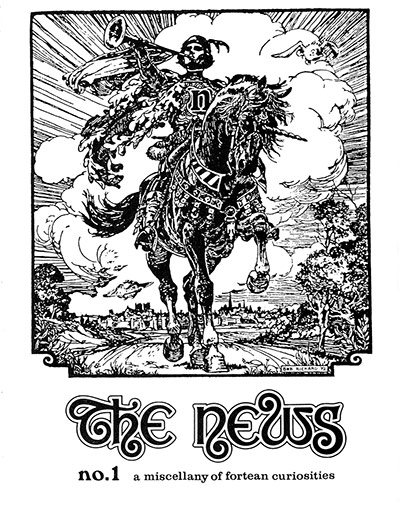
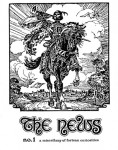 3Bob Rickard is the founder of the Fortean Times: The Journal of Strange Phenomena (Originally called The News, which both Alan Moore and Steve Moore contributed to over the years. He is also one of the two people Steve described to me as being his best friends. The identity of the other one should not be hard to grasp…
4The Soul is a strip, written by AM and drawn by John Coulthart, that was to appear in America’s Best Comics’ Tomorrow Stories, but is now going to be in The Moon & Serpent Bumper Book of Magic.
5A favourite saying of British politicians.
6 Another of these events, Alan, Grace and Robin’s Blooming Confusion is in the NN Café in Northampton on the 31st of March 2015, and there are still tickets available, here. Robin Ince is a comedian, and Grace Petrie is a singer.
7Tim Perkins is AM’s main musical collaborator, with five CD releases thus far between them. He has a hopelessly out-of-date website, here. Gary Lloyd is another of AM’s musical collaborators, having worked with him on the audio version of Brought to Light. The interview with Tim and Gary is slowly being transcribed, and will doubtless turn up on the ‘net eventully.
8Before anyone writes into to point out that the Sooty Xylophone isn’t actually a xylophone, not being made of wood, we’ve already got that covered. All I can do is report what is said!
9This is in reference to Lex Projects’ Kickstarter for Alan Moore and Mitch Jenkins’s His Heavy Heart short film, which those of us who backed it are still waiting to see make its way into our hands. It’s by no means the only Kickstarter project I’ve backed that I’m still waiting for, mind you.
10There was some confusion about the actual publication date of this book. It first made landfall on the shelves of GOSH! Comics in London on Tuesday the 3rd of March, and should have been available elsewhere – not just in the UK, but also in the US – that same week. However a labour dispute at American west coast ports meant that containers remained in the docks, rather than being shipped onward, with the result that copies weren’t available until about a week and a half later on the 12th of March.
11Why all the footnotes? I’ve been reading through the works of Flann O’Brien, and bits of it have rubbed off on me. It’s even slightly relevant to the subject of this interview, as it was largely his fault that I went back to them in the first place. Further enlightenment, at least of a sort, here.
 Renowned comics creator Alan Moore has landed a deal for his second prose novel. Liveright, an imprint at W. W. Norton & Company, will publish Jerusalem in Fall 2016.
According to The New York Times, Moore’s manuscript may contain more than one million words. Moore sets this historical fiction-fantasy story in his hometown of Northampton, England.
Here’s more from The Guardian: “The acclaimed comics writer began work on Jerusalem in 2008 and finished his gargantuan draft last September, as his daughter Leah Moore announced on Facebook. The novel is said to explore the small area of Northampton where Moore grew up, ranging from his own family’s stories to historical events to fantasy, with chapters told in different voices.”

It’s some 600,000 1 million words long, he’s been working on it for over a decade…and Alan Moore’s epic novel Jerusalem is getting published next year. Knockabout will publish it in the UK while W.W. Norton imprint Liveright will publish it in the US. As described in many interviews, the novel involves Moore’s hometown of Northhampton and is written in many styles:
He has also mentioned the varying styles of each chapter: among them, one modeled after a Samuel Beckett play, another written in “a completely invented sub-Joycean text” and another “somewhat in the style of Dos Passos.” The book will include appearances by John Bunyan and Buffalo Bill.
This isn’t Moore’s first novel—that would be Voice Of The Fire. It should be quite the literary event, however, and it will be interesting to see how a mainstream literary publishing house handles the rollout.
(Photo by Murdo Macleod from The Guardian.)
By:
Heidi MacDonald,
on 3/17/2015
Blog:
PW -The Beat
(
Login to Add to MyJacketFlap)
JacketFlap tags:
Comics,
Breaking News,
Publishers,
IDW,
Alan Moore,
Top News,
miracleman,
Top Comics,
Poisoned Chalice,
Garry Leach,
Add a tag
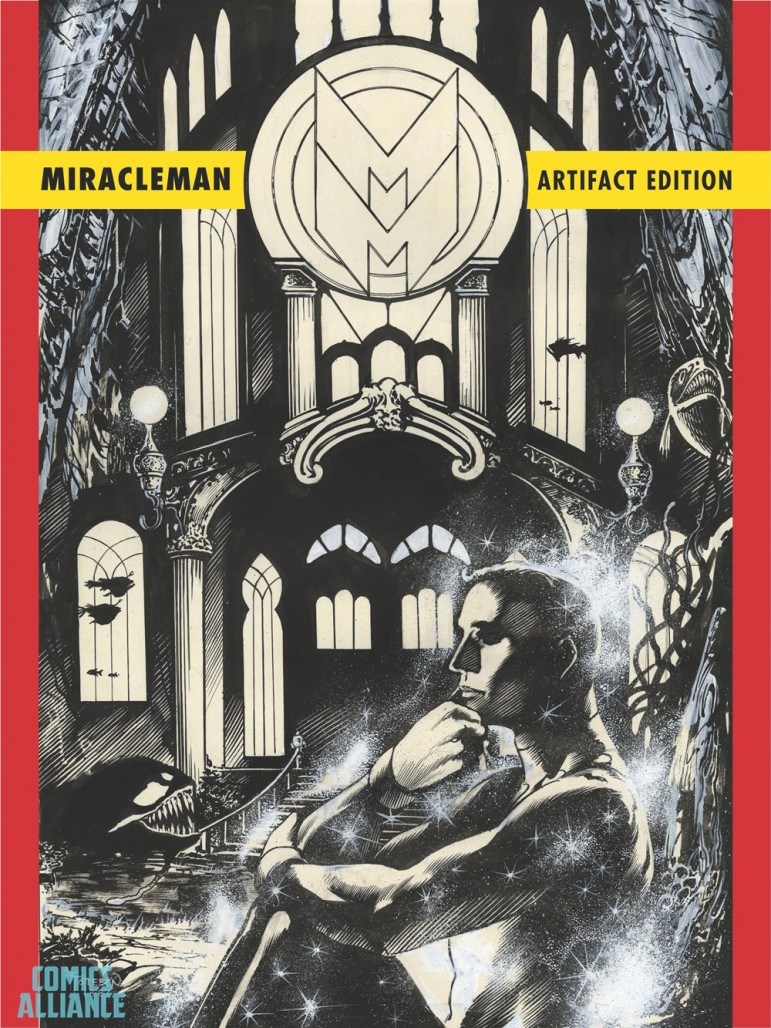
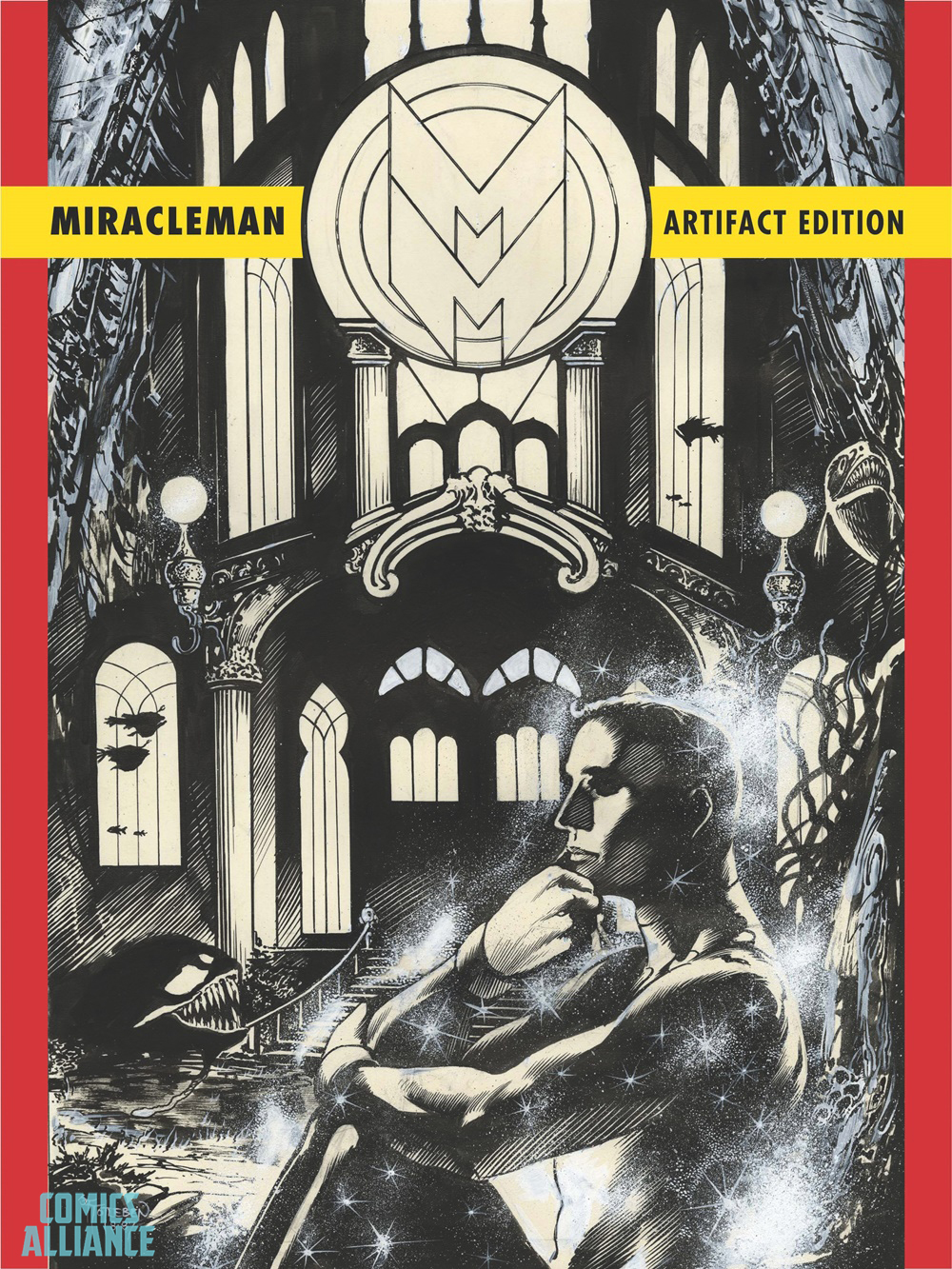
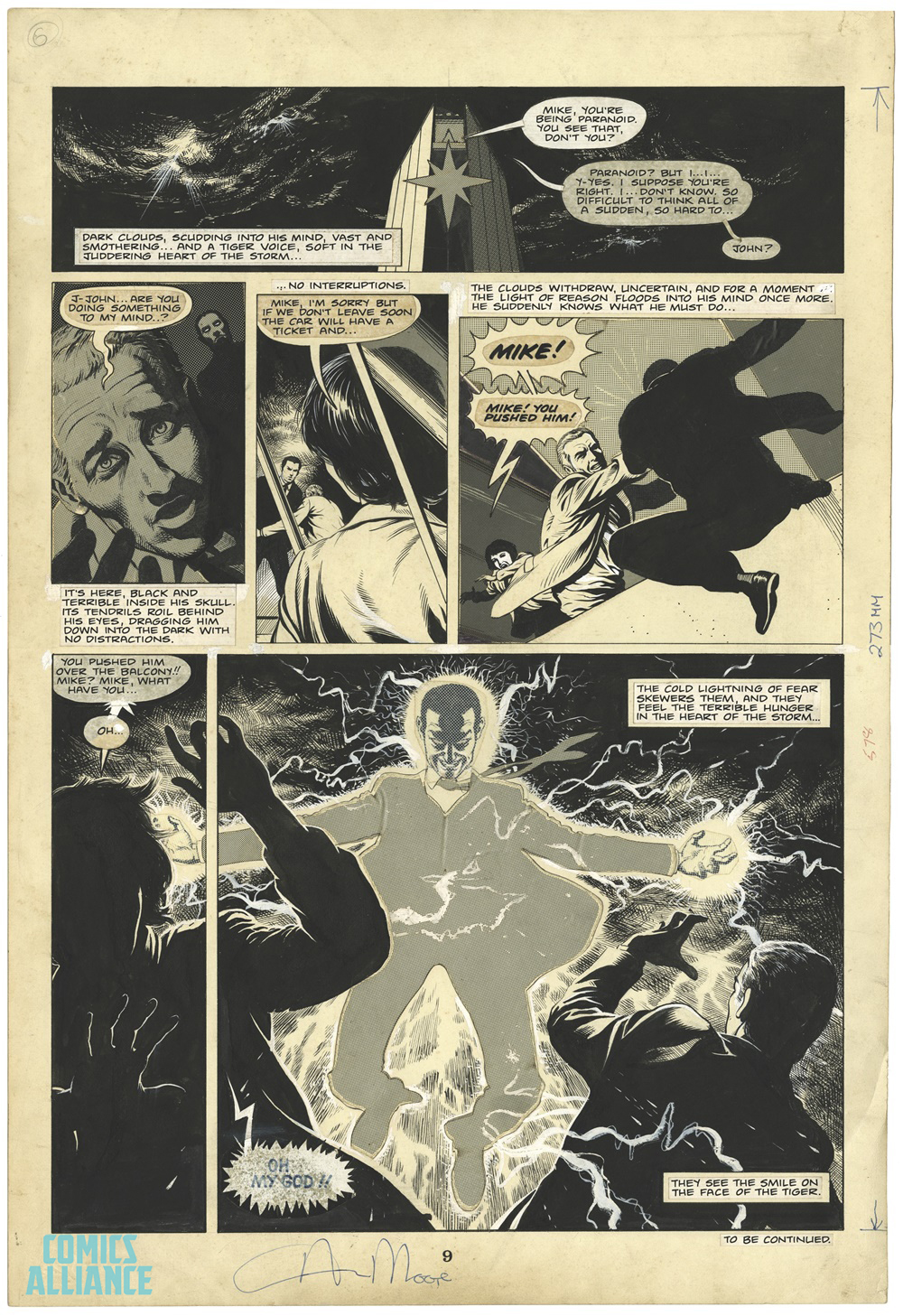
Miracleman, a character with one of the most fascinating back stories in comics chronicled in our own Poisoned Chalice pieces is getting an Artifact Edition from IDW. The collection was announced this morning from Comics Alliance, and contains 144 pages of sheer Alan Moore awesomeness. The hardcover is going to set you back $95, but features an orientation size of 15 x 20. The book is for those who describe themselves as ‘process nerds’ featuring artwork in the size that it was presented with notes as the title was produced.
Miracleman Artifact Edition HC
The Original Writer (w) • Garry Leach, Alan Davis, John Totleben, and more (a) • John Totleben (c)
Miracleman was launched 30 years ago in the now legendary Warrior magazine. It turned the concept of “super-hero” on its ear with big ideas that helped redefine an entire genre… when Miracleman fought Kid Miracle Man on the streets of London… well, things would never be the same.
And then there was the art.
Miracleman had a true knack for bringing out the best work from extraordinary artists. Starting with co-creator Garry Leach, followed by Alan Davis (and others) and finishing with one of the most amazing endings in comics history by the phenomenal John Totleben, Miracleman was a work of art painted on a grand canvas, unlike anything before or since.
HC • BW • $95.00 net discount item • 144 Pages • 15” x 20” • ISBN: 978-1-63140-392-7
Miracleman is a special character who was finally capitalized on in recent reprints of the series from Marvel. This excellent work from people like Garry Leach, John Totleben, and Alan Moore (who is credited as the original writer) is now widely available in numerous incarnations across bookshelves, and for that we commend IDW and Marvel. Miracleman is so rich with history and intrigue, it’s excellent to think that a new horde of readers are going to be digging into the incredible work.
Please, make sure to buy responsibly.

By: Powell's Staff,
on 1/16/2015
Blog:
PowellsBooks.BLOG
(
Login to Add to MyJacketFlap)
JacketFlap tags:
Required Reading,
Robin McKinley,
Rita Mae Brown,
Alan Moore,
Jay Mcinerney,
Julie Campbell,
Ray Kurzweil,
Jeanette Winterson,
Alex Haley,
Christopher McDougall,
Dee Williams,
James Clavell,
Kim Barnouin,
Lisa Leake,
Michael Brower,
Paul Monette,
Rory Freedman,
Add a tag
We tend to think of reading as a cerebral endeavor, but every once in a while, it can spur action. The following books — ranging from inspiring biographies to evocative fiction to instructional guides — motivated us to step out of our comfort zones and make significant, lasting changes in our lives. ÷ ÷ ÷ [...]

Alan Moore and Kevin O’Neill’s Nemo trilogy wraps up in march with Nemo: River of Ghosts, recently acquired Top Shelf just announced. Like all of its Alan Moore publications, Knockabout will publish the book in the UK. The trilogy, which follows Captain Nemo’s daughter Janni, began in Heart of Ice, continued in The Roses of Berlin and wraps up here, with now aged Janni exploring the Amazon.
In a world where all the fictions ever written coalesce into a rich mosaic, it’s 1975. Janni Dakkar, pirate queen of Lincoln Island and head of the fabled Nemo family, is eighty years old and beginning to display a tenuous grasp on reality. Pursuing shadows from her past—or her imagination—she embarks on what may be a final voyage down the vastness of the Amazon, a last attempt to put to rest the blood-drenched spectres of old.
With allies and adversaries old and new, we accompany an ageing predator on her obsessive trek into the cultural landscape of a strange new continent, from the ruined city of Yu-Atlanchi to the fabulous plateau of Maple White Land. As the dark threads in her narrative are drawn into an inescapable web, Captain Nemo leads her hearse-black Nautilus in a desperate raid on horrors believed dead for decades.
This follow-up trilogy to the League of Extraordinary Gentleman saga has been quite entertaining in its own right. What else do Moore and O’Neill have up their sleeve I wonder?

Last May, Alan Moore announced he would be involved with a new line of digital comics called Electricomics. Given that Alan Moore is to computers as Daryl Dixon is to soap, this seemed counter intuitive, but it turns out his daughter Leah was very much involved in it. A line of comics was announced:
Electricomics will be a 32-page showcase with four very different original titles:
Big Nemo – set in the 1930s, Alan Moore revisits Winsor McCay’s most popular hero
Cabaret Amygdala – modernist horror from writer Peter Hogan (Terra Obscura)
Red Horse – on the anniversary of the beginning of World War One, Garth Ennis (Preacher, The Boys) and Danish artist Peter Snejbjerg (World War X) take us back to the trenches
Sway – a slick new time travel science fiction story from Leah Moore and John Reppion (Sherlock Holmes – The Liverpool Demon, 2000 AD)
But what’s new since may? Electricomics had a panel at Thought Bubble and
Asher Klassen has
a detailed account, explaining that the project is not for profit but being funded by the Digital Research and Development Fund for the Arts, leaving the project free to just noodle around and find out what is possible, which sounds pretty exciting, especially when you factor in the involvement of
Daniel Merlin Goodbrey, who is on the cutting edge of the “Future comics.”
Those of you picturing Alan Moore hunched over a computer workstation writing code with his beard nearly hiding the keyboard, stop it. Don’t be ridiculous; that’s what he has code demons for (No, seriously, a shed full of ‘em. It’s in the zine.). Mr. Moore may not be a wizard of the tech variety, but it seems his self-proclaimed alienation from modern forms of media has allowed to conceive this project relatively unpolluted by the endeavours that precede it. He doesn’t know Comixology, Madefire, or Manga Studio. He knows comics. That’s something that was made crystal clear through the course of this panel, the idea that, if you could distill from the form the Essence of Comics, then that would be the driving technology behind this project. That’s what a couple top theorists, legendary writers (did I mention Garth Ennis?), and hotshot programmers are doing with a bundle of government money: not an exercise in visual FX, motion graphic, music, flashinglight and pretty colours, but attempting to take the narrative structural and spatial freedom of a digital workspace and make it understandable and accessible to you through…an app.
With the convention season slowed down, I’ve begun to think about larger comics topics again, and “Future comics” is at the top of my list. As mentioned before, Madefire aside, this seems to have stalled out. Throwing think tank money at the question of what comics can do on the internet seems like a marvelous project and I’ll be eagerly awaiting more news.
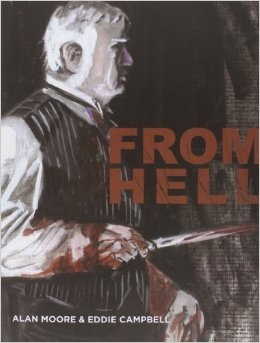
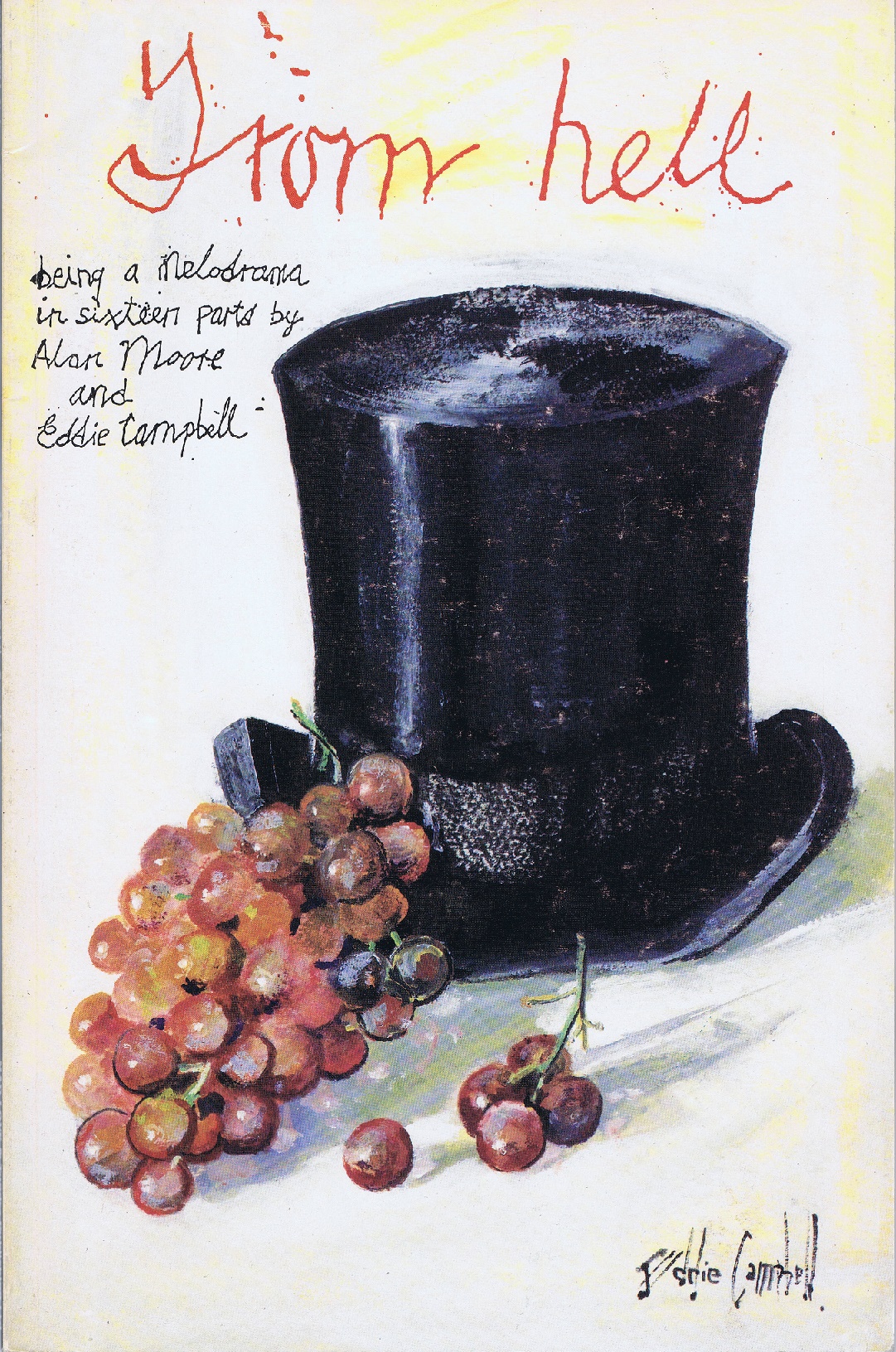
Now what was that I was just saying about non Marvel and DC properties getting a second look—or in the case of From Hell, a third look. The masterpiece by Alan Moore and Eddie Campbell that followed the saga of Jack the Ripper in fascinating detail was already made into a movie starring Johnny Depp. But now it’s back in development as a TV show:
Now here’s where it gets interesting. Don Murphy, who producer not only the From Hell film but the League of Extraordinary Gentlemen film, is producing, with Children of Men’s David Arata (Children Of Men) writing a script. And then:
When the current resurgence of event series started, Murphy thought that would be a great way to handle the material properly, giving the story time to play out and doing it justice. He reached out to Fox Group chairman Peter Rice who was an executive on the movie. Rice loved the idea and the project was set up at Fox TV Studios whose then-topper David Madden had worked with Murphy in the past. Arata was brought in as writer and the drama was sold to FX, with FX Prods. coming on board to co-produce with FtvS. Murphy is executive producing with Susan Montford, via their company Angry Films, along with Arata.
What’s the interesting part? It is the LOEG adaptation above all that set “the Original Writer” Alan Moore’s heart against any film or TV adaptations—Moore was forced to testify in
a copyright infringement lawsuit, an event he found deeply repugnant. It is also safe to say that the amount of love lost between Murphy and Moore is such a negative quantity that it could form a gigantic black hole that could suck the entire universe right into it.
All of which is to say that expect Moore not to have anything to say about this and to get exceedingly cranky when asked.
BUT, you may recall that League of Extraordinary Gentleman was announced last year as a “put pilot”—meaning it would have to be made and shown or Fox would have to pay a sizable fee—and where is that? Not another peep heard.
All of that said, in case you need to be reminded, From Hell is a true masterpiece of comics, Moore’s phantasmagoric view of true life historical detail and artist Eddie Campbell’s deeply felt expressionist art combining with one of the greatest mysteries of all time to make an unforgettable story. If you haven’t read it, remedy that right now!
View Next 25 Posts



 Deep in the grubby sump of one of those so-called ‘Social Media’ sites, there is a clump of aging comics fanboys called The Really Very Serious Alan Moore Scholars’ Group, known to its sad and lonely adherents as TRVSAMSG. When they’re not annotating everything in sight, or calling down ancient evils on the heads of […]
 Somewhere deep in the bowels of the Internet, unbeknownst to all but the initiated, there’s an organisation that calls itself the Really Very Serious Alan Moore Scholars’ Group. Occasionally they get to actually communicate with the object of their adoration, The Great Moore himself. The most recent manifestation was in December 2015, when The Master […]
 The comic book Watchmen, penned by Alan Moore and drawn by artist Dave Gibbons, is one of the most revered books in DC Comics’ nearly century-spanning catalogue. However, their treatment of the work’s creators has always been more than a little murky. Many people both within and outside the industry know that DC’s relationship with Moore […]
 Here's the behind the scenes story of Rebirth, from spoilers to battlelines. Whose side are you on?
 DC Universe announced today they've accepted an "R" rating from the MPAA for the upcoming animated release Batman: The Killing Joke.
 Avatar Press might not be a publisher that most fans keep their eye on, however the company publishes key titles from important creators like Alan Moore (V for Vendetta) and Kevin O’Neil (The League of Extraordinary Gentlemen). Avatar recently launched a Kickstarter for the newest project from the two creators titled Cinema Purgatorio with a […]
 Monster, a comic strip published by Scream! from authors Alan Moore (Watchmen) and John Wagner (Judge Dredd) is coming back to store shelves this July. After being out of print since the ‘80s, the series is coming back via 2000 A.D.. The title is being printed in an 190-page graphic novel. The Guardian has the […]









I can’t remember him ever mentioning a non-anglophone writer among his favorites – and rarely refers to them on his own work.
[…] from another recent interview, here are some excerpts from Alan Moore’s praise for fellow Purgatorio stablemate Kieron […]