new posts in all blogs
Viewing: Blog Posts Tagged with: Webcomics, Most Recent at Top [Help]
Results 1 - 25 of 430
How to use this Page
You are viewing the most recent posts tagged with the words: Webcomics in the JacketFlap blog reader. What is a tag? Think of a tag as a keyword or category label. Tags can both help you find posts on JacketFlap.com as well as provide an easy way for you to "remember" and classify posts for later recall. Try adding a tag yourself by clicking "Add a tag" below a post's header. Scroll down through the list of Recent Posts in the left column and click on a post title that sounds interesting. You can view all posts from a specific blog by clicking the Blog name in the right column, or you can click a 'More Posts from this Blog' link in any individual post.
By:
Heidi MacDonald,
on 3/31/2013
Blog:
PW -The Beat
(
Login to Add to MyJacketFlap)
JacketFlap tags:
Books,
Doctor Who,
Food,
Manga,
News,
Top News,
Webcomics,
brackets,
Lord of the Rings,
Star Trek,
Add a tag
Once again, it’s that time of year again! Sports geeks speculate who will make the Big Dance, who got snubbed, and who will be the Cinderella Team this year. Billions of dollars are wagered on the outcomes, as casual fans contemplate the 68 teams and fill out numerous brackets.
It’s not uncommon among comics fans to wonder, “Who would win in a fight, Forbush Man or ‘Mazing Man?” (Neither. Ma Hunkel would break it up and have them both over to the JSA mansion of cookies and milk.) So it’s not inconceivable that fans would take that simple idea, and turn it into a tournament. Who do you seed in each bracket? How do you arrange the divisions? Do you mix and match franchises and tribes?
Well, we here at Stately Beat Manor offer the following brackets as a community service, especially to fans of Gonzaga, New Mexico, and Kentucky. (Your lack of faith was disturbing. >choke<)
Comics
Let’s start with the big comic bracket: Mix March Madness over at ComicMix.com! Those crazy kids are at it again, this year adding a new wrinkle! You can BUY votes! All money goes to The Hero Initiative, so put your money where your mouth is! 300 webcomics have been reduced to eight, and it’s getting competitive! (This is the perfect opportunity to check out some new webcomics!)
The latest bracket (as of March 24, when I started this article):
The final is open for voting! Click to view, and to vote!
—
Comics Should Be Good, an awesome blog over at Comic Book Resources, has suspended their annual superhero tournament in favor of notable story runs by creators! Is Simone’s Secret Six better than Claremon’ts New Mutants? Byrne’s Fantastic Four or Gruenwald’s Squadron Supreme? The Elite Eight (is that a superhero team?) can be voted on here! (X-Men vs. X-Men!)

Cosmic Comix and Toys, a store in Cantonsville, Maryland, is hosting a female-centric tournament, and the final is a humdinger! (One which I don’t think we’ve ever seen in comics, but which would be amazing if done right!)

Food
The Victory Formation does a different tournament each year. This year, the fourth, is based all on Cereal! The Elite Eight are in competition!
The #1 seeds?
Honey Nut Cheerios, Frosted Flakes, Cinnamon Toast Crunch, Cap’n Crunch!
My fave, Lucky Charms, is a number two seed.
Multimedia

Princess Leia or Padme Amidala? Tarkin or Count Dooku? Boba Fett or Jango Fett?

Ooh! I like the triads!
Population Go matches Western characters on the left, Asian characters on the left!

Wow….
IO9′s March TV Madness brackets are crazy! Some would make for interesting crossovers, like ALF meeting Kirk! Top seeds: Star Trek (TOS), X-Files, Doctor Who, The Twilight Zone!
The final has been announced! And decided! Not as close as some might expect!
(And in the separate, Whedon Invitational Tournament…
Buffy beat Dollhouse 81-19, while Firefly beat Angel 86-14. Buffy got smacked down 64-36 in the final.)
The Dallas Morning News continues their annual
Tournament of Books. No, I haven’t read any of them (and haven’t heard of most), but we welcome all geeks here, and they win the prize for best design!
Movie franchises! Toy Story! Star Wars! (I suspect that the judges ignored the prequels…)
This could easily be expanded into four brackets, separating the franchises by number of films made. Add in some art films, animation, pre-war films, and it could get interesting!

Awwww… TV couples! Inside Pulse lets readers play match-maker with their massive tournament! I’m hoping for Bobby and J.R. Ewing to win! Third round voting can be done here.
Toys and Games

From Bricks To Bothans members took minifig heroes and villains from LEGO, created mechas for each to use, then started a Battle Royale! The winners have been announced, but I recommend you peruse the postings! (I just wish one could click on each character… there are some cool builds!)
Miscellaneous
16 technology geniuses match wits with 16 math and science brainiacs for the title of “
Greatest Geek“! Bill Gates (!) and Albert Einstein are the top seeds.
Once again, the Consumerist holds their
Worst Company in America tournament, featuring the return of last year’s winner, EA! They had a strong showing this year, especially after bumbling the much-anticipated launch of SimCity! Will they make it to the final? Facebook has many “dis-likes”, but at least their social networking system works!
Unlike EA, it’s quite easy to access Consumerist’s website, so vote early!
Which retailer do you patronize? Dappered.com lists Banana Republic and J. Crew are the top seeds. (Amazon, 7th? No Wal-Mart? Macy’s #4?)
.
And finally, which style do you prefer?

By:
Heidi MacDonald,
on 3/29/2013
Blog:
PW -The Beat
(
Login to Add to MyJacketFlap)
JacketFlap tags:
Comics,
Indie Comics,
Indies,
News,
Top News,
Webcomics,
24 Hours of Women Cartoonists,
Andrea Tsurumi,
Dance Party,
grotesque,
horror,
illustration,
Keren Katz,
The Rumpus,
Uncanny Eating,
Yakitori,
Add a tag

Andrea Tsurumi is a freelance illustrator and cartoonist working on a number of platforms. She’s a Harvard graduate currently pursuing an MFA at the School of Visual Arts, but in the meantime her work has been published by Penguin Books and The New York Times. Her long work DANCE PARTY (featured above) appears on her website, and shorter comics work YAKITORI can also be found there. She also contributes, with Keren Katz, to the site UNCANNY EATING, documenting the metamorphic and bizarre qualities of food across cultures. Recently, she’s also started blogging about comics events for THE RUMPUS. Tsurumi’s style is innovative and expansive, taking in the bizarre and grotesque while infusing them with a sense of humor. Her panel designs often break the frame and expand into full page spreads populated with active figures and mysterious vistas. She draws influence from film, pop culture, and the world of illustration and has a lot in common with a multicultural weird tales tradition in her art.

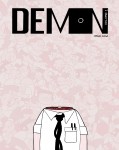
Click the image to read Ava’s Demon
Michelle Czajkowski is sort of a big deal on deviantart. Michelle started her weekly webcomic “Ava’s Demon” in 2012, and is currently at page 392. She seems to keep her personal life private and lets her art tell you all you need to know.


This is the only photograph I can find of Michelle:

But it’s the Rugburn produced motion comic Axe Cop — not the yet-to-premiere animated version that will debut in July as part of Fox’s ADHD adult animation block.
Whoa are you confused yet? Perhaps. But the bottom line is…there can not be too much Axe Cop. You’ll recall that the webcomic is written by 5-year-old Malachi Nicolle and drawn by 29-year-old Ethan Nicolle. Well that’s how old they were when this whole thing started—Malachi is now 9 year old. His maturing themes and concerns are not displayed in this short, which is based on “THE MOON WARRIORS” an early tale/

In the meantime, here’s a still from the Fox version.
Axe Cop is currently published by Dark horse.

Whoa! Jason Little —BeeComix, Shutterburg Follies—has launched a daily webcomic called BORB and it concerns a hobo and his hobo-adventures.
The first episode is called “Teeth.” Hobo + dental work = disturbing!

Had he been born in an earlier era, Little, with his meticulous style, would be one of the early newspaper strip masters, so let’s enjoy this in the here and now!

by Bruce Lidl
The last few weeks have seen a number of big developments in the digital comics realm, from the highs of Marvel’s big announcements at SXSW to the lows of JManga’s imminent closure. Comixology continues to distance itself from its rivals, and with the new Submit program is poised to expand greatly the revenue possibilities for independent creators. By all accounts the digital slice of the comics industry does remain considerably smaller than its print sibling, and there are many comics fans that steadfastly prefer their floppies, yet little doubt exists that the trend and momentum for growth is strong for digital comics, JManga’s demise notwithstanding.
The crucial undercurrent to ever expanding digital offerings has been, and continues to be, the seemingly unstoppable proliferation of devices capable of displaying digital comics in an effect and compelling manner. And even more specifically, it is the specific recent trends towards ever larger smartphone screens and paradoxically, smaller and cheaper tablets devices.
The tide towards larger, and higher quality, phone displays has been going on for a number of years, but has clearly picked up steam in recent months. Last week saw the announcement of the eagerly awaited Samsung Galaxy S IV, with very nice 5 inch display sporting a 1920×1080 resolution, up from last year’s S III which had a 4.8 inch 1280×720 screen, and rapidly approaching the “phablet” category of Samsung’s popular Galaxy Note II, with its 5.5 inch screen, considered gargantuan not very long ago. The speed at which smartphone screens have grown, particularly on the Android side has been astonishing, especially when you consider the fact that the very first Samsung Galaxy phone from 2009 had a 3.2 in, 480×320 pixel screen, relatively tiny by today’s standards. And of course, even mighty Apple, which had resisted the trend towards larger screens in favor of consistency and compact sizes, finally changed course and released the iPhone 5 last year, bumping the screen from 3.5 inches to 4 inches while maintaining a “Retina” pixel resolution (1136×640). Reading digital comics on a smartphone has gone from a somewhat eccentric notion to a far more mainstream possibility, at least with readers willing to zoom in and out, or let their reading be directed by functions like Comixology’s “Guided View.”

While the increase in smartphone screen sizes is powering more digital comic reading (and hopefully sales!), a trend towards smaller screens on tablets is paradoxically also contributing to expanded digital comic penetration. Apple’s iPad basically invented the category of the tablet, and has dominated sales since its release in April 2010, and continues to be an excellent device for digital comic reading, with a brilliant 9.7 inch screen that has increased in resolution iteratively from the original 1024×768 to the current 2048×1536. However, the recent relative success of Android-based tablets with smaller form factors, primarily in the 7 inch screen range, has demonstrated a hunger among some consumers for smaller and cheaper alternatives to the iPad. Beginning with the original Barnes & Noble Nook Color and then really taking off with Amazon’s Kindle Fire and Google’s own Nexus 7, smaller and less powerful Android tablets at the $199 and below price point have established themselves as real options for customers outside of the Apple orbit. And just as with the iPhone, Apple has not remained unmoved in the face of fierce competition, as shown by the November release of the smaller 7.9 inch 1024×768 iPad Mini. Overall, something like 170 million tablets were sold in 2012, with roughly half coming from Apple, and the rest overwhelmingly split among mostly Android providers (Microsoft’s push into Windows based tablets have struggled mightily, and current analysis puts the number sold at less than 1.5 million units since the October 2012 release). The surge in sales of smaller (less than 8 inch screen size) tablets has exploded in the last few months, with about half of tablets sold in the fourth quarter of 2012 fitting into this category, and driving the adoption of tablets ever higher. Smaller devices and cheaper prices have put tablets into the hands of an ever expanding body of potential comics readers, for while the screens used in the smaller tablets tend to be inferior than those on their larger cousins, they do still present a quite nice package for comic reading. More compact form factors also boost portability, although even the 7 inch tablets won’t fit into many pants pockets.
The boom in demand for smaller and cheaper tablets is expected by industry analysts to continue through 2013, and in fact, the iPad mini is currently even outselling its larger standard iPad sibling, while the rise of popularity in Android offerings will likely lead to that segment overtaking Apple this year.

How has the the shift in device formats affected your digital comics reading habits? Do the new devices encourage you to read more digital comics? Personally, I still read most of my digital comics on my 24 inch desktop monitor, but I do use my relatively large (4.8 inch) smartphone screen more often than in the past, and I like using the “Guided View” option quite with it.
Have you been affected by the JManga shutdown? Do you consider the DRM aspect and the vulnerability of locked-downed purchases a crucial weakness of digital comics? Do you prefer to purchase from Comixology, the publishers’ own sites directly or from online retailers like Amazon? Are you interested in Netflix style offerings of unlimited reading of older titles? Do you acquire comics from unauthorized sources, and does the ease of use of pirated comics versus the restrictions of legitimate content enter into your purchase decisions? Have you been swayed away from physical copies entirely or do you get some titles digitally and some in print?

It’s been a HUGE month for webcomics projects on Kickstarter with no less than four six-figure projects.
The Cyanide and Happiness crew netted $770,309 for their animation projects—the most ever for an animation Kickstarter. You may recall that the four-man combine rejected three established TV deals to do it their own way.
David Makli!’s Game of Death party game raised $556,596. And Aaron Diaz’s Dresden Codak is up to $396,250 wth a few days left. Finally Howzard Taylor’s Schlock Mercenary has raised $138,063 for a series of collectible coins [yes, POGs are back], with a few hours to get your order in.
As I’ve said here many times, a popular webcomic having a huge Kickstarter is not really news…but four of them in one month raising six figures show no letdown in interest and enthusiasm. Welp, guess that’s not really news. either. Anyway. add them all up and it’s more than $1,860,000, about half of what Veronica Mars has raised thus far.
Gary Tyrrell at Fleen has more commentary and observations on the Veronica Mars Kickstarter—he’s a much more savvy observer of all this than I, so just go read what he has to say.

Pakistani school girl Malala Yousafzai was shot in the head by the Taliban for daring to go to school to get an education. Zen Pencils has a fine webcomic about her struggle called MALALA YOUSAFZAI: I have the right.

Trip City Presents “You’ll Have to Save That For Another Time” by best selling author (and McSweeny’s editor) Dave Eggers and artist Noah Van Sciver (The Hypo).
It is excellent. Read the whole thing in the link.

A couple of interviews with more information on Make That Thing, the new company that helps successful Kickstarter campaign actually send out all their rewards. it’s a division of TopatoCo, the webcomics’s merchandising company which already has a formidable infrastructure—a fork lift!, warehouses, employees!—and manufacturing contacts to help their cartoonists sell their merch. The program is rolling out slowly as an in house project. Todd Allen talks to David Malki about some of the metrics:
PW: How do you price this sort of service?
MALKI: Generally speaking, on the net [profits of the Kickstarter campaign]. This is another area where Machine of Death and The Tomorrow Girl are going to be our test cases to see where the bottlenecks are when coordinating between a site like Kickstarter and our existing workflows. Establishing the workflows is going to determine the pricing, and there may also be variation depending on the particulars of the project. But the watchword is collaboration: we want to be a service to creators, not a liability. We want everyone in this exchange to be successful. So by pricing on the net, we have a vested interest in efficiency, but it still scales with the success (and the complexity) of the project.
Over at Fleen,
Gary Tyrell talking to the other principle,
Holly Rowland:
Fleen: So once things open up and Jenny Q. Cartoonist is getting ready to Kickstart Yurt Days, when does she contact you? Are you going to need clients to work with you to lay out their campaigns, and especially their estimated delivery dates?
Rowland: Ideally, we would work with the client from the beginning. They would contact us with a short proposal (we will have an online form) and if our panel of experts decides that the project is a good fit, then we work with the creator to figure out all of the bits and what their goal should be. I have been doing A LOT of reading about crowd funding and the challenges therein, and budgeting and goals is a really big one for some.
Delivery dates are also an issue that comes up time and time again. We want to build in a 6-8 month tight turnaround, and make the artist stick to the deadlines.
Fleen: How big do you see MTT getting? On the one hand, you need to keep a schedule of projects such that your employees stay busy. On the other hand, you can’t be so packed full that an unexpectedly big success messes up your logistics for the next two months.
Rowland: We’re going to take it slow for the first year and only run one or two campaigns at a time². That feels manageable, and gives us space to tweak as we go. After that, who knows? If we could afford to hire a campaign manager for each campaign, that is something I would love to do. A Kickstarter sherpa, if you will.
So as you can see this is a pilot program that will probably stay within the company for a while, not the solution to shipping out Veronica Mars dvds. If it works out—and we can’t see why it wouldn’t given TopatoCo’s resources and strang management—we’d imaine other companies would spring up to do much the same thing.
BTW, reading between the lines of Malki and Rowland’s comments this is more a partnership than a fulfillment house. If you squint a little bit, it looks kind of like the services of a traditional publisher, only the money is coming directly from the consumers. What’s revolutionary about the whole process is that it allows the transaction between creator and consumer to be as transparent as possible, but the actual services are much the same. Sometimes everyone goes a different way to see the same thing.
By:
Heidi MacDonald,
on 3/12/2013
Blog:
PW -The Beat
(
Login to Add to MyJacketFlap)
JacketFlap tags:
Comics,
Commentary,
Crowdfunding,
Indie Comics,
Kickstarter,
News,
Top News,
kick watcher,
Lars Brown,
Webcomics,
Add a tag

Kickstarter has been a talking point in the comics industry ever since its conception, most recently and prominently for the fallout between Mark Andrew Smith and the problems he’s been having with his Sullivan Sluggers book. My experience with the platform has been limited: I use it purely as a pre-order service and since May last year (when I first began using the site), I’ve backed a total of 9 projects, 8 of which have been successfully funded. Of these 9 -all of which have been comics- I have so far received 3 books, each one at least 4 months later than initially promised.
Many more generous and patient people than myself are happy to lend their backing to a project simply because they find it interesting or as a way to show their support for the creator, and don’t mind weathering out any delay in the release of the end product. I’m of the notion that when you undertake an endeavour such as crowd-funding a book, you research it thoroughly, analyse any risks and generally go in to it as prepared as possible. If you give a ballpark estimate of when you hope to ship a book out, it should remain in that ballpark, major catastrophes aside. The relationship between backers and a creator is one of goodwill and trust, and any problems that occur should be relayed with honesty and open-ness.

Which is all to say I’m now even choosier when selecting projects I’d like to see realised. With that in mind, I’m pointing you in the direction of Lars Brown’s excellent-looking Penultimate Quest, a simple, no-frills Kickstarter, with a book that’s complete and ready to go, and an extremely modest target of $350, which is currently galloping nicely along at $2267. Here’s more from Brown:
This Kickstarter is to fund a small print run of my new book, Penultimate Quest book 1. My plan is to distribute it on my website, larsbrown.com, and conventions that I’m able to attend. It is 90 pages long.
I started Penultimate Quest in January 2012, at the time I conceived it as a jokey, stand alone mini comic… later in the year I started to kick around the idea of making it into a full length story. The idea of a never-ending dungeon was tantalizing and it carried with it a special challenge of explaining its origin and placing it all in a satisfying story. With my notes in place I began work on the full story in December and now have the first part complete.
If you would like to read the comic it is all available online at my website, larsbrown.com. Thank you.’
I love the story concept and art on this and have happily pledged for a book complete with sketch. Funding ends March 22nd, with $15 getting you a copy of the book within the US, plus an additional $10 anywhere else in the world (which is very reasonable when taking into account the shipping hike. I’m slightly obsessed with the increase in US shipping costs as it’s cutting me off from a load of comics, so I hereby reserve the right to mention it in every post from now to May).
You can back Penultimate Quest here.


Sometimes a book comes out that I’m so ridiculously excited about I get paranoid that I’m going to be disappointed in some way. And then it arrives and turns out to be even better than I hoped for. It becomes the book I take everywhere with me to thrust in people’s faces and say, “READ”. That book is this book.

The Adventures of Superhero Girl is a strip you may have heard of already. It’s a webcomic by the fantastically proficient cartoonist Faith Erin Hicks, who has a whole host of graphic novels to her name (Friends with Boys, Brain Camp, Zombies Calling and the upcoming Nothing Can Possibly Go Wrong). I say webcomic, but although it is all available to read online for free, it was actually created for a local newspaper. And it is fabulous.
We follow the adventures of our protagonist, Superhero Girl (obv), as she struggles to find her place in the world as a fully fledged superhero. Constantly thwarted by Canada’s low crime rate and the imbalance of her personal and public lives, Superhero Girl faces monsters, ninjas, and her nemesis, Skeptical Guy. It sounds a bit like a superhero parody and in some respects it perhaps is, but really Hicks is taking the genre of superheroes and using it to tell the story of a girl and her friends and family, with fun and bonus ninja fights. Superhero Girl’s recurring frustration with people who can’t accept that she doesn’t have a tragic past to fuel her superheroics is definitely a poke at the grim and gritty world of capes and parent murderers, but her insecurity around her mega-successful superhero brother, Kevin, is something that many non-powered readers can certainly relate to.
And who hasn’t been halfway on the road to fighting a monster when realising they left their cape at home? I know right?! The fact that superheroics are just part of our hero’s daily life is really refreshing to read, and her interactions with the public – from students to grannies – seems much more likely than the doom and gloom of many superhero comics. Or perhaps that’s just Canada for ya.
I genuinely don’t want to give too much away about the content of the stories because nothing beats reading them for yourself without my longwinded (yet remarkably wise) comments on meta, panel deconstruction, trope busting and kittens.

However, this of course is the collected edition and while one might assume that means it is merely a book that collects the strips available online, that ain’t the half of it. Dark Horse have produced a gorgeous
luxury hardback edition, in landscape format, and the previously black and white strips have been fully coloured by the fantastic Cris Peter. Cris is a colourist that many Marvel fans will be familiar with, and her work is wonderfully suited to Hick’s style. There’s actually a lot of lovely halftone work which gives the strips a retro newspaper feel and is a great contrast with the modern artwork. Very poptastic!
As if that wasn’t enough, there are pages of original sketches at the back and a glowing introduction from Kurt Busiek at the front, praising Hicks for delivering not only good comics, but comics that can be read by all his family. D’aww.
So let’s look at the facts: brilliant and funny comic with great characters; starring a woman superhero (whoot!); ninjas!; accessible without any prior comics knowledge; equally enjoyable with said knowledge; kitties!; lovely physical book with extra features and great colouring; suitable for all ages!
Also there is a bear with a monocle and a cat-octopus monster. GO READ.


The Adventures of Superhero Girl
Writer: Faith Erin Hicks
Artist: Faith Erin Hicks
Colourist: Cris Peter
Cover Artist: Faith Erin Hicks
Letters: Faith Erin Hicks
Editor: Rachel Edidin
Publisher: Dark Horse
By:
Heidi MacDonald,
on 3/6/2013
Blog:
PW -The Beat
(
Login to Add to MyJacketFlap)
JacketFlap tags:
Benefits,
Comics,
Image,
Indies,
News,
Top News,
Webcomics,
ACTIVATEcomix,
Autobiographical Comics,
Billy Dogma,
Bob Fingerman,
Christopher Irving,
Dean Haspiel,
Ethan Young,
Events,
Housing Works,
Image Comics,
Laura Lee Gulledge,
Maximum Minimum Wage,
Page by Paige,
Streetcode,
Tails,
Trip City,
Will and Whit,
Add a tag

Autobiographical comics used to be a feature of zines and small private presses, but readers are increasingly able to follow their favorite genre of the comics medium in graphic novel editions from mainstream book publishers. There’s no doubt that the artistic appreciation for autobiography and semi-autobiographical works is on the rise, but amid commentary on layouts, designs, and narrative choices, it’s easy to lose touch with the personalities behind the works and the often difficult waters they navigate to create their comics. At Housing Works Bookstore and Café in Soho, part of the Housing Works charitable organization benefitting those affected by HIV/AIDS and homelessness, four cartoonists weighed in on their life in comics on March 5th in a panel hosted by comics scholar and author Christopher Irving (LEAPING TALL BUILDINGS, GraphicNYC). The event formed part of “Geek Week” at Housing Works, with copies of speakers’ books donated by publishers for sale to support the charitable organization.

Panelists included Dean Haspiel (BILLY DOGMA, CUBA: MY REVOLUTION), Bob Fingerman (MAXIMUM MINIMUM WAGE, FROM THE ASHES), Laura Lee Gulledge (PAGE BY PAIGE, WILL AND WHIT), and Ethan Young (TAILS) and featured projected slides of their artwork along with readings, commentary, and discussion. Haspiel read “Dumbo” from his STREETCODE series, a tale of extensive personal injury after being “busted” as a thief by an overzealous and perplexed local driver during a film-shoot in Brooklyn and Fingerman read from an unpublished script of issue #11 of his acclaimed MAXIMUM MINIMUM WAGE series (which will appear in the new deluxe edition coming from Image March 20th) about the trials and tribulations of negative reviews and the dubious creative credits of working for “porno mags”. Gulledge, too, presented previously unseen material from her upcoming (in March) new book WILL and WHIT dealing with the stresses and awkwardness of teen life pursuing artistic expression, while Young read from his series TAILS, featuring cultural and familial clashes over relationships, but also noted that a second printed volume of the previously online series TAILS will be coming soon from Hermes Press.

Each of the cartoonists presenting their work engaged the audience on an emotional level in different ways, showcasing the versatility that makes autobiographical comics so popular. Haspiel’s comic narrated the already inherently absurd scenario of playing a thug in a friend’s film being chased by a costumed superhero an the equally absurd but downright serious impact of being mistaken for a real thief and being mown down by a would-be vigilante on set. Haspiel’s “DUMBO” focused on the psychological shock and mental processes handling the bizarre, and all too physically real situation.

Fingerman’s script handled his experiences working for a “rag” magazine in semi-autobiographical fashion through his avatar “Rob”, with an ear for frank and surprising dialogue between Rob and former co-workers on the subject of a bad review of his comics issued by a replacement writer in Rob’s own former column on the magazine. Through Rob’s dialogue, the audience could hear the character’s increasing fixation and personal struggle with the affront, while other characters commented irreverently on his overblown reactions. The emotions of the situation were powerful, even while comedic in tone.

Gulledge’s selection from WILL and WHIT used limited but realistic dialogue between friends to tease out the tensions in young adult conversations, anxiety in public performances (in this case a puppet show) and the supportive, but complicated role of group friendships. While Haspiel and Fingerman handled subject matter that may have been unfamiliar to many readers, but connected on the level of universal reactions to antagonizing situations, Gulledge presented a universal situation and explored it through the lens of different personality types.

Young’s performance dealt with two major universal themes, family pressures and romantic relationships, but introduced the complicating factor of cultural divides as his character (also named Ethan) engaged in “blunt” conversations with his mother, translated from Cantonese into English, about whether dating a Chinese-American girlfriend was really the right thing for him. Each comics artist preserved a kernel of universal human experience in their works while bringing intricate detail of personal experience into the narrative to render it unique, compelling, and even more visceral. Experiencing the comics as performance, read by their creators, brought an added dimension of reality to the stories. Autobio comics readers often become fans of the “voice” of the cartoonist and feel that they almost know the author/artist personally, but this was a rare chance to hear the comic audibly and experience the comic visually with creator participation.

Christopher Irving took the opportunity to play readers advocate and encourage the panelists to explain how autobiography maps out the gray areas between art and life, asking what the relationship is, exactly, between these creators and their comic avatars. Gulledge explained that her characters are often “different variations” of sides of her personality, and in one of the most memorable phrases from the evening explained that portraying versions of herself in comics encourages her to take risks in expression, making her willing to “drop the baby” being thrown at her if necessary. The allusion was to a situation wherein street urchins might attempt to pick your pocket by throwing a doll at you, pretending it’s a real baby, in the hopes that you’ll be distracted enough to attempt to catch it. “Drop the baby” made for an excellent metaphor for autobiographical cartooning when the creator has to realize the difference between art and real life and take greater risks based on that truth.

Fingerman commented, to the audience’s amusement, that he would “gladly drop a baby”. His reasons for using an avatar named “Rob” rather than his own name, Bob, in MAXIMUM MINUMUM WAGE involved shying away from direct “narcissism” while keeping a certain “weight” of truth alongside the “latitude” for some fictionalization. Like Stephen Colbert’s concept of “truthiness”, he said, his comics get closer to the truth by allowing more freedom of expression than strict autobiography. He also added that after ten years of reflection on MAXIMUM MINIMUM WAGE and working on the new hardcover edition from Image , however, he’s “seriously thinking of coming back to the series and starting it up again”, which provoked a round of enthusiastic applause from the audience.

Haspiel’s own feelings about the difference between autobiographical and semi-autobiographical comics, two genres he has worked with extensively, pivot on his concern that autobiographical comics only allow the reader to act as “voyeur” in someone else’s life. Like Fingerman, Haspiel reflected on the fact that semi-autobiographical narratives enable the creator to zero-in on “emotional truths” that they might not be able to emphasize as fully when sticking purely to facts. His advice to autobiographical or semi-autobiographical cartoonists, generally, is to “get outside” and experience life, making sure you “show up to the party” that is life and take part in order to create compelling stories. Gulledge chimed in that she agreed with Haspiel and Fingerman, that even autobiographical comics are not about the cartoonists life in terms of their purpose, but are about “helping” the reader understand themselves by engaging with real-life situations.

[Image from STREETCODE's "Dumbo" by Haspiel]
Young explained that he feels that his life can, in some ways, seem stereotypical, including his Asian-American heritage, emphasis on city narratives, his real-life situation of quitting college, and even being “self-indulgent” in writing stories designed to “get even” with an ex-girlfriend. But having a relatable life is certainly not a hindrance in autobiographical comics, especially when you capture the “romance” you see in the ordinary. Young hopes to “capture” some truths from his life in a memorable way, such as “living really broke” and “being single in New York”, experiences many readers might share. The most problematic thing Young has faced, he said, about working in autobiographical comics, is that readers equate the Ethan of his comics with Ethan in real life and feel free to tell him that he’s an “asshole” on a regular basis. He’s also been questioned for bringing “fantastic elements” into his works despite their overtly “realistic” tone, and like Haspiel and Fingerman, Young thinks a “metaphorical” element helps him “comment on how interconnected we are with our creations”. It seemed part and parcel of artistic freedom to branch from autobiography into metaphor for several of the panelists.

The discussion between comics artists on the panel was often freeform and interactive during the event, and they chatted about the increasing role of images online, the freedom the internet offers in terms of self-publication, and the impact that it has had on autobiographical comic production. Haspiel commented on the ways that social media has become a form of autobiographical expression, leading him further down the road of embracing metaphor rather than strict biography in his work. Even Gulledge expressed her movement toward “boiling down” life experiences to get to what life is “really about” due to the comparison between unedited and immediate self-expression on social platforms. Haspiel also noted, however, that social media opens up publicity options for web-based work, as in the case of ACTIVATEcomix, which he founded in 2006, and his currently curated multimedia arts site TRIP CITY. The very same technology that raises questions about autobiography by presenting human experience in an unfiltered way can serve as the platform for promoting the more focused works of art that reflect on life’s truths. One of the final topics of the evening focused on advice for cartoonists about funding and publishing their autobiographical and semi-autobiographical works. Now, more than ever, Haspiel argued for the need to be “be part of a community”, whether seeking crowd-funding or readership.

It was clear from hearing the panelists in discussion that they do form their own community of creators supporting many of the same goals in comics, and that each of them has a specific commitment to their readership in creating their work. The fact that the event spotlighting “the cartoonist in comics” not only benefited the comics community by exploring the role of biography and providing insights into creative process, but also raised funds for a worthy local charity emphasized the reciprocal role of community in supporting artwork about the significant truths hidden in everyday life and improving “real life” for those in need. The event was live-streamed by Housing Works and may be available in video format soon.

Hannah Means-Shannon writes and blogs about comics for TRIP CITY and Sequart.org and is currently working on books about Neil Gaiman and Alan Moore for Sequart. She is @hannahmenzies on Twitter and hannahmenziesblog on WordPress.
Webcomics, TV and Kickstarter you say? Speak of the Devil.
STRIP SEARCH, the reality show about a house full of cartoonists competing for $15K and a year of “being embedded” at Penny Arcade, debuted earlier this week. You can watch the first episode above and the second episode is now up as well. The show is produced by the Penny Arcade crew, with Mike Krahulik and Jerry Holkins as judges. (They ran a half million dollar Kickstarter to fund the show last year) 12 cartoonists — six male, six female, are flown to a house in Seattle to compete for the prize, in the classic format. The 12, chosen from a thousand entrants, are mostly webcomickers, but more on that in a bit.
I’m not a reality contest addict, but I watch a few. American Idol (because you CAN’T be a nerd all the time) and I’m back watching the Ultimate Fighter this season. In fact I watched last night’s Ultimate Fighter immediately before I watched these and it was fun to see reality show staples transferred to the comics milieu with greetings, threats, and a big house stocked with alcohol at their beck and call. In addition. STRIP SEARCH has elements that will be all too familiar to anyone who is or is involved with a cartoonist:
• The cartoonist who cannot leave the house until she finishes sending a file
• A fridge stocked with hot pockets and soy milk
• Severe self doubts about being good enough to win
• Excitement about pudding

In the first episode we meet the 12 contestants and they travel to the house to see who they are up against. The female cartoonists seem to be way more established than the men, including Erika Moen, who I would say is a star already, and Katie Rice, who works on Kung Fu Panda. Not too much happens in the first episode, but it’s a good set-up. Surprisingly, unlike the MMA fighters who bodly predict victory until they end up lying in a puddle of their own blood, the cartoonists are all given to huge self doubts. Many don’t think they are good enough to win, and they all doubt their art chops. Yep, this must be a house full of artists all right.
In episode two, there’s a game of Fax Machine (artists take turns sketching based on sayings or writings sayings based on sketches) and it turns out they are all very talented, and able to turnout funny sketches pretty quickly. And the first character begins to emerge: Amy Falcone who had to quit her data entry job in Noank, CT in order to compete. Amy thinks she will clash with the other women in the house, and seems to be the most ambitious and insecure of the lot, based on the fact that she wears fingerless gloves inside while drawing.
Aw, see now, I’m doing it. I don’t know Amy Falcone. Her comics are cute. But already she’s fallen into the “reality show” jungle of viewers making assumptions about who she is as a person. I only know one of the contestants personally (Moen) but it’s going to be weird seeing them transformed like this.
The episodes are only 15 minutes long, but someone is going to go home on the very first day. I already feel bad for whoever that person is.
Production is competent if a bit sparse. I believe host Graham Stark (Loading Ready Run) is also the narrator, and here is where I wish hat they had the lady from Snapped or some other portentous voice. Even if it isn’t quite ready for The History Channel, STRIP SEARCH is well enough done, and the premise is engaging enough, that I’m going to be back for more episodes—if only to see mild-mannered indie cartoonists uttering reality show staple lines like “I didn’t come here to make friends!”
I tell you what would be great though, an Ultimate Fighter/Strip Search crossover. The fighters could scribble and the cartoonists could eat six hard boiled eggs for breakfast and see who felt more comfortable in the end.
And what do YOU think? Will you watch “America’s Next Top Webcomic?”

Since we’ve been talking about career paths and what not for the last few days, here’s another one: after turning down three TV development deals, including Comedy Central, the webcomic Cyanide & Happiness has decided to go DIY.
As some of you may know, we’ve been negotiating a Cyanide & Happiness TV show with a cable network for a while now. What you guys may not know is that this is actually the latest of three TV show talks we’ve been in. We walked away from the first two due to rights and creative control issues. We thought that we could settle those issues in the third deal, but things didn’t quite work out as we hoped.
Today, we are letting you all know that we’ve officially walked away from this TV deal as well, for similar reasons as the first two.
We’re starting to realize that TV as an industry just isn’t compatible with what we want to do with our animation: deliver it conveniently to a global audience, something we’ve been doing all along with our comics these past eight years. That’s just the nature of television versus the Internet, I suppose.
They’ve launched a
Kickstarter for their efforts, and completely funded in days, six figures, blah blah. They’ve raised $455,984 on a $250,000 goal with 11 days to go. Since they already have a YouTube channel with millions of views, this isn’t really much of a leap.
For those who don’t know,
C&H is a four person effort, variously drawn by
Kris Wilson, Rob DenBleyker, Matt Melvin and Dave McElfatrick. The strip features webcomic staples stick figures and bleak humor — and they’ve been doing it daily since 2004. It’s a perfect example of the experience readers used to get from the daily nwspeper comics section transferred to the internet.
So, yet another example of the webcomic model in action and working. Do they all live in a giant house like Charles Schulz? Probably not. That revenue model is gone forever. but the C&H crew seems to be doing fine for now.

It’s a Monday early in the month, you just paid the rent and you’re now wondering how you are going to live on celery for the next 27 days—that must be why so many posts on how to make a living at this here thing are coming out today. We’ve already seen Jerry Ordway plead to be taken seriously as a creator. But it’s not just the old paper and ink crowd that’s fretting this day. The webcomickers are at it too. John Allison is the creator of SCARY GO ROUND, seemingly a respectably successful webcomics creator. But even webcomickers are beginning to feel the pinch of new generations of cartoonists who don’t even have the structure of a website but just post everything on Tumblr, which Allison sees no payoff for:
Art isn’t democratic. It doesn’t take place in a caring, sharing environment. It is a huge “look at me”. We are the pre-schoolers who can still point at what we’ve done and get a sticker, and we want to keep getting those stickers forever.
I would never decry any service as worthless. There are people who have caught mass attention via Tumblr, and sold great piles of things as a result. There’s a use for everything, and an exception to every rule. The exceptions are the reasons that others try. But Tumblr sets the bar of success incredibly low. The payout will almost always be zero. Not beer money, nothing.
Matt Bors jumped in quickly, with a more whippersnapper-based response:
Yes, Tumblr is the new “Internet.”(Follow me here!) I’m old enough to remember–I am in my twenties here, folks–when only print cartoonists talked like this. Back then a few particular cartoonists who had blazed a trail for themselves online loved to laugh publicly at people who lost their jobs in print. The web was democratic, they said, and if you can’t make it work you should go die in a corner. If you followed that whole “debate,” you know what I’m referring to. If not, you didn’t miss out on anything that made you a smarter or better human being and I envy you.
I don’t bring this up to mock Allison’s financial troubles. If he’s struggling, that’s bad for all cartoonists and I’m in this boat with him. I have a sense of solidarity and constant dread about what is happening. But if your model can be completely undone by a new website you need to be more nimble. “The future’s uncertain and the end is always near,” a belligerent drug addict once sang before he abruptly died. People are raking it in on Kickstarter these days. No doubt that well will eventually dry up and we’ll move on to the next platform kids with their gizmos seem to grasp while the old and out-of-it Millennials struggle to keep up.
Frankly I think Bors is right, and Allison and Ordway are fretting about the unchangeable (even though I do the same kind of moaning and hand wringing for olden times here on a daily basis.) In fact:
“But if your model can be completely undone by a new website you need to be more nimble.”
Disruption is where it’s at, Matlock. Like ordering your movies every night on streaming Netflix? Good, because every minute of your entertainment is written in the blood of some video store/Blockbuster. Are you happy now?
This is a time for the nimble. You can bank on that.

A longer version of the animated Achewood being put together by creator Chris Onstad is now available.
Has your mind been blown? Did it sound like you expected?
After a long, lonely world without the seminal webcomic Achewood, creator Chris Onstad busted out a big rainbow of hope yesterday with the epic news that he's been working on an animated series. He even gave us a clip of his efforts, above. And from there, to the big show:

:

’90s nostalgia fans get in line! Van Sciver travels back to the ’90s comics scene in Seattle, when “comics were cool” and hijinks ensue.

About 10 years ago, when someone first proposed to idea of comics on mobile phones to us, we suggested putting webcomics on the phones. That isn’t the way things went, but there will finally be an app just for webcomics like XKCD, Nedroid, Girls with Slingshots and Dinosaur Comics. The app is called Comic Chameleon and it hasn’t yet been approved by Apple. But according to pr,
Comic Chameleon aims to be the single, ultimate way for webcomic fans to enjoy all their favorite titles on the iPhone, and for webcomic artists to share their work with the thus-far untapped and explosive iPhone market. It’s the first webcomics app being built by a webcomics artist, for webcomic artists.
Our lineup currently consists of 19 of the most amazing comics on the web, and from now until our launch early next year, we’ll be adding more! Follow us on the Twitter and Like us on the Facebook or join our email list to get all our updates on new artists we’ll be working with, our progress on the app, and our public beta test coming in January!
Among the app’s features:
• Panel by panel navigation, formatted perfectly for the iPhone
• Full archives – not a limited RSS reader or a pay-per-issue store
• Ad proceeds go to support the artists you read
• Shop for awesome merchandise from the artists
• FREE – full access to all titles
Here’s the line-up of comics available. I’m not exactly sure how people read their webcomics, but an app aggregator sounds appealing to this time-starved old fogey, especially one that does so with with the consent of those aggregated.
Here’s a demo of how it works. Ad revenue from the app will be paid to participating artists. It may be only gum money (not even Beer money) but…hey, it’s a revenue model.

Eisner winning artist Cameron Stewart recently rolled up his webcome Sin Titulo and he’s back with NIRO which has an extensive and spectacular preview.

Cameron plans to sell chapters, Monkeybrain and Thrillbent style:
I’m pleased to preview the first scene from my upcoming self-published comic NIRO. I’m hard at work on it now and the first digital chapter will be on sale in early 2013. My plan is to release several serialized digital issues, in DRM-free formats such as PDF and CBZ, and then publish a collected edition in print when the story is complete. Each digital chapter will be pay-what-you-want, with a minumum of 99 cents. The price of the collected print book is still yet to be determined.
Tweet I know that’s the weirdest group of projects to put in one headline but I think it says a lot about the amount of variety that Kickstarter can offer. Project: Frogman Talent/Project Manager: Matt Fitch Days to Go: 3 Goal: £1,000 The spiel: Steve Morris warned you, the British are coming. FROGMAN is a not-so-super superhero who kicks, punches and shags his [...]
Do you like space? Do you like comics? Do you like space comics? Do you like really well done space comics? Then you will really enjoy this Jed McGowan: Voyager.
By:
Heidi MacDonald,
on 2/15/2013
Blog:
PW -The Beat
(
Login to Add to MyJacketFlap)
JacketFlap tags:
Breaking News,
Comics,
Digital Comics,
Indie Comics,
Small Presses,
Webcomics,
buying,
Digital,
Farel Dalrymple,
newsprint,
Study Group Comics,
Add a tag
Tweet I’ll hold my hands up and admit I’m not a digital reader at all- there are a few web-comics which I love and keep up with and that’s it. I’ve tried reading comics on an e-reader but as idealistic and romanticised and dinosaurish as it may sound, the experience is simply too impersonal for [...]
View Next 25 Posts
Multimedia-wise, there’s also the Suvudu Cage Match 2013 over at suvudu.com, that basically started at http://paranormal.suvudu.com/2013/02/cage-match-2013-the-bracket-revealed.html , which, despite some clunky formatting that can make for difficult following, has some great write-ups of their match-ups in their “how-we-think-this-battle-would-go” posts.