new posts in all blogs
Viewing: Blog Posts Tagged with: motherhood, Most Recent at Top [Help]
Results 1 - 25 of 95
How to use this Page
You are viewing the most recent posts tagged with the words: motherhood in the JacketFlap blog reader. What is a tag? Think of a tag as a keyword or category label. Tags can both help you find posts on JacketFlap.com as well as provide an easy way for you to "remember" and classify posts for later recall. Try adding a tag yourself by clicking "Add a tag" below a post's header. Scroll down through the list of Recent Posts in the left column and click on a post title that sounds interesting. You can view all posts from a specific blog by clicking the Blog name in the right column, or you can click a 'More Posts from this Blog' link in any individual post.

By: Anna Shannon,
on 10/16/2016
Blog:
OUPblog
(
Login to Add to MyJacketFlap)
JacketFlap tags:
Books,
parenting advice,
child nutrition,
infant health,
Nutrition for Developing Countries,
Nutrition for Developing Countries Third Edition,
baby development,
baby Nutrition,
care group,
first 1000 days,
Jennifer N. Nielsen,
pregnancy nutrition,
motherhood,
parenting,
child development,
nutrition,
pregnancy,
Pediatrics,
*Featured,
Science & Medicine,
Health & Medicine,
Ann Burgess,
1000 days,
Add a tag
Nowadays we use the term ‘first ‘1000 days’ to mean the time between conception and a child’s second birthday. We know that providing good nutrients and care during this period are key to child development and giving a baby the optimum start in life.
The post The first 1000 days appeared first on OUPblog.
Mutha Magazine is an online journal that deals with issues surrounding motherhood. It has a regular comics section, edited by Meg Lemke, and she's put together some amazing work from cartoonists including Lauren Weinstein, Glynis Fawkes, Tyler Cohen and many more. Today a standout, Sacha MArdou's THE STATE I’M IN: A Birth Story in Comics, in which the expectant Mardou and her husband has to deal with the possibility that her child has Down Syndrome.
 Mother’s Day was a couple weeks ago. Since that day also happens to correspond with my end of the semester grading frenzy, I didn’t get a chance before now to post this lovely poem that my 12-year-old daughter wrote for me:
MOM
a business teacher
a pitch perfect singer
a writer of astonishing books that I love to read
a cook of marvelous foods
AND she cleans like a pro
MOM
a helper with homework
a stay up late worker
She is head shopper for birthdays, Christmas presents and other stuff
MOM
is patient (ish)
stylish
and cool (ish)
But the best thing about my mom is that she loves me
and
that’s the best
I could get.
Irina
2015
Yeah, I cried.
Photograph © Mamz

By:
[email protected],
on 4/22/2015
Blog:
Perpetually Adolescent
(
Login to Add to MyJacketFlap)
JacketFlap tags:
Books,
book review,
motherhood,
Baltimore,
laura lippman,
Crime Fiction,
hush hush,
Book Reviews - Fiction,
tess monaghan,
Add a tag
I am not a fan of long running crime series. While a recurring character can be like a familiar friend sometimes the longevity of a series means it falls into the realm of incredulity. Tess Monaghan was a character I fell in love with but was also quite happy when she was put on the […]
I love, love, LOVE this video. I’ve always had a problem with sanctimonious mothers who think THEIR way is the BEST way to raise a child.
I couldn’t disagree more.
I bottle fed my children and I’m not ashamed to admit that. I used to be ashamed to admit it because whenever I would mention it on this blog, or anywhere else, quite frankly, I would get the disapproving stink eye or a snarky comment. And then I would inevitably feel inadequate and guilty.
Not anymore, dude. I’m not even going to justify my decision – I did what I thought was best for my children and my sanity.
It always annoys me whenever people feel the need to justify their decisions. I’m sure you did what you thought best. End of discussion.
And that’s where I stand on motherhood issues.
Whether you bottle fed, breast fed, stayed at home, worked out of the home, used cloth diapers or disposable diapers – in the end, it’s really none of my business. As long as you’re doing what’s best for the child and your family, it really doesn’t matter. The ultimate goal is to raise our children to be responsible, educated, compassionate human beings; how you reach that goal is up to you. There is no “one size fits all” answer, no matter what you hear politicians, the media, or even other mothers try to convince us otherwise.
You do what’s best for you and your family and don’t you dare feel guilty about your decisions or feel like you have to justify your decisions.
Ultimately – it’s none of our business how you live your life.
Filed under:
Life 
Elijah Fox Hudson was born 10/10/14. Having a baby is such a singular experience. This time was completely different from our first. I was a lot more in tune to what was going on and listened to my body (and the midwife) for the right cues. The awareness that an epidural was on the way is what got me through most of it, and then when the epidural didn't completely take (thank you quick labor) I relied on the midwife and my husband to encourage me. I had an amazing team and couldn't have gotten through it without them!
Going through labor and experiencing the pain, movement, and fear, created such a strong positive emotion when I finally delivered Eli. Something I really feel the epidural blocked with my first. The euphoria continued while at the hospital, and even now that we are home and life has become hectic again, I feel it every time I look at him. Connected to my baby by the things we shared and the hard work it took to get him here.
By:
Donna Earnhardt,
on 8/2/2014
Blog:
WORDS
(
Login to Add to MyJacketFlap)
JacketFlap tags:
life,
travel,
kids,
relationships,
motherhood,
writing for children,
faith,
prayer,
scared,
sunset,
fear,
psalms,
fatherhood,
mama,
praying,
games for kids,
hide and seek,
living out loud,
ain't not booger bears out tonight,
booger bears,
living life,
outdoor games,
Add a tag
I am not a scaredy cat. I love to hike and wade in mountain streams. I love to go to places I’ve never been and see things I’ve never seen. I like to watch documentaries on foods from other countries and want to visit those countries one day. I like to make new recipes! I’ll…
By: Hannah Paget,
on 7/24/2014
Blog:
OUPblog
(
Login to Add to MyJacketFlap)
JacketFlap tags:
Books,
History,
motherhood,
Oxford,
letters,
tutoring,
helmet,
epistolary,
soldier,
British,
letter writing,
WW1,
owen,
Europe,
fatherhood,
extract,
first world war,
lieutenant,
1918,
*Featured,
great war,
centenary,
conscription,
emotional ties,
Full of Hope and Fear,
James Munson,
Margaret Bonfiglioli,
The Slaters,
slater,
Add a tag
The First World War has survived as part of our national memory in a way no previous war has ever done. Below is an extract from Full of Hope and Fear: The Great War Letters of an Oxford Family, a collection of letters which lay untouched for almost ninety years. They allow a unique glimpse into the war as experienced by one family at the time, transporting us back to an era which is now slipping tantalizingly out of living memory. The Slaters – the family at the heart of these letters – lived in Oxford, and afford a first-hand account of the war on the Home Front, on the Western Front, and in British India. Violet and Gilbert’s eldest son Owen, a schoolboy in 1914, was fighting in France by war’s end.
Violet to Gilbert, [mid-October 1917]
I am sorry to only write a few miserable words. Yesterday I had a truly dreadful headache which lasted longer than usual but today I am much better . . . I heard from Katie Barnes that their Leonard has been very dangerously wounded they are terribly anxious. But are not allowed to go to him. Poor things it is ghastly and cruel, and then you read of the ‘Peace Offensive’ articles in the New Statesman by men who seem to have no heart or imagination. I cannot understand it . . . You yourself said in a letter to Owen last time that [the Germans] had been driven back across the Aisne ‘We hope with great loss.’ Think what it means in agony and pain to the poor soldiers and agony and pain to the poor Mothers or Wives. It is useless to pretend it could not be prevented! We have never tried any other way . . . No other way but cruel war is left untried. I suppose that there will be a time when a more advanced human being will be evolved and we have learnt not to behave in this spirit individually towards each other. If we kept knives & pistols & clubs perhaps we should still use them. Yesterday Pat & I went blackberrying and then I went alone to Yarnton . . . the only ripe ones were up high so I valiantly mounted the hedges regardless of scratching as if I were 12 & I got nice ones. Then I went to the Food Control counter & at last got 5 lbs. of sugar . . . It was quite a victory we have to contend with this sort of sport & victory consists in contending with obstacles.
Gilbert to Owen, [9 February 1918]
I have been so glad to get your two letters of Dec. 7th & 18th and to hear of your success in passing the chemistry; and also that you got the extension of time & to know where you are . . . I am looking forward to your letters which I hope will make me realise how you are living. Well, my dear boy, I am thinking of you continually, and hoping for your happiness and welfare. I have some hope that your course may be longer than the 4 months. I fear now there is small chance of peace before there has been bitter fighting on the west front, and little chance of peace before you are on active service. I wonder what your feelings are. I don’t think I ever funked death for its own sake, though I do on other accounts, the missing a finish of my work, and the possible pain, and, very much more than these, the results to my wife & bairns. I don’t know whether at your age I should have felt that I was losing much in the enjoyment of life, not as much as I hope you do. I fear you will have to go into peril of wounds, disease and death, yet perhaps the greater chance is that you will escape all three actually; and, I hope, when you have come through, you will feel that you are not sorry to have played your part.
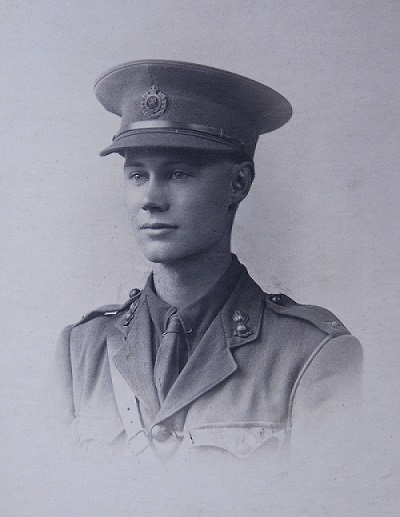
Second Lieutenant Owen Slater ready for service in France. Photo courtesy of Margaret Bonfiglioli. Do not reproduce without permission.
Owen to Mrs Grafflin, [3 November 1918]
This is just a very short note to thank you for the knitted helmet that Mother sent me from you some time ago. It is very comfortable & most useful as I wear it under my tin hat, a shrapnel helmet which is very large for me & it makes it a beautiful fit.
We are now out at rest & have been out of the line for several days & have been having quite a good time though we have not had any football matches & the whole company is feeling rather cut up because our O.C. [Officer Commanding] has died of wounds. He was an excellent [word indecipherable] father to his men & officers.
Margaret Bonfiglioli was born in Oxford, where she also read English. Tutoring literature at many levels led to her involvement in innovative access courses, all while raising five children. In 2008 she began to re-discover the hoard of family letters that form the basis of Full of Hope and Fear. Her father, Owen Slater, is one of the central correspondents. After eleven years tutoring history in the University of Oxford, James Munson began researching and writing full-time. In 1985 he edited Echoes of the Great War, the diary of the First World War kept by the Revd. Andrew Clark. He also wrote some 50 historical documentaries for the BBC.
Subscribe to the OUPblog via email or RSS.
Subscribe to only history articles on the OUPblog via email or RSS.
The post The Great War letters of an Oxford family appeared first on OUPblog.

By: johnmanders,
on 4/25/2014
Blog:
John Manders' Blog
(
Login to Add to MyJacketFlap)
JacketFlap tags:
cat,
book promotion,
babies,
duckling,
gosling,
maternal instinct,
motherhood,
character design,
chick,
Add a tag
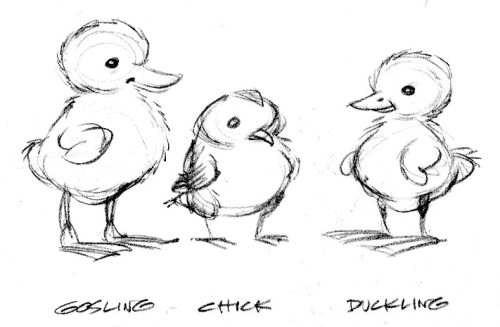
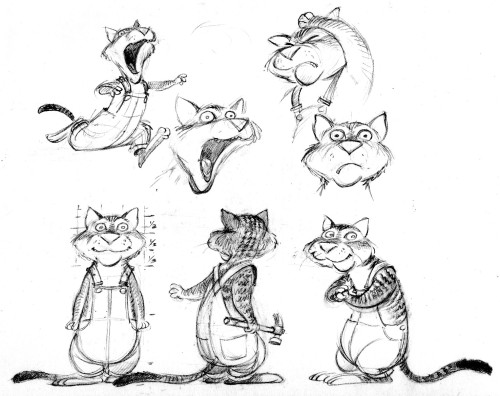
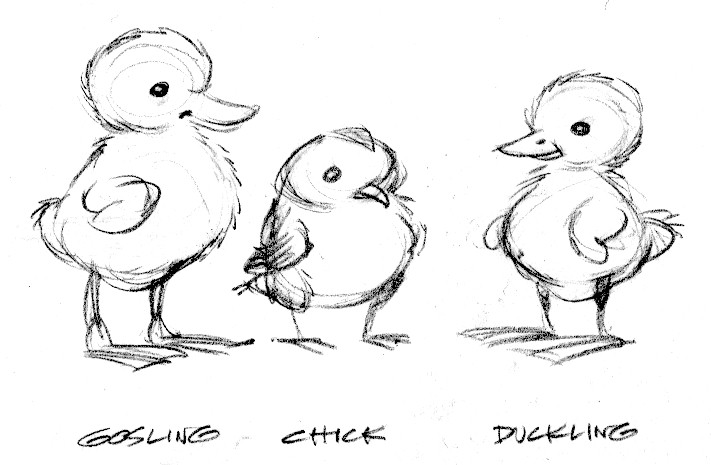
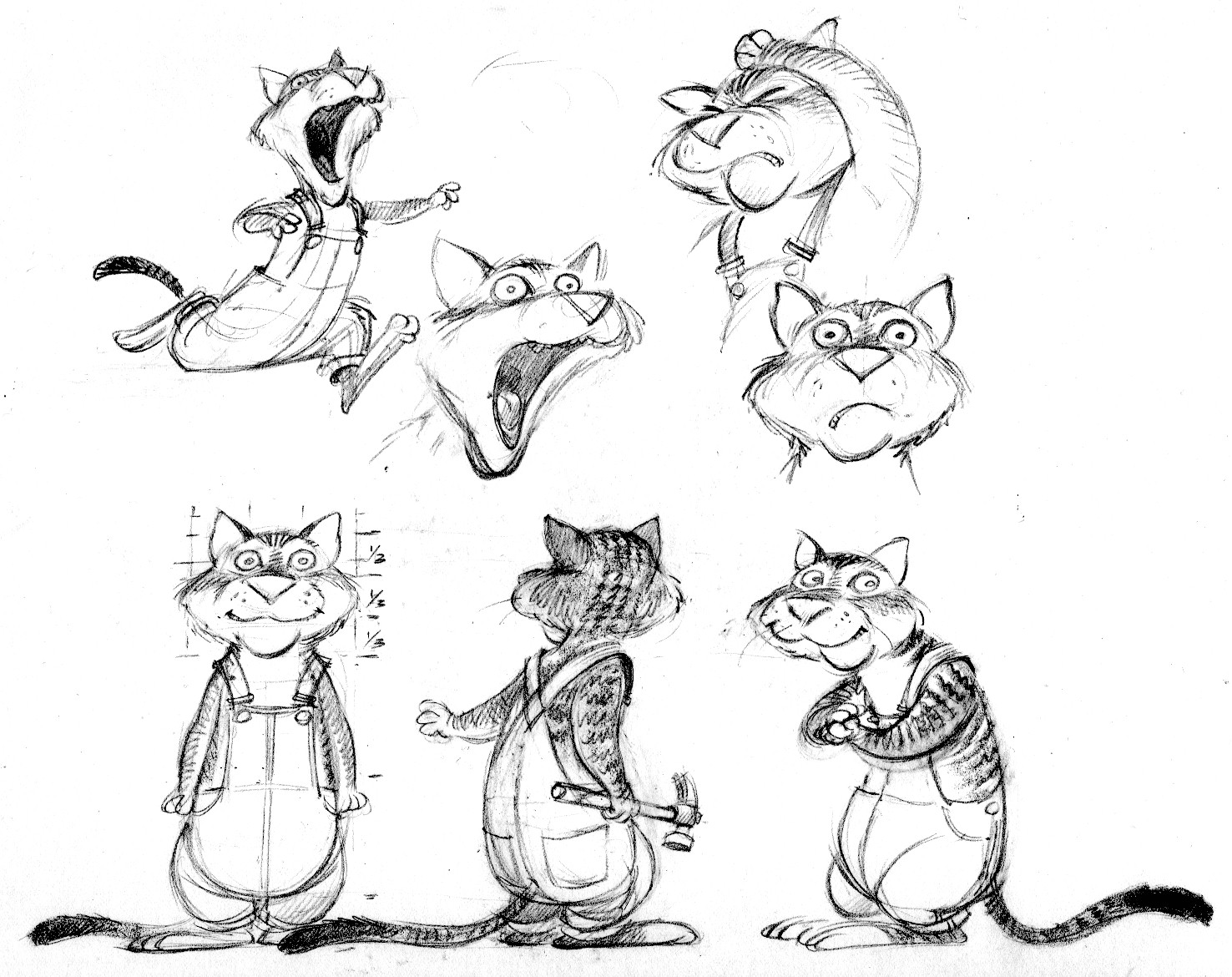
What a wonderful little video clip! If you’ve read Catherine Friend’s The Perfect Nest, you’ll enjoy watching this Perfect Nest in Ireland


By: Mark Myers,
on 3/25/2014
Blog:
(
Login to Add to MyJacketFlap)
JacketFlap tags:
Life,
family,
motherhood,
humor,
mom,
parenting,
Men,
mothers,
husband,
It Made Me Laugh,
Add a tag
Yesterday was one of those days. It is beyond my man-sized mind how everything fit together. I had nothing to do with its success or organization. But like a giant fuel-guzzling puzzle, the last piece set in perfectly about nine o’clock. Until then, my family ranged in different directions all across the metro area. The amazing thing is that the MTC (Mom-Traffic Controller) was absent for a good portion of it.
I had business on the other side of the city that kept me away until most of the flights were filed and done. If you know Atlanta traffic, you know that being on the other side of it on a weekday means that, while only thirty miles away, I may as well have been in Guatemala in case of an emergency. Sometimes, there is just no getting home. But the MTC needed me not.

The Grandaddy taxi (my kids’ favorite ride because it often stops for a milkshake) had a few trips, she called in a favor from another middle-school parent, my nephew’s girlfriend made a pick-up, and I think there were two dog sleds and a rickshaw involved. Of course, this day involved multiple after school activities for every child that required extra commutes. Here is where I think the MTC was just showing off – she drove an hour north of the city on a college visit and took the only other driver of the house with her. So she wasn’t even around to oversee her masterpiece!
Through some mystery of mother magic, everything worked out. I counted two children when I got home and the other two trudged through the door soon after. They looked haggard but familiar, so I’m fairly certain they are mine.
◊
Men, lest you think you could handle this task, let me recount for you my experience on Saturday (Car Day). I had one assigned job, ONE: pick up dancer daughter at 12:30. The brakes took a little longer than expected, but I finished and went inside to wipe the grime off of my fingertips so I could handle food. While at the sink, my phone lit up with a missed text. Instantly, I had that “Oh Crap!” moment when I saw the digital readout. You guessed it, 12:40. I forgot my one job, along with my daughter who sat waiting twenty minutes away. The forgotten child’s next text went to the MTC, who was at a play. I had planned to bribe my daughter’s silence with ice cream. But on the frantic trip to get her, I received from the MTC saying, “Nice job, Dad.” Exposed.
So, all hail the MTC! I don’t know where you received your degree in family flight management, but the entire (and somehow intact) family is glad you have it!


by Stephanie Romero
Anyone who is a parent (or knows one—which would qualify all of us), is well aware of the mommy wars that can happen. You know the ones I’m talking about…homeschooling versus traditional schooling, stay-at-home mom versus working mom, co-sleeping versus let ‘em cry it out and well, the list could go on and on.
But there’s another battle that can emerge when it comes to mothers who are writers. It is the pull between parenting and pursuing your passion. Somehow we’ve been convinced that we must choose one or the other. Or we have to wait until a “season” or “stage” in our child’s life has passed. Yet the next one could prove to be more difficult and time-consuming than the last. So we remain stuck. Or we end up feeling guilty because we’ve made what we perceive as the wrong choice.
For too long, mothers have been convinced that when they choose something else to pursue (other than parenting), they should feel guilty. As if being a mom is the only identifying factor in her life. When the truth is that we are so much more. We have passions that go beyond motherhood, so why not embrace them?
Do you ever feel guilty about writing? I have been there. When I’ve been holed up in my office downstairs for hours at a time, knowing my full attention isn’t always with my children. So I have to remind myself—this is not only my passion, it’s my job. I get paid to do this—which means someone is expecting me to produce. I’m teaching them responsibility and something about hard work.
But the same thing can happen when we want to take time to break away and work on that novel, polish up the manuscript or write a blog post. The guilt monster sits on our shoulder, needling away at us. “What kind of mom are you?!” And we’re back to believing that in pursuing our passion as a writer, we have somehow failed as a mother.
Why do we do that to ourselves? Why do we do it to other women? Because we believe the lies. We have fallen into that trap, the one that tries to convince us we are not being a good mom if we are passionate about something other than our children. Of course, it’s all about balance. But that’s a different topic for another day.
The point is, I feel like women need permission to be excited about something else in life. To understand that the beauty of being a woman extends beyond motherhood. You can be a mother AND a writer. You might have to write during naptime, in the middle of the night or while they’re at school. But for heaven’s sake, don’t wait until the “right time.” Do it now. You really don’t have to choose between parenting and pursuing your passion for writing—there is a way to have both.
* * *

~~~~~~~~~~~~~~~~~~~~~~~~~~~~~~~~~~~~~~~~~~~~
Would you like to participate in Friday "Speak Out!"? Email your short posts (under 500 words) about women and writing to: marcia[at]wow-womenonwriting[dot]com for consideration. We look forward to hearing from you!~~~~~~~~~~~~~~~~~~~~~~~~~~~~~~~~~~~~~~~~~~~~
By: Kirsty,
on 2/7/2013
Blog:
OUPblog
(
Login to Add to MyJacketFlap)
JacketFlap tags:
children,
Sociology,
mental health,
motherhood,
parenting,
divorce,
Norway,
fatherhood,
public health,
custody,
child custody,
Social Sciences,
*Featured,
Health & Medicine,
child maintenance,
journal of public health,
parental contact,
shared custody,
simone frizell reiter,
the norwegian child act,
parental,
frizell,
parent’s,
Add a tag
By Simone Frizell Reiter
According to Statistics Norway, around 10,000 children under the age of 18 in Norway experience divorce every year. These numbers do not take into account non-married couples that split up. Therefore, in reality far more children experience parental separation.
Status of knowledge
Focus has been on the adversity of parental divorce, emphasising the support and safety an intact family gives. The child may experience conflict, neglect or parental alienation, and insecurity about who belongs to the family. Not only the separation itself but also the period preceding and following the divorce may disturb the child’s well-being. Several studies show that parental conflict, that may be harmful to the child, is perpetuated even after the divorce. However, other studies show that when the parents are able to reduce the level of conflict after the divorce, the divorce is not exclusively negative if the child is moved from a family situation with conflicts to a more harmonious one. Society’s attitude toward divorce has changed as divorce has become more common. Prejudice and stigma are less pronounced. A natural assumption is therefore that mental problems related to divorce are also reduced. However, more recent studies conclude that adults, who experienced divorce in childhood, have more mental health problems than adults from intact families.
Divorce and reduced parental contact are closely linked. Children with loss of parental contact after divorce report more mental health complaints compared to children with preserved contact. Lack of attention, support, and economic insecurity may explain some of the negative effects of a parent’s absence. However, even when provided with at step-parent after divorce, these children report a lower level of well-being than children with preserved parental contact. Biological parents therefore seem to be of particular importance. Regular and frequent contact with both parents after divorce may also reduce the potential harmful effects of parental absence as seen in sole-custody households. Parental support is an important, independent risk factor to children’s sense of achievement and well-being. It is shown that as children’s relationship with their fathers weakens after divorce, they also lose contact with paternal grandparents and stepfamily.
Studies show that when divorce is followed by strong conflict, children may be used as a weapon between the parents. In such conflicts contact with one of the parents may be limited or brought to an end. The child is forced to ally with one of the parents, and suffers from the psychological stress this causes.
 What is the concern?
Family law in Western societies generally aims at preserving dual parental contact for the child after divorce. This is also the aim of the Norwegian legislation. The Norwegian Child Act states that the parents may come to an agreement on where the child should primarily reside. However, if the parents cannot agree on this, the court has to decide which one of the parents the child should stay with. In practical life this has, in most cases, been the mother, while the father has been reduced to a weekend parent. Due to this, the experience in Norway is that when it comes to loss of parental contact, children of divorce primarily lose contact with the father. This effect is in some cases strengthened by the primary caregiver intentionally sabotaging the other parent’s visitation rights. To prevent this, the Norwegian legislation has sanctions, but these are very rarely used. A suggestion has been to introduce shared residence as a preferred solution after parental divorce, and that parents who sabotage this agreement may get restrictions on their contact with the child.
Most parents choose to take an active role in their child’s upbringing, and only a small group is absent, either by choice or circumstances. Therefore, social benefit systems have built in mechanisms to compensate the lacking of the absent parent by high financial contributions to sole providers left alone in charge. The downside of these benefits is that one of the parents can gain financially on monopolising the contact with the child and in some cases the sole provider actively sabotages or reduces the other parent’s contact, only to gain financially. This mechanism is strengthened by the Norwegian child maintenance system, where the level of economic support is linked to the amount of time spent with the child. Parents who share the custody in equal parts do not pay any child maintenance to each other. The combination of the systems has turned many fathers in to “child maintenance machines” because the mother would lose so much financially, sharing the custody of the child with the father. The benefits therefore undermine the aim to gain shared custody, and deprive the father of the possibility to have a close relationship with his child.
The concept of “parental alienation syndrome” is used to describe the condition where the child is alienated against one of the parents. If the government wants the children’s voice to be heard in custody conflicts, they must take into account that the child is already involved in a process of demonization and slander of one of the parents. From the literature, we know the term folie à deux. The government should be careful not to act in a game that can be characterized as folie à troi (madness shared by three).
In practice, it is difficult to have an equal amount of contact with both parents unless the child lives in two places equally. What is important to consider is whether advantages of maintaining a close relationship with both parents outweigh the disadvantages of having to change residence, for instance every week or every second week. Equally shared legal custody is not the same as having the child living in two residences fifty-fifty.
The experience is that the Child Act’s intention of parental agreement on a solution of custody between equal parties does not work. This is because the court, when presented the case, is legally bound to choose a single residence and almost exclusively chooses the mother.
On the basis of this knowledge it is important that the government puts effort in protecting the child’s right to have contact with both parents. This work must be as unprejudiced as possible. It is not acceptable that we continue with a practice in which the legislation allows the systematic favoring of one part in conflicted divorces.
Simone Frizell Reiter is a PhD candidate in the Department of Clinical Medicine at the University of Bergen, Norway, and the author of the paper ‘Impact of divorce and loss of parental contact on health complaints among adolescents’, which appears in The Journal of Public Health.
The Journal of Public Health aims to promote the highest standards of public health practice internationally through the timely communication of current, best scientific evidence.
Subscribe to the OUPblog via email or RSS.
Subscribe to only health and medicine articles on the OUPblog via email or RSS.
Image credit: Divorce and child custody. By Brian Jackson, iStockphoto.
The post Two parents after divorce appeared first on OUPblog.

The same phrase describes my marriage and my breasts: Before the kids, they used to be such a cute couple ~ Amy Krouse Rosenthal
Seven years ago tonight, Jim Dear and I did not go to the movies. We went to eat at Tin Angel, I remember being shocked that at 9 months pregnant I could still eat a whole steak. Little did we know some few hours later as Small Fry entered our lives, how much our tiny marriage would be pushed and pulled and remodeled into a family.
Although we did not go to the movies that night, trips to the theater figure very prominently into our family's history. Most of our friends know how Jim Dear proposed on the stage of the Belcourt Theater. As newlyweds we went to the theater 2 and 3 times a week, sometimes dashing out at midnight. Then after kids, these became less frequent - and much earlier - treasured nights to ourselves. I vividly remember our first date night after baby to see Chronicles of Narnia, as it turns out watching an opening scene where the mother puts her kids on the train during a war is not the best idea for a new mom's fragile hormonal emotional state.
We eagerly anticipated taking Small Fry and Baby Sprout to their first movies. What fun to watch them in the darkness as their saucer eyes followed the screen! The glow of Buzz and Lightening McQueen and Princess Tiana on screen is barely a match for the movie magic glow in their eyes afterwards.
Somedays I muse about years into the future in which Jim Dear and I might once again be able to go to the movies on a moment's notice, with no babysitter or booster seat involved.
So tonight while the birthday presents for Small Fry wait downstairs to be wrapped, I'm posting this short history of our life at the movies - so far. Happy Birthday to Small Fry and happy anniversary to us.
I was cleaning out my office a few weeks ago and found this, my son's interpretation of May B.*
* My first novel. Vampire not included.
.jpeg?picon=2982)
By: Caroline Starr Rose,
on 8/13/2012
Blog:
Caroline by line
(
Login to Add to MyJacketFlap)
JacketFlap tags:
class of 2k12,
chasing your dreams,
Kathryn Burak,
blog friends,
debuts,
blogging,
interview,
writing advice,
the writing life,
inspiration,
motherhood,
Add a tag
Anna Ingwersen is my childhood best friend, aspiring novelist, and author of a new blog called
Mother Freakin' Writers. She's running some great interviews about writing and mothering.
From
Kathryn Burak, author of EMILY'S DRESS AND OTHER MISSING THINGS:
You gave all this up for us? [My children] were sad for me, and at that moment I was sad for me too, but it was also important to tell them this--because of all the things I could say to children about the time they spend on earth, this is the most important--If you are lucky, you get to make choices.
I was lucky. I chose to make Halloween costumes, and birthday cakes that looked like pirate ships. I chose to direct school plays and teach poetry workshops. I started a film club and we made great films. I was part of a wonderful group of people who sold pizza for a year and earned enough money to build a labyrinth at my kids' school. I had the pleasure of knowing all their classmates, and sharing with those kids my love of words, and most of all, watching all of them grow up together. It was a great pleasure. It was an enormous pleasure.
I think I chose well. And most significantly, I had the opportunity to choose. And nothing about that is sad. But it was also important to tell them every choice is a trade. Something for something else.
And that morning earlier that summer when I woke up in bed with all my regrets I was thinking about that, too--of the conscious decisions you make and how they tally up, how they are the sum of your days. Go here for more.

By: Mark Miller,
on 7/22/2012
Blog:
From the land of Empyrean
(
Login to Add to MyJacketFlap)
JacketFlap tags:
YA,
young adult,
writing,
motherhood,
blog tour,
snow white,
urban fantasy,
supernatural,
guest post,
revenant,
Marissa Carmel,
Add a tag
First-time author Marissa Carmel debuted last month with her YA fantasy iFeel (http://goo.gl/MnDYg). As she continues on her blog tour, see what she has to say about the expectations of being a writer and a mother.
You plan, God laughs. This is the story of my life.
There are ideals and expectations I assume everyone has; whom you will marry, what your career will be like, where you will raise your kids. And yes, I had all those ideologies in my head, except mine were more like, have a career, don't get married and absolutely no kids. Boy was I wrong. Today I am married with two kids, and living in a state I only passed through on occasion. And my career? Well let’s just say, I have more than one, and I never saw that coming. Who needs more than one career? Apparently me. To make a long story short, I started my first career as a logistician, yawn, I won’t bore you with the details. The second career came shortly after.
I've always loved to write. Always. My imagination constantly runs away with itself, and I am without doubt following it. My best subject was creative writing. So when I would write, it was primarily for me (or a good grade). As time went on though, I found myself imagining more and more and wanting to create, but my life was so busy, and what would it get me anyway? Until one day my mother- in- law dropped a bomb that would change my life. She was talking to one of my husband’s cousins who was complaining about getting her college degree (she was already married with 4 kids. Yikes. I’d be complaining too.) And my MIL, the wise woman that she is simply said, honey, time is going to go by anyway, so you might as well do it. Well, it felt like the sky fell on me. The advice wasn’t even directed at me, but it resonated. I started writing that night. And never stopped.
My husband once asked where my creativity comes from, and in return I asked him if he ever heard voices in his head. His reply, I needed to see a shrink. I told him a keyboard and a curser is the best therapy. I have always loved the supernatural, thanks in part to my mom; Charmed was one of our favorite shows to watch together and still is. So when I started writing, it only felt natural that it took on a paranormal feel. But I didn't want to write about vampires or werewolves or
During this summer of multi-camping, the Fry has learned many new things: "Recycle, stop making garbage," says Go Green Camp Vandy. "Help the animals, protect their habitat," says the Nashville Zoo. "Share with your friends," says Vacation Bible School.
But my personal favorite is what the Fry learned from Safety Week at Bounce U.
"Don't be distracted while driving."
Apparently the police officer who visited admonished the kids to never text or talk and drive.... all very good and worthwhile advice. But I'd like to know why the good officer didn't talk to the kids about correcting a REAL distraction while driving, something even more dangerous than sending the occasional grocery list item to your husband before you forget for the 5th day in a row.
I'm talking about a situation like this:
It's three months until we move, but in the spirit of
making hay while the sun shines, I've begun casually, nostalgically sorting and packing a few things. In a pile of books in the parlor I came across a collection of Anne Sexton's poems. Opening randomly, I read--and burst into tears.
Daisy doesn't care for horses, but she
is 13, and I see this moment coming.
Pain for a Daughter // Anne Sexton
Blind with love, my daughter
has cried nightly for horses,
those long necked marchers and churners
that she has mastered, any and all,
reining them in like a circus hand -
the excitable muscles and the ripe neck -
tending, this summer, a pony and a foal.
She who is squeamish to pull
a thorn from the dog’s paw
watched the pony blossom with distemper,
the underside of the jaw swelling
like an enormous grape,
Gritting her teeth with love,
she drained the boil and scoured it
with hydrogen peroxide until pus
ran like milk on the barn floor.
Blind with loss all winter,
in dungarees, a ski jacket, and a hard hat,
she visits the neighbors’ stables,
our acreage not zoned for barns,
they who own the flaming horses
and the swan-necked thoroughbred
that she tugs at and cajoles,
thinking it will burn like a furnace
under her small-hipped English seat.
Blind with pain, she limps home;
The thoroughbred has stood on her foot.
He rested there like a building;
He grew into her foot until they were one.
The marks of the horseshoe printed
into her flesh, the tips of her toes
ripped off like pieces of leather,
three toenails swirled like shells
and left to float in blood in her riding boot.
Blind with fear, she sits on the toilet,
her foot balanced over the washbasin,
her father, hydrogen peroxide in hand,
performing the rites of the cleansing.
She bites on a towel, sucked in breath,
sucked in and arched against the pain,
her eyes glancing off me where
I stand at the door, eyes locked
on the ceiling, eyes of a stranger,
And then she cries…
Oh! My god, Help me!
Where a child would have cried “Mama!”
Where a child would have believed “Mama!”
She bit the towel and called on God,
And I saw her life, stretch out…
I saw her torn in childbirth,
And I saw her, at that moment,
in her own death,
And I knew that she knew.
******************************
Poetry Friday is hosted today by Tabatha at
The Opposite of Indifference, where she's sharing some of the poems exchanged through the Summer Poem Swap she has organized. I'm participating and will have at least three to share next Friday--thanks, Tabatha!

By:
admin,
on 5/28/2012
Blog:
Litland.com Reviews!
(
Login to Add to MyJacketFlap)
JacketFlap tags:
teach,
book of the day,
Orthodox,
gifted,
generations,
raising children,
virtues,
priest,
advanced reader interest,
authors & guests,
Summer/vacation reading,
ethics/morality,
teachers/librarians,
single parenting,
Book of the Day!,
classroom ethics,
Visitation,
Annunciation,
Catherine Hickem,
death of child,
disabled child,
Hickem,
Marian,
review,
ya,
teens,
children's books,
book reviews,
reading,
family,
vacation,
kids,
history,
book,
literature,
young adult,
book review,
young adults,
summer,
Adults,
Christmas,
God,
teaching,
education,
children's,
non-fiction,
motherhood,
character,
homeschooling,
parenting,
bible,
Jesus,
homeschool,
holiday,
teen,
grief,
loss,
psychology,
disabled,
therapy,
mothers,
birth,
bedtime stories,
Christian,
children's lit,
reflection,
character education,
Mary,
gifted education,
book club,
mothers day,
new release,
Evangelical,
morals,
Memorial Day,
Catholic,
bible stories,
psychotherapy,
reader,
Add a tag
 Hickem, Catherine. (2012). Heaven in Her Arms: Why God Chose Mary to Raise His Son and What It Means for You. Nashville, TN: Thomas Nelson. ISBN 978-1-4002-0036-8.
What do we know of Mary?
What we know of Mary’s family is that she is of the house of David; it is from her lineage Jesus fulfilled the prophecy. Given the archeological ruins of the various places thought to have been living quarters for their family, it is likely the home was a room out from which sleeping quarters (cells) branched. As Mary and her mother Anne would be busy maintaining the household, with young Mary working at her mother’s command, it is likely Anne would be nearby or in the same room during the Annunciation. Thus Mary would not have had a scandalous secret to later share with her parents but, rather, a miraculous supernatural experience, the salvific meaning of which her Holy parents would understand and possibly even witnessed.
Mary and Joseph were betrothed, not engaged. They were already married, likely in the form of a marriage contract, but the marriage had not yet been “consummated”. This is why he was going to divorce her when he learned of the pregnancy. If it were a mere engagement, he would have broken it off without too much scandal.
Married but not yet joined with her husband, her mother would prepare her by teaching her all that she needed to know. This is further reason to assume that Mary would be working diligently under her mother’s eye when the Annunciation took place.
We know that her cousin Elizabeth’s pregnancy was kept in secret for five months, and not made known until the sixth month when the Angel Gabriel proclaimed it to Mary. We know Mary then rushed to be at her elderly cousin’s side for three months (the remaining duration of Elizabeth’s pregnancy), and that this rushing appeared to be in response to Elizabeth’s pregnancy (to congratulate her), not an attempt to hide Mary’s pregnancy. Note how all of this is connected to Elizabeth’s pregnancy rather than Mary’s circumstances. As Mary was married to Joseph, he likely would have been informed of the trip. Had the intent been to hide Mary, she would have remained with Elizabeth until Jesus was born, not returned to her family after the first trimester, which is just about the time that her pregnancy was visible and obvious.
So we these misconceptions clarified, we can put Mary’s example within an even deeper context and more fully relate to her experience. We can imagine living in a faith-filled family who raises their child in strict accordance of God’s word. The extended family members may not understand, and certainly their community will not, so Mary, Anne and Joachim, and Joseph face extreme scandal as well as possible action from Jewish authorities. But they faced this together steep in conversation with God, providing a model for today’s family.
Although sometimes scriptural interpretations are flavored with modern-day eye, overall this book will be more than just a quick read for a young mother (or new bride, or teen aspiring to overcome the challenges of American culture, or single parent losing her mind). It is a heartwarming reflection with many examples that open up conversation with God. As an experienced psychotherapist, the author’s examples are spot on and easy to relate to. We do not need to have had the same experiences to empathize, reflect, and pursue meaning; we see it around us in everyday life. As such, a reflective look upon these examples can help one overcome an impasse in their own relationship with God and also open the reader up to self-knowledge as Hi
When S was born I breastfed her diligently, mashed my own organic purees and prided myself on my brilliant parenting when she grew up to love her broccoli and kale, sardines and lentils - happy to try everything and always wanting seconds. E was fussier but also quite greedy so could usually be cajoled into eating her cucumber in exchange for a yoghurt. I used to think that she was a fussy eater because she didn't like tuna!
And then came D who hated my purees, rejected finger foods and would quite happily eat nothing but cornflakes (but only with added sugar). I can count the foods he will eat on one hand and he has never knowingly eaten a piece of fruit or a vegetable. And I don't mean, "He doesn't like fruit but will eat blueberries and bananas because every child likes those fruit" - he has never eaten a piece of fruit, never mind a pea or a carrot.
Yes, I've tried 'hiding' vegetables plus he picks his own on the allotment, he eats with other children, we do lots of cooking together, blah, blah, it never makes the slightest difference, he will retch if there is onion hidden in his pasta sauce. When I'm feeling particularly guilt-ridden I blend spinach into his pesto (one of his five foods - he is a true SW child <blush>) but most of the time I just give in and allow his plate of casserole to be replaced with peanut butter and toast, of which 90 per cent of his meals consist.
Therefore D's willingness to eat a new food is a cause for celebration in our house, especially if it's not a sweet. Ok, it's practically a cake - banana bread with chocolate chips - but it also contains lots of banana (fruit!), hopefully enough to stave off scurvy. And it's delicious - we made three last week and each one got eaten in a day.

 |
| Image: Adrienne Yong |
I used the recipe from the
Great British Book of Baking - I was a bit snobby about the book because of that annoying TV show (baking as a competitive sport is one of my irrational dislikes - Jane Brocket wrote a great post about this on her blog
here) - but I've used it lots and every time the recipe has turned out great (unlike the error-ridden
Hummingbird book). And if even D will eat it, it can't be too bad...

I just received my author copies of a new anthology, Always There. These true stories show how God moves in the lives of mothers of young children. The anthology makes seventeen I’ve had stories published in. and as I did with prior anthologies, I’ve now read every story in it. The best way to write for anthologies is to read them so you know what publishers are looking for. 
Always There surprised me with its depth. I was expecting stories along the line of ”the five-second rule” (how parents become increasingly lax about allowing their children to eat food dropped on the floor) or “the crying kids in Wal-Mart” (how parents used to be annoyed by crying children in department and grocery stores but now are the parents of those children themselves). These are the types of stories young mothers tell one another while commiserating over the struggles of parenthood, but such stories have been told so often they’re clichés. Always There skipped the clichés, the trite, and the shallow in laying open what women in the trenches of early motherhood truly feel.
One woman who struggled with infertility wrote of hating pregnant women. Several women wrote of feeling inadequate and overwhelmed as mothers. Others spoke of the difficulties of missing sleep. I especially appreciated this statement from Rachel Swenson Balducci: “Rarely does any good come from a sleep-deprived mother analyzing the way things are” (p. 131). Plenty of truth in that! But every story also included hope and the quiet acknowledgment that God is with us every step of the way.
This anthology is produced for MOPS (Mothers of Preschoolers), and I expect it will comfort and uplift young moms. If I submit to the publishers again, I will keep in mind that they, like most anthology producers, want honesty and insight, the a-ha rather than the ho-hum.


By: Caroline Starr Rose,
on 2/17/2012
Blog:
Caroline by line
(
Login to Add to MyJacketFlap)
JacketFlap tags:
podcast,
the writing life,
historical fiction,
motherhood,
reading aloud,
office,
verse novel,
Erin Goodman,
mid-grade historical fiction,
MAY B.,
perspectives on reading,
historical verse novel,
Behind the Blog,
Add a tag
View Next 25 Posts




 Mutha Magazine is an online journal that deals with issues surrounding motherhood. It has a regular comics section, edited by Meg Lemke, and she's put together some amazing work from cartoonists including Lauren Weinstein, Glynis Fawkes, Tyler Cohen and many more. Today a standout, Sacha MArdou's THE STATE I’M IN: A Birth Story in Comics, in which the expectant Mardou and her husband has to deal with the possibility that her child has Down Syndrome.



.jpeg?picon=893)





 Add a Comment





Love this post, Donna! And I love that you pray for me when the world seems scary. :)
Donna, My book “Slave to Slave Master” should be printed in November. Blessings, Jan
And I love that you pray for me! *hugs*
Congratulations, Jan!