new posts in all blogs
Viewing: Blog Posts Tagged with: education, Most Recent at Top [Help]
Results 1 - 25 of 743
How to use this Page
You are viewing the most recent posts tagged with the words: education in the JacketFlap blog reader. What is a tag? Think of a tag as a keyword or category label. Tags can both help you find posts on JacketFlap.com as well as provide an easy way for you to "remember" and classify posts for later recall. Try adding a tag yourself by clicking "Add a tag" below a post's header. Scroll down through the list of Recent Posts in the left column and click on a post title that sounds interesting. You can view all posts from a specific blog by clicking the Blog name in the right column, or you can click a 'More Posts from this Blog' link in any individual post.
Alright, head out of my disappointed butt, and back on it! Hopefully President Obama is seeing these... or at the very least he might someday see them as a collection when he catches up on all of his Presidential mail. That being said, he DEFINITELY needs to remove the originals from the White House because this entire hopeful act of sending original art and advocating for further protections in the Arctic will no doubt fall on deaf ears with the next administration.
However, taking the higher road and since education IS absolutely in need... I am committed to skewing the next several months of post card submissions towards facts and figures about climate change. It's my recommendation that the President and staff make photo copies and hide them around the White House. You know, taped to the mirror in the Lincoln bedroom, tucked into books or hidden in lampshades of the Oval Office. That kind of stuff. Perhaps if the new President sees enough of this info presented in sort of a cartoon, kid-friendly format, it will start to sink in. PS I'll be sure to give the bear some stereotypical "smart kid" glasses and other props that are easy to digest. Given the President elects predilection for stereotypes and quick judgements, this should only help with the assimilation of information...

By: Gavin McGuire,
on 11/1/2016
Blog:
First Book
(
Login to Add to MyJacketFlap)
JacketFlap tags:
Literacy,
Books & Reading,
education,
Election,
Pearson,
campaign,
First Book Partners,
electorate,
First Book News,
#ReadUP,
Opportunities for You,
Education and Literacy,
informed,
Project Literacy,
Add a tag
 First Book and Pearson, the world’s learning company, are encouraging America to #ReadUP as part of their campaign dedicated to raising the importance of literacy in the week leading up to Election Day. The campaign will unlock funds for new books to children in need and promote informed decision-making as Election Day draws closer.
For every use of the #ReadUP hashtag through November 8, 2016, First Book will donate a book to a child in need, with funding from Pearson, of up to $10,000.
“Among the many issues discussed in this year’s election season, the importance of an informed electorate has taken center stage,” said Kyle Zimmer, First Book president and CEO. “But key to the growth of an educated public is the ability to read and think. Raising the next generation of voters is dependent on the equitable and widespread distribution of books and educational resources. This is the mission to which First Book has dedicated itself for nearly 25 years.”

Jennifer Young, Director of Social Impact Programs at Pearson, said, “Literacy is the foundation for learning. Without literacy, people can’t access education, are more likely to experience poverty, and are unable to participate fully in society. That’s why Pearson founded and convened Project Literacy, a global campaign to close the literacy gap by 2030 – a gap that stands at one out of every tenth person on this planet who is locked out of the opportunities that literacy can bring. Pearson is very proud to be supporting the great work of First Book to help thousands of children start their journey towards a life of literacy and lifelong learning.”
Even if it is tough to imagine, the wide-eyed and curious children of today will become the voters of tomorrow. Having an informed electorate doesn’t happen overnight. The #ReadUP campaign aims to help give children the resources they need to explore their curiosities, ask important questions, and ultimately become well-informed voters.
And who knows, it might just be one of those children who we’re voting for in the future.
Education is the foundation of our future. Use the hashtag #ReadUP on social media to promote literacy and provide a new book to a child in need. Visit First Book’s social media (Facebook, Twitter, Instagram) to join in the conversation.
The post #ReadUP: A Non-Partisan Call-to-Action for Education and Literacy appeared first on First Book Blog.

By: Guest Blogger,
on 10/21/2016
Blog:
First Book
(
Login to Add to MyJacketFlap)
JacketFlap tags:
Literacy,
Education,
Sesame Street,
teaching resources,
Guest Blog Posts,
early childhood education,
education technology,
joan ganz cooney,
Michael Levine,
new america,
Opportunities for You,
Using First Book,
Using the First Book Marketplace,
The First Book Marketplace,
How to Use First Book Resouces,
campaign for grade level reading,
digital reading resources,
Lisa Guernsey,
tap click read,
Add a tag

The following is a guest blog post from Michael H. Levine & Lisa Guernsey, authors of the book Tap, Click, Read.
Kids today use a wide variety of tools to learn. How do educators adapt teaching tactics to effectively use modern day tools?
New America and the Joan Ganz Cooney Center at Sesame Workshop have become known for our joint research and analysis on how digital technologies could be used to improve, instead of impede, early literacy. We have collaborated on the book Tap, Click, Read and developed a toolkit designed to help educators put these insights into practice. The Tap, Click, Read toolkit – comprised of fourteen research-based resources including tipsheets, discussion guides, ratings lists, and a quiz—are now downloadable for free on the First Book Marketplace.
On the First Book Marketplace you’ll find resources for educators, caregivers, and community leaders:
- What Educators Can Do—A list of recommendations for updating teaching methods, working with libraries and public media, and more.
- What Parents Can Do—A list of ideas for parents and caregivers, including the importance of listening to and talking with children about the media they use and why.
- How to Use Media to Support Children’s Home Language—Used well, media can spark opportunities for children to converse with their family members at home in their native languages. This helps them build a foundation for learning English too.
- How to Promote Creation and Authorship—Children need to learn what it means to be a creator, not just a consumer, of media. New tools bring this concept to life.
- How to Find Apps for Literacy Learning—Choose wisely. Use app-review sites and advice from literacy experts to find materials that match your students’ needs.
- The Three C’s—Content, context, and the individual child. Become more mindful in using digital technology with young children by taking this quiz.
- A Modern Action Plan for States and Communities—A guide for community and state leaders on how to make progress in solving America’s reading crisis and strengthening family-centered approaches that will endure over time.
- 12 Actions to Take Now—A one-page list of “must-dos” for community leaders, district administrators, and policymakers to break out of the literacy crisis and bring opportunities to all children.
We are so proud to team up with First Book to provide the children you serve with access to quality 21st-century literacy opportunities. Click here to learn more about our partnership, and visit the Joan Ganz Cooney Center blog for more resources that guide learning through digital tools – including bilingual video vignettes and discussion guides.
The post “Tap, Click, Read” Toolkit – Promoting Early Literacy in a World of Screens appeared first on First Book Blog.


By: Cassidy Donovan,
on 10/17/2016
Blog:
OUPblog
(
Login to Add to MyJacketFlap)
JacketFlap tags:
What Everyone Needs to Know,
sexual assault,
*Featured,
student protests,
WENTK,
racial inequality,
campus politics,
Chief Diversity Officer,
Jonathan Zimmerman,
political protests,
undergraduate education,
university administrators,
university policies,
Books,
diversity,
Education,
Politics,
Racism,
social change,
university,
affirmative action,
Add a tag
Like their forebears in the 1960s, today’s students blasted university leaders as slick mouthpieces who cared more about their reputations than about the people in their charge. But unlike their predecessors, these protesters demand more administrative control over university affairs, not less. That’s a childlike position. It’s time for them to take control of their future, instead of waiting for administrators to shape it.
The post How university students infantilise themselves appeared first on OUPblog.
By: RachelM,
on 10/16/2016
Blog:
OUPblog
(
Login to Add to MyJacketFlap)
JacketFlap tags:
Books,
Religion,
Education,
Oxford,
paris,
Bologna,
Europe,
theology,
French Revolution,
Universities,
*Featured,
silicon valley,
Arts & Humanities,
19th century philosophers,
history of the university,
the enlightenment,
the New World,
Theology and the University in Nineteenth-Century Germany,
Zachary Purvis,
Add a tag
By nearly all accounts, higher education has in recent years been lurching towards a period of creative destruction. Presumed job prospects and state budgetary battles pit the STEM disciplines against the humanities in much of our popular and political discourse. On many fronts, the future of the university, at least in its recognizable form as a veritable institution of knowledge, has been cast into doubt.
The post The University: past, present, … and future? appeared first on OUPblog.
By: Carolyn Napolitano,
on 10/13/2016
Blog:
OUPblog
(
Login to Add to MyJacketFlap)
JacketFlap tags:
Books,
Sociology,
publishing,
Education,
Technology,
digital,
kindle,
Barack Obama,
print,
ebook,
baron,
Linguistics,
ereader,
iPad,
*Featured,
Arts & Humanities,
Naomi S. Baron,
Words Onscreen,
Words Onscreen: The Fate of Reading in a Digital World,
Add a tag
Mark Twain is reputed to have quipped, “Reports of my death have been greatly exaggerated.” Such hyperbole aptly applies to predictions that digital reading will soon triumph over print.
In late 2012, Ben Horowitz (co-founder of Andreessen Horowitz Venture Capital) declared, “Babies born today will probably never read anything in print.” Now four years on, the plausibility of his forecast has already faded.
The post Will print die?: When the inevitable isn’t appeared first on OUPblog.
By: Franca Driessen,
on 10/9/2016
Blog:
OUPblog
(
Login to Add to MyJacketFlap)
JacketFlap tags:
Books,
Education,
Math,
elementary school,
Mathematics,
primary school,
*Featured,
teaching mathematics,
Andreas J. Stylianides,
education research,
elementary school classroom,
mathematics education,
Proving in the Elementary Mathematics Classroom,
school mathematics,
Add a tag
When people think of elementary school mathematics, they usually bring to mind number facts, calculations, and algorithms. This isn’t surprising, as these topics tend to dominate classroom work in many elementary schools internationally. There is little doubt that elementary students should know the multiplication tables, be able to do simple calculations mentally, develop fluency in using algorithms to carry out more complex calculations
The post Is elementary school mathematics “real” mathematics? appeared first on OUPblog.
By: Carolyn Napolitano,
on 10/9/2016
Blog:
OUPblog
(
Login to Add to MyJacketFlap)
JacketFlap tags:
Books,
Education,
Language,
persuasive writing,
grant writing,
Linguistics,
business writing,
academic writing,
*Featured,
Business & Economics,
argumentative writing,
Edwin Battistella,
Sorry About That,
Between the Lines with Edwin Battistella,
The Language of Public Apology,
Battistella,
business proposal,
grant application,
grant funding,
grant proposal,
project proposal,
Add a tag
Whatever its scale or ambition, a grant proposal aims to do two things: to show that a particular project needs to be supported by a funder and to show why some individual, group or organization is the right one—the best one—to carry out the project. Showing the "need" is largely an exercise in argumentative writing. It’s argumentative not in the hostile, red-faced, fist-shaking sense but in the classical sense of establishing a claim
The post How to write a grant proposal appeared first on OUPblog.
By: Cassandra Gill,
on 10/7/2016
Blog:
OUPblog
(
Login to Add to MyJacketFlap)
JacketFlap tags:
school,
Education,
students,
teachers,
back to school,
Social Work,
Social Sciences,
*Featured,
higher education,
Science & Medicine,
Online products,
Encyclopedia of Social Work,
minority education,
minority students,
solution-building,
solution-focused brief therapy,
Add a tag
Teachers, administrators, and school social workers also prepare for a fresh start with new students and ideas to engage in another year of educational and developmental learning. Unfortunately, as the school year progresses, the new beginning and excitement can give way to complacency, frustration, and sometimes hopelessness. The reality for students who are disengaged from school, as well as those who experience significant academic and behavioral issues, is a season of uncertainty, diminished expectations, and possibly serious life outcomes that are just beginning.
The post Solution building for student success appeared first on OUPblog.
By: AlyssaB,
on 10/5/2016
Blog:
OUPblog
(
Login to Add to MyJacketFlap)
JacketFlap tags:
niqab,
Somali,
*Featured,
misconceptions,
sharia,
Salafism,
Arts & Humanities,
Anabel Inge,
facts about islam,
religious facts,
social pressure,
The Making of a Salafi Muslim Woman: Paths to Conversion,
Wahabism,
Books,
History,
tradition,
Religion,
Education,
myth,
methodology,
Islam,
British,
fundamentalism,
muslim,
scripture,
ISIS,
Saudi Arabia,
myth busting,
jihad,
mosque,
Add a tag
Salafism, often referred to as ‘Wahhabism’, is widely regarded as a fundamentalist interpretation of Islam that fuels Jihadism and subjugates women. Some even lump ISIS and Salafism together—casting suspicion upon the thousands of Muslims who identify as Salafi in the West. After gaining unprecedented access to Salafi women’s groups in London, I discovered the realities behind the myths.
The post 6 common misconceptions about Salafi Muslims in the West appeared first on OUPblog.
By: Yasmin Coonjah,
on 10/2/2016
Blog:
OUPblog
(
Login to Add to MyJacketFlap)
JacketFlap tags:
Books,
Sociology,
Education,
Politics,
political science,
academia,
Social Sciences,
*Featured,
higher education,
Defending Politics,
Matthew Flinders,
Why Democracy Matters in the 21st Century,
Political Spike with Matthew Flinders,
academic political scientists,
David Ricci,
New Public Management,
political scientists,
the impact phase,
Add a tag
Imagine standing at the edge of a precipice. A combination of forces are pushing at your back, biting at your heels and generally forcing you to step into an unknown space. A long thin tightrope without any apparent ending stretches out in front of you and appears to offer your only lifeline. Doing nothing and standing still is not an option. You lift up your left foot and gingerly step out….
The post Tightrope walking: The future of political science appeared first on OUPblog.
By: DanP,
on 9/29/2016
Blog:
OUPblog
(
Login to Add to MyJacketFlap)
JacketFlap tags:
academia,
Social Sciences,
*Featured,
higher education,
educational design,
Epigeum,
Epigeum Insights,
GCTE,
Lea Holroyd,
tertiary education,
Education,
professional development,
Add a tag
One of the greatest challenges faced by schools and universities today is preparing students for an unknown future. Our graduates will likely have multiple careers, work in new and emerging industries, grapple with technologies we can’t even imagine yet. And so we’re asking our staff to equip students with the skills they need to thrive in a potentially very different world to the one we live in now.
The post Into the unknown: professional development for future educators appeared first on OUPblog.
By: DanP,
on 9/28/2016
Blog:
OUPblog
(
Login to Add to MyJacketFlap)
JacketFlap tags:
British,
odnb,
early modern england,
British history,
*Featured,
oxford dictionary of national biography,
oxford dnb,
Online products,
british biography,
british education,
Emily Hansen,
schoolmasters,
History,
Biography,
school,
Education,
Add a tag
In 2015 the Oxford Dictionary of National Biography introduced an annual research bursary scheme for scholars in the humanities. As the first year of the scheme comes to a close, we ask the second of the 2015-16 recipients—the early modern historian, Dr Emily Hansen—about her research project, and how it’s developed through her association with the Oxford DNB.
The post Profiling schoolmasters in early modern England appeared first on OUPblog.
By: Arbordale Publishing,
on 9/27/2016
Blog:
(
Login to Add to MyJacketFlap)
JacketFlap tags:
picture books,
Education,
animals,
children's book,
book launch,
Featured Books,
nonficiton,
Arbordale Posts,
animal legs,
Add a tag
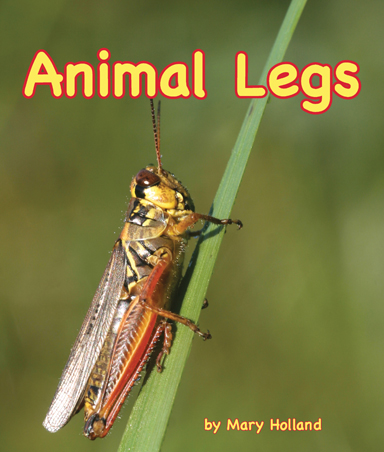
Bend your knees or jump up and down, how do you use your legs?
Compare how your legs work with the action of a frog’s legs or the webbing of an otter’s feet in Mary Holland’s new release Animal Legs. This is the third book in the Animal Anatomy & Adaptations series, and a perfect place for young readers to find amazing facts about the lives of animals found in their backyard.
We asked Mary Holland about her inspiration for Animal Legs and here is part of that interview.
A: Whose Animal Legs do you find most interesting?
MH: I’m afraid this is too hard a question to answer, as I find the many different ways that animals use their legs equally interesting. One of my favorites is a mole’s front paws. They look just like paddles to me, and the perfect tools to dig with. I also find the flap of  skin that goes from a flying squirrel’s front legs to its back legs and allows it to glide through the air a remarkable adaptation. The fact that katydid ears are on their legs is pretty amazing, too!
A: Is there an animal/fact that you wish you could have included in the book or series but it just didn’t fit?
MH: There are so many animals that have such interesting feet and legs that I can’t even begin to count them, but one group that may have the most is insects. I could only fit a few of them in the book. Grasshoppers “sing” by rubbing their legs against their wings! Have you ever looked closely at a cicada’s front legs? They are pretty scary looking! Butterflies taste with their feet!
A: What is the most unusual predicament you have faced photographing an animal?
MH: I got very close to a young skunk in order to photograph it, and before I knew it, I was covered with skunk spray.
I once was trying to find a porcupine at night that was up in a tree, screaming its head off, and suddenly it fell to the ground about three feet from me. I almost had a head full of quills!
I was tracking a bobcat in late spring that had crossed a beaver pond, and the ice, which had started to melt, gave way (I weighed a lot more than the bobcat) and I fell through the ice into the cold water with snowshoes on. Fortunately, I could touch bottom with the tips of my snowshoes and managed to get out of the pond!
A: What would you like to share with young children about your love for nature?
MH: I feel so very lucky, as each day I get to discover something new. I never know what I’m going to find. I head outdoors, and go on what is to me very much like an Easter egg hunt – I look for animals and their signs and rarely do I come home without having found something new to observe and admire.
A: What do you have coming up next?
MH: I am working on two books. One is called Naturally Curious Day by Day. It describes two or three different animals or plants that you might see each day of the year. I am also writing a book called Otis the Owl, about a young barred owl.
Otis the Owl will fly onto bookshelves in the spring of 2017.
Learn more about Mary’s new book Animal Legs on Arbordale Publishing’s website. For daily updates with amazing animal facts and photos, follow Mary’s blog Naturally Curious with Mary Holland.


By: Cassandra Gill,
on 9/22/2016
Blog:
OUPblog
(
Login to Add to MyJacketFlap)
JacketFlap tags:
teaching methods,
behavioral development,
cognitive youth development,
Craig Winston LeCroy,
elementary teaching,
Jenny McCullough Cosgrove,
Books,
teaching,
learning,
Education,
Multimedia,
young children,
teaching strategies,
school children,
Infographics,
group work,
Social Work,
youth development,
Social Sciences,
*Featured,
Online products,
Add a tag
From student presentations, to lectures, to reading assignments, and so much more, teachers today have a wide variety of methods at their disposal to facilitate learning in the classroom. For elementary school children, group work has been shown to be one strategy that is particularly effective. The peer-to-peer intervention supports children in developing cognitively, emotionally, behaviorally, and socially. Group work encourages children to expand their perspectives on the world.
The post Group work with school-aged children [Infographic] appeared first on OUPblog.
By: Brittany Hobson,
on 9/9/2016
Blog:
OUPblog
(
Login to Add to MyJacketFlap)
JacketFlap tags:
Africa scholarship,
African Authors,
African Studies Association,
Cambridge University African Studies Institute,
Celia Nyamweru,
Kenyatta University,
Nyayo Philosophy,
research funds,
Education,
Journals,
Politics,
Kenya,
social networks,
Social Sciences,
academic publishing,
*Featured,
African Affairs,
african based scholars,
Add a tag
In an effort to address current discussions regarding Africa-based scholars in academic publishing, the editors of African Affairs reached out to Celia Nyamweru for input from her personal experiences. Celia Nyamweru spent 18 years teaching at Kenyatta University (KU) and another 18 years teaching at a US university with a strong undergraduate focus on Africa.
The post Africa-based scholars in academic publishing: Q&A with Celia Nyamweru appeared first on OUPblog.

By:
Cynthia Leitich Smith,
on 9/7/2016
Blog:
cynsations
(
Login to Add to MyJacketFlap)
JacketFlap tags:
education,
gender,
Don Tate,
Chris Barton,
board books,
Muslim,
disability,
biracial,
marketing,
diversity,
Canada,
picture books,
Add a tag
By
Cynthia Leitich Smithfor
CynsationsOver the summer, the children's-YA book community has continued discussing diversity, decolonization, authenticity and representation both throughout the body of literature and the industry. Here are highlights; look for more in quickly upcoming, additional update posts.
Mirrors? Windows? How about Prisms? from Uma Krishnaswami. Peek: "...cultural content in children’s books needs to be woven into the story so the authors intention is not stamped all over it." See also Uma on
Tolstoy Was Not Writing for Me.
Twelve Fundamentals of Writing The "Other" and The Self by
Daniel Jose Older from Buzzfeed Books. Peek: "Every character has a relationship to power. This includes institutional, interpersonal, historical, cultural. It plays out in the micro-aggressions and hate crimes, sex, body image, life-changing decisions, everyday annoyances and the depth of historical community trauma."
Diversity in Book Publishing Isn't Just About Writers -- Marketing Matters, Too by Jean Ho from NPR. Peek: "For past projects, she has researched segmented audiences ranging from retired African-American women's books clubs, South Asian soccer organizations, Trinidadian-interest media outlets both stateside and abroad, to extracurricular programs geared toward South Bronx teens."
Looking Back: Diversity in Board Books by Joanna Marple from We Need Diverse Books. Peek: "...that children as young as six months can judge others by the color of their skin. Even if a caregiver never mentions race, children may well use skin color on their own, along with other differences, to judge themselves and others."
Drilling Down on Diversity in Picture Books from CCBlogC. Peek: "We’re keeping track of the things people want to know. Just how many picture books have animal, rather than human, characters? How many books about African American characters are historical? How many feature LGBTQ families? Or Muslims? Or people with disabilities? How many are by first-time authors or illustrators?"
Children's Books and the Color of Characters by
Kwame Alexander from The New York Times. Peek: "They all believe I am writing about them. Why is this so much harder for the grown-ups? Is race the only lens through which we can read the world?"
On White Fragility in Young Adult Literature by
Justine Larbalestier from Reading While White. Peek: "...we white authors can support Indigenous authors and Authors of Color by reading their books, recommending their books, blurbing their books, and recommending them to our agents. When we're invited to conferences, or festivals, or to be in anthologies, make sure they're not majority white."
When Defending Your Writing Becomes Defending Yourself by Matthew Salesses from NPR. Peek: "Here is a not uncommon experience. Writer
Emily X.R. Pan was told by the white writers in her workshop that the racism in her story could never happen — though every incident had happened to her."
There Is No Secret to Writing About People Who Don't Look Like You: The Importance of Empathy as Craft by Brandon Taylor from LitHub. Peek: "The best writing, the writing most alive with possibilities, is the writing that at once familiarizes and estranges; it’s writing that divorces us from our same-old contexts and shifts our thinking about ourselves and the world around us."
How Canada Publishes So Much Diverse Children's Literature by Ken Setterington from School Library Journal. Peek: "Considering that the entire Canadian market is about the size of the market in California alone (roughly 36 million), publishers must rely on sales outside of the country."
Biracial, Bicultural Roundtable (
Part One,
Part Two) by Cynthia Leitich Smith from We Need Diverse Books. Peek: "According to a 2015 Pew study, 6.9 percent of the U.S. population is biracial. According to the 2010 Census, between 2000 and 2010, the number of people identifying themselves with more than one race rose from 6.8 million to 9 million."
Cynsational Screening Room Related Links
By: KatherineS,
on 9/2/2016
Blog:
OUPblog
(
Login to Add to MyJacketFlap)
JacketFlap tags:
Studying,
revision tips,
Very Short Introductions,
education psychology,
Social Sciences,
*Featured,
conditioning,
Educational Reform,
animal conditioning,
Learning: A Very Short Introduction,
Mark Haselgrove,
Pavlov’s Dog,
retrieval practise,
theory of conditioning,
Sociology,
teaching,
learning,
Education,
Add a tag
You are probably familiar with animal learning and conditioning. You probably know that certain behaviours in your pet can be encouraged by reward, for example. You may also know something of the science behind animal conditioning: you may have heard about Pavlov’s drooling dogs, Skinner’s peckish pigeons or Thorndike’s cunning cats. However, what you may not know is that the scientific study of animal conditioning has provided psychologists with an armoury of principles about how training can be most effective.
The post Conditioning in the classroom: 8 tips for teaching and learning appeared first on OUPblog.
By: Carolyn Napolitano,
on 8/25/2016
Blog:
OUPblog
(
Login to Add to MyJacketFlap)
JacketFlap tags:
Books,
Sociology,
Education,
community building,
American Red Cross,
YMCA,
Social Work,
community development,
Social Sciences,
buddy system,
*Featured,
Psychology & Neuroscience,
buddy bench,
Coming of Age the RITE Way,
David Blumenkratz,
swimming lesson,
Youth and Community Development through Rites of Passage,
Add a tag
What would be the impact if our current policy to insure safety and prevent drowning were to pay people to swim with each swimmer? No one could go swimming unless they had a paid professional, or paraprofessional, swim with them. Our present policy in human services and mental health is kind of like paying people to insure the safety and well-being of others.
The post Building community: lessons from swimming appeared first on OUPblog.
By: Lisa Kramer,
on 8/12/2016
Blog:
OUPblog
(
Login to Add to MyJacketFlap)
JacketFlap tags:
Books,
literacy,
Education,
India,
education policy,
pedagogy,
indian politics,
free education,
Social Sciences,
*Featured,
compulsory education,
indian education,
NFE,
R. V. Vaidyanatha Ayyar,
RTE act,
The Holy Grail: India's Quest for Universal Elementary Education,
universal elementary education,
Add a tag
Two factors contributed to the quantum leap that the idea of district planning made. First was the Total Literacy Campaign which caught the nation’s attention; the success of quite a few districts in becoming ‘totally literate’ imparted a new thrust to UPE because it was realised that that success would be ephemeral if an inadequate schooling system spawned year after year a new brood of illiterates.
The post A commemoration and a counter-revolution in the making appeared first on OUPblog.
By: Brittany Hobson,
on 8/6/2016
Blog:
OUPblog
(
Login to Add to MyJacketFlap)
JacketFlap tags:
Social Sciences,
academic publishing,
*Featured,
citation,
African Affairs,
african based scholars,
african scholarship,
citation penalty,
Journal of Modern African Studies,
Ryan C. Briggs,
Scott Weathers,
africa,
Education,
Journals,
Politics,
gender,
scholarship,
Add a tag
In an effort to address misconceptions about gender and location in relation to academic publishing in Africa, the editors of African Affairs reached out to Ryan C. Briggs and Scott Weathers to discuss the findings from their recent research in more detail.
The post Gender and location in African politics scholarship: Q&A with Ryan C. Briggs and Scott Weathers appeared first on OUPblog.
By: JulieF,
on 7/30/2016
Blog:
OUPblog
(
Login to Add to MyJacketFlap)
JacketFlap tags:
Books,
The New ABCs of Research,
Joint Statistical Meeting,
teams in classes,
teamwork strategies,
Education,
collaboration,
Mathematics,
coursework,
Social Sciences,
*Featured,
Science & Medicine,
Ben Shneiderman,
Achieving Breakthrough Collaborations,
#JSM2016,
American Statistical Association,
teamwork,
educators,
team building,
Add a tag
The capacity to work in teams is a vital skill that undergraduate and graduate students need to learn in order to succeed in their professional careers and personal lives. While teamwork is often part of the curriculum in elementary and secondary schools, undergraduate and graduate education is often directed at individual effort and testing that emphasizes solitary performance.
The post Teaching teamwork appeared first on OUPblog.
By: Amelia Carruthers,
on 7/24/2016
Blog:
OUPblog
(
Login to Add to MyJacketFlap)
JacketFlap tags:
Books,
Education,
winner,
Geography,
competition,
asthma,
Panama,
Travel Abroad,
inhaler,
*Featured,
Science & Medicine,
Health & Medicine,
clinical skills,
medical student,
clinical placement,
Oxford Handbook of Clinical Medicine,
junior doctor,
asthma spacer,
Clinical Placement 2016,
Floating Doctors,
Iona Maxwell,
Medical Elective,
rio canna,
Work Abroad,
Add a tag
This May, our 2016 Clinical Placement Competition came to a close. In partnership with Projects Abroad, we offered one lucky medical student the chance to practice their clinical skills, with £2,000 towards a clinical placement in a country of their choice. We asked entrants to send a photograph with a caption, explaining “What does being a doctor mean to you?”
The post Announcing the winner of the 2016 Clinical Placement Competition appeared first on OUPblog.
By: Arbordale Publishing,
on 7/1/2016
Blog:
(
Login to Add to MyJacketFlap)
JacketFlap tags:
Arbordale Posts,
4thofJuly,
chemisty,
history,
celebration,
Education,
science,
Fireworks,
physics,
Independence day,
Add a tag

Independence Day is here; this weekend fireworks will light up the sky around the nation in celebration. But…how are fireworks made? And…who thought to send brightly colored explosions into the sky?
For Arbordale celebration and science go hand in hand, so here is a quick history chemistry and physics lesson in fireworks!
History
The Chinese were experimenting with exploding tubes of bamboo as early as 200 B.C., but it wasn’t until 900 A.D. that Chinese chemists found a mix that when stuffed in bamboo and thrown in a fire produced a loud bang. Over the next several hundred years experimentation lead to the first rockets, but as fire power began to fly in the air, celebrations also began to light up the sky.
Soon firework technology began to spread across Europe to Medieval England. The popularity of celebrating war victories and religious ceremonies with fireworks displays grew. The Italian pyrotechnic engineers are first credited with adding color to their fireworks in the 1830’s. The Europeans brought their knowledge of fireworks to America, and the first recorded display was in Jamestown in 1608.
 John Adams predicted that fireworks would be part of the Fourth of July celebrations on July 3, 1776 with a letter to Abigail Adams where he said, “I am apt to believe that it will be celebrated by succeeding generations as the great anniversary festival. It ought to be commemorated, as the Day of Deliverance by solemn Acts of Devotion to God Almighty. It ought to be solemnized with Pomp and Parade, with Shews, Games, Sports, Guns, Bells, Bonfires and Illuminations from one End of this Continent to the other from this Time forward forever more.”
And so on the first anniversary of the country and each year we celebrate with Pomp and Parade, ending the day with Illuminations!
The Science
The Chinese put bamboo in the fire and the air pocket would make a bang when it was heated to a certain temperature. Today we have much better technology and fireworks are a little more complicated. The basic science has not changed, but the delivery methods have gotten much more accurate and high tech giving celebrators a bigger better show.
We know a tube is our vehicle, but how does it travel to the sky?
A mix of combustible solid chemicals is packed into the tube, along with neatly arranged  metals. The metals determine the color (copper=blue/green, calcium=red), and the arrangement determines shape (circle, smiley faces, stars).
When the heat activates the chemicals, the excitement begins. The reaction is started by either fire or electricity through a fuse. As the heat begins to travel into the tube the chemicals become activated that reaction produces other chemicals such as smoke and gasses. The chemical reaction creates the release of energy; the energy is converted into the heat, light, sound and movement that we see up in the sky.
Physics takes over!
The Conservation of Energy Law says that the chemical energy packed inside that tube is equal to the energy of the released plus the energy left after the reaction. A professional firework in a large tube packed with chemicals creates a much bigger light show and bang than a tiny firecracker that jumps with a small bang.
The fireworks fly because of Newton’s Third Law. “For every action, there is an equal and opposite reaction” When the gasses are released from the chemical reaction they shoot down with force cause the firework to lift up into the air.
Finally, Why are fireworks always symmetrical?
 Conservation of Momentum says that momentum must be the same before and after the explosion. In other words, when the explosion occurs the movement must be balanced.
Now that you have learned a little about the science behind fireworks enjoy watching them on this Independence Day. But remember, fireworks are dangerous and best left to the professionals!


By:
Mayra Calvani,
on 6/25/2016
Blog:
Mayra's Secret Bookcase
(
Login to Add to MyJacketFlap)
JacketFlap tags:
Picture book,
school,
education,
parenting,
frog,
writing for children,
early reader,
kids health,
eyeglasses,
Add a tag
Before becoming an author, Michelle Nott enjoyed being a French teacher (pre-K to university levels) in the U.S., working for a French company in Paris and an art gallery in NYC. She has also edited and written articles for numerous on-line and print magazines in the American and European markets.
In 2004, Michelle moved to Belgium. When she noticed that her daughters' book collection included more French titles than English ones, she decided to put her creative writing degree to use. Many of these early stories can be found on her blog Good Night, Sleep Tight where she also reflects on raising Third Culture Kids.
In 2015, Michelle and her family returned to the U.S. But with American and French citizenship, they travel to Europe regularly. Their favorite places include the French Alps, the Belgian countryside, and the Cornish coast in the UK. Her family's life and adventures prove great inspirations for her stories.
Freddy, Hoppie and the Eyeglasses is Michelle's first book for children. Her future children's books are represented by Essie White at Storm Literary Agency. She is a member of SCBWI, Children's Book Insider and Houston Writer's Guild.
Connect with Michelle on the web:
@MimiLRN
What’s inside the mind of a picture book/early reader author?
Children! Their daily lives. New experiences. Scary experiences. Loving experiences.
What is so great about being an author?
One of the best parts of being an author is having an excuse to write every day, to dream every day, to invent people and places and other worlds. As an author, I also love interacting with my readers and the adults in their lives. I really enjoy book signings. And as I used to be a teacher, I am thrilled get back in the classroom for what I loved most about teaching – the interaction and excitement that comes from working with students.
When do you hate it?
Hate being an author?? This question perplexes me.
What is a regular writing day like for you?
A regular day is irregular. I try to get up at 5:30 and write before breakfast, go for a bike ride or a swim, come back and write for at least four more hours, take a break when my daughters come home from school, and then write more or read in the evening. When my day pans out like this, I feel like a superhero. But, there are days when life puts a wrench in the plan or I may have interviews, school visits, or social media or other networking opportunities planned.
Do you think authors have big egos? Do you?
I think some people have big egos and some don't. I don't think authors would have any bigger ego than anyone else. As far as the writers I know, I think we all understand that writing is a tough business and whether or not someone is published yet does not make them the better person. Everyone's writing journey is different.
So no, I don 't think I have a big ego either. There is so much more I can learn and do to improve my craft.
How do you handle negative reviews?
Publishing is a very subjective business. And readers each have their preferences when it comes to literature. As there are lots of published books out on the shelves that I do not particularly appreciate, I keep that in mind if someone happens to not like my book. It's just part of life. You can't please everyone all of the time.
How do you handle positive reviews?
It always makes me smile when I read positive remarks about my books. I'm always very flattered when people take the time to say something nice about my work.
What is the usual response when you tell a new acquaintance that you’re an author?
Most people find it intriguing and mention how they plan on writing a book once they retire or ask what kind of books I write. When I say I write for children, the reactions are mixed. Most people find it very admirable, while others may say it's “adorable” and not think any more about it.
What do you do on those days you don’t feel like writing? Do you force it or take a break?
I do really try to sit and write no matter how I feel. But if nothing is coming, then I go outside. Usually a swim, a bike ride or a walk does the trick and then I rush home to write down all my ideas.
Any writing quirks?
I try to put myself in the atmosphere of the world in which I'm writing. For example, when working on a MG fantasy that takes place under water, I put out seashells and a sea-salt scented candle on my desk while listening to beach sounds. While working on a MG magical realism story that takes place in Brussels in the 1930s, I surrounded myself with images of particular places in Brussels and listened to French music of the era.
What would you do if people around you didn’t take your writing seriously or see it as a hobby?
Probably at first, on the inside, I'd be fuming. But then I'd calm down and remind myself that they just don't understand. They may never have been so overtaken by a sunset, or the scent of an unexpected plant in the forest, or the feel of a child's cheek on his to want to write it down so to never forget it, and to incorporate it into a story for other people to experience as well.
People who see writing as a hobby may not realize how touched their lives have been by a good book, or a beautiful phrase.
They may not realize that writing is the same as any profession. A certain amount of inner talent does play a role, but so does a lot of perseverance, discipline and hard work.
Some authors seem to have a love-hate relationship to writing. Can you relate?
I love it. Always.
Do you think success as an author must be linked to money?
Absolutely not. Sure, it would be nice if all writers could actually make a decent living from their words. But I knew from the start what a high expectation that is.
For me, success is when families, librarians, and teachers are enjoying my books and using them to send a positive message to children.
What had writing taught you?
Writing has taught me that many, if not all, of my life experiences have served some purpose. Even though many years went by before jumping into children's writing, all those years were valuable and rich with emotions and adventures that I can use in my current stories.
////////////////////////////////////
Title: FREDDY, HOPPIE AND THE EYEGLASSES
Genre: Early Reader
Author: Michelle Nott
Website: www.authormichellenott.com
Publisher: Guardian Angel Publishing
About the Book:
Freddy and his imaginary frog Hoppie jump into each day. But numbers smudge, words blur, and classmates snicker. By the end of the week, there is no more spring in their step. Freddy knows he should tell his mom about the trouble they are having, but how?
View Next 25 Posts





