JacketFlap connects you to the work of more than 200,000 authors, illustrators, publishers and other creators of books for Children and Young Adults. The site is updated daily with information about every book, author, illustrator, and publisher in the children's / young adult book industry. Members include published authors and illustrators, librarians, agents, editors, publicists, booksellers, publishers and fans. Join now (it's free).
Login or Register for free to create your own customized page of blog posts from your favorite blogs. You can also add blogs by clicking the "Add to MyJacketFlap" links next to the blog name in each post.
Blog Posts by Tag
In the past 7 days
Blog Posts by Date
Click days in this calendar to see posts by day or month
Viewing: Blog Posts Tagged with: collaboration, Most Recent at Top [Help]
Results 1 - 25 of 110
How to use this Page
You are viewing the most recent posts tagged with the words: collaboration in the JacketFlap blog reader. What is a tag? Think of a tag as a keyword or category label. Tags can both help you find posts on JacketFlap.com as well as provide an easy way for you to "remember" and classify posts for later recall. Try adding a tag yourself by clicking "Add a tag" below a post's header. Scroll down through the list of Recent Posts in the left column and click on a post title that sounds interesting. You can view all posts from a specific blog by clicking the Blog name in the right column, or you can click a 'More Posts from this Blog' link in any individual post.
Assessment has played a big role in my shifts as a writing teacher. Colleagues have helped me get there. Come see my journey of the people in my life who have not only impacted the writers in my classroom but have impacted myself as a teacher. Assessment strengthens all of us when done right!
As learners ourselves, we know students need a supportive culture where taking risks, asking questions, and understanding the value of the process is omnipresent.
The capacity to work in teams is a vital skill that undergraduate and graduate students need to learn in order to succeed in their professional careers and personal lives. While teamwork is often part of the curriculum in elementary and secondary schools, undergraduate and graduate education is often directed at individual effort and testing that emphasizes solitary performance.
Rucka and Lark have been one of my favorite pairings ever since the Half a Life arc in Gotham Central, and their work has only gotten stronger and more cohesive since that was first published. They’re now deep into their most ambitious collaboration to date, the Image Comics series Lazarus. With the freedom of creator-owned […]
0 Comments on Interview: Greg Rucka and Michael Lark on Lazarus and What Makes Them Click as of 1/1/1900
Our local school is building a Natural Playground, and they are holding several fundraisers. I was recently asked to be part of a Really Good Idea for a fundraiser, which I think would make a fun library program! The idea, which was hatched and hosted by the owner of our local craft shop, was this: local artists would each lead a classroom in painting a large 2-foot square painting which would then be auctioned off.
I was happy to find out that I was chosen to work with the Grade Primary class (here in Nova Scotia that translates to Kindergarten). I went with a big flower for them to paint. I had them in groups of 3 — the painting had seven areas to be painted, and I had each group work on a section. I might be biased, but I love our painting the most. I love the colours and the freedom of expression that 4 & 5 year olds are unafraid to exhibit. I really didn’t paint much at all— I gave them tips, and once had to quickly grab a paintbrush from an over-exuberant artist who was about to turn the whole thing into a big smear.
I started in the classroom with a stack of books and talked to them about art in picture books. I read Viva Frida by Yuyi Morales to them and we talked about the art in that book. Their teacher had been part of some workshops I did earlier in the school year, and she had them looking closely at the art in picture books, so this group of 4-5 year olds were pretty savvy about examining the pictures. We had a lively discussion about the art and how everyone can do art. I was impressed that they were able to determine the medium, and talk a little about shape and colour.
I love to combine literacy with art lessons, and this project – and a Caldecott honour book – allowed me to do that. We also did a really great painting which will help raise money for a playground that will further their learning in the great outdoors.
So— to turn this into a library program, you could buy several large canvases (you can get them for a pretty decent price at dollar stores these days). Draw the outlines on the canvases, and have your program participants paint them in, using acrylic paint (again, a fairly inexpensive investment at dollar stores). These could hang in the children’s area, could be donated for charity fundraisers, or you could auction them as library fundraisers. Add a few books on art and a few art picture books, and you’ve got yourself a fairly simple, low-cost program that kids will remember each time they see those paintings. Host an art show in your library and you’ve got another program that will draw in the families of the kids who did the paintings. Art and literacy. They make good companions.
In recent SPLC posts on this blog, we’ve talked building relationship with schools, starting points and more. So let’s say you have a school contact and would now like to leverage that relationship to reach even more teachers, kids, and parents. What are some events that a public librarian could participate in that would be a valuable investment? Here are some ideas:
Pre-service and Staff Development Days: Most school districts schedule several pre-service or staff development days that occur right before school starts. The students are not be at school, so this is a great time to talk with just teachers. The public library could be a great resource-sharing presenter during a lunch break, or even during a regular session. Because pre-service days happen before school begins, try to schedule this before the end of the school year.
Back-to-School Nights and Kindergarten Round-Ups: Your public library could set up a table outside the school office and share important information for parents and kids. Having a fun activity like an I-Spy Board can be an engaging activity to keep students busy at your table while you share information about the library with parents.
PTO/Parent Club Meetings: Some school programs, like Head Start, require parent meetings to feature a presentation by a community partner. Why not the public library? You can share tips for using the library successfully (to calm the anxiety around accruing fines), and special resources that parents may not know about (I share our Cultural Passes to Adventure). You could even offer to host the meeting at the library!
Pre-Assessment Party: About a week before standardized assessment time begins, many schools (particularly Title I Schools) hold special family nights to gear up for testing. Public librarians can be on-hand to share how recreational reading can help a student do well in school.
Familiarize yourself with the school district’s calendar and look for other unique outreach opportunities. Participating in these events shows your community’s families that you are on the same page, and you care about what is important to them.
School librarians: what special events does your school district have?
Public librarians: what unique school events have you attended as a library representative?
S. Bryce Kozla is the Youth Services Librarian for Washington County Cooperative Library Services in Oregon. Bryce blogs at brycedontplay.blogspot.com and tweets at @plsanders. She is a member of the AASL/ALSC/YALSA Interdivisional Committee on School-Public Library Cooperation.
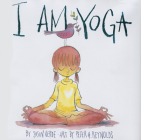
Yoga isn’t only for adults. More American parents are introducing their children to the ancient practice which originated in India. Preliminary studies show it is beneficial for reducing stress and improving mood. Certified yoga instructor and author Susan Verde wrote I Am Yoga, a picture book which helps children explore mindfulness through relationships and movement. The book is one of several kid lit collaborations between Verde and the New York Times bestselling author and illustrator Peter H. Reynolds. His relaxed illustration style helps convey Susan Verde’s message of peace, stillness of mind, and tranquility.
Susan Verde and StoryMakers host Rocco Staino were joined by — via satellite — kid lit singer and songwriter Emily Arrow. Arrow has written and performed songs based on children’s books. Together, Verde and Arrow collaborated on a song and music video for I Am Yoga. Emily Arrow’s song lyrics draw heavily from the book. Arrow’s latest CD, “Storytime Singalong, Volume 1”, is a combination of songs based on popular kid lit and tunes for young readers.
Watch Susan Verde’s interview at the Westchester Children’s Book Festival.
We’re giving away three (3) prize packs including of copy of Susan Verde’s picture book, I AM YOGA and Emily Arrow’s STORYTIMESINGALONG, VOL.1 CD. The giveaway ends at 11:59 PM on May 25, 2016. ENTER NOW!
I Am Yoga Written by Susan Verde, illustrations by Peter H. Reynolds
Published by Harry N. Abrams
An eagle soaring among the clouds or a star twinkling in the night sky … a camel in the desert or a boat sailing across the sea yoga has the power of transformation. Not only does it strengthen bodies and calm minds, but with a little imagination, it can show us that anything is possible. New York Times bestselling illustrator Peter H. Reynolds and author and certified yoga instructor Susan Verde team up again in this book about creativity and the power of self-expression. I Am Yoga encourages children to explore the world of yoga and make room in their hearts for the world beyond it. A kid-friendly guide to 16 yoga poses is included.
ABOUT SUSAN VERDE
Susan Verdeis an award-winning children’s book author, elementary educator, and a certified children’s yoga instructor. Her books highlight the unique manner in which children see the world. Her stories focus on their interactions with their surroundings with emphasis on problem solving in a calming and mindful way. Susan’s books are used to teach children how to express gratitude and to support each other.
Susan became a certified kids yoga instructor and children’s book author, after several years in the education field. “Her stories inspire children to celebrate their own, unique stories and journey. Her writing also inspires adults to let their inner child out to dream of infinite possibilities… and maybe come out for a spontaneous game of hopscotch every now and then.”
Susan’s latest book, The Water Princess, will be published in late 2016. The book is another collaboration with he bestselling, award-winning, author and illustrator, Peter H. Reynolds. Peter and Susan have collaborated on The Museum, You & Me, and I Am Yoga. Susan lives in East Hampton, New York with her three children and dog.
Emily Arrow is the 2015 winner of the John Lennon Songwriting Contest in the Children’s Category for her song “The Curious Garden Song”. The song was inspired by the book THE CURIOUS GARDEN by Peter Brown. Emily was also a finalist in the 2015 Great American Song Contest and the 2014 John Lennon Songwriting Contest. Emily Arrow creates literature inspired music for children, cultivating an appreciation and love for singing, songwriting, literature, and art. She performs storytimes of her original music regularly in Los Angeles at Once Upon A Time Bookstore and Children’s Book World. Emily is touring in support of the album at schools, bookstores, and libraries around the country!
Originally from Ohio, Emily played the piano, read a lot of books, and led a neighborhood “kids only choir.” Fast forward to now and…she’s still silly, she still sings incessantly, and she still loves books! She is a graduate of Berklee College of Music in Boston and earned her graduate-level teaching certification in Orff-Shulwerk Levels I & II. After graduating Emily became a K-6 music teacher at a performing arts-based elementary school in Los Angeles. During her time teaching, she found that her passion was collaborating with the library, art, and technology departments. Which led her to her current career as a kidlit singer/songwriter!
Oh my gosh what a great ,creative and funny book interview.
The book is so wonderful for kids to read and to learn yoga.
The drawings are so cute.
And the song was a perfect “Fit” with the book.
Rocco was so funny-a great sport-and for a first timer doing yoga –‘Great Job’.
Rocco you should definitly be a comedian–so funny.
Super Interview.
patte
Kristin said, on 5/12/2016 11:23:00 AM
Great interview! Sweet song and kid-topic. Love, love it! Great job Susan, Emily, and as always, Rocco!!
As I participated in Kindergarten Round Up at Sisters Elementary School last week and recognized 90 percent of the families in the audience, I was reminded of the amazing connection the public library and the school have. This made me smile. Last year, my Get Ready for Kindergarten story time at the library had the largest attendance in years! This was only possible with the support, time and enthusiasm of Stephanie Jensen, Title I Teacher and Becky Stoughton, Principal at Sisters Elementary School. They talked with new families at the school, sent out an email and a voice recording to all families with students attending kindergarten in the fall. The voice recording was amazing! But this connection didn’t happen overnight.
For the past six years, I’ve watched our relationship grow. What started out as a once or twice a year school visit or classroom(s) visit to the library has turned into a regular monthly connection. I have an amazing connection with all of the teachers but I have to give a huge shout out to Stephanie, reading specialist and overall extraordinary woman. Our weekly discussions at the public library when she was returning or checking out piles and piles of books turned into reading programs and the programs turned into parent meetings and the meetings turned into Book Bingo, family reading nights and more! Together with the encouragement and wonderful communication from Principal Becky, we created a new atmosphere of collaborating ideas. The connection grew and so did the events. Sometime the ideas were extreme – creating a live version of The Dot by Peter Reynolds and sometimes quite simple-open house-setting up a table of library information, iPad sharing our website and free giveaways-stickers, book marks, etc. Overall, each event connected families to books, education and fun!
Parent Information Night photo by Stephanie Jensen
“The positive partnership established between Deschutes Public Library and the Sisters School District highlights the power of coming together to support students and families with local resources. Our schools, families and community benefit and thrive as a result of working together and connecting families with meaningful and engaging materials to support learning at home.” –Stephanie
By now you’re thinking, this is great! We do this every day too. But for me it’s been a goal to strengthen our relationships with our schools and community. A goal to see our public library filled with families excited about information and books, making the library part of their weekly routine, making the library their space: connecting families with new books and new resources. After each event, school visit or family night, I recognize more and more families in the library. Maybe it’s the following day and a young boy is getting a library card for the first time or maybe it’s a week later and a family attends a LEGO Block Party program. All of the above make me smile. I realize we still have a long way to go but I’m excited about the possibilities. I feel extremely lucky and appreciate all of the Sisters Elementary School staff’s time, excitement and energy. Parents too! – So many amazing parent/guardian volunteers.
“The Sisters Library provides added support and helps our kids engage in a different type of learning outside our school walls.” Principal Becky
Top 3 favorite connections and collaborations:
Book Bingo and Newsletter photo by Paige Bentley-Flannery
Book Bingo: A bingo card filled with library and school activities-weekly prizes and a free book after completing bingo. Activities are completed at home, in the classroom and at the library.
Sisters Parent Teacher Community meetings: A variety of morning or afternoon meetings to discuss reading nights, open houses, programming, special events, share new library books and library information. The meetings turn into task groups, special event planning and so many great discussions.
Family Reading Nights at Sisters Elementary School: A night filled with interactive stories, activities and information. A different theme each month.
Book Bingo display photo by Paige Bentley-Flannery
And more:
School Monthly Newsletters Teacher Requests Book Lists
Book Displays in the Library
Kindergarten Round Up
After School Programs
Interactive Story Activities
School Displays in the commons area
Poetry Palooza
Silly Stories
Classroom visits to the library
Summer Reading promotion
Common Core Reading Night
School Open House
Listen: Audio Books before the holidays Art Gallery at the library and school
Please share your collaboration stories in the comments below.
Paige Bentley-Flanneryis a Community Librarian at Deschutes Public Library. For over fifteen years–from Seattle Art Museum to the New York Public Library to the Deschutes Public Library-Paige’s passion and creative style for art, poetry and literature have been combined with instructing, planning, and providing information. Paige is currently serving on the ALSC Notable Children’s Book Committee, 2015 – 2017. She is a former Chair of the ALSC Digital Content Task Force and member of the ALSC Great Websites Committee.
As I attended the North Carolina Library Association’s (NCLA) Executive Board Meeting this past week in Black Mountain, NC at the YMCA Blue Ridge Assembly, (https://www.blueridgeassembly.org/) I was struck by the passion of my colleagues from across the state who are committed to improving the lives of our library patrons and communities by brainstorming new ideas to encourage change. As Vice Chair/Chair Elect of the Youth Services Section of the NCLA, I’m excited to see how these ideas bring growth and new possibilities. It makes me consider how ideas are able to move beyond the planning stage to become fully fledged concepts, whether these ideas take root as a project within our individual libraries or grow to strengthen the existing work of our professional associations. Passion, people, and purposeful promotion are all necessary to take those valuable ideas beyond board room discussions and move them into practical implementation within our communities.
How do we turn ideas into reality? (Image provided by Thinkstockphotos.com)
The Power of Passion
As we all face more and more commitments, it is critical that our efforts are targeted to the services that truly matter. When we are passionate about an idea, we are more likely to stay connected to ensure its successful implementation. Self-motivation is key to develop our passion into a purpose. This passion is necessary to ensure new concepts move forward from an individual’s idea to an organization’s goal. Passion appears to be at the heart of our successful initiatives, such as evidenced by our LibrariCon attendance. LibrariCon is our Cumberland County Public Library & Information Center’s annual anime/graphic novel/sci-fi mini convention featuring anime viewing, panels and forums, Artist Alley, Chibi Corner, Manga Lounge, Cosplay Runway, and more. As we prepare for its 10 year anniversary celebration, this event has evolved into a destination experience for our customers due to the passion and dedicated commitment of library staff and volunteers.
The Need for People
Connections with people help our ideas to soar. (Image provided by Thinkstockphotos.com)
No matter the passion, great ideas need a team of people to make them a reality. Whether it’s a committee coordinating a conference or introducing a new service to a pre-existing summer reading program, it is necessary to bring more staff on board to assist with the details of any project. Internally, our system’s recently formed Youth Services Advisory Council (YSAC) serves as a forum for members of Administration and Youth Services Managers to discuss current issues in our field and to form sub-committees on various projects to ensure ideas are reviewed. Through staffers’ commitment to move youth services forward, we have developed innovative ideas to enhance our children’s summer reading program, have planned early literacy centers at our branch locations, and have streamlined festival programming.
Purposeful Promotion
Promotion develops individual ideas. (Image provided by Thinkstockphotos.com)
Promotion and purpose go hand in hand in ensuring the best ideas are strengthened and receive necessary support when evaluated. It’s necessary to examine our current projects to guarantee our library’s mission and vision are best supported by our current work. Sometimes the need to create new ideas helps to ensure our library’s goals remain relevant as our communities’ needs change. When we realized some of our families would appreciate a twist to the traditional story time routine, youth services staff developed a vibrant partnership with our local parks and recreation department to combine movement with stories and music. Advertised by word of mouth and through our system’s internal Community Relations Department, this vibrant series of story times has become a valuable addition to our busy programming schedule, successfully served by strong promotional efforts.
A passion, people, and promoting for a purpose are all necessary to make our best ideas bloom into reality. What ideas have you been excited about seeing develop into fruition? What tips have you learned to make your concepts connect? Please share in the comments below!
This month I am thinking about the trend of public libraries offering museum passes for check out. The idea is to partner with local museums and other fun, family-friendly, educational and/or cultural places and create an agreement that allows the library to circulate day passes to the partnering institutions. From the small amount of research I’ve done, I see there are many ways to go about doing this. Some libraries are high-tech and have web portals that allow patrons to print off museum passes from any computer. Some libraries have actual tickets that circulate like any other physical materials in the collection. Does your library have circulating museum passes? Do the tickets allow an entire family in to a facility for free? Do the tickets cover any kind of additional fees (like parking)?
Here are some examples of this kind of service – this is just a few, there are many more out there:
Please share your knowledge about how this program works. If you offer at your library, is it a popular service? How is this service funded – through donations or grants? Any words of wisdom to share? How many days is the ticket valid or how long can each patron keep it? Have you used this unique kind of circulating material as a patron? Tell me all about it in the comments.
I wanted to see if there were areas where we overlapped that might be used to promote more collaboration between school and public librarians. I noticed that we had similar standards although some of our elements may come under different standard headings. Some key places for collaboration are education, resources and digital access, professional development and advocacy. Below, I have listed standards from ALSC and YALSA that I felt correlated with our NC school librarian standards. You can match up your own state’s school librarian standards where mine are listed.
Educational Practices ALSC Standard I.5. Understands current educational practices, especially those related to literacy and inquiry.
ALSC Standard II.2. Instructs and supports children in the physical and digital use of library tools and resources, information gathering and research skills, and empowers children to choose materials and services on their own.
YALSA Standard II.1. Become familiar with the developmental needs of young adults in order to provide the most appropriate resources and services.
YALSA Standard VII.5. Instruct young adults in basic information gathering, research skills and information literacy skills – including those necessary to evaluate and use electronic information sources – to develop life-long learning habits.
NC SLMC Standard 1.a. School library media coordinators lead in the school library media center and media program to support student success.
NC SLMC Standard 4.a. School library media coordinators use effective pedagogy to infuse content-area curricula with 21st Century skills.
In order to facilitate your local public librarians’ ability to keep up with educational practices, make a point of sharing any new state educational guidelines that are issued and also any school improvement initiatives that your particular school is implementing. They may be able to facilitate your school meeting some of your initiatives. Each semester I have the public librarians and the college librarians come in to do a session with our seniors before they start their Graduation Projects. We instruct them on accessing the resources at the school library and also at the public and college libraries and review proper citation guidelines for using resources. We are discussing also having them come in next year to do sessions with our juniors.
Resources and Digital Access ALSC Standard II. 1. Creates and maintains a physical and digital library environment that provides the best possible access to materials and resources for children of all cultures and abilities and their caregivers.
YALSA Standard VI. 5. Be an active partner in the development and implementation of technology and electronic resources to ensure young adults’ access to knowledge and information.
NC SLMC Standard 3.a. School library media coordinators develop a library collection that supports 21st Century teaching and learning.
There are a number of public librarians from different states that are creating student access policies with school librarians so students can have easier access to digital and print resources. Charlotte-Mecklenburg in NC has successfully been running their One Access collaboration format for a year now. Our county is looking into developing a similar program. Currently our high school librarians have worked with the public library to provide digital access for our students. If there is a resource that you think would benefit your students and it is something that your library cannot afford, see if it is available at the public library and if there is a way that your students may be able to access it.
Programming ALSC Standard III.7. Delivers programs outside or inside the library to meet users where they are, addressing community and educational needs, including those of unserved and underserved populations.
YALSA Standard VII.3. Provide a variety of informational and recreational services to meet the diverse needs and interests of young adults and to direct their own personal growth and development.
NC SLMC Standard 4.c. School library media coordinators promote reading as a foundational skill for learning.
Who doesn’t want help with running a special program or author visit to your school. Public librarians are also good sources for book talks, helping with Battle of the Books events or collaborating on a makerspace activity, especially if you haven’t created one of your own yet. If your public library is located where your students live, see if you can help with afterschool programs or a weekend program, that way your students can see you in a variety of libraries and become aware that both librarians are there to support them.
Professional Development ALSC Standard VII.9. Participates in local, state, and national professional organizations to strengthen skills, interact with fellow professionals, promote professional association scholarships and contribute to the library profession.
YALSA Standard III2. Develop relationships and partnerships with young adults, administrators and other youth-serving professionals in the community be establishing regular communication and by taking advantage of opportunities to meet in person.
NC SLMC Standard 5.b. School library media coordinators link professional growth to their professional goals.
We all enjoy going to conferences, in part to exchange ideas with fellow librarians. But there is often the issue of lack of time and funds. Why not set up a local one-day conference and invite local school, public and academic librarians? I am a member of the Azalea Coast Library Association which covers several area counties; we are about to have our first one-day conference with participants from all types of libraries including librarians from our local hospital. No one has very far to travel and the very low registration fee includes lunch. Another idea is to set up an after-school or workday coffee break with your public librarians to share information about what is taking place in your libraries.
Advocacy ALSC Standard V.6. Communicates and collaborates in partnership with other agencies, institutions and organizations serving children in the community, to achieve common goals and overcome barriers created by socioeconomic circumstances, culture, privilege, language, gender, ability, and other diversities.
YALSA Standard III.3. Be an advocate for young adults and effectively promote the role of the library in serving young adults, demonstrating that the provision of services to this group can help young adults build assets, achieve success, and in turn, create a stronger community.
NC SLMC Standard 1.c. School library media coordinators advocate for effective media programs.
Working by yourself to advocate for a strong library program may be difficult at times but working with all local librarians together could provide opportunities to showcase the benefits to the community of not only the school library program but also the public library program. By collaborating on joint ventures, you will be better able to make the community aware of how library use from toddlers through young adulthood creates life-long learners, which benefits the community as a whole.
If you are the only librarian in your school you may sometimes feel (with budget and time constraints) that you have a difficult time meeting your own standards for evaluation. Remember that there are also public librarians you can collaborate with to make it easier for both of you to meet your own individual goals. Look through ALSC’s and YALSA’s competencies to find areas that you both share and that would benefit your program. There are many more standards that overlap with our own school librarian standards. Comment with any ideas that you have for connecting one of your school librarian standards with ALSC’s and YALSA’s standards. Or, if you are a public librarian point out a standard that you feel you would be able to collaborate on with a school librarian easily.
*YALSA’s revised standards are due to be published in the summer of 2016. Visit this link to see a draft of the updated competencies.
Joann Absi is the media coordinator at Eugene Ashley High School in Wilmington, North Carolina. She is a member of of theAASL/ALSC/YALSA Interdivisional Committee on School-Public Library Cooperation and currently blogs for Knowledge Quest.
Broadway’s hit show Hamiltonis nothing short of a cultural phenomenon: sold out until January 2017, its cast album just became a gold record, meaning it has sold more than 500,000 copies; meanwhile the cast recently performed live at the Grammy Awards and at the White House. For those not yet obsessed with the show, Hamilton mixes hip-hop with show tunes to tell the story of America’s “ten dollar Founding Father/without a father.” The cast is stunningly talented and diverse, and young people (and their friendly neighborhood librarians) across America are obsessed.
So how can we capitalize on this Hamilton hunger in the children’s library? True, the musical is based on a book, but not many 10 year-olds are wiling to haul an 800+ page, Pulitzer-prize winning behemoth to school. Prior to his recent fame, Hamilton was an oft-ignored Founding Father. In fact, Chernov’s book bills itself as the “first” full-length biography of the man, written nearly 200 years after he died. So what can we offer Hamilton‘s younger fans?
Luckily, offerings for the young reader are not as slim as you might think. The following books are in-print, well-reviewed, and fun to read:
Creativity, critical thinking, communication and collaboration are critical skills for children to learn so they can succeed in today’s world.
Use the books below and the guided questions to teach these concepts found in each story.
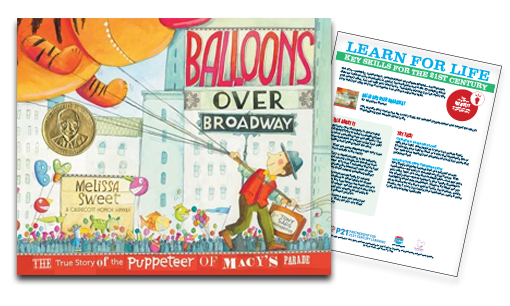
You’ll find a well-known fable told from another culture’s perspective, an inspiring tale about a family working together and the true story of the Macy’s Thanksgiving Parade. To view all the books chosen and to see all the tips and activities suggested for each book, visit the Learn for Life section.
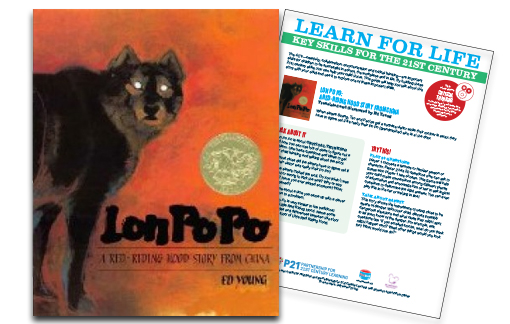
When sisters Shang, Tao and Paotze get a surprise visitor while their mother is away, they have to figure out if it’s really their Po Po (grandmother) who is at the door.
Lon Po Po is about critical thinking and how you can use lots of clues to figure out a problem. Use these questions and ideas to get your child thinking and talking about the story:
What clues did the sisters have to figure out
The sisters tricked the wolf. Do you think it was right or wrong to trick the wolf? Why or why not? Have you ever tricked someone? What happened?
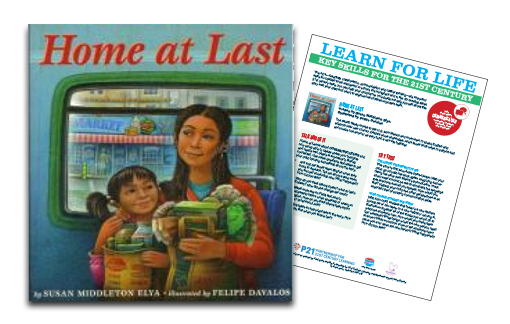
Home At Last written by Susan Middleton Elya, illustrated by Felipe Davalos
The Patiño family moves to the U.S. from Mexico and must learn to speak English and adapt to their new country. Despite some challenges, Ana’s family finds ways to support and encourage one another as they build a new life together.
Home at Last is about communicating and how being able to clearly share your thoughts and needs with others is important to feeling connected. Use these questions and ideas to get your child thinking and talking about the story.
Ana and her family learn English when they move to America. Tell me about a time when you learned something new. What happened? How did you feel?
Why do you think Mamá doesn’t want to learn English? How did she change her mind?
This real-life story shares the life of Tony Sarg, the talented puppet-maker who helped the Macy’s Thanksgiving Day Parade come to life.
Balloons Over Broadway is about using CREATIVITY to build on existing ideas to make something new and different. Use these questions and ideas to get your child thinking and talking about the story.
What are some different ways Tony uses his creativity in the story?
Tony is always looking at his balloons and making changes so that they work better. Why was it important that he kept improving the balloons? How do you think about making something better?
Developed as a joint project with the Partnership for 21st Century Learning and with generous support from Disney, each hand-picked book in the Learn for Life section is paired with a FREE downloadable tip sheet. These tipsheets designed to help you equip the kids you serve with the key 21st century skills they need to thrive in school and in life.
This year, our class motto has been "Push through the struggle." Originally a mantra of one student, but quickly became the motto of the community. These are the words used to encourage each other to persevere in all learning tasks. The Slice Of Life Story Challenge was no exception!
Author Robin Newman reads her fractured fairytale, Hildie Bitterpickles Needs Her Sleep, on Read Out Loud.
Hildie Bitterpickles is a little witch with a big problem. Her neighbors! They’re terribly loud and don’t seem to care. What does a witch have to do to get some sleep? Stick around to find out how Hildie gets out of this pickle.
KidLit TV’s Read Out Loud series is perfect for parents, teachers, and librarians. Use these readings for nap time, story time, bedtime … anytime!
Hildie Bitterpickles is a witch who needs her sleep. Her quiet neighborhood has been turned upside down with the sudden arrival of the old woman in her shoe, big bad wolf, and other fairy tale characters. What will Hildie have to do to get a quiet night’s sleep?
ABOUT ROBIN NEWMAN
Raised in New York and Paris, Robin is a graduate of Bryn Mawr College and the City University of New York School of Law. She’s been a practicing attorney and legal editor, but she prefers to write about witches, mice, pigs, and peacocks. She lives in New York with her husband, son, goldfish, and English Cocker Spaniel, who happens to have been born on the Fourth of July.
It’s almost the end of March, and it’s time to start thinking about Summer Reading Program outreach! Contacting local school administrators now is crucial, otherwise your messages to them may get lost amidst the end-of-the-school-year chaos. It also helps to be flexible; preparing options can help you accommodate various schools, as well as their varying schedules. If you’re new to this, or looking to spruce up or expand your outreach, here are some suggestions:
Skits Skits can engage your audience and explain some of the basic program logistics to a crowd. However, skits require more time for planning and performing. If a school isn’t able to accommodate this, consider videotaping your skit and asking them to show it to individual classes.
School Assemblies If a skit isn’t feasible, ask the principal for 5-10 minutes to briefly (but enthusiastically!) promote the program. Some schools may have end-of-the-year assemblies already planned and may be willing to squeeze you in.
Newsletters Find out if any local schools regularly send out newsletters to parents. If so, asking to include a brief blurb is just one more way to promote the program.
Flyers Create a flyer to be sent home with each student, perhaps with their final report card (ensuring every student receives one). Making and delivering the copies directly to the school is especially helpful for them.
Faculty Meetings Promoting the program directly to teachers is another great way to get the word out. It’s also a great opportunity to remind teachers of the various library resources available for them year-round.
Regardless of how you promote the program, remember to be creative, informative, and on theme! And while you don’t want to bog your audience down with details, giving them certain highlights or teasers can help pique their interest and curiosity.
The reason for outreach is to promote the quality programming and reading initiatives provided by public libraries each summer. In your planning, don’t forget that many schools create required reading lists for the break. Public libraries can help local schools by making the lists available at their branches, as well as stocking copies of the actual books. After all, collaboration is a two-way street!
Anna Brannin is the school librarian at Saint Stanislaus in Bay St. Louis, Mississippi, and coordinates the summer reading program for her local library system. She is a member of theAASL/ALSC/YALSA Interdivisional Committee on School-Public Library Cooperation.
A children’s librarian’s basket of professional responsibilities often overflows with programming demands and story time schedules. Initially, it may appear impossible to carve out time for training amidst preparing for the next presentation or serving the latest day care, but it’s valuable that we recognize how critical regular training is to our effectiveness in reaching our communities. What training do you hope to add to your basket of professional development? Summer reading workshops, departmental classes, and powerful partnerships will aid us in meeting staff needs.
Sweet Summer Reading
(Image provided by Thinkstockphotos.com)
Fairly soon, a youth services librarian’s busiest time of year will be upon us: the season of summer reading. To encourage and equip staff to meet these demands, the State Library of North Carolina offers summer reading workshops. These one day events provide a variety of sessions for staff serving tots through teens. Some course offerings focus on program logistics, such as how to develop a baby summer reading program, and other sessions highlight a specific type of programming related to the summer reading theme. A popular workshop component includes the summer reading showcase and features professional performers who share their shows with librarians interested in booking these performances for their libraries. These summer reading workshops serve as a valuable training staple for youth services staff within all sizes of public libraries across our state.
Internal Offerings
(Image provided by Thinkstockphotos.com)
Internal training is another valuable resource to place in our professional basket. Whether training is seamlessly introduced through one-on-one instruction or small classes, system-driven training remains critical when determining the effectiveness of staff’s interaction with the public. In addition to two mornings of professional development and classes offered throughout the year, our library gears biannual training specifically toward the needs of youth services staff. Staff suggestions during our Youth Services Advisory Council meetings give youth services managers the forum to provide recommendations of future training topics to strengthen their skill sets. Our spring youth services training will focus on coding programs to enhance staff comfort so we may increase these program offerings for children and teens at our various library branches.
Powerful Partnerships
Youth services partnerships, whether they are with local agencies or other library departments, frequently identity training needs. Conversations with other professionals serving children and teens offer chances to brainstorm, collaborate and to recognize areas of concern within our communities. One example of this partnership is the library’s involvement with the Child Advocacy Center. The Child Advocacy Center provides Darkness to Light training for library staffers who provide youth reference services to assist our employees in recognizing the signs of childhood sexual abuse and to minimize the opportunities for trauma.
Training experiences, found through summer reading workshops, departmental classes, and valuable community partnerships, provide a plethora of rich resources to aid in staff development. How does training strengthen the skills of staff in your communities? What type of training do you want to place in your professional development basket? Please share in the comments below!
Last month a huge step toward getting every child in America access to amazing books was taken with the official launch of Open eBooks! The White House announced the news to the excitement of librarians, educators and families across the United States on February 24th. Open eBooks is part of the White House ConnectED Initiative which aims to increase access to digital resources as a component of enriching K-12 education. You can read the official press release here.
The project is made possible through a partnership with the Digital Public Library of America (DPLA), the New York Public Library, Baker and Taylor, First Book, and made possible by generous commitments of publishers with funding support provided in part by the Institute of Museum and Library Services and the Alfred P. Sloan Foundation. What a great example of many institutions coming together for a greater cause!
The Open eBooks app is now available for iOS and Android smartphones and tablets. This app provides access to thousands of free eBooks, including many award-winning and popular titles, to youth in low-income communities via their smartphone or tablet. The app not only provides access to children across the country, but also provides access to children on military bases! To get access to the app youth, or an adult working with them, can download the app and enter credentials provided by a person registered with First Book to enable access to the eBooks.
So how do you get access? If you work at a library that serves at least 70% of children from low-income families, and your library hosts a program specifically focused on supporting these youth, you may register with First Book here. Eligibility can be determined by a variety of factors, including the E-Rate of your library or Title I eligibility of the neighborhood school. After you are registered, you can request access codes for Open eBooks through First Book, whose Marketplace is the eBook distributor for the project. You can request as many codes as you would like for each collection of Open eBooks. Once you have your codes, you can distribute the codes to the children or caregivers to use with the Open eBook app on their personal devices.
Image from http://bit.ly/1RUZy0q
Some great features include the ability to read without checkouts or holds, which makes access to reading materials even easier for users. Youth can borrow up to 10 books at a time and replace each book with a new book as many times as they’d like.
Did you know that you can help choose the next round of eBooks for Open eBooks? The DPLA Curation Corps is a group of librarians and other information professionals who help coordinate books for inclusion in the program. The DPLA is currently accepting applications to for the second class of Curation Corps members! You can find more information about getting involved and how to apply here. The deadline to apply is April 1st!
The goal of Open eBooks is to grow a love of reading and hopefully encourage children to read more often, either through using their local library, at school, or by using another eBook reading app. Even if you won’t have the ability to distribute codes at your library, you can still spread the great news and help to make your community aware of this awesome project. I can’t wait to see this program grow and expand!
Nicole Lee Martin is a Children’s Librarian at the Rocky River Public Library in Rocky River, OH and is writing this post for the Children and Technology Committee. You can reach her at [email protected].
My husband is an eighth grade ELA teacher. We often find ourselves having conversations about our day. One night he was mentioning he had to step into a colleagues room for a few… Continue reading →
Over the past few months, I’ve been part of a Professional Development day for teachers throughout our local school board. They spend the day working on using picture books for reading and writing lessons, and then I come in for an hour and show them how to look at picture books as art objects. My experience on the Caldecott committee really comes in useful here– I have been sharing the books from our 2015 list, because I know those so well. I’ve been able to find something new in the books, to find a different way of looking at the books.
Teachers examine “Nana in the City” – photo by A. Reynolds
That’s what surprises me most– to find a new way to look at picture books. I have spent so many years as a librarian looking at the art and storytime potential. Now I also look at the teaching potential. For instance: I just learned about “thought tracking”. Basically, it is taking one character and teasing out that character’s thoughts. It is a way to get kids to think about the author’s intent, a way to get them to think about their own writing. In this case, we discover that the dog in Sam & Dave Dig a Hole is a perfect candidate — the dog is never mentioned, nor does it have any dialogue, and yet is is a major character. When I looked at the art, I realized this immediately. But I did not think of it as a writing exercise. So the teachers are teaching me while I am teaching them.
Sharing picture books with teachers has been, then, a learning experience for me. It is a win-win, because not only do I get to share new picture books and how to look closely at them, I get to share library resources. I have started to include a “for teachers” segment in my blog posts. My handouts incorporate all our library social media & website address. I give them library card applications. I remind them that the library is there for them with thousands of classroom materials. This has been the start of a great partnership, one that we both get something from. How do you share books with your local teachers?
We know school collaboration and outreach
to schools are both important. But how often do we take the time to stop and talk about the specifics? Why is it a priority and how are we building these important relationships?
Here at the Sacramento Public Library, we spent our February Youth Services staff meeting discussing school outreach, and outreach priorities. When asked what topics they would like to see more training and discussion on, the most requested topic was building relationships with schools. It was also identified as one of the most challenging aspects of outreach for staff. Why not take a moment in the lead-up to summer to talk with your colleagues about your strategy for building relationships with schools?
Some conversation starters to consider:
How do I get in the door? This deceptively simple question can be one of the biggest challenges. With frequent staff changes, how do we begin to build those meaningful relationships? We respect that our teachers and administrators are incredibly busy, which can make connecting a challenge, especially where our school libraries are no longer staffed. It’s worth taking the time to go over the basics, especially with any new staff, and to look at any specific or even unexpected successes you’ve had in the past.
What are the expectations for outreach? It can be overwhelming for someone new to their position to determine priorities. Knowing what the expectations are, whether it’s a number of visits, a number of schools, or identifying an under-served group can help staff at every level feel confident in their relationship building.
What exactly do we do? Best practices for school outreach are an easier topic to address compared to the more strategic considerations. From book talks to assembly skits, a wealth of information is available. But for a new staff member, or someone attempting to approach a new audience, taking the time to speak specifically and directly about what a successful visit might look like will provide a valuable example.
How do I schedule time for outreach? How do I prioritize outreach? We serve fourteen different school districts in our county, which leads to a range of demands on staff time. When every open house in the district is held on the same night, how do we choose which to attend?
What are the expectations for support from branch staff? This question is key for expanding our capacity to build relationships outside our branches. From staff creating library cards for card drives, or identifying teachers who come in as patrons, supporting outreach efforts to schools is everyone’s responsibility.
What outcomes do we want from our school outreach? The ALSC Core Competencies, the YALSA futures report, and your library’s strategic plan can all help shape your intended outcomes for school outreach. Determining your targeted outcomes supports prioritizing for staff at all levels of experience. Fine-tuning your message ahead of time allows you to be direct and efficient, which busy educators will appreciate.
Just one meeting was not enough time for all the conversations we need to have about school outreach, but being intentional about taking the time to address these topics was a valuable start. How does your library make time for these conversations?
Amanda Foulk is the K-12 Specialist for Sacramento Public Library and a member of the AASL/ALSC/YALSA Interdivisional Committee on School-Public Library Cooperation.
Entering into a new partnership is something not to be taken lightly. In order to make sure you are armed to start out on the right foot, here are some helpful tips to make sure you bring your “A” game.
Do Your Homework-be prepared, know what you bring to the table, be able to answer tough questions, be able to ask tough questions
What are the objectives? Goals?
Why will this partnership help achieve the goal?
How will this partnership add value to your community?
How will this project be funded? If it is grant based, do you have a plan for continuing the program beyond the grant money?
What is your budget? What are your financial expectations from your partner?
Know your barriers.
What is the time commitment?
Include all parties-don’t leave anyone out of the mix.
End outcome-be able to relay the message of what is the desired end outcome. Will this partnership be temporary-project based, or will it continue as new projects come to light?
These are just some tips to get you started. We would love to hear some more from you, please comment below.
Holly Camino is a member of the Liaison with National Organizations Serving Youth Committee and the branch manager at the Middleburg Heights Library in Cuyahoga County (OH).
By Patti Buff for SCBWI Bologna 2016 and Cynthia Leitich Smith's Cynsations Kathleen Ahrens was born in the suburbs of New York City and aspired to be an astronaut and to live in a skyscraper. Poor eyesight led her to forgo the first dream, but her move to Hong Kong allowed her to finally fulfill the second. As a child, she read constantly — often in very dim lighting — leading to her poor eyesight, and she could often be found with a book in one hand and a dictionary in another, now clear precursors of her love of both literature and language. Her favorite subject in high school was Latin, but her aptitude in math led her to enter the University of Massachusetts Amherst as a computer science major, later switching to a degree in Oriental Languages after she grew bored writing computer programs that mimicked war scenarios. Currently a professor at Hong Kong Baptist University, where she is the director of the International Writers’ Workshop, she is also a fellow in the Hong Kong Academy of Humanities, and the international regional advisor chairperson for the Society of Children’s Book Writers and Illustrators.
Hi Kathleen! Thanks for stopping by the blog to discuss the upcoming Bologna Book Fair.
With much more focus on diversity in children's books than has been in the past, how important of a role do you think book fairs like Bologna play in introducing young readers to children from other countries and cultures?
The fact that buyers can walk from one hall to another and see and acquire books from all over the world is very important — without Bologna it would be much harder to know of and gain rights for books from outside one’s own geo-political boundaries.
In addition, while most everything is available on the internet nowadays, it’s still people who connect their friends to books they find at the fair and introduce people who buy and sell rights to each other. These connections happen quite naturally in Bologna, which make it that much more likely that the books from one country may make it to the shelves of another country.
One thing that I’ve noticed as I’ve traveled is that so many publishers in countries outside of the U.S. bring in (and translate) books from all over the world. I’ve yet to see that kind of cross-cultural diversity in U.S. bookstores, even in independent ones, mainly because the U.S. publishers are simply not buying (and translating) that many books from other countries.
Part of that has to do with the fact that US has its own rich publishing environment, but part of it seems to stem from the assumption that U.S. children will not read translated books. This assumption needs to be tested by regularly putting the very best of literature translated from other languages into the hands of readers in the U.S.
Any tips for new Bologna visitors?
I highly recommend the museums in Bologna, including the Archaeological Museum of Bologna and Museo d'Arte Moderna di Bologna (Mambo). My favorite is the Museo Civico Medievale because it contains artifacts that show medieval life in Bologna, including funerary monuments and tombs for professors, some of which have engravings that show teachers lecturing to students. Perhaps because I am a university professor myself, I find these representations fascinating, especially as the scene is still a familiar one in universities today.
One tip if you visit the museums: there are audio recordings are very well done and worth the cost of renting if available.
Great tips. I’ll be sure to check them out. Your picture books (Ears Hear and Numbers Do, both co-authored by Chu-Ren Huang, illustrated by Marjorie Van Heerden) are bilingual in English and Chinese and feature an Asian setting. How hard was it to cross both cultures in one project?
The challenges for these two picture books was in the language. I like to say I “co-argued” these books with my co-author, who also happens to be my husband.
We were adamant about having the text read naturally in both languages and yet still be clear translations of the other language. So sometimes my husband would come up with a line that sounded great in Chinese, but awkward in English, and vice versa.
Another challenge was that the editor wanted the text and illustrations explained, as she was afraid that the minimal text and illustrations with fantastical elements might be confusing.
This is not something that is usually done in picture books published in the United States, as the reader is free to interpret the text and illustrations as he or she wishes.
We compromised by providing commentary and questions in the back of the books to assist the adult reader in interpreting the text and illustrations. I think it worked out well in the end because it helps parents see that it’s okay to stop and discuss a text during a reading, and that there is no single correct interpretation. For parents who are unfamiliar with reading to young children, or who feel that a book should have a particular overt message, it’s important to let them know that multiple interpretations are fine.
‘Multiple interpretations’, which in themselves are another form of diversity. Very cool. Your other writing projects, including the one that won the Sue Alexander Most Promising New Work Award are more western based. What are some of the challenges of writing for children in your adopted country and writing for your homeland audience? And how do you keep up to date with teens from the other side of the world?
The biggest challenge is the same for any audience — namely, getting what is in my head down on paper. I can sit at the computer and see the scene perfectly in my head. I can hear the dialogue and smell the freshly-shampooed hair of a character. But all that needs to be translated to the page and that’s part of the challenge and excitement of writing.
In terms of keeping up with teens in the U.S, I know enough to know that I could never keep up. But I also know that, as Doreathea Brande said, “If a situation has caught your attention…[if] it has meaning for you, and if you can find what that meaning is, you have the basis for a story.”
That’s what I’m doing when I write — I’m finding that meaning. And when someone reads what I’ve written, they’re creating their own meaning based on what is going on in their lives at that particular point in time. So to my mind, it’s not so much keeping up-to-date as being curious and open to meanings in everyday situations and figuring out how they might intersect with universal themes and current issues that are of interest to readers.
You are extensively published in the academic world, which requires a fair amount of research. Do you apply the same research techniques to your fiction? If not, how do they differ?
Hong Kong at night
In my linguistic research, I set up a hypothesis and then test my hypothesis by gathering linguistic data through experiments or through analysis of linguistic patterns in that corpus.
When I write creatively, I utilize the internet, the public and university library, newspapers, published diaries, etc. in order to get background information for my story — the details that make a scene come alive for reader.
In the former, I’m testing hypotheses; in the latter, I’m gathering information. However, they share a similarity in that I also need to gather information before I test a hypothesis — I need to see what other conclusions researchers have before I start my own research. So I’m pretty good at locating and sifting through information — I used to do this on 3 x 5 inch note cards. Now I use Scrivener and Mendeley to stay organized.
And finally, what are you working on now? Any surprises you can share with us?
I’m working on a YA novel about two sixteen-year old half-sisters meeting up at a summer camp for the first time in ten years — one has been waiting for this summer for ages, while the other has been doing everything possible to avoid it.
What’s at stake is not only the relationship between the two of them, but also the main character’s relationship to her mother, who left her at an early age and later died while serving in Iraq.
That sounds amazing – and powerful. Hope to be able to read it soon. Thank you so much for stopping by, Kathleen. I wish you a lovely time in Bologna.
The tenth out of eleven children in a family that took in hundreds of foster kids, Patti Buff found solitude in reading at a young age and hasn’t stopped. She later turned to writing because none of her other siblings had and she needed to stand out in the crowd somehow.
Originally from Minnesota, Patti now lives in Germany with her husband and two teenagers where she’s also the regional advisor of SCBWI Germany & Austria. She is currently putting the finishing touches on her YA novel Requiem, featured in the SCBWI Undiscovered Voices 2016 anthology.
The Bologna 2016 Interview series is coordinated by Angela Cerrito, SCBWI’s Assistant International Advisor and a Cynsational Reporter in Europe and beyond.




 By: Betsy Hubbard,
on 11/4/2016
By: Betsy Hubbard,
on 11/4/2016
 By: JulieF,
on 7/30/2016
By: JulieF,
on 7/30/2016
 By: Heidi MacDonald,
on 6/7/2016
By: Heidi MacDonald,
on 6/7/2016
 By: Angela Reynolds,
on 5/24/2016
By: Angela Reynolds,
on 5/24/2016


 By: Samantha McGinnis,
on 4/7/2016
By: Samantha McGinnis,
on 4/7/2016
 Add a Comment


 By: Cynthia Leitich Smith,
on 2/1/2016
By: Cynthia Leitich Smith,
on 2/1/2016
 By Patti Buff
 In addition, while most everything is available on the internet nowadays, it’s still people who connect their friends to books they find at the fair and introduce people who buy and sell rights to each other. These connections happen quite naturally in Bologna, which make it that much more likely that the books from one country may make it to the shelves of another country.
 The challenges for these two picture books was in the language. I like to say I “co-argued” these books with my co-author, who also happens to be my husband.
 This is not something that is usually done in picture books published in the United States, as the reader is free to interpret the text and illustrations as he or she wishes.
  Add a Comment


 Rucka and Lark have been one of my favorite pairings ever since the Half a Life arc in Gotham Central, and their work has only gotten stronger and more cohesive since that was first published. They’re now deep into their most ambitious collaboration to date, the Image Comics series Lazarus. With the freedom of creator-owned […]


 relationship to reach even more teachers, kids, and parents. What are some events that a public librarian could participate in that would be a valuable investment? Here are some ideas:

 I Am Yoga


 This month I am thinking about the trend of public libraries offering museum passes for check out. The idea is to partner with local museums and other fun, family-friendly, educational and/or cultural places and create an agreement that allows the library to circulate day passes to the partnering institutions. From the small amount of research I’ve done, I see there are many ways to go about doing this. Some libraries are high-tech and have web portals that allow patrons to print off museum passes from any computer. Some libraries have actual tickets that circulate like any other physical materials in the collection. Does your library have circulating museum passes? Do the tickets allow an entire family in to a facility for free? Do the tickets cover any kind of additional fees (like parking)?
 Broadway’s hit show Hamilton is nothing short of a cultural phenomenon: sold out until January 2017, its cast album just became a gold record, meaning it has sold more than 500,000 copies; meanwhile the cast recently performed live at the Grammy Awards and at the White House. For those not yet obsessed with the show, Hamilton mixes hip-hop with show tunes to tell the story of America’s “ten dollar Founding Father/without a father.” The cast is stunningly talented and diverse, and young people (and their friendly neighborhood librarians) across America are obsessed.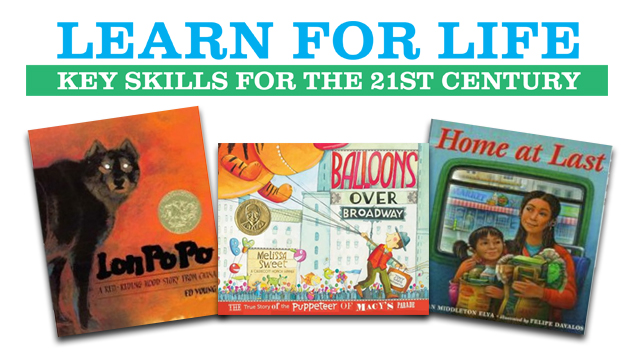


 Hildie Bitterpickles Needs Her Sleep
 It’s almost the end of March, and it’s time to start thinking about Summer Reading Program outreach! Contacting local school administrators now is crucial, otherwise your messages to them may get lost amidst the end-of-the-school-year chaos. It also helps to be flexible; preparing options can help you accommodate various schools, as well as their varying schedules. If you’re new to this, or looking to spruce up or expand your outreach, here are some suggestions:
 But how often do we take the time to stop and talk about the specifics? Why is it a priority and how are we building these important relationships?


Oh my gosh what a great ,creative and funny book interview.
The book is so wonderful for kids to read and to learn yoga.
The drawings are so cute.
And the song was a perfect “Fit” with the book.
Rocco was so funny-a great sport-and for a first timer doing yoga –‘Great Job’.
Rocco you should definitly be a comedian–so funny.
Super Interview.
patte
Great interview! Sweet song and kid-topic. Love, love it! Great job Susan, Emily, and as always, Rocco!!
This is a great combo/book and song.