JacketFlap connects you to the work of more than 200,000 authors, illustrators, publishers and other creators of books for Children and Young Adults. The site is updated daily with information about every book, author, illustrator, and publisher in the children's / young adult book industry. Members include published authors and illustrators, librarians, agents, editors, publicists, booksellers, publishers and fans. Join now (it's free).
Login or Register for free to create your own customized page of blog posts from your favorite blogs. You can also add blogs by clicking the "Add to MyJacketFlap" links next to the blog name in each post.
Blog Posts by Tag
In the past 7 days
Blog Posts by Date
Click days in this calendar to see posts by day or month
Viewing: Blog Posts Tagged with: reading, Most Recent at Top [Help]
Results 1 - 25 of 2,315
How to use this Page
You are viewing the most recent posts tagged with the words: reading in the JacketFlap blog reader. What is a tag? Think of a tag as a keyword or category label. Tags can both help you find posts on JacketFlap.com as well as provide an easy way for you to "remember" and classify posts for later recall. Try adding a tag yourself by clicking "Add a tag" below a post's header. Scroll down through the list of Recent Posts in the left column and click on a post title that sounds interesting. You can view all posts from a specific blog by clicking the Blog name in the right column, or you can click a 'More Posts from this Blog' link in any individual post.
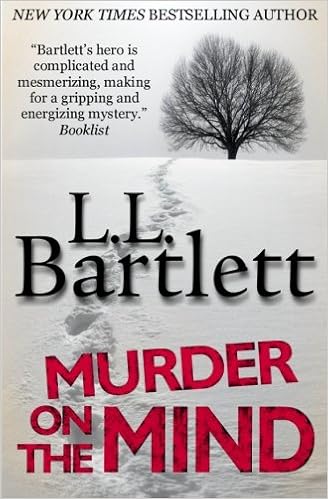
I've been reading a lot of mysteries lately, and this one caught my eye because it's about a guy with psychic abilities and my NaNoWriMo book is about a psychic PI! I definitely enjoyed this one, so check out Murder on the Mind by L.L. Bartlett.
After a brutal mugging in Manhattan leaves him with a broken arm and fractured skull, insurance investigator Jeff Resnick reluctantly agrees to recover at the home of his estranged half brother, Richard. At first, Jeff believes his graphic nightmares of a slaughtered buck are just the workings of his traumatized mind. But when a local banker is found in the same condition, Jeff believes the attack has left him with a psychic sixth sense--an ability to witness murder before it happens.Piecing together clues he saw in his visions, Jeff attempts to solve the crime. His brother Richard is skeptical, but unsettling developments begin to forge a tentative bond. Soon, things that couldn't be explained by premonition come to light, and Jeff finds himself probing into dangerous secrets that touch his own traumatic past in wintry Buffalo—and the killer is ready to eliminate Jeff's visions permanently.
The immensely popular Booktown Mystery series is what put Lorraine Bartlett's pen name Lorna Barrett on the New York Times Bestseller list, but it's her talent—whether writing as Lorna, or L.L. Bartlett, or Lorraine Bartlett—that keeps her there. This multi-published, Agatha-nominated author pens the exciting Jeff Resnick Mysteries as well as the acclaimed Victoria Square Mystery series, the Tales of Telenia adventure-fantasy saga, and now the Lotus Bay Mysteries, and has many short stories and novellas to her name(s).
*Want your YA, NA, or MG book featured on my blog? Contact me here and we'll set it up. Add a Comment
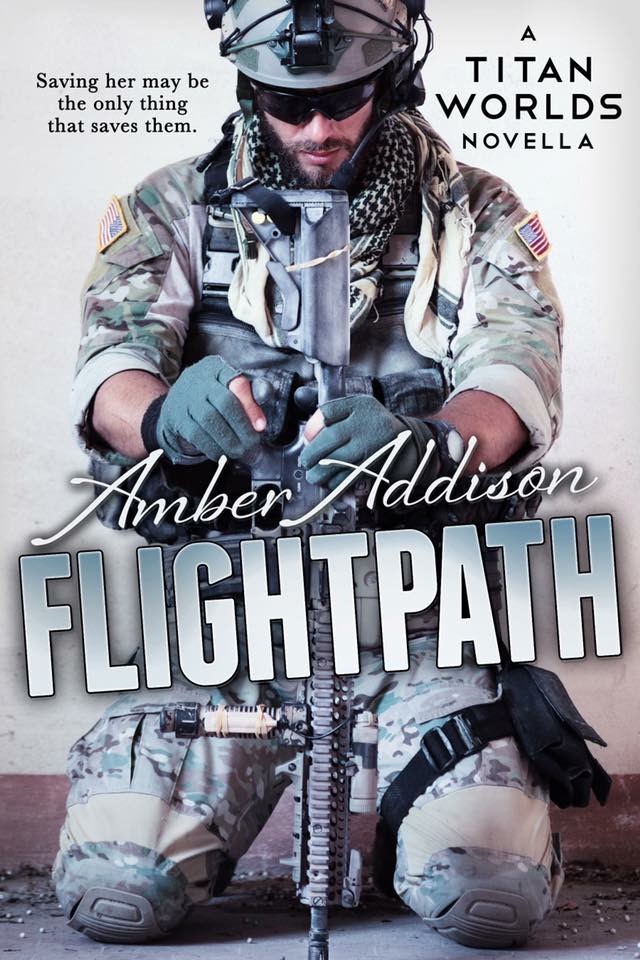
From New York Times best-selling author Cristin Harber and Amber Addison comes an exciting collaboration...
Being married young isn't a thing of the past in Louisiana. And for Madelyn and Seth, it's a way of life. Except, no one prepared them for the road ahead.
Moving to new places more times than either of them could count with new battles to fight at every stop, their road to happiness is bumpy.
Between Air Force Pararescue school, deployments, a baby, and the strain that military life can put on a family, they've discovered life has to fall apart in order to fall back together again.
When a terrorist attack puts Maddie's life in grave danger, their lives definitely fall apart, and Seth knows saving her might be the only thing that saves them.
There will be an early release on iBooks on 1/16 - and it will release everywhere else 1/24!
Amber Addison is a southern mama who writes about real life love in small town USA. She enjoys writing contemporary romance that has it's ups and downs just like the trials that we face in our day to day. Love isn't perfect and she doesn't pretend that it is.
Amber writes anything from swoon worthy military guys to sexy soccer players. When she's not writing about hot guys and strong women, she's reading or cleaning up an endless trail of toys left behind by her dogs and daughter or getting tattoos.
*Want your YA, NA, or MG book featured on my blog? Contact me here and we'll set it up. Add a Comment
If you stopped by last Friday, then you'll recognize this author. I'm featuring her two weeks in a row because she has a lot of great books out. Check out Fall Far From the Tree by Amy McNulty!
Terror. Callousness. Denial. Rebellion. How the four teenage children of leaders in the duchy and the neighboring empire of Hanaobi choose to adapt to their nefarious parents’ whims is a matter of survival.
Rohesia, daughter of the duke, spends her days hunting "outsiders," fugitives who’ve snuck onto her father’s island duchy. That she lives when even children who resemble her are subject to death hardens her heart to tackle the task.
Fastello is the son of the "king" of the raiders who steal from the rich and share with the poor. When aristocrats die in the raids, Fastello questions what his peoples’ increasingly wicked methods of survival have cost them.
An orphan raised by a convent of mothers, Cateline can think of no higher aim in life than to serve her religion, even if it means turning a blind eye to the suffering of other orphans under the mothers’ care.
Kojiro, new heir to the Hanaobi empire, must avenge his people against the "barbarians" who live in the duchy, terrified the empress, his own mother, might rather see him die than succeed.
When the paths of these four young adults cross, they must rely on one another for survival—but the love of even a malevolent guardian is hard to leave behind.
"An original story, with vivid details told in alternating chapters... There was drama, action, intense moments and soul searching and new friendships born." ~Sheri W., Juniper Grove
"Intense and brutal and just a whirlwind of a ride... Watching them slowly come to terms with the fact that their own morals might not actually align with those of the people who raised them makes for a wonderfully compelling story." ~Daiz
"It is so easy to read that this book can be read in one sitting. It's impossible not to like this book after reading it." ~Alex the Shadow Girl
Amy McNulty is a freelance writer and editor from Wisconsin with an honors degree in English. She was first published in a national scholarly journal (The Concord Review) while in high school and currently writes professionally about everything from business marketing to anime. Her YA romantic fantasy debut, Nobody’s Goddess, won The Romance Reviews Summer 2016 Readers’ Choice Award in Young Adult Romance. In her down time, you can find her crafting stories with dastardly villains and antiheroes set in fantastical medieval settings.
*Want your YA, NA, or MG book featured on my blog? Contact me here and we'll set it up. Add a Comment
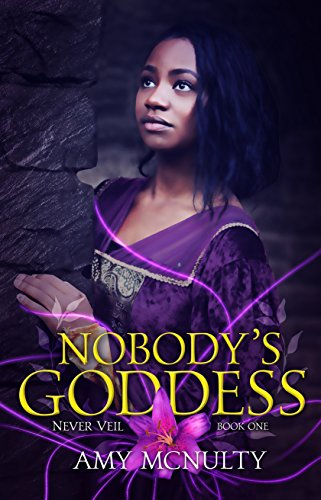
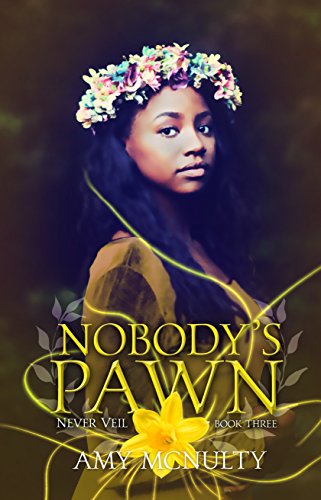
Today I have not one but three books to share with you! Check out The Never Veil Series by Amy McNulty.
In a village of masked men, each man is compelled to love only one woman and to follow the commands of his “goddess” without question. A woman may reject the only man who will love her if she pleases, but she will be alone forever. A man must stay masked until his goddess returns his love—and if she can’t or won’t, he remains masked forever.
Seventeen-year-old Noll’s childhood friends have paired off and her closest companion, Jurij, found his goddess in Noll’s own sister. Desperate to find a way to break this ancient spell, Noll instead discovers why no man has ever chosen her. She is in fact the goddess of the mysterious lord of the village, a man who refuses to let Noll have her right as a woman to spurn him.
Thus begins a dangerous game between the choice of woman and the magic of man. The stakes are no less than freedom and happiness, life and death—and neither Noll nor the veiled lord is willing to lose.
Winner of The Romance Reviews' Summer 2016 Readers' Choice Award in Young Adult Romance.
For the first time in a thousand years, the men in Noll’s village possess the freedom to love whom they will. In order to give each man the chance to fully explore his feelings, the lord of the village decrees all marriages null and void until both spouses declare their love for one another and their desire to wed again. What many women think will be a simple matter becomes a source of village-wide tension as most men decide to leave their families and responsibilities behind.
Rejected by the lord and ashamed of her part in the village’s history, Noll withdraws from her family and lives life as an independent woodcarver. This changes when her sister accuses her of hiding her former husband Jurij from her—and when Jurij eventually does ask to move in. Determined not to make the same mistakes, Noll decides to support her male friends through their new emotional experiences, but she’s soon caught up in a darker plot than she ever dared imagine possible from the men she thought she knew so well. And the lord for whom she still has feelings may be hiding the most frightening truth of them all.
Men can love, but they can also hate. Noll knows too well that the men in her village have adjusted poorly to the freedom of their hearts, but she hopes to bring peace back to her community. With the lord’s return, Noll feels confident that together, they can work to settle down the villagers, but in his rebirth, he remembers only one thing about her: that she caused the curse that tortured him for a millennium in the first place.
Determined to start anew, Noll must accept that, romantically, she and the lord are better without one another, but she’ll need his help to uncover what’s really behind all of the suffering in her village. Escorted to a land beyond the mountains, Noll uncovers the truth about her village and the strange occurrences in which she’s had a hand. When someone who loves her discovers the same things and betrays her, Noll feels powerless to stop her village’s fate. By learning to forgive and seek forgiveness, Noll finally understands true love of a free heart—along with true sacrifice.
Amy McNulty is a freelance writer and editor from Wisconsin with an honors degree in English. She was first published in a national scholarly journal (The Concord Review) while in high school and currently writes professionally about everything from business marketing to anime. In her down time, you can find her crafting stories with dastardly villains and antiheroes set in fantastical medieval settings.
*Want your YA, NA, or MG book featured on my blog? Contact me here and we'll set it up. Add a Comment
Today's Friday Feature is a little different because I'm not featuring a book. I'm featuring a blog. My daughter, Ayla, has been wanting to start a blog for a while now, and I finally gave in and let her blog under my blogging umbrella so to speak. ;) Technically, the blog is listed as mine and I'm the administrator, but she's providing the content.
If you want to check her out, the blog is called Reading...Writing...Loving Life.
You can find the blog here. Today she's talking about the new book she's currently writing.
*Want your YA, NA, or MG book featured on my blog? Contact me here and we'll set it up. Add a Comment
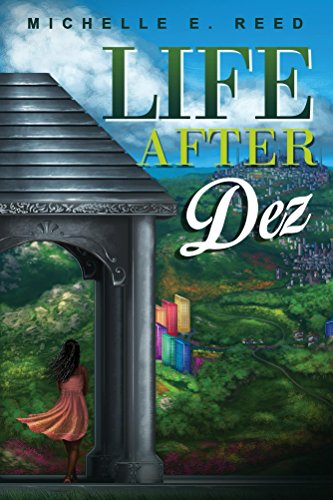
Dying is easy; death is hard. Dez is about to learn the difference.
Bleeding to death on the side of a rural highway turns out to be the easiest part of Dez Donnelly’s unexpected Saturday. Swept away to Atman Station, the crossroads of the afterlife, Dez discovers her unprepared soul is trapped between worlds in a limbo existence where she’s given two choices: join the program or face the consequences.
Limbo is no picnic. Her new reality is conduct manuals, propaganda, and unrelenting staff orchestrating a complex program designed to help transitional souls accept death and move on. Resistance is met with swift consequences, not the least of which is an invasive procedure that links Dez’s mind to that of a senior staff member. To make matters worse, the beautiful and enticing Atman City—a stunning but dangerous metropolis that borders the outer boundaries of the station—is strictly off-limits to underage souls.
Dez has to choose: go along to get along, or fight for the future she believed in. In an afterlife on hold, the only thing harder than getting out is getting through.
You can preorder the Kindle version, which releases November 8th, or grab the paperback version now!
Michelle was born in a small Midwestern town, to which she has returned to raise her own family. Her imagination and love of literature were fueled by a childhood of late nights, hidden under the covers and reading by flashlight. She is a passionate adoption advocate who lives in Wisconsin with her husband, son, and their yellow lab, Sully.
*Want your YA, NA, or MG book featured on my blog? Contact me here and we'll set it up. Add a Comment
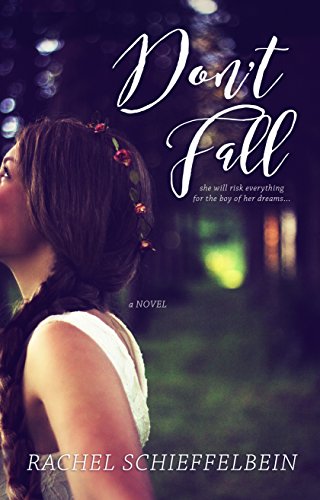
In this modern day retelling of Rapunzel, Anya has her books, her photography, and her daydreams. She doesn’t think she needs anything else.
She lives in a house on the edge of town with her adopted mother, who goes to extreme measures to keep her daughter safe. Anya doesn’t even go to school, but instead has a private tutor. Anya tries not to acknowledge her loneliness; she puts her efforts into pleasing her mom, and gives her heart to her stories, secretly wishing for a story of her own.
Then one day at the library, the only place she's allowed to go, she takes a picture of a beautiful boy.
Before long she's lying to her mom, and sneaking out late at night to meet Zander. But Zander wants more than a secret romance. If Anya wants to be with the boy of her dreams, she will have to risk her relationship with the only other person she's ever cared about.
"It's sweet, it's got a great heart, it's got cute boys, and great books, and was generally just one of those reads that left me sighing happily as I read. Plus, cupcakes--who doesn't like cupcakes?" -Meradeth Houston
"The story is just so sweet and delicious. It's the perfect YA read and a great one for adults to enjoy too. I accepted it as a fairy tale and just enjoyed it. I'm sure anyone who loves YA would enjoy this one too." -Valerie at Stuck in Books
"Rachel Schieffelbein is so good at creating loveable characters and putting them in situations that make me really care what happens to them. It was fun to see how she'd taken the base story of Rapunzel, a girl kept apart from the world and falling in love for the first time, and made it all her own." -Susan Crispell
Rachel grew up in a tiny town in Minnesota. She still lives there with her husband, their four kids, three cats, and a perfectly overweight black lab. She coaches high school speech and theater, rides Arabian horses, reads as much as she can, and writes stories.
*Want your YA, NA, or MG book featured on my blog? Contact me here and we'll set it up. Add a Comment
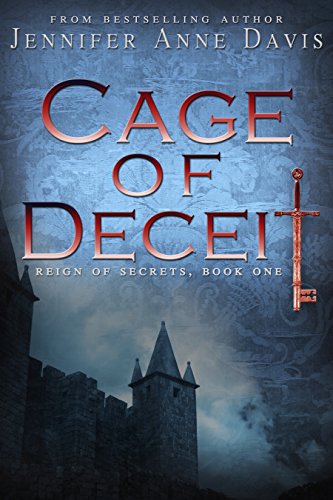
Seventeen-year-old Allyssa appears to be the ideal princess of Emperion--she's beautiful, elegant, and refined. She spends her days locked in a suffocating cage, otherwise known as the royal court. But at night, Allyssa uses her secret persona--that of a vigilante--to hunt down criminals and help her people firsthand.
Unfortunately her nightly escapades will have to wait because the citizens of Emperion may need saving from something much bigger than common criminals. War is encroaching on their country and in order to protect her people, Allyssa may have to sacrifice her heart. Forced to entertain an alliance through marriage with a handsome prince from a neighboring kingdom, she finds herself feeling even more stifled than before. To make matters worse, the prince has stuck his nosy squire, Jarvik, to watch her every move.
Jarvik is infuriating, bossy and unfortunately, the only person she can turn to when she unveils a heinous plot. Together, the unlikely pair will have to work together to stop an enemy that everyone thought was long gone, one with the power to destroy her family and the people of Emperion. Now the cage Allyssa so longed to break free from might just be the one thing she has to fight to keep intact. In order to save her kingdom, she will have to sacrifice her freedom, her heart, and maybe even her life.
Jennifer graduated from the University of San Diego with a degree in English and a teaching credential. Afterwards, she finally married her best friend and high school sweetheart. Jennifer is currently a full-time writer and mother of three young children. Her days are spent living in imaginary worlds and fueling her own kids’ creativity.
*Want your YA, NA, or MG book featured on my blog? Contact me here and we'll set it up. Add a Comment
This week, Oxford University Press (OUP) and The Reader announced an exciting new partnership, working together to build a core classics library and to get great literature into the hands of people who need it most, with the Oxford World’s Classics series becoming The Reader’s "house brand" for use in their pioneering Shared Reading initiatives.
Happy Monday! Monday Mishmash is a weekly meme dedicated to sharing what's on your mind. Feel free to grab the button and post your own Mishmash.
Here's what's on my mind today:
Thank You! I want to thank everyone who grabbed a copy of After Loving You during its release week last week. It was such a great release day, and I love you all for it. If you haven't gotten a copy yet, but would like to, you can grab the book on Amazon, Barnes and Noble, or Kobo.
After Loving You Blog Tour This week is the blog tour for After Loving You, hosted by Inkslinger PR. Love them.
Editing October is a packed month with edits, but I'm loving every second of it. My eyes...not so much.
Walking And Editing I'm so in love with editing while walking on my treadmill. Why didn't I discover this sooner? I walk three times a day (for a half hour at a time), which keeps me focused and energized to work.
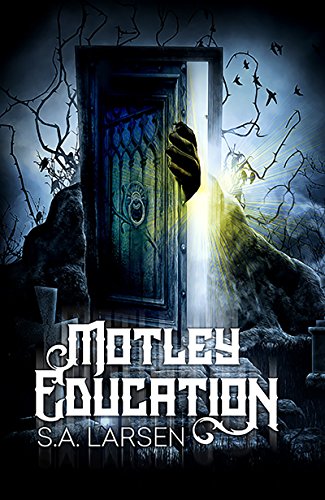
Motley Education Release Day! Happy release day to S.A. Larsen! Motley Education releases today! Seriously, guys, go grab this book. It's a fantastic middle grade read. I fell in love with it on page one. It's that good, and you can't support an author sweeter than Sheri. Grab your copy here.
Forget having a lively after school social life, Ebony Charmed is fighting to keep the entire afterlife alive.
Ebony’s less-than-average spirit tracking abilities are ruining more than sixth grade at Motley Junior High: School for the Psychically and Celestially Gifted. Her parents argue so much her dad's moved out. And, even though he’s scared of his own shadow and insists on bringing his slimy, legless lizard everywhere they go, Ebony wouldn’t survive without her best friend, Fleishman.
When Ebony’s Deadly Creatures & Relics’ project goes missing she learns her missing project is one of the keys to saving the spirit world.
Now Ebony and Fleishman must battle beasts from Norse mythology to retrieve her project before spirits are lost, the Well of Urd dries up, and Ebony loses all hope of reuniting her family. But someone lies in wait, and he has other plans…including creating a new world of spirits without them in it.
That's it for me. What's on your mind today? Add a Comment
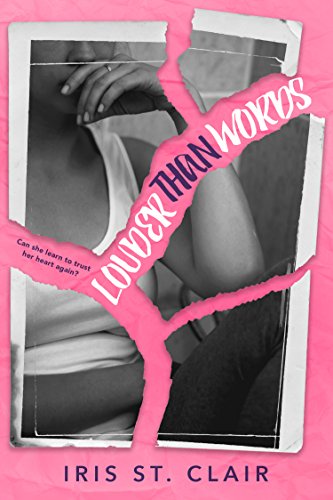
I never dreamed my mom would choose drugs and alcohol over me.
I was wrong about that too.
I thought teachers were there to instruct, to guide, to counsel.
Wrong doesn’t begin to describe what nearly happened that last day of my Junior year. Lesson learned; trust is for suckers and actions speak louder than words.
New plan. Keep up my grades, earn a scholarship, tuck into as tight a ball as possible and roll on out of this town and this life.
But this boy, this Casanova transplant with a funny accent, who’s way too charming to be healthy for a girl... Why won’t he let me be?
I wish I hadn’t let him in on my secrets...well, most of them.
I wish I hadn’t grown to look forward to our daily walks to work.
But mostly, I wish I hadn’t freaked out when he tried to steal a kiss.
Maybe I wouldn’t be parked in the friend zone. Maybe he wouldn’t be dating a girl I loathe. Maybe I wouldn’t be in this hell of wanting what I can’t have but having what I thought I wanted—to be left alone.
If this story seems like it was ripped from the headlines, there is some truth to that impression.
The year my son began high school, I learned at a parents' booster meeting that an esteemed teacher had been arrested for having a sexual relationship with a student. The teacher's spouse also worked at the high school. Both teachers taught classes in my son's magnet program. The teacher went to jail. A family was torn apart.
My thoughts, however, were with the student and student body. What led to the affair? Who made the first move and was coercion involved? How did the victim react to the publicity, the criminal charges and trial? What did the other students think and believe?
Although Louder Than Words is a fictional account, my goal in writing Ellen's story was to use a far too common event as a vehicle to convey strength and courage to readers, especially those whose voices have been hushed by fear, lack of self-confidence or damaged self-esteem.
Thank you for reading! Iris
Iris St. Clair is the pen name for a long-suffering cubicle worker by day, a Walter Mitty-like dreamer by night.
No matter what genre she writes, she prefers witty, insecure heroines and kind, persistent heroes able to break through to the gooey heart inside.
In high school she was voted most likely to win at Monopoly and Clue, but least likely to throw a ball anywhere near a target. Thank goodness writing requires less hand-eye coordination, punctuation errors notwithstanding.
Iris believes in the two-year "fish or cut bait" dating rule and has a 20+ year marriage and two teenaged sons as proof of concept. She lives, writes, dreams and dances in the rainy Portland, OR area.
*Want your YA, NA, or MG book featured on my blog? Contact me here and we'll set it up. Add a Comment
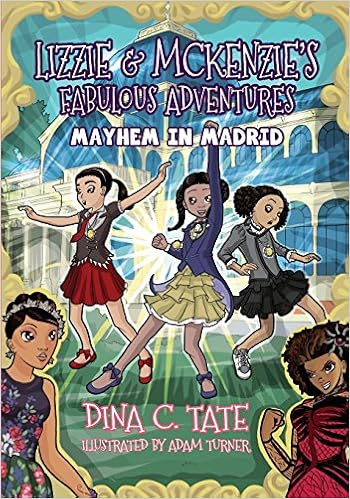
Today I'm happy to share a book I've had the pleasure of reading. The story is fun and has a great message. Check out Lizzie & McKenzie's Fabulous Adventures: Mayhem in Madrid by Dina Tate!
Imagine if all the little girls of the world looked alike. If the Same Glam Goddess gets her way, it can surely happen. McKenzie Rivers, the pint-sized daredevil, and Lizzie Sanders, who loves all things frilly, aren’t afraid of being different. And that’s exactly why Princess Lovina of Exquisite City calls upon them to stop the Same Glam Goddess from making all the little girls of the world look the same. With the aid of their magical lovely lockets and fierce diva weaponry, Lizzie and McKenzie will travel the world to find the Seven Crystals of Sisterhood. Their first stop is the magical city of Madrid. Lizzie and McKenzie will need help to obtain the crystals before the Same Glam Goddess gets her hands on them. If the crystals are not found, little girls all over the world will remain under the spell of the Same Glam Goddess and will lose their identities forever! Will Lizzie and McKenzie be able to find the crystals, break the spell, and stop the Same Glam Goddess?
You can also check out Dina's website at lizzieandmckenzie.com to read the 1st chapter!
Dina Cherice Tate spent her childhood reading, writing short stories, climbing stuff with her six older brothers and becoming a cartoon fanatic, which became the perfect groundwork for writing a chapter book series. Today she is an amateur photographer, traveler and has taken her love of Japanese animation and comics to another level. Dina is an Adjunct Instructor at New York University School of Professional Studies. While fine-tuning her writing skills, she won the Andrea Davis Pinkney Chapter Book Writing Scholarship; The Chapter Book Alchemist - Children’s Book Academy.
*Want your YA, NA, or MG book featured on my blog? Contact me here and we'll set it up. Add a Comment
Thanks so much for hosting me, Kelly.I appreciate the opportunity to visit with you and the folks that follow your blog.Some of whom I know, some who I look forward to getting to know.
Today, I’d like to mention a few brief facts about white cats.
White cats are unique in the fact that they’re prone to deafness, especially if they’re blue-eyed.They’re also prone to skin cancer.In some cultures white cats are considered good luck.
But what do white cats have to do with sundials? In general nothing, in this particular story it’s the pet that leads the protagonist, Sarah Miles, to discover the sundial.
He came through time to find her.
As Sarah Miles drives down Eighteenth Street a stranger materializes in front of her car. She throws on her brakes, braces for impact and...drives straight through him. For a brief moment, his voice echoes in her head, "Saura." Then he's gone. Later that day, she discovers the SUNDIAL and her incredible journey through time begins.
Excerpt:
“Meghan, don’t try to come through this, you’ll get scratched. I’m getting the pesky cat and coming out.”
When in trouble, Monet was the pesky cat, the damn cat, or the bad cat.
Shewalkedoverandbentdowntopickhimup.Aflash of color blinded her. She blinked then squinted. For the firsttime,shesawthatMonet had plopped down besideanold sundial.
Meghan gave an exaggerated sigh. “You said not to come in.”
“I’ve found an old sundial. Or rather Monet has.”
“A real one?”The rustling began again as Meghan started pushing her way through.
“Appearsso.”Shesquatteddowntostudyit.“Looksto be a hundred years old. I bet it’s valuable. You should see the intricate detail. This willmake a great piece to paint!”
Words embossed thefaceofthedial.“There’swritingonit.”Sheread aloud,“Fatecannotbe...drat,mosshasgrownovertherest of the words.”
A wave of superstitious terror washed over Meghan. Suddenly, the pieces all fell into place. And as the old woman prophesied, she believed.
“Sarah, don’t. Get out of there now. Please, Sarah, please,” she cried, her teeth chattering.
“What’s wrong with you?
“There’sactuallyheatradiatingfromit.Surprising,it’snot that warmout.”
“Sarah,please, don’tyouremember whattheoldladysaid?” Shefoughtherwaythroughthe overgrowth, barely feelingthescratchesathornybranchlefton herfaceorthewarmbloodtricklingdownhercheek. The thicket conspired to keep her out.
Tearsstreameddown herfaceasshepushedatthe bracken separating herself and her aunt.
She broke through just as Sarah reached down to brush the moss from the sundial.
“No, Sarah, no,” she screamed.
Later her mind would play the scene over again in slow motion:Sarah’shandasit reachedout;Monetjumping playfullyatherfingers,bringingthembothintouchwiththe sundial; the boom; the jagged streak of white; and then nothing.Theyweregone,leaving Meghan alone in the clearing with the sundial.
Sundial is on sale for .99 September 19-25 at Amazon.
Sandra writes YA Fantasy, Romance, and Metaphysical Nonfiction. She lives in sunny North Carolina with her husband, a brood of critters and an occasional foster cat. The last animal member of the family, a kitten, came hurtling out of the woods in southern Illinois to land at her feet. He made the trek back to North Carolina, with her and her husband, and wasted no time settling into the household.
Although shopping is high on the list, her greatest pleasure is sitting on her porch, listening to the birds, sipping coffee or a latte and enjoying a good book. She's a vegetarian and a Muay Thai enthusiast.
*Want your YA, NA, or MG book featured on my blog? Contact me here and we'll set it up. Add a Comment
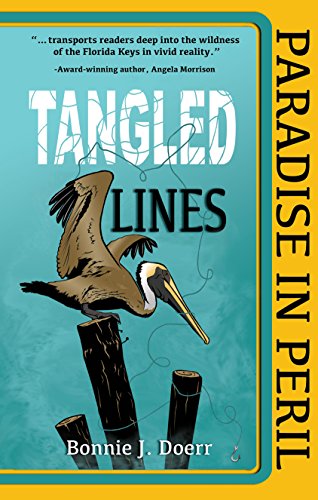
Today I'm happy to share a Leap Books, Seek title I had the pleasure of editing. Take a look at Tangled Lines by Bonnie Doerr.
A string of islands, a knot of criminals, and two teens to untie it.
High school changes everything for Kenzie Ryan and Angelo Sanchez—especially their relationship. After spending all summer cracking crimes against endangered wildlife in Big Pine Key, Florida, now they barely see each other. Angelo hangs out with a Porsche-driving quarterback and a stunning local “Conch princess” and Kenzie struggles with being a newbie among the Key West cliques.
But high school drama gets overshadowed when horrific numbers of pelicans are found tortured near the islands where they live. Kenzie begs Angelo to help stop the slaughter, but he refuses until a stunning family secret is revealed.
When a Sanchez Fish House employee falls under suspicion, the list of suspects explodes, and the discovery of illegal activity exposes Angelo and Kenzie to the same deadly risk faced by the pelicans they are trying to save...
Bonnie J. Doerr, nature lover and gardener, grew up in western Maryland. Since leaving home, she has lived in eight of the United States. Degrees in reading education, combined with a brief post as a science teacher, led her to write ecological adventure/mysteries. Years of teaching and living in the Florida Keys provided irresistible material. Her books celebrate caring, involved, "green" teens who take action with attitude and a touch of romance. Her work has been honored by NOAA (National Oceanic and Atmospheric Administration) with a grant for its use in environmental education and has been included in Milkweed Editions literary field guides. She now lives in a log cabin in North Carolina. Island Sting, was released in January 2010 by Leap Books,LLC and was EPIC's 2011 eBook Award winner for outstanding children's book. Stakeout, second in her ecological adventure/mystery series, was a 2011 summer release and one of six finalists for the 2012 YA Green Earth award. Tangled Lines, third in the series, was released August of 2016.
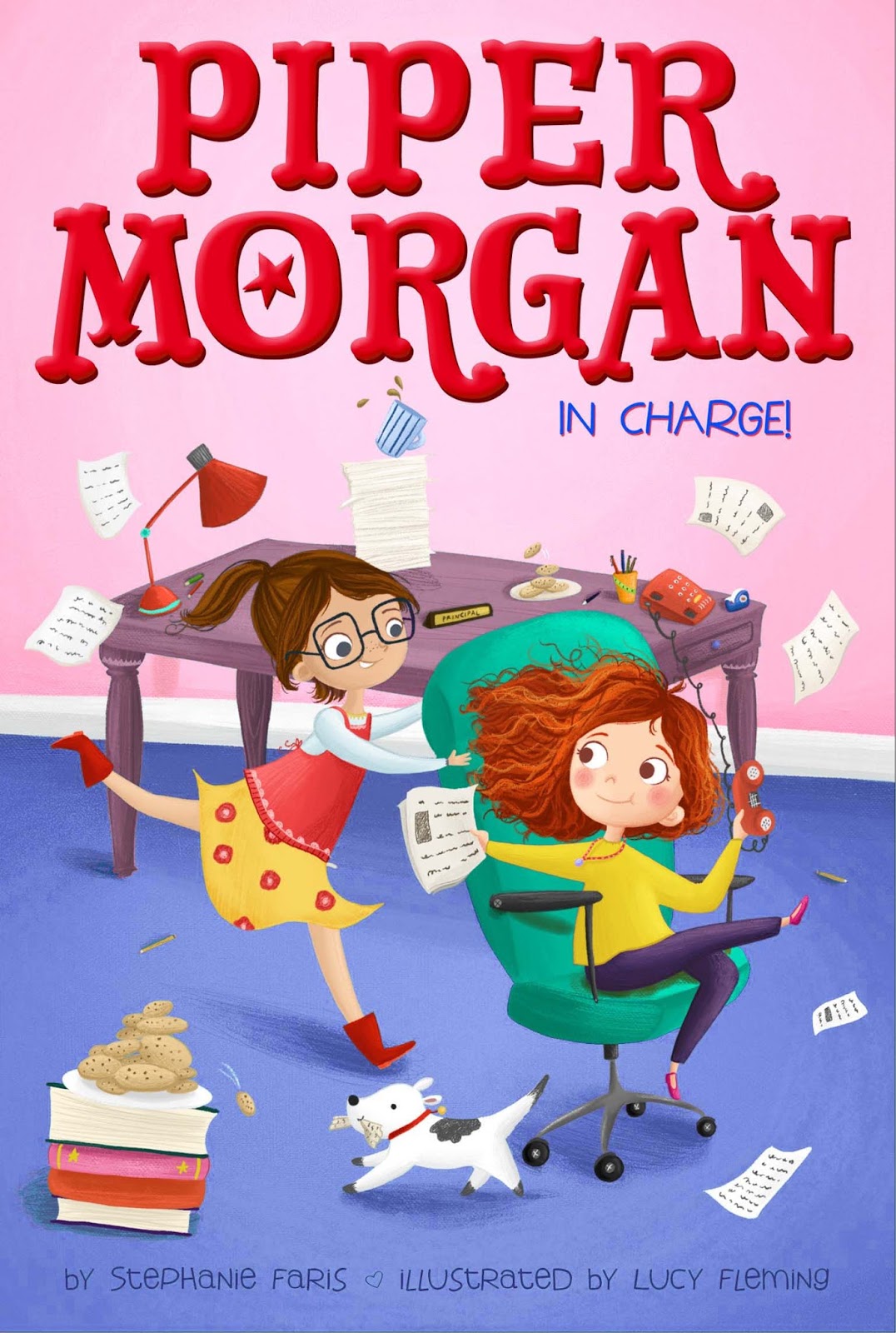
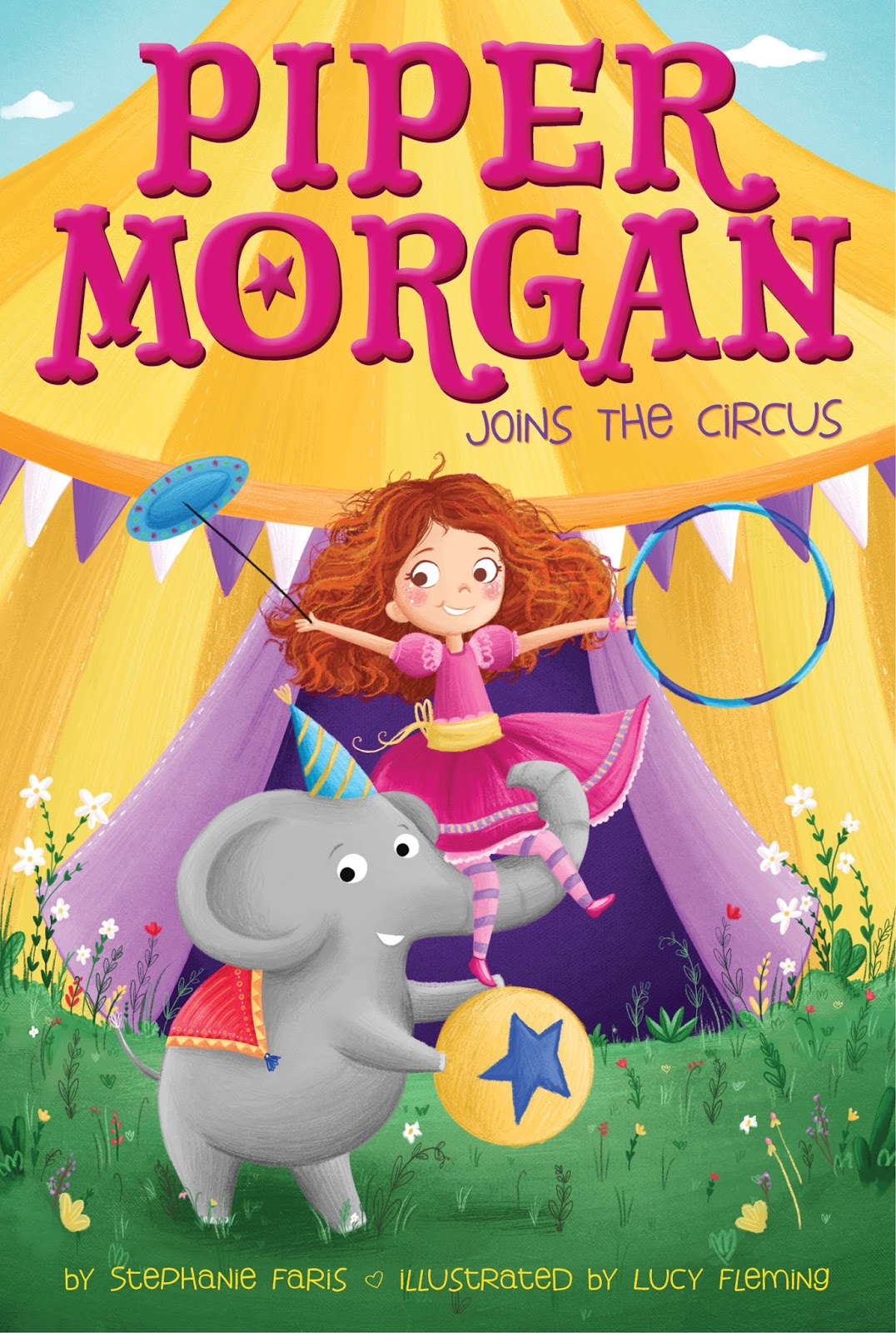
When Piper Morgan has to move to a new town, she is sad to leave behind her friends, but excited for a new adventure. She is determined to have fun, be brave and find new friends. In Piper Morgan Joins the Circus, Piper learns her mom’s new job will be with the Big Top Circus. She can’t wait to learn all about life under the big top, see all the cool animals, and meet the Little Explorers, the other kids who travel with the show. She’s even more excited to learn that she gets to be a part of the Little Explorers and help them end each show with a routine to get the audience on their feet and dancing along!
In Piper Morgan in Charge, Piper’s mom takes a job in the local elementary school principal’s office. Piper is excited for a new school and new friends—and is thrilled when she is made an “office helper.” But there is one girl who seems determined to prove she is a better helper—and she just so happens to be the principal’s daughter. Can Piper figure out how to handle being the new girl in town once more?
Stephanie Faris is here to talk to you all about a topic that I think is brilliant and extremely helpful for all writers. So sit back and enjoy!
Why Reading Outside Your Genre Can Make Your Writing Stronger
by Stephanie Faris
I love my blog friends. Among us there are those who write children’s, middle-grade, YA, paranormal, adventure, horror, and romance, just to name a few genres. That means when I read my friends’ books, I often get to take a break from girly children’s fiction and read a wide variety of other things.
When I was younger, I thought that would hurt me but I’ve come to realize it only helps. Fiction, at its very foundation, is made up of similar elements. The conflict in a mystery novel may be different from what you’d find in a fantasy novel, but there are similar emotions, challenges, and resolutions. By reading these other books, you learn more about what you want to write.
What do I mean by this? Let’s take Kelly’s Into the Fire as an example. Her main character, Cara, is on the verge of transforming into a Phoenix. Knowing the end of her time as herself is near, she feels conflicted about the feelings she’s developing for the new guy in town.
I’ve never written a book with a character who is on the verge of becoming a Phoenix. I have, however, written romances where a couple is kept apart through extenuating circumstances. In the type of fiction I write, though, that conflict would likely be in the form of protecting a career or not wanting to hurt a loved one.
Even in the tween books I write, romance is a no-no. However, many of the conflicts I read about in romance novels can translate to the trauma friendships suffer in sixth and seventh grade. The girls in my characters may have crushes, even though they never develop into a real romance. Conflict can exist there, as well.
Reading anything can also help improve your own prose. I love Harlan Coben’s mysteries and even though they’re completely different from the books I write, he makes me want to be a better writer. He has a way of phrasing things that is just so beautiful that you can’t help but want to push yourself to be that good. And that, in my opinion, is what becoming a better writer is all about. Because Stephanie is so awesome, she is hosting a giveaway for a $25 Amazon gift card and autographed copies of her books. Enter here:
Stephanie Faris knew she wanted to be an author from a very young age. In fact, her mother often told her to stop reading so much and go outside and play with the other kids. After graduating from Middle Tennessee State University with a Bachelor of Science in broadcast journalism, she somehow found herself working in information technology. But she never stopped writing.
Stephanie is the Simon & Schuster author of 30 Days of No Gossip and 25 Roses. When she isn’t crafting fiction, she writes for a variety of online websites on the topics of business, technology, and her favorite subject of all—fashion. She lives in Nashville with her husband, a sales executive.
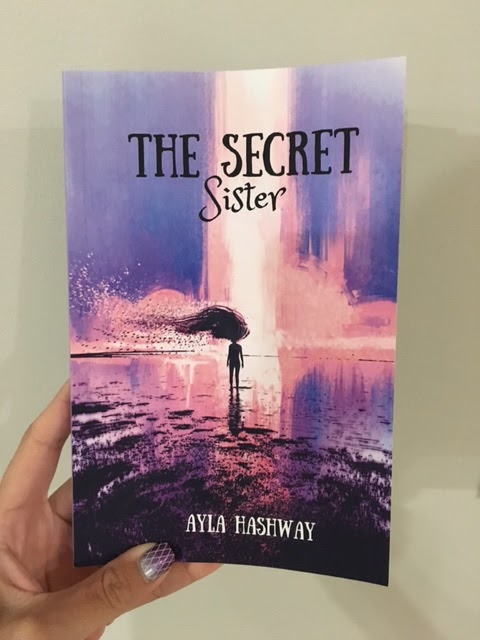
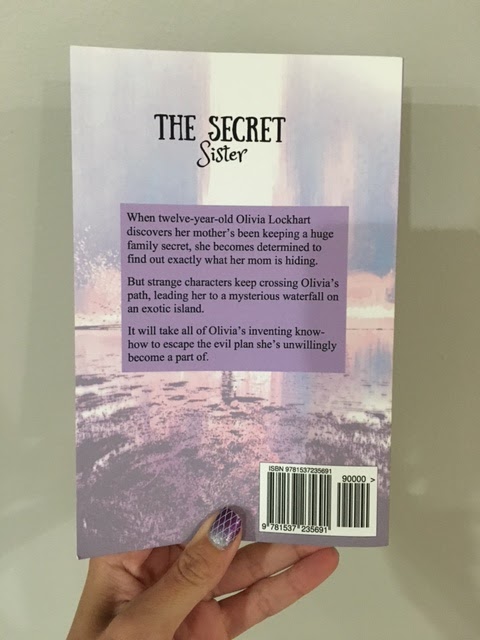
I couldn't be happier to post today. My daughter, Ayla, received her paperback proof of her first book, The Secret Sister, yesterday and it's gorgeous! I'm so proud of all the hard work she put into this book. She spent her summer writing and reading as much as she could, and she really learned a lot—including how to overcome writer's block. Together, we decided that she's going to keep her amateur status and make the ebook free. Print copies will be made for family and friends, but she won't make any money from them. This experience is about learning to write well, sharing her love of stories, and being proud of the accomplishment of writing a book. And that's a HUGE accomplishment. Did I mention she's only nine?
And yes, she's my new favorite author.
So without further ado, check out the gorgeous cover of The Secret Sister!
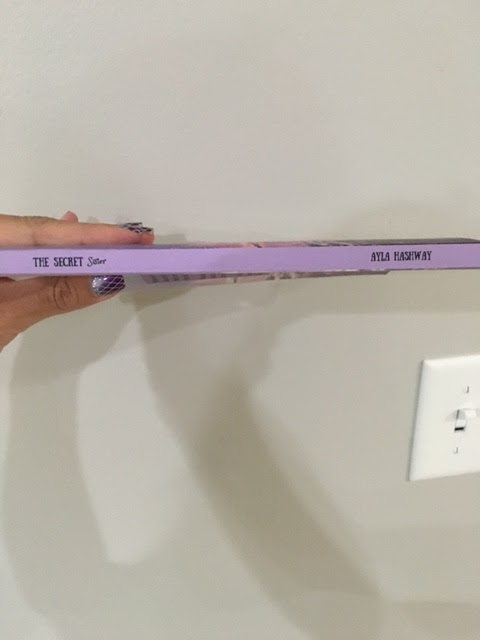
And here are some pictures of the paperback.
The ebook is already up on Smashwords and ready for download. And once again, it's FREE, so grab your copy here.
It's my daughter's last week of summer break, and we've been busy formatting her first book and reading. She read three books in two days! I can't tell you how happy it makes me to see her love of the written word. She's even writing news articles--okay, so they're about Monster High dolls, but she's nine. ;) I'm amazed at how well she puts her thoughts to paper and/or screen.
She reminds me of someone--a little girl who always had a book in her face (hence my awful eyesight). A little girl who wrote poems and short stories and thought they made the best gifts for her family members.
For some of us, writing is something we've done since we could hold a pencil. But I know that's not the case for everyone, so today I want to hear how you came to be a lover of the written word (as a reader and/or writer).
Happy Monday! Monday Mishmash is a weekly meme dedicated to sharing what's on your mind. Feel free to grab the button and post your own Mishmash.
Here's what's on my mind today:
Drafting I had no intentions of drafting a new book right now, but you know how it is when you get an idea. This book will be very different for me. Different POV and genre. Eek!
Last Week of Summer Vacation :( No! My baby is starting fourth grade next Monday. Say it isn't so! She got the teacher she wanted but is sad that her best friends are not in her class. I'm preparing now to hold it together next Monday morning until I'm driving away from her school after drop-off. Send tissues please.
After Loving You Cover Reveal Friday is my cover reveal. Woo-hoo! Not that I'm excited or anything. ;)
My Mom's Birthday! Thursday is my mom's birthday. She reads these posts, so feel free to wish her a great day. Love you, Mom!
Reading With my daughter home, I read a lot of middle grade books over the summer. I do have some adult suspense books waiting for me though, and I'm looking forward to diving into those soon.
Three plucky sleuths. A crumbling skeleton. A buried treasure.
After six months in a new school, Sam's finally fitting in. He's the one kid with enough talent to hit the winning home run and bring the baseball trophy back to Haggarty Elementary. But Sam's guardian is shipping him off to boarding school before that can happen. When teammates, Joey and Roger, hear his bad news, they plot to hide him until the big game. Their secret cave is a perfect place until an earthquake shatters a wall and reveals a wooden chest with a red-eyed dragon carved into its top. Inside, a bony hand clutches a map with a note, promising treasure. With Joey and Roger, Sam sets off to track down the clues and hopefully discover treasure. Just as some puzzle pieces start to make sense, the boys become lost in a labyrinth of underground tunnels, trapped by dangerous thieves and sealed inside an airless tomb. Sign of the Green Dragon gets a high five for fantasy, fun and some fearsome adventure. If you like intrepid would-be knights on impossible and dangerous quests, you'll love this story. As one reader says, this book, "has more twists than a dragon's tail." Buy now to jump into the adventure.
C. Lee McKenzie has a background in Linguistics and Inter-Cultural Communication. Her greatest passion is writing for young readers. Sign of the Green Dragon is her third Middle Grade novel. Alligators Overhead and the sequel, The Great Time Lock Disaster were her first two. She has traditionally published four young adult novels: Sliding on the Edge, The Princess of Las Pulgas, Double Negative and Sudden Secrets.
*Want your YA, NA, or MG book featured on my blog? Contact me here and we'll set it up. Add a Comment
Sign up for Adam's newsletter here and win a free story in the Drive Maker universe.
Adam Quinn is a Chicago-based author of science fiction and space opera. When he’s not writing about the technology of the future, he’s studying engineering so that one day he can help create it.
*Want your YA, NA, or MG book featured on my blog? Contact me here and we'll set it up. Add a Comment
In the wonderful book, The Mountains of Tibetby Mordicai Gerstein, the young boy living in the mountains of Tibet lived a wonderful life of flying kites, hard work, a loving family, and peace.
When he died, which is the natural progression of life, he rose into the sky where he was given the choice to move on to Heaven or choose to live another life as anything he wanted to be and anywhere in the world. Because that was his one regret in life–not seeing more of the big wide world.
A Tibetan woodcutter dreams of exploring the world, but is too busy with his life to ever leave his valley. After he dies, he is taken on a journey through the cosmos and all the places on Earth as he makes choices that lead him to a new life.-Amazon
The man’s journey to pick a new life starts on the largest plane–picking a galaxy. His path to a new life follows the Tibetan Book of the Dead. Start at the biggest part of life and go down to the minutest detail. And these are all hard decisions. Which galaxy? Which star? Which planet? Which country? There are so many choices! So will the Tibetan man choose to go back to his familiar home in the mountains of Tibet, or will he choose to experience new things in exciting countries far away?
Mordicai Gerstein’s book The Mountains of Tibet shows a unique way of explaining death and life to young children. It’s a beautiful, natural process filled with free will decisions. The illustrations are simple yet beautiful, helping children’s imaginations to flare to life.
{CLICK TO TWEET} If you could travel anywhere-where would you go? The Mountains of Tibet review & activities @Jumpintoabook1
Something To Do
1. Create a Galaxy in a Jar (this is your galaxy!) Get the full instructions and watch the video tutorial HERE.
2. Make a would you rather game for the choices of life!
– Would you rather live in a blue galaxy or a purple galaxy?
– Would you rather live on Earth or Mars?
– Would you rather be an animal or a human?
Make this a lively discussion with friends, family and students!
3. Make your own kite! These are perfect for a windy day at the park or the beach or even in your own backyard!
Grab this free gift and discover 180 ways to explore the world we live in!
FREE Gift! Free 180 Multicultural Book Ideas ebook to inspired fun Summer Reading!
School is out and our youngsters are settling into a new summer routine of sleeping in and hopefully doing some exploring and discovering. With the hectic days of summer just beginning, oftentimes one of the first habit to go by the wayside is the habit of daily reading.
Reading is always an important part of our children’s lives no matter what time of year it is so I decided to wrap my knowledge of fun kidlit books and activities up with my experience as one of the co-founders of the very successful Multicultural Children’s Book Day and create a unique resource for parents who are looking for creative ways to keep their kids reading this summer. Reading is important, but so is helping our young readers learn about other cultures, religions and traditions through the pages of these books. Here are some great booklists and resources that I have created over the years at Jump Into a Book that will not only give parents and readers great ideas on diverse kids’ books, but fun activities related to books that will bring stories to life!
Sign up below for quick and free access to 180 Multicultural Book Ideas: World Travel through Kidlit Summer Reading!
Sign up for 180 Multicultural Book Ideas for Summer Reading
The Civil Rights was an extremely tragic yet absolutely necessary piece of American history. Both black and white people made great strides in human rights and equality in our country. Many people seem to forget that African Americans were not the only people standing up for equality. White, Indian, Asian–people of every heritage were standing together. Joan Mulholland was one of these people. Raised in Virginia, she grew up with segregation and harsh racism. She grew up being taught that mixing races was wrong. But despite all this chatter in her ear, Joan knew that this was wrong. She took a stand when she began college, joining peaceful movements, sit ins, protests, and other demonstrations. She was kicked out of Duke University for her involvement with the Civil Rights Movement.
Despite the backlash and threats that she received, Joan never gave up on her belief that what she and the rest of her friends doing was the right thing. She was one of the first white students to attend an historically black college and join a black sorority. Her life was almost always at risk; she lost many friends and family; she lived in jail for several months of her life. All because she was doing the right thing. And the rest of culture couldn’t accept this. She was an average hero.
She Stood for Freedomis extremely timely in its release. With all of the turmoil in our society right now, this book reminds us that we are all working together for a common goal. We’re all humans, and it’s high time that we remember that. Our world needs to be changed? Then let’s do it together, with our friends, one step at a time. Grab your copy of this amazing book HERE or click on the book image above to take a closer look.
Something To Do
1. Write a Poem
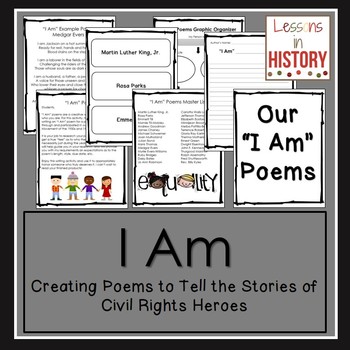
Research a Civil Rights hero (Joan for example) and write a poem telling about their life.
FREE Gift! Free 180 Multicultural Book Ideas ebook to inspired fun Summer Reading!
School is out and our youngsters are settling into a new summer routine of sleeping in and hopefully doing some exploring and discovering. With the hectic days of summer just beginning, oftentimes one of the first habit to go by the wayside is the habit of daily reading.
Reading is always an important part of our children’s lives no matter what time of year it is so I decided to wrap my knowledge of fun kidlit books and activities up with my experience as one of the co-founders of the very successful Multicultural Children’s Book Day and create a unique resource for parents who are looking for creative ways to keep their kids reading this summer. Reading is important, but so is helping our young readers learn about other cultures, religions and traditions through the pages of these books. Here are some great booklists and resources that I have created over the years at Jump Into a Book that will not only give parents and readers great ideas on diverse kids’ books, but fun activities related to books that will bring stories to life!
Sign up below for quick and free access to 180 Multicultural Book Ideas: World Travel through Kidlit Summer Reading!
Sign up for 180 Multicultural Book Ideas for Summer Reading
Did you escape to the beach for a little summer vacation? We did and brought home a few souvenirs from our walks on the beach. Now that our prize shells are sitting on a shelf collecting dust, it’s time to put them to use with a fun craft idea.
Shell Animals! This is a perfect activity for a rainy day or before a trip to the zoo. You can get as creative and detailed as you want while learning about different traits of the animal that you want to create.
We kept the supplies simple – of course, shells are the number one ingredient, although we would suggest some larger ones for young children, ours are a little smaller than we would have liked. To decorate your shells you will need, some construction paper, scissors, markers, paint or both. You can also add googly eyes and pipe cleaners for more detail. We made a peacock, a tiger, and our bear came in the perfect color straight from the ocean!
Share your favorite shell creatures with us; tag @arbordalekids on Facebook, Twitter, Pinterest or Tumblr! We will send a matching book to our top favorites!
SYNOPSIS : What Caide and Rachael Abbott want you to believe…
They are happily married college sweethearts, parents to two beautiful children, and they lead a perfect, quiet little life.
What you should believe…
Nothing.
Nothing they tell you.
Nothing you hear.
In fact, nothing in the Abbotts’ picture-perfect world is what it seems.
But when their small town of La Rue, North Carolina is rocked by the brutal murder of a beloved member of the community, a manhunt begins, and neither Caide nor Rachael thought they would become prime suspects.
Every belief Caide and Rachael have about their lives is thrown out the window…
With mounting evidence and lives on the line, the Abbotts are forced to uncover what mysteries are hiding behind closed doors. When old wounds are torn open, secrets are revealed, and their sanity is put to the ultimate test, even memories can’t be trusted in their quest to find the truth. And when the community rallies for justice, suspicions of one another rise, leaving one question begging to be answered...
If it walks like a killer, will the small town of La Rue ever know who the real murderer is?
Kiersten Modglin lives in Nashville, TN with her husband and their two Boston Terriers, Cedric and Chloe. A psychology fanatic, lover of Netflix, coffee and all things Harry Potter, Kiersten can almost always be found curled up in her favorite writing chair with a good book. Kiersten writes psychological suspense novels that explore the darkest parts of human nature and the inner workings of twisted minds. Writing has always been an important part of Kiersten’s life; for her, this is just the beginning.
Is summer flying by or WHAT?! Goodness, before we know it we will be reading about “first day of school” booklists!
I’ve been having so much fun with my Notable Women series these last few weeks. I kicked things off American Revolution hero Sybil Ludington, then moved on to favorite author Pam Muñoz Ryan. This week I want to focus on the wonderful works of author Linda Sue Park.
Linda Sue Park is the author of the Newbery Medal book A Single Shard, many other novels, several picture books, and most recently a book of poetry: Tap Dancing on the Roof: Sijo (Poems). She lives in Rochester, New York, with her family, and is now a devoted fan of the New York Mets. For more infromation visit www.lspark.com
Here are a few of my favorite Linda Sue Park books for kids:
The New York Times bestseller A Long Walk to Water begins as two stories, told in alternating sections, about two eleven-year-olds in Sudan, a girl in 2008 and a boy in 1985. The girl, Nya, is fetching water from a pond that is two hours’ walk from her home: she makes two trips to the pond every day. The boy, Salva, becomes one of the “lost boys” of Sudan, refugees who cover the African continent on foot as they search for their families and for a safe place to stay. Enduring every hardship from loneliness to attack by armed rebels to contact with killer lions and crocodiles, Salva is a survivor, and his story goes on to intersect with Nya’s in an astonishing and moving way.
In this Newbery Medal-winning book set in 12th century Korea, Tree-ear, a 13-year-old orphan, lives under a bridge in Ch’ulp’o, a potters’ village famed for delicate celadon ware. He has become fascinated with the potter’s craft; he wants nothing more than to watch master potter Min at work, and he dreams of making a pot of his own someday. When Min takes Tree-ear on as his helper, Tree-ear is elated — until he finds obstacles in his path: the backbreaking labor of digging and hauling clay, Min’s irascible temper, and his own ignorance. But Tree-ear is determined to prove himself — even if it means taking a long, solitary journey on foot to present Min’s work in the hope of a royal commission . . . even if it means arriving at the royal court with nothing to show but a single celadon shard.
Sun-hee and her older brother, Tae-yul, live in Korea with their parents. Because Korea is under Japanese occupation, the children study Japanese and speak it at school. Their own language, their flag, the folktales Uncle tells them—even their names—are all part of the Korean culture that is now forbidden. When World War II comes to Korea, Sun-hee is surprised that the Japanese expect their Korean subjects to fight on their side. But the greatest shock of all comes when Tae-yul enlists in the Japanese army in an attempt to protect Uncle, who is suspected of aiding the Korean resistance. Sun-hee stays behind, entrusted with the life-and-death secrets of a family at war.
In a riveting narrative set in fifteenth-century Korea, two brothers discover a shared passion for kites. Kee-sup can craft a kite unequaled in strength and beauty, but his younger brother, Young-sup, can fly a kite as if he controlled the wind itself. Their combined skills attract the notice of Korea’s young king, who chooses Young-sup to fly the royal kite in the New Year kite-flying competition–an honor that is also an awesome responsibility. Although tradition decrees, and the boys’ father insists, that the older brother represent the family, both brothers know that this time the family’s honor is best left in Young-sup’s hands. This touching and suspenseful story, filled with the authentic detail and flavor of traditional Korean kite fighting, brings a remarkable setting vividly to life. AUTHOR’S NOTE.
Julia Song and her friend Patrick want to team up to win a blue ribbon at the state fair, but they can’t agree on the perfect project. Then Julia’s mother suggests they raise silkworms as she did years ago in Korea. The optimistic twosome quickly realizes that raising silkworms is a lot tougher than they thought. And Julia never suspected that she’d be discussing the fate of her and Patrick’s project with Ms. Park, the author of this book!
**some of these links are affiliate links
Something To Do
In honor of the amazing Linda Sue Park book Project Mulberry, here are some fun ways to bring this book to life.
As we stood under our mulberry tree remembering this great story, we decided right then and there that we had to grow our own silkworms. I must admit to you that we are at the beginning of this process and are waiting for our little silkworm eggs to arrive. We promise to keep you updated on our progress.
Would you like to join us in growing silk worms? Just leave a comment below and let us know if you will share this experience with us.
A few weeks ago I saw the most interesting TED talk about what they are now using silk for. It’s amazing and is being used in ways one could not even imagine. It is taking science and technology to a new level. This is a great video for kids probably age 8 and older.
Looking for more ways to not only get your youngsters reading, but get them OUTSIDE as well? Enjoy more month-by-month activities based on the classic children’s tale, The Secret Garden! A Year in the Secret Garden is a delightful children’s book with over 120 pages, with 150 original color illustrations and 48 activities for your family and friends to enjoy, learn, discover and play with together.
Grab your copy ASAP and “meet me in the garden!” More details HERE.