

Don't get your hopes up--chances are there won't be a movie made out of your novel.
http://scotteagan.blogspot.com/2016/09/everyone-sees-their-novel-as-movie-it.html
0 Comments on Novel to Movie as of 10/14/2016 6:55:00 PM
Add a Comment

.jpeg?picon=2691) By: LAURIE WALLMARK,
on 10/14/2016
By: LAURIE WALLMARK,
on 10/14/2016
Don't get your hopes up--chances are there won't be a movie made out of your novel.
http://scotteagan.blogspot.com/2016/09/everyone-sees-their-novel-as-movie-it.html
 By: Cynthia Leitich Smith,
on 10/11/2016
By: Cynthia Leitich Smith,
on 10/11/2016

 |
| Pic of MT by Leda Schubert |
 By: vschneider46,
on 10/10/2016
By: vschneider46,
on 10/10/2016
 LEE & LOW BOOKS celebrates its 25th anniversary this year and to recognize how far the company has come, we are featuring one title a week to see how it is being used in classrooms today as well, as hear from the authors and illustrators.
Featured Title: Shining Star: The Anna May Wong Story
Author: Paula Yoo
Illustrator: Lin Wang
Synopsis: Born in 1905, Anna May Wong spent her childhood  working in her family’s laundry in Los Angeles’s Chinatown. Whenever she could afford it, Anna May slipped off to the movies, escaping to a world of adventure, glamour, and excitement. After seeing a movie being filmed in her neighborhood, young Anna May was hooked. She decided she would become a movie star!
Anna May struggled to pursue an acting career in Hollywood in the 1930s. There were very few roles for Asian Americans, and many were demeaning and stereotypical. Anna May made the most of each limited part. She worked hard and always gave her best performance. Finally, after years of unfulfilling roles, Anna May began crusading for more meaningful roles for herself and other Asian American actors.
Anna May Wong—the first Chinese American movie star—was a pioneer of the cinema. Her spirited determination in the face of discrimination is an inspiration to all who must overcome obstacles so that their dreams may come true.
Awards and Honors:
Resources for teaching with Shining Star:
Check out these Book Collections featuring Shining Star:
Book Activity: Create your own Hollywood Movie Star from Reading to Kids.

Have you used Shining Star? Let us know in the comments!
Celebrate with us! Check out the Lee & Low 25 Years Anniversary Collection.
 Veronica has a degree from Mount Saint Mary College and joined LEE & LOW in the fall of 2014. She has a background in education and holds a New York State childhood education (1-6) and students with disabilities (1-6) certification. When she’s not wondering around New York City, you can find her hiking with her dog Milo in her hometown in the Hudson Valley, NY.
 By: Cassandra Gill,
on 9/27/2016
By: Cassandra Gill,
on 9/27/2016
Ang Lee, the two-time Academy Award-winning director, has noted that we should never underestimate the power of storytelling. Indeed, as a storyteller, Lee has shown through his films the potential of stories to connect people, to heal wounds, to drive change, and to reveal more about ourselves and the world. In particular, Lee has harnessed new technology for storytelling in movies such as Life of Pi (2012) and his upcoming feature film Billy Lynn’s Long Halftime Walk (to be released on 11 November, 2016).
The post The earnest faith of a storyteller appeared first on OUPblog.
 By: Lucy Thomas,
on 7/30/2016
By: Lucy Thomas,
on 7/30/2016
Ezra Miller has put more thought into being sorted into a house than many fans have realized. “It means too much to me…I respect the sorting process…I know the Sorting [Ceremony] was written by J.K. Rowling, but I still can’t risk it. What if I get Slytherin? I couldn’t live with myself. I need to be in Gryffindor. If I didn’t get Gryffindor, I wouldn’t know who I was anymore.”

To Ezra, sorting has been such a pinnacle of his growth and career that he says, “I just can’t accept a sorting unless it’s by Helga Hufflepuff or Godric Gryffindor directly. I can’t take it unless it’s signed off by all four founders of Hogwarts. I mean, J.K. Rowling is all four founders of Hogwarts..She’s all of them. But I certainly can’t think about that too much…It’s too much, I’ve spent too much of my life caring about it.”
Being an avid Harry Potter fan has been taken to the next level by Ezra, who will be playing the character Credence in Fantastic Beasts and Where to Find Them. He has been so involved in the character and everything related to JK Rowling’s world that he went into super fan mode when he was actually able to meet her. “Meeting her was unreal. I had so many questions. Talking to the person who created the world I’ve spent so much time in…it just didn’t feel real.”
This all inevitably leads to the fact that Ezra is amazingly dedicated to not only his role, but the entire magical world of Harry Potter. And that, is why we love him.

Read the interview in its entirety on Pottermore.
Add a Comment
By: Catherine,
on 7/29/2016
The main Fantastic Beasts Quartet (similar to the Trio–Harry, Ron and Hermione), Eddie Redmayne, Katherine Waterston, Alison Sudol and Dan Fogler, sat down with Pottermore for an exclusive interview. The group was gathered in their bus at Comic Con in San Diego, which took place this last weekend, and discussed their weekend with the PMC.
The leader of the Quartet, Newt Scamander (or Eddie Redmayne in the No-Maj world) answered first, telling Pottermore:
‘I feel like what’s extraordinary about Comic-Con is that so much energy comes into the city for four days and you feed off that,’ says Eddie. ‘So, your adrenaline is pumping and pulsating through your body and you kind of feel elated. Slightly like you’re floating on a different planet. You almost can’t take it in; it’s too much visual stimulus.
‘You see people everywhere dressed in costume – I saw a guy dressed as Newt Scamander. I was like “I love it!” And there’s this Funko toy… That’s kind of amazing, although I think I’m going to take mine home and put freckles on it.’
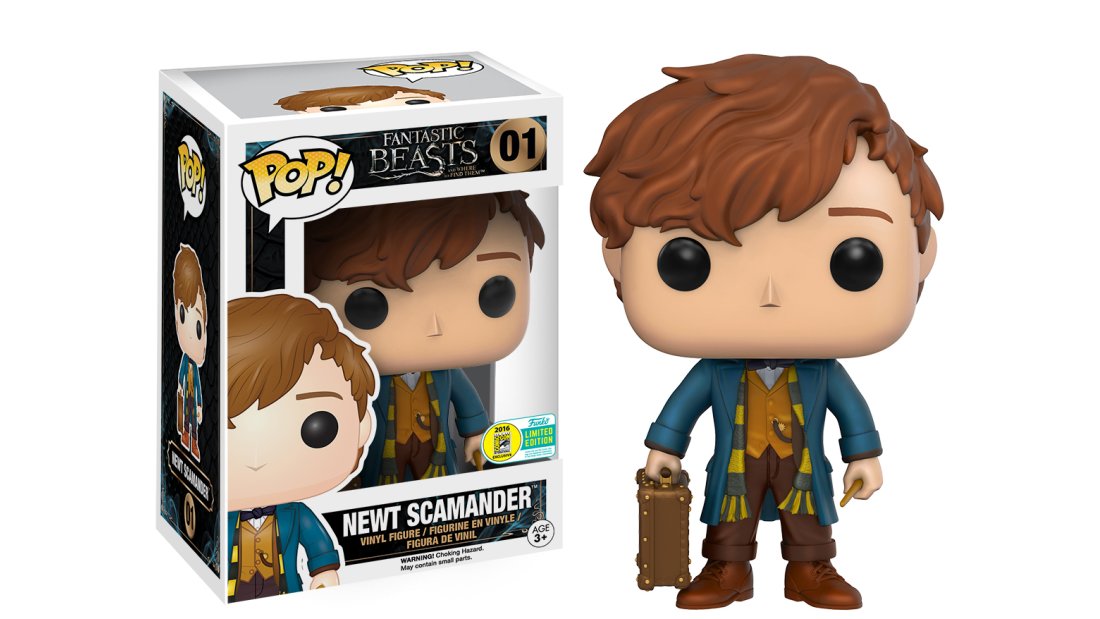
The Fantastic Beasts limited edition Newt Scamander POP made its debut at SDCC. It is currently available through the Barnes and Noble website (here), and should be reaching other venders soon.
Katherine Waterston, who plays Newt’s future wife, Tina, said that, for her, SDCC and conference experiences were about the fans. She told Pottermore,
‘I’ve had conversations where someone is shaking and sweating because they know I’m in Fantastic Beasts. So I keep thinking of those people I know who love it so much, when I’m looking at this sea of smiling faces.’
Dan Fogler is the only one of the Quartet with Comic Con experience, talked about his previous visit to San Diego. Apparently, it was at that uneventful (for him, he said) Comic Con that he received a phone call letting him know he was a part of Fantastic Beasts!
The casts opinions on all the secrecy surrounding the films, and more can be found here, on Pottermore.
Add a Comment
By: Lizzie Furey,
on 7/27/2016
Paul Feig’s Ghostbuster’s remake has made waves on both sides of the Atlantic. As the original 1984 film set some significant action in the Stephen A. Schwarzman Building of the New York Public Library, we couldn’t help but indulge in a rifle through the archives of cinematic tributes to libraries.
The post From the archives: the top 5 movie scenes set in libraries appeared first on OUPblog.
By: Catherine,
on 7/24/2016
Fantastic Beasts has been taking San Diego’s Comic Con (SDCC) by storm! Introducing a new trailer, hosting live Q&A with fansites (Leaky, too!) and panels, the Fantastic Beasts cast and crew has been revealing a lot of new movie magic. Also, keep an eye on the new Wizarding World snapchat for more inside looks at SDCC 2016.
One of the snaps on the new snapchat, and also added to Twitter, revealed Eddie Redmayne showcasing Newt Scamander’s wand for Noble Collection at SDCC 2016.
Eddie shows off his wand from @noblecollection. Follow Wizarding_World on Snapchat! #FantasticBeasts#SDCC2016pic.twitter.com/bob67OgIaI
— Fantastic Beasts (@FantasticBeasts) July 24, 2016
Noble Collection is one of the greatest distributers of official Harry Potter merchandise and movie replicas. Fans have been wishing and hoping for Fantastic Beasts movie merchandise, and that indeed will eventually be the case. Even better, it seems that Fantastic Beasts merchandise and movie replicas will be added to the Noble Collection!
Add a Comment
By: Emma Pocock,
on 7/23/2016
We have been covering the unveilings of exclusive material at San Diego Comic Con’s Fantastic Beasts panel – first a trailer, and now an exclusive Q&A event with the cast – featuring a question from Leaky!
We’re live now with the cast of #FantasticBeasts and the NEW TRAILER. #SDCC2016 pic.twitter.com/g1sBRhAGiu
— Fantastic Beasts (@FantasticBeasts) July 23, 2016
We’re live at #SDCC2016 with the cast of #FantasticBeasts. Follow us on Snapchat for more magic. – Wizarding_World pic.twitter.com/ufAIlK4r9w
— Fantastic Beasts (@FantasticBeasts) July 23, 2016
Present at the event were: Director David Yates, Producer David Heyman, Ezra Miller (Credence), Collin Farrell (Percival Graves), Eddie Redmayne (Newt Scamander), Katherine Waterston (Tina Goldstein), Dan Fogler (Jacob Kowalski) and Alison Sudol (Queenie Goldstein).
In the U.K., fans (and Leaky) were in the Great Hall at Leavesden Studios to take part in the live stream Q&A, where Fantastic Beasts costumes and props were being flaunted – unfortunately only for this exclusive event. Georgia and Gemma represented Leaky in London, so keep posted for more updates on this!
Carianne and Tabitha attended Comic-Con in San Diego on behalf of The Leaky Cauldron, Carianne managed to ask what Eddie, Katherine, Dan and Alison’s favourite parts about the wizarding world are:
Alison answered “Anything is possible, and also that it’s a beautiful world, it’s close enough to our world that it feels real and yet the possibilities and just the wonder of it, on just the tiniest little details how magic is sort of workaday in the world is just constantly inspiring”
Katherine says “I think the idea of a parallel universe is just something I think we can all relate to. Of course children have that sense and we kind of grow up and we are kind of bred out or encouraged to stop thinking that way and stop seeing the beauty and the possibility and the magic around us, and to consider it in this much more literal way that there could be a simultaneous world happening around us that we might not be conscious of, that we might be able to notice if you tune into it or look for it … I love that idea”
Presenter Edith Bowman asked what it was like in San Diego when the brand new trailer was shown to audiences, and Eddie Redmayne jumped straight in with his answer, clearly excited to be at such a huge event:
“You hear so much about Comic-Con, the moment you actually walk on stage, it’s like no sensory experience you can possibly imagine – it’s so overwhelming, but so exciting”
According to Redmayne, there were people dressed as Newt Scamander in the audience!
Ezra Miller’s character has been kept closely under wraps (he does, however, feature in the new Fantastic Beasts poster), so his answer was understandably more discrete:
“I can’t tell you my favourite scene” he says, but said his favourite thing about working on the film was working with Collin Farrell, Eddie Redmayne and Samantha Morton (Mary Lou).
Alison Sudol says she is a “big Harry Potter fan” so is obviously excited to be promoting Fantastic Beasts at such a great event. “You can’t help but feel like a kid” she says, “It is magical, it’s magical to be a part of this world and to have a continuation of the universe that we all fell in love with, but it’s something new, something different”
Dan Fogler is a loyal Comic-Con fan, who says he’s been attending the event for probably the past 15 years, and compares the excitement of attending 2016’s event to 2015:
“Last year I didn’t have much going on … then I got the call from my agent saying you know, ‘Next Comic-Con’s gonna be a lot different’, and they were right.”
Pottermore asked the first time Eddie Redmayne learned to use a wand, which apparently happened in what turned out to be a slightly awkward experience during screen tests for the film:
“I remember David said very kindly ‘Ed, just choose a wand’ and I was like *HUGE GASP*. What was extraordinary was that your inner 9-year-old has waited for this moment all your life, and I picked the thing up, and I got complete stage fright. I had no idea what to do with it – it looked really odd in my hand so in the end I actually went back and looked at some of the Harry Potter films and looked at Dan and Emma and Rupert’s work and thieved an idea or two!”
Alison Sudol echoed this ‘stage fright’, saying that she was also concerned about whether the wand was actually magic, but that after the initial shock is over with “it becomes quite addictive” – apparently she’d found herself actually walking around at home with a wand!
Katherine Waterston said that the muscles involved in wand work were a surprise for her, saying she got a case of ‘wand elbow’.
SnitchSeeker then asked Eddie Redmayne what makes Newt Scamander a true Hufflepuff. Eddie said he’d recently taken the Pottermore sorting test:
“I’d been holding off doing it for an age because I couldn’t believe it would actually work, and I was sorted into Hufflepuff and it was the most exciting moment of my life”
“It’s his heart – he’s a complicated, knotty, at moments spiky character, but he has a wonderful heart and a passion for his creatures, and I suppose it’s those qualities which I associated with a Hufflepuff”
You can view the trailer and the full Q&A in the video on the Fantastic Beasts below, and check out our break-down of the trailer here!
Thank you to Carianne for asking Leaky’s question, and to Alison Sudol and Katherine Waterston for answering it! Many thanks to Tabitha, who joined Carianne and represented Leaky at SDCC 2016, and Gemma and Georgia, who joined the festivities at Leavesden Studios in London on Leaky’s behalf–thank you!!!
Add a Comment
By: Emma Pocock,
on 7/23/2016
Following the release of the newest Fantastic Beasts trailer at San Diego Comic-Con, Pottermore have taken to Twitter to release details of the creatures appearing in the trailer:
First off is the Billywig, a seemingly small, blue flying creature which apparently packs a powerful sting. They’re also suspected to be an ingredient in Fizzing Whizzbees!
The Billywig’s sting packs a powerful punch for Muggles, No-Majs and wizards alike: https://t.co/sFgyXr1ISlpic.twitter.com/Uaa7F32Nbx
— Pottermore (@pottermore) July 23, 2016
Next up is the Occamy, a plumed snake-like creature which hatches silver eggs:
The Occamy hatches eggs of the purest silver: https://t.co/QkWrfsCmwl #FantasticBeasts pic.twitter.com/eayC1yNGIR — Pottermore (@pottermore) July 23, 2016
The Demiguise looks like a sloth and a small monkey, and its hair is used to spin invisibility cloaks!
The Demiguise’s silvery hair is valued for its ability to be spun into Invisibility Cloaks. https://t.co/ApxkdBSqQQ pic.twitter.com/FqgwKyQhsc
— Pottermore (@pottermore) July 23, 2016
Anybody been sorted into Thunderbird with Pottermore’s Ilvermorny sorting quiz? Here’s your mascot – a bird that can create storms as it flies!
A multi-winged avian creature, Thunderbirds are known to sense danger. https://t.co/dReJLvyyMR#FantasticBeastspic.twitter.com/bSTJgsgb1N — Pottermore (@pottermore) July 24, 2016
Watch the new trailer below and read our breakdown here!
Add a Comment
By: Catherine,
on 7/23/2016
David Yates sat down with the Los Angeles Times to talk about his first Comic-Con experience (San Diego is hosting this years International Comic Con this weekend) and Fantastic Beasts.
David Yates, David Heyman, and most of the Fantastic Beasts cast are taking San Diego and the 2016 International Comic Con by storm. As a part of Warner Bros most anticipated fall film release, many eyes are on the magical events and activities Fantastic Beasts is hosting at SDCC 2016.
For those of you who have never been to a Comic Con, it is quite an experience–and David Yates is learning this too. Yates is enjoying his first Comic Con, a little sad he’s missed out on other opportunities like this. The LA Times reports on his experience at SDCC and taking the Potter Universe into new, unchartered territory with the more adult Fantastic Beasts films.
It’s kind of hard to believe that you’ve never been to Comic-Con before.
I have so missed that opportunity because everyone — actors, directors, producers — they always tell me what an amazing experience it is. We were always in the thick of one of the “Potter” movies, so I was never able to make the trip. I’m really looking forward to it. It’s such a sort of touchstone of what’s ticking in popular culture. I’m really thrilled.
The Potter books and the movies got more mature as the characters got older. “Fantastic Beasts” looks like it’s the continuation of that.
“Beasts” hasn’t got any kids in it. Well, it’s actually got one lovely kid called Faith [Wood-Blagrove], who plays a character called Modesty, but generally it’s a film with grown-ups. So it’s a more adult development of what Jo has done before but still with lots of magic, still with lots of fun. It’s the best of both worlds, I think.
I think that what’s interesting is it speaks to Jo’s curiosity about the world and her observation of the world that we see around us. It speaks to themes that are important now, as well as all the lovely magical stuff and her genius for character. Even though it’s set in New York in 1926, she’s interested in themes that resonate now about a divided world and a polarized world and how important it is to recognize otherness and embrace it and not to be afraid of it. That’s always been an aspect of her work, and it becomes more so now.
For all the kids who grew up watching these films — and as I grow old making some of these films — and for everyone who loved the books and grew up with them, I think this will feel like a really interesting return to her universe.
This is the first time people will go into a movie set in that universe and not have a sense of what the characters look like or where the story will go. How do you approach that as a filmmaker?
In a way, it’s quite liberating. Coming at it from a completely blank canvas, to me, is an advantage. People aren’t bringing any sort of baggage with them.
There aren’t bits that are going to be left out. There isn’t the same frustration that can happen if a favorite chapter has been left out of the movie. This is a story from Jo’s imagination, and people are going to hear it first in the theater. And I think that is tremendously exciting.
The entire interview can be read here.
Fantastic Beasts’ official Facebook page and Twitter is promising more chances to view and be a part of Fantastic Beast SDCC 2016 events. After today’s open Q&A at 5:30 pm EST, which Leaky will be attending, Fantastic Beasts’ Facebook page will continue live coverage of the panel and cast discussion. See below:
Add a CommentCan’t make it to #SDCC2016? See the magic of the #FantasticBeasts cast at 10:10pm on our Facebook page! pic.twitter.com/2PsTdh9yIG
— Fantastic Beasts (@BeastsMovieUK) July 23, 2016
By: Emma Pocock,
on 7/22/2016
Tomorrow, The Leaky Cauldron will join the Fantastic Beasts team at San Diego Comic-Con and Warner Bros’ special event at Leavesden Studios in London. Leaky will be involved with an exclusive Q&A with the cast and crew of the film, so listen out for us!
The Fantastic Beasts Facebook page also shared some new movie art celebrating their appearance at Comic-Con, and gave the username of the new Harry Potter Snapshat account (wizarding_world), which will be shared by Pottermore, Harry Potter and Fantastic Beasts teams. A special message will be delivered via the app tomorrow, so be sure to add them and check it!
The Wizarding_World has arrived on Snapchat… Add us for something special coming tomorrow! pic.twitter.com/0yBVbeQ7sh
— Fantastic Beasts (@FantasticBeasts) July 22, 2016
Be sure to add wizarding_world on snapchat and watch the Q&A at 10:10pm BST/ 2:10pm PT/5:10pm ET tomorrow via the Fantastic Beasts Facebook page (here) and Twitter (here), and listen out for Leaky’s question!
Add a Comment
By: Catherine,
on 7/21/2016
Fantastic Beasts and Where to Find Them is coming around the corner this November! Being one of Warner Bro.’s most anticipated films, the film and its cast and crew will be making an appearance (multiple appearances) at this years San Diego (International) Comic Con, SDCC 2016.
Time Magazine included Fantastic Beasts and Where to Find Them as one of the most anticipated Comic Con films from Warner Bros, along side Suicide Squad and Wonder Woman. Time wrote:
“San Diego Comic-Con isn’t just about comics. The convention plays host to trailers, teasers and panels from Hollywood’s biggest blockbusters…
“This year, Wonder Woman (celebrating her 75th birthday) will vie for first lady of the convention as star Gal Gadot and director Patty Jenkins preview next year’s much-anticipated film; Fantastic Beasts and Where to Find Them will usher in the next era of J.K. Rowling’s wizarding world…
“…Between the onstage and on-shelf debut of Harry Potter and the Cursed Child, the opening of a Harry Potter theme park at Universal Studios in Los Angeles and the upcoming trilogy Fantastic Beasts, the wizarding world is staging a comeback. Eddie Redmayne and Colin Farrell are among the actors that will join director David Yates (who helmed four of the Harry Potterfilms) to give the Comic-Con audience a deeper look at what J.K. Rowling’s vision of a magical, 1920s-era New York.
According to the Comic Con website and schedule, Warner Bros will showcase their highly anticipated releases (Wonder Woman, Suicide Squad, The LEGO Batman Movie, King Arthur: Legend of the Sword, etc.) including Fantastic Beasts and Where to Find Them. The showcase is scheduled for Saturday, July 23, 11:30 am. Comic Con has posted that David Yates, Eddie Redmayne, Katherine Waterston, Dan Fogler, Alison Sudol, Ezra Miller, and Colin Farrell will be in attendance for the panel. Basically the whole gang will be there.
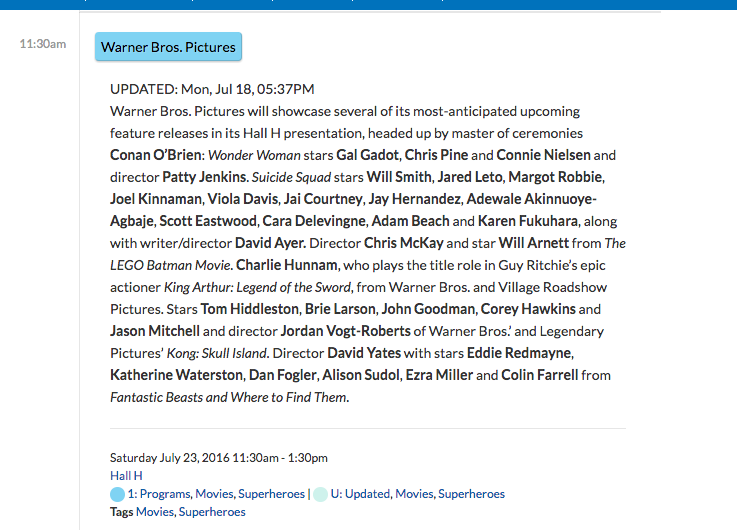
Entertainment Weekly‘s coverage of this weekend’s SDCC events, states that fans will have signing opportunities from the Fantastic Beasts group:
“In addition to the panels, there will signing appearances in three distinct areas: the Warner Bros. Booth (Fantastic Beasts, King Arthur: Legend of the Sword), the DC Booth (Suicide Squad, Wonder Woman), and the LEGO Booth (The LEGO Batman Movie).”
So far at SDCC 2016, WB and Fantastic Beasts have hosted a wand-training workshop! We’ll keep you updated on more WB and Fantastic Beasts events at SDCC 2016 as the weekend unfolds!
Are you at #SDCC2016? Grab your wands and head over to our #FantasticBeasts wand master training booth! pic.twitter.com/eKlWzlujrB
— Fantastic Beasts (@FantasticBeasts) July 21, 2016
In addition, MuggleNet reported on test-screenings of Fantastic Beasts that occurred in Chicago this week. They gave a spoiler-free report of how the movie was received by the audience. MuggleNet reports:
Read more about the discussion focus groups with David Yates, David Heyman and the audience in the full report from MuggleNet, here.
As reported previously, Warner Bros and J.K. Rowling will be publishing the Fantastic Beasts screen play in book form (pre-order here). It was also announced last March that Warner Bros had gathered Publishing Partners, which will work to release Fantastic Beasts merchandise, interactive film-to-page books (particularly children’s books), and more. Warner Bros also formed a Harry Potter production team called the Harry Potter Global Franchise Development Team (HPGFD), and more of that can be read here. The Bookseller reported recently that Walker Books is a part of these publishing partners and production teams, and will be releasing a Fantastic Beasts interactive series. The Bookseller reports:
“Walker Books UK will publish a series of interactive children’s books based on the upcoming Harry Potter spin-off film “Fantastic Beasts and Where to Find Them”.
“The film, written by J K Rowling, was inspired by her “Hogwarts textbook”, also entitled Fantastic Beasts and Where to Find Them, which was published by Bloomsbury Children’s in 2001. It follows the adventures of Newt Scamander as several of his magical creatures escape in New York, and will be released in the UK in November.
“Walker Books UK signed a sublicence agreement with Insight Editions, which has the rights to a global publishing program based on J K Rowling’s Wizarding World, and Warner Bros Consumer Products. The agreement is for “several” titles in novelty and interactive formats that go behind the scenes of the film, and publication will start this October.
“Walker Books UK will publish the books simultaneously with Walker Books Australia. In the US, the same titles will be released by Walker’s sister company Candlewick Press.”
The full report can be read here.
Add a Comment
By: Catherine,
on 7/19/2016
With the first Fantastic Beasts and Where to Find Them movie due to roll into theaters this November, first looks at film merchandise are beginning to surface.
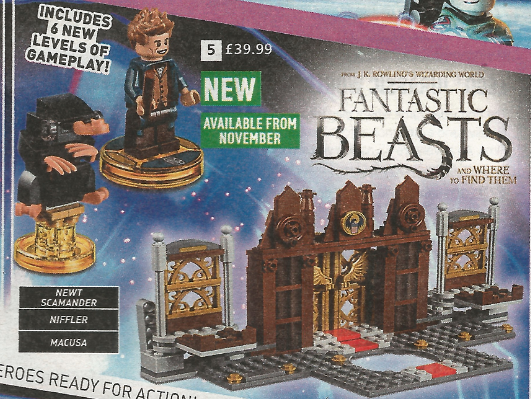
LEGO website, Bricks Fans recently released images of the packaging of Fantastic Beasts LEGO sets. The new LEGO sets were advertised in the Argos catalogue in the U.K. The images show Newt Scamander, a LEGO Niffler, and MACUSA. The pictures can be seen below. Bricks Fans reports:
“The [LEGO Dimensions Story Pack based on Fantastic Beasts and Where to Find Them] will be available in November and will feature a Magical Congress of the United States of America-themed Gateway to add to the LEGO Toy Pad along with a Newt Scamander Minifigure and Niffler gadget. The book also reveals that [the] Story Packs will retail for £39.99 and will feature a 6 level story campaign to enjoyed based on their relevant movies.”

Warner Bros. recently released the first official Fantastic Beasts and Where to Find Them t-shirt. This is the first official piece of film merchandise added to the Harry Potter franchise. It is a simple black t-shirt sporting the official Fantastic Beasts logo fans have seen in the Fantastic Beasts trailers. Warner Bros. described the tshirt, saying:
“This is our very first printing of our very first official shirt for Fantastic Beasts and Where to Find Them, the upcoming film based on J.K. Rowling’s Wizarding World! Orders placed by Friday, July 22nd will ship on Friday, July 29th. After this, the next batch will ship in mid-August.”
This t-shirt can be preordered here.
Add a Comment
By: Storie Chastain,
on 7/18/2016
Throughout the years, Warwick Davis has appeared in three different Star Wars installments as five different characters. He has become a familiar face to those who follow the movies and is due to return this December in Rogue One: A Star Wars Story as a new character, rumored to be called Bistan.

The news of Warwick’s addition to the Rogue One lineup comes just weeks after it was confirmed that Darth Vader himself would be making an appearance in the film, which is set immediately prior to the events in the franchise’s first outing, A New Hope.
With his first Star Wars appearance as Wicket the Ewok in 1983’s Return of the Jedi, and his latest appearance as Wollivan in last year’s The Force Awakens, fans are excited to see what he will bring to the screen this time around. See more about his new role here.
Add a Comment
By: Storie Chastain,
on 7/15/2016
We still have several months of waiting until the Fantastic Beasts comes to theaters but J.K. Rowling and David Yates have already started talking about the sequel. Jo has already finished the script for the second Fantastic Beasts movie and passed it on to Yates to read. In this Entertainment Weekly article, Yates talks about how different the sequel will be to the first Fantastic Beasts movie.
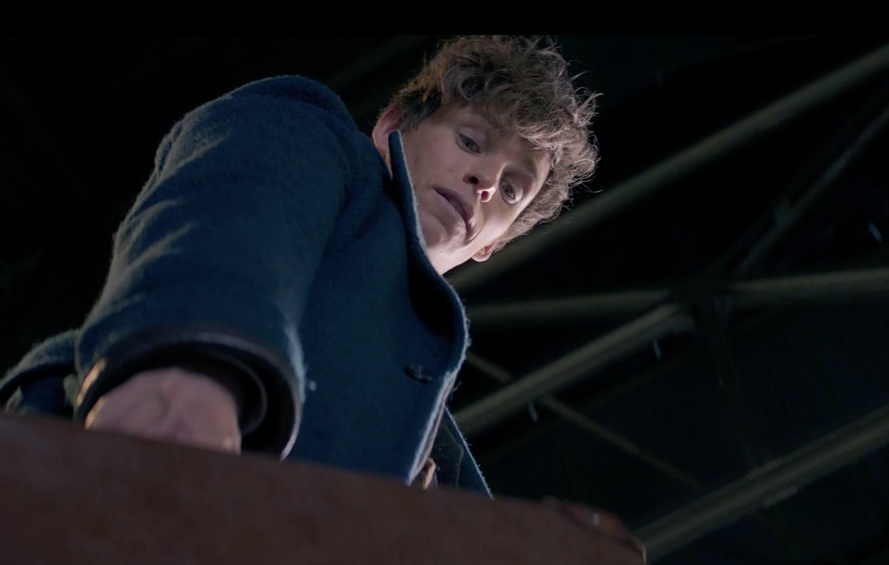
“We’ve seen the script for Part 2, for the second movie, which takes the story in a whole new direction – as you should, you don’t want to repeat yourself,” says Yates, who also helmed the final four Potter films. “The second movie introduces new characters as she builds this part of the Harry Potter universe further. It’s a very interesting development from where we start out. The work is pouring out of her.”
Although Yates shared this much with us, when asked if the sequel would also be set in America, he was not yet ready to disclose this information. Can we assume that this means we will see Newt Scamander travel back to his home in London, or perhaps somewhere new?
I guess we’ll just have to wait and see!
See more on the subject here. And be sure to catch Fantastic Beasts in theaters November 18!
Add a Comment
By: Catherine,
on 7/9/2016
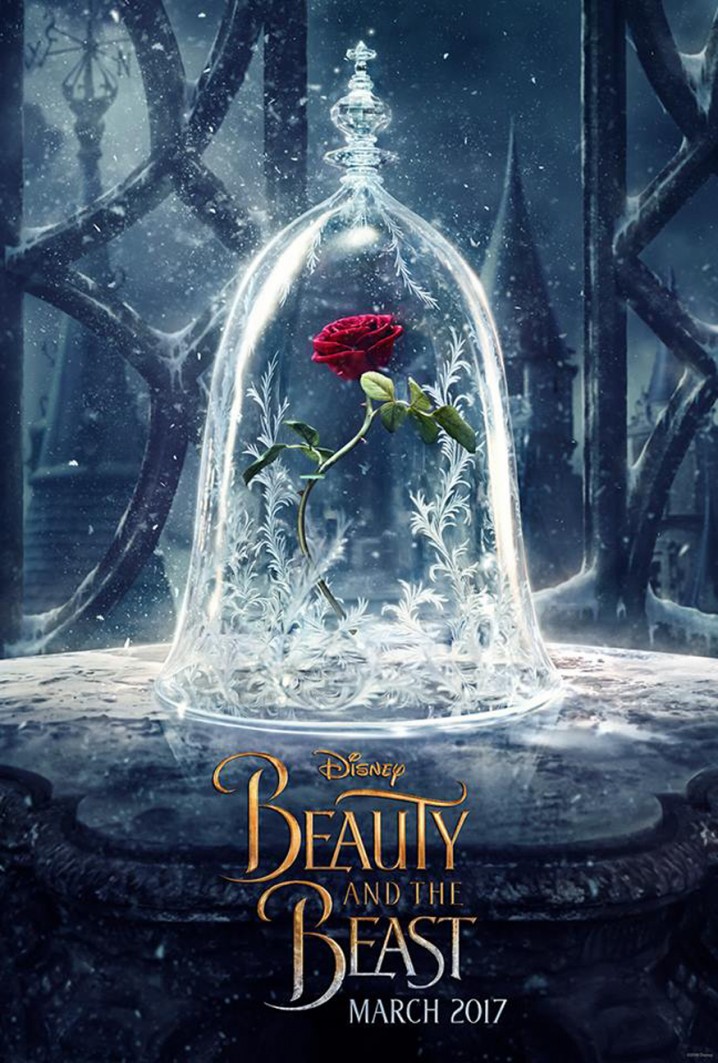
Earlier this week, Emma Watson had the privilege of revealing the first movie poster for her much-anticipated film, Disney’s live-action Beauty and the Beast.
The poster features the film’s iconic red rose in it’s frosted protective glass. The beautiful flower is alive and healthy, without a single petal dropped. The surrounding castle is dark, cold, and gloomy.
She revealed the teaser on her Facebook page, posting:
Disney’s Beauty and the Beast, also starring Dan Stevens (the Beast) Ian McKellen (Cogsworth), Harry Potter’s Emma Thompson (Mrs. Potts), Josh Gad (Le Fou), Ewan McGregor (Lumiere), Kevin Kline (Maurice), Stanley Tucci (Cadenza) andLuke Evans (Gaston), is set to premiere March 17, 2017.
By: Catherine,
on 7/8/2016
Harry Potter direct David Yates, and Harry Potter producer David Baron, sat down for a an interview about their most recent collaboration, The Legend of Tarzan. The new live-action take on the classic tale (made famous among younger generations by Disney’s animated feature film) hits theaters this week (already in theaters in the USA)–introducing audiences to Tarzan’s life after he and Jane have married and moved away from the jungle. When trouble arises and new enemies emerge, Tarzan must return to the jungle.
The two Davids sat down with Den of Geek to discuss the film, why they chose the legend of Tarzan, their take on the well-known tale, and more. Den of Geek reports:
Let’s start with something obvious: why Tarzan?
David Yates: Well, I was reading dozens and dozens of scripts, and trying to find something after [Harry] Potter that felt really fun, immersive, and had lots and lots of colours. Potter was a big arena experience, and in terms of storytelling it always had a funny bit, it always had a dramatic bit, always had something that was very emotional, always had something that was very beautifully thematic. It always took you to four or five different places, and as an experience that was always very enjoyable. And I read all these Hollywood scripts that they kept sending me, and none of them did that. They were all very one-note, it was one colour all the way through, whether they were blowing up cities or whatever, and then this script turned up and it said Tarzan on the front, and I said ‘I don’t think I’m going to read that, because I know what that is.’
Then someone who’d read it in my office said ‘I really think you ought to read this, because it’s not what you think.’ Reluctantly, I opened the page, and then I couldn’t stop turning the pages, and there was something about this human being who didn’t really know where home was. He didn’t know if it was in the jungle, or in his country estate in England, and he was stuck between the two, which I found really compelling. And there was something about the themes in the movie, that were beautiful, about reconnecting with the environment, reconnecting with animals, understanding animals, understanding that the environment was being threatened. This old-fashioned, iconic character was somehow connecting with present-day values that were very relevant and very important, and very ‘now.’ But more than anything, it was fun, it was moving, it was romantic, it was exciting, it had all the colours that the Potter movies, for me, would have. I thought ‘fuck, this is the first time I’ve read a script that I really want to go see this movie.’
David Baron: It’s also a very different Tarzan to all the other movies that we’ve seen in the past. For a start, it’s not the story of the foundling in the forest who gets taken back to England by the end, it’s quite the reverse. The character starts in England and goes back to Africa, which is a very refreshing point of view for Tarzan.
That’s something that I’m very curious about. Everything now is an origin story, even things that aren’t really origin stories. Was there pressure to push in? In the clip we saw, there was the beginning of that – was there pressure to make more of that?
DY: There is a bit of origin story in the movie, and there was no pressure from the studio, but when we showed it to the audience, the origins bit that was in there, they loved. When we put a bit more in, they loved it even more, and when we put a bit more in they loved it even more. But the origin story isn’t straightforward origin story, it refracts. There’s a foreground story, and that story of how Jane and Tarzan met, that refracts against the present time. It’s an element. Is it an origin story? Not really.
DB: There’s enough to explain, to people who don’t know the story, it gives them something to hang on to.
DY: It gives you context, and it’s kinda fun.
When he was fighting the monkey, what was he doing really?
DB: You mean physically?
Was it a puppet, or was there a stand-in? How did you do that?
DY: We had a stunt stand-in who would be the gorilla.
DB: In a big suit, for the physical interaction, so Alex’s arms weren’t here, they were sort of here.
DY: Then Alex would fight with him, and then when he couldn’t fight with him because he had to throw a punch, he’d literally be fighting with thin air.
DB: Or a ball on the end of a stick. We didn’t do any motion capture, the apes are completely CG.
DY: You just get the best animators, which we did. And it’s partly about the characters within our story, and you deliver story. Our animals, we made them as photorealistically as we could.
DB: Even though they don’t exist, because they’re giant apes.
They were pretty bloody scary.
DB: They don’t actually exist, they’re drawn from something that was a mixture of a chimpanzee and a gorilla, but they’re bigger. You wouldn’t find anything quite as big as Tarzan’s brother in the wild.
DY: You don’t really look at what other people are doing, you kind of just concentrate on your own story and your own world.
DB: In Planet Of The Apes, they’re pretty much just chimpanzees that ride horses and stand on their back legs.
DY: You look critically at some other work, and you go ‘they did that bit really well, but that bit wasn’t as good.’ You’re aware of it, and you try and learn from other people’s mistakes. And you’ll do something that you think is really good, a stand-out piece of animation, and you do something else and think ‘I’m not sure we nailed that.’
There’s a scene in the trailer where Margot has to scream and she says ‘oh, like a damsel.’ I gather that Jane is quite modern.
DY: She’s feisty. She’s quite modern and feisty, she’s quite punchy.
Where did she punch [Alex], in the face?
DB: No, the arm.
This strategy of finding your own voice, how does it relate to the previous Tarzan movies and what kind of man he is? We know him as being young, and you have to define what kind of man he is becoming.
DY: He’s a man stuck between two worlds. He’s afraid of going back to where he grew up, he’s afraid primarily because he wants to protect Jane, there’s a score that he has to figure out how to settle with an extraordinary character called Chief Mbonga. He actually killed Chief Mbonga’s son at one point in his past, so he’s reticent to go back to Africa. He’s a deeply troubled human being, who is trying to figure everything out, and he has the expectation from his father and his family of staying in England, of keeping the family home, being a proper English lord. He’s quite conflicted. But he finds real peace, and completeness, when he goes back to Africa. He has two families in Africa; he has the Manjani, the gorillas, who found him as a baby, and he has the Kuba tribe, who are this very peaceful group of agrarian tribespeople who saved him and brought him into their community.
DB: Which is where he met Jane.
DY: The Kuba are great, and they bring them into his bigger family. Ultimately, it’s a celebration of family. The thing about Christoph Waltz’s character is, he doesn’t know anything about community, or love, or what it is to feel interconnected, he just wants to take and build for the ambitions of his king. Whereas Tarzan and Jane have this huge family in Africa.
DB: Also Tarzan has, although he didn’t grow up with it, this history of his aristocratic lineage, and Christoph Waltz comes from very humble origins, and thinks that by serving his king well he will be promoted in the annals of history and celebrated as a character who saved his country.
Where does Samuel L. Jackson come into it?
DY: He’s a real character. Sam’s character is based on this extraordinary man, George Washington Williams, a preacher-lawyer-soldier, and one of the first people to draw people’s attention to what was happening in the Congo. There’s a level of politics in the movie, with a very small P, we didn’t want to dwell on it too much but it does give context for what’s happening in our story. So George Washington Williams, played by Sam, wants to try and get to the bottom of what King Leopold is up to in the Congo, which is basically enslaving a good portion of the population. So Sam persuades John, Tarzan, to take him back to the Congo, where they can work together to uncover what Leopold’s up to.
DB: Which was genocide on a massive scale.
DY: It was the first great genocide. Actually, that’s a really heavy part of it, and if one percent of the audience gets intrigued by that, they can learn about the first great genocide.
Will we be hearing the famous Tarzan yell?
DB: Of course you will!
DY: We were mixing it this morning.
To read more of this extensive interview with David Yates and David Baren, learn more about the animation of the film, casting choices, and how Jane saves Tarzan, read here.
Add a Comment By: Heidi MacDonald,
on 7/7/2016
By: Heidi MacDonald,
on 7/7/2016
By: Heidi MacDonald,
on 7/7/2016
By: Heidi MacDonald,
on 7/7/2016
It's a premise I perhaps expected too much from: What do pets get up to when their owners are at work all day? Turns out the answer is "pretty much the same thing as the toys in Toy Story."
Add a Comment
By: Catherine,
on 7/5/2016
All of the Harry Potter actors, or alums, have been keeping busy doing what they do best–acting! In a series of “round ups” we will be doing our best to summarize the acting projects of all the Harry Potter star alums, many movies, plays and other projects–many of which sound amazing and may peak different Harry Potter fans’ interests.
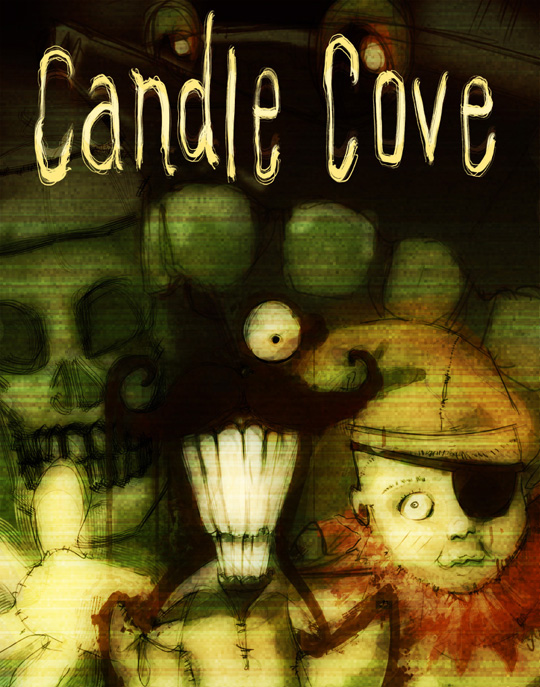
Fiona Shaw (Aunt Petunia Dursley) joined the cast of the SyFy channel’s upcoming horror series Channel Zero: Candle Cove. The mini-series, set to premiere this fall, is based off Kris Straub’s online short story of the same title. Channel Zero: Candle Cove will be a mini-series made up of two 6-episode seasons. Season two is scheduled to be released in 2017. Variety Media describes the story, saying:
“[Channel Zero: Candle Cove] centers on [protagonist Mike Painter’s] obsessive recollection of a mysterious children’s television program from the 1980s – and his ever-growing suspicions about the role it might have played in a series of nightmarish and deadly events from his childhood…Mike Painter, a child psychologist who was a child himself when he witnessed the mysterious disappearance of his twin brother, Eddie, and four other children from their small town, Iron Hill, in 1988. Decades later, he is compelled to return to his hometown to investigate what really happened all those years ago, only to find that it – whatever it was – may be happening all over again.
“Shaw also stars as Marla Painter, Mike’s mother and a widow. Marla is shocked when Mike returns home and is reluctant to relive the events of the long-ago disappearance of her son and the other children of Iron Hill.”
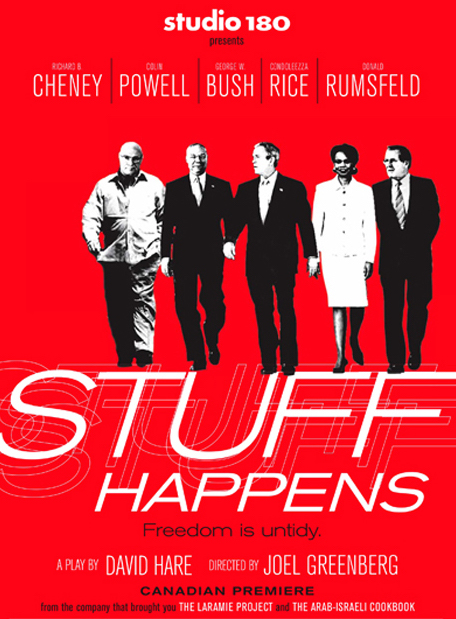
Bill Nighy (Minister of Magic Rufus Scrimgeour) will be gracing the stage of London’s National Theatre as he joins the production of “Stuff Happens.” The production will be a rehearsed reading, with Bill Nighy set to play the Narrator. The production will only take place for one night, July 6, on the publication day of the Chilcot Inquiry report. The play’s author, David Hare describes the play (which was first performed in 2004):
“In 2004 Nicholas Hytner said the National Theatre could not call itself by that name if it did not have a play about the invasion of Iraq in that calendar year. He was right. And now, 12 years later, when the inquiry into those events is to be published, it seems appropriate to mark the event by presenting the play which first laid out the diplomatic process leading to the most controversial foreign policy decision of my life time.”
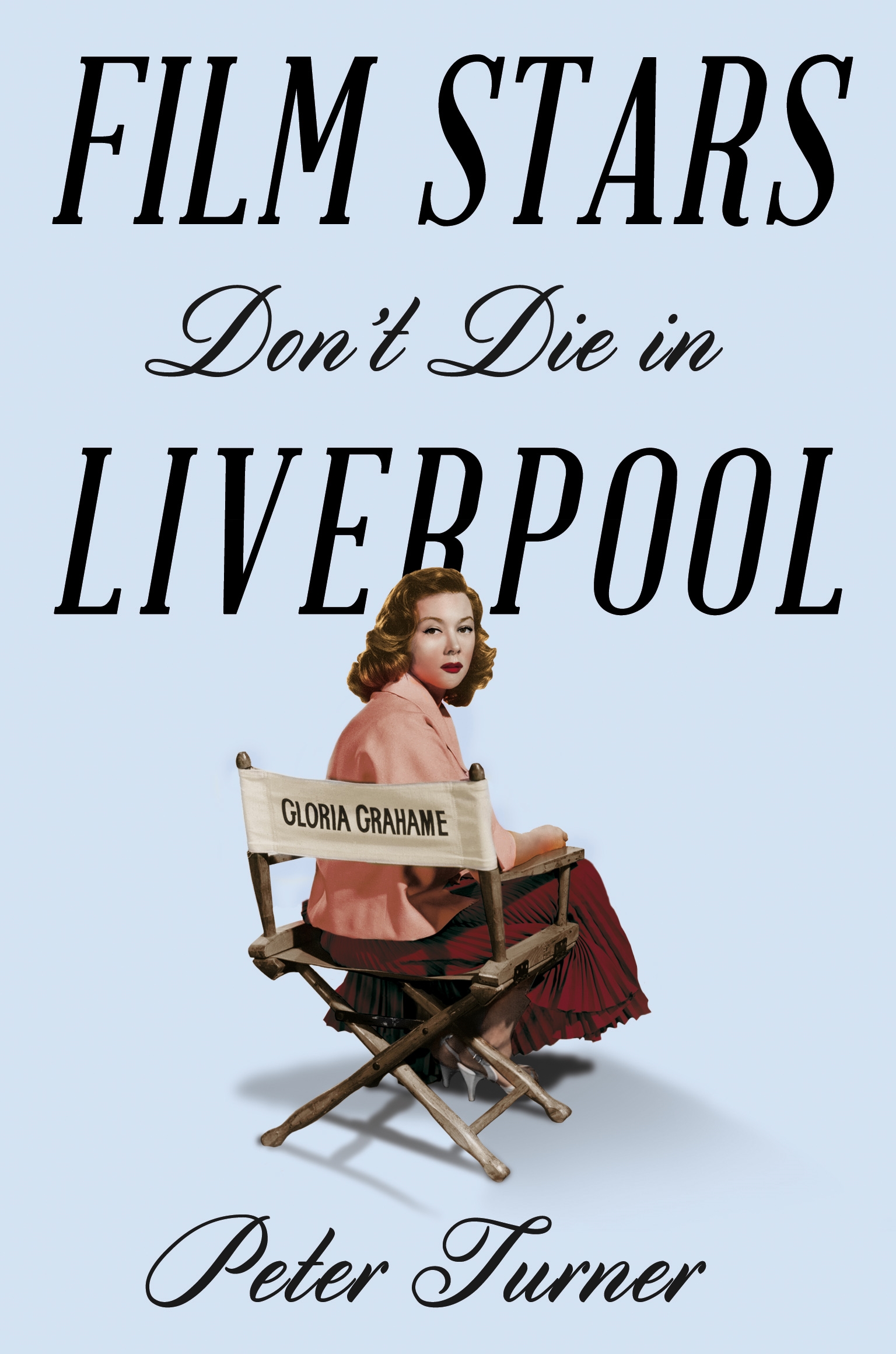
Julie Walters (who played the beloved Molly Weasley in the Harry Potter films) has joined the cast of a film adaption of Peter Turner’s memoir Film Stars Don’t Die in Liverpool. The Hollywood Reporter describes the film, saying:
“The story follows the playful but passionate relationship between Turner (Bell) and the eccentric Oscar-winning actress Gloria Grahame (Bening). What starts as a vibrant affair between a legendary femme fatale and her young lover quickly grows into a deeper relationship, with Turner being the one person she allows herself to turn to for comfort and strength. When Grahame — known for roles in films like The Big Heat, Oklahoma and The Bad and the Beautiful — collapses and refuses medical attention, Turner is forced to take her into his chaotic and often eccentric family home in Liverpool.”
Julie Walters will play the role of Peter’s mother. Production on the film began today.
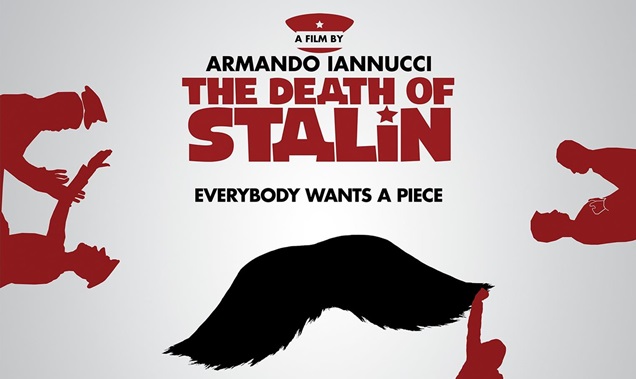
Next on the list, Jason Isaacs (Lucius Malfoy) has joined the cast of the up coming film, The Death of Stalin. It is currently unknown what role Jason Isaacs will play within the film, which is based off of a graphic novel of the same title. Variety reported:
“‘The Death of Stalin’ has everything: comedy, tragedy, truth, lies, life, death, bravery and cowardice. All under the shadow of Stalin’s Terror. So I’m really pleased we have an amazingly multifaceted cast who can give us all these things and more. It’s an unbelievable ensemble — great actors, brilliant comedians, fantastic personalities — and together they give us all the horrific drama and base absurdity of the crazy last days of Stalin and the power struggle to succeed him.”
“’The Death of Stalin’ is based on true events and set in the days following Stalin’s collapse as his core team of ministers tussle for control; some want positive change in the Soviet Union, others have more sinister motives. Their one common trait? They’re all just desperately trying to remain alive,” according to the press statement.”
Along the lines of the comedic, Emma Thompson will making an appearance as an OBGYN in the Bridget Jones’s Diary sequel, Bridget Jones’s Baby. It is absolutely hilarious. Her character was debuted on the newest trailer for the film, which was just recently released. It can be seen below! The synopsis of the film states:
“After breaking up with Mark Darcy (Firth), Bridget Jones’s (Zellweger) “happily ever after” hasn’t quite gone according to plan. Fortysomething and single again, she decides to focus on her job as top news producer and surround herself with old friends and new. For once, Bridget has everything completely under control. What could possibly go wrong?
Then her love life takes a turn and Bridget meets a dashing American named Jack (Dempsey), the suitor who is everything Mr. Darcy is not. In an unlikely twist she finds herself pregnant, but with one hitch…she can only be fifty percent sure of the identity of her baby’s father.”
Bridget Jones’ Baby hits theaters September 16.
Unfortunately, after facing healthy complications and taking the advice to lay off working, Harry Potter’s John Hurt (Mr. Ollivander) announced he had to withdraw from his involvement in the newest production of The Entertainer. Mr. Hurt said in his statement:
“I have recently been in hospital with an intestinal complaint and although I am much improved and on the road to a full recovery, my doctors have advised that it is too soon for me to undertake a lengthy and arduous stage role.
“It is therefore with great sadness and disappointment that I must withdraw from The Entertainer.”
The play is a Kenneth Branagh (Gilderoy Lockhart) production. The Telegraph reports:
It is not yet clear who will replace Hurt in the role, though an announcement is expected soon.
Previews of the play, in which Kenneth Branagh plays Archie Rice, begin at London’s Garrick Theatre on August 20. This is the last play of Branagh’s year-long residency at the theatre.
This was to be the first time Hurt had appeared on the London stage in 10 years. In February, he described himself as “proud and privileged” to be involved in the project.
“I am thrilled to be invited to play Billy Rice in this production of what I believe to be one of the great plays of the 20th century,” he said.
The Entertainer will play at the Garrick Theatre from August 20 until November 12.
Helena Bonham Carter sat down for an interview with Market Wired. She discussed loving to dress up in crazy costumes for characters that were vastly different from her–acting as an escape from herself. Helena talked of experimenting with her wardrobe and keeping parts of her past characters’ costumes. Market Wired reported:
“I want to dress up. I don’t want to look like me. I want to feel I have escaped me. Like this one (Alice Through the Looking Glass) is easier to watch because I really don’t look like me. I wish I had special effects in every movie,” the Brit says.
“Oh yes, it’s completely therapeutics,” she says. “I am not naturally very angry. But is quite tiring to be continuously angry, so it took a lot of sugar and caffeine. It’s amazing that you don’t have to pay for the therapy, but you get paid.”
“In daily life, you can use them as costumes, I think. They are a bit magical, and they can have the ability to transform you. Not necessarily just totally from the outside, but it can solicit something else from the inside.”
Bonham-Carter, who has played in over six of her ex-husband´s movies, says she has kept some of the costumes that she wore over the years.
“I should have kept more, because sometimes you do get attached. But you know what I tend to keep?” she laughs. “My character’s underwear. So I have the bloomers and the camisoles. You want to keep something, but it has more to do with letting go of the character.”
More of the interview can be read here and seen below!
Last but certainly not least, Warwick Davis (Griphook, Flitwick) will be a guest on a panel at a Star Wars Celebration Europe in London! The Celebration with take place next week, July 15-17. To learn more about scheduling, visit Collider.
Many thanks to our friends at MuggleNet for the heads up!
Add a Comment
By: Heidi MacDonald,
on 6/29/2016
 Kyle Pinion takes in the new 3 hour cut of the much maligned superhero clash.
By: Heidi MacDonald,
on 6/28/2016
 The studios unveils new concept art featured on the digital release of Batman v Superman: Dawn of Justice
By: Heidi MacDonald,
on 6/27/2016
 Profiles in History is a huge movie memorabilia house and they’re having a HUGE three day auction that includes some amazing old movie costumes that you would never have thought even still existed. Like Tom Tyler “Captain Marvel” costume from the 1941 Adventures of Captain Marvel serial. Starting bid: $10,000 OR Dick Purcell’s “Captain America” […]
By: Sammie,
on 6/24/2016
It’s hard to believe that it’s been fifteen years since the first Harry Potter film lit up our movie screens, but the minds behind the Warner Bros. Studio Tour in London certainly haven’t forgotten. Since the beginning of the year, Warner Bros. has been delighting fans with a variety of exhibitions celebrating the fifteenth anniversary of Harry Potter and the Philosopher’s Stone, and the most recent addition is aptly titled “Finding the Philosopher’s Stone”.
The new exhibit will feature life-size Wizard’s Chess pieces, troll snot, unicorn blood, a moving display of the Devil’s Snare, and–naturally–several iterations of the Philosopher’s Stone. Prop makers will also be in attendance to give fans an inside look at the prop-making process.
“Finding the Philosopher’s Stone” will run from July 22 through September 5. Tickets to the exhibition cannot be purchased while on the tour, so be sure to book in advance.
In addition, the highly popular interior tour of 4 Privet Drive has been extended through September 5.
Thanks to Mugglenet for the heads-up!
Add a Comment Also take a look at the latest set of covers featuring the cast
Please download the FREE DC All Access App and vote for Andrew in the Slipknot catagory of the Suicide Squad Squad Up! Contest to help me with a trip to Exclusive events at this years SDCC!!!!