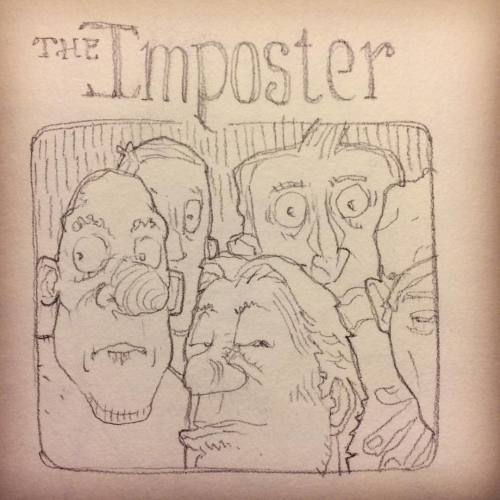
via Emergent Ideas Spot the Imposter! #Drawing #Sketch #DailyDrawing #Pencil...
0 Comments on Spot the Imposter! #Drawing #Sketch #DailyDrawing #Pencil... as of 12/14/2016 2:27:00 AM
Add a Comment

 By: Brian Bowes,
on 11/28/2016
By: Brian Bowes,
on 11/28/2016
.jpg?picon=572) By: andrea joseph,
on 10/5/2016
By: andrea joseph,
on 10/5/2016

.png.jpg?picon=3640) By: Sara Burrier,
on 6/23/2016
By: Sara Burrier,
on 6/23/2016

Author and illustrator Joyce Wan is back on Ready Set Draw! This time around she teaches you how to draw a delicious treat from her board book, You Are My Cupcake! No matter your skill level you will be able to draw a super cute cupcake. Go wild with your markers, colored pencils, or crayons by adding sprinkles and your favorite toppings.
When you’re finished drawing these cupcakes perhaps you’ll be inspired to make a batch of your own. Watch Joyce’s episode of StoryMakers, with Kathleen DeCosmo, to learn how to make cupcakes and easy toppers!
If your child or student isn’t ready to draw their own cupcake, they can decorate this printable:

Click the image above to download the full-sized printable.
Did you, a child, or student draw cupcakes using this video? Share your images with us via Facebook, Instagram, or Twitter! Use the hashtag #ReadySetDraw on Instagram and Twitter too. We can’t wait to see what you’ve drawn!


You Are My Cupcake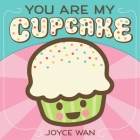
Written and illustrated by Joyce Wan
Published by Cartwheel Books
A scrumptious board book, filled with sweet terms of endearment. This bite-sized board book is an ode to all the names we call our children: cutie pie, sweet pea, peanut, pumpkin. With a candy-colored palette and irresistible art with glitter and embossing.
Joyce is inspired by Japanese pop culture, Scandinavian design, modern architecture, and the little things that put a smile on her face. In Joyce’s perfect world “everything would be cute, round, and chubby,” which is evident in her illustrations. Joyce is the author of several bestselling board and picture books including You Are My Cupcake and The Whale in My Swimming Pool, a Spring 2015 Junior Library Guild Selection.
Although Joyce’s parents had the equivalent of a middle school education, and her mother wasn’t able to speak English, her mother took Joyce and her siblings to the library every week. Picture books were integral to Joyce’s love of reading as she and her siblings made up stories to go along with the illustrations. Joyce counts the determination of her parents as a driving force behind her perseverance and success. “When I first started Wanart, I was working at a 9am-6pm job at an architectural firm. I spent many late night hours on my own business with only a few hours of sleep in between the two “jobs”. I did this for two years before I quit my full time job to pursue my own business full-time.”
Joyce graduated from Barnard College, Columbia University in New York City with a liberal arts degree in Architecture. Joyce teaches greeting card design and art licensing at the School of Visual Arts. The self-proclaimed night owl prefers drawing and writing in the early morning hours “when everyone’s asleep and the world is quiet.” Joyce lives in Ridgewood, New Jersey with her husband. The architect turned author and self-trained illustrator hopes to inspire people to “embrace the spirit of childhood and follow their dreams.”
CONNECT WITH JOYCE WAN
Website | Facebook | Instagram | Twitter
CONNECT WITH KidLit TV
Facebook Group | Facebook Page | Instagram | Newsletter | Pinterest | Twitter | YouTube
Ready Set Draw!
Executive Producer: Julie Gribble
This post includes affiliate links.
The post Ready Set Draw | You Are My Cupcake appeared first on KidLit.TV.
By: andrea joseph,
on 6/10/2016



 By: nicole,
on 6/7/2016
By: nicole,
on 6/7/2016
 By: andrea joseph,
on 6/4/2016
By: andrea joseph,
on 6/4/2016


 By: andrea joseph,
on 6/3/2016
By: andrea joseph,
on 6/3/2016


 By: Sean Qualls,
on 5/13/2016
By: Sean Qualls,
on 5/13/2016
as a kid, got me interested in my own family's ancestry. Although, it wasn't until about 10 years ago, around the time my son was born, that I finally started digging on my mother's side of the family tree. If you've ever done any digging yourself you know how exciting and time consuming it can be, but in a short amount of time I made decent progress.

Then a couple of years ago, my aunt gave me these two portraits of my great-grandparents.I'm guessing the photos are about 100 years old.
Their daughter, my grandmother, Blanche, was born in either 1916 or 1917 so I estimate the photos were taken around then, give or take a few years. These portraits are a part of my family history. And until seeing them and delving into my family's ancestry online, it was a family history that I was not too sure actually existed let alone connected to a larger American history.
Part of what fuels my art (and illustration) is the desire to shine a light on those who have been forgotten by history, underrepresented or misrepresented. My goal is not to merely tell their stories but to reframe them and their lives. By reframing, I mean looking at people and events from a different vantage point and thereby changing the way we perceive them, reminding us that identity is perception and therefore malleable, not static. The first piece of work where I consciously used reframing was A Brief History of Sambo.

For me, the portraits of my great-grandparents suggest that they were people that mattered, even though their names may only be a small piece of a larger historical record. Often times African-American history is linked to the history of oppression, poverty, brutality and blight, as though they are all synonymous. In terms of success, names like CJ Walker, George Washington Carver and Frederick Douglas are important and familiar but by no means the whole story. There are countless people who we learn about during the 28 days of February, many who were part of the Civil-Rights Movement but still that's just a portion of the picture. Industries such as law, medicine, art, invention, publishing, hospitality, real estate and apparel are all areas where numerous African-Americans made a name for themselves. People like Arthur Gaston, Jeremiah G. Hamilton, John Coburn and Chloe Spear are just a few names but their success defies the perceived norm and that success was not confined
to just one era but was a truth, for some, throughout the history of Blacks in America. Given the circumstances of how we arrived here, our presence in America today conveys a success that pervades all of American history.
Back to this week's piece. In the spirit of those industrious people who's stories remain untold (and the portraits of my great-grandparents), I created this week's piece-"Black Business 1890."
The portrait is of no one in particular and the date arbitrary but the objective of the piece is to emphasize my previous points. The print is 10x10" including 2" borders on all sides. Printed on heavyweight, ph-neutral, cold-press watercolor paper with archival inks. Just respond here or email me [email protected] with Weekly Painting #9 in the subject if you would like one.
I apologize to anyone who has been waiting for these updates. It's been awhile, I know. I have more to share so stay tuned!
Oh,one more thing.
 This Sunday, May 15th in Brooklyn,
I will be at the 5th Ave Street Fair, 5th Ave between 1st and 2nd Street in the artist area. I may have one or two proofs left of the Black Business 1890 and a Brief History of Sambo. Hope to see you!
Sean


============================================================
Copyright © Sean Qualls 2016, All rights reserved.

Author and illustrator Roxie Munro returns to Ready Set Draw!, with a new project inspired by several of her books, including Market Maze. In this episode Roxie teaches you how to draw your very own busy random Roxie reversing maze! Go above, go under; make turns and twists. There are no mistakes, only opportunities to create new paths.
Did you, a child, or student draw their own maze using this video? Please share your images with us via Facebook, Instagram, or Twitter! Use the hashtag #KidLitTV on Instagram and Twitter too. We can’t wait to see what you’ve drawn!

![[P] Ready Set Draw - Roxie Munro Maze](http://kidlit.tv/wp-content/uploads/2016/04/P-Ready-Set-Draw-Roxie-Munro-Maze.png)
Market Maze
By Roxie Munro
Published by Holiday House
Eight trucks hit the highway in a colorful and mesmerizing maze book that helps kids understand how food gets to their tables. In eleven intricately drawn mazes, eight vehicles, each carrying a different product, are on their way to the city. Fish, apples, dairy products, corn, vegetables, flowers, eggs, and baked goods all travel through colorful and minutely detailed landscape mazes to reach the city farmer’s market. Information on all of the products and their journeys is included along with answers to all of the mazes. For additional fun kids are challenged to look for objects hidden on each spread.
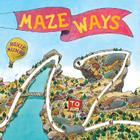 Mazeways A to Z
By Roxie Munro
Published by Sterling Publishing Company
Prepare to be astounded, because these are no ordinary mazes! Welcome to Mazeways, where A is for Airport, B is for Boatyard, C is for Circus, and everything is exciting. In this eye-opening world, each letter in the alphabet transforms into a fantastic maze and fingers have to trace a path through fantastically detailed environments. Navigate these puzzles as you would if you were traveling in real life: drive your car on the right side of the road, cross the street only at the crosswalks, and feel free to walk around furniture or landmarks as long as nothing blocks your path. Each maze comes with directions on how to launch into the adventure, and features really cool things to find and guide you along the waylike crocodiles and seals, clown cars and motorcycles, baseball diamonds and sunken treasure, and more!
Find more of Roxie’s books, including more mazes, here.
Via RoxieMunro.com
Roxie is the author/illustrator of more than 40 nonfiction and concept books for children, many using “gamification” to encourage reading, learning, and engagement. Her books have been translated into French, Italian, Dutch, Chinese, and Japanese.
Roxie was born in Texas, and grew up in southern Maryland, by the Chesapeake Bay. At the age of six, she won first prize in a county-wide contest for a painting of a bowl of fruit. She has been a working artist all her life, for a while freelancing in Washington DC as a television courtroom artist. It was great training for life drawing, concentration under pressure, and making deadlines. Clients included CBS, the Washington Post, and the Associated Press. Fourteen of her paintings have been published as covers of The New Yorker magazine.
She also creates oils, watercolors, prints, and drawings, primarily cityscapes, which are exhibited widely in the US in galleries and museums. Roxie’s work is in numerous private, public, and corporate collections.
Roxie Munro studied at the University of Maryland, the Maryland Institute College of Art (Baltimore), earned a BFA in Painting from the University of Hawaii, attended graduate school at Ohio University (Athens), and received a Yaddo Fellowship in Painting. She lectures in museums, schools, libraries, conferences, and teaches in workshops.
Many oils and watercolors are views from the roof of her sky-lighted loft studio in Long Island City, New York, just across the East River from her home in mid-Manhattan. Roxie is married to the Swedish writer/photographer, Bo Zaunders.
CONNECT WITH ROXIE MUNRO
Website | Facebook | Pinterest | Twitter
CONNECT WITH KidLit TV
Facebook Group | Facebook Page | Instagram | Newsletter | Pinterest | Twitter | YouTube
Ready Set Draw!
Executive Producer: Julie Gribble
This post includes affiliate links.
The post Ready Set Draw! | Roxie Munro Draws an Amazing Maze appeared first on KidLit.TV.
 By: keilinh,
on 4/26/2016
By: keilinh,
on 4/26/2016
Released last fall from LEE & LOW BOOKS, The Story I’ll Tell is  a gentle and moving story of adoption and parental love that is sure to touch the hearts of readers everywhere, no matter how they came to be a family. It has received starred reviews from Booklist and Publishers Weekly, which called it “an unabashed love letter, one that many families will treasure.”
We asked illustrator Jessica Lanan to take us behind the scenes of her art process bringing The Story I’ll Tell to life:
The process for illustrating The Story I’ll Tell started with research and brainstorming. I read books about adoption and collected evocative images from magazines and the internet that I thought might be useful references. There were a lot of questions to investigate as I tried to piece together the identity of the characters and the overall look and feel of the artwork.

As I researched, I also began sketching thumbnails. My art director and editor provided feedback on these, and through several rounds of revisions we worked to get the concept and flow of the art just right. The thumbnail sketches were also essential in order to work out the composition of each page. For each round of revisions I made a printed dummy in order to simulate the flow of the book.

After the thumbnails were ready, I worked on more detailed drawings, using reference images and models as needed. Here you can see a rough clay model that I used as a reference image for one of the drawings:

Once the drawings had been approved, it was time to move on to the final art. I was using watercolor for this book, which is a rather unforgiving medium, so, I made a miniature version of each painting first in order to get all the mistakes out of the way. Then I transferred my drawing to the watercolor paper and started painting!

Each final piece was done with watercolor and colored pencil on 300lb watercolor paper.

Jessica Lanan has been in love with illustrated books since an early age. Besides The Story I’ll Tell, she has also illustrated Good Fortune in a Wrapping Cloth from the Shen’s Books imprint of LEE & LOW BOOKS. She currently lives in Boulder, Colorado, where she enjoys thunderstorms, crunching autumn leaves beneath her feet, and leaving footprints in freshly fallen snow.
You can purchase a copy of The Story I’ll Tell on our website here.
 By: Kenneth Kit Lamug,
on 4/4/2016
By: Kenneth Kit Lamug,
on 4/4/2016
Hurts Like a Mother: A Cautionary Alphabet by Jennifer Weiss and Lauren Franklin (Illustrated by Ken Lamug) (Doubleday) Fifty-three years after Edward Gorey’s delightfully subversive alphabet…
The post HURTS LIKE A MOTHER Featured in NEW YORK POST Must-Read Books appeared first on RABBLEBOY - The Official Site of Kenneth Kit Lamug.
Add a Comment By: Patrick Girouard,
on 4/1/2016
By: Patrick Girouard,
on 4/1/2016


StoryMakers host Rocco Staino caught up with Mo Willems at the preview for The Art and Whimsy of Mo Willems, a retrospective of Willems’ work at the New-York Historical Society. The Art and Whimsy of Mo Willems exhibit contains many pieces that show Willems’ process as he created some of kid lit’s most memorable characters. He hopes children create their own art after they leave the museum. The author and illustrator briefly discussed The Thank You Book, the 25th and last book in the Elephant and Piggie series.
Mo Willems has had a huge impact on the lives of children. As a television writer for Sesame Street he garnered six Emmys. His witty one-liners inspired children to quote characters from Codename: Kids Next Door amongst other familiar cartoons. In 2003 his first picture book, Don’t Let the Pigeon Drive the Bus!, was published and since then it’s been a stream of accolades; three Caldecott Honors, two Geisel Medals, five Geisel Honors, and a place in the Picture Book Hall of Fame.
Willems’ surly pigeon, the mismatched pair of Elephant and Piggie, and everyone’s favorite Knuffle Bunny are a few of the characters visitors will get to see evolve via the exhibit.
The Art and Whimsy of Mo Willems exhibition brings together original art, sketches, and inspirational drawings from Willem’s most popular series, plus stand-alone classics such as Leonardo the Terrible Monster and That is NOT a Good Idea!. It displays the efforts behind the effortlessness, the seriousness behind the silliness, and the desire, as Willems says, “to think of my audience, not for my audience.” His ability to crisply weave together life lessons and humor creates artful volumes that speak to all, regardless of size.
The Art and Whimsy of Mo Willems is open now, until September 25, 2016. Click here for ticket information, directions, and more.
The Eric Carle Museum of Picture Book Art organized the exhibition, which is supported by Disney Publishing Worldwide.

Click the images or links below to access fun activities with characters from Mo Willems’ books!


The Thank You Book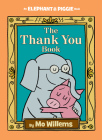
Written and illustrated by Mo Willems (Disney-Hyperion, 2016)
Gerald is careful. Piggie is not. Piggie cannot help smiling. Gerald can. Gerald worries so that Piggie does not have to. Gerald and Piggie are best friends. In The Thank You Book!, Piggie wants to thank EVERYONE. But Gerald is worried Piggie will forget someone … someone important.
#1 New York Times Bestseller Mo Willems began his career as a writer and animator for PBS’ Sesame Street, where he garnered 6 Emmy Awards for his writing. During his nine seasons at Sesame Street, Mo also served as a weekly commentator for BBC Radio and created two animated series, Nickelodeon’s The Off-Beats and Cartoon Network’s Sheep in the Big City.
While serving as head writer for Cartoon Network’s #1 rated show, Codename: Kids Next Door, Mo began writing and drawing books for children. His debut effort, Don’t Let the Pigeon Drive the Bus! became a New York Times Bestseller and was awarded a Caldecott Honor in 2004. The following year Knuffle Bunny: a Cautionary Tale was awarded a Caldecott Honor. The sequel, Knuffle Bunny Too: a Case of Mistaken Identity garnered Mo his third Caldecott Honor in 2008.
In addition to picture books, Mo created the Elephant and Piggie books, a series of “Easy Readers”, which were awarded the Theodor Suess Geisel Medal in 2008 and 2009 and Geisel Honors in 2011, 2012, 2013, 2014, and 2015. For older audiences he has published an illustrated memoir of his year-long trip around the world in 1990-91 entitled You Can Never Find a Rickshaw When it Monsoons and Don’t Pigeonhole Me!, a collection of 20 years of his annual sketchbooks. His books have been translated into over 20 languages.
Read more: Mo Willems FAQ
CONNECT WITH MO WILLEMS
Website | Twitter
The New-York Historical Society, one of America’s pre-eminent cultural institutions, is dedicated to fostering research, presenting history and art exhibitions, and public programs that reveal the dynamism of history and its influence on the world of today. Founded in 1804, New-York Historical is the oldest museum in New York City. New-York Historical has a mission to explore the richly layered political, cultural and social history of New York City and State and the nation, and to serve as a national forum for the discussion of issues surrounding the making and meaning of history.
New-York Historical is recognized for engaging the public with deeply researched and far-ranging exhibitions. Supporting these exhibitions and related education programs are one of the world’s greatest collections of historical artifacts, works of American art, and other materials documenting the history of the United States and New York.
The New-York Historical Society’s museum is the oldest in New York City and predates the founding of the Metropolitan Museum of Art by nearly seventy years.
Read more: New-York Historical Society
CONNECT WITH THE NEW-YORK HISTORICAL SOCIETY
Website | Facebook | Instagram | Twitter
CONNECT WITH KidLit TV
Facebook Group | Facebook Page | Instagram | Newsletter | Pinterest | Twitter | YouTube
StoryMakers On Location
Host: Rocco Staino
Executive Producer: Julie Gribble
This post contains affiliate links.
The post StoryMakers On Location| The Art and Whimsy of Mo Willems appeared first on KidLit.TV.
By: andrea joseph,
on 3/15/2016


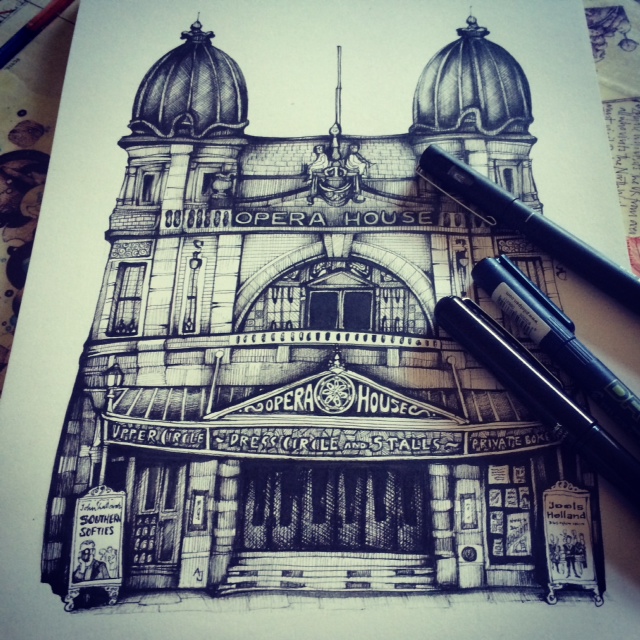
 By: Michelina Ouellette,
on 3/11/2016
By: Michelina Ouellette,
on 3/11/2016
 By: Jessica Holden,
on 2/7/2016
By: Jessica Holden,
on 2/7/2016


Joe Mclean is an Illustrator from Norwich, who creates illustrations using a combination of hand drawn lines, scanned textures and Adobe Illustrator. His inspirations include traditional printing processes, hand drawn type and graphic illustration. His speciality is editorial illustration and greeting cards. His clients include; Computer Arts, Spindle Magazine and Loud and Quiet to name a few.
See more of Joes work on his website and Behance.

Maria Had a Little Llama/Maria Tenia Una Llamita and Knit Together author and illustrator Angela Dominguez creates heart-warming tales about family and togetherness. Angela Dominguez is a two-time recipient of the American Library Association’s Pura Belpre Honor (2014 and 2016).
Angela’s picture books are rooted in the themes of family, tradition, and friendship. Several of her books including Maria Had A Little Llama/Maria Tenia Una Llamita; Let’s Go, Hugo; and Knit Together pull from relationships with family members and artifacts from her childhood. A wind-up toy inspired French bird Hugo. Angela’s memories of wanting to be a skilled knitter like her mother led her to write a book to remind children they can be talented in their own way. An aunt’s interest in indigenous cultures informed the writing of a version of Mary Had a Little Lamb with a Peruvian twist.
Angela’s books aren’t only an option for children growing up bilingual; they are excellent for those who want to expose young readers to the Spanish language and Latino culture.
Aspiring illustrators will enjoy hearing about Angela’s process and seeing what a book looks like from start to finish.
We’re giving away three (3) sets of books from Angela Dominguez. Each set includes signed copies of Maria Had a Little Llama and Knit Together. Enter now!
All entrants must reside in the United States and be at least 13 years old.
Knit Together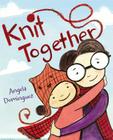
Written and illustrated by Angela Dominguez
Published by Dial Books for Young Readers
From an award-winning illustrator comes a sweet story of mothers and daughters, drawing and knitting, and learning to embrace your talents just right for Mother’s Day. Drawing is fun, but knitting is better because you can wear it Knitting isn t easy, though, and can be a little frustrating. Maybe the best thing to do is combine talents. A trip to the beach offers plenty of inspiration. Soon mom and daughter are collaborating on a piece of art they can share together: a special drawing made into a knitted beach blanket. For every mom and daughter, this is an arts-and-crafts ode creative passion and working together.
Santiago Stays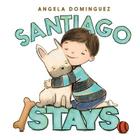
Written and illustrated by Angela Dominguez
Published by Harry N. Abrams
Dominguez presents a humorous and endearing portrait of a stubborn French bulldog and a determined little boy.
Maria Had A Little Llama/Maria Tenia Una Llamita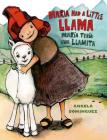
Written and illustrated by Angela Dominguez
Published by Henry Holt & Company
Everyone knows about Mary and her little lamb. But do you know Maria? With gorgeous, Peruvian-inspired illustrations and English and Spanish retellings, Angela Dominguez gives a fresh new twist to the classic rhyme. Maria and her mischievous little llama will steal your heart.
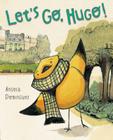 Let’s Go, Hugo!
Written and illustrated by Angela Dominguez
Published by Dial Books for Young Readers
Hugo is a dapper little bird who adores the Eiffel Tower — or at least his view of it from down here. Hugo, you see, has never left the ground. So when he meets another bird, the determined Lulu, who invites him to fly with her to the top of the tower, Hugo stalls, persuading Lulu to see, on foot, every inch of the park in which he lives instead. Will a nighttime flying lesson from Bernard the Owl, some sweet and sensible encouragement from Lulu, and some extra pluck from Hugo himself finally give this bird the courage he needs to spread his wings and fly?
Marta! Big & Small (August 23, 2016)
Written by Jennifer Arena, illustrated by Angela Dominguez
Published by Roaring Brook Press
Marta is “una nina,” an ordinary girl . . . with some extraordinary animal friends. As Marta explores the jungle, she knows she’s bigger than a bug, smaller than an elephant, and faster than a turtle. But then she meets the snake, who thinks Marta is “sabrosa” tasty, very tasty But Marta is “ingeniosa,” a very clever girl, and she outsmarts the snake with hilarious results. With simple Spanish and a glossary at the end, this fun read-aloud picture book teaches little ones to identify opposites and animals and learn new words.
COMING IN 2016
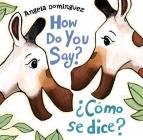 How Do You Say? Como Se Dice? (November 8, 2016)
Written and illustrated by Angela Dominguez
Published by Henry Holt & Company
Hello “Hola.” Some people speak Spanish. Some people speak English. Although we may not speak the same language, some things, like friendship, are universal. Follow two young giraffes as they meet, celebrate, and become friends. This bilingual tale will have readers eager to meet new friends and “amigos.”
COMING IN 2017
 Sing Don’t Cry
Written and illustrated by Angela Dominguez
Published by Henry Holt & Company
Pura Belpre Honor winner, Angela Dominguez, based this musically driven story on her beloved grandfather. Her abuelo always encouraged her to stay positive and carry on.
Via AngelaDominguezStudio.com
Angela was born in Mexico City, grew up in the great state of Texas, and lived in San Francisco. She’s the author and illustrator of picture books such as Let’s Go, Hugo!, Santiago Stays, Knit Together, and Maria Had A Little Llama, which received the American Library Association Pura Belpré Illustration Honor. When she is not in her studio, Angela teaches at the Academy of Art University, which honored her with their Distinguished Alumni Award in 2013. She also enjoys presenting at different schools and libraries to all sorts of ages. Angela is a proud member of SCBWI, PEN America, and is represented by Wernick and Pratt Literary Agency.
CONNECT WITH ANGELA DOMINGUEZ
Website
Facebook
Twitter
CONNECT WITH KidLit TV
Facebook Page
Facebook Group
Instagram
Newsletter
Pinterest
Twitter
YouTube
StoryMakers
Host: Rocco Staino
Executive Producer: Julie Gribble
Producer: Kassia Graham
This post contains affiliate links.

The post StoryMakers | Angela Dominguez appeared first on KidLit.TV.
By: Chloe Baldwin,
on 1/8/2016


Laura Manfre is a self-taught illustrator from France. Her work has a beautiful traditional quality to it but still remains relevant and appealing. It’s difficult not to feel hungry when looking at Laura Manfre’s work due to one of her main subjects being indulgent treats and tasty snacks. She is equally talented though at depicting other subjects such as animals and people.
If you’d like to see more of Laura’s work, please visit her portfolio.
By: andrea joseph,
on 12/19/2015








 By: andrea joseph,
on 12/17/2015
By: andrea joseph,
on 12/17/2015






.jpeg?picon=1549) By: Kim Sponaugle,
on 12/9/2015
By: Kim Sponaugle,
on 12/9/2015


 By: andrea joseph,
on 12/9/2015
By: andrea joseph,
on 12/9/2015
 By: andrea joseph,
on 12/1/2015
By: andrea joseph,
on 12/1/2015


 By: andrea joseph,
on 11/10/2015
By: andrea joseph,
on 11/10/2015