JacketFlap connects you to the work of more than 200,000 authors, illustrators, publishers and other creators of books for Children and Young Adults. The site is updated daily with information about every book, author, illustrator, and publisher in the children's / young adult book industry. Members include published authors and illustrators, librarians, agents, editors, publicists, booksellers, publishers and fans. Join now (it's free).
Login or Register for free to create your own customized page of blog posts from your favorite blogs. You can also add blogs by clicking the "Add to MyJacketFlap" links next to the blog name in each post.
Blog Posts by Tag
In the past 7 days
Blog Posts by Date
Click days in this calendar to see posts by day or month
Viewing: Blog Posts Tagged with: identity, Most Recent at Top [Help]
Results 1 - 25 of 39
How to use this Page
You are viewing the most recent posts tagged with the words: identity in the JacketFlap blog reader. What is a tag? Think of a tag as a keyword or category label. Tags can both help you find posts on JacketFlap.com as well as provide an easy way for you to "remember" and classify posts for later recall. Try adding a tag yourself by clicking "Add a tag" below a post's header. Scroll down through the list of Recent Posts in the left column and click on a post title that sounds interesting. You can view all posts from a specific blog by clicking the Blog name in the right column, or you can click a 'More Posts from this Blog' link in any individual post.
as a kid, got me interested in my own family's ancestry. Although, it wasn't until about 10 years ago, around the time my son was born, that I finally started digging on my mother's side of the family tree. If you've ever done any digging yourself you know how exciting and time consuming it can be, but in a short amount of time I made decent progress.

Then a couple of years ago, my aunt gave me these two portraits of my great-grandparents.I'm guessing the photos are about 100 years old.
Their daughter, my grandmother, Blanche, was born in either 1916 or 1917 so I estimate the photos were taken around then, give or take a few years. These portraits are a part of my family history. And until seeing them and delving into my family's ancestry online, it was a family history that I was not too sure actually existed let alone connected to a larger American history.
Part of what fuels my art (and illustration) is the desire to shine a light on those who have been forgotten by history, underrepresented or misrepresented. My goal is not to merely tell their stories but to reframe them and their lives. By reframing, I mean looking at people and events from a different vantage point and thereby changing the way we perceive them, reminding us that identity is perception and therefore malleable, not static. The first piece of work where I consciously used reframing was A Brief History of Sambo.

For me, the portraits of my great-grandparents suggest that they were people that mattered, even though their names may only be a small piece of a larger historical record. Often times African-American history is linked to the history of oppression, poverty, brutality and blight, as though they are all synonymous. In terms of success, names like CJ Walker, George Washington Carver and Frederick Douglas are important and familiar but by no means the whole story. There are countless people who we learn about during the 28 days of February, many  who were part of the Civil-Rights Movement but still that's just a portion of the picture. Industries such as law, medicine, art, invention, publishing, hospitality, real estate and apparel are all areas where numerous African-Americans made a name for themselves. People like Arthur Gaston, Jeremiah G. Hamilton, John Coburn and Chloe Spear are just a few names but their success defies the perceived norm and that success was not confined
to just one era but was a truth, for some, throughout the history of Blacks in America. Given the circumstances of how we arrived here, our presence in America today conveys a success that pervades all of American history.

Back to this week's piece. In the spirit of those industrious people who's stories remain untold (and the portraits of my great-grandparents), I created this week's piece-"Black Business 1890."
The portrait is of no one in particular and the date arbitrary but the objective of the piece is to emphasize my previous points. The print is 10x10" including 2" borders on all sides. Printed on heavyweight, ph-neutral, cold-press watercolor paper with archival inks. Just respond here or email me [email protected] with Weekly Painting #9 in the subject if you would like one.

I apologize to anyone who has been waiting for these updates. It's been awhile, I know. I have more to share so stay tuned!

Oh,one more thing.
This Sunday, May 15th in Brooklyn,

I will be at the 5th Ave Street Fair, 5th Ave between 1st and 2nd Street in the artist area. I may have one or two proofs left of the Black Business 1890 and a Brief History of Sambo. Hope to see you!
For Connor Bianchini, 16, much of his life has always revolved around his family and the family's restaurant, Mama Lucia's Home Cooking. And he has always known exactly who is - half Irish on his mother's side of the family, half Italian on his father's. But just before Nonna Lucia passed away, she gave Connor's father Tony a ring, some pilot's wings, and a letter explaining the her Italian husband was not his father. His father was an American pilot named Ace, with whom she had an great love affair.
After his father gives him the gold ring, Connor begins thinking about the man who loved his grandmother so much. The ring becomes a reminder for Connor to wonder who he is and it doesn't take long for him to start researching it to try to find his real grandfather's identity. Engraved on the ring are the words The Forcean 1940 and the initials MS, providing a good place to start.
The rest of the Bianchini rally around Tony, providing family support and acceptance of his new half-brother status, but Tony has been thrown quite a loop. With the help of a librarian at the local college, a book called The Forcean, which he thought might be related to the ring, was borrowed through inter-library loan. When the book arrives, it turns out to be a college yearbook from Wilberforce University - one of the historically black colleges and universities (HBCU).
Already depressed over losing his mother and the family's matriarch, Tony has a stroke after finding out that his real father was African American. While he is in the hospital recovering, Connor continues his investigations into his mysterious African American grandfather, and his grandmother great love.
Connor, unlike his half-brother Carlo, immediately embraces his new heritage and decides to write his senior honors paper on the Tuskegee Airmen after discovering that his grandfather had most likely been one, stationed in Italy at one point.
Nonna Lucia left quite a legacy for her family and it is interesting to see how the rest of the family handled it. How would you have handled news that you are not who you think you are?
I have always loved Marilyn Nelson's stories in verse, but this one just didn't do it for me. I would have much preferred a novel about the grandfather, and his experiences both before and after his time as a Tuskegee Airman in Italy and his affair with Nonna Lucia, how he might have dealt with issues around race and prejudice. And while books about biracial families are so needed right now, the Bianchini's just felt too unreal for me, even Connor.
Much of the story revolves around Connor's driving lessons, first with his father and later his mother. Driving is, of course, a nice coming-of-age-entering-adulthood trope. It is Connor who now becomes the caretaker, caring for his father much of the time after his stroke, helping him heal both physically and emotionally and enabling him to come to terms with his new identity with the information he has learned about Tuskegee Airmen for his honors paper.
The part of the book I really did like was the last sections in which we get to read Connor's paper, complete with photographs of actual Tuskegee Airmen, and the only indication of what Connor and his dad are doing in in the chapter heading and yet, it all worked.
Despite my objections, I still think this is a book that should be read by all. And do read the Author's Note at the back of the novel, where Nelson explains how she came to write a novel from the perspective of a white teenage boy.
This book is recommended for readers age 12+
This book was borrowed from the NYPL
0 Comments on American Ace by Marilyn Nelson as of 2/23/2016 11:00:00 AM
Surveys show that a high percentage of British citizens "feel British." But what exactly do people have in mind when they say this? People may think differently about this question, and perhaps it is also British to give various meanings to British identity. Still, can we define what it is to "feel" British? Or even what is un-British—be it a pattern of behavior, a belief, or a way of doing things?
People exist at different times. My life, for instance, consists of me-at-age-five, me-as-a-teenager, me-as-a-university-student, and of course many other temporal stages (or time-slices) as well. In a sense, then, we can see a single person, whose life extends over time, as akin to a group of people, each of whom exists for just a short stretch of time.
This is an incredible exploration of grief, family and identity and the pressures of expectations that come from each. The book opens with a death, one that nobody else knows about yet, the death of Lydia Lee; middle child of Marilyn and James and sister to older brother Nathan and younger sister Hannah. Lydia’s death […]
A ‘slobbering valentine to a member of the upper classes’, ‘an orgy of snobbery’, and ‘the apotheosis of brown-nosing’: Angela Carter’s excoriating dismissal of Virginia Woolf’s Orlando (1928), delivered in Tom Paulin’s notorious televisual polemic, J’accuse Virginia Woolf (1991), serves as a reminder that this work has as much potential as any of her novels to provoke heated disagreements. That it should be so might seem surprising, as it is one of the most easy-going of her novels, one in which she consciously simplified her prose style in the interests of drawing in the reader effortlessly; it is also the most comic of her novels, mocking the conventions of history and biography. That Carter in particular should be so violently opposed to the novel is particularly surprising, as its willingness to rewrite conventional fictional forms anticipates her novels, and its employment of fantastic elements anticipates the ‘magic realist’ mode that she was to employ. Like Orlando, Carter’s own The Passion of New Eve (1977) also centres on a change of sex, albeit more violently wrought. Mostly intriguingly of all, in 1979 Glyndebourne Opera House commissioned Carter to write a libretto for an opera, never completed, of Woolf’s novel. Carter’s dismissal of Woolf might appear to stem from unease about working in her shadow.
To leave it there would neglect the prominence of social class in Carter’s opinion. Though the fragments of her libretto were published under the title Orlando: or, The Enigma of the Sexes, another working title was Orlando: An English Country House Opera; the country house and the aristocracy are significant factors in Orlando. Woolf’s novel was inspired by her passionate relationship with Vita Sackville-West in 1925 and 1926. Vita had been brought up at Knole in Kent, her family’s ancestral seat since the early seventeenth century; she loved the house and its history, but as a woman, she did not stand to inherit it. Vita’s family history made a strong impression on Woolf: ‘All these ancestors & centuries, & silver & gold, have bred a perfect body’, she wrote in 1924, with a hint of critical awareness of Vita’s privilege; in the same diary entry she noted how Knole could house all the poor of Judd Street, then one of the slum areas of Bloomsbury. In 1927 she was more overawed, more deeply in love, and less critical: walking round Knole with Vita, ‘All the centuries seemed lit up, the past expressive, articulate; not dumb & forgotten; but a crowd of people stood behind, not dead at all; not remarkable; fair faced, long limbed; affable; & so we reach the days of Elizabeth quite easily.’ Politically Woolf was liberal, progressive, and above all anti-authoritarian; by the 1930s she was actively involved in her local Labour Party. Visiting Knole in 1927, however, she seems to have been enchanted by a conservative ideology in which the country house serves as symbol of continuity between generations, of the centrality of monarchy to the British constitution, and of a benign relation between the aristocracy and the people. It is ‘ideological’ in the sense of masking and normalizing exploitative economic relations.
From left to right: Harold Nicolson, Vita Sackville-West, Rosamund Grosvenor, Lionel Sackville-West (1913). Public Domain via Wikimedia Commons.
The strength of Carter’s hostility in 1991 may well have something to do with the revival of the country house ideology in British mass culture in the 1980s. ITV’s adaptation of Evelyn Waugh’s Brideshead Revisited, in the depths of the economic recession of the early 1980s, was a particularly pointed example. Critical works such as Patrick Wright’s On Living in an Old Country (1985) and Robert Hewison’s The Heritage Industry (1987) highlighted the ways in which ‘heritage’ serves political ends. However, Carter’s remarks don’t tell the whole truth, no matter how much they resonated in their moment. Important though the country house is to Orlando, it is less important than poetry and the hero/heroine’s dogged pursuit of the muse, and poetry in turn is less important than the question of personal identity. House-building and poetry-writing stand in direct contrast to each other. In Chapter II, it is the scorn of the poet Nick Greene that makes Orlando turn to the refurbishment of his house; though when the work is complete he holds banquets there, when the banquets are at their height he retreats to his private room to enjoy the pleasures of poetry. When Orlando travels to Turkey, his/her English values are put into perspective. To the Turkish gipsies, a family lineage four or five hundred years is of negligible duration, and the desire to own a house with hundreds of bedrooms is vulgar. Viewed from a certain angle, the established aristocrat becomes a vulgar upstart. Although the house still matters to Orlando when she returns to it triumphantly in the final chapter, and although the house still holds vivid memories of the people she has known, the cause of the triumph is the recognition of Orlando’s writing; and she recalls the sceptical perspective of the gipsies.
Focusing on the relationship between Vita and Virginia, Vita’s son Nigel Nicolson described Orlando as ‘the longest and most charming love-letter in literature’, a phrase that was Carter’s starting point. If Carter’s estimate is distorted by the demands of her time, Nicolson’s isn’t quite right either: Orlando is more than a purely personal document. It raises questions about personal identity and national identity, about history and its transmission, and about the value of writing, and it does so in a way that persistently mocks established values.
Headline image: Knole House, owned by the National Trust (2009). In the early 17th century the Sackville family re-modelled the old archbishops’ palace into a stately home. Photo by John Wilder. CC-BY-SA-3.0 via Wikimedia Commons.
Boy Red is a story about identity, about where you come from and where you belong.
The day after his sixteenth birthday, Red discovers that the man he calls ‘Dad’is not his biological father. Will Red be able to track down the anonymous sperm donor who gave him life? What will he learn about himself along the way? And just what else are his parents hiding?
Excerpt:
It was Saturday night, and Mum was up on the makeshift stage doing a classy number—that is to say Tina Turner complete with big h air and five-inch red heels. The booths were taken by the karaoke regulars clutching their song sheets and medallions. A throng of studded students drank cheap German beer at the bar, disappearing outside every few minutes for a smoke. Tourists dripping with backpacks chatted in a zillion different languages.
A few weeks ago, I told Mum I wanted low key, meaning a night out down the Lock with Si—no wigs, microphones, or other parental contributions in sight. But she would have none of it.
“Red, baby, you only turn sixteen once,”she’d said. “You’ve got to mark it in style. You’ve got to have a party.”
My name’s actually Jed, but everyone calls me Red. I share two things with Mick Hucknall: mad orange hair and a slightly odd face. Sadly, I don’t have his musical talents. Not like Mum. She wins a lot of prizes. It’s embarrassing to see her in her Cher wig and polka dot dress, but it could be worse. She could be something really boring like an accountant. Dad’s an academic. He’s a professor of science. They make for a strange combo, but Camden caters for all sorts. The posh and the rough rub shoulders every day. Not that I’m saying Mum’s rough or anything, but her Madonna impersonations can make for scary viewing.
So there I was down at the local pub, staring at the purple swirly carpet, starting to feel nauseous. My sixteenth birthday party. It may as well have been musical chairs and pin the tail on the donkey. It was that bad. My six-year-old brother, Freddie, sat smirking in the corner while Mum warbled out her rendition of City Limits. Dave, the karaoke organiser, all burly biceps in a frilly pink shirt, tapped his right foot in time to the music. Dad smiled amiably at the bar as he downed an orange juice. That man lacked the capacity for embarrassment. He must have a gene missing or something.
“Your mum’s reading the lines off a television. Where’s the harm in it?”he reasoned. He could be so rational, it was maddening.
Si was chatting up a pair of Asian twins who’d just finished their version of The Cheeky Girls’“Touch My Bum.” He winked at me to join him, while Mum carried on gyrating in red polyester as she reached the climax.
“Dad. Dad!” Freddie tugged at Dad’s jeans.
Dad checked his watch, stood up, and cleared his throat. Uh-oh.
“Oh, yes. Thank you, Freddie. Gaye!”
Uh-oh. Uh-oh.
Mum smiled at Dave as she gripped the microphone. “Thank you, everybody. I have a little announcement to make,” she said. The shrieks and applause died down, leaving a low hum of conversation. The Cheeky Girls stopped drinking their Barcardi Breezers and looked expectantly at Mum. They wore white PVC hot pants and matching kneehigh boots. They were hot all right. Not the type of girls I wanted around to witness this kind of embarrassment. I looked on in horror and considered my options. This would have been a good time to escape to the bog, but Dad had already covered that one by asking Dave’s brother, Stu, to keep guard. Dad’s best mate, Phil, stood to my right, smiling inanely at me. There was nowhere to run. So I downed half of Stu’s pint instead. He didn’t seem to mind. Just winked.
“Okay, guys and girls,” continued Mum, running her hands through her wig. “I hope you’ll all join me in wishing our Red a very happy sixteenth birthday.”
I’d never get served alcohol in here after that. It was all right for girls, they always got served. The Cheeky Girls couldn’t have been much older than I was, and they were knocking them back.
Stu waved manically over my head for the benefit of anyone who might not know who the lucky boy was. The Cheeky Girls whispered to each other and raised their collective eyebrows as I fixed a boomerang smile on my face.
“Ha-a-a-a-ppy birthday to you, Happy birthday to you…”Mum had gone into Marilyn Monroe mode, all silly girly voice, while Dave brought out a blue football cake fit for a five year old, complete with sixteen flaming candles. It was excruciating.
When the humiliation was over, Mum came over and kissed me on the forehead and ruffled my already wild hair, just to add insult to injury.
“I think that needs a cut, mister,” she said.
I looked at Freddie’s smooth pudding basin cut performed by Mum the day before and shuddered. I didn’t think so.
I’d always been the odd one out with my orange mane. Jokes about the milkman were rife.
I blew out my candles and cut the cake as a million digital cameras flashed in my face. Another one for the family album.
It was all so normal. Well, normal as far as my family went anyway.
One of the messages that Edgar Cayce had to say about dreams is that they point out the difference between how my higher self sees me and how my ego self sees me. Dreams are always trying to get us to let go of ego and grow into our higher selves. Nightmares are often caused by this clash between these two parts in each of us. The ego just doesn’t want to let go to that higher self and the results show in fear, anger or depression! Loss of identity dreams especially seem to be related to this issue of ego letting go. When we worry too much about things like money, status, job opportunities and people loving us, “loss of identity” dreams often kick in, reminding us that there is more to us than our ego identity.
How we think of ourselves is something that seems to be very important in dreamtime. I say this because so many of my dreams and those of my friends, students and colleagues who have shared their dreams with me note the theme of personal identity, or the loss of it, showing up in dreams—especially when we come to recognize our unique symbols or the commonly occurring symbols for this event.
I have to admit it was a long time before I recognized the symbol for what it meant in my dreams, even though I had the dream repeatedly over many years. In the dream I would lose my purse or have it stolen, usually by a bunch of bratty kids. I was aware enough to realize these nightmares usually occurred when I was worried about finances so I just assumed that’s all there was to it. Having the dream repeat over a period of time should have clued me in that I didn’t fully understand or appreciate the dream. Here is a typical dream:
Dream: I go through a tight place but make it through. I realize I don’t have my purse. I go back to the tight place and see a lot of women have left their purses here going through this tight place.
Reflection:
Going through a tight place evokes the feeling of going through the birth canal, the transition to a new level of being or awareness. At the time of this dream I was just about to undergo a major spiritual event, a kundalini awakening. After doing this, I would realize I don’t have my purse. At the time, I had just come into an inheritance so money wasn’t an issue. So what did the purse mean? Sandra A. Thomson in Cloud Nine: A Dreamer’s Dictionary notes that it is related to identity. The purse holds one’s identity in the form of ID cards such as a driver’s license or passport. Going through such a major transition would cause me to lose the way I look at myself, my identity—which indeed happened to an enormous degree. The kundalini awakening had me undergo such physical, emotional and spiritual changes that I no longer recognized my “old self” on any of these dimensions. However, eventually I was led to experience the fact that at the core I am a being of energy and light, able to receive and transmit healing energy. I was being transformed. What a new spiritual identity! The dream was telling me that it wasn’t just me but there are many other women who experience this loss of identity when undergoing major transitions. The many women could be other women or other parts of myself. As it turned out, I ended up making many changes which totally changed my waking life identity as well. I left my career in IT consulting, moved to Hawaii, and became a writer, educator and life coach.
1 Comments on Working with Dream Themes: The Loss of Identity, last added: 8/6/2014
As usual, I love this Fran!! Thank you so much for sharing your new insights about a dream including a symbol that I have seen occur in dream group studies many times. Aloha :)
We have something a little different for you -- a guide to planning your own book club, literacy cafe, or party centered around her debut middle grade novel. I recently had the privilege of attending Tracy's launch party and her friend threw her a beautiful, daisy-filled one. Your own event might not be as star-studded (a ton of our friendly neighborhood YA and MG authors were there) but that doesn't mean it can't be just as fun! Read on for our ideas, info about the book and author, as well as a giveaway!
About The Secret Hum of a Daisy
After the sudden death of her mother, twelve-year-old Grace is forced to live with a grandmother she's never met in a small town she's never heard of. A town Mama left years before--with Grace in her belly and a bus ticket in her pocket--and never looked back. It doesn't take long before Grace desperately wants to leave, too.
Until she finds the first crane.
A mysterious treasure hunt, just like the ones her mother used to send her on, takes Grace on a journey to find home. And it might just be closer than she thinks.
The Literacy Cafe
My good friend Alyson from Kid Lit Frenzy and I are in an adult YA book club that meets every month. Sure, we get together because we love discussing books, but we also get together because we love to hang out with friends and eat delicious food. Usually we theme the menu around the book we have read. You can do that with this book, too! You would be surprised how often food helps spark discussion and recall of what happened in the book. This is part of what makes a literacy cafe such an interesting event to host and to attend.
Alyson usually does literacy cafes at schools, and to help students engage with the books they are reading and discussing, they sometimes do a writing exercise or craft activity related to the book. This helps make it not just memorable, but also creative and fun. (Note: I was planning to have photos of all the examples I was going to give, but this week just got away from me! I will add them into the post when I can get around to it.)
For resources, I have linked to websites I think might be helpful in case you want to find out more, or actually want to make my suggestion happen for yourself. If I wrote out all of the info here, this would be a very long post!
Menu
There are lots of foods mentioned in The Secret Hum of a Daisy. Part of Grace's search for home involves some basic needs: food and shelter. (This would be a great lead-in to a discussion of Maslow's Hierarchy of Needs.) Here are just a few:
Soup (p. 119) - The Spoons Souperie is the diner in the town where Grace's mother grew up. Grace meets and gets to know various people here. Their menu has the usual: corn chowder, matzo ball, and split pea, but you can serve your favorite soup. Mine is beef and cabbage, with lots of pepper! You could also make it a potluck and have everyone bring their own soup to share. Just make sure someone brings some fresh-baked, crusty bread for dipping.
Brownies (p. 146) Grace and her neighbor Jo have to bake brownies in the book, but they're not allowed to eat any! You can, though. Here is a basic recipe for brownies, but you can make them how you like: out of the box, with nuts or without, cakelike or fudgy. Blondies instead? I'm an edges kind of girl, myself. Once you know why they bake brownies in the book, you can talk about the choices Grace makes and how they lead up to brownies!
Chocolate Toast (p. 210) I know the other one already has chocolate, but someone makes this for Grace. It has something chocolatey (Nutella? Cookie Butter Swirl? It's up to you to choose) and slices of banana on top. This is definitely a "Live to Eat" moment rather than an "Eat to Live" one. While you eat it, you might want to discuss what your favorite comfort food is. Does it remind you of a certain place where you are from, or where you felt at home? Does it remind you of a person who used to make it for you?
Activities
Poetry and writing figure quite centrally in the story. There are lots of different things you can do depending on the interests your students/guests/group members have.
Snippets Guessing Game - Have everyone bring in snippets of their favorite poetry to read out loud, and see if anyone else recognizes the poem or poet.
Unsent Letters - Not everyone might want to share this with the group, and that's ok. Bring pens or pencils, paper, and envelopes to the event and have everyone write a short letter to someone else that they have wanted to write, but couldn't write before now. They can choose to share the letter, or keep it to themselves. They can choose to send the letter -- though it won't be unsent anymore!
Answer Jars - Late in the story, someone shows Grace their answer jars -- Mason or canning jars filled with bits of words and phrases. When they can't decide on something, they reach into the jars for some answers. You can recycle jars or containers and use magazines or small pieces of paper to add your own answers.
Art and sculpture also are pivotal to the story. You don't need a lot of fancy equipment, just found objects, scratch paper, and the usual materials (scissors, Mod Podge or Gorilla glue depending on what you're working on, writing/painting utensils).
Origami Cranes - The Secret Hum of a Daisy is a story about grief, but it is also about hope. Grace sees origami cranes as clues in a scavenger hunt like the ones her mom used to put together for her. You can learn to fold origami cranes with some patience and some perfectly square paper. While you're folding, discuss: where do you hope your cranes would lead you? (link to instructions)
Found Objects - Grace's mom sculpts birds out of odds and ends. Maybe birds are not your thing, but what is? What's your power animal? Collect some bits and pieces, odds and ends, things that look interesting but maybe incomplete on their own. Get some Gorilla Glue if you're gluing smooth objects like plastic or metal and sculpt your penguin, bear, meerkat, or whatever you come up with.
Self-Portrait - Grace isn't just searching for home, she's searching for her identity. She's trying to define the people around her, and trying to define herself now that her mother is gone. There are some great self-portrait ideas in the book. Try composing a shadow box: what would you put inside?
Another Self-Portrait - Alternatively, start with a sturdy cardboard or masonite surface, then draw an outline or silhouette of your head. Now brainstorm some words that describe you... write, letter, or paste them onto the back half of your head (um, the illustration of it, not your actual head). Now go back to your stash of found objects and compose your face out of items that might fit. Glue them on, then stand back and admire your handiwork. It doesn't have to be perfect, but hopefully it's thoughtful and expressive, which is sometimes the most we can get out of life :)
I hope you enjoyed my ideas for hosting a literacy cafe or book club meeting with The Secret Hum of a Daisy. If you've read the book and would like to share more ideas, please leave a comment. Don't post any spoilers, please! I left out some of my ideas since they might give away some later plot points in the story that are better discovered by the reader on their own.
If you do host one, please take photos and share them! I'm sure Tracy would love to see them, too.
About The Author
Tracy Holczer lives in Southern California with her husband, three daughters, and two rather fluffy dogs named Buster and Molly. She has a deep love for the mountains where she grew up so she writes them into her stories.
A 2014 ABA Indies Introduce New Voices pick, her debut middle grade, The Secret Hum of a Daisy, was written in praise of both nature and family, and all that can be found if you're willing to hunt for treasure. It will be also be published by Konigskinder/Carlsen in Germany, fall 2015.
Face. is an international design agency with a global perspective and a focus on branding. Founded in 2006, Face. has already created some impressive designs that showcase their modernist flair. Although many of their pieces are done in a straightforward style, they keep it fresh with fun color palettes and intriguing typography. Having already created multiple offices across North America in their short life span, keep an eye on Face. for their next move.
There has rarely been a more interesting time to study secession. It is not just that the number of separatist movements appears to be growing, particularly in Europe, it is the fact that the international debate on the rights of people to determine their future, and pursue independence, seems to be on the verge of a many change. The calm debate over Scotland’s future, which builds on Canada’s approach towards Quebec, is a testament to the fact that a peaceful and democratic debate over separatism is possible. It may yet be the case that other European governments choose to adopt a similar approach; the most obvious cases being Spain and Belgium towards Catalonia and Flanders.
However, for the meanwhile, the British and Canadian examples remain very much the exception rather than the rule. In most cases, states still do everything possible to prevent parts of their territory from breaking away, often using force if necessary.
It is hardly surprising that most states have a deep aversion to secession. In part, this is driven by a sense of geographical and symbolic identity. A state has an image of itself, and the geographic boundaries of the state are seared onto the consciousness of the citizenry. For example, from an early age school pupils draw maps of their country. But the quest to preserve the borders of a country is rooted in a range of other factors. In some cases, the territory seeking to break away may hold mineral wealth, or historical and cultural riches. Sometimes secession is opposed because of fears that if one area is allowed to go its own way, other will follow.
For the most part, states are aided in their campaign to tackle separatism by international law and norms of international politics. While much has been made of the right to self-determination, the reality is that its application is extremely limited. Outside the context of decolonisation, this idea has almost always taken a backseat to the principle of the territorial integrity of states. This gives a country fighting a secessionist movement a massive advantage. Other countries rarely want to be seen to break ranks and recognise a state that has unilaterally seceded.
When a decision is taken to recognise unilateral declarations of independence, it is usually done by a state with close ethnic, political or strategic ties to the breakaway territory.Turkey’s recognition of the Turkish Republic of Northern Cyprus and Russia’s recognition of Abkhazia and South Ossetia are obvious examples. Even when other factors shape the decision, as happened in the case of Kosovo, which has been recognised by the United States and most of the European Union, considerable effort has been made by recognising states to present this as a unique case that should be seen as sitting outside of the accepted boundaries of established practice.
However, states facing a secessionist challenge cannot afford to be complacent. While there is a deep aversion to secession, there is always the danger that the passage of time will lead to the gradual acceptance of the situation on the ground. It is therefore important to wage a concerted campaign to reinforce a claim to sovereignty over the territory and prevent countries from recognising – or merely even unofficially engaging with – the breakaway territory.
At the same time, international organisations are also crucial battlegrounds. Membership of the United Nations, for example, has come to be seen as the ultimate proof that a state has been accepted by the wider international community. To a lesser extent, participation in other international and regional bodies, and even in sporting and cultural activities, can send the same message concerning international acceptance.
The British government’s decision to accept a referendum over Scotland’s future is still a rather unusual approach to the question of secession. Governments rarely accept the democratic right of a group of people living within its borders to pursue the creation of a new state. In most cases, the central authority seeks to keep the state together; and in doing so choosing to fight what can often be a prolonged campaign to prevent recognition or legitimisation by the wider international community.
3 Stars My Name is Rebecca Romm, Named after My Mother’s Mom Rachel Levy Lesser No. Pages: 32 Ages: 4 to 8 …………… …………………. Back Cover: Rebecca Elizabeth Romm was named after her late grandmother Rebecca. She is annoyed when everyone compares her to her mother’s mom, because all she wants is a name of [...]
Yesterday (September 24, 2012), Elizabeth Warren responded to Scott Brown's attack on her heritage by putting out an ad in which she rhetorically asks "What kid would?" ask her parents for documentation of her Native heritage.
Ms. Warren? Here's my answer. A Native kid who is part of her Nation would, that's who!
From her childhood, my kid knew what it meant to be Native, not in a "family lore" way like Elizabeth Warren, but in a day-in-and-day-out way where being a member or citizen of Nambe carries a responsibility to the Native community.
Several hundred years ago, our ancestors fought for our rights as nations. They prevailed in the face of enormous onslaughts of military might, but, they prevailed.
Our responsibility is to continue that fight.
Will you join us in that fight? Right now, your statements undermine our sovereignty.
And, by the way, since you have no idea what it means to be a citizen of a Native Nation, your outrage at Scott Brown's staff for their war whoops and tomahawk chops is superficial.
I'm a Democrat who makes phone calls and knocks on doors. I supported you until I learned of your claims. No more, Ms. Warren. My strongest allegiance is to my ancestors and the status of Native Nations. There are things you could do to regain my support and maybe the support of other Native people who have questioned what you are doing. And you know what sucks (pardon my use of that word)? Democrats need you to win your race so that things we care about are more attainable.
Did she claim to be a Cherokee citizen? How is claiming ancestry akin to claiming citizenship? I can claim French ancestry, but I wouldn't meet the requirements for French citizenship. (Nor would I try to.) I'm just trying to understand the difference.
I don't see any evidence in any of her remarks that she understands there is a distinction between the two (citizenship/ancestry). If she did know, she could have articulated the difference.
The difference is important. If she really knew what it means to be Cherokee, either a citizen OR a person who has ancestors but can't be enrolled as a citizen, she could have explained all of that, but she didn't.
And, she did, at one point, admit to checking the box so that she could meet other people like her. I don't think she knew what that meant, either. And, I'm not sure she really wanted to "meet other people like her" because according to Native students at Harvard, she did not reach out to them and did not attend events there. Harvard has had a program for Native students for a long time.
Hear, hear. Like many in the South, I grew up hearing that I had a full Cherokee great(great?)grandmother. And for a while, when I was younger, I thought that was so cool. then I did a little research, realized that I didn't even know the name of the supposed ancestor, let alone her tribal affiliation, started to discover some of the recent history and current issues facing the Cherokees and other tribes in the area. And then I was mostly ashamed. Now I try to remain educated.
Anonymous said, on 9/30/2012 7:41:00 AM
Did you see the op-ed piece in the New York Times today about the Warren/Brown situation? The scariest line is this one: "Once I was told I couldn’t be Indian because we’d all been killed" and that line alone sums up why I'm so glad you do what you do.
I don't see any problem with her acknowledging that she has Cherokee ancestry if that is the case and the tradition in her family. I grew up with a fair number of people who didn't qualify for tribal membership because they didn't meet the blood quantum requirements for the tribe (25 percent in that tribe's case) but who were still very much Indians, with the surname and the family ties. Yes, I know how tribal sovereignty works and that each tribe has its own laws and ways of deciding who is a member. I am white but about half of my high school classmates were American Indians.
New packaging and identity for Nuts.com (formerly “Nuts Online”) …designed by Pentagram partner Michael Bierut… [with a] logo and type based on his own hand-drawn alphabet, digitized by Jeremy Mickel. The identity is complemented with nut character illustrations by Christoph Niemann. (via Brand New: Nuts.fun)
0 Comments on New packaging and identity for Nuts.com (formerly “Nuts... as of 1/1/1900
Sexual taboos are falling in Western cultures. Largely due to the Internet, today’s youth take a much more sex-positive view to what comes naturally. They have shed the fear and misconception of masturbation. They enjoy a hook-up culture, where sex is easier to come by; there is less of a double standard for women who also enjoying these freedoms. Pornography is commonplace, with most boys seeking it out around 11. It has withered from moralistic Victorian ideals of heterosexual, missionary ‘sex’ to LGBT pornography, which youth today view, demystifying what their parents so feared. This has even opened the development of heterosexual men receiving anal pleasuring.
Despite all of this social-sexual progress, our pornified culture has yet to erode the sexual taboo of engaging in — or even admitting to desperately wanting — sex with someone other than one’s monogamous partner. Monogamy is so esteemed it remains virtually compulsory in our relationships.
But despite its cultural esteem, there are faults with the practice; problems covered by a culture unwilling to ask critical questions about it. Monogamy’s regard is maintained through multiple, robust cultural myths in the forms of both a carrot and a stick.
Young men entering into romantic/sexual relationships are misled into thinking that monogamy is capable of providing them with a lifetime of sexual fulfilment and that if they truly loved their partners they would not desire others. This, we are told, is because monogamy is healthy, proper, moral, and natural. Anyone deviating from or challenging this script is stigmatized.
We must hold monogamy, not only cheating, to a critical light. We must expose the myths supporting monogamy, especially for young men who have grown up with easier access to sex, a panoply of pornography, and a greater number of sexual partners before finding love. Let us examine the stages of a monogamous relationship:
(1) Young men enter into romantic relationships believing in the myths of monogamy. Many men have come from families broken by cheating, and they don’t want to be ‘that guy.’ They believe that if they love their partners, they will be sexually satisfied with them in perpetuity.
(2) Despite this belief, sexual habituation sets in quickly. Attempts to spice-up one’s sex life normally occur about the time a couple enters into the emotional storming stage of a relationship: three months. But despite these attempts, the veracity and frequency of sex declines within a few months.
(3) The relentless urge to have sex with someone else grows stronger as the emotional strength of the relationship develops. Young men who fail to love their girlfriends or boyfriends aren’t compelled to stay with their partners. Instead, they are culturally free to leave their partners. But men don’t leave their partners because of waning sexual desires alone; they love their partners and do not wish to leave them. They simply want sex with someone else to fulfill their somatic desires while keeping their emotional relationships intact.
(4) Men begin to resent their partners. When every cell in their body is craving sex with someone else, monogamy begins to feel like sexual incarceration. Men want to escape, and, to some extent, their inability to do so is taken out on their partner, who is viewed as keeping them sexually incarcerated.
(5) Men must decide. Do they break up with their partners so they can have sex elsewhere? Tell their partners that they desire a sexually-open relationship? Discuss their sexual desires with their partners but not ask for an open-relation
0 Comments on The myths of monogamy as of 3/19/2012 3:35:00 AM
Those who “choose to be gay” offer the disturbing possibility that attachments and affiliations can be chosen outside of state-sanctioned norms. That there are ways of living not envisioned in school textbooks. That how we choose to live matters just as much, if not more, than how we are supposed to live.
At The Kenyon Review website, Hilary Plum has been doing some excellent blogging about questions of empire, writing, canonicity, etc. I left a comment on one post that was mostly just me giving a short version of my canonical nationalism schtick, not because I thought the post was bad, but because the article Plum used as a basis for her thoughts annoyed me. (I wish I had made my gratitude for her own thinking clearer, but I was in a hurry, and it's internet, so...)
Most recently, she wrote a post titled "Writing American Empire" that collects a nice range of ideas about U.S. novelists and the lands the U.S. has been occupying, invading, bombing, etc. recently. Trying to summarize the different points of view would likely distort them, so I'll just exhort you to head over to the KR blog to see what it's all about. If you've ever felt either excited or queasy about the phrase "cultural appropriation", this is a discussion you should read.
1 Comments on American Empire, Writing, last added: 2/7/2012
Product Reach - offer every conceivable solution for all your CD and DVD duplication, replication, printing, encoding, recording, and packaging needs.
The name synonymous with Product Reach!!
Does this name ring a bell? In all probability yes! He’s been around with replication services for a long time!
Having started his career in the technology industry, Darshan had been on the look out for something challenging and self satisfying. The convergence happened soon with Product Reach. Being the leading light of the company since inception, he and his team have been the unsung heroes for many a customer.
The passion with which we deliver your packaged projects is contagious. The proof is in your personal experience with us. Our business has been our lives thus far and it’s destined to be that way!
Our customers’ confidence in placing repeat orders with us has only heightened our reputation of being the most reliable partner for all your replication and duplication needs.
For more details log on to :- http://www.productreach.in/
It's that time of year again--Cybils time! I'm a little late getting this plug in (you know--life and stuff interfering with my writing) but I wanted to mention it all the same. This will be my fourth year with the Cybils. After a year as a Round Two judge, I am back as a Round One panelist, which means a whole lot of reading and hopefully lots of great recommendations for this blog. I am
0 Comments on Cybils Nominee: Can I See Your ID: True Stories of False Identities as of 1/1/1900
Sometimes I wonder if there is a connection between self-image and reality. When I reflect back to my childhood, there was a very strong connection between my self-image and the child that I was in reality. I thought I was not like other children and I wasn’t. I was this scared, funny-looking European kid going to school with a lot of happy American kids. I wrote about that in my memoir, Becoming Alice. Imagine how aweful these poor kids have it who suffer from anorexia when what they see in the mirror, a perfectly normal child, is percieved as a fat kid.
As time went on, my self-image and the person I was in real life became closer. I became an American adult. And the feelings of inferiority and lack of self-confidence went away. I was pretty much the person that I thought I was. It would be up to somebody else to tell me otherwise.
But now a chunk of years have gone by and I think that misconnect between self-image and reality is creeping up again. I still think of myself as a pretty average, normal, American adult. But now I often am reminded that I fall into another category. This incident made me become aware of that fact: I am sitting around at my athletic club having coffee with a group of girls/women (why is it that the older you get, the more likely it is that older women are called girls?) talking about this and that, nothing of great significance. I did notice, however, that most of these ladies with whom I play tennis are much younger than I am. I looked at one of them and was reminded that she wrote me a very nice note telling me how much she enjoyed reading Becoming Alice and that she figured I must be her mother’s age. Okay. And then the cute young thing sitting next to me remarked that she thinks it wonderful that I still play tennis … and she hopes she will be able to do the same thing when she is older.
There it is. There is that word older that doesn’t fit with my self-image. I don’t know what to do. What behaviors should I undertake to fit into that category of old. There is a glitch between my self-image and what other people think of me. I know what I must do. I think I shall just ignore them and keep my self-image as an average American adult.
Food for thought for sure Alice. I do believe the comments made were in admiration of you. We will all become elders. I hope to carry some attributes which are positive and encouraging to younger women. I myself looked for such in my elder women friends over my lifetime, and found riches beyond my imagining.
Last night I went to a meeting of a book club which I have been invited to join. I have known some of its members, but not all. In being introduced, I learned that there is another woman in the group whose name is Alice. My head bobbed back a bit in surprise. Alice! Nobody I know, or have ever known, has been named Alice.
The lady I met was as shocked as I to meet another Alice. Well of course there are others: Alice Roosevelt, the daughter of President Theodore Roosevelt, Alice B. Toklas, member of the Parisian avant-garde of the early twentieth century, or Alice Paul, associated with furthering the suffrage movement for women, to name a few. The one thing we have in common is that we all are of a certain age and older.
It makes one realize that names are fashions of an era, just like the clothes we wear, the music to which we listen, the art we admire, the way we raise our kids, the values we hold, and the list goes on.
In my day girls had names like Nancy, Barbara, Elaine, Patricia, or Anne. Fast forward a couple of decades and you get names like Linda, Laura, Bonnie, Sue, or Kathy. Fast forward again to the names of today’s kids and you get Ashley, Laura, Bridget, and Emma.
As you probably read in Becoming Alice, I actually chose the name of Alice for myself. What was I thinking? I wasn’t. I chose it because my brother was dating a girl named Alys. In today’s world that name would be Allison. I don’t fit that name.
Most people don’t ever veer from choosing the names of the time for their babies. That’s why I have so much admiration for the young couple I know who had the courage to name their son Oscar.
My grandmother’s name was Alice! It’s funny how names are in, then become old fashioned. There are kindergarten Audreys these days and now I don’t hate my name anymore, i hear it in playgrounds quite often and it sounds quite nice with an American accent!
alicerene said, on 7/12/2011 7:51:00 PM
Why is it that most everyone hates their names? There must be a deep psychiatric reason. One of my best fiend’s name is Isolde (Tristan and Isolde,) Very few people know that because she is called Corky by everyone who knows her. Thanks for the comment. See you Tuesday … I hope. Alice
Very sharp, intelligent identity work from Swedish-Australian-Parisian art director Hampus Jageland. It’s delightful to see work that combines striking minimalism with smart thinking. It’s one of those skills that is easy to identify but difficult to imitate.
Jageland’s work is witty and entertaining. I love the ease in which he communicates the essence of a concept — there’s a distinct visual payoff you receive when the mark does register.
I was in the beauty shop last week getting a haircut. It was on a Friday and the business was booming; every one of the half dozen chairs was occupied with customers and operators working as fast as they could to process as many clients as possible. I often enjoy looking at the costumes of beauty shop operators because I think that they think they must be in punker garb to be successful. Purple and orange hair. Rings in noses, earlobes, belly buttons. You get the picture.
My beautician is dressed normal. She is fifty years old and perhaps that makes a difference. I don’t know. During a lull in my conversation with her, I overheard a customer at the other end of the row of chairs speak to her beautician. I couldn’t see either one of them since my head was tilted down so that we could cut around my neckline, but I heard, “I met this guy and he’s great. He owns his own business and he’s a Republican.”
It made me laugh and I said to my own beautician, “Never mind that he’s divorced because he beat his wife and cheats on his taxes, but he’s a Republican!
Of course, I know many people who have different formulas for whom they like. For example, mothers who don’t want their daughters to go out with anyone other than Jewish men, Mormon men, Catholic men, Armenian men, Germans, Swedes, Poles, and, of course, Democrats or Republicans. Need I go on?
What has happened to the time when we decided to like someone who was kind to others, ambitious for their families, charitable, intelligent, hard-working, lovimg, open to new ideas, or just simply nice.?
The US Census released 2010 demographic data a few days ago. Among the data being pointed to in articles and essays is that "...American Indians and Native Hawaiians and Pacific Islanders are the most likely to report being of more than once race. Blacks and whites are the least likely." That excerpt appears in the New York Times, in the March 24, 2011 article by Susan Saulny.
It suggests that more American Indians claim more than one race than was the case in the past, that there is more mixing than ever before. I don't doubt that, but let's hit the pause button...
I'm tribally enrolled with Nambe Pueblo. I grew up there. My daughter and I, like my parents, grandparents, siblings, cousins, etc., live our identity as Indians of Nambe Pueblo.
I teach at the University of Illinois in Urbana-Champaign. In every class I teach, I've got a handful of students who say they have a great grandparent who was Native. They don't know what tribe that ancestor was, and, they usually have only a vague idea of what it might mean to be Native. Most of them have no idea of Native Nations, of Native sovereignty, of being on a tribal census, what treaties mean, that dances might be sacred... A great many of them romanticize an Indian identity based on popular culture and (sadly) biased teachings in school. Some of them manufacture that identity, putting it on in the form of, for example, a bone choker. They mean no harm. In fact, they wear such things with great pride. But! They don't live a specific Native Nation identity.
Yet, many of them check a box on school enrollment forms, and, likely on the U.S. Census, that says they're part Indian. And so, the statistics are kind of... skewed.
A few months ago, the Times ran another article in which college students reported being mixed, some of them with Native heritage, but that none of those distinct identities mattered.
Identity matters for those of us who are raised Indian. We work very hard at maintaining our nationhood and our sovereignty, and, we work to protect the integrity of our traditions from being exploited by people who don't understand them...
The students interviewed for that Times article mean no harm when they say their Indian identity doesn't matter. It doesn't matter---to them. But it does to me, and it does to Native Nations. The students' well-meaning embrace of a mixed identity, in effect, obscures a lot, and in that obscurity, it does do harm. It contributes to the lack of understanding of who American Indians are... And it takes the US down a merry melting pod road where we all hold hands and smile in ignorance.
Ignorance is not bliss. It is ignorance.
You don't have to be ignorant. You can learn a lot about American Indians, and know us---and maybe your own ancestry---for who we were and are, rather than some abstract stereotypical notion you've been carrying around.
Spend some time on American Indians in Children's Literature, learning about who we are and what we care about. Read our newspapers! Check out Indian Country Today. Read Mark Trahant's columns there, and see how ICT covers mascot stories. Listen to our radio stations! Start with National Native News. Did you know we have Tribal Colleges? And a journal called Tribal College Journal that you can read online? There's a lot to know!
15 Comments on "Multiracial" identity and American Indians, last added: 4/1/2011
Debbie, did you see Henry Louis Gates' genealogy series on PBS, "African-American Lives," where he traced the ancestry of prominent African-Americans? Most of the people he interviewed claimed to have Native ancestry, too, but when they did the genetic testing, I believe only one of them did. They were all disappointed.
Anyway, Professor Gates discusses the issue candidly and intelligently, so you might want to check out the dvds some time, if you haven't seen the series. There were two different six-episode series that focused on African-Americans, and I believe it was the second one with Don Cheadle where he discussed it.
It seems to be something deep in the psyche of both white and Black Americans -- a yearning for Native ancestry.
He asks her how she identifies. She says Mother, Writer, and "of course, Native American." She goes on to talk about her identity, the history of her tribe, how her ancestors fought for that identity...
Anonymous said, on 3/30/2011 9:43:00 AM
Great article. I studied political science at UCD and one of my courses was comparative politics: Indigenous Political Systems, with professor Glenn T. Morris. It was an very eye-opening class. He talked about this difference in understand identity in that class and in others I took. I got very interested in the subject and it has influence my thinking a great deal. I'm a musician and last year I wrote a song about this subject. It is called "Speaking Fantasy" by Eval Herz (that's the stage name I chose to use because my real name is Evan Herzoff). I'll tweet this article because I think people need to understand this better, especially in the United States. Thank you.
Teaspoon said, on 3/30/2011 10:34:00 AM
Thank you for talking about this. It's something I wrestle with every time I see the checkboxes for racial demographics, so it's illuminating to read your perspective.
KT Horning said, on 3/30/2011 11:21:00 AM
Debbie, Louise Erdrich was part of the third series where he traced the family histories/genealogies of Americans with diverse background, including Erdrich, Yo Yo Ma, Eva Longoria, and Meryl Streep.
In the first two series he focused on African-Americans, and I believe it was in "African-American Lives II" where he talked at some length about Blacks who grew up hearing they had Native ancestry. (As I recall, I think it may have only been Oprah Winfrey who truly had Native ancestry.)
There are a lot of white and Black Americans who do have Native heritage. The task for them is to do the genealogical research to figure out what tribe that ancestor belonged to, and then, continue with that research and work, to learn about that tribe and if it is possible to reconnect with family members there.
When I think of a yearning for things-Indian, I think of the new age movement, and individuals who "go Indian" to fill a void, who yearn for something (in this case an Indian spirituality) that they think will bring meaning to their lives.
Another form of that yearning, I think, is addressed in Phil Deloria's PLAYING INDIAN. Early colonists wanted so much NOT to be "European" that they started playing Indian to mark themselves as not-European.
Another dimension of that yearning is a nostalgic longing for something from the past.
Enslavement of eastern indigenous people by european colonists was performed with such enthusiasm that there they have mixed black descendants not only in the south east of the US but the Caribbean as well. There are plenty who just want to have Indian ancestry, but for many its family history that has been ignored by the mainstream.
Thank you so much for this post and your entire blog. I appreciate all I am reading and learning.
Miss Smilla said, on 3/30/2011 5:25:00 PM
Genetic testing for "markers" of Native ancestry is an extremely blunt tool at best; it's most reliable when dealing with unbroken lines of descent, and that is pretty problematic when dealing with the nations of the Northeast and Southeast, where there is frequently a multigenerational history of intermarriage. This briefing paper from the Indigenous Peoples Council on Biocolonialism goes into some considerable detail pointing out the issues: I'd especially like to note this following passage:
...There is another possibility of false negatives from these types of tests as well. This other type of false negative would arise if some Native American people simply do not have one or more of the ”Native American” markers. Scientists have not tested all native people, so they do not know for sure that Native Americans only have the markers they have identified...
In the Southeast and New England, there is a long history of Native communities with extensive African-American intermarriage having been declared "extinct" and redefined as colored or mulatto. Call me cynical, but I can't help but wonder if the initial survey testing to determine which genetic markers are Indian markers bothered to include any subjects from these unrecognized communities.
Excellent discussion. I am working on a teacher (K-12) inservice project (documentary film/website) on one of the questions raised here, namely "What should any teacher know about indigenous cultures in North America to be a good classroom teacher?" And of course the best source of information for this Teacher-To-Teacher Project are tribal teachers and leaders themselves. Be glad to discuss this further. [email protected]
Anonymous said, on 3/31/2011 11:32:00 AM
In the NativeAppropriations blog you've have frequently linked to there was a post about a question in a local bar's trivia contest. "Name an athlete on a professional sports team who is a Native American." There was a caveat added by the MC--Real blood Indian.
I took that to mean a decline in tolerance among the majority for the "My great-great grandmother was a Cherokee Princess" trope. But it also raises the Blood Quantum and the question of exactly who has the right to say someone is or isn't a Native American.
It's a thorny question. You seem to be saying that the person cut off from his heritage doesn't have real American Indian Identity. Yet, a child adopted and raised in a community can find he is a NOT a Native American, no matter how he defines himself, because he doesn't have the right genetic heritage.
Who gets to say? The tribal nation does. The United States has ways it decides who is a citizen of the United States. Same thing with tribal nations. They decide. Someone else does not decide for them.
I don't think there was ever much "tolerance" for the "my great great grandmother was a Cherokee Indian princess" amongst tribally enrolled American Indians. Within a lot of Native humor, you'll find that claim provides a lot of fodder for jokes and the like.
In terms of who decides and how... Some tribes require people to be active in the community, to have lived there within a specific (recent) time period, to have been on a census going back to a specific period in time... They differ from one federally recognized nation to the next.
What I'm sharing is information. I don't "seem to be" saying anything in particular, other than to be informed about Native Nationhood, claims to Native identity, etc.
A lot of people are doing genetic testing for Native ancestry. Many think that if they find those "markers" they will be able to check the "American Indian" box on college applications, etc.
Course, anybody can check a box. But I don't know of any tribe that will put you on the tribal census if you walk in the door with that "certificate" of Native ancestry, based on a DNA test.
Those tests, as I understand them, aren't tribally specific. They don't provide that level of detail. It isn't possible, as I recall, to map DNA to that level.
Yes, Stephen, I did hear the NPR story... The interview with the Shoshone woman is interesting. It points to the problems ahead of tribal nations as their tribal members marry non-tribal members.
I’ve often wondered why so many of the public figures in our society say “I take full responsibility for this problem.” These public figures may be congressmen, evangelests, actors, businessmen, and the list goes on. Their actions may be to abuse power, steal funds, or take part in unacceptable, and sometimes perverse, sexual behavior. Currently the inspectors of the nuclear plants in Japan admitted they haven’t done it right for years. The air traffic controller at the Reagan National Airport fell asleep, leaving two incoming planes to fend for themselves. Luckily no one was hurt. Where was the FAA in all of this? They haven’t taken “full responsibility” for the incident either, except to say there will be a “full investigation.” The controller has been fired, but we haven’t heard a word out of him.
I wonder why no one has ever come out and said, “I’m sorry.” It must be that saying I’m sorry means that you admit you have done something wrong. It implies that you must feel some guilt about what you have done. It makes you look bad. In Japan you will “lose face.” But if you say, “I take full responsibility for this catastrophe or problem,” it implies that the problem may have been caused by some other person, perhaps an employee, a spouse (for a failed marriage), an adolescent (whom you haven’t monitered closely,) a neighbor, a colleague, anyone else other than yourself.
I have always thought saying I’m sorry showed strength of character. It shows a person is confident enough in himself to admit to others his mistakes and feels he can overcome the problem and still be accepted. Perhaps I feel so strongly about the importance of saying, “I’m sorry” because my father never, ever in his whole life admitted he was wrong or had made a mistake about anything. That is, not until he was ninety-seven years old and was caught red handed in a mistake he’d made. I am so glad that happened. I can now remember him better for all the positive characteristics he had, and they were many.
You may have noticed from my little avatar, but just in case you didn't, I'll let you in on a secret: I'm not white.
Sorry if it came as a surprise. It's so much a part of me that I don't think about it on a daily basis. I certainly don't stop to point it out, at least not until today. Even when I look in the mirror I don't notice the color of my skin or the slant to my eyes. It's just me. I've been mistaken for Filipino, Hawaiian, Black, Latina... I am all of that, and none of it. (Oddly enough, no one has ever mistaken me for English or Scottish, even though I'm also that and only God knows what else!)
Every once in a while someone will ask me where I'm from. My answer? Ohio. That is where I was born after all. Sometimes they'll laugh, they think I'm toying with them. But originally, they'll say, where are your parents from? Um, Nicaragua and Jamaica. Oooohhhh... Like that explains it.
The thing is, I've never claimed to be anything other than a first-generation American. My parents are both mixed race so in my opinion, there's not enough of any one nationality in me to claim one race. That would be shortchanging part of who I am. When I fill out those forms that ask for ethnicity, I check every box except Eskimo. As far as I know, that's the only one that doesn't apply. But honestly, if an Alaskan native shows up on my doorstep and claims to be related, I'm not going to faint from surprise. I've got everything else. Why not that too?
But as a writer, what is my responsibility to represent people like me in the pages of my books?
I've been blogging for two years and never felt the need to talk about my race. People either like reading my posts or they don't. I don't think my race has anything to do with it.
In my books, I imagine characters who are not white, but I never say what any of them are. I don't think I even mention skin color except in one story. And every reader thought from my description that the kid just had a tan. *sigh* In many of the stories I've read where they do mention skin color, it often sounds contrived. Sometimes through language or situations or names, you realize that the character isn't white. That, to me, is the most natural way to integrate it.
Or through the cover. But that's a whole other can of worms that I'm not even going to get into. Not today at least.
Because there are a lot of people like me. We were born in America, we see ourselves as American. We don't have ethnic names, we just speak English (okay, yes, I speak Spanish as well, but ignore that for the moment!).
Do I have a responsibility as a writer to find a way to represent people like me on the page?
(And btw, sorry if you were expecting a different type of racy discussion, but I write middle grade. You can visit Stina if you want a more sexy topic :P )
29 Comments on Writing Racy, last added: 3/26/2011
LOL I saw your title on my dashboard and thought, "OMG, Sherrie's writing about sex!" So naturally I had to check it out.
This is even better. I struggle with it too. But race isn't part of the story, so I never know how to approach it. Usually I just leave it at names and sometimes have the character speak the other language here and there.
I get that 'where are you from' question a lot (because of my mixed up accent) and don't know how to answer it. I was born in England. My father's English and Mom's Finnish (with some Swedish and Russian probably down the line when the countries ruled Finland). But now I live in Canada.
I don't try and truly represent other cultures without a ton of research. I live in New England which is predominantly white community, so I do tend to write a race that I know and am familiar with. To answer your question, I think it's up to you. You can write a character with mixed ethnicity and probably do it well. But is it your responsibility? I say no. Writing the best story we possibly can is our responsibility.
I love your post Sherrie. And like Stina, I also thought you were writing sexy. :)
I love reading stories that weave characters of diverse backgrounds into the story. I just want it to BE there, not obvious--unless it's part of the story to be obvious, of course. There are two kids from England in my novel and I HOPE they feel authentic. But I hate the thought of being cliche or contrived. For some reason I feel less nervous about writing dialogue for English white kids than I do with dialogue for American kids with dark skin. LOL.
You shouldn't be solely responsible for making sure characters who look like you are in your stories. I think we all are.
And I love that your answer is Ohio when people ask where you're from. :)
When I read that sentence, "I'm not white," the first thing that popped into my head was, "So what color are you?" Meaning purple, green or orange.
I agree with Laura, I don't think it matters if you portray ethnicity in a story, as long as the story is great.
In teaching my daughter about the different colors people are, the easiest thing for me was (we were coloring with crayons at the time) -- people with light colored skin are peach, some people are tan, some light olive, and some people are brown. That pretty much covers it. Because people are people after all. No one should be classified as a color.
It's bad enough in this day and age to be classified as a number.
This is interesting because I have been wondering how I will talk to my daughter about her ethnicity. She is mostly "white," with a tiny smidge of Asian and Native American. Her skin is dusky and her eyes are almond shaped, so I suspect she will have people wondering as she grows older. But, like you, she is a mix of so many backgrounds that it's not easy to explain. She has ancestors from every white culture in the world, plus a sprinkling of others. She isn't more than 1/8 of any one ethnic group. I like how you said, "I am all of that, and none of it." So many people in the U.S. today have such rich, diverse backgrounds that there is no easy summary or box to check.
How to represent that in fiction? I'm not sure, but it's an interesting question to explore. There has been plenty of talk about representing specific races or cultures in fiction... but what about the many people who have no primary ethnic background? That concept is interesting and poetic in itself.
I think it's a really positive thing when ALL writers include a diverse cast of characters in their writing. I don't think it's the responsibility of people of color to do this and everyone else has a free pass.
I think you should write what you are drawn to write! Thinking about what you are "supposed" to write sounds like it would block good writing.
Some of the other commenters have mentioned being white and wanting to write characters of other races, but not wanting to do a poor job and be offensive. This has been a hot topic in the science fiction community, and there are a lot of great articles about this that you can look up. For children's book writers, there's a great blog on this topic called http://coloringbetween.blogspot.com I think people should follow their star on writing, but if they want to write characters of color, it's definitely possible for people of all races to do this well and avoid stereotypes and cliches.
It seems like when anyone thinks they "should" do something, it feels forced. As writers, our first responsibility is to tell a great story, and I know you do that! As you pointed out, in the US many people have mixed races. In a perfect world, people wouldn't make a fuss one way or another about race, and I pray we can get there someday. As for writing characters, the best descriptions of any kind always seem to work best when they are organic to the story.
I hear your lament! I wish the U. S. would move away from the "segregating" labels. As for your writing, write what is in your heart. If race or color or ethnicity is part of it, great. If not, that's great too.
You know, growing up in the Caribbean I was never confused by seeing a "black" Santa in real life and a "white" Santa in books. Children see people as people, characters as characters. It's only as we get older that we get confused.
Love this, Sherrie. There is a lurking fear for me that who I am requires or limits whom I'm able to write about.
Who am I to write a life I've never lived? At the same time, isn't the human experience broad enough to touch everyone?
My dad is Greek and in many ways an Everyman. When we were in Saudi Arabia, everyone was sure he was Arabic. In New Mexico, everyone thought he was Hispanic. In small town Missouri, he's the guy with the funny last name. ;)
I don't think it matters at all, unless it is a key component of the story. Writing is meant to teach us what it means to be human, NOT what it means to be a color. :-)
I guess it's different for me, since I'm white, but living in New Orleans, but I DO feel a responsibility to properly represent people I write about. And I couldn't write a story set in this city with an all-white cast. I wouldn't want to, and it wouldn't be authentic.
I do try to only address issues of race when it matters to the story, and not make the story about race, if that makes sense.
Neil Gaiman's Anansi Boys is a great example of a character not being described by race, but you slowly realize through situations, etc., that he and his family/friends are of West Indian descent, living in London.
I almost didn't open the post because I thought you meant the other "racy," but then I read your first sentence.
Sometimes race is important to the story (like in that Black Panthers story an author you recently interviewed wrote), but usually it isn't.
My brother married a girl whose mom is Korean, but she looks like her dad (last name is Nielson - tall, blondish reddish hair and complexion). Her sister looks like their mom, and people won't believe them when they say they're sisters.
Without going into a long story, I will say that I find it interesting how different people react to this issue. I'm mixed-race -- Taiwanese on my mother's side, plain old white bread American on my father's -- and because that has always been a big part of my identity, something I constantly thought about if not struggled with, I often find issues of ethnicity or culture playing a part in my characters lives as well.
That said, I certainly don't think fiction should or must always address race directly. It's not a factor in every story.
Since if you don't indicate race characters are white by default, I try to find natural ways to mention what race characters are in my book because it does matter to me. I'd like to see more people of color, represented in non-typical ways in books (and movies) that aren't about race issues.
If I can't find a way to put in what people's races are through something relatively easy like a last name (not a guaranteed indicator) or a mention in the dialogue, I just go ahead and say it in the description of the character (not that race is or should be the only descriptor) and move the hell on to some fight scenes.
LOL! I totally was expecting a different kind of racy ;-)
A friend of mine who wasn't white once got feedback from an agent saying they'd be more interested in repping my friend IF she wrote about characters who also weren't white. She was *really* upset.
I told her the same thing I'm going to tell you: I think you should write the characters who form in your mind. Tell their stories as honestly as possible. If the color of their skin matters to you, or to the story, awesome! And if not, just write your heart out and enjoy who you create :)
Interesting post! I talk about skin color in my stories only if it's important to the plot or to get a good understanding of who the character is. This was interesting to deal with when my editor with Rhemalda was going over Monarch. :)
Great post and question. I think only you can answer it for yourself. An interesting question for me is whether it's okay, being caucasian, to write about other races. I've heard both sides of the issue and haven't made up my mind.
I don't think it's your responsibility as a writer to imply race if you don't want to/like to. I think it's the responsibility of readers to think outside their (sometimes racist) boxes. In other words, they ought to read more books written by authors of different races, sexes, classes, sexualities, etc., and maybe they will stop making assumptions about race if the author chooses not to be explicit about it.
As a black writer, I do not believe I have a responsibility to write all "black stories", however, as of late my WIPs (which are all historical) are stories about black people. And as I continue on my writing journey I think that I will always have black characters front and center, not because I owe it to anyone or feel guilty, but because I think there are so many stories that haven't been told about black folks and Asian folks and Hispanic/Latino folks etc.
You should write what feels right to you, and be true to the characters, ie. don't make Cindy black because you didn't fill your minority quota, but because that's who she was when she came to you.
And btw, I think it would be great to have a character with a background similar to your own, who doesn't have any great anxiety over it, who can say I'm from Ohio, but who still can show that she is a product of all that she came from in small ways, and for whom that background is not the main feature of the story.
What a sneaky title for a post! ;) Very interesting topic and comments. I loved your advice about characterization being revealed through dialog, how other perceive the character, etc. vs. a description of skin color.
A person's ethnicity is either important to the story or not. I think (as Tricia said) that the first responsibility of the writer is to the story. And I also don't think you have to come from a certain ethnic background to write from that POV, but I guess you'd better have a great imagination and do your homework.
I do think it's the responsibility of publishers to reflect the diversity of the world. I want to read about people from other countries and people from Ohio who get asked "Where are you from originally?" I picture you answering that annoying question w/such grace.
I'm happy people are trying to reflect the diversity of the U.S. in all forms of media. I think we're moving away from stereotypes more and more each year. Think back to television in the 70s and 80s. Ugh.
I loved your honesty, Sherrie. And I loved the title too! LOL! Seemed so out of your personality at first. :o)
For me (and I'm sure you too), we write about the characters who ring true to us rather than what their race is. I think most of us don't look in a mirror and see a race. Honestly, I barely notice other people's race because it doesn't matter to me. That said, I loved how Rick Riordan managed to make a white-skinned sister and a black-skinned brother the MCs in his Red Pyramid book. Then had that mixed family situation weave into the story. It was genius.
Sherrie, I wanted to answer this yesterday, but I think I needed it to simmer. So here goes--this strikes such a chord for me.
I am Jewish. Okay, so the name & the hair are probably giveaways. I am not religious-pretty much nobody in my family has been for 3-4 generations. But that same family has its roots in so much Jewish past--immigration to the US at the turn of the century on one side, leaving Germany in the late 30s on the other. For many years of my life, I faced (and sometimes fought, sometimes didn't)assumptions from others about who I was/wasn't. I'm pretty clear that I'm ME, but for some people that doesn't seem to be enough definition.
Again, your writing about this struck a chord--the MCs in my books so far have been Jewish, in that I know they are, or part Jewish. And yet not a word about it on the page--again, why put a narrow, one-dimensional definition out there? When I started this latest WIP, though, the historical, it started to become very clear that if I was going to be writing about the daughter of immigrants in 1910'ish Chicago, she was going to have to be SOMETHING. I resisted for a very long time making her Jewish, because it feels--again--like opening her AND me up to all those assumptions and, frankly, arguments. But really, the WIP was demanding some extra identification, and I found that I pretty much couldn't make her non-Jewish--I wasn't going to have a CLUE how someone else's world was tied to her ethnicity. So...and then the story started to connect itself to my own past, to my Grandmother's childhood in Chicago, to the stories about her and her sister quitting public school after 8th grade to go to secretarial school, to all the transitions and changes I know my family made when they came here. To my mom, even, who came her in the late 40s and moved bravely forward into a new world and culture.
So I'm writing my MC as the Jewish-American daughter of immigrants. And I still struggle with this, second-guessing whether people will lay their assumptions on my book and argue with me about it. And thinking about my own agenda and my own beliefs about race, ethnicity, mixing people's lives instead of isolating them. And wanting to use Jane Addams' world as a base, to show that people do and did cross lines, push back barriers, and share lives that others would demand they keep separate.
And, I guess, if I have to, if I GET to--I'll have the argument.
There. My vent. Is it my responsibility to do this? I don't know. I have two views on this--I truly believe that the writer's main responsibility is to their story. I feel like my story has and is demanding this from me. On the other hand, if I get a chance in other books to talk more about this line-crossing, about this building of mixed communities that I believe in and hope for, SHOULD I do it? I think only I can answer that for myself--nobody else gets to tell me one way or the other, I'd say. And ditto for you?
That DID run on. Told you you got me thinking! *Hugs*
What an interesting post and fabulous discussion in the comments! Like Becky, I will ponder and simmer. Thanks for giving me something to think about as I write today.
Argh, I think blogger just ate my comment! Okay, will try to rewrite.
First, THANK YOU for having this discussion on your blog! I think it's an important one to have.
While I think there needs to be more people of color represented in fiction, I don't think authors who are POC have any more responsibility to write POC characters than anyone else. Writing, after all, is something that we do because we love it and it's fun, and ultimately, we write for ourselves. You should never feel pressured to write something you don't want to write.
That said, I know I've become more aware of the lack of and need for characters of color as I've gotten older. In a society as diverse as ours, it's a shame that this diversity isn't often reflected in fictional worlds. I've noticed in my own writing that a lot of my characters are white by default, and I realize now that's a result of having grown up in a society where the dominant figures in our culture are white. I think it'd be lazy of me to keep going along without being aware of this trend in my own writing and really thinking about it.
P.S. You totally tricked me with your 'racy' title! I thought you meant the other one too, and then I was like, 'Wait, doesn't Sherrie write MG?' Haha.
Interesting post! I'm white with European descendants, and I currently live in a city with a high percentage of white people. However, two of my best friends are not. One is East Indian and one is native Canadian/white mix but she looks Native. When we go out together, which we do a lot, I wonder what people see or if they even notice.
As a writer, I don't feel compelled to write white because I am white, but it is the culture I know best. I try to stay true to the setting. I have one book set outside Boston and since I've lived there before, I know there is a significant population from Brazil. To write that story and not include this element wouldn't have been authentic. My MC, who is mixed race, has a best friend who is Brazilian. I don't say this. I don't describe her skin. I gave her a name that could be Hispanic, long dark hair that my MC covets, and had her talk Portuguese to her family. I think this is enough because the story isn't about race. It's a about people.
Race is such a complicated, sticky topic, and I'm glad you brought it up. We need more discussion about it, in so many ways, but all of it positive-leaning.
I've written characters-of-color and had a range of reactions, not all of them positive. For me, I was just writing the reality of the future-world I was envisioning, and it was decidedly not race-based. But it's such a hot-button topic in the world-of-today that it gets seen in that lens.
But to your question: Do you have a responsibility to write characters of mixed race?
Do I have a responsibility to write stories about women who were sexually harassed, just because it happened to me? Do I have a responsibility to write strong feminist characters? Do I have a responsibility to write about impoverished Polish immigrants that came over on the boat, just because that's my family history?
No.
The only responsibility you have is to use your talents and share your creative vision with the world. And you DO have a responsibility to do that, because otherwise the world will be a little less bright because of it.
Coming in to this late, but I don't really think about race as I'm writing. Of course, that would be totally different if race was a factor in the story. But so far, that hasn't been the case. The main character in my novel in verse is dark skinned and has straight black hair, but I have no idea what race she is!
My kids are mixed race (husband's family is from Mexico and I'm a blend of various "whites"), and I've been asked if my older daughter is "mixed" before. It makes me laugh, because, yes, she is mixed, but probably not the way they are thinking.





 This Sunday, May 15th in Brooklyn,


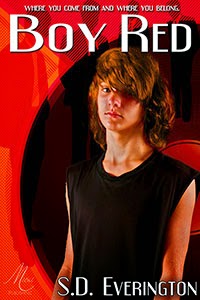


.jpeg?picon=3655)





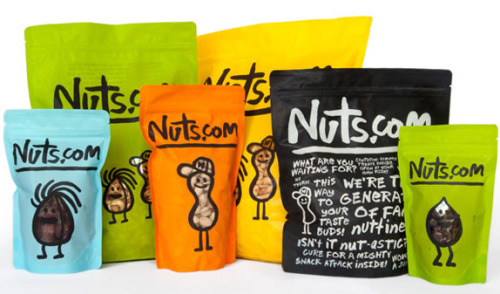

.jpg?picon=160)





.jpeg?picon=2450)


As usual, I love this Fran!! Thank you so much for sharing your new insights about a dream including a symbol that I have seen occur in dream group studies many times. Aloha :)