JacketFlap connects you to the work of more than 200,000 authors, illustrators, publishers and other creators of books for Children and Young Adults. The site is updated daily with information about every book, author, illustrator, and publisher in the children's / young adult book industry. Members include published authors and illustrators, librarians, agents, editors, publicists, booksellers, publishers and fans. Join now (it's free).
Login or Register for free to create your own customized page of blog posts from your favorite blogs. You can also add blogs by clicking the "Add to MyJacketFlap" links next to the blog name in each post.
Blog Posts by Tag
In the past 7 days
Blog Posts by Date
Click days in this calendar to see posts by day or month
Viewing: Blog Posts Tagged with: folklore, Most Recent at Top [Help]
Results 1 - 25 of 65
How to use this Page
You are viewing the most recent posts tagged with the words: folklore in the JacketFlap blog reader. What is a tag? Think of a tag as a keyword or category label. Tags can both help you find posts on JacketFlap.com as well as provide an easy way for you to "remember" and classify posts for later recall. Try adding a tag yourself by clicking "Add a tag" below a post's header. Scroll down through the list of Recent Posts in the left column and click on a post title that sounds interesting. You can view all posts from a specific blog by clicking the Blog name in the right column, or you can click a 'More Posts from this Blog' link in any individual post.
All words, especially kl-words, and no play will make anyone dull. The origin of popular sayings is an amusing area of linguistics, but, unlike the origin of words, it presupposes no technical knowledge. No grammar, no phonetics, no nothin’: just sit back and relax, as they say to those who fly overseas first class. So here is another timeout.
Katherine Langrish is an award-winning author of children’s and young adult historical fantasy. Her meticulous research, gorgeous prose, and instinct for a good story have won her many fans around the world. Since 2009, Katherine has been the creator of the outstanding blog Seven Miles of Steel Thistles where she shares her thoughts and fascinating […]
My bookshelves are lucky enough to hold a scarce dust jacketed copy of this beautiful book. At time of writing, there is only one comparable copy (with the very scarce jacket) advertised on-line at a price which makes my eyes water! Not wishing to make your eyes water I thought it would be a nice idea to share some of the beautiful images with you.
The Fairy Tales of Perrault with pictures by Harry Clarke (1889-1931), published by Harrap in 1922.
"He brought them home by the very same way they came"
"Fanny would rather be fair in drugget than be a queen with an ugly face"
I’m rather puzzled by the use of the word drugget in the above quote. My understanding of drugget is a wool or partly wool fabric formerly used for clothing or a coarse cloth used as a floor covering or a cotton and wool rug. French droguet, diminutive of drogue trash.
I think it must imply that Fanny (rather an unfortunate name) would rather be fair and dressed in rags than ugly and dressed in finery. Is that how you read it?
"Am I come hither to serve you with water, pray?"
"The marquis gave his hand to the princess"
"He asked her whither she was going"
"Away she drove, scarce able to contain herself for you" (Detail from)
"Any one but Cinderilla (Cinderella) would have dressed their heads awry"
"Little Thumb was as good as his word, and returned that same night with the news"
"Riquet with the tuft appeared to her the finest prince upon earth"
"This man had the misfortune to have a blue beard"
Blue Beard
Thanks for calling in I hope your week is going well...
0 Comments on The Fairy Tales of Perrault Illustrated by Harry Clarke as of 4/5/2016 11:05:00 PM
Oral tales, songs, and poems reflected the lives of the people. They were stories and songs of wonder and dreams.
They were told and discussed around the hearth, the marketplace,the spinning room, and in the taverns --wherever people gathered.
They helped people to cope with the wars, hunger, poverty and religious conflicts that characterized their lives.
In the 16th and 17th centuries,Giambattista Basile,a Neopolitan soldier, courtier and writer (1575-1632), collected and rewrote, in the language of ordinary people, 50 tales of wonder.
They were called theTale of Tales or the Pentamerone.
Now, for the first time, several of these tales have been adopted into alandmark film,the Tale of Tales.
I have seen the film and found it uncompromising in reflecting the sensibility of the original tales. However, like the original tales, they are far from the simplified, romanticized, linear simplicity of Disney films.This, in turn, may be affecting the as yet incomplete distribution of Tale of Tales.
I found that the two reviews excerpted below offer insightful personal reactions to the film. They both came from viewings at the Cannes Film Festival.
Unnerving Even For Adults
"Drawing on the rich and until-now unexplored vein of Neapolitan fairy tales written by Giambattista Basilein the early 17th century, Tale of Tales combines the wildly imaginative world of kings, queens and ogres with the kind of lush production values for which Italian cinema was once famous. The result is a dreamy, fresh take on the kind of dark and gory yarns that have come down to us from the Brothers Grimm and Charles Perrault, only here they're pleasingly new and unfamiliar. Starring Salma Hayekas a childless queen who is willing to do anything – absolutely anything – to conceive...
These fairy tales are certainly not aimed at children, though they will light the fire of many teens. Apart from a few moments of artistic eros — the first a shot of two court ladies consumed with passion for each other in a carriage; the second a post-orgy scene laced with naked, Felliniesque bodies — there is an underlying horror that is unnerving even for adults."
"Matteo Garrone’s Tale of Tales is fabulous in every sense: a freaky portmanteau film based on the folk myths collected and published by the 16th-century Neapolitan poet and scholar Giambattista Basile ... It is gloriously mad, rigorously imagined, visually wonderful: erotic, hilarious and internally consistent. The sort of film, in fact, which is the whole point of Cannes. It immerses you in a complete created world..."
"The tales were probably intended to be read aloud in the 'courtly conversations' that were an elite pastime of this period...Lo conto (the tales) contains the earliest literary versions of many celebrated fairy-tale types -- Cinderella, Sleeping Beauty, Rapunzel, and others -- that later appeared in Perrault's and the Grimm's collections. But Basile's tales are often bawdier and crueler than their more canonical counterparts." -- Nancy Canepa,The Oxford Companion to Fairy Tales.
Here is a link to the 1894 translation by John Edward Taylor of the Tale of Tales (The Pentamerone) with illustrations by John Cruickshank.
Except for the detail from a Bruegel painting, at top, all of the above images are from the Tale of Tales.
.....................
The Sun, Moon and Talia...the original story of Sleeping Beauty.
Here is an excerpt from Basile's story of what later became a very different story, by both Perrault and the Brothers Grimm (Briar Rose). Written for adults in the early 17th century, it's a long way from Disney.
"So he (a young king) climbed in and wandered the palace from room to room, but he found nothing and no one. At last he came to a large, beautiful drawing room, where he found an enchanting girl who seemed to be sleeping. He called to her, but she would not wake. As he looked at her, and tried to wake her, she seemed so incredibly lovely to him that he could not help desiring her, and he began to grow hot with lust. He gathered her in his arms and carried her to a bed, where he made love to her. Leaving her on the bed, he left the palace and returned to his own city, where pressing business for a long time made him think no more about the incident.
But Talia, who was not dead, but merely unconscious, had become pregnant, and after nine months she gave birth to twins, as beautiful a boy and girl as ever were born. Kindly fairies attended the birth, and put the babies to suck at their mother’s breast. One day, one of the infants, not being able to find the nipple, began to suck at his mother’s finger. He sucked with such force that he drew out the splinter of flax, and Talia awoke, just as if from a long sleep. When she saw the babies, she did not know what had happened or how they had come to her, but she embraced them with love, and nursed them until they were satisfied. She named the infants Sun and Moon. The kindly fairies continued to attend her, providing her with food and drink, which appeared as if delivered by unseen servants..."
The top illustration is by Edward Burne-Jones. The lower illustration is by Walter Crane.
.......
The Oral Tradition
..."The tales came to the tellers from other tellers, or they read tales, digested them, and made them their own. Indeed, we always make tales our own and then send them off to other tellers with the hope that they will continue to disseminate their stories..." - Jack Zipes, The Forgotten Tales of the BrothersGrimm, in the The Public Domain Review
The illustration of Beauty and the Beast is by Walter Crane.
.............
Inside Those Secret Forests, Caves, and Seas...
"These were the 'last echoes of pagan myths...A world of magicis opened up before us, one which still exists among us in secret forests, in underground caves, and in the deepest sea, and it is still visible to children...(Fairy tales) have existed among the people for several centuries.' And what we find inside those secret forests, caves and seas...(are) fairy tales full of families, full of parents who bequeath a sense of self to children, full of ancestors and heirs whose lives play out, in little, the life of a nation from its childhood to maturity."
Illustration from Pekka Halonen's painting, Pioneers In Karelia
...............
The TN Safety Spotters
The TN Safety Spotters, dogs from Memphis, TN, are Deaf Therapy Dogs who travel the Mid-South with owner, trainer, and handler, Paricia Bell. All the Spotters are rescued dogs.
"TN Safety Spotter’s goal is to significantly reduce the number of dog bite injuries and fire deaths in children using deaf therapy dogs as educational tools and teachingaides in Fire Safety and Dog Bite Prevention programs...
"The Spotters visit schools, libraries, hospitals, Fire Stations, camps and special events"...they are an excellent example of a dedicated dog lover finding multiple ways to help children and adults through their therapy dogs. The fact that the latest scientific research shows 30% of Dalmatians are born deaf has not deterred Patricia Bell nor her dogs
.................
Who were theSnow Valley Heroes?
Did they really save Christmas? The question has been asked by children and adults for many years. And there have been many who tried to answer these questions.
The confusion and uncertainty is because the Snow Valley Heroes came from the Planet Of The Dogs long, long ago.This is the true story of how the dogs saved Christmas, told for the first time in many years.
"Snow Valley Heroes, A Christmas Tale,represents the age-old struggle between good and evil, and the fight to save the Spirit of Christmas–told in a format children can comprehend. My 10-year-old son was excited to see a new Planet of the Dogs book arrive in our mailbox..I give this Christmastreasure a rating of five stars." -- Charyl Miller Pingleton, The Uncommon Review
We have free reader copies of the Planet Of The Dogsseries for therapy dog organizations, individual therapy dog owners, librarians and teachers...simply send us an email at [email protected] and we will send you the books.
Our books are available through your favorite independent bookstore, Barnes & Noble, Amazon, Powell's and many more.
Planet Of The Dogs is now available in digital formatat
Librians, teachers, bookstores...You can also order Planet Of The Dogs, Castle In The Mist, and Snow Valley Heroes, A Christmas Tale, throughIngram with a full professional discount.
The illustration, above, from Snow Valley Heroes, A Christmas Tale, is by Stella Mustanoja-McCarty.
................
The Skies Have Clouded Over
"Disquiet about fairytaleshas become rather more widespread...Dislike of shallow promises and easy solutions in times of war, eco-disaster and other horrors have grounded fairytales; the escapist stories have become lenses through which difficult truths are inspected. Children around the world continue to grow up with the magic of fairytales in books, and to relish the multiple ways they are adapted, updated and put on to stage and screen. But the “realisation of imagined wonder”, which JRR Tolkien saw as the aim of the genre, isn’t always bright and shiny any more; its skies have clouded over..."
From: How Fairy Tales Grew Up by Marina Warner in theGuardian
The picture is from the TV show Game Of Thrones
......................
Dark Dystopia
A Global Event HungerGames:Mockingjay2is opening on November 18-20 worldwide after a premiere in Paris on November 9th. The first three Hunger Games films have grossed nearly two billiondollars. The films came from the Hunger Games book series by Suzanne Collins; over fifty million books have been sold.
This is another huge crossover phenomenon.
The Hunger Games films have also become an example of what Marina Warner refers to when she writes, "the escapist stories have become lenses through which difficult truths are inspected.
Mockingjay2 will see Katniss Everdeen on a quest to unite and liberate the citizens of war-torn Panem and destroy the evil President Snow. Hi-tech danger, mortality and moral choices are all part of the challenge.
The disappointing reviews discouraged me from seeing Pan. Here is an except of the NY Times review by AO Scott (whom I respect), and a review/analysis from the entertainment world by Brent Lang in Variety.
"Peter Pan, who flew through the air in a costume, was in many ways a prototype of the modern superhero. He has certainly been a lucrative entertainment franchise for a very long time, with durable merchandising potential, from feathered hats to peanut butter. All of which may help to explain the otherwise baffling existence of “Pan,” a hectic and labored attempt to supply the boy who never grew up with an origin story.
The dominant emotion in 'Pan' is the desperation of the filmmakers, who frantically try to pander to a young audience they don’t seem to respect, understand or trust." AO ScottNYTIMES; "
....
“Pan” was supposed to provide a fresh spin on the oft-told tale of the boy who could fly, but the pricey epic remained earthbound last weekend, opening to an anemic $15.3 million.
That disastrous start guarantees it will rank alongside other costly misses like “Jupiter Ascending” and “Tomorrowland” as one of the year’s biggest box office disasters. With an $150 million price tag, Warner Bros. could lose tens of millions on a film it hoped would kick off a new fantasy franchise.
When the dust settles and studio executives comb through the wreckage for clues about what doomed the adventure film, it appears that it will suffer from two fatal and seemingly contradictory flaws. “Pan” was both overly formulaic and too wild a deviation from J.M. Barrie’s beloved children’s classic to succeed." Brent Lang, Variety
...............
The Hollywood Movie Meeting - How Movies Get Made
The following transcript was taken from a meeting of executives of a major Hollywood film company. The meeting is already in progress...
Executive #1: Should we produce this film?
Executive #2: Well, here's a Synopsis: It opens when the mother dies and the bereaved father, a merchant, remarries. His lovely daughter now has a cruel stepmother with two ugly daughters and they all abuse the girl. Her only friends are birds and a magic tree. That's act one. Now in act two...
Executive #3: What happens to the father? He just stands around while they abuse the kid?
Executive #2: He has to travel for his work. He's away a lot.
Executive #2: Act two better be good after that start.
Executive #1: I wanna hear Act two. I heard Disney made a lot of money with this.
Executive #2: In Act two we meet a handsome Prince who is planning a big party.
Executive #3: Why are we even talking about this if Disney already made it?
Executive #1: Maybe, we can make some changes.
Executive#3: Changes? What kind of changes?
Executive #1: Maybe we can we change it to Christmas? We need a new flick for Christmas and at least this is based on a winner from the past. And we'll change the name...call it Cindy's Happy Holiday!
Executive #3: That's a helluva idea. What's next?
To Be Continued...
.....................
How to Change the World in 30 Seconds A Web Warrior's Guide to Animal Advocacy Online by C A Wulff
Although you may want to help animals, you may not have any idea where to begin. Or maybe you think that you don’t have enough time to make a difference. This guide will offer practical steps to get started using dog advocacy as the focus and will explain how just thirty seconds a day on the Internet can not only make a difference, but can also change the world.
Here is a review..."Combining case histories with practical tips on how to use the Internet to advocate for dogs, Wulff's book is an inspiring, informative and highly usefulvolume that anyone who thinks dogs are worth fighting for should have on their shelf." John Woestendiek, author of 'Dog, Inc.' and the website ohmidog!
Read sample chapters of How to Change the World in Thirty Seconds: Amazon
................
An Outstanding Program: Therapy Reading Dogs for At-Risk Students!
"Austin Dog Alliance Bow Wow Reading Dogs are non-judgmental certified therapy dogs who listen to at-risk students reading aloud. The dog's handler has been educated on how to help at-risk readers learn to read. Many of our Bow Wow Reading dog volunteers are retired teachers or principals.
Here are the requirements for BowWow therapy reading dog handlers:
Must enjoy children; Love to read!; Have a willingness to get to know the children, understand their challenges and remember small things about them; Have compassion for and sensitivity to the hesitant and reticent child; Patience with over-active children; Possess patience with repetitive reading of the same book; Have the ability to discern age with reading abilities and related activities; Are flexible and have the ability to 'go with the flow'; Are a retired teacher or principal or have attended a seminar on how to help at-risk readers."
Read more about this wonderful therapy reading dog program at Bow Wow Reading Dogs:
.......................
Texas Textbooks: McGraw-Hill changes slaves to immigration workers in High School textbook
HOUSTON — "Coby Burren, 15, a freshman at a suburban high school south of here, was reading the textbook in his geography class last week when a map of the United States caught his attention. On Page 126, a caption in a section about immigration referred to Africans brought to American plantations between the 1500s and 1800s as 'workers' rather than slaves.
He reached for his cellphone and sent a photograph of the caption to his mother, Roni Dean-Burren, along with a text message: 'we was real hard workers, wasn’t we'..."
The post that follows is about a book and a film outside the usual purview of this blog.
I have included it because of the subject matter, a young boy caught in the savage chaos of the real world today, and because it relates to the world of war, fear, and painful uncertainty of the past. Oral tales, that live on today as tales of wonder, originated in a hard world where ruthless power reigned and cruelty, superstition and hard times dominated daily life for most people.
And so, I have posted below about a book, Beasts of No Nation, by Uzodinma Iweala, and a movie made from the book, that tells the story of A Boy Soldier's Heart Of Darkness. This is the title of Simon Baker's book review of Beasts of No Nationby UzodinmaIweala. Here is an excerpt:
"In a young child's life, few games can equal hide-and-seek: the excitement of crouching in a secret place as the pleasure of remaining at large vies with the thrill of possible discovery. The problem comes when a game like this turns serious -- when, say, the people you're hiding from want not just to find you but to hack you to pieces."
Here is a link to read all of the NY Times Book Review by Simon Baker
The Movie Wants Us To Look At That Moment Square In The Face
"The movie holds on to a fair chunk of the book’s first-person narration, which is critical, because it establishes Agu as a character with his own thoughts and ethics rather than merely a shellshocked onlooker. There comes a moment when the boy has to cross the line from theory to action — from training to murder — and 'Beasts of No Nation' wants us tolook that moment square in the face. It is awful, it has happened and is happening still, and for once you aren’t able to turn the page or switch to another channel. And then the movie invites us to wonder what happens to the child who is now a murderer. 'It is the worst sin, but it is the right sin to be doing,' Agu tells himself, but that lie doesn’t last. Before long, he is begging the sun to stop shining on this world."
It took courage and great commitment by the brilliant young American director Cary Fukunaga to make this film. Netflix has released the film simultaneously in theaters and on the Internet. Over 3 million viewers in North America have seen Beasts of No Nation since its release on October 16.
Here is a link to Ty Burr's review in the Boston Globe.
KJ Dell'Antonia, in a very informative NY Times Motherlodearticle, wrote about a very special new Sesame Street initiative -- Julia, an autistic little girl. Here are excerpts:
"Sesame Street got so many things right with its new character, Julia, an orange-haired girl with autism whose eyes never quite meet the reader’s. Introduced in a digital storybook available online and in print, Julia is described as an old friend of Elmo’s. When Elmo’s muppet friend Abby meets Julia, she is confused, and she has questions. Julia doesn’t talk to her right away, does that mean Julia doesn’t like her? Why does Julia get so upset over loud noises?
And then there are the things Abby doesn’t comment on — Julia knows every word to a lot of songs. She spins the wheels of toy cars over and over and over again, and flaps her arms when she is excited. She is a recognizably different (and recognizably autistic) without being overwhelmingly so… children with autism can find themselves in her, and children learning about the condition can start here.
Sesame Workshop based Julia on years of research, says Jeanette Betancourt, Sesame Workshop’s vice president of outreach and educational practices. “We wanted to demonstrate some of the characteristics of autism in a positive way,” she says. The choice of gender was also deliberate. “We wanted to break down some of the myths and misconceptions around autism. It’s not only impacting boys, but girls as well...”
Here is a link to read all of this insightful article on Motherlode
Here is a Sesame Streetlink to their many programs devoted to autistic and/or special needs children.
.....................................
How to be a volunteer animal rescue transport driver...
"Over-filled animal control facilities or pounds euthanize an estimated 4 million dogs and cats each year...
Each weekend in America, an army of volunteer rescue transport drivers deliver dogs and cats to safety in an organized relay of vehicles. Hard-working volunteer transport coordinators plan the logistics, organize the four-legged passengers, and provide support by phone continuously during the entire one- or two-day operation. Drivers sign up for relay "legs" via e-mail. They meet the previous leg drivers at an appointed time, transfer the lucky dogs and cats to their vehicles, and drive to the next relay meeting spot where the process is repeated until the destination is reached..."
Here is a link to read the rest of this informative Sunbear Squad article:Rescue.
And here is a link to sample pages of Deb Eades book: Every Rescued Dog Has a Tale: Stories from the Dog Rescue Railroad.
....................
"The more one gets to know of men, the more one values dogs."
Illustration for the Grimm's Golden Bird by Harry Jurgens
Mysteries, unexplainable events, magic and wonder, have been woven into the fabric of life for most of the time we've been on this planet. One man's fox was also a prince; one princess' frog was also a prince; and a beast may be transformed into a handsome prince when a tear of love falls on his cheek. Fairy tales are the echoes of days gone by, when reality had many meanings.
.................................
Fairy Tale is a Country of the Mind
"Impossible – absurd – enchantments define fairy tale as a form of storytelling, but the magic also gives expression to thought-experiments: the wicked fairy turning out to be capable of love, the Frozen princess thawed into humanity by her heroic sister’s staunchness and love. Fairy tale is a country of the mind made by imagery, by riddles and charms, spells and nonsense; it uses language to create imaginary structures in which language itself is supremely powerful: Rumpelstiltskin is undone when the heroine discovers his name..."
The illustration from Song of the Sea is by Tomm Moore.
..............
Real and Unreal...
Myths, legends and folktales from the past influenced writers and artists in emerging cultures throughout most of Europe. Often inspired by the work of the brothers Grimm, RomanticNationalism enabled cultures to define themselves through their heritage from the past. New identities were emerging from traditions and folktales from their often troubled past.
This was certainly true in the Nordic countries -- Denmark, Finland, Norway, and Sweden. I recently attended an exhibition in Helsinki at the Ateneum, the national gallery, entitled The Magic North. Much of the art depicted folk tales, fairy tales, and legends. Here is an excerpt from their program:
"The Magic North exhibition presents Norwegian and Finnishart from the turn of the nineteenth and twentieth centuries. In this era, artists embraced themes such as their own countries imagined past, experiences of nature, and fables and legends arising out of human weaknesses and strengths..."
The Finnish Kalevala, an epic collection of folk tales, memorized and sung by rune singers, were preserved in the vast reaches of the forest lands of Finnish Karelia. They were collected by Elias Lonrott, who traveled for years, until he organized and published the Kalevala in 1835. A second edition, an extended version of 22,900 verses appeared in 1849. Dating back centuries, the Kalevala was a prime factor in igniting a cultural renaissance -- a search for national identity -- in all the arts in Finland.
Immersing myself in the The Magic Northexhibition, experiencing the influence of the Brothers' Grimm and the power of the past expressed by passionate artists, was a wondrous experience.The artists included Edvard Munch, Hugo Simberg, Akseli Gallen-Kallela and Gerhard Munthe.
The illustration of the Daughters of the Northern Lights (top) is by Gerhard Munthe
The illustrations of the White Bear King, Valemon, and The Dragon Returns, are by Theodor Kittelsen.
The illustration from the Kalevala (bottom) is by Akseli Gallen-Kallela.
The story of the White (Polar) Bear King was from a long folk tale collected and published by the Norwegian collector/writer, Peter Christen Asbjorrnsen (1882-1885). He published, with his partner Moe, over 100 Norwegian folk tales. They modeled their work on, and were inspired by, the Grimms.
For centuries, witches were real in the minds of people in Europe and the USA.
If someone believes in witches, it becomes their reality.
Witches could be casting spells, causing illness and strange behavior.
They must be avoided or punished... burned at the stake or hung by the neck.
It follows that witches, spells, and unexplainable events are an integral part of stories told as folk tales, fairy tales, and wonder tales.
Gretel, when pushing the witch into the oven, was not only saving her brother's life -- and her own -- she was doing what civilized society was doing...destroying the devil's emissary.
The illustration, a fragment of the Last Judgement, is by Hieronymus Bosch.
.....................................
Puritan Reality
"In 1692, the Massachusetts Bay Colony executed fourteen women, five men, and two dogs for witchcraft. The sorcery materialized in January. The first hanging took place in June, the last in September; a stark, stunned silence followed. Although we will never know the exact number of those formally charged with having “wickedly, maliciously, and feloniously” engaged in sorcery, somewhere between a hundred and forty-four and a hundred and eighty-five witches and wizards were named in twenty-five villages and towns. The youngest was five; the eldest nearly eighty..."
This is an excerpt from an article on The Witches Of Salem by StaceySchiffin inthe New Yorker
....................................
Secret Worlds Are Real
“Everybody has a secret world inside of them. I mean everybody. All of the people in the whole world, I mean everybody — no matter how dull and boring they are on the outside. Inside them they've all got unimaginable, magnificent, wonderful, stupid, amazing worlds... Not just one world. Hundreds of them. Thousands, maybe.” ―Neil Gaiman,The Sandman, Vol. 5: A Game of You
Here is a link to the turning point scene in Neil Gaiman's Coraline where she is confronted with making a choice between two worlds, two realities: Coraline
.....................................
A World of Fairy Tale Knowledge
The new edition of the Oxford Companion to Fairy Tales, is quite wonderful.
Comprehensive, easy to navigate, with information on all aspects of the world of fairy tales, from innovative creators like Jim Henson and Hayao Miyazake to authoritative entries on the classics from the Arabian Nights to Charles Perrault.
I was quite taken with extended overview articles of cutures with a strong fairy tale tradition. The list of countries is quite comprehensive, ranging from Britain and Ireland to the Slavic and Baltic Countries.
The articles throughout the Companion are well written and informative. The list of contributors and their credentials is inclusive and rather awesome.
Jack Zipes, who edited this essential reference work, also provides an insightful and comprehensive Introduction which ranges through the centuries to modern times. In his introduction, Zipes writes that although the Companionincludes contributions from many cultures, however, "The focus of this Companion is essentially on the literary formation of the Western fairy-tale genre and its expansion into opera, theater, painting, photography, and film, and other related cultural forms."
This is an essential book for all those with a serious interest in the world of Fairy Tales and their origins. It will be available in bookstores and on the internet on the first of November.
Here's a link to read sample articles or to purchase: Oxford Companion
.....................
This is a photo of veterans participating in a 5 day in-residence training program at America's VetDogs Smithtown, NY, campus. America's VetDogs has received a Planet Dog Foundation Grant to help support a 3 year pilot program to study the differences that PTSD service dogs make in the lives of veterans.
Here is an excerpt from their website: "SERVICE DOG TRAINING PILOT PROGRAM
"The Study: As part of this pilot program, America’s VetDogs has partnered with Western KentuckyUniversity to complete a professional three year study on the effects that PTSD service dogs will have on a veteran’s life. The study will help America’s VetDogs make changes to its curriculum and tasks to ensure that we are providing the best quality service dogs possible. America’s VetDogs also wants to be able to provide government agencies and the public with impartial evidence of the difference these dogs make for veterans, and foster understanding within their local communities of the issues faced by veterans with PTSD and how service dogs can help."
This is one of several wonderful programs that America's VetDogs provide at no cost to veterans and first responders by "placing specially trained assistance dogs to help them once again lead active, independent lives."
Here is a link to the America's VetDogs PTSD Service Dog Pilot Program
.............................................
John's Reality
“I believe in everything until it's disproved. So I believe in fairies, the myths, dragons. It all exists, even if it's in your mind. Who's to say that dreams and nightmares aren't as real as the here and now?” ― John Lennon
The illustration from Tom Thumb is by Warwick Goble
What would happen if someone kidnapped a couple of Santa'sreindeer so that he could not deliver his presents on Christmas Eve? The dogs from The Planet of the Dogs have returned. After they had helped to save the hard working farmers of Green Valley from an invasion by the Stone City Warriors in Planet of the Dogs and then rescued two kidnapped children to prevent a war between the Stone City Warriors and the Black Hawk Tribes in Castle in the Mist, the dogs have another job. The evil King of the North, who was banished by the Tribe of the North and now lives in the forbidding Ice Castle, takes his vengeance by sending some of his Royal Guards to steal two reindeer from Santa Claus and thus stop Christmas.
Daisy and Bean from Green Valley head north to help the dogs rescue Dasher and Dancer, and they meet a host of new friends in the process. But will they make it in time to save Christmas? All of the "Planet of the Dogs" books are well written. Not only are they fun to read but also they exhibit good attitudes and beneficial attributes on the part of the main characters so that good overcomes evil, sometimes in surprising ways. The short chapters are perfect to keep the attention of the target audience. Dog lovers will especially like these tales, but everyone else can enjoy them too. Snow Valley Heroeshas the potential of becoming a favorite holiday story for both children and adults.
The illustration from Snow Valley Heroes, A Christmas Story, is by Stella Mustanoja-McCarty
.............................
We have free reader copies of the Planet Of The Dogsseries for therapy dog organizations, individual therapy dog owners, librarians and teachers...simply send us an email at [email protected] and we will send you the books.
Our books are available through your favorite independent bookstore, Barnes & Noble, Amazon, Powell's and many more.
Planet Of The Dogs is now available in digital format at
Librarians, teachers, bookstores...You can also order Planet Of The Dogs, Castle In The Mist, and Snow Valley Heroes, A Christmas Tale, throughIngram with a full professional discount.
The illustration, from the cover of Snow Valley Heroes, A Christmas Tale, is by Stella Mustanoja-McCarty.
“Maybe each human being lives in a unique world, a private world different from those inhabited and experienced by all other humans. . . If reality differs from person to person,can we speak of reality singular, or shouldn't we really be talking about plural realities? And if there are plural realities, are some more true (more real) than others?.." -- Phillip K. Dick
The illustration, from My Neighbor Totoro, is by Hiyamo Miyazake.
...........................
An Insightful Review from BookPleasures.com
"If you [also] love animals, I can guarantee you will adore this gem. The love Cayr and her friend, Dalene, have for these animals is clearly portrayed in this moving yet uplifting book. They are animal lovers with big hearts for not only domestic animals but for the waifs and strays too. I couldn't put this one down.
I thought it was an absolutely brilliant book, especially as I myself share the same passions as the author and her "life mate" have for animals.
This is a tale that will appeal to animal lovers and perhaps children too." --
We are having a new lotto... we are giving away 3 paperback copies of the second edition of Born Without a Tail. To enter, please send an email to[email protected]and place the word "entry" on the subject line.
.............................
Can A Classic Book Jacket Move?
Bending reality...Art director Javier Jensen puts movement (GIFS) into classic book jackets including Green Eggs and Ham, The Hobbit, and The Little Prince... I wonder what young readers think of this phenomenon...is it real?
.........................
A Hard Reality about Reading
LitWorld works in 14 countries around the world, and three sates in the USA, to bring literacy to children. Here, from the LitWorldwebsite, is the Problem in the USA.
In the 14 countries served by LitWorld outside the USA, the Problem is compunded.
Visit their website and read about the wonderful work they do: Link to LitWorld:
THE PROBLEM: "The millions of readers who complete elementary school reading below grade level are unable to read about the characters and plots written for their age group. The stories they can read are meant for a less mature audience. At best, they hide this by reading only in private. At worst (and most often) they simply give up reading altogether. Given the daily importance of reading in all aspects of life, lacking this crucial skill negatively impacts everything from academic performance to everyday communication.
BY THE NUMBERS: As many as 90 million teens and adults in America lack crucial literacy skills..."
This is a very hard reality. The photo was taken on LitWorld's World Read Aloud day in a Syrian refugee camp in Jordan
........................
Canine Therapy is Real
Rose, an Australian Cattle Dog, has been an active therapy dog for 13 years at TidewellPallitive Care and Hospice.
I recently received a message with photos from Rose's owner, Susan Purser. We have been in touch for several years. I was moved by her message and the photos she sent wanted to share the following...
"I was asked once what it was like to see so many hands reaching out for my dog, Rose.I hadn't really thought much about it, as she is such a giving Australian Cattle Dog and is continually searching for hands wanting to touch her. I thought perhaps you might enjoy seeing some of these hands...aged hands, searching for memories and then sharing them with whispers in Rose's ear or while hugging her neck. Soft spoken or without words, it doesn't get any better than watching this type of unconditional love."
Rose doesn't understand future nor how long or short time is. She does devote her total attention to these lovely people in their time of need. She gives comfort that I can only observe and opens those ever so special memory doors that only she can enter...I am a facilitator and I do believe, if she could drive, she would not need me! Pet therapy is such a special part of the people's lives and I am truly blessed to have entered this treasured space for just a little while and then I think, where have thirteen years gone?"
...........................................
KidLitospherehas helped many readers find their way to these pages. Here is an excerpt from their home page...
"Some of the best books being published today are children’s and young adult titles, well-written and engaging books that capture the imagination. Many of us can enjoy them as adults, but more importantly, can pass along our appreciation for books to the next generation by helping parents, teachers, librarians and others to find wonderful books, promote lifelong reading, and present literacy ideas." Here is a link to Kidlitosphere.
........................
Movies -- PAN
PAN is opening on Oct 9 in the USA; Oct 16 in the UK; it has already opened in Australia.
Advance reviews are mixed, some of them angry...I've read several and it sounds like the driving force was commercial success...Here are excerpts from Andrew Barker in Variety...
"Of all the recent big-budget studio films to re-imagine beloved children’s tales as garish, CGI-choked sensory overloads stripped of all whimsy or childlike wonder, Joe Wright’s “Pan” is certainly the most technically sophisticated...
There is perhaps no clearer illustration of “Pan’s” guiding principles than its treatment of pixie dust. In Walt Disney’s 1953 “Peter Pan,” the story’s best-known incarnation, pixie dust is a glowing substance that allows lucky children to fly high above the clouds. In “Pan,” pixie dust is the street name for Pixum, a rare, crystalline substance mined by slave labor from deep in the earth that, when smoked on an elaborate opium den-style apparatus, restores youthfulness to the user. (The film neglects to tell us its radioactive half-life or the side effects of recreational use, but perhaps those scenes are being saved for the director’s cut.).."
The story is a prequel to J.M. Barrie's Peter Pan. It borrows characters and much of it takes place in Neverland; the Darling Family never appear.
Famed animated film director Hayao Miyazaki is sponsoring a new children’s facility in a virgin forest on a small island 56 miles west of Okinawa Prefecture to encourage kids to enjoy nature through their five senses. Miyazaki's films include Howl's Moving Castle, My Neighbor Totoro, and Spirited Away.
About two and a half acres of forest are being provided by the town ofKumejima; Miyazake will cover the anticipated 2.5 million in construction costs.
Christopher Lassen <[email protected]> of New York Public Library sent us a notice of a fascinating Children's Literary Salon(the Salons are ongoing and free)
On Saturday October 17th, our program will be "The Natural World of Winnie the Pooh". Join Kathryn Aalto(The Natural World of Winnie-the-Pooh: A Walk Through the Forest That Inspired the Hundred Acre Woods) for a journey into one of the most iconic settings in children's literature: the Hundred Acre Wood, inspired by Ashdown Forest in East Sussex, England. It is here where A. A. Milne livedand set the tender adventures of Winnie-the-Pooh and his merry band of friends...
The program will take place in the Celeste Auditorium (formerly South Court Auditorium) in the Stephen A Schwartzman Building of NYPL (5th Avenue & 42nd Street) at 2:00pm.
.........................
Sunbear Squad is a primary source of information for dog lovers...filled with information and guidelines, ranging from helping an abandoned dog to building a proper doghouse. Here is an excerpt from an article on Traveling By Car Or Truck With Pets by Edward Green, TruckersReport.com...
Taking the family pet along for the ride is a part of the vacation plans of families across the nation. These trips can be quite memorable and enjoyable—but only if you take the proper safety precautions for your animals. This guide will help you travel safely and comfortably with your favorite pet.
Before You Travel
When you and your family are traveling, planning is essential to make sure you get everything packed and are fully prepared for your journey. Such planning is also a must when it comes to traveling with pets: Read the rest of this entry »
....................
“The dog’s agenda is simple, fathomable, overt: I want. “I want to go out, come in, eat something, lie here, play with that, kiss you. There are no ulterior motives with a dog, no mind games, no second-guessing, no complicated negotiations or bargains, and no guilt trips or grudges if a request is denied.”
Depending on where and when you live, the world can be a dangerous place.
Howl's Moving Castle, the award winning fantasy wonder tale, takes place during a time of war.A film for children and adults filled with magic and incredible visuals...it is set in the past, an anti-war filmthat features a romance with a flawed wizard, and an incredible moving castle.
Freely adapted by Hayao Miyazakifrom a children's fantasy novel byDiana Wynne Jones, it is another masterpiece from the creator of My Neighbor Totoro, Princess Mononoke, and Spirited Away.
A.O. Scott, writing in the New York Times, said," Not that children are the only viewers likely to behaunted and beguiled by "Howl's Moving Castle" - all that is needed are open eyes and an open heart."
Here is a YouTube Link to see this wonderful film dubbed in English: Howl's Moving Castle
Here is a link to Disney's trailer. There is no reference to war in this preview.
Hayao Miyazake, at the time he was adopting Howl's Moving Castle, was very concerned about the USA going to war in the Middle East. With his extraordinary talent and imagination, Miyazaki created an anti-war film that is balanced by humor, wizardry, and romance.
Much has been written about how the experiences of real life influence literature and all the arts, including children's stories, film and theater. Jack Zipes, quoted below, expresses the many dimensions of this concept. I feel that Howl's Moving Castle is a wonderful example of a tale of wonder portraying the human struggle to not succumb to violent power. Here is an excerpt from Zipes' comments:
"At their best, the storytelling of fairy tales constitute the most profound articulation ofthe human struggle to form and maintain a civilizing process.They depict metaphorically the opportunities for human adaptation to our environment and reflect the conflicts that arise when we fail to establish civilizing codes commensurate with the self-interests of large groups within the human population. The more we give into base instincts – base in the sense of basic and depraved – the more criminal and destructive we become. The more we learn to relate to other groups of people and realize that their survival and the fulfillment of their interests is related to ours, the more we might construct social codes that guarantee humane relationships. Fairy tales are uncanny becausethey tell us what we need and they unsettle us by showing what we lack and how we might compensate for lack."
…Fairy tales map out possible ways to attain happiness, to expose and resolve moral conflicts that have deep roots in our species. The effectiveness of fairy tales and other forms of fantastic literature depends on the innovative manner in which we make the information of the tales relevant for the listeners and receivers of the tales."
The photo is of Jack Zipes and his poodle, Vinnie.
....................
It All Began With A School Boy
Howl's Moving Castle, released in 2004, was freely adapted by Hayao Miayazai from a book of the same name, published in 1986, by Diana Wynne Jones (1934-2011). The prolific author of many books for children and adults (primarily fantasy), Wynne Jones said that the idea for the book came from a boy, Stephen, on one of her school visits. Stephen asked her to write a book about a moving castle. The book she wrote was very well received internationally and won several prizes.
When Wynne Jones was asked about the major differences between writing for adults and children, she replied, "Writing for adults, you have to keep reminding them of what is going on. The poor things have given up using their brains when they read. Children you only need to tell things to once."
Wynne Jones also said,"Things we are accustomed to regard as myth or fairy story are very much present in peoples lives."
When the film was completed, Miyazakiflew to England and arranged a private showing for Dianne Wynne Jones. Her comments: "It's fantastic. No, I have no input—I wriThe book cover is of Dianna Wynne Jones original version of Howl's Moving Castle. The photo is of Hayao Miyazake, courtesy of Ghibli Studios.te books, not films. Yes, it will be different from the book—in fact it's likely to be very different, but that's as it should be. It will still be a fantastic film."
The biggest change made by Miyazake was in creating an anti-war film. Howl becomes a major force in helping to bring about the end of war.
A delightful montage of Miyazaki's film magic, created by DONO ,is on Vimeo.
The book cover is of Dianna Wynne Jones original version of Howl's Moving Castle. The photo is of Hayao Miyazake, courtesy of Ghibli Studios.
......................
"War was the weather system of my youth"...
The twentieth century was filled with upheaval and wars and millions of children today continue to face the chaos and pain of war.Alexandra Fuller, author of the very well received Leaving Before the RainsCome , published in January 2015, grew up in war-torn Rhodesia (now Zimbabwe).
In a fascinating interview withSimon Worrall (Book Talk) in the National Geographic,she speaks of the effects of growing upamidst "the traumas of war and the non-stop incidents and accidents where I was raised"...Here is an excerpt from the interview:
"But the biggest effect was that war was the weather system of my youth. The war was everywhere. And what came with that was death and the insanity of war, which leaks on even after a cease-fire has been declared. I think the hardest thing it did was to make childhoodinnocence, those precious years until you're about 11 or 12, not exist for us. War makes you cunning and a survivor. It can make you very damaged or very resilient. But it never leaves you.
You spend the rest of your life trying to redress what happened to you in those first years, even though it's not your fault. But your body doesn't know that, your limbic system doesn't know that. You're always waiting for the next trauma to happen—or drama. You're constantly on watch."
In her first book, the very well received bestseller, Don't Let's Go To The Dogs Tonight, Fuller wrote of her childhood in Rhodesia... a world where violent death was an everyday reality; where her family compound was surrounded by razor-wire, and where young Alexandra's father trained her in shooting a rifle. Alexandra Fuller now lives in Wyoming.
The photograph is of Alexandra (on the right) with her sister, Vanessa. It was taken in 1972, just before the family moved to the then Rhodesia. I don't know who the little girl is on the book cover.
..............
The Awesome PAL
I am awed by the list below...a list of hospitals, Veteran's care facilities, children's centers, libraries, retirement facilities, and rehab facilities all served by PAL.
This is a list of places where people young, old and in-between find affection, solace and supportfrom the dogs of PAL (People Animals Love)based in Washington DC.
Pal is not for profit. PAL is a volunteer organization. PAlis people -- dog owners who want to help others.
The logistics of bringing therapy dogs and their owners to all these places must be difficult. Situations change, needs change, and schedules change. Please take a moment and consider this awesome list and the wonderful work of PAL to bring comfort, solace, and, often, inspiration, to so many people.
Arleigh Burke Pavilion Nursing & Assisted Living, Arlington Central Library, Arlington Library- Shirlington Branch, Arlington Library- Columbia Pike Branch, Arlington Library- Westover Branch, Alexandria Library- Beatley Branch, Alexandria Library- Duncan Branch, Armed Forces Retirement Home, Burnt Mills Elementary School, Capitol Hill Supportive Services, Chinn Park Regional Library, Culpepper Garden, Episcopal Center for Children, Goodwin House Alexandria, Goodwin House West, Grand Oaks, Heritage Hall Nursing & Rehab, Inova Behavioral Health, IONA Senior Services, Knollwood Retirement Home, Little Sisters of the Poor, Martin Luther King, Jr. Memorial Library, Mount Pleasant Library, National Rehabilitation Hospital, Northern Virginia Mental Health Institute, PAL Club at Stanton Elementary, Pohick Regional Library, Sibley Hospital Center, Specialty Hospital of Washington, Stoddard Baptist Home, St. Coletta's of Greater Washington, St. Elizabeth's Hospital, Veterans Administration Medical Center, Washington Home, Woodbine Rehab & Healthcare Center
Here is a link to one of their many brief PAL videos:
Here is a link to a 5 minute homemade video of their wonderful PAL Clubat Stanton Elementary School. Stanton is located in Southeast Washington, a poor, underserved, neighborhood.
The top photo is of PAL therapy dogs and their dedicated owners. The bottom photo below of two friends was taken in one of the facilities on the PAL list.
............................
Do you think that it is possible for dogs to stop a war?
This was the lead-off sentence in Wayne Walker's review of Castle In The Mist. I was delighted to read it, for not only was it provocative, it went to the core of the story...
Castle in the Mist is an anti-war story.The Planet Of the Dogs series is anti-war. In each book, the dogs help humans to find non-violent solutions to ruthless rulers, invaders, and the abuse of power.
Here is more of what Wayne Walkerwrote:
“Author Robert J. McCarty has created a charming fantasy-allegory that can be read and understood on at least two different levels. Children will enjoy the story about dogs who come from another planet to help people on earth. But under the surface are the important messages of friendship, love, loyalty, and how to overcome evil with good.” The same things are true as the story continues in Castle in the Mist. The book is well written and easy to read. It will keep you turning the pages to find out what happens next, and, as with Volume I, leads to a satisfying conclusion. You can learn more about the series and read sample chapters atwww.planetofthedogs.net."
Wayne Walker's complete review appeared on the Home School Book Review; the Home School Buzz; and Stories fof Children Magazine.
..........................
We have free reader copies of the Planet Of The Dogsseries for therapy dog organizations, individual therapy dog owners, librarians and teachers...simply send us an email at [email protected] and we will send you the books.
Our books are available through your favorite independent bookstore, Barnes & Noble, Amazon, Powell'sand many more.
Planet Of The Dogs is now available in digital format at
Librarians, teachers, bookstores...You can also order Planet Of The Dogs, Castle In The Mist, and Snow Valley Heroes, A Christmas Tale, throughIngramwith a full professional discount.
The illustration by Stella Mustanoja-McCarty is from Castle In The Mist. The little girl reading Castle In The Mist is Jordan; the photograph is by Jennifer Wickham.
"For much of her life, C. A. Wulff was involved in animal rescue. In this memoir, she shares her own personal rescue stories. As is the case with animal rescue, some of these tales are funny and others are poignant. However, all of them are true.
From early childhood, Cayr was drawn to animals. She sought connections with each animal that entered her life. She helped those that she could, including ill, injured and difficult to place animals. Many of them found a permanent place in the author’s home. Her heart has always been in the right place..."
We are having a lotto and giving away of 3 paperback copies of the second edition of Born Without a Tail. To enter, please send an email to Books4DogLovers@gmailand place the word "entry" on the subject line.
.............................
"Fairy tale and filmenjoy a profound affinity because the cinema animates phenomena, no matter how inert; made of light and motion, its illusions match the enchanted animism of fairy tale; animals speak, carpets fly, objects move and act of their own accord."
Marina Warner, in her book, Once Upon A Time.
The illustration is from Howl's Moving Castle.
..........................
The KIngdom of Dreams and Madness
Mami Sunada has created a fascinating documentary about the world of Hayao Miyazaki and Ghibli studios. I highly recommend it for readers of this blog who want an in-depth picture of the complex nature of creating animation; and an intimate visit with Miyazake and the world of Ghibli.
Miyazaki storyboards every film from start to finish; he times every shot on the storyboard; yet he often doesn’t know where or how will end. He is very hard working, a perfectionist who pays attention to every detail; he is also a caring idealist.
Here are two of my favorite Miyazaki quotes from the film:
“The world isn’t simple enough to explain in words”….
“Stories you read when you're the right age never quite leave you. You may forget who wrote them or what the story was called. Sometimes you'll forget precisely what happened, but if a story touches you it will stay with you, haunting the places in your mind that you rarely ever visit.” ― Neil Gaiman, M Is for Magic
.................
Little Man -- A Brilliant Retelling of Rumpelstiltskin
Michael Cunningham, is an acclaimed American author of seven books. His novel, The Hours, won a Pulitzer prize and a PEN/Faulkner Award. He has now reimagined several fairy tales from the past in a new book, A Wild Swan: And Other Tales,to be published November 10, 2015). One story from the book,Little Man, published in the New Yorker, is a wonderful retelling
of Rumpelstiltskin. Here is an excerpt:
"Having a child is not, however, anything like ordering a pizza. Even less so if you’re a malformed, dwarfish man whose occupation, were you forced to name one, would be . . . What would you call yourself? A goblin? An imp? Adoption agencies are reluctant about doctors and lawyers if they’re single and over forty. So go ahead. Apply to adopt an infant as a two-hundred-year-old gnome.
You are driven slightly insane—you try to talk yourself down; it works some nights better than others—by the fact that, for so much of the population, children simply . . . appear. Bing bang boom. A single act of love and, nine months later, this flowering, as mindless and senseless as a crocus bursting out of a bulb.
It’s one thing to envy wealth and beauty and other gifts that seem to have been granted to others, but not to you, by obscure but undeniable givers. It’s another thing entirely to yearn for what’s so readily available to any drunk and barmaid who link up for three minutes in a dark corner of any dank and scrofulous pub.
You listen carefully, then, when you hear the rumor. Some impoverished miller—a man whose business is going under (the small-mill owners, the ones who grind by hand, are vanishing; their flour and meal cost twice as much as the big-brand products, which are free of the gritty bits that can find their way into a sack of flour no matter how careful you are), a man who has no health insurance or investments or pension plan (he’s needed every cent just to keep the mill open)—that man has told the King that his daughter can spin straw into gold..."
Maria Tatar edited and annotated a wonderful book of Classic Fairy Tales which includes a version of Rumpelstiltskin by the Grimms. Her comments regarding Rumplestiltskin are in harmony with the story as reimagined by Michael Cunninghamin Little Man.
"Here is an excerpt: (Rumpelstiltskin is) "a misshapen gnome of questionable origins, who is probably one of the least attractive of fairy-tale figures.Yet Rumpelstilskin come off rather well in a world where fathers tell brazen lies about their daughters, marriages are based on greed, and young women agree to give up a firstborn child. He works hard to hold up his end of the bargain made with the miller's daughter, shows genuine compassion when the queen regrets the agreement into which she has entered, and is prepared to add an escape clause to their contract even though he stands to gain nothing from it."
The illustration by Paul O. Zelinsky is from his Caldecott medal winning version of Rumpelstiltskin.
......................
Sesame Street Partners With HBO
Sesame Street needed funding. In the past, they received most of their funding through DVD sales. Times have changed and those sales have diminished as more and more people have turned to Internet streaming. Emily Steel, in the New York Times, wrote a comprehensive article, including the pros and cons, about this major shift in Television for kids 2-5. Here is an excerpt:
"The letters of the day on “Sesame Street” are H, B and O.
Sesame Workshop, the nonprofit group behind the children’s television program, has struck a five-year deal withHBO, the premium cable network, that will bring first-run episodes of “Sesame Street” exclusively to HBO and its streaming outlets starting in the fall.
The partnership, announced Thursday, will allow the financially challenged Sesame Workshop to significantly increase its production of “Sesame Street” episodes and other new programming. The group will produce 35 new “Sesame Street” episodes a year, up from the 18 it now produces..."
"The rise of American children's literature is, to a large degree, inseparable from the rise of the public lending library, and by the 1870's librarians had become the guardians of children's reading. The fact that it is the American Library Association that gives the major children's book awards makes clear that in this country, there is a unique relationship between the worlds of children's reading, and the structures of the library...The first children's room in any public library opened in Brookline , Massachusettes, in 1890... (and librarians) made the library a place of imagination..."
Seth Lerer, Children's Literature, A Readers History from Aesop to Harry Potter
The photo is of the Brookline Public Library built in 1899 with a new children's room.
......................
I nominate The Guardian, always vigilant, to be welcomed as an honorary member of BARCA, Bloggers Against Celebrity Authors.Here is an excerpt from an article written by Tom Lamont and Robert Muchamore when Russel Brand announced that he was writing children's books...
"A celebrity– Kylie, Sting – announces his or her intention to write for children, and I instinctively feel for the career-pledged writers who have been huffing away with their thesaurus and watercolour brushes for years. Beneath them, the hopefuls with worthwhile manuscripts hustle for interest... And, uh oh, here's another celebrity, lolloping into the game. They've noodled out an idea on a Groucho Club napkin. Their agent has swivelled at the bar to arrange a six-figure deal. The published result, you can bet, will absorb more than its share of publicity budgets, review space, shelf space.
Given the subject under discussion, I'll express this in short sentences. Stop it, celebrities. Go away, celebrities"...Here is the link to read all of this article: Guardian
The photo is of the well known children's book celebrity author, Madonna.
Have you seen the delightful yelodoggie artwork video celebrating dogs? Here is the YouTube link
There are birthday cards, cups, clocks, shirts, mouse pads, and a multitude of other delightful Yelodoggie designs at Cafe Press.
New paintings are appearing in the Yelodoggie etsy shop.These are original watercolors and a great bargain.
Yelodoggie is joyous.
.................
Anna Nirvais the guiding light at Sunbear Squad, a leading source for information and guidance in dog rescue and care. Here is an excerpt from their site about the rescue of abandoned hunting hounds.
Anna has found that abandoned hunting dogs perish daily of exposure and starvation all across America. Here is an excerpt from a Sunbear Squad rescue story: "An ice storm was bearing down in the southern United States and a pack of 3 adult Beagles and 5 puppies were sighted in a rural Arkansas forest. Concerned animal lovers sent numerous emails to locate a rescuer who could take immediate action to save the dogs, and two compassionate women rose to the challenge.
It's not like they didn't have anything else to do that day. Desiree had successfully lobbied for felony animal cruelty laws and had just been informed of the law's passing, and Carol worked full-time. But later in the afternoon, after learning of the ice storm coming, they gathered their gear and drove 45 miles to the woods where the dogs had been sighted." Here is a link to read all of this story: Rescue
...............
"Dogs are our link to paradise. They don't have evil or jealousy or discontent." -- Milan Kundera
Corrine La Mer is totally at home on her island. She’s not afraid of the woods like most of the kids she knows, so when two village boys tie her late mother’s pendant to the leg of an agouti she simply follows her instincts and dashes into the woods after it. It is all she has of her mother and she needs to get it back.
But once she retrieves the pendant and is not concentrating on the chase, Corrine does start to feel some unease. Her skin prickles as she thinks about the creatures the villagers talk about inhabiting these woods...the jumbies. Corrine thinks she sees some eyes behind a bush and she hightails it out of the woods straight into the arms of her Papa as he and the rest of the village makes their annual trek to the graveyard to pay respects to those who have passed.
On their way home, a woman stands in the shadows. Corrine’s Papa asks if she needed any help but she refuses.
This is both the end and the beginning.
It is the end of the simple life with the people living on the outside and the jumbies living in the woods. It is the beginning of Corrine’s coming of age. Not only has a jumbie followed her out of the woods, but this particular jumbie has Corrine and her Papa in her sights.
So begins the adventure that will test Corrine’s will. Even though she has always been strong willed and independent, she must bend a little and learn to ask for help and depend on her friends. She learns that things aren’t always as they seem, and that adults are very adept at keeping secrets.
One of the most interesting parts of the story is in the way that Baptiste weaves in a narrative about colonialism, and as Betsy Bird put it “us” and “them”. There are some very poignant moments filled with these big ideas that are handled with aplomb and never seem forced.
This book fills several voids for the audience. First, most of the retellings of folklore in novel format that I have read are European in source. The Caribbean setting is a stand out. Also, this title fits perfectly into the just creepy enough and just scary enough for the audience. The island is lushly painted with its’ port and marketplace and dense woods. Corrine and her friends are off on their own most of the time, but the adults in their lives clearly care for and love them deeply. This gives readers the reassurance that things will hopefully come out okay.
I will be booktalking this one as soon as we go back to school!
0 Comments on The Jumbies, by Tracey Baptiste as of 8/18/2015 5:00:00 PM
Tales of wonder usually have happy endings. They may have danger and darkness, forbidden places and strange creatures, witches and cruel magic...but wonder tales -- fairy tales -- do have happy endings...with very few exceptions. The journey may be fearsome, but salvation and awakenings occur in the end...and these stories endure forever.
...............
Beauty, Horror, and Ignition Power...
Enchanted Hunters, The Power of Stories in Childhood by Maria Tatar, takes the reader on a wonderful journey through children's literature.
In the chapter entitled, Beauty , Horror and Ignition Power, she writes about the effect of wonder tales on the imagination of children, including the balance between the dark side and positive endings. Here are excerpts..."We rarely worry about the effects of beauty, but horror is another matter...with an allure all its own, horrorhas the power to frighten as well as to fascinate...how much do we want children to find in their stories and how soon?..."
Tatar then illustrates the idea of too much horror with "Hans Christian Anderson's'The Girl Who Trod On The Loaf', a tale that revels in torturing Inger, the 'girl' in the title." Tatar then writes, by contrast. of three classic tales where all ends well.
"By contrast,'Little Red Riding Hood', 'Hansel and Gretel', and 'Snow White' begin with the child as victim, but they end with the triumph of the underdog and the punishment of the villain. 'Children know something they can't tell; they like Red Riding Hood and the wolf in bed' Djuna Barnes once declared. Fairy tales and fantasy enact perils and display horrors, but they always show a way out, allowing children to explore great existential mysteries that are far more disturbing when they remain abstract and uncharted rather than take the concrete form of the story."
The illustration of Little Red Riding Hood is by Hermann Vogel.
..............
The Defining Dynamic of the Fairytale
Amanda Craig,is an acclaimed British novelist, journalist, and children's book reviewer. The following excerpt is from her insightful review of Marina Warner's "OnceUpon A Time, A Short History of the Fairy Tale", in the Guardian
"One of the most interesting aspects of reworking fairytales is that it tends to be practised by idealists and reformers, whether devout Christians, such as CS Lewis, or socialists, such as JK Rowling. The defining dynamic of the fairy tale is optimism (as opposed to the tragic tendencies of the myth), but this has encouraged bowdlerisations from the dark and gruesome aspects of many originals – Dickens hated the way the illustrator George Cruikshank softened stories, the brothers Grimm tinkered to “excuse the men and blame the women”, and the ambiguity of the fairytale led to them being twisted into Nazi propaganda, with Little Red Riding Hood being saved from a Semitic wolf.
Happily, they have also been transmuted by modern feminism: Neil Gaiman’s striking novella, The Sleeper and the Spindle... conflates and subverts Snow White and Sleeping Beauty into a tale of female courage and choice..." Read it all in the Guardian
The illustration from Tom Thumb is by Warwick Goble.
.................
Where the Light is Golden...
“October knew, of course, that the action of turning a page, of ending a chapter or of shutting a book, did not end a tale. Having admitted that, he would also avow that happy endings were never difficult to find: "It is simply a matter," he explained to April, "of finding a sunny place in a garden, where the light is golden and the grass is soft; somewhere to rest, to stop reading, and to be content.” ― Neil Gaiman, The Sandman, Vol. 4: Season of Mists
The Humane Society of Missouri helps more than 85,000 homeless, abused and unwanted animals each year. Here is their mission statement:
"Since 1870, the Humane Society of Missouri has been dedicated to second chances. We provide a safe and caring haven to all animals in need - large and small - that have been abused, neglected or abandoned. Our mission is to end the cycle of abuse and petoverpopulation through our rescue and investigation efforts, spay/neuter programs and educational classes. We are committed to creating lasting relationships between people and animals through our adoption programs. We further support that bond by making available world-class veterinary care, and outstanding pet obedience and behavior programs..."
"Wulff`s heartwarming storiesabout a household of misfit dogs, reminds me that family can include the four-legged variety, as well as the two-legged. Her simple affirmation that "My dogs are not perfect.... but they are perfect for me," guides the telling of these gentle stories. For dog lovers everywhere."
If you have not yet read "Born Without a Tail: the Making of an Animal Advocate" or "Circling the Waggins: How 5 Misfit Dogs Saved Me from Bewilderness", this mini ebook is the perfect introduction to the world of C.A.Wulff."Parade of Misfits" is only available in digital format.
C.A. Wulffis an author, artist, and animal advocate. She has volunteered in animal rescue for more than 26 years and attributes her love of animals to having been raised by Wulffs.
.......................
Dr. Seuss’ ‘What Pet Should I Get?’
"First, though, the book itself: It features a round-faced brother and sister — his close- cropped hair is bristly on top, she has a long, wispy ponytail — who enter a pet store excited about the prospect of taking a new animal home. 'Dad said we could get one./ Dad said he would pay,' the boy exclaims. Inside, they confront a head-spinning lineup of choices. Also, they don’t have much time — their mother has told them to be home by noon. A few pages into their predicament and again toward the end, the words MAKE UP YOUR MIND charge across the top of a two-page spread, each held aloft by a different invented Seussian creature — floppy-limbed, scruffy-coated, oddly proportioned, jubilantly weird. On one of those pages, the boy sums up the book’s central point in a deceptively innocent lament: 'Oh, boy! It is something to make a mind up!' ”
Here's a link to a delightful and informative Dr.Seuss Today Show report on the new book, Theodore Geisel, his widow, his personal assistant, and his publisher.
.......................
Winnie-the-Pooh
"To the uneducated, an A is just three sticks."
“People say nothing is impossible, but I do nothing every day.”
“We'll be Friends Forever, won't we, Pooh?' asked Piglet. Even longer,' Pooh answered.”
“I think we dream so we don’t have to be apart for so long. If we’re in each other’s dreams, we can be together all the time.”
A.A. Milne, Winnie-the-Pooh
The illustration is by Earnest Shepard. ...................
Rescuing Wonderful Shivery Tales
This is the title of Marina Warner's excellent and inclusive article in theNY Review of Books . Warner writes about contributions to the world of wonder tales and children's literature by Jack Zipes, Philip Pullman, Peter Wortman, and Maria Tatar. In the case of Tatar, she concentrates on her work in introducing, translating, and annotating the Turnip Princess, the tales collected by Franz Xaver von Schonwerth.
Here are excerpts from this informed and insightful article:
"Jack Zipes has long been a staunch advocate of fairy tales and their proper study since his book Breaking the Magic Spell (1979) issued a devastating blast against the wishful thinking of mass entertainment and shook the staid and soporific scene of folklore studies. To interpret the tales he has combined Marxism, feminism, cultural materialism, and even—for a short period—evolutionary biology. He has stirred readers with a similar passion for his material, while attacking the use of literary fantasy in movies and television to camouflage moral manipulation. Writers whom he admires—Jane Yolen, Terri Windling, and above all Angela Carter—and the films informed by their work have supplied countermodels to the sins of the dream factory.
In the epilogue of the new critical collection, Grimm Legacies, Zipes, drawing on the work of the philosopher Ernst Bloch, once again argues that fairy tales are best understood as utopian thought experiments. When the peasant crushes the ogre, the poor lad finds justice; persecuted by malicious relatives, the kind sister gets her due, the courageous girl saves her beloved siblings or lover...
Zipes is on a lifelong mission, as ardent as the Grimms’, to bring fairy tales into circulation for the general increase of pleasure, mutual and ethical understanding..."
The illustrations for the Grimm's Hansel and Gretel and King Thrushbeard are by Arthur Rackham.
...........................
FOR YOUNG FANTASY AND ANIMAL LOVERS EVERYWHERE
By Don Blankenship, educator and reviewer forGood Books for Kids . This is an excerpt from his review of Castle In The Mist...
"This is the second book in the Planet of the Dogs series and I must say I enjoyed it, cover to cover. This work can be read as a sequel to Planet of the Dogs, an ideal situation, but can also be read as a stand-alone with no loss to the flow of the story. This read is suitable for children of approximately eight years and up as a reader, or can well be read to children much younger. Adults will love this one also; I know I did, but then I have my fare share of kid still in me...
The art work by Stella Mustanoja McCarty is of the same high quality that we found in the first book in this series (and we find in the sequel to this book also), and is a delight to theeye. These are a series of black and white drawing, probably enhanced by the use of charcoal, which fit the text perfectly. When you bring a skilled artist and writer together that know children and know their dogs, then you know you are in for a treat."
Read sample chapters of Castle In The Mist at our website: Planet Of The Dogs. The photo, above, of the boy, Chase, and Rose, the therapy dog, are by Susan Purser. Susan and Rose bring hope and caring to many people, of all ages, from young readers to the ill and the aged.
We have free reader copies of the Planet of The Dogs book series for therapy dog organizations, individual therapy dog owners, librarians and teachers...simply send us an email at [email protected] and we will send you the books.
Our books are available through your favorite independent bookstore, Barnes & Noble, Amazon, Powell's and many more...Librarians, teachers, bookstores...You can also order Planet Of The Dogs, Castle In The Mist, and Snow Valley Heroes, A Christmas Tale, throughIngram with a full professional discount.
The illustration and book cover are by Stella Mustanoja-McCarty.
.........................
Pan In The Garden
"In many ways , modern children's literature remains an Edwardian phenomenon.This period defined the ways in which we still think of children's books and of the child's imagination. During it's few years, this age produced a canon of authors and works that are still powerfully influential in the field...Our default mode of childhood, if you like, remains that decade or so before the first World War; the time between the death of Queen Victoria in 1901, and the assassination at Sarajevo in 1914, the time when writers looked back over loss and could only barely anticipate the end of the old order"
In the chapter "Pan In the Garden",Seth Lerer, in his book, Children's Literature, A Reader's History from Aesop to Harry Potter, writes of the impact of the Edwardian era on children's literature..."the years before the First World War in Britain and America were also years that socially and politically redefined childhood."
Children's books written in the Edwardian era are known, even today, by many children: The Secret Garden (Frances Hodgson Burnett), Peter Pan (JM Barrie), The Wind In the Willows (Kenneth Grahame) and more.
The cover illustration is by Inga Moore.
..............................
"Logic will get you from A to B. Imagination will take you everywhere." Albert Einstein
The illustration is from Miyazaki's Castle In The Sky.
.........................
Disney Got It Right in 2011-- After Previous Stumbles
According to Rotten Tomatoes, 90% of the critics (out of 127) liked the 2011 Disney production of Winnie the Pooh. Here is excerpt from the review by Michael DeQuina inMovie Report.
..."the writing team and directors Stephen J. Anderson and Don Hall make it work by never losing sight of the spirit of the characters, world, and Milne: imagination, innocence, and heaps of heart--best encapsulated by the bear's simple, moving gesture of friendship that so eloquently ties up the story, characters, themes and the enduring legacy that is Pooh."
Maine has an organization - EmBrace A Vet - that provides healing support with therapy service dogs. They also provide retreats for groups of vets and their families. This is from their site:
"Embrace A Vet is a nonprofit organization dedicated to providing direct and supportive services to these Maine Veterans and their families living with PTSD and/or TBI. Besides helping to save the lives of our veterans by providing love and hope through a new canine 'best friend', we also save the lives of many of the dogs who we adopt from shelters."
Embrace A Vet is the recipient of a $5,000 grant for their Paws for Peace Program. This funding, from thePlanet Dog Foundation (PDF) will aid in the placement of 12 dogs with veterans in need,
Jessica Lahey,in the Motherlode section of the New York Times, wrote an excellent article on reading,literacy, and RIF. Here is an excerpt...
"Fortunately, Reading Is Fundemental (RIF), has been enriching children’s childhoods through thedistribution of free books since 1966, when the founder Margaret McNamara resolved to give books to the children of Washington, D.C., children who may not otherwise have the chance to own books. RIF delivered books into the hands of these children by way of their iconic Bookmobiles; magic vehicles of wonder that pulled right up to the schoolhouse door and invited children to select, and take home, books of their very own. In its first year, RIF gave 200,000 books to 41,000 Washington children, and by the time I stepped into my first Bookmobile in 1977, I was just one of 1.1 million children RIF served that year.
RIF’s vision has remained constant since Ms. McNamara handed out those first books: to create “a literate America in which all children have access to books and discover the joys and value of reading.” While RIF promotes literacy for all children, its priority is to provide books to children in underserved and impoverished communities. Since 1966, RIF has given 412 million books to more than 40 million children, and today, it hands out 15 million carefully selected tomes each year.
Literacy is a prime predictor of student success, as well as a range of economic and physical well-being. According to the National Center for Education Statistics, nearly half of the adult population, or 93 million Americans, read at or below the basic level needed to contribute successfully to society. Adults below this basic level of literacy are far more likely to be unemployed and live in poverty, while individuals who achieve higher levels of literacy are more likely to be employed, earn higher wages, and vote in state and national elections"...
Here's a link to read it all: Motherlode
..............................
Go Ask Alice
AnthonyLane,in an effervescent New Yorkerarticle, wrote about Lewis Carrol, the Alice books, the world of nineteenth century Oxford,and several biographies in what Lane calls the Carrolllian maze. Here is an excerpt from this fascinating article... "Conversations about what is real, what is possible, and how rubbery the rules that govern such distinctions turn out to abound in the tales of Alice. Yet they are sold as children's books, and rightly so. A philosopher will ask how the identity of the self can be preserved amid the ceaseless flow of experience, but a child -- especially a child who is growing so fast that she suddenly fills the room -- will ask more urgently, as Alice does, "Was I the same as when I got up this morning? I almost think I can remember feeling a little a little different" Children, viewed from one angle, are philosophy in motion."
After I had prepared this post, I found that it was already posted by Maria Tatar on Breezes From Wonderland. Tatar has since added more about Alice including information about a new Annotated Alice by Mark Burstein and other news about 175 translations worldwide.
Here is a link to Grace Slick singing White Rabbit at Woodstock (August 1969)
The illustration of Alice is one of ninetytwo by John Tenniel for Lewis Carrol's books.
...........................
A Rose Is Not a Rose...
This excerpt is from a fascinating article by Marina Warner in the Guardian
"A fairytale doesn’t exist in a fixed form; it’s something like a tune that can migrate from a symphony to a penny whistle.
Or you can compare it to a plant genus, to roses or fungi or grasses, that can seed and root and flower here and there, changing species and colour and size and shape where they spring. But if the prevailing idea of an archetype gives too strong an impression of fixity, the picture-language of fairytale is fluid and shapeshifting: a rose is not a rose, an apple not an apple; a princess or a villain signify far more than what they seem. A dictionary of fairytale would look more like a rebus made up of icons: snow, crystal, apples, dark forests, pinnacled castles, mermaids, toads, giants, dragons, sprites, fair princesses, likely lads and crones.
The symbolism comes alive through strong contrasts and sensations, evoking simple, sensuous phenomena that glint and sparkle, pierce and flow, by these means striking recognition in the reader or listener’s body at a visceral depth (gold and silver; diamonds and rubies, thorns and knives; wells and tunnels). It’s an Esperanto of the imagination, and it’s available for any of us to use – in almost any medium..."
The painting of Sleeping Beauty is by Edward Burne Jones. The illustration is by Jennie Harbour.
The Society of Bloggers in Children’s and Young Adult Literature
I highly recommend Kidlitosphere as a source for anyone interested in children's literature.
The following is excerpted from their site...
Some of the best books being published today are children’s and young adult titles, well-written and engaging books that capture the imagination. Many of us can enjoy them as adults, but more importantly, can pass along our appreciation for books to the next generation by helping parents, teachers, librarians and others to find wonderful books, promote lifelong reading, and present literacy ideas.
The “KidLitosphere” is a community of reviewers, librarians, teachers, authors, illustrators, publishers, parents, and other book enthusiasts who blog about children’s and young adult literature. In writing about books for children and teens, we’ve connected with others who share our love of books. With this website, we hope to spread the wealth of our reading and writing experience more broadly...
KidLitosphere Central strives to provide an avenue to good books and useful literary resources; to support authors and publishers by connecting them with readers and book reviewers; and to continue the growth of the society of bloggers in children’s and young adult literature...here is a link to read more.
Welcome to our world.
The top illustration is of of Tom Thumb. The bottom illustration is of the Frog King.
................................
There's magic, wonder, and exceptional animation here...I learned of this film, when I received this message from Joy Ward (author of exceptional dog books)..."There is an absolutely gorgeous animated movie out right now. It's Song of the Sea by an Irish team. Lovely story about o little boy and his selkie sister. Wonderful for everyone!"
The film reviewers have been uniformly enthusiastic. Here is an excerpt from Leslie Felperinin the Guardian:"Song of the Seablends Celtic legends, bravura design and animation, and intelligent storytelling that understands but never patronises young viewers, to create an exquisite and rewarding work ..." Here is a link to the trailer: Song Of The Sea
.............................
No Dark Deeds Here
This excerpt of the review by Jo Williams in the St Louis Post-Dispatch, sums up the Minions, a movie for the very young.
"If you’re old enough to read a movie review in a newspaper, you’re too old to fully appreciate “Minions.” Ditto if you’re old enough to read the menu at a fast-food joint, the height requirements at an amusement park or the price tag on a shiny yellow toy. This spinoff of the “Despicable Me” cartoons is like a pre-verbal version of “Inside Out,” all coos and colors and cute facial expressions. Tiny tots will eat it up like jelly beans. But what about their bigger siblings and baby-sitters? Will they be trapped on a sugar-rush cycle with no hope of escape?
Yes, but … The mad scientists at Dreamworks have scrubbed this ’toon of anything that might scare or challenge the target audience"...
Several years ago, I read Deb Eades book, Every Rescued Dog Has a Tale, and first learned about the nationwide network of volunteers who are "rescuing dogs from certain deaths in kill shelters and then being driven by dedicated animal lovers to a new life in another state."
Deb Eades was one of these volunteers, and her book is filled with touching first-hand stories of rescuing dogs and driving them to a place where another volunteer takes over and drives the next leg of the rescue journey. Or, sometimes, actually driving the rescued dog(s) to their new home.
Sunbear Squad...
Sunbear Squad is a mainstay in dog rescue. Here is an excerpt from their site:
"Each weekend in America, an army of volunteer rescue transport drivers deliver dogs and cats to safety in an organized relay of vehicles. Hard-working volunteer transport coordinators plan the logistics, organize the four-legged passengers, and provide support by phone continuously during the entire one- or two-day operation. Drivers sign up for relay "legs" via e-mail. They meet the previous leg drivers at an appointed time, transfer the lucky dogs and cats to their vehicles, and drive to the next relay meeting spot where the process is repeated until the destination is reached..."
To read the entire article follow this link: Rescue
.....................
"All knowledge, the totality of all questions and answers, is contained in the dog." -- Franz Kafka, Investigations of a Dog
Long ago, when folk tales were told by people in homes, in fields, in the marketplace and taverns, there were many stories of the forests.
Two out of three of the original 1812 Grimm Folk Tales are set in or involve the forest.
The forests held beauty and danger, the known and the unknown, light and darkness.
The forests were places of lost and abandoned children; homes of witches, elves, and dwarfs. They were the place where wondrous events occurred.
The forests were a threshold of wonder.
The illustration is of Harry Potter seeing the Silver Stag.
............................
The Forest - steeped in ancient myth and legend and infused with spiritual meaning...
Justine Gaunt, in Woodlands.co.uk, writes of the underlying significance and symbolism of the forest found in the minds of ancient peoples and in their folk and fairy tales.
"Anyone embarking upon the journey of exploring forest symbolism finds themselves, perhaps like Little Red Riding Hood waving goodbye to her mother at the garden gate, on a vast voyage punctuated with the joys and dangers of the psyche, steeped in ancient myth and legend and infused with spiritual meaning.
It is no accident that so many fairytale characters find themselves having to traverse danger-laden tracts of woodland. In a most practical sense, as the ancients dreamed up those stories and even when the oral traditions were finally written down in the middle ages and later, the lands of northern and western Europe were thick with woodland. The dangers were palpable: from rogues and bandits lying in wait for unsuspecting travellers to opportunistic wolves hungry for the kill...
As for Little Red Riding Hood, straying from the path and into the woods is similarly dangerous and filled with treachery. Symbolically, those who lose their way in the uncharted forestare losing their way in life, losing touch with their conscious selves and voyaging into the realms of the subconscious..."
The illustrations of fairies and for the story of Tom Thumb are by Gustav Dore.
......................
Fairy Tales Speak to the Secret Self
Tim Lott, who writes a Family Column for the Guardian wrote about the resonance andconnection that the dark side of fairy tales have -- especially for kids - after taking his family to an interactive total immersion theater event based on Phillip Pullman's Grimm Tales...
"But why do these particular plots have such resonance for the audience? Bruno Bettelheim in his study, The Uses of Enchantment, suggested that folk and fairytales that endure from generation to generation, speak to something deep in the reader’s unconscious – for instance, that these older tales legitimized the murderous and violent instincts that all children experience, freeing them from the guilt that such feelings generate...
Whether or not you believe in Bettelheim’s Freudian take on storytelling, it is unquestionable that the best stories have a profound resonance of the Grimm tales transparently address our darkest fears, but in a sense, all mythic storytelling is about addressing uncertainties and anxieties...
Archetypal stories, then, for adults and children – even the “simplest”, not usually thought of as “art” – are more than merely entertainment. The more they involve us imaginatively, the more they speak to the secret self. Without access to those ancient portalsthat lie within us all, and certainly lie within Grimm Tales, we may applaud the style, and the elegance and the sophistication of the storyteller. And in children’s stories... "
Here is a link that will connect you to the full article, Fairy Tales Are Not Just For Fun: Guardian
Both illustrations are for the Grimm's story, the Robber Bridegroom. The top one is by John Cruikshank; the lower on is by John Gruelle.
......................
The Planet Dog Foundation (PDF), Planet Dog's non-profit grant-making organization, is awarding $60,000 in new grants to twelve canine service organizations throughout the country.
"A PDF grant of $5,000 toAmerica's VetDogswill support the training and placement of dogs for veterans being trained through their Massachusetts Prison Puppy Program. Collectively, inmates from local facilities along with local volunteer weekend puppy raisers will train 40 future service dogs per program cycle to assist our nation's veterans with disabilities. The program not only raises the quality of life for wounded veterans and keeps them active in their communities, but also has a positive impact on the inmate population involved in the training."
America's VetDogs serves veterans from all eras, and first responders who have honorably served our country and community, by providing Guide Dogs, Service Dogs for Disabilities,, Service Dogs for PTSD, Hearing Dogs, and more...Click this link and Learn more about America's VetDogs here.
...................
Save The Children
The devastating effect of war on children is seen in a brief video, Second A Day, produced by Save The Children. Here is an excerpt from a report by Dion Dassannayakein the Express:
"The moving clip starts with a childcelebrating her birthday and follows her moment by moment as war and conflict develops in the UK. The hard hitting clip shows London being turned into a war zone where rockets are fired at buildings in broad daylight and children wear gas masks. The powerful video ends with a moving shot of the young girl celebrating her birthday once again."
In just one minute and thirty three seconds, we are reminded of what is happening to multitudes of children today. Here is a link to YouTube- Second A Day
..............................
The Wonder of a New Fairy Tale
Pixar's Inside Out...Inside the Mind of an 11 Year Old Girl...
After a rather disappointing hiatus of wonder, the folks at Pixar-- who produced Up, Toy Storyand Finding Nemo--have produced another winner, both critically and with audiences.
Rotten Tomatoes reports that 98% of 217reviewers were enthusiastic and positive in their reviews of Inside Out. Opening weekend crowds for “Inside Out” were 56% female and 38% under the age of 12. Families comprised 71% of the audience. The film opened June 19 and has already grossed over $300 million in ticket sales.
Here's the reaction of Craig Mathiesonin the Sydney Morning Herald:
"The most pleasurably complete Pixarfilm since 2004's The Incredibles,Inside Outdelivers a witty and empathetic answer to the eternal lament of, "What is going on inside your head?"
And, here's an excerpt from an insightful review by Andrew O'hehir in Salon.com
"... there’s an enormous conceptual gulf between Disney films of the “classic” mode, from “Snow White and the Seven Dwarfs” and “Dumbo” right through “Pocahontas” and “The Little Mermaid,” and the consistently elegiac and nostalgic childhood’s-end fables of the Pixar era. If you’ve ever wondered why Pixar’s animators have never gotten around to adapting “The Velveteen Rabbit,” Margery Williams’ 1922 classic about the boundary between childhood imagination and adult reality, it’s because they don’t have to. Almost every Pixar film is “The Velveteen Rabbit,” transmuted into some new fictional universe but built upon the same question, perhaps the most profound and tragic ever framed in the English language: 'Of what use was it to be loved and lose one’s beauty and become Real if it all ended like this?' ..."
"Like Wulff's "How to Change the World in 30 Seconds", this book is another practical handbook for helping pets. Easy to follow steps, important data, and insider info. Displaced pets make up most of the animals that find themselves in pounds, and with 3-4 million animals euthanized inU.S. shelters every year, it's no place for your beloved pet!Many times the pet's people have no idea where, or how, to start looking for them. This guide spells it out with lots of helpful tips and advice. And all the sales go to charity - how great is that?... An Amazon 5 star review by Kristina Kane
Here's a link to read excerpts, reviews, and to purchase Finding Fido.
I was quite taken by an excellent and evocative Dog Poem on C.A. Wulff's website, Up On The Woof
....................
Sight Unseen...the Threshold of Invisibility
Here are excerpts from "The Hows and Whys of Invisibility" by Kathryn Schulz in the New Yorker.
...."These questions are not so much answered as provoked by “Invisible: The Dangerous Allure of the Unseen”(Chicago), by the British science writer Philip Ball...
His book takes seriously a subject that, perhaps aptly, has heretofore been mostly disregarded. Invisibility looms large in the kingdom of childhood—in pretend play and imaginary friends, in fairy tales and comic books and other fictions for kids—but it seldom receives sustained adult scrutiny. And yet, once you get past the cloaks and the spells, invisibility is a consummately grownup matter. As a condition, a metaphor, a fantasy, and a technology, it helps us think about the composition of nature, the structure of society, and the deep weirdness of our human situation—about what it is like to be partly visible entities in a largely inscrutable universe. As such, the story of invisibility is not really about how to vanish at all. Curiously enough,it is a story about how we see ourselves..."
The illustrations are from the Miyazaki film Spirited Away.
.................
Alice: 150 Years of Wonderland
The Morgan Library Museumin New York is presenting an extraordinary exhibit, both at the Museum and Online...
"This exhibition will bring to light the curious history of Wonderland, presenting an engaging account of the genesis, publication, and enduring appeal of Lewis Carroll'sclassic tale, Alice's Adventures in Wonderland.
For the first time in three decades, the original manuscript will travel from the British Library in London to New York, where it will be joined by original drawings and letters, rare editions, vintage photographs, and fascinating objects—many never before exhibited..."
The array of artwork by Lewis Carrol and John Tenniel is dazzling. The scope of the online exhibit is quite comprehensive and includes information and links to early Alice films.
.......................
Another Reality
“You know very well you’re not real.”
“I am real!” said Alice, and began to cry.
“You won’t make yourself a bit realler by crying,” Tweedledee remarked: “there’s nothing to cry about.”
“If I wasn’t real,” Alice said—half laughing through her tears, it all seemed so ridiculous—“I shouldn’t be able to cry.”
“I hope you don’t suppose those are real tears?” Tweedledum interrupted in a tone of great contempt.
Through the Looking Glass and What Alice Found There-Lewis Carrol
Illustration by John Tenniel
...................
Castle In The Mist is the second book in the Planet Of The Dogs Series -
"...Castle in the Mist is full of the same elements I enjoyedinPlanet of the DogsandSnow Valley Heroes:beautiful, detailed, soft, mood setting drawings; the fun and antics of the dogs, and the people who are discovering them for the first time; encroaching danger and suspense; the lovely fantasy of a planet of dogs who are so concerned with the people of earth; and the forgiveness, unconditional love and loyalty that the dogs are able to subtly impart."- Taken from a 5 star Amazon review by Lisa Harvey, Book Thoughts by Lisa...
We have free reader copies of the Planet of The Dogs book seriesfor therapy dog organizations, individual therapy dog owners, librarians and teachers...simply send us an email at [email protected] and we will send you the books.
Our books are available through your favorite independent bookstore, Barnes & Noble, Amazon, Powell's and many more...Librarians, teachers, bookstores...You can also order Planet Of The Dogs, Castle In The Mist, and Snow Valley Heroes, A Christmas Tale, throughIngram with a full professional discount.
The illustration by Stella Mustanoja-McCarty is from Castle In The Mist
.....................
Rescuing Wonderful Shivery Tales
Marina Warner, in the New York Review of Books, writes an extremely informative overview encompassing the books and lives of the brothers Grimm, the work of Franz Xaver von Schönwerth (The Turnip Princess, translated by Maria Tatar), as well as related work by Philip Pullman and the translation of Selected Tales of the Brothers Grimm by Peter Wortman.The article also contains information and insights regarding the contributions through the years by Jack Zipes, including his translation of the Original Grimm Tales and his latest book, Grimm Legacies, The Magic Spell of the Grimms' Folk and Fairy Tales.
Here is brief excerpt regarding a turning point:
The brothers had been strongly encouraged to make their scholarship a bit more family-friendly by including Ludwig’s illustrations after they learned of the huge success in England of the first English translation by Edgar Taylor(1823 and 1826), with its quirky, joyous drawings by George Cruikshank. In Grimm Legacies, Zipes relates how the tone of the English illustrations changed the tales’ reception, inspiring Dickens to write sentimentally about their innocence, and Ruskinto claim that Cruikshank’s “original etchings…[are] unrivalled in masterfulness of touch since Rembrandt.”
The illustration of the Elves and the Shoemaker is by George Cruikshank.
.........................................
"The simpler question to answer is why these tales are called "fairy tales." It is from the influence of the women writers in the French Salons who dubbed their tales "contes de fees." The term was translated into English as "fairy tales." The name became so widely used due to the popularity of the French tales, that it began to be used to describe similar tales such as those by the Grimms and Hans Christian Andersen." Heidi Anne Heiner --SurLaLune
The illustration of Beauty and the Beast is by Walter Crane.
................
Sunbear Squad is Anna Nirva's practical site for a wide range of information focused on the well being of dogs ( as well as cats). Here are a few excerpts from a very comprehensive article on Traveling by Car or Truck with Pets.
...On the Road...
Once you are on the road with your pet, you will need to adhere to some basic guidelines to keep your animals and your family happy and safe. Here are some recommendations for the trip itself:
Keep the Animal Inside...Anyone who owns a dog knows how much these animals like to put their heads out the window while they are riding in a car. This is dangerous for the animal, as debris can injure it. It is best to keep the animal’s head and every other part inside the car or truck, and never let your pet ride in the bed of a pickup truck, which exposes it to many dangers.
Stop Frequently...Particularly if you are traveling with a dog, you will need to stop regularly to give your animal bathroom, exercise, and water breaks. Fortunately, most rest areas have ample space for you to give your pet a chance to stretch its legs. Keep your pet leashed when you stop and have a bag ready to clean up after it.
Food and Water...You will want to limit excessive feeding while you are traveling to avoid giving your pet an upset stomach. Keep feeding to a minimum and stick to the pet food. Avoid the temptation to let the animal snack on what you are eating, as that can cause some unpleasant digestive issues.
On the other hand, you want to make sure that your pet gets as much water as possible. Give it water every time you stop. You may also want to bring along some ice cubes, which are a treat for most pets and easier for them to handle than water if they get upset stomachs while you are traveling...
There is much more to this article...here is the link: TRAVEL
........................
"When a man's best friend is his dog, that dog has a problem." - Edward Abbey
"Wonder has no opposite; it springs up already doubled on itself, compounded of dread and desire at once, attraction and recall, producing a thrill, the shudder of pleasure and of fear...It's a useful term, it frees this kind of story from the miniaturized whimsy of fairyland to free the wilder air of the marvelous"... Maria Warner in the Introduction to her book Wonder Tales: Six Stories of Enchantment.
........................
The essential strangeness of fairy tales
by Alec Nevala-Lee
"Over the last few months, I’ve been telling my daughter a lot of fairy tales. My approach has been largely shaped, for better or worse, by Bruno Bettelheim’sbook The Uses of Enchantment: I happened to read it last year as part of an unrelated writing project, but it also contained insights that I felt compelled to put to use almost at once in my own life. Bettelheim is a controversial figurefor good reason, and he’s not a writer whose ideas we need to accept at face value, but he makes several points that feel intuitively correct. When it comes to fairy tales, it seems best to tell the oldest versions of each storywe have, as refined through countless retellings, rather than a more modern interpretation that hasn’t been as thoroughly tested; and, when possible, it’s preferable to tell them without a book or pictures, which gets closer to the way in which they were originally transmitted. And the results have been really striking. Stories like “Little Red Riding Hood” and “Jack and the Beanstalk” have seized my daughter’s imagination, to the point where we’ll discuss them as if they happened to her personally, and she isn’t fazed by some of their darker aspects.(In “Hansel and Gretel,” when I tell her that the parents wanted to take their children into the woods and leave them there, she’ll cheerfully add: “And kill dem dere!”)...
The above is an excerpt from Alec Nevala-Lee's blog -- Thoughts on art, creativity, and the writing life. Nevala-Lee is also an author. His books include Icon Thief, City of Exiles and Eternal Empire.
................................
3AM: Magazine
Crossing the Avalanche of Time...Excerpts from Richard Marshall's in-depth article and review of Jack Zipes' current books
"...The Grimms have been appropriated by U.S. America because defying the inhuman is as urgent there as anywhere else and its unhinged power leaves behind the innocent and the beaten. What Zipes has done in these two books is remind us that there’s a need for the naked struggle of Kafka, where speech goes to extremes without strategy, without masks, without calculation. The tales of this first edition are as much a part of an old weird Americana as bluesman Howling Wolf singing ‘Going Down Slow’...
The Grimms have become as ancient a part of this old weird America as the other folk songs and tales that ship around, and though Zipes is right to decry their banalisation and Disneyfication they still remain underneath or behind, ready to be reeled in by alert souls..."
Here is another excerpt from this very heady article:
"From 'The Frog King' to 'The Golden Key,' wondrous worlds unfold—heroes and heroines are rewarded, weaker animals triumph over the strong, and simple bumpkins prove themselves not so simple after all. Esteemed fairy tale scholar Jack Zipes offers accessible translations that retain the spare description and engaging storytelling style of the originals. Indeed, this is what makes the tales from the 1812 and 1815 editions unique—they reflect diverse voices, rooted in oral traditions, that are absent from the Grimms’ later, more embellished collections of tales. Zipes’s introduction gives important historical context, and the book includes the Grimms’ prefaces and notes.
The original edition of Grimms’ tales read like once-familiar weirds, crossing the avalanche of time like hallucinatory figures, abrupt as thorns, troubling as a black hawthorn that won’t stop bleeding. They move in and out between long disconnected synapses, stirring up logics and memories that fill us up with dread and unease. Readers are Macbeth listening to the stories of the three weird women. Everything is laid out for us but we are dazzled by their dark intensity. What is needed to read them? Courage and an imminent doomsday."
Here is a link to all of Marshall's article, Curious Legacies of the BrothersGrimm:3:AM Magazine.
The illustration of Snow White is by Hermann Vogel. The photo is by Gregg McCarty.
.......................
Wonder has no opposite...
Cinderella has strayed from Charles Perrault and the Brothers Grimm, but she has never left us.
In the Western World today, romantic fantasy appears to be the foundation for the popularity of this abandoned child story and sustains its huge popularity in the hearts of little girls, young girls, and many mommies.
The current worldwide box office results (as of May 31) of over $531,750,700attest to way the story continues to resonate around the world.
.............
Cinderella Has Been Everywhere -- Forever. And Heidi Anne Heiner has written a book to prove it: Cinderella Tales From Around the World. Here is an excerpt from her introduction on the often overlooked dimensions of this timeless story:
" The quandary is that one version of Cinderella dominates all the others, so we assume we know her, this fairy tale celebrity, and many of us have grown bored with her to the point of relegating her to cliche and nothing else. But when we consider the hundreds of Cinderella variants from around the world, Cinderella becomes once again mysterious and lovely, active and vibrant, for she defies definition and understanding... "
Book Overview by Barnes and Noble: "Yeh-hsien. Cenerentola. Cendrillon. Ashenputtle. Chernuska. Cinderella.These are just a few of the names of one of the best known and most beloved fairy tale characters in the world. The tale is known in countless variations throughout Europe and Asia as well as Africa and the Americas. The tales share the familiar story of a persecuted heroine who finally triumphs over oppressed circumstances through her virtue and the assistance of a magical helper. "
Here is a sample from Heidi Anne Heiner's collection...
"WELL, my grandmother she told me that in them auld days a ewe might be your mother. It is a very lucky thing to have a black ewe. A man married again, and his daughter, Ashey Pelt, was unhappy. She cried alone, and the black ewe came to her from under the greystone in the field and said, “Don’t cry, go and find a rod behind the stone and strike it three times, and whatever you want will come.”
So she did as she was bid. She wanted to go to a party. Dress and horses and all came to her, but she was bound to be back before twelve o’clock or all the enchantment would go, all she had would vanish. The sisters they did na’ like her; she was so pretty, and the stepmother she kept her in wretchedness just.
She was most lovely. At the party the Prince fell in love with her, and she forgot to get back in time. In her speed a-running she dropped her silk slipper, and he sent and he went over all the country to find the lady it wad fit..." The story, Ashey Pelt, continues with a fine Irish ending.
...................
"Have Courage and Be Kind"
Jack Zipes has written often of the hype that distorts the meaning of folk and fairy tales. I found a disturbing example in Kenneth Branagh's comments about the film quoted in Kate Connolly'sCinderella article in the Guardian . The comments were made at a press conference following the successful launch of the film at the Berlin Film Festival. Here is an excerpt:
"Branagh said though more used to directing Shakespeare, he had been struck by many of the similarities between those plays and the Brothers Grimm fairytale. “We have the line Cinderella is told by her mother: ‘Have courage and be kind’; some people thought it seemed trite, but I was reminding them of King Lear when Edgar says ‘Have patience and endure’ at the point he’s being put in the stocks and mocked. Patience to me equates to compassion, and endurance is a form of courage – it reminded me that these basic, human and fundamental situations get seized on by great storytellers and there are obvious resonances between all these stories.”
I find it difficult to see the "obvious resonance" that exists in Mr Branagh's sugar-coated Cinderella and the tortured story of King Lear. I do see hype. Disney is not Shakespeare. ..............................
Never mind Branagh – my mother wrote a Cinderella story you can believe in...
Here is an excerpt from a saucy article by EdVulliamy in the Guardianabout a retold version of the Cinderella story with a very different setting, and a totally different ending.
"It is hardly surprising that Kenneth Branagh’s saccharine Barbie-Cinderella,with her tiny waist and crinoline dress, has caused a storm in Hollywood and irked cinema-going women, let alone those wanting to see changed female role models on screen.
The actor-cum-fairy-storyteller – and his critics, to cheer them – would have done well to heed an acclaimed retelling of Cinderella in a book of more than a decade ago, which won the Kate Greenaway medal, the highest honour in illustrated children’s books, for 2003.
It was entitled Ella’s Big Chance: A Fairy Tale Retold, by the author and illustrator ShirleyHughes, serial award-winning doyenne of children’s books, described by Philip Pullman as “a national treasure” (I should declare an interest here: Shirley Hughesis my mother). She retells the famous and primal story of the persecuted seamstress: the ball, prince (a duke in this version) and shoe – set in the roaring 1920s on what seems to be the Mediterranean coast – with two big differences..."
Read more about this award winning book where Cinderella chooses not to marry the prince -- in the Guardian.
......................
Reading programs with therapy dogs that support kids and open the doors to the world of reading, have been spreading throughout the US and the Western world.
READing Paws is opening the doors to reading for kids in Alabama, Florida, Georgia, Nevada and Tennessee. READing Paws is a recipient of a Planet Dog Foundation grant.
"The mission of READing Paws is to improve the literacy skills of children...READing Paws utilizes nationally registered animal-owner/handler Therapy Teams who volunteer to go to schools, libraries and many other settings as reading companions for children. The utilization of registered therapy teams is the foundation of READing Paws, in order to ensure that the animals have been trained and tested for health and safety, appropriate skills and temperament, and have been insured for liability."
READing Paws is proud to be an Affiliate of R.E.A.D.® (Reading Education Assistance Dogs®), a program of Intermountain Therapy Animals ® (ITA) of Salt Lake City, Utah" R.E.A.D. has affiliates throughout the USA and in fourteen foreign countries, from Spain to Finland, and Canada to Australia.
....................
The Last Echoes of Pagan Myths
"These were the 'last echoes of pagan myths...A world of magic is opened up before us, one which still exists among us in secret forests, in underground caves, and in the deepest sea, and it is still visible to children...(Fairy tales) have existed among the people for several centuries.' And what we find inside those secret forests, caves and seas...(are) fairy tales full of families, full of parents whobequeath a sense of self to children, full of ancestors and heirs whose lives play out, in little, the life of a nation from its childhood to maturity."
Wilheim Grimmas quoted by Seth Lerer in his book, Children's Literature, A Reader's History from Aesop to Harry Potter.
....................
Entering a World of Long Ago...
Castle in the Mist
When the dogs first came down to planet Earth, great forests were found in many lands.
The Castle In The Mist was located on lake Ladok in the land of the Forest People. It is here that the Black Hawk Warriors, under Prince Ukko's command, brought the kidnapped children. And it is this act that brought the threat of war.
Forests play a major role in all of the books in the Planet of the Dogs Series. The forests frustrate invaders. What does conquest mean when people can disappear by going to places in the forest unknown to the invaders -- or beyond the forest and into the mountains.
Stories and fairy tales about the forests and the deep woods have always stimulated children's imagination. In the Castle In The Mist, the dogs love the forests and use them to frustrate the Black Hawk Warriors. The dogs follow a non-violent path until their courage, loyalty and cleverness cause Prince Ukko to free the children and bring peace to the land of the Forest People.
................................
Castle In The Mist Is the second book in the Planet Of The Dogs Series
"...the McCarty's again succeeded in bringing archetypal themes such as good vs evil, man vs nature, love, faith and faithfulness into the story without being overly teachy or preachy. We were riveted by the story and its main characters (both human and canine); we shared in their challenges and celebrated their victories. Melinda Gates, Reading Mother
The illustration from Castle In The Mist is by Stella Mustanoja-McCarty
....................
For sample chaptersfrom all the books in the series,visit our Planet Of The Dogs website.
We have free reader copies of the Planet of The Dogs book series for therapy dog organizations, individual therapy dog owners, librarians and teachers...simply send us an email at [email protected] and we will send you the books.
Our books are available through your favorite independent bookstore, Barnes & Noble, Amazon, Powell's and many more...Librarians, teachers, bookstores...You can also order Planet Of The Dogs, Castle In The Mist, and Snow Valley Heroes, A Christmas Tale, through Ingram with a full professional discount.
The illustration by Stella Mustanoja-McCarty is from Snow Valley Heroes, A Christmas Tale
KidLitoSphereis a very special website that connects kid lit bloggers to the world of readers. Librarian MotherReader (Pam Coughlin), who describes herself in this way -- "The heart of a mother. The soul of a reader. The mouth of a smartass" -- is president. Among her achievements as a passionate advocate of children's books is the founding of Bloggers Against Celebrity Authors. Here's a sample...
"AsBloggers Against Celebrity Authors founder and let’s say president, I see it as the kid lit equivalent of the four horsemen of the apocalypsewhen the Children's Choice Book Awards Author of the Year is Rush Limbaugh. I'm sure that there are and will be many thoughtful articles about what happened to make the winner of a prestigious children's literature award for Rush Revere and The Brave Pilgrims: Time-Travel Adventures With Exceptional Americans. But all I can say is,"Dear God, what have we done?"
The power of the bestseller was a slippery slope for children's literature awards. Certainly the power of the celebrity author - with their top budget promotions and guaranteed WalMart shelf space - was enough for a snarky online cause like Bloggers Against CelebrityAuthors. But now, we've added to this mixture the nebulous and sometimes nefarious power of the Internet, which allows anyone to vote for this now-less-prestigious award. There is no way - NO WAY! - that children voted for Rush Limbaugh over Rick Riordan or Veronica Roth...
Read more from MotherReader-cast your vote at BACA
Aaron Fowler wrote a profile of C.A. Wulff forAkron Life....Here are excerpts...
..."For the last 26 years, Wulff has volunteered in animal rescue. In 2007, she released her first book, “Born Without a Tail,” which chronicles the true-life adventures of two animal rescuers living with an ever-changing house full of pets.
This past year she unveiled the sequel, “Circling the Waggins: How 5 Misfit Dogs Saved Me from Bewilderness,” which follows Wulff and her companion, Dalene, as they maneuver through one unexpected pet incident after another while living in a cabin in the Cuyahoga Valley National Park.
Although both books are memoirs, she explains that they are very different. “Born Without a Tail” tells the stories of 20 animals who have shared her life. While it’s chronological, each chapter stands alone and is devoted to a single animal.
‘Circling the Waggins’ is more of a story with a beginning and an ending. It tells the story of some 27 animals over the course of two years, who lived in our home and took root in our hearts,” she says...'
Like her first book, “Circling the Waggins” is an incredibly personal story. Its depiction of the ups and downs of sharing your life with animals has reached out to those who have experienced the same heartache and joy... "
Nancy Segovia,Amazon reviewer and author of Dragon Tears, wrote this:
" I am not really sure what it is about these books by Wulff, but I simply love them. The story telling and commentaries are engaging, honest and sincere. And, her love of animals shouts out from every page."
In lieu of actually reviewing the newly translated (by Maria Tatar) Turnip Princess, Slatepublished one on the stories,Tricking the Witch. It has magic, transformations, twists and turns and a princess heroine -- not a prince -- who saves the day.
Here is an excerpt...
..."It looked as if the two were about to be caught, when the princess said: “I’m going to change into a rosebush, and I’ll turn you into a rose. My sister is chasing us, and she won’t be able to do a thing because she can’t stand the smell of roses.” Just when the girl was closing in on them, a fragrant rosebush sprang up right in her path with a magnificent rose in bloom. The girl had been tricked, and she had to turn back. The witch scolded her to no end. “You stupid girl,” she grumbled angrily. “If you had just plucked the rose, the bush would have followed.” And then she sent the eldest of the three to find the two fugitives.
In the meantime the couple returned to their human shapes, and they continued on their way. Reinhilda turned around at one point, and she saw that they were still being pursued. She decided to take advantage of her magic powers again, and she said to the prince: “I’m going to turn myself into a church, and you are going to climb up into the pulpit and hold a stern sermon about witches and their sinister magic...”
Nancy Houser has written an informed article, based on research and experience, about the effects of age on dogs and parallels with the aging experience of humans. Here are excerpts:
"The more we are around the old dogs on our rescue farm, the more we see similar characteristics between human dementia and Canine Cognitive Dysfunction. To tell the truth, there is not a whole lot of difference. The health care field is one I have been involved with throughout most of my life – dementia and Alzheimer’s were my specialties. The very first job I had was at a care-home in Lexington, Nebraska, when I was 16-years old.''"
Read all of this insightful article at: Way Cool Dogs
We rarely post book reviews. However, our respect for Kaitlin Jenkins -- She Speaks Bark -and Pet Parent-- is such that we were drawn to her review of My Apolloand wanted to share excepts here:
"Nina Huang wrote ‘My Apollo‘ after being inspired by her own experiences in rescuing companion dogs. ‘My Apollo‘ is a gorgeous book, full of beautiful hand-illustrated drawings that are absolutely lovely. The watercolor images are done by the author herself, and the book is hardbound on durable, heavyweight paper. ‘My Apollo’ features the story of a young boy who is struggling at school. His family adopts a rescue greyhound, Apollo, and the book follows along as the two of them begin a healing journey together. The great thing is, Apollo the dog actually exists- Nina and her family adopted him and have helped him overcome his shy nature and fear of new things."
The photo of Scooter, the dog, and the book, my Apollo, is by Kaitlin Jenkins.
....................
"Grownups never understand anything by themselves, and it is tiresome for children to be always and forever explaining things to them."
"And now here is my secret, a very simple secret: It is only with the heart that one can see rightly; what is essential is invisible to the eye.”
Antoine de Saint-Exuprey, The Little Prince
.....................
The weather is bad. You're tired. You want to get home -- at that moment, you see an injured dog, a dog in distress. What can you do? What should you do? For answers, examples, true stories and more, visit Sunbear Squad...Let the experience of compassionate dog lovers guide you...free Wallet Cards & Pocket Posters, Informative and practical guidance...
An 8 year old girl, after reading the first chapter in a manuscript, helped convince her father, the CEO of Bloomsbury, to publish Harry Potter. It had previously been rejected by eight publishers.
The Harry Potter book series that followed has found an enormous and passionate following around the world. The seven books in the series have been published in sixtyseven languages. The books have taken readers to Hogwarts and beyond, to a world of wizards, flying broomsticks, and magic wands ...a world of the imagination. There are over 450 million books in print. There are eight movies that have translated the the books into fantasy adventure films with a worldwide gross of over seven and a half billion dollars... there are websites, games, theme parks, as well as a wide variety of merchandise.
The Harry Potter books were the catalyst for the major cross-over phenomenon of adults reading YA books, a change in the book buying marketplace that continues to this day.
And it all started with the imagination of J.K. Rowling -- and an 8 year old girl who liked to read, who helped open the doors to a world wonder, a world of fantasy, magic and imagination for millions of children, teenagers, moms and dads around the world.
The centaurs in the Forbidden Forest and the Hogwarts school are from the Harry Potter movies.
.....................................
"Many prefer not to exercise their imaginations at all. They choose to remain comfortably within the bounds of their own experience, never troubling to wonder how it would feel to have been born other than they are". J.K. Rowling, Harvard Commencement Speech, 2008
..........................
The Courage to Love...
Lev Grossman, journalist, critic, and best selling author -- Warp, Codex, and the Magicians series -- wrote a very personal, insightful and in-depth appreciation of the legacy of J. K. Rowling, the Harry Potter series, and the Deathly Hallows. It was published inTimeHere are excerpts...
"Deathly Hallows is of course not merely the tying up of plot-threads, it's the final iteration of Rowling's abiding thematic concern: the overwhelming importance of continuing to love in the face of death....
So we have known for a while that Voldemort cannot love, that he has been spiritually ruined by his parents' deaths, and he will kill anyone to stave off his own death. Harry, though also an orphan, has found the courage to love. "Do not pity the dead, Harry," a wise man tells Harry in Deathly Hallows. "Pity the living, and, above all, those who live without love." Characterologically speaking, the greatest question that remains in Hallows might be whether Harry can do this — that is, whether Harry can find it in himself to pity the man who killed his parents..."
Grossman then writes of mixed feelings, including sadness, following the completion of DeathlyHallows, the final book in the series...
The sadness is more an instant nostalgia for the unironic, whole-hearted unanimity with which readers embraced the story of Harry. We did something very rare for Harry Potter: we lost our cool. There is nothing particularly hip about loving Harry. He's not sexy or dangerous the way, say, Tony Soprano was. He's not an anti-hero, he's just a hero, but we fell for him anyway. It's a small sacrifice to the one that Harry makes, of course, but it's what we, as self-conscious, status-conscious modern readers, have to give, and we gave it. We did and do love Harry. We couldn't help ourselves."
............................
Reading... "Losing one’s self is, after all, one of the rewards of reading. The opportunity to inhabit another self, to experience another consciousness, is perhaps the most profound trespass a work of literature can allow." - Eula Biss
..................
Opening the Door for Hermione
"You really are the cleverest witch of your age"
These are the words of Sirius Black, at the close of the movie Harry Potter and the Prisoner of Azkaban.
In the book, at this same moment, Sirius spoke to Harry, and says,"We'll see each other again. You are -- truly your father's son, Harry."
Seth Lerer, writing about Theaters of Girlhoodin his history of Children's Literature, cites this telling movie moment as a "benediction of female accomplishment"... "this movie takes as its telos the authority of girlhood. It makes Hermione the real performer of the story: the stage manager of magic; the director of its time shifts, costume, and control.The film becomes a girl's film, one in which the female audience can find their affirmation. Yet the book remains, despite Hermione's obvious centrality, a story about men and boys: about Harry's search forfor his relationship to his dead father; about his need to find surrogates in Black, or Dumbledore."
.................
Harry's Destiny...
"J.K. Rowling never shies away from the great existential mysteries: death and loss, cruelty and compassion, desire and depression. Harry is anything but sheltered and protected from the evils of Voldermort. Think of those fiendish Dementors who are experts in making you lose hope...The presence of loss and the threat of death perpetually hover over the boy magician and he becomes heroic precisely because. like his literary predecessors, he is destined for greatness even though he also possesses the weaknesses, failings, and vulnerabilities of all humans." -- Maria Tatar, writing about Theaters For The Imagination, in her book, Enchanted Hunters, The Power of Stories in Childhood.
.......................
The Mind of the Dog
Dog lovers find dogs to be quite special. Dogs are forgiving, affectionate, helpful, and unconditionally loyal.
Therapy dogs help people to heal from emotional problems and support people with physical problems. And they enable kids, helping them to learn to read.
Dog owners often feel that their dogs know what they are thinking.
How much of this is instinct, intuition, or conditioning? What is going on in the dog's mind? What are they thinking?
Yale Universityhas established a Canine Cognition Center to better understand the dog's mind.Here is an excerpt from their website:
"The Canine Cognition Center at Yale is a new research facility in the Psychology Department at Yale University. Our team of Yale scientists studies how dogs think about the world. Our center is devoted to learning more about canine psychology—how dogs perceive their environment, solve problems, and make decisions. Our findings teach us how the dog mind works, which can help us to better develop programs to improve how we train and work with our canine friends."
Here is a link to an informative CBS documentary news broadcast on the research and goals of the Yale Canine Center : Studying the Brain of Man's Best Fried.This video includes scenes where the research tests with the dogs is taking place.
........................
Castle in the Mist is the second book in the Planet Of The Dogs Series...Here is an excerpt... "The trail became rougher and then, through the trees, they saw the ancient castle of the Black Hawk warriors. It was an awesome sight. It had been built as a fortress castle long ago – before the memory of people could recall. It was later abandoned and lay empty for hundreds of years until the forest people began to use it once again. It was a large, solid structure with two towers rising above the walls. The ancient stones rested on granite bedrock, and the back wall rose straight up from the vast waters of the lake. As they approached, the sun was setting and mist was rising over the waters. Soon, the mist would move over the land."
To read more, and for sample chapters from all the books in the series,visit our Planet Of The Dogs website.
We have free reader copies of the Planet of The Dogs book series for therapy dog organizations, individual therapy dog owners, librarians and teachers...simply send us an email at [email protected]. and we will send you the books,.
Our books are available through your favorite independent bookstore, Barnes & Noble, Amazon, Powell's and many more...Librarians, teachers, bookstores...You can also order Planet Of The Dogs, Castle In The Mist, and Snow Valley Heroes, A Christmas Tale, through Ingram with a full professional discount.
The illustration from Castle In The Mist is by Stella Mustanoja McCarty. The photo is by C.A.Wulff.
..............................
An Alternate Universe... The Harry Potter Legacy
Michiko Kakutaniis a highly regarded book critic for the New York Times. Following the publication of Harry Potter and the Deathly Hallows,” the seventh and final book in the series, she wrote a review of the book and an affirmation of the Harry Potter Legacy.
Here are excerpts:
"It is Ms. Rowling’s achievement in this series that she manages to make Harry both a familiar adolescent — coping with the banal frustrations of school and dating — and an epic hero, kin to everyone from the young King Arthur to Spider-Man and Luke Skywalker. This same magpie talent has enabled her to create a narrative that effortlessly mixes up allusions to Homer, Milton, Shakespeare and Kafka, with silly kid jokes about vomit-flavored candies, a narrative that fuses a plethora of genres (from the boarding-school novel to the detective story to the epic quest) into a story that could be Exhibit A in a Joseph Campbell survey of mythic archetypes.
In doing so, J. K. Rowling has created a world as fully detailed as L. Frank Baum’s Oz or J. R. R. Tolkien’s Middle Earth, a world so minutely imagined in terms of its history and rituals and rules that it qualifies as an alternate universe, which may be one reason the “Potter” books have spawned such a passionate following and such fervent exegesis.
The world of Harry Potter is a place where the mundane and the marvelous, the ordinary and the surreal coexist. It’s a place where cars can fly and owls can deliver the mail, a place where paintings talk and a mirror reflects people’s innermost desires. It’s also a place utterly recognizable to readers, a place where death and the catastrophes of daily life are inevitable, and people’s lives are defined by love and loss and hope — the same way they are in our own mortal world."
Liz Burns, activist librarian, blogger ("its all about story"), book reviewer (YA and chhildren's books), and author (PoP Goes the Library) wrote a post about libraries and reading. Here is an excerpt:
"As libraries, especially public libraries, take a look at programs and resources and books within the context of the Common Core -- Remember. We are more than the Common Core. We are also about escaping into literature. We are about the joys of getting lost in a book. We are about celebrating the act of readingfor the sole reason that some of us like to read. Or, rather, love to read.
And that simple pleasure, well, sometimes, it does get attacked. Is the person reading the right books? What are they learning from those books? Is it making them a better person? Is it uplifting? Does it have a moral? Is deep reading going on? Is the reading being done the "right" way? Will this make someone a better employee? Is reading too passive? Isn't it better to be making something than reading? Isn't it better to be talking to people? Don't people have better things to do than read? Than read that book? I think one of the wonders of libraries is that it is still a place for the person who loves reading. Libraries are more -- we are the sum of our parts, more than any one part of our mission. And part of that more is, and should continue to be, celebrating reading and being there for readers."
.....................
Planet Dog Foundation Has Awarded More than A Million Dollars in Grants to Therapy Dog Organizations...
Chicago's Canine Therapy Corps was one of the recipient organizations.
The Canine Therapy Corps (CTC), with over 100 volunteers, helps to heal and bring hope to children and adults with a wide range of difficult and painful problems including autism, cancer, PTSD, addiction recovery problems, emotional behavioral problems, rehabilitation and senior issues and more.
The kids and therapy dogs in this excellent CTC video will touch your heart...the video includes interactions and healing moments with kids, dogs, therapists, parents and volunteers.
Here is their Mission Statement:
TheCanine Therapy Corps...
Empowers and motivates individuals to improve their physical and psychological health and well-being by harnessing the human-animal bond; Provides goal-directed, interactive animal-assisted therapy services, free of charge, using volunteers and certified therapy dogs; Advances animal-assisted interventions through research and collaboration.
The group photo of CTC dogs is courtesy of Steve Grubman
.......................
Imagine That
An Interview with Jack Zipes, By the Editors of Interstitial Journal, on how media and marketing have reduced the cultural value of Fairy Tales...
Here are excerpts:
..."The nineteenth century, especially in Europe and North America, became the golden age of fairy tale collecting that led to the foundation of folklore societies. By the twentieth century, the fairy tale and other simple folk genres began to thrive not only by word of mouth and through print, as they had for centuries, but were also transformed, adapted, and disseminated through radio, postcards, greeting cards, comics, cinema, fine arts, performing arts, wedding ceremonies, television, dolls, toys, games, theme parks, clothes, the Internet, university courses, and numerous other media and objects. Among the modes of hyped advertising were posters, billboards, interviews, window dressings, department store shows, radio, tv, and Internet interviews, ads in newspapers, magazines, and journals, and all the other kinds of paratexts that accompany a cultural product. As I argued in my book Why Fairy Tales Stick: The Evolution and Relevance of a Genre... Hyping is the exact opposite of preservation and involves, as I have argued, conning consumers and selling products that have a meager cultural value and will not last. Some recent fairy tale films produced by the mainstream culture industry reveal how filmmakers and producers hype to sell shallow products geared primarily to make money. They use the mass media to exploit the widespread and constant interest in fairy tales that has actually deepened since the nineteenth century..."
The interview continues with examples of marketing compromises made to achieve financial success that blur or change the integrity of the original tales.
.............................
A fairytale doesn’t exist in a fixed form...
"Like a mother tongue, the stories are acquired, early, to become part of our mental furniture (think of the first books you absorbed as a child). The shared language is pictorial as well as verbal, and international, too. Such language – Jung called it archetypal – has been growing into a common vernacular since the romances of classical antiquity and the middle ages – Circe from the Odyssey and Vivienne from Morte d’Arthur are recognisable forerunners of fairy queens and witches, and the sleeping beauty herself first appears in a long medieval chivalric tale, Perceforest. A fairytale doesn’t exist in a fixed form; it’s something like a tune that can migrate from a symphony to a penny whistle."
This is an excerpt from Marina Warner’s Once Upon a Time: A Short History of Fairy Tale
In her original book, Born Without a Tail, C.A. Wulff chronicles the true-life adventures of two animal rescuers living with an ever-changing house full of pets. She takes us on a journey from childhood through adulthood, sharing tales, (mis)adventures and insights garnered from a lifetime of encounters with a menagerie of twenty remarkable animals.
The new edition also has a prologue about Wulff's journey into advocacy; and, it also has several additional photos. Here’s what some readers have said about it:
“I can’t say too much about this book, it’s more than a ‘dog book’ it’s a people, animals, life book. I was hooked from the first page and read it straight through, and have re read it since, enjoying it just as much the second time around. Anyone who’s ever had a heart dog, a misfit cat, ever been touched by the love of an animal should enjoy this book. It’s a keeper. “
“A collection of funny and heartwarming tales that shaped the life of a young animal advocate. Inspiring and written from the heart.“I was touched by this account of love, friendship, responsibility and true selflessness. If you love animals you will not be able to put this book down.“ .
The book covers and the photo of Rocket are by C.A. Wulff.
................................
Lumosis part of J.K. Rowling's effort to make the world a better place. Her focus is on children and poverty. She is the founder of Lumos, one of several charities she supports. Here are excerpts from the Lumos website:
Across the globe 8 million children are living in institutions that deny them individual love and care. More than 80% are not orphans. They are separated from their families because they are poor, disabled or from an ethnic minority. As a result, many suffer lifelong physical and emotional harm.
Meanwhile, the numbers of children in so-called orphanages continues to rise in areas outside Europe. Lumos has now begun work in the Latin American and Caribbean region. We have started in Haiti, where approximately 30,000 children are currently living in almost entirely privately funded orphanages. Once again, we find the familiar ratio of 80% non-orphans, and recognize the driving force of poverty.
Lumos has a single, simple goal: to end the institutionalization of children worldwide by 2050. This is ambitious, but achievable. It is also essential. Eight million voiceless children are currently suffering globally under a system that, according to all credible research, is indefensible. We owe them far, far better. We owe them families.
...........................
Nancy Hauser'sWay Cool Dogshas two new articles with excellent guidelines for people thinking of getting a dog. One article is an overview, dealing primarily with breed and size...Here is an excerpt from the second article:
"All dogs need a certain amount of affection, attention, grooming, mental stimulation and physical activity. But different dogs need different levels of each, and should match that of their owner. For example, do you want to brush your dog or have the time? Are you going to be at work most of the day, and have a dog sitter rounded up to care for your pet while you are gone? These things all need to be well-thought out at all dogs are different with different needs."
Way Cool Dogs also offers: ABC Animals-Animated Flashcards where you can record your own voice or sounds. This is from their site:
"It’s finally here – our ABC Animals – Animated Flashcards mobile app for iOS!Image is in WCD folder in Blog Material)
ABC Animals – Animated Flashcards is an animated flashcard app for iPhone and iPod with 52 beautifully illustrated animations of adult and baby animals. Featuring phonics and a slideshow! Record you own voice and sounds and download free coloring pages!"
...........................
The Power of Illustration at the Eric Carle Museum
If you have an interest in the power of illustration to ignite children's imagination, and you'll be in New England in the coming months, consider visiting the Eric Carle Museum in Amherst, MA. where multiple exhibits are taking place.
Children's memories of early books have often been enhanced by illustrations of worlds of wonder. As an adult, the mind still carries images from these early journeys. Historians attribute much of the great success of Taylor's versions of the Grimm's Tales in early nineteenth century England to the illustrations of George Cruikshank.
The Eric Carle Museum is featuring exhibits by four outstanding artist/illustrators: AliceBolam Preston (1888-1958); Eric Carle ; Uli Shurevitz; and Gustav Dore.
Many of Dore'sillustrations are considered to be pioneering classics. Here is an excerpt from the museum's website regarding Dore and his influence on modern illustrators:
"Sleeping Beauty,' 'Little Red Riding Hood,' and 'Beauty and the Beast.' Doré’s timeless illustrations are presented in this exhibition along with the works of contemporary children’s-book illustrators. Allowing for a side-by-side comparison, the influence of Doré becomes apparent in the works of famous contemporary illustrators like Jerry Pinkney, James Marshall, and Fred Marcellino..."
The Eric Carle catipillar logo is by Eric Carle; the flying boat illustration is by Uli Shurevitz; the fairy in the garden illustration is by Alice Bolam Preston; and the Little Red Riding Hood illustration is by Gustav Dore. They are all part of the Eric Carle Museum exhibits.
.......................
......................
The Planet Of The Dogs series is in China
TheChongxianguan Book Companyin Beijing has published the completePlanet Of The Dogs series in China. They have translated the text and produced new illustrations (above) and covers. On the left, are illustrations from the Chinese books. On the right are illustrations from the English version. Deanna Leah of HBG productions introduced the books to our Chinese publishers.You can visit the Chinese web page forPlanet Of The Dogsthrough this link:CHINA
.................................
New York City R.E.A.D. Update
Intermountain Therapy Animals have been responsible for developing R.E.A.D. programs and training more than 3000 registered therapy reading dog teams in the USA, Canada, Europe and beyond to South Africa. European countries include Italy, Finland, France, Sweden, Slovenia and Spain. All of this since 1999.
New York City has a growing and vital program, New York Therapy Dogs R.E.A.D.®,under the direction of Nancy George-Michalson. Here, in her words, is a brief summary of their activities ...
"Our ITA R.E.A.D. teams are being placed in a variety of schools and the NY Public Libraries working with children with Autism, ESL students and developmentally and emotionally challenged children as well as children who are just curious about reading to a therapy dog. The response from the staff and families has been remarkable."
If you have a dog, live in the NYC area, and have considered therapy reading dog work, click the link above. Or, you can write directly to Nancy at [email protected]
"If you must keep your dog outdoors, construct an excellent dog house and kennel based on considerations of your dog’s breed, age, health status, your climate and environment, and safety and health features. Schedule daily activities so that your dog doesn’t become depressed or frustrated, leading to difficult behaviors. Never chain your dog.
It is now a well-established fact that dogs are social, pack-oriented animals who thrive onhuman companionship and are happiest while living indoors as part of the family. When you bring a new dog into your family, the dog learns to view your family members and your other pets as his or her pack.
Everything proceeds well as long as your dog is content with his or her place in the pack. Many behavior problems can be avoided with a little extra effort or training to make the dog comfortable with this position.
The most devastating thing the leader of a pack can do is to isolate an individual from the pack to solve a problem; different problem behaviors will likely arise. The dog might become profoundly depressed or anxious. Nuisance barking is common among dogs kept outdoors. Also, a lonely, isolated dog might disassociate from the family pack and cease to be watchful or protective of the family. You must schedule daily play time or take daily walks. Engage in a new activity with your dog such as nose work."
Anna Nirva, editor and prime mover on Sunbear Squad, continues this post with detailed, comprehensive considerations and guidelines for creating a Humane Dog House.
The illustration, from Castle In The Mist, of the children and the dog, is by Stella Mustanoja Mccarty.
.............................
"Dogs have given us their absolute all. We are the center of their universe. We are the focus of their love and faith and trust. They serve us in return for scraps. It is without doubt the best deal man has ever made." -- Roger Caras ..........................................................................................................
There were many books on vampires before Bram Stoker's Dracula. Early anthropologists wrote accounts of the folkloric vampire -- a stumbling, bloated peasant, never venturing far from home, and easily neutralized with a sexton’s spade and a box of matches. The literary vampire became a highly mobile, svelte aristocratic rake with the appearance of the short tale The Vampyre in 1819.
I’m a sucker for fairy-tale and folklore retellings, and a major sucker for selkie lore…so I had very high hopes for animated film Song of the Sea (Cartoon Saloon, December 2014), directed by Tomm Moore (whose The Secret of Kells was a 2009 Best Animated Feature Academy Award nominee) and cowritten by Moore and William Collins. I wasn’t disappointed — in fact, my expectations were far surpassed. And I’m not alone in my enthusiasm: Song of the Sea has a Rotten Tomatoes rating of 98% and was nominated for this year’s Best Animated Feature Award.
Set in contemporary Ireland, the film begins on a craggy island with a lighthouse. The lighthouse-keeper Conor’s wife Bronagh (Lisa Hannigan) is expecting a baby, and their young son Ben is excited to meet his new sibling. Bronagh assures Ben that he will be “the best brother ever” and tells him a bedtime story about the god Mac Lir — myth and legend are clearly a comfortable part of their everyday lives. That night, Bronagh’s labor begins, and in distress, she runs into the sea and does not return. Conor discovers the baby girl, wrapped in a white selkie skin, on the beach.
On Saoirse’s (pronounced “Seer-sha”) sixth birthday, she sneaks out of bed and discovers the child-sized selkie’s coat. She dons her coat and — now with the ability to assume a seal’s form — goes for a joyful midnight swim, scaring the wits out of her family in the process. The children’s overbearing Granny insists that the island is not safe for Saoirse, and dad Conor regretfully agrees; Granny takes them to her home in the city.
Ben (David Rawle) is determined to get back to the island and to his endearingly goofy sheepdog Cú; Saoirse longs to return to the sea. The siblings set out for home, soon encountering some (also endearingly goofy) fairies who tell them that the goddess Macha is turning supernatural beings into stone, and only Saoirse can undo Macha’s magic with her selkie’s song. But since Saoirse is growing weak far from the ocean — not to mention that she doesn’t talk yet, let alone sing — this is a tall order. Now with added urgency, Ben and Saoirse (eventually reunited with Cú) continue their quest. They come across many figures from Celtic mythology, including the not-so-bad-after-all Macha, along the way.
In both story line and its execution, the movie does a remarkable job of intertwining specific threads of Celtic mythology and folklore with universal human themes. The relationship between dad Conor — still very much mourning the loss of Brongah and afraid he will lose Saoirse to the sea as well — and Granny, for instance, parallels that between the grieving god Mac Lir and his mother Macha; the similarities of their dynamics are echoed in the characters’ appearances, personality traits, and voices (Conor and Mac Lir are both voiced by Brendan Gleeson, Granny/Macha by Fionnula Flanagan).
And the film is just gorgeous. The animation is lush, inviting, and masterful — fans of Miyazaki’s work will find plenty to love here — with many traditional Celtic visual motifs subtly worked in. Saoirse (Lucy O’Connell) does not speak for the majority of the film, but she doesn’t need to: her small face and big eyes are incredibly expressive. Rounding out the lovely presentation is an original score by composer Bruno Coulais and Irish folk band Kíla.
Song of the Sea has a very limited theatrical release, so it may be difficult to find at a theater near you (although I highly recommend seeing it on the big screen if you can). Happily, it’s out on DVD and iTunes today! And if you’re lucky enough to be close to The Cartoon Art Museum in San Francisco, you can check out the exhibit “Songs and Secrets” — featuring concept art from Song of the Sea and The Secret of Kells — through June 21.
Life was harsh for the country people who told this story to relieve the cruel reality of their daily existence.
Hansel and Gretel encounter abandonment, fear, hunger, cannibalism, and magic...they are lost in a cruel world of kill or be killed.
The children must rely on their own courage and ingenuity to survive and prevail.
Welcome to the world of the wonder tale.
...................................
Wonder Tales before the Grimms
During the reign of Louis XIV, cultural endeavors in all the arts were encouraged and highly regarded in the court of Versailles. Writers, including Moliere, Racine and Marais, were respected and often admired. Ideas were in the air in the salons of Paris and in the court itself.
Marina Warner, edited The Wonder Tales, Six French Stories of Enchantment, introducing the reader to the European birth of the fairy tale and making a case for calling then tales of wonder. Among the writers with stories included are Charles Perrault, Marie-Catherine D'Aulnoy and Henriette- Julie De Murat. Perrault was perhaps the most influential, if one considers the stories (from folk tales) he published under the title, The Tales of Mother Goose. These eight stories included Cinderella, Blue Beard, Little Red Riding hood, and the Sleeping Beauty in the Woods.
Here are excerpts from the Oxford University Press overview of the book...
"Once upon a time, in the Paris of Louis XIV, five ladies and one gentleman-- all of them aristocrats-- seized on the new enthusiasm for "Mother Goose Stories" and decided to write some of them down. Telling stories resourcefully and artfully was a key social grace, and when they recorded these elegant narratives they consciously invented the modern fairy tale as we still know it today."
Heroes and heroines are put to mischievous tests, and their quest for love is confounded when their objects of desire change into beasts or monsters. Still, true understanding and recognition of the person beneath the spell wins in the end, for after wonder comes consolation, and after strange setbacks comes a happy ending. In Wonder Tales, a magical world awaits all who dare to enter."
The illustration of Blue Beard is by Gustav Dore.
...............................
Good but Grimm Bedtime Reading
Mary Leland, in theIrish Examiner, has written a most insightful and interesting article on folktales and myths and the life and times of the Brothers Grimm. She also writes about Jack Zipes and the significance of his recent translation of the original version of Children's and Household Talesby the Brothers Grimm.
Here is an excerpt from the beginning of her excellent article:
"Many readers may argue with the poet Schiller’s assertion that ‘Deeper meaning resides in the fair tales told to me in my childhood that in the truth that is taught by life.’ Even so, perhaps those same readers will admit that the belief, quoted in Bruno Bettelheim’s master-work ‘The Uses of Enchantment’ (1976) has some validity.
They will certainly do so if they acknowledge the staying power of the fairytales told or read to them in childhood, and if they remember that strange hinterland in which mystery, search, loss, redemption and triumph still bring some imaginative consolation to the perceived injustices of the very young.
The fact is, as Jack Zipes discusses in his fascinating anthology, fairy tales incorporate the truth that is taught by life...."
The illustration of the Elves and the Shoemaker is by George Cruickshank.
........................
The Grimm's Wonder Tales Sweep England in the Nineteenth Century
David Blamires, in a very comprehensive and rather scholarly article for Open Book Publishers, details the impact on readers in England of the Edgar Taylor translation (1823) of the Grimm's original Childrens and Household Tales. The article provides both overview and details of the English versions throughout the 18th Century. Blamires credits the illustrations by George Cruikshank as being very important to to wide popular acceptance.
"Without a shadow of doubt the single most important German contribution to world literature is the collection of traditional tales made by the Brothers Grimm and first published in two small volumes in 1812-15. It outshines Goethe’s Faust and such twentieth-century classics as Mann’s Death in Venice or Kafka’s The Trial by virtue of an infinitely greater readership. Not only have the tales been translated in whole or in part into virtually every major language in the world, but they have generated countless new editions and adaptations and become the cornerstone of the study of folktales not only in Germany, but throughout the world...
When Edgar Taylor made the first translation of the Grimms into English as German Popular Stories, translated from the Kinder und Haus Märchen, collected by M.M. Grimm, from oral tradition (London: C. Baldwyn, 1823), the fairytale as a genre was very much in the grip of the French. Of course, such truly English fairytales as ’Jack the Giant-killer’, ’Whittington and his Cat’, ’Tom Hickathrift’, ’Tom Thumb’ and ’Jack and the Beanstalk’ had circulated in chapbooks, but English tales were not systematically collected until later. It was the fairytales of Charles Perrault, Madame d’Aulnoy and Madame Leprince de Beaumont that dominated the scene..." The illustrations of Rapunzel and Cinderella are by George Cruickshank.
.................................
Born Without A Tail Returns
The enhanced second edition of Born Without A Tale, by C.A. Wulff will be published later this month by Barking Planet Productions. The book is a heartwarming life journey memoir by of Wulff's never ending rescues, healings, and adventures with a melange of dogs and cats.
Here's a description of the first edition from Amazon:
When your home has a revolving door for abused and abandoned animals, keeping pets takes on a whole new dimension! Sometimes hilarious, sometimes heart-rending, Born Without a Tail chronicles the true-life adventures of two animal rescuers living with an ever-changing house full of pets. The author takes us on a journey from childhood through adulthood, sharing tales, (mis)adventures and insights garnered from a lifetime of encounters with a menagerie of twenty remarkable animals.--
And here is an abridged sample of a review...there are many more on Amazon :
"I can't say too much about this book, it's more than a 'dog book' it's a people, animals, life book. I was hooked from the first page and read it straight through... The writer has a great way of drawing you in, making you at home in her world. Anyone who's ever had a heart dog, a misfit cat, ever been touched by the love of an animal should enjoy this book. It's a keeper." -- Bookpleasures.com
..............................
Lost Wonders Found In An Immersive Theatrical Experience
Imagine walking into a warehouse converted into an environment of wonder where you find clairvoyant ravens, a runaway princess, and elves with magic powers. I discovered all of this is happening in London when I read a recent post by Kristenin her Tales of Faerieblog. Here is an excerpt...
Reviewers seem overall very impressed with the play, especially the format. Instead of an audience sitting in chairs in an auditorium, they follow the characters through a large warehouse with different sections set up as each fairy tale. Props to the creators of this play for not only staying faithful to the Grimm fairy tales, but introducing audiences to lesser known tales, such as "Faithful Johannes" and "The Three Little Men in the Woods" (which seems to be the audience favorite)."
In the words of Philip Wilson (Director & Adapter) of this theater piece:
"I love the fact that, in German, these are known as 'wonder tales' rather than the more twee term 'fairy tales': and so audiences coming to the Bargehouse will find themselves plunged into a parallel universein which extraordinary adventures happen - and the darker side of these stories will come to light..."
Paws Giving Independence (PGI) is a multi-faceted, grass roots organization, located in Peoria, Illinois, that does wonderful work in providing service dogs for people with disabilities. Their dogs serve people ranging from the Jesse Brown Veteran's Hospital in Chicago to the Peoria Children's Home Youth Farm.
The photo on the left is of Monty, who recently had his first day of school with his new friend, the young girl in the photo. They are both in fourth grade. Monty now lives with her in her home, and they go everywhere, including the school bus, together.
Monty was trained by a Bradley University student as part of the Wags for Mags program, initiated by Paws Giving Independence (photo on the right).This ongoing program of student volunteers works directly with people and training the dogs for service. Anyone with a disability can apply for a PGI service dog. Saturday, June 6, 2015, is the day for PGI's Running With The Dogs Day.
..............................
Dogs As Healers in the Planet Of The Dogs Series
In the first book in the Planet Of The Dogs we are introduced to Bella, the healer lady of Green Valley. And it is through Bella that people have their first experience with dogs as healers...the first Therapy Dogs. Here is an excerpt...
"The next morning, just as daylight brightened their home, Tomas and his family had another visitor, Bella, the healer lady. Bella helped the people of Green Valley when they were having babies, or when they were sick. She had a large garden of flowers and herbs that she used when healing people. All the people in Lake Village, including Omeg, liked her and respected her. Bella had been dreaming of the dogs and understood the reason they had come to Planet Earth.
Before Bella reached the house, Robbie and Buddy, who now slept in the barn, sensed her arrival and ran up the road to greet her. The family was happy to see her and to find that she welcomed the dogs. They were surprised that Bella was so comfortable with Buddy, who lay at her feet while she sat at the table drinking a refreshing cup of mint tea. Bella had an even bigger surprise for everyone. She said, “From my dreams, I have learned that the dogs can help me in my work. I know they have the power of love and the power to help people heal,” she said. Tomas and Sara looked at her in amazement. Daisy and Bean were not so surprised. Then Bella said, “I want to take the little dog to visit Delia, the sad one...”
For sample chaptersfrom Planet Of The Dogs, Castle In The Mist, and Snow Valley Heroes, A Christmas Tale -- and more information about all of our Barking Planet books -- visit our Planet Of The Dogs website.
Free copies of the Planet of The Dogs book series for therapy dog organizations, individual therapy dog owners, and librarians and teachers with therapy reading dog programs...simply send us an email at [email protected].
"In PLANET OF THE DOGS, Robert McCarty weaves an enchanting story that will delight the young reader as well as the young reader's parents or grandparents. Parents and grandparents should be forewarned, however, that their young readers will be pleading with them unrlentingly for a visit to Green Valley." Warner V. Slack MD, Professor of Medicine, Harvard Medical School; Father, Grandfather ..............................
All Barking Planet Productions Books are available on the internet at Barnes & Noble, Amazon, and other booksellers -- as well as your local independent bookstore.
.............................
LitWorld and World Read Aloud Day
LitWorld brings literacy, reading, books, and empowerment to disadvantaged children.
LitWorld celebrated their annual World Read Aloud Dayon March 5th.
"World Read Aloud Day allows members of our year-round programs to invite more people into their literacy community and brings LitWorld’s messages to the rest of the world. World Read Aloud Day is now celebrated by over one million people in more than 80 countries and reaches over 31 million people online. The growth of our movement can be attributed in large part to our network of partner organizations and “WRADvocates” – a group of reading advocates and supporters taking action in their communities and on social media."
Visit their website and learn more about their wonderful work: LitWorld
...................
The Wind In The Willows
"But Mole stood still a moment, held in thought. As one wakened suddenly from a beautiful dream, who struggles to recall it, but can recapture nothing but a dim sense of the beauty in it, the beauty! Till that, too, fades away in its turn, and the dreamer bitterly accepts the hard, cold waking and all its penalties."--Kenneth Grahame, The Wind In The Willows; Illustration, E.H. Shephard
..................
I was drawn to read this book.
TheMotherless Child Projectis terrific and timely. The central character, Emily Amber Ross, a 16 year old girl, is bright, interesting, conflicted, and very likable. The fact that she lives in a home where there can be no mention of her mother and her childhood becomes a driving force in her life. The story builds into a suspenseful, compelling, poignant rush of events. The ending is exciting and satisfying. I would think that word of mouth will be significant. In addition to being an excellent, and meaningful read -- The Motherless Child Project would make a great YA crossover movie.
Laura Miller, in Salon, conducted an excellent interview with Maria Tatar on the occasion of the publication of The Turnip Princess. Here is an excerpt:
What do you in particular find so compelling about this form?
"What I really love about fairy tales is that they get us talking about matters that are just so vital to us. I think about the story of Little Red Riding Hood and how originally it was about the predator-prey relationship, and then it becomes a story about innocence and seduction for us. We use that story again and again to work out these very tough issues that we have to face. My hope is that this volume will get people talking about not just the stories and the plot but the underlying issues.
Milan Kundera has this quote in “The Unbearable Lightness of Being” about painting that goes something like: Painting is an intelligible lie on the surface, but underneath is the unintelligible truth. Folktales are lies, they misrepresent things, and they seem so straightforward and so deceptively simple in a way. It’s the unintelligible truth beneath that’s so powerful, and that’s why we keep talking about them. They’re so complicated. We have a cultural compulsion about folklore. We keep retelling the stories because we can never get them right." Illustration by Lancelot Speed
......................
"He now felt glad at having suffered sorrow and trouble, because it enabled him to enjoy so much better all the pleasure and happiness around him;”
“It is only with the heart that one can see clearly, for the most essential things are invisible to the eye.” ― Hans Christian Anderson, The Ugly Duckling
.......................
Animated Movies and Inspiration from Tales of Wonder
Last year (2014), the Oscarfor the best animated film -- Frozen -- was "inspired" by Hans Christian Anderson's classic story, The Snow Queen. In addition to substantive story changes, this Disneyfantasy removes the dark fear and danger of the original and substitutes dazzling animation, fast pacing, and romantic gloss. Frozen has a sound track of soaring romantic music. the film also won an Oscar for best song:Let It Go.
Disney achieved their goal. In addition to recognition by their peers in winning the Oscars, the film has been extremely popular and made a great deal of money, grossing $1,274,219,009. That figure represents an incredible number of children and adults experiencing the Disney version of the story.
Here is an excerpt from Anderson'soriginal Snow Queen, which, unlike the film, I find permeated by a sense of the ominous, of danger and events beyond control...
"There stood poor Gerda, without shoes, without gloves, in the midst of cold, dreary, ice-bound Finland. She ran forwards as quickly as she could, when a whole regiment of snow-flakes came round her; they did not, however, fall from the sky, which was quite clear and glittering with the northern lights. The snow-flakes ran along the ground, and the nearer they came to her, the larger they appeared. Gerda remembered how large and beautiful they looked through the burning-glass. But these were really larger, and much more terrible, for they were alive, and were the guards of the Snow Queen... but all were dazzlingly white, and all were living snow-flakes."
Hopefully, many more children, having experienced the Disney version, will be drawn to read the original.
Illustration of the original Snow Queen is by Vilhelm Pedersen.
........................
Little Red Riding Hood...There are many versions and many interpretations in film, TV, theater and illustration of Little Red Riding Hood. The story had a major role last year in Disney'sproduction of Into The Woods, a film inspired by a popular Broadway musical.
On a more modest scale, Cale Atkinson, a talented young Canadian illustrator, created a delightful short animated version (1:37) of Red Riding Hood on Vimeo.
.........................
Disney's Big Hero
This year, Big Hero 6 , also a Disney film, has won the Oscar for best animated film. This time , inspiration for the film was inspired by a Marvel comic story. The film is a significant departure from the original. Humor, imagination and outstanding animation bring Hiro, a brilliant teenage robotics inventor, Baymax his robot, and the fantasy future world of San Fransokyo to fun-filled life.
Disney, through the collaboration between Winnie the Pooh director Don Hall, and Chris Williams,director of Bolt, succeeded in adding charm and fun to the original premise; as a result, Big Hero 6 found a large audience worldwide: $546,225,000 (this figure will grow with winning the Oscar).
Here is a link to the delightful trailer: Big Hero 6.
..........................
Disney Returns with Cinderella on March 13.
Cinderellaback and, once again, has a cruel stepmother ... If Kate Blanchett was my cruel stepmother, I would be most grateful if Helena Bonham Carter was my fairy godmother -- especially if Kenneth Branagh was my director. This comment is based on watching the trailer for Cinderella - the next Disney movie.
See for yourself: Cinderella Trailer...and listen to the soaring music.
The advance reviews suggest this Cinderella will please and delight young girls and their families. Personally, I'm still marveling at the movie created by Linda Woolverton, Robert Stromberg, and Angelina Jolie in Malificent, inspired by Sleeping Beauty.
..................
Alison Flood writes about the drop in popularity of JRR Tolkien'sbooks in the UK in an article for the Guardian. The article suggest that movies have been a primary influence in the reading choices of UK students. Perhaps Peter Jackson's Tolkien-based films don't inspire readers. Here are excerpts...
"Annual What Kids Are Reading report sees dystopian fantasy and larger-than-life comedies dominate...
JRR Tolkien’sfantasy novels have been elbowed out of the annual lineup of the most popular books for schoolchildren by a deluge of dark dystopias and urban fantasies.
The seventh What Kids Are Reading report, which analyses the reading habits of over half a million children in over 2,700 UK schools, revealed today that Tolkien’s books have dropped out of the overall most popular list for the first time since the report began six years ago. In previous years, Tolkien’s titles have featured within the chart’s top 10 places, mostly among secondary-school children.
Instead, this year in secondary schools the most popular title was John Green’s tale of a heartbreaking teenage romance, The Fault in Our Stars, followed by two dystopian stories: Suzanne Collins’s Catching Fire, from the Hunger Games series, and Veronica Roth’s Divergent, set in a world where people are classified according to their personality traits...."
...................
Nancy Houser posted an informative article in Way Cool Dogs on Separation Anxiety in Dogs. To people who don't know dogs, this may sound a bit over the top. Dog owners, however, will appreciate this fact-filled article.
"Separation anxiety in dogs is that dreadful moment as they fall apart in front of our eyes as we walk out the door, leaving them … alone. We could be be having a medical emergency, a day of shopping, a day of hard work, an exhausting afternoon at the grocery store … or maybe even a quick trip outside to check our mail. And truthfully, it does not matter. Every situation becomes a period of hell for dogs with separation anxiety, an animal who is a social animal that needs a lot of companionship.
Where and when we go does not matter; what matters is the fact that we are gone and they are not. They are at home, and alone. Mother Teresa once said, “The most terrible poverty is loneliness, and the feeling of being unloved.” She was speaking of humanity, of course, but current dog studies are proving that dogs not only have intelligence but similar emotions and emotional disorders as we do, and should be treated as such.
What is canine separation disorder?
According to dog experts, canine anxiety is divided into three different categories:
Noise anxiety
Separation anxiety
Social anxiety.
Canine separation disorder is considered to be one of the most common causes of behavioral problems in dogs..."
The article continues to analyze of canine anxiety disorders; Read more:Separation Anxiety. The illustration is by Nancy Houser
.....................
The Wonders of Reading for Children
An excerpt from Neil Gaimon's impassioned presentation on the importance of libraries, books and reading:
"There are no bad authors for children, that children like and want to read and seek out, because every child is different. They can find the stories they need to, and they bring themselves to stories. A hackneyed, worn-out idea isn't hackneyed and worn out to them. This is the first time the child has encountered it. Do not discourage children from reading because you feel they are reading the wrong thing. Fiction you do not like is a route to other books you may prefer. And not everyone has the same taste as you.
Well-meaning adults can easily destroy a child's love of reading: stop them reading what they enjoy, or give them worthy-but-dull books that you like, the 21st-century equivalents of Victorian "improving" literature. You'll wind up with a generation convinced that reading is uncool and worse, unpleasant..."
This link, Neil Gaimon, will take you to all of this excellent presentation as reprinted in the Guardian. Illustration of Tom Thumb by Alexander Zick.
..............................
“We read books to find out who we are. What other people, real or imaginary, do and think and feel... is an essential guide to our understanding of what we ourselves are and may become.” ― Ursula K. Le Guin
..........
How To Greet A Dog...and How Not To Greet A Dog (or cat)....
Unlearn polite human greeting behaviors … greet a dog or cat safely...Here is an excerpt and link to an article by Anna Nirva...
Yesterday at the shelter where I volunteer, a group of new volunteers were being led through the dog kennel room as part of a shelter volunteer orientation tour. I was returning a dog to a kennel after a walk, and several of the volunteers left the group to investigate the dog as I was leading him toward his enclosure. Two well-meaning people quickly approached the young dog straight-on, with hands outstretched, staring directly into the eyes of the shelter dog. Chief, the dog, a young, sensitive coonhound mix, feeling threatened, immediately moved through the open gate to the back of the kennel with his tail tucked and head lowered. “What’s wrong with him?” one of the new volunteers asked.
I had just found the topic for my weekly post...
In the western world, we are taught at an early age to greet new people by approaching them with upright posture, looking directly into their eyes and offering a hand to shake or squeeze. It becomes second nature to us, so as a result, many of us animal lovers greet every living thing–except bugs–using those same “good manners.”...
We must UNLEARN that set of social rules to avoid frightening dogs, cats, and other animals... read it all on SunBear Squad
The illustration from Snow Valley Heroes, A Christmas Tale is by Stella Mustanoja-McCarty
.................
" You think dogs will not be in heaven? I tell you, they will be there long before any of us." -- Robert Louis Stevenson
It's striking, in all of my reading the fairy lives in this 'in-between' place. Most would say "I have never seen one, but I believe they have a place on this earth.". I'm paraphrasing of course, but that's the gist.
Interesting. There are definitely those who believe in them, and those that do not, but most fall in the middle. The history of fairies is also of that, they are in the middle. Neither heavenly, nor demonic, just either stuck or thrown out and left to hide.
It started as a romance. I was drawn to the beauty and mystical qualities of the fairy. They appeared to be one with nature, dance on air, and talk to animals. As a child I wanted all of this. I was swooned in. As I grew older I discovered their magic, their power, and the mists of Avalon. There was sensuality and mystery.... all that I thought was stronger and more valuable than anything else I had encountered.
When I first experienced magic I was astonished and thought I had the same power that the fairies had. When I believed I could conjure fire in my own hand out of nothing I thought I could BE someone, or something. I truly believed they were all around hiding and waiting to find the right time to reveal themselves to me. I worked so hard to make them think I was worthy enough for them.
I believed fairies were elemental workers of the earth. They were misunderstood, agents for our environment, spoke to us through runes and other natural tools (fire, water, air, stones, etc.). I thought by being an ambassador for them I was helping the earth and thus my own heart. I thought I was fighting for a better place in this world so full of pain, hate, and disregard for the tree spirit I talked to every day at school. I never saw anyone standing up for them quite like the fairies. Of course I sounded crazy to many.
The Reality Sets In
With most of my experiences, when I came into contact with a fairy or spirit, it was unpleasant and always made my depression worse. Something so beautiful didn't prevent me from thoughts and attempts of suicide, they didn't make me feel valued, loved, or gifted. This isn't to blame the craft and to say it caused these, but it didn't help either, and I thought it would.
In my early adult life I was asked many questions about my faery tradition practices and witchcraft. In an attempt to answer, I began to notice how much of a religion it all was, how it was similar to other religions. A group of people, a hierarchy, priests, elders, book of stories, etc. I had myself convinced it was different, but now not so much. I started to attend a church through a relationship and, although I had MANY negative thoughts and accounts about Christians and the religion, I left my heart open. I was desperate, in pain, stuck, and at my lowest. I fled the paganism and jumped on board. How???
It's simple, all I wanted was to feel loved, to be an agent of the earth, and to freely use my gift for good. I had seen so many testimonies of the love people felt when they gave their life to God, to Jesus, I wanted it too. In my circles, I saw SO many people depressed, searching but never finding, and always wanting to gain more. In my experience I never met a witch who was at peace with who she was in her heart. I know they are out there, but it made me wonder and question from my own perspective.
Because of the mystery found in fairies and their folklore, I can now enjoy and experience the mystery found in the Bible and in God. Because of the belief I had in something unseen before, I can believe in Jesus. Because of my romantic lure into fairytales, I can read the Bible and see my prince, play the princess, and be the warrior on a horse fighting battles.
What I Believe Now
I was given this imagination from the start. I would run around in the backyard pretending I could talk to animals, connect with a tree and learn it's secrets, and fly. I would imagine running then taking off and flying just to fall asleep each night. I have always been drawn to the world of magic, mystery, and ethereal. So why, then, would that go away the moment I started to follow Jesus?
Why would I be given this imagination only to not use it? To deny it? That doesn't make sense. Not with the God that I know.
I wrestled with fairies for a long time after I began studying the Bible. There was nothing to guide me away, or anything that alarmingly stood out telling me to stop, drawing fairies. I read once somewhere that Brian Froud put wings on his fairies as an expression to who they were. To their personality. This resonated with me, and it's part of how I see fairies.
They are expressions of the earth, it's elements, it's spirit, and to aid in the belief that there is more out there than what we see. They are part of our imagination to get us wondering, to see outside the box, and to question.
They exist because we want them to exist. Are they as real as the flower I hold? I don't believe they are real like that. But what that flower does to your senses is what I believe a fairy can do, and that is where they are real.
Fairies represent vitality, freedom, expression, the possibilities, the unknown, wonder, beauty, humor, fears, and even what haunts us.
Interestingly fairies are more like a bridge in my opinion. They are that bridge between real and imaginary. They can bring you closer to God BECAUSE you are free to imagine and wonder. They can bring you closer to nature BECAUSE you're gardening to make a creative fairy garden. They can open up possibilities BECAUSE they are the stuff of magic and give us hope.
Angels are referenced as stars throughout the Bible and spirits of light. Fairies are accompanied by auras of light and twinkling 'fairy dust' about them. They are a reminder of my home, heaven, and the imagination God has given.
Fairies are a sensitive, but intriguing subject. I come from a background of spell casting, fairy seeking, séances, horned gods/goddesses, priestess', and a mountain of metaphysics.
Crone
I describe that because I want you to hear that I studied fairies. My senior project in college was about fairy folklore and the Celts. I was VERY interested in being a high priestess in the occult, and according to many whom I spent my time with, I was well on my way.
Then Jesus grasped my heart and pulled me up for air. To my surprise, this was a very quick, rather simple and easy transition. Except for a few bumps. One was my belief in fairies.
Now where did the fairy stand? This is what I paint, what I love to paint. What do I believe about them now? What do YOU believe about them?
Brian and I were talking about the origins of fairies this past Saturday during a small road trip. I forgot how excited and interested I am in their history, and I hadn't really looked into it again since college. Re-reading about them has sparked my interest as a Christian, and as a professional artist of the fairytale.
This is part one. How many parts will this discussion have? I don't know. Yet I'm so mystified by being a Christian, painting fairies, and all of the gray in the middle, that I can't leave it be.
One Christian belief held that fairies were a class of "demoted" angels.[25] One popular story described how, when the angels revolted, God ordered the gates of heaven shut: those still in heaven remained angels, those in hell became demons, and those caught in between became fairies.[26] Others suggested that the fairies, not being good enough, had been thrown out of heaven, but they were not evil enough for hell.[27] This may explain the tradition that they had to pay a "teind" or tithe to hell: as fallen angels, though not quite devils, they could be seen as subjects of the devil.[28] For a similar concept in Persian mythology, see Peri.
A third, related belief was the fairies were demons entirely.[29] This belief became much more popular with the growth of Puritanism.[30] The hobgoblin, once a friendly household spirit, became a wicked goblin.[31] Dealing with fairies was in some cases considered a form of witchcraft and punished as such in this era.[32] Disassociating himself from such evils may be why Oberon, in A Midsummer Night's Dream, carefully observed that neither he nor his court feared the church bells.[33]
The belief in their angelic nature was less common than that they were the dead, but still found popularity, especially in Theosophist circles.[34][35] Informants who described their nature sometimes held aspects of both the third and the fourth belief, or observed that the matter was disputed.[34]
If I'm a Christian then, should I believe this? That fairies are demons? Is what I create demonic or a symbol of the demonic? Upon further reading on other sites I read this (found on this site):
Evil spirits are like actors. They will take on any role that suits their cause or present climate. If people want angels, they will be angels. Departed loved ones? This is one of their best performances. Fairies? If that’s what people want, and if there are people out there who are seeking them out and want to communicate with them, they will be happy to wear the badge and play the part.The Bible tells us that even Satan himself "... masquerades as an angel of light" (2 Cor. 11:14). However, a demon is a demon and will lie, deceive and lead people astray.
The end result is spiritual bondage and ruin. Demons, in their many guises, will lead you up a very slippery path of deceit and despair, wanting you to focus on them rather than God and the peace and salvation He gives through faith in Jesus Christ.
I can agree that they usually are described having the nature/personality of biblical demons. As much as it pains me to say it. Even as a fairy believer I never saw them (the ones I wanted to see) as demonic, but more elemental to help. Like the ones in Disney's Fantasia.
I am left chewing on this resounding throughout information, the belief from the Christian religion that all fairies are demons. In a couple of days I hope to share and explain why, then, if this is the belief, are so many fairies painted as bright, sweet, adorable little people? Is it still part of Satan's act to get us to follow him, making them more romantic and captivating? Or is there more to the story?
The photo is of a statue of a woman who could recite (sing) 32,000 verses of poetry from the Kalevala, the Finnish national epic. Her name was Larin Paraske (1833-1904), one of the last Finnish Rune singer-storytellers. During the Finnish renaisance of the nineteenth century , artists, writers, and composers (including Jean Sibelius) listened to her interpretation of the Kalevala. The Kalevala was passed on for centuries by rune singers. In earlier times, there were hundreds of Rune singers in this land of lakes and forests.
...................
Cinderfellas: The Long-Lost Fairy Tales
Here are excerpts from an excellent article about the soon to be published (February 24), The Turnip Princess. The article is a preview from the New Yorker of Franz Xaver von Schönwerth's "Lost" Fairy Tales. It was written by Maria Tatar, who also wrote the English translation of the new book.
..."Schönwerth’s tales have a compositional fierceness and energy rarely seen in stories gathered by the Brothers Grimm or Charles Perrault, collectors who gave us relatively tame versions of “Little Red Riding Hood,” “Snow White,” “Cinderella,” and “Rapunzel.” Schönwerth gives us a harsher dose of reality than most collections. His Cinderella is a woodcutter’s daughter who uses golden slippers to recover her beloved from beyond the moon and the sun. His miller’s daughter wields an ax and uses it to disenchant a prince by chopping off the tail of a gigantic black cat. The stories remain untouched by literary sensibilities. No throat-clearing for Schönwerth, who begins in medias res, with “A princess was ill” or “A prince was lost in the woods,” rather than “Once upon a time…”
This fascinating article continues, describing the cultural shifts that resulted in the softening of these folk stories, and noting many instances where stories that were originally about boys, became stories about girls.
" ...Boy heroes clearly had a hard time surviving the nineteenth-century migration of fairy tales from the communal hearth into the nursery, when oral storytelling traditions, under the pressures of urbanization and industrialization, lost their cross-generational appeal. Once mothers, nannies, and domestics were in charge of telling stories at bedtime; it seems they favored tales with female heroines."
Tatar offers several examples of these changes. Here is her summary of a change in role that struck me as a vivid example, a precurser of the Princess and the Frog...
"Equally charming is the story about Jodl, a boy who overcomes his revulsion to a female frog and, after bathing her, joins her under the covers. In the morning, he awakens to find himself in a sunlit castle with a wondrously beautiful princess..."
Greater Understanding of Fairy Tale Magic
...Here at last is a transformation that promises real change in our understanding of fairy-tale magic, for suddenly we discover that the divide between passive princesses and dragon-slaying heroes may be little more than a figment of the Grimm imagination."
The illustration of Snow White is by Franz Juttner. The illustration of the Prince and the Frog is by Maxfield Parrish.
..............................
Tales Told by People
"...Von Schönwerthspent decades asking country folk, labourers and servants about local habits, traditions, customs and history, and putting down on paper what had only been passed on by word of mouth. In 1885, Jacob Grimm said this about him: "Nowhere in the whole of Germany is anyone collecting [folklore] so accurately, thoroughly and with such a sensitive ear." Grimm went so far as to tell King Maximilian II of Bavaria that the only person who could replace him in his and his brother's work was Von Schönwerth."
This excerpt is from an early Guardian article by Victoria Sussens-Messerer reporting on the discovery of a trove of "new Fairy tales" by Franz Xaver von Schönwerth
The illustration of Snow White is by Walter Crane.
.......................
The Original Tales of the Brothers Grimm
Jack Zipes has translated into English, for the first time, the original volumes (1812-1815) of folk and fairy tales collected by the Brothers Grimm.
Zipes, a pioneering scholar and prolific author of books relating to folk tales, fairy tales, legends and myths, has also written an insightful and informative article on the Brother's Grimm, their motivation, methodology, and the world in which they lived and worked. The article, The Forgotten Tales of the Brothers Grimm, was published in the The Public Domain Review. Here are excerpts...
"...Turning to the tales of the first edition the first thing a reader might notice is that many of the stories...were deleted in the following editions for various reasons, not because they were poorly told but because they did not meet some of the requirements of the Grimms...
...The second thing a reader might notice about the tales in the first edition is that most of them are shorter and strikingly different than the same tales edited in the later collections. They smack of orality and raw contents. For instance, Rapunzel reveals that she has become impregnated by the prince; Snow White’s mother, not her stepmother, wants to kill the beautiful girl out of envy...
...The literacy of the informants, however, did not diminish the folk essence of the tales that, as the Grimms and other folklorists were to discover, were widespread throughout Europe and told more often than not in dialect. The tales came to the tellers from othertellers, or they read tales, digested them, and made them their own. Indeed, we always make tales our own and then send them off to other tellers with the hope that they will continue to disseminate their stories...
And yet, the Grimms, as collectors, cultivators, editors, translators, and mediators, are to be thanked for endeavoring to do the impossible and to work collectively with numerous people and their sources to keep traditional stories and storytelling alive. In this respect their little known first edition deserves to be rediscovered, for it is a testimony to forgotten voices that are actually deep within us. Hence, the irresistibility of the Grimms’ tales that are really not theirs, but ours. "
The illustration of the wolf about to eat Little Red Riding Hood's grandmother is by Gustav Dore.
...........................................
Grimm Legacies: The Magic Power of the Grimms' Folk and Fairy TalesbyJack Zipes was published in December, 2014 (Princeton University Press) as a complement to his translation of the Original Fairy Fairy Tales(above). Here is a review:
"In this landmark work of fairy-tale scholarship, Jack Zipes comes to grips with the multiple legacies of the Brothers Grimm in German and Anglo-American cultures. With nuance and inexhaustible insight, Zipes shows how mythmaking, marketing, hype, Americanization, the appeal of collective action, and utopian longing have sustained 'the magic spell' of the Grimms' tales throughout two centuries of use and abuse. Anyone seeking to understand the popularity of the Grimms' fairy tales or their richly diverse reception will do well to begin here."--Donald Haase, editor of The Greenwood Encyclopedia of Folktales and Fairy Tales
........................................
The Rune Singer Storyteller begins Poem 1 of the Kalevala...
"It is my desire, it is my wish to set out to sing, to begin to recite, to let a song of our clan glide on, to sing a family lay, The words are melting in my mouth, utterances dropping out, coming to my tongue, being scattered about on my teeth."
Translation by Francis Magoun from the Kalevala poems compiled by Elias Lonnrot (1802-1804)
The illustration is from a painting by Akseli Gallen-Kallela
...........................
Paws 4 Autism is "helping families help their kids connect to the world 4 Paws at a time."
The following excerpt is from the Planet Dog Foundation (PDF) which provided a Grant to help Paws 4 Autism fulfill their mission.
"Paws 4 Autism utilizes specially trained dogs to help children with autism and their families. The PDF grant will specifically fund the Canine Assisted Social Skills in Education Program (CASSIE) which provides social and communication skills training for individuals aged 6-14 who have autism...Paws 4 Autism is 100% staffed by volunteers."
World Read Aloud Day is LitWorld's Celebration of reading. In 2014, over 75 countries participated.
This photo is from Nepal
Every year, on the first Wednesday of March, World Read Aloud Day calls global attention to the importance of reading aloud and sharing stories.
"World Read Aloud Daymotivates children, teens, and adults worldwide to celebrate the power of words and creates a community of readers taking action to show the world that the right to literacy belongs to all people. By raising our voices together on this day we show the world’s children that we support their futures: that they have the right to read, to write, and to share their stories.
World Read Aloud Day allows members of our year-round programs to invite more people into their literacy community and brings LitWorld’s messages to the rest of the world. World Read Aloud Day is now celebrated by over one million people in more than 80 countries and reaches over 31 million people online. The growth of our movement can be attributed in large part to our network of partner organizations and “WRADvocates” – a group of reading advocates and supporters taking action in their communities and on social media. "
Here is the link for more information or to be a part of this wonderful event, LitWorld.
The photo on the lower left is from a World Read Aloud Day group in the Phillipines.
.....................................
"When I examine myself and my methods of thought, I come to the conclusion that the gift of fantasy has meant more to me that any talent for abstract, positive thinking. Albert Einstein~(1879-1955)
.......................................
The International Children's Digital Library (ICDL)
Free Children's Books on the Internet in a huge digital library. Many of them appear to be from another era. From their site...
"The ICDL has been visited by over three million unique visitors since our launch in November, 2002.
The ICDL collection includes 4619 books in 59 languages.
Our users come from 228 different countries.
Free access to high-quality digital books from around the world. Browse by age, genre, book length, character types, or even the color of a book's cover."
SurLaLune , Heidi Anne Heimer's website for Fairy Tales and Folklore is a veritable constellation of fairy tale books, information, annotations, illustrations, and links. Here is a excerpt from an article she posted on folklore, fairy tales and the oral tradition of storytelling.
"...Then there is the whole explanation of how folklore comes from oral storytelling tradition. Be aware that this website and most fairy tale studies deal with literary fairy tales, tales that are once removed from oral tradition, set down on paper by one or more authors. Once the story is written down, it becomes static in that version. It is no longer only folklore, but part of the world's body of literature. In contrast, the beauty of storytelling is how the same story is slightly different each time it is told, even by the same storyteller. Oral fairy tales are elusive creatures that folklorists study, record and try to trace through history. It is an invigorating field of study, but not the one I have pursued on SurLaLune. Note that sometimes the literary fairy tale came first and was then absorbed back into oral tradition, such as with 'Beauty and the Beast.'"...
The illustration of Rapunzel is by George Cruickshank. .....................
The Planet of the Dogs, as the Story Was First Told
Daisy and Bean,who lived on a farm near Lake Falls Village (on planet Earth), found themselves on the Planet of the Dogs. They were the first humans to be there. This was long, ago, before there were dogs on planet Earth.
They had been chosen as emissaries, to help with a transition -- the dogs had decided to come to earth to help people learn again about loyalty, courage and love. And they needed to learn how non-violent solutions could turn back invaders. .
The following excerpt takes place following a huge gathering of the dogs,who had come to hear the decision, by Miss Merrie, Queen of the dogs, and the Dog Council, about helping people on earth....
"Rex, a big shaggy dog -- bigger than Buddy, and very old -- then spoke. 'You must not tell anyone about visiting the Planet of the Dogs. People won’t believe you, and they’ll think that you aren’t telling the truth, or that it was just something you imagined. And some will become frightened and tell false stories about you. And this will interfere with our efforts to help people. You must keep your visit here a secret. Can you do that?' ”
Therapy reading dog owners, librarians and teachers with therapy reading dog programs -- If you email us at [email protected] , we will send you free readercopies from the Planet of the Dogs Series...Read dog books to kids and dogs.
The photo is of therapy reading dog Jezebell, seen here with a reading student friend. They were part of teacher Julie Hauck's pioneering Pages for Preston reading program for second and third graders in the Longfellow Elementary School, Sheboygan, WI.
..........................
Up On the Woof
"I’ve been accused of treating my dogs like children, but I honestly see that as more of a badge of honor than a criticism. After all, the more science learns about dogs, the more apparent it is that they are like children. They are as bright as any toddler, and because they are completely dependent on us, it means they stay babies all their lives. That means it’s our responsibility as pet parents to make sure their physical (food, water, shelter, safety, hygiene, play, medical) and emotional (love, encouragement, comfort) needs are met. It means teaching them, and seeing that their lives are enriched and that they are intellectually stimulated."
The excerpt above is by C.A. Wulff, from her Up On The Woofblog. Wulff is a dog loving animal advocate/activist; book reviewer and columnist (Examiner); yelodoggie artist; author of dog world books; and associate publisher at Barking Planet Productions.
In the Spring, Barking Planet Productions will publish an updated and revised edition of Wulff's fascinating memoir, Born Without a Tale.
.....................................
Your off to great places,
Today is your day!
Your mountain is waiting,
So...get on your way! -Dr.Seuss
...................
New Cinderella from Disney opens March 13.
Cinderella returns..Will it be Sugar Coated Survival Skills or will the spirit of Malificent return?
After the success of Frozen, which glossed over Hans Christian Anderson's Snow Queen, it's no telling. However, the director (Kenneth Branagh) is excellent, as is the cast (Kate Blanchett, Lily James, Helen Bonham Carter, Richard Madden).
Frozen, with its romantic music and sugar coated romance, is a favorite to win an Academy Award (February 22).
Lizzy Burns wrote a caring, thoughtful, and very lively blog defending little girls who like playing princess. Here is an excerpt...
"There is nothing wrong -- absolutely nothing wrong -- with your young child liking princesses. Any princess...I get annoyed at the gendering of toys and books -- Legos and science are for boys, feelings and dress up are for girls -- but that is because Legos and science and feelings and dress up are for any child, boy or girl, and problematic messages are sent by calling one "boy" and one "girl."
Princesses (especially pink sparkly princesses) can be problematic not because they are pink sparkly princesses but because what it means to be a princess, to want to be a princess, and how society views that, along with misunderstandings about the nature of play and imagination (and I'd add, that goes for children, teens, and grown ups.)
I'm not the first person to talk about princesses, what they mean, what they don't mean, and the depth and substance that is needed for the "princess talk..."
The Tin Man Returns in a theatrical perfomance piece invoving actors, puppets, a musical soundscape and innovative staging. Here is an excerpt from the New York Times Review by Laura Collins Hughes...
Led by a Tender Heart, Before It Is Ripped Out
‘The Woodsman’ Tells the Tin Man’s Tale
"Using words is dangerous in this eastern corner of Oz, yet sound is everywhere: the mournful music of a violin, the rasp of a witch, the spooky wind of the woods.
How to Create a YA Phenomenon, in Nine Easy Steps by Amanda Dobbins
"The Divergent series has sold 5 million booksand is regularly called 'the next Hunger Games' or 'the next next Twilight.'Interested in writing the next next next teen franchise? Here’s a step-by-step guide.
1. Start a blog. Early online readers got to watch Roth write Divergent, find an agent, and sell it to HarperCollins—all in real time on her website. By the time the book was published, “she was already a social-media phenomenon,” says editor Katherine Tegen.
Pro tip: Blog about lots of things! A list of non-writing topics mentioned on Veronica Roth’s blog: dead raccoons, traffic lanes, sweet-potato soup, spiders, a OneRepublic CD.
2. Don’t be afraid to be trendy. The Hunger Games was big at that point, but there were a couple other books that were on the cusp of the dystopian-sci-fi trend—Matched and The Maze Runner. But the timing just worked so that Divergent ended up...Read it all: Amanda Dobbins
.....................
"How to find the best vet for your poochis about providing the best care for your dog. Dogs have a way of working their way into our heart and becoming more than just an everyday pet. If you have a pet dog then the chances are that they have become a firm member of your family. For this reason alone you are going to want to make sure that they receive the best veterinary care, which involves the best choice of vet. You probably wouldn’t visit a doctor with a bad reputation, and you will want the same for your dog..."
Read more on Nancy Hauser's Way Cool Dogs: Best Vet
..............
Motherless Child Project.
The voice of Emily Amber, a 16 year old girl in South Carolina, pulls you in. I rarely read YA books and I'm still in the process of reading The Motherless Child Project. However, I can report that a compellingmomentum drives this story. Here is an excerpt from early on in the book...
"...In my house, no one talks about anything concerning my mother, not dad, not Jon, Nicky nor me. The best way I can explain it is like this - when it's a fact in your life that your mother is MIA, and you know you'll never get anywhere by asking where she is because you tried numerous times with bad or worse results, you just move on with your life. What else can you do?..."
I'm looking forward to reading all of the Motherless Child Projectand reporting on Emily Amber in the next Barking Planet blog. For more information, visit author Janie McQueen.
............................
On Jan 29, Kaitlin Jenkins, posted an article on her blog, She Speaks Bark, about National Seeing Eye Dog Day. I found her article to be warm-hearted and informative. Here is an excerpt...
"Guide Dogs, or Seeing Eye Dogs as they’re often called, provide support and independence to visually impaired individuals. Often, the companionship of the seeing eye dogs allows a visually impaired person to take many of their daily tasks back into their own hands. Suddenly a world that was always limiting a person is once again re-opened, and they’ve got a constant companion who is looking out for them at all times. The partnership between a trained guide dog and their person is something to behold, and it’s something I’ve always found incredibly powerful and fascinating."
Her article led me to Guide Dogs for the Blind. This outstanding organization, located in San Rafael, CA, and Boring, OR, offers a lifetime of support to visually impaired people. In their own words...
"We are a passionate community that serves the visually impaired. With exceptional client services and a robust network of trainers, puppy raisers, donors and volunteers, we prepare highly qualified guide dogs to serve and empower individuals who are blind or have low vision. All of our services are provided free of charge; we receive no government funding."
Here is a link to their humorous guide to Blindness Etiquette video...I smiled, laughed and learned.
The photo of the woman and her dog is courtesy of Guide Dogs for the Blind
.....................................
"She was made to work like a slave from morning to night. She had to get up at daybreak, carry water from the well, clean the fireplace and the fires, cook all the food and wash all the dishes. But that wasn't all, because the sisters did everything they could to make things worse for the poor girl...And when she was done at the end of the day, could she look forward to a comfortable bed? Not a bit of it. She had to sleep on the hearth, in among the ashes and the cinders..."
Cinderella - from Philip Pullman's Fairy Tales from the Brothers Grimm
........................................
A Dog's Life, Outside and Inside
Anna Nirva,in her Sunbear Squad blog, discusses how dogs are social animals who are happier, and usually healthier, when they live inside. There, they can be part of a pack (people are also members of their pack). Often, however, dog owners choose to keep their dogs outside and this can necessitate -- if humane conditions are to prevail -- the need for a proper doghouse. Here is a brief excerpt:
"If you must keep your dog outdoors, construct an excellent dog house and kennel based on considerations of your dog’s breed, age, health status, your climate and environment, and safety and health features. Schedule daily activities so that your dog doesn’t become depressed or frustrated, leading to difficult behaviors. Never chain your dog..."
Anna offers detailed, comprehensive, information and considerations ranging from the dog's physical limitations and the local environment to design features that will help the dog to stay safe and healthy. Here is a link to read it all: the Humane Dog House.
The illustration by Stella Mustanoja-McCarty is from Snow Valley Heroes, A Christmas Tale.
................................
A man may smile and bid you hail Yet wish you to the devil; But when a good dog wags his tail, You know he's on the level. --Author unknown
It was an era that began with the turmoil of the Napoleonic wars. The years that followed were marked by internal conflict and political disagreement.
Life was hard. Wealthy land owners and nobility controlled nearly all of the land. Most people were farmers, living in rural areas. Books were few and few people could read them. Serfdom kept many people poor.
This was the time of the cumbersomeGerman Confederation, created by German princes to retain their control in a time of growing upheaval and conflict.
The shifting sands of power lay in 37 principalities and four cities. Uncertainty reigned.
Folklore and folk tales were an integral part of people's awareness. Forests played a major role in these stories. The forests were deep and often dangerous.
We know that stories -- folk tales -- were often told by country women when several gathered together in a neighbor's farm home while sewing, weaving and cooking.This was their social life. Perhaps men told these stories in markets, or taverns, or around a campfire.
The stories that were told were collected by the Brothers Grimm and remain today the foundation of our children's fairy tale literature.
Next month, on February 24, we will see the publication in English of over 70 tales collected in Bavaria by a contempoary of the Grimm Brothers, Franz Xaver von Schönwerth. The Grimm's admired Schönwerth and his work.
The collection is now entitled The Turnip Princess, The book has been translated by Maria Tatar, author of many books on children's literature, blogger (Breezes from Wonderland), and chair of the Program on Folklore and Mythology at Harvard.
The painting is by Jean- Francois Millet. The bookcover is by Walter Crane; the translation from German is by Lucy Crane.
..............................................
The Stories Never End
“It has generally been assumed that fairy tales were first created for children and are largely the domain of children. But nothing could be further from the truth.
From the very beginning, thousands of years ago, when tales were told to create communal bonds in face of the inexplicable forces of nature, to the present, when fairy tales are written and told to provide hope in a world seemingly on the brink of catastrophe, mature men and women have been the creators and cultivators of the fairy tale tradition...."
Inevitably they find their way into the forest. It is there that they lose and find themselves. It is there that they gain a sense of what is to be done. The forest is always large, immense, great and mysterious. No one ever gains power over the forest, but the forest posses the power to change lives and alter destinies....”
The illustration is by Arthur Rackham
The above quotations are byJack Zipes, theauthor of many books on myths, folklore, and children's literature including The Brothers Grimm, From Enchanted Forests to the Modern World.
Recognized as a pioneer in the field of children's literature, Zipes latest publication is a translation of the first edition (1812-1815) of the The Original Folk and Fairy Tales of the Brothers Grimm (see the Guardian article below). The first edition (Volumes One and Two), of 156 tales, had previously never before been translated into English. By the time of the Grimm's final edition in 1857, "immense changes had taken place".
The original edition of the Grimm's fairy tales incorporated oral tales, legends, myths, fables and pagan beliefs. The book was intended for adult readers. This edition is illustratrd by Andrea Dezso.
Writer for the Guardian create leading edge articles on fairy tales, folklore, and children's literature. Philip Oltermann recently wrote about von Schoenwerth, The Turnip Princessand Maria Tartar. Alison Flood wrote about Jack Zipe's translation of the first edition of the Brothers Grimm fairy tales: The Original Folk and Fairy Tales of the Brothers Grimm.
Both of these books are major events in the world of folklore, fairy tales, and children's literature..
Illustration by Alexander Zwick
Tatar's Translation
Here is an excerpt from Oltermann's article:Forgotten Fairytales Slay the Cinderella Stereotype...
The stash of stories compiled by the 19th-century folklorist Franz Xaver von Schönwerth – recently rediscovered in an archive in Regensburg and now to be published in English for the first time this spring – challenges preconceptions about many of the most commonly known fairytales...
Harvard academic Maria Tatar argues that they reveal the extent to which the most influential collectors of fairytales, the Brothers Grimm, often purged their stories of surreal and risque elements to make them more palatable for children.
“Here at last is a transformation that promises real change in our understanding of fairytale magic,” says Tatar, who has translated Schönwerth’s stories for a new Penguin edition called The Turnip Princess. “Suddenly we discover that the divide between passive princesses and dragon-slaying heroes may be little more than a figment of the Grimm imagination.”
Zipes' Translation
Here is the headline from Alison Flood's article: Grimm Brothers’ Fairy Tales Have Blood and Horror Restored in New Translation....
The original stories, according to the academic (Zipes), are closer to the oral tradition, as well as being “more brusque, dynamic, and scintillating”. In his introduction to The Original Folk andFairy Tales of the Brothers Grimm, in which Marina Warner says he has “redrawn the map we thought we knew”, and made the Grimms’ tales “wonderfully strange again”, Zipes writes that the originals “retain the pungent and naive flavour of the oral tradition”, and that they are “stunning narratives precisely because they are so blunt and unpretentious”, with the Grimms yet to add their “sentimental Christianity and puritanical ideology”.
..............................
The Frog King or Iron Henry...an Excerpt from the new Jack Zipes translation of the Brothers Grimm...
"The princess became terrified when she heard this, for she was afraid of the cold frog. She didn't dare to touch him, and now he was to lie in her bed next to her. She began to weep and didn't want to comply with his wishes at all. But the king became angry and ordered her to do what she had promised, or she'd be held in disgrace. Nothing helped. She had to do what her father wanted, but she was bitterly angry in her heart. So she picked up the frog with two fingers, carried him upstairs into her room, lay down in her bed, and instead of setting him down next to her, she threw him crash! against the wall. "Now you'll leave me in peace, you nasty frog!"
"The fairy tale is in a perpetual state of becoming and alteration. To keep to one version or one translation alone is to put a robin redbreast in a cage. A fairy tale is not a text..."- Author Phillip Pullman
.....................................
Wonder Tale...An alternative term for “fairytale” is “wonder tale”, from the Germanwundermärchen, which catches a quality of the genre more eloquently than “fairytale” or “folk tale” because it acknowledges the defining activity of magic in the stories. The suspension of natural physical laws produces a heightened and impossible state of reality, which leads to wonder, astonishment, the ’ajaib(astonishing things) sought in Arabic literary ideas of fairytale... An excerpt from How Fairy Tales Grew Up, by Marina Warner, author, critic, in the Guardian
. ....................................
A Fair Shake for Youth... uses therapy dogs to help disadvantaged children "build empathy, self-esteem and reduce bullying...
"31% of New York City youth are living in poverty - often facing challenges of inadequate housing, under-performing schools, violence and fractured families. Many kids see few possibilities for the future...
A Fair Shake for Youth partners with schools and community organizations to bring therapy dog teams to disadvantaged and vulnerable middle school-aged youth...The kids discover (the) social tools and build a view of themselves that enables them to envision greater possibilities for their lives...
Hands On and a Curriculum that Resonates
The Fair Shake program can be integrated into the school day, after school, weekend or summer camp programming. The ten-week curriculum includes hands-on work with the dogs and dog-related topics covered by speakers, demonstrations"...read more about this excellent, results-oriented program at Fair Shake
Video: See Fair Shake in action when Isabella and Samantha, two young girls, tell us, in their own words, of their experiences with the dogs and the Fair Shake for Youth program.
A Fair Shake for Youth has been the recipient of a grant from the Planet Dog Foundation
.............................
Reading...
The following is by librarian Liz Burns, excerpted from her outstanding blog, A Chair, A Fireplace and a Tea Cozy
"I read for fun. Not for enlightenment, not to be a better person, not to learn about the universal human experience. I read to get scared, I read to fall in love, I read to feel less alone, I read for adventure, I read for so many reasons that all fall under.... because I want to.
And if that's why I read, why shouldn't that be OK for teens and kids?
Oh, I get that just like I have things to read with a purpose for work, they have things they have to read with a purpose for school. But that's not the only way or reason to read. And, especially outside the school environment, reading for fun, rather than reading "because", should be championed.
It shouldn't be a guilty pleasure.
It should just be ... a pleasure."
A Chair, A Fireplace & A Tea Cozy was founded on April 2, 2005 with a welcome post that set forth a mission statement: to write about "story. Because it's all about story: the stories we tell, the ones we believe, the ones we read, the ones we watch. The ones we want to believe in; the ones we're afraid of. The stories we tell because we're afraid. While the majority of my posts are about children's and young adult books, I also write about television and film, sometimes adult books, as well as publishing and library news." - Liz Burns
In the photo by Susan Purser, Chase reads with his friend, therapy dog Rose
............................
Aesop's Fables Never End
"No author has been so intimately and extensively associated with children's literature as Aesop. His fables have been accepted as the core of childhood readingand instruction since Plato, and they have found their place in political and social satire and moral teaching throughout medieval, Renaissance, and modern cultures...
...Fables have long ago escaped the confines of the nursery and the schoolroom. Their readerships have included parents as well as children, masters as well as slaves. rulers as well as subjects..."
Seth Lerer writing onAesop's Fables and Their Afterlives in his book,Children's Literature, A Reader's History From Aesop to Harry Potter
................................
The Loyal Dog and Her Not-So-Loyal Owner
Ann Staub, a former vet tech, caring person, mother, and blogger on Pawsitively Pets (dedicated to all things animal), wrote a touching account of finding a lost dog, and the sad aftermath. Here is an excertpt and link:
My hopes and dreams of a spectacular reunion were destroyed with what I learned next. The family member I was helping didn't want the dog back. He "wanted his friends to adopt her from where ever she was at"...
There would be no reunion between loyal dog and not-so-loyal owner. And I find it both depressing and infuriating.
I'm not an emotional person. I don't get teary-eyed over things that most people do. Perhaps this is one of the "strengths" that allowed me to become a good veterinary technician. This, however, made me cry.
This dog was adopted from the animal shelter about 3 years ago. After about a year, those people no longer wanted her so my family member took her in. Now, he no longer wants her so someone else will take her. How many more times will she face this same situation? Will she be thrown out like trash again when she's old and sick?...This is a good dog and she deserves so much better than this.
So I guess it's up to the people who know better to educate those who don't. If you have a friend or family member that wants to get a new pet, tell them that pets are a lifelong commitment. Ask them if they are prepared to care for that animal during the entire duration of their life.
Here is a link to read the entire article and see photos...Ann Staub
LitWorld celebrated World Read Aloud Day with disadvantaged children in over 75 countries last year..." motivating children, teens, and adults worldwide to celebrate the power of words and creating communities of readers...showing the world that the right to literacy belongs to all people."
The photo was taken in Suriname.
....................
KidLitosphere has helped many readers find their way to these pages. Here is an excerpt from their home page...
"Some of the best books being published today are children’s and young adult titles, well-written and engaging books that capture the imagination. Many of us can enjoy them as adults, but more importantly, can pass along our appreciation for books to the next generation by helping parents, teachers, librarians and others to find wonderful books, promote lifelong reading, and present literacy ideas."Here is a link to Kidlitosphere.
The illustration from Planet Of The Dogs is by Stella Mustanoja-McCarty
..............................
Our story begins long, long ago, before there were dogs on Planet Earth.
There was plenty of space in those days for people to settle and grow things. Many of the places where people lived were very beautiful. There were clear lakes and cool streams with lots of fish. There were fields and woods with game to hunt. And there were rolling hills and open plains with plants growing everywhere. Many people settled in these places of abundance and prospered.
And then, invaders came. Where once there had been harmony and friendship, there was now fear, anger, and unhappiness. Something had to be done -- but what could anybody do? No one knew it at that time, but help would come from the Planet of the Dogs.
Our books are available through your favorite independent bookstore or via Barnes & Noble, Amazon, Powell's and many more...
Librarians, teachers, bookstores...Order Planet Of The Dogs, Castle In The Mist, and Snow Valley Heroes, A Christmas Tale, through Ingram with a full professional discount.
Therapy reading dog owners, librarians and teachers with therapy reading dog programs -- you can write us at[email protected]and we will send youfree reader copies from the Planet of the Dogs Series...Read Dog Books to Dogs...
The map of Green Vally and the illustration of Stone City are by Stella Mustanoja-McCarty
"Any one of these books would make for a delightful—and one would assume cherished—gift for any child. All three would be an amazing reading adventure."Darlene Arden, educator, dog expert, and author of Small Dogs Big Hearts.
............................
A Master of Childhood Dreams...His Stories never End Miyazaki Wins Again, After 11 Animated Features
What makes his films so memorable — from the great ones, like “Spirited Away,” which is a coming-of-age tale, and the ecological fables “Princess Mononoke” and “Nausicaa of the Valley of the Wind,” to less profound but still captivating works like“Kiki’s Delivery Service” and the mesmerizing “My Neighbor Totoro” — is something that’s harder to label. You know it when you feel it: the mastery of tone and emotion, embodied in every gesture, expression, movement and setting, that give the films a watchfulness, a thoughtfulness, an unaffected gravity. To watch a Miyazaki movie is to remember what it was like to be a smart and curious child..."
..........................
The Hunger Games-Mockingjay Part One
This third episode of Hunger Games is relevant to disturbing real world events. Like like the to earlier films it is entertaining . However, this episode has more substance as Andrew Lapin writes in his excellent and thoughtful review for NPR, "all of these images have resonance in real events of this year." The film has grossed over $700 million worldwide thus far and still drawing audiences. Here is an excerpt from his Andrew Lapin's review:
"When producers were laying track for the Hunger Games series years ago, they couldn't have foreseen how discomforting author Suzanne Collins' descriptions of a war-torn authoritarian state would look on the big screen in 2014. In The Hunger Games: Mockingjay - Part One, Jennifer Lawrence witnesses and/or learns of: towns reduced to rubble, refugee camps next to mass graves, public executions of innocents with burlap sacks over their heads, law enforcement gunning down protesters in the street, and a military bombing a hospital filled with civilians. All of these images have resonance in real events of this year, generations before Collins predicted civilization would devolve into a regime that maintains control over its citizens with televised death matches..."
Fairy tales are combined in this Walt Disney adaptation of Stephen Sondheim's broadway musical hit...71% of the critics (Rotten Tomatoes) wrote favorable reviews. However, there were often reservations in the reviewer's responses.
Here is an insightful excerpt from Jerry Griswold's article on Maria Tartar'sBreezes from Wonderland blog:
"It is rated PG. But kids watching the film in my local theater seemed dampened by the mopey second half. They laughed at the cleverness of the first act, as well known storybook characters crossed into each other’s stories and interacted; still, it should be said that when it comes to clever fairy-tale mash-ups, “Shrek” does it better. But as for the second act’s dreary sharing of existential facts (regarding mortality, adultery, etc.), all in the name of growing-up and becoming undeceived, well, kids aren’t big on Weltschmerz. And that’s because, as James Barrie complained in “Peter Pan,” the young are gay and heartless."
Peter Jackson has had enormous box office success with films inspired by Tolkien's Middle Earth books. It seems, however, that Tolkien's ideas have again been overcome by Jackson's computer generated violence. Here is the opening of Andrew O'Hehir's review in Salon...
"Presumably everyone now understands that Peter Jackson’s bloated “Hobbit” trilogy has only an arm’s-length, tangential relationship with the classic children’s novel that J.R.R. Tolkien first published in 1937, essentially launching the epic fantasy genre that now dominates so much of popular culture...
And here is an excerpt from Nicolas Rapold's review in the New York Times....
"What this adaptation of “The Hobbit” can’t avoid by its final installment is its predictability and hollow foundations. It’s been said before, but Mr. Jackson himself is still haunted by the past: For all the craft, there’s nothing here like the unity and force of “The Lord of the Rings,” which is positively steeped in mythology and features (wonder of wonders) rounder characterization than the scheduled revelations on display here..."
Nancy Houser, has several posts on her Way Cool Dogs blog about puppies, from "Taming Puppy Aggresion" to "Wonderful Small Puppies for Children". Here is an excerpt and link from : 6 Incredible Reasons to Get a Rescue Puppy
"When you save a rescue puppy, you are saving its life. Many shelters have to put dogs to sleep because they can’t afford to keep them. When you decide to take a rescue animal home with you, you are giving it a second chance in life. Many rescue dogs used to have owners, but their owners treated them poorly or abandoned them. Pets deserve better than that. You have a chance to make a real difference to an animal’s life, and so you should take it..."
I haven't seen The Giver (released in theaters last year) nor read Lois Lowry's YA book, The Giver (1993). However, it was favorably cited by Jerry Griswold, Director of the National Center for the Study of Children's Literature, and author of Feeling Like a Kid, Childhood and Children's Literature. Therefore, I did some research...
I found enough information on the internet to be intrigued. The Giver is a different take on a dystopian future; relying more on concept than violence. The trailer and descriptions/synopsis provide a provocative look at a different approach to dystopia, quite at variance from the strife ridden simplicity of YA films like Divergent and the Labyrinth.
The book of The Giver was well received as a young adult book, winning a Newberry Award in 1994 as well as awards from the ALA, the NEA, and the School Library Journal. It has sold over 10,000 copies. The film, however, didn't fare well at the box office and has already been released as a DVD. Here is the Film Critics Consensus according to Rotten Tomatoes: "Phillip Noyce directs The Giver with visual grace, but the movie doesn't dig deep enough into the classic source material's thought-provoking ideas."
Empowerment for Animal Advocates in C.A. Wulff's Book
How to Change the World in Thirty Seconds, is empowering...it's the internet made easy, the internet as a tool, the internet as a dog's best friend... a book and a way to make a difference... for dog lovers, animal advocates and anyone who wants to make the world a better place.
Here is an unedited Amazon review excerpt by Johanna:"This is probably the best "how-to" book I have ever seen. It is written in a very conversational manner while being extremely educational. Along with giving step-by-step instructions on how to use each advocacy tool, Cayr gives some background on each website, organization, and group, and explains how each is set up and how the different helping processes work. She walks you through the necessary steps and gives tips...
Rocket Boy, the dog in the photo by C.A. Wulff, one of her pack of rescued dogs.
............
YA Book Preview of The Motherless Child Project by Janie McQeen and Robin Karr.
I don't often discuss YA books. However, I have long admired Janie McQueen's previous Magic Bookshelf books and I am currently reading (report coming in my next blog) her poignant new book The Motherless Child Project.
Meanwhile, I am posting an excerpt from Midwest Book Review:
"To say that The Motherless Child Project is a book about change and self-discovery would be doing it an injustice: it's so much more... Any teen reader looking for a powerful, compelling story--especially those who are motherless themselves, whatever the reason--will find The Motherless Child Project a powerful saga worthy of attention and acclaim."--
D. Donovan, eBook Reviewer, Midwest Book Review
''''''''''''''''''''''''''''''''
Jingles...a book, a toy, and dog rescue
The Story of Jinglesis the first book in the newly launched Operation ResCUTE series. Each Book comes with a Stuffed Animal Set. And each purchase helps to rescue a dog!
Here's the review by C.A. Wulff in the Examiner...
"The book, authored by Jingles, is 24 pages long, with full color illustrations. It comes adorably packaged in a window box with a stuffed animal of Jingles and an “I am a ResCuter!” Operation ResCute sticker for the child. The second book in the series will feature a rescue dog named Tanner. Operation ResCute has a contest underway to find a third dog and his/her story.
Kids will love the book and the toy, and parents will love the message. Giving this as a gift will make you feel great, too, because 100% of the proceeds go directly to animal rescues."
The ResCUTE books and stuffed animals are not available in retail stores, but can be purchased on amazon and through the organization’s website."
..........................
The Hugging Bears (from the Guardian)
"Inspired by the delightful statue of two bears on display in Kensington Gardens in London, "The Hugging Bears" is the story of two bear cubs, Ruggley and Teddi, who live with their mother in the wintry wilderness. A sudden and violent encounter with humankind changes the cubs' lives forever.
Told with great simplicity and much heart by Carol Butcher, and featuring charming colour illustrations by Sue Turner, "The Hugging Bears" will be enjoyed by young children everywhere. The book also has a useful message about human's often unkind treatment of wild animals."
The profits from this book will go to the charity Happy Child International, which supports the street children of Brazil.
...............................
"Fences for Fidois a group of volunteers who get together to build fences for dogs in Oregon who are currently living out their lives on a chain. They do fundraisers and accept donations in order to make this work possible. On their facebook page, Fences for Fido share many inspirational photos and videos of the building process, and especially the happy dogs taking their first off-chain run in their brand new yard- always great! I love how this organization focuses on the positive aspects of what they are doing, and come from a non-judgmental approach. I believe these two things are the key to their success so far..."
The above information is from She Speaks Bark, Kaitlin Jenkins dog-loving blog. Kaitlin wrote about this being National Unchain a Dog month; as part of the article, she wrote about Fences for Fido. I, too, much admire the work they do, having previously written about them in this blog. Here is the link to read more of her excellent post about the wonderful work of Fences For Fido:KaitlinJenkins
...............................
When Library Time Means Screen Time
By LUISA COLON...The Stories Do End and the Games Begin: this is the experience of Lisa Colon as reported in Motherlode in the New York Times.
Add a Comment
Submissions are now being accepted for the twelfth annual issue, The Ochre Issue, of Fairy Tale Review. The Ochre Issue has no particular theme—simply send your best fairy-tale work along the spectrum of mainstream to experimental, fabulist to realist.
We accept fiction, nonfiction, drama, and poetry, in English or in translation to English, along with scholarly, hybrid, and illustrated works (comics, black-line drawings, etc.).
The reading period will remain open until the issue is full—we predict closing it sometime in late spring or early summer.
Mio Yamato has a secret sword hidden in the attic. Her grandfather, Ojiichan, showed it to her when she was nine years old, He told her that the sword would be hers when she turns 16, but he made her promise not to touch it before then. Ojiichan planned to teach her about the katana, but he never got a chance, because the next day he died from a massive stroke.
All these years, Mio has avoided the sword as she promised her ojiichan, and kept it hidden away, even from the rest of her family. But when she needs a katana to complete her costume for a costume party a few days before her sixteenth birthday, she figures that she's close enough to 16 to take it. As soon as she touches the sword, though, strange things start happening. She feels an immediate connection to the sword; it's almost as if the sword is alive and speaking to her. Then a giant, catlike, many-tailed monster called the Nekomata appears. The Nekomata claims the katana, and threatens to kill everyone that Mio cares about to get it.
With a distinctive teen voice and an action-packed plot full of Japanese monsters, sword battles, Kitsune, and a super-hot 500 year old Japanese dude, The Name of the Blade is loaded with teen appeal. It should especially appeal to anyone who likes anime, Japanese folklore or culture, but there's so much Japanese influence in pop culture today that its appeal should be much broader than that.
The characters are interesting, well-rounded, and authentic teens. Mio is ethnically Japanese, but culturally she's a Londoner. Her ojiichan taught her Kendo and some Japanese folklore when he was still alive, but her father eschews his Japanese heritage, and Mio knows very little about Japan except for Kendo and anime. Mio's impulsiveness in taking the sword and her other early behavior show an immaturity that she starts to grow out of throughout the book, as she begins to take responsibility for the consequences.
Her best friend Jack (Jacqueline) is a bit of a rebel, with pink and purple streaked hair and black fingernails. Both girls get along with their families, although Mio's relationship with her father is somewhat strained. Shinobu, the 500-year-old Japanese boy, is mostly a one-note character, but his hotness more than makes up for that. He looks out for Mio, and yet I found it refreshing that he doesn't try to take the sword from her, even though they both have a claim to it, and he lets her take the lead in battle. (Although he does teach her a few things about combat).
There is also a young Kitsune (fox spirit) named Hikaru. The Kitsune are one of my favorite parts of this book. Apparently, there's a London court of Kitsune; how cool is that? Mio, Jack, and Shinobu get caught up in Kitsune politics when they visit the court to ask for assistance.
The plot is exciting but well-paced. The story alternates the big battle scenes with quieter moments and other challenges. It's quite an enjoyable read.
There are a few things that weren't explained, but since this is the first book in a trilogy, I hope that everything will be explained fully before the end.
Diversity?
The Name of the Blade does well on diversity. Besides Mio's Japanese heritage, Jack and her sister Rachel had a grandmother who came from Barbados, and they have brown skin. Jack is also a lesbian, which comes up a few times, but doesn't really play a role in the story, except when Jack has to tell a Kitsune who is sweet on her that he isn't her type. The girls are multifaceted personalities that are not defined by their ethnicity or sexuality.
Who would like this book:
Anyone with an interest in Japanese folklore, culture, martial arts, or anime. Anyone who likes stories where the contemporary world intersects with the fantastic.
FTC required disclosure: Review copy sent by the publisher to enable me to write this review. The bookstore links above are affiliate links, and I earn a very small percentage of any sales made through the links. Neither of these things influenced my review.
0 Comments on Book Review: The Name of the Blade by Zoe Marriott as of 1/1/1900
My family often wonders about my propensity to jump from one seemingly unrelated topic to another, often within seconds. What they usually don't realize is that in my mind, the topics are connected; I've merely forgotten to fill them in on the links.
With that in mind, I offer you three new books on Russia that in my mind, are dramatically different and yet completely complementary. A young adult nonfiction book, a young adult fantasy, and a children's picture book —a microcosm of Russia in history, magic and dance.
I recently had the pleasure of reviewing Candace Fleming's, The Family Romanov: Murder, Rebellion, and the Fall of the Imperial Russia (Random House Audio, 2014). My review and an audio excerpt are linked here.
You can read my review or any number of stellar reviews, but I will sum up by saying that whether you listen to the audio book or read the print copy, The Family Romanov is a fully immersive experience into the final years of tsarist Russia - the time, the place, and the tragically doomed family.
I was happily mulling over this excellent book when I immediately received an opportunity to review Egg & Spoon by Gregory Maguire (Brilliance Audio, 2014). I had received a galley copy of Egg & Spoon in the spring. I thought it looked intriguing, but hadn't had time to read it. I was pleasantly surprised to find that it is a folklore fantasy that takes place - of all places - in tsarist Russia. I couldn't believe my good fortune. The book was enhanced by my recent reading of The Family Romanov. With the history of modern tsarist Russia fresh in my mind, the location and historical setting was vivid, leaving me more time to ponder the story's underpinning of Russian folklore, of which I was mostly ignorant. I knew little of the witch, Baba Yaga and her peculiar house that walks on chicken legs, and I knew nothing of the magical Russian firebird.
My reviews are linked here and here. Again, you can read my review or any other, but I will sum up by saying that Egg & Spoon is grand and magical - a metaphoric epic for readers from twelve to adult.
I was so happy to have read these excellent books in tandem and was recommending them at every turn, when I happened to hear an interview with Misty Copeland on the radio speaking about her experience dancing in the Russian ballet, The Firebird. What a coincidence, I thought - the firebird flies again in my milieu. A greater coincidence ocurred at work when I received my new copy of Misty Copeland's, Firebird. (Putnam, 2014) Reading Egg & Spoon gave me an historical context for The Firebird ballet, and Misty Copeland tied it all together - a modern and immediate manifestation of history's struggles and stories - all rising like the mystical firebird.
So there you have it, my serendipitous encounter with Russian history, folklore and culture. As our two countries struggle with our relationship, may we always remember that there is more to a country than its leaders and politicians. There is always us, the common people. And as Egg & Spoon and Firebird will show you, there is always hope.
0 Comments on A bookish microcosm of Russia as of 10/8/2014 8:51:00 AM
Very Little Red Riding Hood
by Teresa Heapy; illus. by Sue Heap
Preschool Houghton 32 pp.
9/14 978-0-544-28000-7 $16.99
In this re-imagining, Little Red is a toddler. She’s affectionate, stubborn, imperious, and has no time for the intimidation techniques of the wolf. “No touch my cakes!” She hugs him, calls him Foxie, and proceeds to order him around. Grandmama has her doubts, but Little Red insists that Foxie be invited inside for tea and an exhausting round of preschooler activities. When Little Red succumbs to homesickness, the wolf demonstrates unexpected child-minder skills. Was he ever really a threat or did he just come with a bad rap and a sweet tooth? The sprightly, scribbly watercolor illustrations particularize the characters: Red with her every emotion front and center; game Grandmama in her yoga pants; and the wolf, stylish in a mohair overcoat and polka-dot scarf and increasingly confused by kindness. Varied type sizes give the reader-aloud lots of performance hints. Tantalizing red endpaper maps, locating the houses of Very Little Goldilocks and Very Little Cinderella, expand our knowledge of this fairy-tale world.
Maguire, Gregory. 2014. Egg & Spoon. Grand Haven, MI: Brilliance Audio. Read by Michael Page.
Can what we want change who we are?
Have patience and you will see.
Set in the tsarist Russia of the late 18th or early 19th century, Egg & Spoon is an enchanting mix of historical fiction and magical folklore, featuring switched and mistaken identities, adventurous quests, the witch Baba Yaga, and of course, an egg.
Narrator Michael Page is at his best as the self-proclaimed “unreliable scribe,” who tells the tale from his tower prison cell, claiming to have seen it all through his one blind eye. In a fashion similar to that of Scheherazade, spinning 1001 "Tales of the Arabian Nights," our narrator weaves fantastical stories together and wraps us in their spell.
Ekaterina and Elena are two young girls - one privileged, one peasant - yet so alike that their very lives can be exchanged. Page creates voices so similar that one can believe the subterfuge, yet the voices are also distinct - a necessity in a book written to respect the reader's (or listener's) ability to discern the flow of conversation without the constant insertion of "he said/she said."
One girl finds herself en route to see the tsar, a captive guest of the haughty and imperious Aunt Sophia on a train to St. Petersburg. The other finds herself a captive guest of the witch, Baba Yaga, and her curious home that walks on chicken legs. As Baba Yaga, Page is as wildly unpredictable as the witch herself, chortling, cackling, menacing, mothering.
Michael Page is wonderful. He brings each of author Gregory Maguire's many characters to life with a distinct voice. He never falls out of character, and his pacing is perfect - measured to keep the listener from being overwhelmed by the story's intricate plot.
Grand and magical, Egg & Spoon is a metaphoric epic for readers from twelve to adult.
If you find the egg (or eggs) elusive, you will find the spoon even more so! My copy of the book was supplied by the publisher. My copy of the audio book was supplied by AudioFile Magazine.
0 Comments on Egg & Spoon - an audio book review as of 9/22/2014 7:10:00 AM
Ginger Nielson tells a soothing folktale set deep in the forest. When Little Bear asks, “Where did the stars come from?” Mother Bear leans in closely to share a Native American legend from “the far, far north.”
Brave Chicken Little
retold by Robert Byrd; illus. by the reteller
Preschool, Primary Viking 40 pp.
8/14 978-0-670-78616-9 $17.99 g
The chick is not just a witless wonder in this expansion of the familiar folktale. Bopped on the head by an acorn, this Chicken Little does rush off to tell the king that “the sky is falling,” joined as usual by other barnyard fowl. However, the numbers are doubled here by the likes of Natty Ratty, Froggy Woggy, and Roly and Poly Moley. Once Foxy Loxy has locked the whole crowd in his cellar, our chick turns clever hero, rallying the other animals to help him escape so he can then free them. Then, realizing his initial misapprehension, he turns the tables: he drops apples on the fox, who runs off with his own foolish warning for the king. Thus Byrd upends both the classic tale’s conventions and its cautionary message; still, his revision works as an underdog-makes-good story, much abetted by his elegantly detailed illustrations. The lively action is undertaken by comical yet delicately limned creatures in fabulous ancien regime attire and a bucolic setting alive with animated trees and multitudes of insects and flora. With Chicken Little learning his lesson, this is an entertaining variant; it’s also one further from the earthy nature of the tale’s animal prototypes, a difference highlighted at the end when Mrs. Chicken Licken (like Peter Rabbit’s mother) tucks her weary and wiser son into his cozy, well-appointed bed.




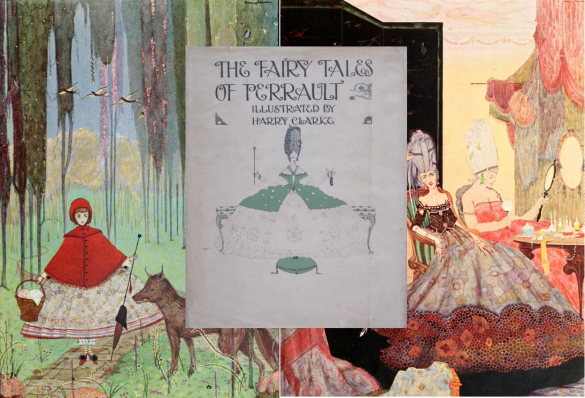
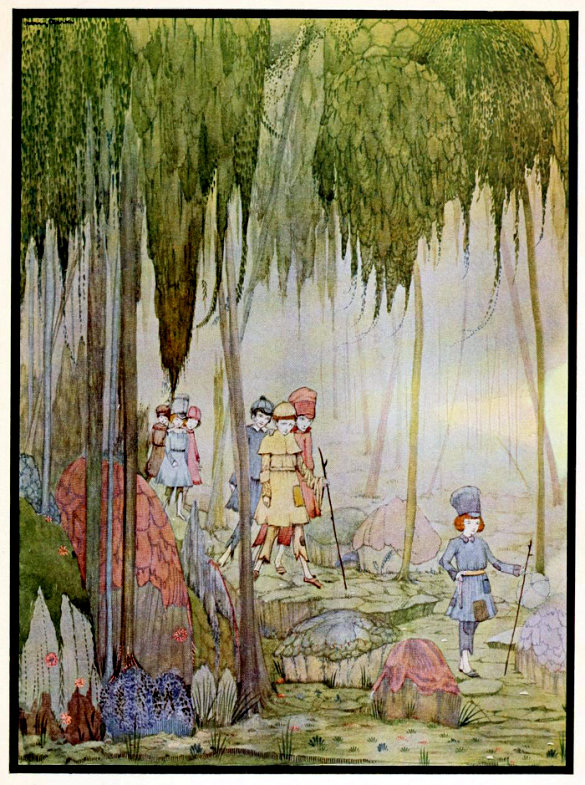

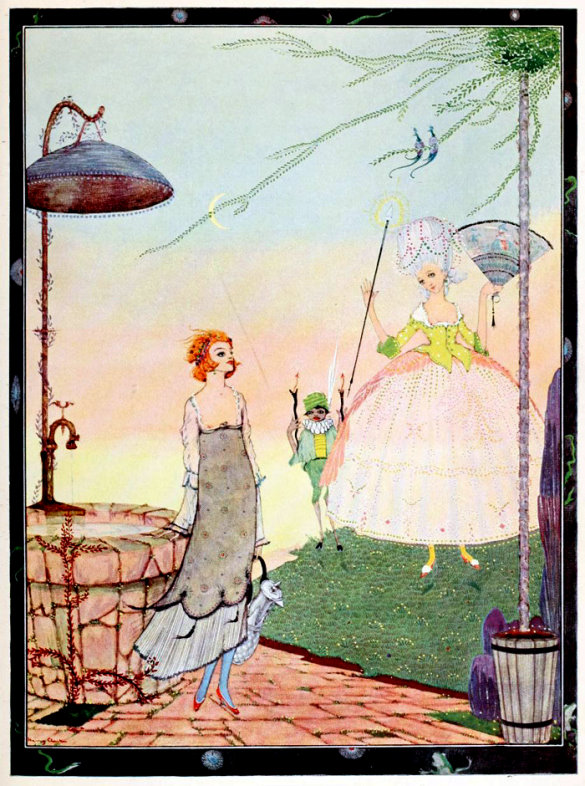
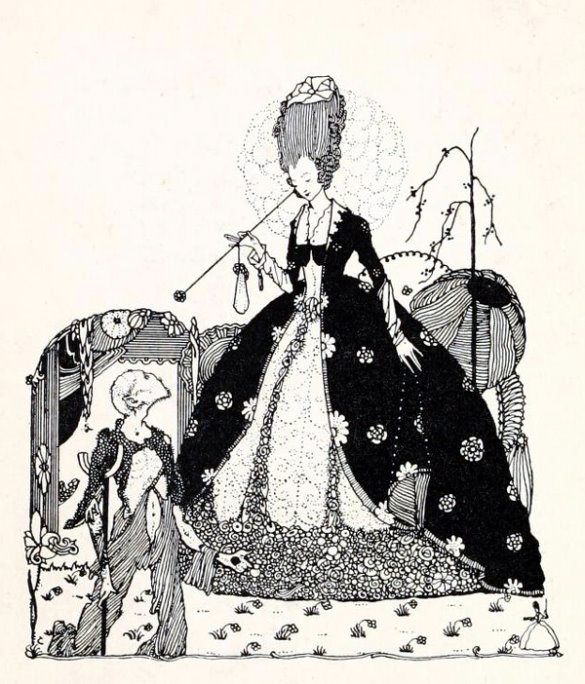
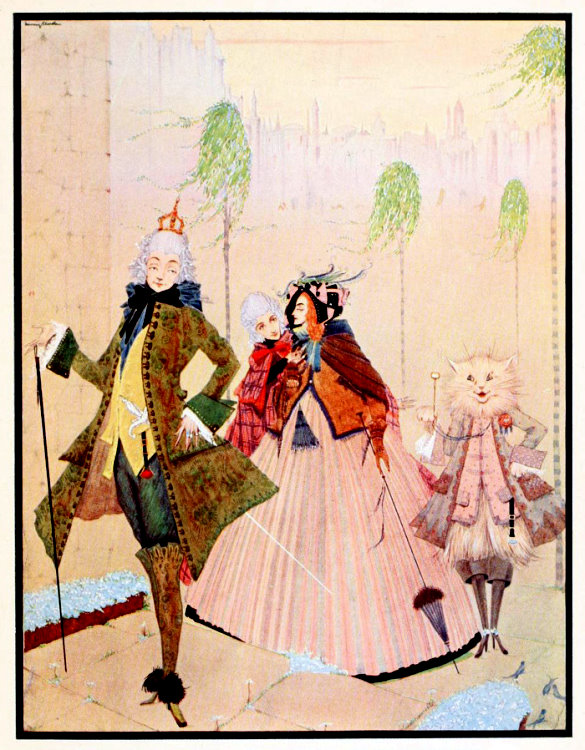
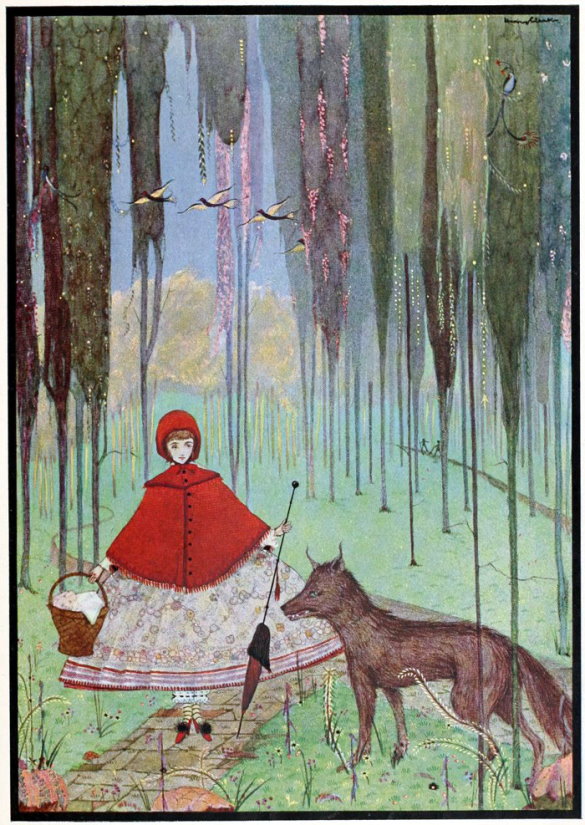
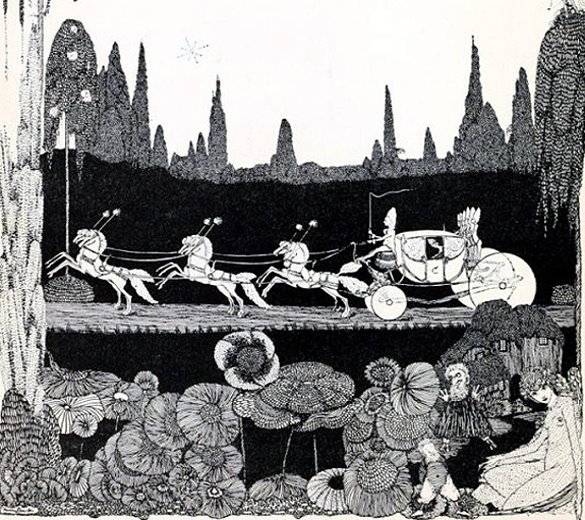
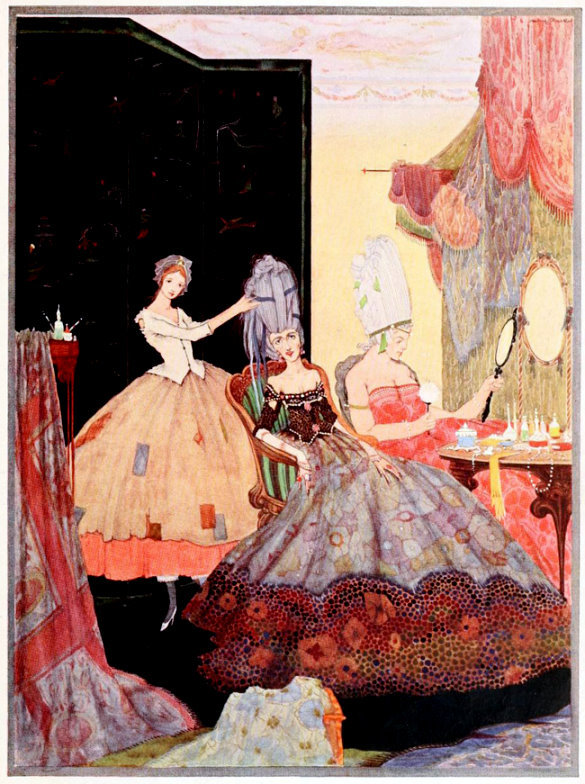

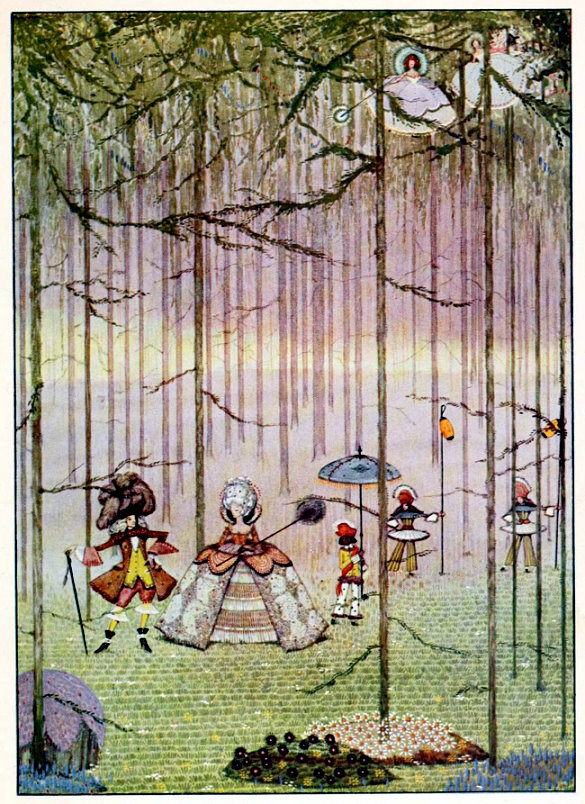
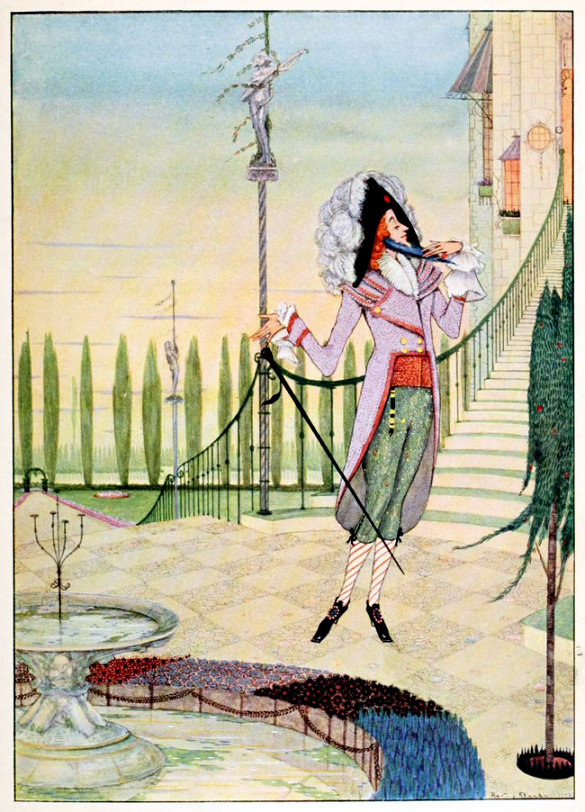




 I’m a sucker for fairy-tale and folklore retellings, and a major sucker for
.png.jpg?picon=3640)




 Very Little Red Riding Hood
 Brave Chicken Little