new posts in all blogs
Viewing: Blog Posts Tagged with: nonfiction, Most Recent at Top [Help]
Results 1 - 25 of 2,348
How to use this Page
You are viewing the most recent posts tagged with the words: nonfiction in the JacketFlap blog reader. What is a tag? Think of a tag as a keyword or category label. Tags can both help you find posts on JacketFlap.com as well as provide an easy way for you to "remember" and classify posts for later recall. Try adding a tag yourself by clicking "Add a tag" below a post's header. Scroll down through the list of Recent Posts in the left column and click on a post title that sounds interesting. You can view all posts from a specific blog by clicking the Blog name in the right column, or you can click a 'More Posts from this Blog' link in any individual post.
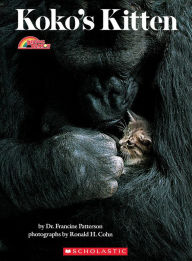
Koko's Kitten. Francine Patterson. Photographs by Ronald H. Cohn. 1985. 32 pages. [Source: Library]
First sentence: Koko's full name is Hanabi-Ko, which is Japanese for Fireworks Child.
Premise/plot: Koko's Kitten is a nonfiction picture book for elementary-aged readers. Though the book is called "Koko's Kitten," the picture book biography (of a gorilla) tells much more than just that one little snippet of her life. It tells of how Koko was/is the subject of a special project, how she started learning sign language, the special bonds she's formed with the humans in her life, etc. The climax of this one, is, of course, how she came to have a kitten of her own.
My thoughts: I remember learning about Koko in the 1980s. And I had fond but vague memories of Koko's Kitten. I remembered she had a kitten. A kitten named All Ball. I remembered that the kitten died and she wanted a new kitten. It turns out I remembered only *some* of this one. I still like it. But it is more wordy than I remembered.
Text: 4 out of 5
Illustrations: 4 out of 5
Total: 8 out of 10
© 2016 Becky Laney of
Becky's Book Reviews
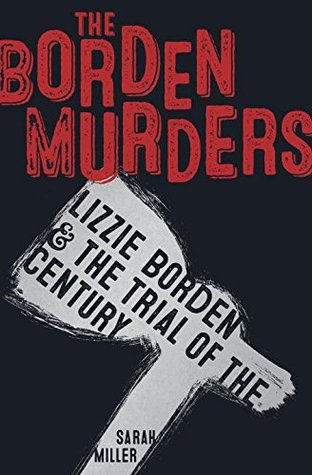
Borden Murders. Sarah Miller. 2016. 304 pages. [Source: Library]
First sentence: It happened every spring in Fall River, Massachusetts.
Premise/plot: Sarah Miller's newest book is a middle grade nonfiction book about Lizzie Borden and the 'trial of the century.' On August 4, 1892, Mr. and Mrs. Borden were murdered. Miller chronicles the events stage by stage. Her book is divided into sections: Lizzie Borden Took An Axe, Murder!, The Bordens, Investigation, Inquest, Arrest, Preliminary Hearing, The Waiting Time, The Trial of the Century, Aftermath, Epilogue.
My thoughts: This one was incredibly compelling and very well researched. (Over twenty pages of notes documenting among other things all the dialogue in the book.) Miller presents a balanced perspective of the case allowing readers to make up their own minds. Miller gives all concerned or connected the human touch. The press does not come out looking innocent.
Whether your interest is true crime, biography, or nonfiction set during the Victorian period, this one is worth your time.
© 2016 Becky Laney of
Becky's Book Reviews
 I peer into the darkness and at long last I see the light at the end of the tunnel. We’re almost there! Almost at the end of this month’s 31 Days, 31 Lists challenge. I’m certainly delighted, not least because I’ve managed to keep it up so far (knocking on wood now as hard as my brittle knuckles can knock).
As with some of the lists, today’s is not by any means complete. I fell down on the job of reading as many chapter nonfiction books as I should have. And since I refuse to place any books on these lists that I haven’t actually read myself, it’s going to be far too short. For a variety of far more complete lists featuring nonfiction, please check out the Best of the Year compilations from all the major review journals (SLJ, Kirkus, Horn Book, etc.) as well as libraries like NYPL, Chicago Public Library, and others.
2016 Great Nonfiction Chapter Books for Kids
A Celebration of Beatrix Potter: Art and Letters by More Than 30 of Today’s Favorite Children’s Book Illustrators, edited by The Stewards of Frederick Warne & Co.
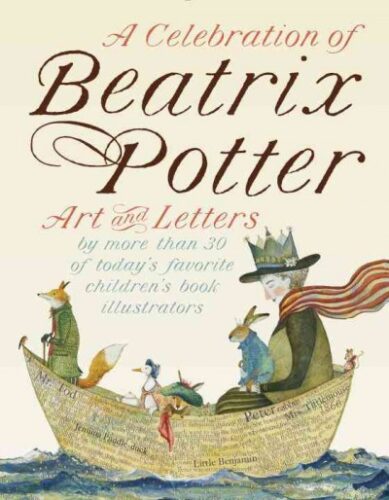
It seems a pity that I’m only just now mentioning this book, but I honestly couldn’t figure out if there was any other list it would slot into easily. In truth, it’s probably made for adult enthusiasts and not actual kids, but who knows? There could be some Potter loving children out there. Maybe they’d be interested in the wide variety of takes on one classic Potter character or another. Whatever the case, this book is a beautiful ode to the works of Beatrix and anyone would be pleased to receive it.
Crow Smarts: Inside the Brain of the World’s Brightest Bird by Pamela S. Turner, photos by Andy Comins, ill. Guido de Flilippo
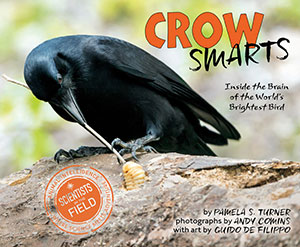
This is right up there with Sy Montgomery’s Kakapo book as one of my favorite books about obscure birds out there. Of course, the Kakapo is dumb as a box of rocks while these birds are smarter than human 4-year-olds, but who’s counting?
Deep Roots: How Trees Sustain Our Planet by Nikki Tate
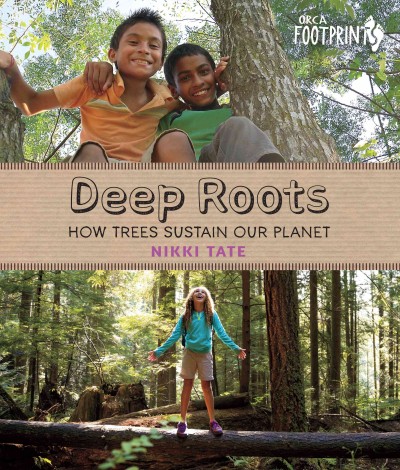
Orca consistently produces fun nonfiction titles on serious subjects in a voice that never patronizes its young readers. This latest is no exception.
The Hello Atlas by Ben Handicott, ill. Kenard Pak
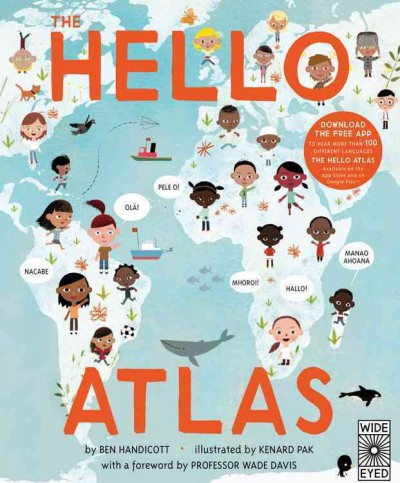
I really wasn’t sure where to put this one either, and it just feels like it has a bit too much content to consider it a picture book. The publisher calls this, “A celebration of humanity’s written and verbal languages is comprised of fully illustrated word charts depicting children of diverse cultures participating in everyday activities, in a reference complemented by a free downloadable app for iOS and Android that allows readers to hear the book’s phrases as recorded by native speakers”. Cool, right? Well, says Kirkus, “This will be a necessity for just about everybody, as there are no phonetic spellings”. So word to the wise. It’s still a pretty amazing book.
Presenting Buffalo Bill: The Man Who Invented the Wild West by Candace Fleming
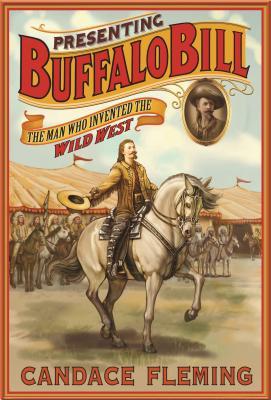
Did I mention I liked it yet?
I liked it.
Sachiko: A Nagasaki Bomb Survivor’s Story by Caren Stelson
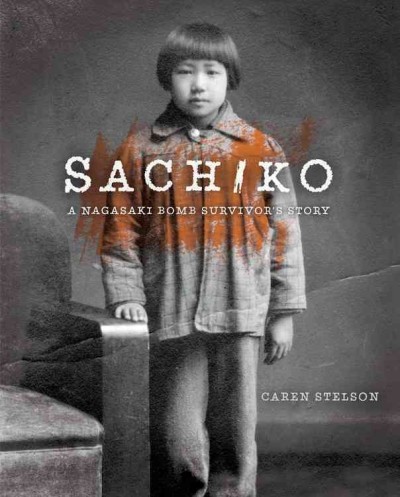
Still one of the most powerful books of the year.
Samurai Rising: The Epic Life of Minamoto Yoshitsune by Pamela S. Turner, ill. Gareth Hinds
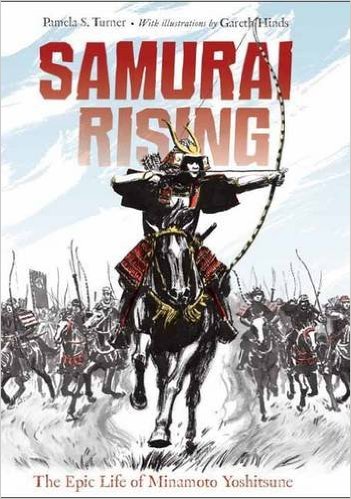
This one came out so early in the year that I almost forgot it was a 2016 title. Then I remembered that there’s this crazy outside chance that it could win a Newbery for its fantastic writing. So there’s that.
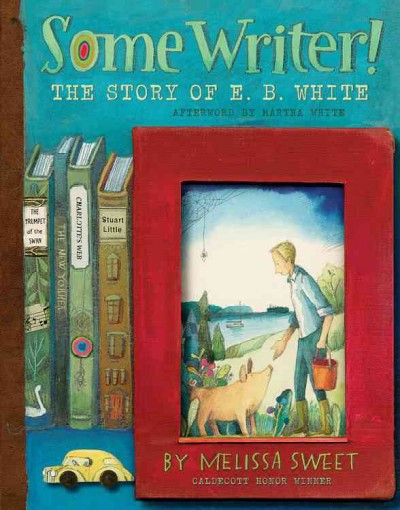
Some Writer! The Story of E.B. White by Melissa Sweet
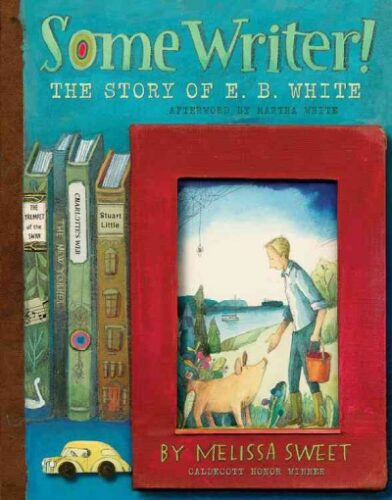
It took me a while to jump on the bandwagon with this one, since I’m sometimes slow on the uptake. Now that I’ve read it, I’m gratified to write that it really is quite amazing. I’m not sure what kid would pick it up on their own, but it does a really lovely job of encapsulating White’s life and spends a good amount of time on his writing for children. Visually arresting from start to finish, this is one of the best bios of the year. Glad I followed the crowd on this one.
What Milly Did by Elise Moser, ill. Scot Ritchie
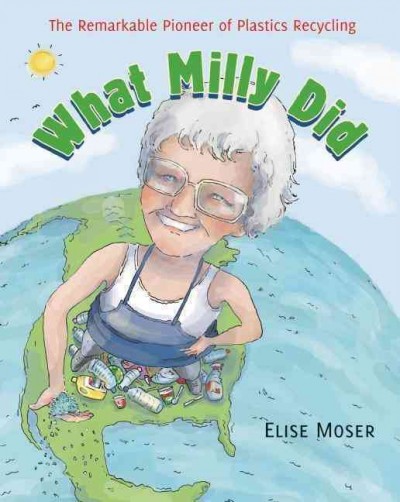
I’m not a huge fan of the cover, but I think the book’s worth its weight in gold. FYI.
Interested in the other lists of the month? Here’s the schedule so that you can keep checking back:
December 1 – Board Books
December 2 – Board Book Adaptations
December 3 – Nursery Rhymes
December 4 – Picture Book Readalouds
December 5 – Rhyming Picture Books
December 6 – Alphabet Books
December 7 – Funny Picture Books
December 8 – Calde-Nots
December 9 – Picture Book Reprints
December 10 – Math Picture Books
December 11 – Bilingual Books
December 12 – International Imports
December 13 – Books with a Message
December 14 – Fabulous Photography
December 15 – Fairy Tales / Folktales
December 16 – Oddest Books of the Year
December 17 – Older Picture Books
December 18 – Easy Books
December 19 – Early Chapter Books
December 20 – Graphic Novels
December 21 – Poetry
December 22 – Fictionalized Nonfiction
December 23 – American History
December 24 – Science & Nature Books
December 25 – Transcendent Holiday Titles
December 26 – Unique Biographies
December 27 – Nonfiction Picture Books
December 28 – Nonfiction Chapter Books
December 29 – Novel Reprints
December 30 – Novels
December 31 – Picture Books

Six Dots. Jen Bryant. Illustrated by Boris Kulikov. 2016. Random House. 40 pages. [Source: Review copy]
First sentence: On the day I was born, Papa announced me to the village: "Here is my son Loo-Wee!"
Premise/plot: Six Dots is a picture book biography of Louis Braille. It is probably best for older readers because there is a lot of text.
Here's one of my favorite quotes, "I didn't want people to feel sorry for me. I just wanted to read and to write on my own, like everyone else."
The end papers include the braille alphabet, just not in braille. (It would have been great fun if the braille alphabet and the quote by Helen Keller, "We the blind, are as indebted to Louis Braille as mankind is to Gutenberg." had actually been in braille so readers--of all ages--could feel Braille for themselves.)
My thoughts: I liked this one. It is a very personal, compelling story.
Text: 4 out of 5
Illustrations: 4 out of 5
Total: 8 out of 10
© 2016 Becky Laney of
Becky's Book Reviews
Smart Fat. Steven Masley and Jonny Bowden. 2016. HarperOne. 336 pages. [Source: Library]
First sentence:
Not too long ago, we were both advocating specific diets for weight loss and wellness.
We weren't just advocates of these plans--we built our professional lives around these two seemingly contradictory nutritional philosophies. Premise/plot: "Eat more fat. Lose more weight. Get healthy now." Thus the front cover proclaims proudly. This diet book urges a 5-5-10 eating program. 5 Servings of smart fat, 5 Servings of clean (or at least lean) protein, and 10 servings of fiber per day. But it isn't just about what you put into your body, it's also about what you DON'T put into your body--and WHY. So I would say half of this focuses on WHY to change your eating in the first place, why you need to eat more smart fat and very little to no "dumb" fat, why the quality of your food matters--especially in protein, but also other food groups, why eating better will help your health overall. And the other half focuses on the WHAT: what you need to eat, what you don't need to eat, the right serving sizes or portions, etc. This one includes a 30 day meal plan with 50 recipes. This plan isn't just about eating right, however, it is also about living right: exercising, sleeping, finding healthy ways to unstress, etc.
My thoughts: I thought I had sworn off diet books--at least this year. But my Dad wanted me to read this one with him. And so I picked it up. If I were to decide to try this "smart fat" plan, it wouldn't be a drastic change for me. (I already am gluten-free. I already eat a LOT of vegetables and fruit. I already use coconut oil and olive oil. I already aim for a high fiber diet.) But it would be making a few small changes. I do feel better about this book than the other "eat fat" book I reviewed earlier in the year. That one I thought was after people's money and was out to make a LOT of it not just a little. This one I felt was different.
© 2016 Becky Laney of
Becky's Book Reviews
By
Brian Anderson for
Cynthia Leitich Smith's
CynsationsHave you ever wondered why the spacecraft that carried the first U.S. astronaut into space in 1961 was named the Freedom 7? Was
George Lucas already planning six prequels, or what?
When my daughter Amy turned 21 years old in July 2014, she was doing summer research in astrophysics at
Baylor University. Her birthday coincided with a stargazing party at
Meyer Observatory, so I offered to make a piñata and have the star party double as a birthday party.
I started making
custom piñatas when Amy was five years old, and over the years her birthday party piñatas had grown increasingly elaborate.
"How about a black hole piñata," I joked. I imagined one round balloon, decorated all black. She would never agree to that.
"That'd be fantastic!"
I knew right away something was wrong. I told her nothing escapes the gravity of a black hole, not even light. It's just a black dot in space. That's when she told me about accretion disks and X-ray emissions and Hawking radiation. Apparently, I had a lot to learn about black holes, and now I also had a challenging piñata to make.
The following summer my friend and fellow Austin children's book author
Christina Soontornvat told me that
Prufrock Press was looking for an author to write an astronomy dictionary for kids.
Christina and I are both science educators as well as children's book authors, and she thought I'd be perfect for the job. But after the way that black hole piñata joke backfired on me the summer before, I knew I didn't know enough astronomy to write a book about it.
But I knew someone who did.
 |
| Brian & Amy--back in the day. |
Amy had just graduated from college and was taking the summer off before starting graduate school in the fall.
When I suggested we write it together, her first question was the same as mine – isn't there something like this already available online for free?
Her search turned up the same thing mine had: some highly technical glossaries that were clearly not intended for kids, and a scattered collection of incomplete and sometimes incorrect astronomy glossaries for students.
My nine-year-old self was screaming at me that space-loving kids needed this book. Amy felt the same way, and agreed to help write it. We have liftoff!
We compiled a word list of about 450 terms, grouped them into five subject areas, then dived into researching and writing.
The fact that Amy understood the science content much better than I did is part of the reason our collaboration on
Space Dictionary for Kids (Sourcebooks, 2016) worked so well. She brought content mastery and I brought a learner's perspective.
Together we were able to create an astronomy dictionary that's both scientifically accurate and understandable to young readers.
Collaborating with my daughter will always be one of the highlights of my writing career, and Amy taught me a lot of astronomy along the way. I finally understand retrograde motion!
I already knew quasars were the brightest objects in the universe, brighter than an entire galaxy of stars, but until I started working with Amy I never knew exactly what a quasar was. And I also learned (a little too late) that I should have offered to make Amy a black dwarf piñata instead of a black hole piñata.
Cynsational Notes To answer the opening question, each of the Project Mercury astronauts, known collectively as the Mercury 7, was allowed to name the ship that would carry him into space, and each ship's name would end with the number 7. In addition to Freedom 7, the other Mercury spacecraft were Liberty Bell 7, Friendship 7, Aurora 7, Sigma 7, and Faith 7. If you're keeping score, you probably noticed that that was only six. To find out what happened to the seventh Mercury astronaut, flip to page 144.

By:
Cynthia Leitich Smith,
on 11/28/2016
Blog:
cynsations
(
Login to Add to MyJacketFlap)
JacketFlap tags:
poetry,
diversity,
middle grade fiction,
nonfiction,
ncte,
Melissa Sweet,
Marilyn Nelson,
Jason Reynolds,
awards,
Add a tag
By
NCTEfor
CynsationsATLANTA-- Authors Jason Reynolds, Melissa Sweet, and Marilyn Nelson were just announced winners of
prestigious literacy awards from the National Council of Teachers of English (NCTE).
Jason Reynolds won the 2017 Charlotte Huck Award for Outstanding Fiction for Children for his book
Ghost (Atheneum). The Charlotte Huck award is given to books that promote and recognize fiction that has the potential to transform children's lives.
Melissa Sweet won the 2017 Orbis Pictus Award for Outstanding Nonfiction for Children for her book
Some Writer!: The Story of E.B. White (Houghton Mifflin Harcourt).
The NCTE Orbis Pictus Award, established in 1989, is the oldest children's book award for nonfiction.
Marilyn Nelson won the 2017 NCTE Award for Excellence in Poetry for Children. The biannual award is given to a living American poet for his or her aggregate work for children ages 3–13.
Honor and Recommended book lists were also announced. All three authors will be invited to speak at next year's NCTE Annual Convention in St. Louis, MO.
NCTE is the nation's most comprehensive literacy organization, supporting teachers across the preK–college spectrum.
Through the expertise of its members, NCTE has served at the forefront of every major improvement in the teaching and learning of English and the language arts since 1911.
A Child's Geography of the World. V.M. Hillyer. 1929/1951. 472 pages.
First sentence: When I was a boy, my nurse used to take me to the railroad station to see the trains.
Premise/plot: A Child's Geography of the World was first published in 1929. The edition I found was revised and published in 1951. The tone is casual conversation. There are a few black and white illustrations throughout the book. The book is full of information, but what kind?
The truth is some information stays the same no matter the decade. (For example the location of the The Great Lakes, the Empire State Building, the Leaning Tower of Pisa). But plenty of things have changed and changed dramatically! Nations have passed away, governments have been toppled, revolutions have taken place. Also the United States has more than 48 states! Mount Everest has been climbed. Man has gone to the moon and back.
The last war mentioned is World War 2. Communists are mentioned, or perhaps I should say warned against!
Race is definitely an issue if you're reading this with children. (God created black men at night and many black people in Africa eat each other. The narrator makes an offhandedly comment that you will likely never see a real live Indian because there are few left. The narrator later makes an aside that the U.S. does it's best to keep out the Chinese.) I would say adults can throw away the bad and keep the good and have the discernment needed to tell the difference between the two. I would not recommend young children read this on their own for several reasons. One being that unless this text has been updated and revised recently, you'd have more misinformation than correct information.
My thoughts: I find vintage books entertaining. I do. Rare, long out-of-print books call to me. It's a way to capture a glimpse of the past, for better or worse. Not a historical writer's idea of the past. Good Morning, Miss Dove is one of my favorite, favorite books--and movies. This book would have been published at exactly the right time for Miss Dove to use!
The information is dated, true, I won't lie, but it is also a strong narrative. If there weren't problematic sections, I could easily call it charming.
© 2016 Becky Laney of
Becky's Book Reviews
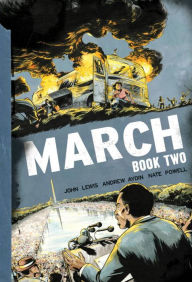
March Book Two. John Lewis. Andrew Aydin. Illustrated by Nate Powell. 2015. 189 pages. [Source: Library]
First sentence: January 20, 2009. Brother John--Good to see you. You ready?
Premise/plot: March is the graphic novel autobiography of John Lewis. So far, there are three volumes in this autobiography. Today, I am reviewing book two. Lewis gives us an incredible behind-the-scenes glimpse of the civil rights movement. This one also has a built-in framework: it is set in 2009, and he's reflecting on his life before attending the Inauguration.
My thoughts: I can't imagine anyone reading the first book and not wanting to continue on with book two. My guess? They'd want it IMMEDIATELY. This second book picks up the story of the civil rights movement in November 1960. (The 'present' day story is still January 2009). This second volume is even better, in my opinion. It covers almost four years: the rest of 1960, 1961, 1962, and 1963. OH THE INTENSITY. I don't know how it is both possible to stay big-picture and yet include so many details, but, the writing is so wonderful, the art is so wonderful, that it just really puts you right there and keeps you engaged.
Definitely would recommend book one and two. I'm excited to start book three soon!
© 2016 Becky Laney of
Becky's Book Reviews
By
Cynthia Leitich Smithfor
CynsationsHappy Election Day! Go vote! We welcome author Debbie Levy to talk about her new picture book biography. From the promotional copy of I Dissent: Ruth Bader Ginsburg Makes Her Mark, illustrated by Elizabeth Baddeley (Simon & Schuster, 2016): Ruth Bader Ginsburg has spent her lifetime disagreeing . . . with creaky old ideas. With unfairness. With inequality. She has disagreed. She has disapproved. She has objected and resisted. She has dissented!
Disagreeable? No. Determined? Yes! Ruth Bader Ginsburg has changed her life, and ours, by voicing her disagreements and standing up for what’s right. This picture book about the first female Jewish justice of the U.S. Supreme Court shows that disagreeing does not make you disagreeable and that important change can happen one disagreement at a time. See also the
Glorious RBG Blog (click to view 11 entries).
Welcome to Cynsations, Debbie! We're both graduates of The University of Michigan Law School. Did you practice law or go straight to writing for young readers like I did (or rather like I did after clerking)? I did practice law for several years after law school. But writing books for children is the only job I’ve held for more than six years. Lawyer at a big Washington, D.C. law firm: six years. Newspaper editor: six years. Then I took a class at the
Writer’s Center in Bethesda, Maryland, with the excellent
Mary Quattlebaum. (Check out
her books, and her reviewing work!)
Writing for children: This was a vocation with long-term potential.
 |
| Michigan Law School Reading Room |
Hey, I have a newspaper background, too--so much in common! You write fiction and nonfiction across formats and age levels. Often I hear from new writers that they feel pressured to pick one focus. What has your range of pursuits done for you in terms of craft and career?I think the writers you’re hearing from are telling a truth: There can be pressure to pick one focus or, to put it otherwise, to establish a “brand.”
I think I must have subconsciously scoffed at the notion that I could ever be a brand—ha, a Debbie Levy brand!—so, for better or worse, I’ve mostly followed my interests and allowed serendipity a role in choosing projects.
Also, one solution for writers who do want to be multi-focal is to have more than publisher. I realize that doesn’t solve a beginning writer’s problem, who may be looking for Publisher #1. But it is an option once you start getting published.
Congratulations on the release of I Dissent: Ruth Bader Ginsburg Makes Her Mark, illustrated by Elizabeth Baddeley (Simon & Schuster, 2016)! What about Ruth Bader Ginsburg called to you as a writer? Thank you! Like many people, I knew that the Glorious RBG was the second woman to serve on the Supreme Court of the United States and the first Jewish woman on the Court.
I knew that, before that, she was a federal appeals court judge in Washington, D.C., and, before that, one of leading lawyers in the field of equal rights for women and girls.
What I didn’t know, until I started researching more deeply about her, is that she has been disagreeing with unfairness and with things that are just plain wrong from the time she was a little girl.
I mean, she objected to being excluded from shop class in grade school, and being required to take cooking and sewing instead! When on a car trip with her parents, she disagreed with she saw a sign outside a hotel that read “No Dogs or Jews Allowed.” Later, of course, she went on to disagree, resist, object, and dissent her way into big things.
And she’s been doing this for years with a voice that is not loud (people lean in to hear her words), in a manner that is not obnoxious (more benefit of the doubt than bashing, more insight than invective), and in service of justice.
So, I realized, the story of her life offers this inspiring lesson: Disagreeing does not make you disagreeable, and important change happens one disagreement at a time. Is it any wonder, then, that I thought she was a great person to introduce to young people in a picture book?
Agreed! Many of my favorite people disagree strongly with injustice. What were the challenges (research, psychological, logistical) in bringing the story to life?I feel lucky to live in the Washington, D.C. area, because although Justice Ginsburg didnot find time for an interview with me last summer when I was working on this book, she did grant me access to her papers on deposit in the
Manuscript Division at the Library of Congress (practically next door to the Supreme Court!).
I’ve gone through at least one Manuscript Division collection before, but none like this. So tidy! Meticulous! Her speeches typed on 4 x 6 cards: impeccable! Her handwritten notes on yellow legal sheets discussing and advocating for the Equal Rights Amendment that never got adopted!
Although I didn’t absolutely need to read piles of drafts of legal briefs and memoranda, I dived into this stuff with gusto; you do get a sense of a person from their papers.
Oh, wait. You asked for challenges. It is a challenge to write about someone, a living, active person, without having an interview. But there were many, many print and video interviews of RBG for me to consult. Many scholarly articles, by and about her.
And she did review the manuscript last October. She sent a nice little note, and wrote in some handwritten notes in the margins of my typescript. I took all her edits!
Since you’ve specifically mentioned “psychological challenges”—I lost my mother three years ago.
 |
| Debbie's mother kayaking on the Wye River |
She was a vibrant, ever-curious, outgoing woman, someone always interested in another person’s story, someone who as a girl dreamed of being a journalist (she ended up in the wholesale costume jewelry business instead), and she would have been over the moon to know that I was writing a book about RBG, to know that I was elbow-deep in RBG materials at the Library of Congress, to know that RBG looked over my manuscript pre-publication.
I’m answering your questions, Cyn, the morning after the book launch for
I Disssent, which we held at D.C.’s great
Politics & Prose Bookstore. Many friends who had known my mother attended.
I said there, “I cannot help but think that had my mother still been alive, she would have figured out a way to get me into RBG’s chambers for an interview—and she along with me!”
The room was filled with knowing smiles and laughter. Someone even called out my mother’s signature phrase: “Let me ask you a question”—her way of getting people to open up to her.
That helped with the pain of not having Mom there. (And, really, she would have snagged me an interview.)
Talk to us about disagreeing. It sounds like a negative focus for a children's book. Is it? In either case, why do you think it's important in the conversation of youth literature?Yes, let’s talk about disagreeing! The theme of disagreeing is really what sold my editor at Simon & Schuster on this book.
From the very beginning, we were really excited about creating a book that said to all kids, and to girls in particular, that disagreeing does not make a person disagreeable, and that you can accomplish big things for yourself and for the world through dissent and by finding another way when the world says “no” to you.
It’s a positive message, but it’s also a message that says you don’t have to be positive—that is, you don’t have to sound or look positive, you don’t have to just say yes and smile and go along with things that you believe are wrong—to be a good person.
At the same time, simply disagreeing without more isn’t really enough if you want to change your life or anyone else’s. On the back of the book, we’ve put this RBG quote: “Fight for the things that you care about. But do it in a way that will lead others to join you.”
Seems simple, right? But it’s that second sentence that is so hard to pull off.
Many authors discover reoccurring themes in their work? Is this true of you? If so, could you tell us about it and how I Dissent fits in? 
I seem to return to the theme of Outsiderness. My mother, protagonist of the nonfiction-in-verse
The Year of Goodbyes (Hyperion, 2010), being an outsider as a girl in Nazi Germany in 1938. Danielle, protagonist of my young adult novel
Imperfect Spiral (Bloomsbury, 2013), who finds an unexpected antidote to her feelings of being the outsider in an unlikely friendship with the six-year-old boy she babysits one summer.
The African American individuals and communities, outsiders in their own country, in my nonfiction picture book
We Shall Overcome: The Story of A Song (Disney-Jump at the Sun, 2013).
Today we may look at RBG and see the ultimate insider—she’s a U.S. Supreme Court Justice, for heaven’s sake! But she overcame the outsiderness of being a Jew in a sometimes hostile Gentile world, of being a young woman in the (then) overwhelmingly male-dominated world of law school, of being a female lawyer in a (then) man’s profession, and of being an advocate for legal and social changes that went against the grain of society’s traditional norms. There’s my theme.
What do you love about your writing life? Other writers. What good communities and friendships I’ve found!
What do you do when you're not writing or out-and-about in your author hat?Walk in the woods or along the nearby Chesapeake and Ohio Canal. Kayak in the Chesapeake Bay area. Fish in the Chesapeake Bay area. Read.
Think about whoever my next dog will be.
Apologize to my cat for thinking about my next dog.
You know, the usual.
What can your readers look forward to next? In February 2017,
Soldier Song, A True Story of the Civil War (Disney-Hyperon). An 80-page picture book for older children about a remarkable event that occurred after the Battle of Fredericksburg. Illustrated by the excellent, creative
Gilbert Ford, with lots of room for excerpts from soldier’s letters and diaries. I’m excited about this!
March: Book One. John Lewis, Andrew Aydin. Illustrated by Nate Powell. 2013. 128 pages. [Source: Library]
First sentence: Can you swim? No. Well, neither can I--but we might have to.
Premise/plot: March is the graphic novel autobiography of John Lewis. So far, there are three volumes in this autobiography. Today, I am reviewing book one. Lewis gives us an incredible behind-the-scenes glimpse of the civil rights movement. This one also has a built-in framework: it is set in 2009, and he's reflecting on his life before attending the Inauguration.
My thoughts: Dare I say this one is a must read? I'm tempted, really tempted. (And if you follow me on the blog and know my tastes inside and out, then you know that I don't usually read graphic novels.)
What I like best about this one is that it is engaging, compelling, emotional, personal, and above all else cohesive. It gives you a truer sense of the 'big picture' of the civil rights movement than any other book I've read--that I can remember at least. (When you read 400+ books a year, I'll be the first to admit that you don't necessarily recall most of them with much detail.)
I also love the amount of detail. (For example, that he used to preach to his chickens!)
I've read the first two books now and I'm excited to begin the third.
© 2016 Becky Laney of
Becky's Book Reviews
Regular readers of American Indians in Children's Literature know that I emphasize several points when reviewing children's or young adult books, especially:
- Is the book by a Native author or illustrator?
- Does the book, in some way, include something to tell readers that we are sovereign nations?
- Is the book tribally specific, and is the tribally specific information accurate?
- Is it set in the present day? If it is historical in structure, does it use present tense verbs that tell readers the Native peoples being depicted are part of today's society?
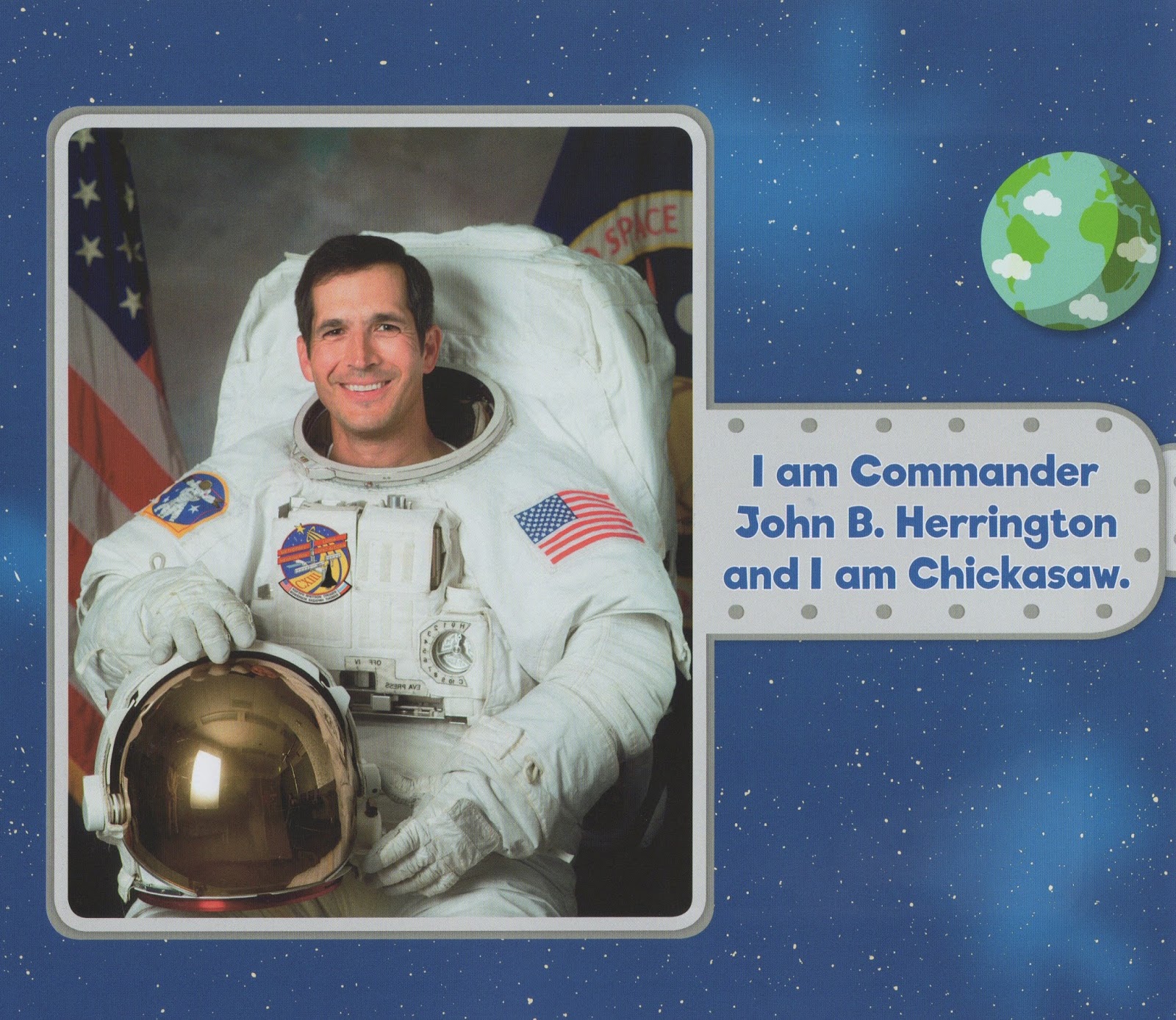
John Herrington's
Mission to Space has all of that... and more! Herrington is an astronaut. He was on space shuttle Endeavor, in 2002.
Mission to Space begins with his childhood, playing with rockets, and ends with Endeavor's safe return to Earth.
Here's the cover:
That is Herrington on the cover. Here's a page from inside that tells readers he is Chickasaw.
While he and the crew were waiting for Endeavor to blast off, the governor and lieutenant governor of the
Chickasaw Nation presented a blanket to NASA.
Those are two of the pages specific to Herrington being Chickasaw, but there's photos of him, training to be an astronaut, too. There's one of him, for example in a swimming pool, clad in his gear. And there's one that is way cool, of his eagle feather and flute, floating inside the International Space Station:
I absolutely love this book. There is nothing... NOTHING like it.
Native writer? Yes.
Sovereignty? Yes.
Tribally specific? Yes.
Present day? Yes.
The final two pages are about the Chickasaw language. In four columns that span two pages, there are over 20 words in English, followed by the word in Chickasaw, its pronunciation, and its literal description. And, of course, there's a countdown... in English and in Chickasaw.
Published in 2016 by the Chickasaw Nation's White Dog Press, they created a terrific
video about the book. You can
order it at their website. It is $14 for paperback; $16 for hardcover.
I highly recommend it! Hands down, it is the best book I've seen all year long.
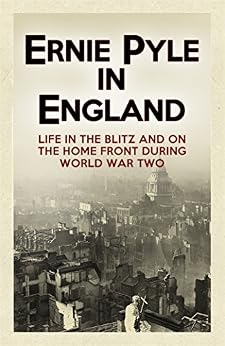
Ernie Pyle in England. Ernie Pyle. 1941. 215 pages. [Source: Bought]
First sentence: A small voice came in the night and said, “Go.” And when I put it up to the boss he leaned back in his chair and said, “Go.” And when I sat alone with my so-called conscience and asked it what to do, it pointed and said, “Go.” So I’m on my way to London.
Premise/plot: Ernie Pyle in England was first published in 1941. It gathers together Ernie Pyle's newspaper columns from his time--three or so months--in England (and Ireland and Scotland). (He was an American journalist.) At the time the book was published, America had NOT yet entered the second world war.
My thoughts: WHY DID NO ONE TELL ME THIS BOOK EXISTED?! Seriously. I've gone all these years of my life not knowing about Ernie Pyle?!?!?! This one was a PERFECT fit for me. I love to read about England. (I do. I really do.) And I love to read about World War II. If you love history, this one may prove quite satisfying. And if you love human-interest stories, then this one will certainly satisfy!!!
I found it fascinating, entertaining, compelling, charming.
Quotes:
A ship carries people out of reality, into illusion. People who go away on ships are going away to better things.
Our bathtub has three faucets, one marked cold, and two marked hot. The point is that one is a little hotter than the other. I don’t know why it’s done this way. All I care about is that one or the other should give off hot water; and they really do — plenty hot. But our radiator does not have the same virtue. It is a centuries old custom not to have heat over here. All radiators are vaguely warm; none is ever hot. They have no effect at all on the room’s temperature. I’ve been cold all over the world. I’ve suffered agonies of cold in Alaska and Peru and Georgia and Maine. But I’ve never been colder than right here in this room. Actually, the temperature isn’t down to freezing. And it’s beautiful outside. Yet the chill eats into you and through you. You put on sweaters until you haven’t any more — and you get no warmer. The result is that Lait and I take turns in the bathtub, I’ll bet we’re the two most thoroughly washed caballeros in Portugal. We take at least four hot baths a day. And during the afternoon, when I’m trying to write, I have to let the hot water run over my hands about every fifteen minutes to limber them up. I’m telling the truth.
My new English friends wanted to know what America thought; and they told queer bomb stories by the dozen. “You’re a welcome sight,” they said. “We’ve all told our bomb stories to each other so many times that nobody listens any more. Now we’ve got a new audience.”
London is no more knocked out than the man who smashes a finger is dead. Daytime life in London today comes very close to being normal.
Some day when peace has returned to this odd world I want to come to London again and stand on a certain balcony on a moonlit night and look down upon the peaceful silver curve of the Thames with its dark bridges. And standing there, I want to tell somebody who has never seen it how London looked on a certain night in the holiday season of the year 1940. For on that night this old, old city was — even though I must bite my tongue in shame for saying it — the most beautiful sight I have ever seen. It was a night when London was ringed and stabbed with fire. They came just after dark, and somehow you could sense from the quick, bitter firing of the guns that there was to be no monkey business this night.
And Big Ben? Well, he’s still striking the hours. He hasn’t been touched, despite half a dozen German claims that he has been knocked down. Bombs have fallen around Trafalgar Square, yet Nelson still stands atop his great monument, and the immortal British lions, all four of them, still crouch at the base of the statue, untouched.
Londoners pray daily that a German bomb will do something about the Albert Memorial in Kensington Gardens. If you have ever seen it, you know why.
Apparently the national drink in England is a beef extract called Bovril, which is advertised everywhere, like Coca Cola at home. Yesterday I went into a snack bar for some lunch. I asked the waitress just what this Bovril stuff was, and in a cockney accent that would lay you in the aisle she said: “Why sir, it’s beef juice and it’s wonderful for you on cold days like this. It’s expensive, but it’s body-buildin’, sir, it’s very body-buildin’.” So I had a cup. It cost five cents, and you just ought to see my body being built.
If I were making this trip over again I would throw away my shirts and bring three pounds of sugar.
You can hardly conceive of the determination of the people of England to win this war. They are ready for anything. They are ready to take further rationing cuts. They are ready to eat in groups at communal kitchens. Even the rich would quit their swanky dining rooms without much grumbling. If England loses this war it won’t be because people aren’t willing — and even ahead of the government in their eagerness — to assume a life of all-out sacrifice.
Don’t tell me the British don’t have a sense of humor. I never get tired of walking around reading the signs put up by stores that have had their windows blown out. My favorite one is at a bookstore, the front of which has been blasted clear out. The store is still doing business, and its sign says, “More Open than Usual.”
One of the few things I have found that are cheaper here than at home is a haircut. I paid only thirty cents the other day in the hotel barbershop, and since then I’ve seen haircuts advertised at fifteen cents. I’m going to get a haircut every day from now on — enough to last me for a year or two.
It was amazing and touching the way the Christmas spirit was kept up during the holidays. People banded together and got up Christmas trees, and chipped in to buy gifts all around. I visited more than thirty shelters during the holidays, and there was not a one that was not elaborately decorated.
I probably wouldn’t have slept a wink if it hadn’t been for the bathroom. I discovered it after midnight, when everybody else had gone to bed. The bathroom was about twenty feet square, and it had twin bathtubs! Yes, two big old-fashioned bathtubs sitting side by side with nothing between, just like twin beds. Twin bathtubs had never occurred to me before. But having actually seen them, my astonishment grew into approval. I said to myself, “Why not?” Think what you could do with twin bathtubs. You could give a party. You could invite the Lord Mayor in for tea and a tub. You could have a national slogan, “Two tubs in every bathroom.” The potentialities of twin bathtubs assumed gigantic proportions in my disturbed mind, and I finally fell asleep on the idea, all my fears forgotten.
It is hard for a Scotsman to go five minutes without giving something a funny twist, and it is usually a left-handed twist. All in all, I have found the Scots much more like Americans than the Englishmen are. I feel perfectly at home with them.
Pearl Hyde is head of the Coventry branch of the Women’s Voluntary Services. It was Pearl Hyde who fed and clothed and cheered and really saved the people of Coventry after the blitz. For more than a week she plowed around in the ashes of Coventry, wearing policeman’s pants. She never took off her clothes. She was so black they could hardly tell her from a Negro. Her Women’s Voluntary Services headquarters was bombed out, so she and her women moved across the street. Her own home was blown up, and even today she still sleeps in the police station. Pearl Hyde is a huge woman, tall and massive. Her black hair is cut in a boyish bob. And she has personality that sparkles with power and good nature. She is much better looking than in the film. And she is laughing all the time. She was just ready to dash off somewhere when I went in to see her, but she tarried a few minutes to tell me how good the Americans had been with donations.
It is against the law to leave a car that could be driven away by the Germans. You have to immobilize your car when you leave it, even though you might be walking only fifty feet away to ask a policeman for directions. In daytime, just locking the doors and taking the key counts as immobilization, but at night you have to take out some vital part, such as the distributor.
© 2016 Becky Laney of
Becky's Book Reviews
By
Cynthia Leitich Smithfor
CynsationsDonna Janell Bowman is the first-time author of
Step Right Up: How Doc and Jim Key Taught the World About Kindness, illustrated by
Daniel Minter (Lee & Low, 2016). From the promotional copy:
A Horse that can read, write, and do math?Ridiculous! That’s what people thought until former slave and self-taught veterinarian Dr. William Key, with his “educated” horse Beautiful Jim Key, proved that, with kindness, anything is possible. Over nine years of exhibiting across the country, Doc and “Jim” broke racial barriers, fueled the humane movement, and inspired millions of people to step right up and choose kindness. What was your initial inspiration for writing this book?This question ties so perfectly into my belief that there’s a piece of us in everything we write.
In 2006, I read a
book about Beautiful Jim Key, authored by Mim Eichler Rivas (William Morrow 2005/Harper Paperbacks 2006). It was a given that I would be drawn to a horse book. I grew up on a Quarter Horse ranch, where life revolved around raising, training, and showing horses, and caring for the myriad livestock and other animals. I have always been an animal lover, and I know firsthand how powerful the human-animal bond can be—how the combination of time, trust, and affection can create such synergy that you can practically read each other’s minds.
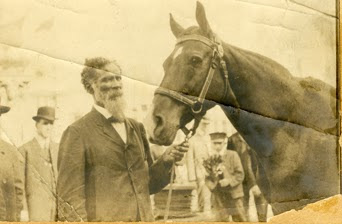 |
Courtesy of Tennessee State Library and Archives. |
That kind of relationship bonded William “Doc” Key and his horse, Beautiful Jim Key. While the horse was what drew me to the story, I was immediately awed by Doc. His greatest historical contribution was an unmistakable message about kindness, in a time of extreme racial prejudice, and brutal treatment of animals.
How could I not love the story of a man who overcame so much to make a real difference in the world?
Thanks to Doc, “Jim,” the horse, became a sort of poster child for the emerging humane movement, while Doc overcame injustices, broke racial barriers, and helped change the way people thought about and treated animals. Doc was awarded a Service to Humanity Award, and Jim was awarded a “Living Example” award.
So, back to your question, Cyn, about what inspired me to write this story—it spoke to my heart. I dived into research with zeal.
What were the challenges (literary, research, psychological, logistical) in bringing the text to life?There were a number of challenges to writing this story, but three that most stand out:
First, the research. It was claimed that Beautiful Jim Key could read, write, calculate math problems, compete in spelling bees, identify playing cards, operate a cash register, and more. I had to get to the bottom of how this could be possible.
I used the adult book as my jumping off point, but I wasn’t satisfied to rely solely on somebody else’s research.
This is a story that straddles the 19th and 20th centuries, so I read a great deal about the period, including slavery, the Reconstruction Era in the distinct regions of Tennessee, the history of the humane organizations; the related World’s Fairs, Doc’s business interests, etc.
Emotionally, the most difficult part was reading about how animals were treated in the 19th century, and, more importantly, how enslaved people were often treated with similar brutality. Only a tiny fraction of my research appears in the book’s back matter, but it all deeply affected my approach to the story.
I visited the
Shelbyville (TN) Public Library and skimmed through their microfilm. Then I spent some time at the Tennessee State Archives, donning white gloves as I perused the crumbling scrapbooks from the BJK collection.
During that 2009 trip, I also visited the humble Beautiful Jim Key memorial in Shelbyville, TN, and Doc’s grave site at the Willow Mount Cemetery. (I might have shed a few sentimental tears.) We then tracked down what I think was Doc’s former property, though the house is long gone.
This kind of onsite research, along with old photos and local news accounts, allowed me to imagine the setting of Doc’s hometown. Back home, I collected binders-full of newspaper articles, playbills, and promotional booklets. Through these, I got a feel for how people thought about Doc and Jim.
And, most importantly, I found some of Doc’s explanations for how he taught the horse. What became clear was, though we may never know exactly how the horse was able to do so many remarkable things, the countless news reporters and professors who tried to prove trickery or a hoax, never found anything beyond “education.” Jim only rarely made mistakes.
Ultimately, what Doc and Jim did for the humane movement is even more significant than what the horse performed on stage.
Originally, I had planned the story for middle grade audiences until my agent (who wasn’t my agent yet) suggested that I try a picture book version. I already had half of the chapters written by this time, so I was aghast at the thought of starting over. And I didn’t know how to write a picture book biography. I spent the next two years analyzing and dissecting a couple hundred picture book biographies to figure out how they work.
I decided to
blog about some of my craft observations, using the platform as a quasi-classroom for myself and anyone else who might happen upon my site.
Many, many, many drafts later, I had a manuscript that attracted the attention of a few editors. Lee and Low was the perfect home for Doc and Jim.
There was a built-in challenge in writing this story about a formerly-enslaved African American man. Because I don’t fit any of Doc’s descriptors, it was doubly important that I approach the subject with respect and sensitivity.
I couldn’t merely charge through with the mindset that I’m just the historian sharing documented facts.
How are you approaching the transition from writer to author in terms of your self-image, marketing and promotion, moving forward with your literary art?It is so exciting to finally be crossing the threshold into this new role. The past nine years, which is how long I’ve had the story in my head and in my heart, have felt like the longest-ever pregnancy.
There’s a mixture of joy, relief, and fear during this delivery stage. Fortunately, so far, very nice starred reviews have praised the book, and each reviewer wisely sings the praises of Daniel Minter’s spectacular lino-cut acrylic art.
As I think ahead to marketing and promotion, I’m planning for the Oct. 15 release, the Oct. 23 launch party, and how the book might raise awareness of the need for more kindness in the world—not only toward animals but toward each other.
From my very first draft, nine years ago, I knew I’d revive the original Beautiful Jim Key Pledge—originally signed by two million people during Doc and Jim’s time.
I plan to incorporate the pledge into my author presentations, and it will be downloadable from my website soon. I also hope to align with some humane organizations to help them raise awareness.
I have two more books under contract, several others on submission or in revision, and a novel-in-progress.
In 2018, Peachtree Publishers will release En Garde! Abraham Lincoln’s Dueling Words, illustrated by
S.D. Schindler, followed in 2019 by King of the Tightrope: When the Great Blondin Ruled Niagara, illustrated by
Adam Gustavson.
Such is the author’s life, right? We write, we rewrite, we revise, we sell, we wait, we celebrate, then we do it all over again. Because we can’t imagine not writing something that moves us. And we can’t imagine not writing for young people.
Cynsational GiveawayBook Launch! Join
Donna Janell Bowman at 3 p.m. Oct. 23 at BookPeople in Austin. Donna will be speaking and signing.
Fundraiser: Step Right Up and Help The Rescued Horses of Bluebonnet Equine Human Society: "They are horses, donkeys, and ponies that are helpless and hopeless. And they are hurting. The lucky ones land at Bluebonnet Equine Humane Society. Under the loving care of professional staff and volunteers, the animals are medically and nutritionally rehabilitated, then placed with trainers to prepare them for re-homing/adoption." See also
Interview: Step Right Up Author Donna Janell Bowman by Terry Pierce from Emu's Debuts.
Enter to win two author-signed copies of
Step Right Up: How Doc and Jim Key Taught the World About Kindness by
Donna Janell Bowman, illustrated by
Daniel Minter (Lee & Low, 2016).
a Rafflecopter giveaway

By:
Jennifer Thermes,
on 10/10/2016
Blog:
Art, Words, Life
(
Login to Add to MyJacketFlap)
JacketFlap tags:
kidlit,
nonfiction,
maps,
abrams books for young readers,
STEM,
charles darwin,
charles darwin's around-the-world adventure,
illustrated biography,
Add a tag
Julie Danielson has done a lovely roundup of art and early sketches from DARWIN and a few other cool picture books over at her blog, Seven Impossible Things Before Breakfast. Check it out! ♡
Fashion Rebels. Carlyn Cerniglia Beccia. 2016. 176 pages. [Source: Review copy]
First sentence: Today, we take for granted that Lady Gaga can wear slabs of meat or Kermit the Frogs affixed to her skin and call it a dress.
Premise/plot: Love fashion? Love history? Love pop culture? Young readers (8+) should find plenty to love in Carlyn Cerniglia Beccia's newest book, Fashion Rebels. After a short premise ("Why Fashion Matters," and a short quiz ("Who is Your Style Icon?"), the journey through history with fashion icons as our guide begins. From history, readers learn about Cleopatra VII, Elizabeth I, Marie Antoinette, Dolley Madison, Coco Chanel, Anna May Wong, Josephine Baker, Katherine Hepburn, Frida Kahlo, Marilyn Monroe, Audrey Hepburn, and Jacqueline Kennedy Onassis. From today, readers learn about Ellen DeGeneres, Madonna, Michelle Obama, Lady Gaga, Michelle Phan, Tavi Gevinson, and more. In addition, there are special articles and activities. For example, readers can read about "The Story of the Little Black Dress" and learn how to "Try a Classic Audrey Hepburn French Twist."
Each chapter is a few pages in length. Each chapter concludes with a style reference page and some general tips. For example, Anna May Style = blunt bangs, exotic eyes, red lipstick and nail polish, and high collars. And Anna May's Style Tips = comb your hair instead of brushing it. Don't wash your hair every day. Massage vegetable oil into scalp and hair (coconut oil is the best) as a conditioner. The book has plenty of information and some inspiration as well.
My thoughts: I really like this one. I do. I think the layout is great. It's a good reference. Readers may not be WOWed by each and every fashion icon. Chances are they'll be drawn to some, and, feel 'meh' about a few. But overall, it's a fun and appropriate fashion guide for young readers. I really love the illustrations.
© 2016 Becky Laney of
Becky's Book Reviews
By:
Jennifer Thermes,
on 10/6/2016
Blog:
Art, Words, Life
(
Login to Add to MyJacketFlap)
JacketFlap tags:
charles darwin's around-the-world adventure,
kidlit,
nonfiction,
picturebooks,
abrams books for young readers,
STEM,
charles darwin,
Add a tag
The Grand Tour: The Life and Music of George Jones. Rich Kienzle. 2016. 288 pages. [Source: Library]
First sentence: Would he or wouldn't he show up?
Premise/plot: The Grand Tour is a biography of George Jones that seeks to balance a focus on his life and on his music. The author takes on the role of music critic and biographer. In the prologue he explains his approach, "Jones's life and music are inseparable. The music often triumphed even during his worst personal moments. His evolution from twangy imitator to distinctive new voice, from influential vocalist to master of his craft, is as important as his personal failings. Exploring that musical side--how he found songs and recorded them; the perspectives of the public, those involved in creating his records, and Jones himself--is pivotal to understanding the story. I've attempted to take the long view, examining not only his life and the events that shaped him from start to present, but simultaneously exploring his immense musical legacy, all in a clear chronological context." (13)
My thoughts: I started listening to George Jones' music this summer. And what I loved, I really, really LOVED. So I was curious to pick this new biography up at the library. I picked it up as a new fan and not an expert, so perhaps keep that in mind. But I enjoyed this biography very much. I think I might have appreciated aspects of it even more if I was familiar with more of his albums, more of his songs.
The prologue of this one had me hooked. Here is how the author describes Jones' voice: "The voice was raw nerve put to music...Yet above all that was his consummate ability to explore pain, sorrow, heartbreak, and emotional desolation." (9)
It was an often absorbing read full of highs and lows. I would definitely recommend it.
© 2016 Becky Laney of
Becky's Book Reviews
Agatha: The Real Life of Agatha Christie. 2016. 130 pages. [Source: Library]
First sentence: These novelists will stoop to anything for some attention!
Premise/plot: Agatha: The Real Life of Agatha Christie is a graphic novel for adults and perhaps even young adults, if they have read Christie's mysteries and can't get enough! I would say this one is primarily for fans of Agatha Christie. If you've never read Christie, if you've never met Hercule Poirot and Miss Marple, then this isn't the way to be introduced to them. Trust me. What readers get are snippets of Christie's life.
The graphic novel opens in 1926 with the mysterious disappearance of Agatha Christie. It then flashes back to the beginning, to tell a more traditional life story. The flow of this one is start-and-stop. More like you're flipping through a stack of photographs of a person's life than actually taking the time to read a narrative biography.
One sees Agatha Christie as a writer--haunted in a way by her creations. Hercule Poirot and Miss Marple especially have a way of popping up and interacting with Christie. One also sees her as a world-traveler, a wife, and a mother. One catches the barest of glimpses of Christie during World War I and World War II.
My thoughts: I read the HUGE autobiography of Agatha Christie a year or two ago. I LOVED, LOVED, LOVED, LOVED it. Found it absolutely fascinating. Perhaps a little rambling for those who aren't big readers, but, just about perfect for me. This is very condensed and abbreviated.
That being said, I am glad I read this one. I liked it. I may not have loved, loved, loved it. But it is an entertaining read.
© 2016 Becky Laney of
Becky's Book Reviews
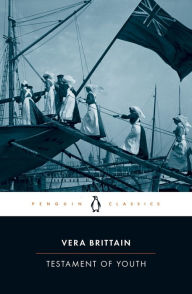
Testament of Youth. Vera Brittain. 1933. 688 pages. [Source: Library]
First sentence: When the Great War broke out, it came to me not as a superlative tragedy, but as an interruption of the most exasperating kind to my personal plans.
Premise/plot: In 1933, Vera Brittain published her autobiography, Testament of Youth, which covers the years 1900 to 1925. Much of the book focuses directly on the Great War (aka World War I) and its immediate aftermath. During the war, Vera Brittain left her university studies (Somerville College, Oxford) and became a nurse (V.A.D.). She worked as a nurse in England and abroad. (I believe she nursed in France and Malta.) Many of her friends actively served during the war. And those closest to her--including a brother and a fiance--were killed. She wrote honestly and openly about how brutal and devastating the war was, about how the war changed her and there was no going back after peace was declared.
When the book is not discussing the war, it often turns to education, politics, and social issues. Vera Brittain definitely was a feminist. She had VERY strong opinions on women's rights. But she didn't just speak out and speak up about women. She also was a voice for the poor and working class. She saw a lot of injustice and wanted to change the world.
Vera Brittain loved to be a lecturer or guest-lecturer. She had a LOT to say, and wanted to be HEARD wherever she went. This wasn't always the case. She was unhappy with certain groups--or clubs--that didn't value women's opinions and treat women as intellectual equals.
Also of interest perhaps, Brittain shares her experiences as a writer--her journey to publication and her thoughts on the literary world.
The very last chapter is a relief--after spending so many chapters distancing herself from humanity by focusing on POLITICS and WORLD AFFAIRS--focuses instead on her deep friendships and ultimate marriage. She struggled a lot with the idea of marriage. Can she marry and still be a feminist? Can she marry even though she has every intention of staying a career woman? Can she marry even though children are the very last thing (almost) on her mind? She spent so long speaking out against marriage and traditional roles for women, that she is almost ashamed and embarrassed that she fell in love.
My thoughts: It was REALLY long. Overall, I thought it was slightly uneven. It was at times quite fascinating and compelling, but, then at times it was also quite sluggish and boring. There would be pages that definitely kept me reading and kept me caring. I will say that the movie did a great job condensing the book and capturing the spirit of it. Not that the movie is 100% faithful to the book. (No movie is).
Quotes:
There is still, I think, not enough recognition by teachers of the fact that the desire to think--which is fundamentally a moral problem--but be induced before the power is developed. Most people, whether men or women, wish above all else to be comfortable, and thought is a pre-eminently uncomfortable process; it brings to the individual far more suffering than happiness in a semi-civilized world which still goes to war, still encourages the production of unwanted C3 children by exhausted mothers, and still compels married partners who hate one another to live together in the name of morality. (40)
I am inclined to believe that provincial dances are responsible for more misery than any other commonplace experience. (51)
Most of us have to be self-righteous before we can be righteous. (56)
How curious it seems that letters are so much less vulnerable than their writers! (124)
Even my work-driven uncle at the bank wrote a long letter, enclosing a fragment of philosophy which had recently come to England from the French trenches: "When you are a soldier you are one of two things, either at the front or behind the lines. If you are behind the lines you need not worry. If you are at the front you are one of two things. You are either in a danger zone or in a zone which is not dangerous. If you are in a zone which is not dangerous you need not worry. If you are in a danger zone, you are one of two things; either you are wounded or you are not. If you are not wounded you need not worry. If you are wounded you are one of two things, either seriously wounded or slightly wounded. If you are slightly wounded you need not worry. If you are seriously wounded one of two things is certain--either you get well or you die. If you get well you needn't worry. If you die you cannot worry, so there is no need to worry about anything at all." (306)
It seems to me that the War will make a big division of 'before' and 'after' in the history of the world. (317)
© 2016 Becky Laney of
Becky's Book Reviews
The Monopolists. Mary Pilon. 2015. Bloomsbury. 320 pages. [Source: Library]
First sentence: One day during the depths of the Great Depression, an unemployed salesman named Charles Darrow retreated to his basement.
Premise/plot: Love Monopoly? Hate Monopoly? Mary Pilon's The Monopolists is a fascinating read to be sure. Who invented Monopoly? Who did NOT invent Monopoly? Why does it matter?
The Monopolist tells the story of the woman who invented the game, a game with two very different sets of rules. She didn't call her game 'monopoly' but 'The Landlord's Game.' The general game board concept and rules of play were hers. This was in 1904. In her community, it became quite popular, even an obsession of sorts. So much so that it spread across the nation as one person--or one couple--would teach another and another and another and another. People would create their own homemade game boards. The rules were taught but not written down. For decades, people were playing this game, loving this game. It wasn't a game you could buy at the store, though. 'The Landlord's Game' wasn't the only real-estate game that predates Parker Brothers' Monopoly. The game Finance also did. It also being offspring of Lizzie Magie's original game. Though I think perhaps by that time, it had just one set of rules. Charles Darrow, the man whose name would be associated with the game MONOPOLY, was taught the game by friends. He later claimed he invented the game. The couple who taught Darrow spent a lot of time in Atlantic City with the Quakers who LOVED the game and changed their own game boards to reflect their lives. These place names would stay with the game and be the names that we come to associate with Monopoly. The rules, the layout of the game board, the place names, all were essentially handed to Darrow ready-made.
Most of this book focuses on a lawsuit in the 1970s and early 1980s. Parker Brothers was trying to stop one man--Ralph Anspach--from selling his own game, a game called ANTI-MONOPOLY. Anspach was an economics professor, I believe. It would take a lot of time, effort, stamina, and courage to stay in the fight.
My thoughts: I really enjoyed this one. I enjoyed it even more than I thought I would. I don't love playing Monopoly, but, I found the game-playing culture of the twentieth century to be FASCINATING. There is something to be said for people spending time together around a table and actually talking and having fun doing the same thing. This was written in an engaging way. I'd definitely recommend it.
© 2016 Becky Laney of
Becky's Book Reviews
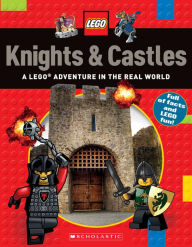
LEGO Knights & Castles. 2016. Scholastic. 64 pages. [Source: Review copy]
Knights and Castles is one of the first books in a Lego-themed nonfiction series published by Scholastic. The series is being marketed as "a Lego adventure in the real world."
What I liked about this one:
I enjoyed the nonfiction narrative. Both the main, flowing narrative that is simple and quick paced. And the overflow of facts found in the text of the side bars, asides, captions, etc. There is plenty of information packed into this one. And it's all appropriate for the elementary audience.
I enjoyed the layout. I liked the use of photographs, illustrations, and bright, bold colors. The book is designed to be appealing to readers. I think it works. It certainly looks nothing like the nonfiction from thirty or forty years ago.
I enjoyed two out of the three Lego features. I enjoyed the "Build it!" and Build it Bigger!" feature. I enjoyed the "Play it!" feature.
p. 15 Build it! Build a tournament area for your jousting knights!
p. 16-7 Play it! Find out about the stories of King Arthur's knights. What amazing adventures will your knights have? Do your knights argue, or are they friends? Is there a wizard in your knight world? Who is your most evil knight?
p. 29 Build it! Build a hospital for the Order of St. John to work in.
While I enjoyed the build it and play it features in Lego Planets, I really LOVED these two features in this one. I also found the narrative to be more compelling. (But that could be my love of history talking!!!)
What I didn't quite enjoy:
The illustrated Lego minifigures. I think there comes a point in your life where you grow up and grow beyond the kind of dialogue that these minifigures engage in. The speech bubbles are heavy on bad jokes and jests. It's just squirmy to read the text as as an adult. Kids, the intended audience, might have a complete different reaction.
© 2016 Becky Laney of
Becky's Book Reviews
View Next 25 Posts








.jpeg?picon=2691)









I choose to focus on what you have accomplished this month. I’m grateful for every title and cover you have featured. Today’s list might not be the most extensive, but the quality of those books you did read and shared with us is exceptional. I anticipated that this daily gift from you would be phenomenal, based on the quality of your daily posts. However, you have exceeded any and all my expectations several times over. What fun it has been to look forward to a new list every day this month. Thank you so very much.
Aw. Thank you. That alone makes all this worth it.