new posts in all blogs
Viewing: Blog Posts Tagged with: middle grade fiction, Most Recent at Top [Help]
Results 1 - 25 of 296
How to use this Page
You are viewing the most recent posts tagged with the words: middle grade fiction in the JacketFlap blog reader. What is a tag? Think of a tag as a keyword or category label. Tags can both help you find posts on JacketFlap.com as well as provide an easy way for you to "remember" and classify posts for later recall. Try adding a tag yourself by clicking "Add a tag" below a post's header. Scroll down through the list of Recent Posts in the left column and click on a post title that sounds interesting. You can view all posts from a specific blog by clicking the Blog name in the right column, or you can click a 'More Posts from this Blog' link in any individual post.
 No excuses! These are just the books that I read in 2016 that I thought knocked it out of the park. These aren’t the “best of the year”. These are just the books that were particularly good and that somehow crossed my radar. I read a lot more than what you’ll see here, but I loved these the best. For your consideration:
Wonderful 2016 Children’s Novels
Cloud and Wallfish by Anne Nesbet
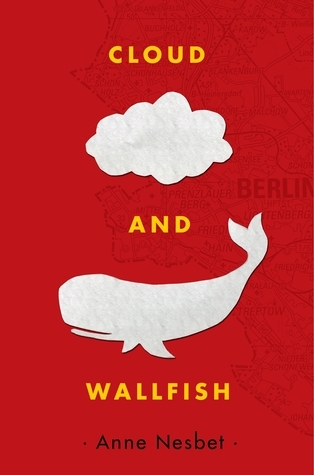
My dark horse Newbery front runner. I found it because Roger Sutton mentioned it off-handedly on his podcast, but it was Monica Edinger’s Horn Book review that got the most attention from the folks at Heavy Medal. It’s just the most delightful little Cold War, East Germany, book you could name. I’m gaga over it. If your kids read it, they will be too.
Five Children on the Western Front by Kate Saunders
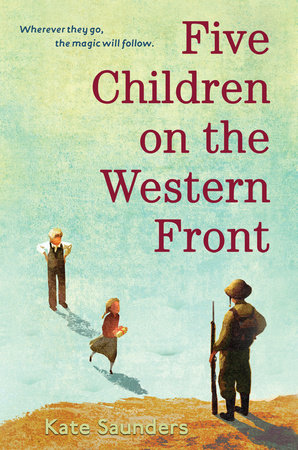
Again with the book recommendations from Monica! This time a couple years ago, when she found the English edition of this book. It came out this year with surprisingly little fanfare, but I just adored it. The question is whether or not kids unfamiliar with the works of E. Nesbit will get anything out of it. The eternal optimist, I vote yes! I mean, it’s about a tyrant finding its (his) soul. There’s something to that.
Full of Beans by Jennifer L. Holm
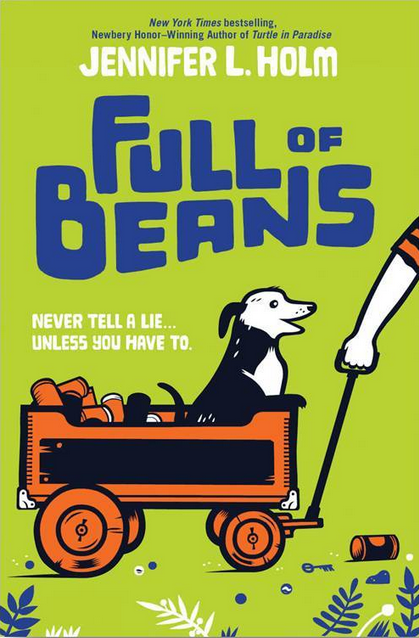
Funny that I never reviewed this one, but with Jenni Holm you sort of don’t have to. The woman’s masterful. To read her book is to marvel at how seemingly effortlessly she pulls various elements together. I will say that though this book is a prequel, you will not need to have read its predecessor to get anything out of it. It is, in a nutshell, sort of perfect.
Furthermore by Tahereh Mafi
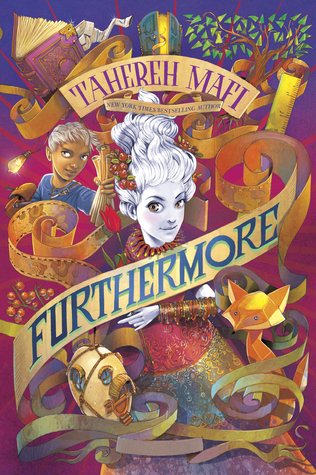
To ask anyone to craft a wholly original fantasy novel for kids is just setting that person up for a fall. If Mafi succeeds in any way here it is in her writing rather than her ideas. Not that her ideas aren’t interesting. They are, but it’s the characters, their interactions, and their personalities that sold it for me. It is infinitely readable and a lot of fun to boot. I like fun. I liked this book. I don’t hold it against it that it’s a New York Times bestseller either.
Ghost by Jason Reynolds
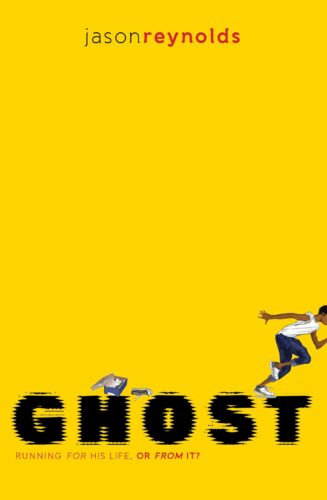
Years ago (three?) I said this Jason Reynolds guy was gonna be a star. I had a chance to hear him speak for the NYPL librarians after the publication of his first solo YA novel. In 2016 he started publishing middle grade in earnest and if he doesn’t win any major awards this year it’s simply a matter of time before he does in the future. I don’t know if Ghost is gonna take home a Newbery in any way, shape, or form. I just know that it was incredibly fun to read. One of my favorites of the year.
The Girl Who Drank the Moon by Kelly Barnhill
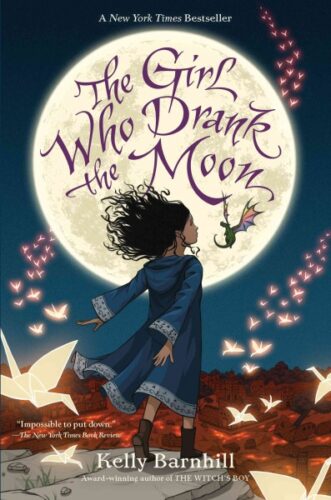
It’s anyone’s guess as to why it took me 8 months or so to finally pick this book up. When I saw Kelly speak at BookExpo here in Chicago this year I knew she was on to something. But to be perfectly frank, I’ve loved her work since she wrote The Mostly True Story of Jack (a book that I would contend still doesn’t get the attention and respect it deserves). I liked this one a lot. It’s a thick one, no question, but it also compelled me skip ahead a little just so that I could make sure that the villain wouldn’t win. There’s only one other book on this list this year that made me do that. I’ll let you guess what it was.
The Inn Between by Marina Cohen
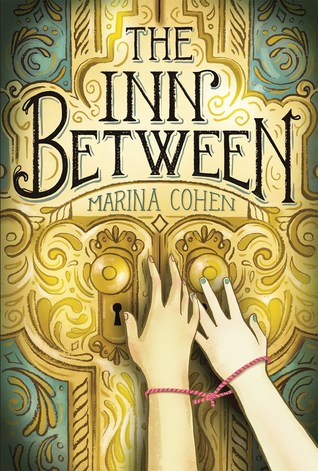
I include this book not because it’s some deep, insightful, heavily meaningful book fraught with consequence and award-worthy pain. No, this is just the kind of book I would have LOVED as a kid. I was the one who checked out all the Apple paperbacks that involved ghosts from my Scholastic Book Fair orders. So, naturally, this would have appealed. I mean, the back flap copy calls it “The Shining meets Hotel California” and that ain’t wrong. You’d never know it from the cutesy cover, though, would you? Someone needs a cover do-over.
The Inquisitor’s Tale by Adam Gidwitz
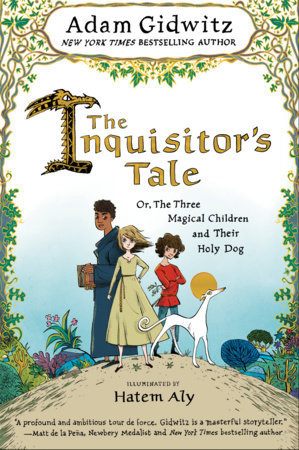
It doesn’t need my help. It never needed my help. But it’s wonderful and winning. Smarter than almost every other book on here by half. Gutsy. Challenging. And I can’t wait for the movie. I call dibs on Tom Hiddleston to play the King of France.
The Magic Mirror: Concerning a Lonely Princess, a Foundling Girl, a Scheming King and a Pickpocket Squirrel by Susan Hill Long
Poor little book. You were the first novel I read in 2016 and I came dangerously close to forgetting you here today. I liked this one very much, going so far as to say in my review that it was similar in tone to The Princess Bride. It actually makes a rather good pairing with THE GIRL WHO DRANK THE MOON, come to think of it. If you’ve a kid looking for light, frothy fantasy, this is the one to pick up.
Makoons by Louise Erdrich
Does anyone ever point out how funny these books are? Yes, we all know Louise Erdrich to be a master writer, but she’s also incredibly hilarious when she wants to be. The latest book in the Birchbark House series did not disappoint and even gave us a few new characters. My favorite is the character done in by vanity, brought low, and ultimately redeemed. I’m a sucker for that kind of tale.
The Mighty Odds by Amy Ignatow
If you could have any superpower, would you choose the normal one or the weird one? If you chose the weird one then this book is for you. I think we’ve seen the outcasts-with-superpowers motif a lot (Spiderman, arguably, was one of the first) but I like Ignatow’s style so much that this is one of my current favs. How much do I love it? I actually bought a copy for my niece and I almost never ever buy books. What can I say? It was just that good.
Ms. Bixby’s Last Day by John David Anderson
Not usually my kind of book but I liked Anderson’s Sidekicked years ago and figured that in spite of the description it might work for me. And it did! Granted, there’s more than a touch of Dead Poet’s Society to it, but all I cared was that it had an honest ending. An honest earned ending. This title doesn’t pander and I appreciate that. Worth discovering.
Pax by Sara Pennypacker
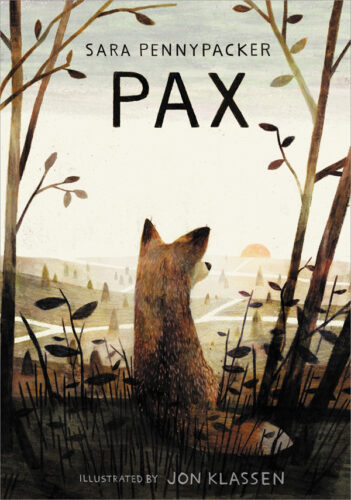
Can you believe this book came out in 2016? I feel as if we’ve been talking about it for two years. It’s still one of the strongest of the year, no matter what anybody says. When I was a child, I had a thing for foxes. Clearly I missed my era. If you’ve somehow managed to avoid reading this title, you have time to get your hands on it before award season. Do that thing.
Raymie Nightingale by Kate DiCamillo

While I would repeat that this book would be Because of Winn-Dixie if you dipped that book in a vat of sadness, that doesn’t mean it isn’t remarkable. I found it breathtakingly sad, but also smart. I didn’t care two bits for the main character (she’s remarkably forgettable) but the other characters just popped off the page. Quite a book.
Rebel Genius by Michael Dante DiMartino
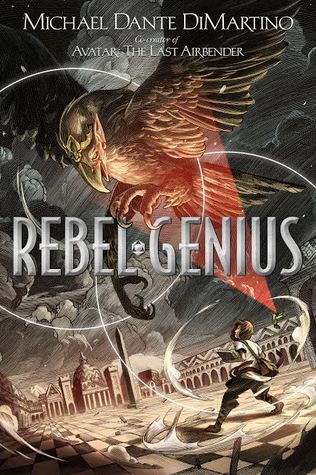
Poor action/adventure fans. What do I even have for you here today? Well, I have a fantasy novel coming from one of the co-creators of the Avatar: The Last Airbender television series, and that ain’t peanuts. Though it does come across as a slightly less scholarly His Dark Materials, I enjoyed the premise of Rebel Genius (a great title, if ever there was one). The big bad villain never makes an appearance but plenty of other baddies do. It’s compelling to its core.
When the Sea Turned to Silver by Grace Lin
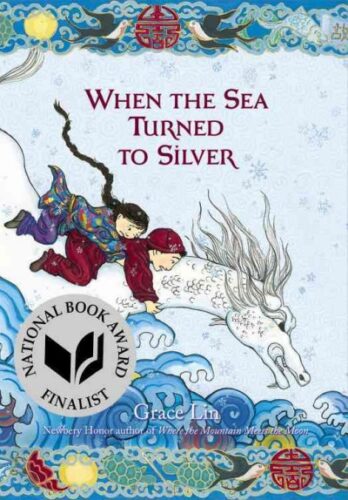
I just finished reading my daughter Where the Mountain Meets the Moon and wanted to just skip directly to this one, but Starry River of the Sky is next on our list and we shall not go out of order. Of the three books in the series, this is by far my favorite, and you certainly don’t have to have read the other books to enjoy it. Lin gets better and better with every book she writes. Annoying for her fellow authors, I’m sure, but great for the rest of us!
The Wild Robot by Peter Brown
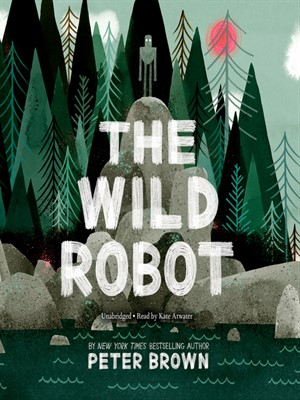
This marked Peter Brown’s debut as a novelist. Doesn’t seem quite fair that he should be able to write AND draw. Leave a little talent for the rest of us, won’t you, Peter? In any case, I’m all about the strong female heroines. So often in robot books the de facto pronoun is “he”. Brown made it “she” and it works for her. Better still, it works for us.
Wolf Hollow by Lauren Wolk
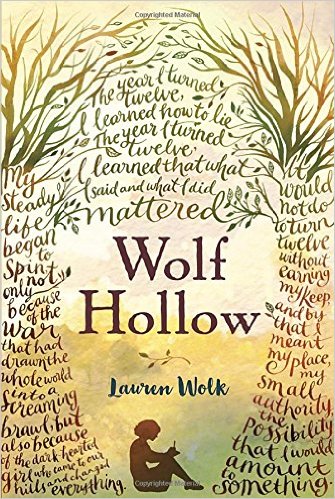
Remember earlier when I mentioned that there was one other book on this list that made me so tense I had to skip to the back to know precisely who would live, who would die, and what would become of the villain? Because the villain in this book does meet a terrible fate, but even so remains a cussed little wretch to the end. She is, without a doubt, the best villain I’ve encountered in a children’s book in years. A true blue psychopath. Best you know now.
Interested in the other lists of the month? Here’s the schedule so that you can keep checking back:


By:
Cynthia Leitich Smith,
on 11/28/2016
Blog:
cynsations
(
Login to Add to MyJacketFlap)
JacketFlap tags:
poetry,
diversity,
middle grade fiction,
nonfiction,
ncte,
Melissa Sweet,
Marilyn Nelson,
Jason Reynolds,
awards,
Add a tag
By
NCTEfor
CynsationsATLANTA-- Authors Jason Reynolds, Melissa Sweet, and Marilyn Nelson were just announced winners of
prestigious literacy awards from the National Council of Teachers of English (NCTE).
Jason Reynolds won the 2017 Charlotte Huck Award for Outstanding Fiction for Children for his book
Ghost (Atheneum). The Charlotte Huck award is given to books that promote and recognize fiction that has the potential to transform children's lives.
Melissa Sweet won the 2017 Orbis Pictus Award for Outstanding Nonfiction for Children for her book
Some Writer!: The Story of E.B. White (Houghton Mifflin Harcourt).
The NCTE Orbis Pictus Award, established in 1989, is the oldest children's book award for nonfiction.
Marilyn Nelson won the 2017 NCTE Award for Excellence in Poetry for Children. The biannual award is given to a living American poet for his or her aggregate work for children ages 3–13.
Honor and Recommended book lists were also announced. All three authors will be invited to speak at next year's NCTE Annual Convention in St. Louis, MO.
NCTE is the nation's most comprehensive literacy organization, supporting teachers across the preK–college spectrum.
Through the expertise of its members, NCTE has served at the forefront of every major improvement in the teaching and learning of English and the language arts since 1911.
By
Cynthia Leitich Smithfor
CynsationsJoAnne Stewart Wetzel is the first-time novelist of
Playing Juliet (Sky Pony, 2015). From the promotional copy:
Beth Sondquist, 12 1/2, secretly dreams of playing William Shakespeare’s Juliet. When she learns the children’s theatre in her town is threatened with closure, she and her best friend, Zandy Russell, do everything they can to save it. But since Beth keeps breaking one theatre superstition after another in the process, she may never get onstage again.
Quotes from Shakespeare bookmark each chapter and foreshadow the next plot twist as a multicultural cast of kids fights to keep their theatre open.
Could you describe both your pre-and-post contract revision process? What did you learn along the way? How did you feel at each stage? What advice do you have for other writers on the subject of revision?I love to revise. When I started my first novel, Playing Juliet, I worked on the first chapter for months. It was polished and perfect before I went on to the second chapter.
But by the time I had finished the first draft, the characters had changed, the plot had changed and I had to throw the whole first chapter out.
When the draft was finished, a New York editor read the first ten pages at a
SCBWI conference. Of course I was expecting her to offer to buy it on the spot (don't we all) or at least to ask to see the full. Instead, she said she didn't find my main character, Beth, charming.
Charming? A 12-and-a-half-year-old narrator focused on getting onstage while her costume was falling apart had other things to worry about besides being charming. But I read over the chapter carefully. While Beth's focus was appropriate, was she a little self-centered? What if I had her do something for someone else?
 |
| Inspiration! Just So Stories, Palo Alto (CA) Children's Theater |
I added exactly six sentences to an early scene that showed the cast waiting in the wings to go on. Beth notices that a younger actor playing a mouse is nervous, remembers that it's the Mouse's first play and that she'd seen her reapply her make-up in the dressing room at least four times.
Though they have to be very quiet backstage, Beth whispers, "Great nose." and outlines a circle on her own.
Sometimes it only takes six sentences. When the book was published, the review in the School Library Journal began "In this charming story featuring a relatable narrator and action-driven plot..." A blurb by the author Miriam Spitzer Franklin ended by saying the book "introduces a protagonist who will steal your heart as she chases after her dreams."
Another reader pointed out that while Playing Juliet started with lots of references to the superstitions around MacBeth and ended with a production of Romeo and Juliet, a few of the earlier chapters had almost no reference to Shakespeare. Was there a way to weave him into the rest of the book?
There was no room to introduce another play into this middle-grade story but I'd always loved reading books with epigraphs. Could I find enough quotes from Shakespeare's writings to serve as appropriate epigraphs before each chapter?
I used the
Open Source Shakespeare search engine, typed in a word like "jewel" or "duchess" and got a list of all the appearances of these words in his works. The perfect epigraph kept jumping out at me.
For the chapter in which the kids are looking for a lost diamond bracelet, I quoted "Search for a jewel that too casually Hath left mine arm" from
"Cymbeline.""What think you of a duchess? have you limbs to bear that load of title?" from
"Henry VIII" made the perfect epigraph for the chapter in which Beth is asked if she can cover the part of a Duchess for an actor down with the flu during the run of "Cinderella!"
 |
| Joanne & daughter seeing Royal Shakespeare Co. |
I was excited when an editor told me she'd brought the manuscript to committee, even when she added that they'd like to see a rewrite. They were uncomfortable with a scene in which Beth and two of her friends sneak out at night to break into the Children's Theatre.
I loved that scene. It was scary and exciting and the kids had the best of intentions. But I could make the plot work without it, so I took it out.
That editor didn't take the book. The next two editors it was sent to both commented that they felt the story was too quiet.
I put the scene back in. It wasn't necessary to the plot but it was vital to the development of the characters, for it showed what they would sacrifice to save their theater. The book sold right after that scene was restored.
I've brought all of the lessons I learned writing my first novel to the next one I'm currently working on. I'm going to finish the whole manuscript before I start to revise.
I will honor each critique I get, and find a way to solve any problem that's been identified. It could lead to a much richer book and may only take six sentences. But I will also evaluate how the changes have affected the story and if they don't help, I'll change it back.
Post-contract Revision Process |
| Sis-in-law, Elephant Cafe, Edinburgh |
When Julie Matysic at Sky Pony Press acquired the manuscript, she sent her editorial comments to me in a Word document. I had the chance to approve, change or comment on the suggested changes. Most of the revision was copy edits and most of the time I couldn't believe I'd let such a glaring grammatical error slip through.
But one set of edits I disagreed with. I had capitalized the names of all the characters in the two plays that are performed in the book. The copy editor kept all the proper names—Juliet, Romeo, Cinderella— as I wrote them, but changed all the animal characters—the cat, horse, mice—to lower case.
I decided to email Julie to ask if I could change them back. She said yes, and suggested that since many of the parts were names that would not normally be capitalized, I make up a list of all the characters for the copy editor to work with. I'm so glad I asked for clarification.
Remember that you and your editor are working toward the same goal: to make your manuscript great. And you know she has impeccable taste: she picked your manuscript to publish.
Post-contract BonusJulie suggested I do a mood board for the cover. I'd never heard of this but she explained that all I had to do was open a PowerPoint file and create a collage using the covers of books that I like then include a second page with a written explanation of why I had chosen the images. It might be the font, the color, the mood or a combination of all three. When it was done, she would send the collage to the artist creating the design to use for inspiration.
It was so much fun to search through online bookstores to find covers I liked. Beth, my 12-year-old heroine, is threatened with losing the children's theater she has been performing in for years, but I didn't want the cover to be sad.
I wanted it to be a reminder of what Beth loves about theater, about being on stage and what she will lose if her theater closes.
The mood I wanted was joy, the joy of acting, of being onstage. The covers that showed images of flying, fairies, a figure with fantastically long fingers, captured the unlimited world the stage offers.
Because so much of the story takes place in a theater, I was drawn to covers that featured theater curtains opening. Three of the twelve covers I chose had a frame of red theater curtains and two others repeated that shape and color in the clothing of the women depicted: a partially open red coat, billowing red bell bottoms. That rich red set the color pallet that dominated my collage.
When Julie sent me the final cover, I opened the attachment with some trepidation. Up popped a design with a frame of rich red curtains opening onto a dark background that showcased the title of the book. And my name was in lights, just like on a Broadway marquee.
I loved my cover. And the Children's Books manager at
Keplers, my local independent bookstore, told me the cover was so effective, the book was jumping off the shelves. My mood board had worked.
How have you approached the task of promoting your debut book? What online or real-space efforts are you making? Where did you get your ideas? To whom did you turn for support? Are you enjoying the process, or does it feel like a chore? What advice do you have on this front for your fellow debut authors and for those in the years to come? |
| Shakespeare puppets & stamp for JoAnne's signing |
When the
Royal Shakespeare Company announced it was devoting 2016, the year of the 400th anniversary of Shakespeare's death, to celebrating him and his work, I knew I had a great tie-in with Playing Juliet.
When I was in Stratford-upon-Avon last summer, I took a lot of pictures of the buildings that were standing when Shakespeare lived there to use on my web site and in my talks.
I also bought three Shakespeare puppets: a regular hand-puppet for most of my presentations, an elegant figure in a cloth-of-gold costume to use with a sophisticated audience and a finger puppet, because sometimes a smaller figure will just work better.
When I got home, I ordered a Shakespeare stamp to use at my book signings. After all, the Bard wrote all of my epigraphs.
I've struggled to get my web pages up. I have now checked off a
web page for myself, with all of my books on it, and a web page for
Playing Juliet with links to 13 Superstitions Every Theater Kid Should Know as well as links to photos of Shakespearian sites at Stratford-upon-Avon.
I've got an author's page on
Amazon and
Goodreads and
SCBWI. I did a Launch Page on the new SCBWI web program. This all took a very long time.
 |
| Author/illustrator guest book, New York Public Library |
Kepler's Bookstore, has been a great help. They invited me to have my book launch party there, which, on their advice, was held a week after the pub date because every now and then, books are delayed. The copies of Playing Juliet arrived on time but I was happy to have the extra week to prepare for the talk.
Kepler's is still supporting me. Want a signed or inscribed copy of my book? Just order it online from them.
I worked with my publicist at Sky Pony Press to have her send copies of the books to the winner of the giveaways I ran on Goodreads and to my alumni connections.
This resulted in a featured review, with a color picture of the cover of the book, in the ASU magazine, which is sent to 340,000 people.
So far I've spoken at an event at our local library, at my grandsons' school in Ghana, and sold copies at our regional SCBWI conference. I'll be talking at other schools in the fall. When I was in New York City recently, I introduced myself to the librarians at the Children's Room at the New York Public Library, and was invited to sign the guest book they keep for visiting authors and illustrators.
And online I've been invited to do an interview on Library Lions and Cynsations.
I've been enjoying the process, but it takes a lot of time and I'm impatient to dive into my next middle grade.
 |
| the Lincoln Community School in Accra, Ghana |
What advice do you have on this front for your fellow debut authors and for those in the years to come?Start early. Well before your pub date, get your author's pages up on SCBWI, Amazon and Goodreads. Figure out how the book giveaways on Goodreads work, and think about posting one before your book is out. Don't wait until your book comes out to publicize any good news about it.
Jane Yolen wrote the most incredible blurb for Playing Juliet, saying "I couldn't stop reading," but I waited until the book came out to share it with everyone. I'm not making that mistake again.
My next book, My First Day at Mermaid School, is a picture book that will be coming out from Knopf in the summer of 2018 and
Julianna Swaney is bringing her amazing talent to the illustrations.
Cynsational Notes |
| Waylon, writer cat |
JoAnne's other publications include:
- Onstage/Backstage, with Caryn Huberman (Carolrhoda, 1987);
- The Christmas Box (Alfred A. Knopf, 1992);
- and My First Day at Mermaid School, illustrated by Julianna Swaney, (Alfred A. Knopf, Summer, 2018).
In Playing Juliet, Beth continually quotes the web page, "13 Superstitions Every Theater Kid Should Know," which can be found on
www.playingjuliet.com. This site also includes photos of Shakespearian sites in Stratford-upon-Avon (see below).
Cynsational GalleryView more
research photos from JoAnne.
 |
| Shakespeare's Childhood Home |
 |
| Shakespeare's Childhood Bedroom |
By
Cynthia Leitich Smithfor
CynsationsJenn Bishop is the first-time author of
The Distance To Home (Knopf, 2016). From the promotional copy:
Last summer, Quinnen was the star pitcher of her baseball team, the Panthers. They were headed for the championship, and her loudest supporter at every game was her best friend and older sister, Haley.
This summer, everything is different. Haley’s death, at the end of last summer, has left Quinnen and her parents reeling. Without Haley in the stands, Quinnen doesn’t want to play baseball. It seems like nothing can fill the Haley-sized hole in her world. The one glimmer of happiness comes from the Bandits, the local minor-league baseball team. For the first time, Quinnen and her family are hosting one of the players for the season. Without Haley, Quinnen’s not sure it will be any fun, but soon she befriends a few players. With their help, can she make peace with the past and return to the pitcher’s mound?
Was there one writing workshop or conference that led to an "ah-ha!" moment in your craft? What happened, and how did it help you? After querying two projects and having plenty of full requests but no offers, I felt stuck in that place I'm sure many other writers have found themselves in. You're so close, but still not there yet.
There's something holding you back, but no one has been able to articulate it. And since you're the writer, you don't have the capacity to objectively evaluate your own finished product. Of course the story works for you; you wrote it!
It was at this point in my writer's journey—after feeling frustrated with being so close and still not there yet, that I applied to
Vermont College of Fine Art's MFA program in Writing for Children and Young Adults.
The ah-ha moment for me came during the first residency, and was followed by many ah-ha moments in the subsequent ones.
In workshop, each time we met, two writers had their work critiqued by the group. You might think my ah-ha moment came during my own critique, but as I remember, it came from looking closely at the work of my peers.
Suddenly, it started to click—what all those agents had been trying to tell me, but which I had failed to see. I wasn't letting the reader along on the journey with the character, not entirely.
You see, on the surface there was nothing wrong with my writing. Like so many English lit majors, I knew how to write at the sentence level. But what I didn't know—what I was only just beginning to learn—was how to tell a story. Maybe still that language is not perfectly precise.
What I was failing to do was let the reader in on the journey of the story. I was trapping the reader outside of it; it wasn't a lived, breathed experience for them.
I could see this difference as I read my peers' work. Some of us were still in the same stage as me; perfectly suitable writing, but not a lived experience. And others, with interiority and voice, had allowed the reader to become an active participant in the story.
Later in the program,
Rebecca Stead came as a visiting writer and lectured on this participant quality. She spoke of how writing is providing the 2+2 of the equation, and letting the reader put that together to make four.
Like so many beginning writers, I was always writing out the full equation. Not letting the reader to inhabit the story and do the work.
This revelation was one that shook the big picture. It didn't allow for an easy or quick fix. What it meant was that I had to start all over in my thinking of how to tell a story, what to share with the reader and how.
Like so many things in writing, it was just the beginning.
As a contemporary fiction writer, how did you deal with the pervasiveness of rapidly changing technologies? Did you worry about dating your manuscript? Did you worry about it seeming inauthentic if you didn't address these factors? Why or why not? Coming from a librarian background, I tend to have the long haul in mind. The truth is most books will have longer shelf lives in libraries than they ever will in a bookstore. Who wouldn't want their book to be serendipitously discovered by a teen three, five, ten years after it was published?
As a teen librarian, I assessed the teen fiction collection annually, having to—gulp—discard the books that were no longer circulating to make room for new books.
In truth, some books don't have a long shelf life because they are so technology-obsessed that they date themselves within a few years.
As a middle grade writer, I have it a little easier than YA authors, with technology being not quite as big a part of a ten-year-old's life. That said, there are certain technologies that don't seem to be going away, and it's not in my interest to avoid anything my characters would be using in real life.
In The Distance To Home, text messaging plays a key role in the plot. While I'm a little wary of using branded applications, like Facebook and Twitter, whose purposes and uses have evolved quite a bit in the past five years, it's important at the end of the day to be true to your reader's world.
Anytime you avoid their reality, you risk the chance of a reader feeling jolted out of the story by something that feels inaccurate or false.
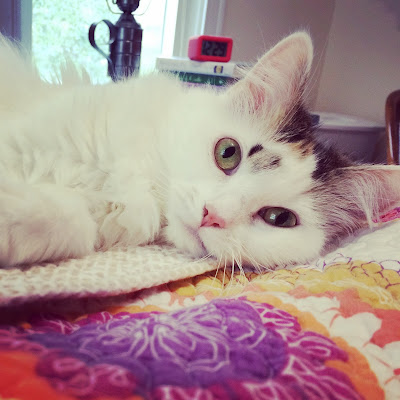 |
| This revision kitty always rests on freshly printed manuscripts. |
In The Excutioner's Daughter by Jane Hardstaff, Moss is almost 12. She has lived her whole life in the Tower of London where her father is King Henry VIII's executioner. Moss's father told her that they must stay in the Tower as punishment for a crime he committed years ago.
Moss is the basket girl. She carries the newly chopped off heads from the block to the gates of the Tower where they will be on display. When she is pressed into service in the kitchen ,she makes friends with the King's latest enemy, an abbot. The day of the abbot's death, Moss runs away.
In her debut novel, Jane Hardstaff paints a realistic picture of the Tower and the river that flows by it during King Henry VIII's reign. The jacket blurb hints at a touch of fantasy in this otherwise historically accurate book. The touch of fantasy adds suspense and terror to the sotry of Moss's coming of age.
Moss learns about the flawed nature of people who must struggle to survive. She also learns about acceptance, love and forgiveness.
The Executioner's Daughter by Jane Hardstaff is a fine book.
 The Evil Wizard Smallbone has some competition in the evil department in this book by Delia Sherman. But Nick, the runaway who takes refuge with the old, smelly, grumpy and wicked wizard, has to do some heavy duty sleuthing - and endless chores - to get to the bottom of Smallbone's dastardly behavior.
The setting is backwoods Maine where the coyotes are numerous and the wolves rule the forest - some on motorcycle. The small village of Smallbone Cove depends on the evil wizard for their protection against, what, exactly? Here is part of the mystery. Another part is why so many of Smallbone Cove's residents look so similar and how some of the residents can be as old as they say they are.
An odd mix of werepeople, selkie legends, the reversing of spells, and ancient badness come together in a delightful fantasy. I loved the ending. And I thoroughly enjoyed the ride there. I also liked the smart alecky books that plague Nick as he searches for answers. That boy is too curious.
By Cynthia Leitich Smith
for Cynsations
CSK Author Award Acceptance Speech by Rita Williams-Garcia from The Horn Book. Peek:
"...upon occasion, our histories are bound by peace and wonder as people of the planet Earth, looking up as we did on one night in the summer of 1969.
"In spite of some current rhetoric, very few of us on this soil can claim a separate and sole history. We are a joined people. Let’s keep looking up."
Tomorrow, the little girl starts kindergarten. This will reduce our little girl time to 2 or 3 hours a day. Am I happy? Actually, um, no. She has a lot of playing left. And I am not all that enamored of our public education system.
Still, she is ready. But who will play with me during those extra hours?
Everybody else keeps growing up!!!
In The Secret of Goldenrod, Trina is almost 11 and entering fifth grade and her father is so embarrassing. They are off to refurbish Goldenrod, a stately home in the middle of nowhere, that has been empty for almost a century. Unlike their other jobs that kept them busy for a month or two, Goldenrod will take a whole year and Trina will have finally time to make friends. She hopes her mother will stop gallivanting around the world and finally return to the family.
Then she sees the old house in a field of yellow weeds, and the house doesn't want them there.
A hidden room, a forgotten dollhouse and its tiny doll, a nasty schoolmate and a small town with secrets add up to a great story.
Author Jane O'Reilly sets this up as a convincing haunted house story, but with the discovery of the dollhouse things begin to change. The last few chapters are the best as they pull everything together and give a happy ending that is also unexpected.

By:
Betsy Bird,
on 8/10/2016
Blog:
A Fuse #8 Production
(
Login to Add to MyJacketFlap)
JacketFlap tags:
Reviews,
middle grade fiction,
Simon and Schuster,
Atheneum,
Best Books,
middle grade realistic fiction,
Jason Reynolds,
Best Books of 2016,
2016 reviews,
Reviews 2016,
2016 middle grade fiction,
2016 realistic fiction,
diverse fiction,
Add a tag
Ghost
By Jason Reynolds
Atheneum (an imprint of Simon & Schuster)
$16.99
ISBN: 978-1-4814-5015-7
Ages 9-12
On shelves August 30th
This is a generalization, but in my experience librarians really enjoy reading within their comfort zones. They’ll travel outside of them from time to time but always they return to the books that they like the most. Children’s librarians are just the same. The fantasy readers stick to fantasy. The realism fans go with realism. Graphic novel readers with comics. When I served on a yearly committee of librarians in New York I’d notice that some books were difficult to get anyone to read. Horse books, for example, just sat on our shelves untouched. Nonfiction could take some prodding. And as for sports books . . . forget about it. Nobody ever got near them. Still, you can’t give up on them. Mike Lupica and Tim Green may rule the field but that doesn’t mean other people don’t make a lot out of athletics. If our Newbery winning The Crossover by Kwame Alexander taught us anything, it was that. Now Jason Reynolds, a young adult author until this year, has produced a middle grade novel centered on that must unlikely of sports: track. It skirts the clichés. It dodges the usual pitfalls. It makes you care about a kid who keeps messing up over and over and over again. It’ll make you like sports books, even if you can’t generally stand them. And now we’ve got to find a way to get a lot of it into the hands of kids. Stat.
Call him Ghost. You can call him Castle Crenshaw if you want to (that’s technically his name) but he’s been calling himself Ghost ever since the night his dad got drunk and threatened Castle and his mom with a gun. Ghost learned to run that night and you might say he’s been running ever since. He’s got a load of anger inside that he doesn’t know how to deal with so he tends to take it out on others at school. Then one day he spots a track warm-up and takes an instant dislike to the albino kid in the expensive tracksuit. Without thinking about it twice Ghost beats the guy on the track, running on the outside, which gets the attention of the coach. Coach begs Ghost to join and Ghost reluctantly agrees but it isn’t what he expected. The other kids there all have their own lives, few of them easy. The running is much harder than anything Ghost has ever experienced before. And then there’s the fact that no matter how fast he is, Ghost can’t run away from trouble. It follows him and if he’s not careful it’s going to follow him right onto the track.
Baseball. Basketball. Even football. These are the sports of fiction. I doubt anyone has ever run any statistics on it, but if you were to gather together all the children’s sports books and group them by type, the baseball books would undoubtedly outweigh all the others 2:1. That’s because baseball is a game with a natural rise and fall to its action. Basketball has speed and football has brute force, all good things when writing a story. Track? In track you run and then you stop. At least that’s how I always looked at it. For Jason Reynolds, though, it’s different. He didn’t write this book with track as a single focus. He looks at what the sport boils down to. Basically, this is a book about running. Running from mistakes (forgive the cliché), from very real threats, for your life, and for your team. Why you run and where you run and how you run. And if that’s where you’re coming from, then track is a very good choice of a sport indeed.
On paper, this book looks like it’s the sort of story that’s all been done before. That’s where Reynolds’ writing comes in to play. First off, it’s worth noticing that Mr. Reynolds is blessed with a keen sense of humor. This comes to play not just in the text but also in little in-jokes here and there. Like the fact that one of the runners (that, I should mention, gets cut later in the book because his grades are slipping) is named Chris Myers. Christopher Myers is the son of Walter Dean Myers, and a friend to Jason Reynolds. I love Jason’s descriptions too. Mr. Charles at the corner store, “looks just like James Brown if James Brown were white. . .” Or Ghost saying later, “… for something to make you feel tough, you gotta be a little bit scared of it at first.” There are some pretty fantastic callbacks hidden in the story as well. Right at the start, almost like it’s some kind of superhero origin story, we hear how Ghost heard the gun go off that night he ran away from his home with his mom and “I felt like the loud shot made my legs move even faster.” That ties in beautifully with the starter pistol that goes off at the very very end of the book.
But maybe what I like the most about Jason Reynolds’ books is that he applies this keen sense of the complexity to his characters. I don’t think the man could write a straight one-dimensional villain to save his soul. Even his worst characters have these brief moments of humanity to them. In this case, Ghost’s dad is the worst character. You don’t get much worse than shooting at your wife and kid after all. Yet for all that, Ghost still can’t help but love the guy and eats sunflower seeds in his memory. Each character in the book has layers that you can peel away as the story progresses. Even Ghost, ESPECIALLY Ghost, who makes you want to yell and him and cheer for him, sometimes at the same time.
There’s been a monumental push for increased diversity in children’s literature in the last few years. Diversity can mean any number of things and it often focuses on race. In a weird way, increasing the number of racially diverse books on a given publisher’s release calendar isn’t hard if the publisher is dedicated to the notion. Far more difficult is figuring out how you increase the economic diversity. Middle grade characters are almost always middle class. If they’re working class then they tend to be historical. Contemporary lower income kids in realistic novels are almost unheard of. For example, how many books for children have you ever read with kids living in shelters? I’ve read just one, and I’m a children’s librarian. So I watched what Reynolds did here with great interest. Ghost isn’t destitute or anything but his single mom makes ends meet by working long hours at a hospital. Middle class kids are remarkably good at ignoring their own privilege while kids like Ghost become almost invisible. In the book, Ghost’s decision to initially race Lu isn’t solely based on how Lu struts around the track, thinking he’s the bee’s knees. It’s also on his clothes. “…Lu, was decked out in the flyest gear. Fresh Nike running shoes, and a full-body skintight suit . . . He wore a headband and a gold chain around his neck, and a diamond glinted in each ear.” Later Ghost makes a decision regarding a particularly fancy pair of running shoes. That’s an economic decision as well. Those are the most obvious examples, but the book is full of little mentions, peppered throughout, of where Ghost’s class comes in to things. It’s nice to see an author who gets that. We are often affected by forces outside our control, forces we don’t even necessarily notice, particularly when we’re children. If young readers see it, they’ll be reading between the lines, just like Reynolds wants them to.
Right at the beginning of the book, when Coach is trying to convince Ghost’s mom that he should be running, Ghost realizes that he’s in a situation that’s played out in loads of sports films. He thinks, “If this went like the movies, I was either going to score the game-winning touchdown (which is impossible in track) or . . . die.” Sometimes you can gauge how good a book is by how self-aware its characters are. But sometimes you just read a book, put it down, and think, “Man. That was good. That was really good.” This is a book that actually made me tear up, and there aren’t a lot of middle grade books that do that. I was rooting for Ghost hard, right until the end. I was caring about a sport that I’d never otherwise think about in a million years. And I was admiring it from start to finish for all that it accomplishes in its scant 180 pages. This is the book you hand to the kids who want something real and good and honest. There are a lot of Ghosts out there in the world. Hopefully some of them will discover themselves here. Run, don’t walk, to pick this book up.
On shelves August 30th.
Source: Galley sent from publisher for review.
Like This? Then Try:
By:
Betsy Bird,
on 7/6/2016
Blog:
A Fuse #8 Production
(
Login to Add to MyJacketFlap)
JacketFlap tags:
Reviews,
middle grade fiction,
Best Books,
Dutton Children's Books,
middle grade historical fiction,
Adam Gidwitz,
Penguin Random House,
Hatem Aly,
Best Books of 2016,
2016 reviews,
Reviews 2016,
2016 middle grade fiction,
2016 middle grade historical fiction,
Add a tag
The Inquisitor’s Tale or, The Three Magical Children and Their Holy Dog
By Adam Gidwitz
Illuminated by Hatem Aly
Dutton Children’s Books (an imprint of Penguin Random House)
$17.99
ISBN: 978-0-525-42616-5
Ages 9 and up
On shelves September 27th
God’s hot this year.
To be fair, God has had some fairly strong supporters for quite some time. So if I’m going to clarify that statement a tad, God’s hot in children’s literature this year. Even then, that sentence is pretty vague. Here in America there are loads of Christian book publishers out there, systematically putting out title after title after title each and every year about God, to say nothing of publishers of other religions as well. Their production hasn’t increased hugely in 2016, so why the blanket statement? A final clarification, then: God is hot in children’s books from major non-Christian publishers this year. Ahhhh. That’s better. Indeed, in a year when serious literary consideration is being heaped upon books like John Hendrix’s Miracle Man, in walks Adam Gidwitz and his game changing The Inquisitor’s Tale. Now I have read my fair share of middle grade novels for kids, and I tell you straight out that I have never read a book like this. It’s weird, and unfamiliar, and religious, and irreligious, and more fun than it has any right to be. Quite simply, Gidwitz found himself a holy dog, added in a couple proto-saints, and voila! A book that’s part superhero story, part quixotic holy quest, and part Canterbury Tales with just a whiff of intrusive narration for spice. In short, nothing you’ve encountered in all your livelong days. Bon appétit.
The dog was dead to begin with. A greyhound with a golden muzzle that was martyred in defense of a helpless baby. As various pub goers gather in the year 1242 to catch a glimpse of the king, they start telling stories about this dog that came back from the dead, its vision-prone mistress (a peasant girl named Jeanne), a young monk blessed with inhuman strength (William, son of a lord and a North African woman), and a young Jewish boy with healing capabilities (Jacob). These three very different kids have joined together in the midst of a country in upheaval. Some see them as saints, some as the devil incarnate, and before this tale is told, the King of France himself will seek their very heads. An extensive Author’s Note and Annotated Bibliography appear at the end.
If you are familiar with Mr. Gidwitz’s previous foray into middle grade literature (the Grimm series) then you know he has a penchant for giving the child reader what it wants. Which is to say, blood. Lots of it. In his previous books he took his cue from the Grimm brothers and their blood-soaked tales. Here his focus is squarely on the Middle Ages (he would thank you not to call them “The Dark Ages”), a time period that did not lack for gore. The carnage doesn’t really begin in earnest until William starts (literally) busting heads, and even then the book feels far less sanguine than Gidwitz’s other efforts. I mean, sure, dogs die and folks are burned alive, but that’s pretty tame by Adam’s previous standards. Of course, what he lacks in disembowelments he makes up for with old stand-bys like vomit and farts. Few can match the man’s acuity for disgusting descriptions. He is a master of the explicit and kids just eat that up. Not literally of course. That would be gross. As a side note, he has probably included the word “ass” more times in this book than all the works of J.M. Barrie and Roald Dahl combined. I suspect that if this book is ever challenged in schools or libraries it won’t be for the copious entrails or discussions about God, but rather because at one point the word “ass” (as it refers to a donkey) appears three times in quick, unapologetic succession. And yes, it’s hilarious when it does.
So let’s talk religious persecution, religious fundamentalism, and religious tolerance. As I write this review in 2016 and politicians bandy hate speech about without so much as a blink, I can’t think of a book written for kids more timely than this. Last year I asked a question of my readers: Can a historical children’s book contain protagonists with prejudices consistent with their time period? Mr. Gidwitz seeks to answer that question himself. His three heroes are not shining examples of religious tolerance born of no outside influence. When they escape together they find that they are VERY uncomfortable in one another’s presence. Mind you, I found William far more tolerant of Jacob than I expected (though he does admittedly condemn Judaism once in the text). His dislike of women is an interesting example of someone rejecting some but not all of the childhood lessons he learned as a monk. Yet all three kids fear one another as unknown elements and it takes time and a mutually agreed upon goal to get them from companionship to real friendship.
As I mentioned at the start of this review, religion doesn’t usually get much notice in middle grade books for kids from major publishers these days. And you certainly won’t find discussions about the differences between Christianity and Judaism, as when the knight Marmeluc tries to determine precisely what it is to be Jewish. What I appreciated about this book was how Gidwitz distinguished between the kind of Christianity practiced by the peasants versus the kind practiced by the educated and rich. The peasants have no problem worshipping dogs as saints and even the local priest has a wife that everyone knows he technically isn’t supposed to have. The educated and rich then move to stamp out these localized beliefs which, let’s face it, harken back to the people’s ancestors’ paganism.
Race also comes up a bit, with William’s heritage playing a part now and then, but the real focus is reserved for the history of Christian/Jewish interactions. Indeed, in his wildly extensive Author’s Note at the end, Gidwitz makes note of the fact that race relations in Medieval Europe were very different then than today. Since it preceded the transatlantic slave trade, skin color was rare and contemporary racism remains, “the modern world’s special invention.” There will probably still be objections to the black character having the strength superpower rather than the visions or healing, but he’s also the best educated and intelligent of the three. I don’t think you can ignore that fact.
As for the writing itself, that’s what you’re paying your money for at the end of the day. Gidwitz is on fire here, making medieval history feel fresh and current. For example, when the Jongleur says that some knights are, “rich boys who’ve been to the wars . . . Not proper at all. But still rich,” that’s a character note slid slyly into the storytelling. Other lines pop out at you too. Here are some of my other favorites:
• About that Jongleur, “… he looks like the kind of child who has seen too much of life, who’s seen more than most adults. His eyes are both sharp and dead at the same time. As if he won’t miss anything, because he’s seen it all already.”
• “Jeanne’s mother’s gaze lingered on her daughter another moment, like an innkeeper waiting for the last drop of ale from the barrel tap.”
• “The lord and lady welcomed the knights warmly. Well, the lady did. Lord Bertulf just sat in his chair behind the table, like a stick of butter slowly melting.”
• “Inside her, grand castles of comprehension, models of the world as she had understood it, shivered.”
• And Gidwitz may also be the only author for children who can write a sentence that begins, “But these marginalia contradicted the text…” and get away with it.
Mind you, Gidwitz paints himself into a pretty little corner fairly early on. To rest this story almost entirely on the telling of tales in a pub, you need someone who doesn’t just know the facts of one moment or the next but who could claim to know our heroes’ interior life. So each teller comes to mention each child’s thoughts and feelings in the course of their tale. The nun in the book bears the brunt of this sin, and rather than just let that go Gidwitz continually has characters saying things like, “I want to know if I’m sitting at a table filled with wizards and mind readers.” I’m not sure if I like the degree to which Gidwitz keeps bringing this objection up, or if it detracts from the reading. What I do know is that he sort of cheats with the nun. She’s the book’s deux ex machina (or, possibly the diaboli ex machina) acting partly as an impossibility and partly as an ode to the author’s love of silver haired librarians and teachers out there with “sparkling eyes, and a knowing smile.”
Since a large portion of the story is taken up with saving books as objects, it fits that this book itself should be outfitted with all the beauties of its kind. If we drill down to the very mechanics of the book, we find ourselves admiring the subtleties of fonts. Every time a tale switches between the present day and the story being told, the font changes as well. But to do it justice, the story has been illuminated (after a fashion) by artist Hatem Aly. I have not had the opportunity to see the bulk of his work on this story. I do feel that the cover illustration of William is insufficiently gargantuan, but that’s the kind of thing they can correct in the paperback edition anyway.
Fairy tales and tales of saints. The two have far more in common than either would like to admit. Seen in that light, Gidwitz’s transition from pure unadulterated Grimm to, say, Lives of the Improbable Saints and Legends of the Improbable Saints is relatively logical. Yet here we have a man who has found a way to tie-in stories about religious figures to the anti-Semitism that is still with us to this day. At the end of his Author’s Note, Gidwitz mentions that as he finished this book, more than one hundred and forty people were killed in Paris by terrorists. He writes of Medieval Europe, “It was a time when people were redefining how they lived with the ‘other,’ with people who were different from them.” The echoes reverberate today. Says Gidwitz, “I can think of nothing sane to say about this except this book.” Sermonizers, take note.
On shelves September 27th.
Like This? Then Try:

By: Joyce Zarins,
on 5/15/2016
Blog:
Constructions: joyce audy zarins
(
Login to Add to MyJacketFlap)
JacketFlap tags:
children's books,
picture books,
middle grade fiction,
editors,
YA fiction,
work in progress,
Literary Agents,
A,
traditional publishing,
Inc.,
Andrea Brown Literary Agency,
pearls of wisdom,
Writing today,
Diverse books,
Add a tag
I’ve just returned home from Big Sur on Cape Cod, a wonderful mentoring weekend for children’s book authors and illustrators organized by Andrea Brown and her most-successful-in-the-US literary agency, in coordination with Lisa Rehfuss. This event is held annually in California, and for the first time was offered here in New England (lucky us). The […]
By:
Betsy Bird,
on 5/5/2016
Blog:
A Fuse #8 Production
(
Login to Add to MyJacketFlap)
JacketFlap tags:
Reviews,
middle grade fiction,
Penguin,
Best Books,
Dutton Children's Books,
middle grade historical fiction,
bully books,
Penguin Random House,
Best Books of 2016,
Reviews 2016,
2016 middle grade fiction,
2016 middle grade historical fiction,
Lauren Wolk,
Add a tag
 Wolf Hollow
By Lauren Wolk
Dutton Children’s Books (an imprint of Penguin Random House)
$16.99
ISBN: 978-1101994825
Ages 10 and up
On shelves now.
I am not what you might call a very brave reader. This is probably why I primarily consume children’s literature. I might puff myself up with a defense that lists the many fine aspects of this particular type of writing and believe it too, but sometimes when you catch me in a weak moment I might confess that another reason I like reading books for kids is that the content is so very “safe” in comparison to books for adults. Disturbing elements are kept at a minimum. There’s always a undercurrent of hope running through the book, promising that maybe we don’t live in a cold, cruel, calculating universe that cares for us not one jot. Even so, that doesn’t mean that I don’t sometimes have difficulty with books written for, oh say, 10-year-olds. I do. I’m not proud of it, but I do. So when I flipped to the back of Wolf Hollow mid-way through reading it, I want to tell you that I did so not because I wanted to spoil the ending for myself but because I honestly couldn’t turn another page until I knew precisely how everything was going to fall out. In her debut children’s book, Lauren Wolk dives head first into difficult material. A compelling author, the book is making the assumption that child readers will want to see what happens to its characters, even when the foreshadowing is so thick you’d need a knife to cut through it. Even when the ending may not be the happy one everyone expects. And you know what? The book might be right.
It is fair to say that if Betty Glengarry hadn’t moved to western Pennsylvania in the autumn of 1943 then Annabelle would not have needed to become a liar later. Betty looks the part of the blond, blue-eyed innocent, but that exterior hides a nasty spirit. Within days of her arrival she’s threatened Annabelle and said in no uncertain terms that unless she’s brought something special she’ll take it out on the girl’s little brothers. Annabelle is saved from Betty’s threats by Toby, a war veteran with issues of his own. That’s when Betty begins a more concentrated campaign of pain. Rocks are thrown. Accusations made. There’s an incident that comes close to beheading someone. And then, when things look particularly bad, Annabelle disappears. And so does Toby. Now Annabelle finds herself trying to figure out what is right, what is wrong, and whether lies can ever lead people to the truth.
Right off the bat I’m going to tell you that this is a spoiler-rific review. I’ve puzzled it over but I can’t for the life of me figure out how I’d be able to discuss what Wolk’s doing here without giving away large chunks o’ plot. So if you’re the kind of reader who prefers to be surprised, walk on.
All gone? Okay. Let’s get to it.
First and foremost, let’s talk about why this book was rough going for me. I understand that “Wolf Hollow” is going to be categorized and tagged as a “bully book” for years to come, and I get that. But Betty, the villain of the piece, isn’t your average mean girl. I hesitate to use the word “sadistic” but there’s this cold undercurrent to her that makes for a particularly chilling read. Now the interesting thing is that Annabelle has a stronger spine than, say, I would in her situation. Like any good baddie, Betty identifies the girl’s weak spot pretty quickly (Annabelle’s younger brothers) and exploits it as soon as she is able. Even so, Annabelle does a good job of holding her own. It’s when Betty escalates the threat (and I do mean escalates) that you begin to wonder why the younger girl is so adamant to keep her parents in the dark about everything. If there is any weak spot in the novel, it’s a weak spot that a lot of books for middle grade titles share. Like any good author, Wolk can’t have Annabelle tattle to her parents because otherwise the book’s momentum would take a nose dive. Fortunately this situation doesn’t last very long and when Annabelle does at last confide in her very loving parents Betty adds manipulation to her bag of tricks. It got to the point where I honestly had to flip to the back of the book to see what would happen to everyone and that is a move I NEVER do. But there’s something about Betty, man. I think it might have something to do with how good she is at playing to folks’ preexisting prejudices.
Originally author Lauren Wolk wrote this as a novel for adults. When it was adapted into a book for kids she didn’t dumb it down or change the language in a significant manner. This accounts for some of the lines you’ll encounter in the story that bear a stronger import than some books for kids. Upon finding the footsteps of Betty in the turf, Annabelle remarks that they “were deep and sharp and suggested that she was more freighted than she could possibly be.” Of Toby, “He smelled a lot like the woods in thaw or a dog that’s been out in the rain. Strong, but not really dirty.” Maybe best of all, when Annabelle must help her mother create a salve for Betty’s poison ivy, “Together, we began a brew to soothe the hurt I’d prayed for.”
I shall restrain myself from describing to you fully how elated I was when I realized the correlation between Betty down in the well and the wolves that were trapped in the hollow so very long ago. Betty is a wolf. A duplicitous, scheming, nasty girl with a sadistic streak a mile wide. The kind of girl who would be more than willing to slit the throat of an innocent boy for sport. She’s a lone wolf, though she does find a mate/co-conspirator of sorts. Early in the book, Wolk foreshadows all of this. In a conversation with her grandfather, Annabelle asks if, when you raised it right, a wolf could become a dog. “A wolf is not a dog and never will be . . . no matter how you raise it.” Of course you might call Toby a lone wolf as well. He doesn’t seek out the company of other people and, like a wolf, he’s shot down for looking like a threat.
What Wolk manages to do is play with the reader’s desire for righteous justice. Sure Annabelle feels conflicted about Betty’s fate in the will but will young readers? There is no doubt in my mind that young readers in bookclubs everywhere will have a hard time feeling as bad for the antagonist’s fate as Annabelle does. Even at death’s door, the girl manages the twist the knife into Toby one last time. I can easily see kids in bookclub’s saying, “Sure, it must be awful to be impaled in a well for days on end . . . . buuuut . . . .” Wolk may have done too good a job delving deep into Betty’s dark side. It almost becomes a question of grace. We’re not even talking about forgiveness here. Can you just feel bad about what’s happened to the girl, even if it hasn’t changed her personality and even if she’s still awful? Wolk might have discussed after Betty’s death the details of her family situation, but she chooses not to. She isn’t making it easy for us. Betty lives and dies a terrible human being, yet oddly we’re the ones left with the consequences of that.
In talking with other people about the book, some have commented about what it a relief it was that Betty didn’t turn into a sweet little angel after her accident. This is true, but there is also no time. There will never be any redemption for Betty Glengarry. We don’t learn any specific details about her unhappy home life or what it was that turned her into the pint-sized monster she is. And her death comes in that quiet, unexpected way that so many deaths do come to us. Out of the blue and with a whisper. For all that she spent time in the well, she lies until her very last breath about how she got there. It’s like the novel Atonement with its young liar, but without the actual atoning.
Wolk says she wrote this book and based much of it on her own family’s stories. Her memories provided a great deal of the information because, as she says, even the simplest life on a Pennsylvanian farm can yield stories, all thanks to a child’s perspective. There will be people who compare it to To Kill a Mockingbird but to my mind it bears more in common with The Crucible. So much of the book examines how we judge as a society and how that judgment can grow out of hand (the fact that both this book and Miller’s play pivot on the false testimony of young girls is not insignificant). Now I’ll tell you the real reason I flipped to the back of the book early. With Wolf Hollow Wolk threatens child readers with injustice. As you read, there is a very great chance that Betty’s lies will carry the day and that she’ll never be held accountable for her actions. It doesn’t work out that way, though the ending isn’t what you’d call triumphant for Annabelle either. It’s all complicated, but it was that unknowing midway through the book that made me need to see where everything was going. In this book there are pieces to pick apart about lying, truth, the greater good, minority vs. majority opinions, the price of honesty and more. For that reason, I think it very likely it’ll find itself in good standing for a long time to come. A book unafraid to be uneasy.
On shelves now.
Source: Thanks to Penguin Random House for passing on the galley.
By
Cynthia Leitich Smithfor
Cynsations[email protected] From the promotional copy of
Lily and Duncan by
Donna Gephart (Delacorte, 2016):
Lily Jo McGrother, born Timothy McGrother, is a girl. But being a girl is not so easy when you look like a boy. Especially when you’re in the eighth grade.
Dunkin Dorfman, birth name Norbert Dorfman, is dealing with bipolar disorder and has just moved from the New Jersey town he’s called home for the past thirteen years. This would be hard enough, but the fact that he is also hiding from a painful secret makes it even worse.
One summer morning, Lily Jo McGrother meets Dunkin Dorfman, and their lives forever change.How would you describe your body of work for young readers? Are there themes you frequently revisit, and if so, what about them fascinates you?I write for the lonely child I was when I visited the
Northeast Regional Library in Philadelphia, looking for a friend inside the pages of a book. I often write on the themes of loneliness and feeling like you don't quite fit in. My books broach difficult topics, like bullying and grief, but always, always conclude on a hope-filled note.
Congratulations on the release of Lily and Duncan! What was your initial inspiration for writing this book?Thanks! I write about the genesis of both Lily's and Dunkin's story in the author's note at the back of the novel. Lily's story stemmed from an unforgettable documentary I saw about a trans girl, and Dunkin's story emerged from a promise I made to our older son, who deals with bipolar disorder.
What was the time between spark and publication, and what were the major events along the way? I saw the documentary that inspired me to write the novel in 2012. Recently, I was looking through my mountain of notes for the project and discovered that in 2012 I had written the ending of the novel . . . and that ending remains unchanged from the version that comes out May 3. It took all the time in between to figure out how to get to that ending — lots of research and deep thinking.
Would you elaborate on your research process? I spent years researching this novel — talking to experts, watching documentaries, reading books, articles, memoirs and novels, etc.
How did you approach balancing the characters as joint heroes of the story? This novel is told in alternating perspectives from each of the two characters. I had such familiarity with the mental health piece of this novel that I needed to remind myself to make Dunkin's story as strong as Lily's. When a reviewer recently said Dunkin's story almost eclipses Lily's, I know I have succeeded.
In this dual narrative, each character has a unique voice and tells their story from that very personal perspective. I felt this was the best way to get readers inside the heads and hearts of each character as they navigate very difficult terrain in their eighth grade lives.
What were the other challenges (literary, logistical, emotional, etc.) in bringing the story to life? This was a difficult story to write because of the emotional intensity of each character's journey, but it was a story I felt strongly needed to be told to help encourage empathy and understanding and end stigma.
What advice do you have for authors in approaching stories with similar elements? It's important to research thoroughly and tell the emotional truth. And don't forget the humor. Humor has a way of shining light in the darkest of places.
Your co-protagonists are in eighth grade, and the book is marketed to ages 10+. This developmental/literary category sometimes gets lost between middle grade and YA. Why should we pay more attention to tween-agers and books that reflect them? Tween-agers deal with some difficult issues before the adults in their lives are ready for them to do so. I've already had teachers and counselors from elementary and middle schools tell me that students from their schools were transitioning. I know when I was teaching writing to young people, these tween-agers were dealing with some very difficult things that most adults would never have imagined.
It's important that these books be available for those young readers who need them — which is all young readers, to increase empathy, understanding and kindness.
The more we know, the better we do.
What do you do when you're not reading or writing? Taking long walks, jogs or bike rides in nature always renews me. I love coming across wild turkeys or peacocks strutting around. And I enjoy cooking (and eating!) creative vegan meals. One of my favorite YouTube channels is
Cheap, Lazy Vegan.
By:
Betsy Bird,
on 4/13/2016
Blog:
A Fuse #8 Production
(
Login to Add to MyJacketFlap)
JacketFlap tags:
Reviews,
middle grade fiction,
Best Books,
Candlewick,
Kate DiCamillo,
middle grade historical fiction,
middle grade realistic fiction,
Best Books of 2016,
2016 reviews,
Reviews 2016,
2016 middle grade fiction,
2017 Newbery contenders,
2016 middle grade historical fiction,
Add a tag
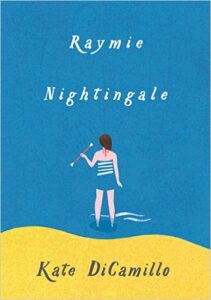 Raymie Nightingale
By Kate DiCamillo
Candlewick Press
$16.99
ISBN: 978-0-7636-8117-3
Ages 9-12
On shelves now
My relationship to Kate DiCamillo’s books is one built entirely on meaning. Which is to say, the less emotional and meaningful they are, the better I like ‘em. Spaghetti loving horses and girls that live in tree houses? Right up my alley! China rabbits and mice with excessive earlobes? Not my cup of tea. It’s good as a reviewer to know your own shortcomings and I just sort of figured that I’d avoid DiCamillo books when they looked deep and insightful. And when the cover for Raymie Nightingale was released it was easily summarized in one word: Meaningful. A girl, seen from behind, stands ankle-deep in water holding a single baton. Still, I’ve had a good run of luck with DiCamillo as of late and I was willing to push it. I polled my friends who had read the book. The poor souls had to answer the impossible question, “Will I like it?” but they shouldered the burden bravely. Yes, they said. I would like it. I read it. And you know what? I do like it! It is, without a doubt, one of the saddest books I’ve ever read, but I like it a lot. I like the wordplay, the characters, and the setting. I like what the book has to say about friendship and being honest with yourself and others. I like the ending very very much indeed (it has a killer climax that I feel like I should have seen coming, but didn’t). I do think it’s a different kind of DiCamillo book than folks are used to. It’s her style, no bones about it, but coming from a deeper place than her books have in the past. In any case, it’s a keeper. Meaning plus pep.
Maybe it isn’t much of a plan, but don’t tell Raymie that. So far she thinks she has it all figured out. Since her father skipped town with that dental hygienist, things haven’t been right in Raymie’s world. The best thing to do would be to get her father back, so she comes up with what surely must be a sure-fire plan. She’ll just learn how to throw a baton, enter the Little Miss Central Florida Tire competition, win, and when her father sees her picture in the paper he’ll come on home and all will be well. Trouble (or deliverance) comes in the form of Louisiana and Beverly, the two other girls who are taking this class with Ida Nee (the baton-twirling instructor). Unexpectedly, the three girls become friends and set about to solve one another’s problems. Whether it’s retrieving library books from scary nursing home rooms, saving cats, or even lives, these three rancheros have each other’s backs just when they need them most.
DiCamillo has grown as an author over the years. So much so that when she begins Raymie Nightingale she dives right into the story. She’s trusting her child readers to not only stick with what she’s putting down, but to decipher it as well. As a result, some of them are going to experience some confusion right at the tale’s beginning. A strange girl seemingly faints, moaning about betrayal in front of a high-strung baton instructor. Our heroine stands impressed and almost envious. Then we learn about Raymie’s father and the whole enterprise takes a little while to coalesce. It’s a gutsy choice. I suspect that debut authors in general would eschew beginning their books in this way. A pity, since it grabs your attention by an act of simple befuddlement.
Initial befuddlement isn’t enough to keep you going, though. You need a hook to sustain you. And in a book like this, you find that the characters are what stay with you the longest. Raymie in particular. It isn’t just about identification. The kid reading this book is going to impress on Raymie like baby birds impress on sock puppet mamas. She’s like Fone Bone in Jeff Smith’s series. She’s simultaneously a mere outline of a character and a fully fleshed out human being. Still, she’s an avatar for readers. We see things through her rather than with her. And sure, her name is also the title, but names are almost always titles for Kate DiCamillo (exceptions being The Magician’s Elephant, The Tiger Rising, and that Christmas picture book, of course). If you’re anything like me, you’re willing to follow the characters into absurdity and back. When Beverly says of her mother that, “Now she’s just someone who works in the Belknap Tower gift shop selling canned sunshine and rubber alligators” you go with it. You don’t even blink. The setting is almost a character as well. I suspect DiCamillo’s been away from Florida too long. Not in her travels, but in her books. Children’s authors that willingly choose to set their books in the Sunshine State do so for very personal reasons. DiCamillo’s Florida is vastly different from that of Carl Hiaasen’s, for example. It’s a Florida where class exists and is something that permeates everything. Few authors dare to consider lower or lower middle classes, but it’s one of the things I’ve always respected about DiCamillo in general.
Whenever I write a review for a book I play around with the different paragraphs. Should I mention that the book is sad at the beginning of the review or at the end? Where do I put my theory about historical fiction? Should character development be after the plot description paragraph or further in? But when it comes to those written lines I really liked in a book, that kind of stuff shouldn’t have to wait. For example, I adore the lines, “There was something scary about watching an adult sleep. It was as if no one at all were in charge of the world.” DiCamillo excels in the most peculiar of details. One particular favorite was the small paper cups with red riddles on their sides. The Elephantes got them for free because they were misprinted without answers. It’s my secret hope that when DiCamillo does school visits for this book she’ll ask the kids in the audience what the answer to the riddle, “What has three legs, no arms, and reads the paper all day long?” might be. It’s her version of “Why is a raven like a writing desk?”
Now let us discuss a genre: Historical fiction. One question. Why? Not “Why does it exist?” but rather “Why should any novel for kids be historical?” The easy answer is that when you write historical fiction you have built in, legitimate drama. The waters rise during Hurricane Katrina or San Francisco’s on fire. But this idea doesn’t apply to small, quiet novels like Raymie Nightingale. Set in the summer of 1975, there are only the barest of nods to the time period. Sometimes authors do this when the book is semi-autobiographical, as with Jenni Holm’s Sunny Side Up. Since this novel is set in Central Florida and DiCamillo grew up there, there’s a chance that she’s using the setting to draw inspiration for the tale. The third reason authors sometimes set books in the past is that it frees them up from the restrictions of the internet and cell phone (a.k.a. guaranteed plot killers). Yet nothing that happens in Raymie Nightingale requires that cell phones remain a thing of the past. The internet is different. Would that all novels could do away with it. Still, in the end I’m not sure that this book necessarily had to be historical. It’s perfectly fine. A decent time period to exist in. Just not particularly required one way or another.
Obviously the book this feels like at first is Because of Winn-Dixie. Girl from a single parent home finds friendship and (later rather than sooner, in the case of Raymie Nightingale) an incredibly ugly dog. But what surprised me about Raymie was that this really felt more like Winn-Dixie drenched in sadness. Sadness is important to DiCamillo. As an author, she’s best able to draw out her characters and their wants if there’s something lost inside of them that needs to be found. In this case, it’s Raymie’s father, the schmuck who took off with his dental hygienist. Of course all the characters are sad in different ways here. About the time you run across the sinkhole (the saddest of all watery bodies) on page 235 you’re used to it.
Sure, there are parts of the book I could live without. The parts about Raymie’s soul are superfluous. The storyline of Isabelle and the nursing home isn’t really resolved. On the flip side, there are lots of other elements within these pages that strike me as fascinating, like for example why the only men in the book are Raymie’s absent father, an absent swimming coach, a librarian, and a janitor. Now when I was a child I avoided sad children’s books like the plague. You know what won the Newbery in the year that I was born? Bridge to Terabithia. And to this day I eschew them at all costs. But though this book is awash in personal tragedies, it’s not a downer. It’s tightly written and full of droll lines and, yes I admit it. It’s meaningful. But the meaning you cull from this book is going to be different for every single reader. Whip smart and infinitely readable, this is DiCamillo at her best. Time to give it a go, folks.
On shelves now.
Source: Final copy sent from publisher for review.
Song to Listen to With This Book: King of the Road
Alternative Song: I Wanna Hold Your Hand
Like This? Then Try:
By:
Betsy Bird,
on 2/21/2016
Blog:
A Fuse #8 Production
(
Login to Add to MyJacketFlap)
JacketFlap tags:
Reviews,
middle grade fiction,
fantasy,
middle grade fantasy,
funny books,
Alfred A. Knopf,
Random Penguin House,
Susan Hill Long,
funny fantasy,
2016 reviews,
Reviews 2016,
2016 middle grade fantasy,
2016 middle grade fiction,
Add a tag
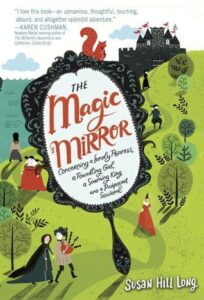 The Magic Mirror: Concerning a Lonely Princess, a Foundling Girl, a Scheming King, and a Pickpocket Squirrel
By Susan Hill Long
Knopf (an imprint of Penguin Random House)
$16.99
ISBN: 978-0-553-51134-2
Ages 9-12
On shelves May 10th
What do you want from a fairy tale? Magic? Romance? Derring-do? Despicable villainy? Academics and scholars have puzzled and puzzed until their puzzlers were sore over what it is about the European fairy tale genre that so enthralls us. Recently fairy tale lovers have seen the entertainment industry discover that fairy tales are still a primo source of capital. On the book side of things, I’ve seen a distinct uptick in retellings of Cinderella, Little Red Riding Hood, and more in the last five years. Classic fairy tales have it easy. It’s the newbies that have a hard time going. How do you get a foothold in a genre that’s been in existence for centuries? In The Magic Mirror by Susan Hill Long, the author decides to simplify. Merely take the elements that suit the story best (highway robbers, princesses, and just a smidgen of magic) and then weave in some surprisingly stellar writing. The result is fairy tale fare that reminds one of nothing so much as the best of Gail Carson Levine. Funny, friendly, witty and sly, this makes for perfect bedtime reading.
Margaret (or Maggot, depending on who’s talking about her) should technically be grateful for her life. Though she sports a lame foot (an “accident of birth” she’s been told) and is an orphan, she has a roof over her head, food in her belly, and aside from avoiding Thomas, the local bully, not too much trouble in life. But of course she’s desperately lonely, and that’s a problem that’s hard to cure. When she makes the acquaintance of a man with a wooden leg, she receives in a trade a mirror capable of showing anyone their heart’s desire. But what she sees when she peers into it is a strange wild-eyed man she’s never laid eyes on before. When Minka, the woman who cares for Margaret, decides to marry her off, our heroine decides that leg or no leg she is not going to have her life decided for her. And in the course of her adventures she’ll little suspect there are royal mix-ups, a king with little in the way of fatherly feelings, a boy with a bagpipe, and a light-fingered squirrel in her very near future.
Is anyone going to challenge me when I say that comparing a book, any book, to The Princess Bride is never a good idea? The Princess Bride inspires a loving fandom that jealously guards its unique storytelling. Still, there are many familiar tropes in that book/film. A princess, a pirate, giants, swordplay, you name it. When writing a new fairy tale you Harry Potter it. You take those familiar elements and weave them into something new. So when Ms. Long wrote The Magic Mirror she did exactly the same thing. Additionally, by splitting her narrative into an increasingly large cast of characters, she gives it a distinctly Princess Bride-like feel. It has humor and fights and baddies in all the same ways. When Kirkus reviewed this book they said that it was predictable and unbelievable (because of the coincidences in the plot). I’d counter that there’s nothing any more predictable or unbelievable here than you’d find in any modern fairy tale, be it Ella Enchanted or Frozen, and just as much joy.
In this particular case it’s Long’s descriptions and characters that stay with a reader long after the book has been put down. Even the foulest villain has an emotional weak spot, and characters that are set up to seem like baddies at the beginning (like Minka) turn out to be pretty soft in the end. Plus you really root for these characters. Some authors think it necessary to drown their villains in a thick sauce of sadism so that when the heroes triumph it’s an even keener victory. But when writing books for 9-12 year olds there’s no need to pile on the bloodshed. In the right writers’ hands, as long as the antagonist is preventing the heroes from their happy ending, that’s all you really need to do to keep the plot moving at a sharp clip. I liked the people I met in this book, but the descriptions were probably my favorite aspect of the novel. Lines like, “Her voice climbed up the sentence like a ladder, and quavered at the top,” make me happy. Ditto wisdoms like “It’s all in the angle of the squint.” Or a description of a cathedral’s shadows where a character “shuffled away from the creeping dark so that she might escape God’s notice.”
I did experience a palpable sense of relief that it was written today, though. Since Margaret has a physical disability (a foot and leg injured long ago that were never set correctly) there is a brief suggestion at one point that there might be a magical remedy to her problem. I was reminded of a similar middle grade novel Handbook for Dragon Slayers which also starred a girl with an injured limb. In that book a cure for her disability is bandied about and ultimately rejected in an excellent manner. Indeed, the book went on to win a Schneider Family Book Award given annually to books that embody, “an artistic expression of the disability experience for child and adolescent audiences.” Reading The Magic Mirror I had the very clear sense that if this book had been written in the past an easy cure for Margaret’s leg would have been part of the story’s happy ending and that would be that. These days such endings are mildly insulting answers to what, in truth, are very real problems. Happily The Magic Mirror does not fall into such a trap (though sadly the heroine does have some unfortunate thoughts about a successful man with a hunch on his back that did not gel well with the book’s otherwise positive embrace of disability).
As it happens, I did find one particular aspect of the book problematic. This is Ms. Long’s second novel so while the bones of this story are strong there are aspects to the writing that will need a bit of strengthening in the future. Specifically, the exposition. Now the art of exposition is learned, not born. Filling the reader in on a hitherto unknown back-story is no easy task. At best, back-story is woven into the dialogue so naturally the reader is hardly aware that they’re learning about what’s come before. Clunky back-story, in contrast, places huge chunks of it en masse in the same general vicinity of the novel. Alas, near the end of The Magic Mirror the author has set herself up to reveal not just the back-story of our heroine, but of at least three to four other people as well. The result is ultimately somewhat confusing, with new characters popping up (a midwife, a thief’s wife) to fill in the details out of the blue. Without a character guide (which would, admittedly, give away some of the plot) there is little to help kids distinguish between Petra vs. Minka vs. Margaret.
For all that there is a magic mirror in the story the book is pretty devoid of magical activities. You won’t find dragons or wizards or much of anything out of this world here, with the sole exception of the mirror itself. It’s almost a pity that it’s in the title since you could probably hand this title to kids that only like realism (and they do indeed exist) and they’d get just as much out of it as the most ravenous fantasy fan. While it’s not a perfect novel, it is a ripping good yarn that keeps you enthralled from page one onward. Will you see where it’s going? Maybe. But you’ll enjoy the sights along the way. Fine fantastical stuff.
For ages 9-12.
On shelves May 10th.
Like This? Then Try:
By
Cynthia Leitich Smithfor
CynsationsCheck out the cover for
The Alarming Career of Sir Richard Blackstone by
Lisa Doan (Sky Pony, 2017). From the promotional copy:
A funny middle grade mystery adventure complete with an unconventional knight, a science experiment gone awry, a giant spider, and a boy to save the day!
Twelve-year-old Henry Hewitt has been living by his wits on the streets of London, dodging his parents, who are determined to sell him as an apprentice. Searching for a way out of the city, Henry lands a position in Hampshire as an assistant to Sir Richard Blackstone, an aristocratic scientist who performs unorthodox experiments in his country manor. The manor house is comfortable, and the cook is delighted to feed Henry as much as he can eat. Sir Richard is also kind, and Henry knows he has finally found a place where he belongs.
But everything changes when one of Sir Richard’s experiments accidentally transforms a normal-sized tarantula into a colossal beast that escapes and roams the neighborhood. After a man goes missing and Sir Richard is accused of witchcraft, it is left to young Henry to find an antidote for the oversize arachnid. Things are not as they seem, and in saving Sir Richard from the gallows, Henry also unravels a mystery about his own identity.Congratulations on your upcoming release! What do you think of your new cover?I love it! Huge thanks to Sky Pony and my editor, Adrienne Szpyrka, for capturing the humor of the book while at the same time working in two prominent elements – the giant tarantula and a journal detailing a trip to South America.
The tarantula is Henry Hewitt’s problem and the journal is the key to figuring out what to do about it, which he must do to save his friend and protector, Sir Richard Blackstone.
More specifically, how does the art evoke the nuances of your book?We wanted the journal to feel Old World, hence the faded brown, as this story takes place in the late 1700’s English countryside.
Sky Pony’s designers had the genius idea of having the tarantula holding the journal to tie it all together. The red and yellow lettering really pop and signal the lighthearted tone.
I couldn’t be happier with how it turned out.
Isn’t it every middle-grade writer’s dream to have a cover with a tarantula on it?
I know it has always been one of mine!
Cynsational NotesLisa Doan has an
MFA in Writing for Children and Young Adults from Vermont College of Fine Arts and is the author of the award-winning series
The Berenson Schemes (Lerner).
Operating under the idea that life is short, her occupations have included: master scuba diving instructor; New York City headhunter; owner-chef of a restaurant in the Caribbean; television show set medic; and deputy
prothonotary of a county court. She currently works in social services and lives in West Chester, Pennsylvania.
By
Cynthia Leitich Smithfor
CynsationsCheck out the cover of
The Changelings by
Christina Soontornvat (Jabberwocky/Sourcebooks, 2016). From the promotional copy:
All Izzy wants is for something interesting to happen in her sleepy little town. But her wish becomes all too real when an enchanting song floats through the woods and lures her little sister Hen into the forest…where she vanishes. A frantic search leads to a strange hole in the ground that Izzy enters. But on the other side she discovers that the hole was not a hole, this place is not Earth, and Hen is not lost. She’s been stolen away to the land of Faerie, and it’s up to Izzy to bring her home.
But inside Faerie, trouble is brewing-and Izzy is in way over her head. A ragtag group of outlaw Changelings offers to help, and she must decide whether a boulder that comes to life, a girl that’s not quite solid, and a boy who is also a stag can help her save Hen before it’s too late. Tell us more about your cover. How did it feel to see it for the first time?It was a total thrill! When I opened the box of galleys that my publisher sent me, it seemed like the books were absolutely glowing. The cover art makes me want to dive in and see what is behind that door. I hope kids will feel the same way.
The girl on the cover is the main character, Izzy, who journeys into Faerie to find her little sister and bring her home. The three animals are the Changeling children who help her.
The Changelings are shape shifters who can make themselves look like almost anything for a short while. But they can only truly “Change” into a handful of forms – like the stoat, butterfly, and badger on the cover.
The little flying fairies are Pollenings. They play a very tiny, but important, part in the story. (And they make honey that goes great with pancakes!)
What was it like to see your characters depicted on the cover?I actually didn’t think the cover would feature the characters at all, so it was such a wonderful surprise to see them in the first draft! When I got my first look at Izzy, I thought the artist captured her perfectly. She looks curious and thoughtful, and is having a very human reaction to all the magic around her – a mix of awe and nervousness! I’m sure most of us would feel the same way if we stumbled into Faerie.
I think it was a very wise decision on Sourcebooks’ part to have Izzy be the only human face we see on the cover. The artist could have drawn all the Changelings in their child forms, but I think that would have taken some of the fun away from readers being able to imagine them for themselves.
Tell us more about the cover design process. Where you involved?The artwork and design were done completely without me – thank goodness! But my editor and art director did ask me for input on the characters, and we went back and forth several times to make sure the details were right and the cover was being true to them.
I am really lucky to have been involved as much as I was. I know that’s not always the case for authors!
I learned so much about covers during this process and the heavy lifting they have to do. The cover has to draw a reader in, give them a feeling for the writing and the story, but without giving too much away. Everything, from the font to the color palette, to the way the art wraps around to the back, contributes to that sense of wonder you want readers to have – before they even start reading.
The cover for The Changelings doesn’t depict an exact scene in the book, but I think it does everything you want a cover to do!
Oh, and there is a secret hidden in the cover as well. But you will have to read the book to figure it out!
Cynsational NotesChristina Soontornvat spent her childhood in small Texas towns, eagerly waiting for the fairies to come and kidnap her. They never came, but she still believes magic things can happen to ordinary people. When not writing, Christina hangs out in science museums and takes care of her own little goblins-ahem- children. She lives in Austin, Texas.
The Changelings is her first novel.
By: Joyce Zarins,
on 1/25/2016
Blog:
Constructions: joyce audy zarins
(
Login to Add to MyJacketFlap)
JacketFlap tags:
children's books,
middle grade fiction,
Linda Sue Park,
YA fiction,
life in general,
the world,
Ted talk,
pearls of wisdom,
contemporary YA,
Writing today,
Diverse books,
Add a tag
In this terrific TedX talk, author Linda Sue Park talks about a path to changing the world. Life is not fair, but stories engage the minds of those who can develop empathy and act in heroic ways. Bookmark

By:
bookkm,
on 12/1/2015
Blog:
Books 'n' stories
(
Login to Add to MyJacketFlap)
JacketFlap tags:
book reviews,
Middle grade fiction,
historical fiction,
YA fiction,
Gennifer Choldenko,
1900,
Calpurnia Tate,
The curious world of Calpurnia Tate,
Chasing Secrets,
Jacqueling Kelly,
Add a tag
Jacqueline Kelly very kindly wrote another book about Calpurnis Tate. In
The Curious World of Calpurnia Tate, Callie Vee, as her six brothers and parents call her, is disappointed to find that life in the year 1900 goes on pretty much like always. She goes on rambles with her scientist grandfather. She makes meticulous notes in her notebook. She is by turns bedeviled and beguiled by her brothers. And she disappoints her mother and baffles her father almost weekly.
Almost every other chapter tells of her struggles with Travers, her wild animal loving younger brother, and his latest "find". The armadillo is a bust. The raccoon is fated for failure, but the coy-dog?? Really???
Then there is the hurricane of 1900 that wiped Galveston, TX, off the map. The barometer and Callie's chance sighting of a strange bird sends Callie's grandfather to the telegraph office to send wires to the coast. Callie has to give up her bed to a cousin she barely knows - a greedy, penny-pinching cousin who has no appreciation of nature. That and the disappearance of Callie's gold piece add up to a recipe for high drama.
In between, Callie runs errands for the new veterinarian, learns how to type, gets even with a conniving brother and deals as well as she can with her parents' expectations for her future.
This feels like a bridge book. I am eager to see if Callie prevails.
MEANWHILE, in San Francisco, Lizzie Kennedy hates her school, Miss Barstow's. She'd much prefer going out on doctor's calls with her father. She loves science but, just like Callie Vee, her obsession is considered unseemly for a young woman.
In
Chasing Secrets by Gennifer Choldenko, there are rumors that plague has broken out in Chinatown. Lizzie's uncle, the owner of one of the biggest newspapers in town, refuses to believe the rumors without proof. But Chinatown is quarantined and trapped inside is Lizzie's cook and friend, Jing. Jing leaves behind a secret - a real LIVE secret. And that secret teaches Lizzie to look at her world in a whole new way.
There are a lot of secrets in this book; secrets that endanger a whole city; secrets that hide the way people really feel; secrets about how to fit in. Lizzie has to find Jing, learn how to be friends with people her own age, survive her first ball, and prove her worth as a nurse.
It all happened in 1900!
By:
bookkm,
on 11/14/2015
Blog:
Books 'n' stories
(
Login to Add to MyJacketFlap)
JacketFlap tags:
YA,
book reviews,
Middle grade fiction,
lying,
Katherine Applegate,
Jennifer A. Nielsen,
The False Prince,
Crenshaw,
Dear Hank Williams,
Kimberley Willis Holt,
Add a tag
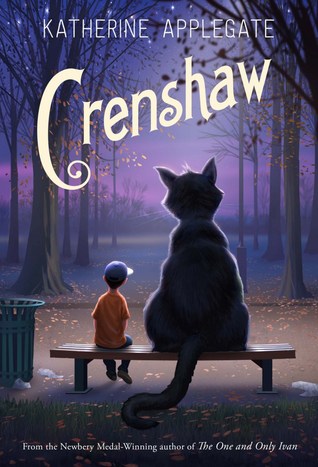 The books I have read in the past few days all revolve around lying - lying to survive, lying to hide hard facts from oneself, lying to avoid confrontation - lots of untruth telling going on.
In The False Prince, by Jennifer A. Nielsen, Sage's survival depends on how well he can lie. In an attempt to save the kingdom of Carthya, (or so they are told), Sage, Tobias and Roden are being groomed to impersonate the lost prince, Jaron. Their training is a fight to the death. The boys not chosen as Prince will meet an awful fate. Trickery, dishonesty, secret passages, dungeons are followed by a jaw-dropping master stroke. This is the first in a trilogy.
In Crenshaw, by Katherine Applegate, Jackson has been homeless before and he knows that his parents are struggling, again. The return of his imaginary friend, Crenshaw, a six foot tall cat, does nothing to calm his fears. The lying in this book is the "everything is all right" kind, harmless on the surface but nasty and dangerous, nonetheless.
Dear Hank Williams by Kimberley Willis Holt, is a novel in letters. Tate P. Ellerbee decides that the rising star, Hank Williams, will be her penpal for her class penpal project. She is more than faithful in writing to Mr. Williams, and in return she receives three signed photographs. And the reader learns just how Tate spins tales to make herself feel better about her absent parents and other difficulties. All is revealed in the end, in this clever and emotionally satisfying book. Set between 1948 and 1949, this is also a well-researched look at rural America in the aftermath of WWII.
A while ago I posted an interview here with Miranda, a very special person to me. Recently, I asked her similar questions about her reading habits and those of kids she knows. The answers show a trajectory and are useful information for writers, so I also posted this on www.writersrumpus.com. Nine-year-old Miranda and I went […]
By:
Betsy Bird,
on 11/2/2015
Blog:
A Fuse #8 Production
(
Login to Add to MyJacketFlap)
JacketFlap tags:
middle grade fiction,
historical fiction,
middle grade historical fiction,
Best Books of 2015,
Reviews 2015,
2015 reviews,
2015 historical fiction,
2015 middle grade novels,
Reviews,
Best Books,
Add a tag
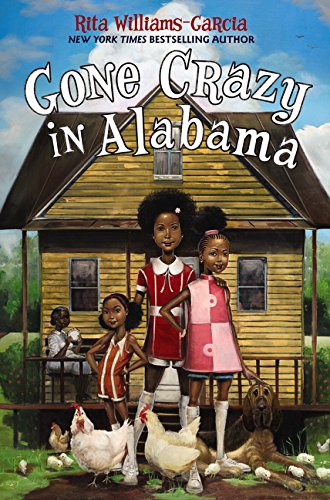 Gone Crazy in Alabama
By Rita Williams-Garcia
Amistad (an imprint of Harper Collins)
$16.99
ISBN: 978-0062215871
Ages 9-12
On shelves now.
I’m a conceited enough children’s librarian that I like it when a book wins me over. I don’t want them to make it easy for me. When I sit down to read something I want to know that the author on the other side of the manuscript is scrabbling to get the reader’s attention. Granted that reader is supposed to be a 10-year-old kid and not a 37-year-old woman, but to a certain extent audience is audience. Now I’ll say right off the bat that under normal circumstances I don’t tend to read sequels and I CERTAINLY don’t review them. There are too many books published in a current year to keep circling back to the same authors over and over again. There are, however, always exceptions to the rule. And who amongst us can say that Rita Williams-Garcia is anything but exceptional? The Gaither Sisters chronicles (you could also call them the One Crazy Summer Books and I think you’d be in the clear) have fast become modern day literary classics for kids. Funny, painful, chock full of a veritable cornucopia of historical incidents, and best of all they stick in your brain like honey to biscuits. Read one of these books and you can recall them for years at a time. Now the bitter sweetness of “Gone Crazy in Alabama” gives us more of what we want (Vonetta! Uncle Darnell! Big Ma!) in a final, epic, bow.
Going to visit relatives can be a chore. Going to visit warring relatives? Now THAT is fun! Sisters Delphine, Vonetta, and Fern have been to Oakland and Brooklyn but now they’ve turned South to Alabama to visit their grandmother Big Ma, their great-grandmother Ma Charles, and Ma Charles’s half sister Miss Trotter. Delphine, as usual, places herself in charge of her younger, rebellious, sisters, not that they ever appreciate it. As she learns more about her family’s history (and the reason the two half sisters loathe one another) she ignores her own immediate family’s needs until the moment when it almost becomes too late.
I’m an oldest sister. I have two younger siblings. Unlike Delphine I didn’t have the responsibility of watching over my siblings for any extended amount of time. As a result, I didn’t pay all that much attention to them growing up. But like Delphine, I would occasionally find myself trying, to my mind anyway, to keep them in line. Where Rita Williams-Garcia excels above all her peers, and I do mean all of them, is in the exchanges between these three girls. If I had an infinite revenue stream I would solicit someone to adapt their conversations into a very short play for kids to perform somewhere (actually, I’d just like to see ALL these books as plays for children, but that’s neither here nor there). The dialogue sucks you in and you find yourself getting emotionally involved. Because Delphine is our narrator you’re getting everything from her perspective and in this the author really makes you feel like she’s on the right side of every argument. It would be an excellent writing exercise to charge a class of sixth graders with the task of rewriting one of these sections from Vonetta or Fern’s point of view instead.
As I might have mentioned before, I wasn’t actually sold initially on this book. Truth be told, I liked the sequel to One Crazy Summer (called P.S. Be Eleven) but found the ending rushed and a tad unsatisfying. That’s just me, and my hopes with Gone Crazy were not initially helped by this book’s beginning. I liked the set-up of going South and all that, but once they arrived in Alabama I was almost immediately confused. We met Ma Charles and then very soon thereafter we met another woman very much like her who lived on the other side of a creek. No explanation was forthcoming about these two, save some cryptic descriptions of wedding photos, and I felt very much out to sea. My instinct is to say that a child reader would feel the same way, but kids have a way of taking confusing material at face value, so I suspect the confusion was of the adult variety more than anything else. Clearly Ms. Williams-Garcia was setting all this up for the big reveal of the half-sister’s relationship, and I appreciated that, but at the same time I thought it could have been introduced in a different way. Things were tepid for me for a while, but then the story really started picking up. By the time we got to the storm, I was sold.
And it was at this point in the book that I realized that I’d been coming at the book all wrong. Williams-Garcia was feeding me red herrings and I’m gulping them down like there’s no tomorrow. This book isn’t laser focusing its attention on great big epic themes of historical consequence. All this book is, all it ever has been, all the entire SERIES is about in its heart of hearts, is family. And that’s it. The central tension can be boiled down to something as simple and effective as whether or not Delphine and Vonetta can be friends. Folks are always talking about bullying and bully books. They tend to involve schoolmates, not siblings, but as Gone Crazy in Alabama shows, sometimes bullying is a lot closer to home than anyone (including the bully) is willing to acknowledge.
There’s been a lot of talk lately about needing more diverse books for kids, and it’s absolutely a valid concern. I have always been of the opinion, however, that we also need a lot more funny diverse books. When most reading lists’ sole hat tip to the African-American experience is Roll of Thunder, Hear My Cry (no offense to Mildred D. Taylor, but you see what I’m getting at here) while the white kids star in books like Harriet the Spy and Frindle, something’s gotta change. We Need Diverse Books? We Need FUNNY Diverse Books too. Something someone’s going to enjoy reading and want to pick up again. That’s why Christopher Paul Curtis has been such a genius the last few years (because, seriously, who else would explore the ramifications of vomiting on Frederick Douglass?) and why the name Rita Williams-Garcia will be remembered long after you and I are tasty toasty worm food. Because this book IS funny while also balancing out pain and hurt and hope.
An interviewer once asked Ms. Williams-Garcia if she ever had younger sisters like the ones in this book or if she’d ever spent a lot of time in rural Alabama, like they do here. She replied good-naturedly that nope. It reminded me of that story they tell about Dustin Hoffman playing Richard III. He put stones in his shoes to get the limp right. Laurence Olivier caught wind of this and his response was along the lines of, “My dear boy, why don’t you try acting?” That’s Ms. Williams-Garcia for you. She does honest-to-goodness writing. Writing that can conjure up estranged siblings and acts of nature. Writing that will make you laugh and think and think again after that. Beautifully done, every last page. A trilogy winds down on just the right note.
On shelves now.
Source: Final copy sent from publisher for review.
Like This? Then Try:
The League of Unexceptional Children by Gitty Daneshvari is a welcome change. No magical, undiscovered world-changing super-talented children here! No half human, half immortal orphans!
Nope, this book revolves around two children so bland, so mediocre, so unremarkable as to be almost invisible to the world around them.
And that makes them PERFECT for the secret work that The League of Unexceptional Children does.
When the Vice-President is kidnapped in the middle of the night, Jonathan and Shelly are recruited to go undercover to find him before the VP can disclose the nation's most valuable nuclear codes. Jonathan and Shelly don't actually need to go undercover. They are so unremarkable that Jonathan's teacher thinks he's a new student almost every day. No one even hears Shelly when she talks.
After a slow start involving an incompetent security guard and a short villain, the book turns into a spy thriller heavy on spycraft-ish talk and trappings and with more comic escapades than thrills.
To say much more will tell you almost all. This is a quick fun read in which two ordinary kids fumble through saving the country. They even compete with two superspy kids from Europe.
The best thing about this book - for me, anyway - is the way the characters of our heroes develop. They may look and act boring to the world at large but, given a task that challenges them, they show some spunk, if not much talent. Hmmmm, could there actually be a redeeming message in this silly book? ....... Nope, probably not.
Key words: Quick, Funny, Slapstick, Spies!
By:
Betsy Bird,
on 8/25/2015
Blog:
A Fuse #8 Production
(
Login to Add to MyJacketFlap)
JacketFlap tags:
Reviews,
middle grade fiction,
middle grade,
Simon and Schuster,
Best Books,
Kenneth Oppel,
Jon Klassen,
scary books for kids,
Best Books of 2015,
Reviews 2015,
2015 reviews,
2015 middle grade novels,
Add a tag
 The Nest
By Kenneth Oppel
Illustrated by Jon Klassen
Simon & Schuster Books for Young Readers
$16.99
ISBN: 978-1-4814-3232-0
On shelves October 6th
Oh, how I love middle grade horror. It’s a very specific breed of book, you know. Most people on the street might think of the Goosebumps books or similar ilk when they think of horror stories for the 10-year-old set, but that’s just a small portion of what turns out to be a much greater, grander set of stories. Children’s book horror takes on so many different forms. You have your post-apocalyptic, claustrophobic horrors, like Z for Zachariah by Robert C. O’Brien. You have your everyday-playthings-turned-evil tales like Doll Bones by Holly Black. You have your close family members turned evil stories ala Coraline by Neil Gaiman and Wait Till Helen Comes by Mary Downing Hahn. And then there are the horror stories that shoot for the moon. The ones that aren’t afraid (no pun intended) to push the envelope a little. To lure you into a false sense of security before they unleash some true psychological scares. And the best ones are the ones that tie that horror into something larger than themselves. In Kenneth Oppel’s The Nest, the author approaches us with a very simple idea. What if your desire to make everything better, everyone happier, released an unimaginable horror? What do you do?
New babies are often cause for true celebration, but once in a while there are problems. Problems that render parents exhausted and helpless. Problems with the baby that go deep below the surface and touch every part of your life. For Steve, it feels like it’s been a long time since his family was happy. So when the angels appear in his dream offering to help with the baby, he welcomes them. True, they don’t say much specifically about what they can do. Not at the beginning, but why look a gift horse in the mouth? Anyway, there are other problems in Steve’s life as well. He may have to go back into therapy, and then there are these wasps building a nest on his house when he’s severely allergic to them. A fixed baby could be the answer to his prayers. Only, the creatures visiting him don’t appear to be angels anymore. And when it comes to “fixing” the baby . . . well, they may have other ideas entirely . . .
First and foremost, I don’t think I can actually talk about this book without dusting off the old “spoiler alert” sign. For me, the very fact that Oppel’s book is so beautifully succinct and restrained, renders it impossible not to talk about its various (and variegated) twists and turns. So I’m going to give pretty much everything away in this review. It’s a no holds barred approach, when you get right down to it. Starting with the angels of course. They’re wasps. And it only gets better from there.
It comes to this. I’ve no evidence to support this theory of mine as to one of the inspirations for the book. I’ve read no interviews with Oppel about where he gets his ideas. No articles on his thought processes. But part of the reason I like the man so much probably has to do with the fact that at some point in his life he must have been walking down the street, or the path, or the trail, and saw a wasp’s nest. And this man must have looked up at it, in all its paper-thin malice, and found himself with the following inescapable thought: “I bet you could fit a baby in there.” And I say unto you, it takes a mind like that to write a book like this.
Wasps are perhaps nature’s most impressive bullies. They seem to have been given such horrid advantages. Not only do they have terrible tempers and nasty dispositions, not only do they swarm, but unlike the comparatively sweet honeybee they can sting you multiple times and never die. It’s little wonder that they’re magnificent baddies in The Nest. The only question I have is why no one has until now realized how fabulous a foe they can be. Klassen’s queen is particularly perfect. It would have been all too easy for him to imbue her with a kind of White Witch austerity. Queens come built-in with sneers, after all. This queen, however, derives her power by being the ultimate confident. She’s sympathetic. She’s patient. She’s a mother who hears your concerns and allays them. Trouble is, you can’t trust her an inch and underneath that friendliness is a cold cruel agenda. She is, in short, my favorite baddie of the year. I didn’t like wasps to begin with. Now I abhor them with a deep inner dread usually reserved for childhood fears.
I mentioned earlier that the horror in this book comes from the idea that Steve’s attempts to make everything better, and his parents happier, instead cause him to consider committing an atrocity. In a moment of stress Steve gives his approval to the unthinkable and when he tries to rescind it he’s told that the matter is out of his hands. Kids screw up all the time and if they’re unlucky they screw up in such a way that their actions have consequences too big for their small lives. The guilt and horror they sometimes swallow can mark them for life. The queen of this story offers something we all can understand. A chance to “fix” everything and make the world perfect. Never mind that perfect doesn’t really exist. Never mind that the price she exacts is too high. If she came calling on you, offering to fix that one truly terrible thing in your life, wouldn’t you say yes? On the surface, child readers will probably react most strongly to the more obvious horror elements to this story. The toy telephone with the scratchy voice that sounds like “a piece of metal being held against a grindstone.” The perfect baby ready to be “born” The attic . . . *shudder* Oh, the attic. But it’s the deeper themes that will make their mark on them. And on anyone reading to them as well.
There are books where the child protagonist’s physical or mental challenges are named and identified and there are books where it’s left up to the reader to determine the degree to which the child is or is not on such a spectrum. A book like Wonder by R.J. Palacio or Out of My Mind by Sharon Draper will name the disability. A book like Emma-Jean Lazarus Fell Out of a Tree by Lauren Tarshis or Counting by 7s by Holly Sloan won’t. There’s no right or wrong way to write such books, and in The Nest Klassen finds himself far more in the latter rather than former camp. Steve has had therapy in the past, and exhibits what could be construed to be obsessive compulsive behavior. What’s remarkable is that Klassen then weaves Steve’s actions into the book’s greater narrative. It becomes our hero’s driving force, this fight against impotence. All kids strive to have more control over their own lives, after all. Steve’s O.C.D. (though it is never defined in that way) is part of his helpless attempt to make things better, even if it’s just through the recitation of lists and names. At one point he repeats the word “congenital” and feels better, “As if knowing the names of things meant I had some power over them.”
When I was a young adult (not a teen) I was quite enamored of A.S. Byatt’s book Angels and Insects. It still remains one of my favorites and though I seem to have transferred my love of Byatt’s prose to the works of Laura Amy Schlitz (her juvenile contemporary and, I would argue, equivalent) there are elements of Byatt’s book in what Klassen has done here. His inclusion of religion isn’t a real touchstone of the novel, but it’s just a bit too prevalent to ignore. There is, for example, the opening line: “The first time I saw them, I thought they were angels.” Followed not too long after by a section where Steve reads off every night the list of people he wants to keep safe. “I didn’t really know who I was asking. Maybe it was God, but I didn’t really believe in God, so this wasn’t praying exactly.” He doesn’t question the angels of his dreams or their desire to help (at least initially). And God makes no personal appearance in the novel, directly or otherwise. Really, when all was said and done, my overall impression was that the book reminded me of David Almond’s Skellig with its angel/not angel, sick baby, and boy looking for answers where there are few to find. The difference being, of course, the fact that in Skellig the baby gets better and here the baby is saved but it is clear as crystal to even the most optimistic reader that it will never ever been the perfect baby every parent wishes for.
It’s funny that I can say so much without mentioning the language, but there you go. Oppel’s been wowing folks with his prose for years, but that doesn’t mean you can’t enjoy a cunning turn of phrase when you encounter it. Consider some of his lines. The knife guy is described like “He looked like his bones were meant for an even bigger body.” A description of a liquid trap for wasps is said to be akin to a, “soggy mass grave, the few survivors clambering over the dead bodies, trying in vain to climb out. It was like a vision of hell from that old painting I’d seen in the art gallery and never forgotten.” Or what may well be my favorite in the book, “… and they were regurgitating matter from their mouths and sculpting it into baby flesh.” And then there are the little elements the drive the story. We don’t learn the baby’s name until page 112. Or the very title itself. When Vanessa, Steve’s babysitter, is discussing nests she points out that humans make them as well. “Our houses are just big nests, really. A place where you can sleep and be safe – and grow.”
The choice of Jon Klassen as illustrator is fascinating to me. When I think of horror illustrations for kids the usual suspects are your Stephen Gammells or Gris Grimleys or Dave McKeans. Klassen’s different. When you hire him, you’re not asking him to ratchet up the fear factor, but rather to echo it and then take it down a notch to a place where a child reader can be safe. Take, for example, his work on Lemony Snicket’s The Dark A book where the very shadows speak, it wasn’t that Klassen was denying the creepier elements of the tale. But he tamed them somehow. And now that same taming sense is at work here. His pictures are rife with shadows and faceless adults, turned away or hidden from the viewer (and the viewer is clearly Steve/you). And his pictures do convey the tone of the book well. A curved knife on a porch is still a curved knife on a porch. Spend a little time flipping between the front and back endpapers, while you’re at it. Klassen so subtle with these. The moon moves. A single light is out in a house. But there’s a feeling of peace to the last picture, and a feeling of foreboding in the first. They’re practically identical so I don’t know how he managed that, but there it is. Honestly, you couldn’t have picked a better illustrator.
Suffice to say, this book would probably be the greatest class readaloud for fourth, fifth, or sixth graders the world has ever seen. When I was in fourth grade my teacher read us The Wicked Wicked Pigeon Ladies in the Garden by Mary Chase and I was never quite the same again. Thus do I bless some poor beleaguered child with the magnificent nightmares that will come with this book. Added Bonus for Teachers: You’ll never have to worry about school attendance ever again. There’s not a chapter here a kid would want to miss.
If I have a bone to pick with the author it is this: He’s Canadian. Normally, this is a good thing. Canadians are awesome. They give us a big old chunk of great literature every year. But Oppel as a Canadian is terribly awkward because if he were not and lived in, say, Savannah or something, then he could win some major American children’s literary awards with this book. And now he can’t. There are remarkably few awards the U.S. can grant this tale of flying creepy crawlies. Certainly he should (if there is any justice in the universe) be a shoo-in for Canada’s Governor General’s Award in the youth category and I’m pulling for him in the E.B. White Readaloud Award category as well, but otherwise I’m out to sea. Would that he had a home in Pasadena. Alas.
Children’s books come with lessons pre-installed for their young readers. Since we’re dealing with people who are coming up in the world and need some guidance, the messages tend towards the innocuous. Be yourself. Don’t judge a book by its cover. Friendship is important. Etc. The message behind The Nest could be debated ad nauseam for quite some time, but I think the thing to truly remember here is something Steve says near the end. “And there’s no such thing as normal anyways.” The belief in normality and perfection may be the truest villain in The Nest when you come right down to it. And Klassen has Steve try to figure out why it’s good to try to be normal if there is no true normal in the end. It’s a lesson adults have yet to master ourselves. Little wonder that The Nest ends up being what may be the most fascinating horror story written for kids you’ve yet to encounter. Smart as a whip with an edge to the terror you’re bound to appreciate, this is a truly great, truly scary, truly wonderful novel.
On shelves October 6th.
Source: Galley sent from publisher for review.
Like This? Then Try:
Professional Reviews: A star from Kirkus,
By: Joyce Zarins,
on 8/19/2015
Blog:
Constructions: joyce audy zarins
(
Login to Add to MyJacketFlap)
JacketFlap tags:
life in general,
traditional publishing,
pearls of wisdom,
Writing today,
Diverse books,
children's books,
Interviews,
picture books,
middle grade fiction,
YA fiction,
Add a tag
I originally posted this article on WritersRumpus.com. As one of my heroes, the Dalai Lama, once said…“If you think you are too small to make a difference, try sleeping with a mosquito.” Let’s each one of us be the mosquito! —Lin Oliver This week Lin Oliver, co-founder and Executive Director of the international Society of […]
View Next 25 Posts



 No excuses! These are just the books that I read in 2016 that I thought knocked it out of the park. These aren’t the “best of the year”. These are just the books that were particularly good and that somehow crossed my radar. I read a lot more than what you’ll see here, but I loved these the best. For your consideration: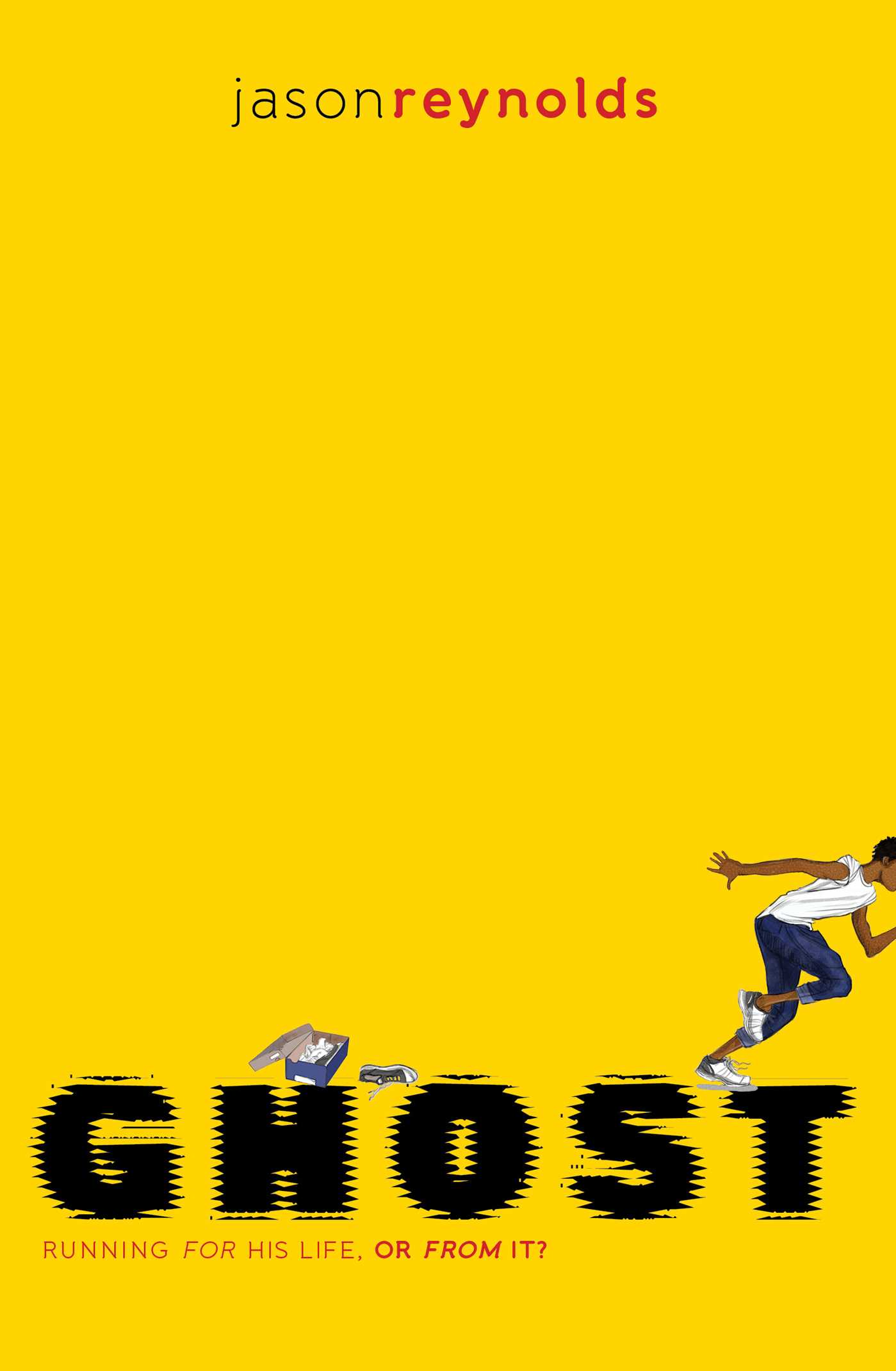
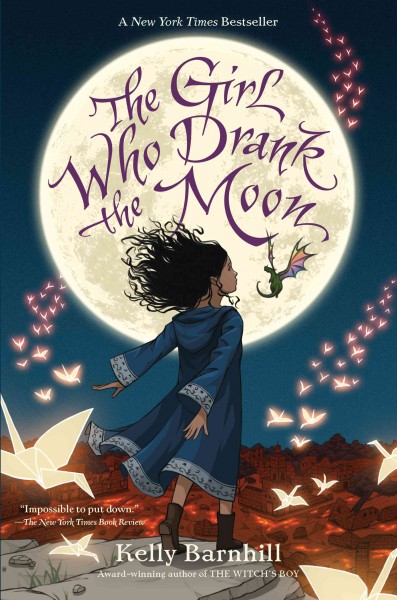
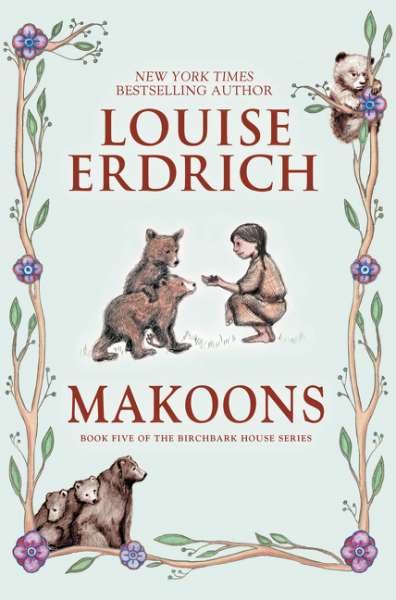

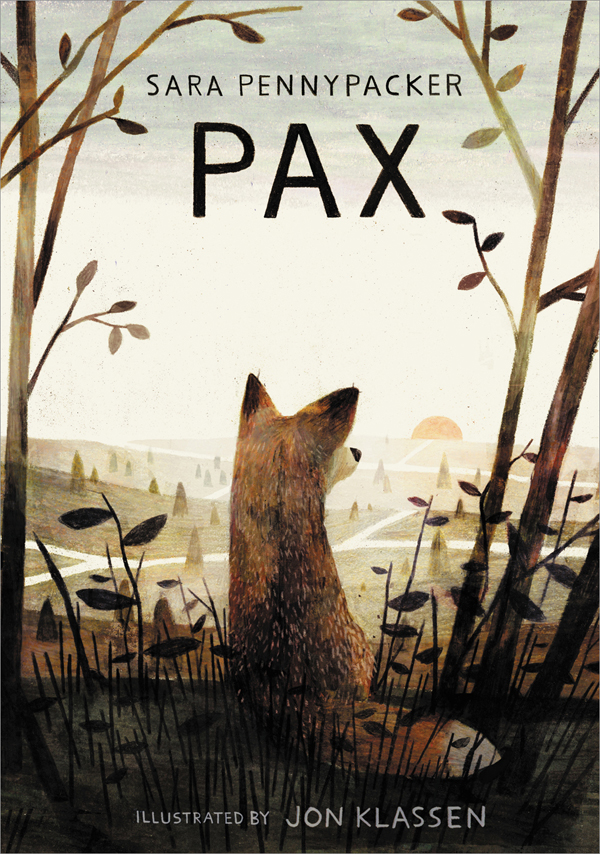
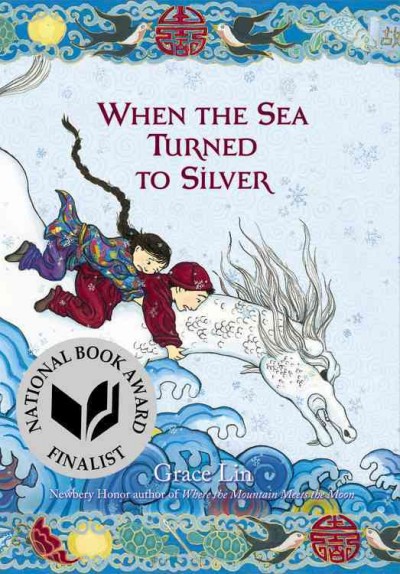


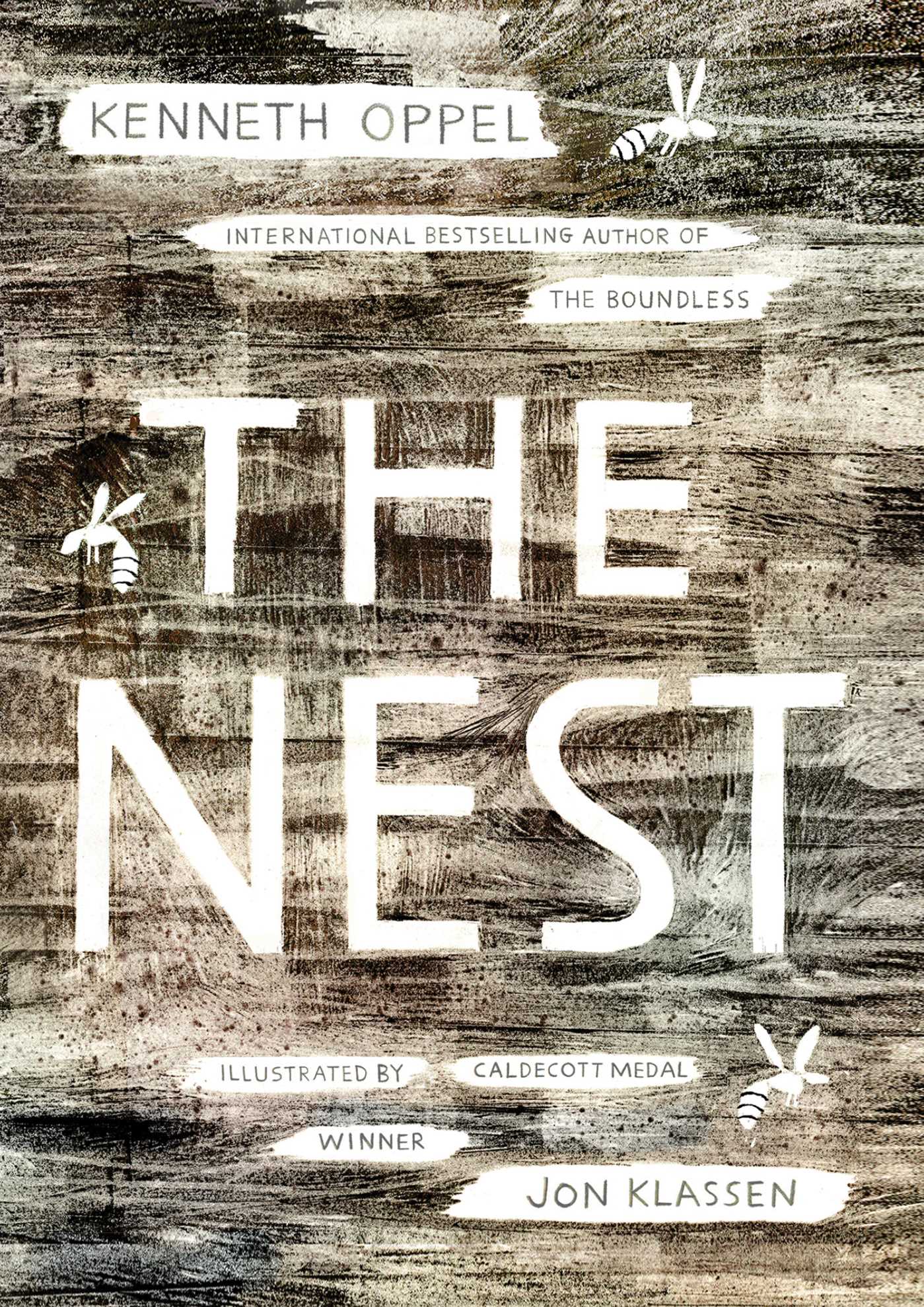
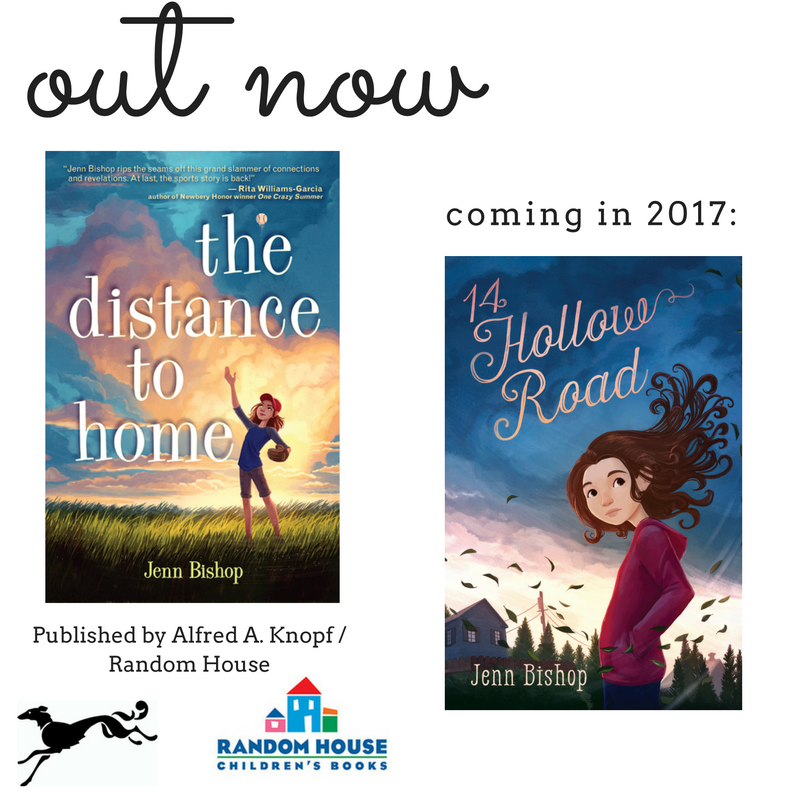
Thanks for the mentions!
I read aloud FIVE CHILDREN ON THE WESTERN FRONT to my 4th grade class last year and they loved it. None had read FIVE CHILDREN AND IT. I also gave it to a kid this year who reads literary sorts of things.
My Horn Book review of CLOUD AND WALLFISH is here: http://www.hbook.com/2016/11/choosing-books/review-of-the-week/review-of-cloud-and-wallfish/
Oh yeah! I had gotten out of reading middle school fiction because life intervened. Looks like a few here that will entice me to return. Thanks for the list.