new posts in all blogs
Viewing: Blog Posts Tagged with: science fiction, Most Recent at Top [Help]
Results 1 - 25 of 909
How to use this Page
You are viewing the most recent posts tagged with the words: science fiction in the JacketFlap blog reader. What is a tag? Think of a tag as a keyword or category label. Tags can both help you find posts on JacketFlap.com as well as provide an easy way for you to "remember" and classify posts for later recall. Try adding a tag yourself by clicking "Add a tag" below a post's header. Scroll down through the list of Recent Posts in the left column and click on a post title that sounds interesting. You can view all posts from a specific blog by clicking the Blog name in the right column, or you can click a 'More Posts from this Blog' link in any individual post.
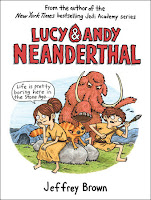
Jeffrey Brown authored the first three books in the Jedi Academy series, two of which I enthusiastically reviewed here. This trilogy is HUGELY popular in my school library and a fantastic alternative to Diary of a Wimpy Kid. Before that, Brown wrote a trilogy of Darth Vader, a comics series that imagines Vader's life as father to Luke and Leia. Brown's new series debuted in August and features prehistoric siblings Lucy and Andy as they deal with typical kid stuff while also being filled with scientific information and facts about pre-history.
Jedi Academy was too good to let go, and quite smartly, Scholastic has tapped Jarrett Krosoczka, author of the Lunch Lady series of graphic novels. Jedi Academy: A New Class finds young Victor Starspeeder making a midyear transfer from the Jedi Academy at Obroa-skai, where he has had a series of mishaps to the Jedi Academy at Coruscant. Victor decides that he is going to start keeping a journal of his time at Jedi Academy because that is what his father, who died when Victor was a baby, did. 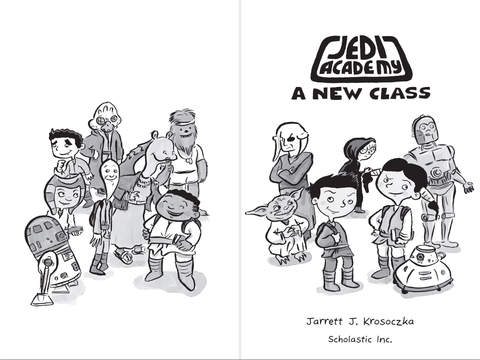
The Jedi Academy has its own challenges, starting with Christina, Victor's big sister, who already goes there. She tells him in no uncertain terms that once they are at school, they are strangers. Navigating the new school on his own, Victor is swayed by Zach, and older student, who turns out to be a bully and a prankster with his own agenda. He also gets stuck with Artemis, an asthmatic kid in a black hooded cloak who just might be a Sith. Victor tries to make friends, impress a girl, and get his special project on the planet Endor completed while also trying to stay out of trouble and keep Zach from getting him kicked out.
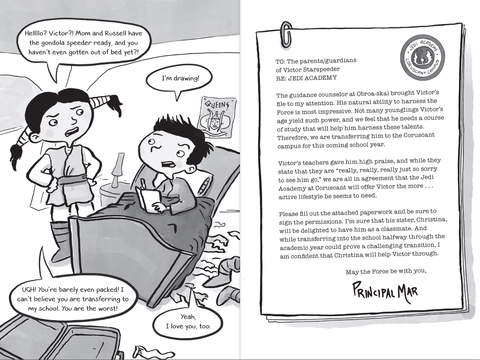
Krosoczka hits all the right notes in Jedi Academy: A New Class, continuing and updating features that Brown introduced in the first three books like handwritten notes between characters, school schedules and pages from the school newspaper, including an advice column by Ms. Catara, the school guidance counselor who is also a Gungan. Krosoczka also creates a couple new twists, including the Galaxy Feed, which is a social media type feature that pops up on a tablet like device, and a page of comic strips that look at classics like Family Circus, Peanuts and Garfield through the lens of Star Wars. I especially liked, "Huttfield," in which Jaba the Hutt is the lazy, food loving star of the strip.
While I love that this series continues on (and I hope that, after another three books a new author/illustrator takes on this challenge) and am thrilled that I have more of these books to offer students, for me, Krosoczka's take on the academic world of the young Jedi lacks a bit of the depth, heart and humor that I found in Brown's books. But hey, I'm pretty sure I'm not the target audience for these books...
Source: Purchased

By:
Betsy Bird,
on 8/28/2016
Blog:
A Fuse #8 Production
(
Login to Add to MyJacketFlap)
JacketFlap tags:
Winnie-the-Pooh,
Shel Silverstein,
Bob Shea,
Dan Gutman,
Gene Luen Yang,
Marc Tyler Nobleman,
Christian Robinson,
Fusenews,
John Oliver,
Jory John,
picture book author interviews,
Stranger Things,
Nate the Great,
science fiction,
author interviews,
Adam Rex,
Cricket Magazine,
Add a tag
Morning, poppins!
Yesterday, for the first time in a long while, I submitted a Video Sunday for your approval. Trouble is, I may have failed to mention one of the most fascinating videos out there with a tie-in to books for kids, so I’d like to rectify the situation today.
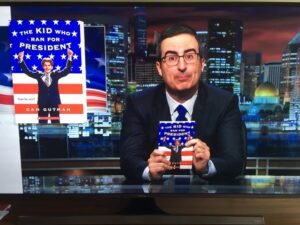 The title of the article read, ‘Last Week Tonight’: John Oliver Turned a 20-Year-Old Kids’ Book with ‘Startling Parallels’ to Trump into a Bestseller. Naturally I tried figuring out what book they were talking about but I was coming up short. Turns out it’s good old The Kid Who Ran for President by Dan Gutman. That’s a title that is consistently on New York City public school reading lists every single year. Wouldn’t be surprised a jot if that’s how Last Week Tonight‘s writing staff heard about it (some of them must have kids). Glad to see it getting a bit of attention here and there. I won’t give away which candidate the “startling parallels” refer to (kidding!). Thanks to PW Children’s Bookshelf for the link.
A Gene Luen Yang comic piece for the New York Times simply called Glare of Disdain? Don’t mind if I do!
Horn Book came out with their 2015-2016 Yearbook Superlatives post once more. Fun bit. I wonder if they collect them throughout the year as they do their reading.
Tis the battle of the smarty-pants! Who did it better? Adam Rex and Christian Robinson at Horn Book or Jory John and Bob Shea at Kirkus? The choice is yours (though Christian Robinson probably sweeps the deck with his magnificent “Black people are magic” line).
See how I’m going from a Horn Book post to a Horn Book / Kirkus post to a Kirkus review? That’s why they pay me the big bucks, folks. In any case, usually when I post a review on this blog I like to link the books mentioned in the review to Kirkus. Why? Because they’re the review journal that has the most free archived older children’s book reviews online. Generally this is a good plan but once in a while it throws me for a loop. For example, a reviewer of the original Nate the Great back in 1972 had serious problems with the title. Your homework for the day is to read the review and then figure out what precisely the “stereotype” the book was faulty of conveying really was. I’ve read this review about ten times and I’m still baffled. Any ideas?
 So I worked at NYPL for a number of years (11 in total). Of those, I spent about five or six of them working in close proximity to the original Winnie-the-Pooh toys. And in all that time I never knew them to look as good as they do right now. Oo la la! Goggle at that restored Kanga! And a Piglet where his skin ISN’T falling off his body? I don’t even know the guy now. No word on whether or not the restoration yielded more information on the music box in Pooh’s tummy (or if it’s even still there). Still, they look great (and appear to have a whole new display area too!). Thanks to Sharyn November for the link.
Did you know that Cricket Media (which runs Cricket Magazine as well as other periodicals) has a blog? I tell you this partly because I’m trying to contact someone at their Chicago location and so far my efforts have been for naught. A little help?
Did you know there was a children’s book award for science fiction? Yup. “The Golden Duck Awards, which are designed to encourage science fiction literature for children, have been given annually since 1992.” And as far as I can tell, they may still be going on. Check out their site here to see for yourself. You can suggest books from the previous year too, so have at it, peoples.
So I give up. Slate? You win. You do good posts on children’s books. I was wrong to doubt you. That post about how your son loves “bad guys” so you read him Tomi Ungerer’s The Three Robbers? That’s good stuff. And the piece on how terrible the U.S. is at translating children’s books? Also excellent. To say nothing of all the other excellent posts you’ve come up with and researched well. I doff my cap. Your pop-up blog is a rousing success. Well done you.
Question: How often has a documentary been made about a nonfiction children’s picture book about a true subject? Once at least.
Saw this next one on the old listservs and figured it might be of use to someone:
I just wanted to pass along an opportunity that I’m hoping that you’ll hope promote for ALSC. Every year, we give away four $600 stipends for ALSC members to attend Annual for the first time. Applications are open now and are being accepted up to October 1, 2016. For 2017, Penguin Random House is including one ticket for each winner to the Newbery-Caldecott-Wilder Banquet. Here is some more information.
Daily Image:
Because I just cannot stop with the Stranger Things. This one came via my friend Marci. Look closely enough and you’ll see Will hiding in the Upside Down.
Thanks to Marci Morimoto for the link.


By: Lauri Lu,
on 8/13/2016
Blog:
OUPblog
(
Login to Add to MyJacketFlap)
JacketFlap tags:
World War II,
biology,
anniversary,
predictions,
timeline,
parliament,
Timelines,
*Featured,
class issues,
Online products,
oxford handbooks online,
Arts & Humanities,
Herbert George Wells,
Labor Party,
Lauri Lu,
the Father of Science fiction,
Wikippedia,
science fiction,
Literature,
Add a tag
August 13th marks the 150th birth and the 70th death anniversary of legendary science fiction writer H.G. Wells. A prophet of modern progress, he accurately predicted several historical advancements, from the World War II, nuclear weapons, to Wikipedia.
The post The life and work of H.G. Wells: a timeline appeared first on OUPblog.
I absolutely love Arizona! I’ve been lucky enough to visit twice (Phoenix, Tempe, and Scottsdale areas), and would love to go back and see the Grand Canyon, since I never got a chance to go there. K.S. Jones paints a vibrant and beautiful picture with her words, that allows me to feel my skin sizzle under the Arizona heat, and make my mouth water for buttery cornbread. So what’s my take on a story set in a place that can conjure up Geronimo’s ghost and make you sweat with every page you turn? This is what I posted on Amazon and Goodreads…
Lightning does indeed strike twice with this 5 Star Winner!
K.S. Jones combines a mixture of Apache folklore, natural phenomenon, and science fiction in a dessert setting to create her middle grade sci-fy adventure about 10 year-old Samuel Baker and his incredible journey into another dimension. Fast-paced from beginning to end, Jones weaves a fantastic and emotional tale wrought with love, death, magic, and hope.
Jones’s imaginative story is a must for any bookshelf (or ereader), and though geared for tween boys, there’s plenty of action to get the girls cheering for Samuel and his friend Isabelle to get them back home to the families they love. High fives for K.S. Jones and her electrifying tale!
Tagline and Blurb:
Life moves on — no matter what...
Following his father’s puzzling disappearance and his mother’s death, ten-year-old Samuel Baker goes through the motions of living in a world turned upside down. He wears an Apache talisman, a long ago gift from his father, in hopes its promise of strength and guidance is true. But what he truly wants is the power to bring his parents back.
Heartless Aunt Janis is elated at the prospect of becoming Samuel’s legal guardian. She is sure an orphan boy will elicit such an outpouring of public sympathy that her husband will win his Senate bid by a landslide. But when Grandpa Tate arrives, things don’t go as expected, especially when black lightning strikes!
Read an Excerpt:
Samuel stood beside his mother’s rain-speckled casket. He had cried his tears dry, so there was no point in trying to find more.
“Chin up, young man,” Aunt Janis said as her fingers nudged Samuel’s jaw upward. “Death is just part of life, and our photographer needs a good picture of you for the newspapers.”
A camera flashed, leaving Samuel’s red and swollen eyes burning as if stung by the sun instead of grief.
So many important days had come and gone without his father, but surely he would come home today, wouldn’t he? Samuel closed his eyes. He pretended his father was beside him holding his hand. They had a right to hold hands, he told himself. Not because he was ten, but because it was his mother’s funeral. Two years had passed since his father left, never to be seen again. Vanished, was the word his mother had used. Into thin air, she’d said.
“Take that silly thing off.” Aunt Janis flicked Samuel’s wood and bead necklace.
“No,” he said and shook his head. “My dad gave it to me.” It was a pinewood tile, the size of a domino shaved nickel-thin, which hung from a leather cord around his neck. Burned onto the front side of the wood was a lightning bolt. Its flipside bore the blackened imprint of a tribal dancer. It had a turquoise nugget and a shiny black hematite bead strung together on each side. His father had given the talisman to him with a promise: It will guide you and give you strength when you need it most.
Today, dressed in a black suit and starchy white shirt, Samuel wore it in hopes the promise was true.
As mourners gathered, Samuel’s friend Brian came to stand beside him. “Hey,” he said.
“Hey,” Samuel answered without taking his eyes off the casket.
“Is that the necklace your dad gave you? You don’t usually wear it.” Brian’s wire-rimmed glasses slid down his straight arrow nose. He pushed them back up the bridge with one finger until they encircled his eyes again. “Can I see it? I promise I’ll give it right back.”
“It’s not a necklace.” Samuel pulled the leather cord off over his head, mussing his overgrown blond hair. “It’s a talisman.” He handed it to Brian. “My dad said it would help me, but it hasn’t done anything yet. I think it was just one of his stories. It’s probably just an old piece of scrap wood with a couple rocks tied to it.”
Brian shrugged after examining the piece then he handed it back to Samuel. “I think it’s cool. You should keep wearing it anyway.”
Nodding, Samuel hung the talisman around his neck again, but this time he dropped it down beneath his shirt where it was no longer visible. It felt warm against his skin.
“Has anybody told you where you’re going to live now?” Brian asked.
“Probably with Aunt Janis and Uncle Jack.”
Brian frowned. He kicked the tip of his shoe into the muddy soil. “They live so far away. Why can’t you just stay here and live with Mrs. Abel? She doesn’t have any kids.”
Mrs. Abel was their fourth grade teacher. She had plainly stated to all who would listen that her job was to teach the proper use of the English language to children who behaved properly. A babysitter, she had said, she was not. Today, she stood in the rain with the other mourners, eyeing the ground where the hem of her long, gray dress lay caked in mud. Tufts of brown hair jutted out from under her pink plaid scarf. Even though she stood a few feet from him, she had not spoken to Samuel since his mother’s death. Few people had. Everyone had words for Aunt Janis and they talked to Uncle Jack, but no one but Brian and a few classmates had spoken to him. Maybe talking to an orphan was harder than talking to a normal kid.
Purchase Links:
Mirror World Publishing
Amazon
Barnes & Noble
 Meet the Author:
Karen (K.S.) Jones grew up in California, but now lives in the beautiful Texas Hill Country northwest of San Antonio with her husband, Richard, and their dogs Jack Black, Libby Loo, and Red Bleu. Black Lightning is her first middle-grade novel. She credits her love of fantasy to the early influences of authors J.R.R. Tolkien, Jules Verne, and H.G. Wells. Her award-winning first novel, Shadow of the Hawk, a Young Adult Historical, released in 2015.
Connect with K.S. Jones:
I'm just back from
Readercon 27, the annual convention that I've been to more than any other, and for which (a while back) I served on the program committee for a few years. At this point, Readercon feels like a family reunion for me, and it's a delight.
Here, I simply want to riff on ideas from one of the panels I participated in.
Friday, I was on my first panel of the convention, "Nonfiction for Fiction Writers", with Jonathan Crowe, Keffy Kehrli, Tom Purdom, Rick Wilber. It was good fun. I'd taken lots of notes beforehand, because I wasn't really sure what direction the panel would go in and I wanted to be prepared and to not forget any particular favorites. Ultimately, and expectedly, I only got to mention a few of the items I was prepared to talk about.
However, since I still have my notes, I can expand on it all here...
First, I started thinking about useful reference books and tools. One of the things I talked about on the panel was the need I have to get some vocabulary before I begin to write anything involving history, professions I'm not highly familiar with, regions I don't know intimately, etc. I will make lists of words and phrases to have at hand. To create such a list, I spend lots of time with the Oxford English Dictionary, with specialized dictionaries (and old dictionaries —
Samuel Johnson's is invaluable, but I'm also fond of
the 1911 Concise Oxford Dictionary), with texts from the era or profession I'm trying to write about, and with a book I got years ago, the
Random House Word Menu, a highly useful book because it arranges words in a way reminiscent of the old
Roget's thesauruses (the ones not arranged alphabetically), but different enough to be uniquely useful. (For that matter, an old thesaurus is highly useful, too, as you'll find more archaic words in it. My preference is for one from the late 1940s.) Finally, I'm fond of
The People's Chronology by James Trager, which is a year-by-year chronology from the beginning of time to, in the most recent edition, the early 1990s. Being written by one person, it's obviously incomplete and biased toward what he thought was important, but what I find useful in it is the sense of scope that it provides. You can get something like it via Wikipedia's
year-specific entries, but it's nice to be able to flip through a book, and I find Trager's organization of material and summary of events interesting. Chronologies specific to particular people can be fascinating too, such as
The Poe Log.I'm also fond of old travel guides and atlases. I still have the
Rough Guide to New York City that I bought before I went to college there in 1994, and I treasure it, because it reminds me of a city now lost. I've got a couple editions of Kate Simon's
New York Places & Pleasures. (For London, I have a 1937 edition of
William Kent's Encyclopedia of London.) Similarly,
old atlases are a treasure trove; not only do they show lost places and borders long shifted, but they demonstrate the ways that people have thought about borders, geography, knowledge, and the world itself in the past. See Peter Turchi's
Maps of the Imagination for more on that.
That's it for the really useful reference stuff in general (individual projects often have their own specific needs for reference material). To see how I've put some of these things to use, check out the penultimate story in
Blood, "Lacuna". Now for some encounters with interesting nonfiction...
One of the greatest joys in nonfiction reading is to be reading something just for information and then to discover it's wonderfully written. On the panel, I said that when I was studying for my Ph.D. general exam, I decided to strengthen my knowledge of Victorian England by skimming some of
Peter Ackroyd's gigantic biography of Dickens. But once I started reading, I didn't want to skim. Ackroyd's sense of drama mixes perfectly with his passion for detail, and the book is unbelievably rich, eloquently written, and so compelling that it all but consumed my life for a couple of weeks.
Since Readercon is a science fiction, fantasy, and horror convention, I mostly thought about books to help such writers with their work. SF writers often obsess over "worldbuilding", which I put in quotation marks not only because I'm skeptical of the term, which I am, but more importantly because what such writers mean by "worldbuilding" varies. (For one quick overview, see
Rajan Khanna's 2012 piece for Lit Reactor.) My own feelings are at least in sympathy with statements from M. John Harrison, e.g. his controversial
2007 blog post on "worldbuilding" as a concept and his
brief note from 2012, wherein he writes: "Worldbuilt fantasy is over-engineered & under-designed. Whatever the term worldbuilding implies, it isn’t deftness or economy. A world can be built in a sentence, but epic fantasy doesn’t want that. At the same time, it isn’t really baggy or capacious, like Pynchon or Gunter Grass." The simplicities of SF are one of its great aesthetic and ethical limitations, even of the most celebrated and complex SF (see
my comments on Aurora for more on this; see Delany's
Stars in My Pocket Like Grains of Sand and Pynchon's
Against the Day for exemplary models of how to make complex settings in the baggy style; for short fiction, see
Chekhov). Too often, SF writing seems to seek to replace the complexities of the real world with the simplicities of an imagined world. This is one of my
complaints about apocalyptic fiction as well: when the history of the world we live in provides all sorts of examples of apocalypse and dystopia at least as awful as the ones SF writers imagine, what does that suggest about your made-up world?
Anyway, that all got me thinking about books that might be useful for someone who wanted to think about "worldbuilding" as something more than just escape from the complexities of reality. There are countless historical books useful for such an endeavor — even mediocre history books have more complexity to them than most SF, and analyzing why that is could lead a writer to construct their settings more effectively.
I said on the panel that if I could recommend only one history book to SF writers, it would be Charles Mann's
1491, which other people on the panel also recommended. While I'm sure there's academic writing that is richer than Mann's popular history, the virtue of his book is that it's engagingly written and thus a good introduction to a subject that can, in fact, be mind-blowing for a reader raised on all sorts of myths about the Americas before Columbus — some of which seem to have informed a lot of SF. (Really, Mann's book should be paired with John Reider's essential
Colonialism and the Emergence of Science Fiction.)
A very different approach to the complexities available in a single year is James Shapiro's
A Year in the Life of William Shakespeare: 1599, which I didn't get a chance to mention on the panel. It's one of my favorite books about Shakespeare for reasons well stated by Robert McCrum in an
Observer review when the book came out:
The story of 1599 ... is an enthralling one that includes the rebuilding of the Globe; the fall of Essex; the death of Spenser; a complicated publishing row about the Sonnets; the sensational opening of Julius Caesar; rumours of the Queen's death; the completion of a bestselling volume of poetry, The Passionate Pilgrim; and finally, the extraordinary imaginative shift represented by the first draft of Hamlet.
Partly, 1599 is a rediscovery of the worlds that shaped the poet's development and which, in his maturity, were becoming lost — the bloody Catholic past; the deforested landscape of Arden; a dying chivalric culture. Partly, it is a record of a writer reading, writing and revising to meet a succession of deadlines.
The writer and his world, as seen via the lens of a single year.
In my notes, I jotted down titles of a few other biographies that feel especially rich in the way they negotiate the connections between the individual consciousness and the wider world:
Virginia Woolf by Hermione Lee and
Other Powers: The Age of Suffrage, Spiritualism, and the Scandalous Victoria Woodhull by Barbara Goldsmith.
Then there is
Gotham: A History of New York City to 1898 by Edward G. Burroughs and Mike Wallace, which is unbelievably rich. There are countless books to read if you want to think about how to imagine cities and their histories; this is one that has long fed my imagination.
While I've got New York on my mind, I must recommend also George Chauncey's classic
Gay New York: Gender, Urban Culture, and the Making of the Gay Male World, 1890-1940. It's a marvelous portrait of a subculture and how that subculture interacts with the supraculture. Similarly, Graham Robb's
Strangers: Homosexual Love in the Nineteenth Century is a good challenge to a lot of assumptions about gay history.
Writers might find productive ways of working through the problems of history, subjectivity, and literary worlds by reading David Attwell's
J.M. Coetzee and the Life of Writing: Face to Face with Time, which is one of the best explorations of an individual writer's process and manuscripts that I know, and one that offers numerous techniques for thinking your way out of the traps of "worldbuilding".
On another day, if someone were to say to me, "I want to write an immersive SF story in an imagined world, so what should I read?" I would be as likely to start with Noël Mostert's
Frontiers as I would be with
1491 or another book. I first learned about
Frontiers from Brian Slattery, and though I have read around in it rather than read it front-to-back, its range and depth are utterly apparent. It tells of the history of the Xhosa people in South Africa. It is particularly valuable for anyone interested in writing some sort of first-contact story.
A caution, though: It's important to read people's own chronicles and analyses of their experiences, not just the work of outsiders or people distant in time from the events they write about. For instance, don't miss the
Women Writing Africa anthologies from the Feminist Press. Be skeptical of distant experts, even the thoughtful and eloquent ones.
Along those lines, a nonfiction book I would recommend to any writer is Edward Said's
Culture and Imperialism, which I much prefer to his more famous
Orientalism. Among the highly influential writers of the theory era, Said is, I think, hands down the best stylist and the least in need of a vociferous editor, so reading
Culture and Imperialism is often simply an aesthetic pleasure. But more than that, it brings to fruition ideas he had been developing for decades. This is not to say I think he's always
right (what fun would that be?) -- his reading of Forster's
Passage to India seems to me especially wrong, as if he'd only seen David Lean's awful movie -- but that he provides tools for rearranging how we think about imagination, literature, and politics. If you want to contribute to the culture around you, you ought to know what that culture does in the world, and think about how it does it. If you want to create imaginary cultures, then you ought to spend serious time thinking about how real cultures work. There are countless other writers who can help along the way, including ones who stand in opposition to Said, but as a starting point,
Culture and Imperialism works well.
For US writers especially, I must also add Mark Rifkin's
Settler Common Sense, a book I read earlier this year, and which made me want to go back to a lot of 19th century American lit that I don't have time at the moment to go back to. It's a kind of intellectual sequel to Toni Morrison's
Playing in the Dark (another must-read), but it expands the scope beyond the black/white binary, which, as Rifkin notes, "tends to foreground citizenship, rights, and belonging to the nation, miscasting Indigenous self-representations and political aims in ways that make them illegible."
Also well worth reading are two books by Sven Lindqvist,
Exterminate All the Brutes and
A History of Bombing, both interesting at a formal level, but also for what they discuss. These are short books, but accomplish more both aesthetically and intellectually than most SF.
It's important to consider the ways our assumptions are constructed, and if your a writer, that includes assumptions about writing, culture, and how certain styles and techniques are valued. For that, you could do worse than read
The Cultural Cold War: The CIA and the World of Arts and Letters by Frances Stonor Saunders,
The Program Era: Postwar Fiction and the Rise of Creative Writing by Mark McGurl, and
Workshops of Empire by Eric Bennett. The three books work well together, and draw on each other, creating a portrait of American literary institutions in the 20th century that are far from the objective tastemakers they sold themselves as being.
Most of the books I thought of and discussed on the panel were, in some way or another, about history, since the construction of history and memory is an obsession of mine. But I had one book about science on my list, though never got the chance to recommend it:
Sexing the Body by Anne Fausto-Sterling, a book that will challenge a lot of what you probably think you know about biology and gender. (On the other hand, the book has been influential enough that the common sense about gender and biology has shifted since it was published, so who knows.) Even if you are familiar with some of what
Sexing the Body argues about biology, it's valuable for the stories it tells about science and scientists. Indeed, this is something that makes it hugely useful to science fiction writers, even if they're not especially interested in gender: it demonstrates some ways that science is made.
Any writer could also benefit from thinking about the ways knowledge and writing disappear, and for that Nicholson Baker's
Double Fold: Libraries and the Assault on Paper is a good, if depressing, start.
Finally, I see in my notes a list of essayists I am always happy to read: Virginia Woolf, Samuel Johnson (for the construction of his sentences), Guy Davenport, Susan Sontag, James Baldwin, Carole Maso, Barry Lopez, William H. Gass, and Samuel Delany.
There are, of course, many others, and on another day I would make completely different lists and different recommendations, but these are the books and writers that come to mind now.
This collection of short works by Malachi Ward and published by Alternative Comics announces itself with a verbal joke — From Now On is another way of saying the future, after all. Ward’s stories reflect the sensibility of the title, presenting familiar scenarios, but presenting them in an unexpected way that challenges the tropes we’ve embraced […]
The first in a projected seven-book science fiction series, Joshua W. Cotter’s Nod Away draws you in with the human drama, but keeps the science fiction elements of the story mostly at bay, creating a mysterious mist that hangs on people’s lives as they cope with the little moments, oblivious to the larger mysteries that are […]
By:
Betsy Bird,
on 6/2/2016
Blog:
A Fuse #8 Production
(
Login to Add to MyJacketFlap)
JacketFlap tags:
Best Books,
bedtime books,
Little Brown and Company,
Peter Brown,
Best Books of 2016,
2016 reviews,
Reviews 2016,
2016 middle grade fiction,
2016 middle grade science fiction,
2016 science fiction,
science fiction,
Reviews,
Add a tag
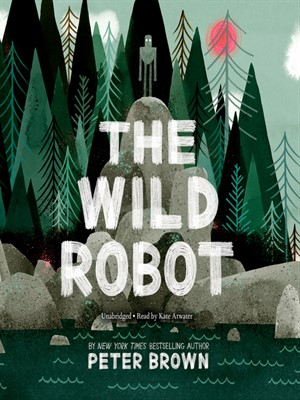 The Wild Robot
By Peter Brown
Little, Brown & Company
$16.99
ISBN: 978-0-316-38199-4
Ages 9-12
On shelves now
There are far fewer robot middle grade books out there than you might expect. This is probably because, as a general rule, robots fall into the Data from Star Trek trap. Their sole purpose in any narrative is to explain what it is to be human. You see this all the time in pop culture, so it stands to reason you’d see it a bit in children’s books too. Never you mind that a cool robot is basically a kid’s dream companion. Take away the kid, put the robot on its own, and you have yourself some philosophy lite. Maybe that’s why I liked Peter Brown’s The Wild Robot as much as I did. The heroine of this book is mechanical but she’s not wrestling with the question of what it means to feel emotions or any of that. She’s a bit more interested in survival and then, after a bit of time, connection. Folks say this book is like Hatchet or My Side of the Mountain. Maybe so, but it’s also a pretty good book about shedding civilization and going wild. In short, living many a city kid’s dream.
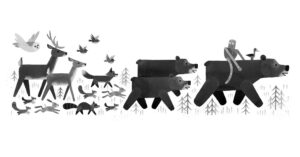
The first thing she is aware of is that she is bound in a crate by cords. Once those are severed she looks about. Roz is a robot. She appears to be on an island in the sea. Around her are the shattered remains of a good many other robots. How she has gotten here, she doesn’t know, but it doesn’t take long for her to realize that she is in dire need of shelter and allies. Roz is not a robot built for the outdoors, but part of her programming enables her to adapt. Learning the languages of the denizens of the forest, Roz is initially rebuffed (to put it mildly) by the animals living there. After a while, though, she adopts a gosling she accidentally orphaned and together they learn, grow, and come to be invaluable members of the community. And when Roz faces a threat from the outside, it’s her new friends and extended family that will come to her aid.
 They say that all good stories can be easily categorized into seven slots. One of the best known is “a stranger comes to town”. Roz is precisely that and her story is familiar in a lot of ways. The stranger arrives and is shunned or actively opposed. Then they win over the local populace and must subsequently defend it against an incoming enemy or be protected by it. But there is another kind of book this conjures up as well. The notion of going from “civilized” to “wild” carries the weight of all kinds of historical appropriations. Smart of Brown then to stick with robots and animals. Roz is a kind of anti-Pinocchio. Instead of trying to figure out how to fit in better with civilization, she spends the bulk of her time trying to figure out how to shed it like a skin. In his career, Brown has wrestled continually with the notion of civilization vs. nature, particularly as it relates to being “wild”. The most obvious example of this, prior to The Wild Robot, was his picture book Mr. Tiger Goes Wild. Yet somehow it manages to find its way into many of the books he does. Consider the following:
• My Teacher Is a Monster! (No, I Am Not) – A child sees his teacher as a creature best befitting a page in “Where the Wild Things Are” until, by getting to know her, she is humanized in his sight.
• Children Make Terrible Pets – A bear attempts to tame a wild human child with disastrous results.
• The Curious Garden – Nature reclaims abandoned civilization, and is tamed in the process.
• Creepy Carrots – Brown didn’t write this one but it’s not hard to see how the image of nature (in the form of carrots) terrorizing a bunny in his suburban home could hold some appeal.
• Even the Chowder books and his first picture book The Flight of the Dodo had elements of animals wrestling with their own natures.
In this book, Brown presents us with a robot created with the sole purpose of serving in a domestic capacity. Are we seeing only the good side of nature and eschewing the terrible? Brown does clearly have a bias at work here, but this is not a peaceable kingdom where the lamb lays down next to the lion unless necessity dictates that it do so. Though the animals do have a dawn truce, Brown notes at one moment how occasionally one animal or another might go missing, relocating involuntarily to the belly of one of its neighbors. Nasty weather plays a significant role in the plot, beaching Roz at the start, and providing a winter storm of unprecedented cruelty later on. Even so, those comparisons of this book to Hatchet and My Side of the Mountain aren’t far off the mark. Nature is cold and cruel but it’s still better than dull samey samey civilization.
 Of course, you read every book through your own personal lens. If you’re an adult reading a children’s book then you’re not only reading a book through your own lens but through the lens you had when you were the intended audience’s age as well. It’s sort of a dual method of book consumption. My inner ten-year-old certainly enjoyed this book, that’s for sure. Thirty-eight-year-old me had a very different reaction. I liked it, sure I did. But I also spent much of this book agog that it was such a good parenting title. Are we absolutely certain Peter Brown doesn’t have some secret children squirreled away somewhere? I mean, if you were to ask me what the theme of this book truly is, I’d have to answer you in all honesty that it’s about how we see the world anew through the eyes of our children. A kid would probably say it’s about how awesome it is to be a robot in the wild. Both are true.
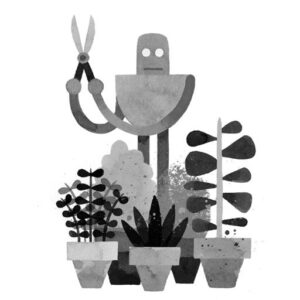
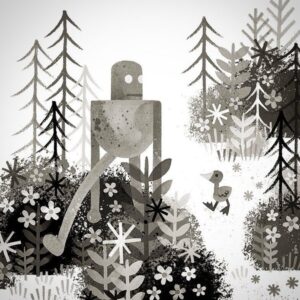
If you’re familiar with a Peter Brown picture book then you might have a sense of his artistic style. His depiction of Roz is very interesting. It was exceedingly nice to see that though the book refers to her in the feminine, it’s not like the pictures depict her as anything but a functional robot, glowing eyes and all. Even covered in flowers she looks more like an extra from Miyazaki’s Castle in the Sky than anything else. Her mouth is an expressionless slit but in her movements you can catch a bit of verve and drive. Alas, the illustrations are in black and white and not the lovely color of which we know Brown to be capable. Colored art in middle grade novels is a pricey affair. A publisher needs to really and truly believe in a book to give it color. That said, with this book appearing regularly on the New York Times bestseller list, you’d think they’d have known what they had at the time. Maybe we can get a full-color anniversary edition in a decade or so.
 Like most robot books, Brown does cheat a little. It’s hard not to. We are told from the start that Roz is without emotions, but fairly early on this statement is called into question. One might argue quite reasonably that early statements like. “As you might know, robots don’t really feel emotions. Not the way animals do.” Those italics at the beginning of the sentence are important. They suggest that this is standard information passed down by those in the know and that they believe you shouldn’t question it. But, of course, the very next sentence does precisely that. “And yet . . .” Then again, those italics aren’t special to that chapter. In fact, all the chapters in this book begin with the first few words italicized. So it could well be that Brown is serious when he says that Roz can’t feel emotions. Can she learn them then? The book’s foggy on that point, possibly purposely so, but in that uncertainty plenty will find Brown’s loving robot a bit more difficult to swallow than others. Books of this sort work on their own internal logic anyway. I know one reader who seriously wondered why the RECO robots had no on/off switches. Others, why she could understand animal speech. You go with as much as you can believe and the writer pulls you in the rest of the way.
I’ve read books for kids where robots are in charge of the future and threaten heroes in tandem with nature. I’ve read books for kids where robots don’t understand why they’re denied the same rights as the humans around them. I even read a book once about a robot who tended a human child, loving her as her parents would have, adapting her to her alien planet’s environment over the years (that one’s Keeper of the Isis Light by Monica Hughes and you MUST check it out, if you get a chance). But I have never read a robot book quite as simple and to the point as Peter Brown’s. Nor have I read such comforting bedtime reading in a while. Lucky is the kid that gets tucked in and read this at night. An excellent science fiction / parenting / adventure / survival novel, jam packed with robotic bits and pieces. If this is the beginning of the robot domination, I say bring it on.
On shelves now.
Source: Final copy sent from publisher for review.
Like This? Then Try:
By: Sharon Ledwith,
on 5/23/2016
Blog:
Sharon Ledwith: I came. I saw. I wrote.
(
Login to Add to MyJacketFlap)
JacketFlap tags:
Fantasy,
Middle Grade,
Arizona,
Book Release,
Book Blog Tour,
Talismans,
Black Lightning,
Apache,
Mirror World Publishing,
K.S. Jones,
Amulets,
Science Fiction,
Add a tag
About Black Lightning:
Life moves on — no matter what...
Following his father’s puzzling disappearance and his mother’s death, ten-year-old Samuel Baker goes through the motions of living in a world turned upside down. He wears an Apache talisman, a long ago gift from his father, in hopes its promise of strength and guidance is true. But what he truly wants is the power to bring his parents back.
Heartless Aunt Janis is elated at the prospect of becoming Samuel’s legal guardian. She is sure an orphan boy will elicit such an outpouring of public sympathy that her husband will win his Senate bid by a landslide. But when Grandpa Tate arrives, things don’t go as expected, especially when black lightning strikes!
From the award-winning author of Shadow of the Hawk
Title: Black Lightning
Author Name: K.S. Jones
Genre(s): Middle Grade, Science Fiction, Fantasy
Length: Approx. 132 pages
Release Date: May 17, 2016
Follow the Tour for Reviews, Guest Posts, Exclusive Excerpts, and Spotlight Posts:
~Black Lightning and its Apache influences~
A century ago, the word “Apache” would have conjured up images of warriors on horseback with whoops, hollers, and painted faces—worthy adversaries and fierce fighters trying to protect their families, their land, and their life-way. In my new middle-grade novel, Black Lightning, a modern-day (although rural) Chiricahua (cheer-uh-kaw-wuh) Apache family is integral to the story, adding flare to the tale with their traditional ways in a contemporary world.
The Chiricahua are most closely associated with an area in southeastern Arizona known as the Chiricahua Mountains. Within this mountainous range is the Chiricahua National Monument, which today is part of the National Park Service. It is an amazing architectural wilderness of rock pinnacles and formations, once known to the Apache as the “Land of Standing-Up Rocks.”
Storytelling has always been important in the Apache culture, and Chiricahua children are expected to be well-versed in the oral traditions and lore. These storytelling sessions are often held for the benefit of the kids and usually take place at night. Can you imagine sitting outside under a starry night and listening to the story about a race of “supernaturals” who inhabit the nearby mountains? Or maybe hear the story of a girl who married a water monster? Or learn about a place that opened a door where no door had been before?
And sometimes, Apache men and women wear amulets, or talismans, made from wood struck by lightning, called tzi-daltai. Among other virtues, it is believed the wearer can learn things from the tzi-daltai and know the right direction when lost. Most amulets are made of wood, shaved-thin and incised with a simple human form then decorated with lines to signify lightning. Some even believe lightning talks to them, while others think the flash is the flight of the arrow thrown by the Thunder People. Talismans can be worn like necklaces or carried.
Black lightning, although not a rendering of Native American lore, has gained recent recognition in the science world with what scientists are calling “dark lightning.” And given the fact that the American Southwest has some of the most spectacular thunderstorms on earth, where better to imagine the phenomenon and its potential? To a storyteller, Native American or otherwise, the possibilities are endless and interesting!
Read an Excerpt:
Samuel stood beside his mother’s rain-speckled casket. He had cried his tears dry, so there was no point in trying to find more.
“Chin up, young man,” Aunt Janis said as her fingers nudged Samuel’s jaw upward. “Death is just part of life, and our photographer needs a good picture of you for the newspapers.”
A camera flashed, leaving Samuel’s red and swollen eyes burning as if stung by the sun instead of grief.
So many important days had come and gone without his father, but surely he would come home today, wouldn’t he? Samuel closed his eyes. He pretended his father was beside him holding his hand. They had a right to hold hands, he told himself. Not because he was ten, but because it was his mother’s funeral. Two years had passed since his father left, never to be seen again. Vanished, was the word his mother had used. Into thin air, she’d said.
“Take that silly thing off.” Aunt Janis flicked Samuel’s wood and bead necklace.
“No,” he said and shook his head. “My dad gave it to me.” It was a pinewood tile, the size of a domino shaved nickel-thin, which hung from a leather cord around his neck. Burned onto the front side of the wood was a lightning bolt. Its flipside bore the blackened imprint of a tribal dancer. It had a turquoise nugget and a shiny black hematite bead strung together on each side. His father had given the talisman to him with a promise: It will guide you and give you strength when you need it most.
Today, dressed in a black suit and starchy white shirt, Samuel wore it in hopes the promise was true.
As mourners gathered, Samuel’s friend Brian came to stand beside him. “Hey,” he said.
“Hey,” Samuel answered without taking his eyes off the casket.
“Is that the necklace your dad gave you? You don’t usually wear it.” Brian’s wire-rimmed glasses slid down his straight arrow nose. He pushed them back up the bridge with one finger until they encircled his eyes again. “Can I see it? I promise I’ll give it right back.”
“It’s not a necklace.” Samuel pulled the leather cord off over his head, mussing his overgrown blond hair. “It’s a talisman.” He handed it to Brian. “My dad said it would help me, but it hasn’t done anything yet. I think it was just one of his stories. It’s probably just an old piece of scrap wood with a couple rocks tied to it.”
Brian shrugged after examining the piece then he handed it back to Samuel. “I think it’s cool. You should keep wearing it anyway.”
Nodding, Samuel hung the talisman around his neck again, but this time he dropped it down beneath his shirt where it was no longer visible. It felt warm against his skin.
“Has anybody told you where you’re going to live now?” Brian asked.
“Probably with Aunt Janis and Uncle Jack.”
Brian frowned. He kicked the tip of his shoe into the muddy soil. “They live so far away. Why can’t you just stay here and live with Mrs. Abel? She doesn’t have any kids.”
Mrs. Abel was their fourth grade teacher. She had plainly stated to all who would listen that her job was to teach the proper use of the English language to children who behaved properly.
A babysitter, she had said,
she was not. Today, she stood in the rain with the other mourners, eyeing the ground where the hem of her long, gray dress lay caked in mud. Tufts of brown hair jutted out from under her pink plaid scarf. Even though she stood a few feet from him, she had not spoken to Samuel since his mother’s death. Few people had. Everyone had words for Aunt Janis and they talked to Uncle Jack, but no one but Brian and a few classmates had spoken to him. Maybe talking to an orphan was harder than talking to a normal kid.
Purchase Links:Mirror World Publishing
http://mirror-world-publishing.myshopify.com/products/black-lightning-ebookAmazon
http://amzn.to/24H7yrYBarnes & Noble
http://www.barnesandnoble.com/w/black-lightning-ks-jones/1123660287?ean=9781987976120Quote:
“If you’ve forgotten the magic that lives in a child’s heart, this book will remind you. Black Lightning is a rare and beautiful mythic journey about one boy’s struggle with paralyzing grief and the powerful bonds that can carry a person through this world and beyond...” W. Michael Gear and Kathleen O’Neal Gear USA TODAY and NEW YORK TIMES bestselling authors of People of the Thunder
Meet the Author:
Karen (K.S.) Jones grew up in California, but now lives in the beautiful Texas Hill Country northwest of San Antonio with her husband, Richard, and their dogs Jack Black, Libby Loo, and Red Bleu. Black Lightning is her first middle-grade novel. She credits her love of fantasy to the early influences of authors J.R.R. Tolkien, Jules Verne, and H.G. Wells. Her award-winning first novel, Shadow of the Hawk, a Young Adult Historical, released in 2015.
Visit K.S. Jones:
Welcome to the Cover Reveal for K.S. Jones' upcoming release
Black Lightning!!
Book Information:
From the award-winning author of Shadow of the Hawk
Title: Black Lightning
Author Name: K.S. Jones
Genre(s): Middle Grade, Science Fiction, Fantasy
Length: Approx. 136 pages
Release Date: May 17, 2016
ISBN eBook: 978-1-987976-12-0
ISBN Paperback: 978-1-987976-11-3
Publisher: Mirror World Publishing
Are You Ready for the Cover?
About Black Lightning:
Life moves on — no matter what...
Following his father’s puzzling disappearance and his mother’s death, ten-year-old Samuel Baker goes through the motions of living in a world turned upside down. He wears an Apache talisman, a long ago gift from his father, in hopes its promise of strength and guidance is true. But what he truly wants is the power to bring his parents back.
Heartless Aunt Janis is elated at the prospect of becoming Samuel’s legal guardian. She is sure an orphan boy will elicit such an outpouring of public sympathy that her husband will win his Senate bid by a landslide. But when Grandpa Tate arrives, things don’t go as expected, especially when black lightning strikes!
Read an Excerpt:
Samuel stood beside his mother’s rain-speckled casket. He had cried his tears dry, so there was no point in trying to find more.
“Chin up, young man,” Aunt Janis said as her fingers nudged Samuel’s jaw upward. “Death is just part of life, and our photographer needs a good picture of you for the newspapers.”
A camera flashed, leaving Samuel’s red and swollen eyes burning as if stung by the sun instead of grief.
So many important days had come and gone without his father, but surely he would come home today, wouldn’t he? Samuel closed his eyes. He pretended his father was beside him holding his hand. They had a right to hold hands, he told himself. Not because he was ten, but because it was his mother’s funeral. Two years had passed since his father left, never to be seen again. Vanished, was the word his mother had used. Into thin air, she’d said.
“Take that silly thing off.” Aunt Janis flicked Samuel’s wood and bead necklace.
“No,” he said and shook his head. “My dad gave it to me.” It was a pinewood tile, the size of a domino shaved nickel-thin, which hung from a leather cord around his neck. Burned onto the front side of the wood was a lightning bolt. Its flipside bore the blackened imprint of a tribal dancer. It had a turquoise nugget and a shiny black hematite bead strung together on each side. His father had given the talisman to him with a promise: It will guide you and give you strength when you need it most.
Today, dressed in a black suit and starchy white shirt, Samuel wore it in hopes the promise was true.
As mourners gathered, Samuel’s friend Brian came to stand beside him. “Hey,” he said.
“Hey,” Samuel answered without taking his eyes off the casket.
“Is that the necklace your dad gave you? You don’t usually wear it.” Brian’s wire-rimmed glasses slid down his straight arrow nose. He pushed them back up the bridge with one finger until they encircled his eyes again. “Can I see it? I promise I’ll give it right back.”
“It’s not a necklace.” Samuel pulled the leather cord off over his head, mussing his overgrown blond hair. “It’s a talisman.” He handed it to Brian. “My dad said it would help me, but it hasn’t done anything yet. I think it was just one of his stories. It’s probably just an old piece of scrap wood with a couple rocks tied to it.”
Brian shrugged after examining the piece then he handed it back to Samuel. “I think it’s cool. You should keep wearing it anyway.”
Nodding, Samuel hung the talisman around his neck again, but this time he dropped it down beneath his shirt where it was no longer visible. It felt warm against his skin.
“Has anybody told you where you’re going to live now?” Brian asked.
“Probably with Aunt Janis and Uncle Jack.”
Brian frowned. He kicked the tip of his shoe into the muddy soil. “They live so far away. Why can’t you just stay here and live with Mrs. Abel? She doesn’t have any kids.”
Mrs. Abel was their fourth grade teacher. She had plainly stated to all who would listen that her job was to teach the proper use of the English language to children who behaved properly. A babysitter, she had said, she was not. Today, she stood in the rain with the other mourners, eyeing the ground where the hem of her long, gray dress lay caked in mud. Tufts of brown hair jutted out from under her pink plaid scarf. Even though she stood a few feet from him, she had not spoken to Samuel since his mother’s death. Few people had. Everyone had words for Aunt Janis and they talked to Uncle Jack, but no one but Brian and a few classmates had spoken to him. Maybe talking to an orphan was harder than talking to a normal kid.
Praise:
“If you’ve forgotten the magic that lives in a child’s heart, this book will remind you. Black Lightning is a rare and beautiful mythic journey about one boy’s struggle with paralyzing grief and the powerful bonds that can carry a person through this world and beyond...” W. Michael Gear and Kathleen O’Neal Gear USA TODAY and NEW YORK TIMES bestselling authors of People of the Thunder
Meet the Author:
Everyone has a story. Tell it so well that the world listens!
Karen (K.S.) Jones grew up in California, but now lives in the beautiful Texas Hill Country northwest of San Antonio with her husband, Richard, and their dogs Jack Black, Libby Loo, and Red Bleu. Black Lightning is her first middle-grade novel. She credits her love of fantasy to the early influences of authors J.R.R. Tolkien, Jules Verne, and H.G. Wells. Her award-winning first novel, Shadow of the Hawk, a Young Adult Historical, released in 2015.
Visit K.S. Jones:
Visit Tour Hosts Featuring the Cover:
Jojo Debrazza
Book Babble
Sharon Ledwith: I came. I saw. I wrote.
Bookworm for Kids
Fang-tastic Books
Tales from the Bayou and Other Worlds
jrsbookreviews
T's Stuff
Literary Escapism
Vampyre Lady's Book Stuff
The Glorkian Warrior has delivered himself a pizza, had his brains sucked almost dry by a baby alien and discovered the head of a Space Snake that spits out pie. Now, in the third and final book in this series, he and his pals face his biggest challenge ever - a possibly prophetic dream about a giant, flying mustache in The Glorkian Warrior and the Mustache of Destiny!
A post-dream, pre-Glork patrol cup of invigorating coffee that, naturally, GW thinks can talk when it's really Super Backpack, sets the story rolling. Along with a boisterous bunch of mini-Glorks that Gonk has invited in, GW and Super Backpack head out and inevitably end up in a giant hole. But, this giant hole leads to the Temple of Quackaboodle!
And, in a rare appearance, the Glorkian Supergrandma arrives, beaming down a special light from her spaceship that turns Gonk's little pals into full grown, adult Glorkians! After some minor drama, Gonk gets beamed into adulthood also, now sporting a stunning stache. Kochalka brings everything home by bringing the baby alien, now mustachioed as well, back for a final appearance. The Glorkian Warrior and the Mustache of Destiny begins at chapter zero and ends with an epilogue. But, the book doesn't end there. As the final book in the trilogy, Kochalka shares a hilarious bonus comic and the very first Glorkian Warrior comic from 2007!
Source: Review Copy
Books 1 & 2 of the Glorkian Warrior
The latest issue of Luna Station Quarterly is ready to read, and it is a colossal collection of absolutely fabulous science fiction and fantasy by women authors. You can read for free, but why not buy a copy (print or digital) and support the authors and illustrator? The cover this issue, and for the rest […]
The post LSQ Issue 025 appeared first on Cathrin Hagey.
By
Cynthia Leitich Smithfor
CynsationsParker Peevyhouseis the first-time author of
Where Futures End(Penguin/Kathy Dawson Books, 2016). From the promotional copy:
Five teens.
Five futures.
Two worlds.
One ending.
One year from now, Dylan develops a sixth sense that allows him to glimpse another world.
Ten years from now, Brixney must get more hits on her social media feed or risk being stuck in a debtors' colony.
Thirty years from now, Epony scrubs her entire online profile from the web and goes “High Concept.”
Sixty years from now, Reef struggles to survive in a city turned virtual gameboard.
And more than a hundred years from now, Quinn uncovers the alarming secret that links them all.
Five people, divided by time, will determine the fate of us all. These are stories of a world bent on destroying itself, and of the alternate world that might be its savior--unless it's too late. Could you describe both your pre-and-post contract revision process? What did you learn along the way? How did you feel at each stage? What advice do you have for other writers on the subject of revision?I set myself up for a tricky revision process when I wrote Where Futures End as a series of interconnected stories. I had to make sure that the stories connected well to each other, even though each is mostly self-contained.
My agent,
Ammi-Joan Paquette, also pointed out that the first story in the book had to be really gripping. Of course, every novel has to have an opening that grabs the reader, but that had to be especially true of Where Futures End, since the reader would only continue to the second story if s/he loved the first.
I worked really hard to revise the opening story before we sent out the manuscript on submission. But the feedback we got was that the first story still wasn’t working. The tone was too sad and dark, since the story dealt with a boy (Dylan) wrestling with the death of his brother; and Dylan was confusing, since he kept going back and forth on whether he had the ability to visit another world. I was pretty bummed about this feedback because I loved Dylan and his story, but I could see that the manuscript wouldn’t sell as-is.
I scrapped that first story and started over. I brought the dead brother back to life and made the plot focus on sibling rivalry. I created a more linear progression for Dylan’s investigation into whether he had the ability to visit another world, and I had the brother play a larger part in this mystery. To my surprise, this new version of the story felt even closer to what I had originally want to achieve. And it got a lot more interest from editors.
The editor who bought the novel, Kathy Dawson (who has her own imprint at Penguin), wanted me to make even deeper cuts. In the original version of the manuscript, Dylan is obsessed with a series of fantasy novels about the Lookingland, a magical realm Dylan thinks he can visit. Throughout the novel, other characters also try to access the Lookingland, so it became an element that tied together the separate stories that make up Where Futures End. Kathy suggested I cut out the Lookingland entirely; she thought it was too confusing, one more thing for the reader to keep track of in an already intricate novel. But how in the world would I then tie all of Where Futures End together?
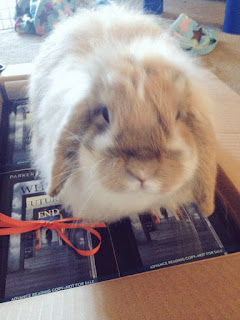 |
| Parker's assistant, Arya |
We figured out that Dylan, instead of reading novels about the magical land he longed to escape to, should write stories about that land himself. This set up a new way to connect the stories that comprise Where Futures End.
In the second part of Where Futures End, Dylan’s stories come to the public’s attention. In the third part, we see that books and movies have been made from Dylan’s stories. In the fourth part, a main character makes his living playing a video game based on Dylan’s stories. And in the fifth part, the stories take on a life of their own…
It was painful to make all of those deep cuts. I wasn’t always sure I should make such huge changes to my original vision! But I took the advice of my agent and did my revisions in a separate document so that I always had the option of reverting to the original manuscript.
That helped me make bold changes, and in the end, I felt the new versions of the manuscript were better than the old versions.
It helps to have an agent and an editor who are so insightful with their revision suggestions, but I also recommend taking chances with revisions, knowing you can always go back to what you originally wrote if those revisions don’t work for you.
As a science fiction writer, what first attracted you to that literary tradition? Have you been a long-time sci-fi reader?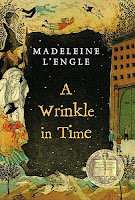
Does anyone else remember “poot” from
My Teacher Fried My Brains by
Bruce Coville (Aladdin, 1991)? I loved that crazy-weird stretchable pet when I was in grade school. And I was fascinated by the tesseracts in
A Wrinkle In Time by
Madeleine L’Engle (Farrar, Straus & Giroux, 1963).
When I was a kid, if there was a book in my library about something strange, I took it home.
Those books inspired me to write my own weird stories about kids visiting alternate realities and wielding supernatural powers.
Reading and writing science fiction was the only thing that could feed my ever-hungry imagination.
What drew me to science fiction as a kid were the strange ideas, the mind-benders, like Meg Murray talking about how time is the fourth dimension.
Where Futures End makes use of the tropes I’ve loved reading about from a young age: alternate universes, time distortion, psychic abilities. But I’ve also grown to love how science fiction explores personal interactions and cultural changes. I wanted Where Futures End to explore culture in the same way
Feed by
M. T. Anderson (Candlewick, 2002) does, and to explore relationships in the same way that
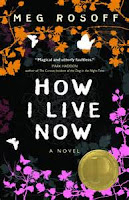
How I Live Now by
Meg Rosoff (Penguin, 2004) does.
Science fiction, more than any other genre, lends enough distance to gain new perspectives, and that’s the main reason I still love the genre.
James Kochalka's Glorkian Warrior and his best buddy Super Backpack debuted in The Glorkian Warrior Delivers a Pizza. In this epic space adventure, the Glorkian Warrior successfully delivered a pizza to himself. In the second book in the series, The Glorkian Warrior Eats Adventure Pie, the Glorkian Warrior is once again his own worst enemy, but this time he has an actual foe - fellow warrior, Buster Glark.
After Buster Glark takes out the the pie factory destroying space snake that he was trying to put an end to, the Glorkain Warrior and Super Backpack find their way home where they are greeted by Gonk, a mini-me version of the Glorkian Warrior and a lime green baby alien who affixes himself firmly to GW's head and makes a sucking sound.
Some serious absurdity ensues, including rearranging the furniture by flipping it upside down, a poke in the eye for Gonk, a consultation with Mr. Elbow and backpack for Gonk made from the house phone. The gang head out for Glork Patrol but, of course, things don't go as planned. GW falls over, from extreme hunger or from the baby alien sucking all his brains out, leaving Gonk and Super Backpack to save the day.
Not an easy task by any means, things get even more complicated when Buster Glark returns and uses a freeze ray on the baby alien. Ships are crashed, holes are made, elbows are thrown and, incredibly, the baby alien attacks the Space Snake resulting in the head crashing down right in front of the gang and spitting out pieces of pie!
Kochalka's sense of humor (and plotting) is completely bonkers and perfectly paired with the Easter egg colors of his illustrations. There are fart jokes, a few butt jokes and all sorts of ludicrous antics that kids love. The Glorkian Warrior Eats Adventure Pie might not be everyone's sense of humor, but for those who dig it, it's a stellar treat!
Source: Purchased
Books 1 & 3 in the Glorkian Warrior Series!
Coming in March!
The Glorkian Warrior and the Mustache of Destiny
By
Cory Putnam Oakesfor
Cynthia Leitich Smith's
CynsationsWhen I sold my first middle grade novel, I was super excited when my publisher asked me if I would also write a sequel.
A sequel!
Squee! Because two books were obviously twice as awesome as one book and now I’d get to spend more time writing in the world I had painstakingly constructed for Book #1.
I was ecstatic and I floated around on a cloud of overwhelming happiness—right up until the moment I sat down to write Book #2.
Then, panic set in.
The sequel, which had sounded so good in theory, was downright terrifying in actual fact. I had no idea where to start and I was sure I was going to totally screw it up.
I had never experienced a sequel as a writer before. My writer-self had nothing but a big giant blank to draw on in that area.
I realized, however, that I had experienced quite a few sequels as a reader. And my reader-self had some very definite opinions about sequels, so I decided to let my reader-self educate my writer-self on how to proceed.
Turns out, my reader-self had some useful things to say which really helped me during the (eventual) writing process.
So in the interest of helping other writers who currently find themselves (or may one day find themselves) staring down the barrel of a sequel, here are my Seven Deadly Sins of Sequels:
Deadly Sin #1: Skipping StuffPerhaps one of my biggest peeves when it comes to sequels is when major changes happen between Book #1 and Book #2 and we learn about those changes in a recap at the beginning of Book #2 instead of actually seeing them happen.
If you’re going to kill off a character, end a major relationship, have somebody move away, or basically put any character in a fundamentally different position than the one they were in at the end of Book #1, don’t do it in a recap! That’s cheating.
Your reader is picking up Book #2 because they loved the story and the characters from Book #1—don’t bamboozle us by letting major things happen behind our backs! We will feel like we missed a step. (Which, in fact, we did!)
Deadly Sin #2: Jumping the TracksNo one likes a plot they can see coming a mile away, but it’s also no fun to feel like the story-train you climbed aboard in Book #1 has literally jumped off of its tracks in Book #2 and is headed in a new direction, one for which you didn’t buy a ticket.
That doesn’t mean that the plot of Book #2 should be yawningly predictable for the sake of comfort, but there should be some hint of what is coming next built into Book #1 so your reader doesn’t feel completely blind-sided.
(Note: don’t panic if you’ve already completed Book #1 and you don’t think you did this—go back and read Book #1 again. I promise you planted more seeds than you remember.)
Deadly Sin #3: Book 1? Was There a Book #1?You don’t want Book #2 to only make sense to people who were really, really paying attention to Book #1. But on the flip side, your sequel should not be a complete stand alone: Don’t act like Book #1 never happened. If, for example, your main character overcame a major obstacle in Book #1, it’s weird if that obstacle, and his/her struggle, is never referred to in Book #2.
You don’t have to go overboard reminiscing and info-dumping about all the stuff that happened in Book #1 ("Hey guys! Remember that time that we . . . "), but Book #1 is now part of the mythos, the shared understanding, of both books. It’s a common language between you and your reader. Use it as such. Make sure that you are building up your characters in Book #2 on top of a foundation that you constructed in Book #1.
Deadly Sin #4: When Book #2 is Basically Just Book #1 On SteroidsEXAMPLE:

In Book #1, the main character learns how to deal with a bully.
In Book #2, the main character learns how to deal with an even bigger, nastier, scarier bully.
No. Your main character has already fought this battle. They need a new battle for Book #2 or we’re just watching them go on the exact same journey they’ve already taken. Even if we really, really enjoyed the journey the first time around, we don’t want to see it again.
The question your sequel audience is asking is: Where does this character go from here? Not: Can they do it again even though it’s slightly harder this time?
Deadly Sin #5: When Book #2 Is Nothing But a Bridge to Book #3This is a well-documented problem, specific to trilogies, when an author sacrifices Book #2 in order to set up the amazing, wonderful, mind-blowing idea they have for Book #3.
Okay, fine, I’ll use a specific example here:
"The Empire Strikes Back." I love
"Star Wars," I do. But even I’m forced to admit that Empire was really just a big set-up for
"Return of the Jedi." We can excuse this because of all the battles with Imperial Walkers and people cutting open tauntauns, being frozen in carbonite, and almost getting eaten by meteor-caves-that-are-really-giant-monsters. "Star Wars" can get away with this. But you and I can’t.
We need to move our plots along because people are not going to be as forgiving about our books as they are about "Star Wars" because, well, our books are not "Star Wars."
Trilogies are tough because in a three book series, Book #1 is going to be the beginning, Book #2 the middle, and Book #3 the end. The tricky part is that each individual book in the series (including Book #2) also needs a beginning, middle, and an end of their very own.
How can you tell if you’re sacrificing Book #2? If the only stuff that happens in Book #2 is bad and there is no resolution to any of it, this is big, red, flashing warning sign. If Book #2 is when everything breaks, and Book #3 is where everything is fixed, this means you’re stopping your characters in mid-arc in Book #2. This is very unsatisfying.
Don’t get me wrong: You can leave your characters in dire straits at the end of Book #2. But make sure they accomplished something while getting there. There needs to be some kind of resolution to Book #2 problems—in Book #2.
Deadly Sin #6: Major Reveals That Should Have Happened EarlierYou know when you’ve been friends with somebody for years and then you learn a very important thing about them that you can’t believe you didn’t know? It feels rotten, right? Like maybe you never really knew them like you thought you did, or that maybe you’re a bad friend for not realizing this very important thing sooner?
Don’t make your reader feel like that. I’m not saying you can’t reveal new, surprising, very important things about your characters in Book #2—you can, and you should. But there needs to be a very good reason why we didn’t hear about this very important thing in Book #1. Don’t make your reader feel like a bad friend.
Deadly Sin #7: When Characters Morph Into StrangersAs readers, we fall in love with characters. Sometimes to unreasonable degrees. We will tolerate (and even encourage) them when they change and grow in reaction to things that happen to them, but we will not accept them drifting away from their core, defining characteristics.
Nobody would be okay with it if Indiana Jones suddenly decided to just “get over” his fear of snakes and adopted one as a pet. Nobody would be on board with Harry Potter dropping out of Gryffindor, joining Slytherin, and giving Ron Weasley wedgies in the hallway. It’s just not them.
Your characters need to grow and change in Book #2. But they need to stay themselves. Don’t mess with the core of who they are, or you risk the wrath of your readers who love them.
So those are the sins that I tried to avoid while writing my sequel. What did I miss? What else can we add to this list, to help guide the future sequel-writers of the world on their perilous journey?
Note: As you add to this list, please speak generally, as opposed to using specific books and authors as negative examples. Everyone who has ever tackled a sequel deserves a hug, a high-five, and at least a gallon of chocolate ice cream—not criticism. Let’s keep it positive, encouraging, and helpful!
Cynsational NotesCory Putnam Oakes is a writer living in Austin, Texas.
Dinosaur Boy Saves Mars, the sequel that inspired this post, came out in February, 2016 from Sourcebooks.
She is also the author of
Dinosaur Boy (Sourcebooks, 2015);
The Veil (Octane Press, 2011); and
Witchtown (coming from Houghton Mifflin, 2017).
She wishes it to be known that she feels really, really badly about disparaging "The Empire Strikes Back" in the above post.
But she is certain that her overwhelming love for "Star Wars" in general will excuse this teeny, tiny bit of loving criticism.
Cynthia Leitich Smith agrees with Cory about the perils of "bridge" books in trilogies, but nevertheless believes that "The Empire Strikes Back" is the best of the "Star Wars" movies. Cynthia also selected
"The Karate Kid II" to illustrate Cory's fourth point, even though it's her favorite of that series, too. She apparently feels conflicted about the whole dynamic.
It’s Jocelyn sneaking in a non-weekend post because Lindsey was kind enough to let me borrow one of her WoW slots for an interview with Beth Revis and Cristin Terrill. A while back, I attended one of their
Wordsmith Workshops and Retreats, and it was amazing! In between craft sessions, critiques, writing, fellowship, and delicious food, I found time to chat with these delightful ladies. See what they had to say about being women who write science fiction.
Read more »
By
Cynthia Leitich Smithfor
CynsationsCheck out the cover for
The Alarming Career of Sir Richard Blackstone by
Lisa Doan (Sky Pony, 2017). From the promotional copy:
A funny middle grade mystery adventure complete with an unconventional knight, a science experiment gone awry, a giant spider, and a boy to save the day!
Twelve-year-old Henry Hewitt has been living by his wits on the streets of London, dodging his parents, who are determined to sell him as an apprentice. Searching for a way out of the city, Henry lands a position in Hampshire as an assistant to Sir Richard Blackstone, an aristocratic scientist who performs unorthodox experiments in his country manor. The manor house is comfortable, and the cook is delighted to feed Henry as much as he can eat. Sir Richard is also kind, and Henry knows he has finally found a place where he belongs.
But everything changes when one of Sir Richard’s experiments accidentally transforms a normal-sized tarantula into a colossal beast that escapes and roams the neighborhood. After a man goes missing and Sir Richard is accused of witchcraft, it is left to young Henry to find an antidote for the oversize arachnid. Things are not as they seem, and in saving Sir Richard from the gallows, Henry also unravels a mystery about his own identity.Congratulations on your upcoming release! What do you think of your new cover?I love it! Huge thanks to Sky Pony and my editor, Adrienne Szpyrka, for capturing the humor of the book while at the same time working in two prominent elements – the giant tarantula and a journal detailing a trip to South America.
The tarantula is Henry Hewitt’s problem and the journal is the key to figuring out what to do about it, which he must do to save his friend and protector, Sir Richard Blackstone.
More specifically, how does the art evoke the nuances of your book?We wanted the journal to feel Old World, hence the faded brown, as this story takes place in the late 1700’s English countryside.
Sky Pony’s designers had the genius idea of having the tarantula holding the journal to tie it all together. The red and yellow lettering really pop and signal the lighthearted tone.
I couldn’t be happier with how it turned out.
Isn’t it every middle-grade writer’s dream to have a cover with a tarantula on it?
I know it has always been one of mine!
Cynsational NotesLisa Doan has an
MFA in Writing for Children and Young Adults from Vermont College of Fine Arts and is the author of the award-winning series
The Berenson Schemes (Lerner).
Operating under the idea that life is short, her occupations have included: master scuba diving instructor; New York City headhunter; owner-chef of a restaurant in the Caribbean; television show set medic; and deputy
prothonotary of a county court. She currently works in social services and lives in West Chester, Pennsylvania.
Alas, Babylon. Pat Frank. 1959/2005. Harper Perennial Modern Classics. 323 pages. [Source: Bought]
I spent the whole year of 2015 meaning to read Pat Frank's Alas, Babylon. So I decided that this year, it would be one of the very first books I read. I wasn't going to let another year pass before I sat down to reread this sci-fi classic.
Alas, Babylon was originally published in 1959. I think it is crucial to remember that fact as you're reading. The book is set during the Cold War, published during the Cold War, and asks the question: WHAT IF the Soviet Union uses nuclear warfare and attacks various cities and bases across the whole United States. Would there be survivors? How would people survive? What would they eat and drink? Not just in the initial weeks following the nuclear war, but, more long-term than that. How would they cope--how would they manage--without electricity, without batteries (once they ran out), without cars (once all the gas was gone), without new supplies arriving by truck or plane, etc. Would communities come together or be torn apart? How would people deal with one another, treat one another? Would lawlessness prevail? Would fear and anger and greed win the day? Or would people still look out for one another?
Alas, Babylon is not just a what-if story, however. It is a personal story, that I felt remained character-driven. It stars Randy Bragg and his family. His brother, Mark, sends Randy a warning in a telegram, "Alas, Babylon" their code for the end is coming, war is inevitable, be prepared. Randy prepares to receive his sister-in-law, niece, and nephew into his Florida home. The book is set in a small community in Florida, a community that is fortunate in some ways--many ways. Readers get a chance to know quite a few of the locals in addition to this one family. For example, the local librarian who finds herself most necessary to the community. The library COMES ALIVE after the attack, as people become desperate for information and news, for entertainment, etc.
I liked the practical aspects of Alas, Babylon. Unlike Life As We Knew It, I felt it handled the situation practically, logically. One of the big issues I had with Life As We Knew It, a book I love despite its flaws, was the fact that it got a few practical things wrong: for one, how people get water. It has the heroine's family getting well water through their pipes without an (electric) pump! Not the case with Alas, Babylon. If it has flaws, they didn't leap out at me.
Alas, Babylon is a thought-provoking novel. One I'd definitely recommend.
© 2016 Becky Laney of
Becky's Book Reviews
Title: Planetes Genre: Science Fiction Publisher: Kodansha (JP), Dark Horse Comics (US) Creator: Makoto Yukimura Serialized in: Weekly Morning Original Release Date: December 22, 2015 Review copy provided by the publisher I’ll admit that I wasn’t overly familiar with this story going in but from what I’d heard Planetes sounded like a series of loosely connected ... Read more
The post Manga Review: Planetes (Volume One) appeared first on Organization Anti-Social Geniuses.
 Doomsday Book. Connie Willis. 1992. Random House. 592 pages. [Source: Book I Bought]
Mr. Dunworthy opened the door to the laboratory and his spectacles promptly steamed up.
"Am I too late?" he said, yanking them off and squinting at Mary.
"Shut the door," she said. "I can't hear you over the sound of those ghastly carols."
Dunworthy closed the door, but it didn't completely shut out the sound of "O Come, All Ye Faithful" wafting in from the quad. "Am I too late?" he said again.
This is my fourth time to read and review Connie Willis' Dooms Day Book. This not-so-little novel combines my love of historical fiction and my love of science fiction. It does so, of course, through time travel. Kivrin, the heroine, will be the first historian--first time traveler--sent to the fourteenth century. The century has just recently, and perhaps unadvisedly, been opened up to time travel. Kivrin will be traveling to a "safe" year: 1320. But Mr. Dunworthy fears that there is no such thing as a SAFE year within the fourteenth century. She's studied and prepped for this for years now, this is HER ONE BIG LIFE-DREAM. And certainly the worries of an "old professor" like Mr. Dunworthy won't stop her from going. But is Mr. Dunworthy right to worry?!
It is set--in the future and the past--during the Advent-Christmas-Epiphany season. The book examines the role of faith and religion, at the very least during this season of the year. But, in particular, it addresses the question of God and suffering. I would never say it is a "religious" book, but, Kivrin, in particular is sent to a century where belief in God IS a matter of fact and the church had more power and influence. Christian readers should note that Mr. Dunworthy and Kivrin both misunderstand much of who God is and what the Christian faith is all about.
Doomsday Book might be "just right" for you if...
- You enjoy science fiction, in particular time travel
- You enjoy historical fiction
- You enjoy medical mysteries
- You enjoy compelling dramas
- You enjoy character-driven novels
© 2015 Becky Laney of
Becky's Book Reviews
Robert Sawyer said, "I care deeply and passionately about this genre [science fiction]" during a presentation I attended at the Ontario Library Association Conference. And it was obvious he does. I was, however, more than a little surprised by the passion he exhibits to defend his vision for the SciFi genre--although I have to agree [...]
Continue reading...
Inspired by 1950's sci-fi movie posters, we DON'T want our polar bears to become the folder of science fiction! A collective effort soon solidified at #COP21 #saveourseaice.
2015, Knopf
I've been delving into the fascinating world of sketchnoting, and have been practicing my skills (and trust me, you should see the very first one I created....practice does help!) I've seen professor
Karin Perry from Sam Houston State University do book reviews via sketchnotes and decided to try it out.
What is NOT in the sketchnote is my personal review. So this is what I think of this book:
WOWOWOW!!! This is 599 pages of intense plot, conflict, and survival all set in a science fiction thrillfest based on documents, journals, e-mails, imessages, and high security reports... and even concrete poetry. The format itself is enough to draw the reader in and it reads fast because of this. The characters are an excellent mix of adults and teens, which makes this science fiction novel so believable. Adding diagrams of the ships adds a deeper dimension for the readers as well as their mode of travel through wormholes. This is a deep space chase that will grab you to turn the next page to see what happens. Huge twist at the end - VERY unexpected! One of the top 10 best books I've read this year!
Highly recommended for JH/HS.
.jpg?picon=107)
By:
Lizzy Burns,
on 11/12/2015
Blog:
A Chair, A Fireplace and A Tea Cozy
(
Login to Add to MyJacketFlap)
JacketFlap tags:
2015,
favorite books of 2015,
YA,
dystopia,
science fiction,
reviews,
simon and schuster,
Erin Bow,
Add a tag
The Scorpion Rules (Prisoners of Peace) by Erin Bow. Margaret K. McElderry Books, an imprint of Simon & Schuster Books. 2015. Review copy from publisher.
The Plot: Our world, about 400 years in the future. For various reasons (wars, water shortage, environmental changes) an AI (artificial intelligence) named Talis seized control of, well, everything, and first forced peace on the world by blasting a few cities.
Then Talis realized there was a better way. That destroying towns wouldn't create world peace. But hostages would. Child hostages, to be specific. It's simple: take a child of each leader. Hold onto them until they are 18. If the leader declares war, the child hostage's life is forfeit.
Greta Gustafsen Stuart is the Duchess of Halifax and the Crown Princess of Pan Polar Confederacy. She has been a hostage since the age of five. She is now sixteen; if she can make it until eighteen....
But her country has water. And others don't. And she knows that one day, sooner rather than later, war may be declared and her life may be forfeit.
The Good: Alright, let's cut to the chase: this is a Favorite Book of 2015. Hell, I'll go on record and say this is easily a top ten book. I'll go even further: I'll be damn disappointed if this isn't on awards lists and best lists at the end of the year.
And to say why this is so, why I am so passionate about this book, I'll be talking spoilers. So fair warning: stop now if that bothers you, read The Scorpion Rules, then come back.
The Scorpion Rules is a dystopia, or, at least, a dystopia for those children of rules and leaders who are sent away to be held hostage, knowing that if their parents pick country over blood they will die. They have been taught history to understand their role and their history, including ancient history to give a broader, perhaps colder, perspective on people and war and violence.
Greta, like her friends and fellow hostages, have been taught about their role; have been taught to accept it; have been taught to not fight back. To not resist. To not escape.
And then a boy comes to their school, a boy whose grandmother just gained power so he's been sent as hostage, a bit older than most, and less royal, so less prepared. Elian.
I KNOW WHAT YOU ARE GOING TO SAY IT'S JUST ANOTHER DYSTOPIAN ROMANCE BUT IT ISN'T. AND YES THERE IS A SECOND LOVE INTEREST BUT IT'S NOT A TRIANGLE JUST, WAIT.
Yes, it's dystopian; but like I said, at least for this book, it shifts the burden of the dystopia to the upper class, to the privileged. And the Children of Peace, the hostages, realize both their burden and their privilege. And it's grounded in real history -- the exchanging and taking of hostages has historic basis. (Fans of the TV show Reign will remember King Henry saying he and his brothers where hostages in the Spanish Court. That was true.) I say at least for this book, because we haven't seen much of life beyond where Greta lives, so I can't be sure of how others live. There is a hint that Talis controls and meddles with the lives of others, but it's unclear just how much of an impact that has.
This dystopia also makes sense; it's coherent, enough is given to explain why and how this system was accepted and evolved. It's also thoughtfully and realistically diverse. The Children of Peace come from all over the world, from all types of countries. Some, like Greta, are their for hereditary reasons -- she is the crown princess, born into this world, born to be a hostage. Others, like the Children from what was the United States, are there because parents have been voted into/taken charge by other means. They have no titles; they may arrive at the school older, with their status sudden and unprepared for. That is Elian.
And it's also grounded in science fiction, not fantasy -- the AI that controls the world, Talis, and the link between humans and computers is a scientific element of the story, not a fantastical one, and it's not just the push for the story. Talis is present throughout, lurking in the background, moving to the forefront.
Also, the threats are real. The Scorpion Rules starts with a child hostage being taken away because his country declared war. There is a graveyard by the school. There is torture, there is manipulation, not nice things happen again and again.
Now, on to the love triangle. Which isn't. There is new boy Elian and there is some sort of connection or attraction between him and Greta, but more important than that, is that Elian shows Greta another way. That submission and acceptance is not the only path in life. That no matter what, there is choice.
And then there is Greta's best friend and roommate, Xie. Greta has not just accepted the way she has been raised, the future she's been told to expect. She has also buried most of her emotions and feelings, avoiding emotional risk. And yet when Elian helps provide the catalyst for her to open up, and change, and question, it also helps her unlock her frozen feelings for Xie.
See? It sounds like a triangle because there are two people -- but it isn't. It so, so isn't.
One last thing: Greta may have accepted her part in life and politics; she may have tried to avoid certain deep attachments; but she is also a royal. Born to be a hostage, born to live a role, but also born to take her place if she lives past 18. Born to be a leader, and at her school, she is a leader. She's not a follower. She's not passive, even if to someone like Elian, the Children of Peace hostages look passive and accepting.
So, go, read it, and like me, look forward to the next book. Because I have no idea what will happen next -- and that? That is a great feeling to have.
Amazon Affiliate. If you click from here to Amazon and buy something, I receive a percentage of the purchase price.
© Elizabeth Burns of A Chair, A Fireplace & A Tea Cozy


View Next 25 Posts




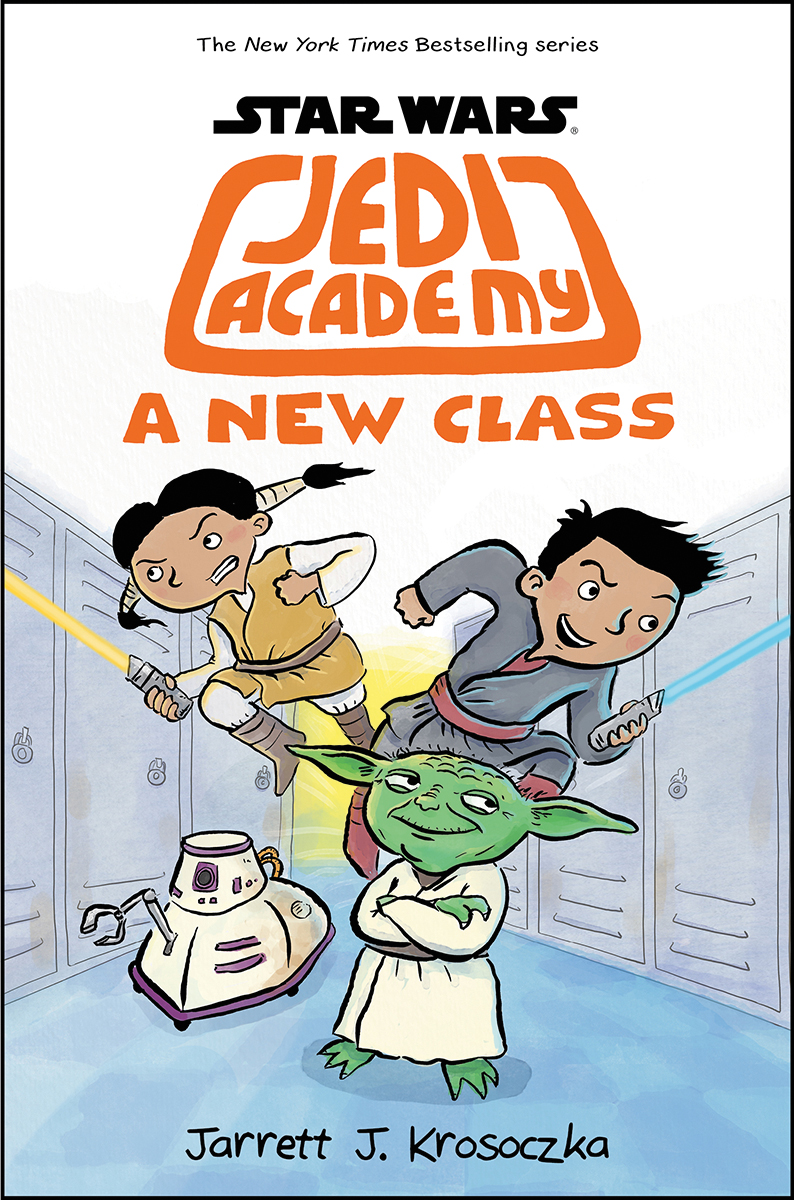


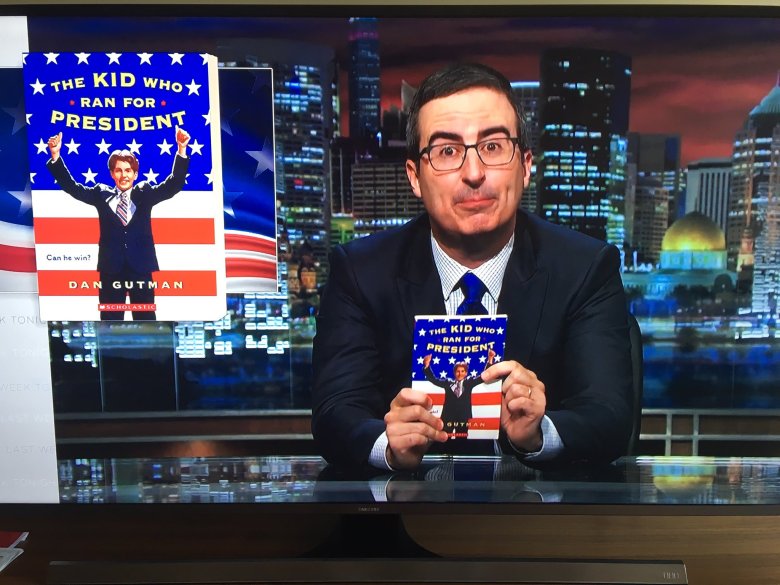


.jpg?picon=160)


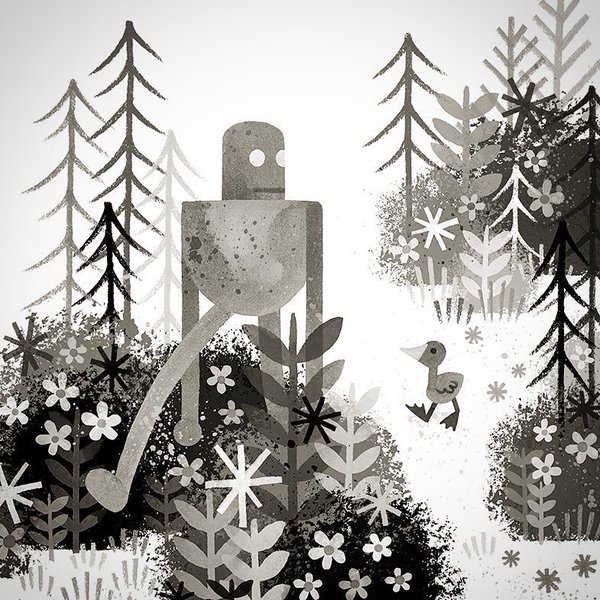
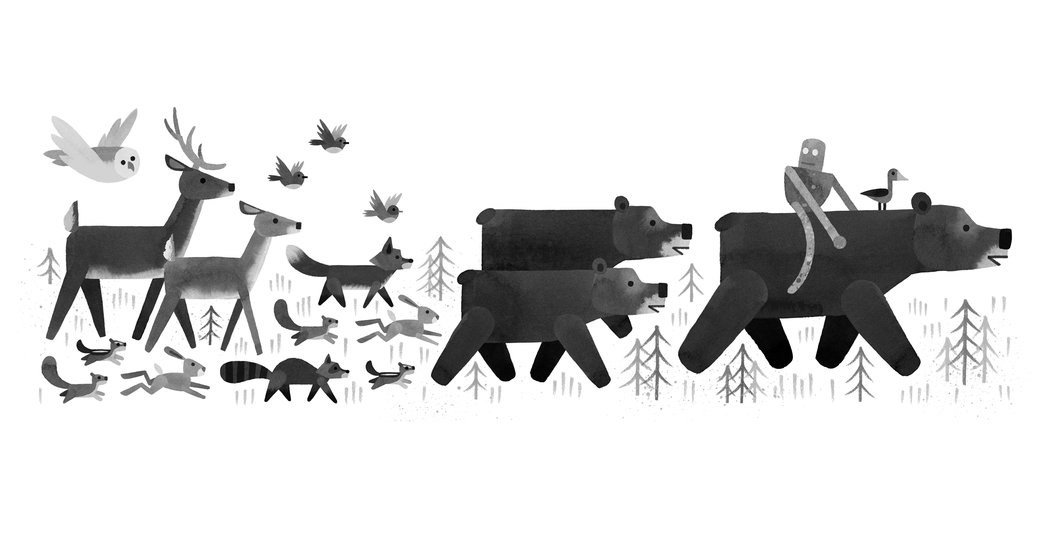


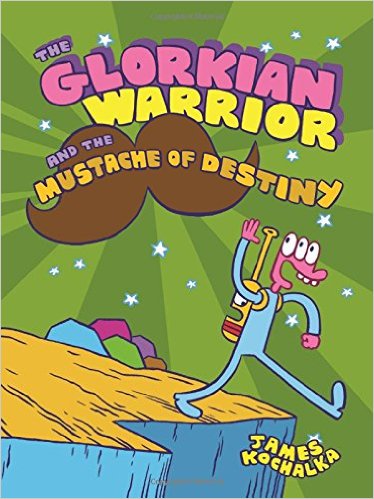


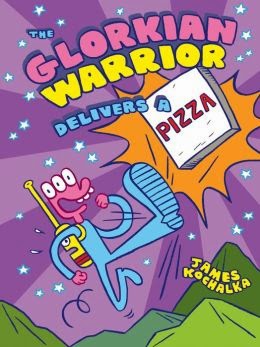
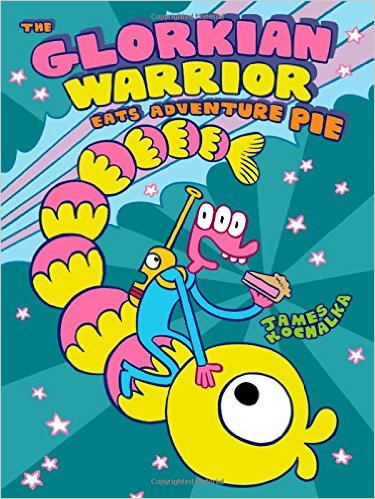


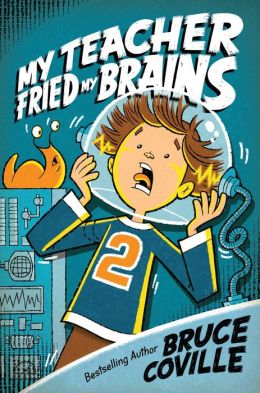
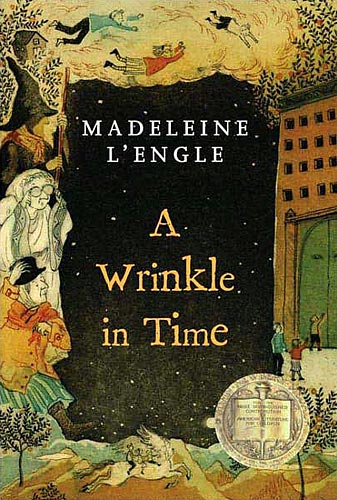


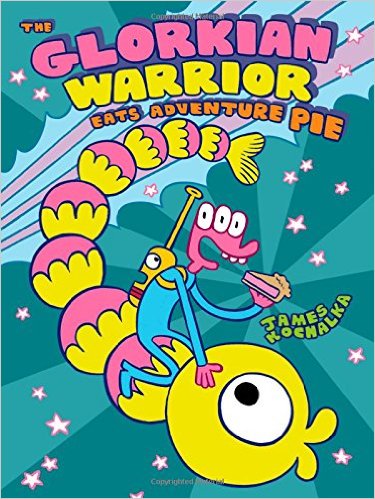
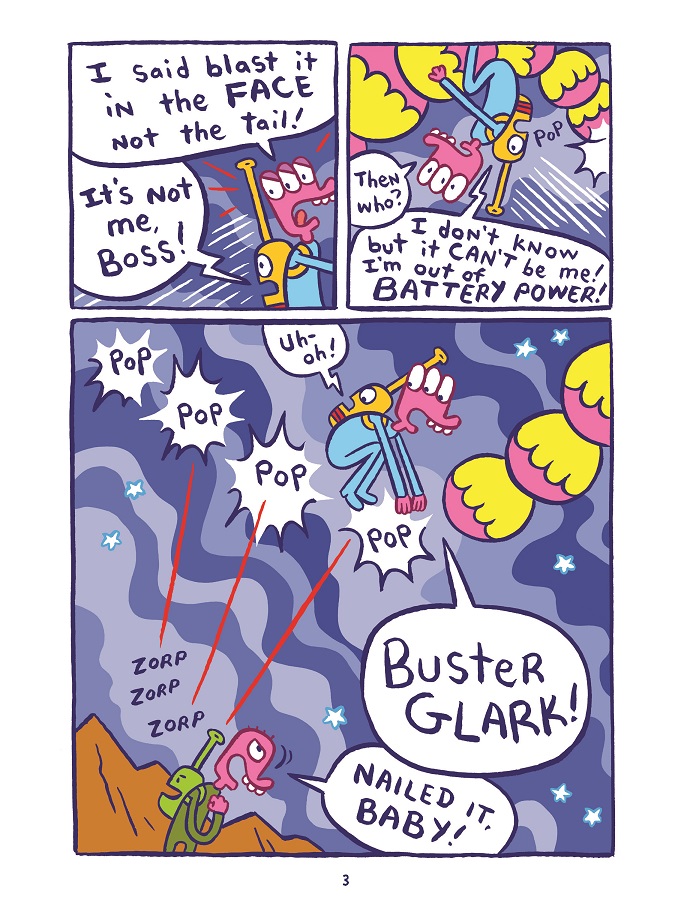
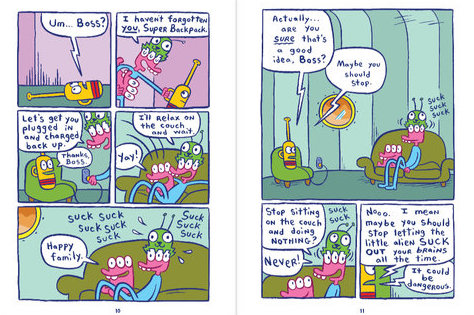


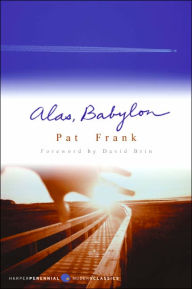


.jpeg?picon=3015)

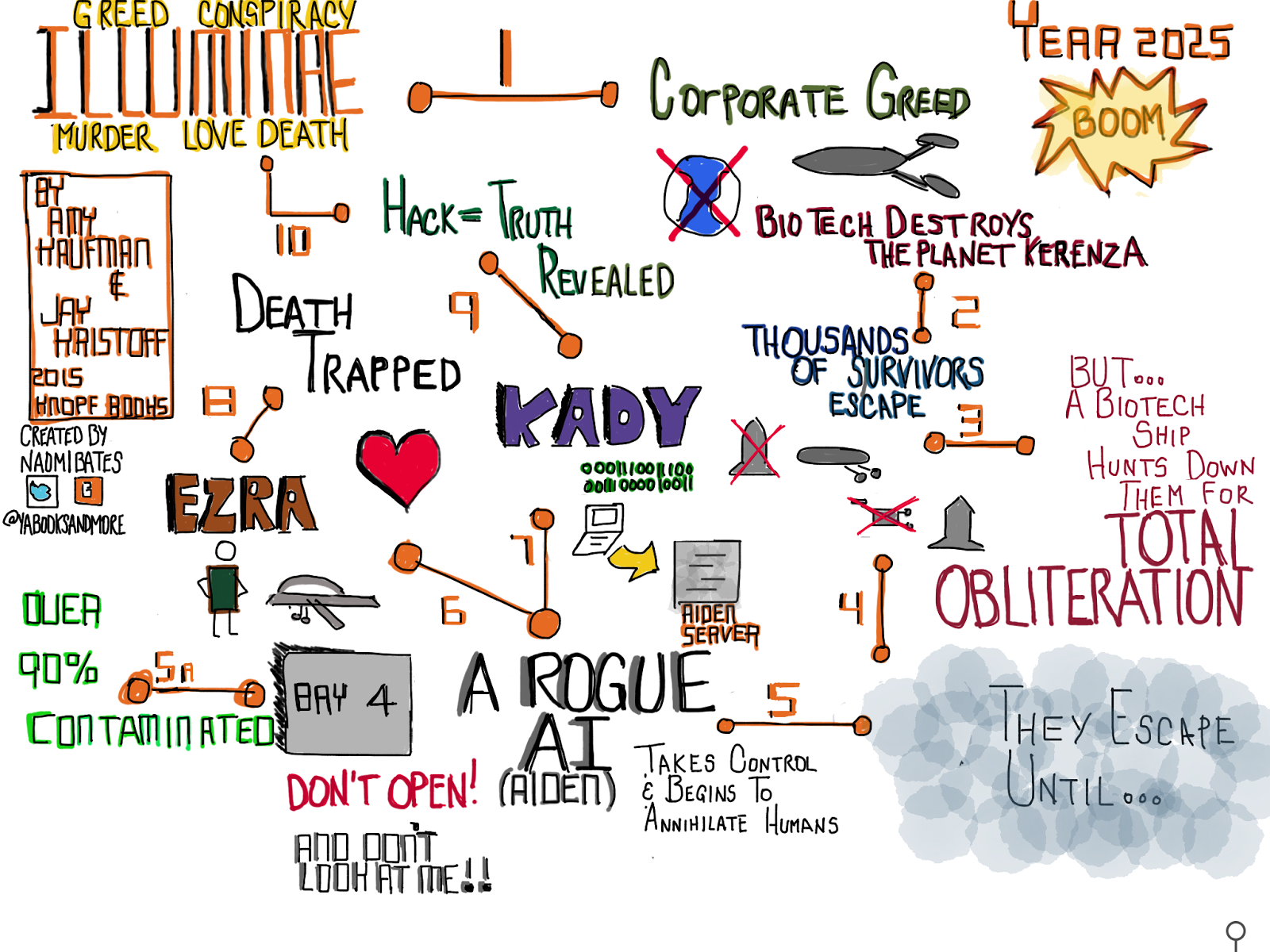
The only problem I can see her mentioning with Nate is that he’s a white male solving a girl’s problem.
That must be it. Ah, the difficulties of a limited word count. And I’d agree if he just walked in and explained all her problems to her without her wanting him to but he’s a detective she specifically hired to solve a case. This seems less like mansplaining and more like commerce.
Maybe that he is a white male solving an African American girl’s problem?
Yep. I see that. But she hired him. I feel like that’s important. And for that matter, in 1972 how many white guys were solving black girls’ problems? Seems like they were causing the problems, not trying to solve anything. The reviewer calls this a “stereotype” so my question is how common a stereotype was it?
[I realize, by the way, that I’m arguing with a review that’s six years older than I am for a book that is so popular it’s still in print . . .]
I wonder if it’s more than just the white-guy-solves-black-girl’s-problems issue. I must admit I haven’t read Nate (or if I did, it was when I was wee)—how are Annie and brother Harry portrayed? Are they stereotyped in the illustrations, or in their speech, or … ?
Nope. The book could be published today and no one would blink an eye. I’m actually thinking of doing a post called The Weird Timelessness of Nate the Great. Most books from the past don’t age half as well as this one. Why?
(Not to mention Christian Robinson’s bra joke)
http://www.hbook.com/2016/08/authors-illustrators/interviews/five-questions-for-adam-rex-and-christian-robinson/
It seemed like it was as simple as he’s a white person solving a black person’s problem. I guess the stereotype of the white savior? Though, that’s usually when the problem is related to race, if I’m not mistaken.
Hence my confusion.