JacketFlap connects you to the work of more than 200,000 authors, illustrators, publishers and other creators of books for Children and Young Adults. The site is updated daily with information about every book, author, illustrator, and publisher in the children's / young adult book industry. Members include published authors and illustrators, librarians, agents, editors, publicists, booksellers, publishers and fans. Join now (it's free).
Login or Register for free to create your own customized page of blog posts from your favorite blogs. You can also add blogs by clicking the "Add to MyJacketFlap" links next to the blog name in each post.
Blog Posts by Tag
In the past 7 days
Blog Posts by Date
Click days in this calendar to see posts by day or month
Viewing: Blog Posts Tagged with: mysteries, Most Recent at Top [Help]
Results 1 - 25 of 146
How to use this Page
You are viewing the most recent posts tagged with the words: mysteries in the JacketFlap blog reader. What is a tag? Think of a tag as a keyword or category label. Tags can both help you find posts on JacketFlap.com as well as provide an easy way for you to "remember" and classify posts for later recall. Try adding a tag yourself by clicking "Add a tag" below a post's header. Scroll down through the list of Recent Posts in the left column and click on a post title that sounds interesting. You can view all posts from a specific blog by clicking the Blog name in the right column, or you can click a 'More Posts from this Blog' link in any individual post.
Florian Bates is new in Washington, D.C. - new to the United States, for that matter. His father designs security systems for museums. His mother works in the National Gallery as an art conservator. When he meets a girl from his neighborhood, Margaret, he finds someone that he can share his system for sorting out people's small mysteries. Florian calls it the Theory Of All Small Things, or T.O.A.S.T.
There you have the set-up for what I hope will be a whole series of mystery/spy novels. This first book, Framed!: a T.O.A.S.T Mystery by James Ponti, starts with Florian's abduction by a Romanian thug. Since that's in the very first chapter, I'm not giving much away.
Then, Florian goes back and explains just WHY he has been abducted, and how he became a "covert asset" for the FBI, and how he promised to help Margaret solve a family mystery. Add in some art theft and lots of T.O.A.S.T. training and stir in some Quantico physicality and you get a darn good book for middle grade readers - or anyone who loves action, puzzles, and solutions.
0 Comments on Framed! I'm TOAST! as of 12/14/2016 4:30:00 AM
Tomorrow, the little girl starts kindergarten. This will reduce our little girl time to 2 or 3 hours a day. Am I happy? Actually, um, no. She has a lot of playing left. And I am not all that enamored of our public education system.
Still, she is ready. But who will play with me during those extra hours?
Everybody else keeps growing up!!!
In The Secret of Goldenrod, Trina is almost 11 and entering fifth grade and her father is so embarrassing. They are off to refurbish Goldenrod, a stately home in the middle of nowhere, that has been empty for almost a century. Unlike their other jobs that kept them busy for a month or two, Goldenrod will take a whole year and Trina will have finally time to make friends. She hopes her mother will stop gallivanting around the world and finally return to the family.
Then she sees the old house in a field of yellow weeds, and the house doesn't want them there.
A hidden room, a forgotten dollhouse and its tiny doll, a nasty schoolmate and a small town with secrets add up to a great story.
Author Jane O'Reilly sets this up as a convincing haunted house story, but with the discovery of the dollhouse things begin to change. The last few chapters are the best as they pull everything together and give a happy ending that is also unexpected.
A Curious Tale of the In-Between will appeal to young people who like ghost stories and the supernatural and who have issues of loss and unsolved mysteries in their own lives.
Mysteries and London go together like tea and cake or jeans and Converse. Although not all of my favourite English mysteries take place in London, many do. Here are three (okay, maybe a few more than just three) of my top mystery novels set in London.
Frankie Dupont And The High Seas Heist SERIES: Frankie Dupont Mystery Series, Bk. #4 Written by Julie Anne Grasso Illustrated by Alexander Avellino Released 7/03/2015 978-0-9943216-0-2 132 pages Ages 8—12 “Frankie Dupont seems to catch odd-ball cases in the most unlikely places. You would think he would be used to it by now. …
Today I was writing a book review (that you can read next door at my other blog, Victorian Scribbles) and it got me to thinking about what makes a good read in fiction. I read lots of books, and I review books in various genres, but the ones that stick in my mind seem to share certain characteristics, no matter what their genre.
1. Some kind of a problem to be solved. Yes, "the story problem" that creates the story arc for the protagonist, etc. The plot. Still, reading it that way, it seems so . . . pedantic. For me, "plot" or "story problem" boil down to some kind of a puzzle or challenge that needs to be worked out--one that engages the reader as well as the protagonist. You really want to know how it will end. One of the appeals of a good mystery is that you find yourself hot on the trail, trying to solve it along with the protagonist.
2. Interesting characters that can make me suspend disbelief enough to go along for the ride. For me, they don't have to be the p.o.v. character. Watson, purported teller of Sherlock Holmes tales, is the perfect filter to make me suspend belief regarding Sherlock Holmes's astounding mental and physical prowess, because Watson is believable, and he believes in his friend. Nick, in The Great Gatsby, pulls the reader into his awe of Gatsby so that a reader is invested in the outcome for this tragic figure. In The Lightning Queen, a YA novel about gypsies and Mexican-indians, the author, Laura Resau, makes us care about the dignity of both groups and their traditions, while pulling us into their world of fate and magic and healing through the eyes of two endearing characters.
3. A reader learns something they didn't know, even though it's fiction. This is true in all of the above. But let me add Cara Black's Aimee LeDuc adult mystery series, where every new mystery is a free trip to Paris, and Kate Morton's novel, The Secret Keeper, where a reader travels back and forth in time to unravel a dying woman's story behind the mesmerizing event witnessed years ago by her daughter--a secret going back to World War II. Right now I'm reading a gripping middle grade novel by Julie T. Lamana, Upside Down in the Middle of Nowhere, that takes a reader into the terrifying lead-up to Hurricane Katrina and its aftermath. Many of us read about Katrina in 2005 when the storm hit New Orleans, but this book makes you live through it.
4. Emotional involvement. I love a book that plays on my emotions, and all of the above books do that. A special emotional aspect I enjoy, though, is humor--witty humor, not slapstick. For me, one of the simple pleasures in reading is to find myself chuckling, or even laughing out loud. The Sherlock Holmes mystery I reviewed next door--Sherlock Holmes and the Adventure of the Ruby Elephants--was one such book, but library shelves and bookstores abound with good, humorous fiction, and for those of you who write, I would advise you to find a way to inject a little humor in your story. It's almost irresistible to re-read a truly funny book.
How about you? What do you find the most important elements in a good read? Can you tell me the titles of some good reads you think I (and others) might enjoy?
0 Comments on What Make a Good Read in Fiction? as of 1/30/2016 6:38:00 PM
The Tiara on the Terrace, by Kristen Kittschier, is a clever novel, perfect for fans of Pseudonymous Bosch and Gordon Korman and a companion to The Wig in the Window.
I enjoyed this collection of 14 new cases investigated by Sherlock Holmes and Doctor Watson. That is, the cases are new--written by Lyn McConchie--but the clients are old. The stories start out with the characters' background and then move on to the new cases. And most importantly, they have the flavor of Arthur Conan Doyle's Holmes mysteries. It's not easy writing sequels, and I think she did a great job. (I'm always happy when that happens 'cause it's not often that it does...) Stories include: A Question of Presence, A Perfect Jewel, A Lie Once Told, On the Cliffs, and The Button-Box.
Bestselling author Lauren Oliver and notorious relics collector H.C. Chester interview each other about Curiosity House: The Shrunken Head (HarperCollins, 2015).
When twelve-year-old Abby Force found her attorney father unconscious, he was surrounded by jewelry taken from a secret hiding place in his library ceiling.
Newbery Honor–winning author Gennifer Choldenko deftly combines humor, tragedy, fascinating historical detail, and a medical mystery in this exuberant new novel, Chasing Secrets.
No, seriously, I am. Except I wear purple sneakers, not read ones. So maybe I am Princess Y? Or Princess...
Libby and Mai met in 5th grade, sidelined from gym. Strangers at first - then Mai grabbed a chunk of chalk. And Libby started drawing. And Mai started telling stories. Three years - and boxes and notebooks of Princess X comics later - Libby's mother drove her car, with Libby in it, off a bridge over the Puget Sound.
Now, Mai is sixteen and back in Seattle visiting her Dad. The first Princess X sticker takes her by surprise. And then, she sees another. But, here's the thing. All the notebooks, the boxes of comics? They were all thrown away after Libby's body floated to shore. So, who is drawing these comics?
Mai has never been sure that that body was Libby. As she reads the webcomics about Princess X, Mai is thrilled to think that her best and truest friend might still be alive. But, why has she kept her survival a secret - especially from Mai?
Princess Y - that's who I am. I ask the questions. Why? Why is the computer nerd, Patrick, not going to UW in the Fall? Why didn't Libby's father find Libby? Why is that skinny pale skater watching Mai? Lots of whys, here.
The graphics inserted among the text give the reader and Mai clues to what might have happened. This book is a bit creepy, suspenseful, and off the wall.
0 Comments on I am Princess X as of 8/25/2015 5:58:00 PM
Fowl Play Written & Illustrated By Travis Nichols Chronicle Books 8/04/2015 978-1-4521-3182-5
40 pages Age 7—12
“Just what kind of monkey business has befallen Mr. Hound’s shop? Who has broken his window? And most importantly: why?
“Luckily, our team of plucky detectives has been chomping at the bit to take on their first case. When Mr. Hound hires them to investigate, they hoof it to his shop. And once they get sleuthing, wild horses couldn’t drag them away from the scent of a clue. But is it all just a dog and pony show to distract them from the truth
“Idioms are everywhere in the Gumshoe Zoo detective agency’s hilarious first case as they attempt to get to the bottom of Mr. Hound’s mystery.”[inside jacket]
Review The Gumshoe Zoo Detective Agency has finally received their first case: someone has broken Mr. Hound’s shop window. But why? Each member of the detective agency is on the case, each having something to say:
“Hmm . . . Yes. There’s something fishy going on around here.”
This is said by Quentin, a goat. All of the Gumshoe Zoo detectives are animals. But Quentin’s fishy statement was overheard by Reggie, who happens to be a fish. Quentin quickly saves face.
“”Oh! No offense, Reggie.” “None taken. But you are right. There is some definite monkey business at hand, my friend.”
Reggie agrees with Quentin, but makes his assessment within earshot of Steve, a monkey. And so it goes through the line-up of detectives, each one making a clichéd remark that indicts a fellow detective, yet none take offense at the off-handed remarks. The detectives are too glued to the case to become offended at these idioms. Then a clue is found that opens up the case and makes an unexpected turn. The detectives are not confused. They immediately figure out what happened at Mr. Hound’s shop. They quickly deduce who threw a can of tomatoes through the shop window. The answer is not a pretty picture.
Fowl Play is the first of a series that will have children quickly understanding parts of speech, such as the idioms used in Mr. Hound’s case of the broken window. The story is hilarious, not just because of the witty idioms, but also because the comic book illustrations are terrific. Fowl Play is one unusual book but it does its job. Teachers will have loads of fun integrating this series into their lesson plans. Kids will love the humor and the illustrations of the detectives.
The Gumshoe Zoo detectives are: Josie (a rat), Morgan (a chicken), Sharon (a duck), and Mike (a bull), in addition to the detectives referenced above. Of course, the victim, Mr. Hound, is a dog. The case does not end as one would expect. In the middle of an interview for W-IDM Channel 4, an urgent situation develops downtown . The Mayor, a cat, wants the Gumshoe Zoo detectives on the case. This case will not be as easy as Fowl Play and Mr. Hound’s idiom filled broken window. According to the final page, this case will be a “beast of oxymoronic proportions.” This is one case I am anxious to read and one new series I think will be an educational blast.
After the Fowl Play mystery is solved, the definition of “idioms” and the meaning of each idiom used in the story is given in a mish-mash style perfect for this comically fowl story. This section is worth reading for the humor and the explanations. Kids will love the references and may just find themselves using an idiom or two in their speech.
ALSO BY TRAVIS NICHOLS Monstrous Fun: A Doodle and Activity Book Uglydoll: My Hero? The Totally Awesome Book of Useless Information
. . . any many more
Full Disclosure: Fowl Play by Travis Nichols, and received from Chronicle Books, is in exchange NOT for a positive review, but for an HONEST review. The opinions expressed are my own and no one else’s. I am disclosing this in accordance with the Federal Trade Commission’s 16 CFR, Part 255: “Guides Concerning the Use of Endorsements and Testimonials in Advertising.”
I Like Your Shoes is a suspenseful read that will satisfy audiences interested in contemporary mysteries featuring dynamic characters and inventive plots.
Emotionally wrought and sharply written, The Last Good Day of the Year explores and examines the capacity of evil and the result is a fine, smart read that isn’t afraid to uncover the frailty and weight of guilt and family relationships.
Written with a strong narrative drive, and featuring a compelling female protagonist, Perla Garcia and the Mystery of La Llorona, The Weeping Woman, is also a very well-crafted bilingual text that will introduce children to Spanish vocabulary and idioms.
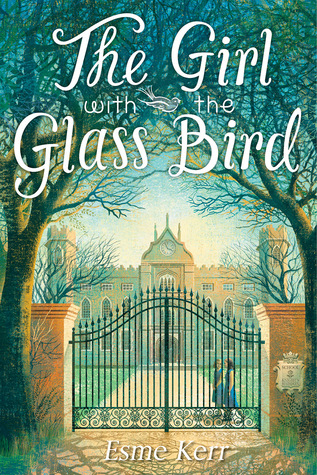
In The Girl with the Glass Bird,we meet Edie Wilson just as her awful cousins have caught the pet goldfish Edie brought with her to Folly Farm. What they do to the goldfish and to Edie is gross and cruel. But like many stereotypical upper class British parents, Edie's aunt writes it all off as "Boys will be boys".
Meanwhile, Edie's older cousin, Charles has been handed an assignment by one of his biggest clients and oldest friends. Charles has to plant a girl in the client's daughter's boarding school to find out if the client's daughter IS being tormented as she claims she is. Well, well, well, how convenient! When he decides to drop in on Folly Farm, who should he find but an 11-year-old girl whose aunt could care less what happens to her - as long as Edie is "safe", that is.
And Edie enters the world of Knight's Haddon. No cell phones, no TV, very little computer usage - the school is exactly as it was when Edie's mother went there. From the start, Edie knows that Anastasia, her charge, is being manipulated. But are the students behind the pranks or are the adults to blame?
Princesses and bullies, spies and secrets, The Girl with the Glass Bird by Esme Kerr mixes all these things together to produce a page turner. Is Anastasia crazy or is someone just trying to make her seem that way? Who can Edie trust when her grandmother warns her away from everyone? Little events build to a grand crisis. And Edie may not be able to move fast enough.
0 Comments on Glass bird as of 6/9/2015 6:02:00 PM
I’ve long been a fan of mysteries. Trixie Belden was my BFF as a third and fourth grader. Nancy Drew was another favorite. Veronica Mars updated the teen sleuth idea, bringing the storytelling form to a new generation.
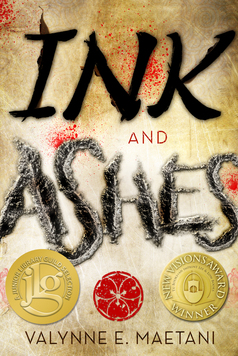
When I got the chance to work on Valynne Maetani’s Ink and Ashes, our new YA mystery which comes out in June, all of those mysteries and more were going through my mind. Claire, the main character, has the spunk and curiosity of Veronica Mars and all of her predecessors, but she’s also a little different. And to honor those differences in the editing process, I needed to refresh myself on what’s out there right now in the teen mystery/suspense genre, and the mystery genre in general.
As I was editing Ink and Ashes over the course of about a year and a half (which spans two developmental edits and a line edit), between edits I was reading mystery after mystery. I stocked up on Agatha Christie, I rewatched Miss Fisher’s Murder Mysteries and read the first book of the series it’s based on (Cocaine Blues by Kerry Greenwood), I read multiple YA suspense, spy, and murder mysteries.
Miss Fisher from the TV show “Miss Fisher’s Murder Mysteries”
That reading reminded me that a great mystery read requires the same elements as any good read: well-paced plotting, characters the reader cares about enough to want to know what happens next; even world-building, though that’s a term we generally associate with speculative fiction, is tremendously important in setting the stage in a mystery. But my rereading of classic and contemporary mysteries also showed me that more than in any other genre, a sense of suspense and danger must permeate the mystery book, must drive the reader to breathlessly wonder what will happen next.
Ask probing questions
One of the biggest challenges in this edit—with any edit, really, especially with an author you’ve never worked with before—was discovering how to bring the author’s vision of the characters fully to life. An editor’s job is often to just ask questions: Why is this happening right now? Why would that character decide to do this? What is the goal here?
In that way, figuring out the goal allows the editor to ask further probing questions on what the solution might be—figuring out how current plot points and character decisions hamper the desired effect.
“The plot thickens” turns out to be true
The biggest thing I learned while editing Ink and Ashes and reading all these mysteries is the importance of plot escalation. In the original draft, clues did of course build up into a frenzied final few pages of conflict that were very enjoyable—that’s one of the reasons the book won our New Visions Award. But comparing the early manuscript to mysteries I enjoyed the most, I realized that there were so many ways that the narrative could be complicated. (Valynne was on the same page. As she waited for the results of the contest, she was also already thinking of ways to improve the manuscript. That kind of editor-writer synergy makes a huge difference in any book project like this.)
We looked at the end goal, and discussed the plot points that got Claire and her friends to that point. In particular, we discussed how the inciting incident—the moment that gets Claire to veer her course to investigating whether her father and her stepdad ever knew each other—might be complicated and how those complications would have a ripple effect that would improve multiple other plot points, and increase the pacing.
In other words, escalation. If the reader didn’t feel the suspense at every page turn, we had work to do.
Valynne worked very hard on making that happen, and I’m very happy with the results! In answer to all my probing questions, Valynne improved on an already-well written manuscript to bring what was an interesting read to the level of an exciting page-turner that’s getting readers hooked. That’s the end goal for any editor and author: Creating a final book that readers can’t put down. I’m happy to say, we succeeded with Ink and Ashes.
Stacy Whitman is Editorial Director and Publisher of Tu Books, an imprint of LEE & LOW BOOKS that publishes diverse science fiction and fantasy for middle grade and young adult readers.
0 Comments on Case Cracked: The Process of Editing Mystery Novels as of 5/29/2015 10:35:00 AM
Series: The Frankie Dupont Mysteries Written by Julie Anne Grasso Illustrated by Alexander Avellino Published by Julie Anne Grasso 3/302015 978-0-9873725-8-1 158 pages Age 8—12 . . “Hot off cracking his first official case Frankie Dupont is on the scene when his new teacher takes ill. The pint-sized detective suspects a classic case of sour grapes, but the evidence leads him to the one placed he wouldn’t mind avoiding for the rest of his natural life. Enderby Manor has a few more secrets up her sleeve, and as Frankie begins to unravel them, he discovers a plot stinkier than a sardine sandwich. In Book 2 of the Frankie Dupont Mysteries, Frankie will make some new friends, upset some old ones, and of course, there will be lemon meringue pie.” [back cover]
Review (491) It is the start of a new school year for Frankie and his friend Kat. Middle school is a now a combination of two grades in one classroom. Worse, the Appleby triplets—Angus, Archie, and Amy—are in his class and they annoy Frankie like an itch you can’t reach. Day one is short for the head teacher. His assistant, Miss Chestnut, made him a lemon meringue pie and, after one bite, he abruptly leaves for medical help. Frankie swiftly learns one of the pie ingredients is an organic weed killer. This one clue will take Frankie from confronting Miss Chestnut—bad idea—to accusing Merideth De Carlo, the daughter of Evelyn—of Evelyn’s Everlasting Cupcakes—and finally to Enderby Manor and Madame Mercure, a strange woman bent on taking over the hotel.
I enjoy the Frankie Dupont series because of the strange, yet plausible cases and the interesting clues. I love the fully fleshed crazy characters and their well-written stories with unexpected twists. The Lemon Festival Fiasco did not disappoint, though Frankie could be annoying. Unlike the first story, The Mystery of Enderby Manor, where Frankie was eager to show he could solve the case better and faster than Inspector Cluesome, one year later Frankie is arrogant, pushy, and most often wrong. It seems being the only ten-and-three-quarters-year-old to pass the private investigator’s test has gone to his head.
I do like the new character, nine-year-old Amy Appleby, one of the “annoying triplets.” She stays close to Frankie, which irritates the clues right out of him. Frankie does not like that she is smart, possibly smarter than him. It is clear early on that Amy is not trying to outsmart Frankie; she just wants to be close, like any nine-year-old girl with a crush on an older boy. Frankie never picks up on this. Hopefully, that crush will play out in the next edition.
The illustrations were done by a new illustrator and are quite good. Personally, I think Frankie looks too old for a 10 ¾ year-old boy and not as cute this time around. I imagine it is difficult to match the work of another illustrator. The Lemon Festival Fiasco can stand on its own, still I recommend reading book 1 first. There is information about the Enderby Manor characters that will help readers understand why Frankie dislikes the manor. Those characters are still a group of, mostly, likable oddballs.
The Mystery of Enderby Manor is an extremely well written mystery with strange, unexpected twists, and thus a difficult case to outshine. The Lemon Festival Fiasco, while a good mystery—that will entertain readers—readers will decipher this lemony mystery much sooner than Frankie. Reluctant readers will like the fast read and may stick with the story because they can solve this case faster than Frankie. Ms. Grasso is a gifted writer who improves with each new story. Her Caramel Cardamom series is a success, as will The Frankie Dupont Mysteries.
Sophie and The Finn: Secret of the Box is the second book in author J. Peter Clifford’s mystery series about Erica Stafford—a spunky seventh grader who has premonitions and often finds herself embroiled in risky adventures—and her two loyal dogs, Sophie and The Finn.








 In
In 


 Stacy Whitman is Editorial Director and Publisher of


