new posts in all blogs
Viewing: Blog Posts Tagged with: library book, Most Recent at Top [Help]
Results 1 - 25 of 919
How to use this Page
You are viewing the most recent posts tagged with the words: library book in the JacketFlap blog reader. What is a tag? Think of a tag as a keyword or category label. Tags can both help you find posts on JacketFlap.com as well as provide an easy way for you to "remember" and classify posts for later recall. Try adding a tag yourself by clicking "Add a tag" below a post's header. Scroll down through the list of Recent Posts in the left column and click on a post title that sounds interesting. You can view all posts from a specific blog by clicking the Blog name in the right column, or you can click a 'More Posts from this Blog' link in any individual post.
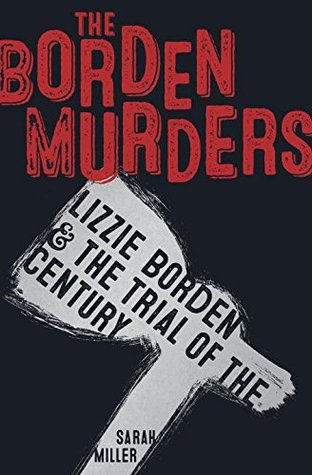
Borden Murders. Sarah Miller. 2016. 304 pages. [Source: Library]
First sentence: It happened every spring in Fall River, Massachusetts.
Premise/plot: Sarah Miller's newest book is a middle grade nonfiction book about Lizzie Borden and the 'trial of the century.' On August 4, 1892, Mr. and Mrs. Borden were murdered. Miller chronicles the events stage by stage. Her book is divided into sections: Lizzie Borden Took An Axe, Murder!, The Bordens, Investigation, Inquest, Arrest, Preliminary Hearing, The Waiting Time, The Trial of the Century, Aftermath, Epilogue.
My thoughts: This one was incredibly compelling and very well researched. (Over twenty pages of notes documenting among other things all the dialogue in the book.) Miller presents a balanced perspective of the case allowing readers to make up their own minds. Miller gives all concerned or connected the human touch. The press does not come out looking innocent.
Whether your interest is true crime, biography, or nonfiction set during the Victorian period, this one is worth your time.
© 2016 Becky Laney of
Becky's Book Reviews
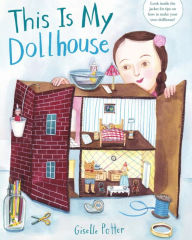
This is My Dollhouse. Giselle Potter. 2016. 40 pages. [Source: Library]
First sentence: This is my dollhouse. It used to be just a cardboard box. But then I painted bricks on the outside and divided the inside into rooms and made wallpaper with my markers and it became almost like a real little house.
Premise/plot: Readers meet an imaginative young girl who loves, loves, loves to play with a dollhouse she created by herself. Readers also meet her friend, Sophie, who has a store bought dollhouse. The two do work out how to play together despite their differences.
My thoughts: I could relate to this one! For me and my sister, it was Barbie doll houses. (She had one. I didn't. She had a *real* refrigerator, mine was out of blocks. She had a *real* bed, mine was an egg carton.) I loved the celebration of imagination AND friendship. I loved the focus on PLAY. Part of me does wonder if kids are allowed enough PLAY time and encouraged to PLAY creatively. I think there is a huge difference between PLAYING and playing on. (I want to play ON the computer. I want to play ON the ipad.)
Text: 4 out of 5
Illustrations: 3 out of 5
Total: 7 out of 10
© 2016 Becky Laney of
Becky's Book Reviews
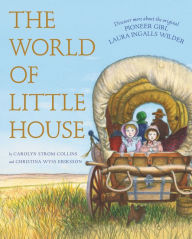
The World of Little House. Carolyn Strom Collins and Christina Wyss Eriksson. 1996. 160 pages. [Source: Library]
First sentence: We know Laura Ingalls Wilder best through her nine Little House books, which tell the story of her life as a pioneer girl.
Premise/plot: This biography of Laura Ingalls Wilder would be perfect for upper elementary or middle schoolers. In some ways it's "just" a biography, but, in other ways it's so much more than that. One thing that I loved about it, for example, is the inclusion of HOUSE PLANS for all the houses Laura Ingalls Wilder lived! That plus the inclusion of crafts and recipes and extension activities really just made me happy.
For any reader who loves the book series or even the television series, this one is a fun and easy-going read.
My thoughts: While I didn't learn anything "new" about Laura Ingalls Wilder, I found it a fun, delightful presentation of what I already knew. The only book that truly was packed with I-didn't-know that information was the recently released PIONEER GIRL. This biography shares an intended audience range of the actual books. So one could go from the series to this biography smoothly. (I can't imagine a fourth or fifth grader picking up PIONEER GIRL and finishing it. Pioneer Girl just has SO MANY footnotes.)
Easy to recommend this one!
© 2016 Becky Laney of
Becky's Book Reviews
Louise and Andie. The Art of Friendship. Kelly Light. 2016. 40 pages. [Source: Library]
First sentence: Art, this is the BEST day ever! I'm so excited to meet our new neighbor. I hope she loves art too.
Premise/plot: Louise and Art are back in a second book! (Though the focus is on Louise and not her adorable, little brother Art!) Louise and Andie, the girl next door, become good friends quickly. But things don't stay wonderful long, soon, these two realize they have artistic differences. Can this friendship be saved?!
My thoughts: Loved this one. I did. I really loved it!!! It is so important--no matter your age--that you learn how to resolve conflict! I love seeing this friendship endure the stress of a big argument. I love that these two are able to work things out and really come to know and appreciate each other better.
Text: 5 out of 5
Illustrations: 5 out of 5
Total: 10 out of 10
© 2016 Becky Laney of
Becky's Book Reviews
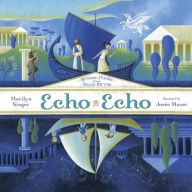
Echo Echo: Reverso Poems About Greek Myths. Marilyn Singer. Illustrated by Josee Masse. 2016. 32 pages. [Source: Library]
First sentence: Ancient Greece: an age of marvelous myths, gone, but not forgotten. Heroes that rise and fall.
Premise/plot: This is the third collection of reverso poems by Marilyn Singer. The first two were: Mirror, Mirror and Follow, Follow. Both of those were fairy tale inspired poetry collections. This third book is inspired by Greek mythology.
So what is a reverso poem? A poem that is both read top to bottom, and bottom to top. The two 'versions' of the poem might tell completely different stories! Word order and punctuation can accomplish a LOT. Much more than I ever thought about!!! Most of the reverso poems in this collection have two narrators. For example, with "King Midas and His Daughter," the first poem is from the daughter's perspective (top to bottom), and the second poem (bottom to top) is from the King's perspective.
My thoughts: I really enjoyed this one. I'm not sure I loved, loved, loved it as much as the previous volumes. But. It's been a few years since I've read them, and, I'd have to reread all three closer together to truly decide which is my favorite. I can tell you that I do like Greek mythology. (Thanks in small part to Edith Hamilton and good old Percy Jackson.)
I think my favorite poem might be "Pygmalion and Galatea."
Wondrous!/ How/ life-/ like! There is nothing in this world/ so perfect. Oh, these lips, hands, eyes!/ The artist/ is in love with/ his creation./ Let a heartfelt wish be granted,/ kind Venus:/ Only you could make this stone breathe!
Only you could make this stone breathe!/ Kind Venus/ let a heartfelt wish be granted./ His creation/ is in love with/ the artist./ Oh, these lips, hands, eyes--/ so perfect!/ There is nothing in this world/ like/ life! How/ wondrous!
*The book does have at least one typo. And I wouldn't have noticed it if I hadn't chosen to share it. I would have just auto-corrected in my head without thinking twice. "There is nothing is this world." I include it here just in case it hasn't been caught yet and fixed already for future editions.
© 2016 Becky Laney of
Becky's Book Reviews
Slaves of Obsession. Anne Perry. 2000. 368 pages. [Source: Library]
First sentence: "We are invited to dine with Mr. and Mrs. Alberton," Hester said in reply to Monk's questioning gaze across the breakfast table.
Premise/plot: William and Hester Monk attend a dinner, and, soon most of the guests will be caught up in a murder case. The victim--one of several--is Mr. Alberton. And it looks like he's been killed by someone he knew, someone he entertained in his own home. Monk isn't directly on the murder case, so to speak, but he's hired by Mrs. Alberton to find her missing daughter and bring her back home, no matter what. And the number one suspect in the case is the daughter's love-interest. So chances are, if you find one you may find the other. So Hester and Monk have their hands full in this one. It takes place on TWO continents. (The daughter has fled to the United States....)
My thoughts: I really am enjoying this series again. I really like seeing Hester and William settle down into married life. I really love seeing these two love and respect and cherish one another! Yet the romance in the book is never in-your-face or time-consuming. Instead it is in the background, subtle. The issue in this book is "slavery" and whether it's right or wrong to sell guns to the South. Does someone who sells guns for a living have a moral obligation to sell guns only to people whom he agrees 100% with? Does he have the right to refuse to sell guns to interested buyers because he finds their cause distasteful? Who is really capable of deciding which causes are good or bad?
© 2016 Becky Laney of
Becky's Book Reviews
The Sun Is Also a Star. Nicola Yoon. 2016. 348 pages. [Source: Library]
First sentence: Carl Sagan said that if you want to make an apple pie from scratch, you must first invent the universe.
Premise/plot: Can you find your one true love and know it's your one true love in just a single day? Natasha is upset that her family is being deported and sent back to Jamaica. She's fighting for the chance to stay up to the very last minute. On this day--her very last day in New York--she meets Daniel, a guy with his own family issues. (Namely, his brother is horrid. Plus his parents want to make all of the decisions for him for the rest of his life.) Their meeting is by chance--or is it?
My thoughts: Objectively, this is a compelling teen romance with humor, heart, and drama. The chapters are short, making it even more appealing, and the chapters alternate narrators. The characters are all flawed. Not one perfectly perfect person in the bunch. That's what you want. That's what you need.
Subjectively, I think there is a very good reason I read little YA these days. Not because YA in and of itself is "bad." But because as I mature (aka get old) I find profanity and blasphemy more silly, obnoxious, and offensive, than cool. Particularly blasphemy. This book took the Lord's name in vain in various ways--often. Way too often for me to say WOW WHAT A GREAT BOOK. I am not old enough to go that any book with "language issues" is "bad" and should be taken off the shelves. I will never be that old. Just old enough that I say--No thanks, not for me.
© 2016 Becky Laney of
Becky's Book Reviews
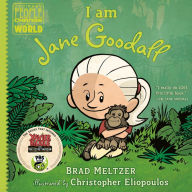
I Am Jane Goodall. Brad Meltzer. 2016. 40 pages. [Source: Library]
First sentence: I am Jane Goodall. On my first birthday, my father bought me a cuddly toy chimpanzee named Jubilee.
Premise/plot: I Am Jane Goodall is a picture book biography of Jane Goodall for young readers by Brad Meltzer. It uses text and speech bubbles throughout to give details of her life and her work. It is packed with plenty of information, and a great message or two.
My thoughts: I found this one slightly problematic. Not because of the text itself necessarily. But because of the illustrations. Jane Goodall is illustrated exactly the same throughout the book. It doesn't matter if she's one or eighty. As a one year old, she's got white hair pulled back in a ponytail. As an adult working in the jungle, she's the exact same height as when she's one and in a baby carriage. She's surrounded by ADULTS, during ADULT WORK, supposed to be one of the best, most qualified, most experienced in her field, and she's the size of a toddler. Why is this okay?!
That being said. I found the text interesting enough.
© 2016 Becky Laney of
Becky's Book Reviews
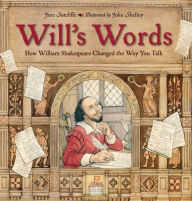
Will's Words: How William Shakespeare Changed The Way You Talk. Jane Sutcliffe. Illustrated by John Shelley. 2016. Charlesbridge. 40 pages. [Source: Library]
First sentence: Dear Reader: We have to talk. I have failed you. I set out to write a book about the Globe Theatre and its great storyteller, William Shakespeare. About how the man was an absolute genius with words and wove those words into the most brilliant and moving plays ever written. But that's just the trouble. You see, I wanted to tell you the story in my own words. But Will Shakespeare's words are there, too, popping up all over the place. It's not my fault. Really. Will's words are everywhere. They're bumping into our words all the time, and we don't even know it.
Premise/plot: Sutcliffe's picture book for older readers does a great job introducing readers to the sixteenth century theatre. And her emphasis on "Will's Words" shows the relevance Shakespeare still has in today's world. It is part narrative. But on each spread, she focuses on words--phrases--Shakespeare either invented himself (coined) OR kept alive (sustained) through the longevity of his plays. She uses the word or phrase in her narrative, and then explains it. Each word is explained and/or defined. Sometimes this includes "what it meant then, what it means now." But she also always includes: WHERE it came from--which play, which act, which scene.
Words include:- for goodness' sake
- what's done is done
- too much of a good thing
- outbreak
- excitement
- of a sudden
- wild goose chase
- fashionable
- money's worth
- hurry
- with bated breath
- a sorry sight
- heart's content
- well behaved
- send him packing
- good riddance
- love letter
- laugh oneself into stitches
- foul play
- make your hair stand on end
- cold-blooded
- hot-blooded
- bloodstained
- dead as a doornail
- seen better days
- into thin air
- amazement
- the short and long of it
- not budge an inch
- eaten out of house and home
- green-eyed monster
- household words
My thoughts: I really loved this one. It is for older readers. I don't think the typical preschooler is going to care about the word origin of the phrase "dead as a doornail." But for older students (mid-to-upper elementary on up) what a treat!!! Be sure to watch the Horrible Histories music video about Shakespeare! © 2016 Becky Laney of
Becky's Book Reviews
Smart Fat. Steven Masley and Jonny Bowden. 2016. HarperOne. 336 pages. [Source: Library]
First sentence:
Not too long ago, we were both advocating specific diets for weight loss and wellness.
We weren't just advocates of these plans--we built our professional lives around these two seemingly contradictory nutritional philosophies. Premise/plot: "Eat more fat. Lose more weight. Get healthy now." Thus the front cover proclaims proudly. This diet book urges a 5-5-10 eating program. 5 Servings of smart fat, 5 Servings of clean (or at least lean) protein, and 10 servings of fiber per day. But it isn't just about what you put into your body, it's also about what you DON'T put into your body--and WHY. So I would say half of this focuses on WHY to change your eating in the first place, why you need to eat more smart fat and very little to no "dumb" fat, why the quality of your food matters--especially in protein, but also other food groups, why eating better will help your health overall. And the other half focuses on the WHAT: what you need to eat, what you don't need to eat, the right serving sizes or portions, etc. This one includes a 30 day meal plan with 50 recipes. This plan isn't just about eating right, however, it is also about living right: exercising, sleeping, finding healthy ways to unstress, etc.
My thoughts: I thought I had sworn off diet books--at least this year. But my Dad wanted me to read this one with him. And so I picked it up. If I were to decide to try this "smart fat" plan, it wouldn't be a drastic change for me. (I already am gluten-free. I already eat a LOT of vegetables and fruit. I already use coconut oil and olive oil. I already aim for a high fiber diet.) But it would be making a few small changes. I do feel better about this book than the other "eat fat" book I reviewed earlier in the year. That one I thought was after people's money and was out to make a LOT of it not just a little. This one I felt was different.
© 2016 Becky Laney of
Becky's Book Reviews
A Christmas Visitor. Anne Perry. 2004. 199 pages. [Source: Library]
First sentence: "There, Mr. Rathbone, sir, are yer right?" the old man asked solicitously.
Premise/plot: Henry Rathbone (Oliver's father) is visiting his goddaughter for the Christmas holidays. Her husband has literally just died. And Henry ends up being the one who meets each returning child (all adults) about the death. As the story gets told and retold, questions arise. Was Judah Dreghorn murdered? Who murdered him? Why? Can anyone prove it was murder and not an accident?
My thoughts: For such a short book, it was a surprisingly slow read. Its two hundred pages felt like four hundred. I think it would have been very helpful to break this one into chapters. The book is divided into "parts" and not chapters. One of the key reasons a book feels quick and enjoyable are short-to-medium length chapters. When you come to the end of the chapter, you flip the pages. And let's say the next chapter is four to ten pages in length, it's I HAVE TIME FOR ONE MORE CHAPTER. You can read just "one more chapter" for a good hundred pages or so. But when there are no natural stopping places for seventy-to-eighty pages, then you don't want to read it. You make excuses, I don't have the time now. Authors, pay attention, have chapters work to your benefit.
That being said, I adore the character Henry Rathbone. I got super-attached to him reading the William Monk series. And so I wanted to LOVE this one like crazy. I still think he's a good character. And the characters were more interesting than the ones in A Christmas Journey. There is no comparison between the books. This one is a lot better!!! But it just doesn't compare to her other novels.
© 2016 Becky Laney of
Becky's Book Reviews
A Torch Against the Night. Sabaa Tahir. 2016. 452 pages. [Source: Library]
First sentence: How did they find us so fast?
Premise/plot: A Torch Against the Night is the sequel to An Ember in the Ashes. It continues the life-and-near-death adventures of Laia, Elias, Keenan, and Helene. This time instead of two narrators, there were three. Helene has been added as a narrator.
Don't pick this one up if you've not read the first book.
My thoughts: Personally, I found the first half sluggish. But. I found the second half, particularly the last 100 pages to be really, really GOOD and oh-so-compelling. I'm not sure why I found this to be an uneven book. I am very glad I stuck with it. I can definitely say it's worth reading, because once it becomes good, it's GOOD.
The characters I cared about most were Laia and Elias. Their chapters were the ones I really looked forward to. I got swept up into their stories, their lives. And all was well. The Helene chapters were necessary, I suppose, because they give readers information that they wouldn't otherwise have. (A behind-the-scenes look at the enemy's plans.) But Helene's chapters felt like a third wheel.
This one has a couple of twists that are good and solid, in my opinion.
© 2016 Becky Laney of
Becky's Book Reviews
An Ember in the Ashes. Sabaa Tahir. 2015. 446 pages. [Source: Library]
First sentence: My big brother reaches home in the dark hours before dawn, when even ghosts take their rest.
Premise/plot: An Ember in the Ashes is a great YA fantasy novel with dashes of romance added into the mix. Anyone who enjoys suspense, action, and adventure should give this one a try.
Narration alternates between Laia, a Scholar slave, and Elias, a Mask. Elias hates being a soldier, or soldier in training. He does not want to use and abuse slaves. He doesn't like being ordered to kill, and he dreads the day he'll have to give orders to others to kill. But he lives in a cruel society where kindness, compassion, sincerity are signs of weakness. To 'be human,' to 'feel' is to put a target on yourself. If Elias doesn't keep his real thoughts and desires to himself, he might not survive. Laia is just as vulnerable as Elias in some ways. But even more so since she's a girl and from the Scholar tribe or faction. Most see her as dispensable property. She wants what Elias wants only double. He wants freedom; she wants freedom for herself and her brother who has been imprisoned. She'll risk her life for the smallest chance of saving his.
Those two aren't the only characters we come to know--to love, to like, to hate. Others include Helene, Marcus, Cain, Keenan, Cook, Izzy, Mazen, the Commandant, Spiro Teluman. Notably I think Keenan and Helene and Marcus are key characters in this one.
My thoughts: I loved rereading this compelling fantasy. Action abounds, yet the characterization is so good that I'm tempted to call this a character-driven book. Since I usually dislike dual narrators, it says something that I loved this one so much!
© 2016 Becky Laney of
Becky's Book Reviews
Letters From Father Christmas. J.R.R. Tolkien. 1976/1999. 160 pages. [Source: Library]
First sentence: Dear John, I heard you ask daddy what I was like and where I lived. I have drawn me and my house forr you. Take care of the picture. I am just off now for Oxford with my bundle of toys--some for you. Hope I shall arrive in time: the snow is very thick at the North Pole tonight. Your loving Father Christmas.
Premise/plot: The earliest letter from 'Father Christmas' to the Tolkien children is 1920. The latest letter is dated 1943 to his daughter, Priscilla. The letters speak of Father Christmas' affairs--his adventures and misadventures. Little details about the Tolkiens slip through, of course. He refers to their letters in which they mention pets and toys, etc. He speaks of Polar Bear, his greatest assistant. He speaks of red elves--some. But Father Christmas has a war to fight of his own--against the goblins! (Christmas is almost sabotaged several times!)
My thoughts: I like this one. It is an interesting collection shared with readers. Original letters and pictures (illustrations) are shared. But each letter is also typed up making it easier to read. (Father Christmas has very, very shaky writing. And Polar Bear, well, English is NOT his first or even second language. And he writes with such big paws.) His longest letter is from 1932, and this features, I believe, the first mention of the GOBLINS.
My Dearest Priscilla,
I am so glad you did not forget to write to me again this year. The number of children who keep up with me seems to be getting smaller: I expect it is because of this horrible war, and that when it is over things will improve again, and I shall be as busy as ever. But at present so terribly many people have lost their homes: or have left them; half the world seems in the wrong place. And even up here we have been having troubles. I don't mean only with my stores: of course they are getting low. They were already last year, and I have not been able to fill them up, so that I have now to send what I can instead of what is asked for. But worse than that has happened.
I expect you remember that some years ago we had trouble with the Goblins; and we thought we had settled it. Well, it broke out again this autumn, worse than it has been for centuries. We have had several battles, and for a while my house was besieged. In November it began to look likely that it would be captured and all my goods, and that Christmas Stockings would all remain all over the world. Would not that have been a calamity? It has not happened--and that is largely due to the efforts of Polar Bear-- (142, December 22, 1941)
© 2016 Becky Laney of
Becky's Book Reviews

By:
Becky Laney,
on 12/15/2016
Blog:
Becky's Book Reviews
(
Login to Add to MyJacketFlap)
JacketFlap tags:
YA realistic fiction,
YA Sports,
MG Fiction,
library book,
MG Realistic Fiction,
2016,
MG Sports,
books reviewed in 2016,
YA Fiction,
Add a tag
Ghost. Jason Reynolds. 2016. 192 pages. [Source: Library]
First sentence: Check this out. This dude named Andrew Dahl holds the world record for blowing up the most balloons...with his nose.
Premise/plot: Castle Cranshaw (aka GHOST) narrates Jason Reynolds' Ghost. He's a seventh grader who 'accidentally' finds himself on one of the city's greatest track teams, the Defenders. One minute he's watching from the sidelines eating his sunflower seeds, and, the next he's out on the track trying to beat the newbie, Lu, in the 100 meter. At first, before the race, the coach is surprised and unhappy. After the race, the coach is eager to have him on the team. Very eager. Ghost's mom is skeptical about the whole sports team thing. But she reluctantly agrees on one condition: he has to stay out of trouble. (And he has to keep up with his school work.)
My thoughts: The book covers a short span of time--less than month--but from cover to cover it kept me engaged. So engaged that I was upset when it ended. Note I did not say HOW it ended, but that it ended at all. I had become attached to all the characters: Ghost, Lu, Patty, Sunny, and especially the COACH. (I did like his Mom well enough, it's just that she was working so hard and so long--working in the hospital cafeteria, taking nursing classes on the side--that we didn't get a lot of scenes with her. Another notable, for me, was Mr. Charles, the store owner who sheltered Ghost and his mom when they were running for their lives, the man who has remained a part of his life because he sells him sunflower seeds every single day after school.)
To sum it up: I LOVED, LOVED, LOVED this one. Even though I don't really "like" sports books. I think those looking for character-driven novels can claim this one. Yet, at the same time, I think maybe just maybe those looking for action-driven novels can equally claim this one.
© 2016 Becky Laney of
Becky's Book Reviews
Our Town. Thornton Wilder. 1938. 181 pages. [Source: Library]
First sentence: Stage Manager: This play is called "Our Town."
Premise/plot: Set in Grover's Corners, New Hampshire, at the turn of the twentieth century, this Pulitzer-prize winning drama follows two families: the Gibbs and the Webbs as the meaning of life is explored.
Readers--viewers--"see" certain life events in the town. Some BIG moments (the wedding between George and Emily, Emily's funeral), some small moments (the opening scene, for example, Emily's birthday, the first "aha" moment when George and Emily realize they'll be together until they are parted by death). The narrator who speeds us along life's journey is the "Stage Manager."
My thoughts: I knew this was a famous play. And I knew I "needed" to read it. I am glad I read it as an adult. I am not sure that a 17 year old me would have gotten it. The play essentially is about how you live life--or how you DON'T actually "live" life as the case may be. Life is made up of moments. And we are so super-busy and super-self-absorbed that we don't live in the moments. We don't treasure the moments we're given. We don't see enough, feel enough, give thanks enough, understand enough. © 2016 Becky Laney of
Becky's Book Reviews
The Reader. Traci Chee. 2016. 442 pages. [Source: Library]
First sentence: Once there was, and one day there will be. this is the beginning of every story.
Premise/plot: Sefia and Archer struggle to survive in Traci Chee's new book, The Reader. Pick this one up if you enjoy dystopian fiction, fantasy, action and adventure, or literary fiction. You will have to fully embrace the mystery and allow yourself to be teased from start to finish. There are more questions than answers. The good news--for some--is that it's a new series with a lot of potential.
My thoughts: This one is beautifully written; the world-building is great but remains mysterious. I didn't always know exactly what was going on--or should that be when it was going on?! But I never wanted to put this one down. Sefia, the heroine, was technically both on a quest to find and save "aunt" Nin AND on the run for her life. She is being hunted down for what she carries: a book.
Quotes:
People passed stories from mouth to mouth like kisses, or plagues, until they flowed down the streets, into gutters, streams, and rivers, down to the ocean itself. (55)
Home's what you make it. Could be a ship. Could be what you carry around on your back day after day. Could be family. Or maybe just one person you love more than any other. That's home. (388)
© 2016 Becky Laney of
Becky's Book Reviews
Christmas Journey. Anne Perry. 2003. 180 pages. [Source: Library]
First sentence: Lady Vespasia Cumming-Gould hesitated a moment at the top of the stairs.
Premise/plot: A country-house party in December goes terribly wrong when one of the guests decides to jump off a bridge and commit suicide. The "victim" of this mystery (Gwendolen) was first the victim of a cutting insult. The other guests decide that Isobel (the woman who was 'rude') is to blame. She's to be ostracized from that day forward. But the host (Omegus Jones) and the heroine (Lady Vespasia) concoct a way to "cleanse" her socially. She'll be the one to travel to the mother's home (Gwendolen's mother) to tell her the news. If the mother travels back with her and agrees that sufficient penance has been done, then all will be well--socially.
My thoughts: This is a very odd book. It's Christmas-themed, which could be a great thing. But. It's also supposed to be a mystery. And that is where it falls short a bit. Perry's books usually have at least one or two crimes. And they tend to be DRAMATIC and big. Not subtle and dainty. I liked that this Christmas mystery didn't offer a lot of GRIT and RAGE. On the positive side, it is a very short read! But ultimately it is probably forgettable as well. © 2016 Becky Laney of
Becky's Book Reviews
Moo. Sharon Creech. 2016. 288 pages. [Source: Library book]
First sentence: The truth is, she was ornery and stubborn, wouldn't listen to anybody, and selfish beyond selfish, and filthy, caked with mud and dust, and moody: you'd better watch it or she'd knock you flat.
Premise/plot: When their parents decide to move from the big city to a small town in Maine, Reena and Luke have big adjustments to make. For better or worse, their mom volunteers them to help out a prickly neighbor, Mrs. Falala. At first this means bringing her library books. Then it means taking care of her cow, ZORA. Reena ends up agreeing, somehow, to SHOW the cow at a fair. The book is written--for the most part--in verse.
My thoughts: This book had some potential, in my opinion. But for me, it was "ruined," by the blank verse. I don't mind verse novels if the verse is spectacular and it makes sense for it to be written in verse instead of prose. There are some authors who have mastered this: they have a way with words, with phrases, with building images. What they write is lyrical and deserves the title of poetry. This was just prose masquerading as poetry.
If it had been prose, I think I would have connected more with the characters and the story. I did like the idea of liking this one. Essentially it is the story of two children struggle to connect with an ornery and "mean" neighbor lady, slowly but surely coming to like and respect her. And the two do have to learn a LOT about farm life and taking care of cows. And by working hard and working towards a goal, they do end up growing and stretching as characters.
© 2016 Becky Laney of
Becky's Book Reviews
Maybe a Fox. Kathi Appelt. 2016. 272 pages. [Source: Library]
First sentence: From under her covers, Jules Sherman listened for her sister, Sylvie, to walk out of their room.
Premise/plot: Can this book be summarized into a sentence or two? I'll try. Jules and Sylvie are two sisters that are close as can be, yet, in some ways as different as night and day. Jules is more than a little obsessed with collecting rocks, with collecting wishing rocks. Sylvie is more than a little obsessed with running. Her one big wish in life is to run fast, fast, FAST. Jules can't fathom the "why" of it. One winter morning, Sylvie breaks one of her father's many rules. And she does so ultimately at the cost of her life. Jules is alone and not alone. There is her father, of course, her friend, Sam, and, then there is a FOX.
My thoughts: I am of two opinions with this one. On the one hand, I think WHY DO WE NEED ANOTHER SAD BOOK. WHY DOES EVERY BOOK HAVE TO BE SO VERY SAD?! This one doesn't just have a sad twist, it's sad practically cover to cover. On the other hand, I can't deny that it is written quite well. I really loved The Underneath by Kathi Appelt. This I didn't love. Not even close. But not because it was poorly written. It was written well. Not because it lacked creativity. It was definitively unique. Not because the characters were one-dimensional. I found myself liking the characters and finding them developed. I simply didn't "need" or "want" another sad book in my life.
© 2016 Becky Laney of
Becky's Book Reviews
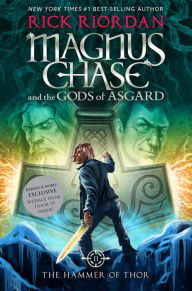
The Hammer of Thor. Rick Riordan. 2016. 471 pages. [Source: Library]
First sentence: Lesson learned: If you take a Valkyrie out for coffee, you'll get stuck with the check and a dead body.
Premise/plot: Magnus Chase and his friends are back for a second save-the-world adventure. In this one, they must find a way to retrieve Thor's Hammer and keep a dangerous sword out of the hands of Loki, a sword that would free him. It won't be easy--lives will be put on the line more than once. But they've got a new sidekick, Alex, a son-daughter of Loki. Alex is gender-fluid. From what readers are told, his/her gender isn't something that she/he decides from one minute to the next. Literally, Alex could wake up female and go to bed male. Even throughout one day--there could be a lot of fluidity. This is something that Alex embraces and champions. Alex is, as you can imagine, a bit defensive and very opinionated. Other sidekicks include Samirah al-Abbas (Loki's daughter, a devout Muslim), Hearthstone (deaf elf) and Blitzen (dwarf). There are others--his neighbors--but Sam, Hearth, Blitz, and Alex are essentially his team.
My thoughts: I liked it okay. I didn't love, love, love it. It had its moments. It did. I wish now I'd marked which passages or scenes I liked or loved. I have a feeling that would give me a better sense of how I really "feel" about this one. I think if you're in the right mood, and, if you don't mind a representation of Thor that leaves him wanting, then this one could satisfy. Riordan's THOR is night and day different from THOR from the Marvel movies. And having just rewatched all the movies, it just left me disgruntled.
© 2016 Becky Laney of
Becky's Book Reviews
How Many Sleeps 'Til Christmas? Mark Sperring. Illustrated by Sebastien Braun. 2014. Tiger Tales. 32 pages. [Source: Library]
First sentence: One winter morning, before the sun had even woken, Little Pip climbed out of bed, padded across the floor, and "PSSST!" gave Daddy Grizzle a gentle nudge....
Premise/plot: Little Pip is a young cub who is so super-excited about it being almost-Christmas that he wakes his dad (Daddy Grizzle) up every morning convinced that Christmas is HERE at last. Every day, Daddy Grizzle tells him how many "whole sleeps" until Christmas. They are able to fill their days with fun and exciting Christmas-y activities.
My thoughts: I found this one ADORABLE. In part, perhaps, because of the illustrations by Sebastien Braun, but also because of the super-fun-and-adorable twist at the end of the book!!! True, I'm not sure that bears actually celebrate Christmas. But Little Pip and Daddy Grizzle are just adorable together. Love the enthusiasm and joy this one conveys throughout.
Text: 4 out of 5
Illustrations: 5 out of 5
Total: 9 out of 10
© 2016 Becky Laney of
Becky's Book Reviews
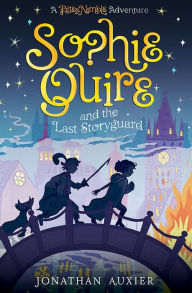
Sophie Quire and the Last Storyguard. Jonathan Auxier. 2016. Harry N. Abrams. 464 pages. [Source: Library]
First sentence: It has often been said that one should never judge a book by its cover. As any serious reader can tell you, this is terrible advice.
Premise/plot: Peter Nimble has come to Bustleburgh in search of the Bookmender. Her name, he learns, is Sophie Quire, and she has grown up in a bookshop. Her mother was a world-famous bookmender. Sophie has come into the trade mostly by chance and love. Peter comes with a book. Not any book but The Book of Who! It is one of four magical books. Each one is protected by a different Storyguard. The book chooses Sophie to be its storyguard, and the LAST storyguard whatever that means! An adventure awaits her, Peter, and Sir Tode...and a treat awaits readers!
My thoughts: I loved, loved, loved this one so much. I loved getting reacquainted with Peter and Sir Tode. But I really loved getting to meet Sophie. This one had me hooked from the beginning. Not just the characterization but the quality of the writing as well. The story is intense and exciting! This book made me FEEL things. Like when her dad threw the book into the fire! Definitely one I'd recommend no matter your age!
Quotes:
If one hopes to live in a world of wonders, he had better locate himself in a place where wondrous stories abound (147).
Stories are more than the sum of their words (150).
Stories lived inside those who read them (439).
Magic cannot be removed from the world, because the world--every speck of it--is magical. It is simply a matter of whether or not we can see it (439).
© 2016 Becky Laney of
Becky's Book Reviews
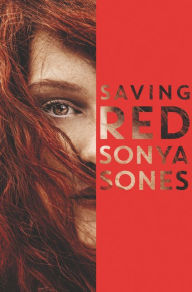
Saving Red. Sonya Sones. 2016. HarperTeen. 448 pages. [Source: Library]
First sentence: Why Am I Out Here/ In the middle of the freaking night/ wandering the streets of Santa Monica/ looking for homeless people/ when I could be lying in bed/ watching videos of babies eating lemons/ and soldiers reuniting with their dogs?/ Because I need four more hours/ of community service this semester./ That's why./ And/ I need them/ by tomorrow morning.
Premise/plot: Molly narrates this newest verse novel by Sonya Sones. If you've read Sonya Sones' past books, chances are you'll need no persuading. (Anytime I see she has a new book coming out, I admit I squeal a little.) What is this one about? In the weeks leading up to Christmas, Molly makes it her project to reunite her new friend, her homeless friend, her zany yet troubled friend, Red, with her family by the holidays. In the process, she falls in love (well, at least in LIKE), worries her family a bit (to be fair, she spends equal amounts of time worrying about them), and comes close to losing her best friend in the whole world--her dog Pixel.
My thoughts: In a way, you could classify this as a "problem" novel about mental health or about America's homeless situation. But it's so much more than that! This is one emotional roller coaster that feels genuine and authentic perhaps not from page one but close to it!!! Red is not predictable, and, Molly has her own (secret) internal struggles. I felt this one was realistic, for the most part, and the holiday setting was a nice touch for me!
I would definitely recommend this one!
© 2016 Becky Laney of
Becky's Book Reviews
Won Ton and Chopstick: A Cat and Dog Tale Told in Haiku. Lee Wardlaw. Illustrated by Eugene Yelchin. 2015. 40 pages. [Source: Library]
First sentence: It's a fine life, Boy. Nap, play, bathe, nap, eat, repeat. Practice makes purrfect.
Premise/plot: Won Ton returns in a second picture book in Won Ton and Chopstick. Won Ton is most upset--at least at first--at the new 'surprise' at his house. The surprise is a PUPPY. The family may call the puppy, "Chopstick," but Won Ton calls him PEST. This picture book has plenty of adventures for the pair.
My thoughts: I really loved Won Ton. And this second book is fun. I thought the repeating refrain of the first book was fun, but I think it's even better the second time around.
Puthimoutputhimoutputhimoutputhim--wait! I said him, not me!
That never gets old!!!
Text: 4 out of 5
Illustrations: 4 out of 5
Total: 8 out of 10
© 2016 Becky Laney of
Becky's Book Reviews
View Next 25 Posts










What a wonderful way to introduce young people to Shakespeare! Through phrases they still hear and use every day.