new posts in all blogs
Viewing: Blog Posts Tagged with: picture book, Most Recent at Top [Help]
Results 1 - 25 of 1,797
How to use this Page
You are viewing the most recent posts tagged with the words: picture book in the JacketFlap blog reader. What is a tag? Think of a tag as a keyword or category label. Tags can both help you find posts on JacketFlap.com as well as provide an easy way for you to "remember" and classify posts for later recall. Try adding a tag yourself by clicking "Add a tag" below a post's header. Scroll down through the list of Recent Posts in the left column and click on a post title that sounds interesting. You can view all posts from a specific blog by clicking the Blog name in the right column, or you can click a 'More Posts from this Blog' link in any individual post.

By:
Cynthia Leitich Smith,
on 12/13/2016
Blog:
cynsations
(
Login to Add to MyJacketFlap)
JacketFlap tags:
picture book fiction,
board books,
Julie Flett,
Native American/First Nations,
David A..Robertson,
picture book,
diversity,
picture books,
historical fiction,
Add a tag
By
Cynthia Leitich Smithfor
CynsationsDavid A. Robertson is the first-time children's author of
When We Were Alone, illustrated by
Julie Flett (Portage & Main Press, Jan. 6, 2017)(
available for pre-order). From the promotional copy:
When a young girl helps tend to her grandmother’s garden, she begins to notice things about her grandmother that make her curious. Why does her grandmother have long braided hair and wear beautifully coloured clothing? Why does she speak another language and spend so much time with her family?
As she asks her grandmother about these things, she is told about life in a residential school a long time ago, where everything was taken away.
When We Were Alone is a story about a difficult time in history and, ultimately, a story of empowerment and strength.What first inspired you to write for young readers?So much of my writing is aimed at creating social change, especially in the area of relations between First Nations people and non-First Nations people.
I believe that change comes through education; what we learn from history, and its impact on contemporary society. In Canada, we have a long history of mistreatment concerning the First Nations people. As Canadians, we need to learn about this history. So, my work tries to educate in this way.
In terms of young readers, I believe that change comes from our youth. These are the people who shape our tomorrows, and they need to walk into tomorrow informed on the important issues and histories. If they do, we’ll be in a pretty good place.
What was your initial inspiration for writing this book? The Truth and Reconciliation Commission in Canada looked at the history of the residential school system, and its impact, and from that research, including residential school survivor testimony and documentation, it came up with a list of recommendations.
One of those recommendations was that the residential school system’s history needed to be taught in school as early as kindergarten.
When I saw this, I recognized that there weren’t many resources for teachers (i.e. books) that addressed the residential school system for younger learners.
So, I set out to write one, and that’s how When We Were Alone came about.
I wanted kids at that young age to learn about the system in a way that they could understand and engage with.
What were the challenges (literary, research, psychological, logistical) in bringing the text to life? For me the challenges mostly involved sensitivity and appropriateness. This is a difficult history to tell, especially to younger learners. So, I needed to tell the story in a good way.
It took a lot of research and consultation, it took finding the right rhythm in the passages to connect with readers, and we needed to find the right illustrator, too, which we did in Julie Flett.
Of course, writing these stories always has a psychological effect on you as the writer, too. Understanding that the kids you are writing about really went through these things is tough. But knowing that kids will be learning and growing and sharing makes it worth it.
What model books were most useful to you and how? |
| Also illustrated by Julie Flett |
I have the benefit of having five children. So, I’ve read my share of children’s books. This helped in terms of finding a good structure for When We Were Alone, and rhythm.
These two things are very important, and there are certainly some commonalities in books that really work in terms of how they are told, not just what is told in them.
What advice do you have for beginning children’s-YA writers? Read a lot of children’s books, or YA books. Figure out styles, structures, approaches from the best. Once you’ve done that, you’ll be ready to write a good story that really connects with your reader.
It always comes down to reading first, and then hard work and a bit of skill.
By Carolyn Dee Flores
for Cynthia Leitich Smith's Cynsations
Illustrators bear witness.
Nothing could be more important.
One hundred years from now, when someone wants to know what it was like to be a seven-year-old girl in New York City on her birthday – or what it was like to be a Mexican-American child growing up in Texas – they won’t go to a reference book and look it up. They will look at a picture.
Illustrators, we must:
See with our fingers.
See with our hands.
See with our pencils.
So much depends upon it.
The world “literally” depends upon it!
The process for the bilingual picture book –
A Surprise for Teresita/Una Sorpresa Para Teresita, written by
Virginia Sánchez-Korrol (Arte Publico, 2016) – I knew I needed to concentrate on community. I looked at 10, 000 photographs of New York City. I’ve been to New York City before – so I tried to remember it and “breathe” it in. A Surprise for Teresita is about a little girl in a Nuyorican (Puerto-Rican/New York) neighborhood.
I loved the idea of the tropical Puerto Rican culture splashed against the New York City buildings and brownstones.
I got to work immediately.
I made models from foamboard.
I ordered a snow cone machine.
I studied the difference between “snow cones”, “raspas”, and “piraguas.” Delicious!
It became obvious to me that my color palette was going to be “snow cones.”
But … there was a dilemma.
How to capture the intense color I needed, using only the mediums of pencil and watercolor?
The answer: I couldn’t.
I needed oil paint - the brilliant color of oil paint!
So … encouraged by my mentors - Caldecott winner
Denise Fleming and Caldecott winner
E.B. Lewis – I set out to create a new illustration process.
And, thankfully, it worked!
Here is what I did:
The Problem:
1. Oil paint takes five months to a year and a half to dry.
2. Oil paint on a “raw” surface, such as untreated cloth or cardboard, tends to bleed and is very difficult to control.
The Solution:
1. Liquin medium. “One stroke” at a time. I squeeze each tube of oil paint separately onto my palette. I dip my brush into each color. Then I dip it into the
Liquin. I mix the colors as I paint, directly on the cardboard.
2. After each application, I clean the brush, and start again.
3. Similar to “watercolor technique,” I use the “cardboard” as my “white.” In the close-up of Teresita (below) – the highlights in Teresita’s hair are cardboard showing through.
4. As I paint, the oil seeps deep into the cardboard.
5. The cardboard remains wet for weeks “on the inside” - but the “skin” of the painting dries within four and a half hours! It is ready to scan immediately!
This process enabled me to paint A Surprise for Teresita without bleed, quickly, and using the saturated colors that I desperately wanted!
All the difference in the world!
By:
Cynthia Leitich Smith,
on 11/16/2016
Blog:
cynsations
(
Login to Add to MyJacketFlap)
JacketFlap tags:
David Jacobson,
Toshikado Hajiri,
picture book,
biography,
picture books,
publishing,
inspiration,
book design,
Misuzu Kaneko,
Add a tag
By
David Jacobsonfor
Cynthia Leitich Smith's
CynsationsFor the last eight years, I have worked for a small Seattle book publisher called
Chin Music Press.
I've done everything from fact checking and copy editing to developmental- and line-editing, from setting up book tours to reading through the slush pile (a task I actually enjoyed).
But during all that time, my name never appeared on the cover of a book.
That changed this September with the release of my first title,
Are You an Echo?: The Lost Poetry of Misuzu Kaneko. A picture book, it's both biography and anthology of a much-loved Japanese children's poet, whose work has yet to be introduced to English-language readers.
Becoming an author, I learned, is a humbling experience. I had to endure the red-penciling of my not-so-flawless prose (something I used to dish out myself), and the frustration of waiting for each cog in the publishing machine to take its spin—editing, illustrating, book designing, leveling, printing, marketing, reviewing, even mailing—as deadlines came and went.
The experience opened my eyes to the anxiety authors feel as they lose more and more control over their creation, something that had not really dawned on me despite my years working in publishing.
As a staff member at a publisher, I had dealt with authors who continued to rework small details of their text until the bitter end, who agonized over each cover illustration, or who fretted over how their book page appeared on Amazon. Indeed, the degree to which authors continued "meddling" in their books sometimes affected how well we worked with them.
But being on the author side of the equation taught me just how important it is to give up control, regardless of the anxiety it might cause. That was particularly true of my interactions with Are You an Echo? illustrator
Toshikado Hajiri.
 |
| David |
When it came time to decide which cover to use, I requested multiple cover sketches, asking for one thing after another to be changed. But I couldn't get satisfied.
Finally, since I was unsure of how to proceed, I asked our book designer Dan Shafer for advice. He recommended limiting how much I was trying to steer the illustrator. Illustrators, he said, do their best work when they have freedom to react to the text in their own way.
Ultimately, I left Toshi to his own devices and he ended up producing a glorious painting of Misuzu and her daughter at sunset.
We went with that.
During my time at Chin Music, there have been many occasions when interactions between writer and editor, or writer and designer have produced unexpected results.
Current author
A. V. Crofts tells of her own positive experience of letting go how she thought the cover of her book should look. In another of our titles,
Todd Shimoda's Oh! a Mystery of Mono no Aware, book designer Josh Powell brilliantly conceived of the idea of printing the entire book (both text and illustrations) in shades of black-and-white except for the very end.
 |
| Photo credit below. |
Though initially intended to reduce the cost of the book, his solution resulted in a final explosion of color that dramatically enhanced the conclusion.
Writing is often thought to be a solo activity where one can wield total control over ones craft.
Oddly enough, its twin, publishing—the business of connecting writers to readers—is more of a team sport, requiring the combined input of different players with different skills and sensibilities.
So, as an author, don't try to control everything in your book. Find really good people to join your team. Then let your editor, illustrator, designer, or translator bring something of him or herself to the process.
The result may surprise you.
 |
| interior illustration from the book |
Cynsational NotesPhoto of Misuzu, Courtesy of Preservation Association of Misuzu Kaneko's Work.
Review of the Day: Are You An Echo? by David Jacobson from
Elizabeth Bird at A Fuse #8 Production. Peek: "I hope that the fame that came to Kaneko after the 2011 tsunami will take place in America, without the aid of a national disaster. And I hope that every child that reads, or is read, one of her poems feels that little sense of empathy she conveyed so effortlessly in her life."
By:
Cynthia Leitich Smith,
on 10/25/2016
Blog:
cynsations
(
Login to Add to MyJacketFlap)
JacketFlap tags:
illustration,
picture book,
diversity,
picture books,
young adult fiction,
dystopian,
Aboriginal,
Ambelin Kwaymullina,
author-illustrator,
Ambelin-Cyn series,
Add a tag
By
Cynthia Leitich Smithfor
CynsationsThe second of a four-installment dialogue with Ambelin and Cynthia. Our focus is on the creative life and process, speculative fiction, diversity, privilege, indigenous literature, and books for young readers.Yesterday, Ambelin spoke on ethics, the writing process and own voices. We have children’s-YA literature and the law in common. That’s actually a pretty common combination here in the states. Why do you think there are so many people involved in both?Well, I’ve had some of my law students suggest the law is so horribly dry that it drives people to being creative in order to escape its clutches (these are generally the students who are studying law because their parents thought it was a good idea).
But for me at least, I think the reason I studied law and the reason I write are the same. In both realms, I am seeking justice – and justice, in Aboriginal societies, generally equates to balance, not just between human beings but between all forms of life (and everything lives).
I write speculative fiction because I want to write about the possibility of defeating injustice; to write about the terrible things that were (and are) while imagining what could be.
The oppressive law I wrote about in the Tribe series divides people into three categories: those without an ability (Citizens); those with an ability (Illegals); and those whose ability is considered benign (Exempts).
This is not an invented law. It is based on the Western Australian Natives (Citizenship Rights) Act 1944, a piece of legislation that purported to offer Aboriginal people ‘citizenship’ by exempting us from racially-based restrictions that only applied to my ancestors in the first place because they were Aboriginal.
In the Tribe series, this law is ultimately defeated by an alliance of the marginalised and the privileged, and by a heroine whose power is to identify and sustain the connections between all life.
And in writing of connections, I am writing of something that is central to the law in Aboriginal legal systems where (at its broadest) law is the processes of living in the world that sustain the world.
You clearly articulate the impact of white privilege on writing and writers, noting the negative impact on the work of Native voices and POC voices. What would you say to those Native and POC writers who may find themselves angry, frustrated, hurt or discouraged by these dynamics?First: it’s not you. Exclusion is not something you are inventing in your head and you are neither unlucky nor unworthy.
It helps in this context to form connections with other Indigenous writers as well as with writers of colour, LGBTI writers, and writers with a disability.
You are likely to hear stories of authors getting similar comments across different contexts (e.g: you’re not writing to the Indigenous experience … this story is too Asian … gay books don’t sell … we’ve already published a ‘disability book’ this year).
It matters to have a network of people with whom to share both the good and bad experiences; and perhaps most importantly, to understand that you are not alone.
Second, never forget how to laugh. Some of the comments I’ve listed above have been part of the experience of other writers that they’ve laughed about with me – not because these comments are not discriminatory and hurtful, but because laughter has always been one of the ways in which marginalised peoples have dealt with pain.
Third, define success in your own terms. We all know what ‘success’ is supposed to be in literary industry terms: book sales and/or critical acclaim (preferably both). I’m not saying we shouldn’t aspire to that. But I also think that if marginalised writers define our success solely in the terms set by an industry that consistently privileges white, straight, cis-gendered people who don’t have a disability, we are also buying into an underlying lie.
The lie is that if we can just prove we are good enough we will be treated equally. But once equality has to be earned, it is no longer equality.
So I think it’s important that each of us define success according to what matters to us – and for me, it’s being a person that my ancestors would be proud of.
Book sales wouldn’t overly interest them. But honouring who they were, and who I am; treating cultural knowledge with respect; helping other Indigenous writers whenever and wherever I can – these are the kinds of things they’d be concerned about.
Fourth: be hopeful. I am. I locate my hope in people, and there are many, many people working towards a world in which all voices have an equal opportunity to speak and all stories are equally heard.
I think change will come, and in the meantime, I’m proud to be a part of a global community of voices, marginalised and privilege alike, that are speaking out for justice.
While you don’t feel it’s appropriate for non-Indigenous writers to reflect your community in first person or deep third, you are open to them writing secondary characters. Why does your opinion differ depending on how centered the character’s perspective is in the story? |
| Ambelin's desk |
I don’t think it’s appropriate for non-Indigenous people to speak as if they are Indigenous, especially given the operation of privilege which means that non-Indigenous voices will be heard in a way that Indigenous voices are not.
For me, writing from an ‘outsider’ perspective (so not in first or deep third) is to respect boundaries; to accept there are limits on what we can know of others and how we should represent others in our own work.
When I write of experiences of marginalisation not my own, I do it from an outsider perspective – reflecting that this is much as I can understand and that understanding may of course be wrong; I am not suggesting that I know what it is to see the world from an ‘insider’ view of a group to which I don’t belong. I think the spaces must be created for everyone to speak to their own worlds, and I want to be part of making those spaces a reality.
What advice do you have for non-Indigenous writers in crafting those secondary characters?I think something you’ve said is the best place to start – you’ve spoken of the need for writers to read 100 books by Indigenous people before writing about us.
I agree. No one should be writing an Indigenous character without being familiar with Indigenous stories (not the ones told about us but the ones told by us).
It’s also important to ensure that any stories people are reading are ethically published because there is a vast body of Indigenous stories that were taken by anthropologists and others and are now in the public domain without the informed consent (or sometimes even the knowledge) of the Indigenous peoples concerned.
The easiest way to check that a story is appropriately published is to see who holds the copyright; where Indigenous peoples hold copyright in their own stories it is at least some indication that they control the text.
In addition to reading stories, I’d say, become familiar with representation issues. Engage with the online dialogue happening around representation and children’s literature as it relates to Indigenous peoples. There are no shortage of voices speaking in this space.
And finally: words spoken about marginalised peoples have a weight and a cost. But if you are not a member of that group, then it’s a weight that you don’t carry and a cost that you don’t pay.
So don’t measure the impact of your words by how they will be read by people like you. Measure them by how they’ll be read by the people you’re writing about.
How did you learn your craft as a writer and illustrator?By doing! I have no formal training in writing or illustration. But nor do a lot of Australian Indigenous writers and illustrators, and we have been storytellers for thousands of years.
So to learn craft I look to the work of Indigenous writers and artists, both within Australia and elsewhere, as well as to the ancient teachings of my people.
What inspired you to direct your talents toward creating stories for young readers?In my YA series, I was writing about a superhero, so it had to be about a teenager. I don’t believe grown ups have it in us to save the world, because we are spectacularly failing to do so.
But in the young I see all the hope for the future – they are more interconnected, quick to embrace new ideas, and passionate about fighting anything they perceive as an injustice.
They’re also more honest, especially the children for whom I write picture books. When they like a book, they write me lovely letters telling me how they sleep with the book under their pillow and begging me to write more. When they don’t like it they’re equally forthright.
People ask sometimes whether its difficult as an author to deal with bad reviews, to which I say: try writing for six-year-olds. Every once in a while, children send me letters about one or the other of my picture books that begin something like this: “My teacher made me read your book. I didn’t like it.”
I’ve had a few of these letters that went on for ten pages or more, and since that length is like War and Peace from a six-year-old, it means I’ve had kids hate my work enough to send me the child equivalent of Tolstoy.
Adverse reviews from grown-ups are nothing in comparison.
What was your initial inspiration for The Tribe series?My brother Blaze. He came up to me one day and said, “I’ve got an awesome title for a book. It’s called The Interrogation of Ashala Wolf.”
I said, “That’s a pretty good title – what’s the story?’
To which Blaze replied, “Oh, there’s no story. Just the name, and I can’t be bothered writing it so I’m giving to you.”
Having bestowed the title of the novel upon me, he wandered off, leaving me to start thinking about the story. (And for anyone who’s read any of the Tribe series, the character of Jaz is very like my brother Blaze).
What were the challenges—literary, research, psychological and logistical—of bringing the stories to life?I think the primary challenge is this: in so many ways, I wasn’t writing fiction. A post-apocalyptic world is not a fantasy for Indigenous peoples; the colonial apocalypse has already happened and much of The Tribe series is drawn from Australian colonial history.
Much of it too is drawn from the experiences of my ancestors and that is why hope runs so strongly through the narrative. They held on to hope through hard, cruel times when all their choices were taken away from them.
Indigenous peoples are so often spoken of as victims and I certainly don’t wish to minimise the suffering and the multi-generational trauma inflicted upon us by the colonial project. But the very fact that the Indigenous peoples of the world survived determined efforts to destroy us demonstrates our great strength.
I think the ability to hold onto hope is part of that strength and its something I try to honour.
You’ve created several picture books with Sally Morgan. Could you tell us about your work together? |
| Ambelin with her creative family |
So, Sally is my mum. I’ve also done books with my two brothers, Blaze and Zeke, and the four of us have written together as a family. We’re all authors and artists, and we always give each other an honest opinion – sometimes this results in one of us storming off (usually me or Zeke, we’re both excellent stormers).
Generally, once we’ve had a chance to think about the criticism we come creeping sheepishly back and agree that yes, actually, that particular portion of the narrative (which we were previously so proud of) does indeed need more work.
I think from the outside our working process probably looks chaotic; we all talk at the same time and over each other; generally, the person with the best story gets to hold the floor until they get boring and someone else interrupts. If you want a place in the conversation in my family, you have to be prepared to earn it.
What can your readers look forward to next?I’m working on three YA novels right now, but the one I’ll finish first is a book I’m writing with my brother Zeke.
It’s a mystery with fantasy elements that’s told from the perspective of three Indigenous female protagonists. It’s been a difficult book to write in places because terrible things happen in it, but its ultimately a story about the power of young Indigenous women and how they find their way home.
I Am A Story. Dan Yaccarino. 2016. HarperCollins. 40 pages. [Source: Library]
First sentence: I am a story. I was told around a campfire, then painted on cave walls. I was carved onto clay tablets and told in pictures. I was written on papyrus and printed with ink and woodblocks, then woven into tapestries and copied into big books to illuminate minds.
Premise/plot: The story's autobiography. The concept of 'story' is personified and communicated in very simple, basic terms that readers of all ages can appreciate.
My thoughts: LOVED it. Loved, loved, loved, LOVED it. It's so simple yet so brilliant. Would recommend to anyone and everyone who loves stories and storytelling. It's not just for people who love books and libraries, but, for anyone who celebrates storytelling and communities.
Text: 5 out of 5
Illustrations: 4 out of 5
Total; 9 out of 10
© 2016 Becky Laney of
Becky's Book Reviews
Peppa Pig and the Little Train. 2016. Candlewick. 32 pages. [Source: Review copy]
First sentence: Peppa and George are visiting Granny and Grandpa Pig. Bang! Crash! Bang! Bang! "What's that noise?" asks Peppa. "Grandpa Pig is building a surprise for you," says Granny Pig.
Premise/plot: The book is an adaptation of a television episode of Peppa Pig. In this book, Peppa and George are surprised with Gertrude, a miniature locomotive made by their Grandpa. Soon, all their friends are riding Gertrude as well. One of the refrains of the book is that Gertrude is NOT a toy.
My thoughts: I LOVE this episode very much. But the book adaptation leaves a little to be desired. Not only has it been Americanized, but the lyrics to GRANDPA'S LITTTLE TRAIN SONG has been changed for no reason whatsoever. In the TV episode, Grandpa's little train goes CHOO, CHOO, CHOO. In the book, it goes CHUG, CHUG, CHUG. I don't expect the book to include the full song--it has multiple verses after all. But to not get the chorus right is just annoying. Any parent and child who KNOW the show, are going to KNOW the words to the "real song" and want to know WHY the book gets it wrong.
Text: 3 out of 5
Illustrations: 3 out of 5
Total: 6 out of 10
© 2016 Becky Laney of
Becky's Book Reviews
Trains: A Pop-Up Railroad. Robert Crowther. 2016. Candlewick Press. 10 pages. [Source: Review copy]
First sentence: Locomotives. The first trains were just linked mining wagons pulled by human or horse power, used to carry coal and mineral ores back in sixteenth century Europe. The invention of the first powered locomotive in the early nineteenth century revolutionized the way a train moved.
Premise/plot: This is POP-UP book celebrating trains. It is an interactive book. Trains don't just pop-up on a few pages. There are flaps to lift and tabs to pull as well. Above all else, this one is packed with very detailed information.
Did You Know?
- That Richard Trevithick built the first working steam locomotive in 1804.
- That British trains began carrying passengers in 1829 and American trains began carrying passengers in 1830.
- That Dr. Rudolf Diesel built the first diesel engine in 1897.
- That George Pullman introduced the first luxury sleeping cars in 1865.
- That the fastest steam locomotive is/was the Mallard. It set the record in 1938 with 126 mph. The record has never been broken...by another steam train.
- That the fastest train these days is the Japanese train, Maglev. It can go up to 374 mph!
My thoughts: I liked this one. I'm not a huge train enthusiast. But I know many people--of all ages--are. I think this one is a good and fun resource to have. It isn't so much a narrative to read aloud--there isn't a proper story. But it is a resource: plenty of definitions, explanations, illustrations, and such.
© 2016 Becky Laney of
Becky's Book Reviews
What's An Apple? Marilyn Singer. Illustrated by Greg Pizzoli. 2016. Abrams. 24 pages. [Source: Review copy]
First sentence: What's an Apple? You can pick it. You can kick it. You can throw away the core. You can toss it. You can sauce it. You can roll it on the floor. You can wash it, try to squash it, or pretend that it's a ball. You can drink it. You can sink it. Give your teacher one this fall!
Premise/plot: Marilyn Singer has crafted a poem answering the question, "What's An Apple?" The text is simple and rhythmic. Plenty of rhymes to be found. It reads pretty effortlessly.
My thoughts: I do like this one more than What's A Banana? Perhaps in part because I LOVE apples and don't really like bananas. But also because I think some of the rhymes are just better in this one. I really like the 'You can smell it, caramel it' line. The books do complement one another.
Text: 4 out of 5
Illustrations: 3 out of 5
Total: 7 out of 10
© 2016 Becky Laney of
Becky's Book Reviews
What's A Banana? Marilyn Singer. Illustrated by Greg Pizzoli. 2016. Abrams. 24 pages. [Source: Review copy]
First sentence: What's a banana? You can grip it and unzip it. Smash and mash it with a spoon. You can trace it. Outer-space it--make believe that it's the moon.
Premise/plot: The whole book is a poem answering the question 'What's a Banana?'
My thoughts: Marilyn Singer writes poetry for children. Usually her books are collections of her poems. Not one poem stretched to cover an entire book. I have really enjoyed her work in the past, so I wanted to really like this one. I didn't quite. It was okay for me. I don't want my three minutes back or anything. I just wasn't wowed.
Text: 3 out of 5
Illustrations: 3 out of 5
Total: 6 out of 10
© 2016 Becky Laney of
Becky's Book Reviews
By
Cynthia Leitich Smithfor
CynsationsDonna Janell Bowman is the first-time author of
Step Right Up: How Doc and Jim Key Taught the World About Kindness, illustrated by
Daniel Minter (Lee & Low, 2016). From the promotional copy:
A Horse that can read, write, and do math?Ridiculous! That’s what people thought until former slave and self-taught veterinarian Dr. William Key, with his “educated” horse Beautiful Jim Key, proved that, with kindness, anything is possible. Over nine years of exhibiting across the country, Doc and “Jim” broke racial barriers, fueled the humane movement, and inspired millions of people to step right up and choose kindness. What was your initial inspiration for writing this book?This question ties so perfectly into my belief that there’s a piece of us in everything we write.
In 2006, I read a
book about Beautiful Jim Key, authored by Mim Eichler Rivas (William Morrow 2005/Harper Paperbacks 2006). It was a given that I would be drawn to a horse book. I grew up on a Quarter Horse ranch, where life revolved around raising, training, and showing horses, and caring for the myriad livestock and other animals. I have always been an animal lover, and I know firsthand how powerful the human-animal bond can be—how the combination of time, trust, and affection can create such synergy that you can practically read each other’s minds.
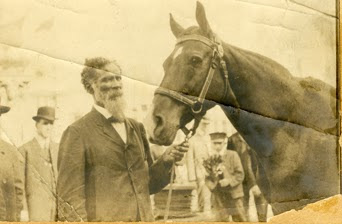 |
Courtesy of Tennessee State Library and Archives. |
That kind of relationship bonded William “Doc” Key and his horse, Beautiful Jim Key. While the horse was what drew me to the story, I was immediately awed by Doc. His greatest historical contribution was an unmistakable message about kindness, in a time of extreme racial prejudice, and brutal treatment of animals.
How could I not love the story of a man who overcame so much to make a real difference in the world?
Thanks to Doc, “Jim,” the horse, became a sort of poster child for the emerging humane movement, while Doc overcame injustices, broke racial barriers, and helped change the way people thought about and treated animals. Doc was awarded a Service to Humanity Award, and Jim was awarded a “Living Example” award.
So, back to your question, Cyn, about what inspired me to write this story—it spoke to my heart. I dived into research with zeal.
What were the challenges (literary, research, psychological, logistical) in bringing the text to life?There were a number of challenges to writing this story, but three that most stand out:
First, the research. It was claimed that Beautiful Jim Key could read, write, calculate math problems, compete in spelling bees, identify playing cards, operate a cash register, and more. I had to get to the bottom of how this could be possible.
I used the adult book as my jumping off point, but I wasn’t satisfied to rely solely on somebody else’s research.
This is a story that straddles the 19th and 20th centuries, so I read a great deal about the period, including slavery, the Reconstruction Era in the distinct regions of Tennessee, the history of the humane organizations; the related World’s Fairs, Doc’s business interests, etc.
Emotionally, the most difficult part was reading about how animals were treated in the 19th century, and, more importantly, how enslaved people were often treated with similar brutality. Only a tiny fraction of my research appears in the book’s back matter, but it all deeply affected my approach to the story.
I visited the
Shelbyville (TN) Public Library and skimmed through their microfilm. Then I spent some time at the Tennessee State Archives, donning white gloves as I perused the crumbling scrapbooks from the BJK collection.
During that 2009 trip, I also visited the humble Beautiful Jim Key memorial in Shelbyville, TN, and Doc’s grave site at the Willow Mount Cemetery. (I might have shed a few sentimental tears.) We then tracked down what I think was Doc’s former property, though the house is long gone.
This kind of onsite research, along with old photos and local news accounts, allowed me to imagine the setting of Doc’s hometown. Back home, I collected binders-full of newspaper articles, playbills, and promotional booklets. Through these, I got a feel for how people thought about Doc and Jim.
And, most importantly, I found some of Doc’s explanations for how he taught the horse. What became clear was, though we may never know exactly how the horse was able to do so many remarkable things, the countless news reporters and professors who tried to prove trickery or a hoax, never found anything beyond “education.” Jim only rarely made mistakes.
Ultimately, what Doc and Jim did for the humane movement is even more significant than what the horse performed on stage.
Originally, I had planned the story for middle grade audiences until my agent (who wasn’t my agent yet) suggested that I try a picture book version. I already had half of the chapters written by this time, so I was aghast at the thought of starting over. And I didn’t know how to write a picture book biography. I spent the next two years analyzing and dissecting a couple hundred picture book biographies to figure out how they work.
I decided to
blog about some of my craft observations, using the platform as a quasi-classroom for myself and anyone else who might happen upon my site.
Many, many, many drafts later, I had a manuscript that attracted the attention of a few editors. Lee and Low was the perfect home for Doc and Jim.
There was a built-in challenge in writing this story about a formerly-enslaved African American man. Because I don’t fit any of Doc’s descriptors, it was doubly important that I approach the subject with respect and sensitivity.
I couldn’t merely charge through with the mindset that I’m just the historian sharing documented facts.
How are you approaching the transition from writer to author in terms of your self-image, marketing and promotion, moving forward with your literary art?It is so exciting to finally be crossing the threshold into this new role. The past nine years, which is how long I’ve had the story in my head and in my heart, have felt like the longest-ever pregnancy.
There’s a mixture of joy, relief, and fear during this delivery stage. Fortunately, so far, very nice starred reviews have praised the book, and each reviewer wisely sings the praises of Daniel Minter’s spectacular lino-cut acrylic art.
As I think ahead to marketing and promotion, I’m planning for the Oct. 15 release, the Oct. 23 launch party, and how the book might raise awareness of the need for more kindness in the world—not only toward animals but toward each other.
From my very first draft, nine years ago, I knew I’d revive the original Beautiful Jim Key Pledge—originally signed by two million people during Doc and Jim’s time.
I plan to incorporate the pledge into my author presentations, and it will be downloadable from my website soon. I also hope to align with some humane organizations to help them raise awareness.
I have two more books under contract, several others on submission or in revision, and a novel-in-progress.
In 2018, Peachtree Publishers will release En Garde! Abraham Lincoln’s Dueling Words, illustrated by
S.D. Schindler, followed in 2019 by King of the Tightrope: When the Great Blondin Ruled Niagara, illustrated by
Adam Gustavson.
Such is the author’s life, right? We write, we rewrite, we revise, we sell, we wait, we celebrate, then we do it all over again. Because we can’t imagine not writing something that moves us. And we can’t imagine not writing for young people.
Cynsational GiveawayBook Launch! Join
Donna Janell Bowman at 3 p.m. Oct. 23 at BookPeople in Austin. Donna will be speaking and signing.
Fundraiser: Step Right Up and Help The Rescued Horses of Bluebonnet Equine Human Society: "They are horses, donkeys, and ponies that are helpless and hopeless. And they are hurting. The lucky ones land at Bluebonnet Equine Humane Society. Under the loving care of professional staff and volunteers, the animals are medically and nutritionally rehabilitated, then placed with trainers to prepare them for re-homing/adoption." See also
Interview: Step Right Up Author Donna Janell Bowman by Terry Pierce from Emu's Debuts.
Enter to win two author-signed copies of
Step Right Up: How Doc and Jim Key Taught the World About Kindness by
Donna Janell Bowman, illustrated by
Daniel Minter (Lee & Low, 2016).
a Rafflecopter giveaway
Mustache Baby Meets His Match. Bridget Heos. 2015. 40 pages. [Source: Library]
First sentence: Baby Billy was born with a mustache.
Premise/plot: This is the sequel to Mustache Baby. In this second book, Baby Billy is mostly at odds with Baby Javier, a bearded baby. The problem? Baby Javier and Baby Billy both want to be THE BOSS and tell the other what to do. Also both babies want to be THE BEST. Can these two learn to be friends and get along?
My thoughts: I liked this one. I did. I don't know that I LOVED, LOVED, LOVED it like I did the first book. But I liked it. The illustrations make this a clever read. It's the little details--often in the illustrations--that bring a smile. For example, when the two compete at running for President.
Text: 4 out of 5
Illustrations: 5 out of 5
Total: 9 out of 10
© 2016 Becky Laney of
Becky's Book Reviews
By
Cynthia Leitich Smithfor
CynsationsJenny Kay Dupuis is the first-time author of
I Am Not a Number, co-authored by
Kathy Kacer, illustrated by
Gillian Newland (Second Story, 2016). From the promotional copy:
When eight-year-old Irene is removed from her First Nations family to live in a residential school she is confused, frightened, and terribly homesick. She tries to remember who she is and where she came from, despite the efforts of the nuns who are in charge at the school and who tell her that she is not to use her own name but instead use the number they have assigned to her. When she goes home for summer holidays, Irene's parents decide never to send her and her brothers away again. But where will they hide? And what will happen when her parents disobey the law? Based on the life of co-author Jenny Kay Dupuis’ grandmother, I Am Not a Number is a hugely necessary book that brings a terrible part of Canada’s history to light in a way that children can learn from and relate to. As an author-educator, how do your various roles inform one another?My roles as an educator and author are intrinsically interconnected. I'm always searching for meaningful, engaging ways to reach out to young people so they can learn more about topics pertaining to Indigenous realities, diversity, social and cultural justice, and respectful relationships.
While working in the field of education, I realized that there were not many children's picture books available that focused on Indigenous realities through the lens of a First Nations family.
Co-writing I Am Not a Number with
Kathy Kacer gave me the opportunity to reflect on the value of literature for young people and how educators and families can make use of picture books to start conversations about critical, real-world issues.
When writing my granny's story, I realized that I was drawing on my expertise as an Indigenous community member, educator and learning strategist. I was cognizant of how children's literature can be used as a gateway to encourage young readers to unpack a story ("community memories"), think critically, and guide them to form their own opinions about issues of assimilation, identity loss, oppression, and injustice; all of which are major themes deeply rooted in policies that have either impacted or still impact Indigenous peoples.
 |
| Jenny Kay Dupuis |
A children's picture book like, I Am Not a Number can support educators, students, and families to engage in deep and meaningful conversations.
The story is about my granny, who was taken from
Nipissing First Nation reserve at a young age to live at a residential school in 1928.
The book can be used to direct conversations about not only Indigenous histories, but also the importance of exploring the underlying concepts of social change, including aspects of power relations, identity, and representation. For instance, young readers can engage in a character analysis by exploring the characters' ethics, motivations and effects of behaviours, and the impact of social, cultural, and political forces.
Through strong characters, written words, and vivid illustrations, the readers can also explore aspects of imagery, the settings, and the power of voice (terminology) used to express feelings of strength, fear, loss, and hope.
My hope as an educator-author is that the book, I Am Not a Number, will inspire others to use children's literature to encourage young people to begin to talk about past and present injustices that Indigenous communities face.
How did the outside (non-children's-YA-lit) world react to the news of your sale?I Am Not a Number was released on Sept. 6. The reviews have been overwhelmingly positive in Canada and the United States so far. One of the review sources,
Kirkus Reviews, described it as "a moving glimpse into a not-very-long-past injustice."
Booklist also gave it a starred review and highly recommended it. Other book reviewers have recommended it for teachers, librarians, and families.
As a lead up to the launch of the book, I was asked by various groups (mostly educators) to present either in person or through Skype about topics linked to Indigenous education and the value of children's young adult literature. The sessions have been helpful for the participants to see how a book like I Am Not a Number and others can be used.
The book will also be available in French in early January by Scholastic.
What would you have done differently?  |
| By Jenny's co-author, Kathy Kacer |
A children's book is typically limited to a set number of pages. If more space was permitted, I would have liked to include a short description in the afterword of what happened after my granny and her siblings returned home from the residential school.
In my granny's case, she enrolled in an international private school. The school was located nearby on the shores of Lake Nipissing.
It offered her an opportunity to stay in her community with her family while still receiving an education. Her siblings also each chose their own life path.
What advice do you have for beginning children's YA-writers? How about diverse writers for young people? Native/First Nations writers for young people?Although my first book is a story about my granny who was taken from her First Nations community at a young age to live in a residential school, we need to recognize that there are countless other community stories that need to be told by Indigenous peoples.
My advice for anyone who wants to get started writing children's-YA literature is relatively straightforward.
 |
| photo credits to Les Couchi for restoration of the photo |
- Have confidence in your abilities. Start by exploring a topic that you know about.
- Be honest and authentic. Prepare to gather information to ensure the authenticity of the story through an accurate portrayal of the people, place, time period, experiences, language, and setting.
- Be purposeful, thoughtful, and intentional. Take the time to identify what is the intended impact of the story. Writers need to continually ask themselves, "How will the readers be influenced by the characters, language, and overall messaging? How will the reader's view of their own world be expanded?
- Be authentic. Since I Am Not a Number is a children's picture book, it was important that it include authentic imagery. A relative of mine, Les Couchi, had restored a series of old family photos. The old photos helped to inform decisions when communicating with the illustrator, Gillian Newland about the hairstyles, what items to include in my great-grandfather's shop, etc. One of the old photos is included in the book and shows my granny and her siblings outside their house.
- Identify your responsibilities. Sometimes writers from diverse backgrounds have a greater responsibility that includes not just writing the story, but also educating others and transmitting knowledge about cultural, social, political, or economic issues buried within the story. In this instance, I Am Not a Number is not just about a First Nation's girl who was taken to live in a residential school, but it is a story that raises consciousness that Irene (my granny) is one of over hundreds of thousands of Indigenous children impacted by assimilation policies and racialized injustice.
- Be patient and anticipate a lengthy process that may involve information gathering, several rounds of edits, fact checking, searching for the right illustrator, etc. As such, I regularly turned to my family between edits to get their feedback and continued to listen to their memories. Some of the stories included memories of how my great-grandmother often made the best homemade meat pies, baked breads, jams, and preserves.
- Realize that your work is reflection of you. Just because something was done a certain way in the past, does not always make it right today. Be prepared to speak up and ask questions when you feel something does not feel right as you progress throughout the process, especially if you feel it feel it impacts your own ethics and values, or misrepresents a person's/group's racial or cultural identity or nation.
- Discuss participation, consent and consultation. It is essential that publishers who engage with Indigenous authors fully recognize Indigenous expertise and honour the importance of how to respectfully work in collaboration with Indigenous peoples by ensuring their full participation, consultation, and informed consent at all stages.
Cynsational NotesDr. Jenny Kay Dupuis is of Anishinaabe/Ojibway ancestry and a proud member of Nipissing First Nation. She is an educator, community researcher, artist, and speaker who works full-time supporting the advancement of Indigenous education.
Jenny's interest in her family's past and her commitment to teaching about Indigenous issues through literature drew her to co-write I Am Not a Number, her first children's book. The book can be ordered from a favourite bookstore (
Indiebound) and online from
Amazon.ca,
Amazon.com, and
Indigo.
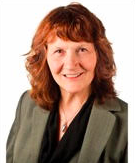 Last time I blogged it was related to dancing dinosaurs. And guess what? My post today is about dancing dinosaurs, too! Canadian author and dancer Judy Cook is here with me to answer some questions about her debut picture book When Dinosaurs Go Dancing, recently published by FriesenPress and a great blend of rhythm, rhyme, dance, and science!
Thanks for joining us, Judy! I'd love to hear more about your background in dance. When did your passion for dance begin and where has it taken you professionally?
I started dancing when I was a child at Sonia’s Dancing Academy in Saskatoon. I seemed to have a special talent for tap dancing, and after receiving a trophy for “the most outstanding tap performer” at a dance festival, I was hooked. A little praise goes a long way!
I kept taking jazz, tap, and ballet classes and even helped my teacher Sonia Fabian in teaching little kids. When I finished high school, I decided to continue my studies at the dance college at Ryerson University in Toronto. I had found my path in life!
I was so happy in Toronto because I had found a group of people who loved dance as much as I did. I was dancing from morning until night. I would even come to the campus on the weekends for extra ballet classes. After graduating, I auditioned for stage shows and began dancing professionally on TV and in shows around the Toronto area.
I was in a show at the Skyline Hotel for a year and then decided to go to Winnipeg when I was accepted for an apprentice position with
Winnipeg's Contemporary Dancers. I danced with them as an apprentice for a year and then started a theatre company “Canadian Content Theatre” with some theatrical friends of mine.
We travelled and performed all around Canada with that company for over 15 years.
That’s when we created our show “Listen to the Bones.” It was a musical theatre show all about dinosaurs and was initially in collaboration with a touring Dinosaur Alive exhibit that was at the Manitoba Children’s Museum for a summer.
What an interesting path that led you to dancing, theatre...and eventually dinosaurs! How did you come up with the idea for When Dinosaurs Go Dancing?
The book title is from a song in our “Listen to the Bones”
musical.
There is a dance I still do with the kindergarten-grade 2 students.
I have been doing this dance for years in the schools, and the students have always loved it.
I kept thinking that somebody should write a book based on this song, but when I realized that I was probably the only person who would ever do it.....I started jotting down ideas for the book.
It’s always fun to learn more about debut authors and their paths to publication. What was yours like? Did it happen quickly or was it a long road?
It was a long road for me…..12 years. I didn’t know how a person went about publishing a book. I was talking to an old school chum from Saskatoon about my idea. His kids had loved our dinosaur song “Listen to the Bones” when they were growing up. He took out a cheque book and made out a cheque to me for $5,000! He laughingly said that if I make a million I can pay him back some day. So that’s how I got the money to pay an illustrator, and that’s how I met Sonia Nadeau, who is now a dear friend of mine! I also went to a publishing workshop at Humber College in Toronto, so I went into the project with wide-open eyes, realizing that it was very difficult to sell a lot books, and even to make back your money, especially if you are trying to do it yourself.
Because you chose to self-publish your book through FriesenPress, you needed to find an illustrator on your own, as you have alluded to. How did you find Sonia Nadeau?
Yes….after I got the money I looked around for an illustrator from Winnipeg, and when I saw Sonia’s work I immediately knew she was perfect for the book project.
For most traditionally published picture books, the authors and illustrators don’t interact much during the publication process. What was your relationship with Sonia Nadeau like as the book was coming together?
Because I was used to collaborating with other artists in all the previous creative work I had done and because I was so close to the dinosaur material for so-o-o many years, I just knew I needed a more hands-on approach with the illustrator. Sonia was also close to the material because she had a job in a day care and just by chance had been using our music with the kids in her classes for six years!
I went to her day care….we recorded the kids dancing to the music, and she used the video for some of the inspiration for her drawings.
I also knew I wanted the dinosaurs to be taken from scientific renditions, and Sonia has a friend who draws dinosaurs for encyclopedias, so every dinosaur in the book was drawn that way!
We share a particular sense of humour, and we had lots of meetings and were on the same page from the start.
She is a delight to work with and I hope we can do it again soon!
I read in your bio at the back of When Dinosaurs Go Dancing that you conduct workshops in schools through several different arts programs. Can you tell us more about those workshops?
I have created a theatrical dance program for schools in which the students and I choreograph together and all the classes perform for each other at the end of the week. I work with some students who have extensive dance backgrounds mixed with some others who have none.
It’s my challenge to help create and guide the students to show off everybody’s talents.
That’s where my theatre training comes in handy. If somebody in the class has a special talent, we just choreograph it into our piece. My objective is for everyone to have a positive experience with the art form of dance! I was also the dance specialist for a two-year research project creating a dance program focusing on children with fetal alcohol syndrome in the Norway House Cree Nation, and was part of a panel to share the research at a world arts festival (
VSA) held in Washington, DC. I have had very positive experiences creating dance programs for children with disabilities.
How do you incorporate the book into your workshops for children?
I have just started to do readings in schools, and I have taken parts from the musical and adapted them to do fun scenes with the kids. The kids become newsboys in a scene that’s set to music and based on when people first began to discover dinosaur fossils.
There is also a hand dance "Back in Time” set to a music soundscape. I can use the same music with the kids for creative transformations….We theatrically change from being the wind…..to becoming a fish…..to flying like a pteranodon. It’s all great for workshop material. The kids can work together and make different dinosaurs out of their bodies while learning to be cooperative and work together as a group.
My partner Rubin Kantorovich and I recently co-wrote a new song called the "Bruce Rap." It’s all about the mosasaur I mention in my book. When I was doing a school workshop, I gave a verse to each group of four-to-six kids to work on, and they learned the words and choreographed cool moves to go along with it. Then they performed it for another class! They LOVED that activity!
The fossil skeleton of the mosasaur is on display at the Canadian Fossil Discovery Centre in Morden, Manitoba. FriesenPress's printing press is located in Altona -- a town close to the fossil museum.
They printed 2,000 copies of the book for a big giveaway at the Altona Sunflower Festival this year.
It was so fun to be able to give books away and not have to worry about making my money back.
That was a fun event AND they gave me 250 free paperback copies that I can sell!
Sonia and I also had a book launch at the fossil museum. I did the dance with the kids, Sonia gave an illustration workshop along with the reading, and we premiered the “Bruce Rap" song.
What great ways to promote the book! Through all of these activities, have you found any parts of the book that resonate the most with children and their caregivers?
I think the younger children enjoy the rhyme in the first part of the book and their older brothers and sisters like the dinosaur and fossil facts in the second part. They all love Sonia’s beautiful illustrations, and the dancers connect to all the dance-related parts.
What other book projects might you have in the works? Any more dancing dinosaurs on the horizon?
I would love to do another book with Sonia. I’d like to do a teacher’s guide, too. Right now I’m working on trying to find ways to distribute the book to school and public libraries. Some of my friends who are teachers have told me they have used the book in their classes and are having a lot of fun with it.
Sonia and I just found out some more positive news. The Mom’s Choice Awards has named When Dinosaurs go Dancing among the best in family-friendly media, products, and services. I’m hoping that will help us promote the book.
Congratulations. That's fantastic news! And thanks for sharing more about your journey with us today!
Thanks so much for this opportunity. It’s fun to share with people the background of how it all came together. I have learned so much about the book business by doing this project, and maybe my story will help inspire someone else out there to keep their dreams alive and perhaps create their own book!
To learn more about Judy and When Dinosaurs Go Dancing, you can check out the book's launch page through the Society of Children's Book Writers and Illustrators. You can also follow Judy on Twitter here.
Fiona Robinson brings her talents as a picture book author and illustrator (see below for reviews of two of her books that are favorites of mine) to a picture book biography with Ada's Ideas: The Story of Ada Lovelace, the World's First Computer Programer. Last year was the 200th anniversary of the birth of Ada Lovelace, daughter of Lord Byron. Her mother, Anne Isabella Byron, herself a gifted mathematician who was tutored at home, receiving an education equal to that of a man at Cambridge, ended her marriage after two years and kept Ada from her father, raising and educating her alone. 
Robinson details Ada's childhood, working in the changes brought about by the Industrial Revolution. It seems that touring factories where the machines that were "thrilling modern wonders," became a popular pastime for the wealthy. Ada's mother took her on these tours where her "imagination whirred along with the powerful engines! And her mind, so well trained by her many lessons, began to invent!" Ada called one of her ideas for a flying mechanical horse "flyology." Ada even signed off a letter to her mother, "Your Affectionate Carrier Pigeon," causing her mother to fear that some of her father's madness evident in his daughter. But, as Robinson writes, Ada's "imagination could not be confined by math, because Ada was starting to find her own sort of poetical expression . . . through math!"
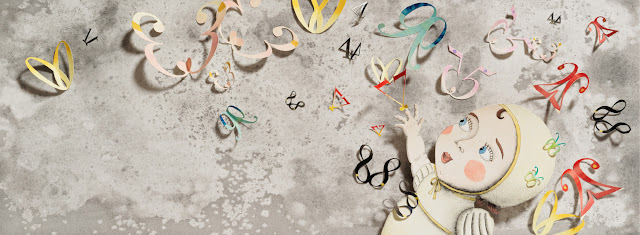
Robinson shares the same details that Laurie Wallmark, herself a teacher of computer science, does in her book Ada Byron Lovelace and the Thinking Machine, while bringing a more poetic tone to her writing as well as a more imaginatively creative style to her illustrations. In fact, click over and read - or even just look at the pictures of Robinson's artistic process - in her interview at Design of the Picture Book. 
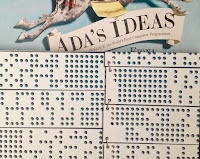 Robinson takes Ada through her adolescence, her meeting with Charles Babbage and his Difference Engine and into her young adulthood and marriage. Robinson spends several pages writing about the Analytical Engine, making links to the Jacquard Loom when describing the the hole-punched cards (that also make up the fantastic endpapers and case of this book, as seen above) that Babbage fed into the machine to calculate sums. I was Ada who figured out the algorithm that would be punched into the cards, which Robinson illustrates with a very clever page of maze-like swirls and a list of instructions on how readers should navigate the swirls to find the treasures in the maze, which is VERY cool and an analogy that I could grasp.
I can't wait to share this book, and Wallmark's, with my second graders who do reports on people and animals who are heroes every year! Robinson's illustrations and text are engaging and even better, comprehensive.
My favorite picture books by Fiona Robinson:
More about Ada Lovelace:
Source: Review Copy
Amigo. Byrd Baylor. Illustrated by Garth Williams. 1963. 48 pages. [Source: Bought]
First sentence: His mother said, "Come Francisco, my son. Tell me why your eyes are sad, my little one."
Premise/plot: Amigo is written in verse. It is historical fiction--about a boy longing for a dog. His family can't afford an actual dog, but, his parents encourage him to tame something wild, something that can take care of itself, something like a prairie dog. So Francisco sets out to tame a prairie dog, and, he knows just what he'll call it: Amigo. That's half the story. Amigo is a prairie dog that is curious and longs for adventures. He's drawn to humans, and he longs to tame a boy. Amigo picks out just the boy to tame, and, surprise, surprise, it's Francisco. Readers in on both sides of the stories can predict where this one is heading. It's cute.
My thoughts: I'll be honest: I bought it for the art. The illustrations are by Garth Williams. I thought if the text was nice, it would be an extra bonus. But really, I was just happy to see more of Garth Williams' work. I did enjoy the text. Do I think it's the most wonderful, amazing story ever? Probably not. I would have enjoyed more prose and less verse. But it's not awful.
© 2016 Becky Laney of
Becky's Book Reviews
Picture books are short, visual, and engaging, which makes them perfect for using as mentor texts with elementary AND secondary students.
So, we approach the end of summer, and for me things are beginning to calm down after months of precipitous highs and lows. Amongst the highs are the release of two picture books - Will's Words in the US (distributed in the UK) I've previously mentioned, but also Yozora o Miage-yo (Look Up at the Night Sky) for Fukuinkan Shoten in Japan..... more on these titles shortly.
 |
| Yozora o Miage-yo, written by Yuriko Matsumura |
I've talked about these releases on Twitter and Facebook, but the reason I've not blogged about new books, or much else at all this year is due to all the other stuff, a variety of pressures, much of it (though not all) work related, as hinted in previous posts, plus latterly these have been overshadowed by the terminal illness of my father. I'll not linger on these, other than to say that things are just beginning to settle down now.
One consequence of all this has been much rail travel between Norwich and the Midlands for one reason or another, which has seen a lot of sketchbook activity. Having been shut up in my studio with deadlines for so long, just getting out and about is nourishing, whatever the circumstances. When I travel, I tend to sketch and doodle a lot more, lately I've been taking a revived look at my creative direction and position in the UK.
 |
| Enroute to the SCBWI Picturebook Retreat in Worcestershire, June. |
In June, straight after completing the last of a string of challenging picture book deadlines I was off to the Worcestershire countryside for the SCBWI Picture-book Retreat. This was a fantastic weekend held at Holland House in Cropthorne, focused entirely on creating picture books, led by illustrators David Lucas and Lynne Chapman, both inspiring speakers. There's a full report of the weekend by Helen Liston in the
SCBWI journal Words and Pictures. As I've been so focused on illustrating books by other writers the last few years the weekend was particularly effective for just nurturing the neglected buds of storytelling in my own right. Though I've had my own stories published in Japan, I find myself easily disheartened with story submission in the UK, so this was just a perfect weekend.
 |
| Most of the retreat attendees, mentors and leaders at Holland House, missing chief organiser Anne-Marie Perks and a few others (photo by Candy Gourlay) |
While I was there my father was taken seriously ill, and I spent the following week further north in the Midlands, in Lichfield, travelling by bus to his hospital in Burton-upon-Trent every day. I know Lichfield well, having lived there a year when daughter and I first came back to the UK, but Burton was new to me. The return journey from the hospital meant long waits in in the town centre for the evening X12 express bus, so plenty of time to ponder the sights.
 |
| Burton War Memorial |
 |
| On the wall of the Leopard Inn |
It was the time of that intense heat wave in July, the beautiful, lush green of summer contrasted against the declining health of my dad. On a couple of days I gave up waiting for the X12 and took the local village bus, which winds it's way through the villages of Branston, Barton-under-Needwood, Yoxall, Kings Bromley, Alrewas, Fradley and Streethay. Glimpses of the narrow boats... the half timbered cottages... I thought I knew the area, but this was a revelation. A bus crawling the bumpy local back lanes of rural Staffordshire are hardly the best for sketching, but I managed to record his man and his coiffure...
 |
| On the local No.7 bus from Burton to Lichfield, 18th July |
Staying on my own in Lichfield I ate out every night, so had the chance to try a large range of eateries. The solitude of thoughts and my sketchbook was comforting, as was re-discovering the town.
 |
| Diners in the Bowling Green pub, 18th July |
I grew up a few miles south of Lichfield in Four Oaks, which I also got to see during this week. I left the area in 1978 and have rarely been back since, I couldn't believe how green everything had become in the intervening years. Standing one night on the platform of my old local station, I was gripped by a sudden bond with the Midlands. It felt like everything was falling into place, every experience framed within context of the circumstances of impending loss.
 |
| Waiting for the last train to Lichfield, 11pm, Butler's Lane Station |
At the end of the week I had to return to Norwich due to visiting family from Japan, but soon booked another train ticket to Lichfield as my dad's condition worsened. Unfortunately I missed his passing by one day, nevertheless it seemed like I'd already shared a journey of conclusion with my father. I felt like he was with me all the time. He'll be with me in memory forever.
Educators from around the country share the ways in which they teach about September 11th to their students. This post includes programming and writing ideas, as well as links to videos and picture books you can read aloud. Finally, there's a giveaway of a brand-new picture book that deals with September 11th.
Today is Picture Book 10 for 10, which is a community of educators who share "must-have" picture books for classrooms. My list includes stories that will inspire children to write about their own experiences in new ways.
 Not every children’s book with illustrations qualifies as a picture book. Picture book is a unique format, distinct from chapter books or illustrated novels. Picture books are designed for pre-schoolers and elementary school readers, and while the latter may be able to read independently, these books are intended to be read aloud — which is a unique craft challenge, meaning they must “sing” to the ear.
The following are some distinguishing characteristics of picture books:
A picture book has…
- 32 – 48 pages, with 32 being by far the most common. These pages are divided into 16 double-page spreads, generally featuring either a minimal amount of text and prominent art, or a balance between the two. (Bear in mind that the first and last couple of pages are usually reserved for title, acknowledgements and copyright info.)
- 0 – 1000 words maximum, with 500 or less being the preference in today’s market.
- Illustrations on every page (or every facing page.) The art may be full color, black and white, or any combination thereof, but it complements and furthers (rather than just reflects) the story.
- A simple plot and a limited number of characters, with a child or child-like protagonist at its center, the same age as the book’s target audience.
A picture book does NOT have…
- Chapters – these fall under the categories of early reader, chapter book or novel, depending on the length.
- More than 1000 words (with some exceptions, especially with respect to older, “classic” picture books, such as Robert McCloskey’s Make Way for Ducklings, which has 1149.)
- Less than 32 pages, or more than 48 pages. (Again, with the exception of older classics.)
- Dozens of characters, complicated plots or sub-plots.
- Adult Protagonists (with the exception of fables and fairy tales.)
Craft elements of narrative fiction Picture Books
Begins “in media res” – the problem or conflict is established on page 1
- Satisfying dramatic arc – beginning, middle, end
- Child or childlike hero, in pursuit of problem/goal, who learns/changes by end
- Emphasis on action, dialogue and behavior, rather than exposition/description
- Fun/engaging use of language for “read-aloud-ability”: word play, rhythm, alliteration, parallelism, patterns, onomatopoeia, personification, verse
- Economical, lean text – few adjectives and adverbs; don’t say what art shows
- Visual progression – story makes for variety in illustrations
- May use anthropomorphism (esp. to deal with tricky subjects)
- Theme, message or takeaway revealed through action rather than moralizing

By:
Mayra Calvani,
on 6/25/2016
Blog:
Mayra's Secret Bookcase
(
Login to Add to MyJacketFlap)
JacketFlap tags:
Picture book,
school,
education,
parenting,
frog,
writing for children,
early reader,
kids health,
eyeglasses,
Add a tag
Before becoming an author, Michelle Nott enjoyed being a French teacher (pre-K to university levels) in the U.S., working for a French company in Paris and an art gallery in NYC. She has also edited and written articles for numerous on-line and print magazines in the American and European markets.
In 2004, Michelle moved to Belgium. When she noticed that her daughters' book collection included more French titles than English ones, she decided to put her creative writing degree to use. Many of these early stories can be found on her blog Good Night, Sleep Tight where she also reflects on raising Third Culture Kids.
In 2015, Michelle and her family returned to the U.S. But with American and French citizenship, they travel to Europe regularly. Their favorite places include the French Alps, the Belgian countryside, and the Cornish coast in the UK. Her family's life and adventures prove great inspirations for her stories.
Freddy, Hoppie and the Eyeglasses is Michelle's first book for children. Her future children's books are represented by Essie White at Storm Literary Agency. She is a member of SCBWI, Children's Book Insider and Houston Writer's Guild.
Connect with Michelle on the web:
@MimiLRN
What’s inside the mind of a picture book/early reader author?
Children! Their daily lives. New experiences. Scary experiences. Loving experiences.
What is so great about being an author?
One of the best parts of being an author is having an excuse to write every day, to dream every day, to invent people and places and other worlds. As an author, I also love interacting with my readers and the adults in their lives. I really enjoy book signings. And as I used to be a teacher, I am thrilled get back in the classroom for what I loved most about teaching – the interaction and excitement that comes from working with students.
When do you hate it?
Hate being an author?? This question perplexes me.
What is a regular writing day like for you?
A regular day is irregular. I try to get up at 5:30 and write before breakfast, go for a bike ride or a swim, come back and write for at least four more hours, take a break when my daughters come home from school, and then write more or read in the evening. When my day pans out like this, I feel like a superhero. But, there are days when life puts a wrench in the plan or I may have interviews, school visits, or social media or other networking opportunities planned.
Do you think authors have big egos? Do you?
I think some people have big egos and some don't. I don't think authors would have any bigger ego than anyone else. As far as the writers I know, I think we all understand that writing is a tough business and whether or not someone is published yet does not make them the better person. Everyone's writing journey is different.
So no, I don 't think I have a big ego either. There is so much more I can learn and do to improve my craft.
How do you handle negative reviews?
Publishing is a very subjective business. And readers each have their preferences when it comes to literature. As there are lots of published books out on the shelves that I do not particularly appreciate, I keep that in mind if someone happens to not like my book. It's just part of life. You can't please everyone all of the time.
How do you handle positive reviews?
It always makes me smile when I read positive remarks about my books. I'm always very flattered when people take the time to say something nice about my work.
What is the usual response when you tell a new acquaintance that you’re an author?
Most people find it intriguing and mention how they plan on writing a book once they retire or ask what kind of books I write. When I say I write for children, the reactions are mixed. Most people find it very admirable, while others may say it's “adorable” and not think any more about it.
What do you do on those days you don’t feel like writing? Do you force it or take a break?
I do really try to sit and write no matter how I feel. But if nothing is coming, then I go outside. Usually a swim, a bike ride or a walk does the trick and then I rush home to write down all my ideas.
Any writing quirks?
I try to put myself in the atmosphere of the world in which I'm writing. For example, when working on a MG fantasy that takes place under water, I put out seashells and a sea-salt scented candle on my desk while listening to beach sounds. While working on a MG magical realism story that takes place in Brussels in the 1930s, I surrounded myself with images of particular places in Brussels and listened to French music of the era.
What would you do if people around you didn’t take your writing seriously or see it as a hobby?
Probably at first, on the inside, I'd be fuming. But then I'd calm down and remind myself that they just don't understand. They may never have been so overtaken by a sunset, or the scent of an unexpected plant in the forest, or the feel of a child's cheek on his to want to write it down so to never forget it, and to incorporate it into a story for other people to experience as well.
People who see writing as a hobby may not realize how touched their lives have been by a good book, or a beautiful phrase.
They may not realize that writing is the same as any profession. A certain amount of inner talent does play a role, but so does a lot of perseverance, discipline and hard work.
Some authors seem to have a love-hate relationship to writing. Can you relate?
I love it. Always.
Do you think success as an author must be linked to money?
Absolutely not. Sure, it would be nice if all writers could actually make a decent living from their words. But I knew from the start what a high expectation that is.
For me, success is when families, librarians, and teachers are enjoying my books and using them to send a positive message to children.
What had writing taught you?
Writing has taught me that many, if not all, of my life experiences have served some purpose. Even though many years went by before jumping into children's writing, all those years were valuable and rich with emotions and adventures that I can use in my current stories.
////////////////////////////////////
Title: FREDDY, HOPPIE AND THE EYEGLASSES
Genre: Early Reader
Author: Michelle Nott
Website: www.authormichellenott.com
Publisher: Guardian Angel Publishing
About the Book:
Freddy and his imaginary frog Hoppie jump into each day. But numbers smudge, words blur, and classmates snicker. By the end of the week, there is no more spring in their step. Freddy knows he should tell his mom about the trouble they are having, but how?
“A
celebration of the senses on the sand and by the shore.” That’s how a Kirkus reviewer describes the success of
children’s author and poet Kelly Ramsdell
Fineman’s first picture book, At the
Boardwalk. “The oceanside boardwalk bustles
from dawn's first light until night's starry skies.”
This kind of praise isn’t a
surprise to anyone who has read Fineman’s poems, many of which celebrate the
I was going through my picture books this morning trying to get them a little organized, and I came across
The Wall, which I had completely forgotten that I owned. I wish I remembered it so for Memorial Day, but I didn't so I thought I would write about it today.
On a cool, breezy day, a young boy and his father visit the Vietnam Veterans Memorial in Washington DC. The boys notices that the wall long long, shiny and shaped like a V. The names on the wall are in straight lines, the "letters march side by side, like rows of soldier."
But this isn't just a sightseeing visit. The boy and his father are looking for the boy's grandfather. As they search for his name, the boy sees different people approach the way - a wounded veteran, an elderly couple, a group of school girls - and the different mementos left by friends and family members who are still mourning the loss of the sons, brother, fathers, grandfathers Meanwhile, the boys father searches for the name of the father he lost when he was the age his son is now.
Finally, there it is - George Munoz. Son and father make a rubbing of his names, then quietly stand in front of it together, no doubt thinking about what a loss they have suffered.
Because, besides honoring the veterans who lost their lives in the Vietnam War, the wall also reminds us of what a profound loss to family and friends even a single life can be. And I think Eve Bunting has really captured that so well in this book, as well as what a truly emotional experience visiting the Wall can be, regardless of your feelings about the Vietnam War.
Ronald Himler's quiet impressionistic styled watercolor illustrations and his palette of background grays and semi-colorful foreground figures of visitors and mementos really reflect the somber mood of visiting such a meaningful visit.
I created this blog because I was interested in the impact war has on children effected by it and I think the little boy's last words really epitomize that impact:
"But I'd rather my grandpa here, taking me to the river, telling me to button my jacket because it's cold.
I'd rather have him here."
This book is recommended for readers age 5+
This book was purchased for my personal library
UPDATE:
A few years ago, I wrote that when I was too young to understand, I wore a MIA bracelet even though I was too young to understand what it was about. The name on the bracelet was James W. Grace. James was born in 1939 in Louisiana and shot down on June 14, 1969, which is, incidentally, flag day, and has been MIA since then. Eventually, my bracelet fell apart, but with the advent of the Internet, I periodically did a search for James to see if maybe he had made it home. Sadly, he is still MIA and his name has been listed on the Vietnam Memorial. Years ago, when I visited it, I did a rubbing just like the father and son in the story:
So it was time to do another search, and I was please to find a photo of James on the
Vietnam Veterans Memorial Wall of Faces
 |
| James William Grace 1939-1969 |
And just in case you are wondering what happens to all those mementos left at the wall, it is all explained in this 11 minute video, and trust me, it is well worth the tie it takes to watch.
And as always,
In Memoriam
FCP 1955-2001

One of the goals of my blog is to review and recommend books, artwork and artists from around the globe. I am delighted to have my first Indonesian illustrator on Miss Marple’s Musings today.
[JM] Illustrator or author/illustrator? If the latter, … Continue reading →
View Next 25 Posts





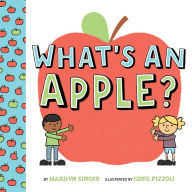


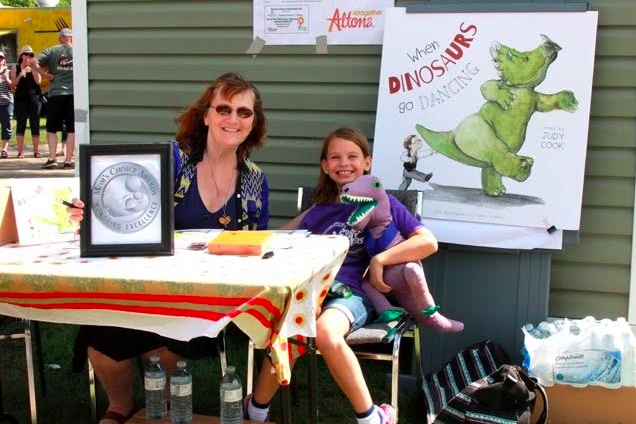


.jpeg?picon=3451)


