JacketFlap connects you to the work of more than 200,000 authors, illustrators, publishers and other creators of books for Children and Young Adults. The site is updated daily with information about every book, author, illustrator, and publisher in the children's / young adult book industry. Members include published authors and illustrators, librarians, agents, editors, publicists, booksellers, publishers and fans. Join now (it's free).
Login or Register for free to create your own customized page of blog posts from your favorite blogs. You can also add blogs by clicking the "Add to MyJacketFlap" links next to the blog name in each post.
Blog Posts by Tag
In the past 7 days
Blog Posts by Date
Click days in this calendar to see posts by day or month
Viewing: Blog Posts Tagged with: common core, Most Recent at Top [Help]
Results 1 - 25 of 87
How to use this Page
You are viewing the most recent posts tagged with the words: common core in the JacketFlap blog reader. What is a tag? Think of a tag as a keyword or category label. Tags can both help you find posts on JacketFlap.com as well as provide an easy way for you to "remember" and classify posts for later recall. Try adding a tag yourself by clicking "Add a tag" below a post's header. Scroll down through the list of Recent Posts in the left column and click on a post title that sounds interesting. You can view all posts from a specific blog by clicking the Blog name in the right column, or you can click a 'More Posts from this Blog' link in any individual post.
If you're a teacher, and you live somewhere in the general vicinity of the northeast United States, you may be reading this from underneath a giant pile of blankets, cocoa in hand, enjoying at least one unexpected day off from school. And if you're reading this, then you may be browsing for what to do when school is back in session, because your kiddos' focus will most likely still be on the gigantic piles of snow outside, and not on whatever you originally had planned. Second graders who are still marveling at the biggest snowstorm of their little lifetimes might have a good time writing about snow: Specifically, writing about how to build a snowman. So, here is a set of plans you might like to use, focusing on temporal words and how-to writing. Some technical notes:
These plans use only pages 1-5 and 17-18 of the packet, but feel free to adjust and tweak as you like.
The plans are aligned with Pennsylvania Common Core standards, but you can easily adapt to the standards in use in your state.
The plans are for second grade. However, they can be easily adapted for first and third grade - just adjust your core standards and tweak the plans accordingly to fit.
The plans use the book below as an anchor text. (But if you don't have it and are pressed for time, any book about snowmen, or ideally, building a snowman, should do):
Title: Stranger in the Woods: A Photographic Fantasy (Nature)
Author and photographer: Carl R. Sams II, Jean Stoick
Pages: 48
Reading Level: Ages 5 and up
Publisher and Date: Carl R. Sams Photography, November 1999
Edition: 1st
Language: English
Published In: United States
Price: $16.52
ISBN-10:0967174805
ISBN-13:978-0967174808
And finally, the plans:
Clicking the link below will take you to the shared Google Doc, and you can download it from there.
For parents of soon-to-be kindergartners and first graders, helping their children be prepared for the start of school can be exciting and daunting (and not just for students).
What can parents do over the summer to help their children maintain the growth they made this past year in preschool or kindergarten and be ready to tackle new topics and skills in the fall?
Below is one way parents can read and explore books over the summer. This model can be adapted for both fiction and nonfiction texts and follows how many teachers practice guided reading, which children may experience the first time in the upcoming school year.
I’m going to model how parents can practice reading using the text, David’s Drawings.
We do not need to, nor should we, ask every question for every book during every reading time. We may have only four minutes of our child’s attention one day and maybe twenty on another. The goal is not to drill our youngest learners in Common Core standards by the start of school.
Rather, the ultimate goal here is to show our beginning and soon-to-be readers how reading can be a joyful, positive experience. This mindset will set them up for the best start to their school journey.
Getting Ready to Read
1. Questions to ask and talk through with our rising kinders or first graders about the book:
Who is the author? / Show me where the author is on the cover. What does an author do?
Who is the illustrator? / Show me where the illustrator is on the cover. What does an illustrator do?
Where is the front cover? The back cover? The title page of the book?
As we read, which direction do we read the words?
2. Practice making predictions:
Together, look at the front cover. Using the title and picture on the cover, ask: what might happen in the story? What makes you think that?
Take a picture walk through the book. Ask: What do you think this story will be about? What do you notice when you look through this book?
3. Build background schema and draw on your child’s past experiences:
What do you know about drawing, or making a picture?
What types of things do you like to draw?
Where do artists get their ideas for drawings and paintings?
Who might help you draw a picture?
Reading the Book
As you begin to read, make sure the book is between both of you so your child can clearly see the text (and illustrations) and be in the position of the reader (rather than a regular listener at a group story time).
Make sure to point your finger to each word as it is read aloud. In doing so, your child can follow the text as well as the storyline and learn that we derive meaning from print—we in fact are not just making up a story to match the pictures we are seeing!
Video examples of parents reading with primary grade students:
Please show me a word that starts with the uppercase letter D. Show me a word that starts with the lowercase letter p.
Put your finger on a word that starts with b. Put your finger on a word that ends with e.
Can you think of another word you know that rhymes with day?
Can you show me a sentence that has a question mark at the end? A period? An exclamation point?
Can you show me a word that ends in –ed? –s?
Find a word that starts with the same letter as your name.
Find a word that ends with the same letter as your name.
Find a word that has a letter that is in your name.
Can you show me the (high frequency) words: the, of, and, a, to, you, on, I, me, my? Many primary grade classrooms build reading fluency with sight word practice. For a review for rising first graders or a peak for rising kinders, here are kindergarten high frequency word lists:
Done with sitting still? Time to move but keep the connections going!
1. Write or draw an answer to this question: Would you be friends with David?
2. Find a tree near school, at a park, or near your home. Sketch it using a pencil and then later decorate it.
3. Re-read the story or have another adult read the story—re-reading stories is great for helping children practice fluency, make predictions, retell events, and build confidence in eventually reading parts on their own.
Jill Eisenberg, our Senior Literacy Expert, began her career teaching English as a Foreign Language to second through sixth graders in Yilan, Taiwan as a Fulbright Fellow. She went on to become a literacy teacher for third grade in San Jose, CA as a Teach for America corps member. In her weekly column at The Open Book, she offers teaching and literacy tips for educators.
0 Comments on How to Read With Your Rising First Graders and Kinders This Summer as of 5/18/2015 10:09:00 AM
Earth Day, April 22nd is right around the corner, and we at Lee & Low are some pretty big fans of this blue planet we live on. So, whether you choose to plant a tree or pledge to better uphold the 3 R’s -reduce, reuse, recycle- we are celebrating and promoting awareness the best way we know how- with books!
Here are 5 environmentally friendly collections to bring nature indoors & encourage “thinking green”:
Save the Planet: Environmental Action Earth Day Collection: Be inspired to be an advocate for planet Earth through the true stories of threatened ecosystems, environmental recovery efforts and restorations plans, and heroic actions. Like the individuals and communities explored in these stories, children everywhere will realize the difference they can make in protecting our planet and preserving its natural resources.
Earth Day Poetry Collection: Through rhythm and verse, float down the cool river, reach as high as the tallest tree, and search for all of the vibrant colors of the rainbow in the natural world. This collection of poetry books are inspired by the joy and wonder of being outdoors and brings the sight and sounds of nature and all of its wildlife to life.
Seasonal Poems Earth Day Collection: Travel through winter, spring, summer, & fall through a series of bilingual seasonal poems by renowned poet and educator, Francisco Alarcón. Learn about family, community, and caring for each other and the natural environment we live in.
Adventures Around the World Collection: Explore Africa while traversing Botswana’s lush grasslands and Uganda’s Impenetrable Forest, celebrate the deep-seeded respect for wildlife in India, Mongolia and on an island off the coast of Iceland, and journey to Australia to explore animals found nowhere else on Earth.
Vanishing Cultures Collection: The 7-book series introduces readers to the Yanomama of the Amazon Basin, Aborigines of Australia, Sami of the European Arctic, Inuit of the North American Arctic, Tibetans and Sherpas from the Himalaya, Mongolians of Asia, and Tuareg of the Sahara.
Lesson Plans & Ideas:
What fun is Earth Day if you don’t get your hands a little dirty? Bring some of the outdoors into your classroom-or vice versa- by engaging students in various hands-on and project-based Earth Day lessons and activities:
I Want to Be Recycled from Keep America Beautiful. Find out how different kinds of materials are recycled, transforming trash into new things. Students can play a super sorter game and start a recycling movement in their community.
Veronicahas a degree from Mount Saint Mary College and joined LEE & LOW in the fall of 2014. She has a background in education and holds a New York State childhood education (1-6) and students with disabilities (1-6) certification. When she’s not wandering around New York City, you can find her hiking with her dog Milo in her hometown in the Hudson Valley, NY.
1 Comments on Reading for the Earth: Ultimate Earth Day Resource Roundup, last added: 4/20/2015
Readers might be interested to know that almost every book we manufacture is printed on FSC certified paper, meaning the sources can be traced to ensure it is not old growth product. Those that do not carry the FSC logo are printed on stock that is also certified but exempt from the logo as they contain an element that cannot by sourced – typically, for example, recycled board that the hardcovers are bound with. We also take steps to use wherever possible soy and/or vegetable based inks rather than petroleum.
In this guest post, Sara Burnett, education associate at the American Immigration Council, presents strategies and resources to enrich the classroom with the legacy of César Chávez. This blog post was originally posted at the American Immigration Council’s Teach Immigration blog.
“When the man who feeds the world by toiling in the field is himself deprived of the basic rights of feeding and caring for his own family, the whole community of man is sick.” — César Chávez
César Chávez was a Mexican-American labor activist and civil rights leader who fought tirelessly throughout his life to improve the working conditions of migrant farm workers. A man of great courage, he championed nonviolent protest, using boycotts, strikes, and fasting as a way to create sweeping social change. Importantly, his work led him to found the United Farm Workers union (UFW).
His remarkable achievements towards social justice and human rights serve as an excellent example to young people of how vital their voices are in bringing about change and championing causes that are as relevant today as they were in his day.
One group of middle school students in Fellsmere, FL has done just that by writing and producing a short news broadcast “The Hands That Feed Us: A Migrant Farm Workers Service Project,” highlighting the unfair labor practices and strenuous conditions of migrant farmworkers who pick oranges in their community. Their teachers are winners of the American Immigration Council’s 2014 community grants program which helped to fund this service-learning opportunity. Their project culminates with a school-wide donation drive for materials sorely needed for migrant farmworkers.
Inspired to enrich your classroom with the legacy of César Chávez?
In this immigration lesson plan, students will understand how César Chávez’s adolescence as a migrant farm worker influenced his later achievements. First, students will analyze how an artist and biographer have interpreted Chávez’s legacy. Then by reading excerpts from Chávez’s autobiography, students will draw connections between how his early years shaped his later beliefs and achievements around organized labor, social justice, and humane treatment of individuals. Once students have read and critically thought about these connections, they will write a response supported with evidence from the text to answer the investigative question on the impact of Chávez’s early years and development. This Common-Core aligned lesson includes extensions and adaptations for ELL students and readers at multiple levels.
Use visuals and picture books
Appropriate for younger students, but inspirational for all ages, picture books have a unique capacity to captivate and educate. The following books all have linked teacher’s guides.
Poems to Dream Together/Poemas para Soñar Juntos by Francisco Alarcón pays tribute to those who toil in the fields, and to César Chávez. This is an excellent bilingual book to use in your celebration of National Poetry Month in April.
Amelia’s Road by Linda Jacobs Altman explores the daily life of migrant farm working in California’s Central Valley from a child’s perspective. According to the publisher, Lee and Low Books, “it is an inspirational tale about the importance of home.”
First Day in Grapes by L. King Perez follows Chico and his family traveling farm to farm across California where every September they pick grapes and Chico enters a different school. But third grade year is different and Chico begins to find his own voice against the bullies at his school
Calling the Doves / El Canto de las Palomas by Juan Herrera is the poet’s account of his own childhood as a migrant farmworker. Beautifully illustrated and composed in Spanish and English, Herrera describes the simple joys he misses from his native Mexico as well as detailing his personal journey in becoming a writer.
A brief video Mini-Bio: César Chávez sets the foundation for older students to learn about the major achievements of Chávez’s life.
Initiate a community service project
Chávez was explicit about the need to serve one’s community. As a class, identify a need in your community and then brainstorm ways that students can make a difference from running a donation drive to decorating school walls in order to welcome all students and families. Take inspiration from the students in Fellsmere, FL for a more intensive project and let us know about it and apply for our community grants.
Extend learning into the present state of migrant farm workers
Read Interview with a Crab Picker (Public Welfare Foundation) and explore what it is like to apply for U.S. jobs while residing in the home country. Pair this reading with the short film about a Public Welfare Foundation grantee: Centro De Los Derechos Del Migrante, Inc. available on their website. Ask students: How do these recent interviews and stories compare and contrast with the conditions facing Chávez and his family? How are some individuals in home countries benefitting from sending migrant workers to the U.S.?
Have more ideas on teaching César Chávez and his legacy with students? We’d love to hear them. Email us at [email protected] and follow us on twitter @ThnkImmigration.
Sara Burnett is the education associate at the American Immigration Council, a non-partisan non-profit dedicated to honoring our nation’s immigrant past and shaping our immigrant future. She was a former public high school English teacher in Washington D.C. and Vermont. She holds a MFA in Creative Writing from the University of Maryland, College Park, where she taught a service-learning and creative writing with undergraduates and recently immigrated high school students. Additionally, she holds a MA in English Literature from the University of Vermont, and a BA in English and Economics from Boston College.
0 Comments on Interpreting César Chávez’s Legacy with Students as of 1/1/1900
I have long followed and respected the work of author Cynthia DeFelice, who over the past 25 years has put together an expansive and impressive body of work. No bells, no whistles, no fancy pyrotechnics. Just one well-crafted book after another. There’s not an ounce of phony in Cynthia; she’s the genuine article, the real magilla. Last November, I was pleased to run into Cynthia at the Rochester Children’s Book Festival. Pressed for time, we chatted easily about this and that, then parted ways. But I wanted more. Thus, this conversation . . . I’m sure you’ll like Cynthia almost as much as her dog does.
Greetings, Cynthia. Thanks for taking the time out of your busy schedule for this conversation. I feel like we have so much to talk about. We first met sometime in the early 90s, back when Frank Hodge, a bookseller in Albany, was putting on his elaborate, gushing children’s book conferences.
It’s nice to be in touch with you again. I’ll always remember those conferences with Frank Hodge. He made me feel validated as a fledgling writer. He left me a voice mail telling me how much he loved the book Weasel. I played it over and over and over! In 1992, the Hodge-Podge Society gave the first ever Hodge-Podge Award to Weasel. It meant the world to me. Those were great times for authors, teachers, kids, and for literature.
Frank forced me to read your book — and I loved it. So I’ll always be grateful to Frank for that; it’s important to have those people in your world, the sharers, the ones who press books into your hands and say, “You must read this!”
Well, good for Frank! He is definitely one of those people you’re talking about. His enthusiasm is infectious.
We’ve seen many changes over the past 25 years. For example, a year or two ago I participated in a New York State reading conference in Albany for educators. The building was abuzz with programs about “Common Core” strategies & applications & assessments & implementation techniques and ZZZZZzzzzz. (Sorry, dozed off for a minute!) Anyway, educators were under tremendous pressure to roll this thing out — even when many sensed disaster. Meanwhile, almost out of habit, organizers invited authors to attend, but they placed us in a darkened corridor in the back. Not next to the Dumpster, but close. At one point I was with Susan Beth Pfeffer, who writes these incredible books, and nobody was paying attention to her. This great writer was sitting there virtually ignored.
To your point about finding fabulous authors being ignored at conferences, I hear you. It can be a very humbling experience. I find that teachers aren’t nearly as knowledgeable about books and authors as they were 10-25 years ago, and not as interested. They aren’t encouraged in that direction, and they don’t feel they have the time for what is considered to be non-essential to the goal of making sure their kids pass the tests. Thankfully, there are exceptions! You and I both still hear from kids and teachers for whom books are vital, important, and exhilarating.
But, yes, I agree with you completely that literature is being shoved to the side. Teachers tell me they have to sneak in reading aloud when no one is watching or listening.
When I was invited to speak at a dinner, along with Adam Gidwitz and the great Joe Bruchac, I felt compelled to put in a good word for . . . story. You know, remind everybody that books matter. In today’s misguided rush for “informational units of text,” I worry that test-driven education is pushing literature to the side. The powers that be can’t easily measure the value of a book — it’s impossible to reduce to bubble tests — so their solution is to ignore fiction completely. Sorry for the rant, but I’m so frustrated with the direction of education today.
Well, it’s hard not to rant. It’s disconcerting to think how we’ve swung so far from those heady days of “Whole Language” to today’s “Common Core” curriculum — about as far apart as two approaches can be. I think the best approach lies somewhere in the vast middle ground between the two, and teachers need to be trusted to use methods as varied as the kids they work with every day.
On a recent school visit in Connecticut, I met a second-year librarian — excuse me, media specialist — who was instructed by her supervisor to never read aloud to the students. It wasn’t perceived as a worthwhile use of her time.
Well, that is sad and just plain ridiculous. I was a school librarian for 8 ½ years. I felt the most important part of my job was reading aloud to kids
I didn’t realize you were a librarian.
-
Yes, I began as a school librarian. But, really, my life as a writer began when I was a child listening to my mother read aloud. And every crazy job I had before I became a librarian (and there were a lot) helped to form and inform me as a writer. This is true of us all. I had an actual epiphany one day while I was a librarian. I looked up from a book I was reading aloud and saw the faces of a class of kids who were riveted to every word… I saw their wide eyes, their mouths hanging open, their bodies taut and poised with anticipation – I was seeing full body participation in the story that was unfolding. I thought: I want to be the person who makes kids look and feel like THAT.
-
And that’s exactly who you became. Which is incredible. This can be a tough and discouraging business; I truly hope you realize how much you’ve accomplished.
Thanks, and back at you on that. I think we have to constantly remind ourselves that what we do is important. I think we’ve all had the experience of being scorned because we write for children. The common perception is that we write about fuzzy bunnies who learn to share and to be happy with who they are.
I loved your recent blog post about the importance of books that disturb us. I’m still amazed when I hear from a teacher or parent –- and occasionally even a young reader –- saying they didn’t like a book or a scene from a book because of something upsetting that happened in it. Conflict is the essence of fiction! No conflict, no story (or, worse, a boring, useless one). I love my characters, and I hate to make them go through some of the experiences they have, but it’s got to be done! Did I want Stewpot to die in Nowhere to Call Home? Did I want Weasel to have cut out Ezra’s tongue and killed his wife and unborn baby? Did I want Erik to have to give up the dog Quill at the end of Wild Life? These things hurt, and yet we see our characters emerge from the dark forests we give them to walk through, coming out stronger and wiser. We all need to hear about such experiences, over and over again, in order to have hope in the face of our own trials.
I admire all aspects of your writing, but in particular your sense of pace; your stories click along briskly. They don’t feel rushed, there’s real depth, but there’s always a strong forward push to the narrative. How important is that to you?
I love beautiful writing, I love imagery and metaphor, and evocative language. But all that must be in service to story, or I am impatient with it. I don’t like show-offy writing.
The ego getting in the way.
Yes. Even the best writers need an editor to keep that ego in check! I seek clarity — what good is writing that obscures and obfuscates? The purpose is to communicate, to say what you mean. That goes for all kinds of writing, not just writing for kids. Kids want to get to the point. So do I.
Can you name any books or authors that were important to your development as a writer? Or is that an impossible question to answer?
Impossible. Because there are too many, and if I made a list I would inevitably leave out a person or book I adore. Safer to say that every book I’ve read -– the good, the bad, and the ugly –- all are in there somewhere, having an effect on my own writing.
-
You are what you eat. Also, your love of nature — the great outdoors! — infuses everything you write.
Nature and the great outdoors, yes. My love of these things will always be a big part of my writing. I find that after a lifetime of experience and reading and exploring, I know a lot about the natural world, and it’s fun to include that knowledge in my writing. Sometimes I worry that kids are being cut off from the real world. But I do know lots of kids who love animals and trees and flowers and bugs, love to hunt and fish, to mess around in ponds and streams, build forts, paddle canoes, collect fossils — you name it. They give me hope for the future.
Where do you live?
On and sometimes in (during the floods of 1972 and 1993) Seneca Lake in beautiful upstate New York.
Is that where you’re from?
Nope. I grew up in the suburbs of northeast Philly. I came up here to go to college and never left.
Your books often feature boy characters. Why do you think that’s so?
You’re right: more than half of my main characters are boys. I’m not sure why. And I don’t know why I feel so perfectly comfortable writing in the voice of a 10-11-12 year old boy. Maybe because my brothers and I were close and we did a lot together? Maybe because my husband still has a lot of boyish enthusiasm? At any rate, I am crazy about pre-adolescent boys, their goofiness and earnestness and heedlessness. My new book (coming out in May) is called Fort. It features two boys, Wyatt and Augie (age 11) who build a fort together during summer vacation. I had so much fun writing it. (I have to admit, I love when I crack myself up, and these guys just make me laugh.)
While writing, are you conscious about the gender gap in reading? This truism that “boys don’t read.”
I am. Sometimes I am purposely writing for that reluctant reader, who is so often a boy. I love nothing so much as hearing that one of my books was THE ONE that turned a kid around, that made him a reader.
I just read Signal, so that book is on my mind today. I had to smile when Owen gets into the woods and his phone doesn’t work. No wi-fi. It’s funny to me because in my “Scary Tales” series I always have to do the same thing. If we want to instill an element of danger, there has to be a sense of isolation that doesn’t seem possible in today’s hyper-connected world. “What? Zombie hordes coming over the rise? I’ll call Mom to pick us up in her SUV!” So we always need to get the parents out of the way and somehow disable the wi-fi. You didn’t have that problem back when you wrote Weasel.
Thanks for reading Signal. And, yeah, it’s really annoying that in order to be plausible in this day and age, you have to have a reason why your character isn’t on the phone with Mommy every time something goes wrong. (Another good reason to write historical fiction!) In Fort, Augie lives with his grandmother and doesn’t have money for a cell phone, and Wyatt’s with his father for the summer. His parents are divorced, and (unlike Mom) Dad doesn’t believe in kids being constantly connected to an electronic nanny. So — halleluiah! Wyatt and Augie are free to do all the fun, dumb, and glorious things they feel like doing!
My friends and I built a fort in the woods when we were in high school. Good times, great memories, just hanging out unfettered and free. I included a fort in my book, Along Came Spider. For Trey and Spider, the book’s main characters, the fort represented a refuge. It was also a haven for their friendship away from the social pressures and cliques of school. A place in nature where they could be themselves. So, yes, I love that you wrote a book titled Fort. I’ll add it to my list! (You are becoming an expensive friend.)
Well, now that I’ve discovered your books, I can say the same. Money well spent, I’d say.
Where did the idea for Signal originate?
The inspiration for Signal came one morning as I was running on a trail through the woods with Josie, my dog at the time. She proudly brought me a white napkin with red stuff smeared on it. I thought, Whoa, is that blood?No, whew. Ketchup. But what if it had been blood? And what if a kid was running with his dog and she brought him pieces of cloth with blood stains? Eww. That would be creepy! And scary, and exciting, and mysterious — and I started writing Signal.
You’ve always been extremely well-reviewed. Readers love your books. And yet in this day of series and website-supported titles, where everything seems to be high-concept, it feels like the stand-alone middle grade novel is an endangered species.
I have been lucky with reviews. But, sadly, I think traditional review sources are becoming increasingly irrelevant, as blogs and websites and personal media platforms take over. That’s not good news for me because I am simply not interested in self-promotion. Can’t do it. Don’t want to do it. I just want to write the best books I can and let them speak for themselves. I know it’s old-school, but there it is. You said that a stand-alone middle grade novel is becoming an endangered species amid all the series and “high concept” books out there, and I think you’re right. But when that stand-alone book somehow finds its niche audience, when kids and teachers somehow discover it and embrace it as theirs . . . , well, it’s a beautiful damn thing, and it’s enough to keep me writing, for now.
For now?!
Well, my husband is 9 years older than I am and recently retired, and there are a lot of things we still need to do!
Like what?
We have a farm property we are improving by digging a pond, and by planting trees and foliage to benefit wildlife. We stocked it with fish, and enjoy watching it attract turtles, frogs, toads, dragonflies, birds and animals of all sorts. So we like to spend a lot of time there, camping out. We love to travel, and are headed next on a self-driving tour of Iceland. We also have four terrific grandchildren we like to spend time with. I could go on and on with the bucket list…
By the way, I agree about the blogs. I think we are seeing a lot more opinion — more reaction — but less deep critical thought. It’s fine and useful for a neighbor to tell you they hated or loved a movie, but it’s not the same as a professional film critic providing an informed, and hopefully insightful, critique. Yet somehow today it’s all conflated.
Well, there is a similar phenomenon with self-published books. I’m not a total snob about it, and there are plenty of good books that didn’t go through the process of being accepted by and edited by a professional at an established publishing house. But I’ll repeat that everyone needs an editor. And I’m often amazed at the brazenness of people spouting off in various social media platforms, often without being fully grounded in the subject they are pontificating about. But, hey, maybe I’m just getting to be an old fart.
Yeah, I don’t Tweet either. We’re being left in the dust! My observation is that the “kidlitosphere” is comprised 90% of women. Of course, many of those bloggers are passionate, smart, generous women who genuinely want to see boys reading. But I always think of a favorite line written by one of my heroes, Charlotte Zolotow, where a boy imagines his father telling his mother, “You never were a boy. You don’t know.”
-
I don’t think it’s an ideal thing that the blogging world — which has become such an important source of information about books — is overwhelmingly female. Of course, the situation is not at all their fault.
That’s why it’s so great that there are writers out there like you, Bruce Coville, Tedd Arnold, Jon Scieska, Neil Gaiman, Jack Gantos –- who not only write books boys like, but are out there in schools demonstrating that REAL MEN read and write! I don’t know what we can do about the gender gap other than to be aware of it and to write the best books we can, books that both boys and girls will devour.
Tell me about Wild Life. Once again, you are mining the world of adventure — a boy, a dog, and a gun.
I never got as much mail from kids, teachers, grandparents and other caregivers as I did after that book came out. In our hyper-politically correct world, GUNS = EVIL. You can’t talk about them in school. So where does that leave a kid who spends his or her weekend hunting, who studies nature in order to be part of it, who hunts respectfully, with care, who is enmeshed in family history and tradition, who through hunting feels part of the full complexity of life?
I had to keep silencing the censors in my head telling me I couldn’t put a gun in an 11 year old kid’s hands, unless it was a matter of survival in a book set back in “the olden days.”
I was amazed and immensely gratified to learn that a lot of kids found themselves and their interests represented in Erik’s story. I didn’t write it with an agenda in mind. I simply wrote it based on the experiences I’ve had when my husband and I take our bird dog on her yearly Dream Vacation to North Dakota to hunt pheasants.
Ha! I love that your dog has a Dream Vacation.
I get so much joy from watching her do what she was born and bred to do. I cherish our days out on those wide open prairies, and have learned to see the subtle and varied beauty of the landscape. I was just hoping to write a rip-roaring good story that incorporated all that wonderful stuff. Our hunting experiences have nothing whatsoever to do with “gun violence” of the sort you hear about on TV. It’s been interesting to hear from kids who really get that.
Yeah, I enjoy meeting those kids, often out in the western end of New York State. One of my readers from the North Country sent me this photo. Isn’t she great?
Oh, man, I love that! We can’t forget those kids are out there.
What’s next, Cynthia? Any new books on the horizon?
Possibly, just possibly, a sequel to Fort. But that’s all I will say, even if you use enhanced interrogation techniques.
-
We do not waterboard here at Jamespreller dot com, and I resent the implication! Those are merely bath toys that happen to be . . . nevermind!
According to the rules of the interwebs, I see that we’ve gone way beyond the approved length of standard posts. Likely there’s no one left reading. It’s just us. So I’ll end here with a big thank you, Cynthia, for putting up with me. I’ve really enjoyed this conversation. I hope I’ll see you again in Rochester at the 19th Annual Children’s Book Festival.
Yes! I look forward to seeing you there. It’s an incredible event, and gets bigger and better every year.
Think there’s no need for sepia-toned filters and hashtags in your classroom? Don’t write off the world of #selfies just yet.
Instagram is one of the most popular social media channels among generation Z, or those born after 1995 and don’t know a world without the Internet. It shouldn’t come as much of a surprise that this is a generation of visual learners and communicators, where sharing your life-from the food you’re about to eat to your thoughts about anything and everything-is a part of your everyday routine. So, why allow Instagram in your classroom?
For starters, preparing students to be college and career ready involves helping them build their digital literacy skills on a professional level, and Instagram is a technological tool that offers educators innovative ways to motivate and engage students, opening up a new platform for collaboration, research, and discussion. Secondly, we all know the importance of interest and ownership for getting students excited about learning, and since your students probably already love Instagram you’ve already won half the battle.
Teacher/Classroom Instagram Accounts
Create a private classroom Instagram account that you control and can use to connect with your students, their parents and guardians, and other grade team members. Invite them to follow your account and catch a glimpse of your everyday classroom moments and adventures.
Student of the Week: Each week, feature a different student on the class Instagram account, posting photos-with their permission- of their favorite classroom projects and other examples of their hard work and achievement. This is a fun opportunity to highlight your students’ individual strengths, positively reinforcing their behavior and progress.
Daily/Weekly Classroom Update: Similar to student of the week, you can instagram your students’ classroom projects and activities on a daily or weekly basis. From photos of new classroom reads to capturing field trip memories, this is an excellent way to build a sense of community while allowing parents to see what lessons, topics, and exciting activities are happening in your classroom. This is also a great way to easily and quickly share your classroom ideas with other grade team teachers.
Student takeover: If you’re not able to encourage students to create their own individual Instagram accounts, invite each student to “take over” the classroom account for a day or week by sharing photos from his or her everyday life. This is a great opportunity for students to learn more about their peers by instagramming their interests, hobbies, routines, and even cultural traditions.
Photo Inspiration: Finding inspiration to write can be one of the most difficult parts of the writing process. Spark your students’ imaginations and help them discover new ideas through instagramming writing prompts by playing with different angles, perspectives, and filters to capture random moments and objects that you encounter throughout your day-to-day.
Caption That! For a variation of the writing prompt, post an interesting photo and ask your students to write a descriptive caption in the comments. Differentiate how challenging this task is by asking students to write their caption using specific sentence types, different parts of speech, clauses, prepositional phrases, and their current vocabulary words.
Daily challenges: If your students are able to follow the classroom Instagram account on a regular basis, you can use it to post daily challenges in the form of visual word problems, review questions, and bonus questions. Instagram photos of important learned concepts and pose questions to your students in the caption, asking them to write their answers in the comments. For example, this fifth-grade teacher used Instagram to review who Henry Ford was and other important events in history.
Student Instagram Accounts
Asking your students to follow the classroom Instagram account with their personal accounts is one, highly unlikely, and two, probably not the best idea. What you can do is ask your students to create additional Instagram accounts that would only be used for school or classroom purposes. You know how LinkedIn is your professional Facebook? A similar idea applies here.
A Day in the Life: Challenge students to assume the role of a fictional literary character and share images that he or she believes the specific character would post, highlighting the character’s interests, personality traits, and development throughout the story. The 15-second video option is a great way to really let students get into character through recorded role-playing and even performance reenactments. These activities can also be applied to important figures in history, such as the creator of Honda, Soichiro Honda, or jazz musician, Melba Liston.
What the Kids are Reading: Students can snap photos of their favorite reads and write a brief 1-5 sentence review in the caption. To take it a step further, ask them to record 15-second long persuasive book trailers to hook their peers. Boost further discussion among your students by asking them to comment on other book reviews and book trailer videos to share their opinions. Tip: Encourage your students to use a unique #hashtag (ex.: #SMSGrade4Reads) for each book review posted, and by the end of the year you will have a visual library of all of the books your class has read.
Math Hunt: “Why do we have to learn this?” “I won’t need this in my everyday life.” Sound familiar? Help your students see the real-world math applications all around them by sending them on a hunt to document or illustrate their knowledge of different math concepts:
Geometry: lines (parallel, perpendicular, and intersecting), angles (right, acute, obtuse, etc.) symmetry, and three-dimensional shapes (prisms, cubes, cylinders, etc.)
Everyday fractions and arrays
Concepts of money
Examples of volume vs. mass, area vs. perimeter
STEM Research: Students can watch, observe, and record science experiment data and results over time by documenting any step-by-step process with photo and video narration of learned science concepts. Outside of the lab, students can use their Instagram accounts for observing science in nature or sharing their own scientific findings. What makes this special is how quickly and easily students can share and revisit their visual references and recorded data.
Physical & chemical changes
Weather patterns and phases of the moon
Animal adaptations
Habitats in nature
Note: Instagram, as well as Facebook, Twitter, Pinterest, Tumblr, and Snapchat, has a minimum age limit of 13 to open an account, but according to Instagram’s parents’ guide, there are many younger users on Instagram with their parents’ permission since you don’t have to specify your age. Always check with your school’s administrator and obtain parental permission before sharing photos of students or their work.
Know of any other interesting ways to use Instagram or other social media sites in the classroom? Already using Instagram in the classroom? Let us know in the comments!
Veronicahas a degree from Mount Saint Mary College and joined LEE & LOW in the fall of 2014. She has a background in education and holds a New York State childhood education (1-6) and students with disabilities (1-6) certification. When she’s not wandering around New York City, you can find her hiking with her dog Milo in her hometown in the Hudson Valley, NY.
0 Comments on 10 Ways to Use Instagram in the Classroom as of 1/1/1900
I’ll be the first to admit it: I didn’t pay much attention to math. I specialized in literacy and focused on reading, speaking, listening, writing, social studies, and science instruction. Math? My third graders went down the hall each day to the “math classroom.” My co-teacher and I collaborated over best teaching practices, family relationships, and classroom management, but I didn’t spend time delving into the third-grade mathematics standards.
It wasn’t until I entered into our first parent-teachers-student conferences in September that I realized I couldn’t afford to compartmentalize my students’ learning.
In those conferences, we had students who loved math and had excelled in math every year leading up, but were now struggling to advance. They seemed to have hit an invisible wall. What happened?
Two words: Word problems.
Some of our students who were English Language Learners, reluctant readers, or who struggled to read at grade level for other reasons all of a sudden “couldn’t do” math anymore because the vocabulary, text length, and sentence structure were increasing in complexity. Even though they knew what 9 x 5 was, they couldn’t read and decipher the sentence:
Rene enjoys wearing a new outfit every day. His father bought him nine pairs of shorts and five shirts. Rene doesn’t want to wear any outfit twice. How many different outfit combinations does he have?
Now several of my students weren’t only struggling to read in my literacy class, but also struggling to read in math class. This was disheartening and confusing for them because math was a subject they loved, excelled at, and didn’t feel “below their grade level” because of language abilities or background schema. Yet reading challenges were following them down the hall and across instruction periods.
Guess what: Reading teachers are ALSO math teachers.
What?
Let me explain.
A text is a text no matter the form. Those ELA standards about determining the central idea and unknown or multiple-meaning words apply to word problems along with poems, plays, and biographies. Word problems can be lengthy, involve two or more steps, and contain new and unknown vocabulary that require examining context clues to solve.
Great English teachers improve students’ math scores. According to The Hechinger Report, researchers from Stanford and University of Virginia looked at 700,000 students in New York City in third through eighth grade over the course of eight school years. Results: Students of good English language arts teachers had higher than expected math scores in subsequent years.
Starting in second-grade mathematics, students are reading, interpreting, and solving two-step and multi-step word problems. Even as early as kindergarten and first grade, students are encountering one-step word problems. Bottom line:If they can’t read, they will get left behind in math, too.
So, how can literacy teachers embrace math?
1. Nice to meet you, Math. I’m ELA. The Common Core website also falls victim to sequestering the ELA and math standards. Whether you teach both math and literacy or only one, compare the math standards to the ELA standards of your grade. Open two windows on your computer setting the Reading or Language standards of your grade side by side with the Operations & Algebraic Thinking standards for your grade. What do they have in common?
(Hint, hint: determining central idea of a text, interpreting unknown words or phrases, using context clues, and learning general academic and domain-specific words)
2. Share what read aloud or model text you are reading for the week or unit if you have a separate teacher for math instruction. In word problems, you or the math instructor can write a few of the problems about the characters. Reading In Her Hands: The Story of Sculptor Augusta Savage? Make Augusta the main character in the word problems.
This book has several money references because Augusta earned money from her teaching and from competitions she entered. Use some of the scenes in the book to review the values of currency. For example, Augusta earned a dollar every day from the principal of her school. How many different ways can you make $1.00 using combinations of quarters, dimes, nickels, and pennies?
3. Reward students with a math problem during the reading instruction block. (I’m telling you—students LOVE seeing you break out math during a literacy block). This gives students a break, uses a different part of their brains/thinking, and allows them to display their abilities in another subject (which is especially important if English makes a student feel doubtful or shy). Students can do this if they finish their required assignment early or you are transitioning between periods.
4. Allow students to create a word problem using the setting and characters of a book they are reading as an incentive, extension opportunity, or way to engage reluctant readers. Students can submit problems for you to review at the end of the day and the next day you can post one with the student author’s name. Students will have a chance to model (and observe) high quality writing and thinking, as well as delight in their peers’ recognition.
5. Word problems ARE story problems. Treat a word problem like any other fiction story. Have students identify the main character(s) and the problem. Give the word problem a setting. Encourage students to expand the math problem into a fiction story through writing or drawing.
6. Make a math bin in the classroom library. Whatever gets a student excited to read and pick up a book, right? Just as we will scour web deals and dig through yard sales for books on tiger sharks and poison dart frogs, don’t forget to hunt for math-themed books to add to your classroom library if math is your students’ passion.
from Ice Cream Money
7. Pick math-themed books to align with units students are covering in the grade level’s math standards. Great read alouds and leveled readers exist to help teach concepts around counting, money, time, geometry, and mixed operations, such as:
Florence was promised twenty-five cents a night to perform at the Empire Theater. If she performed every night for one week, how much money did she earn? How much money would she earn in two weeks?
After her performance in the butchers’ shop, Florence earned $3.85. How many nickels would you need to make $3.85? How many pennies would you need to make $3.85?
If Hoy was born in 1862 and died in 1961, how old was he when he passed away? If Hoy started playing in the major leagues in 1888 and retired from baseball in 1902, how many years did he play in the major leagues? How many years ago did Hoy last play baseball? If Hoy were alive today, how old would he be?
Frederick’s mother walks twelve miles. How many yards does she walk? How many kilometers and meters does she walk?
If students can’t read, they will struggle to succeed in math (and science and social studies). These challenges will compound with each year affecting self-confidence and commitment. Bridging math and literacy for students is a powerful way for students to see that learning how to derive meaning from text has real world applications and that you are invested in their entire education.
Jill Eisenberg, our Senior Literacy Expert, began her career teaching English as a Foreign Language to second through sixth graders in Yilan, Taiwan as a Fulbright Fellow. She went on to become a literacy teacher for third grade in San Jose, CA as a Teach for America corps member. She is certified in Project Glad instruction to promote English language acquisition and academic achievement. In her column she offers teaching and literacy tips for educators.
0 Comments on Why Literacy Teachers Should Care About Math as of 2/24/2015 12:35:00 PM
This year, I started a new role as the 8th grade Humanities teacher. I began the school year with an ambitious “Novels of the World” plan that would flawlessly integrate every Common Core standard in Reading, Writing, Listening, and Speaking along with the world history.
Then reality hit me in the throat.
I realized that even though I’m technically teaching “English Language Arts,” the colorful demographics of my class means I am also unofficially teaching a lot of English Language Development. I started noticing that in the mushy realm of “middle school humanities,” history ends up getting the shorter end of the stick — probably because English is more heavily tested than history. In a perfect world, I wouldn’t have to choose which area to skimp, but this is reality.
So, to make sure that some history gets into each ELA lesson (and to provide yet another lens for students to learn history), I correlate the novels I teach with the history unit. There are also times when I can’t devote that much time or depth to the history unit. In those cases, I give book talks to let my students know about different leveled books available for their enjoyment.
Below are books in bold that I’ve personally used either in whole-class or small group instruction.* There are also books that I’ve included that I plan to use in the future. Also, as I compiled the list, I realized this post was getting too long, so I’ll have the second half up next month!
Byzantine Empire
Anna of Byzantium by Tracy Barrett
To be honest, this book was difficult. I had to explain much context and there were not too many exciting plot jumps. My students were still curious, but I would say that this would be a more advanced reading level and probably not the best way to start the year. It was great, however, for teaching figurative language, point of view, and character development. Anna is also a great female protagonist, and there are many teachable moments throughout the book.
Rise of Islam
One Thousand and One Arabian Nights by Geraldine McCaughrean
This is one of my favorite books. Although the reading level is a bit lower, the text is complex especially for students who do not have an understanding of the Arabian peninsula. This is a frame-tale narrative so students are able to practice looking at plot structure, setting, character development, theme, and figurative language. This book is full of similes and personification. I differentiated by reading some stories together as a class and expecting extra stories from more advanced readers. I have actually started 7th grade with this book twice now.
West Africa
Sundiata: Lion King of Mali by David Wisniewski
So yes, according to the Horn Book Guide, this is meant for K-3. But this book is gorgeous, and I hope to use this and a few other Sundiata narratives to help my students grasp an understanding of the African narrative style and create their own historically accurate play.
Medieval Japan
The Ghost in the Tokaido Inn by Dorothy and Thomas Hoobler
This is a fun mystery that takes place in 18th century Japan. Students clearly enjoyed seeing what they learned about samurai, dishonorable samurai, and the Code of Bushido coming alive in this fast-paced chapter book. I focused on mainly covering suspense, setting, and characterization here.
The Samurai’s Tale by Erik Christian Haugaard
I have only read an excerpt and it seems a bit more high level. I could see this book being very engaging, however, as it starts with quite a lot of action, betrayal, and suspense in the first chapter.
• • •
In my next post, I will list the books I’ve used for China, South America, Feudal Europe, Renaissance, and the Age of Exploration. Have you used any of these books before? Am I missing some must-have gems? Let me know by commenting below!
*In California, middle school spends one year learning about medieval to modern world history. It usually consists of the fall of Rome, the Byzantine Empire’s rise, the Arabian Peninsula and Islam, West Africa, Medieval Japan and China, South America, and then Europe, Europe, and lots more Europe.
The Common Core has become a hot-button political issue, but one aspect that’s gone largely under the radar is the impact the curriculum will have on students of color, who now make up close to 50% of the student population in the U.S. In this essay, Jane M. Gangi, an associate professor in the Division of Education at Mount Saint Mary College and Nancy Benfer, who teaches literacy and literature at Mount Saint Mary College and is also a fourth-grade teacher, discuss the Common Core’s book choices, why they fall short when it comes to children of color, and how to do better. Originally posted at The Washington Post, this article was reposted with the permission of Jane M. Gangi.
Children of color and the poor make up more than half the children in the United States. According to the latest census, 16.4 million children (22 percent) live in poverty, and close to 50 percent of country’s children combined are of African American, Hispanic, American Indian, Asian American heritage. When the Common Core State Standards (CCSS) were introduced in 2009—2010 , the literacy needs of half the children in the United States were neglected. Of 171 texts recommended for elementary children in Appendix B of the CCSS, there are only 18 by authors of color, and few books reflect the lives of children of color and the poor.
When the CCSS were open for public comment in 2010, I (Gangi) made that criticism on the CCSS website. My concerns went unacknowledged. In 2012, I presented at a summit on the literacy needs of African American males, Building a Bridge to Literacy for African American Male Youth, held at the University of North Carolina in Chapel Hill. Emily Chiarello from Teaching Tolerance acknowledged the problem and connected me with Student Achievement Partnership, an organization founded by David Coleman and Sue Pimental, “architects” of the English Language Arts standards.
In the fall of 2012, representatives from Student Achievement Partnership came to Mount Saint Mary College in Newburgh, New York, to ask our Collaborative for Equity Literacy Learning (CELL) to help right the wrong. SAP wanted us to provide an amended Appendix B. In July 2013, CELL presented SAP with a list of 150 multicultural titles, which were recommended by educators from across the country and by more than thirty award committees. All the books were annotated and excerpts were provided. The 700+ PowerPoint slides of the project can be found here. SAP then sent the project to Stanford University’s Understanding Language Program for validation of text complexity. The Council of Chief State School Officers has yet to make the addition to the CCSS website.
Why does seeing themselves in books matter to children? Rudine Sims Bishop, professor emerita of The Ohio State University, frames the problem with the metaphor of “mirror” and “window” books. All children need both. Too often children of color and the poor have window books into a mostly white and middle- and-upper-class world.
This is an injustice for two reasons.
One is rooted in the proficient reading research. In the late 1970s and early 1980s, researchers asked, “What do good readers do?” They found that good readers make connections to themselves and their communities. When classroom collections are largely by and about white people, white children have many more opportunities to make connections and become proficient readers. Appendix B of the CCSS as presented added to the aggregate that consistently marginalizes multicultural children’s literature: book lists, school book fairs and book order forms, literacy textbooks (books that teach teachers), and transitional books (books that help children segue from picture books to lengthier texts). If we want all children to become proficient readers, we must stock classrooms with mirror books for all children. This change in our classroom libraries will also allow children of the dominant culture to see literature about others who look different and live differently.
A second reason we must ensure that all children have mirror books is identity development. For African American children, Rosa Parks and Dr. Martin Luther King Jr. are not enough. They must also see African-American artists, writers, political leaders, judges, mathematicians, astronauts, and scientists. The same is true for children of other ethnicities. They must see authors and illustrators who look like them on book jackets. Children must be able to envision possibilities for their futures. And they must fall in love with books. Culturally relevant books help children discover a passion for reading.
I (Benfer) was one of the annotators for the project. Each year I tell my incoming fourth-grade students, “None who enter here remain unchanged” (from Brandon Mull’s Fablehaven). Participating in this project made this statement come true for my students and me. Before working to amend Appendix B, I had been teaching for 16 years, and had always been serious about my classroom library.
Reading a great book changes us. I had not yet encountered the metaphor of mirrors/windows until hearing Gangi’s talk in our children’s literature course, based on her article “The Unbearable Whiteness of Literacy Instruction.” After the talk I found myself reflecting on the books to which I was exposing my students. I expanded my library to include many texts reviewed in the project, which allowed my students to see the wonderful diversity in the world. As my classroom library grew, my students began to read and discuss these diverse texts I began to hear students say things like, “I like books which have a black main character,” and parents emailed me to say, “I just wanted to say thank you for acknowledging Black History Month and having such a wonderfully diverse reading library for fourth grade.” Filipino students gave me a standing ovation when I purchased Anthony D. Robles and Carl Angel’s Lakas and the Manilatown Fish/Si Lakas at ang Isdang Manilatow (see Lee & Low Books for this and other multicultural books.)
I recommended Rukhsana Khan’s Wanting Mor, the story of a young girl in Afghanistan to one of my students (see Groundwood Books for this and other multicultural books). This student’s parents were astounded by the change in their daughter. She had been an uninterested reader and was transformed into an enthusiastic one. She began to request copies of books featuring girls in Afghanistan. The students and I spent countless hours creating lists of recommended texts.
What do we do with this issue now, educators? The CCSS have yet to adopt the expanded and enhanced Appendix B, but the message is too important to be filed away. This work must be must shared with educators. The expanded Appendix B contains recommended texts that are mirrors and windows for our students’ worlds.
“None who enter here remain unchanged.” Teaching Tolerance will be publishing the list in the near future. In the meantime, children of the United States are waiting for us to make this change for the better.
Thanks so much for sharing this information. This article was needed.
omilaju said, on 10/5/2014 6:46:00 PM
Reblogged this on Mixed Diversity Reads Children's Book REviews and commented:
** Children must be able to envision possibilities for their futures. And they must fall in love with books. Culturally relevant books help children discover a passion for reading.**
In the late 1970s and early 1980s, researchers asked, “What do good readers do?” They found that good readers make connections to themselves and their communities. When classroom collections are largely by and about white people, white children have many more opportunities to make connections and become proficient readers. Appendix B of the common core []consistently marginalizes multicultural children’s literature: book lists, school book fairs and book order forms, literacy textbooks (books that teach teachers), and transitional books (books that help children segue from picture books to lengthier texts). [] we must stock classrooms with mirror books for all children. This change in our classroom libraries will also allow children of the dominant culture to see literature about others who look different and live differently.
A second reason we must ensure that all children have mirror books is identity development. They must []see[] artists, writers, political leaders, judges, mathematicians, astronauts, and scientists [that look like them]. They must see authors and illustrators who look like them on book jackets. Children must be able to envision possibilities for their futures. And they must fall in love with books. Culturally relevant books help children discover a passion for reading.
I would make the case that other minorities are in worse shape than the very worthy Black children. Where many other cultures have literature to draw from, including cultures other than Blacks, the Native American child/children have only this country. Even many of the books that are published about Native Americans are written by non-Natives and have gross inaccuracies in both the story and the pictures, when included. Fortunately, many tribes/nations are now publishing their own children’s stories, but these are also not sought or carried by regular children’s book sources. I am not sure how to address this issue, but it certainly should be address by some one with expertise, interest and influence. Eulala Pegram Muscogee Nation
Nadine said, on 10/8/2014 9:19:00 AM
A few days ago I was sitting with young Latina student. We were coloring a glyph to get to know one another. I stated that I would color the eyes brown because my eyes are brown. She wanted blue so they would be like her eyes to which I said, why blue, your eyes aren’t blue. This seven year old looked at me and said, “What color are my eyes?” I looked at her and said, “a beautiful deep brown.” I then asked what color I should make my face. She said light brown and I replied, “good idea.” Then she proceeded to look for a peach crayon for her skin. Needless to say, she is not peach but beautiful reddish brown. She likes fairytales and after our exchange, I told myself I would intermix multicultural fairytales in with the traditional ones so that she will begin to see there is more than Cinderella and Rapunzel.
So, as someone who is embarking on the educator path, thank you for confirming what I know to be true. We need a mirror, a refection of us in this ever-changing world. And we need to train the young to become the ones to ensure those changes are made.
Tony Johnston and Wendell Minor's new book, Sequoia, will be published later this month. Recently, both of them were gracious with their time and granted me interviews. Hear what they have to say about writing and illustrating. Get a sneak peek at this exquisite text you can use to infuse your students' informational writing with poetry.
Looking for a fantasy read that’s great for the classroom this fall? One stellar recommendation is The Copernicus Legacy: The Forbidden Stone by bestselling author Tony Abbott – now in paperback!
A perfect pick for kids who love Percy Jackson, Kingdom Keepers, or Seven Wonders series, The Copernicus Legacy is a Da Vinci Code-style story for young readers. The book follows four kids who stumble upon a powerful ancient secret of the famous astronomer, Nicolaus Copernicus. Protected by notables throughout history, it now falls to our young heroes to become guardians of Copernicus’s secret, racing across the globe, cracking codes, and unraveling centuries-old mysteries in order to prevent it from falling into the hands of a vast and evil shadow network called the New Teutonic Order.
It’s the worldwide adventure and historical scope that makes the series both page turning and educational, earning it many great reviews including a starred review from Kirkus: “With engaging characters, a globe-trotting plot and dangerous villains, it is hard to find something not to like. Equal parts edge-of-your-seat suspense and heartfelt coming-of-age.”
Veteran children’s book author Tony Abbott is no stranger to epic adventure series having written over a hundred books including The Secrets of Droon. The Copernicus Legacy will include six full-length novels and six shorter novellas, each told from the perspective of one of the kids. The first novella, The Copernicus Archives #1: Wade and the Scorpion’s Claw, is available now and the next full-length novel, The Copernicus Legacy #2: The Serpent’s Curse, will be out on October 7.
To celebrate the launch of the next books in this exciting series, on Saturday, September 13th, Tony Abbott will be leading a scavenger hunt at the American Museum of Natural History in New York City, where four lucky winners of a national sweepstakes will work together to find hidden clues amongst the exhibits, crack codes, and earn prizes. You and all readers across the country will have another chance to win a trip to New York for the second Relic Hunt starting October 7 at www.thecopernicuslegacy.com!
After the Relic Hunt, Tony Abbott will be signing copies of The Forbidden Stone at 2:30pm at the Barnes & Noble on 82nd and Broadway in Manhattan. The Barnes & Noble event is open to the public, and we invite you to join us there for a pizza party! It’s no mystery—the whole family will be in for good food and fun!
The following post by bookseller Melissa was cross-posted with permission from her blog, Scuffed Slippers and Wormy Books. Thanks to Melissa for allowing us to share her perspective!
Fall has (almost) arrived. Cool weather, pretty fall color, yummy drinks composed of apple cider or hot cocoa, and I get to wear scarves (I like scarves as an accessory).
And standardized testing, if you are or have a school-age child.
In my area of the country, it seems school districts have chosen testing that calculates a Lexile score for a child’s reading level with an associated score range. Lexile is a company that uses a software program to analyze books for word usage, sentence length, etc. and produce a Lexile Text Measure for each book (I copied the description from the Lexile Analyzer site):
The Lexile ® measure of text is determined using the Lexile Analyzer ®, a software program that evaluates the reading demand—or readability—of books, articles and other materials. The Lexile Analyzer ® measures the complexity of the text by breaking down the entire piece and studying its characteristics, such as sentence length and word frequency, which represent the syntactic and semantic challenges that the text presents to a reader. The outcome is the text complexity, expressed as a Lexile ® measure, along with information on the word count, mean sentence length and mean log frequency.
Generally, longer sentences and words of lower frequency lead to higher Lexile ® measures; shorter sentences and words of higher frequency lead to lower Lexile ® measures. Texts such as lists, recipes, poetry and song lyrics are not analyzed because they lack conventional punctuation.
I’m not a huge fan of putting a “score” on a book based simply on a computer generated metric because the software doesn’t take into account context or content of a book. Or form, cf poetry. But this seems to be accepted by the educational powers-that-be, so it’s here for the time being. However, I don’t know how well or often the scores are explained to parents, because I wind up in a lot of parent-bookseller conversations like this:
Parent: My child has a Lexile score of XXXX. She has to read books in the range of XXXX-XXXX. Will this work? Bookseller [thinks]: Craaaaaaaaap. Bookseller [says]: Well, let’s pull up the Lexile site to see what it suggests for that range and go from there. The major problem here is that the parent hasn’t THE FOGGIEST IDEA what books go with the child’s Lexile score or how score ranges line up
The Sun Also Rises, a title with a confusing Lexile identity
with likely grade-levels. They don’t have/haven’t been provided with a list of suggestions for the range. They haven’t looked up Lexile on the Internet to get a handle on what this thing is (I mean, hello, the Internet is the Information Superhighway, Google it). And their poor child is off in the corner trying desperately to read another Warriors book by Erin Hunter or Wimpy Kid or the new Babymouse before the “grown-ups” force her into reading stuff that she thinks she doesn’t want to read.
As booksellers (and by extension librarians, a population I am not a member of but respect greatly), we are the information gatekeepers the parents turn to in this situation. We are the ones to take an abstract range of numbers and turn it into a physical pile of titles and authors. We have to differentiate between editions because scores can fluctuate wildly and Lexile isn’t very informative (type “The Sun Also Rises” into Lexile – the old Scribner edition has a score of 610L, the ISBN for the reprint isn’t found, and the Modern Critical Interpretations edition is listed with a score of 1420L….confusing, right?). And we are the ones who have to know what stories lay between the covers of those books so we can explain the contents to the parents.
In almost every customer interaction regarding Lexile, I have had to find books for a child who reads significantly above grade level (at grade level is generally pretty easy and parents with children under grade level often have a list of recommended titles as a starting point; for some reason, those children who read above grade level don’t have many recommendations). For reference, Lexile gives a grade approximation for the score ranges:
Even though the approximate ranges are pretty wide, a book or series that is popular among peers isn’t often in the “right” score range for an advanced reader. Some titles are marked “NC” meaning a non-conforming score (higher than intended audience) but it’s hard to tease those out of a range during a search (I’ve tried). It can get pretty emotional when the child cannot find anything he or she wants to read or that parents will allow them to read that “counts” for their Lexile score.
The biggest grade-to-score discrepancy I’ve come across was a seventh grade boy (and a bit young socially for his age) who had a Lexile score greater than 1100. His Lexile range was approximately 1150 – 1210. The boy had to read at least five books that semester in his range to pass English and he was already behind. His father had done some online research and was at a loss – he was having trouble finding content-appropriate books in that score range (there was also a religious consideration, so a lot of recommended fantasy titles were automatically out). The boy was very open to reading Stephen King, who has a lot of high-Lexile score titles, but the idea was vetoed by Dad due to language (and probably the religious consideration as well). Dostoevsky was perfectly acceptable to Dad, but the kiddo really couldn’t get excited about it (he was into Gary Paulsen’s Brian series, but that wasn’t even close). Some Dumas was in the right range but not the more appealing titles (The Three Musketeers and The Man in the Iron Mask are both under 1000). Gary Paulsen’s My Life in Dog Years was just in range, so I was able to interest both parent and child in that. I sold them on The Hound of the Baskervilles and then hit paydirt with The Curious Incident of the Dog in the Nighttime. The boy had a friend with an Asperger-like syndrome and they were friends in their advanced math classes. Whew. Finally, three books and a reasonably happy father. But I couldn’t help but think – what are they going to do as the child continues through the school system?
You’re probably wondering where I’m going with all this since this isn’t quite the usual tone for a “‘Tis the Season” post.
Well, I really just wanted to put this out there to maybe help save parents, children, and teachers (and possibly other booksellers and librarians) some grief. I would like to ask school administrators and teachers to work with children and parents to come up with lists of possible books appropriate to both grade-level and Lexile range (and I understand if you do this and the parents forget, are obstinate, or leave the list at home when they head to the bookstore). For parents, Lexile provides a map with lists of titles for score ranges. It’s a good place to start when trying to find books.
I would also like to ask teachers to be less rigid when assigning Lexile-related reading assignments because this seems to be where children have the most trouble. I have so often helped kids who love, love to read but have found that none of the books they find appealing “count” for a reading assignment because they aren’t in the “right” Lexile range or have no score because either the book is too new or has an un-evaluable format. These kids feel disheartened, that they’re failing, that the things they love are unimportant, and I hate seeing their disappointment when I’ve gone through the entire stack of books they’ve picked out and not a single one was in the right range. I had a little girl just burst into tears once when I told her The Last Olympian – the book she so desperately wanted to read – had a score of 620L; she had to have books greater than 700 or her teacher wouldn’t count them at all. Please let children with high Lexile ranges count some of those lower-scoring books toward their reading assignment (say, an exchange of two non-Lexile books for one Lexile book, not to exceed half the assignment) or perhaps give them extra credit for those books as long as they’re keeping up with the Lexile assignment (if you’re already doing that, bravo!). These kids are reading because they love reading and they’re already reading outside of school, which is sort of the point of those types of assignments. I rarely hear of a child being penalized for reading above his or her range so I think there’s a compromise that can be reached for those kids who want to read but have trouble finding books due to age or content.
So bring your Lexile ranges to me and I and my fellow booksellers and librarians will do our best to find what you like to read as well as what you need to read – if we’re very good, that book will fill both requirements. ‘Tis that sort of season.
I wholeheartedly agree. Reading should not be a chore to score. I put my thoughts on the leveling of books in a photo which ran on the ALSC blog yesterday. [http://www.alsc.ala.org/blog/2014/08/thoughts-on-the-ccss/]
fgoldsmith said, on 8/28/2014 8:07:00 AM
Hannah, when the Dept of Education in California decided to go all Lexile, around 2000, a vendor (yup!) from Lexile came to “educate” the group of 30 or so librarians, teachers, curriculum coordinators, etc. the Department had assembled to update its Recommended Reading List. I bear the scars of incredulity still. And as a librarian, I have never started a readers advisory session from the Lexile end of things and push back when parents want to go there (after all, for me, the advising is for the kid, not the parent). On the other hand, the Lexile folk seem to have more awareness of reading as an activity of the imagination than do the AR plumpers.
Over the summer, I’ve been doing some literacy work with an educational consulting group here in Boston — we’re taking some of their existing professional development (PD) and classroom tools and modifying them to better address the Common Core. Last week, I went with some other members of the team to a PD session for high school teachers titled “Who’s Doing the Thinking?” In light of the Common Core, this workshop was designed to help teachers accurately assess the thinking demands in their classroom, and to make informed decisions around when we should guide students in diving into complex texts, and when we should let them do it on their own.
As part of this workshop, we watched a video of a high-performing 9th grade ELA classroom. The students were seated in a modified semi-circle having a whole-class discussion around themes in the latest chapter of The Immortal Life of Henrietta Lacks — a literary nonfiction text they were reading together. As the teacher facilitated the discussion, she skillfully asked probing questions like “What makes you say that?” “Where in the text can you find evidence to support that?” “Why do you think that?” Her questions enabled students to really ground their thinking in textual evidence — a key piece of Common Core reading.
However, I couldn’t help but notice another teacher move that happened often. After each student finished giving evidence and making a statement, the teacher almost always offered a “summary plus.” That is, she concisely restated the student’s point and added some of her own thinking to the student’s comment. I likely noticed this because I do it all the time: taking a student comment and adding more detail. Now, I think this is sometimes wholly appropriate, but after watching about ten minutes of this video and reflecting on my own practice, I wondered, Shouldn’t we be trying to get students to do these “summary pluses”? In a perfect world, wouldn’t we be nearly absent from the conversation?
The video clip I watched happened towards the beginning of a unit, and I have no doubt that the discussion was more “teacher heavy” than later discussions would be. But the video still got me thinking. In addition to simply probing students to give evidence, what can we as teachers say and do to encourage students to give those mini-summaries? One thing I’ve decided I’d like to try in my classroom this fall is to be very explicit about my “summary pluses.” During early discussions of text, I will tell my students exactly what I’m doing when I rephrase and add my own thinking, and then I’ll slowly try to release the responsibility to them.
Giving up control of the thinking in a classroom is so much harder than it looks, but as I delve into the Common Core this summer, I’m realizing more and more how necessary it is. I’m excited to really practice what I preach this fall, and I’m looking forward to hearing from other educators on how you navigate the thinking balance in your classrooms!
Need a little dose of positivity and acceptance today? We’re here to help you out!
Watch this trailer for PETE THE CAT AND THE NEW GUY, which is on sale today. We guarantee it’ll make you feel groovy!
And here’s another little bit of grooviness to take with you into the coming school year: a Common Core-aligned teaching guide to all of Pete the Cat’s picture books and I Can Read titles!
“Keep walking along and singing your song. Because it’s all good.”
Jim Averbeck is an author, illustrator and author/illustrator of picture books (including the Charlotte Zolotow Honor Book, In a Blue Room) and novels. His first novel is just out, A Hitch at the Fairmont, and it has been positioned for use with Core Curriculum State Standards.
Ed Porter is a former superintendent of schools in Long Island. Currently, he is an educational consultant who, among other things, coaches schools in understanding and implementing the Common Core Standards.
Jim Averbeck (left) and Ed Porter
Ed and Jim start with explaining that The Common Core is evolving. "Call it Common Core 1.0"
The handout packet is hefty, and its cover is a map of which U.S. states have adopted Common Core (most), which have similar standards (a handful), and which have rejected it (four.)
Ed gives us an overview of the evolution of Common Core so far.
Today, we're asking students to have skills and attributes beyond what the old K-12 standards could offer them. Things like self-regulation, critical thinking and problem-solving, effective oral and written communication and resilience.
And Common Core is one of many responses to this. Another response is "The 4 C's in STEM: Collaboration, Creativity, Communication and Critical Thinking."
Jim and Ed also share a metric called "Webb's Depth of Knowledge" that breaks down knowledge about a book into four levels. Here are examples of text questions at each level:
1st level of knowledge: What are the names of the characters? 2nd level of knowledge: What happened? 3rd level of knowledge: Why did something happen? 4th level of knowledge: What would happen if…?
Common Core aims to have students go deeper, into those 3rd and 4th levels.
Jim aims to have his book and Common Core tie-in
"Easy for teachers to choose, easy for teachers to use."
Jim explains how texts are evaluated to be used in classrooms, based on "text complexity." It's a mix of Quantitative (like Lexile scores determined by computer - Jim's Hitch book was a Lexile 770, recommended for grades 3 and 4), Qualitative (like judging the complexity of the story, an evaluation performed by educators, and based on this analysis by teachers, Hitch moved up to 4th through 6th grades) and Reader & Task measures (individual teachers choosing things for individual classes and students.)
So what might we do to help teachers choose our books to use in the classroom?
There are group exercises through, like one that demonstrate to attendees how contemporary and speculative fiction can tie into the common core, and also tap into those 3rd and 4th levels of knowledge.
Jim shares his advice on what to do before the writing, during the writing, and after the book is published.
Here's one example for each:
Before: connect your fiction to research
During: Include appendices and author notes that surfaces research where appropriate
After: Create a "Common Core Selection Guide" that summaries the text complexity
Looking for some recommendations for a middle grader who loves fantasy? Well, we’ve got just the list for you!
Here are some stellar picks for the kid looking for magical powers, mysterious forests, heros, and villains to take to the beach with him.
THE THICKETY, by J. A. White, is the start of a new fantasy series set in a world where magic is forbidden but exists in the dark woods called the Thickety. This book would be a great recommendation for fans of the Septimus Heap series, and here’s a book talk prepared by librarian, author, and Common Core workshop presenter Kathleen Odean:
How would you like to have the power to summon amazing creatures to do your will? When Kara finds a book in the Thickety, a dangerous forest, it awakens her magical powers. Local villagers view magic as evil but for Kara, it’s a connection to her mother, who was executed as a witch. The spells thrill Kara until the magic starts to change her in frightening ways. Is Kara in control of the magic—or is it in control of her? If she doesn’t figure it out soon, she could lose everyone and everything she loves.
There’s even a Common Core-aligned discussion guide with activities written by the author, J. A. White—an elementary school teacher! (You may not want to send this to the beach, though. Maybe save it for September.)
THE CASTLE BEHIND THORNS, by Schneider Award winner Merrie Haskell, is a magical adventure set in an enchanted castle that will appeal to fans of Gail Carson Levine, Karen Cushman, and Shannon Hale.
When Sand wakes up alone in a long-abandoned castle, he has no idea how he got there. Everything in the castle—from dishes to candles to apples—is torn in half or slashed to bits. Nothing lives here and nothing grows, except the vicious, thorny bramble that prevents Sand from leaving. To survive, Sand does what he knows best—he fires up the castle’s forge to mend what he needs to live. But the things he fixes work somehow better than they ought to. Is there magic in the mending, granted by the saints who once guarded this place? With gorgeous language and breathtaking magic, THE CASTLE BEHIND THORNS tells of the power of memory and story, forgiveness and strength, and the true gifts of craft and imagination.
Thinking ahead to the new school year, Common Core applications include: Comparing and contrasting texts in different forms or genres; determining the meaning of words and phrases as they are used in a text, including figurative and connotative meanings; and analyzing the impact of a specific word choice on meaning and tone.
THE DYERVILLE TALES, by M. P. Kozlowsky, tells the story of a young orphan who searches for his family and the meaning in his grandfather’s book of lost fairy tales.
Vince Elgin is an orphan, having lost his mother and father in a fire when he was young. With only a senile grandfather he barely knows to call family, Vince was interned in a group home, dreaming that his father, whose body was never found, might one day return for him. When a letter arrives telling Vince his grandfather has passed away, he is convinced that if his father is still alive, he’ll find him at the funeral. He strikes out for the small town of Dyerville carrying only one thing with him: his grandfather’s journal. The journal tells a fantastical story of witches and giants and magic, one that can’t be true. But as Vince reads on, he finds that his very real adventure may have more in common with his grandfather’s than he ever could have known.
If you’d like to bring this one into your classroom next year, Common Core applications include: Determining the meaning of words and phrases as they are used in a text; analyzing the impact of a specific word choice on meaning and tone; describing how a particular story’s plot unfolds in a series of episodes; and describing how the characters respond or change as the plot moves toward a resolution.
Prince Liam. Prince Frederic. Prince Duncan. Prince Gustav. You think you know those guys pretty well by now, don’t you? Well, think again. Posters plastered across the thirteen kingdoms are saying that Briar Rose has been murdered—and the four Princes Charming are the prime suspects. Now they’re on the run in a desperate attempt to clear their names. Along the way, however, they discover that Briar’s murder is just one part of a nefarious plot to take control of all thirteen kingdoms—a plot that will lead to the doorstep of an eerily familiar fortress for a final showdown with an eerily familiar enemy.
And Common Core applications for this one include: Explaining how an author develops the point of view of the narrator or speaker in a text; comparing and contrasting texts in different forms or genres; and analyzing how differences in the points of view of the characters and the reader (e.g., created through the use of dramatic irony) create such effects as suspense or humor.
Here are highlights from the links that I shared on Twitter this week @JensBookPage. Topics this week include authors, book lists, the Cybils, common core, aging, ebooks, apps, growing bookworms, kidlitcon, reading, writing, play, schools, libraries, and summer reading.
Here are highlights from the links that I shared on Twitter this week @JensBookPage. I am posting a day early this week because of the July 4th holiday. Topics this week include: authors, awards, book lists, common core, growing bookworms, events, kidlitcon, publishing, teaching, libraries, and summer reading.
Authors
Rest in Peace, Walter Dean Myers. Here's an appreciation from Tanita Davis at Finding Wonderland http://ow.ly/yIbNs
Two weeks ago when I read the latest article about the Common Core in the New York Times titled Common Core, in 9-Year-Old Eyes, I knew this would be the topic of my last post. Things have sure changed in the last six years. When Linda Salzman first started this nonfiction blog and invited nonfiction writers from all areas to write a monthly post, I was all about speaking out about art and creativity books for kids. Now, the popular nonfiction buzzwords are Common Core, STEM, digital publishing, marketing, and graphic novels. These were main topics discussed at last weekend’s Second Annual 21st Century Children's Nonfiction Conference --- as pointed out in this Publisher’s Weekly article about the conference.
In the aforementioned New York Times article, 9-year-old Chrispin Alcindor had been a star student but was struggling with math under the new Common Core teaching and was worrying about not passing to the next grade. I was drawn into his story by “his dream of becoming an engineer or an architect, to one day have a house with a pool and a laboratory where he would turn wild ideas about winged cars and jet packs into reality.” Chrispin’s excitement towards learning changed, as he grew frustrated by the new Common Core math. His enthusiasm was crushed. His dream of "walking across the stage at graduation in sunglasses and white sneakers, claiming his award and basking in the applause of the entire school" banished from his mind.
Trish Matthew, Chrispin’s teacher at Public School 397 in Brooklyn, saw the frustration in her classroom. The article continued, “Many struggled with basic math skills. Ms. Matthew, concerned about morale, called each student to her desk at the beginning of the year. “Please don’t think you are a failure,” she told them, one by one.”
I was so touched and moved by Ms. Matthew’s actions, which prompted writing this post and fueled my final comments.
Last week, Arne Duncan went on CBS This Morning to talk about the Common Core. If you missed it, I’ll post it here. And, if you're interested in reading a few pros and cons on the Common Core, check out the 505 comments on the New York Times article. Warning: it gets a little heated.
Recently, I've noticed while sitting down with editors to discuss new book projects, the Common Core is often mentioned. They highlight new book projects that have sold because they support the Common Core---fodder for reader discussions on why they thought the author wrote the book, compare and contrast aspects within the story, etc.
As I set off to work on the next chapters in my writing career, while the Common Core and their writing strategies will be in the back of my mind, inspiring young readers will be my main focus. Inspiring them to think. Inspiring them to achieve whatever they want to be. Inspiring them to be creative. Inspiring them to dream.
I will be continuing my blog posts on my website: AnnaMLewis. Please check there for my next posts and the latest book news.
Here’s to Interesting (and Inspiring) Nonfiction for Kids!
0 Comments on Writing Inspiring Nonfiction for Kids and Common Core as of 6/27/2014 5:31:00 PM
Here are highlights from the links that I shared on Twitter over the past two weeks @JensBookPage. I have a lot of links because I was traveling last week, and wasn't able to do a post. Topics include book lists and awards, common core, diversity and gender, growing bookworms, kidlitosphere, reading, writing, schools, libraries, and summer reading.
Book Lists and Awards (find other lists in the Summer Reading section below)
Here are highlights from the links that I shared on Twitter this week @JensBookPage. There are a few links from last week, too, shared from my iPad while I was on vacation in Disney World. Topics this week include authors, book lists and awards, common core, diversity, events, growing bookworms, reading, publishing, schools, libraries, and summer reading.
While writing today’s piece, I anxiously checked news feeds regarding the fire at the Glasgow School of Art’s Mackintosh Building. By the end of the day, the fire service reported they were able to save 90% of the building and about 70% of it’s contents. Just thinking about the possible loss turned my stomach. Started in 1897, the Mackintosh Building was designed by Scotland's most influential architect and designer, Charles Rennie Mackintosh. Opened in 1909, the art nouveau building signaled the birth of a new style in 20th Century European architecture. A 2009 poll by the Royal Institute of British Architects voted it the best British building of the last 175 years. Imagine what we could have lost today.
About six and a half years ago, Linda Salzman contacted me. She asked if I’d be interested in writing for a kids’ nonfiction blog she was creating. Evidentially, someone noticed all the blogging I’d been writing promoting of art books for kids.Today, in preparing to write this second-to-last post, I reread all my pieces and perused the books I’ve promoted. I was curious if there has been any change in the educational world in regard to the arts. Here's just a few items that I found. There are many more. I wonder where we will stand in another six years.
In the last six years, we’ve become accustomed to the terms Common Core, and STEM and STEAM.
Common Core State Standards now aim towards a 50% nonfiction and 50% fiction classroom reading text; previously the classroom reading text was around 80% fiction.
In 2009, President Obama started White House Science Fairs as part of his Educate to Innovate campaign to inspire more girls and boys to excel in STEM subjects. Next week, on May 27, the 2014 White House Science Fairbegins. This year’s fair will include a specific focus on girls and women who are excelling in STEM. The Administration’s $4.35 billion Race to the Top competition grants states competitive preference if they demonstrated efforts to close the STEM gap for girls and other groups that are underrepresented.
In February 2013, the bipartisan Congressional STEAM Caucus was created, co-chaired by Congresswoman Suzanne Bonamici (D-OR) and Congressman Aaron Schock (R-IL). “We frequently discuss the importance of STEM education, but we can’t ignore the importance of engaging and educating both halves of the brain,” Bonamici maintains. “Creative, critical thinking leads to innovation. The integration of the arts into STEM curriculum will excite creativity in the minds of our future leaders.”
Stanford University began requiring all undergraduates to take two units of "Creative Expression" classes, including design, dance, music, fine arts, drama or creative writing.
Sesame Street officially expanded its STEM-themed programming to include arts.
Art-themed nonfiction books introduce young people to the passion and inspiration of artists and creators. Years ago, reading Frida by Jonah Winter to an elementary class was an eye opener for me. The text and illustrations presented the art of Frida Kahlo flawlessly, complimenting my presentation. And, the book even caught everyone's attention in a room full of kindergarteners and a class of fifth graders – no small feat.
As the support for arts in the schools continues to grow, I’ll continue to spread the word about nonfiction art books, including STEM/STEAM, activity and creativity books. Tragically, we could physically lose our treasures, but the passion and creative inspiration is what stays in our hearts. That is what art books set out to accomplish.
0 Comments on Arts in the Schools and INK (Interesting Nonfiction for Kids) as of 5/24/2014 11:18:00 AM
I started writing for I.N.K. in March 2008.With nostalgia and curiosity, I went back to look at some of my initial posts.I kept on reading and realized that I was also looking at a history of what has happened in the field of kids’ nonfiction from then to now. At least, some of its zeitgeist, its ups and downs.
By 2008 we nonfiction writers had had time to road-test our liberation from straitjacket association with encyclopedic information.We had seen or written books such as Dance, Actual Size, and Action Jackson, celebrating the changes that came with cheaper color printing and more experimental styles and formats.It was no wonder my second post for I.N.K., A Rose by any Other Name? bridled against the confines of the word used to describe our field.I wrote:
As we all know, words matter. So what about the one that describes our genre of writing: nonfiction. I used to feel just fine about it, but now I have a slight twinge. After all, it does have a negative point of reference. The “I’m not fiction” instead of the “I am something” kind of writing…
If you link to the post you can see a discussion of the issue and the difficulty I and other commenters had trying to find a good solution.
Artistically booming , we were about to take a fall. In June 2008, however, most of us didn’t know that. I’m a glass-half-full-AND-half-empty type, perhaps I had a premonition.In The Lucky Thing about Friday the 13th, (prompted by my assigned post date) I amused myself with cheerful grumbling about the luck factor (or lack thereof) in writing nonfiction for kids.Here is part of it:
The lucky thing is that schools and libraries can always use a well-written book to update their collection on a particular subject. The unlucky thing is that they can’t afford to buy them. The lucky thing is that you can create books on subjects kids will love. The unlucky thing is that many publishers can’t imagine marketing nonfiction to the trade market, so the kids don’t find them.
If you click on rest of the post, please note I do end with the lucky side; I love what I do and have, luckily, managed to make a living at it.
Nevertheless a few months later, the fan was hit plunging us into the biggest fiscal crisis since the Great Depression.It hit the book industry the same way it affected the nation at large.I know many people whose completed, even paid-for manuscripts were dropped by publishers looking at a shriveling market with no immediate change in sight.One of my own was pushed to a pub date over a year in the future so it could be “supported more successfully.”
Happily unagented for most of my career, I began to think about the comfort of having an ally.I started a search for an agent and was shocked by what I found on their web sites.Another post, Agents-Agents of Change was born.
A personal nadir perhaps, but hope springs and swings eternal along with changing fortunes for people and professions.In other words, if you stick around long enough, the pendulum swings.On a personal level, I had three books come out in 2012.More globally, picture books, declared a dying form, managed a “rebirth.” YA nonfiction is growing. Nonfiction books are more frequent winners and honor winners of the Newbery, Printz and Caldecott.
I’m not exactly sure when the phrase Common Core first appeared in I.N.K. posts, but it increased exponentially in 2012.My book Skyscraper was included in Math Reads, Marilyn Burn’s series using actual books to teach math; and I posted about future models of using our books in the classroom.When Penguin combined The Truth About Poop and Gee Whiz in a new edition, I wrote about what was lost and gained by very intelligently reissuing these books in black-and-white digest form for the burgeoning middle grade market.
I wasn’t the only one commenting on the Brave New World of nonfiction’s role in education.I.N.K. devoted the whole month of October 2013 to Common Core and nonfiction in the classroom with a spirited discussion about the author’s role in the process.
Is Common Core going to change the role and status of nonfiction in our culture?Who knows.I know more imprints are opening their lists to it.And I wish we’d have more time and posts to report on what happens as a result.But it’s been great to have an opportunity to think and write about all things nonfiction until now.Thank you, I.N.K.
This post, in fact, my tenure at I.N.K. is dedicated to Linda Salzman, without whom…
0 Comments on Nonfiction then and now and...? as of 5/12/2014 10:30:00 AM




 Second graders who are still marveling at the biggest snowstorm of their little lifetimes might have a good time writing about snow: Specifically, writing about how to build a snowman. So, here is a set of plans you might like to use, focusing on temporal words and how-to writing.

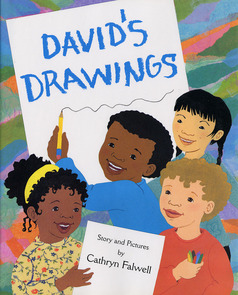
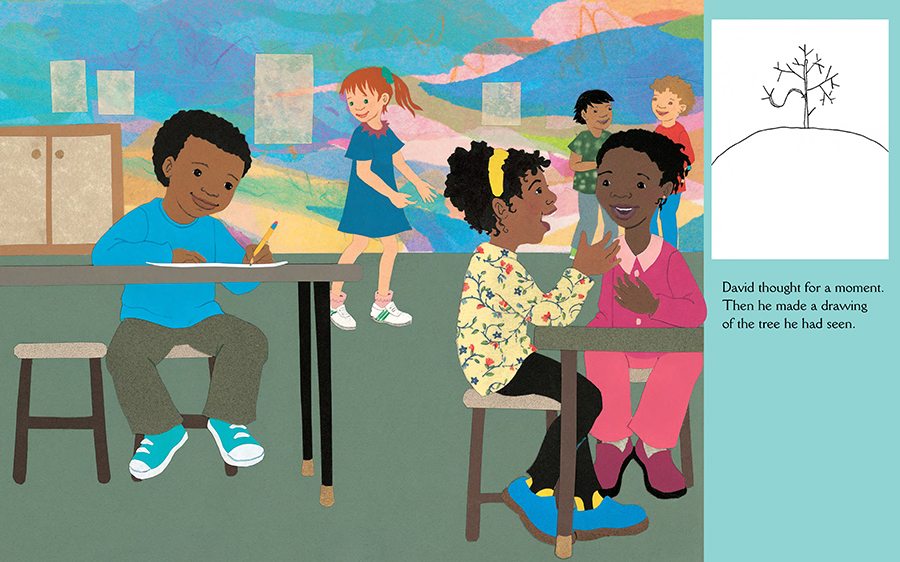



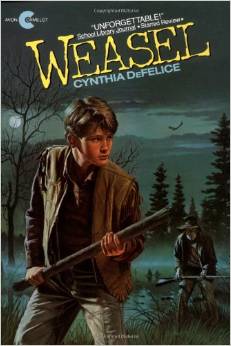
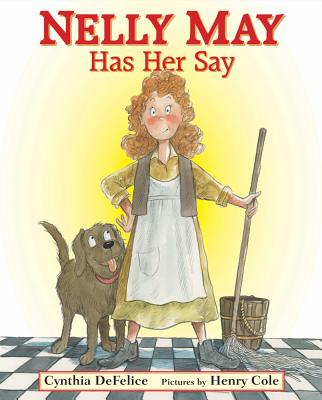
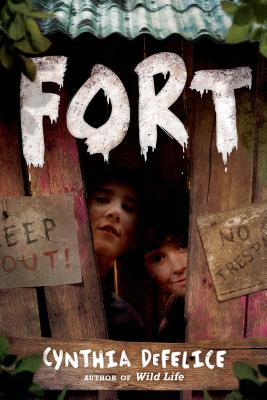
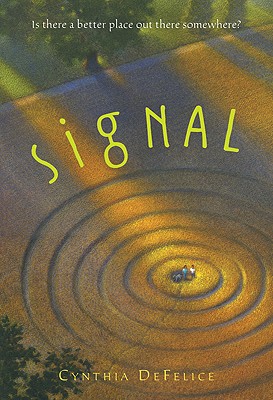
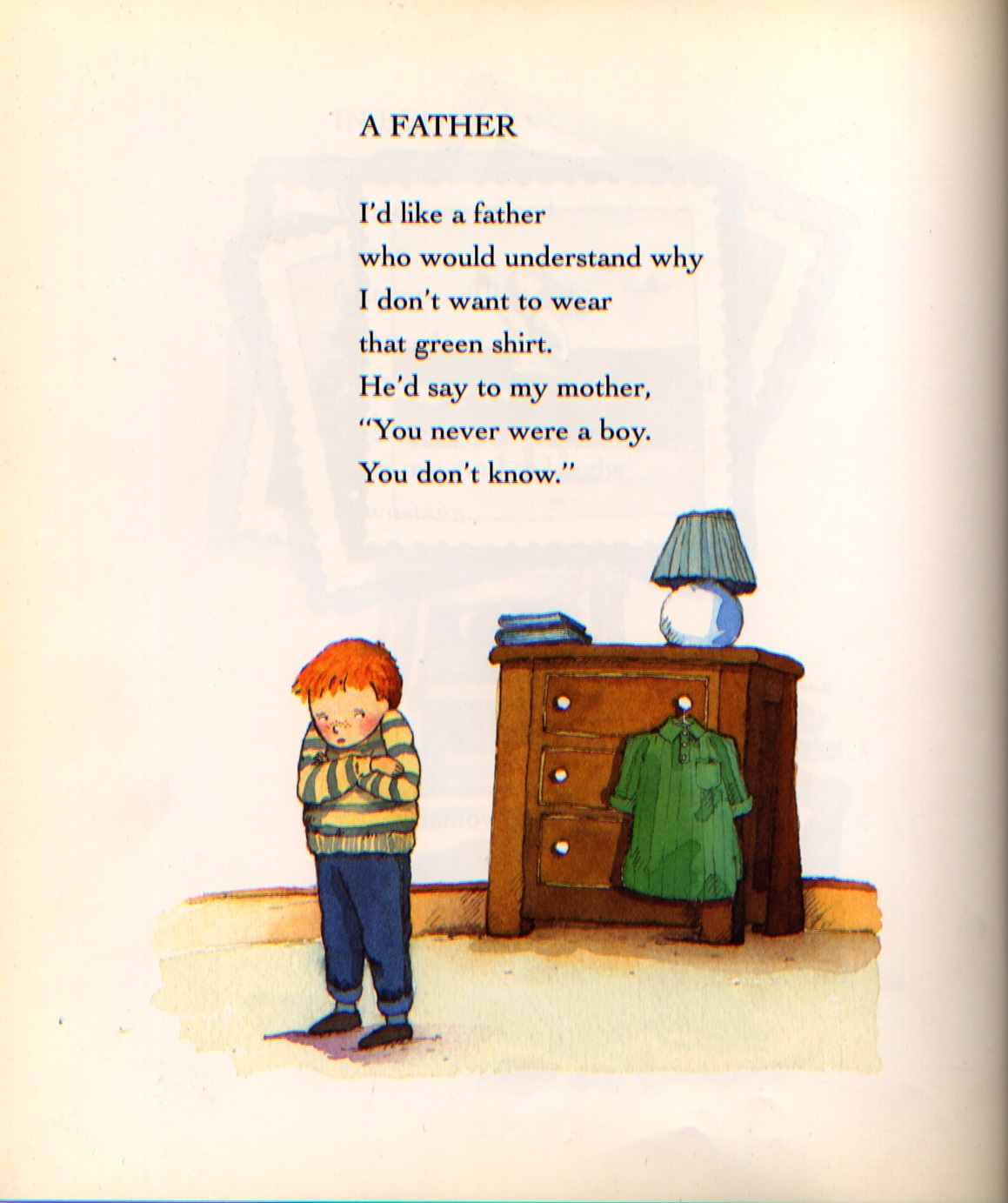
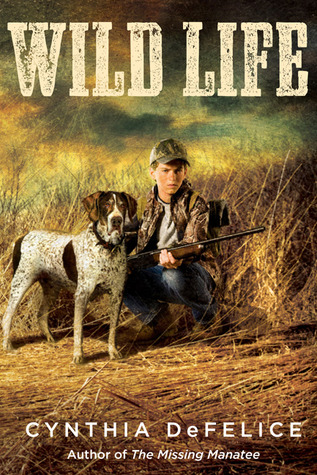


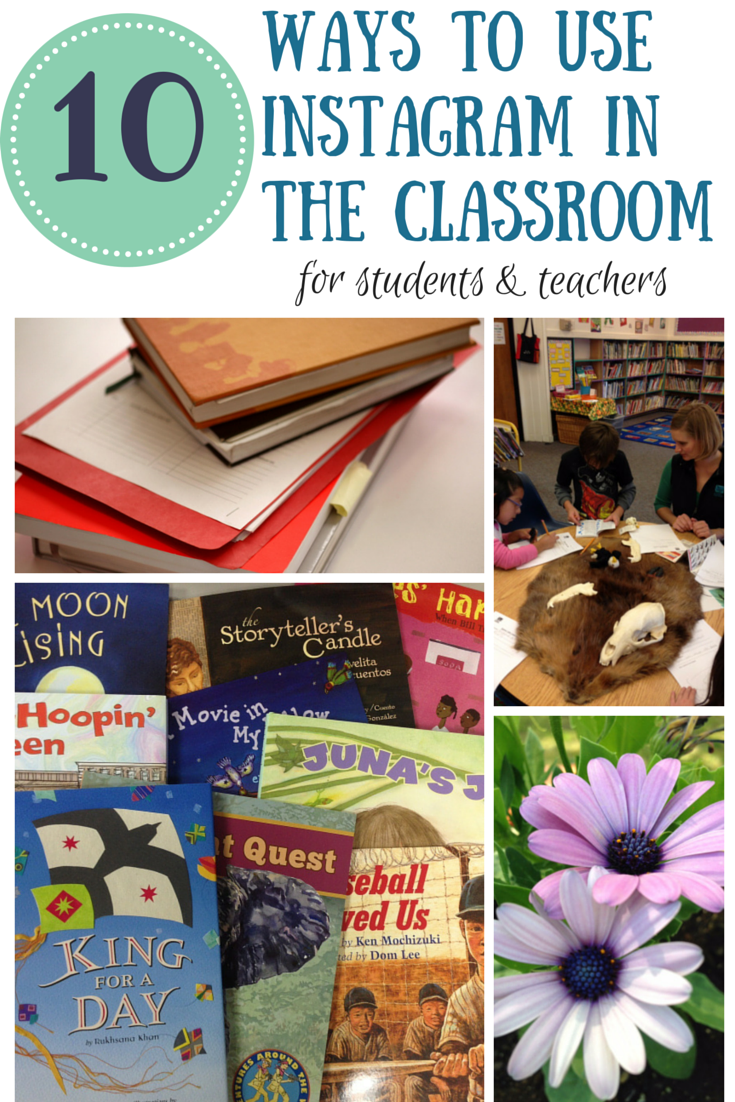

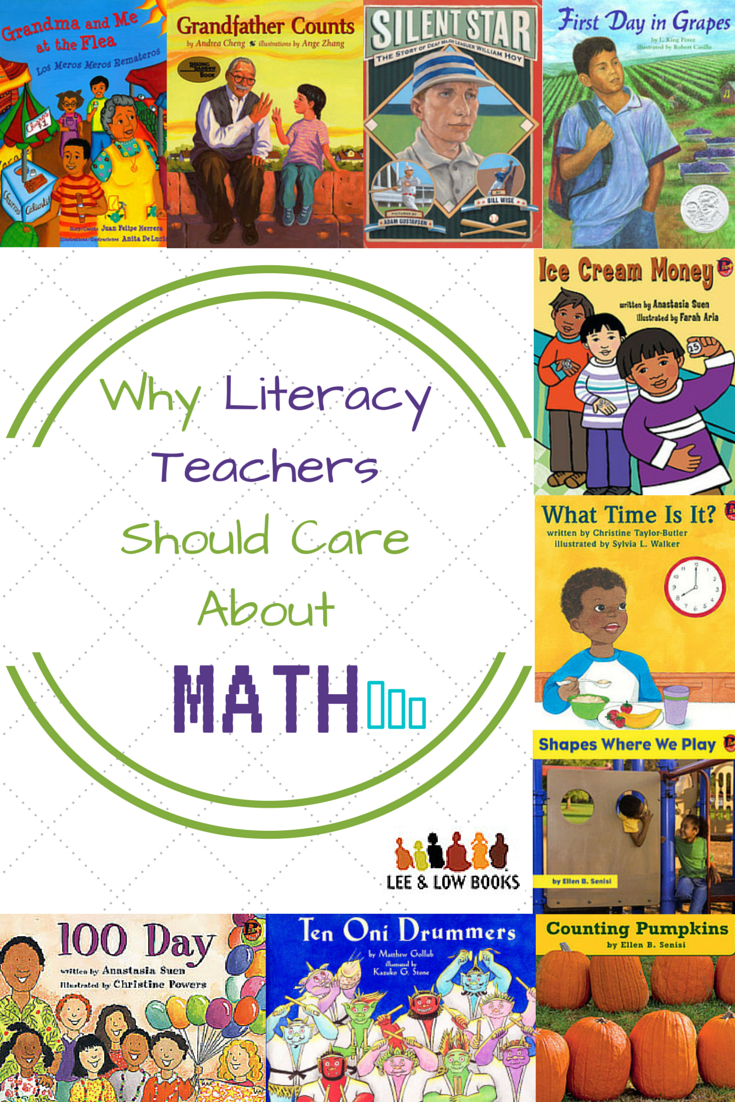
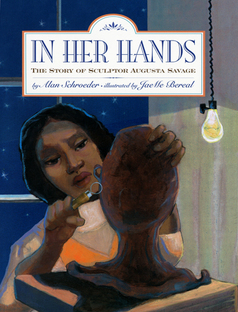

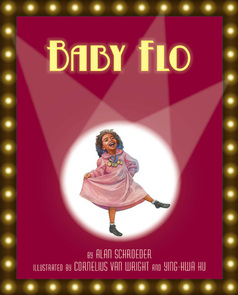
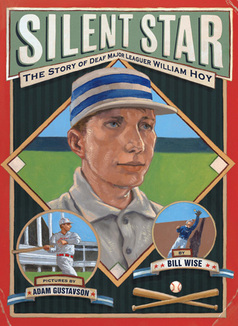
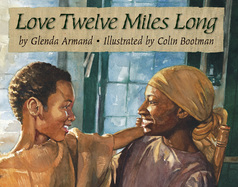


 Byzantine Empire
 Rise of Islam
 West Africa
 Medieval Japan
 The Samurai’s Tale by Erik Christian Haugaard
 gely under the radar is the impact the curriculum will have on students of color, who now make up close to 50% of the student population in the U.S. In this essay, Jane M. Gangi, an associate professor in the Division of Education at Mount Saint Mary College and Nancy Benfer, who teaches literacy and literature at Mount Saint Mary College and is also a fourth-grade teacher, discuss the Common Core’s book choices, why they fall short when it comes to children of color, and how to do better. Originally posted at

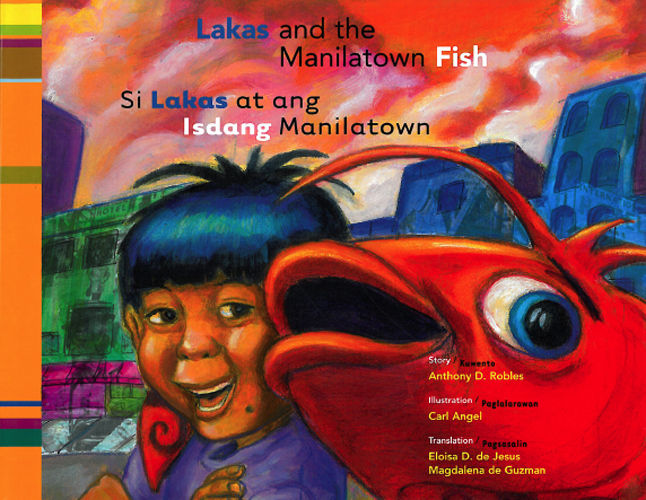


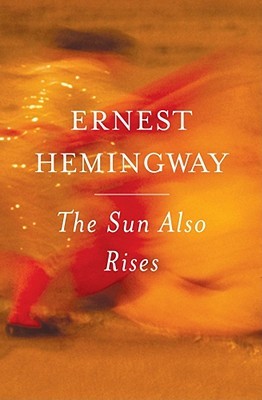


.jpeg?picon=2287)


 75 Years Old, Still Showing off her Scar, fun details about Madeline from
 Teen blogger Summer from
 RT
RT 
 How
How 
 Food for thought at Stacked: Growing Up, Leaving Some Books (Narnia) Behind by
 Powerful post
 This could keep us busy for the rest of the summer! 50 Fabulous Movies based on Children's Books from


 2014 Guardian Children’s Prize Longlist |
 Very nice list! 14 Children's Books that Challenge Gender Stereotypes |
 Teachers should cry in class when reading poignant stories ... Michael Morpurgo says
 Jumpstart your summer adventure – Dig into reading, suggests
 The Ultimate


 10 Books For Kids Who (think they) Hate Reading by Lisa Graff in
 I love it! A Tuesday Ten: Incredible Introverts in
 Fun! RT
 How YA Books Engender a True Love of Reading in My Students | Tina Yang @
 Series books for summer pleasure reading - This is the post for parents by
 Press Release Fun: Teachers Are Givers Contest from Walden Media highlighting release of The Giver movie —


 12 Charming Tidbits About Beverly Cleary | Mental Floss via
 Ten Dystopian Visions for middle grade readers, some classic some new, at Views From the Tesseract
 Killers in Plain Sight: Five Stories about Assassins in High School
 15 books that should be the next Percy Jackson from
 30 Diverse YA Titles To Get On Your Radar from @
 The Great Greene Heist goes on sale today! Have you taken the Great Greeene Challenge?

Readers might be interested to know that almost every book we manufacture is printed on FSC certified paper, meaning the sources can be traced to ensure it is not old growth product. Those that do not carry the FSC logo are printed on stock that is also certified but exempt from the logo as they contain an element that cannot by sourced – typically, for example, recycled board that the hardcovers are bound with. We also take steps to use wherever possible soy and/or vegetable based inks rather than petroleum.