new posts in all blogs
Viewing: Blog Posts Tagged with: technology, Most Recent at Top [Help]
Results 1 - 25 of 1,148
How to use this Page
You are viewing the most recent posts tagged with the words: technology in the JacketFlap blog reader. What is a tag? Think of a tag as a keyword or category label. Tags can both help you find posts on JacketFlap.com as well as provide an easy way for you to "remember" and classify posts for later recall. Try adding a tag yourself by clicking "Add a tag" below a post's header. Scroll down through the list of Recent Posts in the left column and click on a post title that sounds interesting. You can view all posts from a specific blog by clicking the Blog name in the right column, or you can click a 'More Posts from this Blog' link in any individual post.

By: KatherineS,
on 10/21/2016
Blog:
OUPblog
(
Login to Add to MyJacketFlap)
JacketFlap tags:
History,
war,
Technology,
military history,
guns,
weapons,
Very Short Introductions,
gunpowder,
*Featured,
Alex Roland,
carbon age,
chemical age,
George Armstrong Custer,
history of technology,
Little Big Horn,
Maxim gun,
Norbert Elias,
War and Technology: A Very Short Introduction,
Add a tag
Few inventions have shaped history as powerfully as gunpowder. It significantly altered the human narrative in at least nine significant ways. The most important and enduring of those changes is the triumph of civilization over the “barbarians.” That last term rings discordant in the modern ear, but I use it in the original Greek sense to mean “not Greek” or “not civilized.” The irony, however, is not that gunpowder reduced violence.
The post The irony of gunpowder appeared first on OUPblog.
Without a notebook, my great ideas are going unrecorded and, ultimately, forgotten.
By: Amy Walker,
on 10/14/2016
Blog:
OUPblog
(
Login to Add to MyJacketFlap)
JacketFlap tags:
Pokemon Go,
Oxford Medical Case Reports,
augmented-reality,
Jano Boghossian,
OMCR,
Technology,
Journals,
pokemon,
cellphones,
mobile devices,
mobile apps,
distraction,
smartphone,
*Featured,
oxford journals,
Science & Medicine,
Health & Medicine,
Add a tag
We have reached an age where the trajectories of the advancement of technology including mobile applications, artificial intelligence, and virtual and augmented reality may rapidly spike at any given moment, potentiating an increased incidence of unforeseen consequences in the form of distraction-related morbidity. In the not-too-distant past, logging onto the internet meant sitting in front of a computer.
The post Dosing distraction in the world of augmented-reality appeared first on OUPblog.
By: Carolyn Napolitano,
on 10/13/2016
Blog:
OUPblog
(
Login to Add to MyJacketFlap)
JacketFlap tags:
Books,
Sociology,
publishing,
Education,
Technology,
digital,
kindle,
Barack Obama,
print,
ebook,
baron,
Linguistics,
ereader,
iPad,
*Featured,
Arts & Humanities,
Naomi S. Baron,
Words Onscreen,
Words Onscreen: The Fate of Reading in a Digital World,
Add a tag
Mark Twain is reputed to have quipped, “Reports of my death have been greatly exaggerated.” Such hyperbole aptly applies to predictions that digital reading will soon triumph over print.
In late 2012, Ben Horowitz (co-founder of Andreessen Horowitz Venture Capital) declared, “Babies born today will probably never read anything in print.” Now four years on, the plausibility of his forecast has already faded.
The post Will print die?: When the inevitable isn’t appeared first on OUPblog.

By:
keilinh,
on 9/27/2016
Blog:
The Open Book
(
Login to Add to MyJacketFlap)
JacketFlap tags:
Diversity,
technology,
math,
science,
Race,
engineering,
STEM,
Musings & Ponderings,
Lee & Low Likes,
Diversity, Race, and Representation,
STEM education,
Add a tag
How diverse is your nonfiction collection?
Often when we look at biographies featuring people of color, they repeat the same themes: slavery & civil rights, music, sports. But people of color have contributed positively in every field, including the fields of science, technology, engineering, and math. These contributions should be celebrated all year long, not just during heritage months or when there’s a special focus on diversity!

Today on the blog, we feature 5 STEM innovators of color. Who else would you add to the list?
1. Soichiro Honda

Honda, by Mark Weston, illus. by Katie Yamasaki
Founder of the Japanese car brand Honda, Soichiro Honda had an inventive mind and a passion for new ideas, and he never gave up on his dream. A legendary figure in the world of manufacturing, Honda is a dynamic symbol of lifelong determination, creativity, and the power of a dream.
Purchase the book here.
2. Gordon Sato

The Mangrove Tree: Planting Trees to Feed Families, by Susan L. Roth and Cindy Trumbore, illus. by Susan L. Roth
Dr. Gordon Sato spent part of his childhood in the Manzanar Internment Camp during WWII, and later became a scientist. He created the Manzanar Project, which found a way to use mangrove trees to provide fuel and food for communities in Eritrea. With alternating verse and prose passages, The Mangrove Tree invites readers to discover how Dr. Gordon Sato’s mangrove tree-planting project transformed an impoverished village into a self-sufficient community.
Purchase the book here.
3. Wangari Maathai

Seeds of Change: Planting a Path to Peace, by Jen Cullerton Johnson, illus. by Sonia Lynn Sadler
Wangari Maathai was the first African woman and environmentalist to win a Nobel Peace Prize. Seeds of Change brings to life her empowering story, from her childhood in Kenya to her role leading a national movement.
Purchase the book here.
4. Vivien Thomas

Tiny Stitches: The Life of Medical Pioneer Vivien Thomas, by Gwendolyn Hooks, illus. by Colin Bootman
Vivien Thomas was an African-American surgical technician who developed the procedures used to treat blue baby syndrome. Overcoming racism and resistance from his colleagues, Vivien ushered in a new era of medicine—children’s heart surgery. This book is the compelling story of this incredible pioneer in medicine.
Purchase the book here.
5. Muhammad Yunus

Twenty-two Cents: Muhammad Yunus and the Village Bank, by Paula Yoo, illus. by Jamel Akib
Muhammad Yunus is an economist from Bangladesh who founded Grameen Bank and pioneered the concepts of microcredit and microfinance, for which he won a Nobel Peace Prize. Twenty-two Cents is an inspiring story of economic innovation and a celebration of how one person—like one small loan—can make a positive difference in the lives of many.
Purchase the book here.
Also check out our STEM collections:
Adventures Around the World Collection 
Earth Day Poetry Collection
Environmental Collection
Water Collection – World Water Day
Who did we miss? Let us know in the comments!
By: Victoria McPherson,
on 9/5/2016
Blog:
OUPblog
(
Login to Add to MyJacketFlap)
JacketFlap tags:
iraq war,
middle east,
military,
israel,
Russia,
Israeli,
invasion,
Social Sciences,
*Featured,
ISP,
cyber attacks,
military operations,
International Studies Perspectives,
cyber weapons,
cyber-space,
Matthew S. Cohen,
war,
Technology,
Journals,
Add a tag
When discussions arise about the utility of cyber-attacks in supporting conventional military operations, the conversation often moves quickly to the use of cyber-attacks during Russia’s invasion of Georgia in 2008, the US decision not to use cyber-attacks in the 2003 invasion of Iraq, or Russia’s behavior in cyber-space surrounding the conflict with Ukraine that began in 2014. These, however, may not really be the most useful cases to examine.
The post Israel and the offensive military use of cyber-space appeared first on OUPblog.

By: Gavin McGuire,
on 8/10/2016
Blog:
First Book
(
Login to Add to MyJacketFlap)
JacketFlap tags:
Books & Reading,
technology,
laptops,
tablets,
devices,
Opportunities for You,
Using the First Book Marketplace,
How to Use First Book Resouces,
chromebooks,
computers,
Add a tag
It has always been First Book’s mission to provide access to new books for children in need.
When children today grow up they will depend not only on their reading skills, but also their skills with technology. That is why First Book is proud to offer new Chromebooks on its marketplace along with other great devices teachers can use to incorporate technology in their classrooms and lessons.

There is no wrong way for a child to become a reader. Whether it’s through one imaginative picture book or the thousands of stories available online, when a child is able to access rich and varied content they improve their skills and flourish as readers.
These kinds of resources also offer children the opportunity to explore what fascinates them about their favorite books and stories, a chance they might not have otherwise. Many of the children First Book serves do not have consistent access to computers or the internet at home. By having Chromebooks or other devices in the classroom they can learn to do their own research to answer questions like, “how much do caterpillars really eat?” or “does the moon need to sleep?”

In First Book’s quest to ensure that every child has access to high-quality books and resources, technology resources like Chromebooks and tablets are the next frontier.
Visit the Devices section on the First Book Marketplace to learn more about Chromebooks and discover all of First Book’s newest technology offerings. Don’t hesitate though, certain resources are only available while supplies last!
The post Chromebooks Are Here! appeared first on First Book Blog.

By: Lizzie Furey,
on 8/5/2016
Blog:
OUPblog
(
Login to Add to MyJacketFlap)
JacketFlap tags:
Baylor University,
*Featured,
Oral History Review,
Steven Sielaff,
Baylor University Institute for Oral History,
Oral History Metadata Synchronizer,
technophile,
Technology,
Journals,
academia,
Oral History,
graduate school,
Add a tag
Since this is an oral historian origin story, I feel I need to begin this post with a bit of a confession. Even though I earned a bachelor’s degree in History from Baylor University, it was not until the summer of 2011, the term before I was to begin my graduate work at Baylor in the Museum Studies program
The post A technophile embraces oral history in the digital age appeared first on OUPblog.
By: Lizzie Furey,
on 8/5/2016
Blog:
OUPblog
(
Login to Add to MyJacketFlap)
JacketFlap tags:
Baylor University Institute for Oral History,
Oral History Metadata Synchronizer,
technophile,
Technology,
Journals,
academia,
Oral History,
graduate school,
Baylor University,
*Featured,
Oral History Review,
Steven Sielaff,
Add a tag
Since this is an oral historian origin story, I feel I need to begin this post with a bit of a confession. Even though I earned a bachelor’s degree in History from Baylor University, it was not until the summer of 2011, the term before I was to begin my graduate work at Baylor in the Museum Studies program
The post A technophile embraces oral history in the digital age appeared first on OUPblog.
By: Estefania Ospina,
on 8/4/2016
Blog:
OUPblog
(
Login to Add to MyJacketFlap)
JacketFlap tags:
Technology,
new york,
non-profit,
The Oxford Comment,
*Featured,
Audio & Podcasts,
Benezit Dictionary of Artists,
Arts & Humanities,
public service,
Kathy Battista,
new technologies,
Experiments in Art and Technology,
Grove Dictionary of Art,
Julia Robinson,
Julie Martin,
Robert Whitman,
scientists and engineers,
telecommunications technology,
Add a tag
Founded in 1966 by Billy Klüver, Fred Waldhauer, Robert Rauschenberg and Robert Whitman, Experiments in Art and Technology (E.A.T.) was a non-profit group that fostered collaboration between artists and engineers. Active between the 1960s and 1980s, E.A.T. recruited scientists and engineers to work with artists looking to incorporate new technologies into artworks, performances, and installations. The organization also pioneered educational and public service projects that exposed the general public to telecommunications technology and expanded media access in countries across the globe.
This episode of the Oxford Comment is the second in our two-part series in conjunction with the Benezit Dictionary of Artists. We resume our roundtable conversation at the New York office with artist Robert Whitman, Benezit Editor in Chief, Dr. Kathy Battista, and Experiments in Art and Technology Director Julie Martin, to discuss many of E.A.T.’s noteworthy and laudable undertakings. To learn more, our multimedia producer, Sara Levine, also interviews Dr. Julia Robinson, a Grove Dictionary of Art contributor and professor of Art History at New York University, about E.A.T.’s role in the development of the performance art medium in New York in the 1960s and 1970s.
Featured image credit: Billy Klüver talking about E.A.T. and 9 Evenings to a group of artists and engineers in Toronto. Artists’ requests to the engineers for their 9 Evenings performances are projected on the wall behind him. Photographer Unknown. All rights reserved. Image reproduced with permission from Julie Martin and E.A.T.
The post Experiments in Art and Technology – Episode 37 – The Oxford Comment appeared first on OUPblog.

By: Estefania Ospina,
on 8/4/2016
Blog:
OUPblog
(
Login to Add to MyJacketFlap)
JacketFlap tags:
non-profit,
The Oxford Comment,
*Featured,
Audio & Podcasts,
Benezit Dictionary of Artists,
Arts & Humanities,
public service,
Kathy Battista,
new technologies,
Experiments in Art and Technology,
Grove Dictionary of Art,
Julia Robinson,
Julie Martin,
Robert Whitman,
scientists and engineers,
telecommunications technology,
Technology,
new york,
Add a tag
Founded in 1966 by Billy Klüver, Fred Waldhauer, Robert Rauschenberg and Robert Whitman, Experiments in Art and Technology (E.A.T.) was a non-profit group that fostered collaboration between artists and engineers. Active between the 1960s and 1980s, E.A.T. recruited scientists and engineers to work with artists looking to incorporate new technologies into artworks, performances, and installations. The organization also pioneered educational and public service projects that exposed the general public to telecommunications technology and expanded media access in countries across the globe.
This episode of the Oxford Comment is the second in our two-part series in conjunction with the Benezit Dictionary of Artists. We resume our roundtable conversation at the New York office with artist Robert Whitman, Benezit Editor in Chief, Dr. Kathy Battista, and Experiments in Art and Technology Director Julie Martin, to discuss many of E.A.T.’s noteworthy and laudable undertakings. To learn more, our multimedia producer, Sara Levine, also interviews Dr. Julia Robinson, a Grove Dictionary of Art contributor and professor of Art History at New York University, about E.A.T.’s role in the development of the performance art medium in New York in the 1960s and 1970s.
Featured image credit: Billy Klüver talking about E.A.T. and 9 Evenings to a group of artists and engineers in Toronto. Artists’ requests to the engineers for their 9 Evenings performances are projected on the wall behind him. Photographer Unknown. All rights reserved. Image reproduced with permission from Julie Martin and E.A.T.
The post Experiments in Art and Technology – Episode 37 – The Oxford Comment appeared first on OUPblog.
By: Lizzie Furey,
on 7/23/2016
Blog:
OUPblog
(
Login to Add to MyJacketFlap)
JacketFlap tags:
libraries,
librarians,
Technology,
e-books,
EIFL,
myanmar,
*Featured,
higher education,
e-library,
e-Library Myanmar Project,
Mandalay,
Myanmar Academic Library Consortium,
Yangon,
Add a tag
I have been a lifelong librarian in Myanmar since 1985. It is a great pleasure and honor to share the challenges and success of the e-Library Myanmar Project implemented by EIFL.
The post Transforming libraries in Myanmar: The e-Library Myanmar Project appeared first on OUPblog.
By: Samantha McGinnis,
on 5/10/2016
Blog:
First Book
(
Login to Add to MyJacketFlap)
JacketFlap tags:
Using First Book,
Using the First Book Marketplace,
educational activities,
how to navigate,
how to search,
how-to videos,
mobile friendly sites,
video tutorials,
books,
technology,
school supplies,
First Book Marketplace,
digital learning,
Add a tag

Drumroll please… Today, we introduce to you the newly redesigned First Book Marketplace.
Updated with your needs in mind, your First Book Marketplace is now faster and simpler to use. Powerful new search capabilities and an improved navigation menu make it easy to find the great books and educational resources you’ve come to expect from First Book. And now you can access them all from the palm of your hand — the entire site is mobile friendly!
For years, you’ve generously shared the needs facing your classrooms and programs. Your feedback directly influenced every improvement and enhancement you’ll experience on the upgraded site.
On top of the books and learning tools you love, you’ll also find specially-curated collections on popular topics like family engagement, character development, health and wellness, and diversity. First Book’s entire inventory, including school supplies, technology, digital learning materials, basic needs items and educational activities is more accessible than ever before.
Stay tuned all week as we share videos on how to use some of the great new features of your First Book Marketplace. Start here by learning how to navigate and search the newly designed site:
The post Now Faster and Easier to Use: Your First Book Marketplace appeared first on First Book Blog.

News broke of Prince’s unexpected departure from this world during our monthly book order meeting last Thursday. It was impossible to avoid the flood of quotes, photos, and music performances on social media, but many fans found it challenging to listen online to “Little Red Corvette,” or “Diamonds and Pearls,” in memoriam. Prince was a huge proponent for artist’s rights and this is why listeners cannot find his work on streaming services like Pandora and YouTube. Prince did not totally abandon placing his music online, and the artist utilized Tidal, the subscription service owned by Jay Z, and SoundCloud to share new music. Lucky for me I somehow kept a copy of Purple Rain in my office – something every children’s librarian should have tucked away!
The search for Prince’s music was the perfect opportunity for libraries to market their own digital services, and USA Today even gave public libraries a shout out in an article providing listeners with alternative options. In response, libraries such as Highland Park Public Library and Green Tree Public Library shared Hoopla’s Prince offerings with their users.
About six years ago my library eliminated CDs for mass circulation and the children’s library has been the only place where CDs continue to exist. Parents and caregivers still request music, especially storytime cult classics like Hap Palmer’s Getting to Know Myself. As playing this type of media becomes increasingly difficult, we have been guiding families to Hoopla, the streaming service which we introduced two years ago. Luckily Hoopla has a comprehensive Raffi collection, as well as They Might Be Giants and Putumayo World Music.
Many libraries opt to provide another streaming offering, Freegal, if not having the ability to offer both services. Freegal offers users the ability to stream unlimited content which includes exclusive Sony Music Entertainment options. Despite having different pricing structures for libraries, both services are valuable for being free to library users, and also claim to give artists a percentage of their earnings.
If you provide digital music services for your library how is it received? Are parents, caregivers, and kids using these resources?
Claire Moore is a member of the Digital Content Task Force. She is also Head of Children and Teen Services at Darien Library in Connecticut. You can reach Claire at [email protected].
Visit the Digital Media Resources page to find out more about navigating your way through the evolving digital landscape.
The post Prince, Putumayo, and Streaming Music appeared first on ALSC Blog.

By: Helena Palmer,
on 4/15/2016
Blog:
OUPblog
(
Login to Add to MyJacketFlap)
JacketFlap tags:
IBM,
computing,
new technology,
Social Sciences,
US economy,
information technology,
Alex Sayf Cummings,
Democracy of Sound,
socioeconomics,
colin clark,
daniel bell,
Information Revolution,
knowledge-based economy,
marshal mcluhan,
Music Piracy and the Remaking of American Copyright in the Twentieth Century,
Technology Industry,
Books,
America,
*Featured,
Business & Economics,
marketing,
Technology,
Add a tag
The idea that the United States economy runs on information is so self-evident and commonly accepted today that it barely merits comment. There was an information revolution. America “stopped making stuff.” Computers changed everything. Everyone knows these things, because of an incessant stream of reinforcement from liberal intellectuals, corporate advertisers, and policymakers who take for granted that the US economy shifted toward an “knowledge-based” economy in the late twentieth century.
The post The invention of the information revolution appeared first on OUPblog.
By: John Priest,
on 4/9/2016
Blog:
OUPblog
(
Login to Add to MyJacketFlap)
JacketFlap tags:
timeline,
buckminster fuller,
futurism,
Art and Architecture,
Timelines,
*Featured,
Art & Architecture,
Arts & Humanities,
20th Century Philosophy,
Modern American Art,
Famous Inventors,
jonaton keats,
modern american architecture,
you belong to the universe,
design,
Literature,
Technology,
Philosophy,
tech,
art and design,
Multimedia,
Add a tag
A self-professed "comprehensive anticipatory design scientist," the inventor Buckminster Fuller (1895-1983) was undoubtedly a visionary. Fuller's creations often bordered on the realm of science fiction, ranging from the freestanding geodesic dome to the three-wheel Dymaxion car.
The post The life and work of Buckminster Fuller: a timeline appeared first on OUPblog.
Many librarians that I have talked to are reluctant to start a sensory story time. Familiar refrains that I’ve heard go something like this: I don’t know the first thing about children with special abilities; I don’t have specialized training; I don’t want to do the wrong thing and upset a child who already has special needs; I didn’t go to library school to do sensory storytimes; don’t I need a really big grant in order to secure materials for something like this?
Much has been written about how to begin a sensory storytime. We won’t cover that here. There’s plenty of stuff out there for you research, plus we’ve included some references below. However, you should know that you’re probably already equipped to do a sensory storytime right now! Joshua Farnum, the play, and active learning specialist at Chicago Public Library has started a string of successful sensory storytimes across the city and is expanding to more branches. Joshua states, “sensory storytime is a storytime that works for you. It’s a lot like traditional storytime, but it puts a particular emphasis on repetition, interactive activities, and sensory play. The best way to discover what sensory storytime is all about is to experience it yourself.” Indeed, a sensory storytime is, after all, just a storytime, with the special touch being the care you take to have things like a schedule, and manipulates (just to name a couple). With a very basic understanding of the abilities that your patrons exhibit, you will go a long way to making your storytime one in which a child or children with developmental differences can thrive in.
If you’ve ever wondered what people of special abilities need to feel comfortable? Then just ask! There are plenty of parent groups, cohorts, and organizations who host fairs for children and families who have developmental differences. Most parents would be happy to talk to you about their kids and what works or doesn’t work for them. If you have play manipulatives, already in your library, then you probably have a some essential items for some children with special abilities. You may not have gone to library school to be a sensory storytime librarian, but let’s face it, children with special abilities are on the rise in this country. Many parents of these children don’t feel comfortable in the library because of negative experiences with insensitive staff and or fear of being ostracized by other parents. By starting a sensory storytime for this group, you fulfill a need and help to serve an already underserved population. Sensory storytimes also foster literacy, engage the senses, and it’s a ton of fun!
Remember it’s for everyone!
Storytime for the Spectrum
http://americanlibrariesmagazine.org/2016/03/01/sensory-storytime-spectrum-libraries-add-services-for-children-with-autism/
Libraries and Autism
http://librariesandautism.org/
ALSC Sensory Storytime Pinterest Board
https://www.pinterest.com/alsclibraries/sensory-storytime/
Sensory Storytime: A (brief) How-To Guide
http://www.alsc.ala.org/blog/2012/03/sensory-storytime-a-brief-how-to-guide/
SPD Foundation
http://www.spdfoundation.net/about-sensory-processing-disorder/
The post Begin Your Sensory Storytime Today! appeared first on ALSC Blog.

In the early days of our Libros y Cuentos bilingual storytime, I would try and integrate some language apps into the program. With a small group, apps such as Bunny Fun: Head, Shoulders, Knees, and Toes fit well with our Parts of the Body lesson. At the time it was a challenge to discover usable apps for storytime that were also good enough to recommend to parents. Thankfully developers have produced more options for kids interested in language learning via a tablet. Below are apps that are well designed, easy to navigate, and full of interactive ways to grasp definitions, pronunciation, and even a new alphabet are key.
Kids Learn Mandarin
This free game-based app takes players on a journey around China with Pei Pei the Panda. The digital curriculum includes word games, Chinese character tracing, and a badge earning option for tracking progress. Kids will learn a total of 240 Mandarin words, and will have English prompts for every word learned. A paid premium version is available for more progressive lessons.
The Very Hungry Caterpiller & Friends First Words
Recognizable illustrations will appeal to children learning their first words in English, Spanish, French, and German. Designed as a 3D pop-up book, each page features themed lessons with 4 to 5 objects introducing new words. The ease of use and interactivity makes this a great choice for preschoolers. It also has the potential to work well during storytime.

Endless Spanish, 2015, Originator Inc.
Endless Spanish
Possibly one of the most entertaining and popular series of apps in our children’s room, Originator Inc. has introduced a new Spanish language offering, with hopefully more languages on the horizon. A cast of monster characters reinforces pronunciation, spelling, and new definitions in a hilarious and engaging way. Two modes are available for total Spanish immersion, as well as English translation. It’s hard to believe that the Endless Spanish app is free!
Rosetta Stone Lingo Letter Sounds
A KAPi Award winner, the key to this app is the speech recognition tool similar to the one used in their core language learning software. Emphasizes pronunciation for young speakers which determines the rewards for tracking progress. The parenting corner allows adults to move beyond single-syllable words to more advanced vocabulary, as well as checking pronunciation accuracy. Yet another free app from a reputable global language-learning company.
Learn Japanese by MindSnacks

Bunny Fun app teaches Spanish words in storytime.
Recommended by both Apple and USA Today, this Japanese language app is well-designed, and complex enough for both older kids and adults to enjoy. Over 50 lessons to introduce vocabulary visually, highlighting both Kana and Kanji characters. The voice pronunciation is clear enough to reinforce sounds for beginners. Learners are prompted to move up in levels by playing a variety of fun interactive games based on themed lessons. MindSnacks also offers apps to teach Italian, Spanish, French, German, Mandarin, and Portuguese.
These apps are just a few suggestions for providing additional language-learning resources to young patrons. Load them up on your iPads, or include them as digital recommendations for your library’s website.
Visit the Digital Media Resources page to find out more about navigating your way through the evolving digital landscape.
The post Language Apps Pour Les Enfants appeared first on ALSC Blog.

By: DanP,
on 3/23/2016
Blog:
OUPblog
(
Login to Add to MyJacketFlap)
JacketFlap tags:
classics,
Videos,
Technology,
ocd,
ancient greece,
Latin,
Digital Age,
Ancient Rome,
classical world,
*Featured,
Classics & Archaeology,
Online products,
classical studies,
oxford online,
oxford classical dictionary,
oxford classical dictionary online,
Adina Popescu Berk,
digital mapping,
Herculaneum,
sander goldberg,
Add a tag
One might think of classicists as the most tradition-bound of humanist scholars, but in fact they were the earliest and most enthusiastic adopters of computing and digital technology in the humanities. Today even classicists who do not work on digital projects use digital projects as tools every day. One reason for this is the large, but defined corpus of classical texts at the field’s core.
The post Classics in the digital age appeared first on OUPblog.
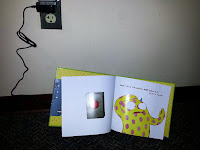 A book with a plug! Whaaat?
For car trips, young readers, struggling readers, and sheer entertainment, you can't beat a picture book/audio book combo for younger kids.
Though schools and libraries may still keep book/CD kits in their collections, the truth is, CD players are not that common anymore. Newer computers don't come with a standard CD/DVD drive, cars don't always have them, and the only people I know who still have "boom boxes" are children's librarians.
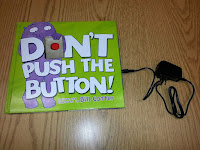 That's why I was happy to receive a copy of a new VOX (TM) "audio-enabled" book. In my photo, the book is plugged into the wall for charging, but I did that just for show because a book with a plug cracked me up! In truth, it arrived fully charged and ready to go - no plug required. (I didn't test it for battery performance.) The audio recording and speaker are built right into the book and operated by a simple control panel - power, play, pause, volume, forward, and back. There is also a standard headphone jack. The audio is of comparable quality to any conventional children's book. The book itself also seemed as sturdy as any, and was not overly heavy or burdensome.

Perhaps other companies have similar offerings, but this is the first book of its type that I've seen. I think it has possibilities, and that the days of the book/CD kit are numbered. I passed my copy along to a school superintendent who agreed that it might be a useful addition to his school's collection. I did not inquire as to the price. I was interested solely in the format.
If you can get your hands on one, it's worth checking out.
(I'm not going to review the book, Don't Push the Button!, but will merely note that it is in a vein very similar to the wonderful Press Here by Herve Tullet. Kids will likely enjoy it.)
My review copy was provided by
VOX Books.
Note:As always on my blog, I review books and materials for educational purposes only, and receive nothing of value other than the review copy, its associated marketing materials, and the occasional thanks or consternation of its author or publisher.
By: KatherineS,
on 3/18/2016
Blog:
OUPblog
(
Login to Add to MyJacketFlap)
JacketFlap tags:
VSI,
very short introduction,
Very Short Introductions,
sound,
detective stories,
engineering,
Dorothy L. Sayers,
microphone,
smart phone,
gramophone,
Editor's Picks,
*Featured,
Science & Medicine,
VSI online,
Arts & Humanities,
acoustics,
Bell labs,
Lord Peter Views the Body,
Mike Goldsmith,
The Adventurous Exploit of the Cave of Ali Baba,
voice activation,
Music,
Technology,
science,
mystery,
environment,
Noise,
Traffic,
Oxford University Press,
Add a tag
Pre-eminent among writers of mystery stories is, in my opinion, Dorothy L. Sayers. She is ingenious, witty, original - and scientific too, including themes like the fourth dimension, electroplating, and the acoustics of bells in some of her best stories. She is also the inventor of the voice-activated lock, which her hero Lord Wimsey deploys in the 1928 short story 'The Adventurous Exploit of the Cave of Ali Baba'.
The post The trick of the lock: Dorothy L. Sayers and the invention of the voice print appeared first on OUPblog.
In the past few years, I feel like I’ve become an expert in circulating kits for early literacy. Since I started at my library two years ago, I’ve created thirty-nine circulating kits and have collaboratively helped seventeen more get on the shelves for our patrons. I thought I’d take some time today to highlight some of the kits.
LeapFrog Kits
![Picture of LeapFrog circulating kits on the shelf. [Photo courtesy of the author.]](http://www.alsc.ala.org/blog/wp-content/uploads/2016/03/leapfrogs-225x300.jpg)
Picture of LeapFrog circulating kits on the shelf. [Photo courtesy of the author.]
I have four different kinds of LeapFrog kits on the shelf with a total of sixteen kits:
- LeapPad 2.0 (4 copies)
- LeapPad Ultra Tablets (4 copies)
- LeapFrog Junior Tag Reader (4 copies)
- LeapFrog Tag Reader (4 copies)
Each LeapPad tablet comes with cartridges in the kit and each LeapFrog reader comes with preloaded books. I do basic maintenance of these kits. As each one comes into the library, I check to make sure it’s charged or that the batteries are still in good condition. I also wipe the tablets clean of photos, art, videos, and stories to protect patron privacy.
These have circulated since the summer of 2014. I’ve had to replace one LeapPad 2.0 because it lost sound capabilities, a few cartridges (most notably the Cinderella ebook that came back in parts since the dog got a hold of it!), and a case that the zipper broke on.
Book Bundles
![Early literacy circulating kits, sponsored by Target. [Photo courtesy of the author.]](http://www.alsc.ala.org/blog/wp-content/uploads/2016/03/bookbundles-169x300.jpg)
Early literacy circulating kits, sponsored by Target. [Photo courtesy of the author.]
Book Bundles began circulating this past November. I received a Target early literacy grant (which they sadly do not offer any longer) to create these backpack kits. I have twelve kits, one each of the following themes: 123s, ABCs, Animals, Colors, Community Helpers, Feelings, My Body, Nursery Rhymes, Shapes, Time, Transportation, Weather.
Each kits has two or three books and manipulatives to go with the theme. I have puppets, puzzles, games, arts and crafts supplies, toys, CDs, and DVDs. For each item in the Book Bundle, I have written an activity guide for patrons to use with the items. A binder sits on top of the section for patrons to see what materials are inside the Book Bundles.
One of our volunteers inventories these as they are brought back. I’ve only had to replace a mesh bag with a broken zipper and tape up a page from Maisy’s Wonderful Weather Book — which is a pop-up book.
Parenting Pack
![Up-close picture of a Parenting Pack. [Photo courtesy of the author.]](http://www.alsc.ala.org/blog/wp-content/uploads/2016/02/parentingpack-169x300.jpg)
Up-close picture of a Parenting Pack. [Photo courtesy of the author.]
I talked a little bit about these Parenting Packs in
my ALSC post on re-organizing the Parent/Teacher collection. These were also purchased with the Target grant money. I have eleven kits on the following themes: First Trip on an Airplane, Healthy Eating, New Baby in the House (2 copies), Potty Training for Boys (2 copies), Potty Training for Girls (2 copies), Starting School, Staying in the Hospital, Visiting the Doctor.
Parenting Packs are exactly like Book Bundles except that I also include parenting books and a resource guide. So far there have been no problems with the Parenting Packs and replacement items.
Tigglys & Playaway Launchpads

A cart full of technology, some of it pre-processed. Includes Tigglys and Playaway Launchpads. [Photo courtesy of the author.]
are part of circulating kits in our makerspace: the Wouldshop™. We have one kit of each version (Counts, Shapes, and Words) in its own kit. These products interact with an iPad and we only circulate the product pieces; patrons must provide their own iPad. These are also inventoried by a volunteer.
Playaway Launchpads are new enough that I don’t have pictures of them processed! Our patrons have access to fourteen of these new self-contained tablets. These are the only devices that are on shelf in security cases. I don’t have much to do with these since they are an easy one-touch reset, as opposed to the LeapFrog products that can take me a while to clear private data from.
These examples aren’t the only circulating kits that my library has on the shelf. We also have three gardening kits, two Osmo kits, and a whole slew of circulating kits coming (Ozobots, Spheros, Little Bits just to name a few off the top of my head). I’m also in the planning stages to create more Book Bundles and Parenting Packs.
Is anyone else circulating kits for early literacy in their library? Do you want more specific details? Please feel free to email me at simplykatie[at]gmail[dot]com or comment with your quick questions.
– Katie Salo
Early Literacy Librarian
Indian Prairie Public Library
http://storytimekatie.com
The post Circulating Kits for Early Literacy appeared first on ALSC Blog.

Happy Leap Day! I was joking with Bookman this morning that anything we do today will have no consequences since the day doesn’t really exist. Now that I think about it though, I wonder if consequences just take longer, like they catch up with you in four years on the next Leap Day? Can you imagine gorging on chocolate and then in four years suddenly not be able to button your pants? Ha! It’s kind of funny but also not.
There is a great article at Popular Mechanics of all places about How the Humble Index Card Foresaw the Internet. Did you know the index card was invented by Carl Linnaeus? He came up with the brilliant idea while working on his taxonomies.

Waldo relaxing on top of my card cat-alog
Then during the French Revolution, French libraries began using index cards to catalog their collections. Of course Melvil Dewey then ran with the idea and used index cards to create a card catalog system that served us well for a very long time. I used to love browsing card catalogs. I am really lucky to have some old cabinets in my house. I use them for storing seed packets, knitting needles, sock yarn, fountain pen ink, hair clips and other odds and ends. I love my card catalog so much!
In 1895 two crazy Belgians set out to create their own “search engine” by using an even more detailed system than Dewey’s and millions of index cards that filled 15,ooo catalog drawers. One of the pair, Paul Otlet, wrote a book about the project in 1935 called Monde in which he envisioned all the information one day being digitized because the card database was essentially unsustainable at large scales.
And now we have the internet, a ginormous collection of databases and indices, a card catalog of unimaginable proportions. When you consider the internet as something that evolved from index cards it really boggles the mind.
I love, love, love index cards even though I hardly use them any longer. I love them so much I want to have a reason to use them but computers are so darn handy these days I go digital before I consider analog. But I keep a stash ready for when a project comes up that begs to be organized on index cards rather than my computer. One of these days there will be something and Bookman will come home to find the living room floor covered in cards and me happily shuffling them around while humming a happy song.
Filed under:
Technology Tagged:
card catalogs,
Carl Linnaeus,
index cards rock,
Melvil Dewey,
Paul Otlet 

As the librarian who coordinates OverDrive for my school district (thirteen librarians and approximately 10,000 students), I spend a lot of time with OverDrive and have been able to give the service a considerable amount of thought. I think digital reading services are a really good fit for school age kids for a variety of reasons and here’s why…
OverDrive and other digital reading services are respectful of student privacy. Kids may feel self-conscious about what they are reading for a variety of reasons. Some kids read well below grade level, and they don’t want their peers to see what they are reading for fear of being made fun of. Some kids have reading likes that are different than what they think their peers read (I had a fifth grade male student who liked reading books that he feared his peers might see as teen romance novels written for girls). For these youths, these services provide a safe environment for them to explore their interests and reading needs. It allows them to borrow materials that they might not check out if they had to bring it up to the circulation desk in front of other kids, their parents, or even an unknown adult.
OverDrive offers over 2,500 picture books in a “Read-Along” format. These narrated books allow children to follow the words of the actual book while it is read aloud to them. This feature helps build literacy in emerging readers and children who struggle with improving their reading skills. While I know many of us (myself included) recognize the importance of the social interaction between a child and an adult who reads to him or her, the “Read-Along” format can be a valuable supplement and reinforcement of what kids are learning in school, in their libraries, and from their families.
Ebook collections generally operate (OverDrive certainly) with twenty-four hour remote availability. That means your kids can access ebooks whether they are five hundred miles away visiting nana, or next door. They can access your collection in July if your school library is closed for the summer. They can borrow ebooks even if they can’t get a ride to the library because the buses are not operating when they can go. If your kids have access to wifi and a computer or device to read on, they have access to ebooks. The benefits of this go without saying!
One thing that I was surprised to learn is that at least one major children’s publisher offers a significantly larger selection of ebooks to public libraries than it does to school libraries through OverDrive. I had no idea that this was the case until one of our students brought his device to one of my colleagues and asked about downloading a book from our public library’s OverDrive collection that was unavailable to us in the school library marketplace. I assume that this is a business decision based on other products this company offers. While it is disappointing from the school library perspective, it opens up the opportunity for dialog between public and school librarians. This might, in turn, lead to greater collaboration on matters of collection development and instruction related to digital resources…as well as other topics.
Finally, we have to recognize the role technology plays in the lives of kids. Numerous studies show that the great majority of children have access to smart phones, tablets and computers, even among low-income families. While there are certainly good reasons to believe that not everything about the rise of technology has made life better for kids, it is impossible to deny that technology has become one of the ways that kids relate to and shape their world. Digital reading services give us the opportunity to direct that eagerness and energy in a way that is helpful and productive to the development of young people and the skills they need to function.
Our students are incredibly enthusiastic about reading ebooks on their personal electronic devices. They love looking for ebooks, checking them out, and downloading their selected titles. My colleagues and I are delighted by this reception. On a deeper level, the decision to develop a digital reading collection has helped our school libraries to be seen as more relevant and visible in our school community. How great is that?!?
***********************************************************************************
Dave Saia is a librarian at Heim Middle School in Williamsville, New York, and is a member of the ALSC School Age Programs and Services Committee.
The post Digital Reading Platforms & School-Age Children appeared first on ALSC Blog.

By: Carolyn Napolitano,
on 2/24/2016
Blog:
OUPblog
(
Login to Add to MyJacketFlap)
JacketFlap tags:
Books,
Technology,
Media,
digital publishing,
online reading,
naomi baron,
Linguistics,
e-reading,
Internet Reading,
*Featured,
digital reading,
Words Onscreen,
Digital Ads,
Digital Reading Devices,
News Consumption,
Online Media,
Tablet Reading,
The Fate of Reading in a Digital World,
Add a tag
Our lives are full of distractions: overheard conversations, the neighbor’s lawnmower, a baby crying in the row behind us, pop-up ads on our computers. Much of the time we can mentally dismiss their presence. But what about when we are reading? I have been studying how people read with printed text versus on digital devices.
The post Concentrate! The challenges of reading onscreen appeared first on OUPblog.
View Next 25 Posts





![Picture of LeapFrog circulating kits on the shelf. [Photo courtesy of the author.]](http://www.alsc.ala.org/blog/wp-content/uploads/2016/03/leapfrogs.jpg)
![Early literacy circulating kits, sponsored by Target. [Photo courtesy of the author.]](http://www.alsc.ala.org/blog/wp-content/uploads/2016/03/bookbundles.jpg)
![Up-close picture of a Parenting Pack. [Photo courtesy of the author.]](http://www.alsc.ala.org/blog/wp-content/uploads/2016/02/parentingpack.jpg)


[…] via Diversify Your Nonfiction With These 5 STEM Innovators of Color — Lee & Low Blog […]
[…] your nonfiction collection with books about STEM innovators of color including Wangari Maathai, Soichiro Honda, Vivien Thomas, Muhammad Yunus, and Gordon […]