JacketFlap connects you to the work of more than 200,000 authors, illustrators, publishers and other creators of books for Children and Young Adults. The site is updated daily with information about every book, author, illustrator, and publisher in the children's / young adult book industry. Members include published authors and illustrators, librarians, agents, editors, publicists, booksellers, publishers and fans. Join now (it's free).
Login or Register for free to create your own customized page of blog posts from your favorite blogs. You can also add blogs by clicking the "Add to MyJacketFlap" links next to the blog name in each post.
Blog Posts by Tag
In the past 7 days
Blog Posts by Date
Click days in this calendar to see posts by day or month
Viewing: Blog Posts Tagged with: Young Adult literature, Most Recent at Top [Help]
Results 1 - 25 of 242
How to use this Page
You are viewing the most recent posts tagged with the words: Young Adult literature in the JacketFlap blog reader. What is a tag? Think of a tag as a keyword or category label. Tags can both help you find posts on JacketFlap.com as well as provide an easy way for you to "remember" and classify posts for later recall. Try adding a tag yourself by clicking "Add a tag" below a post's header. Scroll down through the list of Recent Posts in the left column and click on a post title that sounds interesting. You can view all posts from a specific blog by clicking the Blog name in the right column, or you can click a 'More Posts from this Blog' link in any individual post.
The Survival Guide to Bullying is author and activist Aija Mayrock’s gift to young people who’ve endured bullying. At sixteen Aija began writing the self-help book for children who are being bullied. The book began as a self-published project in 2014. Eventually the project was picked up by Scholastic after Publishers Weekly covered The Survival Guide to Bullying.
We’re giving away three (3) signed copies of The Survival Guide to Bullying. Enter now! a Rafflecopter giveaway
ABOUT AIJA
Via Scholastic Aija Mayrock began writing The Survival Guide to Bullying at age sixteen after dealing with bullying in her own life for many years. She promised herself that she would publish it as her gift to the next generation of kids who are bullied. Aija is committed to giving a voice to the voiceless through writing and film.
Currently, Aija is a sophomore at New York University’s Gallatin School of Individualized Study. Aija has appeared on The View and written for Teen Vogue.
ABOUT THE SURVIVAL GUIDE TO BULLYING
The Survival Guide to Bullying – Written by a teenager who was bullied throughout middle school and high school, this kid-friendly book offers a fresh and relatable perspective on bullying. Along the way, the author offers guidance as well as different strategies that helped her get through even the toughest of days.
The Survival Guide to Bullying covers everything from cyber bullying to how to deal with fear and how to create the life you dream of having. From inspiring “roems” (rap poems), survival tips, personal stories, and quick quizzes, this book will light the way to a brighter future. This updated edition also features new, never-before-seen content including a chapter about how to talk to parents, an epilogue, and an exclusive Q&A with the author.
Say you wanted to take over the world—how would you do it? Let’s agree it looks much like the world we live in today, where some countries hold inordinate power over the lives of people in others; where global systematic racism, the shameful legacy of colonization and imperialism, has contrived to keep many humans poor and struggling.
Or, more formally, “A Comprehensive List of U.S. College- and University-Sponsored or -Hosted Children’s and Young Adult Literature Conferences, Festivals, and Symposia.” (All of them that I could find, anyway). A few years ago, I was looking for such a list, wondered why I couldn’t find one, and decided to just go ahead and make […]
0 Comments on All the college kidlit conferences (as of October 2015) as of 1/1/1900
In 2006 when Twilight was published in the UK it looked like this. What were they thinking? This cover conveys nothing about Twilight. You’d never think it was an angsty romance between cranky teen girl, Bella, and perennial teenage virgin vampire, Edward.
This would be a great cover if it was about a terrifying three-metre tall alien takeover of a high school. Or as Jennifer Laughran suggested a tale of about an elven princess who joins the military. I would totally read either one of those books. But it does not match Twilight. Especially when you compare this cover to the US stark black with red apple in hands one, which perfectly captures the book.
You will be unsurprised to learn that Twilight tanked when it first came out in the UK. It only took off after rejacketing with the original US cover.1
Jackets matter. OMG do they matter. They have to convey what the book is about, they have to make you want to pick up the book. If you read the book and it doesn’t resemble the cover—in a way that makes you feel lied to—you are likely to be cross.
A few years ago the wonderful Bennett Madison had a book out called September Girls, which is a gorgeous and weird poetic meditation on masculinity, femininity and misogyny. Yet look at the cover.
To me it screams summer romance. Possibly one that will tug at your heart strings, be a bit melancholy and wry. But definitely a romance. September Girls is not a romance. This is entirely the wrong cover.
A book that is published as a romance—as opposed to a book that is romantic or a love story—has to have a happy ever after ending and the romance has to be the A plot. The very centre of the novel. September Girls is not remotely a romance. It’s almost the opposite of a romance.
Some of the book’s first readers reacted badly to it.2 I’m convinced that part of that was because of the misleading jacket. (Though it didn’t put off the leading review journals who gave September Girls many much-deserved starred reviews.)
I am sympathetic to this reaction. I have read books that were billed as romances that did not have happy endings and I was most displeased. I read romances at least partly because of the surety of that happy ending. I often read them when I really need a happy ending. It feels like a punch in the stomach if I don’t get one. The cover lied to me! Unacceptable!
But there are other books where the cover doesn’t match the story and I’m not angry because it feels more surprising than a lie. For example, I find both Jenny Han and Sarah Dessen’s books to be more complicated and interesting than their breezy, summery covers led me to believe. But it felt like a bonus not a minus.
Why does this happen? Many people have input into the final jacket of a book. Not just the editor, but also sales and marketing, as well as the major accounts they’re trying to sell to. Some of those people won’t have read the book. That means they’re only looking at what they think will sell. It’s harder for them to judge whether the cover is a good match for the book.
The other factor is that many readers don’t seem to care. Publishers have seen books with misleading covers do really well. And as with Han and Dessen sometimes misleading is not a bad thing.
It’s incredibly hard to get the right cover. I celebrate every time my books get a cover that doesn’t make me cry. Which, I hasten to add, has been for most of my career. I’ve been very lucky. What covers do you think most successfully convey the book within?
I’m doubtful that would happen these days. Social media buzz would have been so huge that UK readers would have been clamouring for Twilight and would have overlooked the cover. Or maybe they would have just ordered the US edition. Who knows?
If you’re interested you can check out g**dreads. But don’t say I didn’t warn you.
0 Comments on Wrong Book Jackets as of 10/7/2015 10:52:00 PM
I have writtenmany times over the years about people criticising our work being an inevitable part of being a writer. I also think it’s essential. We need criticism.1
Lately I’m seeing people arguing that there’s too much criticism of Young Adult literature and it’s now stopping people from writing because they’re too scared their work will be shredded. I’m bummed people feel that way because I wish there were more criticism.
While we have a broader and better conversation about intersectional representation then we’ve ever had it’s still not enough. Far too many popular books get a pass for pretty appalling representations. And far too many people who speak up to criticise those books and writers get yelled at for not being nice.2
We need more books about POC written by POC. Those books must outnumber the books by whites about POC. It matters that there’s space for everyone to tell their own story.
Until we reach that glorious future it’s essential books about other ethnicities and races written by whites are criticised by the members of those communities. Stereotypical and harmful books need to be pointed out.
Will every POC agree that a book is problematic? Of course not. None of these communities are monolithic.3Liar has been criticised for being racist by African-American readers. It’s also been defended against those charges by African-American readers.
It is also not saying that those books that are criticised for stereotypical portrayals of POC should be burnt. No one’s calling for book burning or banning. That seems to get lost in these debates.
The problem is not criticism. The problem is there are too many books about white people and there are too many books about POC written by white people. The problem is our book culture keeps reinforcing the message that white people are more important.
If you are being stopped from writing a book about people of a different race or ethnicity by the fear of being criticised maybe you shouldn’t write that book? Write a book about white people. You will then be criticised for writing yet another book about whites. Which do you think is the bigger problem? There is no option you get to pick where you don’t get criticised.
I’ve heard many POC critics point out that most white writers only feel they can write about race from the point of view of POC. This feeds into the idea that “race” is not something that white people have. We are neutral. We are somehow outside race. Newsflash: no one is outside race.
That criticism really made me think. What is whiteness? What does it mean? How is it constituted? Why is it so harmful? Out of that I wrote Razorhurst and now My Sister Rosa. Two books with white main characters that are about race.4
I now agree that me writing from the point of view of POC characters is part of the problem. I won’t stop doing it—I have a large multi-viewpoint book I’ve been working on for many year that has many POC povs—but right now I want to keep writing about race from white points of view.
Writing for many of us is an act of courage. It was years before I showed my work to anyone. I couldn’t risk myself by letting anyone see what mattered most to me: my writing. I survived.
Having my work described as racist hurt. But that pain is nothing compared to the harm experienced by the readers who found my work racist.
Everyone who writes, no matter what their skin colour, gets criticised. We white writers need to remember that POC writers tend to get more criticism for writing about their own people than we do.
What we should do in response to criticism is not demand that the criticism go away. We should listen. We should learn. We should keep on writing.
We should keep demanding that there be more books about POC by POC. A great way to do that is to buy the ones that are already out there.
As an Australian I find Priscilla Queen of the Desert deeply racist and sexist. It does not represent me. I hate that people think it represents Australia. Or to be more accurate I hate that it does represent some of Australia’s sexism and racism and how okay many Australians are with it.
Razorhurst has two main characters. One of whom is not necessarily white but thinks she is.
0 Comments on Criticism Of Representation in YA Is Essential as of 9/25/2015 10:02:00 PM
The publishing category of YA (Young Adult) started as a category about and for teens. But it has always been controlled by adults.
Right now YA is one of the most profitable publishing categories in the USA. That’s largely because of the huge growth of the adult readership. Put it this way: the Hunger Games has sold more copies than there are teens in the USA. Adults reading YA has transformed it from a sleepy back water to a mainstay of publishing, film and TV.
But make no mistake, the initial readers of The Hunger Games who clamoured for it loud and long were teenagers, who bugged their friends and their siblings and their parents to read it. Teens are almost always the first adopters.
Before Harry Potter the big market for YA books was schools and public libraries. The trade market (bookstores) was relatively small. That meant that for a YA book to do well it had to sell to adult gatekeepers. Which mostly meant YA couldn’t have sex or too much swearing or be too weird. It also meant most YA taught a clear cut lesson. Rereading YA from the 1970s and 1980s I was struck by how moralistic and earnest a lot of it was. Reread The Chocolate War some time. PREACHY! No wonder the Sweet Valley High books were such a hit. Those books ignored what adults wanted teens to read and gave teens what they wanted to read.
The schools and library gatekeepers were, and still are, under a lot of pressure to keep their book collections “clean”. You only have to look at the American Library Association’s annual list of challenged books to get an inkling of the kinds of pressures many school librarians are under. I salute each and every one of them. They bring those challenged books into their schools because the teens want to read them.
Like it or not, the influx of adult readership has expanded the range of YA books that can be published. It is now possible for a YA book with content that would keep it out of many school libraries to make money. Lots of money. This is a huge development and has led to the existence of books like The Hunger Games, Octavian Nothing, The Legend series and We Were Liars. In other words all the books we now think of as YA.
Teens have more say about YA books now than they did when The Chocolate War came out.1 Publishers are listening to teens more because social media has given teens a bigger voice.
But, yes, publishers will always listen hardest to money.
I write books that many adults say are more adult that YA. Yet I know I have teen readers who love my books. I tender as proof the fact that Razorhurst is currently on the shortlist for the Inkys, an award entirely chosen by teens. They choose the longlist, the shortlist and the winner.
It’s unlikely Razorhurst would have been published as YA in the olden days. I’ve already been told by librarians in conservative parts of the US that they can’t keep it in their library much as they want to. So I am personally very grateful for the ways in which YA has changed. Without it I would not be able to write YA.
It’s never been teens demanding YA be “clean”. That demand mostly comes from concerned parents.
This is the case with all the books that are popular right now with teenagers. YA as it is now exists because publishers stopped listening to adults about what teens wanted—moral lessons! upstanding characters!—and started publishing books teens wanted—plot driven! exciting! romantic! complex!—which had the ironic result of more adults wanting to read YA.
Adults still control YA and always will but there never was a teen YA utopia where the books were chosen by teens. There are reasons me and many of my peers refused to read YA back in the 80s when we were teens. Those books were mostly unbelievably boring. We read Flowers in the Attic instead, which, I’m pretty convinced would be published as YA now.
I know many of you love The Chocolate War. Imagine how amazing it would be if it was published now and didn’t have to be so preachy?
0 Comments on YA is for Teens as of 9/16/2015 5:55:00 PM
We recently had the opportunity to talk with author Kwame Alexander about how poetry can draw a reluctant reader into a lifelong love of books and the creative process behind his book, “The Crossover,” awarded the 2015 Newbery Medal for Most Distinguished Contribution to American Literature for Children.
Author Kwame Alexander Photo Credit: Pilar Vergara
The first thing we noticed about The Crossover: its rhythm. Why did you choose to have Josh’s voice rhythmic in that way?
When I decided the book was going to have a frame of basketball, I knew that I wanted the language to mirror the sport’s high energy and rhythm,
I thought that basketball was poetry in motion – so I created a story on the page that reflected the action on the court. I’ve been a poet most of my life, so it seemed like a good marriage.
How would you describe kids’ reaction to the book?
You want to impact young people. That’s the goal. That’s the only goal. You want to get them reading. The response initially came from librarians and teachers – they were loving it.
I thought, “Wow, how cool is that?”?
Then teachers started getting it to their students. My, my, my – the reaction from the students blew me away. There were quite a few boys who had never showed much interest in reading before. Their teachers and librarians contacted me and said, “They couldn’t put your book down.”
That’s pretty remarkable right there. That’s why I’m doing this.
Have you ever seen anyone perform a page from the book?
Yes! There was a school in Illinois – Granger Middle School – and the entire school read the book. They brought me in for the day to see some presentations, and the kids all memorized the poems. It was so awesome. Each kid – girl, boy, black, white – they all felt like they were the characters.
That’s all you really hope for from a book – that it’s going to resonate with young people and empower them in some way. I believe poetry can get kids reading.
Why is it so important to get kids reading?
Inside of a book, between the lines, is a world of possibility. The book opens it up.
Why is it important for kids to open books? Because they can see themselves and they can see what they can become… Open a book and find your possible.
Here’s where I’m going by my own experience, i.e., yes, it’s anecdotal evidence. I believe the majority of authors published by mainstream YA publishers are women. Despite some—admittedly slapdash googling—What? I’m on a deadline—I don’t have the numbers to back that up. If you do have them please let me know and I’ll amend this paragraph. But I am pretty confident in asserting that YA is one of the most women-dominated genres there is.2
Here’s why: I’ve been told by many organisers of YA conferences and conventions that they struggle to get enough male authors to take part. Every time I’m at one of those conferences there are way more women than men. When I look through catalogues and lists of forthcoming titles from publishers they seem to run around 75% female authors. Yes, that’s a guestimate.
So let’s say that more than 70% of YA is written by women that means men are way overrepresented when it comes to award time winning 42% of the time rather than the 30% which would line up with their actual representation.3
We women writers of YA talk about this. We speculate about why it keeps happening. One of the reasons I’ve heard is that the givers of these awards are largely heterosexual women and they have crushes on the male authors and thus are more inclined to reward them. I think that’s total bullshit. Worse, it’s sexist bullshit.
Here’s what I think is going on. You’ll have to bear with me because it’s complicated.
First of all, we live in a sexist, misogynist world. Alas, awards are not given in a special sexism-free bubble. We have been taught from an early age that men are more important than women. There have been a tonne of studies—and if I wasn’t on a deadline and aware that I shouldn’t be writing this right now I’d link to some of them—that show that both men and women listen to men more than to women, that we value men more. That’s the culture we live in.
This permeates how we learn to read. Think back to picture books and those early primers. Now they’ve gotten a better over the years. But I have a two-year-old niece and, frankly, I’m shocked at how sexist many of these books are. Women are still predominately shown as parents and housewives and nurses and teachers and, well, you get the picture.4 I have to hunt to find books with girls and women shown as active and powerful as boys and men. Those books are out there, but wow are they lost in a sea of boys are everything. It correlates closely to what Geena Davis’s institute has found about movies and TVs. The majority of talking animals are still male.5
From an early age we’re learning boys are more important and boys have adventures. Then when we start reading proper novels we learn over and over, up through high school and then into college/university, that books by men are considered to be better than books by women. Look at the reading lists for most high schools and universities. Pretty much anywhere in the English-speaking world.6 Boy book after boy book after boy book. Plus some Jane Austen and Virginia Woolf.
We’ve been taught that good books, on the whole, are written by men and that good books, on the whole, are about men. Is it any wonder that we carry those unconscious views with us into our reading lives? Into our award-giving lives?
I’ve been on juried awards and I know many people who’ve been on juried awards. I guarantee you we are not going onto them deciding to give awards to men, deciding that women don’t deserve awards. Everyone on a jury wants to give the award to the best book. But unconsciously we’re valuing stories about boys, stories by men, more than those about girls or women. Even when we’re damned sure we’re not doing that. Yes, I have done this. Yes, it’s insidious.
But that is not the whole story.
There’s more to what stories are valued than who the protag is. Most romances are told from the point of a woman, but also of a man. That’s right in the majority of mainstream romances the man is telling fifty per cent of the story. Yet romance is rarely valued. Both fantasy and science fiction frequently have male protags. But they’re not valued highly either. That’s born out in these awards. Look through the winners of any YA award—other than the ones specifically for fantasy/science fiction/romance—the majority are realist. The majority of the nominees are too. In my cursory glance through I couldn’t find a single winner that could even at a stretch be called a romance and only a handful that fit the bill of being a crime novel.7
The only literary genre we are consistently taught to value during our formal education is realism i.e. Literature, which historically is a recent genre. Fantasy has been with us since we started telling stories. It’s by far the oldest kind of story we tell. But two centuries of realism dominating has left us consistently undervaluing fantasy and not considering it to be Literature.8
Learning to read is hard. I’m watching my niece take her first steps in letter recognition. She’s able to recognise her written name about half the time. It’s tough. But that’s just the beginning. We’re also taught how to read stories and novels. As I’ve noted, what we’re overwhelmingly taught to read, once we leave children’s books behind, is realism. So that’s what most of us are best at reading.
I’ve heard reports from frustrated genre loving friends on juried awards where the other jurors literally did not know how to read the fantasy, science fiction, romances etc. The non-genre reader jurors saw a book with a dragon in it and instantly decided it was derivative rubbish. Read a book where someone’s learning magic and said “Well, isn’t that just Harry Potter all over again?” They wondered why books were marred by “inserting” vampires/ghosts/werewolves/etc into the story.
They did not have the reading skills to recognise the ways in which this particular dragon book, and this particular learning magic book, this particular vampire/ghost/werewolf book was doing something that had never been done in that genre before because they’d never read that genre before. They had no idea. All these book read the same to them. Ditto with romance. They could not see how that particular romance was basically reinventing the genre because they’d never read a romance before.
Pity the poor genre-literate juror. They do not struggle to grapple with realism. They know how to read it. Everyone knows how to read it. But they have to sit and watch every single genre book be discounted simply because the other jurors don’t have the skills to read them. It’s mightily frustrating.
Romance, of course, cops it worst of all. Love stories are silly girls’ business. YA romances by women do not make it on to award shortlists. I suspect the publishers don’t even bother submitting them for awards. What’s the point? They’re discounted before they’re even read.9
There are other factors to do with reputation and who is perceived to write the same kinds of books over and over again and who isn’t. Not to mention how a woman writing a traumatic story from a girl’s point of view is perceived to not be stretching themselves as much as a man doing ditto.10 How funny books are not valued as much as serious books. Domestic stories are less important than stories about war and so on and so forth. How certain writing styles are closer to the styles of writing we were taught in university/college were good writing: no adverbs! “said” as the verb of utterance! Blah blah blah! Basically a funny, romantic, fantasy book by a woman has close to zero chance of winning an award.
There are, of course, many other things going on—I did say it was complicated, didn’t I?—but that’s all I’ve got time for now.
Disclaimer: I want to point out that I felt free to write this post as a women who writes YA precisely because my books have not been overlooked. They’ve been shortlisted for and won awards. I have no sour grapes. I’ve been very lucky. If I didn’t feel that way I would not have written this.
I don’t believe anyone’s story is more important than anyone else’s. I don’t believe any genre is more valuable than any other genre.
I am so grateful to Lady Business for doing the heavy lifting and writing that smart, detailed report. You saved me from having no data to point to at all. Bless you!
Romance, obviously, being at the head of that list.
Though, you know what, I wouldn’t be surprised to learn that there are even fewer YA novels written by male authors than that. I think I’m guessing high.
To be clear those are all hard jobs that should be paid and respected far more than they are. But they are stereotypically female jobs.
Total mystery as to how talking animals manage to reproduce.
I like to think that it’s better in non-English speaking countries. Don’t disabuse me of that notion.
Though I would argue overall that crime is probably the most valued of the so-called “genre” genres. I believe capital L Literature is also a genre.
For instance, retold fairy tales aren’t even eligible for the National Book Award in the USA. To which I say, WHAT NOW? But that would be a huge digression and this is already too long. I got a book to write.
Well, unless they’re written by men and are not described as romances or even as love stories. And, well, there are quite a few examples in YA, aren’t they? I’m not going to name them.
Same with a white writer writing a black protag as opposed to a black author writing a black protag. There are many other ways in which reader expectations mess with how they read books along the axes of race, class, sexuality etc.
0 Comments on On Sexism and Awards as of 1/12/2015 3:26:00 PM
Recently I was talking to a younger colleague, a recent PhD, about what we and our peers read for pleasure. He noted that the only fiction that most of his friends read is young adult fiction: The Hunger Games, Twilight, that kind of thing. Although the subject matter of these series is often dark, the appeal, hypothesized my colleague, lies elsewhere: in the reassuringly formulaic and predictable narrative arc of the plots. If his friends have a taste for something genuinely edgy, he went on, then they’ll read non-fiction instead.
When did we develop this idea that fiction, to be enjoyable, must be comforting nursery food? I’d argue that it’s not only in our recreational reading but also, increasingly, in the classroom, that we shun what seems too chewy or bitter, or, rather; we tolerate bitterness only if it comes in a familiar form, like an over-cooked Brussels sprout. And yet, in protecting ourselves from anticipated frictions and discomforts, we also deprive ourselves of one of fiction’s richest rewards.
One of the ideas my research explores is the belief, in the eighteenth-century, that fiction commands attention by soliciting wonder. Wonder might sound like a nice, calm, placid emotion, but that was not how eighteenth-century century thinkers conceived it. In an essay published in 1795 but probably written in the 1750s, Adam Smith describes wonder as a sentiment induced by a novel object, a sentiment that may be recognized by the wonderstruck subject’s “staring, and sometimes that rolling of the eyes, that suspension of the breath, and that swelling of the heart” (‘The Principles Which Lead and Direct Philosophical Enquiries’). And that was just the beginning. As Smith describes:
“when the object is unexpected; the passion is then poured in all at once upon the heart which is thrown, if it is a strong passion, into the most violent and convulsive emotions, such as sometimes cause immediate death; sometimes, by the suddenness of the extacy, so entirely disjoint the whole frame of the imagination, that it never after returns to its former tone and composure, but falls either into a frenzy or habitual lunacy.” (‘The Principles Which Lead and Direct Philosophical Enquiries’)
It doesn’t sound very comfortable, does it? Eighteenth-century novels risked provoking such extreme reactions in their tales of people in extremis; cast out; marooned; kidnapped. Such tales were not gory, necessarily, in the manner of The Hunger Games, and the response they invited was not necessarily horror or terror. More radically, in shape and form as well as content, eighteenth-century writers related stories that were strange, unpredictable, unsettling, and, as such, productive of wonder. Why risk discomforting your reader so profoundly? Because, Henry Home, Lord Kames argued in his Elements of Criticism (1762), wonder also fixes the attention: in convulsing the reader, you also impress a representation deeply upon her mind.
One of the works I find particularly interesting to think about in relation to this idea of wonder is Mary Shelley’s 1818 novel Frankenstein. Frankenstein is a deeply pleasurable book to read, but I wouldn’t describe it as comfortable. Perhaps I felt this more acutely than some when I first read it, as a first year undergraduate. The year before I had witnessed my father experience a fatal heart attack. Ever since then, any description or representation that evoked the body’s motion in defibrillation would viscerally call up the memory of that night. One description that falls under that heading is the climactic moment in Shelley’s novel in which Victor Frankenstein brings his creature to life: “I saw the dull yellow eye of the creature open; it breathed hard, and a convulsive motion agitated its limbs.” If the unexpected, in Smith’s account, triggers convulsive motions, then it seems fitting that a newly created being’s experience of its own first breath would indeed be felt as a moment of wonder.
When I was a nineteen year-old reading Frankenstein, there was no discussion about the desirability of providing “trigger warnings” when teaching particular texts; and even if there had been, it seems unlikely that this particular text would have been flagged as potentially traumatic (a fact that speaks to the inherent difficulty of labeling certain texts as more likely to serve as triggers than others, given the variety of people’s experience). I found reading Shelley’s novel to be a deeply, uncomfortably, wonder-provoking experience, in Smith’s terms, but it did not, clearly, result in my “immediate death.” What it did produce, rather, was a deep and lasting impression. Indeed, perhaps that is why, more than twenty years later, I felt compelled to revisit this novel in my research, and why I found myself taking seriously Percy Shelley’s characterization of the experience of reading Frankenstein as one in which we feel our “heart suspend its pulsations with wonder” at its content, even as we “debate with ourselves in wonder,” as to how the work was produced. High affect can be all consuming, but we may also revisit and observe, in more serene moments, the workings of the mechanisms which wring such high affect from us.
In Minneapolis for a conference a few weeks ago, I mentioned to my panel’s chair that I had run around Lake Calhoun. He asked if I had stopped at the Bakken Museum (I had not), which is on the lake’s west shore. He proceeded to explain that it was a museum about Earl Bakken, developer of the pacemaker, whose invention was supposedly inspired by seeing the Boris Karloff 1931 film of Frankenstein, and in particular the scene in which the creature is brought to life with the convulsive electric charge.
As Bakken’s experience suggests, the images that disturb us can also inspire us. Mary Shelley affirms as much in her Introduction to the 1831 edition of the novel, which suggests that the novel had its source in a nightmarish reverie. Shelley assumes that Frankenstein’s power depends upon the reproducible nature of her affect: “What terrified me will terrify others,” she predicts. Haunting images, whether conjured by fantasies, novels, or films, can be generative, although certainly not always in such direct and instrumental ways. Most of us won’t develop a life-saving piece of technology, like Earl Bakken (my father, in fact, had a pacemaker, and, although it didn’t save his life, it did prolong it) or write an iconic novel, like Mary Shelley. But that is not to say that the impressions that fiction can etch into our minds are not generative. If comfort has its place and its pleasures, so too does discomfort: experiencing “bad feelings” enables us to notice, in our re-tracings of them, the unexpected connections that emerge between profoundly different experiences—death; life; reading—all of them heart-stopping in their own ways.
If you loved SCARS, I think you’ll enjoy STAINED–and you may want to get it while it’s deeply discounted. Right now STAINED is on sale for both Kindle and Nook for $1.99–until Oct 31st. I hope you grab yourself a copy.
In STAINED, Sarah think she knows what fear is–until she’s abducted. Then she must find a way to save herself.
Like I did with SCARS, I drew on my own trauma and healing experience to write STAINED.
I hope you enjoy it! And if you enjoy it, or like this deal, I hope you’ll let others know about it, too.
0 Comments on STAINED is on sale for $1.99 on #Kindle and #Nook until Oct 31st! as of 10/26/2014 8:57:00 PM
Writing Great Books for Young Adults Released – October 7, 2014 By Regina L. Brooks ISBN: 9781402293528 Trade Paperback/$14.99 Praise for Writing Great Books for Young Adults “Written from the perspective of an industry insider, the … Continue reading →
The immediate, obvious answer for me is: No, I don’t want only white readers. And I’m really glad I don’t have only white readers.
But I’ve not been able to stop thinking about that question. And the shadow question which is “do white writers only write for white readers” regardless of what kind of audience they might want?
In order to respond I need to break it down:
Whiteness
I’m white. That fact has shaped everything about me. I know the moment when I first realised I was white. I was three or four and had just returned from living on an Aboriginal settlement in the Northern Territory. My parents were anthropologists. I was on a bus with my mum in inner-city Sydney when I pointed to a man of possibly Indian heritage and said loudly, “Mummy, look it’s a black man.” My mother was embarrassed, apologised to the man, who was very gracious, and later tried to talk to me about race and racism in terms a littlie could understand.
What happened in that moment was me realising that some people were black and some people were white and that it made a difference to the lives they lived. I’d just spent many months living in the Northern Territory as the only white kid. The fact that I wasn’t black had not been made an issue.1 We played and fought and did all the things that kids do despite my difference. So much so that tiny me had not noticed there was a difference. Despite seeing many instances of that difference being a great deal I wasn’t able to make sense of it till I was living somewhere that was majority white, majority people with my skin colour, and then the penny dropped.
Many white Australians never have a moment of realising that they’re white. That makes sense. Whiteness is everywhere. White Australians see themselves everywhere. Our media is overwhelmingly white, our books are overwhelmingly white. In Australia whiteness is not other; it just is. Whiteness doesn’t have to be explained because it is assumed.
Because whiteness just is, like many other white people, I don’t identify as white. For me whiteness is the box I have to tick off when I fill out certain forms. While it shapes every single day of my life it doesn’t feel like it does. Because what whiteness gives me is largely positive, not negative. My whiteness is not borne home on me every single day. I don’t need to identify as white because, yes, whiteness is a privilege.
When I see a white person talking about “their people” and they mean “white people” I assume they are white supremacists. Anyone talking about saving the white race from extinction is not my people.
For many different reasons I do not think of white people as my people. As a white writer I do not write for white people.
I admit that I have used the phrase “my people.” I’ve used it jokingly to refer to other Australians. Particularly when homesick. Or when someone Australian has done something awesome like Jessica Mauboy singing at Eurovision at which point I will yell: “I love my people!” Or an Australian has done something embarrassing on the world stage: “Oh, my people, why do you fill me with such shame?”
I’ve used “my people” to refer to other passionate readers, to YA writers, to fans of women’s basketball, to Australian cricket fans who like to mock the Australian men’s cricket team and care about women’s cricket, to people who hate chocolate and coffee as much as I do etc.
All of that comes from a place of privilege. I can’t think of a single time in my life when I have been referred to as “you people.” I’ve gotten “you women” or “you feminists” or “you commies”2 or “you wankers” but never “you people.”
White people are rarely asked to speak for their entire race. N. K. Jemisin’s question about white writers writing for white readers is not something that gets asked very often. Meanwhile writers of colour are asked questions like that all the time. They are always assumed to have a people that they’re writing for.
Audience
When I sold my first novel3 I was not thinking about who would read those books. I wasn’t thinking about it when I wrote those books either.4 Frankly I was still over-the-moon ecstatic that they’d sold, that there were going to be novels out there that I wrote! I didn’t get as far as imagining who would read them.
I’ve written stories ever since I was able to write and before then I would tell them to whoever would listen. My first audience was my sister. And, yes, I tailored some of those stories to suit her tastes, adding lots of poo jokes. But, come on, I like(d) poo jokes too. It’s more that I got lucky that my sister liked what I liked.
All my novels are books that, if I hadn’t written them, I would want to read them. I write for myself. I am my main audience.
However.
That all changed when I was published, when my stories found distribution beyond my sister, my parents, friends, teachers.
When I, at last, had an audience and that audience was responding to my novels is when I started thinking about that audience.
When members of my audience started writing to me and I met members of my audience is when I really started thinking about who my audience was and how they would respond to what I had written.
That’s how I know my audience isn’t all white. It’s how I know my audience isn’t all teens. How I know they’re not all women. Not all straight. Not all middle class.
As my books started to be translated I found myself with an audience that isn’t all English speaking.
There is one place where I am addressing a mostly white audience. And that’s on this blog and on Twitter when I’m trying to explain these kinds of complex issues of race to people who haven’t thought much about them before. White people tend to be the people who think the least about race because it affects them the least. So sometimes that’s who I’m consciously addressing.
Writing to an Audience
But white people who are ignorant about racism is never whom I’m consciously addressing when I write my novels.
Even now when I have a better idea of who my audience is I don’t consciously write for them. When I’m writing the first draft of a novel all I’m thinking about is the characters and the story and getting it to work. If I start thinking about what other people will think of it I come to a grinding halt. So I have learned not to do that.
It is only in rewriting that I start thinking about how other people will respond to my words. That’s because when I rewrite I’m literally responding to other people’s thoughts on what I’ve written: comments from my first readers, from my agent, and editors.
My first readers are not always the same people. If I’m writing a book that touches on people/places/genres I have not written before I’ll send the novel to some folks who are knowledgeable about those in the hope that they will call me on my missteps.
Any remaining missteps are entirely my lookout. There are always remaining missteps. I then do what I can to avoid making the same mistakes in the next books I write. And so it goes.
I hope this goes a little of the way towards answering N. K. Jemisin’s question. At least from this one white writer. Thank you for asking it, Nora.
When we returned when I was 8-9 my whiteness made a huge difference.
Many USians think anyone to the left of Genghis Khan is a communist.
First three, actually. The Magic or Madness trilogy was sold on proposal as a three-book deal way back in 2003.
Well not the first two, which were written before the first one was published.
0 Comments on Who is My Audience? as of 7/31/2014 8:38:00 PM
A few weeks back @bysshefields was being really smart on twitter about being a young adult excluded from conversations about Young Adult literature. This is something that has often annoyed me, that the go-to “experts” on the genre for the mainstream media are almost never young adults themselves, that we only rarely hear from the people at whom the category is purportedly aimed. I asked Bysshe if she would write a guest post on the subject for my blog and happily she said yes.
All the words below are hers:
——–
My name is Bysshe and I’m a 19 year old aspiring author who lives in Brooklyn, NYC. I spend most of my time reading and writing.
Two different conversations led to my tweeting about the way YA voices are being ignored. I was talking to a friend (who is also a writer) about how no agent will want to take on my manuscript because it deviates too far from “the norm” (aka straight white girl protagonist being a badass and defeating the government). Both of us know that the audience for our stories is out there; if we and our group of friends, and THEIR groups of friends, and so on and so forth want to read about queer girls of color, then someone out there is lying about what’s actually popular in YA (particularly speculative fiction).
The second conversation occurred when my friend and I were discussing high school trauma, and how we felt that we couldn’t turn to YA because there weren’t representations of kids in our situations. Instead, we were reading books like The Godfather and Fight Club and who knows what other adult-marketed books because there was nothing heavy enough in YA to match how heavy we felt.
In what I’ve written below, I know there are misconceptions about how YA publishing works but I’ve left them in because I think they represent how little communication there is between those who market YA books and their audience. That also ties into what the idea that it’s harder to sell books about non-white/non-middle class/non-straight characters.
I truly, deeply don’t think it’s that they’re harder to sell, so much as people aren’t working as hard to sell them. Social media has taught me that the market is there. My own existence has taught me that the market is there. In my experience, the only people who truly think that diverse books might be harder to sell are people who wouldn’t buy them.
I’m certain that if Sherri L. Smith‘s Orleans got the same explosive blockbuster treatment as, say, Divergent, it would sell. Thinking that it wouldn’t is another example of young adults being underestimated because it suggests that we’re incapable of handling differences, which just isn’t true. I think that if publishers, or whoever’s in charge of properly exposing books, put the same effort into exposing diverse books, we would see a change in how they sell.1
Young Adult is defined as the ages of 15 to 25. By this definition, I’m about four-ish years into young adulthood. So far, it feels like a lot of things. It’s stifling, frustrating, exhausting. Sometimes I feel like I won’t make it out of these years alive. As a young adult, a lot of my decisions have already been made for me (if not by an adult, then by circumstances that were generated under adult influences). What little freedom I have has been cut down almost to the point of nonexistence (again, if not directly by adults, then by systems that adults put in place long before I was born).
In spite of the release that reading is supposed to give me, I’ve noticed a trend in mainstream2 YA literature: it’s exactly the same as reality, in that I have close-to-no input with regards to what happens in it.
There are a lot of teams on the playing field of the YA lit scene. Out of everyone, I feel a lot like Frodo at the Council of Elrond as I struggle to assert my voice over the Big Folk who seem to think that only they know what’s best for Middle-earth.
Just like Middle-earth, the world has become an increasingly toxic place for people my age to navigate. And basically, the parameters for the books we turn to for empathy and escape are shaped and defined by people who have little to no idea what we’re going through; people who make laundry lists of what YA is/is not, or what YA does/does not need. People telling us what we can/can’t handle, what we are/are not ready for despite the amount of things we’ve already been through. As we write our own stories and seek publication, I’ve had my own friends go over YA parameters they disagreed with but feel the need to adhere to. They’re always something like this:
No blatant sex, drugs, violence, or cursing.
Nothing too complex.
No adults.
Stick to characters and themes that are easy to understand.
Otherwise, the book “won’t sell”. Won’t sell to whom?
I’d sure as hell buy something that went against each and every one of those points. You know how that list translates to me?
Sex, violence, and so forth are not a part of adolescence.
Young adults are unintelligent.
Young adults have no adults in their lives.
Young adults don’t have real problems—never mind the harsh and diverse realities of abuse, rape, deportation, international terrorism, identity crises, mental health, the trauma of high school, etc. Let’s dumb this down, then turn it into a blockbuster film series. The end.
Have the majority of editors in YA publishing houses ever actually spoken to a young adult? If you have, have you asked them what they needed to read? What they needed empathy for? Have you, as an adult, tried to think back on what you needed to hear when you were my age or younger? Because if yes to any of those, then it isn’t showing. None of the Big Folk seem to have ANY idea what I needed to read at the age of 16, and what I still need to read now at the age of 19.
When I was an even younger young adult than I am now, I needed to read about sex. I can already visualize a bunch of mainstream authors pulling on puppy faces and gesturing to copies of their novels: “But what about my—?”
Stop right there. As a young, queer girl of color, I needed—no, NEED to read about sex. Heroines of my race having sex in a way that isn’t hyper-sexualized. Heroines having sex that isn’t just romanticized rape. Heroines having sex with multiple partners over the course of a series, because the first-boyfriend-only-boyfriend model is a dangerous misconstruction of reality.
I wanted heroines who know that it’s okay to fall in love multiple times. Heroines who know that it’s okay to leave relationships. I wanted to read about queer kids having sex. Period. None of those fade-to-black sex scenes between straight characters have ever taught me anything about safe, healthy sexual relationships. Sure, I could go to Planned Parenthood for that, but that’s embarrassing and terrifying for a kid to have to do and I’d rather just access my bookshelf like I do for everything else.
You know what? Sixteen-year-old me wanted to read about sex because she wanted to read about sex. Period. Good portrayals of sex are something that sixteen-year-old me desperately needed, and that nineteen-year-old me desperately needs now. Good portrayals of sex help kids to learn the signs of abusive, coercive relationships. “But that’s too explicit” my ass. The virgin, white-girl heroine never taught me anything except that my version of adolescence was dirty and needed to be kept off the shelves.
I needed to see violence—not some sick gore fest or anything, but something that subverted the violence happening around me. I grew up in Detroit—America’s capital of violent crime and murder. If you know anything about Detroit, then you know it’s closer than any city in America to becoming a modern urban dystopia. And yet the only message I’ve managed to pull from half the dystopias on shelves is that “the government” is “after me”.
How is the government after me? Is it the devastating impact of capitalism on the working class? Is it the fucked up education system? The school-to-prison pipeline? The military industrial complex? The ever present hetero-patriarchy that many, YA writers, editors, and publishers included, are complicit in? Because after taking a long list of classes and reading a long list of essays, I’ve finally figured out that, yes, those are the problems. But somehow my books couldn’t tell me that. Interesting.
Surprisingly, I need to see adults. I’m really curious about this one. Why do adult writers of young adult books tend to write adults out of the picture? Or else portray them as flat, villainous characters?
Throughout high school, I had a very tumultuous relationship with my mother, and definitely needed to see people my age communicating effectively with their parents. After having endured many mentally and verbally abusive teachers, I learned to neither trust nor respect adults, but to fear them. Even though I was going to be an adult soon, I hated all of them and had no idea how to approach them.
Reading about abusive adults in YA lit hasn’t done anything to heal me from that. I definitely needed to see that it was possible for someone my age to have a connection with an adult that wasn’t full of miscommunications and didn’t border on abusive. At this point, I’d say that stereotyping adults as vapid villains does more harm than good.
More than anything, I need a spectrum of issues—a whole rainbow of characters and themes to match my identity, and the identities of the many people I know. This is probably more important to me than any of the above.
Adults in the publishing industry are currently responsible for the devastating and, frankly, embarrassing lack of diversity in the YA canon. Publishers and edits and basically everyone else who’s not writing what they see for a living, don’t seem to think we’re capable of handling a catalog of diverse narratives—which is complete and utter bullshit.
Don’t project your racist, sexist, transphobic, queerphobic, xenophobic, and otherwise marginalizing overview of reality onto my generation. Our realities encompass racial identity, gender identity, sexuality, religion, mental illness, disability, abusive relationships, poverty, immigration. The list goes on and on, and we need to see people with complex identities and narratives in our fiction.
We need to see people coping with racism. We need to see queer and trans people coming out of the closet. We need to see queer and trans people doing things OTHER than coming out of the closet. Seriously. There’s always been more to my life than queer angst. There is more to my queer life than the closet, than simply telling people that I’m queer.
We need to see queer kids breaking out of the established set of queer tropes. We need to see people ending unhealthy relationships and forming newer, healthy ones. We need to see all the issues that the Big Folk think they’re hiding from us because these issues are not exclusive to adults. These things are happening to us, too, and censoring in our fiction only makes us feel more alone. We need to see these things happening to people like us in the books that we’re supposed to be able to turn to. Even if the character’s problems aren’t solved, just knowing that someone with the same issues means the world to people who feel trapped in their lives.
I don’t think this is an issue with authorship. I don’t think this is an issue of editorship, either. To be honest, I’m not sure what type of issue it is. All I know is that I am very, very frustrated with the lack of complexity and diversity in the mainstream catalog of books for my age range. I think that there are plenty of authors I haven’t heard about writing just for me, but for one reason or another, I can’t access them.
Justine provided an excellent insight, which is that it isn’t that things aren’t being published, but because they’re not being promoted as heavily as the big books like Divergent. Or they’re being published by smaller publishers with a smaller reach. Or they’re not being published at all.
Is it that adult-operated publishing houses are telling adult writers what they should/shouldn’t be writing for the YA audience, without first consulting the audience itself? If so, this is blatantly disrespectful not only to authors, but to me, because a large portion of the industry that wants my support doesn’t respect my identity or my intelligence. I don’t know. All I know is that I’ve given wide berth to the young adult bookshelves while I sit back to write the series I’ve always wanted to read. If it weren’t for the fact that I eventually want to be published, I might’ve quit altogether.
But I don’t want to quit.
The books I’ve needed to read are out there. They’re just few and far in between. Orleans by Sherri L. Smith follows a young, black rape survivor navigating a hostile post-deluge New Orleans, where people are hunted for their blood. Coda by Emma Trevayne follows a diverse group of teens operating within a dystopia fuelled by music. Pointe by Brandy Colbert features a black girl protagonist with an eating disorder and deals with a multitude of heavy issues that teens in her situation might normally face. Last year’s If You Could Be Mine by Sara Farizan is a f/f love story set in Iran. The Interrogation of Ashala Wolf by Ambelin Kwaymullina features an Aboriginal Australian protagonist in a supernatural dystopian future. These books are all immensely important, but they’re under-marketed, and even then, they’re not enough.
YA lit is too important to be given up on, and instead needs to be worked on. Many of the criticisms of YA are baseless and frivolous, such as the notion that adults should be embarrassed to read YA because, according to Slate, it’s all “written for children.” Bullshit.
If after the age of 25, I can only read the Adult Literary Canon™ for the rest of my life, I may as well just sign out now. It’s easy enough to address all these problems: cut down on the Big Folk vs. Hobbit mentality. Publishers need to start treating their young adult audiences like growing, developing human beings, or else the industry runs the risk of ending up as dystopic as half the books on the shelves. Stop telling us what we need and ask us instead.
We are more than just a market. This should be a partnership.
See also: #weneeddiversebooks
Heavy emphasis on the word mainstream. There are definitely books out there that do a good job of things like this. But why are they so hard to find?
0 Comments on Guest Post: YA From a Marginalized Young Adult’s Perspective as of 7/11/2014 6:35:00 AM
In the much-discussed, so-called resurgence of contemporary realism1 there are several recurring themes. One of them is how wonderful it is that teens are finally being provided with books they can truly relate to, books that are “real.”
The mostly unstated corollary is that fantasy and science fiction and all those non-realism genres aren’t real and can’t be related to in that soul-searing, I-recognise-my-life way that contemporary realism provides. They are merely escapism.
I call bullshit on several different fronts:
Firstly, many readers do, in fact, relate to fantasy, science fiction etc.
They recognise themselves in the characters. They recognise the experiences and the emotions. Because no matter what genre, or where a book is set, or whether the characters are talking animals or alien creatures from a different planet, the stories are all about people, about us. If they weren’t we wouldn’t be able to make sense of them and we certainly wouldn’t enjoy them.
The most vivid, “real” depictions of my high school years I’ve ever read were in Holly Black’s Modern Faery Tale books, Tithe, Valiant and Ironside. Yes, as I read them I recognised my own teenage life. Holly captured the angst and depression and love and friendship I experienced back then more closely than any other books I’ve read, realist or fantasy. Those books feels so emotionally real that when I read them my teen years come flooding back and along with them tears, buckets of tears.
Secondly, what exactly is wrong with escapism?
I don’t know about you but I have zero interest in reading any novel, no matter it’s genre, that isn’t going to open a window onto a different world; a book that doesn’t give me a few hours away from my own life. Because even if a book is set where I live, with a character my race, class, and roughly my age—they’re still not me. Their life is still not my life. Reading about them is still an escape.
Thirdly, how exactly does contemporary realism not provide escapism?
I mean, come on, you can call it “realism” till the cows come home but most people’s lives do not fit into the arc of a novel with all the right beats, with no boring bits, and a climax that leads to the neat ending.2
Novels have a structure; life doesn’t.3 Reading contemporary realism, or a memoir for that matter, is a total escape from most of our lives. When I was a teen books were a wonderful escape even when they were contemporary realism written by the likes of S. E. Hinton.
Fourthly, whose reality are we talking about?
Many of these acclaimed YA contemporary realist novels are set in all-white worlds, where everyone is heterosexual, and speaks English. My world is not all-white, not all-straight, and every day I hear languages other than English spoken.
In most of these YA contemporary realist novels people rarely have discussions about politics, or their favourite tv shows, or who to follow on twitter, or any of the things that most of the people living in my particular contemporary reality talk about every day. How is not writing about any of that realistic?4
Way back when I was reading S. E. Hinton in Sydney, Australia, her books might as well have been science fiction. Nobody I knew talked like those teens or acted much like them either. It was a whole other world she was describing. I had no idea what a “greaser” or a “soc” was except from the context of the book.5 Yet I still loved those books. I still related. Much as I related to Pride and Prejudice, Go Tell it on the Mountain and The Nargun and the Stars. Three books that had almost nothing in common with my everyday life as a white teenager in Sydney, Australia.
I have nothing against contemporary realism. Why, I even wrote one and am currently writing another.6 But give me a break. They are no more “real” than any other genre. They’re fiction. They’re definitionally full of stuff we writers made up. That’s our job! It’s pretty insulting to writers of realist novels to imply that they’re just holding up a mirror and writing down what they see, that they have no imagination unlike those crazy writers of fantasy and science fiction. We’re all in the story telling business no matter what modes and genres we choose to tell particular stories.
Besides which sometimes dragons and vampires and zombies are as emotionally real as the supposed reality of those books that are classified as realism.
Trust me, readers can relate to dragons and vampires and zombies every bit as much as they can to teens with dysfunctional families. Shockingly such teens appear in both fantastical and realistic novels.
TL;DR: Your reality may not be other people’s reality. All stories, no matter their genre, are about people. People relate to other people even when they’re disguised as dragons. Contemporary realism does not have a monopoly on what is real. Nor do fantasy or science fiction or any other genre have a monopoly on imagination.
And endings are always neat and tidy even when ambiguous or unhappy.
We are born; we work; we die is about as structured as it gets. When you turns someone’s life into a book, be it a novel or a biography, you must edit and leave loads of stuff out and rearrange it so it makes sense, so that it’s readable.
Unless, of course, your contemporary realism is totally different to mine, which it more than likely is.
Until I saw the movie I’d thought “soc” was pronounced like “sock.” Embarrassing!
I would not let my sister marry contemporary realism though. Marrying a literary genre is weird.
0 Comments on What’s Real? as of 5/21/2014 2:24:00 AM
Sa tournament ng TALA Online sa bayan ng Balanga, namatay ang lahat ng manlalaro maliban kay Janus. Sunod-sunod pa ang naging kaso ng pagkamatay ng mga kabataan sa computer shops sai ba’t ibang panig ng bansa. Kinontak si Janus ng nagpakilalang Joey, isa rin umano sa mga nakaligtas sa paglalaro ng TALA na gaya niya. Hindi inasahan ni Janus ang mga matutuklasan niya mula rito na mag-uugnay sa kanya sa misteryo ng kinahuhumalingan niyang RPG—at sa alamat ng Tiyanak mula sa Tábon!
And ohohoho you can read the first chapter here or below!
Edgar Calabia Samar will be at National Book Store SM North on May 10 at 3 p.m. Please join us for the book signing and book discussion!
The Philippine Boardon Books for Young People (PBBY) formally launches the KABANATA Young Adult Writer’s Workshop with a call for fellowship applications. Slated to begin in October 2014 in Quezon City, KABANATA aims to provide a venue and support system to writers who share in PBBY’s commitment to the promotion of a culture of reading among Filipino youth by providing this growing population with books that recognize their culture, aspirations, and sense of maturity.
For a period of at least six months, fellows accepted to KABANATA will meet monthly for learning sessions with industry experts, and progress discussions with their co-fellows. Upon novel completion, PBBY will help fellows with publication by inviting publishers to bid on the finished works. With this, KABANATA hopes to produce chapter books and young adult novels that will set the bar for similar endeavors to aspire to, and be the growth spurt of what will hopefully become a thriving, diverse, and quality Filipino literature inventory for kids and teens.
Applicants are asked to submit, among other requirements, a novel-in-progress represented by three chapters and a chapter outline. Novels-in-progress should be aimed towards children within the age of 9 to 16. Those interested may visit pbby.org.ph or bit.ly/kabanata to see the application guidelines, fellowship requirements, and complete workshop details. For further inquiries, contact KABANATA via [email protected] or (02) 352-6765 local 119.
The Philippine Board on Books for Young People (PBBY) is a private, non-stock, non-profit organization committed to the development and promotion of children’s literature in the Philippines and is the lead agency in the annual celebration of National Children’s Book Day (NCBD), which falls on the third Tuesday of July.
0 Comments on Call for Applications: KABANATA Young Adult Writer’s Workshop as of 3/21/2014 10:09:00 PM
Here are highlights from the links that I shared on Twitter this week @JensBookPage. As we near the end of the year, there are lots and lots of lists! Also several posts with book and literacy-themed gift ideas. Of course any of the book lists could be a fertile source for gift ideas, too. (And don't miss MotherReader's 150 Ways to Give a Book, updated for 2013.)
Nominations for the 2013 Children's and Young Adult Bloggers' Literary Awards (the Cybils), open tomorrow, October 1st, and run through October 15th. Now is your chance to show a bit of love for the children's and YA books that you've loved over the past year. The link to the nomination form will be live at Cybils.com at 12:00 a.m. PST on October 1 (late tonight, for any West Coast night owls).
You can find all of the details at the Cybils FAQ page. Here are a few highlights:
Anyone may nominate one book per genre during the public nomination period. We ask authors, publishers and publicists to wait until after the public nomination period ends to submit their own books. [Authors and publishers may use the public form to nominate books other than their own during the regular nomination period.]
For 2013, only books released between Oct. 16, 2012 and Oct. 15, 2013 are eligible. Books that were eligible or nominated in previous years are not eligible for nomination this year unless significantly revised (at least 20% of the book is changed.) The Cybils only accepts titles published specifically for the youth market.
Multiple nominations of the same book do not help that book's chances. In fact, the nomination form is designed to only accept the first nomination of a book.
The nominated titles will be displayed as quickly as possible on the Cybils blog, in the following categories:
It's Cybils season, folks. Spend some time tonight thinking about your favorite recent, well-written, kid-friendly titles in the above categories. Then come back tomorrow and start nominating! This is your chance to show your appreciation to the authors and publishers who create wonderful books, and to help kids all over the English-speaking world find great titles.
* promote the creation of Malaysian stories for children and teenagers,
* reward excellence of Malaysian content in fiction for children and teenagers,
* and support Malaysians writing for children and teenagers.
The Calistro Prize 2013 is now open for entries! To be eligible for the prize, stories should be original and unpublished works of at least 6,000 words, written in English, set in Malaysia, and Malaysian in content. Translations of original unpublished works are also welcome.
Only one entry per writer is allowed and the closing date for entries is September 30, 2013. The results will be announced on December 31, 2013.
The winning story will receive RM8,000 in cash, a medal, and a certificate. Two stories may win merit awards, each with a cash prize of RM1,000, a medal, and a certificate.
Click here for all the rules and regulations of the Calistro Prize 2013!
1 Comments on The Calistro Prize 2013: Celebrating Malaysian Stories for Children and Teenagers, last added: 3/7/2013
The particular electronic cigarette ego basic starter kit is fantastic for new users.
Remove other nearby wireless devices, such as a cordless or cellular telephone and make sure the mouse is at least eight inches away from a wireless keyboard. Mobile computing is continuously getting better with best performance, smarter processors, light weight and handy designs, but as we all know, the main power of the mobile computing device (weather it is laptop, mobile, PDA or e-book reader) resides in it's battery capacity.
In early March I will be at the Adelaide Writers Week. Which is the oldest and most prestigey1 writers festival in all of Australia.
I’ve never been before. Indeed, I’ve never done any events in Adelaide unless you count going to a friend’s wedding.2
Here are my events:
SEXUAL POLITICS: JUSTINE LARBALESTIER, BRYONY LAVERY, CHIKA UNIGWE
ADELAIDE WRITERS’ WEEK – MONDAY, MARCH 4 2013
Australia/USA/Nigeria/Belgium
West Stage, 3.45pm
As the debate about what it means to be a feminist is ongoing, this session brings together three writers, all of whom identify as feminists. Justine Larbalestier is a YA and fantasy writer, playwright Bryony Lavery is the author of iconic works including Thursday, and Chika Unigwe is the author of the novel On Black Sister’s Street, about a group of African women in the sex trade.
This panel marks the first time I’ve ever been on a panel with writers for grown ups (i.e. whose audience is presumed to be primarily adults, as opposed to mine which is presumed to be mostly teens) at a literary festival. I think it’s wonderful that there’s a festival in the world that is actively breaking down boundaries between genres and writers and readers. Honestly, I was so surprised when I saw this I thought they’d made a mistake. Then I looked at the whole programme. And, lo, it’s full of such inter-genre cross over panels. Way to go, AWF, way to go!
The readership for YA fiction continues to grow and grow. Yet for young women today questions of identity, sexuality and friendship remain as problematic as ever. This session asks – how do women write for girls? Join Isobelle Carmody, author of the Obernewtyn Chronicles, Justine Larbalestier, author of Liar, and Vikki Wakefield, author of Friday Brown for a spirited conversation about women and words.
Isobelle is one of Australia’s most popular YA fantasy writers. Her fans span generations and all clutch her books to their chests like they are precious babies. She’s wonderful and funny and genuinely does not think like anyone else I have ever met. I did a panel with her at last year’s Sydney Writer’s Festival and it truly was awesome. Mostly because of Isobelle. So if you’re in Adelaide you want to see this.
I’m looking forward to meeting Vikki Wakefield. I’ve heard good things about her debut novel All I Ever Wanted. Yes, it’s true, not all Australian YA authors know each other. But we’ll fix that after a few more festival appearances.
I like that they list all the panellists’ nationalities. I was excited when I saw there was a USian on both my panels. But a little bewildered when I looked the other panellists up and discovered none of them were from the USA. I’d been looking forward to asking where they were from, and if they knew NYC or any of the other cities I know, we could compare notes. Which is when I realised that I am the USian on those panels.
Oops.
In my defense I’ve only been a US citizen for a year. It’s easy to forget.
TL;DR:3 I will be in Adelaide in early March. Come to my panels!
Yes, that’s a real word. Shut up!
Which, no, I don’t. It was a lot of fun, but. I love weddings! So much love! So many wonderful speeches about love! So many opportunities for it to all go horribly wrong! Especially at doomed weddings between those Who Should Not Marry. Someday I’m going to write a Doomed Wedding book. Though to be clear: the Adelaide wedding was not doomed. Um, I think I’m digressing.
For the old people that stands for: Too long, Didn’t Read. You’re welcome.
0 Comments on Me at the Adelaide Writers Festival as of 2/2/2013 10:58:00 PM
When I tell people outside of the publishing world that I write middle grade fiction I usually get a blank stare. When I say I write children's books, even children's novels, people's minds go straight to picture books.
So, needless to say, it was with great interest that I saw the NY Times' announcement that they will be splitting the children's bestseller list into middle grade and young adult. Whew! Hopefully this will raise awareness for the wonders of middle grade, which, if you aren't familiar with the term, is for children roughly 8-12 years old.
What do you think of the change?
34 Comments on The NY Times is Creating New Middle Grade/Young Adult Bestseller Lists, last added: 12/13/2012
I love the change! What I think is even more telling is the idea that the ebook format will now be included in the equation—it feels like the list will be much more reflective of what is selling.
I like it, as they can be very different types of books. But there will be some interesting calls to make. I mean, the first part of the Harry Potter series are middle grade novels, while the latter books are basically YA. Do you split that sort of thing up in the lists? Place them in one or the other? Both?
Yay! Maybe now there will be better awareness. I get the same blank stare and it makes my toes curl when I have to say "I write YA....yanno like....Twilight or Hunger Games." But the lightbulb finally flickers on.
Cindy Lou Who said, on 12/7/2012 11:38:00 AM
It seems such an obvious thing; like it shouldn't be a new listing at all and that the separate lists would have been around a long time. Sure, there's some overlap between MG and YA (as there should be), but two lists for two quite different groups just seems something that should be automatic.
My only concern, as ever, is people inside the industry cooking up requirements for what should and should not be in MG or YA; trying too hard to enforce dubiously justified differentiations. I would like to think that the large numbers of adults that read YA books causes industry professionals to take pause with restrictions and requirements on category or genre. Overlap is inconvenient, but eliminating it makes for lesser books.
Verrry eeenteresting. I'm curious whether title competitions were involved, like the earlier split of the bestseller lists due to Rowling's domination, but nothing's on my radar there.
I write on the upper MG/lower YA borderline, so I wonder if the split will cause the categories to widen further and make things harder for those of us not working very clearly in one or the other. But eh, the industry is always in a whirl. And I'm all in favor of more awareness of the wonders of middle grade. ;)
Also, I'm with Natalie Whipple on the ebook point. It'll be especially interesting to see how much the ebook market affects children's lit.
I think that's fantastic for middle grade authors. We don't get enough attention and hopefully this will help spread the word for middle grade authors. More will be able to say they made the New York Times Best Seller list too.
When I tell people (non-writing civilians) I write middle grade novels, I get asked if I mean that I write "so-so books." You know, not top-notch and not bottom of the barrel. This category used to be known as "chapter books" a term which is now reserved for very young middle grade. Anything to raise awareness.
I love that idea, mostly as a reader. My daughter is 8 and it helps to have the distinction. She is NOT ready for the themes of YA. MG is perfect. (And she loved Jacob Wonderbar FYI)
I think we should just split the children — particularly the annoying ones.
Seriously though (because, of course, the idea of splitting children, particularly with an axe, is just a joke) this ought to bring clarity to the situation.
A non-writer asked me a few years back what I was writing, and I said, "A middle grade adventure story." She looked horrified and replied, "Oh come on, you're more talented than that. You should show more confidence in your writing."
It was several minutes after the conversation was over and we'd parted that I realized she had misunderstood "middle grade" to mean "mediocre."
Is this change at NYT a good thing or not? Eh. It's a thing.
Anonymous said, on 12/11/2012 8:53:00 AM
I just hope it doesn't turn out like another Amazon bestseller list. Those things amaze (and entertain) me. There seems to be a bestseller list for everything over there...and don't ever think those things are truly depicting sales. They don't mean a thing. So I hope the NYT keeps it real.
Within every story there are stories, and this morning I am deeply blessed by the chance, in Shelf Awareness, to remember my grandmother and to reflect on the passion I have for creating young adult stories in which time works differently. Jennifer Brown, the children's book review editor for Shelf Awareness, opened this door to me. Her kindness toward me and Small Damages has been remarkable.
Pictured above is my beautiful grandmother, whom I lost on Mischief Night when I was nine. She sits beside my grandfather, who holds my brother on his lap. I am sitting with my beloved Uncle Danny. My mother's family. Sweet memories.
Thank you, Jenny Brown and Shelf Awareness. These are the opening words of my Inklings essay. The rest can be found here:
My books for young adults are frequently shaped by relationships between those who have so much wanting yet ahead and those looking back, with pain and wonder. Time works differently in books like these, and so does memory.
5 Comments on In Shelf Awareness, remembering my grandmother and reflecting on stories in which time works differently, last added: 9/8/2012
I loved this so much. Both your relationship with your grandmother and Kenzie's relationship with Estela show me something I wish I had more of, but really helped me appreciate the one relationship I had like this. Reflecting back on it sheds a bit of light on perhaps why I tend to gravitate toward friends who are in the generation of my grandmother's age group. There's a knowledge and kindness from these incredible women that you simply can't find elsewhere.
Loved your piece. So much. Thank you for giving me the opportunity to reflect on so many great memories. xo
More than 75,000 votes were cast to cull the list of 235 finalists to the top 100. Also notable: Of those 235 titles, 147 (or 63 percent) were written by women—a parity that would seem like a minor miracle in some other genres. Female authors took the top three slots, and an approximately equal share of the top 100. As a comparison, you'd have to scroll all the way to number 20 on last summer's Top 100 Science-Fiction and Fantasy list to find a woman's name (Mary Wollstonecraft Shelley).
First off, I don't want anyone to read concern into this post. I don't think this is a problem. It's justinteresting. It's also not a rout -- in the top 100 it's still 50/50, though when you remove classics the trend is more stark.
I can think of any number of reasons why women might dominate young adult fiction, everything from institutional explanations (children's publishers are overwhelmingly staffed by women) to genre (teen romance) to psychology (more on that in a minute), but I'm not sure any of them feel like a totally satisfactory explanation.
I think it's equally curious when you consider that middle grade (for 8-12 year olds) is a place where male writers still have some of the most popular series: Wimpy Kid, Series of Unfortunate Events, Rangers Apprentice, Fablehaven.
The only explanation I can come up for that, back to the psychology, is that middle grade is a time when men have their formative taste-creation time (take it from me: what guys like at age 12 is pretty much what they like at age 32), whereas for women maybe high school is more formative? So maybe men are more likely to gravitate to middle grade?
What do you think? Why are there so many more female YA writers?
Art: Lady writing a letter with her maid - Johannes Vermeer
0 Comments on Why Do Women Dominate YA? as of 1/1/1900
In view of having raised three girls and then a boy, your theory works for me!
Anonymous said, on 8/9/2012 7:58:00 AM
I am a teen services librarian and I have noticed that in youth, females overwhelmingly dominate library readership and participation in library-related events. For example, my teen summer reading club has 800 participants, and the participation breakdown is 70% / 30% females to males. So...perhaps it is just a matter of appealing to audience because more females are reading YA fiction than males.
I don't have an answer, only observations. I was at the YA Fest this past weekend in Easton PA and among 30+ YA authors, writing in every conceivable genre, there were maybe 5 male authors. Two of them, Charles Benoit and Jonathan Maberry write in more traditionally male genres - noir and horror - and with male protagonists. Jennifer Hubbard writes (amazing) YA contemp with male protags. I guess the (non) point I'm making is about the audience that came out to see these authors at the free event. They reflected the gender of the authors proportionally - overwhelmingly female. Perhaps that's something to do with it?
Why are most nurses and most elementary school teachers female (and thus relatively underpaid)? Because the male-dominated society at large stupidly undervalues those professions. The more money, awards, and fame that accrue to YA titles, however, the more men will become interested. The Hunger Games and Harry Potter have got a lot of attention, which will begin to show up in more male YA writers in coming years. (So I’m a cynic.)
For a simplistic explanation of why there are more males in MG and women in YA: it all comes down to respective audiences' interest in romance versus exploding toilets.
Since I don't write MG or YA, I'll only speculate that for some women, that was their favorite time in their life. (team sports, mean girls, BFF, jockeying for position or for that captain of the team)
I think you're right about the psychology. Many adult women (not YAs) like to read YA, though I can't understand why. Nostalgia? (the same as some women can't understand why I love sci-fi and fantasy)
I completely agree with your comment that what men like at 12 is pretty much what they like at 32. But do you think industry definitions are driving what is available to readers? Or are reader's interests driving the industry? What of the 13 to 16 year-old boys who are more interested in science than vampire lust?
I'm wondering if perhaps the 12 year old child in us makes us write y/a or middle-grade. Whereas boys of that age were more sports minded and outdoorsy, girls stayed inside and read, imagined, and daydreamed. It's the child in me that loved y/a, middle-grade books and I was an avid reader from 6 on up.
I think women are naturally more in tune to kids because they tend to be the ones who raise them, and are therefore more aware of the nuances in their behavior, more interested in it, and therefpre have more to say on the subject whereas men tend to concentrate on more "grandiose" subjects.
Look at the romance genre, almost all of the authors of romance are women or have female pen names. If you are a man and you want to write for Harlequin, you need a female pen name.
If you're female and you write thrillers, then you might consider using a male pen name.
Didn't Rowling use her initials instead of her first name so that readers wouldn't know she was female?
So who is the target audience and what gender of the author's name sells more books to that audience?
So as the teen services librarian pointed out, %70 of teen readers are female, therefore I would expect 70% of the author's names, whether real names or pen names, to be female. So they are actually on the low side.
I don't see how Dune or LOTR are considered YA. I love many older YA books, like The Hobbit and A Wizard of Earthsea, but other than Harry Potter I feel that modern YA tends to talk down to kids, and I don't like that at all.
Interesting idea. Here's a couple of thoughts. When I was 11, I decided I wanted to be a writer. For all of sixth grade, I wrote a ton, and I read a ton all through elementary school. When I hit 12 and 7th grade, I didn't exactly stop reading, but I cut way back; I spent a lot more time out and doing things with my friends. As for what I read when I *did* read, it was almost-exclusively adult fiction, except for some of the staples like S.E. Hinton books and things assigned for school.
Maybe the boys who are reading are not reading YA books.
2. A lot of women who would write "clean" romance write YA, because there is one line for "clean" (not inspirational) romance.I think more women write romance than men, so being boxed in could be part of it.
I just did a post related to this topic, so I'm not going to go back through it all here; however, I will add that I think this is a bottom up change and that over the next couple of decades we'll see women dominating more than just the YA field.
Anonymous said, on 8/9/2012 10:26:00 AM
Woman tend to gravitate towards support groups within their endeavors. I think that in and of itself helps women in the YA genre. The YA market in Romance Writers of America is one of the fastest growing sub-chapters within RWA. Now I'm not trying to be an endorsement ad for RWA but the information writers are able to attain as a member is substansial as is the opportunity to pitch agents and editors who are seeking YA. The vast majority of members within RWA happen to be women. The YA market is such a no holds bar genre right now that authors are able to go places within fiction that they are unable to go in adult fiction. Also too, the romance genre in general tends to be stronger sales wise than other genres like horror, thriller and mainstream fiction. Even during economic downturns, the romance industry is still going strong. I believe that contributes to the strong sales by female authors in the YA genre. Just two weeks ago I was at the RWA National Conference, agents and editors were salivating over finding the next Stephenie Meyer or Suzanne Collins. As different as those two series are the thing they do have in common is a love triangle. I'm not saying that men can't write romance, take Nicholas Sparks for instance, but the vast majority of YA that have ended up on that list and were written by women, have romantic elements if not full blown romantic invovlement between the protagonists. Now when you get down to the psychology behind it, teenage girls fantasize about romance, the happily ever after, and such. When you look at The Hunger Games popularity among teenagers, as brutal as it it, Ms. Collins still weaves a love triangle in between Katniss, Peeta and Gale. And Ms. Collins makes you want Katniss to get a HEA even more because of how bad her life had been. Most YA that I have found that has been geared towards boys rarely has a romantic element to it. Boys by the time they hit 12 are usually playing more video games than reading as part of the cultural psychology of young boys. Whereas teenage girls tend to want to be included in anything their girlfriends are doing so when one of them says you have to read this book, then everyone within that circle of girls is reading it.
Great post! Maggie Mae Gallagher
Maya said, on 8/9/2012 11:48:00 AM
What guys like at age 12 is pretty much what they like at age 32.
Nathan, I'm the same age as you and I feel this is a backwards causality. Actually, before the explosion of YA, I too pretty much read the same types of books between ages 12-25. (I am female)
HOWEVER, more teens are reading YA now than I did because there is more YA to read. The genre wasn't as big back then.
And yes, most of it is paranormal romance that wouldn't appeal to guys. However, Hunger Games definitely had cross-over appeal.
I don't know why more women write YA, but I don't think it's because teen years are more or less formative for females than men. It may simply be that so many women are mothers and we see what our teens are going through. Or it may be that Twilight inspired so many women writers. Also, a lot of writers are following the trend: they may have previously chosen to write adult romance or women's fiction, but are now writing YA because that's what's selling.
I would have to say it is the same reason most teachers are women. There is something about nurturing children, making them understand that we have all been there, and something in them that wants to help and teach. When it comes to kids and teens, women dominate the jobs that have to do directly. Counselors, social services, libraries (school), teaching, administration in schools, etc. So I think writing for kids is just a natural extension.
That and high school is about crushing on that hot guy or being nervous about asking that girl to the prom. It's the purest of love, without complication of career and age pressure. And girls love reading and writing about love. And every woman has that perfect high school love story in their head. So there is that too!
But that is my guess...by the way. I am a teacher, so this is where I'm coming from. :)
And yes. I write romance-ish stories for both YA and adult.:)
Carey has a point. I, too, am a teacher. At a Middle School in San Jose. And even though I am not the only male teacehr there, we are in the minority. Of the 12 principals I've had over the last 25 years, nine were women and three were men.
And interestinly, when I divulged to one of my fellow teachers recently, (a woman, btw) that my debut novel was going to be published this summer, she assumed it was a MG or YA book. She was nearly shocked when I told her that it was NOT for kids. KILLER OF KILLERS is not even remotely for kids.
I have no idea why this would be, but I think it's incredibly interesting. I wonder, though, if there are more women writing YA or only more women getting PUBLISHED in YA.I think the answer to that would help determine whether author-factors or publisher-factors are more culpable.
It's a good question. There's a part of me that thinks there's some truth to the Victorian notion that women retain childlike qualities throughout their life in a way men generally do not. As the primary caregivers to children, it makes evolutionary sense for women to be able to relate to children.
Also, as more men become stay-at-home dads and dads are expected to do more and more childcare, you see more this "man boy" cultural stereotype. For example, the new NBC show "Guys with Kids." Also, the existence of Paul Rudd, Adam Sandler, Seth Rogen, et al. Maybe evolution at work.
All that said, I feel I gravitate toward young protagonists because it's an interesting time in one's personal development. Things are raw and new and surprising and you're not set in how to cope with the world. You're making things up as you go along. Improvisation is fascinating to me, and what are your teen years other than one, giant improv comedy/tragedy sketch?
As a female writer, I didn't set out to write YA, it happened more because for the stories I write, the age group is a better set of actors. While they may be limited by parents, they also have a greater freedom of imagination, etc.
Mentally, if I think about some fantastical creature coming up to someone and saying "hey you, time to save the world" the cynical adult will just walk off and pretend they didn't see it, while a teenager is more inclined to at least pay attention and go along with it.
How many 30 year olds would just follow along with some fairy declaring them the hero of the world? :-P Not to say it can't be done (in one of my adult stories, even, I do have adults dealing with it, but also in a more "grounded" space of angels/demons versus more out there creatures).
I don't think it has anything to do with the "nurturing" side of women - I frankly dislike children. I don't write YA for them, the stories end up being YA because it is what is best for the story and characters :-P
Long aside past, as for why there are more female than male - good question. I think part of it is that YA does tend to be more "romantic", not necessarily romance, but the fantasy of going off to a far off world, etc is a romantic notion that appeals to both male and female readers but that men may not feel the urge to write about. Though I'd be curious to know - how many YA readers are male vs female, it may just be the authors writing to the audience, similar to romance novels.
Anonymous said, on 8/9/2012 3:12:00 PM
When I was in the YA target audience, I had already skipped into "adult books". Or rather I had moved into genrely speaking into Science Fiction and Fantasy novels. My sister on the other hand did the pure YA thing.
She transitioned out of YA and into mainstream fiction sooner than I did. She had an easier time of it, and mostly looks back on those books as being silly.
While I took a lot longer and found it harder to transition out of genre fiction, when I did, I moved more towards literary fiction -- except in rare instances mainstream fiction bores me.
I seriously doubt my sister would ever pick up a "Sweet Valley High" book again. Or for that matter, anything similar. She is more Erin Morgenstern, Sara Gruen, Jennifer Close these days.
While I am more William Gaddis, Cormac McCarthy, Junot Diaz, Margaret Attwood. I will though, cheat and read something by Brendan Sanderson, John Scalzi, or Alastair Reynolds.
Growing up, given my Robert Jordan, Piers Anthony habit, I don't think I ever experienced anyone telling me anything other than "Grow up, those books are garbage." Which I think caused me to gravitate more towards serious books.
While I think my sister went through a more natural "Oh, those books are fine for a girl, she will grow out of them." comments about her reading.
I think you've got a good theory Nathan, and not one I'd heard before. I was at the SCBWI conference in LA last week, and chatted with a lot of YA authors, all of the women. Most of us seem to agree that middle school is a time we'd rather forget! (Though some women do gravitate to MG.) Middle grade shapes gals too, but first loves, learning how to keep your friends while turning more attention to the opposite sex, and then there's the separation from one's parents - the angst, the trauma, the drama - all great fodder. For me, there was never a question of what age I'd write for. When I began to write, the voice that came out was a YA voice (and it continues to be). That's the younger part of myself I most relate to still. Maybe that's the way it is for a lot of other women. Thanks for sharing this idea - it is intriguing.
Oh Nathan, Nathan. Seriously?? Women tend to write more YA because they believe YA are worthy of their time and attention. Men write fiction and it's 'literary fiction'. Women write fiction and it's 'chick lit, women's lit' etc. But in fairness let's not forget R.L. Stine and other men who also write because they think kids deserve good writing.
I admit I haven't read all the books on the two lists, so maybe it isn't fair for me to comment, but I will anyway: the lists are weird.
I have no idea why some books are on the lists at all, why some are on both lists, why some rank higher than others—why isn't China Miéville higher, for example—or what idiot ever decided that The Lord of the Flies was a YA book to begin with.
One reason for the disparity: marketing. A YA author commented that she (SHE) didn't set out to write YA, that's how she was classified. There is some sexism at work here. If a book is about a child and especially if it has a woman author, I suspect it's more likely to be classified as YA, regardless of the content.
Here's another: Rowling used her initials and a central male protagonist to sell her books. Girls will cross gender lines, but boys rarely do. That's why ALL the books I read as a child had male protagonists. This only began to change for me as I got older and could find books of the sort I wanted to read with girls in them.
But mostly, these are stupid lists. Many of my personal favorites are on both, but not all, not in the order I would place them, and sometimes on the wrong lists.
I agree with Michael G.G. Boys, even in high school, tend to enjoy the typically MG book themes (slapstick humor and adventure), whereas girls, even in elementary and middle school, tend to enjoy the older YA book themes (relationships, loss). My theory is that more girls are reading books targeted to older audiences and more boys are reading books targeting younger audiences, and the authors are responding to this trend.
From another perspective, my MFA creative writing for children and young adults program was 95% female. the question us got kept getting was "how do we get more men involved?"
therein lies another long conversation, but the fact that the NPR list came in with *as many* male authors as it did is perhaps better than it was in the past when men were predominantly the ones getting published.
I like your theory about formative creative years, but don't know the psychology behind it. I have, however, read many YA novels, and never really thought about breaking down the numbers by gender. I do know that one hundred percent were written by people, so, food for thought!
I find it interesting that females dominate the YA field, but what I find even more interesting is that they don't dominate anything else. In fact, they not only don't dominate, they are not fairly represented.
From the article, this caught my attention:
"The results are dismaying: after reviewing catalogs from 13 large and small publishing houses (and eliminating genre titles unlikely to be reviewed), she found that only one came close to gender parity, while the majority had 25 percent or fewer titles written by women".
25% or fewer? It's really hard for me to believe this is representative of the author gender breakdown. In other words, that only 25% of writers are women.
In some ways, the question that the Atlantic posed is telling. Where are the articles asking why MG is dominated by male writers? Why literary fiction is dominated by male writers? In fact, why every single other genre is dominated by male writers?
I think it will be very interesting to see if independent publishing opens the door for these statistics to change, since women will have full access.
I'm not giving you a hard time, Nathan, though, for posing this question. I think it's really interesting that women have broken through to dominate YA, and the debate here in the comments about the reasons for that are interesting. I just think the underlying issue behind the question is also very interesting.
I agree with Mira. So woman slightly dominate YA and probably romance genre too, but men grossly dominate the rest of the genres by 75%? Is that true?
I calculated the percentage of woman authors on the 100 top scifi that this blog post linked to, and only 15%of the authors were woman. So men dominated that genre by 85%.
I agree with Mira that a more interesting question is why are men still dominating literature in general.
Selene said, on 8/9/2012 11:51:00 PM
Ye Gods, the stereotyping of women in the comment thread is depressing. Because of course we're all naturally more nurturing and interested in children than men! That's why we should, like, stay home and take care of the kids when they're small. Or why we're just more naturally suited to be teachers or nurses and stuff. It's the natural way of things, you guys! It's biology!
Anonymous said, on 8/9/2012 11:59:00 PM
@Selene - As an explanation it also doesn't make sense, because they why do men dominate Middle Grade?
Thanks, Mary Anne. I also had to look at those stats twice. 25 percent seems so low! Interesting about the science fiction list.
I also wanted to add why I suspect women were allowed to breakthrough YA. I think it was because J. K. Rowling, and then Stephanie Meyer, were so successful. Alot of money made there, so it probably got associated with the gender of the writer with the genre.
I hope this doesn't get me in trouble, but I think it's because of the large crossover between contemporary YA and romance. Paranormal romances are huge in the YA category and many of the YA books I read feature a pretty traditional romance at the center of the book. So it makes sense to me that a lot of the YA readers later graduate to contemporary romance, which dominates trade fiction in terms of number of titles published and (I think) overall share of the market. With boys, on the other hand, they begin to drift away from reading around middle school in general, so they read these MG novels, and then sadly many of them are done reading for a long time or they graduate to nonfiction and magazines.
I think Jan Priddy, Eva and Michael G. G. have addressed the real question: who is reading what? Who writes what is determined by who reads it. The publishing industry classifies books but the names of the classes do not necessarily reflect who is reading these books.
The significant differences in MG and YA seem to be age of the MC, vocabulary, sentence complexity and voice. Usually, girls read more and at a more advanced level. Hence, more girls would read YA and more boys would read MC. As the boys reading MC mature, they move on to adult books if they are still interested in novels. I also suspect there is a lull for teen boys where they are not reading much but the teen girls are reading more. After that, young men and women both move into adult books.
Anonymous said, on 8/10/2012 10:55:00 AM
Good grief.
First of all 25% fewer women than men does not at all mean %25 of writers are women. If you have a hundred male writers, 25% fewer female writers is 75 women writers. If there are 50 male writers, 25% fewer would be 38 women. Not good at all, but no the the reactionary gender apocalypse that is implied in the comments.
Secondly I'm glad the Atlantic mentioned the Jodi Picault issue. She complained that women writers weren't being reviewed in the New York Times. Well what isn't mentioned is that VIDAweb.org did a survey of women reviewers, and while a lot of publications (the Atlantic included) were dismal regarding the number of women reviewers they hired. Jodi Picaults nemisis, the NYtimes rather well 48 women reviewers to 52 male reviewers.
That said if you are truly interested in gender equity, then YA's 63 percent of writers being women is not in any way healthy. The only healthy statistic is 50 percent.
I believe women dominate the YA field because more women are responsible for the care, feeding, and upbringing of the YAs. Women know what their (YAs)interests are and can better apply that information to writing publishable books.
Interesting post! I agree with many of the comments here, especially by Bobby Shafer (daydreaming girls as future writers) and Beth (YA often offers clean-er romance). I also wonder if its just this period of development--girls spend a lot time talking to their friends about boys, dates (or wishing they had friends to talk about these issues) etc, and reading these books might feel like they have friends. Many successful YA writers tap into girlhood/teenage angst (think Judy Blume!) I read a lot of YA myself, and it taps into my younger self. But I write mysteries, also dominated by women (at least the "softer" types).
MaryAnn, you have to go to the original article for the statistics. I'll quote it again:
"Ruth Franklin at The New Republic did her own analysis of the literary glass ceiling. The results are dismaying: after reviewing catalogs from 13 large and small publishing houses (and eliminating genre titles unlikely to be reviewed), she found that only one came close to gender parity, while the majority had 25 percent or fewer titles written by women."
Of the 13 house reviewed, for 12 of them, 75% were male authors.
Unless there is something I'm missing, Anon's statistics are not correct.
Philip Heckman, Munk, and Diana bring up some valid points.
I'd say the bottom line is where the interest lies for the writer.
Nathan points out that SciFi is lower on the list for female writers. Is this just a lack of general interest in gismos and technology? I want to write about a theme park of dinosaurs! Rawr!
YA tends to have more of a leaning toward young love and first relationships. You look at something like Twilight -- it's not really about vampires (if you can even really call them vampires--She changes canon). It's about young love.
Maybe females just like to write about young love more than males? And we would rather write about dinosaurs riding the Tilt-O-Whirl.
Its good to be here, very nice post, the content is amazing, keep posting friend it will be very helpful for everyone, Thanks for sharing. I really liked it. Thanks And Regard
If it's a temporary or contemporary trend - perhaps the influence and inspiration of Madelaine L'Engle?
Also, developmentally, adolescence is the time when social intelligence is developing. Is it too much to suggest that in general women might have a leg up in that arena and that's what YA is really about?
Some intrepid male author may pioneer a form in which young men can read about all those things that they largely lack in contemporary society - the initiations into manhood specifically as opposed to mere, and delayed, maturity.
Unless that's already been done - and the secret is that adult fantasy/sci-fi is actually all adolescent fare. :)
I wonder how many of the female YA authors on the list have children, and how old those children were when they wrote their successful books.
I think you're right on the male MG author psychology. It's easy for an adult male author to identify with middle school boys. I've noticed that especially as a youth coach--before 6th grade, they're little kids. In middle school, you can start joking around with them, but you're still someone they look up to. As they get older, they act and think more like adults-in-training. Connecting with our inner juvenile, in that sort of safe, middle-grade fiction way, is fun for adult males.
One of the reasons I settled on YA, however, is that my boys have always "read up" and read a lot of YA when they were younger (10 to 12 years old). It's easy, as a father, coach, and other youth group leader, to connect with my target audience. While being a parent is no more a requirement to write YA than being an elf is a requirement to write good fantasy, I think it probably makes for an easier path. Especially for moms who have another breadwinner in the household--there's a very deep connection to the target audience, and those writers probably spend a lot of time already telling stories to children.
Just a thought. Overall, I don't really think it matters much. But it's fun to speculate.
This could have a connection with the education we each receive. Reading the comments, I think we all agree that women are more and more dominating the areas of early education, and top students. The stat of 60% of students in college being women has some bearing all the way back to middle school. Girls are taught at an early age to be literate, to read, to succeed in academia. Boys more and more are being taught that the most lucrative and rewarding venture they could have is swinging a bat or catching a football (I say this in full knowledge of my self-love of football). But young adults read what they can connect to. And in a broad general sweeping sense, women can write better women characters than men can.
Just got done camping for four days at a Scout camp with my son.
Found this in my email. Extremely interesting observation, I think.
But when is the last time someone actually looked at the fact female writers (in my estimation), and women in modern publishing, in fact, outnumber males now?
This has been a running theme, in fact, on some blogs where the prize winners are calculated for "literature" versus "YA" or the euphamistically termed "chick-lit." As if, if it is written by a woman, it can't possibly qualify as "lit," on its own. It must have its own category.
Why, in fact, are most Pulitzer and other major literary award winners men? Do they actually write better books than, say, Jane Austen?
And then, to go beyond who writes, and who publishes (agents, acquisition editors, etc), a study could and perhaps should be done on who, exactly, demographically--and not by guessing or opinion--is reading what these days?
J.K. Rowling's popularity isn't merely from kids reading her Harry Potter series. It's also from Scholastic taking a chance on her stories, and from teens to adults liking her stories as well--it's own "Lord of the Rings" phenomenon, for a new generation.
I laugh at any concern this might cause anyone. If more men read, more men likely will write. It's possible men may write something men might like to read, just as its possible women might write something women like to read. Or that men write something women like to read (50 shades of grey?) or that women write something men like to read.
As for the prevalence of women writing and publishing more YA than men...hahahaha. Like I said, someone should check to see the sheer number of women writing versus men; the number of women in the publishing industry versus men, and perhaps, the greater awareness of kids' tastes for "classic" YA versus middle-grade YA? Or even (shudder the thought) why there ever was a YA genre devised, considering most of us were reading "classic YA" like Jack London's stories and Hemingway and Fitzgerald in high school, before someone decided they were too deep or too well written or whatever for high school kids and decided they'd be better off and safer with the likes of "Mockingbird" or "Hunger Games"
Anonymous said, on 8/11/2012 8:46:00 PM
As a female writer, I'm honestly just glad to hear we dominate any area of fiction! I thought the men dominated in all genres, so this is great news to me, esp. considering my critique partner thinks my book should be YA not middle-grade (as pitched). Yay!
Anonymous said, on 8/11/2012 8:54:00 PM
Oops, forgot to sign my post. Yvette Carol
Anonymous said, on 8/12/2012 8:00:00 AM
This is what happens when the publishing industry is, in general, not as interested in female writers as male ones. Women who want to write gravitate to genres where they are more likely to be successful, and because the "important" genres are ones where male authors dominate, women end up writing in the ones that aren't seen as important. YA was given very little attention until recent years and wasn't seen as a "serious" genre. So it was just easier for a female author to break into that part of the industry.
I disagree with a lot of the other explanations being offered here. YA is more romance-focused so women tend to write it more? I think that gets the causation backward -- YA isn't inherently about romance, it's that a lot of YA authors (most of them women) decided to put that element into their books. And if the issue was that women are more "in touch" with teens because they do more childcare -- well, that's even more true of younger children, but men are still dominating in that publishing category.
And Nathan, I think your explanation misses the mark as well. In general, I'm skeptical when people posit an explanation for something like this that is based on the assumption of an inherent difference between men and women. It's too easy to assume that explains things when in reality there's usually a simpler, more concrete social factor (like the publishing industry's resistance to female authors).
Think of it this way: even if most women would say their high school years were most formative to them, and most men would say their middle school years were, presumably both men AND women think that adulthood is an important time in their life. But in almost every category of literature focused at adults, male authors vastly outstrip their female counterparts. That suggests that the distribution of successful authors isn't about author-interest nearly as much as publisher-interest.
Anonymous said, on 8/12/2012 10:35:00 AM
Women read more fiction than men. Also, a lot of stay at home moms read a lot with their kids, so this might breed some story ideas.
Most guys I know read lots and lots of non-fiction, save for the gamers that will read tons and tons of fantasy novels.
So, just to double-check, I went back to the article about the original research re. the 75% male/25%female ratio. I should mention that they don't consider the research conclusive or necessarily representative cross-industry because it excluded genre and commercial books, as well as having a small sample size. (Important point here, since many readers of Nathan's blog write and read commercial or genre).
The point of the research was to find out if the number of books (written by women) being reviewed reflected the gender breakdown of publication of books (likely to be reviewed).
So, they focused on book genres that are likely to be reviewed, and the 75%/25% reflects that.
Here's the link to the research, if anyone is interested:
I honestly think that it's just what happens to be "in" right now. Lots of focus on the romance. I know plenty of male authors in different genres that are not "in" at the moment, like sci-fi/fantasy for teens. They are known among kids who like to read that stuff, but I don't know if they would make it to the top 100 list when they have to compete with Twilight, The Hunger Games, and all the spin-off titles.
Here are the Philippines' best children's and young adult reads from 2010 and 2011. Congratulations to all the winners of the 2nd National Children's Book Awards!




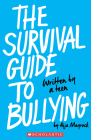 – Written by a teenager who was bullied throughout middle school and high school, this kid-friendly book offers a fresh and relatable perspective on bullying. Along the way, the author offers guidance as well as different strategies that helped her get through even the toughest of days.

.jpg?picon=423)

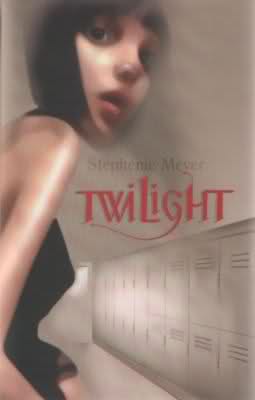
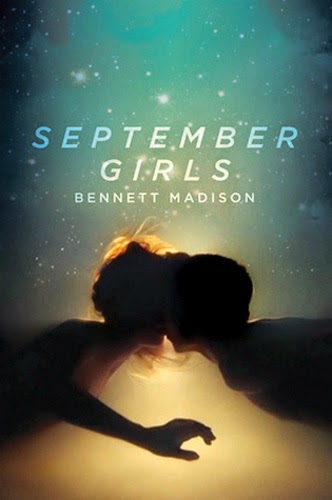

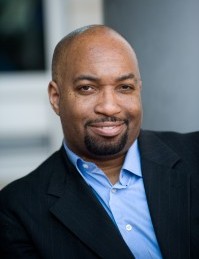
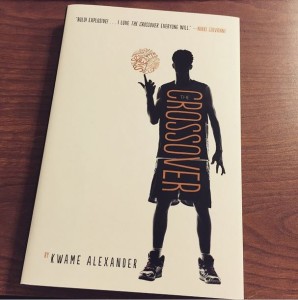


.jpg?picon=980)


 A list of SFF
 Sport-themed Books Not for Sporty Kids only
 14 Children's Books about Trying New Things from
 It's beginning to look a lot like BOOKSHELF - Great pairs of book to give kids 2013 from Paula at Pink Me
 Here's What Your Favorite Children's Book Series Says About You,
 Lumos! How Harry Potter Switched the Light On My Reading Life by


 The 2013
 Two thumbs up for the ALSC Tween Book List from Stacy Dillon. I like it too, and I love tween books
 20 Magical Children's Christmas Books To Read Aloud from @
 Another
 YES! Mo Willems
 Wherefore Art Thou Fly Guy Read Alikes? asks @



The particular electronic cigarette ego basic starter kit is fantastic for new users.
Remove other nearby wireless devices, such as a cordless or
cellular telephone and make sure the mouse is at least eight inches away from
a wireless keyboard. Mobile computing is continuously getting
better with best performance, smarter processors,
light weight and handy designs, but as we all know, the main power
of the mobile computing device (weather it is laptop,
mobile, PDA or e-book reader) resides in it's battery capacity.
My web blog www.carp2.com