


The realization of this moment gave me chills and led me to share my writing backstory with Dana. Dana listened and encouraged me to open my presentation with this story. I was hesitant, the experience had halted my inner writer for years. What if sharing it again had the same result? 
new posts in all blogs
 By: Deb Frazier,
on 11/28/2016
By: Deb Frazier,
on 11/28/2016
Blog: TWO WRITING TEACHERS (Login to Add to MyJacketFlap)
JacketFlap tags: writing process, writing, writers, Write: It's good for you!, writing workshop, teacher of writing, young authors, Teachers who write, teacher writing, writer identity, community, Add a tag
 By: Cynthia Leitich Smith,
on 11/2/2016
By: Cynthia Leitich Smith,
on 11/2/2016
Blog: cynsations (Login to Add to MyJacketFlap)
JacketFlap tags: Becca Puglisi, writing process, setting, Add a tag
 By Becca Puglisi
for Cynthia Leitich Smith's Cynsations
In storytelling, our number one job is to make readers care. We want to ensure that our fiction captivates them on many levels and that our characters seem like living, breathing people who continue to exist in readers’ minds long after the book closes.
So how do we do this?
Well, it may not seem like the obvious choice, but the setting can be one of the best tools through which to organically reveal truths about your characters.
Here are two quick tips on how to use the setting to characterize your cast for readers:
Choose Emotionally Relevant Locations
As the gods of our own little universes, we have the power to choose literally everything. But when it comes to the setting, the decision is often a halfhearted one—since the setting is just a backdrop, right? Wrong.
Every character has a history of blissful interludes, toxic run-ins, embarrassing moments, and traumatic episodes. And long after these formative events have been forgotten or buried, their settings will continue to hold significance for the characters involved.
For instance, let’s say that after being out of the romance game for a while, your heroine has agreed to go on a first date, and you need to decide on a setting.
Instead of falling back on a generic location for this scene, brainstorm some possibilities that hold significance for the character. Maybe her date has asked to meet at the same café where her fiancé once dumped her. Or in the park where she was mugged. Or at the bar where the guy she’s been in love with since tenth grade works as a bouncer.
Any of these settings can work because they’re already emotionally charged for the protagonist.
A first date can be difficult in and of itself; experiencing it in one of these places is going to heighten the character’s emotions and bring back old memories when she’d rather avoid them, ensuring that she won’t be at her best. When it comes to the important scenes in your story, complicate matters for your protagonist and tap into his or her emotions by choosing settings with personal significance.
Get Personal with the Details
Showing rather than telling is the most powerful means of providing insight into the personality of your protagonist and other cast members. Rather than explaining your characters through boring chunks of narrative, hone in on the personal details within a given setting that will tell readers about the people inhabiting it:
Here we have a scene that says loads about its owner. Rossa is meticulous when it comes to tidiness—both for her home and herself. You get the feeling that she values propriety and appearances. And we learn something about the narrator, too: she isn’t so concerned with all of that. She disdains it, in fact, and doesn’t seem to like her Dad’s love interest very much. All of this we’re able to infer from the simple description of a kitchen.
Personal spaces can be quite telling. Make them do more than simply set the scene by zooming in on those details that reveal something about your characters. And for those vital scenes in your story, put your cast members on edge by thoughtfully choosing the settings—ones that add an emotional component or will up the stakes. Resist the temptation to settle for a generic setting and start putting your locations to work for you and your characters.
Cynsational Notes
Becca Puglisi is an international speaker, writing coach, and bestselling author of The Emotion Thesaurus and its sequels. Her latest publications are all about settings: The Rural and Urban Setting Thesauruses showcase over 200 different possible story locations, highlighting their associated sights, sounds, textures, tastes, and smells so authors can effectively describe them for readers.
Becca is passionate about learning and sharing her knowledge with others through her Writers Helping Writers blog and via One Stop For Writers—a powerhouse online library created to help writers elevate their storytelling. You can find her online at both of these spots, as well as on Facebook and Twitter. Add a Comment
By: Lisa Keeler,
on 10/6/2016
Blog: TWO WRITING TEACHERS (Login to Add to MyJacketFlap)
JacketFlap tags: storytelling, writing process, drawing, sketching, writing workshop, minilesson, kindergarten, Talking, Add a tag
By: Lisa Keeler,
on 9/18/2016
Blog: TWO WRITING TEACHERS (Login to Add to MyJacketFlap)
JacketFlap tags: authors, writing process, inspiration, writers, writing workshop, writer identity, Add a tag
By: Lisa Keeler,
on 9/9/2016
Blog: TWO WRITING TEACHERS (Login to Add to MyJacketFlap)
JacketFlap tags: writing process, observations, narrative, challenges, assessment, writing workshop, launching writing workshop, Add a tag
By: Dana Murphy,
on 8/27/2016
Blog: TWO WRITING TEACHERS (Login to Add to MyJacketFlap)
JacketFlap tags: writing workshop, writing process, Add a tag
By: Dana Murphy,
on 8/8/2016
Blog: TWO WRITING TEACHERS (Login to Add to MyJacketFlap)
JacketFlap tags: Starting With What Matters Most, writing process, writing workshop, Add a tag
By: Cynthia Leitich Smith,
on 5/16/2016
Blog: cynsations (Login to Add to MyJacketFlap)
JacketFlap tags: creativity, writing life, writing process, Carol Coven Grannick, Add a tag
 By Carol Coven Grannick
for Cynthia Leitich Smith's Cynsations
I headed to my first writer’s residency at The Ragdale Foundation at the end of March with an imagined vision of open space, open time, and what I call “open expectations” – no finish line, no deadline, no shoulds or have tos about the challenging revision of my middle grade novel in verse or the small community of artists of which I’d be part.
I knew from experience that gentle, heartfelt, positive guidelines were my best bet for flourishing as a writer and a person. I told myself to:
It worked. From a writing and a community perspective, the residency was extraordinary. Among the many meaningful incidents were these:


It would have been enough to do the kind of deep writing I did from that day on. But going into the residency with my three guidelines enabled me to do and experience more than that.
I discovered that I am a writer who is able to spend many hours a day working if given the opportunity. That I am a writer who can find and stay in deep connection with my unconscious for more than a few moments at a time. And that I could also enjoy the deep pleasure of becoming part of a supportive, smart, funny, and all-around extraordinary, group of fellow artists.
In my life as writer, therapist, wife, mother, friend I’ve repeatedly found that while attitude is not everything, it is quite a bit. When I enter an experience with gentle and positive expectations, an open mind, and the ability to respond to surprises of any nature, I free myself again to grow, change, and continue the adventure of living.
It’s not necessarily easy. But it’s always worth the effort.
Cynsational Notes
Carol Coven Grannick has been a writer since before her fourth grade teacher told her she was one. Her poetry, essays, and articles have appeared in numerous print and online venues.
She began writing for children in 1999, and her poetry and fiction have appeared in Highlights for Children, Ladybug, Cricket and Hunger Mountain. Her picture book manuscripts have won several awards, and her middle grade novel in verse manuscript, "Reeni’s Turn," was named a finalist in the 2014 Katherine Paterson Prize for YA and Children's Writing at Hunger Mountain.
Drawing from her skills and experience as a clinical social worker and consultant/educator, Carol also writes extensively about the psychological and emotional aspects of the writing journey, and the essential skills for creating and maintaining emotional resilience. Her column, “The Flourishing Writer,” is archived in the Illinois SCBWI Prairie Wind.
Carol lives with her husband in Chicagoland and treasures her family, friends, and work at an extraordinary early childhood center. Add a Comment
By: Cynthia Leitich Smith,
on 5/10/2016
Blog: cynsations (Login to Add to MyJacketFlap)
JacketFlap tags: new_voice_2016, Amy Bearce, writing process, fantasy, Texas author, Add a tag
In real life, I’m not very observant about the space around me. I notice people’s emotions, but not what they are eating or what they are wearing. But in writing, all those little details make a place come alive. And in a fantasy story, they are even more important because readers must trust you to be their guide through an unknown world.
My first book, Fairy Keeper (Curiosity Quills, 2016), and the sequels are set in the world of Aluvia, full of magical creatures and beasts. Through writing these books, I’ve learned a lot about how world-building works best for me. When writing about a fantastical world, the phrase, “Write what you know” now has yet another meaning for me. One way to create new magical creatures is to extrapolate what you know from the real world and tweak it.
My fairies were inspired by bees and have a lot in common with them. My merfolk are bioluminescent like deep sea squid and jellyfish, and in book 3, dragons are awakening from a long hibernation like giant wild bears with wings (and flames.)
Originally, I had only considered fairies. But as I wrote about my fairy keeper character, soon I had merfolk and dragons and fauns…and had to decide details about each of them. It became apparent that while my world had magic, it was pretty broken. My magical creatures were less magical than many of their traditional representations. But I didn’t start off knowing that. Essentially, world building sneaked up on me.
Others writers build an encyclopedia of knowledge first. Google “World-Building Tips” and you will receive an avalanche of questions to answer.
How do people live here? What foods do they eat? What is their religion? Have there been wars? What economic system is used?
Here’s my secret: I hate those questions worse than a pop quiz in math. They almost hurt to ponder.
I don’t know most of the answers until they suddenly appear in my story. I’m not saying it’s the best way to do it. I do it because creating details about a new world does not come naturally to me. But when my character is walking from point A to B, as I’m writing, my mind fills things in, and it mostly works. Mostly.
There always comes the moment my husband reads it and says, “Hey, these parts don’t make sense.” And he’ll be right. So I change things.
The cost of this build-as-you-go approach means that I often end up with a draft full of contradictory information. There’s a lot of clean up involved. I’m sure it would be easier to build the world before writing anything. But for me, it’s exactly that little stuff that trips me up. Every. Single. Time.
The good news is that if I can create an imaginary world with consistent magic rules and an actual map inside the book, you can, too. Don’t let overwhelming questions stop you. Try writing some scenes and see where they take you.
Be patient, keep writing, and don’t be afraid to change things if you need to. Turn your woes to wow! After all, you are the master of your universe! Own it! Write it! And have fun with it!
Cynsational Notes
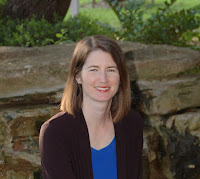 Amy Bearce writes stories for tweens and teens. She is a former reading teacher with a Masters in Library Science.
As an Army kid, she moved eight times before she was eighteen, so she feels especially fortunate to be married to her high school sweetheart. Together they’re raising two daughters and are currently living in Germany, though they still call Texas home.
A perfect day for Amy involves rain pattering on the windows, popcorn, and every member of her family curled up in one cozy room reading a good book. Her latest release is Mer-Charmer (Curiosity Quills, 2016).
 From the promotional copy:
Fourteen-year-old Phoebe Quinn is surrounded by magic, but she can't muster any of her own. Her sister is a fairy keeper. Her best friends are merfolk. And all she does is dishes and housework.
When Phoebe finds out a terrible sea creature is awakening that preys upon the gentle merfolk, she resolves to help them, even though it means risking her life deep in the ocean.
Beneath the waves, Phoebe learns she’s more like her sister than she realized. The merfolk are drawn to her, and she can sense the magic of the sea all around her. Magic is finally at her fingertips, but that’s precisely why the stirring dark power under the waters decides it wants her most of all.
Now she must not only help the peaceful merfolk escape this ancient enemy, she must master her out-of-control powers. If she fails, she will die, and darkness will rise to enslave the merfolk once more. But embracing her full power could cost her the very people she loves the most.
Add a Comment
By: Cynthia Leitich Smith,
on 4/21/2016
Blog: cynsations (Login to Add to MyJacketFlap)
JacketFlap tags: J.K. Rowling, writing process, David Levithan, Jane Austen, Ernest Hemmingway, Barbara Kingsolver, Rainbow Rowell, craft advice, Laura Herrington, Add a tag
By Lara Herrington Watson
@lashwatson
for Cynthia Leitich Smith's Cynsations
As I finished writing my second YA novel, I worried that my writing was getting stagnant.
What if I was learning bad habits that I would repeat through all of my future novels?
In order to glean some knowledge about my writing, I completed grammatical analyses on the first chapters of works by some of my favorite authors (Jane Austen, Ernest Hemingway, Barbara Kingsolver, David Levithan, Rainbow Rowell, and J.K. Rowling), and on my own novel.
I calculated percentages of sentences that begin with a subject, adverb, etc. I also looked at percentages of sentence type used: fragments, complex sentences, etc.
Here’s what I learned:
When reading your manuscript straight through for errors, highlighting different parts of speech individually (nouns, verbs, adverbs…) is an excellent editing method. This is how I started the project, and while it didn’t teach me much about my writing, scanning it piecemeal made the text pop in a different way. I discovered a dozen small errors and typos that I and my writing group had not yet found (in the first 50 pages alone).
 Simplicity is okay. Forty-five percent of all my sentences are simple. I start 63 percent of my sentences with subjects. At first I was sure this was too high. But these numbers are actually pretty average compared to my favorite authors.
Levithan had the highest percentages of simple sentences and of sentences beginning with subjects (65%), but his writing is still some of the most poetic, jazzy, and prismatic writing I’ve read. Maybe this is because of the many gorgeous participial phrases in the middle or at the end of his sentences.
Similarly, Rowell’s writing gets more interesting (lots of fragments composed of participial phrases) whenever the protagonist waxes nostalgic about his girlfriend. Much like Levithan, her fragments make seemingly small, subtle emotional steps that work.
Austen had the second highest percentage of fragments (Blame Mrs. Bennet’s blathering about Bingley.). Austen also uses the smallest range of tools for sentence starters, yet she scores fairly high in her use of complex sentences.
Complexity is also okay. One myth among young writers is that long sentences are always run-on sentences. This is untrue.
Take Hemingway, who is surprisingly complex. Because of his reputation as a straightforward, clear writer, I expected him to score high in fragments, but he had the least of anyone: only 2.2%.
 His complex sentences were also the most complex of any I analyzed. Compared to writers like Levithan and Rowell, Hemingway often covers more ground (years, literally) with longer, more complex, and exceptionally clear sentences.
Use a range of tools. As far as sentence starters, Rowling definitely uses the widest range of tools. It’s probably not a coincidence that her varied writing has captivated children and adults alike.
Don’t focus too much on statistics. Initially, I thought that the best writing would have the greatest variation. But some sentence starters and structures work better depending on the author’s voice and the novel’s contents; Hemingway and Kingsolver, for example, punctuate their long, complex sentences with short, punchy ones. This may not make the most interesting graph, but it sets their voices apart and makes for great fiction.
My sample size is admittedly small. I’m only looking at first chapters, and there’s plenty more to learn. But my brain hurts from too much data entry, and the boarding school from my third novel beckons.
Add a Comment
 By: Bruce Black,
on 4/3/2016
By: Bruce Black,
on 4/3/2016
Blog: wordswimmer (Login to Add to MyJacketFlap)
JacketFlap tags: interviews, writing process, JoAnn Early Macken, Add a tag
By: Bruce Black,
on 3/20/2016
Blog: wordswimmer (Login to Add to MyJacketFlap)
JacketFlap tags: writing process, inspiration, overcoming obstacles, Add a tag
By: Cynthia Leitich Smith,
on 3/16/2016
Blog: cynsations (Login to Add to MyJacketFlap)
JacketFlap tags: creativity, writing life, writing process, Carol Coven Grannick, Add a tag

It’s an unlikely setting, this child-dense room with documentation of the children’s discoveries through paint, clay, blocks, but between two or more hours at Starbuck’s in the morning and the napping room in the afternoon, I’m making good progress on my revision.

In the not-so-quiet space I sink deeply into my character’s life, where I may hear and feel her anguish and joy without interference from any angst of my own.
For years I struggled with finding the perfect place to write, because something seemed “off” with so many spaces. I found myself writing in short, deep spurts, but I was easily distracted. Too quiet. Too loud.
The thing is, I carried with me so much noise of my own, that almost every place was far from perfect.
 Early on in my committed writing journey, I heard the well-known caution to “keep my head down and do the work”. And yet online and off, in informal gatherings and at conferences, the longing to be book-published was front and center. I worked hard, submitted, survived rejections with my learned resilience, and “came close” many times.
Then, about five years ago, unusually distracted and distressed by the new industry policy adapted by so many agents and editors: If you don’t hear from us, assume we’re not interested. If I don’t hear from you by when? I wondered.
The absence of waiting for responses took too great an emotional toll on my resilient self.
So one day I decided to put an end to the situation that troubled me. I challenged the assumption that I would eventually get a book contract. Maybe I wouldn’t. I said it aloud, then asked myself one of the most important questions of my life: Now what?
Now, I am a writer, I answered myself. Now, I keep writing. An emotional gust of wind that blew me away in the best of ways. The relief I felt turned into a joy about writing that opened unimagined possibilities.
 Without any expectations of myself other than writing, I gave myself permission to work at all the things I loved – poetry, essays, picture books, and my middle grade novel in verse. I avoided places online and in person where discussions of hoped-for publication abounded. I felt somewhat isolated from a community I’d been involved in, but the benefits were worth it.
Eventually I began submitting again. But I was calmer, even carefree. My queries were more casual, authentic. I had acceptances and rejections – interestingly, with more personal responses to rejections than I’d ever gotten. I was shocked and quietly pleased to find that my middle grade novel in verse was chosen a finalist for the Katherine Paterson Prize.
My agent took notice of my book from the contest, and the revision process with her has been challenging and immensely pleasurable. I feel a calm, deep pleasure when I when I get an acceptance, an agent, write a verse I’m particularly proud of – instead of the wild excitement I felt years ago when I assumed each step was closer to “success.”
I hope my book is published one day – of course. But success is truly the journey, and how my own strengths meet the challenges of the work.

And, of course, the sweetness in the dark, not-so-quiet room with the sleeping children.
Cynsational Notes
Carol Coven Grannick has been a writer since before her fourth grade teacher told her she was one. Her poetry, essays, and articles have appeared in numerous print and online venues.
She began writing for children in 1999, and her poetry and fiction have appeared in Highlights for Children, Ladybug, Cricket and Hunger Mountain. Her picture book manuscripts have won several awards, and her middle grade novel in verse manuscript, "Reeni’s Turn," was named a Finalist in the 2014 Katherine Paterson Prize at Hunger Mountain.
Drawing from her skills and experience as a clinical social worker and consultant/educator, Carol also writes extensively about the psychological and emotional aspects of the writing journey, and the essential skills for creating and maintaining emotional resilience. Her column, “The Flourishing Writer,” is archived in the Illinois SCBWI Prairie Wind.
Carol lives with her husband in Chicagoland and treasures her family, friends, and work at an extraordinary early childhood center. Add a Comment
By: Bruce Black,
on 3/6/2016
Blog: wordswimmer (Login to Add to MyJacketFlap)
JacketFlap tags: interviews, writing process, David Lubar, Add a tag
By: Cynthia Leitich Smith,
on 3/2/2016
Blog: cynsations (Login to Add to MyJacketFlap)
JacketFlap tags: writing process, giveaway, Simmons College, Writing Barn, Hannah Barnaby, Add a tag
 By Hannah Barnaby
for Cynthia Leitich Smith's Cynsations
In early 1999, I was a graduate student in the children’s literature program at Simmons College in Boston.
I had a work study job at the Simmons social work school, mailing out applications and entering information into a computer, and that’s where I was on the morning of February 16th—sitting at someone else’s desk, collating papers—when the phone rang.
I ignored it. It wasn’t my phone.
It stopped, and rang again, and stopped, and finally the receptionist came in and said, “You need to answer that. It’s for you.”
It was my father, and he was crying, and he told me that my brother Jesse was dead.
I was twenty-four years old. My brother was not even twenty-one.
There is no good reason for why it has taken me seventeen years to write Some of the Parts (Knopf, 2016), the story of Tallie McGovern, who is sixteen and has lost her big brother and feels that she has no right to still be alive. There is no good reason, except that I was afraid to write Tallie’s story because I knew that it would bring that day in 1999 rushing back like an unstoppable river.
 And it did. I remembered things that I was sure I’d forgotten, like the single red mitten on top of a fence that I saw as I walked to the T station after that phone call.
Like the first thing I ate after I found out: a tuna sandwich.
Like the ride home to Albany from Boston that night, like what my mother looked like when I saw her at the door, like the guilt and the aching sadness of an empty chair in our kitchen.
I am often asked about the process of writing for teen readers, about accessing my “inner teen,” about telling stories that they can relate to. But the truth is that the experiences which truly shape us—loss and gain, trauma and victory, love and devastation—refuse to be forgotten.
We have only to glance back at them and they reanimate, like a movie unpaused, and they start to talk and move and sing.
Tallie’s story unfolded that way. I expected that writing Some of the Parts would be difficult, and it was. Nate is not my brother, and Tallie is not me, but much of their story is taken from my own and that is how I wrote this book—not just for teens, but for everyone who has lost somebody important.
I didn’t expect that it would heal me all over again. But it did.
 I spoke to my brother’s friends from high school and college. I listened to his favorite music (Charlie Parker). I read his favorite writers (James Michener and William Faulkner). I ate his favorite ice cream (vanilla). I spent time with him, the way that Tallie spends time with Nate. I walked through every part of her story right along with her and when she was finally safe again, I knew that I was, too.
I don’t know if Jesse was an organ donor. He died in a fire and most of his personal belongings were damaged or lost, including his driver’s license. But he cared deeply about his family and his friends and the world we lived in with him, and in that way, he lives on.
As for me: I have a little heart on the bottom of my driver’s license. I am very careful crossing the street, and I always wear my helmet.
I have a little boy now. When Some of the Parts is published—on the seventeenth anniversary of my brother Jesse’s death—my son will be nearly six. He loves vanilla ice cream, and music, and reading. He has brown hair and dark eyes, like the uncle he will never meet.
Before I wrote this book, I didn’t talk about my brother with my children very often, because I thought it would be too sad, and because I didn’t know what tell them. Writing Some of the Parts gave me the words to say, and I hope those words are taken by readers and used in conversations about loss of all kinds.
Sometimes bad things happen, and we are not the same when they are over.
This is the line from Some of the Parts that sums it all up for me. When we lose someone, their empty space doesn’t get filled up. It isn’t like digging a hole in the sand and watching the hole disappear when the tide comes in. It’s more like this:

We grow around the memory of the people we’ve lost, and we carry them with us. And if we’re feeling very brave one day, we write about them.
Cynsational Notes
 Hannah Barnaby is the author of Wonder Show (Houghton Mifflin Harcourt, 2013), a Morris Award finalist; Some of the Parts; and the upcoming picture books Bad Guy and Garcia & Colette. She is a proud graduate of Vermont College of Fine Arts and a former children’s book editor and bookseller.
Hannah lives in Charlottesville, VA with her family and teaches creative writing to anyone who will listen. Find her on Twitter @hannahrbarnaby.
Learn more about Hannah’s upcoming Write for Your Life workshop at The Writing Barn in Austin.
Cynsational Giveaway

Enter to win a signed copy of Some of the Parts by Hannah Barnaby (Knopf, 2016) and a sterling silver heart necklace. Author sponsored. Eligibility: U.S. only.
a Rafflecopter giveaway Add a Comment
By: Bruce Black,
on 2/21/2016
Blog: wordswimmer (Login to Add to MyJacketFlap)
JacketFlap tags: writing process, discipline, facing fear, how to keep writing, Add a tag
 By: Justine Larbalestier,
on 2/20/2016
By: Justine Larbalestier,
on 2/20/2016
Blog: Justine Larbalestier (Login to Add to MyJacketFlap)
JacketFlap tags: Whingeing, Writing life, Writing process, My Sister Rosa, Psychopath Book, Add a tag
By: Justine Larbalestier,
on 2/15/2016
Blog: Justine Larbalestier (Login to Add to MyJacketFlap)
JacketFlap tags: Writing life, Writing process, Add a tag
By: Tara Smith,
on 2/13/2016
Blog: TWO WRITING TEACHERS (Login to Add to MyJacketFlap)
JacketFlap tags: writing process, writing workshop, charts, scaffolding charts, writing workshop routines, Add a tag
By: Bruce Black,
on 2/7/2016
Blog: wordswimmer (Login to Add to MyJacketFlap)
JacketFlap tags: interviews, writing process, Gigi Amateau, Add a tag
By: Deb Frazier,
on 2/5/2016
Blog: TWO WRITING TEACHERS (Login to Add to MyJacketFlap)
JacketFlap tags: Discovering the Writer’s Life Blog Series, writing process, writing, writing space, Add a tag
 By: Lindsey Hodder,
on 1/27/2016
By: Lindsey Hodder,
on 1/27/2016
Blog: Adventures in YA Publishing (Login to Add to MyJacketFlap)
JacketFlap tags: Writing Process, WOW Wednesday, Add a tag
By the end of 2012 I had 4 books under contract—a YA novel with Disney-Hyperion and a YA series with Feiwel & Friends/Macmillan (the first in that series, Teen Frankenstein, comes out this week!) So what happened to cause such a dramatic change in such a short amount of time?
The simplest answer is: I wrote more. A lot more.
But there was also some magic involved. I met a fellow writer, Charlotte Huang (author of For the Record) online. We started a plan to write an email every weekday morning in which we’d set out what we hoped to get done for the day and another one at night relaying what we’d actually accomplished. That was it. Sometimes we wrote what we said we would and sometimes we fell short. It didn’t really matter. The point was in the saying of the thing. To each other. Out loud.
Within months we’d finished whole books. We each got a book deal. We each debuted in 2015. We each have second books coming out in 2016. Is this coincidence? I really don’t think so.
In 2012, remember, I’d written 1 book of my own. I’ve written and revised 4 since beginning our daily emails.
Because these emails are a wish and a prayer that we answer ourselves every day. And they just plain work.

High school meets classic horror in this groundbreaking new series.
It was a dark and stormy night when Tor Frankenstein accidentally hit someone with her car. And killed him. But all is not lost--Tor, being the scientific genius she is, brings him back to life...
Thus begins a twisty, turn-y take on a familiar tale, set in the town of Hollow Pines, Texas, where high school is truly horrifying.
Amazon | IndieBound | Goodreads
 Chandler Baker got her start ghostwriting novels for teens and tweens, including installments in a book series that has sold more than 1 million copies. She grew up in Florida, went to college at the University of Pennsylvania and studied law at the University of Texas. She now lives in Austin with her husband. Although she loves spinning tales with a touch of horror, she is a much bigger scaredy-cat than her stories would lead you to believe.
You can find Chandler as the books contributor on the YouTube channel Weird Girls.
 Add a Comment
By: Bruce Black,
on 1/17/2016
Add a Comment
By: Bruce Black,
on 1/17/2016
Blog: wordswimmer (Login to Add to MyJacketFlap)
JacketFlap tags: listening, writing process, determination, writer's block, Add a tag
By: Lindsey Hodder,
on 1/13/2016
Blog: Adventures in YA Publishing (Login to Add to MyJacketFlap)
JacketFlap tags: WOW Wednesday, Nancy Ohlin, Writing Process, Add a tag
Actually, let me back up even more by describing a denim skirt I had to make for a class in junior high school.
I had a Simplicity-brand pattern to work off of. I knew enough to pin the tissuey pattern pieces to the denim and cut the cloth accordingly.
The thing about me is, I don’t like to follow orders or read instruction manuals. I like to hit the ground running and kind of make it up as I go along.
So the Simplicity pattern was the extent of my master plan. Using the neatly trimmed denim segments, I proceeded to improvise on a sewing machine (note: one can’t improvise on a sewing machine), fill in the gaps with some careless hand stitching, and in general wing it all over the place.
The result was a denim skirt that looked okay—even pretty—on the outside. But turned inside out, it was a hot mess: nests of tangled thread, lumps of excess fabric, nothing neat or straight or finished.
Still, it was a skirt—a wearable skirt that I had made from scratch.
Okay, so back to the writing stuff. I’ve been a full-time freelance writer for several decades now. I got my first big break ghostwriting for a teen mystery series; I was lucky because the editor was a friend who was willing to take a chance on me as a newbie freelancer. That led to more ghostwriting gigs and, eventually, original fiction and nonfiction. To date, I’ve written, ghostwritten, or collaborated on over one hundred books.
I’m usually juggling multiple projects. This year, I’ll be collaborating on an early-grade fiction series plus a YA novel; writing two early-grade nonfiction books; finishing up a proposal for an original MG novel; and continuing to write and talk about CONSENT. This means I have to be extremely organized …
… and also extremely disorganized. Which brings me back to those two polar-opposite pieces of writing advice:
1. Be super-organized. I write every day, usually in the mornings and late afternoons. I’m fastidious with my calendar; I not only plug in appointments and to-do lists and deadlines, but I flag weeks when I won’t have much time to write so I can compensate during the other weeks and also be quick to respond about dates when I’m emailing with my agent or an editor. Whenever I start a new project, I create a detailed schedule so I can make my deadline. I give myself specific daily assignments, like: “Monday, draft Chapter 4” … “Tuesday, edit Chapter 4 and follow up on Sanchez interview” … and so on.
2. Throw organization out the window. Once I have the above structures in place, I’m free to go off-road. Which I do, big-time.
My creative process—my actual creative process—is total anarchy. For example: several years ago, I had to come up with a complicated YA plot from scratch and write up a detailed synopsis. To do this, I set up my “office” on the dining room table and worked there all day long. I would wake up, go straight to the table, and write for hours in my PJs. I had books (for research), a zillion open tabs on my laptop (for more research), and random pieces of paper everywhere. Whenever I got an idea, I grabbed a piece of paper (even if it had my grocery list on it) and the nearest writing implement (usually one of my daughter’s crayons or markers) and scribbled away like a maniac. I scrawled illegible notes. I drew pictures. I constructed diagrams that made sense in the heat of the moment but looked like psychotic graffiti later on, with arrows pointing every which way.
I couldn’t bother with meals. I ate peanut butter out of a jar and jump-started my brain with re-heated Starbucks. I remembered to drink water only when I realized that my throat was parched and my head was throbbing.
This went on for weeks. I was a crazy person holed up in a chaotic mind palace of disparate facts, inspirations, and ideas. At the end of each day, when panic rose to the surface and told me that I would never come up with that killer plot, I closed my laptop and forced myself to go to a hot yoga class—my only healthy habit during that time—to wring myself out. I told myself that I would start fresh in the morning. I told myself to have faith in the process, in myself.
Then one day as my deadline approached, I sat down at the table, holed up in my mind palace, wrote for six hours straight and … bam! There was my killer plot. Everything had manically, magically fallen into place.
And so there you have it, in a nutshell. For me, writing has to be both orderly and chaotic. At the same time. It’s a denim skirt that starts with a Simplicity pattern, loses its way, self-destructs, then somehow comes together. The result may not be perfect, but it’s good enough.
Happy writing!
 In this sexy and intriguing novel, an intense—and passionate—bond between a high school senior and her music teacher becomes a public scandal that threatens the reputation of both.
Bea has a secret.
Actually, she has more than one. There’s her dream for the future that she can’t tell anyone—not her father and not even her best friend, Plum.
And now there’s Dane Rossi. Dane is hot, he shares Bea’s love of piano, and he believes in her.
He’s also Bea’s teacher.
When their passion for music crosses into passion for each other, Bea finds herself falling completely for Dane. She’s never felt so wanted, so understood, so known to her core. But the risk of discovery carries unexpected surprises that could shake Bea entirely. Bea must piece together what is and isn’t true about Dane, herself, and the most intense relationship she’s ever experienced in this absorbing novel from Nancy Ohlin, the author of Beauty.
Amazon | IndieBound | Goodreads
 Nancy Ohlin is the author of Consent, forthcoming from Simon Pulse on November 10, 2015, as well as Always, Forever, a YA retelling of Daphne du Maurier's Rebecca, and Beauty, a YA retelling of the Snow White tale.
She has also contributed to several celebrity novels, including a New York Times-bestselling YA trilogy.
Her favorite cures for writers' block are long walks, long showers, popcorn, chocolate, and really expensive coffee. She talks to herself a lot while she writes (you know, to make sure the dialogue zings).
 Add a Comment
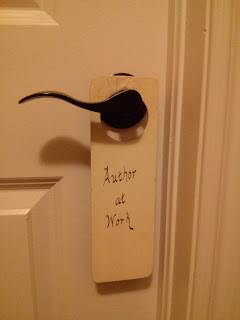 This upcoming year, I need to make some sacrifices and define my space (physical and emotional) in order to finish writing the next installment of my time travel series (so close!), and start brainstorming the next book. I’m lucky enough to have my own writing office, and there’s no little ones around to knock on the door. Unless my 100 pound yellow Labrador decides to nudge open the door to be fed or walked! I’ve used a timer in the past, but like anything, if it’s not made a habit, it’s not going to work. Self-discipline is the name of the game in this business, that’s for sure! So keep a stiff upper lip, define your writing space and time, and get that book written!
View Next 25 Posts
Viewing: Blog Posts Tagged with: Writing process, Most Recent at Top [Help]
Results 1 - 25 of 629
By: Deb Frazier,
on 11/28/2016
Blog: TWO WRITING TEACHERS (Login to Add to MyJacketFlap)
JacketFlap tags: writing process, writing, writers, Write: It's good for you!, writing workshop, teacher of writing, young authors, Teachers who write, teacher writing, writer identity, community, Add a tag
By: Cynthia Leitich Smith,
on 11/2/2016
Blog: cynsations (Login to Add to MyJacketFlap)
JacketFlap tags: Becca Puglisi, writing process, setting, Add a tag

for Cynthia Leitich Smith's Cynsations
In storytelling, our number one job is to make readers care. We want to ensure that our fiction captivates them on many levels and that our characters seem like living, breathing people who continue to exist in readers’ minds long after the book closes.
So how do we do this?
Well, it may not seem like the obvious choice, but the setting can be one of the best tools through which to organically reveal truths about your characters.
Here are two quick tips on how to use the setting to characterize your cast for readers:
Choose Emotionally Relevant Locations
As the gods of our own little universes, we have the power to choose literally everything. But when it comes to the setting, the decision is often a halfhearted one—since the setting is just a backdrop, right? Wrong.
 |
| Ordering Information |
For instance, let’s say that after being out of the romance game for a while, your heroine has agreed to go on a first date, and you need to decide on a setting.
Instead of falling back on a generic location for this scene, brainstorm some possibilities that hold significance for the character. Maybe her date has asked to meet at the same café where her fiancé once dumped her. Or in the park where she was mugged. Or at the bar where the guy she’s been in love with since tenth grade works as a bouncer.
Any of these settings can work because they’re already emotionally charged for the protagonist.
A first date can be difficult in and of itself; experiencing it in one of these places is going to heighten the character’s emotions and bring back old memories when she’d rather avoid them, ensuring that she won’t be at her best. When it comes to the important scenes in your story, complicate matters for your protagonist and tap into his or her emotions by choosing settings with personal significance.
Get Personal with the Details
Showing rather than telling is the most powerful means of providing insight into the personality of your protagonist and other cast members. Rather than explaining your characters through boring chunks of narrative, hone in on the personal details within a given setting that will tell readers about the people inhabiting it:
I surveyed Rossa’s spotless kitchen. Dishes in their racks—sparkling. Wooden counters—scrubbed to a stone-like smoothness. Rossa herself—hair perfectly arranged, clothes crisp even at this hour, the frivolous fall of lace at her throat. I crossed my arms and couldn’t help wondering, again, how she and Dad could be meant for each other.
 |
| Ordering Information |
Personal spaces can be quite telling. Make them do more than simply set the scene by zooming in on those details that reveal something about your characters. And for those vital scenes in your story, put your cast members on edge by thoughtfully choosing the settings—ones that add an emotional component or will up the stakes. Resist the temptation to settle for a generic setting and start putting your locations to work for you and your characters.
Cynsational Notes
Becca Puglisi is an international speaker, writing coach, and bestselling author of The Emotion Thesaurus and its sequels. Her latest publications are all about settings: The Rural and Urban Setting Thesauruses showcase over 200 different possible story locations, highlighting their associated sights, sounds, textures, tastes, and smells so authors can effectively describe them for readers.
Becca is passionate about learning and sharing her knowledge with others through her Writers Helping Writers blog and via One Stop For Writers—a powerhouse online library created to help writers elevate their storytelling. You can find her online at both of these spots, as well as on Facebook and Twitter. Add a Comment
By: Lisa Keeler,
on 10/6/2016
Blog: TWO WRITING TEACHERS (Login to Add to MyJacketFlap)
JacketFlap tags: storytelling, writing process, drawing, sketching, writing workshop, minilesson, kindergarten, Talking, Add a tag
Sometimes the most effective way to help writers leap ahead, is to slow things down and take a step back.
By: Lisa Keeler,
on 9/18/2016
Blog: TWO WRITING TEACHERS (Login to Add to MyJacketFlap)
JacketFlap tags: authors, writing process, inspiration, writers, writing workshop, writer identity, Add a tag
For writers to grow, they must develop writer identities. How do we help them do that?
By: Lisa Keeler,
on 9/9/2016
Blog: TWO WRITING TEACHERS (Login to Add to MyJacketFlap)
JacketFlap tags: writing process, observations, narrative, challenges, assessment, writing workshop, launching writing workshop, Add a tag
We spend a week or so sharing stories, and building excitement for writing stories. We hand out notebooks with fanfare, and writers happily personalize them. They brainstorm ideas for stories they could write.… Continue reading 
By: Dana Murphy,
on 8/27/2016
Blog: TWO WRITING TEACHERS (Login to Add to MyJacketFlap)
JacketFlap tags: writing workshop, writing process, Add a tag
 By: Dana Murphy,
on 8/8/2016
By: Dana Murphy,
on 8/8/2016
Blog: TWO WRITING TEACHERS (Login to Add to MyJacketFlap)
JacketFlap tags: Starting With What Matters Most, writing process, writing workshop, Add a tag
 By: Cynthia Leitich Smith,
on 5/16/2016
By: Cynthia Leitich Smith,
on 5/16/2016
Blog: cynsations (Login to Add to MyJacketFlap)
JacketFlap tags: creativity, writing life, writing process, Carol Coven Grannick, Add a tag

for Cynthia Leitich Smith's Cynsations
I headed to my first writer’s residency at The Ragdale Foundation at the end of March with an imagined vision of open space, open time, and what I call “open expectations” – no finish line, no deadline, no shoulds or have tos about the challenging revision of my middle grade novel in verse or the small community of artists of which I’d be part.
I knew from experience that gentle, heartfelt, positive guidelines were my best bet for flourishing as a writer and a person. I told myself to:
- Trust my needs, my rhythm, what I and my story feel each step forward needs to be, and connect with others as I need and want to, but without pressure that I have to.
- Keep my brain open to surprises of all kinds and embrace, enjoy, tolerate, readjust as needed.
- Let the residency change me – openness to writing and human surprises has often had this lovely effect on me.
It worked. From a writing and a community perspective, the residency was extraordinary. Among the many meaningful incidents were these:

- When I’d inserted eighty new verses into my then-current draft, half-hoping for a wonderful and well-organized draft, I found instead an incoherent, fragmented story. At dinner, as we all casually talked about our first day, I said my next days would be dismantling my book, and was glad I had the floor space and time to do it. The luxury of seemingly endless hours was going to be a gift.
- As I went through the days, dismantling, reassembling, and readying myself for a deep and intense revision, I realized something all of us seemed to say in our end-of-residency summary: It’s not just the number of hours I have, it’s how the hours and the lack of distracting responsibilities allow my brain to open and blossom. I discovered, with this undistracted time, the capacity to work deeply and intensely, giving my unconscious mind the freedom to feed me creative solutions.
- Many days, I lost any sense of what time it was, whether or not my phone and computer were collecting texts and emails, and occasionally even whether or not I was hungry. My lovely little room, walks on the prairie (even in the snowstorms of a Chicago spring), and conversations with new colleagues fed a brain that seemed wonderfully open to the world, and to my own unconscious.
- One night early in the residency, instead of returning to work, I decided to join several colleagues to listen to another’s discussion of her volunteer work in a Michigan hospital, gathering bedside stories from in-patients. She played several of the stories for us. I was riveted. I heard an urgency in all the short, impromptu stories. The patients have to choose only one story to tell, my colleague said. I had a visceral response in my chest, home of where my feelings tell me things. One story. Only one story. I have to write Reeni’s story as if it is the only one she gets to tell. That’s where I will find the urgency. And maybe I will find her voice.
- The next day I began, sitting on my pillow on the floor with paper and pencil. If it was Reeni’s last day on earth, how would she tell the story? And then I found her voice.

It would have been enough to do the kind of deep writing I did from that day on. But going into the residency with my three guidelines enabled me to do and experience more than that.
I discovered that I am a writer who is able to spend many hours a day working if given the opportunity. That I am a writer who can find and stay in deep connection with my unconscious for more than a few moments at a time. And that I could also enjoy the deep pleasure of becoming part of a supportive, smart, funny, and all-around extraordinary, group of fellow artists.
In my life as writer, therapist, wife, mother, friend I’ve repeatedly found that while attitude is not everything, it is quite a bit. When I enter an experience with gentle and positive expectations, an open mind, and the ability to respond to surprises of any nature, I free myself again to grow, change, and continue the adventure of living.
It’s not necessarily easy. But it’s always worth the effort.
Cynsational Notes
 |
| More on Carol Coven Grannick |
She began writing for children in 1999, and her poetry and fiction have appeared in Highlights for Children, Ladybug, Cricket and Hunger Mountain. Her picture book manuscripts have won several awards, and her middle grade novel in verse manuscript, "Reeni’s Turn," was named a finalist in the 2014 Katherine Paterson Prize for YA and Children's Writing at Hunger Mountain.
Drawing from her skills and experience as a clinical social worker and consultant/educator, Carol also writes extensively about the psychological and emotional aspects of the writing journey, and the essential skills for creating and maintaining emotional resilience. Her column, “The Flourishing Writer,” is archived in the Illinois SCBWI Prairie Wind.
Carol lives with her husband in Chicagoland and treasures her family, friends, and work at an extraordinary early childhood center. Add a Comment
By: Cynthia Leitich Smith,
on 5/10/2016
Blog: cynsations (Login to Add to MyJacketFlap)
JacketFlap tags: new_voice_2016, Amy Bearce, writing process, fantasy, Texas author, Add a tag
By Amy Bearce
for Cynthia Leitich Smith's Cynsations
Confession: I have a terrible time with world-building. So, naturally, I consistently write fantasy, where world-building is critical.
 |
| You gotta be kidding me! Credit: Pixabay, mintchipdesigns, CC0 |
In real life, I’m not very observant about the space around me. I notice people’s emotions, but not what they are eating or what they are wearing. But in writing, all those little details make a place come alive. And in a fantasy story, they are even more important because readers must trust you to be their guide through an unknown world.
 |
| Right this way, please. Credit: Pixabay, InspiredImages, CC0 |
My first book, Fairy Keeper (Curiosity Quills, 2016), and the sequels are set in the world of Aluvia, full of magical creatures and beasts. Through writing these books, I’ve learned a lot about how world-building works best for me. When writing about a fantastical world, the phrase, “Write what you know” now has yet another meaning for me. One way to create new magical creatures is to extrapolate what you know from the real world and tweak it.
My fairies were inspired by bees and have a lot in common with them. My merfolk are bioluminescent like deep sea squid and jellyfish, and in book 3, dragons are awakening from a long hibernation like giant wild bears with wings (and flames.)
 |
| As a girl of the plains, I had to watch a lot of documentaries to get a better idea of what was in the deep ocean. As it turns out...pretty amazing stuff! Credit: Pixabay, emdash, CC0 |
Originally, I had only considered fairies. But as I wrote about my fairy keeper character, soon I had merfolk and dragons and fauns…and had to decide details about each of them. It became apparent that while my world had magic, it was pretty broken. My magical creatures were less magical than many of their traditional representations. But I didn’t start off knowing that. Essentially, world building sneaked up on me.
 |
| This stealthy kitty is hunting dragons, mermaids, and fairies. Credit: Pixabay, rihaij, CC0 |
Others writers build an encyclopedia of knowledge first. Google “World-Building Tips” and you will receive an avalanche of questions to answer.
How do people live here? What foods do they eat? What is their religion? Have there been wars? What economic system is used?
Here’s my secret: I hate those questions worse than a pop quiz in math. They almost hurt to ponder.
 |
| My expression when trying to answer “world-building questions.” Credit: Gratisography, CC0 |
I don’t know most of the answers until they suddenly appear in my story. I’m not saying it’s the best way to do it. I do it because creating details about a new world does not come naturally to me. But when my character is walking from point A to B, as I’m writing, my mind fills things in, and it mostly works. Mostly.
There always comes the moment my husband reads it and says, “Hey, these parts don’t make sense.” And he’ll be right. So I change things.
The cost of this build-as-you-go approach means that I often end up with a draft full of contradictory information. There’s a lot of clean up involved. I’m sure it would be easier to build the world before writing anything. But for me, it’s exactly that little stuff that trips me up. Every. Single. Time.
 |
| World-building: My own personal banana peel. Credit: Pixabay, stevepb, CC0 |
The good news is that if I can create an imaginary world with consistent magic rules and an actual map inside the book, you can, too. Don’t let overwhelming questions stop you. Try writing some scenes and see where they take you.
Be patient, keep writing, and don’t be afraid to change things if you need to. Turn your woes to wow! After all, you are the master of your universe! Own it! Write it! And have fun with it!
 |
| Sing it with me: “I’ve got the power!” Credit: Pixabay, Skitterphoto, CC0 |
Cynsational Notes

As an Army kid, she moved eight times before she was eighteen, so she feels especially fortunate to be married to her high school sweetheart. Together they’re raising two daughters and are currently living in Germany, though they still call Texas home.
A perfect day for Amy involves rain pattering on the windows, popcorn, and every member of her family curled up in one cozy room reading a good book. Her latest release is Mer-Charmer (Curiosity Quills, 2016).

Fourteen-year-old Phoebe Quinn is surrounded by magic, but she can't muster any of her own. Her sister is a fairy keeper. Her best friends are merfolk. And all she does is dishes and housework.
When Phoebe finds out a terrible sea creature is awakening that preys upon the gentle merfolk, she resolves to help them, even though it means risking her life deep in the ocean.
Beneath the waves, Phoebe learns she’s more like her sister than she realized. The merfolk are drawn to her, and she can sense the magic of the sea all around her. Magic is finally at her fingertips, but that’s precisely why the stirring dark power under the waters decides it wants her most of all.
Now she must not only help the peaceful merfolk escape this ancient enemy, she must master her out-of-control powers. If she fails, she will die, and darkness will rise to enslave the merfolk once more. But embracing her full power could cost her the very people she loves the most.
Add a Comment
By: Cynthia Leitich Smith,
on 4/21/2016
Blog: cynsations (Login to Add to MyJacketFlap)
JacketFlap tags: J.K. Rowling, writing process, David Levithan, Jane Austen, Ernest Hemmingway, Barbara Kingsolver, Rainbow Rowell, craft advice, Laura Herrington, Add a tag
 |
| click to enlarge |
@lashwatson
for Cynthia Leitich Smith's Cynsations
As I finished writing my second YA novel, I worried that my writing was getting stagnant.
What if I was learning bad habits that I would repeat through all of my future novels?
In order to glean some knowledge about my writing, I completed grammatical analyses on the first chapters of works by some of my favorite authors (Jane Austen, Ernest Hemingway, Barbara Kingsolver, David Levithan, Rainbow Rowell, and J.K. Rowling), and on my own novel.
I calculated percentages of sentences that begin with a subject, adverb, etc. I also looked at percentages of sentence type used: fragments, complex sentences, etc.
Here’s what I learned:
When reading your manuscript straight through for errors, highlighting different parts of speech individually (nouns, verbs, adverbs…) is an excellent editing method. This is how I started the project, and while it didn’t teach me much about my writing, scanning it piecemeal made the text pop in a different way. I discovered a dozen small errors and typos that I and my writing group had not yet found (in the first 50 pages alone).

Levithan had the highest percentages of simple sentences and of sentences beginning with subjects (65%), but his writing is still some of the most poetic, jazzy, and prismatic writing I’ve read. Maybe this is because of the many gorgeous participial phrases in the middle or at the end of his sentences.
Similarly, Rowell’s writing gets more interesting (lots of fragments composed of participial phrases) whenever the protagonist waxes nostalgic about his girlfriend. Much like Levithan, her fragments make seemingly small, subtle emotional steps that work.
 |
| click to enlarge |
Complexity is also okay. One myth among young writers is that long sentences are always run-on sentences. This is untrue.
Take Hemingway, who is surprisingly complex. Because of his reputation as a straightforward, clear writer, I expected him to score high in fragments, but he had the least of anyone: only 2.2%.

Use a range of tools. As far as sentence starters, Rowling definitely uses the widest range of tools. It’s probably not a coincidence that her varied writing has captivated children and adults alike.
Don’t focus too much on statistics. Initially, I thought that the best writing would have the greatest variation. But some sentence starters and structures work better depending on the author’s voice and the novel’s contents; Hemingway and Kingsolver, for example, punctuate their long, complex sentences with short, punchy ones. This may not make the most interesting graph, but it sets their voices apart and makes for great fiction.
My sample size is admittedly small. I’m only looking at first chapters, and there’s plenty more to learn. But my brain hurts from too much data entry, and the boarding school from my third novel beckons.
 |
| click to enlarge |
 |
| click to enlarge |
Add a Comment
By: Bruce Black,
on 4/3/2016
Blog: wordswimmer (Login to Add to MyJacketFlap)
JacketFlap tags: interviews, writing process, JoAnn Early Macken, Add a tag
If you visit the workspace of Joann Early Macken, you’ll find it filled with many of her favorite things, including a lucky pink pig that was a gift from Norma Fox Mazer, one of her advisors at Vermont College, where Macken earned an MFA in writing for children. That lucky pink pig, along with the skills that she learned while studying for her degree, have helped her write five picture books,
0 Comments on One Writer’s Process: JoAnn Early Macken as of 1/1/1900
Add a Comment
By: Bruce Black,
on 3/20/2016
Blog: wordswimmer (Login to Add to MyJacketFlap)
JacketFlap tags: writing process, inspiration, overcoming obstacles, Add a tag
Do you remember when you first fell in love with stories? When I was a young boy—before I fell in love with reading, before I sat in front of the TV for hours watching movies—I loved sitting in the kitchen on Sunday mornings listening to my grandfather tell stories about his life growing up in a tiny village on the outskirts of Warsaw. It wasn’t just his stories that drew me into the
0 Comments on Falling In Love With Stories as of 3/20/2016 8:18:00 AM
Add a Comment
By: Cynthia Leitich Smith,
on 3/16/2016
Blog: cynsations (Login to Add to MyJacketFlap)
JacketFlap tags: creativity, writing life, writing process, Carol Coven Grannick, Add a tag
By Carol Coven Grannick
for Cynthia Leitich Smith's Cynsations
I’m in a cozy, dark room – too warm, and scattered with noises of children’s breathing, soft wordless Beatles’ arrangements, and the burble of the turtle tank filter. It’s nap-time at the early childhood school where I work, and I’m on duty. I’m also working on a major revision for my novel in verse.

It’s an unlikely setting, this child-dense room with documentation of the children’s discoveries through paint, clay, blocks, but between two or more hours at Starbuck’s in the morning and the napping room in the afternoon, I’m making good progress on my revision.

In the not-so-quiet space I sink deeply into my character’s life, where I may hear and feel her anguish and joy without interference from any angst of my own.
For years I struggled with finding the perfect place to write, because something seemed “off” with so many spaces. I found myself writing in short, deep spurts, but I was easily distracted. Too quiet. Too loud.
The thing is, I carried with me so much noise of my own, that almost every place was far from perfect.
Then, about five years ago, unusually distracted and distressed by the new industry policy adapted by so many agents and editors: If you don’t hear from us, assume we’re not interested. If I don’t hear from you by when? I wondered.
The absence of waiting for responses took too great an emotional toll on my resilient self.
So one day I decided to put an end to the situation that troubled me. I challenged the assumption that I would eventually get a book contract. Maybe I wouldn’t. I said it aloud, then asked myself one of the most important questions of my life: Now what?
Now, I am a writer, I answered myself. Now, I keep writing. An emotional gust of wind that blew me away in the best of ways. The relief I felt turned into a joy about writing that opened unimagined possibilities.

Eventually I began submitting again. But I was calmer, even carefree. My queries were more casual, authentic. I had acceptances and rejections – interestingly, with more personal responses to rejections than I’d ever gotten. I was shocked and quietly pleased to find that my middle grade novel in verse was chosen a finalist for the Katherine Paterson Prize.
My agent took notice of my book from the contest, and the revision process with her has been challenging and immensely pleasurable. I feel a calm, deep pleasure when I when I get an acceptance, an agent, write a verse I’m particularly proud of – instead of the wild excitement I felt years ago when I assumed each step was closer to “success.”
I hope my book is published one day – of course. But success is truly the journey, and how my own strengths meet the challenges of the work.

And, of course, the sweetness in the dark, not-so-quiet room with the sleeping children.
Cynsational Notes
|
| More on Carol Coven Grannick |
She began writing for children in 1999, and her poetry and fiction have appeared in Highlights for Children, Ladybug, Cricket and Hunger Mountain. Her picture book manuscripts have won several awards, and her middle grade novel in verse manuscript, "Reeni’s Turn," was named a Finalist in the 2014 Katherine Paterson Prize at Hunger Mountain.
Drawing from her skills and experience as a clinical social worker and consultant/educator, Carol also writes extensively about the psychological and emotional aspects of the writing journey, and the essential skills for creating and maintaining emotional resilience. Her column, “The Flourishing Writer,” is archived in the Illinois SCBWI Prairie Wind.
Carol lives with her husband in Chicagoland and treasures her family, friends, and work at an extraordinary early childhood center. Add a Comment
By: Bruce Black,
on 3/6/2016
Blog: wordswimmer (Login to Add to MyJacketFlap)
JacketFlap tags: interviews, writing process, David Lubar, Add a tag
David Lubar grew up in Morristown, NJ, and remembers spending lots of time in the school library, as well as in the town and county libraries. It was his mother, a school librarian, who introduced him to science fiction authors like Robert Heinlein and Isaac Asimov, and in time Lubar’s interest in science fiction grew to include reading monster magazines, as well as horror comics like
0 Comments on One Writer’s Process: David Lubar as of 1/1/1900
Add a Comment
15. Guest Post & Giveaway: Hannah Barnaby on Writing for My Life: How I Dug into My Past for Fiction
By: Cynthia Leitich Smith,
on 3/2/2016
Blog: cynsations (Login to Add to MyJacketFlap)
JacketFlap tags: writing process, giveaway, Simmons College, Writing Barn, Hannah Barnaby, Add a tag

for Cynthia Leitich Smith's Cynsations
In early 1999, I was a graduate student in the children’s literature program at Simmons College in Boston.
I had a work study job at the Simmons social work school, mailing out applications and entering information into a computer, and that’s where I was on the morning of February 16th—sitting at someone else’s desk, collating papers—when the phone rang.
I ignored it. It wasn’t my phone.
It stopped, and rang again, and stopped, and finally the receptionist came in and said, “You need to answer that. It’s for you.”
It was my father, and he was crying, and he told me that my brother Jesse was dead.
I was twenty-four years old. My brother was not even twenty-one.
There is no good reason for why it has taken me seventeen years to write Some of the Parts (Knopf, 2016), the story of Tallie McGovern, who is sixteen and has lost her big brother and feels that she has no right to still be alive. There is no good reason, except that I was afraid to write Tallie’s story because I knew that it would bring that day in 1999 rushing back like an unstoppable river.

Like the first thing I ate after I found out: a tuna sandwich.
Like the ride home to Albany from Boston that night, like what my mother looked like when I saw her at the door, like the guilt and the aching sadness of an empty chair in our kitchen.
I am often asked about the process of writing for teen readers, about accessing my “inner teen,” about telling stories that they can relate to. But the truth is that the experiences which truly shape us—loss and gain, trauma and victory, love and devastation—refuse to be forgotten.
We have only to glance back at them and they reanimate, like a movie unpaused, and they start to talk and move and sing.
Tallie’s story unfolded that way. I expected that writing Some of the Parts would be difficult, and it was. Nate is not my brother, and Tallie is not me, but much of their story is taken from my own and that is how I wrote this book—not just for teens, but for everyone who has lost somebody important.
I didn’t expect that it would heal me all over again. But it did.

I don’t know if Jesse was an organ donor. He died in a fire and most of his personal belongings were damaged or lost, including his driver’s license. But he cared deeply about his family and his friends and the world we lived in with him, and in that way, he lives on.
As for me: I have a little heart on the bottom of my driver’s license. I am very careful crossing the street, and I always wear my helmet.
I have a little boy now. When Some of the Parts is published—on the seventeenth anniversary of my brother Jesse’s death—my son will be nearly six. He loves vanilla ice cream, and music, and reading. He has brown hair and dark eyes, like the uncle he will never meet.
Before I wrote this book, I didn’t talk about my brother with my children very often, because I thought it would be too sad, and because I didn’t know what tell them. Writing Some of the Parts gave me the words to say, and I hope those words are taken by readers and used in conversations about loss of all kinds.
Sometimes bad things happen, and we are not the same when they are over.
This is the line from Some of the Parts that sums it all up for me. When we lose someone, their empty space doesn’t get filled up. It isn’t like digging a hole in the sand and watching the hole disappear when the tide comes in. It’s more like this:

We grow around the memory of the people we’ve lost, and we carry them with us. And if we’re feeling very brave one day, we write about them.
Cynsational Notes

Hannah lives in Charlottesville, VA with her family and teaches creative writing to anyone who will listen. Find her on Twitter @hannahrbarnaby.
Learn more about Hannah’s upcoming Write for Your Life workshop at The Writing Barn in Austin.
Cynsational Giveaway

Enter to win a signed copy of Some of the Parts by Hannah Barnaby (Knopf, 2016) and a sterling silver heart necklace. Author sponsored. Eligibility: U.S. only.
a Rafflecopter giveaway Add a Comment
By: Bruce Black,
on 2/21/2016
Blog: wordswimmer (Login to Add to MyJacketFlap)
JacketFlap tags: writing process, discipline, facing fear, how to keep writing, Add a tag
Each morning before dawn I wake in fear. Today will be the day I discover I have nothing to say. Then I remember. Fear is an illusion. A shadow on the wall. And I step out of bed. And my feet feel the firmness of the earth. And I remember that words, like the earth, are always there. Invisible, like gravity, until I reach for a pen and start writing. Only a pen and paper and the feel of
0 Comments on Waking before dawn as of 2/21/2016 9:48:00 AM
Add a Comment
By: Justine Larbalestier,
on 2/20/2016
Blog: Justine Larbalestier (Login to Add to MyJacketFlap)
JacketFlap tags: Whingeing, Writing life, Writing process, My Sister Rosa, Psychopath Book, Add a tag
My biggest writing struggle is getting started. My current novel, the Psychopath Book, was going well until My Sister Rosa came out in Australia and New Zealand. Suddenly there was promotion to be done, interviews, book launches, travelling.
I’ve been for home more than a week and this is how it’s gone:
Day One: I catch up on admin, which includes interview questions, paying bills, laundry etc as well as tweeting. Because Twitter is a vital part of my process. *cough*
Day Two: More admin. How does admin build up so quickly? Why can’t bills pay themselves? Why can’t Twitter pay my bills?
Day Three: More admin. More tweeting. I open Psychopath Book file. I have no idea who any of these characters are or what this book is about. Not entirely convinced I wrote these words. Who has been messing with my computer while I was away? I ask Twitter. Answers are unsatisfactory.
Day Four: More admin. Way more tweeting. I stare at Pyschopath Book file and read some of it and recoil in horror. Why is this so hard? There are plenty of writers with full time jobs, who are carers for children and elderly parents, who write ten books a year. I am the worst. I ask Twitter. Twitter overwhelmingly confirms my worst-ness.
Day Five: I ignore admin. Time to get back to actually writing this damn book. After I’ve delivered a very important rant on Twitter and commiserated with friends over the dread ways in which Twitter algorithms are trying to destroy Twitter. I read my notes on Psychopath Book. They don’t make any sense. Staring at this stalled novel fills me with despair. I watch Attack the Block for the millionth time. Surely it will inspire me? It does. To write an entirely different book.
Day Six: I continue to ignore admin but not Twitter. I make myself read more Psychopath Book. I edit some sentences. Some of them are okay. Most are not. I start to have vague memories about these characters. I marvel at the many ways I have misspelled pyschopath. It’s impressive.
Day Seven: I continue to ignore admin and am on Twitter slightly less than usual. I blog. What? It’s important for an author with a new book out to stay abreast of social media and blog the rants that are too long for Twitter. It’s also important to watch the cricket in case I one day get around to writing that highly commercial cricket novel I’ve been thinking about writing for years.
Day Eight: I finally write some actual new sentence of the Psychopath Book. They’re total shite.
Day Nine: I write more shitey sentences of the Psychopath Book. I know who these characters are! I can write this book! Shitely! I just have to make sure I never take more than a day or two off ever again.
And repeat. A lot.
TL;DR: Getting started is really hard.
0 Comments on Getting Started is Hard as of 1/1/1900
Add a Comment
By: Justine Larbalestier,
on 2/15/2016
Blog: Justine Larbalestier (Login to Add to MyJacketFlap)
JacketFlap tags: Writing life, Writing process, Add a tag
I think we’ve all had the experience of meeting one of your favourite writers and them turning out to be horrible. They bark at their fans, they’re rude to their publicists. Sometimes you don’t even have to meet them. They launch online attacks on anyone who doesn’t give them five-star reviews, tweet racist “jokes”, or they’re arrested for beating up their partner.
Some writers are truly awful people. Yet some of those truly awful people write brilliant books. How?!
One of my favourite writers is Knut Hamsun, a Norwegian writer, who deservedly won the Nobel Prize in 1920. His 1890 novel Hunger blew my teenaged mind. I’ve read it many times since and still find it amazing. It’s about a bloke wandering around Oslo (then called Christiania) starving. It should be boring; it isn’t. I keep rereading it to try and figure out why. All I’ve got is compelling character + amazing writing.
Hamsun was also a card-carrying fascist. He thought Hitler totally had the right idea. He was tried for being a traitor to Norway after World War 2 and found guilty. You know, because he was.
How could Hamsun, who wrote moving, beautiful, psychologically insightful books, be a fascist? I don’t know. I have theories though.
The first is the fairly obvious one. People compartmentalise. They decide whole groups of people aren’t really people. They only see the psychological complexity of people like them and that’s who they write about: the ones they see as fully human. I suspect that’s what was going on with Hamsun. White Scandinavian/German people = yes. Everyone else = no.
My other theories are a bit more woo woo.
Sometimes something extraordinary happens in the process of creating. I’m convinced that even the worst people can produce magic because of it.
It’s hard to describe, but most creatives will know what I’m talking about. There are times when the writing is going so well it feels like words are pouring out of me, that they have nothing to do with me, even though obviously, I’m the one typing.1 When I’m in that magical zone I can write for hours and have almost no memory of what I wrote.2 It’s almost an out-of-body experience, like being high.3
There are other times when the writing is going well, and the words are flowing, when I’m fully aware of what I’m writing, but somehow I’m making connections I wasn’t previously and I’m smarter. I can see more, and write deeper, and truly understand all the characters, even the villains. This is my favourite kind of writing zone.
During those moments it feels like the act of creating has changed me. I’ve become my best self, full of empathy and insight that I don’t always have. I assume this happens for other writers. Even the evil ones. Because I have met some truly horrible human beings whose books are wonderful. Magic is the only explanation.
TL;DR: Writing is so magical it can even transform nasty people into empathetic souls.
- To be clear. This is pretty rare. Most writing days are more sweating and yelling than magicking.
- This does not, alas, means those words are always perfect. I wish.
- I imagine. As someone who writes for teenagers I obviously have no first-hand experience. *cough*
0 Comments on How do Awful People Create Beautiful Books? as of 2/16/2016 1:10:00 AM
Add a Comment
By: Tara Smith,
on 2/13/2016
Blog: TWO WRITING TEACHERS (Login to Add to MyJacketFlap)
JacketFlap tags: writing process, writing workshop, charts, scaffolding charts, writing workshop routines, Add a tag
My sixth graders have been busy drafting their feature articles this week, and I had a series of mini lessons planned to begin each writing workshop day. My students, however, had other ideas.

By: Bruce Black,
on 2/7/2016
Blog: wordswimmer (Login to Add to MyJacketFlap)
JacketFlap tags: interviews, writing process, Gigi Amateau, Add a tag
Surrounded by deer, foxes, raccoons, and a host of other forest creatures who inhabit the woods near her house, Gigi Amateau lives on a tributary of the James River called Rattlesnake Creek and finds inspiration for many of her stories by looking out the window or taking a walk down to the river. “I cannot imagine living or writing without access to the river,” says Amateau, the author of
0 Comments on One Writer’s Process: Gigi Amateau as of 2/7/2016 8:20:00 AM
Add a Comment
By: Deb Frazier,
on 2/5/2016
Blog: TWO WRITING TEACHERS (Login to Add to MyJacketFlap)
JacketFlap tags: Discovering the Writer’s Life Blog Series, writing process, writing, writing space, Add a tag
When the co-authors of Two Writing Teachers invited me to join the team, I was overwhelmed. When Julie Johnson asked me to co-author an iBook through the Columbus Area Writing Project, I was again submerged in fear. I found myself wondering if these writers had read my writing. I mean, if they had read my ramblings on my personal blog they wouldn't be inviting me, right?
Do writers ever lose their doubts?
By: Lindsey Hodder,
on 1/27/2016
Blog: Adventures in YA Publishing (Login to Add to MyJacketFlap)
JacketFlap tags: Writing Process, WOW Wednesday, Add a tag
Today, we're welcoming Chandler Baker to the blog. Chandler is the author of ALIVE, and TEEN FRANKENSTEIN, which came out last week. She's writing today about an amazing technique she uses to ensure she keeps her writing goals.
The Magic of Setting Intentions by Chandler Baker
At the start of 2012, I’d been writing—or at least trying to write and by that I mean interneting—seriously for 5 years. I’d been agented for 4 of those. But I hadn’t yet sold a book. In fact, I’d only managed to write 1 manuscript of my own plus a number of half-baked short stories that I found little joy in other than the fact that they were short and therefore done.By the end of 2012 I had 4 books under contract—a YA novel with Disney-Hyperion and a YA series with Feiwel & Friends/Macmillan (the first in that series, Teen Frankenstein, comes out this week!) So what happened to cause such a dramatic change in such a short amount of time?
The simplest answer is: I wrote more. A lot more.
But there was also some magic involved. I met a fellow writer, Charlotte Huang (author of For the Record) online. We started a plan to write an email every weekday morning in which we’d set out what we hoped to get done for the day and another one at night relaying what we’d actually accomplished. That was it. Sometimes we wrote what we said we would and sometimes we fell short. It didn’t really matter. The point was in the saying of the thing. To each other. Out loud.
Within months we’d finished whole books. We each got a book deal. We each debuted in 2015. We each have second books coming out in 2016. Is this coincidence? I really don’t think so.
In 2012, remember, I’d written 1 book of my own. I’ve written and revised 4 since beginning our daily emails.
Because these emails are a wish and a prayer that we answer ourselves every day. And they just plain work.
ABOUT THE BOOK
High school meets classic horror in this groundbreaking new series.
It was a dark and stormy night when Tor Frankenstein accidentally hit someone with her car. And killed him. But all is not lost--Tor, being the scientific genius she is, brings him back to life...
Thus begins a twisty, turn-y take on a familiar tale, set in the town of Hollow Pines, Texas, where high school is truly horrifying.
Amazon | IndieBound | Goodreads
About the Author
You can find Chandler as the books contributor on the YouTube channel Weird Girls.
Add a Comment
By: Bruce Black,
on 1/17/2016
Blog: wordswimmer (Login to Add to MyJacketFlap)
JacketFlap tags: listening, writing process, determination, writer's block, Add a tag
Failure to sell your work, and the rejection that accompanies such failure, can eat away at your heart until there’s nothing left but a shell pumping blood but no longer pumping words. A dry heart. It can happen to you if you’re not careful or vigilant enough, if you’re not aware of the words dwindling or the sentences shrinking or the desire drying up. It’s a disease, this dry heart.
0 Comments on A Dry Heart as of 1/17/2016 8:36:00 AM
Add a Comment
By: Lindsey Hodder,
on 1/13/2016
Blog: Adventures in YA Publishing (Login to Add to MyJacketFlap)
JacketFlap tags: WOW Wednesday, Nancy Ohlin, Writing Process, Add a tag
Methods of writing are such individualistic things, and yet often us writers can't help but get excited at a peek inside someone else's writing practice - especially when that someone is as accomplished a writer as Nancy Ohlin. Which is why we're thrilled that she's sharing her own personal theory of writing on the blog today!
The Denim Skirt Theory of Writing by Nancy Ohlin
I have two polar-opposite pieces of advice when it comes to writing. But let me back up by describing my life as a writer.Actually, let me back up even more by describing a denim skirt I had to make for a class in junior high school.
I had a Simplicity-brand pattern to work off of. I knew enough to pin the tissuey pattern pieces to the denim and cut the cloth accordingly.
The thing about me is, I don’t like to follow orders or read instruction manuals. I like to hit the ground running and kind of make it up as I go along.
So the Simplicity pattern was the extent of my master plan. Using the neatly trimmed denim segments, I proceeded to improvise on a sewing machine (note: one can’t improvise on a sewing machine), fill in the gaps with some careless hand stitching, and in general wing it all over the place.
The result was a denim skirt that looked okay—even pretty—on the outside. But turned inside out, it was a hot mess: nests of tangled thread, lumps of excess fabric, nothing neat or straight or finished.
Still, it was a skirt—a wearable skirt that I had made from scratch.
Okay, so back to the writing stuff. I’ve been a full-time freelance writer for several decades now. I got my first big break ghostwriting for a teen mystery series; I was lucky because the editor was a friend who was willing to take a chance on me as a newbie freelancer. That led to more ghostwriting gigs and, eventually, original fiction and nonfiction. To date, I’ve written, ghostwritten, or collaborated on over one hundred books.
I’m usually juggling multiple projects. This year, I’ll be collaborating on an early-grade fiction series plus a YA novel; writing two early-grade nonfiction books; finishing up a proposal for an original MG novel; and continuing to write and talk about CONSENT. This means I have to be extremely organized …
… and also extremely disorganized. Which brings me back to those two polar-opposite pieces of writing advice:
1. Be super-organized. I write every day, usually in the mornings and late afternoons. I’m fastidious with my calendar; I not only plug in appointments and to-do lists and deadlines, but I flag weeks when I won’t have much time to write so I can compensate during the other weeks and also be quick to respond about dates when I’m emailing with my agent or an editor. Whenever I start a new project, I create a detailed schedule so I can make my deadline. I give myself specific daily assignments, like: “Monday, draft Chapter 4” … “Tuesday, edit Chapter 4 and follow up on Sanchez interview” … and so on.
2. Throw organization out the window. Once I have the above structures in place, I’m free to go off-road. Which I do, big-time.
My creative process—my actual creative process—is total anarchy. For example: several years ago, I had to come up with a complicated YA plot from scratch and write up a detailed synopsis. To do this, I set up my “office” on the dining room table and worked there all day long. I would wake up, go straight to the table, and write for hours in my PJs. I had books (for research), a zillion open tabs on my laptop (for more research), and random pieces of paper everywhere. Whenever I got an idea, I grabbed a piece of paper (even if it had my grocery list on it) and the nearest writing implement (usually one of my daughter’s crayons or markers) and scribbled away like a maniac. I scrawled illegible notes. I drew pictures. I constructed diagrams that made sense in the heat of the moment but looked like psychotic graffiti later on, with arrows pointing every which way.
I couldn’t bother with meals. I ate peanut butter out of a jar and jump-started my brain with re-heated Starbucks. I remembered to drink water only when I realized that my throat was parched and my head was throbbing.
This went on for weeks. I was a crazy person holed up in a chaotic mind palace of disparate facts, inspirations, and ideas. At the end of each day, when panic rose to the surface and told me that I would never come up with that killer plot, I closed my laptop and forced myself to go to a hot yoga class—my only healthy habit during that time—to wring myself out. I told myself that I would start fresh in the morning. I told myself to have faith in the process, in myself.
Then one day as my deadline approached, I sat down at the table, holed up in my mind palace, wrote for six hours straight and … bam! There was my killer plot. Everything had manically, magically fallen into place.
And so there you have it, in a nutshell. For me, writing has to be both orderly and chaotic. At the same time. It’s a denim skirt that starts with a Simplicity pattern, loses its way, self-destructs, then somehow comes together. The result may not be perfect, but it’s good enough.
Happy writing!
ABOUT THE BOOK
In this sexy and intriguing novel, an intense—and passionate—bond between a high school senior and her music teacher becomes a public scandal that threatens the reputation of both.Bea has a secret.
Actually, she has more than one. There’s her dream for the future that she can’t tell anyone—not her father and not even her best friend, Plum.
And now there’s Dane Rossi. Dane is hot, he shares Bea’s love of piano, and he believes in her.
He’s also Bea’s teacher.
When their passion for music crosses into passion for each other, Bea finds herself falling completely for Dane. She’s never felt so wanted, so understood, so known to her core. But the risk of discovery carries unexpected surprises that could shake Bea entirely. Bea must piece together what is and isn’t true about Dane, herself, and the most intense relationship she’s ever experienced in this absorbing novel from Nancy Ohlin, the author of Beauty.
Amazon | IndieBound | Goodreads
ABOUT THE AUTHOR
Nancy Ohlin is the author of Consent, forthcoming from Simon Pulse on November 10, 2015, as well as Always, Forever, a YA retelling of Daphne du Maurier's Rebecca, and Beauty, a YA retelling of the Snow White tale. She has also contributed to several celebrity novels, including a New York Times-bestselling YA trilogy.
Her favorite cures for writers' block are long walks, long showers, popcorn, chocolate, and really expensive coffee. She talks to herself a lot while she writes (you know, to make sure the dialogue zings).
Add a Comment
By: Sharon Ledwith,
on 1/11/2016
Blog: Sharon Ledwith: I came. I saw. I wrote. (Login to Add to MyJacketFlap)
JacketFlap tags: John Cleese, Writing Career, Sharon Ledwith, Creating boundaries for writers, Writing Tips, Writing advice, Writing Process, Writing Business, Add a tag
Blog: Sharon Ledwith: I came. I saw. I wrote. (Login to Add to MyJacketFlap)
JacketFlap tags: John Cleese, Writing Career, Sharon Ledwith, Creating boundaries for writers, Writing Tips, Writing advice, Writing Process, Writing Business, Add a tag
 |
| My Writing Womb |
Actor/writer John Cleese once said to an audience that in order to be creative, two things must occur: you need to create boundaries, and make time. That’s it. Even if you write or paint or woodwork for one hour, you MUST shut yourself in a space, and let no one in for one hour. Writers would sure benefit from wearing a turtle’s shell so we could withdraw from the world any time we wanted! LOL!
Early mornings are a popular working time for many writers and artists, for a few obvious reasons. If you get up early enough, you can generally count on being free from visitors, phone calls, and other interruptions. And if you go straight to work on your creative project—if you literally put it first in your day—you can guarantee that your working time won’t be derailed by other commitments or temptations.
So how do you acquire that coveted time to write? This has been an ongoing obstacle for many writers, including yours truly. Especially when life gets messy. And trust me, it does! I guess the best advice that I can give is that you need to make sacrifices. Instead of watching three TV shows with your better half, cut back one or two (pick your favorite to watch), then scurry to your writing lair and put your fingers to the keyboard. Lock yourself in your room. Tell your family members that once the door is closed for the set amount of time you’ve chosen, you’re not available. Period. Even if someone screams bloody murder. If you need to, buy earphones, download a music app, and plug in. This will help to keep those distractions out and the words flowing.
Another option is GET OUT of the house and go to your local coffee shop or library. Many authors have chosen this avenue with great success. Libraries have more confining hours, but most coffee shops are open 24 hours. The idea is to create both time and space for yourself to write. Plus, you’ve got fresh coffee or tea on demand, so that’s a bonus!
A more expensive idea if you can swing it is to rent a motel or hotel room for a personal writing retreat. You might be able to get a good deal during off-season periods, or even use those air miles you’ve been saving to cash in on a room. What about using a friend’s home or apartment a few times a week? The possibilities are available, but we have to utilize them.
 This upcoming year, I need to make some sacrifices and define my space (physical and emotional) in order to finish writing the next installment of my time travel series (so close!), and start brainstorming the next book. I’m lucky enough to have my own writing office, and there’s no little ones around to knock on the door. Unless my 100 pound yellow Labrador decides to nudge open the door to be fed or walked! I’ve used a timer in the past, but like anything, if it’s not made a habit, it’s not going to work. Self-discipline is the name of the game in this business, that’s for sure! So keep a stiff upper lip, define your writing space and time, and get that book written!
How do you define your boundaries as a writer? Where are some great places you like to write? Do you allow yourself a certain amount of time to write? Would love to read your comments! Cheers and thank you for reading my blog!
0 Comments on Writers and Boundaries… as of 1/1/1900
Add a Comment
View Next 25 Posts