JacketFlap connects you to the work of more than 200,000 authors, illustrators, publishers and other creators of books for Children and Young Adults. The site is updated daily with information about every book, author, illustrator, and publisher in the children's / young adult book industry. Members include published authors and illustrators, librarians, agents, editors, publicists, booksellers, publishers and fans. Join now (it's free).
Login or Register for free to create your own customized page of blog posts from your favorite blogs. You can also add blogs by clicking the "Add to MyJacketFlap" links next to the blog name in each post.
Blog Posts by Tag
In the past 7 days
Blog Posts by Date
Click days in this calendar to see posts by day or month
Viewing: Blog Posts Tagged with: Writing life, Most Recent at Top [Help]
Results 1 - 25 of 584
How to use this Page
You are viewing the most recent posts tagged with the words: Writing life in the JacketFlap blog reader. What is a tag? Think of a tag as a keyword or category label. Tags can both help you find posts on JacketFlap.com as well as provide an easy way for you to "remember" and classify posts for later recall. Try adding a tag yourself by clicking "Add a tag" below a post's header. Scroll down through the list of Recent Posts in the left column and click on a post title that sounds interesting. You can view all posts from a specific blog by clicking the Blog name in the right column, or you can click a 'More Posts from this Blog' link in any individual post.
This morning I see a child on the early side of toddler, snuggled like a well-placed puzzle piece in his daddy’s arms.
He smiles at me, reaches out with one arm, as if I will be a wonderful new discovery. I reach back…
But, no. The minute I do, he pulls his hand away, squishing himself into the soft corners of a neck, shoulder, chest.
He’ll reach back when he’s ready. Right now I’m too new, too scary.
He’ll begin devoting a great proportion of his time to toddling out into the world, crawling or leaping into courageous experiences, taking risks, feeling exhilarated, yet vulnerable, and then scooting back into the safe spaces of his life for a rest, reassurance, and renewal.
Are we adults really much different?
For me, I’d say the answer is "no" – certainly not when it comes to needing a calm, comfortable, even neutral emotional space between encouraging myself to be courageous, vulnerable, emotionally and intellectually risk-taking in relationships and art.
A Culture of Courage
The concepts of finding the courage to make yourself vulnerable, break out of comfortable patterns and take risks, and create resilience and strength after failure, are not new – but have become increasingly familiar.
When I first heard this kind of language many decades ago in New York psychoanalytic circles, the concept of safety – AKA “comfortable” – was a pejorative term. Safety was a place to challenge, leave behind with other neurotic behaviors, cast aside as one leaped into learning to be vulnerable, take emotional, intellectual, job- and relationship-related risks.
I’d hear things like, You’re in a ‘safe’ job (not challenging yourself) and You’re in a ‘safe’ relationship (too comfortable) – as if there was something cowardly (or neurotic) about being in a certain kind of situation.
At the time, I didn’t have the courage to question this. But inside, I didn’t understand how the need for safety was “bad”. It puzzled me. I certainly understood it intellectually. But emotionally?
Not so much. I’d longed for a sense of safety as a child, and was even more aware of the need for it as an adult…That is, the feeling that I was protected, safe, comfortable – who could ask for more?
Upside/Downside
As I matured (and learned to trust my own beliefs, capacities, and strengths), I found and tried to sustain the courage to be vulnerable, take emotional and intellectual risks, and use disappointments and failures, in relationships and in my writing life, to grow stronger and clearer about myself and my work.
There’s no question that having the courage to experience vulnerability, take emotional and intellectual risks, work hard to find and maintain resilience after disappointments and failures, can be exhilarating, nourishing, deeply meaningful, and exquisitely rewarding.
It can also be terrifying, discouraging, and occasionally even depleting.
So in between the leaps into experiences that may frighten – but ultimately reward – us, I like to think that seeking safety or comfort is important, too.
I believe equally in the benefits of courageous vulnerability and risk-taking in our work and our lives, and the need for emotional safety. I try not to judge one as better than the other, but instead view them as a unit, better together than they are apart.
Don’t get me wrong. I’ve worked hard to be courageous and to be a risk-taker in my life and my work. I just don’t want to disregard, dismiss, or disparage, the need for safety, for comfort – between the minutes or days or months of being courageous.
Between "Over" and "Next"
I love those times of safety, during which I often focus on nourishing my spirit and intellect. I heard a replay of an NPR interview with the magnificent Norman Lear. Many of you may have heard or read the original interview.
“I think what I’m saying – and it’s something I’ve come to over a number of years – is I do enjoy the moment,” he continues. “There are two little words that couldn’t be more true – ‘over’ and ‘next.’
"When something is over, you gotta get used to knowing that it is over. Nothing is going to bring it back. It is just a memory. What about ‘next’?
If there’s a hammock in the middle, then that’s what they mean about living in the moment.
I think of that hammock as a safe, comforting place. A place to rock in between periods of intense, deep, vulnerable, and risk-taking work.
Not a place of denial of or defense against being courageous, but a place between.
And, like the little one I saw this morning, cuddling into his parent’s body, I embrace it.
I hold on as long as I need to, gazing out at what might be “next” – then, leap.
Carol Coven Grannick has been a writer since before her fourth grade teacher told her she was one. Her poetry, essays, and articles have appeared in numerous print and online venues.
She began writing for children in 1999, and her poetry and fiction have appeared in Highlights for Children, Ladybug, Cricket and Hunger Mountain. Her picture book manuscripts have won several awards, and her middle grade novel in verse manuscript, "Reeni’s Turn," was named a finalist in the 2014 Katherine Paterson Prize for YA and Children's Writing at Hunger Mountain.
Drawing from her skills and experience as a clinical social worker and consultant/educator, Carol also writes extensively about the psychological and emotional aspects of the writing journey, and the essential skills for creating and maintaining emotional resilience. Her column, “The Flourishing Writer,” is archived in the Illinois SCBWI Prairie Wind.
Carol lives with her husband in Chicagoland and treasures her family, friends, and work at an extraordinary early childhood center.
Add a Comment
“Writing rules. Everything else sucks. Writing is a big sandbox and it’s full of Tonka Trucks and plastic Godzillas.”
Have you experienced that creative space? It’s when your writing feels most fluid and free.
You become so emotionally attached to the imaginative world that, at the end of the day, you struggle to return to reality. You might look up and realize starving people are in your kitchen. And you might think, who are these hungry people?
They’re not the characters you’ve played with all day.
I’ve been there with my four kids and husband who have all wondered, more than once, how writing can be so engrossing that I melted a pan of food to the burner of my stove.
But there are other times when writing is a total suck pond. You’ve probably experienced that too. It’s when you can’t decide if you want to slap the smile off a smarmy character or toss her from a moving car – I chose a moving truck myself. From there, you admit it isn’t just the characters. The plot is unwieldy. The rising action lacks motivation and falls flat. The tone is all wrong. You stop writing.
I’ve been there, too. About a year ago, I was so mired in muck that I feared I’d never finish another novel. The first draft can be, as Cynthia Leitich Smith reminds me, “Drafty.”
Those drafty drafts bring out the worst fear in all of us. Although I made myself sit down to write, it was a tortuous experience. Then I realized this is not writing fear I suffer, it’s the fear that I’ve lost it; I’m no longer good enough.
This is thick as mud fear arrives every time I start something new or go back to revise a work that’s in that drafty stage.
The only cure is to sit down to write every day—or almost every day. But I’m here to tell you that, after spending too much time in the suck pond, the creative sandbox doesn’t always fill easily.
The sandbox is especially evasive when I’m writing about oppression and other soul-wrenching issues which are typical of YA literature. Rising out of the suck pond becomes a serious struggle.
That’s when we need consciously seek inspiration.
I’ve been working on a novel about suffocating hate and xenophobia, and so I can speak from the bottom of the suck pond. Writing comes so slowly because I really don’t like what some of my characters are doing. It’s seriously depressing being inside some of their heads.
Every day that I work on this novel I have to trick myself into beginning. I have gathered an arsenal to make this happen.
Elizabeth Gilbert, the newly christened guru of creativity, is no slouch with ideas for creative life in her book Big Magic (Riverhead, 2015). She cautions, “Don’t abandon your creativity the moment things stop being easy or rewarding—because that’s the moment when interesting begins.”
As always, Julia recommends long walks and writers’ dates—both good reminders that we can’t find creative inspiration if we’re always staring at a blank screen.
These are good ways to clear my head before and after a day of writing about the wicked side of the world. I’ve been rewarding myself for writing with artist dates.
Julia’s artist dates are permission to visit museums, beaches, art galleries, the zoo—where I recently witnessed giraffes wrapping their necks around one another to flirt.
Julia also advises, “Keep writing. If you keep writing, you will have a breakthrough.”
Through Julia’s suggestions, writers are more likely to create details that come from the observed world. In turn, the details layer and enrich characters, making it possible to write of human goodness even in the lowest moments.
Mary Karr’s, The Art of Memoir (Harper, 2015), helps writers look back into the history of our own crazy lives which are a great source of specific detail. In my life, parents warned the girls I attended Catholic school with not to hang with those wild Bonness girls (my maiden name), said as one word by mothers who must have believed the very mention of our names would taint their daughters. Karr gets that our lives are the stuff that makes stories come alive. I’ve developed some greatly cool friendship scenes around the close wildness of growing up one of seven sisters.
My cache of magic writing has been pulled together from my experience of consistently sinking into the suck pond. I had an editor once tell me my writing had serious potential. So I made a poster that says, “Serious potential happening here.” Of course I colored outside the lines when I filled in the letters to hang it above my computer.
Sometimes I play with poetry while I write. Different forms help resolve a variety of issues. A sestina is a great tool to learn more about developing characters, often providing an “a-ha!” moment in which a character takes charge of a sudden turn. Sonnets help me figure out what my character loves and hates. Found poetry and erasure poetry help uncover the details of a character’s private world. So I play with poetry a lot when I’m writing. It can trick me into that place of fluid writing.
No matter where we turn for creative inspiration, it’s good to remember that serious potential is happening every time we excavate the world of our craft. So dig into that suck pond. If you stay at it long enough, you’ll find that sandbox overflowing with imagination.
This week I've caught myself for two minutes here, five minutes there, reading a scene from my manuscript in progress.
Not to edit it. Not because I'm nervous about what my new editor will say (that won't kick in for another couple of weeks).
Not because I don't have other things to do. I'm busy teaching and writing speeches.
This week I'm reaching for my work in progress because it comforts me. It's tangible proof that I'm working steadily to the best of my ability to offer something positive to this world, to its future.
I feel a need for tangible proof right now. I'm holding myself accountable and weighing my efforts.
Of late, several writers and illustrators have thoughtfully spoken with me about navigating the dialogue around the current U.S. presidential election.
Here are my thoughts:
First, engage in nurturing self-care. As creative people, we must be courageous and empathetic. That makes us vulnerable. As a creative community, we must take emotional and mental health seriously.
Especially for diverse writers--more so for those who're also women, the landscape is precarious and allies too often undependable.
So, again, please take care of yourself and each other.
That said, no, you don't have to surrender your freedom of political speech for your career. If you believe that your democracy is at stake, your community is at stake, know that publishing as an industry is not going to punish you for saying so.
As for the gatekeepers and the general public, yes, it's possible that you may not sell a copy or, for that matter, two hundred copies of your book, if you speak out. It's possible you may not be invited to a particular event or win a particular award because a given individual disagrees with you.
In a traditional partisan contest, with its typical rhetoric, it may be worth weighing whether to raise your voice or let your books do the talking, especially in cases where those particular books could save kids' lives.
But, my friends, I seriously doubt any of that's in play this time.
You know, in case you were worried about the position of a mint company on gender.
We are neck deep in the surreal.
So, don't be too hard on yourself if you're triggered or baffled or or disheartened or outraged. Everyone I talk to keeps apologizing for having feelings. Of course you have feelings!
My suggestion: Participate in a way that preserves, reflects and/or affirms your creative life. If what's best for you is to be quiet and go vote, okay. That's fine. If you want to engage on Twitter and then go vote, that's an option, too. But regardless, focus on your own work.
Continue to craft great books for children and teenagers. Maybe not this minute or this week, if you're not up to it. But when you're ready.
This is the world we're giving to future generations, and those of you who create (produce, champion and connect) literature for young readers are among my heroes. Hang in there.
I believe in you.
Cynsational Notes
Switch to Indigenous People's DayYvonne Wakim Dennis from The Buffalo News. Peek: "While not a perfect panacea, a nationwide Indigenous People’s Day could be a powerful 'first step' to righting some of the wrongs indigenous peoples have suffered."
Indigenous People's Day YA Collection from Lee & Low. Peek: "This Young Adult collection highlights indigenous cultures and the issues they face. These paperback and hardcover books for both on-grade level and struggling readers are sure to engage and offer a range of complexity to meet all students' needs."
Last month, I became the new Children’s Specialist at Brazos Bookstore in Houston. I hadn’t planned on it, but when you stumble into your dream job, well, you take it!
It’s a balancing act: Selling books and buying books and merchandising and creating store events, while also writing and promoting my own novels. I’m not just an author anymore, but I’m not just a bookseller either, and this hybrid from means I’ve seen behind one curtain, and now I’m peeking behind another.
What have I learned in the past few weeks the job? Lots of things, and not so much that they are new but that I’m seeing them through a different prism.
And so the responsibility of hand-selling books I love by authors whose work I admire weighs heavy—and heavier because we are a small, highly curated independent store and space is a premium, especially so in the children’s area.
Our buyer’s philosophy is: "if two copies is good, then one is better." If I order three copies or four, then I better not only adore this book, but have made it clear to my co-workers why I love it, made sure they’re reading advanced copies and come up with a plan to sell it big. If I put a book face out or make it part of a special display or grace it with a shelf-talker that choice is mine. Already, I’ve seen how store love and hand-selling can quickly turn a small book from a small press into a bestseller.
It makes me all the more appreciative for the booksellers and librarians who’ve supported my career and talked up my books and kept copies on hand. Because I know now what happens when I see that a book hasn’t sold any copies in a month or two. I purge all or most of the copies from the shelves and replace it with something new.
Booksellers channeling Dorothy Parker
Of course I knew this before… in theory. But while the author part of me—the part that knows what it takes to write a book and bring it into the world—struggles with the idea, the bookseller part of me either has to come up with a plan or put it on the return shelf.
We return a lot of books each week. Stacks and stacks of them. The author part of me will probably always feel sad about this. But that is how it works.
On the other hand, one of the grand things about working at an independent bookstore is that while we respect the Kirkus Reviews recs and the Indie Next List and all the rest of it, we are under no obligation to promote only the books that the reps have pushed when we take meetings.
Oh, we want to predict the big titles as much as the next guy, but we also revel in finding that hidden gem of a book and giving it its due. But I know now that this takes more than just keeping it on the shelf. It means moving it around the store, making it visible, putting it in customers’ hands, crowing about why we love and why they should read it.
My new job has revived and broadened my reading tastes because of this and colleagues who put translated Latin American novels in my hands or find themselves shocked that I had not read Kelly Link’s latest short story collection.
I could go on and on and tell you how our particular store is owned by a co-op or how the reps often bring pizza. Or how I still have a weird series of reactions each time I see my own books in the store. Should I write a shelf-talker? Put them face out? Force my colleagues to read the latest?
Am I author/bookseller? Or bookseller/author?
Ringing up your own book for a random customer is, well, strange.
But this is enough for now.
Cynsational Notes
Joy Preble is the author of several young adult novels including the Dreaming Anastasia series (Sourcebooks), the first book of which was named an ABC Best Book in 2009; the quirky/humorous Sweet Dead Life series (Soho Press); a contemporary road trip/family drama, Finding Paris (Balzer and Bray/Harper Collins), which School Library Journal called, "An intricate guessing game of sisterly devotion, romance, and quiet desperatio.”
Joy lives in Texas with her family, including a sweet but slightly unhinged basset/boxer. In between writing and working at Brazos Bookstore as bookseller/Children’s Specialist, she teaches and lectures widely on writing and literacy and is currently on faculty at Writespace Houston.
Has the wisdom of time and life positively affected my ability to write flawed characters? Or is it the other way around?
I muse about this during an early summer morning’s coffee and writing time.
In much younger days, a painful flaw in a friend’s makeup would end the friendship. I could not tolerate – or truthfully, did not know how to negotiate the waters of – imperfection.
I don’t mean to imply that some relationships, whether romantic or friendship, never change beyond repair, or don’t have some Shakespearean-level fatal flaws. Some people come and go in our lives, as we come and go in theirs.
In retrospect, I believe flaws frightened me. You can guess at the multiple reasons, but there it was: a problem, a serious bump, a major difference in opinion or belief used to pose a threat to the relationship itself. I did not have the courage to stay for discussion, argument, confrontation. I did not believe in my own value in such a confrontation.
I did not know the inherent beauty of flaws.
I could spend time regretting the relationships that I left behind – the ones, that is, that could have benefited from conversation that pushed each of us to accommodate the other’s differences and flaws. But instead I devoted effort to accepting my own and others’ flaws, and developing the capacity to, more times than not, gently nudge myself past the historically embedded impulse to head the other direction. In life, I’ve learned that flaws, disappointments, failures are part of the tapestry.
Appreciating, although not always loving, has made for a better life story.
So as a writer, you’d think that I’d “get” the need to make my characters imperfect, create their flaws with a more complete understanding that this is part of what makes them human, engaging, and even universal.
But it’s always a struggle. I want to idealize them. In first drafts, or even in the daydreams that happen before the first drafts, deeper imperfections, the roiling internal conflicts that make us human, are absent.
I steer myself deliberately into the “deep” later on. And more often than not, it will take repeated efforts to comb away my idealizing vision of a girl, her family, her friends, until they all become flawed.
Not fatally, but naturally. Like most of us.
Decades ago, when I read and fell in love with so many magnificent middle grade novels, I participated in an online “chat” (no visuals in those days, just typed questions and responses) with Katherine Paterson. As a new-ish writer for children, I typed in a question:
How did you create a character with so many flaws that we still fall in love with by the end of the first page?
Ms. Paterson’s answer was simply stated, but profound. The typed words appeared on my screen:
Because I love her.
I knew how important these words were, and also knew that it might take me years of practice to fully understand.
In fact, as I’ve worked on multiple revisions of my middle grade novel in verse, it has seemed that I created the love by creating flaws. As I made everything and everyone less perfect, I grew fonder and fonder of them, and of the story.
We know the flaws of being human make for better characters, and a deeper story. They also probably make for a better life.
Carol Coven Grannick has been a writer since before her fourth grade teacher told her she was one. Her poetry, essays, and articles have appeared in numerous print and online venues.
She began writing for children in 1999, and her poetry and fiction have appeared in Highlights for Children, Ladybug, Cricket and Hunger Mountain. Her picture book manuscripts have won several awards, and her middle grade novel in verse manuscript, "Reeni’s Turn," was named a finalist in the 2014 Katherine Paterson Prize for YA and Children's Writing at Hunger Mountain.
Drawing from her skills and experience as a clinical social worker and consultant/educator, Carol also writes extensively about the psychological and emotional aspects of the writing journey, and the essential skills for creating and maintaining emotional resilience. Her column, “The Flourishing Writer,” is archived in the Illinois SCBWI Prairie Wind.
Carol lives with her husband in Chicagoland and treasures her family, friends, and work at an extraordinary early childhood center.
Add a Comment
Sonya Mukherjeeis the first-time author of Gemini (Simon & Schuster, 2016). From the promotional copy:
In a powerful and daring debut novel, Sonya Mukherjee shares the story of sisters Clara and Hailey, conjoined twins who are learning what it means to be truly extraordinary.
Seventeen-year-old conjoined twins, Clara and Hailey, have lived in the same small town their entire lives—no one stares at them anymore. But there are cracks in their quiet existence and they’re slowing becoming more apparent.
Clara and Hailey are at a crossroads. Clara wants to stay close to home, avoid all attention, and study the night sky. Hailey wants to travel the world, learn from great artists, and dance with mysterious boys.
As high school graduation approaches, each twin must untangle her dreams from her sister’s, and figure out what it means to be her own person.
Told in alternating perspectives, this unconventional coming-of-age tale shows how dreams can break your heart—but the love between sisters can mend it.
What was the one craft resource book that helped you most during your apprenticeship? Why? How would you book-talk it to another beginning writer in need of help?
This is cheating a bit, but my answer has to be Mindset: The New Psychology of Success by Carol Dweck (Random House, 2006). This is a book that I studied and contemplated until its ideas sank in, and it helped my writing more than anything else that I’ve read.
The basic idea is one that’s seeped into the culture in the last few years, but as far as I know, it all stems from Dweck’s work: Some people have a fixed mindset, in which they assume that their intelligence, talent, and personal qualities are mostly immutable, while others have a growth mindset—an assumption that all these qualities can be changed and meaningfully improved with effort. With the fixed mindset, you hear feedback as a reflection on your immutable qualities. With the growth mindset, you hear feedback simply as useful information. And the growth mindset is the one you want.
When I read this book, I realized that I’d always had a fixed mindset about writing. Whenever I received criticism or rejections, I worried that I wasn’t a good writer and never would be—which made it harder to get back to my writing, and harder to learn from the criticism. Whenever I received praise or other kudos, I became hopeful that maybe I had talent after all.
It was a roller coaster, and just like a real-life roller coaster, it made my stomach hurt and got me nowhere.
But Dweck makes it clear that just as you can grow your intelligence, grow your talent, and grow your compassion, you can also grow yourself a growth mindset. That’s the whole point: Believe you can change, and you really can.
Still, change wasn’t easy. For me, the hardest part, but also the most important, was when I realized that in order to be less hurt by criticism, I would also need to be less delighted by praise.
They were two sides of the same coin, and there was just no way to have one without the other. I needed to hear both positive and negative feedback as potentially helpful input that I could use to improve my work, and nothing more.
In short, I had to give up caring about whether I had talent.
This change in mindset allowed me to take in tougher feedback with much less discouragement, and it allowed me to become much more merciless in cutting and overhauling my manuscripts. It also meant less time wasted on feeling bad about criticism and rejections, so I could get back to work sooner.
I’m not claiming to be fully reformed, but I think I’ve come a long way, and I think it’s made a huge difference to the quality of my writing.
As a contemporary fiction writer, how did you find the voice of your first person protagonist? Did you do character exercises? Did you make an effort to listen to how young people talk? Did you simply free your inner kid or adolescent? And, if it seemed to come by magic, how would you suggest others tap into that power in their own writing?
The truth is, although I haven’t been a teenager for quite a while, I never really changed the way I talk.
When I’m at my most relaxed, I still use pretty much the same speech patterns, the same sarcasm, and the same words I used then. I was never one for the most faddish slang, so I didn’t say “rad” as a teen, and I don’t say “bae” now, but I’ve been overusing “awesome” and “cool” the entire time.
Gemini was originally all in Clara’s point of view, and her voice was the first thing that came to me and drove the book forward, so it wasn’t something I struggled to find. But it was basically just a relaxed, uncensored version of my own voice, mingling with some of the thoughts and perspectives and worries that I had as a teen.
Hailey’s voice was added much later in the process, and hers was a bit more challenging, because I wanted her to feel distinct from Clara. They have two different personalities, but because they’re twin sisters who have never been apart, they also have a lot of similarities.
Since Hailey has a harder, tougher edge than Clara, I decided that she would tend to speak in somewhat shorter sentences, with shorter words, and with some mild swearing that we don’t get from Clara. I made her less inclined toward metaphors and other writerly ways of saying things; she’s more direct and literal.
With both of them, though, there was an element that I think must resemble what Method actors do, in imagining themselves into a character. I just tried to be this person and see things through her eyes, and let the voice flow from there.
For writers whose natural voices are more formal or mature than mine, I would suggest that you still just lean into whatever voice comes naturally to you, and allow it to be what it is.
I doubt that trying to consciously imitate younger people’s speech patterns would ever work very well, and I don’t think it’s necessary. There are plenty of great books for young readers that don’t have an obviously teen or kid-sounding voice.
Granted, they’re in third person, but who says you have to write in first person?
And then again, if you want to write in first person and still give your narrator a more formal style, who says you can’t do that?
Kids and teens have all kinds of voices, and their slang doesn’t necessarily need to be on fleek. (Which MTV tells me is out anyway. “On fleek” was so 2015, apparently.)
Today, I want to acknowledge that sometimes a novel is not like a city at all.
I think most regular readers of this blog know that my debut novel, Ivory and Bone, releases tomorrow, June 7. These last few months leading up to the on-sale date have been a very exciting, sometimes terrifying, often exhausting time. Over the past few days—and especially today, on the eve of the launch—I’ve been forced to admit that there is another apt metaphor for a novel. In many ways—at least from my personal perspective—I’d have to admit that a novel is a lot like a child you’re sending out into the world.
We’ve all heard novels referred to as “book babies.” Here are three reasons I have to agree that writers’ books are like their children.
First, like a child, a novel has a mind of its own. If it doesn’t want to conform to your expectations of it, it simply won’t. You may want it to grow up to be a fast-paced thriller, when it might instead become a quiet psychological drama. Some things are within the author’s control, of course, (you can simply start over if things aren’t going well,) but just like with children, you may find that letting them choose their own path can lead to amazing results. It can be maddening when things don’t go the way we intended them to with a manuscript, but just like kids, books tend to find the path they were meant to be on all along. (The author—like a parent—just needs to keep up!)
Second, when your book baby meets with rejection, it feels a little like someone has insulted your child. Every author receives a certain amount of rejection, but knowing that rejection is unavoidable and generally not personal doesn’t make it any easier to process. It hurts, even when you know it’s a part of publishing. When the book I wrote right before Ivory and Bone failed to find a publisher, I took it very hard. The characters in that book were incredibly real to me after I’d worked on the book for so long, and I felt like I’d let them down. Of course, the opposite holds true, too. Now that Ivory and Bone is almost here, I feel so happy and proud for my characters.
Third, when your book receives praise, it feels (at least to me,) like the praise is for this separate entity, rather than for you yourself. This is another way that a book is like a child. As a mother, I’m always proud and flattered when someone praises my child, and I feel like I can accept the praise graciously because it’s not really directed at me. In the same way, even though a good review of your book feels personal, it still feels separate and distinct from a direct compliment. You may have brought your book baby into the world, but it’s got a life of its own.
I’m extremely excited to be posting this on the eve of my book baby’s birth! Though I’ve said it here before, I can’t say it enough—thank you all so much for your support on my path to publication. I joined PubCrawl in early 2010, when it was still Let the Words Flow. This has been a long pregnancy—book babies take a long time to gestate—but it’s been amazing. Thank you all so much, and please check the acknowledgements at the back of Ivory and Bone for a special shout-out to all the readers of this blog!
What do you think? Are your books and manuscripts like your babies? Please share your thoughts in the comments!
This month began with the most amazing thing ever: a book tour for The Girl I Used to Be! The last time I had a tour was in 2002. As the economy crashed, independent bookstores folded, and newspapers cut back, tours faded right along with them.
I was determined to make the most of it. So I said yes to everything. Yes to speaking to kids from four different schools in a day. Yes to doing a bookstore event that same night. Yes to flying to a different city after that.
And I had a great time! But I did pick up some tips I’m going to pass along for the next person who wins the tour lottery.
The last time your clothes fit in your carryon is the day you pack it at home. Don’t overpack! If you’re willing to wear the same black polyester (and thus unwrinkle-able and basically indestructible) top in every city you visit, you can save some space in your suitcase. And you need to leave room, because every school will want to give you a coffee mug, T-shirt, and pen emblazoned with the school’s logo. I have also gotten a tea towel, “genuine sand,” a plaster hand missing fingernails like one of my characters, and reusable grocery bags.
And you’ll also end up with treats: chocolate in the shape of the Alamo, pralines so sweet they make your teeth ache, Kind bars, chocolate covered almonds, a package of Oreos, caramel toasted coconut chips, mini Kitkats, homemade cookies, Lindor balls, and occasionally fruit. Those who follow me on social media often give me potato chips. I actually carried a full bag of chips from Milwaukee to Chicago where I ate them at midnight when I finally checked into my hotel. My advice is to avoid the crab-flavored ones.
In fact, for your waistline, dump all the treats into the nearest garbage can as soon as you are out of eyesight. Otherwise you will end up in your hotel room eating a piece of really bad candy that tastes like chocolate-covered perfume, wincing, and then opening another wrapper.
All the candy did come in handy when Alaska ran out of meals on a flight from Chicago to Seattle. For breakfast, I ate a peanut butter cup that had been rattling around in my backpack. Loose. By the time I found it, half the chocolate was missing. But at least it didn’t have anything stuck to it. And I figured the peanut butter counted as protein.
If you’re ever wondering what to get an author, Starbucks cards are small and endlessly useful. Also those grocery bags, especially if they are emblazoned with something local, are a fun gift and pack flat.
My other tip would be figure out the shower while you are still sort of awake. Do you raise the handle, spin it, press it? Is there a separate piece you need to engage first? Otherwise you’ll end up after four hours sleep phoning the front desk and begging them to reveal the secret. And they in turn will send up a maintenance man, who will turn it on with ease, and look at you in your shortie PJs with barely concealed disgust.
And then after you take your shower you will realize you have no idea how to turn it OFF. Resist the urge to leave it running for four hours until housekeeping shows up.
I also stayed in a hotel hosting the a conference for the White Shrine of Jerusalem, a Masonic organization that seemed to be made up of white ladies over the age of 80 and wearing formal polyester gowns with corsages even for the 6 am breakfast buffet.
I visited more than a dozen schools and talked to over 3,000 kids. One girl who wanted to be a writer was shaking so badly it looked like she would fly apart. I held one of her hands with my left hand while I signed her book with my right. One teacher worried that her pizza lunch wouldn’t be “sophisticated enough” for me. I had a wonderful time, and even though I came down with a weird kind of strep normally only seen in cows, I would do it again in a heartbeat!
Crowdfunding isn’t a new idea, but we haven’t spent much time discussing it here at Pub Crawl– and I think it’s becoming increasingly relevant to writers today who have more options than ever to publish their work.
Platforms like Kickstarter and Indiegogo have been around for more than seven years, and by far have become the best known way to finance projects and products by appealing directly to the consumers who want them. In comparison to the old standby of PayPal donations, and its many limitations and hassles, if enough people are interested in your Kickstarter project, you will raise enough money to hopefully deliver on your promises. But if you don’t have enough support, your proposed project usually goes away quietly.
Many authors have successfully used Kickstarter to self-publish books, using the funding to hire editors, proofreaders and artists; distribute them in print and electronic forms, and even market them. Considering one of the largest hurdles for self-published writers is spending the money to make their books as polished and professional as traditionally published books (or perhaps even more so), this is a fascinating and exciting way to get work out to readers, as well as promote books before they’re released.
Slightly newer to the scene is Patreon, which has quickly become “the world’s largest crowdfunding site for artists and creators” since it was established in 2013. In a nutshell, Patreon allows people to provide ongoing support to an individual–not necessarily for a particular project–through a monthly commitment of as little as $1. As implied by its name, it’s evoking the old patron model of enabling creative work, while offering supporters incentives like exclusive content, early access, and sometimes even a voice in what work gets produced.
(Another site that has recently appeared is called ko-fi, basically an online tip jar that lets fans buy you a cup of coffee with the click of a button, perhaps more as a sign of appreciation than a viable, continuous income stream.)
Essentially, what all these crowdfunding services offer is a way for fans to buy time for creators to make more of the thing they enjoy, and let them know their work is valued and in demand. As a writer with a job and a toddler, a sink full of dishes and piles of dirty laundry, I often must be picky about what projects I sign up for and prioritize the paying work — contracted books and stories — over the shiny ideas I want to play with, or the unpaid blogging I might want to do. So getting “paid” by patrons to write a fun short story that I may not be able to sell (or the novel I may not be able to sell, yikes) has a certain appeal. My friend N.K. Jemisin recently launched a Patreon that will allow her to quit her day job, the dream of many a writer, so far attracting more than $3800 in less than a week as of this writing.
The simple fact is most writers can probably produce more if they only had more time, and 40+ hours a week is a lot of time.
If I ever did a Patreon or something similar, I suspect it would be to raise funds for a babysitter so I can write more and do more events.
As more writers I know create Patreons with a wide range of success, I’ve been thinking more about this phenomenon. (Interestingly, as far as I can tell, not many YA writers have embraced Patreon, but it seems to be gaining popularity in the science fiction and fantasy community, of which I am also a part.) The truth is, I personally have a difficult time separating the idea of crowdfunding from charity, even though intellectually I know that people are buying something they want or rewarding you for something only you can provide. Part of me also imagines this as creating yet another array of deadlines and expectations and obligation to your supporters, who are basically making an investment in you and your work. You have more time, but on some level you’re also more accountable, potentially to dozens if not hundreds of people. How much do you ultimately owe them for helping make it possible?
But I am also aware that one of my hangups is the fear that I won’t get much support, or that I’ll be “competing” with all the other Patreon creators out there for the same dollars. Who needs an additional metric for comparing their own success to that of others? And before you remind me that you shouldn’t compare yourself to others, and that writing and publishing isn’t really a competition, allow me to suggest that this isn’t an entirely irrational consideration. I think a solid fan base is essential to a successful Kickstarter and Patreon, so your newer writers, less published writers, and debut writers probably won’t benefit from them as much — or at all.
What do you think about crowdfunding creative efforts? Have you supported any Kickstarter or Patreon campaigns? What would get you to donate your money to support a writer beyond buying their published work?
I headed to my first writer’s residency at The Ragdale Foundation at the end of March with an imagined vision of open space, open time, and what I call “open expectations” – no finish line, no deadline, no shoulds or have tos about the challenging revision of my middle grade novel in verse or the small community of artists of which I’d be part.
I knew from experience that gentle, heartfelt, positive guidelines were my best bet for flourishing as a writer and a person. I told myself to:
Trust my needs, my rhythm, what I and my story feel each step forward needs to be, and connect with others as I need and want to, but without pressure that I have to.
Keep my brain open to surprises of all kinds and embrace, enjoy, tolerate, readjust as needed.
Let the residency change me – openness to writing and human surprises has often had this lovely effect on me.
It worked. From a writing and a community perspective, the residency was extraordinary. Among the many meaningful incidents were these:
When I’d inserted eighty new verses into my then-current draft, half-hoping for a wonderful and well-organized draft, I found instead an incoherent, fragmented story. At dinner, as we all casually talked about our first day, I said my next days would be dismantling my book, and was glad I had the floor space and time to do it. The luxury of seemingly endless hours was going to be a gift.
As I went through the days, dismantling, reassembling, and readying myself for a deep and intense revision, I realized something all of us seemed to say in our end-of-residency summary: It’s not just the number of hours I have, it’s how the hours and the lack of distracting responsibilities allow my brain to open and blossom. I discovered, with this undistracted time, the capacity to work deeply and intensely, giving my unconscious mind the freedom to feed me creative solutions.
Many days, I lost any sense of what time it was, whether or not my phone and computer were collecting texts and emails, and occasionally even whether or not I was hungry. My lovely little room, walks on the prairie (even in the snowstorms of a Chicago spring), and conversations with new colleagues fed a brain that seemed wonderfully open to the world, and to my own unconscious.
One night early in the residency, instead of returning to work, I decided to join several colleagues to listen to another’s discussion of her volunteer work in a Michigan hospital, gathering bedside stories from in-patients. She played several of the stories for us. I was riveted. I heard an urgency in all the short, impromptu stories. The patients have to choose only one story to tell, my colleague said. I had a visceral response in my chest, home of where my feelings tell me things. One story. Only one story. I have to write Reeni’s story as if it is the only one she gets to tell. That’s where I will find the urgency. And maybe I will find her voice.
The next day I began, sitting on my pillow on the floor with paper and pencil. If it was Reeni’s last day on earth, how would she tell the story? And then I found her voice.
It would have been enough to do the kind of deep writing I did from that day on. But going into the residency with my three guidelines enabled me to do and experience more than that.
I discovered that I am a writer who is able to spend many hours a day working if given the opportunity. That I am a writer who can find and stay in deep connection with my unconscious for more than a few moments at a time. And that I could also enjoy the deep pleasure of becoming part of a supportive, smart, funny, and all-around extraordinary, group of fellow artists.
In my life as writer, therapist, wife, mother, friend I’ve repeatedly found that while attitude is not everything, it is quite a bit. When I enter an experience with gentle and positive expectations, an open mind, and the ability to respond to surprises of any nature, I free myself again to grow, change, and continue the adventure of living.
It’s not necessarily easy. But it’s always worth the effort.
Carol Coven Grannick has been a writer since before her fourth grade teacher told her she was one. Her poetry, essays, and articles have appeared in numerous print and online venues.
She began writing for children in 1999, and her poetry and fiction have appeared in Highlights for Children, Ladybug, Cricket and Hunger Mountain. Her picture book manuscripts have won several awards, and her middle grade novel in verse manuscript, "Reeni’s Turn," was named a finalist in the 2014 Katherine Paterson Prize for YA and Children's Writing at Hunger Mountain.
Drawing from her skills and experience as a clinical social worker and consultant/educator, Carol also writes extensively about the psychological and emotional aspects of the writing journey, and the essential skills for creating and maintaining emotional resilience. Her column, “The Flourishing Writer,” is archived in the Illinois SCBWI Prairie Wind.
Carol lives with her husband in Chicagoland and treasures her family, friends, and work at an extraordinary early childhood center.
Add a Comment
Ahhhh! Tax day is coming! Yes, once again April 15 is almost upon us. Hopefully you’ve already filed your taxes for 2015 by now, or you’re about to. And if you’re a writer (or are otherwise self-employed), hopefully you’re also deducting your writing expenses.
OK, so I’m no tax expert, but I have been filing my own taxes for my entire working life. And I only started using TurboTax when things got a little more complicated — namely, when I started treating writing like a business.
What does that mean? How do you distinguish writing as a hobby from writing as a business? Look deep within yourself for the answer: Are you trying to make a go of a full-time professional writing career? Or are you writing for fun and an occasional story sale?
If you want to write for a living, writing is your business, even if you have a day job that helps pay the bills. If you are starting to sell stories or novels and getting paid for your work, it is definitely a business. In either of these situations, you should consider keeping track of all your writing-related expenses and claiming them as deductions on your tax form, typically using Schedule C (Form 1040) Profit or Loss from Business. In the early years, possibly longer, this is probably going to be more losses than profits, but that’s okay, as long as its not from lack of trying to earn money and you can demonstrate your intentions.
What writing-related expenses can you deduct? You’d be surprised. If you’re attending workshops, conferences, or conventions, you can deduct some or all of your travel and meal expenses. If you’re a writer, you’d better be a reader, so deduct those books, especially the ones you buy for research. (Warning: This may lead to an increase in the number of books you own, because once you know you can claim that purchase as a deduction…) Meals and drinks with other writers can also be deducted, as well as entertainment expenses! Did you buy a new laptop that is exclusively (or mainly) used for writing? Go ahead and deduct all or part of that purchase.
Look, don’t be shady about it. Only you know if these are legitimate writing-related purchases, and you should hold onto receipts and documentation to justify it, should you ever be unfortunate enough to face an audit. But don’t be nervous about it either; you’re entitled to these credits for the considerable time, work, and money you’re investing in your career. Because once you start selling stories and books, the IRS will most certainly be happy to shave off a significant portion of your earnings in income tax. Filing your self-employment taxes can seem intimidating, but Writer’s Digest has a good overview, and you can find lots of information online or consult with a tax professional.
But here’s my one big tip if you’re deducting your writing expenses regularly, which I wish I had thought of years ago: If you can, dedicate one of your credit cards to only writing-related purchases and activities. My wife suggested it to me last year, and this is the first full year in which I’ve implemented it, and wow, it made tracking my expenses so much easier! Everything is in one place and nearly itemized and organized by categories, such as travel, meals, purchases, etc. in the yearly report.
Having this system cut my tax preparation time by more than half, because I wasn’t digging around multiple credit card statements, receipts, and e-mails to account for everything. I typically also maintain an Excel spreadsheet throughout the year, which I forget to update until tax time, and the credit card statement more or less replaced that because I made a habit of charging everything. No fuss, no muss.
Do you have any tax “hacks” like this that work for you? Other tips or suggestions? Drop them in the comments below. And I wish you many happy returns!
I’m on the road a lot this month, so I’ve been doing a lot of thinking about packing all the worldly possessions I need to survive away from home. And since I neglected to schedule myself a post for this month until this very morning, packing for events is what you get to hear about today. Yay, right?
Here’s what a Jodi-author carries with her on tour:
A carry-on suitcase (the biggest the airlines will allow while still calling it a carry on), and a duffle bag. It used to be my suitcase and a purse, and then I noticed a mom with a diaper bag and a) became very jealous of her giant bag, and b) realized I could put bags inside of bags.
In the suitcase:
A tote bag with my box of swag inside. It’s pretty heavy, so it goes on the bottom, or tucked into the bottom side along the telescoping handle tubes. I just wrap the top of the bag and the handles around everything to keep it in place. The whole bag comes with me to signings, so extra signing stuff goes in here too — my copy of Incarnate, quote cards, whatever else I need to bring.
Compressible bags with different kinds of clothing in each. Shirts in one, pants in one, underthings in one. Though now that I’m thinking about it, maybe I should get more of these bags and separate entire outfits by days. This would be useful for trips with multiple stops. Hmmm.
I always carry at least one extra of all the clothes I need, just in case something horrible happens. And speaking of emergencies, I always include Feminine Supplies, a small first-aid kit, and a back-up battery for my phone.
Since I usually wear knit socks, and those are a little bulkier than store socks, I stuff those into the corners of my bag when it’s all packed. Shoe people would manage to fit shoes in here. I feel lucky when I get to an event and I am wearing sneakers.
Two vacuum bags. They’re just the Ziplock kind that you can press the air out of (I do this by sitting on them), but they’re really handy for keeping dirty laundry separate. I’m going to admit, on longer trips, I fold my laundry before putting it in there, but that’s because it compresses better than if I just shove it all in there.
My human form / aka makeup.
And in one of the outside pockets — my bag of liquids. I have a reusable quart bag with a zipper that’s pretty sturdy and fits perfectly in the top compartment.
Liquids:
I don’t have three ounces of anything in there; all my liquid containers are either in one- or two-ounce leakproof, BPA-free bottles, some with wide tops, others with narrow.
I wear contacts (gas perms, which require more liquids than soft or toric lenses), so I have to make sure I can fit a lot in there. I have dropper bottles for my contact stuff, but since they have flip tops and I’m afraid they’ll leak, I replace the flip tops with a solid screw top and change them over when I reach my destination.
If I’m going to be somewhere for a longer period of time that will require more, say, shampoo, then I usually will go in with my travel-mates to buy a bottle. But that only works if we’re going to stay in the same place for a while.
I get as many things in non-liquid form as I can. So makeup remover, even though I use a liquid or semisolid at home, I bring face wipes when I travel. If I had any dry shampoo that worked well for me (the quest continues), I’d probably bring that, too.
In my duffle bag:
Computer in its sleeve, with charging cables for it and my phone (as well as my headphones).
My purse. Sometimes, once I get through security, I’ll move my hand sanitizer and other small purse liquids back here, that way I can access them without wrestling with the overhead bins.
My knitting bag with a small project inside. On my last trip, I taught two people to knit socks.
A BPA-free leak-proof plastic bottle so I can fill it up with water rather than buying a bottle of water once I get through security.
A book or two.
A light sweater or cardigan, and perhaps one of those neck pillows if it’s a long/overnight flight.
Everything goes in the same place every time, that way I can find things while I’m on the plane without having to look.
Packing started out as an elaborate game of Tetris, and while I’m sure there are still a lot of improvements I could make to my routine, I have definitely gotten better at this since I first started out!
What about you guys? Any great tricks you want to share?
Rejection, reviews, competition, disappointment, deadlines, and doubt. There is no shortage of adversity in the writing life, making the ability to bounce back one of the greatest skills a writer can foster. And it can be fostered.
Because resilience is not a genetic or personality trait, but a process which can be learned and practiced. Overcoming the challenges that exist in our writing lives often feels difficult because it is difficult.
Really.
Really.
Difficult.
But not impossible.
And if you don’t believe me—Jennifer Mann—perhaps you’d believe another Jennifer?
Have patience.
“There are those writing days where I feel more alive than I can almost handle. And then there are the days of all out despair where I worry I’ll never have success again. If I have patience with myself, I get that exhilarating feeling all over again, and it keeps me going.”
“A big part of surviving in this business is managing my own negative emotions. That means I protect my mind and my heart fiercely. I do whatever I need to do to stay in a healthy place, because I've realized that I'm no good to anyone when I've let a bad review or my own natural writing insecurities get the better of me.”
“Not only do real-life experiences and relationships inform and inspire your art, these will be there for you on days when the writing world is difficult or frustrating or just plain hurts your feelings.”
“We can’t get better or grow if there is no reason to. Obstacles, like critique, rejection, time constraints, tech failures, family obligations, power outages, chocolate shortages, give us a reason to change how we do things, and every time we do something differently, we grow.”
“I remind myself that it is just a book. Sure, authors can impact, and maybe even save, lives when their stories reach the right person at the right time, but possibly not as many lives as, say, heart surgeons or the inventors of airbags... and I sometimes need the reminder to just get over myself and put things in perspective!”
“I sit at my computer and imagine myself with those blinders you see on horses.
"This helps me shut out the world and disconnect from negative distractions. It refocuses me on what matters most, the writing, and reminds me this is what deserves my time and energy.”
I’m in a cozy, dark room – too warm, and scattered with noises of children’s breathing, soft wordless Beatles’ arrangements, and the burble of the turtle tank filter. It’s nap-time at the early childhood school where I work, and I’m on duty. I’m also working on a major revision for my novel in verse.
It’s an unlikely setting, this child-dense room with documentation of the children’s discoveries through paint, clay, blocks, but between two or more hours at Starbuck’s in the morning and the napping room in the afternoon, I’m making good progress on my revision.
In the not-so-quiet space I sink deeply into my character’s life, where I may hear and feel her anguish and joy without interference from any angst of my own.
For years I struggled with finding the perfect place to write, because something seemed “off” with so many spaces. I found myself writing in short, deep spurts, but I was easily distracted. Too quiet. Too loud.
The thing is, I carried with me so much noise of my own, that almost every place was far from perfect.
Early on in my committed writing journey, I heard the well-known caution to “keep my head down and do the work”. And yet online and off, in informal gatherings and at conferences, the longing to be book-published was front and center. I worked hard, submitted, survived rejections with my learned resilience, and “came close” many times.
Then, about five years ago, unusually distracted and distressed by the new industry policy adapted by so many agents and editors: If you don’t hear from us, assume we’re not interested. If I don’t hear from you by when? I wondered.
The absence of waiting for responses took too great an emotional toll on my resilient self.
So one day I decided to put an end to the situation that troubled me. I challenged the assumption that I would eventually get a book contract. Maybe I wouldn’t. I said it aloud, then asked myself one of the most important questions of my life: Now what?
Now, I am a writer, I answered myself. Now, I keep writing. An emotional gust of wind that blew me away in the best of ways. The relief I felt turned into a joy about writing that opened unimagined possibilities.
Without any expectations of myself other than writing, I gave myself permission to work at all the things I loved – poetry, essays, picture books, and my middle grade novel in verse. I avoided places online and in person where discussions of hoped-for publication abounded. I felt somewhat isolated from a community I’d been involved in, but the benefits were worth it.
Eventually I began submitting again. But I was calmer, even carefree. My queries were more casual, authentic. I had acceptances and rejections – interestingly, with more personal responses to rejections than I’d ever gotten. I was shocked and quietly pleased to find that my middle grade novel in verse was chosen a finalist for the Katherine Paterson Prize.
My agent took notice of my book from the contest, and the revision process with her has been challenging and immensely pleasurable. I feel a calm, deep pleasure when I when I get an acceptance, an agent, write a verse I’m particularly proud of – instead of the wild excitement I felt years ago when I assumed each step was closer to “success.”
I hope my book is published one day – of course. But success is truly the journey, and how my own strengths meet the challenges of the work.
And, of course, the sweetness in the dark, not-so-quiet room with the sleeping children.
Carol Coven Grannick has been a writer since before her fourth grade teacher told her she was one. Her poetry, essays, and articles have appeared in numerous print and online venues.
She began writing for children in 1999, and her poetry and fiction have appeared in Highlights for Children, Ladybug, Cricket and Hunger Mountain. Her picture book manuscripts have won several awards, and her middle grade novel in verse manuscript, "Reeni’s Turn," was named a Finalist in the 2014 Katherine Paterson Prize at Hunger Mountain.
Drawing from her skills and experience as a clinical social worker and consultant/educator, Carol also writes extensively about the psychological and emotional aspects of the writing journey, and the essential skills for creating and maintaining emotional resilience. Her column, “The Flourishing Writer,” is archived in the Illinois SCBWI Prairie Wind.
Carol lives with her husband in Chicagoland and treasures her family, friends, and work at an extraordinary early childhood center.
Add a Comment
Years ago, a friend told me that getting published was the easy part. It was staying published that was difficult.
I laughed a little. I died inside.
I was still trying to get published the first time, let alone a second or third time, and I wasn’t having a whole lot of success.
But perseverance won, and eventually I did get published. And because I was one of those annoying overachievers, I’d already written first drafts of the second and third books in my trilogy by the time I turned in my first book, which meant that I had some free time.
I wrote another — unrelated — book, revised it a bit, shared it with a few critique partners and my agent, and when I had another stretch of free time, I went back to it to make the manuscript shine.
But something was wrong. There were huge parts of the book that I loved, but I knew it had problems, and I wasn’t sure how to fix them. I knew the book wasn’t strong enough to give to my publisher, so I put it aside to wait for a spark of brilliance to tell me how to fix it.
That book is still waiting. I had to move on. So I finished writing my first series (again), and I wrote another new book. I gave it to critique partners. I gave it to my agent. I revised the snot out of it. And I thought it was ready, so I gave it to my publisher. They said they didn’t think this was the very best followup to my first series.
Crushed.
I started thinking about that thing my friend had said years before. I started wondering if maybe she was right. I’d been published! People liked my book! But I’d put one new book aside because I knew it wasn’t ready, and I’d had to put the other new book aside because my career wasn’t ready.
But because I had no desire to starve to death and a very strong desire to keep my career in motion, I wrote yet another new thing (while finishing working on my first trilogy). All the necessary people liked it and approved it, and that book became my second series. (For those wondering if that pattern continued, it did not. There were no books between that one and what will be my third series.)
I’m sharing all this because I think a lot of writers believe that once you’re published, you can hand in new books and a couple of years later, they appear on shelves. Not true! New books must go through the same rigorous acquisitions process as the first one, but this time with sales records of your previous books as a key factor in what the publisher decides to do.
I know a lot of authors who’ve written new things after they’ve been published, and for one reason another, had to trunk them. Maybe they knew from the start it wasn’t ready. Maybe their agent said it wasn’t ready. Maybe their publisher said it wasn’t ready.
And you know, there’s no shame in that. Trunked manuscripts — no matter what stage of your career they were written — are still useful creatures. There are no wasted words in writing, even if those words never make it to the bookshelves. All that experiences goes into the next new thing, which will be even stronger than the last ones.
We all have trunked manuscripts. Lots come before getting published the first time, but they happen after, too. For a lot of writers.
And it’s totally okay. Just keep writing. Keep looking forward. (And hopefully one day, you can resurrect the trunked manuscripts you particularly love. That is my plan!)
Due to slow sales and a changing market, I’d lost both my publisher and agent—and I was devastated. Also, a science fiction/mystery YA that I’d been positive would sell when it went to acquisition meetings at major publishers had ultimately been rejected.
After over 35 published YA and middle grade books, I was on my own.
Here’s what I wrote in my journal:
“I feel so sad when I think back on how high my hopes were but now everything has led to this point of failure. I am so sad...discouraged...mourning the loss of dreams.”
I moped around for a few days, doing things like eating chocolate, reading comfort books and hanging out with my family. But I couldn’t sit around—I had to write.
So instead of giving up—I got busy.
I researched publishers that accepted unagented manuscripts. I polished then submitted my manuscripts—including a few pictures books. This format was new to me since I’d mostly written novels, but I’d sold one picture book--Snow Dog, Sand Dog, illustrated by Jess Golden (Albert Whitman, 2014) and that gave me hope. So I wrote more picture books.
One of these, Cash Kat, seemed like a good fit for my friend Danna Smith’s publisher Arbordale, so I sent it to them. A year later they offered me a contract—and now Cash Kat (2016) is a beautiful hardback picture book, illustrated by Christina Wald! It teaches how to count money and celebrates the special bond kids have with their grandparents.
More books I submitted on my own sold: Never Been Texted (Leap Books, 2015) and Curious Cat Spy Club series to Albert Whitman (2015). The third book in this CCSC series, Kelsey The Spy, comes out April 1—and I can hardly wait.
Also, I got a new agent—Abi Samoun of Red Fox Literary, who recently sold two of my picture books to Little Bee for 2017 publication.
And remember that YA science fiction/mystery I’d tried so hard to sell? Well, it’s coming out in September 2016 from CBAY Publishing under the new title of Memory Girl.
Instead of my career being over, it’s taking a new shape.
Being discouraged is part of the writing game. Most writers deal with the lows of rejections, losing agents or editors, low sales numbers and having books go out of print. A writing career is like riding a roller coaster, going up and down then up again.
Here are some tips to help you ride the painful downs:
It’s healthy to grieve a disappointment or loss—but then get busy.
Network! Writer friends give great advice and publishing tips.
Small publishers can offer big opportunities.
Keep busy writing: books, articles, reviews. Name recognition counts.
Try new genres! You never know when magic will happen.
If you aren’t in a critique group, join one—or start one.
Don’t give up—as long as you’re writing you are a writer.
My biggest writing struggle is getting started. My current novel, the Psychopath Book, was going well until My Sister Rosa came out in Australia and New Zealand. Suddenly there was promotion to be done, interviews, book launches, travelling.
I’ve been for home more than a week and this is how it’s gone:
Day One: I catch up on admin, which includes interview questions, paying bills, laundry etc as well as tweeting. Because Twitter is a vital part of my process. *cough*
Day Two: More admin. How does admin build up so quickly? Why can’t bills pay themselves? Why can’t Twitter pay my bills?
Day Three: More admin. More tweeting. I open Psychopath Book file. I have no idea who any of these characters are or what this book is about. Not entirely convinced I wrote these words. Who has been messing with my computer while I was away? I ask Twitter. Answers are unsatisfactory.
Day Four: More admin. Way more tweeting. I stare at Pyschopath Book file and read some of it and recoil in horror. Why is this so hard? There are plenty of writers with full time jobs, who are carers for children and elderly parents, who write ten books a year. I am the worst. I ask Twitter. Twitter overwhelmingly confirms my worst-ness.
Day Five: I ignore admin. Time to get back to actually writing this damn book. After I’ve delivered a very important rant on Twitter and commiserated with friends over the dread ways in which Twitter algorithms are trying to destroy Twitter. I read my notes on Psychopath Book. They don’t make any sense. Staring at this stalled novel fills me with despair. I watch Attack the Block for the millionth time. Surely it will inspire me? It does. To write an entirely different book.
Day Six: I continue to ignore admin but not Twitter. I make myself read more Psychopath Book. I edit some sentences. Some of them are okay. Most are not. I start to have vague memories about these characters. I marvel at the many ways I have misspelled pyschopath. It’s impressive.
Day Seven: I continue to ignore admin and am on Twitter slightly less than usual. I blog. What? It’s important for an author with a new book out to stay abreast of social media and blog the rants that are too long for Twitter. It’s also important to watch the cricket in case I one day get around to writing that highly commercial cricket novel I’ve been thinking about writing for years.
Day Eight: I finally write some actual new sentence of the Psychopath Book. They’re total shite.
Day Nine: I write more shitey sentences of the Psychopath Book. I know who these characters are! I can write this book! Shitely! I just have to make sure I never take more than a day or two off ever again.
And repeat. A lot.
TL;DR: Getting started is really hard.
0 Comments on Getting Started is Hard as of 1/1/1900
I think we’ve all had the experience of meeting one of your favourite writers and them turning out to be horrible. They bark at their fans, they’re rude to their publicists. Sometimes you don’t even have to meet them. They launch online attacks on anyone who doesn’t give them five-star reviews, tweet racist “jokes”, or they’re arrested for beating up their partner.
Some writers are truly awful people. Yet some of those truly awful people write brilliant books. How?!
One of my favourite writers is Knut Hamsun, a Norwegian writer, who deservedly won the Nobel Prize in 1920. His 1890 novel Hunger blew my teenaged mind. I’ve read it many times since and still find it amazing. It’s about a bloke wandering around Oslo (then called Christiania) starving. It should be boring; it isn’t. I keep rereading it to try and figure out why. All I’ve got is compelling character + amazing writing.
Hamsun was also a card-carrying fascist. He thought Hitler totally had the right idea. He was tried for being a traitor to Norway after World War 2 and found guilty. You know, because he was.
How could Hamsun, who wrote moving, beautiful, psychologically insightful books, be a fascist? I don’t know. I have theories though.
The first is the fairly obvious one. People compartmentalise. They decide whole groups of people aren’t really people. They only see the psychological complexity of people like them and that’s who they write about: the ones they see as fully human. I suspect that’s what was going on with Hamsun. White Scandinavian/German people = yes. Everyone else = no.
My other theories are a bit more woo woo.
Sometimes something extraordinary happens in the process of creating. I’m convinced that even the worst people can produce magic because of it.
It’s hard to describe, but most creatives will know what I’m talking about. There are times when the writing is going so well it feels like words are pouring out of me, that they have nothing to do with me, even though obviously, I’m the one typing.1 When I’m in that magical zone I can write for hours and have almost no memory of what I wrote.2 It’s almost an out-of-body experience, like being high.3
There are other times when the writing is going well, and the words are flowing, when I’m fully aware of what I’m writing, but somehow I’m making connections I wasn’t previously and I’m smarter. I can see more, and write deeper, and truly understand all the characters, even the villains. This is my favourite kind of writing zone.
During those moments it feels like the act of creating has changed me. I’ve become my best self, full of empathy and insight that I don’t always have. I assume this happens for other writers. Even the evil ones. Because I have met some truly horrible human beings whose books are wonderful. Magic is the only explanation.
TL;DR: Writing is so magical it can even transform nasty people into empathetic souls.
To be clear. This is pretty rare. Most writing days are more sweating and yelling than magicking.
This does not, alas, means those words are always perfect. I wish.
I imagine. As someone who writes for teenagers I obviously have no first-hand experience. *cough*
0 Comments on How do Awful People Create Beautiful Books? as of 2/16/2016 1:10:00 AM
This week Kelly and JJ discuss critique groups: how they found theirs (each other!), how to find one in general, whether or not you need critique groups, and how to give effective feedback.
Subscribe to us on iTunes, or use this feed to subscribe through your podcast service of choice! If you like us, please, please, please leave a rating or review, as it helps other listeners find the podcast. We know you’re listening! You tell us you do! So why not do us a favor and let other people know? Thanks in advance!
Show Notes
Kelly pointed out that she and JJ met 10 years ago, and now they both feel super old. They met through a mutual friend when they were both living in New York.
Do research: online, literary center, library, organizations like SCBWI or RWA
Critique groups are often about chemistry, and that you all understand each other’s work
How to critique work and offer feedback
Generally, line edits are not useful feedback at the drafting stage
Character development, plot obstacles, etc. are more helpful than pointing out misplaced commas
Once a month is probably a better timeframe to meet than weekly, in terms of how much time you have to produce work and to review others
Asking questions is good method of critiquing, as it allows the author to remain in control of their own work
Try and find a group of people who are “at the same level” or slightly “better” than you so you can learn from them and learn together. Being the “best” in a group means you have nothing to learn and you’re just teaching. You want to challenge and inspire each other.
Before going into a critique meeting, maybe come up with a list of concerns that you would like your partners to focus on: voice, characterization, dialogue, etc.
Stephanie and Stacey will be hosting a critique partner connection here at PubCrawl later this month, so stay tuned!
Hi friends, Stacey here, with my critique partner and fellow pub-crawler, Stephanie Garber! Today we are chatting about something we imagine most of you are all too familiar with..
Rejection. We’ve all been there, starting with the threesome of friends that decided to become a twosome without you, or the unrequited love you slathered on that skinny basketball player in sixth grade. Writing is not for the faint of heart. It often feels like the bad days outnumber the good, that the days of utter dejection and rejection will stop the ship from sailing all together. Many days, I feel like the luckiest person alive to be doing the one thing I’d always wanted to do — make a living as a writer. Some days, I feel like I might chuck it all. Go catch up on those movies I’d been wanting to watch, those travel adventures I’d wanted to take. I wouldn’t read, because reading would only remind me of my giving up. But it would be an easier life, wouldn’t it?
Statistics show that the average number of rejections writers receive before selling a manuscript is about 3,967, based on absolutely no evidence at all. Once you do make that sale, there may be and probably will be dark days ahead. There is the pain of being rejected for blurbs. The torment of not feeling cool enough on social media. The agony of reviews, both professional and bloggers. There is the consternation of not being included on ‘lists,’ or not being invited to conferences, and the heartache of being passed up for awards. There is the distress of having an agent fail you, or an editor leave, or your publisher not buying your next book.
Stacey: Speaking as someone who has a book out and two on the way, When I feel down about publishing, I distance myself. I surround myself with Stacey-supporters and avoid that thing that brings me pain. I get busy doing other stuff, cleaning out the coupon drawer (I know, I have a coupon drawer) finding stuff to giveaway to the Salvation Army, I research my next vacation spot.
Then, when I’m ready, I talk to other people who have ‘been there’ and can validate my experiences. One of my favorite quotes is, “misery shared is misery halved, and joy shared is joy doubled.”
Stephanie: As someone who has shared both misery and joy with Stacey Lee, I can say that the above quote is so true!
One thing that helps me deal with feelings of rejection is to think of books as if they are birthdays.
When it’s getting close to my sister’s birthday and my family starts talking about how we are going to celebrate, I don’t start feeling sorry for myself. I never wonder, Why isn’t anyone talking about my birthday? Isn’t anyone excited for me? Same for her presents. I’m not going to count how many presents my sister receives and then compare the number of gifts I’m given for my birthday—that would be ridiculous.
And I believe the same type of comparing can be said for books.
So, let’s say, your book is slated to come out in summer or fall of 2016, avoid the temptation of feeling bad because the winter and spring books seem to be receiving most of the attention right now—those books have birthdays coming up, they should be getting the buzz.
Stacey: It’s important to remember that there is more to you than your writing. We are not in a race. What can screw us up is the image in our head of how things are supposed to be. As nobody ever said, the flower does not compare itself to the beauty of the flower growing beside it, it just blooms. We each proceed at the pace we’re meant to proceed, taking the losses as they come, but also the wins. There is the joy of connecting with a reader who needed your book. The hug from your critique partners, whose love and support goes way beyond books. There are the emails from your publishing team calling you ‘awesome.’ There is the simple joy of losing yourself in your storytelling. These things must be remembered.
*Cue a rainbow.*
Stephanie: During the holidays I spent sometime cleaning out my closet and I found a journal from when I was in high school. I was nervous about looking inside it—I was a pretty depressed high school student—so, afraid of what I might find, I told myself I would only peek for a second. The page I opened to was a list, written in brightly colored markers, full of all the things I wanted. I listed things like clear skin, perfect SAT scores, to be able to dance, and to someday write a novel. And while I still don’t have clear skin, my SAT scores were far from perfect—and sadly so are my dance skills—I did write that novel.
And I know I’ve said it here before, but just writing a book is a huge accomplishment, whether it sells or not. I meet so many people who tell me they want to write a book, but hardly any of them actually sit down and do it. So if you have written a book that is awesome. If it’s being published, or if it’s about to be published, that is even more incredible!
Stacey: Remember the speeder chase scene through the redwood forest in Return of the Jedi? It’s exhilarating to watch that scene because the camera shows it from the perspective of the rider, Luke. You don’t get a sense of exactly where he’s going, but you feel all the bumps and jolts and swoops and loops that he experiences. As we enter this new year, take a moment to rise above the chase scene, and view it from the top, where unlike that scene in Star Wars, you will not see all the bumps and dips, but the one thing you will see is your progress.
Now it’s your turn. We know all of our readers are in different places with their publishing journeys—we’ve shared a bit about our experiences, so now we’d love to hear from some of you.
This week JJ talks with New York Times bestselling author Beth Revis about her publishing journey, revision, how she learned to revise and critique, and what she’s reading and enjoying!
Subscribe to us on iTunes, or use this feed to subscribe through your podcast service of choice! If you like us, please leave a rating or review, as it helps other listeners find the podcast. Thanks in advance!
BETH REVIS is the New York Times bestselling author of the Across the Universe trilogy, as well as The Body Electric, Paper Hearts, and the forthcoming A World Without You. She lives in the Appalachian mountains with her boys: one husband, one son, and two very large dogs. You can find out more on Facebook, Twitter, or online. If you never want to miss a thing and also get exclusive insider opportunities, sign up for her newsletter here.
The podcast episode where we discuss the vagaries of The New York Times bestselling lists
Learn to revise by editing! Beth learned to revise by practice, and by critique other people’s work. JJ learned to revise by editing other people’s manuscripts.
JJ is working on her middle grade and waiting on cover concepts for Wintersong
Just to let you guys know, both JJ and Kelly will be doing an AMA at the /r/YAwriters subreddit on MONDAY, JANUARY 25TH. Come and ask us questions about publishing, revision, and whatever else might cross your mind!
Your enemy is the blank page. When it comes to writing, there’s no wrong way to get words on paper. But it’s not always easy to make the ink flow. Paper Hearts: Some Writing Advice won’t make writing any simpler, but it may help spark your imagination and get your hands back on the keyboard.
Practical Advice Meets Real Experience
With information that takes you from common mistakes in grammar to detailed charts on story structure, Paper Hearts describes:
How to Develop Character, Plot, and World
What Common Advice You Should Ignore
What Advice Actually Helps
How to Develop a Novel
The Basics of Grammar, Style, and Tone
Four Practical Methods of Charting Story Structure
How to Get Critiques and Revise Your Novel
How to Deal with Failure
And much more!
Enter for a giveaway of PAPER HEARTS: Some Writing Advice! Beth has generously donated a signed copy!
A question I used to see a lot from aspiring writers when I was still working in publishing was Do I need a website? Do I need to get on Twitter/Facebook/Tumblr/Instagram/[insert social media platform]?What do agents and editors mean when they say “online presence”?
I won’t lie; whenever I received a submission from an agent, the first thing I did was Google that author. I wasn’t necessarily looking to see if the author had an enormous platform or following; I just wanted to get a sense of the person behind the words. For me, it was always the most helpful if the author had a personal website where I could go, read their bios, find their social media links, etc. Not having a professional website isn’t a deal-breaker, but these days, it would strike me as a little odd.
I’ve been coding and designing websites since I was in high school (does anyone else remember Geocities? No? Bueller? Bueller? Okay, I’m just old then.), so I’m pretty comfortable with this sort of thing, but I know this entire process bewilders a lot of people, so I thought I would write a tutorial for our readers (and some of our members!) to help them out.
Full disclosure: Here at PubCrawl, we use Bluehost, so the screenshots used in the tutorial will be of their website. We’ve been pretty happy with Bluehost in the five years we’ve been with them and would never endorse something we ourselves did not use or wholeheartedly support. There are a myriad other hosting options out there, but if you choose to go with Bluehost, we would appreciate it if you would click on the link we’ve provided, as it generates a little revenue for us at PubCrawl. We do what we love here for love and not money, but a little kickback would help us fund our giveaways and keep the lights on!
This is a bit of a long post with a lot of images, so the rest is under the cut!
1. Pick a domain name.
A domain name is your address on the internet, as it were. Ours is publishingcrawl.com, but as an writer, it’s best to have a domain under the name you’re writing under. (For example: Mine is sjaejones.com because I am writing as S. Jae-Jones.) The first thing I would do is check to see if your name is available. The easiest way to do that is simply type yourname.com into your browser and see if anything turns up.
If your name is already taken, then you can add -writer or -books to the end of your name, or else try .net or .biz, although .com is probably best for search purposes.
2. Select a web hosting plan and register your domain.
Most web hosting services will register your first domain for free, and for the sake of simplicity, I would recommend you do it all at once.1 Select your plan of choice. (For most writers who don’t expect heavy blog traffic, the most basic plans are sufficient. You can always upgrade later.) Register your new domain name with your host provider.
Okay, now here’s where things get a bit complicated. Think of a website as a piece of property: the host is the land itself and the domain is the address. If you want to live on that piece of land, you need to build a house.
If you know HTML, you could code that house yourself. (I’ve done so; it’s incredibly time-consuming and exhausting.) Or you could download and install a CMS, or Content Management System, like WordPress, Joomla, or similar. We at PubCrawl use WordPress (and I do for my own website as well).
Once you’ve set up your domain, you will prompted to set up a username and password for your host. Once you’ve done that, log in to access your Control Panel (usually called cPanel by most hosting services).
Once you’ve been logged in, at the top navigation bar, you will see cpanel. Clicking on that will lead you to your Control Panel, which will look something like this:
Bluehost and other providers will often provide a 1-step installation for WordPress and other CMS builders. Under Website Builders, click on the WordPress logo and you’ll be brought to a page that looks like this:
Start a brand new install, select your domain name, and Bluehost will do the work for you.2 Set up your WordPress login with a username and password.
Once everything’s been installed, in order to access the backend of your website, type www.yourname.com/wp-admin/ and you’ll see this:
Fill in your username and password and that will take you to your Dashboard, which looks like this:
Ta-da! Now your website has been set up. Time to make it look pretty.
4. Select a theme to install on your website.
The default WordPress theme is actually pretty decent, but if you want to put your own personal stamp on your website, I would recommend browsing the WordPress themes gallery. There are a lot of themes you can choose, many of them for free. You can also hire a designer to make your website more personal at this point, but to be honest, a lot of the free themes at WordPress are clean and professional, so there isn’t a huge need to break your bank account.
5. Fill your website with content.
In your WordPress Dashboard, you’ll see an option on the lefthand navigation bar titled Pages. This is where you can create different pages for your website: an about page, information about your books, a blog, a contact page, etc. As an editor, I didn’t need all that much, just a place to contact you. Readers may like a lot more extra content, so include as much information about your book as you please!
That’s all for this post. Hope this was helpful for everyone who’s looking to set up a website and didn’t know where to start. If you have any further questions, leave them in the comments and I’ll try my best to answer, although each case will be different, of course.
If only to avoid the headache of having to go into your domain registration page and point the DNS servers to a different host, etc. ↩
As opposed to having to set up an FTP login, finding an FTP client, access MySQL databases, fiddling with wp-config.php files, etc. I’m an old hat at this, you guys. ↩
Recently I critiqued two unpublished novels. Their authors wanted to know whether they should give up or not.
There’s no clear cut answer to that question. Some great novels had unspeakably bad early drafts.1 Some that their author never feels happy with, and are never published, have pretty good early drafts. Who am I to say this particular novel has no hope of one day being excellent?
I have novels started years ago I’ve never managed to get into a publishable state. But who knows? Some day I might. I never give up on a novel. I just kind of abandon them for, um, a while. Sometimes a really long while.
It’s also true that I rarely go back to these abandoned novels. There’s always a newer, more shiny novel to write.
Other writers do go back to them. I know someone who only got an agent after they pulled out a long forgotten novel, rewrote it, and sent that out. It was exactly what the agent they most wanted was looking for.
However, I would definitely suggest you give up on a novel (however temporarily) if you’ve been writing and rewriting it for years. Particularly if it’s the only novel you’ve ever written. It’s more than past time to write a new one. Who knows maybe in the process of writing a second novel you’ll figure out what was wrong with the first one?
Almost every novelist I know has given up on a novel.2 The important thing to remember is that writing that novel was not a waste. What you learned writing the abandoned novel will help with the next one. Bigger than that: YOU WROTE A NOVEL. You did it once so odds are good you can do it again.
Sadly, the lessons learnt from writing the previous novels don’t always directly apply to the next novel. Usually the lessons are more of a what-not-to-do kind of a thing. You’ve learned not to write novels with only one character locked in an empty room. Maybe you’ve learned about creating believable characters, but sadly not much about world building or setting, because you only had that one empty room to describe.3
Each novel tends to present different problems.4 They do this in order to keep things interesting. Thanks, novels.
So, yes, feel free to give up on a novel. But only once you have a complete draft.
If you’ve never finished a novel before, no matter how much you hate it, no matter how convinced you are that it will never work, you need to see it through to a complete draft. Especially if you’ve never completed a draft before.5Scott has some cogent words to say on the necessity of writing endings as well as beginnings and middles.
It’s also good to keep trying to make a novel work. I know too many (mostly) unpublished novelists who don’t rewrite. Instead of continuing to work on the newly completed draft to make it work they move on to a brand new novel. The problem with doing that is rewriting requires a different set of skills from first drafting. You’ll never write a good novel if you can’t stand to work past that initial draft.
“But I don’t know how to rewrite!” I hear you cry.
TL;DR There is no definitive answer on whether you should give up on your novel or not. It all depends.
None of these novels were unspeakably bad.
Or two, or twenty, or a hundred.
There are many first novels sent in the one room with hardly andy characters that don’t go anywhere. Funny that. About the only successful novel set in one room I can think of is Emma Emma Donoghue’s Room, which totally pulls it off. But then not the entire novel is set in the room.
Unless you’re one of those writers who writes the same book over and over again. If that one book is super popular. Congrats! You are a sure-fire commercial success. We readers love authors who are consistent and don’t freak us out by writing totally different books in completely different genres.
Once you’ve finished a bunch of novels you’ll have a better sense of whether a novel isn’t going anywhere and can put it aside if it’s really not working.
0 Comments on Should I Give Up On This Novel? as of 1/10/2016 4:53:00 PM
Hey PubCrawlers! So, you participated in NaNoWriMo. First, congratulations on what you accomplished, even if you didn’t (technically) finish. That takes a lot of work, a lot of guts, and a lot of stubbornness. So…what’s next? Let me start by telling you what I’ve learned over my years of participation (and also as a literary assistant).
Sometimes the book you’ve written isn’t one you end up loving enough to keep.
It can hurt to write that many words, only to realize it’s not a story we want to show to the world. But it’s okay to feel this way – every word written is important, regardless of what happens after. Even if it stays in a drawer for years, you accomplished something that helped you grow and learn as a writer. Even the most prolific writers learn something new about themselves every time they write.
A lot of us have this tendency to believe that everything we write should be work-shopped and queried and edited and shaped. But I’ll be honest – I have at least two NaNo novels that have never seen the light of day. They’re not great – structure-wise, they fall apart halfway through. The characters are inconsistent. The story is so-so. And I love that I am the only one who has the privilege of reading them and seeing just how far I’ve come.
Getting to know who you are as a writer is never a bad thing – it’s one of my favorite aspects of this contest.
Don’t query the book on December 1st (or even in December, period).
This one comes from the agency side of my experience. Agents get an influx of queries those first few days after NaNo and it’s usually a sign that a writer is querying his/her NaNo draft fresh out of the contest. I get it – finishing a novel is incredibly excited, and lots of us are guilty of querying too early, NaNoWriMo or no. But if you decide to revise the book and query later, querying too soon means rejections, which means you’ve crossed a handful of agents off your query-able list when it comes to that project.
When revising, an outline works wonders, even (or especially, if you’re a pantser) when the draft is already on paper.
When you write 200 pages or more in a matter of weeks, plot lines can get crossed, characters can disappear, motivations can get muddied, and epiphanies can change the entire trajectory of your book. But what can you do? If you want to finish, you have to keep writing. That is, after all, what NaNo is about – disengaging the part of your writing brain that tells you to edit as you go, and getting the words on paper.
When you outline after the fact, you can see where the events you might have missed should go, where the characters who faded away might re-emerge (or that they aren’t needed, period), and where the dead-ends can be smoothed back into roads.
This tends to be the first thing I do with NaNo novels – it’s the easiest way for me to get on track with revision.
Apply what you learned to future projects.
Before finishing my first NaNoWriMo years ago, I had a hard time finishing a novel. I constantly went back on passages I had just written and edited them, making them absolutely perfect. I felt like, if I could just make this chapter perfect, the rest would follow more easily than if I just wrote anything and everything on my mind.
I was…not entirely correct. Because I spent so much time smoothing and perfecting and correcting, I lost sight of the story itself. Writing another chapter became even harder, because suddenly nothing was as perfect as the chapter I’d spent all that time fixing. So I’d spend just as much time fixing the next one. And the next. And the next. Until finally, the process became boring and tedious and I’d give up.
NaNoWriMo gave me the freedom to simply do what I had to do to finish the race. To get the words out. To write “The End”. And I realized that editing and perfecting and smoothing is so much easier and so much more satisfying when you’re doing it to a finished product. Sometimes you end up rewriting half the book. Sometimes you don’t. But until you make that lump of clay, there’s really nothing to shape anyway.
There are whole communities of people who want to write with you.
And you don’t have to stop when NaNo ends. If you have trouble finding beta readers, critique partners, or just other writers to commiserate with, NaNoWriMo is a wonderful place to meet people. In person, in forums, as buddies, whatever. Whatever you’re comfortable with – the set up is tailored for introverts and extroverts and extroverted introverts alike. Going to a write-in can be so helpful – not only do you got words into the draft, you have the opportunity to exchange information with other people looking to hang out with writers.
It’s okay to not finish the race.
Seriously. This year, I ended November with 35,000 words, and I’m more than okay with that. The most important thing is that you’ve challenged yourself as a writer. Challenging yourself is the whole point of the contest – and for some people, that might mean finishing 10,000 words or 120,000 words (yes, I know some people who manage insane word counts and it boggles the mind). Whatever you’ve achieved, that’s exactly what it is – an achievement. Don’t ever worry that you’ve achieved less than someone else – one word written is still one word more than zero.
These are just a few of the things I’ve learned from participating in NaNoWriMo. I’m intrigued – are there any lessons you’ve learned or wisdom you’ve attained from participating? I know there are a lot more insights than the ones I’ve listed above, and I’d like to hear about them!





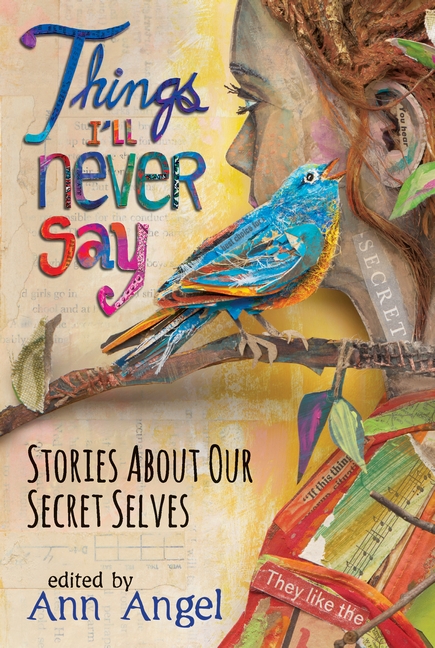


 tomorrow, June 7. These last few months leading up to the on-sale date have been a very exciting, sometimes terrifying, often exhausting time. Over the past few days—and especially today, on the eve of the launch—I’ve been forced to admit that there is another apt metaphor for a novel. In many ways—at least from my personal perspective—I’d have to admit that a novel is a lot like a child you’re sending out into the world.
 This month began with the most amazing thing ever: a book tour for The Girl I Used to Be! The last time I had a tour was in 2002. As the economy crashed, independent bookstores folded, and newspapers cut back, tours faded right along with them.
 ven for the 6 am breakfast buffet.


 BETH REVIS is the New York Times bestselling author of the Across the Universe trilogy, as well as The Body Electric, Paper Hearts, and the forthcoming A World Without You. She lives in the Appalachian mountains with her boys: one husband, one son, and two very large dogs. You can find out more on
  Your enemy is the blank page. When it comes to writing, there’s no wrong way to get words on paper. But it’s not always easy to make the ink flow. Paper Hearts: Some Writing Advice won’t make writing any simpler, but it may help spark your imagination and get your hands back on the keyboard.


