new posts in all blogs
Viewing: Blog Posts Tagged with: Parents, Most Recent at Top [Help]
Results 1 - 25 of 165
How to use this Page
You are viewing the most recent posts tagged with the words: Parents in the JacketFlap blog reader. What is a tag? Think of a tag as a keyword or category label. Tags can both help you find posts on JacketFlap.com as well as provide an easy way for you to "remember" and classify posts for later recall. Try adding a tag yourself by clicking "Add a tag" below a post's header. Scroll down through the list of Recent Posts in the left column and click on a post title that sounds interesting. You can view all posts from a specific blog by clicking the Blog name in the right column, or you can click a 'More Posts from this Blog' link in any individual post.

By: Gavin McGuire,
on 8/5/2016
Blog:
First Book
(
Login to Add to MyJacketFlap)
JacketFlap tags:
Literacy,
Books & Reading,
Marketplace,
parents,
Spanish,
Back to School,
healthy living,
Family Engagement,
Opportunities for You,
Using the First Book Marketplace,
Add a tag
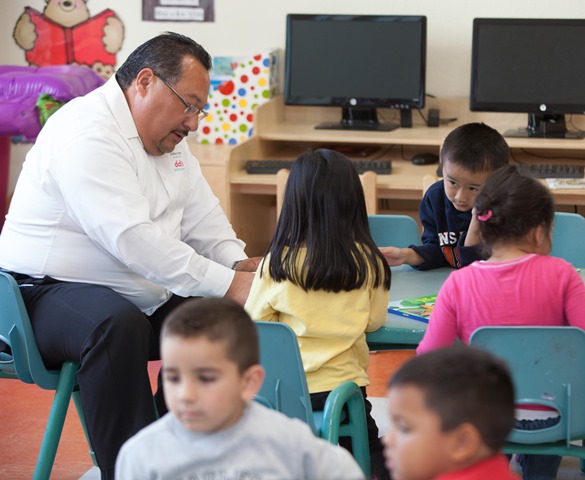
Looking for ways to get families more involved with your classroom or program? Or for resources to send home with them? The First Book Marketplace is the place to go!
Visit us for great family read alouds, resource collections for kids ages 0-12 and tips to arm caregivers with the skills they need. When educators and families are on the same page and pulling in the same direction it gives kids the confidence they need to keep building skills.

Build Strong Families with Stories
The books in this section model habits that families can adopt to grow stronger together. Each title is paired with a FREE downloadable reading guide designed for parents and caregivers. It includes activities, discussion prompts, and key ideas to take away from the story.
Tools to Get Families Involved
First Book proudly partners with content experts to provide easy-to-use tools to help you engage with families around subjects like healthy living, developing early literacy skills and building strong character. Our Family Engagement section includes 12 unique categories of books paired with free downloadable tip sheets, many in both English and Spanish.
The post Educators and Families: A Powerful Partnership appeared first on First Book Blog.


By:
Monica Gupta,
on 7/6/2016
Blog:
Monica Gupta
(
Login to Add to MyJacketFlap)
JacketFlap tags:
parenting,
parents,
Audio,
listen,
monica gupta,
Audios,
audio on parenting,
माता पिता,
मम्मी,
बच्चे,
पेरेंटस,
पेरेंटिंग,
बच्चो का ख्याल,
बच्चों की परवरिश,
Add a tag
क्लिक करिए और सुनिए 2 मिनट और 23 सैकिंड का ऑडियो Parenting पर कृपया ध्यान दे – बच्चों की परवरिश कैसे करें थोडी देर पहले एक जानकार के घर से लौटी हूं मन बहुत खराब हो रहा है असल में, जानकार के घर बच्चे और मम्मी मे खूब कहा सुनी हो रही थी जितना मम्मी […]
The post कृपया ध्यान दे – बच्चों की परवरिश कैसे करें appeared first on Monica Gupta.

By:
vschneider46,
on 5/9/2016
Blog:
The Open Book
(
Login to Add to MyJacketFlap)
JacketFlap tags:
PCHP,
verbal language,
literacy,
parents,
caregivers,
early literacy,
school readiness,
home literacy,
parent-child,
Diversity, Race, and Representation,
Guest Blogger Post,
Add a tag
Since 1965, The Parent Child-Home Program (PCHP) has been providing  under-resourced families the necessary skills and tools to help their children thrive in school and life. PCHP’s nationwide network of program sites works with low-income families to ensure that they have the knowledge, skills, and resources to achieve their greatest potential in school and in life.
Today, we are excited to have Sarah Walzer, CEO of The Parent-Child Home Program. 2015 marked 50 years of service for the PCHP.
1. How did PCHP begin? How has the program’s vision evolved since it was founded?
PCHP was started in 1965  when educational psychologist Dr. Phyllis Levenstein was asked to develop a program to help reduce the growing number of high school dropouts on Long Island. Based on her research, she concluded that the most effective way to reduce high school dropout rates would be to reach families before their children even entered a classroom and ensure that parents had the knowledge, skills, and materials to prepare their children for school success. With this idea, the model for PCHP was created.
The vision has essentially stayed the same – with PCHP focusing on reaching out to underserved families in under-resourced communities and working with them to strengthen parent-child interaction, support and increase reading and play activities in the home, and build language and learning rich home environments. The biggest change since 1965 is that now we work with families speaking over 50 different languages and almost always with a home visitor who speaks their language. Phyllis could not have imagined that when she first piloted the Program.
2. Can you tell us about the PCHP research-based model structure and how it works?
PCHP is based on an extensive body of research that demonstrates that children who receive rich verbal stimulation in their homes (conversation, reading, and play) come to school with the language, vocabulary, and social-emotional skills they need to be successful. Researchers have demonstrated that by age 3, low-income children have heard 30 million less words than their middle income peers, so we know that too many children do not experience the quality verbal interaction they need to succeed. Parent (primary caregiver)-child interaction is critical to closing this word gap and preparing children for school.
Building on this research, the model PCHP provides two years of  intensive, twice-weekly home visits to underserved families when their children are 2 and 3. We match each family with a PCHP early literacy specialist in their community, and most of the time this early literacy specialist shares the family’s cultural background and language. These home visits are for a half-hour, twice-a-week. The half-hour is to make it easy for parents to fit the visits into their schedule and so they can see how little time each day it takes to support their children’s school readiness.
Over the course of the two years, each family receives at least 92 home visits, 46 new, high-quality books and educational toys, as well as curricular guide sheets that provide the family with tips for verbal interaction, skill development, and additional literacy, music, and art activities. The early literacy specialists model for the parents and children together verbal interaction, reading and play activities that are fun and become part of the families’ regular routines.
It is important to note that PCHP’s approach is one of modeling, not teaching; a non-directive, non-didactic approach that builds on the relationship between the home visitor and the family, empowering the parent to be their child’s first and most important teacher.
3. In November 2014, your response to The New York Time’s Article, “To Help Language Skills of Children, a Study Finds, Text Their Parents With Tips-NYTimes,” stated that texting parents with tips is not enough to close the achievement gap. Can you explain what you mean by this?
Texting parents is a great way to remind and teach parents the importance of conversing and reading with your child; however, by itself it will not close the achievement gap for the most under-resourced families. You don’t actually know if the parent receiving the text can read it or read it in the language of your text. You don’t know if they have access to books to read to their children, if they know how to find age-appropriate reading material, and how to read and talk to a young child in a way that builds language and literacy skills.
School readiness is about so much more than just language skills, it is about the social-emotional skill development that comes from playing games that involve taking turns, supporting children while they try increasingly difficult tasks on their own, etc. These are not all things that can be conveyed or demonstrated to parents via text messages. Some families need more support and the PCHP model can provide the needed materials, modeling, and tools for their children’s’ success.
4. After 50 years, what does the research show about families who complete the PCHP program?
The research not only shows that PCHP participants start school ready to succeed, but it also shows that this success continues as they move through school. A new study just released in February highlights the impact that PCHP is having both on kindergarten readiness and on third grade success. This longitudinal study demonstrates significant long-term outcomes for PCHP graduates based on standardized Washington state assessments of kindergarten readiness, English language proficiency, and third grade academic performance. The three key findings from the study show that signifcantly more PCHP graduates
- started kindergarten better prepared than their peers
- demonstrated English proficiency in kindergarten
- scored significantly higher on third grade WA Reading and Math assessments, including above the state average in math.
5. Looking forward, where do you see PCHP headed in the coming  years? Any projects that you are particularly excited about?
We’re hoping to expand to reach over 10,000 families annually. We want to be able to serve as many families as possible. We recently trained the staff for our second site in Chile, which is the 4th country we have opened sites in. We are currently working in 14 states and would like to see that number grow as well. We were recently selected by the GreenLight Fund Philadelphia to be their newest portfolio program, which will mean a four-year expansion there to reach at least 400 families annually. We are particularly excited about expansions like the one in Philadelphia that involve working with housing authorities to support families in public housing and immigrant organizations to support diverse immigrant populations.
6. How can people get involved or find a PCHP nearby?
You can find a PCHP location nearby by going to our website, www.parent-child.org and using the link “Find a PCHP Near You” to find a list of all of our locations and their contact information. Additionally, there is information on our website about how to support the Program, how to start a site if there is not one in your community, and potential volunteer opportunities. Please be sure to also follow us on social media and sign up for our newsletter to stay in the loop. We constantly have exciting news and events to share, and are always happy to welcome anyone who would like to get involved.
 Sarah Walzer has been the Chief Executive Officer of The Parent-Child Home Program, Inc. since 1997, during which time the Program has grown from reaching 800 families in 5 states to over 7,000 families annually in 14 states. Before joining The Parent-Child Home Program, Sarah Walzer was Counsel to the Assistant Secretary for Legislation of the U.S. Department of Health and Human Services where she worked on legislation related to early childhood and domestic violence prevention programs, and the development of crime, substance abuse, and dropout prevention programs for youth. She has presented on The Parent-Child Home Program to many audiences, including the Social Impact Exchange, the Congressional Black Caucus, and the Council of Great City Schools. She serves on the Board of The Petey Greene Program and the Princeton University Bridge Year Advisory Committee. She is a graduate of Princeton University and Harvard Law School.

By: Kim Sponaugle,
on 3/18/2016
Blog:
Illustrator Kim Sponaugle's Picture Kitchen Studio
(
Login to Add to MyJacketFlap)
JacketFlap tags:
preschoolers,
baby animals,
Illustrated by Kim Sponaugle,
picture book illustration,
books about spring,
books,
fun,
flowers,
parents,
Spring,
Kim Sponaugle,
kids books,
play,
Add a tag
By:
keilinh,
on 8/11/2015
Blog:
The Open Book
(
Login to Add to MyJacketFlap)
JacketFlap tags:
Book News,
Diversity,
parents,
New Releases,
grandparents,
monica brown,
recycling,
eco-friendly,
blankets,
lullabies,
Musings & Ponderings,
Lee & Low Likes,
Diversity, Race, and Representation,
Interviews with Authors and Illustrators,
Hob Ikh Mira Mantl,
i had a little coat,
maya's blanket,
yiddish folk song,
Add a tag

Out this September from the Children’s Book Press imprint of LEE & LOW, Maya’s Blanket/La manta de Maya puts a child-focused Latino spin on the traditional Yiddish folk song “Hob Ikh Mir a Mantl” (“I Had a Little Coat”) about a piece of fabric that is made into smaller and smaller items. We interviewed author Monica Brown about how she’s been inspired by the book.
1. What inspired you to write a children’s book based on the Yiddish folk song “Hob Ikh Mira Mantl”?
I’ve always loved the idea song, which is as much about creativity as it is about recycling and creating something from nothing. The song has inspired several books, in fact, and still inspires me. I often draw on my cultural heritage for inspiration, and Maya’s Blanket/La manta de Maya is no exception, paying homage to different aspects of my Jewish and Latina identity. It celebrates the two languages I speak, side by side on the page, along with a history of multigenerational storytelling passed down from both sides of my family.
I love the message of the song–that an object can be transformed again and again, and ultimately into something intangible and lasting through effort, creativity, and imagination. I like the idea that we can extend the life of things we love—with our own two hands or our imagination.
2. Did you have a favorite lullaby that your parents sang to you growing up? What about a lullaby that you sang to your daughters?
My mom sang me wonderful songs in Spanish. As a child I loved in particular Tengo una muñeca vestida de azul, which translates into I have a doll dressed in blue. When her granddaughter and namesake Isabella was born, my mother, Isabel Maria, made up a special song for her. It started with this line “Isabelita, Chiquita bonita de mi Corazon” and ended with “Corazon de melon!” It was a silly sweet line, but I’ve forgotten the lines in between, and now my mother is gone.
As a child, my only babysitters I knew were my tías and my Nana, my paternal grandmother, who taught me to embroider and sew. I stayed overnight at my Nana’s often and when I did, “the sandman” would visit us at night. For those who don’t know, the Sandman myth, which originates in Europe, is of a character who sprinkles sand on children’s eyes, bringing them happy dreams. My Scottish and Italian Nana would be sure the sandman visited each night. If I behaved just okay during the day the sandman would sprinkle regular sand on my forehead to help me fall asleep. If I was good, I would get silver sand, and if I was very, very good, I would get gold sand sprinkled on my forehead. I could feel the different types of sand as my Nana’s hands smoothed across my forehead, hair, and closed eyes.
3. Do you have an object today that’s your “Maya’s blanket,” i.e. that you are continually finding new uses for and don’t want to part with?
As an adult I have more of a subject than an object, and it is the subject of childhood memory. I think I became a children’s writer so I can go back and be in that moment of childhood innocence to remember what it feels like to be comforted by a beloved grandmother or my mother, to remember those minutes and hours, forever gone, of days spend with my Nana, who patiently taught me to embroider, and to sew and stitch or my mother, who shared story after story of her childhood in Northern Peru, and her dreams and her art.
I’ve never used an electric sewing machine, but thanks to my Nana I’ve still managed to stitch and mend and sew my daughter’s things—even a Halloween costume or two with those basic stitches my grandmother taught. I have my Nana’s sewing basket still, just as I am surrounded by my mother’s paintings each time I pick up a pen or open up my computer to write.
5. MAYA’S BLANKET provides an important message about recycling! Do you have any tips on how people can be more eco-friendly?
As a teacher, I always think the place to begin with is education and The Environmental Protection Agency has a website with lots of resources for children, parents, and especially teachers: http://www2.epa.gov/students. I also love that the Sierra Club has a student coalition for high school and college students that trains and connects young environmental activists: http://www.sierraclub.org/youth. Finally, well, I want to give a shout out to my fellow writers by highlighting Authors for Earth Day: http://www.authorsforearthday.org, a group that supports conservation through literacy.
It is my hope that children and the adults in their lives can become more aware and conscious of the challenges using our natural resources responsibly, and looking to for more creative solutions to persistent problems.
About the Book:
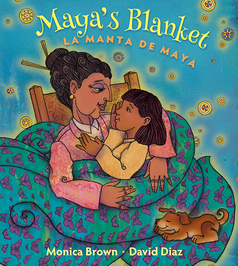 Maya’s Blanket/ La Manta de Maya
by Monica Brown, illustrated by David Diaz
Out September 2015
Ages 5-9 ~ 32 pp. ~ bilingual
Learn more about the book here.

By: Early Childhood Programs and Services committee,
on 6/22/2015
Blog:
ALSC Blog
(
Login to Add to MyJacketFlap)
JacketFlap tags:
Committees,
parents,
Guest Blogger,
posters,
Early Literacy,
Il Sung Na,
Blogger - Early Childhood Programs and Services committee,
ALA Annual 2015,
30 million word gap,
changing table initiative,
the ALSC Early Childhood Programs and Services Committee,
Add a tag
This year, I was delighted to be appointed to the ALSC Early Childhood Programs and Services (ECPS) Committee under the fabulous leadership of Matt McLain. Because ALSC members typically serve two years on a committee and then rotate out, when I began attending meetings they had already decided to create posters for parents to be displayed above or around changing tables in libraries, businesses, and other public places, highlighting the five practices from Every Child Ready to Read (Talk, Sing, Read, Write, Play). These early literacy practices posters would be downloadable and printable, and hopefully customizable.
The posters would be beautiful but simple, combining each of the five practices with a rhyme and a developmental tip. Our goal was to inspire parents to talk, sing, read, write and play with their children, beginning with one poster per practice initially,
All parents of young children need to change diapers. If visually appealing, easy-to-read posters were posted above changing tables in public locations, parents would likely glance up and see them during the diaper change. If the rhyme was short and familiar, and the language was easy to understand, our committee hoped that parents would actually recite the rhyme on the spot to their children. Using a simple developmental tip to accompany the rhyme would help parents understand that reciting rhymes with their children is a valuable activity that can help build important skills for the future. By combining the tips with easy, practical suggestions, our committee hoped to encourage parents to begin incorporating the five practices into everyday life with their child.
Research has indicated that there is a link between the number of vocabulary words children know and their economic background. Published in 2003, “The Early Catastrophe: The 30 Million Word Gap by Age 3” by researchers Hart and Risley demonstrated that during the first years of life, children from low-income families hear about 30 million words less than their peers who come from more affluent homes. Young children learn words by hearing them spoken by other human beings (not necessarily electronic media!); when parents speak with their babies, they are building neural connections in their children’s brains. In addition to building a larger vocabulary, the young brains are growing more synapses to enable easier learning later on in life.
The study by Hart & Risley determined that lower income parents were speaking less or using fewer words while in conversation with their children. Further studies made the connection between having larger vocabularies when entering kindergarten and higher rates of graduation from high school. Having a high school degree influences the type of job and salary a person can generally expect to get. It has also been shown to affect health outcomes, family stability, and lifetime earnings. Thus, the number of words a child knows when entering kindergarten can lead to disparities, increasing the economic divide in our country.
Yet this gap can be easily bridged; having a large vocabulary before entering kindergarten can make a difference!
With encouragement from the ALSC Board of Directors, the ALSC Early Childhood Programs and Services (ECPS) accepted the mission of addressing the 30 million word gap by creating posters to tell parents that babies need to hear words every day.
The ECPS committee held monthly online chats in addition to meeting at ALA Conferences and exchanging regular emails. At first, committee members submitted early literacy tips such as “Sing a rhyme (or do a fingerplay) while bathing or changing your baby,” for each of the five practices. Then we compiled a short list of rhymes to go along with each of the suggested tips. The rhymes had to be in the public domain; if there was any question about a rhyme’s copyright, the rhyme was excluded .The next step was to select an artist; Il Sung Na was chosen. Then, committee members looked through his books and videos in order to find images to match the tips or rhymes on each poster. Once this was done, ALSC secured rights with Random House to use those specific images.
Although the posters use simple language, it was not so simple to design them! After the rhymes, tips, and illustrations were put together on posters, committee members weighed in on issues such as font size, placement of text, and spelling. Finally, the posters were ready and our excitement about increasing children’s exposure to language was growing.
Our “Babies Need Words Everyday” posters are now available for free download from the initiative’s webpage: http://www.ala.org/alsc/babiesneedwords . They are meant for EVERYONE: your library, community partners, businesses in your community, and families. At ALA Midwinter, the ECPS committee will be hosting a session called “Babies Need Words Everyday,” starting with keynote speaker Patti Miller from the Clinton Foundation’s Too Small to Fail initiative and followed by a panel discussion and a talk about the posters. Printed posters will be available at the session.
Our thanks go to the ALSC Board of Directors who were instrumental in this project’s success by funding the poster printing, ensuring their translation into Spanish, and encouraging free distribution. Because of ALSC’s strong commitment to bridging the 30 million word gap, and the valuable work that can be done by a cohesive committee with strong leadership, the concept of creating posters for changing tables has become reality.
Please check out the posters at http://www.ala.org/alsc/babiesneedwords, join in the session at ALA, and volunteer to serve on an ALSC committee for the coming year. Together, we can make a difference.
Today’s guest blogger is Betsy Diamant-Cohen, posting on behalf of the ALSC Early Childhood Programs and Services Committee, of which she is a member. Betsy developed the Mother Goose on the Loose early literacy program; she enjoys consulting and presenting training workshops to fellow librarians.
The post Changing Table Initiative Come to Fruition appeared first on ALSC Blog.


What do pirates, explorers and children have in common? They all love treasure hunts!
THE ULTIMATE READING QUEST will end on Monday, January 19th, at midnight. This is your last chance to explore new books and authors, and to take home free prizes and books. Plus, one lucky winner, will get a
MYSTERY BONUS TREASURE!
To enter your name for this SPECIAL TREASURE you must prove yourself worthy by collecting the 49 letters of a secret message! Just by reading this post you already have two of the letters (A and B).


Find the rest within the Quest, writing them down as you go. When you have all 49, unscramble them to decode the secret message. Enter the exact words of the message in the Mystery Prize Rafflecopter right here:
a Rafflecopter giveawayAs you're searching for the letters, be sure to leave a comment for each and every author. Not only will you get to chat with the amazing Quest authors, but each comment will earn you extra entries in the general Quest prize giveaway that includes an astonishing 124 free prizes and gifts!
a Rafflecopter giveawayWhat are you waiting for? Click this button to start collecting the rest of the letters. Then return here and enter to TAKE THE TREASURE!
CLICK ON THE BUTTON TO START THE QUEST

 Every time we visit the dentist, the hygienist asks how often we floss. We all know the correct and only answer is “everyday.” We squirm under the light as we try to come up with an answer that gets us as close to saying “everyday.” We leave feeling guilty and promise this is the year to change only to find ourselves in the same spot six months later.
This uncomfortable, familiar exchange reminds me of a lot of the conversations with parents about home reading habits at parent-teacher conferences. After each assessment cycle throughout the year, I would ask parents how reading was going on at home (outside of daily homework).
They knew this conversation was coming. I knew it was coming. They knew the right answer is “everyday” and like a hygienist peering into a patient’s mouth, I had an educated guess on how often the child was actually reading at home based on progress in class.
Just 20 minutes a day! I would list the benefits and show the charts (here and here and here and here and here). I would point out that one cartoon episode is 30 minutes (24 minutes without commercials!). Parents know how important it is—no one disagrees—and we would all nod earnestly and vigorously with promises to start this very night.
Yet, it is hard. Schedules are tight and unforgiveable. Children (and parents!) are tired at the end of the day.
 Let’s face some facts:
- Both parents and children agree strong reading skills are among the most important skills children should have.
- Reading is one of the most popular resolutions for both parents and children.
- Half of all New Year’s resolutions fail within six months.
- Some parents need to expose their children to a new vegetable 10 or more times before they’ll consider trying it (point being: children aren’t always easy to work with).
- Even adults take 66 days on average to start a new habit (and more to break an old one).
Mind-blowing insight alert: Creating new habits takes time and persistence.
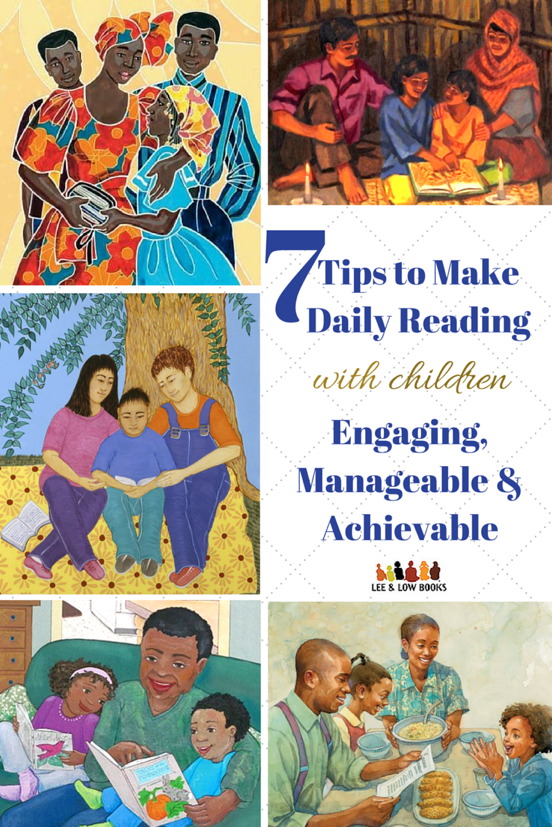
How do we make daily reading with children engaging, manageable, and achievable?
1. Start with bite-size steps. You don’t have to raise your child’s literacy level, knowledge base, or vocabulary by next week. Remember the end game: To create curious, book-loving readers. Starting a reading routine at home is about creating a lifelong habit for your family and children. Aim to improve your family’s daily reading routine for just the next eight weeks (by the following parent-teacher conference in March or May), instead of this year’s resolution to be reading every day for the rest of your child’s K-12 education (a bit daunting, no?).
2. Redefine what a reading routine looks like. Adjust what reading time is for your family based on your child’s age, reading level, energy level, and interest:
- You read the story to your child
- You alternate reading together by page, chapter, or day
- Your child reads to you and a younger sibling
- You download the audio book version and follow along in the book together
- You both read with your own copy silently side by side for the 20 minutes and discuss afterward
As Tim Gunn says, “Make it work.”
 3. Make reading “spill over.” Choose a book with an additional tie-in to other parts of the day and your family’s interests:
- If there is a new movie or community theater’s play coming out based on a book, read the book first and then reward yourselves with the movie or play.
- Pick a fairy tale to read and find additional versions in both book and movie form to compare. Hello, Cinderella!
- Follow up with a readers’ theater script to pair with the story. I can’t get enough of the readers’ theater scripts from California Young Reader Medal.
- If the book includes a craft, science experiment, or recipe at the end, read the story and then extend the learning into the garage or kitchen. This is great for whole family participation.
- Pair a current event or news article with a book on the same topic, culture, or time period.
4. Only pick books and formats your child loves or is interested in. Reading at home should not be boring, a chore, a punishment, or part of homework. Don’t pick books assigned in class, books that peers all seem to be reading, or books you think your child should be reading. This is about enjoyment, building interest, and creating memories. With this in mind, books come in all types/reading comes in all forms:
- Toy instruction manuals or activity/craft books
- Cookbooks—recipes are great for re-reading!
- Poetry collections
- E-readers (Note: Just be sure to pick a program that presents the story to the child as a book, not just as a cartoon where the music and animation effects can distract from the words and vocabulary.)
- Graphic novels and comic books—read about how Lee & Low publisher, Jason Low, became an avid reader after getting hooked on his first comics!
Better yet—let your child choose for maximum engagement.
5. Don’t cry over skipped reading. For whatever reason, reading time just didn’t happen one night. Whoops! Just read the next day and perhaps add a few minutes on extra. Any time is better than none at all. Remember you are trying to show that we read for enjoyment, not punishment. Every day you read with your child is a win—one skipped day doesn’t undo all the progress you have made together.
6. Do over think it—please! If you are finding it difficult to stick with reading 20 minutes a day with your child, think about where the obstacle is. Are nights too busy? Do transit or errands take time away from family downtime? Do you get home too late? Reading at breakfast or on the bus/subway, engaging grandparents and older siblings, trying 10 minutes in the morning and 10 minutes at night may help your family stick with the reading routine.
7. Join a community. You are not the first or last parent to a) struggle to inspire your child to read b) find time to read or c) make reading time exciting. There are wonderful experts with research, reading tips, and inspiration available. Some of my favorite parent reading newsletters are National Center for Families Learning, ¡Colorín Colorado!, Reading Rockets, and Zoobean.
The Number One Most Important Thing:
Every time you read with your child is a win. Every time you skip is a lost opportunity, but it won’t doom your child. Remember the end goal: To support our children’s lifelong love of reading (increased knowledge/vocabulary will be a bonus). Keep at it.
Here’s to a great year of reading and growing!
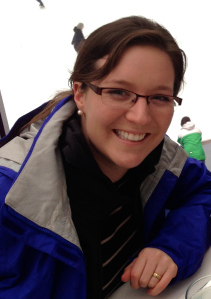 Jill Eisenberg, our Senior Literacy Expert, began her career teaching English as a Foreign Language to second through sixth graders in Yilan, Taiwan as a Fulbright Fellow. She went on to become a literacy teacher for third grade in San Jose, CA as a Teach for America corps member. She is certified in Project Glad instruction to promote English language acquisition and academic achievement. In her column she offers teaching and literacy tips for educators.
By: LSSPCC,
on 1/3/2015
Blog:
ALSC Blog
(
Login to Add to MyJacketFlap)
JacketFlap tags:
Uncategorized,
parents,
latinos,
code,
Scratch,
computer programming,
inclusive programming,
Library Services to Special Population Children and their Caregivers,
LSSPCC,
Spanish-speaking,
Add a tag

Photo by Sylvia Aguinaga
Why code
I’m Mexican-American and grew up with very traditional, hard-working parents who constantly reminded me of the importance of creating a stable future for my family and myself. As an ALSC Special Populations Committee member, my job is to make sure programming remains inclusive—reaching all children and informing all parents, including the Spanish-speaking.
In order for Spanish-speaking parents to support and encourage their child to learn to code, they must first understand the importance of code in today’s world. That is why it is critical to provide approachable Spanish-language resources and craft a clear message.
In the advertising world, they say a good ad communicates one benefit of the product. As copywriter Luke Sullivan puts it, Jeep = rugged, Porsche = fast, “and Volvos, they’re…what? If you said ‘safe,’ you’ve given the same answer I’ve received from literally every other person I’ve ever asked. Ever.”
What can we say about code?
It’s an intimidating question: code is so many things; in our daily lives, code is seemingly behind everything. That’s why it’s so important to teach kids – and it’s also why it’s so difficult to explain to their parents.
There’s one benefit of learning code that can stand out to our audience, parents who care deeply about their children’s future.
Code is money.
More than 1.7 million programmer-specific job opportunities will be available in 2022, with average salaries over $83,000. STEM (Science, Technology, Engineering, and Math) jobs are the fastest growing in the U.S. with 71% of these jobs involving computers.
Promising children an opportunity to learn code could be the most effective way to promise them a future. Once we communicate this clearly to parents, they will be interested. They’ve always wanted a future for their children.
As children’s librarians, this has been our goal all along too. Literacy = opportunity.
What you can do
If you slam a kid in a chair and make them stare at a wall of code – a black screen filled with ///{“symbols”;} and cryptic jargon – they’ll likely react like any of us: “what?”
Fortunately, there are tons of great resources for bringing digital literacy to children.
My favorite is Scratch. Scratch is a free programming language for kids (ages 8 and up) that lets you create games, music, and animations. It is visual-based. Kids drag and drop different elements, and link them together like Legos.
Essentially, introductory languages like Scratch get children thinking in a code mindset. Not only working logically, but playfully – learning to tinker, examine, explore.
The past few months I’ve partnered with Joanna Fabicon, a Children’s Librarian at Los Angeles Public Library, to help develop Coder Time (see resources linked below!). Coder Time is a weekly coding club launching this month at the Central Library and in after-school programs at elementary schools across L.A. Our goal is to inspire kids to do meaningful things with computers.
Each “chapter” of the Coder Time curriculum is paired with books that will encourage kids to explore their library and discover content that will in turn inspire them to make something they will love.
Another big goal of Coder Time is to empower librarians to facilitate their own coding workshops by using librarian-gathered and curated content. Coder Time materials are licensed under a Creative Commons license that lets you tweak and adapt content to your own community.
To truly bring digital literacy to children, we need library-created content and programs. Often, librarians outsource coding workshops to experts. Though well-intentioned and certainly helpful, these workshops don’t do enough to serve our public. Like reading, coding is a practice, a way of being in the world. Coding programs need to be a regular, fully integrated part of the library – not something tacked on just to cover the bases.
For this to happen, librarians need to be comfortable with and familiar with code. But as programs like Scratch show, this is no obstacle. You don’t have to be an expert. You just have to—as you ask of your young patrons—be willing to learn.
Beyond $
Like reading, the benefits of coding are deeper than money. Coding gives children a creative way of looking at the world. It empowers them to make, rather than passively consume. It encourages them to work together.
With a clear message, our voice can be heard by parents. In turn, all children can make their voices heard with technology.
Resources
Code for Parents (Spanish)
Code for Parents (English)
Coder Time Zine (English)
Sylvia Aguiñaga, LSSPCC Committee Member
The post Code for Parents appeared first on ALSC Blog.

By: Sharon Ledwith,
on 11/10/2014
Blog:
Sharon Ledwith: I came. I saw. I wrote.
(
Login to Add to MyJacketFlap)
JacketFlap tags:
Librarians,
Parents,
Teachers,
Middle Grade Books,
Kindle giveaway,
Rafflecopter giveaway,
Middle Grade Authors,
Emblazon,
Tween Literature,
Add a tag
Attention teachers, librarians, tweens, and parents of tweens! Announcing a contest just for you... The Emblazon authors are giving away a brand new touch screen Kindle loaded with over 50 of their books. That’s a $300 value and hours of reading entertainment!
Emblazon is a collection of authors who seek to create lifelong readers by creating top-notch literature for kids. They have a particular focus on ages 11 to 14. They’re hosting this fabulous giveaway to celebrate their first year and to treat you, the readers. The Rafflecopter contest runs
November 3 through November 17 and is open to anyone who loves tween literature.
a Rafflecopter giveaway Note: Signing up for the catalog is required for entry. Current subscribers are also eligible for entry
. Winners must reside in the United States or Canada. List of Stops on the Blog Tour:
November 3rd:
You can help even more by sharing this post with your friends and family. If you know teachers or librarians let them know about how awesome the Emblazoners are by sharing the link to their website: http://emblazoners.com/

By: Angela Muse,
on 10/23/2014
Blog:
4EYESBOOKS
(
Login to Add to MyJacketFlap)
JacketFlap tags:
contest,
Children,
blog,
kids,
autumn,
fall,
writing,
parenting,
parents,
children's book,
Thanksgiving,
Gift card,
sale,
giveaway,
Amazon Kindle,
book reviewers,
book bloggers,
Atlanta author,
Ten Thankful Turkeys,
Add a tag

About the Book
Title: Ten Thankful Turkeys | Author: Angela Muse | Illustrator: Ewa Podleś | Publication Date: October 4, 2014 | Publisher: 4EYESBOOKS | Pages: 32 | Recommended Ages: 2 to 8 Summary: This colorful autumn tale follows ten turkeys as they get ready for an important celebration. This story teaches about gratitude. There are also fun turkey facts in the back of the book.
Kindle version available for only 99 cents from Amazon on October 24 & 25, 2014. Grab your copy now!!
About the Author: Angela Muse

Angela Muse
Angela Muse was born in California to a military family. This meant that she got used to being the “new kid” in school every couple of years. It was hard trying to make new friends, but Angela discovered she had a knack for writing. In high school Angela began writing poetry and song lyrics. Expressing herself through writing seemed very natural. After becoming a Mom in 2003, Angela continued her storytelling to her own children. In 2009 she wrote and published her first rhyming children’s book aimed at toddlers. Since then she has released several more children’s picture books and released books in her first young adult romance series, The Alpha Girls, in 2013/2014. Her husband, Ben Muse writes suspense/thriller books that can also be found on Amazon.
* $50 Book Blast Giveaway *
 Prize: One winner will receive a $50 Amazon gift card or PayPal cash (winner’s choice) Contest closes: November 23, 11:59 pm, 2014 Open to: Internationally How to enter: Please enter using the Rafflecopter widget below. Terms and Conditions: NO PURCHASE NECESSARY TO ENTER OR WIN. VOID WHERE PROHIBITED BY LAW. A winner will be randomly drawn through the Rafflecopter widget and will be contacted by email within 48 hours after the giveaway ends. The winner will then have 72 hours to respond. If the winner does not respond within 72 hours, a new draw will take place for a new winner. Odds of winning will vary depending on the number of eligible entries received. This contest is in no way sponsored, endorsed or administered by, or associated with Facebook. This giveaway is sponsored by the Angela Muse and is hosted and managed by Renee from Mother Daughter Book Reviews. If you have any additional questions – feel free to send and email to Renee(at)MotherDaughterBookReviews(dot)com. a Rafflecopter giveaway
 the
the
Copyright © 2014 Mother Daughter Book Reviews, All rights reserved.


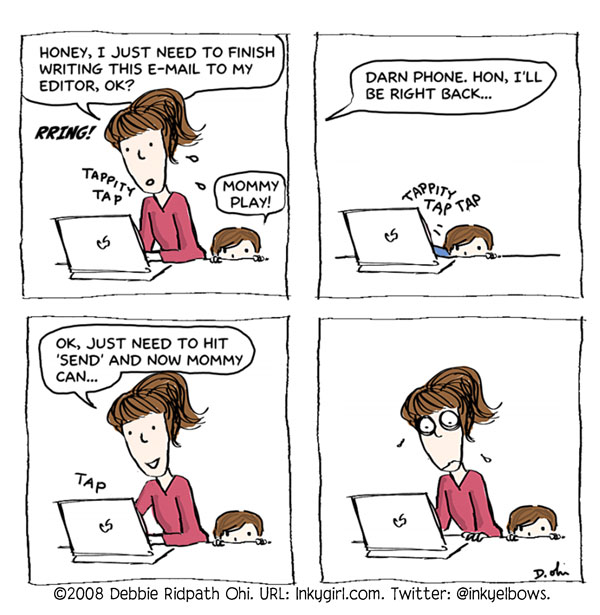
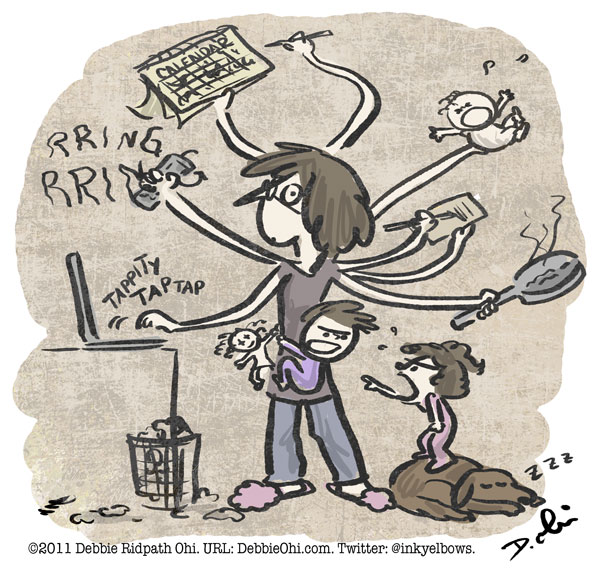
I continue to be in awe of you parents out there who manage to carve out time for your writing in the midst of taking care of children, household chores and (in some cases) a day job as well.
At a recent conference, several working parents told me how they were still struggling to find the time to write and illustrate.
Having no children myself, I can't offer practical advice, but here are some online resources which might help. If you can offer tips from your own experience or know of other other helpful resources, please do post them in the comments below. Thanks!
Finding Time To Write - Parents' Version - by Julie Duffy on StoryADay.org. Main tips: coordinate your work sessions with your kids' energy levels, work to an outline, stretch sessions when you can, sit where you can hear your kids, be willing to stop after 2-3 sessions.
Finding Time To Draw - On Step, Skip, Pause. Main tips: Work in the early morning before everyone else is up. Sketch while watching tv, while waiting, on the public transport, at friends' houses, in short snatched moments, at concerts and plays.
Writing and mother: how I (sort of) do both - Shannon Hale explains how she does it. Main tips: Enlist help, constantly reevaluate your balance, set priorities, take a day of rest, commit fully, separate writing from publishing.
Busy Moms Write - A blog by Marcia Fowler, who is a mom of two boys, a freelance writer, and a certified elementary school teacher and reading specialist. "Busy Moms Write is a blog to inspire other moms to finally sit down and write, even if it’s only for five minutes a day."
11 Ways Stay-At-Home Moms (and Other Busy Folks) Can Find Time To Write - by K.M. Weiland. Be stubborn and endure, find your focus, connect with family every day, remember there are others in your boat, take your work seriously, it's never too late to start, be realistic in your goals, give up on the idea of trying to please everyone, enjoy your blossing career guilt-free, being a mom and writer are not mutually exclusive.
How Busy Writers Can Stay Productive & Keep Their Sanity - by Jeff Goins. Give up the ideal workspace, don't sacrifice your family, use the "write, edit, write" method (longer pieces) and self-edit method (shorter pieces), know your limits, stay positive and grateful.
A Parent's Time To Write - by Liz Boltz Ranfeld
How To Find Time When You're A Busy Mom - on WikiHow
By: Julia Hornaday,
on 8/14/2014
Blog:
First Book
(
Login to Add to MyJacketFlap)
JacketFlap tags:
books,
family,
Literacy,
diversity,
Books & Reading,
new york,
parents,
donate,
Family Engagement,
Guru Krupa Foundation,
WIC,
women and children,
Add a tag
 Lydia sat with her two children in the waiting room. Her eldest read aloud from his new book, pausing every now and again to teach his mother and younger sister how to say the words in English. His little sister beamed with pride when he let her turn the page.
Andrea Gatewood of the Nassau County (NY) Department of Health knows that providing new books to families like Lydia’s leads to priceless interactions. For the past ten years, she and her colleagues at the Nassau County Women, Infants and Children (WIC) Program have been giving books from First Book to the local low-income women and children they serve.
Traditionally, WIC programs supply women who are pregnant or recently gave birth and children up to age five found to be at nutritional risk with supplemental foods, health care referrals and nutrition education. But at five WIC sites in Nassau County, families also receive colorful new books.
 “The books from First Book teach children how to count, the alphabet, the importance of family, other languages, colors, different foods and incentives to promote physical activity,” said Andrea. “They strengthen family bonds, promote diversity and improve literacy.”
Andrea takes great care in selecting books that are both engaging and culturally relevant as nearly 100 percent of the children she serves come from minority households.
“We have distributed books at Christmas, Halloween and to kick off the school year. Our goal is to reach as many children as possible,” Andrea shared. “The partnership between First Book and WIC has allowed thousands of children to receive brand new books and will have a lasting impact on an individual and community level.”
Over the past ten years, the Nassau WIC Program has received approximately 20,000 books from First Book, thanks to grant funding made possible by members of the First Book – Long Island volunteer chapter and the Guru Krupa Foundation. The Foundation, based in Jericho, New York, funds initiatives related to education, health and basic sustenance of underprivileged children in India and the United States, and has helped First Book provide more than 51,000 books to children in need in the greater New York and Los Angeles areas in the past two years.
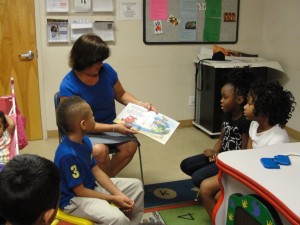 “We at Guru Krupa Foundation believe that education is a cornerstone for future success in life,” said Mukund Padmanabhan, president of the Guru Krupa Foundation. “Supporting initiatives that bring the benefits of education to underprivileged children can lead to enormous future dividends, not only for the children but to society.”
Join the Guru Krupa Foundation in supporting program leaders like Andrea by making a gift to First Book. Just $2.50 provides a brand-new book to a child in need.
The post Books Strengthen Family Bonds appeared first on First Book Blog.

By:
jilleisenberg14,
on 7/1/2014
Blog:
The Open Book
(
Login to Add to MyJacketFlap)
JacketFlap tags:
Reading Aloud,
parents,
Educators,
bilingual education,
reading comprehension,
hispanic heritage,
Educator Resources,
Latino/Hispanic/Mexican,
dual language,
ELA common core standards,
ELL/ESL and Bilingual Books,
Add a tag
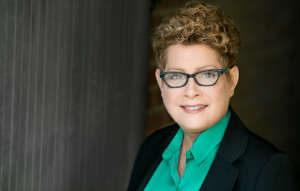
Peggy McLeod, Ed. D. is Deputy Vice President of Education and Workforce Development at the National Council of La Raza (NCLR).
 Today we are featuring one of First Book’s celebrity blog series. Each month First Book connects with influential voices who share a belief in the power of literacy, and who have worked with First Book to curate a unique collection that inspires a love of reading and learning. All recommended books are available at deeply discounted prices on the First Book Marketplace to educators and programs serving children in need. Peggy McLeod, Ed. D. the Deputy Vice President of Education and Workforce Development at the National Council of La Raza (NCLR), writes on engaging Latino families and children in reading and learning.
Any student who has parents that understand the journey from preschool to college is better equipped to navigate the road to long-term student success. While parent engagement is critical to increasing educational attainment for all children, engaging Latino parents in their children’s schooling has typically been challenging – often for linguistic and cultural reasons.
The National Council of La Raza’s (NCLR) parent engagement program is designed to eliminate these challenges and create strong connections between schools, parents, and their children. A bilingual curriculum designed to be administered by school staff, the Padres Comprometidos program empowers Latino parents who haven’t typically been connected to their children’s school. Many of the parents the program reaches are low-income, Spanish-speaking, first and second generation immigrants. Through Padres Comprometidos, these parents gain a deeper understanding of what the journey to academic success will be like, and how they can play a role in preparing their children for higher education. Prior to participating in the program, not all parents expected their children to attend college. After the program, 100% of parents indicated that they expected their children to attend college.
Much of Padres Comprometidos success rests on the program’s ability to address language and culture as assets, rather than as obstacles to be overcome. This asset building strategy extends to NCLR’s partnership with First Book. Together, we’re working to ensure Latino children of all ages have access to books that are culturally and linguistically relevant, books they need to become enthusiastic readers inside and outside of the classroom. Click here to access the three parent engagement curricula developed by NCLR—tailored to parents of preschool, elementary and secondary school students.
Below you will find a few tips and titles that can help you engage families and get children – and their parents and caregivers – reading and learning.

La Llorona
1. Find ways to connect stories that parents know about to help them engage in reading and conversation with their children. This Mexican folktale can open that door: La Llorona .
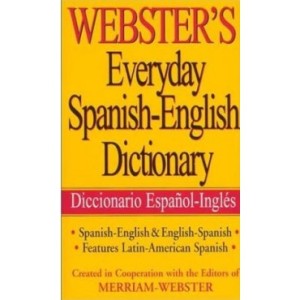
Spanish-English Dictionary
2. Keep an English/Spanish dictionary handy to use when you have a parent visiting or to give away to a parent or caregiver who needs it. It will show them that you’re making an effort to engage in their language of comfort, such as Webster’s Everyday Spanish-English Dictionary.
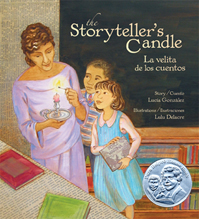
The Storyteller’s Candle
3. Learn about the children you serve and their heritage, and identify books that will affirm them. This Pura Belpré award winner is actually about Pura Belpré, the first Latina (Puerto Rican) to head a public library system: The Storyteller’s Candle.
Grandma and Me at the Flea
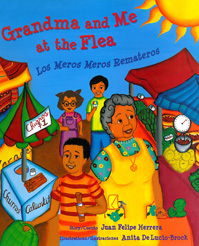
4. Share books that include some of the everyday experiences of the children and neighborhoods you serve, like this story highlighting the value of community and family: Grandma and Me at the Flea.
My Colors, My World
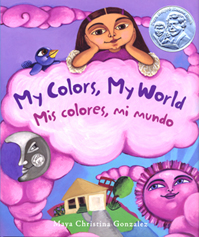
5. Bilingual books provide family members and caregivers the opportunity to read the same books their children are reading, but in their language of comfort. Families will love reading about all the colors of the rainbow in English and Spanish: My Colors My World.
Sign up with First Book to access these and other great titles on the First Book Marketplace.
Filed under:
Educator Resources,
ELL/ESL and Bilingual Books Tagged:
bilingual education,
dual language,
Educators,
ELA common core standards,
hispanic heritage,
Latino/Hispanic/Mexican,
parents,
Reading Aloud,
reading comprehension 

 …and the great Mo Willems, on Fathers’ Day, for creating dad characters who take care of their kids in a non-bumbling, matter-of-fact (if realistically exhausted and strung-out) sort of way.
But, hey, also? As Megan Dowd Lambert points out: Cut it out with the nighttime bunny exchanges. You’re making the rest of us look bad.
Here are some more recommended father-son books from The Horn Book staff.

The post Thanks a lot, Trixie’s Dad appeared first on The Horn Book.
Often, when I mention that I have five children, people ask, “How do you do it all?” I sometimes quote a response I’ve heard from Donna Jo Napoli, fellow writer, professor, and mother of five:
“How do I do it all? Badly. You could eat off my kitchen floor…for weeks.”
How I do it all is that I don’t do it all at once. As I sit down to write, my kitchen is a mess, and my kids are at their other house with their other mom (my ex-wife). I miss my children, but I’m also grateful to be able to work like hell on the days they’re gone and really focus on them when they’re here. Or at least that’s what I try to do.
 Shared reading enables us to slow down and enjoy one another’s company in the midst of our busy, transition-laden routines. I’m currently reading Kate DiCamillo’s 2014 Newbery Medal winner Flora & Ulysses: The Illuminated Adventures with my four youngest children. I read the ARC by myself and knew my kids would be pulled in by the exact elements that made me initially skeptical. A superhero squirrel? Quasi-comic-book art? Not my cup of tea. But I also felt myself yearning to deliver the message of unconditional love that’s at the heart of the book: “Nothing / would be / easier without / you.”
Sometimes I worry my kids might think I feel differently. There are days when I am snappish or grouchy or just plain overwhelmed by balancing work and motherhood. DiCamillo’s novel has me thinking about depictions in children’s literature of less-than-ideal parents and what they communicate about family life to child and adult readers alike. I don’t mean Roald Dahl-ian parents like poor Matilda Wormwood’s dreadful mother and father, but more like Flora’s divorced parents or her friend William Spiver’s mother and “her new husband.” These secondary, or even offstage, adult characters are believable in all their flawed humanity. Their failings help define Flora’s story as she grapples with the shortcomings of the adults in her life, but DiCamillo paints her characters with such subtlety that the lesson doesn’t overwhelm the text.
On the flip side, many books have the mommy or daddy endlessly reassuring their little Stinky Faces and Nutbrown Hares about their love-you-forever love. Such constructions of adulthood don’t reflect the times we parents fail, as Flora’s mother does. They instead present us with visions of what we might be on our best days.
It’s the rare person who rises to the level of idealized parenting achieved, for example, by the father in Mo Willems’s picture book Knuffle Bunny Too. When daughter Trixie realizes, in the middle of the night, that she mistakenly took home the wrong Knuffle, Daddy agrees to an on-the-spot stuffed-bunny exchange. Would I do such a thing? Not a chance. Faced with such a scenario, I’d tell my kid that we’d sort things out in the morning. If I were feeling very generous, I’d tuck her back in with another stuffed animal. And I wouldn’t go back and forth in some reverie about “and if the moon could talk” or whatever. Good. Night.
And yet, even if I can’t pretend to aspire to Trixie’s daddy’s selflessness, I absolutely see a reflection of myself in how plain exhausted he looks when Trixie rouses him from a deep sleep. Indeed, some of the most rounded portraits of parents in picture books come in stories about them trying to get their little ones to “go the f*ck to sleep.” Amy Schwartz’s Some Babies, David Ezra Stein’s Interrupting Chicken, and Janet S. Wong’s Grump (illustrated by John Wallace) are just a few that conclude with beleaguered, fatigued parents nodding off while trying (and failing) to put their little ones to bed.
And why are they so tired? Well, because the days leading up to those fraught bedtimes can be…long. I have a soft spot in my heart for Marla Frazee’s not-so-flattering but oh-so-familiar depictions of parents at the mercy of their Boss Baby; a mother driven nuts by her little girl (Harriet, You’ll Drive Me Wild! by Mem Fox); and an exasperated Mrs. Peters who can’t satisfy everyone’s tastes (The Seven Silly Eaters by Mary Ann Hoberman). And high on my list of picture book illustrations that capture not the drama of difficult moments but the tedium of daily routines is a vignette from Amy Schwartz’s slice-of-life picture book A Glorious Day. The droll text reads: “At home Henry and his mother play trains. Henry is the big train and his mother is the small train. All morning long.” I can practically hear Henry’s mother meditating on a refrain from another train book — “I think I can, I think I can” — as she puts in quality floor time with her kid.
 And yet, she’s hanging in there. The same cannot be said of Flora’s mother. Until book’s end, she’s so wrapped up in herself and her career as a romance novelist that she is blind to her daughter’s needs. She might find kinship with the mother of another Flora, the star of Jeanne Birdsall and Matt Phelan’s picture book Flora’s Very Windy Day. I’ve read it with my children and have recognized myself in its depiction of a mother driven not wild but to weary despair as, instead of helping her quarreling kids solve their dispute, she shoos them outside while trying to get some work done. Is she writing a romance novel on that laptop? I don’t know. But I do know that she, like the other Flora’s mother, and like me sometimes, is not having a terribly glorious day of attentive mothering.
Phelan’s art deftly and powerfully conveys the emotions underlying the conflict. In the first double-page spread Flora, on the verso, is Eloise-like in her rage, with red emanata surrounding her. Little brother Crispin sits, posture alert, at a safe distance by a messy art table (as we saw on the dedication page, he spilled his sister’s paints — again!), his sidelong gaze directed at Flora. He’s clearly seen her blow her top before. Their mother is far to the right of the composition, turning away from her computer screen with a wan, defeated expression. While Flora is unquestionably the focus—the other characters’ eyes are on her, and her erect, outraged depiction demands attention—I can’t help but home in on this mother. I know her. I’ve been her. I want to give her a hug.
Do my children notice this mom? Not really. And who can blame them? Flora is a force to be reckoned with, and my kids are much more interested in the sibling conflict. When they once did shift their attention to the mother, it was to remark, “It’s not fair!” when she insists Flora take Crispin outside with her. “Give her a break!” I said in a mothers-of-the-world-unite sort of way.
The wind carries Crispin away, and Flora resolves to retrieve him: “My mother wouldn’t like it if I lost him.” My then-nine-year-old daughter Emilia empathetically piped up, “And Flora would miss him, too, even if he spills her paints.” On the penultimate spread, Flora and Crispin return home, and their mother, channeling Max’s mom and his “still hot” dinner, has chocolate chip cookies waiting. The story could end there — the text does — but Phelan delivers a heartwarming visual coda on the final page-turn that shifts attention away from the mother’s act of apology and back, where it belongs, to the sibling dynamic. The couplet of pictures first shows Flora and Crispin sitting apart and eating their cookies, then leaning into each other, not making eye contact or smiling, but with the closeness between their little bodies communicating forgiveness. The scene is familiar to me as both an older sister and as a mother of children who bicker and make up, who love one another through and despite times when they fail or hurt or disappoint one another. “Nothing would be easier without you” these pictures seem to say. “Even if you spill my paints.”
 I appreciate how this wordless closing eschews a mama’s mea culpa as resolution to the story. After all, children’s book readers aren’t terribly interested in a mother’s emotional story arc. I recall with chagrin one time when I was sick with the flu — and also sick and tired of kids bickering before bedtime — that instead of letting my children choose our shared reading material, I dramatically pulled William Steig’s Brave Irene off the shelf, self-indulgently recalling how its intrepid child protagonist lavishes her ill mother with affection and support. “Oh Mom-Mom,” Emilia said, after I’d read a few pages. “We have not been so nice as Irene.”
And did that make me feel any better? Of course not. I felt like a jerk. Guilt-tripping one’s children into compliance or sympathy through passive-aggressive bedtime reading selections isn’t a terrific parenting strategy. I can report, however, that my other kids weren’t so moved. “You’re not really that sick,” Stevie said. “Can I choose the next book?” Caroline asked. And on we went.
I know my kids won’t recall their childhoods — even filled as they are with books, and play, and each other, and parents in two houses who adore them — as devoid of parenting failures, lacking in conflict or hurt, and overflowing only with wonder and whimsy. And I know that my own faults contribute to some of the less-than-ideal moments they’ll recall. That’s a hard pill to swallow, and as I (re)read DiCamillo’s book and anticipate Flora’s reconciliation with her mother, I’ve come to think that although this resolution may be a comfort to child readers who see the child protagonist’s wish fulfilled in confirming her mother’s love, it also gently guides them toward acceptance of flawed adults. Forgive us, children, books with such parents say; we know precisely what we do, and we feel like crap about it. DiCamillo’s novel avoids having the final words be delivered in a parental voice begging filial pardon. Instead, the closing poem is a superhero squirrel’s affirmation of his devotion to the girl who saved him.
Adoptive parents like me frequently encounter well-intentioned but misguided comments implying that we saved our kids. “They’re so lucky to have you” is the refrain. The truism that their other mom and I often resort to is that we are the lucky ones. To stretch and invert Ulysses’s line to Flora, nothing would be harder to imagine than life without them. Paraphrasing DiCamillo: “It’s a miracle. Or something.”
And if I lose sight of the miracle of this modern family of mine, there’s nothing like settling in with a book to redirect our attention away from the tumult of our own foibles and failings toward the common ground of others’ stories. Book bonding, you might call it. We put aside quarrels over who had more time on the Xbox, why it’s so hard to just bring the freaking laundry downstairs, and whatever is “not fair!” at any given moment, to read about everything from very windy days, to bunny-exchanging daddies, to mothers driven wild, to superhero squirrels. And, holy bagumba, as Flora might say, I’ll love those times forever — to the moon and back! The kitchen floor can wait.
From the May/June 2014 issue of The Horn Book Magazine.
The post Words for Flora’s Mother (and Other Imperfect Parents) appeared first on The Horn Book.
 Screen-Free Week is May 5 – 11, 2014!
Kids, families, schools, and communities pledge to spend 7 days unplugged.
BOSTON -- April 28 -- Children are spending way too much time with screens -- and it’s not good for them.
- School-age children spend more time with screen media -- television, video games, computers, and hand-held devices -- than in any other activity but sleeping.
- Screen media use is at an all-time high among preschoolers -- according to Nielsen, young children spend, on average, more than 32 hours a week watching just television.
- A recent survey found that the amount of time children ages 0-8 spend using mobile devices tripled in two years.
- Screen time is habit forming and linked to poor school performance, childhood obesity, poor sleep habits, and attention problems.
- 64% of children ages 12 to 24 months watch TV and videos for an average of just over two hours a day -- even though the American Academy of Pediatrics recommends discouraging screen time for children under two.
For these reasons and more, so many leading health, education, and childcare organizations actively support this year’s Screen-Free Week (May 5 – 11, 2014), the annual celebration where children, families, schools, and communities turn on life by turning off screens for entertainment. Endorsers include the National Head Start Association, the National WIC Association, KaBOOM!, the US Play Coalition, the Association of Children’s Museums, the National Black Child Development Institute, and the American Public Health Association.
“Such wide-ranging support for Screen-Free Week reflects the growing national consensus that kids spend too much time with television, video games, apps, and computers,” said Dr. Susan Linn, director of Campaign for a Commercial-Free Childhood, the official home of Screen-Free Week. “More screen time means less time for hands-on play, reading, exploring nature, and dreaming -- activities crucial to a healthy, happy childhood."
Since 1996, millions of children and their families have participated in Screen-Free Week (formerly TV Turnoff). Each year, thousands of parents, teachers, PTA members, librarians, scoutmasters, and clergy organize Screen-Free Weeks in their communities. Here are just a few of the upcoming festivities:
- The Irving (TX) Public Library is hosting events all week long including sidewalk chalk art, a bubble bonanza, a science experiment, and opportunities to create books and build with construction materials.
- In NYC, The Uni Project will take up residency all week on a wide stretch of sidewalk in the Lower East Side with their pop-up, open-air reading rooms.
- The Wooden Horse toy store in Los Gatos, CA has a week of activities planned, starting with a pajama party and story time and ending with a play day that will be filled with arts & crafts, games, and races. A game night and nature-themed activities will also be offered during the week.
- Spring Garden Recreation in York, PA will be joining with local businesses and Recreation departments to offer an activity for each day of the week free of charge. They’re starting the week off with a kids’ biathlon.
- In Cambridge, MA families will celebrate Screen-Free (Screen-Wise) Week with cooking from the garden, building and playing with cardboard tubes, a kids’ walk and picnic at Fresh Pond, exploring materials with magical properties, and sketching plants and trees. They’ll end the week with a Mother’s Day bike ride.
Campaign for a Commercial-Free Childhood (www.commercialfreechildhood.org) is a national coalition that counters the harmful effects of marketing to children. CCFC is a project of Third Sector New England (www.tsne.org).
_______________________________
See also my post about my family's experience with Screen Free Week last year. I'm going to try for "Less Screen Week" this year (see a post by Marge Loch-Wouters on this topic), but I think that's all I'll be able to manage right now.

By: Julia Hornaday,
on 4/16/2014
Blog:
First Book
(
Login to Add to MyJacketFlap)
JacketFlap tags:
books,
reading,
Literacy,
school,
Books & Reading,
mom,
parents,
mothers,
families,
book distribution,
Family Engagement,
Add a tag
 Shannon Bowers’ son Alex loves Dr. Seuss’ Oh, the Places You’ll Go.
Shannon gets teary-eyed when they read it together. Someday Alex will grow up, go to college and live out his dreams. Alex gets teary-eyed when Shannon reads too many of the pages. He’s five now. That’s his job.
Recently, Alex and his classmates, students from diverse ethnic and socioeconomic backgrounds, all picked out brand-new books from First Book to take home. They chose stories about history, princesses and sharks. Their excitement was overflowing; many of them had no books at home.
 Books have always been an important part of Shannon’s life. Her parents read to her as a child, and she and her husband Paul entered parenthood sharing the belief that education creates opportunities. They have always made an effort to fill their home with books.
Since Alex was born, Shannon and Paul have made reading as a family part of their nightly routine. Alex picks out a book; they all pile into his bed and share the story together. These days, Alex really likes to read to one-year-old Michael. He gets frustrated if mom or dad interrupts.
Shannon hopes reading will help take Alex and Michael all the places they want to go – in their imaginations and in life. She hopes financial issues won’t stand in their way. She hopes the same can be true for all kids.
“Our kids, they’re five years old,” she said. “None of them are thinking about [the future] right now. But we are. We think about that kind of thing… I want all of these kids to know if they make good enough grades, and they do what they need to do, then it’s there. They can do whatever they want.”
Together we can prepare kids for brighter future. Please consider making a gift to First Book today.
The post Oh, the Places You’ll Go appeared first on First Book Blog.

By:
Sue Morris,
on 4/15/2014
Blog:
Kid Lit Reviews
(
Login to Add to MyJacketFlap)
JacketFlap tags:
family relationships,
Diane Adams,
raising children,
5stars,
Library Donated Books,
children,
Children's Books,
family,
Picture Book,
Favorites,
Chronicle Books,
parents,
children's book reviews,
grandparents,
growing up,
Debut Author,
Paige Keiser,
Add a tag
 .
.
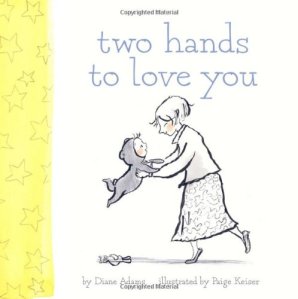
Two Hands to Love You
by Diane Adams & Paige Keiser, illustrator
Chronicle Books 2014
978-0-8118-7797-8
Age 4 to 8 36 pages
.
“With two loving hands, an adoring mother cradles her baby after bath time and a devoted father introduces his toddler to the wonders of he world. Sister, brother, grandma, and grandpa all can’t wait to share what they love best about the world with their newest family member. And when it is time to step ot into the world, this caring family is right there alongside. In simple, heartfelt language, this soothing picture book for the very young will tug at the heartstrings and remind us all of the caring hands that helped us along our way.”
Opening
“When the world is a strange place, unfamiliar and new,
my two hands will hold you, will carry you through.”
The Story
In a nutshell, the story is about a couple who begin a family and the paths they take with their children as they grow and become a family of five—plus two involved grandparents. The first baby is gently cared for, everything new for everyone, not just the baby. As he grows, mom plays outside with her toddler, pulling him in a wagon after an afternoon bath in the sun.
Dad takes over, playing airplane with his son, then cradles the new baby and pledges his love. The first-born cares for the second-born, a girl as curious as her brother. Then the third arrives and the three kids guide and love each other.
Grandparents read to their grandson and blow bubbles for this newest child. The joys of childhood and a mother who races to her crying child. This all is part of this family of five, who love each other.
Review
My loyal readers know what I will write in this space and it will not be that I hated this book. The story is composed of fragments of time, caught like photographs. A mother holds her first-born close, never wanting to let go, but she does. With dad, the toddler continues to grow and this happy family of three thrives. Then enters child number two, a girl. It is daddy’s turn to hold the baby close, his little girl. The images that accompany each frame of time softly plays the scene out for us.
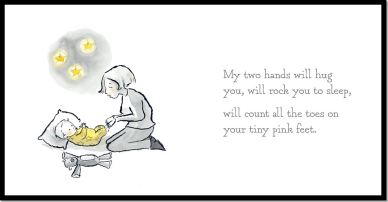
Using watercolors and ink, the artist catches these tender moments, making them precious and tenderer, if that is even possible. Her images could tell this story without the text, which is what a good illustrated picture book should do—words for adults and kids, images for little ones, not yet a reader. I tended to pick up this book and turn its pages carefully, feeling the fragility of family, and the joys of one so close.
Children have real childhoods, playing with each other, guiding each other. Along the way, various hands help the children to grow: mom, dad, grandma and grandpa, and many more not shown.The sweetness is palatable. Two Hands to Love You may well have you thinking about your own little ones, whether they are still little or grown and on their own, maybe starting families. Alternatively, of your own childhood and what that meant to you.
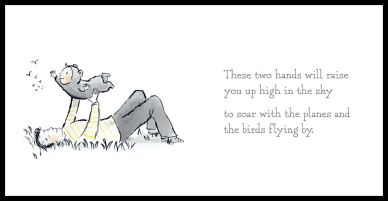
I love the rhyming text. The words fit together perfectly, meaning I did not immediately recognize the rhyme, just the smooth flow of words that belonged together in that precise order. I think this story can help others remember what a family needs to be—a shelter in the storm and a place to learn and grow without ridicule and maybe a little rhyme.
I love the inherent gentleness the illustrations give us. I love the extended family all involved in raising a child. I guess I simply love Two Hands to Love You, which is an ideal baby shower gift. This is also an, “Oh, my, gosh, you’re pregnant” gift. New parents will cherish Two Hands to Love You. It would be the couple’s first, How to Raise Baby book.
For children Two Hands to Love You reinforces that parents will always be there for them, no matter the distance. That home is a shelter from the storm. A place to recharge before heading back into the world. Children want to know their parents will also be there for them. That message rings loudly through the tender pages of Two Hands to Love You.
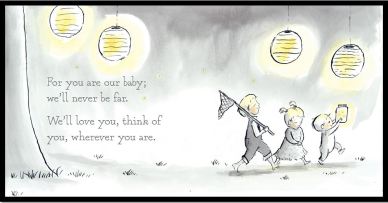
TWO HANDS TO LOVE YOU. Text copyright © 2014 by Diane Adams. Illustrations copyright © 2014 by Paige Keiser. Reproduce by permission of the publisher, Chronicle Books, San Francisco, CA.
To learn more about Two Hands to Love You, click HERE.
Make Two Hands to Love You yours by going to Amazon—B&N—Chronicle Books—or your local bookstore.
Meet the author, Diane Adams at her website: http://www.dianeadams.net/
Meet the illustrator, Paige Keiser at her website: http://www.paigekeiser.com/
Find other incredible books at the Chronicle Books website: http://www.chroniclebooks.com/
.
Also by Paige Keiser
The Little Green Pea
One Night In Bethlehem
.
.
.
. I Love My Hat (October 2014)
.
NEW from Chronicle Books
I Didn’t Do My Homework Because . . .
Peek-a Zoo
.
.
.
.
.
.
.
.
Today is National Library Workers Day
Be extras nice to those who staff your library!
Filed under:
5stars,
Children's Books,
Debut Author,
Favorites,
Library Donated Books,
Picture Book Tagged:
children,
children's book reviews,
Chronicle Books,
Diane Adams,
family,
family relationships,
grandparents,
growing up,
Paige Keiser,
parents,
raising children 


By:
Hannah,
on 4/12/2014
Blog:
The Open Book
(
Login to Add to MyJacketFlap)
JacketFlap tags:
Latino/Hispanic/Mexican,
Día de los niños/Día de los libros,
Curriculum Corner,
English-Spanish,
libros en Español,
Reading Aloud,
parents,
bilingual books,
Read Aloud,
guest blogger,
ell,
bilingual,
teaching resources,
bilingual education,
reading comprehension,
Add a tag

Jennifer Brunk has been teaching Spanish and English learners from preschool to university level for over 20 years. She resides in Wisconsin where she raised her three children speaking Spanish and English. Jennifer blogs about resources for teaching Spanish to children on Spanish Playground. The following post is reprinted with permission from her original post at Spanish Playground.
Research has shown that reading to children helps them learn vocabulary and improves listening comprehension skills. As a parent or teacher, you are probably convinced of the value of reading to your child in Spanish, but how should you do it to promote language development?
First, it is important to keep in mind that above all reading should be enjoyable. We want to create positive associations with reading in any language. So, use these strategies and add plenty of silliness, snuggling, or whatever makes your child smile.
1. Identify core vocabulary in the story. If there are words that are central to the story that your child does not know, teach them first or make them clear as you read by pointing to the illustrations or using objects.
2. Use illustrations, objects, gestures and facial expressions to help kids understand new words. Choose stories with a limited number of new vocabulary words and a close text-to-picture correspondence.
3. Simplify the story if necessary. It is fine to reword or skip words or sentences. As your child becomes familiar with the story and acquires more vocabulary, you can include new language.
4. Read slowly. Children need time to process the sounds, connect them with the illustrations and form their own mental images.
5. Pronounce words as correctly as possible. To develop listening comprehension skills and learn new vocabulary, children need to hear correct pronunciation and natural rhythm. If your Spanish pronunciation is a work in progress, take advantage of technology. Look for books with audio CDs and ask a native speaker to record stories. At first, listen to the story with your child and take over reading when you are confident of the pronunciation.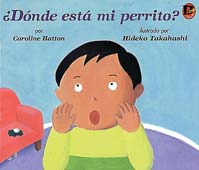
6. Engage your child with the story by providing different ways for her to participate.Ask questions that can be answered by pointing or say a repeated phrase together. You can also give your child a toy or object that she can hold up each time she hears a key word.
7. Read the same story over and over. Repetition is essential to language learning.
8. Relate the story to your child’s life by drawing parallels as you read: Tiene un perro. Nosotros también tenemos un perro. As you go about your daily routines, refer to stories you have read.
9. Use puppets or figures to act out stories when you are playing with your child. Dramatizing the story adds movement to enhance learning and provides essential repetition of the language in context.
10. Do activities that expand on the language in the book. Look for songs, crafts or games with related vocabulary and structures.
 Visit Spanish Playground for more great resources for teaching Spanish to children, and don’t forget that Dia de los niños/ Día de los libros is in just a few weeks! What are you doing to celebrate? What are your favorite books in Spanish to read aloud?
Filed under:
Curriculum Corner,
guest blogger Tagged:
bilingual,
bilingual books,
bilingual education,
Día de los niños/Día de los libros,
ell,
English-Spanish,
Latino/Hispanic/Mexican,
libros en Español,
parents,
Read Aloud,
Reading Aloud,
reading comprehension,
teaching resources 

By: Angela Muse,
on 3/7/2014
Blog:
4EYESBOOKS
(
Login to Add to MyJacketFlap)
JacketFlap tags:
Author,
Children,
book reviews,
Reading,
blog,
Family,
kids,
writing,
Children's literature,
Amazon,
parents,
teachers,
baby,
kindle,
bugs,
Atlanta,
preschool,
Dr. Suess,
The Bee Bully,
anti bullying,
Children and Young People,
Add a tag
Today I had the privilege of being a reader at a local elementary school. I got to read one of my favorite books, The Bee Bully, and talk to the kids about being an author. The energetic kindergartners made me feel very welcome and I really enjoyed spending some time with them. We talked a little bit about what it means to be a bully and how important reading is.
Three reasons why reading is important to young children:
1). Reading exercises our brains. That’s right, our brains need a workout too. Reading strengthens brain connections and can even create new ones so pick up a book and help your brain exercise.
2). Reading improves concentration. Kids have to focus when they read which can sometimes be a difficult task. The more you read the longer you can extend that concentration time which will continue to improve.
3). Reading helps develop imagination. When you read your brain translates what is read to pictures. Did you know you can create a movie in your head while you read? We become engrossed in the story and we can connect with the characters. We can sympathize with how a character feels and reflect on how we would feel in that same situation.
Now go grab a book and BEE A READER!
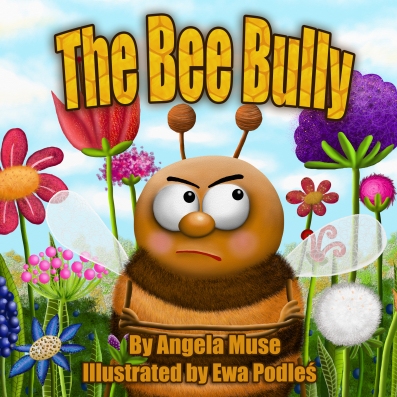


By:
Jen Robinson,
on 2/19/2014
Blog:
Jen Robinson
(
Login to Add to MyJacketFlap)
JacketFlap tags:
Literacy,
teaching,
Parents,
book selection,
raising readers,
Baby Bookworm,
nerdy book club,
growing bookworms,
bookshaming,
priscilla thomas,
Add a tag
A post at the Nerdy Book Club this week really made me think. Priscilla Thomas, an 11th grade teacher, wrote about the repercussions of what she called "bookshaming". Thomas says:
"To be clear, opinion and disagreement are important elements of literary discourse. Bookshaming, however, is the dismissive response to another’s opinion. Although it is sometimes justified as expressing an opinion that differs from the norm, or challenging a popular interpretation, bookshaming occurs when “opinions” take the form of demeaning comments meant to shut down discourse and declare opposing viewpoints invalid."
She goes on to enumerate five ways that bookshaming (particularly by teachers) can thwart the process of nurturing "lifelong readers." I wish that all teachers could read this post.

 But of course I personally read this as a parent. Thomas forced me to consider an incident that had taken place in my household a couple of weeks ago. We were rushing around to get out of the house to go somewhere, but my daughter asked me to read her a book first. The book she wanted was Barbie: My Fabulous Friends! (which she had picked out from the Scholastic Book Fair last fall).
I did read this book about Barbie and her beautiful, multicultural friends. But at the end I made some remark about it being a terrible book. And even as I said it, I KNEW that it was the wrong thing to say. Certainly, it is not to my taste. It's just little profiles of Barbie's friends - no story to speak of. But my daughter had picked out this book from the Book Fair, and she had liked it enough to ask me to read it to her. She seemed to be enjoying it. And I squashed all of that by criticizing her taste.
Two weeks later, I am still annoyed with myself. Priscilla Thomas' article helped me to better understand why. She said: "When we make reading about satisfying others instead of our own enjoyment and education, we replace the joy of reading with anxiety." What I WANT is for my daughter to love books. And if I have to grit my teeth occasionally over a book that irritates me, so what?

 Rather than continue to beat myself up over this, I have resolved to be better. The other night I read without a murmur The Berenstain Bears Come Clean for School by Jan and Mike Berenstain, which is basically a lesson on how and why to avoid spreading germs at school. As I discussed here, that same book has helped my daughter to hone her skills in recommending books. It is not a book I would have ever selected on my own. But I'm going to hold on to the image of my daughter flipping to the last page of the book, face shining, to tell me how funny the ending was.
Growing bookworms is about teaching our children to love reading (see a nice post by Carrie Gelson about this at Kirby Larson's blog). They're not going to love reading if we criticize their tastes, and make them feel anxious or defensive. I'm sorry that I did that to my daughter over the Barbie book, and I intend to do my best not to do that again. If this means reading 100 more Barbie books over the next couple of years, so be it. Of course I can and will introduce her to other authors that are more to my own taste, to see which ones she likes. But I will respect her taste, too.
© 2014 by Jennifer Robinson of Jen Robinson's Book Page. All rights reserved. You can also follow me @JensBookPage or at my Growing Bookworms page on Facebook. This site is an Amazon affiliate.

View Next 25 Posts





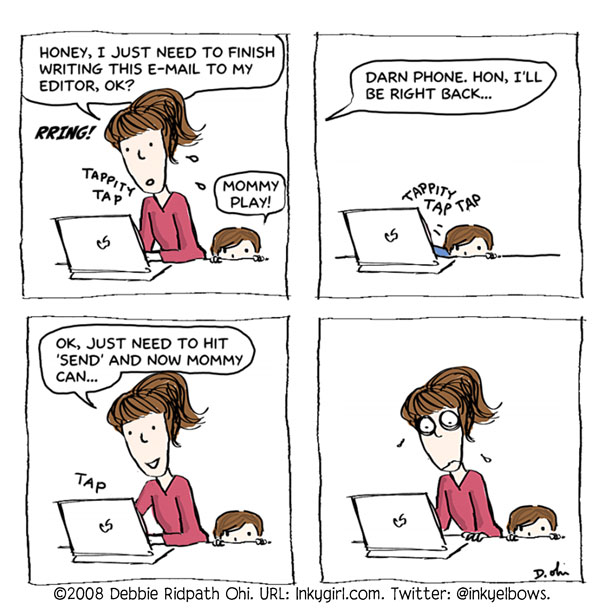
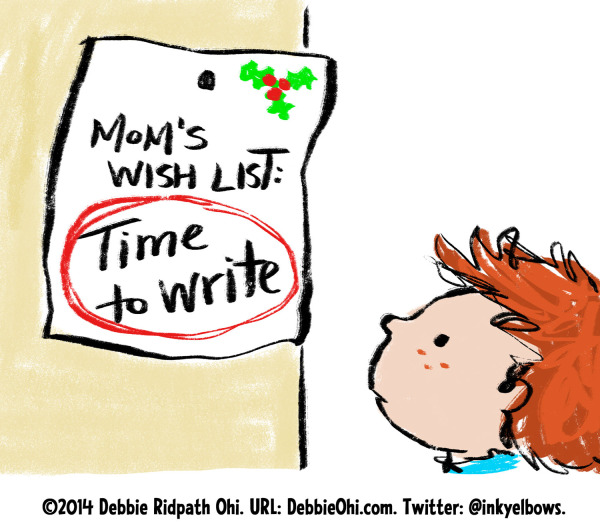






I have been reading to my daughter in Spanish since she was a baby (she is now four) but she occasionally rebels. Thanks for these great tips!
Reblogged this on adventureswiththepooh and commented:
If you want to read to your child in Spanish, check out these great tips!