new posts in all blogs
Viewing: Blog Posts Tagged with: E-Books, Most Recent at Top [Help]
Results 1 - 25 of 1,976
How to use this Page
You are viewing the most recent posts tagged with the words: E-Books in the JacketFlap blog reader. What is a tag? Think of a tag as a keyword or category label. Tags can both help you find posts on JacketFlap.com as well as provide an easy way for you to "remember" and classify posts for later recall. Try adding a tag yourself by clicking "Add a tag" below a post's header. Scroll down through the list of Recent Posts in the left column and click on a post title that sounds interesting. You can view all posts from a specific blog by clicking the Blog name in the right column, or you can click a 'More Posts from this Blog' link in any individual post.

By: Lizzie Furey,
on 7/23/2016
Blog:
OUPblog
(
Login to Add to MyJacketFlap)
JacketFlap tags:
libraries,
librarians,
Technology,
e-books,
EIFL,
myanmar,
*Featured,
higher education,
e-library,
e-Library Myanmar Project,
Mandalay,
Myanmar Academic Library Consortium,
Yangon,
Add a tag
I have been a lifelong librarian in Myanmar since 1985. It is a great pleasure and honor to share the challenges and success of the e-Library Myanmar Project implemented by EIFL.
The post Transforming libraries in Myanmar: The e-Library Myanmar Project appeared first on OUPblog.
Way back in 2007, I wrote about what I called
the "holy grail" of book publishing: the blockbuster detector. Inspired by both
The Wisdom of Crowds and
Moneyball, I wondered about the possibility of a tool that could identify undervalued markets and help predict future sales.
2007, mind you, was the era before the Kindle and iPad even existed. These, of course, opened up a world of possibility, where you could assess on a granular level where people stop reading, and distinguish between books that people buy and books that people actually read.
So naturally, now that it's 2016, there's a company dedicated to helping publishers detect which books might be hits or duds
based on the reading habits of beta readers.
This is probably just the tip of the iceberg. Readers and writers, are you alarmed at the idea that your publisher could scale back your marketing budget if people stop reading past page 60 of your novel? Are you excited by the idea you could gain access to this type of data and help you revise?
What do you think?

Ninety-two percent of U.S. college students prefer print books to e-books, according to new research.
The numbers come from a four year study led by American University’s linguistics professor Naomi Baron who is also the authors of Words Onscreen: The Fate of Reading in a Digital World.
The research includes feedback from more than 420 university students from the U.S., Slovakia, Japan and Germany in 2010 and 2013. Tech Times has more:
The team also found that the main reason why students used e-books was because they were cheaper than the traditional paper book versions. It wasn’t always because it was easier to use or lighter to carry but some of the survey’s open answers included space saving reasons and convenience. When it comes to preference, paper trumps the screen.
(Via The Los Angeles Times).

By: Nathan Bransford,
on 12/21/2015
Blog:
Nathan Bransford
(
Login to Add to MyJacketFlap)
JacketFlap tags:
E-books,
Add a tag
Has there been a disturbance in the Force?
It's not just The Force Awakens, but for the second consecutive year, e-books have reversed their gains in my poll that asks whether you think you'll ever buy mostly ebooks. The results!
Here are the people who say you can pry paper books out of their cold dead hands:
2007: 49%
2008: 45%
2009: 37%
2010: 30%
2011: 25%
2012: 25%
2013: 25%
2014: 28%
2015: 38.6%
And here are the people who welcome their coming e-book overlords:
2007: 7% (!)
2008: 11%
2009: 19%
2010: 32%
2011: 47%
2012: 47%
2013: 49%
2014: 44%
2015: 40.5%
Now, yes, caveats, this was an unscientific poll, different samples, etc. etc.
So tell me. Does this track with your personal experience? Any former e-book devotees who have made the jump back to print?
Here we are again.
I've been asking this question once a year since 2007, when the Kindle was an inelegant piece of plastic and the iPad was a glimmer in Steve Jobs' eye.
Will you ever buy mostly e-books? Do you already?
Poll below.
Caveats to preempt comments I have heard since 2007. Yes, not a scientific poll, yes, difficult to compare between years, yes, I know you want more poll options because no choice here precisely capture your nuanced opinion and buying habits. Choose the one that is closest enough to your perspective.
Looking forward to seeing what you think!
Loading...

By: Joyce Zarins,
on 12/8/2015
Blog:
Constructions: joyce audy zarins
(
Login to Add to MyJacketFlap)
JacketFlap tags:
marketing,
children's books,
picture books,
e-books,
Boston,
book art,
traditional publishing,
print on demand publishing,
Joyce Audy Zarins,
Writing today,
previously published,
Diverse books,
Add a tag
Today I received a copy of my book Sand Dollar, Sand Dollar in its final Spanish/ English dual language paperback version, published by Bab’l Books, Boston. I am excited to see this book in print again! I love the idea of reaching out to bilingual kids. And, its hidden message is environmental – that we […]
By: Joyce Zarins,
on 11/12/2015
Blog:
Constructions: joyce audy zarins
(
Login to Add to MyJacketFlap)
JacketFlap tags:
Diverse books,
children's books,
picture books,
e-books,
Boston,
environmental theme,
Joyce Audy Zarins,
Writing today,
previously published,
dual language,
Add a tag
I have a teeny bit of news, but it’s in five or six languages! My first ever picturebook, published in 1980 by J.B. Lippincott, then taken on by Harper and Row, which has been out of print for years, is being reissued by a small start-up as a bilingual paperback and Kindle book. Bab’l Books […]

By:
Heidi MacDonald,
on 6/25/2015
Blog:
PW -The Beat
(
Login to Add to MyJacketFlap)
JacketFlap tags:
libraries,
Comics,
DC,
Retailing & Marketing,
E-Books,
Breaking News,
Top News,
Top Comics,
Hoopla,
Add a tag
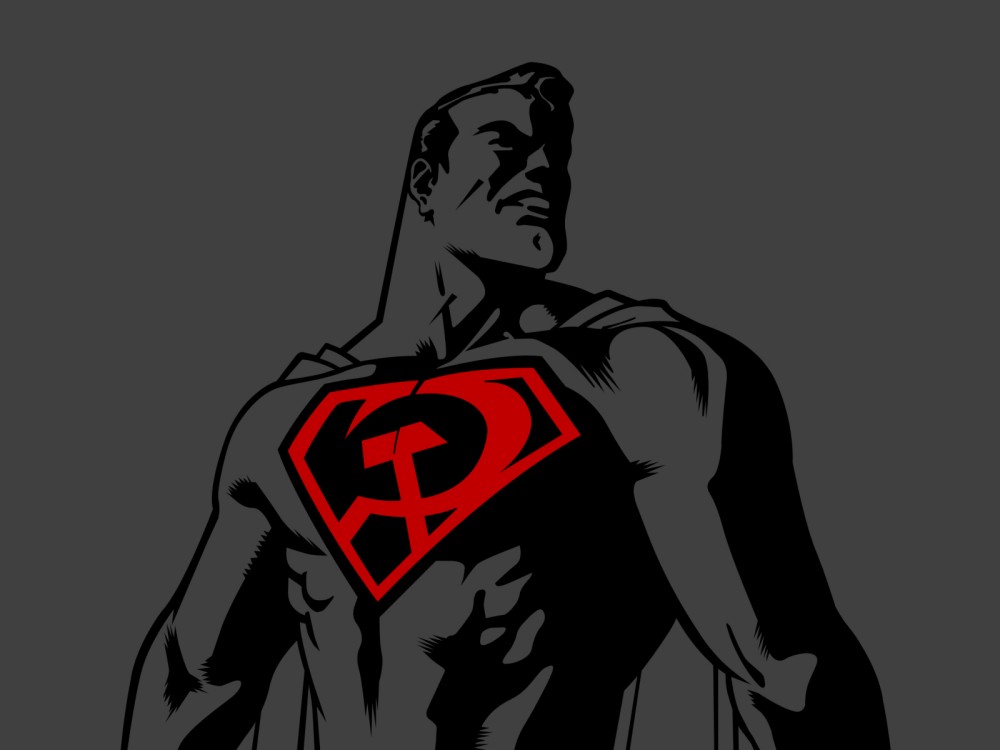
In their struggle to stay relevant in the technology-obsessed 21st century, many public libraries have turned towards e-book services to keep membership levels high. Historically, comic book publishers have been slow to embrace digital reading, with Dark Horse Comics only having joined Comixology this week. However, today DC Comics began its partnership with public library e-book app Hoopla to bring select titles to subscribers around the United States.
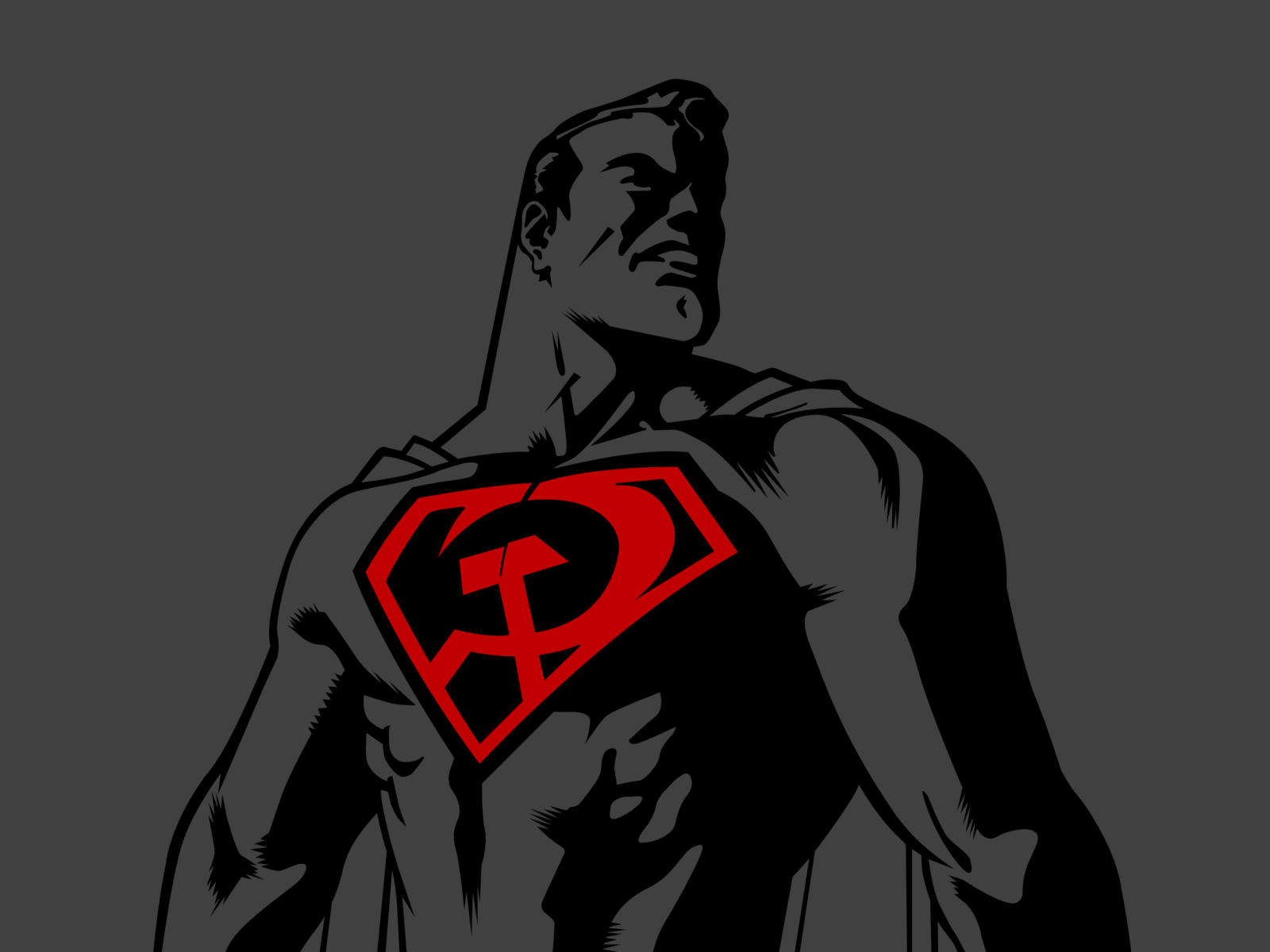
Right now, 18 titles are available via the service, comprised of a number of collected trades including Batman: The Long Halloween, Watchmen, Superman: Red Son, Final Crisis, and The Killing Joke. In order to access these titles, you will need a local library membership at a branch that supports Hoopla. According to Engadget, Hoopla will add additional DC titles to its library each week, and there will be over 200 DC titles available for borrowing by the end of the summer. Hoopla’s digital service uses an “action view” feature akin to Comixology’s guided reading mode.
It’s great to see major comic book publishers like DC providing free access to titles and supporting local libraries. Comics are an expensive hobby, and the cost can be a major turnoff for new readers. Granting the public access to classic titles like Watchmen will hopefully expand paid comics readership in the long term. For now though, I need to get a new library card.

By: Julia Hornaday,
on 4/30/2015
Blog:
First Book
(
Login to Add to MyJacketFlap)
JacketFlap tags:
libraries,
Literacy,
digital books,
Books & Reading,
e-books,
New York Public Library,
white house,
President Obama,
Nonprofit Technology,
First Book Partners,
Add a tag
 We know that access to books – in all forms – is critical for children to develop into readers.
Now, through a new White House-led initiative, First Book is helping connect children in need across the country with access to thousands of e-books. The initiative, announced today by President Obama, is part of a broad effort to ignite kids’ love of reading by improving access to digital content and public libraries.
Through the initiative, called Open eBooks, publishers are providing $250 million worth of e-books for free to children from low-income families. 10,000 of their most popular titles will be included.
The books will be accessible through an Open eBooks app, which is currently being developed by the New York Public Library, the Digital Public Library of America and the Institute of Museum and Library Services. Once complete, the app and all the e-books will be available to programs and classrooms serving children in need through First Book.
Know someone working in the lives of children in need? Encourage them to sign up with First Book.
The post First Book Joins White House to Bring Thousands of e-Books to Kids in Need appeared first on First Book Blog.


By:
John Nez,
on 3/22/2015
Blog:
John Nez
(
Login to Add to MyJacketFlap)
JacketFlap tags:
'balloon boy',
#childrensbooks,
#kidlit,
#kidlitart,
#picturebooks,
#pblit,
e-books,
ebooks,
step by step,
Ladybug,
Add a tag
Today Kristine Carlson Asselin revealed the cover of her debut YA novel, Any Way You Slice It, about Penelope Spaulding, who uses hockey as a great escape from her parents’ restaurant. As her confidence on the ice and her commitment to the Rink Rats and someone named Jake Gomes grows, she finds it harder and […]
By: Nathan Bransford,
on 12/8/2014
Blog:
Nathan Bransford
(
Login to Add to MyJacketFlap)
JacketFlap tags:
E-books,
Add a tag
It seems that one-fourth of the population just really, really likes paper books.
For the fourth consecutive year we are seeing a steady number of people willing to risk the displeasure of our future robot overlords by reveling in the pleasures of paper. In fact, there was even a slight uptick in the number of people who say we can pry their paper books out of their cold dead hands (all caveats about different samples, non-scientific poll etc.):
2007: 49%
2008: 45%
2009: 37%
2010: 30%
2011: 25%
2012: 25%
2013: 25%
2014: 28%
And similarly, a slight reversal in the pro-e-book crowd:
2007: 7% (!)
2008: 11%
2009: 19%
2010: 32%
2011: 47%
2012: 47%
2013: 49%
2014: 44%
One thing that's interesting to note is the extent to which this could be a device-driven trend. The first Kindle, of course, was released in 2007 and gathered steam shortly thereafter, and Apple introduced the iPad in 2010. Since then we haven't seen technological innovation when it comes to e-books, and publishers have mostly successfully resisted a decline in e-book prices that could have spurred further e-book adoption.
What do you think is behind these numbers? Are some people just really never going to make the switch? Or is there a technological/economic explanation?

Eighth! Annual! Poll!
I think we need a moment, guys. Eighth. Annual. Some of you probably voted in the first poll, or maybe you missed that one and voted in the second or third, but holy cow! Where did the time go?!
And where in the heck are the flying cars? It's 2014, we should be reading holograms in space or something.
Ahem. Meanwhile, there is a poll that YES WE KNOW is not scientific and is not directly applicable to previous years, but even though I say that every single year there will still be a commenter who insists on pointing out that this poll is not scientific and is not directly applicable to previous years. You may be the commenter who after eight years still insists on pointing this out, and I have to say I kind of begrudgingly love you.
Here are polls past, in case you are curious:
2007
2008 (technically the beginning of '09)
2009
2010
2011
2012
2013
And here is this one. Vote if you dare! Oh, and yes, it's 2014 but you'll still need to click through to the actual post if you're reading this via e-mail or in a feed reader.

A bubbly woodland party brings out only the very best furry guests. From an upcoming book that I had a wonderful time painting.
.jpeg?picon=2450)
By:
Sherrie Petersen,
on 11/3/2014
Blog:
Write About Now
(
Login to Add to MyJacketFlap)
JacketFlap tags:
free books,
e-books,
book giveaway,
giveaway,
middle grade books,
free Kindle,
Kindle giveaway,
ebook giveaway,
Emblazon,
Add a tag
Back in September, I was lucky enough to join the Emblazoners, a group of middle grade authors–some indie, some traditionally published–who strive to produce top-notch literature for kids. We have a shared goal of creating lifelong readers and all our books are geared toward tweens. Wouldn’t you know it, we’re already hosting a giveaway, and […]

By: Angela Muse,
on 7/18/2014
Blog:
4EYESBOOKS
(
Login to Add to MyJacketFlap)
JacketFlap tags:
library,
Children,
blog,
Family,
Uncategorized,
kids,
e-books,
parenting,
children's picture books,
illustrated books,
book reviewers,
book bloggers,
subscription,
indie author,
Monsters Have Mommies,
Kindle Unlimited,
writing,
The Bee Bully,
Add a tag
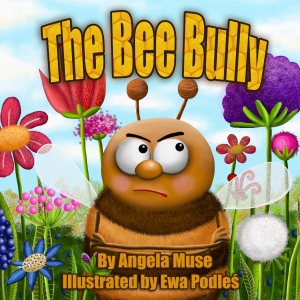
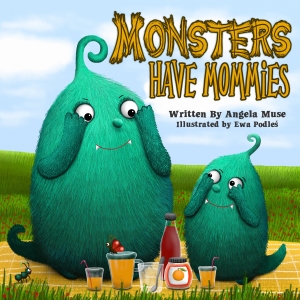
Just announced today Amazon has a new subscription service for e-books called Kindle Unlimited. For a flat monthly fee of $9.99 you can enroll and download up to ten e-books at one time. When you are done, just return them and then you can download more. We know young children can be voracious readers and we are excited about the opportunity to reach new readers with this program. Now parents can download books for themselves and load up on some quality children’s books too for one low price. There are over 600,000 titles currently available and they can be loaded onto any device. What a bargain!
Try the new Kindle Unlimited FREE for 30 days HERE


By: Julia Callaway,
on 7/16/2014
Blog:
OUPblog
(
Login to Add to MyJacketFlap)
JacketFlap tags:
librarians,
Education,
e-books,
OSO,
*Featured,
Online products,
Oxford Scholarship Online,
oso10,
Margarita Lugo Hubp,
Universidad Nacional Autónoma de México,
electrónicas,
autónoma,
científico,
electrónico,
electrónicos,
libraries,
Add a tag

Oxford Scholarship Online (OSO) launched in 2003 with 700 titles. Now, on its tenth birthday, it’s the online home of over 9,000 titles from Oxford University Press’s distinguished academic list, and part of University Press Scholarship Online. To celebrate OSO turning ten, we’ve invited a host of people to reflect on the past ten years of online academic publishing, and what the next ten might bring.
By Margarita Lugo Hubp
Translated by Karina Estrada and Greg Goss
From a librarian’s perspective, there has been a huge change in the types of electronic publications that academics, students, and researchers use. In Mexico, as in other developing countries, journals, e-books, and other electronic works make it possible to offer greater access to scholarship in increasingly large university populations. In the last ten years, many people have found a solution to the lack of availability of traditional libraries and the consequent lack of access to quality information. Access to journals and e-books has strengthened higher education institutions and research centers, particularly in the areas of science and technology, increasing the ease and breadth of access to full text content.
University faculty and students who work in rapidly changing science fields are no longer restricted to physical libraries for access to electronic publications. Remote access and mobile device access options are becoming more common.
Perhaps the most pertinent change in how publishers grant access to scientific, technical, and humanistic information can be seen in electronic books. Several years ago, libraries faced restrictive acquisition models; now the ease of availability allows for a more favorable user experience. Consider the option of acquiring a single electronic book to be used only by a single user. Clearly, this model was unfavorable, particularly for the Universidad Nacional Autónoma de México. We considered these proposals unacceptable because of the large student population at the postgraduate level, exceeding 26,000 students, and at the undergraduate level, reaching 190,000 students.
In regards to the routes pursued by publishers promoting Open Access for scientific information, there have been significant changes. Some proposed routes were carefully crafted while others gave the impression of being more scrupulous, which mandated the decision makers proceed with caution. We are progressing in a framework that fosters increasingly fruitful communication between publishers, researchers, teachers, government representatives and librarians.
In the coming years, electronic publications will continue to develop and maintain their role as one of the most important factors in the realm of science via striking or even startling technological changes. At the same time, we will witness the evolution of initiatives that aim to facilitate access to information, especially as the debate over these alternatives is moving increasingly into a political, rather than academic or scientific, sphere.
* * *
Las publicaciones electrónicas en una universidad Mexicana
Desde el punto de vista bibliotecario, el cambio que muestran en los últimos años las publicaciones electrónicas que demandan los académicos, estudiantes e investigadores ha sido impactante. Lo que quisiéramos resaltar es que en México, como seguramente sucede en otros países en vías de desarrollo, las revistas, los libros y otras publicaciones electrónicas nos ofrecen la posibilidad de tener mayor acceso al conocimiento en poblaciones universitarias cada vez más amplias. En los últimos 10 años, numerosos usuarios han encontrado una solución al problema de la escasez de sistemas bibliotecarios tradicionales en nuestro país, y por lo tanto, a la falta de apoyo para obtener información de calidad. La revista y el libro electrónico son las opciones que han permitido el fortalecimiento de las Instituciones de Educación Superior y Centros de Investigación para que el conocimiento científico y tecnológico universal sea del dominio de los usuarios, para ampliar, consolidar y facilitar el acceso ágil y con amplia cobertura nacional e internacional, a los recursos de información referencial y en texto completo
La población universitaria que se caracteriza por conocer más rápidamente los avances de la ciencia y por adaptarse mejor a los cambios, ha dejado de luchar contra las dificultades que representaba el hecho de transladarse a una biblioteca para acceder a las publicaciones electrónicas, ya que además de las opciones de búsquedas desde sitios remotos cada vez más frecuentes en nuestro medio, se ha generalizado el uso de los dispositivos móviles que resultan accesibles y adecuados para estos fines.
Tal vez el cambio más relevante en los esquemas que ofrecen los editores en relación con el acceso amplio al conocimiento científico, técnico y humanístico, se puede encontrar en los libros electrónicos. En este sentido, la apertura y flexibilidad que se observa en las ofertas actuales favorece a los usuarios en nuestro medio. Pensemos en la opción de adquirir un libro electrónico que se va a utilizar únicamente por un usuario simultáneo (modelo de venta que se promovió hace años). Por supuesto que era desfavorable, en particular en la Universidad Nacional Autónoma de México. Siempre consideramos inaceptable esa propuesta debido a la población estudiantil tan grande, misma que en el nivel de posgrado rebasa los 26 mil alumnos y en el de licenciatura llega a 190,000 estudiantes.
En relación con la ruta que siguen actualmente los editores para lograr que se promueva el acceso abierto a la información científica que publican, los cambios también se muestran significativos; son muy diversos los caminos que plantean. Algunas propuestas se presentan cuidadosas, otras dan la impresión de ser muy escrupulosas y hasta se proponen con cautela. Nos movemos en un marco de acción que propicia la comunicación cada vez más fructífera entre los editores, investigadores, profesores, representantes gubernamentales y bibliotecarios.
En los próximos años, las publicaciones electrónicas seguramente continuarán su desarrollo cambiante y mantendrán uno de los liderazgos más importantes en el mundo de la ciencia, se mantendrán además añadiendo cambios tecnológicos llamativos y hasta asombrosos. A la vez se podrá constatar la evolución de una serie de iniciativas que persiguen facilitar el acceso a la información en un mundo que debate estas relevantes alternativas, cada vez más en el terreno político que en el académico y el científico.
Margarita Lugo Hubp is a member of the Libraries Department at the Universidad Nacional Autónoma de México.
Subscribe to the OUPblog via email or RSS.
Subscribe to only education articles on the OUPblog via email or RSS.
The post Electronic publications in a Mexican university appeared first on OUPblog.


By:
Jack O'Rourke,
on 6/27/2014
Blog:
gael writer
(
Login to Add to MyJacketFlap)
JacketFlap tags:
independent self-publishing,
J. E. Wideman,
Sejal Shah,
book reviews,
e-books,
Amazon,
Lulu,
Google Books,
CreateSpace,
Add a tag
Several earlier posts discussed independent self-publishing platforms (ISP) for both e-books and printed books. My experience with Amazon in producing a Kindle edition and a print edition of a YA novel (the print edition with CreateSpace, an Amazon-owned company) was a very satisfying experience, and did not cost me anything. Special support services (formatting, editing, cover design)were available for a fee, but are not necessary for most authors with average skills.
However, after creating and making the book available through an ISP company, the role of marketing the book seems to be left more or less to the author. A wide gamut of on-line vendors, like Amazon Books, Google Books, Barnes & Noble, and others, can be selected to list the book and collect an agreed royalty amount on any sales; however, there may be very little effort by those vendors to find and direct readers to the book. This had been one of the valuable services provided by traditional publishing companies. Besides being gatekeepers of which books can be published, the traditional companies would generally send out copies of the finished book to their lists of nationwide book reviewers and media columnists to help generate an awareness and demand for the book. They might also arrange book tours (one has to smile to think of them trying to get J. D. Salinger to do a book tour). To some extent, the ISP author can do some of this work by searching for independent or organizational reviewers on the Internet, and providing them with the necessary digital or print copies of the book. Some reviews might be provided free, and others by prestigious organizations can cost up to a couple of hundred dollars. The author has better prospects to enlist a reviewer if the book is newly published or has been published within the last two or three months. Consequently, one can see from all this that it would be most effective if the ISP author had some sort of plan, and/or arrangements made, before he ever clicks on the 'publish' button with the ISP.
Some of the positives and drawbacks of the ISP option for an author are illustrated in an interview with author John Edgar Wideman, reported by Sejal Shah in
The Writer's Chronicle of May/Summer 2014. Wideman has a son, Danny, who worked for an ISP, named Lulu, and decided to publish a book titled
Briefs with them.
Briefs was an experiment. It got all the reviews you could want, under the circumstances. And also because Danny worked there I got a lot of services that if you self-published in Lulu, you'd have to pay for. For example, the expensive business of sending books to reviewers. My self-published electronic book was treated a bit like the old way that my hard copy books had been. A publicity service sent books to the media and tried to get me interviews. A publicity person promoted and followed the book's progress. Books were made available in conventional hard copy format, so that was cheating in a way. The results don't tell a lot about self-publishing or electronic publishing per se. My conclusion after the whole thing was that even with the extras I got, a self-publishing venture was premature. It still is premature, for a person of my status, used to having a certain kind of attention. You're taking a real leap of faith and financially, you're giving up, in my case, what might be a substantial advance.
Not being on bookstore shelves killed Briefs. Someone browsing in that nice bookstore ...is not going to see Briefs. A bookstore has to pay for copies of Briefs, and then they own the copies, can't return them. The other thing is the Times refused to review Briefs, because it was self-published ...They did run a story about the manner in which Briefs was published, but it was not a review. Almost all the articles about the book were not reviews; they were general interest pieces about the publishing industry. That meant no reviews of the book, and at the same time no one was going to trip over the book in a bookstore. So why would anyone buy it? Where would they find it? As far as merchandising strategy, Briefs fell into very predictable cracks. I was disappointed, but I'd do it again. I liked the adventure; I liked working with Danny; and I learned a hell of a lot.
As might be concluded from the foregoing discussions and interview excerpt, ISP is a works in progress. There are pluses and minuses in it for most authors, but the business model of the traditional publisher has contemporary issues that need to be addressed, also. One thinks of the music recording industry, which had a business model that served them handsomely for many years and did well for a relatively small number of artists, too. However, the internet opened up possibilities for many more artists that had been shut out by the traditional gatekeepers' system, and brought with it upheavals to the business model that are still ongoing. Now, the book publishing model's turn may have come.
 |
| Downtown Brooklyn. I'm on Instagram here |
It's been an interesting past few weeks! I had a fantastic time at the University of Wisconsin-Madison
Writers' Institute, great meeting all of the writers there, including longtime reader
Alison Coffey, who you may know as commenter ABC. Though I was sorry to watch the Badgers lose in the Final Four.
Speaking of the Final Four, propelled his successful choice of UConn to win it all, longtime friend-o-the-blog Peter Dudley won the 2014 Blog Bracket Challenge! Peter, you know where to find me for the prize.
Meanwhile, some interesting links caught my eye in the past few weeks. Here they are.
There continues to be a great deal of discussion in the book world about the state of diversity in the publishing industry, especially following in the wake of Christopher Myers'
New York Times article "
The Apartheid of Children’s Literature." Sarah McCarry, aka the Rejectionist posted about
how the industry can publish more writers of color. Jennifer Pan has an interesting article that argues
focusing on diversity numbers alone misses the point. I also participated in an
interview with Maya Prasad about the issue.
Independent bookstores have offered the industry a glimmer of hope of late as they have hung on even as chains struggle, but in a further sign of the times,
Manhattan bookstores may soon be an endangered species.
Holt Uncensored
compares the movie tie-in book editions vs. their originals.
David Gaughran has a terrific post on the
ins and outs of e-book pricing. Lots of nuanced discussion.
Reader Tiffany Roger wrote about the ways in which the writing process
can sometimes resemble a burning log in the fireplace.
How do editors in different countries edit? Interesting interview with
Emma Donahue, Judy Clain and Iris Tupholme.
And Game of Thrones is back!! I can't get enough of this goat mashup:
Have a great weekend!

One of the best parts about self-publishing is getting nearly real-time data on how and where your book is selling. I'm not one of those writers who feels comfortable posting my exact sales and royalty figures online, but I'm seriously thrilled with how
How to Write a Novel is doing and thanks to everyone who has snagged a copy!
As I was compiling some sales figures, I was struck by two findings:
1) People still want the print versionI brought out the print version of
How to Write a Novel about a month and a half after the e-book version. I knew I would have to price it higher and wasn't sure there would be sufficient demand to go through the trouble of putting it out in print.
Well.
Even priced at $11.99 vs. the e-book's $4.99, the print version has nearly kept pace, and in the past month I've actually been selling more print books than e-books.
Print! There you have it!
2) Amazon dominates e-book sales
We all may know that Amazon has the dominant e-book platform, but it's pretty stark when you see the raw numbers. Here's what my US e-book sales look like broken down by platform:
89.1% of my e-book sales have been through Kindle, 7.55% through Nook, 2.1% through Apple and 1.23% through Kobo.
Now, to be fair, I have run some promotions where I used the Amazon link, but that choice was mainly driven because of the way these numbers looked even before those promotions. It also took longer to get the e-book up on Apple, so I lost some initial sales. But even after accounting for those considerations the numbers wouldn't look that different.
Is Amazon's dominance cause from concern? Have other self-pubbed writers seen something similar?

 |
| Random House in the Hot Seat (iBrotha Flickr.com) |
I'm not sure if you've been following the controversy over Random House's new digital-only lines: Hydra, Alibi, Loveswept, and Flirt. Writers have been up in arms because no advance was being offered on these books, like with Random House print authors, and also because copies and other miscellaneous expenses were going to be taken out of the author's royalties. When I first heard about it, I was reading a discussion on the SCBWI (Society of Children's Book Writers and Illustrators) listserve I belong to, and the argument was mostly with Hydra and whether or not a book published with this imprint would qualify a writer to belong to the SFWA (Science Fiction Writers of America). It turns out the way the Hydra contract was originally written an author was not eligible for SFWA membership.
The good news is that Random House has buckled under the pressure from the writers (YAY!), and they have revised the contract. They didn't give in 100 percent, but they now offer two different models of payment, and one of these offers an advance.
Authors and others in the publishing world who were up in arms seem to be happy with Random House's changes and have said so on blogs and Twitter. To read fully everything that has been going on, you should visit
Writer Beware. What I was hoping to discuss with Muffin readers today is this whole notion of having to get an advance in order to be considered "professional" enough to belong to a writing association. And in some of the blogs I read about this issue, they said that authors weren't taking themselves seriously if they didn't demand an advance. John Scalzi, an author with
a popular blog, even said that we should question publishers that can't offer advances and wonder if we will ever get paid our royalties.
So, I'm sitting at my computer in St. Louis, thinking,
Well, golly gee, I have three books under contract and am not going to get advances on any of them. I was super excited to get royalties and someone wanting to publish them. I think it helps me with my writing goals of doing school visits, teacher workshops, and teaching online classes. Plus, I like small and regional publishers, and I think they often don't offer advances to an author the first time they work with her or him. And I take myself and my work seriously.
What do you all think about this? If you have a book, did you get an advance? Was it hard to meet your advance? Did you feel pressure? If you aren't published yet, will take a contract without an advance? Would love to hear from you on this issue! Margo Dill is the author of Finding My Place: One Girl's Strength at Vicksburg (White Mane Kids, 2012) and writes a blog at http://margodill.com/blog/. She teaches online classes for WOW! See her classes here.
By:
jrpoulter,
on 3/5/2013
Blog:
Jrpoulter's Weblog
(
Login to Add to MyJacketFlap)
JacketFlap tags:
Awards,
review,
YA,
marketing,
children's books,
Design,
books,
science fiction,
illustration,
Reviews,
Poetry,
humour,
Literacy,
Fiction,
non fiction,
picture books,
publishing,
young adult fiction,
Writing,
Education,
e-books,
fantasy,
children's literature,
trends,
Reviewing,
book promotion,
children's stories,
illustrators,
Digital publishing,
advances,
verse,
story books,
children's verse,
narrative verse,
humorous poetry,
Library resource,
Home schooling resource,
Australian Children's Book Awards,
Awards for literature,
creative arts,
Allen & Unwin,
international children's literature festival,
'print ready',
Erica Wagner,
Add a tag
Some time last year, Erica Wagner, Publisher at Allen and Unwin, is reported as having said that there was a lot to be gained by having a text already illustrated [not that Allen & Unwin published picture books]. This is seemingly a change in direction.
Some writers/illustrators I know have recently signed contracts for ‘print ready’ books. This is not self-publishing, but submission to a royalty paying publisher of a book that is ‘ready to go’ in publishing terms.
What constitutes a ‘print ready’ book? It is a book that has been -
- professionally edited,
- proofread, has been
- designed to industry standards,
- professionally designed cover and,
- if illustrated, has all images appropriately set.
This is a great way to go for authors who are able to pay illustrators and book designers up front. Most authors are not able to do this. This then means all creators involved in a book project agreeing to royalty share and working between paid projects to collaborate on their book.
What have I gleaned about such ‘print ready’ deals? One company, smaller and reasonably new, offered a small advance and a good contract, by industry standards, with higher than regular royalty share for creators. An offer of help with promotion was also part of the deal. Another company, medium sized and established, offered no advance but better than average royalty shares for creators and help with promotion and marketing of the book.
How does this stack up against what is generally on offer now?
- Small and middle range publishers, in general, do not offer advances.
- Larger publishers offer advances depending on the book, depending on the author, and depending on the agent involved.
- Smaller and middle range publishers often [there are exceptions] expect the author to do it all in relation to promotion, even requiring the submission of a marketing plan.
- Larger publishers vary greatly as to how much promotion they will give a book.
- Generally, publishers will submit copies of their publishing output for major awards, such as the CBCA, and to a selection of leading review outlets.
What’s the down side for author, illustrator, book designer, [often the illustrator], to go down the ‘print ready’ publishing path?
- It IS a lot of extra work for all creators involved to ensure the book is ‘professional’ standard even before it is submitted.
- There is no money upfront.
Are the rewards worth the effort?
- If you love collaborative work, it is a big plus.
- Creators have much more project control to create the book they have collaboratively envisaged.
- A quality product, ‘print ready’, is a major bargaining point for creators/agents. ‘Print ready’ saves the publisher heaps!
The first company mentioned does small print runs, sells out their print runs, reprints and even sells out reprints and so it seems to be gradually snowballing.
It is too early to know in the second instance. [I’ll keep you posted!]
My feeling is that, if Erica Wagner was sensing a ‘trend’ and if these companies make a success of it, we will see more such deals. It’s something to think about!
To be launched end of June – “Toofs!” a collaboration between J.R. and Estelle A.Poulter an illustrators Monica Rondino and Andrea Pucci. More to come on what was a ‘print ready’ deal.
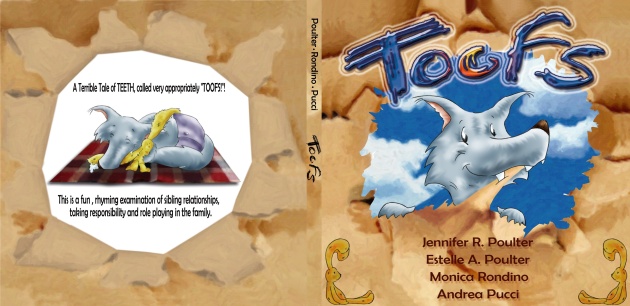
TOOFS by J.R.Poulter & Estelle A. Poulter, illustrated by Monica Rondino & Andrea Pucci


One of my favorite predictions I have put down on pixel and screen is
this one from 2007, when the Kindle had just been announced, e-book sales were virtually nonexistent, and the iPad was but a glimmer in Steve Jobs' eye:
In my opinion there will never be a widely used iPod of books, a device that people buy specifically for books -- e-books will take off when they can be easily downloaded and easily read on a device like a larger iPhone-of-the-future, something people already have, which evens out the economics since you don't have to plop down a significant chunk of money before you even buy a book. This would give e-books the decisive edge in economics, which might just tip the world of books toward e-books. Until then? Printed page for most of us.
I would argue that this is pretty much what has happened in the last six years. Yes, Kindles have sold pretty well and you see them around town, but they're nowhere near the ubiquity that iPods were in the mid-2000s. Print is still a majority even as Kindle prices dropped below $100. We haven't yet reached a majority e-book world, and it's still "printed page for most of us," as the last paragraph suggests.
And yet... I'm actually a little worried about this prediction.
The second part of the prediction is that e-book sales would reach a majority when most everyone has a "larger iPhone-of-the-future," aka an iPad, iPad Mini, Nexus 7, Kindle Fire, Nook HD... you get the picture.
We're almost there. There are now tons of tablets in the world. Apple sold 22.9 million iPads
in the last quarter alone (link is to CNET, I work there, opinions here are my own).
Some people, including Nicholas Carr in the previous link, see the leveling off of as proof that people are simply still attached to print books. I don't doubt that this is the case for many people.
My fear is that books are losing ground to other forms of handheld portable entertainment. Tablets should make it easier for people to read more because there is no delay between deciding you want to read something and being able to read it. It's (usually) cheaper to buy e-books. But that doesn't seem to be happening at the moment.
And this is where publishers have to realize that they are not competing against just books anymore when they're setting e-book prices.
Basically: Buy a new e-book for $11.99 or buy Angry Birds for $0.99? If you want to be entertained for six hours while you're commuting and you're cost conscious, that extra $10 goes a long way, and it adds up quick when you're talking about buying multiple books over time.
E-books have to be priced in a way that makes sense relative to its competition. They're not simply competing against other books anymore, they're competing against very very cheap (or free) forms of entertainment on the same device. Books and magazines aren't the only game in town for portable entertainment anymore.
I don't think the book world should be patting itself on the back that e-book sales have slowed. Yes, print books will absolutely still exist and people are still attached to them. But if people aren't reading books on tablets the book world will be in serious trouble as tablets become still-more ubiquitous in the future.
Art: Take Your Choice by John F. Peto
A debate has ignited in the bookosphere after news surfaced that Amazon had applied for a patent on technology that would
let people sell "used" e-books through Amazon.
Author John Scalzi initially
reacted harshly: "I’m awfully suspicious that it means nothing good for writers who want to get paid for their work using the current compensation model" and then reacted even
more harshly: "I would rather you pirate the eBook than buy it used."
Consultant Mike Shatzkin rightly cautioned that just because Amazon has the technology
doesn't mean they're going into this business, and at TeleReads Marilynn Byerly notes that a group called the Owners Rights Initiative is
fighting to give digital owners the rights to resell digital works.
For me personally, it's hard to wrap my head around what a "used" digital files even means. A digital copy does not get worn, the pages don't yellow over time, there are not dog-eared corners. A "used" digital copy is exactly like a brand new digital copy. The idea of "used" digital anything is pretty meaningless.
While details have been somewhat scarce on the specifics of the technology Amazon possesses, what I'd guess it involves is the ability to transfer the ownership of a single digital copy from one person to another, deleting original copy so ownership is only retained by one person. When I'm done reading about the fiftieth shade of Grey, I can sell the copy to someone else and I no longer have access to it.
So. In this new world you would have "new" e-books for sale alongside "used' e-books, only the two are completely indistinguishable from one another. But the "used" e-book would inevitably be cheaper, because the seller is more motivated to sell. If I'm done reading something, I'm willing to take less than I paid for it if only because I want to ensure I get something back. It's no skin off my back to undercut the list price.
Authors and publishers are not currently compensated for used e-book sales, and if that paradigm were translated into the "used" e-book world, they would be undermined by
completely identical and cheaper copies for sale alongside their "new" e-books. It's hard to imagine any scenario other than the pie shrinking even further for authors and publishers.
And yet... There are
plenty of people who want to do away with DRM and sharing speed bumps entirely, which would make it
extremely easy for people to sell or share their "used" e-books with anyone who wants it, whether that is a personal friend or someone they've met in a discussion forum or anywhere else on the Internet. People who are opposed to a used e-book paradigm should consider that one alternate scenario is one where non-DRM'd books are running rampant throughout the Internet (or rather, even more than they already are currently).
Lots of readers have been rankled by the fact that when you buy an e-book you don't have the same rights and flexibility as you do for a print book. It's hard to give it away and it's impossible to resell it. It's a license, not true ownership. It's frustrating when you just want to pass it on to a family member or friend like you can a paperback.
It's always seemed to me that the realities of digital publishing should account for the difference in physical form. Digital copies are fundamentally different than print copies, and arguing that we should treat them with the exact same rules strikes me as disingenuous. We have to strike a reasonable balance between the convenience of consumers and fairness to content creators.
Is a "used" e-book marketplace the right way of striking that balance? I'm not sure. A mechanism for transferring ownership of an e-book on a one-to-one basis is appealing, and as a reader I think I might like to have that option. I'd like it even more if authors were compensated for resales.
It's certainly not the worst solution I've ever heard. What do you think?
Art: "Novgorod Marketplace" by Appolinary Vasnetsov
This is what I read in The Bookseller this morning:
"Authors have admitted they welcome the “huge boost” in sales when their e-books are sold at rock-bottom prices, despite concern over the long-term impact.It is believed individual authors have earned in the hundreds of thousands from books included in the long-running 20p promotion on Sony and Amazon."
I should say immediately that I have no books out on Amazon's Kindle or Sony's e-reader, so I have no personal experience of this phenomenon to draw on, but that's quite a statement, isn't it? Admit it - what did you focus on first? The 'long-term impact' or the 'hundreds of thousands'? Did a small part of you wonder for a moment how much you could earn if YOU had a book chosen for the 20p programme? I certainly did. But then I began to think about those long term consequences if you are lucky enough to be, as I am currently, traditionally published.
In the same article, Terence Blacker, whose latest book was included in the Amazon 99p Daily Deal promotion, says that while his book sold thousands and went to the top of the fantasy chart, '
at that price people are paying 20p for every year I worked on the book."
Peter James, crime writer extraordinaire, worries about the effect on the indy (and chain) booksellers in the high street, who are already beleagured and battered by the Amazon juggernaut. He says "
Booksellers on our high streets are already an endangered species and losing their bread and butter bestsellers sales to an online campaign they cannot compete with... makes life very much harder." They're both absolutely right - but it seems to be an insoluble conundrum.
If you are an indie author, perhaps you could take the ethical approach, like Dan Holloway, who has removed all his e-books from Amazon and
written about why on the Authors Electric blog. But that's not going to work for the traditionally published writer like me, who has no control over whether their books - either print or electronic - are featured on Amazon or not. The Amazon Kindle juggernaut is here to stay, it's ubiquitous, it's seductive to the average book buyer, and although there are other e-platforms like Sony, Kobo and Nook, we're going to have to live with the fact that most publishers do use the Amazon Kindle programme - because more readers have Kindles than any other form of e-book.
I didn't believe that the physical book was on the way out. Now I'm not so sure. I still hear people say that they love the feel and smell of print books. I believe them. I do too. But we are in a bad recession. Money matters. The price of things matters to the average consumer.
Just think about this for a moment. There's a paperback book Mr Average particularly wants to read. Maybe he's seen a review, maybe it's an author he likes, maybe someone has recommended it. Let's say he passes his local indy bookseller on the way home from work. Inside, Mr Average is offered the physical paperback at the full price of, say, £9.99. He can take it home there and then. But before he buys it, he has a little check on his smartphone. Oh! It's discounted to £4.95 on Amazon. But wait. It'll have to be delivered. He doesn't have Amazon Prime, so he'll have to wait at least 2 or 3 days AND pay postage. Damn! He wanted to read it on the train home. Then he looks at the Kindle or Sony price. Whoopee! It's in the Daily Deal Slot - he can download it now for 20p. Cheap price, immediate gratification. Job done.
What does that mean for the author, though? Well, for a bookshop sale, you get full royalty of (probably) between 5 and 10% of the cover price. For an Amazon print sale, that drops to squigpence ha'penny per copy. And for the Daily Deal? The current state of e-royalties is the subject of much debate and argument - but even if you do sell thousands of e-copies, it's still not very much on 20p, despite that claim above of 'hundreds of thousands' of pounds.
For me, writing is a job. It is, agreed, a job I love and feel privileged to do every day (despite occasion rants about books not doing what I want them to and other authory gripes). BUT, if I am lucky enough to have a book published, I do want to be fairly rewarded for my efforts, and that includes readers paying a reasonable price for my work.
So the thing I worry about most is what is currently happening to the perception of the value of a book. If e-books continue to be devalued like this, I think our Mr Average book buyer will begin to expect bargain prices across the board, and that means physical print books too. That can't be good for authors in general, nor for publishers - and if it carries on, it's going to become unsustainable to produce a print book because no one will want to pay for what it costs to produce. I hope I'm wrong, I really do. Even though more e-book 'units' will be sold (and if that means people are reading more, then that's the one bit of good), from this (currently) tax-paying author's point of view, it looks as if there's going to be only one major winner. They don't (currently) pay taxes in the UK, despite making huge profits here, and I think that's wrong (but that's a whole other can of bookworms).
I wish I knew how to fight against the book becoming just another unit of fodder for the bargain basement, but I don't. Do you?
View Next 25 Posts












.jpeg?picon=893)


.jpg?picon=1806)
“Comprising” not “comprised of”
This is EXCELLENT!
Great to see. Hoopla actually provides an array of digital content, (I assume it may vary depending on the library’s subscription). It allows you to “check out” materials for a limited time, either to stream online or to play on a mobile device. My local library was only offering music and movies. But now I see ebooks and comics! I’ll have to check it out.