JacketFlap connects you to the work of more than 200,000 authors, illustrators, publishers and other creators of books for Children and Young Adults. The site is updated daily with information about every book, author, illustrator, and publisher in the children's / young adult book industry. Members include published authors and illustrators, librarians, agents, editors, publicists, booksellers, publishers and fans. Join now (it's free).
Login or Register for free to create your own customized page of blog posts from your favorite blogs. You can also add blogs by clicking the "Add to MyJacketFlap" links next to the blog name in each post.
Blog Posts by Tag
In the past 7 days
Blog Posts by Date
Click days in this calendar to see posts by day or month
Viewing: Blog Posts Tagged with: Womens History, Most Recent at Top [Help]
Results 1 - 25 of 82
How to use this Page
You are viewing the most recent posts tagged with the words: Womens History in the JacketFlap blog reader. What is a tag? Think of a tag as a keyword or category label. Tags can both help you find posts on JacketFlap.com as well as provide an easy way for you to "remember" and classify posts for later recall. Try adding a tag yourself by clicking "Add a tag" below a post's header. Scroll down through the list of Recent Posts in the left column and click on a post title that sounds interesting. You can view all posts from a specific blog by clicking the Blog name in the right column, or you can click a 'More Posts from this Blog' link in any individual post.
LEE & LOW BOOKS celebrates its 25th anniversary this year and to recognize how far the company has come, we are featuring one title a week to see how it is being used in classrooms today as well, as hear from the authors and illustrators.
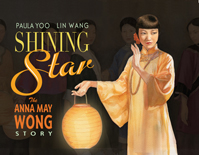
Synopsis: Born in 1905, Anna May Wong spent her childhood working in her family’s laundry in Los Angeles’s Chinatown. Whenever she could afford it, Anna May slipped off to the movies, escaping to a world of adventure, glamour, and excitement. After seeing a movie being filmed in her neighborhood, young Anna May was hooked. She decided she would become a movie star!
Anna May struggled to pursue an acting career in Hollywood in the 1930s. There were very few roles for Asian Americans, and many were demeaning and stereotypical. Anna May made the most of each limited part. She worked hard and always gave her best performance. Finally, after years of unfulfilling roles, Anna May began crusading for more meaningful roles for herself and other Asian American actors.
Anna May Wong—the first Chinese American movie star—was a pioneer of the cinema. Her spirited determination in the face of discrimination is an inspiration to all who must overcome obstacles so that their dreams may come true.
Awards and Honors:
Carter G. Woodson Award, NCSS
Children’s Books of the Year, Bank Street College of Education
Choices, Cooperative Children’s Book Center (CCBC)
Veronicahas a degree from Mount Saint Mary College and joined LEE & LOW in the fall of 2014. She has a background in education and holds a New York State childhood education (1-6) and students with disabilities (1-6) certification. When she’s not wondering around New York City, you can find her hiking with her dog Milo in her hometown in the Hudson Valley, NY.
0 Comments on Celebrating 25 Books Over 25 Years: Shining Star as of 1/1/1900
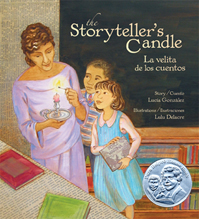
In honor of Women’s History Month, we’ve rounded up ten of our books that feature some amazing women of color! From a baseball player to an American politician, these women have helped pave the way for many others.
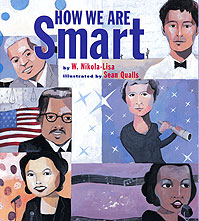
7. Patsy Mink, How We Are Smart – an American politician from the U.S. state of Hawaii
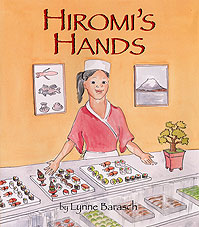
8. Hiromi Suzuki, Hiromi’s Hands – one of a handful of women in the male-dominated world of sushi chefs
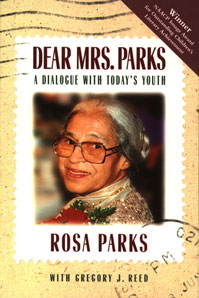
9. Rosa Parks, Dear Mrs. Parks: A Dialogue with Today’s Youth – Mrs. Parks changed the course of history when she was arrested for refusing to give up her seat to a white passenger on a Montgomery, Alabama bus, sparking the beginning of the Civil Rights Movement
I’d add to this list the real-life Lozen, the woman who inspired Joseph Bruchac’s character by the same name in KILLER OF ENEMIES. She was a warrior (beside Geronimo and her brother, Victorio) who defended the Apache people during a terrible time of war with the United States, as well as using her skill as a tracker (and some supernatural skills) to know where their enemies were coming from.
Eight Ways to Help Students Remember that Books ar said, on 3/22/2014 7:31:00 AM
[…] booktalks allow students to explore and develop their interests. Consider creating collections for Women’s History Month, Cesar Chavez Day, baseball season, National Poetry Month in April, and Earth […]
Doesn’t it seem as though many of the biographies written are about men and their accomplishments? Don’t get me wrong — there are plenty of admirable men who have changed the world through their daring, innovation, and wisdom. But how about the other half of the world’s population? Women just haven’t gotten the press they deserve. Luckily, biographies today are becoming vastly diverse with the individuals they feature and the fields in which those individuals excel. And that includes some great new biographies about women. Take a look at these three to share with your students (both male and female). The first is for younger students (grades K-3) and the other two are good for upper elementary (grades 4-6):
Dear Malala, We Stand With You by Rosemary McCarney with Plan International There have been several books written by, and about, Malala Yousafzai, but this picture book version is unique. It begins with a short biography of Malala and her 2012 shooting by the Taliban for being outspoken about education for girls, and her life in England now. The bulk of the book is a series of exquisite photographs of girls around the world and brief text describing their desire for an education, despite the many social, political, and economic restraints placed on them. The title ends with ways for the reader to help further Malala’s cause.
The Girl from the Tar Paper School: Barbara Rose Johns and the Advent of the Civil Rights Movement by Teri Kanefield
Barbara Johns, an African American high school student in Virginia in 1951, was appalled at the conditions of the make shift classrooms in their segregated school. Acting well beyond her years, she organized a peaceful walk out, demonstration, and boycott among her senior class to demand new facilities. They were ridiculed by the local school board, government, and police force. The NAACP agreed to take on the case, only if the students changed their demands to full integration. They agreed, and their case contributed to the 1954 Supreme Court ruling in Brown vs. Board of Education. The story begins with Barbara’s senior year, and flashes back to her early years, and then beyond. Remarkably, she grew up to become a school librarian! The book is filled with captioned photos, sidebars, quotations, and primary sources. The large font and strong voice makes for a swift read. The concluding author’s note is enlightening, and the timeline, endnotes, and extensive bibliography complete the book.
Rad American Women A-Z by Kate Shatz, illustrated by Miriam Klein Stahl
This is a collective biography of 26 women, described as “rebels, trailblazers, and visionaries who shaped our history…and our future” (cover copy). They represent diverse fields, ethnicities, ages, and geographic locations. Beginning with Angela Davis, and ending with Zora Neale Hurston, each biographee’s personality, challenges, and accomplishments are described in engaging text and accompanied by a simple black and white block cut illustration. The book concludes with an end note, a list of “26 Things that you can do to be rad!” (unp.)., and a list of resources.
Editor’s note: for many more recommended biographies of women, follow these tags: Biographies; Women’s History
Laurie Wallmark writes exclusively for children. The picture book biography, Ada Byron Lovelace and the Thinking Machine (Creston Books, October 2015), is Laurie’s first book.
There is a good deal of historical evidence for women’s leadership in the early church. But the references are often brief, and they’re scattered across centuries and locations. Two interpretations of the evidence have been common in the last forty years.
Over the past several decades, few fields of American history have grown as dramatically as women’s history. Today, courses in women’s history are standard in most colleges and universities, and historians regularly produce scholarship on women and gender. In 1981, historian Gerda Lerner provocatively challenged, “always ask what did the women do while the men were doing what the textbook tells us was important."
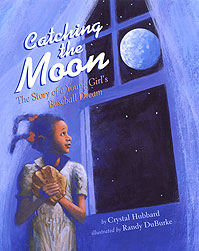
Catching the Moon was selected by the Screen Actors Guild Foundation for its latest read aloud on Storyline Online, an interactive literacy website where well-known actors read popular, award-winning children’s books to help students fall in love with reading.
Comprehension Questions for the Video or Read Aloud
Describe what Marcenia loves about baseball.
How does Marcenia feel about the way others treat her as a ball player? How do you know?
What does Marcenia do that ultimately changes her father and Mr. Street’s mind about her playing baseball and attending the camp? How will this experience help her when she is an adult trying to play on a men’s professional team?
At what point in Toni Stone’s life does the author, Crystal Hubbard, choose to begin? Why do you think she chooses to start there and not when Toni Stone is an adult playing as a professional ball player? What message does author Crystal Hubbard want young readers to learn from this story? Why?
Activity Suggestions
1. Have students compare and contrast Catching the Moon with other baseball biographies. How are their experiences similar? What barriers do they tackle? What character traits do they share that have allowed them to overcome obstacles? What legacies do they leave behind? How do they change people’s minds?
2. Have students research Mo’ne Davis, 13-year-old Philadelphia pitcher in the Little League and compare her experiences in baseball to Marcenia Lyle’s. The Anti-Defamation League’s Current Events Classroom has put together a lesson plan to learn more about Mo’ne Davis and explore gender stereotypes in sports.
3. Science in Baseball? Check out these extension ideas from Science Buddies:
4. Have students discover other women who played and were involved in black professional baseball. Check out the Negro Leagues Baseball Museum’s education resources made in partnership with Kansas State University. Students can learn about the roles African American women played at all levels of the league in the NLBM’s lesson plan.
5. Put Marcenia Lyle’s story in further context. With students, create a timeline of critical moments and milestones of women in American baseball. The National Baseball Hall of Fame has created a five lesson unit on women in baseball history.
If Youtube is blocked or unavailable at your school, find Storyline Online’s Catching the Moon read aloud video at:
How have you been teaching and celebrating Catching the Moon all these years? What lessons and activities did we miss? Share with us!
Jill Eisenberg, our Senior Literacy Expert, began her career teaching English as a Foreign Language to second through sixth graders in Yilan, Taiwan as a Fulbright Fellow. She went on to become a literacy teacher for third grade in San Jose, CA as a Teach for America corps member. She is certified in Project Glad instruction to promote English language acquisition and academic achievement. In her weekly column at The Open Book, she offers teaching and literacy tips for educators.
0 Comments on Celebrate and Teach About Baseball with Toni Stone as of 4/27/2015 9:45:00 AM
The flow of girls in particular from the safety of Britain into the war zones of the Middle East causes much hand-wringing. A report from the Institute for Strategic Dialogue says one in six of foreigners going to Syria and Iraq are women or girls.
Delmonico’s in New York opened in the 1830s and is often thought of as the first restaurant in the United States. A restaurant differs from other forms of dining out such as inns or taverns and while there have always been take-out establishments and food vendors in cities, a restaurant is a place to sit down to a meal.
March is Women’s History Month and as the United States gears up for the 2016 election, I propose we salute a pathbreaking woman candidate for president. No, not Hillary Rodham Clinton, but Shirley Chisholm, who became the first woman and the first African American to seek the nomination of the Democratic Party for president. And yet far too often Shirley Chisholm is seen as just a footnote or a curiosity, rather than as a serious political contender who demonstrated that a candidate who was black or female or both belonged in the national spotlight.
March is always a difficult time for me to be blogging here because I spend many hours working on KidLit Celebrates Women's History Month! I do hope you'll check it out. We spend a lot of time curating and maintaining the site, and our contributors are phenomenal authors, artists, librarians and bloggers that share a passion for women's history and children's literature. So, if my posts are sparse in March, you know the reason.
That being said, I have been busy in other areas. Today, you can find me just goofing around - blogging on the ALSC Blog. I write a monthly piece there and try to keep it fun!
Oh, and big newsfor Wendy Mass fans - there's going to be another book in the Willow Falls series - more on that after I've read it!
0 Comments on Women's History Month and other things as of 1/1/1900
I haven't been posting much lately, but it's not because I haven't been busy. Here's what I've been doing:
I'm a Round 2 Judge for Nonfiction -Early & Middle Grades. The finalists are listed below. A winner will be announced on February 14, 2015. Stay tuned and check out the finalists in all the other categories on theCybils site. I can't discuss the books, but you are free to comment on your favorites.
Angel Island: Gateway to Gold Mountain by Russell Freedman Clarion Books
Chasing Cheetahs: The Race to Save Africa’s Fastest Cat by Sy Montgomery Houghton Mifflin Harcourt
Feathers: Not Just for Flying by Melissa Stewart Charlesbridge
Handle With Care: An Unusual Butterfly Journey by Loree Griffin Burns Millbrook Press
Separate Is Never Equal: Sylvia Mendez and Her Family’s Fight for Desegregation by Duncan Tonatiuh Harry N Abrams
The Case of the Vanishing Little Brown Bats: A Scientific Mystery by Sandra Markle Millbrook Press
When Lunch Fights Back: Wickedly Clever Animal Defenses
by Rebecca L. Johnson
Millbrook Press
I'm honored to be the 2015 Co-Chair of the ALA/ALSC Great Websites for Kids Committee. If you've never taken advantage of this great resource, I urge you to check it out athttp://gws.ala.org/.
The site is continually updated with new sites added and outdated sites deleted. Suggestions and comments are always welcome. In December, we announced the seven newest sites to be added:
This year will mark the fifth anniversary of the KidLit Celebrates Women's History Month celebration. Each year, fellow librarian, Margo Tanenbaum and I, gather writers, illustrators, librarians and bloggers to highlight and celebrate and raise awareness of great books for young people that focus on women’s history. This year's celebration kicks off in March. Please, stay in touch with us and support the inclusion of women's history in books for young readers! Follow our blog,KidLit Celebrates Women's History Month.
Today, August 19th, the U.S. is celebrating National Aviation Day. This day was first established by a presidential proclamation of Franklin Delano Roosevelt in 1939 to celebrate advances in aviation. The date was chosen to coincide with Orville Wright’s birthday to recognize his contribution, together with his brother Wilbur, to the field of aviation — but it is a holiday meant to recognize all aviators who have advanced the field through their efforts. While the Wright brothers, Charles Lindbergh, and Amelia Earhart come to mind as the premier pioneering pilots, there are many unsung aviators. The books below highlight the stories of some of the most famous early female aviators and are the perfect way to celebrate National Aviation Day!
Night Flight: Amelia Earhart Crosses the Atlantic by Robert Burleigh with illustrations by Wendell Minor (K-3)
This book tells the story of Amelia Earhart’s historic crossing of the Atlantic on May 20, 1932, which made her the first woman to complete a solo flight across that ocean. The flight was a dramatic one, including both mechanical difficulties and fierce weather and both the prose and the paintings of this book capture the tension of the flight and the elation when Earhart touches down in Ireland. The book also includes a brief biography of Earhart, a list of additional sources on the subject and a fascinating collection of quotations from Earhart’s speeches and publications.
Sky High: The True Story of Maggie Gee by Marissa Moss with illustrations by Carl Angel (K-3)
Maggie Gee knew from a young age that she wanted to fly planes. It was a dream that stayed with her throughout her childhood and when World War II started, she leapt at the chance to serve her country by flying for the Women Airforce Service Pilots or WASPs. Despite stiff competition for a limited number of spots amongst the WASPs, Maggie succeeded, becoming one of only two Chinese American pilots in the organization. This book traces her path from her childhood dreams to her work as a WASP. An author’s note at the end fills in more details about her life after World War II and includes pictures of Maggie and her family throughout the time covered in the book.
Flying Solo: How Ruth Elder Soared Into America’s Heart by Julie Cummins with illustrations by Malene R. Laugesen (K-3)
While many know the story of Amelia Earhart’s flight across the Atlantic, fewer people know that Ruth Elder attempted to become the first woman to fly across the Atlantic years earlier in 1927. Though her attempt was cut short by a malfunction over the ocean, she nevertheless became famous, not only for her attempt but also for her later aviation exploits. This book tells her life story, focusing primarily on her attempt to fly across the Atlantic and her participation in a cross-country air race in 1929. Ruth’s story will excite fans of planes and flying and the illustrations will transport readers back to the 1920’s through their vivid details. The book also includes further sources of information about Ruth’s life as well as a final illustration that highlights a number of other important female aviators.
Fly High! The Story of Bessie Coleman by Louise Borden and Mary Kay Kroeger with illustrations by Teresa Flavin (4-6)
This book tells the story of Bessie Coleman, an African American woman who grew up in the south in the late 1800’s with a dream to get an education. When she moved to Chicago in 1915 for a chance at a better life, she discovered aviation and decided to head to France to pursue an opportunity to learn to fly. Once she had her license, Bessie returned to the U.S. where she flew in air shows and gave speeches encouraging others to follow her path. Though the book ends with the tragic tale of her death in a flying accident, the story is sure to inspire those interested in learning to fly.
Amelia Earhart: The Legend of the Lost Aviator by Shelley Tanaka with illustrations by David Craig (4-6)
Illustrated with a combination of paintings and photographs from Amelia Earhart’s life, this book is an impressive biography of a woman who is arguably the most famous female aviator in American history. Starting in her childhood and continuing until her disappearance in 1937, it offers a look into Amelia’s entire life, including aspects that are often glossed over in other books, such as her time as a nurse’s aide in Toronto and her work with two early commercial airlines. Both the pictures and the illustrations bring Amelia to life for readers and a list of source notes and other resources at the end of the book provide lots of options for further reading.
It's been a very long and busy week for me (and I've been sick with bronchitis), but things keep moving on, and so will I. Here's your news for Friday.
Enter to win a Who Was? book from Grosset & Dunlap's leading biography series.
Giveaway begins March 21, 2014, at 12:01 A.M. PST and ends April 20, 2014, at 11:59 P.M. PST.
In honor of Women’s History Month, we’ve rounded up ten of our books that feature some amazing women of color! From a baseball player to an American politician, these women have helped pave the way for many others.
7. Patsy Mink, How We Are Smart - an American politician from the U.S. state of Hawaii
8. Hiromi Suzuki, Hiromi’s Hands - one of a handful of women in the male-dominated world of sushi chefs
9. Rosa Parks, Dear Mrs. Parks: A Dialogue with Today’s Youth - Mrs. Parks changed the course of history when she was arrested for refusing to give up her seat to a white passenger on a Montgomery, Alabama bus, sparking the beginning of the Civil Rights Movement
I’d add to this list the real-life Lozen, the woman who inspired Joseph Bruchac’s character by the same name in KILLER OF ENEMIES. She was a warrior (beside Geronimo and her brother, Victorio) who defended the Apache people during a terrible time of war with the United States, as well as using her skill as a tracker (and some supernatural skills) to know where their enemies were coming from.
DIANE GOODE has illustrated 55 beloved and critically acclaimed picture books, including the New York Times best seller, FOUNDING MOTHERS and the Caldecott Honor Book, WHEN I WAS YOUNG IN THE MOUNTAINS.
Patricia Polacco is one of our great contemporary picture book authors, and specializes in picture books with serious content such as racism, disabilities, and even cancer, making them appropriate for older elementary school readers. In her newest book, which fits in perfectly for Women's History Month, she explores the girlhood of one of the most famous female figures of the 19th century, Clara Barton.
Clara was the fifth child to be born into the Barton family in Massachusetts, and with her mother in ill health, she was virtually raised by her siblings, particularly her older brother Davie, whom she adored. Joyous illustrations in Polacco's signature style show Davie showing Clara how to ride on a horse while she flings her arms in the air in delight. She helped Davie with his chores on the farm, and had an immediate affinity for nature and particularly with animals. But she had a speech impediment that made her shy and afraid of people; because no one understood this sort of problem in that day, her older sister punished her for not speaking correctly. School was a nightmare for her, and finally her parents agreed she could be taught at home. Even as a young girl, Clara had healing hands and neighbors let her treat their farm animals. When Clara's beloved brother Davie breaks both legs in an accident, she becomes his nurse and with her coaxing, urges him back to health, giving him the courage to try to walk again.
This is a touching introduction to a famous woman from history from a unique perspective--her love for her brother. Children will be able to easily identify with Clara's inhibitions, her love for nature, and animals, and her desire to help her brother heal. An author's note tells more about Barton's career as a teacher, nurse, and founder of the American Red Cross. In an intriguing author's note, we learn that Patricia Polacco herself is distantly related to Clara Barton, on her mother's side of the family, and they own a vase which is reputed to once have belonged to Clara Barton herself.
0 Comments on Women's History Month Book Review: Clara and Davie: the True Story of Young Clara Barton, Founder of the American Red Cross, by Patricia Polacco (Scholastic, 2014) as of 3/12/2014 9:46:00 AM
March is Women’s History Month and March 8th through 14th is the first ever National Catholic Sisters Week that is intended to celebrate the generations of sisters who have taught in schools, served in nursing homes, orphanages and hospitals throughout the United States. Generally they were the glue that, in many ways, held the institution of the Catholic Church together seamlessly. And they did this all with a quiet determination and dedication with little recognition other than the conviction that their lives and the thousands they touched, were a testament to the faith they believed in. Sadly their numbers are dwindling as young people choose other avenues of service.
All of this put me in mind of a wonderful picture book I remember called, “Sister Anne’s Hands” by Marybeth Lorbiecki with illustrations by Wendy Bopp.
Sister Anne is an African-American sister teaching in a parochial school in the 60’s. Her teaching and storytelling methods are inventive and interesting as Wendy Bopp’s illustrations portray Sister Anne’s students held in rapt attention when she speaks. Just imagine how hard that was to pull off with 50 something children in an average class at that time! The picture book’s story is told through the eyes of young Anna, a student in Sister Anne’s class who is confused when she overhears her parents say, “I don’t know how a woman of her color is going to survive.”
Sister Anne confronts the concrete meaning of that overheard phrase when a paper airplane sails through the air in her classroom with the following words written on it:
Roses are red.
Violets are blue.
Don’t let Sister Anne
Get any black on you.
The racial slur from a young unformed mind, obviously influenced by others, has Sister Anne react with a calm demeanor as she says she “needs quiet time to think about this.”
And Sister Anne opts to react to the racial discrimination in her young charges by informing them of her own experiences and heritage that causes some parents to withdraw their children from the class. But the children who remain are the fortunate ones. They are the recipients of the wisdom and talented teaching of a wonderful young woman who has an innate love for the young minds that come into her sphere for one special year. Young Anna in Sister Anne’s Hands and it seems, the author herself are both lucky enough to have come under the influence of a dedicated sister whose persona is only symbolic of the thousands like her. Wendy Bopp’s beautiful art work coupled with Ms. Lorbiecki’s view on a very contemporary issue of the 60’s is beautifully executed.
And in that same vein, this book put me in mind of a sister I once met that recently passed away. She became the teacher of a young African-American student named Clarence Thomas; the very same Clarence Thomas that went on to become a Supreme Court Justice. Her dedication to the teaching of young African American students at a time in our country’s history when it was, to say the least, frowned upon, was both heartfelt and heroic. This sister, and others of her order put the education of ALL children first. Her core belief, put into action, was that every student deserved to have an equal chance at reaching his or her goals and her entire life was in the service of that belief.
So to ALL the Sister Annes of this world, and especially to the sister that I just mentioned, “Thank you! For the world will not see your like again.” And by the way, I had a Sister Anne-like teacher too!
Recommended for ages 5 and up. Amy Novesky's most recent picture book, Mister and Lady Day, an ode to jazz great Billie Holiday and her pet dogs, just arrived at my library in time for Women's History Month.
This is Amy's fourth book on prominent female figures in cultural history; she has also penned Me, Frida (on artist Frida Khalo), Georgia in Hawaii (on artist Georgia O'Keefe), Imogen (on photographer Imogen Cunningham). She is currently working on a picture book on sculptor Louise Bourgeois.
Billie Holiday's tragic life. which included working as a prostitute, living in a workhouse with her mother, drug addiction, a prison sentence, and more, might not seem like a natural fit for a picture book for young children, and indeed, this side of Holiday's life does not appear in Novesky's book. Novesky focused instead on Holiday's love for her many dogs, and in particular for her boxer named Mister. Love for a dog, of course, is a theme that children identify easily with, as do many adults (OK, I'm a sucker for a good dog story).
We first meet Billie Holiday as a young girl, dreaming of being a star, singing on a borrowed gramophone. Illustrator Vanessa Brantley Newton, whose charming illustrations are done with gouache and charcoal with collage elements, depicts Billie in a beautiful setting on a fancy chair, dressed up with a bow in her hair (perhaps a bit fanciful given the realities of her childhood!). The next spread shows her already a star, the great Lady Day. (Illustrated 2-page spreads from the book can be seen on Novesky's website). Novesky introduces a note of melancholy in the text from the beginning, by explaining that even stars need someone to listen to them, and that's the role Lady Day's dogs played. We meet her small dogs, chihuahuas Pepe and Chiquita, her big dogs (a Great Dane named Gypsy, and finally her favorite dog of all, Mister, who we see in a fabulous illustration, walking with Billie on a leash wearing matching mink coats. Instead of a sidewalk, they are walking on a piano keyboard, with the buildings of New York in the background. Mister had the life of a star himself; he was so pampered he got to eat steak while she was performing in glamorous clubs, and he waited for her while she performed, even serving to keep eager fans at bay.
Novesky tells young readers that "Lady got into trouble. She had to leave home for a year and a day. And Mister couldn't come." In an afterword, she explains that Billie Holiday was in fact in jail during that time for drug possession. When she returned, Mister was there to welcome her, and even accompanied her to a grand concert at New York's Carnegie Hall. The story ends on a hopeful note, with Billie singing her heart out, and Mister listening in the wings.
An author's note gives some more background on Holiday's life, appropriately omitting some of the uglier facts, and provides additional sources and a web resource.
There's no CD with the book, but readers could easily find CD's of Holiday's unique singing style at the library or on YouTube, which would enrich the story.
This is a moving yet charming book about a difficult subject, and could be integrated into units on Black History Month, Women's History Month, or jazz.
0 Comments on Women's History Month Book Review: Mister and Lady Day: Billie Holliday and the Dog Who Loved Her, by Amy Novesky (Harcourt Children's Books, 2013) as of 3/10/2014 10:58:00 AM
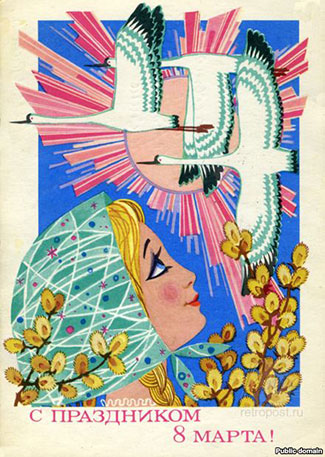
“March 8 is Women’s Day, a legal holiday,” I wrote to my mother from Moscow. “This is one of the many cute cards that is on sale now, all with flowers somewhere on them. We hope March 8 finds you well and happy, and enjoying an early spring! Alas, here it is -30° C again.”
I spent the 1978-79 academic year working in Moscow in the Soviet Academy of Science’s Institute of Crystallography. I’d been corresponding with a scientist there for several years and when I heard about the exchange program between our nations’ respective Academies, I applied for it. Friends were horrified. The Cold War was raging, and Afghanistan rumbled in the background. But scientists understand each other, just like generals do. I flew to Moscow, family in tow, early in October. The first snow had fallen the night before; women in wool headscarves were sweeping the airport runways with birch brooms.
None of us spoke Russian well when we arrived; this was immersion. We lived on the fourteenth floor of an Academy-owned apartment building with no laundry facilities and an unreliable elevator. It was a cold winter even by Russian standards, plunging to -40° on the C and F scales (they cross there). On weekdays, my daughters and I trudged through the snow to the broad Leninsky Prospect. The five-story brick Institute sat on the near side, and the girls went to Soviet public schools on the far side, behind a large department store. The underpass was a thriving illegal free-market where pensioners sold hard-to-find items like phone books, mushrooms, and used toys. Nearing the schools, we ran the ever-watchful Grandmother Gauntlet. In this country of working mothers, bundled bescarved grandmothers shopped, cooked, herded their charges, and bossed everyone in sight: Put on your hat! Button up your children!
At the Institute, I was supposed to be escorted to my office every day, but after a few months the guards waved me on. I couldn’t stray in any case: the doors along the corridors were always closed. Was I politically untouchable?
But the office was a friendly place. I shared it with three crystallographers: Valentina, Marina, and the professor I’d come to work with. We exchanged language lessons and took tea breaks together. Colleagues stopped by, some to talk shop, some for a haircut (Marina ran a business on the side). Scientists understand each other. My work took new directions.
I also tried to work with a professor from Moscow State University. He was admired in the west and I had listed him as a contact on my application. But this was one scientist I never understood. He arrived late for our appointments at the Institute without excuses or apologies. I was, I soon surmised, to write papers for him, not with him. I held my tongue, as I thought befits a guest, until the February afternoon he showed up two weeks late. Suddenly the spirit of the grandmothers possessed me. “How dare you!” I yelled in Russian. “Get out of here and don’t come back!” “Take some Valium” Valentina whispered; wherever had she found it? But she was as proud as she was worried. The next morning I was untouchable no more: doors opened wide and people greeted me cheerily, “Hi! How’s it going?”
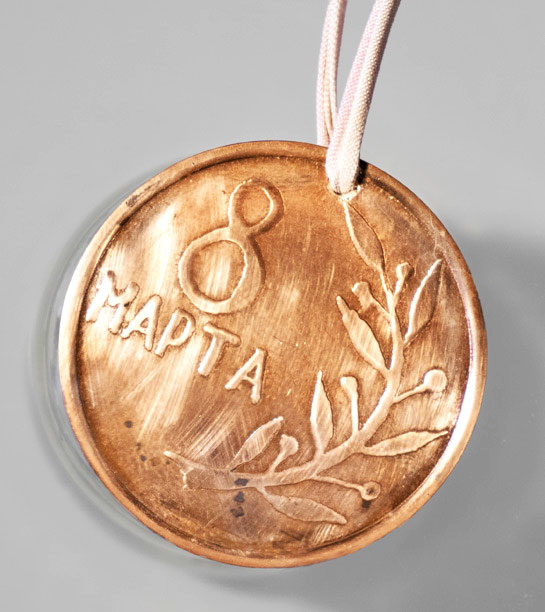
International Women’s Day, with roots in suffrage, labor, and the Russian Revolution, became a national holiday in Russia in 1918, and is still one today. In 1979, the cute postcards and flowers looked more like Mother’s Day cards, but men still gave gifts to the women they worked with. On 7 March I was fêted, along with the Institute’s female scientists, lab technicians, librarians, office staff, and custodians. I still have the large copper medal, unprofessionally engraved in the Institute lab. “8 марта” — 8 March — it says on one side, the lab initials and the year on the other. The once-pink ribbon loops through a hole at the top. Maybe they gave medals to all of us, or maybe I earned it for throwing the professor out of the Institute.
Women’s Day medal, courtesy of Marjorie Senechal.
I’ve returned to Russia many times; I’ve witnessed the changes. Science is changing too; my host, the Academy of Sciences founded by Peter the Great in 1724, may not reach its 300th birthday. But my friends are coping somehow, and I still feel at home there. A few years ago I flew to Moscow in the dead of winter for Russia’s gala nanotechnology kickoff. A young woman met me at the now-ultra-modern airport. She wore smart boots, jeans, and a parka to die for. “Put your hat on!” she barked in English as she led me to the van. “Zip up your jacket!”
Marjorie Senechal is the Louise Wolff Kahn Professor Emerita in Mathematics and History of Science and Technology, Smith College, and Co-Editor of The Mathematical Intelligencer. She is author of I Died for Beauty: Dorothy Wrinch and the Cultures of Science.
Subscribe to the OUPblog via email or RSS.
Subscribe to only physics and chemistry articles on the OUPblog via email or RSS.
In this picture book for older readers. Tracey Fern tells the little-known story of Eleanor Prentiss, an extraordinary woman who not only navigated a clipper ship but also set a record for the fastest time from New York to San Francisco, navigating around Cape Horn in a record-breaking 89 days, 21 hours.
If you're an avid movie-goer like I am, you may have seen the two major films this year set at sea, Captain Phillips and All is Lost. Such movies always make me think about the "olden days," when sailors navigated by the stars and a sextant. Doesn't it seem incredible? Even more incredible (but true) is the life of Eleanor Prentiss, born the daughter of a sea captain in 1814 and taught everything about ships, including navigation, by her father, perhaps because he had no sons. Certainly this education was highly unusual for a 19th century girl. The sea was in Ellen's blood, and, not surprisingly, she married a sea captain, who took her along on his merchant ships as her navigator.
When Ellen's husband was given command of a new, super-fast clipper ship, Ellen seized the opportunity to get as quickly as possible from New York to the tip of South America to San Francisco and the Gold Rush. Speed was of the essence for those looking for riches in the gold fields of California. The book portrays the considerable dangers of the voyage, including a period when the ship was becalmed (no wind, no movement!) and also the perilous stormy waters of the Cape. Fern does a terrific job of capturing the excitement of the journey, and Ellen's triumph when she sets a world record for the fastest time for this 15,000 mile voyage. The book is greatly enhanced by the beautiful water-color paintings of Caldecott-winning artist Emily Arnold McCully. The seascapes, and particularly the scenes of storms, are particularly effective. Back matter includes an author's note with further historical information, and suggestions for further reading, both books and websites, a glossary, and end pages which show a map of the Flying Cloud's 1851 Voyage.
Highly recommended for Women's History Month and for those looking for stories of strong, heroic women and girls!
0 Comments on Women's History Month Book Review: Dare the Wind: The Record-Breaking Voyage of Eleanor Prentiss and the Flying Cloud, by Tracey Fern (Margaret Ferguson Books, 2014) as of 3/7/2014 9:24:00 AM
I wish I had pulled things together so I could have planned a series of posts for Women's History Month. Fortunately, someone else was more on top of things. A group blog entitled Kidlit Celebrates Women's History Month will be posting on new books about women during the month of March.
0 Comments on Someone Is Observing Women's History Month as of 3/5/2014 10:36:00 PM
Women's History Month began on Saturday, March 1. You can learn more about outstanding children's books on women's history by following the 4th annual group blog which I co-organize with fellow blogger/librarian Lisa Taylor, Kidlit Celebrates Women's History Month, Once again we will feature posts from distinguished authors, illustrators, librarians and bloggers, and we invite you to participate in the conversation. This year's contributors will include authors Tonya Bolden,Sandra Neil Wallace and Gretchen Woelfie, librarian Penny Peck, and many others. In addition to the blog, you can also access our content on Facebook, Twitter, and Pinterest. While new content is published only in March, the blog is available all year long as a resource for librarians, parents, and educators. Please join us in our 4th annual celebration!
Here at the Fourth Musketeer I will also be highlighting books about women in history this month. Today I will be reviewing Demi's newest book on Florence Nightingale. Demi has published over 150 books during her long career, many of them large format biographical picture books aimed at elementary school-aged students. In addition to their informative text, Demi's biographies showcase her unique artistic style, which features a strong Asian influence, traditional materials, intricate patterns, and vibrant, glowing colors.
When I was a girl in the 1960's and '70's, Florence Nightingale would have been one of the only women from history you would have been likely to find a book on in the children's biography section of your local library, although I would be reasonably certain that I could not have found a biography as beautifully illustrated as this new one. On the end pages and title page, we see Florence as the iconic Lady of the Lamp. The book unfolds in a traditional linear narrative, beginning with Florence's birth and girlhood. She was born into a very wealthy British family, where she had all the advantages of an upper class upbringing. But her interest in nursing and helping others began at a young age; Demi shows us Florence as a little girl playing hospital with her dolls. Her interest in nursing intensified on a family trip to the Continent when in addition to seeing the tourist sights, she visited hospitals and charities. Her parents were opposed to her becoming a nurse, but eventually relented when they saw her commitment.
Demi's text and artwork show Florence's career progressing from working at a hospital for indigent women to her groundbreaking work nursing soldiers in the Crimean War, where she arranged for patients to get healthy food and water and stressed the need for cleanliness. We see Florence wandering the wards at night with her lantern, earning her nickname, The Lady with the Lamp.
Florence worked herself to exhaustion and suffered ill health later in her life. Nonetheless, she continued to work for the poor and downtrodden in society, and inspired the founding of the International Red Cross.
Demi's book not only provides an outline of Florence Nightingale's remarkable life but also considers her legacy as an extraordinary woman in history. Back matter includes a timeline and suggestions for further reading.
This slim but powerful volume is a must for school and public libraries.
0 Comments on Women's History Month Book Review: Florence Nightingale, by Demi (Henry Holt, 2014) as of 3/3/2014 10:52:00 AM




 LEE & LOW BOOKS celebrates its 25th anniversary this year and to recognize how far the company has come, we are featuring one title a week to see how it is being used in classrooms today as well, as hear from the authors and illustrators.
 working in her family’s laundry in Los Angeles’s Chinatown. Whenever she could afford it, Anna May slipped off to the movies, escaping to a world of adventure, glamour, and excitement. After seeing a movie being filmed in her neighborhood, young Anna May was hooked. She decided she would become a movie star!

 Veronica has a degree from Mount Saint Mary College and joined LEE & LOW in the fall of 2014. She has a background in education and holds a New York State childhood education (1-6) and students with disabilities (1-6) certification. When she’s not wondering around New York City, you can find her hiking with her dog Milo in her hometown in the Hudson Valley, NY.


 Dear Malala, We Stand With You by Rosemary McCarney with Plan International
 The Girl from the Tar Paper School: Barbara Rose Johns and the Advent of the Civil Rights Movement by Teri Kanefield
 Rad American Women A-Z by Kate Shatz, illustrated by Miriam Klein Stahl


.jpg)




 Night Flight: Amelia Earhart Crosses the Atlantic by Robert Burleigh with illustrations by Wendell Minor (K-3)
 Sky High: The True Story of Maggie Gee by Marissa Moss with illustrations by Carl Angel (K-3)
 Flying Solo: How Ruth Elder Soared Into America’s Heart by Julie Cummins with illustrations by Malene R. Laugesen (K-3)
 Fly High! The Story of Bessie Coleman by Louise Borden and Mary Kay Kroeger with illustrations by Teresa Flavin (4-6)
 Amelia Earhart: The Legend of the Lost Aviator by Shelley Tanaka with illustrations by David Craig (4-6)





I’d add to this list the real-life Lozen, the woman who inspired Joseph Bruchac’s character by the same name in KILLER OF ENEMIES. She was a warrior (beside Geronimo and her brother, Victorio) who defended the Apache people during a terrible time of war with the United States, as well as using her skill as a tracker (and some supernatural skills) to know where their enemies were coming from.
[…] booktalks allow students to explore and develop their interests. Consider creating collections for Women’s History Month, Cesar Chavez Day, baseball season, National Poetry Month in April, and Earth […]