It is far too early to tear down the barricades. Dancing shoes will not do. We still need our heavy boots and mine detectors.
—Jane Marcus, "Storming the Toolshed"
1. Seeking Refuge in Feminist Revolutions in ModernismLast week, I spent two days at the
Modernist Studies Association conference in Boston. I hadn't really been sure that I was going to go. I hemmed and hawed. I'd missed the call for papers, so hadn't even had a chance to possibly get on a panel or into a seminar. Conferences bring out about 742 different social anxieties that make their home in my backbrain. I would only know one or maybe two people there. Should I really spend the money on conference fees for a conference I was highly ambivalent about? I hemmed. I hawed.
In the end, though, I went, mostly because my advisor would be part of a seminar session honoring the late
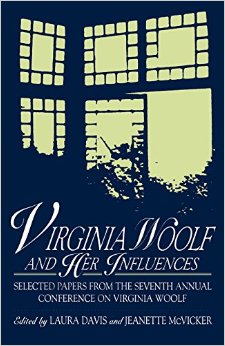
Jane Marcus, who had been her advisor. (I think of Marcus now as my grandadvisor, for multiple reasons, as will become clear soon.) The session was titled "Thinking Back Through Our Mothers: Feminist Revolutions in Modernism", the title being an homage to Marcus's essay "Thinking Back Through Our Mothers" from the 1981 anthology
New Feminist Essays on Virginia Woolf, itself an homage to the phrase in Woolf's
A Room of One's Own. Various former students and colleagues of Marcus would circulate papers among themselves, then discuss them together at the seminar. Because of the mechanics of seminars, participants need to sign up fairly early, and I'd only registered for the conference itself a few days before it began, so there wasn't even any guarantee I'd been able to observe; outside participation is at the discretion of the seminar leader. Thankfully, the seminar leader allowed three of us to join as observers. (I'm trying not to use any names here, simply because of the nature of a seminar. I haven't asked anybody if I can talk about them, and seminars are not public, though the participants are listed in the conference program.)
Marcus was a socialist feminist who was very concerned with bringing people to the table, whether metaphorical or literal, and so of course nobody in the seminar would put up with the auditors being out on the margins, and they insisted that we sit at the table and introduce ourselves. Without knowing it, I sat next to a senior scholar in the field whose work has been central to my own. I'd never seen a picture of her, and to my eyes she looked young enough to be a grad student (the older I get, the younger everybody else gets!). When she introduced herself, I became little more than a fanboy for a moment, and it took all the self-control I could muster not to blurt out some ridiculousness like, "I just love you!" Thankfully, the seminar got started and then there was too much to think about for my inner fanboy to unleash himself. (I did tell her afterwards how useful her work had been to me, because that just seemed polite. Even senior scholars spent a lot of hours working in solitude and obscurity, wondering if their often esoteric efforts will ever be of any use to anybody. I wanted her to knows that hers had.) It soon became the single best event I've ever attended at an academic conference.
 |
| Jane Marcus |
To explain why, and to get to the bigger questions I want to address here, I have to take a bit of a tangent to talk briefly about a couple of other events.
The day before the Marcus seminar, I'd attended a terrible panel. The papers that were about things I knew about seemed shallow to me, and the papers not about things I knew about seemed like pointless wankery. I seriously thought about just going home. "These are not my people," I thought. "I do not want to be in their academic world."
I also attended a "keynote roundtable" session where three scholars — Heather K. Love, Janet Lyon, and Tavia Nyong’o — discussed the theme of the conference: modernism and revolution. Sort of. It was an odd event, where Love and Nyong'o were in conversation with each other and Janet Lyon was a bit marginalized, simply because her concerns were somewhat different from Love and Nyong'o's and she hadn't been part of what is apparently a longstanding discussion between them. I mention this not as criticism, really, because though the side-lining of Lyon felt weird and sometimes awkward, the discussion was nonetheless interesting and vexing in a productive way. (I know Love and Nyong'o's work, and appreciate it a lot.) I especially appreciated their ideas about academia as, ideally, a refuge for some types of people who lack a space in other institutions and have been marginalized by ruling powers, even if there are no real solutions, given how deeply infused with ideas of finance and "usefulness" the contemporary university is, how exploitative are the practices of even small schools. (Nyong'o works at NYU, an institution that has become
the mascot for neoliberalism. His recent blog essay
"The Student Demand" is important reading, and was referenced a number of times during the roundtable.) As schools make more and more destructive decisions at the level of administration and without the faculty having much obvious ability to challenge them, the position of the tenure-tracked, salaried faculty member of conscience is difficult, for all sorts of reasons I won't go into here. As Nyong'o and Love pointed out, the moral position must often be that of a criminal in your own institution.
All of this was on my mind the next day as I listened to discussions of Jane Marcus. After the seminar, some of us went out to lunch together and the discussion continued. What I kept thinking about was the idea of refuge, and the way that certain traditions of teaching and writing have opened up spaces of refuge within spaces of hostility. Marcus stands as an exemplar here, both in her writing and her pedagogy. The question everyone kept coming back to was: How do we continue that work?
In her 1982 essay "Storming the Toolshed", Marcus reflected on the position of various feminist critics ("lupines" — she appropriated Quentin Bell's dismissive term for feminist Woolfians, reminding us that it is also a name for a
flower):
Feminists often feel forced by economic realities to choose other methodologies and structures that will ensure sympathetic readings from university presses.We may be as middle class as Virginia Woolf, but few of us have the economic security her aunt Caroline Emelia Stephen's legacy gave her. The samizdat circulation among networks of feminist critics works only in a system where repression is equal. If all the members are unemployed or underemployed, unpublished or unrecognized, sisterhood flourishes, and sharing is a source of strength. When we all compete for one job or when one lupine grows bigger and bluer than her sisters with unnatural fertilizers from the establishment, the ranks thin out. Times are hard and getting harder.
Listening to her students and colleagues remember her, I was struck by how well Marcus had tended her own garden, how well she had tried to keep it from being fatally poisoned by the unnatural fertilizers of the institutions of which she was a part. She found opportunities for her students to research and publish in all sorts of places, she supported scholars she admired, and when she couldn't find opportunities for other people's work, she did was she could to create them. She was tenacious, dogged, sometimes even insufferable. This clearly did not always lead to the easiest of relationships, even with some of her best friends and favorite students. As with so many brilliant people, her virtues were intimately linked to her faults. Jane Marcus without her faults would not have been Jane Marcus. Faults and all ("I've never been so mad at somebody!"; "We didn't speak to each other for a year"), again and again people said: "Jane gave me my life."
There seemed to be a sense among the seminar participants that the sort of politically-committed, class-conscious feminism that Marcus so proudly stood for is on the wane in academia, and that while the field of modernist studies may be more open to marginalized writers than it was 30 or 40 years ago, the teaching of modernism in university classes remains very male, very Eliot-Pound-Joyce, with a bit of Woolf thrown in as appeasement to the hysterics. (I have no idea whether this is generally accurate, as I have not done any study of what's getting taught in classes that cover modernist stuffs, but it was the specific experience of a number of people at the conference.) Since the late '90s, there's been the historically-minded New Modernist Studies*, but the question keeps coming up: Does the New Modernist Studies do away with gender ... and if so, is the New Modernist Studies a throwback to the pre-feminist days? Anne Fernald looked at the state of things in the introduction to the
2013 issue of Modern Fiction Studies that she edited, an issue devoted to women writers:
The historical turn has revitalized modernist studies. Beginning in the late 1990s, its impact continues in new book series from Oxford and Columbia University Presses; in the Modernist Studies Association (MSA), whose annual conference has attracted hundreds of scholars; and in burgeoning digital archives such as the Modernist Journals Project. Nonetheless, one hallmark of the new modernist studies has been its lack of serious interest in women writers. Mfs has consistently published feminist work on and by women writers, including special issues on Spark, Bowen, Woolf, and Stein; still, this is the journal’s first issue on feminism as such in nineteen years. Modernism/modernity, the flagship journal of the new modernism and the MSA, has not, in nineteen years, devoted a special issue to a women writer or to feminist theory. Only eight essays in that journal have “feminist” or “feminism” as a key term, while an additional twenty-six have “women” as a key term. And, although The Oxford Handbook of Global Modernisms includes many women contributors, only one of the twenty-eight chapters mentions women in its title, and, of the six authors mentioned by name, only one—Jean Rhys—is a woman.
Similarly, Marcus's socialism and Marxism may not be especially welcome among the New Modernists, for as Max Brzezinski polemically suggests in
"The New Modernist Studies: What's Left of Political Formalism?", the
New in
New Modernist Studies could easily slip into the
neo in
neo-liberal.
For scholars who have at least some sympathy with Marcus's political stance, there's a lot of deja vu, even weariness. How long, they wonder, must the same battles be fought?
For once, I'm not as pessimistic as other people. Routledge is launching a new journal of feminist modernism (with Anne Fernald as co-editor). Within the world of Virginia Woolf studies, much attention is being paid to Woolf's connections to anti-colonialism and to her ever-more-interesting writings in the last decade of her life. There is a strong transnational and postcolonial tendency among many scholars of modernism of exactly the sort that Marcus herself called for and exemplified, particularly in her later writings. Vigilance is necessary, but vigilance is always necessary. Networks of scholars and traditions of inquiry that Marcus participated in, contributed to, and in some cases founded remain strong.
As some of the people at the conference lamented the steps backward to regressive, patriarchal views, I thought of how lucky I've been in how I've learned to read and perceive this undefinable thing we call "modernism". The modernisms I perceive are ones where women are central. The Joyce-Pound-Eliot modernism is one I'm familiar with, but not one I think of first.
2. ForemothersI discovered Woolf right around the time I discovered Joyce and Kafka. I was too young (12 or 13) to understand any of their work in any meaningful way, but something about them fascinated me. I flipped through their books, which I found at the local college library. I read Kafka's shortest stories. I memorized the first few lines of
Finnegans Wake, though never managed to get more than a few pages into the book itself. I read
A Portrait of the Artist as a Young Man, enjoying the first chapter very much and not getting a lot from the later ones (I still don't, honestly. My tastes aren't Catholic enough). I skimmed the last section of
Ulysses, looking to see how Joyce made Molly Bloom's stream of consciousness work. And then I read the first few pages of
Mrs. Dalloway. That wasn't a library book, but a book I bought with my scant bits of allowance money, saved up for probably a month. It was a mass market paperback with a bright yellow cover. I read the first 50 or so pages of the book and found it enthralling and perplexing. It ended up being too much for me. But there was something there. The first paragraphs were among the most beautiful things I'd ever read.
Skip ahead five or six years and I'm a student at NYU, studying Dramatic Writing. A friend I respect exhorts me to take a course with Ilse Dusoir Lind, who has mostly retired but comes back now and then to teach a seminar, this term on Faulkner and Hemingway. She wrote some of the earliest critical articles on Faulkner and, she later tells me, helped found the Women's Studies program at NYU. My friend was right: her class is remarkable. I don't much like Hemingway except for some of his short stories, but she takes us through
The Sun Also Rises, various stories, and
The Garden of Eden with panache. (I particularly remember how ridiculous and yet captivating she thought
The Garden of Eden was.) And then of course Faulkner, her great love. She taught us to read
The Sound and the Fury and
Absalom, Absalom!, for which I will always be grateful. Thus, my first experience of academic modernism was an experience of two of the most major of major modernist men seen through the eyes of a brilliant woman.
Skip ahead a year or so later and I've just finished my junior year of college. I've decided to transfer from NYU to UNH for various reasons. It's a tough summer for me, a summer of reckoning with myself and my world. I work at the
Plymouth State College bookstore, a place I've worked on and off for a number of summers since middle school. That June, the College is hosting the
International Virginia Woolf Society's annual conference, organized by a relatively new member of the PSC English Department,
Jeanne Dubino. My colleagues at the bookstore are all working as volunteers at the conference. They introduce me to Jeanne and I join the ranks of the volunteers. The bookstore goes all-out with displays. We stock pretty much every book by and about Woolf in print in the US. I remember opening the boxes and helping to shelve the books. None of us were efficient at shelving because we couldn't stop looking at the books.
Hermione Lee's
biography had just come out and we hung a giant poster of it up. I bought a copy (35% employee discount!) and began to devour it. One night, I was working the registration desk. Hermione Lee came in. She was giving the keynote address. She was late, having been delayed by weather or something. She was tired, but friendy. "Can I still get my registration materials?" she asked. "Certainly," I said. "And might I ask you to sign my book in return?" She laughed, said of course, and did so while I finished with her paperwork.
I found the conference enthralling. I never wanted to go home. (My parents had just divorced; being at the conference was much more fun than being at the house with my father.) The passion of the participants was contagious. Jeanne was astoundingly composed and friendly for someone in charge of a whole academic conference, and we continued to talk about Woolf now and then until she left Plymouth for other climes. I got to know Woolf because I got to know Jeanne.
Skip forward 6 months to the spring term of my senior year at UNH. By some bit of luck and magic, the English Department offered an upper-level seminar on Woolf this term and I was able to fit it into my schedule. I was the only male in the class, and relatively early on one of the other students said to me, in a tone of voice reserved for a rare and yet quite unappealing insect, "Why are you here?" (What did I reply? I don't remember. I probably said because I like Woolf. Or maybe: Why not?) The instructor was Jean Kennard. We read all of the novels except
Night and Day, plus we read
A Room of One's Own,
Three Guineas, and numerous essays. It was one of the hardest courses I've ever taken, either undergrad or grad, and one of the best. It exhausted me to the bone, and yet I wouldn't have wanted it to do anything less. Few courses have ever stayed with me so well or let me draw on what I learned in them for so long. Prof. Kennard was exacting, interesting, and intimidatingly knowledgeable. I didn't dare read with anything less than close attention and care, even if that meant not sleeping much during the term, because I feared she would ask me a question in class and I would be unprepared and give a terrible answer, and there was no way I was going to allow myself to do that because I already identified as someone for whom Virginia Woolf's work was important. I figured either I'd do well in the class or I'd collapse and be put on medical leave. (I had other classes, of course, and I was acting in some plays, and there was a bit of work on the side to give me some income, so not many free hours for sleeping.)

In the days of the
LitBlog Co-op in the early 2000s, I met
Anne Fernald. I didn't know she was a Woolfian or involved in modernist studies; I knew her as a blogger. Eventually, we talked about Woolf. (When I moved to New Jersey in the summer of 2007, Anne gave me a tour of the area. I remember asking her how
work on a critical edition of
Mrs. Dalloway was coming, naively expecting that work must be almost done. We had to wait a few more years. It was worth the wait.)
I didn't really encounter modernism in a classroom again until recently, because it wasn't a part of my master's degree work, except peripherally in that to study Samuel Delany's influences, which I did for the master's thesis, meant to study a lot of modernism, though modernism through his eyes. But his eyes are those of a black, queer man influenced by many women and committed to feminism, so once again my view of modernism was not that of the patriarchal white order, even though plenty of white guys were important to it.
And then PhD classes and research, where once again women were central. (It was in one such class that I first read Jane Marcus's
Hearts of Darkness: White Women Write Race.)
Thus, this quick overview of my own journey is a story of women and modernism. My own learning is very much the product of the sorts of efforts that Marcus and other feminist modernists made possible, the work they devoted their lives to. They are my foremothers, and the foremothers of so many other people as well. My experience may be unique in its weird bouncing across geographies and decades and media (I've never been very good at planning my life), but I hope it is not uncommon.
3. Reading MarcusI've been reading lots of Jane Marcus for the last month or so. Previously, I'd only read
Hearts of Darkness and a couple of the most famous earlier essays. Now, though, I've been combing through books and databases in search of her work. (At the MSA seminar, someone who had had to submit Marcus's CV for a grant application said it was 45 pages long. She published hundreds of essays and review-essays in addition to her books.)
I'm tempted to drop lots of quotes here — Marcus is eminently quotable. But perhaps a better use of this space would be to think about Marcus's own style of writing and thinking, the way she formed and organized her essays, which, much like Woolf's many essays, show a process of thought in development.
At the end of the first chapter of
Hearts of Darkness, which collects some of her more recent work, Marcus writes:
The effort of these essays is toward an understanding of what marks the text in its context, to hear the humming noise whose rhythm alerts us to the time and place that produced it, as well as the edgy avant-garde tones of its projection into the modernist future. For modernism has had much more of a future than one could have imagined. In a new century the questions still before me concern the responsibility for writing those once vilified texts into classic status in a new social imaginary. If it was once the critic's role to argue the case for canonizing such works, perhaps it is now her role to question their status and explore their limits.
This statement concisely maps the direction of Marcus's thinking over the course of her career. Her efforts were first to recover texts that had fallen out of the sight of even the most serious of readers, then to advocate for those texts' merits, then to convince her students and colleagues to add those texts to curricula and, in many cases, to help bring them back into print. She argued, for instance, for a particular version of Virginia Woolf, one at odds with a common presentation of Woolf as fragile and apolitical and sensitive and tragic. Marcus was having none of that. Woolf was a remarkably strong woman, a nuanced political thinker whose ideas developed significantly over time and came to a kind of fruition in the 1930s, and a far more complex artist than she was said to be. Later, though, Marcus didn't need Woolf to be quite so much of a hero. She was still all the things she had been before, but she was also flawed, particularly when it came to race. The Woolf that Marcus looks at in
"'A Very Fine Negress'" and
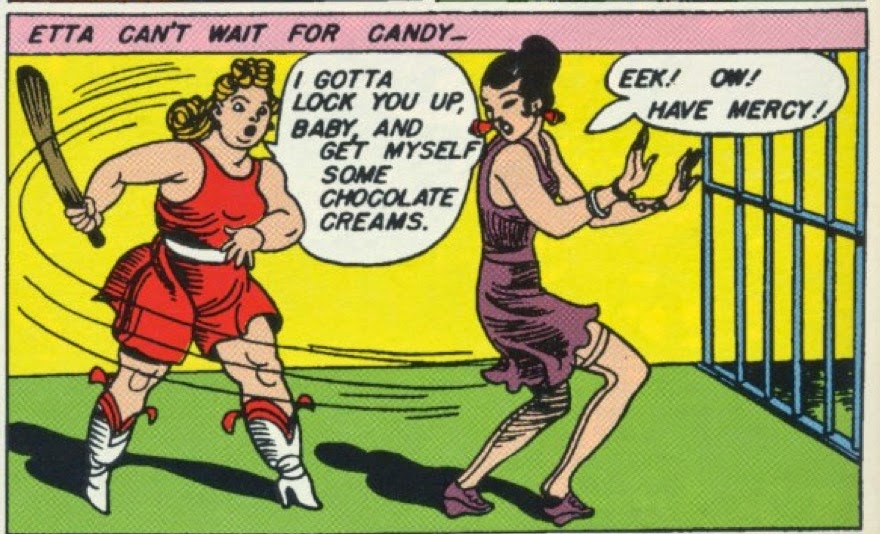
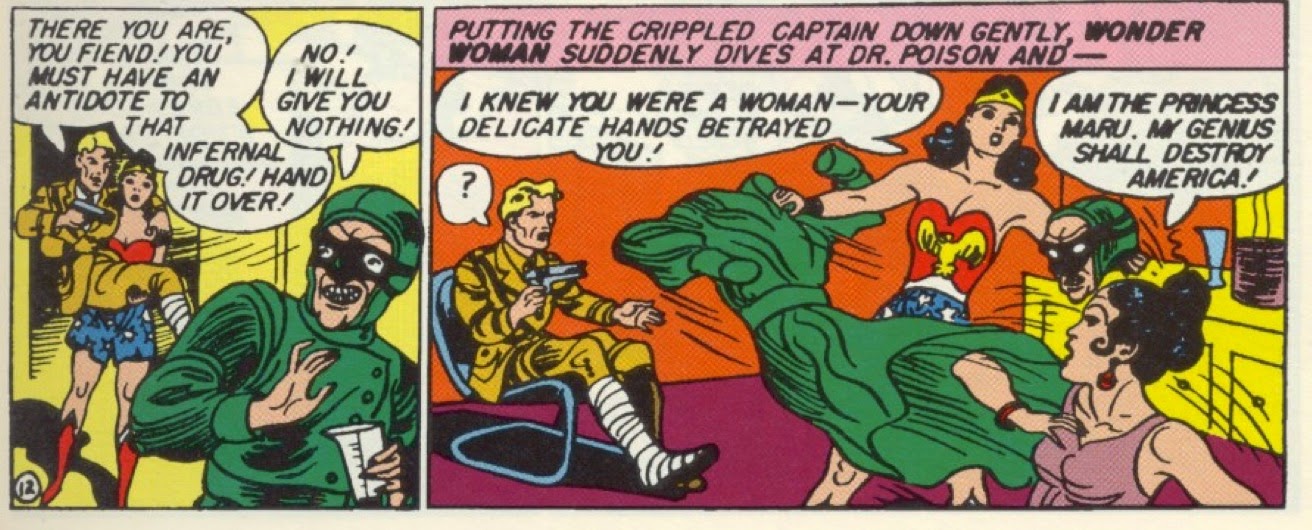
"Britannia Rules The Waves" is in many ways an even more interesting Woolf than in Marcus's earlier writings, because she is still a Woolf of immense depth but also immense contradictions and blind spots and very human failures of perception and sympathy. Marcus's earlier Woolf is Wonder Woman (though one too often mistaken for a mousy, oversensitive, snobby, mentally ill
Diana Prince), but her later Woolf is more like a brilliant, frustrating friend; someone striving to overcome all sorts of circumstances, someone capable of the most beautiful creations and insights, and yet also sometimes crushingly disappointing, sometimes even embarrassing. A human Woolf from whom we can learn so much about our own human failings. After all, if someone as remarkable as Woolf could be so flawed in some of her perceptions, what about us? In exploring the limits and questioning the status of the works we once needed to argue into the mainstream conversation, we also remind ourselves of our own limits, and perhaps we develop better tools with which to question our own status in whatever places, times, and circumstances we happen to inhabit.
This is not to say that Marcus's early work is irrelevant. Not at all. It is still quite thrilling to read, and rich with necessary insights. (If anything, it does make me sad that a number of her best, most cutting insights about academia and power relations remain fresh today. There's been progress, yes, but not nearly enough, and much that was bad in the past repeats and repeats into our future.) Here's an example, from
a May 1987 review in the Women's Review of Books of
E. Sylvia Pankhurst: Portrait of a Radical by Patricia Romero, a book Marcus thought misrepresented and misinterpreted its subject. Near the end, after detailing all the ways Romero fails Pankhurst, Marcus makes a sharp joke:
Sylvia Pankhurst has had her come-uppance so many times in this book that there's hardly anywhere for her to come down to. Romero says that she met her husband on the same day that she met Sylvia Pankhurst's statue in Ethiopia. One hopes that he fared better than Sylvia.
Ouch. But this joke serves as a conclusion to the litany of Romero's failures as Marcus saw them and turns then to a larger point:
Let it be clear that I am not calling for nurturant biographies of feminist heroines. I, too, as a student of suffrage, have several bones to pick with Sylvia Pankhurst. In writing The Suffragette Movement she not only distorted history to aggrandize the role of working-class suffragettes in winning the vote, but, more importantly, she wrote the script of the suffrage struggle as a family romance, a public Cinderella story with her mother and sister cast as the Wicked Stepmother and Stepsister. It was this script which provided George Dangerfield and almost every subsequent historian of suffrage with the materials for reading the movement as a comedy. Sylvia provided them with a false class analysis which persists. Patricia Romero now unwittingly wears the mantle woven by Sylvia Pankhurst as the historian so bent on the ruthless exposure of her subject that she gives the enemies of women another hysteric to batter — though the prim biographer would doubtless be horrified at the suggestion that the Sylvia Pankhurst whom she despises and exposes was engaged in a project similar to her own and is, in fact, her predecessor.
Such an amazingly rich paragraph! The review up to now has been Marcus showing the ways that she thinks Romero misrepresents Sylvia Pankhurst, and the effect is mostly to make us think Marcus venerates Pankhurst totally and is defending the honor of a hero against a detractor. But no. Her message is that feminist history deserves better: it deserves accuracy.
Both Romero and Pankhurst failed this imperative by letting their ideologies and prejudices hide and mangle nuances. Both Romero and Pankhurst, wittingly or unwittingly, presented the deadly serious history of the suffrage movement as comedy. Both, wittingly or unwittingly, provided cover and even ammunition for misogynistic discourse. And that, ultimately, is the argument of Marcus's review. She sees her job as a reviewer not to be someone who gives thumbs up or thumbs down, but to be someone who can analyze what sort of conversation the book under review enters into and supports. The limitations she sees in the book are not just the limitations of one book, but limitations endemic to an entire way of presenting history.

She then brings the review back to Pankhurst and Romero's portrait of her, and now we as readers can appreciate a larger vantage to the evaluation, because we know it's not just about this book, but about historiography and feminism. Marcus mentions some other, better books (a hallmark of her reviews: she never leaves the reader wondering what else there is to read — in negative reviews such as this one, it's books that do a better job; in positive reviews, it's other books that contribute valuable knowledge to the conversation), then:
The problem with the historian's project of setting the record straight is that it flourishes best with a crooked record, the crookeder the better. Romero has found in Sylvia Pankhurst's life the perfect crooked record to suit her own iconoclastic urge.
We might think that Marcus here is holding herself apart from "the historian's project of setting the record straight", that she is setting herself up as somehow perfect in her own sensibilities. But in the next sentence she shows that is not the case:
Admitting one's own complicity as a feminist in all such iconoclastic activity, one is still disappointed in the results. I came to this book anticipating with a certain relish the pleasure of seeing Sylvia Pankhurst put in her place. But because the author writes with such contempt for her subject as well as for activism of all kinds, I came away with a deep respect for Sylvia Pankhurst and the work she did for social justice.
To be a feminist is to be iconoclastic. To be a feminist is to be faced with many crooked records. But this book can serve, Marcus seems to be saying, a warning of what can happen when the desire to be an iconoclast overcomes the desire to be accurate, and when one is tempted to add some crooks to the record before straightening it out. The danger is clearly implied: Beware that you do not depart too far from accuracy, lest you lead your reader to the opposite of the conclusions you want to impart.
Marcus would have been a wonderful blogger. Her writing style is discursive, filled with offhand references that would make for marvelous hyperlinks, and she doesn't waste a lot of time on transitions between ideas. At the MSA seminar, someone said that Marcus's process was to write lots of fragments and then edit them together when she needed a paper. Her writing is a kind of assemblage, both in the sense of
Duchamp et al. and of
Deleuze & Guattari.
(In the course where we read
Hearts of Darkness, one of the other students pointed out that Marcus jumps all over the place and rarely seems to have a clear thesis — her ideas are accumulative, sometimes tangential, a series of insights working together toward an intellectual symphony. If we were to write like that, this student said, wouldn't we just get criticized for lack of focus, wouldn't our work be rejected by all the academic publishers we so desperately need to please if we are to have any hope of getting jobs or tenure? "She can write like that," our instructor said, "because she's Jane Marcus." Which in many ways is true. We read Jane Marcus to follow the lines of thought that Jane Marcus writes. It's hard to start out writing like that, but once you have a reputation, once your work is read because of your byline and not just because of your subject matter, you have more freedom of form. And yet I also think we should be working toward a world that allows and perhaps even encourages such writing, regardless of fame. Too many academic essays I read are distorted by the obsession with having a central claim; they sacrifice insight for repetitious metalanguage and constant drumbeating of The Major Point. It's no fun to read and it makes the writing feel like a tedious explication of the essay's own abstract. Marcus's writing has the verve, energy, and surprise of good essayistic writing. This was quite deliberate on her part — see her comments in
"Still Practice, A/Wrested Alphabet: Toward a Feminist Aesthetic" on Woolf as an essayist versus so many contemporary theorists. I don't entirely agree with her argument, since I don't think "difficult" writing should only be the province of "creative writers" and not critics, but I'd also much prefer that writers who are not geniuses aspire to write more like Woolf in her essays than like Derrida. And the insistence that academic writers build Swamp Thing jargonmonsters to prove their bona fides is ridiculous.)
Her discursive, sometimes rambling style serves Marcus well because it allows her to connect ideas that might otherwise get left by the wayside. Marcus makes the essay form do what it is best at doing. Her 1997 essay
"Working Lips, Breaking Hearts: Class Acts in American Feminism" masterfully demonstrates this. At its most basic level, the essay is a review (or, as Marcus says, "a reading") of
Listening to Silences: New Essays in Feminist Criticism, which builds off of the work of Tillie Olsen, particularly her invaluable book
Silences. But Marcus's essay is far more than just a look at this one anthology — it is also a tribute to
Tillie Olsen, who herself influenced Marcus tremendously, a study of feminist-socialist theory and history, a manifesto about canons and canonicity, a personal memoir, and even, in one moving footnote, an obituary for Constance Coiner, a feminist scholar who died in the crash of
TWA flight 800.
By writing about Olsen, a generation her elder, Marcus is able to take a long view of American feminism, its past and future. She's writing just as the feminists of the 1970s are becoming elders themselves and a new generation of feminists is moving the cause into new directions, often without sufficient attention to history. Discussing one of the essays in
Listening to Silences, she writes:
More troublesome (or perhaps merely more difficult for me to see because of my own positionality) is Carla Kaplan's claim that my generation of American feminist critics used a reading model "based on identification of reader and heroine, and it tended to ignore class and race differences among women" (10). She assumes that the generation influenced by Olsen always produced such limited readings of exemplary texts — Charlotte Perkins Gilman's "The Yellow Wallpaper", Susan Glaspell's "A Jury of Her Peers", and Isak Dinesen's "The Blank Page" — without acknowledging that there was a strong and vocal objection to reading these texts historically as merely embodying the interests of certain feminist critics themselves. I know I was not alone in choosing never to teach them. (I have often said that these texts were chosen because they reflected the experience of feminists in the academy.) In addition, it seems important to make clear that the differences among women made by race, class, and sexual orientation were marked by many critics at the time (always by Gayatri Spivak and Lillian Robinson, e.g., and often by other nonmainstream feminist critics). There is a real danger in essentializing the work of a whole generation of feminists.
What Marcus repeatedly did for the history of British modernism, especially in the 1930s, she here does for the history of the movement she herself was part of: She calls for us not to reduce the history to a single tendency, not to make the participants into clones and drones. She acknowledges that some feminists in the 1970s and 1980s read from a place of self-identification, oblivious to race and class, but exhorts us to remember that not everyone did, and that in fact there was discussion among feminists not only about race and class, but about how to read as a feminist. She doesn't want to see her own generation and movement reduced to stereotypes in the way the British writers of the 1930s especially were. Throughout
Hearts of Darkness, she writes about
Nancy Cunard, first to overcome the many slanders of Cunard over the decades, but also to offer a useful contrast with Woolf in terms of racial perceptions and desires. She wants attention to
Claude McKay and
Mulk Raj Anand because only reading white and mostly male writers distorts history, which distorts our perception of ourselves: "It is my opinion that the study of the period would be greatly enriched by wresting it from the hands of those who leave out the women and the people of color who were active in the struggle for social change in Britain. It is important for students to know that leftists in the thirties were not all leviathans on the questions of race, gender, and class. Not all their hearts were dark. ...the critics before us deliberately left us in the dark about the presence of black and South Asian intellectuals on the cultural scene" (181). (Peter Kalliney's recent
Commonwealth of Letters does some of the work of tracing these networks, and
Anna Snaith has done exemplary work in and around all of this.)
"Working Lips, Breaking Hearts" brings all of these interests together, and does so not only for British and U.S. writers and activists of the 1930s, but also for Marcus's own generation of feminists.
This is our history, she seems to say,
and we must take care of it, or else what was done to the people of the 1930s by historians and literary critics will be done to us.
In
"Suptionpremises", a blistering 2002 review-essay about critics' interpretations of whites' uses of black culture in the 1920s and 1930s, Marcus wrote:
Why should cross-racial identification with the oppressed be perceived as evil? Certainly, while it was both romantic and revolutionary and very much of the period, such love for the Other is not in itself a social evil. The embrace of the Other and the Other’s values and the Other’s arts, language, and music, has often been progressive. Interracial sex and interracial politics were and are important to any radical cultural agenda. Cunard and [Carl] Van Vechten were not sleeping with the enemy. One might even say that the bed, the barricade, the studio, and the boîte, or Paris nightclub, were the sites where the barriers to progressive human behavior were broken down.
But the mistaking of those whites who loved blacks, however motivated by desire, politics, or by sheer pleasure at hearing the music and seeing the extraordinary art of another people, as merely a set of cultural thieves does not contribute to our understanding of the cultural forces at work here.
The cultural forces at work were ones Marcus begins to see as queer:
The fear that motivates [critics] North, Douglas, and Gubar is the taint of the sexually perverse. What is the fear that motivates Archer-Straw and Bernard? Is it fear of the damage done to the stability of the black family and the wholeness of black art by the attention of queer white men and white women who broke the sexual race barrier? If we try to look at this from outside the separatist anxieties that are awakened on both sides of the color line by these early personal and political crossings, the modernist figures represent a rare coming together of radical politics, African and African American art and culture, and white internationalist avant-garde and Surrealist intellectuals. These encounters deserve attention as a queer moment in cultural history and I think that is the only way to get beyond the impasse of discomfort about the modernist race pioneers in our current critical thinking. If it is because of a certain liberated queer sexuality that certain figures could cross the color line, could try to speak black slang, however silly it sounded, then sex will have to take its place as a major component in the translation of ideas.
As she so often did, Marcus pays attention here to what she thinks are the forces and desires that construct certain interpretations. "Why this?" she asks again and again, "and why now?" What sort of work do these kinds of interpretations do, whom do they help and whom do they hurt, what do they make visible and what do they leave invisible? What social or personal need do they seem to serve? And then the implied question: Whom do my own interpretations help or hurt? What do I make visible or invisible by offering such an interpretation?
One of Marcus's masterpieces was not a book she wrote herself, but
an annotated edition of Woolf's Three Guineas that she edited for Harcourt, published in 2006.
Three Guineas had not been served well by most critics and editors over the years, and Marcus's edition was the first American edition to include the photographs Woolf originally included, but which, for reasons no-one I know of has been able to figure out, were dropped from all printings of the book after Woolf's death. Marcus provided a 35-page introduction, excerpts from Woolf's scrapbooks, annotations that sometimes become mini-essays of their own, and an annotated bibliography. It's a model of a scholarly edition aimed at common readers (as opposed to a scholarly edition aimed at scholars, which is a different [and also necessary] beast, e.g. the
Shakespeare Head editions and the
Cambridge editions of Woolf). (She had already laid out her principles for such Woolf editions in a jaunty, often funny, utterly overstuffed, and quite generous
review of [primarily] Oxford and Penguin editions in 1994, and it seems to me that we can feel her chomping at the bit to do one of her own.)
Three Guineas is in many ways the key text for Marcus, a book overlooked and scorned, even hated, but which she finds immense meaning in. Her annotated edition allows her to show exactly what meanings within the text so deeply affected her. It's a great gift, this edition, because it not only gives us a very good edition of an important book, but it lets us read along with Jane Marcus.
It's unfortunate that Marcus never got to realize her dream of a complete and unbowdlerized edition of Cunard's
Negro anthology. Copyright law probably makes re-issuing the book an impossible task for at least another generation, given how many writers and artists it includes, although perhaps a publisher in a country with less absurd copyright regulations than the US could do it. (Aside: This is yet another example of how long copyright extensions destroy cultural knowledge.) Even the highly edited
version from 1970 is now out of print, though given how Marcus blamed that edition for many misinterpretations of Cunard and her work, I doubt she'd be mourning its loss. I wish somebody could create a digital edition, at least. Even an illegal digital edition. Indeed, that would perhaps be most in the spirit of the original text and of Marcus — somebody should get hold of a copy of the first edition, scan it, and upload it to
Pirate Bay. We need to be criminals in our institutions, after all...
4. Refuge and the CriminalLet us go then, you and I, back to where we began: refuge and revolutions.
"the numbers show that the teaching staff at America's universities are much whiter and much more male than the general population, with Hispanics and African Americans especially underrepresented. At some schools, like Harvard, Stanford, the University of Michigan, and Princeton, there are more foreign teachers than Hispanic and black teachers combined. The Ivy League's gender stats are particularly damning; men make up 68 percent and 70 percent of the teaching staff at Harvard and Princeton, respectively."
—Mother Jones, 23 November 2015
(Somewhere, Jane Marcus says that we may have to work and live in institutions, but that doesn't mean we have to
like them.)
"Experts think that the more than $1.3 trillion in outstanding education debt in the U.S. is more than that of the rest of the world combined."
—Bloomberg, 13 October 2015
My own assemblage here breaks down, because I have no conclusions, only impressions and questions.
Right now we are in the midst of a humanitarian crisis,
a refugee crisis. In my own state of New Hampshire, the Democratic governor, Maggie Hassan,
said there should be a halt to accepting all refugees from Syria. It is an ignorant and immoral statement. Maggie Hassan is a typical centrist Democrat, always rushing to put disempowered people in the middle of the road to get run over by the monster trucks of the ruling class.
"Since Sept. 11, 2001, nearly twice as many people have been killed by white supremacists, antigovernment fanatics and other non-Muslim extremists than by radical Muslims: 48 have been killed by extremists who are not Muslim, including the recent mass killing in Charleston, S.C., compared with 26 by self-proclaimed jihadists, according to a count by New America, a Washington research center."
—NYT, 24 June 2015
Yesterday (as I write this),
a man walked into a Planned Parenthood clinic with a gun. He killed three people before police were able to take him into custody. It was an act of terrorism, but will seldom be labelled that. Maggie Hassan will not call for middle-aged white men with beards to be barred from entry.
"The Republicans also organized a gun-buyer’s club, meeting in a conference room during work hours to design custom-made, monogrammed, silver-plated 'Tiffany-style' Glock 9 mm semi-automatic pistols."
—Slate, 24 November 2015
As I write this,
U.S. police officers have killed 1,033 people this year, including 204 unarmed people. The shooter at the Planned Parenthood clinic is very lucky to be alive. This proves it is actually possible for U.S. police not to kill people they intend to take into custody, even when they're armed. If the shooter had been a black man, though, I expect he would be dead right now.
"'We are locked and loaded,' he says, holding up a black 1911-style pistol. As he flashes the gun, he explains amid racial slurs that the men are headed to the Black Lives Matter protest outside Minneapolis’ Fourth Precinct police headquarters. Their mission, he says, is 'a little reverse cultural enriching.'"
—Minneapolis Star Tribune, 25 November 2015
Laquan McDonald had a small folding knife and was running away.
16 bullets took him down.
(Have you seen
M.I.A.'s new video, "Borders"? You should.)
(What can we use, too, from
Wendy Brown's recent discussion of rifts over gender and womanhood? What is getting lost, and what is newly seen?)
"The year-to-date temperature across global land and ocean surfaces was 1.55°F (0.86°C) above the 20th century average. This was the highest for January–October in the 1880–2015 record, surpassing the previous record set in 2014 by 0.22°F (0.12°C). Eight of the first ten months in 2015 have been record warm for their respective months."
—National Centers for Environmental Information
(I could go on and on and on. I won't, for all our sakes.)
After listening to Heather Love and Tavia Nyong'o at MSA, I came back to the idea I've been tossing around, inspired by Steve Shaviro's great book
No Speed Limit, of the value of aesthetics to at least stand outside neoliberalism. Love and Nyong'o seemed dismissive of aesthetics, and I wanted to mention
Commonwealth of Letters to them, and propose that perhaps if an art-for-art's-sake aesthetic is not, obviously, an instigator of utopian revolution, it may be a refuge. Kalliney shows that such an attention to aesthetics was just that for some colonial subjects in the 1930s who came to London to be writers and intellectuals. I am wary of an anti-aesthetic politics, a politics that seeks revolution but not the good life, a politics that does the work of neoliberalism by insisting on usefulness.
The university certainly has been an imperfect refuge, often just the opposite of refuge. Aesthetic attention will not open up a panacea or a utopia, nor will the refuge it provides be significantly more just and effective than the refuge of academia. But it is not nothing, and it is not anti-political. I think Marcus's writings demonstrate that. She recuperates
The Years and
Three Guineas not only by arguing for their political power, but for their aesthetic achievements. They survive, and we who cherish them are able to cherish them, not only because of what they say, but how they say it. Form matters. Form is matter.
Which is not to say, of course, that we should descend into a shallow formalism any more than we should wrap ourselves in the righteousness of an easy economism. Remember history. Remember nuance. Remember not to distort realities for the sake of an easy point. Don't provide cover for the exploiters and oppressors.
5. Art and Anger 
Photographs of suffragettes lying bloody, hair dishevelled, hats askew, roused public anger toward the women, not their assailants. They were unladylike; they provoked the authorities. Demonstrations by students and blacks arouse similar responses. Thejustice of a cause is enhanced by the nonviolence of its adherents. But the response of the powerful when pressed for action has been such that only anger and violence have won change in the law or government policy. Similar contradictions and a double standard have characterized attitudes toward anger itself. While for the people, anger has been denounced as one of the seven deadly sins, divines and churchmen have always defended it as a necessary attribute of the leader. "Anger is one of the sinews of the soul" wrote Thomas Fuller, "he that wants it hath a maimed mind." "Anger has its proper use" declared Cardinal Manning, "Anger is the executive power of justice." Anger signifies strength in the strong, weakness in the weak. An angry mother is out of control; an angry father is exercising his authority. Our culture's ambivalence about anger reflects its defense of the status quo; the terrible swift sword is for fathers and kings, not daughters and subjects. The story of Judith and the story of Antigone have not been part of the education of daughters, as both Elizabeth Robins and Virginia Woolf point out, unless men have revised and rewritten them. It is hardly possible to read the poetry of Sappho, they both assure us, separate from centuries of scholarly calumny.
—Jane Marcus, "Art and Anger"
Why not create a new form of society founded on poverty and equality? Why not bring together people of all ages and both sexes and all shades of fame and obscurity so that they can talk, without mounting platforms or reading papers or wearing expensive clothes or eating expensive food? Would not such a society be worth, even as a form of education, all the papers on art and literature that have ever been read since the world began? Why not abolish prigs and prophets? Why not invent human intercourse? Why not try?
—Virginia Woolf, "Why?"
------------
*In
"Planetarity: Musing Modernist Studies", Susan Stanford Friedman sums up some of the changes that made the New Modernist Studies seem new: "Modernism, for many, became a reflection of and engagement with a wide spectrum of historical changes, including intensified and alienating urbanization; the cataclysms of world war and technological progress run amok; the rise and fall of European empires; changing gender, class, and race relations; and technological inventions that radically changed the nature of everyday life, work, mobility, and communication. Once modernity became the defining cause of aesthetic engagements with it, the door opened to thinking about the specific conditions of modernity for different genders, races, sexualities, nations, and so forth. Modernity became modernities, a pluralization that spawned a plurality of modernisms and the circulations among them.
I recently read Jill Lepore's
The Secret History of Wonder Woman alongside Noah Berlatsky's
Wonder Woman: Bondage and Feminism, which had the
bad luck to be published at nearly the same time. The two books complement each other well: Lepore is a historian and her interest is primarily in the biography of
William Moulton Marston, the man who more or less invented Wonder Woman, while Berlatsky's primary interest is in analyzing the content of the various Wonder Woman comics from 1941-1948.
Lepore's book is a fun read, and it does an especially good job of showing the connections between late 19th-/early 20th-century feminism and the creation of Wonder Woman, particularly the influence of the birth control crusader and founder of what became Planned Parenthood,
Margaret Sanger. The connection to Sanger, as well as much else that Lepore reports, only became publicly known within the last few decades, as more details of Marston's living arrangements emerged: he lived in a polyamorous relationship with his legal wife, Elizabeth, and with his former student, Sanger's niece Olive Byrne (who after Marston's death in 1948 lived together for the rest of their very long lives). Some of the most fascinating pages of Lepore's book are not about Wonder Woman at all, but about the various political/religious/philosophical movements that informed the lives of Marston and the women he lived with. She also spends a lot of time (too much for me; I skimmed a bit) on Marston's academic work on lie detection and his promotion of the
lie detector he invented. As she chronicles his various struggles to find financial success and some sort of renown, Lepore's Marston seems both sympathetic and exasperating, a bit of a genius and a bit of a con man.
Because she had unprecedented access to the family archives, and is an apparently tenacious researcher in every other archive she could get access to, Lepore is able to provide a complex view not only of Marston and his era, but especially of the women in his life — the women who were quite literally the co-creators of Wonder Woman: Marjorie Wilkes Huntley, Elizabeth Marston, and Olive Byrne. She is especially careful to document the contributions of Joye Hummel, a 19-year-old student in one of Marston's psychology classes who, after Oliver Byrne graded her exam (which "proved so good she thought Marston could have written it") was brought in to help work on Wonder Woman. Originally, Marston thought he could use Hummel as a source of current slang, and to do some basic work around the very busy office. "At first," Lepore writes, "Hummel typed Marston's scripts. Soon, she was writing scripts of her own. This required some studying. To help Hummel understand the idea behind Wonder Woman, Olive Byrne gave her a present: a copy of Margaret Sanger's 1920 book,
Woman and the New Race. She said it was all she'd need." When Marston became ill first with polio and then cancer, Hummel became the primary writer for many of the Wonder Woman stories. (Lepore provides a useful index of all the Marston-era Wonder Woman stories and who worked on them, as best can be determined now.)
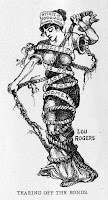 |
| Lou Rogers, 1912 |
 |
| H.G. Peter, 1943/44 |
Lepore also has a few pages on
Harry G. Peter, the artist who brought Wonder Woman to life, and does a fine job of showing how Peter, who was about 60 when he got the Wonder Woman assignment, was also influenced by the iconography of the suffrage movement. He had been an illustrator for
Judge alongside the far better known
Lou Rogers, who created some of the most famous artwork of the later suffrage movement. Lepore writes: "To Wonder Woman he brought, among other things, experience drawing suffrage cartoons." (Not a lot seems to be known about Peter — Lepore has a note stating that "details about Peter's life are difficult to find, largely because, after his death in 1958, his estate fell into the hands of dealers, who have been selling off his papers and drawings, one by one, for years, to private collectors.")
Marston was hardly a perfect man or role model, and one of the things the story of his life and the lives of the women around him shows is the complexity of trying to live outside social norms. While Marston had some extremely progressive ideas not only for his own time but for ours as well, he was also very much a product of his era and location. That's no earth-shaking insight, but Lepore does a good job of reminding us that for all his liberalism and even libertinism, Marston still had many of the flaws of any man of his age, or of ours. He truly seemed to dislike masculinity, and yet lived at a time when it was difficult to imagine any way of living outside of it or its hierarchies, and his ways of analyzing the effect of masculinity and patriarchy were very much bound by his era's common notions of gender, biology, propriety, and race. Lepore does a fine job of showing not only how the assumptions and discourses of a particular time, place, and class situation shape notions of the possible in Marston's life, but also in the lives and politics of the early 20th century feminist movement.

However, Lepore's book is seriously under-theorized, and that's where Berlatsky comes in.
The Secret History of Wonder Woman is aimed at a general audience, and Lepore is a historian, not a theorist. This would be less of a problem if Marston's life and work didn't scream out for the insights of someone familiar both with feminist theory and, especially, queer theory. (Lepore actually seems quite uncomfortable with the sexual elements of the story, and even more so in an
interview she did for NPR's
Fresh Air, where she can't help giggling over it all.) Berlatsky makes the excellent choice to take the queer elements seriously. He organizes his book into three large chapters, the first focusing on feminism and bondage, the second on pacifism and violence, the third on queerness. A brief introduction gives background on the comic and its creators; the conclusion looks at Wonder Woman's (sad) fate after Marston's death.
Berlatsky's writing is accessible — he's perhaps best known for founding the
Hooded Utilitarian blog, so he's used to writing for a non-academic audience. (The blog has tons of Wonder Woman
material, including lots from before the book, so you can follow Berlatsky's thinking as it develops, get more information and imagery, and see Berlatsky in conversation with many thoughtful, informed commenters and guest bloggers.) Though his prose is not heavily academic, Berlatsky is well-versed in comics scholarship and has some good knowledge of both feminist and queer theory, all of which he uses to fill a relatively short book with a real density of ideas. It helps that the early Wonder Woman comics are so strange and suggestive; even after Berlatsky's most thorough analyses, it still feels like there's plenty left to say. (Which is no slight to him.)
In the introduction, Berlatsky describes the 1941-1948 Wonder Woman comics as “…an endless ecstatic fever dream of dominance, submission, enslavement, and release.” His first chapter then offers various ideas about bondage and fantasy, with the majority of its pages devoted to a complex reading of
Wonder Woman #16 (you can see Berlatsky first thinking about this issue in
a 2009 post at HU that gives a good overview the plot and substance, as well as lots of samples of the art). Ultimately, Berlatsky argues that the story is a representation of, among other things, incest ... and I'm not sure I followed him there. Something about the analysis feels forced to me, though I don't have any good rebuttal to it.
Chapter Two was more convincing for me, as Berlatsky has some cogent insights about violence, maleness, and superheroes: "Looking at Spider-Man's origin makes clear, I think, that superhero violence is built on, and reliant on, masculinity." Is Wonder Woman different? "It is certainly true that, in Marston and Peter's initial conception, Wonder Woman, like other heroes, often solves problems in the quintessentially superhero manner. That is, she hits things." Wonder Woman also participated in World War II, as the first appearance of her character coincided with the US entry into the war. "It was natural that Wonder Woman's alter-ego, Diana Prince, worked as a secretary for army intelligence, just as it was natural for Wonder Woman herself to foil spy rings and Nazi plots. Superheroes and war went together as surely as did goodness and power." But Marston wanted Wonder Woman to be something other than just a fist-fighting warrior, thrilled to hit anybody she could find. She is a fighter, but, Berlatsky says, a pragmatic fighter for peace: "The Nazis embody war; therefore, fighting the Nazis is fighting on behalf of peace. Or, more broadly, masculinity embodies war; therefore, fighting on behalf of an America that Marston sees as feminine means fighting on behalf of peace."
Berlatsky then goes on to show how some of Marston's psychological and social theories (particularly about the force of love) find expression through the Wonder Woman stories. Coming off of Chapter One, I was a bit skeptical about all this, but by the end of Chapter Two, I'd pretty well been convinced. The evidence Berlatsky marshalls from Marston's writings, particularly his book
Emotions of Normal People, is compelling. (
Emotions of Normal People itself is a fascinating source. Lepore describes it thus: "
Emotions of Normal People is, among other things, a defense of homosexuality, transvestitism, fetishism, and sadomasochism. Its chief argument is that much in emotional life that is generally regarded as abnormal…and is therefore commonly hidden and kept secret is actually not only normal but neuronal: it inheres within the very structure of the nervous system." Berlatsky uses it well in the second and third chapters to show where some of the oddest Wonder Woman moments derive from.)
Chapter Three is what really won me over, I will admit, particularly because Berlatsky brings in ideas from
Eve Kosofsky Sedgwick and
Julia Serano to explore the implications of various situations and images throughout
Wonder Woman. As it explores Marston's lesbophilia and the manifold queer implications of the Marston-era Wonder Woman comics, the chapter ranges across all sorts of subject matter, including, among other things, James Bond and Pussy Galore (from
Goldfinger). Berlatsky notes that unlike Ian Fleming's women "Marston's women don't want the penis; rather, his men want the absence of a penis — a unique female power."
There's too much good stuff in this chapter for me to summarize, but one especially interesting bit involves the relationship of the vagina and penis in Marston's idea of sex. Berlatsky quotes
Emotions of Normal People: "The [woman’s] captivation stimulus actually evokes changes in the male’s body designed to enable the woman’s body to capture it physically. …[During sex] the woman’s body by means of appropriate movements and vaginal contractions, continues to captivate the male body, which has altered its form precisely for that purpose." Berlatsky summarizes: "Penises don't defile Marston's vaginas; on the contrary, Marston's vaginas swallow up penises."
(If that sentence doesn't make you want to read this book, then there's really no hope for you!)
Berlatsky then shows how these ideas play out in
Wonder Woman. "Men in
Wonder Woman are never as disempowered and objectified as women in James Bond or gangsta rap or Gauguin — a couple thousand years of tropes don't just vanish because you have a vision of active vaginas. Thus, when Marston flips the binary from masculine/feminine to feminine/masculine, the result is not simple hierarchy inverted. Rather, it's heterosexuality inverted — which is another way of saying it's queer." He then develops this idea to show that "For Marston, essentialism and queerness are not in conflict. Instead, queerness is anchored in, and made possible by, an essentialist vision of femininity. Femininity for Marston doesn't just appear to be strong and love; it is strong and loving. Women for him capture men not just as metaphor but as scientific fact. And it is from those beliefs that you get [in
Wonder Woman #41] Sleeping Beauty rescued/captured by a semisentient vagina, or men turning into women on Paradise Island. Femininity makes the world safe for polyamory. You can't have the second without the first."
It's these sorts of insights that would have brought more nuance and complexity to Lepore's portrayal of the role of early 20th-century feminism in Marston's creation of Wonder Woman, but we can be grateful that we can read the two books together.
I've only barely touched on Berlatsky's arguments here, and may have misrepresented them simply by trying to summarize, so if they seem especially bizarre or off-base, check the book. (They may still be bizarre, but to my thinking, at least, they're more often convincing than not.) It's an extremely difficult book to summarize because its ideas and arguments are carefully woven together, even as, in an initial reading, it all often feels quite off-the-cuff, like an improvised high-wire act.
Wonder Woman has suffered in popularity in comparison to male superheroes, and even in this age of wall-to-wall superhero media, a planned Wonder Woman movie has had all sorts of problems getting started. Of course, no Wonder Woman is going to be Marston's Wonder Woman, which is one reason why it's unfortunate that DC hasn't been able to finish re-releasing the 1941-1948 Wonder Woman stories — some, as far as I can tell, have never been reprinted at all, and the most comprehensive collection, part of the
DC Archive Editions, petered out after seven volumes, ending with issues from 1946. (
Wonder Woman: The Complete Newspaper Comics is quite good.) For the casual reader, the material in the
Wonder Woman Chronicles, which got up to three volumes before apparently stopping in 2012, works well, though some of the best and craziest comics come later. There just doesn't seem to be enough demand from readers, and so a trove of wondrously strange material remains generally unavailable.
Perhaps Lepore and Berlatsky's books will create enough new interest to spur DC at least to finish the Archive Edition releases. Personally, what I'd most like to see is a 300-400 page "Best of the Marston Years" collection edited by Berlatsky, because only the real die-hards need all of the various
Wonder Woman stories, and it would be nice to have a one-volume edition of the most engaging and exemplary material.






 Dear Malala, We Stand With You by Rosemary McCarney with Plan International
 The Girl from the Tar Paper School: Barbara Rose Johns and the Advent of the Civil Rights Movement by Teri Kanefield
 Rad American Women A-Z by Kate Shatz, illustrated by Miriam Klein Stahl
.jpg?picon=160)