


I had another book scheduled for today, but as I am staying with one of my writing buddies and she introduced me to a delightful biography of a tree-loving woman here in San Diego, I couldn’t pass up the chance … Continue reading
Add a Comment
new posts in all blogs
 By: JOANNA MARPLE,
on 4/15/2016
By: JOANNA MARPLE,
on 4/15/2016
Blog: Miss Marple's Musings (Login to Add to MyJacketFlap)
JacketFlap tags: ecology, San Diego, tree planting, biography picture book, California history, Perfect Picture Book Friday, Kate Sessions, The Tree Lady, following one's dreams, San Diego history, biography, Women's History Month, trees, Add a tag
 By: keilinh,
on 3/10/2016
By: keilinh,
on 3/10/2016
Blog: The Open Book (Login to Add to MyJacketFlap)
JacketFlap tags: diversity, women, women's history month, hiromi suzuki, Pura Belpré, Wangari Maathai, women's history, Rosa Parks, Musings & Ponderings, zora neale hurston, Anna May Wong, Marcenia Lyle, augusta savage, florence mills, patsy mink, Book Lists by Topic, Add a tag
 By: Paige Bentley-Flannery,
on 1/26/2016
By: Paige Bentley-Flannery,
on 1/26/2016
Blog: ALSC Blog (Login to Add to MyJacketFlap)
JacketFlap tags: Programming Ideas, Women's History Month, Blogger Paige Bentley-Flannery, Add a tag


 By: Heidi MacDonald,
on 12/21/2015
By: Heidi MacDonald,
on 12/21/2015
Blog: PW -The Beat (Login to Add to MyJacketFlap)
JacketFlap tags: Marvel, women's history month, Captain Marvel, Top News, Ms Marvel, spider-gwen, variants, #Marvel, All-New All-Different, Moon Girl, Add a tag
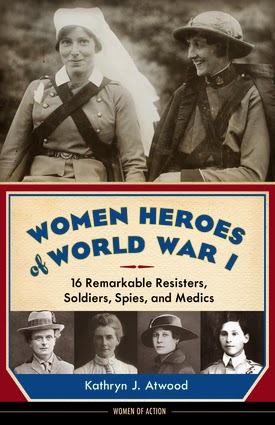 Today is the last day of Women's History Month for 2015 and because the theme this year is about Weaving the Stories of Women's Lives, I thought who better to turn to for today's post than Kathryn Atwood. A few year ago, Atwood wrote a fascinating book called Women Heroes of World War II: 26 Stories of Espionage, Sabotage, Resistance and Rescue. Now she has followed it up with a book about women heroes in World War I and once again, their stories are as amazing as they are compelling.
In Women Heroes of World War I, Atwood introduces the reader to some of the women, a few still in their teens, who decided to serve their country, despite the real dangers that they were to face. Some became nurses, caring for the wounded as close to the front lines as they could get. Others joined the resistance or became spies, some became soldiers fighting side by side with men, and still others were journalists, reporting events from the heart of the conflict.
Some of the women are familiar, like British born Edith Cavell who found herself in Belgium when the war started, director of a school of nursing there. After the Germans invaded Belgium, hospitals were forbidden to care for any Allied soldiers that might find their to one of them. Edith, ignoring the Germans, cared for wounded Germans soldiers openly, and for wounded Allied soldiers secretly. And when these were healthy enough, she made such they had safe passage out of Belgium to the Netherlands. Edith and her network can be credited for heroically getting a lot of Allied soldiers to safety before the getting caught by the Germans. Her capture and punishment, which caused an uproar around the world, subsequently changed the way Germany handled women POWs at the insistence of the Kaiser.
One of my favorite stories is Helena Gleichen and her friend Nina Hollings, two ambulance drivers in Italy who sometimes found themselves driving through intense shelling to get wounded men to hospital. Later, after training in Paris to become radiographers, they could be found driving around the Italian front with a portable x-ray machine. With their x-ray skill, Helena and Nina were able to help the wounded in some surprising ways, for example, locating shrapnel lodged in areas that wouldn't have been found otherwise and bringing relief to the wounded man. For their heroic work, the women were awarded the Most Excellent Order of the British Empire (the OBE).
My personal favorite is the story of Mary Roberts Rinehart. Yes, I do mean the mystery writer. Mary was also a journalist who wrote for the Saturday Evening Post and in 1915, she decided she wanted to go to Belgium. After all, she had nursing experience and could report of the conditions of the hospitals there, but what she really wanted to do was experience the war as soldiers do. Mary finally did get to see the front lines, including no man's land, and even managed to get an extensive interview with the King of Belgium. Returning home she wrote her articles, but realized the war was going to last longer than anyone thought.
Women Heroes of World War I is a well-written, riveting book. Atwood divides the women's experiences into four sections - Resisters and Spies, Medical Personnel, Soldiers, and Journalists. The women profiled come from different countries, including the United States, France, Britain, Russia and each of their individual stories ends with a Learn More inset listing where to find more information them. Atwood's extensive, intelligent research is evident in all the women's stories and she includes sidebars that give additional information about the women and the war. Also included are an Introduction, an Epilogue and many, many photographs of war and the different women in it. An extensive and useful Glossary and Bibliography, and well as a list of websites can also be found at the back of the book.
World War I was at first greeted with incredible enthusiasm, causing young men to unhesitatingly leave school, jobs, and families to join their countries armed services. After all, no one thought it would last more than a few months. Women were also eager to do their part and for some that meant being in the thick of the fighting, not working on the home front. Women Heroes of World War I not only informs the reader about these now mostly forgotten women heroes, but pays homage to them and all the women who decided to do constructive for their warring countries.
I can't recommend Women Heroes of World War I highly enough, and what a wonderful book with which to end this year's Women History Month.
This book is recommended for readers age 12+
This book was borrowed from the NYPL


 By: Alexandra Fulton,
on 3/30/2015
By: Alexandra Fulton,
on 3/30/2015
Blog: OUPblog (Login to Add to MyJacketFlap)
JacketFlap tags: *Featured, women's history month, women's rights, History, Journals, America, restaurants, women's suffrage, women's history, Journal of Social History, paul freedman, Add a tag
By: Mohamed Sesay,
on 3/29/2015
Blog: OUPblog (Login to Add to MyJacketFlap)
JacketFlap tags: Online products, Arts & Humanities, philosophy reading list, Women in Philosophy, female philosophers, feminist philosophy, feminist reading list, Books, Journals, Philosophy, women's history month, reading list, *Featured, oxford journals, Art & Architecture, Add a tag
By: Brittany Hobson,
on 3/24/2015
Blog: OUPblog (Login to Add to MyJacketFlap)
JacketFlap tags: *Featured, musicology, oxford journals, early music, Arts & Humanities, Clara Ross, female bands, female composer, Paul Sparks, Music, Journals, women's history month, mandolin, guitar, Add a tag
.jpeg?picon=2320) By: Mary Ann Scheuer,
on 3/19/2015
By: Mary Ann Scheuer,
on 3/19/2015
Blog: Great Kid Books (Login to Add to MyJacketFlap)
JacketFlap tags: history, nonfiction, Women's History Month, ages 8-12, ages 5-8, Add a tag
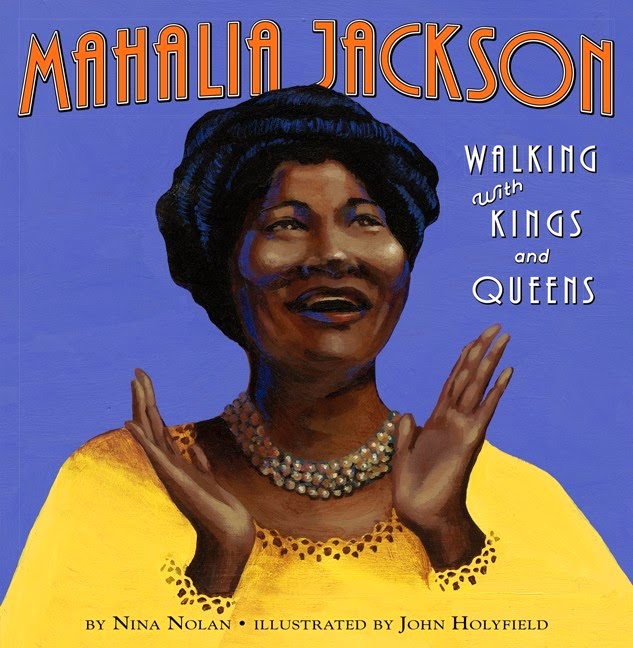 We celebrate Women's History Month each year, reading picture book biographies, investigating women through online sources and talking about women in our community. I'm happy to share today two new picture book biographies of inspiring African American singers, gospel singer Mahalia Jackson and opera singer Leontyne Price.
Although she was surrounded by all types of music in New Orleans and Chicago, Mahalia found comfort singing in church--especially given the hard times she experienced as a child. Nolan especially emphasizes Jackson's determination to pursue her singing and stay true to herself and her passion for gospel.
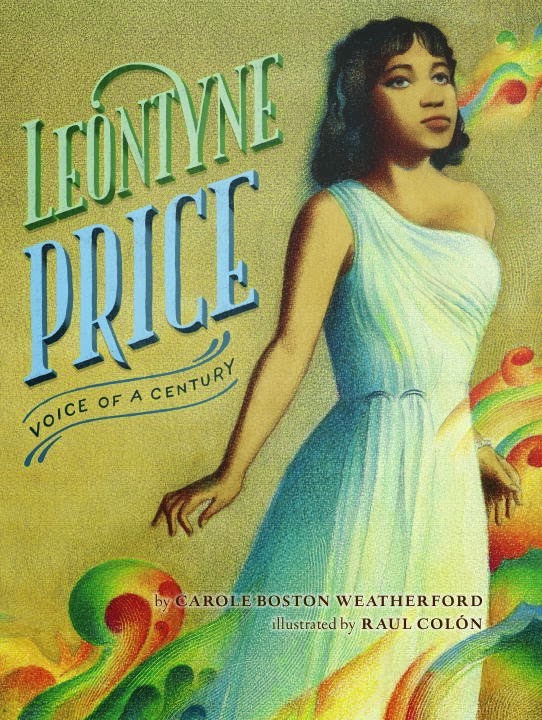
Weatherford's language is poetic and beautiful, yet always simple enough for young students to understand.
Mahalia Jackson illustrations ©2015 by John Holyfield; used with permission from HarperCollins. Leontyne Price illustrations ©2015 by Raul Colón; used with permission from Random House. The review copies were kindly sent by the publishers. If you make a purchase using the Amazon links on this site, a small portion goes to Great Kid Books. Thank you for your support.
©2015 Mary Ann Scheuer, Great Kid Books


 By: rgarcia406,
on 3/19/2015
By: rgarcia406,
on 3/19/2015
Blog: The Open Book (Login to Add to MyJacketFlap)
JacketFlap tags: women's history month, Native American, African/African American Interest, Tu Books, Asian/Asian American, Latino/Hispanic/Mexican, Lee & Low Likes, Book Lists by Topic, book list, diversity, Add a tag
By: Mohamed Sesay,
on 3/15/2015
Blog: OUPblog (Login to Add to MyJacketFlap)
JacketFlap tags: Books, publishing, Journals, Philosophy, q&a, women's history month, academic publishing, *Featured, Life at Oxford, staff q&a, Life at OUP, Arts & Humanities, Eleanor Collins, iris murdoch, Lucy Randall, Sara McNamara, Women in Philosophy, Add a tag
By: Connie Ngo,
on 3/13/2015
Blog: OUPblog (Login to Add to MyJacketFlap)
JacketFlap tags: History, Biography, Politics, american history, women's history month, America, VSI, very short introduction, Very Short Introductions, women's history, American National Biography, Editor's Picks, *Featured, american politics, VSIs, Susan Ware, VSI online, American Women's History, American Women's History: A Very Short Introduction, Shirley Chisholm, Add a tag
 When we think of partisans and resisters to the Nazis, most of us don't usually think about women. After all, it was a hard, dangerous business to fight such a cruel regime. But, as we learned from Kathryn Atwood's informative book, Women Heroes of World War II: 26 Stories of Espionage, Sabotage, Resistance and Rescue, many women were willing to risk everything, including their lives, to fight for what they believed to be right.
Now, Joanne D. Gilbert has written a book that tells us about even more brave women and since March is Women's History Month and this year's theme is Weaving the Stories of Women's Lives, it seems a perfect time to showcase Women of Valor.
Between 2012 and 2014, Gilbert interviewed four women who had lived with their families in Poland, but who, through different circumstances, had found their way in the surrounding forests and either joined partisan groups or found other ways of resistance when the Nazis occupied their country.
Manya Barman Auster Feldman had lived a religious, comfortable life with her parents, 3 sisters and 2 brothers in Dombrovitsa in eastern Poland until Hitler invaded it in 1939. Suddenly, life became harder and harder and eventually all of Dombrovitsa's Jewish families were crowded into a two block ghetto. When it appeared likely that the ghetto was going to be liquidated, Manya's father decided her, Manya, her older sister and two brothers would try to escape into the forest, leaving behind her mother and two little sisters. Walking all night, they found the Kovpak partisan headquarters, where they were sent to different battalions. Manya, still just a teenager, soon learned how to fight, steal, sabotage the Germans efforts, and nurse the sick and wounded. Her story, as are all the stories included in Woman of Valor, is harrowing and amazing at the same time, and Manya herself credits luck for her many narrow escapes from death while she fought with the partisans.
Faye Brysk Schulman was also living a comfortable, religious life with her family in Lenin, Poland. Her older brother had learned photography and had enlisted Faye to help him. It was her knowledge of photography that saved Faye's life when the ghetto they had been forced to live in was about to be liquidated, it was her job to take the photos that the Nazis demanded she take. In September 1942, Soviet partisans stormed through Lenin, and warmed the remaining Jews to run. Faye, still a teenager, found the partisans, joined the Molotavia Brigade, where she spent the war years fighting, nursing and photographing events whenever she could steal, make or find what she needed.
Even though the rest of her family was Polish, Lola Leser Lieber Schar Schwartz was born in Hungary/Czechoslovakia. In 1938, when the Germans occupied Czechoslovakia, the Polish passports of her immediate family were no longer acceptable there. The Lesers, including Lola, quickly fled to Poland and their extended family. Little did Lola dream that after being continuously on the run from the Germans, hiding in all kinds of weather and places, including under a tree in the forest, it would be her Hungarian/Czechoslovakian birth that would save not just her life, but many others when she received official documents exempting her from the same treatment as the Polish Jews. Needless to say, these documents sparked a flurry of forging more "official" documents for other Jews in peril. Later, when her husband Mechel Lieber was arrested, Lola was even brave enough to go the Adolf Eichmann's office to try to convince him that it was a mistake. Lola was indeed a woman of great courage.
Miriam Miasnik Brysk is the youngest of the women interviewed. Only 4 years old when the war started, Miriam's family left Warsaw, Poland for Lida, her father's home then under Russian rule. But when the Germans arrived in Lida in 1941, it didn't take long for persecutions to begin. The Miasniks were fortunate because Miriam's father was a surgeon and the Nazis needed him. In 1942, Miriam and her parents escaped the Lida ghetto with the help of a partisan group that decided they needed a doctor more than the Nazis did. Miriam spent the rest of the war going from place to place with the partisans. Her hair was cut off and she was dressed like a boy, had not formal education until after the war, but did possess her own gun for a while. And she helped out wherever she could, even taking apart machine guns, cleaning them and putting them back together.
As each woman tells her story, it feels as though she is speaking to you personally, making this a very readable book and I highly recommend it. As they wove their stories, each remembered in great detail what their lives were like before and under the Nazi reign of terror and each acted with remarkable courage. Sadly, they all lost almost all the members of their families, often witnessing their murders. Glibert doesn't let them stop at the end of the war, but we also learn about their lives after and up to the present. Interestingly, they all found ways to express their Holocaust experiences though art later in life.
These are only four stories about acts of resistance, however, and, as Gilbert reminds us in Epilogue, most of the women who chose to resist the Nazis perished, taking the details of their courageous deeds with them, reminding us that what we do know about women resisters is really just the tip of the iceberg. But let all these brave women, known and unknown, be an inspiration to us all in the face of oppression.
This book is recommended for readers age 13+
This book was sent to me by the publisher, Gihon River Press


 By: Mary Ann Scheuer,
on 3/8/2015
By: Mary Ann Scheuer,
on 3/8/2015
Blog: Great Kid Books (Login to Add to MyJacketFlap)
JacketFlap tags: picture books, nonfiction, Women's History Month, ages 8-12, ages 5-8, best new book, Add a tag
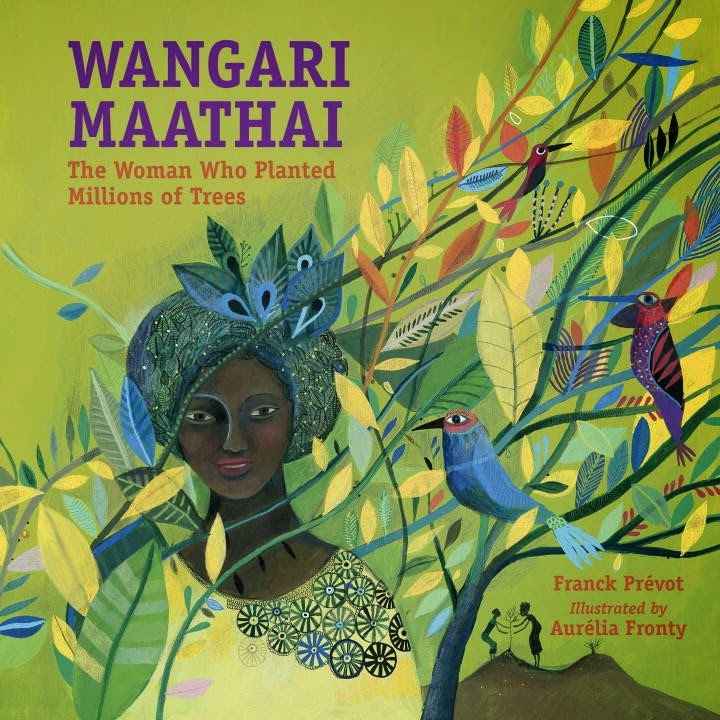 Wangari Maathai won the Nobel Peace Prize in 2004 for her work helping women throughout Africa planting trees to improve the environment and their quality of life. As we celebrate Women's History Month, I am excited to share this new picture book about her struggles and accomplishments with my students.
This biography allows students to develop a deeper understanding of the political, economic and social structures Maathai stood up against. I love being able to share with students the value of reading more than one book on a subject, seeing how different authors draw out different details. I would start by reading Seeds of Change, by Jen Cullerton Johnson, and watching a short video. If you build background knowledge, students can then dig into statements such as this:
This is truly an outstanding picture book biography. Prévot finishes with a detailed timeline of Maathai's life, illustrated with several photographs. This background material is both easy to access, written in short chunks, but also detailed to give a rich picture of her struggles and achievements.
Illustrations ©2011 by Aurelia Fronty; originally published in France. Used with permission from Charlesbridge. The review copy was kindly sent by the publisher. If you make a purchase using the Amazon links on this site, a small portion goes to Great Kid Books. Thank you for your support.
©2015 Mary Ann Scheuer, Great Kid Books

 It's Women's History Month and this year's theme is Weaving the Stories of Women's Lives, so I thought I would begin the month with a new picture book for older readers that introduces them to the remarkable International Sweethearts of Rhythm.
Shortly after I began this blog, I reviewed a wonderful middle grade book by Marilyn Nelson called Sweethearts of Rhythm: The Story of the Greatest All-Girl Swing Band in the World. But where Nelson's book covers the kind of music and the places where the Sweethearts played, Swing Sisters begins at the beginning.
In 1909, near Jackson, Mississippi a school/orphanage called Piney Woods Country Life School was started by Dr. Laurence Clifton Jones for African American girls.
The girls were educated, housed, clothed and fed and in return they all did chores to help keep things running smoothly and well. In 1939, Dr. Jones started a band that he called the Sweethearts with some musically talented girls to help raise money for the school. The music they played was called swing or big band music, by either name it was Jazz and people couldn't get enough of it.
Dean describes how the girls stayed together after leaving Piney Woods, hoping to make a living as musicians. They would live, sleep, eat and play music, traveling around from gig to gig in a bus they called Big Bertha. Band members came and went, and before long the band was no longer made up of only African American women, but included many races and nationalities. As a result, they decided to call themselves the International Sweethearts of Rhythm.
But while the band hit the big time, they still didn't get paid as much as their male counterparts nor were they taken as seriously, no matter how good they were. Not only that, Dean points out, but in the Jim Crow south, because they were interracial now, traveling and performing became risky and she includes some of those scary, dangerous incidents they faced.
In 1945, as World War II was winding down, the Sweethearts found themselves on a USO tour thanks to a letter writing campaign by African American soldiers. But sadly, the Sweethearts disbanded after the war and the members went their separate ways.
Dean does an excellent job of introducing the Sweethearts to her young readers and the difficulties an all-women's interracial band faced back in the 1940s balancing it with positive events and the strong bonds of friendship among all the members.
Cepeda's colorful acrylic and oil painted illustrations match the energy of the music the Sweethearts played with a bright rainbow palette of greens, pinks, purples, yellows, blues and orange.
So many wonderful books are coming out now introducing young readers to some of the greatest artists and musicians of the 20th century and this book is such a welcome addition.
This book is recommended for readers age 7+
This book was bought for my personal library


 By: Lisa Taylor,
on 2/13/2015
By: Lisa Taylor,
on 2/13/2015
Blog: ALSC Blog (Login to Add to MyJacketFlap)
JacketFlap tags: Slice of Life, Women's History Month, News of Interest, Children's Literature (all forms), Blogger Lisa Taylor, Bloggers, Add a tag
 By: Heidi MacDonald,
on 1/30/2015
By: Heidi MacDonald,
on 1/30/2015
Blog: PW -The Beat (Login to Add to MyJacketFlap)
JacketFlap tags: Comics, Marvel, women's history month, Colleen Doran, Janet Lee, Top News, Ming Doyle, Katie Cook, Stephanie Hans, erica henderson, stacey lee, sana takeda, Add a tag
 By: Kerry Aradhya,
on 4/9/2014
By: Kerry Aradhya,
on 4/9/2014
Blog: Picture Books & Pirouettes (Login to Add to MyJacketFlap)
JacketFlap tags: Dance, Picture Books, Women's History Month, Janet Collins, Read and Romp Roundup, Josephine Baker, Add a tag
By: Mary Ann Scheuer,
on 3/30/2014
Blog: Great Kid Books (Login to Add to MyJacketFlap)
JacketFlap tags: ages 8-12, interview, history, nonfiction, Women's History Month, Add a tag
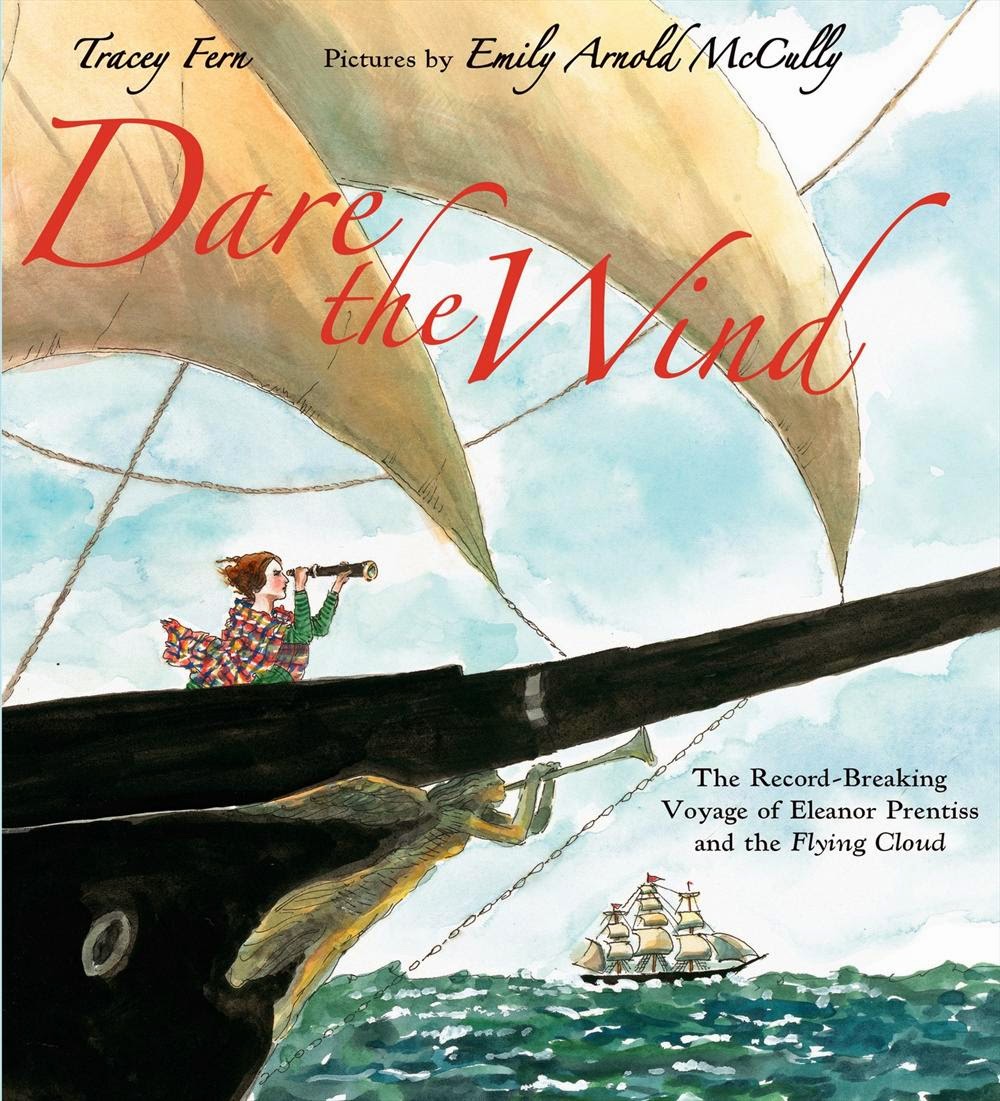 Today, I'm thrilled to share with you an interview with Tracey Fern about her journey to learn about the life of Eleanor Prentiss and then writing Dare the Wind. My questions are in red; Tracey's answers follow in black.
MS: How did you first learn about Eleanor? What drew you to her story?
TF: I first learned about Eleanor when I was browsing through my local bookstore and happened upon David Shaw's book, Flying Cloud. I'm always on the lookout for strong female characters, and so I knew instantly that I wanted to write about Eleanor. Eleanor's story also combined adventure and science, two elements that I'm also often drawn toward. Finally, I'm a Massachusetts gal who grew up with the ocean and the beach in my backyard, and I love that Eleanor grew up here, too!
MS: Did you travel at all to do your research? What was your research process like?
TF: I traveled to Marblehead, Massachusetts while writing Dare the Wind. Marblehead was Eleanor's home town, and parts of the town still look much the way I imagine they looked when Eleanor walked its cobbled streets. I also visited the Mystic Seaport Museum in Connecticut and toured the USS Constitution in Boston harbor to get myself in a seafaring state of mind! My research process for this book was different from my usual research, because there are relatively few primary sources available. As a result, I relied more heavily on secondary sources than I typically do.
MS: I was amazed at how well you conveyed being on a ship at sea in a storm. Have you sailed like this at all?
TF: Thank you! I've been sailing before but never under the challenging conditions that Eleanor faced. I'm so happy that I could convey the sensations of being on a ship at sea in a storm to readers.
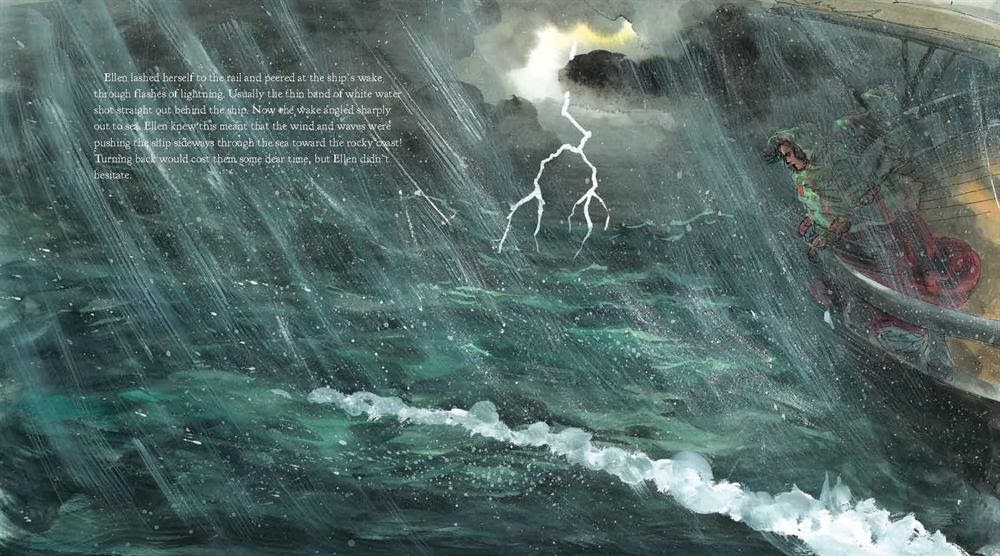 MS: Did you provide any guidance to Emily McCully to help her make sure the illustrations were historically accurate? What details do you want children to notice in the illustrations?
TF: I adore Emily's illustrations! She did her own research to ensure that her illustrations were accurate. I did send Emily a very detailed description of the Flying Cloud that was published at the time of the ship's launch. Some of the details that I love in Emily's illustrations are the wonderful spread of the Flying Cloud at the pier in New York City, the view of Ellen (Eleanor) below deck working on her charts which beautifully captures the feeling of motion in the tilt of the lamp above her head, and the cover illustration which shows the figurehead of an angel on the prow of the ship, mirroring Ellen and her telescope on deck. I especially love the cover illustration because it seems to capture the forward movement of Ellen's amazing journey!
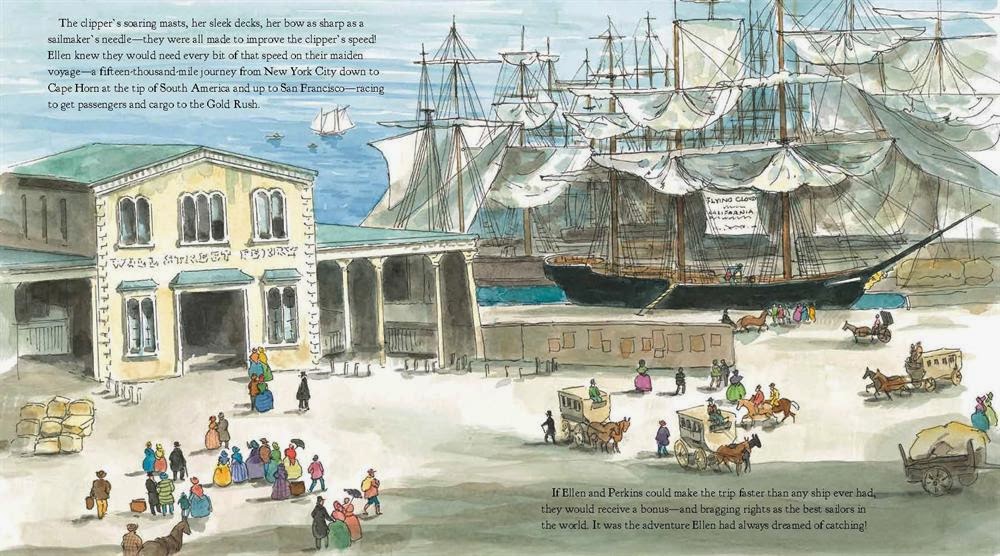 MS: What was the most surprising thing you learned about Eleanor doing your research?
TF: The most surprising thing about Eleanor was just how ahead of her time she was. Not only did she assumed the role of navigator at a time when that was absolutely atypical for a woman, she also embraced the new navigational theories of Matthew Fontaine Maury, which went against the prevailing wisdom of the time. Eleanor was clearly a force to be reckoned with!
MS: Did you have to leave anything out that you really wanted to include?
TF: There's always so much more I'd love to include in all of my books! Believe it or not, Eleanor's journey was filled with even more exciting incidents, including a threatened mutiny that I simply couldn't include. I would have also loved to have included more details about Donald McKay, the builder of the Flying Cloud, and the ship-building process, but perhaps that's material for another book!
Thanks so much for your interest in Dare the Wind!
Thank you, Tracey! I loved sharing this story with students, and hearing their reactions. Eleanor was definitely a force to be reckoned with!
For more information, definitely check out Tracey's website. Illustration copyright © 2013 by Emily Arnold McCully, shared by permission from the publisher. The review copy was kindly sent by the publishers, Margaret Ferguson Books, Farrar Straus Giroux, an imprint of Macmillan Books. If you make a purchase using the Amazon links on this site, a small portion goes to Great Kid Books (at no cost to you!). Thank you for your support.
©2014 Mary Ann Scheuer, Great Kid Books

 By: Jen Robinson,
on 3/28/2014
By: Jen Robinson,
on 3/28/2014
Blog: Jen Robinson (Login to Add to MyJacketFlap)
JacketFlap tags: book lists, schools, laurel snyder, national poetry month, greg pincus, Twitter Links, growing bookworms, santa clara city library, women's history month, Add a tag


 Add a Comment
By: DanP,
on 3/28/2014
Add a Comment
By: DanP,
on 3/28/2014
Blog: OUPblog (Login to Add to MyJacketFlap)
JacketFlap tags: Literature, women's history month, francis bacon, aphra behn, Humanities, *Featured, katherine philips, Oxford Scholarly Editions Online, Online products, OSEO, 83 song, early modern women writers, margaret cavendish, mary wroth, Oenone, Oxford online products, Add a tag
 By: PennyF,
on 3/28/2014
By: PennyF,
on 3/28/2014
Blog: OUPblog (Login to Add to MyJacketFlap)
JacketFlap tags: ethics, Videos, gender, Philosophy, Language, feminism, communication, sexism, women's history month, introductions, feminist, cameron, VSI, Very Short Introductions, linguistics, Humanities, blackburn, sociolinguistics, simon blackburn, *Featured, deborah, masculine, carol gilligan, deborah cameron, iaitv, gilligan, Add a tag
 By: Mary Ann Scheuer,
on 3/26/2014
By: Mary Ann Scheuer,
on 3/26/2014
Blog: Great Kid Books (Login to Add to MyJacketFlap)
JacketFlap tags: Women's History Month, Emerson, digital media, Add a tag
 Madeline honors Alex Morgan, an American soccer player and Olympic gold medalist. Madeline was so excited to try out using Animoto -- and I'm really excited to learn about a new sport hero our girls admire.
 I just learned that Alex Morgan is writing a new series perfect for kids in 4th through 6th grade:
Booklist writes of the first Kicks installment, Saving the Team:

If you make a purchase using the Amazon links on this site, a small portion goes to Great Kid Books (at no cost to you!). Thank you for your support.
©2014 Mary Ann Scheuer, Great Kid Books
 By: Mary Ann Scheuer,
on 3/24/2014
By: Mary Ann Scheuer,
on 3/24/2014
Blog: Great Kid Books (Login to Add to MyJacketFlap)
JacketFlap tags: history, nonfiction, Women's History Month, ages 8-12, ages 5-8, best new book, Add a tag
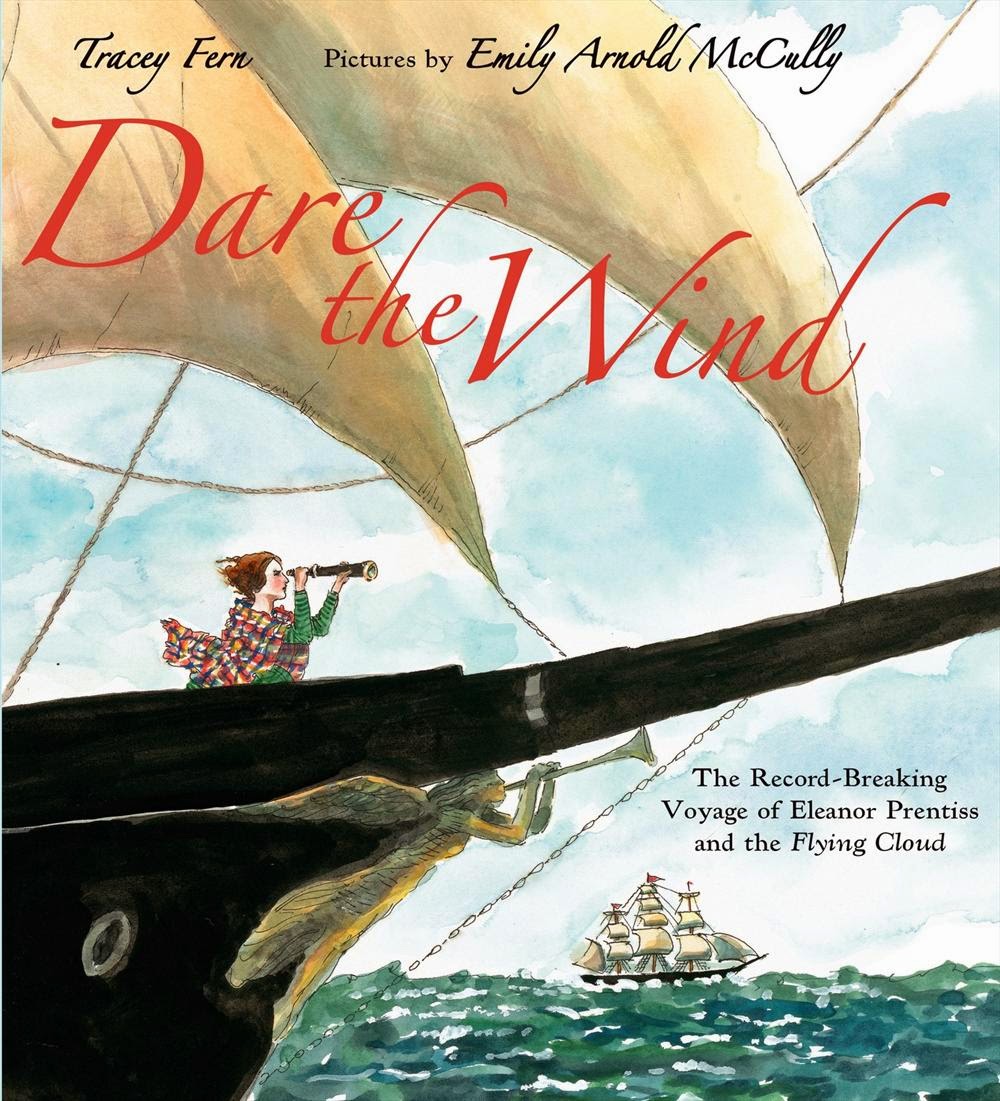 I've always been amazed at the journeys gold prospectors underwent to travel to California in the 1840s and 1850s. Can you imagine taking a covered wagon across the Rockies or a clipper ship around Cape Horn? If these voyages fascinate you, I highly recommend Tracy Fern's new picture book, a biography of Eleanor "Ellen" Prentiss, who navigated the fastest clipper ship to sail from New York to San Francisco.
Ellen married Perkins Creesy, a ship's captain, and soon they were sailing together, with Ellen navigating their ship. When Perkins was given command of The Flying Cloud, a fast new clipper ship built to take passengers and cargo from New York to the California Gold Rush, Ellen knew it was up to her to help find the fastest winds and swiftest route.
Tracy Fern builds this dramatic story, carefully helping children understand the difficulties Ellen, Prentiss and the crew faced. My students gasped when The Flying Cloud's mast broke, and you could see the worry on their faces as Ellen faced stormy weather around Cape Horn.
Share this terrific story with young readers who are fascinated by science, math and adventure. They'll love how Ellen not only used her daring courage, but also clear calculations to find the fastest routes. As her father told her,
Illustration copyright © 2013 by Emily Arnold McCully, shared by permission from the publisher. The review copy was kindly sent by the publishers, Margaret Ferguson Books, Farrar Straus Giroux, an imprint of Macmillan Books. If you make a purchase using the Amazon links on this site, a small portion goes to Great Kid Books (at no cost to you!). Thank you for your support.
©2014 Mary Ann Scheuer, Great Kid Books
 By: Mary Ann Scheuer,
on 3/23/2014
By: Mary Ann Scheuer,
on 3/23/2014
Blog: Great Kid Books (Login to Add to MyJacketFlap)
JacketFlap tags: Women's History Month, Emerson, digital media, Add a tag
 Bella honors Alice Waters, chef and activist. Our students at Emerson have loved having a school garden, a project that Waters has been particularly instrumental in spreading throughout the Berkeley schools.
Did you notice how Bella included her photo credits on the last slide? This made my librarian heart smile -- here's a student really incorporating Digital Citizenship lessons. Hooray!
These are the first digital projects that these students have done. I love how they've ventured into this new way of presenting information. If you have a chance, they would love to hear what you think about their projects. Leave a comment below if you can!
©2014 Mary Ann Scheuer, Great Kid Books

View Next 25 Posts
Viewing: Blog Posts Tagged with: Womens History Month, Most Recent at Top [Help]
Results 1 - 25 of 97
By: JOANNA MARPLE,
on 4/15/2016
Blog: Miss Marple's Musings (Login to Add to MyJacketFlap)
JacketFlap tags: ecology, San Diego, tree planting, biography picture book, California history, Perfect Picture Book Friday, Kate Sessions, The Tree Lady, following one's dreams, San Diego history, biography, Women's History Month, trees, Add a tag
By: keilinh,
on 3/10/2016
Blog: The Open Book (Login to Add to MyJacketFlap)
JacketFlap tags: diversity, women, women's history month, hiromi suzuki, Pura Belpré, Wangari Maathai, women's history, Rosa Parks, Musings & Ponderings, zora neale hurston, Anna May Wong, Marcenia Lyle, augusta savage, florence mills, patsy mink, Book Lists by Topic, Add a tag
In honor of Women’s History Month, we’ve rounded up ten of our books that feature some amazing women of color! From a baseball player to an American politician, these women have helped pave the way for many others.
1. Wangari Maathai, Seeds of Change: Planting a Path to Peace – the first African woman, and environmentalist, to win a Nobel Peace Prize

2. Marcenia Lyle, Catching the Moon: The Story of a Young Girl’s Baseball Dream – the first woman to play for an all-male professional baseball team

3. Anna May Wong, Shining Star: The Anna May Wong Story – the first Chinese American movie star

4. Florence Mills, Baby Flo: Florence Mills Lights Up the Stage – an international dancing and singing superstar during the Harlem Renaissance

5. Augusta Savage, In Her Hands: The Story of Sculptor Augusta Savage– a sculptor during the Harlem Renaissance who carved out her own special place in art history

6. Pura Belpré, The Storyteller’s Candle / La velita de los cuentos – New York City’s first Latina librarian

7. Patsy Mink, How We Are Smart – an American politician from the U.S. state of Hawaii

8. Hiromi Suzuki, Hiromi’s Hands – one of a handful of women in the male-dominated world of sushi chefs

9. Rosa Parks, Dear Mrs. Parks: A Dialogue with Today’s Youth – Mrs. Parks changed the course of history when she was arrested for refusing to give up her seat to a white passenger on a Montgomery, Alabama bus, sparking the beginning of the Civil Rights Movement

10. Zora Neale Hurston, Zora Hurston and the Chinaberry Tree – renowned African American writer

We’ve also created a Women’s History Collection, available now for purchase on our website.

Further reading on Women’s History Month:
- Where Do Boys Belong In Women’s History Month?
- Resources For Teaching About Wangari Maathai And Seeds Of Change
2 Comments on 10 Great Women of Color Whose Stories You Should Know, last added: 3/10/2016
Display Comments
Add a Comment
By: Paige Bentley-Flannery,
on 1/26/2016
Blog: ALSC Blog (Login to Add to MyJacketFlap)
JacketFlap tags: Programming Ideas, Women's History Month, Blogger Paige Bentley-Flannery, Add a tag

photo by Paige Bentley-Flannery
Do you know which president got the ball rolling for National Women’s History Month? It was Jimmy Carter who did (although it started as only one week) by saying that while both men and women worked together to build America, “Too often the women were unsung and sometimes their contributions went unnoticed.” President Carter called on “libraries, schools and community organizations” to focus their observances on leaders who struggled for equality.
So in that spirit, I’m sharing several interesting resources to find material for your activities in March.
Amelia Bloomer resources:
When I start planning programs and book talks for Women’s History Month, the first thing I think about is The Amelia Bloomer Project. Born in 1818, she was a women’s rights advocate, a writer and she even invented “bloomers” or loose pants that were controversial in their day. A project of the ALA’s Feminist Task Force of the Social Responsibilities Round Table, this group creates an annual booklist of the best feminist books for young readers, ages birth through 18.
This website if filled with information for celebrating women, creating amazing book lists and sharing educational ideas. I review their suggested criteria and questions with the books I’m planning on using for book talks and programs. For example, when considering a book for their list they ask, “Do females blaze new trails for themselves and those who follow them?”
Lists from 2002-2016 are available online. They are organized from Early Readers-Fiction, Early Readers Non-Fiction, Middle Grade-Fiction, Middle Grade-Non-Fiction, Young Adult-Fiction to Young Adult-Non-Fiction.
More Amelia Bloomer resources:
Have you been to the Girl Museum online?
“Girl Museum is the first and only museum in the world dedicated to celebrating girls and girlhood. Established in March 2009, we believe girls are the key to a brighter, better future and that girls deserve to have a museum of their own.”
Explore past blog posts, book lists, and resources which include “How to Handle Bullying” and ”empower girls” organizations. My favorite section is under “Learn” where the reader can join a girl’s book club, take a girl quiz and use amazing educational resources.

photo by Paige Bentley-Flannery
ALSC Notable Children’s Books: The 2016 ALSC Notable Children’s Books Committee discussed over 200 books at ALA Midwinter in Boston and ALA Annual in San Francisco. The nominee list included many women in history children’s books:
• Queen of the Diamond: The Lizzie Murphy Story by Emily Arnold McCully
• One Plastic Bag: Isatou Ceesay and The Recycling Women of the Gambia by Miranda Paul
• Swing Sisters: The Story of the International Sweethearts of Rhythm by Karen Deans
• The House That Jane Built: A Story About Jane Addams by Tanya Lee Stone
• My Name is Truth: The Life of Sojourner Truth by Ann Turner
• Rad American Women A-Z: Rebels, Trailblazers, and Visionaries who Shaped Our History…and Our Future! by Kate Schatz
The ALSC Notable Children’s Books complete list.
More Women’s History Month Links:
- KidLit Celebrates Women’s History Month
- TIME for Kids: Women’s History Month
- Scholastic: Women’s History Month
- National Education Association: Women’s History Month for the classroom
- ALSC Great Websites for Kids: Women
My favorite non-fiction books before 2015:
• Amelia and Eleanor Go For a Ride by Pam Munoz Ryan
• My Name is Georgia: A Portrait by Jeanette Winter
• Viva Frida by Yuyi Morales
• Temple Grandin: How the Girl Who Loved Cows Embraced Autism and Changed the World by Sy Montgomery
• When Marian Sang: The True Recital of Marian Anderson by Pam Munoz Rya
Amazing Women in History riffle book list.
What are your favorite books to talk about during Women’s History Month? Please share in the comments below.
Paige Bentley-Flannery is a Community Librarian at Deschutes Public Library. For over fifteen years–from Seattle Art Museum to the New York Public Library to the Deschutes Public Library-Paige’s passion and creative style for art, poetry and literature have been combined with instructing, planning, and providing information. Paige is currently serving on the ALSC Notable Children’s Book Committee, 2015 – 2017. She is a former Chair of the ALSC Digital Content Task Force and member of the ALSC Great Websites Committee.
The post Get ready to celebrate wonderful women appeared first on ALSC Blog.
0 Comments on Get ready to celebrate wonderful women as of 1/26/2016 5:10:00 PM
Add a Comment
By: Heidi MacDonald,
on 12/21/2015
Blog: PW -The Beat (Login to Add to MyJacketFlap)
JacketFlap tags: Marvel, women's history month, Captain Marvel, Top News, Ms Marvel, spider-gwen, variants, #Marvel, All-New All-Different, Moon Girl, Add a tag
 March is Women’s History Month, and in 2016 Marvel plans on celebrating the tradition by releasing a series of variant covers featuring some of the company’s most prolific female heroes. These covers feature art by a variety of progressive and unique talents such as Tula Lotay, Annie Wu, Jamie McKelvie, and Emanuela Lupacchino. As Comics […]
1 Comments on Marvel’s Women’s History Month Variants Will Rock Your World, last added: 12/22/2015
Display Comments
Add a Comment
By: Alex,
on 3/31/2015
Blog: The Children's War (Login to Add to MyJacketFlap)
JacketFlap tags: Women, Women's History Month, World War I, YA/Adult, Add a tag
Blog: The Children's War (Login to Add to MyJacketFlap)
JacketFlap tags: Women, Women's History Month, World War I, YA/Adult, Add a tag
In Women Heroes of World War I, Atwood introduces the reader to some of the women, a few still in their teens, who decided to serve their country, despite the real dangers that they were to face. Some became nurses, caring for the wounded as close to the front lines as they could get. Others joined the resistance or became spies, some became soldiers fighting side by side with men, and still others were journalists, reporting events from the heart of the conflict.
Some of the women are familiar, like British born Edith Cavell who found herself in Belgium when the war started, director of a school of nursing there. After the Germans invaded Belgium, hospitals were forbidden to care for any Allied soldiers that might find their to one of them. Edith, ignoring the Germans, cared for wounded Germans soldiers openly, and for wounded Allied soldiers secretly. And when these were healthy enough, she made such they had safe passage out of Belgium to the Netherlands. Edith and her network can be credited for heroically getting a lot of Allied soldiers to safety before the getting caught by the Germans. Her capture and punishment, which caused an uproar around the world, subsequently changed the way Germany handled women POWs at the insistence of the Kaiser.
One of my favorite stories is Helena Gleichen and her friend Nina Hollings, two ambulance drivers in Italy who sometimes found themselves driving through intense shelling to get wounded men to hospital. Later, after training in Paris to become radiographers, they could be found driving around the Italian front with a portable x-ray machine. With their x-ray skill, Helena and Nina were able to help the wounded in some surprising ways, for example, locating shrapnel lodged in areas that wouldn't have been found otherwise and bringing relief to the wounded man. For their heroic work, the women were awarded the Most Excellent Order of the British Empire (the OBE).
My personal favorite is the story of Mary Roberts Rinehart. Yes, I do mean the mystery writer. Mary was also a journalist who wrote for the Saturday Evening Post and in 1915, she decided she wanted to go to Belgium. After all, she had nursing experience and could report of the conditions of the hospitals there, but what she really wanted to do was experience the war as soldiers do. Mary finally did get to see the front lines, including no man's land, and even managed to get an extensive interview with the King of Belgium. Returning home she wrote her articles, but realized the war was going to last longer than anyone thought.
Women Heroes of World War I is a well-written, riveting book. Atwood divides the women's experiences into four sections - Resisters and Spies, Medical Personnel, Soldiers, and Journalists. The women profiled come from different countries, including the United States, France, Britain, Russia and each of their individual stories ends with a Learn More inset listing where to find more information them. Atwood's extensive, intelligent research is evident in all the women's stories and she includes sidebars that give additional information about the women and the war. Also included are an Introduction, an Epilogue and many, many photographs of war and the different women in it. An extensive and useful Glossary and Bibliography, and well as a list of websites can also be found at the back of the book.
World War I was at first greeted with incredible enthusiasm, causing young men to unhesitatingly leave school, jobs, and families to join their countries armed services. After all, no one thought it would last more than a few months. Women were also eager to do their part and for some that meant being in the thick of the fighting, not working on the home front. Women Heroes of World War I not only informs the reader about these now mostly forgotten women heroes, but pays homage to them and all the women who decided to do constructive for their warring countries.
I can't recommend Women Heroes of World War I highly enough, and what a wonderful book with which to end this year's Women History Month.
This book is recommended for readers age 12+
This book was borrowed from the NYPL
March is Women's History Month
0 Comments on Women Heroes of World War I: 16 Remarkable Reisters, Soldiers, Spies and Medics by Kathryn J. Atwood as of 3/31/2015 8:57:00 AM
Add a Comment
By: Alexandra Fulton,
on 3/30/2015
Blog: OUPblog (Login to Add to MyJacketFlap)
JacketFlap tags: *Featured, women's history month, women's rights, History, Journals, America, restaurants, women's suffrage, women's history, Journal of Social History, paul freedman, Add a tag
Delmonico’s in New York opened in the 1830s and is often thought of as the first restaurant in the United States. A restaurant differs from other forms of dining out such as inns or taverns and while there have always been take-out establishments and food vendors in cities, a restaurant is a place to sit down to a meal.
The post Women and restaurants in the 19th-century United States appeared first on OUPblog.
0 Comments on Women and restaurants in the 19th-century United States as of 3/30/2015 8:49:00 AM
Add a Comment
By: Mohamed Sesay,
on 3/29/2015
Blog: OUPblog (Login to Add to MyJacketFlap)
JacketFlap tags: Online products, Arts & Humanities, philosophy reading list, Women in Philosophy, female philosophers, feminist philosophy, feminist reading list, Books, Journals, Philosophy, women's history month, reading list, *Featured, oxford journals, Art & Architecture, Add a tag
To celebrate Women in Philosophy as part of Women’s History Month, we have created a reading list of books, journals, and online resources that explore significant female philosophers and feminist philosophy in general. Recommendations range from general interest books to biographies to advanced reader books and more.
The post Women in Philosophy: A reading list appeared first on OUPblog.
0 Comments on Women in Philosophy: A reading list as of 3/29/2015 5:09:00 AM
Add a Comment
By: Brittany Hobson,
on 3/24/2015
Blog: OUPblog (Login to Add to MyJacketFlap)
JacketFlap tags: *Featured, musicology, oxford journals, early music, Arts & Humanities, Clara Ross, female bands, female composer, Paul Sparks, Music, Journals, women's history month, mandolin, guitar, Add a tag
What were the first musical instruments to be regularly played in public concerts by entire orchestras of British women? The answer may surprise you. From the mid-1880s until the First World War, hundreds of “Ladies’ Guitar and Mandolin Bands” flourished throughout Britain, including several consisting entirely of female members of the aristocracy.
The post Female composer Clara Ross’ overlooked success appeared first on OUPblog.
0 Comments on Female composer Clara Ross’ overlooked success as of 1/1/1900
Add a Comment
By: Mary Ann Scheuer,
on 3/19/2015
Blog: Great Kid Books (Login to Add to MyJacketFlap)
JacketFlap tags: history, nonfiction, Women's History Month, ages 8-12, ages 5-8, Add a tag
Mahalia JacksonNolan introduces young readers to Mahalia Jackson, putting her life, passion and achievements in context. Right from the beginning, readers understand that music meant everything to Mahalia. I just love this opening spread:
Walking with Kings and Queens
by Nina Nolan
illustrated by John Holyfield
Amistad / HarperCollins, 2015
Your local library
Amazon
ages 5-9
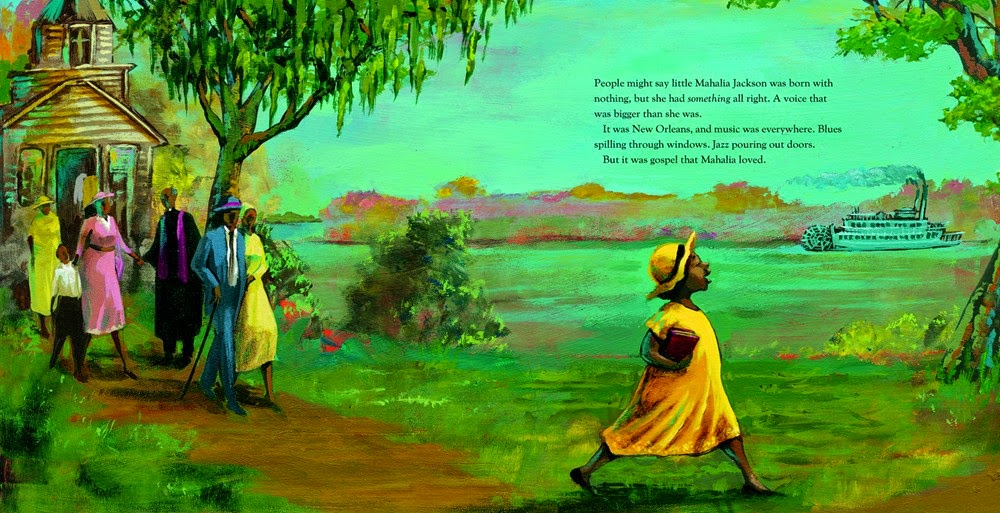 |
| "People might say little Mahalia Jackson was born with nothing, but she had something all right. A voice that was bigger than she was." |
"Mahalia sang for as many people as she could. She knew gospel lifted people up. And when you know something like that, you've got to tell it to the world."This is an important addition to our collection of picture book biographies. Pair this with Andrea Davis Pinkney's Martin and Mahalia: His Words, Her Song.
Leontyne Price:I adore the beauty and strength in this new biography of opera singer Leontyne Price. Weatherford clearly introduces Price's life, showing how difficult it was for her to pursue singing as a career. Leontyne's family supported her passion for music: "Their song of encouragement rose above the color line." But it was Marian Anderson, the African American opera singer who gave a famous performance on the steps of the Lincoln Memorial in 1939, who truly inspired Price.
Voice of a Century
by Carole Boston Weatherford
illustrated by Raul Colón
Knopf / Random House, 2015
Your local library
Amazon
ages 5-9
 |
| "Singing along to her daddy James's records and listening to the Metropolitan Opera's Saturday-afternoon radio broadcasts... Art songs and arias, shaping a brown girl's dreams." |
"Leontyne was never more majestic than as Aida, playing the part she was born to sing... Standing on Marian's shoulders, Leontyne gave the crowd goose bumps. The song of her soul soared on the breath of her ancestors."Raul Colón's soft watercolor illustrations capture Price's grace and grandeur, while still feeling personal. An inspiring combination of text and artwork that draws children to it right away.
Mahalia Jackson illustrations ©2015 by John Holyfield; used with permission from HarperCollins. Leontyne Price illustrations ©2015 by Raul Colón; used with permission from Random House. The review copies were kindly sent by the publishers. If you make a purchase using the Amazon links on this site, a small portion goes to Great Kid Books. Thank you for your support.
©2015 Mary Ann Scheuer, Great Kid Books
0 Comments on Celebrating Women's History Month with Leontyne Price & Mahalia Jackson (ages 5-9) as of 1/1/1900
Add a Comment
By: rgarcia406,
on 3/19/2015
Blog: The Open Book (Login to Add to MyJacketFlap)
JacketFlap tags: women's history month, Native American, African/African American Interest, Tu Books, Asian/Asian American, Latino/Hispanic/Mexican, Lee & Low Likes, Book Lists by Topic, book list, diversity, Add a tag
March is Women’s History Month! It’s never a bad time to learn about the contributions that women have made and continue to make. In honor of Women’s History Month, we’ve put together a list that features some of our favorite historical ladies and great fiction for children and older readers!
History:
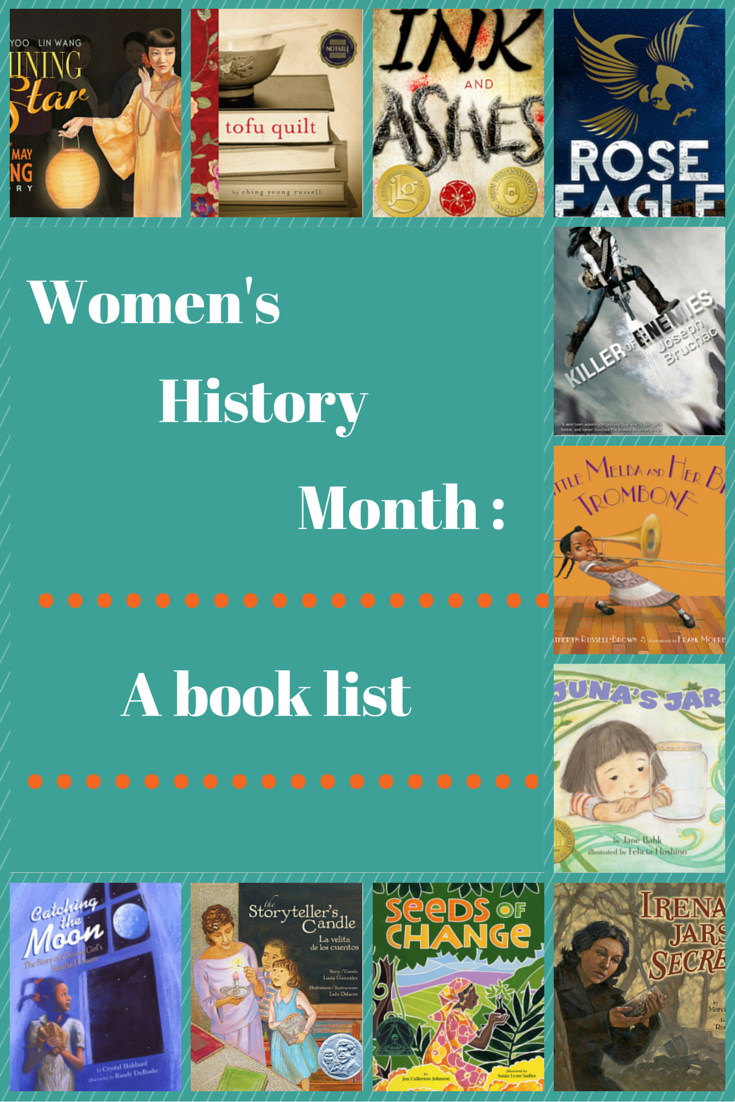 Little Melba and Her Big Trombone – this award-winning book follows the life of Melba Liston, a trailblazing trombonist, composer and arranger and one of the unsung heroes of the Jazz age.
- Shining Star: The Anna May Wong Story – Anna May Wong was the first Asian American film star.
- Seeds of Change – Wangari Maathai was the first African to win a Nobel prize for her
environmental work in Kenya. - The Storyteller’s Candle – Pura Belpre, was the New York Public Library’s first Latina librarian.
- Catching the Moon – Marcenia Lyle, was always interested in baseball. She grew up to play professional baseball for the Negro Leagues.
- In Her Hands – Augusta Savage was a renown sculptor of the Harlem Renaissance.
- Zora Hurston and the Chinaberry Tree – A story of the childhood of Zora Neale Hurston inspired by her autobiographical writings.
- Irena’s Jars of Secrets – Irena Sandler, a Polish social worker helps to smuggle children out of the Warsaw ghetto during WWII.
- Hiromi’s Hands – Young Hiromi Suzuki is determined to become a chef in the male-dominated sushi world
- Dear Mrs. Parks – Rosa Parks, the “Mother of the Modern Day Civil Rights Movement,” answers letters from students.
Fiction
Younger Readers
- The Hula-Hoopin’ Queen – Kameeka wants to beat her rival Jamara in a hula-hoopin’ contest, but she has to help her mother prepare for their neighbor, Miz Adeline’s birthday.
- Juna’s Jar – When Juna’s best friend Hector moves away without saying good bye, Juna uses her special kimchi jar to
 search for him until she finally is able to say bye.
 - Shanghai Messenger – Xiao Mei visits china to meet her extended family. Her grandmother Nai Nai wants her to remember everything she sees.
- Abuela’s Weave – Esperanza goes with her abuela to the market to help Abuela sell her traditional Mayan tapestries.
- Drum, Chavi, Drum! – Chavi was born to drum. Even though everyone tells her drumming is for boys, she is determined to play her favorite drums, the tumbadoras, at the festival.
- Kiki’s Journey – Kiki returns to the Taos Pueblo reservation she left when she was a baby.
- Juneteenth Jamboree – Cassie who has just moved to Texas, learns about the importance of June 19th, or Juneteenth, through a family celebration.
- Tashi and the Tibetan Flower Cure – Tashi’s grandfather, Popola, is sick, so she gathers family and friends to try a traditional flower cure from his village.
- The Legend of Freedom Hill – Rosabel, who is African American, and Sophie, who is Jewish, become friends. When Rosabel’s mother, a runaway slave gets captured by a slave catcher, Rosabel and Sophie put their heads together to free her.
- My Diary From Here to There – Amada moves with her family in Mexico to Los Angeles, California.
Older Readers
- Under the Mesquite – Lupita, the oldest of 8 siblings, struggles to keep her family together in the wake of her mother’s cancer.
 Summer of the Mariposas – A retelling of The Odyssey set in Mexico.
- The Tankborn Trilogy – A trilogy about genetic engineering and forbidden love.
- Cat Girl’s Day Off – Natalie must use her Talent talking to cats to stop a high profile celebrity kidnapping.
- Rattlesnake Mesa – After EdNah’s beloved grandmother dies, she is sent to live with her father on a Navajo reservation, and then to an Indian boarding school.
- Ink and Ashes – Claire opens the door to her deceased father’s path and finds a family secret that could kill her.
- Killer of Enemies – In a future where technology has failed, Lozen has been gifted with a unique set of abilities, magic and survival skills that she uses to hunt monsters for the people who kidnapped her family.
- Rose Eagle – In this prequel to Killer of Enemies, we join Rose Eagle as she goes on a quest to find healing for her people.
- Tofu Quilt – Yeung Ying, a young girl who grows up in 1960s Hong Kong, aspires to become a writer, against the conventions of society and family members.
0 Comments on Women’s History Month: A Book List as of 1/1/1900
Add a Comment
By: Mohamed Sesay,
on 3/15/2015
Blog: OUPblog (Login to Add to MyJacketFlap)
JacketFlap tags: Books, publishing, Journals, Philosophy, q&a, women's history month, academic publishing, *Featured, Life at Oxford, staff q&a, Life at OUP, Arts & Humanities, Eleanor Collins, iris murdoch, Lucy Randall, Sara McNamara, Women in Philosophy, Add a tag
This March, Oxford University Press is celebrating Women in Philosophy as part of Women’s History Month. We asked three of our female staff members who work on our distinguished list of philosophy books and journals to describe what it’s like to work on philosophy titles. Eleanor Collins is a Senior Assistant Commission Editor in philosophy who works in the Oxford office. Lucy Randall is a Philosophy Editor who works from our New York office. Sara McNamara is an Associate Editor who assists to manage our philosophy journals from our New York offices.
The post Publishing Philosophy: A staff Q&A appeared first on OUPblog.
0 Comments on Publishing Philosophy: A staff Q&A as of 3/15/2015 5:38:00 AM
Add a Comment
By: Connie Ngo,
on 3/13/2015
Blog: OUPblog (Login to Add to MyJacketFlap)
JacketFlap tags: History, Biography, Politics, american history, women's history month, America, VSI, very short introduction, Very Short Introductions, women's history, American National Biography, Editor's Picks, *Featured, american politics, VSIs, Susan Ware, VSI online, American Women's History, American Women's History: A Very Short Introduction, Shirley Chisholm, Add a tag
March is Women’s History Month and as the United States gears up for the 2016 election, I propose we salute a pathbreaking woman candidate for president. No, not Hillary Rodham Clinton, but Shirley Chisholm, who became the first woman and the first African American to seek the nomination of the Democratic Party for president. And yet far too often Shirley Chisholm is seen as just a footnote or a curiosity, rather than as a serious political contender who demonstrated that a candidate who was black or female or both belonged in the national spotlight.
The post Unbossed, unbought, and unheralded appeared first on OUPblog.
0 Comments on Unbossed, unbought, and unheralded as of 3/13/2015 5:16:00 AM
Add a Comment
By: Alex,
on 3/10/2015
Blog: The Children's War (Login to Add to MyJacketFlap)
JacketFlap tags: Resistance, Holocaust, Women's History Month, YA/Adult, Add a tag
Blog: The Children's War (Login to Add to MyJacketFlap)
JacketFlap tags: Resistance, Holocaust, Women's History Month, YA/Adult, Add a tag
Now, Joanne D. Gilbert has written a book that tells us about even more brave women and since March is Women's History Month and this year's theme is Weaving the Stories of Women's Lives, it seems a perfect time to showcase Women of Valor.
Between 2012 and 2014, Gilbert interviewed four women who had lived with their families in Poland, but who, through different circumstances, had found their way in the surrounding forests and either joined partisan groups or found other ways of resistance when the Nazis occupied their country.
Manya Barman Auster Feldman had lived a religious, comfortable life with her parents, 3 sisters and 2 brothers in Dombrovitsa in eastern Poland until Hitler invaded it in 1939. Suddenly, life became harder and harder and eventually all of Dombrovitsa's Jewish families were crowded into a two block ghetto. When it appeared likely that the ghetto was going to be liquidated, Manya's father decided her, Manya, her older sister and two brothers would try to escape into the forest, leaving behind her mother and two little sisters. Walking all night, they found the Kovpak partisan headquarters, where they were sent to different battalions. Manya, still just a teenager, soon learned how to fight, steal, sabotage the Germans efforts, and nurse the sick and wounded. Her story, as are all the stories included in Woman of Valor, is harrowing and amazing at the same time, and Manya herself credits luck for her many narrow escapes from death while she fought with the partisans.
Faye Brysk Schulman was also living a comfortable, religious life with her family in Lenin, Poland. Her older brother had learned photography and had enlisted Faye to help him. It was her knowledge of photography that saved Faye's life when the ghetto they had been forced to live in was about to be liquidated, it was her job to take the photos that the Nazis demanded she take. In September 1942, Soviet partisans stormed through Lenin, and warmed the remaining Jews to run. Faye, still a teenager, found the partisans, joined the Molotavia Brigade, where she spent the war years fighting, nursing and photographing events whenever she could steal, make or find what she needed.
Even though the rest of her family was Polish, Lola Leser Lieber Schar Schwartz was born in Hungary/Czechoslovakia. In 1938, when the Germans occupied Czechoslovakia, the Polish passports of her immediate family were no longer acceptable there. The Lesers, including Lola, quickly fled to Poland and their extended family. Little did Lola dream that after being continuously on the run from the Germans, hiding in all kinds of weather and places, including under a tree in the forest, it would be her Hungarian/Czechoslovakian birth that would save not just her life, but many others when she received official documents exempting her from the same treatment as the Polish Jews. Needless to say, these documents sparked a flurry of forging more "official" documents for other Jews in peril. Later, when her husband Mechel Lieber was arrested, Lola was even brave enough to go the Adolf Eichmann's office to try to convince him that it was a mistake. Lola was indeed a woman of great courage.
Miriam Miasnik Brysk is the youngest of the women interviewed. Only 4 years old when the war started, Miriam's family left Warsaw, Poland for Lida, her father's home then under Russian rule. But when the Germans arrived in Lida in 1941, it didn't take long for persecutions to begin. The Miasniks were fortunate because Miriam's father was a surgeon and the Nazis needed him. In 1942, Miriam and her parents escaped the Lida ghetto with the help of a partisan group that decided they needed a doctor more than the Nazis did. Miriam spent the rest of the war going from place to place with the partisans. Her hair was cut off and she was dressed like a boy, had not formal education until after the war, but did possess her own gun for a while. And she helped out wherever she could, even taking apart machine guns, cleaning them and putting them back together.
As each woman tells her story, it feels as though she is speaking to you personally, making this a very readable book and I highly recommend it. As they wove their stories, each remembered in great detail what their lives were like before and under the Nazi reign of terror and each acted with remarkable courage. Sadly, they all lost almost all the members of their families, often witnessing their murders. Glibert doesn't let them stop at the end of the war, but we also learn about their lives after and up to the present. Interestingly, they all found ways to express their Holocaust experiences though art later in life.
These are only four stories about acts of resistance, however, and, as Gilbert reminds us in Epilogue, most of the women who chose to resist the Nazis perished, taking the details of their courageous deeds with them, reminding us that what we do know about women resisters is really just the tip of the iceberg. But let all these brave women, known and unknown, be an inspiration to us all in the face of oppression.
This book is recommended for readers age 13+
This book was sent to me by the publisher, Gihon River Press
0 Comments on Women of Valor: Polish Resisters to the Third Reich by Joanne D. Gilbert as of 3/10/2015 10:24:00 AM
Add a Comment
By: Mary Ann Scheuer,
on 3/8/2015
Blog: Great Kid Books (Login to Add to MyJacketFlap)
JacketFlap tags: picture books, nonfiction, Women's History Month, ages 8-12, ages 5-8, best new book, Add a tag
Wangari MaathaiMaathai's political activism shines through in this biography, in her determination to reverse environmental damage caused by large, colonial plantations and empower local villagers--especially women--to improve their local conditions. Prévot begins by introducing young readers to Maathai's legacy:
The Woman Who Planted Millions of Trees
by Franck Prévot
illustrated by Aurélia Fronty
Charlesbridge, 2015
Your local library
Amazon
ages 7-12
*best new book*
"It's almost as if Wangari Maathai is still alive, since the trees she planted still grow. Those who care about the earth as Wangari did can almost hear her speaking... Wangari encouraged many village women. She dug holes with them in the red soil--holes in which to plant hope for today and forests for tomorrow."As Prévot tells Maathai's story, he emphasizes how her childhood and her education shaped Wangari, especially, in a time when very few African women went to school or learned to read.
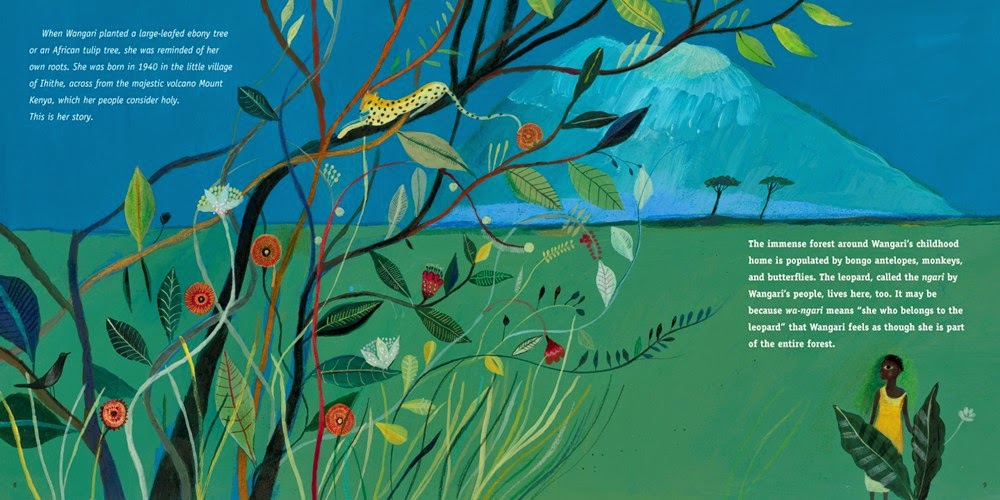 |
| "When Wangari planted a large-leafed ebony tree or an African tulip tree, she was reminded of her own roots." |
"The government officials who built their fortunes by razing forests try to stop Wangari. Who is this woman who confronts them with a confident voice in a country where women are supposed to listen and lower their eyes in men's presence?"The illustrations are striking and stylized, lush and vibrant. I especially noticed how Fronty varies the rich, saturated background colors on each spread, adding to the emotions. Just look how bold and strong the red is below--and notice how it contrasts to the cool greens and blues above:
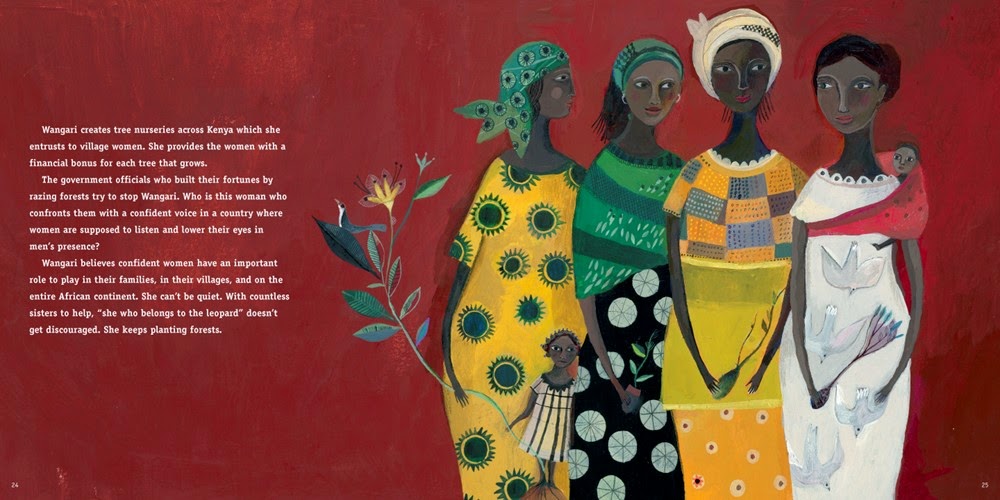 |
| "Wangari believes confident women have an important role to play in their families, their villages, and on the entire African continent." |
 |
| From the backmatter -- timeline, informaiton about Kenya today, the damage caused by deforestation |
©2015 Mary Ann Scheuer, Great Kid Books
0 Comments on Wangari Maathai: The Woman Who Planted Millions of Trees, by Franck Prévot (ages 7-12) as of 1/1/1900
Add a Comment
By: Alex,
on 3/1/2015
Blog: The Children's War (Login to Add to MyJacketFlap)
JacketFlap tags: Picture Book for Older Readers, Music, Women's History Month, Add a tag
Blog: The Children's War (Login to Add to MyJacketFlap)
JacketFlap tags: Picture Book for Older Readers, Music, Women's History Month, Add a tag
Shortly after I began this blog, I reviewed a wonderful middle grade book by Marilyn Nelson called Sweethearts of Rhythm: The Story of the Greatest All-Girl Swing Band in the World. But where Nelson's book covers the kind of music and the places where the Sweethearts played, Swing Sisters begins at the beginning.
In 1909, near Jackson, Mississippi a school/orphanage called Piney Woods Country Life School was started by Dr. Laurence Clifton Jones for African American girls.
The girls were educated, housed, clothed and fed and in return they all did chores to help keep things running smoothly and well. In 1939, Dr. Jones started a band that he called the Sweethearts with some musically talented girls to help raise money for the school. The music they played was called swing or big band music, by either name it was Jazz and people couldn't get enough of it.
Dean describes how the girls stayed together after leaving Piney Woods, hoping to make a living as musicians. They would live, sleep, eat and play music, traveling around from gig to gig in a bus they called Big Bertha. Band members came and went, and before long the band was no longer made up of only African American women, but included many races and nationalities. As a result, they decided to call themselves the International Sweethearts of Rhythm.
But while the band hit the big time, they still didn't get paid as much as their male counterparts nor were they taken as seriously, no matter how good they were. Not only that, Dean points out, but in the Jim Crow south, because they were interracial now, traveling and performing became risky and she includes some of those scary, dangerous incidents they faced.
In 1945, as World War II was winding down, the Sweethearts found themselves on a USO tour thanks to a letter writing campaign by African American soldiers. But sadly, the Sweethearts disbanded after the war and the members went their separate ways.
Dean does an excellent job of introducing the Sweethearts to her young readers and the difficulties an all-women's interracial band faced back in the 1940s balancing it with positive events and the strong bonds of friendship among all the members.
Cepeda's colorful acrylic and oil painted illustrations match the energy of the music the Sweethearts played with a bright rainbow palette of greens, pinks, purples, yellows, blues and orange.
So many wonderful books are coming out now introducing young readers to some of the greatest artists and musicians of the 20th century and this book is such a welcome addition.
This book is recommended for readers age 7+
This book was bought for my personal library
You can see for yourself just how good the Sweethearts were in their heyday:
0 Comments on Swing Sisters: The Story of the International Sweethearts of Rhythm by Karen Deans, illustrated by Joe Cepeda as of 1/1/1900
Add a Comment
By: Lisa Taylor,
on 2/13/2015
Blog: ALSC Blog (Login to Add to MyJacketFlap)
JacketFlap tags: Slice of Life, Women's History Month, News of Interest, Children's Literature (all forms), Blogger Lisa Taylor, Bloggers, Add a tag

Each March, in addition to working, blogging here at the ALSC Blog and at Shelf-employed, I host KidLit Celebrates Women’s History Month! along with fellow librarian and blogger, Margo Tanenbaum, of The Fourth Musketeer.
Active only during Women’s History Month, the blog features readers, commenters, and contributors working together to create a dynamic resource of thoughtful and thought-provoking essays, commentaries, and book reviews. Each post is related to children’s literature and women’s history.
The blog is a great resource for finding new books (we’ll be featuring several new and upcoming titles!) and useful links. Previous contributors include Jen Bryant, Andrea Davis Pinkney, Donna Jo Napoli, and Betsy Bird. Contributors for 2015 include Emily Arnold McCully (Queen of the Diamond), Misty Copeland (Firebird), Michaela McColl (The Revelation of Louisa May), and more.
The complete 2015 lineup may be found on the site’s sidebar. You can sign up to follow the blog, or receive it via email. Visit the site at http://kidlitwhm.blogspot.com to see “following” options, an archive of past contributions, and links to educational resources. It’s suitable for parents and teachers, too.
The official Women’s History Month theme for 2015, is “Weaving the Stories of Women’s Lives.” If you’ve got great plans for WHM, please share! 
In March, stop here first, then head on over to KidLit Celebrates Women’s History Month!
KidLit Celebrates Women’s History Month blog header by Rebekah Louise Designs.
The post Looking ahead to Women’s History Month appeared first on ALSC Blog.
0 Comments on Looking ahead to Women’s History Month as of 2/13/2015 1:45:00 PM
Add a Comment
By: Heidi MacDonald,
on 1/30/2015
Blog: PW -The Beat (Login to Add to MyJacketFlap)
JacketFlap tags: Comics, Marvel, women's history month, Colleen Doran, Janet Lee, Top News, Ming Doyle, Katie Cook, Stephanie Hans, erica henderson, stacey lee, sana takeda, Add a tag
When Marvel announced Girl Comics four years ago it unleashed a firestorm of outrage (just check out the comments if you care in the link). Now they are announcing a whole month of variant covers by female artists and everyone thinks it’s A-OK! Because suddenly women read comics.
The event will celebrate Women’s History Month in March but also spotlight some of Marvel’s most popular artists. “2014 was a huge year for Women of Marvel, both in our comics and behind the scenes,” says Marvel Editor-in-Chief Axel Alonso in a statement. “Marvel now has more titles starring female leads than ever before, the Women of Marvel panel is one of the most highly attended at conventions, and the weekly Women of Marvel podcast continues to grow. In 2015, we intend to continue that tradition, and March’s Women of Marvel variant covers — featuring 20 of the best female artists in the industry – is just the beginning.”
Here’s the complete list…and eight covers released so far, by some of the top cover artists out there such as Sana Takeda, Sara PIchelli, Colleen Doran, Amanda Conner and MORE. Can’t wait to see the whole list!
- All-New Captain America #5 by TBD
- All-New Hawkeye #1 by SHO MURASE
- All-New X-Men #39 by FAITH ERIN HICKS
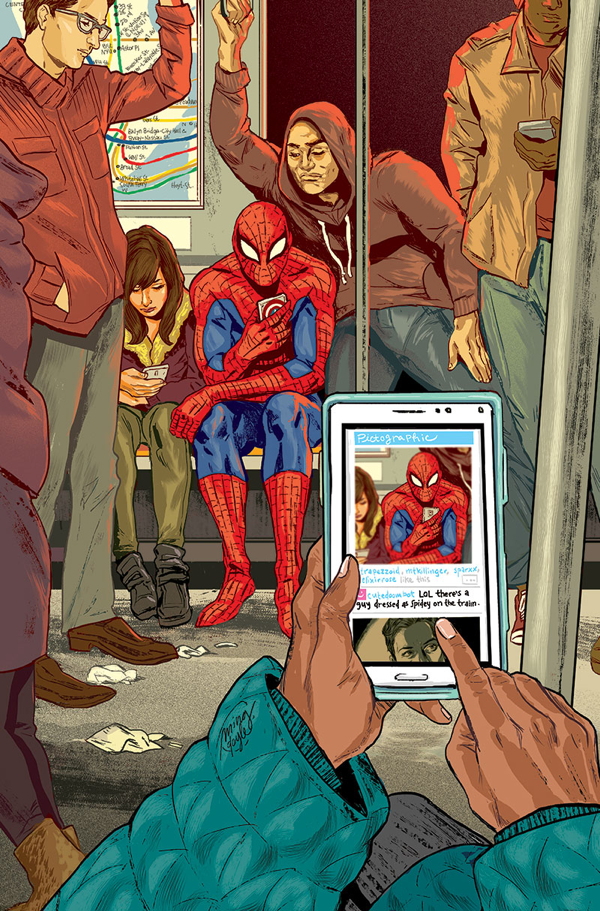
- Amazing Spider-Man #16 by MING DOYLE

- Ant-Man #3 by KATIE COOK
- Avengers #42 by TBD
- Black Widow #16 by VANESA DEL REY
- Captain Marvel #13 by AFUA RICHARDSON
- Deadpool #43 by TBD

- Guardians of the Galaxy #25 by ERICA HENDERSON
- Inhuman #13 by JILL THOMPSON

- Legendary Star-Lord #10 by SANA TAKEDA
- Ms. Marvel #13 by TBD
- New Avengers #31 by SARA PICHELLI

- Rocket Raccoon #9 by JANET LEE
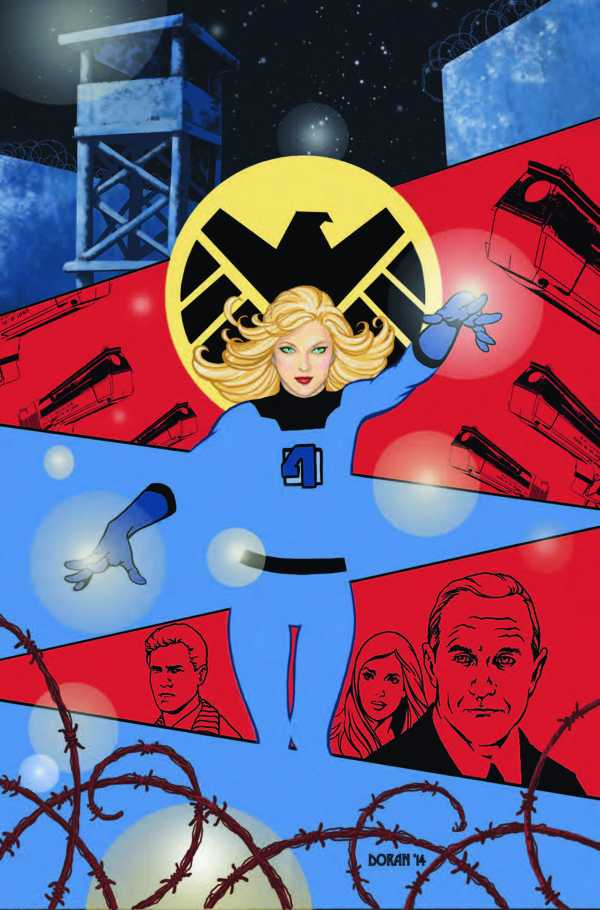
- S.H.I.E.L.D. #4 by COLLEEN DORAN
- Superior Iron Man #6 by TBD
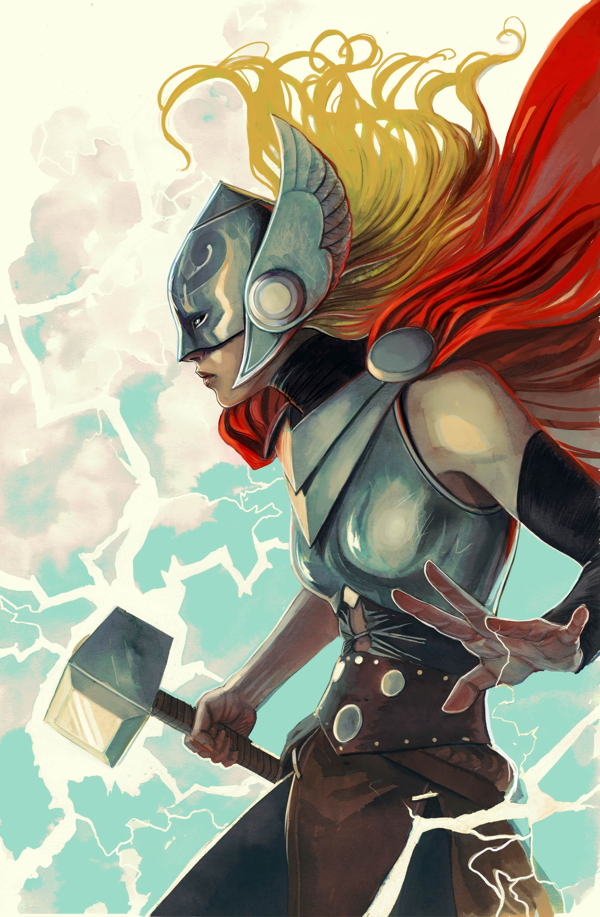
- Thor #6 by TBD (Above image by Stephanie Hans)
- Unbeatable Squirrel Girl #3 by GURIHIRU
- Uncanny Avengers #3 by AMANDA CONNER

- Uncanny X-Men #33 by STACEY LEE
3 Comments on Marvel unveils Women of Marvel Variant Covers, last added: 2/1/2015
Display Comments
Add a Comment
By: Kerry Aradhya,
on 4/9/2014
Blog: Picture Books & Pirouettes (Login to Add to MyJacketFlap)
JacketFlap tags: Dance, Picture Books, Women's History Month, Janet Collins, Read and Romp Roundup, Josephine Baker, Add a tag
Welcome to the March Read & Romp Roundup! Women's History Month was celebrated widely in March, so several of the submissions feature women who have broken boundaries in the world of dance -- the African American ballerina Janet Collins and the inspiring dancer and civil rights advocate Josephine Baker. And of course, no roundup would be complete without picture books and movement ideas to go with them, which are also included. Enjoy!

At Good Reads with Ronna, Rita Zobayan reviews the popular new picture book A Dance Like Starlight: One Ballerina's Dream by Kristy Dempsey and Floyd Cooper. "Inspired by the story of Janet Collins, the first African American ballerina at the Metropolitan Opera Ballet, A Dance Like Starlight: One Ballerina's Dream is a story of high hopes and grand dreams," says Rita. Read the full review to see why this "wonderful tale of courage, perseverance, and determination" brought tears to her eyes.
Kidlit Celebrates Women's History Month hosts special guest blogger Kristy Dempsey -- the author of A Dance Like Starlight: One Ballerina's Dream. What a treat! Hear from the author herself about her inspiration and experience writing the book. "A Dance Like Starlight is my song of thanks to all the women throughout history who have shown us who we can be and have given us an example to pursue our dreams with passion," Kristy says.

At Booktalking #Kidlit, Anastasia Suen features the new picture book Josephine: The Dazzling Life of Josephine Baker by Patricia Hruby and Christian Robinson. Josephine struggled in her early life but became a celebrated dancer and performer after moving from the United States to Paris in the 1920's. Anastasia's post includes a snippet of text from the book, which is written in free verse. It also includes a book trailer and plenty of examples of the book's illustrations, which are stunning.

Maria from Maria's Movers shares some creative activities to go with the picture book The Squiggle by Carole Lexa Schaefer and Pierr Morgan. With her younger students, Maria used long colorful strings (as squiggles) to explore some of the ideas from the book, and with her older students she made up string dances!

And finally, don't forget to check out the March Book to Boogie post at the Library as Incubator Project. Dance educator Liz Vacco shares movement ideas to go with the classic picture book Mouse Paint by Ellen Stoll Walsh. She includes ideas for both younger and older students and recommends music to go with the movement!
At Good Reads with Ronna, Rita Zobayan reviews the popular new picture book A Dance Like Starlight: One Ballerina's Dream by Kristy Dempsey and Floyd Cooper. "Inspired by the story of Janet Collins, the first African American ballerina at the Metropolitan Opera Ballet, A Dance Like Starlight: One Ballerina's Dream is a story of high hopes and grand dreams," says Rita. Read the full review to see why this "wonderful tale of courage, perseverance, and determination" brought tears to her eyes.
Kidlit Celebrates Women's History Month hosts special guest blogger Kristy Dempsey -- the author of A Dance Like Starlight: One Ballerina's Dream. What a treat! Hear from the author herself about her inspiration and experience writing the book. "A Dance Like Starlight is my song of thanks to all the women throughout history who have shown us who we can be and have given us an example to pursue our dreams with passion," Kristy says.
At Booktalking #Kidlit, Anastasia Suen features the new picture book Josephine: The Dazzling Life of Josephine Baker by Patricia Hruby and Christian Robinson. Josephine struggled in her early life but became a celebrated dancer and performer after moving from the United States to Paris in the 1920's. Anastasia's post includes a snippet of text from the book, which is written in free verse. It also includes a book trailer and plenty of examples of the book's illustrations, which are stunning.
Maria from Maria's Movers shares some creative activities to go with the picture book The Squiggle by Carole Lexa Schaefer and Pierr Morgan. With her younger students, Maria used long colorful strings (as squiggles) to explore some of the ideas from the book, and with her older students she made up string dances!
And finally, don't forget to check out the March Book to Boogie post at the Library as Incubator Project. Dance educator Liz Vacco shares movement ideas to go with the classic picture book Mouse Paint by Ellen Stoll Walsh. She includes ideas for both younger and older students and recommends music to go with the movement!
0 Comments on Read & Romp Roundup: March 2014 as of 4/9/2014 1:59:00 PM
Add a Comment
By: Mary Ann Scheuer,
on 3/30/2014
Blog: Great Kid Books (Login to Add to MyJacketFlap)
JacketFlap tags: ages 8-12, interview, history, nonfiction, Women's History Month, Add a tag
As I explore Women's History Month with students, I want to help them think about how they can honor women in history. We talk about honoring women in their lives, because for young students the immediate it so important. But I'm also fascinated by the way authors investigate women whose stories we might not have heard yet.
MS: How did you first learn about Eleanor? What drew you to her story?
TF: I first learned about Eleanor when I was browsing through my local bookstore and happened upon David Shaw's book, Flying Cloud. I'm always on the lookout for strong female characters, and so I knew instantly that I wanted to write about Eleanor. Eleanor's story also combined adventure and science, two elements that I'm also often drawn toward. Finally, I'm a Massachusetts gal who grew up with the ocean and the beach in my backyard, and I love that Eleanor grew up here, too!
MS: Did you travel at all to do your research? What was your research process like?
TF: I traveled to Marblehead, Massachusetts while writing Dare the Wind. Marblehead was Eleanor's home town, and parts of the town still look much the way I imagine they looked when Eleanor walked its cobbled streets. I also visited the Mystic Seaport Museum in Connecticut and toured the USS Constitution in Boston harbor to get myself in a seafaring state of mind! My research process for this book was different from my usual research, because there are relatively few primary sources available. As a result, I relied more heavily on secondary sources than I typically do.
MS: I was amazed at how well you conveyed being on a ship at sea in a storm. Have you sailed like this at all?
TF: Thank you! I've been sailing before but never under the challenging conditions that Eleanor faced. I'm so happy that I could convey the sensations of being on a ship at sea in a storm to readers.
TF: I adore Emily's illustrations! She did her own research to ensure that her illustrations were accurate. I did send Emily a very detailed description of the Flying Cloud that was published at the time of the ship's launch. Some of the details that I love in Emily's illustrations are the wonderful spread of the Flying Cloud at the pier in New York City, the view of Ellen (Eleanor) below deck working on her charts which beautifully captures the feeling of motion in the tilt of the lamp above her head, and the cover illustration which shows the figurehead of an angel on the prow of the ship, mirroring Ellen and her telescope on deck. I especially love the cover illustration because it seems to capture the forward movement of Ellen's amazing journey!
TF: The most surprising thing about Eleanor was just how ahead of her time she was. Not only did she assumed the role of navigator at a time when that was absolutely atypical for a woman, she also embraced the new navigational theories of Matthew Fontaine Maury, which went against the prevailing wisdom of the time. Eleanor was clearly a force to be reckoned with!
MS: Did you have to leave anything out that you really wanted to include?
TF: There's always so much more I'd love to include in all of my books! Believe it or not, Eleanor's journey was filled with even more exciting incidents, including a threatened mutiny that I simply couldn't include. I would have also loved to have included more details about Donald McKay, the builder of the Flying Cloud, and the ship-building process, but perhaps that's material for another book!
Thanks so much for your interest in Dare the Wind!
Thank you, Tracey! I loved sharing this story with students, and hearing their reactions. Eleanor was definitely a force to be reckoned with!
For more information, definitely check out Tracey's website. Illustration copyright © 2013 by Emily Arnold McCully, shared by permission from the publisher. The review copy was kindly sent by the publishers, Margaret Ferguson Books, Farrar Straus Giroux, an imprint of Macmillan Books. If you make a purchase using the Amazon links on this site, a small portion goes to Great Kid Books (at no cost to you!). Thank you for your support.
©2014 Mary Ann Scheuer, Great Kid Books
0 Comments on Writing nonfiction that honors women in history: an interview with Tracey Fern as of 3/31/2014 4:51:00 AM
Add a Comment
By: Jen Robinson,
on 3/28/2014
Blog: Jen Robinson (Login to Add to MyJacketFlap)
JacketFlap tags: book lists, schools, laurel snyder, national poetry month, greg pincus, Twitter Links, growing bookworms, santa clara city library, women's history month, Add a tag
Here are highlights from the links that I shared on Twitter this week @JensBookPage.
Authors and Illustrators
2 of our faves | Seven Impossible Things Before Breakfast » Featuring Kady MacDonald Denton and Rosemary Wells http://ow.ly/v8NkW
This is cool! Pippi Longstocking Author Astrid Lindgren Gets a Spot on Sweden’s 20 Krona Note @GalleyCat via @tashrow http://ow.ly/v8Lal
Happy Birthday, Kate DiCamillo! from @kidlitwhm http://ow.ly/uXeXd #kidlit
Barbro Lindgren Wins 2014 Astrid Lindgren Memorial Award http://ow.ly/uXBLh #kidlit via @PWKidsBookshelf
Book Lists


10 Counting Books set in the Garden from @growingbbb http://ow.ly/v5jjD #kidlit
Stacked: Crossing the Line: Adult-Teen Relationships in YA Fiction and Beyond by @catagator http://ow.ly/uXfr5 #yalit
10 Books With Female Leads and No (or Little) Romance, recommended by @Book_Nut http://ow.ly/uUPCa #kidlit #yalit
Nice #booklist from @ReadingRockets about Being Brave http://ow.ly/uR8QU via @ChoiceLiteracy


Diversity + Gender
A thorough and excellent response from @LaurelSnyder to someone who objected to seeing gay parents in Penny Dreadful http://ow.ly/v5iBw
Emerson's Museum of Amazing Women, Part 3, by @MaryAnnScheuer (featuring @jenniholm and Alex Morgan) http://ow.ly/v5kHC
Check out yesterday's KQED Roundtable: People of Color Underrepresented in Children's Books. http://ow.ly/uXeJp via @bkshelvesofdoom


10 Diverse Poetry Books for Kids from @momandkiddo http://ow.ly/uUOlj #kidlit
Stacked: Wrapping Up the "About the Girls" series http://ow.ly/uUPJo #yalit
Events
A #Poetry Challenge for Kids for April (Poetry Month) from @momandkiddo http://ow.ly/v8Mbd #kidlit
GottaBook: Announcing the 2014 Redux-Edition of 30 Poets/30 Days! from @gregpincus http://ow.ly/v8KCi
Press Release Fun: Voting Now Open for the 7th Annual Children’s and Teen Choice Book Awards! — @fuseeight @CBCBook http://ow.ly/uXflh
Growing Bookworms
Zoobean Debuts A Recommendation Service For Children’s Apps And Books | @TechCrunch http://ow.ly/v5qn2 via @PWKidsBookshelf
“That was intense!”: Getting Boys Excited About Books by @erniec + @mhorateach @NerdyBookClub http://ow.ly/v8MC2
"Never underestimate the power of a book, espec (in)... the hands of the child that needs to hear what it has to say" http://ow.ly/uUP0J
On Reading, Writing, and Publishing
A new phenomenon: The $300/hr Book Group Facilitator | @medinger http://ow.ly/v5kZH
Top-selling children's and YA books for 2013 - Divergent trilogy led the pack (combined) http://ow.ly/v5jYH via @100scopenotes #kidlit
"No story stole my heart like The Lion, The Witch and The Wardrobe" Natalie Lloyd @NerdyBookClub http://ow.ly/uXfcp #kidlit


Programs and Research
iPad Use and Babies: A Pediatrician throws a wrench in the works and @fuseeight has some good quesitons http://ow.ly/v8MYI
Turning the Page: Refocusing Massachusetts for Reading Success - includes #RedSox #literacy analogy http://ow.ly/v5dqF via @librareanne
Interesting ... People Who Use E-Readers Dive Far Deeper Into Books | @TheUnderwire via @tashrow http://ow.ly/uQ2dY
Schools and Libraries
Great News! Santa Clara City Council approves plan to get Northside Library back on track! http://ow.ly/uZujI @SantaClaraLib
Helping Young Readers Become Independent, a @ChoiceLiteracy post by Katie DiCesare http://ow.ly/uR8Lk
© 2014 by Jennifer Robinson of Jen Robinson's Book Page. All rights reserved. You can also follow me @JensBookPage or at my Growing Bookworms page on Facebook.
Related Stories
By: DanP,
on 3/28/2014
Blog: OUPblog (Login to Add to MyJacketFlap)
JacketFlap tags: Literature, women's history month, francis bacon, aphra behn, Humanities, *Featured, katherine philips, Oxford Scholarly Editions Online, Online products, OSEO, 83 song, early modern women writers, margaret cavendish, mary wroth, Oenone, Oxford online products, Add a tag
By Andrew Zurcher
As Women’s History Month draws to a close in the United Kingdom, it is a good moment to reflect on the history of women’s writing in Oxford’s scholarly editions. In particular, as one of the two editors responsible for early modern writers in the sprawling collections of Oxford Scholarly Editions Online (OSEO), I have been going through the edited texts of women writers included in the OSEO project, and thinking about how well even the most celebrated women writers from the period 1500 – 1700 are represented in this new digital format. In short, early modern English women writers have fared, perhaps predictably, badly.
The essayist, philosopher, and historian Francis Bacon has his place, in the Oxford Francis Bacon in fifteen volumes; but the philosopher and poet and essayist and dramatist and prose writer Margaret Cavendish, duchess of Newcastle, does not. Philip Sidney, famous for his pastoral poems, appeared in a stunningly erudite Oxford edition by William Ringler, Jr. in 1962, now like the Bacon edition a part of OSEO; Katherine Philips, also famous for her pastoral poetry, limps in to the Oxford fold in a 1905 text lightly edited by George Saintsbury, which also includes the minor Caroline poets Patrick Hannay, William Chamberlayne, and Edward Benlowes. Aphra Behn, one of the most prolific writers of the Restoration, hardly figures at all in OSEO, and the Oxford list does not include complete works for Isabella Whitney, Mary Herbert, Amelia Lanyer, or Mary Wroth.
Among those lyric poems and short works by women that are included in OSEO, many return to the silencing of a woman’s voice, the disabling of her love, and the banishment of her person. Typical is Mary Wroth’s “83 Song”, first published in Peter Davidson’s anthology, Poetry and Revolution: An Anthology of British and Irish Verse 1625-1660. Recognising that “the time is come to part” with her “deare”, the woman speaker of the poem gives up not only her own happiness, but his unhappiness. She goes to “woe”, while he goes to “more joy”:
Where still of mirth injoy thy fill,
One is enough to suffer ill:
My heart so well to sorrow us’d,
Can better be by new griefes bruis’d. (ll. 5-8)
The woman lover’s habituation to grief gives her a capacity for further bruising that, not without irony, she embraces as an ethical duty. Hers is a voice constructed for loss and for complaint, so much so that she cannot escape from this loss, and the woes that “charme” her, except by death – as the concluding stanza of the song suggests:
And yett when they their witchcrafts trye,
They only make me wish to dye:
But ere my faith in love they change,
In horrid darknesse will I range. (ll. 17-20)
For Wroth’s loving, jilted woman speaker, identity is constructed out of a wronged fidelity; the two options remaining to her are complaint and oblivion.
Complaint was still a powerful mode for women writers during the Restoration – certainly a mode that modern editors have much privileged in anthologies. A poem by Aphra Behn, “A Paraphrase on Oenone to Paris”, has slipped in to OSEO‘s corpus through its inclusion in John Kerrigan’s wonderful anthology, Motives of Woe: Shakespeare and ‘Female Complaint’: A Critical Anthology.
In this poem the shepherdess Oenone challenges the Trojan prince Paris, who had won her love while keeping flocks on the slopes of Mount Ida; afterward discovering his true birthright, Paris has abandoned her, and sails for Sparta, there to ravish Menelaus’ queen, Helen, and set in train the events that will lead to the Trojan War. Toward the end of Behn’s long poem of complaint, Oenone reprehends her lover for his faithlessness with an argument that seems to gesture at Behn’s own public reputation:
How much more happy are we Rural Maids,
Who know no other Palaces than Shades?
Who want no Titles to enslave the Croud,
Least they shou’d babble all our Crimes aloud;
No Arts our good to show, our Ills to hide,
Nor know to cover faults of Love with Pride.
I lov’d, and all Loves Dictates did persue,
And never thought it cou’d be Sin with you.
To Gods, and Men, I did my Love proclaim
For one soft hour with thee, my charming Swain,
Wou’d Recompence an Age to come of Shame,
Cou’d it as well but satisfie my Fame.
But oh! those tender hours are fled and lost,
And I no more of Fame, or Thee can boast!
‘Twas thou wert Honour, Glory, all to me:
Till Swains had learn’d the Vice of Perjury,
No yielding Maids were charg’d with Infamy.
‘Tis false and broken Vows make Love a Sin,
Hadst thou been true, We innocent had been. (ll. 265-83)
The “Titles” that Oenone disclaims are those of honour, the courtly ranks and degrees to which women might be raised by their paternity, or by their advantageous marriages; wanting titles, shepherdesses can sport in the shades of innocence, their sexual crimes unremarked and undisplayed. The shame and infamy that now await Oenone spring directly from Paris’ perjury, for the woman’s reputation for immodesty flows from the exposure accomplished by her jilting. To her way of thinking, a crime is no crime until it is published; this is a logic she has learned from men, who cover up their own crimes with “Pride”. But “Titles” may also be those of published books, and the “Arts” Oenone lacks may be just those powers of “Pride” that always enable men to abandon women – in a broad sense, the power to speak falsely. What women do, cries Behn’s Oenone, has been betrayed by what men say; what can a woman write, that will not collude in her own untitling?
Early modern women writers have not been much or widely published. There are many reasons, of course, for this history of omission and scant commission. But so long as we continue to anthologize selections from the works of women writers from this period, and to bundle them in mixed fardels, we collude in a history or pattern of dis-titling, of allowing early modern women poets to complain, but not to speak in their more diverse collected works. This pattern is changing: important new editions of Wroth and Behn have appeared in the last few decades, and – closer to home – the works of the translator and poet Lucy Hutchinson, in a meticulously edited text from David Norbrook and Reid Barbour, have recently joined the Oxford list and the OSEO fold. Other early modern women writers will surely follow. As Women’s History Month comes to an end, it’s high time we put a period to infamy, shame, oblivion, and bruising.
Andrew Zurcher is a Fellow and Director of Studies in English at Queens’ College, Cambridge, and a member of the Oxford Scholarly Editions Online (OSEO) editorial board.
Scholarly editions are the cornerstones of humanities scholarship, and Oxford University Press’s list is unparalleled in breadth and quality. Now available online, Oxford Scholarly Editions Online provides an interlinked collection of these authoritative editions. Discover more by taking a tour of the site.
Subscribe to the OUPblog via email or RSS.
Subscribe to only literature articles on the OUPblog via email or RSS.
Image Credit: Aphra Behn by Mary Beale. Image available on public domain via WikiCommons
The post Entitling early modern women writers appeared first on OUPblog.


0 Comments on Entitling early modern women writers as of 1/1/1900
Add a Comment
By: PennyF,
on 3/28/2014
Blog: OUPblog (Login to Add to MyJacketFlap)
JacketFlap tags: ethics, Videos, gender, Philosophy, Language, feminism, communication, sexism, women's history month, introductions, feminist, cameron, VSI, Very Short Introductions, linguistics, Humanities, blackburn, sociolinguistics, simon blackburn, *Featured, deborah, masculine, carol gilligan, deborah cameron, iaitv, gilligan, Add a tag

As Women’s History month comes to a close, we wanted to share an important debate that Simon Blackburn, author of Ethics: A Very Short Introduction, participated in for IAITV. Joined by Scottish feminist linguist Deborah Cameron and feminist psychologist Carol Gilligan, they look at what we can do to build a more feminist language.
Is our language inherently male? Some believe that the way we think and the words we use to describe our thoughts are masculine. Looking at our language from multiple points of views – lexically, philosophically, and historically – the debate asks if it’s possible for us to create a gender neutral language. If speech is fundamentally gendered, is there something else we can do to combat the way it is used so that it is no longer – at times – sexist?
What do you think can be done to build a more feminist language?
Simon Blackburn is Professor of Philosophy at the University of Cambridge. Until recently he was Edna J. Doury Distinguished Professor of Philosophy at the University of North Carolina, and from 1969 to 1999 a Fellow and Tutor at Pembroke College, Oxford. He is the author of Ethics: A Very Short Introduction.
The Very Short Introductions (VSI) series combines a small format with authoritative analysis and big ideas for hundreds of topic areas. Written by our expert authors, these books can change the way you think about the things that interest you and are the perfect introduction to subjects you previously knew nothing about. Grow your knowledge with OUPblog and the VSI series every Friday, subscribe to Very Short Introductions articles on the OUPblog via email or RSS, and like Very Short Introductions on Facebook.
Subscribe to the OUPblog via email or RSS.
>Subscribe to only philosophy articles on the OUPblog via email or RSS.
The post Is our language too masculine? appeared first on OUPblog.

0 Comments on Is our language too masculine? as of 3/29/2014 9:27:00 AM
Add a Comment
By: Mary Ann Scheuer,
on 3/26/2014
Blog: Great Kid Books (Login to Add to MyJacketFlap)
JacketFlap tags: Women's History Month, Emerson, digital media, Add a tag
Women's History Month inspires kids in so many different ways. Here are two modern women that our kids look up to: author Jennifer Holm, and soccer star Alex Morgan. Each of these women gives the message to all our kids: you can follow your dreams and become whoever you want to be.
Emily had a lot of fun making an Animoto about her favorite author Jennifer Holm. Many of our students love Holm's Babymouse series (did you know Happy Birthday, Babymouse comes out in 3 weeks?!), but Emily also gives a shout-out for Turtle in Paradise, Holm's novel set in 1930s Key West.
Booklist writes of the first Kicks installment, Saving the Team:
U.S. women’s soccer team player and Olympic medalist Morgan’s enthusiasm for the game is evident throughout this light and lively contemporary read. Though there are some predictable story elements, Devin is an appealing protagonist whose peppy first-person narrative incorporates abundant soccer details, along with familiar themes of making friends and the value of teamwork.Stay tuned for my Animoto showing all the great posters that students have made. Thanks very much for celebrating Women's History Month with Emerson students!
If you make a purchase using the Amazon links on this site, a small portion goes to Great Kid Books (at no cost to you!). Thank you for your support.
©2014 Mary Ann Scheuer, Great Kid Books
0 Comments on Emerson's Museum of Amazing Women, Part 3 as of 1/1/1900
Add a Comment
By: Mary Ann Scheuer,
on 3/24/2014
Blog: Great Kid Books (Login to Add to MyJacketFlap)
JacketFlap tags: history, nonfiction, Women's History Month, ages 8-12, ages 5-8, best new book, Add a tag
Ellen Prentiss loved the sea her whole life, but she was no ordinary little girl. Her father taught her how to sail his trading schooner and use complicated navigating tools like a sextant, and soon she was sailing her own ship, racing the fishing fleet across Massachusetts Bay.Dare the Wind
by Tracy Fern
illustrated by Emily Arnold McCully
Farrar, Straus, Giroux, 2014
Amazon
your local library
ages 6-10
*best new book*
Ellen married Perkins Creesy, a ship's captain, and soon they were sailing together, with Ellen navigating their ship. When Perkins was given command of The Flying Cloud, a fast new clipper ship built to take passengers and cargo from New York to the California Gold Rush, Ellen knew it was up to her to help find the fastest winds and swiftest route.
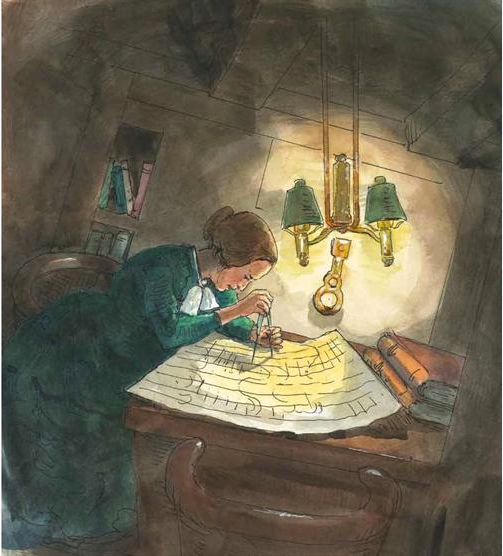 |
| "She plotted a course to catch the strongest wind and current she could." |
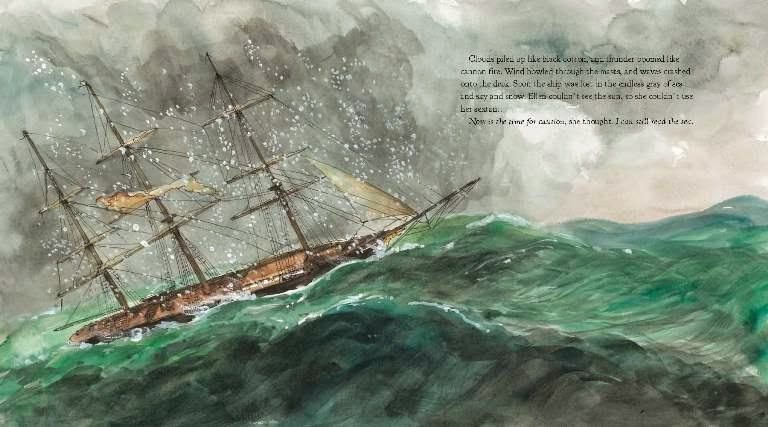 |
| "Now is the time for caution, she thought. I can still read the sea." |
"A true navigator must have the caution to read the sea, as well as the courage to dare the wind."There are many excellent resources for children who are interested in this story. Check out the new LiveBinder page put together by the Junior Library Guild: Booktalks To Go. I also love the way that Tracey Fern has included some of her favorite links on her website.
Illustration copyright © 2013 by Emily Arnold McCully, shared by permission from the publisher. The review copy was kindly sent by the publishers, Margaret Ferguson Books, Farrar Straus Giroux, an imprint of Macmillan Books. If you make a purchase using the Amazon links on this site, a small portion goes to Great Kid Books (at no cost to you!). Thank you for your support.
©2014 Mary Ann Scheuer, Great Kid Books
0 Comments on Dare the Wind: a tale of courage and calculations for Women's History Month (ages 6-10) as of 3/24/2014 7:55:00 AM
Add a Comment
By: Mary Ann Scheuer,
on 3/23/2014
Blog: Great Kid Books (Login to Add to MyJacketFlap)
JacketFlap tags: Women's History Month, Emerson, digital media, Add a tag
Here are two more great projects celebrating women that our students admire -- both have strong roots in the Bay Area as well as national garden movement.
Kaiyah honors her mom, Kelly Carlisle, founder of Acta Non Verba, a youth urban farm project in East Oakland. Kaiyah was particularly excited to try out using Animoto, and she did a terrific job combining bold text and pictures. Watch her Animoto by clicking through:
Did you notice how Bella included her photo credits on the last slide? This made my librarian heart smile -- here's a student really incorporating Digital Citizenship lessons. Hooray!
These are the first digital projects that these students have done. I love how they've ventured into this new way of presenting information. If you have a chance, they would love to hear what you think about their projects. Leave a comment below if you can!
©2014 Mary Ann Scheuer, Great Kid Books
0 Comments on Emerson's Museum of Amazing Women, Part 2 as of 3/23/2014 2:25:00 PM
Add a Comment
View Next 25 Posts
I’d add to this list the real-life Lozen, the woman who inspired Joseph Bruchac’s character by the same name in KILLER OF ENEMIES. She was a warrior (beside Geronimo and her brother, Victorio) who defended the Apache people during a terrible time of war with the United States, as well as using her skill as a tracker (and some supernatural skills) to know where their enemies were coming from.
[…] booktalks allow students to explore and develop their interests. Consider creating collections for Women’s History Month, Cesar Chavez Day, baseball season, National Poetry Month in April, and Earth […]