JacketFlap connects you to the work of more than 200,000 authors, illustrators, publishers and other creators of books for Children and Young Adults. The site is updated daily with information about every book, author, illustrator, and publisher in the children's / young adult book industry. Members include published authors and illustrators, librarians, agents, editors, publicists, booksellers, publishers and fans. Join now (it's free).
Login or Register for free to create your own customized page of blog posts from your favorite blogs. You can also add blogs by clicking the "Add to MyJacketFlap" links next to the blog name in each post.
Blog Posts by Tag
In the past 7 days
Blog Posts by Date
Click days in this calendar to see posts by day or month
Viewing: Blog Posts Tagged with: Disabilities, Most Recent at Top [Help]
Results 1 - 25 of 38
How to use this Page
You are viewing the most recent posts tagged with the words: Disabilities in the JacketFlap blog reader. What is a tag? Think of a tag as a keyword or category label. Tags can both help you find posts on JacketFlap.com as well as provide an easy way for you to "remember" and classify posts for later recall. Try adding a tag yourself by clicking "Add a tag" below a post's header. Scroll down through the list of Recent Posts in the left column and click on a post title that sounds interesting. You can view all posts from a specific blog by clicking the Blog name in the right column, or you can click a 'More Posts from this Blog' link in any individual post.
A Clatter of Jars is Lisa Graff's follow up to 2013's, A Tangle of Knots. I reviewed A Tangle of Knots in 2013, and declared, "If you read no other middle grade fiction book this year, you will have made a good choice." The magic doesn't wear off in A Clatter of Jars, a deftly woven, magical realism story set in the same world as the preceding book, where many people possess Talents - from the mundane (ability to understand frogs) to the powerful (telekinesis). I particularly enjoyed this story because it features a boy who we may assume has some sort of spectrum disorder, and it has a subtle Lord of the Rings reference.
I often tell kids at the library that it's OK to start with a second book in a series if the first book is unavailable. (I don't like to see them go home empty-handed!) Most authors do a fine job of catching the reader up on prior events. However, because of the rich details of the world Lisa Graff has created, A Clatter of Jars is best read after A Tangle of Knots.
Save Me a Seat by Sarah Weeks and Gita Varadarajan Read by Josh Hurley and Vikas Adam
This is a perfect middle grade novel for highlighting how easily one can mischaracterize another's words or actions. It's also an inside look at the immigrant and disability experience. Teachers, you should read this one and share it with your students!
I reviewed Save Me a Seat for AudioFile Magazine. The book spans only five days in fifth grade, the first week of school at Einstein Elementary School in Hamilton, NJ. Its sections are titled with the school lunch of the day —Chicken Fingers, Hamburgers, etc., and chapters alternate between Joe, a boy with auditory processing disorder (APD) and Ravi, a recent immigrant from India. Both boys are targets of the school bully—Joe, because of his disability, and Ravi because of his heavily accented English (which he himself cannot hear) and his family's style of food, dress, and manners.
Although Ravi was a favored, top-ranked student in his native Bangalore, India, his accent and lack of knowledge about his new country land him in the resource room at Einstein Elementary. Joe also visits the resource room to learn coping skills for his APD. Initially, Ravi views Joe with disdain —mistaking the outward signs of his disability for stupidity.
In each chapter, the boys recount the same scene, allowing the reader or listener to fully understand how our perception of an event is shaped by our cultural, family, and personal background. I'm sure that the printed book is wonderful as well, but the use of dual narrators in the audiobook really hammers home the differing perspectives.
I recently began working in a library with many new Indian-American families, and reading Save Me a Seat was enlightening. The challenges involved in adapting to a new country are many and cannot be overlooked. I'm so glad I listened to this one!
0 Comments on Save Me A Seat - an audiobook review as of 7/9/2016 3:28:00 AM
Adapted books are texts that have been modified to make them more accessible for people with different abilities. Making books more physically accessible could mean using fluffers, which are foam stickers or Velcro squares added to the corners of stiff pages to make them easier to grab and turn. Any book can be adapted with these fluffers, but it’s important to make sure the books that are modified can also be independently read by patrons. Turning regular texts into adapted books will not only round out your library’s collection, but it can also be a great makerspace project!
There are several quality resources online for ready-made adapted books. The Paul V. Sherlock Center on Disabilities at Rhode Island College has a great database and is constantly adding new books, as well as taking submissions! The books are available as Powerpoint slides, so they could be shown on a big screen during a program, but are also downloadable as PDFs that can be printed, bound, and added to the library’s collection. Most books that have already been adapted are picture books, but there are quite a few for different age levels. Middle grade novels like Beezus and Ramona by Beverly Cleary and the Al Capone books by Gennifer Choldenko have been adapted. There are also some higher level books like Beowulf, or A Tale of Two Cities by Dickens.
A great program would be teens assembling the pages of adapted books. To ensure they’ll last a long time, the pages could be laminated or kept in page protectors. If budget is a problem, then the printed pages inserted into a three-ring binder works just as well. Decide what level of adapted books would work best in your library. Do teens with disabilities want books they would read, or do they want to create adapted books for younger kids? Print off enough where each teen can assemble a book, and encourage them to study it as they compile it. Once they see how adapted books are made, they might want to make their own!
Teens can keep up with their classmates in school by reading the adapted versions of required reading. If library staff can’t find a copy already adapted online, make it a project! Summarize each page or chapter of a novel, and be sure to include all major details and important dialogue. Use clip art or symbols underneath each line to show a picture for each word. Free programs to do this include Picto-Selector and PictureSET. If this seems like something your library will embrace, however, it might be worth the investment to use online programs like LessonPix ($36/yr) or Boardmaker ($99-$199/yr), or Writing With Symbols software ($319). Read over the book when it’s completed to make sure the symbols match the written word and convey the correct meaning.
It’s not necessary to include a symbol under every word if your teens have higher reading levels. Sometimes just summarizing key points and spacing the text out so that it isn’t overwhelming on the page is enough to help reluctant teens read. If the book has art (like the Great Illustrated Classics), include the illustrations to help with context clues. Reading an adapted novel should be more similar to reading the actual novel more than to reading Cliffs Notes.
This program involves active learning, with “concrete and measurable changes for the teens participating” (The Future of Library Services for and with Teens: A Call to Action, 22-23). The learning outcomes for teens include: seeing how people with disabilities read and learn; being compassionate towards these peers; embracing others’ differences; and actively helping others better their lives.
Not only could this program count as a makerspace, but it could also serve as volunteer hours for teens, since they’re giving back to the library specifically and the community at large. Check out YALSA’s wiki on Teen Volunteering and Service Projects.
Lately, I’ve been investigating and thinking about ways we serve young people with special needs, and how it ties in with the heightened focus on diversity.
At yesterday’s “Diversity Matters: Stepping It Up With Action!,” publishers and librarians engaged in a fascinating dialogue about practical ways we can include all voices. We should: hire more diverse staff; reach out to authors from underrepresented backgrounds; do targeted outreach; and develop partnerships with community organizations. But, as many audience members pointed out, our efforts should not only address race, culture, and sexual orientation, but should also include people with special needs.
Here are a few highlights of special needs resources found/represented at #alamw15:
*Schneider Family Book Award, which “honor an author or illustrator for a book that embodies an artistic expression of the disability experience for child and adolescent audiences.”
2014 YA Winner: Rose Under Fire by Elizabeth Wein (Hyperion)
* @DisabilityInLit (Twitter feed) – Disability in KidLit, which focuses on the portrayal of disabled characters in MG/YA novels.
*Brooklyn Public Library offers the Child’s Room for Children (and Teens) with Special Needs, which features a universal design space and inclusive programming: a universal Makerspace, gaming, garden club, Legos, and story hours.
*Weplay – #alamw15 was the first time this vendor came to an ALA conference. Their focus is “physical movement and cognitive development equipment.” They offer a free 94-page Sensory Storytime handbook, developed especially for libraries.
Do you have more resources to share? Please post in the comments field.
In part 1 of this post, I spoke about my experience teaching in a nonverbal autistic classroom and its most meaningful takeaways. Part 2 explores respectful, useful resources for people on the autism spectrum, their family members, and educators.
ASAN Autistic Self-Advocacy Network: a nonprofit organization run by and for Autistic people seeking to advance the principles of the disability rights movement with regard to autism.
Autism Now: a dynamic and interactive, highly visible and effective central point of quality resources and information for individuals with Autism Spectrum Disorders (ASD) and other developmental disabilities, their families, and other targeted key stakeholders.
ASAN Autistic Self-Advocacy Network: a nonprofit organization run by and for Autistic people seeking to advance the principles of the disability rights movement with regard to autism.
Do you have any recommend resources, organizations, or websites that you would like to share with us? Let us know in the comments!
Veronicahas a degree from Mount Saint Mary College and joined LEE & LOW in the fall of 2014. She has a background in education and holds a New York State childhood education (1-6) and students with disabilities (1-6) certification. When she’s not wandering around New York City, you can find her hiking with her dog Milo in her hometown in the Hudson Valley, NY.
0 Comments on What I Learned from a Nonverbal Autistic Classroom-Part 2 as of 2/2/2015 9:38:00 AM
Congratulations to the winners of the ALA Youth Media Awards, announced this morning in Chicago! Hope your favorite book wins an award. I'm posting this ahead of time, so I don't know who the winners are yet. I'll be following the live webcast at 9:00 am EST (8:00 am Central time). I'm expecting Brown Girl Dreaming by Jacqueline Woodson to win the Newbery. And I really hope Glory O'Brien's History of the Future by A.S. King wins the Printz award. I can't begin to guess the Caldecott award, though.
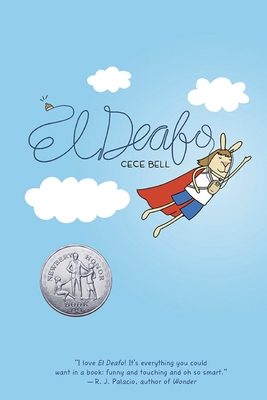
El Deafo by Cece Bell (Abrams, Sept 2014, for ages 8 to 12) Source: Aaron's Books
Regardless of whether or not it wins an award today (Schneider Family Award, maybe?), I wholeheartedly recommend El Deafo by Cece Bell. My writer friend Ilene Wong (who writes as I.W. Gregorio and whose groundbreaking YA debut novel None of the Above pubs on April 7th!) suggested Cece Bell's graphic novel to me when we were browsing at Aaron's Books in Lititz, PA (such a fun bookstore). I'm so glad she did because I really loved this book.
I have to admit, at first I put off reading it because the artwork didn't really appeal to me (yes, the characters are all rabbits), but when I finally sat down and started reading, I couldn't stop. El Deafo is actually a powerful memoir in graphic novel form. Touching and warm and always very funny, the book shows us Cece's life as a kid with hearing loss who's just trying to get along in a hearing world. She learns to lip-read, aided by her Phonic Ear. It's the Phonic Ear that turns Cece into a superhero, when it proves to be so powerful she can hear what the teachers are saying in the teacher's lounge. A terrific book for any kid who ever worried about being different.
What books about disabilities have you read?
0 Comments on Congrats to the winners! And a graphic novel recommendation as of 2/2/2015 8:01:00 AM
In preparation for an upcoming 4-week club for kids that I'll be hosting, I created a book trailer for A Dog Called Homeless, winner of the 2013 Middle Grade Schneider Family Book Award, The Schneider Family Book Awards "honor an author or illustrator for the artistic expression of the disability experience for child and adolescent audiences." A Dog Called Homeless is written by Sarah Lean and published by Harper Collins. I hope you enjoy it.
by David Massey
Chicken House / Scholastic 2014
Teens in peril. That's where you lose me.
I try to read books as "blind" as possible, knowing as little as I can going in so I can let the freshness of the story carry me. Sometimes, though, I get a sense early in a book that it's going to piss me off. In the past when I was a younger man and felt like I had a lifetime to read everything I'd
0 Comments on abandoned: taken as of 9/22/2014 9:02:00 AM
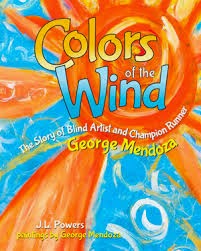
As a child, George Mendoza began seeing brilliantly-colored lights, shapes and squiggles, eventually losing most of his sight except his peripheral vision and the ever-present colors. Unable to play basketball or other do other things he wanted, George took up running. He excelled in the sport and competed twice in the Olympics for the Disabled. In the back of his mind, however, he'd kept a long-ago word advice from his youth.
One day, a flyer arrived in the mail, advertising a contest for blind artists. George remembered the priest, who told him, "You should paint what you see."
George started to paint, just like the priest told him to do.
And so began the painting career of George Mendoza.
The text appears in a plain, small font on white pages, accompanied by simple blank ink drawings, often highlighted with colors from Mendoza's paintings. Each facing page contains a full-bleed image of one of Mendoza's paintings.
Biographical information, photos of Mr. Mendoza, and painting titles are included in the book's back matter.
The joyful, riotous colors of Mendoza's paintings will certainly appeal to children, as will his story of perseverance and purpose. Enjoy!
Morning, folks! I do believe my comments feature is busted at the moment, so please don’t be alarmed if you can’t get anything to go through. It’s frustrating for me as well. Feels like an echo chamber in here. Hm.
Well, as you may have heard, A Chair, A Fireplace, and a Tea Cozy will not be continuing here on the SLJ blog network. Liz Burns posted her final post just this past Friday. But fear not! This is not the end of Tea Cozy as we know it. Liz has a new site so update those bookmarks and RSS feeds and get thee over there. Her post on the We Need Diverse Books Campaign should start you out right.
Speaking of fellow SLJ blogs, I admit that I don’t often read the excellent Adult Books 4 Teens since the topic isn’t really in my wheelhouse. Still, recently Mark Flowers had a great post up on The Problem with Stories About Amnesia Solved by Robert Glancy and Jason Bourne. He gave a nice shout out to my husband’s blog Cockeyed Caravan in the post saying, “Anyone who cares about narrative, movies, or both should be reading Matt Bird’s Cockeyed Caravan blog. He spends most of his time there deconstructing the narrative structure of Hollywood movies and explaining how and why movies do (and don’t) work. But while he only discusses movies (and usually big-budget Hollywood ones at that), his insights are invaluable for anyone interested in the way narrative works in any kind of fiction. I’ve cited his ideas many times over on my personal blog and in conversations with other book lovers.” Love you, Mark! Thanks!
And since I’m just on a bloggers-discussing-bloggers kick, I was so pleased to hear that Sue Bartle, Mary Ann Cappiello, Marc Aronson, Kathleen Odean, and Myra Zarnowski are restarting the excellent Common Corps blog Uncommon Corps. In an era where so many people are desperate for CCSS info, we’re all desperate for intelligent conversation on the topic. This blog provides that, as well as amazing curricular tie-ins you might not have otherwise known about. Read Compare & Contrast for a taste of what I mean.
Awww. The Moomin characters are now regular dining companions of lonely Japanese restaurant attendees. I’d be game for eating with one. Just don’t seat me with Little My. I don’t trust that gal. Thanks to mom for the link.
Hm. Maybe it’s a good thing I’ll be missing out on this year’s Book Expo. Granted, it’s exhausting even in the best of times, but I still get a bit of a kick out of it. Of course, this year there’s been a bit of a brouhaha with BookCon (which I have never even been aware of before). One of the problems with the internet is the fact that when controversies arise, few are willing to recap the troubles. Fortunately the Melville House post Wear shades to BookCon, it’ll be blindingly white in there tells you everything you need to know. And more!
“When white writers come to me and ask if it’s OK for them to write about people of color, it seems as if they’re asking for my blessing. I can’t give them my blessing because I don’t speak for other people of color. I only speak for myself, and I have personal stakes in specific kinds of narratives.” Since author Malinda Lo co-founded Diversity in YA she’s been getting a lot of these questions over the years. Her piece Should white people write about people of color? is your required reading of the day. Many thanks to Phil Nel for pointing it out to me.
By the way, in the course of looking at Malinda’s work I discovered the blog Disability in Kidlit which, somehow, I’d never run across before. Since it’s been around since June 2013 it’s hardly new, but I’m still going to call a New Blog Alert on it, since I’ve only just discovered it myself. It’s a blog about “Reviews, guest posts, and discussions about the portrayal of disabilities in MG/YA fiction.” There are a couple books out this year that I’d love their opinion of.
Oh! This happened. So I’ll admit that I’m more of a podcast listener than a radio listener. And when NYPL’s lovely PR department asked if I’d be interested in talking on the Leonard Lopate show, I confess I didn’t quite know who he was. Fortunately I learned pretty quickly, and even was lucky enough to meet his replacement Andy Borowitz instead (whom I had heard of since he moderated the National Book Awards the year I got to go). Our talk is up and it’s called Our Favorite Children’s Stories. Mostly a lot of talk about classics, but I was able to work in some shout-outs for three more recent books. The comments section is where the recommendations and memories are really hopping, though. Good stuff is to be found there.
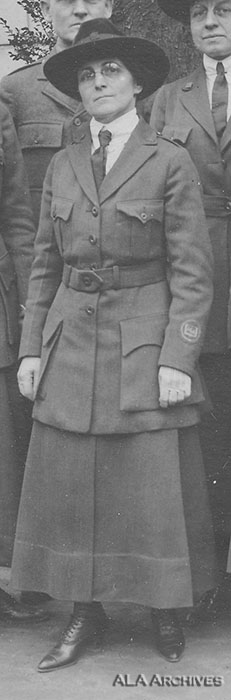
Take a gander at this article on WWI librarian uniforms and one thing becomes infinitely clear: Librarians during The Great War has it DOWN in terms of clothing, man. Look at that style. That look! That form! Oh, what the heck. Let’s bring them back! At the very least I’d love an ALA-issued arm patch. Thanks to AL Direct for the link.
That they are seriously considering making a film out of A Monster Calls is amazing enough to me as it is. That it may potentially star Felicity Jones and Liam Neeson? Having a harder time wrapping my head around that one. Thanks to PW Children’s Bookshelf for the link!
Whoo boy. The term “mansplaining” just seems loaded to the gills. That said, this piece from Inside Higher Ed tackles the definition itself with a look at the film version of The Wizard of Oz. I always liked the Scarecrow best too, and assumed that when Dorothy grew up she’d end up with Hunk. Feel free to pick apart the various ramifications behind that bit of childhood matchmaking, if you will.
I don’t usually quote from the Cynopsis Kids newsletters, and technically neither of these have much to do with children’s books, but there were two recent pieces that concerned children’s entertainment that I thought you might like to know about as much as I did.
Get ready for Hulu‘s first original kids series. Debuting this Friday is Doozers, the Fraggle Rock spinoff produced by the Jim Henson Co. that packs a full 52 episodes and will be available advertiser-free on both Hulu and Hulu Plus. The preschool series revolved around an animated gaggle of kids called The Pod Squad– Spike, Molly Bolt, Flex and Daisy Wheel–who learn to design and build different objects. Other Hulu Kids content includes Fraggle Rock, Pokemon and SpongeBob.
In a move more in line with kids’ bedtimes, beginning Tuesday, April 29, new eps of Syfy‘s original series Jim Henson’s Creature Shop Challenge will air at 9p vs. their current 10p Tuesday slot. The competition series features 10 aspiring creature creators competing to out-imagine one another in challenges where they will build everything from mechanical characters to whimsical beasts. The stakes are high. Winner walks with $100,000 and a contract working at the world-renowned Creature Shop.
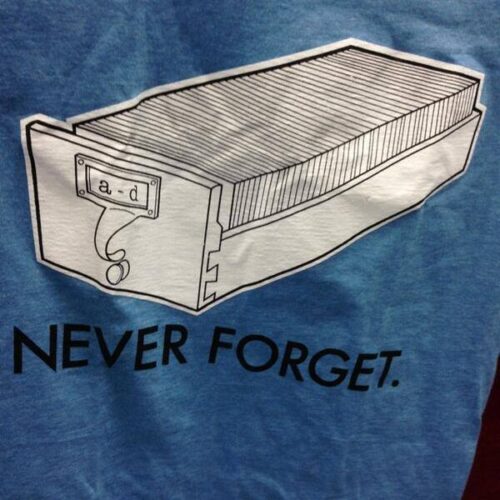
Daily Image:
I think my brother-in-law Steve sent me this one. Don’t know where it’s from but I sort of adore it. Wouldn’t mind one of my own.
5 Comments on Fusenews: Never Forget, last added: 4/30/2014
Today was my last day at the garden. It had to be cleared out before the end of the month, so I went over to pull everything out and thus end my growing season. I was once again gifted with little surprises. A few remaining red and green tomatoes, broccoli and tender sprouts that grow from where I removed that large cabbage head earlier in the season.
The garden was just beginning!
The cucumber died out a while ago. They were my first reliable crop, so sweet, juicy and crisp. After tasting how much flavor they had, I realized why I hadn’t previously been fond of the vegetable: they’d had no flavor. My bell peppers didn’t do anything for months, but I left them in the ground to be surprised with a bumper crop of peppers in the past few weeks. I learned this year that turnips greens have been genetically modified so that turnip bottoms grow on separate plants. So, I was quite happy to find the baby turnips when I pulled the turnip greens (tops) from the ground.
I left the sage, basil, catnip and marigolds. They were worker plants and will thrive a bit long.
I’ve learned a lot from all these different plants. Sometimes it was just about the plants and sometimes it transferred to what I can know about people.
The garden today
I’ve learned a lot from the planters, too. The older, retired white Americans, my African American colleagues, the Filipinos, Ghanaians and Kenyans have all shared their harvest, their wisdom and their love of gardening. I started out gardening with my sister and loved the days when we would reminisce about my mom’s and grandmother’s gardens. The drive over got to be more than we realized it would be, but I kept on, probably surprising both of us. I’ve blogged and FBed about this garden way more than I ever thought I would. I think it filled a social, spiritual and creative gap for me. I’ll miss it, but life goes on.
So, I began my morning planning my day, my week and thinking of all the committee work I have in front of me, the growing pile of books I have growing for BFYA and the articles I need to write for tenure. My phone rang and all this seemed rather pointless.
My son and DIL
My son’s brother in law passed away last night. Kyle was in his mid 20s and because he suffered with cystic fibrosis, spent much of his life in a care facility. I have to confess I really didn’t know Kyle so, I’m really not sure why I’ve wilted into a puddle today. Perhaps it’s knowing my son and daughter-in-law are in pain and there is nothing I can do for them. It could be because I can relate to the horror my son’s MIL is going through having now lost her child, or maybe it’s just anger at the American health care system.
Kyle stayed at home as long has his physical needs could be met. Once he needed more care and equipment than could be available there, he was moved and that’s when his nightmares began. There have been broken bones, infections and so many other instances of what I’m going to call neglect. Clothing items, toys and trinkets bought for him often disappeared. They were “lost in the wash”. Now, this is one child with a ferocious mother. This is one child, one human child abused in care facilities right here in the US. There are certainly others all of whom are voiceless.
Who speaks for the mentally and physically challenged? They’re not in YA fiction or children’s picture books, not on CNN, not in Starbucks commercials and not in Steven Spielberg’s latest movie. My, god, who would want to see about that? The thing is, we all have people with special needs in our families!
We do hear about the tremendous blessings felt by those who love and care for the less abled, but we never hear about the challenges they face finding or affording care or the abuse they face at the hands of their providers. Silly me, I thought people who worked with those who are disabled did it because of a special calling.
I would like to hope Obamacare with alleviate some of this, that it will get prenatal care to women so that many debilitating illnesses can be cured in vitro and so that better long term care can be there for those in need. I want to hope.
Kyle is gone. Kyle was a special one here in this garden of humanity. The sun shined on his smile. Some of the crap thrown on him was fertilizer, too much of it wasn’t. The best part of him lives in full bloom.
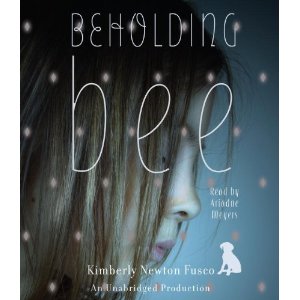
Recommended for ages 8-12. Award-winning author Kimberly Newton Fusco really knows how to create strong female characters that stay with you long after you've finished her book. In her most recent book, Beholding Bee, she weaves an especially magical and moving story that's perfect for middle-grade readers.
As the novel opens, we meet 11-year old Bee, who lives with a traveling carnival. It's 1942, and Bee's parents, carnival workers, were killed when she was four and she's been raised by a kindly young woman, Pauline. Bee fills her days chopping onions and helping at the carnival's hot dog cart. She has to deal with teasing about a prominent birthmark on her face, although her guardian Pauline suggests it's a precious diamond. In fact, the carnival owner only seems to be keeping Bee so that he can use her in his "freak show" when she's a little older. But when Bee's two best friends leave the carnival, Bee decides it's time to find a real home, and takes to the road with a stray dog as unwanted as she is and a small piglet.
Bee is taken in by two mysterious but kindly old women, Mrs. Swift and Mrs. Potter, who live in an old home that seems straight out of a fairy tale. Their clothes seem to come from another era, and curiously only Bee is able to see these women she calls her "aunts." For the first time, Bee goes to school, where she must cope with cruel bullying. Although she's put in a special education class where she clearly does not belong, at school she makes her first friend her own age. Gradually, Bee learns that there are people who care about her, and she learns to accept herself for who she is.
This is a lovely, lyrical, story filled with what Bookpage called "real magic"--"created by love and conjured up by need." Kimberly Newton Fusco manages to fuse magic and realism, love and cruelty, loneliness and hope into another novel that's a treasure for middle-grade readers (and adults who love to share books with children!)
4 Comments on Book Review: Beholding Bee, by Kimberly Newton Fusco (Alfred A. Knopf, 2013), last added: 5/9/2013
As 2012 is quickly coming to a close, I'll use today's Nonfiction Monday event to feature my two favorite nonfiction books of the year - one for young listeners and one for older readers. Without a doubt, my favorite nonfiction book for older readers was
Thanks so much! Honored that you enjoyed LEAF CAN BE... so much. And I have that Temple Grandin book waiting at the library for me right now. I have worked as a personal care asst. for young adults with autism, so I know some of her background--interested to learn more.
There were so many great informational books this year that it was hard to choose, but A Leaf Can Be ... works so well on many levels that it came out on the top of my list. All the best to you!
Goldish, Meish. 2013. Surf Dog Miracles. New York: Bearport. Advance Review Copy (This is my first review with a 2013 copyright date. And just like that, another year has passed.)
Part of the Dog Heroes series, Surf Dog Miracles is more than just a book about surfing dogs, though they are some fine looking surfers! These dogs surf for fun with their owners, but they also assist people with disabilities and raise money for charities. Ricochet, a Golden Retriever, surfs in tandem with people having special needs, riding the back of the board to stabilize it in the waves. She has raised a whopping $150,000 for charities that benefit both people and dogs. Surfing dogs also compete against each other is contests like Del Mar, California's Surf Dog Surf-A-Thon. In 2011,
The money raised at the Surf Dog Surf-A-Thon went to the Helen Woodward Animal Center in Rancho Santa Fe, California. This organization provides many services, including taking care of homeless animals, running a hospital for horses, and delivering pet food to animal owners who are too old or weak to leave their homes.
Surf Dog Miracles contains twelve short chapters which offer the history and particulars of the sport (dogs have been surfing since the 1920s, but the first known solo surfer did not appear until the 1980s) and an overview of what surfing dogs are accomplishing today. As would be expected, photos are plentiful; they are accompanied by text box insets and captions. Fun and informative, this slim, 32-page volume also contains a list of surf dog facts, a photo page of common surfing breeds, a glossary, bibliography, and sources for more information.
Like a viral YouTube video, kids will want to see this one again and again.
And here's "Wet and Woofy." According to the book, it's the video that Steve Jobs showed when introducing the iPad in 2010. It features champion surf dog, Buddy.
Yesterday was a heavenly day! Hub and I got our granddaughter to ourselves for almost four hours. Such a pretty, smart, funny and just perfect little girl!! How very, very lucky we - her parents and grandparents - are.
So, when I saw this video posted over on GottaBook, I had to share it. Every child is beautiful. Every parent feels challenged. But some of us have been "blessed" with more challenges than others. My heart goes out to parents with differently-abled children and I doff my virtual hat to them in respect.
Cherish each joyful moment no matter how fleeting. Fill your memories with those patches of brightness to carry you through any long dark days. Love, peace and courage to parents everywhere.
While standing at the local superstore watching my children choose their colorful binders and pencils for the upcoming school year, I saw another family at the end of the aisle. Their two sons had great difficulty accessing the space because of the crowd and they were clearly over-stimulated by the sights and sounds of this tax-free weekend shopping day. One boy began crying and the other soon curled into a ball next to the packets of college-lined paper. My daughter, empathic to a fault, leaned down and offered her Blues Clues notebook in an effort to make the boy happier. When we finally walked away, I saw the same pain and embarrassment in the eyes of the parents that I have often seen at parent-teacher conferences and IEP meetings.
For many families, the start of a new school year is exciting and refreshing. The opportunity to see old friends, meet new ones, and the ease of settling into a fall routine can be comforting. For families of students with special needs, however, the start of a school year can be anxious, frustrating, and filled with reminders of the deficits (social and academic) of their children. This dichotomy is clear and present as some children bound off the school bus with their shiny new backpacks hanging from their shoulders, while others are assisted off different buses as their eyes and bodies prepare for what sometimes feels like an assault on their very personhood.
These differences are apparent to parents as well as teachers and administrators at schools. Professionals often ask: “What can we do to be the best teachers for these students?”
Consider what school can mean for students who are different and how to create ways to welcome everyone, according to their needs. Before the school year begins, these longstanding suggestions still resonate as best practices for parents and students:
(1) Contact the student before the school year begins to be sure the student and family are aware that you are genuinely looking forward to working with them and have exciting plans for the school year! Everyone learns differently and wants to be honored for their ability to contribute. In the Eye Illusion not everyone is able to see the changes in the dots as they move around the circle. What you see isn’t better or worse — just different. When we think of students and children in the same way, by removing the stigma of labels and considering the needs of all, we become more of a community and less of a hierarchy.
(2) Be aware of all students in the classes you teach. Know their areas of strength and challenge, and be prepared to adapt teaching strategies to include them. We cannot expect students and children all to be the same. Use a fable to illustrate that everyone has strengths and can become an integral part of the learning experience.
(3) Review teaching practices: modalities, colors, sizes, and pacing. All students enjoy learning through various modalities (visual, aural, kinesthetic), love colors in their classroom, appreciate sizing differences to assist with visual concepts, and can benefit from pacing that is more applicable to them. Find ways to include these practices in an overall approach. Universal design (applied to the classroom) means that all students receive adaptations to enhance their learning experience, and no one is singled out as being different because of the adaptations applied.
(4) Create partnerships with all professionals who work with special needs students. A team approach is a powerful way to include everyone effectively. When we work as a team, everyone benefits and the workload is shared by all. This community of professionals creates a culture of shared responsibility and joy.
(5) Provide a clear line of communication with parents of students with disabilities. Often children cannot come home and tell their parents about events, assignments, announcements, and other important parts of their school day. Parents may not be able to gauge whether their child had a good day or if there are concerns. A journal between teacher and parent(s) can be a comforting and useful tool. This communication may also be done electronically through a secure Google or Yahoo group. Reading Rockets provides other useful tips in this area.
(6) Leave labels out of the conversation when communicating with parents. Parents can be sensitive to their child being known only by their diagnosis. In addition, some parents may be still processing the life change that comes with raising a child with special needs. When entering into a conversation with a parent, focus on your classroom and the needs of the student. If there is a concern, try to put the concern in the most positive light as possible. The Parent-Provider network at Purdue University offers some great tips as well for communicating with parents.
(7) Let parents know of student accomplishments even if they are small. Students with special needs often encounter failure. Parents attend countless meetings that remind them of all the challenges their children face. A note home when something goes well can make all the difference.
(8) Allow the parent and the child to visit prior to the start of school if the child is new. Students who are enrolling in a new program or a new school may have difficulty with this transition. Often this transition can cause anxiety that will hinder a child from seeing school as a comfortable, safe place. Walk them through the routines: where they sit, where materials are, etc. Social stories (short stories written in third person to illustrate an everyday situation) can also be useful in this circumstance. When read prior to beginning school, these stories help them move through their transition.
A culture of acceptance and compassion must permeate our educational institutions. By categorizing, labeling, and noting differences, we are often putting children in boxes that can then, unfortunately, define them for the rest of their lives. Every child wants to be part of the school experience and seeks to participate to the best of his ability. When the class and school culture are created to honor the personhood of every child, and each child is considered valuable to the success of every school experience, all children begin to enjoy the same childhood experiences.
Subscribe to the OUPblog via email or RSS.
Subscribe to only music articles on the OUPblog via email or RSS.
Subscribe to only education articles on the OUPblog via email or RSS.
View more about this book on the
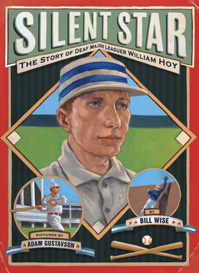
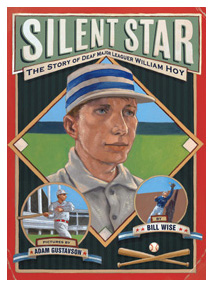
Wise, Bill. 2012. Silent Star: The Story of Deaf Major Leaguer Willliam Hoy. Ill. by Adam Gustavson. New York: Lee & Low.
No one today would call a deaf person "dummy," but from 1888-1902, Major League Baseball player, William Ellsworth Hoy, wore that nickname with pride.
Deaf from the age of three, his chances of becoming a major league baseball star were slim to none. At the turn of the century, deafness itself was a great hurdle to overcome. Attitudes were different, and his early years were difficult until his parents sent him to the Ohio School for the Deaf, where,
Nobody stared or pointed him. Nobody felt sorry for him.
Presumably, this is where he learned the confidence and persistence (he already had a love for baseball), that helped propel him to the top of his game as a major league outfielder. Bill Wise chronicles his early life, his rise to stardom, and the unique challenges he faced in the game of baseball. His baseball challenges were not necessarily due to his disability, but rather, just the way the game is played. If the opposing team has a weakness, exploit it.
Because he could not hear the home plate umpire shouting balls and strikes when he was at bat, Hoy had to turn around to look at the ump after each pitch. The umpire would repeat the call, and as Hoy read the ump's lips, opposing pitchers often quick pitched Hoy, throwing the next ball before he was ready to bat.
This didn't stop Hoy for long, though. There's a "workaround" for nearly everything. Some historians argue that Hoy's deafness may have been the impetus for the umpire's use of hand signals. In any case, the fans loved him - knowing that he could not hear their cheers, fans waved their arms and hats and threw confetti to show their approval.
Gustavson's mostly double-spread illustrations depict Hoy as a determined and confident young man.
Much of the text is presented in text boxes which appear as aged scrapbook or autograph pages outlined in faded fountain pen. The subdued tones of the illustrations, along with the many undefined faces, help give Silent Star the appropriate "old time" feel.
The Afterword offers additional information and photos of Hoy's baseball card and a Hoy-autographed baseball. Biographical sources are included on the dedication page. As for baseball sources, they're unnecessary, for that is one of the many beauties of baseball. There are official statistics for everything! (read or watch Moneyball, anyone?)
I enjoyed your review -- I'm looking forwarding to reading this book. It does sound inspiring. That's great that you're learning to sign. A few months ago I saw the off-Broadway play, 'Tribes' -- it was one of the first plays to feature a partially deaf actor.
Thanks for participating in NonFiction Monday. I love stories in which the figures overcome great obstacles. This story looks inspiring. Thank you for sharing it.
This is such a beautiful review! Hoy's story is both heartwarming and inspirational. I love picture book biographies. The artworks look nice, too! Will check this out in our library. Thank you for sharing! :)
Since the company was founded in 1991, diversity at LEE & LOW has been defined by ethnicity. Our focus has always been on multicultural stories that explore racial and cultural diversity, from remembering the experiences of past generations to reflecting on the world in which we live today.
For the first time in twenty-five years, our mission is expanding to include themes outside the conversation of race. Here are three new books that charted new territory for us:
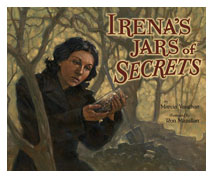
Irena’s Jars of Secrets (Fall 2011)
The riveting, true story of Polish social worker Irena Sendler, who lived during World War II. Using creative means, and at great personal risk, she saved thousands of Jewish children from Hitler’s Nazis by smuggling the children out of the Warsaw Ghetto.
Why we published this story: In 1997, we published a book called Passage to Freedom: The Sugihara Story, about a Japanese diplomat who defied his government during World War II to help thousands of Jewish refugees elude the Germans. While the themes of Irena’s Jars of Secrets and Passage to Freedom are similar, acts of extreme heroism for the sake of others are rare, timeless, and worth celebrating. Another reason Irena Sendler’s story spoke to us was the chilling fact that although nearly seventy years have passed since World War II ended, crimes of genocide continue into the twenty-first century. We felt that young readers should know about Irena Sendler as someone who stood for justice and compassion in times like these, and we discovered there were no other picture books that told her story. (Note: One season before our book was published, another book on Irena was released, so now there are two picture books about her.)
Silent Star: The Story of Deaf Major Leaguer William Hoy (April 2012) A tribute to one of the most inspirational figures in baseball history. A talented player with a standout record, Hoy is a shining example that success in life should not be measured by differences but by drive and determination.
Why we published this story: Silent Star is a unique story because it shows that a person can overcome a disability AND be one of the greatest ball players to play the game. Why William Hoy has not been inducted into the Baseball Hall of Fame is a mystery! Personally, what grabbed me about this story was how the fans embraced Hoy on the field—instead of clapping for him, which they knew he couldn’t hear, they threw confetti in the air so he could see their support. Very touching. Yet growing up, Hoy faced the kinds of discrimination people of color are often subjected t
0 Comments on The Meaning of Diversity Becomes More Diverse as of 1/1/1900
I have spent the day devouring this book. There is so much I could say, but I will keep it to this:
So often we hear we need more books where children can see characters like themselves. I wholeheartedly agree, though things shouldn’t end there. Kids need books where they meet children completely unlike themselves. They need to be able -- through the window of literature -- to examine the worlds of those who are different so they may in doing so embrace the common threads running through all lives.
Bravo to R. J. Palacio. WONDER is next year’s Schneider Family Award winner.
7 Comments on WONDER by R. J. Palacio, last added: 2/23/2012
So well-said! It's the journeys I've taken with characters who are different, characters who taught me something and made me think and see things in a new way, that I most remember.
Sounds like a great read. Can't wait to read it! I just discovered the Schneider Family Book Award and have enjoyed many of the winners: A Mango Spaced Shape, and Rules especially come to mind.
Auxier, Jonathan. 2011. Peter Nimble and His Fantastic Eyes. New York: Amulet.
(Advance Reader Copy provided by the publisher and signed in New Orleans by the young, very friendly, and tall Jonathan Auxier. Some lucky young reader will be the recipient of this great new book!) A sightless, orphan boy under the control of a heartless man, the Dickensian Peter Nimble uses his remarkable senses to survive, becoming as unseen as he is sightless - a master of thievery, lock picking, diversion, filching, clipping and pilfering. It is a mean and demeaning life until the day he steals an elaborately guarded, locked and fortified box containing three sets of eyes - eyes which catapult him into a strange and fantastic journey to the spaces that have heretofore been left blank upon the maps of the world. His destiny is a quest for the Vanished Kingdom. To accomplish his mission, he has only his new companion, the part feline/part equine/part human Sir Tode (a most miserably enchanted knight), an unfinished riddle, his burgle-sack, and of course, the Fantastic Eyes.
The language of Peter Nimble is the straightforward language of action and adventure, which is not to say that this book is simple or unsophisticated. In fact, the plot has many twists with depth equal to the cruel mines of the Vanished Kingdom. There is some obvious foreshadowing, but this may be a planned device, offering the reader a sense of accomplishment while following this exciting adventure as it changes perspective when new characters enter and expand the story.
As Peter Nimble is blind, the reader depends upon the narrator and good Sir Tode to set the visual scene. Peter's view of the world is colored, so to speak, by his other senses. He tells the time of day by the "feel" of the sun or moon. He can "smell the dew percolating up from the ground." He can judge the size of a chamber or hall by the echo of voices or machinery. But he cannot do it all alone, and enlists the help of the loyal Sir Tode, a fish, thieves, a raven, and "the Princess," in a fierce battle to aid the author of the riddle,
Kings aplenty, princes few, The ravens scattered and seas withdrew. Only a stranger may bring relief, But darkness will reign, unless he's --
For ages 10 and up, readers of Peter Nimble and His Fantastic Eyes can expect some violence and even death (no quest is without danger!), but Peter and his allies are up to the challenge, and when they falter, they are reminded,
There are times when Justice demands from us more than we would give.
(I love the cover art!) True story: I have never encountered the word sternutation before reading Peter Nimble and His Fantastic Eyes. After looking it up, I shared my discovery with my family that evening only to have my son tell me that he, too, had learned the word sternutation that day - from a Snapple cap! A strange coincidence to be sure!
O
0 Comments on Peter Nimble and His Fantastic Eyes as of 1/1/1900
Like waiting for a holiday, a vacation, or a very special event, anticipation is a big part of the pleasure and following along with Rachel Simon, via her blog and Facebook page, as she did a pre-release tour for her newest book, The Story of Beautiful Girl, helped get me through winter doldrums and kept the May release date firmly in my mind. I had read the online excerpt and was sure ...Beautiful Girl would become one of my favorite books. Titles that are on a special shelf in our home. Books that transport my mind, suspend time, wrap themselves around me like a beautiful quilt of memories. The Story of Beautiful Girl did just that.
First, as a book designer, let me take a moment to comment on the packaging of this title. The cover art was featured on a CBS Sunday Morning episode (click the link to see the episode) months before the release. When I saw it, held up proudly in Central Publishing's New York office, I called to my husband, "They're showing Rachel Simon's book!" It was exciting, because I was already familiar with the distinctive silhouette of a woman, her hair bound up in a loose bun, her face slightly downcast.
The white background of the jacket has a pearl effect; I'm not sure how that was achieved, but it is understated elegance at its finest. The font used in the title is a work of graphic art and the orange-red letters are raised off the jacket. But wait, that's not all! When you open the book you are greeted with matching colored end sheets splashed with the silhouettes of feathers. A feather is also shown on the back jacket, with a baby's hand reaching toward it. I love the simple beauty of this jacket. It fits perfectly with the story and the sophisticated design continues on each page. And now, to the story...
The Story of Beautiful Girl is dedicated to "those who were put away." Even the front matter supports the design and tone of the story, with a beautiful verse by the Reverend Nancy Lane. I'm not giving it away, because you need to get this book and find these lovely touches yourself.
Simon begins her tale in 1968, with Part I: Hiding. We meet Martha, the widow, Lynnie, a young woman who is mute and mentally disabled, and Homan, an African-American deaf man on the run. The story continues in Part II: Going (1969, 1970) and we become closer to the characters and also learn the significance of the "red feather" as well as more details of past events pertinent to the story.
I don't want to reveal much about the plot, so I'll just say that Part III: Seeking scoots us to 1980, 1988, 1993, 1995, 2001, and 2011. I like the way each chapter has a title, along with the name of the character who is the focus of the chapter and the year. We meet additional supporting characters like Kate who worked at the at the School for the Incurable and Feebleminded where Lynnie and Homan start their story, and other folks whose paths cross with Homan, Lynnie, and Martha. The child hinted at on the back jacket is Julia, Lynnie's baby, who grows to adulthood by the last chapter in a heart-stopping scene that will make you feel as if you hear the music and see the images, like a movie, like a wonderful conclusion of a meaningful film that weaves a story around your heart and enlightens your mind.
0 Comments on "The Story of Beautiful Girl" by Rachel Simon as of 1/1/1900
In a companion to his acclaimed novel, The Wednesday Wars, award-winning writer Gary D. Schmidt revisits the Vietnam era in Okay for Now. Doug Swietech, a secondary character in the Wednesday Wars, becomes the focus of this story; it's close to the end of the summer, and Doug and his very dysfunctional family have just moved to a "dump" of a town in upstate New York when the book opens. Doug idolizes Joe Pepitone of the Yankees, and his most treasured possession is a jacket signed given by his idol. His home life is dominated by his abusive father and his bullying older brother, while another brother is off fighting in Vietnam.
The library and the town's kind librarian, Mr. Powell, play a key role in the story, as Doug discovers that although "maybe stupid Marysville was a dump,...this place wasn't." At the second floor of the library, he finds a special room, with a huge book--a book displayed under glass, with only one picture showing. It's a gigantic picture of a bird, and Doug can't take his eyes off it. "It was the most terrifying picture I had ever seen. The most beautiful." It's an original Audubon, and it haunts Doug's imagination. Although Doug doesn't draw (since, as he quips in the book, only girls with pink bicycle chains draw), the kind librarian is soon leaving drawing supplies near the Audubon display that Doug is drawn to by some powerful magnetic force. When he finally picks up a pencil to copy Audubon's drawing, it felt "spectacular, " and Mr. Powell is soon giving him drawing lessons (was that in Mr. Powell's librarian job description?)
As much as Doug hates "stupid Marysville", he is quickly befriended not only by Mr. Powell, but also by Lil, a girl whose family owns the town's deli, and gets Doug a job delivering groceries on Saturdays for some of the more eccentric citizens of Marysville. Things aren't going too bad for Doug, until his older brother is suspected of some local robberies, his father's physical abuse is revealed to all his classmates, his brother comes back from Vietnam maimed physically and emotionally, and to top it off, pages of the precious Audubon manuscript are being sold off to pay the town's bills. Can Doug stop the cycle of abuse in his family and perhaps even put the town's Audubon book back together?
Schmidt is a masterful writer, managing to incorporate pathos, humor, loss, the power of art, friendship and more into this memorable novel. Doug's voice and his journey is one that the reader will not soon forget. The novel is pulled together by the Audubon prints, which serve as titles for each chapter and are pictured in the novel as well, and often seem to mirror what is happening in Doug's own life. As Doug comes up with ways to reconstruct the precious book, he is also making sense of his own life and future.
Okay for Now is already getting some pre-Newbery buzz, and perhaps Schmidt will be adding a Newbery to his two Newbery honor awards (for The Wednesday Wars and Lizzie Bright and the Buckminster Boy. Schmidt, who is a professor of English at Calvin College with six children of his own, is working on the third volume of The Wednesday Wars trilogy. That's a book that will definitely be on my "to read" pile.
Disc
5 Comments on Book Review: Okay for Now, by Gary D. Schmidt (Clarion Books, 2011), last added: 4/21/2011
I really loved The Wednesday Wars. And Gary Schmidt was just at the Children's Book Festival in Hattiesburg, MS. I missed his speech but heard some highlights from other attendees. Thanks for your review!
Hi darling! You have a nice page =) I like this! I love to know Bookaholics all the word... I have a blog too...Many books...Many movies and musics... I write too and go have my own book coming soom.
Originally published in Belgium and Holland, this tremendously sweet book takes a straight-forward approach to the story of Laurie, a girl with hearing loss. Laurie has trouble hearing other children, so she usually plays alone. The others tease her about being deaf and refuse to play with a girl who can’t understand them. Laurie’s dog doesn’t mind that she’s different from the others. Finally one day, Laurie and her mother go to the ear doctor. He discovers she needs hearing aids, or “hearing computers” as Laurie calls them. Now Laurie can hear cars coming, plays happily with others, and pays better attention in class. Sometimes though, she still likes the quiet and turns her hearing aids off just to return to the silence.
Nijssen’s writes as an author who has experienced hearing loss herself. This makes the emotions and struggle of Laurie very real. The book doesn’t shy away from conflicted feelings and one of the nicest parts is when Laurie decides to turn her hearing aids off or down once in a while. It makes for a lovely moment that shows that being different was not the problem, being misunderstood was.
Lindenhuizen’s art is simple and friendly, depicting Laurie separated from the other children at first and later connected with others. She uses space on the pages very successfully, emphasizing the spirit of the text visually.
A great pick for units on differences and diversity, this book is friendly and straight forward. Appropriate for ages 4-6.






.jpeg?picon=1549)


















.jpeg?picon=2982)


.jpeg?picon=3678)


http://www.unshelved.com/store/Shirts/NeverForget

Here’s the link to the t-shirt site, so you can sport your own!
http://www.unshelved.com/store/Shirts
Maureen
I found the “never forget” on a t-shirt here: http://www.unshelved.com/store/Shirts/NeverForget
I do believe I need one!
Betsy, thanks so much for including the link to the new website!
The catalog card image is from the guys over at Unshelved. http://www.unshelved.com/ Their comics are awesome. I have the shirt.