JacketFlap connects you to the work of more than 200,000 authors, illustrators, publishers and other creators of books for Children and Young Adults. The site is updated daily with information about every book, author, illustrator, and publisher in the children's / young adult book industry. Members include published authors and illustrators, librarians, agents, editors, publicists, booksellers, publishers and fans. Join now (it's free).
Login or Register for free to create your own customized page of blog posts from your favorite blogs. You can also add blogs by clicking the "Add to MyJacketFlap" links next to the blog name in each post.
Viewing: Blog Posts from the Publisher category, Most Recent at Top [Help]
Results 1 - 25 of 27,925
How to use this Page
You are viewing the most recent posts from blogs in the Publisher category in the JacketFlap blog reader. These posts are sorted by date, with the most recent posts at the top of the page. There are hundreds of new posts here every day on a variety of topics related to children's publishing. Scroll down through the list of Recent Posts in the left column and click on a post title that sounds interesting. Click a tag in the right column to view posts about that topic. You can view all posts from a specific blog by clicking the Blog name in the right column, or you can click a 'More Posts from this Blog' link in any individual post.
If you are like us, shopping is tops on your to-do list this season. Finding the perfect present can be tricky and so here are a few of our favorites that are perfect for the little reader in your family.
Snowy books for a cold winter’s day
Have you read The Mitten more times than you can count? Tuktuk: Tundra Tale by Robin Currie is a fun take on the familiar story.
As the sun begins to set, arctic animals scurry to prepare for six months of darkness and cold. Tuktuk the collared lemming is almost ready for the long winter night – all he needs is warm fur to line his nest. When one furry kamik (boot) slips off an Inuit driver’s sled, Tuktuk is in luck! But as he drags it home, Putak the polar bear, Aput the arctic fox, and Masak the caribou eye this little lemming’s prize and want it for their own. Can Tuktuk outwit the other animals and convince them that one furry kamik is no good for anyone bigger than a lemming?
When ancient creatures are a favorite, try Wandering Woolly! Andrea Gabriel’s love of woolly mammoths blends a variety of extinct animals with a tale of getting into trouble and trusting your instincts.
Little Woolly leaves her mother behind as she chases a toad down to the river. When the glacial ice breaks, she is swept away in the rumbling, rolling water. Now alone, the mammoth calf struggles to survive. She must sneak past cave lions, bears, saber-toothed cats and humans. Exhausted and afraid, she must even hide from stormy weather as she fights her way back to her herd. How can she find them? Will she ever get back?
It’s a Mystery!
Whether it is a contest for the most dangerous beast in all the land or a race to find the thief, these two books will keep kids guessing until the end.
Dangerous animals from all over the world gather for the Most Dangerous Animal of All Contest. Snakes, spiders, sharks . . . who will the winner be? Deadly poison, huge teeth, razor -sharp horns, and fearsome feet are just a few of the ways that animals kill. Predators mean to kill. Prey simply defend themselves. And yet, the unexpected most deadly-animal doesn’t mean to harm at all!
Someone stole a cake from the cake contest—who could it be? Twelve animal bakers are potential suspects but Detective Duck uses his deductive reasoning skills to “quack” the case. After all, the thief left hairs behind so the thief wasn’t a bird. Follow along as he subtracts each suspect one at a time to reveal just who the culprit was. This clever story will have children of all ages giggling at the puns and the play on words. Key phrases for educators: subtraction, deductive reasoning, animal adaptations, puns/play on words.
When you can’t get enough rhythm and rhyme
Head to faraway places and meet unique animals as readers sing-song their way through these two books!
Imaginations will soar from the forest floor, up through the canopy and back down again, following the circle of life. The jungle comes alive as children learn about the wide variety of creatures lurking in the lush Amazon rainforest in this clever adaptation of the song “The Green Grass Grew All Around.” Search each page to find unique rainforest bugs and butterflies hiding in the illustrations. Delve even deeper into the jungle using sidebars and the “For Creative Minds” educational section, both filled with fun facts about the plants and animals, how they live in the rainforest and the products we use that come from the rainforest.
From the “crocodile’s dentist,” to the “mongoose spa,” Animal Partners takes a whimsical look at symbiotic relationships of animals large and small. Although many animals live in groups of the same kind, here you will learn how some animals form unique partnerships with different species. After all, don’t we all need a little help from our friends?
We hope this list makes your holiday shopping easier. Visit our online store for great deals on these titles with the code HOLIDAY30.
When you visit your favorite restaurant can you smell the food even before walking inside? Can you feel the difference between the soft fur of a puppy and the cold wet nose? If a bright red bird swoops by, can you identify what kind of bird it is just by color? Should you pay to use your senses?
That is the premise for A Case of Sense; a new book by author Songju Ma Daemicke illustrated by Shennen Bersani. The book opens with a young boy playing outside, and greedy Fu Wang has cooked wonderful Chinese dishes with the smells wafting throughout town. He announces that the townspeople must pay for the smells and when they don’t he takes everyone to court! The judge has a clever way to deal with the case and readers might use a little logical reasoning to figure out the puzzle.
Saturday, Songju will be signing at the ISLMA conference in Tinley Park, IL from 2pm-4pm. In celebration, we have a fun little puzzle in logic and sight that might keep kids coloring for a little while!
Get out the markers or the crayons and color in the missing spaces. Remember that all the colors will be rows, columns, and squares of 9 without repeating!
It is Bat Week! Did you know that bats are needed to control pests, spread seeds, and pollinate plants? Scientists learn a lot about the welfare of bat populations based on the crops that they help grow. And on October 31st we may be spooked out by the nocturnal winged creatures, but did you know that they help make the chocolate in our trick-or-treat bags?
Bat week is all about helping conserve the more than 1,100 species that live on every continent except Antarctica, and Bat Conservation International has many different ways that you can help bats that live in your neighborhood. Check it out!
If you want to get the facts first, here is an Arbordale booklist that will make you go batty!
Home in the Cave – by Janet Halfmann, illus. by Shennen Bersani
Baby Bat loves his cave home and never wants to leave it. While practicing flapping his wings one night, he falls, and Pluribus Packrat rescues him. They then explore the deepest, darkest corners of the cave where they meet amazing animals—animals that don’t need eyes to see or colors to hide from enemies. Baby Bat learns how important bats are to the cave habitat and how other cave-living critters rely on them for their food. Will Baby Bat finally venture out of the cave to help the other animals?
Little Red Bat – by Carole Gerber, illus. by Christina Wald
Red bats can hibernate or migrate to warmer regions during the winter. Should this solitary little bat stay or should she go? That’s the question the little red bat ponders as the leaves fall and the nights get colder! Some animals, such as the squirrel, tell her to stay. But what about the dangerous creatures that hunt red bats in winter? The sparrow and others urge her to go. But where? Carole Gerber takes young readers on an educational journey through one bat’s seasonal dilemma in Little Red Bat. Imaginative illustrations by Christina Wald give little red bat charm and personality, and children will be waiting and wondering what will happen next. Will the little red bat stay put or migrate south for safety and warmth?
The Rainforest Grew All Around – by Susan K. Mitchell, illus. by Connie McLennan
Imaginations will soar from the forest floor, up through the canopy and back down again, following the circle of life. The jungle comes alive as children learn about the wide variety of creatures lurking in the lush Amazon rainforest in this clever adaptation of the song “The Green Grass Grew All Around.” Search each page to find unique rainforest bugs and butterflies hiding in the illustrations. Delve even deeper into the jungle using sidebars and the “For Creative Minds” educational section, both filled with fun facts about the plants and animals, how they live in the rainforest and the products we use that come from the rainforest.
Deep in the Desert – by Rhonda Lucas Donald, – by Rhonda Lucas Donald, illus. by Sherry Neidigh
Catchy desert twists on traditional children’s songs and poems will have children chiming in about cactuses, camels, and more as they learn about the desert habitat and its flora and fauna. Tarkawara hops on the desert sand instead of a kookaburra sitting in an old gum tree. And teapots aren’t the only things that are short and stout—just look at the javelina’s hooves and snout. Travel the world’s deserts to dig with meerkats, fly with bats, and hiss with Gila monsters! Whether sung or read aloud, Deep in the Desert makes learning about deserts anything but dry.
And Coming in spring of 2017 Bat Count: A Citizen Science Story
by Anna Forrester, illus. by Susan Detwiler
Jojo is prepping for an exciting night; it’s time for the bat count! Bats have always been a welcome presence during the summers in the family barn. But over the years, the numbers have dwindled as many bats in the area caught White Nose Syndrome. Jojo and her family count the bats and send the numbers to scientists who study bats, to see if the bat population can recover. On a summer evening, the family quietly makes their way to the lawn to watch the sky and count the visitors to their farm.
In Hammer of Witches fourteen-year-old bookmaker’s apprentice Baltasar, pursued by a secret witch-hunting arm of the Inquisition, joins Columbus’s expedition to escape and discovers secrets about his own past that his family had tried to keep hidden. In this BookTalk, Shana Mlawski shares her views on Christopher Columbus, working with students and what she’d wish for if she had three wishes.
Hammer of Witches deals with some hard topics (rape, abandonment, war, and torture). What do you hope readers take away from Hammer of Witches?
Shana Mlawski: When I was first outlining Hammer of Witches, I knew I wanted it to be an epic adventure about sorcerers in 1492 Spain, and that’s what it is. I didn’t go in thinking, “Oh, boy! I can’t wait to write about rape and torture!” It was more like, “Okay, it’s going to be about this wisecracking kid and a girl genie and a dragon and a golem and…”
But history is history. I’m not going to whitewash it. We have plenty of people doing that already. In the year of 1492 Columbus sailed the ocean blue—and Spain conquered Moorish Granada, the Inquisition tortured people, the decimation of Taíno civilization began, and the world’s largest Jewish population was sent into exile. It’s a complex, fascinating era, but it’s a tragic era, as well. Ultimately, though, Hammer of Witches is an optimistic book. It’s about that moment when you accept that the world is more complicated than you were led to believe, and it’s at that moment you can start trying to make a difference.
Do you feel like schools glorify Christopher Columbus and his discovery of the New World? Do you think schools need to paint a more accurate portrayal of his journey to students?
SM: The fact that we use the word “discovery” shows how skewed our view of the voyages can be. I prefer “contact” and “conquest,” words that remind us we’re talking about two groups: the European explorers and the Taíno living in the Caribbean at the time. If you ask me, the Taíno side of the story needs to get much more play in classrooms and in the media.
I’d also prefer if teachers stopped asking whether Columbus is a hero or a monster, as if those are the only two options. When we answer “hero,” we disappear the Taíno from history or write off their struggle as unimportant. To argue the “monster” side, we often pretend the Taíno were passive (if noble and pure) victims. The story is so much more complicated than that, and so much more interesting. History is only useful to us when we remember it’s about humans like us, not cartoons.
Baltasar befriends a genie in Hammer of Witches, who, unfortunately, can’t grant wishes. If you met a genie who could grant you three wishes, what would you wish for and why?
SM: Oh, I’m not going to fall for this one. I’ve seen and read enough “Monkey’s Paw”-type stories to get involved with a genie. Next thing I know I’ll be sitting in a post-apocalyptic library with my glasses broken and no one left alive to fix them.
How has working directly with middle and high school students impacted the kind of stories you want to share with YA readers?
SM: My teaching experience has definitely sharpened my desire to tell stories about characters from different backgrounds. When I was a young nerd-in-training, most of the available fantasy books were about white, Christian kids in the U.S., Britain, or U.K.-inspired settings (the big exception being Ursula K. LeGuin’s Earthsea series). Although I’m white, those monochrome stories never reflected my experience as a child growing up in the New York Metro area. When I started teaching and tried to recommend books to my students, I saw how little things had changed. A black boy wanting to read about a kid who looked like him usually had to go for a “problem” book about drug use or gang violence, even if he wanted a sword-and-sorcery adventure. A girl looking for a Latina protagonist could find a book about the immigrant experience but not one about, say, sexy vampires. That’s why I’m not sucking up when I say I love that Lee & Low and Tu Books exist, and I’m incredibly proud to be part of the gang.
Did you have a favorite hero or heroine in a fantasy/sci-fi novel that inspires your writing?
SM: I don’t actively model my characters on heroes or heroines from other books, but that doesn’t mean inspiration doesn’t slip in from time to time. It does, but I usually don’t notice until long after I’ve finished writing the story. This time around, it occurred to me that the relationship between Baltasar and Catalina has a lot in common with the Taran/Eilonwy relationship in Lloyd Alexander’sChronicles of Prydain (although Bal has some Fflewddur Fflam in him, too). In any event, I’m cool with the connection, because Hammer of Witches is meant to be a play on Prydain-like stories. It’s what happens when you take that old quest story, brush off the dust, and stick it in the real world in 1492.
Shana Mlawski is a native New Yorker who writes educational materials and tutors middle and high school students. She has written more than a hundred articles for the pop culture website OverthinkingIt.com, some of which have been featured in The Atlantic Monthly, The Guardian, The Huffington Post, and Ms. magazine. She graduated cum laude from Yale with a B.A. in English with a concentration in creative writing, and received a master’s in education from Columbia University Teachers College. Hammer of Witches is her first novel.
0 Comments on Interview: Shana Mlawski on the History Surrounding Christopher Columbus as of 1/1/1900
LEE & LOW BOOKS celebrates its 25th anniversary this year and to recognize how far the company has come, we are featuring one title a week to see how it is being used in classrooms today as well, as hear from the authors and illustrators.
Synopsis: Born in 1905, Anna May Wong spent her childhood working in her family’s laundry in Los Angeles’s Chinatown. Whenever she could afford it, Anna May slipped off to the movies, escaping to a world of adventure, glamour, and excitement. After seeing a movie being filmed in her neighborhood, young Anna May was hooked. She decided she would become a movie star!
Anna May struggled to pursue an acting career in Hollywood in the 1930s. There were very few roles for Asian Americans, and many were demeaning and stereotypical. Anna May made the most of each limited part. She worked hard and always gave her best performance. Finally, after years of unfulfilling roles, Anna May began crusading for more meaningful roles for herself and other Asian American actors.
Anna May Wong—the first Chinese American movie star—was a pioneer of the cinema. Her spirited determination in the face of discrimination is an inspiration to all who must overcome obstacles so that their dreams may come true.
Awards and Honors:
Carter G. Woodson Award, NCSS
Children’s Books of the Year, Bank Street College of Education
Choices, Cooperative Children’s Book Center (CCBC)
Veronicahas a degree from Mount Saint Mary College and joined LEE & LOW in the fall of 2014. She has a background in education and holds a New York State childhood education (1-6) and students with disabilities (1-6) certification. When she’s not wondering around New York City, you can find her hiking with her dog Milo in her hometown in the Hudson Valley, NY.
0 Comments on Celebrating 25 Books Over 25 Years: Shining Star as of 1/1/1900
The weather is crisp and the leaves are starting to change color…it must be fall! Now that we’ve made it to October, we wanted to help you plan out the month with these book recommendations and resources:
If you’re a new writer, looking for ways to publish a book can be daunting. It’s great that we live in a time where there’s a wealth of information at our fingertips, but a simple Google search may not get you the results that you’re looking for. So where should a writer go to find resources on how to get published as well as resources on craft?
Below we’ve compiled a list of websites, interviews, and blog posts from our very own editors that discuss writing and the publishing industry. We hope these resources serve as a starting point for any budding writer embarking on their very first writing journey.
Image from As Fast As Words Could Fly
Advice for New Writers
In this blog post, editor Stacy Whitman answers questions with author Joseph Bruchac about writing, query letters, and publishing. You can also read the full AMA (Ask Me Anything) thread on Reddit here.
Once you’ve made it to the editing phase, check out this interview with two New Voices Award Winners, Linda Boyden (The Blue Roses) and Jennifer Torres (Finding the Music/ En pos de la musica), about how their revision processes helped them prepare their stories for the New Voices Award.
We’ve chosen the following sites as useful places to gain knowledge about the publishing industry and writing. We’ve even added a few links for illustrators. Click here for a list of recommended books for writers.
The Children’s Book Council (CBC)
CBC offers an up-to-date listing of its member publishers and contact names, as well as a diverse range of resources for writers and illustrators.
Picture Book
The online resource for children’s illustrators, publishers and book lovers.
Write for Kids
This site is dedicated to writing children’s books, with message boards and other helpful articles for published and aspiring writers. Recommended by Andrea Huelsenbeck.
Poets & Writers
A more adult-oriented site, but there are listings of calls for submissions for writers, a listserv for people to discuss writing issues, and other resources particularly for writers. They also have a news section where they keep people updated on the most recent happenings in publishing.
Pubishers Weekly (PW)
The electronic version of the print magazine. PW serves as a resource for following the publishing industry.
The Society of Children’s Book Writers and Illustrators (SCBWI)
One of the largest organizations dedicated to children’s book writers and illustrators. SCBWI produces bi-monthly national and regional newsletters which list awards, grants and articles pertaining to publishing. See the Bulletin for advice on how to promote your first book.
As we all know one of the best ways to catch an editor’s eye is to submit a grammatically correct manuscript. These should help:
The Elements of Style (online)
Believe it or not, this little manual which is required reading for every writing course is on-line. As far as convenience, I think the paper edition is more portable, but if you’re writing at your computer anyway and need to look something up you’re just a mouse click away.
Merriam-Webster Dictionary (online)
Now this might not be a necessity, as real live dictionaries are not out of most writer’s budgets. However, you should give it a try.
The Society of Illustrators
Mission: To promote and stimulate interest in the art of illustration, past, present and future, and to give impetus generally toward high ideals in the art by means of exhibitions, lectures, educational programs, social intercourse, and in such other ways as may seem advisable.
We hope these websites, blog posts, and interviews serve as great resources for any writer preparing their work for publication.
Is there anything that we missed? Please share in the comments below!
1 Comments on Resources for New Writers on Publishing and Craft, last added: 10/6/2016
Cynthia Leitich Smith said, on 10/6/2016 11:10:00 AM
I would encourage diverse writers to check out opportunities for writing-craft development via writers.com, Highlights Foundation, the respective MFA programs in writing for young readers, etc. Some established author-teachers also work with students on an independent study basis. There are options for various learning styles at various price points, and it’s always worth it to ask about scholarships/financing.
Check out LEE & LOW BOOKS’ Building Classroom Community Unit for Second Grade! The FREE and downloadableunit consists of eight read aloud lesson plans to inspire your best classroom community yet.
The start of second grade is ripe with opportunities for building long-lasting positive school behaviors and attitudes. Time spent building relationships and establishing social and academic expectations can pay dividends all year long.
Using a rich collection of diverse picture books to support this work lays the foundation for a classroom culture of appreciation and acceptance.
The Building Classroom Community Unit for Second Grade consists of eight read alouds and provides a structured approach for this important work, yet the lessons are flexible enough for you to teach language and behaviors specific to your students’ population, preferences, and goals. Each lesson is intended for multiple days so that from the beginning students are exposed to close reading and the value of multiple readings. We believe the first eight read alouds, or roughly the first two months of school, are critical to setting the tone of your classroom community, read aloud procedures, and expectations for engagement.
Scope & Sequence
This unit combines relationship-building opportunities with direct instruction and guided practice in the art of thoughtful conversation. Then, by closely studying a variety of engaging protagonists, students learn to use characters’ thoughts, words, and actions to gather information about their emotions and goals. Discussions structured around graphic organizers, such as two-column charts and concept webs, help students begin to make connections between characters’ actions and the pro-social behaviors present in a strong classroom community.
Each lesson may be used as a stand alone, but we hope that using these books as a broad unit will help lay the foundation for a strong classroom community with strong learning expectations. We designed the unit to spiral. Additionally, each lesson and book can be adapted for other grades (and we hope you will do this!).
Book extension activities encourage exploration of these topics through writing, drama, and art, as well as lay the foundation for collaborative learning during your year.
Next Monday is Columbus Day, but in recent years, there’s been a movement to abolish Columbus Day and replace it with Indigenous Peoples’ Day. Columbus Day occupies a dubious spot in our nation’s calendar, ostensibly commemorating both the “discovery” of the Americas by Christopher Columbus and the subsequent destruction and enslavement of countless indigenous people. Today we’re pleased to share this guest post from educator and writer Tami Charles on rethinking how we acknowledge Columbus Day.
As children, we probably have all commemorated Columbus Day by singing the popular rhyme:
In fourteen hundred ninety-two,
Columbus sailed the ocean blue.
He had three ships and left from Spain.
He sailed through sunshine, wind, and rain.
Singing this song typically initiated elementary lessons on Christopher Columbus and his “discovery” of the Americas. This was sometimes followed by a coloring activity of the three ships: the Niña, Pinta, and Santa Maria, which often led to decorating feathered headbands as a symbol of the friendship between Columbus and the Native Americans he encountered on his voyages. This whitewashed version of history often overshadows the brutal truth: Christopher Columbus led numerous devastating movements against Indigenous peoples. Additionally, his voyages played a large part in the growth of the transatlantic slave trade.
Teachers of students in the lower grades may or may not touch upon such controversial topics when discussing this famous segment of American history. But how exactly is Columbus’s legacy addressed in middle and high schools today? Are schools inclined to teach from both the Anglo-American and the Indigenous viewpoints?
American Indian activist Winona LaDuke notably stated in Conquest: Sexual Violence and American Indian Genocide, “Movements for change, movements to make us well, to create healthy societies—whether tribal or American—are grounded in healing, are grounded in honesty.”
As such, it is imperative for educators to teach from a place of truth, be it easy or uncomfortable. The truth is that while Columbus was known for his expert navigational skills in travelling to the New World, the indigenous people suffered at the hands of this exploration.
Upon first encountering the native people of the Americas, on October 12, 1492, Christopher wrote the following in his journal: “They should be good servants . . . . I, our Lord being pleased, will take hence, at the time of my departure, six natives for your Highnesses.” Columbus lived up to his promise, eventually capturing six natives and parading them around the streets of Spain. On October 14, 1492, Columbus also wrote, “with fifty men they can all be subjugated and made to do what is required of them.” It is clear that Columbus had domination in mind, and he proved this after his second voyage, when he captured 1,200 native people to be sold as slaves in Spain. The rest, as they say, is history. As Columbus claimed land for Spain, the freedom and lives of the indigenous people were taken as well.
A culturally reflective teacher will expose students to literature that speaks to both sides of this history and allow them to develop their own hypotheses.
If we are to acknowledge Columbus Day, it cannot be done without acknowledging Indigenous People’s Day, too. Exploring both stories is a must if we are to develop students into citizens who are capable of critical thinking. We can begin by evaluating the following trusted links to resources, lesson plans, and articles:
Middle and high school students typically have the prior knowledge of Columbus’s famous expeditions, dating back to lessons taught in elementary school. Yet, according to an ongoing survey by the Cooperative Children’s Book Center, Native Americans are among the least represented groups in children’s and young adult literature. For these reasons, there is a heightened need to bring in rich texts that reflect Native voices to stand alongside the mono-cultural, Eurocentric texts that are prevalent in many classroom libraries today.
Consequently, Hammer of Witches by Shana Mlawski is the type of novel that could spark deep conversation about this very subject. Hammer of Witches is a historical fantasy layered in rich cultural references dating back to the Columbus expedition era. After witnessing the murder of his uncle and aunt, young Baltasar Infante sets out to find his father, but unexpectedly finds himself travelling west with Cristóbal Colón, historically known as Christopher Columbus. Throughout the novel, a prophecy looms that a dark force will journey west and destroy the New World. (Hmmm, we wonder who that can be?)
Filled with magic and Old World tales, the novel itself challenges the meaning of “history,” in that one story can have multiple interpretations. The reader isn’t swayed to believe that Christopher Columbus destroyed an ancient civilization. On the contrary, readers are also not forced to think that the Indigenous people willingly surrendered their land to a complete stranger. It is here, on this level of objective reflection, where the novel shines! In turn, these are the exact ideals teachers should impart upon their students when discussing the upcoming holidays.
Using this novel as an anchor text, here are some learning activities teachers can use to add to the conversation of Columbus Day and Indigenous People’s Day. Each can be scaffolded to align with the Common Core State Standards for grades six through twelve:
Using a graphic organizer, identify the religious and ethnic conflicts presented in the text. Present your findings to the class in the form of a team debate. Highlight any similarities or differences between the conflicts of the past and the conflicts of today. (Common Core State Standard.ELA-LITERACY.RL.9-10.6)
Compare and contrast—Use a Venn Diagram to identify key components of the story of Christopher Columbus as it’s presented in more juvenile texts, versus what you’ve learned from Hammer of Witches. Be sure to identify similarities, if any are noted. Present your findings to the class. (Common Core State Standard.ELA-LITERACY.RH.9-10.9)
Citing text evidence, analyze the overarching theme of the novel Hammer of Witches. Create a Power Point presentation to visually reflect how this theme is developed over the course of the text. (Common Core State Standard.ELA-LITERACY.RL.9-10.2)
State your case! Research primary and secondary resources to justify whether schools should acknowledge Columbus Day or Indigenous People’s Day (or both). Present your case before a mock panel of school board members. (Common Core State Standard.ELA-LITERACY.RH.9-10.9)
Interested in more books that highlight indigenous voices and the power of story? Take a look at some of our recommendations below:
Under the Mesquite by Guadalupe Garcia McCall: When the matriarch of a close-knit Mexican American family falls ill, Lupita must find a way to navigate through the pain and keep her family afloat.
Killer of Enemies by Joseph Bruchac: Lozen is a seventeen-year-old Apache hunter with one mission in life: to kill the genetically engineered monsters that threaten human life.
Summer of the Mariposas by Guadalupe Garcia McCall: A retelling of The Odyssey in which five sisters must fight evil on their journey home from Mexico.
Trail of the Dead by Joseph Bruchac: The second installment of Killer of Enemies, in which Lozen must find refuge for her family from the despotic Ones. Little does she know, new monsters and secrets await her in this new world.
Shame the Stars by Guadalupe Garcia McCall: A reimagined tale of Romeo and Juliet, set against the backdrop of the Mexican Revolution.
*Guadalupe Garcia McCall identifies as Mexican American. We have included her books here as an acknowledgement of indigenous Mexican voices, as children’s literature scholar Debbie Reese notes here.
You can also browse our Indigenous People’s Day/Columbus Day YA Collection by clicking here.
Teaching our children about the power of story is not a responsibility that lies solely in the hands of the educator. At home, parents can create discussion and spark critical reflection, too. In these pivotal moments, we can all celebrate the undying spirit of indigenous people, who in the face of oppression, have continually risen above to keep their cultures, their honor, and their stories alive. So, how will you acknowledge Columbus Day and Indigenous People’s Day? Let us know in the comments below!
Sources:
Hanke, Lewis (1949). The Spanish struggle for justice in the conquest of America. Philadelphia, PA: University of Pennsylvania Press.
Nguyen, Tram (2009). Language is a Place of Struggle: Great Quotes by People of Color. Boston, MA: Beacon Press. (p. 174.)
For fourteen years, Tami Charles served as a public school educator but now writes full time. Her middle grade novel, Like Vanessa, debuts with Charlesbridge in spring, 2018. She is represented by Lara Perkins of the Andrea Brown Literary Agency.
0 Comments on The Power of Story: Rethinking How We Acknowledge Columbus Day as of 10/4/2016 1:10:00 PM
LEE & LOW BOOKS celebrates its 25th anniversary this year and to recognize how far the company has come, we are featuring one title a week to see how it is being used in classrooms today as well, as hear from the authors and illustrators.
Synopsis: Young Mekhai, better known as Bird, loves to draw. With drawing you can erase the things that don’t turn out right. In real life, problems aren’t so easily fixed. As Bird struggles to understand the death of his beloved grandfather and his artistic brother’s decline into drug addiction, he escapes into drawing as an outlet for his emotions and imagination. Along the way, with the help of his grandfather’s friend, Bird finds his own special somethin’ and wings to fly. Told with spare grace, Bird is a touching look at how a young boy copes with real-life troubles. Readers will with be heartened by Bird’s quiet resilience and moved by the healing power of paper and pencil.
Coretta Scott King/John Steptoe New Talent Illustrator Award, American Library Association
Ezra Jack Keats Award, Ezra Jack Keats Foundation
ALA Notable Children’s Books, American Library Association
Best Children’s Books of 2008, Kirkus Reviews
Starred Review, Kirkus Reviews
Celebrate with Books List 2008, Cleveland Public Library
Editor’s Choice 2008, The Bloomsbury Review
“Choices” 2009, Cooperative Children’s Book Center
Best Children’s Books of the Year, Bank Street College of Education
2009 Paterson Prize for Books for Young People, The Poetry Center
Storytelling World Resource Awards Honor, Storytelling World magazine
West Virginia Children’s Choice Book Award
The story behind the story (read the full interview here):
LEE & LOW BOOKS: What part of this book was the biggest challenge for you?
Zetta Elliott, author: When I first wrote the story at the start of 2002, there was nothing challenging about it at all. I wrote it quickly—in less than a day, I believe. The story was simply ready to come out. The biggest challenge came in 2006 when my editor asked me to turn the book into a [longer form]. It was difficult to accept praise for the unique voice I had created but then to manipulate that voice after I felt I had said all I needed to say. The story felt complete to me, but it wasn’t complete to others; and so it was challenging to satisfy other readers’ needs.
LEE & LOW BOOKS: Birdtackles some very serious subject matter. Why did you choose to approach these subjects through a picture book as opposed to something aimed at older readers?
Zetta Elliott, author: Children are open: they see, and hear, and feel things, just like adults; but they don’t have access to the same information, and they can’t process that information in the same way. I understand the impulse to protect children from difficult subject matter, but sometimes our efforts to shield children actually silence kids instead. The children I’ve worked with know about drugs; they know what junkies look like, how they act. But they may not understand why. Many urban children have had a family member affected by drug addiction, and increasingly, many children in small towns are also having their families torn apart by drugs such as crystal meth. We teach children to “just say no,” but we don’t always give them the tools they need to understand addiction. I felt a picture book could promote discussion between children and adults. I definitely see parents reading this book with a lot of conversation—it’s okay to stop reading and start talking! Give the child an opportunity to ask questions or express emotions. When we demystify things such as drug addiction, we empower children to make better choices.
—Zetta Elliott, author of Bird, in an interview with LEE & LOW BOOKS
Resources for teaching with Bird:
Inspire a philosophical exchange overBird with these discussion questions created by the University of Washington Center for Philosophy for Children, which is dedicated to bringing philosophical inquiry into schools
Discover how to teach philosophy with elementary school students with the Bird book module from the Teaching Children Philosophy Program
Use the activities and discussion questions on page 17-18 for Bird created by the 2009 Coretta Scott King Awards Committee, American Library Association
Uncle Son is a mentor for Bird. Pair students up and have them interview each other about who their mentors are. Ask students to brainstorm a list of questions to ask their partner first, such as: What is a mentor in your opinion? Who is or has been a mentor for you? What advice has she/he given or model behavior has she/he demonstrated for you? Do you think every person needs a mentor? Why or why not? What makes a good mentor? Students should take notes during their interview of their partner and then write a description of their partner’s mentor. Encourage volunteers to share their reflections with the class.
This week is Banned Book Week, a celebration of the freedom to read and an acknowledgement of the ongoing fight against censorship. There is much to talk about this year, including a fascinating survey by School Library Journal about librarian self-censorship and a PEN America report on challenged diverse children’s books, coupled with recent conversations sparked by author Lionel Shriver’s controversial comments about cultural appropriation and freedom of speech.
So, where are we when it comes to censorship? We asked authors, scholars, teachers, and librarians to share their thoughts with us in today’s roundtable. Participants:
Guadalupe García McCall, author and teacher
Jo Knowles, author
Pat Scales, librarian
Debbie Reese, scholar
Pat, as the former chair of the American Library Association’s Intellectual Freedom Committee, you’ve seen a number of book challenges over the years. What has changed since you first began looking at these issues? What has remained the same?
Pat Scales: Issues related to profanity, violence, and sex have always brought the censors calling. In the early 1970s and 1980s Judy Blume was being censored in school and public libraries coast to coast because she dealt with topics related to sex, bullying and other issues associated with coming of age. These were relatively new topics at the time. Now, her books aren’t challenged so much, but a host of others are. 21st century issues and concerns have ushered in a new wave of books that trouble censors. The Supreme Court decision that made gay marriage legal has caused some conservative groups to target books that deal with LGBTQ topics. As states wrestle with issues like North Carolina’s “Bathroom Bill,” the censors storm libraries looking for books about transgender youth like George by Alex Gino, Lily and Dunkin by Donna Gephart, and I Am J by Cris Beam. These books are the subject of Internet chatter on various listserves and blogs. Book Fair and Book Club companies refuse to offer these books in an effort to avoid controversy. And librarians, especially school librarians, sometimes avoid purchasing the books because they themselves are uncomfortable with the topic, or because they don’t want to “raise a red flg” to the censors.
The growing incidents of school violence in this country have caused censors to question whether violence has a place in children’s and young adult literature. Never mind that violence has always been present in children’s literature, and that children and young adults get a healthy exposure to street violence on the nightly news.
Conservative Christian groups have always raised concerns about topics that conflict with their religious beliefs. In the days when OIF and NCAC began tracking book censorship attempts, there were lists of “Inappropriate Literature” circulated among conservative organizations. Now these groups have websites and make such lists available by simply clicking a mouse. These websites come and go, but it remains alarming that a small number of groups want to control the narrative about what children should or shouldn’t read. There is some good news: Calling out censorship attempts to the public has caused the number of challenges to decline.
Book censorship does reflect trends. There is no way to predict what will be next. We must deal with them one at a time.
Jo, your novel Lessons from a Dead Girl appears on ALA’s list of frequently challenged books. How do you respond as an author when your book is challenged? Have you seen challenges change over time?
Jo Knowles: I can’t think of a single conference I’ve attended in the past ten years in which at least one person has not said to me, “I love your books but could never have them in my library/classroom.” Often they say their community is too conservative for books with
“homosexual content.” Sadly, this hasn’t changed.
How do I respond? I share on social media in an attempt to start a thoughtful conversation. At a librarian dinner a year or so ago, one librarian noted she couldn’t have See You At Harry’s in her library (for the usual reason), and then another agreed. I asked them: “What would happen?” One said, “A parent would complain and I’d probably have to remove it.” “That’s it?” I asked. They both got quiet, then agreed they could handle that. I realize that in some communities, people fear losing their jobs. It’s a sad reality. But I still have to try to have the conversation, because sometimes people realize the risk isn’t that great. And if one kid gets to read the book and feel less alone or gain more compassion for others before it gets pulled from the shelves, it’s worth it.
As a teacher and a writer, how do you balance the need to tell the truth about history and parents’ desire to protect their children?
Guadalupe Garcia McCall: As a teacher, parent, and now grandparent, I do have to consider my audience carefully. Because I am in the classroom, I am sensitive to the concerns of parents and other teachers. I try to balance writing about controversial issues by writing with young people’s best interest in mind. That is, I always try to approach these topics honestly, but also respectfully and responsibly. Truth is, young people have information at their fingertips. Even as we are talking about a topic or time period, they reach for their phones and Google it. So there is no point in trying to pretend these things (e.g. the lynching of Mexicans by Texas Rangers in South Texas at the turn of the century) didn’t happen. . . . By discussing sensitive issues in a respectful manner, we are teaching young people not only to have respect for these topics but also to be sensitive to others.
Thinking about recent examples of books with problematic content (i.e., content that was not culturally accurate) being pulled prior to or just after publication, how do you feel about the publishers’ decisions to pull the book?
Debbie Reese: I hope that the recent decisions by publishers to withdraw a book, just before or after the book has been released, marks a turning point for us. We all care about the quality of representations of people. We’re not all in the same place in understanding what “quality” means, but I think social media is helping us reach a wider audience, and therefore, we’re in a substantially different moment.
Pat Scales: Books that reflect a culturally diverse society need to be in classrooms and in school and public libraries. But I’m uncomfortable with a “checklist” that leftist groups have developed to critique these books. I fear that publishers have become so sensitive to these groups that they have second thoughts about books they have committed to publication.
Jo Knowles: If I was a publisher and had a book recently released, or about to be, only to discover that we overlooked a very problematic aspect of the content, at the very least I would want to pull it back for revisions. I know if I were the author or illustrator of such a book I would want the same. If there’s a way to correct the problem, why wouldn’t you?
What, if anything, differentiates these examples from censorship?
Jo Knowles: Teachers and librarians weed books from collections when they discover they’ve become outdated or have incorrect information all the time. I don’t see that as censorship but as standard practice for collection development and management.
What differentiates these examples from censorship is that they are an issue of factual inaccuracy and cultural misrepresentation. That’s not the same as pulling a book because an individual found the content inappropriate for personal reasons, such as containing the presence of witchcraft, use of the word “scrotum,” or, as is often the case with my books, including an LGBT character.
Pat Scales: Publishers have an obligation to “fact-check” their books for “accurate portrayals” of diverse groups before the books are actually published. Companies are for profit, and make business decisions regarding the sales of books, but when a book is pulled prior to or immediately following publication it smacks of censorship. Is the concern that a reviewer may pan the book, and therefore affect sales? Or, is it about doing the right thing? Teachers and librarians are placed in the position to defend books when the censor calls, and publishers should defend the books they elect to publish. Librarians make mistakes, and so do publishers. But those mistakes die a natural death.
Debbie Reese: I don’t view publishers making decisions to hold or withdraw a book as engaging in censorship. These are business decisions made by business people who’ve reflected on concerns they heard. They responded to those concerns. We aren’t privy to the conversations, but my guess is that some of the conversation was about the public relations and reputation of the company, and that some of it was about the new information brought forth via social media.
I imagine the conversations were terse at times, with some arguing that the company should not “give in” to voices of dissent. I also imagine that such arguments were countered with an argument that the demographics in the US are shifting, and that it is a wise business decision to pay attention to that shift.
The ideal is to have more books with good representation, but problems do persist. How should we handle books with incorrect or culturally insensitive content?
Debbie Reese: Even very young children understand the concept of fairness. I think that concept is one avenue by which teachers can approach incorrect or culturally insensitive content. I firmly believe that the idea that young children are “too young” to be taught about bias and stereotyping is a problem. It lets ideas they absorb–simply by being a person moving through a society laden with stereotyping at every level–take root. It makes it harder for children to unlearn these stereotypes. Some resist, while others feel betrayed that their teachers gave them worksheets for years, of (for example), smiling Indians at Thanksgiving.
Teachers have a very important job: to educate. Parents trust that teachers won’t do wrong by their kids. There is an implicit trust in the teacher’s judgement. Teachers choose–every day–what they will, and will not, share with their students. . . . If a teacher gives children a book with inaccurate information in it, I believe they have a responsibility to point out those errors–or choose something else! If they choose to use it and point out the error, it teaches children a valuable lesson: you can’t trust every word in a book. That’s a powerful lesson!
Tribally enrolled at Nambe Pueblo, Debbie Reese founded American Indians in Children’s Literature in 2006. Her book chapters and articles are taught in Education, Library Science, and English courses in the US and Canada. A former schoolteacher and assistant professor in American Indian Studies, she conducts workshops for librarians and teachers and delivers papers and lectures at professional and academic conferences.
Guadalupe Garcia McCall was born in Mexico and moved to Texas as a young girl, keeping close ties with family on both sides of the border. Trained in Theater Arts and English, she now teaches English/Language Arts at a junior high school in San Antonio. McCall’s debut novel Under the Mesquite earned the Pura Belpré Award. Her newest novel is Shame the Stars.
Jo Knowles is the author of seven young adult novels, including Lessons from a Dead Girl and Still a Work in Progress. She lives in Vermont and teaches in the MFA program at Southern New Hampshire University. Find her online here.
Pat Scales is a retired middle and high school librarian from Greenville, SC. She has authored five books that deal with banned and challenged books, including Defending Young Adult Books: A Handbook for Librarians and Teachers, (Rowman and Littlefield, 2016). She also writes a column “Scales on Censorship” for School Library Journal and is a regular contributor to Book Links magazine.
3 Comments on Banned Book Week Roundtable: The Evolution of Censorship, last added: 10/8/2016
Thank you for sharing such an insightful post. Do you think the intentional/unintentional lack of diversity among librarians choosing books to order/promote is censorship in itself? I ask because ALA is reporting 90% of school librarians and 86% of academic/public librarians as white (http://bit.ly/2dHyyqh)…which promotes a “biased, white-washed” stream of consciousness that dominates publishing companies and bookstores/shelves across America. In all honesty, that’s an “invisible censorship” that no one discusses on a public platform. I’m wondering of all the books censored, what’s the racial make-up of those censored? Food for thought…
Comte said, on 9/29/2016 1:25:00 PM
School libraries are not an extension of the public libraries. Public schools stand in loco parentis, and their library collections exist to serve their educational mission. They are not to be a destination for free reading on par with public libraries that need to carry the widest possible assortment of books. Therefore, selection of books for school libraries is different from selection of books for the public library. If a book were to be blocked from both the school library and the local public library, well, then there’s a reason to scream bloody murder.
It also important to remember that fiction is not the same as non-fiction when it comes to issues of perceived inaccuracy. The main issue for fiction need to be plausibility, not generality. Pointing out cultural flubs in fiction is certainly part of the critique of a book, but oftentimes the pointing out of cultural flubs is colored by a political agenda, not by a flub being implausible. Or, because of a use of language by an author that a reader or reader just doesn’t like. Fact is, if we were to take out of circulation all fiction that gets something wrong or where an author’s choice of words pushes an emotional button, there will be precious few books on the shelves, movies in the theater, and plays on the stage.
Intellectual Freedom News 10/7/16 - Intellectual F said, on 10/7/2016 9:12:00 AM
[…] Banned Book Week roundtable: the evolution of censorship | Lee and Low Blog […]
Check out LEE & LOW BOOKS’ Building Classroom Community Unit for First Grade! The FREE and downloadableunit consists of eight read aloud lesson plans to inspire your best classroom community yet.
The start of first grade is ripe with opportunities for building long-lasting positive school behaviors and attitudes. Time spent building relationships and establishing social and academic expectations can pay dividends all year long.
Using a rich collection of diverse picture books to support this work lays the foundation for a classroom culture of appreciation and acceptance.
The Building Classroom Community Unit for First Gradeconsists of eight read alouds and provides a structured approach for this important work, yet the lessons are flexible enough for you to teach language and behaviors specific to your students’ population, preferences, and goals. Each lesson is intended for multiple days so that from the beginning students are exposed to close reading and the value of multiple readings. We believe the first eight read alouds, or roughly the first two months of school, are critical to setting the tone of your classroom community, read aloud procedures, and expectations for engagement.
review and build on the expectations for listening and discussion participation introduced in kindergarten, with a new emphasis on staying focused on a topic and building on others’ responses
encourage students to learn about one another through discussions of favorite individual and family pastimes and goals for the year ahead
engage in rigorous yet developmentally appropriate discussions about crucial topics such as individual strengths and challenges, managing disagreements kindly, and persevering through mistakes and difficult tasks
Each lesson may be used as a stand alone, but we hope that using these books as a broad unit will help lay the foundation for a strong classroom community with strong learning expectations. We designed the unit to spiral. Additionally, each lesson and book can be adapted for other grades (and we hope you will do this!).
Book extension activities encourage exploration of these topics through writing, drama, and art, as well as lay the foundation for collaborative learning during your year.
Often when we look at biographies featuring people of color, they repeat the same themes: slavery & civil rights, music, sports. But people of color have contributed positively in every field, including the fields of science, technology, engineering, and math. These contributions should be celebrated all year long, not just during heritage months or when there’s a special focus on diversity!
Today on the blog, we feature 5 STEM innovators of color. Who else would you add to the list?
Founder of the Japanese car brand Honda, Soichiro Honda had an inventive mind and a passion for new ideas, and he never gave up on his dream. A legendary figure in the world of manufacturing, Honda is a dynamic symbol of lifelong determination, creativity, and the power of a dream.
Dr. Gordon Sato spent part of his childhood in the Manzanar Internment Camp during WWII, and later became a scientist. He created the Manzanar Project, which found a way to use mangrove trees to provide fuel and food for communities in Eritrea. With alternating verse and prose passages, The Mangrove Tree invites readers to discover how Dr. Gordon Sato’s mangrove tree-planting project transformed an impoverished village into a self-sufficient community.
Wangari Maathai was the first African woman and environmentalist to win a Nobel Peace Prize. Seeds of Change brings to life her empowering story, from her childhood in Kenya to her role leading a national movement.
Vivien Thomas was an African-American surgical technician who developed the procedures used to treat blue baby syndrome. Overcoming racism and resistance from his colleagues, Vivien ushered in a new era of medicine—children’s heart surgery. This book is the compelling story of this incredible pioneer in medicine.
Muhammad Yunus is an economist from Bangladesh who founded Grameen Bank and pioneered the concepts of microcredit and microfinance, for which he won a Nobel Peace Prize. Twenty-two Cents is an inspiring story of economic innovation and a celebration of how one person—like one small loan—can make a positive difference in the lives of many.
Diversify Your Nonfiction With These 5 STEM Innova said, on 9/28/2016 4:58:00 PM
[…] via Diversify Your Nonfiction With These 5 STEM Innovators of Color — Lee & Low Blog […]
Celebrating 25 Books Over 25 Years: Seeds of Chang said, on 10/17/2016 9:08:00 AM
[…] your nonfiction collection with books about STEM innovators of color including Wangari Maathai, Soichiro Honda, Vivien Thomas, Muhammad Yunus, and Gordon […]
Bend your knees or jump up and down, how do you use your legs?
Compare how your legs work with the action of a frog’s legs or the webbing of an otter’s feet in Mary Holland’s new release Animal Legs. This is the third book in the Animal Anatomy & Adaptations series, and a perfect place for young readers to find amazing facts about the lives of animals found in their backyard.
We asked Mary Holland about her inspiration for Animal Legs and here is part of that interview.
A: Whose Animal Legs do you find most interesting?
MH: I’m afraid this is too hard a question to answer, as I find the many different ways that animals use their legs equally interesting. One of my favorites is a mole’s front paws. They look just like paddles to me, and the perfect tools to dig with. I also find the flap of skin that goes from a flying squirrel’s front legs to its back legs and allows it to glide through the air a remarkable adaptation. The fact that katydid ears are on their legs is pretty amazing, too!
A: Is there an animal/fact that you wish you could have included in the book or series but it just didn’t fit?
MH: There are so many animals that have such interesting feet and legs that I can’t even begin to count them, but one group that may have the most is insects. I could only fit a few of them in the book. Grasshoppers “sing” by rubbing their legs against their wings! Have you ever looked closely at a cicada’s front legs? They are pretty scary looking! Butterflies taste with their feet!
A: What is the most unusual predicament you have faced photographing an animal?
MH: I got very close to a young skunk in order to photograph it, and before I knew it, I was covered with skunk spray.
I once was trying to find a porcupine at night that was up in a tree, screaming its head off, and suddenly it fell to the ground about three feet from me. I almost had a head full of quills!
I was tracking a bobcat in late spring that had crossed a beaver pond, and the ice, which had started to melt, gave way (I weighed a lot more than the bobcat) and I fell through the ice into the cold water with snowshoes on. Fortunately, I could touch bottom with the tips of my snowshoes and managed to get out of the pond!
A: What would you like to share with young children about your love for nature?
MH: I feel so very lucky, as each day I get to discover something new. I never know what I’m going to find. I head outdoors, and go on what is to me very much like an Easter egg hunt – I look for animals and their signs and rarely do I come home without having found something new to observe and admire.
A: What do you have coming up next?
MH: I am working on two books. One is called Naturally Curious Day by Day. It describes two or three different animals or plants that you might see each day of the year. I am also writing a book called Otis the Owl, about a young barred owl.
Otis the Owl will fly onto bookshelves in the spring of 2017.
LEE & LOW BOOKS celebrates its 25th anniversary this year! To recognize how far the company has come, we are featuring one title a week to see how it is being used in classrooms today and hear from the authors and illustrators.
Today, we are celebrating Chess Rumble, which explores the ways this strategic game empowers young people with the skills they need to anticipate and calculate their moves through life.
Synopsis: In Marcus’s world, battles are fought everyday—on the street, at home, and in school. Angered by his sister’s death and his father’s absence, and pushed to the brink by a bullying classmate, Marcus fights back with his fists.
One punch away from being kicked out of school and his home, Marcus encounters CM, an unlikely chess master who challenges him to fight his battles on the chess board. Guarded and distrusting, Marcus must endure more hard lessons before he can accept CM’s help to regain control of his life.
Awards and Honors:
Quick Picks for Reluctant Young Adult Readers, American Library Association (ALA)
Notable Books in the Language Arts, National Council of Teachers of English
Lee Bennett Hopkins Promising Poet Award, International Reading Association (IRA)
Top Picks for Reluctant Readers, BoysRead.org
G. Neri, an award-winning filmmaker whose work has earned him several honors. Inspired by his editor, Jennifer Fox, who had wanted to do an urban chess story for years and finally saw the possibility of making it come to life through him, Neri dove into the project with unbridled enthusiasm. “I loved the idea of using chess strategy as a way to approach life. I had dealt with a few teens who had come from troubled pasts and had difficulty finding an outlet for their inner struggle. So the idea of pairing a kid like this with a chess mentor who did not back down came naturally. It was a very organic process, and I let the characters tell me their stories.”
Neri hopes that readers will come away from Chess Rumble “think[ing] about their lives and the choices they make before they make them.” Pressed to continue, Neri says, “I hope they are intrigued to play chess, and maybe start thinking about acting on, instead of reacting to, negative situations. Acting considers what can happen if you make one choice versus another. Reacting just responds impulsively to the problem instead of thinking ahead three steps and maybe making a better choice.”
LEE & LOW BOOKS celebrates its 25th anniversary this year and to recognize how far the company has come, we are featuring one title a week to see how it is being used across the country in classrooms and libraries today.
Today we are featuring one of our favorite titles: George Crum and the Saratoga Chip.This fun story looks at the history behind everyone’s favorite snack food: the potato chip!
About the book: Growing up in the 1830s in Saratoga Springs, New York, isn’t easy for George Crum. Picked on at school because of the color of his skin, George escapes into his favorite pastimes — hunting and fishing.
Soon George learns to cook too, and as a young man he lands a job as chef at the fancy Moon’s Lake House. George loves his work, except for the fussy customers, who are always complaining! One hot day George’s patience boils over, and he cooks up a potato dish so unique it changes his life forever.
Readers will delight in this spirited story of the invention of the potato chip — one of America’s favorite snack foods. George Crum and the Saratoga Chip is a testament to human ingenuity, and a tasty slice of culinary history.
Awards and Honors:
Texas Bluebonnet Masterlist, Texas Library Association
Best Children’s Books of the Year, Bank Street College of Education
Distinguished Children’s Biography List, Cleveland Public Library
Author Gaylia Taylorbegan writing for children after she retired from many years working as a Reading Recovery® teacher. Taylor stumbled across George Crum’s story while researching African American inventors on the Internet.
“I’m always looking for a story to tell, and George Crum caught my attention because his invention, the potato chip, is loved by so many people,” says the author in an interview. “I have to admit that a story about the potato chip peaked my own curiosity, because it is my favorite snack.” The more Taylor read about George Crum, the more interested she became in his life. The author says that all her research described George Crum as having a very distinct and colorful personality. “I just couldn’t let him go,” says Taylor. “I said, ‘George, we’ve got a story to tell!’”
Resources for Teaching With George Crum and the Saratoga Chip:
Pia Ceres was LEE & LOW’s summer intern. She is a recipient of the We Need Diverse Books Internship Program grant. She’s a senior at Brown University, where she studies Education & Comparative Literature, with a focus in French literature. When she’s not reading, you can find her watching classic horror movies from under a blanket, strumming pop songs on her ukulele, and listening to her grandparents’ stories about the Philippines. In this blog post, she describes a friendship she developed with a character, and highlights some of LEE & LOW’s Filipino titles.
Do you know my friend Cora? I met her this summer.
Cora is the star of the picture book Cora Cooks Pancit, by Dorina Lazo Gilmore. She’s sweet, tan-skinned with a child’s moon-like face. She dreams of helping her mother cook Filipino dishes like adobo and lumpia and pancit, and one glorious day, she does just that. When Cora sits on the floor thinking about food while licking a spoon, I know we’re meant to be.
image from Cora Cooks Pancit
Of course, we make friends in books for reasons other than shared cultural experience. (Jo March, you’re my day one girl.) However, it’s increasingly critical that readers see their stories in books. When the values communicated in political rhetoric and popular culture can make a child feel ashamed or threatened for their differences, reflective stories provide crucial opportunity to help reframe their experiences in an affirming light.
When Mama asks Cora what she would like to cook, Cora “scrunched up her pug nose and began to think.” Memories of being teased about my low-bridged nose came tumbling back from time. But now, where there used to be shame, or longing for a Barbie doll’s features, Cora’s story creates the possibility of pride. She has a nose like me, and she’s smart, helpful, and adorable! At last, the positive mirror I didn’t even know I was waiting for until now.
So in the hope of inspiring conversation about taking pride in one’s heritage, and also recognizing the beauty of cultures different than one’s own, I’ve rounded up a few of LEE & LOW’s other Filipino and Filipino-American titles. With hope, they will be just the start of books that capture the Filipino/FilAm experience, making these stories accessible to all children.
Readers will be captivated by lush illustrations in this retelling of Cinderella, set in the little-represented world of the pre-colonial Philippines. Abadeha’s story begins as most Cinderella stories do, but what follows is an enchanting series of events that are deeply rooted in local mythologies. Magic takes unexpected forms, and fairytale fans will find Abadeha’s ending familiar, yet entirely new.
Abadeha: The Philippine Cinderella, by Myrna Paz, illus. by Youshan Tang
A warm and whimsical Manilatown, San Francisco, is the setting for a young boy’s adventures catching a troublesome talking fish. As the slippery ectotherm whirls through the streets, townspeople join Lakas’s rag-tag fish-hunting band. The language is doubly musical, as the book is written in both Tagalog and English!
Lakas and the Manilatown Fish, by Anthony Robles, illus. by Carl Angel
When his teacher announces a contest to see who can save the most play money, a baseball-loving Filipino American boy brings his father’s alkansiya, a bank made out of a hollow coconut shell, to school. Even though the bully mocks his “old, dusty shell,” Willie is determined to win the competition and learns an important lesson about his heritage. For any reader who has brought a part of their home culture with them to school and been teased (be it a packed lunch or article of clothing), this book is a reminder that where we come from makes us special.
Willie Wins, by Almira Astudillo Gilles, illus. by Carl Angel
The quest for more diverse books never ends! Do you have any recommendations for books about the Filipino/FilAm experience? When was the first time you saw yourself in a book? Share in the comments below!
1 Comments on My Friend Cora, and Other Children’s Books About Filipinos, last added: 9/22/2016
I’m an indie publisher of Filipino picture books (multilingual, ages 5-8), and I’d love to connect with you, Pia. You can reach me at christina (at) sarisaristorybooks (dot) com
After the success of the first #DVpit event in April, #DVpit is back for another round of Twitter pitching fun on October 5th and 6th! If you’re unfamiliar with this event, #DVpit is a Twitter pitch contest created to showcase pitches by marginalized voices and help connect them to agents and editors.
While the number of diverse books is increasing, the number of new diverse authors entering the field remains low. Significant barriers remain for authors of color, Native authors, disabled authors, and other marginalized voices. With that in mind, we are excited to share information on this special Twitter event! The information below is cross-posted with permission from literary agent Beth Phelan’s #DVpit website.
#DVpit
A Twitter Pitching Event, Hosted + Moderated by Beth Phelan
October 5, 2016: 8AM – 8PM ET for Children’s and Teen Fiction/Nonfiction
October 6, 2016: 8AM – 8PM ET for Adult Fiction/Nonfiction
What is #DVpit?
#DVpit is a Twitter event created to showcase pitches about and especially by marginalized voices. This includes (but is not limited to): Native peoples and people of color; people living and/or born/raised in underrepresented cultures and countries; disabled persons; people with illness; people on marginalized ends of the socioeconomic, cultural and/or religious spectrum; people identifying as LGBTQIA+; and more.
The first #DVpit took place on April 19, 2016 and was a national trending hashtag. There have been over 15 authors signed by agents as a direct result of this event so far, with editors from small to mid-size to Big Five publishers requesting to receive the manuscripts at submission stage.
#DVpit was covered by Bustle, Salon, YA Interrobang, and multiple blog sites like Lee & Low Blog and Daily Dahlia.
The event was created and is moderated by Beth Phelan, a literary agent at the Bent Agency.
When is the next #DVpit?
#DVpit will occur over two days. Please make sure you are pitching your work on the appropriate day; many of the agents and editors will only tune in on a specific day, to see the pitches in the categories they represent/acquire.
October 5th will be for Children’s & Teen Fiction/Nonfiction (picture books, chapter books, graphic novel, middle grade, young adult).
October 6th will be for Adult Fiction/Nonfiction (all genres, commercial and literary).
The event will run on each day from 8AM ET until 8PM ET using the hashtag #DVpit on both days.
What kind of work can you submit?
The participating agents and editors will be looking for a variety of work, including all categories of fiction for adults, teens, and children, as well as nonfiction—as long as they qualify per the description here.
Please only pitch your completed, unpublished manuscripts.
How do you submit?
The event will be broken up over two days, one for Children’s & Teen Fiction/Nonfiction (October 5) and the other for Adult Fiction/Nonfiction (October 6). Please make sure that you pitch on the appropriate day.
Your pitch must fit the 140-character max, and must also include the hashtag #DVpit.
Please try to include category and/or genre hashtags as well.
We will trust that your pitch is for a diverse book / you are a diverse author, but if you want a quick way to make the diversity in your work more apparent in your short pitch (and you can fit a few more characters), I also encourage you to include an abbreviation as an easier way to get that information across. Examples: OWN (to suggest #ownvoices), POC, LGBT, DIS (disability), IMM (immigration), etc. These codes are up to you—I’m in no place to judge or police how, or even if, you label your experience. Please remember they are optional. You will *not* be at a disadvantage if you don’t include them! If you do want to add, please make the abbreviation as clear and straightforward as possible for our agents/editors.
Please pitch no more than once per hour. You may use the same pitch, or shake things up by using different pitches for the same project. You may pitch more than one project at a time, as long as they are completed and unpublished.
Please do not tweet-pitch the agents/editors directly!
The event will run from 8:00AM ET until 8:00PM ET, so please only tweet your pitches during that block of time, on the appropriate day.
What happens next?
Agents/editors will “like” your pitch if they’d like to see material from you, so please don’t “like” other authors’ pitches. Please also do not retweet. To show support, you can always reply or quote-tweet with compliments.
Each agent/editor will have their own preferences for receiving submissions, so if you get a “like” from someone, please refer to their Twitter feed to see what they ask for, and how you can contact them.
All of these agents/editors are invested in finding more marginalized voices, so if you’re comfortable with it (and ONLY if you are comfortable with it), I encourage you to self-identify in your query, or just simply let us know that the story and/or character(s) reflect your own experience (or even in your pitch if you have the space and the inclination).
If you see that multiple agents/editors from the same company have “liked” your pitch, please contact them directly for their policy on multiple submissions, or reach out to me and I will be happy to find out for you.
Keep in mind that many agents/editors will get sidetracked with their usual work or unexpected crises and may have to revisit the feed after the event is over. So don’t be surprised if you receive “likes” after the period closes!
Our own Stacy Whitman, publisher of our Tu Books imprint, will be participating again this round. So get those pitches ready for October 5th!
If you need help with your pitch, check out these helpful resources here.
From a distance, Andrea Faraday looks perfect: she is the junior class valedictorian at the exclusive Woodruff School, where she was voted Most Likely to Do Everything Right. But looks can be deceiving. When her parents disappear, her life—and her Perfect Girl charade—begins to crumble, and her scheme to put things right just takes the situation from bad to so much worse. Pretty soon she’s struck up the world’s least likely friendship with the juvenile delinquents at Justice Academy, the last exit on the road to jail—and the first stop on the way out.
Kimberly Reid’s YA novel Perfect Liarsis an engrossing story that asks a big question: What makes someone a criminal? The discussion questions below, based on Perfect Liars, can help guide a conversation in classrooms about the juvenile justice system and its effects:
In the beginning of the story, Drea has a strong independent streak, almost to the point of being aloof. Why does Drea struggle to make friends and to trust others? Why does her outlook change around friendship and camaraderie?
How does Drea’s perception of adolescents in the juvenile justice system change?
Why is Drea ashamed of how her family attained its privilege?
What connection can be made between Damon’s choices (becoming a police officer) and Drea’s choices (in unrelenting pursuit of perfectionism) and the choices of their parents (being con artists)?
Drea’s friends at the Justice Academy solve the problem with the very skills that led them to being in the juvenile justice system. What do you think the author, Kimberly Reid, wants readers to take away?
Look up imposter syndrome and “Duck Syndrome.” Do either of these describe Drea’s experiences? Is her pursuit of perfectionism unique to Drea’s personality and internal pressures or are there systemic pressures as well? How might Drea’s gender contribute to her anxiety and stress in being perfect? Does Drea face additional pressures or unfair expectations to be successful because she is biracial in an elite, mostly white prep school?
How are Drea and Xavier similar?
Do Drea and Xavier see each other as equals? Why or why not?
Examine the reasons that led to Gigi, Xavier, and Jason each being in the juvenile justice system. Do their actions define them as “bad” people? Does their involvement with Drea mean they are redeemed?
Which characters do you particularly admire or dislike?
Unlike the students Drea meets at Justice Academy, she has had access to elite institutions, privileged experiences, and influential people. Does Drea make the most of these resources?
Drea strives to be independent and self-sufficient. Does she achieve the freedom she seeks? Why or why not?
What impact do you think Drea’s experience in collaborating with the students at the Justice Academy might have on her view of her parents’ choices and lifestyle?
This week we celebrate the release of After A While Crocodile by Dr. Brady Barr and Jennifer Keats Curtis with illustrations by Susan Detwiler.
In the book, a young girl, Alexa, raises an American crocodile with her class in Costa Rica. The story is her science journal of the experience as the crocodile hatches, grows, and swims off after he is released.
Dr. Brady Barr knew he wanted to work with reptiles after spotting his first alligator in the Florida Everglades. Since, he has traveled the world seeking out lizards, snakes, and other creatures to learn more about the 24 different species. In fact, he is the only one to have captured all 24 species in the wild. Readers can watch Brady Barr comb the jungles, forests, and rivers seeking out reptiles on his Nat Geo Wild show Dangerous Encounters with Brady Barr that airs on Saturdays at 10:30.
Co-author Jennifer Keats Curtis is most often found in the wild classrooms of Maryland talking with students about animal conservation and how she helps wildlife by telling stories.
Susan Detwiler’s illustrations bring Jefe and Alexa to life with her detailed realistic style. Like Jennifer, Susan is often found in classrooms talking about her art and love for children’s books.
If you want to spy your own crocodile, a trip on a plane might be in order. Get a copy of After A While Crocodile, download the For Creative Minds section to find out where these crocs live, and educators we have a teaching guide for you too! Visit the book’s homepage for all these downloadable extras. If you just can’t wait to start the croco-fun here is a simple craft for the little ones.
Simply use popsicle sticks and pipe cleaners. Paint the popsicle stick green, and then start in the middle and wrap one pipe cleaner toward the front leaving enough to bend for legs and feet. Then wrap the second pipe cleaner from the middle to the back, also leaving enough room for legs and feet. On the front glue googly eyes and cut teeth from some white paper and glue that to the end. Now you have a crocodile buddy!
Today marks the beginning of National Hispanic Heritage Month. During this period from September 15-October 15, we recognize the contributions made and the important presence of Hispanic and Latino Americans to the United States, including people from Mexico.
With the heated current political climate and Donald Trump’s call to “build a wall” across the Mexico-US border, the relationships between Latinos in the US and US politicians have been strained, to say the least. Instead of isolating people because we deem them “others,” we think it makes much more sense to celebrate our differences and the things that connect us. America is great because of the variety of cultures and people that live here–and for many years, Mexico has been a friend and ally to our South, whose immigrants have contributed so much to American history and culture. So let’s celebrate the work and accomplishments of people from Mexico, as well as the beauty and culture of Mexico with these great books:
This story is sure to enlighten all who are fascinated by traditional art forms, Mexican culture, and the power of the human spirit to find inspiration from the past.
Guadalupe Rivera Marín shares some of her childhood memories of the world-renowned artist who also happened to be her papá. This intimate artistic portrait will delight readers, from the youngest art lovers to Diego Rivera’s biggest fans.
José loves helping Mamá in the garden outside their home in California. But when Mamá is sent back to Mexico for not having proper papers, José and his Papá face an uncertain future.
This is the exciting story of how a Mexican Air Force squadron and an unknown schoolteacher made their mark in history by coming to fight alongside the US Air Force during World War II.
Book available for purchase in October!
Also consider these collections:
Mexican Culture Collection – This collection includes both fiction and nonfiction stories that highlight the work and accomplishments of people from Mexico, as well as the beauty and culture of Mexico.
Carmen Lomas Garza Collection – Carmen Lomas Garza is one of the most prominent Mexican American painters working today. She has many award-winning books including Family Pictures, In My Family, Magic Windows.
Juan Felipe Herrera Collection – Juan Felipe Herrera was 2015’s U.S. Poet Laureate and an award-winning author of four beloved picture books for young readers from our Children’s Book Press imprint.
0 Comments on Knock Down the Wall: 5 Books About Mexico to Celebrate Hispanic Heritage Month as of 9/15/2016 1:29:00 PM
Check out LEE & LOW BOOKS’ Building Classroom Community Unit for Kindergarten! The FREE and downloadableunit consists of eight read aloud lesson plans to inspire your best classroom community yet.
The start of the kindergarten year is ripe with opportunities for building long-lasting positive school behaviors and attitudes. Time spent building relationships and establishing social and academic expectations can pay dividends all year long.
Using a rich collection of diverse picture books to support this work lays the foundation for a classroom culture of appreciation and acceptance.
TheBuilding Classroom Community Unit for Kindergartenconsists of eight read aloud lesson plans. Each lesson paired with a book is intended for multiple days so that from the beginning students are exposed to close reading and the value of multiple readings. We believe the first eight read alouds, or roughly the first two months of school, are critical to setting the tone of your classroom community, read aloud procedures, and expectations for engagement.
help students connect to one another by discussing things they like and their families
share goals for the kindergarten year to create a sense of shared purpose
establish a common vocabulary for discussing emotions, which will support both social and literacy goals
generate clear, specific expectations for active listening in groups and partnerships, respectful communication, treating one another with kindness, solving problems, and working together as a community of learners.
Each lesson may be used as a stand alone, but we hope that using these books as a broad unit will help lay the foundation for a strong classroom community with strong learning expectations. We designed the unit to spiral. Additionally, each lesson and book can be adapted for other grades (and we hope you will do this!).
Book extension activities provide initial opportunities to practice these crucial behaviors, and the resource materials you create will support ongoing focus on these topics.
How to Compare and Contrast with the Common Core i said, on 9/14/2016 9:58:00 AM
[…] Building Classroom Community in Kindergarten […]
What does close reading look like in Kindergarten? said, on 9/14/2016 10:00:00 AM
[…] Building Classroom Community in Kindergarten […]
How to Read With Your Rising First Graders and Kin said, on 9/14/2016 10:21:00 AM
[…] Building Classroom Community in Kindergarten […]
En la Clase: Super Cilantro Girl/La Superniña del said, on 9/15/2016 4:16:00 PM
[…] long run it’s always worth the time and effort. Lee and Low Books just shared a free unit on “Building Classroom Community Unit for Kindergarten.” Based on eight different read-aloud books, the lessons provide in-depth literacy engagement […]
WASHINGTON – The National Education Association (NEA) Foundation and publisher Lee & Low Books have joined forces with First Book, a nonprofit social enterprise, to expand the Stories for All ProjectTM, First Book’s groundbreaking initiative to increase the diversity in children’s books. The new two-year collaboration, supported with funding from the NEA Foundation, includes the publication of a brand new book by a never-before-published author of color, and the production of thousands of diverse books, companion tipsheets and funds available for educators working with children from low-income families.
The diverse books include eight titles from Lee & Low Books, the largest U.S. multicultural children’s book publisher, and feature first-time authors of color, award winners, or books that previously were only available in hardcover formats. The titles will be printed as more affordable special edition paperbacks and available on the First Book Marketplace, First Book’s award-winning site offering brand new books and educational resources – at the lowest possible prices or for free – to schools and programs serving children in need. A free, downloadable tipsheet will be developed for each title, with guidelines on how educators can use the book to create opportunities for student learning and shared experiences that embrace the importance of diversity and foster understanding both in and out of the classroom setting.
In addition, more than $100,000 from the NEA Foundation will be used to provide educators with credits to purchase diverse books through the First Book Marketplace. Many schools and programs have little or no budgets for books or resources for their programs; 74 percent of educators served by First Book spend their own money on educational resources for their students; national surveys indicate that teachers spend an average of $500 or more annually out of their own pocket.
LEE & LOW’s New Visions Award Expands; Manuscripts Due October 31
First Book and the NEA Foundation are also working with Lee & Low to introduce a new middle grade or young adult book by a never-before-published author of color, as part of the publisher’s existing New Visions Award. The collaboration will enable Lee & Low to expand its New Visions Award by selecting and publishing work by an additional new author of color. The winning book is expected to be released in 2018 as a hardcover edition at retail, and as a special edition paperback available exclusively on the First Book Marketplace. Award submission deadline is October 31; full submission information can be found here.
“Educators around the country have increasingly more diverse classrooms, with children from a wide variety of home environments, family structures, religions, cultures, ethnicities, languages and more,” said Harriet Sanford, president and CEO of the NEA Foundation. “First Book has been out in front of the need to provide our educators with relevant, affordable books and resources that they can use in their classrooms every day. Diverse books and resources are not only critical to foster understanding and empathy, they’re critical to learning. To have kids see themselves and their families in books lets kids know that books are, in fact, for them! Sharing diverse stories is a powerful tool for learning and belonging.”
First Book, which has operations in both the U.S. and Canada, works with formal and informal educators serving children in need ages 0-18 in a wide range of settings – from schools, classrooms, summer school and parks and rec programs, to health clinics, homeless shelters, faith-based programs, libraries, museums, summer food sites and more. Almost 32 million children are growing up in low-income families in the U.S. alone; in fact, in U.S. public schools, children in need are now the majority. First Book currently works with more than 275,000 under-resourced classrooms and programs; more than 5,000 new programs and classrooms sign up with First Book every month.
The need for books featuring diverse voices was underscored by feedback from First Book’s membership. In a survey, 90 percent of respondents indicated that children in their programs would be more enthusiastic readers if they had access to books with characters, stories and images that reflect their lives and their neighborhoods. Additionally, 51 percent use books and resources from First Book as a way to enable kids to learn about other cultures and experiences. By aggregating the purchasing power of its network, First Book is able to work with publishers to expand content that accurately reflects diversity of race, ability, sexual orientation and family structure in an ever diversifying world.
“Lee & Low has long been publishing multicultural and inclusive content, and we’re pleased to be expanding the New Visions Award in partnership with NEA Foundation and First Book. First Book has been leading the charge to bring this content to a broader market, and for developing partnerships like this one that make diverse content more affordable and more widely available to educators and children in need,” said Craig Low, president of Lee & Low Books, Inc.
“One only needs to read the headlines to know how important it is to help celebrate our similarities and learn how our differences can make us stronger,” said Kyle Zimmer, president and CEO of First Book. “We are grateful to the NEA Foundation and the team at Lee & Low Books to help us expand our Stories for All Project and our ongoing effort to arm heroic educators with best-in-class resources of all kinds.”
Organizations serving children in need can sign up to access First Book’s wide range of books and educational resources at firstbook.org/join. For more information on First Book, visit firstbook.org.
About First Book
First Book is a nonprofit social enterprise founded in 1992 that has distributed more than 150 million books and educational resources to programs and schools serving children from low-income families throughout the United States and Canada, which, with more than 275,000 members, is the largest and fastest growing network of educators serving kids in need. By making new, high-quality books and educational resources available on an ongoing basis, First Book is transforming the lives of children in need and elevating the quality of education. Eligible educators, librarians, program leaders, and others serving children in need can sign up at firstbook.org/register. For more information, please visit firstbook.org or follow the latest news on Facebook and Twitter.
About NEA Foundation
The NEA Foundation envisions a great public education for every student. We support educators as they pioneer creative and innovative classroom approaches designed to prepare students for college, work, and life. The Foundation’s innovation work identifies new opportunities and pilot approaches in public education aimed towards preparing all students to learn and thrive in a rapidly changing world.
About Lee & Low Books
Established in 1991, Lee & Low Books is the largest children’s book publisher in the United States specializing in diversity. Under several imprints, the company provides a comprehensive range of notable diverse books for beginning readers through young adults. Lee & Low titles have received major awards and honors including the Coretta Scott King Award, the Pura Belpré Award, the Sibert Medal, the NAACP Image Award, and many more. Visit leeandlow.com to learn more.
# # #
For press inquiries or questions, contact:
Hannah Ehrlich, Director of Marketing and Publicity
Lee & Low Books
hehrlich[at]leeandlow.com
212-779-4400 x. 29
0 Comments on Press Release: LEE & LOW Partners with First Book and NEA Foundation to Expand New Visions Award as of 9/13/2016 9:29:00 AM
LEE & LOW BOOKS celebrates its 25th anniversary this year and to recognize how far the company has come, we are featuring one title a week to see how it is being used across the country in classrooms and libraries today.
Today we are featuring one of our most poignant and moving titles: Brothers in Hope: The Story of the Lost Boys of Sudan.This powerful story of young refugees fleeing war in Sudan was published in 2005 but remains extremely topical today, more than ten years later.
About the book: Eight-year-old Garang is tending cattle far from his family’s home in southern Sudan when war comes to his village. Frightened but unharmed, he returns to find everything has been destroyed.
Soon Garang meets other boys whose villages have been attacked. Before long they become a moving band of thousands, walking hundreds of miles seeking safety — first in Ethiopia and then in Kenya. The boys face numerous hardships and dangers along the way, but their faith and mutual support help keep the hope of finding a new home alive in their hearts.
Based on heartbreaking yet inspirational true events in the lives of the Lost Boys of Sudan, Brothers in Hope is a story of remarkable and enduring courage, and an amazing testament to the unyielding power of the human spirit.
Awards and Honors:
Coretta Scott King Illustrator Award Honor, American Library Association
Notable Children’s Book, American Library Association
Best Children’s Books of the Year: Outstanding Merit, Bank Street College of Education
Notable Books for a Global Society, International Literacy Association
Children’s Book Award Notable, International Literacy Association
Children’s Picks List, Booksense
Author Mary Williams is the founder of the Lost Boys Foundation, whose mission is to assist Sudan’s Lost Boys in attaining a college education. Of the Lost Boys she has met, Williams writes, “They have been neglected and endured severe hardship. Some of them saw their family and friends killed in front of them. They could be the most angry, bitter people you ever saw. But they aren’t. They are so motivated and eager to get jobs and go to school. I just knew I had to help them.”
It’s September! And with the opening of a new school year comes the closing of the New Voices Award submissions window. With the deadline just weeks away on September 30, participating writers are putting the finishing touches on their submissions. The ready-to-submit writer has read August’s post about the importance of revision, and revised their cover letter and manuscript correcting all grammatical errors as well as strengthening the voice and structure of their story. If you’re a ready-to-submit writer enthusiastic about sending off your submission, that’s fantastic! But what if you’re a ready-to-submit writer who doesn’t feel ready?
Submitting an original manuscript to a contest can cause conflicting emotions. You may be excited about the possibility of publication, but weary about having your work evaluated by professionals. You may ask yourself: What does it mean if I don’t win?What does that say about my story? These are questions that all writers (even New Voices Award winners) have asked themselves at some point. To ease your apprehension, we interviewed three Lee & Low Books authors whose stories were discovered through the New Voices Award contest but did not win the award.
That’s right. These writers submitted their manuscripts, didn’t win, but were still published. Authors Debbie Taylor (Sweet Music in Harlem), G. Neri (Yummy: The Last Days of a Southside Shorty), and LaTisha Redding (Calling the Water Drum) have shared their experiences on the path to publication as well as some inspiring words to help you seal and send that envelope with confidence!
What inspired you to write your story, and what helped you decide to submit it to the New Voices Award?
Debbie Taylor: I was inspired by Art Kane’s famous photograph, Jazz Musicians 1958. My husband is an avid jazz fan and quite the expert. He was delighted when I bought him a black tee shirt featuring the famous photograph. He could name every musician, their instruments, jazz styles, and could relate details of their personal lives. However, when I asked who the children sitting on the curb might be, he had no clue. I remember asking out loud, “I wonder what those children thought about having all those stars in their neighborhood?” I set out to write a story that incorporated the musicians featured in the photograph. The rich history of the photograph led to some exciting ideas.
I was familiar with many Lee & Low Books and had also read interviews written by two of the editors. I submitted the manuscript and another story to the New Voices Award in September of 2001. Like many folks, I was shocked and saddened by the tragedy of September 11. I remember feeling helpless and depressed, but I also realized that it was useless to wring my hands and weep. So I decided to submit the manuscript to the New Voices Award contest as an affirmation of life and hope.
G. Neri:Yummy came about from a week-long school visit in South Central Los Angeles. It was after the riots, during a gang war that consumed the area. The kids I was working with were so hardened by the events, nothing seemed to phase them. They had been so weighed down by tragedy, nobody was talking. But when we came across the real life story of a kid named Yummy Sandifer, his sad tale made everyone sit up and talk. The discussion of gangs and kids dying led to them opening up about their own hard lives. I was working with gangbangers and trying to rehab them. Me telling them to leave the gangs was meaningless but if I could find a way to show them Yummy’s story, it might scare them straight. I started writing and since the kids I was working with were 7-10 year old non-readers, I wrote it as a picture book. Shortly after that, I met Paula Yoo, who’d just won the New Voices Award. Since I was looking for a way to get this published, she encouraged me to submit.
LaTisha Redding: The memories of my childhood Haitian friends inspired me to write Calling the Water Drum. My friends were new to the United States, navigating a new language, culture and environment. When I wrote this story, I wanted to explore that journey from a child’s perspective. So often stories are told from the point of view of the adult. Adult sacrifices and adult struggles. Children sacrifice and struggle, too, and they don’t have the vocabulary to articulate that experience.
As for submitting my story to New Voices Award, initially, I wasn’t sure where to submit it. Although I knew of Lee & Low, the contest wasn’t on my radar. So after I wrote it, I put it away. Months later, while browsing another writer’s website, it mentioned the New Voices Award and that the deadline was two weeks away. That’s when I remembered my story. I revised it several times and submitted it.
What was it like being contacted by a Lee & Low Books Editor about interest in your New Voices Award submission?
from Sweet Music in Harlem
DT: It was simply thrilling. The e-mail arrived with the subject line “On A Harlem Morning” and “Back Door Sugar.” I was informed that neither of my submissions was selected as a New Voices Award winner or finalist, but there was interest in developing the manuscripts if I was willing to revise them. I felt like I had won the contest. Instead of being disappointed, I was excited at the opportunity to work with an editor, Jennifer Hunt. I was thrilled, eager, and only slightly apprehensive.
I realized it was a once-in-a-lifetime opportunity. I was pleased that someone recognized the value of the work. I immediately committed to doing whatever was necessary to get the manuscripts ready to resubmit. After months of revision, “Sweet Music in Harlem” was the result. (My other submission, “Back Door Sugar” was eventually published by Cricket Magazine.)
GN: Jennifer Fox contacted me to say that I didn’t win, BUT they’d loved the story. They just felt the format was too young and if I ever considered writing it for an older teen audience, they would definitely be interested. I said I had something and sent them the graphic novel script. Even though they had never done a graphic novel, they connected strongly to the story and a few weeks later, we were off and running.
LR: It was the most exquisite feeling! This picture book is the first story I have ever had published. Like most writers, I had dreamed of the day I would be published with no idea of when it would happen. I didn’t win the Award, so when I received the letter still expressing interest in the story, it surprised me. I read it over and over again, thinking I had misread it. Thankfully, I had read it correctly. I still get excited when I think about that moment. I am deeply grateful to my editor, Jessica, for her insight and guidance. She is a joy to work with and her edits deepened and enriched Calling the Water Drum beyond my expectations.
3. What is something surprising you learned while preparing your story for publication?
DT: I learned the value of story boarding and making multiple dummy books. Making the dummy book revealed the rhythm of the story and allowed me to balance the text. I was surprised at the level of investment from my editor. I had expected to revise the work and make changes throughout, but I had not really expected her thorough critiques and her guidance. It was evident that she wanted the book to be a masterpiece. It was like realizing your child’s track coach really wanted your child to achieve his/her personal best.
GN: A funny thing happened while I waited for a response from the competition. A friend was making a graphic novel and showed me the script for his project. Before illustrations, it looked just like a movie script. I had come out of movies and in fact, the first version of Yummy was written as a screenplay. When I saw that, I realized comics were even a better way to go and could reach older ages as well. The format was very cinematic and would appeal to non-readers. I quickly translated my script to a graphic novel and the rest is history.
LR: Two things, actually. First, it surprised me how much additional room was needed for the visual storytelling. When I wrote it, I didn’t think of it from a visual standpoint. For me, the words are the story. But, of course, there’s so much more. The illustrations tell the story just as much as the words and breathe real life into it.
Second, I discovered that with collaboration and publication, what I had considered “my story” was no longer mine, which is as it should be. It belongs to the readers. I knew that intellectually and the publication process has allowed me to experience it.
What advice do you have for writers interested in submitting to the New Voices Award this year?
DT: Use fresh, evocative language to tell a compelling story. Take time to find the right word for each line. Review the manuscript as objectively as possible.
I would also suggest that writers make a simple dummy book, allow trusted friends or critique group members to review the manuscript and make certain to follow submission instructions. Accept that your story is an important one. Take full advantage of this opportunity to have your work seriously considered by Lee & Low. Once you have submitted the manuscript, congratulate yourself for taking that important step and start working on another manuscript.
GN: Go for it. Write something fresh and from today. Be innovative and tell stories no one else is telling. If you’re a new voice, let yourself be heard!
LR: Write the story in your heart. Write what moves you, the story that whispers to you in quiet, ‘in-between’ moments, and let it spill out on the page. Don’t be afraid that your story is too heavy or worry that children won’t understand it. Write it and revise it and submit it. You never know what may happen.
With those final words of encouragement and inspiration, we’d like to wish every writer participating in this year’s New Voices Award the best of luck! We look forward to reading your stories!



 As the sun begins to set, arctic animals scurry to prepare for six months of darkness and cold. Tuktuk the collared lemming is almost ready for the long winter night – all he needs is warm fur to line his nest. When one furry kamik (boot) slips off an Inuit driver’s sled, Tuktuk is in luck! But as he drags it home, Putak the polar bear, Aput the arctic fox, and Masak the caribou eye this little lemming’s prize and want it for their own. Can Tuktuk outwit the other animals and convince them that one furry kamik is no good for anyone bigger than a lemming?
 Little Woolly leaves her mother behind as she chases a toad down to the river. When the glacial ice breaks, she is swept away in the rumbling, rolling water. Now alone, the mammoth calf struggles to survive. She must sneak past cave lions, bears, saber-toothed cats and humans. Exhausted and afraid, she must even hide from stormy weather as she fights her way back to her herd. How can she find them? Will she ever get back?
 Dangerous animals from all over the world gather for the Most Dangerous Animal of All Contest. Snakes, spiders, sharks . . . who will the winner be? Deadly poison, huge teeth, razor -sharp horns, and fearsome feet are just a few of the ways that animals kill. Predators mean to kill. Prey simply defend themselves. And yet, the unexpected most deadly-animal doesn’t mean to harm at all!
 Someone stole a cake from the cake contest—who could it be? Twelve animal bakers are potential suspects but Detective Duck uses his deductive reasoning skills to “quack” the case. After all, the thief left hairs behind so the thief wasn’t a bird. Follow along as he subtracts each suspect one at a time to reveal just who the culprit was. This clever story will have children of all ages giggling at the puns and the play on words. Key phrases for educators: subtraction, deductive reasoning, animal adaptations, puns/play on words.
 Imaginations will soar from the forest floor, up through the canopy and back down again, following the circle of life. The jungle comes alive as children learn about the wide variety of creatures lurking in the lush Amazon rainforest in this clever adaptation of the song “The Green Grass Grew All Around.” Search each page to find unique rainforest bugs and butterflies hiding in the illustrations. Delve even deeper into the jungle using sidebars and the “For Creative Minds” educational section, both filled with fun facts about the plants and animals, how they live in the rainforest and the products we use that come from the rainforest.
 From the “crocodile’s dentist,” to the “mongoose spa,” Animal Partners takes a whimsical look at symbiotic relationships of animals large and small. Although many animals live in groups of the same kind, here you will learn how some animals form unique partnerships with different species. After all, don’t we all need a little help from our friends?
 Add a Comment
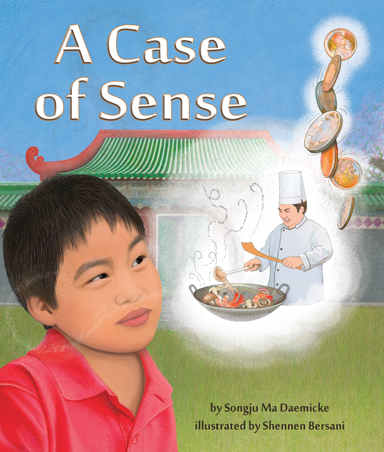


 Home in the Cave – by Janet Halfmann, illus. by Shennen Bersani
 Little Red Bat – by Carole Gerber, illus. by Christina Wald
 Deep in the Desert – by Rhonda Lucas Donald, – by Rhonda Lucas Donald, illus. by Sherry Neidigh
 And Coming in spring of 2017 Bat Count: A Citizen Science Story


 Baltasar befriends a genie in Hammer of Witches, who, unfortunately, can’t grant wishes. If you met a genie who could grant you three wishes, what would you wish for and why?


 Download the


 LEE & LOW BOOKS celebrates its 25th anniversary this year and to recognize how far the company has come, we are featuring one title a week to see how it is being used in classrooms today as well, as hear from the authors and illustrators.


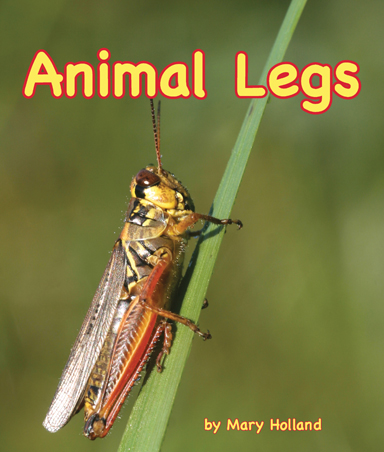
 skin that goes from a flying squirrel’s front legs to its back legs and allows it to glide through the air a remarkable adaptation. The fact that katydid ears are on their legs is pretty amazing, too!


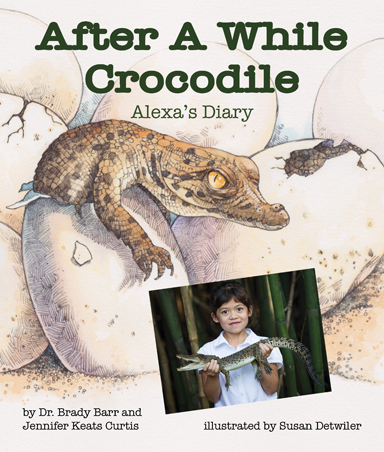
 captured all 24 species in the wild. Readers can watch Brady Barr comb the jungles, forests, and rivers seeking out reptiles on his Nat Geo Wild show Dangerous Encounters with Brady Barr that airs on Saturdays at 10:30.


 Further reading on teaching literacy in kindergarten


 Author Mary Williams is the founder of the Lost Boys Foundation, whose mission is to assist Sudan’s Lost Boys in attaining a college education. Of the Lost Boys she has met, Williams


 It’s September! And with the opening of a new school year comes the closing of the


I would encourage diverse writers to check out opportunities for writing-craft development via writers.com, Highlights Foundation, the respective MFA programs in writing for young readers, etc. Some established author-teachers also work with students on an independent study basis. There are options for various learning styles at various price points, and it’s always worth it to ask about scholarships/financing.