JacketFlap connects you to the work of more than 200,000 authors, illustrators, publishers and other creators of books for Children and Young Adults. The site is updated daily with information about every book, author, illustrator, and publisher in the children's / young adult book industry. Members include published authors and illustrators, librarians, agents, editors, publicists, booksellers, publishers and fans. Join now (it's free).
Login or Register for free to create your own customized page of blog posts from your favorite blogs. You can also add blogs by clicking the "Add to MyJacketFlap" links next to the blog name in each post.
Blog Posts by Tag
In the past 7 days
Blog Posts by Date
Click days in this calendar to see posts by day or month
Viewing: Blog Posts Tagged with: multicultural books, Most Recent at Top [Help]
Results 1 - 25 of 80
How to use this Page
You are viewing the most recent posts tagged with the words: multicultural books in the JacketFlap blog reader. What is a tag? Think of a tag as a keyword or category label. Tags can both help you find posts on JacketFlap.com as well as provide an easy way for you to "remember" and classify posts for later recall. Try adding a tag yourself by clicking "Add a tag" below a post's header. Scroll down through the list of Recent Posts in the left column and click on a post title that sounds interesting. You can view all posts from a specific blog by clicking the Blog name in the right column, or you can click a 'More Posts from this Blog' link in any individual post.
In Hammer of Witches fourteen-year-old bookmaker’s apprentice Baltasar, pursued by a secret witch-hunting arm of the Inquisition, joins Columbus’s expedition to escape and discovers secrets about his own past that his family had tried to keep hidden. In this BookTalk, Shana Mlawski shares her views on Christopher Columbus, working with students and what she’d wish for if she had three wishes.
Hammer of Witches deals with some hard topics (rape, abandonment, war, and torture). What do you hope readers take away from Hammer of Witches?
Shana Mlawski: When I was first outlining Hammer of Witches, I knew I wanted it to be an epic adventure about sorcerers in 1492 Spain, and that’s what it is. I didn’t go in thinking, “Oh, boy! I can’t wait to write about rape and torture!” It was more like, “Okay, it’s going to be about this wisecracking kid and a girl genie and a dragon and a golem and…”
But history is history. I’m not going to whitewash it. We have plenty of people doing that already. In the year of 1492 Columbus sailed the ocean blue—and Spain conquered Moorish Granada, the Inquisition tortured people, the decimation of Taíno civilization began, and the world’s largest Jewish population was sent into exile. It’s a complex, fascinating era, but it’s a tragic era, as well. Ultimately, though, Hammer of Witches is an optimistic book. It’s about that moment when you accept that the world is more complicated than you were led to believe, and it’s at that moment you can start trying to make a difference.
Do you feel like schools glorify Christopher Columbus and his discovery of the New World? Do you think schools need to paint a more accurate portrayal of his journey to students?
SM: The fact that we use the word “discovery” shows how skewed our view of the voyages can be. I prefer “contact” and “conquest,” words that remind us we’re talking about two groups: the European explorers and the Taíno living in the Caribbean at the time. If you ask me, the Taíno side of the story needs to get much more play in classrooms and in the media.
I’d also prefer if teachers stopped asking whether Columbus is a hero or a monster, as if those are the only two options. When we answer “hero,” we disappear the Taíno from history or write off their struggle as unimportant. To argue the “monster” side, we often pretend the Taíno were passive (if noble and pure) victims. The story is so much more complicated than that, and so much more interesting. History is only useful to us when we remember it’s about humans like us, not cartoons.
Baltasar befriends a genie in Hammer of Witches, who, unfortunately, can’t grant wishes. If you met a genie who could grant you three wishes, what would you wish for and why?
SM: Oh, I’m not going to fall for this one. I’ve seen and read enough “Monkey’s Paw”-type stories to get involved with a genie. Next thing I know I’ll be sitting in a post-apocalyptic library with my glasses broken and no one left alive to fix them.
How has working directly with middle and high school students impacted the kind of stories you want to share with YA readers?
SM: My teaching experience has definitely sharpened my desire to tell stories about characters from different backgrounds. When I was a young nerd-in-training, most of the available fantasy books were about white, Christian kids in the U.S., Britain, or U.K.-inspired settings (the big exception being Ursula K. LeGuin’s Earthsea series). Although I’m white, those monochrome stories never reflected my experience as a child growing up in the New York Metro area. When I started teaching and tried to recommend books to my students, I saw how little things had changed. A black boy wanting to read about a kid who looked like him usually had to go for a “problem” book about drug use or gang violence, even if he wanted a sword-and-sorcery adventure. A girl looking for a Latina protagonist could find a book about the immigrant experience but not one about, say, sexy vampires. That’s why I’m not sucking up when I say I love that Lee & Low and Tu Books exist, and I’m incredibly proud to be part of the gang.
Did you have a favorite hero or heroine in a fantasy/sci-fi novel that inspires your writing?
SM: I don’t actively model my characters on heroes or heroines from other books, but that doesn’t mean inspiration doesn’t slip in from time to time. It does, but I usually don’t notice until long after I’ve finished writing the story. This time around, it occurred to me that the relationship between Baltasar and Catalina has a lot in common with the Taran/Eilonwy relationship in Lloyd Alexander’sChronicles of Prydain (although Bal has some Fflewddur Fflam in him, too). In any event, I’m cool with the connection, because Hammer of Witches is meant to be a play on Prydain-like stories. It’s what happens when you take that old quest story, brush off the dust, and stick it in the real world in 1492.
Shana Mlawski is a native New Yorker who writes educational materials and tutors middle and high school students. She has written more than a hundred articles for the pop culture website OverthinkingIt.com, some of which have been featured in The Atlantic Monthly, The Guardian, The Huffington Post, and Ms. magazine. She graduated cum laude from Yale with a B.A. in English with a concentration in creative writing, and received a master’s in education from Columbia University Teachers College. Hammer of Witches is her first novel.
0 Comments on Interview: Shana Mlawski on the History Surrounding Christopher Columbus as of 1/1/1900
LEE & LOW BOOKS celebrates its 25th anniversary this year and to recognize how far the company has come, we are featuring one title a week to see how it is being used in classrooms today as well, as hear from the authors and illustrators.
Synopsis: Young Mekhai, better known as Bird, loves to draw. With drawing you can erase the things that don’t turn out right. In real life, problems aren’t so easily fixed. As Bird struggles to understand the death of his beloved grandfather and his artistic brother’s decline into drug addiction, he escapes into drawing as an outlet for his emotions and imagination. Along the way, with the help of his grandfather’s friend, Bird finds his own special somethin’ and wings to fly. Told with spare grace, Bird is a touching look at how a young boy copes with real-life troubles. Readers will with be heartened by Bird’s quiet resilience and moved by the healing power of paper and pencil.
Coretta Scott King/John Steptoe New Talent Illustrator Award, American Library Association
Ezra Jack Keats Award, Ezra Jack Keats Foundation
ALA Notable Children’s Books, American Library Association
Best Children’s Books of 2008, Kirkus Reviews
Starred Review, Kirkus Reviews
Celebrate with Books List 2008, Cleveland Public Library
Editor’s Choice 2008, The Bloomsbury Review
“Choices” 2009, Cooperative Children’s Book Center
Best Children’s Books of the Year, Bank Street College of Education
2009 Paterson Prize for Books for Young People, The Poetry Center
Storytelling World Resource Awards Honor, Storytelling World magazine
West Virginia Children’s Choice Book Award
The story behind the story (read the full interview here):
LEE & LOW BOOKS: What part of this book was the biggest challenge for you?
Zetta Elliott, author: When I first wrote the story at the start of 2002, there was nothing challenging about it at all. I wrote it quickly—in less than a day, I believe. The story was simply ready to come out. The biggest challenge came in 2006 when my editor asked me to turn the book into a [longer form]. It was difficult to accept praise for the unique voice I had created but then to manipulate that voice after I felt I had said all I needed to say. The story felt complete to me, but it wasn’t complete to others; and so it was challenging to satisfy other readers’ needs.
LEE & LOW BOOKS: Birdtackles some very serious subject matter. Why did you choose to approach these subjects through a picture book as opposed to something aimed at older readers?
Zetta Elliott, author: Children are open: they see, and hear, and feel things, just like adults; but they don’t have access to the same information, and they can’t process that information in the same way. I understand the impulse to protect children from difficult subject matter, but sometimes our efforts to shield children actually silence kids instead. The children I’ve worked with know about drugs; they know what junkies look like, how they act. But they may not understand why. Many urban children have had a family member affected by drug addiction, and increasingly, many children in small towns are also having their families torn apart by drugs such as crystal meth. We teach children to “just say no,” but we don’t always give them the tools they need to understand addiction. I felt a picture book could promote discussion between children and adults. I definitely see parents reading this book with a lot of conversation—it’s okay to stop reading and start talking! Give the child an opportunity to ask questions or express emotions. When we demystify things such as drug addiction, we empower children to make better choices.
—Zetta Elliott, author of Bird, in an interview with LEE & LOW BOOKS
Resources for teaching with Bird:
Inspire a philosophical exchange overBird with these discussion questions created by the University of Washington Center for Philosophy for Children, which is dedicated to bringing philosophical inquiry into schools
Discover how to teach philosophy with elementary school students with the Bird book module from the Teaching Children Philosophy Program
Use the activities and discussion questions on page 17-18 for Bird created by the 2009 Coretta Scott King Awards Committee, American Library Association
Uncle Son is a mentor for Bird. Pair students up and have them interview each other about who their mentors are. Ask students to brainstorm a list of questions to ask their partner first, such as: What is a mentor in your opinion? Who is or has been a mentor for you? What advice has she/he given or model behavior has she/he demonstrated for you? Do you think every person needs a mentor? Why or why not? What makes a good mentor? Students should take notes during their interview of their partner and then write a description of their partner’s mentor. Encourage volunteers to share their reflections with the class.
LEE & LOW BOOKS celebrates its 25th anniversary this year! To recognize how far the company has come, we are featuring one title a week to see how it is being used in classrooms today and hear from the authors and illustrators.
Today, we are celebrating Chess Rumble, which explores the ways this strategic game empowers young people with the skills they need to anticipate and calculate their moves through life.
Synopsis: In Marcus’s world, battles are fought everyday—on the street, at home, and in school. Angered by his sister’s death and his father’s absence, and pushed to the brink by a bullying classmate, Marcus fights back with his fists.
One punch away from being kicked out of school and his home, Marcus encounters CM, an unlikely chess master who challenges him to fight his battles on the chess board. Guarded and distrusting, Marcus must endure more hard lessons before he can accept CM’s help to regain control of his life.
Awards and Honors:
Quick Picks for Reluctant Young Adult Readers, American Library Association (ALA)
Notable Books in the Language Arts, National Council of Teachers of English
Lee Bennett Hopkins Promising Poet Award, International Reading Association (IRA)
Top Picks for Reluctant Readers, BoysRead.org
G. Neri, an award-winning filmmaker whose work has earned him several honors. Inspired by his editor, Jennifer Fox, who had wanted to do an urban chess story for years and finally saw the possibility of making it come to life through him, Neri dove into the project with unbridled enthusiasm. “I loved the idea of using chess strategy as a way to approach life. I had dealt with a few teens who had come from troubled pasts and had difficulty finding an outlet for their inner struggle. So the idea of pairing a kid like this with a chess mentor who did not back down came naturally. It was a very organic process, and I let the characters tell me their stories.”
Neri hopes that readers will come away from Chess Rumble “think[ing] about their lives and the choices they make before they make them.” Pressed to continue, Neri says, “I hope they are intrigued to play chess, and maybe start thinking about acting on, instead of reacting to, negative situations. Acting considers what can happen if you make one choice versus another. Reacting just responds impulsively to the problem instead of thinking ahead three steps and maybe making a better choice.”
It’s finally September, which means back-to-school season has officially begun! Plan out your month with these book recommendations and resources to get you ready for the autumn season:
Last year, we gave our 10 favorite reasons to read diversely. One reason being that we live in a diverse world, so why not the books that we read? Books help us see the world through someone else’s eyes, and in the case of bilingual books, through another language.
Here are our ten favorite reasons to read bilingual books!
Bilingual books…
Teach us how to read in two languages.
Celebrate the 22% of students who speak a language other than English at home.
Develop strong critical thinking skills
Keep our brains young, healthy, and sharp.
Expose us to new ways of communicating.
Make reading an inclusive activity for all students.
Highlight the achievement of knowing more than one language.
Encourage interest in other cultures and languages.
Expand our vocabulary and lexicon.
Bring readers together.
Tell us why you read bilingual books!
2 Comments on 10 Reasons to Celebrate Bilingual Books, last added: 9/19/2016
[…] at Lee & Low, 10 Reasons To Celebrate Bilingual Books […]
Layla Dima said, on 9/17/2016 10:11:00 AM
I have a 6 month old mixed race daughter and my husband is speaking only Spanish to her while I don’t know Spanish at all besides a few simple words. So I’m getting bilingual books from our library to read to her and learning a new language myself!
LEE & LOW BOOKS celebrates its 25th anniversary this year! To recognize how far the company has come, we are featuring one title a week to see how it is being used in classrooms today and hear from the authors and illustrators.
Today, we are celebrating First Day in Grapes, an inspirational story for children of all backgrounds. Chico’s story of personal triumph and bravery in the face of bullying is a testament to the inner strength in us all.
Synopsis: All year long Chico and his family move up and down the state of California picking fruits and vegetables. Every September they pick grapes and Chico starts at a new school again. Often other children pick on him — maybe because he is always new or maybe because he speaks Spanish sometimes.
Chico’s first day in third grade turns out to be different. His teacher likes him right away, and she and his classmates are quick to recognize his excellent math skills. He may even get to go to the math fair! When the fourth-grade bullies confront Chico in the lunchroom, he responds wisely with strengths of his own.
Awards and Honors:
Pura Belpré Illustrator Award Honor, ALSC/REFORMA
Notable Children’s Book, Smithsonian
Choices, Cooperative Children’s Book Center (CCBC)
From the Illustrator:
“Stories that help kids become familiar with kids of other cultures or others in different situations are books that I like to illustrate. I appreciate the way the author put the main character in situations that kids deal with daily in real life and how the boy used his wits to get out of tough situations.
I related to the kid in this story in a wacky way when it came to avoiding bullies. When I was about nine years old there was a boy who picked on me daily, until one day I came up with an idea. I thought that if I walked by him making a face that he wouldn’t recognize me and leave me alone. The plan worked, but now that I think of it, I doubt it was because he didn’t recognize me.”
It’s August and with the New Voices Award deadline approaching in just seven weeks, participating writers may be starting to feel the heat. No sweat! The New Voices Award blog post series has got you covered from the summer sun of stress.
At this stage, you’ve probably got your cover letter and story written down. You’ve also read July’s post on the importance of voice in a story and made your narrative even more engaging to readers. Congrats! That’s two essential checks on the New Voices To-do list –but don’t seal the envelope just yet! Now that your story is down it’s time to begin the revision process.
Revision is an important part of the writing experience. It’s about revisiting what you’ve written, identifying what needs to be strengthened, and rewriting to improve your story. Every writer’s revision process is different so to provide some guidance we interviewed two New Voices Award Winners, Linda Boyden (The Blue Roses) and Jennifer Torres (Finding the Music/ En pos de la musica), about how their revision processes helped them prepare their stories for the New Voices Award.
What inspired you to write your story? Did you write it specifically for the New Voices Award, or was it something you were working on already?
Linda Boyden: In 1978 my maternal grandfather, Edward Dargis, passed away. I was about to have my last baby and couldn’t attend his funeral 3,000 miles away. Until I went to college, we had lived in the same neighborhood and were very close. He worked at a factory but was happiest in his garden. A few nights after he passed, he came to me in a dream. He stood in a beautiful flower garden, and like Rosalie’s Papa his face was “smooth, not wrinkled.” In the dream he told me to stop grieving because he was happy. From that point on I knew I needed to write this story as a gentle way to broach a tough topic.
from The Blue Roses
Many years later when my husband’s company moved us to Maui, I left teaching and decided to follow my dream of becoming a writer. I enrolled in a community college writing course. The instructor assigned us the task of writing 1,000 words a week so the first draft of The Blue Roses was actually homework! When he returned it he commented, “I wanted to like Rosalie more, but I couldn’t.” That hurt so I put the manuscript away. Months later I rethought and revisited. By the time I learned of Lee & Low’s New Voices Award, the manuscript had been through a few revisions. After winning, it went through a few more with my careful editors, Laura Atkins and Louise May.
Jennifer Torres: Finding the Music was inspired by my own childhood—growing up in a noisy family, being close to my grandparents and their stories, hearing mariachi music playing in the background of weddings, birthday parties and other special celebrations. It was also inspired by stories I covered as a newspaper reporter: one, an obituary for a farm worker who gave free mariachi lessons to neighborhood kids on his time off, and another about the sense of community that grew around the mariachi program at Cesar Chavez High School in Stockton, California. I started working on the book long before I learned about the New Voices Award. After researching publishers, I knew I wanted to submit my manuscript to Lee & Low. I went to the website to learn more about the company and to review submission guidelines—that’s when I discovered the award.
What does your revision process look like? At what point in your writing process do you begin making changes?
LB: I write at a certain time every day. When working on a picture book, I rough it out on paper and revisit the next morning. I revise the previous work then create new. Next day, repeat. When it’s almost “good” I print it, read it aloud, and revise more. I love the process: revision is the heart of writing.
JT: I always catch myself wanting to revise as I go, making changes today on what I wrote yesterday. But I try to resist! It’s too easy for me to get hung up on small details that way. I think I do much better work when I’m revising a finished draft. I can step back with a sense of the story’s full scope. The problems stand out more clearly, and, often, so do the solutions.
How often do you share your works-in-progress with other people? Are you part of a critique group or is there someone specific you rely on for feedback?
from Finding the Music
LB: I’ve been part of many critique groups over the years. Now, I share with trusted individuals only and generally online. I read most rough drafts aloud to my husband who hears the mistakes. I also share all my picture book manuscripts with one young granddaughter who also has remarkable insights.
JT: I’m not part of a critique group-I think it could be good though! I do have a few friends who I ask to read drafts after I’ve finished a couple of rounds of revision on my own. They’re talented writers—whose styles and voices are nothing like mine—and they give thoughtful and honest feedback. It’s super helpful to me to see my work from someone else’s perspective, especially when the story has been all alone in my head until then.
What is something surprising you learned while preparing your story for publication?
LB: The most surprising part was discovering that authors and illustrators seldom meet, or even have contact. My Lee & Low editors had no problem with illustrator, Amy Cordova, and me communicating. Not only did this collaboration strengthen our book, Amy and I have remained friends.
JT: During the publication process, my editor let me know that Finding the Music would be bilingual (It was initially English-only). This meant some extra editing and paring down, but I was really excited about the decision! What was surprising to me, though, was how adding the Spanish text added so much dimension to the book as a whole. I can’t imagine it any other way now, and it’s a good reminder of how the collaborative nature of the process can do so much to enrich storytelling.
How has winning New Voices Award changed the way you write or revise stories?
LB: Winning the first New Voices Award gave me something I lacked as a writer: self-confidence. Though I understood picture books, I had no training in becoming a writer other than the one community college course mentioned above. Winning also gave me the opportunity to learn from the wonderful editorial staff at Lee & Low Books.
JT: Coming from a newspaper background, I already had big appreciation for editing and revising as part of the writing process. But at a newspaper, it happens so fast. Winning the New Voices Award and preparing Finding the Music for publication helped me realize how valuable it can be to step back from a project, and approach it again weeks (or even months) later with fresh eyes and perspective.
Thrilled, Eager, and Only Slightly Apprehensive: T said, on 9/8/2016 6:00:00 AM
[…] writers are putting the finishing touches on their submissions. The ready-to-submit writer has read August’s post about the importance of revision, and revised their cover letter and manuscript correcting all […]
In the latest installment of the Marisol McDonald series, Marisol McDonald and the Monster/Marisol McDonald y el monstruo, Marisol McDonald is confronted with her greatest fear: monsters! In celebration of Marisol McDonald and the Monster/Marisol McDonald y el monstruo, released last month, Lee & Low Staff share the scary things that keep them up at night.
Louise May, Editorial Director
“Having to sing in public. I don’t have a great voice and I can’t carry a tune.”
Kandace Coston, Editorial Assistant
“I’m arachnophobic.”
Pia Ceres, Marketing & Publicity Intern
“Not having the courage to speak up when it counts. Also, since I was a kid, I’ve had this fear that someone living in the mirror would reach through the threshold and grab me while I’m brushing my teeth, which is a very vulnerable position if you think about it.”
Randy Eng, Operations Coordinator
“Stage fright.”
Keilin Huang, Marketing & Publicity Associate
“I have a huge fear of clowns. I think it’s because I watched Stephen King’s “It” when I was young with my cousins and it scarred me for life.”
from Marisol McDonald and the Monster
Jalissa Corrie, Marketing & Publicity Assistant
“I have a fear of ghosts. I think there is one (or more) that lives in my parent’s house in the Hudson Valley. They tend to make themselves known when I’m home by myself.”
Hannah Ehrlich, Director of Marketing & Publicity
“I actually had a very strange phobia when I was growing up: I was afraid of buttons. I would not let my parents dress me in any clothes with buttons, did not like to touch buttons myself, hated sitting on chairs with buttons, and even avoided hugging people who were wearing button-down shirts. For most of my childhood, I thought it was just a weird thing that only I had. But thanks to the Internet, I’ve actually learned that there is a name for this phobia: Koumpounophobia. It’s pretty rare, but it’s estimated that nearly one in every 75,000 people experiences it. Most famously, Steve Jobs admitted that he has koumpounophobia and some speculate that his fear of buttons may have led to the invention of the iPhone and other buttonless devices. My phobia is fairly mild now but I still hate wearing button-down shirts, avoid button-up duvet covers, and prefer not to touch buttons (especially the small plastic ones) if I don’t have to!”
Hsu Hnin, Operations Assistant
“My greatest fear is the darkness; especially when I have to sleep in a place where there’s absolutely no light.”
John Man, Director of Operations
“My biggest fear is running out of poke balls during a hunt.”
You can purchase a copy of Marisol McDonald and the Monster/Marisol McDonald y el monstruo here.
Don’t miss the first two books in the Marisol McDonald series:
My biggest phobia is dogs since I was bitten by a black lab while biking in the countryside.
Lisa Gerin said, on 8/9/2016 5:51:00 PM
I am petrified of snakes!
Earl said, on 8/9/2016 7:26:00 PM
My biggest fear is probably being possessed by the devil.
Yolanda said, on 8/11/2016 12:59:00 PM
When I was younger I always made sure my feet never stuck out over the edge of my bed at night. I thought something under there might grab me and suck me away forever!!!
Tiny Stitches: The Life of Medical Pioneer Vivien Thomas is the compelling story of Vivien Thomas, an African American surgical technician who developed the first procedure used to perform open-heart surgery on children. In this interview, author Gwendolyn Hooks discusses the legacy of this medical pioneer and what inspired her to write about a man whose research helped to save countless lives.
What inspired you to write about Vivien Thomas?
A friend’s grandson was diagnosed with tetralogy of Follet. She watched the movie Something the Lord Made which is the story of Vivien Thomas. She loaned me the movie and the rest is history! He is a hero. He did so much and so few know his name. I saw his portrait at Johns Hopkins Hospital and felt him saying “Tell my story.”
In what way is Vivien Thomas a relevant role model for young readers today?
Vivien is a strong role model for young people even after all these years. Sure he was disappointed and mad after he lost his money when his bank closed during the Great Depression. Vivien was tough and resilient. He put aside his college dreams and found a way to support himself. A door closed, but he opened another. I think one of his messages to young people would be to find that other door.
What did you find most surprising in your research of Thomas’s life?
Even as a young boy of 13, his mind was on his future. He worked afterschool and summers with his father. Other boys were playing sandlot baseball and I’m sure Vivien did on occasion, but he was passionate about earning money and putting it to good use. He bought his school clothes and deposited the rest in a savings account.
Is there a fact about Thomas that you didn’t get to put in the book?
Before Vivien found the job at Vanderbilt, he worked for a contractor. One time he had to repair a wooden floor. He repaired it, but it wasn’t his best work. His boss could tell where he laid the new wood and told him it wasn’t acceptable. Vivien did it over and the second time, it was seamless. He learned a lesson that day that he never forgot. Do your best work the first time. In medicine there might not be a second time.
The most painful parts of Tiny Stitches, for us, were the scenes in which Thomas encounters the injustices of racism in spite of his achievements. Why was it important for you to write about these realities, and what do you think young readers can learn from them?
I wanted readers to know he didn’t lead an easy and carefree life. Despite your intelligence and achievements, there are some who will never give you credit for it. It’s important to know who you are, what you are capable of and never let anyone tell you otherwise.
Vivien Thomas was not given the credit he deserved for his leadership in “blue baby” operations until 1971, how do you think Thomas must have felt once he received recognition?
He was overjoyed that the Old Hands Club asked him to sit for his formal portrait (the one in Johns Hopkins Hospital) and planned a formal recognition ceremony. That and the honorary degree, the faculty appointment were all appreciated by Vivien. He had such a generous spirit. I’ve talked with a former surgical resident who remembers his generous spirit even after his contributions were ignored. I think it’s only human to feel discouraged, but those feelings did not deflate his love of research.
What advice would you have for young readers about following their dreams in spite of obstacles?
If an obstacle is placed in your path, veer left or right, but keep going. Keep stretching and moving forward. Read books, especially biographies, and learn how others did it. Vivien prepared himself for his dream. He was an excellent student. Study. Join organizations in your school or community. This is a perfect way to learn about careers you never knew existed and perhaps find a mentor.
What do you hope readers will take away from Vivien Thomas’ story?
I hope readers and especially young ones will remember that dreams and goals can change, but your life won’t if you don’t go after new ones. If Vivien did it with all that was set against him, you can do it now.
Learn more about Tiny Stitches: The Life of Medical Pioneer Vivien Thomashere.
Gwendolyn Hudson Hooks was born in Savannah, Georgia. Her father was in the Air Force, so Gwen and her family moved a lot when she was a child. Her first stop in every new city was the local library where she got her new library card. Gwendolyn is the author of many books, including Bebop Books’ Can I Have a Pet? and Lee & Low’s Tiny Stitches. Gwen now lives in Oklahoma City, Oklahoma, with her husband and their three children. Visit her online at gwendolynhooks.com.
0 Comments on Interview: Gwendolyn Hooks on the Unsung Hero of Medicine, Vivien Thomas as of 1/1/1900
LEE & LOW BOOKS celebrates its 25th anniversary this year and to recognize how far the company has come, we are featuring one title a week to see how it is being used in classrooms today as well, as hear from the authors and illustrators.
Synopsis: This award-winning book is an introduction to haiku poetry and the life of Issa (b. 1763), Japan’s premier haiku poet, told through narrative, art, and translation of Issa’s most beloved poems for children.
Author Matthew Gollub’s poignant rendering of Issa’s life and over thirty of his best-loved poems, along with illustrator Kazuko Stone’s sensitive and humorous watercolor paintings, make Cool Melons—Turn to Frogs! a classic introduction to Issa’s work for readers of all ages. With authentic Japanese calligraphy, a detailed Afterword, and exhaustive research by both author and illustrator, this is also an inspirational book about haiku, writing, nature, and life.
Awards and honors:
Notable Books for a Global Society, International Literacy Association (ILA)
Notable Children’s Books in the Language Arts, National Council of Teachers of English (NCTE)
Notable Children’s Trade Books in the Field of Social Studies, Children’s Book Council (CBC) and National Council for the Social Studies (NCSS)
Children’s Books Mean Business, Children’s Book Council (CBC)
Not Just for Children Anymore selection, Children’s Book Council (CBC)
Outstanding Merit, Children’s Book of the Year, Bank Street College of Education
Best Children’s Books of the Year, Bank Street College of Education
Books to Read Aloud with Children of All Ages, Bank Street College of Education
“Editor’s Choice,” San Francisco Chronicle
Bay Area Book Reviewers Association Award finalist
Children’s and Young Adult Honorable Mention for Illustration, Asian Pacific American Award for Literature (APAAL)
“Choices,” Cooperative Children’s Book Center (CCBC)
ALA Notable Children’s Book, American Library Association (ALA)
A Horn Book Fanfare Best Book of the Year, The Horn Book Magazine
California Collections, California Readers
Utah Children’s Book Award Masterlist
Children’s Book of Distinction, Poetry Finalist, Riverbank Review
Read-Alouds Too Good to Miss, Indiana Department of Education
Starred Review, Publishers Weekly
Starred Review, The Horn Book Magazine
From the author: “A haiku, because of its brevity, resembles a quick line sketch. It’s up to the reader to imagine the details and to make the picture complete. In a sense, we can think of a haiku as a telegraph; for example: “Should arrive Tuesday, supper time.” From this short message, we can infer that, weather permitting, the sender will arrive early on Tuesday evening, and that after the long, tiresome journey she would appreciate a good meal.
Often, haiku describe two events side by side, such as: “Plum tree in bloom—/ a cat’s silhouette/ upon the paper screen.” Does the silhouette of the plum tree also appear on the paper screen? Does the plum tree in bloom suggest the warmth of a spring day? Again, it’s up to the reader to imagine how or if the two things are related.
Haiku tend to be simple and understated, so there’s never one “correct” way to interpret them. The idea is to ponder each poem’s imagery and to discover and enjoy how the poem makes you feel.”
Check out the classroom-tested, standards-aligned lesson plan Experiencing Haiku Through Mindfulness, Movement & Music by Rashna Wadia with Cool Melons— Turn to Frogs! provided by ReadWriteThink.org, a website developed by the International Literacy Association and the National Council of Teachers of English.
Celebrate Japanese poetry and Japan’s Kodomonohi (Children’s Day) with the “Carp Streamer” lesson plan from Crayola, which includes Cool Melons–Turn to Frogs.
Expand students’ experience with haiku by having them read and discuss works by other seventeenth century and eighteenth century poets such as Basho, Jöso, Ryota, Buson, or Sanpu. Students may also enjoy reading more contemporary haiku and comparing the contemporary poetry with the more traditional.
LEE & LOW BOOKS celebrates its 25th anniversary this year! To recognize how far the company has come, we are featuring one title a week to see how it is being used in classrooms today and hear from the authors and illustrators.
Today, we are celebratingRichard Wright and the Library Card, an inspirational story for children of all backgrounds. This book shares a poignant turning point in the life of a young man who became one of this country’s most brilliant writers, the author of Native Son and Black Boy.
Synopsis: The true story of the renowned African American author Richard Wright and his determination to borrow books from the public library that turned him away because of the color of his skin.
Awards and Honors:
Notable Children’s Book, Smithsonian
Honor Book, Society of School Librarians International
Other Editions: Did you know that Richard Wright and the Library Card also comes in a Spanish edition?
We at LEE & LOW BOOKS are excited and honored to share the impressive work happening in the classroom of Jessica Lifshitz, veteran educator in Northbrook, Illinois. In an excerpt of her essay, Jessica describes how she empowers her fifth grade students to analyze their classroom library for its culturally responsiveness and relevancy. She provides students with background information, including LEE & LOW BOOKS’ visualization of the lack of diversity in children’s books. Originally posted at Jessica’s blog, Crawling Out of the Classroom, this excerpt is reposted with permission.
I truly believe that books, of all kind, play a large role in shaping how our students see the world. So often, children have little choice in what kinds of books surround them. Even in classrooms and schools where children are free to choose to read whatever books they want, they are still often limited by the choice of books that we adults have placed around them. And too often, we adults do not think carefully enough about what books, with what images of race and gender and family structure, we are surrounding our children with.
So that is where I wanted to look. At the books I was choosing to put into my classroom library. I wanted my students to join me in looking more closely at the books that I had in my classroom and how they represented and misrepresented the world they are living in.
So we began with an infographic. In fact, the majority of my students had no idea what an infographic was. So first. We had to learn. This was a good reminder to me to use these rich conveyers of information more often through the year. Anyway, we began by looking at THIS infographic, which shares the disturbing statistics on diversity in children’s literature. This, alone, led to incredible discussion about so many things.
We began with a discussion of the term, “people of color.” So many of my almost all-white students had never heard this term before and it took a while for them to grasp its meaning. We then had a discussion on the difference between white writers writing about people of color and writers of color writing about people of color. Then we entered into a discussion of how it might be harder for writers of color to get their books published in the competitive world of children’s publishing. And finally we ended up at a discussion of our own reading preferences and how sometimes we are tempted to read books that discuss lives similar to our own and how much more rewarding it can be to push ourselves to read books that teach us about the lives of others whose lives are different than our own.
The children were so eager for the discussion. We actually ended up looking at an entire series of fascinating infographics that show how different kinds of diversity are represented or misrepresented in different areas of society. That series of infographics CAN BE FOUND HERE.
And then we turned to our own books. I wanted to start in my own classroom. I have shared openly with my students that all of this work, on race and on gender, it is work for me too. I know that I make mistakes often and I wanted them to see that I, too, need to constantly do better to work past my own biases and stereotypes.
So I gave my students the chance to audit our own classroom library to find out how different genders and races are represented and how we could do better to make sure that different genders and races were more accurately represented by the books in our classroom.
I asked the students to each randomly grab 25 books. And for each book they were to look to see if there were people on the cover. If there were, they were to note if all of the people on the cover were white and if all the people on the cover were boys. They kept track on this simple data collection sheet.
Now, I recognize that this is FAR from a thorough and scientific analysis of the books in our classroom library. I recognize that just because there is not a person of color on the cover of a book that does not mean the book does not contain a person of color in it. I recognize the flaws. I am shared them with my students. And still, it was something.
Because even more important than our results was the task of looking at the images on the covers of the books that surround us. More important than the numbers that we wrote down, were the discussions we had about why book publishers make the decisions that they make about who goes on the covers of our books. More important than the percentages that we ended up with were the realizations that we all made as we learned to look at the world differently. To see who was represented and, more importantly, to see who was NOT represented. This was the important work that we were doing.
Once the students finished collecting their data, they entered their results into a Google spreadsheet. HERE ARE OUR RESULTS.
After spending time looking closely at the books in our classroom library and after spending time looking at the numbers we collected, we had a discussion of what they noticed. Here are some charts that we used to capture our observations:
I was kind of blown away, once again, by what my students discovered. I thought I had a diverse library. I really did. In fact, I have worked over the past two years to make sure that I was buying the kinds of books that would help all of my readers to see themselves reflected in the pages of the books in my classroom. But what I forgot is that the vast majority of my readers are white. They see themselves, in terms of race, in almost every book they pick up.
What they need is something else. They need to be able to see into the lives of others. To use books as windows so that they can gain an understanding of what it means to be a race other than white. They need books to help them grow and become more empathetic citizens of this world. And while I have tried to provide books for them that would do just that, I realized from their work that I have a LONG way to go.
I need to do better. I need to do more.
And showing my students that I can look at where I am and find ways to do better in terms of making this world more equitable and just, that is no small thing.
So together we brainstormed ways that I can work to improve our classroom library. We talked about starting with sports fiction. The students noticed that while the nonfiction sports books were filled with African-American people, the books in my sports fiction bin barely had any characters of color. The exception was The Crossover, which just goes to show how important it was for that book to win the Newberry last year.
Here we have taken an area of our society that is rather diverse and the books that I have purchased that have fictionalize that area of society have completely sucked all of the diversity right out of it. So I must do better.
In the same area, we saw how few girls were represented in our sports fiction books. I have so many girls in my classes who don’t just play sports, but whose lives revolve around their favorite sports and still, we could only find one book, The Running Dream, in our sports fiction books that had a female main character. I must do better.
And then, we moved on to my fantasy and science fiction books. This was an area that was also very much lacking in racial diversity. And so I will now be on the lookout for books with characters of color in these two genres. I must do better.
And one of the most powerful observations that a student made was that while he did see books with African-American characters on the cover, he did not see many other races represented. He did not see any Native American characters, Asian American characters or Middle Eastern characters on the covers of the books that he looked at. Again, I must do better.
These suggestions came from my students and I am so proud of the work that they have done. As I shared with my students, I continue to be proud of our classroom library. I am proud of the choices that I have made in the books that I have put into our classroom library AND at the same time, I know now that I can and must do better. I shared with my students how grateful I am for the work that they have done to help me to see this.
After our counting books, we then used the following pages to look more closely inside of our picture books in order to see how races, genders and families were being represented. The kids chose one of these types of diversity to focus on and then pulled a few books to record their observations and evidence. Here are the sheets that they used for:
Again, the students had time to discuss their observations and I was blown away by what they were picking up on.
Finally, we headed to our school’s library, to again count books. We collected the same type of data, but this time for our school library. HERE WERE OUR RESULTS.
We realized that many of the trends that we saw in our classroom library, also existed in our school library. One of the greatest parts of this work was listening to the students talk to our school librarian (who is amazing) about the changes that we were hoping to make to our classroom library. This led to other powerful conversations between the librarian and me and I was so grateful for her input and her support.
This work has been incredible. It has, at times, left me feeling doubtful. Doubtful of myself, of this world we live in, of the way we misrepresent so many of the people who surround us. But ultimately, after watching and listening to my students, I was left hopeful. Hopeful because once my students began to see what was around them in new ways, they couldn’t un-see things anymore. They couldn’t not see. They were running up to me when they came across stereotypes that were perpetuated in their books. They had their parents send me pictures from bookstores when they noticed books that either reinforced or fought against stereotypes in some way. They noticed things on the news, on TV shows, on social media. And I believe that noticing is one big step towards making change.
There were times during this work when I felt like I had to rush through. There were times when I questioned if I really had time to be spending on this work. But the truth is, there is no way that I don’t have the time. This world we live in needs changing and the students that I am teaching must be a part of that change. And so though it feels like there is never enough time to do things that we most believe in, this work has showed me that we must find a way.
I am grateful, yet again, for what my students have taught me. And grateful, even more, for the hope that they give me for this world of ours.
Jessica Lifshitz is a fifth grade teacher in Northbrook, Illinois and has been teaching for 13 years. She believes in teaching her students that reading and writing can make the world a better place and is honored to learn from her students and to be inspired by them every day. She writes about teaching and learning at crawlingoutoftheclassroom.wordpress.com.
0 Comments on Part 1–Having Students Analyze Our Classroom Library To See How Diverse It Is as of 7/11/2016 5:02:00 AM
May 2016 signified the opening of Lee & Low Book’s seventeenth annual New Voices Award contest! To kick off the season, we interviewed New Voices Award winner Sylvia Liu about her writing process and how she prepared her winning story, A Morning with Grandpa, for the New Voices Award. Learn more about our New Voices Award here.
What inspired you to write A Morning with Grandpa? Did you write it specifically for New Voices, or was it something you were working on already?
I was inspired by my dad, who was doing qi gong (a mind-body practice involving moving “qi,” or energy, around one’s body through breathing techniques), while we were vacationing together. He taught my daughters his breathing techniques, and that inspired the story of a grandfather teaching his granddaughter both qi gong and tai chi.
I wrote the draft as part of a year-long challenge, 12×12, where the goal is to write 12 picture book drafts in 12 months. After I wrote this story, I realized it was a great fit for the New Voices contest.
What did you do to prepare your manuscript for submitting to the New Voices Award?
My critique group gave me excellent feedback that improved my story. I also got invaluable feedback from an agent as part of a critique that came with a Writer’s Digest course.
While writing your story did you encounter writer’s block? What did you do to overcome it?
This was one of the few stories I’ve written where I didn’t experience writer’s block. The initial story came to me very quickly, though it was different than the final form. The first draft was told mainly in dialogue, and one of my critique mates encouraged me to incorporate more lyrical language.
A Morning with Grandpa is a story about trying new things. When was a time you tried something new and how did it turn out?
About seven years ago, some friends and I took a women’s surf camp. It was so much fun that we kept going back for several years. At some point, I realized that surfing was not my sport, but my friends and I still occasionally get our boards and go out into the water. Last summer, our beach had several shark sightings so I stayed out of the water for the most part.
Who were some of your favorite writers growing up? Are there any books or writers that inspire you now?
Growing up, I loved reading science fiction, fantasy, mysteries, and thrillers. My favorite series as a child was Lloyd Alexander’s Book of Three series. In my teens, I inhaled the entire oeuvres of Agatha Christie, Robert Ludlum, Ray Bradbury, Edgar Rice Burroughs, Isaac Asimov, Frank Herbert, and Stephen King.
Nowadays, I’m inspired by author-illustrators who tell stories in intriguing and beautiful ways, like Shaun Tan and Gene Luen Yang.
Finally, what advice would you give new writers interested in writing children’s books?
Read as much as you can, both in and outside the genre you are writing in, and read recently published books. As the head of my daughters’ school recently said, good readers make good writers; great readers make great writers. And knowing what is being published today will help you gauge where you are on your writing journey.
Take the time to learn the craft of writing, connect with other authors, and have fun.
Sylvia Liu was inspired to write this story by the playful and loving relationship between her children and their Gong Gong. Before devoting herself to writing and illustrating children’s books, she worked as an environmental lawyer at the US Department of Justice and the nonprofit group Oceana. She lives in Virginia Beach, Virginia, with her husband and their two daughters. This is Sylvia’s debut picture book.
0 Comments on Interview: 2013 New Voices Award Winner Sylvia Liu as of 6/27/2016 8:33:00 AM
LEE & LOW BOOKS celebrates its 25th anniversary this year! To recognize how far the company has come, we are featuring one title a week to see how it is being used in classrooms today and hear from the authors and illustrators.
Synopsis: Shorty, a Japanese-American boy, learns to play baseball when he and his family are forced to live in an internment camp during World War II. Shorty quickly learns that he is playing not only to win, but to gain dignity and self-respect as well. Read The New York Timesreview and article.
Awards and honors:
50 Multicultural Books Every Child Should Know, Cooperative Children’s Book Center (CCBC)
Not Just for Children Anymore Selections, Children’s Book Council (CBC)
Parents’ Choice Gold Award
“Pick of the List,” American Booksellers Association
Washington State Governor’s Writers Award
“Choices,” Cooperative Children’s Book Center (CCBC)
“Close the Book on Hate” Reading List, The Anti-Defamation League
“Editors’ Choice,”San Francisco Chronicle
Washington State Children’s Choice Award Finalist
Best Multicultural Title, “Cuffies Award,”Publishers Weekly
The story behind the story:
“During August 1991, I received my first phone call from Philip Lee, who tells me he has founded a children’s picture book company called Lee & Low Books in New York City. He was searching across the country for authors and illustrators to launch his first set of books, and got my name through his wife Karen Chinn, a former Seattleite and colleague of mine at the International Examiner newspaper. Up to that point, I had never authored anything in the field of children’s literature, but would I be interested in writing a children’s picture book? I remained open to the idea, and Philip sent me an article from an East Coast magazine about Japanese Americans forming baseball teams and playing the sport within the American incarceration camps for Japanese Americans during World War II. A non-fiction story about this subject? he suggested. I decided I wanted to make it historical fiction, and create a young hero who hits not only one home run during a clutch situation, but two!
With good reviews – particularly a write-up in The New York Times Book Review – and over a half million copies of this book later sold, my career began as a children’s book author and presenter.”
Explore a reading guide and learning activities for Baseball Saved Us from OurStory, a website created by the Smithsonian’s National Museum of American History to encourage adults and children in grades K–4 to read historical fiction and biography together.
For ideas on how to teach World War II and the roles children can play in solving national problems, check out the NEH lesson series, On the Home Front, featuring Baseball Saved Us from EDSITEment, the National Endowment for the Humanities (NEH) website for K–12 teachers, school librarians, and students.
Learn about the experiences of children and teens in World War II interment camps with “The Japanese American Internment: How Young People Saw It,” a set of four lesson plans divided into grade bands featuring Baseball Saved Us, produced by the Smithsonian Center for Education and Museum Studies.
Book activity:
Have students imagine they are Shorty in the story. Encourage them to write as Shorty a letter to a friend outside the internment camp or a diary entry describing how they feel about being in the camp and what life is like there.
In this interview with The Open Book, guest blogger Dr. Becki Cohn-Vargas, Director of Not in Our School, shares the organization’s latest video release about families and family structures. Not in Our School is part of the larger organization of Not in Our Town and focuses on empowering students to create safe, inclusive, and empathetic communities.
“We are more alike, my friends, than we are unalike.”—from “Human Family” by Maya Angelou (listen to Maya Angelou read the poem here)
At Not In Our Town, we are extremely pleased to be sharing our film, “Our Family,” with the Lee & Low Open Book Blog community. Our hope is for our film to become part of the growing collection of resources that educators are using to create identity safe classrooms where children of all backgrounds feel a sense of belonging. These classrooms should not be colorblind spaces, where differences are ignored or where students must leave their identities, stories, and experiences at the door. It is our belief that belonging is created through drawing on the diversity in every classroom as a resource for learning. And quickly, we learn that, as Maya Angelou so aptly pointed out, we are more alike than different.
LEE & LOW: What inspired you and your team to create this video focusing on family configuration and family diversity? Put another way: Why create a film about family configuration and diversity from an organization that fights prejudice, bullying, and discrimination?
Part of fostering a sense of belonging for children is creating an environment where they feel fully accepted for who they are. Even from a young age, children are aware of and have many aspects that make up their social identities. That includes: how they look, the language(s) they speak and the way they express themselves, as well as their culture, religion, race, and gender identity. Their families, a huge part of their lives, form a crucial part of their identities.
Children need to see themselves reflected in the curriculum, on the walls, and throughout their school life. They need to see others like them and they need to learn to appreciate those who are not like them. That does not always happen. My daughter announced at age four that she wanted a sex change operation to become a boy. At that time, we had no idea where she heard about this (she is now 33) because nobody was talking about transgender issues and back then. She did get strange reactions at preschool when she told people she was a boy. I remember she loved doing Mexican dancing, but when they insisted she wear the girl’s outfit, that was the end of her preschool dancing career. As she grew up we did not counter her feelings or ideas. However, now, married and openly a lesbian, she says she does not feel that way anymore, but that she always knew she was different in some way.
Some children grow up and never see a family like theirs celebrated in any way. They may be teased for being adopted, for having two moms or two dads, or for having a mixed-race family. A child whose mother has different color skin than he or she does may experience rude comments or stares. I raised my oldest daughter, who was from my husband’s first marriage. She had dark skin and we got many stares and she heard some rude remarks as people looked from her dark skin to my light skin and asked, “Is that your mother?”
We are approaching Mother’s Day. I wonder about all the children who don’t have mothers. How do they feel when their classrooms are making gifts for their mothers? (At Not In Our Town, we suggest that you celebrate Caregiver’s Day and children can honor those who care for them.)
We made this film for elementary students to see themselves reflected and hear the voices of children like themselves, and to see validation of those who might be different. They also can see how all these families can join together and be friends, and have fun. We kept the film short so teachers can show the film and then open a discussion with the students. We also have our Lesson Guide with activities for students at different grade levels to celebrate their families.
Our organization features communities of all backgrounds who come together to stand up to bullying, hate, prejudice and intolerance. We have always been proactive in seeking to create safety, acceptance, and inclusion. For this film, we partnered with a wonderful organization, Our Family Coalition, which focuses on supporting schools and communities to create acceptance for LGBTQ families. Our shared goal with the film is to support children from all kinds of families.
The best way to address hate and prejudice is by creating identity safety, and preventing hate and prejudice before they rear their ugly heads. Researchers have known for a long time that getting to know people who are different from you will reduce prejudice. New research has shown that it also will reduce implicit biases—the unconscious attitudes we all pick up from living in a society that has much underlying racial bias. According to the article, “Long-term Reduction in Implicit Race Bias,” fostering empathy is another way to reduce prejudice and implicit bias. Children can learn to be empathetic, but it will only stick if they also see empathy and acceptance expressed and modeled by all the adults in their world on a regular basis.
LEE & LOW: How can schools encourage children to appreciate their own family’s configuration and diversity?
The best way to celebrate families is to open the doors of the school and invite all the families in. Other activities include times where students invite their caregivers to volunteer or share expertise in one area or another. Also, students can write about their families, read books (like the excellent collection from Lee & Low), and use family diversity lesson plans and materials from the organizations Welcoming Schools and Teaching Tolerance. In our Lesson Guide we suggest having a Family Diversity Extravaganza where students organize an event and everyone gets involved and has fun together. When students experience acceptance of all kinds of families, they feel pride in their own families and their awareness is built for others.
LEE & LOW: What is at stake if parents, educators, and administrators do not purposely model tolerance and inclusion for children?
We are at a frightening moment in our nation’s history. While many gains have been made to promote equity in our country, our current climate and electoral process is rife with hate rhetoric. In a recent online survey by Teaching Tolerance, educators shared that many of their students—especially immigrants and Muslims—have expressed concerns or fears about what might happen to them or their families after the election. Educators also reported they have witnessed an increase in anti-Muslim or anti-immigrant sentiment in their schools.
Additionally, according to the National Crime Prevention Council, youth ages 15-24 commit half of all hate crimes in the United States. In The New York Times op-ed, “White, Bigoted and Young: The Data of Hate,” economist Seth Stephens-Davidowitz explored the demographics of Stormfront, the most popular U.S. white supremacist website. His findings revealed that the most common age of Stormfront members is 19. He also found that the most venomous hate was displayed against African Americans and Jews, often with tremendous ignorance about those targeted groups.
Much is at stake for all of us if we do not make it a priority to teach empathy, and model positive attitudes towards those who are different from ourselves. We need to openly discuss and work together to find ways to address all forms of intolerance. We made our film freely accessible on Youtube in hopes that it goes viral and the voices of children are shared. PLEASE SHARE WIDELY! I close with the wise words of young Nathan, a student in our film:
“It is important to have diverse children, to have diverse families in a school so you know how to include everyone… you don’t just go to the people who are like you, you reach out and embrace everyone.” —Nathan, student, Peralta Elementary School, Oakland, CA in “Our Family”
Dr. Becki Cohn-Vargas is the co-author, with Dorothy Steele of Identity Safe Classrooms: Places to Belong and Learn published by Corwin Press. Currently as director of Not In Our School, she designs curriculum, coaches schools and produces films on models for creating safe and inclusive schools, free of bullying and intolerance at the national non-profit, the Working Group. She presents internationally at conferences and provides professional development in schools and districts. Dr. Cohn-Vargas began her 35-year career in early childhood education at the Multicultural Center in Sonoma County, California. She did community service in the Guatemalan Highlands and produced educational films for the Nicaraguan Ministry of Education. She returned to California and worked as a teacher and principal in Oakland, a Curriculum Director in Palo Alto, and as Superintendent in San Jose. In each setting, she focuses on educational equity and effective strategies for diverse populations. Dr. Cohn-Vargas and her husband live in El Sobrante, California and have three adult children. With her husband, she is developing an environmental research center on their private reserve in the Nicaraguan rain forest.
Family Diversity Book Collection from LEE & LOW BOOKS
Further reading and learning from Not in Our School:
This is a great blog post about teaching empathy and diversity in many forms for young people. Would definitely like to continue seeing more post like this.
engage English Language Learners and bilingual/multilingual families
Panelists will offer examples and strategies they’ve used to promote multiculturalism and inclusion through books and storytelling techniques to celebrate Día any day.
Meet the Panelists
Claire Tesh, Senior Manager of the Community Education Program at American Immigration Council
Susan K. Coti, professional storyteller and educator
Monica Olivera, Founder and Lead Education Writer at MommyMaestra and Co-Founder of Latinas for Latino Lit
Carolyn Vidmar, Public Librarian and Summer Reading Program Coordinator at Spaish Playground
Meet the Moderator
Jill Eisenberg, Senior Literacy Specialist at LEE & LOW BOOKS
At the end of the panel discussion, all attendees will receive a FREE, ready-to-go toolkit with tips and strategies from American Immigration Council, MommyMaestra, Spanish Playground, and LEE & LOW. Additionally, proof of attendance and participation is available for professional development credit.
Overview
Title: Celebrating Día at School
Date: Thursday, April 14, 2016
Time: 04:00pm Eastern Daylight Time
Duration: 1 hour
Cost: FREE
Recommended for: Educators, Caregivers, and Community Coordinators teaching K-5 students in traditional and non-traditional classroom settings
Jill Eisenberg, our Senior Literacy Specialist, began her career teaching English as a Foreign Language for second through sixth grade in Taiwan as a Fulbright Fellow. She went on to become a literacy teacher for third grade in the Bay Area, CA where she became passionate about best practices for supporting English Language Learners and parent engagement. In her column for Lee & Low’s The Open Book blog, she offers teaching and literacy tips for educators.
0 Comments on Celebrating Día at School as of 1/1/1900
Today we are pleased to share this guest post from Librarian and Diversity Coordinator Laura Reiko Simeon. Welcome, Laura!
On a shuttle bus at the ALA Midwinter Conference, I overheard a conversation between two librarians who had also attended the event where Journey around Our National Parks from A to Z by Martha Day Zschock (Commonwealth Editions, 2016) was showcased as an example of inclusivity, portraying as it does ethnically diverse individuals enjoying the great outdoors. I was disturbed to hear these white women chuckling over what they saw as the ridiculousness of this book’s presentation in a session about diversity. They made it clear through snorts of derision that just having pictures of children of color didn’t count as making a book diverse, and that the effort itself to show diversity in this book was just plain silly.
Later, I couldn’t stop thinking about this. Zschock’s illustrations are important topically, as the New York Times piece, “Why Are Our Parks So White?” makes clear. Showing a dream for the future of these precious spaces is no small thing. But Zschock’s choice to include only visual diversity also has broader significance as Christopher Myers wrote in “The Apartheid of Children’s Literature”:
Children of color remain outside the boundaries of imagination. The cartography we create with this literature is flawed.
A book alone may not literally bring a child of color into a National Park, but it can plant a seed that may one day bear fruit. For a child to see someone who looks like them enjoying nature amidst a sea of books that show absolutely no one like them doing any such thing – to me that is most definitely not laughable.
White characters in books are allowed to grapple with issues that have nothing to do with their racial identity. Often they simply have fun adventures without any heavy personal issues to resolve. Yet all too often diverse characters, when they appear at all, are merely a tool to teach about a particular problem – or they are the best friend, existing to validate the goodness of the white main character.
One tip for more inclusive reading is, “Think about the subject matter of your diverse books. Do all your books featuring black characters focus on slavery? Do all your books about Latino characters focus on immigration? Are all your LGBTQ books coming out stories?” Similarly, diverse books are frequently relegated to specific, short-term units, such as Black History Month. But the “observance month can easily lead to the bad habit of featuring these books and culture for one month out of the entire year. Ask yourself: Have we ever taken this approach with books that feature white protagonists?”
Children notice this. Books about people of color risk being labelled Not Fun. Continually choosing books in which people of color are victims communicates that not being white means living a life of misery and suffering. While learning about injustice is crucial, only focusing on oppression reduces the rich complexity of people of color’s lives to a source of pity.
Fortunately there are an increasing number of books out there that show diversity without making it “the problem.” Unfortunately they can be hard to find: the whitewashing of book covers often disguises diverse contents, and these books are frequently not given library subject headers that indicate their diversity since they’re not about race, but something else entirely. Given these difficulties, here are a few Lee & Low titles that deserve a shout out.
Amazing Places, edited by Lee Bennett Hopkins, takes readers on a journey around America to classic landmarks including Niagara Falls, the Mississippi River, the Texas State Fair, and Denali National Park. Poems by authors such as Alma Flor Ada, Linda Sue Park, and Joseph Bruchac are gorgeously complemented by Chris Soentpiet’s and Christy Hale’s illustrations showing racially integrated communities and people of many ethnic backgrounds. Whether the backdrop is a stunning wilderness scene or a cultural attraction, this book celebrates the diverse natural and human beauty of this nation.
Maya’s Blanket/La Manta de Maya by Monica Brown is a bilingual English/Spanish retelling of a classic Yiddish folktale. This charming story of the love between a little girl and her abuelita is firmly rooted in Latino culture, while David Diaz’s lively illustrations show Maya playing with a multiracial group of friends. Scenes of cross-racial friendship such as these have a positive impact on children’s behavior, yet are so rare that in one study the researchers had to create their own materials!
In Sally Derby’s Sunday Shopping, a grandmother and granddaughter let their imaginations run wild as they use the Sunday paper to inspire flights of fancy. Evie’s mother has been deployed, and her loving presence is a constant backdrop to the daydreams they indulge in as they browse the colorful ads. Shadra Strickland’s vibrant collages bring to life this universal story of strong family bonds. Evie and her Grandma are black. Why? Well, why not? Children from all racial backgrounds can connect to this warm and playful story, and making the characters black when they don’t “need” to be allows their humanity to shine through first and foremost.
Do you have favorite titles that show diversity through the illustrations without making it an issue in the text? Please share them below!
The daughter of an anthropologist, Laura Reiko Simeon’s passion for diversity-related topics stems from her childhood spent living all over the US and the world. An alumna of the United World Colleges, international high schools dedicated to fostering cross-cultural understanding, Laura has an MA in History from the University of British Columbia, and a Master of Library and Information Science from the University of Washington. She lives near Seattle where she is the Diversity Coordinator and Library Learning Commons Director at Open Window School.
“Who do you think I am?”, is about the potential and possibilities in ALL children. It is positive and uplifting with diverse characters. It was illustrated by a teenager, who receives royalties for each copy sold. The publisher, Positively Publishing Kids is dedicated to creating positive, upbeat diverse books, while working with kids ages 14-18 to illustrate their titles.
Olivia said, on 3/8/2016 6:19:00 AM
Thank you! This is what I have been trying to say for the longest time. We need books about slavery, internment camps, etc., sure. But we also need books about regular kids who just happen to not be white. They don’t need to always talk about race. They just need to be fun books with diverse characters. I hope we can look forward to more of these!
amyleetai said, on 3/8/2016 6:39:00 AM
Another Lee & Low title: JUNA’S JAR written by Jane Bahk and illustrated by Felicia Hoshino
Tara said, on 3/8/2016 11:15:00 AM
_”More, More, More” Said the Baby_ by Vera B. Williams, _Grandma Lena’s Big Ol’ Turnip_ by Denia Lewis Hester, practically everything by Ezra Jack Keats, and _The Bakeshop Ghost_ by Jacqueline Oqburn are favorites of mine (and my kids!) that meet these criteria. Great article.
Dionna said, on 3/8/2016 11:30:00 AM
Well said.
Anna Haase Krueger said, on 3/8/2016 12:06:00 PM
This is a topic near and dear to my heart! I am passionate about finding these types of books and making them accessible. Over on the Everyday Diversity blog, I recently published a list of over a hundred titles that show representational diversity, and the plan is to continue adding to the list as well as providing reviews and suggestions for library and classroom use. A few of these Lee & Low titles are new to me, so I’ll be sure to add them!
We’re so excited to introduce readers to our new early chapter books! Two new chapter book series in our DIVE INTO READING line will help you find the perfect book to support children in each stage of their reading development. These books will be available February 2016.
Confetti Kids Series
Follow a diverse cast of characters living in a friendly city neighborhood! Approachable, realistic stories are at the right level for children to star reading independently.
Lily moves from a quiet suburb to an apartment on a busy street in the city. Lily worries that she’ll never fit in. As she and her parents explore their new, multicultural neighborhood, Lily discovers that sometimes change can be a good thing!
It’s a warm, sunny day, and the gang heads to the neighborhood playground to play. What should they play? Pablo comes up with a great idea: to play pretend. It’s a game that everyone can do easily. They can pretend to be archaeologists, astronauts, and explorers. There’s no limit to what they imagine they can be!
Rafi and Rosi Series
Now back in print, this beloved chapter book series follows two Puerto Rican tree frog siblings as they explore their surroundings and learn about the traditions, animals, and environment of Puerto Rico. The series is available in both English and Spanish.
Rafi amazes Rosi with the magic he finds everywhere. He can move sand with his magic fingers and shoot stars from the sky. After Rafi’s pet hermit crab runs away, it’s now Rosi’s turn to show that she knows where to look for magic too. Can she find the crab in time for them to watch it shed its shell?
It’s time for Carnival! Puerto Rico’s joyous holiday is full of sights and sounds to explore. Rosi is determined to show Rafi the best way to enjoy the parade, while Rafi has a plan to make his sister queen for a day.But when Rafi scares Rosi with his terrible vejigante mask, Rosi decides it’s time to teach her brother a lesson. This little sister has a few tricks up her sleeve too!
0 Comments on Dive Into Reading! as of 1/7/2016 9:06:00 AM
We at LEE & LOW BOOKS believe that high-quality bilingual books help build a solid foundation to achieve literacy in any language while affirming and validating a child’s identity, culture, and home language. We are so excited and honored to share this one educator’s example of why books featuring characters like her students belong in her classroom and curriculum.
In this guest post, Sandra L. Osorio describes using books that captured her students’ bilingual and bicultural experiences. An elementary bilingual teacher for eight years, Osorio is now an assistant professor at Illinois State University. This article originally appeared in Rethinking Schools magazine, and is cross-posted here with permission. Article is also available in Spanish from Rethinking Schools.
BY SANDRA L. OSORIO
I was sitting around a kidney-shaped table with Alejandra, Juliana, and Lucia, 2nd graders who had chosen to read Del Norte al Sur (From North to South) by René Colato Laínez. I read the book’s introduction out loud, which included the word deportado (deported). I asked my students: “¿Qué es deportar? ¿Ustedes saben qué significa?” (What is deported? Do you know what it means?) Lucia looked straight at me and said, “Como a mi tío lo deportaron”. (Like my uncle, they deported him.)
Our class was part of a developmental bilingual program with all native Spanish speakers. I had introduced literature discussions the previous year when I had the same students in 1st grade, but now I was carefully choosing books with themes I thought would resonate with my students’ lives, including the complexities of being bilingual and bicultural. In Del Norte al Sur, José desperately misses his mother, who has been deported to Tijuana because she doesn’t have the right papers to be in the United States. I knew that some of my students were also missing members of their families. One student’s father had been deported back to Mexico and he had not seen him in years. Another student’s father had separated from her mother and moved to a city more than three hours away. I hoped these two students would connect with José’s problems and begin to talk about their feelings. I soon learned that many other students shared similar feelings and experiences.
Although immigration is passionately debated in the media, it is an issue often ignored in schools, even though it’s central to the lived experiences of Latina/o children—even those born in the United States. This was something I didn’t realize until I created space for students’ lives in the curriculum.
I originally decided to teach bilingual students because of the struggles I had faced as a bilingual child myself. I attended a bilingual (Spanish-English) preschool, but when my parents enrolled me in a private, English-only kindergarten, they were told to immediately stop speaking Spanish to me because it would “confuse me.” This was surprising to my parents—I had not even entered the classroom yet. My parents made the decision to continue to speak Spanish in our household; they wanted me to be able to communicate with our extended family in Colombia. I am grateful for this decision because it allowed me to grow up bilingual and maintain ties to my bicultural heritage.
At school, I don’t remember ever reading a story with a main character who was bilingual or bicultural. Because Latina/o culture and people were invisible in the curriculum, I felt I had to keep my Spanish language knowledge at home and hidden from my teachers and classmates.
I did not want another generation of students to feel like I did. I wanted to help students build and nurture their cultural and linguistic pride. I wanted to make sure that bilingual students were held to the same high expectations as other students. And I wanted them to understand that they did not have to give up their home language to be successful.
So I fulfilled my dream and became a teacher. All of my students were emergent bilinguals who spoke Spanish as their home language and were born in the United States, many in the same town where our school is located. Of my 20 students, 16 were of Mexican descent, three were Guatemalan, and one child had one Guatemalan parent and one Mexican parent.
Bilingual Isn’t Necessarily Bicultural
Our program was supposed to be one of academic enrichment, using both the students’ native language and English for academic instruction. The primary goal was development of biliteracy. In 2nd grade, 70 percent of the school day was to be in Spanish and 30 percent in English. But since 3rd graders in the program were not “making benchmark” on state tests, I was pressured to introduce more English in my 2nd-grade classroom.
For the first couple of years I was a rule follower. I implemented the exact curriculum passed down from the administration without question, including the required language arts curriculum. It was a scripted basal reader program—the exact same one used by the non-bilingual classrooms—only it had been translated into Spanish. Each week we read a story from an anthology and worked on the particular reading skill dictated by the manual.
Diversity Gap in Children’s Books Infographic 2015 – click for larger image
This was convenient for me as a beginning teacher because it is challenging to find quality texts in Spanish. According to the Cooperative Children’s Book Center, of an estimated 5,000 children’s books published in the United States in 2014, only 66 were about Latinas/os. At least, I told myself, my students were reading in their native language on a daily basis.
Yet I began noticing that my students were not seeing themselves in the stories we read. The basal reader had more than 20 different stories, but only one that included a Latina/o-looking individual, and nowhere in the story did it talk about any of the complexities of being a bilingual or bicultural child.
My students were learning to read in Spanish that had been translated from the English, with texts that were Latina/o-culture free. The basal reader conveyed a clear message: Diverse experiences don’t matter. Every student was treated the same, given the same story to read, and taught the same skills. There was no differentiation. There was no mirror. There was no joy.
I began to question whether what I was doing was in the best interests of my students. I realized that I had to be the one to advocate for them.
I decided to bring in more literature written by Latina/o authors about Latina/o children. I began to compile a list of books by award-winning authors on such lists as the Pura Belpré, the Tomás Rivera Mexican American Children’s Book Award, and the Américas Award. I also looked for additional books by authors I already knew: Alma Flor Ada, Gloria Anzaldúa, and René Colato Laínez. In addition to Del Norte al Sur, the books I chose included La superniña del cilantro, by Juan Felipe Herrera; Esperando a Papá, by René Colato Laínez; Prietita y la llorona, by Gloria Anzaldúa; and Pepita habla dos veces, by Ofelia Dumas Lachtman.
The greatest challenge I faced was getting multiple copies of the books I wanted my students to read in small groups. To clear this roadblock, I applied for and received a grant to purchase books. I also borrowed copies from colleagues and scoured the shelves of multiple public libraries around the area. One way or the other, I was able to get four to five copies of each book.
I centered the literature discussion groups around four themes: Family, Cultural Stories, Language, and English. For each theme, I gave students four or five titles to choose from. I started each unit by giving a book talk in which I shared a few passages from each of the book choices. Then I gave students time to browse through the books and fill out a ballot ranking their top choices. Each group of literature discussions was five days long, including two days of preparation and three days of group discussion that I facilitated. Students prepared for discussions by reading the story and marking the book with sticky notes. They used the sticky notes so they would remember what they wanted to say in the discussion group. To help with that process, I gave them a sheet with sentence starters.
When our classroom shifted from basal-based reading instruction to literature-based discussions, I noticed an immediate change in my students. They were more engaged in the stories. Through the personal connections they shared, I learned new things about them and their families. Our literature discussion groups became a place where we came together and shared our joys and the difficulties we were going through. It became a place where we learned that we were not alone, and that the curriculum could be a space for reflecting and holding our own experiences. Students who had been labeled with “low proficiency” in reading on the benchmark test at the beginning of the school year were often the ones talking the most during the discussions. Our conversations helped them feel more comfortable, see themselves in the curriculum, and explore their multiple identities. They were acquiring the tools and space to unpack complex issues in their lives.
Making Space for Students’ Fears
In Del Norte al Sur, one of the books in our Family theme, we read about José going with his father to Tijuana to visit his mother, who is staying in a women’s shelter while she tries to assemble the documents to return to the United States. José, who lives in San Diego, is able to go visit his mother on the weekends and help her with the garden at the shelter; his father pays for a lawyer to process the paperwork. Although the situation is challenging for José and his parents, it is far milder than the reality of most individuals who are deported. Most children are not able to see members of their families who have been deported for extended periods of time. Many who are deported are never able to return to the United States.
Even though the story wasn’t a perfect match to my students’ own experiences, they started making personal connections to the text. When Lucia shared that her uncle had been deported, I asked her to explain what that meant. “Es cuando la policía para a una persona y les toman los fingerprintes y después se fija en una máquina si los deportan o no, pero deportar significa que los van a mandar a México”. (It’s when the police stop someone, take their fingerprints, and look on a machine to see if they will deport them or not, but deporting means they send them to Mexico.)
Although I was excited that my students were discussing this topic and I asked questions to further the conversation, I wanted to make sure I didn’t push them into an uncomfortable or upsetting space. I paid close attention to everyone, looking for cues about how they were feeling. My ultimate goal in the introduction of these literature discussions was to get my students to develop their critical thinking skills, but first I had to make sure they felt safe enough to share their stories. Before we began the literature discussions, we had developed community norms. Two of our norms were “we feel safe” and “we respect and listen to others.” When we created and reviewed the norms, my students and I talked about not making fun of each other, not laughing at individuals who were sharing, and not interrupting.
When Lucia shared her uncle’s story, it opened up a group discussion. Alejandra told us about a time her father was stopped by the police while they were driving to a nearby city. She also told us about a time her family was driving and her mother spotted a police officer. Her mother said, “Bájense porque ahí está la policía y qué tal si nos detiene”. (Get down because the police are there and what if they stop us.) Alejandra demonstrated how she slouched down in her chair. Her mother told Alejandra and her sisters, “No escuchen lo que está diciendo el policía”. (Don’t listen to what the police officer says.) Alejandra said, “Entonces no escuchamos”. (So we didn’t listen.) As Alejandra talked, we just listened. I made sure not to ask questions because I wanted to allow Alejandra the opportunity to share just as much as she wanted to.
Staying silent took lots of practice. I was so accustomed to jumping in and guiding my students in a particular direction. The pressures I felt to cover the curriculum and raise test scores made me want to push my students along at a faster pace. I had to change that mentality. I wanted my students to do most of the talking because I wanted to open up space for their lives. I didn’t want them to feel judged. I wanted our discussions to be a place where they felt safe discussing any topic. Too often, I found my students waiting for me to speak so they could agree and repeat what I said. I wanted to move away from the idea that teachers were the only ones with answers. My students had important things to share. I wanted them to realize that their experiences could help us understand each other and the book.
Alejandra finished her story by saying that the police officer followed them home and talked again to her father when they arrived. She explained that she and her younger sister were born in the United States, so they are allowed to stay, but her parents and older sister don’t have this advantage. If they are stopped again by the police or ICE (U.S. Immigration and Customs Enforcement), her family might be split apart. I had never seen her so vulnerable.
I turned to Juliana and asked if she had anything she wanted to share, or if she knew anyone who had been deported. She fidgeted with her hands, staring at the table, before looking up and saying “Sí, mi papá”. (Yes, my dad.) Lucia nodded. “Oh, sí, ella ya nos contó la historia”. (Oh, yes, she already told us the story.)
Taking Time to Listen
At one point in our discussions Lucia announced, “No me gustan los Estados Unidos para nada.” (I don’t like the United States at all.)
This caught me off guard. “¿Por qué?” (Why?)
Lucia said that here in the United Stated she felt enclosed, but in Mexico she was free to go outside every day.
Alejandra added, “Mi mamá dice que no le gusta aquí”. (My mom says she doesn’t like it here.) She told us about a lady who helped her mother fill out some paperwork and told her mom to call her if she ever got stopped by the police. The lady told Alejandra’s mom that the police had gotten harder and that they didn’t want people from Mexico. They wanted to deport everyone.
Lucia jumped in. “Sí, están mostrando mucho de eso en Primer Impacto, que tratan de sacar a los mexicanos”. (Yes, on First Impact, they are showing lots of that, that they are trying to get rid of the Mexicans.) Primer Impacto is a popular Spanish-language, daily news program. My students were watching the media alongside their parents. This is where they were getting a lot of their information about the current political context in the United States, including hostility toward immigrants, harsh deportation policies, and family separations.
Although I felt pressure to keep the students reading and to move things along so that they could answer specific questions about the text, I resisted the temptation and asked, “¿Cómo se sienten ustedes con eso, ustedes siendo mexicanos y americanos?” (How do you feel about this, being both Mexican and American?)
Alejandra answered: “Yo me siento mal ser mexicana y americana porque mi mamá dice que si la van a deportar que no sabe a quién llevarse, porque le toca llevarse a Perla pero puede dejar a mi hermana y a mí. Y dice mi mamá que si llegan a pararla, que puede que ya nunca la veamos”. (I feel bad being Mexican and American because my mom says that if they are going to deport her, she won’t know who to take because she’ll have to take Perla, but can leave my sister and me. And my mom says if they stop her, we might never see her again.)
Hearing Alejandra talk this way made me extremely sad. Why did a child this young have to deal with issues normally reserved for adults? When I was growing up, I didn’t realize my parents were undocumented. They had overstayed the tourist visas they used to enter the United States, but I only learned about it when I was 10 years old and my parents became U.S. citizens. Both of my parents were given amnesty under the Immigrant Reform and Control Act of 1986 signed by President Reagan. I can’t even imagine what it would have been like to worry about my parents possibly not coming home.
My students’ narratives shed light on the complex lived experiences they navigate on a daily basis. On the one hand, they want to be in Mexico or Guatemala with their extended families; on the other hand, they know how hard their parents are working to stay here. As a child, I had many of the same contradictory feelings. My entire family, other than my parents and brother, were in Colombia. I felt like I didn’t belong here in the United States. At the end of one trip to Colombia, I cried and begged my father to leave me there to continue school. He said no, that there were more opportunities for me in the United States, but I’m not sure he realized the impact of the fact that none of my teachers or classmates acknowledged the difficulty of being in a learning environment that ignored and devalued my language and culture.
Embracing Complexity
While Lucia, Juliana, and Alejandra were reading Del Norte al Sur, the other literature groups were reading La superniña del cilantro and Esperando a Papá. (So many students wanted to read La superniña del cilantro, we ended up with two groups working with that book.) Both of these books also raised issues of family separation and the border.
Students in the group reading Esperando a Papá told personal stories about family members crossing the border. One day, I explained that, according to the U.S. government, it’s against the law to cross the border without the right documents. I asked them what they thought about that—was it a fair law? Was it OK to break that law? Camila said, “Mi mamá y mi papá nomás cruzaron, porque querían a lo mejor ver lo que estaba aquí, pero si tú matas a alguien y te vas entonces eso es como no seguir la ley”. (My mom and dad only crossed because maybe they wanted to see what was over here, but if you kill someone and then you leave, then that’s not following the law.) Camila was talking back to the dominant discourse that says it is “wrong” to cross the border without papers and expressing a more complex view of the moral issues involved.
When I brought up the same question to the whole class, the children saw both positive and negative aspects to crossing the border illegally. In terms of positive aspects, they knew and retold stories about family members coming over to find a better life or get a better job. But many of them experienced the constant fear of family members being deported, and they had heard stories about hardships in crossing the border. For example, one child said her female cousin had to cut her hair like a boy for fear of being hurt as she tried to cross over. When Eduardo talked about how hard it was for his dad to climb over the fence, Carlos looked confused. I pulled out my iPad and showed the class pictures of the fence along the U.S.-Mexico border.
Together, we read stories about immigrants to the United States from other parts of the world and the difficulties they faced, including In English, of Course, by Josephine Nobisso;I Hate English!, by Ellen Levine; and No English, by Jacqueline Jules. I wanted my students to understand that they shared experiences with people from other cultures, places, and times. I wanted them to see the injustices and prejudice they faced as part of a bigger pattern of power and marginalization. I tried to help them better understand these aspects by connecting them directly to the stories they shared.
For example, one day Camila told us about a conflict she and Lucia had during recess with English-speaking students from another class. Camila and Lucia were playing on top of the play structure when two girls started pushing them and calling them names. Camila said she told them “That’s not right,” but they continued. Then, Camila told us, “Yo le dije a Lucia en español que mejor nos vayamos de ahí y nos fuimos.” (I told Lucia, in Spanish, that it would be better if we left and we did.) After we gave Lucia and Camila support, we talked about the lack of integration between the bilingual students and non-bilingual students at the school. We discussed what they could do to make friends from other classrooms.
Soon these conversations influenced my planning across content areas. I realized I had to make space for students’ stories beyond literature discussions—in writing, math, and social studies. In social studies, for example, students and their parents became experts as we studied their home countries.
My students’ stories were different from my own. Lucia’s, Juliana’s, Alejandra’s, Eduardo’s, and Camila’s stories have similarities, but also differences. I realized the importance of not grouping all Latina/o narratives into one stereotypical box. Giving my students voice and exposing them to a range of multicultural literature gave us the opportunity to dig deeper and see broader vistas.
As I sit in my office at JIAB headquarters, the Fall winds are whispering loudly and the leaves are tumbling down from the trees and quietly pelting the ground. As the weather in Maryville, TN turns chillier, and the autumn winds bring an end to the colorful leaf-watching activities, I can’t help secretly wishing I could go fly a kite!
One of our favorite things to do in April is fly our kites at our local kite festival in the park. Granted, it’s not April, but I do enjoy the childlike fun affiliated with flying a kite. To get everyone in the spirit of Kite Flying we pulled out some of our favorite books to read and created 9 Kidlit Books About Kites. I love the multicultural nature of these books as well. Hope our list inspires you as well.
Kite Flying by Grace Lin – The wind is blowing which makes for a good day to fly kites. Come enjoy this family as they make a dragon kite together.
The Legend of the Kite by Chen Jiang Hong – A grandfather and his grandson build a kite for thier local kite festival. Also included is the history of China’s kite flying tradition.
Stuck by Oliver Jeffers – Floyd’s kite gets stuck in a tree and he has to figure out how to get it down. First he throws his shoe which also gets stuck. He then decides to throw the other shoe which ends up with the first shoe and the kite stuck in the tree. This is only the beginning of a long list of hysterically funny things which get thrown up into the tree to unstuck the kite. This is such a great read!
Days with Frog and Toad by Arnold Lobel – Frog and Toad spend their days together flying kites, celebrating Toad’s birthday, and having lots of fun together.
Kites: Magic Wishes that Fly Up to the Sky by Demi – One of my favorite author/illustrators, Demi tells the story of how kites came to be. A long time ago in China a woman commissioned an artist to paint a dragon kite for her son. It was the mother’s hope that this beautiful dragon which stood for wealth, wisdom, power, and nobility would be seen by the gods in heaven who would assist her son in growing up to be big and strong. Demi’s art is exquisite in this great book.
How Ben Franklin Stole the Lightning by Rosalyn Schanzer – Look into the world of Benjamin Franklin and discover how he used lightening and a kite to make people’s lives safer.
The Kite Festival by Leyla Torres – One Sunday morning, Fernando Florez and his multi-generational family go to town and discover a kite festival. With all the stores closed they have to work together to create a kite. This is such a sweet story.
Henry and the Kite Dragon by Bruce Edward Hall – Henry lives in Chinatown in New York City and loves to make kites with his grandfather Chin. While Henry and his grandfather fly their kites in the park, kids from Little Italy keep throwing rocks at them and destroying the beautiful kites. Henry and his friends decide that enough is enough. This book is based on a true story in 1920 when two groups of kids form idfferent cultures came face to face to discover they have much more in common than differences.
The Best Winds by Laura Williams – A classic Korean tale about Jinho and his grandfather who teaches him the art of kite making.
I hope you have many wonderful days reading about kites and good wind to go and fly a few!
***some of these links are affiliate links
************************
Discover the joys of delving into this timeless children’s literature classic and see the Secret Garden through new eyes and a modern twist!
Kids and nature go hand-and-hand and enjoying the bounty that the great outdoors brings is not just a “summer thing.” The newest book from children’s book authors Valarie Budayr and Marilyn Scott-Waters teaches families everywhere to enjoy not only the great outdoors with month-by-month activities, but to jump deeper into the classic children’s tale, The Secret Garden! A Year in the Secret Garden is a delightful children’s book with over 120 pages, with 150 original color illustrations and 48 activities for your family and friends to enjoy, learn, discover and play with together. Grab your copy ASAP and “meet me in the garden!” More details HERE!
“The pattern of this landscape is folded deep, deep within her memory. She rides the currents of air that curl like rapids over the mountains. Below, the lochs reflect the cloud and sunlight. They lie in the valleys like scattered fragments of fallen sky. The cold north wind carries the remembered scent of pine and heather. The ice-carved valleys guide her.”
She is coming?
So begins the beautiful and touching story of an Osprey, a boy named Callum and a girl with an adventuresome spirit named Iona McNair. Wild Wingsby Gill Lewis tells the griping story of Callum who lives in Scotland and a girl from West Africa who together save a migrating Osprey and saving each other as well.
Striving to protect the osprey nesting on his family’s farm in Scotland, 11-year-old Callum McGregor watches the bird throughout summer, uses a computer to follow her migration to Africa and sets in motion a remarkable chain of events. This rich, moving tale begins with a shared secret: It was classmate Fiona McNair who found the nest. When the bird is snagged in fishing line high in her pine, the circle expands to include Callum’s sheep-farming family and a ranger from a nearby preserve. When she migrates, Callum and friends Rob and Euan track her through the transmitter she carries on her back. When her signal disappears in a Gambian mangrove forest, 10-year-old Jeneba, hospitalized with broken legs, mobilizes the fishermen of her village and a visiting American doctor to rescue and rehabilitate her. Eventually—and entirely naturally—the bird’s story reaches around the world. The suspenseful story line is surrounded with precise details: the Scottish landscape, osprey behavior, the work of a sheepdog and the joy and pain of riding a trail bike. Short chapters, some with cliffhanging endings, will read aloud well. Callum’s first-person narrative is occasionally paralleled by the osprey’s own experience, as Callum imagines it. With universal themes of life and death, friendship and respect for the natural world, this is still quite particular, a powerfully memorable story of a boy’s grief and determination to keep a promise. Kirkus Reviews
This is a modern day story which flows easily and grabs the readers attention immediately. It is a captivating story which has us in the countries of Scotland and Gambia. Wild Wings is a perfect combination of fiction based narrative and actual nonfiction facts about Ospreys and their living environments and migration patterns. A perfect read for a child who loves nonfiction as well as enticing a reluctant reader. Wild Wings is also good for the deep thinker and has children reflecting on many deeper issues as hand such as decisions about friendships, not giving up, moving on after losses, and awareness of how we take things for granted in our relatively privileged society.
It is an engaging story of how every one of us makes a difference and working together as a community both near and far can solve what seemed an insurmountable problem. Grab your copy of this wonderful and compelling kidlit book here.
**some of these links are affiliate links
Something To Do
What would you think if I invited you on an Osprey’s incredible journey, just like the one Callum and his friends took? Flying high above mountain ranges, oceans, and expansive and huge deserts, the osprey travels thousands of miles to migrate to warmer weather. Using satellite tagging, scientists are able to learn more about the osprey’s migration routes and about where they breed and where they winter.
Author Gill Lewis in 2011 followed such a journey and has shared it with all of us. Start here for an amazing high flying adventure.
Osprey
The osprey also known as the fish eagle, sea hawk, river hawk, or fish hawk, is a fish eating bird of prey. It is a large raptor, reaching more than 24 inches in length and 71 inches across the wings. It is brown on the upperparts and predominantly greyish on the head and underparts.
The osprey tolerates a wide variety of habitats, nesting in any location near a body of water providing an adequate food supply. It is found on all continents except Antarctica, although in South America it occurs only as a non-breeding visitor.
It’s known as a fish eagle and the osprey’s diet consists almost exclusively of fish.
The osprey weighs between 2 and 4 pounds.
Osprey Habitat
After the peregrine falcon, the osprey is the second most widely spread raptor in the world. It can be found in mild and tropical climate. In North America it breeds from Alaska and Newfoundland and to the south in the Gulf Coast region as well as Florida. The osprey then winters in South America. In summer it is found throughout northern Europe, in Ireland, Scandinavia, Scotland, England, and Wales but not in Iceland. When in Europe the osprey winters in Africa.
In Australia the osprey doesn’t migrate at all but remains on the coast and then flying to Western Australia to breed.
Common Core Interdisciplinary Curriculum
To learn more about the Osprey here is a very in-depth interactive Curriculum from Friends of Blackwater Reservoir in Maryland called Project Osprey Curriculum . This guide is very through and covers everything you need for Common Core. Matched with the book Wild Wings, it’s a perfect combination.
Great BBC Program on the Scottish Osprey Conservation Project
***********************************************
Do your young readers love nature and all of nature’s critters? Experience the magical story of a family of foxes that took up residence right in the front yard of the author and publisher, Valarie Budayr. The Fox Diaries: The Year the Foxes Came to our Garden offers an enthusiastically educational opportunity to observe this fox family grow and learn together.
From digging and hunting to playing and resting, this diary shares a rare glimpse into the private lives of Momma Rennie and her babies. Come watch as they navigate this wildly dangerous but still wonderful world. Great to share with your children or students, The Fox Diaries speaks to the importance of growing and learning both individually and as a family unit. It is a perfect book for story time or family sharing. Not only can you read about the daily rituals of this marvelous fox family, there is an information-packed resource section at the end of the book that includes lots of facts and even a few “fox movies” that you can enjoy with your family. Grab your copy of this beautiful and inspiring book HERE.
Today is what historians speculate is William Shakespeare’s birthday. Shakespeare was born in Stratford-on-Avon, England in 1564. Shakespeare is arguably the most well-known playwright of all time, and his works have been produced and acted in for the past 400 years!
Ira’s Shakespeare Dream, written by Glenda Armand and illustrated by Floyd Cooper, follows the life of Ira Aldridge, who was known as one of the greatest Shakespearean actors of the 19th century.
As a young boy in 19th century New York City, Ira Aldridge greatly admired the works of Shakespeare. He wanted nothing more than to act in Shakespeare’s plays against his father’s wishes.
Ira later set sale for England, where he ran small errands for theaters. He was also hired as an understudy. Ira got his big break acting when a fellow could not perform. However, he was not well received. He had little training and critics felt that he should not take roles from white actors.
Through his determination and perseverance, Ira Aldridge went on to become one of the most well known Shakespearean actors of his time, especially for his role as Othello. Ira Aldridge’s name is inscribed on a bronze plaque in the Shakespeare Memorial Theatre, in Stratford-on-Avon, Shakespeare’s birthplace. He is the only African American among the thirty-three actors to have achieved this recognition.
Assessments may not feel far enough in the past (or perhaps haven’t even started!), but the end of the year is fast approaching and field trip planning is in full force!
It can feel like a scramble. For our final science unit in third grade, my colleagues and I wanted to teach our students about animal adaptions by raising trout in the classroom. It was an incredible opportunity to study the behavioral and physical adaptions of a specific species, but timing their release with a scheduled field trip was tricky. We didn’t know until a week ahead when the fish would be ready for release, which led to a mad rush to book buses.
In case you want to plan a field trip with more than a week of planning, here are some ideas with book pairings to get you ahead of schedule and your students excited!
How to find puffins near you (if outside of NYC): Association of Zoos & Aquariums makes it easy to find a zoo or aquarium close to your school. Most zoo and aquarium websites will list the animals they have.
Virtual field trip: Puffin burrow bird cam from Explore.org
The art and facts are stunning in this Lee & Low book where children can learn about puffin adaptations and their life cycle. After reading about the adorable creatures, fall in love with the real deal: tufted puffins at the Central Park Zoo.
Alongside the science, students love to study folktales and mythology from around the world featuring and explaining the solar system and moon. Introduce the significance of the moon in world cultures, with this Lee & Low title which gives readers a world tour of diverse celebrations and beliefs regarding Earth’s only natural satellite.
How to find a garden near you (if outside of NYC): Check out Better Homes and Gardens’ Garden Locator and the National Gardening Association’s Public Gardens Locator
Virtual field trip: My First Garden from University of Illinois Extension program
Share the joy of growing healthy food and the experiences of working the land with these Lee & Low titles!
How to find butterflies near you (if outside of NYC): Discover a butterfly house in your state. Also, the Association of Zoos & Aquariums makes it easy to find a zoo close to your school.
How to find a body of water near you (if outside of NYC): The National Park Service has created the Find a Park search tool to discover a park by location, activity, or topic.
Virtual field trip: Interactive animation, “The NYC Water Story,” from American Museum of Natural History’s Water: H2O=Life exhibit
Foster respect and a sense of responsibility about the environment with hands-on, outdoors learning and these stunning stories that pack a powerful message about one of our most precious resources.
How to find a recycling center or landfill near you (if outside of NYC): Many recycling centers and landfills offer student tours and you can find one near your school here. It is recommended to call to see if the nearest one to you does school programs.
Virtual field trip: My Garbology from Naturebridge.org
Learn about the impact of recycling on the environment and human relationships.
How to find a baseball stadium near you (if outside of NYC): Maps are available to find the nearest major league baseball stadium and most offer student discounts or field trip tours. Minor League Baseball also has a map for its stadiums. For the most accessible option, check here and you can find a local baseball field for students to play themselves or see community members try out the laws of physics.
Long considered America’s “national pastime,” baseball has had major historic milestones paralleling societal changes and attitudes. Readers of all ages delight in learning about overlooked, but nevertheless significant, pioneers in the sport and trivia like the origins of baseball coaching signals.
Pair a Lee & Low title to your beyond-the-classroom-walls adventure to deepen background knowledge and create an interdisciplinary, multi-media experience. Young learners will never forget the time you made the book come alive with a visit to any one of these sights.
You may have a dozens of reminders set, but here is a thorough list to help you plan and execute a successful field trip from the educators at Learn NC.
Field Trip Funding:
DonorsChoose.org –For inspiration and proposal models, be sure to study what other teachers in your area and around the country are requesting for their field trips
Target Field Trip Grants—These are accepted in August and September only, but this grant option is one of the most popular for teachers around the country
What are your experiences and tips on bridging a field trip with classroom content? What books have you used in the classroom or at home to begin or culminate a learning adventure? Share with us!
Jill Eisenberg, our Senior Literacy Expert, began her career teaching English as a Foreign Language to second through sixth graders in Yilan, Taiwan as a Fulbright Fellow. She went on to become a literacy teacher for third grade in San Jose, CA as a Teach for America corps member. She is certified in Project Glad instruction to promote English language acquisition and academic achievement. In her weekly column at The Open Book, she offers teaching and literacy tips for educators.
1 Comments on 7 End-of-Year Field Trips and Book Pairings That Your Students Will Love (but won’t break the bank), last added: 4/9/2015
Welcome to Weekend Links! First let me start off by saying that I wish everyone a happy and blessed Easter.
Weekend Links is my chance to share all of the amazing book-related goodness that I have encountered over the course of the past week. So much is going on lately! Holidays, observances, Spring Break and the promise of an equally busy summer. So much to do…so much to share! BUT, for now I want to share these little pieces of gold from the interwebs.
April 2nd was International Children’s Book Day and we did a great round-up of blog posts and booklists HERE PLUS I am giving away a $50 Amazon Gift Card!
If you are in the mood for another and inactive story, check out the enhanced digital eBook for kids, The Ultimate Guide to Charlie and The Chocolate Factory!
The Ultimate Guide To Charlie And The Chocolate Factory is a step by step roadmap to this magical world. Just some of the fun includes:
A story filled with beautiful graphic illustrations including tantalizing Treasure Maps and vibrant tutorials.
Over 20 Crafts and activities that not only entertain, but educate.
You get to jump inside the book and enjoy creating the adventures yourself (Templates, maps, and more are included.)
Ever wonder where chocolate comes from? Or how gum is made? Wonder no more. Now you get to make your own.
Conduct activities in the areas of crafting, cooking, and game-playing as well as exploring many facets of candy production.
The option to take Charlie’s journey over the course of several days or take shorter journeys if you wish.
The creation of a new ritual of reading time with your family and the opportunity to experience the reading of this imaginative tale as a group activity, not a solitary event.
Go HERE to learn more and grab your copy from iBooks!
When Ravi’s grandfather comes to visit from India, Ravi and his family learn a lesson about their homeland. Ravi’s grandfather tells them of the sun that is like a roaring tiger, of the wind that is like a wild horse. He tells them of the snow-tipped Himalayan mountains that are like ice cream. After a traditional Indian meal, Grandfather talks about elephants, the beautiful Indian elephants. Together. Ravi, his sister Anjali, and Grandfather drew a map of India, shaped like an elephants ear. They drew in all the animals, the big Ganges river, the elephant forest, the roaring sun and the ice cream mountains. Then Ravi played an elephant dance on his bamboo flute that he got at the market. He goes to bed, and in his dreams, as he plays his bamboo flute, an elephant does a silent dance.
Opinion:
I loved this book! Most people now are not able to travel as often as we would like to. It’s nice when different countries are able to be brought to our imagination with stories. Elephant Dance beautifully illustrates the rich Indian culture through a grandfather’s memory and love of a country. The illustrations are beautiful and colorful, perfectly complimentary to this fabulous story. Be sure to check out the information about India in the back of the book!
Something to do/Activities
Make your own Kite like Ravi’s that the wind like the wild horses can carry!
Born in the hills of Louisiana and raised in the mountains of Tennessee, Hannah Rials is an eighteen year old aspiring author and editor. Now a freshman in college, she’s been writing short stories since she was a little girl, but for the past several years, she has been writing, editing, and reediting a novel of her own that will soon be published by Audrey Press. Hannah has always loved reading and the world of books. With a librarian grandmother who can tell the most magical stories, how could she not fall in love with the written word? Her library collection and love for books grows every day.




 In Hammer of Witches fourteen-year-old bookmaker’s apprentice Baltasar, pursued by a secret witch-hunting arm of the Inquisition, joins Columbus’s expedition to escape and discovers secrets about his own past that his family had tried to keep hidden. In this BookTalk, Shana Mlawski shares her views on Christopher Columbus, working with students and what she’d wish for if she had three wishes.
 Baltasar befriends a genie in Hammer of Witches, who, unfortunately, can’t grant wishes. If you met a genie who could grant you three wishes, what would you wish for and why?
 Did you have a favorite hero or heroine in a fantasy/sci-fi novel that inspires your writing?
 Shana Mlawski is a native New Yorker who writes educational materials and tutors middle and high school students. She has written more than a hundred articles for the pop culture website OverthinkingIt.com, some of which have been featured in The Atlantic Monthly, The Guardian, The Huffington Post, and Ms. magazine. She graduated cum laude from Yale with a B.A. in English with a concentration in creative writing, and received a master’s in education from Columbia University Teachers College. Hammer of Witches is her first novel.
 LEE & LOW BOOKS celebrates its 25th anniversary this year and to recognize how far the company has come, we are featuring one title a week to see how it is being used in classrooms today as well, as hear from the authors and illustrators.


 LEE & LOW BOOKS celebrates its 25th anniversary this year and to recognize how far the company has come, we are featuring one title a week to see how it is being used in classrooms today as well, as hear from the authors and illustrators.
 How have you used

 We at LEE & LOW BOOKS are excited and honored to share the impressive work happening in the classroom of Jessica Lifshitz, veteran educator in Northbrook, Illinois. In an excerpt of her essay, Jessica describes how she empowers her fifth grade students to analyze their classroom library for its culturally responsiveness and relevancy. She provides students with background information, including LEE & LOW BOOKS’
  I truly believe that books, of all kind, play a large role in shaping how our students see the world. So often, children have little choice in what kinds of books surround them. Even in classrooms and schools where children are free to choose to read whatever books they want, they are still often limited by the choice of books that we adults have placed around them. And too often, we adults do not think carefully enough about what books, with what images of race and gender and family structure, we are surrounding our children with.
 And then we turned to our own books. I wanted to start in my own classroom. I have shared openly with my students that all of this work, on race and on gender, it is work for me too. I know that I make mistakes often and I wanted them to see that I, too, need to constantly do better to work past my own biases and stereotypes.
 Now, I recognize that this is FAR from a thorough and scientific analysis of the books in our classroom library. I recognize that just because there is not a person of color on the cover of a book that does not mean the book does not contain a person of color in it. I recognize the flaws. I am shared them with my students. And still, it was something.
 Jessica Lifshitz is a fifth grade teacher in Northbrook, Illinois and has been teaching for 13 years. She believes in teaching her students that reading and writing can make the world a better place and is honored to learn from her students and to be inspired by them every day. She writes about teaching and learning at


 LEE & LOW BOOKS celebrates its
 Celebrate with us! Check out our
  In this interview with The Open Book, guest blogger Dr. Becki Cohn-Vargas, Director of
 LEE & LOW: What is at stake if parents, educators, and administrators do not purposely model tolerance and inclusion for children?


 ibrarian and Diversity Coordinator Laura Reiko Simeon. Welcome, Laura!
 too often diverse characters, when they appear at all, are merely a tool to teach about a particular problem – or they are the best friend, existing to validate the goodness of the white main character.


 The daughter of an anthropologist, Laura Reiko Simeon’s passion for diversity-related topics stems from her childhood spent living all over the US and the world. An alumna of the United World Colleges, international high schools dedicated to fostering cross-cultural understanding, Laura has an MA in History from the University of British Columbia, and a Master of Library and Information Science from the University of Washington. She lives near Seattle where she is the Diversity Coordinator and Library Learning Commons Director at Open Window School.
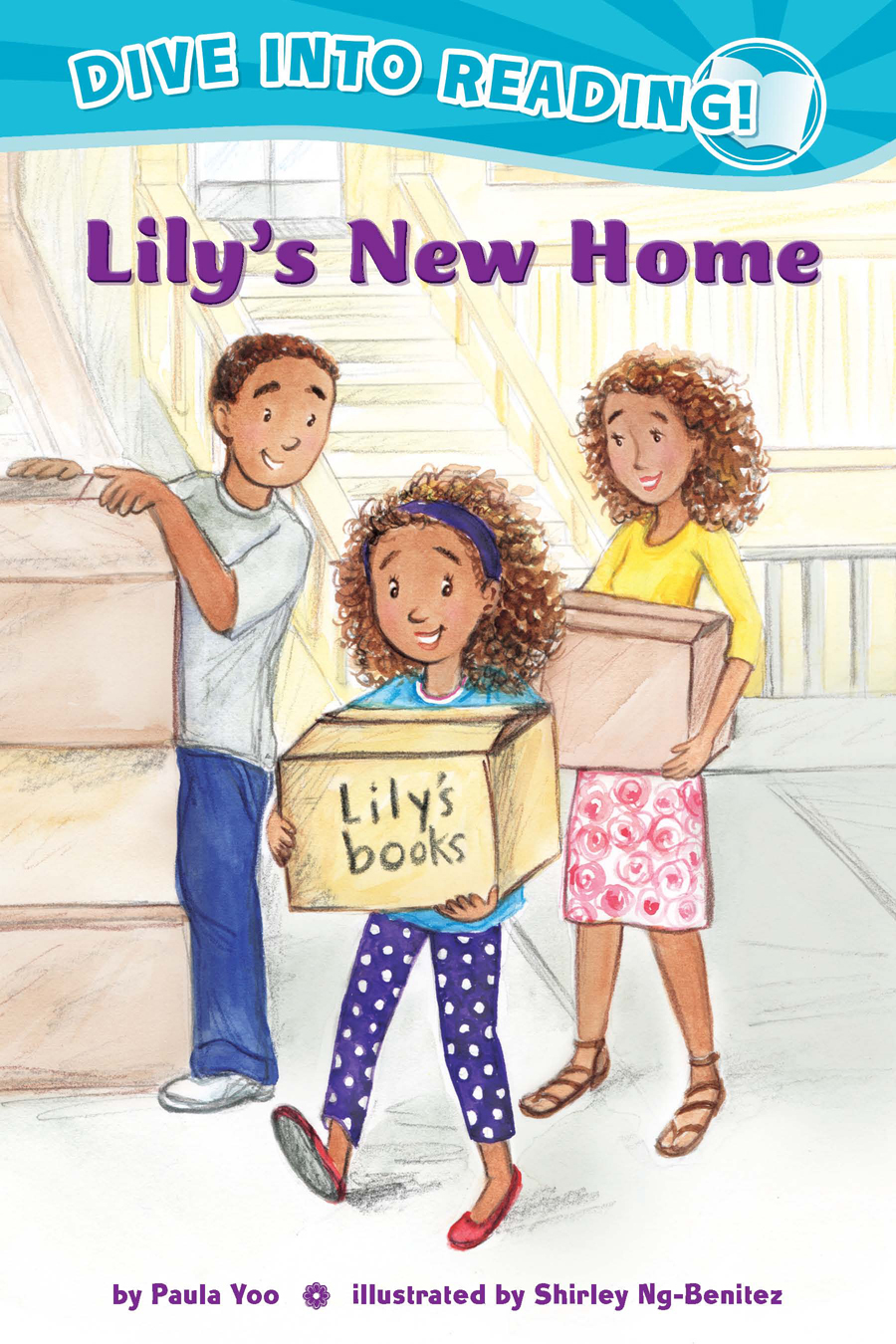
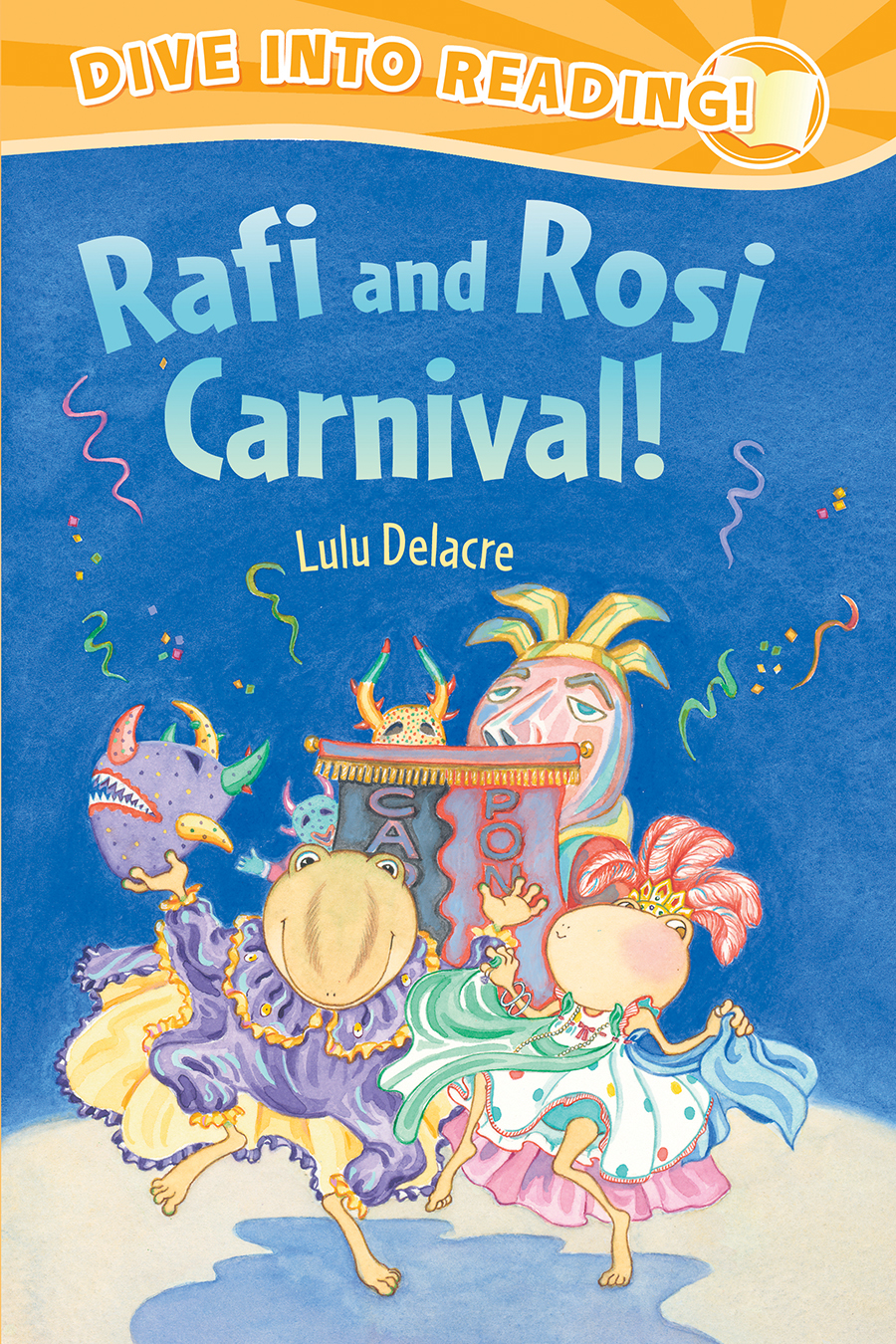 crab in time for them to watch it shed its shell?

 Although immigration is passionately debated in the media, it is an issue often ignored in schools, even though it’s central to the lived experiences of Latina/o children—even those born in the United States. This was something I didn’t realize until I created space for students’ lives in the curriculum.


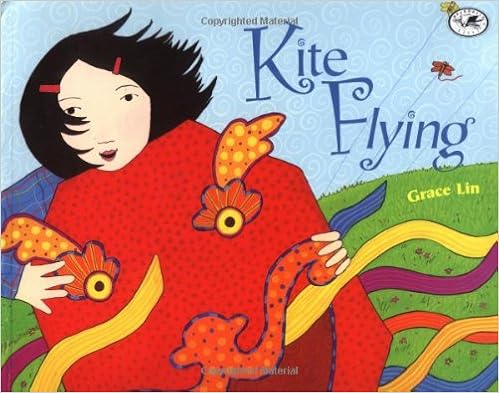


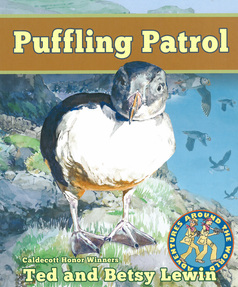
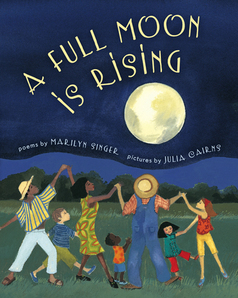
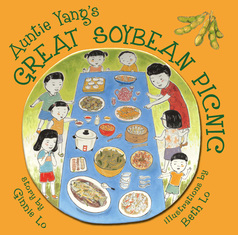
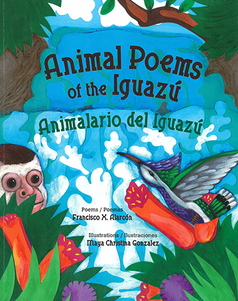
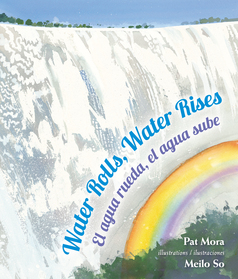
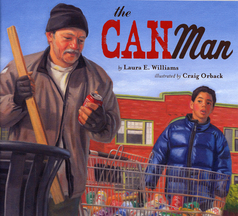
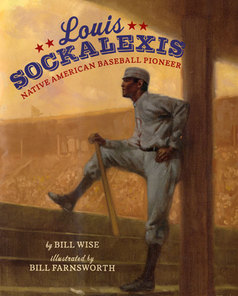


[…] at Lee & Low, 10 Reasons To Celebrate Bilingual Books […]
I have a 6 month old mixed race daughter and my husband is speaking only Spanish to her while I don’t know Spanish at all besides a few simple words. So I’m getting bilingual books from our library to read to her and learning a new language myself!