Login or Register for free to create your own customized page of blog posts from your favorite blogs. You can also add blogs by clicking the "Add to MyJacketFlap" links next to the blog name in each post.
Blog Posts by Tag
In the past 7 days
Blog Posts by Date
Click days in this calendar to see posts by day or month
Viewing: Blog Posts Tagged with: Childrens Books, Most Recent at Top [Help]
Results 26 - 50 of 3,246
How to use this Page
You are viewing the most recent posts tagged with the words: Childrens Books in the JacketFlap blog reader. What is a tag? Think of a tag as a keyword or category label. Tags can both help you find posts on JacketFlap.com as well as provide an easy way for you to "remember" and classify posts for later recall. Try adding a tag yourself by clicking "Add a tag" below a post's header. Scroll down through the list of Recent Posts in the left column and click on a post title that sounds interesting. You can view all posts from a specific blog by clicking the Blog name in the right column, or you can click a 'More Posts from this Blog' link in any individual post.
The Civil Rights was an extremely tragic yet absolutely necessary piece of American history. Both black and white people made great strides in human rights and equality in our country. Many people seem to forget that African Americans were not the only people standing up for equality. White, Indian, Asian–people of every heritage were standing together. Joan Mulholland was one of these people. Raised in Virginia, she grew up with segregation and harsh racism. She grew up being taught that mixing races was wrong. But despite all this chatter in her ear, Joan knew that this was wrong. She took a stand when she began college, joining peaceful movements, sit ins, protests, and other demonstrations. She was kicked out of Duke University for her involvement with the Civil Rights Movement.
Despite the backlash and threats that she received, Joan never gave up on her belief that what she and the rest of her friends doing was the right thing. She was one of the first white students to attend an historically black college and join a black sorority. Her life was almost always at risk; she lost many friends and family; she lived in jail for several months of her life. All because she was doing the right thing. And the rest of culture couldn’t accept this. She was an average hero.
She Stood for Freedomis extremely timely in its release. With all of the turmoil in our society right now, this book reminds us that we are all working together for a common goal. We’re all humans, and it’s high time that we remember that. Our world needs to be changed? Then let’s do it together, with our friends, one step at a time. Grab your copy of this amazing book HERE or click on the book image above to take a closer look.
Something To Do
1. Write a Poem
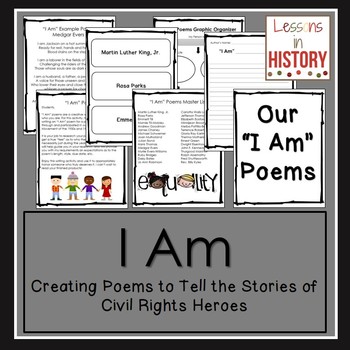
Research a Civil Rights hero (Joan for example) and write a poem telling about their life.
FREE Gift! Free 180 Multicultural Book Ideas ebook to inspired fun Summer Reading!
School is out and our youngsters are settling into a new summer routine of sleeping in and hopefully doing some exploring and discovering. With the hectic days of summer just beginning, oftentimes one of the first habit to go by the wayside is the habit of daily reading.
Reading is always an important part of our children’s lives no matter what time of year it is so I decided to wrap my knowledge of fun kidlit books and activities up with my experience as one of the co-founders of the very successful Multicultural Children’s Book Day and create a unique resource for parents who are looking for creative ways to keep their kids reading this summer. Reading is important, but so is helping our young readers learn about other cultures, religions and traditions through the pages of these books. Here are some great booklists and resources that I have created over the years at Jump Into a Book that will not only give parents and readers great ideas on diverse kids’ books, but fun activities related to books that will bring stories to life!
Sign up below for quick and free access to 180 Multicultural Book Ideas: World Travel through Kidlit Summer Reading!
Sign up for 180 Multicultural Book Ideas for Summer Reading
Did you escape to the beach for a little summer vacation? We did and brought home a few souvenirs from our walks on the beach. Now that our prize shells are sitting on a shelf collecting dust, it’s time to put them to use with a fun craft idea.
Shell Animals! This is a perfect activity for a rainy day or before a trip to the zoo. You can get as creative and detailed as you want while learning about different traits of the animal that you want to create.
We kept the supplies simple – of course, shells are the number one ingredient, although we would suggest some larger ones for young children, ours are a little smaller than we would have liked. To decorate your shells you will need, some construction paper, scissors, markers, paint or both. You can also add googly eyes and pipe cleaners for more detail. We made a peacock, a tiger, and our bear came in the perfect color straight from the ocean!
Share your favorite shell creatures with us; tag @arbordalekids on Facebook, Twitter, Pinterest or Tumblr! We will send a matching book to our top favorites!
Last week we wrote about the enduring impact of Cool Melons–Turn to Frogs! The Life and Poems of Issa and today we bring you reflections from the award-winning author Matthew Gollub.
“Looking back on this book’s remarkable journey, I remember my frustration with publishers early on. My previous publisher had declared as “lovely” the poems that the artist Kazuko Stone and I had presented. But, they believed, haiku were too abstract for most American children to grasp. This made us all the more grateful to Lee & Low, and the editor Liz Szabla, for sharing our intuition that the translated poems would in fact resonate, especially when interspersed in a story about the poet’s life.
Now, having spoken at over 1,000 schools, I’ve been greeted with countless wall displays and “welcome” folders of haiku. It is an honor to have worked on a book that has inspired such an outpouring of original children’s poetry and drawings.
Last summer, while traveling in Japan, I had the further honor of meeting the noted translator Akiko Waki. She had translated, then lobbied her publisher Iwanami Shoten, to issue a Japanese edition of “Cool Melons.” Ms. Waki and her husband graciously invited my college-age son and me to their home. The Japanese version also had been well-received and widely collected by libraries, so it felt even more celebratory to meet the translator in person. Over dinner, she described how daunting it would have been for a Japanese writer to translate centuries old haiku. That, she pointed out, was a job better suited to a Japanese speaking foreigner less encumbered by the weight of Japan’s literary tradition. Better suited also to an innovative publisher like Lee & Low!”–Matthew Gollub
This award-winning book is an introduction to haiku poetry and the life of Issa (b. 1763), Japan’s premier haiku poet, told through narrative, art, and translation of Issa’s most beloved poems for children.
Author Matthew Gollub’s poignant rendering of Issa’s life and over thirty of his best-loved poems, along with illustrator Kazuko Stone’s sensitive and humorous watercolor paintings, make Cool Melons—Turn to Frogs! a classic introduction to Issa’s work for readers of all ages. With authentic Japanese calligraphy, a detailed Afterword, and exhaustive research by both author and illustrator, this is also an inspirational book about haiku, writing, nature, and life.
Ten Oni Drummers written by Matthew Gollub and illustrated by Kazuko G. Stone
Matthew Gollub is an award-winning children’s author who combines dynamic storytelling, interactive drumming, and valuable reading and writing tips. What’s more, he does this while speaking four languages: English, Spanish, Japanese and jazz! He helps families re-discover the joy of reading to children aloud for FUN. Find him online at matthewgollub.com.
1 Comments on Celebrating 25 Books Over 25 Years: Reflection with Matthew Gollub, last added: 8/22/2016
Pia Ceres is LEE & LOW’s summer intern. She is a recipient of the We Need Diverse Books Internship Program grant. She’s a rising senior at Brown University, where she studies Education & Comparative Literature, with a focus in French literature. When she’s not reading, you can find her watching classic horror movies from under a blanket, strumming pop songs on her ukulele, and listening to her grandparents’ stories about the Philippines. In this blog post, she talks about her first book fair with LEE & LOW BOOKS.
By morning, a sticky summer swelter had set in, but the anticipation was unmistakable, electric in the air. They would be coming soon. Across two blocks, along 135th Street and Malcolm X Boulevard, booksellers, authors, and representatives from nonprofits fussed with tents and paraphernalia. Somewhere I couldn’t see, a live jazz band began to practice; its strident trumpet blared the beginning of a celebration. In moments, the hot asphalt would be teeming with families and lovers of literature from around the country gathering for the Harlem Book Fair.
The Harlem Book Fair is the largest African-American book fair in the country. With the aim of celebrating literacy within the Black community, the fair, held annually, offers a full day of presentations and rows of exhibition booths. Although it kicked off its 18th successful year last Saturday, this was my very first time participating in a book fair. Helping Keilin and Jalissa represent LEE & LOW and sell some of our books, I was open to every possibility.
The challenge came early on: Someone asked me to find a book for her niece, then added, “She hates reading.” Yikes. Sounds like a tall order, but not surprising. Most of the educators and families who stopped by our booth were concerned that their kids didn’t see themselves in the books assigned at school. It reminded me of when I was a kid and had to read about primarily white boys and the wilderness or dogs or something. For this woman, I suggested The Hula-Hoopin’ Queen. Maybe, I hoped, this would be the book that would start to change things.
At a book fair, one sees firsthand that books, particularly children’s books, are a meaningful part of relationships – an aunt wishing her niece a story that reflects her. I spoke with a dad who wanted an exciting bedtime story; a soon-to-be teacher, eager to fill her first classroom with books as diverse as her students; a mom who wanted to share her native language, and her young daughter who wanted to read it. As I listened to people’s requests, the book fair revealed a striking truth: For a lot of folks, books are expressions of love.
Of course, the day ended with a sudden and cinematic downpour, with jabs of wind that caused our white tent to take to the air like a storm-battered sail and had Keilin, Jalissa, and I drenched, scrambling to protect the books! Because if any day reminded us that books are precious, it was this one.
If books bridge worlds, then book fairs are a space for bridging those connections. The Harlem Book Fair allows diverse stories to come into people’s hands and helps create a world-full of readers – reflected, interconnected, loving and loved.
0 Comments on Bridging Stories and Communities: The Harlem Book Fair as of 1/1/1900
{Guest post from Hannah Rials} What is going on? Now we’re writing books that are encouraging kids to play video games? I thought we were supposed to be discouraging this? I’m so confused!
I’m sure a lot of you parents are thinking that right now. And yes, kids should be getting outside, exploring their world, reading books, and every else like that to live a balanced life. However, science and research are revealing more and more how helpful video games can be in a child’s cognitive development. Minecraft, for instance, helps with creativity, sharing, innovating, continuous learning, problem solving, craftsmanship, teamwork, interdependence, flexibility, storytelling…just to name a few.
Minecraft does not have to be just a kid’s activity. This book provides six different quests that teach gamification, which is the process of applying game principles to real life. Parents, you will learn about the world of Minecraft, while also bringing your children out of it. You’ll learn the lingo, the levels, the different things that you can do within the game, and you’ll come to realize why your kids love it so much and how beneficial it is to them.
But having this book, showing your kids how the skills they are learning inside the game are relevant in out-of-game experiences, is a wonderful opportunity for family bonding and for crafting and creativity!
How you can Gamify these quests:
Quest 1 – This quest is all about taking inventory of your resources. That’s easy. Together, your family can take an inventory of something in your house: the pantry, the refrigerator, your movie or book collection, etc.
Quest 2 – Textures, Patterns, and Landscapes, which talks about cooking and gardening. Do we really need to explain this one? I think you’re getting the hang of it!
Quest 3 – This is about architecture, so this gives your family a wonderful excuse to take a neat vacation to some city with unique architecture. Road trip to Charleston, SC or New Orleans, LA. Going abroad? Well, basically all the cities over there have interesting architecture! Have some fun!!
Quest 4 – Here, we look into the arts: the colors, textures, and styles of a museum. So obviously, you need to find a museum to day trip to! Even if your town, or the one next to you, doesn’t have the equivalent of the MET or le Louvre, that’s okay. All museums are great experiences.
Quest 5 – Game making; think how fun this could be! Each of the family members making up their own games and then hosting a family game night to try them out. Sounds like a good time.
Quest 6 – is the culmination of all the skills you have learned previously–you’re making a city. Maybe before you jump head into the game, you and your child can write about your city, make up people, laws, specific places or activities that go on there. Help them create their world both in and out of the game!
Grab your copy of this amazing book that is not only going to excite your young readers, but get their brains reading and exploring this summer!
**some of these links are affiliate links
Something to Do Minecraft-Inspired Activities:
Who can resist making this fun Creeper from TP rolls?! Instructions at Kids Activity Blog
For those interested in using Minecraft for Homeschooling, The Spectacled Owl has some great Homeschooling with Minecraft ideas and projects.
HANNAH RIALS: A Maryville native and current college student at University of Tennessee at Chattanooga, Hannah began writing her first novel at age twelve. Eight years later, the result is her new YA novel Ascension; a modern day teenage romance filled with “double-blooded” vampires and revenge-seeking witches (to be released in August of 2016). When not spending time with her family and playing with her beloved Corgis, Buddy and Noel, Hannah leads a creative group, crafts and cultivates her writing skills. Connect with Hannah on Facebook, Twitter and via her website.
–
Breaking News! Proof that Dragons are indeed REAL!
My newest book, Dragons are Realis available and the excitement is almost blowing the roof off at Jump Into a Book/Audrey Press headquarters!
SO…what if I told you that all of the fairy tales, myths and legends that have been told about dragons over the years are WRONG. What if I told you that Dragons are indeed Real and that they are different than you’ve ever imagined?
This fairly true story is based on the author’s childhood friendship with a REAL live Dragon; a very special Dragon that she and her brother spent two magical summers with.
As readers turn the pages and learn the truth about Dragons, they will see that the fiercest beasts in known history can actually be the best of friends. It’s a lesson in finding companionship in the most unusual of places. Dragons are Real is a magical book filled with stunning illustrations and hints that dragon are indeed all around us
Dragons are Real is now available for purchase on both Amazon and Gumroad! We are also offering a special free bonus gift of a Dragons Are Real Inspiration Activity Guide when you purchase your copy of this enchanting picture book.
Earlier this month, we highlighted the impressive work happening in the classroom of Jessica Lifshitz, veteran educator in Northbrook, Illinois. Following her popular essay on how Jessica empowered her fifth grade students to analyze their classroom library for its culturally responsiveness and relevancy, she shares in this interview with LEE & LOW BOOKS whyshe wanted to take on this project with her students, where families and administrators fit into this process, and her hopes for her students.
LEE & LOW: What inspired you to have your students analyze your classroom library?
After the events surrounding the shooting and death of Michael Brown in Ferguson, I felt compelled to find a way to bring more discussions on race into my classroom. I teach in a suburb of Chicago, where the vast majority of my students are white. There were little or no conversations about race at all taking place. I knew that if things were going to ever have a hope of getting better in this country, my mostly white students HAD to be a part of the solution. They had to recognize the bias that exists in this country and then find a way to fight against it. But that is really hard to do when the concept of race is not one that my students have had much, if any, experience dealing with. So, like with most problems, the first place that I looked to try and find a solution was with the very books that make up a huge part of the work that my students and I do together.
We began by doing a small experiment (explained here) where we looked only at the images on the covers of picture books and made predictions on what those books would be about. Based on our results, we realized that we made MANY predictions because of the race and gender of the people shown on the covers of those books. After a powerful discussion with my students, they crafted the following inquiry question: Where do the biases and stereotypes we carry around related to gender, race, family structure, religion, etc. come from?
We then set out to try and answer that question. This eventually led us to think about the picture books in our classroom and that led us to the work of analyzing our books to look at how they represented or misrepresented different groups of people.
So the short answer really is that this work was inspired by students and the conditions of the world that they are living in.
LEE & LOW: Why do this at all? This project is not a part of the curriculum or scope & sequence for fifth grade—why did you think this was important enough to use instructional time?
As teachers, we have an incredible opportunity to truly make the world a better place. Not to sit and wait for others to fix the problems, but to ask our students to join us in the powerful work of actually starting to make the world a better.
I think that a lot of times we waste this amazing opportunity because we feel limited by standards and objectives and curriculum. But what I have found is that if I begin with what work I want my students to be engaged in and then work backwards to connect that work to the standards, I am then able to do the work that I feel is most important AND meet the standards and objectives that I am asked to teach.
For example, the work that we did here was a part of our unit on synthesizing. We looked at how we could pull pieces of information together in order to gain a better, more complete understanding. So we took the issue of stereotypes and biases and that is what we worked to understand. We looked at advertisements, fairy tales, modern day picture books and novels. We pulled all of these pieces of information together to grow our understanding of how biases form. This allowed us to cover many standards and learning targets.
But more importantly, the kids were learning about their world. They were studying the problems that surround them and thinking of ways to begin to solve those problems. That is learning that will last. That is learning that will make a difference. So if I am able to help them to do that kind of work AND I am able to cover the skills I need to teach in the process, then everyone wins and the world gets better.
LEE & LOW: What foundation, classroom work, or background context do you think was imperative before leading your students through this project?
I think that one of the most important pieces of work that allowed this project to happen was that, from day one, we had worked to create a culture of trust in our classroom. We practiced making ourselves vulnerable and we practiced listening to the ideas of others without passing judgments on people. These things were absolutely necessary for our work to take place because part of our work involved sharing things about our own thinking that we weren’t necessarily proud of. No one likes to admit that they carry biases, and yet we all do. Ignoring that doesn’t help anything. Confronting that and working to dismantle those biases is what leads to real change. But that takes a lot of trust. So from the start of the school year we talked about big issues.
We began with during our unit on memoirs and on making connections to the texts that we read. These units became a chance to study the power of a person’s story. We learned the power of sharing our own stories and the power of learning from the stories of others. This work allowed my students to open up to each other about their own lives and also allowed us to practicing listening to people whose lives are very different than our own in order to learn more about them and build empathy. These were skills we needed for this project as well.
When we started to look at biases and stereotypes, we began first with gender before tackling race. We began by looking at catalogues like Pottery Barn to notice the differences in what was marketed towards girls and what was marketed towards boys. We did work that helped us to distinguish the actual things we observed from the more hidden messages that this sent. We started with gender because I think it is easier for kids to grapple with. It is more concrete. While my students had almost no experience discussing issues of race, they did have some experience discussing issues of gender. So we started with where they were and then moved on from there. That was really important because I think that if I had just thrown them in to the discussions of how races were misrepresented in the books in our classroom library, they would not have been ready. The work we did with issues of gender helped us to better understand the work we later did with issues of race.
LEE & LOW: For teachers interested in leading their students through similar thinking and analysis, what would you recommend they prepare either for themselves or their students?
I hope that others want to take on similar work and I know that so many already have. The beauty of this kind of work is that is uses materials that are already present in your classroom. We have books and we can all look more closely at those books.
One thing that I would recommend is a whole lot of communication before beginning. I had several conversations with my principal about the work we were taking on. It was never to ask permission to do the work, but instead to just let him know and make sure I had his support in case of any push back from parents. Issues of race often spark fears and concerns with parents and having administrator support makes all of that much easier. On that note, keeping parents informed of the work was also really important for me. I wanted to make sure that parents knew what we were doing so that the conversations we were having could be continued at home. I also made sure to let parents know how our work was connected to our curriculum and our standards and learning targets. Therefore, when questions were asked, I was able to refer back to the information that I had already shared. This was extremely helpful.
Other than communication, I would also just encourage teachers to not say too much. Instead, allow the students observations to drive the conversation. We began by looking at the infographic and then jumped pretty quickly into the data collection in our own classroom library. I have a terrible habit of telling my students all of the things that I want them to discover on their own. I have really had to work to stop myself from doing that because taking away that power from my students takes the learning right out of their hands. So I wouldn’t recommend preparing too much and allowing the students to really guide this work.
LEE & LOW: Is this only valuable for classrooms with a majority of students of color? What can classrooms of various demographic configurations take away from this project?
As I mentioned before, my students are mostly white. Because of that, this work is especially important for them. So often, our white students do not ever think about race. That is part of the privilege they are living with. But that makes it really easy for them to ignore what others have to deal with precisely because of their race. I believe that my students MUST be a part of a solution to the many problems connected to race in this country. But they cannot be a part of that solution if they are not even able to recognize that the problems exist.
Jessica Lifshitz is a fifth grade teacher in Northbrook, Illinois and has been teaching for 13 years. She believes in teaching her students that reading and writing can make the world a better place and is honored to learn from her students and to be inspired by them every day. She writes about teaching and learning at crawlingoutoftheclassroom.wordpress.com.
0 Comments on Part 2–Having Students Analyze Our Classroom Library To See How Diverse It Is as of 7/21/2016 9:17:00 AM
Red pandas? Done. Quokkas? Yawn. Pikas? Boooring. Here are six reasons why you need to know about the olinguito.
Smithsonian / Via insider.si.edu
1. The discovery of the olinguito was only just announced in 2013, meaning this cutie is ready to take over the internet!
Smithsonian / Via insider.si.edu
2. It looks like a cross between a cat and a teddy bear. ‘Nuff said.
CNN / Via cnn.com
3. It is an adept jumper that can leap from tree to tree in the forest canopy. Skillzzz!
Smithsonian Magazine / Via smithsonianmag.com
4. Scientists hope that the olinguito might serve as a charismatic ambassador for the conservation of dwindling Andean cloud forest habitats. How can anyone say no to that face?
Apex Expeditions / Via apex-expeditions.com
5. As Kristofer Helgen, curator of mammals at the Smithsonian’s National Museum of Natural History, says, “The discovery of the olinguito shows us that the world is not yet completely explored, its most basic secrets not yet revealed. If new carnivores can still be found, what other surprises await us? So many of the world’s species are not yet known to science. Documenting them is the first step toward understanding the full richness and diversity of life on Earth.”
LEE & LOW BOOKS, illus. by Lulu Delacre / Via leeandlow.com
Award-winning author and illustrator Lulu Delacre uses lyrical text in both Spanish and English to take readers to the magical world of a cloud forest in the Andes of Ecuador. Discover the bounty of plants, animals, and other organisms that live there, and of course help a zoologist look for the elusive olinguito!
LEE & LOW BOOKS celebrates its 25th anniversary this year and to recognize how far the company has come, we are featuring one title a week to see how it is being used in classrooms today as well, as hear from the authors and illustrators.
Synopsis: This award-winning book is an introduction to haiku poetry and the life of Issa (b. 1763), Japan’s premier haiku poet, told through narrative, art, and translation of Issa’s most beloved poems for children.
Author Matthew Gollub’s poignant rendering of Issa’s life and over thirty of his best-loved poems, along with illustrator Kazuko Stone’s sensitive and humorous watercolor paintings, make Cool Melons—Turn to Frogs! a classic introduction to Issa’s work for readers of all ages. With authentic Japanese calligraphy, a detailed Afterword, and exhaustive research by both author and illustrator, this is also an inspirational book about haiku, writing, nature, and life.
Awards and honors:
Notable Books for a Global Society, International Literacy Association (ILA)
Notable Children’s Books in the Language Arts, National Council of Teachers of English (NCTE)
Notable Children’s Trade Books in the Field of Social Studies, Children’s Book Council (CBC) and National Council for the Social Studies (NCSS)
Children’s Books Mean Business, Children’s Book Council (CBC)
Not Just for Children Anymore selection, Children’s Book Council (CBC)
Outstanding Merit, Children’s Book of the Year, Bank Street College of Education
Best Children’s Books of the Year, Bank Street College of Education
Books to Read Aloud with Children of All Ages, Bank Street College of Education
“Editor’s Choice,” San Francisco Chronicle
Bay Area Book Reviewers Association Award finalist
Children’s and Young Adult Honorable Mention for Illustration, Asian Pacific American Award for Literature (APAAL)
“Choices,” Cooperative Children’s Book Center (CCBC)
ALA Notable Children’s Book, American Library Association (ALA)
A Horn Book Fanfare Best Book of the Year, The Horn Book Magazine
California Collections, California Readers
Utah Children’s Book Award Masterlist
Children’s Book of Distinction, Poetry Finalist, Riverbank Review
Read-Alouds Too Good to Miss, Indiana Department of Education
Starred Review, Publishers Weekly
Starred Review, The Horn Book Magazine
From the author: “A haiku, because of its brevity, resembles a quick line sketch. It’s up to the reader to imagine the details and to make the picture complete. In a sense, we can think of a haiku as a telegraph; for example: “Should arrive Tuesday, supper time.” From this short message, we can infer that, weather permitting, the sender will arrive early on Tuesday evening, and that after the long, tiresome journey she would appreciate a good meal.
Often, haiku describe two events side by side, such as: “Plum tree in bloom—/ a cat’s silhouette/ upon the paper screen.” Does the silhouette of the plum tree also appear on the paper screen? Does the plum tree in bloom suggest the warmth of a spring day? Again, it’s up to the reader to imagine how or if the two things are related.
Haiku tend to be simple and understated, so there’s never one “correct” way to interpret them. The idea is to ponder each poem’s imagery and to discover and enjoy how the poem makes you feel.”
Check out the classroom-tested, standards-aligned lesson plan Experiencing Haiku Through Mindfulness, Movement & Music by Rashna Wadia with Cool Melons— Turn to Frogs! provided by ReadWriteThink.org, a website developed by the International Literacy Association and the National Council of Teachers of English.
Celebrate Japanese poetry and Japan’s Kodomonohi (Children’s Day) with the “Carp Streamer” lesson plan from Crayola, which includes Cool Melons–Turn to Frogs.
Expand students’ experience with haiku by having them read and discuss works by other seventeenth century and eighteenth century poets such as Basho, Jöso, Ryota, Buson, or Sanpu. Students may also enjoy reading more contemporary haiku and comparing the contemporary poetry with the more traditional.
Summer is settling in and this month marks the halfway point of the submissions window for our New Voices Award, an annual writing contest for unpublished authors of color. If you’re an aspiring writer working to submit a children’s book manuscript, you’ve probably got the basic elements of your story (characters, setting, and plot) figured out already. You may even have most of the story written down. If so, kudos! But a story is more than words on a page. It’s the voice behind the words that drives the narrative and keeps the reader engaged.
Unsure of how to tackle this essential yet elusive story element? Fear not!
Last month we interviewed New Voices Award winner Sylvia Liu about her path to publication. In this next blog post, New Voices Award Winner Patricia Smith and New Voices Award Honor Hayan Charara share their experiences with shaping voice while tackling the difficult themes in their award-winning titles Janna and the Kings and The Three Lucys.
What kind of writing did you do before entering the New Voices Award and how did that experience influence your story writing?
Patricia Smith: I’d been a professional journalist, but my primary mode of writing at the time was poetry. I think I became a poet after taking on some of my father’s storytelling skills. When he came up from Arkansas to Chicago during the Great Migration, he brought with him something I like to call “the tradition of the back porch.” Every day ended with a story from him that opened up new worlds, stretched the boundaries of my imagination and taught me that language was so much more than what I was learning, or not learning, in school.
But I don’t think my father’s stories inspired Janna as much as my father himself did. I was that little girl sitting in the barbershop, fascinated at all the magic found there, but it was my father–not my grandfather–who let me tag along with him every Saturday. I was an adult when my father died–and Janna was a way to explore that sense of loss, of the world not being the same. Also, although I’m a diehard sentimental, I never really knew my grandfather. So I wanted to explore that warmth that I imagined between a grandfather and grandchild.
Hayan Charara: I published my first poem when I was nineteen, so it’s been almost twenty-five years since I began writing poetry. Some of my poems tell stories, and all of them use a good deal of imagery to get across both meaning and feeling. Without storytelling and imagery, The Three Lucys simply couldn’t exist.
What inspired you to write your story as a book for children?
from Janna and the Kings
PS: I’m the dictionary definition of a daddy’s girl, so a few things were in play. I needed to express the singular and enduring type of love I felt for him. Although he was gone by the time the book was published, I was writing it for him–he died before he could see that I’d become a writer, which is something I promised him when I was very young. And I really wanted to capture that special time in a special place, the barbershop–a place that has been so pivotal, and so nurturing, in so many black communities.
HC: I first wrote about the events that take place in The Three Lucys a few years earlier in a poem originally titled, “Lucy”. I changed the poem’s title to “Animals,” and it appears in my new poetry book, Something Sinister. Generally speaking, I write poems, in part, to figure something out, either about myself, the people I know, or the world I live in. While I don’t always find an answer, I find that I have a better sense of these things than I did beforehand.
Despite the poem, I still had questions about the war, and most of them had to do with my little brother who lived through its events. Like Luli, he was six years old when the war broke out. I hadn’t yet thought very deeply about how he and other children might have experienced war and its aftermath.
I might not have tackled these questions with a children’s book if not for Naomi Shihab Nye, the poet and children’s book author. For years, Naomi had been urging me to write a children’s book, and for almost all of that time I didn’t feel ready to do so. Then, at a café in San Antonio, she handed me an announcement for the New Voices Award and said, simply, “You need to write a story for children.” This time, I felt ready.
Did the voice for your story come naturally, or did you experiment with different points of view while writing?
PS: Because I envisioned myself as Janna, and because my father’s voice is so clear in my head, the writing came easily. Actually, I had held on to the New Voices call for some time, moving the notice around and around on my desk. I work best when there’s an anvil swinging over my head, so I didn’t begin writing until I had no choice–a day or so before the deadline. I didn’t panic, because I knew the story so well.
HC: Before The Three Lucys, I had no practice writing children’s stories, and it had been years since I last read one. I went into writing the story very clumsily, not really knowing what I was doing or how it would turn out. Depending on who is asked, that’s either the most natural or unnatural way to write a story.
Though I wrote the story in one sitting, it took several revisions before I started to think of it as finished. All along, the voice remained relatively unchanged; the same goes for the points of view. What did change through each revision were the details and descriptions, the sort that would bring to life the experiences of the people in the story, as well as their deeper emotions.
For example, none of the early drafts brought out in a powerful and memorable way the moment that Luli realizes he will never again see one of the three Lucys. At best, the scene was nothing more than a description. I hadn’t gotten at how Luli felt.
I took months to arrive at an image that expressed the kind of sadness that comes with the loss of a loved one. Luli tells us, “My heart feels as heavy as an apple falling from a tree.” Sometimes, we get lucky and an image like that comes quick. Sometimes, it takes a long time, but I still feel lucky when it happens.
Both Janna and the Kings and The Three Lucys discuss heavy themes. What challenges did you face when creating the right tone/ voice for your main character as they experience tragedy and cope with its effects? How did you overcome these challenges?
from The Three Lucys
PS: It didn’t feel like a challenge. I feel like I’m forever processing the loss of my father, and a lot of what I hoped the world will be without him is much like what the world turns out to be for Janna. I wanted to acknowledge his loss, but to have my life be full of him. I was writing from the perspective of a child, but the feelings were very much my own–an adult woman still suffering the loss of her best friend.
HC: The hardest part of writing this story was separating myself from it. I had all sorts of feelings, thoughts, and responses to the war itself, to war in general, and to the loss of a loved one. My mother died when I was a young man, for example, and that experience altered me forever.
I knew that I would be coming at this story with a lot of ideas and emotions already in place. On the one hand, this is a good thing because it meant that I was prepared to write the story. On the other hand, it was clear to me that I had to come at this story from a perspective very different from my own. After all, the story is about a child’s experience, not an adult’s, a fact I had to remind myself about often and be reminded about just as often by those who read drafts of the story.
Finally, what advice would you give to new writers interested in tackling heavy themes in their stories for children?
PS: We constantly underestimate children. The world they live in is sporting sharper edges; and each day they adjust, their perspectives deepen, and they grow thicker skin. Children suspect these heavy stories even if we’re not ready to tell them. I think the key is remembering to revel in the myriad possibilities of language, to never downplay the role of imagination, and to always, always look for an unexpected entry point into the story. I don’t mean to sugarcoat–just write the story in a way you’ve never heard it. Your readers will be so enthralled by the way the story unfolds that its content becomes something more than just “that difficult topic.”
HC: When I wrote The Three Lucys, my wife and I didn’t have any children, only cats and dogs. You don’t have to explain anything to a cat or dog—you can, of course, and I think it’s a good thing if we talk to our animals. With cats and dogs, no matter what you say, they always listen. There’s practically no pressure at all to get it right. It’s really hard to screw up.
We’re parents now, to a four-year-old and a five-year-old. And I’ve realized that I am talking to them all the time about heavy themes, mainly because they bring them up. Every so often, one of them will ask me something like, “Will you die before me?” or “Can I live with you forever?” Or, even harder to answer, “What is the universe?”
When my boys ask me these kinds of questions, I feel like every one of them is an opportunity for me to say exactly the wrong thing. Obviously, these are also opportunities for growth and knowledge (for them as much as for me). When I talk to them about anything, not just heavy stuff, I try to do so honestly and in a way that doesn’t terrify or confuse them. I’ve also realized that, no matter how much I try to protect them, difficult and at times ugly realities will still make their way into their lives. This happens to all children, all the time. When it comes to helping children understand and get through difficulties, parents and teachers are usually the first-responders. And writers are often right there with them. We can be, at least. As a parent, I know that I often rely on writers—on children’s books—to help me out, not only with the heavy stuff, but the simple stuff, too. So I hope that more writers will tackle the big issues. It’ll make all our lives a little better.
LEE & LOW BOOKS celebrates its 25th anniversary this year! To recognize how far the company has come, we are featuring one title a week to see how it is being used in classrooms today and hear from the authors and illustrators.
Today, we are celebratingRichard Wright and the Library Card, an inspirational story for children of all backgrounds. This book shares a poignant turning point in the life of a young man who became one of this country’s most brilliant writers, the author of Native Son and Black Boy.
Synopsis: The true story of the renowned African American author Richard Wright and his determination to borrow books from the public library that turned him away because of the color of his skin.
Awards and Honors:
Notable Children’s Book, Smithsonian
Honor Book, Society of School Librarians International
Other Editions: Did you know that Richard Wright and the Library Card also comes in a Spanish edition?
We at LEE & LOW BOOKS are excited and honored to share the impressive work happening in the classroom of Jessica Lifshitz, veteran educator in Northbrook, Illinois. In an excerpt of her essay, Jessica describes how she empowers her fifth grade students to analyze their classroom library for its culturally responsiveness and relevancy. She provides students with background information, including LEE & LOW BOOKS’ visualization of the lack of diversity in children’s books. Originally posted at Jessica’s blog, Crawling Out of the Classroom, this excerpt is reposted with permission.
I truly believe that books, of all kind, play a large role in shaping how our students see the world. So often, children have little choice in what kinds of books surround them. Even in classrooms and schools where children are free to choose to read whatever books they want, they are still often limited by the choice of books that we adults have placed around them. And too often, we adults do not think carefully enough about what books, with what images of race and gender and family structure, we are surrounding our children with.
So that is where I wanted to look. At the books I was choosing to put into my classroom library. I wanted my students to join me in looking more closely at the books that I had in my classroom and how they represented and misrepresented the world they are living in.
So we began with an infographic. In fact, the majority of my students had no idea what an infographic was. So first. We had to learn. This was a good reminder to me to use these rich conveyers of information more often through the year. Anyway, we began by looking at THIS infographic, which shares the disturbing statistics on diversity in children’s literature. This, alone, led to incredible discussion about so many things.
We began with a discussion of the term, “people of color.” So many of my almost all-white students had never heard this term before and it took a while for them to grasp its meaning. We then had a discussion on the difference between white writers writing about people of color and writers of color writing about people of color. Then we entered into a discussion of how it might be harder for writers of color to get their books published in the competitive world of children’s publishing. And finally we ended up at a discussion of our own reading preferences and how sometimes we are tempted to read books that discuss lives similar to our own and how much more rewarding it can be to push ourselves to read books that teach us about the lives of others whose lives are different than our own.
The children were so eager for the discussion. We actually ended up looking at an entire series of fascinating infographics that show how different kinds of diversity are represented or misrepresented in different areas of society. That series of infographics CAN BE FOUND HERE.
And then we turned to our own books. I wanted to start in my own classroom. I have shared openly with my students that all of this work, on race and on gender, it is work for me too. I know that I make mistakes often and I wanted them to see that I, too, need to constantly do better to work past my own biases and stereotypes.
So I gave my students the chance to audit our own classroom library to find out how different genders and races are represented and how we could do better to make sure that different genders and races were more accurately represented by the books in our classroom.
I asked the students to each randomly grab 25 books. And for each book they were to look to see if there were people on the cover. If there were, they were to note if all of the people on the cover were white and if all the people on the cover were boys. They kept track on this simple data collection sheet.
Now, I recognize that this is FAR from a thorough and scientific analysis of the books in our classroom library. I recognize that just because there is not a person of color on the cover of a book that does not mean the book does not contain a person of color in it. I recognize the flaws. I am shared them with my students. And still, it was something.
Because even more important than our results was the task of looking at the images on the covers of the books that surround us. More important than the numbers that we wrote down, were the discussions we had about why book publishers make the decisions that they make about who goes on the covers of our books. More important than the percentages that we ended up with were the realizations that we all made as we learned to look at the world differently. To see who was represented and, more importantly, to see who was NOT represented. This was the important work that we were doing.
Once the students finished collecting their data, they entered their results into a Google spreadsheet. HERE ARE OUR RESULTS.
After spending time looking closely at the books in our classroom library and after spending time looking at the numbers we collected, we had a discussion of what they noticed. Here are some charts that we used to capture our observations:
I was kind of blown away, once again, by what my students discovered. I thought I had a diverse library. I really did. In fact, I have worked over the past two years to make sure that I was buying the kinds of books that would help all of my readers to see themselves reflected in the pages of the books in my classroom. But what I forgot is that the vast majority of my readers are white. They see themselves, in terms of race, in almost every book they pick up.
What they need is something else. They need to be able to see into the lives of others. To use books as windows so that they can gain an understanding of what it means to be a race other than white. They need books to help them grow and become more empathetic citizens of this world. And while I have tried to provide books for them that would do just that, I realized from their work that I have a LONG way to go.
I need to do better. I need to do more.
And showing my students that I can look at where I am and find ways to do better in terms of making this world more equitable and just, that is no small thing.
So together we brainstormed ways that I can work to improve our classroom library. We talked about starting with sports fiction. The students noticed that while the nonfiction sports books were filled with African-American people, the books in my sports fiction bin barely had any characters of color. The exception was The Crossover, which just goes to show how important it was for that book to win the Newberry last year.
Here we have taken an area of our society that is rather diverse and the books that I have purchased that have fictionalize that area of society have completely sucked all of the diversity right out of it. So I must do better.
In the same area, we saw how few girls were represented in our sports fiction books. I have so many girls in my classes who don’t just play sports, but whose lives revolve around their favorite sports and still, we could only find one book, The Running Dream, in our sports fiction books that had a female main character. I must do better.
And then, we moved on to my fantasy and science fiction books. This was an area that was also very much lacking in racial diversity. And so I will now be on the lookout for books with characters of color in these two genres. I must do better.
And one of the most powerful observations that a student made was that while he did see books with African-American characters on the cover, he did not see many other races represented. He did not see any Native American characters, Asian American characters or Middle Eastern characters on the covers of the books that he looked at. Again, I must do better.
These suggestions came from my students and I am so proud of the work that they have done. As I shared with my students, I continue to be proud of our classroom library. I am proud of the choices that I have made in the books that I have put into our classroom library AND at the same time, I know now that I can and must do better. I shared with my students how grateful I am for the work that they have done to help me to see this.
After our counting books, we then used the following pages to look more closely inside of our picture books in order to see how races, genders and families were being represented. The kids chose one of these types of diversity to focus on and then pulled a few books to record their observations and evidence. Here are the sheets that they used for:
Again, the students had time to discuss their observations and I was blown away by what they were picking up on.
Finally, we headed to our school’s library, to again count books. We collected the same type of data, but this time for our school library. HERE WERE OUR RESULTS.
We realized that many of the trends that we saw in our classroom library, also existed in our school library. One of the greatest parts of this work was listening to the students talk to our school librarian (who is amazing) about the changes that we were hoping to make to our classroom library. This led to other powerful conversations between the librarian and me and I was so grateful for her input and her support.
This work has been incredible. It has, at times, left me feeling doubtful. Doubtful of myself, of this world we live in, of the way we misrepresent so many of the people who surround us. But ultimately, after watching and listening to my students, I was left hopeful. Hopeful because once my students began to see what was around them in new ways, they couldn’t un-see things anymore. They couldn’t not see. They were running up to me when they came across stereotypes that were perpetuated in their books. They had their parents send me pictures from bookstores when they noticed books that either reinforced or fought against stereotypes in some way. They noticed things on the news, on TV shows, on social media. And I believe that noticing is one big step towards making change.
There were times during this work when I felt like I had to rush through. There were times when I questioned if I really had time to be spending on this work. But the truth is, there is no way that I don’t have the time. This world we live in needs changing and the students that I am teaching must be a part of that change. And so though it feels like there is never enough time to do things that we most believe in, this work has showed me that we must find a way.
I am grateful, yet again, for what my students have taught me. And grateful, even more, for the hope that they give me for this world of ours.
Jessica Lifshitz is a fifth grade teacher in Northbrook, Illinois and has been teaching for 13 years. She believes in teaching her students that reading and writing can make the world a better place and is honored to learn from her students and to be inspired by them every day. She writes about teaching and learning at crawlingoutoftheclassroom.wordpress.com.
0 Comments on Part 1–Having Students Analyze Our Classroom Library To See How Diverse It Is as of 7/11/2016 5:02:00 AM
Thank you so much to the team at Cricket for choosing my artwork for this month's Cricket Magazine cover. Here is a pic and also a peek inside with a kid reader friendly bio.
0 Comments on Cricket Magazine Cover as of 7/1/2016 11:47:00 AM
May 2016 signified the opening of Lee & Low Book’s seventeenth annual New Voices Award contest! To kick off the season, we interviewed New Voices Award winner Sylvia Liu about her writing process and how she prepared her winning story, A Morning with Grandpa, for the New Voices Award. Learn more about our New Voices Award here.
What inspired you to write A Morning with Grandpa? Did you write it specifically for New Voices, or was it something you were working on already?
I was inspired by my dad, who was doing qi gong (a mind-body practice involving moving “qi,” or energy, around one’s body through breathing techniques), while we were vacationing together. He taught my daughters his breathing techniques, and that inspired the story of a grandfather teaching his granddaughter both qi gong and tai chi.
I wrote the draft as part of a year-long challenge, 12×12, where the goal is to write 12 picture book drafts in 12 months. After I wrote this story, I realized it was a great fit for the New Voices contest.
What did you do to prepare your manuscript for submitting to the New Voices Award?
My critique group gave me excellent feedback that improved my story. I also got invaluable feedback from an agent as part of a critique that came with a Writer’s Digest course.
While writing your story did you encounter writer’s block? What did you do to overcome it?
This was one of the few stories I’ve written where I didn’t experience writer’s block. The initial story came to me very quickly, though it was different than the final form. The first draft was told mainly in dialogue, and one of my critique mates encouraged me to incorporate more lyrical language.
A Morning with Grandpa is a story about trying new things. When was a time you tried something new and how did it turn out?
About seven years ago, some friends and I took a women’s surf camp. It was so much fun that we kept going back for several years. At some point, I realized that surfing was not my sport, but my friends and I still occasionally get our boards and go out into the water. Last summer, our beach had several shark sightings so I stayed out of the water for the most part.
Who were some of your favorite writers growing up? Are there any books or writers that inspire you now?
Growing up, I loved reading science fiction, fantasy, mysteries, and thrillers. My favorite series as a child was Lloyd Alexander’s Book of Three series. In my teens, I inhaled the entire oeuvres of Agatha Christie, Robert Ludlum, Ray Bradbury, Edgar Rice Burroughs, Isaac Asimov, Frank Herbert, and Stephen King.
Nowadays, I’m inspired by author-illustrators who tell stories in intriguing and beautiful ways, like Shaun Tan and Gene Luen Yang.
Finally, what advice would you give new writers interested in writing children’s books?
Read as much as you can, both in and outside the genre you are writing in, and read recently published books. As the head of my daughters’ school recently said, good readers make good writers; great readers make great writers. And knowing what is being published today will help you gauge where you are on your writing journey.
Take the time to learn the craft of writing, connect with other authors, and have fun.
Sylvia Liu was inspired to write this story by the playful and loving relationship between her children and their Gong Gong. Before devoting herself to writing and illustrating children’s books, she worked as an environmental lawyer at the US Department of Justice and the nonprofit group Oceana. She lives in Virginia Beach, Virginia, with her husband and their two daughters. This is Sylvia’s debut picture book.
0 Comments on Interview: 2013 New Voices Award Winner Sylvia Liu as of 6/27/2016 8:33:00 AM
FTC Disclosure: I received complimentary review copies from the publisher in exchange for an honest review. The giveaway prizes are provided by the publisher.
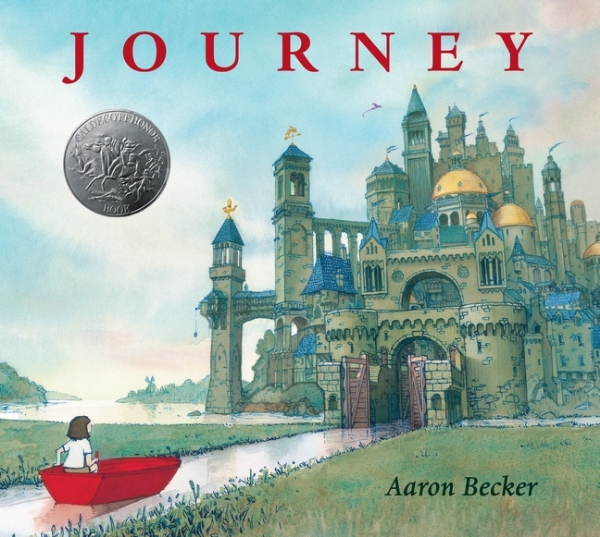
Hello everyone! I am happy to announce a great giveaway today--1 winner will receive hardcover copies of Journey and Quest, by Aaron Becker, to celebrate the August release of Return, the third book of this wordless picture book trilogy. US & Canada only please! Giveaway ends on 7/10/2016. Read on for more about the books.
Journey
Book # 1 in the Journey Trilogy A 2014 Caldecott Honor Book
Follow a girl on an elaborate flight of fancy in a wondrously illustrated, wordless picture book about self-determination — and unexpected friendship.
A lonely girl draws a magic door on her bedroom wall and through it escapes into a world where wonder, adventure, and danger abound. Red marker in hand, she creates a boat, a balloon, and a flying carpet that carry her on a spectacular journey toward an uncertain destiny. When she is captured by a sinister emperor, only an act of tremendous courage and kindness can set her free. Can it also lead her home and to her heart’s desire? With supple line, luminous color, and nimble flights of fancy, author-illustrator Aaron Becker launches an ordinary child on an extraordinary journey toward her greatest and most exciting adventure of all.
Aaron Becker, creator of Journey, a Caldecott Honor book, presents the next chapter in his stunning wordless fantasy.
A king emerges from a hidden door in a city park, startling two children sheltering from the rain. No sooner does he push a map and some strange objects into their hands than he is captured by hostile forces that whisk him back through the enchanted door. Just like that, the children are caught up in a quest to rescue the king and his kingdom from darkness, while illuminating the farthest reaches of their imagination. Colored markers in hand, they make their own way through the portal, under the sea, through a tropical paradise, over a perilous bridge, and high in the air with the help of a winged friend. Journey lovers will be thrilled to follow its characters on a new adventure threaded with familiar elements, while new fans will be swept into a visually captivating story that is even richer and more exhilarating than the first.
One more video, then it's time for the giveaway!
Giveaway Time!
Enter to win hardcover copies (1 each) of Journey and Quest by Aaron Becker. Prize provided by Candlewick Press.
Open to the US/Canada only, ends 7/10/2016.
No purchase is necessary to enter the giveaway. Void where prohibited.
We and the publisher/publicity department are not responsible for lost, stolen, or damaged items.
One set of entries per household please.
If you are under 13, please get a parent or guardian's permission to enter, as you will be sharing personal info such as an email address.
Winner will be chosen randomly via Rafflecopter widget a day or two after the contest ends.
Winner will have 48 hours to respond to to the email, otherwise we will pick a new winner.
If you have any questions, feel free to email us at [email protected]
PLEASE DO NOT LEAVE ANY PERSONAL INFO IN THE COMMENTS. Sorry for the caps, but we always get people leaving their email in the comments. Rafflecopter will collect all that without having personal info in the comments for all the world (and spambots) to find.
Thanks for reading! Did you enjoy this post? Follow us on Bloglovin' to make sure you don't miss a thing! I'll also be back in a couple of weeks with the review post for Return, the latest in the Journey Trilogy.
I am excited that Babl Books, whose mission is to offer bilingual picture books, including mine, to kids everywhere, will be at ALA this weekend. They are sharing a booth with We Need Diverse Books. Check them out if you go! BABL BOOKS will exhibiting at the ALA Conference in Orlando – Jun 24-27 Find […]
by Joyce Audy Zarins If someone from a school overseas invited you to do an author or artist residency in connection with your picture book what would you do? I said yes even before I knew the particulars. If that would be your reaction, there are a few things you may want to consider to […]
Memorial Day weekend is upon us and we can’t think of a better way to remember and celebrate than with some of our award-winning books!
Teachers- Looking for a way to talk to your students about war this Memorial Day?
Parents- Trying to make your kids understand the importance of remembering those who gave their lives for our country?
We have some great titles that will get your kids interested and help them understand the great sacrifices made by our men and women at arms, what really makes someone a hero, and the impact of war on a level they can relate to.
Set during the ’60s with the Vietnam war going on and World War II popular in the media, Japanese American Donnie Okada always has to be the “bad guy” when he and his friends play war because he looks like the enemy portrayed in the media. When he finally has had enough, Donnie enlists the aid of his 442nd veteran father and Korean War veteran uncle to prove to his friends and schoolmates that those of Asian descent did serve in the U.S. military.
Check out the Teacher’s Guide for additional discussion ideas! Purchase the book here.
A biography of Ira Hayes, a Pima Indian who was one of the six soldiers to raise the United States flag on Iwo Jima during World War II, an event immortalized by Joe Rosenthal’s Pulitzer Prize-winning photograph.
Through rhythmic words, photos, and original art, this collection of poems about children throughout history focuses on their perceptions of war and how war affects their lives. A great way to introduce the topic of war into discussion with your children and the ramifications they may not have considered.
For some insight from the author, take a look at this interview with Eloise Greenfield. Purchase the book here.
Be sure to leave comments below on how discussions about war went in your classroom or with your own children; we’d love to hear from you!
0 Comments on Honoring Memorial Day with LEE & LOW BOOKS as of 5/26/2016 1:11:00 PM
We can hardly believe how fast the year is flying by! Memorial Day weekend is just around the corner, which means summer is officially here. We’re looking forward to nice weather, beaches, and of course, our new titles out this month!
We’re very excited to introduce our new May releases – there’s sure to be something for everyone!
By Sylvia Liu, illus. by Christina Forshay
$17.95, 978-1-62014-192-2
Hardcover, 32 pages
Ages 5 to 8
A curious and active Chinese American girl spends the day learning tai chi from her grandfather, and in turn tries to teach him how to do yoga. Winner of our New Voices Award.
“Debut author Liu scores with a sweet story about the joys of intergenerational relationships. The love between the two shines through in both text and illustrations. A fine example of contemporary multicultural literature.” —Kirkus Reviews
By Gwendolyn Hooks, illus. by Colin Bootman
$17.95, 978-1-62014-156-4
Hardcover, 32 pages
Ages 7 to 12
The life story of Vivien Thomas, an African American surgical technician who developed the first procedure used to perform open-heart surgery on children.
“Beyond the crucial message of perseverance and spotlight on prejudiced attitudes that still resonate today, this middle-grade picture book illuminates the life of little-known man whose innovations continue to be essential to modern medicine.” —Booklist, starred review
By Kimberly Reid
$19.95, 978-1-62014-273-8
Hardcover, 384 pages
Ages 12 and up
Andrea Faraday, a society girl with a sketchy past, leads a crew of juvie kids in using their criminal skills for good.
“Crime, intrigue, and deceit abound in this novel about a biracial teen embracing her criminal instincts in order to thwart a treacherous plot. Gripping, suspenseful, and refreshingly diverse.” —Kirkus Reviews, starred review
I’ve just returned home from Big Sur on Cape Cod, a wonderful mentoring weekend for children’s book authors and illustrators organized by Andrea Brown and her most-successful-in-the-US literary agency, in coordination with Lisa Rehfuss. This event is held annually in California, and for the first time was offered here in New England (lucky us). The […]
I recently did an interview for WritersRumpus.com with Brian Lies, successful author and illustrator of gorgeous books for children. It was posted to coincide with the release of Brian’s latest picture book, Gator Dad. You can see his glorious artwork and read about him here. Bookmark
Over the last few months I have been listening to the unabridged Blackstone Audio of Moby Dick. Along the way the story has seeped into my thoughts and drawings. I present to you some work that I made along the way. As it turns out, I am a little obsessed with illustrating stories. Hmm, perhaps there a […]
I just finished the artwork for an upcoming book, FOOTLOOSE by Kenny Loggins. The book is being published by Moondance Press/ Quarto Publishing Group. I'm really excited about this one and I think a lot of people are going to be putting on their dancin' shoes in October. The original song (FOOTLOOSE) has been re-written to become a fun story that takes place after hours, at the zoo. The art is full of animals, color, texture, fun and a whole lot of DANCIN'!
Plus, while painting these illustrations, I listened to Kenny's Return to Pooh Corner CD. Pure magic. I usually don't work directly with the author but I spoke to Kenny about his vision for the story. His input made the story telling more complete.
Today we are pleased to share this guest post from Librarian and Diversity Coordinator Laura Reiko Simeon on ageism in children’s literature. Welcome, Laura!
Super Grandpaby David M. Schwartz was inspired by the true story of Gustaf Håkansson, who in 1951 at age 66 won a 1000-mile bike race in Sweden after being banned from entry on the grounds that he was too old. Before reading this inspiring tale to my elementary-aged students, I asked them to say the first words that came to mind when they heard the word “grandpa.” Some of them were positive to be sure (kind, gentle, loving, cheerful), but most were far less so: slow, bent, broken down, tired, sleepy, weak, cane, and, ahem, smelly! Of course, they cheered for Super Grandpa and were deeply indignant that he wasn’t even officially allowed to try to race (given how often children are forbidden from doing things on the basis of age, I suspect the injustice of this resonated on a personal level)!
However, I couldn’t stop thinking about their initial responses to the word “grandpa.” As I began to pay closer attention, I noticed that a significant number of picture books about older people seemed intended to help children come to terms with their grandparents’ death or mental deterioration. I also observed that older people were often shown as lonely, objects of pity, or cantankerous and vaguely alarming. The AGHE Book Award for Best Children’s Literature on Aging encourages “positive portrayals of older adults in children’s literature” to help counteract this, but is unfortunately not yet very well known.
Surveys of children’s literature confirm my impressionistic observations, but also offer reason for hope. Edward Ansello’s groundbreaking 1977 study found that the three adjectives most frequently used to describe old people in children’s literature of the time were “old,” “sad” and “poor.” In J.B. Hurst’s 1981 survey, older adults were referred to as “nice” or “wise” in three of the books sampled, but in the remainder were described as “funny, small, little, grumpy, lonely, poor, and weak.” In a 1993 study, Sandra McGuire wrote that, “The literature is almost void of older people; frequently fails to fully develop older characters; often focuses on illness, disability and death; and gives children little to look forward to as they age.” Jessica L. Danowski‘s survey of picture books published between 2000-2010 found that the elderly were disproportionately portrayed as white (77%) and male (60%), and that they comprised only 5.6% of all characters. On the bright side, however, the portrayals overall were positive in nature, and most frequently showed older adults who were physically active.
As increasing numbers of people live healthy, vibrant, active lives ever later in life, we need more of these types of picture books that reflect the true gamut of roles older adults play in our society. Given the reverence and respect shown to elders in many cultures, diverse literature is a natural place to look to fill this need.
An immigrant grandmother turns innovator in Frances and Ginger Park’s The Have a Good Day Cafe. Tired of her family’s leaving her at home while they go out to run their hot dog stand, Grandma declares, “I did not travel ten thousand miles just to stay home and rest my feet day after day.” Observing that the stand is suffering from competition from other vendors, she and her grandson come up with a plan to differentiate themselves by selling her Korean specialties, leading to an upsurge in business. This is an enterprising woman who isn’t about to let the grass grow under her feet!
from The Hula Hoopin’ Queen
You’re never too old to be a hula-hooping champion, or so proves Miz Adeline in Thelma Lynne Godin’s The Hula-Hoopin’ Queen, set in a gloriously diverse New York City neighborhood. After Kameeka gets distracted while running an errand, her mother is unable to make a birthday cake for their beloved elderly neighbor.
Far from being a pitiful recluse or a crotchety old scold, Miz Adeline is popular and high-spirited. Her friend and hula-hooping rival Miss Evelyn is no slouch either, and the two older women breathe life into the party! Godin handles this skillfully, making hula hooping something that forges a bond across generations rather than turning Miz Adeline into a “bizarre and comical” old person, another common stereotype.
In A Morning with Grandpaby Sylvia Liu, Mei Mei learns tai chi from her grandfather, Gong Gong, and in turn teaches him some yoga. The ebullient little girl struggles to achieve the fluid, deliberate grace of tai chi, while the older man has a bit of trouble with some of the more challenging asanas. Together they have a ball, laughing and encouraging one another, each doing their best while trying something new. It is a charming portrayal of a playful, loving intergenerational relationship.
from A Morning With Grandpa
In Holly Thompson’s touching The Wakame Gatherers, biracial Nanami heads out into the surf collecting seaweed with Gram, her white American grandmother visiting from Maine, and Baachan, who is part of her multigenerational household in Japan. Neither woman speaks the other’s language, but they are bound together by their love for their granddaughter and a spirit of open-mindedness. In this lovely story, two women who lived through a world war that pitted their countries against one another now embrace new cultural experiences, from trying new food to embarking on trans-Pacific travel.
Books that help children come to terms with the loss and bereavement, as well as distressing medical conditions, are certainly necessary—but these tragedies can afflict the young and middle aged as well the old. Greater diversity in picture book portrayals of the elderly benefit readers of all ages.
The daughter of an anthropologist, Laura Reiko Simeon’s passion for diversity-related topics stems from her childhood spent living all over the US and the world. An alumna of the United World Colleges, international high schools dedicated to fostering cross-cultural understanding, Laura has an MA in History from the University of British Columbia, and a Master of Library and Information Science from the University of Washington. She lives near Seattle where she is the Diversity Coordinator and Library Learning Commons Director at Open Window School.
2 Comments on Diversity 102: Ageism in Children’s Literature, last added: 5/7/2016
I really appreciate these book suggestions. Thank you, Laura.
Lindsey McDivitt said, on 5/7/2016 6:16:00 PM
Thank you Laura and also Lee and Low for highlighting this aspect of diversity. I’m thrilled to see it and I’m hoping ageism and negative stereotypes of age in kidlit will soon have a higher profile. It’s challenging as we are all steeped in ageist images daily from many sources, and as writers we are encouraged to make children the protagonists.
I blog on ageism and highlight “positive aging” picture books at A is for Aging and Sandra McGuire is my advisor on the website. Thank you for the wonderful examples you share here!









 Last week we wrote about the enduring
 For further reading:


 HANNAH RIALS: A Maryville native and current college student at University of Tennessee at Chattanooga, Hannah began writing her first novel at age twelve. Eight years later, the result is her new YA novel Ascension; a modern day teenage romance filled with “double-blooded” vampires and revenge-seeking witches (to be released in August of 2016). When not spending time with her family and playing with her beloved Corgis, Buddy and Noel, Hannah leads a creative group, crafts and cultivates her writing skills. Connect with Hannah on

 LEE & LOW: What foundation, classroom work, or background context do you think was imperative before leading your students through this project?


 LEE & LOW BOOKS celebrates its 25th anniversary this year and to recognize how far the company has come, we are featuring one title a week to see how it is being used in classrooms today as well, as hear from the authors and illustrators.
 How have you used


 I truly believe that books, of all kind, play a large role in shaping how our students see the world. So often, children have little choice in what kinds of books surround them. Even in classrooms and schools where children are free to choose to read whatever books they want, they are still often limited by the choice of books that we adults have placed around them. And too often, we adults do not think carefully enough about what books, with what images of race and gender and family structure, we are surrounding our children with.
 And then we turned to our own books. I wanted to start in my own classroom. I have shared openly with my students that all of this work, on race and on gender, it is work for me too. I know that I make mistakes often and I wanted them to see that I, too, need to constantly do better to work past my own biases and stereotypes.
 Now, I recognize that this is FAR from a thorough and scientific analysis of the books in our classroom library. I recognize that just because there is not a person of color on the cover of a book that does not mean the book does not contain a person of color in it. I recognize the flaws. I am shared them with my students. And still, it was something.
 Jessica Lifshitz is a fifth grade teacher in Northbrook, Illinois and has been teaching for 13 years. She believes in teaching her students that reading and writing can make the world a better place and is honored to learn from her students and to be inspired by them every day. She writes about teaching and learning at


.jpeg?picon=3655)





 ibrarian and Diversity Coordinator Laura Reiko Simeon on ageism in children’s literature. Welcome, Laura!

 The daughter of an anthropologist, Laura Reiko Simeon’s passion for diversity-related topics stems from her childhood spent living all over the US and the world. An alumna of the United World Colleges, international high schools dedicated to fostering cross-cultural understanding, Laura has an MA in History from the University of British Columbia, and a Master of Library and Information Science from the University of Washington. She lives near Seattle where she is the Diversity Coordinator and Library Learning Commons Director at Open Window School.
[…] Read about the origins of Cool Melons–Turn to Frogs! from Matthew Gollub here. […]