


My standout literary fiction of the year so far is Dutch author Tommy Wieringa’s These Are the Names (Scribe) and Kazuo Ishiguro’s The Buried Giant (Faber & Faber). Both these writers have been awarded for previous works and should have similar success with these books. The novels are masterfully written, with myth-like, nebulous settings and a […]
Add a Comment
new posts in all blogs
 By: [email protected],
on 4/13/2015
By: [email protected],
on 4/13/2015
Blog: Perpetually Adolescent (Login to Add to MyJacketFlap)
JacketFlap tags: literary fiction, Exodus, The Bible, kazuo ishiguro, Arthurian legend, Book Reviews - Fiction, Joy Lawn, the buried giant, The Childhood of Jesus, These Are the Names, Tommy Wieringa, Book News, Add a tag
.jpeg?picon=2287) By: Martha Brockenbrough,
on 2/7/2015
By: Martha Brockenbrough,
on 2/7/2015
Blog: The Official SCBWI 10th Annual New York Conference Blog (Login to Add to MyJacketFlap)
JacketFlap tags: Arthur A. Levine, #NY15SCBWI, Emily Clement, literary fiction, Scholastic, Add a tag
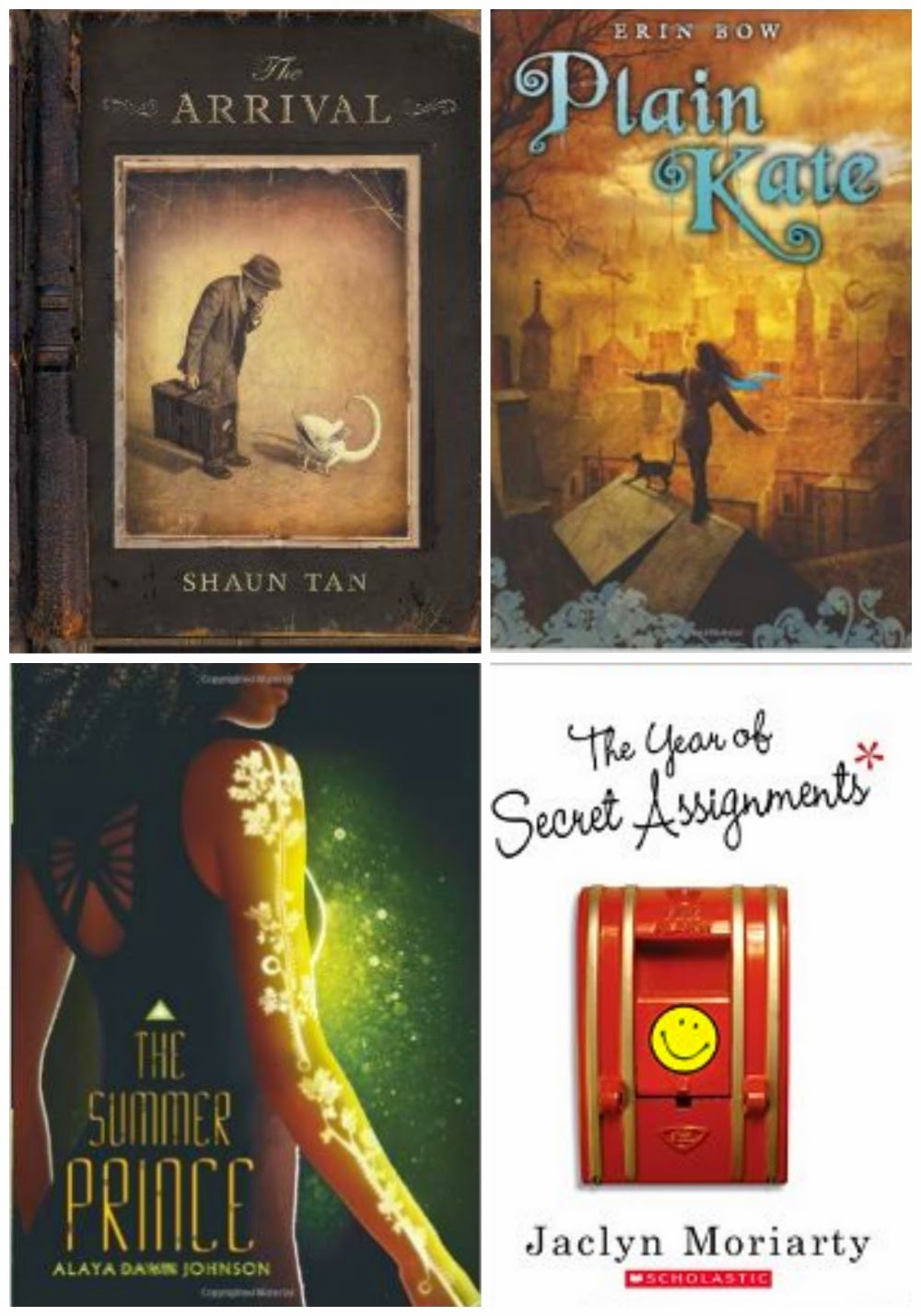
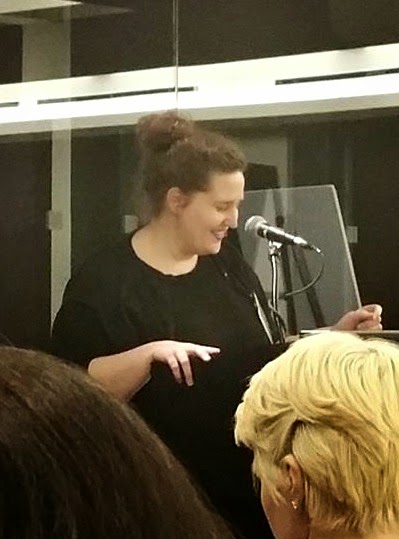 Emily Clement is an associate editor at Arthur A. Levine Books, an imprint of Scholastic. She has worked on books by Shaun Tan, Jaclyn Moriarty, Alaya Dawn Johnson, and Erin Bow, among others.
She manages her imprint’s international literature program, and has edited books translated from German, Dutch, and Russian. Emily attended Stanford University, followed by the Columbia Publishing Course, and translates children’s books from Italian. She grew up in Tempe, Arizona, and now lives in Brooklyn.
She talked to us about what that tricky word "literary" means, and how we can achieve it in our writing. But first, she told us the backstory behind a Russian novel coming out on the Arthur A. Levine spring list.
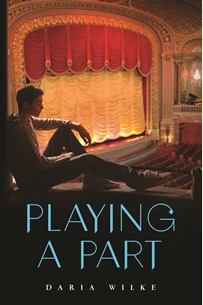 Called "Playing A Part," it was published just after Russie passed anti-gay propaganda laws. While it wasn't illegal for the book to be published, it could not be shelved with children's books.
After she read about it in The Atlantic, she looked into acquiring it, not knowing whether it was well written or appropriate for their list. She discovered a "gorgeous, beautiful, moving, and sensitive novel." And now it's the first young adult novel to be translated from Russian into English.
"It's crazy that hasn't happened before," she said.
The word "literary" is a tricky one for her. She doesn't love talking about books as literary or commercial because the two things aren't mutually exclusive. And some people are put off by the concept of literary, so she always tries to pair the word "accessible with it."
Here are four items from her list of seven essential literary qualities:
By: [email protected],
on 12/2/2014
Blog: Perpetually Adolescent (Login to Add to MyJacketFlap)
JacketFlap tags: siri hustvedt, Book Reviews - Fiction, Michel Faber, Joy Lawn, The NArrow Road to the Deep North, the bone clocks, Mark Henshaw, David Mitchelle, My Life as a Fake, The Blazing World, The Book of Strange New Things, The Children Act, The Snow Kimono, literary fiction, Amnesia, ian mcewan, peter carey, the thousand autumns of jacob de zoet, cloud atlas, Add a tag
 By: Robin Brande,
on 10/19/2014
By: Robin Brande,
on 10/19/2014
Blog: Robin Brande (Login to Add to MyJacketFlap)
JacketFlap tags: Books, Reading, Writing Life, young adult fiction, teen fiction, Writing, short stories, young adult novels, audio books, literary fiction, contemporary fiction, short story collection, teen novels, paranormal short stories, science fiction short stories, fantasy short stories, offbeat stories, Add a tag
 By: Chuck Sambuchino,
on 10/12/2014
By: Chuck Sambuchino,
on 10/12/2014
Blog: Guide to Literary Agents (Login to Add to MyJacketFlap)
JacketFlap tags: Women's Fiction, Narrative Nonfiction, What's New, New Agency Alerts, Chuck Sambuchino's Guide to Literary Agents Blog, Mystery Agents, Memoir Agents, Fiction Agents, Nonfiction Agents, Romance Agents, Literary Fiction, Add a tag
By: [email protected],
on 9/16/2014
Blog: Perpetually Adolescent (Login to Add to MyJacketFlap)
JacketFlap tags: japan, literary fiction, Paris, Text, haruki murakami, Book Reviews - Fiction, Joy Lawn, Mark Henshaw, Out of the Line of Fire, Snow Kimono, Add a tag
By: Adrienne Crezo,
on 9/9/2014
Blog: Guide to Literary Agents (Login to Add to MyJacketFlap)
JacketFlap tags: Literary Fiction, Guest Post, There Are No Rules Blog by the Editors of Writer's Digest, bridgett m davis, into the go-slow, General, publishing, writing, lessons, Add a tag
 By: Nathan Bransford,
on 9/4/2013
By: Nathan Bransford,
on 9/4/2013
Blog: Nathan Bransford (Login to Add to MyJacketFlap)
JacketFlap tags: Culture, book recommendations, Literary Fiction, Add a tag

Last Wednesday, I suggested that there was no golden era where everyone was reading complex literary fiction.
Is that actually true? Did past readers have more refined taste in fiction than we do now?
Here's a list of the bestselling novel by year from 1900 to the present (source), along with the books published that same year that were part of Modern Library's list of the 100 best novels.
What do you make of this list?
1900: To Have and To Hold by Mary Johnston
Also published: Sister Carrie by Theodore Dreiser, Lord Jim by Joseph Conrad
1901: The Crisis by Winston Churchill (note: the American novelist)
Also published: Kim by Rudyard Kipling
1902: The Virginian by Owen Wister
Also published: Wings of the Dove by Henry James
1903: Lady Rose's Daughter by Mary Augusta Ward
Also published: Way of All Flesh by Samuel Butler, The Ambassadors by Henry James, The Call of the Wild by Jack London
1904: The Crossing by Winston Churchill
Also published: The Golden Bowl by Henry James, Nostromo by Joseph Conrad
1905: The Marriage of William Ashe by Mary Augusta Ward
Also published: The House of Mirth by Edith Wharton
1906: Coniston by Winston Churchill
1907: The Lady of the Decoration by Frances Little
Also published: The Secret Agent by Joseph Conrad
1908: Mr. Crewe's Career by Winston Churchill
Also published: A Room With a View by E.M. Forster, The Old Wives' Tale by Arnold Bennett
1909: The Inner Shrine by Basil King
1910: The Rosary by Florence Barclay
Also published: Howard's End by E.M. Forster
1911: The Broad Highway by Jeffrey Farnol
Also published: Zuleika Dobson by Max Beerbohm
1912: The Harvester by Gene Stratton Porter
1913: The Inside of the Cup by Winston Churchill
Also published: Sons and Lovers by D.H. Lawrence
1914: The Eyes of the World by Harold Bell Wright
1915: The Turmoil by Booth Tarkington
Also published: The Good Soldier by Ford Maddox Ford, The Rainbow by D.H. Lawrence, Of Human Bondage by W. Somerset Maugham
1916: Seventeen by Booth Tarkington
1917: Mr. Britling Sees It Through by H.G. Wells
Also published: A Portrait of the Artist as a Young Man by James Joyce
1918: The U.P. Trail by Zane Grey
Also published: The Magnificent Ambersons by Booth Tarkington
1919: The Four Horsemen of the Apocalypse by V. Blasco Ibanez
Also published: Winesburg, Ohio by Sherwood Anderson
1920: The Man of the Forest by Zane Grey
Also published: The Rainbow by D.H. Lawrence, The Age of Innocence by Edith Wharton
1921: Main Street by Sinclair Lewis*
1922: If Winter Comes by A.S.M. Hutchison
Also published: Ulysses by James Joyce
1923: Black Oxen by Gertrude Atherton
1924: So Big by Edna Ferber
Also published: A Passage to India by E.M. Forster, Parade's End by Ford Maddox Ford
1925: Soundings by A. Hamilton Gibbs
Also published: The Great Gatsby by F. Scott Fitzgerald, An American Tragedy by Theodore Dreiser
1926: The Private Life of Helen of Troy by John Erskine
Also published: The Sun Also Rises by Ernest Hemingway
1927: Elmer Gantry by Sinclair Lewis
Also published: To the Lighthouse by Virginia Woolf, Death Comes for the Archbishop by Willa Cather
1928: The Bridge of San Luis Rey by Thornton Wilder*
Also published: Point Counter Point by Aldous Huxley
1929: All Quiet on the Western Front by Erich Maria Remarque
Also published: The Sound and the Fury by William Faulkner, A High Wind in Jamaica by Richard Hughes, A Farewell to Arms by Ernest Hemingway
1930: Cimarron by Edna Ferber
Also published: As I Lay Dying by William Faulkner, The Maltese Falcon by Dashiell Hammett
1931: The Good Earth by Pearl S. Buck
Also published: Brave New World by Aldous Huxley
1932: The Good Earth by Pearl S. Buck
Also published: Light in August by William Faulkner, Tobacco Road by Erskine Caldwell
1933: Anthony Adverse by Hervey Allen
1934: Anthony Adverse by Hervey Allen
Also published: I, Claudius by Robert Graves, Appointment in Samarra by John O'Hara, Tender is the Nighta by F. Scott Fitzgerald, A Handful of Dust by Evelyn Waugh, Tropic of Cancer by Henry Miller, The Postman Always Rings Twice by James M. Cain
1935: Green Light by Lloyd C. Douglas
Also published: Studs Lonigan by James T. Farrell
1936: Gone With the Wind by Margaret Mitchell
1937: Gone With the Wind by Margaret Mitchell
1938: The Yearling by Marjorie Kinnan Rawlings
Also published: U.S.A. by John Dos Passos, Scoop by Evelyn Waugh, The Death of the Heart by Elizabeth Bowen
1939: The Grapes of Wrath by John Steinbeck*
Also published: The Day of the Locust by Nathanael West, Finnegans Wake by James Joyce
1940: How Green Was My Valley by Richard Llewellyn
Also published: Darkness at Noon by Arthur Koestler, The Heart is a Lonely Hunter by Carson McCullers, Native Son by Richard Wright
1941: The Keys of the Kingdom by A.J. Cronin
1942: The Song of Bernadette by Franz Werfel
1943: The Robe by Lloyd C. Douglas
1944: Strange Fruit by Lillian Smith
1945: Forever Amber by Kathleen Winsor
Also published: The Catcher in the Rye by J.D. Salinger, Brideshead Revisited by Evelyn Waugh, Loving by Henry Green
1946: The King's General by Daphne du Maurier
Also published: Animal Farm by George Orwell, All the King's Men by Robert Penn Warren
1947: The Miracle of the Bells by Russell Janney
Also published: Under the Volcano by Malcolm Lowry
1948: The Big Fisherman by Lloyd C. Douglas
Also published: The Heart of the Matter by Graham Greene, The Naked and the Dead by Norman Mailer
1949: The Egyptian by Mika Waltari
Also published: 1984 by George Orwell, The Sheltering Sky by Paul Bowles
1950: The Cardinal by Henry Morton Robinson
1951: From Here to Eternity by James Jones*
Also published: A Dance to the Music of Time by Anthony Powell
1952: The Silver Chalice by Thomas B. Costain
Also published: Invisible Man by Ralph Ellison
1953: The Robe by Lloyd C. Douglas
Also published: Go Tell it on the Mountain by James Baldwin, The Adventures of Augie March by Saul Bellow
1954: Not as a Stranger by Morton Thompson
Also published: Lord of the Flies by William Golding, Under the Net by Iris Murdoch
1955: Marjorie Morningstar by Herman Wouk
Also published: Lolita by Vladimir Nabokov, The Ginger Man by J.P. Donleavy
1956: Don't Go Near the Water by William Brinkley
1957: By Love Possessed by James Gould Cozzens
Also published: On the Road by Jack Kerouac, The Alexandria Quartet by Lawrence Durrell
1958: Doctor Zhivago by Boris Pasternak
1959: Exodus by Leon Uris
Also published: Henderson the Rain King by Saul Bellow
1960: Advise and Consent by Allen Drury
1961: The Agony and the Ecstasy by Irving Stone
Also published: Catch-22 by Joseph Heller, The Moviegoer by Walker Percy, A House for Mr. Biswas by V.S. Naipul, The Prime of Miss Jean Brodie by Muriel Spark
1962: Ship of Fools by Katherine Anne Porter
Also published: Pale Fire by Vladimir Nabokov, A Clockwork Orange by Anthony Burgess
1963: The Shoes of Fisherman by Morris L. West
1964: The Spy Who Came in From the Cold by John Le Carre
1965: The Source by James A. Michener
1966: Valley of the Dolls by Jacqueline Susann
Also published: The Magus by John Fowles, Wide Sargasso Sea by Jean Rhys
1967: The Arrangement by Elia Kazan
Also published: The Wapshot Chronicle by John Cheever
1968: Airport by Arthur Hailey
1969: Portnoy's Complaint by Philip Roth*
Also published: Slaughterhouse-Five by Kurt Vonnegut
1970: Love Story by Erich Segal
Also published: Deliverance by James Dickey
1971: Wheels by Arthur Hailey
Also published: Angle of Repose by Wallace Stegner
1972: Jonathan Livingston Seagull by Richard Bach
1973: Jonathan Livingston Seagull by Richard Bach
1974: Centennial by James A. Michener
1975: Ragtime by E.L. Doctorow*
1976: Trinity by Leon Uris
1977: The Silmarillion by J.R.R. Tolkien and Christopher Tolkien
1978: Chesapeake by James A. Michener
1979: The Matarese Circle by Robert Ludlum
Also published: A Bend in the River by V.S. Naipul, Sophie's Choice by William Styron
1980: The Covenant by James A. Michener
1981: Noble House by James Clavell
Also published: Midnight's Children by Salman Rushdie
1982: E.T. the Extraterrestrial Storybook by William Kotzwinkle
1983: Return of the Jedi Storybook by Joan D. Vinge
Also published: Ironweed by William Kennedy
1984: The Talisman by Stephen King and Peter Straub
1985: The Mammoth Hunters by Jean M. Auel
1986: It by Stephen King
1987: The Tommyknockers by Stephen King
1988: The Cardinal of the Kremlin by Tom Clancy
1989: Clear and Present Danger by Tom Clancy
1990: The Plains of Passage by Jean M. Auel
1991: Scarlett: The Sequel to Margaret Mitchell's "Gone with the Wind" by Alexandra Ripley
1992: Dolores Claiburne by Stephen King
1993: The Bridges of Madison County by James Robert Waller
1994: The Chamber by John Grisham
1995: The Rainmaker by John Grisham
1996: The Runaway Jury by John Grisham
1997: The Partner by John Grisham
1998: The Street Lawyer by John Grisham
1999: The Testament by John Grisham
2000: The Brethern by John Grisham
2001: Desecration by Jerry B. Jenkins and Tim LaHaye
2002: The Summons by John Grisham
2003: Harry Potter and the Order of the Phoenix by J.K. Rowling
2004: The Da Vinci Code by Dan Brown
2005: The Broker by John Grisham
2006: For One More Day by Mitch Albom
2007: Harry Potter and the Deathly Hallows by J.K. Rowling
2008: The Appeal by John Grisham
2009: The Lost Symbol by Dan Brown
2010: The Girl Who Kicked the Hornet's Nest by Stieg Larsson
2011: The Litigators by John Grisham
2012: Fifty Shades of Grey by E.L. James
*Bestseller also on list of Top 100 novels
Art: The Bibliophilist's Haunt or Creech's Bookshop by William Fettes Douglas
 By: Shelagh Watkins,
on 3/27/2013
By: Shelagh Watkins,
on 3/27/2013
Blog: Literature & Fiction (Login to Add to MyJacketFlap)
JacketFlap tags: fiction, romance, Author Interviews, crime, literary fiction, author interview, Add a tag

 By: Nathan Bransford,
on 8/8/2012
By: Nathan Bransford,
on 8/8/2012
Blog: Nathan Bransford (Login to Add to MyJacketFlap)
JacketFlap tags: Culture, Literary Fiction, Social Media, Add a tag
Writing in Slate, Jacob Silverman argues that literary culture, driven by Twitter and blogging, has gotten too nice:
But I disagree with Silverman that old school negativity is an integral part of a more virtuous literary culture. Sure, we need both positive and (thoughtfully) negative reviews, and above all we need honesty, but there's no reason thoughtful literary criticism and squeefests can't coexist. It's a big Internet out there.
Besides, uh, have you seen some of the reviews on Goodreads? Some of them would make H.L Mencken blush they're so hostile.
Even if one accepts the premise that we're getting more positive in the Internet age... what are we losing again? Old school literary smackdowns may have been entertaining for those who agree with the reviewer, but I'm not sure I see how hysterical pans really advance constructive dialogue.
So basically... if there's a problem I don't see a problem.
What do you think? Too many rainbows and puppies out there? Would we be better off with more negativity and fewer niceties? Does the problem have more to do with cliqueishness than positivity?
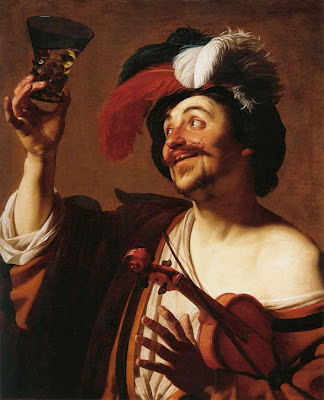
Art: The Happy Violinist with a Glass of Wine by Gerard van Honthorst
 By: Kristin Nelson,
on 6/5/2012
By: Kristin Nelson,
on 6/5/2012
Blog: Pub Rants (Login to Add to MyJacketFlap)
JacketFlap tags: editors, trends, deals, literary fiction, Book Expo, women's fiction, Add a tag

 By: Karen Cioffi,
on 5/4/2012
By: Karen Cioffi,
on 5/4/2012
Blog: Writing for Children with Karen Cioffi (Login to Add to MyJacketFlap)
JacketFlap tags: writing tips, literary fiction, Add a tag

As a book reviewer, I get anywhere from fifty to one hundred review requests a week. Of these, I might accept five or so. While I do occasionally take nonfiction books, most of what I accept will be in the genre known as literary fiction. But just what is literary fiction?
What differentiates literary fiction from what most publishers class as commercial or genre oriented fiction, and why am I biased towards it? It's a question I get asked regularly. Some, like author David Lubar ("A Guide to Literary Fiction," 2002) equate the label with work that is pompous, dull, plotless, and overly academic: "If you're ever in doubt about whether a story is literary, there's a simple test. Look in a mirror immediately after reading the last sentence. If your eyebrows are closer together than normal, the answer is yes." Publishers often use this label for work which defies other genre distinctions, eg it isn't romance, isn't "chick-lit," isn't science or speculative fiction, isn't a thriller, action, or political drama. It is meant to denote a fiction which is of higher quality, richer, denser, or, as the literary fiction book club states, work which "can make us uncomfortable or can weave magic."
These distinctions aren't always clear, and there are some superb exceptions to the genre rule, such as Margaret Atwood or China Mieville, whose high quality work fits the speculative fiction genre, or Umberto Eco and Iain Pears, whose work is full of mystery and suspense. All writers feel that their work is high quality, and most write fiction with the goal of producing great work. So how can we ensure that our work is literary fiction rather than some other form? Here are five tips to guide writers who are inclined to produce literary fiction:
1. Aim for transcendency. The one quality which seems to be present in abundance in literary fiction and much less so in other forms, is what agent and author Noah Lukeman calls "transcendency." It isn't easy to define, and in his exceptional book, The Plot Thickens (St Martin's Press, 2002), Lukeman presents a number of points, such as multidimensional characters and circumstances, room for interpretation, timelessness, relatability, educational elements, self discovery, and lasting impression. I would say that transcendency equates to depth, to writing which does more than entertain its readers, and instead, changes something, however small, in the way they perceive themselves. How do you get transcendency in fiction? With a deep theme, deep and powerful characters, complex plots, and exceptional writing skills. Sound easy?
2. Read quality literature. This is a lot easier than transcendency, though not unrelated. Since achieving literary fiction is a subtle and difficult thing, you've got to develop your literary senses. The best way of doing that is to read books which fit this genre. If you want to create literary fiction, chances are, you probably are already reading it. These are books by the writers we call "great." Your list of names may differ from mine, but these are the writers who win prizes like the Booker, the Pulitzer, the Commonwealth Prize, and the National Book Award to name just a few. The more great literature you read, the better able you will become at recognising the elements which make a fiction literary.
3. Don't get defensive! Lubar's article is lots of fun, but literary fiction isn't meant to be snobbish, academic, plotless, or boring in any way; just well crafted. That may
 By: Evil Editor,
on 2/23/2012
By: Evil Editor,
on 2/23/2012
Blog: Evil Editor (Login to Add to MyJacketFlap)
JacketFlap tags: Literary Fiction, Add a tag
By: Evil Editor,
on 7/13/2011
Blog: Evil Editor (Login to Add to MyJacketFlap)
JacketFlap tags: Literary Fiction, Add a tag
By: Kristin Nelson,
on 7/6/2011
Blog: Pub Rants (Login to Add to MyJacketFlap)
JacketFlap tags: news, New York Times, young adult, fantasy, romance, USA Today, literary fiction, client books, bestseller lists, Add a tag
By: Chuck,
on 5/24/2011
Blog: Guide to Literary Agents (Login to Add to MyJacketFlap)
JacketFlap tags: Literary Fiction, Successful Queries, Add a tag

Dear Ms. Weed:
My name is Meg Moore, and I'm writing to you to see if you'd be interested in taking a look at my first novel.
The novel, THE ARRIVALS, tells the story of Ginny and William Owen, retired parents of three grown children, who lead a peaceful life in Burlington, Vermont. But one summer, when their oldest daughter Lillian brings her two young children to her parents' house to escape her crumbling marriage, things start to get complicated. It's not just Lillian turning to Ginny and William for help. Lillian's younger brother Stephen is preparing for fatherhood with his successful, ambitious and misunderstood wife Jane when pregnancy complications extend a weekend visit to his parents into a weeks-long bed rest. Rachel, the youngest Owen sibling, who is trying to forge an independent life in New York City, needs help of a different sort: money, and lots of it.
As Lillian embarks on a friendship with a young priest, tension builds between Ginny and William over how much to allow the lives of their children to intrude into theirs, and between the siblings as they realize that even as adults they are competing for their parents' help and attention. By the end of the summer, each character has had to learn how to negotiate the precarious landscape of family love and loyalty. Each has had to re-examine his or her assumptions about balancing professional success and parenting. And everyone has discovered, in his own way, that a parent never stops being a parent.
One reader has compared the novel's themes to those of Heidi Pitlor's THE BIRTHDAYS, and I think it will find an audience in readers of that novel as well as novels by Joanna Trollope or Carol Shields—writers who use domestic settings to illuminate universal themes.
I work as a freelance writer in Newburyport, Mass., where I live with my husband and my three little gi Add a Comment
 By: Becky Laney,
on 5/14/2011
By: Becky Laney,
on 5/14/2011
Blog: Becky's Book Reviews (Login to Add to MyJacketFlap)
JacketFlap tags: 1945, library book, classics, adult fiction, literary fiction, Add a tag
 Kinfolk. Pearl S. Buck. 1945/2004. Moyer Bell. 408 pages.
The theater in Chinatown was crowded to the doors. Every night actors brought from Canton played and sang the old Chinese operas. If Billy Pan, the manager, announced a deficit at the end of the lunar year, businessmen contributed money to cover it. The theater was a bulwark of home for them. Their children went to American schools, spoke the American language, acted like American children. The fathers and mothers were not highly educated people and they could not express to the children what China was, except that it was their own country, which must not be forgotten. But in the theater the children could see for themselves what China was. Here history was played again and ancient heroes came to life before their eyes. It was the only place in Chinatown which could compete with the movies. Parents brought their children early and stayed late. They talked with friends and neighbors, exchanged sweetmeats and gossip, and sat spellbound and dreaming when the curtain went up to show the figures who were contemporary with their ancestors.
As much as I just loved and adored East Wind: West Wind--my very first Pearl S. Buck novel--I just LOVED, LOVED, LOVED Kinfolk. It is so very different from The Good Earth and Sons. While I struggled to find anyone sympathetic in The Good Earth and Sons, I could name half a dozen characters (if not more) that I liked, loved, respected, or admired in Kinfolk. And here's the thing, even the characters that I didn't necessarily "like", I found them to be well-developed, complex. Unlike the often nameless one-dimensional characters in The Good Earth and Sons. And the language, the style. It wowed me. It really did! So much to love and appreciate.
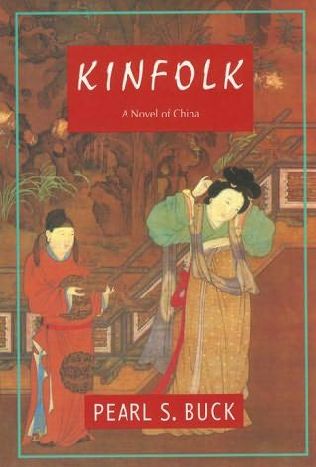 Kinfolk is about the Liang family. Dr. Liang, the father, is a scholar who fled China because it was getting to be too harsh, too ugly, too dangerous, too uncertain. He's a scholar, a teacher, a thinker, a philosopher. He needs peace and quiet and rest. He needs to be surrounded by people who appreciate his intellect, his superiority. (And does he ever think he's superior to just about anyone who's ever lived.) His wife, well, she "appreciates" him as best she can. Knowing that he can be oh-so-difficult to live with. But knowing that it is her place to bring out the best in him. To calm him when he gets furious or frustrated. But this isn't always easy since he doesn't respect her or see her as someone worthy of love and respect. She's the mother of his children. But. That's about it. He doesn't feel like she's intellectually or emotionally his soul mate. And he doesn't see any need to treat her as if she was the love of his life. It's her job to appreciate him, not the other way round.
So the Liangs have four children--two of the children were born in China, two of the children were born in America--James and Mary are the oldest, Peter and Louise are the youngest. James and Mary have a deep longing to return to China, to make their home, their future in China. They know it won't be easy. They know it will require sacrifice and hard work. But neither James or Mary would want to live anywhere else. They wouldn't trade the hardships, the uncertainties for anything because they feel
By: Becky Laney,
on 5/4/2011
Blog: Becky's Book Reviews (Login to Add to MyJacketFlap)
JacketFlap tags: family, Historical Fiction, adult fiction, literary fiction, library book, 1930, Add a tag
 East Wind: West Wind. Pearl S. Buck. 1930/1995. Moyer Bell. 288 pages.
These things I may tell you, My Sister. I could not speak thus even to one of my own people, for she could not understand the far countries where my husband lived for twelve years. Neither could I talk freely to one of the alien women who do not know my people and the manner of life we have had since the time of the ancient empire. But you? You have lived among us all your years. Although you belong to those other lands where my husband studied his western books, you will understand. I speak the truth. I have named you My Sister. I will tell you everything.
I loved this one. I just LOVED, LOVED, LOVED it. As in I think I may have found (another) author to become obsessed with.
 East Wind: West Wind was Pearl S. Buck's first novel. It's set in China. Our selfless heroine, Kwei-lan, finds herself in a troubling position. She's been raised in a very traditional home. She's been raised--some might even say trained--from a very, very young age to please her future family--her future mother-in-law, her future husband. As a daughter, her mother has always, always kept in mind that she is not truly of their family. Kwei-lan's marriage has been arranged--set in place--since the time she was a baby. The first few chapters chronicle her childhood, her bringing up. Readers get a glimpse of the culture. How women lead very separate lives from the men. How women are to be silent and obedient and always willing to please their husbands, their masters. Readers get a glimpse of this culture. Of what made a woman beautiful, attractive, desirable. And one of the things that made a woman beautiful are incredibly tiny feet which led of course to the practice of binding feet. (Being able to cook well also helped a woman please her husband. And you HAVE to know how to pour tea for your elders.)
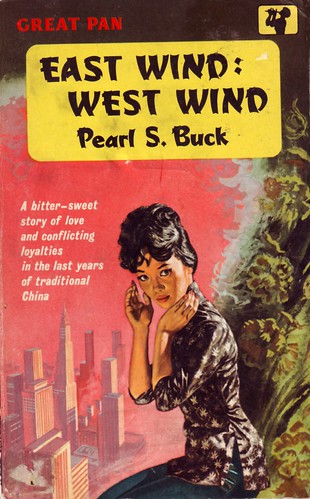 But our heroine, our narrator, is in for quite a shock. For her husband has spent time in the West. He has become educated; he's a doctor. He prefers to break with some of the traditions, to live a more modern life. He wants his wife to be more of an equal and less of a slave. He wants his wife to be his companion. He wants to share his life with someone. He doesn't want a silent shadow, an obedient slave. He wants more. The first step may just be the hardest--for he is asking his wife to unbind her feet.
East Wind: West Wind is all about tension and drama. For though our heroine wants to please her husband, although she is fascinated by some of these new ideas, she finds it difficult to forget everything she's grown up believing. It's not something that can be done in one week, one month, or one year.
But. This isn't her story alone. No. Some of the most dramatic scenes in the novel focus on her brother. Like her husband, her brother has been educated in the West, he has spent time in foreign countries. He's learned to adapt to new ways of life. And he does NOT want to return to China to marry the woman he's been betrothed to since he
By: Chuck,
on 3/15/2011
Blog: Guide to Literary Agents (Login to Add to MyJacketFlap)
JacketFlap tags: Literary Fiction, 7 Things I've Learned So Far, Add a tag


1. Revision is important, but finishing your draft is more important. I learned this the hard way. It took me five years to finish writing my novel, but in retrospect two of those years were wasted (or at least used very ineffectively) on obsessive over-revision. I wrote my first few chapters and, realizing they weren’t very good, I began rewriting. And rewriting. What I didn’t realize at the time is that first chapters are supposed to stink. How could they not? By the time Moondogs was finally picked up for publication I’d deleted virtually all the early material I’d agonized over for years. Just because I’d been reluctant to hold my nose and push through to the end of the book.
My takeaway: Nothing compares to the perspective that a full draft (stinky though it may be) will give you. For all you know that scene you are pouring hours into revising doesn’t even belong in the book.
2. There is no substitute for time at the keys. This, of course, is a cliché. But it also can’t be overemphasized. Sometimes work needs to simmer away in your head, but the process of discovery happens much quicker when you’re struggling with your own raw sentences. Some writers will tell you: “Treat it like a job.” This is maybe a little extreme—writers like George Saunders and Charles Yu have written brilliant books while working full time at office jobs. But whether it’s eight hours a day, or two, you need to make them happen. Time at the keys is no guarantee of success, but it is a precursor to it.
3. The Internet is not your friend … unless you are way better at time management than me. But if you’re like me (read: a big and distractible baby) then the Internet is a major enemy to productive writing time. I got around it by writing my novel on a 90’s era laptop with busted Ethernet ports and no wireless. Even as I write this, my modem and router are unplugged. If they weren’t, I Add a Comment
 By: Melinda Palacio,
on 1/27/2011
By: Melinda Palacio,
on 1/27/2011
Blog: La Bloga (Login to Add to MyJacketFlap)
JacketFlap tags: submissions, literary fiction, writing workshop, PALABRA magazine, Add a tag
 By: Gail Gauthier,
on 1/25/2011
By: Gail Gauthier,
on 1/25/2011
Blog: Original Content (Login to Add to MyJacketFlap)
JacketFlap tags: literary fiction, Reader response, YA, Add a tag
By: Chuck,
on 1/9/2011
Blog: Guide to Literary Agents (Login to Add to MyJacketFlap)
JacketFlap tags: Contests, Literary Fiction, Add a tag

 By: Lucky Press, LLC,
on 10/20/2010
By: Lucky Press, LLC,
on 10/20/2010
Blog: Lucky Press, LLC (Login to Add to MyJacketFlap)
JacketFlap tags: men authors, adult fiction, literary fiction, new releases, Add a tag
 By: Chuck,
on 9/23/2010
By: Chuck,
on 9/23/2010
Blog: Guide to Literary Agents (Login to Add to MyJacketFlap)
JacketFlap tags: Excerpts, Literary Fiction, Successful Queries, Breaking In (Writer's Digest), Add a tag

Dear Ms. Reid:
I am seeking representation for my literary novel, Numb. I found your submission guidelines online and have included below a one-page synopsis.
I live and work in New York City, I have had short stories published in Uber, WORDS and Bossa Nova Ink, and one of my recent short stories was a finalist in the Italo Calvino writing competition at the University of Louisville. I received my MFA in creative writing from Emerson College.
Numb is approximately sixty-thousand words in length.
In summary: Numb is a man who cannot feel physical pain.
When he wanders into a dying circus, he doesn’t know who he is or how he got there. Despite feeling like an outcast the circus adopts him. When it is clear that his “talent” (if you can call being shot with nail guns and staplers a talent) will make him the star freak of the show, he becomes the circus’ best chance for survival. After nearly sacrificing himself for the circus’ sake, he decides to run away from the circus and make his way to New York City to discover himself and his past.
Accompanied by his fire-eating best friend, Mal, Numb discovers a world outside the circus that is all too ready to reward and punish him for his self-destructive talents; and it’s a world that forces all his relationships to shatter. Numb finds women to comfort him, yet he won’t allow himself to trust them. He looks for love but won’t accept it, and he looks for safety in self-destruction. After undermining or losing friends and lovers, Numb is forced to figure out how to find a place for himself instead of just taking up space.
This novel is in the spirit of Fight Club or Battle Royale; it is an antiheroic tale of finding a way to survive in a world so filled with noise that simple conversation and compassion are often drowned out.
I look forward t Add a Comment
 By: John Mark Boling,
on 9/10/2010
By: John Mark Boling,
on 9/10/2010
Blog: The Winged Elephant (Login to Add to MyJacketFlap)
JacketFlap tags: new jersey, literary fiction, p.f. kluge, cleveland plain dealer, newark star ledger, a call from jersey, Add a tag
Viewing: Blog Posts Tagged with: Literary Fiction, Most Recent at Top [Help]
Results 1 - 25 of 69
By: [email protected],
on 4/13/2015
Blog: Perpetually Adolescent (Login to Add to MyJacketFlap)
JacketFlap tags: literary fiction, Exodus, The Bible, kazuo ishiguro, Arthurian legend, Book Reviews - Fiction, Joy Lawn, the buried giant, The Childhood of Jesus, These Are the Names, Tommy Wieringa, Book News, Add a tag
By: Martha Brockenbrough,
on 2/7/2015
Blog: The Official SCBWI 10th Annual New York Conference Blog (Login to Add to MyJacketFlap)
JacketFlap tags: Arthur A. Levine, #NY15SCBWI, Emily Clement, literary fiction, Scholastic, Add a tag
She manages her imprint’s international literature program, and has edited books translated from German, Dutch, and Russian. Emily attended Stanford University, followed by the Columbia Publishing Course, and translates children’s books from Italian. She grew up in Tempe, Arizona, and now lives in Brooklyn.
She talked to us about what that tricky word "literary" means, and how we can achieve it in our writing. But first, she told us the backstory behind a Russian novel coming out on the Arthur A. Levine spring list.
Called "Playing A Part," it was published just after Russie passed anti-gay propaganda laws. While it wasn't illegal for the book to be published, it could not be shelved with children's books.After she read about it in The Atlantic, she looked into acquiring it, not knowing whether it was well written or appropriate for their list. She discovered a "gorgeous, beautiful, moving, and sensitive novel." And now it's the first young adult novel to be translated from Russian into English.
"It's crazy that hasn't happened before," she said.
The word "literary" is a tricky one for her. She doesn't love talking about books as literary or commercial because the two things aren't mutually exclusive. And some people are put off by the concept of literary, so she always tries to pair the word "accessible with it."
Here are four items from her list of seven essential literary qualities:
- It's about something. The book tackles a big idea and one of the larger themes of life, challenging the reader to think from a new angle.
- It has voice. Voice is informed by the character and his or her world, and makes your work engaging and feel authentic.
- It has plot. You can tell if your plot is lacking if you can't explain your book's premise in a few sentences (and the usual cause is that your voice is getting in the way).
- It has resonant details. "Every piece of clothing, every meal, every book your characters read" is intentional.
0 Comments on Emily Clement: Seven Essentials You Need to Know about Writing Literary Fiction as of 1/1/1900
Add a Comment
By: [email protected],
on 12/2/2014
Blog: Perpetually Adolescent (Login to Add to MyJacketFlap)
JacketFlap tags: siri hustvedt, Book Reviews - Fiction, Michel Faber, Joy Lawn, The NArrow Road to the Deep North, the bone clocks, Mark Henshaw, David Mitchelle, My Life as a Fake, The Blazing World, The Book of Strange New Things, The Children Act, The Snow Kimono, literary fiction, Amnesia, ian mcewan, peter carey, the thousand autumns of jacob de zoet, cloud atlas, Add a tag
There are so many great books published each year. Here are my favourite 2014 literary novels. They’re the best I’ve read, with the exception of The Book of Strange New Things by Michel Faber – which I’ll write about soon. You will have other selections (and we’d love to hear them) but these are my Christmas […]
Add a Comment
By: Robin Brande,
on 10/19/2014
Blog: Robin Brande (Login to Add to MyJacketFlap)
JacketFlap tags: Books, Reading, Writing Life, young adult fiction, teen fiction, Writing, short stories, young adult novels, audio books, literary fiction, contemporary fiction, short story collection, teen novels, paranormal short stories, science fiction short stories, fantasy short stories, offbeat stories, Add a tag
Remember how I said cleaning leads to writing? Yep, I’ve been busy. And I’m still busy, because I’m not exactly done. But I thought you’d be interested in an update and some recent releases, along with the coming attractions …
First, you can get these now:
LOVE PROOF is now out in audio! I love the narration Maria Hunter Welles did for it. And I didn’t announce it at the time (see above, been busy), but there are also audio editions of THE GOOD LIE, DOGGIRL, and REPLAY. I know. It’s a lot. Take your pick and listen away!
Also, I have a new short story collection out. It’s called A FEW STRANGE MATTERS, and it is. A little odd. But sometimes my mind needs a break from longer works like novels, and when I let my mind wander, it wanders. The collection has some contemporary, some science fiction, a little fantasy, some paranormal, and a couple of strange stories from the teen world. You might have read a few of them here and there, but I guarantee there are some you’ve never seen. Possibly because I wrote them under a pen name that none of you knew about. So take a look–I’ll be interested in hearing what you all think!
Now, for the coming attractions:
YES, PARALLELOGRAM 4 WILL BE OUT THIS FALL. That’s all I can say, because I have made the mistake before of giving you a pub date which turns out not to be true. But I promise you will feel satisfied and fulfilled when you read this final book in the series. I’m still working very hard to pull all the pieces together. Thank you for your questions (“When? WHEN??”) and your patience. I hate waiting, too. I get it. It’ll be along very soon.
And to make you even happier about all the time I’ve been hiding out, I’ll also have ANOTHER NEW BOOK for you by December, I believe. It’s fantasy, it’s epic, and it involves a girl warrior. Yessssss …
That’s my report for now. I have to go back to writing. I owe you all some books.
Happy Fall! ~Robin
0 Comments on …which leads to books! as of 10/19/2014 2:02:00 PM
Add a Comment
By: Chuck Sambuchino,
on 10/12/2014
Blog: Guide to Literary Agents (Login to Add to MyJacketFlap)
JacketFlap tags: Women's Fiction, Narrative Nonfiction, What's New, New Agency Alerts, Chuck Sambuchino's Guide to Literary Agents Blog, Mystery Agents, Memoir Agents, Fiction Agents, Nonfiction Agents, Romance Agents, Literary Fiction, Add a tag
Reminder: New literary agents (with this spotlight featuring Cassie Hanjian of Waxman Leavell Literary) are golden opportunities for new writers because each one is a literary agent who is likely building his or her client list.

About Cassie: Prior to joining Waxman Leavell as an acquiring agent this year, Cassie held positions at the Park Literary Group, where she specialized in author support and foreign rights, and at Aram Fox, Inc. as an international literary scout for publishers based outside the United States. She holds a B.A. in English/Creative Writing from the University of South Florida, a Graduate Certificate in Publishing from the University of Denver’s Publishing Institute and an M.S. in Publishing from Pace University. Follow her on Twitter: @Cjhanjian
Cassie is seeking: page-turning New Adult novels, plot-driven commercial and upmarket women’s fiction, historical fiction, psychological suspense, cozy mysteries and contemporary romance. In nonfiction, she’s looking for projects in the categories of parenting, mind/body/spirit, inspirational memoir, narrative nonfiction focusing on food-related topics and a limited number of accessible cookbooks. Cassie does not accept submissions in the following categories: science-fiction, fantasy, paranormal, Young Adult, Middle Grade, Children’s, literary fiction, poetry, and screenplays.
How to submit: Send a query letter only to cassiesubmit [at] waxmanleavell.com. Do not send attachments, though for fiction, you may include five to 10 pages of your manuscript in the body of the email.
 The biggest literary agent database anywhere
is the Guide to Literary Agents. Pick up the
most recent updated edition online at a discount.
Other writing/publishing articles & links for you:
- How to Make a Book Trailer: 6 Tips.
- 9 Things We Can Learn From Other Writers.
- Sell More Books by Building Your Writer Platform.
- Why Writers Must Train Themselves to Produce on a Deadline.
- Follow Chuck Sambuchino on Twitter or find him on Facebook. Learn all about his writing guides on how to get published, how to find a literary agent, and how to write a query letter.
 Want to build your visibility and sell more books?
Create Your Writer Platform shows you how to
promote yourself and your books through social
media, public speaking, article writing, branding,
and more. Order the book from WD at a discount.
Add a Comment
By: [email protected],
on 9/16/2014
Blog: Perpetually Adolescent (Login to Add to MyJacketFlap)
JacketFlap tags: japan, literary fiction, Paris, Text, haruki murakami, Book Reviews - Fiction, Joy Lawn, Mark Henshaw, Out of the Line of Fire, Snow Kimono, Add a tag
A buzz has been building about Australian author Mark Henshaw’s long awaited second novel after Out of the Line of Fire. The Snow Kimono (Text) is a literary psychological thriller set in Japan and France. Insights into both those countries shape the contours, ridges and atmosphere of the novel. Paris is wet and snowy and […]
Add a Comment
By: Adrienne Crezo,
on 9/9/2014
Blog: Guide to Literary Agents (Login to Add to MyJacketFlap)
JacketFlap tags: Literary Fiction, Guest Post, There Are No Rules Blog by the Editors of Writer's Digest, bridgett m davis, into the go-slow, General, publishing, writing, lessons, Add a tag
 BY BRIDGETT M. DAVIS
Perhaps you’ve heard the one about a journalist who arrived at Joyce Carol Oates’ home to interview her? “I’m sorry,” said her assistant. “But she’s working on her new novel right now.” “That’s okay,” said the journalist. “I’ll wait.”
With over 40 novels written — averaging two a year — Oates makes us all look bad.
While there’s no average time for writing a novel, a decade certainly sounds like a long time. And it feels like it too. Throughout the nine years I worked on my latest novel, I worried that I’d never reach the finish line, and even if I did, readers would no longer be there to cheer me on. I was convinced that when it came to publishing, slow and steady won no races.
What gave me hope was keeping in mind some great role models: Donna Tartt published her second and third novels eleven years apart. Loorie Moore spent fifteen years between novels; and my favorite example comes from one of my all-time favorite writers: Marilynne Robinson spent twenty-four years between her acclaimed first novel Housekeeping and her second novel, Gilead.
“Maybe it’s a question of discipline, maybe temperament, who knows? I wish I could have made myself do more,” said Robinson in a 2008 Paris Review interview. “I wouldn’t mind having written fifteen books.”
“Even if many of them were mediocre?” asked the interviewer.
“Well, no,” said Robinson.
Exactly. Once I accepted the fact that ultimately what matters most is writing the book I wanted to write — a book I would love to read — I calmed down and learned to respect my own, deliberate process. Following are some lessons I learned that helped me get there:
1) It takes the time it takes. A novel takes as long as it needs to take to say the things you need to say in the way you need to say them. Worrying about arbitrary deadlines does not influence the creative process. Nor should you be concerned about “timeliness” or literary trends, which are completely unpredictable elements. My novel is set in Detroit and Lagos, Nigeria — both are places in the news now. Who could’ve planned for that?
2) Gifts from the Universe will appear: The longer you work on a novel, the more happenings in the world that can enhance your plot. For example, the Afro-beat musician Fela Kuti figures prominently in my novel. Just as I was writing a final draft, I learned that Fela had performed in Detroit in the exact year my story takes place, and that the long-lost “live” recording of that concert had just been released on CD. That information fit beautifully into my plot — a gift that would’ve been lost had I published the book sooner.
3) The story gets to marinate. Fresh ideas and plot twists will come that only time and a deep familiarity with the material can bring. With more time you get to do more research, receive more feedback, do more revising, read more widely for inspiration. Most importantly, you get to let the work sit for a while. When you return to your story with fresh eyes, you can be more ambitious with its structure or themes. Here’s a line from my journal on the eve of my eighth year working on the novel: “It’s so me, this book. And yet it’s ambitious in a way it took me a long, slow way to be.” As all cooks know, marinades deepen flavor.
4) You will not be forgotten. No one loves you less as a writer because your book is taking several years to finish; In fact, anticipation breeds excitement. On the eve of Into The Go-Slow’s publication, I am both awed and humbled by the many friends and strangers who’ve reached out to say, “I enjoyed your first book, and I can’t wait to read your new one!”
5) Time breeds confidence. Because my new novel was so lovingly (and painstakingly!) crafted, I know who I am now as a writer. Here’s another quote from my journal in 2012: ” For the ninth-year anniversary of writing this story, do this: Don’t let up. Be relentless. Let your maturity show in the form of bravery on every page. Use all this living hence to imbue the work with wisdom.” The evolving years between novels have allowed me to become a fearless storyteller.
A final thought: Think of the long-term work spent on a novel as a personal playground in which you get to slowly work through concepts — themes and characters and POV and descriptions of place, and context. That kind of free play can yield wondrous surprises. Slow-burn writing is also a great way to learn how to balance personal-life demands and the desire to just write.
Know this: no time is ever wasted. Every year you spend on your work is another opportunity to document your creative journey, and grow as a writer. Now why would anyone impose a time limit on that?
 Bridgett M. Davis is the author of Into The Go-Slow, released September 9, 2014 by Feminist Press, and the debut novel Shifting Through Neutral, a finalist for the 2005 Hurston/Wright Legacy Award.
Touted by Time Out as one of “10 New York Authors to Read Right Now,” Davis is Books Editor for Bold As Love Magazine, a black culture site; her work has appeared in The Washington Post, Essence, O, The Oprah Magazine, and TheRoot.com.
She is a professor at Baruch College, CIty University of New York, where she directs the Sidney Harman Writer-in-Residence Program. She is also curator for the Brooklyn reading series, Sundays @…..
For more information, visit bridgettdavis.com.
Add a Comment
By: Nathan Bransford,
on 9/4/2013
Blog: Nathan Bransford (Login to Add to MyJacketFlap)
JacketFlap tags: Culture, book recommendations, Literary Fiction, Add a tag
Last Wednesday, I suggested that there was no golden era where everyone was reading complex literary fiction.
Is that actually true? Did past readers have more refined taste in fiction than we do now?
Here's a list of the bestselling novel by year from 1900 to the present (source), along with the books published that same year that were part of Modern Library's list of the 100 best novels.
What do you make of this list?
1900: To Have and To Hold by Mary Johnston
Also published: Sister Carrie by Theodore Dreiser, Lord Jim by Joseph Conrad
1901: The Crisis by Winston Churchill (note: the American novelist)
Also published: Kim by Rudyard Kipling
1902: The Virginian by Owen Wister
Also published: Wings of the Dove by Henry James
1903: Lady Rose's Daughter by Mary Augusta Ward
Also published: Way of All Flesh by Samuel Butler, The Ambassadors by Henry James, The Call of the Wild by Jack London
1904: The Crossing by Winston Churchill
Also published: The Golden Bowl by Henry James, Nostromo by Joseph Conrad
1905: The Marriage of William Ashe by Mary Augusta Ward
Also published: The House of Mirth by Edith Wharton
1906: Coniston by Winston Churchill
1907: The Lady of the Decoration by Frances Little
Also published: The Secret Agent by Joseph Conrad
1908: Mr. Crewe's Career by Winston Churchill
Also published: A Room With a View by E.M. Forster, The Old Wives' Tale by Arnold Bennett
1909: The Inner Shrine by Basil King
1910: The Rosary by Florence Barclay
Also published: Howard's End by E.M. Forster
1911: The Broad Highway by Jeffrey Farnol
Also published: Zuleika Dobson by Max Beerbohm
1912: The Harvester by Gene Stratton Porter
1913: The Inside of the Cup by Winston Churchill
Also published: Sons and Lovers by D.H. Lawrence
1914: The Eyes of the World by Harold Bell Wright
1915: The Turmoil by Booth Tarkington
Also published: The Good Soldier by Ford Maddox Ford, The Rainbow by D.H. Lawrence, Of Human Bondage by W. Somerset Maugham
1916: Seventeen by Booth Tarkington
1917: Mr. Britling Sees It Through by H.G. Wells
Also published: A Portrait of the Artist as a Young Man by James Joyce
1918: The U.P. Trail by Zane Grey
Also published: The Magnificent Ambersons by Booth Tarkington
1919: The Four Horsemen of the Apocalypse by V. Blasco Ibanez
Also published: Winesburg, Ohio by Sherwood Anderson
1920: The Man of the Forest by Zane Grey
Also published: The Rainbow by D.H. Lawrence, The Age of Innocence by Edith Wharton
1921: Main Street by Sinclair Lewis*
1922: If Winter Comes by A.S.M. Hutchison
Also published: Ulysses by James Joyce
1923: Black Oxen by Gertrude Atherton
1924: So Big by Edna Ferber
Also published: A Passage to India by E.M. Forster, Parade's End by Ford Maddox Ford
1925: Soundings by A. Hamilton Gibbs
Also published: The Great Gatsby by F. Scott Fitzgerald, An American Tragedy by Theodore Dreiser
1926: The Private Life of Helen of Troy by John Erskine
Also published: The Sun Also Rises by Ernest Hemingway
1927: Elmer Gantry by Sinclair Lewis
Also published: To the Lighthouse by Virginia Woolf, Death Comes for the Archbishop by Willa Cather
1928: The Bridge of San Luis Rey by Thornton Wilder*
Also published: Point Counter Point by Aldous Huxley
1929: All Quiet on the Western Front by Erich Maria Remarque
Also published: The Sound and the Fury by William Faulkner, A High Wind in Jamaica by Richard Hughes, A Farewell to Arms by Ernest Hemingway
1930: Cimarron by Edna Ferber
Also published: As I Lay Dying by William Faulkner, The Maltese Falcon by Dashiell Hammett
1931: The Good Earth by Pearl S. Buck
Also published: Brave New World by Aldous Huxley
1932: The Good Earth by Pearl S. Buck
Also published: Light in August by William Faulkner, Tobacco Road by Erskine Caldwell
1933: Anthony Adverse by Hervey Allen
1934: Anthony Adverse by Hervey Allen
Also published: I, Claudius by Robert Graves, Appointment in Samarra by John O'Hara, Tender is the Nighta by F. Scott Fitzgerald, A Handful of Dust by Evelyn Waugh, Tropic of Cancer by Henry Miller, The Postman Always Rings Twice by James M. Cain
1935: Green Light by Lloyd C. Douglas
Also published: Studs Lonigan by James T. Farrell
1936: Gone With the Wind by Margaret Mitchell
1937: Gone With the Wind by Margaret Mitchell
1938: The Yearling by Marjorie Kinnan Rawlings
Also published: U.S.A. by John Dos Passos, Scoop by Evelyn Waugh, The Death of the Heart by Elizabeth Bowen
1939: The Grapes of Wrath by John Steinbeck*
Also published: The Day of the Locust by Nathanael West, Finnegans Wake by James Joyce
1940: How Green Was My Valley by Richard Llewellyn
Also published: Darkness at Noon by Arthur Koestler, The Heart is a Lonely Hunter by Carson McCullers, Native Son by Richard Wright
1941: The Keys of the Kingdom by A.J. Cronin
1942: The Song of Bernadette by Franz Werfel
1943: The Robe by Lloyd C. Douglas
1944: Strange Fruit by Lillian Smith
1945: Forever Amber by Kathleen Winsor
Also published: The Catcher in the Rye by J.D. Salinger, Brideshead Revisited by Evelyn Waugh, Loving by Henry Green
1946: The King's General by Daphne du Maurier
Also published: Animal Farm by George Orwell, All the King's Men by Robert Penn Warren
1947: The Miracle of the Bells by Russell Janney
Also published: Under the Volcano by Malcolm Lowry
1948: The Big Fisherman by Lloyd C. Douglas
Also published: The Heart of the Matter by Graham Greene, The Naked and the Dead by Norman Mailer
1949: The Egyptian by Mika Waltari
Also published: 1984 by George Orwell, The Sheltering Sky by Paul Bowles
1950: The Cardinal by Henry Morton Robinson
1951: From Here to Eternity by James Jones*
Also published: A Dance to the Music of Time by Anthony Powell
1952: The Silver Chalice by Thomas B. Costain
Also published: Invisible Man by Ralph Ellison
1953: The Robe by Lloyd C. Douglas
Also published: Go Tell it on the Mountain by James Baldwin, The Adventures of Augie March by Saul Bellow
1954: Not as a Stranger by Morton Thompson
Also published: Lord of the Flies by William Golding, Under the Net by Iris Murdoch
1955: Marjorie Morningstar by Herman Wouk
Also published: Lolita by Vladimir Nabokov, The Ginger Man by J.P. Donleavy
1956: Don't Go Near the Water by William Brinkley
1957: By Love Possessed by James Gould Cozzens
Also published: On the Road by Jack Kerouac, The Alexandria Quartet by Lawrence Durrell
1958: Doctor Zhivago by Boris Pasternak
1959: Exodus by Leon Uris
Also published: Henderson the Rain King by Saul Bellow
1960: Advise and Consent by Allen Drury
1961: The Agony and the Ecstasy by Irving Stone
Also published: Catch-22 by Joseph Heller, The Moviegoer by Walker Percy, A House for Mr. Biswas by V.S. Naipul, The Prime of Miss Jean Brodie by Muriel Spark
1962: Ship of Fools by Katherine Anne Porter
Also published: Pale Fire by Vladimir Nabokov, A Clockwork Orange by Anthony Burgess
1963: The Shoes of Fisherman by Morris L. West
1964: The Spy Who Came in From the Cold by John Le Carre
1965: The Source by James A. Michener
1966: Valley of the Dolls by Jacqueline Susann
Also published: The Magus by John Fowles, Wide Sargasso Sea by Jean Rhys
1967: The Arrangement by Elia Kazan
Also published: The Wapshot Chronicle by John Cheever
1968: Airport by Arthur Hailey
1969: Portnoy's Complaint by Philip Roth*
Also published: Slaughterhouse-Five by Kurt Vonnegut
1970: Love Story by Erich Segal
Also published: Deliverance by James Dickey
1971: Wheels by Arthur Hailey
Also published: Angle of Repose by Wallace Stegner
1972: Jonathan Livingston Seagull by Richard Bach
1973: Jonathan Livingston Seagull by Richard Bach
1974: Centennial by James A. Michener
1975: Ragtime by E.L. Doctorow*
1976: Trinity by Leon Uris
1977: The Silmarillion by J.R.R. Tolkien and Christopher Tolkien
1978: Chesapeake by James A. Michener
1979: The Matarese Circle by Robert Ludlum
Also published: A Bend in the River by V.S. Naipul, Sophie's Choice by William Styron
1980: The Covenant by James A. Michener
1981: Noble House by James Clavell
Also published: Midnight's Children by Salman Rushdie
1982: E.T. the Extraterrestrial Storybook by William Kotzwinkle
1983: Return of the Jedi Storybook by Joan D. Vinge
Also published: Ironweed by William Kennedy
1984: The Talisman by Stephen King and Peter Straub
1985: The Mammoth Hunters by Jean M. Auel
1986: It by Stephen King
1987: The Tommyknockers by Stephen King
1988: The Cardinal of the Kremlin by Tom Clancy
1989: Clear and Present Danger by Tom Clancy
1990: The Plains of Passage by Jean M. Auel
1991: Scarlett: The Sequel to Margaret Mitchell's "Gone with the Wind" by Alexandra Ripley
1992: Dolores Claiburne by Stephen King
1993: The Bridges of Madison County by James Robert Waller
1994: The Chamber by John Grisham
1995: The Rainmaker by John Grisham
1996: The Runaway Jury by John Grisham
1997: The Partner by John Grisham
1998: The Street Lawyer by John Grisham
1999: The Testament by John Grisham
2000: The Brethern by John Grisham
2001: Desecration by Jerry B. Jenkins and Tim LaHaye
2002: The Summons by John Grisham
2003: Harry Potter and the Order of the Phoenix by J.K. Rowling
2004: The Da Vinci Code by Dan Brown
2005: The Broker by John Grisham
2006: For One More Day by Mitch Albom
2007: Harry Potter and the Deathly Hallows by J.K. Rowling
2008: The Appeal by John Grisham
2009: The Lost Symbol by Dan Brown
2010: The Girl Who Kicked the Hornet's Nest by Stieg Larsson
2011: The Litigators by John Grisham
2012: Fifty Shades of Grey by E.L. James
*Bestseller also on list of Top 100 novels
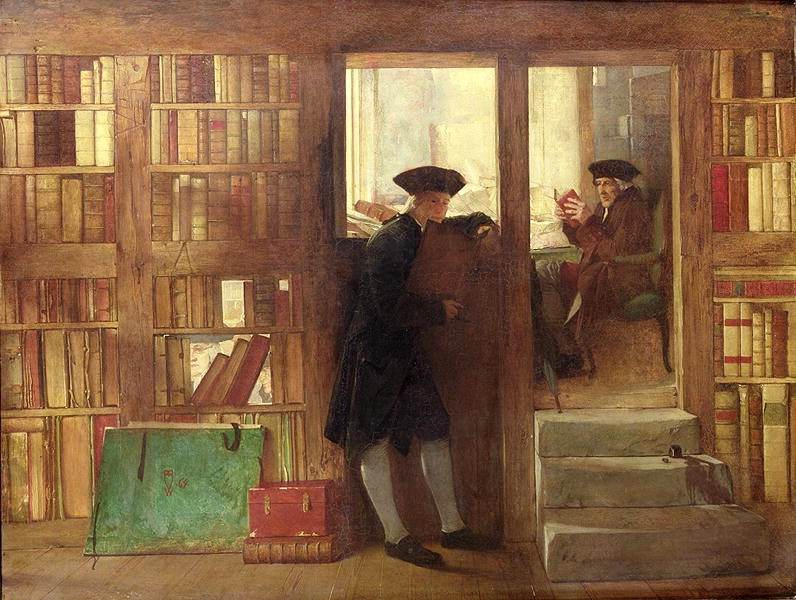
Art: The Bibliophilist's Haunt or Creech's Bookshop by William Fettes Douglas
35 Comments on Bestselling Novels by Year, last added: 9/15/2013
Display Comments
Add a Comment
By: Shelagh Watkins,
on 3/27/2013
Blog: Literature & Fiction (Login to Add to MyJacketFlap)
JacketFlap tags: fiction, romance, Author Interviews, crime, literary fiction, author interview, Add a tag
D.J. Swykert’s short fiction and poetry have been published in The Tampa Review, Monarch Review, Sand Canyon Review, Zodiac Review, Scissors and Spackle, spittoon, Barbaric Yawp and BULL. His novel, Maggie Elizabeth Harrington, won a literary competition with The LitWest Group in Los Angeles in 2002. Alpha Wolves, D.J.’s Noble Publishing’s bestselling novel, was released in April, 2012. Children of the Enemy, D.J.’s OmniLit’s bestselling novel, was published for the first time in 2009 and a third edition published in September 2012 by Cambridge Books.
Hi D.J., Please tell everyone a bit about yourself.
 D.J.: I’m a blue collar person from Detroit. I’ve worked as a truck driver, dispatcher, logistics analyst, operations manager, and ten years as a 911 operator, which was the very best job of all of them. I write stories like you’d watch a movie and put them down on paper. I have written in different genres; crime, romance, and even a little bit in literary fiction. The last sentence in my writing bio is always: He is a wolf expert. I am not a biologist. I raised two arctic hybrids, had them for eleven years, and have written two books in which they join the other protagonists.
When did the writing bug bite, and in what genre(s)?
D.J.: The first thing I ever wrote was a poem to impress my art student girlfriend. That was right after high school. It wasn’t very good, but she was impressed with my effort. I’ve been scribbling things ever since.
When you started writing, what goals did you want to accomplish? Is there a message you want readers to grasp?
D.J.: I’ve always wanted a career that I enjoyed. I looked at writing as a possible means to that end. I’ve had some small success, enough to be encouraging, but I’ve always worked for a living. If there’s a central theme to my writing it’s that all life has value. My characters tend to question norms. I tend to question what is considered normal. I like animals, I have empathy for the hardships they endure and my protagonists usually do as well.
Briefly tell us about your latest book. Is it part of a series or stand-alone?
 D.J.: The Death of Anyone is essentially a mystery/suspense story with romance and a little science in it. The story centers on homicide detective Bonnie Benham’s search for the killer of young girls.
This book has a couple of the same characters from an earlier unpublished novel I hold the rights to titled Sweat Street, but I wouldn’t consider it a sequel. If I have some success with The Death of Anyone I may look to publish the first book. And perhaps consider another story with Detective Bonnie Benham. This is not the first time I’ve written from a female POV, but it’s the first time for a female police detective.
What’s the hook for the book?
D.J.: The book introduces readers to a DNA search technique not in common use here in the U.S., Familial DNA. A lot will be written on this subject as the real life trial of Lonnie David Franklin, The Grim Sleeper unfolds in California this year. The trial will set precedence for future use of this DNA search technique and I suspect will eventually lead to a Supreme Court decision on it’s admissibility as evidence. The defense is going to severely question LAPD investigating Lonnie Franklin in the first place as there was no direct evidence linking him to the crime.
How do you develop characters? Setting?
D.J.: They say write what you know, so I set my story in Detroit, where I grew up and lived for a long time and can authentically describe the city and places for the scenes in my story. When I make up a character I usually visualize someone in my head and then give them the characteristics I believe suits the character in my story. I wrote a story about a thirteen year old girl trying to save a pack of young wolves from a bounty hunter. In my mind I visualized Maggie Harrington as Jodie Foster in an old film, Taxi Driver, where she played a thirteen year old prostitute. I used Jodie’s image to describe the girl and my own feelings for animals to impart her emotions concerning the wolves. This is how I generally develop a character.
Who’s the most unusual/most likeable character?
D.J.: I think Bonnie Benham is both unusual and likeable. She was originally in narcotics, but washed out. In her own words she became more “narcotic” than “narc.” As she investigates the murders of adolescent girls she is trying to resurrect herself as well as seek justice for the victims. This makes Bonnie a very edgy homicide cop. The story contains several suspects who are both likeable and unlikeable.
Do you have specific techniques to help you maintain the course of the plot?
D.J.: I’m a ponderer. I do a lot of thinking about my character and the story in my head before I begin to write. I usually have figured out how I wish to end the story. When I begin to write I put my character into a situation and from there the chapters all point towards the ending. It doesn’t always work out quite as simply as this sounds, but this is how I begin.
Do you have a specific writing style? Preferred POV?
D.J.: I think my best writing is in first person. But The Death of Anyone and Children of the Enemy are in third person past tense, which most readers I think prefer. First person works good as a narrative for a strong character in a short book, but since it can only get into the one character’s head it can get a bit tedious.
How does your environment/upbringing color your writing?
D.J.: I grew up in Detroit, so, for crime or mystery stories I’ve set them in Detroit, which unfortunately has held the Murder Capital of the World title several times. I have also written stories set in Michigan’s Upper Peninsula, where I lived on the Keweenaw Peninsula for a decade. Love it up there, a true wilderness much like Alaska only with smaller mountains. But the winter is extremely long, turbulent and prohibitive.
Share the best review (or a portion) that you’ve ever had.
D.J.: I liked this review left on Amazon:
The Death of Anyone by David Swykert, reads like a Jessie Stone movie, was a true page turner for me. His subject is close to our hearts and the viewpoint is an eye opener. He has interwoven the personal problems of some of his Characters making them real. He also has a flair for writing some romantic scenes that most ladies will find endearing. If you enjoy a mystery, some anxiety and a little romance I would recommend you read The Death of Anyone.
What are your current projects?
D.J.: I have an offbeat/quirky romantic tale titled The Pool Boy’s Beatitude. The book will publish this summer by a small Indie press out of Detroit, Rebel e Publishing. They do have a book distributor and a small print run will be done. It’s the story of an alcoholic physicist who drops out and is cleaning swimming pools to earn a living, skimming what he refers to as the “Infinite Pond.” The story follows the human orbit of Jack Joseph and his trail of broken relationships until he ultimately lands himself in a county jail.
Where can folks learn more about your books and events?
D.J.: I have a page on an artistic collective called: www.magicmasterminds.com You can find information about my work, and me on the site, and see a host of other amazing artists, musicians and writers.
Thanks for joining us today, D.J.!
D.J.: Thanks so much for the opportunity.

0 Comments on D.J. Swykert as of 3/27/2013 8:07:00 PM
Add a Comment
By: Nathan Bransford,
on 8/8/2012
Blog: Nathan Bransford (Login to Add to MyJacketFlap)
JacketFlap tags: Culture, Literary Fiction, Social Media, Add a tag

Writing in Slate, Jacob Silverman argues that literary culture, driven by Twitter and blogging, has gotten too nice:
if you spend time in the literary Twitter- or blogospheres, you'll be positively besieged by amiability, by a relentless enthusiasm that might have you believing that all new books are wonderful and that every writer is every other writer's biggest fan. It's not only shallow, it's untrue, and it's having a chilling effect on literary culture, creating an environment where writers are vaunted for their personal biographies or their online followings rather than for their work on the page.I think we've all encountered shallow and forced positivity online, and all those likes and RTs and squeefests can, at times, ring a more than little hollow. I'm a bit wary of reviewers who choose not to write negative reviews, which, by the way, is completely hypocritical because I have a self-imposed rule not to give bad reviews on Goodreads and Amazon.
But I disagree with Silverman that old school negativity is an integral part of a more virtuous literary culture. Sure, we need both positive and (thoughtfully) negative reviews, and above all we need honesty, but there's no reason thoughtful literary criticism and squeefests can't coexist. It's a big Internet out there.
Besides, uh, have you seen some of the reviews on Goodreads? Some of them would make H.L Mencken blush they're so hostile.
Even if one accepts the premise that we're getting more positive in the Internet age... what are we losing again? Old school literary smackdowns may have been entertaining for those who agree with the reviewer, but I'm not sure I see how hysterical pans really advance constructive dialogue.
So basically... if there's a problem I don't see a problem.
What do you think? Too many rainbows and puppies out there? Would we be better off with more negativity and fewer niceties? Does the problem have more to do with cliqueishness than positivity?
Art: The Happy Violinist with a Glass of Wine by Gerard van Honthorst
0 Comments on Has Literary Culture Gotten Too Nice? as of 1/1/1900
Add a Comment
By: Kristin Nelson,
on 6/5/2012
Blog: Pub Rants (Login to Add to MyJacketFlap)
JacketFlap tags: editors, trends, deals, literary fiction, Book Expo, women's fiction, Add a tag
STATUS: It's BEA time! Oh crazy schedule
What’s playing on the XM or iPod right now? Nothing at the moment.
Obviously I'm not just talking to children's editors while in New York. So here's a little snippet of what editors have been buying in the adult realm:
1) Literary novels with some sort of magical element (i.e The Night Circus)
2) Multi-cultural literary novels by non-American writers
3) Voice-driven literary novels that shed light on the contemporary modern landscape for protagonists in their 20s or 30s.
In women's fiction and romance
1) contemporary stories with small town settings
2) southern contemporary women's fix
3) looking or romantic comedies in romance (haven't heard that desire in a while!)
Off to the Javits Center!
22 Comments on What Editors Have Bought Recently - Women's Fic and Literary, last added: 6/9/2012
Display Comments
Add a Comment
By: Karen Cioffi,
on 5/4/2012
Blog: Writing for Children with Karen Cioffi (Login to Add to MyJacketFlap)
JacketFlap tags: writing tips, literary fiction, Add a tag

How to Create Literary Fiction
By Maggie BallAs a book reviewer, I get anywhere from fifty to one hundred review requests a week. Of these, I might accept five or so. While I do occasionally take nonfiction books, most of what I accept will be in the genre known as literary fiction. But just what is literary fiction?
What differentiates literary fiction from what most publishers class as commercial or genre oriented fiction, and why am I biased towards it? It's a question I get asked regularly. Some, like author David Lubar ("A Guide to Literary Fiction," 2002) equate the label with work that is pompous, dull, plotless, and overly academic: "If you're ever in doubt about whether a story is literary, there's a simple test. Look in a mirror immediately after reading the last sentence. If your eyebrows are closer together than normal, the answer is yes." Publishers often use this label for work which defies other genre distinctions, eg it isn't romance, isn't "chick-lit," isn't science or speculative fiction, isn't a thriller, action, or political drama. It is meant to denote a fiction which is of higher quality, richer, denser, or, as the literary fiction book club states, work which "can make us uncomfortable or can weave magic."
These distinctions aren't always clear, and there are some superb exceptions to the genre rule, such as Margaret Atwood or China Mieville, whose high quality work fits the speculative fiction genre, or Umberto Eco and Iain Pears, whose work is full of mystery and suspense. All writers feel that their work is high quality, and most write fiction with the goal of producing great work. So how can we ensure that our work is literary fiction rather than some other form? Here are five tips to guide writers who are inclined to produce literary fiction:
1. Aim for transcendency. The one quality which seems to be present in abundance in literary fiction and much less so in other forms, is what agent and author Noah Lukeman calls "transcendency." It isn't easy to define, and in his exceptional book, The Plot Thickens (St Martin's Press, 2002), Lukeman presents a number of points, such as multidimensional characters and circumstances, room for interpretation, timelessness, relatability, educational elements, self discovery, and lasting impression. I would say that transcendency equates to depth, to writing which does more than entertain its readers, and instead, changes something, however small, in the way they perceive themselves. How do you get transcendency in fiction? With a deep theme, deep and powerful characters, complex plots, and exceptional writing skills. Sound easy?
2. Read quality literature. This is a lot easier than transcendency, though not unrelated. Since achieving literary fiction is a subtle and difficult thing, you've got to develop your literary senses. The best way of doing that is to read books which fit this genre. If you want to create literary fiction, chances are, you probably are already reading it. These are books by the writers we call "great." Your list of names may differ from mine, but these are the writers who win prizes like the Booker, the Pulitzer, the Commonwealth Prize, and the National Book Award to name just a few. The more great literature you read, the better able you will become at recognising the elements which make a fiction literary.
3. Don't get defensive! Lubar's article is lots of fun, but literary fiction isn't meant to be snobbish, academic, plotless, or boring in any way; just well crafted. That may
11 Comments on How to Create Literary Fiction by Maggie Ball, last added: 5/6/2012
Display Comments
Add a Comment
By: Evil Editor,
on 2/23/2012
Blog: Evil Editor (Login to Add to MyJacketFlap)
JacketFlap tags: Literary Fiction, Add a tag

Guess the Plot
Pensive
1. Evelyn has always felt secure within her own borders. But when she opens a door into a world where dreams are no more reality than her own faith, she finds herself thinking about thoughts and dreaming dreams of reality. And faith.
2. Some superheroes are strong. Some are fast. Some can fly. Gus Rodin, aka "The Thinker" is smart. Thrill as he fights evil by sitting down to contemplate.
3. He used to call her his Lucky Penny, but now that they're divorced, (due to her affair, mind you) he just calls her Ex-Pensive. Why can't he just forget about her? She's all he can think about. It's like witchcraft or something. Hang on! There was that dead goat and pentagram in the garage...
4. To think, or not to think . . . I think. When you have a 10 minute memory it's all a little fuzzy.
5. Anne has just graduated NYU with a degree in Sociology and $100,000 in student loans. There are no jobs to be had in her field of choice: social justice at a top non-profit in NYC. A gin and sex filled weekend will determine her fate: give up and go work at her uncle's accounting firm, or say screw it and be a stripper.
6. Unable to think of a good title, an author goes to a random word generator site, specifies "adjective," and is given . . . Pensive.
Original Version
Sister Evelyn of the C.G. Priori lived her life sheltered and absorbed in the understanding that the Influence would always be a dream away, protecting and securing her future. All of that changes one day and shakes up Evelyn’s fifty years of devotion with the single opening of a rusted and once sealed door, leading her past her own borders, and into a world where dreams are no more reality than her own faith. [I was about to suggest that we drop paragraph 1 and start the query with paragraph 2. Then I looked ahead and discovered that paragraph 1 is the entire plot.]
PENSIVE, a debut novel of 50,100 words, thrusts the reader into a world where thoughts are controlled by the rules of a close-minded society, and consequences are extreme for those that dare to ask what lies outside their own borders. [You keep using that word. I'm not clear on what it means.] A notable work it can be compared to would be The End of Mr. Y, by Scarlett Thomas. [I Googled The End of Mr. Y, and I agree that it's a good comparison, in that it sounds just as wacko as your book. However, compare the first paragraph of that book's plot description (on Wikipedia):
The book tells the story of Ariel Manto, a PhD student who has been researching the 19th-century writer Thomas Lumas. She finds an extremely rare copy of Lumas's novel The End of Mr. Y in a second-hand bookshop. The book is rumoured to be cursed - everyone who has read it has died not long after
23 Comments on Face-Lift 996, last added: 2/27/2012
Display Comments
Add a Comment
By: Evil Editor,
on 7/13/2011
Blog: Evil Editor (Login to Add to MyJacketFlap)
JacketFlap tags: Literary Fiction, Add a tag

Guess the Plot
Through a Glass Darkly
1. The school's science nerd hacks Kari's digital scale and livestreams the results on the Internet, launching Kari into a deadly struggle with anorexia, bulimia, cutting, and a mean stepmom.
2. Nerdy Aaron could not believe his luck! His cool new house-mates not only turned him on to the joys of substance abuse, but they actually trusted him to store the pillowcase full of weed in his room. Hilarity ensues when their house gets raided.
3. The light is out. The glass is broken. Preacher man Joss Simpson will either lose his soul or save it when he enters the mysterious mirrored portal to Dimension X. He has to build a city, an army, and save the world.
4. A gay Japanese man in his last year of law school in the US goes out for the football team and falls for the wide receiver. But will his conservative family in Japan approve? Also, other characters who see life . . . through a glass darkly.
5. At a wild party celebrating his divorce, Steve Betts falls through a second story picture window in the dark. He wakes up in the hospital to find that his wiseacre friends have left him a gift: copies of all 273 books listed on Amazon under the title "Through A Glass Darkly".
6. Kids holding a giant bar mirror across one lane of a dark mountain highway are causing causing a rash of fatal roll-over accidents by drivers trying to avoid head-on collisions (with themselves) -- until a suicidal divorcee sees her chance at escape and floors it dead ahead.
Original Version
Dear Evil Editor,
Stephen James has finally accepted himself as a gay man when he meets Grace and, one coffee later, is left torn between his undeniable attraction to men and the red-headed exception that proves the rule. [Does that mean I can't be sure I'm straight unless I find a guy who's the exception that proves the rule?] [How many coffees did it take for him to accept himself as gay?] He and Grace marry, but his confusion continues, and the marriage fails. [Too bad. But how could anyone have foreseen that?] Another year, another coffee shop, and this time it is Gabriel who has Stephen brushing up on his flirting skills. Will it be different with Gabriel, [Count on it.] or will Stephen push him away as he did Grace? [Don't take this the wrong way, but who cares?]
Higen Nishida attends law school in the United States, planning to return to Japan, the family law firm, and an arranged marriage upon graduation. [Apparently you've overreacted to my last comment by switching the query to a different book.] [Is the legal system in Japan so similar to America's that going to law school in the US prepares you to practice law in Japan? A lot of law school involves studying cases that can be cited as precedents, but not in any country.] When Gabriel encourages him to try out for the football team, [In his last year of law school
36 Comments on Face-Lift 927, last added: 7/16/2011
Display Comments
Add a Comment
By: Kristin Nelson,
on 7/6/2011
Blog: Pub Rants (Login to Add to MyJacketFlap)
JacketFlap tags: news, New York Times, young adult, fantasy, romance, USA Today, literary fiction, client books, bestseller lists, Add a tag
STATUS: Even though I look absolutely ridiculous doing a happy dance, I’m doing it anyway! White woman overbite. Here I come.
What’s playing on the XM or iPod right now? THE LOAD OUT by Jackson Browne
This is just getting impossible. If I keep hitting crazy milestones, what will I have to look forward to? Last year, I had 3 authors on the New York Times bestseller list at the same time.
Then it happened twice in one year. Fabulous. Where to go next?
How about 4 authors on the NYT list at the same time? And 3 of them on the top 150 USA Today Bestseller list at the same time as well.
Yep! That’s the news that hit my inbox about an hour ago. And here they are.
At #19 on the Trade Paperback list and #146 on USA Today

At #9 on the Children's list

At #11 on the Mass Market paperback list and #109 on USA Today

At #13 on the eBook listand #59 on USA Today

Whe
31 Comments on Only Once In An Agent’s Lifetime?, last added: 7/9/2011
Display Comments
Add a Comment
By: Chuck,
on 5/24/2011
Blog: Guide to Literary Agents (Login to Add to MyJacketFlap)
JacketFlap tags: Literary Fiction, Successful Queries, Add a tag
This series is called "Successful
Queries" and I'm posting actual query letters
that succeeded in getting writers signed with agents. In addition to posting the actual
query letter, we will also get to hear thoughts from the agent as to why the letter
worked.
The 54th installment in this series is with agent Elisabeth Weed (Weed
Literary) for Meg Mitchell Moore’s debut
novel, The
Arrivals (May 25, 2011; Reagan Arthur Books). Learn
more at megmitchellmoore.com, or through
Meg's Twitter.
Dear Ms. Weed:
My name is Meg Moore, and I'm writing to you to see if you'd be interested in taking a look at my first novel.
The novel, THE ARRIVALS, tells the story of Ginny and William Owen, retired parents of three grown children, who lead a peaceful life in Burlington, Vermont. But one summer, when their oldest daughter Lillian brings her two young children to her parents' house to escape her crumbling marriage, things start to get complicated. It's not just Lillian turning to Ginny and William for help. Lillian's younger brother Stephen is preparing for fatherhood with his successful, ambitious and misunderstood wife Jane when pregnancy complications extend a weekend visit to his parents into a weeks-long bed rest. Rachel, the youngest Owen sibling, who is trying to forge an independent life in New York City, needs help of a different sort: money, and lots of it.
As Lillian embarks on a friendship with a young priest, tension builds between Ginny and William over how much to allow the lives of their children to intrude into theirs, and between the siblings as they realize that even as adults they are competing for their parents' help and attention. By the end of the summer, each character has had to learn how to negotiate the precarious landscape of family love and loyalty. Each has had to re-examine his or her assumptions about balancing professional success and parenting. And everyone has discovered, in his own way, that a parent never stops being a parent.
One reader has compared the novel's themes to those of Heidi Pitlor's THE BIRTHDAYS, and I think it will find an audience in readers of that novel as well as novels by Joanna Trollope or Carol Shields—writers who use domestic settings to illuminate universal themes.
I work as a freelance writer in Newburyport, Mass., where I live with my husband and my three little gi Add a Comment
By: Becky Laney,
on 5/14/2011
Blog: Becky's Book Reviews (Login to Add to MyJacketFlap)
JacketFlap tags: 1945, library book, classics, adult fiction, literary fiction, Add a tag
The theater in Chinatown was crowded to the doors. Every night actors brought from Canton played and sang the old Chinese operas. If Billy Pan, the manager, announced a deficit at the end of the lunar year, businessmen contributed money to cover it. The theater was a bulwark of home for them. Their children went to American schools, spoke the American language, acted like American children. The fathers and mothers were not highly educated people and they could not express to the children what China was, except that it was their own country, which must not be forgotten. But in the theater the children could see for themselves what China was. Here history was played again and ancient heroes came to life before their eyes. It was the only place in Chinatown which could compete with the movies. Parents brought their children early and stayed late. They talked with friends and neighbors, exchanged sweetmeats and gossip, and sat spellbound and dreaming when the curtain went up to show the figures who were contemporary with their ancestors.
As much as I just loved and adored East Wind: West Wind--my very first Pearl S. Buck novel--I just LOVED, LOVED, LOVED Kinfolk. It is so very different from The Good Earth and Sons. While I struggled to find anyone sympathetic in The Good Earth and Sons, I could name half a dozen characters (if not more) that I liked, loved, respected, or admired in Kinfolk. And here's the thing, even the characters that I didn't necessarily "like", I found them to be well-developed, complex. Unlike the often nameless one-dimensional characters in The Good Earth and Sons. And the language, the style. It wowed me. It really did! So much to love and appreciate.
Kinfolk is about the Liang family. Dr. Liang, the father, is a scholar who fled China because it was getting to be too harsh, too ugly, too dangerous, too uncertain. He's a scholar, a teacher, a thinker, a philosopher. He needs peace and quiet and rest. He needs to be surrounded by people who appreciate his intellect, his superiority. (And does he ever think he's superior to just about anyone who's ever lived.) His wife, well, she "appreciates" him as best she can. Knowing that he can be oh-so-difficult to live with. But knowing that it is her place to bring out the best in him. To calm him when he gets furious or frustrated. But this isn't always easy since he doesn't respect her or see her as someone worthy of love and respect. She's the mother of his children. But. That's about it. He doesn't feel like she's intellectually or emotionally his soul mate. And he doesn't see any need to treat her as if she was the love of his life. It's her job to appreciate him, not the other way round.So the Liangs have four children--two of the children were born in China, two of the children were born in America--James and Mary are the oldest, Peter and Louise are the youngest. James and Mary have a deep longing to return to China, to make their home, their future in China. They know it won't be easy. They know it will require sacrifice and hard work. But neither James or Mary would want to live anywhere else. They wouldn't trade the hardships, the uncertainties for anything because they feel
2 Comments on Kinfolk, last added: 5/15/2011
Display Comments
Add a Comment
By: Becky Laney,
on 5/4/2011
Blog: Becky's Book Reviews (Login to Add to MyJacketFlap)
JacketFlap tags: family, Historical Fiction, adult fiction, literary fiction, library book, 1930, Add a tag
These things I may tell you, My Sister. I could not speak thus even to one of my own people, for she could not understand the far countries where my husband lived for twelve years. Neither could I talk freely to one of the alien women who do not know my people and the manner of life we have had since the time of the ancient empire. But you? You have lived among us all your years. Although you belong to those other lands where my husband studied his western books, you will understand. I speak the truth. I have named you My Sister. I will tell you everything.
I loved this one. I just LOVED, LOVED, LOVED it. As in I think I may have found (another) author to become obsessed with.
East Wind: West Wind is all about tension and drama. For though our heroine wants to please her husband, although she is fascinated by some of these new ideas, she finds it difficult to forget everything she's grown up believing. It's not something that can be done in one week, one month, or one year.
But. This isn't her story alone. No. Some of the most dramatic scenes in the novel focus on her brother. Like her husband, her brother has been educated in the West, he has spent time in foreign countries. He's learned to adapt to new ways of life. And he does NOT want to return to China to marry the woman he's been betrothed to since he
3 Comments on East Wind: West Wind, last added: 5/7/2011
Display Comments
Add a Comment
By: Chuck,
on 3/15/2011
Blog: Guide to Literary Agents (Login to Add to MyJacketFlap)
JacketFlap tags: Literary Fiction, 7 Things I've Learned So Far, Add a tag
This is a recurring column I'm calling "7 Things I've Learned
So Far," where writers at any
stage of their career can talk about seven things they've learned along their writing
journey that they wish they knew at the beginning. This installment is from novelist Alexander
Yates.
Alexander is excited to give away a free copy of his
novel to a random commenter. Comment within one week; winners must live in Canada/US
to receive the print book by mail. You can win a blog contest even if you've won before.
Alexander Yates grew up in Haiti,
Mexico, Bolivia and
the Philippines. His first novel, Moondogs, (Doubleday;
March 2011) was given a starred review by Kirkus,
which called it “accomplished ... unusually involving.”
His other work has appeared in American Fiction,
FiveChapters.com and the Kenyon Review Online.
Alex has a website and is on Twitter.
the Philippines. His first novel, Moondogs, (Doubleday;
March 2011) was given a starred review by Kirkus,
which called it “accomplished ... unusually involving.”
His other work has appeared in American Fiction,
FiveChapters.com and the Kenyon Review Online.
Alex has a website and is on Twitter.
1. Revision is important, but finishing your draft is more important. I learned this the hard way. It took me five years to finish writing my novel, but in retrospect two of those years were wasted (or at least used very ineffectively) on obsessive over-revision. I wrote my first few chapters and, realizing they weren’t very good, I began rewriting. And rewriting. What I didn’t realize at the time is that first chapters are supposed to stink. How could they not? By the time Moondogs was finally picked up for publication I’d deleted virtually all the early material I’d agonized over for years. Just because I’d been reluctant to hold my nose and push through to the end of the book.
My takeaway: Nothing compares to the perspective that a full draft (stinky though it may be) will give you. For all you know that scene you are pouring hours into revising doesn’t even belong in the book.
2. There is no substitute for time at the keys. This, of course, is a cliché. But it also can’t be overemphasized. Sometimes work needs to simmer away in your head, but the process of discovery happens much quicker when you’re struggling with your own raw sentences. Some writers will tell you: “Treat it like a job.” This is maybe a little extreme—writers like George Saunders and Charles Yu have written brilliant books while working full time at office jobs. But whether it’s eight hours a day, or two, you need to make them happen. Time at the keys is no guarantee of success, but it is a precursor to it.
3. The Internet is not your friend … unless you are way better at time management than me. But if you’re like me (read: a big and distractible baby) then the Internet is a major enemy to productive writing time. I got around it by writing my novel on a 90’s era laptop with busted Ethernet ports and no wireless. Even as I write this, my modem and router are unplugged. If they weren’t, I Add a Comment
By: Melinda Palacio,
on 1/27/2011
Blog: La Bloga (Login to Add to MyJacketFlap)
JacketFlap tags: submissions, literary fiction, writing workshop, PALABRA magazine, Add a tag

elena minor, photo courtesy of PALABRA
The editor and publisher of PALABRA, a Magazine of Chicano & Latino Literary Art, keeps a fairly low profile. However, she was adventurous enough to meet with La Bloga. I’m lucky in that I have an insider’s view.
When I first heard about PALABRA in 2006, I sent many poems and short stories to the magazine, which were rejected. As someone who relishes rejection, I kept sending work to the magazine until I finally had a breakthrough with two poems in 2009 issue 5.
One important memo I’ll divulge has to do with the magazine’s visual aesthetics, a bit of information that might help potential contributors to the literary magazine. PALABRA is always spelled with capital letters and the publisher’s name is always spelled with lower case letters, as in “elena minor.” If you get this visual quality correct, she won’t frown at your submission or be in a bad mood when she reads your promising manuscript.
Remember, persistence. I don’t take anything for granted. PALABRA is an annual publication that rejected my work for three straight years, published my work in 2009, and rejected everything I sent in 2010. I’m happy to report that PALABRA has accepted my poetry for the forthcoming 2011 issue.
The Bay Area native started PALABRA in 2006 because she wasn’t finding any Latino literary magazines that published the kind of work she wanted to see. “I wanted writing that wasn’t geared to an Anglo audience, whose interest didn’t lie in trying to explain us (Chicanos and Latinos),” she said. “I wasn’t interested in footnoted Spanish. I wanted work that was different and unapologetically Latino.”
Over the past five years, PALABRA has taken on a life of its own. Also, she gets the word out by attending AWP, the Association of Writers and Writers Programs conference; this is her fourth year at the roving conference. In addition, she started the PALABRA readings at the REDCAT Lounge in the Disney Center in Downtown Los Angeles three years ago. She also gives authors who’ve been published in PALABRA the opportunity to read and feature their books at REDCAT. Working for CalArts at REDCAT helped secure the lounge’s excellent reading space. PALABRA Press will soon publish single-authored books of short, unconventional fiction.
Being the publisher, marketer, and editor of PALABRA takes its toll on minor’s writing time. She hopes to retire someday from all her jobs and devote more time to her writing. She’s an award-winning dramatist who also writes fiction, poetry, and hybrid works. She is currently polishing a poetry manuscript and working on an episodic novel. The MFA grad from Antioch puts her name out there and also rides the acceptance and rejection roller coaster. “I want to make sure they know Latino writers exist,” she said. “There are still a lot of editors of lit mags who have no clue about Latino literature.”
Eventually, the publisher would like to hand off the editorial decisions to someone else. For now, she thrives on finding exciting work that’s different. “I’m not a big fan of trying to repeat a formula,” she said. “I’m looking for writing that’s working from some well spring of originality.” She’s such a fan o
2 Comments on Outside the Box: PALABRA by Melinda Palacio, last added: 1/28/2011
Display Comments
Add a Comment
By: Gail Gauthier,
on 1/25/2011
Blog: Original Content (Login to Add to MyJacketFlap)
JacketFlap tags: literary fiction, Reader response, YA, Add a tag

I am not fond of traditional problem books, which I see as validating themselves because they are about something really, really important. A problem. I particularly dislike those books that pile on problem after problem to make sure we all get the point about how serious they are. Jellico Road by Melina Marchetta involves a lot of problems. To make matters worse, when a librarian friend saw me leaving with the book, she told me she'd cried over the ending. That is not my idea of a recommendation.
I didn't cry over the ending of this marvelous book, but I came damn close.
The many problems the many charcters in Jellicoe Road suffer through are not there to instruct us on how people should deal with their trials. Instead, they are there to support character and plot. They explain why characters behave the way they do, and each ordeal is literally part of the plot in this story of a tough, witty, capable seventeen-year-old girl who appears to be alone in the world but most definitely is not. Taylor appears to be caught in an age-old battle among three groups of teenagers--the private school students like herself, the Townies, and the Cadets who are just in the neighborhood for a few weeks. Really, she is in paradise, a pardise that is slowly revealed to her along with the story of another group of students, Townies, and Cadets who had lived in that very spot nearly eighteen years earlier.
This is a demanding book. The story of the earlier kids is told by means of a manuscript that Taylor has been reading out of order. It takes time to work out those kids' relationship to each other. We have to also work out what they have to do with Taylor, something that I was sometimes able to figure out before she did--but in the most satisfying way.
There are also multiple mysteries here. In addition to Taylor's personal mysteries and the mystery surrounding the earlier teenagers, there is a serial killer at work here, maybe some arsonists, and a tunnel keeps coming up. Everything is resolved, nothing is forgotten.
How good is this book? It's good enough that its weaknesses don't stop the narrative drive. Why don't the adults in the book tell Taylor more about her life? Everybody seems to know and to be keeping things from her. Isn't the manuscript a little contrived? Isn't the crisis at the dorm at the end of the book a little over the top? Hey, let it all go, and enjoy the ride.
Jellico Road might be a great crossover book between traditional mysteries and mainstream literature. The mystery will engage mystery-loving teen readers, and the quality of the writing will make them want more of the same.
Plot Project: Several times in the book, Taylor talks about what she wants. More. More from everybody. Is this a case where the author gave her character something to want and then came up with a plot by throwing in stumbling blocks to getting it? I don't think so. Come on. More? Plus there are too many threads here for something so simplistic as roadblocks to happiness to have kept things running. My guess is that this is a book that started with a situation. You've got this group of kids involved in this elaborate war that in reality is a game that enables them all to interact together, and they start learning about another group of kids who were doing the same kinds of things twenty years before. From there the plot is all about reve
0 Comments on We Might Call It A Sophisticated Mystery as of 1/1/1900
Add a Comment
By: Chuck,
on 1/9/2011
Blog: Guide to Literary Agents (Login to Add to MyJacketFlap)
JacketFlap tags: Contests, Literary Fiction, Add a tag
Welcome to the eighth (free!) "Dear Lucky Agent" Contest on
the GLA blog. This will be a recurring online contest
with agent judges and super-cool prizes. Here's the deal:
With every contest, the details are essentially the same, but the niche itself
changes—meaning each contest is focused around a specific category
or two. So if you're writing a novel that's considered literary fiction,
this eighth contest is for you!
HOW TO SUBMIT
E-mail entries to [email protected]. Please paste everything. No attachments.
WHAT TO SUBMIT
The first 150-200 words of your unpublished, book-length work of literary fiction. You must include a contact e-mail address with your entry and use your real name. Also, submit the title of the work and a logline (one-sentence description of the work) with your entry.
Please note: To be eligible to submit,
I ask that you do one of two things: 1) Mention and link
to this contest twice through your social media—blogs, Twitter,
Facebook; or 2) just mention this contest once and also
add Guide to Literary Agents Blog (www.guidetoliteraryagents.com/blog) to
your blogroll. Please provide link(s) so the judge and
I can verify eligibility. Some previous entrants could not be considered because they
skipped this step!
CONTEST DETAILS
1. This
contest will be live for 14 days—from Jan. 9 through
the end of Sunday, Jan. 23, 2011, EST. Winners notified by e-mail within three weeks of
end of contest. Winners announced on the blog thereafter.
2. To
enter, submit the first 150-200 words of your book. Shorter or longer entries
will not be considered. Keep it within word count range please.
3. This
contest is solely for completed book-length works of literary fiction.
Literary fiction, defined, is fiction that falls outside the categories of genre fiction.
Much fiction falls into the so-called popular commercial genres of romance, mystery,
suspense, thriller, Western, horror, science fiction, and fantasy. Writing that falls
in none of these categories is often called "literary."
4. You
can submit as many times as you wish. You can submit
even if you submitted to other contests in the past, but please note that past winners
cannot win again.
5.
Add a Comment
By: Lucky Press, LLC,
on 10/20/2010
Blog: Lucky Press, LLC (Login to Add to MyJacketFlap)
JacketFlap tags: men authors, adult fiction, literary fiction, new releases, Add a tag
Lucky Press will publish J. Michael Dew's debut novel Tecker (working title) in September 2011. This adult fiction title would best be described as literary fiction that explores the prejudices within a small community against a 29-year-old man, Robbie Toe, a graduate of Vo-Tech, whose intellectual differences garner the attention of the town bullies, male and female. When a false accusation of rape lands Robbie in jail, the true nature of various townspeople is revealed.
Synopsis:
Robbie Toe never touched Missy inappropriately, never raped Blue Jean by the fire, never did anything to the other five girls who accused him of sexual abuse. But no one cared to hear his side of the story. He was a "molester" from the beginning, a "pervert," a "predator." On the day he climbed into an abandoned treehouse to rescue The Priest, an all-black kitten with a white tuft on his neck, Robbie was whisked off to jail to the great satisfaction of the bullies who hated him for no other reason than that he had a curious penchant for cats and was an easy target.
Tecker tells the story in four distinct voices of a social outcast who falls prey to the relentless scorn of a small Pennsylvania town and the cruel lies of its teenage girls. How is a 14-year-old girl inspired to use sex as an instrument of torment? Has our collective conscience weakened to the point that bullying another becomes a source of amusement? Twenty-nine-year-old Robbie Toe stands to be forever changed by these attacks. The charged conclusion of the story, however, will leave the reader wondering: was the change for good or bad?
About the Author:
J. Michael Dew has been making a living as an English professor since 2002. He lives in Atlanta, Georgia with his wife and three daughters.
0 Comments on Lucky Press to publish "Tecker" as of 1/1/1900
Add a Comment
By: Chuck,
on 9/23/2010
Blog: Guide to Literary Agents (Login to Add to MyJacketFlap)
JacketFlap tags: Excerpts, Literary Fiction, Successful Queries, Breaking In (Writer's Digest), Add a tag
This series is called "Successful
Queries" and I'm posting actual query letters
that succeeded in getting writers signed with agents. In addition to posting the actual
query letter, we will also get to hear thoughts from the agent as to why the letter
worked.
The 43rd installment in this series is with agent Janet
Reid (FinePrint Literary Management)
and her author, Sean Ferrell, for his novel, Numb,
which was released in August 2010 from Harper Perennial. Kirkus Reviews called Numb an
"eye-catching debut ... Artfully barbed entertainment.”
Dear Ms. Reid:
I am seeking representation for my literary novel, Numb. I found your submission guidelines online and have included below a one-page synopsis.
I live and work in New York City, I have had short stories published in Uber, WORDS and Bossa Nova Ink, and one of my recent short stories was a finalist in the Italo Calvino writing competition at the University of Louisville. I received my MFA in creative writing from Emerson College.
Numb is approximately sixty-thousand words in length.
In summary: Numb is a man who cannot feel physical pain.
When he wanders into a dying circus, he doesn’t know who he is or how he got there. Despite feeling like an outcast the circus adopts him. When it is clear that his “talent” (if you can call being shot with nail guns and staplers a talent) will make him the star freak of the show, he becomes the circus’ best chance for survival. After nearly sacrificing himself for the circus’ sake, he decides to run away from the circus and make his way to New York City to discover himself and his past.
Accompanied by his fire-eating best friend, Mal, Numb discovers a world outside the circus that is all too ready to reward and punish him for his self-destructive talents; and it’s a world that forces all his relationships to shatter. Numb finds women to comfort him, yet he won’t allow himself to trust them. He looks for love but won’t accept it, and he looks for safety in self-destruction. After undermining or losing friends and lovers, Numb is forced to figure out how to find a place for himself instead of just taking up space.
This novel is in the spirit of Fight Club or Battle Royale; it is an antiheroic tale of finding a way to survive in a world so filled with noise that simple conversation and compassion are often drowned out.
I look forward t Add a Comment
By: John Mark Boling,
on 9/10/2010
Blog: The Winged Elephant (Login to Add to MyJacketFlap)
JacketFlap tags: new jersey, literary fiction, p.f. kluge, cleveland plain dealer, newark star ledger, a call from jersey, Add a tag
 Recently, it seems that New Jersey's place in popular culture has been solidified by the TV popularity of shoes like Jersey Shore and The Real Housewives of New Jersey.
But for New Jersey native P.F. Kluge, now a professor and writer-in-residence at Kenyon College in Ohio, it's the place where he grew up, and a perfect setting for a novel about how the American dream has changed through generations.
The Newark Star-Ledger and Cleveland Plain Dealer both reviewed Kluge's new novel, A CALL FROM JERSEY, this week.
The Star-Ledger's interview offers more insight into the creation of this literary novel and the thought processes Kluge had while writing. Read the full article here, but our favorite excerpt is below.
"The book is really about conversations with my father I never got to have," Kluge said. “I have tried to imagine his experience as an American, and as a German in America, especially between the two world wars."
The son, too, is culturally adrift. He is a second-generation American, suddenly trying to understand his parents’ life and re-connect with their lost old-world ways.
“As I grow older, and the number of years since my parents have died grows larger, I grow closer to them,” Kluge said. “As I get older, I miss the sound of their voices, the sound of German being spoken around me, and the stories they told. I miss the beer parties and German songs sung into the night. I miss mother’s potato pancakes.”
The book’s sense of place is authentic. Kluge writes about “13 Bumps,” (Johnston Road in Watchung), which climbs the mountain above Route 22 and has been a teenage makeout place for generations, from Model As to Mitsubishis. And Snuffy’s in Scotch Plains, gone from “roadhouse to Parthenon.” Old Hans even recalls Madame Bey’s, the old Passaic-side boxing training camp on River Road in Summit, where Schmeling once trained.
Only one of Kluge’s previous seven novels was a Jersey story, and it was his most famous.
“I set ‘Eddie and the Cruisers,’ in South Jersey. I spent the summer of 1962 working as a college intern at the Vineland Times Journals, and I found South Jersey so fascinating, and so different from here I was from. You could smell whatever they were canning that day in the air.”
0 Comments on Interviews and more with P.F. Kluge for A CALL FROM JERSEY! as of 1/1/1900
Add a Comment
View Next 25 Posts
I think it's also related to the evolution of the human race and life as we know it. Things that mattered back in the day compared to today and the transformation of the way we live our lives. Reading older books has a certain charm about them because of the language used and the way they lived.
One thing I've noticed from historical dramas, including movies, set in far-flung eras (as in Tudor England of the 16th century, also the era of Shakespeare, to the 19th century of Charles Dickens) is that the people/characters are portrayed as speaking in a progressively less verbose and articulate manner through the centuries up until the modern era. Is this trend portrayed in the entertainment media accurate, or were the characters focused upon in by-gone eras those who had the advantage of the best education and stimulating social circles - especially in Shakespearean literature.
For me, THe Good Earth (winning in 1931-1932), and The Portrait of the Artist As A Young Man (1917), Sons And Lovers, and Gone With The Wind (1936-1937) were all simply written. I thought them easy to read without complex language to stumble over. But perhaps - to one degree or another - they contain more depth of characterization, introspection and abstraction than some of the more recent titles that have topped the best seller lists?
This is incredibly, incredibly interesting. We keep looking and whining about the best seller list while there almost certainly is a writer, this instant, that will be called a classic-writer in the future! We just don't look at non-bestelling books, and we find great literature in the aftermath. An incredible, incredible, and revealing post. The golden era is not dead at ALL.
The definition of great fiction has changed over the years. Some for the better and some for the worst (cringes).
This might be off topic, but I think it's interesting anyway. I personally know a lot of people who are reading older classics now thanks to e-books. And how is that possible you ask?
Well, a lot of web sites like Kobo offer free reads, and people who are just starting to learn how to read e-books are taking advantage of those free reads and rediscovering classics like "Uncle Tom's Cabin."
Just a couple weeks ago I looked up the bestsellers of the ‘80s, when I was in college, and found a list with the top ten for each year.
And in practically each year you find romances by Sidney Sheldon, Judith Krantz, Danielle Steel, and Jackie Collins, or thrillers by Ken Follett, Frederick Forsyth, Robert Ludlum, John le Carre, and Tom Clancy.
But for Pulitzer’s? Norman Mailer, John Updike, Alice Walker, Toni Morrison, and Anne Tyler.
Still, I love le Carre. And for 1983, I never could get through Ironweed, but I still have my Return of the Jedi Storybook. :p
That John Grisham bloke seems to be quite popular!
My God. It all went in the crapper in 1980. It is so obvious it's like a slap in the face. In fact, it is a slap in the face. That was my graduating year from college. It was also, well, if you were around then, you know the history of what happened very well. Very sad.
what a great list, and esp liked the insertion of other notable work that year that wasn't a best seller
maybe a top ten list for each year (as one commentator above mentioned they had seen for the 80s)?
thanks so much ;-)
Nathan - do you have a sense of the results if you looked at English language (ie not just US) sales?
There appear to be some flaws in the data.
For instance, "The Robe," by Lloyd C. Douglas, appears to have been either published twice, or popular twice, 10 years apart: in 1943, and 1953.
Also, Ulysses was NOT published in the U.S. at first. In fact, it was published in Paris by Ford Maddox Ford's friend and bookstore owner Sylvia Beach, who was a Joyce fan.
Lastly, other than The Great Gatsby, note NONE of Fitzgerald's earlier work, including This Side of Paradise, which made him a near instant celebrity, in 1920.
Sales do not necessarily determine taste, nor discernment amoung the reading public. They never have. I have always had the same problem with "box office" receipts from movies.
Just because someone bought a book, or a ticket, doesn't mean they LIKED the movie or book. It just means it was purchased.
Also, how many sales are considered "bestselling" in any given year?
In 1918, Pearl Curren rose from obscurity to literary fame with her purported taking dictation for novels etc via a ouija board for Patience Worth.
That sort of sensationalist popularity doesn't appear noted, because Modern Library doesn't consider her books worth mentioning...
To really be accurate, one would have to look at comparisons, and actual print runs, and reviews, etc.
I'm just sayin'...(as the child of two anthropology professors).
I'm surprised I'm the first one to comment about how man-heavy the list is!
Nice points, Kristi.
Awesome post, Nathan. I'm actually a bit blown away by your research and the fact that you linked everything. That is just terrific, thank you.
I'm not familiar with all the books, but what stands out for me is commercial was pretty popular early on.
At least I'm assuming that there are quite a few romance books - guessing by the titles - that were the bestsellers of those years.
And this was in the day when genre fiction was hard to come by. In fact, I could be wrong about the dates, but wasn't reading genre fiction considered somewhat decadent or sinful until about the 1900s?
Coming back to recent times, it's interesting to see the advent of movie blockbusters. E.T. and the Jedi Storybook (?) :) You can probably tell quite a bit about a times period by looking at the best seller list.
Thanks, Nathan, this is really interesting!
My first takeaway from this list is that it's gratifying, almost heartwarming, to see that so many great books sold so well. As to the distinction between "commercial" and "literary" fiction, in my opinion they are symbiotic - as William F. Buckley Jr. said (pretty much) in an interview many years ago: "You can complain about the state of literature all you want, but when you can buy a play by Shakespeare for a couple of dollars, I'd say things are pretty good."
Terin-
Actually it's true that The Robe had two separate bestselling years 10 years apart. One when the book was first released, the second when the movie based on the book was released.
>>>Nathan said:
>>>Terin-
>>>Actually it's true that The Robe had two separate bestselling years 10 years apart. One when the book was first released, the second when the movie based on the book was released.
I guess sales of The Great Gatsby was a bestseller when the movie was released? I didn't bother researching this, but, did see the book in stores with a new cover...
Fascinating list... who knew Winston Churchill was such a popular author? The real turning point, though, I think, comes around the Return of the Jedi Storybook. Few are bigger Star Wars fans than I, but a movie tie-in was the year's best seller? Now that's a culture shift.
I'm going to vote for globalization. Since the 1900's, technologies like radio, movies, television, and the internet have provided readers with increased context of geographic settings and characters that were previously not there. With this increased context, I believe that readers no longer had a need or desire for exhaustive details and descriptions of settings.
I think mostly the list illustrates that tastes change, and John Gresham is a very rich man. Are the older books really "more literary" or do we just think they are because they're old?
Also, in case anyone doesn't get it, the Winston Churchill listed is an American author unrelated to the British PM.
The Modern Library's list is chock full of white men! It's interesting that we haven't really progressed on that front.
I'm sorry to see that we haven't really progressed when it comes to gender or racial representation. Very few PoCs, very few women.
This is a fascinating list. I saw some books that I need to read - thanks for the reminder!
So, by decade, the number of "100 best" novels (I don't guarantee 100% correctness in my counts):
1900-1909: 13
1910-1919: 9
1920-1929: 16, 2 of them reached #1
1930-1939: 18, 1 of them reached #1
1940-1949: 13
1950-1959: 12, 1 of them reached #1
1960-1969: 11, 1 of them reached #1
1970-1979: 5, 1 of them reached #1
1980-1989: 2
1990-1999: 0
2000-2009: 0
2010-2013: 0 (to date)
No books published after 1983 made it onto the "100 best" novels list. That's (counts on fingers) thirty years ago. And that's unrelated to popularity.
One could put forth the argument that it's not that readers used to have better taste, but that publishers used to have better taste.
Another alternative: John B. Thompson, author of Merchants of Culture, notes, "While agents existed in the 1930s, ’40s, and ’50s, they were not as prevalent or powerful players as they are today. What you had from the 1970s and ’80s on was the rise of what I call the super agent... There was a very close relation between publishers and authors. That was all destroyed in the 1960s and ’70s, completely. ... Once the agents became significant players they demanded high advances at a time when retail chains were growing and houses like Simon & Schuster and Random House were coming under the umbrella of large corporations and were able to afford the large advances."
Anyway, you can't blame the readers for not reading books that weren't published.
"Are the older books really "more literary" or do we just think they are because they're old?"
My opinion: It's just that they're old.
Mary Shelley wrote a literary classic about stitching together corpses and reanimating them.
Dickens wrote about ghosts that revealed past, present, and future. Today, they might shelve him alongside pulpy SciFi--maybe even Stephen King?
Most literary classics endured to today because they were also commercially viable.
"One could put forth the argument that it's not that readers used to have better taste, but that publishers used to have better taste."
No. I don't think taste has anything to do with this time-sliding phenomenon. I think it has everything to do with POV (and a sort of glorious revisionist history) We place great works of old on a pedestal.
What really has happened is that "literary classic" has become a genre unto itself. And no modern book can become one because one of the predetermining factors is age.
But it is a sliding scale (time's always moving, right?)
Are Fahrenheit 451 and A Clockwork Orange classics now? I Am Legend?
(If Night of The Living Dead is a classic film and George Romero says he owes everything to I Am Legend--does that make I Am Legend also a classic? Trivia: Romero made Night of the Living Dead because he couldn't secure the rights to I Am Legend). Odd how we look at and categorize things, isn't it?
There's definitely this grey area that's fiction our parents grew up with, fiction that inspired current writers, that predates most of us. Works that feel like they should be in the same categories as Dickens and Verne and H.G. Wells -- but are simply too new to be compared with such "greats."
I think there is definitely a stigma about holding up a modern work to a classic of old is to devalue the classic. And that's not necessarily true.
I also think we innately think "old timey" language constitutes a classic as well. But Catcher In The Rye pretty much proves that as bunk.
I think it's hard for us to see "Like, ohmigod, amiright?!" in a sentence and consider that book a contender for a classic.
But it's really no different than the language in The Three Musketeers. It's just that we are no longer accustomed to the slang and idioms of the past. (And the translation :P).
Anyway, that's my long-winded thought.
To further my point on revisionist classics, here's a movie example.
Do you know why It's A Wonderful Life is a staple of American Christmas?
I mean, think about that story for a minute. It's not your average Christmas fair. In fact, it's downright depressing.
A dude is stuck in a town that he wishes he could get out of. His brother goes off to war, sees the world. He wishes he could have lived the life his brother did. But instead he stays behind and takes care of the town and its bank. People in this small town are depending on him. When he makes a mistake that causes 5k to be misplaced his asshat boss hides the money so that the bank will likely crumble. This guy devoted his entire life to this town and these people. At the first sign of trouble they are all turning on him.
He is so depressed that he goes to a bridge to kill himself...
Keep in mind, this is a CHRISTMAS MOVIE. A staple of American television. When a humorous animated Superbowl commercial of an assembly line robot jumping off a bridge causes a riot and gets the commercial pulled after 1 airing ...well, you get the picture. Yet, during Xmas, the time of year most noted for highest suicide rates ... IT'S A WONDERFUL LIFE has become a Xmas ritual.
Why?
Here's what happened.
Traditionally, Xmas is a terrible time for television programming. Most networks put on reruns and things that cost them very little. They figure people are traveling or with their families so don't have time for TV (which was probably more accurate in the past).
So Xmas programming is notably pretty bad. There's a lot of cheap filler.
It's a Wonderful Life was filmed in 1946. At that time copyright had a 28 year "lifespan" that could be renewed. The producers failed to renew it. So, in 1974, It's a Wonderful Life fell into the public domain.
And there's your answer why it has become a staple of American X-Mas television. It was dirt cheap to put on the air and could be run endlessly.
Makes you think about how and what we consider a classic (and why we think of it that way) doesn't it?
I'm actually very surprised that each Harry Potter book wasn't the best selling of its year. I had assumed that those books dominated the market. Each one.
I have to say that I contributed to the John Grisham best selling title. I remember that period fondly.
Modern day authors are writing for the mass market. Just throw together simple sentences, include them in 15 word paragraphs, group those in two page chapters and you wind up with a book that is designed to pass time and pad pockets. What author is going to take the time to present the reader with content that is worthy of appropriate discourse when most readers want instant or short term gratification and are not interested in sitting down and deconstructing the content.
Are there any authors that actually take the time that writers did 100 years ago to construct a novel?
Stacy: Yup, me. For various reasons I spent ten years writing my first published novel. And it didn't do me much good, which may be why not many writers want to do that now. I'm not saying my book's a classic, far from it. The sad thing (for me, not necessarily for readers) is that my book isn't making much money. It doesn't have thrills, chases, mysteries, mysterious villains, strange sexual appetites or magical people. It just has people. Which doesn't seem very popular anymore. Was it ever? I didn't see "The Help" on the list or "The Group" (published 1954), both of which I used as 'models' for the type of book I wanted to write simply because it's the type of book I like to read. Unfortunately, that's not what people are gobbling up for their Kindles. So now I'm being pressured to pump out a murder mystery in a month. Are we more literate now? Don't know. But 'literature' has changed.
Many of you are taking this as a sign that readers have changed. Of course they have. But what I think is the dominating effect is the price compression between paperbacks and hardbound books.
Now, I haven’t researched these numbers so they are basically from memory:
In 1900, the average annual income of a skilled worker was about $400. College graduates received about $5 per week or about $250 a year to start. An income of $1000 per year was quite good. At the same time hardbound books were for a few dollars – say, $4. While paperbound books were about $0.25.
The average skilled worker today gets something like $40000 per year – or about 100 times what they made in 1900. If books were similarly priced, hardbound books would be about $400 and paperbacks would be about $25.
Because of the compression of prices, many popular books, which might have been paperbacks decades ago, are published in hardbound. Is there anybody who can’t afford Fifty Shades of Grey? What if it cost $400. Or even $100.
But a truly well written novel might fetch $100 today if there were no TV, no video games, and no Amazon to sell it for $12.
Another key aspect of this is that publishers cannot afford small print runs. Decades ago the relative costs of publishing fell on material and shipping. Today it is on editing, cover art, and returns. So, costs today are heavily front loaded. Small print runs are money losers. This pushes the publishers to the more secure mass market books – the dime novels of the 21st century.
You simply cannot draw conclusions from such lists because our world is very different from the world before and just after WWII.
Maybe one of these days, Mason Davis and the Rise of the Storm Makers, will make that list too!
Nathan, did you see this article in the NYT Mag about "What It Means to be Popular (When Everything Is Popular)"? Makes some interesting points regarding books, music, videos, etc, and draws attention to how we even calculate popularity anymore when there are so many splintered arenas to calculate.
Would help if I left the link, huh?
http://www.nytimes.com/interactive/2013/09/08/magazine/the-culture-package.html?smid=fb-nytimes&WT.z_sma=MG_TCP_20130910&_r=0#/#item_01
Geez...how much money does John Grisham have?
Although the point about best-selling books is valid (that they don't necessary reflect what people were reading, only what they were buying), I think it's even more telling that so few National Book Award winners of the past are even known today. Apparently it takes a lot to make a book a classic.
This is almost meaningless, unless you include the fraction of the total public buying each book. Until the Age of Pulp, books written specifically for the masses just weren't widely available. The existence of a mass market is almost guaranteed to change the balance on the #1 best seller.