new posts in all blogs
Viewing: Blog Posts Tagged with: lessons, Most Recent at Top [Help]
Results 1 - 25 of 77
How to use this Page
You are viewing the most recent posts tagged with the words: lessons in the JacketFlap blog reader. What is a tag? Think of a tag as a keyword or category label. Tags can both help you find posts on JacketFlap.com as well as provide an easy way for you to "remember" and classify posts for later recall. Try adding a tag yourself by clicking "Add a tag" below a post's header. Scroll down through the list of Recent Posts in the left column and click on a post title that sounds interesting. You can view all posts from a specific blog by clicking the Blog name in the right column, or you can click a 'More Posts from this Blog' link in any individual post.

By:
Mayra Calvani,
on 3/16/2016
Blog:
Mayra's Secret Bookcase
(
Login to Add to MyJacketFlap)
JacketFlap tags:
life,
sport,
book,
sports,
lessons,
girls,
tween,
teamwork,
team,
tween girls,
softball,
athlete,
children’s book,
fastpitch softball,
Add a tag
Title: TRISH’S TEAM
Genre: Tween Fiction (Middle Grade Fiction)
Author: Dawn Brotherton
Publisher: Blue Dragon Publishing
The debut release in Dawn Brotherton’s Lady Tigers series, Trish’s Team is a terrific new young adult tale featuring Trish Murphy. A member of the Blue Birds, a recreational fastpitch softball team for 11 and 12 year old girls, Trish Murphy longs to be a member of the Lady Tigers, the elite travel team comprised of the best of the best players in the area. When she is presented with the opportunity to try out for the team, Trish jumps at the chance. There’s just one small problem—it seems Trish’s parents don’t understand her love of the game. Chances are they’ll be even less understanding and when they find out that team practice conflicts with Trish’s orchestra practice…
But being part of the Lady Tigers—and nurturing newfound friendships with the other team members—is Trish’s top priority. When she tries to pull a fast one to get what she wants without considering the consequences, Trish puts everything in jeopardy. Trish’s decision could ultimately affect more than just the game: it could affect her friends. Along the way, Trish discovers that being a part of the Lady Tigers is about much more than playing fastpitch softball: it’s about being a part of a team. But Trish may have to learn a painful lesson. After all, it really isn’t if you win or lose, but it’s how you play the game.
Chapter 1
Trish Murphy stood in center field and brushed her brown bangs off her forehead with the back of her right hand. Frowning in concentration, she waited for the next pitch. In front of her, Ashley stepped onto the pitcher’s mound, hesitated only briefly, and then spun her right arm in a clockwise motion to deliver a good-looking pitch. Smack. The ball sailed toward center field. Racing forward, Trish got under it, just like the coach had shown her. Plop. It landed snugly in her glove for an easy out.
“Nice catch, Trish!” Coach Tim called from the dugout. She smiled and threw the ball to the infield. It was a beautiful throw, yet it bounced out of the second baseman’s glove and rolled to the pitcher.
Rolling her eyes in frustration, Trish hurried back to her spot in the outfield.
Two outs, one to go.
Trish watched as, on the mound, Ashley took the signal from the catcher. Nodding, Ashley positioned the ball inside her glove, stood tall on her wind up, and fired the ball to the exact low-inside location the catcher had indicated.
“Strike one,” the umpire called.
Shifting her stance to the right slightly so she could look around the pitcher’s back, Trish waited to see where the next pitch would cross the plate. She was betting it would be low and outside this time.
“Strike two!” she heard across the plush grass that lay before her.
Yep, low and outside, she thought, grinning. Ashley was a pretty good pitcher, and with Alisha catching for her, they were a great team.
Trish knew the next pitch would be a change-up, high and inside. She smiled as the batter was caught off guard, swinging before the ball had even reached the plate. “Strike three! Batter’s out!” the ump called.
“Yes!” the team cheered as they raced for the dugout.
Coach Tim met them as they ran off the field, holding his hand out for high-fives. “Come on, girls, gather around. Nice catch out there, Trish. Beautiful strike-outs, Ashley. We’re behind by one run. Let’s swing some sticks.”
The Blue Birds was a recreational fast-pitch softball team for 11- and 12-year-old girls that only played 10 games a summer. The coaches were volunteers and mostly dads of the girls on the team. Trish felt lucky that she was on Coach Tim’s team. Some of the dads didn’t even know how to play softball, let alone teach the girls to play. Coach Tim was different. He had played baseball in college, so at least he knew the game.
Trish glanced around the softball complex hoping her mom might be there. She didn’t really expect to see her, but she was disappointed anyway.
She heard a loud cheer come from the field behind where the Blue Birds were playing. She saw the orange and black uniforms of the Lady Tigers. Trish sighed. She would love to play for the Tigers. The coaches only picked the best-of-the-best players for the travel softball team. They played ball almost every weekend in long tournaments.
“Head in the game, Trish,” Coach Tim said, refocusing her attention on her own team.
“Come on, Becky, you can do it!” Trish yelled to the leadoff batter.
Trish turned to read the lineup hanging on the fence. It was the top of the line-up. Trish grabbed her helmet and bat. She was batting fourth.
Hearing the crack of the bat, she looked up in time to see Becky hit a short pop-up to the third baseman. The player tried to catch it, but the ball dropped in front of her, and Becky beat out the throw to first.
“Batter up!” The umpire seemed in a hurry to keep the game moving. Clara quickly stepped inside the chalk-outlined rectangle of the batter’s box. The pitch came quickly on the inside corner. “Strike one.”
Clara stepped out and took a few practice swings. She settled into the box again. It turned into a long wait as the pitcher threw four balls in a row. Clara jogged to first; Becky went to second.
Trish watched in anticipation as Samantha moved toward home plate for her turn at bat. Trish put on a helmet and stepped out of the dugout to take a few practice swings, getting her timing down for the pitches.
Samantha stepped into the box. She was tall so the outfielders backed up, anticipating that she would hit the ball far. Crack. The ball flew over the third baseman’s head, landing in the grass. The left fielder raced in and scooped up the ball, preventing the runners from scoring.
Bases loaded. No outs. Trish stepped into the box. She knew she didn’t look very impressive. At only four-foot-six, she hadn’t reached her full height by a long shot. Her legs were long, slender, and solid muscle. She was used to people underestimating her, but she liked it that way. It usually worked to her advantage.
Trish settled in as the pitcher began her wind up. The pitch came in. Way inside. Trish leaped out of the way. The next pitch was outside, and the catcher missed it. Becky raced past Trish to cross the plate as the fans cheered.
“Just a base hit, Trish,” her coach called.
“You can do it, Trish!” The fans were all cheering her on. She kept her concentration on the ball leaving the pitcher’s hand.
The pitch was coming in perfect, right down the middle, ideal height. It was slow, so Trish looked at it again. It had a weird spin. She didn’t swing. Right before the plate, it dropped. “Ball three.” Trish was thankful for the many hours of extra batting practice Coach Tim had spent with her. He had shown her how to truly watch the ball.
The next pitch was almost the same, but it didn’t appear to be spinning. Smack. It went over the second baseman, missing the right fielder’s glove and rolled all the way to the fence for a triple. Clara and Samantha scored as Trish rounded the bases.
The fans were cheering. The score now read, “Blue Birds: 9; Redhawks: 7.”
“Nice hit, Trish,” Coach Tim said, smiling broadly.
Trish’s grin lit up her face. She clapped her hands and cheered on the next batter from third base.
Alisha hit a nice single to left center field that allowed Trish to score. The girls lined up to high-five her as she came into the dugout.
Ashley hit a fly ball to right field that cost them an out, but moved Alisha to third. Amber grounded out on a hit to second base, leaving Alisha in place. Ton-Lou flew out to left field to end the inning. The girls were in high spirits because they were winning, and the other team only had one more chance to bat.
“Good inning, ladies; let’s hit the field. Hold them for three more outs,” the coach said.
The first Redhawk hit the ball to Lexi on second base who easily picked it up and threw her out at first. Trish was a little nervous when the other team’s number four batter stepped to the plate. She was tall for a 12-year-old and had already hit it to the fence once this game. She took a few steps back and angled toward left field.
Ashley delivered the pitch low and inside. The batter got under the ball, and it went high into foul territory on the left field side. Much to Trish’s surprise, Ashley put the next pitch in the same place. This time the batter swung and missed.
Trish smiled. She knew the coaches called the pitches from the dugout. She would have to ask Coach Tim why he called two in a row the same way. That wasn’t very common. She liked to learn as much as she could about the strategy of softball, not just the technique.
The third and final pitch stayed low but to the outside corner. The batter swung but didn’t even come close. Two outs.
The number five batter had hit the ball to center field twice already in previous innings so Trish was ready. The batter let the first pitch go by but got ahold of the second. It was a long fly ball to deep center field.
Trish immediately turned her body and began to run toward the fence. She ran full out, praying her left fielder would be there to back her up if she missed it. At the last possible second, Trish dove at where she predicted the ball would be, capturing it in her glove as she hit the ground. That ended the game; final score was 10-7, Blue Birds.
The girls cheered enthusiastically. Trish couldn’t stop smiling as the coach and other girls clapped her on the back as they lined up to shake hands with the Redhawks. Even some of the opposing team members congratulated her on such a great catch. It felt wonderful!
She looked around at the crowd waiting outside the fence, but there was no sign of her parents. Trish wished that they had been there to witness her final catch.

By:
[email protected],
on 9/30/2014
Blog:
Perpetually Adolescent
(
Login to Add to MyJacketFlap)
JacketFlap tags:
Penguin / Viking,
Romi Sharp,
The Brothers Quibble,
The Dreadful Fluff,
Book News,
Family,
friendship,
lessons,
sharing,
sibling rivalry,
jealousy,
aaron blabey,
Pearl Barley and Charlie Parsley,
National Simultaneous Storytime,
The Ghost of Miss Annabel Spoon,
Book Reviews - Childrens and Young Adult,
Player Profiles,
Pig the Pug,
Sunday Chutney,
Add a tag
Aaron Blabey is an actor-turned children’s author and illustrator, having great success with award-winning books including Pearl Barley and Charlie Parsley, The Ghost of Miss Annabel Spoon, and Pig the Pug, which is becoming one of Australia’s best selling picture books. Fortunate to have Sunday Chutney as the chosen book to be read in schools […]

By: Adrienne Crezo,
on 9/9/2014
Blog:
Guide to Literary Agents
(
Login to Add to MyJacketFlap)
JacketFlap tags:
Literary Fiction,
Guest Post,
There Are No Rules Blog by the Editors of Writer's Digest,
bridgett m davis,
into the go-slow,
General,
publishing,
writing,
lessons,
Add a tag
 BY BRIDGETT M. DAVIS
Perhaps you’ve heard the one about a journalist who arrived at Joyce Carol Oates’ home to interview her? “I’m sorry,” said her assistant. “But she’s working on her new novel right now.” “That’s okay,” said the journalist. “I’ll wait.”
With over 40 novels written — averaging two a year — Oates makes us all look bad.
While there’s no average time for writing a novel, a decade certainly sounds like a long time. And it feels like it too. Throughout the nine years I worked on my latest novel, I worried that I’d never reach the finish line, and even if I did, readers would no longer be there to cheer me on. I was convinced that when it came to publishing, slow and steady won no races.
What gave me hope was keeping in mind some great role models: Donna Tartt published her second and third novels eleven years apart. Loorie Moore spent fifteen years between novels; and my favorite example comes from one of my all-time favorite writers: Marilynne Robinson spent twenty-four years between her acclaimed first novel Housekeeping and her second novel, Gilead.
“Maybe it’s a question of discipline, maybe temperament, who knows? I wish I could have made myself do more,” said Robinson in a 2008 Paris Review interview. “I wouldn’t mind having written fifteen books.”
“Even if many of them were mediocre?” asked the interviewer.
“Well, no,” said Robinson.
Exactly. Once I accepted the fact that ultimately what matters most is writing the book I wanted to write — a book I would love to read — I calmed down and learned to respect my own, deliberate process. Following are some lessons I learned that helped me get there:
1) It takes the time it takes. A novel takes as long as it needs to take to say the things you need to say in the way you need to say them. Worrying about arbitrary deadlines does not influence the creative process. Nor should you be concerned about “timeliness” or literary trends, which are completely unpredictable elements. My novel is set in Detroit and Lagos, Nigeria — both are places in the news now. Who could’ve planned for that?
2) Gifts from the Universe will appear: The longer you work on a novel, the more happenings in the world that can enhance your plot. For example, the Afro-beat musician Fela Kuti figures prominently in my novel. Just as I was writing a final draft, I learned that Fela had performed in Detroit in the exact year my story takes place, and that the long-lost “live” recording of that concert had just been released on CD. That information fit beautifully into my plot — a gift that would’ve been lost had I published the book sooner.
3) The story gets to marinate. Fresh ideas and plot twists will come that only time and a deep familiarity with the material can bring. With more time you get to do more research, receive more feedback, do more revising, read more widely for inspiration. Most importantly, you get to let the work sit for a while. When you return to your story with fresh eyes, you can be more ambitious with its structure or themes. Here’s a line from my journal on the eve of my eighth year working on the novel: “It’s so me, this book. And yet it’s ambitious in a way it took me a long, slow way to be.” As all cooks know, marinades deepen flavor.
4) You will not be forgotten. No one loves you less as a writer because your book is taking several years to finish; In fact, anticipation breeds excitement. On the eve of Into The Go-Slow’s publication, I am both awed and humbled by the many friends and strangers who’ve reached out to say, “I enjoyed your first book, and I can’t wait to read your new one!”
5) Time breeds confidence. Because my new novel was so lovingly (and painstakingly!) crafted, I know who I am now as a writer. Here’s another quote from my journal in 2012: ” For the ninth-year anniversary of writing this story, do this: Don’t let up. Be relentless. Let your maturity show in the form of bravery on every page. Use all this living hence to imbue the work with wisdom.” The evolving years between novels have allowed me to become a fearless storyteller.
A final thought: Think of the long-term work spent on a novel as a personal playground in which you get to slowly work through concepts — themes and characters and POV and descriptions of place, and context. That kind of free play can yield wondrous surprises. Slow-burn writing is also a great way to learn how to balance personal-life demands and the desire to just write.
Know this: no time is ever wasted. Every year you spend on your work is another opportunity to document your creative journey, and grow as a writer. Now why would anyone impose a time limit on that?
 Bridgett M. Davis is the author of Into The Go-Slow, released September 9, 2014 by Feminist Press, and the debut novel Shifting Through Neutral, a finalist for the 2005 Hurston/Wright Legacy Award.
Touted by Time Out as one of “10 New York Authors to Read Right Now,” Davis is Books Editor for Bold As Love Magazine, a black culture site; her work has appeared in The Washington Post, Essence, O, The Oprah Magazine, and TheRoot.com.
She is a professor at Baruch College, CIty University of New York, where she directs the Sidney Harman Writer-in-Residence Program. She is also curator for the Brooklyn reading series, Sundays @…..
For more information, visit bridgettdavis.com.
By:
Angela Ackerman,
on 7/7/2014
Blog:
The Bookshelf Muse
(
Login to Add to MyJacketFlap)
JacketFlap tags:
Uncategorized,
lessons,
Characters,
Dialogue,
Description,
fear,
Character Traits,
Emotion,
Flaws,
Add a tag
 One of the struggles that comes with writing is when a character feels vulnerable and so tries to hide their emotions as a result. Fear of emotional pain, a lack of trust in others, instinct, or protecting one’s reputation are all reasons he or she might repress what’s going on inside them. After all, people do this in real life, and so it makes sense that our characters will too. Protecting oneself from feeling exposed is as normal as it gets.
But where does that leave writers who STILL have to show these hidden emotions to the reader (and possibly other characters in the scene)?
The answer is a “TELL”– a subtle, bodily response or micro gesture that a character has little or no control over.
No matter how hard we try, our bodies are emotional mirrors, and can give our true feelings away. We can force hands to unknot, fake nonchalance, smile when we don’t mean it and lie as needed. However, to the trained eye, TELLS will leak through: a rushed voice. An off-pitch laugh. Hands that fiddle and smooth. Self-soothing touches to comfort. Sweating.
For a story to have emotional range, our characters will naturally hide what they feel at some point, and when they do, the writer must be ready. Readers will be primed for an emotional response by the scene’s build up, and will be on the lookout for a character’s body language cues and tells.
Here is a list of possible TELLS that will convey to readers that more is going on with your Protagonist than it seems:
- A voice that breaks, drops or raises in pitch; a change in speech patterns
- Micro hesitations (delayed speech, throat clearing, slow reaction time) showing a lack of commitment
- A forced smile, laugh or verbally agreeing/disagreeing in a way that does not seem genuine
- Cancelling gestures (smiling but stepping back; saying No but reaching out, etc.)
- Hands that fiddle with items, clothing and jewellery
- Stiff posture and movements; remaining TOO still and composed
- Rushing (the flight instinct kicking in) or making excuses to leave or avoid a situation
- A lack of eye contact; purposefully ignoring someone or something
- Closed body posture (body shielding, arms crossing chest, using the hair to hide the face, etc.)
- Sweating or trembling, a tautness in the muscles or jaw line
- Smaller gestures of the emotion ‘leaking out’ (see The Emotion Thesaurus for ideas that match each emotion)
- Growing inanimate and contributing less to conversation
- Verbal responses that seem to have double meanings; sarcasm
- Attempting to intimidate others into dropping a subject
Overreacting to something said or done in jest
- Increasing one’s personal space ( withdrawing from a group, sitting alone, etc.)
- Tightness around the eyes or mouth (belying the strain of keeping emotion under wraps)
- Hiding one’s hands in some way
Sometimes a writer can let the character’s true thoughts leak out and this can help show the reader what’s really being felt. But this only works if the character happens to be the Point Of View Character. The rest of the time, it comes down to micro body language and body tells that are hard, if not impossible, to control.
Have you used any of these tells to show the reader or other characters in the scene that something is wrong? What tells do you notice most in real life as you read the body language of those around you? (These real life interactions can be gold mines for fresh body language cues to apply to your characters!)
TIP: For more inspiration on body language that will convey specific emotions, flip through The Emotion Thesaurus.
TIP 2.0: Becca has a great post on Hidden Emotions as well, and how “Acting Normal” might be the go-to expressive that gets hidden emotions across to the reader, while potentially leaving other characters in the dark.
The post Hidden Emotions: How To Tell Readers What Characters Don’t Want To Show appeared first on WRITERS HELPING WRITERS.
By:
Angela Ackerman,
on 6/11/2014
Blog:
The Bookshelf Muse
(
Login to Add to MyJacketFlap)
JacketFlap tags:
Uncategorized,
Editing,
lessons,
Characters,
Writing Craft,
Experiments,
story structure,
fear,
writing resource,
plotting,
Emotion,
Flaws,
Emotion Thesaurus Guide,
Character wound,
Add a tag
I recently read a Huff Post psychology piece on Turning Negative Emotions Into Your Greatest Advantage and immediately saw how this could also apply to our characters. Feel free to follow the link and read, but if you’re short on time, the rundown is this: negative emotions are not all bad. In fact, they are necessary to the human experience, and can spark a shift that leads to self growth.
And after reading James Scott Bell’s Write Your Novel From The Middle: A New Approach for Plotters, Pantsers and Everyone in Between and attending a full day workshop with him a few weeks ago, I can also see how this idea of using negative emotions to fuel a positive changes fits oh-so-nicely with Jim’s concept of “the Mirror Moment.”
But I’m getting ahead of myself. First, let’s look at what a mirror moment is.
 Mirror Moment: a moment in midpoint scene of a novel or screenplay when the character is forced to look within and reflect on who he is and who he must become in order to achieve his goal. If he decides to continue on as he always has, he will surely fail (tragedy).
If the story is not a tragedy, the hero realizes he must either a) become stronger to overcome the odds or b) transform, shedding his biggest flaws and become more open-minded to new ideas and beliefs. One way or the other, he must better himself in some way to step onto the path which will lead to success.
Jim actually describes the Mirror Moment so much better than I can HERE, but do your writing a BIG FAVOR and also snag a copy of this book. (It’s a short read and will absolutely help you strengthen the character’s arc in your story!)
To see how the two tie together, let’s explore what leads to this essential “mirror moment.” Your hero is taking stock of his situation, realizing he has two choices: stubbornly continue on unchanged and hope for the best, or move forward differently, becoming something more.
The big question: what is the catalyst? What causes him to take stock of the situation? What causes his self-reflection?
The answer is not surprising: EMOTION. Something the character FEELS causes him to stop, look within, and make a choice.
Let’s assume this isn’t a tragedy. If this moment had a math formula, it would look something like this:
Emotion + look within = change
So what type of emotions are the best fit to encourage this necessary shift toward change? And are they positive emotions, or negative ones? Let’s experiment!
Common positive emotions, taken right from The Emotion Thesaurus:
Happiness + look within
Happiness is contentment, a feeling of extreme well being. If one feels good about themselves and where they are at, it doesn’t encourage a strong desire for change, does it?
Gratitude + a look within
 Gratitude is thankfulness, an appreciation for others and what one has. Because again, gratitude creates contentment, feeling “full” and thankful, it doesn’t make the best catalyst for change. However, if you were to pair it with something like relief (such as being given a second chance), then gratitude over being spared something negative could lead to resolving to change.
Excitement + a look within
Excitement is the feeling of being energized to the point one feels compelled to act. On the outside, this looks like a good candidate for change, but it depends on the type of excitement. Is the “high” a character feels something that distracts them from self reflection (such as being caught up in the experience of a rock concert) or does it inspire (such as the thrill of meeting one’s sports hero in person)? If one’s excitement propels one to want to become something better, then change can be achieved.
Satisfaction + a look within
Satisfaction is a feeling of contentment in a nutshell. It is feeling whole and complete. As such, looking within while satisfied likely won’t lead to a desire to change anything–in fact it might do just the opposite: encourage the character to remain the same.
Common negative emotions, again right from The Emotion Thesaurus:
Fear + a look within
Fear is the expectation of threat or danger. Feeling afraid is very uncomfortable, something almost all people wish to avoid. Some even try to make deals with the powers that be, so deep is their desperation: if I win this hand, I’ll give up gambling, I swear. So, combining this emotion with some self reflection could definitely create the desire to change.
Frustration + a look within
 Feeling stymied or hemmed in is something all people are familiar with and few can tolerate for long. By its very nature, frustration sends the brain on a search for change: how can I fix this? How can I become better/more skilled/adapt? How can I succeed?
Characters who are frustrated are eager to look within for answers.
Embarrassment + a look within
Embarrassment is another emotion that is very adept at making characters uncomfortable. Self-conscious discomfort is something all usually avoid because it triggers vulnerability. When one feels embarrassed, it is easy to look within and feel the desire to make a change so this experience is not repeated.
Shame + a look within
Disgrace isn’t pretty. When a person knows they have done something improper or dishonorable, it hurts. Shame creates the desire to rewind the clock so one can make a different choice or decision that does not lead to this same situation. It allows the character to focus on their shortcomings without rose-colored glasses, and fast tracks a deep need for change.
* ~ * ~ *
These are only a sampling of emotions, but the exercise above suggests it might be easier to bring about this mirror moment through negative emotions. But, does this mean all positive emotions don’t lead to change while all negative ones do? Not at all!
Love + a look within could create a desire to become more worthy in the eyes of loved ones. And emotions such as Denial or Contempt, while negative, both resist the idea of change. Denial + a look within, simply because one is not yet in a place where they can see truth. Contempt + a look within, because one is focused on the faults of others, not on one’s own possible shortcomings. Overall however, negative emotions seem to be the ones best suited to lead to that mirror moment and epiphany that one must change or become stronger and more skilled in order to succeed.
 So there you have it–when you’re working on this critical moment in your story when your character realizes change is needed, think carefully about which emotion might best lead to this necessary internal reflection and change.
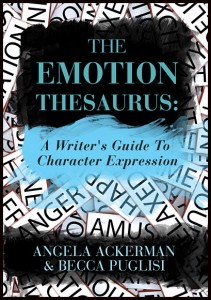
(And of course, we profile 75 emotions in The Emotion Thesaurus: a Writer’s Guide to Character Expression, so that’s just one more way for you to use it!)
The post Story Midpoint & Mirror Moment: Using Heroes’ Emotions To Transform Them appeared first on WRITERS HELPING WRITERS.

By: JOANNA MARPLE,
on 4/25/2014
Blog:
Miss Marple's Musings
(
Login to Add to MyJacketFlap)
JacketFlap tags:
Book recommendation,
poetry month,
pandas,
Jon J Muth,
Koo,
children's books,
Book Reviews,
picture book,
poetry,
seasons,
picture books,
lessons,
Hi,
Add a tag
Title: Hi, Koo, A Year of Seasons By Jon J Muth Published by Scholastic, 2014, February 25 Ages: 4-8 Themes: seasons, haiku, poetry First Haiku: Autumn, … Continue reading →
Characters are the heart of a novel, and within that heart is the Hero’s Inner Journey. The protagonist’s path is much like yours or mine–one that will (hopefully) bring him closer to lifelong happiness and fulfillment.
In real life, people strive to become something more, to be something better. But the wounds of the past never quite leave us. Old hurts, betrayals, and injustices stay in our memory. Worry that a bad experience could happen again causes us to hesitate, and sometimes readjust what we want, and what we’re willing to risk. In other words, fear gets in the way.
Wounds Change Everything
 Just like you or I, a hero has wounds, a trunk full of scars he lugs with him wherever he goes. And like us, his determination to not repeat a painful emotional experience carries the high cost of lessening his feelings of satisfaction and fulfillment.
Because wounds influence a protagonist’s behavior so deeply (to the point he will do almost anything to avoid feeling such pain again), it’s important to have a good grasp on what emotional trauma from his past is now shaping his present. Here are a few things to keep in mind.
Every Wound Contains a Lie
Emotional wounds are more than just painful memories. Inside each wound is a seed of doubt. Is this somehow my fault? Am I to blame? This doubt blossoms, eroding one’s self-worth.
When something bad happens, it’s human nature to try and rationalize it, make sense of it. We often blame ourselves, believing if we had chosen differently, done something else, there would be a better outcome. Most times there’s no logic to attributing a personal failure to what happened (especially when events were out of our control), but we do it anyway. Because of this internalization, a lie is born. We believe we are somehow deserving of this pain, or we become disillusioned in some way.
Let’s say a character discovers her husband plans to leave her for another woman (wound). Under all the anger and rage and heartache she would look within, to what she did wrong. The lie she might believe could be: He cheated because I am not worth loving. This lie burrows deep into her self-esteem and self-worth. Moving forward, she may avoid relationships because she believes this lie of being unworthy. Or, she may choose men who are likely to be unfaithful, because deep down she thinks these men are the only ones she deserves.
Wounds Cause Flaws To Form
 When a character is wounded, he straps on emotional armor to keep his feelings safe. Flaws develop, working under the ‘guise’ of protecting him from being hurt. For example, a female character who was mugged and sexually assaulted (wound) might develop flaws like mistrust, paranoia, and evasiveness to protect herself from being targeted again.
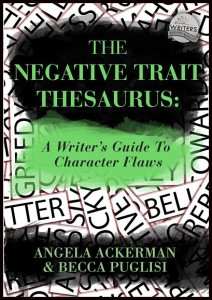
On the outside, these flaws “appear” to help her be safe, but they limit her instead, preventing her from building healthy relationships, hampering her spontaneity and placing a filter of distrust on all she sees. This in turn steals her her freedom, and puts a choke hold on self-growth and true happiness. (For more on flaws & their role in Character Arc, please reference The Negative Trait Thesaurus.)
Dig Into The Character’s Backstory
A character’s past will be a minefield of negative experiences, but at some point, there should be an event you as the author can define as “the wound.” Small, painful events change a person bit by bit, but to focus all this hurt and pain into a single backstory moment can really help you better understand who and what damaged your character, and why, as a result, they question their self-worth. This also guides you to the false belief they must see for the lie it is in order to become healthy and whole, strengthening them so they can achieve their goal.
To help you pinpoint what your character’s wound might be, here are some common “themes” that could be the root of this psychological damage.
7 Common Wound Themes:
A Physical Wound. A defect, scar or condition causes real life complication, doubt, low self-esteem and can make it difficult to feel like one fits in. Handicaps are real and can alter a character’s path, limiting them and hurting their confidence.
An Injustice. Being a victim of crime, witnessing a traumatic social injustice or living in a time period or reality that is unbalanced or full of corruption will all leave a mark.
Failure or Mistakes. People are naturally hard on themselves when things don’t happen as expected. The guilt associated with a failure or mistake (even if it is only a perceived failure) can paralyse a person, and send them on an alternative life path.
Misplaced Trust/Betrayal. Trusting or relying on someone and feeling let down in some way can cause deep hurt. This could be a parent/child dynamic, a friendship that goes sideways or even a deep betrayal of a loved one (infidelity, etc.)
Isolation. If the character felt left out or isolated in the past, it has lasting effects. Isolation might be relationship-related (a mother who favored a sibling over the protagonist), power imbalance (educational or social “status” barriers) or even simple economics (living in poverty, etc.) that restricted opportunity, achievement and fulfillment.
Neglect/Abandonment/Rejection. Some relationships are cardinal when it comes to care giving: a parent and child. Siblings. Partners in a marriage. And to a lesser degree, a citizen and his government, parishioner and his minister, or a doctor and his patient. When the person in the care giving role neglects or rejects the other party, this can cause deep feelings of abandonment to form.
Disillusionment. Believing one thing to be true and then discovering it is a lie can shake a character to their core. This might be a world views or political beliefs (discovering leaders that one has supported have been negligent or corrupt), a revelation in religious or spiritual beliefs, or uncovering immoral behavior. It could also be something closer and more intimate like a role model who was not who they pretended to be, or personal (like finding out one is adopted, for example.)
Do you know your character’s wound, and if so, does it fall under one of these themes?
PSSST! At 5:00PM Eastern you can find me at IndieRecon discussing 6 Smart Ways Authors Can Collaborate When Marketing.
The post Understanding Character Wounds: A List Of Common Themes appeared first on WRITERS HELPING WRITERS.
Yesterday I posted a tip on Facebook regarding the wrong way to contact bloggers for exposure after being “cold call” emailed myself. The cliff note version is that a marketing person sent me a form letter asking for book exposure, and supplied 4 attachments that contained book covers, press releases, links, etc.
This prompted some discussion on Facebook and in email about what the protocol is for contacting bloggers or website owners for a promotion opportunity, especially if one does not have a strong online presence and so can't reciprocate (such as trading guest posts). I know reaching outside one's comfort zone to ask for help can be a difficult thing to do, so based on my personal experience from both sides of this fence, here's some tips on how to ask!
1) Do your homework I'll be honest...nothing bugs me more than to be contacted by someone who has looked at my blog's SEO score or glanced at my traffic meter (which is way off the mark anyway) but knows nothing about
The Bookshelf Muse. Asking me to review business software, jewelry, iPad products or anything else that has nothing to do with my blog's focus is NOT going to win me over. So, when you are looking for online exposure, research blogs to understand what they are about, what they typically post, and only add them to your list to contact if you see a strong fit. This means knowing YOUR audience before you get started. Also, if you are looking for a book review, make sure the people you wish to contact actually DO REVIEWS, and if so, that they REVIEW YOUR GENRE. If they have instructions for contacting them, follow those instructions.
2) Show respect First off, while it certainly is easier to send out a cut-and-paste email to 50 or so blogs or websites asking for help, what saves you time will cost you in exposure. Anyone with any measure of success online understands that relationships are paramount. If you did your homework in step 1, you have researched the person you are contacting. Personalize email by introducing yourself and demonstrating that you have visited the person's blog, and understand & enjoy the content. Be authentic and friendly, and respectful of their time.
3) Offer information, but don't go overboardWhatever exposure opportunity you're asking for will require some specific information. Be clear and concise about what your offering, be it a book, product or service. Convey why your product is a good fit for the blog/blogger and their audience, showing you have knowledge of this person's site. Provide a link if needed to the product online, or lacking that, links to how to reach you. DON'T send them your book or product proactively, or a bunch of press release attachments and book covers or promotional information. Would you send your manuscript along with a query letter to an agent who has not asked for both? No. So offer to forward these things if the blogger wants them and welcome the chance to answer any questions they may have.
4) Offer value, not promoYour goal is to get a YES when it comes to asking for an exposure opportunity, so make it easy for them to do so. When you approach a blogger, know what you are asking for. If it is a review site, then ask for a review and in turn offer something of value. A free book to the reviewer will be expected, but consider also offering one in a giveaway. Giveaways usually increase traffic, so the expense will be worth it if you have chosen a site that exposes you to your ideal audience. If it is a product or service, or book exposure that is not a review, consider what this audience might find valuable. Can you guest post on a topic that fits well with this blog's focus? Can you offer your expertise in a way that readers will find helpful (a Q & A about something you know a lot about, for example.) A freebie of some sort, or something else? Whatever you can offer, lay this out. Offer a few options (for example, list out a few ideas you have for a post), but be flexible and open to whatever ideas they have for you, too. Exposure is an opportunity to CONNECT with an audience and build a relationship with people interested in what you have to say, not a way to spam people with promo.
Always add value in all that you do.5) Be easy to work withBloggers are busy people. The bigger bloggers especially have a lot to juggle, because they are likely active across different social media platforms, plus have their own lives and work to attend to. Once you've secured a guest post or exposure opportunity, make sure you send them whatever is required in a timely manner. Also, don't just "dash something off" (especially if you are a writer!) Write something you're proud of and make sure it offers insight and value. Check carefully for typos and grammar. Bloggers appreciate it when you do a good job the first time so they don't waste time sending it back to you for editing. Provide links that are easy to follow for the audience, and make sure there is a way for readers to find out more about your product. Include a small bio about yourself and where you can be found (twitter, facebook, website, etc.) so the blogger doesn't have to spend time looking for these things themselves.
6) Show up, interact and shareThe day your post goes live, stop in and interact with people in the comment section. This is your opportunity to make yourself memorable to people who took the time to read what you had to say. Thank your host for having you. Continue to add value by answering questions, both the day of the post and a few check-ins afterward (some people won't see the post until the next day or so). Wherever you are online (even if you only use Facebook, or Twitter, etc.) make sure you share your post with people who might be interested in the content. When you ask someone for exposure, you thank them by trying to drive people to their blog however you are able to. Don't spam, but do share the link with people who you feel might be interested.
7) Keep on asking Maybe you might strike out a few times, but that's okay...keep going! I know asking for things can be intimidating, but here's the thing...most people are caring and helpful and want to build relationships. If we didn't, we wouldn't blog, or be on facebook or twitter. So try to set your nerves aside and be genuine. When you are, it comes through, and often leads to a
Yes!
Other posts you might find helpful:
Any tips on contacting bloggers that you'd like to share? I'd love to hear them!
You may ask me, what has dancing got to do with funeral? I will tell you that when you go to the funeral of your old dancing instructor you can think of almost nothing else. Such was the case with the service I went to this week. It was for my dear Ethel Friel Barker.
It all began when I was in about third grade. My older sister was taking dance and gymnastics and so I wanted to too! My younger sister followed along after. Each week we would tromp down her stairs in our leotards, set our dollar on her piano and begin our lesson.
Bring on the tap shoes! What fun we had learning those dances. The costumes came next. Many times they were made by our mothers. I remember the rumba costume the most. The top was all gold sequins sewn on to satin. The bottom was an open skirt that showed off your dancing legs! haha!… a pair of green satin shorts underneath..and nothing skimpy!…then there were the ruffles of satin colors on the trailing skirt. I remember Ethel teaching us all how to shimmy. We all laughed!
Each year Ethel would travel to New York to Dance Caravan. She would learn all the dances and come back and teach them to all her students. She had students of all ages from the tiniest little ones to the high school kids. I remember two boys who learned a Russian dance. Their dance number was mixed with gymnastic moves.
Besides the lessons, Ethel would arrange for us to have shows.. at no extra cost to us. We traveled to girls homes, boys homes, a home for the mentally challenged.. and then even some Christmas shows for the American Legion. As shy as we were, it helped us to learn how to be in front of people. We learned about different people and the situations they live in.
When we got to high school, Ethel helped us with our gymnastic routines. She rented out the Grange Hall, lugged all her black mats over and we tumbled and practiced for our meets. All for that same one dollar bill on her piano.
Our lessons continued through high school and we occasionally went to see her for a class… just for fun. My last class was when I was pregnant with my first daughter. I remember going slow… I did a limber over… and then felt my daughter kick! That was the end of that! ha!
Many friends gathered for the memorial service. My sisters sat next to me and three other friends, all in the same row. When the minister asked us to read something, I watched as ALL of us dug into our purses for our glasses. Ethel would have laughed at that sight! We all laughed and cried.
When the service was over and we sat at our tables for a small lunch, we talked and talked about our dances, our costumes and Ethel. Before everyone left, we spread the word through out the room that anyone who wanted to, could participate in the performance of the Waltz Clog! This was the dance that Ethel taught every student. ( My sisters and I do it periodically, even now for fun).
The people gathered… most dressed in black and white. We almost looked like we were in costume. .. and then we began. We sang the tune as we stumbled though the dance moves laughing! Our last steps were always … just as Ethel taught us, ”step cut the pie” with our feet.
What a wonderful remembrance. What a wonderful person she was! We will always celebrate Ethel!
This brings me to this thought. I have been thinking about it a lot in the last few weeks since I know four people who have died recently. There are many people who live life helping others. It’s such a wonderful thing. They give and give and give until it’s time for heaven. Their memorial services are happy sad, but often joy filled. Others take and take and take until their last day. Those services are sad. … almost tragic.
I prefer happy! I like the thought of people dancing at my funeral. .. and singing loud!
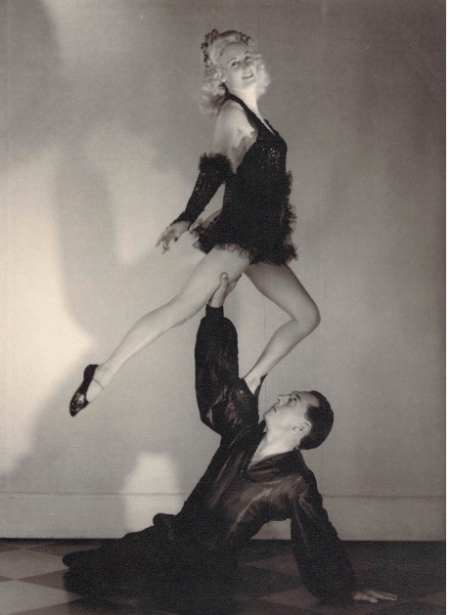
Here are three pictures of our Ethel! She lives on in our hearts always!
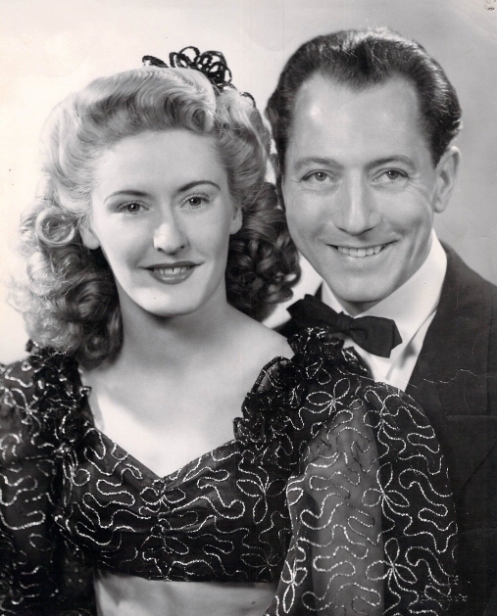
Filed under:
Inspiring,
Kicking Around Thoughts 

 |
| Courtesy of yooperann at PhotoPin |
Dialects and accents in fiction are a particular source of contention for me. One of the characters in my historical fiction is a Native American girl who speaks English as a second language. Critique partners and my own ears have told me that her speech needs work, so for literally months I've been thinking about the issue of how to write dialects and accents in a believable way. Then, while I was reading Maggie Stiefvater's THE RAVEN BOYS, I discovered some easy techniques to show the reader how the character sounds. First:
The voice was careful, masculine, and local; the vowels had all the edges sanded off.
The simplicity of this just kills me. Steifvater doesn't go into detail describing the individual sounds of the character's speech, the phonetics, how the sentences are put together. She succinctly tells how the words sound, then writes them the normal way, and the reader's brain fills in the rest. In this particular case, the story takes place in Virginia. If you're familiar with the way Virginians talk, then the "local" reference will immediately clue you in to how the speaker sounds. And if you're unfamiliar with the accent, you get a good feel for it with the description she gives of the vowels.
Here's another example of how you can describe someone's speech when you're referencing a known language or accent:
When he was uncertain about something, his Southern accent always made an appearance, and it was in evidence now.
Not only does this clue the reader in as to how the character speaks, but it also reveals his frame of mind. This is an excellent example of description that does more than just describe.
Here's one more sample, this time describing an elderly English gentleman's speech:
Without further preamble, Malory launched into a one-sided conversation about the weather, the historical society's past four meetings, and how frustrating his neighbor with the collie was. Gansey understood about three quarters of the monologue. After living in the UK for nearly a year, Gansey was good with accents, but Malory's was often difficult, due to a combination of slurring, chewing, extreme age, bad breeding, and a poor phone connection.
 |
| Courtesy of Gerry Balding |
The conversation that follows doesn't include any hard-to-read pronunciations or truncated verbs (talkin', eatin', drivin', etc.). Malory's rambly style of speaking, combined with the previous description, are enough to give the reader a feel for how he sounds: like an old British man who slurs his words and eats while he talks.
Descriptions like these tell precisely how the character speaks without putting the reader through mental acrobatics and having to work too hard to figure out what's being said. While some stories succeed with this hyper-focus on unique speech patterns (Forrest Gump, Brer Rabbit), a simpler method like Stiefvater's might work for you. I know I'll be trying it with my WIP.
For
another great post on this topic, check out Janice Hardy's blog.
A few weeks ago I shared a bit of wisdom I learned from Bruce Coville at the Florida SCBWI's winter conference. In that post, I related how important it is for us, as writers, to
lengthen the chain for our readers. Bruce went on to share a few practical ways for us to do this:
1. Take Your Art Seriously, But Also Take Yourself Seriously As A Business Person. Learn to read contracts. Learn to negotiate. Know what's happening in the industry.
This is important because the more secure you are from a business standpoint, the more attention you can give to the writing of your stories. Confidence creates freedom—from indecision, from worrying that you missed something, from stressing over having to do something that you know you suck at (like balancing the checkbook or creating a marketing plan). If we can educate ourselves on the business-y things, we'll become more confident in our abilities, which frees us up to focus on the writing.
2. Take Your Art Seriously But Take Yourself Lightly. Strive to be great, but also try to be good.
Oh my word. How awesome is this? Because good people do good things, right? If we're so tied up in our craft and our ego, how will we have time for the real world and the people in it? Craft is important, but kindness and patience and forgiveness and truth-sharing—these are the gifts that truly help others. If we embrace these good things and practice them ourselves, not only will we be helping others in real life, but the goodness will also come through in our writing.
3. Never Throw Anything Away. Ideas are usually better than your skill level.
He talked about going back years later and rewriting an earlier story idea that he hadn't been able to do justice to at the time. My skill level hasn't evolved quite that far, but I HAVE learned the fine art of cannibalization. That story stinks, but the setting is really unique and interesting. Let me use that in my WIP. This idea is pedantic and elementary, but I love the character. Into my new story he goes. Truly, no idea is without value.
4. Embrace the Unfinished Chord. Leave something for the reader to dream about.

As a musician, I LOVE this analogy. An unfinished chord is...somewhat unsettling. It fills you with this itching desire for something more. This is one of my criteria for a truly great book: reading the final page and thinking about the story...and thinking. Going to bed and waking up...still thinking. As an author, I'd love for each of my stories to leave a little question in the reader's mind. Something to keep them thinking and make them wonder and maybe start them asking questions they wouldn't have asked before.
Good stuff, yes? Thank you, Bruce Coville, for sharing your wisdom and thereby lengthening all of our chains.
************
And one last bit of good news...
INDIERECON STARTS TODAY!
If you're an author (or want to be), you must make plans to attend the Indie Revolution Conference, or as we like to call it: Indie ReCon - making Indie publishing a mission possible! While the conference focuses on Indie publishing, there will be tons of advice that will benefit writers who utilize all publishing styles. And during the conference, our presenters and partners will be giving out loads of prizes - including new kobo e-readers.
Best of all, you can attend online, for FREE. That means you can stay snuggled in your pajamas, sipping a beverage of your choice, while we deliver the content to you. The conference runs February 19 through the 21st. Sign up now to ensure you don't miss important news and for a chance to win even more prizes. (We promise we don't spam.) So GO.
Sign up now. You won't regret a single minute of this amazing free conference.
*
photo credit: visualpanic via photopin cc
I attended the Florida SCBWI's Winter Conference last month—as a speaker, which was major league awesome, and I'll write more about that another time. But frankly, I was so blown away by what headliner Bruce Coville had to say that I wanted to share that first.
The speech he gave was called
Lengthening the Chain. It's from a passage out of John Berger's
 Here is Where we Meet.
 In an exchange between a mother and a son, the mother starts by saying...
"One thing repaired changes a thousand others.”
The son replies, “So?” 
And out flows a maternal speech: "The dog down there is on too short a chain. Change it, lengthen it. Then he’ll be able to reach the shade, and he’ll lie down and he’ll stop barking. And the silence will remind the mother she wanted a canary in a cage in the kitchen. And when the canary sings, she’ll do more ironing. And the father’s shoulders in a freshly ironed shirt will ache less when he goes to work. And so when he comes home he’ll sometimes joke, like he used to, with his teenage daughter. And the daughter will change her mind and decide, just this once, to bring her lover home one evening. And on another evening, the father will propose to the young man that they go fishing together… Who in the wide world knows? Just lengthen the chain."Coville went on to discuss how what we do as writers matters. He read a letter he'd received from a man who had read his books as a child. One passage had touched this man in a profound way and stayed with him throughout adolescence, influencing him to eventually join the Peace Corps and work for a number of years in a third-world country. Imagine the number of lives this young man was able to touch and change for the better, because of an idea Coville had written into one of his stories.


Coville then went on to share a story about Alex Flinn, author of
Breathing Underwater. When a fan read this book about a girl in a destructive relationship, it gave her the courage to break things off with her own abusive boyfriend, and then reach out to other girls caught in the spiral of abuse.
Ellen Hopkins, who writes gritty stories in verse about difficult contemporary topics, was another speaker at the conference. She was contacted by a young drug-addicted girl who was disheartened by her many failed attempts to get straight. After reading Ellen's words, this girl gained the courage to try a final time. At their last correspondence, she'd been clean for 7 months.
We hear it all the time:
our words have power. But here's proof, people. Words can be transformative, not only in the life of the reader, but in all the lives the reader touches.
Well, sure, you say,
if you happen to write about drug addiction and physical abuse and life-or-death topics like that. What if I don't? How can my stories lengthen the chain and help my readers? The way
All Dogs Go to Heaven comforted a girl grieving the recent loss of her pet
The way a fictional
story about a horse could enlighten an entire world as to the reality of animal cruelty
The way a
book about rabbits astounded a child with the truth that "nice people aren't always nice and evil doesn't always wear a black hat"
The way
a great story can turn a non-reader into a voracious one
The way the familiarity and simple goodness of Little House on the Prairie and Anne of Green Gables could bring comfort and peace to a new mom in the throes of postpartum depression. [Guess who :)]
The fact is, there are a million ways that a story written from your heart can touch someone else's—by giving comfort, revealing a truth, introducing a character that the reader recognizes in him or herself, or simply providing a few hours of joy. So write the story that is yours to write. Be honest and brave and original, and use your gift to lengthen the chain for someone else.
Photo Credit: Rev. Xanatos Satanicos Bombasticos (ClintJCL) via photopin cc
Lesson #256:
Don't go to the car wash when it's 16 degrees outside.
But if you do, don't panic when the doors won't open and you are stuck in the car.
After about 20 minutes in the garage, they should thaw out.
(Keep snacks in the car just in case.)
By:
Angela Ackerman,
on 10/11/2012
Blog:
The Bookshelf Muse
(
Login to Add to MyJacketFlap)
JacketFlap tags:
marketing,
Canada,
book review,
lessons,
balance,
about us,
time management,
experiments,
attitude,
reader feedback,
Random Acts of Kindness,
Emotion Thesaurus Guide,
Add a tag
I’ll admit my mind is blown knowing there are over 10, 000 Emotion Thesaurus books out there in the world. Becca and I are thrilled, and so appreciative to all the writers and teachers who took a chance on it. As aspiring novelists, we know just how hard it is to write and the perseverance it takes to create a book. Providing a tool to help other writers with emotion is nothing short of an honor (sappy, I know, but true. Writers rule and we love you guys!)
In that same spirit of wanting to contribute, we thought it might be beneficial to share our focus as we sent The Emotion Thesaurus into the world. We realize this is a non-fiction book, not fiction. Novels are a harder sell--instead of dealing primarily with what a audience NEEDS like NF, it is more about what they WANT, and personal reading tastes are unpredictable. However, much of the strategy we used with the ET can be adapted for fiction, so hopefully novelists will find value here regardless.
A Bit of History...
As many of you know, The Emotion Thesaurus started on the blog as a 'set' of lists focusing on how to show a character’s feelings. Becca and I struggled with emotion, and when we could not find a good resource to help us, we created one. As it grew in popularity, readers asked us to turn it into an enhanced book version.
We chose self publishing for a few reasons, the most important being TIME. It can take years for a book to find a publisher and then be available to purchase, and writers and teachers needed it NOW. We also discovered someone pirating our content for profit, so waiting any longer to create the book would be foolhardy. We launched The Emotion Thesaurus: A Writer’s Guide To Character Expression on May 14th, 2012.
What We Had Going For Us
PLATFORM. Becca and I have worked since 2008 to build a place within the Writing Community, providing resources through this blog and forging genuine relationships with our audience. Our attitude has always been to contribute and do what we can to add value. It was our hope that our readers would be willing to help raise awareness for The Emotion Thesaurus book.
NICHE. Our book tackled a topic that writers struggle with, yet few resources were available to help. As writers, we knew exactly what type of tool was needed to help with emotion and body language.
What Stood Against Us
LACK OF CREDIBILITY. Becca and I were not authors (yet), nor accredited editors, and certainly not psychologists or experts on emotion. We had a platform, but no ‘book world’ clout. How could we possibly compete with the biggies in the Writing Resource field, names like Donald Maass, James Scott Bell, James N. Frey, The Plot Whisperer, or the dozens of other incredible, best-selling authors/experts?
SELF PUBLISHING. While the stigma is lessening, we all know bias remains. In some ways, creating a how-to writing resource and then choosing self publishing over traditional acted as a strike against us, meaning we would have to really prove ourselves with readers.
CONFIDENCE. This business is often a murky pool of feeling not worthy, not good enough. Without a book deal in place for our fiction to give us credibility or a degree/subject-specific education to hold up, we felt naked. Putting ourselves out there and donning the hat of authority that comes with writing any sort of how-to guide was terrifying.
The Scale Tipper
PASSION, BELIEF & TEAMWORK. As writers, we knew people needed this book. Heck, we needed it! We decided to create the best brainstorming tool we could and put all our effort into making it discoverable to those who might benefit from it. Working as a team allowed us to play off each others' strengths and aided in decision-making.
READYING FOR LAUNCH
- Set up a business
- Paid for a professional edit
- Hired a cover designer
- Outsourced formatting to a HTML goddess because the book is full of links and redirects
- Test-marketed it with a select group of writers & used feedback to strengthen
MISTAKE: choosing a launch date and under-estimating the time it would take for setting up the business (two authors in different countries is a pain), uploading, formatting challenges, fixing last minute typos (again, our formatter Heather is worth her weight in gold!) This created lots of down-to-the-wire stress. Test marketing the book (while super valuable) also meant enabling changes late in the game.
First Hurdle: Launching A Book Without Feeling Like A Timeshare Salesman
For two writers who hate promoting, this was a massive challenge. Look at me! I have a book! Buy it! <---our personal nightmare. We needed a way to let people know about the ET but not be eye-bulging, book-waving maniacs about it. After many facetimes, we realized that to do this in a way that felt right, we needed to return to our AUTHOR BRAND: writers helping & supporting other writers.
“Random Acts of Kindness for Writers” became our secret plan: instead of making our release date about us, we would do something to celebrate & thank writers. This was risky in the sense that to do it authentically, we had to steer attention AWAY from our book’s release. However, we felt the reward was twofold--traffic to our site, and it allowed us a way to pour our flag-waving passion into celebrating people who really deserve recognition and yet rarely get it. This event aligned perfectly with our pay-it-forward beliefs, driving us to do all we could to make it a success.
For brevity's sake, I won’t get into the nuts and bolts of how we set up the RAOK Blitz (but if enough people wish it, I can expand on this in a future post). Suffice to say it drew thousands of visitors and hundreds of writers participated, becoming a huge ‘feel good’ week for everyone that showcased the generous spirits of our Writing Community. :)
Marketing Boost: Becca and I gave away a free PDF called ‘Emotion Amplifiers’ as our RAOK gift to writers. This PDF booklet is a companion to The Emotion Thesaurus and has a similar layout. Our hope was that if a writer found it helpful, they might check the ET as well. (It’s still in our sidebar if you want a copy and helps with describing conditions like pain, exhaustion, stress, inebriation, etc.)
Second Hurdle: Reviews
A self-published book that is also non-fiction? Rough. Many professional reviewers will not take on SP books, and those that do usually only read fiction. So, instead of seeking out review sites, we put out a call out to Bookshelf Muse readers and asked if any of them were interested in reviewing the book. After all, the ET is BY writers FOR writers. Who better to review it? :)
We could not accommodate all the requests that came in, so we chose some reviewers strategically for their audience reach, and others through a random draw.
MISTAKE: We should have arranged for reviews much sooner. Due to not leaving ourselves enough time to get the book ready to go, we were unable to get a decent version out to reviewers until close to launch or after.
LUCK! Many people, after buying and using the ET, were so happy with it they wrote reviews on Amazon and Goodreads.
MORE LUCK! These reviews swayed even MORE people to take a chance on the book, and they in turn became avid word-of-mouth spreaders, telling writing friends and critique partners all about The Emotion Thesaurus. This led to better sales, top 20 ranking in several (paid) writing categories for print & kindle, a strong Amazon Best Sellers Rank, and placement on the Top Rated, Best Selling & Most Wished For lists (writing).
Marketing Tactics - Swag
We chose to invest in a postcard-sized bookmark that doubles as a Revision Tool. Many bookmarks lie forgotten in a drawer, or they end up being recycled. We wanted ours to stay right beside the computer during revisions, so we printed a ‘Crutch Word List’ on one side--words we commonly overuse and need to weed out. Our hope was that by making our swag useful, writers would hang onto it!
Spreading the word about a book can be difficult, so we put out a call (again utilizing our blog readers) and asked if people would be willing to take our bookmarks and hand them out to critique groups, or give them out at conferences and workshops. This allowed us to reach out beyond our own circle and hopefully reach new readers.
MISTAKE (?) This was a bit pricey considering the postage involved (some were sent worldwide), and took time to get addresses and mail out. We had no way to track the effectiveness. And while I have heard from people who said they saw them at conferences or were given one by another writer, we are not sure if the ‘mail out’ idea brought a significant return. But, the postcards are super handy to have at events where Becca and I are presenting, and we can pass them out afterward to keep the ET in people’s minds. So overall, this swag was worth it!
Marketing Tactics - Discoverability
The bulk of our marketing energy went into discoverability. Because we have such an amazingly supportive audience at The Bookshelf Muse, we chose a 'grassroots' approach rather than solicit big bloggers/sites for exposure. In our initial blog post asking for assistance from readers, we utilized a sign up form so the people who wanted to help us could, and in a manner that most appealed to them. The results of this was amazing--so many people offered to help get the word out!
One of our biggest needs was bloggers willing to host us for a visit. We were overwhelmed with gratitude to see how many people were willing to do this (have I mentioned how great you all are?) and we actually had to change how our form was worded to include offering book excerpts and reblogging previous TBM posts to accommodate the response. We ended up with over 115 hosts all told.
Attempting so many guest posts caused panic attacks, obsessive chocolate binging, feelings of inadequacy *coughs* was daunting. But Becca organized everything (SHE IS AMAZING!) and put us on an aggressive schedule that would allow us to finish them all within a 4 month window. We created a master list of topics, most centered directly on content that would tie into Emotion & Body Language, so that each post was a planned, quality post. The best thank you to those who offered to help us was to write content that would bring them strong traffic, not just exposure for us.
GUEST POST TIP: We did our best to thank personally every person who hosted and helped. We also shared all links on our social networks to bring new people to their blogs. We truly appreciated their time and energy, and their desire to see us succeed.
MISTAKE #1: biting off more than we could chew. This was an enormous amount of guest posts (with more requests coming in as a result of this visibility) and so it meant we were both unable to write anything but blog content for a good 4 months. We managed to get them done and we have no regrets because of the great exposure, but it also meant other things slipped. There were a few blogging relationships and opportunities we were unable to stay on top of because we were so busy posting elsewhere. We also had a tough time commenting on blogs and getting email written. With such a strict timeline to adhere to, I worried about messing up and forgetting something vital, letting a host down.
MISTAKE #2: not thinking enough about how to keep up with our own blog AND everyone else’s. Luckily as we met new people at different blogs, we found folks who wanted to guest post for us. We were able to give them exposure in return and bring some good content to the blog (LUCK!) So while we made a mistake about over committing, it worked out.
MORE LUCK! These ‘seed’ guest posts led to some writing communities and bigger organizations contacting us. This resulted in book reviews and giveaways that were included in newsletters and offered exposure with bigger audiences. The Discoverability Tour worked!
Marketing Tactics: Giveaways
We utilized giveaways to generate interest in our book and bring attention to some of the blogs we visited. We purposefully did not host book giveaways during the month of May to encourage people to buy, not wait to win. We had a few giveaways in June and then more in July, August and September. Some were bigger exposure opportunities like being featured in a banner at the Writer’s Knowledge Base and as a prize at Ink Pageant (thanks guys--you rock!) We tried to go where our readers would be, and took advantage of opportunities that allowed us to reach beyond the Kidlit & YA writer’s network we know best in order to create inroads with Christian and other Adult genres who might not know us or The Bookshelf Muse.
Marketing Tactics: Distribution Channels
Becca and I talked about going KDP Select but neither of us could see the benefit to doing so right out the gate. In our minds, we wanted to ask a fair price for the books and have it available across as many channels as possible to reach readers where they are, not where we ‘chose’ to be. We distributed widely and included a PDF option for those who did not have ereaders or who felt more comfortable with PDF format. For those who like numbers, here’s the breakdown to 10,000 which we hit in September:
| SW | iTunes | CS-Amazon.com (PRINT) | B&N | Kindle (Amazon.com) | Kindle (Amazon Euro) | Kobo | PDF | Total |
|
May | 17 | 10 | 243 | 62 | 412 | 25 |
| 102 | 871 |
|
June | 13 | 19 | 503 | 66 | 905 | 50 |
| 89 | 1645 |
|
July | 13 | 22 | 887 | 78 | 1334 | 77 |
| 76 | 2487 |
|
August | 13 | 33 | 893 | 56 | 1297 | 103 |
| 60 | 2455 |
|
September | 10 | 32 | 1036 | 53 | 1282 | 151 | 21* | 47 | 2632 |
|
|
|
|
|
|
|
|
|
|
|
|
|
|
|
|
|
|
|
|
|
|
|
|
|
|
|
|
|
|
|
|
|
|
Total: | 66 | 116 | 3562 | 315 | 5230 | 406 | 21 | 374 | 10090 |
|
*Prior to September, Kobo sales were bundled with Smashwords. Once Kobo created their own distribution, we uploaded direct. Sony sales are under the Smashwords umbrella.
You will notice that Print is quite strong. We believe this is partly because many writers like 'craft' books in paperback. We also have had feedback that some original digital buyers were so pleased with the ET, they later decided to invest in a print version, too.
Pricing: We chose the 4.99 price point for digital, and 14.99 for print. We have not changed the price nor offered the book for free. In the future we may change our pricing, but for now it works well with Extended Distribution, which we sell enough through to make it important to keep.
MISTAKE: not enabling Extended Distribution right from the start. Originally we didn’t think it would do us much good, until we realized without it, we could not get onto Amazon.ca. Seeing as I live in Canada, it is important that the people I meet at events or at my workshops have a way to get the book. Not doing this before May meant a six week lag of fielding emails from Canadians unable to buy the book.
Marketing Tactics: Paid Advertizing
We opted to not invest in any paid advertising. I think this was the right decision for us, but do see us choosing a few select ads in the future.
Where We Got Extra Lucky
- Winning Top 20 Best Blogs For Writers with Write To Done a few months before The Emotion Thesaurus released. This raised our profile significantly, and at a critical time.
- Once sales started climbing, Amazon would send out mailers to people who purchased writing related books, and sometimes The Emotion Thesaurus was listed as a ‘Those that purchased X might also like’ pick.
- A price war between B & N and Amazon. For the last week of September, the two duked it out, lowering the book’s price daily until the discount put it under 10 bucks. Average sales nearly doubled for print (although sales dipped that week for Kindle).
A Few Extraneous Mistakes
- Not soliciting endorsements. We didn’t do this in advance of publishing the ET because we were worried about being turned down, worried about getting the cold shoulder because we were newcomers and new authors. Now more than ever we are seeing an acceptance of SP, and of Traditional authors making the leap. Endorsements probably would have helped us greatly and so moving forward we’ll be seeking them out.
- Not believing in ourselves enough at the start. I think we wasted a lot of energy on doubt because we hadn’t published before (except in magazines) and we were afraid that while we felt The Emotion Thesaurus added value, others would not. The response to The Emotion Thesaurus has been nothing short of phenomenal and knowing that Illinois State University is using it in their Creative Writing curriculum makes us incredibly proud. A self published book going to University...who would have thought?
Thoughts to Leave You With
Looking back, I believe we did two things right that led to everything else:
First, we created a book that readers are very happy with, and it fulfills a need in a way that they are excited to share it with people they know. (We are so, so, SO grateful to this word-of-mouth. Thank you all for doing this!)
Second, we live our brand: writers who help and support other writers. This is who we are! We love writers and have forged genuine relationships with our readers. When we needed help to spread the word, people responded, and more than that, became our advocates. There are not enough thank yous in the world for me to say what this means to us.
If I can encourage writers planning to publish to do one thing beyond the above, it’s to be authentic in whatever you do. When you build your platform, start in advance and think very hard about what your brand will be. Be yourself, be likable, do what feels right and resonates with who you are. Understand your audience, their likes and dislikes, and search them out. Use keywords to find blogs, forum discussions and hashtags that will help you discover people who might be interested in a book like yours. Interact, be genuine and think about how you can add value, not how you can market to them. Focus on giving, not getting. Trust that the rest will come. :)
Do you have any questions about what we did or why? Becca and I are happy to answer if we are able. And again, the biggest, squishiest, bacon-filled thank you for all your support of us and the ET. Your word-of-mouth has allowed writers and teachers everywhere to discover this book!
By:
Angela Ackerman,
on 9/4/2012
Blog:
The Bookshelf Muse
(
Login to Add to MyJacketFlap)
JacketFlap tags:
writing resources,
editing,
lessons,
characters,
critique groups,
writing groups,
description,
focus,
guest entry,
Add a tag

When I found out the awesome and talented
Melinda Collins was headed off to Colorado to attend
Margie Lawson's Immersion Master Class, I absolutely
had to convince her to swing by and tell us about the experience afterward. Of course, Writing Superhero
Jami Gold had the same idea, so rather than stage an EPIC,
lightning-sword-and-killer-unicorn BATTLE TO THE DEATH as to who got Melinda, we decided to share her. Isn't that nice? *beams*
As someone who purchased a
Margie Lawson Lesson Packet on Body Language (thanks for the heads up,
Stina Lindenblatt!) in the past, I can only imagine the value of a ML Intensive. So please, read on dear Musers. It's a long-ish post, but oh-so-worth it.
AND, the talented Margie Lawson is going to award a lucky commenter with a FREE Lecture Packet! Trust me, YOU WANT THIS.
Immersion Master Class with Margie Lawson: The Experience, The Takeaways, The Lessons – Part Two
Thank you, Angela, for inviting me over today to talk about my recent experience in Colorado with the wonderful, talented, writerly genius,
Margie Lawson, and her
Immersion Master Class!
Because I have so much to share, this is actually a two-part blog post. Which means I’m also over at
Jami Gold’s blog today as well with part one! *grin* And, as an added bonus, Margie Lawson will be over at my blog today,
Muse, Rant, Rave, sharing even more writing technique goodies! *booty dance* Okay, enough dancin’ and let’s get to learnin’, shall we?
The Experience
Over on Jami’s blog I talked about the kinship and sisterhood that developed in our group. Here I’d like to share with you two additional elements of the class that made this a one-of-a-kind experience.
The first would be location, location, location! We were about two miles above sea level, and being that high meant cell service was practically nonexistent, which in turn meant we got to enjoy the peace and quiet tranquility of the Rocky Mountains. What more inspiration do you need if you look outside the window, or go on a short hike and see this?
 |
| The view from our 1st hiking trip |
Pretty unreal, right? But this is
exactly what every day was like for us. It wasn’t
all work and no play. In fact, we went hiking twice during our time on the mountain. The first short hike gave us the beautiful view in the picture above, and the second, longer hike, gave us this gorgeous view:
 |
| The view from our 2nd hiking trip |
So the experience was deeper than just learning more about yourself and your writing craft. It was about taking the time to enjoy your surroundings and find inspiration in nature.
 |
| The view from Margie's writing loft |
The second element I wanted to share about the experience is the one on one time each of us got to spend with Margie. Every day, with pages in hand, we walked into a quiet, cozy room and worked one on one with Margie – an experience that will stay with me forever. By sitting down with her, one on one, you gain a certain understanding and perspective of your writing. You learn how to channel the genius editing that is her mind, and you see your writing in a whole new light. Every sentence, every word is purposefully chosen to pack a maximum punch for your reader, and during your one on one time, you learn more about how you choose those words and how you organize your sentences.
I can’t begin to imagine how I was editing before this class because now I feel as though I’m walking away with a particular sense of how to attack edits, how to look for the minor nuances, how to portray action scenes in a new and exciting way for the reader, and how to make my prose sing a beautifully cadenced tune.
The Takeaways
In part one I talk about what I learned about my style and where I want to be a year from now. Here I’d like to talk about group settings: why it’s important to work within a group where each person has the same purpose in their writing, and why it’s important to encourage and help other writers make their writing the best it can possibly be.
 |
| It's always important to take a break when editing to hike! ;) |
When you’re in a group setting and everyone has the same purpose of making their MS NYT Bestselling-worthy, you’re sitting in a gold mine. This is why it’s so incredibly important to join a writing group where everyone is dedicated and everyone pushes you to strive, work, and think harder. Sure, writing’s a singular experience (unless you’re co-writing), but without that group of writers who share your struggles, your doubts, and your triumphs, you may not get too far. This particular experience brought that fact home for me. When I struggled in making a phrase powerful and pitch-perfect, there were four other writers there tossing ideas back and forth until we got it. I’m sure without them there I might’ve gotten 85% of what I wanted in the phrase, but that’s not enough. I want 100%. I want it to pack a punch. And I want the help of other writers who fill in the gaps of my weaknesses.
This is another reason why it’s important to not only be in a group setting with a common purpose, but also to encourage other writers and their craft. We thrive on the encouragement and the kudos we get from others like us. We hear of another writer who’s just finaled
Individually, we are one drop. Together, we are an ocean. -- Ryunosuke Satoro
 |
| I got the honor of silly-stringing Amanda! Sooo much fun!!! :) |
Quick note: While we were there, one of our Immersion Sisters, Amanda, actually
did find out that she finaled in a writing contest with three scores of 99 out of 100!!!!! WOO HOO! How AWESOME is that?!? So what did we do to celebrate when we found out? We silly-stringed her of course!!!
The Lessons
Without giving away too much, here’s the back half of the top ten lessons I learned while in Colorado (as I said in the first post, there are many, many, many more):
1. Description: Description shouldn’t be on the page simply just to be there. Description should be on the page as it affects the character. When you’re writing description, think of how it affects your character in terms of their attitude and thoughts. If you had a character pull up to their childhood home, don’t just describe it as having paint-chipped shutters and a bright red door. Attach that description to your character. What does she remember about those shutters and that red door? Does she recall the many summers she spent helping her mother repaint the shutters? Does she recall being caught kissing a boy in front of the bright red door? If so, then why don’t you attach that description to those memories and make it a stronger, more powerful read?
Example from my MS:
I took a breath and walked out to the edge of the street. This house would represent the beginning of the rest of my life. I hadn’t seen the midnight blue, oceanfront home in so long, and it was now my home.
Because a home is a sense of trust, safety and love for my MC, I attached those feelings to the description of a place that is now
her home. There’s more description of the house that follows this, but this is the one place where I purposefully showed how arriving to this setting affected my character.
2. Breaking Tension: Margie has an EDITS system that uses different colored highlighters to track story elements. One is tension. When you’re tracking tension and you notice a small – or big – area where you’ve broken the tension, you’d better go back to check the following:
a.
Check to ensure you intended to break the tension. b.
Check to ensure the break in tension is not only needed, but that it works c.
Check to ensure it doesn’t entice the reader to skimI’m willing to bet there may be several areas where you didn’t intend to break the tension, you didn’t intend to invite the reader to skim, you didn’t intend to put a humor hit in the middle of a serious scene that shouldn’t be broken.
So if you break tension, make sure it’s intentional, it works, it flows, and it doesn’t bore the reader in skipping ahead to where the tension picks back up.
3. NO ‘ITs’ or ‘THATs’: I now have yet another new item to add to my editing toolbox/checklist: NO ‘ITs’ or ‘THATs’!! Okay, so obviously I don’t mean you can’t have ‘it’ or ‘that’ in your MS as at all. But what I do mean is don’t end a sentence with ‘it’ or ‘that.’
Example:
Oh yeah, I’d considered that. See what I mean? When I take this sentence out of context, you have absolutely no clue what the character meant by ‘that.’
Example without ‘that’:
Oh yeah, I’d considered Nick to be nothing more than an ant.A-ha! So when I removed ‘that,’ I made the sentence
stronger and
more powerful! So the lesson here is: do a find for ‘IT’ and ‘THAT’ and restructure/reword each sentence/phrase that just so happens to end with one of those UNLESS having one of those two words 100%, unequivocally works!
 4. Throw-Away Words (Tightening):
 Another important item to add to your editing checklist: throw-away words. This goes beyond the usual crutch words such as saw, felt, was, etc. Once of the techniques Margie teaches is taking a printed copy of your MS and reading through, line by line, and checking each line off to ensure it has a strong cadence. This ensures you don’t have any words in there that might trip the reader or the flow of the passage. As we all know, there are many other types of throw-away words that can tongue-tie the reader – which is another reason why it’s incredibly important that we get used to the sound of our voice, read
everything aloud, and tighten, tighten, tighten.
Examples with Throw-Away Words:
After all, it wasn’t my fault their stories weren’t being told anymore. I looked back at where he stood and touched my cheek. Did I really need all those words? Nope.
Examples without Throw-Away Words:
It wasn’t my fault their stories weren’t being told anymore.I touched my cheek. See? I didn’t need
after all and
looked. Those were just two sentences! And between the two, I cut a total of
nine words! By reading through my MS, line by line by line, and checking each one off once I’ve determined it’s a TEN, I will have a MS that’s tight, tight, tight! *booty dance*
5. Backloading: Ah… this is a fun one! But because there’s so much I could say about it and so little space in today’s post, I’m going to make it short and sweet. Backloading is where you take the most powerful word in a sentence, and you rework the phrase to pack that power at the
end of the sentence so it resonates with the reader.
Example before Backloading:
And when we did see him, we never took a moment for granted, but that was before he abandoned us. The most powerful word in this particular phrase is
abandoned. When you hear it, you instantly feel for the character because you may know what it’s like to feel abandoned. So why not make it the last word the reader processes before they move to the next paragraph?
Example after Backloading:
And when we did see him, we never took a moment for granted. But that was before we were abandoned. Not only did I ensure my power word was there to backload the phrase, I also split that large phrase into one semi-big sentence then followed it up with a shorter, powerful sentence.
Backloading forces you to look at the structure of your sentences and paragraph breaks. By examining each sentence with a finely-tuned, analytical eye, you’ll not only catch the instances where backloading will pack a punch, but you’ll also catch the areas where one larger sentence can be broken into two, shorter, more powerful sentences. Ha! I got two lessons into one on that one! *giggle*
Once again, I really, really, really want to encourage everyone to visit
Margie’s site, purchase and read and
absorb the lecture packets and/or enroll in an online course. After you’ve done that, I really recommend attending an
Immersion Master Class yourself to fully learn not only these techniques/lessons, but waaaaay more! In all her courses, you’ll learn ways to add psychological power to your writing and how to write a page-turner that will keep your readers up until their spouse finally says, “Pleeeease come to bed!” *giggle*
Before I go, I just want to say thank you again to Angela for having me over today and allowing me to share a small percentage of what I learned!
If this was your first stop, then before you pop over to either Jami’s site for
more on the experience, the takeaways and the lessons, or
stop by my blog for a quick lesson from Margie, think about the following: Do you have a place you can get away to? One that’s quiet, calm and inspiring? What about a writing group – do you have a group of writers that you can learn from, give kudos to, and share your triumphs with? Do you have areas in your MS that could benefit from tying description to emotion? Or what about areas where you’ve broken the tension unintentionally? Do you run through each of your lines and ensure they work 100% before moving onto the next?
 Wow!
Wow! Thank you
Melinda for being so generous and sharing your amazing experience with Margie! I am a life-long learner, and I absolutely love to absorb as much as I can about the writing craft. Margie's lecture packets are packed with great information and I am
thrilled to be able to give one away.
So, if you would like to win, just comment below and leave some contact information. THEN, visit
Jami for
another chance to win a
lecture packet and
Melinda's for a crack at an
online course with Margie! This is the
BERMUDA TRIANGLE OF WIN,
people!Good luck & happy writing!
I am
triple-fudge-sundae excited to welcome
Martha Alderson (aka The PLOT WHISPERER) to The Bookshelf Muse as she sends
The Plot Whisperer Workbook: Step-by-Step Exercises to Help You Create Compelling Stories
off into the world. This workbook is a companion to the incredibly popular
The Plot Whisperer: Secrets of Story Structure Any Writer Can Master
. Martha as you may remember, was featured as a
Writing Hero not too long ago,
and in true helping fashion, is generously offering a copy of her new Plot Whisperer Workbook to 3 lucky commenters!Here's Martha on the Benefits of Plotting in Scenes!
~ ~ ~
Some writers write by the seat of their pants. Others prefer to pre-plot first, write after. Some write and plot, write and plot, write and plot. Eventually, every writer who sticks with her writing achieves a draft or a partial made up of scenes. The leap from the generative stage of writing scenes to the analytical stage of analyzing what you have written often leave writers frozen or in a tangled heap.
Analyze Your Plot by ScenesIn a scene a character acts and reacts to people, places, and events. In this respect, scenes are the basic building blocks of your story. But, as with any structure, if you have the wrong scenes or if they’re assembled incorrectly, your story can—unexpectedly—collapse.
Before you can create a visual map for analyzing critical story information, presentation flow, and the overall story sequence, you have to have scenes. Likely, you have heard the writer’s mantra: “Show, don’t tell.” Summary tells. Scenes show.
I use the following partial scene from the middle-grade Newbery Medal-winning novel
Holes by Louis Sachar, an example for analyzing a scene from my workbook.
Stanley Yelnats has been unjustly sent to a boys’ detention center where the boys build character by spending all day, every day, digging holes exactly five feet wide and five feet deep.[Stanley] glanced helplessly at his shovel. It wasn’t defective. He was defective.
He noticed a thin crack in the ground. He placed the point of his shovel on top of it, then jumped on the back of the back with both feet.
The shovel sank a few inches into the packed earth.
He smiled. For once in his life it paid to be overweight.
He leaned on the shaft and pried up his first shovelful of dirt, then dumped it off to the side.
Only ten million more to go, he thought, then placed the shovel back in the crack and jumped on it again.
He unearthed several shovelfuls of dirt in this manner, before it occurred to him that he was dumping his dirt within the perimeter of his hole. He laid his shovel flat on the ground and marked where the edges of his hole would be. Five feet was awfully wide.
He moved the dirt he’d already dug up out past his mark. He took a drink from his canteen. Five feet would be awfully deep, too.
Scenes that Show EmotionThis scene, as do all good scenes, shows moment-to-moment action in real story time. The reader experiences the work as Stanley does it and learns about the protagonist, not because the author tells us but because he shows us through Stanley’s actions. We learn the protagonist is overweight and can laugh at himself. We learn he has staying power because rather than give up and suffer the consequences he finds a way to break the earth open. We learn he is bright in that he quickly realizes his mistake in dumping the dirt within the perimeter of his hole and immediately rectifies the situation.
The details of Stanley jumping on the back of the shovel blade with both feet, leaning on the shaft, measuring the hole, and taking a drink from his canteen draw the reader into the moment of the scene. The reader attaches viscerally to the fleeting happiness Stanley feels at being heavy enough to sink the shovel a few inches into the packed earth, his despondency when he understands how wide five feet actually is, his momentary success in prying up his first shovelful, and his disappointment in counting “only ten million more to go”––not to mention his despair when he acknowledges the full magnitude of the task in front of him.
Create a List of Scenes A partial list of scenes from the beginning of the award-winning middle grade novel
Esperanza Rising by Pam Munoz Ryan is an example used in the companion Plot Whisperer Workbook.
The novel is set during the time of the American Great Depression and is about a young Mexican girl, who’s sense of self is stripped when she and her mother are forced to leave their life of privilege in Mexico for an uncertain future in the United States as farm workers.
In analyzing
Esperanza Rising, create a list of the novel’s scenes (we only went a couple of scenes past the one-quarter mark and into the middle of the story). For your exercise, list your scenes all the way to the end of your story. Shorten scene titles while still capturing the major plot elements of the scene. Each scene title should take up no more than one line of the following scene list.
It’s not necessary for you to have written all (or any) of your scenes. Just list scene ideas in the order in which you envision them landing in your story. If your book is made up of many small chapters, each one encapsulating a scene, list events in the story by chapter.
The trick to this exercise is not to see how many scenes you can list. Instead, you want to identify and list scenes that advance the story on a multitude of plot levels.
Remember that it may take you several tries before you get the list in an order that satisfies you. For this reason, I recommend using a pencil instead of a pen, so you can erase parts of your first ordering and move scenes around. Also remember that it’s often a good idea to try out this exercise using scenes from a favorite book. The more you practice this analysis and construction, the better you’ll get at it.
~ ~ ~
Martha Alderson, aka the Plot Whisperer, is the author of
The Plot Whisperer Workbook: Step-by-Step Exercises to Help You Create Compelling Stories – a companion workbook to
The Plot Whisperer: Secrets of Story Structure Any Writer Can Master (Adams Media, a division of F + W Media). She has also written
Blockbuster Plots: Pure & Simple
(Illusion Press) and several ebooks and dvds on plot, including a dvd for writers of children’s and young adult novels. As an international plot consultant for writers, Martha’s clients include best-selling authors, New York editors, and Hollywood movie directors. She teaches plot workshops to novelists, memoirists, and screenwriters privately, at plot retreats, through Learning Annex, RWA, SCBWI, CWC chapter meetings, at writers' conferences and Writers Store where she takes writers beyond the words and into the very heart of a story.
As the founder of
Blockbuster Plots for Writers and
December, International Plot Writing Month, Martha manages an award-winning
blog for writers, awarded by Writers Digest 2009, 2010, 2011, 2012. Her vlog,
How Do I Plot a Novel, Memoir, Screenplay covers 27 steps to plotting your story from beginning to end. Find her on
Twitter, and if you like, add her workbook to your
Goodreads list!
Would you like to take your writing to the next level with Martha's intuitive Plot Whisperer Workbook? This giveaway is open internationally, so just leave a comment with some contact info and share if you plot your scenes already, or if this is a technique you'd like to try. As always, tweets and shares are greatly appreciated. Good luck, everyone!
CONTEST NOW CLOSED! Thanks everyone!
We all know how tough it is to write a query. Condensing thousands upon thousands of words into a teeny-tiny pitch that will evoke such a powerful response that the recipient will request the entire thing? Talk about pressure. But even more so, I think querying is difficult because we understand that once the query is perfected, we must take the next step and actually hit SEND.
Today Luke Reynolds, author of
Keep Calm and Query On, is with us, and why? Because he gets it. Luke understands the pressure writers are under, and the strength they must muster in order to become their book's advocate, so keep reading!
Good Old Fashioned Middle School Courage
In the seventh grade, I had a massive crush on a girl and so I did the noble, sensible, courageous thing: I wrote her a note, folded it into an origami masterpiece, and passed it off to a friend, who passed it off to a friend, who passed it off to a friend who happened to know THE girl.
What did the note say? It was a query, of course. And the substance of the query was nothing less than putting my gooey, vulnerable, passion-filled heart on the line with essentially one solitary question: Will you go out with me?
Now, as a post-thirty-year old writer, I realize that I never stopped asking that question. Now I ask it in different ways, and I ask it to different people. (Thank goodness one young woman finally had the patience to say that amazing word, yes, to me, and I’ve not let her go ever since.) And as a writer, you’re still asking it, too, folding your middle school note in various ways and packing it off to someone who knows someone. Now that someone is an agent or editor, who you hope will write back and to share that miraculous YES that lets you know they’re interested in a long-term, committed relationship.
But the dilemma for us writers hasn’t changed. The essential question is still the same: How do we work up the courage to write the note, send it off, and if we’re rejected, ask someone else?
The answer lies, I think, in two steps:
1) Take yourself more seriouslyI remember reading that critically acclaimed author John Gardner once got so fed up by the lack of response and rejection to his queries and partials that he eventually walked into Knopf’s New York office with two of his novels in brown paper bags, demanding that someone read the darn things. Gardner took himself and his work seriously: he knew that what he was writing had worth. An act of such confidence bespeaks incredible courage for a writer—the middle school equivalent of asking out the interested party on stage, with a microphone, during a full-school assembly.
Do we take ourselves this seriously? Do we believe in our work, in our words, this deeply? I would hesitate to recommend you show up at an agent’s home with your manuscript in hand—publishing times have certainly changed!—but you and I need to learn to see ourselves as writers who have something to offer the world. We need to say the following refrain: I have stories to share. Without my telling them, the world will be worse off for it; my stories matter. This helps us make that decision to write the dang query note—and get something sent off into the world of possibility.
2) Take yourself less seriouslyThe flip side of # 1, however, is that we also need to take ourselves less seriou

By:
Claudette Young,
on 2/25/2012
Blog:
Claudsy's Blog
(
Login to Add to MyJacketFlap)
JacketFlap tags:
Life,
family,
lessons,
Philanthropy,
Child,
family values,
Writing and Poetry,
Hobo,
Poverty,
Hunger,
United States,
generation,
Fanily Connections,
Add a tag
Before I finish out this month’s blog challenge, I’d like to take a few moments to talk about something to which most of us can relate.
When I was growing up in the 50’s and 60’s, my parents and grandparents taught us lessons. Some of those lessons came at the end of a parent’s arm, in the form of a solid hand landing on a padded behind. That was before the days when self-expression was encouraged and corporal punishment was banned as being barbaric and cruel.
I’m just making a point about the differences in society between then and now.
One of the big lessons taught in our household, and in many other homes as well, was that there were places in the world where people went hungry on a daily basis, and that we should be grateful for what was placed before us on the table.
I think everyone between the ages of 45 and 100 has echoing voices in your heads right now that testify to that piece of instruction.
My family was considered slightly poor by the standards of children raised in town, whose folks worked in a shop, for IBM, or the university. My dad was blue-collar, and we lived in the country. Those were big considerations back then, too. I didn’t know any of that until high school.
We didn’t go without food, clothing, shelter, fun, a good car, or the rest of the material things that “mattered.” Most of those living in the country had as many or, in come cases, more of their needs taken care of, than those in town, without our mothers having to work outside the home.
We knew we had it good. It was understood. We learned by example when Mom took the time and effort to feed those who came to the door and asked for food and something to drink. Hobos were common in those days.
Our country culture demanded that we provide sustenance to those in need. It never occurred to her to turn someone away without at least a meal and clean, cold water to drink. Usually she gave them iced tea and whatever was leftover from dinner the evening before.
All of which brings us back to the question of that hunger lesson. I know that there are thousands of children all over the U.S. who go to bed knowing real hunger. I was never one of them, thank God, but I’ve known my share of them over the years.
I got to thinking about that this afternoon, and the admonition drilled into children to this day at the dinner table. Children cannot relate to something they’ve never experienced or seen first-hand. Unless the child who lives in the well-kept house, with all the toys scattered unthinkingly throughout, actually sees the consequences of hunger, it’s impossible to get the lesson across.
I’m tempted to wager that the majority middle-class and upper-lower-class citizens have never known hunger in this country. They haven’t gone a few days without something to eat and decent water to drink. If they had experienced real hunger on a regular basis, I doubt it would not exist in the country for long.
The realization of this difference between my generation and those coming up blazed
By:
Claudette Young,
on 2/20/2012
Blog:
Claudsy's Blog
(
Login to Add to MyJacketFlap)
JacketFlap tags:
Life,
Father,
lessons,
Home,
Hunting,
Writing and Poetry,
instruction,
Catfish,
Fanily Connections,
Bow and arrow,
Diana,
guardianship,
Hunter-gatherer,
Midwestern United States,
Add a tag
Growing up in the Midwest during the 50’s and 60’s took less effort than it does today, or that’s how it seems from my perspective.
I wouldn’t be a teen today for any amount of money. My friends and I had greater freedoms then; greater responsibilities as well, I suppose, especially those of us who lived in the country. I can only speak from that perspective since I didn’t have the “townie” frame of reference.
We country kids grew up with a different sense of the world. Take hunting and fishing, for example. Most of our dads did both. Sometimes Moms helped out in that hunter-gatherer pursuit. I know mine did.
When I was in elementary school, it seemed that Dad went fishing every weekend. There are family photos that show some of his catches; catfish, bass, crappie, and others. Much of the time his preference was catfish. He and a few of his friends would spend the weekends at the river or large creeks in the county and they’d fish. We had a freezer full of fish at all times.
Perhaps this explains why the smell of catfish makes me wretch; over-exposure at an early age.
Hunting worked much the same way. Dad took me squirrel hunting when I was about six. He gave up that idea because I couldn’t see well enough to avoid pit-falls, small twigs in my path, and other noise-makers. I also could never see the prey in the trees. My participation, therefore, was pointless. I would never be Diana on the hunt.
Bless his heart; he just couldn’t give up hope for me. When I was about eight, he stood me outside, facing the door to the shed, on which was tacked a homemade target. In his hands was a .22 caliber short-stock rifle. Thus began my instruction in the use of firearms. I practiced until he was satisfied that I could consistently hit the target and then the bulls-eye. As soon as I accomplished that, I didn’t have to do it anymore.
Of course, he wasn’t serious about me using a rifle to go hunting. I don’t have a memory of his taking me rabbit hunting, for instance. I would succeed with that only when the prey stood still, giving me a clear field for a heart shot. I doubt that would have ever happened.
At age thirteen, I received my introduction to archery. By my own reckoning, I did well enough. I don’t remember losing too many arrows. My brother took his training with me. He’d completed and passed his other trials with flying colors and went on to hunt very successfully with his own bow and arrows. I never hunted that kind of prey.
During those early years Dad taught me all sorts of skills, most of which I can’t remember now unless conditions are absolutely perfect. He delivered regular dissertations on local flora identification with explanations of purpose, leaves, bark (if any), resident fauna, and other lessons.
Along the way, brother and I learned how the climate affected our small part o
Today we're hosting editor and author C. S. Lakin on the importance of plotting in layers, and how these layers work together to enhance your character's struggles and challenges.
Creating plots and subplots is one of my favorite parts of writing. I love to think about how everything ties in together, adding to the whole. I know that many people struggle with plotting, especially creating meaningful subplots that add to the story. So read on and get C. S. Lakin's take on this critical part of any story or novel!
Novelists focus heavily on plot, and rightly they should. Your novel needs a well-crafted and believable plot.
A great story will have many plot layers. You could call them subplots, but I find it helps to think of them as
layers because of the way they work in your story.
Plot layers come in all thicknesses of importance, and if they are designed carefully, they will make your story a rich one with unique and lasting flavors that will linger long after your reader finishes your book.One way that may
help you in developing and deepening your plot layers
is to think about your own life. You have some big goals—long-term, long-range goals, or maybe even just one—on the horizon at the moment. Maybe it’s to finish college and get that degree. Maybe it’s to start a family and create your dream life with your spouse.
In a novel, that might be your main plot, which features the visible goal your protagonist is trying to reach. This is the
overarching plot that all the other plot layers will sit under. But just as with a multilayer cake, when you take that bite, the different flavors of the layers should complement each other and create a delightful overall taste.
Life as Layers
As that “plot” plays out in your life,
other things encroach or dovetail that goal. You may be dealing with some personal issue—like a recurring health problem or a former boyfriend who keeps showing up against your wishes. You may also be dealing with trivial things like trying to decide what color to paint your bedroom, and the paint store guy, who’s completely incompetent, can’t get the color right.
Life is made up of layers. I picture them by their size and scope. You have the big, fat layer of the main plot on top, then different layers underneath of different thicknesses and flavors. All this creates a very rich cake.
If life were just one sole “plot” (“I gotta get that college degree”), it would be boring and so would you. And so are novels that only have one plot layer.
Life is complex. It’s messy. We’re told to complicate our characters’ lives. Well,
this is the best way to do it—by
introducing many layers of plot, and not just for your protagonist but for your secondary characters as well.
Vary the Intensity of Each Layer
If you can create
three layers at least,
think of them as plots A, B, and C. You know your
A plot—it’s the main one driving your story. But now you need B and C. You want
B to be an important layer that will help the main plot along—either something that enhances Plot A or runs headlong into conflict with it.
Plot C will be thinner and more trivial, and may even add that comic relief in y
Lesson #259:
If you have no sense of smell, pay close attention to expiration dates.
I am THRILLED to feature
writing guru K.M. Weiland on the blog today to discuss
Outlining. As a reformed panser, I have seen my writing evolve by
embracing outlining techniques. And while I'm not a full outliner yet, it is a tool that helps me at certain stages during the writing process to form stronger story structure and character development.
Katie's book,
Outlining Your Novel: Map Your Way to Success guides writers with a
step-by-step approach to developing and writing a novel. One of the story mapping techniques is
Reverse Outlining, a creative approach to help writers build a strong, cohesive timeline in their novels.
Read on for an excerpt straight from the book!
Reverse Outlining
When you think of outlines, you generally think about organization, right? The whole point of outlining, versus the seat-of-the-pants method, is to give the writer a road map, a set of guidelines, a plan. An outline should be simple, streamlined, and linear. An outline should put things in order. So you’re probably going to think I’m crazy when I tell you
one of the most effective ways to make certain every scene matters is to outline backwards.During the outlining process, we have to create a
plausible series of events, a chain reaction that will cause each scene to domino into the one following. But linking scenes isn’t always easy to do if you don’t know what it’s supposed to be linking to. As any mystery writer can tell you, you can’t set the clues up perfectly until you know whodunit. Often, it’s easier and more productive to start with the last scene in a series and work your way
backwards.For example, in my outline of a historical story, I
knew one of my POV characters was going to be injured so badly he would be unable to communicate with another character for almost a month.
However, I didn’t yet know how or why he was injured. I could work my way toward this point in a logical, linear fashion, starting at the last known scene (a dinner party), and building one scene upon another, until I reached my next known point (the injury). But because my chain of events was based on what was already behind me (the dinner party), more than what was away off in the future (the injury), my attempts to bridge the two were less than cohesive.
Had I outlined these scenes in a linear fashion, squeezing in the injury might have become a gymnastic effort instead of a natural flowing of plot. Plus, the fact that I had no idea what was supposed to happen between the dinner party and the injury meant I was likely to invent random and inconsequential events to fill the space.
My solution?You got it:
work backwards.Starting at the end of the plot progression—the injury—I
began asking questions that would help me discover the plot development immediately preceding. How was the character hurt? Where was he hurt? Why did the bad guys choose to do this to him? Why was he only injured, instead of killed? How is he going to escape?
Once I knew these things, I knew how I needed to set up the scene, and once I knew how to set up the scene, I knew what to put in the previous slot in the outline. Eventually, I was able to work myself all the way back to the dinner party. Voilà!
I now had a complete sequence of events, all of w
It’s drilled into us by the
Publishing Powers That Be: platform, platform, platform.
Embrace Social Media. Blog. Get on twitter. Engage. Network. Connect. Start early, think ahead, get a platform in place
before the deal.
And because we want to give ourselves the best chance of being noticed, we do it. Blogs, Twitter, Facebook, Google+, Tumblr and more. We participate in blog hops, help promo new books, run contests, join writing list-serves and organizations, post on forums, interact through writing support circles and groups. We host giveaways, we retweet, we #FF & #MM, we review books and we critique. We learn about SEO and back-linking and stress about Klout scores. We Follow. We Like. We+1. After all, this is what we were told to do, right?
For writers, putting time and energy into an online presence is the new norm. Time, hard work and luck all factor in on how successful a platform becomes. And some writers are very successful at building their platform. That's good...right? Yes, absolutely.
Well, you know, except for the but.Hold it...there's a BUT in this scenario? Yes, and here it is:
Sometimes instead driving your platform, your platform drives you.
A great platform is every writer’s end game...but the cold, hard fact is that it comes at a price: TIME. It takes a lot of time to manage a successful online presence.
When it starts to chew up too much, we get hit with a fish-slap of reality: there's no time to read. The research we need to do for our WIP is always on the back burner. Our family rarely sees us without a laptop or wireless device in our hand. And, the death blow? We're spending all our time blogging and networking
instead of writing.Eventually, a writer in this situation will become fed up, especially if they aren't seeing dividends as a result of platform building (an agent's attention, the editor's interest, the deal to celebrate). They begin to resent their blogs, or twitter, or whatever else is murdering their writing time. They also may resent those who preach that writers ‘must have’ a platform.
Social Media Fatigue sets in, and as the pressure to keep everything going builds, a writer flirts with the idea of just...walking...away. Running yourself ragged is
not the solution. Quitting a platform you worked so hard to build is
not the solution.
Change is. So if you are finding all your time is spent trying to gain online visibility instead of writing,
you need a SOCIAL MEDIA INTERVENTION.
Consider this your therapy session.
Experiencing
Social Media Fatigue? Look at what you’re doing for platform and what is draining your passion and time. What avenues can you cut back on? What can you do more efficiently?
Here are some common TIME EATERS and POSSIBLE SOLUTIONS: SYMPTOM: Blogging Burn Out
Blogging can be a big chore if you aren't into it. Do you struggle to come up with topics? Are you always writing posts? Do you like blogging but it takes up too much of your time?
CURE:
--Blog less. Cut back on your blogging schedule.
--J
Lesson #653:
Do not learn how to drive a motorcycle going downhill with parked cars in front of you.
When your car registration renewal comes in the mail, don't throw away the envelope before taking that little license plate sticker out.
Don't do it once....
...but definitely don't do it TWICE!
View Next 25 Posts






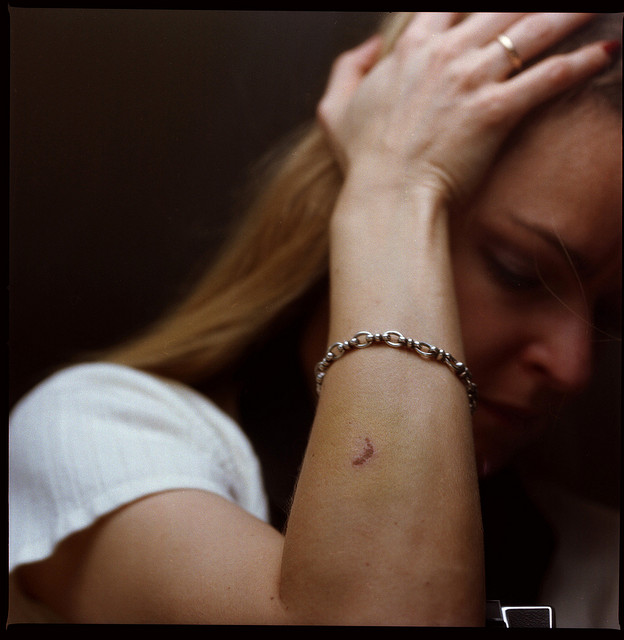


.jpeg?picon=3304)




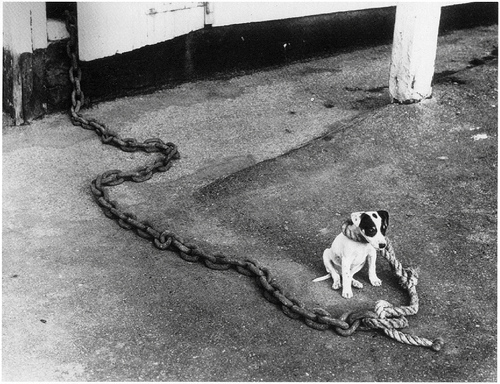







Right on, Angela! I hate when people do this. Whereas, if they just asked me, I'd find a way to give them some exposure.
Yes, it can be hard to ask, but no doubt about it, bloggers tend to be very helpful. Certainly I know this first hand.
Courtesy is lost on most people these days. I blame parenting.
This comment has been removed by the author.
Thank you so much for this! It is now bookmarked in my marketing folder and i'm about to spread links across the universe :)
This comment has been removed by the author.
This comment has been removed by the author.
This comment has been removed by the author.
Another tip: Offer to assist them with stuff ,before you need their help. Some folks call it "paying it forward". I call it "Helping those I like." I also don't worry about if they can help me out later on.
To be honest, when I help promote the places, and things I like, I see it as a great chance that the creators will make more stuff I like. I'm kinda selfish that way. :)
Thanks for outlining this etiquette! I hope your blog becomes the handbook for such things. As a blogger, I love the oppprtunity to showcase people's gifts and talents and even products, but ultimately it's all about people, and it is a relationship, even if an email one.
@Jenny, I agree. In fact we had so many people hit us up with a form letter, or splatter us with promo, or simply ask to blog but have no idea what to blog about, we created a form. It can be incredibly time consuming to work with some people who want to do a guest post, so it's better to be respectful of their time and really think it thought right up front.
@Bish, I agree. I have made some amazing connections with people because of guest posts! It is worth the effort and if you really show courtesy and authenticity, you never know where it will lead.
Michael, I agree, but it means that those who are courteous stand out, right? All the more reason to be this way. :)
Tracy, so glad this helps! Thanks for the shares, too. :)
Beginingsinwriting, that is a great point. I often share proactively long before approaching a blogger, and I try my best to share posts that come before and after with people who will find those topics interesting, just to continue to add value to the site who hosted me. Definitely courtesy doesn't have to start and end with the post!
Melody, it's definitely about relationships. as I said to Bish, I have met and become friends with some amazing people that started out as a post request--either theirs to my blog, or mine to theirs. :)
I saw your post on Facebook yesterday! Thanks for this great advice. I especially like the part about making it easy for the blogger. You guys made things so easy for us when ET came out. Other authors that I've had on my blog have done the same...included links, edited content, friendly chatting with followers who leave comments. All of that is so great!
Great post! I did PR and marketing pre-internet days. And I realize not everyone has training in PR, but you'd think common courtesy would dictate how to conduct business, even on the internet. However, it seems there needs to be more education on this subject or else people are self-defeating in their presumptuous requests.
This comment has been removed by the author.
Well put, AA!
So agree, Angela. The giveaways really do help bring traffic.
I get lots of requests too and one of the first things I do is look to see if the person has an online presence. If they haven't done their homework like set up an author page on Goodreads or a website, I wonder what they're offering. This is really an issue with some self-published authors that I sadly have to say no to.
This is so ironic, because I got email yesterday from someone doing this exact thing. No one I've ever met or who has commented on my blog. She sent me all her attachments and requested I feature her. I think I'll respond with a kind word and link back to this post. It may even be the same person who prompted you to write this.
I might add, I concur with you %100.
Wow - that's just rude. The same can be said for the folks who Tweet nothing but spam several times an your. The louder they shout, the less I'll listen.
Great tips, Angela!
Agreed! I've ignored multiple 'requests' that were more like demands or felt a little slimy :)
Julie, I am glad it was easy to join in last year. That was a big event to coordinate, and i am so appreciative of everyone who participated to give it wings. I would love to do it again!
mrkohler1, I think the scary things that I see this happen with marketing departments and publicists, and know that someone has paid them money to get their book or product out there. It's unfortunate, because often that means money down the drain. People need to be wary of companies that promise to get your content seen by large numbers of blogs and websites, because how they do it could potentially alienate buyers in the process.
Thanks Matt! Hope you had a great summer!
Natalie, yes a presence is good. For us it isn't a must, as long as the quality of writing is there. If you can write a strong guest post, then we'll consider you, that sort of thing. But the guest post has to be strong, and not something that's been written about to death. We like unique content and strive hard to bring it here to our readers. :)
PK, it could have been the same person--who knows? It was from a big organization, one I was surprised to get a form letter & attachments in that manner from. Their loss, because had they simply asked and personalized a request, i would have had the organization on my blog.
Gwen, yes the tweeters. Every once in a while I watch the stream for everyone, and it is saturated with promo screaming. IMHO, a person stands out these days by not pointing to amazon and their book's profile!
Thanks Jeff! *waves*
Jemi, us as well. Especially because we have a form page for guest post requests, and if a person is sending me a direct email, they haven't even bothered to look at my site enough to see I have a form. I wish we didn't have to do the form, but Becca and I got so many requests that didn't even make sense for our blog's audience, we had to go that route.
Wonderful tips. My favorite is "always add value." If people remember just those three words, it would make such a difference.
Billions of Internet Users Search Online Jobs on internet and Make Perfect Business from home, Internet World Wide Online Jobs and Business Plans.
Genuines Works of Data Entry, Copy Pasting, Add Posting, Clicking, Web Surfing, Website Visiting, Article Sharing, Data Sharing, Google Business Plan and Much More Business Plans.
www.jobzcorner.com
At least now that I'm not longer on the SEO charts because I had to start over, I won't be getting anymore of those requests to be on my blog by people who have nothing to do with what I post about. Yay!
Latest Mp3 Tunes, Mp3 Musics, Mp3 Songs Tunes, Mp3 Music Tunes, Funny Tunes, Funny Mp3 Music, Indian Tunes, Lol Tunes, Music of Songs, Bollywood Tunes, Latest Bollywood Music Tunes, Entertainment Pictures, Entertainment Fun Mania, Entertainment Articles, Entertainment Latest updates, Bollywood News updates, Hollywood News updates and all Hot Current Affairs in only one Social Website
hotcurrentaffairs.com
The tips you provide require "taking time," something many folks would rather not do. And the personalization can help because it says that you're taken the time to get to know before sending that cold call communication.
Good suggestions. I've been approached cold like that. If I've never had any contact before, I tend to delete them without responding.
These are great tips, Ange! Thank you!
Very useful post. I have learned to say no to those who clearly haven't been reading my blog. This post is full of good tips. Thanks for this.
These are very consise and helpful points, Angela. It's sad to see some authors (and not only authors) keep throwing a wide net without making an effort to actually build the relationships with the bloggers first. Most bloggers don't get paid for what they do, they just provide their valuable service to the public for free. So remembering that is my first priority. I always offer my help, books, swag etc. to them, and I make sure to tweet, Facebook etc. about their own posts, especially when they are promoting someone else and not me :-) Paying forward is not only the right thing to do. It definitely feels great!
Thanks for the post. I'll keep the info in mind when I approach bloggers. I get annoyed when someone puts a blanket email on the ACFW loop.
@Marcia, I really like that. Just add value. It keeps the focus on the other person instead of on what you can gain. Very insightful.
@Stina, that's the way to look at the positive :)
@Angela B, this is why it aggravates me to no end to get these form letter requests. I know how much time it takes to personalize and make sure you're a good match for whoever you're contacting. When I don't have time, I don't send the request. It's that simple. *grumble*
@Donna, this tends to be my response, too. I think that Angela, like @Rosi, at least replies with a no thank you, which is probably the nicer response. But my thinking is that if they didn't take the time to do their homework and are contacting me cold like that, then I shouldn't have to take my time—which is surely as valuable as theirs— to respond.
@Angela, it does feel good!
And @Bonnie, I have the same response. I know I usually end up not reading those blanket emails. I have to think that when the guilty parties receive those kinds of messages from others, their response is the same. I bet they don't read them, either. This is why I think it's so important to examine our own responses to different promotional efforts. If their turn-offs for us, definitely don't go and inflict them on others.
Great post, Ange!
I am so glad this info is helpful. :) Thanks everyone for the great comments and suggestions!
Hi Angela, thanks for this great advice. Do you suppose people don't follow it because its the Internet? After all, IRL you wouldn't just walk up to a total stranger and demand something of him or her, would you?
Thanks for the post. Asking for promotions is just like querying I guess.
I bookmarked this blog post. XD I think this will be very helpful for me in the future. Especially if I end up asking you for help. Eh? EH?? ;)
I get spam emails constantly asking to use my blog for exposure to their product. They go in my spam folder and stay there because they are almost always generic emails and they clearly don't know me or my blog.
Every thing will be Free, Facebook Likes, Twitter Followers, Twitter Tweets, Twitter Re-Tweets, Twitter Favorites, Google Plus Followers, StumbleUpon Followers, Youtube Views, Youtube Likes, Youtube Subsribes, Pinterest Followers, Pinterest Likes, Pinterest PinIt, Free Website Visitors.
Just Join now and Free Increase your Social Media Networks.
GetLikeFast.com