


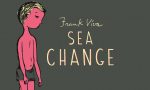
 Francoise Mouly "said to me on several occasions that she doesn’t really want to be doing what other book publishers are doing. Why should I? There’s lots of them out there doing that. Let’s try some new stuff. That is her attitude. She loves experimentation."
new posts in all blogs
 By: Heidi MacDonald,
on 7/7/2016
By: Heidi MacDonald,
on 7/7/2016
Blog: PW -The Beat (Login to Add to MyJacketFlap)
JacketFlap tags: Interviews, NYC, Toon Books, New Yorker, Sea Change, Frank Viva, Add a tag
Add a Comment
By: Heidi MacDonald,
on 3/28/2016
Blog: PW -The Beat (Login to Add to MyJacketFlap)
JacketFlap tags: Food, Uncategorized, Art, New Yorker, hot dogs, Jaime Hernandez, Add a tag
 By: Beth Kephart ,
on 9/11/2015
By: Beth Kephart ,
on 9/11/2015
Blog: Beth Kephart Books (Login to Add to MyJacketFlap)
JacketFlap tags: editing, New Yorker, Barnes and Noble, Colm Toibin, John McPhee, Omission, Hope Whitmore, Add a tag
 The reason it can take me so long to write a single sentence is because I care so much, even in the very first draft, about that single sentence.
This, many might say, is a writerly handicap. Just get the story down, they say. Return to it later, they say. Trust the process.
I do return, later. I do write over that sentence, away from that sentence, disappointed with that sentence. But every single time I write a sentence, or rewrite it, or reclaim it from the trash can, I am hoping for nothing less than sentence that is excellently good.
Writing well, every time, is an eternal hope of mine. I have not cracked that egg.
(Even at the very end of the process, when the book is in galleys, I discover sentences that don't work. Or, an editor with a keen eye questions me about passages that had long seemed set in stone. This just happened, in fact, with THIS IS THE STORY OF YOU. We were in galleys. We thought (after finding several troublesome galley matters) that we were done. But Taylor Norman, reading the book with fresh eyes, stopped, thought, and asked: Do you want your "really" here? Is that double "rappel" intentional? Can't we relax her speech on this page? What do you mean, the wind is incidental? Can she call her mother "Mom"? It's an ongoing process, refining one's work. And I suspect we're never really done.)
Over the last 24 hours I've read two favorite writers—novelist Colm Toibin and nonfiction genius John McPhee—on the art of getting it right the first time, and then looking again. I share their perspectives here. I learn from both.
Here Hope Whitmore interviews Colm Toibin for the Barnes and Noble Review on, among other things, process:
Now here is John McPhee in a New Yorker piece called" Omission: Choosing what to leave out." He too is talking about the importance of selection, in the first paragraph. In the second (non-contiguous) paragraph, he is reflecting on greening, a process he teaches his students:


 By: Heidi MacDonald,
on 8/25/2015
By: Heidi MacDonald,
on 8/25/2015
Blog: PW -The Beat (Login to Add to MyJacketFlap)
JacketFlap tags: Cartoonists, Art, New Yorker, Adrian Tomine, Top News, Add a tag
By: Beth Kephart ,
on 6/27/2015
Blog: Beth Kephart Books (Login to Add to MyJacketFlap)
JacketFlap tags: New Yorker, James Salter, Andrew Solomon, Arcadia Creative Writing Summer Weekend, Add a tag
 In a few hours, I'll be at Arcadia University for the Creative Writing Summer Weekend. I'll be teaching a private master class. At 3:00, my reading will be free and open to the public. I invite you to join us on this rainy day.
I've decided to focus on the idea of the osmotic for both the class and the reading. How we move from truth to fiction and back. How we empathize with both the real people in our lives and the characters that emerge from our dreams. How we maneuver imagination and compassion.
Today, choosing against the gym after a physically exhausting week, I had an extra hour to read and have spent that time in the company of James Salter. There, in the midst of a Paris Review Art of Fiction interview (with Edward Hirsch), I found Salter reflecting on this very topic:
Finally, today, I leave you with this—more words to be shared today at Arcadia. This time the writer is Andrew Solomon in The New Yorker and this time the osmotics concern youth and age:

 By: Beth Kephart ,
on 5/4/2015
By: Beth Kephart ,
on 5/4/2015
Blog: Beth Kephart Books (Login to Add to MyJacketFlap)
JacketFlap tags: Adam Gopnik, Trollope Trending, writing, time, New Yorker, Add a tag
 "... three hours a day is all that's needed to write successfully. Writing is turning time into language, and all good writers have an elaborate, fetishistic relationship to their working hours. Writers talking about time are like painters talking about unprimed canvas and pigments. (Nor is there anything philistine about writers talking money. Inside the ballroom at the PEN banquet, it's all freedom and dignity; outside, it's all advances.)"
Adam Gopnik, "Trollope Trending," New Yorker, May 4, 2015


 By: Roger Sutton,
on 4/29/2015
By: Roger Sutton,
on 4/29/2015
Blog: Read Roger - The Horn Book editor's rants and raves (Login to Add to MyJacketFlap)
JacketFlap tags: Authors & Illustrators, Trends, new yorker, Out of the Box, Add a tag


 By: Julie Fortenberry,
on 3/30/2015
By: Julie Fortenberry,
on 3/30/2015
Blog: Children's Illustration (Login to Add to MyJacketFlap)
JacketFlap tags: New Yorker, Add a tag
 By: Betsy Bird,
on 3/27/2015
By: Betsy Bird,
on 3/27/2015
Blog: A Fuse #8 Production (Login to Add to MyJacketFlap)
JacketFlap tags: flashdrives, bibliotherapy, Adam Rex, death, New Yorker, Jonathan Stroud, Fusenews, The Baby-Sitters Club, funny lasses, Rex Stout, barcodes, Add a tag
By: Beth Kephart ,
on 8/3/2014
Blog: Beth Kephart Books (Login to Add to MyJacketFlap)
JacketFlap tags: New Yorker, Mumbai, Juarez, Katherine Boo, Behind the Beautiful Forevers, Elizabeth Kolbert, Add a tag
 With Behind the Beautiful Forevers, Pulitzer Prize winner Katherine Boo does more than merely bear witness in Annawadi, the slum that grew up in the shadows of the Mumbai airport and features a sewage lake, horses painted to mimic zebras, and every possible form of corruption.
She does more than sit with the trash pickers, the schemers, the envious, the hungry, the souls who conclude that death is the only way out.
She tells a story. She involves her readers in the intimate dramas of an open-wound place. She compels us to turn the pages to find out what will happen to the prostituting wife with half a leg, the boy who is quick to calculate the value of bottle caps, the man with the bad heart valve, the "best" girl who hopes to sell insurance some day, the "respectable" rising politician who sleeps with whomever will help her further rise, the police who invent new ways to crush crushed souls.
She engages us, and because she does, she leaves us with a story we won't forget. Like Elizabeth Kolbert, another extraordinary New Yorker writer, Boo takes her time to discover for us the unvarnished facts, the pressing needs, the realities of things we might not want to think about.
But even if we don't think about them, they are brutally real. They are.
A passage:

 By: Heidi MacDonald,
on 6/30/2014
By: Heidi MacDonald,
on 6/30/2014
Blog: PW -The Beat (Login to Add to MyJacketFlap)
JacketFlap tags: New Yorker, Adrian Tomine, Top News, Art, Add a tag
I haven’t been down to the new memorial and have no plans to soon, although some out of towners I know who have gone enjoyed it greatly. Maybe later. Tomine’s cover certainly captures the many emotions inspired by just thinking about a visit.
By: Beth Kephart ,
on 3/30/2013
Blog: Beth Kephart Books (Login to Add to MyJacketFlap)
JacketFlap tags: New Yorker, David Shields, Cry Me a River, Giles Harvey, Failure Memoirs, Add a tag
 A list of the things that I did wrong in writing the first 200 pages of my Florence novel:
* Having the audacity to think that I could fit it in during this season of Extreme Busyness (though I had to fit it in, on behalf of a fellowship project I was teaching).
* Choosing to escape the frightening avalanche of emails by taking the book off the computer altogether and writing it in small spurts on the iPad. Good for scenes. Horrific for continuity.
* Giving myself a tremendously complex set of plot points and intersections to manage with a brain now too crowded to manage anything but the bare rudiments of daily life.
* Pushing ahead through the panic, as opposed to calling the panic off completely, and reconsidering. (But I had to push ahead; I was teaching this novel to a student.)
Finally, a few weeks ago, I did stop. Threw almost all of what I had away and started over. New technology. Simplified plot. More sleep. Less work at midnight hours. Less anxiety about the mountains of books and emails flooding in. Yesterday, Friday, was the first day since I began the book last October that I could work on it for an entire continuity-seeding stretch. Last night was the first night that I slept, unpanicked. There's a ton of work to do. But there's a working foundation.
Since I was giving myself some breathing room I decided to go one step farther down the easing road and read through some of the New Yorkers that have gathered here in this season of Extreme Busyness. First up: Giles Harvey's contemplations, "Cry Me a River: The Rise of the Failure Memoir."(March 25 issue) A look at the crop of memoirs that have emerged from failed novelists. Memoirs about failures—hmmm, I thought, I could have written one of those, if I didn't already understand that we all have our failures, our shames to work through.
Most interesting to me was this paragraph about the failure of the novel in our era—something we've all heard much about. Harvey is reflecting on David Shields (that inveterate provocateur) in this passage.
By: Beth Kephart ,
on 1/17/2013
Blog: Beth Kephart Books (Login to Add to MyJacketFlap)
JacketFlap tags: New Yorker, Twentysomethings, Nathan Heller, Add a tag
 Nathan Heller is a patient, comprehensive reader, a man not prone to snap conclusions. Which is why I enjoyed his recent New Yorker story (January 14, 2013 issue) on twentysomethings. He remembers himself all those years ago. He reviews the literature of the young and the literature of those who purport to know about the young, and he wonders out loud in a voice both determined and delicate. This is how he ends his piece—a masterful, undamning, bittersweet conclusion. Here is how you is I, and how you is us:
By: Beth Kephart ,
on 10/13/2012
Blog: Beth Kephart Books (Login to Add to MyJacketFlap)
JacketFlap tags: The Death of Ivan Ilych, Back to Blood, New Yorker, James Wood, Tolstoy, Tom Wolfe, Add a tag
 After a long day and an even longer week, I collapsed on the couch with my New Yorkers. Does anyone else feel this way? My New Yorkers. I want to know what these writers know. I want to write a single sentence like they (or some of them) write. I want to give you what I read and think. For now, here is this. It's James Wood talking about Tom Wolfe's latest novel, Back to Blood. Wood is reflecting on details that resonate, those that feel organic, and those that sour the prose with obvious, unlived research. Listen in (for the whole, buy the October 15, 2012 issue):
 By: Beth Kephart ,
on 8/24/2012
By: Beth Kephart ,
on 8/24/2012
Blog: Beth Kephart Books (Login to Add to MyJacketFlap)
JacketFlap tags: New Yorker, jonathan franzen, Newsweek, Edward Hopper, Truman Capote, D.T. Max, Mary Karr, C.K. Williams, In Cold Blood, Oliver Sacks, Gail Levin, The Poetry of Solitude, Joyce Carol Oates, David Foster Wallace, Add a tag
 I had time, just now, that quiet time, of reading the magazines that came in last week. Oh, the stolen deliciousness of it all. In The New Yorker, I read of Oliver Sacks on his years dedicated, in large part, to experimenting with large doses of amphetamines, morning-glory seeds, LSD, morphine, and all other manner of neuro-shifters. I thought of all the Sacks I have read these many years, of the seeming innocence of his beguiling childhood memoir, Uncle Tungsten: Memories of a Chemical Boyhood, of his great empathy for patients and ferns and other earthly beings. His New Yorker essay delves, skips, and buries time before it rushes, headlong, toward its hard stop. Sacks had discovered a book on migraines and it had become important to him. He had a revelation about migraines. He ...
In between the Sacks and the Wallace, I found two poems of interest. Joyce Carol Oates has a chilling, compelling poem in The New Yorker called "Edward Hopper's '11 A.M.,' 1926"�worth reading from beginning to end. Oates was one of several authors who contributed to one of my favorite poetry collections (a gift from my sister) called The Poetry of Solitude: A Tribute to Edward Hopper (collected and introduced by Gail Levin). Clearly this project, all these years later, continues to inspire.
Finally, within the pages of this week's New Yorker is a poem by C.K. Williams, one of my favorite living poets. I had the great pleasure and privilege, years ago, of interviewing C.K. in his Princeton home for a magazine story. Later, I saw him read at the Writer's House at Penn. He remains vital, interesting, experimental, and honest, and his new poem, "Haste," is a terrifying portrait of time. From its later phrases:
(That above, by the way, is my cat Colors, who lived with me for many years. She's climbing into my bedroom window. I'm eleven or twelve years old. And I'm reading on my bed as she pokes her pink nose in.) By: Beth Kephart ,
on 7/30/2012
By: Beth Kephart ,
on 7/30/2012
Blog: Beth Kephart Books (Login to Add to MyJacketFlap)
JacketFlap tags: Slate, New Yorker, Imagine, Jonah Lehrer, Josh Voorhees, Dylan quotes, Add a tag
 Late last Friday afternoon, a client and I were discussing Jonah Lehrer. My client had seen Lehrer talk, we'd both read Imagine. We liked the provocative style of Lehrer's work, his easy translations of harder-concept things. We liked that a guy like Lehrer got so much attention in a Fifty Shades world.
But just today, a few minutes ago, I was checking out at the grocery store, when my phone buzzed. It was my client, sharing a link to this Josh Voorhees Slate story, titled "Jonah Lehrer Resigns From New Yorker After Making Up Quotes."
I raced home to read the story on the full screen. I churn now, within—confused, more than anything, as to why a young man as successful as Jonah Lehrer most certainly is would find it necessary, first, to fabricate Dylan for his book, and, second, to spin a complicated tangle of lies in the aftermath of being found out. Lie after lie. Preposterous lies. Not exaggerations, but lies.
Why do such a thing? Why cannibalize a rising-star career? Why jeopardize the faith of readers, an editor, friends? Writers make mistakes—we all do, I absolutely do—but deliberate deceit is hardly a mistake. Deliberate deceit is intentional, and designed. It can't feel good. Nothing will make it right.
There can only be, when lying as overtly as this, a terrible anxious rush in the middle of the night. By: Julie Fortenberry,
on 7/2/2012
By: Julie Fortenberry,
on 7/2/2012
Blog: Children's Illustration (Login to Add to MyJacketFlap)
JacketFlap tags: Francoise Mouly, New Yorker, Shelley Davies, Add a tag


 By: John,
on 5/1/2012
By: John,
on 5/1/2012
Blog: DRAWN! (Login to Add to MyJacketFlap)
JacketFlap tags: illustration, New Yorker, Katie Turner, My Week With Marilyn, Add a tag

 By: Melissa Wiley,
on 3/31/2012
By: Melissa Wiley,
on 3/31/2012
Blog: Here in the Bonny Glen (Login to Add to MyJacketFlap)
JacketFlap tags: books, fiction, New Yorker, Elizabeth Lawrence, Katharine S. White, Two Gardeners, Add a tag


 Add a Comment
By: Heidi MacDonald,
on 2/27/2012
Add a Comment
By: Heidi MacDonald,
on 2/27/2012
Blog: PW -The Beat (Login to Add to MyJacketFlap)
JacketFlap tags: Art, Blogosphere, New Yorker, Add a tag
By: John,
on 2/22/2012
Blog: DRAWN! (Login to Add to MyJacketFlap)
JacketFlap tags: covers, New Yorker, Francoise Mouly, contest, Add a tag
 By: John,
on 9/28/2011
By: John,
on 9/28/2011
Blog: DRAWN! (Login to Add to MyJacketFlap)
JacketFlap tags: quotes, New Yorker, Bob Mankoff, Add a tag
By: Betsy Bird,
on 9/7/2011
Blog: A Fuse #8 Production (Login to Add to MyJacketFlap)
JacketFlap tags: Uncategorized, New Yorker, Ian Falconer, Add a tag
By: Heidi MacDonald,
on 8/25/2011
Blog: PW -The Beat (Login to Add to MyJacketFlap)
JacketFlap tags: Graphic Novels, Cartoonists, New Yorker, gag cartoons, James Sturm, Add a tag
View Next 25 Posts
Viewing: Blog Posts Tagged with: New Yorker, Most Recent at Top [Help]
Results 1 - 25 of 60
By: Heidi MacDonald,
on 7/7/2016
Blog: PW -The Beat (Login to Add to MyJacketFlap)
JacketFlap tags: Interviews, NYC, Toon Books, New Yorker, Sea Change, Frank Viva, Add a tag
By: Children's Books, dogs, and related matters,
on 4/1/2016
Blog: Barking Planet (Login to Add to MyJacketFlap)
JacketFlap tags: Leena Krohn, Zootopia, Castle in the Mist, Circling the Waggins, Seth Lerer, Snow Valley Heroes, Sunbear Squad, Yelodoggie, Lumos, CA Wulff, Finding Fido, How to Change the World in 30 Seconds, Fantastic Beasts and Where to Find Them, Jane Brody, Kid Litosphere, Kids dog books, Born Without a Tail, Grimm Fairy Tales, Celebrating Reading, Parade of Misfits, anti-war books, children’s fantasy books, first chapter books, A Christmas Tale; Planet of the Dogs, Planet of the Dogs Productions, Terri Winding, Maria Tatar; Jack Zipes, BookNerd, Good Dog Foundation, Harvey the Dog, Joshua Rothman, Michiko Kakatani, Harry Potter, Children, Books, J.K. Rowling, Movies, Kids, Film, librarians, Dogs, John Green, Kids Books, children’s literature, children’s books, New Yorker, Alison Lurie, Dog books, Save the Children, NRA, Therapy dogs, early reader books, Terri Windling, Marina Warner, Hermione, LitWorld, The Witch, Under the Sun, Add a tag
Blog: Barking Planet (Login to Add to MyJacketFlap)
JacketFlap tags: Leena Krohn, Zootopia, Castle in the Mist, Circling the Waggins, Seth Lerer, Snow Valley Heroes, Sunbear Squad, Yelodoggie, Lumos, CA Wulff, Finding Fido, How to Change the World in 30 Seconds, Fantastic Beasts and Where to Find Them, Jane Brody, Kid Litosphere, Kids dog books, Born Without a Tail, Grimm Fairy Tales, Celebrating Reading, Parade of Misfits, anti-war books, children’s fantasy books, first chapter books, A Christmas Tale; Planet of the Dogs, Planet of the Dogs Productions, Terri Winding, Maria Tatar; Jack Zipes, BookNerd, Good Dog Foundation, Harvey the Dog, Joshua Rothman, Michiko Kakatani, Harry Potter, Children, Books, J.K. Rowling, Movies, Kids, Film, librarians, Dogs, John Green, Kids Books, children’s literature, children’s books, New Yorker, Alison Lurie, Dog books, Save the Children, NRA, Therapy dogs, early reader books, Terri Windling, Marina Warner, Hermione, LitWorld, The Witch, Under the Sun, Add a tag
Alternate Reality
“Harry Potter isn’t real? Oh no! Wait, wait, what do you mean by real? Is this video blog real? Am I real if you can see me and hear me, but only through the internet? Are you real if I can read your comment but I don’t know who you are or what your name is or where you’re from or what you look like or how old you are? I know all of those things about Harry Potter. Maybe Harry Potter’s real and you’re not.”
― John Green
The illustration of Hogwarts is by Jim Kay
..................
Opening the Doors to Wonder
Wonder comes in many forms.
Harry Potter swept the reading world and opened the doors to a greater audience. The success of the Harry Potter series renewed broad-based respect for fairy tales.
From the first book and beyond, J.K. Rowling created an alternate world that readers could relate to. People young and old are drawn in to these robust stories and their engaging, fully developed characters. As with the classic stories from the past, the characters, imaginative twists and turns of the stories, and the fully realized details, combined to enable readers to believe in the magic of an alternate reality. The seven Harry Potter books created an enormous worldwide audience. And provided the substance for wonderful films.
Adults have also become fans of the books and movies, creating a record breaking "crossover" market. And the phenomenon continues to grow...
Click the photo for spring wonder.
................
Contact With The Lives Of Others
"Rowling's books, by arousing curiousity and establishing contact with the lives of others, even if they exist solely within the confines of a literary work, enable children to develop capacities that readily translate into real-life experience. JkRowling never shies away from the great existential mysteries: death and loss, cruelty and compassion, desire and depression. Harry is anything but sheltered from the evils of Voldermort...he is destined for greatness even though he also posseses the weaknesses, failings, and vulnerabilities of all humans."
Maria Tatar -- Enchanted Hunters -- The Power of Stories in Childhood
......................
Harry Began On A Train
JK Rowling: I was going on a train from Manchester to London and I was looking out of the window at some cows, I believe and I just thought: "Boy doesn't know he's a wizard - goes off to wizard school." I have no idea where it came from. I think the idea was floating along the train and looking for someone and my mind was vacant enough so it decided to zoom in there.
Stephen Fry: And you played with the idea in your head…
JK Rowling: Exactly! From that moment I thought: "Well why doesn't he realise he's a wizard?" It was as though the story was just there for me to discover and I thought: "Well his parents are dead and he needs to find out they're wizards" and on we went from there.
From a Stephen Fry Interview with JK Rowling
The illustration, from the Philosophers Stone, is by Jim Kay.
............................
Hermione...an empowered young woman
"Throughout the Harry Potter Tales, Hermione emerges as the beneficiary of three centuries of girls' book identity. At times the plucky youth, at times the serious student, at times the foolish lover, at times the tomboy, at times the blossoming maiden -- taken together, all these aspects of her personality make her the heir to everyone from Jenny Peace in Sarah Fielding's The Governess, to Jo in Alcott's Little Women, to Alice in Carroll's Wonderland, to all the girl guides, or "new Women" or adventuresome or studious females who fill the range of popular writing well into the twentieth century."
From Seth Lerer writing about Theaters of Girlhood, Domesticity, Desire, and Performance in Female Fiction in his book, Children's Literature, A Reader's History from Aesop to Harry Potter
..........................
“I wrote a strong female character with brains”
- J.K. Rowling commenting on Hermione in a video conversation with Daniel Radcliff
............................
Finding the Right Wand -- an adventure in an alternate reality
First, you go to Diagon Alley where Ollivanders is located..."Ollivanders: Makers of Fine Wands since 382 B.C...
A single wand lays on a faded purple cushion in the dusty window."
You will be helped by Mr. Ollivander, a very old man, who remembers every wand he has sold -- and to whom he sold it.
You will be measured in many ways by a tape measure that works on its on while Mr Ollvander explains that, "Every Ollvander wand has a core of powerful magical substance...We use unicorn hairs, phoenix tale feathers, and the heartstrings of dragons. No two Ollivander wands are the same..."
You may have to try many wands before you have the right one.
It seems you don't choose the wand, the wand chooses you...
The fully imagined detail in the Harry Potter books plays a major role in their appeal. The fascinating story of Harry finding the right magic wand takes place in Harry Potter and the Sorcerer's Stone when Hagrid takes Harry shopping on Diagon Alley, and introduces him to the the world of wizards.
The illustration of Harry and Hagrid in Diagon Alley is by Jim Kay
.................
An Alternate Universe
..."J. K. Rowling has created a world as fully detailed as L. Frank Baum’s Oz or J. R. R. Tolkien’s Middle Earth, a world so minutely imagined in terms of its history and rituals and rules that it qualifies as an alternate universe, which may be one reason the “Potter” books have spawned such a passionate following and such fervent exegesis...."
From the book review by Michiko Kakatani of Harry potter and the Deathly Hallows in the New York Times
................
Stories That Opened My Mind
"There are hundreds upon hundreds of reasons for one to fall in love with the world and characters J.K. Rowling created in the Harry Potter series, the aforementioned being among them. For me, these are the stories that opened my mind to the wonderful world of books, novels and novellas, making them very near and dear to my heart..."
From the BookNerd on her Wonderful World of Writing blog
An Older Harry Potter
...Harry is called back into active duty when evil powers return in force... a new book and a play (opening in London) based on the book - Harry Potter and the Cursed Child -- are on their way, arriving in late July. They are based on a story by J.K. Rowling. Here are two links for more information: Pottermore and NPR
Wizardry Before Harry
The Wizard World in 1920's USA is the setting for a new movie,starring Eddie Redmayne...
Fantastic Beasts and Where to Find Them opens in the UK in November 2016... The book about Fantastic Beasts was used as part of the curriculum for young wizards in the Hogwarts classroom. There will be two sequels...all written by J.K. Rowling.
Support For Children
J.K. Rowling spends time and money on helping people...In 2004 she founded Lumos...'No child should be denied a family life because they are poor, disabled or from an ethnic minority. Lumos works to support the 8 million children in institutions worldwide to regain their right to a family life and to end the institutionalisation of children."
Among the many other charities she supports are:Book Aid International, Catie Hoch Foundation, Children with AIDS, Dyslexia Action, Gingerbread...
Who Is J.K. Rowling ?
For the real J.K. Rowling, or as close as we will probably get, I suggest the Oprah Interview... Engaging, interesting, and with some excellent documentary scenes woven in...Also, her candid, heartfelt, Harvard speech.
Alternate Reality
"Of course it is happening inside your head, Harry, but why on earth should that mean that it is not real?” ― J.K. Rowling, Harry Potter and the Deathly Hallows
.............................
The N.R.A. Reimagines Classic Fairy Tales, With Guns
Liam Stack wrote this disturbing article. Here are excerpts...
"The world of make-believe can be a scary place, but never fear: Thanks to a series of reimagined fairy tales published online by the National Rifle Association, classic characters like Hansel and Gretel are now packing heat.
The group has published two of the updated tales on its N.R.A. Family website in recent months, entitled “Little Red Riding Hood (Has a Gun)” and “Hansel and Gretel (Have Guns).” The stories have outraged advocates of gun control, but their author, Amelia Hamilton, a conservative blogger, has called them lessons in gun safety...
In the N.R.A. version, Little Red Riding Hood sets off through the forest to visit her grandmother, just like in the original. But the Big Bad Wolf did not scare her this time, because she “felt the reassuring weight of the rifle on her shoulder.”
When the wolf approached her, “she shifted her rifle so that it was in her hands and at the ready.” He fled in fear...
Dan Gross, the president of the Brady Campaign to Prevent Gun Violence, agreed, calling the stories “a disgusting, morally depraved marketing campaign.” He said in a statement that the stories were in poor taste in part because nearly 50 children and teenagers are shot each day in the United States, and suicide by gun is a leading cause of death among children over the age of 9..."
Here is a link to read all of this disturbing article:FairyTaleGuns
The photo of a boy with a Barrett rifle at a meeting of the National Rifle Association in St. Louis in 2012. is by Daniel Acker for The New York Times
.............................
Save The Children
Save the Children works in 120 countries, including the United States, and has helped more than 166 million children — including more than 55 million children directly. Here are excerpts from the story of one child...
"At 12 years old Omar* suddenly found himself responsible for his family and working to support his mother and younger brother after his father was killed in the conflict...
 'I am the man of the house now and they are relying on me'...Recently Omar started working in a fuel market in northern Syria where the work is both difficult and dangerous, and yet it is a job that pays enough to meet his family’s needs. Every day he goes to the market with his bucket and sponge to collect fuel that has spilled onto the ground from the tankers. Using the sponge he soaks up the fuel, squeezes it into his bucket and sells what he has collected at the end of every day.
Omar said, 'We have to be here very early in the morning because the tankers arrive early, so I get here at six in the morning and leave late at night so I that I have time to collect as much fuel as possible'..."
Omar was a good student and loved school; he dreamed of becoming an architect. His life is now about survival.
Here is a link to read all of Omar's painful story: Omar
Top photo, courtesy IRF; bottom photo, courtesy Save The Children.
.....................................
Importance of Children's Books for Most Adults
"But children's books are extremely important. Most adults don't read many books and if they do it will probably be some form of popular fiction. So a children's classic may be the last, or in some cases, the only, piece of serious literature they have read. As such these books are very influential and so I think it is our responsibility to consider them as seriously and carefully as any other great literature."
From a Guardian article by Pulitzer Prize winning author, Alison Lurie , professor emeritus of literature and writing at Cornell University, and author and editor of a multitude of children's books.
................................
A Classic Video....Harvey the Dog
...........................
The Planet Of The Dogs....An Alternate Reality
Here are excerpts from Chapter One of the book...the story of how dogs came down to Planet Earth to help people...
"Far out in the sky, on the other side of the sun, is the Planet of the Dogs. Dogs have always lived there in peace and happiness.
There are country dogs and city dogs. They live in places like Shepherd Hills, Poodletown, Retriever Meadows, Muttville, Hound Dog Hamlet, Biscuit Town, and Shaggy Corners...
Dogs talk to each other in many ways. They woof, bark, and howl. They use body movement, face licking, smiling, and tail wagging. Dogs can hear what other dogs are thinking. And they always tell the truth...Dogs are very good at sleeping, taking naps, and waiting for someone they love...
Dogs have no worries on their planet because there are no dangers there. There are no bad dogs, no hungry animals, and no mean people. There is plenty to eat, lots of time to play, and all kinds of schools for the puppies to learn interesting things about their planet and each other. It’s a wonderful place to live.
Here is a link to read Sample Chapters of the Planet Of The Dogs series.
............................
This is the world of Yelodoggie, created by author and dog advocate, C.A. Wulff.
All dogs, deep in their heart of hearts, are yellow. Because yellow is the color of light and joy and happiness, and these attributes are the true essence of dogs. Here is a link to Wulff's Etsy shop where you can see more of these delightful original watercolor paintings and prints celebrating dogs. They make a wonderful gift...
........................
Alternate Realities from Finland
Leena Krohn, a highly regarded writer in Europe, wrote one of my favorite books, Tainaron. I was gratified to see that Joshua Rothman, in the New Yorker, wrote that her newly published book of collected fiction was among " The Books We Loved in 2015". Here is an excerpt:
"I also found myself hypnotized by Leena Krohn, a Finnish writer whose collected stories and novels, rendered into English by many different translators, have just been published as a single volume, “Leena Krohn: Collected Fiction.” Broadly speaking, Krohn is a speculative writer; one of the novels in the collection, for example, consists of thirty letters written from an insect city. (“It is summer and one can look at the flowers face to face.”) Krohn writes like a fantastical Lydia Davis, in short chapters the length of prose poems. Her characters often have a noirish toughness; one, explaining her approach to philosophy, says that when she asks an existential question, “life answers. It is generally a long and thorough answer...”
Here is the link to read all of Joshua Rothman's New Yorker review.
Photo by Mikael Böök.
......................
Movies
Under The Sun...two realities
A compelling 5 minute report on DW tv news about a little girl in North Korea brought me a reminder of the power of film. Vitaly Mansky, the producer/director, has made a very poignant film about the life of Zin Mi (the little girl) in both the real world and the manufactured world of North Korea.
Here are excerpts from an informative article by Carmen Gray in the Guardian...
"A new film on life in North Korea has caused a diplomatic row after the director used officially sanctioned shoots to demonstrate how the state manipulates its people.
Authorities are said to have tried to prevent screenings of Under the Sun, a film that follows a North Korean girl as she prepares to celebrate the Day of the Shining Star, the birthday of former supreme leader Kim Jong-il...The film reveals how government representatives seek to construct an image of an “ideal” family, capturing the hectoring of officials as they tell the Koreans what to say, how to sit and when to smile.
“I wanted to make a film about the real Korea, but there’s no real life in the way that we consider,” said Mansky, who spent a year in the country filming. “There is just the creation of an image of the myth of a real life. So we made a film about fake reality.”
Here is the link to the trailer for Under The Sun
................
Zootopia:
"Credit the Disney folks with making what could have been a lecture on stereotypes into one of the more amusing animated kidflicks of recent vintage. When you consider that this is the same zip-ah-dee-doo-dah studio that once made Song of the South ... well, let's just say Zootopia suggests we've all come a long way"...Bob Mondello, NPR
Here is a link to the trailer: Zootopia
....................
The Witch, a low budget (one million dollars), independent production, continues to find an ever-growing audience (over 30 million dollars)...
"The Witch is a scary movie and a serious one, because it lure us into the minds and the earthly domains, of those who are themselves scared, night and day, that they have forfeited the mercies of God. It takes an original movie to remind us of original sin..." Anthony Lane in his New Yorker review.
Stacy Schiffin wrote an excellent article, relevant to this movie, on The Witches of Salem, also in the New Yorker. Here is an excerpt..."In 1692, the Massachusetts Bay Colony executed fourteen women, five men, and two dogs for witchcraft. The sorcery materialized in January. The first hanging took place in June, the last in September; a stark, stunned silence followed. Although we will never know the exact number of those formally charged..."
................
“Both Rowling and Meyer (Twilight series), they’re speaking directly to young people. … The real difference is that Jo Rowling is a terrific writer and Stephenie Meyer can’t write worth a darn. She’s not very good.”- Stephen King
....................
Circling the Waggins by C.A. Wulff
What happens when a group of the most irascible, insane, and ridiculously un-adoptable pets known to man end up being permanent residents in an animal rescuer's home? Challenges abound and chaos reigns!
Here are excerpts from author Tim McHugh’s review…
"Circling the Waggins is a heart-felt and moving story of two women's quest to heal and nurture a wide variety of animals. C.A. Wulff poignantly captures the complex personalities of the mice, dogs, and cats that inhabit her wilderness home as well as the humorous chaos that ensues as they all try to coexist. It is by turns a roller-coaster ride of animal rescue, as well as a keen reflection on the frailty of all life and the healing power of love and letting go."
Tim McHugh, is author of Ivan! A Pound Dog's Views on Life, Love, & Leashes
...............
Dogs Open the Doors to Healing at Good Dog
Good Dog provides therapy dog services to people in health care, social service, educational and community facilities, and at disaster sites around the country. Its highly-trained and fully-certified volunteer teams each consist of a human handler and therapy dog. Good Dog focuses on work in the four divisions of Education, Health Care and Wellness, Research, and Disaster Response. For more on the work of these divisions, click here.
As the largest certifying animal-assisted therapy organization on the East Coast of the United States, Good Dog currently operates in New York, Connecticut, Massachusetts and New Jersey, and at disaster sites around the country. Good Dog focuses on work in the four divisions of Education, Health Care and Wellness, Research, and Disaster Response."
Here is a link to the Good Dog Foundation Video
........................
Turning Your Pet Into a Therapy Dog
by Jane E. Brody, Personal Health writer for the New York Times
"It did not take long for me to recognize the therapeutic potential of Max, the hypoallergenic 5-month-old Havanese puppy I adopted in March 2014. He neither barked nor growled and seemed to like everyone, especially the many children that come up and down our block.
When I asked if a crying child passing by would like to pet a puppy, the tears nearly always stopped as fluffy little Max approached, ready to be caressed.
So I signed us up for therapy dog training with the Good Dog Foundation, which met conveniently in my neighborhood. If we passed the six-week course, we would be certified to visit patients in hospitals and nursing homes, children in schools, and people in other venues that recognize the therapeutic potential of well-behaved animals..."
Here is the link to read all of this fascinating and informative article by Jane Brody: Personal Health
The illustration is by Paul Rogers
........................
We have free reader copies of the Planet Of The Dogs series for therapy dog organizations, individual therapy dog owners, librarians and teachers...simply send us an email at [email protected] and we will send you the books
Our books are available through independent bookstores, Barnes & Noble, Amazon, Powell's and many more.
The Planet Of The Dogs series is also available in digital format at
Barnes and Noble, Amazon, Powell's, Kobo, Inktera, Scribd, and Tolino.
Librarians, teachers and bookstores ..You can order the Planet Of The Dogs series, through Ingram with a full professional discount.
To read sample chapters of the series, visit PlanetOfTheDogs
The illustration from Planet Of The Dogs is by Stella Mustanoja-McCarty
.............................
Meeting A Dog
If you see an injured dog or a dog in trouble , from puppy mills to poison, Sunbear Squad can help you. Sunbear Squad is a leading source for information and guidance in dog rescue and care. Here is an excerpt from their site about meeting a new dog(s)...
"In the western world, we are taught at an early age to greet new people by approaching them with upright posture, looking directly into their eyes and offering a hand to shake or squeeze. It becomes second nature to us, so as a result, many of us animal lovers greet every living thing–except bugs–using those same “good manners...
We must UNLEARN that set of social rules to avoid frightening dogs, cats, and other animals, who will perceive full-front posture, staring, and outstretched arm as rude and threatening (unless they were very well-socialized with humans during the crucial developmental period).
In other words, polite human greetings are bad manners for greeting dogs and cats! In fact the two greeting languages are almost all completely opposite...Here is a link to read all of this article: Meeting A Dog.
.............................
“If there are no dogs in Heaven, then when I die I want to go where they went.” ― Will Rogers
............................
By: Heidi MacDonald,
on 3/28/2016
Blog: PW -The Beat (Login to Add to MyJacketFlap)
JacketFlap tags: Food, Uncategorized, Art, New Yorker, hot dogs, Jaime Hernandez, Add a tag
 The New Yorker has been on a recent run of covers by cartoonists, with Chris Ware and Daniel Clowes doing recent covers. Now Jaime Hernandez has joined the gang with a cover for the annual food issue. “I put both mustard and ketchup on my hot dogs,” Jaime Hernandez says of his image for the […]
0 Comments on Nice Art: Jaime Hernandez hot dogs the New Yorker as of 1/1/1900
Add a Comment
By: Beth Kephart ,
on 9/11/2015
Blog: Beth Kephart Books (Login to Add to MyJacketFlap)
JacketFlap tags: editing, New Yorker, Barnes and Noble, Colm Toibin, John McPhee, Omission, Hope Whitmore, Add a tag

This, many might say, is a writerly handicap. Just get the story down, they say. Return to it later, they say. Trust the process.
I do return, later. I do write over that sentence, away from that sentence, disappointed with that sentence. But every single time I write a sentence, or rewrite it, or reclaim it from the trash can, I am hoping for nothing less than sentence that is excellently good.
Writing well, every time, is an eternal hope of mine. I have not cracked that egg.
(Even at the very end of the process, when the book is in galleys, I discover sentences that don't work. Or, an editor with a keen eye questions me about passages that had long seemed set in stone. This just happened, in fact, with THIS IS THE STORY OF YOU. We were in galleys. We thought (after finding several troublesome galley matters) that we were done. But Taylor Norman, reading the book with fresh eyes, stopped, thought, and asked: Do you want your "really" here? Is that double "rappel" intentional? Can't we relax her speech on this page? What do you mean, the wind is incidental? Can she call her mother "Mom"? It's an ongoing process, refining one's work. And I suspect we're never really done.)
Over the last 24 hours I've read two favorite writers—novelist Colm Toibin and nonfiction genius John McPhee—on the art of getting it right the first time, and then looking again. I share their perspectives here. I learn from both.
Here Hope Whitmore interviews Colm Toibin for the Barnes and Noble Review on, among other things, process:
BNR: I’m interested in your writing process, because much of the power, particularly in Nora, comes from what isn’t said. There is a lot of inference — with her relationship with her mother — for instance. So I was wondering how you refined this, what is your editing process like?
CT: Oh, there’s no editing process. I mean, you just write down what’s needed — what you think is needed. And while I may change words, or pluck things, I mean not much. There’s no actual editing process.
BNR: So you don’t write then cut?
CT: No, you see, that won’t work, because if you don’t get it down right the first time, I mean — it doesn’t mean you don’t have to do editing or re-reading, re-writing, but not editing; meaning I’ll write this long and later on I’ll make it short, that won’t work. That won’t work.
I mean, well, there are writers who do drafts, knowing there will be later drafts, and that works for them, but I don’t do that. It doesn’t mean that there won’t be later drafts, but I write as though I will never get another chance.
Now here is John McPhee in a New Yorker piece called" Omission: Choosing what to leave out." He too is talking about the importance of selection, in the first paragraph. In the second (non-contiguous) paragraph, he is reflecting on greening, a process he teaches his students:
Writing is selection. Just to start a piece of writing you have to choose one word and only one from more than a million in the language. Now keep going. What is your next word? Your next sentence, paragraph, section, chapter? Your next ball of fact. You select what goes in and you decide what stays out. At base you have only one criterion: If something interests you, it goes in—if not, it stays out. That’s a crude way to assess things, but it’s all you’ve got. Forget market research. Never market-research your writing. Write on subjects in which you have enough interest on your own to see you through all the stops, starts, hesitations, and other impediments along the way....Toibin and McPhee—two writers working two genres—are, in different ways, talking about the same thing: caring. There's a discipline to writing that may not seem so glamorous. There's more to this than just concocting story or throwing out an inventive phrase. We select, we refine, we work to get it right. Perfection may be out of reach. But we're lost when our commitment fades.
Green 4 does not mean lop off four lines at the bottom, I tell them. The idea is to remove words in such a manner that no one would notice that anything has been removed. Easier with some writers than with others. It’s as if you were removing freight cars here and there in order to shorten a train—or pruning bits and pieces of a plant for reasons of aesthetics or plant pathology, not to mention size. Do not do violence to the author’s tone, manner, nature, style, thumbprint. Measure cumulatively the fragments you remove and see how many lines would be gone if the prose were reformatted. If you kill a widow, you pick up a whole line.
0 Comments on Can you get it just right the first time? Colm Toibin and John McPhee reflect on the editing process as of 9/11/2015 8:23:00 AM
Add a Comment
By: Heidi MacDonald,
on 8/25/2015
Blog: PW -The Beat (Login to Add to MyJacketFlap)
JacketFlap tags: Cartoonists, Art, New Yorker, Adrian Tomine, Top News, Add a tag
Adrian Tomine, whose collection Killing and Dying is what everyone is going to be talking about this fall, has the cover of this week's New Yorker and it's s typically note perfect image of gentrification in the face of raw sewage, otherwise known as Life In These Here Five Burroughs. The above link has a gallery of Tomine's other covers and they are all equally perfect, although I'm particularly partial to the one about moving to Jersey. Others love this updated "Shop round the Corner" image from 2008.
1 Comments on Nice Art: Adrian Tomine’s New Yorker cover gallery a snapshot of gentrification, last added: 8/28/2015
Display Comments
Add a Comment
By: Beth Kephart ,
on 6/27/2015
Blog: Beth Kephart Books (Login to Add to MyJacketFlap)
JacketFlap tags: New Yorker, James Salter, Andrew Solomon, Arcadia Creative Writing Summer Weekend, Add a tag

I've decided to focus on the idea of the osmotic for both the class and the reading. How we move from truth to fiction and back. How we empathize with both the real people in our lives and the characters that emerge from our dreams. How we maneuver imagination and compassion.
Today, choosing against the gym after a physically exhausting week, I had an extra hour to read and have spent that time in the company of James Salter. There, in the midst of a Paris Review Art of Fiction interview (with Edward Hirsch), I found Salter reflecting on this very topic:
INTERVIEWERYou once said that the word fiction is a crude word. Why?
SALTERThe notion that anything can be invented wholly and that these invented things are classified as fiction and that other writing, presumably not made up, is called nonfiction strikes me as a very arbitrary separation of things. We know that most great novels and stories come not from things that are entirely invented, but from perfect knowledge and close observation. To say they are made up is an injustice in describing them. I sometimes say that I don’t make up anything—obviously, that’s not true. But I am usually uninterested in writers who say that everything comes out of the imagination. I would rather be in a room with someone who is telling me the story of his life, which may be exaggerated and even have lies in it, but I want to hear the true story, essentially.
INTERVIEWERYou’re saying it’s always drawn from life?
SALTERAlmost always. Writing is not a science, and of course there are exceptions, but every writer I know and admire has essentially drawn either from his own life or his knowledge of things in life. Great dialogue, for instance, is very difficult to invent. Almost all great books have actual people in them.
Words I will share at Arcadia later today. Words that will help keep me balanced as I continue to reflect on what sort of osmotic project I might wrestle next.
Finally, today, I leave you with this—more words to be shared today at Arcadia. This time the writer is Andrew Solomon in The New Yorker and this time the osmotics concern youth and age:
This is what I will say to you most urgently: there are many obvious differences between middle age and youth, between having lived more and done more and being newly energized and fresh to the race. But the greatest difference is patience. Youth is notoriously impatient, even though there is no need for impatience early on, when people have the time to be patient. In middle age, the wisdom of patience seems more straightforward, but there aren’t so many days left. But Rilke is correct that we must all write as though eternity lay before us. Enjoy the flexibility that span of eternity offers. The discourse between the young and the nostalgic retains some of its inherent poetry in the form of a longing intimacy. The freshness of younger people awakens memories in older ones—because though you, young writers, are yourselves at the brink of your own future, you evoke the past for those who came before you.
0 Comments on thinking about the osmotic work of writers, today at Arcadia, and with the help of James Salter and Andrew Solomon as of 6/27/2015 10:40:00 AM
Add a Comment
By: Beth Kephart ,
on 5/4/2015
Blog: Beth Kephart Books (Login to Add to MyJacketFlap)
JacketFlap tags: Adam Gopnik, Trollope Trending, writing, time, New Yorker, Add a tag

Adam Gopnik, "Trollope Trending," New Yorker, May 4, 2015
0 Comments on you can do it on just three hours a day as of 1/1/1900
Add a Comment
By: Roger Sutton,
on 4/29/2015
Blog: Read Roger - The Horn Book editor's rants and raves (Login to Add to MyJacketFlap)
JacketFlap tags: Authors & Illustrators, Trends, new yorker, Out of the Box, Add a tag
I know this is not news, but, boy, there are a lot of New Yorker covers lately that were done by people (men) who are also illustrators. (Because my husband never throws them away, we’ve got a lot lying around.) Here’s an array.
(Top) Kadir Nelson and Harry Bliss; (Bottom) Christoph Niemann and Liniers.
Three covers by Barry Blitt.

The post Not-so-new New Yorkers appeared first on The Horn Book.
0 Comments on Not-so-new New Yorkers as of 1/1/1900
Add a Comment
By: Julie Fortenberry,
on 3/30/2015
Blog: Children's Illustration (Login to Add to MyJacketFlap)
JacketFlap tags: New Yorker, Add a tag
 By: Betsy Bird,
on 3/27/2015
By: Betsy Bird,
on 3/27/2015
Blog: A Fuse #8 Production (Login to Add to MyJacketFlap)
JacketFlap tags: flashdrives, bibliotherapy, Adam Rex, death, New Yorker, Jonathan Stroud, Fusenews, The Baby-Sitters Club, funny lasses, Rex Stout, barcodes, Add a tag
 I’ve been watching The Unbreakable Kimmy Schmidt recently. So far the resident husband and I have only made it through two episodes, but I was pleased as punch when I learned that the plot twist in storyline #2 hinged on a Baby-Sitter’s Club novel. Specifically Babysitter’s Club Mystery No. 12: Dawn and the Surfer Ghost. Peter Lerangis, was this one of yours? Here’s a breakdown of the book’s plot with a healthy dose of snark, in case you’re interested.
- And now a subject that is near and dear to my heart: funny writers. Author Cheryl Blackford wrote a very good blog post on a comedic line-up of authors recently presented at The Tucson Festival of Books. Mac Barnett, Adam Rex, Jory John, Obert Skye, and Drew Daywalt were all there. A good crew, no? One small problem – we may be entering a new era where all-white male panels cannot exist without being called into question. Indeed, I remember years ago when I attended an ALA Conference and went to see a “funny authors” panel. As I recall, I was quite pleased to see the inclusion of Lisa Yee. Here, Tucson didn’t quite get the memo. The fault lies with the organizers and Cheryl has some incisive things to say about what message the attendees were getting.
- Speaking of Adam Rex, he’s got this little old major feature film in theaters right now (Home). Meanwhile in California, the Gallery Nucleus is doing an exhibition of Rex’s work. Running from March 28th to April 19th, the art will be from the books The True Meaning of Smekday and Chu’s Day. Get it while it’s hot!
- Boy, Brain Pickings just knows its stuff. There are plenty of aggregator sites out there that regurgitate the same old children’s stuff over and over again. Brain Pickings actually writes their pieces and puts some thought into what they do. Case in point, a recent piece on the best children’s books on death, grief, and mourning. The choices are unusual, recent, and interesting.
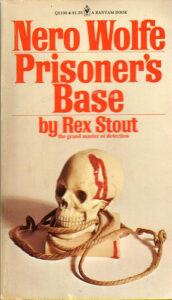 Chomping at the bit to read the latest Lockwood & Company book by Jonathan Stroud? It’s a mediocre salve but you may as well enjoy his homage to Sir Arthur Conan Doyle. Mind you, I was an Hercule Poirot fan born and bred growing up, but I acknowledge that that Doyle has his place. And don’t tell Stroud, but his books are FAR closer to the Nero Wolfe stories in terms of tone anyway.
Over at The Battle of the Books the fighting rages on. We’ve lost so many good soldiers in this fight. If you read only one decision, however, read Nathan Hale’s. Future judges would do well to emulate his style. Indeed, is there any other way to do it?
You may be one of the three individuals in the continental U.S. who has not seen Travis Jonker’s blog post on The Art of the Picture Book Barcode. If you’re only just learning about it now, boy are you in for a treat.
- I was fully prepared to ignore the recent New Yorker piece Children’s Books for the One Per Cent. But I have to give a couple points for this title:
“Really? Rosé?”
That one took some thought.
- Daily Image:
And now, the last and greatest flashdrive you will ever own:

Could just be a librarian thing, but I think I’m right in saying it reeks of greatness. Many thanks to Stephanie Whelan for the link.

7 Comments on Fusenews: In which I find the barest hint of an excuse to post a Rex Stout cover, last added: 3/29/2015
Display Comments
Add a Comment
By: Beth Kephart ,
on 8/3/2014
Blog: Beth Kephart Books (Login to Add to MyJacketFlap)
JacketFlap tags: New Yorker, Mumbai, Juarez, Katherine Boo, Behind the Beautiful Forevers, Elizabeth Kolbert, Add a tag
She does more than sit with the trash pickers, the schemers, the envious, the hungry, the souls who conclude that death is the only way out.
She tells a story. She involves her readers in the intimate dramas of an open-wound place. She compels us to turn the pages to find out what will happen to the prostituting wife with half a leg, the boy who is quick to calculate the value of bottle caps, the man with the bad heart valve, the "best" girl who hopes to sell insurance some day, the "respectable" rising politician who sleeps with whomever will help her further rise, the police who invent new ways to crush crushed souls.
She engages us, and because she does, she leaves us with a story we won't forget. Like Elizabeth Kolbert, another extraordinary New Yorker writer, Boo takes her time to discover for us the unvarnished facts, the pressing needs, the realities of things we might not want to think about.
But even if we don't think about them, they are brutally real. They are.
A passage:
Like the photos featured in this earlier blog post, the picture above is not Mumbai; I've never been to India. It is Juarez, another dry and needing place on this earth.
What was unfolding in Mumbai was unfolding elsewhere, too. In the age of global market capitalism, hopes and grievances were narrowly conceived, which blunted a sense of common predicament. Poor people didn't unite; they competed ferociously amongst themselves for gains as slender as they were provisional. And this undercity strife created only the faintest ripple in the fabric of the society at large. The gates of the rich, occasionally rattled, remained unbreached. The politicians held forth on the middle class. The poor took down one another, and the world's great, unequal cities soldiered on in relative peace.
0 Comments on Behind the Beautiful Forevers/Katherine Boo: Reflections as of 8/3/2014 11:04:00 AM
Add a Comment
By: Heidi MacDonald,
on 6/30/2014
Blog: PW -The Beat (Login to Add to MyJacketFlap)
JacketFlap tags: New Yorker, Adrian Tomine, Top News, Art, Add a tag

This week’s New Yorker has a cover by Adrian Tomine, and he discusses it inside the magazine:
“When I heard that the 9/11 memorial and museum were going to be the top tourist attractions in New York this summer,” Adrian Tomine says about this week’s cover, “I first sketched only tourists going about their usual happy activities, with the memorial in the background. But when I got to the site, I instantly realized that there was a lot more to be captured—specifically, a much, much wider range of emotions and reactions, all unfolding in shockingly close proximity. I guess that’s the nature of any public space, but when you add in an element of such extreme grief and horror, the parameters shift.”
I haven’t been down to the new memorial and have no plans to soon, although some out of towners I know who have gone enjoyed it greatly. Maybe later. Tomine’s cover certainly captures the many emotions inspired by just thinking about a visit.
1 Comments on Adrian Tomine covers The New Yorker with 9/11 Memorial, last added: 6/30/2014
Display Comments
Add a Comment
By: Beth Kephart ,
on 3/30/2013
Blog: Beth Kephart Books (Login to Add to MyJacketFlap)
JacketFlap tags: New Yorker, David Shields, Cry Me a River, Giles Harvey, Failure Memoirs, Add a tag

* Having the audacity to think that I could fit it in during this season of Extreme Busyness (though I had to fit it in, on behalf of a fellowship project I was teaching).
* Choosing to escape the frightening avalanche of emails by taking the book off the computer altogether and writing it in small spurts on the iPad. Good for scenes. Horrific for continuity.
* Giving myself a tremendously complex set of plot points and intersections to manage with a brain now too crowded to manage anything but the bare rudiments of daily life.
* Pushing ahead through the panic, as opposed to calling the panic off completely, and reconsidering. (But I had to push ahead; I was teaching this novel to a student.)
Finally, a few weeks ago, I did stop. Threw almost all of what I had away and started over. New technology. Simplified plot. More sleep. Less work at midnight hours. Less anxiety about the mountains of books and emails flooding in. Yesterday, Friday, was the first day since I began the book last October that I could work on it for an entire continuity-seeding stretch. Last night was the first night that I slept, unpanicked. There's a ton of work to do. But there's a working foundation.
Since I was giving myself some breathing room I decided to go one step farther down the easing road and read through some of the New Yorkers that have gathered here in this season of Extreme Busyness. First up: Giles Harvey's contemplations, "Cry Me a River: The Rise of the Failure Memoir."(March 25 issue) A look at the crop of memoirs that have emerged from failed novelists. Memoirs about failures—hmmm, I thought, I could have written one of those, if I didn't already understand that we all have our failures, our shames to work through.
Most interesting to me was this paragraph about the failure of the novel in our era—something we've all heard much about. Harvey is reflecting on David Shields (that inveterate provocateur) in this passage.
Shields tells a story about how he reached this conclusion ["that the novel is no longer up to the task of representing contemporary life"]. In the eighties and nineties, he spent "many, many years" trying to write a novel about this country's obsession with celebrity culture through the lens of a married couple's domestic life, a kind of American version of Kundera's "Unbearable Lightness of Being." The project stalled when Shields came to find the conventional novelistic apparatus (plot, dialogue, character) cumbersome and irrelevant to his deepest concerns. He discovered that the essayistic digressions he had written and was planning to insert into his novel were themselves the book he wanted to write.... "Forms are there to serve the culture, and when they die, they die for a good reason—or so I have come to believe, the novel having long since gone dark for me."I'm not going to stand in full Shields agreement here, or in agreement with every one else who says the novel is dead. Because I'm still reading and loving novels, and I'm still learning, from the best of them, what language can do, what stories can be, what humanity is capable of. The novel has not gone dark for me—not as a reader and not, if I can just stay focused, as a writer. Light is hard to come by, true. But I'm obsessed with the light.
4 Comments on "The Rise of the Failure Memoir," my failures, and other ruminations, last added: 4/1/2013
Display Comments
Add a Comment
By: Beth Kephart ,
on 1/17/2013
Blog: Beth Kephart Books (Login to Add to MyJacketFlap)
JacketFlap tags: New Yorker, Twentysomethings, Nathan Heller, Add a tag

The shock of the twenties is how narrow the window of experience really is, and how inevitable it seems both at the time and afterward. At some point, it is late, too late, and you are standing on the sidewalk outside somewhere very loud. A wind is blowing. It's the same cool, restless late-night breeze that blew on trampled nineteen-twenties lawns, and anywhere young people gather. Nearby, someone who doesn't smoke is smoking. An attractive stranger with a lightning laugh jaywalks between cars with a friend, making eye contact before scurrying inside. You're far from home. It's quiet. All at once, you have a thrilling sense of nowness, of the sheer potential of a verdant night with all these unmet people in it. For a long time after that, you think you'll never lose this life, those dreams. But that was, as they say, then.
3 Comments on Nathan Heller on Twentysomethings, and the power of the second-person pronoun, last added: 1/29/2013
Display Comments
Add a Comment
By: Beth Kephart ,
on 10/13/2012
Blog: Beth Kephart Books (Login to Add to MyJacketFlap)
JacketFlap tags: The Death of Ivan Ilych, Back to Blood, New Yorker, James Wood, Tolstoy, Tom Wolfe, Add a tag

The important details, the ones that make fiction's intimate palpability, cannot simply be scooped up off the sidewalk. Tolstoy, praised as a realist by Tom Wolfe, took the germ of "The Death of Ivan Ilyich" from an actual story about a judge in a nearby town who had died of cancer; but one of the most beautiful moments in the novella surely came from Tolstoy's imagination—or, rather, from his patient loyalty to Ivan's invented reality. I mean the moment when Ivan Ilyich, lying on his couch, in great distress and loneliness, remembers "the raw and wrinkly French prunes of his childhood, their special taste, and how his mouth watered when he got down to the stone."
Very occasionally in this novel, Wolfe gives evidence that he knows the difference between those French prunes and "Hotchkiss, Yale ... six-three." At one point, Nestor, fleeing the opprobrium of his community, ends up at a favorite Cuban bakery, where he enjoys "a whiff of Ricky's pastelitos, 'little pies' of filo dough wrapped around ground beef, spiced ham, guava, or you name it.... He had loved pastelitos since he was a boy." It's a rare passage without exclamation marks, and superficially it resembles Ivan and the prunes. But the detail about the patelitos has the whiff not of pastry but of research.
1 Comments on James Wood on Tom Wolfe's use (or not use) of meaningful detail, last added: 10/14/2012
Display Comments
Add a Comment
By: Beth Kephart ,
on 8/24/2012
Blog: Beth Kephart Books (Login to Add to MyJacketFlap)
JacketFlap tags: New Yorker, jonathan franzen, Newsweek, Edward Hopper, Truman Capote, D.T. Max, Mary Karr, C.K. Williams, In Cold Blood, Oliver Sacks, Gail Levin, The Poetry of Solitude, Joyce Carol Oates, David Foster Wallace, Add a tag

... had a sense of resolution, too, that I was indeed equipped to write a Liveing-like book, that perhaps I could be the Liveing of our time.Writing books, Sacks suggests, saved him. The next story I read, an excerpt from D.T. Max's much heralded biography of David Foster Wallace (in Newsweek), suggests how writing would and would not save this genius. The excerpt, which focuses on Wallace's early correspondence with Jonathan Franzen as well as his infatuation with Mary Karr, suggests that this book is well worth reading as a whole. I've always been a huge D.T. Max fan, and I'm certain I will learn from these pages.
The next day, before I returned Liveing's book to the library, I photocopied the whole thing, and then, bit by bit, I started to write my own book. The joy I got from doing this was real—infinitely more substantial than the vapid mania of amphetamines—and I never took amphetamines again.
In between the Sacks and the Wallace, I found two poems of interest. Joyce Carol Oates has a chilling, compelling poem in The New Yorker called "Edward Hopper's '11 A.M.,' 1926"�worth reading from beginning to end. Oates was one of several authors who contributed to one of my favorite poetry collections (a gift from my sister) called The Poetry of Solitude: A Tribute to Edward Hopper (collected and introduced by Gail Levin). Clearly this project, all these years later, continues to inspire.
Finally, within the pages of this week's New Yorker is a poem by C.K. Williams, one of my favorite living poets. I had the great pleasure and privilege, years ago, of interviewing C.K. in his Princeton home for a magazine story. Later, I saw him read at the Writer's House at Penn. He remains vital, interesting, experimental, and honest, and his new poem, "Haste," is a terrifying portrait of time. From its later phrases:
No one says Not so fast now not Catherine when I hold her not our dog as I putter behind herMy first corporate interview isn't until 1 this afternoon. I'm sitting down to read Truman Capote's In Cold Blood. I figure it's time.
yet everything past present future rushes so quickly through me I've frayed like a flag
Unbuckle your spurs life don't you know up ahead where the road ends there's an abyss? ...
(That above, by the way, is my cat Colors, who lived with me for many years. She's climbing into my bedroom window. I'm eleven or twelve years old. And I'm reading on my bed as she pokes her pink nose in.)
4 Comments on Oliver Sacks, David Foster Wallace, D.T. Max, Joyce Carol Oates, C.K. Williams: A morning spent reading, last added: 9/8/2012
Display Comments
Add a Comment
By: Beth Kephart ,
on 7/30/2012
Blog: Beth Kephart Books (Login to Add to MyJacketFlap)
JacketFlap tags: Slate, New Yorker, Imagine, Jonah Lehrer, Josh Voorhees, Dylan quotes, Add a tag

But just today, a few minutes ago, I was checking out at the grocery store, when my phone buzzed. It was my client, sharing a link to this Josh Voorhees Slate story, titled "Jonah Lehrer Resigns From New Yorker After Making Up Quotes."
I raced home to read the story on the full screen. I churn now, within—confused, more than anything, as to why a young man as successful as Jonah Lehrer most certainly is would find it necessary, first, to fabricate Dylan for his book, and, second, to spin a complicated tangle of lies in the aftermath of being found out. Lie after lie. Preposterous lies. Not exaggerations, but lies.
Why do such a thing? Why cannibalize a rising-star career? Why jeopardize the faith of readers, an editor, friends? Writers make mistakes—we all do, I absolutely do—but deliberate deceit is hardly a mistake. Deliberate deceit is intentional, and designed. It can't feel good. Nothing will make it right.
There can only be, when lying as overtly as this, a terrible anxious rush in the middle of the night.
3 Comments on The Jonah Lehrer Lies: But why?, last added: 7/31/2012
Display Comments
Add a Comment
By: Julie Fortenberry,
on 7/2/2012
Blog: Children's Illustration (Login to Add to MyJacketFlap)
JacketFlap tags: Francoise Mouly, New Yorker, Shelley Davies, Add a tag

See more of Shelley's Blown Covers HERE
1 Comments on SHELLEY DAVIES, last added: 7/3/2012
Display Comments
Add a Comment
By: John,
on 5/1/2012
Blog: DRAWN! (Login to Add to MyJacketFlap)
JacketFlap tags: illustration, New Yorker, Katie Turner, My Week With Marilyn, Add a tag

Image of the Day: Katie Turner illustrates “My Week With Marilyn” for The New Yorker. See more of her lovely work at her site.
awesome!
Lovely piece from Katie Turner.
0 Comments on katiecturner:
printmag:
Image of the Day: Katie... as of 5/1/2012 6:31:00 PM
Add a Comment
By: Melissa Wiley,
on 3/31/2012
Blog: Here in the Bonny Glen (Login to Add to MyJacketFlap)
JacketFlap tags: books, fiction, New Yorker, Elizabeth Lawrence, Katharine S. White, Two Gardeners, Add a tag
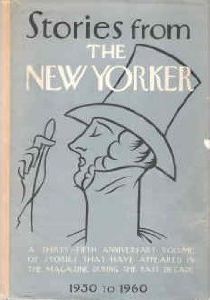 Katharine S. White to Elizabeth Lawrence, March 17, 1960:
Next, I had to wind up a huge job I’ve been working on for six months—The New Yorker stories—1950-1960….The book will be out next fall but it still is not quite settled as to contents, order of stories etc. etc. It is a compromise selection, to suit the taste of five editors. I merely headed up the chore, but Bill Shawn of course has the final word. Most of what we have together is, I think, first rate writing but the trouble is that in the last decade our fiction writers use only “I” and their favorite themes are death, childhood, or the past. It was a jigsaw puzzle to fit it together. The South and Ireland are also in the ascendancy. I love the South but not Ireland (I confess) and I would gladly have cut out a couple of Irish stories but was voted down. My feelings do not apply to Frank O’Connor.
(Yet another quote from Two Gardeners: A Friendship in Letters, edited by Emily Herring Wilson. I’m only halfway through, so I expect there will be more.)
Related:
Two Gardeners: A Rabbit Trail
“I have had to give up writing to my close friends”
By: Heidi MacDonald,
on 2/27/2012
Blog: PW -The Beat (Login to Add to MyJacketFlap)
JacketFlap tags: Art, Blogosphere, New Yorker, Add a tag
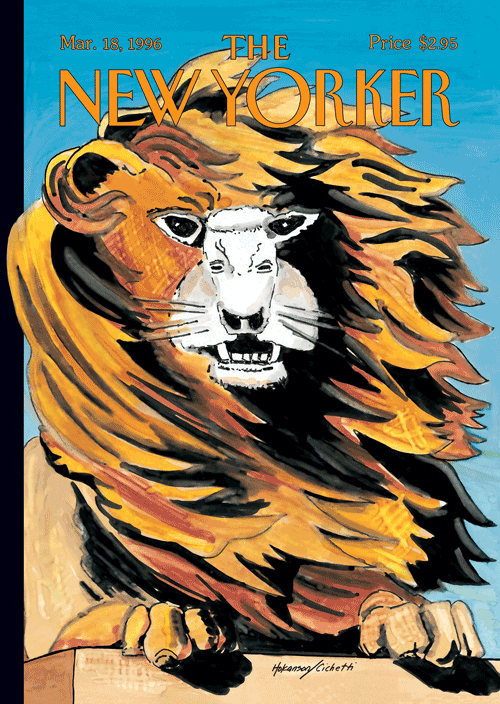
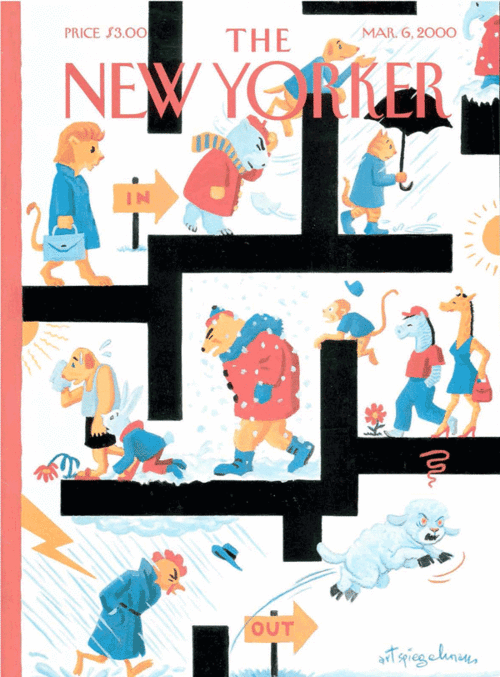
On the “authority” scale, the idea of New York cover editor Françoise Mouly launching a blog about New Yorker covers and art would rank….very high. And so Blown Covers, which she describes as a personal blog. Although it’s unafiliated with the New York, she’s holding weekly themed New Yorker cover contests and is “always on the lookout for good ideas and great artists.” So yeah, this is an audition.
This week’s theme is the idiom “In like a lion, out like a lamb” and submissions are open until Thursday at noon, along with four examples of past covers inspired by the phrase including this beauty by Lars Hokanson/Frances Cichetti, and one by art spiegelman. The contest is definitely open to comics artists, so knock yourself out!
Other weekly features include artists spotlights, inspiration posts, and so on.
Need we say…bookmark?
0 Comments on Françoise Mouly launches Blown Covers blog as of 1/1/1900
Add a Comment
By: John,
on 2/22/2012
Blog: DRAWN! (Login to Add to MyJacketFlap)
JacketFlap tags: covers, New Yorker, Francoise Mouly, contest, Add a tag
Blown Covers of the New Yorker:
Francoise Mouly, famed art editor of the venerable New Yorker, has started a blog. She writes on FB:
0 Comments on Blown Covers of the New Yorker as of 1/1/1900
Add a Comment
By: John,
on 9/28/2011
Blog: DRAWN! (Login to Add to MyJacketFlap)
JacketFlap tags: quotes, New Yorker, Bob Mankoff, Add a tag
“You’re not going to succeed unless you give it everything that you got, because giving it everything you got is how you develop what you actually have.”
- Bob Mankoff: An Interview
0 Comments on "You’re not going to succeed unless you give it everything that you got, because giving it..." as of 9/28/2011 8:21:00 AM
Add a Comment
By: Betsy Bird,
on 9/7/2011
Blog: A Fuse #8 Production (Login to Add to MyJacketFlap)
JacketFlap tags: Uncategorized, New Yorker, Ian Falconer, Add a tag
 At the end of July I created a post on New Yorker cover artists who also did picture books for children. Well, I showed just a scant hint of some of the covers I have in my possession, and now seems like a good time to bring some others out for one and all to see. And who better to start off this regular series than fan favorite Ian Falconer: He of the undeniable Olivia.
Falconer’s a particular favorite of the New Yorker, his covers dating back at least until the late 90s. I could throw a whole bunch of them up here, but what I find interesting about New Yorker artists is how they can sometimes create small series of covers that go undetected unless you place them all together. Take Falconer’s Easily Shocked Old Lady (or ESOL). The Easily Shocked Old Lady is a Falconer staple. She walks through this world of ours with a true fear of changing mores and habits. Sometimes we identify with her. Other times we are encouraged to enjoy her squirming. And the poor woman appears unable to go anywhere without getting a case of the vapors be it . . .
At the museum

In a department store

Skiing

Or even just taking an elevator

The ESOL is a kind of anti-Olivia. Like Falconer’s most famous pig heroine, the ESOL prefers to wear red and white with some black (though she may try a bit of pink if she’s feeling adventurous). Her hair is carefully swept back in a “do”, pearl earrings in place. Sometimes I worry that her feet hurt wearing those black heels (though clearly she’s in good shape if she’s skiing).
There is one cover where a woman who looks a heckuva lot like the ESOL appears and it is Falconer’s cheeriest image. I’m fond of it because it allows us a glimpse into her personal life. Gone are the trappings of the New York lifestyle. She’s clearly on vacation, a fact I ascribe to her hair which has reestablished its natural curl (she probably hasn’t been to her stylist in a while). She’s still wearing her customary red, but now it’s with stretchy pants and shoes that won’t pinch her anymore. With her, just as nerdily American, is her husband, waistband maki
9 Comments on New Yorker/Picture Book Artists: Ian Falconer – Beyond Olivia, last added: 9/8/2011
Display Comments
Add a Comment
 By: Heidi MacDonald,
on 8/25/2011
By: Heidi MacDonald,
on 8/25/2011
Blog: PW -The Beat (Login to Add to MyJacketFlap)
JacketFlap tags: Graphic Novels, Cartoonists, New Yorker, gag cartoons, James Sturm, Add a tag
BY JEN VAUGHN – Vermont cartoonist James Sturm wrote an insightful piece on submitting cartoons to the New Yorker posted on the Slate. As a cartoonist or unfortunately termed ‘graphic novelist,’ Sturm is used to drawing stories in the long term, stretching a few hundred pages, panel upon panel upon panel upon YES, panel. How Sturm spent his summer vacation was a cartoon a day to build up a keeper-portfolio for The New Yorker. Sturm relearned to let go of the beats you find in a long-form comic to sketch loosely and effectively situations right after that something funny, something intangible occurred. He includes many of his cartoons in the article including this close-to-home joke and one of my favorites: when the caption is recycled for a different situation.
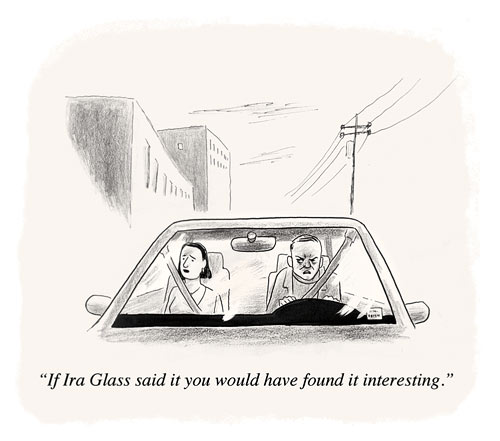
Now I won’t ruin the article for you but Sturm did the numbers and basically went to the office with his portfolio along with “50 regular New Yorker cartoonists who submit 10 cartoons each week. That’s 500 cartoons vying for about 12 to 20 slots.” What may have eventually felt absurd to Sturm is still an inspiring journey to most cartoonists. Getting a cartoon accepted to the New Yorker is a milestone for some people but at one point so was getting into Nickelodeon magazine or for that matter, getting a company to publish your own work. Kudos to Sturm for his open door, open heart and keep on swingin’ for those fences (baseball metaphor mine).
—
Jen Vaughn was recently spotted diving off the Floating Bridge by New Yorker cartoonist Ed Koren, who recognized her but commented that she had more clothes on the last time they met.

3 Comments on We Can’t All Be ‘Funny’, last added: 8/25/2011
Display Comments
Add a Comment
View Next 25 Posts
>>>>Life In These Here Five Burroughs<<<
Boroughs. Not Burroughs.