new posts in all blogs
Viewing: Blog Posts Tagged with: bloggers, Most Recent at Top [Help]
Results 1 - 25 of 322
How to use this Page
You are viewing the most recent posts tagged with the words: bloggers in the JacketFlap blog reader. What is a tag? Think of a tag as a keyword or category label. Tags can both help you find posts on JacketFlap.com as well as provide an easy way for you to "remember" and classify posts for later recall. Try adding a tag yourself by clicking "Add a tag" below a post's header. Scroll down through the list of Recent Posts in the left column and click on a post title that sounds interesting. You can view all posts from a specific blog by clicking the Blog name in the right column, or you can click a 'More Posts from this Blog' link in any individual post.
 Stuffed animals in the children’s area: Love ’em or hate ’em?
Most libraries have at least a few stuffed animals. Perhaps you use one as a “stand-in” during lapsit storytime. Perhaps you have a “character” stuffed animal that makes an appearance at storytime.
But what about those other stuffed animals? You know, the ones that just “hang out” in the children’s area? Are they beloved initiators of imaginative play or are they germ-carrying, dust-collectors sparking possessorship wars?
Share your opinion in our one question poll: Love ’em or hate ’em?
Note: There is a poll embedded within this post, please visit the site to participate in this post's poll.
The poll will be up all month. I’ll share the results, your comments (leave them below), and my own opinion, in June.
Please share with your colleagues. I’d like a big sampling.
Image credit: MorgueFile
The post Stuffed animals in the library appeared first on ALSC Blog.

 Whether you’re a new librarian moving to take your first job, or an experienced librarian moving to greener pastures, here are some suggestions that might help.
I’m not saying I followed them all, but I should have! 
Before you move:
- Make sure you leave your previous job in good stead. Give adequate notice, file paperwork, clean your desk, get your checkups in before your insurance runs out, return all your library books.
- If you can, give yourself some time
 between jobs – especially if you’re moving out-of-state. Acquiring a new, license, registration, cell service, cable, electricity, etc., can be daunting if you’re working full-time.
At your new location:
- Be a team player. It’s easy to think of yourself as the “outsider,” but work is more fun when you work together. Be interested, be helpful, be approachable.
- Know what’s going on. It’s your home now. Who’s your mayor, your congressman, your baseball team? Subscribe to the local news in print, feed, or online.
- Join your union – or at least hear them out. They’re the folks working to earn better wages and benefits for you and they’re a good source of job-related information that you might not receive elsewhere.
- Figure out who doesn’t mind answering questions, who doesn’t like to be pestered, who likes to joke around. Work with that.
- When you get that mountain of papers about insurance options – read it! And don’t miss the deadlines.
- If you’re offered the chance to sign up for deferred compensation of some kind, do it right away before you ever have a chance to miss the money. Later, you’ll be glad you did.
A few don’ts:
- Don’t get discouraged. If your new library is like every other library – there’s too much to do and not enough people to do it. Relax; do the best you can do.
- If you’re in a position of authority, don’t make drastic changes right away. First, find out what works and what doesn’t, and why things are done the way they are. Be respectful.

- Don’t eat the boiled peanuts. I hear they’re terrible!

Image credit: Openclipart.org
The post Moving? New library job? Some helpful hints appeared first on ALSC Blog.

You know you’re a children’s librarian when …
 …you clean out your office desk for the final time and your personal possessions consist of a teddy bear, a tambourine, frog and duck finger puppets, a ukulele, a storytime bell, and similar treasures.
What’s your most curious programming possession?
(Next month: thoughts on moving to a new library!)
Photo credit: L Taylor
The post You know you’re a children’s librarian when … appeared first on ALSC Blog.


On behalf of the Great Websites for Kids Committee, I’d like to share our latest additions. We’re happy to have some Spanish language sites to include this time, and wish to thank REFORMA for its assistance in providing us a representative.
If you missed our recent press release, the following are the newest sites added to Great Websites for Kids, the online resource featuring hundreds of links to exceptional websites for children.
- Bureau of Labor Statistics K-12 http://www.bls.gov/k12/home.htm Bureau of Labor Statistics provides resources for students and educators on employment and career outlooks. Enjoy playing a game to understand a concept and use the resource section for school assignments all on one site!
- Bystander Revolution http://www.bystanderrevolution.org/ Search this site to find ideas about how to deal with bullying from folks who have been bullies, targets and bystanders. Watch videos by subject and sign up to take your own stand against bullying!
- Ruff Ruffman: Humble Media Genius http://pbskids.org/fetch/ruff/ Videos to help kids make good decisions about texting, sharing photos, and other media literacy topics.
- Space Racers http://spaceracers.org/en Kids can explore space through a series of videos, games and printable activities complete with NASA approved science.
- PBS Kids Design Squad http://pbskids.org/designsquad Kids can safely share their engineering ideas and sketches, and be inspired by how-to videos and real-world projects.
- Virtual Museum of Canada http://www.virtualmuseum.ca/about-vmc/ This online museum provides as diverse collection of online exhibits pertaining to Canadian hertiage. Virtual exhibits are provided by Canada’s museums, educational institutions and heritage organizations.
- Disney Junior: Disney Latino (Spanish) http://disneyjunior/disneylatino.com Interactive site with videos, games, princesses stories, and activities of popular Disney characters. It also includes links for smartphones applications. | Página interactiva con vídeos, juegos, cuentos de princesas y actividades de personajes populares de Disney. También incluye enlaces para applicaciones de teléfonos móviles.
- Clic Clic Cuentos Interactivos (Spanish) http://www.cuentosinteractivos.org Clic Clic Cuentos Interactivos is a fun interactive site that features imaginative problem solving and alternate versions of popular stories. | Clic Clic Cuentos Interactivos es una página interactiva divertida que contiene actividades de resolución de problemas y versiones alternas de cuentos populares.
We hope that you will find these and other Great Websites for Kids to be useful tools for you and your library patrons. Sites are searchable by keyword or eight classifications (Animals, The Arts, History & Biography, Literature & Languages, Mathematics & Computers, Reference Desk, Sciences, and Social Sciences). The committee works diligently to find and evaluate new sites, and to weed out previously added sites that haven’t maintained “great” status.
We can always use your help!
If you know of a great site that you would like to have us consider, please submit your suggestion via this link: http://gws.ala.org/suggest-site. If you find broken links, etc. on the site, please alert us to that as well. Comments and suggestions are always welcome.
Members of the 2015 Great Websites for Kids Committee:
- Lara Crews, co-chair, Forsyth County (North Carolina) Public Library
- Lisa Taylor, co-chair, Ocean County (New Jersey) Library
- Emily E. Bacon, Yorktown (Indiana) Public Library
- Ariel Cummins, New Braunfels (Texas) Public Library
- Jill Eisele, Bellwood (Illinois) Public Library
- Krishna Grady, Darien (Connecticut) Library
- Joanne Kelleher, Kings Park (New York) Central School District
- Elizabeth Saxton, Tiffin, Ohio
- Alia Shields, Cherry Hill (New Jersey) Public Library
- Sujei Lugo (REFORMA Representative)
The post Eight new sites added to Great Websites for Kids appeared first on ALSC Blog.

ALA Student-to-Staffers: Where are you now?
Way back in June of 2007, I had the honor of representing TWU’s School of Library and Information Science at ALA Annual in Washington, DC. I was a member of  ALA’s Stude
 nt-to-Staff (S2S) Program, with assignment to the ALSC Division. If you’ve never heard of the S2S program, you can read about it here. There are 56 active ALA Student Chapter Groups at accredited graduate schools. Each is entitled to submit one name for consideration for the program. Schools have varying criteria. My school chose the student – me based on an essay contest. Others have different criteria, but the end result is that 40 promising students receive a free trip to ALA Annual in exchange for working with ALA staff during the week. I was able to choose with whom I wanted to work. An aspiring children’s librarian, naturally, I chose ALSC.
It was my first connection with the national community of librarians. It was during my week as an ALA S2S er, that I first met ALSC’s own Aimee Strittmatter, Laura Schulte-Cooper, and Marsha Burgess, and I began my continuing association with the division. I wrote a piece about my experience for ALSConnect, now called ALSC Matters. (I am no less bright-eyed and bushy-tailed now.)
If you know someone in grad school right now, do them a favor and let them know about the S2S program. If you participated in the S2S program, give a shout out! Did you work for ALSC at the conference? When or where did you attend? How wonderful was it?
(The Student-to-Staff Program was established in 1973. There should be a lot of us out there!)
The post Student-to-Staffers: Where are you now? appeared first on ALSC Blog.

Humor me by reading this, and I’ll return the favor.
A few weeks ago, I was lamenting the fact that I hadn’t seen a favorite patron in months – a chatty, precocious boy who, since a very young age, had been allowed by his mother to come alone to the library and read whatever he wished. He would request every book in a nonfiction series about baseball, basketball, football, or whatever struck his fancy. Never shy about seeking assistance, he once came to me inquiring why we did not have a book about the Seattle Seahawks (we’re in NJ). I explained that unless the team has superstar players or has won the Super Bowl, there aren’t always current books available about them. The day after the Seahawks won their only Super Bowl, he came in to place his hold.
In any case, I was thrilled when he popped in on a quiet Thursday night. With his mother’s usual trust, he was carrying her driver’s license for identification. He needed to print some items for homework. We had a nice little chat. I told him that I’d missed him and how nice it was to see him. I asked about school.
When his homework was finished, he came to the reference desk to pay for his prints. The cost was eighty cents. He gave me a dollar and I gave him his change, commenting that I hoped to see him again soon. He distractedly began scanning the surface of the reference desk. “What do you need?” I said. “Tape? Paper clip? Stapler?”
“No, ” he replied, still clutching his two dimes. “Where’s the tip jar?”


Image credit:
By Tomwsulcer (Own work) [CC0], via Wikimedia Commons
[https://commons.wikimedia.org/wiki/File%3AJar_for_tips_at_a_restaurant_in_New_Jersey.JPG]
The post Gratuitous information (#librarylife) appeared first on ALSC Blog.

Once again, on behalf of the Great Websites for Kids Committee, I’d like to share our newest sites and enlist your help.
In case you missed the recent ALA press release, the following are the newest sites to be added to Great Websites for Kids:
Great Web Sites for Kids (GWS) presents links to high-quality websites of interest to children 14 years of age and younger, organized into diverse subject headings such as animals; art; history; literature; sciences; and more. Each site entry includes a brief annotation and a grade-level rating. GWS users can also rate sites, save their favorites for easy access, and share sites via social media and email.
Only three sites were added during this round. Because of previous committees’ excellent work in ferreting out great sites, and the trend toward more app-based content, the task of finding websites that meet GWS standards has become more difficult. If you know of a great site that you believe merits inclusion, please submit your suggestion via this link: http://gws.ala.org/suggest-site.
Similarly, if you find broken links, etc. on the site, please alert us to that as well. Comments and suggestions are always welcome.
Members of the 2015 Great Websites for Kids Committee:
- Lara Crews, co-chair, Forsyth County (North Carolina) Public Library
- Lisa Taylor, co-chair, Ocean County (New Jersey) Library
- Emily E. Bacon, Yorktown (Indiana) Public Library
- Ariel Cummins, New Braunfels (Texas) Public Library
- Jill Eisele, Bellwood (Illinois) Public Library
- Krishna Grady, Darien (Connecticut) Library
- Joanne Kelleher, Kings Park (New York) Central School District
- Elizabeth Saxton, Tiffin, Ohio
- Alia Shields, Cherry Hill (New Jersey) Public Library
The post New additions to Great Websites for Kids appeared first on ALSC Blog.

As I did last year, I’d like to share with you my choices for the “best” in book reviews for children, by children. All appeared online and were written (without byline) by children participating in New Jersey’s Collaborative Summer Reading Program, “Every Hero has a Story.”
(Reviews are unedited and do contain spelling and grammatical errors.)
Highest praise review:
STAR WARS THE CLONE WARS
Author – Adapted by Rob Valois
crazy awesome

Best back-handed compliment for an audiobook:
Sky jumpers
What a excellent book, even though this was on cd, I really enjoyed it alot.
Cutest review:
Revenge Of The Flower Girls
Author – Jennifer Ziegler
Lots of mischief. Hee hee hee…
Best alternative title in a review (tie!):
Lair & Spy
Author – Rebecca Stead
Mummus in the Morning
Author – Mary Pope Osborne
Reviewer most likely to have a future in writing book jacket copy:
Humphrey
Betty G. Birney
In the story Humphrey was a little smart hampster who lived in a pet store. One day, a teacher got a class pet it was Humphrey! Humphrey had a dream of being a sailor.
His friends in room 26 made boats. The adventure began…

Best “Whaaaat?” review:
Captain America, The Winter Soldier: Falcon Takes Flight
Author – Adam Davis
A man meets another man and they both like to run.
My Froggy Valentine
Author – Matt Novack
We wish there was a unicorn picture in the book. Cute story. Good ending.


Best review for a book that changes personal viewpoint:
The Isle of the Lost
I hope you’ve enjoyed these reviews as much as I did.
The post The “best” in kids’ book reviews appeared first on ALSC Blog.

 #alaac15 provides space for meetings of all kinds. Although we’re apparently not that “uncommon,” yesterday I attended a meet-up of ukulele-playing librarians at the ALA Networking Uncommons. We exchanged emails, discussed creating a group FB page and played a few songs. Perhaps next year, we can have an ALSC session on Using your Uke for Story Time and Outreach. Wouldn’t that be fun? Check out today’s gatherings at the Networking Uncommons. http://www.alsc.ala.org/blog/

The post U is for Ukulele appeared first on ALSC Blog.

 Jennifer A. Nielsen reads from her book, A Night Divided with help from fellow authors, Alex Gino (George) and Edwidge Danticat (Untwine).
The post Scholastic Literary Event #alaac15 appeared first on ALSC Blog.


Newbery Medal winner Kwame Alexander and his lovely daughter have some fun in support of his upcoming picture book, Surf’s Up at #alaac15.
Great fun, and champagne, too!
The post Surf’s Up with Kwame Alexander appeared first on ALSC Blog.

I’m attending many ALSC sponsored events at #alaac15, but sometimes it’s not all about the kids. This fangirl is joining the throng waiting to hear featured speaker Sarah Vowell!
The post Sometimes it’s not all about the kids appeared first on ALSC Blog.

Youth services librarians tend to stick together, but Conference is a great time to meet or work with members from other committees. Today I attended the Literary Walking Tour of San Francisco sponsored by the Staff Organizations Round Table (SORT), and attended by librarians of all stripes. Only on a librarian’s walking tour will you get a bibliography and annotated list for each of your 45 your tour stops! I love our job.
From Union Square to the bay, we covered all the literary highlights. One of our stops was City Lights Books, which had people waiting outside for opening time. Nice to see a city that appreciates books.

SORT Literary Walking Tour outside City Lights Books
The post A Literary Walking Tour of San Francisco at #alaac15 appeared first on ALSC Blog.

I struck up a conversation with a very nice librarian (we’re easy to pick out of a crowd) in the airport yesterday. Both of us were traveling alone with nothing pressing on our agendas, so we rode the BART together into town and spent the day seeing the sights, riding the cable cars, and enjoying a great lunch at the Daily Grill. It’s easy to make new friends and have a great time at #alaac15.

Fruit selection at Pier 39
©L Taylor

Golden Gate Bridge
©Kerri Wallace
The post Enjoy the sights! appeared first on ALSC Blog.

On behalf of the Great Websites for Kids Committee, I’d like to share some news and enlist your help.
If you missed our recent press release, the following are the newest sites to be added to Great Websites for Kids, the online resource featuring hundreds of links to exceptional websites for children.
We hope that you will find these and other Great Websites for Kids to be useful tools for you and your library patrons. Sites are searchable by eight main classifications (Animals, The Arts, History & Biography, Literature & Languages, Mathematics & Computers, Reference Desk, Sciences, and Social Sciences) or by keyword. The committee works hard all year to find and evaluate new sites, and to weed out previously chosen sites that haven’t maintained “great” status.
We can always use your help!
If you know of a great site that you would like to have us consider for inclusion, please submit your suggestion via this link: http://gws.ala.org/suggest-site. Similarly, if you find broken links, etc. on the site, please alert us to that as well. Comments and suggestions are always welcome.
Members of the 2015 Great Websites for Kids Committee:
- Lara Crews, co-chair, Forsyth County (North Carolina) Public Library
- Lisa Taylor, co-chair, Ocean County (New Jersey) Library
- Emily E. Bacon, Yorktown (Indiana) Public Library
- Ariel Cummins, New Braunfels (Texas) Public Library
- Jill Eisele, Bellwood (Illinois) Public Library
- Krishna Grady, Darien (Connecticut) Library
- Joanne Kelleher, Kings Park (New York) Central School District
- Elizabeth Saxton, Tiffin, Ohio
- Alia Shields, Cherry Hill (New Jersey) Public Library
And now … on to ALA in San Francisco!
The post Great Websites for Kids? Look no further! appeared first on ALSC Blog.

.jpeg?picon=2450)
By:
Sherrie Petersen,
on 6/23/2015
Blog:
Write About Now
(
Login to Add to MyJacketFlap)
JacketFlap tags:
interview,
book review,
bloggers,
book giveaway,
author interview,
book covers,
astronomy,
cover design,
outer space,
unique stories,
Book Country,
blogger friends,
Wish You Weren't,
amazing teenagers,
disvovering a planet,
Fabián Cobos,
The Secret Files of Fairday Morrow,
WASP-142b,
Add a tag
Headline news can be depressing. Which is why it makes me happy to find news stories like this one: This Teenager Discovered a New Planet on his Third Day of Work. Seriously. At 15, this kid shows up for day three of his “work experience” project, they’ve assigned him the task of wading through all […]
 Time once again for one of my favorite challenges in the kidlitosphere, the 48-Hour Book Challenge, hosted by MotherReader. This is a special year because it's the 10th annual. Tenth! We've been doing this for 10 years! That's the Mesozoic in the life of the Internet.
How it works: pick 48 consecutive hours in between the start and the finish and read, read, read! Blog about your reading and cheer others on Twitter and Facebook with the #48HBC tag. Check out MotherReader's blog post for more details and to throw your hat into the ring.
I love doing this because I often get my TBR pile winnowed down and build up a stock of reviews for my busy summer months. Plus I also make new friends!
It starts at 7 am on Friday, June 19th and concludes at midnight on Sunday the 21st. That's just about enough time to order your pizza, gather up your books, and worm out of all but the most pressing social engagements.
Will you join in?
An Unusual School Visit
We’re accustomed to classroom visits … there’s Read Across America Day, Library Card Sign-up Month, Summer Reading Club outreach, and any other number of reasons why public librarians visit classrooms. Last month, a colleague and I enoyed another type of classroom visit. We were virtual guest lecturers for a university class in Children’s Literature. The class was not for librarians, but rather, for aspiring teachers. We spent two weeks with the students during their planned chapters on censorship and graphic texts. We introduced discussion articles and scenarios, and participated in the discussion boards by posting topics and responding to students’ questions.

I firmly believe that librarians and teachers should be close partners in serving their constituent children. I am fortunate that my library is located in a school district that is wonderfully cooperative, and where I have met and worked with many caring teachers. Still, I have often ranted about things that annoy me – particularly minimum page requirements and a frequent admonishment that picture books (and by extension, graphic novels) are “not allowed.”
This partnership with our local university, gave me the opportunity to speak directly with the future generation of school teachers. We spoke of the importance of knowing one’s collection and being prepared to defend it; the value and appeal of graphic texts; the collection development resources available from ALSC, ALA, and other organizations in making collection development decisions; and a myriad of other topics related to censorship and graphic texts. It was refreshing to hear what is on the minds of future teachers and to offer to them a librarian’s perspective on the same.
Kudos to Constance Chismar, Ed.D. of the Georgian Court University English Department for asking us to participate and to Ocean County Library for allowing us to attend. If you have a local university or college that offers undergrad degrees in education, inquire if you might participate in something similar. It was a valuable experience for me and my colleague, the university students, and the children who will someday benefit from the partnership!

Images from openclipart.org
The post An Unusual School Visit appeared first on ALSC Blog.


By: Lisa Taylor,
on 4/15/2015
Blog:
ALSC Blog
(
Login to Add to MyJacketFlap)
JacketFlap tags:
Blogger Lisa Taylor,
Children & Technology,
Books,
Diversity,
Tweens,
Bloggers,
Committees,
Students,
Professional Development,
Programming Ideas,
Slice of Life,
Add a tag
Other than a few favorite story times that I repeat yearly, I always like to try something new. Similarly, I’m always interested in learning something new. In February, I put it all together – mixing things that interest me with several of the library’s most wonderful assests – technology, diversity, creative space, and kids.
I offer you the ingreadients for “Read, Reflect, Relay: a 4-week club”
Ingreadients
- 1 part knowledge from ALSC’s online class, “Tech Savvy Booktalker”

- 1 part inspiration from ALSC’s online class, “Series Programming for theElementary School Age”
- 1 new friendship spawned by networking and a love of nonfiction books
- a desire to participate in the #weneeddiversebooks campaign
- computers
- books
- school-aged kids

- space and time to create
Each club participant read a Schneider Family Book Award winner of her choice. If you’re unfamiliar with the Schneider Family Book Award, I’ve linked to its page. Winning books embody the “disability experience for child and adolescent audiences.”
I asked each of the participants to distill the message of her book into a sentence or two – something that  would make a good commercial. Then I gave them a choice of using Animoto, Stupeflix, or VoiceThread to create a book trailer or podcast. All three platforms were kind enough to offer me an “educator account” for use at the library. Other than strict guidelines on copyright law and a “no-spoilers” rule, each girl was free to interpret and relay the message of her book as she pleased.
Coincidentally, after I had planned the club, I was chatting online with Alyson Beecher.  We were both Round 2 judges for the Elementary/Middle Grade Nonfiction CYBILS Awards. I had no idea that she is also the Chair of the Schneider Family Book Award Committee! When I told her about my club, she immediately offered to Skype or Hangout with the club members. We hastily worked out a schedule, and Alyson’s visit on the last day of the club was one of its highlights!
The girls ranged in age from 10 to teen. I think you will be impressed with their creativity.
WordPress does not allow me to embed the actual videos and podcasts, but you can access them via the links below – or visit them on Alyson’s site where she was able to embed them. Enjoy! 
· Wonderstruck by Brian Selznick (2012 winner, Middle School) https://animoto.com/play/kUdNM1sa4fWKfZOXId63AQ
· After Ever After by Jordan Sonnenblick (2011 winner, Middle School) https://voicethread.com/new/myvoice/#thread/6523783/33845486/35376059
· Anything but Typical by Nora Raleigh Baskin (2010 winner, Teen) https://animoto.com/play/qFPwi1vYP1ha2FF0vVUuFg
· Anything but Typical by Nora Raleigh Baskin (2010 winner, Teen) (another one) http://studio.stupeflix.com/v/9GKeiQfgsj9Q/?autoplay=1
· A Dog Called Homeless by Sara Lean (2013 winner, Middle School) http://studio.stupeflix.com/v/DQ4tJG8mnsYX/?autoplay=1
If you’d like more information, or if you’d like to see my video booktalk (or adapt) my video advertisement for the program, just leave a message in the comments. I’ll be happy to respond.
*All logos used with permission and linked back to their respective sites.
The post Putting it all together appeared first on ALSC Blog.


By: Angela Muse,
on 4/1/2015
Blog:
4EYESBOOKS
(
Login to Add to MyJacketFlap)
JacketFlap tags:
kidlit,
blog,
Family,
kids,
bullying,
writing,
bloggers,
parenting,
spring,
bees,
free,
bugs,
caterpillar,
shoes,
giveaway,
insects,
preschool,
book reviewers,
illustrated children's books,
The Bee Bully,
Atlanta author,
Caterpillar Shoes,
Add a tag
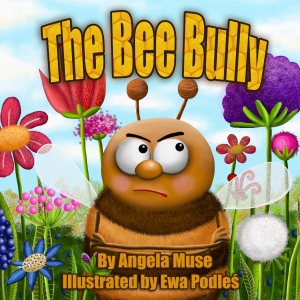
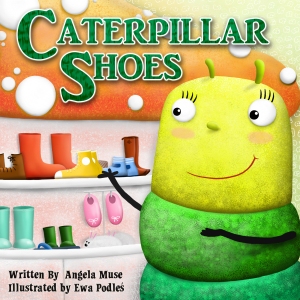
Super excited to announce that our Bee Bully is being featured in Bookbub today and is only $.99 for a limited time. To celebrate we have some free gifts to tell you about. From April 1st – April 5th you can download our latest release, Caterpillar Shoes, absolutely free from Amazon. Check out what’s troubling Patches the caterpillar and the silly decision she makes to live her life to the full. There are some interesting caterpillar facts in the back of this book.
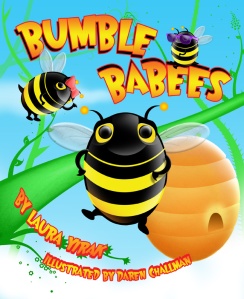
I’ve also got more surprises to share. My friend, Laura Yirak, is also giving away a copy of her delightful bee book, Bumble Babees during this same period.
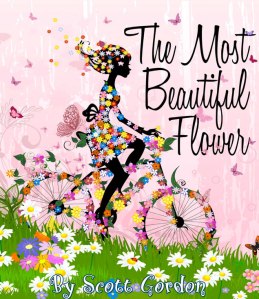
Scott Gordon has another treat for you. His book, The Most Beautiful Flower will be FREE April 2-April 6. This book is only $.99 on April 1st. Don’t you just love spring! Enjoy these goodies while they last.


Librarian “Currency”

Image credit: openclipart.org
No, not this. No, not “relevancy” or “state of currentness” either.
I’m talking about items that are sometimes more precious than cash and harder to come by—librarian currency—traded for goodwill, future favors, or goods of equal value.
Here are some items that pass for currency in my library:
- Oatmeal boxes: Useful for drums, tubes, castle turrets and more, they’re an invaluable resource, and trade well in the children’s librarian barter system

Photo credit: L. Taylor
- Toilet paper tubes: The “penny” of the YS currency system, useful but low-ranking

Photo credit: L. Taylor
- Lego ®: Need a program in a hurry? Better borrow some!

Image credit: openclipart.org
- Cans – hey, you never know

Photo credit: Lisa Ferrara
- And these little creepy heads? Well, I’m not quite sure what they traded for, but someone took them!

Photo credit: Lisa Ferrara
So, what items are in your barter system? Share yours – the curiouser, the better.
The post Librarian currency appeared first on ALSC Blog.


Each March, in addition to working, blogging here at the ALSC Blog and at Shelf-employed, I host KidLit Celebrates Women’s History Month! along with fellow librarian and blogger, Margo Tanenbaum, of The Fourth Musketeer.
Active only during Women’s History Month, the blog features readers, commenters, and contributors working together to create a dynamic resource of thoughtful and thought-provoking essays, commentaries, and book reviews. Each post is related to children’s literature and women’s history.
The blog is a great resource for finding new books (we’ll be featuring several new and upcoming titles!) and useful links. Previous contributors include Jen Bryant, Andrea Davis Pinkney, Donna Jo Napoli, and Betsy Bird. Contributors for 2015 include Emily Arnold McCully (Queen of the Diamond), Misty Copeland (Firebird), Michaela McColl (The Revelation of Louisa May), and more.
The complete 2015 lineup may be found on the site’s sidebar. You can sign up to follow the blog, or receive it via email. Visit the site at http://kidlitwhm.blogspot.com to see “following” options, an archive of past contributions, and links to educational resources. It’s suitable for parents and teachers, too.
The official Women’s History Month theme for 2015, is “Weaving the Stories of Women’s Lives.” If you’ve got great plans for WHM, please share!
In March, stop here first, then head on over to KidLit Celebrates Women’s History Month!
KidLit Celebrates Women’s History Month blog header by Rebekah Louise Designs.
The post Looking ahead to Women’s History Month appeared first on ALSC Blog.

Check out the 2014 Cybils finalists! What do you think?
Today I’m writing on behalf of the Great Websites for Kids Committee.

In case you missed the December 5, 2014, press release, the following seven sites were added to Great Websites for Kids.
The committee works very hard to find and evaluate new sites, and ensure that previously chosen sites maintain their “great” status. If you’re unfamiliar with the site or the committee, here is a short primer from the press release:
“Great Websites for Kids (GWS) features links to high-quality websites of interest to children 14 years of age and younger, organized into diverse subject headings from cultures of the world to games & entertainment to weather & environment, and many more. Each site entry includes a brief annotation and a grade-level rating. Users can also rate sites, save favorites for easy access, and share sites via social media and email.
Members of the ALSC GWS Committee review potential sites for inclusion and vote on the sites to be included. They also regularly check the entire database of great sites to ensure currency, and re-evaluate sites when necessary.”
As the new year begins, the Great Websites for Kids Committe would like to enlist your help. If you see a site that you believe should be evaluated for inclusion on GWS, please submit your suggestion by following this link: http://gws.ala.org/suggest-site. Similarly, if you find broken links, etc., please alert us to that as well. Finally, let us know how you’re using GWS. Comments and suggestions are always welcome.
Best wishes for a great new year!
GWS Roster
Katherine Opal Scherrer (REFORMA Representative, February 1, 2013, to January 31, 2015)
Ms. Lara Anne Crews (Co-Chair, February 1, 2014, to January 31, 2015)
Ms. Kimberly Probert Grad (Co-Chair, February 1, 2014, to January 31, 2015)
Paige Bentley-Flannery (Member, February 1, 2013, to January 31, 2015)
Krishna Grady (Member, February 1, 2014, to January 31, 2016)
Joanne Kelleher (Member, February 1, 2014, to January 31, 2016)
Mr. Ted McCoy (Member, February 1, 2013, to January 31, 2015)
Ms. Alia Shields (Member, February 1, 2014, to January 31, 2016)
Lisa Taylor (Member, February 1, 2013, to January 31, 2015)
Gaye Hinchliff (Consultant, July 1, 2014, to June 30, 2015)
Laura Schulte-Cooper (Staff Liaison, July 1, 2008, to June 30, 2015)
The post Great Websites for Kids needs you! appeared first on ALSC Blog.

Or I will be.
Smart Bitches, Trashy Books is one of my very favorite non-kidlit book blogs, and I am a devoted listener to their weekly podcast as well. Awhile ago, blogger/host Sarah Wendell put out a call for kidlit recommendations. Not only was I all over that, much of her audience was as well. She was reading kidlit booklists for months.
When she asked for possible interviews, I put my name out to her, and to my great excitement, she said yes! We talk about everything from picture books up to YA, and everything in between.
You can hear the podcast, which is almost an hour long, at the Smart Bitches Trashy Books website or you can download it from iTunes under "DBSA romance fiction podcast," episode 120.
Enjoy!
View Next 25 Posts





