new posts in all blogs
Viewing: Blog Posts Tagged with: Middle-Grade, Most Recent at Top [Help]
Results 1 - 25 of 115
How to use this Page
You are viewing the most recent posts tagged with the words: Middle-Grade in the JacketFlap blog reader. What is a tag? Think of a tag as a keyword or category label. Tags can both help you find posts on JacketFlap.com as well as provide an easy way for you to "remember" and classify posts for later recall. Try adding a tag yourself by clicking "Add a tag" below a post's header. Scroll down through the list of Recent Posts in the left column and click on a post title that sounds interesting. You can view all posts from a specific blog by clicking the Blog name in the right column, or you can click a 'More Posts from this Blog' link in any individual post.
By: Marjorie Coughlan,
on 6/20/2016
Blog:
(
Login to Add to MyJacketFlap)
JacketFlap tags:
Miriam Halahmy,
Marsha Forchuk Skrypuch,
refugee week,
Artichoke Hearts,
children's books about refugees,
Sita Brahmachari,
Last Airlift,
The Seeds of Friendship,
Pajama Press,
Mira in the Present tense,
Red Leaves,
News,
Books,
Articles,
Middle-Grade,
Hidden,
Katherine Applegate,
Home of the Brave,
Feiwel and Friends,
Michael Foreman,
Add a tag
 Today sees the beginning of Refugee Week here in the UK. More than ever we need to be nurturing compassion and empathy in our children so that they grow up able to recognise the toxicity of xenophobia and … Continue reading ... →
By: Marjorie Coughlan,
on 5/25/2016
Blog:
(
Login to Add to MyJacketFlap)
JacketFlap tags:
Books,
Middle-Grade,
Delacorte Press,
Debora Pearson,
Paperboy,
Vince Vawter,
MWD Reviews,
MWD book reviews,
Children's and YA books about disability,
MWD Theme - All About Balance (Disability & Special Needs),
disability in children's books,
IBBY Collection for Young People with Disabilities,
MWD reviews - IBBY Collection for Young People with Disabilities,
Add a tag

I Am Not My Disability: Outstanding Books For and About Young People with Disabilities
Every two years, the International Board on Books for Young People (IBBY) chooses outstanding books for and about young people with … Continue reading ... →
By: Marjorie Coughlan,
on 5/23/2016
Blog:
(
Login to Add to MyJacketFlap)
JacketFlap tags:
Interviews,
Young Adult,
Toni Morrison,
Beatrix Potter,
Shaun Tan,
Middle-Grade,
Gabriel Garcia Marquez,
Jane Ray,
The Arrival,
Salman Rushdie,
Maya Angelou,
Alice Walker,
Walker Books,
Amnesty International,
Zadie Smith,
Barrington Stoke,
Artichoke Hearts,
Rohinton Mistry,
Sita Brahmachari,
Macmillan Children's Books,
Ben Okri,
Let Books Be Books,
Hannah Kent,
MWD interview,
Children's and YA books about disability,
MWD Theme - All About Balance (Disability & Special Needs),
disability in children's books,
A Kestrel for a Knave,
Anita Desai,
Anna and the Swallow Man,
Barry Hines,
Brace Mouth False Teeth,
Burial Rites,
Car Wash Wish,
Charmed Earth,
Circus Space,
Gavriel Savit,
Grace Manning,
Here I Stand,
I'll Be Home for Christmas,
Isabelle Allende,
Jasmine Skies,
Kite Spirit,
Kristine Landon-Smith,
Methuen Drama,
Mira in the Present tense,
Nirmal Brahmachari,
Red Leaves,
Tamasha Theatre Company,
Waterstone's Children's Book Award,
Wole Solinka,
Add a tag
 Author Sita Brahmachari‘s latest book is Car Wash Wish, her second novella for Barrington Stoke, a UK publisher who specialise in making books accessible to struggling readers, with a special emphasis on dyslexia. It’s an inter-generational story … Continue reading ... →
By: Marjorie Coughlan,
on 2/5/2016
Blog:
(
Login to Add to MyJacketFlap)
JacketFlap tags:
Interviews,
Middle-Grade,
Oxford University Press,
Project X,
Skin Deep,
Frances Lincoln,
Barrington Stoke,
Tony Bradman,
Eileen Browne,
My Brother's Keeper,
Janetta Otter-Barry,
MWD interview,
All in the Family,
MWD Theme - All About Balance (Disability & Special Needs),
Through My Window,
A&C Black,
Anzac Boys,
Give Me Shelter,
In a Minute,
Stories of WW1,
The Boy and the Globe,
The Frankenstein Teacher,
The Orchard Book of Sword Sorcerers and Superheroes,
Tom Bradman,
Under the Weather,
Wait and See,
Young Merlin,
Add a tag
 I am delighted to welcome author Tony Bradman to MWD to celebrate the launch of the 30th Anniversary edition of his much-loved picture book Through My Window. We will be talking about it here as well as a … Continue reading ... →
 Where the Steps Were
by Andrea Cheng
(Wordsong, 2008)
Where the Steps Were is a story told in verse by five third-grade students in an inner-city school, who all come under the empowering … Continue reading ... →
By: Marjorie Coughlan,
on 11/20/2015
Blog:
(
Login to Add to MyJacketFlap)
JacketFlap tags:
Shaun Tan,
Ziba Came on a Boat,
Eve Bunting,
Karen Lynn Williams,
Khadra Mohammed,
The Arrival,
Holiday House,
Catherine Stock,
Ted Lewin,
Robert Ingpen,
Liz Lofthouse,
Michelle Lord,
Shino Arihara,
Mary Hoffman,
Four Feet Two Sandals,
One Green Apple,
John Marsden,
R. Gregory Christie,
IBBY Congress,
Susan Guevara,
Tony Johnston,
Tilbury House,
Jude Daly,
Frances Lincoln,
Playing War,
Clarion Books,
Shen's Books,
Linda Gerdner,
Sarah Langford,
A Song for Cambodia,
Rukhsana Khan,
Matt Ottley,
Home and Away,
Karin Littlewood,
The Colour of Home,
Lea Lyon,
Jeremy Brooks,
Let There be Peace: Prayers from Around the World,
The Island,
Cinco Puntos Press,
Sarah Garland,
Armin Greder,
Doug Chayka,
Annemarie Young,
Anthony Robinson,
June Allan,
children's books about refugees,
Ronald Himmler,
Pegi Deitz Shea,
children's books about peace,
Stuart Loughridge,
Allen & Unwin,
Azzi In Between,
Tamarind Books,
MWD article,
Lee & Low (US),
Grandfather's Story Cloth / Yawg Daim Paj Ntaub Dab Neeg,
Eerdman's Publishing,
Mohammed’s Journey: A Refugee Diary,
Lothian Books,
children's books about war,
Voice from Afar: Poems of Peace,
The Roses in My Carpets,
Ben Morley,
Boyd's Mill Press,
Brothers in Hope: The Story of the Lost Boys of Sudan,
Carl Pearce,
Chue and Nhia Thao Cha,
Debra Reid Jenkins,
Dia Cha,
Dia's Story Cloth: The Hmong People's Journey to Freedom,
Frances Park & Ginger Park,
Gervalie's Journey: A Refugee Diary,
Joyce Herold,
Kathy Beckwith,
Mali Under the Night Sky: A Lao Story of Home,
Mary Williams,
Meltem's Journey: A Refugee Diary,
My Freedom Trip,
My Name is Sangoel,
The Silence Seeker,
The Whispering Cloth,
Viking (Australia),
You Yang,
Youmi,
Poetry,
Young Adult,
Anita Riggio,
Picture Books,
Articles,
Non-Fiction,
Middle-Grade,
Add a tag
A bibliography with links to relevant websites is listed by title can be … Continue reading ... →
By: Marjorie Coughlan,
on 11/18/2015
Blog:
(
Login to Add to MyJacketFlap)
JacketFlap tags:
Picture Books,
Non-Fiction,
Middle-Grade,
Holiday House,
Karen Gray Ruelle,
Deborah Durland DeSaix,
MWD Reviews,
MWD book reviews,
The Grand Mosque of Paris: A Story of How Muslims Rescued Jews During the Holocaust,
Add a tag

The Grand Mosque of Paris: A Story of How Muslims Rescued Jews During the Holocaust
by … Continue reading ... →
By: Marjorie Coughlan,
on 11/17/2015
Blog:
(
Login to Add to MyJacketFlap)
JacketFlap tags:
Frances Lincoln,
Photographic,
Anthony Robinson,
June Allan,
children's books about refugees,
MWD Reviews,
MWD book reviews,
Hamzat's Journey: A Refugee Diary,
Books,
Picture Books,
Non-Fiction,
Middle-Grade,
Add a tag

Hamzat’s Journey: A Refugee Diary
written by Anthony Robinson, illustrated by June Allan
(Frances Lincoln, 2009)
Hamzat’s Journey is the third book in Frances … Continue reading ... →
By: Marjorie Coughlan,
on 11/17/2015
Blog:
(
Login to Add to MyJacketFlap)
JacketFlap tags:
Frances Lincoln,
Photographic,
Annemarie Young,
Anthony Robinson,
June Allan,
children's books about refugees,
MWD Reviews,
MWD book reviews,
Gervelie’s Journey: A Refugee Diary,
Mohammed’s Journey: A Refugee Diary,
Books,
Picture Books,
Non-Fiction,
Middle-Grade,
Add a tag

Mohammed’s Journey: A Refugee Diary
Gervelie’s Journey: A Refugee Diary
By: Marjorie Coughlan,
on 10/28/2015
Blog:
(
Login to Add to MyJacketFlap)
JacketFlap tags:
Tradewind Books,
MWD Reviews,
MWD book reviews,
children's books from Canada,
Tara White,
Books,
Young Adult,
Middle-Grade,
YA books,
What's New,
Where I Belong,
Add a tag

Where I Belong
by Tara White
(Tradewind Books, 2014 (Canada)/2015 (US & UK))
Sixteen-year-old Carrie tells her story of what happened in the summer of 1990, when she … Continue reading ... →
By: Marjorie Coughlan,
on 10/14/2015
Blog:
(
Login to Add to MyJacketFlap)
JacketFlap tags:
Penguin Australia,
Kierin Meehan,
Hannah's Winter,
MWD Reviews,
MWD book reviews,
children's books set in Japan,
Middle-Grade,
Kane Miller,
Books,
Add a tag

Hannah’s Winter
written by Kierin Meehan
(Kane/ Miller, 2009; originally published by Penguin Group, Australia, 2001)
While her larger-than-life horticulturalist mother travels around Japan on … Continue reading ... →
By: Marjorie Coughlan,
on 5/22/2015
Blog:
(
Login to Add to MyJacketFlap)
JacketFlap tags:
books for reluctant readers,
Jandamarra,
MWD Reviews,
MWD book reviews,
Allen & Unwin (Australia),
children's books set in Australia,
Books,
Young Adult,
Picture Books,
Middle-Grade,
Mark Greenwood,
Terry Denton,
Add a tag

Jandamarra
written by Mark Greenwood, illustrated by Terry Denton
(Allen & Unwin, 2013)
Presented in a quasi-graphic-novel format, Jandamarra is a picture … Continue reading ... →

First Daughter: Extreme American Makeover
by Mitali Perkins
(Dutton Children’s Books, 2007)
Sameera, known as Sparrow, is the adopted daughter of diplomatic parents. She has lived … Continue reading ... →

First Daughter: White House Rules
by Mitali Perkins
(Dutton Children’s Books, 2008)
Following on from First Daughter: Extreme American Makeover, First Daughter: White House Rules picks up … Continue reading ... →
By: Marjorie Coughlan,
on 3/10/2015
Blog:
(
Login to Add to MyJacketFlap)
JacketFlap tags:
Books,
Mitali Perkins,
Middle-Grade,
Jamie Hogan,
What's New,
Charlesbridge Publishing,
MWD Reviews,
MWD book reviews,
MWD theme - Trees,
Tiger Boy,
Add a tag

Tiger Boy
written by Mitali Perkins, illustrated by Jamie Hogan
(Charlesbridge, 2015)
Mitali Perkins‘ latest novel Tiger Boy is beautifully crafted, the perfect blend … Continue reading ... →
By: Marjorie Coughlan,
on 3/4/2015
Blog:
(
Login to Add to MyJacketFlap)
JacketFlap tags:
Books,
Non-Fiction,
Middle-Grade,
Charlesbridge Publishing,
MWD Reviews,
MWD book reviews,
After Gandhi: One Hundred Years of Nonviolent Resistance,
Anne Sibley O’Brien,
Perry Edmond O’Brien,
Add a tag

After Gandhi: One Hundred Years of Nonviolent Resistance
by Anne Sibley O’Brien and Perry Edmond O’Brien
(Charlesbridge, 2009)
An extraordinarily powerful and … Continue reading ... →
Smek for President
by Adam Rex
Science fiction for kids is rare enough; truly funny middle-grade science fiction is even rarer. In fact, off the top of my head I can only think of one book in the hilarious middle-grade science fiction genre:
The True Meaning of Smekday. Now that number has doubled, with the publication of a worthy sequel,
Smek for President.
If you haven't read
The True Meaning of Smekday, why not?
Go forth and read it now! It's a great road-trip buddy comedy about a girl and an alien on the run from the evil alien overlords.
Beyond this point there will be spoilers for the first book.In
Smek for President, human leader Dan Landry has taken credit for defeating the Gorg. No one, human or Boov, knows that it was really Tip and J.Lo who discovered the Gorg's weakness and defeated them with hundreds of cloned cats. Tip is living an anonymous life trying to adjust to being a regular girl again. J.Lo is infamous on two worlds: he can't seem to stay out of trouble in their community on Earth, and to the Boov he's still the Squealer, who accidentally signaled the Gorg in the first place. Tip and J.Lo decide to take a trip to New Boovworld (formerly known as the moon Titan) to explain to Captain Smek what really happened and clear J.Lo's name.
Hilarious hijinks ensue, including a low-gravity chase that is every bit as awesome as you'd hope for a low-gravity chase to be, an escape into a garbage-pit, (with obligatory Star Wars reference) and a lonely bubble-billboard. There's more awesomeness that I can't say anything about without spoiling the book. There are several comic sections that extend the story throughout the book.
There's not much else I can say, except that this is a perfect middle-grade book, and fans of
The True Meaning of Smekday will love it. Anyone who hasn't read
The True Meaning of Smekday would be well served to read it first.
Diversity?The protagonist Tip is mixed-race and dark skinned. She's also an awesome character that boys and girls of all races can identify with. (How many times am I allowed to say awesome in one review?)
Buy from Powells.com:FTC required disclosure: Review copy sent by the publisher to enable me to write this review. The bookstore links above are affiliate links, and I earn a very small percentage of any sales made through the links. Neither of these things influenced my review.
If you, like me, missed Kidlitcon this past weekend, Leila has a delicious recap & link roundup for you at Bookshelves of Doom. I haven’t been since 2010, the Minneapolis gathering, and I had many a pang of longing as the tweets and FB updates came rolling in. But it was delightful to see so many of my blog-pals having what was clearly a Very Good Time.
One reason I couldn’t be there is because I was engaged to speak at SCBWI-San Diego on Saturday. (The other reason is because I have a hundred children and am therefore Always Broke. You know how it is.) I’m happy to say my SCBWI talk seemed to go over very well. The topic was Middle-Grade and Chapter Books, two categories of children’s publishing I can speak about with considerable enthusiasm. What’s more fun than speaking to a full house about your very favorite books? The crowd was wonderful, with really smart questions afterward. The only thing that could have made it more fun would have been having the Kidlitcon crowd there. 
Sunday felt amazingly luxurious: nothing was required of me but to read. This was convenient, as the nominee tally in my CYBILs category is currently 100 novels, with more contenders coming in every day. Only two more days, guys, until the public nomination period closes. People are starting to compile lists of worthy books that haven’t yet been nominated; you can find links to those posts here.
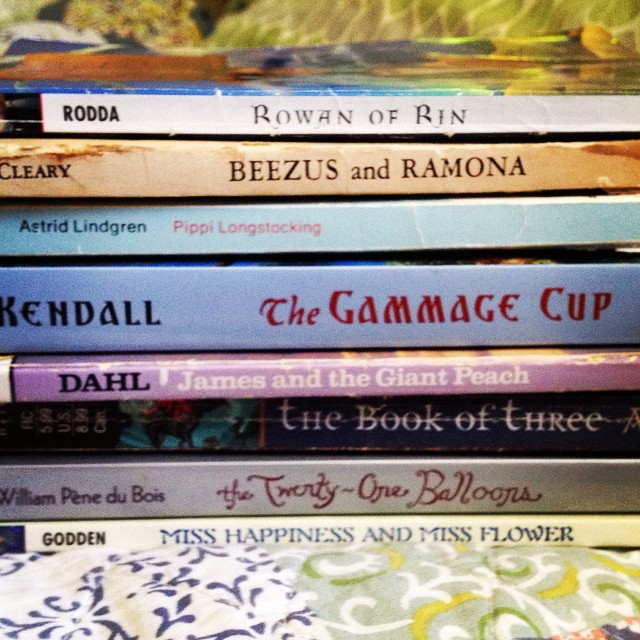
Speaking of piles of books, the younger set and I finished The Boxcar Children over the weekend (it’s a mighty quick read) and today it fell upon to me choose the next readaloud. Sometimes I know EXACTLY what book I want to reach for next, and other times I have option paralysis. Today was the latter sort of occasion. I got Rose to go around the house with me, pulling likely candidates off shelves, and when we had a comfortable stack, I decided on a Jane-Rose-Beanie favorite, Rowan of Rin. Chapter one was well received. I’ve never read this one aloud before, and there’s always a risk—some great books just don’t make great readalouds. But so far, so good. So gripping!
Unlike 112 years ago, when the Conyers Civic League was founded, the written word has fierce competition winning the hearts and attention spans of today's kiddos. With a unique roster of inter-active author presentations, the League aims to engage youth with a book's possibilities during The Irene Irwin Children's Literary Day on Sunday, Sept. 28, 12:30 - 3:30 p.m. at the Olde Town Pavilion. The day will also serve as tribute to Irene Irwin, a former teacher and CCL member whose generous legacy continues to fund League endeavors today.
"We are excited about our slate of accomplished authors," said Event Chair Julie Rogers. "We've planned for it to be an engaging afternoon activity for families."
12:45 - 1:30 Chris Rumble, artist, musician and author of "The Adventures of Uncle Stinky" series
1:30 - 1:45 Susan Rosson Spain, author of "The Twelve Days of Christmas in Georgia," as well as "Deep Cut," a historical fiction work for middle-schoolers set against the back drop of the Civil War
1:45 - 2:30 Michael P. White, illustrator of many award-winning books including, "The Library Dragon," involves audiences in the illustration
2:30 - 2:45 Mary Cunningham, author of the award-winning five book 'tween series, "Cynthia's Attic" 2:45 - 3:30 Danny Schnitzlein, author of "The Monster Who Ate My Peas" and "The Monster Who Did My Math"
The event is free. Authors will have books on hand to sell and sign, cash or checks only accepted. Mellow Mushroom pizza will be available for $1 per slice. Children must be accompanied by an adult. For more information, please visit the Facebook page ~ Irene Irwin Children's Literary Day.
The other day I mentioned I’ve been meaning to write a post about the 1972 middle-grade novel Sarah and Katie by Dori White. THIS IS NOT THAT POST. This is purely a curiosity itch I can’t wait to scratch. I took my query to Twitter, too, and…crickets. Now, ordinarily the merest mention of any book on Twitter, let alone a childhood favorite, garners zillions of immediate and enthusiastic responses. People love to talk about their childhood books.
Which leads me to believe that no one I know either on Twitter or here has heard of this book!
Can this be? Am I alone in my Sarah and Katie mini-obsession?
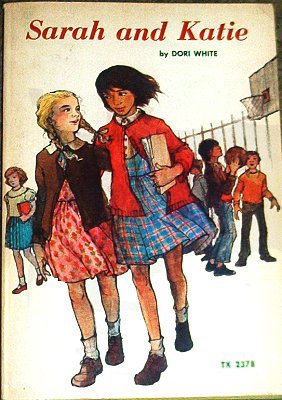
Illustrations by Trina Schart Hyman, you guys. It was a Scholastic Book Clubs book; I’m sure that’s where I came across it.
Anybody? Bueller?
This book haunted me. I don’t remember what age I was, maybe eleven? Story of two best friends, sixth graders, in Depression-era Oregon. Thick as thieves, a regular Betsy-Tacy pair, but the arrival of a new girl in their midst doesn’t work out quite as well as when Tib shows up. (Then again, B-T and Tib were around six in that book. Big difference between six and twelve. Trios are much trickier, at twelve.) The new girl is dazzlingly beautiful, a cloud of red curls, glamorous, dazzling, a wee bit manic; and everyone including Sarah is smitten—except Katie, who sees through Melanie’s stories. Ring a bell? No? There’s a play, and of course Melanie gets THE PART, and she’s amazing in it, she’s this incredible actress, but that too sticks in Katie’s craw…
And the whole scene when they go to Melanie’s crummy apartment, and she’s playing it up, lady of the manor, lavish, starletty…until her mother comes home and suddenly she’s TOTALLY CHANGED—clothes, hair, voice, manner. All meek and humble. And Katie’s like I KNEW IT!
What haunted me about it was the disturbed and disturbing tone, the undercurrents caused by Melanie’s deception. And the idea, which must have been new to me then, that a girl could so thoroughly fool people, could fool even her own mother. And the gradual realization, handled so deftly by Dori White (as I noticed when rereading it last year for the first time in maybe two decades), that there was a deep longing and desperation behind Melanie’s actions, that she wasn’t just someone you could slap a Bad Guy label on. Katie awakens to this slowly, painfully, and she brought me right along with her. The only other children’s book I remember experiencing that same awful poignancy—almost a sense of guilt—was The Hundred Dresses.
Okay, so now I sort of have written the post I was thinking about, I guess. But really what I want to know is, have none of you heard of it?

By:
Danette Haworth,
on 7/28/2014
Blog:
Summer Friend
(
Login to Add to MyJacketFlap)
JacketFlap tags:
writer,
author,
middle grade,
middle-grade,
author visit,
Danette,
Violet Raines,
Danette Haworth,
Me and Jack,
The Summer of Moonlight Secrets,
Skype visit,
A Whole Lot of Lucky,
Haworth,
Add a tag
Hello all!
Somehow, my dot com domain name got swiped a few weeks ago. I'm trying to get the dot com address back, but now Danette Haworth is dot net website!
Yay! I'm back online!
Rose and the Lost Princess
by Holly Webb
In the first book, Rose was thrilled to be selected for a position as a housemaid for a prominent magician. As an orphan, her dream was to get out of the orphanage and earn her own living. But when she discovered that she has an inherent talent for magic, Rose had mixed feelings. Magic is exciting, but also so far outside her experience that it makes her uncomfortable. Although Rose is now an apprentice to the magician, Mr. Fountain, she wanted to keep her position as a housemaid in the house. Besides providing her income, she's not quite ready to let go of her ordinary, normal life.
But now that the other servants know that she is magic, they don't want to have anything to do with her. Most ignore her, and some are actively antagonistic. Only Bill the houseboy is still friendly. To make matters worse, there is a growing anti-magic movement in the aftermath of the events of the first book. It's not a good time to be a magician. People are blaming the early winter and heavy snowfall on magic, and when the beloved Princess disappears, and is found again, the whole country is in a frenzy, convinced that magic is involved. The King is worried that there will be another attempt on the Princess, so Rose is sent to the palace to stay with the Princess, because as another young girl she can provide some magical protection while seeming to be an ordinary housemaid and companion for the Princess.
Rose and the Lost Princess is a delightful book that I enjoyed even more than its predecessor. Rose is such a great character. She loves the magic, and yet she's a very no-nonsense, practical girl. She's what Mary Poppins might have been like as a girl. The book is extremely well-written and immersive. There's gentle humor, much of it provided by Gus, the magical cat. In many ways it's a perfect middle-grade novel. Even as an adult I quite enjoyed reading it, and I'm looking forward to future books in the series.
Diversity?I didn't see any diversity of color or ethnicity, but then, Victorian-type settings tend to be pretty monochrome. Sexuality simply doesn't come into the book, other than Rose's hand on Bill's arm at one point, so there's not really any opportunity for sexual diversity.
There is diversity of class, and in fact class is one of the themes in this novel. As a servant who is also an apprentice to a powerful magician who is a councilor to the King, Rose is caught between classes in a most uncomfortable way. The lives of both the upper and lower classes are vividly portrayed, from the glittering palace to the lives of Mr. Fountain's servants downstairs. The effect of power on the powerless is shown in small ways, including the house manager's not-so-subtle threat to a servant who is threatening to leave, "How will you get a new position without references?"
Who would like this book:
Middle-grade readers who love an immersive, character-driven fantasy. There's enough excitement to keep anyone interested, but it's not overly violent or scary, so it should be fine for sensitive readers. Although the protagonist is a girl, I think that boys will enjoy it as well, if they can get past the girl on the cover and the feminine name, "Rose." (Edited to add: the first book has an evil magician kidnapping children and drinking their blood, so sensitive readers may want to skip that one and start with this one.)
My review of Rose, the first book in the series.Get it from:FTC required disclosure: Review copy sent by the publisher to enable me to write this review. The bookstore links above are affiliate links, and I earn a very small percentage of any sales made through the links. Neither of these things influenced my review.

By:
Charlesbridge,
on 3/31/2014
Blog:
Unabridged - Charlesbridge Publishing Company
(
Login to Add to MyJacketFlap)
JacketFlap tags:
At Home in Her Tomb,
Han Dynasty,
Qin Dynasty,
history,
China,
nonfiction,
middle-grade,
ancestry,
Christine Liu-Perkins,
Sarah Brannen,
Add a tag
 |
| Photograph by David Schlatter |
After growing up in China, my parents immigrated to America in 1946. My brothers and I were born in the Northeast, and then we moved to the Midwest when I was three years old. So I grew up far from the land of my heritage.
But every summer we drove from Kansas City to Toronto for reunions with our extended family. (My father's parents and siblings had also immigrated to the USA or to Canada.) There I was aware of belonging to a large family, a long history, and a complex culture beyond my everyday life. I was surrounded by my grandparents, uncles, and aunts chatting in Cantonese while I played with my cousins. I was introduced to dimsum—small plates of juicy dumplings, steamed buns, and other mouthwatering treats—plucked from carts rolling between a restaurant's giant round tables. I remember my grandfather giving me candy from a secret cache high on his closet shelf, but I also sensed that the entire family treated him as the most honored member.
When I was a mother with two young children, my own mother died. My parents always being there had been my secure foundation, but that shifted with her death, leaving a hole of grief and vulnerability in my life.
In November 1999, I traveled with my father to Taiwan and China. Serendipitously I stumbled upon a special exhibit of Han dynasty artifacts at the National Palace Museum in Taipei. This was the first time I had ever heard of the three tombs of Mawangdui, but I was immediately hooked on learning more about them. Who were the mother, father, and son buried in the tombs? Why would their family bury them with so many treasures, including personal items like the mother's cosmetics case, the father's signature seals, and the son's zither?
The next week, we journeyed to the southern Chinese village where my father's family has lived since the late 1500's. Along with two dozen relatives living in or near the village, we visited the cemetery where four generations of our ancestors are buried. In front of their niches, we lit candles and incense, offered food and drink, and burned mock money and paper clothes—modern versions of rituals performed for thousands of years. I was struck by the realization of being connected to these people whom I'd never met, yet were literally part of me.
 |
| After lighting candles and incense, we set out food and drink in front of our ancestor's niches. |
|
|
Three years later in June 2002, my father took me, my brothers, and our families to visit his homeland. We entered the Forbidden City, inspected the First Emperor's terracotta troops, sailed down the Yangzi River, and saw where my parents had lived and been schooled.
I took a side trip to Changsha to see the Mawangdui tomb site and the many artifacts in the Hunan Provincial Museum. By then, I had studied enough about Mawangdui to be completely agog at seeing the silk-draped body of Lady Dai and the cavernous tomb of her son.
The following day twenty-one of us from America and ten of us from China met at the same cemetery I had visited before. My daughters, nieces, and nephews participated for their first time in the traditional rituals of lighting candles and incense, offering food and drink, and burning mock money and paper clothes. I marveled at the continuity of life that bound us together across centuries and continents: four generations of living descendants paying our respects to four generations of ancestors. As I watched the smoke from the burning paper rise into the sky, I saw an image in my mind of an endless queue of our ancestors winding across the cemetery.
 |
| It is believed that burning mock money and other paper goods sends them to the ancestors. | |
Through seeing artifacts from the Mawangdui tombs and performing rituals at my ancestors' graves, I could imagine the family of Lady Dai expressing their love and respect in creating an elaborate tomb for her. I could identify with her family through my experiences of missing my own mother and of honoring my ancestors. And through learning about Lady Dai and her world, I understand more of the history and meaning behind the rituals my family performs to commemorate our loved ones.*****
Posted by Christine Liu-Perkins, author of At Home in Her Tomb, which releases on April 8, 2014. Find out more about her at www.christineliuperkins.com.
Rose
by Holly Webb
Synopsis: Rose is a practical girl. When the other orphans daydream about finding their parents, Rose dreams of getting a position in domestic service, of being independent, working hard, and earning a living. So when the housekeeper for a leading magician comes to the orphanage looking for a young housemaid, Rose is thrilled to be selected.
Rose doesn't hold with magic, so when she begins to suspect that she may have some magic abilities, she is determined to get rid of them if possible. She just wants to be an ordinary person, and to fit in with the other servants, especially her new friend, the houseboy, Bill. But when someone starts stealing children off the streets, and Rose's best friend from the orphanage disappears, Rose teams up with the magician's apprentice, Freddie, his spoiled daughter, Isabella, and the magician's cat Gustavus to get to the bottom of it.
Review:
Rose is a fun middle-grade fantasy with a delightful, no nonsense heroine. Practicality and imagination are usually portrayed as being mutually exclusive, so it's terrific to see a protagonist who has both in abundance. Young readers will identify with Rose's struggles to both find herself and fit in, two things which sometimes seem to be in conflict. I fell in love with Rose from the first page.
The story is set in an alternate Victorian England where magic is real, although rare and expensive. There's a variety of interesting characters, and most are pretty well developed. The one exception is the villain, who's a pretty clichéd evil villain, and is really more of a story device than an actual character. It doesn't really matter, though, since the battle with the villain doesn't come in until later in the book. Rose is the real centerpiece of this story, and most of the book revolves around her learning to adjust to life outside the orphanage, developing relationships with the other members of the household, and coming to terms with her magic.
This is an engaging book with a lot of kid appeal, and I would recommend it to young readers who enjoy a fun story with great characters and a little bit of magic, as well as those who enjoy historical and pseudo-historical settings.
Get it from:FTC required disclosure: Review copy given by the publisher at BEA to enable me to write this review. The bookstore links above are affiliate links, and I earn a very small percentage of any sales made through the links. Neither of these things influenced my review.
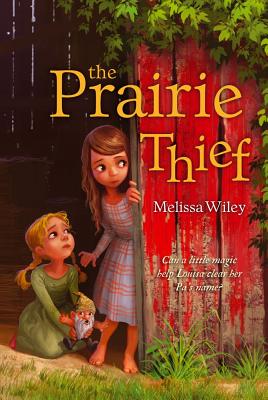
Hurrah! I love it when a book comes out in paperback. Such a thrill to know it will reach a new audience.
Handy-dandy purchasing links for you, because I’m helpful like that:
Amazon • B&N • Indiebound
Do you know what I would love? If you happen to buy a copy (or if you have already purchased the hardcover) from your local indie, would you leave a comment to let me know the name of the bookstore? There are few things lovelier for a writer than knowing someone wandered into a bookshop and met your book on the shelf, and adopted it for keeps.
Here are some reviews:
“Wiley has created a charming, inventive tale that reads like a delightful mash-up of Little House on the Prairie and Tony DiTerlizzi’s ‘The Spiderwick Chronicles’ (S & S). Short chapters and the air of mystery and suspense keep the pages turning, and readers will be taken with Louisa, who is sweet and mild-mannered, yet has the strength to fight for what is right. The writing is breezy and lyrical…[a] top-notch story.” —School Library Journal
“Fans of the Little House books will recognize the setting and enjoy the fantastic twist. Stylized black-and-white illustrations capture key moments and add to the warm tone. The comedic, unexpected, satisfying conclusion hits just the right note. A pleasing folkloric/historical blend.” —Kirkus Reviews
“Wiley’s cleverly constructed story, which switches over to the circuit judge’s amusing perspective for a few chapters, is not only a fine tall tale but also gives some sense of nineteenth-century frontier life.” —Booklist
“Frontier fiction and folkloric fantasy are an unusual combination, but they actually blend remarkably well here, and Wiley does a fine job of staying true to the pioneer inflections of Louisa’s story while effectively integrating the magical brownie…The effective mashup of popular genres will make this a hit with a variety of readers, so try handing it to Little House fans and folktale-lovers alike.” —Bulletin of the Center for Children’s Books
“…a delight from start to finish.” —Jen Robinson’s Book Page
“Every now and then a book makes me miss having a class to read to. Some books absolutely beg to be read aloud. The Prairie Thief by Melissa Wiley is that kind of book….And then, the must of all musts for reading a story aloud… the language. The Prairie Thief is rich with gorgeous, evocative language that begs to be heard as well as read. We feel as though we’ve been transported back in time when we listen to expressions like, ‘He was wailing loud enough to curdle milk,’ or ‘Ye look like last year’s scarecrow.’ Even the simple ‘Balderdash!’ sounds better out loud. Wiley uses big words too—words that some kids will latch on to and roll around in their minds and mouths—like audacious, gesticulations, rapscallion, scrutinizing—they add to the mood and help us sink into this world.” —Writing on the Sidewalk
“Wholly delightful. I found it impossible to put down and read it in one great gulp. I don’t think I could have loved it more, had I read it as a child. The characters are lovely, each and all. The story, while never veering from the path to a happy ending, had plenty of dips and bobbles and surprises. I grinned my way through much of it, and am not ashamed to tell you my eyes filled with tears at the end. It’s wholesome without being smarmy, and fun without being arch.” —Salamander House
“…a mystical mystery not to be missed.” —the kids at Bookie Woogie
The Prairie Thief is a Junior Library Guild selection, an SCBWI Crystal Kite Member’s Choice Award nominee, and a Bravewriter Arrow selection. It is currently a nominee for New Hampshire’s Great Stone Face Children’s Choice Award. (Check out the rest of the books on that list, you guys—looks like some fun reading there.)
View Next 25 Posts



 By: Sheila Ruth,
on 2/26/2015
By: Sheila Ruth,
on 2/26/2015

 By: Melissa Wiley,
on 10/13/2014
By: Melissa Wiley,
on 10/13/2014
.jpg?picon=834) By: Mary Cunningham,
on 9/26/2014
By: Mary Cunningham,
on 9/26/2014


