


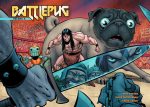
 I talked with Mike once before about Battlepug, and was happy to do it again following its recent grande finale. I asked him more about the process for his webcomic, how he feels about ending it and his Image series Revival. Read on to learn how Mike’s grown as an artist and his experiences concurrently drawing […]
new posts in all blogs
 By: Heidi MacDonald,
on 7/5/2016
By: Heidi MacDonald,
on 7/5/2016
Blog: PW -The Beat (Login to Add to MyJacketFlap)
JacketFlap tags: Interviews, Comics, Webcomics, Revival, E-publishing, Mike Norton, Battlepug, matt chats, Add a tag
By: Heidi MacDonald,
on 5/24/2016
Blog: PW -The Beat (Login to Add to MyJacketFlap)
JacketFlap tags: industry news, E-publishing, Dynamite, bundling, Digital Comics, Top News, humble bundle, groupees, Add a tag
By: Heidi MacDonald,
on 4/6/2016
Blog: PW -The Beat (Login to Add to MyJacketFlap)
JacketFlap tags: Comics, Conventions, E-publishing, C2E2, Add a tag
By: Heidi MacDonald,
on 11/23/2015
Blog: PW -The Beat (Login to Add to MyJacketFlap)
JacketFlap tags: podcast, Indies, Podcasts and other media, Podcasts, E-publishing, Frank Miller, R. Sikoryak, google play, more to come podcast, Hoopla, comic book podcasts, best books 2015, Add a tag
By: Heidi MacDonald,
on 11/9/2015
Blog: PW -The Beat (Login to Add to MyJacketFlap)
JacketFlap tags: E-publishing, Digital Comics, Top News, Add a tag
By: Heidi MacDonald,
on 8/18/2015
Blog: PW -The Beat (Login to Add to MyJacketFlap)
JacketFlap tags: Comics, Retailing & Marketing, Webcomics, self-publishing, Process, Breaking News, POD, print on demand, E-publishing, kickstarter, Top News, Crowdfunding, Top Comics, Controversy!, Add a tag
By: Heidi MacDonald,
on 4/24/2015
Blog: PW -The Beat (Login to Add to MyJacketFlap)
JacketFlap tags: rebellion, E-publishing, Judge Dredd, Digital Comics, Top News, 2000 ad, Add a tag
By: Heidi MacDonald,
on 1/21/2015
Blog: PW -The Beat (Login to Add to MyJacketFlap)
JacketFlap tags: Giveaways, Retailing & Marketing, Image, Breaking News, Archie, E-publishing, Top News, bruce, Crowdfunding, Bruce Lidl, humble bundle, brucelidl, lidl, humble, pay what you want, Add a tag
By: Heidi MacDonald,
on 1/8/2015
Blog: PW -The Beat (Login to Add to MyJacketFlap)
JacketFlap tags: Retailing & Marketing, Image, E-publishing, Top News, bruce, Image Expo, Bruce Lidl, humble bundle, Top Comics, lidl, imageexpo, Add a tag
By: Heidi MacDonald,
on 8/20/2014
Blog: PW -The Beat (Login to Add to MyJacketFlap)
JacketFlap tags: Digital Comics, Top News, Top Comics, Breaking News, E-publishing, Dynamite, Dynamite Entertainment, Add a tag
 By: Heidi MacDonald,
on 6/25/2014
By: Heidi MacDonald,
on 6/25/2014
Blog: PW -The Beat (Login to Add to MyJacketFlap)
JacketFlap tags: Top News, Crowdfunding, humble bundle, E-publishing, Dynamite, Add a tag
AND — when you pledge more than the average you get these books!
By: Heidi MacDonald,
on 6/18/2014
Blog: PW -The Beat (Login to Add to MyJacketFlap)
JacketFlap tags: Humor, E-publishing, Top News, the devastator, Add a tag
By: Heidi MacDonald,
on 5/31/2014
Blog: PW -The Beat (Login to Add to MyJacketFlap)
JacketFlap tags: Top News, Graphicly, Marc Ellerby, Mike Garley, Small Presses, Comings & Goings, E-publishing, Digital Comics, Add a tag
By: Heidi MacDonald,
on 3/3/2014
Blog: PW -The Beat (Login to Add to MyJacketFlap)
JacketFlap tags: Interviews, Indies, Dark Horse, E-publishing, Batgirl, Prometheus, Digital Comics, Top News, bruce, Bruce Lidl, Monkeybrain, Bandette, brucelidl, coover, eisner, lidl, tobin, Add a tag
 By: Heidi MacDonald,
on 3/22/2013
By: Heidi MacDonald,
on 3/22/2013
Blog: PW -The Beat (Login to Add to MyJacketFlap)
JacketFlap tags: reading, Webcomics, gadgets, E-publishing, Top News, comcis, Add a tag
 By: Heidi MacDonald,
on 3/6/2013
By: Heidi MacDonald,
on 3/6/2013
Blog: PW -The Beat (Login to Add to MyJacketFlap)
JacketFlap tags: E-publishing, Digital Comics, Top News, Add a tag
By: Heidi MacDonald,
on 3/2/2013
Blog: PW -The Beat (Login to Add to MyJacketFlap)
JacketFlap tags: Announcements, E-publishing, Downloadable Comics, Digital Comics, Emerald City Comic Con, Top News, Monkeybrain, Add a tag
 By: Hannah Hog,
on 5/4/2012
By: Hannah Hog,
on 5/4/2012
Blog: Hogs Back Books Blog (Login to Add to MyJacketFlap)
JacketFlap tags: Websites, Children's Picture Books, e-publishing, Children's Book Publisher, Add a tag

(Note the lovely case, a bargain from the nice people at Lente Designs).
I made the silly mistake of putting lots of stuff on it for the children, which means they are constantly trying to wrestle it away from me. Favourite apps so far include Squeebles, a sort of maths version of Moshi Monsters, which has actually got S eager to practise her times tables. She's also keen on SketchBook Pro and 123D Sculpt, though the latter is way too complicated for me to actually create anything worth saving. But the sketch app is very satisfying, even if, like me, you're very rubbish at drawing...
Nosy Crow has been rightly lauded for its imaginative and original children's ebooks. We've got Cinderella, and I will definitely be downloading more of their work. And if anyone knows a good spelling app, please let me know - I downloaded Spelling Free but it's very dull and the heavy American accent confuses the children (and their spelling).
However, my favourite so far is the Usborne Sticker Dolly Dressing, an app version of those great sticker books - really, I was fighting E for a go on this - and it's a bargain at £2.99, compared to the actual sticker books.

The downside of the iPad, as you will have noted from the amount of apps I have loaded, is how ridiculously easy it is to spend money. Amazon 1-Click and iTunes make buying an item so quick and easy, I almost forget there's real pounds involved.
I also think the iPad is making me a bit, well, jumpy - all that information at my fingertips means I'm skipping from breaking news to tweeted conversations to Facebook without really focusing on any one site. I think once the novelty of exploring apps wears off, I'll be using it more to watch and listen to stuff (for example, check out Khan Academy, which is like carrying round your own university lecture
.jpg?picon=418) By: BookEnds, LLC,
on 7/25/2011
By: BookEnds, LLC,
on 7/25/2011
Blog: BookEnds, LLC - A Literary Agency (Login to Add to MyJacketFlap)
JacketFlap tags: e-publishing, self-publishing, Add a tag

 By: HAARLSON PHILLIPPS,
on 3/27/2011
By: HAARLSON PHILLIPPS,
on 3/27/2011
Blog: Clueless, ink. (Login to Add to MyJacketFlap)
JacketFlap tags: e-books, e-publishing, e-book distribution, agents' blogs, e-book sales, agents' websites, U.S. literary agents, Add a tag
 Sorry for not posting stuff as often as I should. Have been really very busy - proofreading and correcting and re-formatting both print and digital versions of a novel, visiting the UK, and researching the wonderful world of ebook creation, publishing and distribution. Fascinating stuff, and I'll probably report back on my findings at some point.
In the meantime, if you're interested in following developments around ebook distribution and sales then check out the inimitable J.A. Konrath's blog at A Newbie's Guide to Publishing and An E-publisher's Manifesto, the Self-published Authors' Lounge, and, for an interesting UK perspective, Lexi Revellian's blog.
All of which seems a strange introduction to announcing that I've added another 5 links to the U.S. Literary Agents' Websites sidebar and another 5 links to the Literary Agents' Blogs sidebar.
 By: BookEnds, LLC,
on 1/18/2011
By: BookEnds, LLC,
on 1/18/2011
Blog: BookEnds, LLC - A Literary Agency (Login to Add to MyJacketFlap)
JacketFlap tags: e-publishing, e-readers, Add a tag
 By: BookEnds, LLC,
on 1/17/2011
By: BookEnds, LLC,
on 1/17/2011
Blog: BookEnds, LLC - A Literary Agency (Login to Add to MyJacketFlap)
JacketFlap tags: e-publishing, e-readers, nonfiction, Add a tag
 By: BookEnds, LLC,
on 11/29/2010
By: BookEnds, LLC,
on 11/29/2010
Blog: BookEnds, LLC - A Literary Agency (Login to Add to MyJacketFlap)
JacketFlap tags: business, career, professionalism, contracts, e-publishing, Add a tag

View Next 24 Posts
Viewing: Blog Posts Tagged with: e-publishing, Most Recent at Top [Help]
Results 1 - 25 of 50
By: Heidi MacDonald,
on 7/5/2016
Blog: PW -The Beat (Login to Add to MyJacketFlap)
JacketFlap tags: Interviews, Comics, Webcomics, Revival, E-publishing, Mike Norton, Battlepug, matt chats, Add a tag
By: Heidi MacDonald,
on 5/24/2016
Blog: PW -The Beat (Login to Add to MyJacketFlap)
JacketFlap tags: industry news, E-publishing, Dynamite, bundling, Digital Comics, Top News, humble bundle, groupees, Add a tag
If you’ve been reading the Beat regularly – and I know you have – you may have noticed that Dynamite is the King of Bundling – that is, the kind of pay-what-you-want services such as Humble Bundle that give consumer vast access to digital comics for a pretty low fee. Dynamite has two notable recent bundles, the “Bundle […]
0 Comments on Dynamite ‘Bundles Up’ for exposure and bucks as of 1/1/1900
Add a Comment
By: Heidi MacDonald,
on 4/6/2016
Blog: PW -The Beat (Login to Add to MyJacketFlap)
JacketFlap tags: Comics, Conventions, E-publishing, C2E2, Add a tag
 Anyone fascinated by the emerging world of digital comics was in for a treat at C2E2, thanks to a panel made up of a group of very diverse, very qualified professionals from the field. The discussion hosted speakers Mark Waid (Co-Founder at Thrillbent), Jen Brazas (creator of the Mystic Revolution webcomic), economics entrepreneur Jordan Plosky […]
0 Comments on Beyond the Page: A Digital Comics Roundtable [C2E2] as of 4/6/2016 5:30:00 PM
Add a Comment
By: Heidi MacDonald,
on 11/23/2015
Blog: PW -The Beat (Login to Add to MyJacketFlap)
JacketFlap tags: podcast, Indies, Podcasts and other media, Podcasts, E-publishing, Frank Miller, R. Sikoryak, google play, more to come podcast, Hoopla, comic book podcasts, best books 2015, Add a tag
Recorded live in New York, it’s More To Come, the weekly podcast of comics news, interviews and discussion with Calvin Reid, Kate Fitzsimons and The Beat’s own Heidi MacDonald! This week, the More to Come Crew – Heidi “The Beat” MacDonald, Calvin Reid and Kate Fitzsimons – discuss digital comics news from Archie, Hoopla, Google […]
1 Comments on The Beat Podcasts! More to Come: iTunes – The Graphic Novel, last added: 11/23/2015
Display Comments
Add a Comment
By: Heidi MacDonald,
on 11/9/2015
Blog: PW -The Beat (Login to Add to MyJacketFlap)
JacketFlap tags: E-publishing, Digital Comics, Top News, Add a tag
As many have noted of late, e-book sales are slipping, and Publishers Weekly’s Jim Milliot has a report on how slowing e-book sales hit profits of two big publishers, S&S and HarperCollins: Parent company News Corp blamed the weak sales performance on lower Divergent sales and lower e-book sales. Digital sales, which include both e-book […]
6 Comments on E-book sales slipping, paper still popular but beware the phone, last added: 11/11/2015
Display Comments
Add a Comment
By: Heidi MacDonald,
on 8/18/2015
Blog: PW -The Beat (Login to Add to MyJacketFlap)
JacketFlap tags: Comics, Retailing & Marketing, Webcomics, self-publishing, Process, Breaking News, POD, print on demand, E-publishing, kickstarter, Top News, Crowdfunding, Top Comics, Controversy!, Add a tag
A little while back, Brian Hibbs wrote a piece involving the place of Kickstarters in the comics world that still seems to be making the rounds online. It comes at it from the retailer angle, and as somebody who’s run a few Kickstarters, I have a few different thoughts about how crowdfunding fits into the […]
5 Comments on How To Make Crowdfunding Sustainable For Comics, last added: 8/19/2015
Display Comments
Add a Comment
By: Heidi MacDonald,
on 4/24/2015
Blog: PW -The Beat (Login to Add to MyJacketFlap)
JacketFlap tags: rebellion, E-publishing, Judge Dredd, Digital Comics, Top News, 2000 ad, Add a tag

Quick, which publishers are the pioneers of digital comics? You might think IDW or Marvel, but the UK’s Rebellion, publisher of 2000 AD, has been selling digital editions of its book since all the way back in 2005 with great success—it’s the fastest and cheapest way to get Judge Dredd if you don’t live in the UK after all. Now they are making their downloads DRM free. All comics purchased—past and present—via any method—web, Android, iOS—will now be available in DRM-free PDF and CBZ files.
Users will have a Rebellion ID that will allow comics bought through one platform to be available on others.
Apps for the Amazon Kindle and Windows mobile apps are on their way—and all purchases will be transferable via those apps as well.
Along with Judge Dredd, and current issues of 2000 AD, the weekly anthology of dystopic adventure, and the monthly Judge Dredd Megazine, classic issues of Judge Dredd, Strontium Dog, Halo Jones, Sláine, Ace Trucking, and many more can also bepurchased.
The 2000 AD iOS app for iPad and iPhone was launched in 2012 and is consistently one of the top-grossing iPad newstand apps in the UK. You can download the free 2000 AD app for iOS here, and the brand new 2000 AD app for Android here.
0 Comments on Digital pioneer 2000 AD offers DRM-free downloads as of 1/1/1900
Add a Comment
By: Heidi MacDonald,
on 1/21/2015
Blog: PW -The Beat (Login to Add to MyJacketFlap)
JacketFlap tags: Giveaways, Retailing & Marketing, Image, Breaking News, Archie, E-publishing, Top News, bruce, Crowdfunding, Bruce Lidl, humble bundle, brucelidl, lidl, humble, pay what you want, Add a tag
 By Bruce Lidl
Following immediately on the conclusion of the second Image Comics Humble Bundle, Archie Comics has joined the Humble Bundle comics movement with its first release. Humble Bundles are curated collections of digital comics available under a “pay what you want” revenue model. Customers can choose their payment amount for the basic pack, or spend extra money for additional content. Customers can also choose what percentage of their payment goes to the publisher, to the Humble Bundle company and to a charity picked for the bundle, in this case either the Hero Initiative or the Comic Book Legal Defense Fund. Also, all Humble Bundle comic collections are sold in variety of formats, with absolutely no DRM restrictions embedded in them.
Past digital comics Humble Bundles have proven very popular and generated considerable revenue for publishers and charities. The first Image Humble Bundle in April 2014 received almost $400,000 in payments, while the just completed Image bundle got over $450,000, and appears to have been the highest grossing comics bundle so far.
Today’s Archie bundle contains Afterlife With Archie Magazine #1, The Fox: Freak Magnet, Sonic/Mega Man: Worlds Collide Vol. 1, and The Best of Archie Book One. Customers that pay more than the going average price also get The Death of Archie, Archie Meets KISS, The Best of Archie Book Two, Chilling Adventures of Sabrina #1, and Sonic/Mega Man: Worlds Collide Vol. 2., while those who pay $15 or more will receive all of the above plus Afterlife With Archie Vol. 1: Escape From Riverdale, Archie Comics Spectacular: Party Time, Archie: The Married Life Vol. 1, and Sonic/Mega Man: Worlds Collide Vol. 3. Other incentive titles will likely get added over the course of the bundle’s two week run.
At this point, the sole remaining publisher holdouts from Humble Bundle appear to be Marvel and DC. While initially designed for independent video gaming publishers, even rather large gaming companies have used Humble Bundle since its inception in 2010, including EA and THQ. Interestingly, Warner Brothers Interactive Entertainment participated in a gaming Humble Bundle in November 2013 that included comics themed games Batman: Arkham Asylum and Batman: Arkham City, distributed through the Steam gaming platform. Whether that might indicate a broader Warner Brothers/DC openness to the Humble Bundle philosophy remains to be seen.
3 Comments on Archie Joins the Humble Bundle Bandwagon; Image Scores with 2nd Bundle, last added: 1/22/2015
Display Comments
Add a Comment
By: Heidi MacDonald,
on 1/8/2015
Blog: PW -The Beat (Login to Add to MyJacketFlap)
JacketFlap tags: Retailing & Marketing, Image, E-publishing, Top News, bruce, Image Expo, Bruce Lidl, humble bundle, Top Comics, lidl, imageexpo, Add a tag

By Bruce Lidl
As has become a tradition at Image Comic’s semi-annual event, the announcements of upcoming titles came fast and furious today at ImageExpo. After a suitably rousing “state of the company” presentation by Image publisher Eric Stephenson, the stage at San Francisco’s Yerba Buena Center saw a procession of comic luminaries hyping new titles they promise will appear in 2015. On the evidence, Image will likely continue to rise in sales and market share, although the central roles of The Walking Dead and Saga in propelling those gaudy numbers remained an unspoken undercurrent to the show.
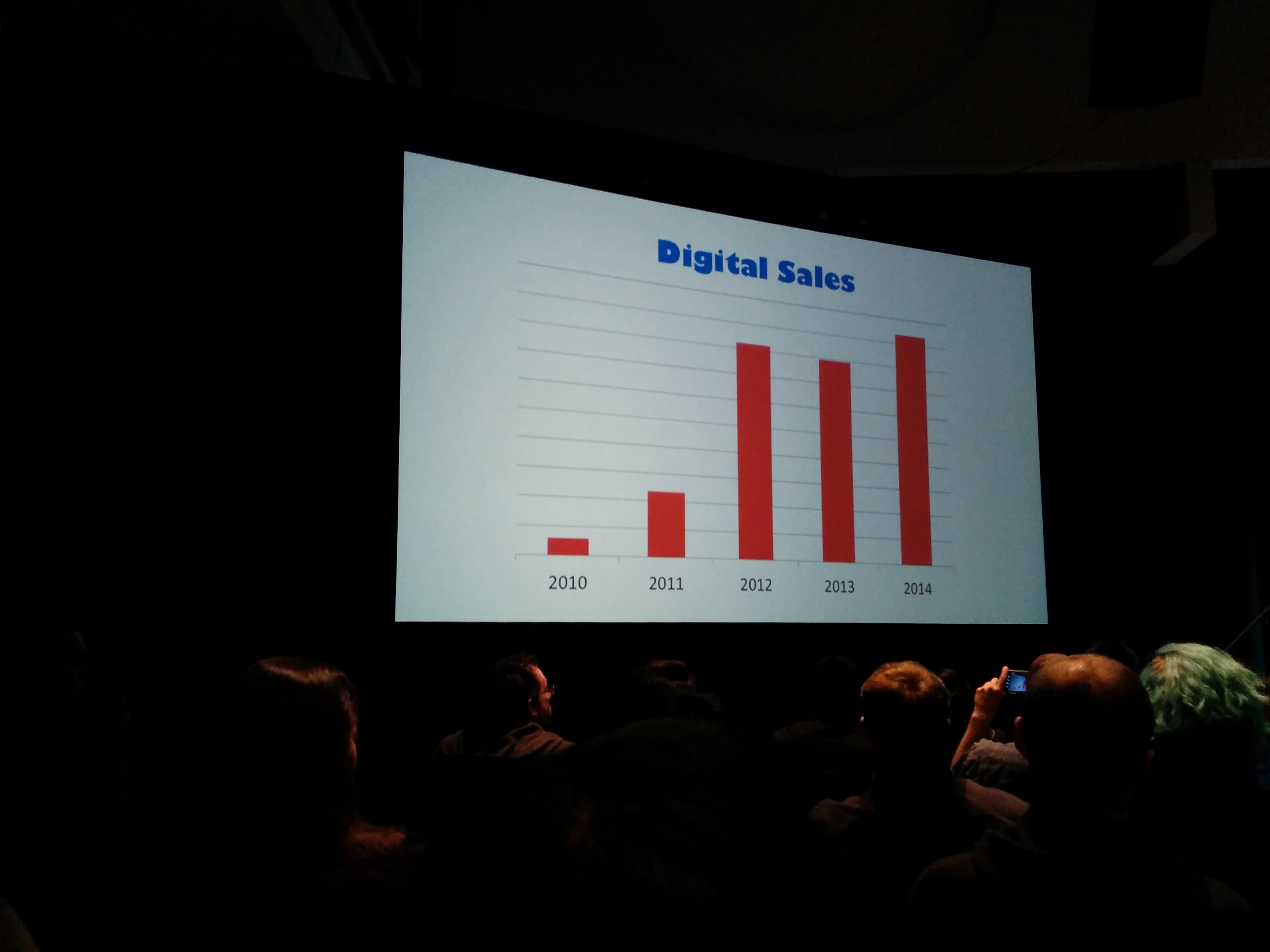
Stephenson trumpeted Image’s 2014 performance, which included “double digit year over year growth from 2013” (33% improvement in revenue, 25% in units), a 10.41% market share in the comics direct market and 16.48% market share for graphic novels in the book market. One area of somewhat smaller growth was digital, which Stephenson mentioned in passing and with a graphic that lacked scale or numbers. Despite its vagueness, the digital sales chart seemed to indicate roughly 10-15% growth from 2013. Surprisingly, however, the graph showed a slight dip in digital sales from 2012 to 2013, that was not commented on in the keynote, but Image’s Ron Richards told me outside the talk that it was merely a reflection of “The Walking Dead on TV” phenomenon, and not the natural growth of the category. To keep the digital sales momentum going into 2015, the second Image Humble Bundle was released prior to the opening of the ImageExpo, with a ton of Image backlist titles available digitally in the “pay what you want model.” In fact, Humble Bundle co-sponsored the ImageExpo this year, and has very high hopes for the bundle, particularly after it generated almost $90,000 in the first eight hours of the offer.
The new book announcements included original Image founder Todd MacFarlane’s Spawn books #250 and #251, with Spawn Resurrection #1 sandwiched in between. Declaring himself a “proud papa” of what Image had grown into over the last 23 years, MacFarlane refused to cede all the creative acclaim to his younger Image colleagues. He teased Savior, a a new title depicting the arrival of a Christ-like figure in today’s world. Recognizing a reputation for erratic release schedules, MacFarlane flashed an slide with eight issues worth of pages already completed.
James Robinson made a cameo appearance to announce his title Heaven and to reassure that Airboy is still on the way. Brandon Graham and Emma Rios told the audience about a couple of their collaborations, including 8house and Island, the later a large format “heavy metal” anthology that will include a number of rotating contributors. Emma Rios also brought out Kelly Sue DeConnick to update their plans for Pretty Deadly’s second arc which takes the title’s setting from the American West to the battlefields of World War I, and is expected to arrive in September.
Unlike last year’s event, ImageExpo 2015 highlighted a number of female creators, with Emi Lenox following Rios and DeConnick on stage to announce her autobiographical project, Tadaima, about her visit to her mother’s Japan. Lenox also talked about her collaboration with Jeff Lemire, Plutona, a Stand By Me influenced book about children discovering the corpse of a super-hero, . Other female creators announcing new books at ImageExpo included Marjorie Liu with Monstress and Alex De Campi with No Mercy, the latter scheduled for April.
Jeff Lemire returned to discuss his new book with Scott Snyder, AD: After Death which takes a deep, conceptual look at what the world would be like when “death is cured” and people can live forever. Brian Buccellato intrigued with his Kickstarter-originated Son of the Devil, an exploration of deadly cults and their legacies, and Eric Canete and Jonathan Tsuei discussed Run Love Kill, a project that started over a decade ago, but will now arrive with “robots, dinosaurs and ass-kicking.” The dynamic British duo of Kieron Gillen and Jamie McKelvie will be continuing their successful Wicked+Divine series into a third arc with a number of guest artists, and they promised Phonogram 3 for August 2015. Gillen will also be writing The Ludocrats, with art by David LaFuente for Image this year. Chip Zdarsky “crashed” the proceedings in an unannounced surprise appearance to hype his Howard the Duck title (for Marvel), but really to announce Katara, a sci-fi comedy title done with Kagan McLeod, and just to generally lighten up the festivities in his inimitable Zdarsky-style.
Another surprise appearance proved impossible for Darwyn Cooke to arrange, but he announced via audio message his first wholly creator owned title, Revengeance, a crime thriller with Mickey Spillane influences set in the 1980s. Following the Cooke audio portion, Skottie Young spoke of his new title, I Hate Fairyland, about a girl trapped in a fantasy wonderland for thirty years. The tone of the title is probably best expressed by its original working title, Fuck Fairyland.

While last year’s ImageExpo felt somewhat like the Robert Kirkman show, the explosive success of Saga in 2014 made Brian K. Vaughn’s appearance a natural highlight of this year’s event. In addition to that book, Vaughn will be producing two more books in 2015 for Image, the first entitled We Stand on Guard, a limited series positing a US invasion of Canada with giant robots, drawn by Steve Skroce, and Paper Girls, an on-going series with young newspaper deliverers as the protagonists, drawn by Cliff Chiang, and referred to by Vaughn as “his most personal and weird writing.”
4 Comments on ImageExpo 2015 in Depth, last added: 1/10/2015
Display Comments
Add a Comment
By: Heidi MacDonald,
on 8/20/2014
Blog: PW -The Beat (Login to Add to MyJacketFlap)
JacketFlap tags: Digital Comics, Top News, Top Comics, Breaking News, E-publishing, Dynamite, Dynamite Entertainment, Add a tag

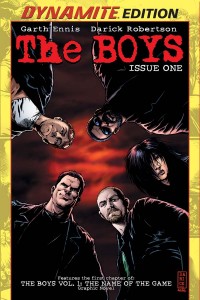
This digital comic could be yours for a dime.
Dynamite is launching their own digital comics store today. The comics will DRM-Free, which makes DRM-free the new (and welcome) trend in digital. And just because they can, they’re launching with some $0.10 comics and 10% of all digital sales for the first month will be donated to the Comic Book Legal Defense Fund.
The initial format they’re offering the comics in is .PDF, with plans for ePub and .CBZ in the future. Dynamite is also planning on rolling out the library slowly, with new releases posted each Wednesday. You might be thinking there’s not going to be a lot of DRM-free titles coming out of Dynamite, given all the licenses they deal with, but that doesn’t necessarily seem to be the case. Besides the creator-owned, Dynamite-owned and public domain properties, the first batch includes Dresden Files, Wheel of Time, Pathfinder, Green Hornet and it looks like the pulp line will be DRM-Free, too, with The Shadow being the first of the Conde Naste characters in the store. Figure it will take several months for Dynamite to get their entire back catalog online, but the Wednesday release schedule is established.
Dynamite is also offering some free wallpapers on their digital page.
(As an aside, if you haven’t read Howard Chaykin’s American Flagg!, it’s a hugely influential classic that happens to be in the initial roll out. Definitely worth your time.)
This is yet another domino falling after Amazon’s acquisition of Comixology. We’ve seen already seen Valiant expand to iVerse and Madefire, where they used to be exclusive. Now Dynamite is opening their own digital sales outlet. It’s not a common practice for publishers to go exclusive with Amazon, so we’ll probably have a few more changes to the digital landscape sooner than later.
Official PR follows:
Dynamite Entertainment Launches New DRM-Free Digital Comics Program;New Digital Initiative Benefits Comic Book Legal Defense FundAugust 20, 2014, Mt. Laurel, NJ: Dynamite Entertainment is excited to announce the debut of its brand new digital comic program featuring DRM-free comics. Launching initially with comics available in PDF file format, the initiative makes a selection of its most popular and celebrated titles ready for download today directly by consumers. The sale of DRM-free digital comics coincides with the comic book and graphic novel publisher’s 10th anniversary celebration, and can be found at their company website’s dedicated digital sales page: http://dynamite.com/digital/
The program launches today with an available selection of over 80 individual comic books, which includes creator-owned, company-owned and licensed titles from Dynamite’s massive library. The debut selection represents a wide variety of titles, spanning numerous genres, featuring name brand creators including Kevin Smith, Bill Willingham, Mark Millar, Grant Morrison, Alex Ross, Gail Simone, Robert Jordan, Jim Butcher, Walt Flanagan and Bryan Johnson, Frank Cho, Art and Franco, Garth Ennis, Darick Robertson, and more, as well as highlighting some of the industry’s most beloved characters (Red Sonja, Vampirella, and The Boys, just to name a few).
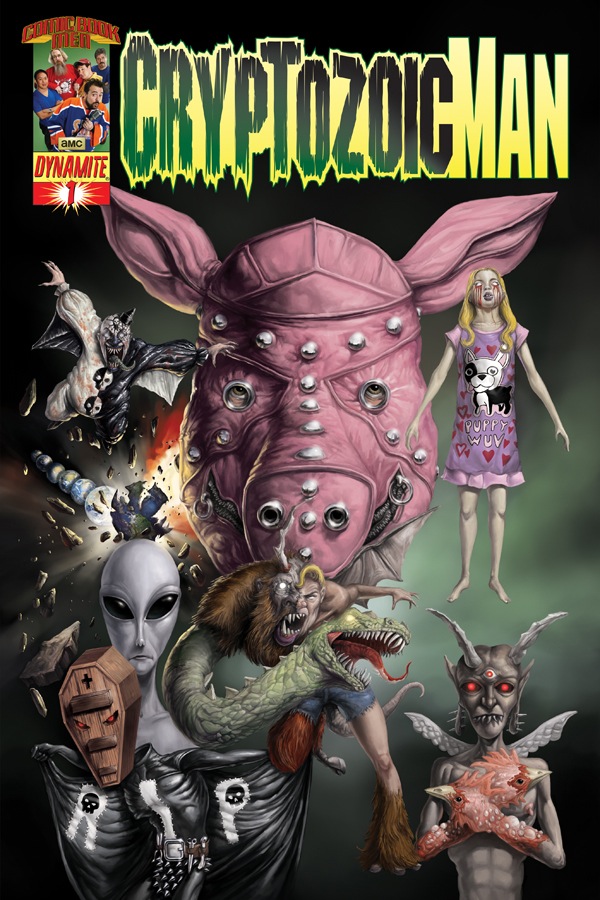
• Cryptozoic Man by Walt Flanagan and Bryan Johnson
• Blood Queen by Troy Brownfield and Fritz Casas
• The Boys by Garth Ennis and Darick Robinson
• Captain Action Cat by Art Baltazar, Franco, and Chris Smits
• Captain Victory & the Galactic Rangers by Joe Casey, Nathan Fox, and more
• Chaos! by Tim Seely and Mirka Andolfo
• Chastity by Marc Andreyko and Dave Acosta
• American Flagg by Howard Chaykin
• The Devilers by Joshua Hale Fialkov and Matt Triano
• Evil Ernie: Origin of Evil by Jesse Snider and Jason Craig
• Garth Ennis’ Red Team by Garth Ennis and Craig Cermak
• Jennifer Blood: Born Again by Steven Grant and Kewber Baal
• Jim Butcher’s Dresden Files: War Cry by Jim Butcher, Mark Powers, and Carlos Gomez
• Jungle Girl by Frank Cho, Doug Murray, and Adriano Batista
• Justice, Inc. by Michael Uslan and Giovanni Timpano
• Kevin Smith’s Green Hornet by Kevin Smith and Jonathan Lau
• Legenderry: A Steampunk Adventure by Bill Willingham and Sergio Fernandez Davila
• Miss Fury by Rob Williams and Jack Herbert
• The Mocking Dead by Fred Van Lente and Max Dunbar
• The Ninjettes by Al Ewing and Eman Casallos
• Pathfinder: Dark Waters Rising by Jim Zub and Andrew Huerta
• Project Superpowers by Jim Krueger, Alex Ross, and Carlos Paul
• Red Sonja by Gail Simone and Walter Geovani
• Red Sonja: Blue by Peter Brett and Walter Geovani
• Robert Jordan’s Wheel of Time by Robert Jordan, Chuck Dixon, and Chase Conley
• The Shadow: Midnight in Moscow by Howard Chaykin
• Terminal Hero by Peter Milligan and Piotr Kowalski
• The Trial of Sherlock Holmes by Leah Moore, John Reppion, and Aaron Campbell
• Vampirella by Nancy A. Collins and Patrick Berkenkotter
• Vampirella Master Series by Mark Millar, Grant Morrison, and more
• Vampirella vs. Fluffy by Mark Rahner and Cezar Razek
In celebration of their 10th anniversary, Dynamite will offer ten of its comic books at 10 cents apiece, introducing new readers to Dynamite’s most accessible and successful titles at a great value. The introductory-priced comic books include:
• Blood Queen #1
• The Boys #1
• Evil Ernie: Origin of Evil #1
• Jungle Girl #0
• Kevin Smith’s Green Hornet #1
• Miss Fury #1
• The Mocking Dead #1
• Robert Jordan’s Wheel of Time #1
• The Trial of Sherlock Holmes #1
• Vampirella #1
Dynamite will also offer ten (10) free wallpapers to consumers featuring The Boys, Cryptozoic Man, Jim Butcher’s Dresden Files, Neil Gaiman and Alice Cooper’s The Last Temptation, Red Sonja, and Vampirella. These wallpapers can be downloaded from Dynamite’s digital DRM-free page for a limited time.
Following today’s launch, Dynamite plans to release its DRM-free comics on a weekly basis, every Wednesday, with new offerings announced via the company’s Facebook, Twitter, and website as they are made available for download. There will be a slow, focused roll-out over time that will grow the available titles to reflect the vast majority of Dynamite’s library.
Throughout its first month of operation, Dynamite will donate ten percent of all sales to the Comic Book Legal Defense Fund, a non-profit organization dedicated to the protection of the First Amendment rights of the comics art form and its community of retailers, creators, publishers, librarians, and readers.
Charles Brownstein, Executive Director of the Comic Book Legal Defense Fund, says, “CBLDF is delighted to be named as the charitable partner for Dynamite Digital! As comics advance in so many new directions, the CBLDF remains vigilant in our efforts to protect the comics medium in each aspect. Dynamite’s contribution underscores our commitment to protect comics in the digital environment as vociferously as we do in the comic store and education spaces.”
“The market has been growing for DRM-free content. Each and every day, fans want to choose how to buy and enjoy their comics, and we’re taking our titles to the next level for digital sales,” says Nick Barrucci, CEO and Publisher of Dynamite Entertainment. “Expanding into DRM-free content, made available directly to consumers from our website, is simply giving the consumers the option for what they want and how they want it, and continues to reach out to a non-traditional comic-reading audience, and then bring those readers in to the direct comics market to our retail partners. We’re optimistic that the availability of comics in a digital fashion will continue to draw new readers to the medium, helping to continue to complement the growth for physical sales through our retail comic store partners. Following the trend we’ve seen over the past few years in our industry of digital helping to grow the physical for retailers and the market overall, the world’s continuing love affair with books in print will benefit from a surge in Dynamite interest.”
Barrucci adds, “As part of our launch, we’re donating a portion of all sales to support the Comic Book Legal Defense Fund. Charles, Alex, and their team work tirelessly to protect our First Amendment rights. The Fund needs the help of the industry to continue to support free speech.”
“DRM” (Digital Rights Management) refers to the technology used by publishers, copyright holders, and other individuals to control the use of digital content and devices after sale. Dynamite’s goal is to offer their titles DRM-free, thereby growing the company and granting comic creators more opportunities to make great products. Dynamite is eager to take this next step with fans as it continues to expand on its own digital offerings.
Dynamite’s current digital offerings include same-day-as-print releases through Comixology, iVerse, Dark Horse, iBooks, and Amazon Kindle. Recently, Dynamite worked in conjunction with Humble Bundle, Inc. to offer a 10th Anniversary bundle for sale for a limited time, dedicating a portion of profits such worthwhile charity organizations as the Comic Book Legal Defense Fund, Doctors Without Borders, and the Make-A-Wish Foundation.
2 Comments on Dynamite Launches Their Own Digital Comics Store With Ten Cent DRM-Free Downloads, last added: 8/21/2014
Display Comments
Add a Comment
By: Heidi MacDonald,
on 6/25/2014
Blog: PW -The Beat (Login to Add to MyJacketFlap)
JacketFlap tags: Top News, Crowdfunding, humble bundle, E-publishing, Dynamite, Add a tag

The entire comics industry wants to go humble! Humble Bundle that is! Yet another publisher has signed up for this service which allows readers to pay what they wish to download a bunch of ebooks, while supporting charity, This time the publishers is Dynamite, and they have over 120 books up for grabs—the biggest comics bundle ever—and daily free comics including, today Red Sonja #1 by Gail Simone. It’s all to celebrate their 10th anniversary as a publisher.
While I’ve been writing this story I’ve been watching the ticker go upwards — more than 300 just in the 10 minutes it took to type and check for typos. (HA) Already more than 2000 bundles have been downloaded. In keeping with the tradition of promotions hosted and arranged by Humble Bundle, Dynamite will contribute a portion of the proceeds to three important charitable organizations, the Comic Book Legal Defense Fund, Doctors Without Borders/Médecins Sans Frontières, and the Make-A-Wish Foundation.
More deets:
Dynamite is proud to announce that, through the Humble Bundle, the following titles will be available to purchasers at a price they personally determine. While full descriptions can be found at the Humble Bundle website, it’s noteworthy to point out the high caliber of contributing authors in this assortment: Warren Ellis (Planetary, Moon Knight), Grant Morrison (Batman, Happy!), Tim Seeley (Batman: Eternal), Fred Van Lente (Incredible Hulk), Mark Millar (Kick Ass, Ultimates), Amanda Hocking (of the paranormal Hollowland series), Bryan Johnson and Walter Flanagan (stars of AMC TV’s Comic Book Men show), and much more.
• Amanda Hocking’s The Hollows: A Hollowland Graphic Novel (Multiple Issues)
• Chaos #1
• Cryptozoic Man (Multiple Issues)
• The Mocking Dead Vol. 1 (Multiple Issues)
• My Little Phony: A Brony Adventure
• Project Superpowers Vol. 1 (Multiple Issues)
• Sherlock Holmes Vol. 1: The Trial of Sherlock Holmes (Multiple Issues)
• Vampirella Masters Series Vol. 1: Grant Morrison & Mark Millar (Multiple Issues)
• Vampirella Masters Series Vol. 2: Warren Ellis (Multiple Issues)
• Vampirella Vs. Fluffy
AND — when you pledge more than the average you get these books!
• George R.R. Martin’s Wild Cards: The Hard Call (Multiple Issues)
• Jim Butcher’s Dresden Files: War Cry #1
• Kevin Smith’s Green Hornet Vol. 1 (Multiple Issues)
• Kevin Smith’s Green Hornet Vol. 2 (Multiple Issues)
• Legenderry: A Steampunk Adventure (Multiple Issues)
• Pathfinder Vol. 1: Dark Waters Rising (Multiple Issues)
• Red Sonja Vol. 1: Queen of Plagues (Multiple Issues)
• Vampirella Masters Series Vol. 4: Alan Moore (Multiple Issues)
AND to those who exceed a a fixed pricing threshold, you get over 1000 pages of beautiful art with
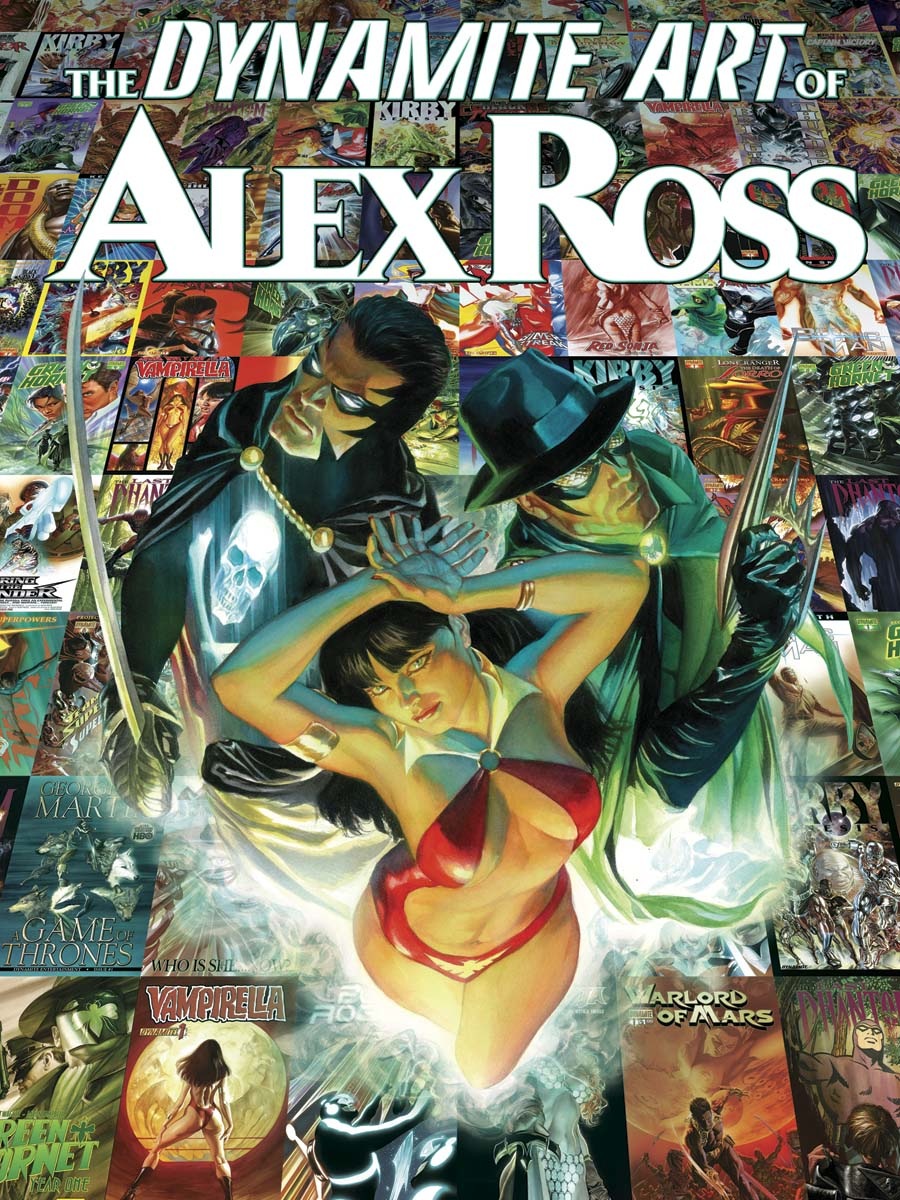
• The Dynamite Art of Alex Ross
• Robert Jordan’s Wheel of Time Complete Series (35 Issues)
Let’s see how big this one gets, shall we?
1 Comments on Dynamite goes Humble Bundle with biggest comics bundle ever, last added: 6/26/2014
Display Comments
Add a Comment
By: Heidi MacDonald,
on 6/18/2014
Blog: PW -The Beat (Login to Add to MyJacketFlap)
JacketFlap tags: Humor, E-publishing, Top News, the devastator, Add a tag
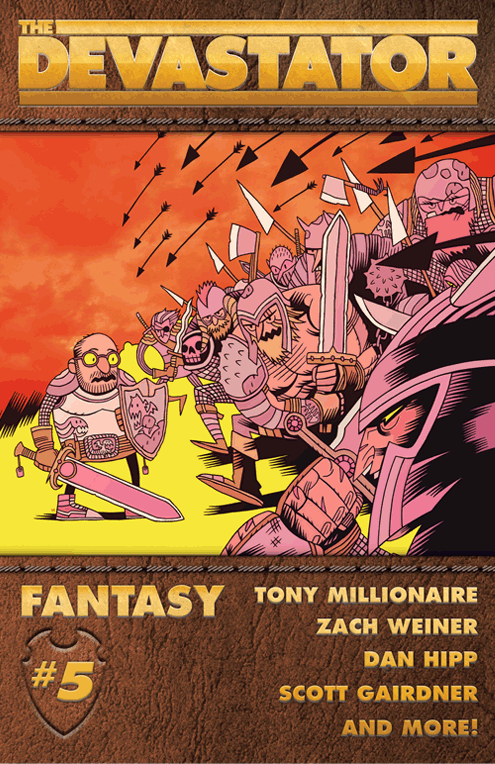
Bundling is now as popular as it was in Colonial times—even if it meant something a bit different then. Anyway, nowadays it means putting together “bundles” of ebooks or videogames and letting you pay one price or even set your own price.*
The Devastator, the sly humorous anthology, has put together a StoryBundle that includes several comics and comics-like elements, including “Fantasy” a Devastator anthology which contains parodies of Game of Thrones, Lord of the Rings, Final Fantasy and more, with contributions from Tony Millionaire, Zach Weiner and a cover by Dan Hipp. On the other side of the flip book is a Dungeons and Dragons takeoff, Wizards of C*ckblock Forest.
Other books available in the bundle, which foes for a suggested $20, include Zack Weinersmith’s Trial of the Clone choose-your-own-adventure game and KC Greens’ Anime Club. So NOW what would you pay for all of this?.
But hurry! Because this sat in my tabs for weeks while my computer wrestled with a memory problem, you have only 10 hours to bundle up!
* In the olden days “bundling” meant the practice of two folks of the opposite sex, usually youngish, “bundling up” in a blanket and “spending quality time together” which may have meant talking or courting or something Twitter would be outraged by. It’s actually the basis of the core metaphor in the graphic novel Blankets by Craig Thompson.
0 Comments on Don’t Miss the Devastator’s Hilarious Story Bundle as of 6/18/2014 11:39:00 PM
Add a Comment
By: Heidi MacDonald,
on 5/31/2014
Blog: PW -The Beat (Login to Add to MyJacketFlap)
JacketFlap tags: Top News, Graphicly, Marc Ellerby, Mike Garley, Small Presses, Comings & Goings, E-publishing, Digital Comics, Add a tag
This week saw digital comic publisher Graphicly announce that they have been acquired by Blurb, a book publisher who will be subsequently folding the comics section of Graphicly. The question, however, is if the move means that the many creators – self-publishers and small-press – who used Graphicly will be paid the money that the company owes them, or if the acquisition effectively ends this avenue for small-press comics.

Note: Graphicly have not yet responded to my requests for comment.
Over the last few years, Graphicly have slowly been shutting down their comic-related operations – you may remember that they used to own iFanboy, but withdrew from the site last year. They have since downplayed their comics work frequently, as their attention seems to have shifted internally from one purpose to another. This week’s news marks a final step away from being involved in comics, as the announcement states that within thirty days they’ll have withdrawn all their comics content.
Publishers have been told by the company that they will be added to a list creditors, and will ultimately be paid off with the money raised from the acquisition. But what’s interesting is that, as far as I’m aware, many creators and small-press publishers haven’t actually been paid by Graphicly at any point in their existence.
Speaking to Marc Ellerby, the writer/artist who also co-founded Great Beast Comics in the UK – which offer books by well-known people like Isabel Greenberg, Robert Ball, Adam Cadwell and Dan Berry - he told me:
I published Ellerbisms with them in January 2013, a few months after the paperback came out. It’s done quite well, reaching #2 in the UK Kindle chart for graphic novels. Despite this, I have never received any payment from Graphicly despite repeated emails of enquiry.
This was backed up by several other sources, including this piece over at Bleeding Cool by Rich Johnston. A common theme amongst writers, artists and publishers on social media was that they had never seen any money from Graphicly. From the piece by Johnson, Dave Dellocese says:
While it wasn’t monumental cash we’re talking about, I will say it’s disappointing. Graphicly’s whole pitch was ‘one fee’ to them for conversions to various platforms and anything you sell is your profit (After fees like iTunes, Nook, etc). While it may not have been mortgage money in our case, there was money spent to do this and the money we earned in return remained in limbo.
The idea of Graphicly was that the people making comics paid a one-off fee to host their comics there, and Graphicly would provide a boost of attention for them – the more places people can find your comics, the more places people have a chance to buy and read your comics. Every sale you then made would go straight to you, without Graphicly skimming anything from the top.
In terms of attention and spotlight, writer Mike Garley told me that publishing on Graphicly had been a success for him:
I published a couple of issue #1s (VS Comics and Dead Roots) through Graphicly in December 2012. The process was problematic as well as being fairly costly from the get-go. I was hoping that the increased exposure would help get my comics in front of more people, and in fairness I was pretty happy to hear how many people picked up copies.
Anybody seeing your comics is good news, but -
BUT – and it’s a big but – I’ve never received ANY money from sales. The analytics were poor and made tracking sales difficult so it was difficult to prove anything and they [Graphicly] were always aloof through email.
With no real way to chase the matter I stopped using their services.
Which mirrors previous statements in the Bleeding Cool article – the system for tracking how many sales you make through Graphicly wasn’t functioning in any kind of coherent fashion for the people tracking them. As a result Graphicly were able to downplay any requests for owed money.
That is, if they responded to you at all – as Ellerby says:
In general, there was zero contact from the company.
With the acquisition from Blurb now taking place, there have been suggestions that Blurb will now use the assets from Graphicly and venture into digital comics themselves – although the company currently denies this, a second Bleeding Cool article (who are being typically strong in their reporting of creators rights issues) suggests that there is more going on than we’re being told.
Regardless of what Blurb may be intending though, let’s focus on Graphicly. The common experience being stated over Twitter and on comment threads responding to the news is that many people who hosted their comics there never saw a penny. Digital comics are a developing industry, and we have companies like ComiXology, Sequential and Madefire trying to establish and grow a market. We’re also seeing initiatives like Thrillbent and Monkeybrain offer small-press writers and artists the chance to hit a bigger market, grow an audience, and find a little funding.
We also seem to be in a time where nobody knows if Graphicly will pay the money they owe to a large number of creators. As Garley now says:
As much as I hate to say it, I doubt that anyone will see any money from them now.
There is every chance that Graphicly will come out in the following weeks and compensate people fairly. There’s every chance they won’t. Please let The Beat know your own experiences with Graphicly, whether they be positive or negative.
14 Comments on Graphicly Folds – Will Creators be Paid What They’re Owed?, last added: 6/3/2014
Display Comments
Add a Comment
By: Heidi MacDonald,
on 3/3/2014
Blog: PW -The Beat (Login to Add to MyJacketFlap)
JacketFlap tags: Interviews, Indies, Dark Horse, E-publishing, Batgirl, Prometheus, Digital Comics, Top News, bruce, Bruce Lidl, Monkeybrain, Bandette, brucelidl, coover, eisner, lidl, tobin, Add a tag
One of the real breakout comics of 2013 was Bandette, from the husband and wife team Colleen Coover and Paul Tobin. A digital comic that is creator-owned and sold by Monkeybrain for only 99¢, the tale of young Parisian cat-thief Bandette and her team of accessories has been a hit both creatively and commercially. Awarded the Eisner Award for best digital comic, while nominated in three other categories, Bandette is a great example of the digital first/print second phenomenon in comics, with the first five issues released in hardback form by Dark Horse last November. Coover and Tobin, both of whom have long and esteemed resumes in comics where very kind to submit to an interview from me, to catch up on how things have gone for them and the title since the big Eisner win at Comic-Con in San Diego.
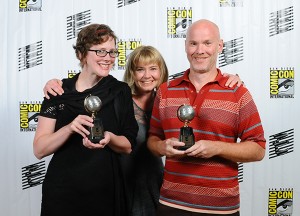
Colleen Coover and Paul Tobin, with Allison Baker of Monkeybrain
BRUCE: I got to speak with you guys in San Diego the day before the Eisners. How did it feel to win for Bandette, and has the award changed how people perceive you and your work? Did it have a noticeable effect on Bandette sales?
PAUL: It felt strange to win an Eisner. There was a moment after the announcement when I just froze in confusion, and then I apparently teleported up onto the stage, and it really wasn’t until I was looking at Colleen that I understood we had won. Luckily, even while still on stage I was able to reflect how wonderful, and how rare, it is to be holding an Eisner in my hands, and watching my wife accept an Eisner as well. And it’s definitely heightened awareness (and sales) of my other works, and of course Bandette itself. It’s just great that of the four nominations, we won the first one announced, because that allowed us to be truly happy for our friends when they won. Our friend Chris Samnee winning best artist over Colleen? No problem, because we already have an Eisner on the table!
COLLEEN: The euphoria really was heady. The only drawback, if it can be called a drawback, is that since winning the award, I’ve felt an added sense of responsibility about making Bandette even more awesome. It’s like, “Okay, you’ve given us this thing and we like it, here’s your reward. Now what else have you got?” I should say that this sort of inner dialog is all part of the necessary balance between swagger and self-doubt every creative professional must have in order to keep motivated.
BRUCE. You guys are such a great example of the digital first-print second phenomenon with the release of the Bandette hardcover in November. How has that experience been? Are you happy with the reception of the hardcover, critically and commercially?
PAUL: Definitely happy. We chose Dark Horse because they’d done such a fantastic job on the Bucko hardcover by our friends Erika Moen and Jeff Parker, and they did an equally great job with Bandette. We wanted to make sure it looked like something that belonged on a shelf, or on display.
COLLEEN: Yeah, also, Dark Horse made it really clear that they wanted to be the print publisher for Bandette, and that they would work with us to make sure that it not only looked great, but came in at an affordable price point. I don’t know what the sales numbers are, but we hear from people every week who have picked up Bandette and love it!
BRUCE. While I’m sure there is no way to know with certainly, but what is your impression of the hardcover purchasers? Are they primarily the same audience as the digital purchasers, but now looking to own a tangible artifact? Or is it a whole new audience that was not interested in the comics as digital purchases?
PAUL: Both. We’ve had plenty of readers contact us and say that they loved the digital comic so much that they were thrilled to have a hardcover, and then there were others who wrote to say how happy they were to have the hardcover, because reading comics digitally either didn’t appeal to them or that they just didn’t have access. I think it was the right way to go for us; it’s not even a “best of both worlds” situation, because it’s “both worlds” straight up.

BRUCE: What have you guys learned from the hardcover experience so far? Is there anything you might do differently next time?
COLLEEN: Fortunately, Dark Horse has so much experience publishing good-looking books, all we had to do was sit back and make approvals. They were even able to accommodate a totally last-minute change I wanted to make to the frontispiece when I suddenly got the idea to put in a “This book belongs to…” bookplate.
PAUL: Really… we were quite happy. Sometimes the best thing to do is to relinquish a bit of control and let things happen. Of course, you can guide the process, and we certainly did that, because it still needs to feel like it’s “yours” at every step of the process.
BRUCE: Top Shelf just announced a program by which purchasers of select print titles can also get the digital version for a heavily discounted price. Is that something you might offer, or would it be too complicated with two different publishers, Monkeybrain and Dark Horse?
PAUL: Individual issues of Bandette are already only 99 cents, so I think that’s pretty cheap!
COLLEEN: And yeah, it would be difficult contractually, since Monkeybrain holds exclusive digital rights and Dark Horse has the print rights. I do think it’s a very good business model to include ebooks with the sale of print titles.
BRUCE: Are there plans for a paperback version? Do you have a longer term plan to release print versions for every 5 individual Bandettes? Are you contracted to return to Dark Horse for future print releases or can you make new partnerships on a book by book basis?
PAUL: We’ve talked about a paperback version, but it’s not something we think it heavily needed. We worked really hard to produce not only a great looking hardcover, but to keep the price VERY low, so it’s a 144 page hardcover for only $14.99, so a paperback isn’t a pressing need. There will be more hardcovers up-coming, but I’m not sure exactly how many issues will be in each one. Storylines will help determine that.
BRUCE: What kinds of things did you specifically do to keep costs down? Do you have advice for other creators looking to convert digital properties to print?
COLLEEN: That’s all secret Dark Horse economic jujitsu at work: Paper stock, book size, number of colors used to print certain pages– every little bit you can save without making it look like you’ve held something back adds up.
BRUCE: The hardcover is beautifully printed, and the colors especially pop out from the page. Has the experience of seeing Bandette in print changed anything in your approach to the digital production? Are you still wedded to the three panel page layout that you’ve done so far with Bandette?
PAUL: We love the three tier approach to comics, at least for this project, because it’s not only handy for digital, but also an homage to the comics we’re emulating to a certain degree… Tintin, for instance. And, it has such a clarity that I think it lends itself well to the stories.
COLLEEN: It ain’t broke, so I’m not looking to fix anything!
BRUCE: I really enjoyed Colleen’s work on Batman ’66. How did it feel to work with Jeff Parker as writer after having done so much work with Paul? Did you enjoy the experience of creating art for the Guided View style of digital comic, as you previously told me it would not work with Bandette? Did it change your mind on that?
PAUL: This question is not about me, and is therefore invalid.
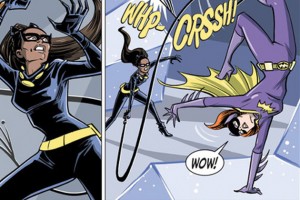
COLLEEN: I’ve worked more with Parker than with anyone other than Paul, back when we were doing stuff for X-Men: First Class, so it was a very familiar place to be. We work together in a totally different way from the way Paul and I work: Paul will present me with a complete script, and then he steps back and I draw it. With Parker, we’ll spend time hanging around in the studio, talking about old comics, and ideas for the story he’s going to write for me come out of that. When Jeff found out he was getting the Batman ’66 job, we spent hours reminiscing about watching the TV show when we were kids in the 70s. A lot of the stories he’s written springboard directly off those conversations.
As for the enhanced view, Jonathan Case, who was the first artist on Batman ’66, and is also in our studio, did a lot of the legwork on figuring out how to make it happen without driving himself crazy, and I picked up some tips from him. For starters, we both drew our stories digitally, so that the little changes that happen in each panel match up precisely. The kicker is that no matter what additional “action” we put in the story for the digital product, there has to be a final printable version that makes sense when they publish the story in the comic. It’s a real storytelling challenge, and it was a ton of fun!
BRUCE: In San Diego you told me that a Pixar version of Bandette would be a dream come true. Have had any more thoughts or approaches to put Bandette in other media? I believe there are Bandette T-shirts for sale, but merchandise could be a way to further monetize your digital property, I imagine?
PAUL: So far we’ve done very little on the merchandising front, mostly because we haven’t had time to set everything up, but we do have some thoughts about Bandette in other media. I guess, for right now, we’re just trying to really get our own feet on the ground and establish Bandette, before we start looking to expand.
COLLEEN: Yeah, I set up some tees and mugs and phone cases on Café Press and on Zazzle, which is about the bare minimum of effort you can make to provide mech. Merchandizing is a lot of work, and requires monetary investment, so we’re going to wait and see what opportunities come up from people who do that sort of thing for a living, rather than try to do it ourselves. I’m still very open to Pixar doing a Bandette film. Or really, any other studio.
BRUCE: I know Paul has the new Prometheus comic scheduled for release in June. I would assume Dark Horse is kind of feeling the heat in regards to licensed properties now that Star Wars is no longer theirs. How has the experience been so far? It must take quite a change of mental pace to go imaginatively from Bandette‘s whimsical Paris to the rather grim planet LV-223! And that is not a cross-over I would want to see! ;)

PAUL: It’s going to be later than June, because we want to match some things up, but… yeah, it’s been a blast. I’m working with three other local writers on the project, each with our own book. There’s me on the lead title, Prometheus, and then Chris Roberson on Aliens, and Josh Williamson on Predator, and Chris Sebela on Aliens vs. Predator. It’s great because we’re all local, and all friends, so we can get together a lot, talk about the project and eat cake. As far as the change of mental pace between projects, I’m really all over as a general rule. I just finished an Adventure Time series, a Plants vs. Zombies project, a whole bunch of writing for Angry Birds, and of course Bandette, and that’s all fairly light-hearted material. At the same time, I’m working on my Colder horror series, and Prometheus, and the Witcher comics for Dark Horse… all much darker. My upcoming novels are much the same: you’ll see some humor titles, and then some darker material. I actually find it easier to work in several areas. It keeps my brain bouncing, moving from one project to the next, so that I don’t grow stale and predictable.
BRUCE: Do you have a philosophy or even rule of thumb that you use to guide what projects you take on, specifically in the realm of balancing personal/independent projects with more commercial properties? Does the success of Bandette allow you more freedom in pursuing your projects?
COLLEEN: Last spring, right as I was finishing up Bandette #5, I had two short projects I had committed to previously come due. Once those were done, I was going to get right back to Bandette, but then the Batman ’66 gig came available. Any other project, I would have turned down, but the Batman TV show was just too big a part of my early life to pass on that opportunity. As a result, there was rather a long wait for Bandette #6. Now, I’m focusing entirely on Bandette. No other projects are being considered.
BRUCE: And one more question, with Bandette #6 out, when can we expect #7? Are you guys hoping to maintain a consistent schedule of issues in 2014? And the Urchin stories have been so fun, with #9 now available from the Monkeybrain site. Any artist names of future Urchin stories you want to tease your readers with?
COLLEEN: Bandette #7 is about a week from being colored and finished now, at the end of February, and then it takes several weeks for Comixology to get it ready to go live. As for our schedule, we will continue to put out issues as quickly as I can draw them!
Urchin artists of the future include but are not limited to: Sheli Hay, Ron Chan, Dylan Meconis, Ron Randall, Cat Farris, Emi Lenox, Steve Lieber, and Juan Ferreyra.
Bruce: Thanks very much!
1 Comments on Bandette’s Coover and Tobin Talk about Digital Comics Going into Print [Interview], last added: 3/5/2014
Display Comments
Add a Comment
By: Heidi MacDonald,
on 3/22/2013
Blog: PW -The Beat (Login to Add to MyJacketFlap)
JacketFlap tags: reading, Webcomics, gadgets, E-publishing, Top News, comcis, Add a tag

by Bruce Lidl
The last few weeks have seen a number of big developments in the digital comics realm, from the highs of Marvel’s big announcements at SXSW to the lows of JManga’s imminent closure. Comixology continues to distance itself from its rivals, and with the new Submit program is poised to expand greatly the revenue possibilities for independent creators. By all accounts the digital slice of the comics industry does remain considerably smaller than its print sibling, and there are many comics fans that steadfastly prefer their floppies, yet little doubt exists that the trend and momentum for growth is strong for digital comics, JManga’s demise notwithstanding.
The crucial undercurrent to ever expanding digital offerings has been, and continues to be, the seemingly unstoppable proliferation of devices capable of displaying digital comics in an effect and compelling manner. And even more specifically, it is the specific recent trends towards ever larger smartphone screens and paradoxically, smaller and cheaper tablets devices.
The tide towards larger, and higher quality, phone displays has been going on for a number of years, but has clearly picked up steam in recent months. Last week saw the announcement of the eagerly awaited Samsung Galaxy S IV, with very nice 5 inch display sporting a 1920×1080 resolution, up from last year’s S III which had a 4.8 inch 1280×720 screen, and rapidly approaching the “phablet” category of Samsung’s popular Galaxy Note II, with its 5.5 inch screen, considered gargantuan not very long ago. The speed at which smartphone screens have grown, particularly on the Android side has been astonishing, especially when you consider the fact that the very first Samsung Galaxy phone from 2009 had a 3.2 in, 480×320 pixel screen, relatively tiny by today’s standards. And of course, even mighty Apple, which had resisted the trend towards larger screens in favor of consistency and compact sizes, finally changed course and released the iPhone 5 last year, bumping the screen from 3.5 inches to 4 inches while maintaining a “Retina” pixel resolution (1136×640). Reading digital comics on a smartphone has gone from a somewhat eccentric notion to a far more mainstream possibility, at least with readers willing to zoom in and out, or let their reading be directed by functions like Comixology’s “Guided View.”
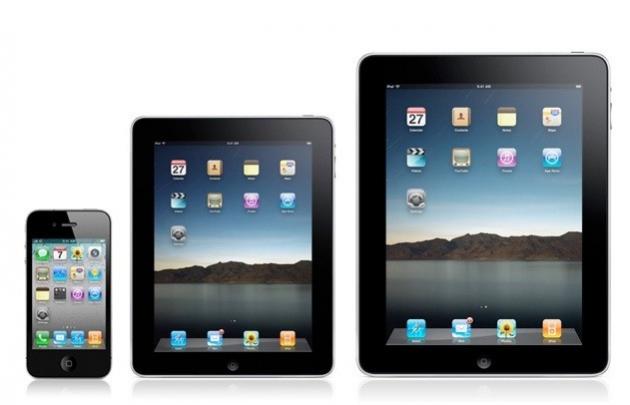
While the increase in smartphone screen sizes is powering more digital comic reading (and hopefully sales!), a trend towards smaller screens on tablets is paradoxically also contributing to expanded digital comic penetration. Apple’s iPad basically invented the category of the tablet, and has dominated sales since its release in April 2010, and continues to be an excellent device for digital comic reading, with a brilliant 9.7 inch screen that has increased in resolution iteratively from the original 1024×768 to the current 2048×1536. However, the recent relative success of Android-based tablets with smaller form factors, primarily in the 7 inch screen range, has demonstrated a hunger among some consumers for smaller and cheaper alternatives to the iPad. Beginning with the original Barnes & Noble Nook Color and then really taking off with Amazon’s Kindle Fire and Google’s own Nexus 7, smaller and less powerful Android tablets at the $199 and below price point have established themselves as real options for customers outside of the Apple orbit. And just as with the iPhone, Apple has not remained unmoved in the face of fierce competition, as shown by the November release of the smaller 7.9 inch 1024×768 iPad Mini. Overall, something like 170 million tablets were sold in 2012, with roughly half coming from Apple, and the rest overwhelmingly split among mostly Android providers (Microsoft’s push into Windows based tablets have struggled mightily, and current analysis puts the number sold at less than 1.5 million units since the October 2012 release). The surge in sales of smaller (less than 8 inch screen size) tablets has exploded in the last few months, with about half of tablets sold in the fourth quarter of 2012 fitting into this category, and driving the adoption of tablets ever higher. Smaller devices and cheaper prices have put tablets into the hands of an ever expanding body of potential comics readers, for while the screens used in the smaller tablets tend to be inferior than those on their larger cousins, they do still present a quite nice package for comic reading. More compact form factors also boost portability, although even the 7 inch tablets won’t fit into many pants pockets.
The boom in demand for smaller and cheaper tablets is expected by industry analysts to continue through 2013, and in fact, the iPad mini is currently even outselling its larger standard iPad sibling, while the rise of popularity in Android offerings will likely lead to that segment overtaking Apple this year.

How has the the shift in device formats affected your digital comics reading habits? Do the new devices encourage you to read more digital comics? Personally, I still read most of my digital comics on my 24 inch desktop monitor, but I do use my relatively large (4.8 inch) smartphone screen more often than in the past, and I like using the “Guided View” option quite with it.
Have you been affected by the JManga shutdown? Do you consider the DRM aspect and the vulnerability of locked-downed purchases a crucial weakness of digital comics? Do you prefer to purchase from Comixology, the publishers’ own sites directly or from online retailers like Amazon? Are you interested in Netflix style offerings of unlimited reading of older titles? Do you acquire comics from unauthorized sources, and does the ease of use of pirated comics versus the restrictions of legitimate content enter into your purchase decisions? Have you been swayed away from physical copies entirely or do you get some titles digitally and some in print?
13 Comments on New Devices and the Digital Comics Landscape, last added: 3/22/2013
Display Comments
Add a Comment
By: Heidi MacDonald,
on 3/6/2013
Blog: PW -The Beat (Login to Add to MyJacketFlap)
JacketFlap tags: E-publishing, Digital Comics, Top News, Add a tag
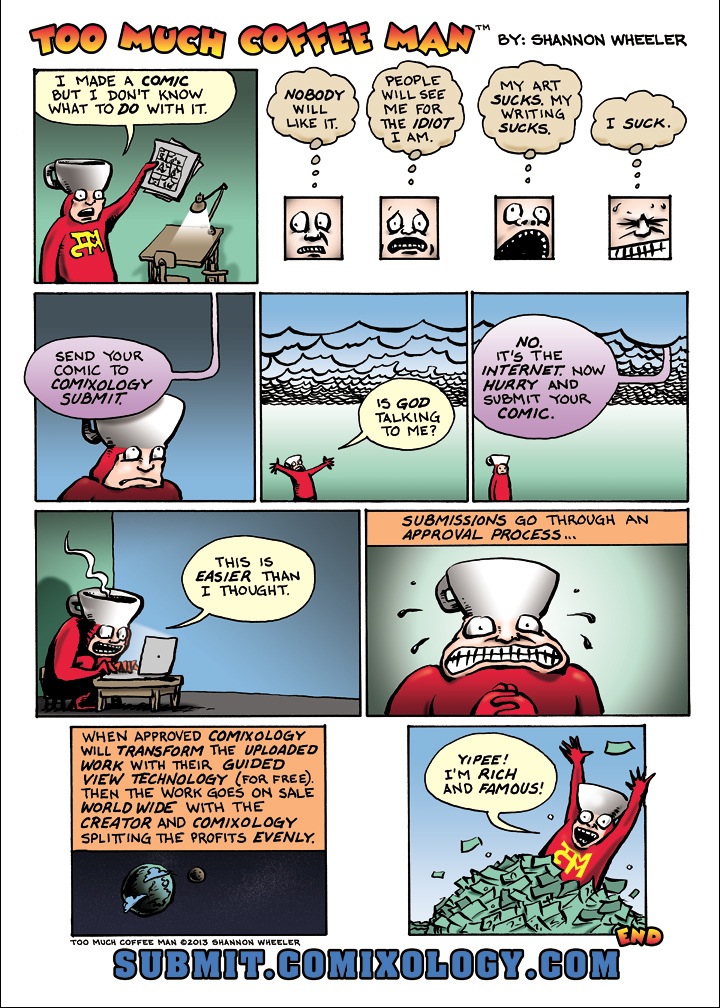
Well, digitally publishing your comic for mobile and tablets just got as easy as an upload. ComiXology has unveiled its Submit portal, which allows creators to upload their comics and have them transformed to comiXology’s Guided View technology for free. Materials submitted must be approved, but once they are available, comiXology and the creators will then share revenue. Pretty simple.
Works by R. Stevens, Becky Cloonan, Jake Parker, and Shannon Wheeler have been rolled out as proof of concept.
More will be revealed at this week’s SXSW, but in the meantime the long-brewing program finally gives creators everywhere access to comiXology’s mobile and web platforms. We can see some moaning about the approval process but that’s only to be expected. Also: discoverability.
In honor of the occasion, Shannon Wheeler drew three cartoons, all of which you can see here.
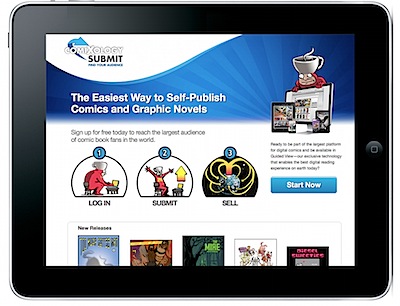
Starting now, independent comic book and graphic novel creators can build a worldwide following and profit from their work. Through a portal called comiXology Submit, from comiXology, the revolutionary digital comics platform, independent creators simply need to upload their comic book and graphic novels for approval at no cost. ComiXology does the rest, from transforming the work with comiXology’s Guided View reading technology, to making it available on comiXology’s buy once, read anywhere digital comics platform, which includes an iTunes top 10-grossing iPad app, iPhone, Android, Kindle Fire and Windows 8 apps, and a web store and reader at www.comixology.com. Creators and comiXology equally split all profits, with creators maintaining full ownership of their work.
ComiXology Submit enables independent comics creators, from promising new talent to established veterans, to reach a global audience of comic book fans for whom comiXology already created the first viable digital marketplace for leading publishers. At the same time, comiXology Submit bolsters comiXology’s commitment to bringing its customers the best and most diverse content available.
Independent creators’ works will be transformed into Guided View, comiXology’s groundbreaking technology that turns reading comics into an immersive, cinematic experience. Works from Shannon Wheeler (“Too Much Coffee Man” cartoons), Jake Parker (“The Antler Boy and Other Stories”), Becky Cloonan (“Wolves,” ”The Mire”), Richard Stevens (“Diesel Sweeties”) and other top independent creators are available today, with many more to follow now that the platform is open.
“While we continue to push ourselves to innovate the digital comic experience, comiXology Submit provides an incredible opportunity for creators to sell their work to a highly targeted and global audience of comic book and graphic novel fans,” said David Steinberger, comiXology co-founder and CEO. “The next generation of creators will reap great benefit alongside more well known creators selling books that are no longer available in print.”
“This is also about making sure we always have the best, most diverse content available, the best reading and buying experience, and at the same time, supporting comic book creators around the globe,” said John D. Roberts, comiXology co-founder.
“ComiXology Submit opens it up for independent comic books artists, creating the chance to digitally publish comics that one can sell everywhere,” said Shannon Wheeler, creator of the critically hailed “Too Much Coffee Man” series and a contributing cartoonist to The New Yorker. “When I created ‘Too Much Coffee Man’ 20 years ago in Austin, I spent many late nights making the stupid comics. Then I spent long days bugging shop owners to sell my stuff. Then I spent minutes losing the invoices, ensuring I never got paid. With comiXology Submit, I could have spent all that time creating my comics and I’d have gotten paid twice as often too.”
More details about comiXology Submit will be unveiled on Saturday at 5:45 PM CST at SXSW Interactive, as comiXology co-founder and CEO Steinberger takes the stage with fellow co-founder Roberts and Wheeler on the SXSW GEEK Stage at the Palmer Auditorium in Austin, TX.
Creators interested in submitting works for approval can visit http://submit.comixology.com. Comic book fans interested in finding works by independent creators now available on comiXology are invited to visit http://www.comixology.com/submit.
15 Comments on ComiXology’s game-changing Submit portal has opened, last added: 3/6/2013
Display Comments
Add a Comment
By: Heidi MacDonald,
on 3/2/2013
Blog: PW -The Beat (Login to Add to MyJacketFlap)
JacketFlap tags: Announcements, E-publishing, Downloadable Comics, Digital Comics, Emerald City Comic Con, Top News, Monkeybrain, Add a tag
A quick update from Emerald City Comic Con, a convention which you can only access by jumping into your nearest hot air balloon and flying directly into a cyclone. Monkeybrain’s Allison Baker is at the convention this weekend, and on Friday announced the immediate release of a new comic from the company, available now on ComiXology – for free. Free comics, you guys! Live the dream.

Called Frost, the comic is written by Brandon Jerwa and Eric S. Trautmann, drawn by Giovanni Timpano, coloured by Andrea Celestini and lettered by Simon Bowland. Here’s the solicitation for the issue:
Meet FROST. His name is spoken in whispers from deep within the American intelligence community–a cypher, a walking secret, and the ultimate weapon against global terror. In the far-flung fields of battle against America’s enemies–a world where those who would protect us from harm must often trade in violence, deception and betrayal–there are those who strike a deadly balance between order and chaos. In this struggle, information and secrecy are as lethal as the gun, and where the ultimate practitioners of the military arts engage the enemy in the shadows…
Free comic, everybody! Available through this link.
0 Comments on ECCC: Monkeybrain Announce Free Comic: Frost as of 3/3/2013 1:50:00 AM
Add a Comment
By: Hannah Hog,
on 5/4/2012
Blog: Hogs Back Books Blog (Login to Add to MyJacketFlap)
JacketFlap tags: Websites, Children's Picture Books, e-publishing, Children's Book Publisher, Add a tag
This week I have been wasting colossal amounts of time on my new toy...

(Note the lovely case, a bargain from the nice people at Lente Designs).
I made the silly mistake of putting lots of stuff on it for the children, which means they are constantly trying to wrestle it away from me. Favourite apps so far include Squeebles, a sort of maths version of Moshi Monsters, which has actually got S eager to practise her times tables. She's also keen on SketchBook Pro and 123D Sculpt, though the latter is way too complicated for me to actually create anything worth saving. But the sketch app is very satisfying, even if, like me, you're very rubbish at drawing...
 |
However, my favourite so far is the Usborne Sticker Dolly Dressing, an app version of those great sticker books - really, I was fighting E for a go on this - and it's a bargain at £2.99, compared to the actual sticker books.

The downside of the iPad, as you will have noted from the amount of apps I have loaded, is how ridiculously easy it is to spend money. Amazon 1-Click and iTunes make buying an item so quick and easy, I almost forget there's real pounds involved.
I also think the iPad is making me a bit, well, jumpy - all that information at my fingertips means I'm skipping from breaking news to tweeted conversations to Facebook without really focusing on any one site. I think once the novelty of exploring apps wears off, I'll be using it more to watch and listen to stuff (for example, check out Khan Academy, which is like carrying round your own university lecture
0 Comments on iPad antics as of 5/4/2012 12:40:00 PM
Add a Comment
By: BookEnds, LLC,
on 7/25/2011
Blog: BookEnds, LLC - A Literary Agency (Login to Add to MyJacketFlap)
JacketFlap tags: e-publishing, self-publishing, Add a tag
It's amazing how much publishing has changed in just the last year and how quickly authors, readers, and publishers are embracing this new world and these new publishing opportunities. As any of you who follow publishing news know, agents are tying themselves to self-epublishing in a variety of ways. Some are making the decision to represent authors who choose to self-epublish at the standard 15% commission, while others have started their own epublishing houses to fill the void between what we're calling "traditional" publishers and self-publishing, and still others have chosen to stay uninvolved and let their clients handle self-publishing on their own. After a lot of thought and work, BookEnds has also come up with a plan for how we will work with self-epublishing and what we want to be able to provide our clients, and it's a little bit of everything.
One of the things I've always said is that there is no universal way to be a great agent. Each client is an individual and each career needs to be approached differently. I feel the same about self-epublishing. In looking at what we could offer our clients, there wasn't one universal path that would fit every client and every need. So after much talk and consideration, BookEnds is taking a variety of approaches to self-epublishing in the hope that we can continue to provide the best opportunities for our clients.
Some of our clients are self-publishing all on their own. We are asking that they keep us informed of their activities so we can use the information they provide (numbers, books they are publishing, etc.) when working with their publishers. In other words, the more informed we are the more we can possibly leverage that self-epublishing success when negotiating contracts or even making new deals. With these clients who have chosen to handle all aspects on their own, we aren't involved in any other way. In other words, we aren't taking a commission and, frankly, we aren't doing any of the work.
We have clients who are working closely with us on their self-published books and using us as agents. For the work we are doing with them we are getting paid a 15% commission. In most of these cases we have worked with the clients on the books prior to the decision to self-epublish and are now continuing that work. The clients cover the costs of conversion, the cover, editing (if necessary), etc., and we manage all the books once they are ready to be loaded to the sites. We also provide revisions and edits for those books that might not have been published before. What this all means is that we work with the clients to market the books, upload them to the retail sites, and we're constantly talking to the clients about how we can leverage their self-epublished books to spark sales on their "traditionally published" books as well as build sales on the self-epublished books.
And last, we have Beyond the Page Publishing, a company we've built with a new and separate epublishing team to work with those clients who have a real interest in self-epublishing, but don't have the desire, inclination, or time to manage the publishing process. In other words, these clients want to test the self-epublishing market, but want the support that a publisher provides. With Beyond the Page, the author submits a manuscript and the publisher provides editorial services, manages the cover design, converts the files, and uploads the books to all sites. In addition, marketing and product management support is provided throughout the process. This could mean updating files to match changes in the author's career, price changes, book teaser changes, or general marketing changes to, again, help push the titles the author is publishing traditionally.
It's such an exciting time in publishing and I think we can all honestly say that we're exploring and experimenting to see what works best for each of us and our business models. Just as authors are testing self-epublishing, agents are testing the possibili
161 Comments on The BookEnds Strategy for Self-EPublishing, last added: 7/28/2011
Display Comments
Add a Comment
By: Freya,
on 3/27/2011
Blog: The Official BookBuzzr Blog (Login to Add to MyJacketFlap)
JacketFlap tags: Authors, e-books, Book Promotion, ebooks, Book Marketing, e-publishing, free e-book, BBMTC, Add a tag
Blog: The Official BookBuzzr Blog (Login to Add to MyJacketFlap)
JacketFlap tags: Authors, e-books, Book Promotion, ebooks, Book Marketing, e-publishing, free e-book, BBMTC, Add a tag
Expert: Carolyn Howard-Johnson
Carolyn’s previous post – Ta Da! E-books are great tools for promotion
The anatomy of a free e-book might be just what you need so you can make one work for you. A free e-book I assembled with several fellow authors was one of best and most long-lasting promotions I’ve done. Let’s call it the new math for free publicity. It is: E-book + E-gift = Promotion. Oops. Error. Make the answer FREE promotion.
An old e-friend thought of this promotion. She asked more than two dozen authors from several countries to contribute to an e-book that would be given away. Cooking by the Book could be used as a gift of appreciation to the support teams it takes to edit and market a book and to the legions of readers who cook but who had never read any of our other books.
Authors who had at least one kitchen scene in her book were invited to contribute to Cooking by the Book. Each author’s segment begins with an excerpt from that scene. The recipe comes next, and then a short blurb about the author.
This e-tool was a cross-pollinator. Each contributing author publicized it any way she chose. Participants were asked to promote it and expected to disseminate it at no charge. Each contributor benefited from the efforts, and the contacts of the other authors. It turned out that we had some superior promoters among us:
- One set up a promotional page for the cookbook on her Web site and most of the other authors followed suit.
- One promoted it in her newsletter.
- Mary Emma Allen writes novels and nonfiction but she’s also featured the cookbook in the columns she writes for New Hampshire dailies The Citizen and The Union Leader.
- David Leonhardt incorporated the cookbook into a Happiness Game Show speech that he delivered over a dozen times in Canada and elsewhere.
- We all gave away coupons offering this gift at book signings. Because it costs nothing, it is a gift that can be given to everyone, not just those who purchase a book. Some had bookmarks made up featuring this offer.
- I did a lot of cheerleading, too. I redesigned yy business cards to a two-sided affair with an “e-gift” offer on the back.
- If we were doing it today, we’d all blog about it and use Twitter, Facebook and other social networks, and YouTube, of course!
- We treated the promotional book like a real book. We got blurbs and reviews. Reviewer JayCe Crawford said, “For a foodie-cum-fiction-freak like me, this cookbook is a dream come true.” That review has popped in places we didn’t even know existed.
- We used them as e-gifts when to thank editors, producers, or others online.
Our most startling successes came from sources we had no connection to at all. The idea for using a promtoinal e-book like this was featured in Joan Stewart’s, The Publicity Hound, in Writer’s Weekly, in the iUniverse newsletter and more. They probably found it especially newsworthy because it worked so well for writers of fiction.
When I queried radio stations for interviews with angles related to this cookbook, I had the highest rate of response I’d ever had and that was in competition with a pitch for This Is the Place just before the 2002 games in Salt Lake City and an intolerance angle on the same n
Add a Comment
By: HAARLSON PHILLIPPS,
on 3/27/2011
Blog: Clueless, ink. (Login to Add to MyJacketFlap)
JacketFlap tags: e-books, e-publishing, e-book distribution, agents' blogs, e-book sales, agents' websites, U.S. literary agents, Add a tag

In the meantime, if you're interested in following developments around ebook distribution and sales then check out the inimitable J.A. Konrath's blog at A Newbie's Guide to Publishing and An E-publisher's Manifesto, the Self-published Authors' Lounge, and, for an interesting UK perspective, Lexi Revellian's blog.
All of which seems a strange introduction to announcing that I've added another 5 links to the U.S. Literary Agents' Websites sidebar and another 5 links to the Literary Agents' Blogs sidebar.
0 Comments on MORE U.S. LITERARY AGENTS as of 3/27/2011 2:00:00 PM
Add a Comment
By: Freya,
on 3/3/2011
Blog: The Official BookBuzzr Blog (Login to Add to MyJacketFlap)
JacketFlap tags: Authors, e-books, Kindle, Book Marketing, e-publishing, BBMTC, kindle publishing, Add a tag
Blog: The Official BookBuzzr Blog (Login to Add to MyJacketFlap)
JacketFlap tags: Authors, e-books, Kindle, Book Marketing, e-publishing, BBMTC, kindle publishing, Add a tag
(diehard DIYers: that’s only somewhat easier)
Guest Expert: Laurel Marshfield
 Several months ago, while paddling around on the Internet’s vast ocean of information, I happened across a convert-your-eBook-to-Kindle video made by a highly caffeinated person. And though his shoutin’-at-ya, rapid-fire presentation style was headache-inducing, I persevered. He promised I’d have my eBook on Amazon THE VERY SAME DAY !!
Problem is, the eBook I had in mind was designed by a professional designer, so it contained lots of design and formatting features, plus floating images. This isn’t the sort of fare that the Kindle likes to consume for breakfast, I soon learned.
My eBook Disaster
My upload to what was then called Amazon’s Digital Text Platform (DTP)
– but has since been renamed the Kindle Direct Publishing (KDP) platform
– looked like an outtake from Picasso’s cubist period. Headers were separated by spatial wastelands. Elements darted senselessly across the digital page. Text started and stopped illogically. In short, it was an eBook disaster.
Kindle eBook Resources
Returning to the scene of the crime — dogpaddling on the Internet — I located an avalanche of resources. From them, I selected just a few (which kept the not so tech-oriented in mind):
• The first is a video by Denise Wakeman of Blog Squad fame, in which she very calmly explains how to upload your eBook on Amazon by first converting it to HTML. Here’s the link: http://bit.ly/h3AyZh
• The second is another video (because when I hear the same thing explained several ways, I get it; explained one way — not as easily). This instructional video by novelist David Lantz shows how he converted his novel — despite its design features — for Amazon and the Kindle: http://bit.ly/hXFF6q
• The third provides the Big Picture View of Amazon eBook publishing. And a workaround. Because, don’t you kinda wonder why the online giant won’t accept eBook authors’ expensively designed PDFs? Here, book coach Kristen Eckstein spills the beans: http://bit.ly/g4S92E
Even so, there are ways, Eckstein says, to circumvent Amazon’s insistence upon doing it their way, or no way. You can upload your PDF to a long list of other online stores — the not-Amazons — where your eBook can be downloaded directly to the Kindles of interested readers.
What I Did About My eBook
However gratifying that workaround, I still wanted to get my eBook on Amazon. So I turned to yet another online resource — a company called eBook Architects. Founded by Joshua Tallent in early 2008, the company’s eBook conversion and coaching services are now in such demand that publishers and authors wait an average (right now, at least) of nearly three months.
That waiting period aside, I asked Tallent if he really could convert my two-
Add a Comment
By: BookEnds, LLC,
on 1/18/2011
Blog: BookEnds, LLC - A Literary Agency (Login to Add to MyJacketFlap)
JacketFlap tags: e-publishing, e-readers, Add a tag
When I talk to members of the publishing community about all the changes that are happening in publishing these days, I think one of the biggest concerns everyone has is for the bookstore. None of us can imagine life without a bookstore. I’ll admit, I love shopping online almost more than the next person. It’s quick, it’s easy, and it fits into my lifestyle. But it’s not shopping. In my opinion, it’s almost impossible to make an amazing discovery online. I can’t just go to the mystery section because that’s what my brother likes to read and discover something fun and exciting that I know he’s never read before.
I do think bookstores will make it, but I think to do so they need to stop fighting each other, stop worrying about their individual electronic devices, and start coming together as a community. In other words, they need to work together. Do you know what I would like?
I would like to be able to go into a bookstore and browse books, admire covers, read the back blurbs, and buy the book in whatever format I have available to me. I would like to be able to browse the bookstore and enjoy the experience. I would like to have a coffee from the coffee shop while I’m doing this and maybe even drop the kids off for a reading hour so I can shop unencumbered.
How will this work? I’m not sure, primarily because you can simply download the book on your own device and the store gets no credit, but it seems there has to be a way for bookstores to get some sort of credit for whatever books are downloaded from their store, even if it’s for a device that’s different from the one they make themselves.
Jessica
16 Comments on My Thoughts on the Brave New World: Bookstores, last added: 1/19/2011
Display Comments
Add a Comment
By: BookEnds, LLC,
on 1/17/2011
Blog: BookEnds, LLC - A Literary Agency (Login to Add to MyJacketFlap)
JacketFlap tags: e-publishing, e-readers, nonfiction, Add a tag
We talked a little last year about “the brave new world” of publishing and how authors can take advantage of self-epublishing, the pros and the cons. I’ve been thinking a lot about epublishing and what it means for the publishing business, and I have a lot of opinions (surprise, surprise) on the topic. Now, I’m not in the know on what publishing execs are planning, but if they are not looking down the line and thinking in new directions, we’re all in a lot of trouble.
One of my thoughts is about nonfiction, specifically self-help nonfiction. You know, things like parenting books, business books, do-it-yourself type of books. In my opinion, these subject areas are going to be some of the hardest hit in the years to come, primarily because authors with platforms might find that they can do it on their own, or keep their audiences better updated through the Internet and their own sources. Seth Godin and his decision to dump his publisher and do it himself is a perfect example of this.
So what do I think publishers need to do to keep updated and what do I think they should do to keep readers happy. It’s really simple if you ask me (or one of my ideas is simple). When a business author comes to you with his amazing new idea, you publish the book as you normally do through normal channels. You issue a print version, an epub version, and any other versions the market can support. And then, when an update occurs, let’s say it’s an update to chapter 10 on tax laws for the small business owner, instead of updating the entire book and selling it again for $9.99 (and incurring all the production costs of doing so), you update only chapter 10 and sell it for $1.99. When buyers of the original book want an update, they can simply buy that chapter, which should (tech guys, pay attention) automatically update and replace the chapter of the book they already have in their ereader.
Let’s use a popular pregnancy book as another example. Every woman buys this book when she first learns she’s pregnant and then uses it with each subsequent pregnancy. But let’s say her pregnancies are five years apart. A lot can change in five years. Sure, the core information is still there, but the book has had some updates, maybe a new edition, but mom-to-be doesn’t feel like shelling out another $9.99 for the book. She’ll just use what she has and read the Internet for the rest. On the other hand, she would consider shelling out $2.99 for an update to the book she’s already using, something that would give her all the new information without costing her nearly as much. Think software update.
Sounds simple in theory anyway, and, if you ask me, it’s a win-win for everyone. Readers will have an easy way to always keep the information in their ereader current, publishers and authors can continually make money on the same book and keep that book current, and it’s a great way to use this new technology in a way that makes sense.
Jessica
14 Comments on My Thoughts on the Brave New World: Nonfiction, last added: 1/18/2011
Display Comments
Add a Comment
By: BookEnds, LLC,
on 11/29/2010
Blog: BookEnds, LLC - A Literary Agency (Login to Add to MyJacketFlap)
JacketFlap tags: business, career, professionalism, contracts, e-publishing, Add a tag
I’m curious about the opinion you and Kim have about the rise in e-books and the rights therein. Is this an issue authors should pay closer attention to, or is it strictly agent territory—or perhaps, is it the responsibility of both parties?
There is nothing in this business that is “strictly agent territory.” As the author and owner of your business (your author brand), it is imperative that you learn about the business and keep yourself apprised of what is going on. When I look at those authors who have truly achieved success, there is one thing all of them have in common, and that’s knowledge of publishing as a business. That doesn’t mean they necessarily understand every clause in a contract (a smart author also surrounds herself with smart people), but she does make an effort to understand the contract as a whole, the rights she’s licensing to others, and what the options are for her career. She works as a team with those smart people she’s hired, which means she has conversations with her agent about the contract and the rights that are being licensed, she discusses design and style with her website designer, and she works hand in hand with her publicist to come up with the next brilliant publicity idea.
So the answer is a resounding: It’s the responsibility of both parties to understand and seek knowledge about not just digital rights, but all rights as they pertain to the book.
Jessica
1 Comments on Strictly Agent Territory, last added: 11/29/2010
Display Comments
Add a Comment
View Next 24 Posts
Folks, if you’re not listening to this podcast, you’re missing a real treat. Heidi is often more candid on the podcast than she is in her writing. So listen in!