


How might you use writing to tap into your personal passions? Are you writing a piece that makes you "ache with caring"? And in a chock-full, busy-every-minute life, how can educators find time for writing that is deeply meaningful, with the lens of replicating this experience for students?
new posts in all blogs
 By: Kathleen Neagle Sokolowski,
on 10/30/2016
By: Kathleen Neagle Sokolowski,
on 10/30/2016
Blog: TWO WRITING TEACHERS (Login to Add to MyJacketFlap)
JacketFlap tags: haiku, photograph, writing workshop, georgia heard, hopes and dreams, LIWP, Add a tag
 By: Mary Lee,
on 5/20/2016
By: Mary Lee,
on 5/20/2016
Blog: A Year of Reading (Login to Add to MyJacketFlap)
JacketFlap tags: Poetry Friday, nature, haiku, Spring, original, Add a tag


By: Mary Lee,
on 12/18/2015
Blog: A Year of Reading (Login to Add to MyJacketFlap)
JacketFlap tags: haiku, original, Add a tag
WEDNESDAY:
THURSDAY:
FRIDAY:
On Tuesday, I was running a little behind, but I managed to write a haiku about writing a haiku while eating a quick breakfast. I decided to use the last line of this haiku as the first line on Wednesday.
 By: Elaine Magliaro,
on 8/21/2015
By: Elaine Magliaro,
on 8/21/2015
Blog: Wild Rose Reader (Login to Add to MyJacketFlap)
JacketFlap tags: Poetry Friday, haiku, Elaine's original poems, Add a tag
.jpg?picon=597) By: Andromeda Jazmon Sibley,
on 8/7/2015
By: Andromeda Jazmon Sibley,
on 8/7/2015
Blog: a wrung sponge (Login to Add to MyJacketFlap)
JacketFlap tags: haiku, Friday Poetry, senryu, Poetry sisters, Add a tag
.jpg?picon=848) By: Sara Lewis Holmes,
on 8/7/2015
By: Sara Lewis Holmes,
on 8/7/2015
Blog: Read Write Believe (Login to Add to MyJacketFlap)
JacketFlap tags: Poetry, Poetry Friday, haiku, Add a tag

I think the same give and take applies to poetry. Which is good, because this month, the Poetry Sisters are playing with haiku/senryu in the form of classified ads. I wrote several because I couldn't help myself.
By: Mary Lee,
on 7/31/2015
Blog: A Year of Reading (Login to Add to MyJacketFlap)
JacketFlap tags: Poetry Friday, haiku, original, Add a tag

I have spent the month of July with Mom, getting her and her home of 60 years ready for her move to assisted living. Besides taking lots of photos, I saved a bit of time each day to take a snapshot in words. Here is a haiku-mosaic of July:
The move
1
the to-do list grows
fills heaping bowls of sadness
tears overflow
11
a childhood filled
with mother's sacrifices
daughter's turn now
21
shelves and shelves of books
multi-storied richness
wealth measured in words
26
going through dresser drawers
layers of memory
the archaeology of a life
two children
visitors at the museum
of their mother
an inveterate archivist
saver of minutiae
savoring each scrap of life
one more time
30
transplanting is tricky
handle roots with loving care
mix old soil with new
Meditations on the cycle of life and my place in it right now
9
midseason lily
surrounded by bud and wilt
enjoy it now
14
leaf breaks free
flutters away from tree
wind brings it back
Being in Eastern Colorado
4
ripening wheat
indiscriminate thunderheads
farmers remain hopeful
7
unseasonably cool
north breeze, low clouds, drizzle
roofer's gun pops
8
typically blue skies
smudged with a grimy haze --
Canada burns
19
antelope grazing --
uncharacteristically
green and lush prairie


Keri has the Poetry Friday roundup this week at Keri Recommends.
By: Mary Lee,
on 7/16/2015
Blog: A Year of Reading (Login to Add to MyJacketFlap)
JacketFlap tags: Poetry Friday, haiku, original, Add a tag

Kimberley has the Poetry Friday roundup this week on Google+.
 By: bookkm,
on 5/26/2015
By: bookkm,
on 5/26/2015
Blog: Books 'n' stories (Login to Add to MyJacketFlap)
JacketFlap tags: Haiku, Add a tag
 By: Emily,
on 5/18/2015
By: Emily,
on 5/18/2015
Blog: Emilyreads (Login to Add to MyJacketFlap)
JacketFlap tags: liked it, great title, graphic novel, adult, nonfiction, haiku, book crush, Add a tag
 By: Carmela Martino and 5 other authors,
on 5/1/2015
By: Carmela Martino and 5 other authors,
on 5/1/2015
Blog: Teaching Authors (Login to Add to MyJacketFlap)
JacketFlap tags: animals, Haiku, National Poetry Month, Poem in Your Pocket, Add a tag
 I’m sorry to see National Poetry Month end. Mine went out with a bang, though, in a wonderful Family Literacy Night celebration at an elementary school in Green Bay, Wisconsin. Happily, the date coincided with Poem in Your Pocket Day.
What fun to see students so excited about poetry! To watch them proudly pull out and unfold their handwritten index cards. To hear them bravely recite their favorite poems.
I was able to narrow my own favorite poems down to eleven—quite an achievement, I think! I brought five copies of each to hand out in case anyone forgot theirs. I’m glad to say that I came home with only three poems and that many of the ones I handed out went to parents. I hope they’ll keep sharing.
On to May! For this Teaching Authors series, we’re writing about animals. Bobbi began with some favorite animal books.
For all of April (National Poetry Month), I wrote a haiku a day. (You can see the April archive on my blog.) I looked back through the poems and found that 13 of the 30 addressed animals, mostly birds. Here in Wisconsin, we see a lot of birds migrating through to summer homes at this time of year, so that seems logical. One thing I loved about the daily haiku practice is that this year, I noticed.
Here’s one more haiku from this morning. I can’t seem to stop!
 The Poetry Friday Roundup is at A Year of Reading, at least for now. Enjoy!
JoAnn Early Macken
 By: Emily,
on 4/29/2015
By: Emily,
on 4/29/2015
Blog: Emilyreads (Login to Add to MyJacketFlap)
JacketFlap tags: fiction, graphic novel, adult, haiku, liked it, been caught stealing, hipster, SFF, Add a tag
 By: JOANNA MARPLE,
on 4/24/2015
By: JOANNA MARPLE,
on 4/24/2015
Blog: Miss Marple's Musings (Login to Add to MyJacketFlap)
JacketFlap tags: Lee wardlaw, Perfect Picture Book Friday, Marcie Colleen, Wont Ton and Chopstick A Cat and Dog tale told in haiku, friendship, pets, cats, dogs, Haiku, Eugene Yelchin, Add a tag
By: Emily,
on 4/24/2015
Blog: Emilyreads (Login to Add to MyJacketFlap)
JacketFlap tags: fiction, young adult, graphic novel, middle grade, haiku, liked it, hipster, certain humiliation, great title, Add a tag
By: Emily,
on 4/22/2015
Blog: Emilyreads (Login to Add to MyJacketFlap)
JacketFlap tags: fiction, young adult, haiku, musical, hipster, certain humiliation, great title, Add a tag
By: Emily,
on 4/20/2015
Blog: Emilyreads (Login to Add to MyJacketFlap)
JacketFlap tags: great title, fiction, young adult, haiku, book crush, loved it, award bait, great jacket, Add a tag
By: Emily,
on 4/17/2015
Blog: Emilyreads (Login to Add to MyJacketFlap)
JacketFlap tags: award bait, great jacket, fiction, middle grade, science, haiku, book crush, loved it, Add a tag
By: Emily,
on 4/14/2015
Blog: Emilyreads (Login to Add to MyJacketFlap)
JacketFlap tags: haiku, apropro of nothing, Add a tag
By: Emily,
on 4/10/2015
Blog: Emilyreads (Login to Add to MyJacketFlap)
JacketFlap tags: lowbrow, liked it, hipster, perhaps I need to calm down, certain humiliation, fiction, middle grade, haiku, Add a tag
By: Emily,
on 4/8/2015
Blog: Emilyreads (Login to Add to MyJacketFlap)
JacketFlap tags: fiction, middle grade, science, haiku, liked it, great jacket, Add a tag
By: Emily,
on 4/6/2015
Blog: Emilyreads (Login to Add to MyJacketFlap)
JacketFlap tags: fiction, young adult, mystery, haiku, book crush, SFF, Add a tag
By: Emily,
on 4/3/2015
Blog: Emilyreads (Login to Add to MyJacketFlap)
JacketFlap tags: dirty parts, liked it, political, great jacket, poetry, fiction, young adult, haiku, Add a tag
By: Emily,
on 4/1/2015
Blog: Emilyreads (Login to Add to MyJacketFlap)
JacketFlap tags: fiction, middle grade, haiku, loved it, medical, award bait, great jacket, Add a tag
View Next 25 Posts
Viewing: Blog Posts Tagged with: haiku, Most Recent at Top [Help]
Results 1 - 25 of 1,109
By: Kathleen Neagle Sokolowski,
on 10/30/2016
Blog: TWO WRITING TEACHERS (Login to Add to MyJacketFlap)
JacketFlap tags: haiku, photograph, writing workshop, georgia heard, hopes and dreams, LIWP, Add a tag
By: Mary Lee,
on 5/20/2016
Blog: A Year of Reading (Login to Add to MyJacketFlap)
JacketFlap tags: Poetry Friday, nature, haiku, Spring, original, Add a tag

Jack in the Pulpit:
unrecognized miracle
pokes up amongst ferns
©Mary Lee Hahn, 2016
How many miracles do we walk by every day, not acknowledging them or perhaps not even recognizing them?
May you go through your day today with wide open eyes. What miracles might you witness?
Margaret has the Poetry Friday roundup this week at Reflections on the Teche.
And if you're curious, here's what the Jack in the Pulpit will look like in a couple of days (photo from last year):

0 Comments on Poetry Friday -- Hidden Miracles as of 5/20/2016 7:08:00 AM
Add a Comment
By: Mary Lee,
on 12/18/2015
Blog: A Year of Reading (Login to Add to MyJacketFlap)
JacketFlap tags: haiku, original, Add a tag
TUESDAY:
 |
| Flickr Creative Commons photo by Flood G. |
thick slice of dark bread
minutes like sugar in tea
pencil scratching page
©Mary Lee Hahn, 2015
pencil scratching page
fish tank burbling endlessly
clock strikes seven
©Mary Lee Hahn, 2015
 |
| Flickr Creative Commons Photo by Jo Christian Oterhals |
clock strikes seven
sleeper doesn't stir
earth keeps rotating
©Mary Lee Hahn, 2015
 |
| Wikipedia |
earth rotates daily
as it floats around the sun
my head is spinning
©Mary Lee Hahn, 2015
On Wednesday morning, I was running a lot behind. It was 7:00am and I hadn't started writing yet, hadn't showered, hadn't packed my lunch. I need to be out the door by 7:45 to be on time for work, so it's a good thing I had the first line of my haiku ready to go.
Thursday morning I was exhausted. I had rolled-cut-baked cookies the night before for hours and hours after an already long day at work. All I could think of was the first morning of break when I wouldn't have to set my alarm. Even though I was tired, I was pretty thrilled to find an image of a clock that really goes with my haiku!
Today, I was able to weave our current studies in science into a haiku that describes both what it's like to be a fifth grader learning about the movements of the earth around the sun (rotation/revolution; day, night, seasons) AND what this week's been like for me. Our heads are all spinning for some reason or another!
Diane has the Poetry Friday roundup at Random Noodling this week.
0 Comments on Poetry Friday: Haiku Tag as of 12/18/2015 5:41:00 AM
Add a Comment
By: Elaine Magliaro,
on 8/21/2015
Blog: Wild Rose Reader (Login to Add to MyJacketFlap)
JacketFlap tags: Poetry Friday, haiku, Elaine's original poems, Add a tag

Sorry that I wasn't able to post last Friday. I have been having major problems with Internet connectivity--even after someone from Comcast came out to fix things. After that, things were fine...for five days. Then last Friday I couldn't connect at all. It appears that we finally have the problem solved--but I'm keeping my fingers crossed!
Last Sunday, I was able to post three back-to-school list poems on my husband's laptop. Click here to read them.
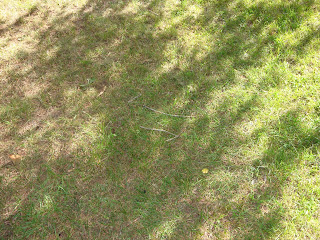
Today, I have a photograph, a thirteen-syllable haiku, and a riddle rhyme for you.

treetops
bathing in sunlight
showering shade below
showering shade below
**********
Beneath the trees
Where I am laid--
A lace of darkness.
I am _ _ _ _ _.
**********
Catherine has the Poetry Friday Roundup at Reading to the Core.
0 Comments on SHADE: Two Short Poems and a Picture as of 8/21/2015 7:50:00 AM
Add a Comment
By: Andromeda Jazmon Sibley,
on 8/7/2015
Blog: a wrung sponge (Login to Add to MyJacketFlap)
JacketFlap tags: haiku, Friday Poetry, senryu, Poetry sisters, Add a tag
Mid-August. When the crickets sing all day in the long grass and the sky invents blue every morning. A lovely time to savor the moments with small bites of haiku, no? That's what I was thinking when we made the proposed schedule for a year of playing with poetic forms, my Poetry Sisters and I. Then someone threw a wrench in it last month, and suggested we try writing haiku in the form of
0 Comments on WANTED: Haiku or Senryu. Must take me there. Mindful reward. as of 1/1/1900
Add a Comment
By: Sara Lewis Holmes,
on 8/7/2015
Blog: Read Write Believe (Login to Add to MyJacketFlap)
JacketFlap tags: Poetry, Poetry Friday, haiku, Add a tag
Once, my son found a "help wanted" ad:
Remove nest of baby copperheads
from under porch. Will pay $20.
I always wondered if anyone was desperate enough to answer. I mean, come on---they're BABY copperheads, right?
That's the thing about classifieds. They suggest (perhaps willfully) that if only you answer them, the full story will be revealed. More likely, the truth is that if you answer the ad, you become part of the story, too.

I think the same give and take applies to poetry. Which is good, because this month, the Poetry Sisters are playing with haiku/senryu in the form of classified ads. I wrote several because I couldn't help myself.
WANTED: rain, heavy
Must pelt/soak; no peevish squalls
Will pay in fresh corn.
LOST: my perspective
No reward; meet me for cake
mountains>molehills>crumbs.
FREE: to a good home:
One book, never read, but loved.
#coverseducedme
POETS: Start today;
word your way up; could capture
moon in fifty years.
----all poems by Sara Lewis Holmes (all rights reserved)
Read my Poetry Sisters efforts here: Liz, Tanita, Tricia, Laura, Kelly, Andi.
Poetry Friday is hosted today by Tabatha at The Opposite of Indifference.
0 Comments on Poetry Friday: ISO Haiku as of 1/1/1900
Add a Comment
By: Mary Lee,
on 7/31/2015
Blog: A Year of Reading (Login to Add to MyJacketFlap)
JacketFlap tags: Poetry Friday, haiku, original, Add a tag

I have spent the month of July with Mom, getting her and her home of 60 years ready for her move to assisted living. Besides taking lots of photos, I saved a bit of time each day to take a snapshot in words. Here is a haiku-mosaic of July:
The move
1
the to-do list grows
fills heaping bowls of sadness
tears overflow
11
a childhood filled
with mother's sacrifices
daughter's turn now
21
shelves and shelves of books
multi-storied richness
wealth measured in words
26
going through dresser drawers
layers of memory
the archaeology of a life
two children
visitors at the museum
of their mother
an inveterate archivist
saver of minutiae
savoring each scrap of life
one more time
30
transplanting is tricky
handle roots with loving care
mix old soil with new
Meditations on the cycle of life and my place in it right now
9
midseason lily
surrounded by bud and wilt
enjoy it now
14
leaf breaks free
flutters away from tree
wind brings it back
Being in Eastern Colorado
4
ripening wheat
indiscriminate thunderheads
farmers remain hopeful
7
unseasonably cool
north breeze, low clouds, drizzle
roofer's gun pops
8
typically blue skies
smudged with a grimy haze --
Canada burns
19
antelope grazing --
uncharacteristically
green and lush prairie


Keri has the Poetry Friday roundup this week at Keri Recommends.
0 Comments on Poetry Friday -- Glimpses of a Journey as of 7/31/2015 5:41:00 AM
Add a Comment
By: Mary Lee,
on 7/16/2015
Blog: A Year of Reading (Login to Add to MyJacketFlap)
JacketFlap tags: Poetry Friday, haiku, original, Add a tag

Kimberley has the Poetry Friday roundup this week on Google+.
0 Comments on Poetry Friday -- Weather as of 7/16/2015 10:46:00 PM
Add a Comment
By: bookkm,
on 5/26/2015
Blog: Books 'n' stories (Login to Add to MyJacketFlap)
JacketFlap tags: Haiku, Add a tag
Tough times when a person's favorite people move away. Sending texts to simply say "We miss you," gets old...to say nothing of annoying. So today, I took another tactic.
"This screen is empty/ no when, no where, no questions/ an expanse of gone."
The reply came line by line. "Memorial day.". " going to the pool soon". "Hope all is well, Mom.". " That's a haiku."
And so it continued. At one point I got this message. "I could do this all day.".
So could I.
Some more haiku texts: " I don't want to walk.". "But D-c- wants to walk there." " So walking it is."
"Not really walking." "Your dad is carrying you." "And he is tired."
My text haiku deteriorated after my first attempt.
I am finished now. My screen is dressed in letters. My heart is at rest.
0 Comments on Text haiku as of 5/26/2015 9:38:00 AM
Add a Comment
By: Emily,
on 5/18/2015
Blog: Emilyreads (Login to Add to MyJacketFlap)
JacketFlap tags: liked it, great title, graphic novel, adult, nonfiction, haiku, book crush, Add a tag
 Lucy takes her grandparents
on the worst/best cruise ever:
Heart-wrenching.
Displacement by Lucy Knisley. Fantagraphics, 2015, 168 pages.
0 Comments on Displacement: Review Haiku as of 5/18/2015 7:57:00 AM
Add a Comment
By: Carmela Martino and 5 other authors,
on 5/1/2015
Blog: Teaching Authors (Login to Add to MyJacketFlap)
JacketFlap tags: animals, Haiku, National Poetry Month, Poem in Your Pocket, Add a tag
What fun to see students so excited about poetry! To watch them proudly pull out and unfold their handwritten index cards. To hear them bravely recite their favorite poems.
I was able to narrow my own favorite poems down to eleven—quite an achievement, I think! I brought five copies of each to hand out in case anyone forgot theirs. I’m glad to say that I came home with only three poems and that many of the ones I handed out went to parents. I hope they’ll keep sharing.
On to May! For this Teaching Authors series, we’re writing about animals. Bobbi began with some favorite animal books.
For all of April (National Poetry Month), I wrote a haiku a day. (You can see the April archive on my blog.) I looked back through the poems and found that 13 of the 30 addressed animals, mostly birds. Here in Wisconsin, we see a lot of birds migrating through to summer homes at this time of year, so that seems logical. One thing I loved about the daily haiku practice is that this year, I noticed.
Here’s one more haiku from this morning. I can’t seem to stop!
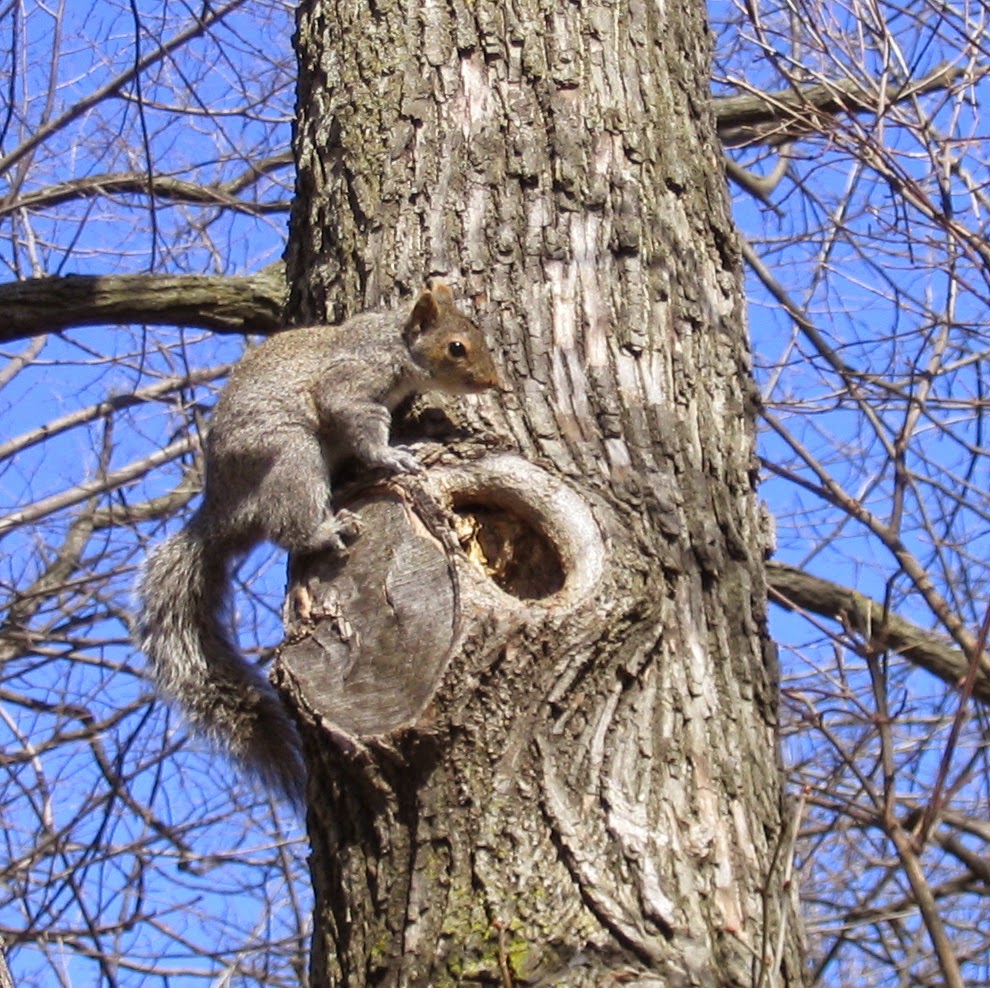
Squirrel winds her way
from limb to limb, encumbered
mouth full of dry leaves
JoAnn Early Macken
0 Comments on Poems, Animals, and Animal Poems as of 5/1/2015 1:31:00 PM
Add a Comment
By: Emily,
on 4/29/2015
Blog: Emilyreads (Login to Add to MyJacketFlap)
JacketFlap tags: fiction, graphic novel, adult, haiku, liked it, been caught stealing, hipster, SFF, Add a tag
 If she could turn back time . . .
she'd probably not tick off
the house spirit.
Seconds by Bryan Lee O'Malley. Ballantine, 2014, 336 pages.
0 Comments on Seconds: Review Haiku as of 4/29/2015 6:55:00 AM
Add a Comment
By: JOANNA MARPLE,
on 4/24/2015
Blog: Miss Marple's Musings (Login to Add to MyJacketFlap)
JacketFlap tags: Lee wardlaw, Perfect Picture Book Friday, Marcie Colleen, Wont Ton and Chopstick A Cat and Dog tale told in haiku, friendship, pets, cats, dogs, Haiku, Eugene Yelchin, Add a tag
Title: Won Ton and Chopstick – A Cat and Dog tale Told in Haiku Written by: Lee Wardlaw Illustrated by: Eugene Yelchin Published by: Henry Holt and Company, LLC, 2015 Themes/Topics: cats, dogs, haiku, pets, friends Suitable for ages: 7-11 Hardcover, 40 pages Opening: It’s … Continue reading
Add a Comment
By: Emily,
on 4/24/2015
Blog: Emilyreads (Login to Add to MyJacketFlap)
JacketFlap tags: fiction, young adult, graphic novel, middle grade, haiku, liked it, hipster, certain humiliation, great title, Add a tag

fight monsters, and set up
for new adventures.
Lumberjanes Vol. 1: Beware the Kitten Holy by Noelle Stevenson, Grace Ellis, and Brooke Allen. BOOM! Box, 2015, 128 pages.
0 Comments on Lumberjanes: Review Haiku as of 4/24/2015 8:07:00 AM
Add a Comment
By: Emily,
on 4/22/2015
Blog: Emilyreads (Login to Add to MyJacketFlap)
JacketFlap tags: fiction, young adult, haiku, musical, hipster, certain humiliation, great title, Add a tag

see someone put this show on
for real. Curtain up!
Hold Me Closer: The Tiny Cooper Story by David Levithan. Dutton, 2015, 208 pages.
0 Comments on Hold Me Closer: Review Haiku as of 4/22/2015 7:07:00 AM
Add a Comment
By: Emily,
on 4/20/2015
Blog: Emilyreads (Login to Add to MyJacketFlap)
JacketFlap tags: great title, fiction, young adult, haiku, book crush, loved it, award bait, great jacket, Add a tag
 Everyone you meet
is fighting a battle you
know nothing about.
Read Between the Lines by Jo Knowles. Candlewick, 2015, 336 pages.
0 Comments on Read Between the Lines: Review Haiku as of 4/20/2015 7:25:00 AM
Add a Comment
By: Emily,
on 4/17/2015
Blog: Emilyreads (Login to Add to MyJacketFlap)
JacketFlap tags: award bait, great jacket, fiction, middle grade, science, haiku, book crush, loved it, Add a tag
 More than your garden-variety
quirky middle-grade.
Trilobites!
Moonpenny Island by Tricia Springstubb. Balzer + Bray. 2015, 304 pages.
0 Comments on Moonpenny Island: Review Haiku as of 4/17/2015 6:19:00 AM
Add a Comment
By: Emily,
on 4/14/2015
Blog: Emilyreads (Login to Add to MyJacketFlap)
JacketFlap tags: haiku, apropro of nothing, Add a tag
Will she ever run
out of books? No way. Out of
energy? Maybe.
0 Comments on Happy blogiversary to me! as of 4/14/2015 6:42:00 AM
Add a Comment
By: Emily,
on 4/10/2015
Blog: Emilyreads (Login to Add to MyJacketFlap)
JacketFlap tags: lowbrow, liked it, hipster, perhaps I need to calm down, certain humiliation, fiction, middle grade, haiku, Add a tag
 This avowed prank-hater
still found these guys kinda
charming. (But trouble.)
The Terrible Two by Jory John and Mac Barnett, illustrated by Kevin Cornell. Abrams, 2015, 224 pages.
0 Comments on The Terrible Two: Review Haiku as of 1/1/1900
Add a Comment
By: Emily,
on 4/8/2015
Blog: Emilyreads (Login to Add to MyJacketFlap)
JacketFlap tags: fiction, middle grade, science, haiku, liked it, great jacket, Add a tag
 A sturdy middle-grade
with wacky characters
and some light magic.
Lucky Strike by Bobbie Pyron. Levine/Scholastic, 2015, 272 pages.
0 Comments on Lucky Strike: Review Haiku as of 4/8/2015 6:03:00 AM
Add a Comment
By: Guest Posts,
on 4/6/2015
Blog: The Children's Book Review (Login to Add to MyJacketFlap)
JacketFlap tags: Writing Resources, Ages 4-8, Picture Books, Cats, Dogs, Haiku, featured, National Poetry Month, Animal Books, Eugene Yelchin, Lee Wardlaw, Poetry & Rhyme, Haiku Books, Haiku For Kids, Writing Haiku, Add a tag
Blog: The Children's Book Review (Login to Add to MyJacketFlap)
JacketFlap tags: Writing Resources, Ages 4-8, Picture Books, Cats, Dogs, Haiku, featured, National Poetry Month, Animal Books, Eugene Yelchin, Lee Wardlaw, Poetry & Rhyme, Haiku Books, Haiku For Kids, Writing Haiku, Add a tag
Lee Wardlaw is the author of 30 books for young readers, including Won Ton: A Cat Tale Told in Haiku, recipient of the Lee Bennett Hopkins Children’s Poetry Award, the Myra Cohn Livingston Award for Poetry, and the Purina/Fancy Feast “Love Story” Award.
Add a Comment
By: Bianca Schulze,
on 4/6/2015
Blog: The Children's Book Review (Login to Add to MyJacketFlap)
JacketFlap tags: Giveaways, Haiku, Book Giveaway, Eugene Yelchin, Lee Wardlaw, Add a tag
Blog: The Children's Book Review (Login to Add to MyJacketFlap)
JacketFlap tags: Giveaways, Haiku, Book Giveaway, Eugene Yelchin, Lee Wardlaw, Add a tag
Enter to win a copy of WON TON–WON TON: A CAT TALE TOLD IN HAIKU and WON TON AND CHOPSTICK: A CAT AND DOG TALE TOLD IN HAIKU, by Lee Wardlaw and illustrated by Eugene Yelchin. Giveaway ends May 5, 2015, at 11:59 P.M. PST.
Add a Comment
By: Emily,
on 4/6/2015
Blog: Emilyreads (Login to Add to MyJacketFlap)
JacketFlap tags: fiction, young adult, mystery, haiku, book crush, SFF, Add a tag
 CRAZY HOT GHOST ACTION!
Or, Why You Might Not Want
to Visit UK.
The Shadow Cabinet (Shades of London #3) by Maureen Johnson. Putnam, 2015, 400 pages.
0 Comments on The Shadow Cabinet: Review Haiku as of 1/1/1900
Add a Comment
By: Emily,
on 4/3/2015
Blog: Emilyreads (Login to Add to MyJacketFlap)
JacketFlap tags: dirty parts, liked it, political, great jacket, poetry, fiction, young adult, haiku, Add a tag
 A little repetitive,yes,
but a powerful
read nonetheless.
Poisoned Apples: Poems for You, My Pretty by Christine Heppernan. Greenwillow, 2014, 128 pages.
0 Comments on Poisoned Apples: Review Haiku as of 1/1/1900
Add a Comment
By: Emily,
on 4/1/2015
Blog: Emilyreads (Login to Add to MyJacketFlap)
JacketFlap tags: fiction, middle grade, haiku, loved it, medical, award bait, great jacket, Add a tag
 Grief in tangible and
intangible forms: a
deft meditation.
The Question of Miracles by Elana K. Arnold. Harcourt, 2015, 240 pages.
0 Comments on The Question of Miracles: Review Haiku as of 4/1/2015 7:47:00 AM
Add a Comment
View Next 25 Posts