new posts in all blogs
Viewing: Blog Posts Tagged with: Publishing Industry, Most Recent at Top [Help]
Results 1 - 25 of 363
How to use this Page
You are viewing the most recent posts tagged with the words: Publishing Industry in the JacketFlap blog reader. What is a tag? Think of a tag as a keyword or category label. Tags can both help you find posts on JacketFlap.com as well as provide an easy way for you to "remember" and classify posts for later recall. Try adding a tag yourself by clicking "Add a tag" below a post's header. Scroll down through the list of Recent Posts in the left column and click on a post title that sounds interesting. You can view all posts from a specific blog by clicking the Blog name in the right column, or you can click a 'More Posts from this Blog' link in any individual post.

By: Yasmin Coonjah,
on 10/13/2016
Blog:
OUPblog
(
Login to Add to MyJacketFlap)
JacketFlap tags:
q&a,
Oxford University Press,
publishing industry,
odnb,
*Featured,
oxford dictionary of national biography,
OUP publicity,
Life at Oxford,
staff q&a,
working at OUP,
Life at Oxford University Press,
global academic,
OUP Publicity Team,
Add a tag
From time to time, we try to give you a glimpse into our offices around the globe. Kate Farquhar-Thomson came to Oxford University Press in 1999 in search of a country life – and found it! Today finds her heading up an almost (apart from the Americas) global PR team for the Oxford University Press's academic division. We sat down with Kate to talk about her publishing career and what it's like to work for OUP.
The post A Q&A with Kate Farquhar-Thomson, Head of publicity appeared first on OUPblog.
To self-publish or traditionally publish. That is the question.
Whether tis nobler in the mind to suffer the slings and arrows of agents and publishers or to take arms against a sea of books on Amazon, and by being among them, rise above? To die, to sleep (oh wait you won't), to sleep perchance to dream of fame and riches... aye there's the rub.
Ahem. Sorry.
So. You have yourself a book. Should you just go ahead and self-publish and see how it does? Should you try your luck with agents and publishers? Should you try agents and publishers first and then self-publish if that doesn't work?
Having traditionally published the
Jacob Wonderbar series and self-published
How to Write a Novel, I've seen both sides of the publishing world.
Which way should you go? Here are seven questions to ask yourself:
1) Is your book a niche/passion project or does it have broad, national appeal?In order to attract a traditional publisher, especially one of the major ones, you're going to need to have a book that fits squarely into an established genre, is of
appropriate length, and has mass commercial appeal.
Be honest with yourself. Is your book something that has broad, national appeal or is a niche? Is it a potential bestseller or something you just wrote to, say, have your family history recorded for posterity?
If it's hyper-specialized you might want to either try for a similarly specialized publisher, or just go ahead and self-publish. And if it's a passion project without commercial potential you're probably best-served going straight to self-publishing.
2) How much control do you want over the publishing process?If you go the traditional route, you'll have an agent who will likely want you to edit your work before submission. You will (hopefully) have a publisher who will want you to revise your work. You won't have approval over your cover, and you'll probably only have mutual consent on your book title, meaning if your publisher doesn't like it you'll have to think of a new one that you both can agree upon. You'll probably have limited control over how and where your book is marketed.
Traditional publishing is a group process and you absolutely cede some control over your book. This can be a good thing, chances are you're dealing with experienced people within the publishing industry who are experts in their fields, but you may be frustrated at times with decisions you don't agree with.
Meanwhile, with self-publishing, everything is up to you. Edits, cover, title, fonts, marketing, whether or not you want to include that stream of conscious sequence about the philosophical implications of of cotton candy... all your choice.
3) How much does the validation of traditional publishing matter to you?The stigma surrounding self-publishing has largely dissipated, but it's not gone entirely.
And there's still something gratifying about doing something as hugely difficult as making it through the traditional publishing process, having your work validated by professionals, and being paid for your efforts. The names Penguin Random House, HarperCollins, Simon & Schuster... they still matter to many people.
Success is success, and in the end it's the readers who are the ultimate validators. Do you want the validation that comes with traditional publishing? Or are you cool going straight to readers?
4) How important is it for your book to be in bookstores and libraries?While you might be able to strike up some individual relationships with local bookstores and libraries as a self-published author, the surest route to bookstores and libraries is through traditional publishers, who have wide distribution.
Do you care about being in bookstores? Are you writing in a genre, like books for children, where libraries are super-important? If so, you might want to pursue traditional publication.
5) How capable are you at self-promotion?There's no guarantee that a publisher is going to adequately promote your book, but they'll at least give you a bit of a boost at bare minimum.
If you self-publish, you're entirely on your own. You don't necessarily have to be a social media maven or a celebrity in order to give your book the boost necessary to generate crucial word of mouth, but
you're going to have to do something.
6) Can you afford to invest money in your book?Say what you will about traditional publishing, but one great thing about it is that it is not very cost prohibitive. You might incur some postage sending your manuscript around or if you
choose to pay an editor before pursuing publication, but agents don't charge you until they get commission for selling your book, and publishers pay
you.
Self-publishing similarly doesn't have to be hugely cost-prohibitive, but there are a lot of tasks involved in self-publishing, such as generating a cover, editing, copyediting, formatting, self-promotion, that you're either going to have to spend the time to do yourself or pay someone to do for you.
Depending on how much time you have to spend and your level of expertise, you may end up spending a thousand dollars or two to effectively self-publish. Can you afford that? (And you shouldn't necessarily assume you're going to get it back).
7) How patient are you?Choosing traditional or self-publishing isn't necessarily an either/or decision. You can absolutely decide to pursue traditional publishing first and fall back on self-publishing if you so desire.
But even in the best case scenario, traditional publishing can take forever. It can take a year or more to query agents, and then a year or more to find an editor when you're on submission to publishers, and then even if you get a book deal it can be a year or two after that before your book comes out. It can very easily add up to two or three years or more
after you finish your manuscript.
Meanwhile, when I finished
How to Write a Novel, it was up for sale a few days later. Self-publishing is practically instantaneous.
Are you the patient type? Do you want to cut to the chase? That can perhaps be the most important factor of all.
How did you decide whether to pursue traditional publishing or self-publishing? Did I miss anything?
Art: Le tour de la France par deux enfants by G. Bruno
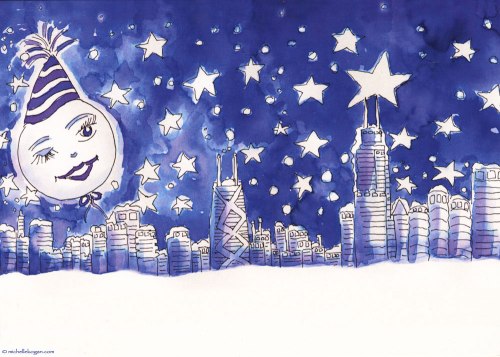
This illustration was sent in by Michelle Kogan to help get us in the festive mood for the New Year. Michelle teaches art, and in the summers spends a good amount of time painting plien air in gardens and nature venues in the Chicago area, including the Chicago Botanic Garden, Lurie Garden in Millennium Park, and the Lincoln Park Conservatory. http://www.michellekogan.com
As reported by Publishers Marketplace: Trade book sales as measured by the AAP turned significantly negative for the first time all year in September, ratifying concerns that the lack of new breakout hits might weigh on consumer traffic and sales during the most important months of the year. Total trade sales of $618 million were down $44 million (or 7 percent), compared to $662 million a year.
Adult sales, which have been soft all year, accounted for all of the decline and then some, down $58.5 million (or 12 percent). Once again, hardcover sales — or weak frontlist — fell the most, down $41.3 million. Children’s and YA sales continued to gain though less so than in previous months, up $15 million (or 9 percent), to $183 million. (Those gains will likely be moderate for the rest of the year, as comparisons will get more difficult versus Veronica Roth’s breakout in late 2013.)
eBook sales also followed their pattern from previous months: Adult ebook revenues were flat at $106 million, as children’s ebook sales gained $3.7 million, to $17 million.
Trade sales are still in positive territory for the year, up 3 percent, though current indications point towards finishing 2014 flat or down slightly.
Here is our cumulative comparison chart for the year so far:
| Month |
Adult Sales |
Change vs. 2013 |
Children’s/YA Sales |
Change vs. 2013 |
eBook Sales |
Change vs. 2013 |
| January |
$362 million |
+$10 million |
$144 million |
+$44 million |
$137 million |
+$15.5 million |
| February |
$325 million |
+$6 million |
$137 million |
+$35 million |
$134 million |
+$6 million |
| March |
$316.5 million |
-$23.5 million |
$133 million |
+$22 million |
$108.5 million |
-$7.5 million |
| April |
$363 million |
-$20 million |
$128 million |
+$24 million |
$138.5 million |
+$19.5 million |
| May |
$371 million |
-$37 million |
$154 million |
+$39 million |
$120 million |
+$3 million |
| June |
$367.5 million |
-$3 million |
$129 million |
+$18.5 million |
$129 million |
+$11 million |
| July |
$367 million |
+$13 million |
$133 million |
+$15 million |
$127 million |
+$6.5 million |
| August |
$415 million |
+$8 million |
$179 million |
+$29 million |
$124.5 million |
+$2.5 million |
| September |
$435 million |
-$58.5 million |
$183 million |
+$15 million |
$123 million |
+$4 million |
Talk tomorrow,
Kathy
Filed under:
list,
Publishing Industry Tagged:
2014 Book Sales,
Adult book Sales Comparison,
Children's and YA Sales growth,
Comparison Book Sales Chart,
Ebook Sales and Growth,
Publishers Marketplace 

 Amazon’s real-time experiment with the livelihoods they have provided to their exclusive self-published KDP authors through Kindle Unlimited (KU) continues to draw concern on online forums. The most recent scrutiny stems from a post by bestselling author Holly (H.M.) Ward on Kindle Boards from the Friday after Thanksgiving, which continues to draw follow-up remarks.
Ward said that her Amazon income dropped substantially when she participated in Kindle Unlimited: “[I] had my serials in it for 60 days and lost approx 75% of my income [from KDP]. Thats counting borrows and bonuses. My sales dropped like a stone. The number of borrows was higher than sales. They didn’t compliment each other, as expected.” She added, “I planned on giving it 90 days, but I have a kid in the hospital for long term care and I noticed my spending was going to exceed my income–by a lot. I couldn’t wait and watch thing plummet further. I pulled my books. That was on Nov 1, & since then my net revenue has gone up. I’m now at 50% of where I was pre-KU. During the time I was in KU, I had 2 new releases. Neither performed vastly different than before. They actually earned far less (including borrows).”
Perhaps more resonant for self-published authors broadly, she wrote, “This model needs to be changed for it to work. Authors shouldn’t be paid lottery style.” (In the current system, Amazon decides, retroactively, how much money to allocate to authors for each KU borrow. The amount paid per borrow has been dropping since the program launched in late July.)
In follow-up comments, Ward added, “That’s why I posted this info. I assumed I was the only one. I thought I was too stupid to make KU work, but both months I was an ‘All Star’ so something just doesn’t work. Plus other heavy hitters starting talking, telling me a similar story. The model itself is flawed….I have 60+ books, lots of new titles, and if I’m at the top of the KU list for the entire 60 days I was enrolled and lost a LOT of money, then something is wrong with the model.” (By our own data, Ward has had 12 works appears on bestseller lists during 2014.) She also indicated the KU experience affected all of her titles at Amazon, even the ones that were not part of the subscription service, “because buyers changed into borrowers, who in turn did not spend money on my other titles.” And “Ditto on audio sales. They’ve vanished.”
A number of other authors joining the forum tell stories similar to Ward’s, though there are also authors who say that KU has increased their net earnings. One common belief is that the current KU economics favor short works — “KU has allowed for shorter works to steal marketshare from longer works, pushing them out of sales rankings, search result rankings, also boughts, top 100 lists, and overall visibility. You think I’m wrong? Go read any of the popular erotica forums, those writers are cleaning up like it’s 2012 again.”
Self Published authors. We need to keep our eyes open for more info on this subject.
Talk tomorrow,
Kathy
Filed under:
need to know,
publishers,
Publishing Industry Tagged:
Amazon Kindle Unlimited,
H. M. Ward,
Self-Publishing 

.jpg?picon=1806)
By:
C.J.Busby,
on 12/5/2014
Blog:
An Awfully Big Blog Adventure
(
Login to Add to MyJacketFlap)
JacketFlap tags:
writing,
art,
Amazon,
Pirates of the Caribbean,
publishing industry,
commercial fiction,
income,
Ursula le Guin,
capitalism,
Add a tag
Like most published writers, I spend much of my time wondering why I'm not paid more than I am. I'm not sure I signed up for this, I think, as I contemplate my meagre royalty cheques. Of course, it's wonderful to have your books out there, but 'out there' is a bit of a vague designation, encompassing as it does a range from the cramming of multiple copies into every branch of Waterstones to the presence of one lonely copy in an independent bookshop in your home town. And if the surveys are to be believed, more of us find ourselves in the latter position than the former.
 Among many blogs and comments on making a living from writing, I found one recently from Emma Darwin which gave me pause for thought. The median income from professional writing - that is, for those who spend the majority of their time writing - is down, according to the ALCS, from £15,450 in 2005 to £11,000 a year in 2013.
That's people who spend the majority of their time writing. Even if they spent only half their working hours writing, that's the equivalent of an annual wage of £22,000, and the likelihood is that they spend less than half not writing, so their annual wage is likely to be nearer £15-20,000. Currently, the UK median wage for full-time workers is £27,000. Advances, as Darwin notes, have steadily fallen over the last ten years, and royalties are squeezed by the sheer number of published and self-published books competing in the marketplace, as well as discounters like Amazon, whose sales result in mere pennies per book for the writer.
So what made it easier to make a living from writing ten or twenty years ago? In trying to fathom out the economics of publishing, I have been haunted by a quote from Andrew Wylie - the jackal of literary agents - who once said that if one of his writers got paid royalties, he hadn't done his job properly. The implication was that he aimed to get such a high advance from the publishers that the book couldn't possibly earn out. Ever.
 What makes that an attractive proposition for publishers? It can surely only be the prestige of publishing a well-known and highly respected literary writer. Well, I imagine the commissioning editor saying as he joins his fellow publishing mates for a drink, we've got the latest Martin Amis. And they all turn green with envy while rapidly increasing their offer to Ian McEwan.
Is that how it works? Or worked?
It implies a goal, for publishers, that is not necessarily that of making a profit. Rather it's something to do with having a part in producing the most respected art. (I leave aside whether you think Amis or McEwan represent the highest pinnacles of writing - but undeniably there are literary critics who would claim this to be so...) Certainly, however inflated the big-names' advances got, there was a willingness to support the middle tier of good but less commercially successful writers that argues a focus on quality writing rather than solely on profit.
At some point in the recent past, Amazon (and perhaps Harper-Collins) changed all that. A recent book (One Click: The Rise of Jeff Bezos) on Amazon had some fascinating things to say about Bezos's attitude to the publishing industry. Basically, as the slick young tech-geeks of Amazon started to investigate publishing they realised that the industry was run by editors, who were primarily interested in the writing and didn't pay a great deal of attention to the money. Art trumped commerce.
 As a consequence, Amazon started to take them down - and lo and behold, ten or fifteen years later, publishers have had to respond. Now, generally, commerce is starting to trump art - something Ursula le Guin has criticised fiercely in this wonderful recent speech at the National Book Awards.
As le Guin points out, "the profit motive is often in conflict with the aims of art", and when profit (sales and marketing) starts to rule what will and will not be published, then literature suffers. But how to counter this? Can what le Guin calls "responsible book publishing" exist any more in an era where market profit appears to have triumphed over every other measure of worth?
I think it still does, in little niches here and there and in the efforts of editors to circumvent sales and marketing and still get great books published. I think there are still stupendous works of art being produced out there. But undeniably this is at the expense of authors, who are holding fast to their principles but being paid less and less for what they do.
So what can we do, as writers, in a society that does not value the art of writing?
We can give up writing - and some of us will simply have to, because we can't pay the bills. Or we can try and play the game, and aim our writing closer and closer to what le Guin calls "the production of a market commodity". Or we can carry on being artists, knowing that what we do, interrogating received truths, challenging people's beliefs, encouraging the imagination, has immense value for many people. But not for enough people to pay us a living wage.
There is, however, another kind of perspective on what is happening in publishing.
 Some would dispute that the sort of distinction between art and commerce that le Guin posits is valid. Notions of art, in this view, are not universal, they are culture-bound and generally elitist. The upper strata supports 'art' that it enjoys and appreciates (opera) while denigrating commercial art (soap opera), yet commercial art exists precisely because it is the favoured art of the majority. Thus it would be fundamentally wrong and undemocratic to claim elite art as somehow of greater worth or value. From this perspective the actions of sales and marketing teams who refuse to cross-subsidise experimental or literary fiction with the profits from mass-market romance are fundamentally democratic. Money is the arbiter of worth. "Currency", as Lord Cutler Beckett says in the second Pirates of the Caribbean film, "is the currency of the realm."
It's an argument with merits. For the French sociologist Bourdieu, the upper echelons prefer 'high' to 'low' art because of the way class acts as a 'learned' practice, rather than because of any universally valid aesthetics. There is certainly something very elitist about the state subsidising opera when 90% of the population would consider it nothing but caterwauling in costumes. Equally, should the government fund grants for small touring theatre companies whose audiences are in their hundreds?
The debate is not dissimilar to the one we recently had on ABBA about children's reading. Is it right to censure children for reading commercial pap, to see the mere act of reading as not in itself enough, or is this elitist? Should we instead respect the idea that many children prefer undemanding commercial fiction and that it has as great a worth as more carefully crafted children's books? In the money world of Amazon, popular commercial books clearly have inherently greater worth than that those that sell less well, regardless of any judgements of the quality of the writing.
Well, to continue the
Pirates of the Caribbean theme, let me nail my colours to the mast.
I believe some writing has more merit than others. Writing as art aims to interrogate the status quo, to provoke questions, to encourage readers to think about the world they live in. It draws on carefully honed craft and on a deep and wide imagination. I believe the more people that are encouraged to read or have access to this kind of writing, the better for society as a whole. I believe commercial considerations do not always favour writing as art, because it is often challenging, unsettling, difficult and it takes time to get right - but it changes readers, and inspires them, and once they 'get' it they will seek out more of that kind of art in all areas. They will be more questioning in their daily lives, more open, more imaginative, and they are more likely to challenge received wisdoms. This is a good thing.
Let me just make it clear though - when I say writing as art, I am not upholding the 'high'/'low' art distinction, which would see le Guin's science fiction/fantasy novels as a poor second to literary fiction. I am not condemning you all to reading Kafka or Joyce! (Excellent as both authors are). What I would consider 'art' in writing is intelligent, thoughtful, honed writing, aiming to be the best it can be, whether that's the best sort of comic book story or the best fantasy or the best romance. Writing that aims to make its readers engage completely in the world it presents and hence inevitably reflect on the world they live in. Malorie Blackman's
Noughts and Crosses is a good example; but also less overtly political books that just give free reign to the imagination - Philip Reeve's
Mortal Engines, or Diana Wynne Jones's
Hexwood. Luckily, in children's fiction there are some great examples that are both commercially successful
and works of art - but it's still the case that the rewards for that great writing are not as high as they were.
So, in the end, maybe we writers have to accept that we are not going to be top earners under the conditions of global financial capitalism. But we can contribute to sowing the seeds of imagination, thoughtfulness, empathy and a questioning intelligence in our readers that will hopefully one day contribute to undermining the dominance of that economic system.
As le Guin points out in her speech, market-driven capitalism seems triumphant and unassailable. But so did the Divine Right of Kings, once.
Cecilia Busby writes humorous fantasy for children of 7 upwards. Her latest book,
Dragon Amber, was published in September by Templar.
www.cjbusby.co.uk@ceciliabusby"Great fun - made me chortle!" (Diana Wynne Jones on
Frogspell)
"A rift-hoping romp with great wit, charm and pace" (Frances Hardinge on
Deep Amber)

By: Kathy Temean,
on 11/20/2014
Blog:
Writing and Illustrating
(
Login to Add to MyJacketFlap)
JacketFlap tags:
Agent,
Author,
Book,
inspiration,
Publishing Industry,
Kudos,
children writing,
2014 Goodreads Best Book Voting,
Children's YA drives Book Industry Sales,
LKG Literary,
Veronica Rossi's Under the Never Sky,
Add a tag
CALL FOR HOLIDAY ILLUSTRATIONS – Needs to be at least 500 pixels wide. Send to Kathy.temean (at) gmail.com.
I forgot to give you the date for when I will announce the two book give-a-ways from my post on November 14th. I will announce the two winners on Thanksgiving. Good news! You still can leave a comment on that post for your chance to win up until Wednesday at 6pm EST.
Authors: Did you know that I am repeating what we did with the Halloween Poems? Please send in your Thanksgiving Poems and I will post them on November 26th and the public will vote for their favorite. The winner will receive a chit for a future post about them and or a book they have coming out.
 The first book of the UNDER THE NEVER SKY trilogy by Veronica Rossi price has dropped to only $1.99 for the Kindle version on Amazon.
From a New York Times bestselling author comes a dystopian masterpiece called “inspired, offbeat, and mesmerizing” (Kirkus Reviews). Though from different worlds, Aria and Perry must depend on one another for survival. “You won’t be able to put this book down” (Seventeen).
Great Buy! One of my favorite trilogies, BTW. Here is the link on Amazon.
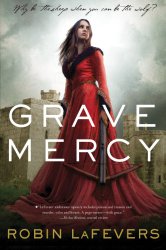
Grave Mercy: His Fair Assassin, Book I (His Fair Assassin Trilogy 1) by Robin LaFevers is $1.99 on the Kindle.
From a New York Times bestselling author comes an Amazon Best Book of the Month with over 300 five-star reviews. In medieval Europe, Ismae discovers her destiny as a handmaiden to Death. But can she kill the man she loves? “A page-turner — with grace” (Kirkus Reviews).
VOTE NOW FOR THIS YEARS GOODREADS 2014 BEST BOOKS:
From Publisher’s Lunch:
Children’s/YA Sales Drive Sales Again In August
The AAP released their monthly Stat Shot statistics from approximately 1,200 reporting publishers for August, with sales remaining true to the pattern from all of 2014: Strong children’s/YA sales — in all formats — continue to carry the trade, accounting for all of the gains and then some, as new release adult hardcovers (and thus companion ebooks) remain lackluster.
For August itself, adult sales of $415 million did rise slightly from $408 million a year ago, and children’s/YA sales of $170 million were up from $141 million last August. Adult hardcover sales were down again, though, and have been weak all year (down 7.2 percent for the first 8 months of 2014); adult ebook sales for August were $107 million, down 2 percent from $109 million a year ago. Adult ebook sales for the year are barely below flat, at $853 million.
Remember that the AAP is measuring net shipments to and from accounts, not consumer sell-through (except for ebooks); so the August numbers reflect stores bringing in inventory to prepare for the big holiday season — but the lack of adult breakout titles may show itself in monthly numbers later this year and early into 2015. Informally, publishing and retail executives have expressed concern over the past month or two over the lack of new, breakout hits pulling consumers’ attention in advance of those holiday sales.
But the smaller children’s/YA market tells a different story. Registering their best month so far in a strong year (children’s sales are up $225 million, or more than 20 percent), August children’s sales were $170 million. Children’s ebook sales gained $5 million, rising to $17.9 million, still leaving total ebook sales of $124.6 up slightly from $122 million a year ago. eBooks accounted for 21 percent of August’s sales.
At Little, Brown Children’s, Alvina Ling has been promoted to vp, editor-in-chief, overseeing the publishing program (excluding licensing). Pam Gruber moves up to senior editor; and Allison Moore is now associate editor.

Last Friday, Wendy McLeod MacKnight was signed by the LKG Literary Agency in New York City for her children’s chapter book! Woo-hoo!
Check back next week for November’s First Page Critiques by agent Alex Slater from Trident Media Group.
Talk tomorrow,
Kathy
Filed under:
Agent,
Author,
Book,
children writing,
inspiration,
Kudos,
Publishing Industry Tagged:
2014 Goodreads Best Book Voting,
Children's YA drives Book Industry Sales,
LKG Literary,
Veronica Rossi's Under the Never Sky 


Roxanne Smolen
Ever think about self-publishing a book using CreateSpace? Maybe you have hesitated because you were nervous about the expertise needed to digitally format the manuscript to look professional. Well, Roxanne Smolen has worked through the process, wrote up the step-by-step process below, and is willing to share it with you.
Here is Roxanne:
I think of myself as an Indie author, although I’m actually a hybrid. I have seven books published by a small publisher. Those books can be found in every book selling venue possible. But honestly, almost all my sales are through Amazon. I started thinking, why sell through a publisher and give them a healthy cut when I can make more money by doing it myself?
So I began self-publishing. I published two middle-grade books that I wrote with my young granddaughters (under the name R.A.P. Smolen), four writer’s advice books that I wrote with seven other authors (under the name of C. S. Writers), a science fiction novel that I wrote about a woman who literally goes to hell (Satan’s Mirror), and the first three novels of my current book series (The Amazing Wolf Boy).
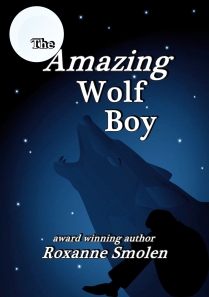 The Amazing Wolf Boy is a humorous paranormal romance for young adults about a sixteen-year-old nerd who turns into a werewolf during Christmas Eve dinner. His parents banish him to Florida (That’s where I live. What a coincidence.) where he fails to fit in with the other kids. You can buy book one here.
I’m pretty proud of the book, not only because I wrote it but because I published it. Self-publishing does not carry the stigma it once did. If you are thinking about publishing your own book, my biggest piece of advice is to proofread and edit carefully. It’s so easy to publish a book nowadays authors are putting their work out there with all sorts of errors. You don’t want to be that guy.
The best thing, of course, is to hire an editor. But good editors are expensive, and many of us can’t afford such an investment. If you plan to do it yourself, I have a tip for you—change your font. Just for the editing process. Make it something a little difficult to read, like Broadway or Impact. Something to make you focus. Your brain doesn’t always read what your eyes see; it reads what you thought you wrote. That’s why we can read over a sentence with a misspelled or missing word twenty-five times and not pick it up. If you change your font, your brain will think it’s reading something new and it will pay attention.
 I would also advise you to take care with your book formatting. Readers don’t have the patience to read text with large gaps or ragged indents. On that note, I have written a tutorial.
How to Format Your Book for CreateSpace
I get a lot of formatting questions, so I thought I’d put it all down in one place. If you find it useful, let me know.
Note: I use Word 2010. Your version of Word might look a bit different, but it should be similar enough for you to figure out.
And now, without further ado, here is how I format a book for CreateSpace.
Ready, Set, Go
- Open your Word .doc
- Set the margins. Go to PAGE LAYOUT –> MARGINS –> CUSTOM MARGINS.
- Under the Margin Tab, make the top 1″, the bottom 1″, the inside .9″, and the outside .6″.
- Orientation should be Portrait.
- Multiple Pages should be changed to Mirror Margins. That’s it for the Margin Tab. Don’t close the box yet.
- Then under the Paper Tab, change the Paper Size to the size of the book you are planning to publish. I like my books to be 8″ by 5″ so I change:
- Width to 5″
- Height to 8″. Then click OK to close the box.
- SELECT ALL (it’s over in the top right-hand corner.) Delete all tabs by using REPLACE (also in the top right-hand corner.)
- Go to the Replace Tab
- Click More
- Click Special
- Click Tab Character
- Leave REPLACE WITH blank
- Click REPLACE ALL
- SELECT ALL
- Click the corner box next to Paragraph.
- Under Indentation, go to SPECIAL
- Select FIRST LINE
- Under BY type .25
- SELECT ALL
- Change line spacing to 1.5
- Click both REMOVE SPACE BEFORE and REMOVE SPACE AFTER so both read ADD.
- SELECT ALL
- Change your font and font size. I usually use Georgia 12pt.
- SELECT ALL
- Justify your margins. Yes! Don’t argue with me.
- SELECT ALL
- Under PAGE LAYOUT, click Hyphenation and Automatic.
- SELECT ALL. Make sure you don’t have any double spaces after punctuation. (This is for all us older authors because we were taught that in high school.)
- Go to the Replace Tab
- Under FIND WHAT, hit the spacebar twice
- Under REPLACE WITH, hit it once
- Click REPLACE ALL
- Make sure the end of every chapter/short story has a new page character.
- Go to PAGE LAYOUT –> BREAKS
- Under Section Breaks, click NEXT PAGE (One caveat to this is if you are publishing a book of short stories. You want each story to start on the right-hand side, right? Or some people want each chapter to start on the right. In that case you would click ODD PAGE.)
- There should be no page numbers, headers, or footers on blank pages.
Front Matter Matters
In order:
- TITLE PAGE
- Use a larger font and make it bold.
- Type your book title about halfway down the page.
- Type your name at the bottom. (This should give you plenty of room to sign at book signings.)
- End the page. (PAGE LAYOUT –> BREAKS –> NEXT PAGE)
- COPYRIGHT PAGE
- Type in your Copyright Notice.
- Example: This is a work of fiction. The characters and events described herein are imaginary and are not intended to refer to specific places or to living persons alive or dead. All rights reserved. No part of this publication may be reproduced, distributed, or transmitted in any form or by any means, including photocopying, recording, or other electronic or mechanical methods without the prior written permission of the publisher except for brief quotations embodied in critical reviews.
- Copyright © (date) by (your name)
- ISBN (Type in the number provided by CreateSpace.)
- You can also add your publishers name, state, website, and logo if you have started your own company.
- End the page. (PAGE LAYOUT –> BREAKS –> NEXT PAGE)
- DEDICATION PAGE
- This is optional. If you are dedicating your book to a loved one or an organization, type it here.
- End the page. (PAGE LAYOUT –> BREAKS –> NEXT PAGE)
- TABLE OF CONTENTS
- You should have a table of contents to list each chapter or short story.
- Go to REFERENCE and click Table of Contents.
- End the page. (PAGE LAYOUT –> BREAKS –> NEXT PAGE)
- NOTES
- If necessary, add a blank page at this point (PAGE LAYOUT –> BREAKS –> NEXT PAGE) so that the first page of your story starts on the right-hand side.
- There should be no page numbers, headers, or footers on the FRONT MATTER (or the back matter either for that matter.)
Back Matter Matters Too
- Add a page for Your Author’s Bio, headshot (I mean a photo, not an actual… although if you’re writing horror and you’re good with make-up…) website, and email address.
- End the page. (PAGE LAYOUT –> BREAKS –> NEXT PAGE)
- Add another page for a list of your previous works and where to buy them.
- End the page. (PAGE LAYOUT –> BREAKS –> NEXT PAGE)
- If you are writing a series, you can put an excerpt of an upcoming book here.
- Remember, there should be no page numbers, headers, or footers on the front or back matter unless you want to use Roman Numerals.
About Your Headers and Footers
- Go to the first page of your story. (Story, not Front Matter.)
- Click INSERT.
- Click HEADER.
- Choose your Header Style. (I usually use Blank.)
- Type the name of your book. (I recommend using a smaller font.)
- Highlight what you just typed and Right align it. (On the Home Tab.)
- Under HEADER & FOOTER TOOLS click ODD & EVEN PAGES.
- Make sure LINK TO PREVIOUS is not selected.
- Now go to the second page of your story.
- Click the Header and type your name.
- Highlight what you typed and Left align it.
- You should now have your Title on the right and your Name on the left on alternating pages.
- Check to be sure the header hasn’t shown up on your Front Matter.
- If it has, delete it and de-select LINK TO PREVIOUS on each page.
- Go back to the first page of your story.
- On the left-hand side of the HEADER & FOOTER TOOLBAR, you will see Page Number. Click it.
- Choose Bottom Of The Page.
- Choose your style. I use Plain Number 2.
- Note: You will have to do this twice—once for the right-hand (odd) side and once for the left-hand (even) side.
- Note: You may have to format the page numbers to get them to run consecutively. To do that, click Page Number again and scroll down to Format Page Number.

Kill the Widows and Orphans
Widow
- A paragraph-ending line that falls at the beginning of the following page/column, thus separated from the rest of the text.
Orphan
- A paragraph-opening line that appears by itself at the bottom of a page/column.
- A word, part of a word, or very short line that appears by itself at the end of a paragraph. Orphans result in too much white space between paragraphs or at the bottom of a page.
Word kills your widows and orphans by default, but the result makes a ragged bottom margin. I’m one of those persnickety people who feel that when you open a book, the bottom margin on both pages should match up. So I kill them manually.
- Click the corner box on PARAGRAPH.
- Click the LINE AND PAGE BREAKS Tab.
- Uncheck Widow/Orphan Control.
- Go through each page of your 500 page book and look for Widows and Orphans, adding or deleting words until the page looks right.
And Another Thing…
The first paragraph of each chapter and after a drop should be flush left, meaning don’t indent. Also, the first letter of the first word of that paragraph should be fancied up. I’m sure you’ve all seen the first letter in a different font with scroll work, etc. The problem is that it messes with the line spacing of the paragraph. The only work-around I know is to insert a picture of the necessary letter in the desired fancy font and then have the text wrap it so there is no problem with the spacing. But that is a lot of work for little gain. I just bold the first letter and leave it in the same font as the rest of the paragraph.
Easy Peasy
When all looks good, you need to save the book as a PDF. Word can do this for you.
FILE –> SAVE AS –> PDF
Now you are ready to upload the .pdf to CreateSpace.
See? It’s as easy as 1, 2, 3… 4, 5, 6… Oh, you get the picture.
Thank you Roxanne for sharing this process with everyone. I know this will help a lot of writers, if not now, later. I am sure they will want to save this for future use. Here is the link to visit Roxanne’s blog: http://www.moonrox.wordpress.com/
Talk soon,
Kathy
Filed under:
Book,
demystify,
How to,
Process,
Publishing Industry,
reference Tagged:
CreateSpace,
Formatting your book 

By: Kathy Temean,
on 11/8/2014
Blog:
Writing and Illustrating
(
Login to Add to MyJacketFlap)
JacketFlap tags:
Editors,
authors and illustrators,
Publishing Industry,
opportunity,
children writing,
Matt de la Pena,
need to know,
Agent and Editor Critiques,
Private Dinner in NYC Jacqueline Woodson,
SCBWI Discounted Registrations,
We Nee Diverse Books,
Agent,
Events,
Add a tag
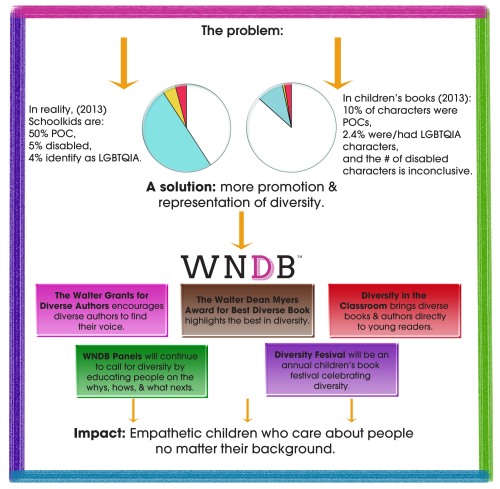
You can help make a difference by making a donation.
There are lots of things you can receive by contributing to the cause. Example: AGENT critiques and EDITOR critiques from editors at Big 5 publishing houses.
An unforgettable opportunity to have a private dinner in NYC with incredible bestselling & award-winning authors Jacqueline Woodson AND Matt de la Peña
Coming soon – a limited number of discounted registrations for Fans of SCBWI – including a VIP critique at their annual LA conference in 2015! Many thanks to Lin Oliver, Sara Rutenberg and Kim Turrisi for offering this. Can’t wait to see how quickly they go!
Here’s the link to the WNDB campaign: http://igg.me/at/diversebooks Maybe even find something you could give as a holiday gift with your donation.
Talk tomorrow,
Kathy
Filed under:
Agent,
authors and illustrators,
children writing,
Editors,
Events,
need to know,
opportunity,
Publishing Industry Tagged:
Agent and Editor Critiques,
Matt de la Pena,
Private Dinner in NYC Jacqueline Woodson,
SCBWI Discounted Registrations,
We Nee Diverse Books 

By: Kathy Temean,
on 10/19/2014
Blog:
Writing and Illustrating
(
Login to Add to MyJacketFlap)
JacketFlap tags:
publishers,
authors and illustrators,
Publishing Industry,
Royalties,
opportunity,
need to know,
Book Contracts,
Places to sumit,
Acquiring new and established authors,
Digital Publishing Company,
Polis Books,
Add a tag

Polis Books is an independent digital publishing company actively seeking new and established authors for our growing list. We are currently acquiring titles in the following genres. Submissions in the following genres should be to [email protected].
We are currently acquiring:
• Mystery
• Thriller
• Suspense
• Procedural
• Traditional crime (i.e. ‘cozies’)
• Science Fiction
• Fantasy
• Horror
• Supernatural
• Urban Fantasy
• Romance
• Erotica
• Commercial Women’s Fiction
• New Adult
• Young Adult
• Humor/Essays
We are not currently acquiring:
• Children’s Picture books
• Graphic novels
• Short stories or stand-alone novellas
• Religion
Submission Requirements:
• Query Letter
• Three Sample Chapters
• Author Biography (include information about personal blogs, Twitter handle, or other social media outlets you feel we should be aware of)
Query letter and sample chapters should be emailed as attachments (not in body of email) to:
[email protected]
They will reply requesting more information on a submission-by-submission basis.
They give a small advance and 40% royalties.
Talk tomorrow,
Kathy
Filed under:
authors and illustrators,
Book Contracts,
need to know,
opportunity,
Places to sumit,
publishers,
Publishing Industry,
Royalties Tagged:
Acquiring new and established authors,
Digital Publishing Company,
Polis Books 

By: Kathy Temean,
on 10/19/2014
Blog:
Writing and Illustrating
(
Login to Add to MyJacketFlap)
JacketFlap tags:
publishers,
authors and illustrators,
Publishing Industry,
Royalties,
opportunity,
need to know,
Book Contracts,
Places to sumit,
Acquiring new and established authors,
Digital Publishing Company,
Polis Books,
Add a tag
Polis Books is an independent digital publishing company actively seeking new and established authors for our growing list. We are currently acquiring titles in the following genres. Submissions in the following genres should be to [email protected].
We are currently acquiring:
• Mystery
• Thriller
• Suspense
• Procedural
• Traditional crime (i.e. ‘cozies’)
• Science Fiction
• Fantasy
• Horror
• Supernatural
• Urban Fantasy
• Romance
• Erotica
• Commercial Women’s Fiction
• New Adult
• Young Adult
• Humor/Essays
We are not currently acquiring:
• Children’s Picture books
• Graphic novels
• Short stories or stand-alone novellas
• Religion
Submission Requirements:
• Query Letter
• Three Sample Chapters
• Author Biography (include information about personal blogs, Twitter handle, or other social media outlets you feel we should be aware of)
Query letter and sample chapters should be emailed as attachments (not in body of email) to:
[email protected]
They will reply requesting more information on a submission-by-submission basis.
They give a small advance and 40% royalties.
Talk tomorrow,
Kathy
Filed under:
authors and illustrators,
Book Contracts,
need to know,
opportunity,
Places to sumit,
publishers,
Publishing Industry,
Royalties Tagged:
Acquiring new and established authors,
Digital Publishing Company,
Polis Books 
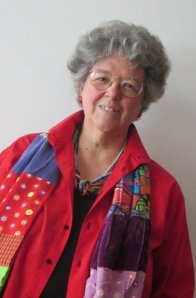
Author/Illustrator Suzanne Bloom
Hello future (traditionally) published picture book authors. As promised, I have author/illustrator Suzanne Bloom back this week to help me help you along your path to publication. If you are an aspiring picture book author, you may feel as if you will never be published. I know, I’ve felt the same way. And as a new picture book author (yes, I still consider myself new because even though I have been writing for nine years, I just signed my first contract last year and my book is not yet out), I wonder if I will ever publish another. So I understand your frustration. You may be wondering if there’s something you could be doing to move you further along. I wonder what Suzanne thinks? Let’s find out.
Suzanne, what could an aspiring picture book author (or illustrator) do to help them break in?
Are you attending conferences or workshops? This is a good way to meet authors, illustrators, editors, art directors, and agents. There may be an opportunity to have a manuscript or portfolio reviewed. Do you have a critique group? Have you thought about trying a different genre, or submitting to children’s magazines? Have you visited the book store and studied the current crop of picture books, chapter books or novels to see what is being published now?
Great advice! And I would add that there are a lot of fairly recent books on writing, illustrating, and publishing children’s books that offer tons of useful information. Check your local library. Also, I recommend joining professional organizations such as the Society of Children’s Book Writers and Illustrators (SCBWI) and the CBI Clubhouse. And don’t forget the Children’s Writer’s & Illustrator’s Market book. It contains helpful articles, as well as listings of publishers, agents, contests, conferences, and more.
Suzanne, how long should an aspiring picture book author (or illustrator) keep trying before they throw in the towel?
How many towels do you have? It was 10 years between my second and third book. I would drive by a fast food restaurant with a NOW HIRING sign out front and wonder if that was meant for me. A sensible person would have sought gainful employment; with benefits and a retirement plan. I opted to become a visiting author instead. I found a balance between the solitude of the studio and the lively exchange of ideas with young students. Many suggestions from grade-schoolers have shown up in my illustrations, like the volcano and the snake in My Special Day at Third Street School by Eve Bunting. I decided that if I couldn’t make a living writing, I could make a living talking about writing.
And in between talking about writing, Suzanne kept on writing and submitting and writing some more. And I’m so glad she never “came to her senses” because now there are nearly twenty fabulous picture books with her name on them, and I’m positive she hasn’t thrown in her last towel yet. So don’t give up, aspiring authors. You can be published too! It just takes time, patience, and following good advice from those who have been in your shoes.
Come back next week when I ask Suzanne how she handles rejection letters and harsh critiques.
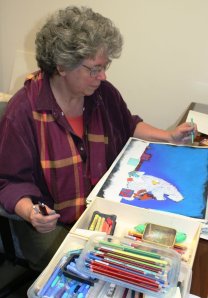
{Suzanne Bloom At Work In Her Studio}
Suzanne Bloom was born mid-century in Portland, Oregon, which accounts for her love of overcast days. She moved to Queens, New York in time to finish kindergarten. Her first book We Keep a Pig in the Parlor was published in 1988. She has authored and illustrated many more books since then including The Bus for Us (2000) and the popular Goose & Bear series, which includes A Splendid Friend Indeed, Treasure, What About Bear, Oh! What A Surprise!, Fox Forgets, and her latest, Alone Together. She has been given a Theodor Seuss Geisel Honor Award and has been selected for the Texas 2×2 list of 20 best picture books (twice). She currently lives in upstate, New York with her husband in the house they built 34 years ago, down a dirt road and on a hillside. She has two grown sons, one cat, and one dog. To learn more about Suzanne, please read the interview I did with her back in 2010, or check out her website: www.suzannebloom.com.


Author/Illustrator Suzanne Bloom
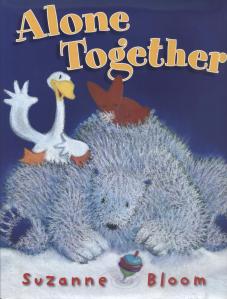
One thing I really love to do here at Frog on a Blog is help other picture book writers, especially those who are new or aspiring authors. That’s why I’ve enlisted one of my favorite authors and illustrators (and friend), Suzanne Bloom, to help me offer words of encouragement and wisdom to all of you who may be feeling discouraged. We’ll hear from Suzanne in a moment. First, allow me to tell you a bit of my own publishing story.
After eight years of trying, I was finally offered a contract last year for one of my picture book stories, and I have a second story soon to be published in digital format. Depending upon how you look at it, you are either thinking Wow, that was a really long time or Hey, that’s great. Both thoughts are technically right. But believe me when I tell you that those eight years of waiting and hoping, and collecting rejection letters, were also discouraging. I considered giving up many times. I questioned my writing ability and even my worthiness to be published. But I didn’t quit because I love writing picture book stories and my dream was to be published. And now, I am so glad I didn’t give up.
And I don’t want you to give up either. That’s why, once a week for the next seven weeks, I will pose questions to Suzanne about how to handle rejection, how to combat writer’s block, how to keep from getting discouraged, and more. My hope is that you will find encouragement to continue on your own personal path to picture book publication.
I will post the first question next week. Now, let’s hear from Suzanne:
139 words, 300 words. So few words. How do you make them count? How do you make us care about a character? It may be that all the ideas have been used, but not all the stories have been told. Borne of your observation and experience, what will you bring to the page?
Whether we are wordless or wordy, scribbling or sketching, we face similar challenges and frustrations. My own creative process feels like dancing with a phantom, in the dark. I’m not sure where it will lead but I’ve decided to trust and follow. My stories are small, but their emotional truth is big.
Thank you, Suzanne! I can’t wait to hear more from you!
Suzanne Bloom was born mid-century in Portland, Oregon, which accounts for her love of overcast days. She moved to Queens, New York in time to finish kindergarten. Her first book We Keep a Pig in the Parlor was published in 1988. She has authored and illustrated many more books since then including The Bus for Us (2000) and the popular Goose & Bear series, which includes A Splendid Friend Indeed, Treasure, What About Bear, Oh What A Surprise, Fox Forgets, and her latest, Alone Together. She has been given a Theodor Seuss Geisel Honor Award and has been selected for the Texas 2×2 list of 20 best picture books (twice). She currently lives in upstate, New York with her husband in the house they built 34 years ago, down a dirt road and on a hillside. She has two grown sons, one cat, and one dog. To learn more about Suzanne, please read the interview I did with her back in 2010, or check out her website: www.suzannebloom.com.


By: Kathy Temean,
on 9/27/2014
Blog:
Writing and Illustrating
(
Login to Add to MyJacketFlap)
JacketFlap tags:
reference,
publishers,
ebooks,
Publishing Industry,
opportunity,
Book Contracts,
Places to sumit,
Digital New Adult Deals,
e-publishers to check out,
New Adult Publishers,
Add a tag
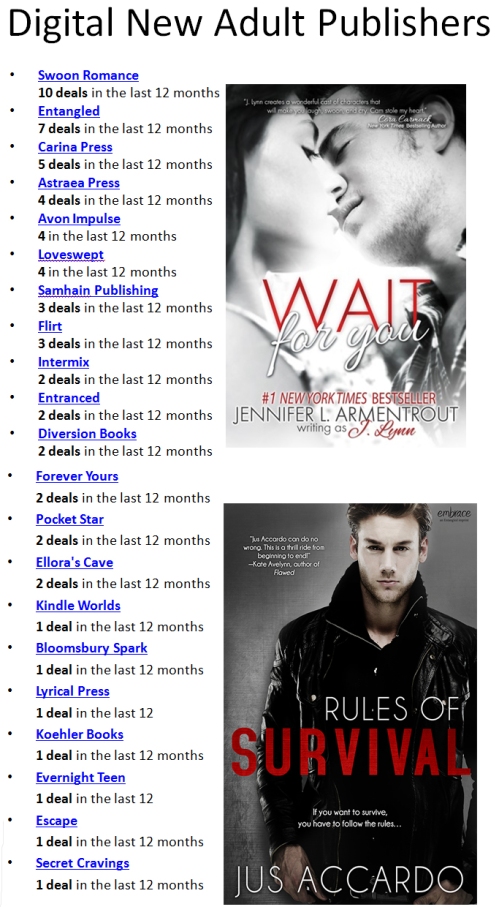
PLEASE NOTE: The deals listed are only the deals reported to Publishers Marketplace between June 2013 and June 2014. Not all deals are reported.
Talk tomorrow,
Kathy
Filed under:
Book Contracts,
opportunity,
Places to sumit,
publishers,
Publishing Industry,
reference Tagged:
Digital New Adult Deals,
e-publishers to check out,
ebooks,
New Adult Publishers 

By: Kathy Temean,
on 9/19/2014
Blog:
Writing and Illustrating
(
Login to Add to MyJacketFlap)
JacketFlap tags:
Interview,
picture books,
inspiration,
illustrating,
authors and illustrators,
Publishing Industry,
demystify,
Illustrator's Saturday,
1st Prize (Category Children's Book) at the 'Marosvásárhely Book Fair Award,
30th edition of the exhibition 'Le immagini della fantasia',
Applied Art in Budapest,
Sarolta Szulyovszky,
Add a tag
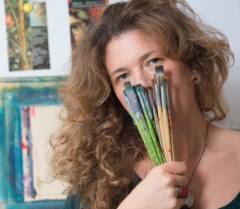 Sarolta Szulyovszky was born and grew up in Budapest (Hungary), she studied Applied Art, after which she moved to Italy. Since 2004 she start activity in the field of graphics and illustration working in a graphic design studio in Udine (Italy). Now she lives and works as a freelance illustrator and graphic designer in a little city in northern Italy: San Daniele del Friuli.
She works for children’ s books, magazines, cover books, Brochure Design and Packaging Design.
Sarolta works both traditionally in acrylics, pencil and digitally.
In 2012 her work has been selected for the ‘Annual Illustratori Italiani 2012′ (Society of Italian Illustrators) and for the 30th edition of the exhibition ‘Le immagini della fantasia’ (Sàrmede, Italy) – 60 illustrators from all over the world.
2011 – selected for the 23rd Biennial of Illustrations Bratislava.
In 2010 she won the 1st Prize (Category Children’s Book) at the ‘Marosvásárhely Book Fair Award (Romania).
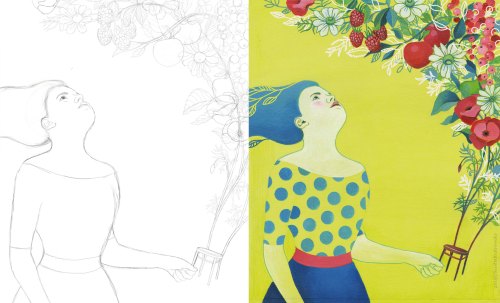
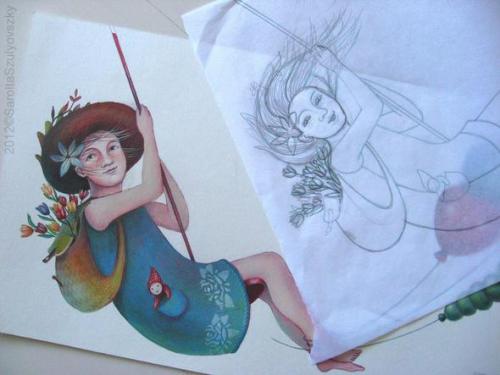
Draft drawn in Photoshop, and the final illustration for a magazine. The commission was to illustrate the month of July. (Image: Progress_1)
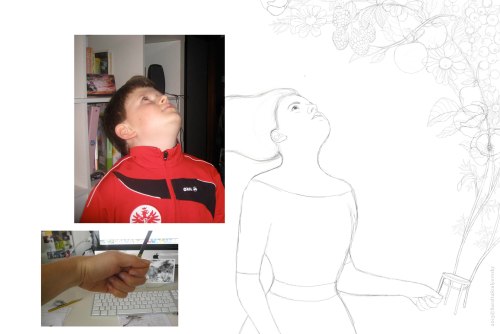
I needed a model to draw the woman so I photographed my son for the face and my hand for the hand!
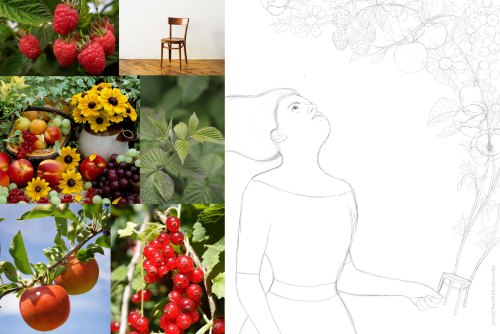
I found the fruit and vegetables on the internet.
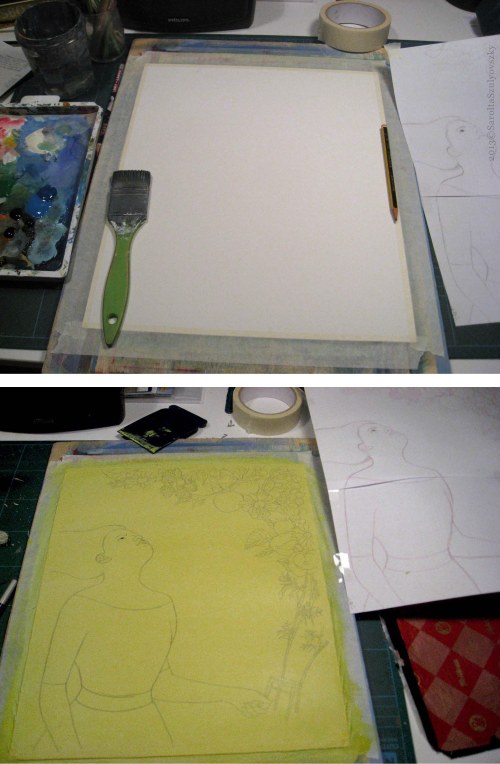
After sketching out the draft, I prepare an acrylic base for the background colour and, with carbon paper, I transfer the draft I have printed onto the base I have prepared. (Image: Progress_4)
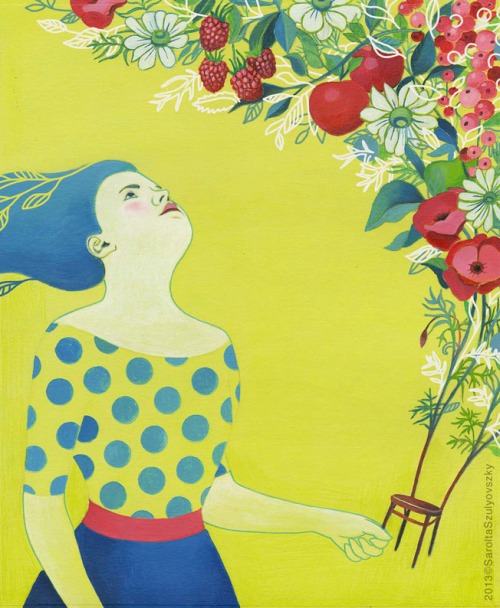
Here is the final illustration entirely painted with acrylics.
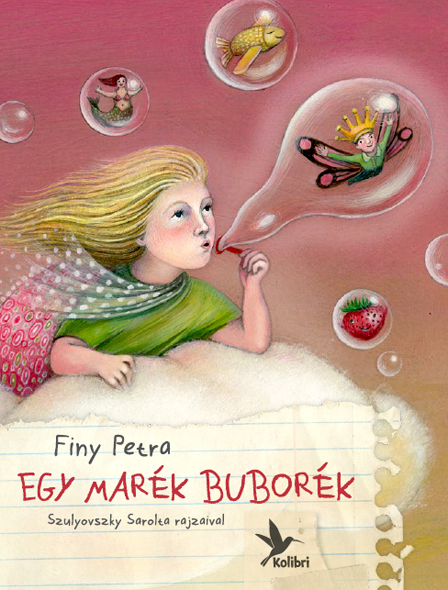
Book Covers
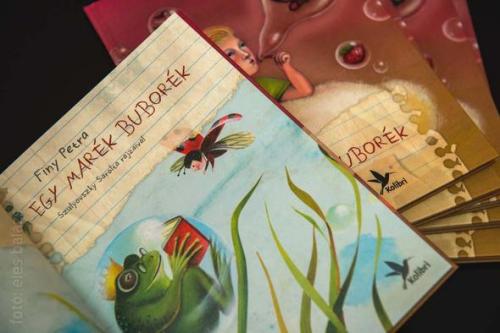
Book Covers
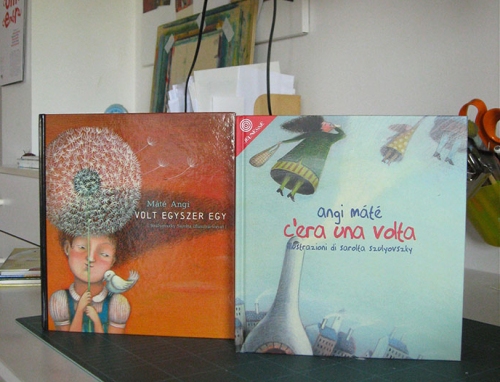
How long have you been illustrating?
I began to illustrate children’s books 11 years ago. My first publication (2003) was a drawing for an anthology of world fables published in Italy, but I have only thought of myself as an illustrator since I began to devote myself entirely to this work in 2009.
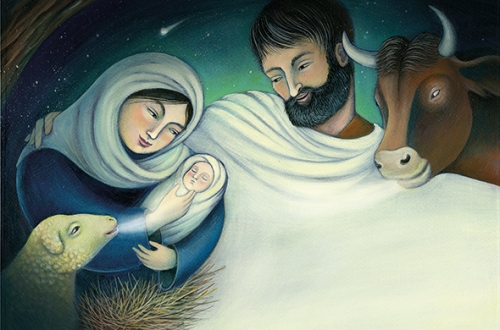
Did you go to college to study graphic design?
I began to study drawing at the age of 14, attending evening classes while I was studying at a science academy school in Budapest (Hungary). My dream was always to become a designer, so once I graduated from high school, I attended a textile design college and another college to study interior decoration, then went to the university “Nyugat-magyarországi Egyetem” on a Packaging Design course, but I never imagined that one day I would be illustrating books! I became involved in the world of children’s books illustration in Italy where I attended courses on advertising graphics and editorial illustration.
What were you favorite classes?
At university, I really liked design and drawing from life, especially portraits.
How did you decide to move from Hungary to Italy?
I moved to Italy not for work but for love. I met my husband in Budapest and, after we got married in 1997, I came with him to Italy.
Do you feel the illustrating opportunities are better in Italy?
I don’t think Italy offers more opportunities for work in the field of illustration compared to Hungary or other European countries. Italy is currently undergoing a severe social, cultural and economic crisis and illustrators (and anyone who works in the cultural sphere in general) is often considered an amateur, and not a professional, and so they are paid little or nothing. However, I do think that Italy is an excellent place to study illustration: it is a country that boasts 50% of the world’s cultural and artistic heritage, a very stimulating environment for an artist, and there are excellent schools specializing in illustration.
It is very true that “no-one is a prophet in his own land” and so the first publications I had in Italy were due to the fact I was a foreigner: they were looking for foreign artists for multicultural editorial projects. After that, I was published in my home country and in other states.
What was the first art related work that you were paid?
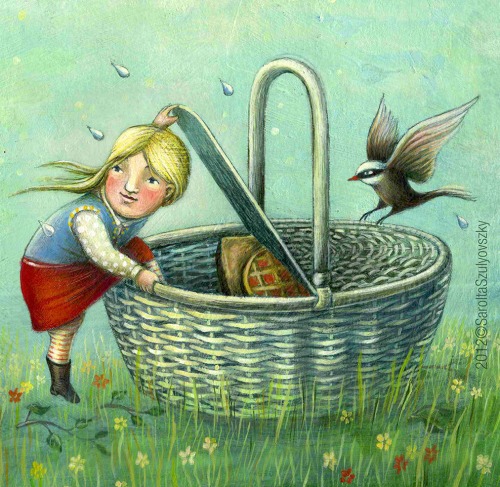
The first paid work was for the illustration of a children’s book translated into Italian from Hungarian, “Ha én felnőtt volnék” (If I were big) by Eva Janikovszky, published by L’Omino Rosso Editore, a small publisher in the region where I live. The book is a major classic in Hungary, a very entertaining story that I illustrated using digital techniques (Adobe Illustrator), which did not turn out to be my style.
What do you think influenced you style?
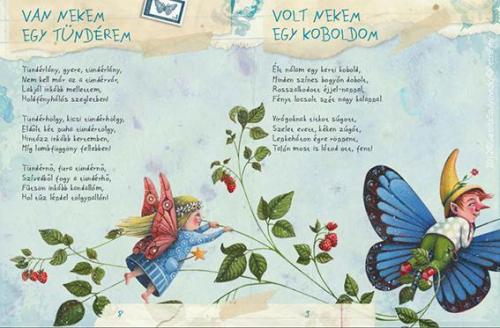
I think my style has been influenced by many things: the popular Hungarian art passed on to me by my grandmother, who taught me embroidery, the late Renaissance painters in the Fine Arts Museum in Budapest, where I acted as tourist guide when I was a student and, of course, many contemporary illustrators that I discovered in books, exhibitions and on the web (Gianni De Conno, Gabriel Pacheco, Alice Wellinger, Pierre Mornet……. the list would be very long!).
What type of work did you do right after you graduated?
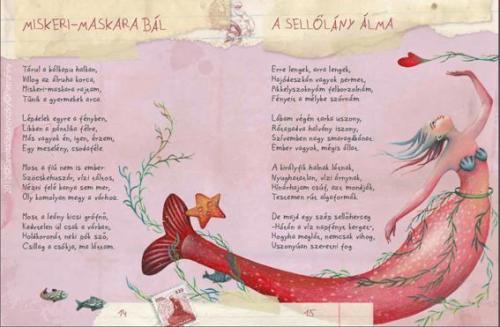
After university, I gave birth to my two children and for 6 years I concentrated on being a mother….. although it was during that period that I discovered illustrated children’s books!
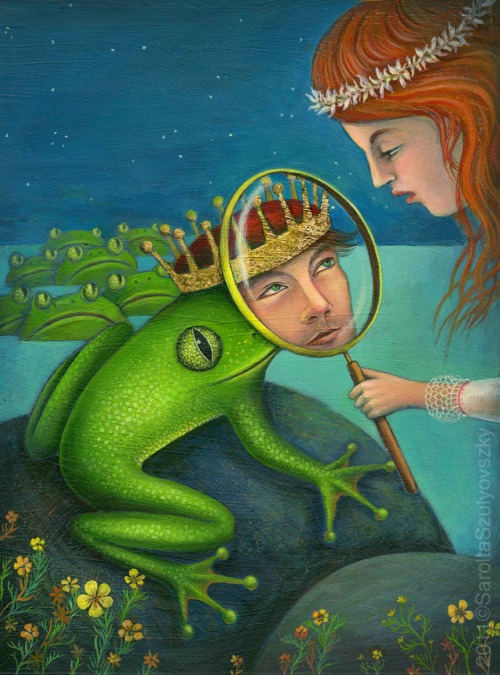
How did you connect with the Wilkinson Studios? When did you join them?
I came across Wilkinson Studios in 2011 thanks to an illustrator friend of mine who was already working for them. I sent them my portfolio and they immediately gave me a job. The client was very pleased with the illustration and so we continued to collaborate and they included me among the artists they represent. It was a great honour for me.
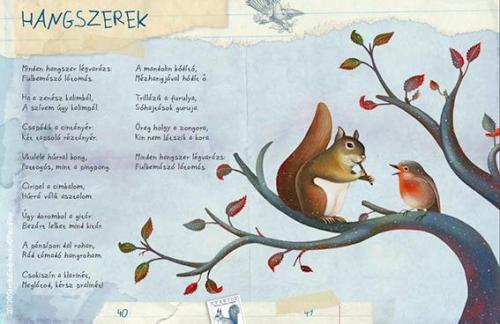
Do you do any exhibits to show off your work?
Yes, I am often invited to take part in joint exhibitions and I have had various personal exhibitions in Italy and abroad. In 2011 and 2013, my work was exhibited at the Biennale of Illustration of Bratislava, Slovakia and, 2007- 2012 every year at the “Le immagini della fantasia” of Sàrmede, the most important exhibition of children’s illustrations in Italy.
The last exhibition has just ended and it was “Il posto delle favole” (The place of fables), a joint exhibition by international artists in Rocca Sinibalda, a picturesque little town in central Italy. The next exhibition will be a personal exhibition of my work in Hungary in October 2014.
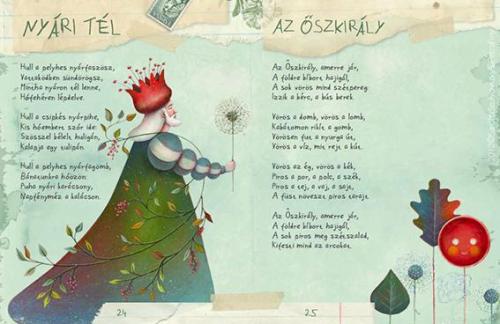
When and what was the first children’s book that you illustrated?
The first book that I illustrated was, luckily, the one I mentioned as my first paid work.
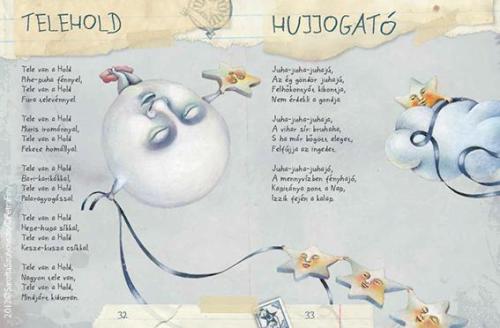
How did that contract come about?
The contact with the publisher came about through a friend we had in common, who was a book translator.
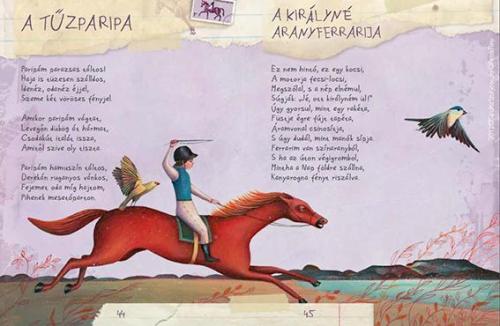
Do you consider that book to be your first big success?
My first book was an important experience for me, I learned a lot, but I don’t consider it a great success.
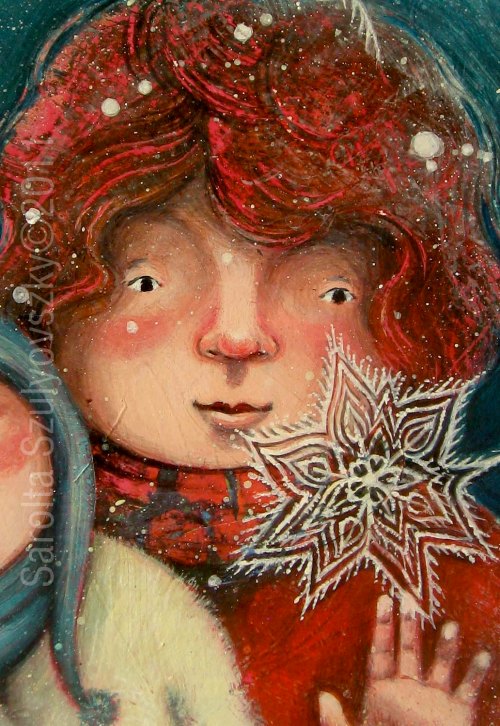
Have you published about children’s picture books for a US publisher?
So far, in the United States, they have published my illustrations in academic books and magazines, but I haven’t yet illustrated a whole book in the United States and I can’t wait to do so!
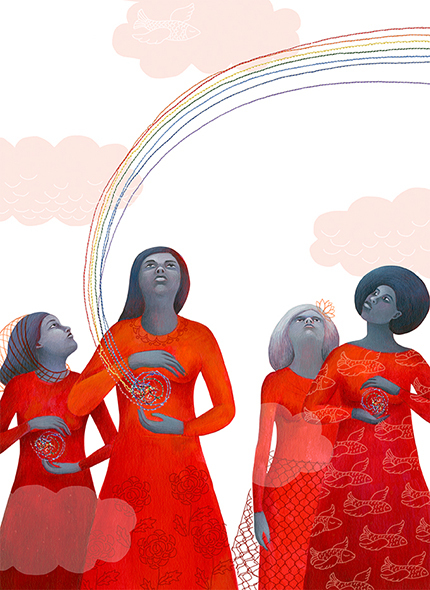
Have you tried to write and illustrate a children’s book, yet?
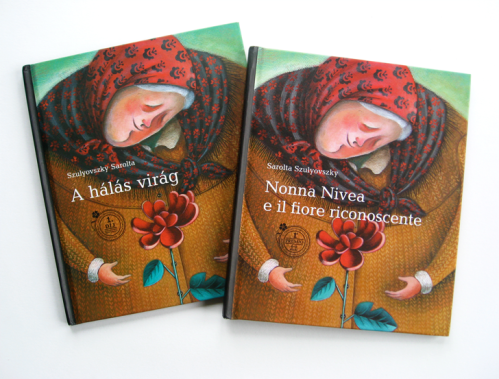
My first successful book was actually one that I wrote and illustrated: “A hálás virág “(The grateful flower) is an autobiographical book that deals with the subject of diversity and the Great Mystery of death, life and rebirth. The story came from an episode that actually happened in my grandparent’s garden in Budapest. In 2008, the album won first prize for the best unpublished illustrated album for children aged between 6 and 9 years at the 11th International Competition “Syria Poletti: On the wings of butterflies”. It was subsequently published in 3 languages: Italian, Hungarian and Polish.
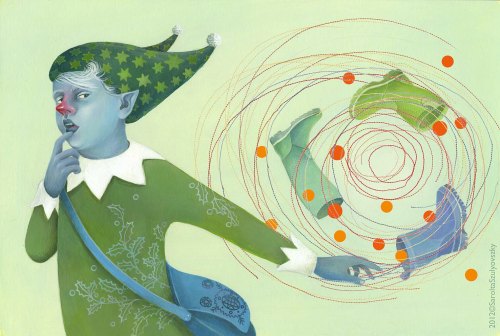
Does the area where you live have a large artist community?
I live in the countryside near a little town in northeast Italy that lies between the Alps and the Adriatic Sea, a land of excellent white wines and ham. There isn’t a large community of artists here, but you live and eat well!
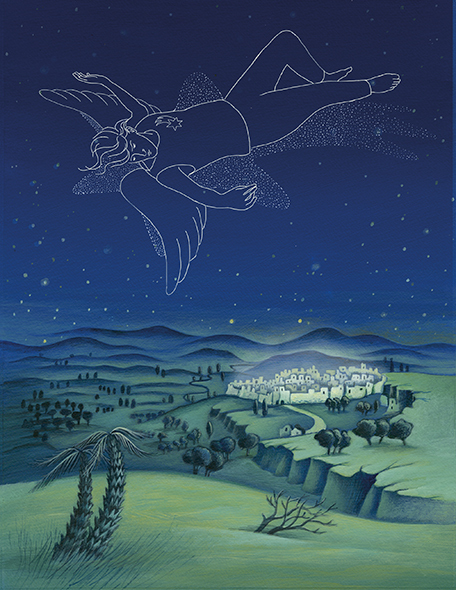
What type of illustration work do you do?
I work both on children’s books and books for adults, and on Packaging. I work both digitally and with traditional techniques. I like to adapt my style to the text and always try out new things so that I continue to grow and renew myself.
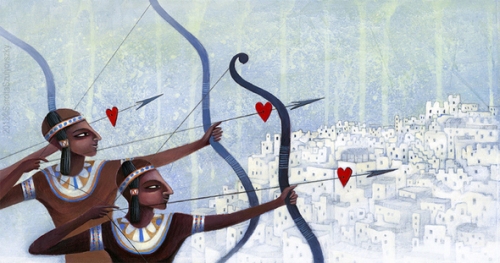
Have you won any awards for our art?
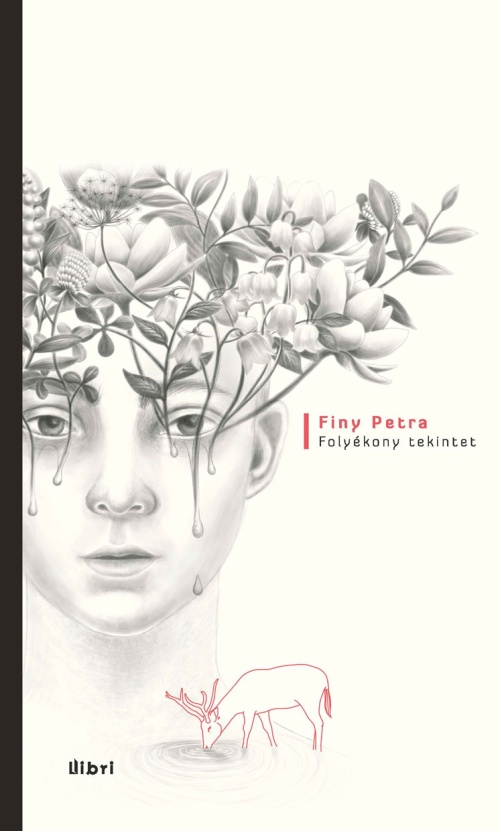
I have won various prizes but the most important was the one I received at the Frankfurt Book Fair in 2013: the cover I illustrated of “Folyékony tekintet” / Liquid gaze (published by Libri, Budapest) was selected from the 12 most beautiful covers at the Fair by the Wall Street Journal.
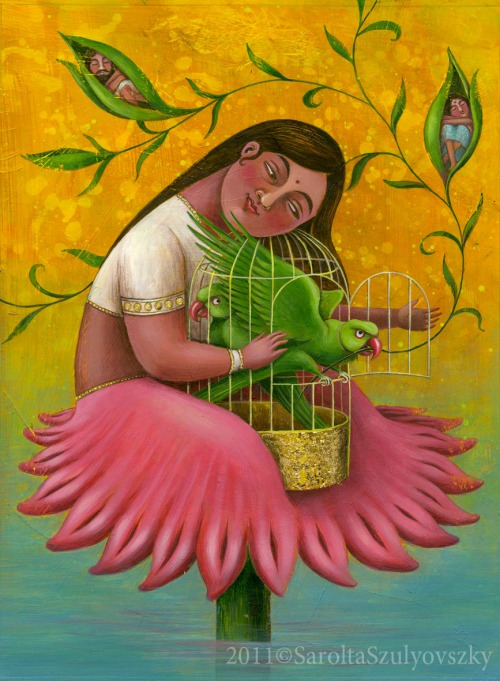
How many picture books have you illustrated?
So far, I have entirely illustrated 11 books, without counting the anthologies that include the drawings of several artists.
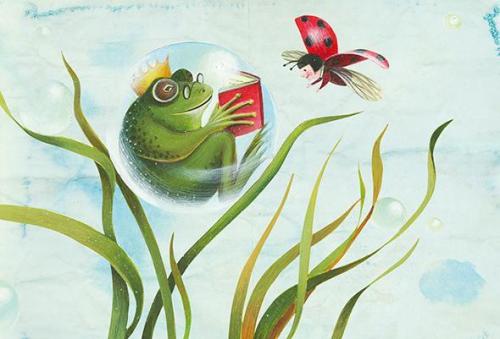
What do you consider your biggest success?
The greatest success has been the last book I illustrated, “Folyékony tekintet” (Liquid gaze), a collection of poetry for which I drew the digital illustrations using only the colours black and red.
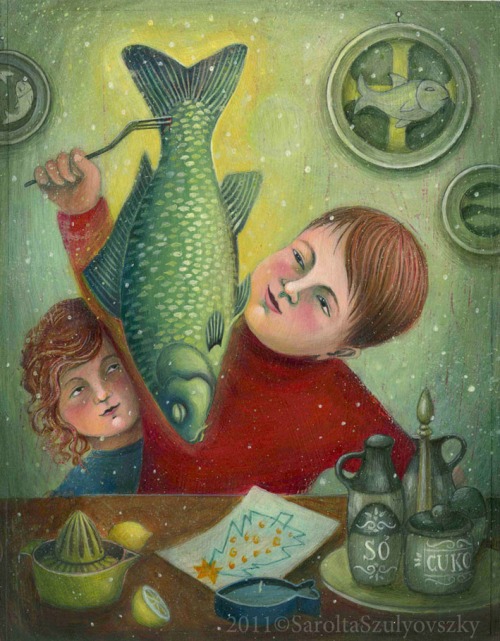
Do you feel living in Italy has broaden your career as an illustrator?
For an illustrator, I don’t think it matters much these days where you live, an internet presence is more important because that’s where work meetings take place. 23. Yes, I have worked for Italian and Hungarian magazines and in the United States, for the Christian Reformed Church of North America’s Dwell Dive Magazine. 24. I use acrylic colours and sometimes I add some details in Photoshop.
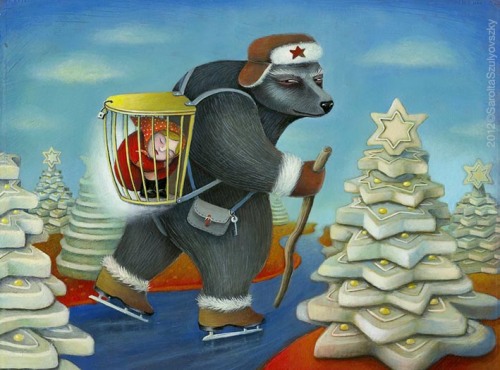
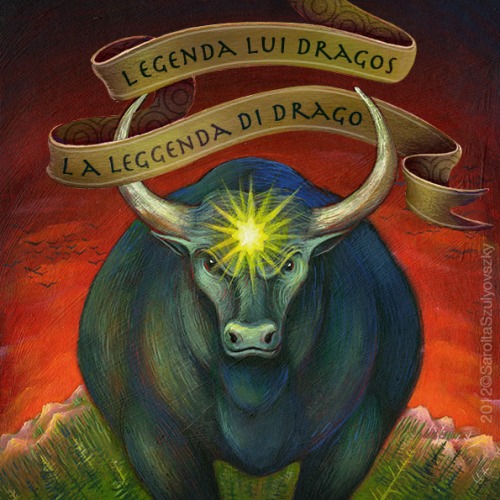
Have you done illustrations for any children’s magazines?
Yes, I have worked for Italian and Hungarian magazines and in the United States, for the Christian Reformed Church of North America’s Dwell Dive Magazine.
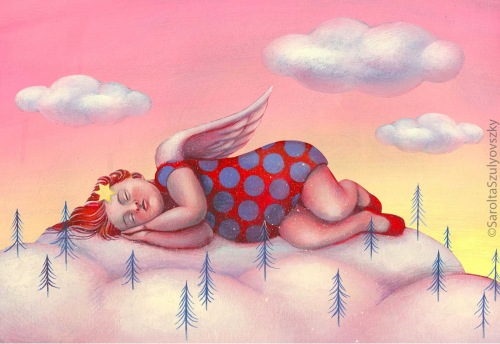
What materials do you use to paint your color illustrations?
I use acrylic colours and sometimes I add some details in Photoshop.
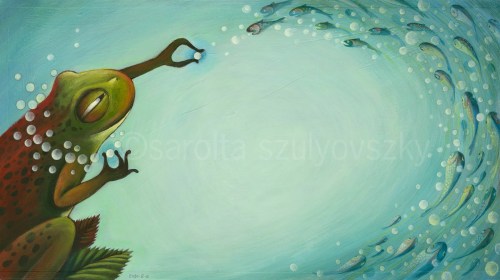
What type of things do you do to find illustration work?
To find illustration work, it is important to have a website or a blog, send your portfolio to the illustration agencies and publishers, and go to specialist fairs, like the Children’s Book Fair of Bologna.
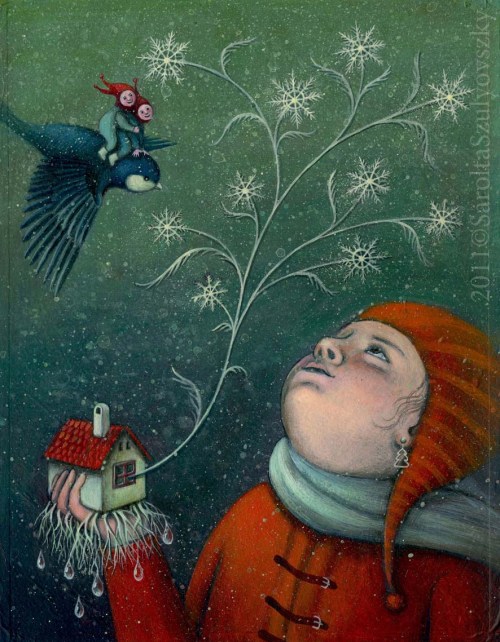
What is the one thing in your studio that you could not live without?
The thing I miss the most is the view from my window: the hill with the historic centre and the mountains. When I’m at home staring at a sheet of paper or a monitor all day, it is important sometimes to turn and look into the distance!
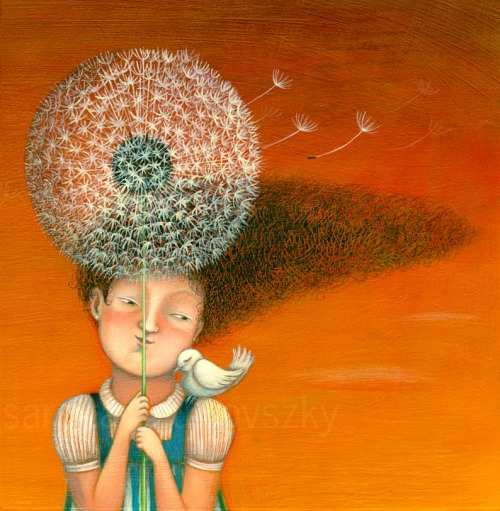
Do you try to spend a specific amount of time working on your craft?
It is very difficult to work set hours when you’re a freelance. I often work at night to meet deadlines…
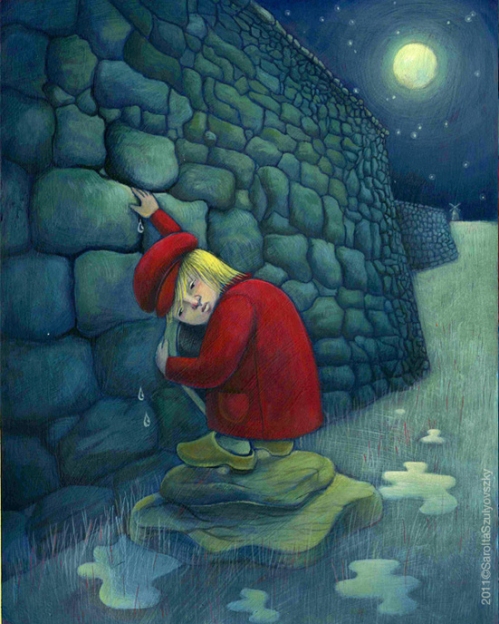
Do you take pictures or do any types of research before you start a project?
Research is the first phase of working on an illustrated project and that often takes whole days. I have a folder on my computer where I collect photos and texts that inspire me and that might be useful one day. If I don’t find the photos I need on the internet, people in certain poses, for example, then I’ll use relatives or myself, taking the photos I need.
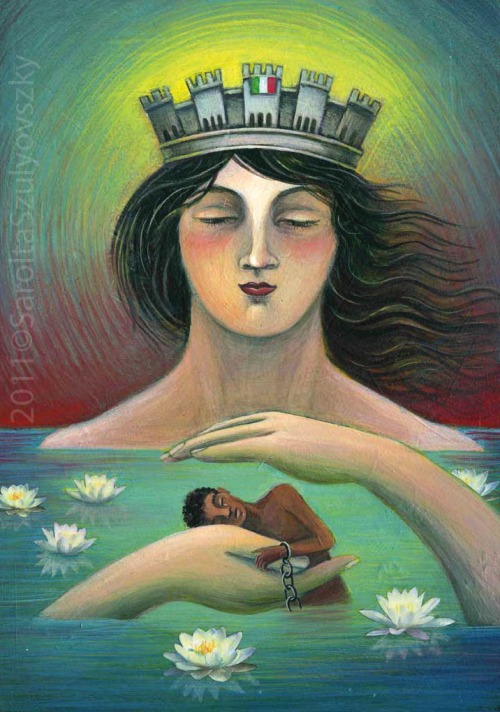
Do you think the Internet has opened doors for you?
Yes, I think the internet has opened many doors, but it has also increased the competition.
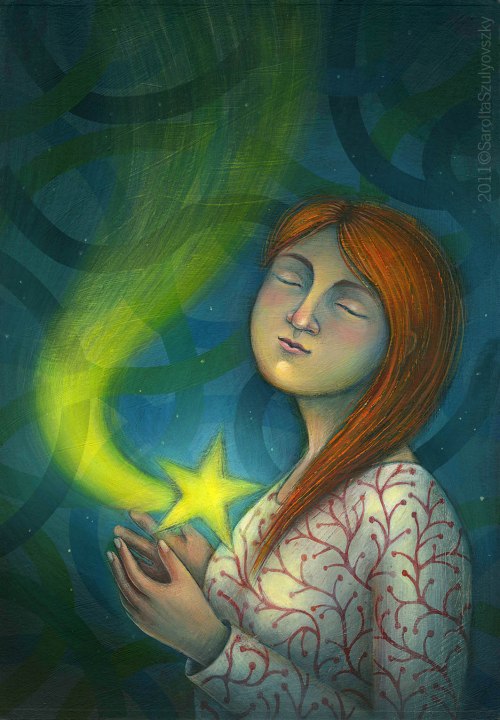
Do you use Photoshop or Corel Painter with your illustrations?
Yes, I use Photoshop and Adobe Illustrator.
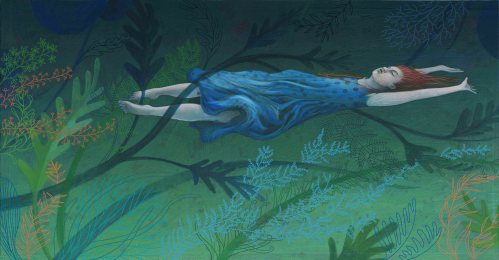
Do you own or have you used a Graphic Drawing Tablet in your illustrating?
Yes, I use a Graphic Drawing Tablet to sketch out drafts and add details to my illustrations.
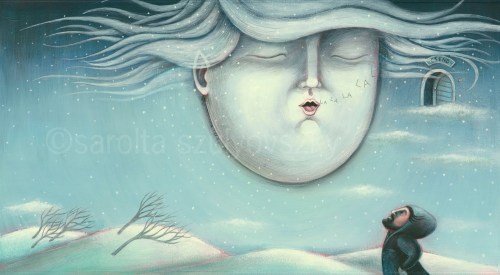
Do you have any career dreams that you want to fulfill?
My dream is to illustrate the Bible, especially St Paul’s Hymn to Love.
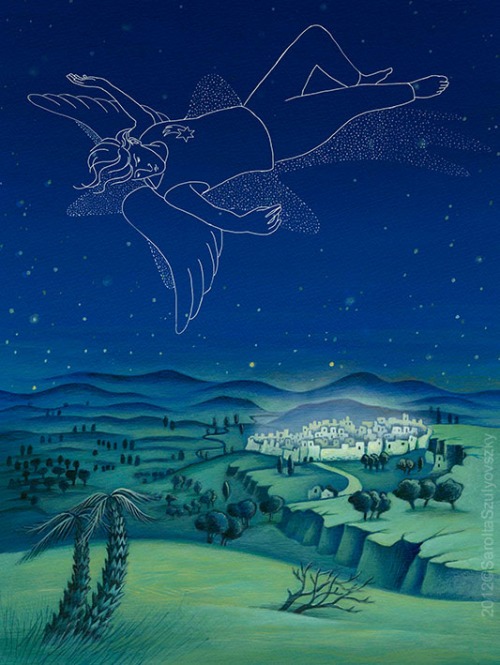
What are you working on now?
At the moment, I’m working on two books: an illustrated album: The Garden of Tears, written by the French author, Laurie Cohen, and a Hungarian novel by Zoltán Hajdú Farkas.
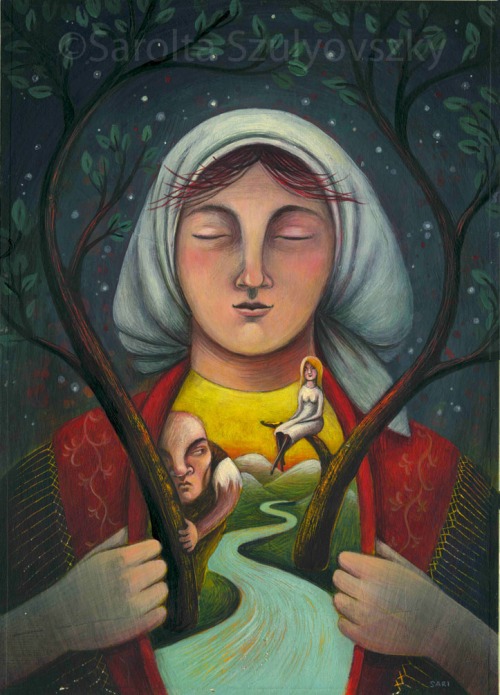
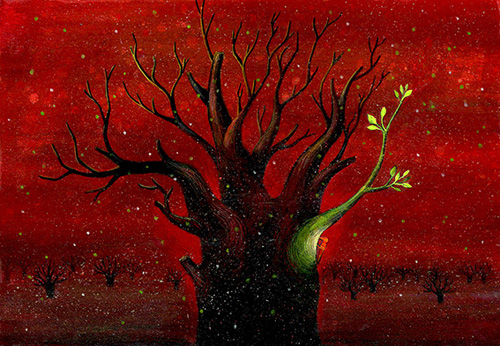
Any words of wisdom on how to become a successful writer or illustrator?
Above all, it is important to inquire within and understand ourselves. What would I really like to do? Devote time to personal works that haven’t been commissioned, be humble (we always need to learn), have a little entrepreneurial ability (we have to promote our work ourselves) and great steadfastness.
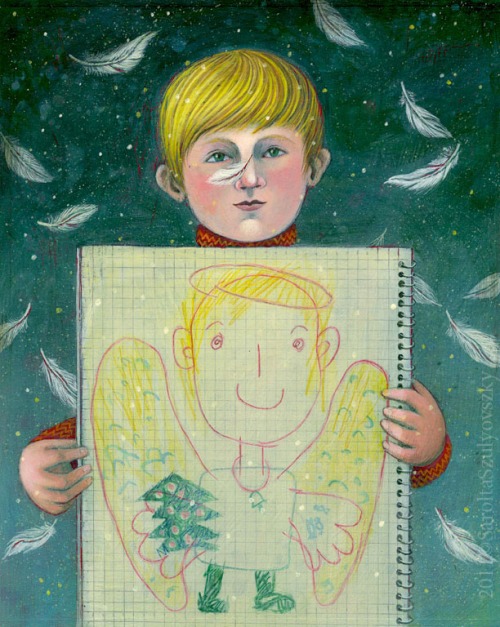
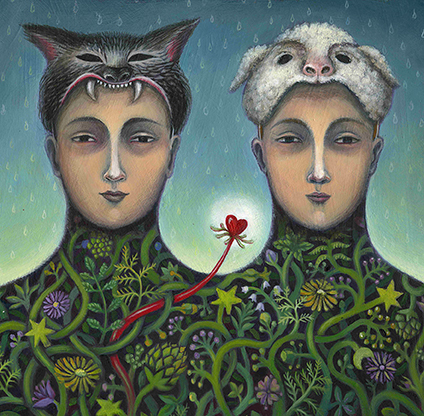
Thank you Sarolta for taking the time to share your process and journey with us. We look forward to hearing about all your future successes.
To see more of Sarolta’s illustrations visit her at:
Website: http://www.saroltaszulyovszky.com/
Blog: http://saroltaszulyovszky.blogspot.it/
Please take a minute to leave a comment for Sarolta, I know she would love to heard from you and I always appreciate it. Thanks!
Talk tomorrow,
Kathy
Filed under:
authors and illustrators,
demystify,
illustrating,
Illustrator's Saturday,
inspiration,
Interview,
picture books,
Publishing Industry Tagged:
1st Prize (Category Children's Book) at the 'Marosvásárhely Book Fair Award,
30th edition of the exhibition 'Le immagini della fantasia',
Applied Art in Budapest,
Sarolta Szulyovszky 

By: Kathy Temean,
on 9/14/2014
Blog:
Writing and Illustrating
(
Login to Add to MyJacketFlap)
JacketFlap tags:
ethnic and/or cultural background,
On-The Verge Emerging Voices AWARD,
Two Awards,
Contest,
awards,
SCBWI,
Competition,
authors and illustrators,
Publishing Industry,
opportunity,
Places to sumit,
Add a tag
The SCBWI established the On-The-Verge Emerging Voices Award in 2012 with funding from Martin and Sue Schmitt of the 455 Foundation. The grant was created to foster the emergence of diverse voices in children’s books.
Deadline:
Applications accepted between September 15th and November 15th, 2014
Award:
Two writers or writer/illustrators will each receive:
- An all-expense paid trip to the SCBWI Summer Conference in Los Angeles August 1-4, 2015 (transportation and hotel)
- Tuition to the SCBWI Summer Conference
- A manuscript consultation at the Summer Conference with an industry professional
- An additional meeting with an industry professional
- Tuition to the Summer Conference Writers or Illustrators Intensive
- A press release
Eligibility:
Any writer or writer/illustrator from an ethnic and/or cultural background that is traditionally under-represented in children’s literature in America. (American Indian, Asian, Black or African American, Hispanic, Pacific Islander)
The manuscript must be an original work written in English for young readers and may not be under contract. The applicant must be over 18, be unpublished, and should not yet have representation.
Guidelines:
All applications will be accepted via email only between September 15th and November 15th at [email protected] and must include the following:
In the body of the e-mail:
1. An autobiographical statement and career summary in less than 250 words.
2. Why your work will bring forward an underrepresented voice in less than 250 words.
3. A synopsis of your manuscript in less than 250 words.
Attached to the e-mail:
4. A PDF of your entire manuscript. If the manuscript is not complete, it is not eligible.
The winners will be announced December 19, 2014 and the award presented at the 2015 SCBWI Summer Conference in Los Angeles, August 1-4.
When your work is published the author/illustrator should include in the acknowledgement “This book was made possible in part by a grant from SCBWI”
VIEW PAST WINNERS
Questions? [email protected]
Good Luck! Remember you can not win if you don’t submit.
Talk tomorrow,
Kathy
Filed under:
authors and illustrators,
awards,
Competition,
Contest,
opportunity,
Places to sumit,
Publishing Industry Tagged:
ethnic and/or cultural background,
On-The Verge Emerging Voices AWARD,
SCBWI,
Two Awards 


Click The Logo For More Information.
Have you written a picture book story? Are you looking for a professional critique of your manuscript? Have you considered a critique service, but were reluctant to give it a try?
If you answered “yes” to the three questions above, then you’ve come to the right post. I have also hesitated to send my work to a critique service: What if I don’t agree with what they say? What if they think my story is awful? It costs money.
What you need is a person you can trust to offer suggestions based on her expertise in the picture book market, in a nonjudgmental, positive, and gentle way, and is worth every penny. You need Danielle Davis.
I recently had a critique done by Danielle. I was more than pleased with her very comprehensive and detailed review of my latest picture book story, Cloud, The Monastery Dog. Not only did she go through my manuscript line by line, leaving comments and suggestions, she also wrote a personal letter with more feedback and advice.
I chose Danielle’s service because (and I hope she doesn’t mind me quoting her) she says, “It’s not about my style or preferences at all—it’s about making the work sing!” I really appreciate that and I would definitely use Danielle Davis’ Picture Book Critique service again.


By: Kathy Temean,
on 9/10/2014
Blog:
Writing and Illustrating
(
Login to Add to MyJacketFlap)
JacketFlap tags:
News,
list,
Hollywood,
inspiration,
success,
Young Adult Novel,
Publishing Industry,
Lisa Fields,
CaTugeau,
Six YA authors in top selling Book list,
Top Earning Authors,
Add a tag
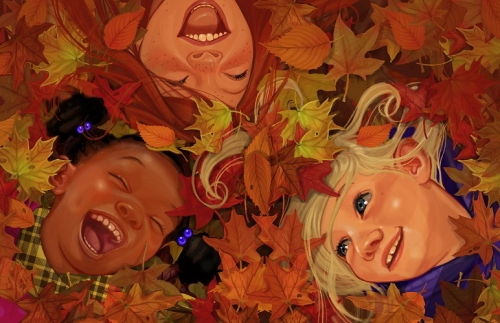
This fun fall illustration was sent in and created by Lisa Fields. She is an illustrator based out of New York City, who is represented by CATugeau Artist Agency. She says she loves to focus on facial expression and color in her work. LisaFields.com
Seventeen World’s Top-Earning Authors: Veronica Roth, John Green And Gillian Flynn New on List
Young adult author Veronica Roth‘s ranks 6th on account of her “Divergent” trilogy which sold a combined 6.7 million copies in 2013, earning her around $17 million from print and ebook sales between June 2013 and June 2014. She also benefited from the book’s 2014 film adaption, which grossed $270 million at the global box office. At just 26, Roth is the youngest newcomer on the ranking, and one of seven women on the 17-person list.
37-year-old newcomer John Green’s ”The Fault in Our Stars” propelled him to an estimated $9 million yearly paycheck before taxes and fees. The YA love story, which follows the trials of two cancer-stricken teens, has sold well over 1 million copies in the U.S. and spawned a weepy summer blockbuster.
Green is tied for 12th place with Gillian Flynn, who joins the rankings for the first time due to the continued success of 2012′s “Gone Girl.” While not a YA book, it is a New York Times bestseller that sold 1.2 million copies in 2013; a movie version starring Ben Affleck hits cinemas this year.
A 2012 Bowker Market Research study suggested 55% of YA books are bought by people 18 and older. Adults aged between 30 and 44 accounted for 28% of all YA sales, and the books are purchased for their own reading the vast majority of the time.
“The category has reached adult audiences and really become okay to read,” said Lori Benton, VP Group Publisher at Scholastic Trade Publishing. “Harry Potter was the very first one to reach that audience – it was quickly embraced by children, and just as quickly by adults.”
With $14 million in earnings, the original young adult tour de force, J.K. Rowling, ranks 8th on our list. She continues to earn from back sales of her iconic Harry Potter series, while Pottermore – a proprietary website she setup to sell Harry Potter ebooks – makes her a pretty penny. Unlike most authors, Rowling never signed over the digital rights to her books, so she sells directly to readers, earning far more from these digital sales than most authors do through ebooks.
READ FULL ARTICLE by Natlie Robehmed for Forbes:
http://www.forbes.com/sites/natalierobehmed/2014/09/08/the-worlds-top-earning-authors-veronica-roth-john-green-and-gillian-flynn-join-ranking/
JUNE 2013 – JUNE 2014 TOP SEVENTEEN BEST SELLING AUTHORS – SIX ARE YOUNG ADULT BOOKS (Bolded)
Here’s the List:
ALEX CROSS and MICHAEL BENNETT series: James Patterson 90,000 million. His books account for one out of every 17 hardcover novels purchased in the United States.
INFERNO: Dan Brown 28 million
JEWELS OF THE SUN: Nora Roberts 23 million due to paperback and e-book sales.
A PERFECT LIFE: Danielle Steel 22 million
POWER PLAY: Janet Evanovich 20 million
WIMPY KID: Jeff Kinney 17 million
DIVERGENT Series: Veronica Roth 17 million
SYCAMORE ROW: John Grisham 17 million
DOCTOR SLEEP: Stephen King 17 million
HUNGER GAMES: Suzanne Collins 16 million
HARRY POTTER: J.K. Rowling 14 million
GAME OF THRONES: George R.R. Martin 12 million
KING AND MAXWELL: David Baldacci 11 million
THE HEROS OF OLYMPUS: Rick Riordan 10 million
FIFTY SHADES OF GREY: E.L. James 10 million (Sold 29 million copies in 2012 the U.S. alone. Sales dropped off in 2013 to a combined 1.8 million, but an upcoming movie could boost 2015.
GONE GIRL: Gillian Flynn 9 million
THE FAULT IN OUR STARS: John Green 9 million
You too can join the list. All you need to do is write a great book, get a great Agent, how finds a great publisher, make all the Best Book Lists, sell it to a Hollywood Studio who brings it to the big screen then becomes a blockbuster hit and repeat year after year. So keep writing, because you don’t have a chance to make that happen any other way.
Talk tomorrow,
Kathy
Filed under:
Hollywood,
inspiration,
list,
News,
Publishing Industry,
success,
Young Adult Novel Tagged:
CaTugeau,
Lisa Fields,
Six YA authors in top selling Book list,
Top Earning Authors 

By Julie Daines
There's a lot of confusion out there about indie publishers and self-publishers. Let just get straight to the point. Here is this:
Don’t Confuse Independent Publishing with Self-Publishing
Indie, Independent and Small Press Publishing Are So, Soooooo Different from Self-Publishing, Vanity Presses and Pay-to-Publish “Publishing”
I’ve said it once, I’ve said it a zillion times: yes, dear author-to-be (and those already published), there is a difference between self-publishing, vanity presses, pay-to-publish, a small press, and independent publishing. Don’t mix them up. Don’t get confused.
She quotes Wikipedia:
The majority of small presses are independent or indie publishers, thismeans that they are separate from the handful of major publishing house conglomerates, such as Random House or Hachette. The term ‘indie publisher’ should not be confused with ‘self-publisher’, which is where the author publishes only their own books.
Defined this way, these presses make up approximately half of the market share of the book publishing industry.
This is a great article if you're confused about any of these terms. Go and check it out.
Unfortunately, I feel the term independent publishing (Indie) is going the same way so many words have already gone--Verbicide. It is used so frequently in the wrong sense that it's original meaning is becoming lost.
By: Kathy Temean,
on 9/6/2014
Blog:
Writing and Illustrating
(
Login to Add to MyJacketFlap)
JacketFlap tags:
Princeton Adult School,
Writing Boooks for Children,
Author,
Self-publishing,
Process,
Publishing Industry,
opportunity,
How to,
children writing,
need to know,
Laurie Wallmark,
Add a tag

Do you have an idea for a children’s book? Would you like to share your story with children around the world? Well, Laurie Wallmark is teaching
WRITING BOOKS FOR CHILDREN at Princeton Adult School.
 Thurs 7:00-9:00pm
October 2 – November 6
In this course you’ll explore: the many joys of writing for children; types of children’s books; elements of a great story; tips to make your writing sparkle; traditional vs. self-publishing; printed books and e-books; avoiding scams, and much more.
Here is the link to sign up.
Share it with your friends who may be starting out on their path to publishing.
Most of you already know Laurie, she was a wonderful Assistant Regional Advisor while I was Regional Advisor for the New Jersey SCBWI.
Here is a little bit about Laurie you might not know:
Laurie is pursuing an MFA in Writing for Children and Young Adults at Vermont College of Fine Arts. She has written numerous articles and stories in children’s magazines (Highlights, Spider, Cricket, and others). Her debut picture book, Ada, will be published by Creston Books in 2016.
Visit Laurie’s blog entitled “All News, No Schmooze: News and Notes for Busy Children’s Book Writers” at http://www.lauriewallmark.blogspot.com.
Talk tomorrow,
Kathy
Filed under:
Author,
children writing,
How to,
need to know,
opportunity,
Process,
Publishing Industry,
Self-publishing Tagged:
Laurie Wallmark,
Princeton Adult School,
Writing Boooks for Children 

By:
C.J.Busby,
on 9/5/2014
Blog:
An Awfully Big Blog Adventure
(
Login to Add to MyJacketFlap)
JacketFlap tags:
marketing,
sales,
book prizes,
publicity,
social media,
publishing industry,
experience,
Fifty Shades,
a writing life,
Add a tag
I have just had the second book of my second series for children published. It feels like a bit of a milestone.
It's called
Dragon Amber, and it's part of a multiple worlds adventure trilogy that started with
Deep Amber last March. The cover's lovely, as all of them have been (thanks to David Wyatt), and there's nothing quite like holding the physical copy of your new book in your hands (or even clutching it to yourself as you do a little dance...!!) But it being the second book of the second series made me stop and think. It's my sixth book to be published. While I'm far from being 'established' (whatever that means), it certainly means I'm no longer a total newbie.
Which feels ever so slightly weird, as I still think of myself as a novice, pretending to be an author.
This business of feeling as if you're pretending seems to be something quite a few children's authors suffer from. (It may be related to the fact that very few of us are actually making enough money to feel writing is a 'proper' job, but that's another story...)
Anyway, I thought I'd take this opportunity - as someone who can no longer consider herself a novice - to try and sum up what I have learnt over the last three years of being part of the world of children's publishing.
1. First and foremost: other children's authors - whether well known, just published or still hopeful - are almost all lovely, warm, friendly and modest (and there are not many professions you'd be able to say that of.) Getting together with them, at festivals, conferences, retreats or book launches is a wonderfully affirming thing to do - and helps quite a lot with that feeling of being a bit of a fraud (
I AM a children's writer - because I am accepted by all those other lovely children's writers!!)
2. I have almost no control over whether my books do well or not - so I should just relax and maybe cross my fingers occasionally! Being open to opportunities like school visit invites or festivals is fun and part of getting to know the publishing business - tweeting and face booking have been similarly good for getting to know other writer friends. And sometimes opportunities have come from that. But none of it has turned my book into a best-seller, and I don't think there's any magic way of doing so!
3. If I don't want to become mad and bitter, I have to try not to compare my book sales/prize nominations and festival invites with others - and must remember NOT to check the Amazon ranking of my books more than once a week! There is a great deal of luck and randomness in this business and then there are the unfathomable whims of publishers, reviewers and the reading public (
Fifty Shades of Grey, anyone?). Generally (but not always: see aforementioned
Fifty Shades) it's Very Good Books that get attention and prizes - equally there are thousands of Very Good Books that don't, and which category mine end up in (even if they were to be considered Very Good!) is mostly down to serendipity.
Oh - and marketing spend.
Which brings me to no. 4.
4. Publishers put serious time, energy and money behind only a select few of the books they publish. These books are plastered all over websites, magazines, 'hot new trends' lists, twitter, reviews, front window billing at Waterstones and W.H. Smiths.
In the absence of this push, you are lucky if your book ends up in a select few Waterstones branches, or garners an online review from a kind blogger. This is no reflection on the quality of your book - I've met too many other brilliant people with fabulous books who can't get them noticed to think it's entirely a meritocracy. Publishers are scrabbling to find the next
Wimpy Kid or
Hunger Games, and even they don't know what will trigger that response. Often it's something they have all roundly rejected as too dire to waste ink on (cough,
Fifty Shades...) So they put money behind a few, and publish a hundred others in a kind of scattergun approach, in case any of them builds a following by chance. I've learned to treat having a book out as a bit like having bought a lottery ticket - whether it does well or not is as random as whether I win the jackpot or a £10 prize for three numbers.
5. So, finally, after a few years of trying to find the 'magic key' to making a go of this publishing lark, I've learned to just enjoy the moment: to hold my new book in my hands, and do a little jig at having pulled it off one more time. In the book I'm currently reading (
The Blade Itself, by Joe Abercrombie) one of the characters is a Northman, hard, battle-scarred, always getting into more impossible fights. At the end of each one, he repeats, as a kind of mantra: 'Still alive, still alive...' I think I feel a bit like that about writing - 'Still there, still there...'
C.J. Busby writes funny fantasy adventures for ages 7 upwards. Her first book,
Frogspell, was a Richard and Judy Children's Book Cub choice for 2012. The series is published in Canada by Scholastic and the UK by Templar and has been translated into German and Turkish.
Deep Amber, the first of a new trilogy, was published in March 2014. The second instalment,
Dragon Amber, came out on 1st September.
"A rift-hopping romp with great charm, wit and pace" Frances Hardinge.
Nominated for the Stockton Book Award 2015.
www. cjbusby.co.uk@ceciliabusby
By: Kathy Temean,
on 8/27/2014
Blog:
Writing and Illustrating
(
Login to Add to MyJacketFlap)
JacketFlap tags:
inspiration,
authors and illustrators,
Publishing Industry,
Kudos,
Editor & Agent Info,
Publishers and Agencies,
Amalia Hoffman,
Darlene Beck-Jacobson,
Vesper Stamper,
Carly Watters,
Add a tag
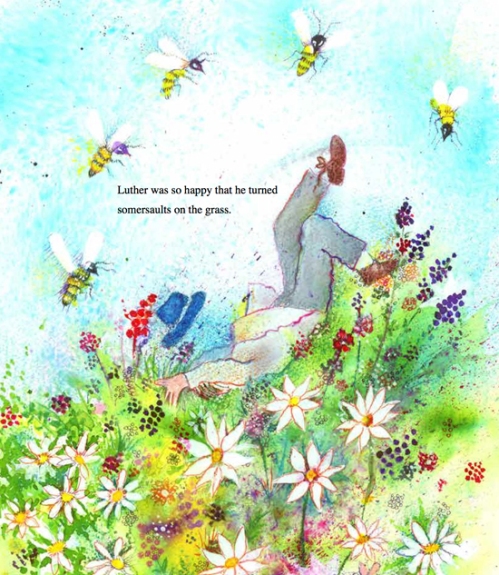
Congratulations to everyone in this post. I am sure all of you are doing somersaults like Luther in this new illustration sent in my Amalia Hoffman. http://www.amaliahoffman.com

Kirkus published a great review for Darlene Beck-Jacobson ‘s new book WHEELS OF CHANGE which is coming out in September. I read an advanced copy and wrote a review that is up on Goodreads.
Here are the links:
http://www.kirkusreviews.com/book-reviews/darlene-beck-jacobson/wheels-of-change-jacobson/
https://www.goodreads.com/review/show/1023025140
Vesper Stamper proves that winning a contest can get you noticed and sometimes that is all you need to make things happen. Vesper won the NJSCBWI Illustrator Showcase at the end of June and six weeks later, that win landed her representation with Lori Kilkelly at Rodeen agency.
Yvonne Ventresca was featured in the August NJSCBWI Author Spotlight. Here is the link: http://newjersey.scbwi.org/author-spotlight/author-spotlight-yvonne-ventresca/
 At P.S. Literary Agency, Carly Watters has been promoted to vp, senior literary agent.
Julia Maguire has joined Knopf Children’s as editor. Previously she was an associate editor at Simon & Schuster Children’s.
Orion Children’s Books editorial director Amber Caraveo is leaving the publisher to become an agent, creating Skylark Literary along with Joanna Moult, officially launching in November. The agency will focus on YA and children’s authors.
The Simon Pulse imprint has promoted Liesa Abrams to vp, editorial director of Simon Pulse and associate editorial director of Aladdin. Plus, Michael Strother is being promoted to associate editor of Simon Pulse.
Talk tomorrow,
Kathy
Filed under:
authors and illustrators,
Editor & Agent Info,
inspiration,
Kudos,
Publishers and Agencies,
Publishing Industry Tagged:
Amalia Hoffman,
Carly Watters,
Darlene Beck-Jacobson,
Vesper Stamper 

(Kate Wilson of the wonderful Nosy Crow asked me to write a guest post for her on my experiences of self-publishing as a published author. For your info, she didn't know what those experiences were, so there was no direction or expectation. I have re-posted it here, with permission. Note that this is personal experience, not advice.)
Many writers, previously published or not, talk excitedly about why they enjoy self-publishing. Let me tell you why I don’t.
I’ve self-published (only as ebooks) three of my previously published YA novels and three adult non-fiction titles which hadn’t been published before. From these books I make a welcome income of around £250 a month – a figure that is remarkably constant. So, why have I not enjoyed it and why won’t I do it again?
It’s damned hard to sell fiction! (Over 90% of that £250 is from the non-fiction titles.) Publishers know this. They also know that high sales are not always about “quality”, which is precisely why very good novels can be rejected over and over. Non-fiction is easier because it’s easy to find your readers and for them to find your book. Take my book about writing a synopsis, for example; anyone looking for a book on writing a synopsis will Google “books on writing a synopsis” and, hey presto, Write a Great Synopsis appears. But if someone wants a novel, the chances of finding mine out of the available eleventy million are slim. This despite the fact that they had fab reviews and a few awards from their former lives.
But some novels do sell well. So why don’t mine? Because I do absolutely nothing to sell them. Why not? Well, this is the point. Several points.
First, time. I am too busy with other writing and public-speaking but, even if I weren’t, the necessary marketing takes far too long (for me) and goes on for too long after publication: the very time when I want to be writing another one. This is precisely why publishers tend only to work on publicity for a short while after publication: they have other books to work on. We may moan but it has to be like that – unless a book does phenomenally well at first, you have to keep working at selling it.
Second, I dislike the stuff I’d have to do to sell more books. Now, this is where you start leaping up and down saying, “But published authors have to do that, too!” Yes, and I do, but it’s different. When a publisher has invested money because they believe in your book, you obviously want to help them sell it. But when the only person who has actually committed any money is you, the selling part feels different. It’s a case of “I love my book so much that I published it – now you need to believe in me enough to buy it.” I can’t do it. Maybe I don’t believe in myself enough. Fine. I think books need more than the author believing in them. The author might be right and the book be fabulous, but I tend to be distrustful of strangers telling me they are wonderful so why should I expect others to believe me if I say I am? And I don’t want to spend time on forums just to sell more books.
Third, I love being part of a team. Yes, I’ve had my share of frustrating experiences in the course of 100 or so published books, but I enjoy the teamwork – even though I’m an introvert who loves working alone in a shed; I love the fact that other people put money and time and passion into selling my book. It gives me confidence and support. They won’t make money if they don’t sell my book and I still like and trust that model.
And I especially love that once I’ve written it and done my bit for the publicity machine and done the best I can for my book, I can let it go and write another.
See, I’m a writer, not a publisher. I may love control – the usual reason given for self-publishing – but I mostly want control over my words, not the rest. (That control, by the way, is never lost to a good editor, and I’ve been lucky with genius editors.) So, yes, I am pleased with the money I’ve earned from self-publishing and I love what I’ve learnt about the whole process, but now I’m going back to where I am happy to do battle for real control: my keyboard.
It’s all I want to do.
Nicola Morgan has written about 100 books, with half a dozen "traditional" publishers of various sizes from tiny to huge. She is a former chair of the Society of Authors in Scotland and advises hard-working writers on becoming and staying published, and on the marketing/publicity/events/behaviour that goes along with that.
She has also just created BRAIN STICKS™, an original and huuuuuuge set of teaching resources about the brain and mental health.
By: Kathy Temean,
on 8/13/2014
Blog:
Writing and Illustrating
(
Login to Add to MyJacketFlap)
JacketFlap tags:
News,
Editors,
Publishing Industry,
Kudos,
need to know,
SCBWI Work-in-Progress Grant,
Jennifer Reinharz,
Writer's Digest Annual Contest,
Karen Fortunati,
The D-Day List,
The Pleasant Passover,
Add a tag
 It seems like I’ve been hearing from a lot of readers of this blog with good news. Some I can report now, Like Jennifer Reinharz who sent me this news:
The 83rd Annual Writer’s Digest Writing Competition notified me last week that my blog post, “A Pleasant Passover” was awarded 5th place in the Inspirational Writing category.
She said, “If it wasn’t for your blog, I wouldn’t have entered the contest!”
You can read it on Jennifer’s blog: http://redsaidwhat.com/2014/05/01/128/
 Then I heard from Karen Fortunati. She told me after seeing my post about the SCBWI Work-in-Progress Grant, she submitted her Contemporary YA novel, The D-Day List, and WON!
Here’s a blurb about her book:
For seventeen-year-old Catherine Pulaski, life is intolerable with bipolar disorder and depression. There’s only one way out but before she can kill herself, she’s got to accomplish the one item on her D-Day List. And if she does, it may change everything.
I have a feeling I missed someone, so if I missed you please email me again. Thanks!
Here are some other industry changes. Many of you know the lovely Allison Wortche and Katherine Harrison. I was so happy to hear their news.
At Knopf Children’s, Allison Wortche has been promoted to senior editor while Katherine Harrison moves up to associate editor.
Phaidon has hired Cecily Kaiser as publishing director, Children’s Books and Meagan Bennett as art director for the division, both reporting to Deb Aaronson out of the company’s New York offices.
Jonathan Jao will join Harper on September 8 as vp, executive editor, reporting to Jonathan Burnham. Previously he was a senior editor at Random House.
Lauren Scobell has joined Macmillan Children’s Publishing Group as director, Swoon Reads.
You should get out your Children’s Writer’s and Illustrator’s Market by Chuck Sambuchino and make the changes.
Talk tomorrow,
Kathy
Filed under:
Editors,
Kudos,
need to know,
News,
Publishing Industry Tagged:
Jennifer Reinharz,
Karen Fortunati,
SCBWI Work-in-Progress Grant,
The D-Day List,
The Pleasant Passover,
Writer's Digest Annual Contest 

By: Kathy Temean,
on 8/5/2014
Blog:
Writing and Illustrating
(
Login to Add to MyJacketFlap)
JacketFlap tags:
Tips,
list,
Book,
Advice,
authors and illustrators,
Publishing Industry,
Pandemic,
Marketing a book,
Yvonne Ventresca,
Amazon Sales Page,
Maximize Book Sales,
Add a tag

If your book is up on Amazon, you can have an Author Page. This is another opportunity for you, so use it. Here are a few tips:
1. Think of your book’s Amazon.com page as a ¼ page ad in a glossy magazine. You want to build excitement, hype, and the urge to buy rather than dutifully explaining your product.
2. Watch out for typos and grammar, so you put your best foot forward. Make sure what is written makes sense. If you can’t write a good Author Page, most people will think you can’t write a good novel, either.
3. Include review quotes. You want to draw someone into buying your book.
4. Put up book trailers, interviews, and videos on your Amazon page.
5. You can show recent blog posts and twitter entries.
6. List places your events and the dates.
7. Another thing you can do is to encourage a discussion with your fans on this page.
Let’s take a look at Yvonne Ventresca’s Author Page:
Yvonne has included a lot of the tips on the above list, but I’d like to see her add a few quotes from reviews of Pandemic, a book trailer, and to work on getting a video interview she can put up on the page. Adding these things will maximize the free space Amazon has given her and help increase the sales of her new book.
Good job, Yvonne!
Talk tomorrow,
Kathy
Filed under:
Advice,
authors and illustrators,
Book,
list,
Marketing a book,
Publishing Industry,
Tips Tagged:
Amazon Sales Page,
Maximize Book Sales,
Pandemic,
Yvonne Ventresca 

By: Kathy Temean,
on 8/4/2014
Blog:
Writing and Illustrating
(
Login to Add to MyJacketFlap)
JacketFlap tags:
Tips,
Internet,
Advice,
Process,
article,
authors and illustrators,
Publishing Industry,
Marketing a book,
How to Sell More Books,
Amazon Look Inside,
Amazon Strategies,
How to Sell More Books Workshop,
Add a tag


Let’s take a look at another feature that Amazon offers anyone who sells their books on their site.
Don’t miss out on using this feature. This is another reason why it is important to make sure your first chapter sings.
Personally for me to buy, I look over five things:
Price: I buy lots of ebooks that are offered at $1.99 or less, without having read anything about them.
Cover: I don’t buy books where I don’t like the cover, unless someone else said they were good. I guess I believe in first impressions.
Reviews: I read what book is about and a couple reviews. A few bad reviews don’t stop me from buying, since I’ve read many top-seller books that I thought were great that received a few terrible reviews.
Publisher: I check out who published the book. If it is from a well-known publisher, that could seal the deal right there.
Look inside: If I have not clicked the button to buy, I will “Look inside”. That’s when I put on my editor/agent hat and only give five minutes to the author to grab me before I make my decision. Sometimes the problem is that the book really grabs you and then you have to read the whole thing, even when the desk is piled with work and the kitchen needs to be clean. Many of those books have been self-published, so don’t stick your nose up at them or else you might missed something really good.
Here are some tips on using the “Look inside” feature.
1. Keep front matter to a minimum. You want to make sure the reader can get to the meat of the story quickly. This is also important to do this with the full ebook.
2. Amazon Reviews. Work hard to get as many as you can when you launch the book. This will help raise your ranking and buyers who have read the first pages will look at this, especially if you are self-published.
3. At the end of your book you should ask the reader to write a review. Stats show that this helps you increase your sales numbers.
4. Hot New Releases List on Amazon should be in the forefront of your mind when planning a launch. Talk to your publisher to see if they have planned your novels launch based on other similar books coming out. If there are too many it will hurt your chances of making the list. The list is only good for the first 30 days of a books release.
5. Making sure your blog followers know about your book and doing book tours can help get the word out. It’s nice to get the buzz going, but you need to make sure you keep the big guns for the launch date.
Talk tomorrow,
Kathy
Filed under:
Advice,
article,
authors and illustrators,
Internet,
Marketing a book,
Process,
Publishing Industry,
Tips Tagged:
Amazon Look Inside,
Amazon Strategies,
How to Sell More Books,
How to Sell More Books Workshop 

View Next 25 Posts





.jpg?picon=3333)


Wow, look at Kidlit kicking some butt here! I love when you put up stuff like this, Kathy :) Thanks!
Hi Kathy, Interesting figures here… Thanks for featuring my illustration, and Happy New Year!