new posts in all blogs
Viewing: Blog Posts Tagged with: demystify, Most Recent at Top [Help]
Results 1 - 25 of 135
How to use this Page
You are viewing the most recent posts tagged with the words: demystify in the JacketFlap blog reader. What is a tag? Think of a tag as a keyword or category label. Tags can both help you find posts on JacketFlap.com as well as provide an easy way for you to "remember" and classify posts for later recall. Try adding a tag yourself by clicking "Add a tag" below a post's header. Scroll down through the list of Recent Posts in the left column and click on a post title that sounds interesting. You can view all posts from a specific blog by clicking the Blog name in the right column, or you can click a 'More Posts from this Blog' link in any individual post.

By: Kathy Temean,
on 1/6/2015
Blog:
Writing and Illustrating
(
Login to Add to MyJacketFlap)
JacketFlap tags:
Tips,
list,
inspiration,
Advice,
Process,
revisions,
article,
How to,
demystify,
Alik Arzoumanian,
12 Tips to Help Prevent Reader Boredom,
Add a tag
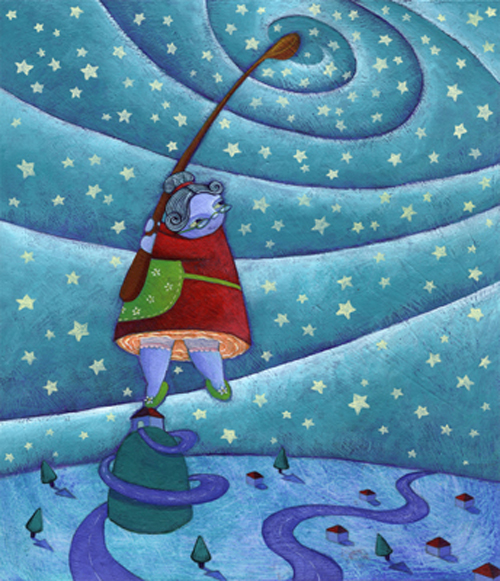
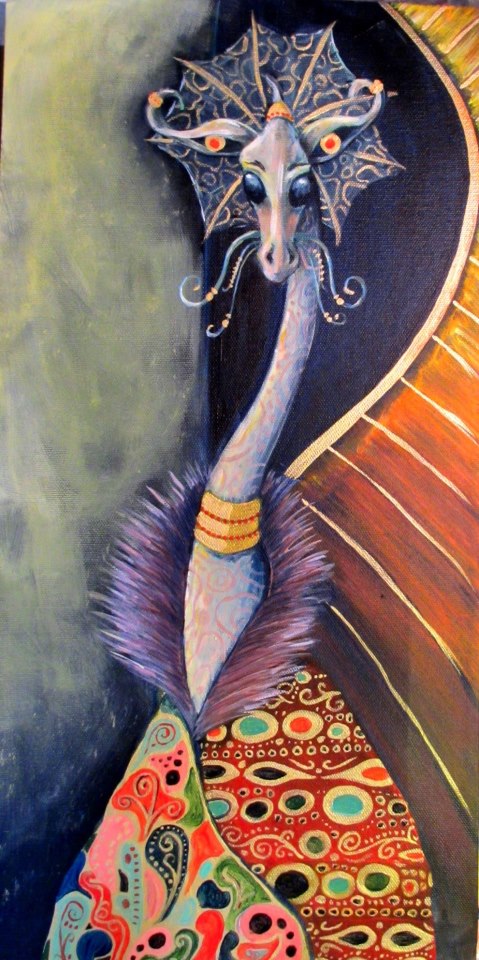
I thought the above illustration was a good fit with today’s post. Since I feel that this post will help you stir up you manuscript to keep your readers reading, just like illustrator Alik Arzoumanian did letting her cute lady stir up the sky. (Note: I am looking for artwork to show off)
Alik received her BFA in Illustration from the Massachusetts College of Art and Design in Boston in 2004. The first children’s book “Tunjur! Tunjur! Tunjur! A Palestinian Folktale” by Margaret Read MacDonald received an ALA Notable Book Award in 2007. She was also featured on Illustrator Saturday.
Hope these tips help you stir up your manuscript:
1. Keep solving problems and adding new ones. Mix up the problems by using physical, logistical, and ones with other people.
2. Make your MC be in a worse place than before the last problem.
3. Beware of the “one Darn Thing After Another” Syndrome. You don’t want your MC to always be stuck dealing with things that don’t change their circumstances.
4. Deliberately shorten your sentences in tense scenes.
5. If you keep your chapters short, you will lore the reader into reading a little more before taking a break.
6. Stun your protagonist with a negative surprise that comes out of the blue. Shock your hero and you will shock your reader into reading more by ramping up the tension.
7. Delay revealing important information to ratchet up the tension. Let your readers worry about unanswered questions.
8. Contract you protagonists universe by making sure their are consequences for each choice. Lost opportunities add tension. When he chooses one option, he will no longer be able to purse the other good things he might have bee able to do.
9. Make an ally into an oppositional character with a conflicting goal.
10. Use dialogue to imply thing that are not directly said. Add in ironic statements to keep the reader wondering.
11. Make sure all the actions are built upon, leading to something. Look for places in your story that are dead ends.
12. Each scene must have a purpose – pointless events – excessive explanations – backstory. You might want to note the purpose after the first draft to remind you why you included it. This will make it easier to see if you need to eliminate it in later revision.
Do you have any other things you do to avoid reader boredom?
Talk tomorrow,
Kathy
Filed under:
Advice,
article,
demystify,
How to,
inspiration,
list,
Process,
revisions,
Tips Tagged:
12 Tips to Help Prevent Reader Boredom,
Alik Arzoumanian 

By: Kathy Temean,
on 1/2/2015
Blog:
Writing and Illustrating
(
Login to Add to MyJacketFlap)
JacketFlap tags:
Interview,
inspiration,
Advice,
Process,
Digital Art,
illustrating,
authors and illustrators,
University of California,
demystify,
Illustrator Sites,
Illustrator's Saturday,
Diana Kizlauskas,
Ray College of Design,
Add a tag
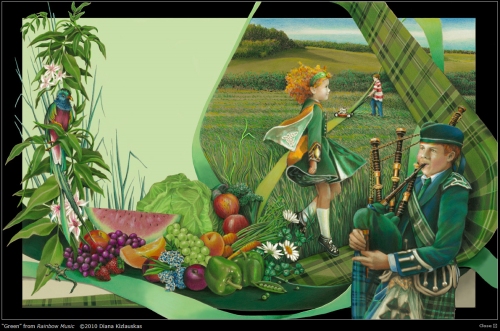
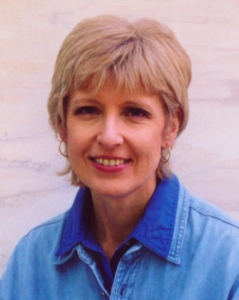 Diana Kizlauskas says she knew she was in trouble early on. Drawing Barbie was more fun than playing with her. Drawing a poster of the Beatles was more appealing than buying one. A high school mural project meant more than ACT scores. By senior year, I made peace with my art addiction and chose it as my professional path…
With help from above and a little caffeine, I earned B.A. degrees in Art Education (UIC, 1974) and Illustration (Ray College of Design/ Illinois Institute of Art, 1991), supplementing those with drawing workshops at the School of the Art Institute of Chicago. My portfolio landed me in the freelance world of advertising and editorial illustration. Then with a new millennium, came a new direction: greeting cards and children’s educational publishing. Throughout this time, I exhibited work in the Chicago area, including at Gallery 400/UIC, Hyde Park Art Center, North Lakeside Cultural Center, and had a solo show at the Beverly Arts Center. In Indiana, my work was displayed at the Anderson Fine Arts Center, the John G. Blank Center for the Arts and Purdue University.
My work, family and faith community make up my rather simple universe. A native Chicagoan, my heart is anchored to the Midwest. However, I often go beyond the familiar to work with ethnic and historical themes. Through books, various other media and travel, I enjoy learning about different eras and cultures. I’ve amassed a wealth of visual reference materials which help me render physical characteristics, geographic features and design elements of various places and times. My background in education helps me translate those images to young readers in ways they can best understand.
TECHNIQUES
The illustrations presented here are created digitally or are hybrids of traditional acrylic on canvas or colored pencil on board combined with digital media.
Here is Diana talking about her process:
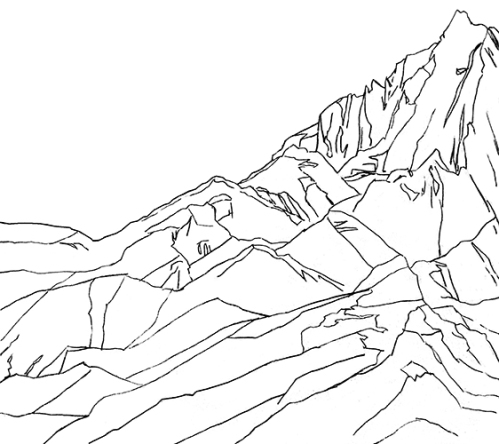
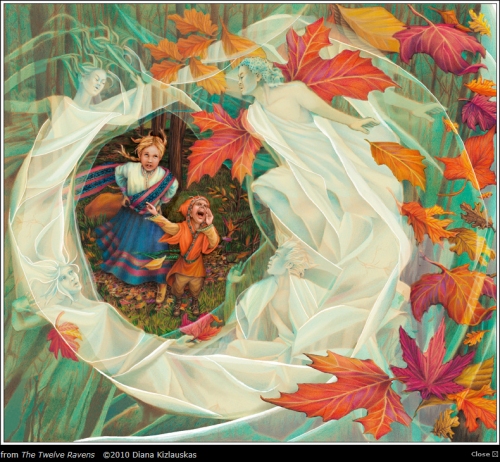
When I start an illustration I first break down the image to its most essential components. In the case of “The Climb” from my The Twelve Ravens book project, these are: the mountain, the stormy sky, girl protagonist and the injured eagle.
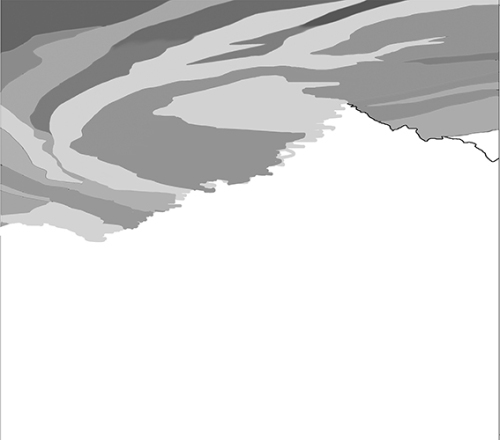
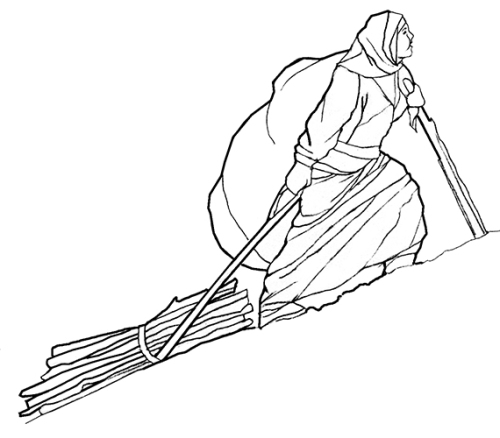
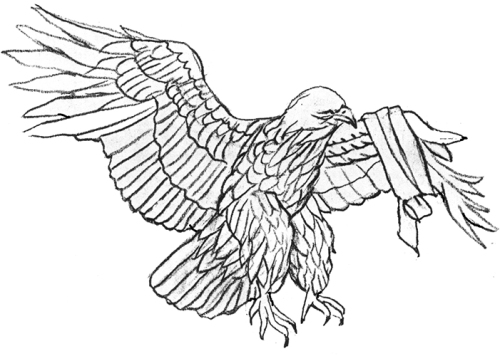
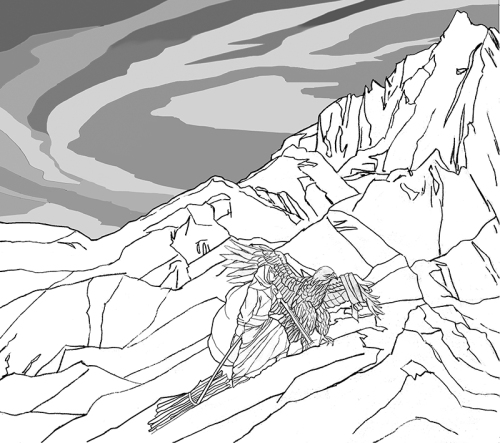
I then scan the images into Photoshop, placing each on a separate layer so that I can manipulate them independently. I play with size, cropping, etc., until I’m satisfied with the arrangement.
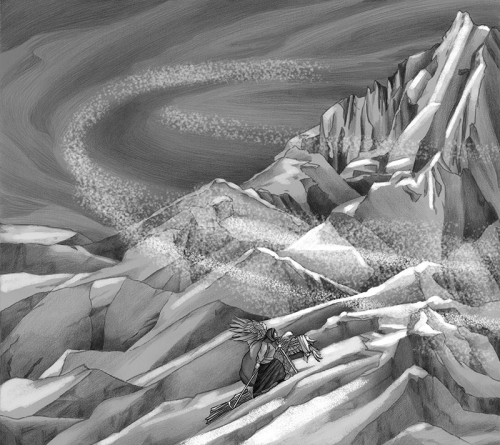
Since an odd number of objects make for a more interesting composition, I’ll eventually add in a fifth element, the “swoosh” of a blizzard.
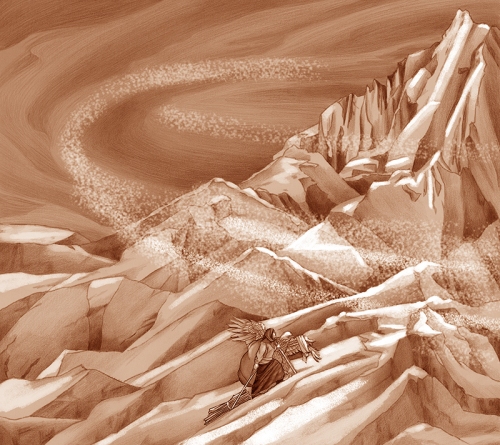
Next, I add tones to the drawing. I do this digitally or by printing out the line art and adding shading by hand and rescanning. The prior picture is an example where I have done both to achieve the result.
I start “painting” by duplicating my black and white tonal image and adjusting its color to umber (Figure 7). This layer lies atop the original tonal art.

I again replicate the image to create a blue layer, which lies atop the umber. Then, using various percentages of opacity in my eraser tool, I remove sections of blue to expose umber and umber to expose black and greys. This results in a balanced warm-cool color underlayment.
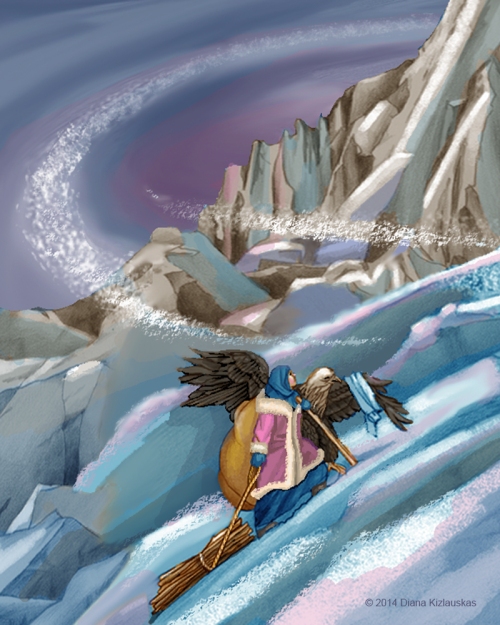
I go to finish by brushing on an entire spectrum of colors, working out details, depth, drama, texture. I give myself creative license to cut, crop, chop and drop, until—voila, it’s done!
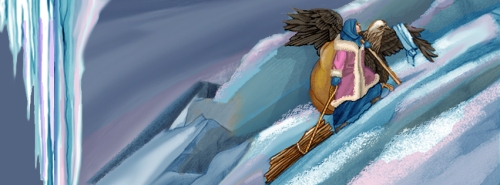
Even as I’m working on the final art, I like to keep each key component of the piece in a separate layer so that I can continue to scale it, move it or manipulate its brightness and color. This is particularly helpful when the format of the illustration needs to be changed from print edition to eBook or if you need to “repurpose” images for a promotional spot. For example, I adapted the scene from “The Climb” to use as my Facebook masthead last winter.
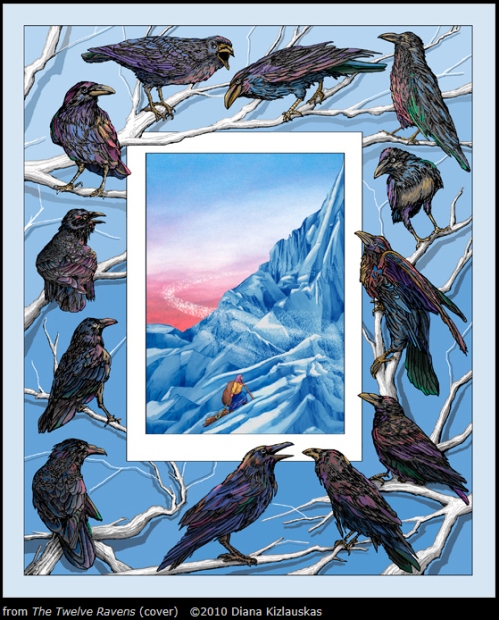
How long have you been illustrating?
I’ve been drawing since I could clutch a crayon in my chubby little hands; I’ve been paid for it since 1991.
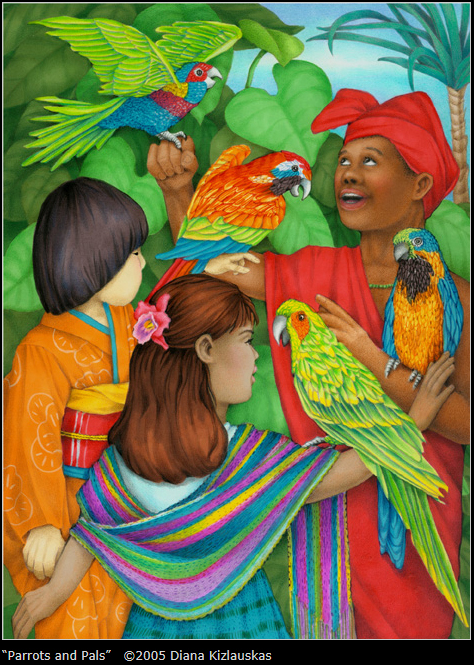
How did you end up going to University of California, Irvine?
I received a BA degree in Art Education from the College of Art and Architecture, University of Illinois at Chicago, known around these parts as UIC. (I have never studied in California; perhaps your question is based on a typo in one of my bio pages.)
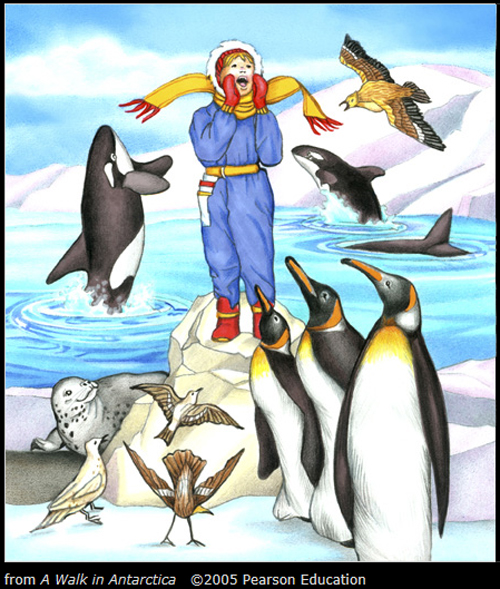
Since you received a BA in Art Education, did you teach after you graduated?
After completing my student teaching, I opted to stay home with my two children until they started grammar school. However, I do have about a decade of experience teaching part-time extracurricular classes to 3-7 year olds, including crafts, science and religious education.
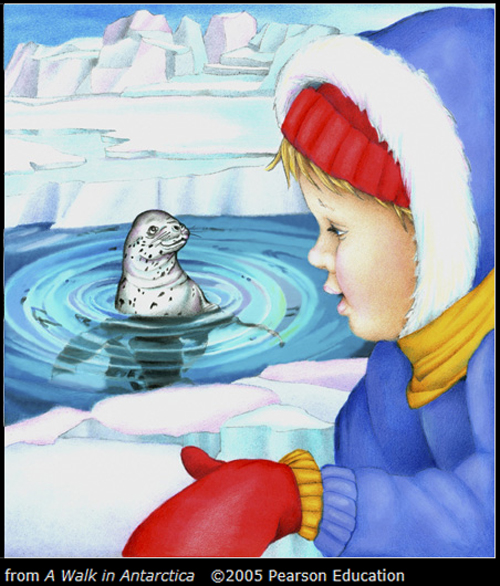
What types of classes did you take that really helped you to develop as an illustrator?
Because a successful illustration is the result of craft, composition and creative communication, I think that Life drawing, Basic Design and Illustration Concepts courses were all indispensable.
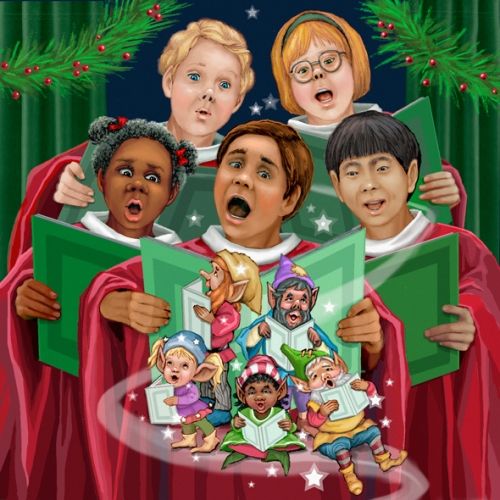
When did you get involved in Freelance Art?
I began getting professional free-lance projects immediately upon graduating from Ray College of Design. Their job placement services were quite helpful in getting me those initial interviews and portfolio showings.
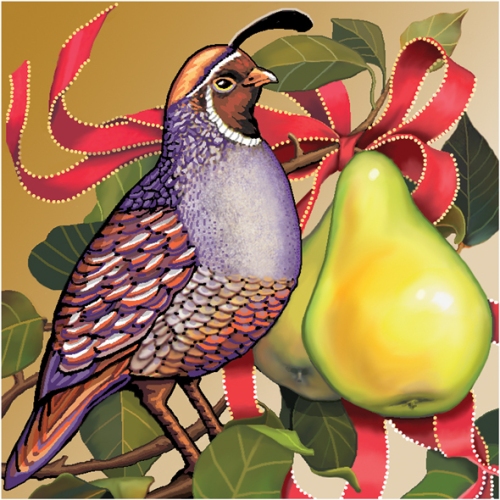
What was the first thing you created where someone paid you for your work?
As a kid, I sold poster-size portraits of the Beatles to classmates. My first job as a “bone fide” illustrator was an editorial piece for the Chicago Daily Southtown newspaper.
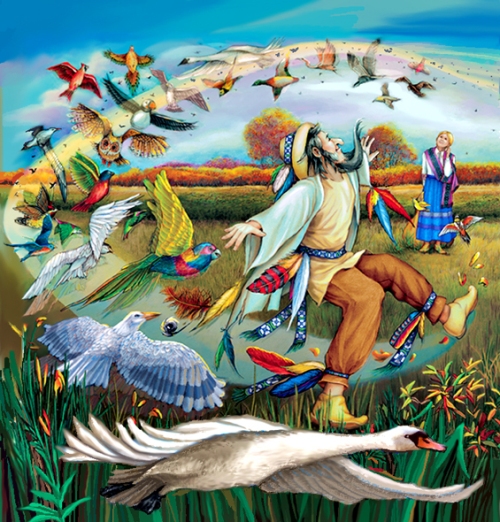
What made you decide to study illustration at Ray College of Design/ Illinois Institute of Art in 1991?
Ray College was a small vocational school providing a lot of individual attention to its students and geared toward getting them into the working world. At this point in my life, I felt I had had enough theoretical background and needed to jump into action.
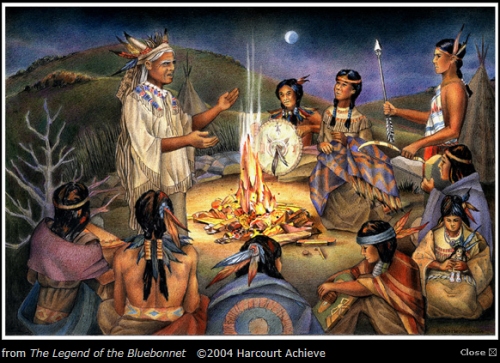
How long did you take drawing workshops at the School of the Art Institute of Chicago?
I attended Advanced Drawing Workshop for about a year.
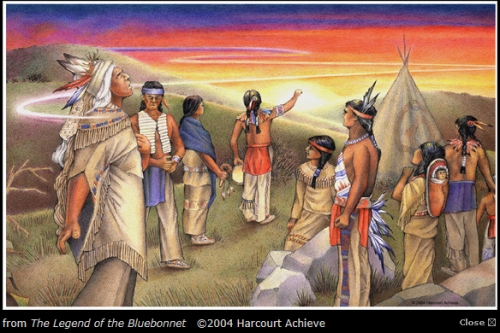
Do you think taking those workshops helped improve your drawing skills?
They certainly did. But more importantly, they impressed upon me the importance of surrender to the mystery of creative process, experimentation with images, as well as pushing techniques and materials to their limits. Oddly enough, I also came away from my experience at SAIC with a personal resolve to avoid conformity to non-conformity.
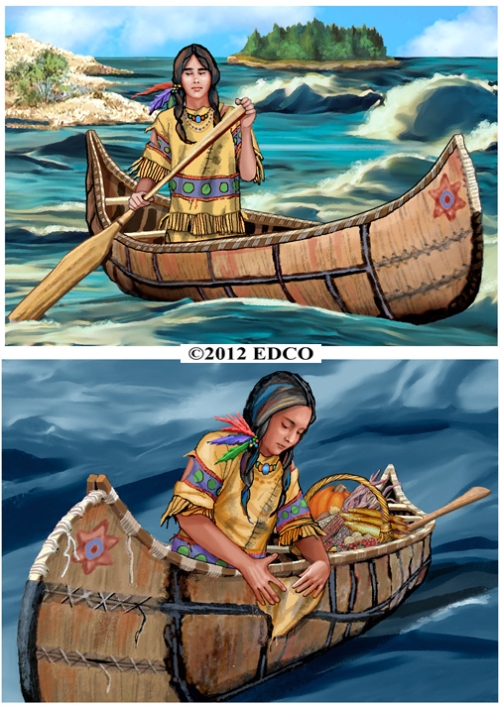
When did you go digital?
I was dragged into the Digital Age in the late 2000’s by clients and agents who wanted a project done quicker, cleaner, and cheaper. I went kicking and screaming, but it was one of the best things that ever happened to me professionally.
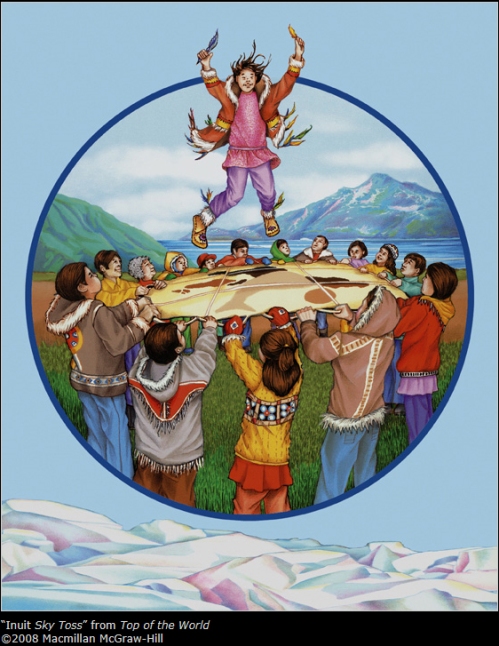
How many children’s books have you illustrated?
If we count leveled readers, I have illustrated 14 books in traditional print and 4 eBooks.
Do you still do freelance art?
All my work is done on a free-lance basis.
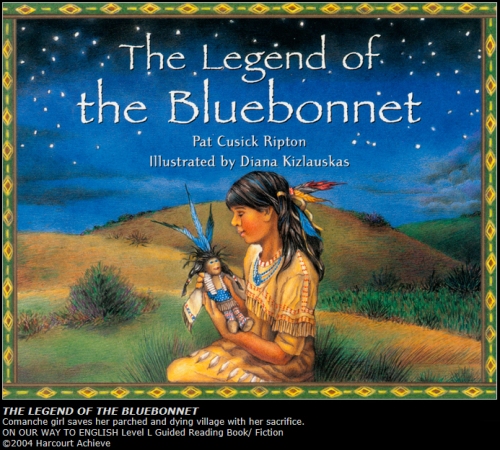
What was the first picture book that you illustrated? When did that happen?
I illustrated The Legend of the Bluebonnet in 2004.
How did that contract come about?
I was approached by Steven Edsey Sons artists’ reps to do the project. They had seen a piece in my samples portfolio which matched the needs of the client very closely—a Plains’ Indian family preparing a meal. The rest was, as they say, history.
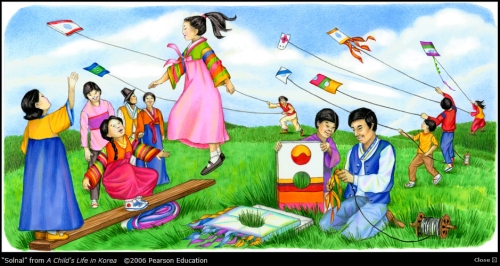
Was the Legend of the Bluebonnet the first book you did with Houghton Mifflin Harcourt?
The publisher of the Legend of the Bluebonnet was Rigby/ Harcourt Achieve. I’m unclear as to what its relation to Houghton Mifflin Harcourt was at that time.
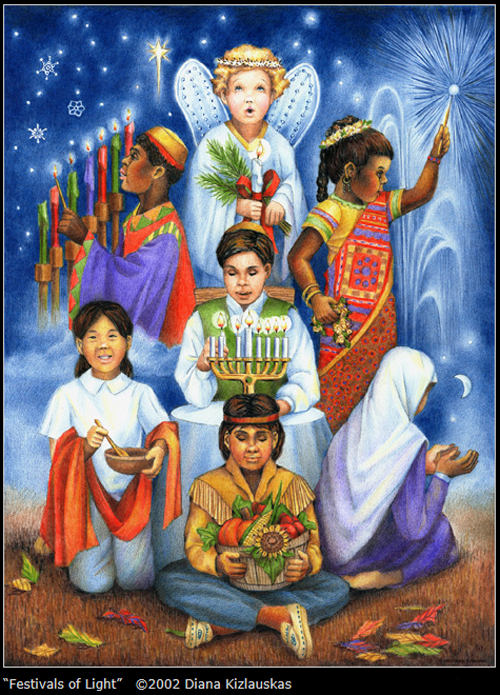
How many books have you done with Harcourt?
I have illustrated four leveled readers for Rigby/ Harcourt Achieve and one for Harcourt School Publishers.
Would you consider working with an author who wants to self publish?
I would base my decision on the strength of the author’s credentials and the quality of the material.
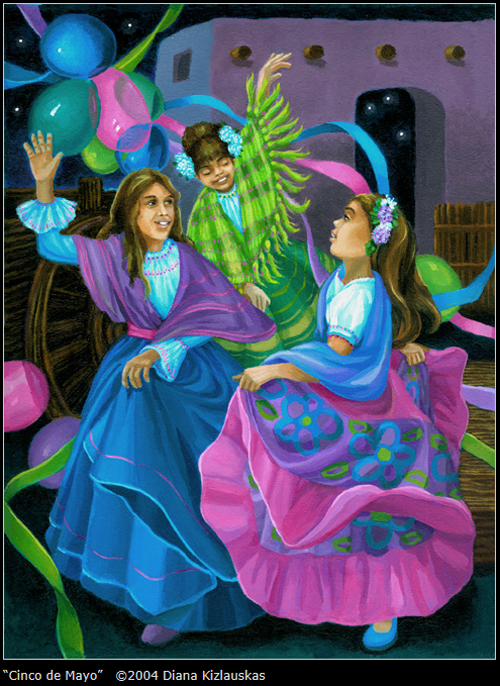
Can you tell us a little bit about EDCO/Ireland? How did they find you and what type of work did they have you do?
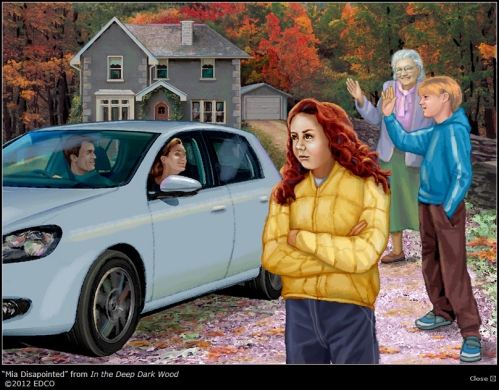
EDCO is an educational publisher in Ireland. I believe their art directors saw my work on childrensillustrators.com and then contacted my current artist reps. I illustrated several stories (“In the Deep Dark Wood,” and “The Island of the Blue Dolphins”) and a poem (“The North Wind”) for them. One of these illustrations was then adapted as a cover for By The North Star, a book in their Big Box Library series.
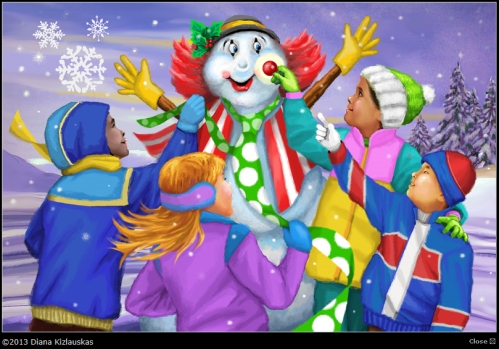
Have you worked with educational publishers? Which one’s?
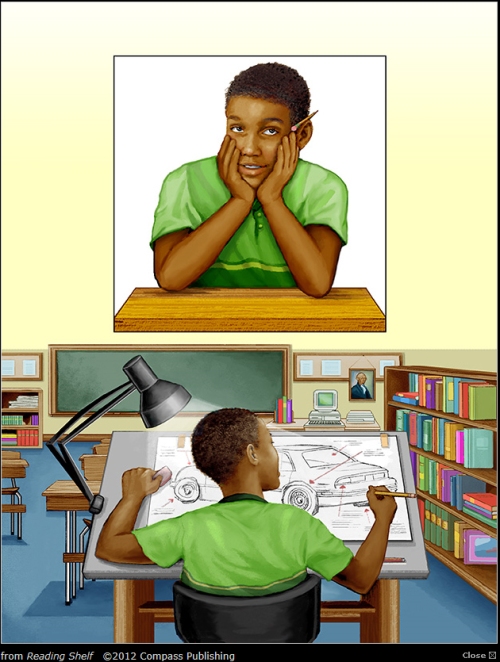
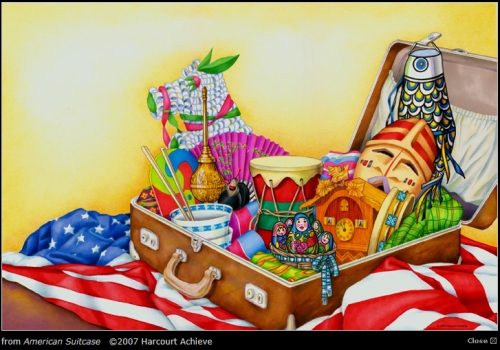
Besides the aforementioned Rigby/Harcourt Achieve, Harcourt School Publishers and EDCO/Ireland, I have worked with Macmillan/McGrawHill, Pearson/Scott Foresman, Pearson Education, Compass Publishing and Quarasan, Inc. Though they might also be considered a trade or religious publisher, Pauline Books and Media contracted me to illustrate Jorge of Argentina: The Story of Pope Francis for Children (2014).
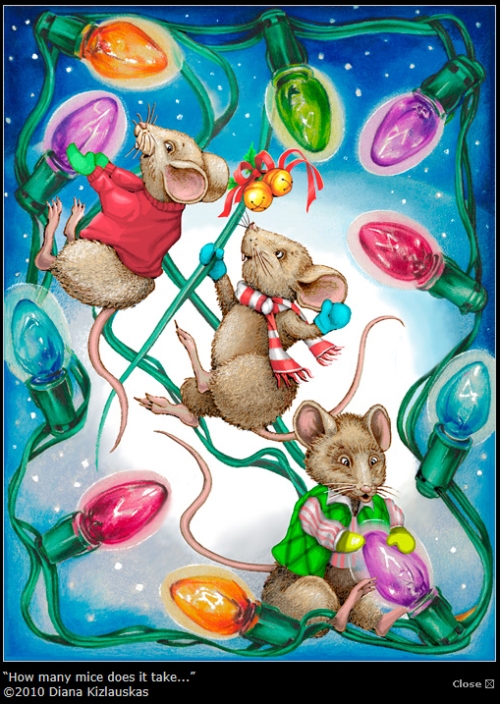
How did those books come your way?
Nearly all of them came through artists’ reps with whom I was associated at the time of the project’s inception.
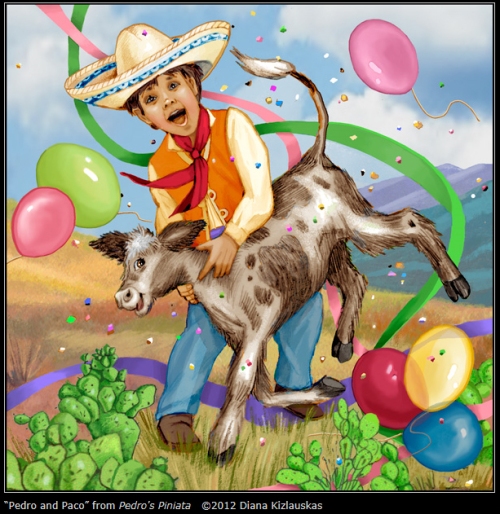
Have you ever tried to write and illustrate a children’s book?
Yes, I have. LETTUCE! , my tall tale about a rabbit and his rampant good fortune, is on the eBook market right now. Parents and teachers of preschoolers have given it a 5-star rating and I’m very excited about making it available in a traditional print version this spring.
Do you have an agent? If so, who and how long have the represented you? If not, would you like one?
Over the years I have been represented by several agencies, but since 2010 by WendyLynn&Co.
What types of things do you do to get your work seen by publishing professionals?
I supply my artist reps with promotional material and advertise on childrensillustrators.com (http://www.childrensillustrators.com/illustrator-details/DKizlauskas/id=2110/). I maintain gallery and bookstore spaces on the Society of Children’s Book Writers and Illustrators website (http://www.scbwi.org/members-public/diana-kizlauskas) and I maintain an author/illustrator page on amazon.com. Also, I post regularly to my business Facebook page (www.facebook.com/DKIllustration). Most importantly, I keep my DKI Children’s Illustration website (www.dianakizlauskas.com ) updated and functioning.
Have you seen your style change since you first started illustrating?
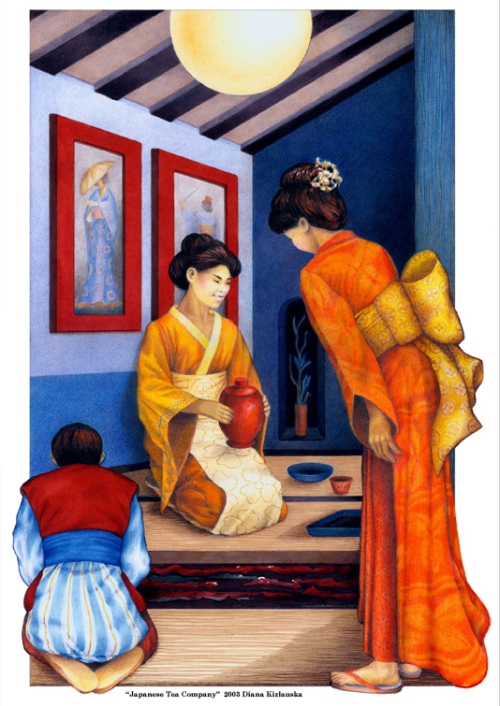
Absolutely. My work is increasingly softer edged, more painterly, and close to 100% digital.
Have you gotten any work through networking or the Internet?
Almost exclusively so. As I described above, nearly all my marketing revolves around websites and on-line portfolio displays.
Do you use software for painting besides Photoshop?
So far, only Photoshop.

Do you own a graphic tablet? If so, how do you use it?
Yes, indeed. To reduce a complicated explanation to bare basics: I scan hand-drawn and photo-reference images into Photoshop, then use both a mouse and stylus to create layers, lines, colors, textures and draw additional images directly onto the tablet—whatever it takes to bring the illustration to finish.
How much time do you spend illustrating?
When working on a client project, I keep a very strict 10-hour, 6 day per week schedule. When creating promotional samples or working on my own books, I loosen it up to 6-hours per 5 days weekly. (This fall a family medical crisis put my work on temporary “hold,” but I’m slowly getting back on track.)
Do you have a studio set up in your house?
Yes, I do. I’m very fortunate to have a large room and loft area that accommodate a drawing table,easel, computer, printer, scanner, copier, a 8’x3.5’ work counter with horizontal storage, and 3 file cabinets full of reference clippings (some dating back to grammar school). Scads of shelves house more reference, paints, brushes , pencils and pens—not to mention a potpourri of chachkies. The closet full of dusty portfolio cases and canvases bears witness to a time before computers took over.
Any picture books on the horizon?
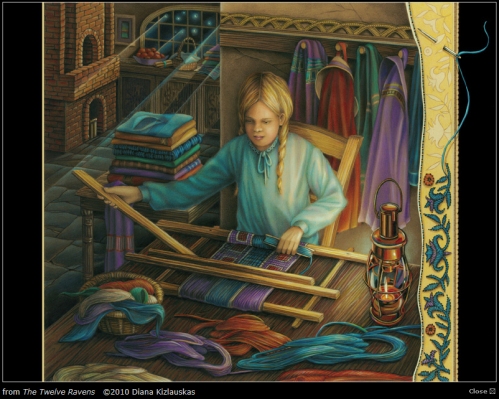
The Twelve Ravens , a Lithuanuian folktale which I have adapted, retold and illustrated, is a project I hope to have out by Fall, 2015. The eBook version is almost done, the print format awaits revision.
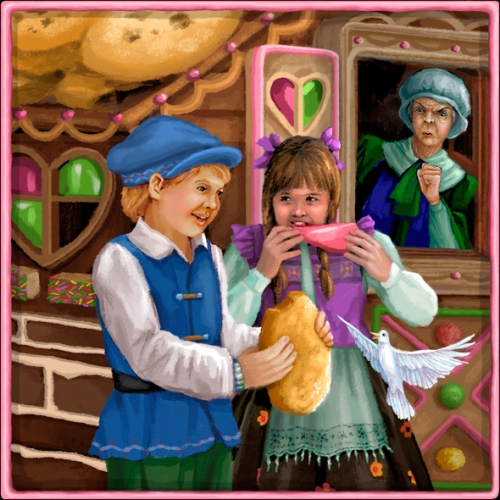
What are your career goals?
Beautiful books for beautiful children! I want to continue communicating to children of all colors and backgrounds through positive, bright and inspiring images. Whether my illustrations attain the stature of being published by the top trade publishers in the country or are independently made and distributed, my goal is to make each one better than the one before. I believe that concentrating on the work itself and not the fame or fortune it may bring is the only way an artist can maintain sanity in an ever-changing business world and culture.
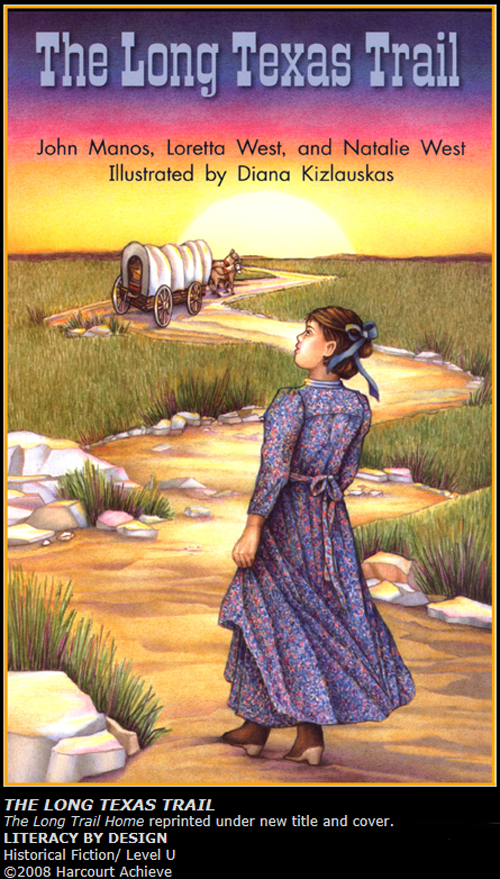
What are you working on now?
As I mentioned, LETTUCE! and The Twelve Ravens are on my mind, but they may have to simmer on a back burner if my agent drafts me for a McGraw-Hill Education project for which I’ve recently been approved.
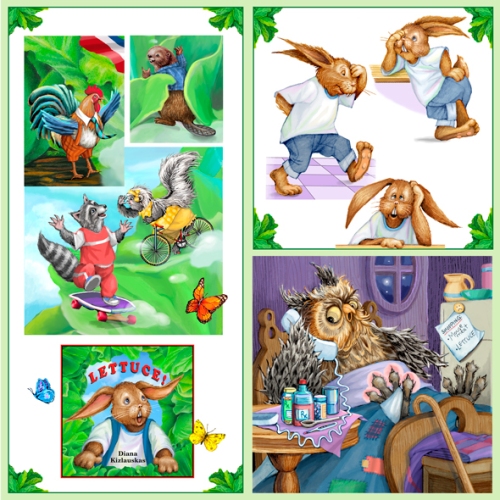
Are there any painting tips (materials, paper, etc.) you can share that work well for you? Technique tips?
Since I do all my “painting “ in Photoshop these days, there’s not much in the way of materials that I need to think about. But when working with colored pencils on paper or creating a “hybrid” piece where I draw onto a printed digital image, I like to use a wonderfully smooth paper called Mohawk Superfine. It is a 100 lb. “ultra white” cover stock used by the printing industry. It is receptive to the toner inks in my printer and is a perfect surface for multiple layers of Prismacolor pencils.
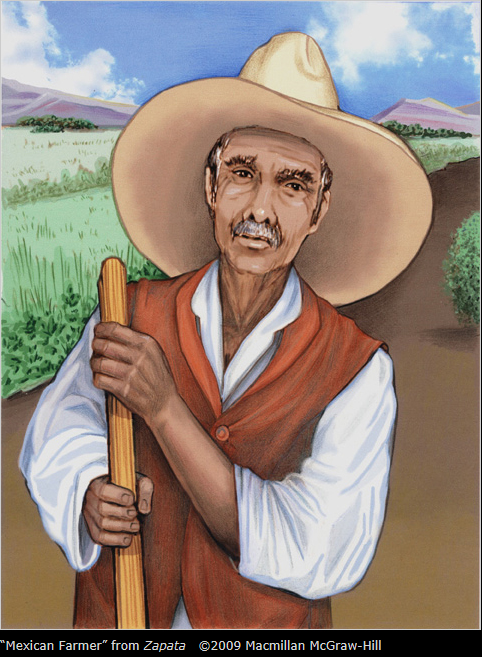
Any words of wisdom you can share with the illustrators who are trying to develop their career?
Like a man walking a tight rope, look straight ahead, never down. In creative, competitive fields, people who remain positive, patient, and intrinsically motivated—eventually prevail. Or as a colleague once remarked, “I can’t NOT do this…” Really, what other choice does a true artist have? So, KEEP AT IT!
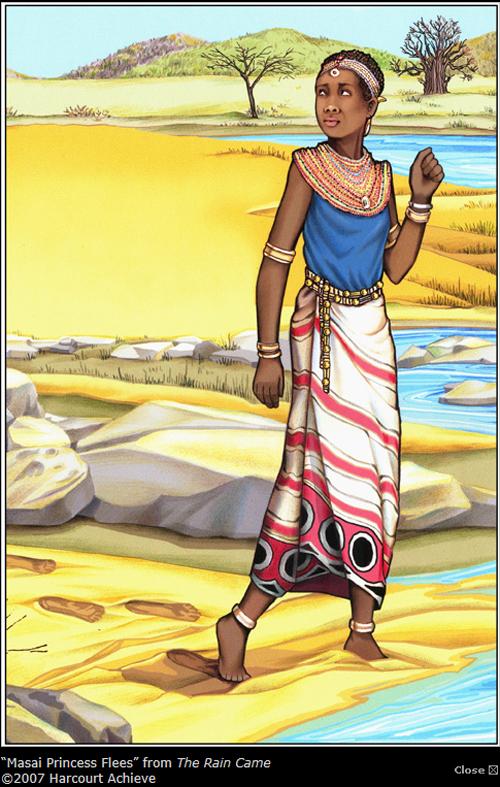
Thank you Diana for sharing your journey and process with us and helping us kick off 2015. You can visit Diana at her website: http://www.dianakizlauskas.com to see more of her work.
If you have a moment I am sure Leeza would love to read your comments. I enjoy them too. Thanks!
Talk tomorrow,
Kathy
Filed under:
Advice,
authors and illustrators,
demystify,
illustrating,
Illustrator Sites,
Illustrator's Saturday,
inspiration,
Interview,
Process Tagged:
Diana Kizlauskas,
Digital Art,
Ray College of Design,
University of California 

By: Kathy Temean,
on 12/28/2014
Blog:
Writing and Illustrating
(
Login to Add to MyJacketFlap)
JacketFlap tags:
Tips,
list,
reference,
inspiration,
Advice,
Process,
authors and illustrators,
demystify,
Kendra Shedenhelm,
Best of Writing and Illustrating 2014,
Add a tag
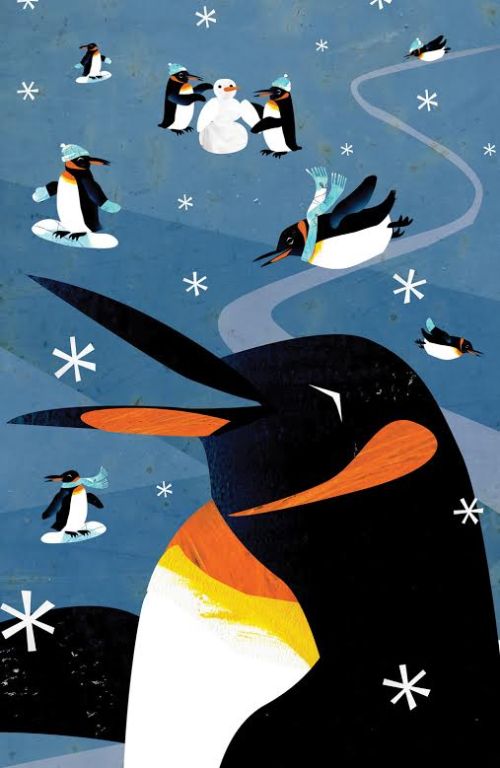
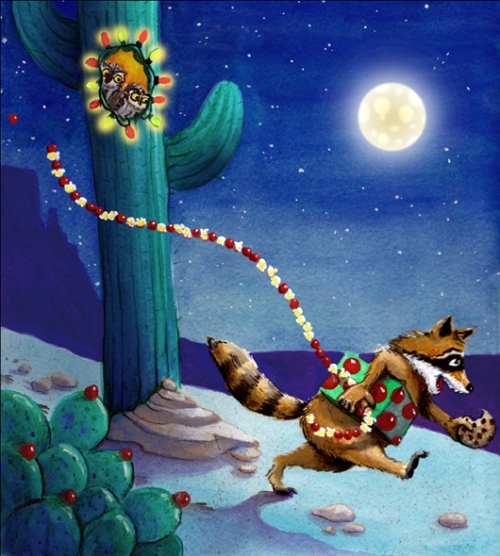
Kendra Shedenhelm sent this illustration in for us to enjoy. It makes me think of the song that was out a year ago titled, “What does the Fox say.” Must be Tee Hee Hee. The fourth book she has illustrated, “You, the Magician,” was released in November 2014, and can be viewed at http://www.youthemagician.com. http://www.kendrashedenhelm.com/
HERE ARE THE LINKS TO HELPFUL ARTICLES POSTED IN 2014
WORLD BUILDING TIPS
TIPS ON WRITING ENDINGS
THE MANUSCRIPT IN THE DRAWER
SELF PUBLIHING – GETTING YOUR BOOK READY
REVISIONS
TRACKING SUBMISSIONS
PRICING STRATEGIES FOR ILLUSTRATING
MORE SHOWING LESS TELLING
AGENT/AUTHOR REVISION TIPS
RESEARCHING AGENTS
PUTTING WORDS ON PAPER
CREATING SYMPATHIC CHARACTERS
AMAZON RANKING vs. DAILY BOOK SALES
WORKING OUT THE DETAILS
TEN DREADED MANUSCRIPT ERRORS
PITCH IS CONCEPT
STATE OF THE CHILDREN’S PUBLISHING MARKET
STATE OF THE MARKET PART TWO
STATE OF THE MARKET PART THREE
ATTACKING A CONFERENCE
WHEN DO WRITERS STOPW WRITING
MATCHMAKING FOR WRITERS CRITIQUE PARTNERS
SEVEN WAYS TO MAKE YOURSELF AN EASY AUTHORS TO WORK WITH
AMAZON SALES STRATEGIES
AMAZON STATEGIES – LOOK INSIDE
AMAZON STRATEGIES – SALES PAGE
LITERARY vs. COMMERCIAL FICTION
RIGHT TO WRITEPICTURE BOOK CHARACTER DEVELOPMENT
90 THINGS TO KNOW ABOUT YOUR CHARACTER
HOW TO SPOT A GREAT PICTURE BOOK
RESEARCHING FICTION
BEFORE STARTING A THRILLER NOVEL
ROMANTIC BODY LANGUAGE
NEVER SAY HE THOUGHT/SHE THOUGHT
CRITIQUING SECRETS
MASTERING KID SPEAK
LETS TALK POV
RIGHT TO WRITE
GRAMMAR NAZI
FIVE WAYS TO FOLLOW UP WITH AN EDITOR OR AGENTS
OUTLINING YOUR NOVEL
BEFORE THE SALE – BOOK APPEAL
FORMAT YOUR BOOK FOR CREATESPACE
THREE TRICKS FOR SHOWING RATHER THAN TELLING
DEALING WITH REJECTION
CRITIQUING SECRETS
WRITING WORKSHEETS
7 POINT STOR STRUCTURE SYSTEM
Talk tomorrow,
Kathy
Filed under:
Advice,
authors and illustrators,
demystify,
inspiration,
list,
Process,
reference,
Tips Tagged:
Best of Writing and Illustrating 2014,
Kendra Shedenhelm 

By: Kathy Temean,
on 12/1/2014
Blog:
Writing and Illustrating
(
Login to Add to MyJacketFlap)
JacketFlap tags:
Tips,
Writing Tips,
Advice,
video,
Process,
How to,
demystify,
Dan Wells,
Free Writing Videos,
Seven Step Story Structure,
Add a tag
Seven Point System
To build a story you must have a story in mind. Plot – characters – conflict. Before you start to layout your plan for that book Dan Wells tells us, don’t start at the beginning, but start at the end. This is not the last chapter. It is the climax. Figure out the external conflict and internal conflict.
Once that is done then go to the other end, the beginning and start. Normally a good book will take a weak or flawed character on a journey that ends with them growing in some way. By the end, they are a better or stronger person because of their journey. I’ve heard Richard Peck tell writer that he always rewrites the first chapter after he is finished the first draft. He says you can’t know where to start until you figure out how the story ends. He is doing the same things as what Dan is suggesting, except Dan is trying to save you from having to rewrite the first chapter.
This system can be applied to almost any writing, including short stories and novellas.
Here are the notes I wrote while watching the videos below:
The Seven Points:
Hook – Starting state loser – weak – flawed.
Plot Turn 1: Introduces conflict. Just as the midpoint moves you from the beginning to end, Plot Turn 1 moves you from the beginning to midpoint. Call to adventure. Introduces the conflict. The character’s world changes: Meets new people – discovers new secrets – follows the White Rabbit.
Pinch 1: Applies pressure – something goes wrong – bad guys attack and the MC is forced to go forward – often used to introduce the villain.
Midpoint: Learns the truth. This is wear the MC changes from reaction to action.
Pinch 2: Applies more pressure until the situation seems hopeless. A plan fails – a mentor dies, leaves the hero alone – the bad guys seem to win. These are the jaws of defeat from which your hero will be snatching victory. Make sure the teeth are sharp.
Plot Turn 2: Moves the story from the midpoint to the end. At the midpoint your MC is determined to do something, and finds the resolution you do it, so Plot Turn 2 is where the MC obtains the final thing they need to make it happen. “The power is in you!” Grasping victory from the jaws of defeat. MC has the piece they need even if they don’t realize it. The piece that gives the character something they decide to do in the climax.
Resolution – What is the climax? MC succeeds, and is now a changed person.
The story is not complete. It is just a skeleton, and needs flesh to fill it out: Rounded characters – Rich environments – Prologue? – Try/Fail cycles – Subplots.
If you haven’t watched Dan Wells videos, you might want to take a few minutes to do so. At least bookmark this page, so when you have a half hour you can watch without wasting time to find it.
First Video
Second Video
Third Video
Forth video
Fifth video
Talk tomorrow,
Kathy
Filed under:
Advice,
demystify,
How to,
Process,
Tips,
video,
Writing Tips Tagged:
Dan Wells,
Free Writing Videos,
Seven Step Story Structure 


Roxanne Smolen
Ever think about self-publishing a book using CreateSpace? Maybe you have hesitated because you were nervous about the expertise needed to digitally format the manuscript to look professional. Well, Roxanne Smolen has worked through the process, wrote up the step-by-step process below, and is willing to share it with you.
Here is Roxanne:
I think of myself as an Indie author, although I’m actually a hybrid. I have seven books published by a small publisher. Those books can be found in every book selling venue possible. But honestly, almost all my sales are through Amazon. I started thinking, why sell through a publisher and give them a healthy cut when I can make more money by doing it myself?
So I began self-publishing. I published two middle-grade books that I wrote with my young granddaughters (under the name R.A.P. Smolen), four writer’s advice books that I wrote with seven other authors (under the name of C. S. Writers), a science fiction novel that I wrote about a woman who literally goes to hell (Satan’s Mirror), and the first three novels of my current book series (The Amazing Wolf Boy).
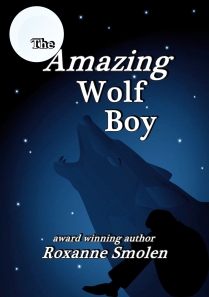 The Amazing Wolf Boy is a humorous paranormal romance for young adults about a sixteen-year-old nerd who turns into a werewolf during Christmas Eve dinner. His parents banish him to Florida (That’s where I live. What a coincidence.) where he fails to fit in with the other kids. You can buy book one here.
I’m pretty proud of the book, not only because I wrote it but because I published it. Self-publishing does not carry the stigma it once did. If you are thinking about publishing your own book, my biggest piece of advice is to proofread and edit carefully. It’s so easy to publish a book nowadays authors are putting their work out there with all sorts of errors. You don’t want to be that guy.
The best thing, of course, is to hire an editor. But good editors are expensive, and many of us can’t afford such an investment. If you plan to do it yourself, I have a tip for you—change your font. Just for the editing process. Make it something a little difficult to read, like Broadway or Impact. Something to make you focus. Your brain doesn’t always read what your eyes see; it reads what you thought you wrote. That’s why we can read over a sentence with a misspelled or missing word twenty-five times and not pick it up. If you change your font, your brain will think it’s reading something new and it will pay attention.
 I would also advise you to take care with your book formatting. Readers don’t have the patience to read text with large gaps or ragged indents. On that note, I have written a tutorial.
How to Format Your Book for CreateSpace
I get a lot of formatting questions, so I thought I’d put it all down in one place. If you find it useful, let me know.
Note: I use Word 2010. Your version of Word might look a bit different, but it should be similar enough for you to figure out.
And now, without further ado, here is how I format a book for CreateSpace.
Ready, Set, Go
- Open your Word .doc
- Set the margins. Go to PAGE LAYOUT –> MARGINS –> CUSTOM MARGINS.
- Under the Margin Tab, make the top 1″, the bottom 1″, the inside .9″, and the outside .6″.
- Orientation should be Portrait.
- Multiple Pages should be changed to Mirror Margins. That’s it for the Margin Tab. Don’t close the box yet.
- Then under the Paper Tab, change the Paper Size to the size of the book you are planning to publish. I like my books to be 8″ by 5″ so I change:
- Width to 5″
- Height to 8″. Then click OK to close the box.
- SELECT ALL (it’s over in the top right-hand corner.) Delete all tabs by using REPLACE (also in the top right-hand corner.)
- Go to the Replace Tab
- Click More
- Click Special
- Click Tab Character
- Leave REPLACE WITH blank
- Click REPLACE ALL
- SELECT ALL
- Click the corner box next to Paragraph.
- Under Indentation, go to SPECIAL
- Select FIRST LINE
- Under BY type .25
- SELECT ALL
- Change line spacing to 1.5
- Click both REMOVE SPACE BEFORE and REMOVE SPACE AFTER so both read ADD.
- SELECT ALL
- Change your font and font size. I usually use Georgia 12pt.
- SELECT ALL
- Justify your margins. Yes! Don’t argue with me.
- SELECT ALL
- Under PAGE LAYOUT, click Hyphenation and Automatic.
- SELECT ALL. Make sure you don’t have any double spaces after punctuation. (This is for all us older authors because we were taught that in high school.)
- Go to the Replace Tab
- Under FIND WHAT, hit the spacebar twice
- Under REPLACE WITH, hit it once
- Click REPLACE ALL
- Make sure the end of every chapter/short story has a new page character.
- Go to PAGE LAYOUT –> BREAKS
- Under Section Breaks, click NEXT PAGE (One caveat to this is if you are publishing a book of short stories. You want each story to start on the right-hand side, right? Or some people want each chapter to start on the right. In that case you would click ODD PAGE.)
- There should be no page numbers, headers, or footers on blank pages.
Front Matter Matters
In order:
- TITLE PAGE
- Use a larger font and make it bold.
- Type your book title about halfway down the page.
- Type your name at the bottom. (This should give you plenty of room to sign at book signings.)
- End the page. (PAGE LAYOUT –> BREAKS –> NEXT PAGE)
- COPYRIGHT PAGE
- Type in your Copyright Notice.
- Example: This is a work of fiction. The characters and events described herein are imaginary and are not intended to refer to specific places or to living persons alive or dead. All rights reserved. No part of this publication may be reproduced, distributed, or transmitted in any form or by any means, including photocopying, recording, or other electronic or mechanical methods without the prior written permission of the publisher except for brief quotations embodied in critical reviews.
- Copyright © (date) by (your name)
- ISBN (Type in the number provided by CreateSpace.)
- You can also add your publishers name, state, website, and logo if you have started your own company.
- End the page. (PAGE LAYOUT –> BREAKS –> NEXT PAGE)
- DEDICATION PAGE
- This is optional. If you are dedicating your book to a loved one or an organization, type it here.
- End the page. (PAGE LAYOUT –> BREAKS –> NEXT PAGE)
- TABLE OF CONTENTS
- You should have a table of contents to list each chapter or short story.
- Go to REFERENCE and click Table of Contents.
- End the page. (PAGE LAYOUT –> BREAKS –> NEXT PAGE)
- NOTES
- If necessary, add a blank page at this point (PAGE LAYOUT –> BREAKS –> NEXT PAGE) so that the first page of your story starts on the right-hand side.
- There should be no page numbers, headers, or footers on the FRONT MATTER (or the back matter either for that matter.)
Back Matter Matters Too
- Add a page for Your Author’s Bio, headshot (I mean a photo, not an actual… although if you’re writing horror and you’re good with make-up…) website, and email address.
- End the page. (PAGE LAYOUT –> BREAKS –> NEXT PAGE)
- Add another page for a list of your previous works and where to buy them.
- End the page. (PAGE LAYOUT –> BREAKS –> NEXT PAGE)
- If you are writing a series, you can put an excerpt of an upcoming book here.
- Remember, there should be no page numbers, headers, or footers on the front or back matter unless you want to use Roman Numerals.
About Your Headers and Footers
- Go to the first page of your story. (Story, not Front Matter.)
- Click INSERT.
- Click HEADER.
- Choose your Header Style. (I usually use Blank.)
- Type the name of your book. (I recommend using a smaller font.)
- Highlight what you just typed and Right align it. (On the Home Tab.)
- Under HEADER & FOOTER TOOLS click ODD & EVEN PAGES.
- Make sure LINK TO PREVIOUS is not selected.
- Now go to the second page of your story.
- Click the Header and type your name.
- Highlight what you typed and Left align it.
- You should now have your Title on the right and your Name on the left on alternating pages.
- Check to be sure the header hasn’t shown up on your Front Matter.
- If it has, delete it and de-select LINK TO PREVIOUS on each page.
- Go back to the first page of your story.
- On the left-hand side of the HEADER & FOOTER TOOLBAR, you will see Page Number. Click it.
- Choose Bottom Of The Page.
- Choose your style. I use Plain Number 2.
- Note: You will have to do this twice—once for the right-hand (odd) side and once for the left-hand (even) side.
- Note: You may have to format the page numbers to get them to run consecutively. To do that, click Page Number again and scroll down to Format Page Number.

Kill the Widows and Orphans
Widow
- A paragraph-ending line that falls at the beginning of the following page/column, thus separated from the rest of the text.
Orphan
- A paragraph-opening line that appears by itself at the bottom of a page/column.
- A word, part of a word, or very short line that appears by itself at the end of a paragraph. Orphans result in too much white space between paragraphs or at the bottom of a page.
Word kills your widows and orphans by default, but the result makes a ragged bottom margin. I’m one of those persnickety people who feel that when you open a book, the bottom margin on both pages should match up. So I kill them manually.
- Click the corner box on PARAGRAPH.
- Click the LINE AND PAGE BREAKS Tab.
- Uncheck Widow/Orphan Control.
- Go through each page of your 500 page book and look for Widows and Orphans, adding or deleting words until the page looks right.
And Another Thing…
The first paragraph of each chapter and after a drop should be flush left, meaning don’t indent. Also, the first letter of the first word of that paragraph should be fancied up. I’m sure you’ve all seen the first letter in a different font with scroll work, etc. The problem is that it messes with the line spacing of the paragraph. The only work-around I know is to insert a picture of the necessary letter in the desired fancy font and then have the text wrap it so there is no problem with the spacing. But that is a lot of work for little gain. I just bold the first letter and leave it in the same font as the rest of the paragraph.
Easy Peasy
When all looks good, you need to save the book as a PDF. Word can do this for you.
FILE –> SAVE AS –> PDF
Now you are ready to upload the .pdf to CreateSpace.
See? It’s as easy as 1, 2, 3… 4, 5, 6… Oh, you get the picture.
Thank you Roxanne for sharing this process with everyone. I know this will help a lot of writers, if not now, later. I am sure they will want to save this for future use. Here is the link to visit Roxanne’s blog: http://www.moonrox.wordpress.com/
Talk soon,
Kathy
Filed under:
Book,
demystify,
How to,
Process,
Publishing Industry,
reference Tagged:
CreateSpace,
Formatting your book 

By: Kathy Temean,
on 11/4/2014
Blog:
Writing and Illustrating
(
Login to Add to MyJacketFlap)
JacketFlap tags:
Erika Wassall,
Agent,
Author,
inspiration,
Advice,
Process,
revisions,
Guest Blogger,
rejection,
Dealing with Rejection,
First Page Critique,
demystify,
Add a tag
 Erika Wassall, the Jersey Farm Scribe here with…
FULL DISCLOSURE – Dealing with a Rejecting Critique
This past Friday the 31st, on Halloween, I had a fright like no ghost or goblin costume could compare to.
My first page critique of Daddy, What’s A Redneck! (see it here)
The full manuscript is a touching story of a father who finds himself surprisingly stumped on how to explain the history and pride of an important piece of his family’s culture. He explains the actual origin of the term, the ingenuity, fun-loving and family-oriented traditions that mean so much to him. Little Lainey’s excitement grows as she learns not only about a term and a family, but about herself.
Suffice it to say: Liza was not a fan.
My first response was the famous kneejerk: “I’m NEVER writing ANYthing EVER again,” supported by the ever-popular: “What’s the point??” and the sister thought: “What does SHE know anyway?”
To be honest, I clicked off the site, without even reading the critique in full. Said nothing to anyone. Ignored it. Told myself it didn’t matter.
But, I am proud to say that it wasn’t long before I took a deep breath and tried to take a more realistic look at what was happening.
Okay. So an agent had read my work, and not liked it.
Ummm…. that’s NOT new!!! I’ve had agents turn my work down before. Even successful authors get rejected.
I decided I would go back to Kathy’s site and read Liza’s comments in full, THREE TIMES before the NJ SCBWI event the next day.
The first time I read them, they made me angry. I disagreed with EVERY word, and rolled my eyes at LEAST half a dozen times.
“She just doesn’t GET it.”
A few hours passed.
The second read, I saw where she coming from with. I shrugged a few times where I had previously crinkled my nose and shook my head. I reminded myself that while my usual writing is exceedingly kid-centric, this manuscript in particular is not mainstream-minded.
I reminded myself of three things: (1) writing is an art, not a science (2) her critique was for MY benefit, she got nothing out of this (3) as a successful agent, she knows much more than I, (and that’s a fact, not an insult).
The next morning, I read it a third time. This time, I saw real value in her comments. She mentions a lack of motivation. WHY is the little girl asking the question in the first place?
Huh…. I guess that could set the stage a bit better….
She mentions the title not properly representing the story itself, that people may even be insulted and not read it.
My “darling” cried out to me to be saved…. But I LOVE the title… I crafted it with certain connotations, liking the idea of that it was counter-balanced by a story of love and honor.
But … um… HELLO??!!! They have to READ the story to know that. If they see the title and turn away, the power of the irony is useless.
By the time I left for the SCBWI event, I no longer felt that dejected combination of anger and self-doubt. After all, as I’ve said myself, rejections are PROOF that I’m a writer!
I’ll be completely honest that I still do not agree with all of her comments. And that’s okay too. It is an earnest somewhat “issue” driven story, which while not something everyone is looking for, can have its place.
But even the comments I may not fully agree with have given me insight into my writing. Some of them I found may even apply to other manuscripts or projects I’m working on.
This week, when I sat down to write my post, fueled by amazing speakers, and an afternoon of great workshops at the SCBWI craft day, including a chance to see my dream editor Amy Cloud (I just genuinely enjoy her personality), I wrote the opening paragraph to three different articles. None of them worked.
I looked over my notes from the workshops. Nothing felt right.
I looked at Kathy’s site, as I often do, and it hit me. I had a chance to write about dealing with critique in a very unique, painfully honest way.
So a big thank you to Kathy for the opportunity. And a genuinely GIANT thank you to Liza for helping me grow as a writer, and realistically, probably also as a person.
And to you… I give a heart-felt thanks for indulging me by reading my story. It has immeasurably solidified for me the importance of not only accepting but also truly embracing critique in order to allow for growth.
Because you know what? Our manuscripts are worth it.
Erika, what can I say other than thank you for giving us another great post. I think we all have experienced this, so I hope others will take note of how you dealt with the angst of a negative critique and benefit from your reaction and journey.
Talk tomorrow,
Kathy
Filed under:
Advice,
Agent,
Author,
demystify,
inspiration,
Process,
rejection,
revisions Tagged:
Dealing with Rejection,
Erika Wassall,
First Page Critique,
Guest Blogger 

By: Kathy Temean,
on 10/31/2014
Blog:
Writing and Illustrating
(
Login to Add to MyJacketFlap)
JacketFlap tags:
Interview,
picture books,
inspiration,
Advice,
Process,
illustrating,
University of Arizona,
demystify,
Illustrator's Saturday,
Baby Bug Magazine,
Laura-Susan Thomas,
Add a tag
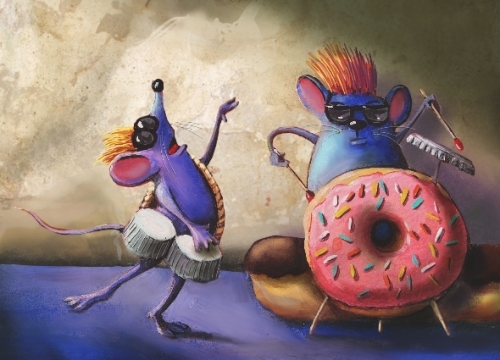
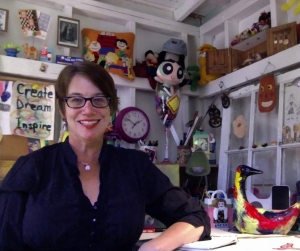 Lauren-Susan Thomas currently illustrating children’s books, on the foggy Central Coast of California. She earned my BFA in Illustration at the University of Arizona, worked as an illustrator/designer since graduating in ’87’ and worked as a ‘Walt Disney Imagineer’ for 11 years creating themed dimensional graphics and illustrations from creatures under the sea mermaids to dinosaurs to ancient Tibetan ruins.
She has illustrated for, BabyBug magazine, Kids Reading Room LA TImes and an up coming book series, ‘Reid’s Amazing Universe’ the first of which is out on ibooks for children.
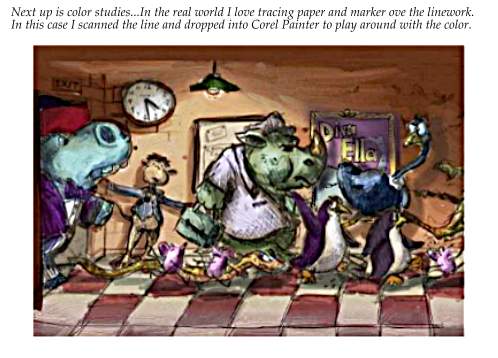
Here is Laura-Susan discussing her illustrating process:
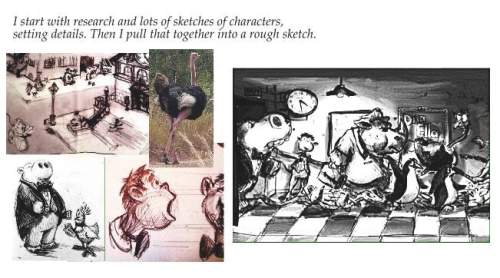

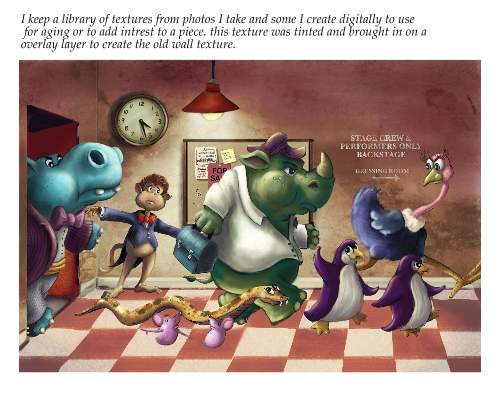
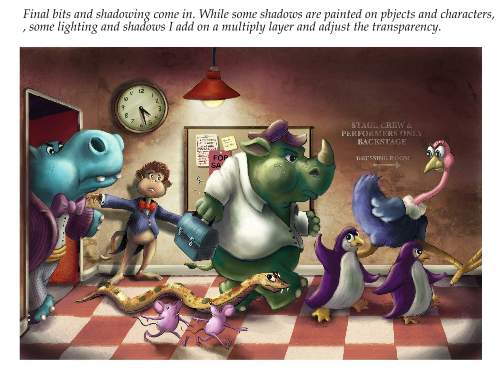
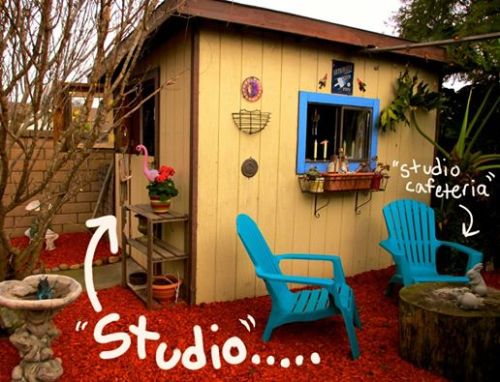
I had to share Laura-Susan’s cute little studio. It is only a few yards from her house.
How long have you been illustrating?
I have been Illustrating since graduating from college, way back in 1987, but drawing since I was a kid. I doodled on my notebooks, school assignments and was forever thrilled when my elementary teachers uttered the word, Diorama. My dad would bring home reams of old spreadsheets from his work and I would draw on the backsides. My favorite thing to draw were characters and the worlds they inhabited in my imagination, which without realizing was a great primer for the storytelling and world building later at Disney and the children’s literature world.

What made you choose to you study art at the University of Arizona and get your BFA?
I always knew I wanted to be an artist, but I also loved archeology and the romance of ancient civilizations, so I chose U of A because they had a strong Fine Arts department and a renowned Archeology Department as well! I actually was able to combine some of my love for archeology and old civilizations with art and when I was at Disney Imagineering on some of the lands I worked on.
Have you taken any other art related courses after that?
Currently I am very excited and inspired, in August I started with EB Lewis in his “Visual Mentor” program. It has been such great opportunity and chance to learn and expand the feel and look of my artwork!
After graduation form college, I took some animation courses and many figure drawing courses. At Disney they encouraged their artists to keep learning and offered free Wednesday figure drawing sessions after work. I went back to school while at Disney in the evenings, for computer arts, learning vector based and digital based tools for the arts, photoshop and illustrator.
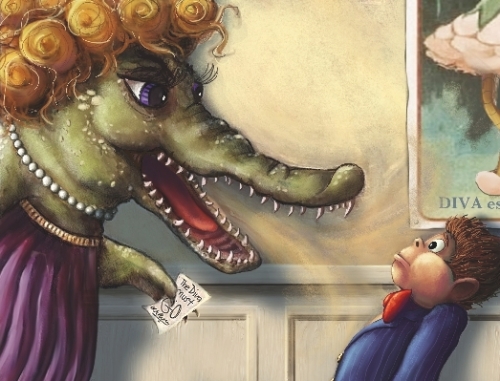
What was the first painting or illustration that you did where someone paid you for your artwork?
The first legit paying gigs I had were in College. I created the character/mascot for a yearly triathlon in Tucson, A buff bike riding, running swimming frog and I painted the billboards for the drama theater on campus for a time and did some summer theater backstage work.
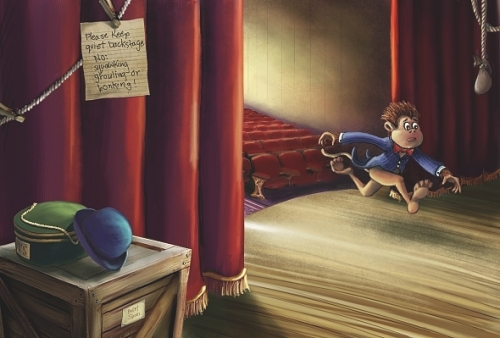
What type of job did you do right after you graduated?
I worked for a screen printer creating graphics and designs for surf wear and clothing.
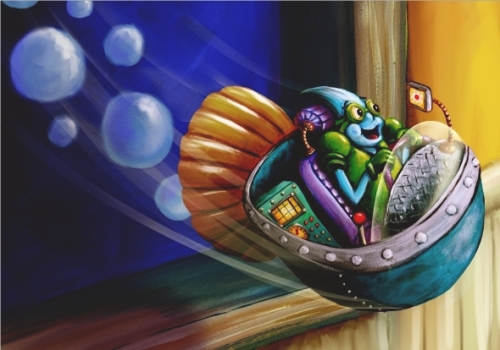
How did you get the job with Disney?
I applied through an industry ad for a screen printing fine arts separator. It was my fine arts background and my first job in screen printing that helped me get the job at Disney Imagineering. Our department produced the final hand done separations and the fine arts Serigraphs and posters for the parks. From there I moved on and worked in the Graphic Design department as a comp/production artist, and later as a Designer and Illustrator. As an Imagineer you are part of creating essentially the worlds biggest stage sets. Being an artist at Imagineering was a fun, nontraditional, imaginative, job. As a designer, you had the honor of working with, Blue sky designers, writers, architects, interior designers, props, sculptors, robotics experts and more. I got to be part of creating all sorts of things, from themed ancient tibetan ruins, giant carved fish characters, to dinosaur paintings and mermaids, in Euro Disney, Disney’s Animal Kingdom and Tokyo Disney Seas.
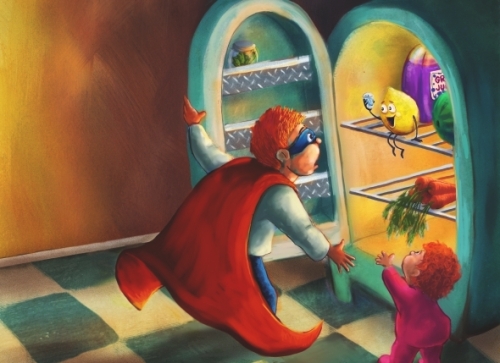
How did you decide you wanted to venture into freelance art projects?
In 1996, my husband, Hariette (our pet rabbit) and I took a a chance and an adventure and made our way from Los Angeles up to the little surf towns, ranches and rolling oak covered hills of the Central Coast of California. I continued to work for Disney full time from afar. I was one of their first full time telecommuters back in the age of dial up, conference calls and Fedex, painting away in my foggy studio. Our Fedex planes here were prop planes and our post office was actually in the back of hardware store and I admit many conference phone calls were done while working, wearing my “casual attire”. FaceTime did not exist yet thank goodness. It worked wonderfully and I would drive to LA once week and travel to job sites in Florida for many years. When my daughter and later my son arrived I took a break from travel and full time work, it seemed the perfect time to start working on a freelance basis.
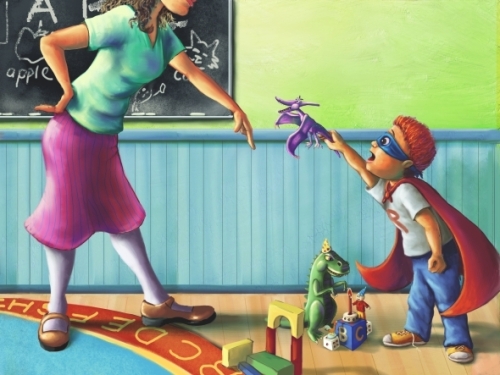
Do you think Disney influenced your style?
Imagineering was all about backstory, telling the tale of the place through characters, through writing, props and themed space, that helped a guest believe they had gone from reality to another world. I think that idea greatly influenced my work and I love to be able to create art for books, that transports someone to a world they believe in and get to play in for awhile.
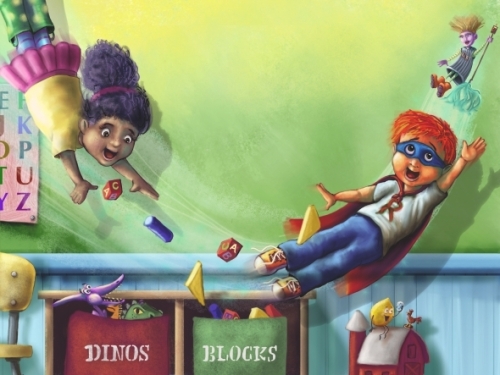
When did you decide you wanted to illustrate for children?
I attended a Conference in Marian Del Rey when the SCBWI was SCBW and was hooked. I began collecting children books before I had kids. When my kids were school age, I jumped in full time. Five years ago. I Attended a conference in LA, met a circle of friends who later became our fantastic illustrators critique group! Between my critique group and all the amazing people I have met through the SCBWI, I am so excited to be a part of this community!
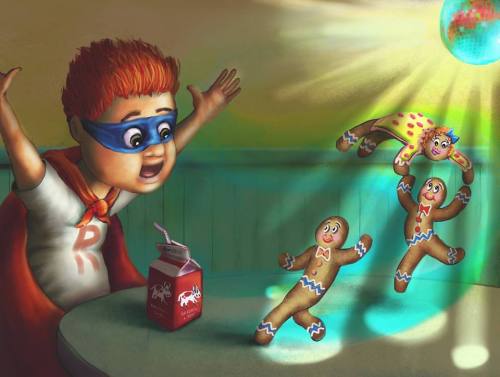
What are you doing to help connect with art directors and editors?
I have postcards and a website with childrensillustrators.com and Carbonmade, and try to keep up by reading industry blogs. Attending conferences and smaller SCBWI events and participating in portfolio reviews whenever they are offered and portfolio showcase through the LA conference.
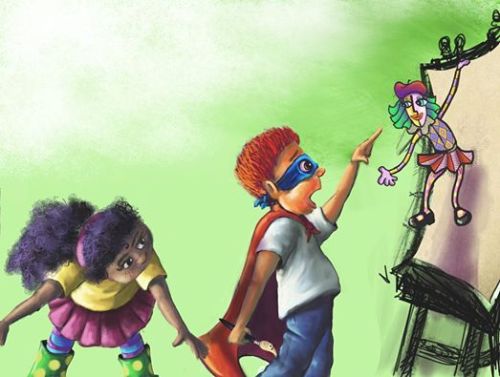
Have you put together a portfolio and or a book dummy?
Definitely a portfolio online and a real world portfolio. I try to update both when I have new work. Sometimes I make small dummies for ideas I am working on. It is a interesting process and great way to really see how your work flows with the page turns.
Have you done any illustrating for children’s magazines?
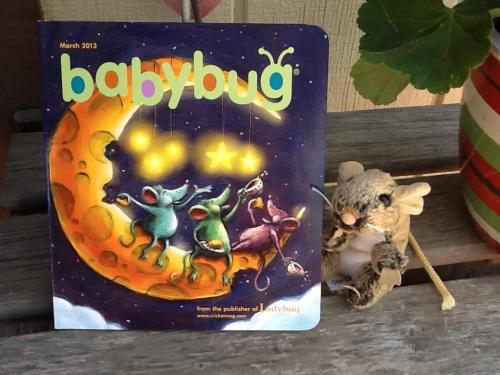
I had the opportunity to do a cover illustration and a full spread for Babybug Magazine. As well as Magazine work, I produced illustrations for some of the short stories featured in the, Los Angeles Time’s Kids Reading Room. It is fast turnaround but fun to focus so intently and figure out how to tell a story in one illustration.

Do you have an Artist Rep. to represent you? If not, would you like to find representation?
I don’t have an artists rep., but I would love to find representation.
What types of things do you do to find illustration work?
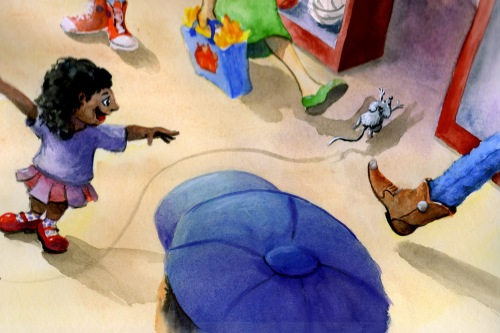
I tend to be a bit of a very shy, nerdy, introvert so Social media and self promotion are the hardest parts of children illustration for me. I know it is important though so I try and get out there at conferences and talk to people, make connections, get my work into portfolio reviews and such. Sending postcards, is an introverts best friend! A great way to reach out and have your work be seen from afar. So far I have only met wonderful nurturing people in this field, so for my fellow artists introverts, take the leap and put yourself out there and take chances, it does pay off!
What is your favorite medium to use?
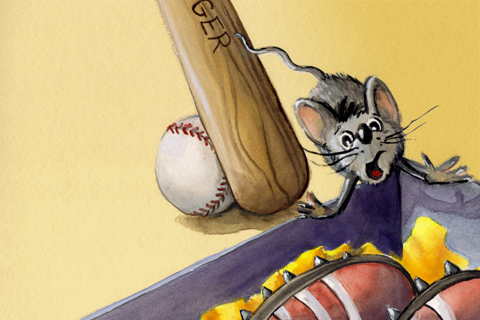
For sketching I love regular old black ball point pens. The cheaper the better. I find when you sketch with a medium where there is no eraser and no “undo” it frees you up. I also love that you can get so much variation in line and shading with those old crummy pens. For finished work, I love to work in gouache. and pen and ink in the real world, Corel Painter and my Wacom in the digital world.
Has that changed over time?
Yes, Since the recent ebooks series I worked on was going to have some animation, I wanted to be able to manipulate the art on layers. I started using Corel painter and a wacom tablet. I love the way you can mimic real world art mediums and still maintain layers and experiment. I still start with those old crummy pens and pencil in the real world even when I am going digital. It still feels fresher to me.
What do you consider is your first big success?
BabyBug was exciting, to be able to do not just create a spread but also the cover art for a large publication was wonderful! It was happy dance day!
How did that come about?
I think getting your work out there with websites and postcards. The art director at Carus Publishing had seen some of my work and when a job came along that matched my style, she contacted me. I had missed the call, as I was out picking up kids, so she had left a message for me. I listened to the message three times, did a dance around the room with the kids, regained my demeanor and called her back, very excited to be working with them.
Do you ever want to write and illustrate a picture book?
Absolutely, I would love to get some of the worlds and the stories, rolling around in my imagination and my sketchbooks, onto the page and into a book! I am working on my writing craft along with my illustration.
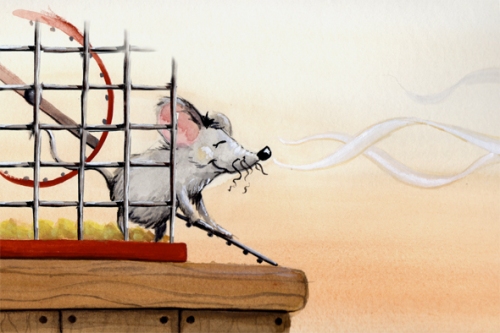
Would you be open to working with an author who wants to self-publish a picture book?
It would depend on the story and situation. I have worked with one author, self publishing an ebook series, “Reid’s Amazing Universe”. Getting a book, out there and seen, seems to be an issue in self publishing, especially in the digital realm, competing with apps and more. The author and developer in this case, are very good at self promotion and marketing and had some good connections so it seemed like a good challenge. I think the challenge to self publishing for an illustrator specifically, is not having an Art Director. It is difficult to self edit your work and having a talented art director on board is invaluable.

Do you take pictures or do any types of research before you start a project?
I get books from the library, google images and make big image boards for characters and setting and color palates. Right now my wall is filled with gorillas, smug kids, and downtown street scenes. I have a little mirror above my art table so I can make faces at myself, in order to get a great facial expression in my characters.
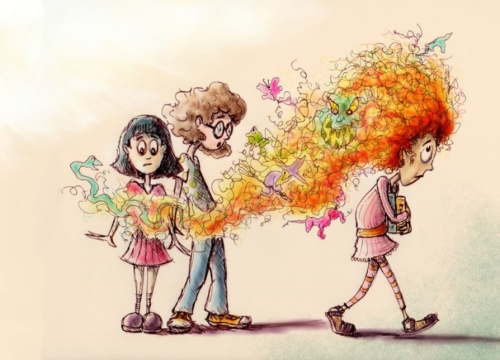
Have you done any work for educational publishers?
No, but I am interested in both this area and the Middle Grade areas, after hearing two great breakout sessions at the conference this summer in LA.
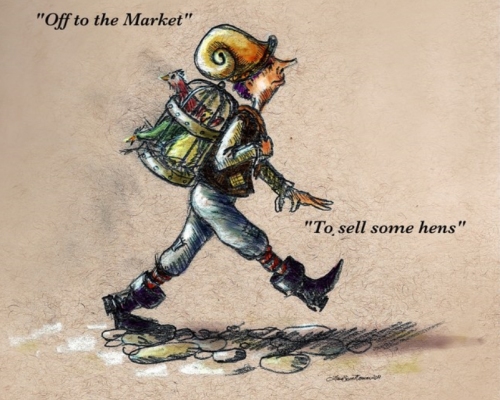
What is the one thing in your studio that you could not live without?
Music, I tend to work in different mediums and love my studio space, but I have about six different albums that play in the background when I work. It helps me to get lost in my drawings.
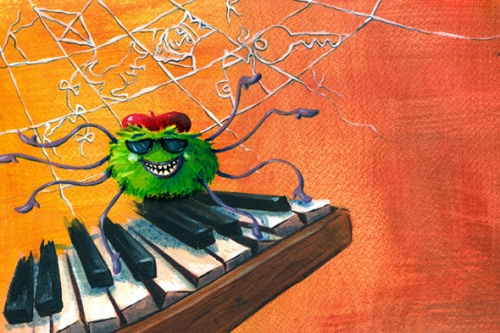
Do you try to spend a specific amount of time working on your craft?
I really believe keeping a good balance helps your creativity and with your life as a whole. I try hard to do this, even though I am an Artist-Mom/taxi driver of short people, I set aside around 5 to 6 hours each day during the week to sketch, paint, research and learn. If I have a deadline approaching then it is whatever it takes. That can mean, walking out to my studio at 4am in the quiet hours, or in the late evening hours, keeping the balance with my family’s daily life and get the deadline met. My kids love the studio. If I need to put in the extra time even as my kids get older, I will find myself working with someone reading a book under my art table and listening to my husband practice guitar in the house. It becomes creative time for everyone.
Do you have an agent? If yes, who? If not would you like to find one?
I don’t have an Agent, but yes, I’d love to have an agent. I think it can be a great partnership for an artist, to navigate the ins and outs of the children’s field and to help further their work.
Do you think the Internet has opened doors for you?
For artists I think the internet is fantastic! It allows us to share our work and inspiration and ideas and connect with other artists and people in our industry through Facebook, websites , Instagram and more. In my case, I Skype each week for the Visual Mentor program, and my critique group has maintained a strong bond and can help each other in an instant, even though we are from all different parts of the country. Once again internet a great tool for introverted artists!
Do you use Photoshop or Corel Painter with your illustrations?
For many years I used Photoshop, but I have become a Corel Painter fan. If I work digitally I tend to work in Corel with a Wacom tablet.
Do you own or have you used a Graphic Drawing Tablet in your illustrating?
I love my Bamboo Wacom tablet. it is as portable as a sketchbook!
Do you have any career dreams that you want to fulfill?
My Career Dream, I would like to have been a part of creating books with humor and heart, that are worn on the edges, because they are the ones grabbed off the bookshelf over an over again to be read We on the couch at bedtime.
What are you working on now?
I’m starting to sketch on the third ebook series for “Reid’s Amazing Universe” and working on expanding my art and creating illustrations for a possible book in my Visual Mentor program.
Do you have any material type tips you can share with us? Example: Paint or paper that you love – the best place to buy – a new product that you’ve tried – A how to tip, etc.
I love sketching with ball point pens but also I have a few sets of warm and cool grays, and black Faber-Castell pens and tracing paper. They come in sets of warm and cool grey and black with different sized tips and brush pens. When I am working I will have several layers of tracing paper with different shading or trying out different gestures above the original sketch. I find my work is much looser if I am sketching by hand rather than on a screen. Later I will combine what is working either in the real world or in Corel Painter to form a final sketch before going on to the finished art.
For Art supplies we live in a small coastal area so Blicks online is my go to source for supplies.
Any words of wisdom on how to become a successful writer or illustrator?
I am not nearly as far along as many of the creative and talented illustrators whom I admire, interviewed on this blog. As far as words of wisdom, I think to get where I am today with some success at being published and hopefully more opportunities in my future, for me it comes down to truly wanting to be a children’s illustrator, loving this field, and as an Artis/Mom, finding the time to truly work hard, getting your work out there to be seen.
Becoming a member of the SCBWI was an important step for me and an amazing organization with wonderful talented people. Everyone I have met has been willing to talk or help a new or emerging illustrator or writer to the find their way and welcome them into the children’s books community. It is where I have garnered friends, critique groups and contacts. Attend conferences and events through the SCBWI. Take classes, be open to opportunities!
Most importantly, find the time and the balance for your art or writing in your week and stick to it. Laundry will still be there tomorrow and I do believe Dust Bunnies qualify as pets, so give them a cute name, pat them on the head, and go sketch!
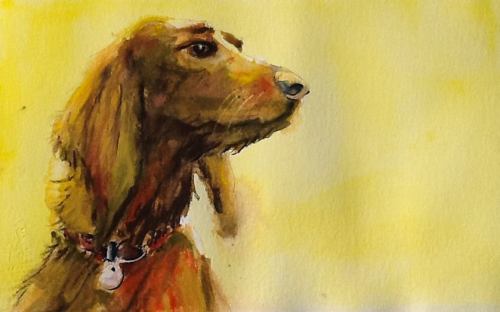
Thank you Laura-Susan for sharing your journey and process with us. Please let us know all your future successes. We’d love to hear about them and cheer you on. You can visit Susan at: www.laurasusanthomasillustrator.carbonmade.com
If you have a moment I am sure Anne would like to read your comments. I enjoy reading them, too, even if I don’t always have time to reply. Thanks!
Talk tomorrow,
Kathy
Filed under:
Advice,
demystify,
illustrating,
Illustrator's Saturday,
inspiration,
Interview,
picture books,
Process Tagged:
Baby Bug Magazine,
Laura-Susan Thomas,
University of Arizona 

By: Kathy Temean,
on 10/26/2014
Blog:
Writing and Illustrating
(
Login to Add to MyJacketFlap)
JacketFlap tags:
Author,
Writing Tips,
Advice,
Process,
revisions,
article,
demystify,
Terry Jennings,
Literary Midwives,
Add a tag
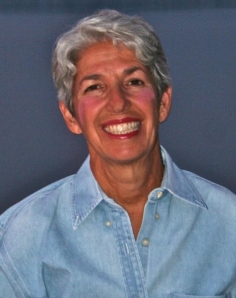
Terry Jennings
I killed my mother, I must confess. And while I’m at it, I should admit I killed my baby brother too. In the interest of full disclosure I should also own up to doing away with an uncle and a few cousins as well.
I know full well that matricide, fratricide—familycide in general—are frowned upon in polite society. But I’m not the least bit sorry. In fact, under the right circumstances, I wouldn’t hesitate to repeat the act. I had to do it. My story, a fictional novel very loosely based on my life, was drowning with the weight of its characters.
To assuage any sensibilities that may be aroused by my dastardly acts, I will let you know that the murders were done off stage, very discretely. I could have lined them all up against a wall and shot them, right in front of God and everybody, and been totally within my rights. My story, after all, is set during the Cuban revolution in 1958—executions were common place. But I disposed of my family gently, elegantly. My mother, bless her soul, died giving birth to me. With one stroke of the pen I not only got rid of one very significant adult, but I also gave my protagonist a reason to have guilt—because she lived, her brother didn’t have a mother. I transformed the baby brother into a 17 year old and morphed the essence of the combined souls of the rest of my relatives into his character.
Having to kill and change people is a peril you run into when you write a novel loosely based on fact. Not just historical novels, like mine. When we know the story so well—when it’s our story, or the story of someone we know or have come to know—it is difficult to sacrifice the truth in order to let that fictional story shine through.
I think it was Stephen King that said you have to kill your darlings. I’m not sure he meant fratricide and matricide, but in essence, he said get rid of anything that doesn’t move your story forward. That is particularly hard when it comes to characters. Each one of those people had a story, an experience, which was significant to the historical context. Their experiences weren’t darlings to be cast aside. They were representative and exciting. And my real life was so lame, I had to draw on their experiences for my plot. I needed their experiences. Every one of them. But even I realized that the reader would need a cheat sheet with the names and life stories of each relative in order to keep up with the plot.
It was my friend Ivy Ruckman (Night of the Twister), who suggested an older brother replace the uncle. Why hadn’t I thought of that? That simple change made everything simple. In the brother I could develop the mindset of the young revolutionary, in love with Fidel Castro who could be the foil against the pro-establishment and anti-Fidel father. The brief discussions about the revolution which happen as a result of the action, are now organic. A perfect case of the new pared down cast showing rather than telling what it was like living in those first two and a half years of Castro’s revolution.
Another result of my murderous binge was that now my protagonist participated fully in all of the experiences without having to take a taxi. In the previous version, an older cousin (it happened, I promise) was writing pamphlets against the revolution to hand out at school.
Eventually, someone finds out, calls her and tells her she’d better stop of else. My cousin ended up in an embassy not long after that phone call. But in order to get my protagonist to see that, I had to invite her to a meeting at her older cousins’ house, find a way to get her money for a taxi and a way to sneak off to her cousins’ house, hear what the older kids are saying and later find out about the phone call and her cousin’s exile from her father. With the brother embodying some of the experiences of other characters, my protagonist is right there, in the same room. She chooses to write pamphlets of her own to distribute at church, and she is the one who picks up the phone when the ultimatum is received—who’s the ultimatum for, her or her brother? Now the book is full of energy and the narrative moves quickly from one exciting scene to another. No more taking a figurative taxi or a bus to get the protagonist to the action.
It was a significant change in the book, I must admit. More of a re-imagining of the whole story than a revision. But I believe it has been well worth it. Now we’ll see if a power that be agrees with me and buys my story. I really hope someone does. My cousins are really not happy that I killed them, whether on or off the stage. They were all hoping for a cameo. The only way I’ll keep them quiet is to prove them wrong and have a best seller.
http://literarymidwives.com/
Terry Jennings began writing in 1999. Her first piece “Moving Over to the Passenger’s Side,” about teaching her fifteen-year-old to drive was published by The Washington Post. She has written a few other articles for them and Long Island News Day. Since then she has written for Ranger Rick and had a family humor column in her local newspaper, The Reston Connection. Primarily she writes educational text for the Smithsonian Science Education Center and other educational outlets. Gopher to the Rescue! A Volcano Recovery Story (Sylvan Dell, 2012) was named Outstanding Science Trade Book by the National Science Teachers’ Association and the Children’s Book Council. Her other book, The Women’s Liberation Movement: 1960-1990 (Mason Crest, 2013) was named to the Amelia Bloomer Project’s recommended feminist literature for women birth to 18. Sounds of the Savanna, a book about sound as told through predator/prey interactions in the African savanna is on its way with Arbordale Publishers. It’s due out fall of 2015. Currently she is working on a historical novel about the Cuban Revolution (1959-1961) loosely based on her childhood along with a couple of other picture books–one on Magnetism and one on Erosion.
Thanks Terry for sharing your article with us. I will be doing a lot of killing this week.
Talk tomorrow,
Kathy
Filed under:
Advice,
article,
Author,
demystify,
Process,
revisions,
Writing Tips Tagged:
Literary Midwives,
Terry Jennings 

By: Kathy Temean,
on 10/24/2014
Blog:
Writing and Illustrating
(
Login to Add to MyJacketFlap)
JacketFlap tags:
Anne Wertheim,
Freelance artist Maui,
Oracle Deck of Flowers,
inspiration,
Advice,
illustrating,
demystify,
Illustrator's Saturday,
Interview,
Process,
Add a tag

Anne attended College of Art in Hamburg, Germany (Fachhochschule fuer Gestaltung), from which she graduated in 1995 with a degree in illustration. Right after earning her degree she moved to Maui/Hawaii. She has been working as a freelance illustrator, painter and designer, working for advertising agencies, design studios and publishers for nearly 20 years in Maui.
She has worked on a variety of projects including product packaging, advertising, publishing, point of purchase displays and animation backgrounds.
Here is Anne explaining her process:
My work process creating one out of 44 cards for the “Oracle Deck of Flowers”.
Publisher: Llewellyn Worldwide, Author: Tess Whitehurst
For this oracle card, I am asked to show a heroic woman blowing a horn standing amidst a field of blossoming foxgloves. The title of the card is “Summon your Courage – Foxglove”

I start out with a black and white line sketch. To get the pose right, I often use the help of another application: Poser

I work on two monitors. Monitor One is the smallest of the Cintique tablets, monitor two is a 30 “ Dell. On the Dell I have several documents open showing reference images as well as an additional window of the current illustration I am working on. The Cintique will have only my illustration window open as well as show a window with my brush presets and another one for layers.

While I work I constantly go back and forth between painting on the Cintique and evaluating my illustration on the Dell. The Dell I have color calibrated. I always work in a CMYK color space when working on print projects.

I do a very quick color sketch. On this card, I feel confident about how I want the colors to be, so I decide not spend too much time on the color sketch.

I desaturate the color sketch to have it in black and white.

I add a muliply layer over my black and white sketch and use a soft brush to paint over it in orange.

I usually start with the background, in this case the sky. I always use textures in my Photoshop brushes. My main brush has a texture, I made myself by applying acrylic gel to a board, painting it black and and dry brushing white over it.
I have a texture library of splatters, ice , fabric, rocks, marble etc. anything that will make a nice texture. While I work I often choose different textures.
For the sky I chose a splatter texture. I put the sky on one layer and the clouds on another. On layer three I have my Poser
figure on layer 4 my sketch. I want to create a dramatic sky, somehow evoking a feeling of fire or a battle far away.

As soon as I have roughed in the sky, I start working on the figure. At this stage I work fairly rough, as I want to paint in all the elements of the illustration before I get into more detail. It is always so tempting to get detailed too soon, only to realize later, that some of the detail does not work with other parts of the illustration.

Next I rough in the foxgloves and start working on her face. Now that all the elements of the illustration are in place it is time to fine tune. I put several layers of paint over the sky. Sometimes lightening the sky up with heavily textured brushes and then toning everything back down by adding a multiply layer and glazing a shade of blue or magenta over the sky.

I am working similarly when working on her clothes and face. Here I just stick to my main texture brush. I lift her left arm a bit, to make the pose a little bit more dynamic and add all the highlights for her clothing and on the flowers.
Almost all elements of the illustration are on different layers. Flowers on one, leaves on another, her legs, her skirt, belts, west etc. Having everything on different layers makes it easier to work and rework each part.

And that is pretty much it!
How long have you lived in Maui?
I moved here in 1995, right after I finished art school in Germany.


How long have you been illustrating?
I have been illustrating as a professional and full time since 1995, after I got my degree in illustration from the college of art in Hamburg/Germany. But I have been pretty much done some form of art my whole life.

Did you study art in college? If so, where?
Yes! I went to the “Fachhochschule for Gestaltung” in Hamburg (college of design).

What were you favorite classes in college?
My favorite class in college was “Educational Illustration,” as well as life drawing and painting.

Did the School help you get work?
They didn’t really help us get work, but found publishers that wanted to work with us, while we were still students.
Our illustration class did several projects for different publishers.
Together with 5 students I illustrated one of my first books for a German publisher (Frankh Kosmos) with the title “Animals at the Coast and the Beach” (�Tiere an Strand und K�ste).
On another assignment we designed and illustrated an exhibition for a marine biology institute.

What was the first painting or illustration that you did where someone paid you for your artwork?
Right after High School, I interned for two years in an illustration and design studio. During my internship I was fortunate enough to illustrate some book covers that my boss otherwise would have done himself.
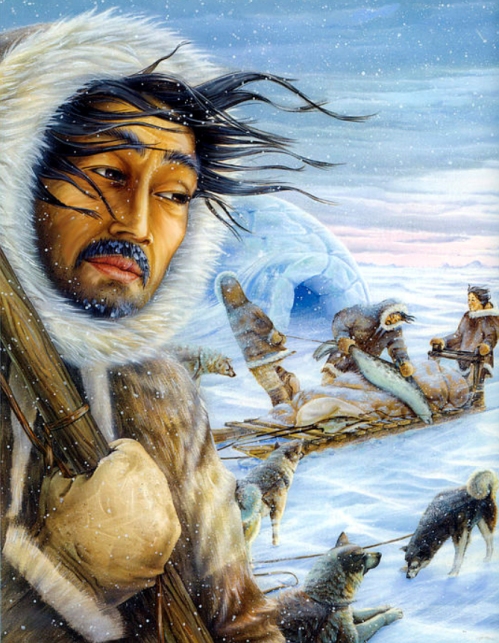
What type of job did you do right after you graduated?
While still in college, I worked for a big German publisher, doing layout for several magazines as well as teaching computer graphics on the Mac. After I graduated I started my career as a freelance illustrator.

Do you think the classes you took in college or living in paradise influenced your style?
Neither one and both to a certain extent. It has helped me to have an education in the arts. No doubt, all my art classes in college have given me a strong foundation to work as an illustrator. Nevertheless, I feel life has influenced me the most. Right after college, I felt I needed to learn soooo much more than what they had taught me in college and even now, almost 20 years after I graduated I am still learning with every single project that I take on. I think Maui’s abundance of natural beauty, lushness and bright colors, are in sync with my need for nature, beauty and color in my life and work.

Do you do a lot of art shows and exhibits? Is that how you got noticed?
No, I don’t do any art shows and exhibits at the moment. After I had my two children in 2001 and 2003, I wanted more freedom in my creative process. So I did a lot of plein air painting. For about three years, I painted mostly on sight in oil all over Maui. I really enjoyed this time. It taught me so much about painting, landscapes, color, light etc. I exhibited and sold my paintings in my husbands gallery close to where we live.

When did you do your the first illustration for children?
For my thesis in college we had to pick a larger project to illustrate. I decided to write and illustrate a picture book about a family of barn owls. To complete my thesis, I only needed to create the concept and 5 illustrations. I had a lot of fun writing the story and illustrating it. Instead of just the required 5 illustrations, I did all the illustrations for the book. It turned out so well, that the same publisher I worked for before, picked it up and published it the next year.

When did you decide you wanted to illustrate books?
I never was set on just illustrating books. Right now, I actually prefer shorter projects.

How did get the contract for the “Food Chain” book series?
I got the contract for the “Food Chain” series, by doing a lot of cold calls and got lucky to give Capstone/Picture Books at the right time when they were looking for somebody to illustrate “Food Chains”.


Have you worked with educational publishers?
All my children’s books have been geared towards the educational market. I just recently worked for University Press and did some illustrations for a few school books.

How many children’s books have you illustrated?
If I counted right a total of 10.

Do you have any desire to write and illustrate your own book?
Not at the moment.

Have you done any illustrating for children’s magazines?
I did some illustrations for Highlights and Cricket Magazine.


Do you have an artist rep.? If so, who? And how did you connect with them?
I am repped by Steve Munro of Munro Campagna in Chicago. When I felt In needed a rep, I looked up all the reps, who represented illustrators that I either admired or where similar in style to me. I then sent out e-mails with samples of my work and Steve took me on.

What types of things did you do to market your work?
I always think I should be doing more and I definitely could improve a lot in terms of marketing myself. I market myself by showcasing my work in the Workbook, the ISpot, as well as CreativeSource in Canada. I occasionally send out postcards. I used to do email blasts, but have not found that sending mass e-mails produces great results. I am just in the process of redoing my own webpage and am determined, once done to blog about my process on a more regular basis.

What is your favorite medium to use?
These days it is digital.

Has that changed over time?
At the beginning of my career I did all my work in acrylics and used a mix of airbrush and acrylic painting. I switched to digital in 2010 and have not regretted it, even though I miss not having originals anymore

Do you have a studio in your house?
Yes, my studio is in our house.

What is the one thing in your studio that you could not live without?
My Cintique tablet.

Do you try to spend a specific amount of time working on your craft?
I usually start my workday between 6 and 7 am. I am an early morning person, which makes communicating with the East Coast a lot easier. I take in between 30 minutes and an hour each day to do things that are not related to doing my craft. Usually these are my least favorite subjects and the ones I procrastinate the most about: marketing, office tasks, writing bills (which actually should be considered fun), blogging and currently it is working on my new webpage (which I actually really do enjoy)
The rest of the day is devoted to working on my illustrations..

Do you take pictures or do any types of research before you start a project?
Yes! Depending on the project, I might take photos, ask a friend, my children or even a stranger to model for me and /or do a lot of research on the internet.

Do you think the Internet has opened doors for you?
I couldn’t live without it. For my most recent project of illustrating 44 Tarot cards, I must have collected thousands of reference images.

What do you tell was your biggest success?
My first Celestial Seasonings illustration is just now gracing one of their new tea boxes: Apple Caramel Dreams.


Do you use Photoshop with your illustrations?
Yes. Photoshop is my main application I use when illustrating.

Do you own or have you used a Graphic Drawing Tablet in your illustrating?
I started out on an Intuous and upgraded to a Cintique last year.
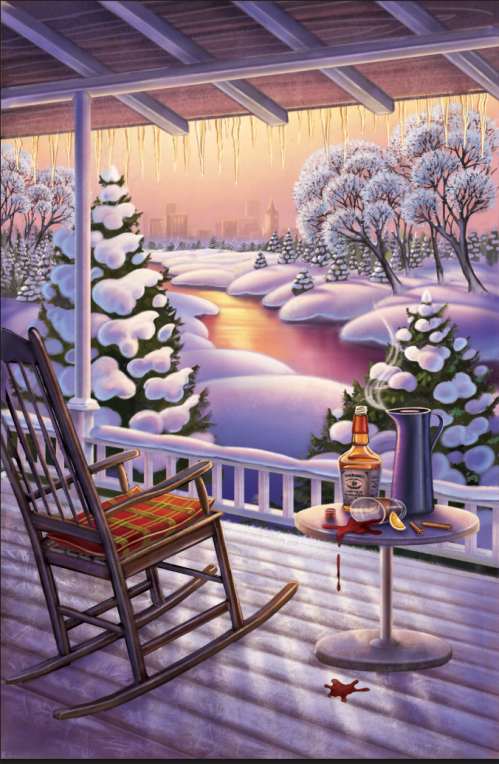
Do you have any career dreams that you want to fulfill?
Next year I want to learn Maya and start getting into 3D.

What are you working on now?
I currently am working on a deck of 44 Tarot or oracle cards. The deck will be called “The Oracle Deck of Flowers”


Do you have any material type tips you can share with us? Example: Paint or paper that you love – the best place to buy – a new product that you’ve tried – A how to tip, etc.
My favorite tool is my Cintique. Before I got it, I never thought it would make such a difference in my work. I was using the Intuous graphic tablet before,which seemed fine to me at that time. But actually drawing on a monitor is such a big improvement. I love it.


Any words of wisdom on how to become a successful writer or illustrator?
A good mix of talent coupled with perseverance, stubbornness, and a burning desire to create will help a lot in becoming a successful writer or illustrator.

Thank you Anne for sharing your journey and process with us. Please let us know all your future successes. We’d love to hear about them and cheer you on. You can visit Anne at: http://www.annewertheim.com
If you have a moment I am sure Anne would like to read your comments. I enjoy reading them, too, even if I don’t always have time to reply. Thanks!
Talk tomorrow,
Kathy
Filed under:
Advice,
demystify,
illustrating,
Illustrator's Saturday,
inspiration,
Interview,
Process Tagged:
Anne Wertheim,
Freelance artist Maui,
Oracle Deck of Flowers 

By: Kathy Temean,
on 10/18/2014
Blog:
Writing and Illustrating
(
Login to Add to MyJacketFlap)
JacketFlap tags:
revisions,
Lin Oliver,
opportunity,
Lexa Hillyer,
Free Writing Video Series,
inspiration,
Advice,
authors and illustrators,
Courses,
How to,
demystify,
Add a tag



Talk tomorrow,
Kathy
Filed under:
Advice,
authors and illustrators,
Courses,
demystify,
How to,
inspiration,
opportunity,
revisions Tagged:
Free Writing Video Series,
Lexa Hillyer,
Lin Oliver 

By: Kathy Temean,
on 10/17/2014
Blog:
Writing and Illustrating
(
Login to Add to MyJacketFlap)
JacketFlap tags:
Interview,
Tips,
picture books,
inspiration,
Advice,
Process,
authors and illustrators,
demystify,
Illustrator's Saturday,
David Harrington,
Spaghetti Smiles,
Add a tag
 David Harrington’s affinity for art began at an early age, when he enthusiastically drew on floors, walls, furniture, and other inanimate objects. A native of southern California, Harrington pursued a career in illustration by enrolling in the Art Center College of Design in Pasadena, where he earned a BFA with honors. As a student, his favorite classes were figure drawing and painting.
In his professional career, Harrington has illustrated numerous children’s books. He believes that they open a door to a new world, and he admits that he studied books for hours on end as a child. In addition to children’s illustrations, Harrington creates advertising images for toys, games, food packaging, educational materials, medical equipment, and various other products.
Bold lines, sharp contrast, and vibrant colors render Harrington’s images stunning and memorable. He portrays real emotions such as fun and excitement through playful and accentuated cartoon images. The clarity of detail that Harrington gives to the page can bring a child’s imagination to life. He is the recipient of a WWA Spur Awards Storyteller Award for his illustrations in Pecos Bill Invents the Ten-Gallon Hat. David lives with his wife and children in Laguna Hills, California.
Here is David sharing his process:
This illustration is from a book I’m currently working on where some bandits steal all the ice cream in town during the middle of summer!
First, very rough, fast sketches trying to capture the energy, mood, emotion etc. Once I have a rough sketch I like then I keep tracing it and making revisions until I get to the final sketch.
I put the final sketch on a medium value, textured background. I keep it on a separate layer so it can be removed later.
Starting with the face, I put down a thin, base skin tone letting the background texture show through. Then I start building up the dark tones adding just a little red color to the nose and cheeks and a few high lights.
I keep building up the darks and start introducing some blues, purples and greens into the shadows.
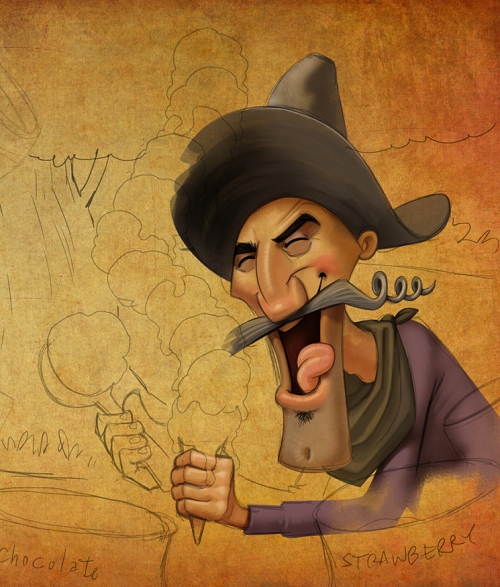
When I have the colors and values of the face where I want them, I’ll start on the rest of the figure working from light to dark.
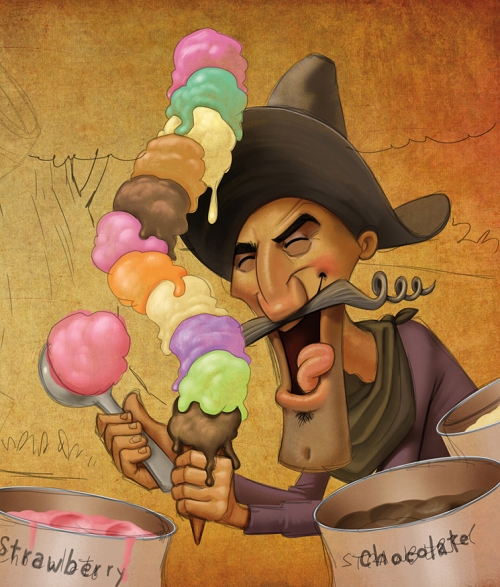
For the ice cream, I put down a medium tone trying to let the background texture show through. I then added a lighter color to one side and hit the other side with a faint shadow.
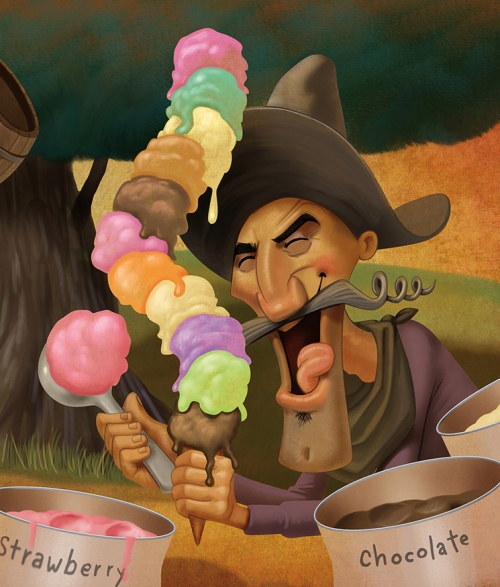
Lastly, I added the background, leaving some of the original texture untouched. I removed the sketch and then I add fine line detail.
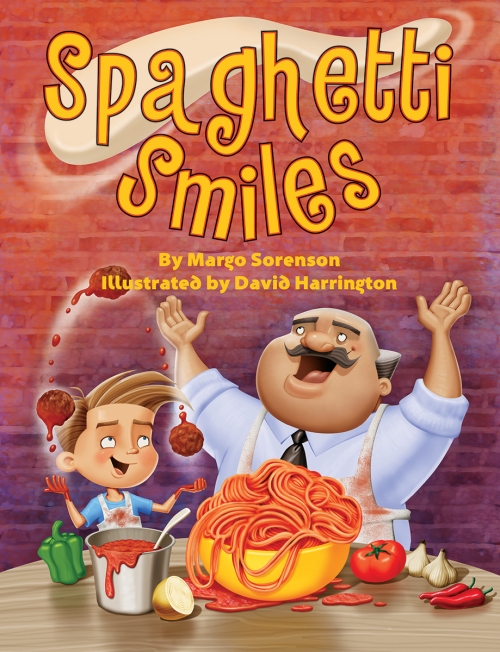
Spaghetti Smiles by Margo Sorenson – published by Pelican Publishing Press (September 15, 2014). How many books have you illustrated for Pelican Publishing?
Spaghetti Smiles was just released and that was the fifth book I’ve illustrated for Pelican Publishing and I’m working on another right now.
How long have you been illustrating?
I’ve been illustrating professionally for about 25 years.

How did you decide to attended At Center College of Design in Pasadena, CA to study fine art?
During high school I took some Saturday classes at Art Center and fell in love with the school.
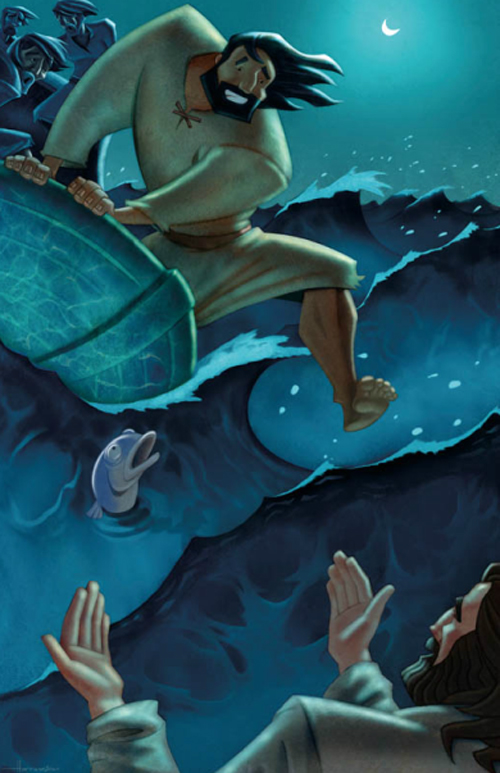
You say in your bio that figure drawing and painting were your favorite classes? Is that still a favorite thing for you to illustrate?
Absolutely, anytime there are figures in an illustration, whether they are stylized or realistic, it’s always fun and they bring life to the piece.
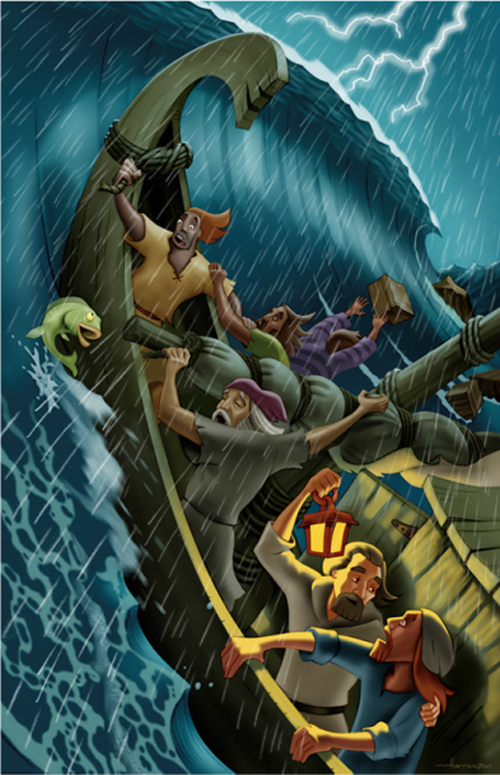
What was the first art related work that you were paid?
I painted store windows at Christmas time when I was a teen.
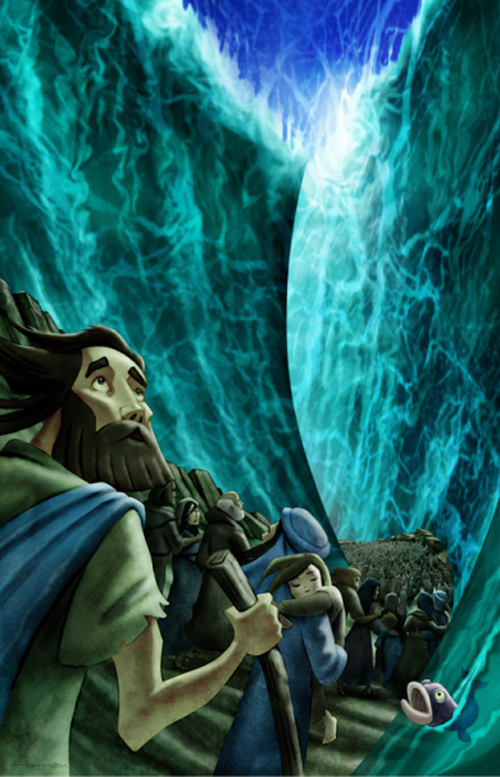
Did the School help you get work?
Yes they did, I got some work doing movie poster concept sketches for Warner Brothers right after graduation.
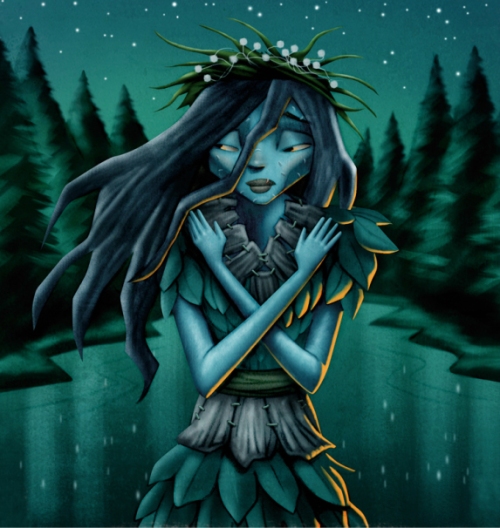
Do you feel the classes you took in college have influenced you style?
I don’t know, my style has been changing over the years.
What type of work did you do right after you graduated?
About six months after graduating I took a full time job as an art director/illustrator at a small company doing mostly sports art.
How did you make the decision to jump into freelance work?
I had been trying to make the transition to freelance by working at night but then when I got laid off unexpectedly from my full time job, I decided that -Now is the time.
When did you decide you wanted to illustrate for children?
I did a lot of soft drink advertising work for a good client and he asked me if I could illustrate a Children’s book, so I gave it a shot- and loved it!
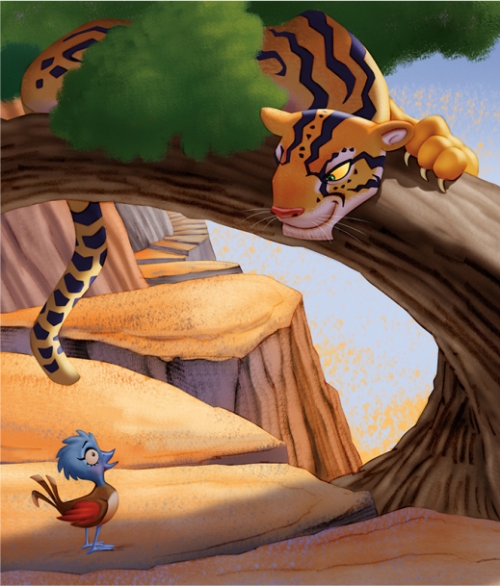
When and what was the first children’s book that you illustrated?
It was called Gabby, about a little girl and a science fair project that went wrong resulting in a giant bubble-gum monster.
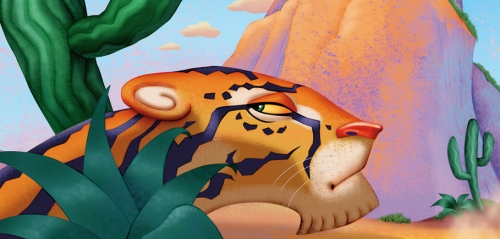
Do you consider that book to be your first big success?
No, but it opened my eyes to how much fun Children’s book are to illustrate. I love creating characters.
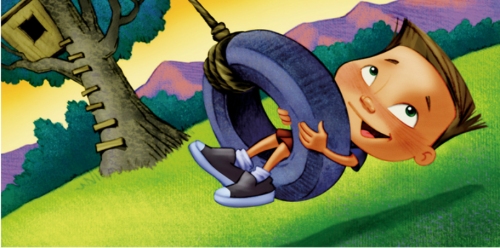
Do you have an agent or artist rep.?
No, I don’t have a representative but am not opposed to one either.
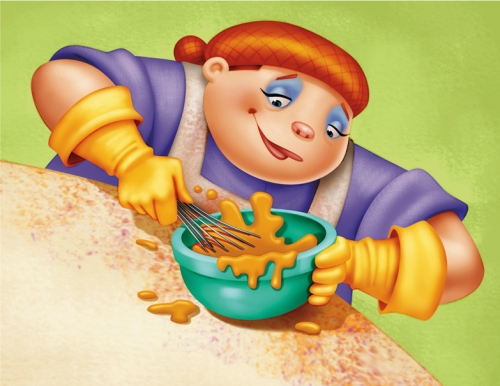
Do you have any desire to write and illustrate your own picture book?
Yes I have written some books and hope to be an Author/illustrator someday.
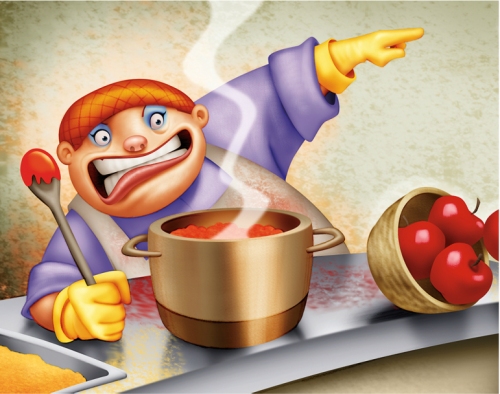
Are you the same David Harrington who does fantasy art?
No that is another David Harrington, although I have done some fantasy art over the years.
How did you get the contract to illustrate, Since We’re Friends: An Autism Picture Book at Sky Pony Press?
I don’t remember how I got that contract, but I remember it was two books.
How long did you have to illustrate each one?
The whole process from sketches to final illustration takes about four to five months.
Would you be willing to work with an author who wants to self-publisher their picture book?
Yes I would if I like the story.
What illustrating contract do feel really pushed you down the road to a successful career?
I did about a dozen Book covers for Pee Wee Scouts from Random House and that led to more work.
When is the title of the pirate book that you are working on and when is it coming out? Is that your next book that will hit the book shelves?
It’s a cowboy book titled Whistling Willie and should be released in the Spring of 2015.

Have you done illustrations for any children’s magazines?
Yes, mostly Club House magazine.
What materials do you use to paint your color illustrations?
Well it started with acrylic paint and pencils and over the years has transitioned to a Mac computer, graphic tablet and Photoshop.
What types of things do you do to find illustration work?
Once or twice a year I send out promotional post cards to publishers. But word of mouth is how I get most of my work.

What is the one thing in your studio that you could not live without?
My Mac!
Do you try to spend a specific amount of time working on your craft?
I try to find time to experiment and learn new techniques or try different media. I love oil painting and sculpting!
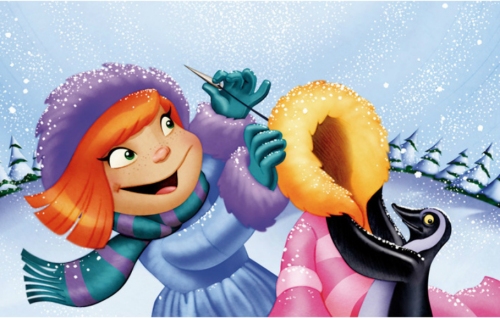
Do you take pictures or do any types of research before you start a project?
Yes I do a lot of on-line research and look for inspiration.
Do you think the Internet has opened doors for you?
Yes, it has changed everything about this business, from research to communication to the way finished projects are delivered.
Do you use Photoshop, Illustrator, or Corel Painter with your illustrations?
Yes, Photoshop and sometimes Illustrator. I have tried painter and that’s a good program too.
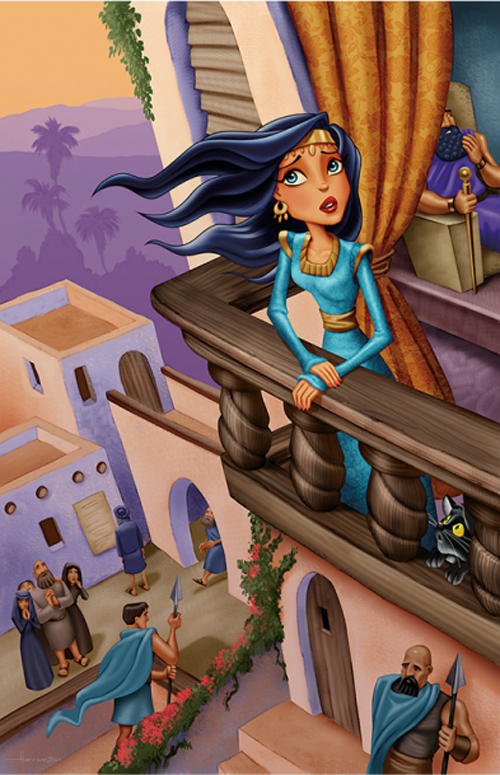
Do you own or have you used a Graphic Drawing Tablet in your illustrating?
Yes, Wacom Cintiq, it’s amazing!
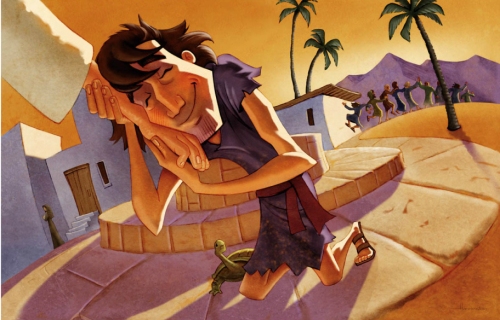
When did you start using the computer to paint your illustrations?
That was a very slow transition, about 15 years ago I would just add the final details to an illustration in Photoshop. Then at some point I would finish a painting half way and then complete it with the computer using a mouse. Now, all or almost all of the art is created using a Graphic Tablet.
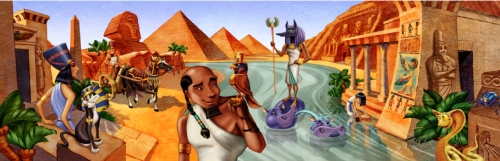
What are you working on now?
Right now I’m jugging about 12 different illustration jobs including Whistling Willie from Pelican Publishing.

Do you have any material type tips you can share with us? Example: Paint or paper that you love – the best place to buy – a new product that you’ve tried – A how to tip, etc.
My favorite is Winsor & Newton oils on canvas, from Art Supply Warehouse in Westminster, CA
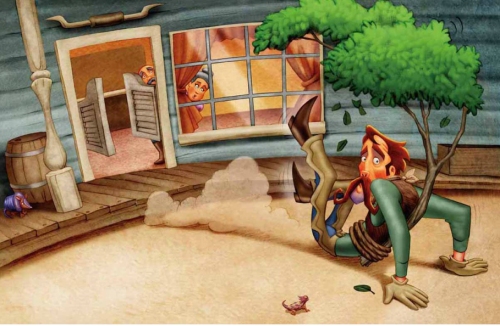
Do you have any career dreams that you want to fulfill?
Yes, I would like to illustrate the stories I’ve written.
Any words of wisdom on how to become a successful writer or illustrator?
You must be persistent, never give up and always strive to improve.
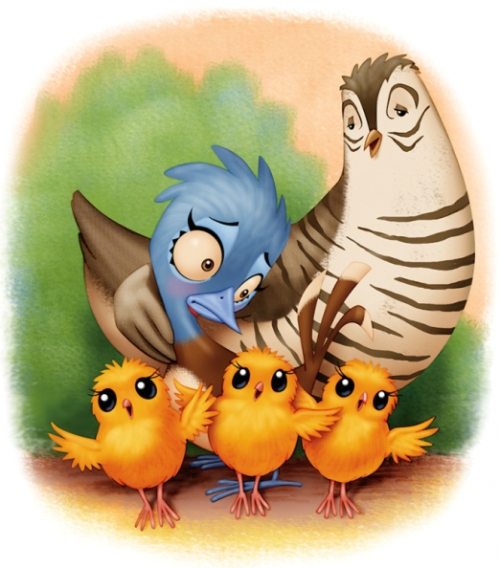
Thank you David for sharing your journey and process with us. Please let us know when your new picture book comes out , in addition to all your future successes. We’d love to see them and hear about them, so we can cheer you on. You can visit Daivd at: http://www.davidharrington.com/
If you have a moment I am sure David would like to read your comments. I enjoy reading them, too, even if I don’t always have time to reply. Thanks!
Talk tomorrow,
Kathy
Filed under:
Advice,
authors and illustrators,
demystify,
Illustrator's Saturday,
inspiration,
Interview,
picture books,
Process,
Tips Tagged:
David Harrington,
Spaghetti Smiles 

By: Kathy Temean,
on 10/10/2014
Blog:
Writing and Illustrating
(
Login to Add to MyJacketFlap)
JacketFlap tags:
inspiration,
Advice,
Process,
illustrating,
How to,
bio,
demystify,
Illustrator's Saturday,
Anna Guillotte,
Interview,
Add a tag
 Anna Guillotte is an American illustrator, designer, and writer living in Heidelberg, Germany. With a degree in graphic design, Anna worked as a graphic artist in the corporate world for seven years. Though she was also a mural artist and painter throughout that time, she began illustrating in 2010 when she attended a mentor program for artists in San Diego, California where she lived at the time. Through this program she realized her true calling for storytelling. She has since joined the SCBWI, attended numerous SCBWI conferences and her illustrations have been published internationally. She enjoys creating whimsical, funny, touching, and beautiful art for the advertising, book, and animation markets.
Here is Anna showing one of her techniques:
 There’s something about light and shadows that really soothes the eye. I guess I could do research on the scientific reason as to why us humans are attracted to depth in images, but I already spend too much time on the net. I’m guessing since that we live in a 3-dimensional world our eyes are built to receive and digest lovely indications of depth (i.e. shadows, light vs. dark, cool vs. warm colors) and by nature we crave that. I tend to indulge in lighting my illustrations so I thought I would share how I go about doing that – from sketch to finished image.
The key here is to make the scene believable, even if it’s not 100% accurate. So I guess in a sense you become a car salesman convincing a customer that not only is the Hyundai Elantra a great car, but the most awesome car you will ever buy in your life.
I start with a hand-drawn sketch. Why not go digital? Eh, the tablet doesn’t feel right and I guess I need to feel paper and pencils in my hand. I then scan the drawings in Photoshop.
In Photoshop I clean up the images and create separate layers for the different visual elements. This allows for more control over placement, size, coloring, and opacity. For example, in the image below I have a layer for each character, the background, and several additional details I added in later (the plane, smokestacks, birds, fence, and sticker on signpost). Keep in mind that all the coloring layers are in the “multiply” blend mode – and the texture layers are in “color burn” and “overlay” blend mode. I suggest playing around with those settings and see what you come up with : )
Here is a video tutorial on How to use Blending mode in Photoshop CC.
Now I block in the foreground shade. I imagined this bus stop scene taking place under a large tree. And as we have all observed – shade from trees are not one massive blob, but a shadow dance of many, many leaves. I made a layer of a dark blue and masked it out. Then I removed bit by bit the “shadow dance” until I thought it was convincing. Sometimes I consult with Google Images to make sure the lighting is believable.
I added additional shadowing on a separate layer.
And now the color! We begin with the background color. The blue sky on a separate layer from the tree/grass.
Another layer is added for the foreground objects.
Now the characters are colored in on another layer.
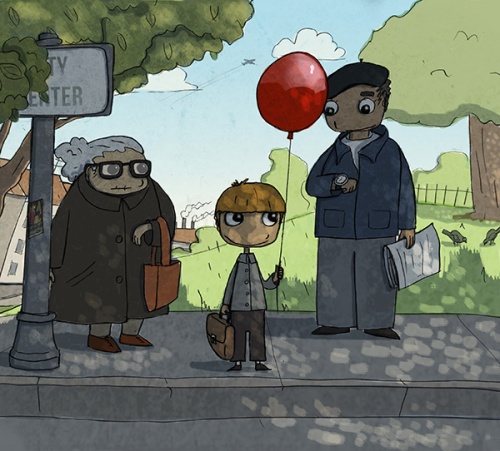
One of the biggest challenges of working in Photoshop is to make the images not look so “Photoshoppy”. So I have added a yellow layer (6%) and a water color image to add “texture”. I have also added several details, such as the balloon reflection, text on the bus sign and the little sticker on the sign post. As the image comes to life, I have fun adding in little details – this also helps with the “believability” factor.
Additionally, I have added another “texture” layer (image of paint strokes on canvas) and a faint shadow around the edge of the image to give a more old-photo look.
How long have you been illustrating?
I started focusing on illustrating in 2010, but I have been painting for over 20 years. My paintings were very illustrative and often people would ask me “Why don’t you go into children’s book illustration?”
Where did you study graphic design?
I first started my studies at the University of Hartford/Hartford Art School and took every type of art class imaginable except glass blowing and jewelry. Then I studied film for a year, then moved on to multimedia (animation and video) and that’s when I finally decided to major in graphic design. I studied and majored in graphic design at Eastern Connecticut State University – my home state.
Have you attended other art related courses since studying Graphic Design?
I took a picture book illustration class and also a children’s book writing course at University of California San Diego.
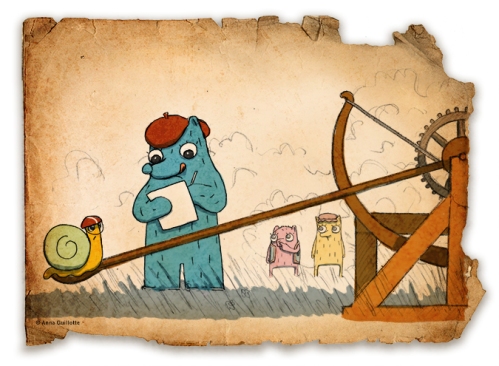
What was the first painting or illustration that you did where someone paid you for your artwork?
I painted an outdoor mural at an Elementary school in Boston.
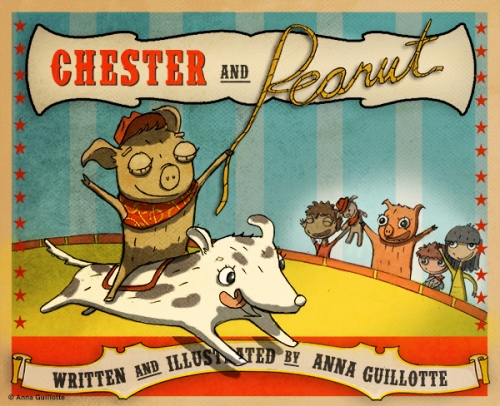
What type of job did you do right after you graduated?
I was hired as a graphic artist at Sonalyst, Inc. in Connecticut. While there, I mostly created graphics and multimedia for US Navy computer-based training, but also did graphics and web design for private companies.
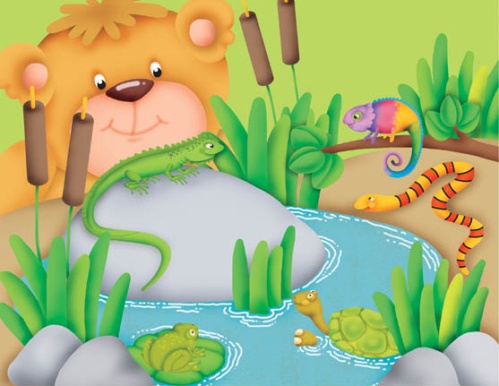
What do you think most influenced your style?
I think a lot of the shows and movies I watched as a kid influenced me. I loved the old cartoons like Tom and Jerry or Looney tunes. I’ve always been a big movie buff – not just the storytelling but also the cinematic style and I think that has carried over to my work.
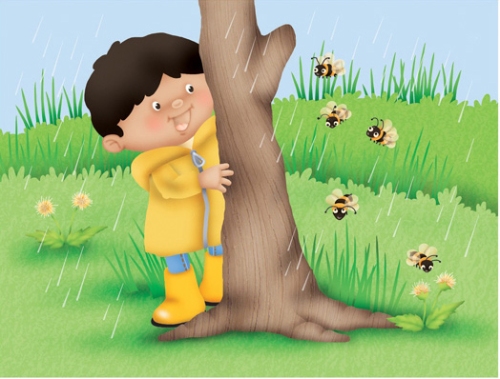
When did you decide you wanted to illustrate for children?
I signed up for an artist mentor program in San Diego in 2010. It was a program designed to help professional artists get unstuck. I was painting and doing murals but I felt my art career lacked a bit of focus. My mentor took one look at my work and suggested children’s book illustration. Her coworker knew Dan Santat from a previous job so we arranged a studio visit at Dan’s home (which Dan so graciously provided). Its funny, because at the time I didn’t know anything about children’s books and had no idea who Dan Santat was. He took the time to show me his work, how he got started, and what its like to work in the industry. After a few hours of the visit, I was sold!
What type of art jobs have you landed?
I have worked as a graphic and multimedia artist, have done many children’s murals, and focusing on illustration work for the children’s book market and editorials.
What are you doing to help connect with art directors and editors?
I have gone to many SCBWI conferences and heard art directors, agents and editors speak. It’s really helped me put a face to a name, so it doesn’t feel so abstract when sending my work to them. As far as how I connect – mostly I have sent postcards or emailed my website. I have also sent out a book dummy to several editors. I’ve also just created an email newsletter too for my contact list.
Have you put together a portfolio and or a book dummy?
I found that I have only used the physical portfolio when displaying at a SCBWI conference, otherwise I almost exclusively use my online portfolio. I have several book dummies as well, but they are mostly in digital format (PDF) as opposed to the physical book dummy format.
What made you decide to move to Germany?
I had no previous plans to move to Europe, but my partner got a job offer in Germany last year so I moved as well. I wrote about the decision in more detail on my blog: http://annaguillotte.com/blog/2013/11/13/why-i-am-moving-to-germany
It’s been an interesting experience to say the least and has definitely tested my limits at times. But having lived in the US my whole life, now I have the opportunity to live on the other side of the fence. Now I am the immigrant dealing with visa, work, driving, language, and cultural barriers. But since moving, I’ve had the unique opportunity to explore Europe and a experience a different lifestyle, which I think has given me an inspirational spark and influenced my work.
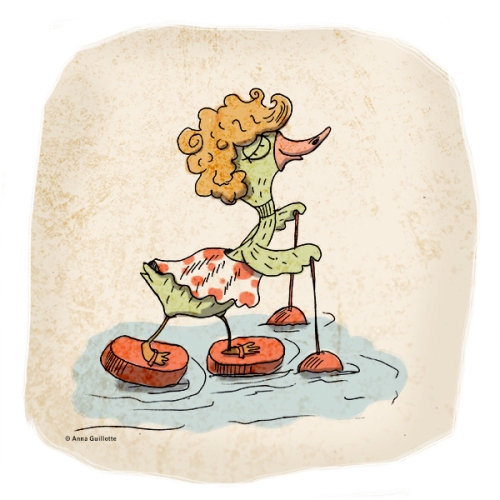
How would you compare the US market to the market for art in Germany?
For one, the German market is much, much smaller and for that reason has more international artists participating. My impression is the US market is so big and has so many talented artists that you don’t see as much artwork from outside the country.
Have you exhibited your illustrations in Germany?
Not yet : )
Have you done any illustrating for children’s magazines?
I have done some children’s illustrations for magazines but they were not specifically children’s magazines.
Do you have an Artist Rep. to represent you? If not, would you like to find representation?
I don’t have an artist rep now, but I would like a rep for two reasons: 1. Help with finding illustration projects and marketing so I can spend more time focusing on the creative part 2. To have a sounding board – a mutual, creative and professional relationship with someone where we can share creative ideas on how to make a project even better and enjoy the process. Though I am coming from a visual artist background, I would like to write and illustrate my own stories as well and would ideally like a representative that would work with both my art and writing or allow me to have both an art and literary agent.
What types of things do you do to find illustration work?
I keep my website updated and have several online portfolios (Behance, LinkedIn, Devianart) so people can find me. I submit my art to magazines and illustration competitions. I also send postcards to art directors and I just made an email newsletter too.
What is your favorite medium to use?
I have gravitated towards mixed media – drawing with pen, pencil, crayon, etc. scanning in and then coloring with Photoshop.
Has that changed over time?
Definitely! I used to paint using oils, then I switched to acrylic paints, then I began to import my paintings into Photoshop to edit them. About two years ago I began using Photoshop exclusively to color and have experimented using different textures to create a more natural look.
Do you take pictures or do any types of research before you start a project?
If I have a specific pose or lighting that I want to accurately capture, I will either take a photo of myself or search pictures on google images. I like to search google images also for ideas and inspiration.
What are you working on now?
This past summer I was working on developing a story idea for one of my characters, Bearonardo. Now, I’m in a marketing mode and fine-tuning the business side of my illustrations. For example, being more consistent with contacting and updating art directors. It’s not the glamorous part, but just as important!
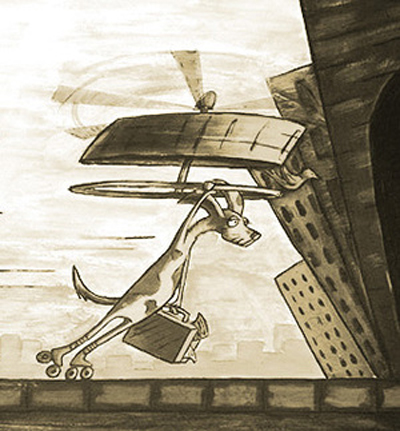
Do you want to write and illustrate a picture book?
I sure do! I have a bunch of stories I’ve written and made book dummies for. I’m definitely open to illustrating stories written by others too if they’re a good fit with me.
 Do you have any material type tips you can share with us? Example: Paint or paper that you love – the best place to buy – a new product that you’ve tried – A how to tip, etc.
If you use Photoshop a lot in your illustrations, I would highly suggest experimenting with using different textures and patterns (whether you scan them in or find texture images online) and using the blending mode.
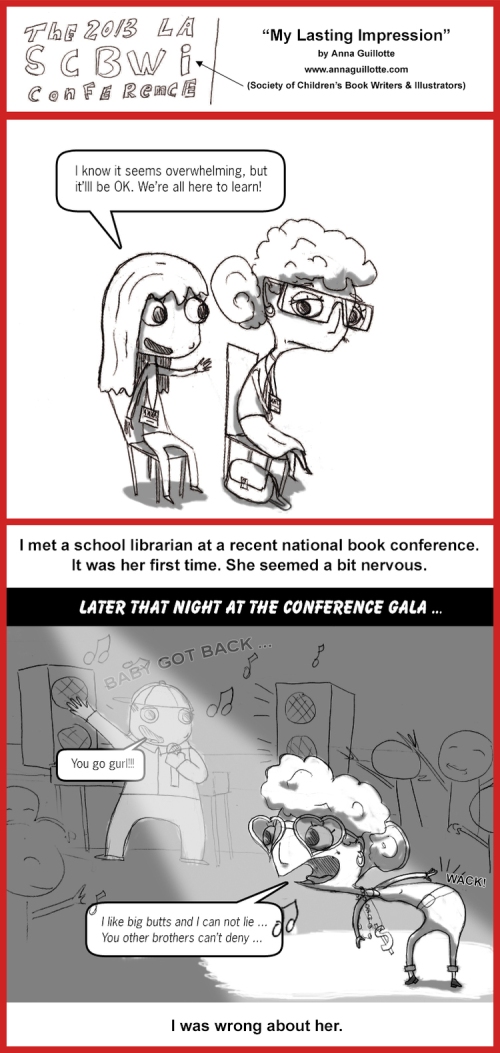
Thank you Anna for sharing you journey and process with us. Please let us know when your new picture books come out. We’d love to see them and cheer you on. You can visit Anna at: http://annaguillotte.com/
If you have a moment I am sure Anna would like to read your comments. I enjoy reading them, too, even if sometimes I don’t have time to reply to all of them. Thanks!
Talk tomorrow,
Kathy
Filed under:
Advice,
bio,
demystify,
How to,
illustrating,
Illustrator's Saturday,
inspiration,
Interview,
Process Tagged:
Anna Guillotte 

By: Kathy Temean,
on 10/3/2014
Blog:
Writing and Illustrating
(
Login to Add to MyJacketFlap)
JacketFlap tags:
Interview,
picture books,
inspiration,
Advice,
Process,
illustrating,
Lita Judge,
authors and illustrators,
demystify,
Illustrator's Saturday,
Flight School,
Born in the Wild,
Red Sledge,
Add a tag

 Lita Judge is a writer and artist whose greatest passion is creating children’s books. She is the author/illustrator for over a dozen fiction and nonfiction picture books including Flight School (Simon & Schuster, 2014), Red Hat (S&S, 2013), Red Sled (S&S, 2011), Bird Talk (Roaring Brook, 2012), One Thousand Tracings, and Pennies for Elephants (Disney-Hyperion). Her background in geology, paleontology and biology inspires her nonfiction books. Lita spent several years working for the Royal Tyrrell Museum of Paleontology before turning to writing about dinosaurs and other natural history subjects. But her background with animals also inspires her whimsical fictional tales filled with characters who forge big dreams.
Several of her books have been selected as Junior Library Guild picks and they have received numerous awards including the 2013 Sterling North Award, the Jane Addams Honor Book, ALA Notable Children’s Book, the International Reading Association Children’s Book Award, Michigan Notable Book, and Kirkus Best Children’s book of 2011. She enjoys teaching both writing and illustration to students of all ages and shares much about her creative process in classrooms and on her blog and website.
Lita lives with her husband, two cats and a little green parrot named Beatrix Potter in Peterborough, New Hampshire.
Here is Lita talking about her process:
For me, creating art for one of my books involves a lot of drawing to capture a character’s gesture or body movement and expression. For example in my newest book, Born in the Wild, to be released this October, I had to draw a lot of animals. But I didn’t want my readers to just know what a chimpanzee or orangutan looks like. I want them to feel a connection to them. I want them to look into the faces of my animals and feel like there is an animal looking back at them. I also want them to get an understanding of the intimate world of animals within their own world. How does a mother panda hold her baby, or a baby orangutan curl up and feel safe with its parent? To capture all this I first do hundreds of very loose sketches, focusing on body language long before I worry about details and paint.
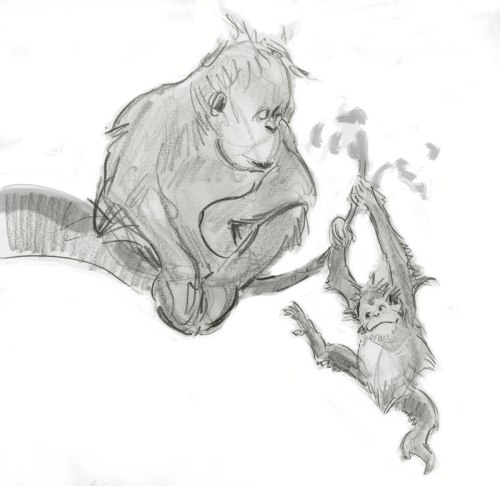
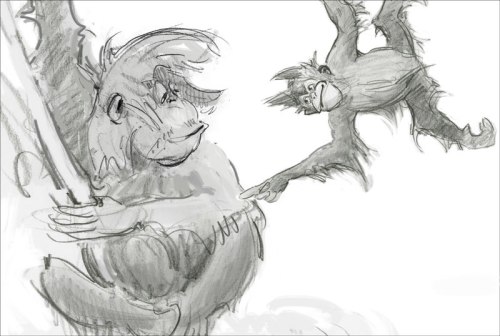
Once I feel like I’ve captured that intimate portrait between the animals, I start focusing on the details, which describe their faces and bodies. Slowly my drawings become more refined until at last, it is ready for a light watercolor wash at the end.
 Cover for BORN IN THE WILD
Interior and end pages
How long have you been illustrating?
The first book I illustrated came out in 2006. Then my first picture book, One Thousand Tracings, which I wrote and illustrated was released in 2007.
Above: Cover of One Thousand Tracings, 2007 Hyperion)
How did you get to work at the Royal Tyrrell Museum of Paleontology?
Many kids outgrow the dinosaur-crazed phase after elementary school, but when I was 14, during the summer before high school, I still had set my cap on becoming a paleontologist. I was eager to get started so I wrote dozens of letters to museums, curators and paleontologists who were working in the field, and basically pleaded with them to let me work on their dig. I had heard the Tyrrell Museum was working on a dig with literally thousands of dinosaurs in a bonebed and they were from the Cretaceous, the age I particularly wanted to study. I guess I ended up writing so many letters to Phil Currie, he eventually called and said welcome aboard. So the day after school let out the following summer, I was on a bus to Canada. I returned every year to work there and went on to graduate with a degree in Geology.
Lita on dinosaur dig
Did you do illustrating work for them?
Not really, we didn’t have much time for anything other than digging up fossils. But I did do a few drawings on my own, and they asked if they could use them for t-shirts and mugs. That was a boost, to think I could draw dinosaurs perhaps someday for pay.
Cover of How Big, released 2013, Roaring Brook Press
Did you go to School to study art? If so, when and where?
My only schooling was in Geology, at Oregon State University. I never studied art in school. I credit all the bird watching and sketching I did as a kid for teaching me how to see, how to observe. Then later, I traveled to many great museums all over the world which, painting on location, and looking at great art.
Field paintings from Europe. Above: Stockholm cemetery. Below: Paris museum.
What was the first painting or illustration that you did where someone paid you for your artwork?
I think I sold a painting of a humming bird for about $35 at a Christmas fair. Back when I was a Geologist, I started drawing notecard and bookmark designs to get into doing art. Eventually I had over a hundred wildlife designs and sold them all over the country with a homemade catalogue I ran on a xerox machine. Then I started doing shows and craft fairs. Eventually I sold the business because I was spending all my time folding and filling notecard orders rather than painting. The dream was to paint, not fill orders. So I started showing and selling work in galleries. But I didn’t find my real home in art until I turned to writing and illustrating children books. The element of story is what made my art feel complete for me.
What type of job did you do right after you graduated?
I was an environmental geologist for the Forest Service. Spent a lot of time in the mud and rain working on the Oregon Coast.
What do you think influenced your style?
I don’t really think in terms of style. My art changes and evolves each time I do a story. I think it’s because I also write them and I have a wide range of interests — science, nature, historical, fiction, whimsical — so I do a broad range of stories. Each time I create a story it needs it’s own approach to the art.
When did you do your the first illustration for children?
In 2006, my first book was to illustrate the middle grade book, Ugly, written by Donna Jo Napoli.
How did that come about?
I had sent an art dummy of a story I had written into Hyperion and my soon-to-be editor, Namrata Tripathi, called and asked if I’d like to do a cover for a book. Of course I said yes! I was so excited I illustrated several interior pieces as well, which made it into the book, so it turned into a nice project, and a lovely friendship with Namrata. When that was done I sent her another dummy and we were off and running on my first picture book together.
How many children’s books have you illustrated?
I’m working on my 20th right now. Several in the pipeline also.
When did you decide you wanted to illustrate a children’s book?
I’ve always wanted to on some level but when I was living in really remote areas on the west coast it just didn’t seem possible. I had never met an illustrator and really didn’t know how to go about getting published. When My husband and I moved to New Hampshire I was able to meet people in the field and soon after I began submitting work. Once my first book was in the works, I knew this would be what I would spend the rest of my life doing, I LOVE it!
How long did it take you after that to get your first picture book contract?
I was pretty fortunate. I sent out work I think in early November and got that first project on Valentine’s Day 2005. But I had been drawing and drawing and drawing, and painting for years before then. I had built up a huge body of work before attempting to get published and I think that helped me.
I see you illustrated a second book by Donna Jo Napoli. Did you know you were doing that book when you signed to do UGLY?
No, Donna Jo hadn’t even written it. It just grew naturally from the fact that Ugly was received well and we both had fun on that project.
What was the first book that you wrote and illustrated?
One Thousand Tracings. It’s a true story about a relief effort my grandparents did to help people who had lost their homes in Europe after WWII. I found letters and foot tracings in my grandmother’s attic after she died and knew immediately I wanted to write about this amazing thing they had done to help all those families.
How did you find a home for that book?
I sent it to my editor at Hyperion about a week after I turned the art in for Ugly.
What book would you say has been your most successful?
Hmmm, I really don’t think of success in terms of how many books sold or how many editions. I think a book is successful if I as an artist got to create something I feel passionately about, and it connects with readers who also feel passionately about the same thing. Some of my nonfiction books may not sell as many books as Red Sled or Flight School, but I still feel like that little girl obsessed with dinosaurs craving to make a living as an artist when I create them and that is better than any measured success. And they solicit such beautiful responses from kids who share the same obsession, so it’s a pretty wonderful feeling. And my fiction, well that’s a dream too. To create a character that people respond to, that makes them smile or feel a connection, that is the best. I leave others to worry about book sales and things, and I just worry about making the stories I love. My career feels like a dream come true, so I guess all my books are successful in their own little ways.

What book award are you the most proud of winning?
Kind of the same feeling, I’m just so grateful when any group of librarians or teachers or reviewers gathers a group of books together that they love and decides to bestow an honor on one of my books. I treasure each nod I’ve received and am thankful because they always make me believe a little more each time I really get to keep doing this beautiful, fantastic, crazy career!
Have you worked with educational publishers?
No.
Have you done any illustrating for children’s magazines?
No. I’ve been asked for both, but I can never seem to pull away on the stories I’m brewing up. My imagination seems to keep my docket pretty darn full these days.
Do you have an Artist Rep. to represent you?
I work with a literary agent, Linda Pratt, who I adore because she keeps life sane for me, juggling all the contracts and turn-in dates. But more importantly, she is my sounding board for stories. She always gives me a safe creative place to bounce around ideas.
What types of things do you do to find illustration work?
Nothing, other than I just keep writing stories. I work on them nearly every day. As soon as one is turned in to my editor and I’m waiting for feedback, I turn to the next. I don’t worry about projects, just about stories, and somehow that has kept me fully employed since the day I started.
What is your favorite medium to use?
Pencil and watercolor.
Has that changed over time?
My approach changes each time I launch into a new story. Sometimes I have a whimsical story that has to be light and fresh and very gestural. Another time, I may be working on a nonfiction that needs a more detailed approach. I’m working now on a book that takes place at night and has an element of mystery so things are dark with kind of magical lighting and a big beautiful moon. Another story I’m working on now is for much older kids and it’s kind of dark and at times very sad and scary, so that means a huge departure on my approach. I love not having a set style. It means I have to reinvent myself a lot, and that can take a lot of hours at the easel, but it is never boring.
What I really want to know is how did you find such a great studio? Did you buy the house because of that room? Had it been a church?
I build it. My husband and I found a piece of land and I designed it. We had been saving and dreaming for a very long time, so the studio grew out of that energy. I found a salvaged church window and lugged some niches home from France that were made out of 15th century oak and were in a church that was sadly destroyed in WWI, but they have a home with me now. And I carved ravens for the roofline outside to reflect my background. I was born on the Tlingit Indian reservation in Alaska and the ravens are my homage to their beautiful art and culture that inspires me. I’m grateful for everyday I get to create in this space!
What is the one thing in your studio that you could not live without?
Natural light and my critters!
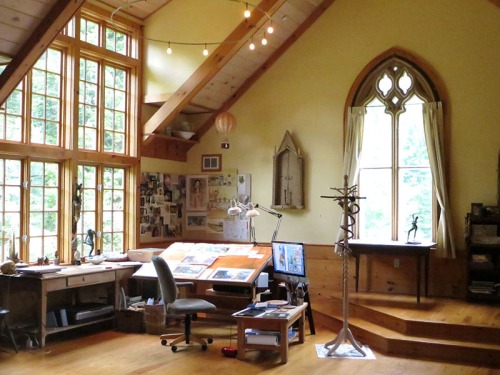
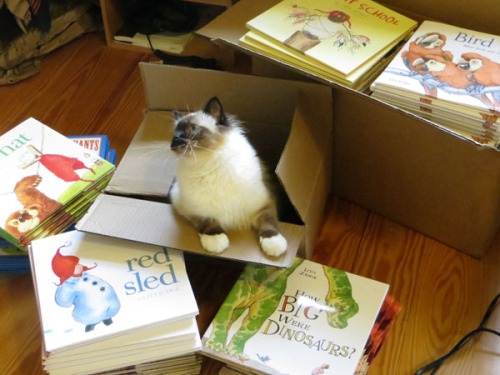
Do you try to spend a specific amount of time working on your craft?
I just work. Really I don’t keep hours. I just wake up every day eager to get back to the stories, and march on through the day and into the night and through the weekends. I hate being sick because that’s about the only time I’m not working and that for me is just plain boring. There is always at least 3 unfinished stories on my easel and a few more whispering in my ears, so as long as that is true, I’ll be working. I occasionally slip out for a bike ride, but I’m pretty much to be found with pencil or brush in hand.
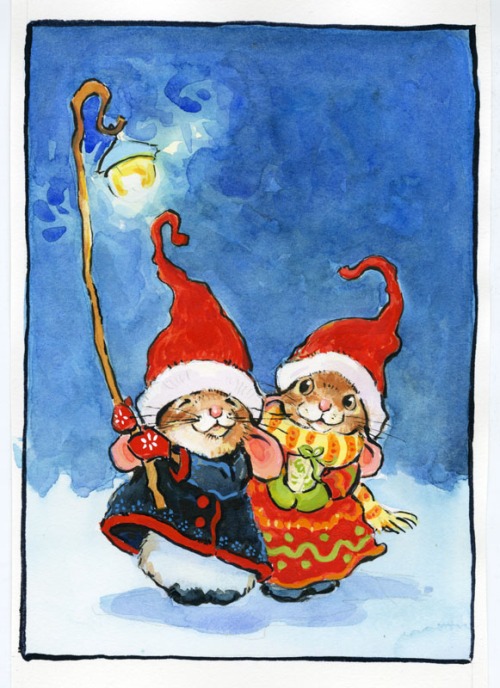
Do you take pictures or do any types of research before you start a project?
I do lots of research and quite often take pictures. That is always a fun part. My parents are wildlife photographers and my grandparents were research biologists. So I think I came to love that part of the work naturally. I do a lot of photo shoots with kids and animals, whatever the need may be. Have had fun over the years, travelling to places I paint, working with elephants, taking back trips up into the back country, feeding giraffes. Research is the fun part indeed!
Which illustrated book is your favorite?
Ah, that is like asking a mom which is her favorite kid. OK, I may have a special fondness for a certain penguin (in Flight School) but don’t tell the others. And I’m working on two books now that I’m bursting to let out in to the world, but that will have to wait. I’ll just say Paris, Owlets, moons and fun!
Do you think the Internet has opened doors for you?
Oh yes, it’s a wonderful way to connect with people you would never meet otherwise. I get offers to speak and all sorts of wonderful things come out of the fact that people can so easily find your website and get a sense of what you have to offer. And I’m grateful for wonderful friendships with other writers whom I rarely see but keep in touch with.
Do you use Photoshop with your illustrations?
I do a lot of planning with Photoshop. I find it a wonderful creative tool hat helps me really explore and push a composition in a way I can’t with just pencil. I love how I can really play around with values as well so that you don’t have to muck around too much in guesswork with real paint. That never works well with watercolors.
Do you own or have you used a Graphic Drawing Tablet in your illustrating?
I do use one a lot in the planning stages. And a little in the final art- again it really depends on the story and what effect I’m trying to get. They are wonderful for some things, but I find a good old fashioned brush loaded in paint my favorite tool.
Do you have any career dreams that you want to fulfill?
To keep doing books that excite and interest me for the rest of my life! To never ever have the feeling that I want to slow down. And to travel to more wonderful places that allow me to soak up their beauty and capture their essence in a story. To continue connecting with kids, teachers, and parents over stories and feel in some small way your work was a part of their imagination and life. That’s all I want.
What are you working on now?
Well I have 5 books in various stages. Some I can let out of the bag, and a couple that need to stay inside where it’s safe and warm just a little longer. My next nonfiction book, BORN IN THE WILD, coming out with Roaring Brook has already gotten two starred reviews and will be released on October 21st, so that’s exciting. Then I have a picture book about my Parrot, Beatrix, coming out next spring with Atheneum entitled, GOOD MORNIGN TO ME! It’s a fun story about life with a very happy and exuberant parrot. Then I have a book I’m illustrating about a pygmy marmoset that has been a delight work on and took me on a mental journey to the Amazon, pretty fun (coming out with Boyd’s Mill). And then my owlet book set in Paris which I’m working on now (to be released with Dial), and then… oops, I can’t tell you what I’m working on after that, but it’s a big project that has pushed me to extremes and I can’t wait for it to be ready to break out of the studio and into the world.
Cover of Good Morning to Me, to be released Spring 2015, Ateneum
Do you have any material type tips you can share with us? Example: Paint or paper that you love – the best place to buy – a new product that you’ve tried – A how to tip, etc.
My all time favorite brush is an Isabey Petite Gris brush, all sizes. It’s shaped kind of flat and fat so it holds gobs of paint while still keeping a good point. I bought my first in Paris after I dropped my brushes in the Seine, and man am I glad I did, because this brush paints like a dream. I also love cheep bamboo calligraphy brushes as I do a lot of line work. My tools are pretty simple 4b pencils, arches watercolor paper, Windsor Newton paint.
Any words of wisdom on how to become a successful writer or illustrator?
It sounds kind of flippant, but I mean it in all sincerity – don’t worry about success. Just worry about the writing and/or the art. People want good stories, they crave them, if you focus on the craft, on making it the best piece of art or writing humanly possible, the “success” part of it will fall into place, at least enough so that you get to make a comfortable living at it and keep doing it. I honestly don’t think about number of books sold, etc, I’d go crazy second guessing every whisper of an idea that comes into my brain and I’d give up on it long before it had the time and nurturing from me to grow into a real story. But if you just focus on the art, and the writing, it will grow into something others can love. Just make a Utopia for yourself of your work, and the other “career” part of things will come out of that.
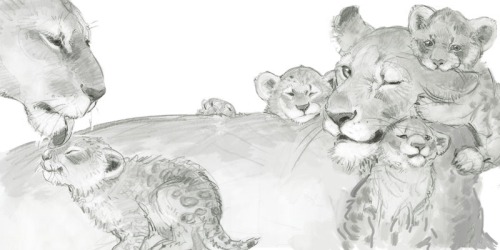
Sketch for upcoming book, Born in the Wild
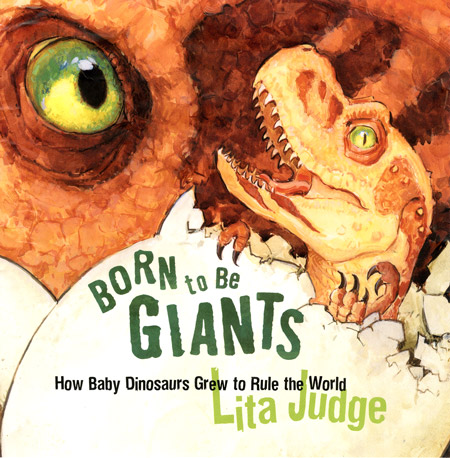
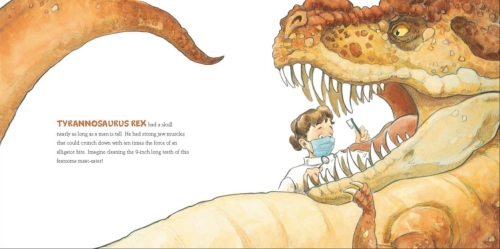
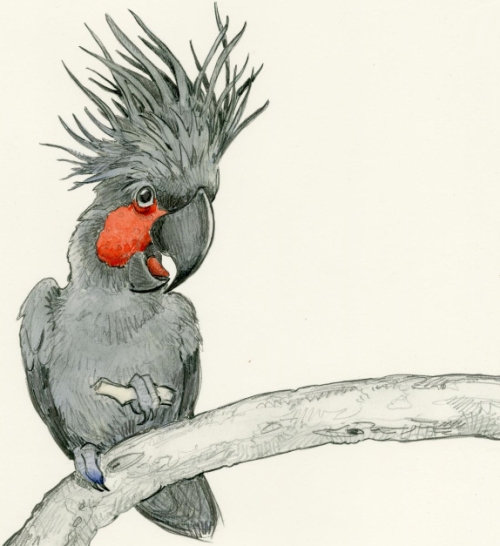
Thank you Lita for sharing you journey and process with us. Please let us know when your new picture books come out. We’d love to see them and cheer you on. You can visit Lita at: http://www.litajudge.net
If you have a moment I am sure Lita would like to read your comments. I enjoy reading them, too, even if sometimes I don’t have time to reply to all of them. Thanks!
Talk tomorrow,
Kathy
Filed under:
Advice,
authors and illustrators,
demystify,
illustrating,
Illustrator's Saturday,
inspiration,
Interview,
picture books,
Process Tagged:
Born in the Wild,
Flight School,
Lita Judge,
Red Sledge 

By: Kathy Temean,
on 9/29/2014
Blog:
Writing and Illustrating
(
Login to Add to MyJacketFlap)
JacketFlap tags:
Sarah LaPolla,
Literary Fiction definition,
Bradford Literary,
Commercial Fiction definition,
Agent,
Advice,
article,
need to know,
demystify,
reference,
Add a tag
Don’t be afraid of the difference between literary and commercial fiction like these Scaredy Scouts illustrated by B.L. Bachmann below. B.L. is a writer and illustrator living in Los Angeles. Her mission is to make people smile, and even giggle :) See more at http://www.blbachmann.com
 I spent last week running two writer’s retreats in Avalon, NJ. The agents at the first retreat were Sarah LaPolla from Bradford Literary and Carly Watters from P.S. Literary. The agents at the second retreat were Ammi-Joan Paguette from Erin Murphy Agency and Heather Alexander from Pippin Properties.
It was a gorgeous week. Everyone received a full manuscript critique with an agent and a full manuscript critique from everyone in their group. I have to say, I think both of the sessions were the best retreats I have put together. The agents were top notched and each writer in each group took extreme care with their critiques, so we walked away with lots of ideas for revisions and with many doors open with the agents. On top of that, everyone meshed well and we had a tons of fun. Can’t think of anything that was missing.
 During the week the question came up about the difference between Literary Fiction and Commercial Fiction. Lucky for us, Sarah LaPolla had written an explanation on her blog and gave me permission to post it on Writing and Illustrating.
Here is Sarah:
I don’t think writers should get too hung up on labels, but it’s important to know what genre you’re writing. You’re expected to give an agent an immediate sense of where they can sell your book, but even more than that you should be able to know who you’ll be next to on a bookshelf so that you can read your comparison titles accordingly.
Figuring out thriller vs. mystery vs. suspense or paranormal romance vs. urban fantasy vs. supernatural horror can be difficult, I know. In these cases, it’s best to just choose the closest and let a professional decide the best way they can sell it. But the line between literary and commercial isn’t as vague. You shouldn’t claim your book is literary fiction if it isn’t. For one, it’s rare you’ll find an agent who looks for literary fiction and genre fiction with the same fervor, if they take on both at all. You don’t want to get a rejection based on a mislabel. Secondly, literary fiction is quite different than genre fiction, and not learning the difference can reflect a lack of research on your part.
The common argument, however, is that all books are technically literary. Right? Well, yes and no. Saying all books are literary is like saying all Young Adult novels are about characters under 25. The genre labels can be misleading, which is why it’s important to know what they mean.
If you’re unsure about which you’ve written, here’s a quick definition of each:
Literary fiction: The focus is on character arc, themes (often existential), and the use of language. I like to compare literary fiction authors to runway designers. The general public isn’t mean to wear the clothes models display on the runway. They exist to impress the other designers and show the fashion industry what they can do. Literary writing is a lot like that, but on a more accessible level. Many dismiss literary fiction as “too artsy” and “books without a plot,” but this isn’t true. At least not most of the time. The plot is there; it’s just incidental. Literary fiction is meant to make the reader reflect, and the author will almost always prefer a clever turn of phrase over plot development.
Commercial fiction: For the purposes of this blog post, I’ve been using this interchangeably with genre fiction. Basically, all genre fiction is commercial, but not all commercial fiction is genre. There is also “upmarket” commercial fiction, which I’ll get to later. Unlike literary fiction, genre fiction is written with a wide audience in mind (aka “commercial”) and always focuses on plot. There is still character development in genre fiction, but it is not as necessary. Characters get idiosyncratic quirks, clever dialogue, and often learn something new about life or themselves by the end. The difference is that their traits are only skin deep. The reader stays with them in the present. Rarely do we see a character’s past unless there is something pertinent to the plot back there. Genre fiction has a Point A and a Point B, and very little stands in the way of telling that story.
Keep in mind that an agent or editor will rarely prefer you to play with these formats, especially if you’re a debut author trying to find (and build) your audience. If you’re writing a plot-driven genre novel that adheres to a sci-fi, romance, or thriller structure, don’t try to load it with literary devices and huge character back-stories that aren’t relevant to the plot. It won’t impress an agent if you have a super literary genre novel. It will more likely confuse us and make your book harder to sell.
“Upmarket” fiction is where things get tricky. Books like The Help, Water for Elephants, Eat, Pray, Love, and authors like Nick Hornby, Ann Patchet, and Tom Perrotta are considered “upmarket.” Their concept and use of language appeal to a wider audience, but they have a slightly more sophisticated style than genre fiction and touch on themes and emotions that go deeper than the plot.
With debut authors, I think the main source of uncertainty tends to come from what they set out to write vs. what they actually write. Genre fiction is written with a clear purpose. The author has an idea and writes a story to accomplish their goal. Literary fiction can be more accidental. A writer may start with an idea, and then discover along the way that they don’t want to write about that anymore. They’ve fallen for their character’s personal tale or the images they want to evoke within the reader. If the writing ends up falling somewhere in the middle, then it might be considered “upmarket.” Or, it could mean it needs more focus one way or the other.
What’s important to remember is that none of these types of fiction is better than the other. It’s all about personal preference, based on what you like to read and how you write. If an agent doesn’t represent a certain genre, it doesn’t mean he or she think it’s bad. It just means you’re better off with someone else. Be aware that a genre label can influence an agent, but be honest about what your genre is. It wastes everyone’s time – most importantly, yours – if you try to guess what you think agents want. We want books we can fall in love with that fall under in genres and styles we represent, whether they’re young adult, adult genre fiction, or literary to a Proustian degree. That’s all.
You should drop by and take a look at Sarah’s blog: http://glasscasesblog.blogspot.com/ Sarah has agreed to be a Guest Blogger in the near future on a different subject, but another enjoyable post that will broaden your knowledge.
Thanks Sarah for sharing.
Talk tomorrow,
Kathy
Filed under:
Advice,
Agent,
article,
demystify,
need to know,
reference Tagged:
Bradford Literary,
Commercial Fiction definition,
Literary Fiction definition,
Sarah LaPolla 

By: Kathy Temean,
on 9/19/2014
Blog:
Writing and Illustrating
(
Login to Add to MyJacketFlap)
JacketFlap tags:
Interview,
picture books,
inspiration,
illustrating,
authors and illustrators,
Publishing Industry,
demystify,
Illustrator's Saturday,
1st Prize (Category Children's Book) at the 'Marosvásárhely Book Fair Award,
30th edition of the exhibition 'Le immagini della fantasia',
Applied Art in Budapest,
Sarolta Szulyovszky,
Add a tag
 Sarolta Szulyovszky was born and grew up in Budapest (Hungary), she studied Applied Art, after which she moved to Italy. Since 2004 she start activity in the field of graphics and illustration working in a graphic design studio in Udine (Italy). Now she lives and works as a freelance illustrator and graphic designer in a little city in northern Italy: San Daniele del Friuli.
She works for children’ s books, magazines, cover books, Brochure Design and Packaging Design.
Sarolta works both traditionally in acrylics, pencil and digitally.
In 2012 her work has been selected for the ‘Annual Illustratori Italiani 2012′ (Society of Italian Illustrators) and for the 30th edition of the exhibition ‘Le immagini della fantasia’ (Sàrmede, Italy) – 60 illustrators from all over the world.
2011 – selected for the 23rd Biennial of Illustrations Bratislava.
In 2010 she won the 1st Prize (Category Children’s Book) at the ‘Marosvásárhely Book Fair Award (Romania).
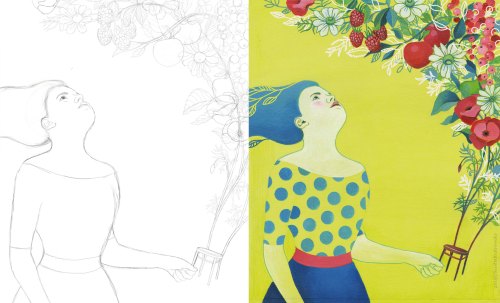
Draft drawn in Photoshop, and the final illustration for a magazine. The commission was to illustrate the month of July. (Image: Progress_1)
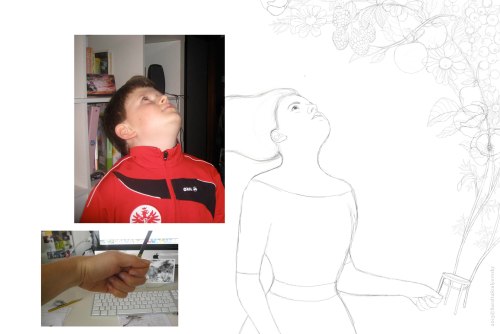
I needed a model to draw the woman so I photographed my son for the face and my hand for the hand!
I found the fruit and vegetables on the internet.
After sketching out the draft, I prepare an acrylic base for the background colour and, with carbon paper, I transfer the draft I have printed onto the base I have prepared. (Image: Progress_4)
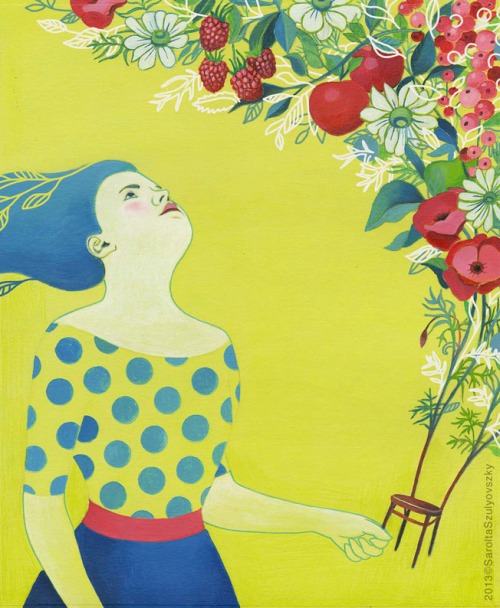
Here is the final illustration entirely painted with acrylics.
Book Covers
Book Covers
How long have you been illustrating?
I began to illustrate children’s books 11 years ago. My first publication (2003) was a drawing for an anthology of world fables published in Italy, but I have only thought of myself as an illustrator since I began to devote myself entirely to this work in 2009.
Did you go to college to study graphic design?
I began to study drawing at the age of 14, attending evening classes while I was studying at a science academy school in Budapest (Hungary). My dream was always to become a designer, so once I graduated from high school, I attended a textile design college and another college to study interior decoration, then went to the university “Nyugat-magyarországi Egyetem” on a Packaging Design course, but I never imagined that one day I would be illustrating books! I became involved in the world of children’s books illustration in Italy where I attended courses on advertising graphics and editorial illustration.
What were you favorite classes?
At university, I really liked design and drawing from life, especially portraits.
How did you decide to move from Hungary to Italy?
I moved to Italy not for work but for love. I met my husband in Budapest and, after we got married in 1997, I came with him to Italy.
Do you feel the illustrating opportunities are better in Italy?
I don’t think Italy offers more opportunities for work in the field of illustration compared to Hungary or other European countries. Italy is currently undergoing a severe social, cultural and economic crisis and illustrators (and anyone who works in the cultural sphere in general) is often considered an amateur, and not a professional, and so they are paid little or nothing. However, I do think that Italy is an excellent place to study illustration: it is a country that boasts 50% of the world’s cultural and artistic heritage, a very stimulating environment for an artist, and there are excellent schools specializing in illustration.
It is very true that “no-one is a prophet in his own land” and so the first publications I had in Italy were due to the fact I was a foreigner: they were looking for foreign artists for multicultural editorial projects. After that, I was published in my home country and in other states.
What was the first art related work that you were paid?
The first paid work was for the illustration of a children’s book translated into Italian from Hungarian, “Ha én felnőtt volnék” (If I were big) by Eva Janikovszky, published by L’Omino Rosso Editore, a small publisher in the region where I live. The book is a major classic in Hungary, a very entertaining story that I illustrated using digital techniques (Adobe Illustrator), which did not turn out to be my style.
What do you think influenced you style?
I think my style has been influenced by many things: the popular Hungarian art passed on to me by my grandmother, who taught me embroidery, the late Renaissance painters in the Fine Arts Museum in Budapest, where I acted as tourist guide when I was a student and, of course, many contemporary illustrators that I discovered in books, exhibitions and on the web (Gianni De Conno, Gabriel Pacheco, Alice Wellinger, Pierre Mornet……. the list would be very long!).
What type of work did you do right after you graduated?
After university, I gave birth to my two children and for 6 years I concentrated on being a mother….. although it was during that period that I discovered illustrated children’s books!
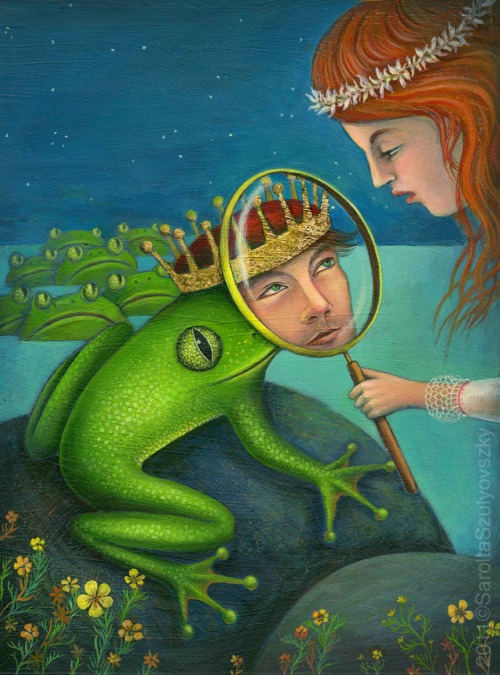
How did you connect with the Wilkinson Studios? When did you join them?
I came across Wilkinson Studios in 2011 thanks to an illustrator friend of mine who was already working for them. I sent them my portfolio and they immediately gave me a job. The client was very pleased with the illustration and so we continued to collaborate and they included me among the artists they represent. It was a great honour for me.
Do you do any exhibits to show off your work?
Yes, I am often invited to take part in joint exhibitions and I have had various personal exhibitions in Italy and abroad. In 2011 and 2013, my work was exhibited at the Biennale of Illustration of Bratislava, Slovakia and, 2007- 2012 every year at the “Le immagini della fantasia” of Sàrmede, the most important exhibition of children’s illustrations in Italy.
The last exhibition has just ended and it was “Il posto delle favole” (The place of fables), a joint exhibition by international artists in Rocca Sinibalda, a picturesque little town in central Italy. The next exhibition will be a personal exhibition of my work in Hungary in October 2014.
When and what was the first children’s book that you illustrated?
The first book that I illustrated was, luckily, the one I mentioned as my first paid work.
How did that contract come about?
The contact with the publisher came about through a friend we had in common, who was a book translator.
Do you consider that book to be your first big success?
My first book was an important experience for me, I learned a lot, but I don’t consider it a great success.
Have you published about children’s picture books for a US publisher?
So far, in the United States, they have published my illustrations in academic books and magazines, but I haven’t yet illustrated a whole book in the United States and I can’t wait to do so!
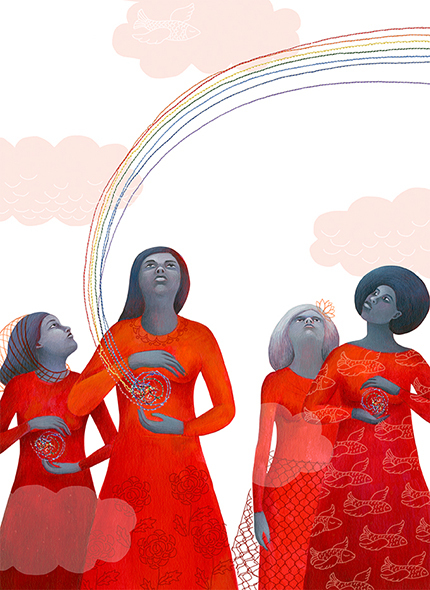
Have you tried to write and illustrate a children’s book, yet?
My first successful book was actually one that I wrote and illustrated: “A hálás virág “(The grateful flower) is an autobiographical book that deals with the subject of diversity and the Great Mystery of death, life and rebirth. The story came from an episode that actually happened in my grandparent’s garden in Budapest. In 2008, the album won first prize for the best unpublished illustrated album for children aged between 6 and 9 years at the 11th International Competition “Syria Poletti: On the wings of butterflies”. It was subsequently published in 3 languages: Italian, Hungarian and Polish.
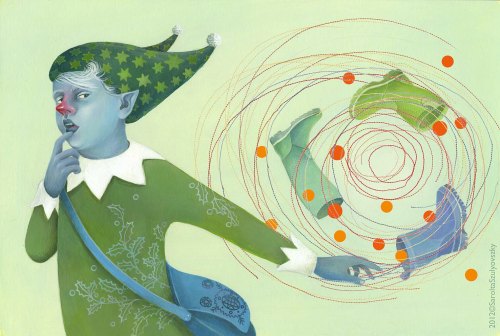
Does the area where you live have a large artist community?
I live in the countryside near a little town in northeast Italy that lies between the Alps and the Adriatic Sea, a land of excellent white wines and ham. There isn’t a large community of artists here, but you live and eat well!
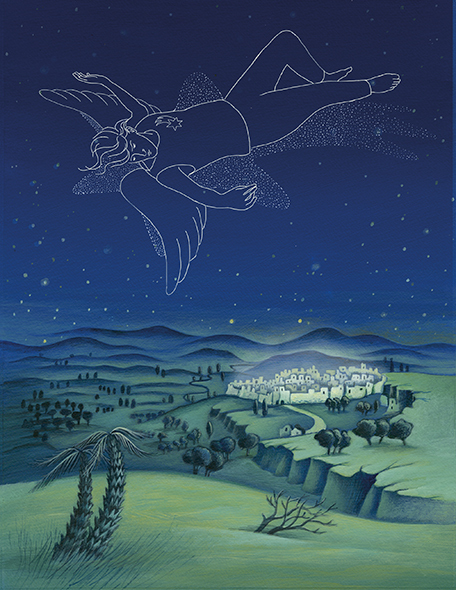
What type of illustration work do you do?
I work both on children’s books and books for adults, and on Packaging. I work both digitally and with traditional techniques. I like to adapt my style to the text and always try out new things so that I continue to grow and renew myself.
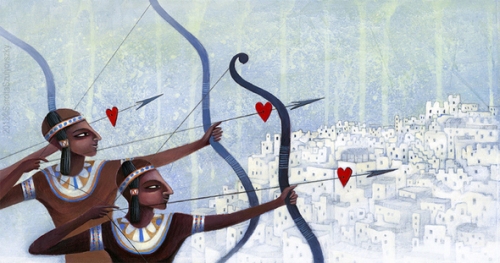
Have you won any awards for our art?
I have won various prizes but the most important was the one I received at the Frankfurt Book Fair in 2013: the cover I illustrated of “Folyékony tekintet” / Liquid gaze (published by Libri, Budapest) was selected from the 12 most beautiful covers at the Fair by the Wall Street Journal.
How many picture books have you illustrated?
So far, I have entirely illustrated 11 books, without counting the anthologies that include the drawings of several artists.
What do you consider your biggest success?
The greatest success has been the last book I illustrated, “Folyékony tekintet” (Liquid gaze), a collection of poetry for which I drew the digital illustrations using only the colours black and red.
Do you feel living in Italy has broaden your career as an illustrator?
For an illustrator, I don’t think it matters much these days where you live, an internet presence is more important because that’s where work meetings take place. 23. Yes, I have worked for Italian and Hungarian magazines and in the United States, for the Christian Reformed Church of North America’s Dwell Dive Magazine. 24. I use acrylic colours and sometimes I add some details in Photoshop.
Have you done illustrations for any children’s magazines?
Yes, I have worked for Italian and Hungarian magazines and in the United States, for the Christian Reformed Church of North America’s Dwell Dive Magazine.
What materials do you use to paint your color illustrations?
I use acrylic colours and sometimes I add some details in Photoshop.
What type of things do you do to find illustration work?
To find illustration work, it is important to have a website or a blog, send your portfolio to the illustration agencies and publishers, and go to specialist fairs, like the Children’s Book Fair of Bologna.
What is the one thing in your studio that you could not live without?
The thing I miss the most is the view from my window: the hill with the historic centre and the mountains. When I’m at home staring at a sheet of paper or a monitor all day, it is important sometimes to turn and look into the distance!
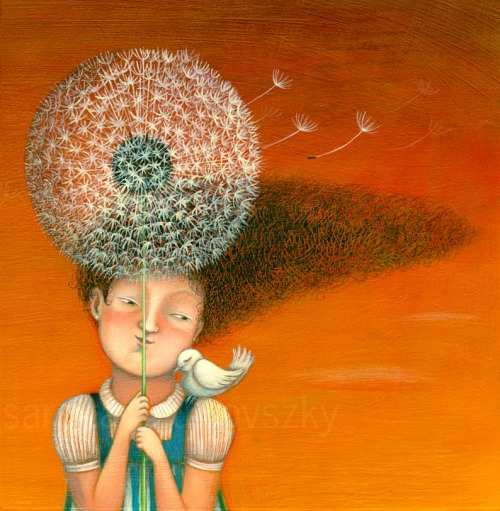
Do you try to spend a specific amount of time working on your craft?
It is very difficult to work set hours when you’re a freelance. I often work at night to meet deadlines…
Do you take pictures or do any types of research before you start a project?
Research is the first phase of working on an illustrated project and that often takes whole days. I have a folder on my computer where I collect photos and texts that inspire me and that might be useful one day. If I don’t find the photos I need on the internet, people in certain poses, for example, then I’ll use relatives or myself, taking the photos I need.
Do you think the Internet has opened doors for you?
Yes, I think the internet has opened many doors, but it has also increased the competition.
Do you use Photoshop or Corel Painter with your illustrations?
Yes, I use Photoshop and Adobe Illustrator.
Do you own or have you used a Graphic Drawing Tablet in your illustrating?
Yes, I use a Graphic Drawing Tablet to sketch out drafts and add details to my illustrations.
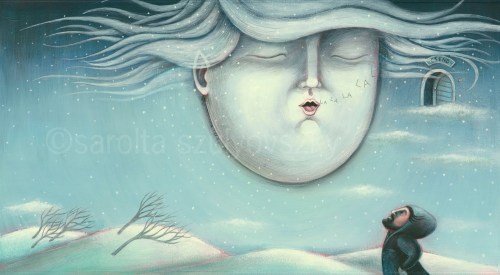
Do you have any career dreams that you want to fulfill?
My dream is to illustrate the Bible, especially St Paul’s Hymn to Love.
What are you working on now?
At the moment, I’m working on two books: an illustrated album: The Garden of Tears, written by the French author, Laurie Cohen, and a Hungarian novel by Zoltán Hajdú Farkas.
Any words of wisdom on how to become a successful writer or illustrator?
Above all, it is important to inquire within and understand ourselves. What would I really like to do? Devote time to personal works that haven’t been commissioned, be humble (we always need to learn), have a little entrepreneurial ability (we have to promote our work ourselves) and great steadfastness.
Thank you Sarolta for taking the time to share your process and journey with us. We look forward to hearing about all your future successes.
To see more of Sarolta’s illustrations visit her at:
Website: http://www.saroltaszulyovszky.com/
Blog: http://saroltaszulyovszky.blogspot.it/
Please take a minute to leave a comment for Sarolta, I know she would love to heard from you and I always appreciate it. Thanks!
Talk tomorrow,
Kathy
Filed under:
authors and illustrators,
demystify,
illustrating,
Illustrator's Saturday,
inspiration,
Interview,
picture books,
Publishing Industry Tagged:
1st Prize (Category Children's Book) at the 'Marosvásárhely Book Fair Award,
30th edition of the exhibition 'Le immagini della fantasia',
Applied Art in Budapest,
Sarolta Szulyovszky 

By: Kathy Temean,
on 9/13/2014
Blog:
Writing and Illustrating
(
Login to Add to MyJacketFlap)
JacketFlap tags:
picture books,
opportunity,
How to,
children writing,
Sudipta Bardhan-Quallen,
Online Writing Course,
demystify,
Picture Book A to A series,
Plotting in Picture Books,
Author,
Add a tag
 Bonus Critique: Register before September 20, 2014 and receive a free picture book manuscript review and 20-minute Skype session with Sudipta Bardhan-Quallen, redeemable within six months of the course’s completion.
Four Week Online Class starts October 6, 2014
Cost: $250
Author Sudipta Bardhan-Quallen is proud to offer the first in this series, a course on Plotting in Picture Books.
The Picture Book A to Z series is designed to be a collection of master level classes that cover all of the fundamentals of picture book craft. While each class is complete on its own, taken together, the series will teach you everything you ever wanted to now about picture books — and a lot more!
What You Will Learn
The ability to craft a strong picture book plot is one of the factors that separates unpublished writers from those who consistently sign publishing contracts to see their work in print. This course will teach you the essentials of creating compelling plots, starting with Arcs, Beginnings, and Climaxes — then literally taking you through the alphabet. Each topic will be explored in depth, both in the lessons and in the discussion forums and webinars. The writing exercises that are a part of the course are designed to help you apply the lessons to your own writing seamlessly and immediately. By the end of the course, you will never look at plotting the same way again!
How the course is structured:
- Lessons will be posted daily Mondays-Fridays during the four weeks of the course. They will remain online for four months (until February 28, 2015) so students can work at their own pace.
- A weekly webinar will address topics related to the class. Webinars will also provide an opportunity for personal feedback from the instructors. They will be recorded and available for students to access for four months after the completion of the course.
- Students will be able to interact with the instructors and each other via an organized, private message board hosted just for each class. This will be an excellent resource to form critique groups, to freely ask questions, and to support each other as you launch into your projects.
Optional Add on Critique: Add an in-depth picture book manuscript critique with an hour-long Skype session with Sudipta Bardhan-Quallen at a special class-only discounted rate.
Bonus Critique: Register before September 20, 2014 and receive a free picture book manuscript review and 20-minute Skype session with Sudipta Bardhan-Quallen, redeemable within six months of the course’s completion. In addition, you will be entered to receive a free written critique of a picture book manuscript (up to 1,000 words) from Agent Rachel Orr of the Prospect Agency.
Click this link to register: http://www.kidlitwritingschool.com/picture-book-a-to-zs–plotting.html
Talk tomorrow,
Kathy
Filed under:
Author,
children writing,
demystify,
How to,
opportunity,
picture books Tagged:
Online Writing Course,
Picture Book A to A series,
Plotting in Picture Books,
Sudipta Bardhan-Quallen 

By: Kathy Temean,
on 9/8/2014
Blog:
Writing and Illustrating
(
Login to Add to MyJacketFlap)
JacketFlap tags:
How to,
James N. Frey,
demystify,
How To Write A Damn Good Thriller,
Writing a thriller novel,
Author,
Writing Tips,
list,
Book,
Advice,
Add a tag
For my next manuscript I plan to write a thriller, so I bought
How to Write a Damn Good Thriller: A Step-by-Step Guide for Novelists and Screenwriters by James N. Frey to study.
I thought you might be interested in James Frey’s list of what to pledge before starting your novel.
A thriller is a pulse-pounding supsense. In the US, mysteries are not considered thriller, though they share some common elements.
In a mystery, the hero has a mission to find a killer.
In a thriller, the hero has a mission to foil evil.
To write a damn good thriller, you need a killer attitude. Pledge to yourself to do the following:
Commit yourself to creating strong conflicts in every line of every scene.
Decide you will have fresh, snappy dialogue and not a single line of conversation.
Decide to write quickly when drafting. Fast is golden.
Give yourself production quotas of at least a thousand words everyday, even if you have a tough day job like kissing up to bad bosses. Three or four thousand would be better.
If your significant other complains your thriller writing is taking up too much of you time, get a new significant other.
Commit yourself to this: You will not have any major characters that are bland and colorless. They will all be dramatic types, theatrical, driven, larger than life, clever.
Create a step sheet for the whole novel or screenplay. You might start your first draft if you know your opening and have an idea for the climax.
Trick the expectations of the reader and create nice surprises from time to time.
Have your character in terrible trouble right from the beginning, and never let them get free of terrible trouble until the climax.
Have powerful story questions operating at all times.
End each scene or section of dramatic narrative with a bridge, a story question to carry the reader to the next one.
Always keep brainstorming and think about what’s happening off scene.
Make charts for the major characters that tell you what they’re doing when they’re not on scene.
Try to be fresh. Don’t use the same old cliches.
Be sure your prose is colorful and sensuous.
Keep the clock ticking and the excitement mounting right to the climactic moment.
Talk tomorrow,
Kathy
Filed under:
Advice,
Author,
Book,
demystify,
How to,
list,
Writing Tips Tagged:
How To Write A Damn Good Thriller,
James N. Frey,
Writing a thriller novel 

By: Kathy Temean,
on 9/7/2014
Blog:
Writing and Illustrating
(
Login to Add to MyJacketFlap)
JacketFlap tags:
How to,
James N. Frey,
demystify,
How To Write A Damn Good Thriller,
Writing a thriller novel,
Author,
Writing Tips,
list,
Book,
Advice,
Add a tag
For my next manuscript I plan to write a thriller, so I bought
How to Write a Damn Good Thriller: A Step-by-Step Guide for Novelists and Screenwriters by James N. Frey to study.
I thought you might be interested in James Frey’s list of what to pledge before starting your novel.
A thriller is a pulse-pounding supsense. In the US, mysteries are not considered thriller, though they share some common elements.
In a mystery, the hero has a mission to find a killer.
In a thriller, the hero has a mission to foil evil.
To write a damn good thriller, you need a killer attitude. Pledge to yourself to do the following:
Commit yourself to creating strong conflicts in every line of every scene.
Decide you will have fresh, snappy dialogue and not a single line of conversation.
Decide to write quickly when drafting. Fast is golden.
Give yourself production quotas of at least a thousand words everyday, even if you have a tough day job like kissing up to bad bosses. Three or four thousand would be better.
If your significant other complains your thriller writing is taking up too much of you time, get a new significant other.
Commit yourself to this: You will not have any major characters that are bland and colorless. They will all be dramatic types, theatrical, driven, larger than life, clever.
Create a step sheet for the whole novel or screenplay. You might start your first draft if you know your opening and have an idea for the climax.
Trick the expectations of the reader and create nice surprises from time to time.
Have your character in terrible trouble right from the beginning, and never let them get free of terrible trouble until the climax.
Have powerful story questions operating at all times.
End each scene or section of dramatic narrative with a bridge, a story question to carry the reader to the next one.
Always keep brainstorming and think about what’s happening off scene.
Make charts for the major characters that tell you what they’re doing when they’re not on scene.
Try to be fresh. Don’t use the same old cliches.
Be sure your prose is colorful and sensuous.
Keep the clock ticking and the excitement mounting right to the climactic moment.
Talk tomorrow,
Kathy
Filed under:
Advice,
Author,
Book,
demystify,
How to,
list,
Writing Tips Tagged:
How To Write A Damn Good Thriller,
James N. Frey,
Writing a thriller novel
By: Kathy Temean,
on 8/28/2014
Blog:
Writing and Illustrating
(
Login to Add to MyJacketFlap)
JacketFlap tags:
Agent,
inspiration,
Advice,
Process,
revisions,
First Page Critique,
demystify,
Writing feedback,
Pippin Properties,
Agent Holly McGhee,
Add a tag

Cynthia Reeg FROM THE GRAVE Middle Grade Fantasy
Monster Rule #9: A monster’s appearance should incite fear and significant revulsion to scare the socks off mere humans.
FRANK’S TALE
Shocktober 13, Year of the Scrull
Looking through the bus window, I tilted my nose up toward the sky’s “determined drear,” as Ms. Hagmire liked to call it. That was Uggarland—grim, gray, and delightfully desolate. From the bony skeleton trees, to the swampland grasses, to the lurking monsters. My itchy right palm brushed against my perfectly tucked shirt and my much too crisp pant leg. I should be an example of such determined drear, general disarray, and evil intent. Only I wasn’t.
“I saw a bat flying upside down last night,” said Oliver. My mummy friend sat next to me. His unwrapped, wrinkled brown finger skimmed down the page of the tattered book on his lap. “I’m trying to find out what that means.”
“That means trouble,” I muttered. The low rumble of voices from the other eccentric students on our bus seemed to echo the word. Trouble.
“Maybe its antennae were just damaged.” Oliver pointed to bold print on the right hand page.
I shook my head. “No. It means trouble.”
Our special Fiendful Fiends Academy Bus—otherwise referred to as OMO (Odd Monsters Only) bus—lurched to a stop in front of our school. We all climbed out, but as I tilted my nose upward again, I stopped in mid-step.
HERE’S HOLLY:
From the Grave, Middle-grade Fantasy, Cynthia Reeg
I was interested in Oliver and the first-person narrator, and I think it might be smart to start the story off with the dialogue about the bat. It’s important that the reader engage with the characters first, that we connect with them and care, before learning about the scenery of Uggarland. So I suggest moving the scenery further down in the story and pulling back on the detailed descriptions of clothing in order to laser-focus on the two kids. Hook us with them and then take us on a journey.
___________________________________________________________
Best Chocolate Cake and Other Dramatic Disasters by Julia Maranan – MG Novel
Things I Am Good At
Field hockey
Music
Science
French
Chess
Baking?
Starting middle school on crutches had been about as bad as it sounds. While I was hobbling around trying to find all my classes after an “unfortunate accident” during field hockey tryouts, everyone else found all their friends and where they fit in. By the time I was back on my own two feet, I was pretty much invisible (except to Angie, who’d been my BFF since, well, forever). And it’s not like I hadn’t been trying things. I just hadn’t found the right thing. But today, that would finally change. I could feel it.
I took another look at the picture of the expertly frosted Best Chocolate Cake our home ec teacher, Mrs. Collins, had projected in the front of the classroom, and my mouth watered.
Baking is a good thing to excel in. I mean, who doesn’t love chocolate cake? People are going to ask me to bake them things all the time! Maybe I can even get extra credit if I bake something amazing. I’ll have to find out what my teachers like before midterm grades are due…
I read through the instructions one more time: grease and flour the pan, mix everything in a bowl, and pour the batter into the pan to bake. This is going to be awesome.
“Do you want to grease the pan, or should I?” I asked my partner, Kate Nichols, who was the second worst person in the room Mrs. Collins could have paired me with.
“I think maybe you should just make your own cake. Over there.” She motioned vaguely to the counter by the sink, purple nail polish sparkling under the fluorescent lights.
“But we’re supposed to work together,” I said.
“But I want my cake to be edible,” she said, and took her pan over to a table.
HERE’S HOLLY:
Best Chocolate Cake, Middle-grade novel, Julia Maranan
I like the idea that the main character wants to find something to make her visible. But those first days of school are not here—those days with her on crutches, left out of all the quick-forming friendships circles. I would like to see them. That way I would make a connection, and I’d be rooting for this girl and her baking skills. Show us the character in her darkest moment, all those friends pairing and bonding while she can’t keep up, that anxiety and pressure, and then you’ll be set up to tell the story. I did like the list at the top! As for baking and home ec, I’m not sure when the story takes place, but in our schools, they don’t offer home ec anymore, sad to say, so make it clear what year the story starts.
___________________________________________________________
DOGS ON STRIKE! By Rita D. Russell – Picture Book
All night long, Rufus snored and sniggled in his sleep. He dreamed about his birthday and getting super-duper treats. But when Rufus woke up… he got nothing.
“Not even a birthday card?” asked Dugan.
“Or pupperoni cupcakes?” wondered Nugget.
“Nothing,” said Rufus. “Not even the Happy Birthday song.”
The three mutts mulled over the situation while burying bones in the backyard.
“What’s the world coming to,” they groused, “when a dog gets less love than a mouse?” [Art: Rufus, Dugan,and Nugget watch a man mowing the lawn with his pet mouse peeking from his shirt pocket.]
“No walking in the park.”
“No dancing in the dark.”
“No purple pupsicle treat.”
“No cruising in the front seat.”
Something had to be done.
STRIKE??? [Art: Dogs vote at a meeting of the neighborhood dogs association.]
Rufus strode to the podium and proudly proclaimed, “Today dogs are changing the rules of the game. Our smiles and affection are no longer free. We demand nicer treatment. So until families agree…”
[Art: Families are shocked to discover…]
“No greetings at the door?”
“No footrests on the floor?”
“No herding cows or sheep?”
“No guarding while we sleep?”
“DOGS ON STRIKE!”
The cool cats stayed back. (They were not impressed.)
HERE’S HOLLY:
Dogs on Strike, Picture book, Rita D. Russell
This is a cute concept and I like the idea of turning the dog-people relationship on its head. That said, I don’t know why this dog is surprised that he doesn’t have a birthday celebration. Has he had them in the past? What is the context? If you can figure that out and keep this very simple, with excellent dialogue, you might have a winner. Check out David Ezra Stein’s I’M MY OWN DOG, just published, for a fantastic example of role reversal.
___________________________________________________________
Carol Foote FOREVER MAGIC Middle Grade
The hint of a whisper.
At first Elena thought it might be trees sighing or a faucet turned on somewhere else in the house. But the sound grew louder, as if coming at her through a long tunnel. She tilted her head to listen just as it burst out, filling the room.
“El-e-naaaaaa…”
Elena almost dropped the pickle jar she was preparing for a science experiment. Her knees wobbled, and she leaned against the kitchen counter.
“El-e-naaaaaa…” The whisper swirled around her. Then it was gone.
She ran to the window and nudged aside the white lace curtains. Outside, her ten-year-old brother Connor was tossing a plastic bag in the air and attacking it with a stick.
“For the king!” Connor cried, slashing at his flimsy opponent. “Victory is ours!”
“Did you call me?” Elena shouted. Her voice sounded high and thin.
“No.” Connor impaled the bag and didn’t even look toward her.
“Did you hear that?”
“Hear what?”
Elena eyed the woods beyond the lawn. Not even a leaf rustled. Gram’s car wasn’t in its usual spot at the top of the long dirt drive. Elena crossed the kitchen and peered into the living room. The solid, stuffed chairs and dark, polished tables sat undisturbed. Only the steady ticking of the grandfather clock broke the stillness. Breathing in the familiar smell of old books and fireplace ashes, Elena forced her shoulders to relax. See? It was nothing.
She returned to her experiment where vapor rose from a tray of dry ice. Like a genie from a lamp. Her hands shook, and she spilled rubbing alcohol as she tried to pour just enough to saturate the black felt she’d glued inside the jar. Tightening the lid, she glanced around the room.
HERE’S HOLLY:
Forever Magic, Middle-grade novel, Carol Foote
I think this is a fantastic opening page! Keep going. I want to know more. But get a better title. Well done.
___________________________________________________________
Thank you Holly for sharing your time and expertise with us. It is a huge help to read you comments.
Talk tomorrow,
Kathy
Filed under:
Advice,
Agent,
demystify,
inspiration,
Process,
revisions Tagged:
Agent Holly McGhee,
First Page Critique,
Pippin Properties,
Writing feedback 

By: Kathy Temean,
on 8/22/2014
Blog:
Writing and Illustrating
(
Login to Add to MyJacketFlap)
JacketFlap tags:
Interview,
inspiration,
Process,
Children's Illustrator,
illustrating,
authors and illustrators,
demystify,
Illustrator's Saturday,
Agentina,
Inés Hüni,
Add a tag
 Inés Hüni was born in Mendoza (Argentina), the land that produces the finest Malbec wine grapes in the world.
She remembers that as a little girl, she always dreamed about having her “taller de arte” with lots of small “frasquitos”, colored pencils and brushes of all sizes.
She moved to Buenos Aires – the big city – when she was 11.
During high school, in her spare time, Inés was always involved in drawing and arts & crafts activities. She could not wait to finish high school in order to begin studying what she really loved: Arts.
She graduated from Fine Arts with major in drawing and engraving. Inés also studied humoristic drawing and animation with some of the finest professors in Argentina and USA.
Ines is a great observer of the world that surrounds her. She loves the challenge of interpreting every brush stroke of reality and capturing it in her artwork.
Already married and with two daughters, she moved to México. What was initially supposed to be a 3-year-experience, but it has now turned into an 8-years-one, tasting and living Mexican flavors and colors. The family has recently added a fifth member, her little Mexican daughter named Mora.
Inés is a versatile creative professional. She illustrated children magazines, scholastic manuals, worked for animated movie studios, developed characters to be used in murals and posters and has illustrated several children’s books from renowned Editorial Houses from many countries.
Some of her customers are: Animation: Heart of Texas Productions (Texas, USA) in films for Disney Studios, Warner Bros and Lyric Corporation – Illustration: Garcia Ferré, Infantil, El Gato de Hojalata, Guadal, Perfil and Quipu (Argentina), Richmond, Mac Millian, Cordillera, Trillas, and Bilineata (Mexico), Santillana (Puerto Rico & U.S.A)- Everest (Spain).
Here is Ines explaining her process:
This is one of my illustrations in “Mymini moleskine.” Myninimoleskine is a little red sketchbook that I take everywhere, especially if I travel.
The idea is to draw women in different poses and moments of their lives, in one small space, that’s a challenge!
I start the sketch with the blue pencil and on it I remark with black pencil.
Here we have a sketch of a woman who is a football (soccer) fan. She is celebrating a goal with all her soul. That’s an example of how I like to start with the blue PRISMACOLOR col- erase pencil and then remark with black pencil.
Woman of the Cats: here you can see the hole process and my work space.
After scanning I clean it up with Photoshop.
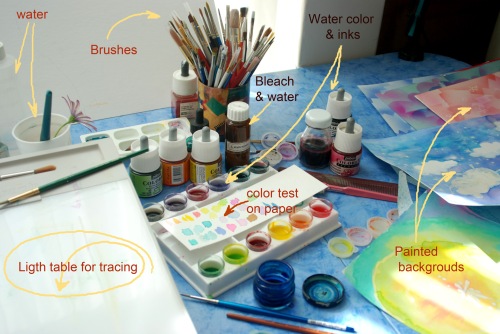
This is my workspace with my lightbox, I use this table to trace and transfer the illustration to a good paper. You can also see all my painting materials, including color inks and watercolors.
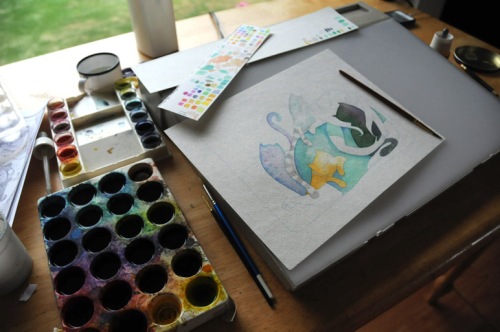
You can see how I start to paint the big areas and views of my desk and materials.
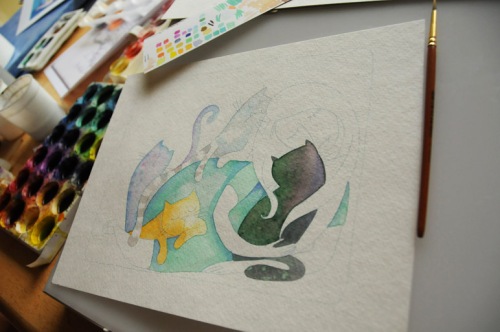
Continue to paint.
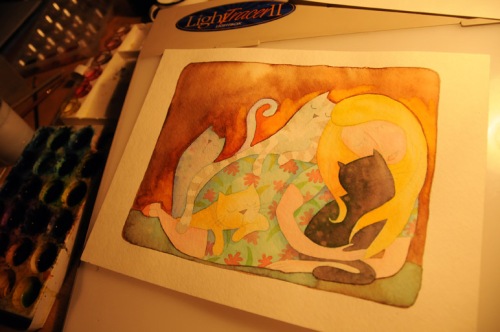
With the whole illustration painted, I begin adding details with color Prismalo Carandache pencils.
Illustration almost done.
Finished Illustration.
Character sketch.
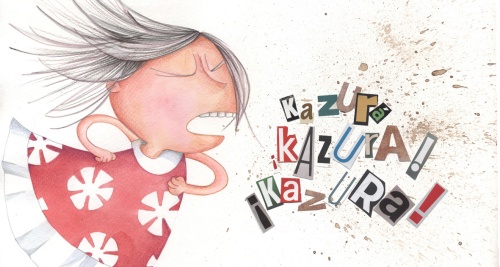
Finished illustration
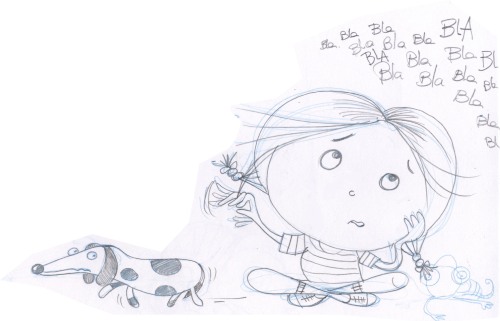
Sketch
Finished illustration.
Finished Book.
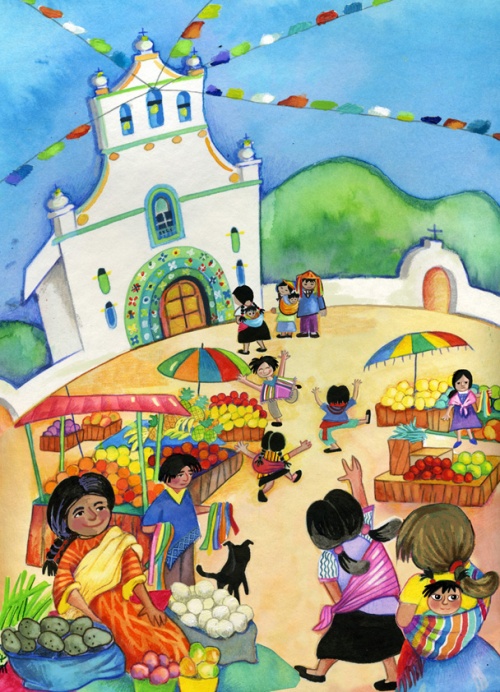
Here are several drawings I made after a trip by the south of Mexico, in Chiapas State. I was delighted by this place, especially by a town called San Juan Chamula, it’s church, and it’s popular market.
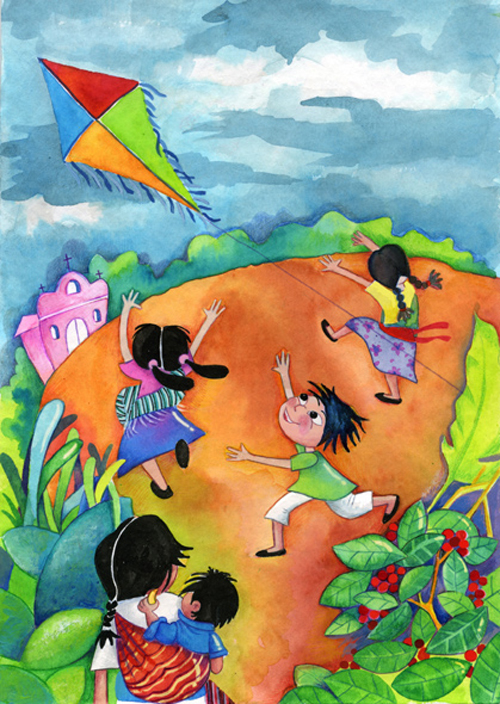
How long have you been illustrating?
I always drew, but it has been 20 years since I started to illustrate.
How did you go to school to study art?
I wanted to study Fine Arts since I was a little girl.
I finished school since I needed to, in order to pursue a University Degree in Arts.
When the time came to choose a career I had no doubts in my mind: Fine Arts. At the same time, I took a course in Humoristic Drawing in another school.
It was a lot of fun since I realized that everything that I was learning was really interesting to me.
What made you move from Argentina to Mexico?
We moved to Mexico with my family due to my husband’s job. It was supposed to be a 3 year experience but it has been almost 9 years already!
Do you think the culture of Argentina influenced your style?
Every experience a person has gone through contributes to defining you as an individual. Regarding specifically my illustration style, I think I have influence from many places, not only from my Argentinian background, but also from other places I have visited, books that I read, movies that I watched and also from some of my colleagues’ works.
What was the first art related work that you did for money?
That is a tough question! I started out by doing Christmas Cards and painting T-Shirts with original designs. I guess my first customers were my parents and my family.
Did you start out doing freelance art or did you do other work to pay the bills?
It was really a mix. At the same time that I looked for free-lance jobs, I worked in a greeting cards editorial house (similar to Hallmark) and also worked in a company that made sticker albums.
How did you get involved with animation with Heart of Texas Productions (Austin,Tx USA) in films for Disney Studios, Warner Bros and Lyrick Corporation?
Wow, that was one pretty chance! My husband and I had just moved to Austin, Texas to study a postgraduate and a neighbor of our condominium worked in that study of animation. When the person who rented us the apartment learnt that I was an illustrator, she made arrangements for me to visit the studios. After the tour, I asked if I could show my portfolio. I think that they had not finished telling me that I was already leaving my folder with them. A few days later I was called to sit for a test and then I was chosen. In Heart of Texas, we also worked for larger studios such as Disney, Warner and Lyric Corporation and that is how I ended being part of films like Aladdin, The Quest for Camelot and three children’s animations on St. Francis and his friendly world.
Do you still do animation?
No. Animation was a great learning experience and I learned it well from the inside: I was trained while I worked in Heart of Texas. In addition to that, I attended College where I experienced going through the whole process of designing: from scratch, to filming my own short (very short) animated movie.
I soon found out that the process of making animation was like a very long, mechanical chain, where one is just a small link and the only way of applying your own creativity was by designing the characters, backgrounds or the story itself. So I turned completely to illustration, which is less mechanical and a greater challenge, because each job order demands my own imagination and creativity.
What type of work did you do right after you graduated?
I worked doing typographies and some illustrations for greeting cards.
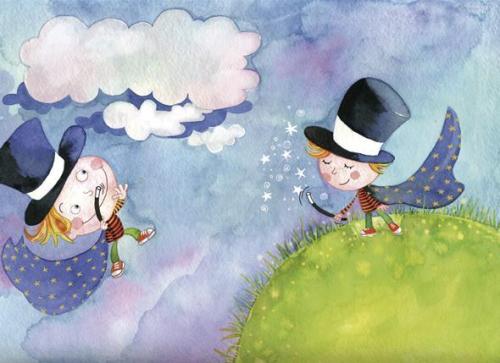
When did you decide to get involved in children’s illustration?
Well, as I already said, while I was studying Arts, I attended another school for humorous drawing, where I learned the basics on how to create characters and move them from side to side, to explore and to draw different topics and to make comic strips… But while I was studying, I realized that it would be hard for me to come up with a joke every day to go with an illustration, like the comics in newspapers. That was when I said to myself: my thing is children’s illustration. I do come up with cute illustrations that can actually be funny but are still not the daily joke or comic strip.
Have you ever illustrated a children’s book or book dummy?
Yes, I have several illustrated books:
The collection Palabrerio by Infantil.com
The collection Hadas Virtuosas – Editorial Guadal, El Gato de Hojalata
Collection Hadas con patitas – Editorial Guadal, El Gato de Hojalata
Several pedagogical publications with Santillana of Puerto Rico and the United States.
Historias maravillosas de la Biblia [Wonderful histories of the Bible] – Publishing Everest.
Deseo of Mateo [Mateo’s wish] – For Kraft, Oreo
Kazurá.Un manifiesto infantil – Editorial Quipu
It looks like you have a friend who writes and you do the illustrations. Could you tell us about how the two of you connected and how many books have you done?
Yes, my friend Agustina, another coincidence in my life! One day in Mexico, I went to a birthday party where new comers had just arrived. I ended up sitting next to one of the new ones, and the host looked at us and said: “Inés, this is Agustina and she writes. Agustina, this is Inés and she illustrates. You must know each other!” Just a few days later, I was contacted by a publisher to make a Christmas Story for Kraft Foods about the Oreo cookie. They wanted it immediately but there was no story yet and they requested the cover and an inside page… I told them that I knew two writers and we could see if they already had something written to adapt into the project… So I contacted both writers. Agustina responded immediately with a story, thought and written especially for the project. It was called “El deseo de Mateo” [Mateo’s wish].
It ended up being a beautiful book, and the best part was discovering what a wonderful team we made together. Then, new projects came up and we continued working together.
Recently our book “Kazurá” was published. It is an illustrated children’s book that we presented in Buenos Aires Book Fair this past July and continue to promote here in Mexico.

What do you consider is your first big success?
I believe that my biggest success is to be able to turn my passion into work, to let my imagination fly, to face challenges with each job order, which sometimes can be something completely new in my life. I sometimes worry but in the end, I always come up with something that I like, and that amuses me!
Each stage of my life had its own hit, like working for Disney and Warner Bross or winning a contest for and important hospital: My character became the Pediatrics’ mascot!
Success for me also meant travelling to the greatest Illustration Fair in the world (Bologna) and being contacted for different jobs after those interviews. And lately, success meant to materialize one of our projects with Agus: our book “Kazurá” recently published.
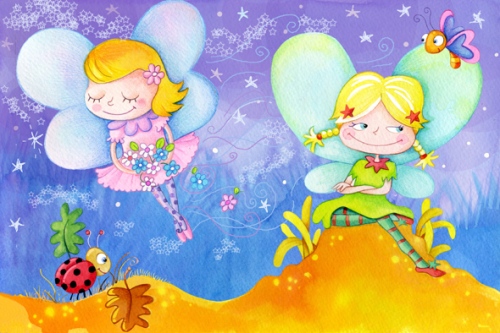
How did that come about?
The most recent success was our book “Kazurá”, which we worked jointly with my friend Agustina, designing each word and each illustration so that each of us, in our own specialized language, would tell the same story without repeating each other. We made a very good presentation of the book, with a dummy, at the Book Fair of Guadalajara. This was an efficient way to introduce ourselves and the book to the different publishers. Not only did we make a good impression on them but we ended with more than one publishing offer for “Kazurá”.
How do you promote your work to get more business?
Mainly through Blogs and webpages. I am in Childrensillustrators.com and I have recently created a blog on Facebook called “Hüni la ilustratera”.
I also promote my work presenting dummies of books in fairs such as FIL de Guadalajara in Mexico (the greatest Spanish-speaking fair of the world ) to show a complete, well presented idea, something which publishers seem to look forward to seeing, lately.
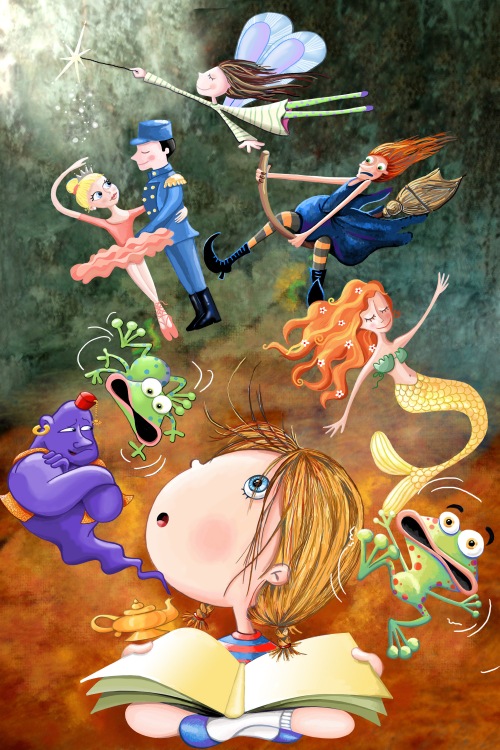
The above is an illustration which represents everything that a book can contain, and how they can amaze us. In this illustration I used a photograph of a painted wall taken by me, as a background. Then I worked on creating the characters with several sketches. I transferred them into final lines in good paper, then I scanned them and once in the computer, I worked digitally on the color in Photoshop.
What materials do you use to paint your color illustrations?
I like to work with inks and watercolors, on good papers, and on those backgrounds I work on the details with coloured pencils. Finally, I finish up digitally in the computer. Lately, I have been applying textures and photos with digital collages.
How I work:
http://www.youtube.com/watch?v=sP0nLgk_PF8#t=196
Here is a link to a video of an e-book called “Al son the Rigoberto”, a story about frienship between a mosquito and an elephant. It is in Spanish, published by Editorial Bilineata. https://itunes.apple.com/us/book/al-son-de-rigoberto/id658854724?l=es&mt=11
Do you do any black and white illustrations?
Yes, I do. Although I am a colour fan, I have studied and made many engravings in the past during my Fine Arts career. I also made several comics with ink and pens. It is a different type of exercise, to think in black and white, and I love it, especially in my sketchbooks.
Above and Below: Painted with inks and watercolors (usually I use Colorex by Pebeo) in a good watercolor paper (Strathmore cold press), retouching the details with colored pencils (Prismalo by Carandache). Finally, after scanning it I worked digitally with Photoshop. The shells are a digital collage of my photographs.
Have you done illustrations for any children’s magazines?
Yes, in Argentina I worked for García Ferré’s magazine “Anteojito” and for women’s magazine called “Mia” by “Editorial Perfil”.
Above and the four below are illustrations made for a collective exposition in honor to the Grimm brothers, the story I had to illustrate was “All-kinds-of-fur” (is that the translation in English for Bestia Peluda?) – 2012 Buenos Aires International Book Fair.
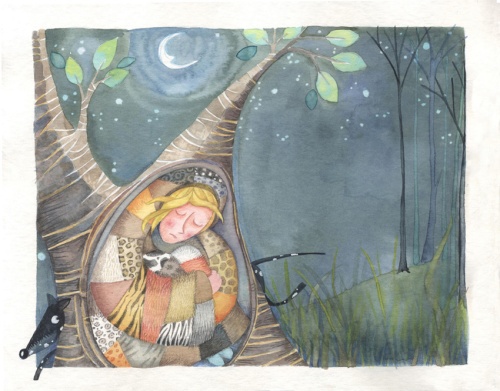
Have you done any work for educational publishers?
Yes, I worked for many educational Publishers illustrating pedagogical texts.
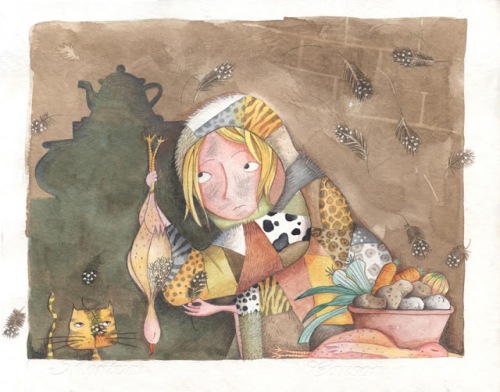
What is the one thing in your studio that you could not live without?
Uh, one? Just one? I cannot work without good light or without music. And, by all means, I am very careful to have the right and best materials to work… If I must choose just a single item, that is a good, well-sharpened pencil.
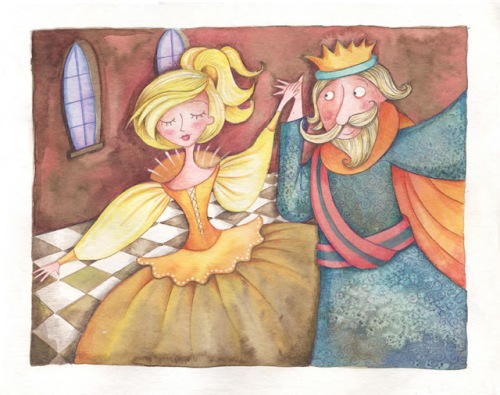
Do you try to spend a specific amount of time working on your craft?
In theory, I try to… but in practice, I can´t always do so. I generally work at night. I like it when everyone at home is asleep. I do burn the midnight oil.
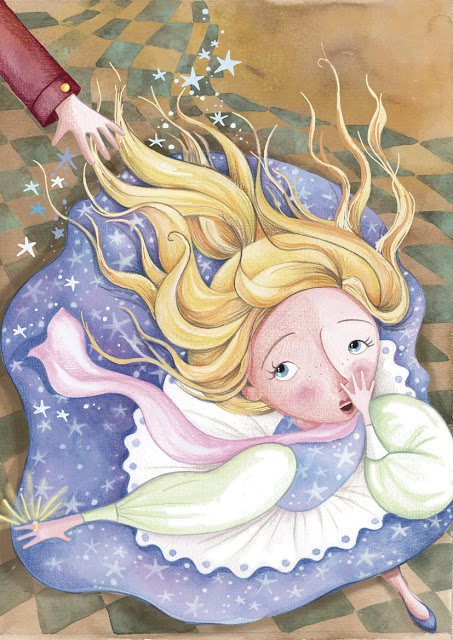
Do you have an agent?
I do not have an agent. And yes, I would love to have one that could make my work known worldwide and sell it for me.
Do you take pictures or do any types of research before you start a project?
I am also a photographer. It is a great advantage that today we have easy access to document everything that we like or calls our attention. When I began to study humoristic drawing, the professors encouraged us to have a file with cut-outs and photos of things that helped us draw, for example: things from the field and from the city, examples of animals and of different leaves and plants. Today, everything is a click away and we must do research before we begin to draw.
Do you think the Internet has opened doors for you?
Absolutely! Today, you can be reached from anywhere and everywhere in the world.
Do you use Photoshop or Corel Painter with your illustrations?
I use both. They are the absolute key to my work.
Do you own or have you used a Graphic Drawing Tablet in your illustrating?
A long time ago, I believe in 1998, I bought my first Wacom tablet. Today, I cannot work without it!
Do you have any career dreams that you want to fulfill?
Yes, indeed… there’s always a goal ahead.
What are you working on now?
I am working on a new book and a complete project to take to FIL de Guadalajara, and on personalized illustrations that my clients have ordered.
Do you have any material type tips you can share with us? Example: Paint or paper that you love – the best place to buy – a new product that you’ve tried – A how to tip, etc.
In animation I learned to sketch with blue pencil, Prismacolor Col-Erase is the brand, which has become almost an addiction to me as I can no longer sketch without them. The idea is to make all the necessary lines and scribbles in blue and then clean up the definitive lines with a black pencil.
There are some drawings that I like better in their primary state of sketch, and sometimes I decide “not to remark them with pencil or ink” and even let them without paint.
Any words of wisdom on how to become a successful writer or illustrator?
I really don’t know how to be a successful writer or illustrator, but I do know that a great part of our learning takes place as we observe, and perfection is reached through practice.
The more you feed your senses, the better you tell the story.
In reality, writers and illustrators are devoted to tell, to convey something. Nobody can do this successfully, unless they know it and feel it deeply from within. Last but not least, it is important to demand respect and value for our work so that our profession keeps growing strong.

Thank you Ines for taking the time to share your process and journey with us. We look forward to hearing about your future successes.
To see more of Ines’ illustrations you can visit her at:
Website: http://ineshuni.blogspot.com/
Please take a minute to leave a comment for Ines, I know she would love to heard from you and I always appreciate it. Thanks!
Talk tomorrow,
Kathy
Filed under:
authors and illustrators,
demystify,
illustrating,
Illustrator's Saturday,
inspiration,
Interview,
Process Tagged:
Agentina,
Children's Illustrator,
Inés Hüni 

By: Kathy Temean,
on 8/8/2014
Blog:
Writing and Illustrating
(
Login to Add to MyJacketFlap)
JacketFlap tags:
Interview,
inspiration,
Process,
illustrating,
authors and illustrators,
How to,
demystify,
Illustrator's Saturday,
MFA Children's Book Illustration,
Rebecca Cardid,
Add a tag
I would like to introduce you to illustrator Rebecca Caridad. I think you will enjoy reading the interview I had with her and getting to know her through her playful artwork. Here is Rebecca:
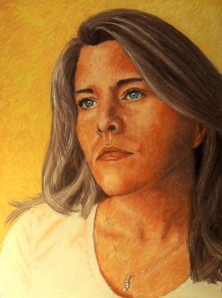 For me, illustration is the key to my secret garden, my golden ticket, my looking glass, my glass slipper. I draw and paint as a way to free my mind and escape into the many worlds of the written word. Whether it be for the pages of children’s books, greeting cards, gifts, or decor; I incorporate children, adults, animals, fantasy creatures, and landscapes in a unique and imaginative way in order to tell the story. I work digitally to bring my characters and environments to life and transport the viewer to a place of dreams.
Sep 2003 – Present, Whippany Park High School, Art Teacher
Sep 1997 – May 2001, University of Delaware, Bachelor of Fine Arts; concentration: Photography
Jan 2002 – May 2003, William Paterson University, Initial Certification Program; K-12 Teacher of Art
Jun 2010 – May 2014, Academy of Art University (AAU), Master of Fine Arts; Traditional Illustration Program: Children’s Book Illustration
2014 MFA Illustration Spring Show
Here is Rebecca discussing her process:
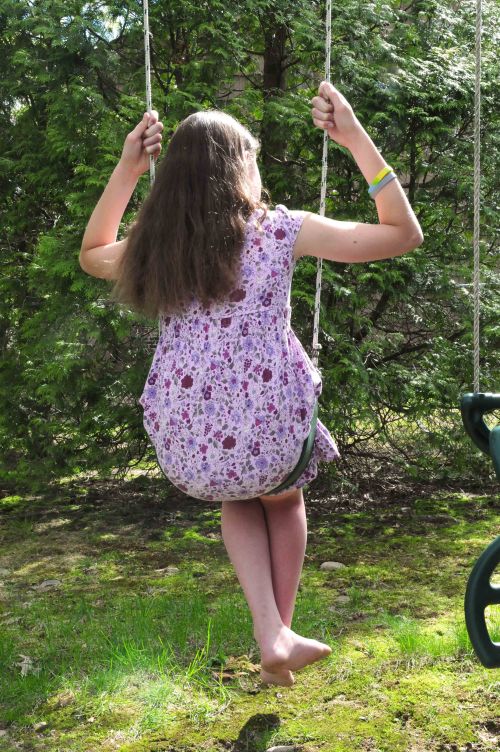
I shot a reference photo for the girl (this is a picture of my cousin’s daughter) and used this to draw out the pose. I found other references for the animals using Pinterest.
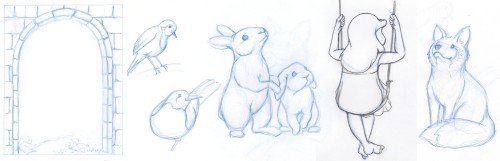
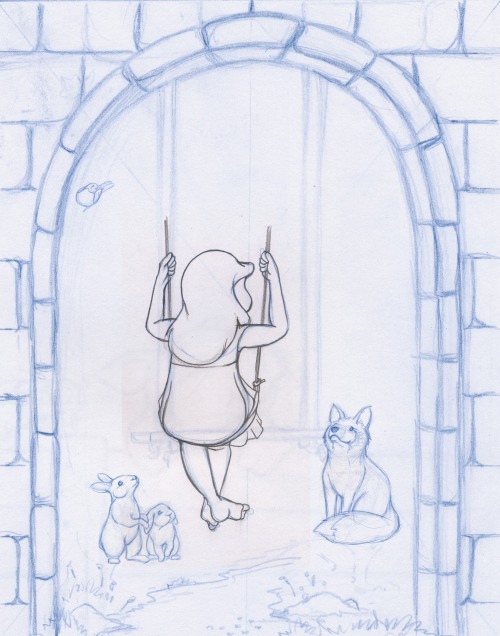
Then I began sketching. I had an idea of the composition, but I drew out my characters separately first so that I could scan them and make the arrangement and adjustments in PhotoShop.
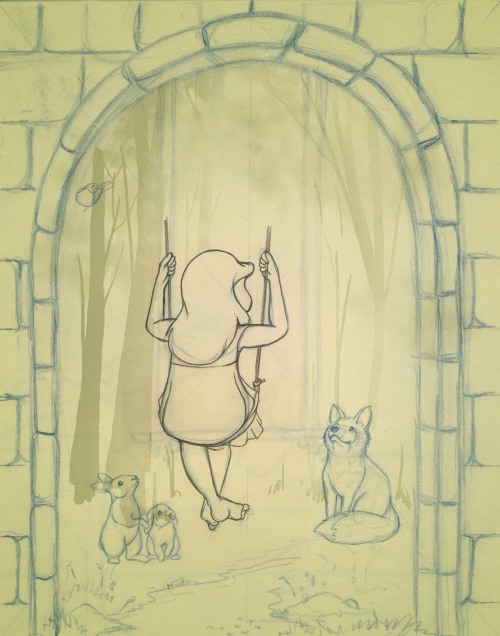
I change my sketch layers to blending mode: multiply so that I can see through them and I start to build my layers of color. I start with my background color and a few background elements.
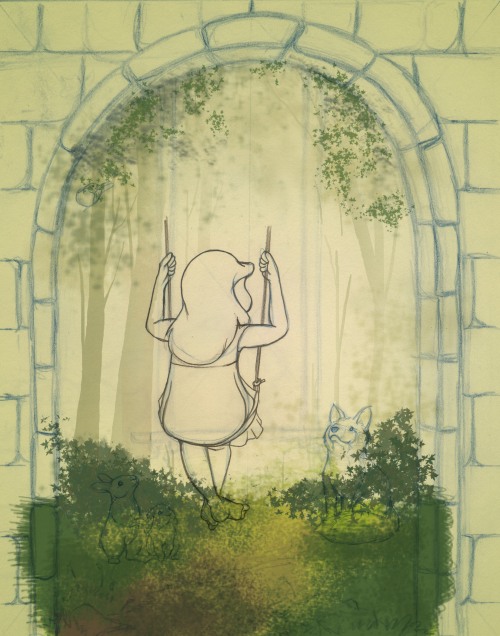
I then start to build up some of the surroundings – adding layers of textures.
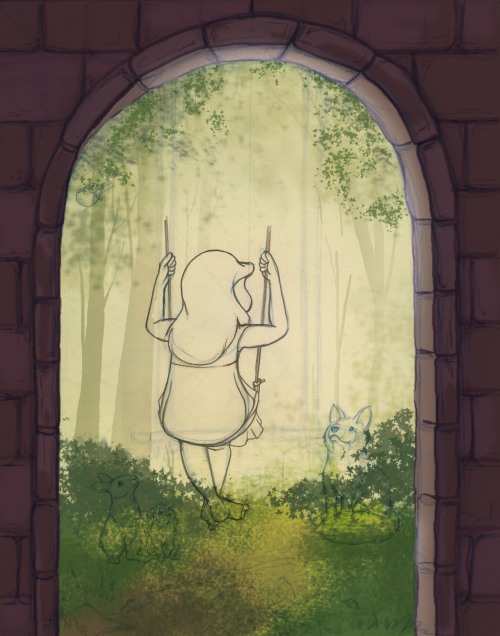
In this particular image, I added the archway next, this provided the frame for the composition.
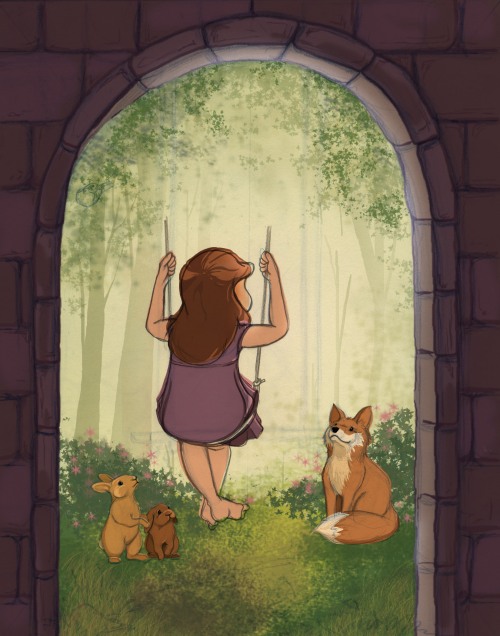
I painted in my characters with their basic colors and shapes.
I then turned off the visibility of the arch sketch and added in the detail and the layers of ivy.
I turn off the visibility of the sketch layers and put in highlights, shadows, and details of the characters.
Work to finish the highlights, shadows, and details.
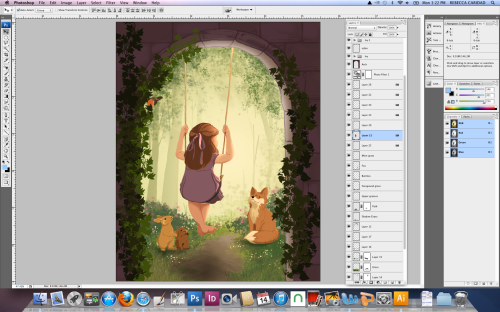
View of screen and layers in Photoshop.
Final illustration.
How long have you been illustrating?
I haven’t been illustrating long. I just finished my MFA program in May and I have just started to promote myself as an illustrator.
I see that you got your BA at the University of Delaware; concentration: Photography, what made you choose to get an MFA in Illustration from Academy of Art University in San Francisco?
I actually started as a painting major at the University of Delaware. I always knew that I wanted to do something that involved art, I just didn’t know what exactly. It wasn’t until I took a photography class as one of my BFA requirements that I fell in love. I loved capturing an image and then watching it emerge on paper in the darkroom. I decided to pursue photography after that experience and was even able to do a study abroad trip to New Zealand during my time as an undergraduate. Soon after graduating I realized that I wanted to be able to share my passion for the arts, so I went back to school for my teacher’s certification. I have been teaching ever since. I truly love sharing through my artwork, and I thought what better way to do that then through illustration. I still remember the artwork and stories that I read as a child and how they shaped me. I wanted to be a part of that experience and help express the words of a written page into a world that any child could enjoy. I chose the Academy of Art University to pursue these dreams because of its excellent reputation and the convenience of taking my classes online while I continued to teach full time.
Since you live in New Jersey did you do most of your studies online? If so, can you tell us a little bit about that experience?
At first I was a bit hesitant about pursuing an art degree online, but the way that AAU runs its classes is pretty incredible. I didn’t miss trucking my supplies to different classrooms and I was able to enjoy being part of a University with peer feedback and discussions and professors that were extremely helpful and available! Artwork is submitted digitally, whether you work traditionally or not. If you are working on an oil painting, you shoot photographs of your work, if you are drawing, you can scan it, and if you are using Photoshop you just save it. Classmates and professors review your work and make comments. Many of the professors would mark up the files using what they called a “whiteboard” and even left audio files of their comments. Demonstrations could be viewed as videos, so that they could be reviewed whenever you wanted. I thought the experience was fantastic and I am so glad that I was able to do it.
Does getting your MFA online, help to cut the cost of getting your degree?
The MFA program was not any less expensive then taking traditional classes. You still pay tuition and buy the supplies that are needed. What was better about the online degree was that I was able to attend a university across the country and work on my artwork and lessons when I had the time… evenings and weekends.
Does the school promise to give you help in getting established with work?
They didn’t promise an established career, but they certainly prepared me to head out into the world. All of the professors were working professionals and their expectations for us during our classes were to prepare us for working in the industry. Previous to graduation we were required to take a Professional Practices course that shared valuable resources and pushed us to do research that would get us started on our path to be recognized by art directors and agents. During that class I was able to create my first promotional postcard and business card, as well as a list of 50 contacts in order to start my promotional mailings.
What was the first painting or illustration that you did where someone paid you for your artwork?
The very first artwork that earned me money was in high school. I painted a fantasy garden mural for a baby’s nursery that included a frog prince and fairies of my own design. I babysat for many years and it helped me pay for my teacher certification program after undergrad, but creating artwork for the families to decorate their children’s spaces helped me earn even more.
What type of work did you do after you graduated with your BA?
I have been teaching high school art, photography, and graphic design now for 11 years and in that time have designed, built, and painted the scenery for the dramas and musicals, designed t-shirts and posters for the school, and have even been the head yearbook adviser. I have continually found ways to share my artwork no matter what I was doing. I have even done event photography, event décor, and face painting for an event planning and rental company on the side.
Do you think the classes you took in college influenced your style?
The classes that I have taken have definitely influenced my style. I feel that with each course I took I was able to learn more and develop more through the experiences and expertise of those that taught each class. At first I had a hard time keeping my characters consistent, but after taking a Character Design course with the Animation department I was able to start to develop set character traits that could be used in multiple poses and more dynamic gestures. And, of course my medium of choice changed as well… I was able to try everything from oil, to watercolor, markers, collage, and digital painting. After several classes where we were able to choose our medium, I really started to pick up digital painting and I thoroughly enjoy it now.
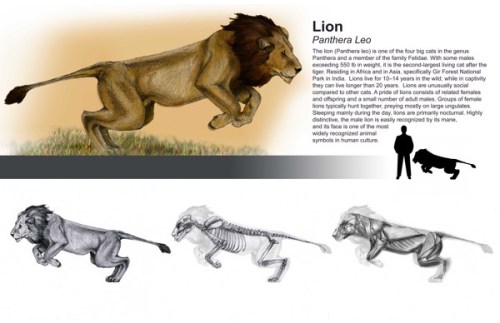
When did you do your the first illustration for children? 10. How did that come about?
My illustrations for children started back while I was babysitting. I was inspired by the kids that I saw everyday and I would draw and paint things that I knew they would enjoy. Not all of it was for profit, but it made me happy because it brought smiles to their faces.
When did you decide you wanted to illustrate books?
I decided I wanted to illustrate books during my years of teaching. I have been an avid reader all of my life. I love all forms of books… the children’s book section is a place of wonder and inspiration, YA books are fun to read with the fantasy worlds they evoke, whether reality based or imagined, and I wanted to be a part of it! I have been teaching book cover design in my graphic design classes for years and it is one of my favorite units. I thought it would be incredible to be able to create books for real!
Have you worked with educational publishers?
I am just getting started as a professional illustrator and have not been published yet.
Have you done any illustrating for children’s magazines?
No, but I would like to.
Are you open to illustrating a self-published picture book for an author?
I am in the process of self-promotion so I am examining all options. I’d have to make sure that the author was serious about their venture, but I believe it would be an excellent opportunity for me.
Do you have any desire to write and illustrate your own books?
I have tried writing in the past and although I want to illustrate picture books, my words and stories always seem more suitable to chapter books. After attending the NJSCBWI conference this past June, I was re-inspired to try it again. Maybe one day I’ll go for it, but in the meantime I would love to be able to illustrate for the stories of others.

Do you have an artist rep.? If so, who? And how did you connect with them?
If not, would you like to have one?
I do not have an artist rep., but I think it’s an excellent idea to get one. It is one of my goals to try to connect with a rep. through my promotional mailings or even online.
What types of things did you do to market yourself and get your work seen?
So far, I have designed promotional cards, a business card, and updated my resume. I have a website, a Facebook page dedicated to my illustration, a Twitter account, a Behance portfolio account, and a Linked In profile. I have been submitting my work to contests and shows in hopes of getting recognized for my art. So far I was honored to be a part of the Academy of Art’s MFA Spring Show, an honorable mention from 3×3 The Magazine of Contemporary Illustration in their International Show (both for my Charlie and the Chocolate Factory cover design concept), and I am submitting work to Creative Quarterly’s competition this month. I also think attending the recent NJSCBWI conference was a great start to the process of getting my work seen, because I took part in the Juried Art Show and the Portfolio display. I was also able to meet many new people in the industry that have been incredibly helpful and friendly!
What is your favorite medium to use?
I love to dabble in just about everything, but my medium of choice is definitely digital.
Has that changed over time?
The reason I prefer digital painting is the easy clean up. There really isn’t any, plus it is safe, odor-free, and I am able to make corrections fairly easily without having to start over, like I might with watercolor paints. I was terrible at digital painting in the beginning, but I have grown and learned so much through my MFA courses and I think I have really developed a style through it.
Do you have a studio in your house?
I have a room dedicated to my work and art. It has everything I need in it for my digital painting process. I have a drawing table, a light box, a bookshelf with inspirations and supplies, a computer, a scanner, a printer, and my wacom tablet.
What is the one thing in your studio that you could not live without?
I could not live without my Wacom Drawing Tablet. I love to be able to paint using what feels like a brush or a pencil, instead of my laptop’s track pad mouse. It has controls right on it, so I can easily zoom in, or change my brush size, or even pick up new colors. Eventually I would love to trade up to a Wacom Cintiq tablet. That would allow me to “paint” on the actual surface of my artwork, instead of next to it. I think it would feel more like the natural painting process and I look forward to that – someday….

Do you try to spend a specific amount of time working on your craft?
I dedicate a bit of each day to my artwork. Sometimes it’s actually working on a painting and other times I am sketching ideas, either way it helps me realize my ideas.
Do you take pictures or do any types of research before you start a project?
I like to shoot references for my drawings/paintings, but if that opportunity isn’t available look at myself for expressions and poses, or use the Internet (google images or Pinterest).
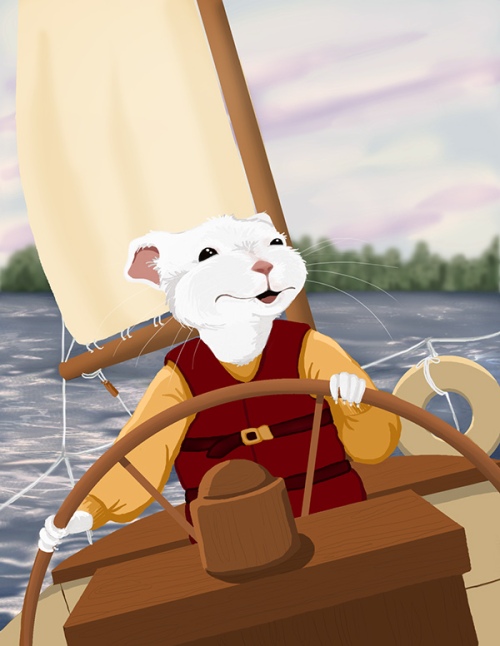
Do you think the Internet has opened doors for you?
The Internet has definitely opened doors for me after all I was able to earn an entire degree online. It is a great resource for references (although I prefer to shoot my own) or inspirations. Most of all, I think it has provided me with many opportunities to share my work with people that I may not ever have the chance to meet in person, or even know about. Social networking has brought about many more chances to network.
What do you feel was your biggest success?
So far my biggest success was earning my MFA. It has allowed me to realize my dreams and create a body of work that really reflects my style.
Do you use Photoshop and/or Painter with your illustrations?
I mostly use Adobe Photoshop, but sometimes I will bring my illustrations into Corel Painter to enhance some of the textures. Sometimes, I will even use Adobe Illustrator to draw or even refine my sketches.
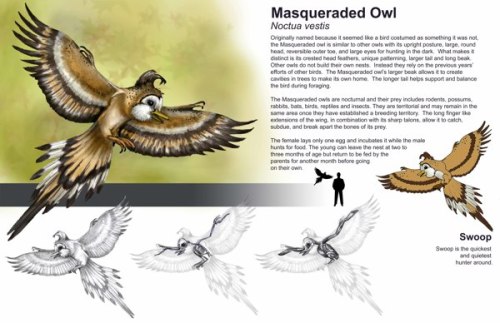
Do you own or have you used a Graphic Drawing Tablet in your illustrating?
Yes, as I mentioned before, it has really made the painting process so much more natural. I love it!
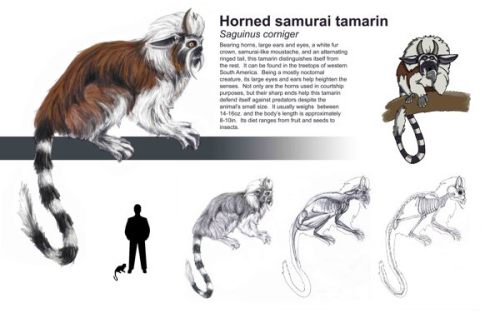 Do you have any career dreams that you want to fulfill?
I would love to illustrate a children’s picture book and have it published. I know that many of your reader’s have already achieved this goal, but I’m so excited and passionate about reaching it!
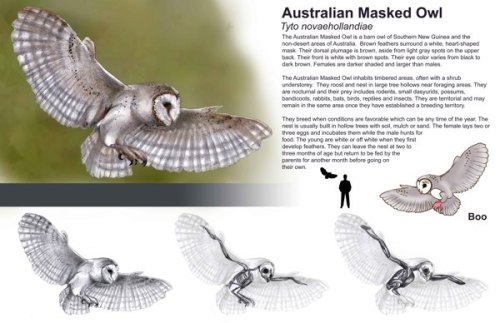
What are you working on now?
Right now my goal is to develop more portfolio pieces and character designs. Much of what I took away from the workshops at the NJSCBWI conference was that the ability to develop a strong character (and show him/her in multiple ways) could get you noticed by an art director or agent. Strong characters mean the possibilities for additional stories or even merchandise. So I am continuing to draw and paint, and of course trying to promote my work and get it seen.
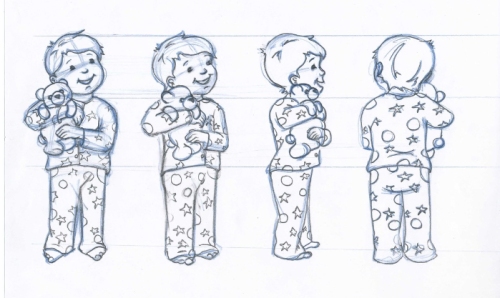
Do you have any material type tips you can share with us? Example: Paint or paper that you love – the best place to buy – a new product that you’ve tried – A how to tip, etc.
I like to use Non-Photo Blue pencils as I begin to sketch. It allows me to rough out gestures and poses and make mistakes and corrections without interfering with the final result. The great thing about them is they will not copy. So, I can go over the lines I want to keep with a graphite pencil and only see them when copied. If I scan my drawings, I can easily remove the rough blue lines in Photoshop and just keep what I need to get started in my painting. I like the quality of line and movement that you get when you are first drawing a subject. If you have to trace the lines later, I often feel like they stiffen up.
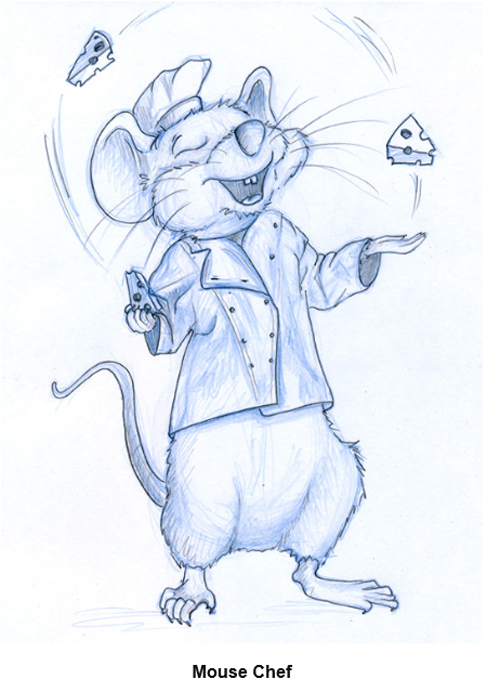
Any words of wisdom on how to become a successful writer or illustrator?
Since I am just starting out I don’t feel like I can properly impart any words of wisdom, but I know one thing… enjoy what you do and never lose your passion. It is what has gotten me where I am so far and I’m hoping it leads me to fulfilling my dreams.
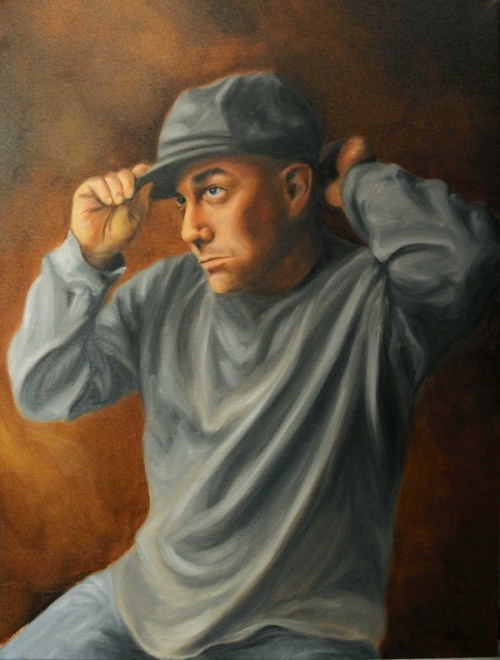
Above: One of Rebecca’s oil paintings.
Thank you Rebecca for taking the time to share your process and journey with us. We look forward to hearing about your future successes.
To see more of Rebecca’s illustrations you can visit her at:
Website: http://www.rebeccacaridad.crevado.com
Please take a minute to leave a comment for Rebecca, I know she would love to heard from you and I always appreciate it. Thanks!
Talk tomorrow,
Kathy
Filed under:
authors and illustrators,
demystify,
How to,
illustrating,
Illustrator's Saturday,
inspiration,
Interview,
Process Tagged:
MFA Children's Book Illustration,
Rebecca Cardid 

By: Kathy Temean,
on 8/3/2014
Blog:
Writing and Illustrating
(
Login to Add to MyJacketFlap)
JacketFlap tags:
Tips,
success,
Advice,
article,
How to,
Amazon Rankings,
need to know,
Marketing a book,
demystify,
How to Sell More Books,
Amazon Book Sales Strategies,
NJSCBWI 2014 Workshop,
Add a tag
This week we will look at a few strategies you can use to increase the sales of your books.

If you buy any books on Amazon, you may have noticed they list the Best Selling Books. You should give these categories some thought. It may help you get on one of their lists and getting on one of the lists will greatly improve your chances to get noticed and bought.
1. Try to choose a niche category on Amazon. There are less books, so you will have a better chance to be listed at the top.
2. By clicking the book ranked #100 in any given category, you can consult the Rank to Sales Estimator to see how many sales you need to qualify for that categories Best Seller List.
3. Self Published authors get to choose two categories.
Traditional publishers get to choose up to five categories. Make sure your publisher knows how the system works and how they can use it to their advantage. Choosing “Fiction” might not be the best category due to so many books. (over a million)
4. Example: Kindle Store> Kindle ebooks > Fiction> Mystery, Thriller & Suspense> Thrillers> Political. Your books will still show in all the categories above the one you chose.
A few scenarios:
Fault in Our Stars [Kindle Edition]
Amazon Best Sellers Rank: #6 Paid in Kindle Store (See Top 100 Paid in Kindle Store) This a list of all books (no categories)
#1 in Kindle Store > Kindle eBooks > Teen & Young Adult > Romance > Contemporary
#1 in Books > Teens > Love & Romance
Isla and the Happily Ever After [Kindle Edition]
Amazon Best Sellers Rank: #11,151 Paid in Kindle Store
#100 in Kindle Store > Kindle eBooks > Teen & Young Adult > Romance > Contemporary
The First Third [Kindle Edition]
Amazon Best Sellers Rank: #172,765 Paid in Kindle Store (See how this book was able to make the Top 100 List by picking Social Issues? That’s because there is less competition. This helps give the book a chance to be seen.)
#100 in Kindle Store > Kindle eBooks > Teen & Young Adult > Social Issues
The Year We Disappeared: A Father – Daughter Memoir [Kindle Edition]
Amazon Best Sellers Rank: #9,006 Paid in Kindle Store (See Top 100 Paid in Kindle Store)
#1 in Kindle Store > Kindle eBooks > Teen & Young Adult > Social Issues
#5 in Kindle Store > Kindle eBooks > Teen & Young Adult > Biography
#33 in Kindle Store > Kindle eBooks > Nonfiction > Children’s Nonfiction
Neverwhere [Kindle Edition]
Amazon Best Sellers Rank: #2,867 Paid in Kindle Store (See Top 100 Paid in Kindle Store)
#10 in Kindle Store > Kindle eBooks > Science Fiction & Fantasy > Fantasy > Classics
#11 in Kindle Store > Kindle eBooks > Literature & Fiction > Contemporary Fiction > Fantasy
#79 in Books > Literature & Fiction > Genre Fiction > Horror
5. Make sure you check to make sure the category you pick is on both the book side and the kindle side if you have a print book. Some of the categories do not match up.
6. If you are self-published you will need to do this for yourself, but don’t assume your publisher is choosing the best categories. Do your homework and discuss what you have found with them. But make sure you do this before they list it on Amazon.
Talk tomorrow,
Kathy
Filed under:
Advice,
article,
demystify,
How to,
Marketing a book,
need to know,
success,
Tips Tagged:
Amazon Book Sales Strategies,
Amazon Rankings,
How to Sell More Books,
NJSCBWI 2014 Workshop 

By: Kathy Temean,
on 7/31/2014
Blog:
Writing and Illustrating
(
Login to Add to MyJacketFlap)
JacketFlap tags:
Agent,
inspiration,
Process,
revisions,
Young Adult Novel,
Middle Grade Novels,
First Page Critique,
demystify,
Jenny Bent,
The Bent Agency,
Free Fall Friday - Results,
Add a tag
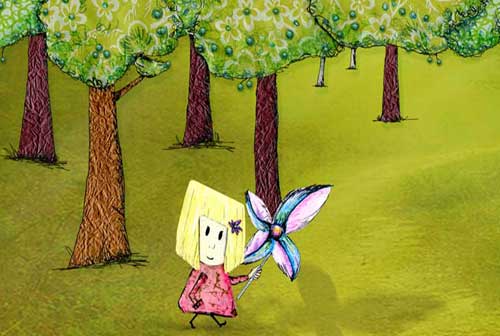
This Goldilocks illustration was sent in by Patricia Pinsk. It was done as a paper collage with ink, watercolour, digital textures. Her work includes multi-media drawing, illustration, photography, glass-work, sculpture as well as Web-based graphics for the corporate world. Website: http://www.patriciapinsk.com Twitter: @PatriciaPinsk
Below are the first page critiques done by literary agent, Jenny Bent. We can all learn a lot from what Jenny had to say.
Deena Graves – TERRAZA – Young Adult
Pizza sauce, garlic, and beer did not mix. Not when all three meshed, creating a gag-inducing stench in the faded black fibers of my Perky Pepper T-shirt. Dixie would shoot me dead for sure. The last time I came home from the pizza shop smelling like a garbage disposal, she threatened to hose me down in the front yard before I’d “ever step one soiled foot” into her home.
Shrugging into my fleece jacket, I ignored the stink of my shirt and shoved my dark-framed glasses back up my nose. I scowled down at my beat-up Mongoose and the flat tire forcing me to walk my happy ass home.
“Hey, Luc!” a voice called from behind. I kept walking, stealing a quick glance over my shoulder. Max jogged toward me, holding up the sides of his pants. I snorted. If he didn’t wear them so low, maybe the stupid things would stay up.
“Wait up, man,” he panted, pulling up beside me. “You know bikes were designed to be ridden, right?” Max eyed my flat and sucked in a breath. “Oh.”
“Yeah.” I tossed him the souvenir I’d found wedged in the rubber tread. “And they ride better when the tires aren’t shredded.”
He inspected the chunk of weird black glass about the size of a half-dollar, tossing it from hand to hand. It weighed next to nothing, and no thicker than my pinkie, but its wicked, chiseled edge had almost cut my finger trying to dislodge it. “This was in your tire?”
I nodded. “I bet it was Manager Mike, the douche nugget.” I scowled out at the dark, Edison Square of squat, brick buildings. The stretch of small-town antique shops, specialty clothing stores, and trendy eateries had long since closed for the night. A brisk October wind cut through my fleece jacket.
HERE IS JENNY BENT:
Terraza
Lively voice which is great, I’m seeing too many flat voices in YA contempt these days. Not sure the voice is always completely authentic– “gag-inducing stench” doesn’t feel to me something like a teenaged boy would say. I did like the voice overall however. And line by line the writing is strong here.
I would like to see this author push themselves a little more to write a really “wow” first page. The skill level is there. But I am not sure from reading this that the book is beginning at the right point. I like the hint of mystery that someone sabotaged his bike. But the writer is starting with a conversation, which can be a tricky way to start a book, particularly when the conversation is not necessarily a very interesting or illuminating one.
I would try instead to either start in a place that is a bigger moment for the character or a place with perhaps more emotion for the character.
Alternatively, the author could perhaps have the character show/feel a little more here. What is his mental state as the story opens? We don’t know, beyond annoyed, and I’d like a little more on that. What is his general frame of mind as the story opens? What is he thinking about as he leaves work, is there anything significant on his mind? How does he feel about his friend Max beyond the thought about his pants, I can’t tell. If the author gave us more access to thoughts/feelings, we could get a better sense of him right away. Also, perhaps these two could banter a little more and we could get a sense of their personalities and relationship that way. Right now their conversation isn’t that interesting. It’s there to convey information about the bike, some of which we know already (there’s a flat tire) but it should serve more purpose than that–it should also illuminate character and it should also entertain. And is there a different way he could react to the flat tire? Something funny or unusual that would really intrigue the reader?
And finally, I would love the author push him/herself a little more with the opening line. The opening line to a book should be the best sentence the author has ever written. It doesn’t have to be necessarily super action-packed or dramatic, but it should instantly intrigue, or amuse, or create thought. I fear that this one is a bit of a throw-away.
__________________________________________________________
Helen Landalf – CLEO – YA novel
The minute I slither into my sequined tank, Joan starts to disappear. I yank it down to show a little cleavage, slide on my black lace over-the-elbow gloves, and she fades even more. Then I squeeze into a pair of velvet leggings that hug her queen-size thighs, top them off with a flirty skirt, and step into my red stilettos. She’s almost gone.
“Joan,” comes Mom’s voice from outside the bedroom door. “Are you in there, honey?”
Elizabeth Taylor, in her Cleopatra gown and headdress, gazes down at me from the poster above my dresser. Ignore her, she seems to say. You’ve got work to do.
I glance at my phone, but there’s no text from Matt. Grabbing the bottle of foundation, I slather the cold, sweet-smelling liquid along my skin. The little potholes left over from Joan’s acne outbreak back in middle school? Gone. Next comes blush, the soft brush whispering glitter and bone structure onto Joan’s chipmunk cheeks, followed by eyeliner that sweeps into a dramatic V at my temples, adding flair and width to Joan’s squinty eyes. I glance up at the poster again and paint it thick and black, just like Liz’s.
The doorknob wiggles. “Joan?” Mom says.
“Be out in a sec.” I fluff my limp brown hair to create the illusion of fullness and then dim the lights on my makeup mirror. Leaning forward, I suck in my cheeks and survey my work. Not bad. All I need now is a dab of lipstick, and my transformation will be complete.
Just as I’m snatching up the tube of Burgundy Plum, the Lady Gaga ringtone blares from my phone.
“Hi, Matt,” I say. “Hang on, I’m coming.”
HERE IS JENNY BENT:
CLEO:
This is another one with strong writing that could have a stronger opening line. For inspiration, here’s a link to 20 great opening lines in YA fiction:
http://www.epicreads.com/blog/20-amazing-opening-lines-in-ya/
I like the concept here that we are watching someone’s transformation. And there is a great use of physical detail here. But again, as with the last critique, there’s not enough information about this character’s state of mind as this is happening. I want to know more about her and I’m not getting anything about her personality from this–all I’m getting is physical characteristics and perhaps that she is pretty hard on herself about the way she looks.
I love the part where the poster of Elizabeth Taylor seems to talk to her, that gives this a little edge that it really needs. But let me learn more even about this character from her inner thoughts or her dialogue, make every line really work. Maybe she could say something funnier or more interesting to Matt? To her mom? Think something interesting while she is doing this that lets me know something about her or her state of mind while she is doing this? Why does she need to transform? What about transforming makes her feel strong or special? Why does she love Elizabeth Taylor?
I think adding this level of detail and characterization, as well as working on the opening lines, will give this already strong first page some extra added oomph. Remember that you never have much time to hook the reader and focus on making this character as vivid and lively as possible.
_________________________________________________________
Mieke Zamora-Mackay SHADOW Young Adult
The hall is buzzing. Not the usual humdrum of the first hour of school. It’s a serious buzzing. Whispers about someone. Murmurs about something that’s happened.
In the woods…
Junkie…
Huffing…
Dead…
These are the words that float above the din. No one looks my way, but there’s enough space for me to walk through the sea of bodies. I’m used to it. Everyone always walks around me, like I’m encased in some bubble. Protecting their personal space, they’re probably afraid that if they brush up against me, I’ll know everything they keep hidden inside. See into their dark hearts and thoughts, their misdeeds, acts of violence and carnal desires. It comes with being the daughter of a self-proclaimed medium; the local town kook.
The truth is, I don’t know any of their secrets. I don’t see anything they have to hide. Instead, I see spirits, ghosts – lost souls.
I see the part of every person that has left their physical body. Usually, they’re just trying to find their way home, or revisiting a part of their life they wish to say goodbye to. Some just really don’t know what’s happened to them.
I reckon that’s how the fresh one walking in my direction is feeling.
I keep my eyes down low. I don’t want him to catch me looking. He’ll know instantly that I can see him, and that won’t do. Lost spirits are never up to any good. The fact that they don’t have a clue about what’s happened to them in the first place is an indication of that. And this one’s got trouble written all over him.
HERE IS JENNY BENT:
SHADOW
I like this one a lot! The voice is strong, the first line is good and the opening page shows us a lot of information about this person and their place in the world of the school without “telling” us too much. There’s a real attitude to the writing, which I like. I also like that the author sets up the character and tells us about who she is in an interesting way and then starts right into the action. It’s great that she sees this particular dead person and immediately forms an opinion about him that is intriguing to the reader. I want to read more because I want to know more about this ghost and why he’s trouble and what will happen between these two. I also like that the writer starts at a moment of interest in the action–the school is buzzing about something–what is it? And then he/she gives us a lot of information about the character by telling us that she’s an outcast–everyone is buzzing about something, but she wouldn’t know because no one tells her anything. This is a more interesting way of showing us something about her rather than simply telling us that she’s an outcast. There are plenty of question marks to keep us reading but enough information is provided that we don’t feel confused, which is an essential balance.
If the writer wanted to go a little further, she could give us a little more info about the particular state of mind that this character is in as the book opens, or how she feels about the fact that she is an outcast, but overall this is a very strong opening page indeed.
_________________________________________________________
Peter McCleery THE STAND-IN Contemporary Middle Grade
Middle-school is a lot like prison. There is a precise routine and schedule overseen by an all-powerful warden (the principal). There are authority figures who roam the halls and enforce strict rules (guards/teachers). You are allotted a certain time and place to eat grub. There’s a Supermax cell block for repeat offenders (detention). There’s even a rec yard and communal showers. And, of course, there is a very specific hierarchy of cliques and social groups among the inmates. You better know who you can trust and who you can’t.
In my line of work, I can’t trust anyone. If this were prison instead of Glenview Middle School I’d be called a Fixer. The guy who runs the black market. I like to think of myself as a businessman. Or entrepreneur, if you want to be fancy about it. I sell things to the inmate-students that make their 3-year stint here a bit more comfortable. At a fair price, of course. In prison, a fixer deals in cigarettes and shivs. Here, I deal in contraband junk food and fake doctor notes. Now, some of these things may or may not be “appropriate” or “legal” per se, but they do fill a need. I provide a valuable service. There is supply. There is demand. And there’s good, ol’ Digby Fisher in between making a little money. Is that so wrong?
The answer is no, by the way.
Shortly after my mom and I moved to Glenview (which should just be called The Affluent Town of Glenview because that’s always how they describe it the newspaper.) I knew I had a good thing. These kids get more allowance money than my mom gets in her paycheck. One day the vending machine went out of order (I had nothing to do with it, I swear! Just a lucky coincidence.) It just so happened that my mom was doing a Costco run that day. I added a few items to the shopping list. Snack-size Doritos, gum, M&Ms. The next day I sat next to the broken vending machine with a backpack full of snacks and sold out before third period. I provided a needed service. In many ways I was a hero. After maintenance fixed the machine
HERE IS JENNY BENT:
THE STAND-IN
I love the idea of this one and this is a good first page in that it has tons of voice and sets up an interesting, resourceful character that the reader will want to spend time with. However, to my ear, the voice was a little older than middle-grade at times, slotting into that awkward 14/15 year old territory, and in the second paragraph maybe even more 16. Examples of places I would loosen the voice are, “precise routine and schedule overseen ” and “a very specific hierarchy of cliques and social groups” – phrases like this feel a little formal for the target market. The age issue might just be because of Digby’s very in-depth knowledge of how a prison runs, even down to knowing the word shiv. It left me wondering whether he knew someone in prison or just watched a lot of old movies. The opening has a journal feel to it, but I would lose the direct talking to the reader halfway down as this can pull you out of the story. I liked some of the examples of the things Digby can source, like doctor’s notes, and the story about how this ‘job’ started was short enough not to feel like too much up front backstory, although I’d hope the present day plot starts on the next page, with the inciting incident following shortly after.
________________________________________________________________
Thank you Jenny for sharing your time and expertise with us. Your advice is invaluable.
Talk tomorrow,
Kathy
Filed under:
Agent,
demystify,
inspiration,
Middle Grade Novels,
Process,
revisions,
Young Adult Novel Tagged:
First Page Critique,
Free Fall Friday - Results,
Jenny Bent,
The Bent Agency 

By: Kathy Temean,
on 7/29/2014
Blog:
Writing and Illustrating
(
Login to Add to MyJacketFlap)
JacketFlap tags:
list,
Book,
reference,
authors and illustrators,
Publishing Industry,
How to,
need to know,
demystify,
2014 NJSCBWI Conference,
Amazon Ranking vs. Daily Book Sales,
How to Sell More Books,
Add a tag
Thought you might be interested in the information I presented at the “How to Sell More Books” Workshop I gave at the NJSCBWI Conference in June. You might want to use it as a general rule of thumb when checking out your book (on other books) on Amazon.
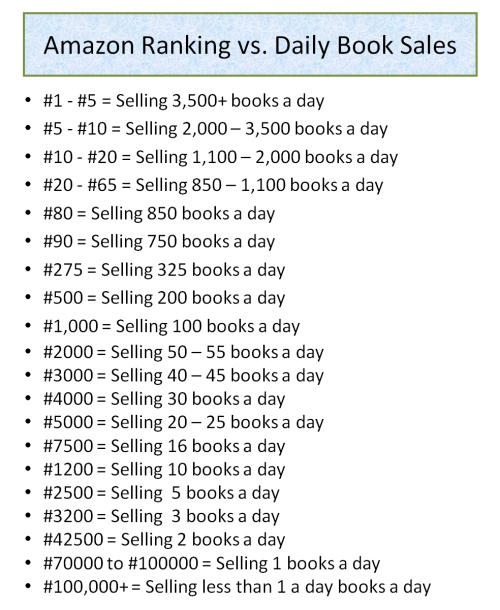
Talk tomorrow,
Kathy
Filed under:
authors and illustrators,
Book,
demystify,
How to,
list,
need to know,
Publishing Industry,
reference Tagged:
2014 NJSCBWI Conference,
Amazon Ranking vs. Daily Book Sales,
How to Sell More Books 

By: Kathy Temean,
on 7/25/2014
Blog:
Writing and Illustrating
(
Login to Add to MyJacketFlap)
JacketFlap tags:
Interview,
Process,
illustrating,
authors and illustrators,
How to,
Rutgers University,
demystify,
Illustrator Saturday,
Illustrator's Saturday,
Colleen Kosinski,
Moore College of Art,
Add a tag
 Colleen Rowan Kosinski has always been involved in creative projects. She is an alumna of Moore College of Art and graduated from Rutgers University with a BA in Visual Arts. While in college, Colleen worked with The Robert Wood Johnson Hospital as part of her curriculum. She developed, designed and constructed step-by-step instruction booklets to be used by nursing staff. After graduation, Colleen worked as a jewelry designer. While working as a designer she won a scholarship to the Gemological Institute of America and earned a certificate in Colored Stones. Colleen, having a great interest in science, volunteered at the Academy of Natural Sciences in Philadelphia, PA. She worked with Dr. John Gelhaus in the entomology department rendering illustrations of insects for scientific publications. She also worked at the Franklin Institute in Philadelphia, PA, were she designed illustrations for a cookbook featuring Ben Franklin’s favorite dishes.
After the birth of her first child, Colleen opened her studio and virtual gallery. She has been working as a visual artist, with clients all over the United States, for the past eighteen years. You can visit her site at http://www.myartsite.com. She specializes in pet portraiture and still life. Her mediums of choice are oil or pastel.
Colleen resides in Cherry Hill, NJ with her husband, three sons, doberman pinscher, rottweiler, and miniature dachshund and volunteers at the local animal shelter. During the summer you can usually find her nursing a sick squirrel or robin back to health.
Here is Colleen explaining her process:
This painting example was created for the NJSCBWI 2014 Conference. I knew I wanted a dreamy, fairytale-ish feel. I wanted the viewer to wonder what would happen next. I also wanted to include the theme of the Jersey shore.
First I researched elements I needed for this particular piece of work, ex. I needed to research old-fashioned bathing suit attire, seagulls, and Victorian style homes in Cape May for this piece.
Next, I drew (in pencil) each element that was to be included in the artwork. I scanned in the early sketches and placed everything in the space to see if worked. I’d drawn a lifeguard chair and the Cape May lifeguard boat but they didn’t fit in the composition, so they were cut.
Then, I went back and shadowed each drawing in pencil.
I scanned each shadowed piece into the computer and placed them on the page.
All the shadowed pieces were built as their own layers. I then painted in colors, using varying opacities and brushes.
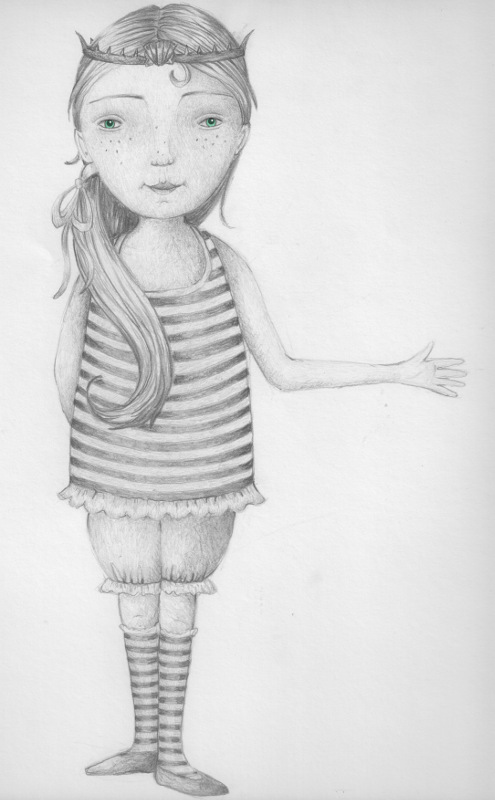 Original pencil sketch
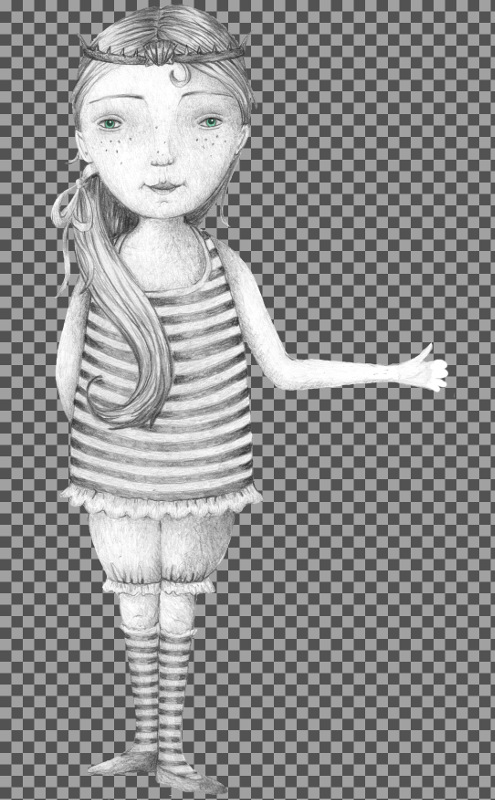
Scanned image, cut out, cleaned up and contrast adjusted.
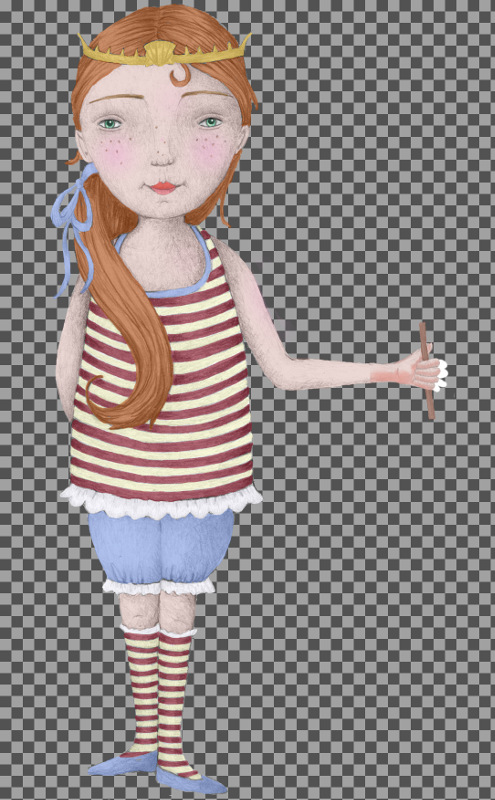
Colored layers built up.
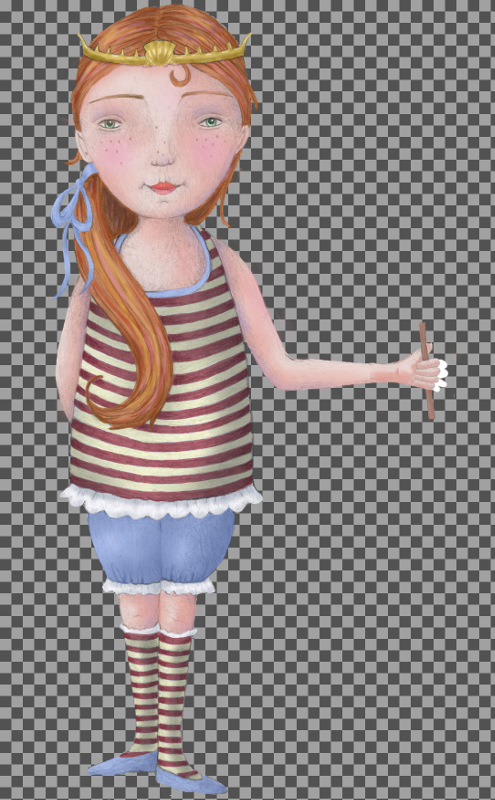
Shadows and highlights are added last.
 I brought the colored drawings back into the original composition.
 I adjusted scale and brightness.
I then layer in shadows into the final composition and sometimes I add various textures into the composition.
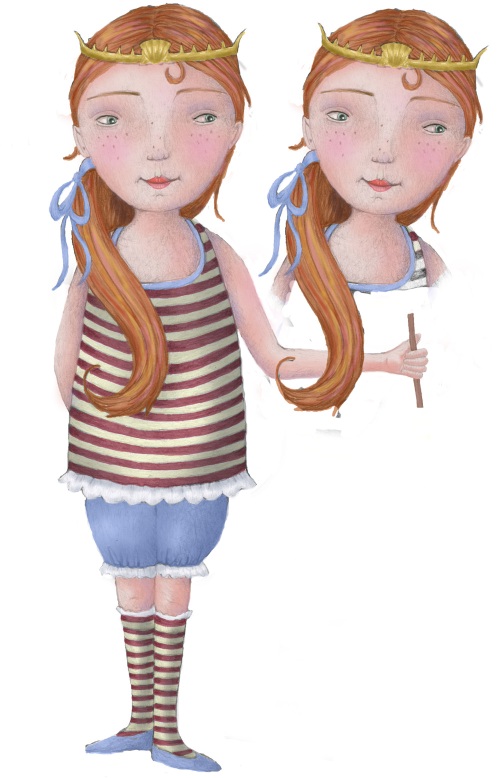
Finally, when the painting looks finished to me, I put a bump map of a watercolor texture over the entire painting. This makes the work look less “computer-like”. Copyright ©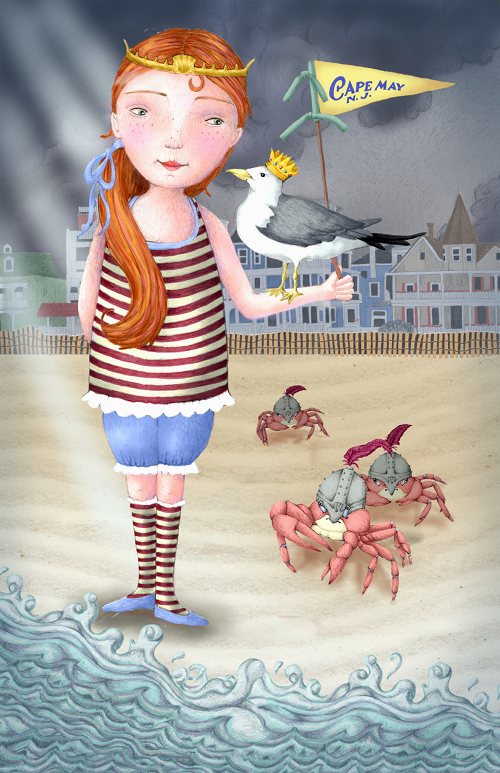
After critiques by my trusted artist friends, I add my finished piece to my portfolio. For example, they suggested her head should be tilted toward the bird so I made the adjustment as seen here.
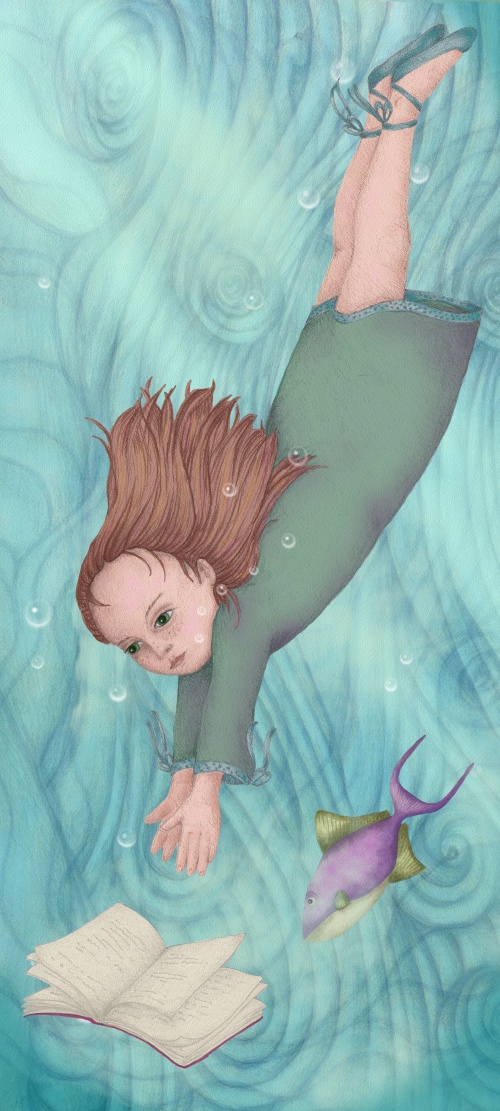
How long have you been illustrating?
I’ve been drawing forever. I participated in my first “show” when I was thirteen (and won first place.) I’ve been seriously working on illustrating for children for the past three years.
What made you choose to get your degree in visual Arts at Rutgers University?
I was originally granted a full scholarship to Moore College of Art when I happened upon a portfolio day after a Saturday class at the Philadelphia College of Art. I attended my freshman year, but then transferred to Rutgers to follow my boyfriend. I know. I know. But we’ve been married now for 27 years. : )
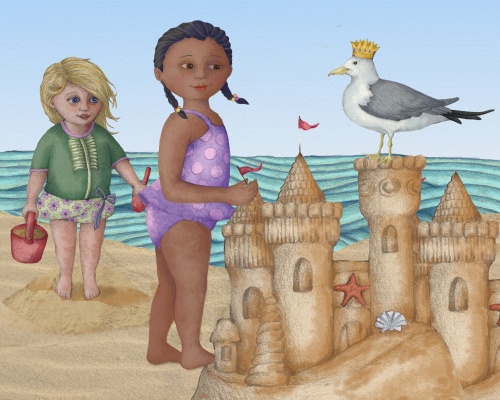
What were you favorite classes?
I loved figure drawing, creative writing, and anthropology. I’d always try to convince my professors to hold class outside on beautiful days. All except figure drawing. Naked models posing outside in the middle of campus would have been frowned upon—but would probably have drawn quite a crowd.
Did the School help you get work?
Actually, Moore College of Art helped me get my first internship as a scientific illustrator for the entomology department of the Academy of Natural Sciences in Philadelphia.
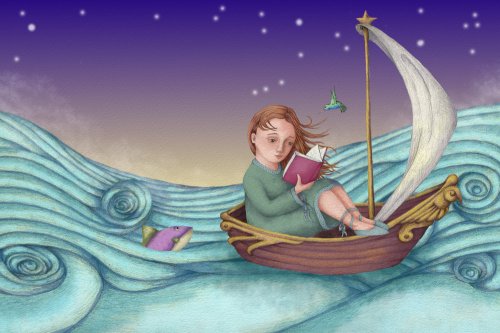
What was the first painting or illustration that you did where someone paid you for your artwork?
In high school the teachers would commission me for artwork.
What type of job did you do right after you graduated?
After college I worked in a jewelry store and did some jewelry design. I was fascinated with gemstones and won a scholarship to study colored stones with The Gemological Institute of America.
 Do you think the classes you took in college influenced your style?
The figure drawing classes may have helped a bit but my style has organically evolved over the years.
When did you do your first illustration for children?
I started working on children’s books illustrations about three years ago.
How did that come about?
I had worked as a fine artist for many years, but stopped drawing to seriously study writing. I’ve written screenplays, YA novels, and MG novels, along with picture books. NJSCBWI was holding their first illustrators showcase three years ago and I decided to participate and developed a character, which then became a story.
When did you decide you wanted to illustrate books?
After all the positive feedback at the NJSCBWI conference.
How did you get interested in writing novels and when did that happen?
I had a friend who worked in the SAG office in Philadelphia. I had an idea for a movie and asked her how I could try to sell my idea. She told me I’d need to write a screenplay. I bought books on the mechanics of writing screenplays and started networking with other screenwriters. I decided to try to convert one of my screenplays into a novel. Then I wrote bad novel after not as bad novel until I finally had one that I thought was good enough to submit. But it really wasn’t. So I kept writing more and more. I think my eighth book was the charm and is now being read by several editors.
Are you open to illustrating a picture book for a writer who would like to self-publish?
I think I’d rather work on my own books or be paired with an author from a traditional publisher.
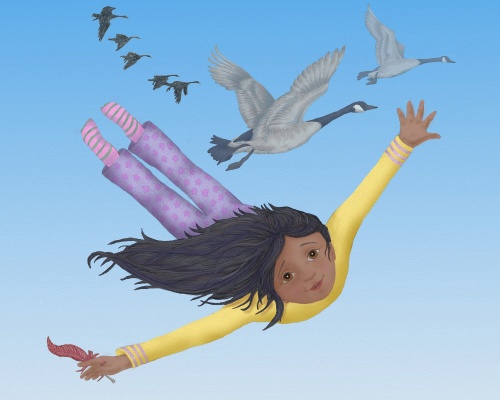
Have you worked on illustrating a book dummy to help market your illustrating skills?
Yes.
Since you already are writing novels, have you thought about writing and illustrating you own picture book?
I’ve written quite a few PBs and I have one finished dummy and one in process.
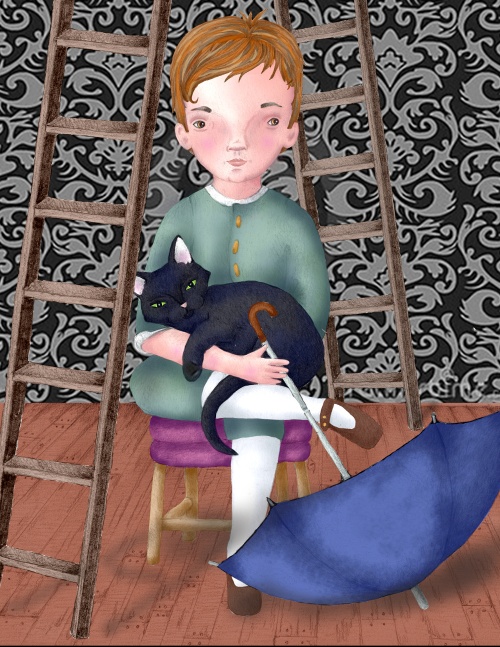
Do you have an artist rep.? If not, would you like to have one?
I’m presently not represented, but would love to work with an agent interested in an author/illustrator. I’m a hard worker and not afraid of revisions.
What types of things do you do to market your work?
I show at conferences, tweet, network on FB, display my work on the SCBWI illustrator showcase, and I have a website—ColleenRowanKosinski.com
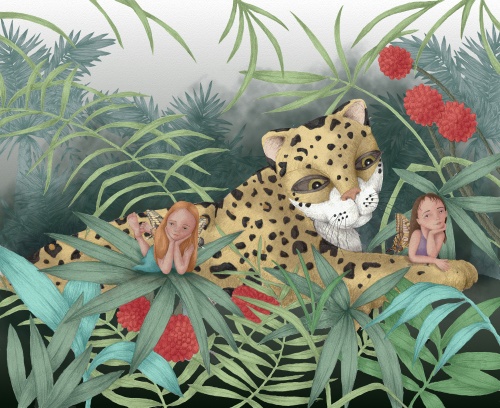 What is your favorite medium to use?
I’m currently working with a combination of pencil sketching and digital painting. I also love oils, and soft pastel.
Has that changed over time?
Many years ago I worked primarily in pen and ink and watercolor. I did a lot of hand-numbing stippling with a rapidograph pen. I transitioned to pastel. Sold quite a few, then fell in love with oil painting. Oil painting is a long process because of the practice of building layers of colors and the drying times involved. That’s why I love digital so much now. I approach color the same way I did in my oil painting but have zero drying time!
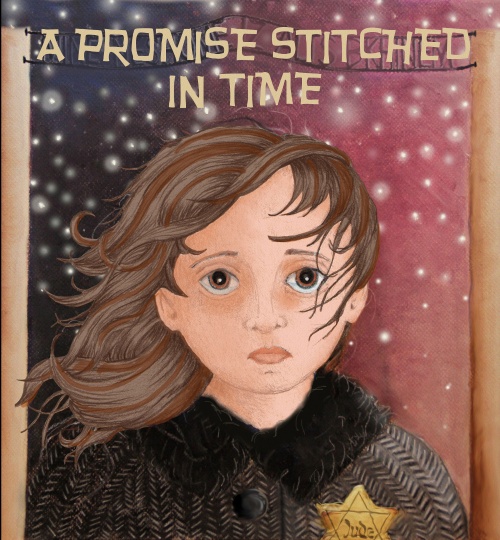
Do you have a studio in your house?
I don’t have a designated studio. Because of very bad back issues I have trouble sitting for long periods of time in a regular chair, but I’ve found a recliner takes the stress off of my lower back so you can usually find my there, either writing, sketching or working digitally. I do have an office with my supplies, a desk, computer, scanner, printer and bookshelves from floor to ceiling.
What is the one thing in your studio that you could not live without?
My laptop computer.
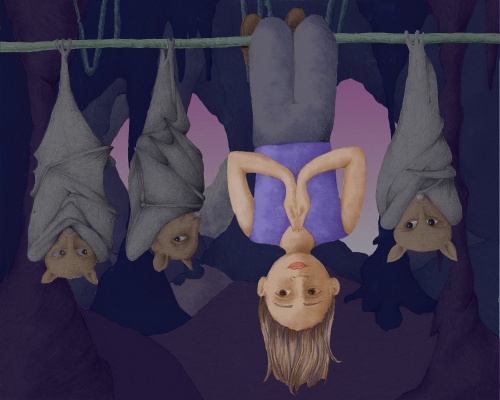
Do you try to spend a specific amount of time working on your craft?
I work every day for at least eight hours or more. I try to attend at least one SCBWI conference a year and as many other workshops that I can fit into my budget and schedule.
Do you take pictures or do any types of research before you start a project?
Yes, I take pictures and research reference images online.
Do you think the Internet has opened doors for you?
Definitely. I used to have to find reference photos by paging through books and magazines for hours. The Internet also helps me network with other writers, illustrators, agents, and editors.
What do you feel was your biggest success?
I don’t know if I’ve experienced a “big” success yet. I just keep doing what I’m doing while constantly trying to improve.
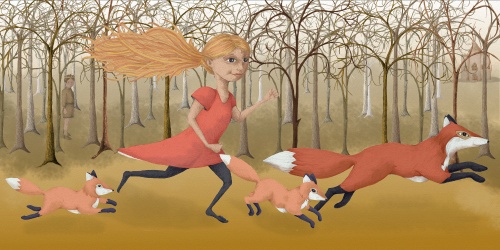 Do you use Photoshop with your illustrations?
I actually use GIMP, which is a free version of Photoshop. I did finally bite the bullet and start subscribing to Photoshop (you can’t buy it outright anymore, you must pay a monthly fee.) I’m experimenting with it but feel more comfortable with GIMP.
Do you own or have you used a Graphic Drawing Tablet in your illustrating?
Yes, I use a Wacom pad when creating my artwork.
Do you have any career dreams that you want to fulfill?
I dream of finding an agent who knows the craft and market, and being traditionally published. I guess if I want to dream big, I’d love to win a Newberry or Caldecott.
What are you working on now?
I’m working on a story called Lydia Light Takes Flight. The character I created for the 2014 NJSCBWI Conference Art Competition inspired the story. The text is finished and I’m currently working on the dummy. It’s a lyrical story with a fairytale’ish feel. I also have a couple PB biographies ready to go, and two other lyrical PB texts. Editors are reading my older MG novel and I’m hoping one of them will make an offer soon.
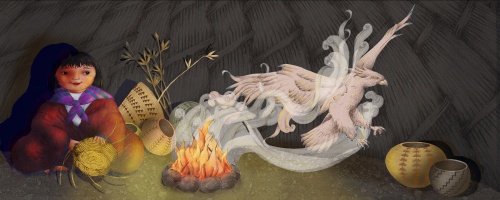
Any words of wisdom on how to become a successful writer or illustrator?
I don’t know if I can really speak to being successful, but I can say that you have to be a fighter. Don’t wallow in rejection and keep moving forward. Be open to critique and learn from it. Lastly, be involved in the kidlit scene. It’s a wonderful, supportive community.
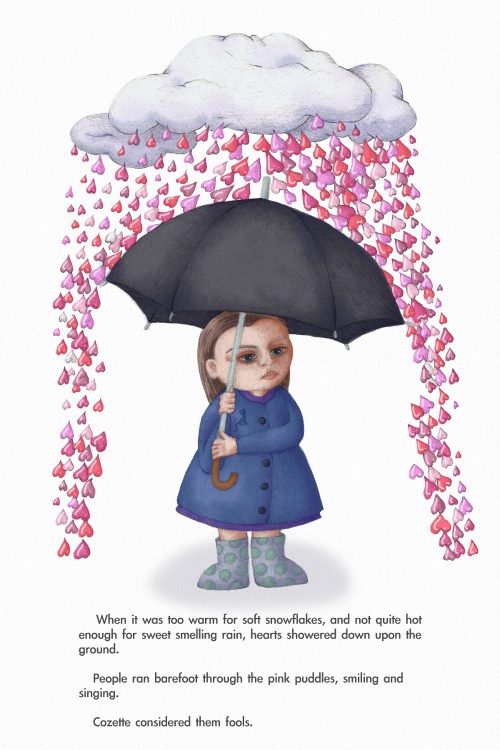
Thank you Colleen for taking the time to share your process and journey with us. We look forward to hearing about your future successes.
To see more of Colleen’s illustrations you can visit her at: www.ColleenRowanKosinski.com Twitter: @writergirlrowan
Facebook: Colleen Rowan Kosinski
Please take a minute to leave a comment for Colleen, I know she would love to heard from you and I always appreciate it. Thanks!
Talk tomorrow,
Kathy
Filed under:
authors and illustrators,
demystify,
How to,
illustrating,
Illustrator's Saturday,
Interview,
Process Tagged:
Colleen Kosinski,
Illustrator Saturday,
Moore College of Art,
Rutgers University 

View Next 25 Posts





Excellent list…saving it for future reference!