new posts in all blogs
Viewing: Blog Posts Tagged with: Elementary Educators, Most Recent at Top [Help]
Results 1 - 25 of 301
How to use this Page
You are viewing the most recent posts tagged with the words: Elementary Educators in the JacketFlap blog reader. What is a tag? Think of a tag as a keyword or category label. Tags can both help you find posts on JacketFlap.com as well as provide an easy way for you to "remember" and classify posts for later recall. Try adding a tag yourself by clicking "Add a tag" below a post's header. Scroll down through the list of Recent Posts in the left column and click on a post title that sounds interesting. You can view all posts from a specific blog by clicking the Blog name in the right column, or you can click a 'More Posts from this Blog' link in any individual post.
I was approached by Matt Cubberly, author of Charlotte, Wander On through e-mail to review his wonderful project which I believe in wholeheartedly. Here’s what he said, “It’s a slightly dark, yet inspiring, children’s book with beautiful illustrations.” Then he gave me this You Tube link:
And I was hooked. When he sent me the PDF, I was even more pleasantly surprised. The story is told in rhyme with absolutely beautiful illustrations (by Irina Kovalova) as you can see in the You Tube video. What I love about this book, besides these illustrations, is the message that it is promoting: A young girl must use her inner strength and discover who she is in order to save her brother. Sure, she has to avoid physical danger, too, but it’s the inner struggle that really plays out. And the best part–you can discuss this with your child after you are finished reading it! Although they may not have a dangerous journey like in the book, they still face fears and struggles every day, and so you can use this book as a discussion starter. It’s sometimes easier to get an important discussion started with a book and a character, instead of personal examples.
 Told in rhyming four-line stanzas, Charlotte starts her journey with a book from her grandma, and she tells the reader that she promised Grandma she would follow the instructions in the book. She has one place left to go and still hasn’t found what she seeks to save her brother. She almost gives up and could become lunch for some creatures, but she finds strength and “wanders on.”
IF you like books with strong female characters for our children, then you will love Charlotte, Wander On. Currently the author and illustrator are trying to raise enough money to get it printed. They have a Kickstarter campaign that ends in four days, and they are so close to their goal! Consider visiting their page and adding to the donation: https://www.kickstarter.com/projects/685642408/charlotte-wander-on.
Also if you like to read humorous novels for adults, on my Lit Ladies blog, we have a contest for the novel, The Opposite of Everything by David Kalish. We just found out that he won first place in a prestigious contest for this book, and you could win it here: http://www.thelitladies.com/humor-novel-the-opposite-of-everything-review-and-giveaway/
 Abayomi: The Brazilian Puma, The True Story of an Orphaned Cub is a second picture book from the team, author Darcy Pattison and illustrator Kitty Harvill. (The first was Wisdom: The Midway Albatross.) In Abayomi, Pattison explores what happens when civilization takes over wildlife’s home, and a mother puma is hungry and desperate to feed her cubs. She goes to a farmer’s chickens, which, of course, does not make the farmer happy. In this true story, the mother puma is killed accidentally during a struggle, leaving her cubs. One cub is rescued, Abayomi, and scientists are trying to nurse it back to health, without touching or taming it, so they can return him back to the wild. The paintings by Kitty Harvill are beautiful and add to this touching story, which doesn’t actually have an ending yet, because Abayomi is not ready to go back to the wild as of the writing. This story may be heartbreaking for younger children; heck–it’s heartbreaking for me. But it’s important for children to understand how our growth and civilization affect wild animals. Pattison and Harvill treat the subject with gentleness–there’s no preaching here!
Pattison also includes some wonderful resources in the back of the book to find out more about this subject and how scientists are trying to help wild animals.
 If you are using this book in the classroom, you could do a KWL chart–what do kids know about pumas before they start reading the book? Then ask them what do they wonder. Finally after reading this, what have they learned?
Students may also feel motivated to brainstorm ways to help wild animals in their own neighborhoods or to visit some of the resources listed in the back of the book!
Great news! I have a copy of the book to giveaway! Use the Rafflecopter form below to enter.
a Rafflecopter giveaway
 Coming in June from FIRST STREET: Sleep Tight, Anna Banana!
*Picture book, contemporary for preschool through second grade
*Young girl as main character
*Rating: This is such a great picture book–my daughter who is 3 absolutely loved it. We read it several nights in a row. She is big into her stuffed animals. And so is Anna Banana, so I think she saw a lot of herself in the book .I love it when authors/illustrators capture childhood moments in a book–this one is bedtime and imagination rolled into one!
Short, short summary: In Sleep Tight, Anna Banana, Anna is reading a funny book in bed with her stuffed animals arranged around her, and they want her to turn off the light and go to bed. They try to escape one by one, but Anna is too fast for them and makes them stay in their spots until she’s ready to turn the light out and go to bed. But once this happens, the stuffed animals decide to give her a taste of her own medicine and make a lot of noise. She tries to get them to settle down, to no avail. Eventually, they work out their differences and settle down to sleep.
The book will be available online everywhere June 17, 2014.
So, what do I do with this book?
- Problem/solution: What’s Anna’s problem? How does she solve it? What’s the major problem in the book? Solution?
- Emotions: Do you ever feel like Anna–like you aren’t ready to go to sleep? How do you settle down? Do you read? Sleep with animals?
- Discussion: Why do the animals keep Anna up at night? What are they trying to show her?
- Fun with books: What do you think of the stuffed animals’ names on the title page? Do these names fit? Why or why not?
- Sequence: What order do the events happen in the book?
By:
Margo Dill,
on 9/9/2013
Blog:
Margo Dill's Read These Books and Use Them!
(
Login to Add to MyJacketFlap)
JacketFlap tags:
middle grade books for boys,
Whyte J. C.,
novel for boys,
bullying,
Karma,
Journal Writing,
Middle Grade Novel,
Reading Skills,
Middle School Teachers,
Elementary Educators,
Making Personal Connections,
Book Club Possibility,
MuseItUp Publishing,
Add a tag
 *Middle-grade fantasy novel
*5th-grade boy as the main character
*Rating: Karmack by J. C. Whyte (MuseItUp Publishing) is a good novel about a bully who learns a bit about karma through the creature pictured here. Filled with humor, interesting characters, plenty of pranks, adventure, and a subtle lesson, children will enjoy this book immensely.
Short, short summary: Sully is the Big Cheese of the 5th grade. He got that way by being tough (a bully) and playing pranks on everyone from classmates to his teachers. He has a gang, and he has enemies. . .until one day, when he sees a little creature, Karmack (stands for Karma) playing pranks on him and his friends. He’s able to catch Karmack and question him about what he’s doing. Karmack’s basically there to even out all the bad things that Sully and his friends are doing. If Karmack doesn’t do his job, all of their bad deeds will add up, and some doom will happen to them. In the end, Sully figures out how to beat bad Karma, and he changes as a result of it. Although it sounds like this novel could be preachy, I don’t feel like it is. The lesson is there, but the characters and situations are interesting enough to get kids into the novel and discuss the lesson afterwards.
Buy this book from the publisher: MUSEITUP Publishing: http://museituppublishing.com/bookstore/index.php/museityoung/karmack-detail
So, what do I do with this book?
1. This is a great book to work on reading skills, such as character arc, character emotions, and character motivation. Sully goes through amazing changes in the book–you can discuss why with kids–and also list characteristics he has BEFORE he meets Karmack that might have led to him being able to make these changes.
2. Give students a journal writing prompt: If you could have a conversation with Karmack about your good and bad deeds, what would you say? Write a one-page conversation between you and Karmack OR a letter to Karmack. Are you “balanced”? Could you get “balanced”? What if you are leaning in a good way–more good than bad?
3. Before you read the end of the book with children, stop at the part where Sully says he put the mustache on the photo. Ask: Do you think he really did it? Why or why not? How did it get there? Why is it there? What’s going to happen now that Sully admitted it, but maybe didn’t do it? Ask students to use their knowledge of the story world to make some predictions. Then after reading the ending, see who predicted correctly. (As long as a prediction is logical, even if not correct, it works for this activity.)
By:
Margo Dill,
on 9/6/2013
Blog:
Margo Dill's Read These Books and Use Them!
(
Login to Add to MyJacketFlap)
JacketFlap tags:
Picture Book,
individuality,
Elementary Educators,
Personal Connections,
Preschool to 1st grade teachers,
Shared Writing,
Art activities,
Sequencing,
Sequence Practice,
silly picture books,
jungle animals,
Brown Peter,
Add a tag
 *Picture book for preschoolers through 2nd graders
*Mr. Tiger as the main character
*Rating: Mr. Tiger Goes Wild is a super, cute picture book that sends the message to children that they need to listen to their heart and become individuals. It’s also okay to miss your friends and love them for whom they are!  I was lucky enough to see Peter Brown in person in St. Peters, MO, at a library presentation. He is a very funny speaker and a talented artist. It was a great night. Although my husband said to him at the book signing: “Now my daughter is going to want to take her clothes off and run wild in the jungle.” Oh, so not true–but Peter did apologize. My daughter is now in love with this very cute book.
Short, short summary: Mr. Tiger is bored and grumpy in his regular outfit and acting prim and proper in his village all the time. He decides to go WILD one day and walk on all four legs instead of on two legs. Then he decides to go swimming and shed the clothes–now he’s like a real tiger! So Mrs. Elephant tells him to go be wild in the wilderness, and off to the jungle he goes. At first, he is having a marvelous time, but he misses his friends-even the prim and proper ones. So, he goes back to his village, and he realizes that he can be an individual there, too, and his friends will still love him. And his uniqueness might just have worn off on an elephant or two.
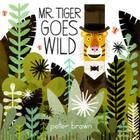
Buy Mr. Tiger Goes Wild!
So, what do I do with this book?
1. What do children think about what Mr. Tiger did? Do they think he acted in the right way? How do they feel about Mr. Tiger’s friends? Why do they think he got lonely? These are the types of discussion questions you can have with young children when you are reading this book with them.
2. You can do an easy sequencing activity with this book. You or even children can draw Mr. Tiger at different stages of the book–each on a separate sheet of 8 1/2 “ x 11 ” paper. So, you would have a drawing of him at the beginning grumpy and bored, then on all fours with his clothes on, then swimming, then no clothes, then in the jungle, etc. As a whole group activity, mix up the order and have children come up and put the drawings in the right order to retell the story.
3. Ask children to draw an illustration of themselves “going wild” and write a sentence about it. You should probably discuss this first–so you don’t get too many naked pictures. HA! But you can make a list like: they could dress up in funny costumes, do a silly dance, wear clown makeup, etc.
By:
Administrator,
on 2/28/2013
Blog:
Margo Dill's Read These Books and Use Them!
(
Login to Add to MyJacketFlap)
JacketFlap tags:
Reading Skills,
Creative Writing activities,
Elementary Educators,
Making Personal Connections,
Art activities,
Katie Woo,
picture books about moving,
chapter book series,
Manushkin Fran,
Chapter Books,
Add a tag

*Early, early chapter book (like Amelia Bedelia), realistic fiction
*6-year-old girl as main character
*Rating: Well, I’m in love with the character, Katie Woo–this is just one book in a series. Young girls will eat these up and want more and more. Love the illustrations, too!
Short, short summary:
In
Katie Woo: Moving Day, Katie is moving to a new house, but she is worried about leaving her old house. She writes a note to the new girl who will have her room, and then she goes with her parents to her new abode. She is a bit worried about the “whirlpool” and especially the “sunken living room”–what if she falls in and can’t get out? Once she’s there, she starts to adjust and eventually feels right at home. This is a “chapter book” but there are pictures on every page–PERFECT for first or second graders who want a step-up from a picture book.
So, what do I do with this book?
1. Well, here’s a book where I didn’t have to do much brainstorming to show you how to use it because the authors/publisher did it for me! Love this. In the back of the book, there are discussion questions and writing prompts to use with kids. For example, one of the questions to discuss is: Do you think it would be fun to move? Why or why not? One of the writing prompts is: Make a list of ten words that describe your home. The activities are built right in!
2. And there’s more. In the back of the book, there’s also a step-by-step art activity to go with something that happens to Katie Woo in the story. She notices a bird’s nest outside her window, and the art activity is to create a next with a brown bag, glue, and dried leaves, grass, and flowers. This is an activity that kids would probably need help with–especially the part where you change the bag into a nest shape, but it’s a cute activity.
3. For those of you at home or doing this in a school with computer lab free time, it turns out that Katie Woo is ONLINE. (Who would have thought?) So you can go to www.capstonekids.com and click on the picture of Katie Woo. Once you do this, you will be taken to her section of the site where you watch short videos, learn more about her and her friends, and download color and activity sheets.
By:
Administrator,
on 2/26/2013
Blog:
Margo Dill's Read These Books and Use Them!
(
Login to Add to MyJacketFlap)
JacketFlap tags:
Middle Grade Novel,
Sentence fluency,
Middle School Teachers,
Elementary Educators,
six traits of writing,
Book Club Possibility,
6 +1 traits of writing,
Finding My Place,
Finding My Place by Margo Dill,
Add a tag
 Continuing with my Wednesday 6 +1 traits of writing lessons to go with my book, Finding My Place, today I’m going to talk about a lesson in sentence fluency, using Finding My Place.
One of the writing skills you teach with sentence fluency is having sentences of different lengths that start with different words when you are writing a section of your story. When you vary your sentences like this, the overall voice sounds more natural and the writing tends to flow better. The point is to study a published work like my book to see how a professional author uses this skill. Then talk to kids about it and show them how they can do this in their own writing also.
Pick any chapter in the book, such as chapter 23, “Missing Ma.” Read a section out loud to children. Next show them the section and ask them to write down the first word of each sentence. Ask them to notice how the first word varies. It can be repeated, but it is not always the same word. Also ask students to count how many words are in each sentence. They will notice that some sentences are long and some are short. (You can also talk to students about how during times of action or excitement, authors tend to use shorter sentences.) Finally talk about the different styles of sentences. Some start with phrases, others are subject/verb, and so on.
Once you’ve studied the book, then talk to students about looking for these types of things in their own writing–if it seems too much for your students, then choose one–such as varying sentence beginnings.
For more information on Finding My Place, please go to http://margodill.com/blog/ .
By:
Administrator,
on 2/25/2013
Blog:
Margo Dill's Read These Books and Use Them!
(
Login to Add to MyJacketFlap)
JacketFlap tags:
Movies,
inspiration,
Oscars,
character education,
Documentaries,
Middle School Teachers,
Elementary Educators,
High School Teachers,
Fighting world poverty,
Helping Girls and Women Around the World,
Add a tag

by TimShoesUntied flickr.com
Yesterday when I posted on Facebook for WOW! and on my Editor 911 page about The Oscars, we got fewer responses than I figured we would, and many of them were negative. It turns out everyone doesn’t love this night as much as I do–I confess I like the Hollywood glam, I like to see the people we see on the silver screen interacting with other people, and I like the emotion of the winners. I do realize that these people are being awarded for pretending to be other people and for a life that is already rich and full of rewards. But I still love it.
When I realized I wanted to write about The Academy Awards on my blog today, instead of a book, I realized that you can use the awards with kids/teens/other adults, just like you can a book. You can use some of the stories from last night to inspire others to follow their dreams, to reach for the stars, and to persevere through anything. There are two stories/award winners in particular that I feel share this theme, and their stories are below.
- Winner of Best Documentary: The winner of the Best Documentary category last night (Feb. 24, 2013) was Searching for Sugar Man about a Detroit singer-songwriter, Rodriguez, who was popular in South Africa in the 1970s (never popular in the U. S.). The singer has a strange but true story–I won’t get into that here–but what’s interesting about this film is that the director, Malik Bendjelloul, ran out of money before he finished shooting the documentary. So, instead of trying to borrow more or do a Kickstarter campaign, he downloaded a $1.99 app on to his smartphone and shot the scenes he needed on his phone! Now that’s resourceful! That’s persevering; and last night, his spirit paid off because THE MOVIE WON AN OSCAR! To read the full story and share with your middle school/high school/college students and or children, go to this link: http://news.doddleme.com/equipment/director-runs-out-of-money-turns-to-iphone-to-finish-oscar-film/
- Best Documentary Short: This moment brought tears to my eyes last night, and I’m sure I wasn’t the only one! The filmmakers who won this category for the documentary, “Inocente,” brought the subject, a 19-year-old Latino girl, of their film on stage with them. The woman (whom I believe was one of the directors) who accepted the award also had tears in her eyes and said that the girl was homeless a year ago, and now she was here in front of all of these people because of her art. That caught my interest–how about you? Art is powerful, just like music, and this girl’s passion is obviously going to change her life. On Huffington Post.com, an article states: “The documentary follows the life of Mexican-born, 15-year-old Inocente Izucar, an artist living San Diego, California, who with brilliant colors and unique pieces uses art to rise from her challenging reality and pursue her dreams of becoming a professional painter.” Now Inocente is 19 and has been given a chance to display her art and make an income. The website Nonprofit Quarterly has more of the story because of the nonprofit organization, Shine Global, which is dedicated to end abuse and exploitation of children around the world through film, made the documentary. For more info on this important subject and to see why the arts are important and we should encourage our children to do them, go to this link: http://www.nonprofitquarterly.org/policysocial-context/21847-nonprofit-produced-film-inocente-wins-oscar.html
Sure, it was fun last night to see Ben Affleck and George Clooney on stage accepting for Argo (an excellent film in my opinion) and to see one of my favorite, beautiful actresses, Jennifer Lawrence, win best actress. I thought Seth MacFarlane was funny most of the time, and of course, loved to see Jennifer Hudson belting out her famous song from Dreamgirls.
However, the stories that will stick with me from here on out are the two I mentioned above. I hope they touch you, too; and I hope you can find a way to share them with the young people in your life!
Don’t forget the middle-grade novel I am holding a contest to giveaway until March 1. Check out the super easy contest here.
By:
Administrator,
on 2/20/2013
Blog:
Margo Dill's Read These Books and Use Them!
(
Login to Add to MyJacketFlap)
JacketFlap tags:
nonfiction picture books,
Elementary Educators,
Making Personal Connections,
Research Ideas,
Books With Social Studies Content,
Writing Skills,
Presidents' Day,
picture books about the president,
Gherman Beverly,
Picture Book,
Add a tag

*Nonfiction picture book about the U.S. presidents’ mothers for upper elementary
*Mothers as main topics in the book
*Rating: I adore this book, First Mothers written by Beverly Gherman. The language is perfect for kids–she took a difficult subject & did a wonderful job with it! The illustrations by Julie Downing are even better–there’s even some humor, which makes a book like this more appealing to kids!
Short, short summary:
First Mothers is a look at every single president’s mother from George Washington to Barack Obama. The author tells vital statistics such as birth, death, marriage date, and date she gave birth to the president. Each mother is also given a title, such as George Washington’s mother, which is The FIRST First Mother, Ida Stover Eisenhower, which is The Pacifist Mother, and Barbara Pierce Bush, The Outspoken Mother. There are also paragraphs about each mother with details about what she liked to do, how she raised her children, how she met the president’s father, and more. For example, on the page about President Grant’s mother, Hannah Simpson Grant, the author tells how she was shy and didn’t even attend her son’s presidential inauguration or brag about him when he went to West Point or became the general of the Union Army. The illustration of her shows a woman sewing and a speech bubble that says, “It’s not right to brag, but Ulysses was a good boy.” Children and adults will get a kick out of this book. I found it fascinating!
So, what do I do with this book?
1. Have each student choose a First Mother to research further OR research a bit about her son, and see if there’s any connection to the son’s interests/way he was president and her description in the book. Since these research projects could be enormous, ask students to focus on certain aspects, such as: Did the mother have a job outside the home? What were her hobbies? What did her other children do? Where did she live her life?
2. The illustrations in this book (by Julie Downing) are fantastic! I really recommend going through the book and just looking and studying the illustrations. Towards the end, some of the first mothers reappear and make comments–on Barack Obama’s mom’s page, the first mothers from the 18th and 20th century say, “Is she wearing pants?” HA! On Bill Clinton’s mom’s page, the older first mothers ask, “What did she do to her hair?” Bill Clinton’s mom had a white streak through it, kind of like a skunk. . .Sometimes, as teachers/parents, we don’t take the time to look at illustrations. You don’t want to do that with this book.
3. The very last page of this book has a first mother standing there with a speech bubble, which says: “So, if you want to be president, listen to your mother.” Use this as a writing prompt with students. Ask them to think of advice they’ve heard from a female role model that could help them to one day be president. An example would be, “Mind your manners.” “Do your homework before you play.” “Read every day.”
Don’t forget, I have an exciting giveaway going on! It’s for a middle-grade (8 to 12) Christian fiction novel titled, A Cat Named Mouse: The Miracle of Answered Prayer. Go here to enter the giveaway.
By:
Administrator,
on 2/20/2013
Blog:
Margo Dill's Read These Books and Use Them!
(
Login to Add to MyJacketFlap)
JacketFlap tags:
Middle School Teachers,
Elementary Educators,
six traits of writing,
Books With Social Studies Content,
Book Club Possibility,
6 +1 traits of writing,
Finding My Place,
Finding My Place by Margo Dill,
word choice,
Middle Grade Novel,
Add a tag
Here’s a simple word choice lesson you can do with kids while reading FINDING MY PLACE: ONE GIRL’S STRENGTH AT VICKSBURG or really any historical fiction book. Word choice is one of the 6 + 1 Traits of Writing.
One thing about the 6 + 1 Traits of Writing that I love is that these are the terms that professional writers use–from voice to word choice. So, when talking to kids about word choice, using a published book, you can say: “Authors have to make decisions about word choice all the time. Here’s this author’s story.”
When I wrote Finding My Place, it was very hard for me to write from a 13-year-old girl’s point of view during THE CIVIL WAR. I remembered being 13, so it was easy for me to get feelings down. But I kept using contemporary words. My critique group would say, “I don’t think people used the word OKAY or STUPID in 1863 like they do today. That doesn’t sound natural.” My word choice was off, and it messed with the authenticity of my book. So, I had to find words that did make sense during 1863, such as Anna calling James, “a loon,” or saying, “all right” instead of “okay.” I also tried to put a little Southern flavor in my dialogue through word choice instead of writing out how they might have talked. For example, Mrs. Franklin uses “y’all” and the kids refer to the Union Soldiers as “Blue Bellies” and “Yankees.”
Another thing that I had trouble with in dealing with word choice is using the words bomb and shell. First of all, I had to find ways not to repeat bomb or shell a million times during the periods in my book when the characters were experiencing being bombed. And people would argue with me that Vicksburg citizens wouldn’t have said, “BOMB!” Luckily, I read a diary from a woman who lived during 1863, and she used the words “shell” and “bomb” in her entries.
What you can do with children to discuss word choice in a mini-lesson is: pick a line or two out of the book–this can be done in any chapter and with any character and even with narrative. CHANGE some of the word choices to inappropriate ones and see how children think and work to improve the word choice. Then share the original lines from the book with them.
As I said, this can be done with any historical fiction book or really any book with strong word choice. Children LOVE to correct you or the author, and will work hard to find words that are unique and specific in this exercise.
By:
Administrator,
on 2/18/2013
Blog:
Margo Dill's Read These Books and Use Them!
(
Login to Add to MyJacketFlap)
JacketFlap tags:
Christian themes,
Alden-Tirrill Anna,
Journal Writing,
character education,
Middle Grade Novel,
Christian fiction,
Reading Skills,
middle-grade fiction,
Middle School Teachers,
Book Giveaway Contest,
Elementary Educators,
Making Personal Connections,
Helping Girls and Women Around the World,
Book Club Possibility,
Add a tag

I have a special book to share with you today for chapter book/middle-grade readers (ages 8 to 12 or so) titled, A Cat Named Mouse: The Miracle of Answered Prayer. This book is inspirational or Christian fiction for kids with a heavy emphasis on prayer and Bible verses. It would be perfect for a homeschool family or group, parent/child book club, or a Christian school. Parents who are wanting to introduce or emphasize how prayer is answered and how Bible verses can be applied to our lives would also find this book helpful for their children to read or to read with their children. It has several illustrations. AND THE BEST NEWS OF ALL: I HAVE A COPY TO GIVEAWAY! IF you would like to enter the giveaway, please go below to the Rafflecopter form and do the tasks that you are interested in doing. Each task you do gives you more entries into the giveaway contest, which closes at the end of February. I’m using the Rafflecopter system because it is an easy way to keep track of entries! Thanks for trying it out with me.
A Cat Named Mouse: The Miracle of Unanswered Prayer is. . .
*A chapter book/young middle-grade realistic, inspirational fiction (based on a true story) for kids ages 8 to 12
*12-year-old girl as the main character (and a cat named Mouse!)
*Rating: A Cat Named Mouse is an enjoyable and fast read, perfect for a parent to read with a child. This book is important to discuss with children–there are a lot of Christian concepts and ideas!
Short, short summary: After being introduced to Annie and her family and their cats (as well as some neat practices they have such as their TALK UP tradition), Mouse, one of their cats, goes missing when a large animal tears down a window screen, scaring the cat who likes to sleep on the windowsill. The cat either falls out the window or jumps out the open window and goes missing. During this time, Annie and her family come up with many different ideas to get the cat back–one of them being prayer, another discussing how God has a plan. They also make signs and look for the cat. So, since it’s a children’s book, you can probably figure out what happens in the end–but I don’t want to spoil it for anyone! Annie is a wonderful main character with very loving parents.
So what do I do with this book?
1. It’s important to discuss the concepts with children that are presented in the book. One of the main things to focus on is that Annie and her parents use prayer to help find Mouse, but they don’t just sit by and hope God finds the cat. They are proactive also. Asking children to respond in a journal after reading a section will give them a chance to reflect on what happened before the discussion.
2. This is a great book to compare a personal story to what happens in the story. Children can either discuss something their family prayed for and the prayer was answered or a time something important to them was lost and then found with God’s help. If they think about this time in their own lives, they will understand the feelings Annie is having, too.
3. If you are reading this post between Feb. 18, 2013 and Feb. 28, 2013, then enter the Rafflecopter form below for your chance to win a copy. (United States and/or Canada mailing addresses only please) If you have any problems, leave a comment or e-mail me at margo (at) margodill.com. Depending on your Internet browser, you may have to click the blue underlined words that say: RAFFLECOPTER in order to see the form and enter the contest! Remember if you enter a comment, make sure you check the box in the RAFFLECOPTER FORM, so you are entered to win. EVERYBODY who checks the free entry gets two free entries into the contest without having to do anything else.
a Rafflecopter giveaway
By:
Administrator,
on 2/13/2013
Blog:
Margo Dill's Read These Books and Use Them!
(
Login to Add to MyJacketFlap)
JacketFlap tags:
character education,
Tedd Arnold,
Valentine's Day books,
Creative Writing activities,
Elementary Educators,
Making Personal Connections,
Personal Connections,
Preschool to 1st grade teachers,
Art activities,
Rhyming Words,
picture books about self-esteem,
silly picture books,
building self-esteem in kids,
deGroat Diana,
Ferber Brenda,
Picture Book,
Add a tag
 Roses are Red, Your Feet Really Stink is one of my favorite Valentine books–especially when I was teaching. I read it to my class every year! Diana deGroat illustrated and wrote the book–such a talent. Here’s a summary of the story: “When Gilbert writes two not-so-nice valentines to his classmates, his prank quickly turns into pandemonium. But there’s always time for a change of heart on Valentine’s Day. This warm and funny book about a favorite holiday also provides a subtle message about forgiveness and being a good friend. Ages 5 up.” Besides using this book around Valentine’s Day, you can also use it to talk to children about how words can hurt and how to be a good friend. An activity you can do with this book is to exchange names among classmates and have students write a “nice” Valentine to the student whose name they received. You can talk to them about finding specific things, instead of general things, like, “I really like how you always help me with my math problems.” or “You are so good at kickball–you always kick a homerun.” Students can write their messages and decorate them before passing them out.
 The Yuckiest, Stinkiest, Best Valentine Ever written by Illinois author Brenda Ferber and illustrated by Tedd Arnold is a new picture book that is a real treat! If you are familiar with Tedd Arnold (Parts), then you know he is an illustrative genius. Brenda is a wonderful writer, and the two together make a terrific team. Here’s a summary of the story: “Leon has a crush. A secret crush. A dreamy crush. A let-her-cut-in-line-at-the-water-fountain-crush. And he’s made the perfect valentine. But the valentine has other ideas. ‘Love is yucky, kid! Valentine’s Day is all about candy!’ The card yells before leaping out the window and running away, leaving Leon to chase it across town, collecting interested kids along the way. Saying ‘I love you’ has never been so yucky or so sweet.” Brenda provides all sorts of resources on her blog for how to USE her book. She has a Q and A with her about things like why she wrote the book, how she named her character, and more. She also has an ACTIVITY KIT you can download for free (love this!). You can find all of this at this link: http://www.brendaferber.com/yuckiest-stinkiest-best-valentine-ever.php
Here’s a link to both books on Amazon! Have fun this Valentine’s Day and hug someone you love!
By:
Administrator,
on 2/13/2013
Blog:
Margo Dill's Read These Books and Use Them!
(
Login to Add to MyJacketFlap)
JacketFlap tags:
speaking engagements,
book tour,
Middle Grade Novel,
Reading Skills,
Middle School Teachers,
Elementary Educators,
six traits of writing,
Book Club Possibility,
voice lessons,
6 + 1 traits,
Finding My Place,
Finding My Place by Margo Dill,
Add a tag

Speaking to the COSMO group in Columbia, MO
Going On a Book Tour
Last week, my good friend, who is just like a mother-in-law to me (that’s a story for another post!), Pamela Anderson from Columbia, MO invited me to stay at her house with my two-year-old and speak to her COSMO group (diabetes research) and Pachyderms (the first club ever in the U.S.) and then organized a breakfast for me of old friends–all to promote my book. My husband came, too, and the trip was a huge success! I was worried about my talk because I was used to speaking to either groups of writers, teachers, or kids; but I tied the story of taking 11 years for my book to be published (FIVE after I signed the contract) to never giving up and following your dreams. People seemed to really relate to it, even if they weren’t writers because when I finished talking, there was actually a line to buy a copy of my book! I met the most interesting and nice people–one woman was almost 90-years-old and had been researching her family on the Trail of Tears for over 30 years. Her determination and spirit made my trip. The breakfast with old friends was so great, and my two-year-old came to that–I was a little worried about this, as she is not in the “patient” stage. But even she was so good and ATE, too. (You mothers of toddlers know what an accomplishment this is.)
I am so thankful to Pamela Anderson (the retired air traffic controller, not the actress) for organizing AND my husband Rick and my good, good friend Michelle Pfeiffer (I swear–I have a friend named Pamela Anderson and Michelle Pfeiffer–both married last names!) for helping me with KB!
 A Cool, Heartwarming Story
My mom’s friend, Bobette, bought a book for her grandson, Gavin. He is in fifth grade. My mom and Bobette have been friends for longer than I’ve been alive (not telling you how long that is!); and I’ve met Gavin before, but he lives in a different state–so I don’t know him well. Anyway, as the sweet kid that he is, he took my book to his fifth grade teacher and said that he HAD to read if for independent reading because this was written by a family friend. The teacher was reluctant–this is understandable because she has NO IDEA who I am–but agreed to read the book to see what she thought. (What an awesome teacher!) After she finished reading it, she agreed Gavin could read it, and even better–she put my book on her reading list. WOW! Thank you!
A Lesson in Voice: 6 + 1 Traits of Writing
This is a quick lesson you can do with ANY book, not just Finding My Place. But it works better with novel length books. 
1. Once you and your students have read at least half of the book, they should be familiar with the main characters’ voices. For example, in Finding My Place, students should be able to recognize Anna, Sara, James, Mrs. Franklin, and possibly Dr. Franklin and Stuart, too.
2. Review what VOICE is. This is such a hard concept for children to understand–there is an overall voice to the book, which is Anna’s in FMP, but then each character also has their own voice. Voice is the way the words sound together, and authors have their own distinct voice. For example, you can easily tell the difference between my book and one written by Mark Twain! (HA!)
3. Each student should have a piece of paper, numbered 1-10. You, the teacher (or students can take turns doing it to) or parent, read a line or two from FMP–it could be Anna’s narrative or dialogue OR dialogue from one of the main characters. Then ask students to write down whose VOICE they think that is.
4. After revealing the correct answers, discuss with students how they knew that Mrs. Franklin said what she did or that it was Anna speaking–what is different about the VOICE?
By:
Administrator,
on 2/11/2013
Blog:
Margo Dill's Read These Books and Use Them!
(
Login to Add to MyJacketFlap)
JacketFlap tags:
Journal Writing,
Middle Grade Novel,
Reading Skills,
Middle School Teachers,
Elementary Educators,
Making Predictions,
six traits of writing,
Books With Social Studies Content,
Making Book to Book Comparisons,
Book Club Possibility,
six plus one traits of writing,
Editor 911,
Barker Ethel,
books that teach voice,
Add a tag

This is a book I am EXTREMELY excited to tell you about for several reasons. . .
- I helped to edit this book in its beginning stages in 2009, as part of my Editor 911 business.
- It is a terrific HISTORICAL FICTION book for upper middle grade/tween/younger YA audience by a delightful author.
- Ice Cube Press is a wonderful small publisher that also published DIVORCE GIRL (see my post:http://margodill.com/blog/2012/07/30/the-divorce-girl-blog-tour-and-giveaway-ya-or-adult/ ) which is one of the best books I read last year!
- You can use this book to teach history AND writing lessons such as voice. There are TERRIFIC voices throughout this book.
*Historical fiction, upper-middle grade/tween/younger YA (set during the Orphan Train days)
*Three main characters: a street-smart boy, an older sister, and a younger sister–all three have chapters in their voice
*Rating: Well, is it appropriate to give a rating to a book you helped to edit? For the Love of Pete is a very well-written book with an interesting story/adventure that will appeal to both boys and girls–perfect for the classroom and/or home school setting!
Short, short summary:
The book starts out with a bang! Iris and her sister Rosie have to flee their New York tenement when their mother is murdered. This puts them out on the street, where they meet a “street rat”, Pete (love this character!). The three come to rely on each other and become friends. When they are put on the Orphan Train and taken to Iowa, they hope to stay together–but adults have different ideas about where the children should be and with whom. However, you can’t squash a child’s spirit or determination, and Pete, Iris, and Rosie work hard to get back together again.
So, what do I do with this book?
1. Compare a nonfiction book, such as Orphan Train Rider: One Boy’s True Story by Andrea Warren, to Ethel Barker’s book. What makes For the Love of Pete historical fiction? What true facts can you learn from it about the Orphan Train? Can you tell the author did research to make the characters experience the same things as the actual boys on the Orphan Train? (The back of the book does have a small section on the Orphan Train with a photo of boys living on the street.)
2. As mentioned, this book is told in three different voices–Pete, Rosie, and Iris. Ethel Barker does an amazing job with each voice, and this is a perfect example of voice to use with a six plus one traits lesson. You can read a bit of each chapter to the students, and without looking, they can tell you which character is speaking. Which voice do they hear? What makes that voice unique? Is it word choice? Sentence fluency? Which voice do they like best? Have a discussion about voice using this book as a starting point (since it has such a strong voice!).
3. This is also a great book to study characters, motivation, and feelings. Each character has their own motivation throughout the story (and it changes a bit as the characters develop). For example, ask students what is Pete’s motivation in the beginning of the book for helping the sisters. How does he follow through on this? Why does this motivation fit his character? As for feelings, how does Iris feel toward the end of the book? (Sad and determined) Why?
By:
Administrator,
on 2/7/2013
Blog:
Margo Dill's Read These Books and Use Them!
(
Login to Add to MyJacketFlap)
JacketFlap tags:
ABC books,
Reading Skills,
Elementary Educators,
Making Personal Connections,
Preschool to 1st grade teachers,
Shared Writing,
Art activities,
Books With Social Studies Content,
Rhyming Words,
silly picture books,
Baker Keith,
Picture Book,
Add a tag

* Concept book (ABCs) for preschoolers through first graders
*Peas as the main characters
*Rating: LMNO Peas is a cute book, going through the ABCs with the peas doing different jobs is clever. Some of the jobs were a little strange, and I wanted more of a play on the LMNO Peas idea, but my 2-year-old loved it–that’s whom it’s for anyway!
Short, Short summary: Keith Baker has created little peas characters who have all sorts of jobs throughout this ABC book. For example, the first two pages state: “Acrobats, artists, and astronauts in space, builders, bathers, and bikers in a race.” Each letter of the alphabet is written in large, colorful font, and the peas use the letters as ramps, buildings, and more–the letters become a “stage” for the peas. This is a popular book if you haven’t heard of it before. There’s a sequel with numbers titled, 1-2-3-Peas, and it got all kinds of starred reviews! You can look inside both these books on Amazon. Use the link right here. . .
So what do I do with this book?
1. Come up with other professions that the PEAS could do starting with that letter that weren’t mentioned in the book. Ask students to create an illustration for that letter and word, in a similar style to Keith Baker’s.
2. Which pea (job, profession, hobby) does your child or your students relate to the best? What do they want to be when they grow up? Do they see your job in the book? Do they know what each job is? This is a great book for a career week/career day and to start talking about jobs/careers.
3. Each pea is different! Just like each child and grown-up are different. How are the peas different? How are they the same? Ask children if they are fond of any certain pea. Have fun with this concept while talking to students about how each of us being different helps the world to go around!
By:
Administrator,
on 2/6/2013
Blog:
Margo Dill's Read These Books and Use Them!
(
Login to Add to MyJacketFlap)
JacketFlap tags:
brainstorming,
Journal Writing,
Middle Grade Novel,
Middle School Teachers,
prewriting,
Elementary Educators,
six traits of writing,
Books With Social Studies Content,
Writing Skills,
Book Club Possibility,
six plus one traits of writing,
Finding My Place,
Finding My Place by Margo Dill,
idea trait,
Add a tag
I am currently creating a short guide (PDF or Word) that shows how you can use my book, Finding My Place: One Girl’s Strength at Vicksburg (ages 9 to 12) in 6 + 1 Traits of Writing lessons. The guide will be free for the teachers at any workshops I do at schools and if a teacher/home school parent buys a copy of my book. To give a little preview, I thought I would show an excerpt of each trait on the next few Wednesdays. So, here we go. . .
IDEA is one of the 6 + 1 traits of writing. It is important to start with a good idea when you write because it makes it easier for the words to flow and more interesting for the reader. Usually the first idea we come up with is not our best idea. We need to dig deeper to find a unique idea. You can do this with brainstorming, word webs, free writing, talking to a friend, or even research. For example with my book, I wanted to write about the Civil War for kids, but there are already a ton of books out there about the Civil War. SO, I had to dig deeper, and I did some research. Then, I decided to tell a story from the Confederate viewpoint, make the main character a citizen and a girl instead of a solider/drummer and a boy, and I set it during one specific battle that had extremely interesting elements, such as the citizens living in caves to protect themselves from the Yankees’ bombs.
In Finding My Place: One Girl’s Strength at Vicksburg, Anna, my 13-year-old main character, loves to write. She writes about events that happen in her daily life, poems, fiction stories, and letters. In one section toward the end of the book (page 134, chapter 21), Michael, Anna’s older brother, asks her to tell a story she has written. At first, she doesn’t want to because she doesn’t think it is a very good idea. Then when she does tell it, she realizes she never really ended the story. She started with the premise of a selfish orphan living with an elderly woman, who delivers food to his room. One day the food stops coming, and the orphan gets angry. He must leave his room to investigate.
 Michael asks her what happened, and Anna replies, “Yes, she had a heart attack. I never really finished the story.”
Here’s where you can use the IDEA trait with your students and this premise. Give them 10 minutes to brainstorm an ending to Anna’s story. Give them a few questions to think about: What could have happened to the elderly lady? What did the orphan do next? Does the elderly lady necessarily have to be deceased? Could she be teaching the orphan a lesson? And so on.
After the 10-minute brainstorm session, have students discuss their ideas with a partner. Then have a class discussion, where you make a list of the different ideas.
When concluding the lesson, talk to students about a fiction story they have written and ask them to think about their ending. Are they satisfied with it? Could they use these techniques to come up with an alternate (and perhaps better!) ending? Work on these new endings during the next writing period.
For more information on FINDING MY PLACE and to read an excerpt, please go to this link: http://margodill.com/blog/finding-my-place/
By:
Administrator,
on 1/31/2013
Blog:
Margo Dill's Read These Books and Use Them!
(
Login to Add to MyJacketFlap)
JacketFlap tags:
e-books,
iTunes,
Cause and Effect,
Reading Skills,
Elementary Educators,
Making Personal Connections,
Personal Connections,
Preschool to 1st grade teachers,
Books with Health Content,
picture book apps,
silly picture books,
Langdo Bryan,
Add a tag
 Hippo and Gorilla are two loveable characters, (remember The Odd Couple?) who face problems children will be all too familiar with–things like crashing model airplanes (Airplanes), eating too many donuts (Donuts), and a rainy day birthday (Bathroom Beach) . Illustrator and author Bryan Langdo has created cute, humorous picture books for children. But what makes these different than the thousands of picture books at your library?
These are made for your e-readers! Right now, they are best for an iPod Touch or iPhone or iPad with the program iBooks. I didn’t have this (my iPod Touch is a 2nd generation–I can’t get iBooks on it, oh my!), and so Bryan sent them to me for my Kindle and then the MP3 files, so I could listen to the wonderful readings of the stories by Billy Bob Thompson (he does great voices for Hippo and Gorilla!). I listened to them at Panera Bread, and I found myself giggling out loud. What are the people around me thinking?
Okay, so as a preschool/kindergarten/first grade teacher or parent, what should you know about these cute books and how you can use them with children?
1. Brian and I exchanged a few e-mails, and here is what he said, “The bells and whistles are basically the audio narration, sound effects, incidental music, and read-along feature.” (Kids will LOVE this–my daughter at 2 loves ANYTHING on the iPod Touch or Kindle. She actually says this sentence, “I need the iPod Touch.” I’m not sure if I should be proud? )
2. Here’s what Brian said about his own series (and by the way, I COMPLETELY agree with him!): “I’m hoping to share with you and your readers my new series of early readers titled Hippo & Gorilla. It’s about two best friends who are total opposites. Hippo is a great friend, but he has a tendency to make bad decisions. He breaks things, he eats too much, and he makes big messes. Gorilla, however, doesn’t do enough of those things. Together, they make a great team!
These eBooks for young readers explore the joys—and the pitfalls—of friendship, using simple vocabulary and sentence structure. Each book contains audio narration along with original music and sound effects. They’re available for iPad, Kindle, and Nook.”
 3. GET HIPPO AND GORILLA IN DONUTS FOR FREE! Go to this link. This will only work if you have access to iBooks on your iPad or other Apple device. But here’s the link if you are lucky to have one of these: https://itunes.apple.com/us/book/donuts/id585686738?mt=11
4. There are 5 individual books about Hippo and Gorilla. One is free as stated above, and the others are only 99 cents (again, right now for Apple devices). All 5 stories can be purchased together for $1.99!
5. These are the perfect books to start important conversations with our little ones–in the classroom or at home. You can ask questions like: Was Hippo a good friend? Should Gorilla fly his airplane again? What else could Hippo and Gorilla do on Gorilla’s birthday? How can Gorilla and Hippo compromise? and more.
6. Bryan has a website and blog for you to check out more details. You can see these at: http://www.hippoandgorilla.com OR http://www.hippoandgorilla.blogspot.com/ .
If you have any questions, please leave them in the comments–Bryan can stop by and answer them!
By:
Administrator,
on 1/29/2013
Blog:
Margo Dill's Read These Books and Use Them!
(
Login to Add to MyJacketFlap)
JacketFlap tags:
speaking engagements,
school visits,
Middle Grade Novel,
Thank you notes,
writing conference,
Middle School Teachers,
Elementary Educators,
Book Club Possibility,
Finding My Place,
Finding My Place by Margo Dill,
Add a tag

I recently received two thank you notes–one in a roundabout sort of way–from children about my book, Finding My Place: One Girl’s Strength at Vicksburg. I thought I would share them here. These are my first ones from kids, and so I’m super excited! I am not changing spelling and or punctuation when re-typing, and I am not sharing names .
This one is from my friend, Becky, who bought the book for her niece. . .
Dear Aunt Becky and Uncle Ron, Thank you for the Book “Finding My Place” I Loved it! Love, G
This one is from a friend of my mom’s (and mine!) that goes to her church. The friend bought the book for her granddaughter.
Dear Miss Dill, I really, really loved your book. I learned lots of stuff like people had to live in caves. My mom and grandma and I really think it was a really good book. It was a really intresting book. Thank you for signing my book. I am going to share your book with my class. Your friend, M. R.
There is not a sweeter thing than notes like this from kids. It brings a huge smile to my face. I am busy scheduling school visits and writing conferences. If you are interested, you can find information at http://www.margodill.com and click on “Speaker Information.” To find out about Finding My Place, where to buy it, and an excerpt, please see: http://margodill.com/blog/finding-my-place.
photo found on Flickr.com by woodleywonderworks
By:
Administrator,
on 1/28/2013
Blog:
Margo Dill's Read These Books and Use Them!
(
Login to Add to MyJacketFlap)
JacketFlap tags:
Middle School Teachers,
Elementary Educators,
Preschool to 1st grade teachers,
WOW! blog tour,
Writing Skills,
High School Teachers,
Book Club Possibility,
Half the Sky,
Helping Girls and Women Around the World,
preemie,
Olu Sola,
NICU,
Add a tag

When I found out WOW! Women on Writing was hosting a blog tour for Sola Olu, the author of The Summer Called Angel, I knew I wanted to be a part. One reason is because this blog is about children’s books AND about books and people who help women and children around the world–after all women hold up HALF THE SKY! But the other reason is because the subject of preemies and NICUs are close to my heart after I had my daughter at 33 weeks, and she spent a month in the NICU.
Sola’s book is excellent. You will be captivated by her story of how she had her daughter, Angel, at 28 weeks due to a severe case of preeclampsia. Angel was a very sick, baby girl, who had to have multiple surgeries and procedures, who spent time in two different NICUs, and who didn’t get to come home until the seventh month of her life. Sola shares the story of she and her husband and their little daughter fighting for her life with honesty and grace. She does not sugarcoat the bad times–the times when she thought she was going to lose her daughter, the times when she didn’t want to go to the NICU any more, the times when she and her husband had a difference of opinion.

My daughter, 33 weeks, 5 lbs. 2 ozs, A few hours old, holding my hand
In the back of the book, Sola shares some resources for pregnant women or for women who have a baby in the NICU. This is a great resource. She loves to hear your story if you had a baby in the NICU or if you are pregnant and on bed rest or anything really–she loves to help and listen. ANYONE who leaves a comment on this post will be entered to win either a print copy or e-copy of The Summer Called Angel. You can leave a question or a story or a well wish by Sunday, February 3 8:00 pm CST to be entered into the contest.
I was also lucky enough to interview Sola, and I asked her a few questions that may help high school/college writing teachers as well as writers wanting to write their own difficult stories–whatever those may be!
Margo: Welcome, Sola, thank you for taking the time to answer a few of my questions. Your story is so gripping and honest. How did it help you to write about this difficult time in your life?
Sola: It helped to heal. I love to write, and I’ve always been better at expressing my feelings by writing rather than speaking. I started writing at the hospital, even though it didn’t start out as a memoir. I guess it was therapeutic in some way.
Margo: That’s why your memoir is so honest and gripping–you were writing while you were living it! How did you deal with the emotions that had to arise while you were reliving these events (through your writing) with your preemie daughter?
Sola: Everything took time. Initially, I couldn’t talk about the details without

Sola Olu
shedding tears, but gradually the pain lessened, and it was more wonder–how did we live through this? It didn’t help that I cry easily anyway. At the same time though because we stayed at the hospital for so long (two hospitals), I saw cases worse than mine, so I would always have that at the back of my mind to just be grateful it wasn’t worse, and that our outcome was good. Also because I stopped and started the book many times, I had my son as well; and by the time you have two kids, you’re too busy to mope. It was very difficult initially I won’t lie…even with the birth of my son. But with time, there’s healing.
Margo: I agree with the time factor. I have a terrible time writing about things that have just happened. It was even hard for me to write the Facebook updates while our daughter was in the NICU. Do you recommend women writing about hard times in their lives? Why or why not?
Sola: I would–it helps, at least it helped me; but for me, writing has always been my go-to remedy. It’s always been therapeutic. I remember as a teenager I would write to my parents when I had something difficult to discuss.
Margo: What are some good resources you can recommend for teenagers on up to adults for writing about their own lives and difficult events?
Sola: I belong to the National Association of Memoir Writers, and I love the resources they have to offer including webinars; but of course, there are more out there. There are a lot more resources out there on the Internet. My advice to myself for my next book is research, research, research, and more research.. .I think I can pass that along.
Margo: I’ve heard great things about NAMW, too. Thank you, Sola, for your honesty and sharing your story with families!
Don’t forget you could win a copy of this book by leaving a comment or question! Also, you can check out Sola’s book on Amazon.
By:
Administrator,
on 1/24/2013
Blog:
Margo Dill's Read These Books and Use Them!
(
Login to Add to MyJacketFlap)
JacketFlap tags:
Finding My Place,
Finding My Place by Margo Dill,
workshops,
Social Networking,
Middle School Teachers,
Elementary Educators,
Preschool to 1st grade teachers,
6 traits of writing,
High School Teachers,
Book Club Possibility,
Add a tag

Smarter Cookie, a site for teachers, logo
It has happened again–I forgot to blog yesterday. It always seems to happen when there’s a holiday weekend. Then I can’t keep track of what day it is. SO, I am going to combine two posts–the one about Finding My Place that was supposed to be yesterday will just be a quick post about a couple of speaking engagements I am doing–in case you would be interested in having me at your school or group. AND then I am going to share a really great article written by my friend, Carole Di Tosti, PhD about social networking sites for teachers.
- Speaking Engagements: I will be going a lot of places in February, but the three I wanted to point out are: Columbia, MO; Savannah, MO; and Wentzville, MO. In Columbia, I will be speaking to two community groups about writing a novel, researching historical fiction, and finishing a project to its end–the groups are COSMO (diabetes group) and Pachyderms. Both groups needed a speaker, and they are allowing me to sell copies of my book after I speak! So, if you need a speaker for your community group, let me know. Then in Savannah, I will be doing a workshop for TEACHERS! This is near and
 dear to my heart, and my topic is 6 traits of writing! I can’t wait to share ideas with teachers and help them figure out how to use the 6 traits in the classroom. I can come do professional development at your school, too! Then in Wentzville, I get to talk to fourth and fifth grade students, who are currently doing a unit on historical fiction. I love to share writing and my story with children, and I have many different programs that I can present. They are on my website, under SPEAKING ENGAGEMENTS, or I can send you a brochure if you e-mail me (margo@margodill (dot) com). In other words, I love speaking and can accommodate almost any group.
- Social Networks for Teachers: Have you ever been worried that your students and parents of your students would find you on Facebook or Twitter? Worrying about whether you should post certain things? Well, Carole solves these problems with a list of social networks for teachers/educators only. This is a must-read article for teachers and even children’s authors who are trying to reach teachers. Read here: http://technorati.com/social-media/article/teachers-social-networking-increases-with-the/ .
I hope you find this information useful! I am going to be featuring two great books next week, so stay tuned.

Happy Martin Luther King, Jr. Day! It’s been a super busy weekend, and so I decided this post was going to tell you about my favorite Martin Luther King Jr. activity! I hope however you are celebrating today that you are doing it with loved ones and remembering what this day is all about–fighting for what we believe in–fighting for equal rights for all people. (Maybe you are even watching President Barack Obama take the oath for the 2nd time!)
Here is a lesson that introduces Martin Luther King, Jr to the kids and also teaches voice, one of the six traits of writing. It also features the book written by Martin Luther King, Jr.’s sister, My Brother Martin. You can find the lesson plan at this link: http://margodill.com/blog/2010/01/13/wacky-wednesday-ideas-for-lesson-plans-for-martin-luther-king-jr-day/
If you have a great resource, link, book, or favorite lesson plan for Martin Luther King, Jr, please share it.
By:
Administrator,
on 12/19/2012
Blog:
Margo Dill's Read These Books and Use Them!
(
Login to Add to MyJacketFlap)
JacketFlap tags:
Middle School Teachers,
Elementary Educators,
Making Personal Connections,
Books With Social Studies Content,
Book Club Possibility,
supply and demand,
books to go with social studies units,
Finding My Place,
Finding My Place by Margo Dill,
Social Studies concepts,
Middle Grade Novel,
Add a tag
 I realize it is a few short days before winter break. You may not read this post until doing a search for lesson plans for supply and demand or if you decide to use my book in your classroom or home school program, and you are looking for lesson ideas. But either way, you can use Finding My Place: One Girl’s Strength at Vicksburg to teach supply and demand concepts.
The first place to do this would be with the fact that throughout the story, Grant and the Yankees are blocking supplies from getting to the citizens of Vicksburg. They are running out of everything. They are using substitutes instead of the real product: acorns instead of coffee grinds, sassafras for tea, berry juice for ink, and wallpaper for newspaper. When Mrs. Lohrs brings six apples over to the Franklins after Anna’s ma was hit by the shell, everyone is pleased and happy–about 6 apples. Can you imagine kids being excited about that today? So, that’s one thing you can ask children while reading this book–why was Anna happy about a gift of apples? The discussion should lead children to realize that when supplies are low, demand is high. When food is low–especially fresh food–then demand for it is high, and people will be excited about getting a gift of fruits and vegetables.
Then you can go on to the more economic lesson of what happens when there is a low supply and a high demand. In Finding My Place, this is addressed with the discussion about the prices at the General Store. Prices for almost all supplies are up–Mrs. Franklin talks about how it’s unfair and wrong, but that’s what happens when the supply for goods is down or low. You can ask children to think about popular gifts at Christmas time–like the newest video game system. When it is first out and there are a limited amount and NO ONE HAS ONE YET, demand is high and prices are high. As people buy them and they become more common and new systems are made, the demand is lower, the supply is still there, and so the price goes down.
In Finding My Place, you can even address how the price of goods being high creates tension and bad feelings and was probably the reason for someone setting fire to the General Store, which by the way did actually happen during the Siege.
When using books to teach a concept such as supply and demand, start with the events in the book and get students to discuss them–since they are already interested in the characters and the story. Then always try to find similar examples from the real world that students can relate to.
If you are reading this post during December–happy holidays to you and here’s to a great New Year in 2013.
PS: Also, there’s still time to win Angela Shelton’s mg, fantasy book: The Adventures of Tilda Pinkerton (contest closes on 12/23) by going here.
By:
Administrator,
on 12/16/2012
Blog:
Margo Dill's Read These Books and Use Them!
(
Login to Add to MyJacketFlap)
JacketFlap tags:
Shelton Angela,
vocabulary,
Middle Grade Novel,
Reading Skills,
Middle School Teachers,
Book Giveaway Contest,
Elementary Educators,
Making Personal Connections,
WOW! blog tour,
Book Club Possibility,
middle grade fantasy books,
Add a tag
 I am happy to welcome middle-grade author Angela Shelton to my blog today for her book, The Adventures of Tilda Pinkerton (Book One: Crash-Landing on Ooleeoo). I am really excited about this book, which kind of reminds me of A Wrinkle in Time. If I was still teaching elementary school, I would choose this book as a read-aloud for sure! This would also be the perfect book for a parent/child book club or to read together before bedtime.
I have a copy to giveaway–print or e-copy–it’s the winner’s choice. To be entered to win, please leave a comment by December 23 at 8:00 pm CST. I will choose one winner using random.org.
Here is a short summary:
The Adventures of Tilda Pinkerton is a story of inter-galactic crisis with bionic bugs on a mission to capture the great Tilda Pinkerton and destroy her magical hats before she can spread her Light across the galaxy. Written in a wonderfully lyrical way that will appeal to fans of Dr. Seuss, Star Trek, Matilda Wormwood, and Harry Potter with every character’s name being a verbal play on their personalities. Quinn, for example, is Quinn Quisquilious, who works with rubbish to create new things. Belinda Balletomania is just that – obsessed with ballet. And of course Aaron Arachnophobia is the spider desperately afraid of himself.
Let’s join Angela and find out more about her book for middle-graders!
Margo: Welcome, Angela, and thanks for talking with us today! Tilda Pinkerton is a wonderful, lovely character, full of spunk, magic, and spirit! How did you create such a fantastical main character?
Angela: It’s me! Or at least the best me I could come up with. I wrote Tilda with all the aspects I would love to have more of: a vast vocabulary, magical powers, and direct contact with the light source!
Margo: Yes, we all need direct contact with the light source! What are some themes you are exploring in this first book?
Angela: I wanted to explore the theme of insecurity for one. It shows up in Tilda Pinkerton herself since she thinks she is deformed when in reality her deformity is her strength. It also shows up in little Maggie Mae who is mute since her mother disappeared and no longer sings or speaks. Turns out Maggie has a few tricks up her sleeve and more power than she realized, too.
Perception is the key word in Book One because I wanted to explore that what you think you know may not be true just because you were taught it–all your beliefs are based on your own perception. The book is also littered with many spiritual truths that I had fun sprinkling in and will show up more as the books progress.
Margo: I like that! “All your beliefs are based on your own perception.” So true! What led you to write a fantasy book?
Angela: I was a huge fantasy fanatic as a child and always had a dream to write fantasy. I love anything with magical trees and creating a book with trees you could ride like horses–I could not resist. But it all started with a meditation prayer asking what I should write next that would be great for kids and adults, and voilà–Tilda Pinkerton popped into my head.
Margo: How awesome is that! Who would you say is the perfect audience for your book? Whom do you envision reading it?

Angela Shelton
I originally wrote Tilda for 10-12 year old girls, the same age I was when I was reading the most fantasy; BUT lo and behold, the most people who are buying Tilda are women 50 and over. I was at a book signing yesterday, and it happened again, women 50 and over were the ones buying copies. So much for thinking I knew who I was writing for! Maybe Tilda is helping them connect with their 10-12 year old side again. Maybe they love clean, fun, and enlightening reads. I had a 12-year-old tell me that she really enjoyed Tilda and that it was very imaginative, but there was nothing inappropriate in it like there was in
Twilight. I about fainted. The good news is that I wrote Tilda as a book I would want to read, whether I was 12 or 50: Who knew she would have such a wide audience? I did not!
Margo: I think it’s great, and actually as a children’s writer, sometimes I prefer reading books written for children. Us children’s writers are a talented bunch! While reading this book, I see a lot of ways that it can be “used.” One of the ways is the new vocabulary words you introduce and define on several of the book’s pages. What led you to do this?
Angela: Dinosaurs lead me to Tilda’s vocabulary! I play “Safe Side Superchick” in the Safe Side Series created by Baby Einstein’s Julie Clark, and I get recognized by kids all the time. I started being invited to their classrooms; and whenever I was around a group of kids, I would ask what they were loving to learn at the moment. The most common thing was dinosaurs. What struck me the most about it was how they knew exactly how to spell, pronounce, and explain each type of dinosaur. When I would try to get into the conversation and was incorrect about something to do with dinosaurs, I got the eye roll and the sigh–I just did not understand I was talking to experts! Seeing how well-versed the kids were in dinosaur speak, I wondered if they would be the same with large vocabulary. That is what brought the rare and sometimes difficult words into Tilda. But I know kids can handle it! (and 50+ women, too.)
Margo: Great, and I didn’t know that you were a Safe Side Series star, too. (smiles) On the front cover, it says, BOOK ONE! This means, readers are in luck–you are planning a series! What’s next for Tilda?
Angela: Someone kidnapped Tilda Pinkerton and she spends Book Two fighting to get away from her kidnappers and back to Ooleeoo to save Gladys, meanwhile discovering something horrible about Earth.
Margo: Poor Tilda–she can’t catch a break, huh? (laughs) Anything else you’d like to share about you, your books, or your writing world?
Angela: Buddy Balletomania is alive. That’s all I’m going to say. I am having so much fun creating Tilda and all of her friends. I learn as much vocabulary as Tilda shares, too; and though the general story is mapped out for 3 to 5 books, Tilda always surprises me, too.
Margo: As an author, those are the best kind of surprises. Congrats on your success, Angela. And readers, remember to leave a comment TO WIN COPY!
By:
Administrator,
on 12/16/2012
Blog:
Margo Dill's Read These Books and Use Them!
(
Login to Add to MyJacketFlap)
JacketFlap tags:
opinion,
9/11,
school shootings,
Child Safety,
Middle School Teachers,
Elementary Educators,
Preschool to 1st grade teachers,
High School Teachers,
Helping Girls and Women Around the World,
Newtown,
Add a tag

photo by armin_vogel from Flickr
When the news started coming out about the Newtown, Connecticut tragedy, many of us have been reacting strongly on social media sites and sharing in the disbelief that something so horrible could happen in an elementary school in an idyllic New England town. We have watched the stories of sadness and heroism on the news. We know that children at Sandy Hook Elementary, who should never ever witness terrible violence, saw things that as adults we cannot even imagine. People have started debating gun control and mental health care. I decided that what I wanted to say was too long for a Facebook post; and I wanted to share it with the teachers, librarians, and homeschoolers who read my blog, so here are some thoughts on this unusual Sunday post.
After 9/11, we didn’t feel safe. How could we? People didn’t want to fly. They didn’t want to go on a subway or train. Even a bus seemed frightening. People didn’t want to leave home or go to national monuments. But somehow, we got over it; and now we do all of these things again and most of them without fear. Why? I believe it’s because of the security that we now have at airports–the very security we complain about when we are running late for our plane or traveling with a tired and hungry toddler. But it’s the very security that makes me feel safe to travel. When I go to the Arch in my hometown of St. Louis, I’ve complained about standing outside in the heat or cold, while waiting to go through the metal detectors or have my purse AND diaper bag checked. But I am thankful that the security now exists. I can go to the Arch and have fun with my family.
We need to feel like our schools are safe–just like airports and national monuments. To me, a new security system and REQUIRED safety policies are what we need to implement in EVERY SINGLE SCHOOL as well as money for more counselors–especially in the high schools. To feel safe in schools, we need new policies, and they need to be strict like airport security. Stop debating gun control (although I do question why any American needs a permit for a semi-automatic weapon?) and mental health care (although I agree it is extremely expensive to get help for mental illness), and start focusing on new policies. REGULATE and GIVE MONEY to schools, so they can protect our children.
EVERY school needs an entrance where after school starts, a person–teacher, parent, custodian, principal, student–has to be LET IN by someone already in the school. I’ve been at schools who have been able to do this. You open the front door and a camera greets you as well as a locked door. You push a button. The secretary sees you, and you state your purpose. If the secretary thinks you are all right, then she lets you into the school. And obviously one thing we are learning from Newtown, where something like this was in place, is that the glass needs to be thick and hard to break at the entrance, if possible.
Don’t get me wrong–I’m not blaming any school security. I worked in schools. I was briefed on what to do with my students if a shooter came into the room after Columbine. We had a code word if we needed to protect our students. I still go into schools as a children’s author; and most of the time, only one door is unlocked. But I can walk in that door and walk right past the office where I am supposed to check in as a visitor. These schools are doing the best they can to protect their students, and they need MONEY to create more security, which is what we are going to need. I think at least all middle schools and high schools need to put in metal detectors–again we need money for this. I know we don’t want to go to school in a “prison,” but we are beyond that now. Did you watch the news this morning? Besides Newtown, there was another man shooting bullets in a busy mall parking lot and an 18-year-old arrested for planning a shooting at his high school.
We can’t let this tragedy stop us from going places. Our children still need to go to school. We need to go shopping at a mall. We need to watch our kids at their basketball game or gymnastics meet. But we need to stay safe, and I think the only way to do that is to implement policies in our schools like officials and legislators did in our airports after 9/11.
One last thought–I remember being scared to death to go to school and teach on 9/12/2001. The faculty had a brief meeting with our counselor before we were turned loose to our students. I taught fifth grade at the time, and these students WANTED to talk about what happened. They NEEDED to talk about what happened. The way I approached it was I put on the board when they walked in: Something terrible happened yesterday. If you would like to write about it in your journal, please do. If you would like to write about something else, feel free. If you would rather read, that’s a great choice. Then when I started class, I asked students to tell me what they knew or if they had any questions. This started a wonderful discussion that I will never forget, including this question, “Is a plane going to hit our school and kill us?”
Imagine what kids are thinking about tomorrow then–I encourage you to let them talk if they need to and use the resources around the web to figure out how to talk to them. Here’s a link I found: http://www.motherjones.com/environment/2012/12/newtown-school-shootings-kids-fears
Peace to you.
By:
Administrator,
on 12/11/2012
Blog:
Margo Dill's Read These Books and Use Them!
(
Login to Add to MyJacketFlap)
JacketFlap tags:
Book Club Possibility,
Common Core Standards,
Finding My Place,
Finding My Place by Margo Dill,
reading comprehension skills,
Middle Grade Novel,
Reading Skills,
Middle School Teachers,
Elementary Educators,
Books With Social Studies Content,
Add a tag
One of the Common Core State Standards under reading standards K-5 literature for fifth graders is:
“Describe how a narrator’s or speaker’s point of view influences how events are described.”
Using a historical fiction novel to teach this standard is perfect–in Finding My Place: One Girl’s Strength at Vicksburg, there are a few events that are told from more than one character’s point of view. One great example would be the fire downtown. Another would be the army hospital. Here’s how you can use these events to work on this standard with students:
1. Pick an event that you’ve read in the story with students or they’ve read on their own, such as the fire downtown.
2. Ask students: how did Dr. Franklin describe the fire downtown?
3. Ask students: What is Mrs. Franklin’s description or opinion of the fire downtown?
4. Make sure students are giving details from the text to support this (Dr. Franklin tells what it was like to fight the fire; Mrs. Franklin at first says it serves the people right for having high prices.)
5. Ask students: What is James’s version of the fire? Again ask for novel support.
6. Discuss with students WHY each of these characters has a slightly different version of the fire. You can even bring in Rev. and Mrs. Lohrs as well as Anna. Each of these characters has an opinion/interaction with the fire. Why aren’t they all describing it the same way? Why don’t they all feel the same way about it?
7. Ask students to tell about an event the entire class attended. You can have them write in their journals first for about 10 to 15 minutes OR you can do think-pair-share–where they are thinking about the event, sharing it orally with a partner, and then the partner shares with the class. Did everyone mention the same details? Why or why not?
8. Now go back to the book and think about the army hospital. Ask students to write down Anna’s description of the army hospital. Next write down Molly’s. Finally do Michael’s or Frank’s. Do they all sound the same? Why are the descriptions slightly different? (They should be different or the students are not thinking about the individual characters.)
This will help students see bias in writing as well as unreliable narrators.
To buy a copy of Finding My Place, see this page: http://margodill.com/blog/buy-finding-my-place/ (Links to Amazon and Barnes and Noble)
View Next 25 Posts



 Told in rhyming four-line stanzas, Charlotte starts her journey with a book from her grandma, and she tells the reader that she promised Grandma she would follow the instructions in the book. She has one place left to go and still hasn’t found what she seeks to save her brother. She almost gives up and could become lunch for some creatures, but she finds strength and “wanders on.”


