new posts in all blogs
Viewing: Blog Posts Tagged with: Carmela Martino, Most Recent at Top [Help]
Results 1 - 25 of 137
How to use this Page
You are viewing the most recent posts tagged with the words: Carmela Martino in the JacketFlap blog reader. What is a tag? Think of a tag as a keyword or category label. Tags can both help you find posts on JacketFlap.com as well as provide an easy way for you to "remember" and classify posts for later recall. Try adding a tag yourself by clicking "Add a tag" below a post's header. Scroll down through the list of Recent Posts in the left column and click on a post title that sounds interesting. You can view all posts from a specific blog by clicking the Blog name in the right column, or you can click a 'More Posts from this Blog' link in any individual post.
For the last three weeks, Teaching Authors has celebrated the season of gratitude by writing Thanks-Giving Thank U Haiku. And with each offering,
Carmela,
Esther,
April,
Mary Ann, and
JoAnn offer hauntingly beautiful poetry that, as JoAnn stated so eloquently, asks us to add our light to the sum of light.
Now it’s my turn. Alas, I am not a poet. After hours of trying to compose a Thank U Haiku, I concede that I cannot do it. It’s worrisome.
There are many things that I cannot do, of course.
I cannot drive a truck. I’m not talking about the little SUVs, complete with manual five-speed stick shift. I’m talking about those eighteen-wheeler, semi-trailer big rigs. Complete with forward engine, steering axle, two drive axles. Ten forward drive gears and two reverse gears. And a bed.
Vroom, vroom! Wouldn’t it be fun to drive across country, to see this vast and changing landscape? To see those very steps where Martin Luther King said he had a dream? Where on Christmas Day George Washington crossed the river for his own country’s honor? Where Abraham Lincoln spoke about a new birth of freedom? What about to walk the ruins of the Alamo or march across the fields of Gettysburg? Or the hills of San Francisco, where Harvey Milk imagined a righteous world?
Well, true enough I have seen many places. And you don’t really need a truck. As a working writer, I visit the landscape where my characters once walked. I do that to make them more alive. But it’s more than that, too. It’s why I write historical fiction. History is important. As
Penelope J. Corfield said, “All people and peoples are living histories,” and studying those stories that link “past and present is absolutely basic for a good understanding of the condition of being human.” That’s true now more than ever, given recent events. Still, wouldn’t it be fun to be a truck driver?
Vroom, vroom! There are many things I cannot be, of course. I cannot be a worm. How important are worms! Big worms! Small worms! Rain worms! Dew worms! And everyone’s favorite, angleworms! They burrow beneath our feet, sight unseen, churning the inorganic into the organic. Even their poop – I mean, worm casts – are invaluable in enriching soils. Which grows gardens. Which feeds the world.
I am not near as important as a worm. Still, I am a writer, and if I do my job as well as a worm does his, perhaps I might enrich at least one mind.
Speaking of important, I suppose I cannot be a rose either. Even the most imperfect rose is perfect compared to other flowers. Or, so a rose thinks. They are an old, old flower. Maybe that’s why they feel so entitled. Sacred to their Goddess Venus, Romans covered their sofas with roses. Cleopatra covered her floor with roses whenever Marc Antony was about to visit. Roses even have their own language: red rose for love, yellow rose for joy, purple rose for royalty, and white rose for innocence and peace. “A rose by any other name would smell as sweet,” wrote William Shakespeare. In a story that has lasted hundreds of years.
I have wild roses growing like brambles in my back yard. They certainly share the same hoity toity attitude as their hybrid cousins, despite having the nastiest thorns around. Still, bees love them. And in their thorny tangle hide rabbits and wild turkeys with their fledglings. And skunks. There’s nothing sweet smelling about them.
All the same, I prefer the dandelions that blanket my acres every spring. When they bloom, they look like a thousand bright yellow suns, shooing away the last memory of winter. When the blooms turn into puff balls, they look like a thousand moons. And when the puff balls explode, dispersing their seeds, they look like a thousand shooting stars. My galaxy is growing!
Of course, the result of all those shooting stars is a yard full of weeds. But I like weeds. “And, constant stars, in them I read such art as truth and beauty shall together thrive,” as Shakespeare also wrote.
But the question remains, how can I write a haiku? I'll try once more...
My Broken Haiku
Discover your world
Honor what lies beneath
Expand your galaxy Thank U for being a part of my universe.Bobbi Miller (PS: All photos courtesy of morguefile.com)

If you've followed our TeachingAuthors blog for a year or more, you know about our tradition of setting aside time in November to give thanks. It started in 2011, with our Ten Days of Thanks-Giving, inspired, in part, by Esther's post about thank-you haikus, also known as Thankus. In 2012 we expanded to Two Weeks of Thanks-Giving, which we repeated in 2013. And last year we stretched our Thanks-Giving posts to a full Three Weeks of Thanks-Giving!
Over the next three weeks, each of the
TeachingAuthors will blog about 3 (or more!) things we're grateful for in each of our posts. I'm kicking the series off with a Thanks-Giving Thanku poem below. As in the past, we're also inviting you, our readers (and your students!), to join in by sharing your own "gratitudes" with us. And this year you can participate in one of
FOUR ways:
- Share your "gratitudes" in a comment to any of our blog posts from today through Friday, November 27.
- Send them to us via email to teachingauthors [at] gmail [dot] com, with "Thanks-Giving" as the subject. Depending on the number of emails we receive, we may share some of your gratitiudes in our posts.
- Post them on your own blog and then share the link with us via a comment or email. (Feel free to include the image below in your post.) On Saturday, November 28, I'll provide a round-up of all the links we receive.
- AND NEW THIS YEAR: share them as a comment on our TeachingAuthors Facebook page. While you're there, we hope you'll also "Like" our page.
In an interesting bit of Synchronicity, a friend of mine recently posted a link on her Facebook page to
an article on the science of the benefits of gratitude. The article quoted Dr. Emiliana Simon-Thomas, science director of the Greater Good Science, as saying:
"Speaking of stress, writing thank you notes has been shown to ease stress, reduce depressive symptoms, and encourage people to be more mindful of what makes them happy (just ask Tonight Show host Jimmy Fallon), as well as foster better relationships."
I'm definitely in need of some stress relief right now. The past month has been rather nerve-wracking. We're in the midst of a major home remodel project encompassing our family room and kitchen. I'm currently without a working kitchen, and the furniture that used to be in our family room is scattered about the rest of our small house.
In my thank you note for
last year's Three Weeks of Thanks-Giving, I expressed gratitude to my family, my writing friends, and to all our
TeachingAuthors' readers. Of course, I'm still grateful for all three groups of people, but I'd like to add three more groups this year. I'd like to thank:
- The students of my COD class, Beginnings, Middles, and Ends, for their patience with me if I was a bit distracted/frazzled during the last two weeks of class.
- My family members and friends for all their help and support during this time. In particular, for my husband's siblings and their families for providing temporary homes for my father-in-law. (He normally lives with us, but his bedroom is currently storing some of our family room furniture.) And also to the dear friends who allowed my husband and me to stay with them for two nights while our new hardwood floors were stained and finished.
- The wonderful craftspeople carrying out our remodeling project. They've been careful, courteous, and punctual throughout the whole project AND they're doing marvelous work!
The target completion date for the kitchen/family room remodel is Saturday, November 14--the same day I'll be attending the
SCBWI-Illinois Prairie Writer's and Illustrator's Day. We'll still have lots to do afterward, but if all goes well, I should have my kitchen back then. I'm definitely looking forward to that!
The other day, my husband and I were eating dinner in our makeshift kitchen (in our dining room) when the
Passenger song "Let Her Go" came on the radio. In case you're not familiar with the lyrics, the song begins:
Well you only need the light when its burning low
Only miss the sun when it starts to snow
Only know you love her when you let her go . . .
I began singing a revised version that went something like:
Well you only need the kitchen when it's been torn out
Only want to cook when there's no stove about
Only miss the cupboards when you must do without . . .
I thought of turning this into a poem for
Poetry Friday, but decided to go with a
Thanku instead:
I invite all of you to also participate in our
Three Weeks of Thanks-Giving by sharing your "gratitudes" with us in one of the four ways I listed above. And don't forget to also check out this week's
Poetry Friday round-up over at
Write. Sketch. Repeat.
Happy Thanks-Giving to all!
Carmela


By:
Carmela Martino and 5 other authors,
on 9/30/2015
Blog:
Teaching Authors
(
Login to Add to MyJacketFlap)
JacketFlap tags:
writing exercise,
Laura Purdie Salas,
Lisa Bullard,
Carmela Martino,
Writing Workout,
writing for hire,
Mentors for Rent,
Wednesday Writing Workout,
Children's Writer's and Illustrator's Market (CWIM),
Add a tag
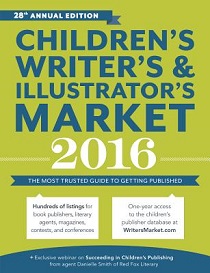
Today, I'm happy to welcome back former TeachingAuthor Laura Purdie Salas with a guest Wednesday Writing Workout tailor-made for our current TeachingAuthors' series on how we each "Make a Living as a Writer." Laura was one of the authors I interviewed for my article of the same title that appears in the 2016 Children's Writer's & Illustrator's Market, edited by Chuck Sambuchino (Writer's Digest Books). If you haven't entered our drawing for a chance to win your own copy of the 2016 CWIM, be sure to do so here, AFTER you try Laura's eye-opening writing exercise below.
<!--[if gte mso 9]> Normal 0 false false false EN-US X-NONE X-NONE <![endif]-->  Wednesday Writing Workout:
The Cinderella Trifecta: Is Writing on Assignment Right for You?
by Laura Purdie Salas
Hey, it’s fun to be back here at TeachingAuthors I was honored to be interviewed for Carmela's terrific article in the 2016 Children’sWriter’s & Illustrator’s Market.
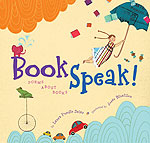 |
| BookSpeak! - trade market |
You know, I make my living as a writer, and I love writing the books I choose to write (my trade market books), like
BookSpeak! Poems About Books and
WaterCan Be…. But, so far, the books I’ve loved to write have not exactly brought in millions. Or enough to keep my family in groceries. That’s OK. They’re books I had to write, and I adore them.
But, I do need to pay bills, and one of my major sources of income is writing on assignment. I write books and short passages for publishers who hire me to write very specific works for particular age groups and, sometimes, reading levels.
 |
| Water Can Be... - trade market |
If this is something that sounds interesting to you, you might want to give this exercise a try. Even though the majority of writing I do on assignment is nonfiction, I also do some poetry and fiction that way, too. We’re going to use fiction here, so that you don’t get caught up in research and getting your facts right (which is, of course, extremely important in nonfiction books!).
For this exercise, we’re going to use a story we likely already know, and we’re going to shape it in three different ways.
I would like you to use the tale of Cinderella as the basis for your short works. I’ll use The Three Little Pigs as an example for each one. Don’t be nervous! This is just to see IF you’re comfortable with this kind of writing and, if so, what age range might work best for you. Ready?
Part 1: Retell the complete tale Cinderella in 150 words, for 1stgraders.
My example, based on The Three Little Pigs:
Once, there were three little pigs. They were brothers. One day, the pigs went out into the world. It was time to build their own homes.
The first little pig built his home out of straw. The Big Bad Wolf huffed and puffed and blew the house down.
The second little pig built his home out of sticks. The Big Bad Wolf huffed and puffed and blew the house down.
The third little pig was a hard worker. He built a strong home out of bricks. The Big Bad Wolf huffed and puffed. But he could not blow it down.
The wolf was mad. And hungry. He came down the chimney to eat the pig. But the third little pig was also smart. He had built a fire in the fireplace. The wolf yelped in pain and ran away.
And the three little pigs lived happily ever after.
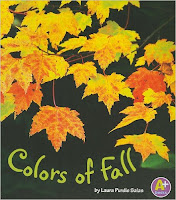 |
| Colors of Fall - education market |
Part 2: Retell Cinderella for 4th graders in 400 words, and emphasize narrative voice and theme.
My example is just the first couple of paragraphs (130 words) of such a passage, based on The Three Little Pigs.
Once up a time, there were three little pigs. They were brothers, and two of the pigs were oh so lazy and not very intelligent! The third little pig, however, was not only a hard worker, but he was also very clever.
One day, it was time for the three little pigs to go out into the great wide world and build their own houses. The first two pigs did not want to put much effort into anything, so the first one built his house out of straw! The second built his house out of sticks! They should have known better. They had just finished when a big, bad wolf came along. This wolf was drooling and snarling and hungry. He thought a little pig sounded like a scrumptious treat.
Do you see the difference? Let’s try one more.
Part 3: Retell Cinderella for 7th graders in 600 words from the point of view of a wicked stepsister.
Here’s my example, just the first few paragraphs (111 words), from the point of view of the big bad wolf. It’s a little low on readability, actually, so I’d have to make sure to use longer paragraphs and sentences here and there and keep the reading level up a bit higher.
You can’t blame me for trying. Really, who would be ridiculous enough to think that some insubstantial straw or rickety old sticks would be tough enough to thwart my attempts to enter? Oh, you haven’t heard about my adventure? Well, let me explain…
I was just wandering along the boulevard one day, minding my own business. Suddenly, I heard a clattering sound further down the avenue. Then I spied three little pigs, all hard at work constructing residences. At least, one of them was working diligently. That one was mixing mortar and placing bricks and building a proper, sturdy house--I despise that. But the other two were much more promising.
So, how do you feel? Did at least one of these three pieces feel somewhat natural to you? Did you enjoy the puzzle of trying to tell certain information in a very specific way—as dictated by someone else?
 |
| Y Is for Yowl! - education market |
If the answer to at least one of the above is yes, then you might want to try writing on assignment, too. If you’re interested in learning about writing for the educational market, you can check out my book,
Writing for the Educational Market: Informational Books for Kids. And Lisa Bullard, who was also interviewed in Carmela's article, and I offer critiquing/coaching services for children’s writers at
MentorsForRent.com. We have worked with a number of writers who have subsequently broken into the educational market. We’d be happy to schedule a consultation to answer your questions or review your introductory packet. I also sometimes discuss educational writing in my eletter for writers,
A Writer Can Be….
I’d love to hear in the Comments what your experience with this Wednesday Writing Workout was like. Was one part super-easy for you and another part impossible? Were they all equal? Is this a market you might be interested in pursuing? Inquiring minds want to know:>)
Laura Purdie Salas

By:
Carmela Martino and 5 other authors,
on 9/24/2015
Blog:
Teaching Authors
(
Login to Add to MyJacketFlap)
JacketFlap tags:
Poetry,
Poetry Friday,
Contests,
Book Giveaway,
children's poems,
Barney Saltzberg,
Carmela Martino,
Writer Resources,
writing for hire,
Children's Writer's and Illustrator's Market (CWIM),
Add a tag
I'm back!
Carmela here. I've been on a blogging break for much of this year, busy working on other projects, both personal and professional. (I have continued behind-the-scenes as our TeachingAuthors blog administrator, though, so I haven't been completely out of touch.) Today, I'm back to celebrate the publication of two of my articles in the just-released 2016 Children's Writer's and Illustrator's Market (also known as the CWIM) edited by Chuck Sambuchino (Writer's Digest Books).
At the end of this post, you'll have the opportunity to enter for a chance to win
your very own copy of the
2016 CWIM (courtesy of Writer's Digest Books)!
Since today is
Poetry Friday, I'll also be sharing a poem--an excerpt from Barney Saltzberg's new picture book
Inside this Book (Are Three Books), published by Abrams Appleseed. One of my articles in the 2016 CWIM is an interview with Barney, who is an amazing author, illustrator, singer, and songwriter. More about him and his new book below.
First, I'd like to talk a little about my other article in the 2016 CWIM:
"Make a Living as a Writer."[My original title was
"Making a Living Writing, Even If You’re Not a Bestselling Author" but I guess that was too long. :-) ]
For
"Make a Living as a Writer," I invited four traditionally published trade book authors who are also successful freelancers to share their experiences and advice regarding ways to supplement book royalty income. The four authors included my fellow
TeachingAuthor,
JoAnn Early Macken, former
TeachingAuthor,
Laura Purdie Salas, author and writing coach,
Lisa Bullard, and scientist-turned-children's author,
Vijaya Bodach. The article includes their tips on landing work-for-hire assignments, balancing work-for-hire with other career goals, and preparing submission packages for educational publishers.
The four authors also shared specific resources for finding supplemental income, including:
Over the next few weeks, my fellow TeachingAuthors will continue the conversation on this topic by sharing their own advice related to finding supplemental income. And Laura Purdie Salas will return to post a special Guest Wednesday Writing Workout on September 30, called "Is Writing on Assignment Right for You?" If this topic is of interest to you, be sure to enter our giveaway so you can read more about how to "Make a Living as a Writer."
Even if you're not looking for ways to supplement your writing income, you'll want your own copy of the 2016 CWIM for my interview with the amazing Barney Saltzberg, along with all the other helpful articles, interviews, and market information!
Barney Saltzberg, for those of you who may not know, is the author and/or illustrator of over
FIFTY books. Back in January,
April wrote a great post in honor of Beautiful Oops! Day, a day inspired by Barney's wonderful book,
Beautiful Oops! (Workman Publishing). Since then, Barney has published three more books: The first two books in a new board book series from Workman Publishing,
Redbird: Colors, Colors Everywhere and
Redbird: Friends Come in Different Sizes, and the picture book
Inside this Book (Are Three Books), published by Abrams Appleseed. Here's a brief description of
Inside this Book:"Inside This Book is a tribute to self-publishing in its most pure and endearing form. Three siblings create three books of their own using blank paper that they bind together (in descending sizes to match birth order). One sibling's work inspires the next, and so on, with each book's text and art mirroring the distinct interests and abilities of its creator. Upon completion of their works, the siblings put one book inside the other, creating a new book to be read and shared by all.
The second sibling in the book is named Fiona. She is "an artist and a poet," so her "book" is filled with poetry. In honor of
Poetry Friday, here's an excerpt from Fiona's section of
Inside this Book.
from Inside this Book, Too, by Fiona . . . Can you tell I love to rhyme? I play with words all the time. I write a poem every day. My new favorite is “Who Wants to Play?” . . . © Barney Saltzberg, used with permission, all rights reserved I've kept this excerpt short to inspire you to get Barney's book for yourself. After you've read it, you'll understand why the
School Library Journal review of
Inside this Book said:
"Readers may well be empowered to write their very own stories or books."
Be sure to check out today's
Poetry Friday roundup over at the
Poetry for Children blog
AFTER you enter our giveaway drawing.
And now, for our giveaway info:Use the Rafflecopter widget below to enter to win your own copy of the
2016 Children's Writer's and Illustrator's Market , You may enter via 1, 2, or all 3 options.
If you choose option 2, you MUST leave a comment on TODAY'S blog post. If your name isn't part of your comment "identity," please include it in your comment for verification purposes!(If you prefer, you may submit your comment via email to:
teachingauthors [at] gmail [dot] com.)
Email subscribers: if you received this post via email, you can click on the Rafflecopter link at the end of this message to access the entry form.
The giveaway ends
October 10 and is open to U.S. residents only.
a Rafflecopter giveaway
By:
Carmela Martino and 5 other authors,
on 1/28/2015
Blog:
Teaching Authors
(
Login to Add to MyJacketFlap)
JacketFlap tags:
Carmela Martino,
Writing Workout,
Sherry Shahan,
Wednesday Writing Workout,
humor,
Characterization,
exercise,
dialogue,
writing exercise,
Add a tag
As a follow-up to last Friday's
Guest TeachingAuthor Interview with Sherry Shahan, I'm repeating the
Wednesday Writing Workout she shared with us in
July 2014. After reading this post, I'm sure you'll want to enter for a chance to win a copy of Sherry's
Skin and Bones (A. Whitman), if you haven't already entered the contest.
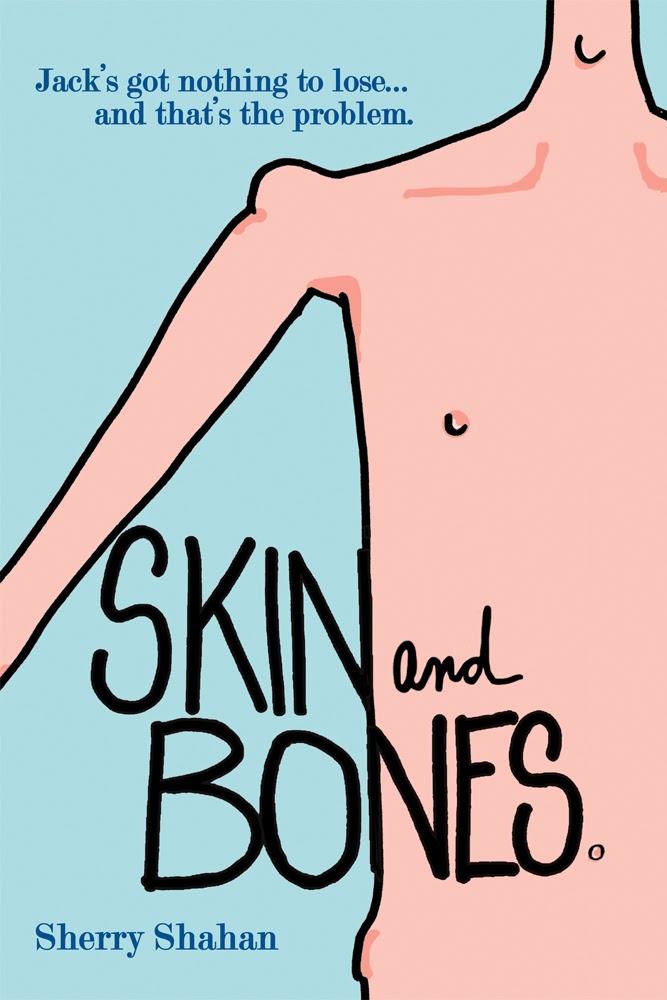
Sherry's young adult novel is a quirky story set in an eating disorder unit of a metropolitan hospital. The main character “Bones” is a male teen with anorexia. He falls desperately in love with an aspiring ballerina who becomes his next deadly addiction.
The novel was inspired by a short story Sherry wrote years ago, “Iris and Jim.” It appeared in print eight times worldwide. Her agent kept encouraging her to expand “Iris and Jim” into a novel. Easy for her to say!
* * *
Wednesday Writing Workout
Tell It Sideways
by Sherry Shahan
During the first draft of
Skin and Bones I stumbled over a number of unexpected obstacles. How could I give a character an idiosyncratic tone without sounding flippant?
Eating disorders are serious, and in too many instances, life-threatening.
Sometimes I sprinkled facts into farcical narration. Other times statistics emerged through dialogue between prominent characters—either in an argument or by using humor. Either way, creating quirky characters felt more organic when their traits were slipped in sideways instead of straight on.
There are endless ways to introduce a character, such as telling the reader about personality:
"Mrs. Freeman could never be brought to admit herself wrong on any point." — Flannery O'Connor, "Good Country People."
Or by detailing a character’s appearance:
"The baker wore a white apron that looked like a smock. Straps cut under his arms, went around in back and then to the front again, where they were secured under his heavy waist ." —Raymond Carver "A Small, Good Thing"
The art of creating fully realized characters is often a challenge to new writers of fiction. As a longtime teacher I’ve noticed:
1.) Writers who use short cuts, such a clichés, which produce cardboard or stereotypical characters.
2.) Writers who stubbornly pattern the main character after themselves in a way that’s unrealistic.
3.) Writers who are so involved in working out a complicated plot that their characters don’t receive enough attention.
In Skin and Bones I let readers get to know my characters though humorous dialogue. This technique works best when characters have opposing viewpoints.
Consider the following scene. (Note: Lard is a compulsive over-eater; Bones is anorexic.)
“I’ll never buy food shot up with hormones when I own a restaurant,” Lard said. “Chicken nuggets sound healthy enough, but they have more than three dozen ingredients—not a lot of chicken in a nugget.”
Bones put on rubber gloves in case he’d have to touch something with calories. “Can’t we talk about something else?”
“That’s the wrong attitude, man. Don’t you want to get over this shit?”
“Not at this particular moment, since it’s almost lunch and my jaw still hurts from breakfast.”
Lard shook his head. “I’m glad I don’t live inside your skin.”
“It’d be a little crowded.”
Exercise #1: Choose a scene from a work-in-progress where a new character is introduced. (Or choose one from an existing novel.) Write a paragraph about the character without using physical descriptions. Repeat for a secondary character.
Exercise #2: Give each character a strong opinion about a subject. Do Nice Girls Really Finish Last? Should Fried Food Come With a Warning? Make sure your characters have opposing positions. Next, write a paragraph from each person’s viewpoint.
Exercise #3: Using the differing viewpoints, compose a scene with humorous dialogue. Try not to be funny just for humor’s sake. See if you can weave in a piece
of factual information (Lard’s stats. about Chicken Nuggets), along with a unique character trait (Bones wearing gloves to keep from absorbing calories through his skin.)

I've enjoyed reading my fellow TeachingAuthor' posts on plotting and planning. That series ended with Esther's post on Monday. Today, I'm presenting a new topic: a guest TeachingAuthor interview and book giveaway! But first, I want to share some updates regarding our blog. The next few months will be a busy time for me due to a variety of personal and professional commitments. (If you live in the Chicago area and you're looking for a writing class, I hope you'll check out my class offerings, including one tomorrow on "Great Beginnings.") So, while I'll continue to work behind the scenes here, I'll be taking a blogging break. And I'm THRILLED to announce that the talented Carla Killough McClafferty will be blogging in my place. If you don't know Carla, do read her bio info on our About Us page. I hope you'll give her a hearty welcome when she makes her debut here three weeks from today.
Now, for today's guest TeachingAuthor interview, let me re-introduce you to Sherry Shahan, author of picture books, easy readers, and novels for middle grade and young adults. You may recall that Sherry contributed a terrific Wednesday Writing Workout back in July. I began that post by saying:
>>Sherry and I first met virtually, when she joined the New Year/New Novel (NYNN) Yahoo group I started back in 2009. I love the photo she sent for today's post--it personifies her willingness to do the tough research sometimes required for the stories she writes. As she says on her website, she has:
"ridden on horseback into Africa’s Maasailand, hiked through a leech-infested rain forest in Australia, shivered inside a dogsled for the first part of the famed 1,049 mile Iditarod Trail Sled Dog Race in Alaska, rode-the-foam on a long-board in Hawaii, and spun around dance floors in Havana, Cuba."
<<
Sherry's most recent young-adult novel,
Skin and Bones (A. Whitman) required a different kind of research, as she shares in her interview below. According to
Kirkus Reviews, she did her work well::
"Shahan tackles eating disorders in a fast-paced, contemporary coming-of-age novel. . . A quick read with a worthy message: We are all recovering from something, and the right companions can help you heal. The wrong ones can kill you."
The paperback edition of
Skin and Bones will be released in March. Meanwhile, Sherry is generously contributing an autographed copy for a
TeachingAuthors' book giveaway. To enter, see the instructions at the end of this post. First, though, be sure to read the following interview:
Sherry, how did you become a TeachingAuthor?In the 1980s I lived in a small town and didn’t know anyone who was a writer. I hadn’t even heard of
SCBWI (Society of Children’s Book Writers and Illustrators). I heard about a local Writers Conference and signed up. At the end of the workshop focusing on children’s books, I asked the instructor if she’d critique my middle-grade novel manuscript. She agreed. Soon thereafter she told me she’d shared it with her editor (a school book fair publisher). They bought that novel and I worked with them on five more.
Fast forward: After graduating from
Vermont College of Fine Arts (MFA in Writing for Children and Young Adults, 2007) I was brimming with enthusiasm about writing. My friends soon tired of discussions of emotional subtext, objective correlatives, polyphonic elements, etc. When I heard that UCLA was seeking teachers for online writing courses I sent the department chair my resumé. I’ve been teaching for them ever since.
What's a common problem that your students have and how do you address it?It’s simply the overuse of passive verbs—and that’s across the board, no matter what the person’s writing experience. As an exercise, I post a short paragraph that’s riddled with ‘was,’ ‘seems to be,” ‘must have been,’ ‘would,’ ‘had,’ etc. I then ask them to reconstruct the paragraph using active verbs. Happily, writings submitted after the exercise shine with lively, active language.
Back in July you shared a terrific Wednesday Writing Workout with our readers and talked a bit about Skin and Bones. You mentioned then that the novel started out as a short story. What inspired that original story and how did you expand it to a novel?I had a crazy idea about a love story from the perspective of a teen guy with anorexia, which I set in an Eating Disorders Unit of a hospital. The short story sold right away to a major literary journal. Later, a London publisher included it in their YA anthology, and after that it appeared in their Best of collection. So far the 1,400-word version of
Skin and Bones has appeared eight times worldwide.
My agent kept encouraging me to expand the story into a novel. But I wasn’t ready to spend a year (or more) with young people in the throes of a life-threatening illness. I weighed the pros and cons.
Pros:* The short story would serve as an outline since the basic story arc was in place.
•
Each character already had a distinctive voice.
•
The hospital setting was firmly fixed in my mind.
•
The subject matter had proven itself to be of interest to readers.
•
Proven ground is attractive to editors and publishers, as long as the topic is approached in a fresh way.
Cons:* The story would require an additional 60,000 words.
•
I would have to create additional characters.
•
Every character would require a convincing backstory.
•
I would need compelling subplots.
•
Every scene would require richer subtext.
Well, the "Pros" obviously won out.J We don’t often hear or read of boys having anorexia. How did you go about researching this story? What kind of response has it received from readers and teachers?My primary research was memoirs about teens with addictions. There were striking similarities between the mindset of say, someone with anorexia or bulimia, and a young person addicted to drugs. Shame and guilt effected both addictions. I wasn’t prepared for the skillful manner in which teens—males and females—manipulated friends, family, and the environment in order to keep their obsession secret.
I’ve been visiting high schools and libraries talking about
Skin and Bones and the dangers of eating disorders. Many people have known a male with anorexia. According to
N.A.M.E.D. (National Association of Males with Eating Disorders) approximately ten million males in the U.S. suffer with this disease. Sadly, there are too many heart-breaking examples on the Internet.
Do you have any suggestions for teachers on how they might use one of your books in the classroom?My Alaskan-based adventure novel
Ice Island (Random House/Yearling) is used as part of the “IDITA-Read” program, a fun reading race from Anchorage to Nome.
Goal: 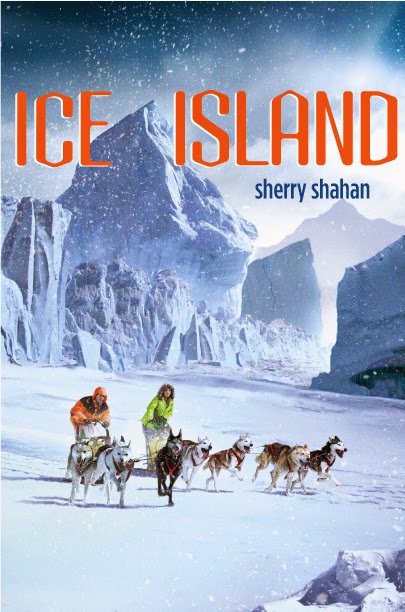
Read *1,049 minutes or pages appropriate to student’s reading level.
Procedure: 1. Explain to the students that they will compete in their own Iditarod Trail Sled Dog Race. Their race will be a reading race.
2. Each student draws a musher from entries on the
Iditarod website (which includes trail maps, mushers’ diaries, etc.). Students try to read faster (pages or minutes) than the distance their musher travels on the trail.
3. Teachers track each student’s progress on a large map of Alaska by daily visits to the
Iditarod website.
4. Students select their books before the “vet check.” (Dogs are checked before the race to make sure they’re healthy.) Teachers decide if students’ books are “healthy” (grade/ability level).
5. As students read their way to each checkpoint, they are responsible for logging in their time and having it checked by a race marshal (teacher or librarian).
6. Provide prizes or special recognition for those who compete in the reading race.
Materials: 1. Large map of Alaska with Iditarod Trail & checkpoints clearly marked.
2. Legend listing distances between checkpoints.
3. Name pins/tags to mark students’ reading progress on the trail.
4. Sleds or dogs (felt or construction paper) to mark progress of mushers.
5. Iditarod “Reading Log” for each student.
6. Lots of books!
Objectives: 1. Encourage recreational reading.
2. Develop an interest in history and geography of Alaska.
3. Encourage completion of a project.
Wow, what a fun activity! I hope some of our blog followers who are teachers will give it a try and report back to us. Finally, Sherry, what are you working on now?I’ve just finished a very rough draft of a YA novel that explores the emotional and psychological trauma of abduction. My protagonist is a sixteen year-old girl who’s kidnapped on her way to meet her boyfriend. The kidnapper isn’t someone the readers will suspect.
Sounds like a real thriller, Sherry. Good luck researching that one! And thanks again for today's interview.Readers, here's your opportunity to enter for a chance to win an autographed copy of
Skin and Bones (A. Whitman). Use the Rafflecopter widget below to enter via 1, 2, or all 3 options specified.
If you choose the "comment" option, share a comment to TODAY'S blog post answering this question: What will you do with the book should you win: save it for yourself or give it away?
If your name isn't part of your comment "identity," please include it in your comment for verification purposes. Comments may also be submitted via email to: teachingauthors [at] gmail [dot] com.
If the widget doesn't appear for some reason (or you're an email subscriber), use the link below to take you to the entry form.The giveaway
ends on Feb. 6. After you've entered, don't forget to check today's
Poetry Friday roundup over at
A Teaching Life.
Good luck and happy writing!
Carmela
P.S. If you've never entered a Rafflecopter giveaway, here's info on
how to enter a Rafflecopter giveaway and the
difference between signing in with Facebook vs. with an email address. Email subscribers: if you received this post via email, you can click on the Rafflecopter link at the end of this message to access the entry form.
a Rafflecopter giveaway
Today, in our last TeachingAuthors' post for 2014, I wrap up our series about our favorite reads of the year. In case you missed the earlier posts, Mary Ann kicked off the series by talking about a graphic novel she enjoyed, April shared a poetry title, Bobbi discussed a bounty of books, JoAnn shared not only favorite titles but also a description of her reading process, and Esther even included a couple of adult books on her list. After sharing my two favorites, I'll also provide links to several "Best of 2014" lists published by review journals. That should give you plenty of reading material to get through winter break!
This has been such a busy year that I probably wouldn't have read any books for pleasure if I wasn't a member of the "Not for Kids Only" (NFKO) Book Club sponsored by Anderson's Bookshop. Both my favorites of the year are books I read with the group.
My first is the classic, The Giver, by Lois Lowry, originally published in 1993 by Houghton Mifflin and winner of the 1994 Newbery medal.
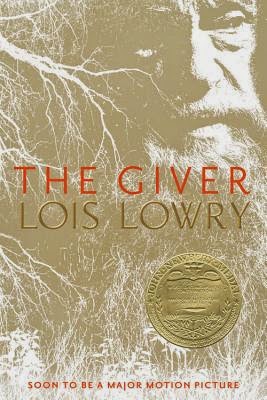
Our NFKO group read the book in preparation for seeing
The Giver movie together as a group. Most of us had read the novel before, as I had back in 1997. While re-reading it this August, I was surprised by how little I remembered. I recalled the ending clearly, because I’d reread it several times to try to understand it. I also recalled that Jonas’s eyes were different, and how he’d first seen the color of an apple. But other than that, it was like reading the novel for the first time.
After my first reading in 1997, this is the response I wrote in my book-reading journal:
"This book was extremely well-written. The futuristic world seemed so real it was frightening. Jonas made a great hero: intelligent, sensitive and brave, yet still uncertain and with his own fears. . . . I can see why it won the Newbery."
I'm a much more critical reader now than in 1997, and I was even more impressed with the novel this time. I was so enthralled with the story and with Jonas's world that I went on to read the other three books in the Quartet:
Gathering Blue, Messenger, and
Son. While they are all masterfully written,
The Giver is still my favorite.
By the way, I didn't know what inspired Lois Lowry to originally write
The Giver until I read this post on Anita Silvey's
Children's Book-a-Day Almanac. If you're not familiar with this classic novel, or haven't read it recently, I suggest you pick it up, especially if you've seen the movie. While I enjoyed seeing the world of
The Giver brought to life so brilliantly in the movie, there are several significant differences between the movie and the book. I'm not sure all the changes were for the better.
The other favorite I'd like to share is
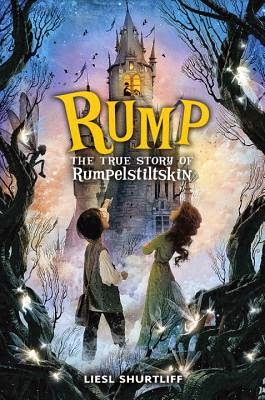
Rump: The True Story of Rumpelstiltskin by Liesl Shurtliff, published by Alfred A. Knopf Books for Young Readers in 2013.
This middle-grade novel is a fun re-imagining of the Rumpelstiltskin tale in which the title character turns out to be the story's hero. Here's an excerpt from the
School Library Journal review that sums it up well:
"All the elements of the original story are here--the greedy miller, the somewhat dimwitted daughter, and Rump's magical ability to spin straw into gold--but Shurtliff fleshes out the boy's backstory, developing an appealing hero who is coping with the curse of his magical skills while searching for his true name and destiny. This captivating fantasy has action, emotional depth, and lots of humor."
I identified with the main character--initially known only as "Rump"--right away because, like him, I hated my name as a child. I was the only "Carmela" in my K-8 elementary school and even in my high school. I disliked having such an unusual name and I despised the "nicknames" the other kids gave me. Eventually, though, I grew to love my name, as "Rump" does by the end of the novel.
I happened to read
Rump while I was preparing to teach a summer writing camp for ages 11-14. I decided to use it as an example for our class discussion on choosing character names. After I read the first chapter to the students, several of them went out to borrow or buy their own copies of the book to read the rest of the story. I know of no better recommendation for a children's novel!
And now, as promised, here are links to some of the review journal lists of "Best Books of 2014" for children and teens:
Don't forget, today is
Poetry Friday. When you're done checking out all these great lists, be sure to head over to this week's roundup by Buffy Silverman at
Buffy's Blog.
Wishing you all a safe and happy holiday season!
Our blog posts will resume on Monday, January 5, 2015.
Until then, happy writing (and reading)!
Carmela

Even though today is Wednesday, this isn't a Wednesday Writing Workout post. (We'll be back with more workouts in January.) I just wanted to share a quick update regarding our Three Weeks of Thanks-Giving challenge. This year was the first time we ran a book giveaway in conjunction with our series of posts expressing our gratitude. Last Friday, when I posted my wrap-up linking to posts by other bloggers who joined in our challenge, I didn't realize that a number of our readers had shared their "gratitudes" in their giveaway contest entries. It wasn't until I reviewed all the entries this past Monday that I saw them. Their gratitude was so uplifting I had to share them with you.
When asked to "Tell us three things you're grateful for," here's what they said:
- Family, children's books, great blogs to follow!
- I'm grateful for my family, my awesome poetry friends, and for my wonderful life. Sometimes I have to pinch myself to see if it all is real.
- I am grateful for my family, friends and God for my life.
- Health, loved ones and faith top the list today!
- My job, my friends, and my family
- Wonderful family, immediate and extended, fabulous friends from way back and from recently, and writing for the sake of writing. Thankful, happy, humbled.
- I'm thankful for: the cornucopia of rich SCBWI IL and beyond authors and Illustrators sharing their skills and knowledge with us; my family that perpetually allows me to pour myself into my writing and art; and nature that is a constant well of inspiration for all that I create!
- Thankful for family and thankful for the snow
- I'm grateful for 1. my hubby, 2. currently having no obstacle, be it physical, mental, emotional, or practical, to enjoying every simple joy in life that I could wish for, and 3. having no obstacles (except for my own inefficiencies) to exercising creativity in many ways every day.
- I am filled with gratitude for my loving home and family, more than five years of being cancer free, and my opportunities to make a difference.
- I am grateful for: A wonderful network of writers through SCBWI. My two challenging, supportive writers groups: one in Illinois and one in Virginia. My family, who provide inspiration, encouragement, ideas, and yes--distractions.
- I'm grateful for health, happiness and heaps of good books to read--and WRITE!
WE'RE grateful so many of our readers took time to share their "gratitudes" with us!
Congratulations to our giveaway winner,
Margaret Simon, who shared her wonderful "Thanku to Roux" along with a student Thanku at her blog,
Reflections on the Teche on November 8.
Thanks again to everyone who participated.
Happy writing!
Carmela

Today closes out our Three Weeks of Thanks-Giving. See below for my round-up of posts and thank-you notes. If you haven't shared your link/comment yet, you can still do so. I'll update this post later with any additional links/emails we receive. And don't forget--today's the last day to enter for a chance to win a copy of the 2015 Children's Writer's and Illustrator's Market (CWIM) containing my interview roundup article, "Writing for Boys (and other 'Reluctant Readers')." See my November 7 post for all the details.
Thanksgiving is over for most people (and many are busy celebrating the more recent American ritual of "Black Friday"). However, I'm getting ready to celebrate our second Thanksgiving this week, this one with my husband's family gathering here in our home. This two-Thanksgivings-in-one-week tradition started years ago when my son was young. When my husband and I were first married, we actually spent Thanksgiving day with both our families, eating an early meal at one home and then driving to eat a second Thanksgiving dinner at another. After our son was born, we realized that was no longer practical. My in-laws came up with a simple solution: scheduling their family gathering on a different day, usually the weekend before or after Thanksgiving. Over the years, I've been very grateful to be able to celebrate fully with both sides of the family. So, while some of you may be gearing up for the December holidays, I'll be cleaning and cooking in preparation for Thanksgiving #2. That's why I'm keeping this post short.
J Here are the links to the Three Weeks of Thanks-Giving blog posts:
Also, I want to thank the two readers who were unable to post their Thanks-Giving comments but took the time to email them to us:
- Wendy, who blogs at An Education in Books, who wrote: "I am thankful for my family and for the unexpected snow!"
- And Julie Phend, who said, "I am grateful for:
A wonderful network of writers through SCBWI.
My two challenging, supportive writers groups: one in Illinois and one in Virginia.
My family, who provide inspiration, encouragement, ideas, and yes--distractions."
Don't forget to check out today's
Poetry Friday round-up over at
Carol's Corner.
Happy writing!
Carmela

By:
Carmela Martino and 5 other authors,
on 11/19/2014
Blog:
Teaching Authors
(
Login to Add to MyJacketFlap)
JacketFlap tags:
conflict,
plot,
Tension,
Maureen McQuerry,
Carmela Martino,
Writing Workout,
Stakes,
Wednesday Writing Workout,
Children's Writer's and Illustrator's Market (CWIM),
Add a tag
Today I'm pleased to share with you a guest Wednesday Writing Workout on creating tension in fiction from award-winning author Maureen McQuerry. Before I tell you about Maureen, a quick reminder that it's not too late to enter for a chance to win a copy of the 2015 Children's Writer's and Illustrator's Market (CWIM) edited by Chuck Sambuchino and published by Writer's Digest Books. See the link at the end of today's post.
 Now, about Maureen McQuerry: I was recently introduced to Maureen (via email) through a mutual friend. Her first YA novel, The Peculiars (Abrams/Amulet) was an ALA Best Book for Young Adult Readers 2013, Bank Street and Horn Book recommended book, and a winner of the Westchester Award. Her most recent novel Beyond the Door (Abrams/Amulet), has been named a Booklist top Ten Fantasy/SciFi for Youth. The second book in the series, The Telling Stone, releases May 2015. Maureen has taught writing to children and adults and loves giving author talks in schools and at conferences.
I'm hoping to meet Maureen in person when she visits Chicago in a few weeks. So far, she's scheduled to do a signing at The Book Stall in Winnetka on December 6 and one at The Magic Tree Bookstore in Oak Park on December 8. For more info, check out her website. You can also connect with her via Facebook and Twitter.

Before I share Maureen's
WWW on tension, here's a little about her newest novel,
Beyond the Door: Between his love of learning and his passion for Scrabble, Timothy James has always felt like an outsider. The only person who really understands him is his older sister, Sarah, and he’s also fairly certain nothing interesting will ever happen to him. But one dark spring night, everything changes.
A mystery of unparalleled proportions begins to unfold, revealing Timothy's role in an ancient prophecy and an age-old battle of Light against Dark. Together with Sarah and the school bully, Jessica, Timothy must embark on a quest to prevent the Dark from controlling the future—and changing the past. Can the trio work together in order to fight the ancient evil that threatens our world?
The first book in the Time Out of Time series, Beyond the Door, is a fast-paced adventure that combines Celtic myth, shapeshifters, and a secret code in a coming of age story.
VOYA described the novel as "jam-packed with twists and turns," a sure sign that Maureen knows a thing or two about creating tension. Here's her
Wednesday Writing Workout on the topic:
Wednesday Writing Workout:The Stakes Should Always Be Deathby Maureen McQuerry
Story isn't about plot. It isn't about character or setting or a great idea. It's about how events change people. We keep reading because we want to find out how a character navigates all the struggles that come her way. In fact the most critical component in reader satisfaction is the protagonist's arc. And notice I used the word struggle, because struggle is what changes characters. It's what changes us.
Struggle implies conflict and tension. Tension keeps us turning the pages. But how do you add conflict and tension to a story without an explosion or battle scene on every page, maybe without explosions or battles in your book at all? Tension begins with the stakes. If you've ever been told your novel is too quiet, it may be that your stakes aren't high enough. The greater the stakes, the greater the risk, the greater the tension and the more pages turned.
What do I mean by stakes? Stakes are what your protagonist has on the line. In a dystopian world like
Hunger Games, the stakes are personal survival, survival of people you love, of a community, of the world. But not every story will or should be dystopian or apocalyptic. The stakes may be the risk of emotional death. In my MG novel
Beyond the Door, Timothy finds himself in physical danger, the type of danger that might result in death, but he fears failing to complete his challenge almost as much. He believes it's his one chance to prove himself in the eyes of his friends. His self-worth is on the line.
For the reader to be concerned, risk has to be real and the protagonists' motivation worthy. Worthy motivations involve noble concepts like: forgiveness, love, redemption, self-worth. For example, a character who wants a part in the school play engages us when the stakes are based on a motivation that is worthy. She wants a part in the play because she sees it as a way to connect with her estranged father who was once an actor, but has rejected her or because she's never once fit in anywhere, been bullied or is handicapped and it's her one chance to find a community. If she fails here, she may never try again. Hope and worry for the protagonist create tension.
- A good beginning question to ask is what are the stakes for my protagonist? What is at risk? What will die?
Because a story is about how events change characters, you must have a clear idea of your character's arcs. In
Beyond the Door, Timothy needed to evolve from an insecure observer to a confident leader.
- Ask: What is my protagonist like at the start of this adventure? What do I want her to be like at the end of the story?
- What will it take to get her there? What kind of gut-wrenching decisions, public humiliations, dark nights of the soul? What antagonists will she have to face?
- Does each turning point create change? That's what moving a story forward means.
Below are some considerations for assessing your story for tension.
Assessing the risk in your story:- The risk of failure must be real and must be devastating—big consequences.
- Conflict must be external and internal—your protagonist must struggle in her mind and heart and with external forces.
- Tension must be relentless.
- A clear antagonist strengthens the conflict.
- The solution must require everything the protagonist has—the greater the risk, the more we worry.
- The solution should be inevitable, but surprising (Aristotle).
A few time honored techniques to increase tension, such as those below, will keep readers turning the pages.
Techniques to increase tension:- Increase the stakes—as mentioned above
- Withhold info from protagonist—mystery novels are a great example of how one missing piece of information can put your protagonist at risk.
- Introduce doubt—Who can she trust? Were her assumptions faulty?
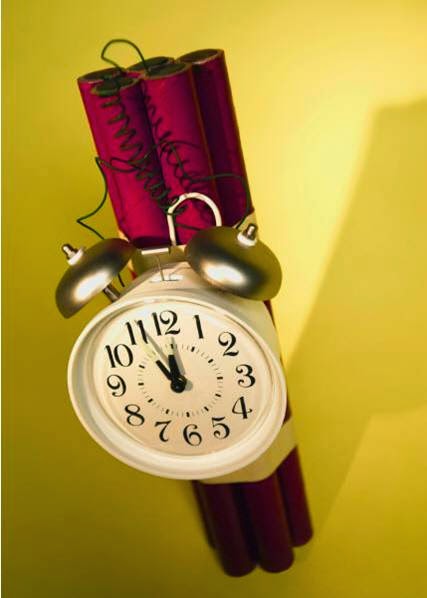
- Limit time—the ticking clock.
- Give and take away—just as your protagonist has everything she needs, the bottom falls out.
Whatever struggles your character faces, remember they are the engines of transformation and tension is the fuel.
Writing Exercise Text © Maureen McQuerry 2014, All rights reserved.
Thanks for this, Maureen. I've already used your questions to assess (and up!) the level of risk in my current work-in-progress. Readers, if you try any of these techniques, let us know how they work for you.
Good luck to all, and happy writing!
Carmela

If your name wasn't selected in the drawing for our 2015 Children's Writer's and Illustrator's Market (CWIM) giveaway, I have good news for you: Writer's Digest Books, publisher of the CWIM, has generously donated a SECOND COPY for us to give away! See details at the end of this post. And congratulations to Sue H, who won the first copy.
If you're a long-time TeachingAuthors follower, you know about our tradition of setting aside time in November to give thanks. It started in 2011, with our Ten Days of Thanks-Giving, inspired, in part, by Esther post about thank-you haikus, also known as Thankus. In 2012 we expanded to Two Weeks of Thanks-Giving, which we repeated in 2013. This year, we've decided to stretch our Thanks-Giving posts to a full Three Weeks of Thanks-Giving!
We're going to keep our Thanks-Giving simple this year. Each of the
TeachingAuthors will share 3 things we're grateful for. As in years past, we're also inviting you, our readers (and your students!), to join in by sharing your own "gratitudes" with us in one of three ways:
- Share them in a comment to any of our blog posts from today through Nov. 28.
- Send them to us via email to teachingauthors [at] gmail [dot] com, with "Thanks-Giving" as the subject. Depending on the number of emails we receive, we may share some of your gratitiudes in our posts.
- Post them on your own blog and then share the link with us via a comment or email. (Feel free to include the above image in your post.) On November 28, I'll provide a round-up of all the links we receive.
To get us started, here are my three "gratitudes":
- My loving and supportive family. First and foremost, I'm grateful for the three very special men in my life: my husband, my son, and my father-in-law (who now occupies my son's old room). But I'm also blessed to have a wonderful extended family--being Italian means that includes A LOT of people. J
- My wonderful writing friends. Three groups, in particular, support and nurture me on a regular basis: my fellow TeachingAuthors, my Vermont College classmates (known as The Hive), and my critique group. Without them, I would have quit writing a long time ago. Thanks for helping me stick with it, Ladies!
- Our amazing TeachingAuthor readers. This blog wouldn't be here if not for the feedback and affirmation we receive from you, our readers. I'm especially grateful for three lovely ladies I've never met who often comment on my posts, so I know someone is reading them: Linda Baie, Jan Godown Annino, and Rosi.
Hmm. I'm sensing a theme here. It inspired me to write this
Thanku:
Thanks-Giving
Three times three times three . . . . .
My thanks keep multiplying,
to infinity.
© 2014 Carmela Martino, All Rights Reserved
I invite all of you to also participate in our
Three Weeks of Thanks-Giving and share your "gratitudes" with us!
To my above "gratitudes," I'd like to add a huge
THANK YOU! to Writer's Digest Books for donating a second copy of the
2015 Children’s Writer’s and Illustrator’s Market (CWIM) for us to give away.
Readers, use the Rafflecopter widget at the end of this post to enter our giveaway drawing. You may enter via 1, 2, or all 3 options. The giveaway
ends on Nov. 28. When you're done here, check out the terrific
Poetry Friday roundup over at Diane Mayr's
Random Noodling.
Good luck and happy writing!
Carmela
P.S. If you've never entered a Rafflecopter giveaway, here's info on
how to enter a Rafflecopter giveaway and the
difference between signing in with Facebook vs. with an email address. Email subscribers: if you received this post via email, you can click on the Rafflecopter link at the end of this message to access the entry form.
a Rafflecopter giveaway
By:
Carmela Martino and 5 other authors,
on 10/29/2014
Blog:
Teaching Authors
(
Login to Add to MyJacketFlap)
JacketFlap tags:
exercise,
reluctant readers,
writing exercise,
Lenore Look,
Beginnings,
Carmela Martino,
Writing Workout,
Wednesday Writing Workout,
Children's Writer's and Illustrator's Market (CWIM),
Add a tag
Hi Everyone,
The clock is ticking! If you haven't entered for a chance to win a copy of the 2015 Children's Writer's and Illustrator's Market (CWIM) yet, see the link at the end of this post. The giveaway ends on Friday!
We're hosting the 2015 CWIM giveaway this month to celebrate the publication of my article in it: "Writing for Boys (and other 'Reluctant Readers')." The article contains advice and insights from four award-winning authors known for writing books that appeal to reluctant readers: Matt de la Peña, Lenore Look, David Lubar, and Steve Sheinkin. Today, I'm pleased to share a guest Wednesday Writing Workout from one of those authors: Lenore Look!
Here's Lenore's bio, as it appears in the 2015 CWIM:
Lenore Look recently released the sixth book in her award-winning (and boy-friendly) Alvin Ho chapter book series:
Alvin Ho: Allergic to the Great Wall, the Forbidden Palace, and Other Tourist Attractions (Schwartz & Wade). She is also the author of the
Ruby Lu series (Atheneum) and several acclaimed picture books, including
Henry’s First-Moon Birthday (Simon & Schuster),
Uncle Peter’s Amazing Chinese Wedding (Atheneum), and, her newest,
Brush of the Gods (Random House), a historical fiction account of the life of Wu Daozi, China’s most famous painter. Lenore taught creative writing at Drew University and St. Elizabeth College in New Jersey, and frequently speaks in schools in the United States and Asia. She has also co-presented the Highlights Foundation workshop "Writing for Boys" with Bruce Coville and Rich Wallace. She lives in Hoboken, New Jersey, and blogs frequently at
lenorelook.wordpress.com.
I'm a big fan of Lenore's Alvin Ho books, which is why I approached her about participating in the CWIM article. I haven't read
Alvin Ho: Allergic to the Great Wall, the Forbidden Palace, and Other Tourist Attractions yet, so I'll share the blurb for it that appears on
Indiebound:
Here’s the sixth book in the beloved and hilarious Alvin Ho chapter book series, which has been compared to Diary of a Wimpy Kid and is perfect for both beginning and reluctant readers.
Alvin, an Asian American second grader who’s afraid of everything, is taking his fears to a whole new level—or should we say, continent. On a trip to introduce brand-new baby Ho to relatives in China, Alvin’s anxiety is at fever pitch. First there’s the harrowing 16-hour plane ride; then there’s a whole slew of cultural differences to contend with: eating lunch food for breakfast, kung fu lessons, and acupuncture treatment (yikes!). Not to mention the crowds that make it easy for a small boy to get lost.
From Lenore Look and New York Times bestselling illustrator LeUyen Pham comes a drop-dead-funny and touching series with a truly unforgettable character.
Sounds like a fun read!
JFor today's WWW, Lenore shares a great exercise in beginnings.
Wednesday Writing Workout:Finding the Best Beginningby Lenore Look
When I worked as a newspaper reporter, the first thing I learned was how important the “
lede” or beginning of the story is. The first sentence is crucial. It’s called the “hook” because it snags your reader and reels them into your story. Without a strong hook, your reader will get away before you can tell them the five Ws and H – who, where, what, when, why and how.
When writing fiction, your hook is not just the best way to snag your reader, but it’s the place from which you will hang the rest of your story. It’s THAT important. For me, the beginning is the hardest part of the book to write. I’m faced with all my research, my characters, what I want to say, and a few ideas for scenes. It’s overwhelming. Where do I start? I pick something and have a go at it. It’s a mis-start, or a scrub, as they call it at NASA when a launch is aborted. I have many scrubs. When I find the spark that will finally launch my rocket, there’s more trouble. Often I will agonize over the first sentence for days, re-writing it, tweaking it, throwing it out, starting it over, again and again. But when I finally get it right, it’s blast-off! And the rest of the book seems to write itself.
Here’s my top-secret recipe for finding the strongest beginning, and I hope it helps you find yours.
How to Find the Strongest Beginning to Any Piece of Writing.1.
Sit down.
2.
Open your writer’s notebook.
3.
Ask the following questions:
a.
Who’s your character?
b.
What’s your setting?
c.
What does your character want?
d.
What are the obstacles in her way?
4.
Summarize the story you’re telling in one sentence.
5.
Write your summary sentence in the center of a blank page.
6.
Now surround your summary sentence with your answers to the questions from #3. Some people call this “clustering,” – if you draw circles around each of your sentences/ideas, it begins to look like a cluster of grapes. I don’t bother with the circles, instead I make lists, and surround my summary sentence with lists that answer the questions.
7.
Add your research as they fit under the different questions in #3.
8.
Step away.
9.
Eat some ice cream.
10.
Stare at the sunset.
11.
Call a friend.
12.
It’s important to start the next part with fresh eyes.
How to Find the Strongest Beginning, Part II1.
Look at your messy page(s).
2.
Find the smallest, most simple detail that captures your entire story.
3.
What you’re looking for is the KEY to your house. Keys are small. A small detail will open the door to the rest of the house, which is your story. All the rooms in your house are the different scenes that make up the story.
4.
Study carefully the beginnings to books you like.
5.
Using the detail you found in #2, and the inspiration you found from #4, write the most compelling beginning you can.
6.
Let it lead you into the first room of your story.
7.
Finish off the ice cream.
8.
Stare at the sunset.
9.
It may be the last sunset you see for a while.
10.
Writing a book takes a long time.
11.
Cry.
12.
Cry your eyes out. It’s only the beginning. You still have the middle and the end to tackle!
Writing Exercise Text © Lenore Look 2014, All rights reserved
Thanks, Lenore, for this terrific exercise! Readers, if any of you try today's WWW, do let us know how it works for you.
And don't forget to enter for a chance to win your own copy of the 2015 CWIM, where you'll be able to read additional helpful tips from Lenore. See
my last blog post for details. The giveaway ends October 31.
Happy Writing!
Carmela

By:
Carmela Martino and 5 other authors,
on 10/17/2014
Blog:
Teaching Authors
(
Login to Add to MyJacketFlap)
JacketFlap tags:
Teacher Resources,
children's poems,
David Harrison,
Carmela Martino,
Children's Writer's and Illustrator's Market (CWIM),
Poetry,
Poetry Friday,
Contests,
Book Giveaway,
reluctant readers,
books for boys,
Add a tag
Happy Poetry Friday, Everyone! Today I'll be sharing a fun, "spooky" poem by David L. Harrison. But first I'll tell you about my latest publication, an article in the 2015 Children’s Writer’s and Illustrator’s Market (Writer’s Digest Books), edited by Chuck Sambuchino. Then, at the end of this post, you'll find instructions for how to enter to win your very own copy of the 2015 Children’s Writer’s and Illustrator’s Market!
If you're not familiar with the
Children’s Writer’s and Illustrator’s Market (also known as the
CWIM),
here's an excerpt from the book's blurb.
"If you write or illustrate for young readers with the hope of getting published, the '2015 Children's Writer's & Illustrator's Market' is the trusted resource you need. Now in its 27th edition, 'CWIM' is the definitive publishing guide for anyone who seeks to write or illustrate for kids and young adults. Inside you'll find more than 500 listings for children's book markets (publishers, agents, magazines, and more)--including a point of contact, how to properly submit your work, and what categories each market accepts."
In addition to the market listing, the CWIM includes great articles, interviews, and success stories. This year's edition features my interview roundup article, "Writing for Boys (and other 'Reluctant Readers')." The piece contains advice and insights from four award-winning authors known for writing books that appeal to reluctant readers:
Matt de la Peña,
Lenore Look,
David Lubar, and
Steve Sheinkin.
Although these authors write a wide variety of books, and everything from picture books to young adult novels, there was one bit of advice they all agreed on: If you want your writing to appeal to boys and other reluctant readers, don't try to target this particular audience. That's right, DON'T target them. Instead, write what moves, excites, or interests YOU. Then, "revise it over and over until it hums," as Matt de la Peña said. All four of the authors shared additional, specific advice on how to reach reluctant readers, especially boys. So be sure to enter our giveaway below for a chance to win your own copy of the CWIM!
In researching "Writing for Boys (and other 'Reluctant Readers')," I discovered some very discouraging statistics about boys and reading. Not only do girls, on average, score higher on reading tests than boys, but the gender gap is widening. Fortunately, the news isn't all dire. As
Jon Scieszka, the first
National Ambassador of Young People's Literature and founder of Guys Read points out on the
GuysRead website:
". . . the good news is that research also shows that boys will read—if they are given reading that interests them."
Poetry can be a great way to hook boys (and other reluctant readers), especially if it's short, funny, and/or focuses on boy-friendly topics, such as sports, adventure, animals, and the supernatural. You'll find some wonderful books that fit this bill on the
GuysRead list of poetry books. I also recommend just about anything written by David L. Harrison. His book
Bugs: Poems about Creeping Things (Wordsong), illustrated by Rob Shepperson, is chock-full of poems with lots of boy-appeal. Here's one example:
cicada ghosts
Haunted skins cling emptily to the rough bark of the hackberry tree,
and farther up where I can't see, ghosts are buzzing eerily: zz-zz-zz-zz zeeeeee! © David L. Harrison, all rights reservedIf you'd like to see the wonderful illustration that accompanies this poem in
Bugs: Poems about Creeping Things, visit
this page on David's blog (after you enter our drawing below!).

Finally, before you head over to check out these resources or the other great poems in this week's
Poetry Friday round-up at
Today's Little Ditty, you'll want to enter to win your own copy of the
2015 Children’s Writer’s and Illustrator’s Market. You can do that via the Rafflecopter widget at the end of this post. You may enter via 1, 2, or all 3 options.
For option 2, "Leave a Blog Post Comment," you must share a comment to TODAY'S blog post and include your name!(If you prefer, you may submit your comment via email to:
teachingauthors [at] gmail [dot] com. )
The giveaway
ends on Oct. 31.
Good luck and happy writing!
Carmela
P.S. If you've never entered a Rafflecopter giveaway, here's info on
how to enter a Rafflecopter giveaway and the
difference between signing in with Facebook vs. with an email address. Email subscribers: if you received this post via email, you can click on the Rafflecopter link at the end of this message to access the entry form.
a Rafflecopter giveaway
Happy October, everyone!
A few weeks ago, I posted about this being a time of transitions here on TeachingAuthors as we said farewell to the wonderful Jill Esbaum and Laura Purdie Salas, and welcomed back Mary Ann Rodman, one of the original TeachingAuthors. Today, I'm happy to announce the name of the newest member of our team (drumroll please):
 |
| Bobbi at the wheel of the Lewis R French, an 1871 windjammer schooner and a National Historic Landmark. |
JoAnn and I met Bobbi while we were attending Vermont College, and we were struck by her vibrant personality as well as her writing talent. If you're a longtime
TeachingAuthors reader, you may recall that JoAnn shared a guest
TeachingAuthor interview with Bobbi
back in 2010. But Bobbi's been
VERY busy since then, as you can see from her official bio posted on our
About Us page. (If you haven't visited the
About Us page lately, I encourage you to check it out--I've updated the bios for several
TeachingAuthors.) Here's an excerpt from Bobbi's bio:
Bobbi Miller earned her MFA in Writing for Children from Vermont College, and was awarded honors with distinction for her Master of Arts in Children’s Literature degree from Simmons College in Boston. Her fifth book, a middle grade novel, Girls of Gettysburg (Holiday House) is recommended by Booklist as “a unique, exciting work.” School Library Journal calls the book a “riveting historical fiction.” The book is listed as a Hot Pick on Children’s Book Council for September 2014. Her first middle grade novel, Big River’s Daughter (Holiday House) comes recommended by the International Reading Association and was nominated for the Amelia Bloomer Project (American Library Association, 2013). The book is listed on A Mighty Girl’s Top 2013 Mighty Girl Books for Tweens and Teens. Bobbi has also written three picture books. Miss Sally Ann and the Panther (Holiday House) was selected to the Notable Social Studies Trade Books for Young People 2013 list, a cooperative project of the National Council for the Social Studies (NCSS) and the Children's Book Council. Her other two picture books, Davy Crockett Gets Hitched and One Fine Trade, also published by Holiday House, were listed on the Bank Street College of Education Best Books of 2010. When she isn't writing or researching, Bobbi teaches College Reading and Writing, Writing for Children, and Rhetoric and Professional Writing for local universities as well as online college courses.
So, as you can see, Bobbi comes to us with impressive credentials! We're thrilled to have her join our team.
You can read more about Bobbi and her work
at her website. Meanwhile, I hope you'll give her a hearty welcome when she posts here for the first time on Monday.
Happy Writing!
Carmela

Happy Poetry Friday! See the link at the end of this post to this week's round-up.
I'm not sharing a poem today. Instead, I'm continuing our current discussion on creativity. As Jill said in Monday's post: "Creativity is tough to define and tougher still to write about." I agree!
I did find a satisfactory basic definition at OxfordDictionaries:
"Creativity: The use of the imagination or original ideas, especially in the production of an artistic work."
But there are so many facets to creativity that it's hard to encapsulate the concept in one sentence. That's why I loved how Jill shared so many great quotations on the topic in her post. I'd like to add another quote to the list:
“Creation is in part merely the business of forgoing the great and small distractions.”
--E.B. White
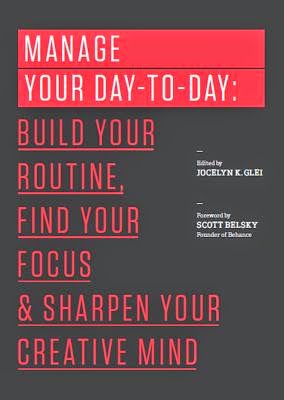
I came across this E. B. White quote in a book I read recently:
Manage Your Day-to-Day: Build Your Routine, Find Your Focus & Sharpen Your Creative Mind, (Amazon Publishing) edited by Jocelyn K. Glei of
99u. The book is a compilation of quotes, interviews, and essays from experts in productivity and creativity. Interestingly, the tips often overlap with those in the article Jill linked to: "
The Psychology of Writing and the Cognitive Science of the Perfect Daily Routine" by Maria Popova.
I don't believe there really is such a thing as a "perfect daily routine." We are each unique, and what works to activate one person's creativity might stifle someone else's. Also, I often have to adapt my routine to fit what's currently going on in my life. However, I've found 4 specific suggestions in
Manage Your Day-to-Day that are really helping me resist "the great and small distractions":
1. Great Work Before Everything Else: "Do your most meaningful creative work at the beginning of your day, and leave 'reactive work'—like responding to e-mail or other messages—for later."I recently made a rule for myself: No email before 10 a.m. It's been amazing to me how much this one simple rule has helped. Now instead of getting lost in email for an hour or more at the start of my day, I get lost in my current work-in-progress. Yay! I also have a second, related rule: check email no more than three times per day. This has really helped me be more focused and efficient when I do check email.
2. Jump-Start Your Creativity: "Establish 'associative triggers'—such as listening to the same music or arranging your desk in a certain way—that tell your mind it’s time to get down to work."I call my "associative triggers" my "writing rituals" and I
shared them last March when we did a series of posts about our writing routines.
3. Feel the Frequency:
"Commit to working on your project at consistent intervals—ideally every day—to build creative muscle and momentum over time."In the
post on my writing rituals, I talked about how I was in the middle of a "100-day, one hundred words a day (OHWAD) writing challenge." That worked at the time because I was writing a first draft. Now that I'm revising, I've modified it to a "100-day, fifteen minutes a day (FMAD)" challenge. I've committed to work at least 15 minutes/day, six days a week for 100 days. (I don't count my days off in the total.) I deliberately chose a very doable goal--15 minutes--that I could accomplish even when I have a day filled with other commitments. The challenge is working well for me so far: I began revising Chapter One on Day 1. Today is Day 27, and I'm now up to working on Chapter Eight.
4. Make Progress Visible:
"Make your daily achievements visible by saving iterations, posting milestones, or keeping a daily journal."On Day 1 of my FMAD challenge I created a table in a Word document called Revision Log. In that document, I note such statistics as my start time, time spent, starting page and chapter, ending page and chapter, starting word count, and ending word count. Looking at my log now, I can see that my writing sessions have ranged from 20 minutes to over 2 hours. Without doing the math, I'd guess that I average about an hour a day. (If I wanted to get really fancy, I could put the stats into a spreadsheet and let it calculate my productivity rate.) For me, this log is a great psychological boost because I often fall into the trap of thinking my writing isn't going anywhere when in fact I am making slow, but steady, progress.
These are just four of the suggestions in
Manage Your Day-to-Day that have helped me. Even if none of these ideas appeal to you, I hope that my sharing them here will nudge you into thinking about how to support your own creativity. Are you already happy with your routine/process? If so,
we'd love to know what works for you. Please tell us via the comments. I'll leave you with one last quote, from Jonah Lehrer's
Wall Street Journal article "How To Be Creative:" "But creativity is not magic, and there's no such thing as a creative type. Creativity is not a trait that we inherit in our genes or a blessing bestowed by the angels. It's a skill. Anyone can learn to be creative and to get better at it."
Lehrer's article ends with "10 Quick Creativity Hacks" you may be interested in checking out. And for ten tips on how to make more regularly, see
"How to Create the Habit of Writing" by Leo Babauta at
Write to Done.
Reminder: Today's the last day to
enter for a chance to win an autographed copy of Barbara Krasner’s picture book biography Goldie Takes a Stand (Kar-Ben Publishing)!

Now you can head over to be inspired by all the
Poetry Friday poems. This week's round-up is at former
TeachingAuthor Laura Salas's blog.
Happy writing!
Carmela

This is a time of transitions here on the TeachingAuthors blog. Laura announced on Friday that she is leaving our team. Even though she'd signed on as a temporary sub, I'd hoped we'd be able to convince her to continue as a regular. Unfortunately, other pressing demands are tugging at her. But I do hope she'll keep us in mind if circumstances change. J
Meanwhile, we wish her the best. At least we'll all be able to keep tabs on Laura over at her own blog.
In two weeks, we'll also be saying farewell to long-time
TeachingAuthor, Jill Esbaum. I'm VERY sad to see Jill go,
L but she's leaving for a new, exciting adventure. I hope she'll share a little about it in her final post here. Of course, we wish her all the best, too. We're SO going to miss you, Jill!
 |
| We're going to really miss the wise and wonderful, Jill Esbaum! |
But the news isn't all doom and gloom! I'm happy to announce that
Mary Ann Rodman will be returning to the team! Hurrah! You can watch for her posts here every third Monday.
 |
| Mary Ann's BACK! YIPPEE! |
Finally, I'm excited to report that a new
TeachingAuthor will be joining the team in October. But I'm going to keep you in suspense about the new TA's identity a little while longer.
JI WILL tell you though, that we'll be sponsoring another great book giveaway this month! Be sure to see April's post this Friday for details.
Happy writing, all.
Carmela

Which do you prefer: writing longhand with a pen (or pencil) on paper or typing on a keyboard/electronic device? This is the question I posed to our TeachingAuthors for the series of posts I'm kicking off today. As I considered my own answer, I found some interesting information on how our writing tools may affect our creativity.
I was about twelve or thirteen when I first started writing for myself (as opposed to for school assignments). Back then, the only alternative I had to writing longhand was a manual typewriter on which I could eek out maybe 10-15 words per minute. So longhand it was. I wrote poetry, journaled, and did all my school assignments in longhand. When necessary, I then transcribed my written words to the printed page via my beautiful blue Smith Corona.
By the time I started working as a freelance writer (MANY years later), personal computers had arrived on the scene. And I'd learned to type MUCH faster. So, for the sake of efficiency, I adapted my writing process to compose directly at the keyboard (as I'm doing with this blog post), but only for the nonfiction pieces I wrote for newspapers and magazines. For my "creative" writing--journals, poetry, short stories and my first novel--I stuck with longhand.
Then came graduate school, with its requirement of forty typed pages of writing per month. Once again, I adapted. I sat pounding out fiction--first short stories, then novel chapters--directly at the keyboard. For the most part, that worked fine. But every so often, I'd get stuck. I couldn't find the right words, or the words didn't have the right rhythm, or I couldn't get the feelings to come across on the page. I'd sit staring at the blinking cursor, my fingers frozen on the keys.
That's when I'd go make another cup of tea. Or stretch. Or take a walk. Sometimes that helped. But not always.
One day, while working on
Rosa, Sola, I got the idea to take up a pen and write out a question for Rosa, my main character. I asked her what she was feeling in the particular scene I was working on. Then I closed my eyes and tried to imagine I was in Rosa's shoes at that moment. I opened my eyes and wrote the answer to the question, longhand, from Rosa's point of view. I was amazed at the words that flowed from my pen. They not only gave me insight into Rosa and her feelings, but also ideas for what would happen next in the story.
From then on, whenever I got stuck, no matter what I was writing, I turned to paper and pen. And almost every time, the writing was better than what I'd struggled to generate via the keyboard.
I decided to research why for this blog post. Chris Gayomali's Mentalfloss article
"4 Benefits of Writing by Hand," like most of the other articles I found, says writing longhand makes you a better writer mainly because it slows you down. I think there's more to it than that. Otherwise, I could get the same benefits if I just typed slowly. But that doesn't help me at all.
I suspected that the difference really has something to do with how the physical act of putting pen to paper affects the creative side of our brain, our "right brain." Typing, on the other hand, seems to involve more of our logical left-brain.
Researching further, I found a
Paris Review interview with poet and author Ted Hughes in which he said:
In handwriting the brain is mediated by the drawing hand, in typewriting by the fingers hitting the keyboard, in dictation by the idea of a vocal style, in word processing by touching the keyboard and by the screen’s feedback. The fact seems to be that each of these methods produces a different syntactic result from the same brain. Maybe the crucial element in handwriting is that the hand is simultaneously drawing. I know I’m very conscious of hidden imagery in handwriting—a subtext of a rudimentary picture language. Perhaps that tends to enforce more cooperation from the other side of the brain. And perhaps that extra load of right brain suggestions prompts a different succession of words and ideas.
This explanation rings truer for me than the "slower is better" theory. What do you think? I'd love if you'd let us know in the comments.
But first, you may want to also read Kelly Barson's fascinating article
"Writing from Both Sides of the Brain" in the
Hunger Mountain journal. Just make sure to come back here when you're done!
Okay, so if you read Barson's article, you know it includes several references to Julia Cameron, author of
The Artist's Way (Tarcher).
Cameron also recommends writing longhand, at least for "Morning Pages." As it happens, I'm currently preparing to teach a new 12-week workshop on
The Artist's Way at the College of DuPage that will begin at the end of the month. This Wednesday, August 13, I'll be presenting a free
Lunch Break Lecture giving potential students a "taste of" the workshop. If you're in the area, I hope you'll join us.
Check my website for details.
And if you haven't already done so, don't forget to
enter our current giveaway for a chance to win the historical middle-grade novel
Odin's Promise (Crispin Press) by Sandy Brehl.
See JoAnn's post for all the details.
Happy writing!
Carmela

By:
Carmela Martino and 5 other authors,
on 7/30/2014
Blog:
Teaching Authors
(
Login to Add to MyJacketFlap)
JacketFlap tags:
humor,
Characterization,
dialogue,
Vermont College of Fine Arts,
Carmela Martino,
Writing Workout,
Sherry Shahan,
Wednesday Writing Workout,
UCLA Extension Writers Program,
Add a tag
Today's
Wednesday Writing Workout comes to us courtesy of the talented
Sherry Shahan. Sherry and I first met virtually, when she joined the
New Year/New Novel (NYNN) Yahoo group I started back in 2009. I love the photo she sent for today's post--it personifies her willingness to do the tough research sometimes required for the stories she writes. As she says
on her website, she has:
"ridden on horseback into Africa’s Maasailand, hiked through a leech-infested rain forest in Australia, shivered inside a dogsled for the first part of the famed 1,049 mile Iditarod Trail Sled Dog Race in Alaska, rode-the-foam on a long-board in Hawaii, and spun around dance floors in Havana, Cuba."

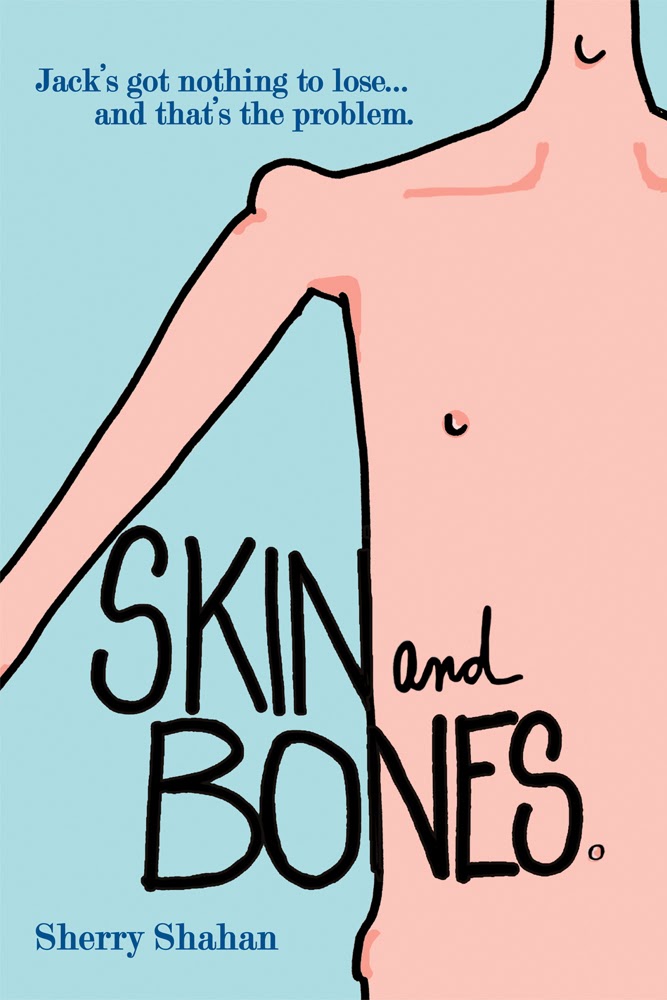
Her new young adult novel
Skin and Bones (A. Whitman) is a quirky story set in an eating disorder unit of a metropolitan hospital. The main character “Bones” is a male teen with anorexia. He falls desperately in love with an aspiring ballerina who becomes his next deadly addiction.
The novel was inspired by a short story Sherry wrote years ago, “Iris and Jim.” It appeared in print eight times worldwide. Her agent kept encouraging her to expand “Iris and Jim” into a novel. Easy for her to say!
* * *
Wednesday Writing Workout
Tell It Sideways
by Sherry Shahan
During the first draft of
Skin and Bones I stumbled over a number of unexpected obstacles. How could I give a character an idiosyncratic tone without sounding flippant?
Eating disorders are serious, and in too many instances, life-threatening.
Sometimes I sprinkled facts into farcical narration. Other times statistics emerged through dialogue between prominent characters—either in an argument or by using humor. Either way, creating quirky characters felt more organic when their traits were slipped in sideways instead of straight on.
There are endless ways to introduce a character, such as telling the reader about personality:
"Mrs. Freeman could never be brought to admit herself wrong on any point." — Flannery O'Connor, "Good Country People."
Or by detailing a character’s appearance:
"The baker wore a white apron that looked like a smock. Straps cut under his arms, went around in back and then to the front again, where they were secured under his heavy waist ." —Raymond Carver "A Small, Good Thing"
The art of creating fully realized characters is often a challenge to new writers of fiction. As a longtime teacher I’ve noticed:
1.) Writers who use short cuts, such a clichés, which produce cardboard or stereotypical characters.
2.) Writers who stubbornly pattern the main character after themselves in a way that’s unrealistic.
3.) Writers who are so involved in working out a complicated plot that their characters don’t receive enough attention.
In Skin and Bones I let readers get to know my characters though humorous dialogue. This technique works best when characters have opposing viewpoints.
Consider the following scene. (Note: Lard is a compulsive over-eater; Bones is anorexic.)
“I’ll never buy food shot up with hormones when I own a restaurant,” Lard said. “Chicken nuggets sound healthy enough, but they have more than three dozen ingredients—not a lot of chicken in a nugget.”
Bones put on rubber gloves in case he’d have to touch something with calories. “Can’t we talk about something else?”
“That’s the wrong attitude, man. Don’t you want to get over this shit?”
“Not at this particular moment, since it’s almost lunch and my jaw still hurts from breakfast.”
Lard shook his head. “I’m glad I don’t live inside your skin.”
“It’d be a little crowded.”
Exercise #1: Choose a scene from a work-in-progress where a new character is introduced. (Or choose one from an existing novel.) Write a paragraph about the character without using physical descriptions. Repeat for a secondary character.
Exercise #2: Give each character a strong opinion about a subject. Do Nice Girls Really Finish Last? Should Fried Food Come With a Warning? Make sure your characters have opposing positions. Next, write a paragraph from each person’s viewpoint.
Exercise #3: Using the differing viewpoints, compose a scene with humorous dialogue. Try not to be funny just for humor’s sake. See if you can weave in a piece
of factual information (Lard’s stats. about Chicken Nuggets), along with a unique character trait (Bones wearing gloves to keep from absorbing calories through his skin.)
I hope these exercises help you think about characterization in a less conventional way. Thanks for letting me stop by!
Sherry
www.SherryShahan.comThank you, Sherry, for this terrific Wednesday Writing Workout! Readers, if you give these exercises a try, do let us know how they work for you.
Happy writing!
Carmela

Today I'm happy to share a guest Wednesday Writing Workout from the amazing Kym Brunner, who is celebrating the release of not one, but TWO, novels this summer.
When I met Kym at an SCBWI-IL conference a few years back, I couldn't get over her enthusiasm and energy. I had no idea how she found time to write, given that she was a busy mom with a full-time teaching job (teaching middle-schoolers, no less!).
According to her bio, Kym's method of creating a manuscript is a four-step process: write, procrastinate, sleep, repeat. She's addicted to Tazo chai tea, going to the movies, and reality TV. When she's not reading or writing, Kym teaches seventh grade full time. She lives in Arlington Heights, Illinois with her family and two trusty writing companions, a pair of Shih Tzus named Sophie and Kahlua.

Kym's debut novel,
Wanted: Dead or In Love (Merit Press), was released last month. Here's the intriguing synopsis:Impulsive high school senior Monroe Baker is on probation for a recent crime, but strives to stay out of trouble by working as a flapper at her father's Roaring 20's dinner show theater. When she cuts herself on one of the spent bullets from her father's gangster memorabilia collection, she unwittingly awakens Bonnie Parker's spirit, who begins speaking to Monroe from inside her head.
Later that evening, Monroe shows the slugs to Jack, a boy she meets at a party. He unknowingly becomes infected by Clyde, who soon commits a crime using Jack's body. The teens learn that they have less than twenty-four hours to ditch the criminals or they'll share their bodies with the deadly outlaws indefinitely.
And here's the blurb for her second novel,
One Smart Cookie (Omnific Publishing), which came out July 15:
 Sixteen year old Sophie Dumbrowski, is an adorably inept teen living above her family-owned Polish bakery with her man-hungry mother and her spirit-conjuring grandmother, who together, are determined to find Sophie the perfect boyfriend.
But when Sophie meets two hot guys on the same day, she wonders if this a blessing or a curse. And is Sophie's inability to choose part of the reason the bakery business is failing miserably? The three generations of women need to use their heads, along with their hearts, to figure things out...before it's too late.
Today Kym shares a terrific
Wednesday Writing Workout on dialogue.
Wednesday Writing Workout:
SHH! DIALOGUE SECRETS YOU DON’T WANT TO MISS!
by Kym Brunner
Quick! After a person’s appearance, what’s the first thing you notice when you meet someone? If you’re like most of us, it’s what comes out of their mouths. First impressions and all that. But when you read, you can’t see the characters, so your first impressions are made based on what the characters say, not how they look.
Simple concept, right? Not so simple to deliver.
SO…HOW DO YOU MAKE YOUR CHARACTER MAKE A GOOD FIRST IMPRESSION?
Give them something to say that’s:
- Believable
- Fits their personality
- Consistent, yet unexpected
- Short and natural
1) Believable DialogueHow do you know if it’s believable or not? Put on your walking shoes and get out your notebook! Head to the spot where the prototype of your character would go. Need to write teens talking together at lunch? Go to a fast-food restaurant near a high school. Want to know what couples say when they’re on a date? Head to a movie theater early and go see the latest romantic comedy. You get the idea.
***HINT: LISTEN AND TAKE GOOD NOTES. I promise you’ll forget the words and how they said them if you don’t.
2
2) Dialogue that fits the character’s personality
There’s a famous writing cliché that says a reader should be able to read a line of dialogue and know who the character is without the identifying dialogue tag.
The key is being the character when you write his or her lines. Imagine YOU are the sensitive butcher who is very observant (seriously, picture yourself looking out of the eyes of the butcher with your hands on a raw steak) and then write his or her lines. Better yet, listen to a butcher talk to customers and/or interview one to ask his top three concerns about his job. You might be surprised to learn what those things are…and so might your reader.
***HINT: SWITCH INTO THE MINDS of all of your characters (even the minor ones) as you write to create words that only THEY would say.
3) Consistent, yet unexpected? Huh?Your job is to make sure your characters are real, that they speak the truth (or not, depending on who they are). In real life, characters might keep their thoughts to themselves. Not so in fiction. Characters that are pushed to the brink must speak out––to a best friend, to the cabbie, to the offending party, to the police.
Yes, we want dialogue to be authentic, but it IS a story and it does need to intrigue your readers. So let them speak their mind and propel the story ahead by providing interesting thoughts for your readers to mull over.
***HINT: TO KEEP PACING ON TRACK, use frequent dialogue to break up paragraphs of exposition.
4) Short and NaturalCut to the chase. No one likes listening to boring blowhards, so don’t let your characters be “one of those people.” Remember tuning out a boring teacher? That’s what didactic dialogue and info dumps feels like to your readers. Only include information that’s absolutely necessary for the story’s sake and skip the rest. You might need to know the backstory, but keep it to yourself.
***HINT: READ ALL DIALOGUE OUT LOUD. Change voices to the way you imagine the characters interacting and it’ll feel more “real.” If you’re bored with the conversation, so is your reader. If it doesn't sound the way a person really talks, cut it or revise it. Listen to real people and you’ll notice most of us talk in short sentences with breaks for others to add commentary.
So there you have it. Write dialogue that’s believable, fits the characters, necessary, and natural and your readers will come back for more!
*****
Hopefully you’ll find authentic dialogue galore in
Wanted: Dead or In Love, which features two alternating POVs––one from Monroe (a modern-day teen who becomes possessed internally by the infamous Bonnie Parker), and the other from Clyde Barrow himself (who works hard to take over the body of Jack Hale, a teen male).
And if cultural humor is more your style, you’ll get a helping of Polish spirits along with a bounty of teen angst in
One Smart Cookie.
Kym BrunnerThanks so much, Kym! Readers, let us know if you try any of these techniques. Meanwhile, if you'd like to connect with Kym, you can do so via her
website,
Facebook, Twitter, and
Goodreads. And if you'd like a taste of
Wanted: Dead or In Love, here's the book trailer:
Happy writing (and reading!)
Carmela

Hello Readers,
I hope you're all enjoying summer (well, at least those of you in the Northern Hemisphere!). These are definitely not "lazy, hazy days" for me. I spent much of our blogging break working on lesson plans for upcoming classes, including a children's writing camp that begins today. (If you'd like to see my summer class offerings, check out my website.)

Today I'm kicking off a series of posts in which we TeachingAuthors talk about a book we recently read or are currently reading. Thanks to the lovely Linda Baie over at TeacherDance, I know about a meme in the blogging community called "It's Monday, What Are You Reading?" hosted at Teach Mentor Texts. I'm happy to have a blog post that qualifies for the roundup!
The book I'd like to discuss is John Green's The Fault in Our Stars (Dutton). Even though this bestseller has been out since 2012 and has been made into a "major motion picture," I didn't get around to reading it till this month. I might not have read it all if it hadn't been selected as one of our Anderson's Bookshop's Not for Kids Only Book Club titles for August.
I'm happy to say that even though I don't typically read or write contemporary young adult novels, I enjoyed this one. I was especially struck by two things right at the beginning:
A. The Author's Note:
In case you haven't read it (or somehow missed the page) the book includes an unusual Author's Note before Chapter One:
Author’s Note
This is not so much an author’s note as an author’s reminder of what was printed in small type a few pages ago: This book is a work of fiction. I made it up.
Neither novels nor their readers benefit from attempts to divine whether any facts hide inside a story. Such efforts attack the very idea that made-up stories can matter, which is sort of the foundational assumption of our species.
I appreciate your cooperation in this matter.
This note struck me for two reasons:
- It reminded me of a question I'm often asked. Since my novel, Rosa, Sola, is based on events from my own childhood, readers often want to know how much of the novel "really happened." I think many who ask it are disappointed by my answer: None of it "really happened" because my life events happened to me, not to Rosa Bernardi. I don't think I could have written the story if I hadn't been able to separate myself from my character.
- Green's note made me think more deeply about the nature of fiction and our purposes in reading/writing it. The note also reminded me of something I read years ago--that fiction is about Universal Truths, or "truth with a capital T." As a writer, I sometimes get so caught up in plot and craft, etc., that I can lose sight of the Truth.
If you'd like to read more about what Green meant by his Author's Note, see
this page on his website.
B. That a story about cancer and death can be humorous:
Late in the winter of my seventeenth year, my mother decided I was depressed, presumably because I rarely left the house, spent quite a lot of time in bed, read the same book over and over, ate infrequently, and devoted quite a bit of my abundant free time to thinking about death.
I have to admit--after first reading this sentence I wasn't completely sure Hazel was being sarcastic. After all, this was a book about a girl with cancer. But it soon became apparent that cancer hadn't killed her sense of humor. That surprised me, as did other things about the book. I'm not going to risk spoiling it for those of you who haven't read the novel yet by telling you what those other things were. I'll just say that I enjoyed the book more than I expected. And, reading as a writer, I learned from it.
I wonder how many of you, our readers, have read Green's book. I'd love to know what you thought of it. And if you have any "summer reading" recommendations, do share them with us.
Happy writing (and reading)!

I proposed out current topic, which JoAnn kicked off on Friday, after reading Marion Dane Bauer's blog post, The Creative Mind. In the post, Marion writes of her experience creating a young adult short story collection that wasn't very marketable, in part, because "the book was awkward to place anywhere in the juvenile market." Unfortunately, I've written not only one, but possibly two, such books. At least Marion's reputation and sales history allowed her book to make it into print. My manuscripts, in contrast, are sitting in the proverbial "drawer," and may never see the light of day. This is especially frustrating because of the hours and hours of work I put into them. Both are set in 18th-century Milan--one a biography and the other a historical novel--and required extensive research. The more research I did, the more fascinated I became with my characters and their story. I'd hoped others would find them just as fascinating. The novel has done well in several writing competitions, and even took first place in the YA category of one. Yet the editors and agents who've read it so far tell me it's well-written but not marketable enough. There's that dreaded word again. I'm still waiting to hear back from a couple of editors and agents, but my hope is beginning to fade.
I'm looking forward to reading how my fellow TeachingAuthors deal with the issue of marketability. Our writing isn't only a creative pursuit--writing (and teaching) is what we do to pay the bills. At the moment, I can't afford to take a chance on creating another unmarketable book project, so I'm focusing on teaching and freelance writing. As much as I love teaching, I'm sad not to be working on a book project right now. I actually started a new middle-grade novel "just for fun" a few months ago, but I've put it on hold. Whenever I think about working on it, my inner critic says, "What will you do if this one turns out to be unmarketable too?" Some days the answer is "quit writing altogether."
 Sorry, readers, writing this post is depressing even me! So I searched for some encouragement online. I Googled "unmarketable manuscript" and found the phrase in Sophy Burnham's For Writers Only: Inspiring Thoughts on the Exquisite Pain and Heady Joy of the Writing Life from Its Great Practitioners (Tarcher Books), a book I happen to own but haven't read in years. I pulled For Writers Only off my bookshelf and read Burnham's own rejection story. Burnham, who is a bestselling nonfiction author, spent four or five years working on a novel. When she finally finished it and sent it to her agent, he responded, "This is unmarketable. . . . Burn it. Every writer does one or two of these. You're a talented writer. Go write something I can sell."
Ouch.
Understandably, Burnham was crushed. She almost did destroy the manuscript. But then she remembered something her mother told her when she was ten or twelve years old:
"If you ever become a writer," she said, "remember never to throw away anything you've written."
(Funny, I often tell the young writers in my writing camps to never throw away anything they write, either!)
Burnham followed her mother's advice and packed the manuscript up in a box. Years later, Burnham was working with a new agent who asked if she had any other manuscripts. She brought out the boxed-up novel. The agent read it and thought it was "wonderful." Within a month, the agent had found a publisher for
Revelations, Burnham's first published novel.
Burnham went on to say:
"In fairness to that first agent, the novel probably was unmarketable when he read it . . . in that climate, at that period of time. . . . But times and tastes change. What is the moral? Perhaps that you never know when you'll succeed, that all you can do is to follow your path with enthusiasm, and don't let rejection get you down."
Even before reading Burnham's story, I'd thought about the cyclical nature of the young adult fiction market and how what doesn't sell today may eventually be the next big thing. I haven't given up hope for my novel or the biography.
Like JoAnn, I'm pondering other approaches that may make these manuscripts more appealing. In the mean time, I'm not throwing anything away.
J
Out and About:I'm teaching several one-day writing workshops for adults this summer at the
College of DuPage in Glen Ellyn, Illinois. If you live in the area, I invite you to read more about these classes, and the children's writing camps I teach,
on my website.
Also, don't forget to enter
our current giveaway for a chance to win an autographed copy of Joan Bransfield Graham's latest picture book,
The Poem That Will Not End: Fun with Poetic Forms and Voices!
Happy writing!
Carmela

By:
Carmela Martino and 5 other authors,
on 6/11/2014
Blog:
Teaching Authors
(
Login to Add to MyJacketFlap)
JacketFlap tags:
plot,
writing exercise,
plotting,
Margo L. Dill,
Carmela Martino,
Writing Workout,
Joan Bransfield Graham,
Wednesday Writing Workout,
External Quest,
Internal Quest,
Add a tag
Today I'm pleased to share a Wednesday Writing Workout contributed by the inspiring and talented author Margo L. Dill.
I first met Margo some years ago at an SCBWI-Illinois writing conference. I believe she'd already sold her first novel, the middle-grade historical
Finding My Place: One Girl's Strength at Vicksburg (White Mane Kids), but it hadn't been published yet. With today's post, we join Margo's blog tour celebrating the release of her second novel,
Caught Between Two Curses (Rocking Horse Publishing), a YA light paranormal romance novel about the Curse of the Billy Goat on the Chicago Cubs. Margo has two more books under contract--both picture books--one with High Hill Press and the other with Guardian Angel Publishing. Besides being a children's author, she is also a freelance editor with
Editor 911: Your Projects Are My Emergency! and she is part of the
WOW! Women On Writing e-zine's staff. There, she works as an editor, blogger, instructor, and social media manager. When she's not writing, editing, or teaching online, Margo loves to spend time with her husband, stepson, daughter, and crazy Boxer dog, Chester, in St. Louis, Missouri. You can learn more
at Margo's website.
Here's a summary of
Caught Between Two Curses:
 Seventeen-year-old Julie Nigelson is cursed. So is her entire family. And it’s not just any-old-regular curse, either—it’s strangely connected to the famous “Curse of the Billy Goat” on the Chicago Cubs. Julie must figure out this mystery while her uncle lies in a coma and her entire love life is in ruins: her boyfriend Gus is pressuring her to have sex, while her best friend Matt is growing more attractive to her all the time. Somehow, Julie must figure out how to save her uncle, her family’s future, and her own love life—and time is running out!
As a die-hard Cubs fan, I'm really looking forward to reading Margo's new book. (I'm hoping the main character solves not only her problem, but the Cubs' curse too!)
And now, here's Margo's three-part
Wednesday Writing Workout.Wednesday Writing Workout: Putting the Pieces TogetherWriting a novel is like putting together a jigsaw puzzle with my daughter. I’ve been teaching her to do the edge pieces first and then fill in the middle. This reminds me of writing a novel because writers usually start with an idea, maybe a plot or an interesting character with a problem—in other words, our border. We build our foundation for a story by piecing together our ideas. But sometimes, that beginning border, even with a few pieces filled in the middle, is not finished or even sturdy. Here are exercises I use with my
WOW! Women On Writing novel students to add more pieces to their puzzle and come out with a strong, final product—a finished, publishable novel! (These can also be used with short stories and picture books.)
1. Create characters with internal and external problems.
The characters I remember best are the ones that struggled with both internal and external problems. What’s the problem your character has that he must overcome in the novel? Trying to raise money for a new bike? Figuring out how to deal with a sibling? Tired of moving around and always being the new kid at school? These are all external problems, and the ones that our plots are built on.
But your character also needs an internal problem! In
Caught Between Two Curses, Julie has to break two curses; but while she does this, she also struggles with her self-esteem and confidence as well as what love means. These are her internal struggles. While she rushes around to save her uncle, the events in the novel help her grow and work through her internal problems.
Just ask yourself these four questions either before you write your novel or even during revisions:
a. What is your main character’s internal struggle?
b. How does he or she solve it?
c. What is the external problem in the novel that affects the main character?
d. How does he or she solve it?
2. Brainstorm problems.
If you find yourself with a strong border for your novel—an exciting beginning and an ending that will leave readers talking for years, but you are stuck in the muddy middle, make a list of 10 problems that a person can have that’s the same age as your main character and in the same time period. For example, my novel’s main character is 17, lives in Chicago in present day. Problems she can have are: pressure to have sex, temptation to do drugs, failing classes, negative body image, disloyal friends, etc.
Once you have this list, are there any of these problems that you could turn into a subplot for either your main character or a minor character or sidekick? Subplots can often dry up the muddy middle and keep readers hiking to the end.
3. "Then what?"
The last exercise asks a simple question, “Then what?” Each time you answer, make the problem or situation worse for your main character. You don’t actually have to use all of these horrible situations in your book, but they may help you push your main character a little harder. Here’s an example:
Julie learns a curse is on her family.
Then what?
The curse makes her uncle fall in a coma.
Then what?
Julie’s grandma says her uncle will die before he is 35 if the curse isn’t broken.
Then what?
He is 35 in less than 5 months.
Then what?
She has no idea what to do to break the curse.
Using these writing exercises while you are piecing together your novel will give you a complete story in no time!

Our next post will be Friday, which also happens to be the last day of our current giveaway. If you haven't entered yet, I encourage you to do so soon
on this page.
Happy writing!
Carmela

As I promised on Monday, today's Wednesday Writing Workout is courtesy of the amazingly prolific Debbie Dadey. This exercise sounds deceptively simple. If you give it a try, do let us know how it works for you. And when you're done here, don't forget to enter for a chance to win an autographed copy of Debbie's latest chapter book, Treasure in Trident City (Aladdin), from her Mermaid Tales series.
Wednesday Writing Workout from Debbie Dadey:
Characterization, from the Feet Up
I was lucky enough to attend one of the Highlights’ Chautauqua experiences many years ago. I’ll never forget author Pam Conrad’s workshop about characterization. One exercise stuck with me. It’s easy and that’s probably why I remember it:
- Simply think of your main character and look at his/her feet. What do they look like? Barefoot? Shiny? Polished? Scuffed?
- Then go up to the legs. Socks? Dirty? Ruffled? Keep going up.
- Do the knees have scabs on them?
- Keep going up until you’ve completely visualized your entire character.
This exercise helped me realize that I was approaching my first novel,
Cherokee Sister, from the viewpoint of the wrong character. I hope it will help you.
_____________________________
Thank you, Debbie!
Happy writing, everyone.
Posted by Carmela

 Today I'm thrilled to share a guest TeachingAuthor interview with the prolific and talented Debbie Dadey. We're honored to help Debbie celebrate the release of her latest chapter book, Treasure in Trident City (Aladdin), book eight in the Mermaid Tales series for ages 6-9. Here's a little about the story:
Pearl can't believe it! There is a pirate's treasure near Trident City. If she can find it, she'll be the richest, most famous mermaid ever. Tales of pirate ghosts don't scare Pearl off, but something much bigger just might.
See the end of this post for details on how to enter for a chance to win an autographed copy of this fun title! I also share the name of the winner of our last giveaway.
I'm guessing most of our
TeachingAuthors' readers are familiar with Debbie's work. She is the award-winning author/co-author of
158 books for children! She is perhaps most known for the best-selling
Adventures of the Bailey School Kids series (Scholastic) , which she wrote with Marcia Thornton Jones. Debbie and Marcia also co-wrote a writing book for adults,
Story Sparkers : A Creativity Guide for Children's Writers (Writer's Digest). A former elementary school teacher and school librarian, Debbie enjoys working with writers of all ages through school visits and writing conferences. She currently divides her time between Bucks County, PA and Sevierville, TN. She has three children, two dogs, and one very smart husband. You can learn more about Debbie
through her website and follow her via
Twitter and
Facebook.
I first connected with Debbie Dadey years ago, when a member of my critique group invited her to join
us. My son was in second grade at the time, and a
HUGE fan of the
Bailey School Kids. When I told him that Debbie had joined our group, he could hardly believe it. He said, "Wow, Mom, now you're going to be famous!" Well, knowing Debbie didn't make me "famous," but having her in our group definitely made me a "tighter" writer. Our group called Debbie "the slasher" because she was so great at helping us cut extraneous material. We were all disappointed when she moved away. All these years later, I'm happy to be able to still call her my friend.
And now, for the interview:
Debbie, would you tell our readers how you became a TeachingAuthor?
When I was an elementary school teacher, I taught writing to my students. When I was a PK-12th grade librarian, I taught writing to my students. As an author, it was only natural to continue teaching writing through continuing education classes at universities, school visits, and writing conferences.
My website has a writing section that I hope is helpful to writers of all ages.
Can you tell us a bit about your Mermaid Tales series and how you came to write it? What was the inspiration behind the newest book in the series, Treasure in Trident City? Are there more Mermaid Tales books in the works? Yes, there are more
Mermaid Tales books in the works.
Treasure in Trident City (think sunken pirate ship, pirate ghosts, and treasure!) is #8 and I have written 12 so far. It is a series about a school at the bottom of the ocean. The merboys and mermaids have normal school adventures, but also get the opportunity to have exciting interactions with ocean animals. In
Treasure in Trident City, Pearl becomes friends with a giant octopus! I was lucky enough that Simon and Schuster approached me about writing it.
I’m intrigued that Simon and Schuster approached you. Did they provide the general premise for the series and ask you to come up with the stories? Did they dictate number of books, plot ideas, etc.? Did you already have other series with them?They suggested a series about mermaids and let me run with it, but first they wanted me to create a world for them to live in, so I created a Travel Guide to Trident City which outlined the world. Of course, the one I gave to my editor had character sketches, a map (which the artist redrew for the books), and ideas for books. They did not say how many books they wanted to start with, but I thought four was a great number (since I had four main character) to try and they went for it. This was the first work I've done for Simon and Schuster. I thought it was interesting that they contacted me through my website and I was glad that I had a way on there for them to contact me! It doesn't have my email listed, but it comes directly to my email.
Your website highlights you as an author for “reluctant readers.” What is it about your books that appeals to reluctant readers? Do you have any tips for other writers who want to reach this audience?I hope my books are full of action, which I think draws in reluctant readers. I think books for any young reader needs to be kid-oriented and avoid overdosing on description.
You also list specific suggestions for parents and teachers to help motivate reluctant readers on your website. Which of these ideas to you think are most effective? There is nothing a parent or teacher can to do encourage reading more than modeling that behavior. Reading aloud to them and turning off the TV to read when your child can see speaks volumes!
You’re such a prolific author. Would you share a little about your writing schedule/routine? Do you set writing quotas/goals? Do you have any tricks for generating story/character ideas?I write every day, except Sunday. I begin my day by updating my website, Facebook fan page, and answering email. Then I dive into writing and strive for 3-4 pages per day and most of that is done in the morning. My
website, debbiedadey.com, has a writing section that has ‘worksheets’ that I use to help me learn about my character and my stories. I think they are helpful. My friend Marcia Jones and I created them for a book about writing called
Story Sparkers, which we are currently turning into an eBook.
You do so many school and library visits. Can you share a funny (or interesting) story about one?I’ll never forget the little boy who was crying in the hallway when I visited his school. Why was he crying? It was because he had thought the characters in the
Bailey School Kids books (my first series with Marcia Jones) were visiting. When he found out it was just me, he was devastated. To him, the characters were real and he really wanted to meet them!
Well, I can't think of a better compliment to your writing than that, Debbie! Thank you so much for taking time out from your busy schedule to visit with us. I hope all the teachers in our audience will visit the
Teacher's Page of Debbie's website for book-related activities and other resources. And I hope all our readers check back here on Wednesday, when Debbie shares a favorite writing exercise for our
Wednesday Writing Workout.
Now it's time for you to enter for a chance to win an autographed copy of
Treasure in Trident City (Aladdin). Use the Rafflecopter widget below to enter via 1, 2, or all 3 options specified.
If you choose the "comment" option, share a comment to TODAY'S blog post telling us what you'll do with the book should you win: save it for yourself or give it away? And please include your name in your comment, if it's not obvious from your comment "identity." (If you prefer, you may submit your comment via email to:
teachingauthors [at] gmail [dot] com. )
The giveaway
ends on May 30.
And congratulations to our most recent winner,
Elaine Kaplan, who follows us via email. Thanks for being a
TeachingAuthors subscriber, Elaine!
Good luck and happy writing!
Carmela
P.S. If you've never entered a Rafflecopter giveaway, here's info on
how to enter a Rafflecopter giveaway and the
difference between signing in with Facebook vs. with an email address. Email subscribers: if you received this post via email, you can click on the Rafflecopter link at the end of this message to access the entry form.
a Rafflecopter giveaway
View Next 25 Posts