new posts in all blogs
Viewing: Blog Posts Tagged with: Writing Workout, Most Recent at Top [Help]
Results 1 - 25 of 126
How to use this Page
You are viewing the most recent posts tagged with the words: Writing Workout in the JacketFlap blog reader. What is a tag? Think of a tag as a keyword or category label. Tags can both help you find posts on JacketFlap.com as well as provide an easy way for you to "remember" and classify posts for later recall. Try adding a tag yourself by clicking "Add a tag" below a post's header. Scroll down through the list of Recent Posts in the left column and click on a post title that sounds interesting. You can view all posts from a specific blog by clicking the Blog name in the right column, or you can click a 'More Posts from this Blog' link in any individual post.

By:
Carmela Martino and 5 other authors,
on 9/30/2015
Blog:
Teaching Authors
(
Login to Add to MyJacketFlap)
JacketFlap tags:
writing exercise,
Laura Purdie Salas,
Lisa Bullard,
Carmela Martino,
Writing Workout,
writing for hire,
Mentors for Rent,
Wednesday Writing Workout,
Children's Writer's and Illustrator's Market (CWIM),
Add a tag
Today, I'm happy to welcome back former TeachingAuthor Laura Purdie Salas with a guest Wednesday Writing Workout tailor-made for our current TeachingAuthors' series on how we each "Make a Living as a Writer." Laura was one of the authors I interviewed for my article of the same title that appears in the 2016 Children's Writer's & Illustrator's Market, edited by Chuck Sambuchino (Writer's Digest Books). If you haven't entered our drawing for a chance to win your own copy of the 2016 CWIM, be sure to do so here, AFTER you try Laura's eye-opening writing exercise below.
<!--[if gte mso 9]> Normal 0 false false false EN-US X-NONE X-NONE <![endif]-->  Wednesday Writing Workout:
The Cinderella Trifecta: Is Writing on Assignment Right for You?
by Laura Purdie Salas
Hey, it’s fun to be back here at TeachingAuthors I was honored to be interviewed for Carmela's terrific article in the 2016 Children’sWriter’s & Illustrator’s Market.
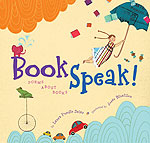 |
| BookSpeak! - trade market |
You know, I make my living as a writer, and I love writing the books I choose to write (my trade market books), like
BookSpeak! Poems About Books and
WaterCan Be…. But, so far, the books I’ve loved to write have not exactly brought in millions. Or enough to keep my family in groceries. That’s OK. They’re books I had to write, and I adore them.
But, I do need to pay bills, and one of my major sources of income is writing on assignment. I write books and short passages for publishers who hire me to write very specific works for particular age groups and, sometimes, reading levels.
 |
| Water Can Be... - trade market |
If this is something that sounds interesting to you, you might want to give this exercise a try. Even though the majority of writing I do on assignment is nonfiction, I also do some poetry and fiction that way, too. We’re going to use fiction here, so that you don’t get caught up in research and getting your facts right (which is, of course, extremely important in nonfiction books!).
For this exercise, we’re going to use a story we likely already know, and we’re going to shape it in three different ways.
I would like you to use the tale of Cinderella as the basis for your short works. I’ll use The Three Little Pigs as an example for each one. Don’t be nervous! This is just to see IF you’re comfortable with this kind of writing and, if so, what age range might work best for you. Ready?
Part 1: Retell the complete tale Cinderella in 150 words, for 1stgraders.
My example, based on The Three Little Pigs:
Once, there were three little pigs. They were brothers. One day, the pigs went out into the world. It was time to build their own homes.
The first little pig built his home out of straw. The Big Bad Wolf huffed and puffed and blew the house down.
The second little pig built his home out of sticks. The Big Bad Wolf huffed and puffed and blew the house down.
The third little pig was a hard worker. He built a strong home out of bricks. The Big Bad Wolf huffed and puffed. But he could not blow it down.
The wolf was mad. And hungry. He came down the chimney to eat the pig. But the third little pig was also smart. He had built a fire in the fireplace. The wolf yelped in pain and ran away.
And the three little pigs lived happily ever after.
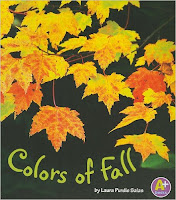 |
| Colors of Fall - education market |
Part 2: Retell Cinderella for 4th graders in 400 words, and emphasize narrative voice and theme.
My example is just the first couple of paragraphs (130 words) of such a passage, based on The Three Little Pigs.
Once up a time, there were three little pigs. They were brothers, and two of the pigs were oh so lazy and not very intelligent! The third little pig, however, was not only a hard worker, but he was also very clever.
One day, it was time for the three little pigs to go out into the great wide world and build their own houses. The first two pigs did not want to put much effort into anything, so the first one built his house out of straw! The second built his house out of sticks! They should have known better. They had just finished when a big, bad wolf came along. This wolf was drooling and snarling and hungry. He thought a little pig sounded like a scrumptious treat.
Do you see the difference? Let’s try one more.
Part 3: Retell Cinderella for 7th graders in 600 words from the point of view of a wicked stepsister.
Here’s my example, just the first few paragraphs (111 words), from the point of view of the big bad wolf. It’s a little low on readability, actually, so I’d have to make sure to use longer paragraphs and sentences here and there and keep the reading level up a bit higher.
You can’t blame me for trying. Really, who would be ridiculous enough to think that some insubstantial straw or rickety old sticks would be tough enough to thwart my attempts to enter? Oh, you haven’t heard about my adventure? Well, let me explain…
I was just wandering along the boulevard one day, minding my own business. Suddenly, I heard a clattering sound further down the avenue. Then I spied three little pigs, all hard at work constructing residences. At least, one of them was working diligently. That one was mixing mortar and placing bricks and building a proper, sturdy house--I despise that. But the other two were much more promising.
So, how do you feel? Did at least one of these three pieces feel somewhat natural to you? Did you enjoy the puzzle of trying to tell certain information in a very specific way—as dictated by someone else?
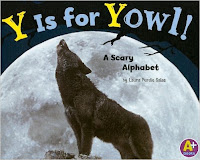 |
| Y Is for Yowl! - education market |
If the answer to at least one of the above is yes, then you might want to try writing on assignment, too. If you’re interested in learning about writing for the educational market, you can check out my book,
Writing for the Educational Market: Informational Books for Kids. And Lisa Bullard, who was also interviewed in Carmela's article, and I offer critiquing/coaching services for children’s writers at
MentorsForRent.com. We have worked with a number of writers who have subsequently broken into the educational market. We’d be happy to schedule a consultation to answer your questions or review your introductory packet. I also sometimes discuss educational writing in my eletter for writers,
A Writer Can Be….
I’d love to hear in the Comments what your experience with this Wednesday Writing Workout was like. Was one part super-easy for you and another part impossible? Were they all equal? Is this a market you might be interested in pursuing? Inquiring minds want to know:>)
Laura Purdie Salas

Summer isn't done quite yet, and what a great way to celebrate these last days of summer magic! The wonderful word wizard Rebecca Colby, author of
It's Raining Bats & Frogs, shares a magical writing exercise for your students. While it’s geared towards Grade 1 students, it could be adapted for older children.
Magic Rhyming Spells Delia’s spells in
It’s Raining Bats & Frogs are written in rhyme. Share some of the following spells with your students. Ask them to identify the words that rhyme.
·
Hubble, bubble, toil and trouble.
· Hocus pocus, magic crocus. Students will create rhyming spells of their own by filling in the blanks below.
·
Zero, one, two, I’ll wave my wand at ______________.
· One, two, three, turn into a ____________.
· Eight nine, ten, turn into a _____________. Working in pairs, students will create rhyming spells using the following starting lines. Ask students to create rhymes that are not used in the book. Extension activity: Students can create spells on their own without benefit of starting lines.
·
Stir the brew in the vat, . . .
· Eye of newt, tongue of snake, . . .
· Wave your wand over the box, . . .
· One more wave, here I go, . . . Now it’s your turn!I challenge each one of you visiting the blog today to create your own magic spell. If you do, feel free to post it in the comments below. I’d love to read your results!
More Summer Fun! Join Rebecca as she celebrates
It’s Raining Bats and Frogs! Who doesn’t love a scavenger hunt! Follow Rebecca’s
tour to collect the clues. There will be eight answers to find and submit in total to the link below.
You can enter the overall giveaway for a $50 USD Amazon voucher (or £30 GBP Amazon voucher) at the end of the tour. Submit your answers
here!
So what should you be looking for? Witch names, of course! Each post will mention a fictitious witch somewhere in the discussion. To be in with a chance of winning, leave a comment on the blog where you found the name (but please DON’T reveal the name) , including here at Teacher Authors! At the end of the tour, send Rebecca (at website address above) a list of all eight names via her website contact page, and enter the Rafflecopter entry form on her page. You have until 11.59pm EST on 5 September to enter the scavenger hunt giveaway!
Join me on August 24 as I talk with Rebecca about her book, the scavenger hunt and about creating teacher guides that teachers can use!
“And above all, watch with glittering eyes the whole world around you because the greatest secrets are always hidden in the most unlikely places. Those who don't believe in magic will never find it.” ~ Roald Dahl
Bobbi Miller

Happy Children’s Book Week!
Since 1919, this national literacy initiative, the longest-running in our history and co-anchored by the Children’s Book Counciland Every Child A Reader, has celebrated books for young people and the joy of reading.
Visit the website to learn the bounty of events and activities that commemorate this once-a-year week and to read more about this year’s poster creator, Grace Lee.
Book Week’s goal? To make sure every child is a reader!
But today is Wednesday, yes? – which means it’s time for a TeachingAuthors Wednesday Writing Workout, one that will give every child, both current and former, the opportunity to write.
Enjoy!
Esther Hershenhorn
P.S.
Don’t forget to enter our Book Giveaway to win a copy of Stefanie Lyons’ YA novel in verse DATING DOWN (Flux). The deadline to enter is midnight May 15.
. . . . . . . .
Let’s tweak the Children’s Book Week goal a tad to read…. make sure every child – current and former (!) – is a reader who writes!
Click HERE to download these children’s book week story starters and create your own ending!
What I Did begun by National Ambassador Katherine Paterson (New!) BLAM! begun by Mo Willems (2009 Children's Choice Book Award winner) (New!) The Night Visitor begun by Dinah Williams (2009 Children's Choice Book Award winner) (New!) And Then... begun by National Ambassador Emeritus Jon Scieszka 
By:
Carmela Martino and 5 other authors,
on 1/28/2015
Blog:
Teaching Authors
(
Login to Add to MyJacketFlap)
JacketFlap tags:
Carmela Martino,
Writing Workout,
Sherry Shahan,
Wednesday Writing Workout,
humor,
Characterization,
exercise,
dialogue,
writing exercise,
Add a tag
As a follow-up to last Friday's
Guest TeachingAuthor Interview with Sherry Shahan, I'm repeating the
Wednesday Writing Workout she shared with us in
July 2014. After reading this post, I'm sure you'll want to enter for a chance to win a copy of Sherry's
Skin and Bones (A. Whitman), if you haven't already entered the contest.
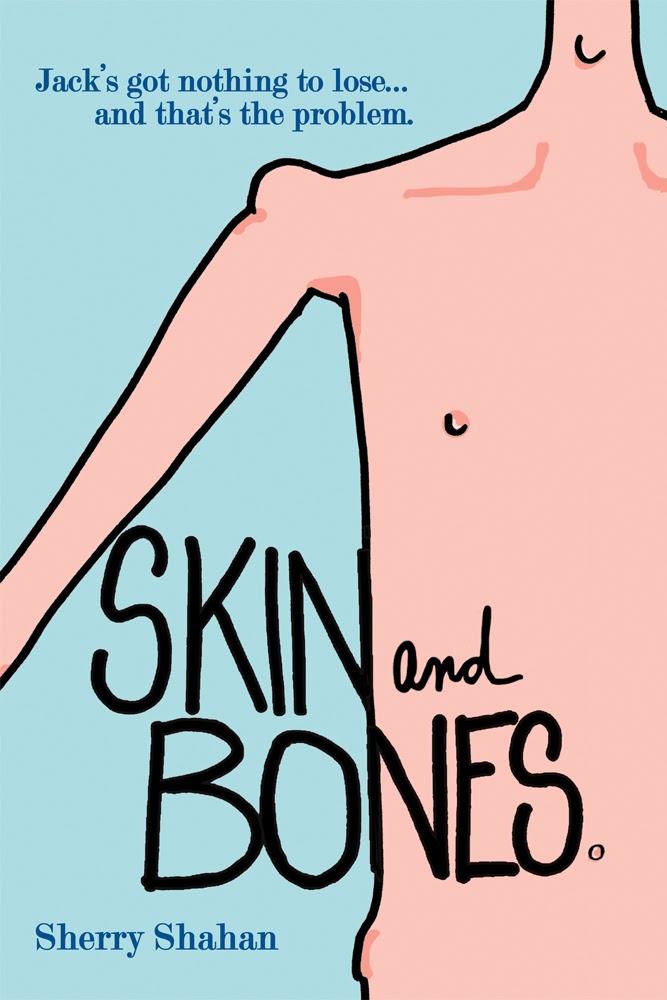
Sherry's young adult novel is a quirky story set in an eating disorder unit of a metropolitan hospital. The main character “Bones” is a male teen with anorexia. He falls desperately in love with an aspiring ballerina who becomes his next deadly addiction.
The novel was inspired by a short story Sherry wrote years ago, “Iris and Jim.” It appeared in print eight times worldwide. Her agent kept encouraging her to expand “Iris and Jim” into a novel. Easy for her to say!
* * *
Wednesday Writing Workout
Tell It Sideways
by Sherry Shahan
During the first draft of
Skin and Bones I stumbled over a number of unexpected obstacles. How could I give a character an idiosyncratic tone without sounding flippant?
Eating disorders are serious, and in too many instances, life-threatening.
Sometimes I sprinkled facts into farcical narration. Other times statistics emerged through dialogue between prominent characters—either in an argument or by using humor. Either way, creating quirky characters felt more organic when their traits were slipped in sideways instead of straight on.
There are endless ways to introduce a character, such as telling the reader about personality:
"Mrs. Freeman could never be brought to admit herself wrong on any point." — Flannery O'Connor, "Good Country People."
Or by detailing a character’s appearance:
"The baker wore a white apron that looked like a smock. Straps cut under his arms, went around in back and then to the front again, where they were secured under his heavy waist ." —Raymond Carver "A Small, Good Thing"
The art of creating fully realized characters is often a challenge to new writers of fiction. As a longtime teacher I’ve noticed:
1.) Writers who use short cuts, such a clichés, which produce cardboard or stereotypical characters.
2.) Writers who stubbornly pattern the main character after themselves in a way that’s unrealistic.
3.) Writers who are so involved in working out a complicated plot that their characters don’t receive enough attention.
In Skin and Bones I let readers get to know my characters though humorous dialogue. This technique works best when characters have opposing viewpoints.
Consider the following scene. (Note: Lard is a compulsive over-eater; Bones is anorexic.)
“I’ll never buy food shot up with hormones when I own a restaurant,” Lard said. “Chicken nuggets sound healthy enough, but they have more than three dozen ingredients—not a lot of chicken in a nugget.”
Bones put on rubber gloves in case he’d have to touch something with calories. “Can’t we talk about something else?”
“That’s the wrong attitude, man. Don’t you want to get over this shit?”
“Not at this particular moment, since it’s almost lunch and my jaw still hurts from breakfast.”
Lard shook his head. “I’m glad I don’t live inside your skin.”
“It’d be a little crowded.”
Exercise #1: Choose a scene from a work-in-progress where a new character is introduced. (Or choose one from an existing novel.) Write a paragraph about the character without using physical descriptions. Repeat for a secondary character.
Exercise #2: Give each character a strong opinion about a subject. Do Nice Girls Really Finish Last? Should Fried Food Come With a Warning? Make sure your characters have opposing positions. Next, write a paragraph from each person’s viewpoint.
Exercise #3: Using the differing viewpoints, compose a scene with humorous dialogue. Try not to be funny just for humor’s sake. See if you can weave in a piece
of factual information (Lard’s stats. about Chicken Nuggets), along with a unique character trait (Bones wearing gloves to keep from absorbing calories through his skin.)

By:
Carmela Martino and 5 other authors,
on 11/19/2014
Blog:
Teaching Authors
(
Login to Add to MyJacketFlap)
JacketFlap tags:
conflict,
plot,
Tension,
Maureen McQuerry,
Carmela Martino,
Writing Workout,
Stakes,
Wednesday Writing Workout,
Children's Writer's and Illustrator's Market (CWIM),
Add a tag
Today I'm pleased to share with you a guest Wednesday Writing Workout on creating tension in fiction from award-winning author Maureen McQuerry. Before I tell you about Maureen, a quick reminder that it's not too late to enter for a chance to win a copy of the 2015 Children's Writer's and Illustrator's Market (CWIM) edited by Chuck Sambuchino and published by Writer's Digest Books. See the link at the end of today's post.
 Now, about Maureen McQuerry: I was recently introduced to Maureen (via email) through a mutual friend. Her first YA novel, The Peculiars (Abrams/Amulet) was an ALA Best Book for Young Adult Readers 2013, Bank Street and Horn Book recommended book, and a winner of the Westchester Award. Her most recent novel Beyond the Door (Abrams/Amulet), has been named a Booklist top Ten Fantasy/SciFi for Youth. The second book in the series, The Telling Stone, releases May 2015. Maureen has taught writing to children and adults and loves giving author talks in schools and at conferences.
I'm hoping to meet Maureen in person when she visits Chicago in a few weeks. So far, she's scheduled to do a signing at The Book Stall in Winnetka on December 6 and one at The Magic Tree Bookstore in Oak Park on December 8. For more info, check out her website. You can also connect with her via Facebook and Twitter.

Before I share Maureen's
WWW on tension, here's a little about her newest novel,
Beyond the Door: Between his love of learning and his passion for Scrabble, Timothy James has always felt like an outsider. The only person who really understands him is his older sister, Sarah, and he’s also fairly certain nothing interesting will ever happen to him. But one dark spring night, everything changes.
A mystery of unparalleled proportions begins to unfold, revealing Timothy's role in an ancient prophecy and an age-old battle of Light against Dark. Together with Sarah and the school bully, Jessica, Timothy must embark on a quest to prevent the Dark from controlling the future—and changing the past. Can the trio work together in order to fight the ancient evil that threatens our world?
The first book in the Time Out of Time series, Beyond the Door, is a fast-paced adventure that combines Celtic myth, shapeshifters, and a secret code in a coming of age story.
VOYA described the novel as "jam-packed with twists and turns," a sure sign that Maureen knows a thing or two about creating tension. Here's her
Wednesday Writing Workout on the topic:
Wednesday Writing Workout:The Stakes Should Always Be Deathby Maureen McQuerry
Story isn't about plot. It isn't about character or setting or a great idea. It's about how events change people. We keep reading because we want to find out how a character navigates all the struggles that come her way. In fact the most critical component in reader satisfaction is the protagonist's arc. And notice I used the word struggle, because struggle is what changes characters. It's what changes us.
Struggle implies conflict and tension. Tension keeps us turning the pages. But how do you add conflict and tension to a story without an explosion or battle scene on every page, maybe without explosions or battles in your book at all? Tension begins with the stakes. If you've ever been told your novel is too quiet, it may be that your stakes aren't high enough. The greater the stakes, the greater the risk, the greater the tension and the more pages turned.
What do I mean by stakes? Stakes are what your protagonist has on the line. In a dystopian world like
Hunger Games, the stakes are personal survival, survival of people you love, of a community, of the world. But not every story will or should be dystopian or apocalyptic. The stakes may be the risk of emotional death. In my MG novel
Beyond the Door, Timothy finds himself in physical danger, the type of danger that might result in death, but he fears failing to complete his challenge almost as much. He believes it's his one chance to prove himself in the eyes of his friends. His self-worth is on the line.
For the reader to be concerned, risk has to be real and the protagonists' motivation worthy. Worthy motivations involve noble concepts like: forgiveness, love, redemption, self-worth. For example, a character who wants a part in the school play engages us when the stakes are based on a motivation that is worthy. She wants a part in the play because she sees it as a way to connect with her estranged father who was once an actor, but has rejected her or because she's never once fit in anywhere, been bullied or is handicapped and it's her one chance to find a community. If she fails here, she may never try again. Hope and worry for the protagonist create tension.
- A good beginning question to ask is what are the stakes for my protagonist? What is at risk? What will die?
Because a story is about how events change characters, you must have a clear idea of your character's arcs. In
Beyond the Door, Timothy needed to evolve from an insecure observer to a confident leader.
- Ask: What is my protagonist like at the start of this adventure? What do I want her to be like at the end of the story?
- What will it take to get her there? What kind of gut-wrenching decisions, public humiliations, dark nights of the soul? What antagonists will she have to face?
- Does each turning point create change? That's what moving a story forward means.
Below are some considerations for assessing your story for tension.
Assessing the risk in your story:- The risk of failure must be real and must be devastating—big consequences.
- Conflict must be external and internal—your protagonist must struggle in her mind and heart and with external forces.
- Tension must be relentless.
- A clear antagonist strengthens the conflict.
- The solution must require everything the protagonist has—the greater the risk, the more we worry.
- The solution should be inevitable, but surprising (Aristotle).
A few time honored techniques to increase tension, such as those below, will keep readers turning the pages.
Techniques to increase tension:- Increase the stakes—as mentioned above
- Withhold info from protagonist—mystery novels are a great example of how one missing piece of information can put your protagonist at risk.
- Introduce doubt—Who can she trust? Were her assumptions faulty?
- Limit time—the ticking clock.
- Give and take away—just as your protagonist has everything she needs, the bottom falls out.
Whatever struggles your character faces, remember they are the engines of transformation and tension is the fuel.
Writing Exercise Text © Maureen McQuerry 2014, All rights reserved.
Thanks for this, Maureen. I've already used your questions to assess (and up!) the level of risk in my current work-in-progress. Readers, if you try any of these techniques, let us know how they work for you.
Good luck to all, and happy writing!
Carmela

By:
Carmela Martino and 5 other authors,
on 10/29/2014
Blog:
Teaching Authors
(
Login to Add to MyJacketFlap)
JacketFlap tags:
exercise,
reluctant readers,
writing exercise,
Lenore Look,
Beginnings,
Carmela Martino,
Writing Workout,
Wednesday Writing Workout,
Children's Writer's and Illustrator's Market (CWIM),
Add a tag
Hi Everyone,
The clock is ticking! If you haven't entered for a chance to win a copy of the 2015 Children's Writer's and Illustrator's Market (CWIM) yet, see the link at the end of this post. The giveaway ends on Friday!
We're hosting the 2015 CWIM giveaway this month to celebrate the publication of my article in it: "Writing for Boys (and other 'Reluctant Readers')." The article contains advice and insights from four award-winning authors known for writing books that appeal to reluctant readers: Matt de la Peña, Lenore Look, David Lubar, and Steve Sheinkin. Today, I'm pleased to share a guest Wednesday Writing Workout from one of those authors: Lenore Look!
Here's Lenore's bio, as it appears in the 2015 CWIM:
Lenore Look recently released the sixth book in her award-winning (and boy-friendly) Alvin Ho chapter book series:
Alvin Ho: Allergic to the Great Wall, the Forbidden Palace, and Other Tourist Attractions (Schwartz & Wade). She is also the author of the
Ruby Lu series (Atheneum) and several acclaimed picture books, including
Henry’s First-Moon Birthday (Simon & Schuster),
Uncle Peter’s Amazing Chinese Wedding (Atheneum), and, her newest,
Brush of the Gods (Random House), a historical fiction account of the life of Wu Daozi, China’s most famous painter. Lenore taught creative writing at Drew University and St. Elizabeth College in New Jersey, and frequently speaks in schools in the United States and Asia. She has also co-presented the Highlights Foundation workshop "Writing for Boys" with Bruce Coville and Rich Wallace. She lives in Hoboken, New Jersey, and blogs frequently at
lenorelook.wordpress.com.
I'm a big fan of Lenore's Alvin Ho books, which is why I approached her about participating in the CWIM article. I haven't read
Alvin Ho: Allergic to the Great Wall, the Forbidden Palace, and Other Tourist Attractions yet, so I'll share the blurb for it that appears on
Indiebound:
Here’s the sixth book in the beloved and hilarious Alvin Ho chapter book series, which has been compared to Diary of a Wimpy Kid and is perfect for both beginning and reluctant readers.
Alvin, an Asian American second grader who’s afraid of everything, is taking his fears to a whole new level—or should we say, continent. On a trip to introduce brand-new baby Ho to relatives in China, Alvin’s anxiety is at fever pitch. First there’s the harrowing 16-hour plane ride; then there’s a whole slew of cultural differences to contend with: eating lunch food for breakfast, kung fu lessons, and acupuncture treatment (yikes!). Not to mention the crowds that make it easy for a small boy to get lost.
From Lenore Look and New York Times bestselling illustrator LeUyen Pham comes a drop-dead-funny and touching series with a truly unforgettable character.
Sounds like a fun read!
JFor today's WWW, Lenore shares a great exercise in beginnings.
Wednesday Writing Workout:Finding the Best Beginningby Lenore Look
When I worked as a newspaper reporter, the first thing I learned was how important the “
lede” or beginning of the story is. The first sentence is crucial. It’s called the “hook” because it snags your reader and reels them into your story. Without a strong hook, your reader will get away before you can tell them the five Ws and H – who, where, what, when, why and how.
When writing fiction, your hook is not just the best way to snag your reader, but it’s the place from which you will hang the rest of your story. It’s THAT important. For me, the beginning is the hardest part of the book to write. I’m faced with all my research, my characters, what I want to say, and a few ideas for scenes. It’s overwhelming. Where do I start? I pick something and have a go at it. It’s a mis-start, or a scrub, as they call it at NASA when a launch is aborted. I have many scrubs. When I find the spark that will finally launch my rocket, there’s more trouble. Often I will agonize over the first sentence for days, re-writing it, tweaking it, throwing it out, starting it over, again and again. But when I finally get it right, it’s blast-off! And the rest of the book seems to write itself.
Here’s my top-secret recipe for finding the strongest beginning, and I hope it helps you find yours.
How to Find the Strongest Beginning to Any Piece of Writing.1.
Sit down.
2.
Open your writer’s notebook.
3.
Ask the following questions:
a.
Who’s your character?
b.
What’s your setting?
c.
What does your character want?
d.
What are the obstacles in her way?
4.
Summarize the story you’re telling in one sentence.
5.
Write your summary sentence in the center of a blank page.
6.
Now surround your summary sentence with your answers to the questions from #3. Some people call this “clustering,” – if you draw circles around each of your sentences/ideas, it begins to look like a cluster of grapes. I don’t bother with the circles, instead I make lists, and surround my summary sentence with lists that answer the questions.
7.
Add your research as they fit under the different questions in #3.
8.
Step away.
9.
Eat some ice cream.
10.
Stare at the sunset.
11.
Call a friend.
12.
It’s important to start the next part with fresh eyes.
How to Find the Strongest Beginning, Part II1.
Look at your messy page(s).
2.
Find the smallest, most simple detail that captures your entire story.
3.
What you’re looking for is the KEY to your house. Keys are small. A small detail will open the door to the rest of the house, which is your story. All the rooms in your house are the different scenes that make up the story.
4.
Study carefully the beginnings to books you like.
5.
Using the detail you found in #2, and the inspiration you found from #4, write the most compelling beginning you can.
6.
Let it lead you into the first room of your story.
7.
Finish off the ice cream.
8.
Stare at the sunset.
9.
It may be the last sunset you see for a while.
10.
Writing a book takes a long time.
11.
Cry.
12.
Cry your eyes out. It’s only the beginning. You still have the middle and the end to tackle!
Writing Exercise Text © Lenore Look 2014, All rights reserved
Thanks, Lenore, for this terrific exercise! Readers, if any of you try today's WWW, do let us know how it works for you.
And don't forget to enter for a chance to win your own copy of the 2015 CWIM, where you'll be able to read additional helpful tips from Lenore. See
my last blog post for details. The giveaway ends October 31.
Happy Writing!
Carmela

By:
Carmela Martino and 5 other authors,
on 9/17/2014
Blog:
Teaching Authors
(
Login to Add to MyJacketFlap)
JacketFlap tags:
Book Giveaway,
writing prompt,
New Year's resolutions,
writing exercise,
Writing Workout,
April Halprin Wayland,
Guest Teaching Author,
New Year at the Pier,
Wednesday Writing Workout,
Barbara Krasner,
Add a tag
.
The post below is refreshed and reprised from September 2013...the book giveaway of Barbara's picture book (about a slice of Golda Meir's childhood--and what an amazing leader she was even then) is NEW and ends September 26, 2014.
Howdy, Campers!
It's not Saint Patrick's Day, but we're lucky, lucky, lucky to open our doors and welcome Guest TeachingAuthor Barbara Krasner, who I interviewed last Friday, and who offers us her NEW picture book, Goldie Takes a Stand! A Tale of Young Golda Meir, to give away and a dynamite Wednesday Writing Workout for the New Year.
 |
Feeling lucky? Enter our latest book giveaway!
Details on this post. |
Here's Barbara...
 |
...and here's the Writing Workout she's cooked up for us: |
Rosh Hashanah, the Jewish New Year, comes early this year and I’m glad. It gives me the opportunity to reflect on the past year and think about the coming year even before the leaves fall. I’m giving you a Rosh Hashanah challenge in three parts.
Part One: Rosh Hashanah, literally translated as head of the year, is a perfect time to think about the beginning of your manuscript. How many times do we hear that if we can’t grab the agent/editor/reader within just a few seconds, he or she will just move on to something else?
Ask yourself the following questions:
• Do you have a compelling title?• Does your first line grab the reader? (My all-time favorites are from M.T. Anderson, “The woods were silent except for the screaming,” and from Kate DiCamillo, “My name is Opal Buloni, and last summer my daddy, the preacher, sent me to the store for a box of macaroni-and-cheese, some white rice, and two tomatoes and I came back with a dog.”)• Have you presented the main character on the first page?• Have you presented the problem within the first page, the first chapter?
These questions apply to fiction and nonfiction alike.
What are YOUR first lines?
Part Two: The Rosh Hashanah holiday includes a practice called Tashlich, casting off our sins. The practice is exemplified in April Halprin Wayland’s New Year at the Pier (Dial, 2009), winner of the Sydney Taylor Gold Award for Younger Readers, and the mother-daughter team of Susan Schnur and Anna Schnur-Fishman’s Tashlich at Turtle Rock (Kar-Ben, 2010).
My question to you: What writing sins will you cast off this year?
When I think about this for myself, I think about:• I will cast off my lack of organization – I will organize all those papers into folders with easy-to-read tabs and file the folders• I will cast off watching reality TV (TCM movies only) – I need more time to write• I will cast off working on a gazillion projects at once – I will focus on one genre at a time, and right now, that’s poetry, and okay, picture books• I will cast off reading several books at once – I commit to reading a book fully before moving on to another.
You get the idea. What will you cast off?
Part Three: Here’s a prompt you can write to: Recall a Rosh Hashanah (or New Year) scene from your childhood and write about it. Who was there? Where were you? What action and dialogue took place?Thank you so much for your three-part Rosh Hashanah writing challenge, Barbara, and for mentioning my
book (blush)...
shana tovah!
posted by April Halprin Wayland

By:
Carmela Martino and 5 other authors,
on 7/30/2014
Blog:
Teaching Authors
(
Login to Add to MyJacketFlap)
JacketFlap tags:
humor,
Characterization,
dialogue,
Vermont College of Fine Arts,
Carmela Martino,
Writing Workout,
Sherry Shahan,
Wednesday Writing Workout,
UCLA Extension Writers Program,
Add a tag
Today's
Wednesday Writing Workout comes to us courtesy of the talented
Sherry Shahan. Sherry and I first met virtually, when she joined the
New Year/New Novel (NYNN) Yahoo group I started back in 2009. I love the photo she sent for today's post--it personifies her willingness to do the tough research sometimes required for the stories she writes. As she says
on her website, she has:
"ridden on horseback into Africa’s Maasailand, hiked through a leech-infested rain forest in Australia, shivered inside a dogsled for the first part of the famed 1,049 mile Iditarod Trail Sled Dog Race in Alaska, rode-the-foam on a long-board in Hawaii, and spun around dance floors in Havana, Cuba."

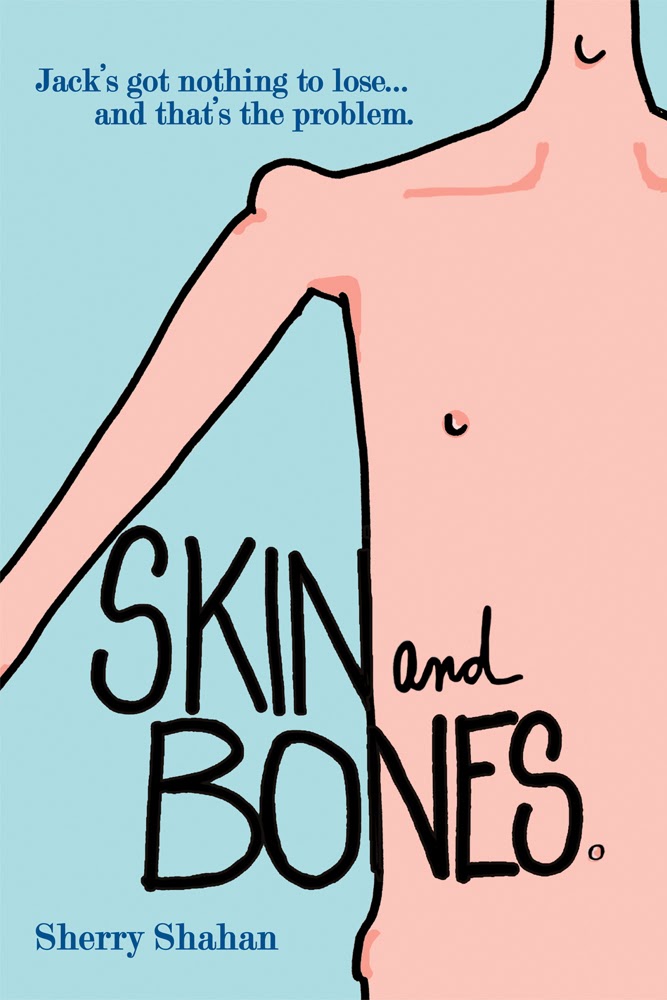
Her new young adult novel
Skin and Bones (A. Whitman) is a quirky story set in an eating disorder unit of a metropolitan hospital. The main character “Bones” is a male teen with anorexia. He falls desperately in love with an aspiring ballerina who becomes his next deadly addiction.
The novel was inspired by a short story Sherry wrote years ago, “Iris and Jim.” It appeared in print eight times worldwide. Her agent kept encouraging her to expand “Iris and Jim” into a novel. Easy for her to say!
* * *
Wednesday Writing Workout
Tell It Sideways
by Sherry Shahan
During the first draft of
Skin and Bones I stumbled over a number of unexpected obstacles. How could I give a character an idiosyncratic tone without sounding flippant?
Eating disorders are serious, and in too many instances, life-threatening.
Sometimes I sprinkled facts into farcical narration. Other times statistics emerged through dialogue between prominent characters—either in an argument or by using humor. Either way, creating quirky characters felt more organic when their traits were slipped in sideways instead of straight on.
There are endless ways to introduce a character, such as telling the reader about personality:
"Mrs. Freeman could never be brought to admit herself wrong on any point." — Flannery O'Connor, "Good Country People."
Or by detailing a character’s appearance:
"The baker wore a white apron that looked like a smock. Straps cut under his arms, went around in back and then to the front again, where they were secured under his heavy waist ." —Raymond Carver "A Small, Good Thing"
The art of creating fully realized characters is often a challenge to new writers of fiction. As a longtime teacher I’ve noticed:
1.) Writers who use short cuts, such a clichés, which produce cardboard or stereotypical characters.
2.) Writers who stubbornly pattern the main character after themselves in a way that’s unrealistic.
3.) Writers who are so involved in working out a complicated plot that their characters don’t receive enough attention.
In Skin and Bones I let readers get to know my characters though humorous dialogue. This technique works best when characters have opposing viewpoints.
Consider the following scene. (Note: Lard is a compulsive over-eater; Bones is anorexic.)
“I’ll never buy food shot up with hormones when I own a restaurant,” Lard said. “Chicken nuggets sound healthy enough, but they have more than three dozen ingredients—not a lot of chicken in a nugget.”
Bones put on rubber gloves in case he’d have to touch something with calories. “Can’t we talk about something else?”
“That’s the wrong attitude, man. Don’t you want to get over this shit?”
“Not at this particular moment, since it’s almost lunch and my jaw still hurts from breakfast.”
Lard shook his head. “I’m glad I don’t live inside your skin.”
“It’d be a little crowded.”
Exercise #1: Choose a scene from a work-in-progress where a new character is introduced. (Or choose one from an existing novel.) Write a paragraph about the character without using physical descriptions. Repeat for a secondary character.
Exercise #2: Give each character a strong opinion about a subject. Do Nice Girls Really Finish Last? Should Fried Food Come With a Warning? Make sure your characters have opposing positions. Next, write a paragraph from each person’s viewpoint.
Exercise #3: Using the differing viewpoints, compose a scene with humorous dialogue. Try not to be funny just for humor’s sake. See if you can weave in a piece
of factual information (Lard’s stats. about Chicken Nuggets), along with a unique character trait (Bones wearing gloves to keep from absorbing calories through his skin.)
I hope these exercises help you think about characterization in a less conventional way. Thanks for letting me stop by!
Sherry
www.SherryShahan.comThank you, Sherry, for this terrific Wednesday Writing Workout! Readers, if you give these exercises a try, do let us know how they work for you.
Happy writing!
Carmela

Today I'm happy to share a guest Wednesday Writing Workout from the amazing Kym Brunner, who is celebrating the release of not one, but TWO, novels this summer.
When I met Kym at an SCBWI-IL conference a few years back, I couldn't get over her enthusiasm and energy. I had no idea how she found time to write, given that she was a busy mom with a full-time teaching job (teaching middle-schoolers, no less!).
According to her bio, Kym's method of creating a manuscript is a four-step process: write, procrastinate, sleep, repeat. She's addicted to Tazo chai tea, going to the movies, and reality TV. When she's not reading or writing, Kym teaches seventh grade full time. She lives in Arlington Heights, Illinois with her family and two trusty writing companions, a pair of Shih Tzus named Sophie and Kahlua.

Kym's debut novel,
Wanted: Dead or In Love (Merit Press), was released last month. Here's the intriguing synopsis:Impulsive high school senior Monroe Baker is on probation for a recent crime, but strives to stay out of trouble by working as a flapper at her father's Roaring 20's dinner show theater. When she cuts herself on one of the spent bullets from her father's gangster memorabilia collection, she unwittingly awakens Bonnie Parker's spirit, who begins speaking to Monroe from inside her head.
Later that evening, Monroe shows the slugs to Jack, a boy she meets at a party. He unknowingly becomes infected by Clyde, who soon commits a crime using Jack's body. The teens learn that they have less than twenty-four hours to ditch the criminals or they'll share their bodies with the deadly outlaws indefinitely.
And here's the blurb for her second novel,
One Smart Cookie (Omnific Publishing), which came out July 15:
 Sixteen year old Sophie Dumbrowski, is an adorably inept teen living above her family-owned Polish bakery with her man-hungry mother and her spirit-conjuring grandmother, who together, are determined to find Sophie the perfect boyfriend.
But when Sophie meets two hot guys on the same day, she wonders if this a blessing or a curse. And is Sophie's inability to choose part of the reason the bakery business is failing miserably? The three generations of women need to use their heads, along with their hearts, to figure things out...before it's too late.
Today Kym shares a terrific
Wednesday Writing Workout on dialogue.
Wednesday Writing Workout:
SHH! DIALOGUE SECRETS YOU DON’T WANT TO MISS!
by Kym Brunner
Quick! After a person’s appearance, what’s the first thing you notice when you meet someone? If you’re like most of us, it’s what comes out of their mouths. First impressions and all that. But when you read, you can’t see the characters, so your first impressions are made based on what the characters say, not how they look.
Simple concept, right? Not so simple to deliver.
SO…HOW DO YOU MAKE YOUR CHARACTER MAKE A GOOD FIRST IMPRESSION?
Give them something to say that’s:
- Believable
- Fits their personality
- Consistent, yet unexpected
- Short and natural
1) Believable DialogueHow do you know if it’s believable or not? Put on your walking shoes and get out your notebook! Head to the spot where the prototype of your character would go. Need to write teens talking together at lunch? Go to a fast-food restaurant near a high school. Want to know what couples say when they’re on a date? Head to a movie theater early and go see the latest romantic comedy. You get the idea.
***HINT: LISTEN AND TAKE GOOD NOTES. I promise you’ll forget the words and how they said them if you don’t.
2
2) Dialogue that fits the character’s personality
There’s a famous writing cliché that says a reader should be able to read a line of dialogue and know who the character is without the identifying dialogue tag.
The key is being the character when you write his or her lines. Imagine YOU are the sensitive butcher who is very observant (seriously, picture yourself looking out of the eyes of the butcher with your hands on a raw steak) and then write his or her lines. Better yet, listen to a butcher talk to customers and/or interview one to ask his top three concerns about his job. You might be surprised to learn what those things are…and so might your reader.
***HINT: SWITCH INTO THE MINDS of all of your characters (even the minor ones) as you write to create words that only THEY would say.
3) Consistent, yet unexpected? Huh?Your job is to make sure your characters are real, that they speak the truth (or not, depending on who they are). In real life, characters might keep their thoughts to themselves. Not so in fiction. Characters that are pushed to the brink must speak out––to a best friend, to the cabbie, to the offending party, to the police.
Yes, we want dialogue to be authentic, but it IS a story and it does need to intrigue your readers. So let them speak their mind and propel the story ahead by providing interesting thoughts for your readers to mull over.
***HINT: TO KEEP PACING ON TRACK, use frequent dialogue to break up paragraphs of exposition.
4) Short and NaturalCut to the chase. No one likes listening to boring blowhards, so don’t let your characters be “one of those people.” Remember tuning out a boring teacher? That’s what didactic dialogue and info dumps feels like to your readers. Only include information that’s absolutely necessary for the story’s sake and skip the rest. You might need to know the backstory, but keep it to yourself.
***HINT: READ ALL DIALOGUE OUT LOUD. Change voices to the way you imagine the characters interacting and it’ll feel more “real.” If you’re bored with the conversation, so is your reader. If it doesn't sound the way a person really talks, cut it or revise it. Listen to real people and you’ll notice most of us talk in short sentences with breaks for others to add commentary.
So there you have it. Write dialogue that’s believable, fits the characters, necessary, and natural and your readers will come back for more!
*****
Hopefully you’ll find authentic dialogue galore in
Wanted: Dead or In Love, which features two alternating POVs––one from Monroe (a modern-day teen who becomes possessed internally by the infamous Bonnie Parker), and the other from Clyde Barrow himself (who works hard to take over the body of Jack Hale, a teen male).
And if cultural humor is more your style, you’ll get a helping of Polish spirits along with a bounty of teen angst in
One Smart Cookie.
Kym BrunnerThanks so much, Kym! Readers, let us know if you try any of these techniques. Meanwhile, if you'd like to connect with Kym, you can do so via her
website,
Facebook, Twitter, and
Goodreads. And if you'd like a taste of
Wanted: Dead or In Love, here's the book trailer:
Happy writing (and reading!)
Carmela

By:
Carmela Martino and 5 other authors,
on 6/11/2014
Blog:
Teaching Authors
(
Login to Add to MyJacketFlap)
JacketFlap tags:
plot,
writing exercise,
plotting,
Margo L. Dill,
Carmela Martino,
Writing Workout,
Joan Bransfield Graham,
Wednesday Writing Workout,
External Quest,
Internal Quest,
Add a tag
Today I'm pleased to share a Wednesday Writing Workout contributed by the inspiring and talented author Margo L. Dill.
I first met Margo some years ago at an SCBWI-Illinois writing conference. I believe she'd already sold her first novel, the middle-grade historical
Finding My Place: One Girl's Strength at Vicksburg (White Mane Kids), but it hadn't been published yet. With today's post, we join Margo's blog tour celebrating the release of her second novel,
Caught Between Two Curses (Rocking Horse Publishing), a YA light paranormal romance novel about the Curse of the Billy Goat on the Chicago Cubs. Margo has two more books under contract--both picture books--one with High Hill Press and the other with Guardian Angel Publishing. Besides being a children's author, she is also a freelance editor with
Editor 911: Your Projects Are My Emergency! and she is part of the
WOW! Women On Writing e-zine's staff. There, she works as an editor, blogger, instructor, and social media manager. When she's not writing, editing, or teaching online, Margo loves to spend time with her husband, stepson, daughter, and crazy Boxer dog, Chester, in St. Louis, Missouri. You can learn more
at Margo's website.
Here's a summary of
Caught Between Two Curses:
 Seventeen-year-old Julie Nigelson is cursed. So is her entire family. And it’s not just any-old-regular curse, either—it’s strangely connected to the famous “Curse of the Billy Goat” on the Chicago Cubs. Julie must figure out this mystery while her uncle lies in a coma and her entire love life is in ruins: her boyfriend Gus is pressuring her to have sex, while her best friend Matt is growing more attractive to her all the time. Somehow, Julie must figure out how to save her uncle, her family’s future, and her own love life—and time is running out!
As a die-hard Cubs fan, I'm really looking forward to reading Margo's new book. (I'm hoping the main character solves not only her problem, but the Cubs' curse too!)
And now, here's Margo's three-part
Wednesday Writing Workout.Wednesday Writing Workout: Putting the Pieces TogetherWriting a novel is like putting together a jigsaw puzzle with my daughter. I’ve been teaching her to do the edge pieces first and then fill in the middle. This reminds me of writing a novel because writers usually start with an idea, maybe a plot or an interesting character with a problem—in other words, our border. We build our foundation for a story by piecing together our ideas. But sometimes, that beginning border, even with a few pieces filled in the middle, is not finished or even sturdy. Here are exercises I use with my
WOW! Women On Writing novel students to add more pieces to their puzzle and come out with a strong, final product—a finished, publishable novel! (These can also be used with short stories and picture books.)
1. Create characters with internal and external problems.
The characters I remember best are the ones that struggled with both internal and external problems. What’s the problem your character has that he must overcome in the novel? Trying to raise money for a new bike? Figuring out how to deal with a sibling? Tired of moving around and always being the new kid at school? These are all external problems, and the ones that our plots are built on.
But your character also needs an internal problem! In
Caught Between Two Curses, Julie has to break two curses; but while she does this, she also struggles with her self-esteem and confidence as well as what love means. These are her internal struggles. While she rushes around to save her uncle, the events in the novel help her grow and work through her internal problems.
Just ask yourself these four questions either before you write your novel or even during revisions:
a. What is your main character’s internal struggle?
b. How does he or she solve it?
c. What is the external problem in the novel that affects the main character?
d. How does he or she solve it?
2. Brainstorm problems.
If you find yourself with a strong border for your novel—an exciting beginning and an ending that will leave readers talking for years, but you are stuck in the muddy middle, make a list of 10 problems that a person can have that’s the same age as your main character and in the same time period. For example, my novel’s main character is 17, lives in Chicago in present day. Problems she can have are: pressure to have sex, temptation to do drugs, failing classes, negative body image, disloyal friends, etc.
Once you have this list, are there any of these problems that you could turn into a subplot for either your main character or a minor character or sidekick? Subplots can often dry up the muddy middle and keep readers hiking to the end.
3. "Then what?"
The last exercise asks a simple question, “Then what?” Each time you answer, make the problem or situation worse for your main character. You don’t actually have to use all of these horrible situations in your book, but they may help you push your main character a little harder. Here’s an example:
Julie learns a curse is on her family.
Then what?
The curse makes her uncle fall in a coma.
Then what?
Julie’s grandma says her uncle will die before he is 35 if the curse isn’t broken.
Then what?
He is 35 in less than 5 months.
Then what?
She has no idea what to do to break the curse.
Using these writing exercises while you are piecing together your novel will give you a complete story in no time!

As I promised on Monday, today's Wednesday Writing Workout is courtesy of the amazingly prolific Debbie Dadey. This exercise sounds deceptively simple. If you give it a try, do let us know how it works for you. And when you're done here, don't forget to enter for a chance to win an autographed copy of Debbie's latest chapter book, Treasure in Trident City (Aladdin), from her Mermaid Tales series.
Wednesday Writing Workout from Debbie Dadey:
Characterization, from the Feet Up
I was lucky enough to attend one of the Highlights’ Chautauqua experiences many years ago. I’ll never forget author Pam Conrad’s workshop about characterization. One exercise stuck with me. It’s easy and that’s probably why I remember it:
- Simply think of your main character and look at his/her feet. What do they look like? Barefoot? Shiny? Polished? Scuffed?
- Then go up to the legs. Socks? Dirty? Ruffled? Keep going up.
- Do the knees have scabs on them?
- Keep going up until you’ve completely visualized your entire character.
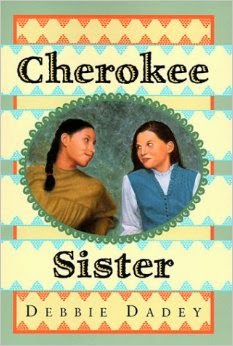
This exercise helped me realize that I was approaching my first novel,
Cherokee Sister, from the viewpoint of the wrong character. I hope it will help you.
_____________________________
Thank you, Debbie!
Happy writing, everyone.
Posted by Carmela

As Mary Ann mentioned on Monday, we're saying "farewell" to Jeanne Marie by linking back to one of our favorites of her 101 TeachingAuthor posts. And since today is Wednesday, I had the added task of choosing a favorite post that also lends itself to a Writing Workout. Turns out, that wasn't very hard. Last July, Jeanne Marie blogged about a picture book writing course she was taking. One of her assignments was to discuss the contents of her Writer's Toolbox. She shared an excerpt from her response to the assignment (which I encourage you to go back and read) and talked of the value of reflecting on one's own Writer's Toolbox.
For today's
Wednesday Writing Workout, I'd like to focus on the first tool/challenge Jeanne Marie mentioned:
"I think that one of the most challenging aspects of creating a rootable character is finding a way to make him/her likeable and flawed at the same time."
When I first read this, the term "rootable character" was new to me. I know now that it's simply a character the reader will want to root for. But creating one is not a simple task. In fact, it's something I'm struggling with in my current work-in-progress. Part of my challenge is that my story is set in 18th-century Milan, Italy, a time and place quite removed from my readers. How can I depict my character in a way that modern readers will understand her world well enough to empathize with and understand her feelings and choices?
One way is to find connections between me and my character that I can draw from.
In a presentation to the Federation of Children's Book Groups last March, Elizabeth Wein talked about how she found such connections while writing her award-winning historical novel
Code Name Verity (Disney-Hyperion) by looking for "modern parallels." But even if you're writing a contemporary story, whether fiction or nonfiction, it's not always easy to make your protagonist "rootable." Before trying the following workout, you may want to read these two articles on the topic: a post by Emilia Plater called "
Radical Empathy: Creating a Compelling Flawed Character" on the
YA Highway blog, and one by Alex Epstein for the
2012 Script Frenzy site called "
We Like Characters Because of Their Flaws, Not Their Virtues."
Writing Workout: Creating a Rootable Character
If you have a work-in-progress, consider your main character. Is he or she too perfect? If so, can you give the character a flaw that readers could relate to and understand? Or, on the flip side, have you created a character readers will dislike? If so, can you show why this character is this way?
Happy Writing!
Carmela

By:
Carmela Martino and 5 other authors,
on 9/4/2013
Blog:
Teaching Authors
(
Login to Add to MyJacketFlap)
JacketFlap tags:
Book Giveaway,
writing prompt,
New Year's resolutions,
writing exercise,
Writing Workout,
April Halprin Wayland,
Guest Teaching Author,
New Year at the Pier,
Wednesday Writing Workout,
Add a tag
.
Howdy, Campers!
It's not Saint Patrick's Day, but we're lucky, lucky, lucky to open our doors and welcome Guest TeachingAuthor Barbara Krasner, who offers us a dynamite Wednesday Writing Workout for the New Year.
|
As long as we're feeling lucky, enter our latest book giveaway!
Details at the end... |
Here's a bit about Barbara: In the fall of 2014, her picture book,
Goldie Takes a Stand! A Tale of Young Golda Meir, will be published by
Kar-Ben, the Jewish imprint of
Lerner Publishing Group. In addition, she's written four nonfiction books (including
Discovering Your Jewish Ancestors) and more than 200 articles for adults and children that have appeared in
Highlights for Children, Cobblestone, Calliope, and
Babaganewz.
She holds an MFA in Writing for Children and Young Adults from the
Vermont College of Fine Arts, an MBA in Marketing from
Rutgers University, and blogs at
The Whole Megillah/
The Writer’s Resource for Jewish-themed Children’s Books. Barbara is currently on the
Sydney Taylor Book Award committee.
Her short fiction and poetry have appeared in
Poetica,
Jewish Women’s Literary Annual,
Mused-BellaOnline Literary Review, Jewishfiction.net, in the
Paterson Literary Review; she was a semi-finalist in the 2013 Pablo Neruda Prize for Poetry in the upcoming
Nimrod International Journal (!!)
Barbara is definitely a
TeachingAuthor, teaching creative writing in the English department of
William Paterson University and a workshop,
Writing Jewish-themed Children’s Books at the
Highlights Foundation.
You see what I mean when I say we're
lucky to have her come by today? WOWZA!
And now, here's Barbara with the Writing Workout
she's cooked up for us!
Rosh Hashanah, the Jewish New Year, comes early this year and I’m glad. It gives me the opportunity to reflect on the past year and think about the coming year even before the leaves fall. I’m giving you a Rosh Hashanah challenge in three parts.
Part One: Rosh Hashanah, literally translated as head of the year, is a perfect time to think about the beginning of your manuscript. How many times do we hear that if we can’t grab the agent/editor/reader within just a few seconds, he or she will just move on to something else?
Ask yourself the following questions:
• Do you have a compelling title?
• Does your first line grab the reader? (My all-time favorites are from M.T. Anderson, “The woods were silent except for the screaming,” and from Kate DiCamillo, “My name is Opal Buloni, and last summer my daddy, the preacher, sent me to the store for a box of macaroni-and-cheese, some white rice, and two tomatoes and I came back with a dog.”)
• Have you presented the main character on the first page?
• Have you presented the problem within the first page, the first chapter?
These questions apply to fiction and nonfiction alike.
What are your first lines?
Part Two: The Rosh Hashanah holiday includes a practice called Tashlich, casting off our sins. The practice is exemplified in April Halprin Wayland’s New Year at the Pier (Dial, 2009) and the mother-daughter team of Susan Schnur and Anna Schnur-Fishman’s Tashlich at Turtle Rock (Kar-Ben, 2010). My question to you: What writing sins will you cast off this year?
When I think about this for myself, I think about:
• I will cast off my lack of organization – I will organize all those papers into folders with easy-to-read tabs and file the folders
• I will cast off watching reality TV (TCM movies only) – I need more time to write
• I will cast off working on a gazillion projects at once – I will focus on one genre at a time, and right now, that’s poetry, and okay, picture books
• I will cast off reading several books at once – I commit to reading a book fully before moving on to another.
You get the idea. What will you cast off?
Part Three: Here’s a prompt you can write to: Recall a Rosh Hashanah (or New Year) scene from your childhood and write about it. Who was there? Where were you? What action and dialogue took place?
Thank you so much for your three-part Rosh Hashanah writing challenge, Barbara, and
shana tovah!
But wait! Before you head off to write about a memorable New Year,
be sure to enter for a chance to win a copy of Lisa Morlock's terrific rhyming picture book, Track that Scat! (Sleeping Bear Press).
and...
posted by April Halprin Wayland 
As Carmela pointed out, it's only fitting that my final post should be a Wednesday Writing Workout, given my usual agony over finding appropriate material to share in this space.
My college semester begins on Monday, and I've been trolling the Internet for ideas to borrow and steal. My chief goal this year is to get students more invested in what they're writing. As I mentioned in an earlier post, I've been reading Debbie Macomber's
Once Upon a Time: Discovering Your Forever Story. I was struck by her observation that the prevalent themes in her writing were set in her life from early childhood. As a children's book writer, I can certainly say this is true for me. In fact, I often worry that I have only a few stories to tell, and it is a relief to hear from such a prolific writer that there is hope for me.
At a recent writers' conference, I heard bestselling author Sylvia Day tell the audience that the prevailing theme of everything that she writes is "survival." When she put it this way, I immediately know that mine is identity. Who am I? Where is my place in this world?
Here is an
exercise I found based on a George Ella Lyon poem titled
"Where I'm From." I think everything I might ever have to write about is touched upon somewhere in my responses. Try it and, if you're so inclined, share what you come up with. Happy writing! --Jeanne Marie

Today we have an extra-special Wednesday Writing Workout, provided by the terrific teacher and amazing author, Kathi Appelt!
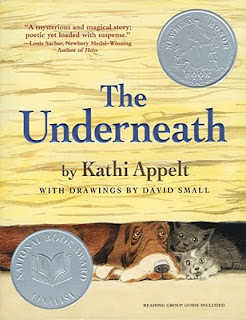 In case you're not familiar with Kathi's work, she is the author of the Newbery-honor winner and National Book Award Finalist The Underneath, as well as the highly acclaimed novel Keeper, and many picture books. She is a member of the faculty at Vermont College’s Master of Fine Arts program and occasionally teaches creative writing at Texas A&M University. Kathi has two grown children and lives in Texas with her husband.
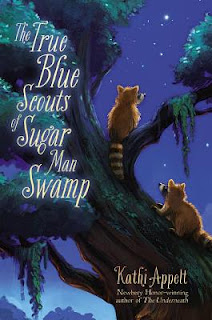 We invited Kathi to be our guest today to celebrate last week's release of her new middle-grade novel, The True Blue Scouts of Sugar Man Swamp. (What a gorgeous cover!) The book has already garnered starred reviews from Booklist, Kirkus, PublishersWeekly, and School Library Journal. That's right--FOUR starred reviews! Several reviewers have referred to this novel, set in a Texas swamp and filled with a great cast of characters (including humans and critters), as a "rollicking tale." Here's a brief description:
Twelve-year-old Chap Brayburn, ancient Sugar Man, and his raccoon-brother Swamp Scouts Bingo and J'miah try to save Bayou Tourterelle from feral pigs Clydine and Buzzie, greedy Sunny Boy Beaucoup, and world-class alligator wrestler and would-be land developer Jaeger Stitch.
I can't wait to read it!
If you'd like to know more about Kathi and her work, check out
her website. And be sure to read through to the end of this post, where I ask Kathi about the connections between today's
Writing Workout and
The True Blue Scouts of Sugar Man Swamp.
 Kathi Appelt's Wednesday Writing Workout
:
Whirled P’s
I’m often asked where I get my ideas, and one day while
doodling at my desk, it occurred to me that most of my stories start with
something I’ve found in the letter P, particularly People, Places and
Pets. Those three are the most Popular
when it comes to digging into my idea file.
The more I thought about it, the more I realized that the
letter P, which looks rather like a half-eaten Popsicle on the Page, is chock
full of idea generators.
Here are a few besides the three I mentioned above:
Problems
Personalities
Parents
Peers
Puddles
Paradigms
Politics
Pleasures
Pandemonium
Peculiarities
Pains
Possibilities
Presents
Props
Psyches
Phantasies
Persuasions
Pickles
Predicaments
Plops
Well, the list goes on and on, but you get my drift. As an exercise, then, choose one of the “Big
Three” (People, Places, Pets), and then write a story using at least one of the
other P’s on the list.
Example: People and
Present might lead to a story about the time my step-mother gave my sister a
pair of boots that had the stars and stripes on them. They were uglier than ugly and my sister was
heartbroken. But she also didn’t want to
hurt my step-mother’s feelings, so she wore them anyways. It was a true predicament.
Another example:
Place and Props might lead to a poem about my kitchen window and the
hummingbird feeder that I keep in the tree just outside it.
Final example: Pets
and Puddle could be the perfect setting for a story about a kitten who tries to
leap a big puddle OR a puppy who leaves a puddle on the kitchen floor.
There aren’t any hard and fast rules here.
So, take those P’s and stir them up, whirl them (as my
friend
Liz Garton Scanlon suggests). And
see what happens. I’ll bet something
Phantastic shows up.
_____
Definitely place comes to mind. When I was in college, I lived in deep, swampy East Texas where I encountered all sorts of wildlife, including the poisonous sort. And of course PIES! Pies are central to the story. Then there are the pricker vines, the pine trees, and the paisanos.
So, lots of P's.
Well, Readers, I hope you're inspired to whirl a few P's of your own. If so, please let us know what you
Produce.
Happy Writing!
Carmela


Today's
Wednesday Writing Workout is from our guest
TeachingAuthor, Melanie Crowder. If you haven't read my interview with Melanie, please go do so now, and enter for a chance to win an autographed copy of her debut novel,
Parched (Houghton Mifflin Harcourt). The details are all in
last Friday's blog post.
Okay, now that you're back, here's a simple, yet powerful, Writing Workout from Melanie.
Find an audio clip that relates to your story. Maybe it’s the sound of a train, or crickets, or rain falling on a sidewalk (
YouTube is a good resource for this). Play the clip for about one minute before you begin writing. What rhythms do you hear? What metaphors can you pull out of the sound? What kind of atmosphere does the sound create? Wistful? Frustrating? Intense?
… and GO! Play the clip on repeat for 5 minutes while you write.
* * *
Thanks, Melanie. If any of you try her workout, please let us know how it works for you.
Happy writing!
Carmela

Returning to my recent obsession with
outlining, I would like to offer a cool
exercise from author Alicia Rasley that allows you to lay out the key points of your novel in a mere thirty minutes. It covers many basics that I typically consider for months and collects disparate pieces of information in one place. [I suspect that this would be a great exercise to complete in preparation for NaNoWriMo.] The timer aspect is also compelling in that it requires you to figure out all of the broad strokes in short order before you are tempted to sit down and try to fill in the details.
I particularly appreciate the fact that this exercise focuses on making the main character likeable and helps you figure out where to begin telling your story. While I have not yet tried this particular approach to the outline, it also seems that it would be extremely helpful in determining how external and internal conflict intersect (a particular difficulty of mine).
If you try this technique, please let me know how it works out for you. Look for me to do the same. Happy outlining! --Jeanne Marie

Today’s
Wednesday Writing Workout comes from Holly Thompson, a fellow TeachingAuthor, just in time to
celebrate yesterday’s Delacorte/Random House release of her second young adult
novel in verse, The Languge Inside.
The novel tells
the story of Emma Karas “who was raised in Japan; it’s the country she calls
home. But when her mother is diagnosed
with breast cancer, Emma’s family moves to a town outside Lowell,
Massachusetts, to stay with Emma’s grandmother while
her mom undergoes treatment.
 Emma feels out of place in the United States. She begins to have migraines, and
longs to be back in Japan. At her grandmother's urging, she volunteers in a
long-term care center to help Zena, a patient with locked-in syndrome, write
down her poems. There, Emma meets Samnang, another volunteer, who assists
elderly Cambodian refugees. Weekly visits to the care center, Zena's poems,
dance, and noodle soup bring Emma and Samnang closer, until Emma must make a
painful choice: stay in Massachusetts, or return home early to Japan.”
Emma feels out of place in the United States. She begins to have migraines, and
longs to be back in Japan. At her grandmother's urging, she volunteers in a
long-term care center to help Zena, a patient with locked-in syndrome, write
down her poems. There, Emma meets Samnang, another volunteer, who assists
elderly Cambodian refugees. Weekly visits to the care center, Zena's poems,
dance, and noodle soup bring Emma and Samnang closer, until Emma must make a
painful choice: stay in Massachusetts, or return home early to Japan.”
The starred School Library Journal review called the
novel “a sensitive and compelling read that will inspire teens to contemplate
how they can make a difference.”
Kirkus described the novel as “an artistic picture of
devastation, fragility, bonds and choices.”
The Horn Book Magazine remarked that “readers will finish
the book knowing that, like Zena, the Cambodian refugees, and the tsunami
victims, Emma has the strength to ‘a hundred times fall down / a hundred and
one times get up.’”
-330+-+Holly+Thompson.jpg) Many
TeachingAuthors readers met Holly in 2011 when my March 16 Student Success Story
interview celebrated the release of her first
young adult novel in verse, Orchards.
Many
TeachingAuthors readers met Holly in 2011 when my March 16 Student Success Story
interview celebrated the release of her first
young adult novel in verse, Orchards.
Orchards went on to win the APALA Asian/Pacific
American Award for Literature.
Raised in Massachusetts,
Holly earned a B.A. in biology from Mount Holyoke College and an M.A. in
English (concentration creative writing/fiction) from New York University’s
Creative Writing Program. A longtime resident of Japan, Holly teaches creative
writing at Yokohama City University and also serves as Regional Advisor for the
Japan Chapter of SCBWI. Holly’s fiction
often relates to Japan and Asia.
Congratulations,
Holly, on yet another successful book!
And, thank you
for sharing your expertise with our TeachingAuthors readers – who happen to
have only until Sunday, May 19 to enter our TeachingAuthors Blogiversary
Giveaway!
Click here to
enter – if you haven’t already – the raffle to win one of 4 $25 Anderson’s
Bookshop Gift Certificates.
Esther
Hershenhorn
. . . . . . . .
Holly Thompson’s Wednesday Writing
Workout: Poetry with a Plot
When I do author
school visits, I love to introduce students to narrative poems and narrative
verse and get them started on writing their own. You can write and/or teach
this type of poetry, too – poetry I call “Poetry with a Plot.”
Beforehand:
1. Gather some
narrative poems—poems that tell a story—to share with students. Examples are
Gary Soto’s “Oranges,” Jeffrey Harrison’s “Our Other Sister,”
Naomi Shihab Nye’s “My Father and theFig Tree,” and “Fifteen”
or “Traveling Through The Dark,” by William Stafford, and my poem “Cod” (published in PoetryFriday Anthology Middle School)
2. Also gather
some verse novels. Select one scene to share with students. Choose a scene that
has a fairly clear beginning, middle and end. Chapter 22, Visitors, of my novel Orchards
is an example of a scene in verse with
a clear plot arc.
3. Create a list
of situations to share with students. Here are a few examples of some
situations that I like to use:
a mistake
a decision
a first time
a last time
a betrayal
an encounter
an argument
a mix-up
a lie
With the students:
1. Read the
narrative poems aloud. For each narrative poem, ask students to react. Ask:
What lines or stanzas do you like? Why? What is the mini plot of the poem—what
happens in this poem? Then have them look at the structure and style of the
poem. Ask: Do the structure and style help create the narrative? How?
2. Read aloud a
scene from a verse novel. Ask students to react. Ask: What lines or stanzas do
you like? What lines move you? What lines are powerful? Where did your breath
catch? Where did the pace pick up or slow down? Why? What is the basic plot arc
of the scene? Did any action happen off the page? How did the writer structure
the scene and create tension—with repetition, white space, short lines, long
lines, particular images, or sounds and rhythms?
3. Next, give
students your list of situations. Have students brainstorm examples of the
various types of situations. Students will then choose one type of situation
from which to create a narrative poem or scene in verse. Point out, for
example, that “Oranges” can be considered a first time poem; “Our Other Sister”
a lie poem; “Fifteen” and “Traveling Through the Dark” decision poems; and
“Cod” a betrayal poem. Chapter 22 in Orchards
might be considered an encounter scene. Tell students they can start from a
true situation, or partially fictionalize a situation, or veer away from actual
truth to completely fictionalize a situation.
4. After
students create first drafts of their narrative poems or scenes, have them work
at revising, individually and in peer workshops, checking for the narrative
arc, details, poetic elements, line breaks and spacing.
5. Finally when
students have polished their work, have students read, perform, create
multimedia presentations, publish in zines or submit their narrative poems or
scenes in verse to school magazines.
Be prepared to
be amazed! Good luck and let me know if you try this approach to introducing
narrative poems and and narrative verse.
# # #

Anybody who has been in one of my workshops knows what a fanatic I am for the one-sentence synopsis. If you don't know what I'm talking about, take a look at the title page of (almost) any book for kids. See the sentence that sums up the entire story? Not much to it, is there? Should be easy to write one, then, right? Um...
Sometimes called an elevator pitch – because if you find yourself in an elevator with an editor and s/he asks what you're working on, you don't want to ramble on like a doofus (she said from experience) – the one-sentence synopsis is also an excellent tool for keeping your story on track during the writing process.
Oh, how many times my stories – especially my rhyming stories – go off in a direction I hadn't intended. When a story veers out of control, I know it's time to back up the truck and ask myself one simple question:
What is this story really about?
Crafting a one-sentence synopsis has saved my bacon time and again. It cuts to the heart of the story, clarifies your main character's motivation, and illuminates the path from a story's beginning to its end.
So give it a try. Write a one-sentence synopsis for your work in progress.
Include:
1. Your main character's name.
2. What it is s/he is struggling with.
3. What's at stake for your MC (if not readily apparent).
4. What s/he does to reach her goal or overcome the problem (if needed).
Here's an example from one of my 2014 books,
I Am Cow, Hear Me Moo! (Dial):
Nadine, a braggy cow, gets into hilarious trouble when, to save face, she's forced to lead her friends on a nighttime hike through the spooky woods.
That probably isn't what will be on the finished book's title page, but it's
my one-sentence synopsis of this story. It pretty much tells you everything you need to know in deciding whether to read it or replace it on the shelf.
If you care to, go ahead and put your synopsis into the comment section, I'd love to see what you're working on.
Good luck! And don't forget to enter our
giveaway for a chance to win Tamera Wissinger's Gone Fishin'. Hurry! Today's the last day.
Jill Esbaum

Mystery Guest Wednesday Writing Workout: Five
Tips for Tightening Your Manuscript

Today’s Wednesday Writing Workout comes to you courtesy of
an award-winning author whose talent, pluck and love define her. Her titles include the tween novels Julia’s Kitchen
and Jemma Hartman, Camper Extraordinaire (both
Farrar, Straus & Giroux). Her newest book, The Yuckiest, Stinkiest Best Valentine Ever (Dial), tells the story
of Leon who’s hopelessly in love with Zoey Maloney. But the valentine he
creates for her wants nothing to do with Leon’s mushy sentiments. The valentine
thinks this holiday is all about candy, and he runs away rather than suffer the
embarrassment of saying "I love you." As Leon follows the valentine
through town, boys, girls, and teens join the chase and chime in on their
perspectives of love until finally, the conflict comes to a heart-pounding,
sweaty-palm conclusion in of all places – a candy shop. Our Mystery Guest lives in Deerfield,
Illinois, sharing her days, nights and writing time with her husband and three
teenagers.
Have you identified our Mystery Guest Author
yet? She’s a true Student Success Story!
The Wednesday Writing Workout: Five Tips for Tightening Your Manuscript
Once you’ve finished your manuscript and revised
the story so that the characters are authentic, the setting comes to life, and
the plot makes sense and is filled with tension, before you submit it to an
editor or agent, you should turn to the writing itself and see how you can make
it tighter and more effective. Here are a few tricks I’ve learned over the
years. Give them a try:
1.
Circle all your verbs. Make sure each one
is powerful and specific. Then delete as many adverbs as possible. If you’ve
chosen the best verbs, you won’t need them anyway.
2.
Look for rhetorical questions in your
manuscript and delete them. Chances are you don’t need them and they’re slowing
your story down. In the rare event that you do need them, change the question
to a direct sentence. And in the even rarer case that you absolutely must have
a rhetorical question, keep it. Just be conscious about it.
3.
Watch out for word echoes. Don’t use the
same word more than once on the same page or even on consecutive pages.
4.
Read the first and last sentence of each
chapter and make sure you are varying them and starting and finishing with a
bang.
5.
Find twenty words to cut on each page. I
promise, you won’t miss them.
Why bother with all this cutting and tightening?
Simply put, it makes for a better reading experience, and that’s the whole
point.
* * * * * * *
 So, in the wild chance you didn’t identify Brenda Ferber, click here to read my last week’s January
14 Student Success Story Interview with this award-winning author.
So, in the wild chance you didn’t identify Brenda Ferber, click here to read my last week’s January
14 Student Success Story Interview with this award-winning author.
Click here to learn more about her newest book –
The Yuckiest, Stinkiest Best Valentine
Ever.
And, finally, congratulations, Karen Casale of Connecticut,
this week's TeachingAuthor Book Giveaway Winner! You won an autographed copy of Brenda’s
newest book.
Thank you, Brenda, from the bottoms
of our TeachingAuthors’ hearts, for sharing yourself, your Writing Life, a copy
of your book – and – today’s Wednesday Writing Workout with our TeachingAuthors readers, writers and teachers.
Esther Hershenhorn

By:
Carmela Martino and 5 other authors,
on 1/16/2013
Blog:
Teaching Authors
(
Login to Add to MyJacketFlap)
JacketFlap tags:
poem,
Book Giveaway,
writing exercise,
children's poems,
writing poetry,
Writing Workout,
poetry exercise,
Writing about Childhood Memories,
Joanne Rocklin,
poetry prompt,
Wednesday Writing Workout,
Add a tag
.
Howdy Campers! Welcome to...
My mother says that everyone remembers the trees of their childhood.
I recently attended the annual
FOCAL (Friends of Children and Literature) Luncheon hosted by the Los Angeles Public Library Children's Literature Department. Each year, FOCAL gives an award to an outstanding children's book with California content. This year's award deservedly went to my friend
Joanne Rocklin for her wonderful book,
One Day and One Amazing Morning on Orange Street (Abrams).
Joanne's acceptance speech was thoroughly
Joanne: full of enthusiasm, aware of her audience, bursting with love.
Each detail of this inspired centerpiece references her book.
Joanne's memories of her beloved orange trees inspired my poem that day (I write
a poem a day); I thought perhaps a memory of a tree in your life might inspire you, too.
I wrote about our Meyer Lemon tree and how incredibly generous it is. See for yourself:
I want to share my lemon tree poem with you...but here's my dilemma: dozens of my poems have been published in poetry anthologies...but recent contracts specify that poems can never have been published--even on a blog. ACK!
WINNING
by April Halprin Wayland
I sit under this tree
to sit under this tree.
Not to win anything.
Just me and tree.
If the wind happens to drop
a sweet plum in my lap, though,
I would never say no
to a plum.
poem © 2013 April Halprin Wayland. All rights reserved
Now it's your turn.
1) Close your eyes. Think of a tree from your childhood...or any tree of significance to you.
2) List details of that tree that cover all five senses, or write snippets of your memories of the tree.
3) Or you may want to simply plunge in, and see what memories sprout from your pen or keyboard.
4) Consider putting your poem (or was it a story that emerged?) into a
form...or not.
5) Consider sending your poem to someone who would remember that tree.
6) Leave a comment about this exercise. :-)
poem and lemon tree photo © 2013 April Halprin Wayland. All rights reserved

Happy New Year, Everyone!
I hope you're all rested and refreshed and ready to plunge ahead into 2013.
While on our winter blogging break, we TeachingAuthors were busy working behind-the-scenes, planning a new weekly feature. If you're a regular reader of this blog, you know we often include Writing Workouts with our posts. As it says in our sidebar: "We invite classroom teachers to use these writing exercises with their students, and adult writers to try them on their own." Many of you have told us that you especially appreciate and look forward to our Writing Workouts. So we've decided to pull them out of our regular posts and create a separate feature: the Wednesday Writing Workout!
As you can see, we've added some text but kept our former
Writing Workout image--a set of barbells and a ribbon with a medal. The logo represents how
everyone who works out with us is a winner!
While continuing with our regular posts on Mondays and Fridays, we'll devote Wednesdays to
Wednesday Writing Workouts. Each
WWW will be written by one of the
TeachingAuthors or, as is the case today, by a
Mystery Guest TeachingAuthor.
To introduce the new feature and celebrate a new year,
we're also having a Book Giveaway! Every writer and writing teacher will want a copy of our giveaway book on his/her reference/inspiration shelf:
Keep Calm and Query On: Notes on Writing (and Living) with Hope (Divertir Publishing). And the book happens to be written by today's
Mystery Guest TeachingAuthor.
I'll share our
Mystery Guest TeachingAuthor's bio before giving you his
Writing Workout. See if you can guess the author's identity before I reveal it below. (No fair looking up the
MGTA's books online before that!)
Today's
MGTA has the kind of resume our readers love: A former teacher of grades 7 through 12 and a writer of children’s fiction, he’s the editor of the forthcoming book for teens and tweens
, Break These Rules (Chicago Press). He co-edited
Burned In: Fueling the Fire to Teach (Teachers College Press) and
Dedicated to the People of Darfur: Writings on Fear, Risk, and Hope (Rutgers University Press). Teachers College Press also published his latest book for teachers,
A Call to Creativity: Writing, Reading, and Inspiring Students in an Age of Standardization.
Does this bio sound familiar? That's because Esther
reviewed Keep Calm and Query On back in October. She gave the book a big
Thumbs Up!
Before I reveal the identity of our
Mystery Guest TeachingAuthor, here's his TERRIFIC
Wednesday Writing Workout:
Give Logic a Lollipop:
I am one of those people who believes that we’re all still children, really. Whether we’re 32 or 64 or 96, there’s something innate in us that stubbornly refuses to grow up no matter how much coffee we drink (in my case, a lot), how much we worry about paying bills, or how professional we look in our formal attire. The kid-like parts of us are often covered by layer after layer of logic. While the growth of logic is hugely beneficial to things like paying our bills, walking out of the house with matching socks and a straight tie or proper dress, and generally being responsible, an area that is bleached of vitality by our intense focus on forcing everything to make sense is our writing life.
This
Wednesday Writing Workout, then, asks us to momentarily allow logic to sit by himself on the far bench, way over on the other side of the room. Give Logic a lollipop and the latest Time magazine, and then sneak off to your writing desk and try something illogical to fuel those writing muscles.
1. Visualize your favorite film actor or actress.
2. Close your eyes, and continue visualizing that person, and then reach out—literally!—your hand and shake their hand, up and down. Then smile knowingly (eyes still closed) like you and your favorite film star are sharing some inside joke even though you haven’t spoken any words yet. You’re that tight.
3. Open your mouth (literally!) and speak the very first words that come to mind.
4. Now open your eyes, pick up your pen or open up a Word document on your computer and write your name, then a colon, then the words you’ve just said.
5. Then write the actor’s / actress’s name, a colon, and his / her response.
6. Continue writing your ‘scene’ with dialogue that emerges organically and no matter how seemingly ridiculous it is, just follow the exercise through.
7. Every once in a while, try to insert a small note on the setting—the weather outside, what you’re eating (lollipops?), what noises occur in the background, and anything else that creates the mood of your conversation.
8. Try to continue this scene for at least two pages. This is a perfect opportunity to work our writing muscles by putting ourselves into a situation that allows the kid-like part of us to trump the adult part of us.
So often, as writers, we can think in terms of productivity and progress. And these are both great things in the life of a writer. Hey, who doesn’t want to add a few more pages to that novel, or bang out a few more notes for that picture book? But sometimes, persistent focus on productivity and progress have the side effect of hiding us from the kid-like parts of our writer selves, that are concerned—almost entirely—with joy, engagement, emotion, quirks, and creativity.
My seven-year-old nephew loves writing stories. When I talk with him about what he’s writing, he doesn’t give me the latest page count or the stats on which publishers have checked out his work yet. Even while I sometimes focus too much on those things, I try to shake my head and heart to return to what matters: the creation itself. The sheer beauty, hilarity, pain, joy, and love of it. And this process must, by definition, involve flights of fancy and the decision to leave logic a little lonely at times.
Today, for your
Wednesday Writing Workout, craft this scene and let the kid in you lead the way. I promise you’ll discover pearls that—if nothing else—will make you laugh, and possibly even provide a kernel for a louder pop later.
* * *
What a wonderful
Wednesday Writing Workout to inaugurate our new feature! And now, finally, it's time for the big reveal. Today's Mystery Guest TeachingAuthor is (drum roll please):
 |
| Luke Reynolds! |
Special thanks to Luke for helping to launch our new feature! Readers, if you'd like to know more about Luke, see
his website. I also encourage you to check out his blog
, Intersections: One Writer's Journey Through Parenting, Living Abroad, Faith, Publishing, and Social Justice.
As I mentioned above, Luke is the author of
Keep Calm and Query On: Notes on Writing (and Living) with Hope (Divertir Publishing). If you read Esther's
review, you're going to want to enter our drawing for a chance to win your very own copy.
To enter our drawing, you must follow the
TeachingAuthors blog. (If you’re not already a follower, you can sign up now in
our sidebar to subscribe to our posts via email, Google Friend Connect, or Facebook Network blogs.)
You may enter the contest one of two ways:
1) by posting a comment below OR
2) by sending an email to teachingauthors [at] gmail [dot] com with "Book Giveaway" in the subject line.
Whichever way you enter, you
MUST:
1) Just for fun, tell us whether you guessed Luke's identity before the big reveal. We'd also love your feedback on his
Writing Workout and/or what you think of our new
Wednesday Writing Workout feature.
2) give us your first and last name,
AND
3) tell us how you follow us (via email, Google Friend Connect, or Facebook Network blogs) .
4) If you enter via a comment, you
MUST include a valid email address (formatted this way: youremail [at] gmail [dot] com) in your comment.
This contest is open only to followers who can provide a mailing address in the United States. Incomplete entries will be discarded. The
entry deadline is 11 p.m. (CST) next Wednesday, Jan. 9, 2013. We'll announce the winner on Friday, Jan. 11. Good luck!
Happy writing, and happy 2013!
Carmela

By:
Carmela Martino and 5 other authors,
on 12/14/2012
Blog:
Teaching Authors
(
Login to Add to MyJacketFlap)
JacketFlap tags:
Poetry Friday,
inspiration,
Book Giveaway,
rhyme,
holiday,
writing exercise,
song,
Hanukkah,
writing poetry,
poetry forms,
Writing Workout,
April Halprin Wayland,
writer's prompts,
open-ended prompts,
poetry prompt,
Add a tag
.
Howdy, Campers ~ Happy Poetry Friday!
...and if it's at Jama's it's sure to be tasty!
For my last post of 2012, I'm going to break from our series on publishing opportunities (see
Esther's last
two posts and
Carmela's post, with more to come!)...
I've been thinking about my family and our, well,
interesting year (especially the part about
my husband dying of a heart attack and being brought back and now being completely and miraculously fine); about hard times and hope, about sunrises, candles, glowing kitchen windows at night, and about the dark of winter and the glint of winter sunlight.
WINTER SOLSTICE: GIRL TALKING TO THE SUN
by April Halprin Wayland
On a hard day's chill,
when my heart stands still,
Sun, oh, Sun, where do you disappear?
Then Sun answers me,
answers quietly,
Look around, little girl, I am here, I am here.
© 2012 April Halprin Wayland. All rights reserved
I am Jewish; I just recently learned that the fifth night of
Hanukkah (which can be
spelled many ways) is the first night in which there are more flames than darkness, more candles lit than unlit, and represents the triumph of light over darkness.
I love that.
Okay...ready for today's writing workout, Campers?
WRITING WORKOUT: A Light in the Darkness
1) Take a cozy moment to scribble ten ideas triggered by the phrase, "a light in the darkness" or by the 1:06 minute video above. Jot down memories, images, or the name of someone in particular who helped light your way in a dark time.
2) Consider imitating the rhyme scheme of the poem above:
A/A/B
C/C/B
3) Or write a 100-word story.
3) Or write forget #2 and #3 and write the poem or story you were meant to write today.
4) Write like a little kid who is so jumpy-excited to get a piece of paper and a pencil she can barely sit still. Give that little kid a chance; let's see what gift she creates for you this holiday season!
And speaking of gifts, don't forget to enter to win a gift for yourself or for some lucky teacher in your life: an autographed copy of JoAnn Early Macken's, Write a Poem Step by Step. I have her book and it's terrific! See JoAnn's guest post for details.
Not actually in Southern California where I live,
but in Phoenix, several years ago.
Still, a pretty note of light and hope
with which to end the year...
Happy Holidays One and All!

.
Howdy, Campers! Happy Poetry Friday!
All five of my fellow bloggers have weighed in on research and now it's my turn.
Jeanne Marie talks about research avoidance,
Esther walks us through the research behind three of her books,
Jill is adamantly in favor of research ("put a sock in it," she tells us if our inner voice downplays its importance),
Mary Ann argues the importance of research like a lawyer fighting for her client's life, and
Carmela gives us a terrific trio of research resources.
Since I seem to be
confessing sins lately, I'll get this out of the way fast: does anyone else ever get scared because you know that deep, down, you're really a fraud? Here are two worries in the whispery-thicket of my mind, keeping me from that research phone call or email:
- What do you mean, call the zoo and ask the herpetologist my question? Who am I?!?!? I'm nobody!
- How can I interview a group of seventh grade girls? What if this never gets published? They'll feel betrayed!
I can't tell you how many books I've done copious research for, most of that research saved on my computer. I've interviewed
rock and mineral experts, my 91-year-old Uncle Davie about flying bombers in WWII and pitching sparkling strands of tin foil out of the fuselage to mess up enemy radar.
This is my favorite photo of Uncle Davie, taken when he was 85.
I've emailed middle school girls and their mothers about body image, I've researched
compulsive overeating,
anorexia,
alopecia, snakes, floods,
tashlich, Passover food, Hawaiian hikes, foods that have holes in them (Swiss cheese, olives, bagels, dried apple rings, red and green bell peppers, pineapple rings, bundt cake and cherry lifesavers for dessert.) and
so much more--oy!
Research, for me, comes down to the beauty of finding that one defining detail.
In researching
Girl Coming in for a Landing, I spent a day at
Magruder Middle School in Torrance, CA on the first day of school.
Throughout the day I was allowed to interview individual students in each grade about how they prepared for the first day, how scared they were, etc.
Here is the pair of poems that made the book:
BACK TO SCHOOL
LAST YEAR
Last year
I worried about where the rooms were
and all those kids.
I didn't know
what kind of binder to buy (three ring?)
or how much lunch money to bring.
Last year I got my hair cut the day before school started.
Dumb me.
It was way too short that first day.
And last year I didn't know if I should buy new jeans
or if my comfortable overalls would be dorky…
or even if anyone cared.
Last year I wasn't sure what time to set my alarm.
Last year
I was scared.
* * * * * * *
BACK TO SCHOOL
THIS YEAR
This year
I've got the perfect organizer
with pockets for every subject (except PE).
This year
I ironed my lavender shirt three days ago
and laid everything out last night.
This year
I set the alarm for six forty-five:
just right.
This year
I got my hair cut two weeks ago
so that it is exactly the right length today.
This year
I have Mr. C for science
Mr. Barton from Tennessee for language arts
and Ms. Konigsberg
for chorus.
Again.
Last year I worried: Who was I? What did I know?
This year
I put on glitter ChapStick and go!
poems (c) 2012 April Halprin Wayland. All rights reserved.
So...besides the alternating inner turmoil and confidence the kids expressed, what was that one defining detail I discovered that day?
Glitter ChapStick.
Who knew? It didn't exist when I went to school. How would I know about that? And of course, that's precisely the point--I wouldn't.
Writing Workout: The Devil is in the Details
Here's today's assignment:
1) Choose a topic you're working on or pull one out of the sky: cats, schools in Croatia, comic strips, how to grow asparagus--it doesn't matter.
2) Now, give yourself a reasonable amount of time to research it--30 minutes? A day? Two months? It depends on the project--you decide.
3) Google it, email a friend who knows the field, go to your local dog park and talk to owners, ask to speak with the woman who runs your school district's vegetable garden program.
4) Your goal is to find one killer detail. Something that sparks you, as glitter ChapStick ignited me.
5) Now, write a poem or start a picture book with this detail in mind.
Write, my children, write! And remember to breathe. And to remember to write with joy!
drawing (c) 2012 April Halprin Wayland.
If you use this drawing, please give credit. Thank you!

.
…
shishh-shishh-shishh (in a nod to
Mary Ann's post on sound, this is the sound of shuffling through all the entry names on strips of paper in a pail with my eyes closed and then pulling one out)
Irene Latham! How appropriate for Poetry Friday—congratulations, poet Irene!
Life is what happens to you / While you're busy making other plans,
John Lennon wrote in his song Beautiful Boy.
I have been working on the election for more than a year and have put my 14-year-old-novel-that-scares-the-dickens-out-of-me aside. You know the one--the one that's supposed to be in bookstores everywhere by now. At least that was the plan.
Every day my stomach twinges; I wonder if I'll ever finish it. If I'm capable of finishing it.
Don't try to force anything. Let life be a deep let-go.
See God opening millions of flowers every day without forcing the buds
~ Bhagwan Shree Rajneesh
PATIENCE
by April Halprin Wayland
.
"Come in," I say to my almost-book.
But it stays outside,
in a halo of porch light.
It will not take off its coat or paisley rain boots,
though I offer it a place on the couch
and a cup of hot tea.
It seems comfortable out there,
watching rain
dripping off the roof.
So I go about my days, my nights,
researching, running, writing.
Wrestling with wildlife.
Every now and then I tilt my head
to look out the window
at my almost-book on the wooden porch.
It's out there still,
in no hurry,
surrounded by the fragrance of tuberose.
poem (c) 2012 April Halprin Wayland. All rights reserved.
Writing Workout: Wrestling with Demons
In the poem above, I told an embarrassing truth that haunts me.
It's October...nearly Halloween.
I dare you to do the same.
And remember to write with joy.
.

View Next 25 Posts



 Wednesday Writing Workout:













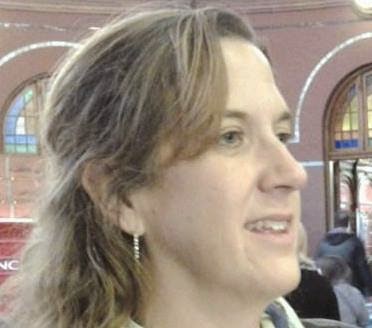




-330+-+Holly+Thompson.jpg)







.JPG)




.JPG)





.JPG)


Loved this post. Dashed over to Laurie Halse Anderson's website.
Loved that. Signed us up with Wordpress so I could leave a comment.
Couldn't leave one.
Oh well.
Thanks
Thanks, Pen N Ink. I tried to post on Anderson's blog and couldn't either. I mentioned this on her Facebook page and she said her website is having issues. You can comment on her Facebook page though.
Hope you're writing away!