JacketFlap connects you to the work of more than 200,000 authors, illustrators, publishers and other creators of books for Children and Young Adults. The site is updated daily with information about every book, author, illustrator, and publisher in the children's / young adult book industry. Members include published authors and illustrators, librarians, agents, editors, publicists, booksellers, publishers and fans. Join now (it's free).
Login or Register for free to create your own customized page of blog posts from your favorite blogs. You can also add blogs by clicking the "Add to MyJacketFlap" links next to the blog name in each post.
Blog Posts by Tag
In the past 7 days
Blog Posts by Date
Click days in this calendar to see posts by day or month
Viewing: Blog Posts Tagged with: read aloud, Most Recent at Top [Help]
Results 1 - 25 of 113
How to use this Page
You are viewing the most recent posts tagged with the words: read aloud in the JacketFlap blog reader. What is a tag? Think of a tag as a keyword or category label. Tags can both help you find posts on JacketFlap.com as well as provide an easy way for you to "remember" and classify posts for later recall. Try adding a tag yourself by clicking "Add a tag" below a post's header. Scroll down through the list of Recent Posts in the left column and click on a post title that sounds interesting. You can view all posts from a specific blog by clicking the Blog name in the right column, or you can click a 'More Posts from this Blog' link in any individual post.
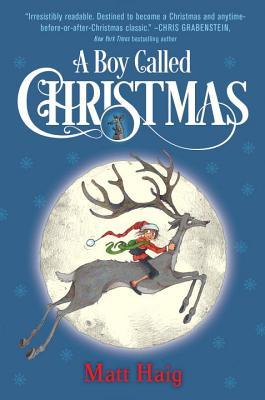
Cover Love: Yes, I love this cover. Whimsical and fun, just like the book.
Why I Wanted to Read This: I was invited to participate in this blog tour and since this book was one I had ordered for my library I was happy to read and review it! Here's the synopsis from GoodReads:
Eleven-year-old Nikolas—nicknamed “Christmas”—has received only one toy in his life: a doll carved out of a turnip. But he’s happy with his turnip doll, because it came from his parents, who love him. Then one day his father goes missing, and Nikolas must travel to the North Pole to save him.
Along the way, Nikolas befriends a surly reindeer, bests a troublesome troll, and discovers a hidden world of enchantment in the frozen village of Elfhelm. But the elves of Elfhelm have troubles of their own: Christmas spirit and goodwill are at an all-time low, and Nikolas may be the only person who can fix things—if only he can reach his father before it’s too late. . . .
My Thoughts: This book was such a fun read. The whole time I was reading it I thought what an awesome read aloud it would be for elementary and young middle schoolers. Actually, it would be a fun read aloud for almost every age.
This has all the elements of a good classic, an "orphaned" child (well, his dad is missing anyway), and evil auntie (how can these aunts always be so mean to their nephews?!) animals and a quest. I have to say that I was reminded of Roald Dahl the whole time I was reading it and it put a smile on my face. Sometimes if an author writes a whimsical, quirky story, the resemblance to Dahl is too much, like they were trying too hard. This one was just right. But there was some fantastical elements that made this book all the author's own.
This was such a fun read and put me in the mood for Christmas! Pick this one up today, you won't be disappointed!
Avalanche Cookies: This is a no bake recipe I discovered a few years ago and has become one of our favorite Christmas cookies. I always make a ton and give them to lots of people. You can print the recipe out here, or see the blog where I discovered it here.
What is your favorite Christmas read or goodie?
0 Comments on Blog Tour: A Boy Called Christmas by Matt Haig as of 12/14/2016 4:59:00 AM
Educators from around the country share the ways in which they teach about September 11th to their students. This post includes programming and writing ideas, as well as links to videos and picture books you can read aloud. Finally, there's a giveaway of a brand-new picture book that deals with September 11th.
I’m always looking for great read aloud; books that cry out to be read in your favorite “Snuggery” with an arm around a child and characters that lend themselves to a variety of voices parents can mimic and kids will love. Well, in Silly Goose’s BIG Story, I’ve discovered a great summer read AND read aloud. Goose has a definite flair for storytelling and holding his friends Squirrel, Porcupine and Beaver enthrall. (I can just hear parents inventing voices for this trio).
Big problem though, Goose is always the hero of his stories, with his friends as the minor cast of characters. Eventually resentments build. Can this be the end of the friendship? Goose finds himself alone and in trouble with a goose-hungry wolf and, of course, no friends in sight. Can Goose survive alone and friendless? Will Goose’s storytelling capabilities hold up with his quick thinking imaginative tale told to the wolf of the horrible “WEM”, (Wolf Eating Monster to the unenlightened) summoned ultimately to save the quick thinking Goose?
But is this wily wolf so easily deceived? Will he see through Goose’s storytelling deception? Wait! What if there really is a WEM, called forth by the creative powers of Goose’s storytelling imagination? Or is it the power of friendship that makes the WEM appear? Kids will relate to this story of someone in their crowd who always wants to be “it.” But the larger lesson in this free wheeling romp is that when it comes to crunch time, buddies band together for the sake of friendship and baddies bolt. Lesson: Hold onto the friends you have and forgive them their temporary flights of ego.
KidLit TV host Rocco Staino reads Maurice Sendak’s Chicken Soup with Rice on Read Out Loud. The rhyming book can be found on its own, or as a part of Sendak’s classic Nutshell Library which contains three additional titles; Alligators All Around, One Was Johnny, and Pierre.
Collected in this charming book are twelve lilting rhymes and illustrations for the twelve months of the year, with chicken soup as their universal theme. Although the book starts in the middle of winter — presumably the best time for chicken soup — a case is made for the presence of chicken soup in every season. Even in the peak of the sultry summer: In August / it will be so hot / I will become / a cooking pot / cooking soup of course / Why not? / Cooking once / cooking twice / cooking chicken soup / with rice.
In this tiny volume, first published in 1962, the inimitable Maurice Sendak demonstrates his famous ear for language, rhythm, and word play and anticipates the strengths of his later children’s classics such as Where the Wild Things Are and In the Night Kitchen. Likewise, his illustrations here in Chicken Soup with Rice are, as always, playful and witty. Each rhyme is introduced with a decorative bar, framing the name of each month like a calendar. And by the “year’s end,” readers are convinced that all seasons / of the year / are nice / for eating / chicken soup / with rice!
An excellent read-aloud, demonstrating the progression of the year, seasons, and the power of poetry.
ABOUT MAURICE SENDAK
Illustrator and writer Maurice Sendak was born in Brooklyn, New York, on June 10, 1928. As a boy, Sendak and his older brother used to write stories. They then illustrated them and bound them into little books.
Sendak went to art school for a short time. But he mainly learned about his profession on his own. As a teen he spent many hours sketching neighborhood children as they played. These children were represented in A Hole Is to Dig (1952), a book by Ruth Kraus that brought Sendak his first fame.
Sendak’s ability to remember the sounds and feelings of particular childhood moments were demonstrated in his best-known work, Where the Wild Things Are (1963). He won the 1964 Caldecott Medal for this book. He later wrote and illustrated two companion books: In the Night Kitchen (1970) and Outside Over There (1981). The latter received a 1982 American Book Award. Sendak has said the three works are about “how children manage to get through childhood…how they defeat boredom, worries and fear, and find joy.”
Sendak has illustrated some ninety children’s books. In 1970, he won the international Hans Christian Andersen Medal for the body of his illustrated work. He was the first American to receive this highest honor in children’s book publishing. In 1996, U.S. president Bill Clinton presented Sendak with the National Medal of Arts
Rocco is the charismatic host of StoryMakers, our interview show. A captivating and important figure in the book community, he is a prominent librarian, a contributing editor at School Library Journal,a contributing writer at TheHuffington Post, and the Director of the Empire State Center for the Book, which administers the New York State Writers Hall of Fame. Rocco has interviewed such luminaries as Beverly Cleary, Judy Blume, and Jean Craighead George.
Ok Rocco can read to me anytime
I remember that book as a kid and loved it and I still love it
Thanks for bringing back my childhood memories Rocco
GOOD READING!
patte
Janiel Wagstaff's books will help you teach primary writers about the four types of writing in an engaging way. Leave a comment on this post for a chance to win her series of Stella books.
Janiel Wagstaff's books will help you teach primary writers about the four types of writing in an engaging way. Leave a comment on this post for a chance to win her series of Stella books.
1st graders explore the cover before reading. Photo by S. Chapman
Last Thursday, my entire school took part in a school wide reading of I Am Jazz, a picture book about Jazz Jennings. Students from the 4s to 8th grade all read the book aloud and had discussions about different things ranging from the idea of "you are who you are", to being supportive allies, to bathroom politics. The classroom conversations were all different based on the age of the students and the amount of information they brought to the rug. The high school library curated a collection of books featuring LGBTQ youth, and pushed out information from the Human Rights Campaign.
I am reminded time and time again, that my school is a pretty special place. Yes, 4 year olds can talk about what it means to be transgender, as can 7 year olds, 10 year olds and 17 year olds. There are different entry points to these discussions and different directions that they can take.
Our community read aloud came about because of the Human Rights Campaign surrounding the cancellation of a read aloud of the book to support a transgender student in in Mount Horeb, WI. From the HRC website -
“Transgender children and youth are being targeted by anti-LGBTQ lawmakers and hate groups,” ... “Now, more than ever, they need to hear from adults who support and affirm them and help others understand who they are. And that can be as simple as sitting down for story time and opening a children’s book.”
Oftentimes teachers and librarians shy away from having discussions or sharing books that may provoke a reaction from some of the community. It is important to realize that by not sharing stories about all people, whole segments of our communities are silenced. As has been stated again and again in the We Need Diverse Books campaign, books are windows and mirrors. And when young readers don't ever see themselves, they often feel lost and alone.
So if you've been avoiding booktalking or reading aloud certain titles, just dive in and do it. Chances are someone in the audience will breathe a huge sigh of relief, and others will have their eyes opened.
0 Comments on I am Jazz -- A Community Read Aloud as of 1/1/1900
Every now and then we make mistakes. Kids make mistakes and adults do the same thing too. Todd Parr’s It’s Okay to Make Mistakes reminds children they don’t need to be perfect. The best thing about making mistakes is that you can learn and grow from them, create new experiences, and more.
Todd reads It’s Okay to Make Mistakes in a tone that is warm, confident, and affirming.
KidLit TV’s Read Out Loud series is perfect for parents, teachers, and librarians. Use these readings for nap time, story time, bedtime … anytime!
LIKE IT? PIN IT!
ABOUT ‘IT’S OKAY TO MAKE MISTAKES’
It’s Okay to Make Mistakes
Written and illustrated by Todd Parr
Published by Little, Brown Books for Young Readers
Todd Parr’s bestselling books have reminded kids to embrace differences, to be thankful, to love one another, and to be themselves. It’s Okay to Make Mistakes embraces life’s happy accidents, the mistakes and mess-ups that can lead to self discovery. Todd Parr brings a timely theme to life with his signature bold, kid-friendly illustrations and a passion for making readers feel good about themselves, encouraging them to try new things, experiment, and dare to explore new paths.
From coloring outside the lines and creating a unique piece of art to forgetting an umbrella but making a new friend, each page offers a kid-friendly take on the importance of taking chances, trying new things, and embracing life, mistakes and all.
ABOUT TODD PARR
Todd Parr is the author and illustrator of more than 30 children’s books. Todd moved to San Francisco to pursue a career as an artist, then took a detour as a flight attendant, before becoming a full-time author and illustrator. Todd draws in a style that’s highly relatable to children.
Todd acknowledges his supportive family — including a grandma who introduced him to Dr. Seuss books — as being a strong influence in his work. He is able to write stories about kindness and love because of his upbringing. Todd’s books have been translated into more than 14 languages. In 2005 Todd received a Daytime Emmy nomination for his preschool television series ToddWorld.
Todd’s favorite color is blue, and he loves macaroni and cheese.
Todd loves hearing from fans of his books. Go ahead and contact him, here. You can send him a note and pictures too!
Bonus: Actress Sandra Bullock is a big fan of Todd’s Family Book. She reads it aloud to her children Louis and Laila before bedtime.
We are thrilled to be celebrating a wonderful new book that is destined to become a classic read aloud...on World Read Aloud Day!
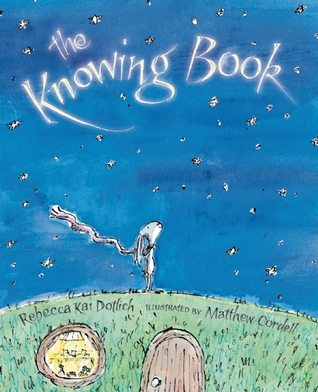
The Knowing Book takes the reader along on the main character's journey from the comfort of home, out into the world to live and grown and learn, and then back home again. It is a wise book, a book of the heart, a book that will surely be given at many baby showers and graduations, and read aloud at important milestones in children's lives.
We were lucky enough to ask the author and illustrator some questions about the book and their process. Interspersed between the Q/A are some early sketches by Matthew Cordell.
When you wrote the book, what were your hopes for readers?
That they would find some comfort in knowing they aren't alone, that there are things they can always count on, that there are universal miracles that no one can ever take away from them; the sky, the stars, the overwhelming oneness and the magic of knowing the world is big and wide and always waiting, whether it be with a new adventure or a new hope in a hopeless situation. More than anything I hope they feel untroubled in some way. –Rebecca
Did you work together as author and illustrator? Can you talk about the process of creating this book together or separately?
Typically authors and illustrators do not work together in a close collaboration. The editor and/or art director of the book is the point person and all comments and communication are ran through that channel. But it was an open channel, and Rebecca and I were both very open to any thoughts and suggestions from each other. Our editor, Rebecca Davis is incredibly insightful and thoughtful and caring too. It was just a wonderful, wonderful process--beginning to end--of fine tuning this book to get it just right. –Matthew
I agree with everything Matthew said. And I love how he refers to it as "an open channel." We both felt so deeply about this book, and I think put so much of ourselves into it, in ways I'm still figuring out. To get each detail, each nuance right, we all had to listen to each other and be open to and respect what the other's artistic expression and heart wanted to share on the page. We were very lucky that our editor was a two-way guiding light. –Rebecca
This book, although a picture book, seems to have a strong message for people of all ages and in all stages of life. Who were you thinking of when you had the idea for this book?
When I had the idea, the feelings and emotions had come from where I was emotionally, and that was sad and a bit hopeless. But then I immediately thought of children who might feel somehow lighter, less burdened, more hopeful if they really, really thought about the universe always being there for them. But after it was all written and rewritten and I looked at it with new eyes, I realized it could be for anyone, any age. —Rebecca
The title is brilliant. Was it the first idea you had or did it evolve?
Thank you, first of all! I would have said it was The Knowing Book from the start. But as I was putting together all of my drafts and correspondence having anything to do with the manuscript into its own box (I keep labeled boxes for each book) I saw a draft that had The Always Book jotted down, then crossed out with The Knowing Book written next to it. The "always" would have referred to the line "it is what you will always know." But I remember now repeating the word know, know, know, over and over and realizing that was the most important thought I wanted the reader to gain; that these are the things they will always know. –Rebecca
How did you decide to illustrate this as a bunny rather than a child? What process did you go to to decide on that?
We went through a series of tests before I began illustrating the book. I wanted the character to be universal. I wanted all boys and girls (and grown-ups too) of all different backgrounds and ethnicities to be able to plug her or himself into this book and these words. In my experience, making the character an animal--if it works--is a sure fire way to do this. I tried a few different animals at first. A bear, a mouse, and a rabbit. The bear and mouse had the sweet sincerity I wanted, but they were almost too cute. And this book is not about being cute. It's much more honest than that. Of the three, the rabbit had the most insightful and inner wisdom and worth. We did also try a child, for the sake of trying. I did some sketches of a child that might be construed as a girl OR a boy. Depending on who might be reading it. But in the end, the rabbit was a unanimous choice. –Matthew
The illustrations and text work together to be serious and hopeful. How did you accomplish that?
I'm so glad to hear you say it that way. Because that's how I hope readers will see it. I think everyone who worked on this book saw and wanted for the same things. It really was such a good fit! If anything ever strayed from that path, it was gently corrected back into place by someone. From the moment I read Rebecca's manuscript I had a vision in my mind of how it would play out. I never wanted this book to be silly of funny or even sweet. Joyful, yes. But even dark at times, in a poignant sort of way. Real. Because that is real life for all of us. Children and adults. –Matthew
I'd like to add that my hope had been for The Knowing Book to be illustrated in a thoughtful, serious ("joyful" is perfect) way mixed with a whimsical spirit roaming through the pages. And Matthew made it happen. –Rebecca
It seems like your work is so perfect together! Will you do more books together, do you think?
Gosh, I sure hope so! I love Rebecca's writing. It was an honor to be chosen to illustrate KNOWING, and I hope it's not the last! –Matthew
I second that. I have my hopes that down the road there will be a very special book I write that might be just right for another Matthew Cordell pairing, and that he'll say yes when he sees it! –Rebecca
Thank you, Rebecca and Matthew for joining us on your blog tour, and congratulations on a fabulous collaboration.
0 Comments on Celebrating World Read Aloud Day AND The Knowing Book as of 2/24/2016 6:05:00 AM
Today is the annual Nonfiction Picture Book 10 for 10, hosted by Cathy Mere from Reflect and Refine, Mandy Robek of Enjoy and Embrace Learning, and Julie Balen of Write at the Edge. This is my fourth year participating in this event, which provides me with a chance to share ten nonfiction picture books I have been using as mentor texts with elementary school writers.
There are some days in an elementary school teacher's life where the white flag must be waved. Halloween. The day before holiday break. Pajama Day. Crazy Hat Day. And, of course, Valentine's Day...
I blogged about Belonging Week, Curiosity Week, and Friendship Week, and then I dropped the ball! Now I'm going to attempt to combine Kindness Week, Confidence Week and Courage Week all into one post!
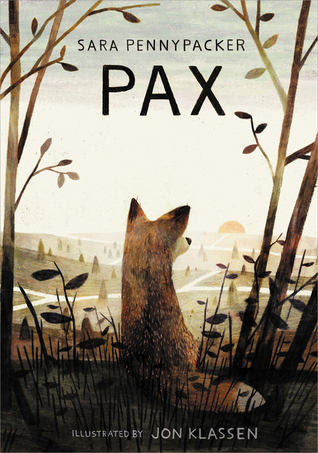
Last week (on 2/2, the day the book was released), I started Pax, by Sara Pennypacker, as our next read aloud. It's another book with hard issues that we can feel in our hearts; another book that will make us gasp with fear and cry with relief; another book that will put us in the shoes of a character who is dealing with hard problems; another book with a character on a physical journey and a journey of the heart.
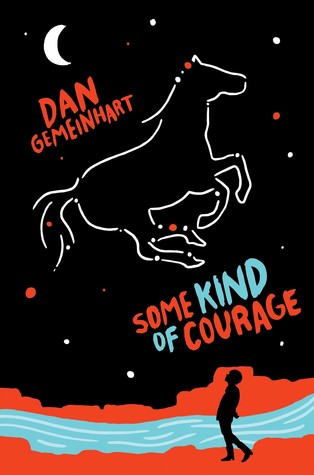
This remarkable story is told in alternating chapters from the points of view of Peter (the boy) and Pax (the fox). Both Peter and Pax encounter other characters who show them unexpected kindness and who help them build their confidence and grow into a place of courage. In fact, the parallels between the boy's and the fox's stories are something I hope my students will notice on their own. Who am I kidding? They are already making amazing comparisons between this book and Dan Geminhart's The Honest Truth and Some Kind of Courage.
If you haven't read this amazing book, move it to the top of your TBR stack!
0 Comments on World Read Aloud Day -- 7 Strengths Countdown as of 1/1/1900
Kids often feel as though that they are the only ones who have ever been stuck for ideas, or been laughed at, or had a story rejected (by a teacher, or friend). No matter where you live, no matter what you write, there is no need to discover every writing problem all on your own. That's where characters in books come in. Why not learn from them?
How does reading help us connect and make the world friendlier?
It gives us something to talk about -- BOOKS! What a blessing to belong to communities of readers, where the currency for a good conversation is as cheap and easy as "What are you reading now?"
And how does read aloud do the same thing? By giving a classroom full of diverse readers lots of books in common to use as reference points and compass points and discussion points.
0 Comments on World Read Aloud Day -- Friendship Week as of 1/21/2016 5:50:00 AM
It may seem strange perhaps to post a book on Rosa Parks’ act of defiance on December 1, 1955, to honor Martin Luther King on his national holiday, but as so many other events in history, they are interlinked. When Rosa Parks defied the Montgomery, Alabama city code that required them to not only sit in a separate section of the city buses, but to give up their seats if white passengers boarding, could not find seating in the all white section! Young readers need to be reminded how life was for many of our citizens in the not too distant past. And that is what “Back of the Bus” helps to achieve in telling the Rosa Parks event through the eyes of a fictional black child and his mother seated on the bus that day.
Aaron Reynolds fills his book with small events to portray the small boy as just a child riding the bus with his mom as an everyday event in his life; a day just like any other except it turned out to be a defining moment in history he chances upon. He takes out his bright, shiny marble, a tiger’s eye, and rolls it. As the bus slows, it follows the law of gravity away from him and rolls right into the hand of Rosa Parks who rolls it back with a grin. More passengers get on.
Then it happens. Mr. Blake, the driver growls out, “Y’all gotta move, now.” Some people do get up and move, but the bus is at a dead standstill. Somebody is speaking up. But the words of the bus driver carry to the back of the bus, “I’m gonna call the police, now.”
Whispers fill the halted bus and the boy can see from his perch at the back of the bus that the speaker was Rosa Parks.
She doesn’t belong up front like that,
and them folks know it.
But she’s sittin’ right there,
her eyes all fiercelike a lightnin’ storm,
likemaybe she does belong up there.
And I startthinkin’ maybe she does too.
Words may be instructive as we parents know, but I still think example is the strongest teacher. And in Ms. Parks her subsequent arrest and fine because of the violation of Montgomery’s city code was a watershed event.
The boy’s mother placates him with the words, “Tomorrow all this’ll be forgot.” Though his mother says the words, he too takes note of the new “lightning” storm” in her eyes. And instead of feeling afraid, he feels a new strength.
Taking out his tiger’s eye marble from the tightly closed fist, instead he holds it up to the light with a new pride. I love the illustrations that seem a bit out of focus and muted until Rosa Parks takes her stand. The defining lines and shapes seem dim with everything hazy and unclear, including the people on the bus. Mr. Cooper’s artistic technique changes with Ms. Parks’ refusal. Images are sharp and clear. People, including the young boy’s mother are drawn with clear and delineated thoughtful feelings of emotion at what has happened. Art and narrative blend beautifully to display the change that is afoot.
Where does Martin Luther King’s life intersect with Rosa Parks? Following this event, the Mt. Zion Church of Montgomery spurs the formation of the Montgomery Improvement Association, lead by Martin Luther King. Their initial goal is to effect change starting with the very segregation bus code effecting Ms. Parks. The MIA organizes a very successful boycott of the buses for 382 days with some 40,000 black riders cobbling together alternate means of transportation to get to work. They included walking, carpooling, riding in African-American operated cabs. Martin Luther King’s home was attacked in the ensuing violence the boycott began.
Rosa Parks single act of defiance with the words, “I don’t think I should have to stand up,” was the catalyst for change. Books and the ideas they foster have done the same thing for people with each turn of the page. And for your young readers, “Back of the Bus” may not only provide a look back in history at a single and seminal act of defiance that changed an unjust law, but a model for a way to stand up for something they believe in when the still, small voice in each of us tells us to do so.
We're getting ready to begin a new read aloud in my classroom, and this is definitely a time that fits with the World Read Aloud Day theme of CURIOSITY. My students can't wait to find out what I've chosen, and I'm wondering how they'll react to and interact with the book.
I've chosen The Lion Who Stole My Arm by Nicola Davies. I think it will be interesting to compare the "journey" of Pedru as he works toward revenge on the lion who attacked him, to the journeys of Mark and Joseph in Dan Gemeinhart's two books.
Our next read aloud after this short (under 100 pages) but intense read will be Pax, by Sara Pennypacker, which is set to come out February 2. I've never chosen read alouds around the same theme all year long, but we got started with these powerful, heart-wrenching journey stories, and I'm CURIOUS to see what it will be like to continue with books on the same theme throughout the year!
0 Comments on World Read Aloud Day -- Curiosity Week as of 1/13/2016 6:13:00 AM
LitWorld is counting down the weeks until World Read Aloud Day by highlighting a different strength of read aloud each week.
This week is BELONGING WEEK ("When has reading helped you feel like you belong to a community?")
In my classroom, the books I read aloud bring the class together as a community -- a truth this year in particular.
We started the year with Dan Gemeinhart's THE HONEST TRUTH (I reviewed it last year here.) When we finished, I suggested to the class that we share a "lighter" book next. They were vehemently against it -- they begged me for another book with hard issues that they would feel in their hearts. Another book that would make them gasp with fear, and cry with relief. Another book that would put them in the shoes of a character who is dealing with hard problems.
We had a chance to Skype with Dan Gemeinhart, and he showed us the arc of his next book, SOME KIND OF COURAGE (available January 26). In a stroke of good luck, the arc arrived the next day in a box full of arcs from Scholastic.
SOME KIND OF COURAGE was our second read aloud of the year, and it was all kinds of magic. The book can be compared to THE HONEST TRUTH in its theme, characters, and story arc. Both are stories of quests, but SOME KIND OF COURAGE is historic fiction, rather than realistic fiction. Gemeinhart has the ability to write memorable scenes, and his mixture of sad or nerve-wracking scenes with humorous scenes is masterful. We are Skyping again this Friday, and we feel privileged to be one of the first classes to give him feedback on this book. I don't think I'm giving anything away when I say that we'll be giving him two thumbs up!
Because of a change of schedule, four of my students were going to be missing read aloud two out of the four days we have it. I was completely flummoxed about what I should do. There was just no other time in the schedule when I have them that I could work it in, and I didn't want to deny all the rest of the kids just for those four. I was stuck. Then their teacher came to me and shared that they are feeling the same way. Missing read aloud was a non-negotiable for them. So we worked it out so that my four can stay for read aloud and not miss anything in their other class. WHEW!
If that's not a testament to the strength of our classroom community around our read aloud, I'm not sure what is!
0 Comments on World Read Aloud Day -- Seven Strengths Countdown as of 1/6/2016 4:46:00 PM
Do you have a child who balks at barbershops, cringes at clippers and generally howls pre-haircut? Well I have the book for you. Every parent has gone through that rite of passage-the first haircut. It can be preceded by foot dragging, multiple and myriad excuses, tantrums, tears and all out war. Well, at the beginning and end of summer, haircuts are usually the order of the day, whether before camp or before school reopens
This Monster Needs a Haircut is the perfect picture book to ease the snipping. Kids will identify with Stuart the monster and his elaborate defense tactics against haircuts. His father is understanding and patient as he relates to Stuart his own bouts with haircut issues in his youth. Kids and parents will howl at the evolution of Stuart’s hair and the interesting objects that begin to inhabit it such as growing flowers, half eaten apples, lollipops and baseballs to name a few. How Stuart and family solve this haircut hiatus is laugh filled and the tactics to overcome the stubborn monster are illustrated to perfection. This is a book a child could bring to the cutting event and even share with the scissor wielder aka barber.
by Toni Buzzeo and illustrated by Margaret Spengler
Four ducklings, Mama, and a perfect summer day playing Hide-And-Seek-what could be more perfect for a summer read! Toni Buzzeo has captured the exuberant spirit of the sheer joy of play for its own sake in this summer read for your youngest where bright blues, oranges and yellows bring beach days winningly alive. Duckling cavort forming sand castles and cementing a series of new friendships that provide perfect “hide behinds” in this duckling game of Hide-And-Seek with Mama. A turtle, frog and fish join in the fun providing camouflage as Mama quacks, “Ready or not, here I come.” The repetitive cadence of the story is sure to appeal to young readers and the pictures of the banana yellow ducks with bands of blue, red, green and orange ribbon surrounding their hats are adorable atop these orange-billed cuties. Dawdle is the duck determined to elude Mama. Will Dawdle be the duck that gets to say with unrestrained glee,
“Ollie, Ollie, in free!”
Dawdle Duckling calls.
“You didn’t find me!
Ready Or Not, Dawdle Duckling is waiting to be discovered by you and your child as the perfect intro to the game of Hide-And-Seek and the need for friendship and cooperation.
Squish Rabbit is a book that is a perfect read for the youngest in your family because sometimes as adults, I guess we forget how big the world can seem when we were young and small. In mind of that, I recently drove slowly down the street where I grew up. It was a revelation. As an adult everything seemed so small. Driveways I roller-skated down as a child seemed unbelievably wide and steep. But as I looked at them that day through adult eyes, the driveways seemed narrow. And as for steepness, there was barely any elevation at all!
Well here in Katherine Battersby’s Squish Rabbit, Squish is decidedly at that same stage of life when being small and hard to see makes it seem as if life is passing you by. Everyone is busy with grown up things, so even Squish’s stories are ignored. Being lonely, Squish sews a friend literally out of blue plaid cloth but quickly finds this pretend friendship can only fill half the gap. Trees are nice too as potential friends but somehow fall short of expectations.
How Squish in a moment of pique kicks an apple and finds a friend echoes the moment of discovery for each child when he or she finds someone to share and play with. And when the friendship starts with a rescue, so much the better. Squish is a gentle book for the shy child who longs to join the group but may have trouble getting his feet wet or making the first awkward moves towards, “Wanna be friends?” Squish can definitely help your child bridge the gap.
For parents of soon-to-be kindergartners and first graders, helping their children be prepared for the start of school can be exciting and daunting (and not just for students).
What can parents do over the summer to help their children maintain the growth they made this past year in preschool or kindergarten and be ready to tackle new topics and skills in the fall?
Below is one way parents can read and explore books over the summer. This model can be adapted for both fiction and nonfiction texts and follows how many teachers practice guided reading, which children may experience the first time in the upcoming school year.
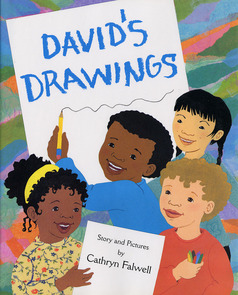
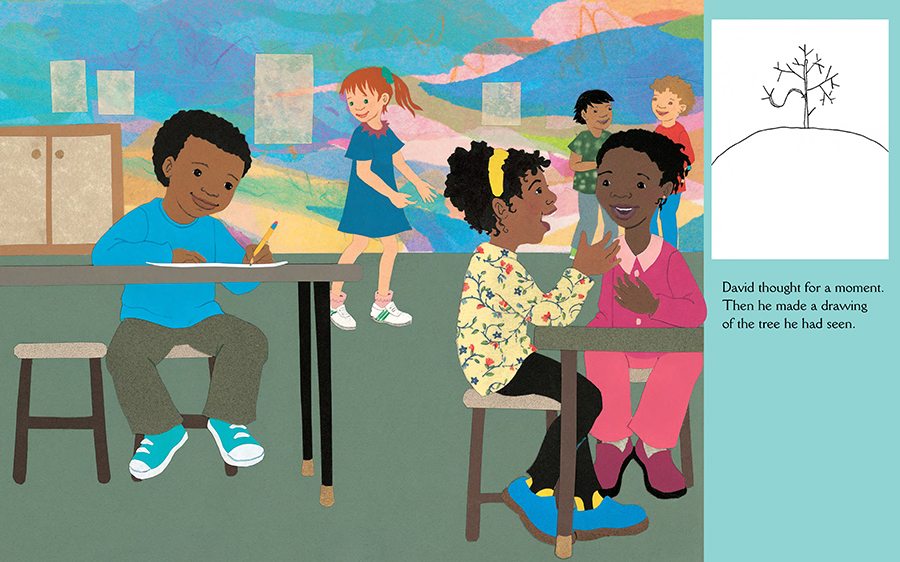
I’m going to model how parents can practice reading using the text, David’s Drawings.
We do not need to, nor should we, ask every question for every book during every reading time. We may have only four minutes of our child’s attention one day and maybe twenty on another. The goal is not to drill our youngest learners in Common Core standards by the start of school.
Rather, the ultimate goal here is to show our beginning and soon-to-be readers how reading can be a joyful, positive experience. This mindset will set them up for the best start to their school journey.
Getting Ready to Read
1. Questions to ask and talk through with our rising kinders or first graders about the book:
Who is the author? / Show me where the author is on the cover. What does an author do?
Who is the illustrator? / Show me where the illustrator is on the cover. What does an illustrator do?
Where is the front cover? The back cover? The title page of the book?
As we read, which direction do we read the words?
2. Practice making predictions:
Together, look at the front cover. Using the title and picture on the cover, ask: what might happen in the story? What makes you think that?
Take a picture walk through the book. Ask: What do you think this story will be about? What do you notice when you look through this book?
3. Build background schema and draw on your child’s past experiences:
What do you know about drawing, or making a picture?
What types of things do you like to draw?
Where do artists get their ideas for drawings and paintings?
Who might help you draw a picture?
Reading the Book
As you begin to read, make sure the book is between both of you so your child can clearly see the text (and illustrations) and be in the position of the reader (rather than a regular listener at a group story time).
Make sure to point your finger to each word as it is read aloud. In doing so, your child can follow the text as well as the storyline and learn that we derive meaning from print—we in fact are not just making up a story to match the pictures we are seeing!
Video examples of parents reading with primary grade students:
Please show me a word that starts with the uppercase letter D. Show me a word that starts with the lowercase letter p.
Put your finger on a word that starts with b. Put your finger on a word that ends with e.
Can you think of another word you know that rhymes with day?
Can you show me a sentence that has a question mark at the end? A period? An exclamation point?
Can you show me a word that ends in –ed? –s?
Find a word that starts with the same letter as your name.
Find a word that ends with the same letter as your name.
Find a word that has a letter that is in your name.
Can you show me the (high frequency) words: the, of, and, a, to, you, on, I, me, my? Many primary grade classrooms build reading fluency with sight word practice. For a review for rising first graders or a peak for rising kinders, here are kindergarten high frequency word lists:
Done with sitting still? Time to move but keep the connections going!
1. Write or draw an answer to this question: Would you be friends with David?
2. Find a tree near school, at a park, or near your home. Sketch it using a pencil and then later decorate it.
3. Re-read the story or have another adult read the story—re-reading stories is great for helping children practice fluency, make predictions, retell events, and build confidence in eventually reading parts on their own.
Jill Eisenberg, our Senior Literacy Expert, began her career teaching English as a Foreign Language to second through sixth graders in Yilan, Taiwan as a Fulbright Fellow. She went on to become a literacy teacher for third grade in San Jose, CA as a Teach for America corps member. In her weekly column at The Open Book, she offers teaching and literacy tips for educators.
0 Comments on How to Read With Your Rising First Graders and Kinders This Summer as of 5/18/2015 10:09:00 AM
I've been discovering lots of fun picture books lately--books that are great for read aloud or any kind of sharing.
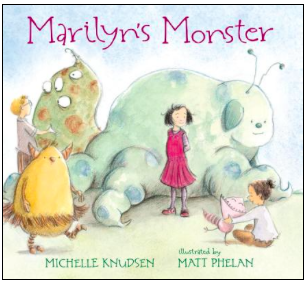
I read Marilyn's Monster to the kids during the last few minutes of the day before Spring Break. They were glued --the loved it. They immediately noted similarities to Beekle, one of their all-time favorites. This is a great author/illustrator team. Author, Michelle Knudsen, wrote Library Lionand illustrator Matt Phelan illustrated The Storm in the Barn and Bluffton. This is such a fun story with such adorable monsters that you can't help but fall in love with it.
Goodnight Already! by Jory John is going to make a fabulous read The Terrible Two as a read aloud in my 3rd grade classroom--the kids know co-author Mac Barnett as he visited our school. It will be fun for them to get to know Jory John's picture books as they already love his Terrible Two series. This book is especially good for primary classrooms--I think kids will laugh out loud. (And if you visit Jory John's website, beware--there are some pretty cute magnets for sale so you might spend a chunk of money between the book and the magnets. Don't say I didn't warn you:-) aloud! I loved it when I first glanced at the cover. It is a fun story of a bear who is sleeping and his duck friend who is wide awake--and who wants some company. The story and illustrations are quite fun.
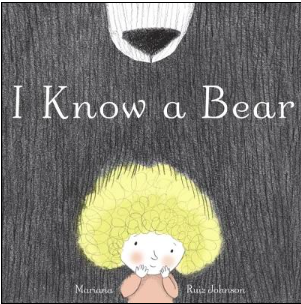
Our literacy coach shared I Know a Bear with us last week. My kids had a very long discussion after reading the book. The book seems to be a simple story about a girl and a bear but it is more than that. It is a story of the friendship between the girl and the bear but it also brings in issues of animals/zoos. Kids can enter this at many levels as there are many layers of invitation here.
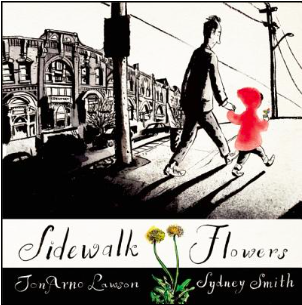
Sidewalk Flowers is my new favorite wordless picture books. I was so happy to find this one! It is such an amazing book! SO SO SO SO wonderful. It is the story of a little girl and her father walking home from somewhere. The little girl is busy noticing so many things around her on their walk. The father doesn't notice so much but he is patient with her noticing. This story is similar to many in its message and the idea of a black and white world with colorful flowers will make for great conversation. Definitely one with so many possibilities for the classroom.
These were four must-haves for me. I loved them all for different reasons but they are all perfect for elementary classrooms or libraries. Such fun and such great conversation starters.
0 Comments on Four Must-Have New Picture Books! as of 1/1/1900
I’ll be the first to admit it: I didn’t pay much attention to math. I specialized in literacy and focused on reading, speaking, listening, writing, social studies, and science instruction. Math? My third graders went down the hall each day to the “math classroom.” My co-teacher and I collaborated over best teaching practices, family relationships, and classroom management, but I didn’t spend time delving into the third-grade mathematics standards.
It wasn’t until I entered into our first parent-teachers-student conferences in September that I realized I couldn’t afford to compartmentalize my students’ learning.
In those conferences, we had students who loved math and had excelled in math every year leading up, but were now struggling to advance. They seemed to have hit an invisible wall. What happened?
Two words: Word problems.
Some of our students who were English Language Learners, reluctant readers, or who struggled to read at grade level for other reasons all of a sudden “couldn’t do” math anymore because the vocabulary, text length, and sentence structure were increasing in complexity. Even though they knew what 9 x 5 was, they couldn’t read and decipher the sentence:
Rene enjoys wearing a new outfit every day. His father bought him nine pairs of shorts and five shirts. Rene doesn’t want to wear any outfit twice. How many different outfit combinations does he have?
Now several of my students weren’t only struggling to read in my literacy class, but also struggling to read in math class. This was disheartening and confusing for them because math was a subject they loved, excelled at, and didn’t feel “below their grade level” because of language abilities or background schema. Yet reading challenges were following them down the hall and across instruction periods.
Guess what: Reading teachers are ALSO math teachers.
What?
Let me explain.
A text is a text no matter the form. Those ELA standards about determining the central idea and unknown or multiple-meaning words apply to word problems along with poems, plays, and biographies. Word problems can be lengthy, involve two or more steps, and contain new and unknown vocabulary that require examining context clues to solve.
Great English teachers improve students’ math scores. According to The Hechinger Report, researchers from Stanford and University of Virginia looked at 700,000 students in New York City in third through eighth grade over the course of eight school years. Results: Students of good English language arts teachers had higher than expected math scores in subsequent years.
Starting in second-grade mathematics, students are reading, interpreting, and solving two-step and multi-step word problems. Even as early as kindergarten and first grade, students are encountering one-step word problems. Bottom line:If they can’t read, they will get left behind in math, too.
So, how can literacy teachers embrace math?
1. Nice to meet you, Math. I’m ELA. The Common Core website also falls victim to sequestering the ELA and math standards. Whether you teach both math and literacy or only one, compare the math standards to the ELA standards of your grade. Open two windows on your computer setting the Reading or Language standards of your grade side by side with the Operations & Algebraic Thinking standards for your grade. What do they have in common?
(Hint, hint: determining central idea of a text, interpreting unknown words or phrases, using context clues, and learning general academic and domain-specific words)
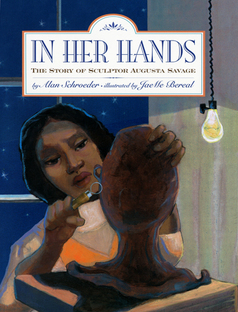
2. Share what read aloud or model text you are reading for the week or unit if you have a separate teacher for math instruction. In word problems, you or the math instructor can write a few of the problems about the characters. Reading In Her Hands: The Story of Sculptor Augusta Savage? Make Augusta the main character in the word problems.
This book has several money references because Augusta earned money from her teaching and from competitions she entered. Use some of the scenes in the book to review the values of currency. For example, Augusta earned a dollar every day from the principal of her school. How many different ways can you make $1.00 using combinations of quarters, dimes, nickels, and pennies?
3. Reward students with a math problem during the reading instruction block. (I’m telling you—students LOVE seeing you break out math during a literacy block). This gives students a break, uses a different part of their brains/thinking, and allows them to display their abilities in another subject (which is especially important if English makes a student feel doubtful or shy). Students can do this if they finish their required assignment early or you are transitioning between periods.
4. Allow students to create a word problem using the setting and characters of a book they are reading as an incentive, extension opportunity, or way to engage reluctant readers. Students can submit problems for you to review at the end of the day and the next day you can post one with the student author’s name. Students will have a chance to model (and observe) high quality writing and thinking, as well as delight in their peers’ recognition.
5. Word problems ARE story problems. Treat a word problem like any other fiction story. Have students identify the main character(s) and the problem. Give the word problem a setting. Encourage students to expand the math problem into a fiction story through writing or drawing.
6. Make a math bin in the classroom library. Whatever gets a student excited to read and pick up a book, right? Just as we will scour web deals and dig through yard sales for books on tiger sharks and poison dart frogs, don’t forget to hunt for math-themed books to add to your classroom library if math is your students’ passion.
from Ice Cream Money
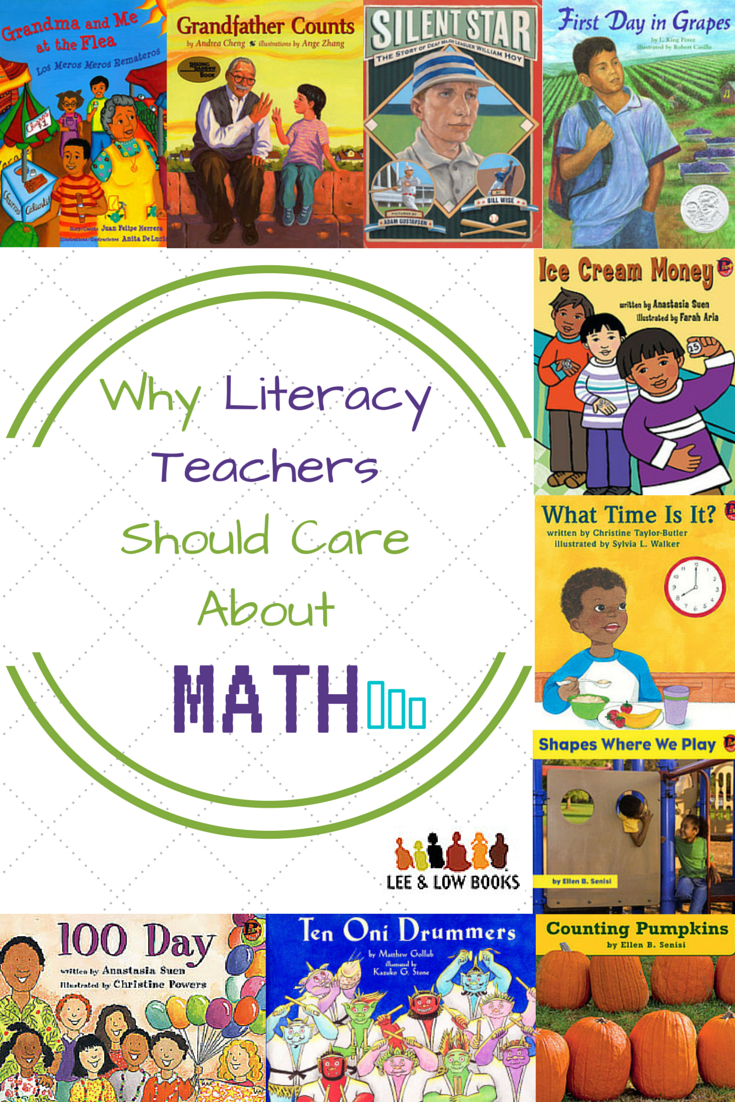
7. Pick math-themed books to align with units students are covering in the grade level’s math standards. Great read alouds and leveled readers exist to help teach concepts around counting, money, time, geometry, and mixed operations, such as:
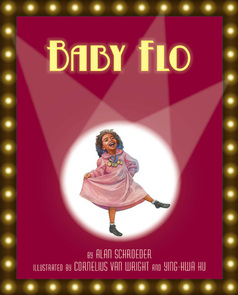
Florence was promised twenty-five cents a night to perform at the Empire Theater. If she performed every night for one week, how much money did she earn? How much money would she earn in two weeks?
After her performance in the butchers’ shop, Florence earned $3.85. How many nickels would you need to make $3.85? How many pennies would you need to make $3.85?
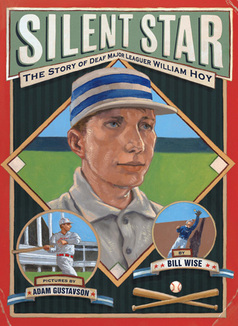
If Hoy was born in 1862 and died in 1961, how old was he when he passed away? If Hoy started playing in the major leagues in 1888 and retired from baseball in 1902, how many years did he play in the major leagues? How many years ago did Hoy last play baseball? If Hoy were alive today, how old would he be?
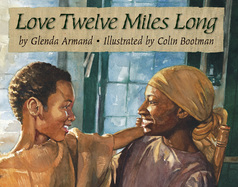
Frederick’s mother walks twelve miles. How many yards does she walk? How many kilometers and meters does she walk?
If students can’t read, they will struggle to succeed in math (and science and social studies). These challenges will compound with each year affecting self-confidence and commitment. Bridging math and literacy for students is a powerful way for students to see that learning how to derive meaning from text has real world applications and that you are invested in their entire education.
Jill Eisenberg, our Senior Literacy Expert, began her career teaching English as a Foreign Language to second through sixth graders in Yilan, Taiwan as a Fulbright Fellow. She went on to become a literacy teacher for third grade in San Jose, CA as a Teach for America corps member. She is certified in Project Glad instruction to promote English language acquisition and academic achievement. In her column she offers teaching and literacy tips for educators.
0 Comments on Why Literacy Teachers Should Care About Math as of 2/24/2015 12:35:00 PM

















Ok Rocco can read to me anytime
I remember that book as a kid and loved it and I still love it
Thanks for bringing back my childhood memories Rocco
GOOD READING!
patte