new posts in all blogs
Viewing: Blog Posts Tagged with: Classics, Most Recent at Top [Help]
Results 1 - 25 of 497
How to use this Page
You are viewing the most recent posts tagged with the words: Classics in the JacketFlap blog reader. What is a tag? Think of a tag as a keyword or category label. Tags can both help you find posts on JacketFlap.com as well as provide an easy way for you to "remember" and classify posts for later recall. Try adding a tag yourself by clicking "Add a tag" below a post's header. Scroll down through the list of Recent Posts in the left column and click on a post title that sounds interesting. You can view all posts from a specific blog by clicking the Blog name in the right column, or you can click a 'More Posts from this Blog' link in any individual post.
Tom Sawyer Abroad. Mark Twain. 1894. 108 pages.
First sentence: DO you reckon Tom Sawyer was satisfied after all them adventures? I mean the adventures we had down the river, and the time we set the darky Jim free and Tom got shot in the leg. No, he wasn’t. It only just p’isoned him for more. That was all the effect it had.
Premise/plot: Tom Sawyer, Huckleberry Finn, and Jim (now free) accidentally have an adventure together--in a hot air balloon--that takes them halfway across the world to Africa. The trip has its dangers certainly. But Tom is so smug and obnoxious that one of the biggest dangers is the size of his ego. The book's biggest weakness perhaps is its sudden and abrupt ending. I can almost imagine Mark Twain going, well, it was fun and interesting when it started...but I've got a new idea for a book now and I just don't care about this anymore. So let's type THE END and send it off to be published.
My thoughts: If the ending had been an actual ending, perhaps this one would have been worth my time--and your time. As it is, I can't really recommend it! Was it easier to get published back then? Was Mark Twain under contract? Did his editor not care either? Did he even have an editor? Instead of improving as it goes along, it does the opposite. Each chapter shows Twain's growing lack of interest in what happens on this balloon ride.
I don't think the fault is solely in the premise. I think it's just that when you start a book you should see it through to the end...or else not publish it.
© 2016 Becky Laney of
Becky's Book Reviews
Our Town. Thornton Wilder. 1938. 181 pages. [Source: Library]
First sentence: Stage Manager: This play is called "Our Town."
Premise/plot: Set in Grover's Corners, New Hampshire, at the turn of the twentieth century, this Pulitzer-prize winning drama follows two families: the Gibbs and the Webbs as the meaning of life is explored.
Readers--viewers--"see" certain life events in the town. Some BIG moments (the wedding between George and Emily, Emily's funeral), some small moments (the opening scene, for example, Emily's birthday, the first "aha" moment when George and Emily realize they'll be together until they are parted by death). The narrator who speeds us along life's journey is the "Stage Manager."
My thoughts: I knew this was a famous play. And I knew I "needed" to read it. I am glad I read it as an adult. I am not sure that a 17 year old me would have gotten it. The play essentially is about how you live life--or how you DON'T actually "live" life as the case may be. Life is made up of moments. And we are so super-busy and super-self-absorbed that we don't live in the moments. We don't treasure the moments we're given. We don't see enough, feel enough, give thanks enough, understand enough. © 2016 Becky Laney of
Becky's Book Reviews
Cornish Coast Murder. John Bude. 1935. 288 pages. [Source: Review copy]
First sentence: The Reverend Dodd, Vicar of St. Micahel's-on-the-Cliff, stood at the window of his comfortable bachelor study looking out into the night.
Premise/plot: This vintage mystery stars several amateur detectives (a vicar and a doctor) and several professional detectives (police inspectors). The novel was easy to follow, but, is proving hard to remember--in terms of character names. The murder happens early in the novel. A stormy night is JUST what this murderer has been waiting for. He--or SHE--is able to fire THREE shots with hardly anyone being the wiser for it. There seem to be THOUSANDS of clues, but, contradictory, almost absurd or outlandish clues that instead of leading to a cohesive story lead to a dozen "maybe" stories. Who will be the first to solve this one?
My thoughts: I liked this one. Would I have loved it if I'd read it in two or three days instead of two or three weeks? Maybe. Maybe not. If this one has a weakness, it is that the solution isn't one that readers are ever, ever, ever going to be able to piece together on their own. I'm not sure that qualifies as a weakness. It's just that with so many suspects, so many clues, so many motives...the actual murderer seems to come out of nowhere. I personally like to be able to say, OH, I SHOULD HAVE BEEN ABLE TO FIGURE THAT ONE OUT.
© 2016 Becky Laney of
Becky's Book Reviews
Rainbow Valley. L.M. Montgomery. 1919. 256 pages. [Source: Bought]
First sentence:
It was a clear, apple-green evening in May, and Four Winds Harbour was mirroring back the clouds of the golden west between its softly dark shores.Premise/plot: Rainbow Valley is about the Blythe children and their best friends, the Meredith children. The Merediths are in interesting bunch! The father is a Presbyterian minister. The mother is dead and very much missed. The children are wild and wonderful. Over half the book centers on the adventures of Jerry, Faith, Una, and Carl. The other half focuses on the Blythe children: Jem, Walter, Nan and Di, Shirley, and Rilla.
Why you should still read it even though it isn't about Anne: Montgomery is a great storyteller who excels at characterization. The Meredith children, particularly Faith, are great characters to spend time with. Mary Vance is another LIVELY character. Love her or hate her, you can't forget her! This one also has some lovely scenes with Walter about the 'Pied Piper' he hears calling in Rainbow Valley. Reading Rainbow Valley deepens the bond you feel for certain characters. The memories the two families create and share in Rainbow Valley--the place--are important in Rilla of Ingleside. Rilla of Ingleside is not to be missed. It is one of the BEST in the series.My thoughts: I really loved the courtship in this one of the children's father!!! It was super-sweet and fun. I love this book not so much for its connection to Anne, as it is I just LOVE L.M. Montgomery in general. She's a wonderful writer whose birthday is very close to my own! © 2016 Becky Laney of
Becky's Book Reviews
A Child's Geography of the World. V.M. Hillyer. 1929/1951. 472 pages.
First sentence: When I was a boy, my nurse used to take me to the railroad station to see the trains.
Premise/plot: A Child's Geography of the World was first published in 1929. The edition I found was revised and published in 1951. The tone is casual conversation. There are a few black and white illustrations throughout the book. The book is full of information, but what kind?
The truth is some information stays the same no matter the decade. (For example the location of the The Great Lakes, the Empire State Building, the Leaning Tower of Pisa). But plenty of things have changed and changed dramatically! Nations have passed away, governments have been toppled, revolutions have taken place. Also the United States has more than 48 states! Mount Everest has been climbed. Man has gone to the moon and back.
The last war mentioned is World War 2. Communists are mentioned, or perhaps I should say warned against!
Race is definitely an issue if you're reading this with children. (God created black men at night and many black people in Africa eat each other. The narrator makes an offhandedly comment that you will likely never see a real live Indian because there are few left. The narrator later makes an aside that the U.S. does it's best to keep out the Chinese.) I would say adults can throw away the bad and keep the good and have the discernment needed to tell the difference between the two. I would not recommend young children read this on their own for several reasons. One being that unless this text has been updated and revised recently, you'd have more misinformation than correct information.
My thoughts: I find vintage books entertaining. I do. Rare, long out-of-print books call to me. It's a way to capture a glimpse of the past, for better or worse. Not a historical writer's idea of the past. Good Morning, Miss Dove is one of my favorite, favorite books--and movies. This book would have been published at exactly the right time for Miss Dove to use!
The information is dated, true, I won't lie, but it is also a strong narrative. If there weren't problematic sections, I could easily call it charming.
© 2016 Becky Laney of
Becky's Book Reviews
The Strange Case of Dr. Jekyl and Mr. Hyde. Robert Louis Stevenson. 1886. 144 pages. [Source: Library]
First sentence: Mr. Utterson, the lawyer, was a man of a rugged countenance, that was never lighted by a smile;
Premise/plot: What if the 'dark' inside you was fully released and realized?!
My thoughts: What an interesting book to read after reading John Owen's Overcoming Sin and Tempation! Dr. Jekyll has a secret 'dark' side that he struggles to keep concealed. Only a few come to learn his BIG, BIG secret: he has found a way of satisfying his dark side in the personality of MR. HYDE. But the more he gives into temptation and becomes Mr. Hyde, letting Mr. Hyde loose in the city and country, the harder the struggle is to return to being Dr. Jekyll. There is a battle going on over his body--if you will--but it isn't a battle of good versus evil, just slightly evil with totally evil.
This is a very short read that is easy to recommend.
© 2016 Becky Laney of
Becky's Book Reviews
Anne's House of Dreams. L.M. Montgomery. 1919. 227 pages. [Source: Bought]
First sentence:
“Thanks be, I’m done with geometry, learning or teaching it,” said Anne Shirley, a trifle vindictively, as she thumped a somewhat battered volume of Euclid into a big chest of books, banged the lid in triumph, and sat down upon it, looking at Diana Wright across the Green Gables garret, with gray eyes that were like a morning sky.Premise/plot: Anne Shirley marries Gilbert Blythe in this oh-so-lovely, oh-so-charming book by L.M. Montgomery. Technically, it is the sequel to Anne of the Island! Anne of Windy Poplars was written in the 1930s, decades after Anne's House of Dreams. In this Anne book, the happily married couple settle down in their first home together near Four Winds Harbor and Glen St. Mary. Anne's House of Dreams introduces many new characters--some of my favorites I admit--Captain Jim, Miss Cornelia, Leslie Moore, Owen Ford. Marshall Elliot. Susan Baker. Who would ever want to forget their stories? Captain Jim's life-book. Leslie Moore's tragic past but enduring spirit. Miss Cornelia. She's got to be one-of-a-kind. Just a truly spirited character with so much heart and full of gumption. Practically everything out of her mouth is quotable. She sure is great at banter!My thoughts: I love and adore this one!!! I love how emotionally satisfying it is. The Anne books may have sweet moments, but they pack in reality as well. No one can make me cry like L.M. Montgomery.Quotes: “Stoutness and slimness seem to be matters of predestination,” said Anne.
Jane was not brilliant, and had probably never made a remark worth listening to in her life; but she never said anything that would hurt anyone’s feelings — which may be a negative talent but is likewise a rare and enviable one.
“I’ve heard you criticise ministers pretty sharply yourself,” teased Anne. “Yes, but I do it reverently,” protested Mrs. Lynde. “You never heard me NICKNAME a minister.” Anne smothered a smile.
Their happiness was in each other’s keeping and both were unafraid.
“Miss Cornelia Bryant. She’ll likely be over to see you soon, seeing you’re Presbyterians. If you were Methodists she wouldn’t come at all. Cornelia has a holy horror of Methodists.”
“I know we are going to be friends,” said Anne, with the smile that only they of the household of faith ever saw. “Yes, we are, dearie. Thank goodness, we can choose our friends. We have to take our relatives as they are, and be thankful if there are no penitentiary birds among them. Not that I’ve many — none nearer than second cousins. I’m a kind of lonely soul, Mrs. Blythe.” There was a wistful note in Miss Cornelia’s voice.
“Were you able to eat enough pie to please her?” “I wasn’t. Gilbert won her heart by eating — I won’t tell you how much. She said she never knew a man who didn’t like pie better than his Bible. Do you know, I love Miss Cornelia.”
“Our library isn’t very extensive,” said Anne, “but every book in it is a FRIEND. We’ve picked our books up through the years, here and there, never buying one until we had first read it and knew that it belonged to the race of Joseph.”
A woman cannot ever be sure of not being married till she is buried, Mrs. Doctor, dear, and meanwhile I will make a batch of cherry pies.
“I wonder why people so commonly suppose that if two individuals are both writers they must therefore be hugely congenial,” said Anne, rather scornfully. “Nobody would expect two blacksmiths to be violently attracted toward each other merely because they were both blacksmiths.”
The p’int of good writing is to know when to stop.
There’s only the one safe compass and we’ve got to set our course by that — what it’s right to do.
Logic is a sort of hard, merciless thing, I reckon.
“Since you are determined to be married, Miss Cornelia,” said Gilbert solemnly, “I shall give you the excellent rules for the management of a husband which my grandmother gave my mother when she married my father.” “Well, I reckon I can manage Marshall Elliott,” said Miss Cornelia placidly. “But let us hear your rules.” “The first one is, catch him.” “He’s caught. Go on.” “The second one is, feed him well.” “With enough pie. What next?” “The third and fourth are — keep your eye on him.” “I believe you,” said Miss Cornelia emphatically.
Cats is cats, and take my word for it, they will never be anything else.
© 2016 Becky Laney of
Becky's Book Reviews
Anne of Windy Poplars. L.M. Montgomery. 1936. 288 pages. [Source: Bought]
First sentence:
DEAREST: Isn't that an address! Did you ever hear anything so delicious? Windy Poplars is the name of my new home and I love it. I also love Spook's Lane, which has no legal existence. It should be Trent Street but it is never called Trent Street except on the rare occasions when it is mentioned in the Weekly Courier . . . and then people look at each other and say, 'Where on earth is that?' Spook's Lane it is . . . although for what reason I cannot tell you. I have already asked Rebecca Dew about it, but all she can say is that it has always been Spook's Lane and there was some old yarn years ago of its being haunted. But she has never seen anything worse-looking than herself in it. Premise/plot: Anne and Gilbert are engaged at last! But Gilbert still has three years of school to go, and, so Anne finds herself a job as principal of a school in Summerside. Anne of Windy Poplars gives us an intimate look at those three years. Much of the book provides glimpses into the letters Anne writes Gilbert. But there are some traditional chapters as well.
My thoughts: Anne of Windy Poplars is such a delightful (late) addition to the Anne series by L.M. Montgomery. I love, love, love it. Even if Gilbert himself is absent. (We only see her letters to him, never his letters to her.)
This book showcases what Montgomery does BEST: bring her characters to life. It doesn't seem to matter if we spend two paragraphs with a character or two chapters. I CARE about every character she introduces.
Some of the characters we meet in this one: Aunt Kate, Aunt Chatty, Rebecca Dew, Dusty Miller (cats count as characters, right?!), Little Elizabeth, Nora Nelson, Jim Wilcox, Esme Taylor, Dr. Lennox Carter, Cyrus Taylor, Teddy Armstrong, Lewis Allen, Katherine Brooke, Mrs. Adoniram Gibson and Pauline, Cousin Ernestine Bugle, Jarvis Morrow, Dovie Westcott, Frank Westcott.
© 2016 Becky Laney of
Becky's Book Reviews

By: Nina @ Death, Books, and Tea,
on 10/2/2016
Blog:
Death Books and Tea
(
Login to Add to MyJacketFlap)
JacketFlap tags:
life,
classics,
personal,
french,
Add a tag
So this past few months, many exciting things have been happening for me, which have been better documented on
instagram and
twitter. I had another packed Edinburgh Fringe, full of brilliant comedians, poets, and theatre pieces. I've had some great times with my friends, which is just as well because we're now scattered across the country and the continent, because we're all off to uni! I can't believe I was in Year 8 when I started this blog and I now I've got a place at my first choice university to study Classics and French, but hey, time flies!
Along the many bags of clothes and equipment I have packed before I move into the college tomorrow, obviously, I have books, and I thought I'd share what I'm taking. But first, exciting news...

I got nominated, alongside Sally of
The Dark Dictator, and Andrew of
The Pewter Wolf, in the UKYA Blogger Awards for Champion of Diversity! Thank you for everyone who nominated me, in despite of the fact that my championing of diverse books, at least this past couple of years, hasn't really been via my blog, more in person- see my TEDx Talk on why you should read diversely, which I might vlog some day seeing as I'm not sure what happened to the footage, the
We Need Diverse Books board we put up at my school that stayed in a main corridor for over a year, and anyone who has read
Simon vs The Homo Sapiens Agenda because they asked me for a recommendation and that's been my go to book to pass on. I hope to be able to step up both my blog and my promotion of a range of books in the future, and it's nice to have a little spur to do so. And congrats to everyone else who got nominated, in all categories! You can find a list of all categories and nominees
here (until it gets buried when they tweet other things).
The main post is under the cut- the books I'm taking-and hopefully keeping up there, if they fit on whatever shelving they give me!
My Course Books
The books that I'll be studying. I've read all the required bits, so here's a summary of what they're about and what I thought of them.
- The Poems of Catullus, translated by James Minchie. My copy of this is falling apart, so I put it in a binder ring. I love most of Catullus' works-it's often funny or emotional or both- he crosses the line a lot though!
- Juvenal's Satires, translated by Peter Green. Using anecdotes, it reads like a long list of complaints about Roman society, pointing out all the various moral failings that have come through.
- En Attendant Godot (Waiting For Godot) by Samuel Beckett. It's a play of two men who are waiting for Godot. They contemplate life, meet a handful other people, and wonder why they do so. It feels like Rosencrantz and Guildernstern, a lot of talk, less things happening, good to study, probably boring to watch.
- Supplement au Voyage de Bouganville (Supplement to Bougainville's Journey) by Denis Diderot, I liked the depiction of Tahitan society, and also the way it contrast Tahitian and European society and ideals.
- The Poems of Propertius, translated by H. E. Butler, of which I read Book 1. Mostly love poetry, describing his relationship with Cynthia, but there's a couple of poems for friends too.
- Essais (Essays), of which I read Des Cannibales by Michel de Montaigne, Again contrasting European society with another. I liked the challenge of reading the 16th century French.
- The Satyricon by Petronius. A pair of lovers go wandering around the continent, meeting the weirdest of society. Ends abruptly, though probably due to losing the text, but the various episodes, satirising different figures in society, are...interesting.
- Cicero's Defence Speeches, of which I read Pro Caelio. Here Cicero is trying to defend Caelius against charges of violence andmurder, which he does by presenting Caelius as a young man of outstanding virtue, even if he has made some mistakes, and by presenting Clodia Metelli, whose evidence would be important to the case, as a whore. It's funny in some places, misogynistic in many more, and is basically blaming a woman for anything a man does wrong.
- The Aeneid by Virgil. Following Aeneas, a Trojan noble who flees Troy after its defeat, as he wanders, searching for a new place for his people to settle down. A fair bit of travelling gives way to some really graphically battles. I have a lot of love for Camilla, the warrior woman who's featured in book 11.
- Phedre by Jean Racine. The mythological story of a queen who falls in love with her stepson and the husband/father's rashness is presented here in a play. I enjoyed the rhythm of this as I read this aloud, and I liked how it didn't completely villainise Phedre (ok, the blame all shifts on to the Nurse but I feel Phedre gets presented in a worse light in Euripedes' and Seneca's versions so it's nice she gets a little more sympathy here)
Supplementary Books
Books kind of relating to Classics and French, but not directly relevant (this term)- intended for when I want to do something different but also feel productive!
- Les Femmes Savantes by Moliere
- Les Fleurs de Mal by Charles Baudelaire
- Les Mains Sales by Jean Paul Sartre
- World Mythology by Mark Daniels
- Bisexuality in the Ancient World by Eve Cantarella
- The Latin Love Poets by R.O.A.M. Lyne
- Frangine by Marion Brunet (and then I can finally give this back to Caroline- sorry for keeping this so long!)
- Goddesses, Whores, Wives, & Slaves by Sarah Pomeroy
Fun Books
The ones that will be for pleasure, for review, and for hopeful enjoyment!
- The Hypnotist by Laurence Anholt. Set in 1960s America, this historical thriller plus hypnotism looks intriguing.
- Life: A User's Manuel by Georges Perec. I picked this up for the title. I'm hoping for good things from the many many characters.
- The Sun is Also a Star by Nicola Yoon. I haven't read Everything, Everything yet either, but I've heard lots of people enjoyed it.
- Girl Trouble by Carol Dyhouse. A looking at how society perceives women and what they do throughout the 20th century.
- Daughters of Time - A History Girls Anthology. I love how there's a range of time periods the women at the centre of each story is drawn from, and a range of things they do.
- The Genius and the Goddess by Alduous Huxley. I got this as a surprise gift, so I don't know what to expect. I didn't mind Brave New World, and I'm hoping i like this as much as I did that, or more.
- As I Descended by Robin Talley. This is the one book I've been waiting for all year, and I'm slightly scared to read it with such high expectations (lesbian contemporary Macbeth!). I'll get to it soon though.
- Salt to the Sea by Ruta Sepetys. Between Shades of Grey was such a beautiful book, I have high hopes for this one as well.
- Unspeakable by Abbie Rushton. A mute girl falls for the new girl. I remember getting excited for this, but never getting round to it.
- The Republic of Thieves by Scott Lynch. I love this fantasy series with the detailed world building and the clever characters (especially the ship of lady pirates introduced in book 2). I also hear we get to meet the main character's lost love in this book, something I've been waiting for.
I know I'm being very overoptimistic with my for fun books here, considering I have eight weeks and a lot more reading I'll get once I'm there, but at least I won't be running out of things to get through! What books would you suggest I get through first? And what would you take from a packed to-read shelf to last you for a couple of months?

By: John Priest,
on 9/19/2016
Blog:
OUPblog
(
Login to Add to MyJacketFlap)
JacketFlap tags:
quiz,
ethics,
classics,
Philosophy,
ancient greece,
Aristotle,
Greece,
*Featured,
POTM,
classical greece,
Quizzes & Polls,
history of philosophy,
western philosophy,
Arts & Humanities,
ancient philosophy,
Philosophy Quiz,
Philosopher of the Month,
philosopherotm,
potm quiz,
philosopher of the month quiz,
Classical Philosophy,
ancient philosophers,
Western philosophers,
Add a tag
Among the world’s most widely studied thinkers, Aristotle established systematic logic and helped to progress scientific investigation in fields as diverse as biology and political theory. But how much do you really know about this ancient philosopher?
The post How well do you know Aristotle? [quiz] appeared first on OUPblog.
 Welcome to another session of Turning Pages!PRIDE AND PREJUDICE is a big deal for a lot of young readers, but many, many, many others consider death a happier alternative than committing to the famous 19th century novel. Enter the modern day... Read the rest of this post
By: KatherineS,
on 8/1/2016
Blog:
OUPblog
(
Login to Add to MyJacketFlap)
JacketFlap tags:
War and Peace,
Literature,
classics,
kenneth grahame,
Virginia Woolf,
OWC,
oscar wilde,
The Wind in the Willows,
Oxford World's Classics,
The Huffington Post,
Adventures of Huckleberry Finn,
The Adventures of Tom Sawyer,
*Featured,
Oxford World's Classic,
Arts & Humanities,
Erin Schumaker,
To The Lighthouse,
Add a tag
In a recent article for The Huffington Post, journalist Erin Schumaker advises students not to let their brains waste away over the summer: "you might be better off skipping the beach read this summer in favor of something a little more substantive." Yet some of us might find the idea of settling down on a sun lounger with War and Peace less than appealing. To help you out, we asked staff at Oxford University Press for a list of summer classics that will help you relax without letting your brain get lazy!
The post Best beach classics: the books you should be reading this summer appeared first on OUPblog.

By: Liz,
on 7/27/2016
Blog:
Liz's Book Snuggery
(
Login to Add to MyJacketFlap)
JacketFlap tags:
James Marshall,
Classics,
Picture Books,
Caldecott,
Goldilocks and the Three Bears,
3-5,
0-2,
Liz's Picks Videos,
Caldecott Illustrators,
Way Back Wednesday,
Way Back Wednesday Essential Classic,
Add a tag
[There is a video that cannot be displayed in this feed. Visit the blog entry to see the video.]
Return of the King. J.R.R. Tolkien. 1955. 590 pages. [Source: Bought]
Pippin looked out from the shelter of Gandalf’s cloak. He wondered if he was awake or still sleeping, still in the swift-moving dream in which he had been wrapped so long since the great ride began. The dark world was rushing by and the wind sang loudly in his ears. He could see nothing but the wheeling stars, and away to his right vast shadows against the sky where the mountains of the South marched past. And I have finished rereading the trilogy! In May I was able to read and review The Fellowship of the Ring and The Two Towers. I wanted to finish Return of the King in May too, but, it didn't work out that way! So Return of the King consists of books five and six of Lord of the Rings. In book five, narrators shift from chapter to chapter to chapter. Essentially we spend time with everyone but Sam and Frodo. We spend time in Rohan and Gondor. Scarlett O'Hara would be nothing but bored, bored, bored for this one is all about WAR, WAR, WAR. If they're not actually IN battle, they're marching towards battle, planning battle tactics, or recovering from battle. Did I personally find it boring??? Far from it, it is INTENSE and heartbreaking in places. (For example, Theoden's end.) I would actually say almost all the action happens in book five.Book six starts out as being all about Sam and Frodo, but, it doesn't stay their book. The climax to the trilogy comes early in book six. Soon the fellowship is reunited and readers get the full cast of characters they've become so attached to. Here we have two to three romances squeezed in. If I had any advice for new readers it would be this: don't expect the book to be as focused on ROMANCE and FEELINGS as the movies are. So does book six drag? Is the end of the war coming so early in the novel a weakness in the book? I'm going to say perhaps and NO. I love that the book shows what happens next. I love that the book focuses on soldiers going home, on trying to settle back into life after the war. I love that we see the effect of the war. I love that we don't get a polished, rushed happy ending. It would be so easy for a movie to end in a parade and award ceremony. (Think Star Wars!) But life isn't like that. It isn't always easy for soldiers to adjust back into life, into society. I love that we see the ongoing consequences of war. We see how war has changed everyone--not just the Frodo, Sam, Merry, and Pippin--but everyone in the Shire.
Favorite quotes:Well, no need to brood on what tomorrow may bring. For one thing, tomorrow will be certain to bring worse than today, for many days to come. And there is nothing more that I can do to help it. The board is set, and the pieces are moving.
‘Nine o’clock we’d call it in the Shire,’ said Pippin aloud to himself. ‘Just the time for a nice breakfast by the open window in spring sunshine. And how I should like breakfast! Do these people ever have it, or is it over? And when do they have dinner, and where?’
‘I am no warrior at all and dislike any thought of battle; but waiting on the edge of one that I can’t escape is worst of all. What a long day it seems already! I should be happier, if we were not obliged to stand and watch, making no move, striking nowhere first.
‘So we come to it in the end,’ he said: ‘the great battle of our time, in which many things shall pass away. But at least there is no longer need for hiding. We will ride the straight way and the open road and with all our speed. The muster shall begin at once, and wait for none that tarry. Have you good store in Minas Tirith? For if we must ride now in all haste, then we must ride light, with but meal and water enough to last us into battle.
‘O Sam!’ cried Frodo. ‘What have I said? What have I done? Forgive me! After all you have done. It is the horrible power of the Ring. I wish it had never, never, been found. But don’t mind me, Sam. I must carry the burden to the end. It can’t be altered. You can’t come between me and this doom.’
‘So that was the job I felt I had to do when I started,’ thought Sam: ‘to help Mr. Frodo to the last step and then die with him? Well, if that is the job then I must do it. But I would dearly like to see Bywater again, and Rosie Cotton and her brothers, and the Gaffer and Marigold and all. I can’t think somehow that Gandalf would have sent Mr. Frodo on this errand, if there hadn’t a’ been any hope of his ever coming back at all. Things all went wrong when he went down in Moria. I wish he hadn’t. He would have done something.’ But even as hope died in Sam, or seemed to die, it was turned to a new strength. Sam’s plain hobbit-face grew stern, almost grim, as the will hardened in him, and he felt through all his limbs a thrill, as if he was turning into some creature of stone and steel that neither despair nor weariness nor endless barren miles could subdue.
Sam looked at him and wept in his heart, but no tears came to his dry and stinging eyes. ‘I said I’d carry him, if it broke my back,’ he muttered, ‘and I will!’ ‘Come, Mr. Frodo!’ he cried. ‘I can’t carry it for you, but I can carry you and it as well. So up you get! Come on, Mr. Frodo dear! Sam will give you a ride. Just tell him where to go, and he’ll go.’ As Frodo clung upon his back, arms loosely about his neck, legs clasped firmly under his arms, Sam staggered to his feet; and then to his amazement he felt the burden light.
Then to the wonder of many Aragorn did not put the crown upon his head, but gave it back to Faramir, and said: ‘By the labour and valour of many I have come into my inheritance. In token of this I would have the Ring-bearer bring the crown to me, and let Mithrandir set it upon my head, if he will; for he has been the mover of all that has been accomplished, and this is his victory.’ Then Frodo came forward and took the crown from Faramir and bore it to Gandalf; and Aragorn knelt, and Gandalf set the White Crown upon his head, and said:
‘Now come the days of the King, and may they be blessed while the thrones of the Valar endure!’ But when Aragorn arose all that beheld him gazed in silence, for it seemed to them that he was revealed to them now for the first time. Tall as the sea-kings of old, he stood above all that were near; ancient of days he seemed and yet in the flower of manhood; and wisdom sat upon his brow, and strength and healing were in his hands, and a light was about him. And then Faramir cried: ‘Behold the King!’
‘Are you in pain, Frodo?’ said Gandalf quietly as he rode by Frodo’s side. ‘Well, yes I am,’ said Frodo. ‘It is my shoulder. The wound aches, and the memory of darkness is heavy on me. It was a year ago today.’ ‘Alas! there are some wounds that cannot be wholly cured,’ said Gandalf. ‘I fear it may be so with mine,’ said Frodo. ‘There is no real going back. Though I may come to the Shire, it will not seem the same; for I shall not be the same. I am wounded with knife, sting, and tooth, and a long burden. Where shall I find rest?’ Gandalf did not answer.
© 2016 Becky Laney of
Becky's Book Reviews
Anne of the Island. L.M. Montgomery. 1915. 272 pages. [Source: Bought]
“Harvest is ended and summer is gone,” quoted Anne Shirley, gazing across the shorn fields dreamily. She and Diana Barry had been picking apples in the Green Gables orchard, but were now resting from their labors in a sunny corner, where airy fleets of thistledown drifted by on the wings of a wind that was still summer-sweet with the incense of ferns in the Haunted Wood.I love Anne of the Island. It isn't my absolute favorite of the series, but, it is oh-so-good. In this one Anne goes away to college, makes new friends, receives a handful of marriage proposals, and corresponds with folks from Avonlea.
Anne does mature, but, in some ways it is slow in coming. Particularly in terms of her seeing the obvious: Gilbert is her soul mate. But perhaps because it is so long in coming, it makes for quite a satisfying conclusion.
The best way to show you how much I adore this one, is perhaps to share my favorite quotes:
Great one-liners...
It is never pleasant to have our old shrines desecrated, even when we have outgrown them.
We mustn’t let next week rob us of this week’s joy.
But FEELING is so different from KNOWING. My common sense tells me all you can say, but there are times when common sense has no power over me. Common nonsense takes possession of my soul.
Exaggeration is merely a flight of poetic fancy.
Facts are stubborn things, but as some one has wisely said, not half so stubborn as fallacies.
“All life lessons are not learned at college,” she thought. “Life teaches them everywhere.”
We are never half so interesting when we have learned that language is given us to enable us to conceal our thoughts.
“People who send word they are coming on Saturday shouldn’t come on Friday,” said Aunt Jamesina.
“Words aren’t made — they grow,” said Anne.
“Will you please define what gumption is, Aunt Jimsie?” asked Phil. “No, I won’t, young woman. Any one who has gumption knows what it is, and any one who hasn’t can never know what it is. So there is no need of defining it.”
Fun with Anne:
Talk of being lonesome! It’s I who should groan. YOU’LL be here with any number of your old friends — AND Fred! While I shall be alone among strangers, not knowing a soul!” “EXCEPT Gilbert — AND Charlie Sloane,” said Diana, imitating Anne’s italics and slyness. “Charlie Sloane will be a great comfort, of course,” agreed Anne sarcastically; whereupon both those irresponsible damsels laughed. Diana knew exactly what Anne thought of Charlie Sloane; but, despite sundry confidential talks, she did not know just what Anne thought of Gilbert Blythe.
“Miss Ada’s cushions are really getting on my nerves,” said Anne. “She finished two new ones last week, stuffed and embroidered within an inch of their lives. There being absolutely no other cushionless place to put them she stood them up against the wall on the stair landing. They topple over half the time and if we come up or down the stairs in the dark we fall over them. Last Sunday, when Dr. Davis prayed for all those exposed to the perils of the sea, I added in thought ‘and for all those who live in houses where cushions are loved not wisely but too well!’ There! we’re ready, and I see the boys coming through Old St. John’s. Do you cast in your lot with us, Phil?”
“You LOVE it,” said Miss Patty with emphasis. “Does that mean that you really LOVE it? Or that you merely like the looks of it? The girls nowadays indulge in such exaggerated statements that one never can tell what they DO mean. It wasn’t so in my young days. THEN a girl did not say she LOVED turnips, in just the same tone as she might have said she loved her mother or her Savior.” Anne’s conscience bore her up. “I really do love it,” she said gently. “I’ve loved it ever since I saw it last fall. My two college chums and I want to keep house next year instead of boarding, so we are looking for a little place to rent; and when I saw that this house was to let I was so happy.”
“No, I shall never try to write a story again,” declared Anne, with the hopeless finality of nineteen when a door is shut in its face. “I wouldn’t give up altogether,” said Mr. Harrison reflectively. “I’d write a story once in a while, but I wouldn’t pester editors with it. I’d write of people and places like I knew, and I’d make my characters talk everyday English; and I’d let the sun rise and set in the usual quiet way without much fuss over the fact. If I had to have villains at all, I’d give them a chance, Anne — I’d give them a chance. There are some terrible bad men in the world, I suppose, but you’d have to go a long piece to find them — though Mrs. Lynde believes we’re all bad. But most of us have got a little decency somewhere in us. Keep on writing, Anne.”
Trotting along behind her, close to her heels, was quite the most forlorn specimen of the cat tribe she had ever beheld. The animal was well past kitten-hood, lank, thin, disreputable looking. Pieces of both ears were lacking, one eye was temporarily out of repair, and one jowl ludicrously swollen. As for color, if a once black cat had been well and thoroughly singed the result would have resembled the hue of this waif’s thin, draggled, unsightly fur. Anne “shooed,” but the cat would not “shoo.” As long as she stood he sat back on his haunches and gazed at her reproachfully out of his one good eye; when she resumed her walk he followed. Anne resigned herself to his company until she reached the gate of Patty’s Place, which she coldly shut in his face, fondly supposing she had seen the last of him. But when, fifteen minutes later, Phil opened the door, there sat the rusty-brown cat on the step. More, he promptly darted in and sprang upon Anne’s lap with a half-pleading, half-triumphant “miaow.” “Anne,” said Stella severely, “do you own that animal?” “No, I do NOT,” protested disgusted Anne. “The creature followed me home from somewhere. I couldn’t get rid of him. Ugh, get down. I like decent cats reasonably well; but I don’t like beasties of your complexion.” Pussy, however, refused to get down. He coolly curled up in Anne’s lap and began to purr. “He has evidently adopted you,” laughed Priscilla. “I won’t BE adopted,” said Anne stubbornly.
“It seems funny and horrible to think of Diana’s being married,” sighed Anne, hugging her knees and looking through the gap in the Haunted Wood to the light that was shining in Diana’s room. “I don’t see what’s horrible about it, when she’s doing so well,” said Mrs. Lynde emphatically. “Fred Wright has a fine farm and he is a model young man.” “He certainly isn’t the wild, dashing, wicked, young man Diana once wanted to marry,” smiled Anne. “Fred is extremely good.” “That’s just what he ought to be. Would you want Diana to marry a wicked man? Or marry one yourself?” “Oh, no. I wouldn’t want to marry anybody who was wicked, but I think I’d like it if he COULD be wicked and WOULDN’T.
Fun with Davy
“When I’m grown up I’m not going to do one single thing I don’t want to do, Anne.” “All your life, Davy, you’ll find yourself doing things you don’t want to do.”
“But if you DID want to catch a man how would you go about it? I want to know,” persisted Davy, for whom the subject evidently possessed a certain fascination. “You’d better ask Mrs. Boulter,” said Anne thoughtlessly. “I think it’s likely she knows more about the process than I do.” “I will, the next time I see her,” said Davy gravely. “Davy! If you do!” cried Anne, realizing her mistake. “But you just told me to,” protested Davy aggrieved.
Dear anne, please write and tell marilla not to tie me to the rale of the bridge when I go fishing the boys make fun of me when she does. Its awful lonesome here without you but grate fun in school. Jane andrews is crosser than you. I scared mrs. lynde with a jacky lantern last nite. She was offel mad and she was mad cause I chased her old rooster round the yard till he fell down ded. I didn’t mean to make him fall down ded. What made him die, anne, I want to know. mrs. lynde threw him into the pig pen she mite of sold him to mr. blair. mr. blair is giving 50 sense apeace for good ded roosters now. I herd mrs. lynde asking the minister to pray for her. What did she do that was so bad, anne, I want to know.
“I — I want to say a bad word, Anne,” blurted out Davy, with a desperate effort. “I heard Mr. Harrison’s hired boy say it one day last week, and ever since I’ve been wanting to say it ALL the time — even when I’m saying my prayers.” “Say it then, Davy.” Davy lifted his flushed face in amazement. “But, Anne, it’s an AWFUL bad word.” “SAY IT!” Davy gave her another incredulous look, then in a low voice he said the dreadful word. The next minute his face was burrowing against her. “Oh, Anne, I’ll never say it again — never. I’ll never WANT to say it again. I knew it was bad, but I didn’t s’pose it was so — so — I didn’t s’pose it was like THAT.” “No, I don’t think you’ll ever want to say it again, Davy — or think it, either. And I wouldn’t go about much with Mr. Harrison’s hired boy if I were you.” “He can make bully war-whoops,” said Davy a little regretfully. “But you don’t want your mind filled with bad words, do you, Davy — words that will poison it and drive out all that is good and manly?” “No,” said Davy, owl-eyed with introspection. “Then don’t go with those people who use them. And now do you feel as if you could say your prayers, Davy?”
“Our new teacher is a man. He does things for jokes. Last week he made all us third-class boys write a composishun on what kind of a wife we’d like to have and the girls on what kind of a husband. He laughed fit to kill when he read them. This was mine. I thought youd like to see it. “‘The kind of a wife I’d like to Have. “‘She must have good manners and get my meals on time and do what I tell her and always be very polite to me. She must be fifteen yers old. She must be good to the poor and keep her house tidy and be good tempered and go to church regularly. She must be very handsome and have curly hair. If I get a wife that is just what I like Ill be an awful good husband to her. I think a woman ought to be awful good to her husband. Some poor women haven’t any husbands. “‘THE END.’”
Mrs. Lynde was awful mad the other day because I asked her if she was alive in Noah’s time. I dident mean to hurt her feelings. I just wanted to know. Was she, Anne?
The new minister was here to tea last night. He took three pieces of pie. If I did that Mrs. Lynde would call me piggy. And he et fast and took big bites and Marilla is always telling me not to do that. Why can ministers do what boys can’t? I want to know.
The mention of age evidently gave a new turn to Davy’s thoughts for after a few moments of reflection, he whispered solemnly: “Anne, I’m going to be married.” “When?” asked Anne with equal solemnity. “Oh, not until I’m grown-up, of course.” “Well, that’s a relief, Davy. Who is the lady?” “Stella Fletcher; she’s in my class at school. And say, Anne, she’s the prettiest girl you ever saw. If I die before I grow up you’ll keep an eye on her, won’t you?” “Davy Keith, do stop talking such nonsense,” said Marilla severely.
Fun with Mrs. Lynde:
Mrs. Lynde’s letter was full of church news. Having broken up housekeeping, Mrs. Lynde had more time than ever to devote to church affairs and had flung herself into them heart and soul. She was at present much worked up over the poor “supplies” they were having in the vacant Avonlea pulpit. “I don’t believe any but fools enter the ministry nowadays,” she wrote bitterly. “Such candidates as they have sent us, and such stuff as they preach! Half of it ain’t true, and, what’s worse, it ain’t sound doctrine. The one we have now is the worst of the lot. He mostly takes a text and preaches about something else. And he says he doesn’t believe all the heathen will be eternally lost. The idea! If they won’t all the money we’ve been giving to Foreign Missions will be clean wasted, that’s what! Last Sunday night he announced that next Sunday he’d preach on the axe-head that swam. I think he’d better confine himself to the Bible and leave sensational subjects alone. Things have come to a pretty pass if a minister can’t find enough in Holy Writ to preach about, that’s what.
“Poor Atossa laid in her coffin peaceful enough,” said Mrs. Lynde solemnly. “I never saw her look so pleasant before, that’s what. Well, there weren’t many tears shed over her, poor old soul. The Elisha Wrights are thankful to be rid of her, and I can’t say I blame them a mite.” “It seems to me a most dreadful thing to go out of the world and not leave one person behind you who is sorry you are gone,” said Anne, shuddering. “Nobody except her parents ever loved poor Atossa, that’s certain, not even her husband,” averred Mrs. Lynde. “She was his fourth wife. He’d sort of got into the habit of marrying. He only lived a few years after he married her. The doctor said he died of dyspepsia, but I shall always maintain that he died of Atossa’s tongue, that’s what. Poor soul, she always knew everything about her neighbors, but she never was very well acquainted with herself. Well, she’s gone anyhow; and I suppose the next excitement will be Diana’s wedding.”
Anne and Gilbert:
“I hope no great sorrow ever will come to you, Anne,” said Gilbert, who could not connect the idea of sorrow with the vivid, joyous creature beside him, unwitting that those who can soar to the highest heights can also plunge to the deepest depths, and that the natures which enjoy most keenly are those which also suffer most sharply.
“But there must — sometime,” mused Anne. “Life seems like a cup of glory held to my lips just now. But there must be some bitterness in it — there is in every cup. I shall taste mine some day. Well, I hope I shall be strong and brave to meet it. And I hope it won’t be through my own fault that it will come. Do you remember what Dr. Davis said last Sunday evening — that the sorrows God sent us brought comfort and strength with them, while the sorrows we brought on ourselves, through folly or wickedness, were by far the hardest to bear? But we mustn’t talk of sorrow on an afternoon like this.
As a companion, Anne honestly acknowledged nobody could be so satisfactory as Gilbert; she was very glad, so she told herself, that he had evidently dropped all nonsensical ideas — though she spent considerable time secretly wondering why.
But Gilbert’s visits were not what they once were. Anne almost dreaded them. It was very disconcerting to look up in the midst of a sudden silence and find Gilbert’s hazel eyes fixed upon her with a quite unmistakable expression in their grave depths; and it was still more disconcerting to find herself blushing hotly and uncomfortably under his gaze, just as if — just as if — well, it was very embarrassing. Anne wished herself back at Patty’s Place, where there was always somebody else about to take the edge off a delicate situation. At Green Gables Marilla went promptly to Mrs. Lynde’s domain when Gilbert came and insisted on taking the twins with her. The significance of this was unmistakable and Anne was in a helpless fury over it.
“There is something I want to say to you.” “Oh, don’t say it,” cried Anne, pleadingly. “Don’t — PLEASE, Gilbert.” “I must. Things can’t go on like this any longer. Anne, I love you. You know I do. I — I can’t tell you how much. Will you promise me that some day you’ll be my wife?” “I — I can’t,” said Anne miserably. “Oh, Gilbert — you — you’ve spoiled everything.” “Don’t you care for me at all?” Gilbert asked after a very dreadful pause, during which Anne had not dared to look up. “Not — not in that way. I do care a great deal for you as a friend. But I don’t love you, Gilbert.” “But can’t you give me some hope that you will — yet?” “No, I can’t,” exclaimed Anne desperately. “I never, never can love you — in that way — Gilbert. You must never speak of this to me again.” There was another pause — so long and so dreadful that Anne was driven at last to look up. Gilbert’s face was white to the lips. And his eyes — but Anne shuddered and looked away. There was nothing romantic about this. Must proposals be either grotesque or — horrible? Could she ever forget Gilbert’s face? “Is there anybody else?” he asked at last in a low voice. “No — no,” said Anne eagerly. “I don’t care for any one like THAT — and I LIKE you better than anybody else in the world, Gilbert. And we must — we must go on being friends, Gilbert.”
“Do you call it idiotic to refuse to marry a man I don’t love?” said Anne coldly, goaded to reply. “You don’t know love when you see it. You’ve tricked something out with your imagination that you think love, and you expect the real thing to look like that. There, that’s the first sensible thing I’ve ever said in my life. I wonder how I managed it?” “Phil,” pleaded Anne, “please go away and leave me alone for a little while. My world has tumbled into pieces. I want to reconstruct it.” “Without any Gilbert in it?” said Phil, going. A world without any Gilbert in it! Anne repeated the words drearily. Would it not be a very lonely, forlorn place? Well, it was all Gilbert’s fault. He had spoiled their beautiful comradeship. She must just learn to live without it.
Gilbert Blythe and Christine Stuart were nothing to her — absolutely nothing. But Anne had given up trying to analyze the reason of her blushes. As for Roy, of course she was in love with him — madly so. How could she help it? Was he not her ideal? Who could resist those glorious dark eyes, and that pleading voice? Were not half the Redmond girls wildly envious? And what a charming sonnet he had sent her, with a box of violets, on her birthday! Anne knew every word of it by heart. It was very good stuff of its kind, too. Not exactly up to the level of Keats or Shakespeare — even Anne was not so deeply in love as to think that.
Yet just before she left Patty’s Place for Convocation she flung Roy’s violets aside and put Gilbert’s lilies-of-the-valley in their place. She could not have told why she did it. Somehow, old Avonlea days and dreams and friendships seemed very close to her in this attainment of her long-cherished ambitions. She and Gilbert had once picturedout merrily the day on which they should be capped and gowned graduates in Arts. The wonderful day had come and Roy’s violets had no place in it. Only her old friend’s flowers seemed to belong to this fruition of old-blossoming hopes which he had once shared.
The Arts graduates gave a graduation dance that night. When Anne dressed for it she tossed aside the pearl beads she usually wore and took from her trunk the small box that had come to Green Gables on Christmas day. In it was a thread-like gold chain with a tiny pink enamel heart as a pendant. On the accompanying card was written, “With all good wishes from your old chum, Gilbert.” Anne, laughing over the memory the enamel heart conjured up the fatal day when Gilbert had called her “Carrots” and vainly tried to make his peace with a pink candy heart, had written him a nice little note of thanks. But she had never worn the trinket. Tonight she fastened it about her white throat with a dreamy smile.
There is a book of Revelation in every one’s life, as there is in the Bible. Anne read hers that bitter night, as she kept her agonized vigil through the hours of storm and darkness. She loved Gilbert — had always loved him! She knew that now. She knew that she could no more cast him out of her life without agony than she could have cut off her right hand and cast it from her.
And the knowledge had come too late — too late even for the bitter solace of being with him at the last. If she had not been so blind — so foolish — she would have had the right to go to him now. But he would never know that she loved him — he would go away from this life thinking that she did not care. Oh, the black years of emptiness stretching before her! She could not live through them — she could not! She cowered down by her window and wished, for the first time in her gay young life, that she could die, too. If Gilbert went away from her, without one word or sign or message, she could not live. Nothing was of any value without him. She belonged to him and he to her. In her hour of supreme agony she had no doubt of that. He did not love Christine Stuart — never had loved Christine Stuart. Oh, what a fool she had been not to realize what the bond was that had held her to Gilbert — to think that the flattered fancy she had felt for Roy Gardner had been love. And now she must pay for her folly as for a crime.
He had come quite often to Green Gables after his recovery, and something of their old comradeship had returned. But Anne no longer found it satisfying. The rose of love made the blossom of friendship pale and scentless by contrast. And Anne had again begun to doubt if Gilbert now felt anything for her but friendship. In the common light of common day her radiant certainty of that rapt morning had faded.
“Have you any unfulfilled dreams, Anne?” asked Gilbert. Something in his tone — something she had not heard since that miserable evening in the orchard at Patty’s Place — made Anne’s heart beat wildly. But she made answer lightly. “Of course. Everybody has. It wouldn’t do for us to have all our dreams fulfilled. We would be as good as dead if we had nothing left to dream about. What a delicious aroma that low-descending sun is extracting from the asters and ferns. I wish we could see perfumes as well as smell them. I’m sure they would be very beautiful.” Gilbert was not to be thus sidetracked. “I have a dream,” he said slowly. “I persist in dreaming it, although it has often seemed to me that it could never come true. I dream of a home with a hearth-fire in it, a cat and dog, the footsteps of friends — and YOU!”
© 2016 Becky Laney of
Becky's Book Reviews
The Fellowship of the Ring. J.R.R. Tolkien. 1954/1965. Houghton Mifflin. 423 pages. [Source: Bought]
I am loving my reread of Tolkien's Lord of the Rings. I think it may just be a trilogy that I love more each and every time I read it. The book opens delightfully with a birthday celebration. (Not that I skipped the prologue, mind you. I happen to find all the hobbit history interesting.) Bilbo will be turning 111 and Frodo will be turning 33.
Bilbo is preparing to leave the Shire forever, but, he'll be leaving most everything to Frodo--including his magical ring. Gandalf is relieved that the ring will pass onto Frodo, it makes him a bit nervous to see Bilbo so attached to it and calling it precious. As the years go by--and years DO go by--Gandalf becomes concerned, worried, anxious about the ring. He fears that it is the ONE RING, and that Frodo's possession of the ring is dangerous.
I believe Frodo is about fifty when he does eventually set out on his very own adventure. And he won't be alone. He'll be accompanied by Sam, Pippin, and Merry. As their journey progresses, more people join the fellowship, and more risks are faced.
It is different from the movie. But the movie is true to the spirit of the book. In my opinion. It is an absorbing, compelling read. I love, love, love the world-building, the writing, the characterization.
Have you read Fellowship of the Ring? How many times? Do you have a favorite character? a favorite scene? a favorite quote?
On birthday presents:Hobbits give presents to other people on their own birthdays. Not very expensive ones, as a rule, and not so lavishly as on this occasion; but it was not a bad system. Actually in Hobbiton and Bywater every day in the year was somebody’s birthday, so that every hobbit in those parts had a fair chance of at least one present at least once a week. But they never got tired of them.
It was a tendency of hobbit-holes to get cluttered up: for which the custom of giving so many birthday-presents was largely responsible. Not, of course, that the birthday-presents were always new; there were one or two old mathoms of forgotten uses that had circulated all around the district; but Bilbo had usually given new presents, and kept those that he received.
On the food at the birthday party:
There were three official meals: lunch, tea, and dinner (or supper). But lunch and tea were marked chiefly by the fact that at those times all the guests were sitting down and eating together. At other times there were merely lots of people eating and drinking – continuously from elevenses until six-thirty, when the fireworks started.
Bilbo confesses something to Gandalf:
‘I am old, Gandalf. I don’t look it, but I am beginning to feel it in my heart of hearts. Well-preserved indeed!’ he snorted. ‘Why, I feel all thin, sort of stretched, if you know what I mean: like butter that has been scraped over too much bread. That can’t be right. I need a change, or something.’ Gandalf looked curiously and closely at him. ‘No, it does not seem right,’ he said thoughtfully. ‘No, after all I believe your plan is probably the best.’ ‘Well, I’ve made up my mind, anyway. I want to see mountains again, Gandalf – mountains; and then find somewhere where I can rest. In peace and quiet, without a lot of relatives prying around, and a string of confounded visitors hanging on the bell. I might find somewhere where I can finish my book. I have thought of a nice ending for it: and he lived happily ever after to the end of his days.’
The ring:
As Frodo did so, he now saw fine lines, finer than the finest pen-strokes, running along the ring, outside and inside: lines of fire that seemed to form the letters of a flowing script. They shone piercingly bright, and yet remote, as if out of a great depth. ‘I cannot read the fiery letters,’ said Frodo in a quavering voice. ‘No,’ said Gandalf, ‘but I can. The letters are Elvish, of an ancient mode, but the language is that of Mordor, which I will not utter here. But this in the Common Tongue is what is said, close enough: One Ring to rule them all, One Ring to find them, One Ring to bring them all and in the darkness bind them.
It is only two lines of a verse long known in Elven-lore: Three Rings for the Elven-kings under the sky, Seven for the Dwarf-lords in their halls of stone, Nine for Mortal Men doomed to die, One for the Dark Lord on his dark throne In the Land of Mordor where the Shadows lie. One Ring to rule them all, One Ring to find them, One Ring to bring them all and in the darkness bind them In the Land of Mordor where the Shadows lie.’
But as for breaking the Ring, force is useless. Even if you took it and struck it with a heavy sledge-hammer, it would make no dint in it. It cannot be unmade by your hands, or by mine.
‘There is only one way: to find the Cracks of Doom in the depths of Orodruin, the Fire-mountain, and cast the Ring in there, if you really wish to destroy it, to put it beyond the grasp of the Enemy for ever.’
Frodo and Gandalf 'regret' the times in which they live:
‘I wish it need not have happened in my time,’ said Frodo. ‘So do I,’ said Gandalf, ‘and so do all who live to see such times. But that is not for them to decide. All we have to decide is what to do with the time that is given us. And already, Frodo, our time is beginning to look black. The Enemy is fast becoming very strong. His plans are far from ripe, I think, but they are ripening. We shall be hard put to it. We should be very hard put to it, even if it were not for this dreadful chance.
I am not made for perilous quests. I wish I had never seen the Ring! Why did it come to me? Why was I chosen?’ ‘You may be sure that it was not for any merit that others do not possess: not for power or wisdom, at any rate. But you have been chosen, and you must therefore use such strength and heart and wits as you have.’
‘Not safe for ever,’ said Gandalf. ‘There are many things in the deep waters; and seas and lands may change. And it is not our part here to take thought only for a season, or for a few lives of Men, or for a passing age of the world. We should seek a final end of this menace, even if we do not hope to make one.’
More words of wisdom from Gandalf:
Many that live deserve death. And some that die deserve life. Can you give it to them? Then do not be too eager to deal out death in judgement. For even the very wise cannot see all ends.
Hobbits really are amazing creatures, as I have said before. You can learn all that there is to know about their ways in a month, and yet after a hundred years they can still surprise you at a pinch.
The wide world is all about you: you can fence yourselves in, but you cannot for ever fence it out.’
It is perilous to study too deeply the arts of the Enemy, for good or for ill. But such falls and betrayals, alas, have happened before.
‘Despair, or folly?’ said Gandalf. ‘It is not despair, for despair is only for those who see the end beyond all doubt. We do not. It is wisdom to recognize necessity, when all other courses have been weighed, though as folly it may appear to those who cling to false hope. Well, let folly be our cloak, a veil before the eyes of the Enemy! For he is very wise, and weighs all things to a nicety in the scales of his malice. But the only measure that he knows is desire, desire for power; and so he judges all hearts. Into his heart the thought will not enter that any will refuse it, that having the Ring we may seek to destroy it. If we seek this, we shall put him out of reckoning.’
Favorite Sam Bits:
‘Well, sir,’ said Sam dithering a little. ‘I heard a deal that I didn’t rightly understand, about an enemy, and rings, and Mr. Bilbo, sir, and dragons, and a fiery mountain, and – and Elves, sir. I listened because I couldn’t help myself, if you know what I mean. Lor bless me, sir, but I do love tales of that sort. And I believe them too, whatever Ted may say. Elves, sir! I would dearly love to see them. Couldn’t you take me to see Elves, sir, when you go?’
‘It is going to be very dangerous, Sam. It is already dangerous. Most likely neither of us will come back.’ ‘If you don’t come back, sir, then I shan’t, that’s certain,’ said Sam. ‘Don’t you leave him! they said to me. Leave him! I said. I never mean to. I am going with him, if he climbs to the Moon; and if any of those Black Riders try to stop him, they’ll have Sam Gamgee to reckon with, I said. They laughed.’
‘Do you feel any need to leave the Shire now – now that your wish to see them has come true already?’ he asked. ‘Yes, sir. I don’t know how to say it, but after last night I feel different. I seem to see ahead, in a kind of way. I know we are going to take a very long road, into darkness; but I know I can’t turn back. It isn’t to see Elves now, nor dragons, nor mountains, that I want – I don’t rightly know what I want: but I have something to do before the end, and it lies ahead, not in the Shire. I must see it through, sir, if you understand me.’
Sam looked at him unhappily. ‘It all depends on what you want,’ put in Merry. ‘You can trust us to stick to you through thick and thin – to the bitter end. And you can trust us to keep any secret of yours – closer than you keep it yourself. But you cannot trust us to let you face trouble alone, and go off without a word. We are your friends, Frodo. Anyway: there it is. We know most of what Gandalf has told you. We know a good deal about the Ring. We are horribly afraid – but we are coming with you; or following you like hounds.’
‘Where did you come by that, Sam?’ asked Pippin. ‘I’ve never heard those words before.’ Sam muttered something inaudible. ‘It’s out of his own head, of course,’ said Frodo. ‘I am learning a lot about Sam Gamgee on this journey. First he was a conspirator, now he’s a jester. He’ll end up by becoming a wizard – or a warrior!’ ‘I hope not,’ said Sam. ‘I don’t want to be neither!’
Sam sat on the ground and put his head in his hands. ‘I wish I had never come here, and I don’t want to see no more magic,’ he said and fell silent. After a moment he spoke again thickly, as if struggling with tears. ‘No, I’ll go home by the long road with Mr. Frodo, or not at all,’ he said. ‘But I hope I do get back some day. If what I’ve seen turns out true, somebody’s going to catch it hot!’
‘So all my plan is spoilt!’ said Frodo. ‘It is no good trying to escape you. But I’m glad, Sam. I cannot tell you how glad. Come along! It is plain that we were meant to go together. We will go, and may the others find a safe road! Strider will look after them. I don’t suppose we shall see them again.’ ‘Yet we may, Mr. Frodo. We may,’ said Sam.
Concerning Aragorn and other members of the Fellowship:All that is gold does not glitter, Not all those who wander are lost; The old that is strong does not wither, Deep roots are not reached by the frost. From the ashes a fire shall be woken, A light from the shadows shall spring; Renewed shall be blade that was broken, The crownless again shall be king.
‘I am Aragorn son of Arathorn; and if by life or death I can save you, I will.’
‘Did the verses apply to you then?’ asked Frodo. ‘I could not make out what they were about. But how did you know that they were in Gandalf’s letter, if you have never seen it?’ ‘I did not know,’ he answered. ‘But I am Aragorn, and those verses go with that name.’ He drew out his sword, and they saw that the blade was indeed broken a foot below the hilt. ‘Not much use is it, Sam?’ said Strider. ‘But the time is near when it shall be forged anew.’
There is naught that you can do, other than to resist, with hope or without it. But you do not stand alone. You will learn that your trouble is but part of the trouble of all the western world.
© 2016 Becky Laney of
Becky's Book Reviews

By:
Becky Laney,
on 4/26/2016
Blog:
Becky's Book Reviews
(
Login to Add to MyJacketFlap)
JacketFlap tags:
adult fiction,
1938,
review copy,
Poisoned Pen Press,
adult mystery,
2016,
vintage mystery,
books reviewed in 2016,
classics,
Add a tag
Murder in the Museum. John Rowland. 1938. Poisoned Pen Press. 250 pages. [Source: Review copy]
I really loved reading John Rowland's Murder in the Museum. It was a quick, entertaining read with filled with characters that you can't help wanting to spend time with.
The book opens with Henry Fairhurst happening upon a dead body at the British Museum--in the reading room. He speaks, of course, to the police inspectors--Inspector Shelley and (Constable) Cunningham--and they let slip that it was murder--poison, cyanide. While a bit shocked, perhaps, by the discovery, he's a bit thrilled underneath it all. Nothing like this has ever happened to him before--and the excitement of it, well, he doesn't want to let it go. He wants to help solve the case. They don't agree to this, not right away, of course. But as his volunteered tips prove useful on more than one occasion, soon, he's unofficially taking part.
The victim is a professor of Elizabethan literature, named Julius Arnell. His love of almonds--sugared almonds, I believe--did him in. That is where the poison was.
As I said I loved this one. I loved the mystery of it, the unfolding of clues and suspects. It was also a tension-filled read in many ways. There is more than one crime, for one thing, and readers see one crime in progress. It's a suspenseful read to be sure!!!
© 2016 Becky Laney of
Becky's Book Reviews
By:
Becky Laney,
on 4/21/2016
Blog:
Becky's Book Reviews
(
Login to Add to MyJacketFlap)
JacketFlap tags:
classics,
adult fiction,
1936,
adult mystery,
2016,
books reviewed in 2016,
mystery,
review copy,
Poisoned Pen Press,
Add a tag
Death in the Tunnel. Miles Burton. 1936/2016. Poisoned Pen Press. 232 pages. [Source: Review copy]
Though I may not have loved, loved, loved Death in the Tunnel by Miles Burton, I did find it a thoroughly enjoyable read. The murder in this murder mystery happens early on--in the first few page. And this murder occurs on a train--in a train tunnel. Two men set about solving this mystery, Desmond Merrion (who has his own series, this is #13) and Inspector Arnold (from Scotland Yard). The victim is a businessman, Sir Wilfred Saxonby. The murder was made to look like a suicide--a gun with the victim's initials are found in his compartment. Nothing was stolen from his body, from his wallet. His compartment was locked. But there are several reasons why this suicide theory doesn't sit right with Merrion and Arnold. Can they sift through the dozens of clues to find the murderer? Can they agree upon a believable motive for the crime?
Death in the Tunnel is certainly not a character-driven novel. I would say that character development is kept to a bare minimum. But the abundance of clues and the way that they are shared with readers, keeps one reading to see who did it.
The novel was first published in 1936. It has recently been republished. I am glad to see more golden-age mystery novels being brought back into print. This is one of my favorite genres.
© 2016 Becky Laney of
Becky's Book Reviews
Doctor Zhivago. Boris Pasternak. Translated by John Bayley. 1957. 592 pages. [Source: Library]
Doctor Zhivago is one of those books that I've "been meaning to read" for years now. Once I decided to actually read it, it took me just five days. "Actually" is a great little word, I've found.
So is the book like the movie? Or. Is the movie like the book? The book is a lot more complex than the movie, in my opinion. The movie seems to make everything about Dr. Zhivago and Lara, and the depths of their oh-so-amazing love. That is not the case in the book. (That's not to say that Lara isn't one of the major characters in the book, but, the book doesn't revolve around her.)
So essentially, the novel covers a little over three decades of Russian history. And those three decades are turbulent, bloody, terrifying, cruel. Probably three-quarters of the novel is set between the years 1910-1920.
If you come to the novel expecting a ROMANCE, then, chances are you'll be bored. It is "about" so much more than how a man feels about a woman.
Featured prominently in the novel: war, politics, revolution, religion, philosophy, economics, ethics, friendship, and, perhaps then love, romance, marriage, and family.
The main character is Doctor Zhivago (Yurii Andreievich Zhivago; aka Yura). Readers are first introduced to him at his mother's funeral. They learn that his father abandoned him and his mother. He'll be looked after by an uncle (Uncle Kolia). (This definitely varies from the movie.) As a teen, he and a friend (Misha Gordon) live with the Gromekos family. Yura later marries into this family, marries Tonia Gromeko. The start of World War I in 1914 disrupts his happy home.
Lara (Larisa Feodorovna Guishar) is another main character. While in the movie she is without a doubt the one and only love of Dr. Zhivago's life, in the book she plays a subtler role perhaps. Readers do spend some time with her through the decades. But then again readers spend a good amount of time with Tonia as well.
There is a third woman in Dr. Zhivago's life. A woman that the movie fails to portray at all. His "third wife" Marina (Marinka). He spends the most time (day-to-day, routine) with this 'third' family. They have two children together, and, he's there for the raising of them for the most part.
Some of his friendships are stabler than his love life. Though to be honest, this isn't completely his fault! Like when he's compelled (kidnapped) into the army during the Revolution. He was forcibly separated from his family, from returning to his family. (Part of me does wonder, if he hadn't been on the road--returning from the town to his country farm, returning from seeing Lara-- would he have been kidnapped? Would they have sought him anywhere he happened to be, since they knew there was a doctor in the region?) After he escapes, and the escape isn't quick in happening, he learns that his family has been deported to France. He's not exactly able to join them, and, yet, one wonders once again...IF he could join them, if he was granted permission from the country and allowed to leave Russia, and if he had the money to do so...would he? Or would he choose to remain in Russia and start a new life with Lara.
The story and the drama are certainly complex enough. At times I felt the characters were complex as well. At other times, I thought they were a bit flat and idealistic. I never really felt like I could "understand" the characters--understand their thought processes, motivations, and such.
I'm not sure I "liked" any of the characters in the traditional sense. But at the same time, I felt the story compelling enough. Especially if you go into it not expecting a romance. Plenty of tragedy, I suppose, if you want to look at it like that.
I don't think Dr. Zhivago's life turned out like he planned or hoped or dreamed. His life was interrupted and disrupted by outside forces, perhaps. In some ways, Doctor Zhivago reminded me of Gone With The Wind.
I am glad I read it. Have you read it? What did you think?
© 2016 Becky Laney of
Becky's Book Reviews
By:
Becky Laney,
on 4/16/2016
Blog:
Becky's Book Reviews
(
Login to Add to MyJacketFlap)
JacketFlap tags:
classics,
Shakespeare,
plays,
favorite book,
favorite authors,
adult romance,
1599,
books reviewed in 2016,
books reread in 2016,
charity book,
Add a tag
Much Ado About Nothing. William Shakespeare. 1599/2004. SparkNotes. 256 pages. [Source: Bought]
Much Ado About Nothing is without a doubt my favorite, favorite, FAVORITE, FAVORITE William Shakespeare play. To put it into perspective, I enjoy a handful of his comedies, and, even now and then a tragedy--though not Romeo and Juliet.
So what do I love about Much Ado About Nothing?
I love the movie. Even if you have no intention of ever reading the play, you SHOULD see the movie adaptation starring Kenneth Branagh and Emma Thompson.
I love the soundtrack, the score, by Patrick Doyle. It is probably one of my favorite scores ever. (Perhaps I should do a top ten list sometime!)
I love the characters of Benedick and Beatrice. I do. I love, love, love them both as individuals and as a couple.
I love the humor and the romance.
I love how quotable it is. Down below, I'll be sharing my top ten quotes from the play!
Now, I don't necessarily, love, love, love the "romance" between Hero and Claudio. Hero is perfectly fine as a character--not fiery, not memorable, not delightful--but fine. Claudio, on the other hand, deserves to be yelled at more than a couple of times.
My top ten quotes from Much Ado About Nothing. The first three are my favorites. The rest are in the order of the play itself.
***BENEDICK
[Coming forward] This can be no trick: the
conference was sadly borne. They have the truth of
this from Hero. They seem to pity the lady: it
seems her affections have their full bent. Love me!
why, it must be requited. I hear how I am censured:
they say I will bear myself proudly, if I perceive
the love come from her; they say too that she will
rather die than give any sign of affection. I did
never think to marry: I must not seem proud: happy
are they that hear their detractions and can put
them to mending. They say the lady is fair; 'tis a
truth, I can bear them witness; and virtuous; 'tis
so, I cannot reprove it; and wise, but for loving
me; by my troth, it is no addition to her wit, nor
no great argument of her folly, for I will be
horribly in love with her. I may chance have some
odd quirks and remnants of wit broken on me,
because I have railed so long against marriage: but
doth not the appetite alter? a man loves the meat
in his youth that he cannot endure in his age.
Shall quips and sentences and these paper bullets of
the brain awe a man from the career of his humour?
No, the world must be peopled. When I said I would
die a bachelor, I did not think I should live till I
were married. Here comes Beatrice. By this day!
she's a fair lady: I do spy some marks of love in
her.
***
BEATRICE
[Coming forward]
What fire is in mine ears? Can this be true?
Stand I condemn'd for pride and scorn so much?
Contempt, farewell! and maiden pride, adieu!
No glory lives behind the back of such.
And, Benedick, love on; I will requite thee,
Taming my wild heart to thy loving hand:
If thou dost love, my kindness shall incite thee
To bind our loves up in a holy band;
For others say thou dost deserve, and I
Believe it better than reportingly.
***
BALTHASAR (singing)
Sigh no more, ladies, sigh no more,
Men were deceivers ever,
One foot in sea and one on shore,
To one thing constant never:
Then sigh not so, but let them go,
And be you blithe and bonny,
Converting all your sounds of woe
Into Hey nonny, nonny.
Sing no more ditties, sing no moe,
Of dumps so dull and heavy;
The fraud of men was ever so,
Since summer first was leafy:
Then sigh not so, & c.
***
BENEDICK
That a woman conceived me, I thank her; that she
brought me up, I likewise give her most humble
thanks: but that I will have a recheat winded in my
forehead, or hang my bugle in an invisible baldrick,
all women shall pardon me. Because I will not do
them the wrong to mistrust any, I will do myself the
right to trust none; and the fine is, for the which
I may go the finer, I will live a bachelor.
***
CLAUDIO
Thus answer I in the name of Benedick,
But hear these ill news with the ears of Claudio.
'Tis certain so; the prince wooes for himself.
Friendship is constant in all other things
Save in the office and affairs of love:
Therefore, all hearts in love use their own tongues;
Let every eye negotiate for itself
And trust no agent; for beauty is a witch
Against whose charms faith melteth into blood.
This is an accident of hourly proof,
Which I mistrusted not. Farewell, therefore, Hero!
***
DON PEDRO
Come, lady, come; you have lost the heart of
Signior Benedick.
BEATRICE
Indeed, my lord, he lent it me awhile; and I gave
him use for it, a double heart for his single one:
marry, once before he won it of me with false dice,
therefore your grace may well say I have lost it.
DON PEDRO
You have put him down, lady, you have put him down.
***
BEATRICE
Speak, count, 'tis your cue.
CLAUDIO
Silence is the perfectest herald of joy: I were
but little happy, if I could say how much. Lady, as
you are mine, I am yours: I give away myself for
you and dote upon the exchange.
BEATRICE
Speak, cousin; or, if you cannot, stop his mouth
with a kiss, and let not him speak neither.
DON PEDRO
In faith, lady, you have a merry heart.
BEATRICE
Yea, my lord; I thank it, poor fool, it keeps on
the windy side of care. My cousin tells him in his
ear that he is in her heart.
CLAUDIO
And so she doth, cousin.
BEATRICE
Good Lord, for alliance! Thus goes every one to the
world but I, and I am sunburnt; I may sit in a
corner and cry heigh-ho for a husband!
DON PEDRO
Lady Beatrice, I will get you one.
BEATRICE
I would rather have one of your father's getting.
Hath your grace ne'er a brother like you? Your
father got excellent husbands, if a maid could come by them.
DON PEDRO
Will you have me, lady?
BEATRICE
No, my lord, unless I might have another for
working-days: your grace is too costly to wear
every day. But, I beseech your grace, pardon me: I
was born to speak all mirth and no matter.
DON PEDRO
Your silence most offends me, and to be merry best
becomes you; for, out of question, you were born in
a merry hour.
BEATRICE
No, sure, my lord, my mother cried; but then there
was a star danced, and under that was I born.
Cousins, God give you joy!
***
DON PEDRO
By my troth, a pleasant-spirited lady.
LEONATO
There's little of the melancholy element in her, my
lord: she is never sad but when she sleeps, and
not ever sad then; for I have heard my daughter say,
she hath often dreamed of unhappiness and waked
herself with laughing.
DON PEDRO
She cannot endure to hear tell of a husband.
LEONATO
O, by no means: she mocks all her wooers out of suit.
DON PEDRO
She were an excellent wife for Benedict.
LEONATO
O Lord, my lord, if they were but a week married,
they would talk themselves mad.
***
BENEDICK
Lady Beatrice, have you wept all this while?
BEATRICE
Yea, and I will weep a while longer.
BENEDICK
I will not desire that.
BEATRICE
You have no reason; I do it freely.
BENEDICK
Surely I do believe your fair cousin is wronged.
BEATRICE
Ah, how much might the man deserve of me that would right her!
BENEDICK
Is there any way to show such friendship?
BEATRICE
A very even way, but no such friend.
BENEDICK
May a man do it?
BEATRICE
It is a man's office, but not yours.
BENEDICK
I do love nothing in the world so well as you: is
not that strange?
BEATRICE
As strange as the thing I know not. It were as
possible for me to say I loved nothing so well as
you: but believe me not; and yet I lie not; I
confess nothing, nor I deny nothing. I am sorry for my cousin.
BENEDICK
By my sword, Beatrice, thou lovest me.
BEATRICE
Do not swear, and eat it.
BENEDICK
I will swear by it that you love me; and I will make
him eat it that says I love not you.
BEATRICE
Will you not eat your word?
BENEDICK
With no sauce that can be devised to it. I protest
I love thee.
BEATRICE
Why, then, God forgive me!
BENEDICK
What offence, sweet Beatrice?
BEATRICE
You have stayed me in a happy hour: I was about to
protest I loved you.
BENEDICK
And do it with all thy heart.
BEATRICE
I love you with so much of my heart that none is
left to protest.
BENEDICK
Come, bid me do any thing for thee.
BEATRICE
Kill Claudio.
BENEDICK
Ha! not for the wide world.
BEATRICE
You kill me to deny it. Farewell.
BENEDICK
Tarry, sweet Beatrice.
BEATRICE
I am gone, though I am here: there is no love in
you: nay, I pray you, let me go.
BENEDICK
Beatrice,--
BEATRICE
In faith, I will go.
BENEDICK
We'll be friends first.
BEATRICE
You dare easier be friends with me than fight with mine enemy.
BENEDICK
Is Claudio thine enemy?
BEATRICE
Is he not approved in the height a villain, that
hath slandered, scorned, dishonoured my kinswoman? O
that I were a man! What, bear her in hand until they
come to take hands; and then, with public
accusation, uncovered slander, unmitigated rancour,
--O God, that I were a man! I would eat his heart
in the market-place.
BENEDICK
Hear me, Beatrice,--
BEATRICE
Talk with a man out at a window! A proper saying!
BENEDICK
Nay, but, Beatrice,--
BEATRICE
Sweet Hero! She is wronged, she is slandered, she is undone.
BENEDICK
Beat--
BEATRICE
Princes and counties! Surely, a princely testimony,
a goodly count, Count Comfect; a sweet gallant,
surely! O that I were a man for his sake! or that I
had any friend would be a man for my sake! But
manhood is melted into courtesies, valour into
compliment, and men are only turned into tongue, and
trim ones too: he is now as valiant as Hercules
that only tells a lie and swears it. I cannot be a
man with wishing, therefore I will die a woman with grieving.
BENEDICK
Tarry, good Beatrice. By this hand, I love thee.
BEATRICE
Use it for my love some other way than swearing by it.
BENEDICK
Think you in your soul the Count Claudio hath wronged Hero?
BEATRICE
Yea, as sure as I have a thought or a soul.
BENEDICK
Enough, I am engaged; I will challenge him. I will
kiss your hand, and so I leave you. By this hand,
Claudio shall render me a dear account. As you
hear of me, so think of me. Go, comfort your
cousin: I must say she is dead: and so, farewell.
***
BENEDICK
Do not you love me?
BEATRICE
Why, no; no more than reason.
BENEDICK
Why, then your uncle and the prince and Claudio
Have been deceived; they swore you did.
BEATRICE
Do not you love me?
BENEDICK
Troth, no; no more than reason.
BEATRICE
Why, then my cousin Margaret and Ursula
Are much deceived; for they did swear you did.
BENEDICK
They swore that you were almost sick for me.
BEATRICE
They swore that you were well-nigh dead for me.
BENEDICK
'Tis no such matter. Then you do not love me?
BEATRICE
No, truly, but in friendly recompense.
LEONATO
Come, cousin, I am sure you love the gentleman.
CLAUDIO
And I'll be sworn upon't that he loves her;
For here's a paper written in his hand,
A halting sonnet of his own pure brain,
Fashion'd to Beatrice.
HERO
And here's another
Writ in my cousin's hand, stolen from her pocket,
Containing her affection unto Benedick.
BENEDICK
A miracle! here's our own hands against our hearts.
Come, I will have thee; but, by this light, I take
thee for pity.
BEATRICE
I would not deny you; but, by this good day, I yield
upon great persuasion; and partly to save your life,
for I was told you were in a consumption.
BENEDICK
Peace! I will stop your mouth.
Kissing her
DON PEDRO
How dost thou, Benedick, the married man?
© 2016 Becky Laney of
Becky's Book Reviews
By: Samantha Zimbler,
on 4/13/2016
Blog:
OUPblog
(
Login to Add to MyJacketFlap)
JacketFlap tags:
Literature,
classics,
ocd,
trojan war,
Iliad,
the odyssey,
antiquity,
Infographics,
Achilles,
Homer,
Odysseus,
*Featured,
Classics & Archaeology,
Online products,
the iliad,
epics,
classical studies,
oxford classical dictionary,
Ben Leonard,
homeric,
homeric question,
new ocd,
ocd online,
Add a tag
Although a man named “Homer” was accepted in antiquity as the author of the poems, there is no evidence supporting the existence of such an author. By the late 1700s, careful dissection of the Iliad and Odyssey raised doubts about their composition by a single poet. Explore more about the “Homeric question” and the influence of these epics in the infographic below.
The post Homer: inspiration and controversy [Infographic] appeared first on OUPblog.
Persuasion. Jane Austen 1818/1992. Knopf Doubleday. 304 pages. [Source: Bought]
Persuasion by Jane Austen is without a doubt one of my favorite books. Persuasion, Jane Eyre, and North and South are my top three classics, top three romances. As to which of the three I like best, well, do I really have to choose between them?! I've read these three again and again and again and again. I do feel sorry for people who don't make rereading a priority in their lives!
Anne Elliot is the heroine of Persuasion. She has a father, who in turns neglects and insults her, and two sisters. Her oldest sister, when she thinks of her at all, does so in a condescending manner. Her younger sister, well, she thinks of her more often, but mainly in a way that takes advantage of her! Anne is both patient and frustrated. She's made peace with how things are, accepts that this is how things will likely remain. True, she sometimes finds herself dreaming of HIM. The man she loved passionately way back when, and, still loves to this day. The man that her family disapproved of. The man that she ultimately broke up with because she was a dutiful daughter. Captain Wentworth. Yes, sometimes she does think of him....
So when the family's financial difficulties leads the family to move to Bath and rent out their estate to a naval officer, that, is when Anne gets a second chance at life, love, and happiness. Of course, no one knew it would be to her advantage! Anne meets Captain Wentworth again. The meeting isn't without its awkwardness. And Captain Wentworth seems EAGER to marry now that he's established himself and is quite wealthy. But he's eager to marry any woman that is not Anne....
There are dozens of characters to meet in this one. Austen, like always, does a great job in creating a world we carry about, and characters we can react to! This is Captain Wentworth and Anne's story....but.... it's much more than that.
I would definitely recommend this one. And. If you get the chance to read it before Pride and Prejudice that might be even better. I think when people become so obsessed with Pride and Prejudice it can be hard for them to like Austen's other heroines. But I much prefer Persuasion to Pride and Prejudice.
© 2016 Becky Laney of
Becky's Book Reviews
The Pastures of Heaven. John Steinbeck. 1932. 207 pages. [Source: Library]
This was not my first Steinbeck, but, even so I didn't know quite what to expect. Sometimes I love, love, love his work, and, other times I really almost hate it. The Pastures of Heaven is a collection of inter-connected short stories set in California, spanning several decades, I believe.
I wouldn't consider myself a fan of short stories--usually. The one notable exception being my love for L.M. Montgomery's short stories. But. I found the stories within The Pastures of Heaven to be compelling and entertaining. I read the book all in one sitting, it was just that hard to put down. True, it's not a huge book. But still, it's worth noting all the same. There was a time when I read many books quickly, but, that isn't the case anymore.
The characters. What can I say? Some I really liked. Some I really hated. Some I almost felt pity for more than anything else. I think overall one could easily say that Steinbeck created very human, very flawed, very authentic-feeling characters. Some stories were on the amusing side; others were almost melancholy. I liked the variety. Not just of the emotions within the stories and the types of stories, but, also of the narratives, of the narrators.
I was not a fan of Grapes of Wrath, but, I am a fan of Pastures of Heaven.
Favorite quote:
He knew that the people who were to be his new neighbors were staring at him although he could never catch them at it. This secret staring is developed to a high art among country people. They have seen every uncovered bit of you, have tabulated and memorized the clothes you are wearing, have noticed the color of your eyes and the shape of your nose, and, finally have reduced your figure and personality to three or four adjectives, and all the time you thought they were oblivious to your presence. (12)
© 2016 Becky Laney of
Becky's Book Reviews
By: DanP,
on 3/23/2016
Blog:
OUPblog
(
Login to Add to MyJacketFlap)
JacketFlap tags:
classics,
Videos,
Technology,
ocd,
ancient greece,
Latin,
Digital Age,
Ancient Rome,
classical world,
*Featured,
Classics & Archaeology,
Online products,
classical studies,
oxford online,
oxford classical dictionary,
oxford classical dictionary online,
Adina Popescu Berk,
digital mapping,
Herculaneum,
sander goldberg,
Add a tag
One might think of classicists as the most tradition-bound of humanist scholars, but in fact they were the earliest and most enthusiastic adopters of computing and digital technology in the humanities. Today even classicists who do not work on digital projects use digital projects as tools every day. One reason for this is the large, but defined corpus of classical texts at the field’s core.
The post Classics in the digital age appeared first on OUPblog.
Anne of Avonlea. L.M. Montgomery. 1909. 304 pages. [Bought]
Do I love Anne of Avonlea? I do. I really do. True, I often forget about it being among my favorites because it isn't the first or the last. And it isn't the one with the giddy-making proposal between Anne and Gilbert. But the fact that this sequel to Anne of Green Gables is so very, very good says something about Montgomery's talents.
Highlights of Anne of Avonlea:
- Anne begins her first job--teaching in Avonlea; it is rewarding, sometimes; exhausting, almost always.
- Anne discovers an unlikely kindred spirit in Mr. Harrison, her neighbor; she does NOT love his parrot.
- Anne becomes the best of friends with Gilbert Blythe
- Anne and her friends form a club, A.V.I.S. (Avonlea Village Improvement Society); they don't always "improve" the village.
- Anne becomes a big sister; Marilla adopts TWINS: Davy and Dora
- Anne becomes especially close to one of her pupils, Paul Irving
- Anne becomes quite chummy with Miss Lavendar and Charlotte the Fourth
- Love is in the air! No, Gilbert and Anne don't say I love you. But Diana does become engaged to Fred; and Miss Lavendar marries her sweetheart after several decades apart!
This book has several things in abundance: JOY and LAUGHTER. (Well, I guess the exception being when Thomas (Rachel's husband) dies. But still.) It is just a lively, delightful, funny read. It is also oh-so-quotable!
If we have friends we should look only for the best in them and give them the best that is in us, don’t you think? Then friendship would be the most beautiful thing in the world.
What is an imagination for if not to enable you to peep at life through other people’s eyes?
It’s a very bad habit to put off disagreeable things, and I never mean to again, or else I can’t comfortably tell my pupils not to do it. That would be inconsistent.
“Davy Keith, don’t you know that it is very wrong of you to be eating that jam, when you were told never to meddle with anything in THAT closet?” “Yes, I knew it was wrong,” admitted Davy uncomfortably, “but plum jam is awful nice, Anne. I just peeped in and it looked so good I thought I’d take just a weeny taste. I stuck my finger in . . .” Anne groaned . . . “and licked it clean. And it was so much gooder than I’d ever thought that I got a spoon and just SAILED IN.”
“Anyhow, there’ll be plenty of jam in heaven, that’s one comfort,” he said complacently. Anne nipped a smile in the bud. “Perhaps there will . . . if we want it,” she said, “But what makes you think so?” “Why, it’s in the catechism,” said Davy. “Oh, no, there is nothing like THAT in the catechism, Davy.” “But I tell you there is,” persisted Davy. “It was in that question Marilla taught me last Sunday. ‘Why should we love God?’ It says, ‘Because He makes preserves, and redeems us.’
Well, I’m doing my best to grow,” said Davy, “but it’s a thing you can’t hurry much. If Marilla wasn’t so stingy with her jam I believe I’d grow a lot faster.”
“Anne,” said Davy, sitting up in bed and propping his chin on his hands, “Anne, where is sleep? People go to sleep every night, and of course I know it’s the place where I do the things I dream, but I want to know WHERE it is and how I get there and back without knowing anything about it . . . and in my nighty too. Where is it?”
“Some are born old maids, some achieve old maidenhood, and some have old maidenhood thrust upon them,” parodied Miss Lavendar whimsically. “You are one of those who have achieved it then,” laughed Anne, “and you’ve done it so beautifully that if every old maid were like you they would come into the fashion, I think.”
© 2016 Becky Laney of
Becky's Book Reviews
View Next 25 Posts





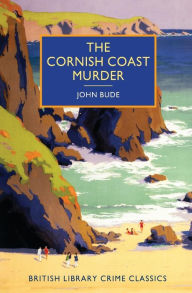
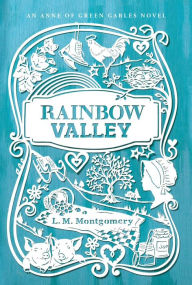


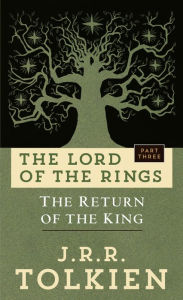


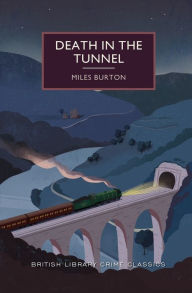



I never figure out the mysteries, so I always assume the problem is me and not the book.