–
Witness this illustration from Maurice Sendak’s 1993 book, We Are All in the Dumps with Jack and Guy. Yes, that’s Trump Tower in the background.
He knew.


 By: James Preller,
on 12/5/2016
By: James Preller,
on 12/5/2016
–
Witness this illustration from Maurice Sendak’s 1993 book, We Are All in the Dumps with Jack and Guy. Yes, that’s Trump Tower in the background.
He knew.
By: James Preller,
on 11/18/2016
–

The righteously indignant poet Diane di Prima. Photo by James Oliver Mitchell.
–
It’s hard to say why we pluck one book from the shelf, a slim volume surrounded by so many others. In this case, for me, it was a book I hadn’t read in at least 20 years. A book I’d purchased new for $3.50, back in my college days, when that’s how I spent my available book-money: poetry, poetry, poetry. Building a collection.
A year ago, I was moved to post Wendell Berry’s fine poem, “The Peace of Wild Things.” Last week my blog blew up because somebody, somewhere, linked to that page on my blog. Berry’s poem expressed something that helps me in troubling times. I go back to it, as a reminder, time and again. And, oh yes, we are in troubling times, with irksome, fearful days ahead.
–

Cover design by Lawrence Ferlinghetti.
–
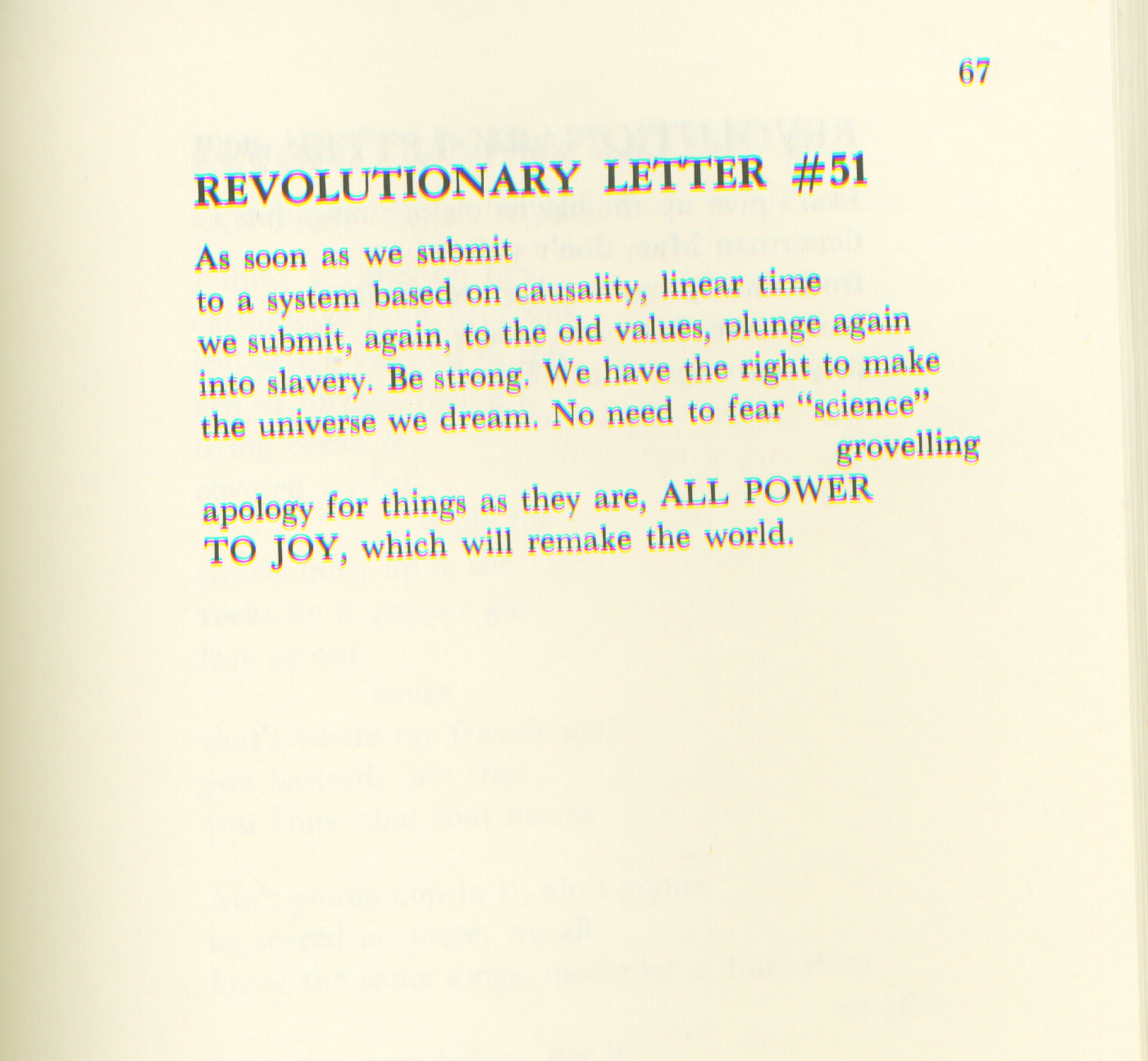
During the week of the election, I took Diane di Prima’s Revolutionary Letters off the shelf. Because as much as I needed solace and surcease, I also needed fire and gasoline. I needed the righteous indignation of di Prima’s shambolic, vexed, idealistic voice. While I don’t think of her as a supreme poet, or of this as a perfect poem, her spirit strikes chords in me, resounding and reverberating like a clanged bell. But I’m here today mostly for that good line: “We have the right to make the universe we dream.”
Be keep dreaming, dreamers.
We have that right, and that mission. Be strong.
–
 By: Viviane Schwarz,
on 10/17/2016
By: Viviane Schwarz,
on 10/17/2016
I went to Cheltenham Literature Festival and read HOW TO FIND GOLD.
The kids were amazing! They drew beautiful crocodiles...
 By: Viviane Schwarz,
on 8/15/2016
By: Viviane Schwarz,
on 8/15/2016
I had a brilliant time at Foyles in Birmingham doing a reading HOW TO FIND GOLD and then drawing a massive picture with everyone...in the end it turned into an impromptu book! Here it is.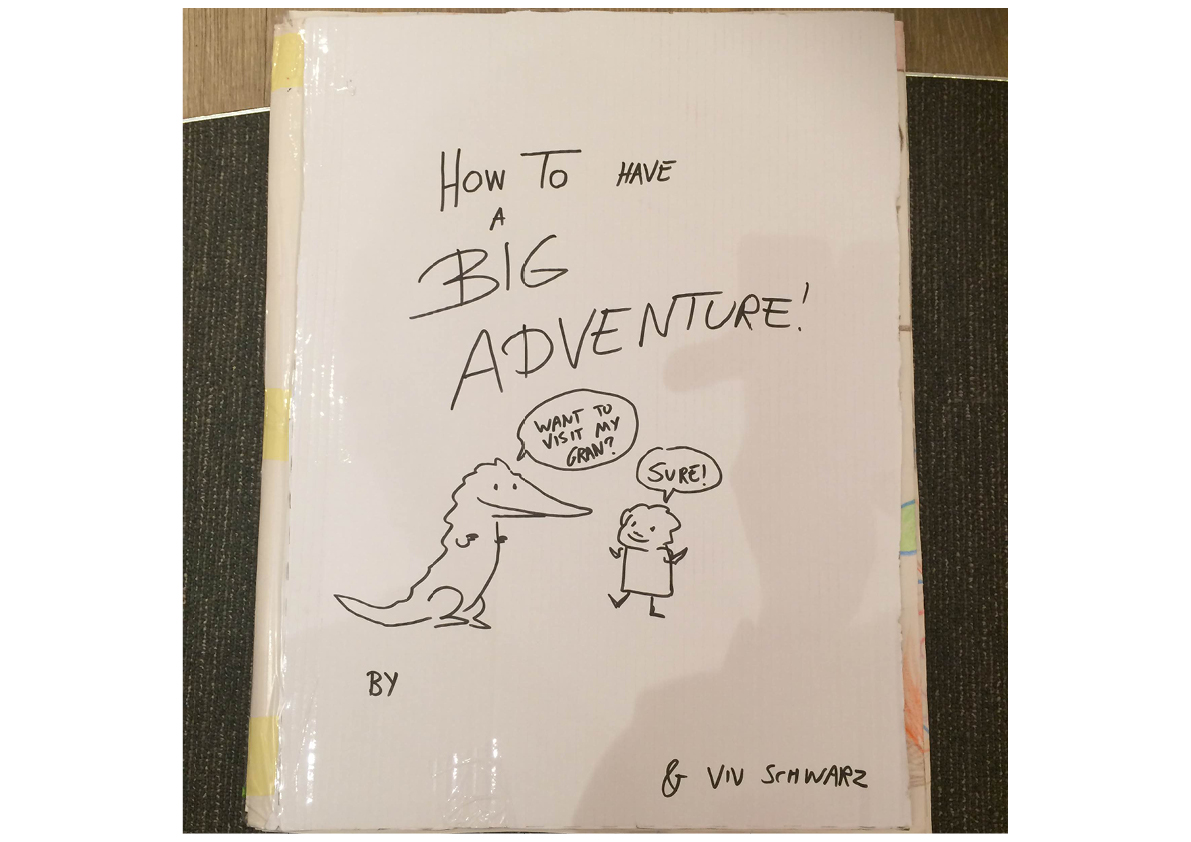


 By: Dan Wickett,
on 7/26/2016
By: Dan Wickett,
on 7/26/2016
Went to see Peter Geye read at Nicola's Books in Ann Arbor last night and it turned into a fairly cozy reading. That is, summer in Ann Arbor might not always be the best time for readings, especially right around Art Fair as people are running around, busy, worn out, etc. After those of us that were there for the reading spread ourselves our rather widely in the available seating, the moderator of the event suggested maybe we sit around their (UNLIT) fireplace--couple of couches, some comfy chairs, etc., and so we did.
Peter read the first chapter and then opened things up for questions and as he knew 71.4% of the listeners, I think maybe it opened up for some different types of questions than from a completely cold audience. He had a former student in the crowd, somebody with which he had shared a panel at Voices of the Midwest, another novelist, etc. He also had people that had read all three of his novels and knew of the association between the new one, Wintering, and the last before that, The Lighthouse Road, and those who had yet to read any of them.
So one or two of the questions were a bit more personal than you might usually see, and at the same time, Peter was doing his best not to release anything that might spoil the reading of Wintering for those that had not yet done. What it was though was enjoyable. The novel is fantastic, Peter's a nice guy who gave very long, thoughtful answers--a couple of the questions were in similar veins to those that he's been asked, but different enough that he had to think a bit about how exactly to answer them. Had it been snowy and cold out and that fireplace lit up might have been a bit more appropriate for this particular author/novel combination, but it was still a very good way to spend a portion of my evening.
Add a Comment
By: Dan Wickett,
on 4/6/2016
Monday night I went out to the first reading I've been to in a while. Desiree Cooper, whose story collection, Know the Mother, I had just reviewed, was reading. Earlier in the afternoon I also happened to hear her give a great interview on the local NPR station.
As is typical with readings at Literati, the introduction was fantastic--not too long, but not a simple announcement. Desiree had a great reading voice, was plenty loud for those of us who opted to sit in the back, and she had the ability to, without using voices, convey the different characters as she read her work.
The collection has many flash stories--and many of her flash stories are 750 words or less. This allowed her to read more than one or two complete works and not excerpts. She began with the opening story, "Witching Hour," which is a wonderful introduction to her collection.
Cooper then discussed the various types of women in her stories and how they were the focus of the collection. She brought up women that worked and then read"Ceiling," a story about a lawyer asking about maternity leave and hearing the phrase: 'If you wanted to have babies, why did you go to law school." This followed by "Cartoon Blue," a story about a lawyer who actually goes through the beginning of a miscarriage while on the phone with a client. It's a brutal story and maybe even more so having heard it read aloud.
Other works I remember Cooper reading include:
"Princess Lily," about a 14 year old who got pregnant while living in Japan and how she stayed with a Japanese family during the time of her 'condition;'
"Mourning Chair," a story from the point of view of a mother waiting for her daughter to come home (containing the line she knows she'd tell a cop if one came to her door---'She's the one with her heart beating in my pocket;'
She read "Soft Landing," sort of a fantasy story, and she also read "To the Bone," and I'm glad I was there to hear the introduction to this one as it pointed out a very specific element of repetition that I hadn't noticed that really works well.
It was a nice evening as Desiree Cooper lives locally and so the crowd mostly knew her, or her work. She even had a relative show up. She did a Q&A at the end and signed copies of the book and all in all it was a good reminder of why I used to attend a lot more readings than I have lately.
Add a Comment
By: James Preller,
on 2/18/2016
-
-
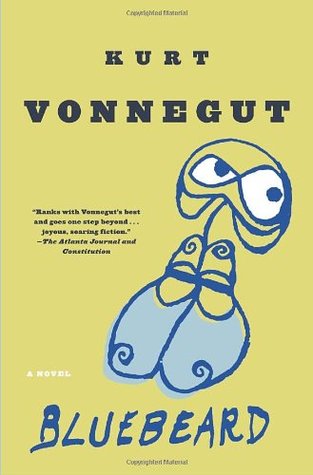
I read Bluebeard by Kurt Vonnegut a while back, somehow it had eluded me until then, underlining passages and adding stars and all sorts of enthusiastic marginalia. Today I keep coming back to one particular passage, which I’ll share below. I don’t think you need much setup, so now this:
She asked me what had been the most pleasing thing about my professional life when I was a full-time painter — having my first one-man show, getting a lot of money for a picture, the comradeship with fellow painters, being praised by a critic, or what?
“We used to talk a lot about that in the old days,” I said. “There was general agreement that if we were put into individual capsules with our art materials, and fired out into different parts of outer space, we would still have everything we loved about painting, which was the opportunity to lay on paint.”
I asked her in turn what the high point was for writers — getting great reviews, or a terrific advance, or selling a book to the movies, or seeing somebody reading your book, or what?
She said that she, too, could find happiness in a capsule in outer space, provided that she had a finished, proofread manuscript by her in there, along with somebody from her publishing house.
“I don’t understand,” I said.
“The orgastic moment for me is when I hand a manuscript to my publisher and say, ‘Here! I’m all through with it. I never want to see it again,'” she said.
-
By: James Preller,
on 2/15/2016
-

-
About 18 months ago I was invited to contribute a short story to an “edgy” YA compilation, tentatively titled I See Reality. It would ultimately include twelve short stories by a range of writers. I was interested, but did not exactly have one waiting in my file cabinet. So I said, “Give me a few days and let’s see if anything bubbles to the surface.” After some thought, I knew the story I wanted to tell, and I knew the format in which I wanted to it.
Wallace Stevens wrote a poem, “Thirteen Ways of Looking at a Blackbird,” that had always captivated me. I admired its fragmentary nature, the way the text moves from perspective to perspective to create an almost cubist mosaic. Of course my story, “The Mistake,” did not come close to achieving anything of the sort. But that was the starting point, the push. I decided to play around with that idea. The final story included twenty-two brief sections.
What I wanted to say, what I was moved to address: I wanted to write a story that touched upon teenage pregnancy and the important role that Planned Parenthood plays in the lives of so many young women and men. We live in a challenging time when women’s reproductive rights are under almost daily attack. When the very existence of Planned Parenthood is under political and violent assault. This is a health organization that supplies people — often young women from low income groups — with birth control, pap smears, and cancer screening. According to The New England Journal of Medicine: “The contraception services that Planned Parenthood delivers may be the single greatest effort to prevent the unwanted pregnancies that result in abortions.”
Most importantly for this story, Planned Parenthood provides abortions as part of its array of services, a procedure that is legal in the United States of America. Abortion has long been debated, discussed, argued, and decided in the Supreme Court. As divisive as it may be, abortion has been declared a legal right in this country. And it touches young lives in profound ways.
Anyway, yes, I know that I risk offending people. Maybe I should just shut up. But when my thoughts bend this way, when I start to worry what people might think, I remind myself of this quote by Martin Luther King, Jr.: “Our lives begin to end the day we become silent about things that matter.”
I stand with Planned Parenthood.
Here’s the first two brief sections from my story, plus another quick scene, followed by review quotes about the entire collection from the major journals:
THE MISTAKE
By James Preller
1
“What do you think we should we do?” Angela asked.
“I don’t know.” Malcolm shook his head. “What do you want?”
It was, he thought, the right thing to ask. A reasonable question. Her choice. Besides, the truth was, he didn’t want to say it out loud.
So he said the thing he said.
“What do I want?” Angela said, as if shocked, as if hearing the ridiculous words for the first time. She stared at her skinny, dark-haired boyfriend and spat out words like lightning bolts, like thunder. “What’s that got to do with anything, Mal? What I want? How can you even ask me that?”
“I’m sorry,” he said.
“I’m sorry, too,” she replied stiffly, but Angela’s “sorry” seemed different than his. Malcolm was sorry for the mistake they made. Their carelessness. And in all honesty, his “sorry” in this conversation was also a strategy to silence her, a word that acted like a spigot to turn off the anger. Angela’s “sorry” encompassed the whole wide world that now rested on her slender shoulders. Malcolm understood that she was sorry for all of it, all the world’s weary sorrows, and most especially for the baby that was growing inside her belly.
2
Angela on her cell, punching keys, scrolling, reading, clicking furiously.
At Planned Parenthood, there was a number she could text. She sent a question. Then another. And another.
She was trying to be brave.
Trying so hard.
It wasn’t working out so well.
<<snip>>
14
“Angela?” A nurse appeared holding a clipboard, looking expectantly into the waiting room.
Angela rose too quickly, as if yanked by a puppeteer’s string.
The nurse offered a tight smile, a nod, gestured with a hand. This way.
Her balance regained, Angela stepped forward. As an afterthought, she gave a quick, quizzical look back at Malcolm.
“Love you,” the words stumbled from his throat. But if she heard, Angela didn’t show it. She was on her own now. And so she walked through the door, down the hallway, and into another room. Simple as that.
Malcolm sat and stared at the empty space where, only moments before, his Angela had been.
———
Contributing authors include Jay Clark , Kristin Clark , Heather Demetrios , Stephen Emond , Patrick Flores-Scott , Faith Hicks , Trisha Leaver , Kekla Magoon , Marcella Pixley , James Preller , Jason Schmidt , and Jordan Sonnenblick .
Review by Booklist Review
“The hottest trend in YA literature is the renaissance of realistic fiction. Here, as further evidence, is a collection of 12 stories rooted in realism. Well, one of the stories, Stephen Emond’s illustrated tale The Night of the Living Creeper is narrated by a cat, but, otherwise, here are some examples: Jason Schmidt’s visceral story of a school shooting; Kekla Magoon’s tale of a mixed-race girl trying to find a place she belongs; Marcella Pixley’s operatic entry of a mother’s mental illness; and Patrick Flores-Scott’s haunting take on a brother’s life-changing sacrifice. Happily, not all of the stories portray reality as grim. Some, like Kristin Elizabeth Clark’s gay-themed coming-out story, Jordan Sonnenblick’s older-but-wiser romance, and Faith Erin Hicks’ graphic-novel offering about gay teens, are refreshingly lighthearted and sweet spirited. Many of the authors in this fine collection are emerging talents and their stories are, for the most part, successful. One of their characters laments how some don’t want to know about what goes on in the real world. This collection shows them.”
Review by School Library Journal Review
“Gr 10 Up-Tackling feelings-from grief to joy, from sorrow to hope, and from loss to love-this short story collection portrays real emotions of teenagers in real-life situations. Included in this volume are the conversation a girl has with herself while preparing to break up with an emotionally manipulative boyfriend, the story of a survivor of a high school shooting, an illustrated vignette told from the perspective of a family’s cat about a creeper at a Halloween party, and a short work in comic book format about the surprising secret of a high school’s golden couple. . . . With authors as diverse as Heather Demetrios, Trisha Leaver, Kekla Magoon, and Jordan Sonnenblick, this collection unflinchingly addresses subjects such as sexuality, abortion, addiction, school shootings, and abuse. VERDICT From beginning to end, this is a compelling work that looks at the reality teens are faced with today.”
——
My thanks to editors Grace Kendall and Joy Peskin of Farrar Straus Giroux/Macmillan for inviting me to take part in this refreshing collection of stories. My editor at Feiwel & Friends, Liz Szabla, helped make the connection possible.
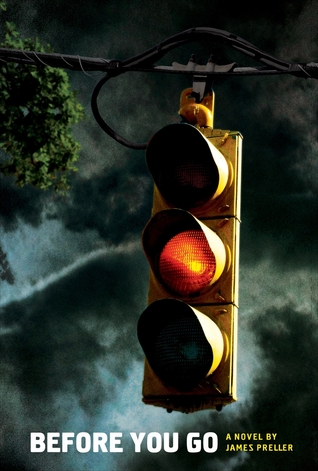 My two books that might have the most appeal to YA readers would be Before You Go and The Fall.
By: James Preller,
on 10/26/2015
-
Thanks to Google Alerts, I found this terrific & timely article by Paula Willey in The Baltimore Sun. Willey does a great job here, writing calming and directly about the value of “scary books” for (some) young readers.
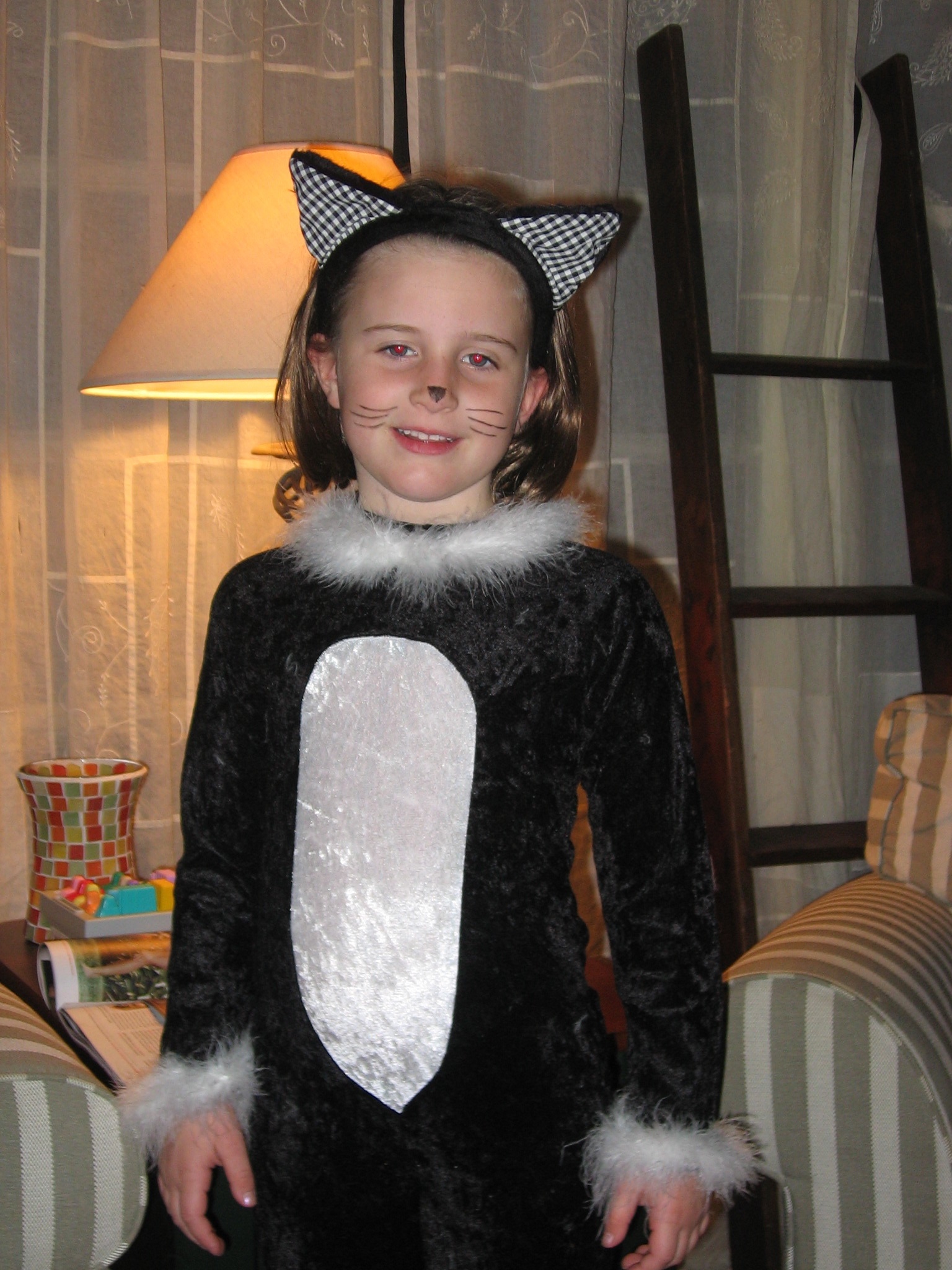
My lovely daughter, Maggie, some years back. To our surprise, Maggie loves horror. Loves it!
Personally, I got into scary books late in life, after many school visits where I met young readers who loved that shivery, edge-of-the-seat feeling. This is not just a Halloween thing, btw. An affection for horror goes year round. After raising two boys who never cared for horror — and openly said so, I should add — my sweet Maggie came along and she loves those creepy, crawly feelings. Go figure.
Another reason why I wrote “Scary Tales” in the way that it’s written — short, fast-paced, easy-to-read, series format — was because of all the reluctant readers I’ve met over the years. I’ve had them in my own kitchen, munching Doritos, blithely telling me how they don’t like books. So I challenged myself to write stories that attempted to be so entertaining & enjoyable that even these boys would read to the last page (they are, alas, almost invariably boys). I wanted them to experience that proud, “I just finished a whole book” feeling. And to then realize, “Hey, I kind of liked it. I’ll try another.”
In the old days of publishing, we’d call books in this category “Hi-Lo.” High-interest, low-reading level. My estimation is that “Scary Tales” is written somewhere on the 3rd-grade level, but with stories that appeal all the way up to 6th grade. The look is cool and edgy, so there’s no stigma to reading “baby” books.
Here’s a snip from the article. Thank you for the kind mention, Paula Willey!

Art by Iacopo Bruno from SCARY TALES: ONE-EYED DOLL.
Picture, if you will, a smiling, well-adjusted child. She’s tucked into a corner of the couch, reading happily, quiet but for the occasional giggle. Is that an “American Girl” book she’s reading? A silly fractured fairy tale? On the cover, you spy a slime-drenched, bloody snake; the title is spelled out in dripping, neon-bright letters: “The Zombie Chasers: World Zombination!”
Horrors! This child is reading horror!
Many grownups are a little uncomfortable when a kid exhibits a taste for stories of terror and mayhem. They worry that their children will become desensitized to violence or will have nightmares. Some just want their kids reading “better” books. There’s a perception that scary books like the “Goosebumps” series by R. L. Stine are of low literary quality and have no value.
It’s true that “Goosebumps” books, along with series like James Preller’s “Scary Tales,” “Spooksville” by Christopher Pike and P. J. Night’s “Creepover,” are short, formulaic, and written at a fairly low reading level. However, librarians know that these books sometimes play a crucial role in inviting children into reading, or helping a reader bridge the gap between books he is beginning to find “babyish” and longer books with more complexity.

Art by Iacopo Bruno from SCARY TALES: NIGHTMARELAND.
Many people who grew up to be very accomplished readers — and writers — claim to have read nothing but “Goosebumps” for years when they were kids.
In addition, children are very aware of their ability to handle scary stuff. When I help a child pick out a book, I’ll often ask, “How do you do with scary books?” Of all the questions that I ask during the book selection process, this is the one they answer most forthrightly: “No scary books!” or “I can handle medium-scary.” And then there’s the little angel who proclaims, “The scarier the better!”
For the full article, click here.
Paula Willey is a librarian at the Parkville branch of the Baltimore County Public Library. She writes about children’s and teen literature for various national publications and online at unadulterated.us.
Add a Comment
By: James Preller,
on 9/22/2015
Yesterday I reread Crockett Johnson’s Harold and the Purple Crayon.
It was published 60 years ago, btw, in two-color.
Weird format, too.
And, of course, it’s perfect.
But what I keep thinking about these past 24 hours is that throwaway phrase, “a deserving porcupine.”
Do you recall it? Possibly not.
Harold thinks about a picnic, and pies, and being Harold, he goes a little overboard.
“He hated to see so much delicious pie go to waste.”
Here’s what kills me:
“So Harold left a very hungry moose and a deserving porcupine to finish it up.”

Ha.
That phrase: a deserving porcupine.
How did Crockett Johnson even think of that? Out of all the available adjectives for a porcupine, he deemed this particular one “deserving.”
What did it do to deserve such treatment? I guess we’ll never know, but it feels to me like there’s a story there, somewhere off the page. The deserving porcupine appears on only one page of the book, then off Harold goes, in search of a hill to climb . . .
I should add this postscript:
 It’s pub day for my new book, The Fall.
I really think everybody should buy it. That would be awesome. Thanks!
Add a Comment
By: James Preller,
on 7/17/2015
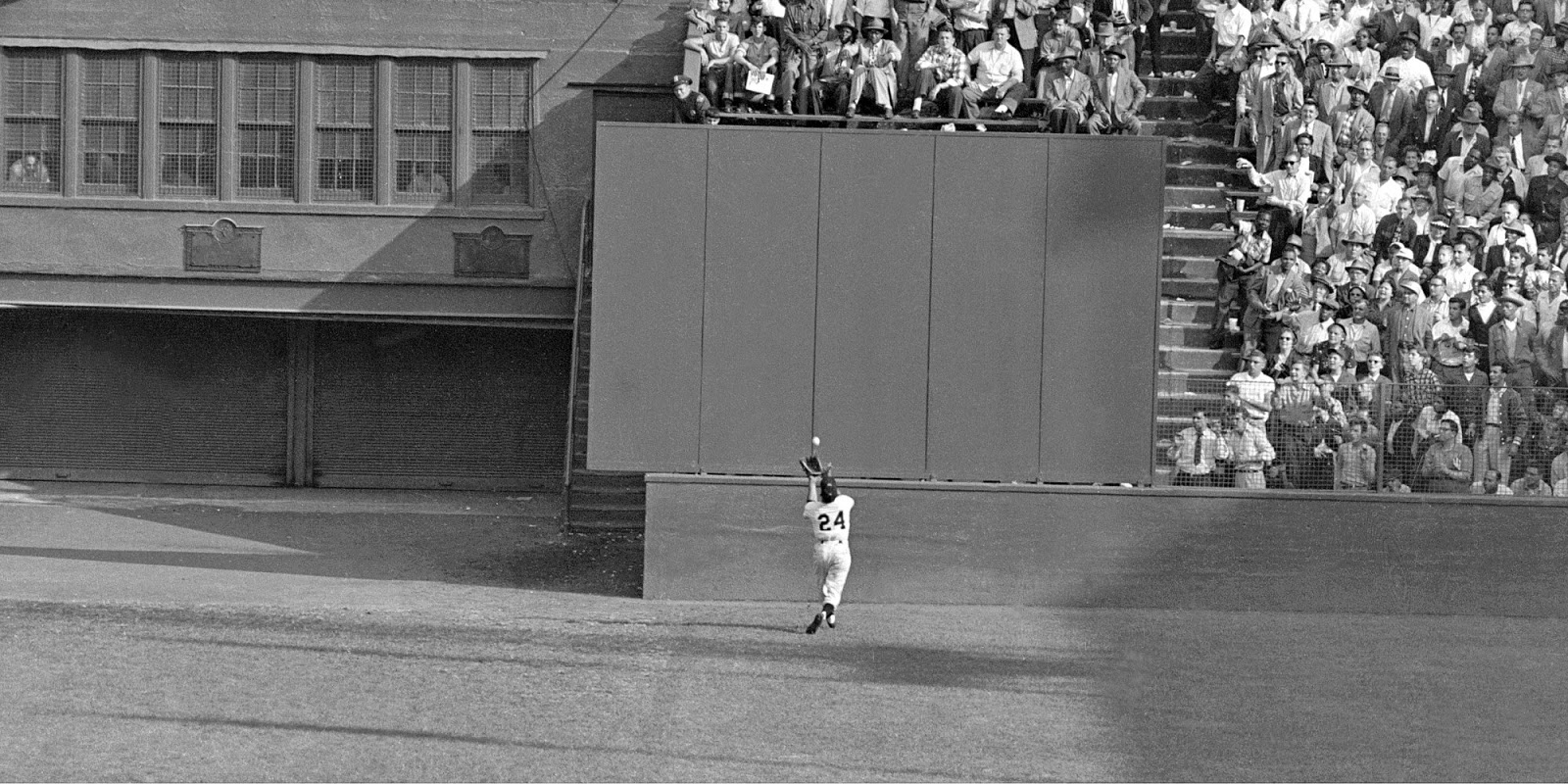
Willie Mays, “the catch,” from the 1954 World Series. Arguably the greatest play in the history of center field.
-
I was recently reading a book by Philip Roth and came across a similarity to something I had written back in 2008. His words struck me as eerily familiar.
The relevant section in my book, Six Innings, focuses on center fielder Scooter Wells. For this book, my original idea came from watching an elaborate tracking shot by film director John Sayles. I actually forget which movie, and I may have all the details wrong, but the essence stands: I admired how the camera followed a character into a crowded room, came across a new face and then trailed after that new person until someone else came into view, and the camera again swiveled and changed direction to follow that character. I wondered if I could try a similar device by using a ball in a Little League game. Tell the story of each character as they naturally step into the game’s flow. If you catch the ball, it’s time for your story, and so on.
Anyway, in this moment, we’re out in center field with Scooter. An opposing slugger, Nick Clemente, has just struck a ball far and high. The pitcher, Dylan, immediately figures it’s gone . . .
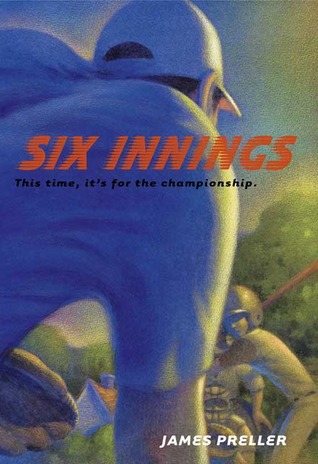 Out in center field, Scooter Wells knows better. He instantly realizes that the ball is going to stay within the yard. Most important, Scooter figures he’s got a chance to catch it. Somehow he does all that figuring — the mathematics of it, the cool calculus of force and trajectory, distance and wind patterns — by pure instinct. It’s a gift; he knows how to read a ball coming off a bat. To Scooter, center field is like a fire tower in the high peaks of the Adirondacks, an all-seeing observation post, the ideal vantage point to watch as the game unfolds.
< snip >
Now the ill-treated ball, so rudely bashed, travels in a soaring arc toward the right-center field gap. Scooter Wells, part physicist, part Labrador retriever, bolts toward the fence. “It’s mine! It’s mine!” he pointlessly yells, for the ball can be no one else’s. At full gallop, Scooter’s hat flies off his head. He extends his arm and snares Clemente’s bomb in the webbing of his glove.
Inning over.

-
An aside: I don’t think anybody ever noticed it, but that passage includes a small tribute to the great Willie Mays. The “Say Hey Kid” had a signature habit of losing his hat, or his helmet if he happened to be tearing around the basepaths, whenever he took off on a mad sprint. At least that’s the way I remember it.
Here’s the section from Roth’s book, Portnoy’s Complaint, that caused me to to reread what I had written. For the record, I never read Portnoy until this past week, so I don’t see how I could have borrowed those images even subconsciously:
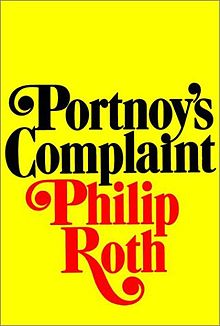 Do you know baseball at all? Because center field is like some observation post, a kind of control tower, where you are able to see everything and everyone, to understand what’s happening the instant it happens, not only by the sound of the struck bat, but by the spark of movement that goes through the infielders in the first second that the ball comes flying at them; and once it gets beyond them, “It’s mine,” you call, “it’s mine,” and then after it you go. For in center field, if you can get to it, it is yours.
As a baseball-loving southpaw from Long Island, I never played second base, shortstop, third base, or catcher. Those positions were and still remain strictly in the domain of right-handed ballplayers. So I pitched a lot, played first base, and eventually moved out to the hinter lands, center field, a position — and vantage point — I instantly loved.
What a great view to enjoy the game.
Add a Comment
By: James Preller,
on 4/27/2015

“Stories can conquer fear, you know.
They can make the heart bigger.”
— Ben Okri, Nigerian poet and novelist
By: James Preller,
on 4/15/2015
-
Many years ago, in 1989 in fact, I enjoyed the memorable experience of attending a public reading at Peter Norton Symphony Space in New York. The program was a special evening in Selected Shorts history, created by Roger Angell and A Bartlett Giamatti, who was soon to assume his duties as Commissioner of Baseball. I still remember the evening vividly, the great selections and talented readers. Years later I tracked down the CD compilation and highly recommend it. Some of my favorite stories from that night include John Updike’s, “Hub Fans Bid Kid Adieu,” W.P. Kinsella’s “The Thrill of the Grass,” T.C. Boyle’s hilarious “The Hector Quesadilla Story,” and Giamatti’s classic, “The Green Fields of the Mind.”
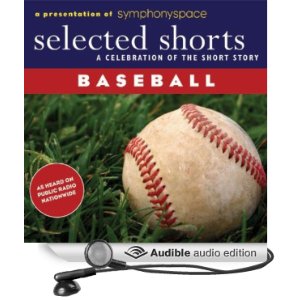 I was recently reminded of some musings by Giamatti about the nature of baseball, and specifically how the game relates to the idea — the concept, the notion, the pull — of home. His ideas suddenly seemed vitally important to me, helpful to something I was (and still am) writing. So I found the track in my iTunes Library, listened and listened again while transcribing word for word. Here I offer you that one three-minute preamble — words that struck me, and have stuck with me, for more than 20 years. Now, hopefully, a lasting internet artifact.
Please note that I endeavored to transcribe his words faithfully and accurately. The punctuation is my own, faithful to my own ear and to what I imagine to be, perhaps, Mr. Giamatti’s own predelictions, though I’m sure he would have managed the lineup differently. Any sloppiness to these sentences is entirely, I think, due to context. He was speaking from notes, as I recall, but the expression was primarily oral, not written. Thoughts are not always “complete,” as if were.

A. Bartlett Giamatti, scholar and former Commissioner of Baseball.
“There is no great long poem about baseball. It may be that baseball is itself its own great long poem. This had occurred to me in the course of my wondering why home plate wasn’t called fourth base. And then it came to me: Why not? Meditate on the name for a moment. Home.
Home is an English word virtually impossible to translate into other tongues. No translation catches the associations, the mixture of memory and longing, the sense of security and autonomy, the accessibility, the aroma of inclusiveness, the freedom from wariness, that cling to the word home, that are absent from ‘house’ or even ‘my house.’ Home is a concept, not a place, a state of mind where self-definition starts; it is origins. A mix of time and place and smell and weather wherein one first realizes that one is an original — perhaps like others, especially those one loves, but discreet, distinct, not to be copied. Home is where one first learned to be separate, and it remains in the mind as the place where reunion, if it were ever to occur, would happen.
So of course home drew Odysseus , who then set off again because it isn’t necessary to be in a specific place, in a house or a town, to be one who has gone home. So home is the goal rarely glimpsed, and almost never attained, of all the heroes descended from Odysseus . All literary romance, all Romance Epic, derives from The Odyssey and it is about going home. It is about rejoining, the rejoining of beloved, rejoining of parent to child, the rejoining of land to its rightful owner or rule. Romance is about putting things right after some tragedy has put them asunder. It is about restoration of the right relations among things. And going home is where that restoration occurs because that’s where it matters most.
Baseball is of course entirely about going home. And to that extent, because it is the only game you ever heard of where you want to get back to where you started (all the other games are territorial; you want to get his or her territory), not baseball. Baseball simply wants to get you from here back around to here, and that I think is why baseball is its own long poem, its own endless epic. We’ll come back again to this later. What we’re going to engage in now however is the way in which baseball, while it has never given itself to the literary expression that is as epic as its own unfolding, is clearly, in a game that recommences with every pitch, superbly fitted to the short poem. To the quick burst, for the shot. And we have three distinguished readers and three distinguished poets who have written quite remarkable, both descriptive and analytic, poems about baseball.”
The poems that were read following Giamatti’s introduction were: “Polo Grounds” by Rolfe Humphries, “Pitcher” and “Base Stealer” by Robert Francis, and “Cobb Would Have Caught It” by Robert Fitzgerald.
-
Robert Fitzgerald, “Cobb Would Have Caught It”
In sunburnt parks where Sundays lie,
Or the wide wastes beyond the cities,
Teams in grey deploy through sunlight.
Talk it up, boys, a little practice.
Coming in stubby and fast, the baseman
Gathers a grounder in fat green grass,
Picks it stinging and clipped as wit
Into the leather: a swinging step
Wings it deadeye down to first.
Smack. Oh, attaboy, attyoldboy.
Catcher reverses his cap, pulls down
Sweaty casque, and squats in the dust:
Pitcher rubs new ball on his pants,
Chewing, puts a jet behind him;
Nods past batter, taking his time.
Batter settles, tugs at his cap:
A spinning ball: step and swing to it,
Caught like a cheek before it ducks
By shivery hickory: socko, baby:
Cleats dig into dust. Outfielder,
On his way, looking over shoulder,
Makes it a triple. A long peg home.
Innings and afternoons. Fly lost in sunset.
Throwing arm gone bad. There’s your old ball game.
Cool reek of the field. Reek of companions.
-
Also of note: The Poetry Foundation, where I signed up for spectacular email updates, recently provided a link to a sweet collection of baseball poems. Click here and start running around the bases . . . Lots of good poems there, even some home runs.
Add a Comment
By: James Preller,
on 1/2/2015
-
“Being an artist is not just about what happens
when you are in the studio.
The way you live, the people you choose to love
and the way you love them, the way you vote,
the words that come out of your mouth…
will also become the raw material
for the art you make.” — Teresita Fernandez.

-
A friend passed along a terrific interview with a sculptor whose name I didn’t recognize, Teresita Fernandez. It turns out that she currently has a show at nearby Mass Moca (see video at bottom), so I’m hoping to experience it. (Road trip, anyone?) Credit for the interview goes to Maria Popova at Brain Pickings; just follow the link, like Dorothy’s yellow brick road, and you’ll get there to read it in full: a wise and thoughtful piece.
At the conclusion of the article, Teresita offers a brief list of practical tips for a young artists. I think the general wisdom — and moreso, the warm humanity expressed here — makes it worth reading for absolutely anybody. I love that she does not separate her art from her life, or from any life. It is of a piece, a life’s work entire.
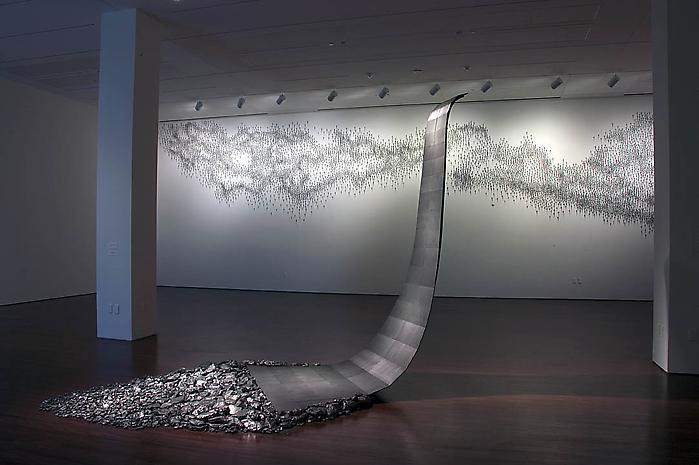
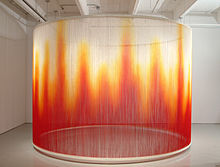
Here’s some examples of Teresita’s truly awesome work, sprinkled throughout.
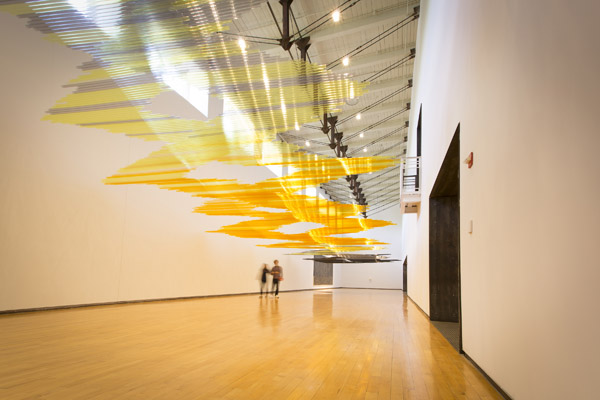
1) Art requires time — there’s a reason it’s called a studiopractice. Contrary to popular belief, moving to Bushwick, Brooklyn, this summer does not make you an artist. If in order to do this you have to share a space with five roommates and wait on tables, you will probably not make much art. What worked for me was spending five years building a body of work in a city where it was cheapest for me to live, and that allowed me the precious time and space I needed after grad school.
2) Learn to write well and get into the habit of systematically applying for every grant you can find. If you don’t get it, keep applying. I lived from grant money for four years when I first graduated.
3) Nobody reads artist’s statements. Learn to tell an interesting story about your work that people can relate to on a personal level.
4) Not every project will survive. Purge regularly, destroying is intimately connected to creating. This will save you time.
5) Edit privately. As much as I believe in stumbling, I also think nobody else needs to watch you do it.
6) When people say your work is good do two things. First, don’t believe them. Second, ask them, “Why”? If they can convince you of why they think your work is good, accept the compliment. If they can’t convince you (and most people can’t) dismiss it as superficial and recognize that most bad consensus is made by people simply repeating that they “like” something.
7) Don’t ever feel like you have to give anything up in order to be an artist. I had babies and made art and traveled and still have a million things I’d like to do.
8) You don’t need a lot of friends or curators or patrons or a huge following, just a few that really believe in you.
9) Remind yourself to be gracious to everyone, whether they can help you or not. It will draw people to you over and over again and help build trust in professional relationships.
10) And lastly, when other things in life get tough, when you’re going through family troubles, when you’re heartbroken, when you’re frustrated with money problems, focus on your work. It has saved me through every single difficult thing I have ever had to do, like a scaffolding that goes far beyond any traditional notions of a career.

Add a Comment
The 2015 Frost Farm Prize Metrical Poetry Contest Open for Entries
The Trustees of the Robert Frost Farm in Derry, NH, and the Hyla Brook Poets invite submissions for their 5th Annual The Frost Farm Prize for metrical poetry. The winner receives $1,000, publication in Evansville Review and an invitation, with honorarium, to read as part of The Hyla Brook Reading Series at the Robert Frost Farm in Derry in the summer of 2015.
This year’s judge is award-winning poet Joshua Mehigan. Mehigan’s first book, The Optimist, was a finalist for the 2005 Los Angeles Times Book Prize. His poems have appeared in many periodicals, including The New Yorker, The Paris Review, and Poetry, which awarded him its 2013 Levinson Prize. His second book is Accepting the Disaster, published by Farrar, Straus and Giroux in July 2014.
Last year’s winner was Rob Wright of Philadelphia, PA, for his poem, "Meetings With My Father."
To see other winners, please visit our website.
Frost Farm Prize Guidelines:
Poems must be original, unpublished and metrical (any metrical form). No translations. There is no limit to the number of poems entered by an individual, but an entry fee of $5 U.S. per poem must accompany the submission (entry fees from outside the United States must be paid in cash or by check drawn on a U.S. bank). You are welcome to submit a poem sequence (a crown of sonnets for example) but each poem will be judged individually -- please send in an entry fee for each poem in the sequence.
Make checks payable to the "Trustees of the Robert Frost Farm." Please type the author's name, address, phone number and e-mail address on the back of each entry. Each entry will be submitted to the judge anonymously.
Deadline:
Postmarked by April 1, 2015
Send entries to:
Robert Crawford
The Frost Farm Prize
280 Candia Rd.
Chester, NH 03036
The results will be posted in May 2015. Winner and honorable mentions (if any) will be notified by email or phone. DO NOT send a SASE for contest results.
To learn more about the Frost Farm Prize or for more information on the Hyla Brook Reading Series, please visit our website or Facebook or Twitter.
About the Frost Farm’s Hyla Brook Poets
The Frost Farm was home to the poet and his family from 1900-1911. Robert W. Crawford and Bill Gleed started The Hyla Brook Poets group in 2008 as a monthly poetry workshop. In March 2009, the monthly Hyla Brook Reading Series launched with readings by emerging poets as well as luminaries such as Maxine Kumin, David Ferry, Linda Pastan, and Sharon Olds.
By: James Preller,
on 12/26/2014
-
I’ve been reading more poetry lately, like returning to an old friend, and this morning want to share two things.

Poet John Berryman, who died without knowing.
First, from this morning, rereading a poem by W.S. Merwin titled “Berryman.” I’ll give you the last seven lines, you can look up the rest:
-
I asked how can you ever be sure
that what you write is really
any good at all and he said you can’t
-
you can’t you can never be sure
you die without knowing
whether anything you wrote was any good
if you have to be sure don’t write
-
As for me, I hear those words and accept them in my heart as true. Self-doubt seems central to the experience, though it’s nearly impossible to write without wild spasms of self-confidence. It’s why some writers drink, I’m sure, to trick yourself into feeling that way.
You die without knowing, that line, transcends the subject of writing. We can’t ever be sure, but we persist, and we can at times, in fact, think so. We may say, quietly, in bed to our loved one, “I think it’s a good book.” And we might even believe it. But in the next moment, in the silence between our last word and her reply, we can also know that our life has a been a delusion, a failure, and that none of it amounts to much of anything at all, when we had hoped for so much more.
Ah, the writing life.
 I’ve had so many books go out of print over the past two years. Just a staggering number, more than 40 books . . . going, going, gone. It’s the business I’m in, there are all sorts of rational reasons, excuses, palliatives I can apply. But still, it cuts deep. It just does. It feels like that photograph in the movie “Back to the Future.” Marty keeps looking at it, panicked, watching the images slowly disappear.
Maybe that’s what alzheimer’s feels like during brief snatches of clarity. You are helplessly aware that it’s all slipping away, and you can’t even be sure that any of it was real.
If you have to be sure don’t write, Berryman tells us, through Merwin. Such is life. You can’t you can never be sure. What can you do? You write some more, and hopefully it will be good.
Two nights ago I stood up at the head of the table — we were hosting friends and family on Christmas Eve, just a lovely evening — and I said a few words in preamble to a poem I wanted to share, Mary Oliver’s “When Death Comes.”
Which is funny, right? The title got a chuckle. Typical Jimmy, to go dark at a time like this. But the truth about darkness is that it gives us an appreciation of light. Poems purportedly “about” death are really about life. At least, that’s certainly the case here. “I want to say all my life/I was a bride married to amazement.”
I hope you like it.
When Death Comes
When death comes
like the hungry bear in autumn;
when death comes and takes all the bright coins from his purse
to buy me, and snaps the purse shut;
when death comes
like the measle-pox
when death comes
like an iceberg between the shoulder blades,
I want to step through the door full of curiosity, wondering:
what is it going to be like, that cottage of darkness?
And therefore I look upon everything
as a brotherhood and a sisterhood,
and I look upon time as no more than an idea,
and I consider eternity as another possibility,
and I think of each life as a flower, as common
as a field daisy, and as singular,
and each name a comfortable music in the mouth,
tending, as all music does, toward silence,
and each body a lion of courage, and something
precious to the earth.
When it’s over, I want to say all my life
I was a bride married to amazement.
I was the bridegroom, taking the world into my arms.
When it’s over, I don’t want to wonder
if I have made of my life something particular, and real.
I don’t want to find myself sighing and frightened,
or full of argument.
I don’t want to end up simply having visited this world.
–Mary Oliver
-
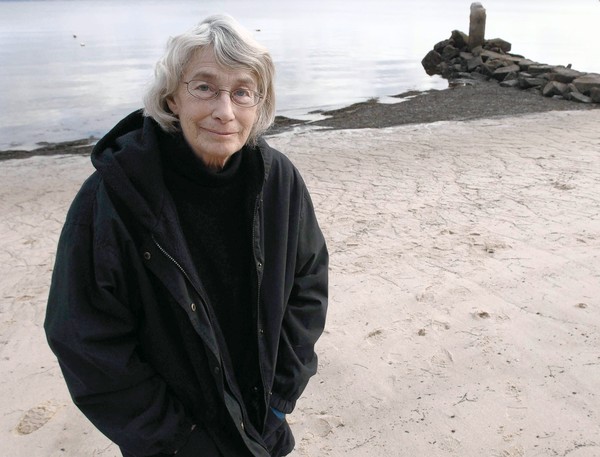
Mary Oliver: “Tell me, what is it you plan to do with your one wild and precious life?”
By: James Preller,
on 12/5/2014

PHOTO: Tom Gralish.
-
I’m primarily writing to pass on a link about school libraries. Maybe the article states the obvious. Essential stuff we already know, or certainly sense. I realize that I’m preaching to the choir here. But what I’ve come to believe in life, and politics, is that it’s important to preach to the choir. That’s how we can all open the hymnal to the same page, how we all sing out together, loud and clear. Not a bunch of scattered voices, but a powerful choir.

Here’s the link to a terrific article by Carol Heinsdorf and Debra Kachel, “School Libraries Are Essential to Learning,” along with a copy of the first few paragraphs. Their immediate focus is on Philadelphia public schools, but this represents a national trend:
In 1991, there were 176 certified librarians in Philadelphia public schools. This year there are 11 and only five are known to be actually doing what they were trained to do. Five librarians for the nation’s eighth-largest school district.
Leaving Philadelphia’s public school libraries without professional staffing is a grave mistake. It will have consequences for the students for the rest of their lives. Study after study shows a clear link between school libraries staffed by certified librarians and student achievement.
In 2012, research showed that students who had school library programs and certified librarians were more likely to have advanced reading and writing scores on the Pennsylvania System of School Assessment (PSSA) tests. And they were less likely to have “below basic” scores.
The same study found that school library programs have their greatest impact on students who are economically disadvantaged, black, Hispanic, or have disabilities. African American students in schools with certified librarians are twice as likely to earn advanced writing scores as those in schools without librarians.
A Mansfield University paper that looked at studies done in 23 states verified that schools with a trained librarian – someone who teaches students and works with teachers to develop information and research skills – have a consistent positive effect on student achievement regardless of demographic and economic differences among students.
In my professional life, I’ve been fortunate to walk into hundred of schools around the country as a guest author. Increasingly, I see libraries that are understaffed, and I meet librarians who are tasked to provide full-time services on part-time pay (and hours). On many days, these librarians are simply not in the building. In many schools, the library is increasingly marginalized and treated as non-essential — though, of course, no one on a school board ever admits to that out loud. “We may have cut the job in half,” they will tell anyone who’ll listen, “but it will not effect our children.”
Sorry, folks, but I’m calling bull***t.
This trend is true even in my own supposedly “quality” Bethlehem school district, in a relatively affluent suburb of Albany, NY. Former full-time librarians are now commuting between schools, splitting time and services. It’s a huge problem in New York, since the contract does not mandate a full-time librarian position (as opposed to, say, a P.E. instructor). A library should be the heartbeat of an elementary school. And in great schools, it clearly
serves that central, essential function. The librarian, or Media Specialist (if you prefer),
interacts with every child, in every grade, often across six years of learning. Consider that for a moment, the broad impact of that one person. A librarian works with and supports  classroom teachers. And in response to this reality, the political leaders in our educational system can only think to fire those people, or force them to split schools, while they increasingly focus on standardized tests, purchasing more technology, saving pennies and wasting dollars.
It’s so maddening, and so wrong-minded, I could scream. And that’s why we preach to the choir. Because maybe if we all scream together, somebody will hear our cry.
Add a Comment
Call for Poetry: Woman Made Gallery Literary Series
Theme: DOCUMENTATION: For The Record
Date: Sunday, February 1, 2015, 1:30 – 3:30 p.m.
Place: 685 N Milwaukee Ave, Chicago IL
We are seeking work that addresses all aspects of the theme:
A document provides evidence, or serves as an official record that something happened or simply exists. We are looking for Poems as Documentation or Documentary. Poems in the form of documents: How-to manuals, FAQs. transcripts of imagined interviews, policy documents, inventories, legal or constitutional documents, etc. Poems about the transciber or documentarist are also of interest. Let’s see what you can come up with.
Please send 4 – 6 poems on the theme ALONG WITH a 50 to 75 word bio, IN THE BODY OF AN E-MAIL to:
galleryATwomanmadeDOTorg (Change AT to @ and DOT to . )
by December 22, 12:01 a.m.. We will make every effort to inform those chosen of our decision by January 20. Although we can't afford to pay readers, this is a great opportunity to sell books and read with other talented people in a very special environment.
Selections will be made with an eye to assembling a program that represents a diversity of poets, styles, and approaches to the theme.
Selected poets MUST be available to read in person.
Read more about poetry events at Woman Made Gallery here.
 By: msedano,
on 11/3/2014
By: msedano,
on 11/3/2014
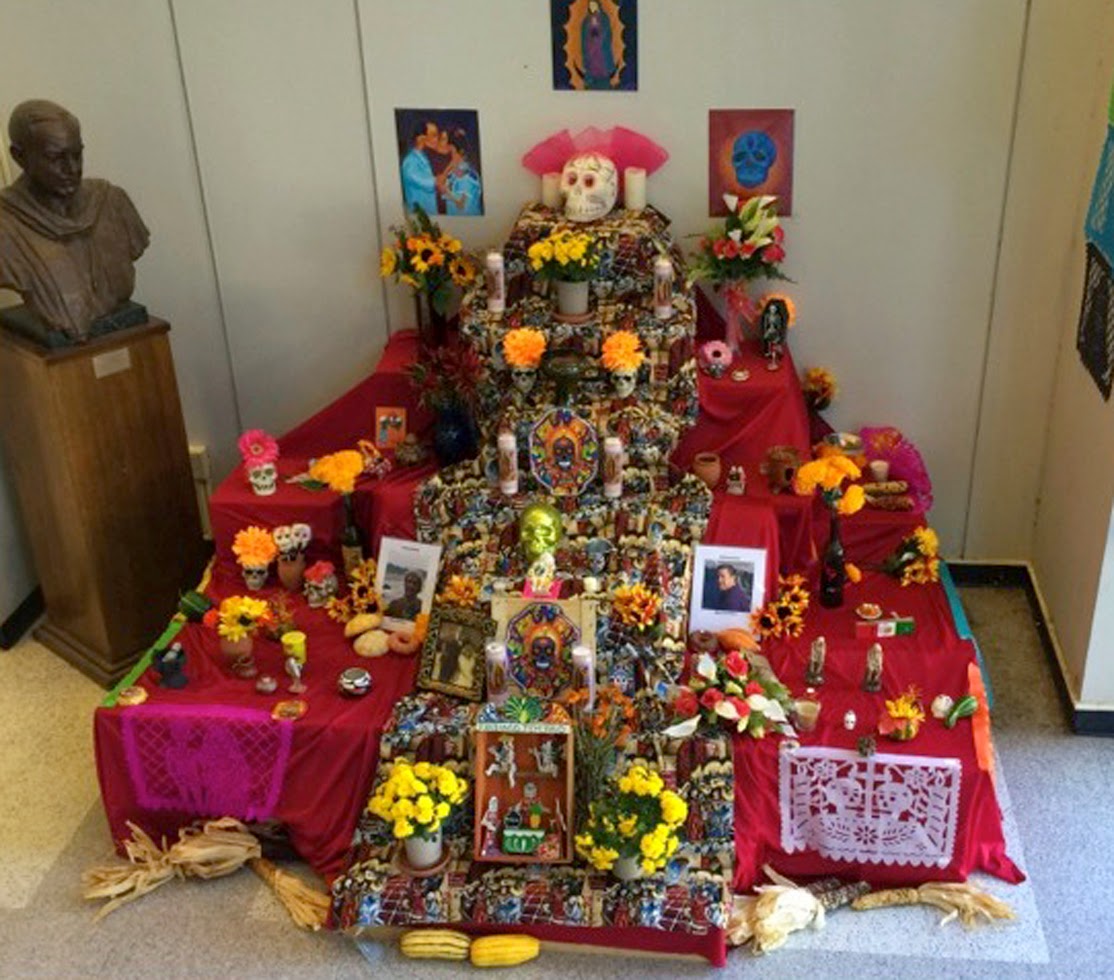
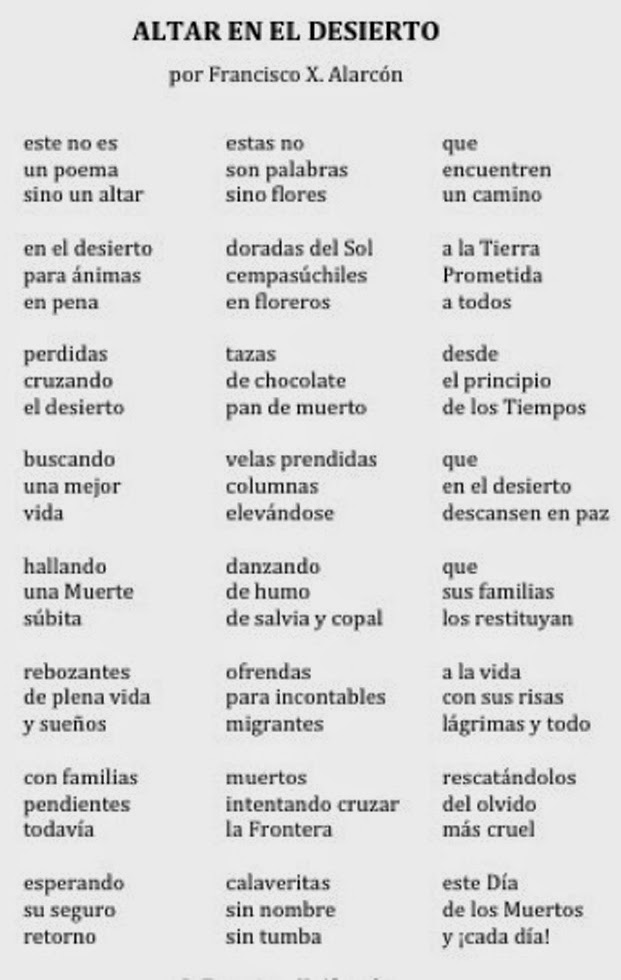
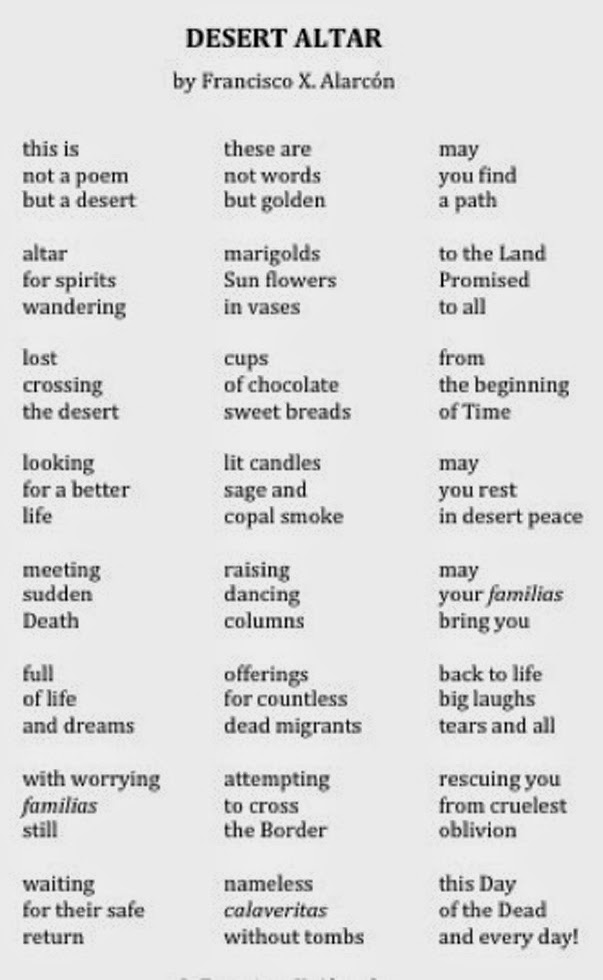
Memorial Poetry Reading for James Foley
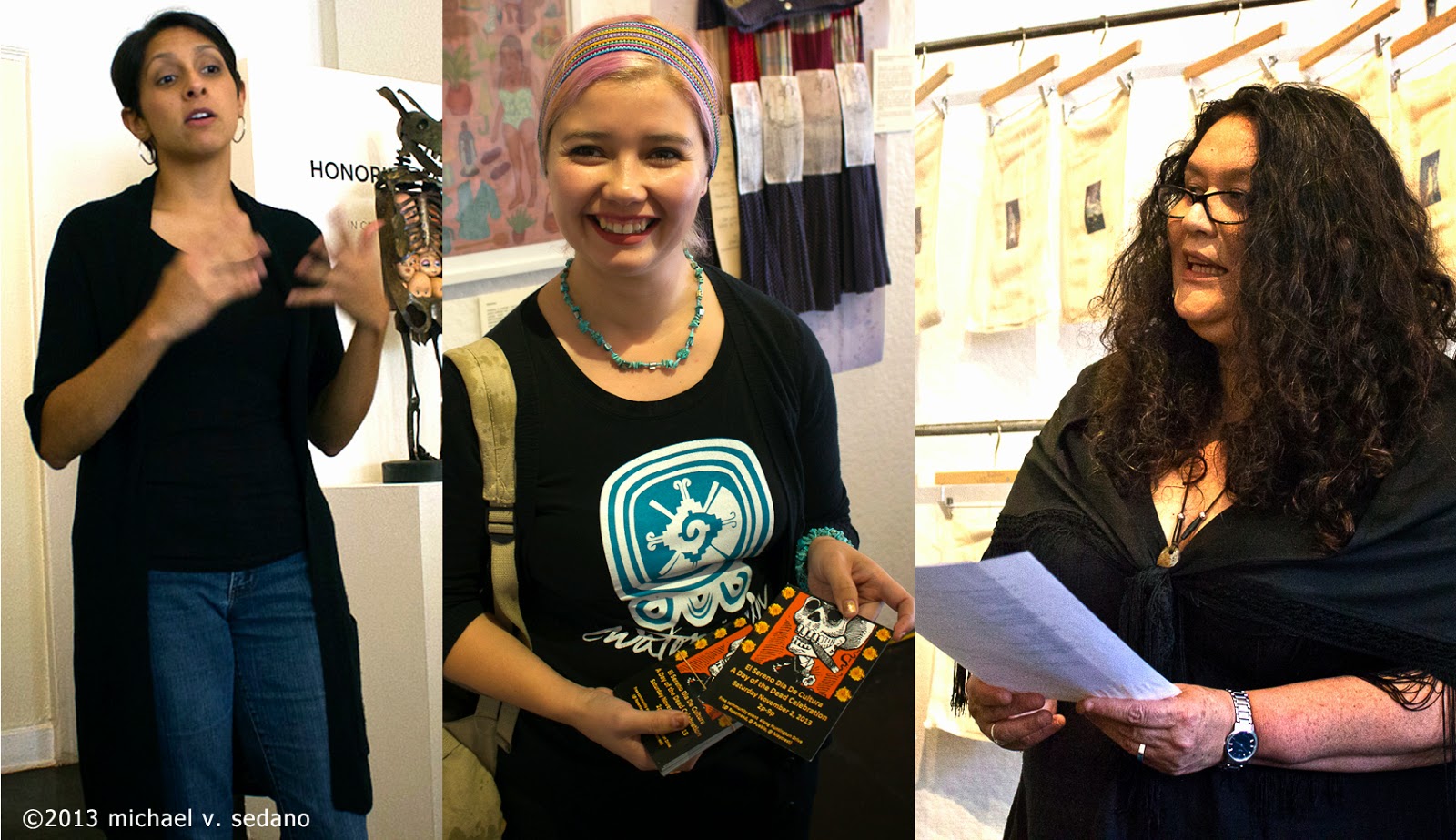 |
| Among LA's hardest-working poets, Luivette Resto, Iris de Anda, Gloria Enedina Alvarez |

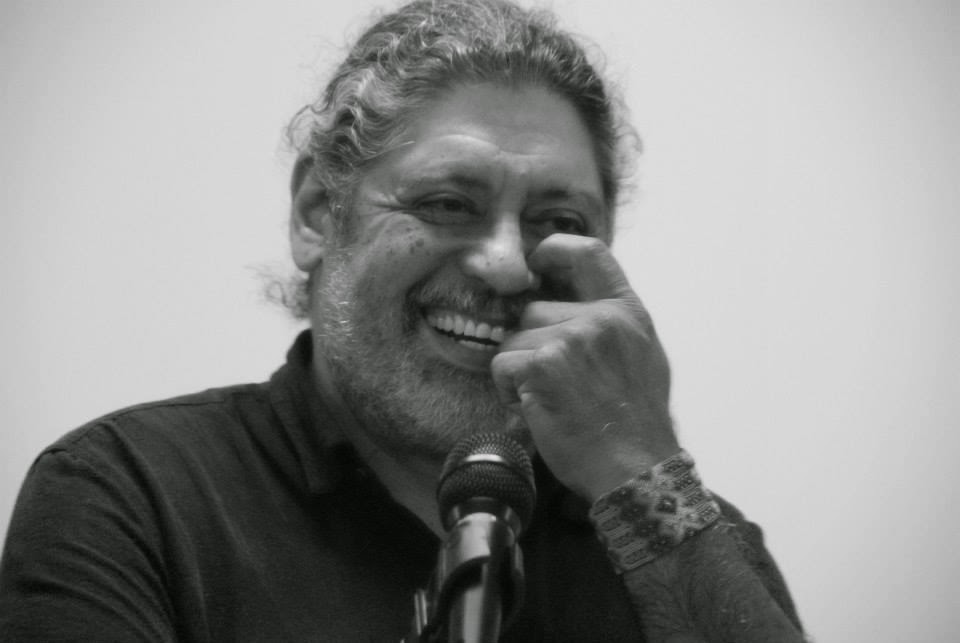


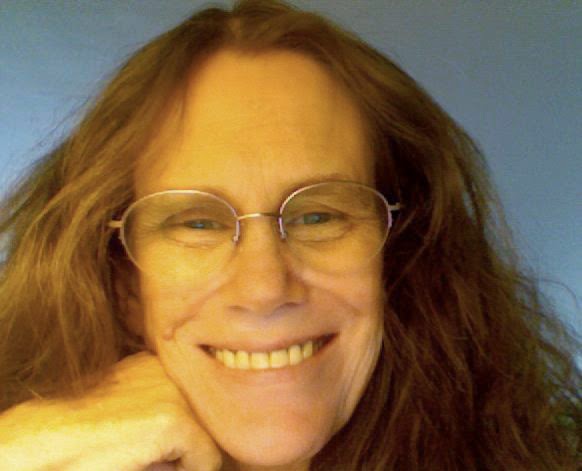



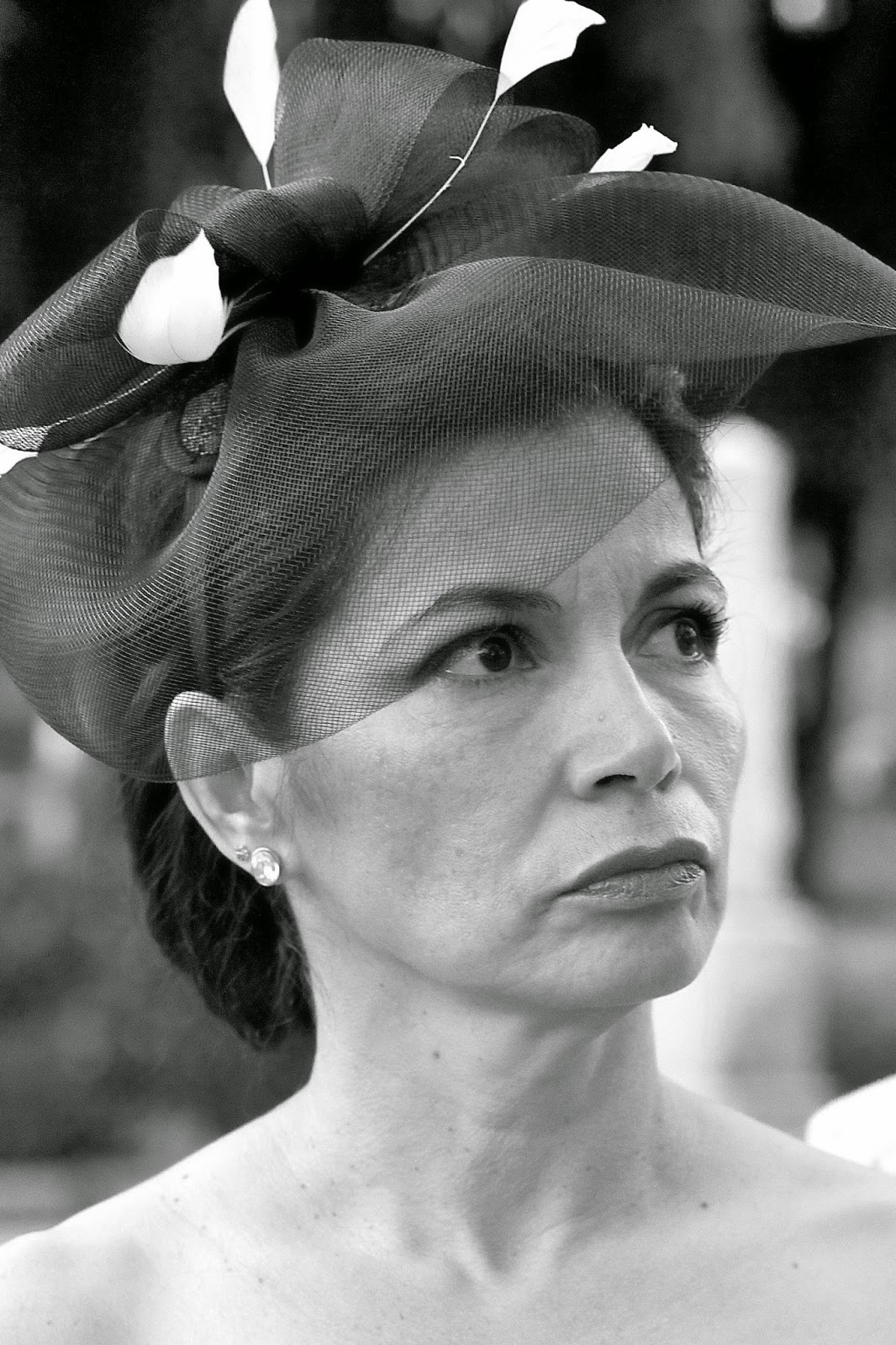 |
| foto:Andres Alvarez |

 |
| foto:Javier Pinzón |
 |
| foto:Javier Pinzón |
The Department of English at Southern Illinois University Carbondale and GRASSROOTS,SIUC's undergraduate literary magazine, are pleased to announce the 2015 Devil's Kitchen Reading Awards.
One book of poetry (book-length work or single-author collection of poems), one book of fiction (novel, novella, or single-author short fiction collection) and one book of prose nonfiction (literary nonfiction, memoir, or single-author essay collection) will be selected from submissions of single-author titles published in 2014, and the winning authors will receive an honorarium of $1000.00 and will present a public reading and participate in panels at the Devil's Kitchen Fall Literary Festival at Southern Illinois University in Carbondale, Illinois.
The dates for the 2015 festival will be October 21-23, 2015. Travel and accommodations will be provided for the three winners.
Entries may be submitted by either author or publisher, and must include a copy of the book, a cover letter, a brief biography of the author including previous publications, and a $20.00 entry fee made out to "SIUC - Dept. of English." Entrants wishing to submit entry fees electronically should e-mail a request to:
grassrootsmagATgmailDOTcom (Change AT to @ and DOT to . )
and they will be sent a link to pay by PayPal or credit card.
Entries must be postmarked December 1, 2014 - February 2, 2015. Materials postmarked after February 1 will be returned unopened. Because we cannot guarantee their return, all entries will become the property of the SIUC Department of English. Entrants wishing acknowledgment of receipt of materials must include a self-addressed stamped postcard.
Judges will come from the faculty of SIUC's MFA Program in Creative Writing and the award winners will be selected by the staff of GRASSROOTS. The winners will be notified in May 2015. All entrants will be notified of the results by e-mail in June 2015.
The three awards are open to single-author titles published in 2014 by independent, university, or commercial publishers. The winners must be U.S. citizens or permanent residents and must agree to attend and participate in the 2015 Devil's Kitchen Fall Literary Festival (October 21-23, 2015) to receive the award. Entries from vanity presses and self-published books are not eligible. Current students and employees at Southern Illinois University Carbondale and authors published by Southern Illinois University Press are not eligible.
By: James Preller,
on 10/7/2014
In this bunny eat bunny world, we’ve seen celebrity authors come and go. Mostly come, in droves, especially after Harry Potter put a spotlight on the profit potential of the children’s book biz. Ca-ching.
Everybody’s making millions!
For many of us non-celebrity authors and illustrators, dressed in our dreary clothes, clutching our cold coffee cups, it’s hard not to be a little, urm, disgusted at times. The crappy book by the “star” that gets a ridiculous amount of undeserved attention.
 But that’s life, so we deal with it, and try to keep our petty thoughts to ourselves.
However, I hasten to add: not all celebrity books suck. Jamie Lee Curtis wrote some good ones, as I recall. Fred Gwynne — Herman Munster! — made a sincere effort to create singular children’s books. By that I mean, my sense is that they actually worked on the books, actually respected the idea of a children’s book, and got into it for the “right reasons,” however we might differ in defining what those reasons are. It wasn’t just a way to cash in on something.
Anyway, this fresh, new effort by B.J. Novak is brilliant. Yes, absolutely, he came up with a clever idea. A great idea. But then he pulled it off over the course of an entire book. That’s not at all easy. And it’s beautifully published, too. Great job, all around.
Kids today, they sure do love the meta.
Enjoy this book with no pictures, folks. Go ahead, stomp on that link, surrender to the video. It makes me wish that I had a room full of kids to read this one too.
By: James Preller,
on 10/6/2014
I guess it’s true of most readers. We have these embarrassing gaps in our reading lives, all those books we didn’t get to, the awful holes we hope to one day fill. It’s an impossible task, a job (and a joy) that can never be completed.
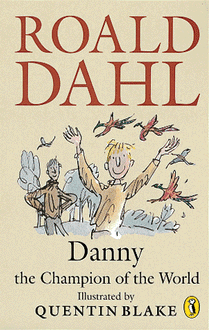
To that end, I’m currently reading Roald Dahl’s Danny the Champion of the World.
I haven’t finished it yet, and I’m disinclined to offer up a review. But I wanted to share a few thoughts, beginning with this incredible illustration by Quentin Blake.
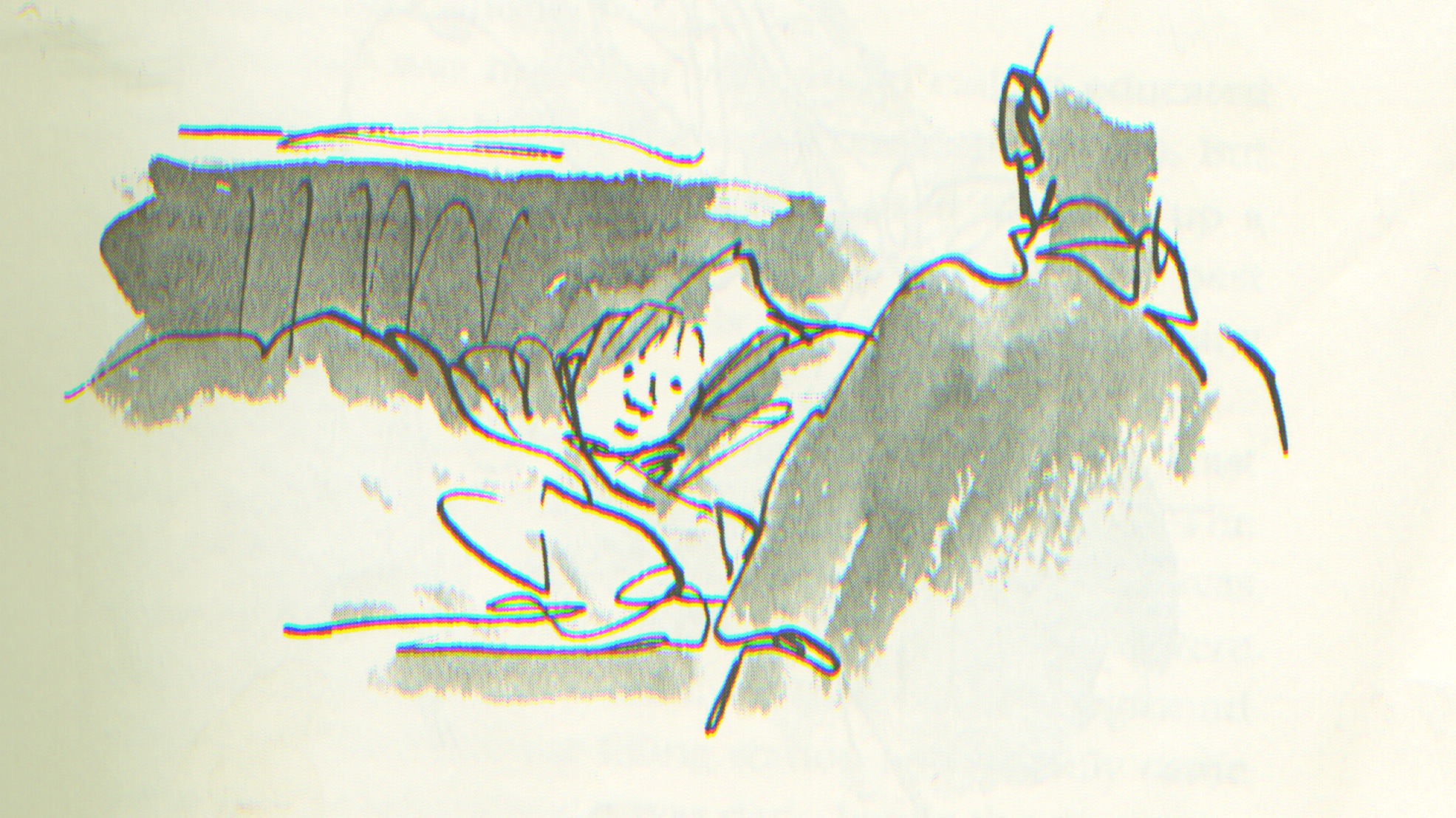
I keep returning to that page, staring at that picture. Just a few simple lines that capture such depth of feeling. There it all is, being a kid, looking up at a parent with love and wonder while snuggled up warm in bed. Two dots for eyes — two dots! — and yet they seem to express the essence of that relationship. The father registers only as a looming presence without detail, like a great tree in a forest. He is, simply, there. A force of nature and comfort. It’s amazing, I’m stunned by it, in awe of it. So that sums up an important part of today’s blog.
Wow: Quentin Blake.
Then there’s the storytelling of Mr. Dahl, which is a gift I’ll never have. The man tells stories. Whoppers. But here, today, I want to focus on Dahl’s writing style. I admire the clarity and directness. I’m also charmed by the Englishness — the strangeness to my American ears, the weird things they happily eat, the peculiar names of things — where every detail seems just a little other-worldly, even in a fairly straight-ahead, naturalistic novel such as this one. This is the distance of time and place. A different world, yet still familiar.
Here’s the paragraph that went before the illustration above. I keep reading it over and over again. Now I get to type it, feeling like a weekend musician at home with a guitar banging out a Beatles tune, channeling that great artistic beauty through my fingertips (I love typing out great passages from books):
I really loved living in that gypsy caravan. I loved it especially in the evenings when I was tucked up in my bunk and my father was telling stories. The kerosene lamp was turned low, and I could see lumps of wood glowing red-hot in the old stove, and wonderful it was to be lying there snug and warm in my bunk in that little room. Most wonderful of all was the feeling that when I went to sleep, my father would still be there, very close to me, sitting in his chair by the fire, or lying in the bunk above my own.
That paragraph, to me, is absolutely perfect. The writing is direct, specific, concrete (not abstract), interesting (lumps of wood) and for the most part, quite plain. I really loved living in that gypsy caravan. Few would claim that as an example of great writing — except for the obvious fact that, wow, that’s great writing. The absence of flash. An arrow doing its swift work, slicing to the next sentence.
 The only tricky moment in this paragraph, where the language uplifts and surprises us, giving the reader temporary pause, occurs in that more elaborate third sentence, which was perfectly set-up by the direct predicate-verb structure of the previous two sentences. I really loved, and, I loved. Which leads to this: The kerosene lamp was turned low, and I could see lumps of wood glowing red-hot in the old stove, and wonderful it was to by lying there snug and warm in my bunk in that little room.
You heard that, right?
And wonderful it was.
Again, all I’ve got is wow. There’s so much there, the essence of being loved, of feeling secure, of being a child safe from harm, snug and warm. Can writing really do that? It feels like a small miracle. Is this why I love books?
And it all happens on page 7.
Add a Comment
By: James Preller,
on 9/8/2014
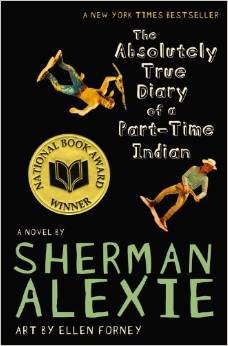 I finally got around to reading Sherman Alexie’s bestseller, The Absolutely True Diary of a Part-Time Indian. There’s just times in your life when you’ve got to rectify old wrongs, and this was one of them. I had to read that book.
I’d heard that it was a great book from many sources, including some trusted friends. (A curious phrase, by the way, “trusted friends.” As opposed to all those other friends we have, with crappy taste, the friends we can’t possibly trust.)
So I took Alexie’s book out of the library and read it. Now I am a member of the club and say without hesitation: Stop wasting your life and read it already! Today I’m not looking to review a book that’s already been reviewed hundreds of times. My focus is on the book’s final two paragraphs. To me, those six sentences felt exactly right, forming a poignant, understated conclusion.
I don’t think that reproducing it here involves any spoilers, or anything that could diminish your enjoyment of the book, so here goes:
Rowdy and I played one-on-one for hours. We played until dark. We played until the streetlights lit up the court. We played until the bats swooped down at our heads. We played until the moon was huge and golden and perfect in the dark sky.
We didn’t keep score.
I love the repetition of “we played,” repeated four times, the rhythmic, accumulative power of that device, the simplicity of the word choice, the interplay between light and dark, and that great, four-word conclusion. We didn’t keep score. Perfection.
Back four years ago, I wrote a decent post titled “Best Last Lines from Books,” and I think you might enjoy it. So click away, folks. It’s absolutely free.
Add a Comment
The Paumanok Poetry Award Guidelines
The Visiting Writers Program at Farmingdale State College is pleased to announce the annual competition for The Paumanok Poetry Award.
One First Prize $1500 and expenses for a reading in our 2015 - 2016 series
Two Second Prizes $750 and expenses for a reading in our series
Interested writers should send
a cover letter
a one-paragraph bio
3-5 of their best poems (no more than 10 pages, total)
the required $25 entry fee to:
Margery L. Brown
English Department, Knapp Hall
Farmingdale State College
2350 Broadhollow Road
Farmingdale, New York 11735
Poems may be published or unpublished, and there are no restrictions on style, subject matter, or length of poems submitted: quality is the single criterion. Please note that the writer's name, address, and phone number should be clearly indicated on the cover page. Multiple entries will not be accepted. Entries from previous winners will not be considered.
Make checks payable to: Farmingdale State College, VWP.
Poems will not be returned, but writers who want to know the results of the competition by US mail should enclose a business-size SASE for results (notification by late December). Results are also published on this website.
Deadline: Postmark no later than September 15, 2014.
Please direct any questions or requests for clarification via email to Margery Brown.