JacketFlap connects you to the work of more than 200,000 authors, illustrators, publishers and other creators of books for Children and Young Adults. The site is updated daily with information about every book, author, illustrator, and publisher in the children's / young adult book industry. Members include published authors and illustrators, librarians, agents, editors, publicists, booksellers, publishers and fans. Join now (it's free).
Login or Register for free to create your own customized page of blog posts from your favorite blogs. You can also add blogs by clicking the "Add to MyJacketFlap" links next to the blog name in each post.
Blog Posts by Tag
In the past 7 days
Blog Posts by Date
Click days in this calendar to see posts by day or month
Viewing: Blog Posts Tagged with: book review, Most Recent at Top [Help]
Results 26 - 50 of 2,834
How to use this Page
You are viewing the most recent posts tagged with the words: book review in the JacketFlap blog reader. What is a tag? Think of a tag as a keyword or category label. Tags can both help you find posts on JacketFlap.com as well as provide an easy way for you to "remember" and classify posts for later recall. Try adding a tag yourself by clicking "Add a tag" below a post's header. Scroll down through the list of Recent Posts in the left column and click on a post title that sounds interesting. You can view all posts from a specific blog by clicking the Blog name in the right column, or you can click a 'More Posts from this Blog' link in any individual post.
While WW II was waging furiously in Europe, some countries didn't see as much action. But it didn't mean that pivotal moments didn't occur in those countries. Switzerland declared itself neutral, but Norway didn't. And there was one place in Norway that became very VERY interesting to the Nazis. It was a place so obscure and rare, they would do anything to make sure they could control it.
An interesting fact - the science behind the nuclear bomb was being explored before and during World War II. Everyone knew that whomever developed it first would win the war. And the race was on. Different physicists and scientists came up with various ways to create one and there were many elements that had to be used. One of them was called heavy water. Hydrogen has been replaced by deuterium, which made it essential for bomb making. The unfortunate thing was that heavy water was difficult to produce and there wasn't much of it.
But there was one place in Europe where heavy water was produced. The Vemork Hydroelectric Plant in Norway. Difficult to access, it was the perfect Nazi situation, making it hard to infiltrate. It was to be a huge Nazi secret that gave them the extra incentive to win the nuclear race.
One thing they didn't count on was the patriotism of the Norwegians. There were underground resistance groups that sprung up and when the Nazis found them out, they used scare and death tactics to contain them. It only bolstered them to fight back even more. Several Norwegians went to England to train with the secret intelligence service to become infiltrators, spies and saboteurs. They were to go back to Norway and create new resistance groups and sabotage any Nazi effort.
The top priority was to destroy Vemork....but could they without getting caught or putting the small town of Rjukan in jeopardy for their lives? Even worse, their mission was to take place in winter across a vast frozen area where survival would be severely tested.
Young adult non-fiction is fascinating for one very simple reason - these are the events that aren't usually written about in history books. Neal Bascomb hit it out of the park with his newest book. Narrative in nature, Bascomb tells a riveting story as well as providing images and photographs of the main players and sites. In hindsight, readers will see how one mistake could have changed the outcome of the war. This is the invisible part of WWII teens will find fascinating.
0 Comments on Sabotage: The Mission to Destroy Hitler's Atomic Bomb by Neal Bascomb as of 8/25/2016 4:23:00 PM
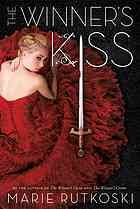
Title:The Winner's Kiss Author: Marie Rutkoski Published: 2016 Source: ARC from a friend
Summary: Kestrel has been banished to a frigid northern work camp. Drugged and beaten, she struggles to remain defiant, but finally succumbs. When she is rescued, it's going to be a long, long road back to who she used to be.
Meanwhile, Arin is fighting for the future of his country, trying to oust the Valorian invaders and rebuild what was smashed to rubble. Reunited with Kestrel, he struggles with his emotions over previous events and the betrayal that wasn't.
It's a harrowing journey for both Arin and Kestrel to freedom for the Herrani people, and to personal happiness.
First Impressions: Arrrrgh so gooooooood.
Later On: As you can probably tell from my first impressions, I'm not exactly unbiased about this series. I adored the first two books for their mix of the great fate of nations and the intimate fate of people, and how powerfully each can affect the other. The end of the second book left everything in rubble, so I was anxious to see how Rutkoski resurrected her characters.
Refreshingly, Arin and Kestrel do not fall into each others' arms when he rescues her from the work camp. There's too much pain and betrayal between them for that, and Kestrel is far too broken to focus on anything but putting herself back together. Kestrel's memory returns in fits and starts, and some pieces remain patchy until the end (and, one suspects, will do forever). But she is still Kestrel, brilliant and crafty and occasionally ruthless, yet still impacted by her family ties and history.
Arin, for his part, is struggling between the two sides of this woman and trying to simultaneously forgive himself for his anger and to forgive her the things that she's done, as well as trying to be the ruler that he seems to have been elected.
This book, and the whole series, are deeply satisfying on both the grand-fate-of-nations and the intimate-fate-of-people fronts.
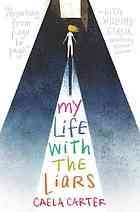
Summary: Zylynn has been taken by the liars, away from the loving compound where she grew up knowing that she was going to heaven and sure of all the rules. If she wants to go back home, she'll have to prove she deserves it by escaping.
But the liars are crafty. They let her have as much food as she wants, they buy her clothes that are full of color, they even make her feel as if she really is part of their family. What if their lies aren't lies? And if they aren't liars, who is?
First Impressions: This was really good! I loved how disoriented and out of place she felt, trying to make sense of her new life through the lens of her old one.
Later On: Cults are a popular topic in YA because it's so often paired with religious fundamentalism and gender-based injustices, which are pretty handy straw dolls to fire arrows of authorly rage at. Because this is more aimed at middle grade, that's not quite as front and center, but you can still see it around the edges. This book is so powerful precisely because it doesn't spend much time lovingly lingering on how unfair it all is.
The focus is on Zylynn's gradual realization that the life she knew wasn't as perfect as she was always told it was. In her flashbacks, you can tell that she was a rule-follower, terrified of the consequences. In her new life, she's still trying to follow the rules of her old one, but she's gradually starting to question the value of those rules as she learns to accept the love and generosity that her newfound family offers her.
Summary: Growing up on Long Island, Shelby Richmond is an ordinary girl until one night an extraordinary tragedy changes her fate. Her best friend’s future is destroyed in an accident, while Shelby walks away with the burden of guilt.
What happens when a life is turned inside out? When love is something so distant it may as well be a star in the sky? Faithful is the story of a survivor, filled with emotion—from dark suffering to true happiness—a moving portrait of a young woman finding her way in the modern world. A fan of Chinese food, dogs, bookstores, and men she should stay away from, Shelby has to fight her way back to her own future. In New York City she finds a circle of lost and found souls—including an angel who’s been watching over her ever since that fateful icy night. Here is a character you will fall in love with, so believable and real and endearing, that she captures both the ache of loneliness and the joy of finding yourself at last. For anyone who’s ever been a hurt teenager, for every mother of a daughter who has lost her way,Faithful is a roadmap.
Review:I started this book because a friend of mine had been killed recently. I am having a hard time dealing with that. So I thought maybe this might help me. I will say I absolutely love the story. I love Shelby. I love who she becomes and that she is slowly learning to love things even though she doesn’t realize it at first. She is slowly releasing herself to be able to be happy once more. What I don’t like is how the time is set up in this story. Like at one point it goes we’ve been dating for 4 years. Wait, how like three chapters previously you were 18 and just started dating. I wish that the time had been placed a little better. I would like to be able to associate her age with the events that are happening at the time. That is the one thing I don’t like about this story. I love her love of dogs. Her need to rescue them. To shelter them. Then her mother. She is lucky to have such a supportive loving force in her life. Honestly this is a really great story! I am happy I chose to read it! Best decision of my life. I am torn between wanting to see how it ends and to not let it end! Back to the point of the time frame. The upside to that is we are getting a large part of her life after the accident. I love that. In a lot of books you get that where you feel unsatisfied. Where you want to know what happens in their life. You don't need to want you get it. All the heart ache she continues to go through. All of the things that continue to make her a stronger woman.
0 Comments on Review: Faithful by Alice Hoffman as of 1/1/1900
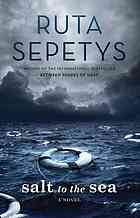
Title: Salt to the Sea Author: Ruta Sepetys Published: 2016 Source: Local Library
Summary: As Germany is losing WWII, four fates converge on the road to one of the greatest maritime disasters you've never heard of.
First Impressions: Wow, this was harrowing. Alfred's sections especially made me want brain bleach.
Later On: We hear so much about World War II, but it's often about the American homefront or the Holocaust. Sometimes you get the British homefront. If you get a perspective on Germany or Eastern Europe, it's usually a Nazi or someone struggling to deal with a Nazi in their family or close friendships.
This shines a light into the everyday life of the citizens of Nazi Germany and the occupied areas. Each character has secrets that unfold gradually and converge with others in unexpected ways, showing the many and varied effects of war on the average person - from Emilia, pregnant and alone, to Florian the unwilling hero, to Joana, just trying to survive, to Alfred, a supremely deluded and unlikeable person.
The disaster looms, more so because the reader is probably going to have little to no idea how it actually happened. Some might even be taken completely by surprise (although the human mistakes that led to it are well-documented in the story).
It's not a happy ending for everyone, (did we expect anything else from this time period and this author?) but it's a slice of history that's valuable to hear.
Rita Monette has done it again with her middle grade adventure Nikki Landry Swamp Legend series! In her second instalment, The Curse At Pirate’s Cove, Monette weaves a very different tale where Nikki and her friends get into a heap of trouble via time traveling. Now that’s a genre right up my alley!
The author also includes a glossary of Cajun words at the beginning of her novel, as well as sources for further research in the “author’s notes” section at the end of her book. Monette certainly bridges the past with the present in her latest swamp romp! So what’s my take on a story set in a place that can conjure up some pretty scary images? This is what I posted on Amazon and Goodreads…
Rita Monette’s latest romp in the swamp is a 4 Star Winner!
Be careful what you wish for—it might come true! Rita Monette’s first book, The Legend of Ghost Dog Island in her Nikki Landry Swamp Legend series may have transported us back to Louisiana, circa 1956, and into Nikki Landry’s world, but Monette’s sequel The Curse At Pirate’s Cove took it to the next level of adventure by taking us time traveling in the Louisiana bayous. A carefully-crafted story about friendship, the power of belief, and finding the truth, Monette continues to serve up her unique brand of literary gumbo with a flavor of down-home Cajun dialogue, and wonderful illustrations. In this story, 11-year-old, Nikki makes a wish which starts a chain reaction that sends her, her friends, and her dog Snooper into Louisiana’s past to deal with a curse, a lost treasure, and a nasty crew of pirates. Hold onto your hat, matey, it’s gonna be a bumpy Cajun ride!
The Curse At Pirates Cove would be a great addition in any classroom setting to learn and study about the history of Louisiana, and what it was like for the Cajun people during the middle of the 20th century. My stomach is already grumbling for Ms. Monette’s next Nikki Landry Swamp Legend installment due out September 17th, 2016, through Mirror World Publishing.
Tagline and Blurb:
“When one man’s treasure is another man’s curse"
Nikki Landry is turning eleven years old, and is looking forward to riding her bike to school. That is until it falls apart. Papa can’t afford a new one. Is she doomed to ride the smelly old school bus from now on?
Hearing of an old pirate ship, and a legend about long-ago pirates burying treasure on a nearby swamp island, Nikki sees a way out. But when she makes a birthday wish for the pirate’s gold, things go terribly wrong. Did her wish trigger an ancient curse?
Join Nikki and her friends as they find themselves sailing away aboard a haunted schooner with ghostly pirates into the Gulf of Mexico … and into the year eighteen fourteen.
Rita Monette was born and raised in Southwest Louisiana. She loves to write stories set in the
beautiful, yet mysterious, bayous and swamps of her home state.
Her middle grade series, The Nikki Landry Swamp Legends, is based on tales told by her father—who made his living in those bayous—of reasons to stay out of the swamp.
She currently lives with her husband, four lap dogs, and one lap cat, in the mountains of Tennessee. Besides writing and illustrating, she loves watching the many birds that make their habitat on the Cumberland Plateau, working in the garden, and frequenting waterfalls.
In the wonderful book, The Mountains of Tibetby Mordicai Gerstein, the young boy living in the mountains of Tibet lived a wonderful life of flying kites, hard work, a loving family, and peace.
When he died, which is the natural progression of life, he rose into the sky where he was given the choice to move on to Heaven or choose to live another life as anything he wanted to be and anywhere in the world. Because that was his one regret in life–not seeing more of the big wide world.
A Tibetan woodcutter dreams of exploring the world, but is too busy with his life to ever leave his valley. After he dies, he is taken on a journey through the cosmos and all the places on Earth as he makes choices that lead him to a new life.-Amazon
The man’s journey to pick a new life starts on the largest plane–picking a galaxy. His path to a new life follows the Tibetan Book of the Dead. Start at the biggest part of life and go down to the minutest detail. And these are all hard decisions. Which galaxy? Which star? Which planet? Which country? There are so many choices! So will the Tibetan man choose to go back to his familiar home in the mountains of Tibet, or will he choose to experience new things in exciting countries far away?
Mordicai Gerstein’s book The Mountains of Tibet shows a unique way of explaining death and life to young children. It’s a beautiful, natural process filled with free will decisions. The illustrations are simple yet beautiful, helping children’s imaginations to flare to life.
{CLICK TO TWEET} If you could travel anywhere-where would you go? The Mountains of Tibet review & activities @Jumpintoabook1
Something To Do
1. Create a Galaxy in a Jar (this is your galaxy!) Get the full instructions and watch the video tutorial HERE.
2. Make a would you rather game for the choices of life!
– Would you rather live in a blue galaxy or a purple galaxy?
– Would you rather live on Earth or Mars?
– Would you rather be an animal or a human?
Make this a lively discussion with friends, family and students!
3. Make your own kite! These are perfect for a windy day at the park or the beach or even in your own backyard!
Grab this free gift and discover 180 ways to explore the world we live in!
FREE Gift! Free 180 Multicultural Book Ideas ebook to inspired fun Summer Reading!
School is out and our youngsters are settling into a new summer routine of sleeping in and hopefully doing some exploring and discovering. With the hectic days of summer just beginning, oftentimes one of the first habit to go by the wayside is the habit of daily reading.
Reading is always an important part of our children’s lives no matter what time of year it is so I decided to wrap my knowledge of fun kidlit books and activities up with my experience as one of the co-founders of the very successful Multicultural Children’s Book Day and create a unique resource for parents who are looking for creative ways to keep their kids reading this summer. Reading is important, but so is helping our young readers learn about other cultures, religions and traditions through the pages of these books. Here are some great booklists and resources that I have created over the years at Jump Into a Book that will not only give parents and readers great ideas on diverse kids’ books, but fun activities related to books that will bring stories to life!
Sign up below for quick and free access to 180 Multicultural Book Ideas: World Travel through Kidlit Summer Reading!
Sign up for 180 Multicultural Book Ideas for Summer Reading
The Civil Rights was an extremely tragic yet absolutely necessary piece of American history. Both black and white people made great strides in human rights and equality in our country. Many people seem to forget that African Americans were not the only people standing up for equality. White, Indian, Asian–people of every heritage were standing together. Joan Mulholland was one of these people. Raised in Virginia, she grew up with segregation and harsh racism. She grew up being taught that mixing races was wrong. But despite all this chatter in her ear, Joan knew that this was wrong. She took a stand when she began college, joining peaceful movements, sit ins, protests, and other demonstrations. She was kicked out of Duke University for her involvement with the Civil Rights Movement.
Despite the backlash and threats that she received, Joan never gave up on her belief that what she and the rest of her friends doing was the right thing. She was one of the first white students to attend an historically black college and join a black sorority. Her life was almost always at risk; she lost many friends and family; she lived in jail for several months of her life. All because she was doing the right thing. And the rest of culture couldn’t accept this. She was an average hero.
She Stood for Freedomis extremely timely in its release. With all of the turmoil in our society right now, this book reminds us that we are all working together for a common goal. We’re all humans, and it’s high time that we remember that. Our world needs to be changed? Then let’s do it together, with our friends, one step at a time. Grab your copy of this amazing book HERE or click on the book image above to take a closer look.
Something To Do
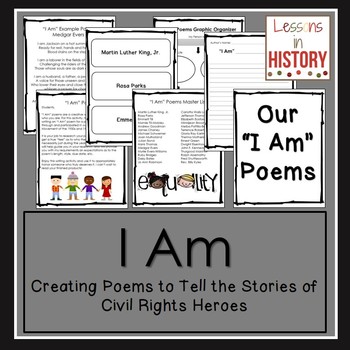
1. Write a Poem
Research a Civil Rights hero (Joan for example) and write a poem telling about their life.
FREE Gift! Free 180 Multicultural Book Ideas ebook to inspired fun Summer Reading!
School is out and our youngsters are settling into a new summer routine of sleeping in and hopefully doing some exploring and discovering. With the hectic days of summer just beginning, oftentimes one of the first habit to go by the wayside is the habit of daily reading.
Reading is always an important part of our children’s lives no matter what time of year it is so I decided to wrap my knowledge of fun kidlit books and activities up with my experience as one of the co-founders of the very successful Multicultural Children’s Book Day and create a unique resource for parents who are looking for creative ways to keep their kids reading this summer. Reading is important, but so is helping our young readers learn about other cultures, religions and traditions through the pages of these books. Here are some great booklists and resources that I have created over the years at Jump Into a Book that will not only give parents and readers great ideas on diverse kids’ books, but fun activities related to books that will bring stories to life!
Sign up below for quick and free access to 180 Multicultural Book Ideas: World Travel through Kidlit Summer Reading!
Sign up for 180 Multicultural Book Ideas for Summer Reading
Title:Fangirl Author: Rainbow Rowell Published: 2013 Source: Local Library
Summary: Cath is bewildered and intimidated by her first year of college. She's not rooming with her twin sister, as she'd assumed she would. Her classes are harder than she thought, a guy in her writing class seems to be using her ideas for his own project, her terrifying roommate keeps bringing her (possibly?) boyfriend around, who is equally terrifying because he actually seems interested in Cath.
The only touchstone is her ongoing epic fanfic, which she's hurrying to finish before the final book in the series comes out. In the world of Simon Snow, a world that's nurtured her and her sister since their mother left, she's in control. But it's the only place where she is.
First Impressions: Yikes did this cut close to the bone.
Later On: Rainbow Rowell has a reputation for RIP UR HEART OUT!! emotional stories, and since this is the first one I've read, I can see where she gets it. Cath is a raw nerve, and her emotions, not only around Levi but around everything are constantly close to the surface. I said it cut close to the bone because this was basically my college experience (except for the sweet boy who adored me, unfortunately). I think a lot of kids get in over their head and intimidated, and feel more isolated because they think that the nonstop party portrayed in TV and movies is what everyone else is experiencing. By contrast, this felt entirely real.
I have to mention how much I appreciated the respect that fandom got in this book. As a longtime fic writer in various fandoms (including, full disclosure, Harry Potter), I was prepared to see it mocked and belittled as an activity for children, or at least for people who couldn't handle the world. I also loved the way Cath's relationship to her own fic writing changed and grew as she did.
I wish that we'd gotten more acknowledgement from other characters of how profoundly Cath was freaking in, as much as Wren was freaking out. While writing and posting fic was a nurturing and supportive activity for her, she often used it to retreat from the world and escape her own fears as much as Wren was using drinking and partying to do the same.
Something in the back of my mind was the backlash against Rowell for her stereotyped portrayal of Asian characters in her previous novel, Eleanor & Park. This was a pretty white book (two fairly minor characters were Latino), so we didn't get any bad portrayals of POC, but we didn't get any fleshed-out good ones either. Do with that what you will.
Is summer flying by or WHAT?! Goodness, before we know it we will be reading about “first day of school” booklists!
I’ve been having so much fun with my Notable Women series these last few weeks. I kicked things off American Revolution hero Sybil Ludington, then moved on to favorite author Pam Muñoz Ryan. This week I want to focus on the wonderful works of author Linda Sue Park.
Linda Sue Park is the author of the Newbery Medal book A Single Shard, many other novels, several picture books, and most recently a book of poetry: Tap Dancing on the Roof: Sijo (Poems). She lives in Rochester, New York, with her family, and is now a devoted fan of the New York Mets. For more infromation visit www.lspark.com
Here are a few of my favorite Linda Sue Park books for kids:
The New York Times bestseller A Long Walk to Water begins as two stories, told in alternating sections, about two eleven-year-olds in Sudan, a girl in 2008 and a boy in 1985. The girl, Nya, is fetching water from a pond that is two hours’ walk from her home: she makes two trips to the pond every day. The boy, Salva, becomes one of the “lost boys” of Sudan, refugees who cover the African continent on foot as they search for their families and for a safe place to stay. Enduring every hardship from loneliness to attack by armed rebels to contact with killer lions and crocodiles, Salva is a survivor, and his story goes on to intersect with Nya’s in an astonishing and moving way.
In this Newbery Medal-winning book set in 12th century Korea, Tree-ear, a 13-year-old orphan, lives under a bridge in Ch’ulp’o, a potters’ village famed for delicate celadon ware. He has become fascinated with the potter’s craft; he wants nothing more than to watch master potter Min at work, and he dreams of making a pot of his own someday. When Min takes Tree-ear on as his helper, Tree-ear is elated — until he finds obstacles in his path: the backbreaking labor of digging and hauling clay, Min’s irascible temper, and his own ignorance. But Tree-ear is determined to prove himself — even if it means taking a long, solitary journey on foot to present Min’s work in the hope of a royal commission . . . even if it means arriving at the royal court with nothing to show but a single celadon shard.
Sun-hee and her older brother, Tae-yul, live in Korea with their parents. Because Korea is under Japanese occupation, the children study Japanese and speak it at school. Their own language, their flag, the folktales Uncle tells them—even their names—are all part of the Korean culture that is now forbidden. When World War II comes to Korea, Sun-hee is surprised that the Japanese expect their Korean subjects to fight on their side. But the greatest shock of all comes when Tae-yul enlists in the Japanese army in an attempt to protect Uncle, who is suspected of aiding the Korean resistance. Sun-hee stays behind, entrusted with the life-and-death secrets of a family at war.
In a riveting narrative set in fifteenth-century Korea, two brothers discover a shared passion for kites. Kee-sup can craft a kite unequaled in strength and beauty, but his younger brother, Young-sup, can fly a kite as if he controlled the wind itself. Their combined skills attract the notice of Korea’s young king, who chooses Young-sup to fly the royal kite in the New Year kite-flying competition–an honor that is also an awesome responsibility. Although tradition decrees, and the boys’ father insists, that the older brother represent the family, both brothers know that this time the family’s honor is best left in Young-sup’s hands. This touching and suspenseful story, filled with the authentic detail and flavor of traditional Korean kite fighting, brings a remarkable setting vividly to life. AUTHOR’S NOTE.
Julia Song and her friend Patrick want to team up to win a blue ribbon at the state fair, but they can’t agree on the perfect project. Then Julia’s mother suggests they raise silkworms as she did years ago in Korea. The optimistic twosome quickly realizes that raising silkworms is a lot tougher than they thought. And Julia never suspected that she’d be discussing the fate of her and Patrick’s project with Ms. Park, the author of this book!
**some of these links are affiliate links
Something To Do
In honor of the amazing Linda Sue Park book Project Mulberry, here are some fun ways to bring this book to life.
As we stood under our mulberry tree remembering this great story, we decided right then and there that we had to grow our own silkworms. I must admit to you that we are at the beginning of this process and are waiting for our little silkworm eggs to arrive. We promise to keep you updated on our progress.
Would you like to join us in growing silk worms? Just leave a comment below and let us know if you will share this experience with us.
A few weeks ago I saw the most interesting TED talk about what they are now using silk for. It’s amazing and is being used in ways one could not even imagine. It is taking science and technology to a new level. This is a great video for kids probably age 8 and older.
Looking for more ways to not only get your youngsters reading, but get them OUTSIDE as well? Enjoy more month-by-month activities based on the classic children’s tale, The Secret Garden! A Year in the Secret Garden is a delightful children’s book with over 120 pages, with 150 original color illustrations and 48 activities for your family and friends to enjoy, learn, discover and play with together.
Grab your copy ASAP and “meet me in the garden!” More details HERE.
Title: Eden West
Author: Pete Hautman
Publisher: Candlewick
Publication Date: April 14, 2015
ISBN-13: 978-0763674182
320 pp.
ARC provided by publisher
This is a book that could be confused for dystopia at first glance. Jacob lives in the community of Nodd, home to the people known as the Grace. Their prophet, who has a penchant for young wives, says that the Grace will be spared when
0 Comments on Eden West Book Review as of 7/24/2016 8:33:00 PM
{Guest post from Hannah Rials} What is going on? Now we’re writing books that are encouraging kids to play video games? I thought we were supposed to be discouraging this? I’m so confused!
I’m sure a lot of you parents are thinking that right now. And yes, kids should be getting outside, exploring their world, reading books, and every else like that to live a balanced life. However, science and research are revealing more and more how helpful video games can be in a child’s cognitive development. Minecraft, for instance, helps with creativity, sharing, innovating, continuous learning, problem solving, craftsmanship, teamwork, interdependence, flexibility, storytelling…just to name a few.
Minecraft does not have to be just a kid’s activity. This book provides six different quests that teach gamification, which is the process of applying game principles to real life. Parents, you will learn about the world of Minecraft, while also bringing your children out of it. You’ll learn the lingo, the levels, the different things that you can do within the game, and you’ll come to realize why your kids love it so much and how beneficial it is to them.
But having this book, showing your kids how the skills they are learning inside the game are relevant in out-of-game experiences, is a wonderful opportunity for family bonding and for crafting and creativity!
How you can Gamify these quests:
Quest 1 – This quest is all about taking inventory of your resources. That’s easy. Together, your family can take an inventory of something in your house: the pantry, the refrigerator, your movie or book collection, etc.
Quest 2 – Textures, Patterns, and Landscapes, which talks about cooking and gardening. Do we really need to explain this one? I think you’re getting the hang of it!
Quest 3 – This is about architecture, so this gives your family a wonderful excuse to take a neat vacation to some city with unique architecture. Road trip to Charleston, SC or New Orleans, LA. Going abroad? Well, basically all the cities over there have interesting architecture! Have some fun!!
Quest 4 – Here, we look into the arts: the colors, textures, and styles of a museum. So obviously, you need to find a museum to day trip to! Even if your town, or the one next to you, doesn’t have the equivalent of the MET or le Louvre, that’s okay. All museums are great experiences.
Quest 5 – Game making; think how fun this could be! Each of the family members making up their own games and then hosting a family game night to try them out. Sounds like a good time.
Quest 6 – is the culmination of all the skills you have learned previously–you’re making a city. Maybe before you jump head into the game, you and your child can write about your city, make up people, laws, specific places or activities that go on there. Help them create their world both in and out of the game!
Grab your copy of this amazing book that is not only going to excite your young readers, but get their brains reading and exploring this summer!
**some of these links are affiliate links
Something to Do Minecraft-Inspired Activities:
Who can resist making this fun Creeper from TP rolls?! Instructions at Kids Activity Blog
For those interested in using Minecraft for Homeschooling, The Spectacled Owl has some great Homeschooling with Minecraft ideas and projects.
HANNAH RIALS: A Maryville native and current college student at University of Tennessee at Chattanooga, Hannah began writing her first novel at age twelve. Eight years later, the result is her new YA novel Ascension; a modern day teenage romance filled with “double-blooded” vampires and revenge-seeking witches (to be released in August of 2016). When not spending time with her family and playing with her beloved Corgis, Buddy and Noel, Hannah leads a creative group, crafts and cultivates her writing skills. Connect with Hannah on Facebook, Twitter and via her website.
–
Breaking News! Proof that Dragons are indeed REAL!
My newest book, Dragons are Realis available and the excitement is almost blowing the roof off at Jump Into a Book/Audrey Press headquarters!
SO…what if I told you that all of the fairy tales, myths and legends that have been told about dragons over the years are WRONG. What if I told you that Dragons are indeed Real and that they are different than you’ve ever imagined?
This fairly true story is based on the author’s childhood friendship with a REAL live Dragon; a very special Dragon that she and her brother spent two magical summers with.
As readers turn the pages and learn the truth about Dragons, they will see that the fiercest beasts in known history can actually be the best of friends. It’s a lesson in finding companionship in the most unusual of places. Dragons are Real is a magical book filled with stunning illustrations and hints that dragon are indeed all around us
Dragons are Real is now available for purchase on both Amazon and Gumroad! We are also offering a special free bonus gift of a Dragons Are Real Inspiration Activity Guide when you purchase your copy of this enchanting picture book.
I absolutely love Arizona! I’ve been lucky enough to visit twice (Phoenix, Tempe, and Scottsdale areas), and would love to go back and see the Grand Canyon, since I never got a chance to go there. K.S. Jones paints a vibrant and beautiful picture with her words, that allows me to feel my skin sizzle under the Arizona heat, and make my mouth water for buttery cornbread. So what’s my take on a story set in a place that can conjure up Geronimo’s ghost and make you sweat with every page you turn? This is what I posted on Amazon and Goodreads…
Lightning does indeed strike twice with this 5 Star Winner!
K.S. Jones combines a mixture of Apache folklore, natural phenomenon, and science fiction in a dessert setting to create her middle grade sci-fy adventure about 10 year-old Samuel Baker and his incredible journey into another dimension. Fast-paced from beginning to end, Jones weaves a fantastic and emotional tale wrought with love, death, magic, and hope.
Jones’s imaginative story is a must for any bookshelf (or ereader), and though geared for tween boys, there’s plenty of action to get the girls cheering for Samuel and his friend Isabelle to get them back home to the families they love. High fives for K.S. Jones and her electrifying tale!
Tagline and Blurb:
Life moves on — no matter what...
Following his father’s puzzling disappearance and his mother’s death, ten-year-old Samuel Baker goes through the motions of living in a world turned upside down. He wears an Apache talisman, a long ago gift from his father, in hopes its promise of strength and guidance is true. But what he truly wants is the power to bring his parents back.
Heartless Aunt Janis is elated at the prospect of becoming Samuel’s legal guardian. She is sure an orphan boy will elicit such an outpouring of public sympathy that her husband will win his Senate bid by a landslide. But when Grandpa Tate arrives, things don’t go as expected, especially when black lightning strikes!
Read an Excerpt:
Samuel stood beside his mother’s rain-speckled casket. He had cried his tears dry, so there was no point in trying to find more.
“Chin up, young man,” Aunt Janis said as her fingers nudged Samuel’s jaw upward. “Death is just part of life, and our photographer needs a good picture of you for the newspapers.”
A camera flashed, leaving Samuel’s red and swollen eyes burning as if stung by the sun instead of grief.
So many important days had come and gone without his father, but surely he would come home today, wouldn’t he? Samuel closed his eyes. He pretended his father was beside him holding his hand. They had a right to hold hands, he told himself. Not because he was ten, but because it was his mother’s funeral. Two years had passed since his father left, never to be seen again. Vanished, was the word his mother had used. Into thin air, she’d said.
“Take that silly thing off.” Aunt Janis flicked Samuel’s wood and bead necklace.
“No,” he said and shook his head. “My dad gave it to me.” It was a pinewood tile, the size of a domino shaved nickel-thin, which hung from a leather cord around his neck. Burned onto the front side of the wood was a lightning bolt. Its flipside bore the blackened imprint of a tribal dancer. It had a turquoise nugget and a shiny black hematite bead strung together on each side. His father had given the talisman to him with a promise: It will guide you and give you strength when you need it most.
Today, dressed in a black suit and starchy white shirt, Samuel wore it in hopes the promise was true.
As mourners gathered, Samuel’s friend Brian came to stand beside him. “Hey,” he said.
“Hey,” Samuel answered without taking his eyes off the casket.
“Is that the necklace your dad gave you? You don’t usually wear it.” Brian’s wire-rimmed glasses slid down his straight arrow nose. He pushed them back up the bridge with one finger until they encircled his eyes again. “Can I see it? I promise I’ll give it right back.”
“It’s not a necklace.” Samuel pulled the leather cord off over his head, mussing his overgrown blond hair. “It’s a talisman.” He handed it to Brian. “My dad said it would help me, but it hasn’t done anything yet. I think it was just one of his stories. It’s probably just an old piece of scrap wood with a couple rocks tied to it.”
Brian shrugged after examining the piece then he handed it back to Samuel. “I think it’s cool. You should keep wearing it anyway.”
Nodding, Samuel hung the talisman around his neck again, but this time he dropped it down beneath his shirt where it was no longer visible. It felt warm against his skin.
“Has anybody told you where you’re going to live now?” Brian asked.
“Probably with Aunt Janis and Uncle Jack.”
Brian frowned. He kicked the tip of his shoe into the muddy soil. “They live so far away. Why can’t you just stay here and live with Mrs. Abel? She doesn’t have any kids.”
Mrs. Abel was their fourth grade teacher. She had plainly stated to all who would listen that her job was to teach the proper use of the English language to children who behaved properly. A babysitter, she had said, she was not. Today, she stood in the rain with the other mourners, eyeing the ground where the hem of her long, gray dress lay caked in mud. Tufts of brown hair jutted out from under her pink plaid scarf. Even though she stood a few feet from him, she had not spoken to Samuel since his mother’s death. Few people had. Everyone had words for Aunt Janis and they talked to Uncle Jack, but no one but Brian and a few classmates had spoken to him. Maybe talking to an orphan was harder than talking to a normal kid.
Karen (K.S.) Jones grew up in California, but now lives in the beautiful Texas Hill Country northwest of San Antonio with her husband, Richard, and their dogs Jack Black, Libby Loo, and Red Bleu. Black Lightning is her first middle-grade novel. She credits her love of fantasy to the early influences of authors J.R.R. Tolkien, Jules Verne, and H.G. Wells. Her award-winning first novel, Shadow of the Hawk, a Young Adult Historical, released in 2015.
If you haven't heard it yet, Horn Bookhas a new podcast. I made a small contribution to this podcast from June 20, 2016 (Hbook Podcast 1.17). You can hear me at the very end with my brief review of Have You Seen Elephant? Creating a 30-second audio review is not as easy as it sounds!
A Clatter of Jars is Lisa Graff's follow up to 2013's, A Tangle of Knots. I reviewed A Tangle of Knots in 2013, and declared, "If you read no other middle grade fiction book this year, you will have made a good choice." The magic doesn't wear off in A Clatter of Jars, a deftly woven, magical realism story set in the same world as the preceding book, where many people possess Talents - from the mundane (ability to understand frogs) to the powerful (telekinesis). I particularly enjoyed this story because it features a boy who we may assume has some sort of spectrum disorder, and it has a subtle Lord of the Rings reference.
I often tell kids at the library that it's OK to start with a second book in a series if the first book is unavailable. (I don't like to see them go home empty-handed!) Most authors do a fine job of catching the reader up on prior events. However, because of the rich details of the world Lisa Graff has created, A Clatter of Jars is best read after A Tangle of Knots.
Summary: Biracial sixteen-year-old Hanalee seeks the truth about her murdered father and the dark secrets beneath the idyllic surface of Elston, where she feels ostracized and alienated as the only non-white person.
First Impressions: I love that this is about racism and the Klan yet not in the South. Also touches on eugenics, gay rights, etc.
Later: Retold Hamlet? Yes please. Racism and the Klan in Oregon, in the 20s, with a gay secondary character and a biracial girl struggling with her identity? Double yes please.
Sadly, this didn't quite live up to the promise. Some of the Hamlet parallels got pretty tortured, and it was unfortunate that there were basically no other characters of color besides Hanalee and her dead father. But there were some great moments, too, like the twist where the villain was not at all who you thought they were.
My copy was an e-ARC, and since I have a rather clunky old e-reader, the plentiful period photographs scattered throughout only served to freeze up my device. If you're into that, however, they looked pretty neat.
Title: The Memory of Light Author: Francisco X Stork Published: 2016 Source: Edelweiss
Summary: After a suicide attempt, Victoria lands in a mental hospital. As she reluctantly returns to life, and then starts to pursue it with more energy, she finds herself drawn to other teenage patients, all the with their own problems, and starts to accept that she's not weak, a failure, or oversensitive - she has a disease.
First Impressions: Lovely and quiet examination of recovery and mental illness. I would like to read some perspective on this book's attitude toward medication.
Later On: Somebody I follow on twitter will often post that depression is a liar, and the biggest lie it can tell you is that you're not depressed. The biggest lie that Victoria has to fight is that she has no right to be depressed. She spends a large part of the early book telling herself that she has a good life, a nice house, wealthy parents, and just because her mother died several years before, that's no reason to be depressed. But depression, as with all mental illness, needs no reason. It just is. Coming to that realization marks a turning point for Victoria, as does acknowledging that the pressures of her life pre-suicide attempt were exacerbating her illness.
As I mentioned above, the way medication is and isn't portrayed as part of treatment surprised me somewhat. (Full disclosure - while I know people who have been in treatment for depression, I've never had first-hand experience, so that's the limit of my knowledge.) Victoria doesn't go on medication as part of her treatment, which took me a little aback. Dr. Desai, her therapist, focuses more on analysis and identifying the spiraling negative thoughts that drag Vicky down. I know that medication isn't right for everyone, and therapy and analysis are as important as medication even for those who are on it.
However, I think that there's such a powerful public perception that "pills fix depression" that I would have liked to hear a little more discussion within the book or in an author's note as to why this wasn't part of Vicky's treatment, especially when medication is shown to help others within the story. But that's my personal question.
This review at Latin@s in Kidlit goes more in-depth, and also links to a great article on how mental illness is viewed in the Latino culture. Over at Disability in Kidlit, Kelly Jensen (the Twitter person I mentioned above) writes movingly about her experience of depression, starting as a teen.
0 Comments on Book Review: The Memory of Light by Francisco X Stork as of 7/10/2016 11:37:00 AM
Title:Tell the Wind and Fire Author: Sarah Rees Brennan Published: 2016 Source: Netgalley
Summary: In this paranormal retelling of A Tale of Two Cities, New York City is divided between the Dark and the Light magic wielders. The Dark side is shackled and boundaried, and the Light rules.
Lucie is that rarest of rare, a Dark-sider who escaped to the Light. She's famous for it, in fact, the half-Light, half-Dark girl who escaped the Dark and now lives in the Light side of town, dating Ethan, the shining son of the mayor. But as she fights to hold onto her sheltered life on the light and Ethan, the boy she loves, she's drawn to his Dark doppelganger, Carwyn.
First Impressions: I liked Carwyn much more than Ethan. I loved how snarky and mean Lucie became with him. The end made me cry.
Later On: I always like retellings of classics, mostly because it's very fun to see how the themes and characters gets filtered through a modern lens. This is one of my first experiences with reading the retelling without having actually read the original. As such, the ending knocked me for a loop. Can you call it a spoiler when just about everyone knows that Sydney Carton died in the original? But because I wasn't paying attention to the details and callbacks, I was surprised and disappointed when it went there.
When I say I liked how snarky and mean Lucie got with him, this isn't because I like mean girls. More, it was because the self that Lucie was when she was with Carwyn felt more honest. With Ethan, and by extension, with all of the Light side, I had the sense that Lucie was putting on a big show of how very, very Light side she was. With Carwyn, she didn't have to pretend that the Dark side of herself didn't exist. I didn't have a whole lot of faith that Lucie would be able to hold on to this honesty of self without Carwyn around to remind her. Maybe she will, though.
Overall, this was a wonderful book, full of meditations on the nature of fame and public perception and how meaningless labels can be, but the ending works less well for me the farther I get from the actual experience of reading it.
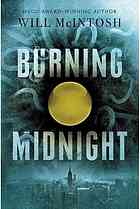
Title: Burning Midnight Author: Will McIntosh Published: 2016 Source: NetGalley
Summary: In a world where strange, inexplicable spheres grant people enhanced skills and abilities, and the sale of a really rare sphere can set you up for life, fifteen-year-old Sully works as a sphere hunter to keep himself and his mother alive. He scrapes by on common to middling finds, but dreams of another find like the one that was stolen from him by the villainous businessman Alex Holliday. When he meets Hunter, another sphere hunter in even more desperate straits, she enlists him in an audacious scheme to find the rarest sphere of all - before Holliday can.
First Impressions: Well, that was a fun quest/chase caper took a completely weird turn in the last 15% of the book.
Later On: Truly, I enjoyed this right up until the last chunk of the book. It's an enjoyable little-guy(s)-against-the-corrupt-businessman caper, complete with quixotic quests across national borders and feats of derring-do like diving into old water towers and climbing statues.
Then I got whiplash when the true nature of the spheres was revealed. (highlight to read SPOILER - they're like bait, and the fisherman are aliens headed down to earth to eat everybody in horrific ways.) In some ways it could have been a fun twist, but it was such a departure from where the story was headed up to that point that I was genuinely bewildered and felt like I'd wandered into a different book.
Jesus Calling My First Bible Storybook by Sarah Young
Today, I’m reviewing a captivating, little book for young children, Jesus Calling- My First Bible Storybook. I’m also giving away a copy! Be sure to read for the details below.
First, I want to mention the beautiful illustrations in this book. Antonia Woodward's use of color and soft lines are friendly and captivating! This forty-page, board book is full-color, cover to cover.
Best-selling author, Sarah Young, presents twenty Bible truths in this book using scriptures taken from The International Children’s Bible.
The twenty stories are representative of most toddler storybooks. They include:
God Made Everything, Noah’s Big Boat, Baby Moses, the Ten Commandments, David and Goliath, Jonah and the Big Fish, Daniel and the Lions, Queen Esther is Brave, Jesus is Born, Jesus is Baptized, A Little Boy’s Lunch, Jesus Calms the Sea, The Prodigal Son, Jesus Loves Children, Zacchaeus, The Cross, Jesus is Alive, Jesus is Coming Again, and God’s Family.
After the title, is the chapter(s) in the Bible where the story originates. The stories are written in a simple text so young children can easily understand them.
Unlike Young’s other Jesus Calling books, this one is not primarily written as if Jesus is talking to you. There are approximately six, short sentences telling the story and most include some dialogue.
Then, there's just one “Jesus Calling” sentence that correlates to a scripture, which is also given.
Here's an example found at the end of a shortened version of The Prodigal Son story (Luke 15):
Jesus Calling: When you tell Me you are sorry, I will always forgive you.
1 John 1:9 “If we confess our sins, he will forgive our sins.”
I like this book and believe it to be Christ honoring. I love the illustrations and the multiple scriptures provided. Also, I appreciate the reference given for each story so older readers can go read the full text in the Holy Bible.
It’s a beautiful book containing appropriate portions of God's Word for toddlers.
Would you like a chance to win this book for a little one in your family?
I’m trying to get my words of encouragement out to a wider range of folks. You can help by sharing this blog with others by word of mouth, or with the click of a computer key.
Everyone who enters their email address into the “Follow by Email” box located on the right side of this page, will be entered into the drawing.
When I write something new on the blog, it will come to you in your email. I know what it’s like to receive more emails than you have time to read. so you’ll only get about one email a week—never more than two.
If you already receive my blog posts in your email box, thank you, and you are still eligible to win. All you have to do is leave a comment below stating you are already on the email list.
It’s as simple as that. :)
Enter by June 30, 2016. The winner will be announced Friday, July 1, 2016.
Disclosure of Material Connection: I received this book free from the publisher through the BookLook Bloggers <http://booklookbloggers.com> book review bloggers program. I was not required to write a positive review. The opinions I have expressed are my own.
0 Comments on A Giveaway and A Review of Sarah Young’s Book: Jesus Calling-My First Bible Storybook as of 6/28/2016 10:41:00 AM
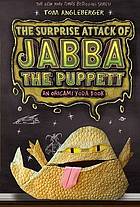
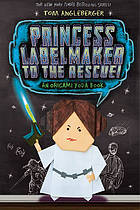
Since I read these two books close enough to each other that they were both still hanging out in my blogging document, and because the first ended on something of a cliffhanger, I figured I might as well do a doubleheader.
Summary: The origami kids find themselves facing a great evil - the looming specter of standardized testing, and the cramming sessions that go along with them, which have taken the place of all their favorite elective classes. Can their rebellion defeat the Evil Empire?
First Impressions: Entertaining anti-test story. I also loved how many different kinds of kids wound up working together, and how the principal wasn't the ultimate evil. But - uhoh! Cliffhanger.
Later On: This remains a realistic and entertaining middle-school series. The multitude of characters started to lose me, especially when introducing new ones that weren't around or weren't important in the first few books, but the central characters (Dwight, Harvey, and Kellan) are all there and all distinct. This is also taking on a more series-oriented arc with the rebellion against mandated testing. This isn't the one to start with (all those characters!) but for fans of the rest of the series, it's a worthy entry.
Summary: Picking up where the previous book left off, the McQuarrie Middle School gang's attempts to defeat the deadly dull test-prep program, FunTime, seem doomed to failure. But Princess Labelmaker's got a secret plan - to turn the records of the Rebellion over to Principal Rabbski, in a last desperate hope to get her on their side against the evil test company that's sucking the life out of their school.
First Impressions: Most of these tend to be episodic, but this one was very much so. Still enjoyable, but I can't quite tell whether it's the end or not.
Later On: I really started to lost track of who was who in this book, especially since they each seemed to get one or two mini-stories in this, relating how the Origami Rebellion has changed them and helped them see the world differently. Kids who have been devoted readers probably won't encounter that problem, though.
Apparently there's one more book in the series, Emperor Pickletine Rides the Bus, which will follow the kids on the Washington, DC trip that they fought to get back during this book.
We first met in high school. He was a rough, taciturn boy, yet everyone looked to him for leadership. I was a plain-Jane honors student with braces. Coincidence brought us back together again. Now, he's a big name in finance—any woman would want him—while I'm a widow who's lost my savings, my job and my house—not to mention I'm pregnant! Ryan was kind enough to hire me as a home tutor for his daughter, but I doubt he has any idea how much his generosity has affected me.
Bedded by Blackmail
In London, England, at the most glittering social event of the year, all eyes are on sexy South American billionaire Diego Saez. Already infamous for his astounding rise from rags to riches, Diego is convinced that everything and everyone can be bought....
Society heiress Portia Lanchester has been left penniless. Diego wants her. Now Portia's got only one chance of survival--if she'll surrender to his blackmail...and to him...in his bed!
Rating: 4 stars (The Millionaire's Nanny Arrangement) Rating: 3.5 stars (Bedded by Blackmail)
Here's why:
Disclaimer: I got this book from Overdrive and have received no compensation from the author or publisher for this honest review.
I got this bundled book and was all set for one story to be better than the other. I was pleasantly surprised to find that both books were well-written and had characters that I could stand behind.
The Millionaire's Nanny Arrangement was a tug on the heart strings. Newly widowed Kelsey finds herself without a home or job and a baby on the way. She encounters six-year-old, Mariah and her father, Ryan Storm. Ryan needs a nanny and Kelsey needs a place to stay. Thus the story is set for a sweet romance between two very different people. There are a couple of nicely done twists that kept me reading to the very end.
Bedded by Blackmail was a little bit darker than the other novel. Diego and Portia were interesting characters because what I perceived as their personalities and behaviors came with an unexpected twist. Blackmailing someone is never fun and in this case made me a little bit angry with the way Diego went about it. Yet, the twists more than made up for my anger at the leading man in this story.
Would I recommend this? Yes they were both good.
0 Comments on Kishaz Reading Corner: Omnibus - The Millionaire's Nanny Arrangement / Bedded by Blackmail by Naoko Kubota as of 6/22/2016 7:34:00 AM
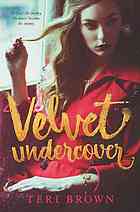
Title:Velvet Undercover Author: Teri Brown Published: 2015 Source: Edelweiss
Summary: After her father disappears, Samantha Donaldson is conscripted to spywork in Germany during WWI.
First Impressions: This felt very WWII to me, perhaps because I've read so many more WWII spy stories in the last few years, so any detail that screamed WWI tripped me up a lot. Not particularly memorable honestly.
Later On: Yep. I still don't remember it very well. Everything sort of fades into a wartime mush in my head.
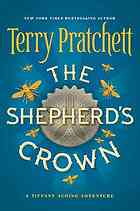
Summary: The fairy nation is set on invading our world, and the witches who would normally stand in their way have just lost their not-a-leader. It's up to her presumptive heir, Tiffany Aching, to defend the Discworld from them just as she's struggling to cement her place among the witches and among the community.
First Impressions: Sniff. Last Terry Pratchett ever. I think it was a good one to go out on, especially with Granny Weatherwax, but others were better.
Later On: Tiffany is still working out how to be a witch of the chalk, how to belong someplace and bear responsibility toward a whole community. While she's battled the queen of the fairies and the hive mind and all sorts of other monsters, she's absorbing the lesson that has been built over the series that people are the most complicated of all.
The death of Granny Weatherwax seems oddly prescient. Where Pratchett has faked us out before, this time he went for it, and the way that Tiffany feels rudderless and lost after the loss of her second major matriarch figure (the first being her own grandmother before the start of the series) serves to bookend this series and emphasize that you never quite get there to that magical place where you just always know what you're doing at all times, but you can get a little further along.
My love for the Tiffany Aching series comes from the realism of her growth over the series. Where she started as a young girl (albeit a ferocious, clear-sighted, and competent one), this Tiffany is wobbling on the edge of adulthood, and it's as good a place as any to leave her.
As has been stated in many places, this book is essentially unfinished. Oh, it has a beginning, a middle, and an end, but it doesn't quite have all the flourishes that make up about 75% of the enjoyment of a Terry Pratchett book. He died during the editing process, so this unfinished feeling is completely valid. Still, it feels like a Pratchett book (an early one, maybe, before he really developed his powers) and I enjoyed it as such.
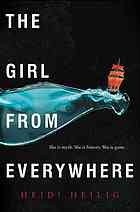
Summary: Nix Song grew up on the high seas, traveling from place to place and time to time with her time-traveler father. But it's been a lonely childhood and a frustrating teenagerhood, especially when her father is obsessed with finding a map that can take him back to Hawaii in the 1840s, when Nix was born, and her mother died. When they land in Hawaii, but several years too late, they get caught up in a plot to thwart American colonialists' plan to co-opt the island nation for American interests. At the same time, Nix meets a mysterious old woman who was present at her birth, and a handsome young American who wants to show Nix Hawaii
First Impressions: While I really liked the premise, this dragged for me pretty hard, and the love triangle felt both unneeded and unresolved.
Later On: I really wanted to like this. I did! Time travel via historical maps? A biracial (white and Chinese) girl who grew up all over time, and who has a prickly relationship with her father and a mystery surrounding her long-dead mother? The Hawaiian setting??? (And not just tourist Hawaii; this is Hawaii the way the people who live there see it, complete with all its ugly colonial history.) An audacious con plot? A roguish and charming love interest/BFF? Sign me up!
All these elements, unfortunately, didn't combine into anything very compelling. The third point of the love triangle was about as interesting as oatmeal, and nothing was really resolved there even though pages and pages were spent on trying to build a relationship between them. I can point to individual things that were done well, particularly the twisty turny it'll-get-you-coming-and-going nature of time travel and the secrets of her mother, but this book just never gelled for me. Which is really too bad.



.jpeg?picon=3015)







.jpeg?picon=2765)


 HANNAH RIALS: A Maryville native and current college student at University of Tennessee at Chattanooga, Hannah began writing her first novel at age twelve. Eight years later, the result is her new YA novel Ascension; a modern day teenage romance filled with “double-blooded” vampires and revenge-seeking witches (to be released in August of 2016). When not spending time with her family and playing with her beloved Corgis, Buddy and Noel, Hannah leads a creative group, crafts and cultivates her writing skills. Connect with Hannah on