

We look at the top contenders in this year's Oscar race for best animated short.
The post 2017 Animated Short Oscar Contenders: A Record Number of Films Are Competing appeared first on Cartoon Brew.
Add a Comment
 By: Jerry Beck,
on 10/27/2016
By: Jerry Beck,
on 10/27/2016
We look at the top contenders in this year's Oscar race for best animated short.
The post 2017 Animated Short Oscar Contenders: A Record Number of Films Are Competing appeared first on Cartoon Brew.
Add a Comment
By: Jerry Beck,
on 10/24/2016
Who are the likely contenders for a visual effects Oscar? And which films might surprise this year?
The post 2017 VFX Oscar Contenders: From Most-Likely To The Outliers appeared first on Cartoon Brew.
Add a Comment
By: Jerry Beck,
on 7/2/2016
The Academy is touting the diversity of its new member invites, but how diverse are they really in the animation and vfx branches?
The post Oscars Invite Record 110 Animation People Into Animation/VFX Branches appeared first on Cartoon Brew.
Add a Comment
By: Jerry Beck,
on 2/28/2016
A South American film won the animated short for the first-time ever, and a woman won the visual effects category for the first-time ever.
The post ‘Bear Story’ and ‘Ex Machina’ Makes Animation History at the Oscars appeared first on Cartoon Brew.
Add a Comment
By: Jerry Beck,
on 1/15/2016
"Prologue," he says, "is the only thing so far in my career that I've ever been really been pleased with."
The post Interview: Richard Williams Talks About His Oscar and BAFTA-Nominated Short ‘Prologue’ appeared first on Cartoon Brew.
Add a Comment By: Heidi MacDonald,
on 1/14/2016
By: Heidi MacDonald,
on 1/14/2016
 Who made the Academy's cut this year?
By: Jerry Beck,
on 1/9/2016
This year's Sci-Tech Academy Awards remind us that technological innovation is a major part of animated filmmaking.
The post ILM, Laika, DreamWorks, Imageworks, and Rhythm & Hues Among Sci-Tech Academy Award Recipients appeared first on Cartoon Brew.
Add a Comment
By: Jerry Beck,
on 11/19/2015
By: Jerry Beck,
on 10/28/2015
We've been keeping track of the category all year long and now we have the Academy's complete list.
Add a Comment
By: Jerry Beck,
on 10/16/2015
By: Jerry Beck,
on 9/8/2015
Find out which animated features and shorts are competing for end-of-the-year honors in 2015.
Add a Comment
By: Jerry Beck,
on 9/2/2015
Premiering September 18 in West L.A., 'Taking Flight' is a whimsical tribute to the life of Radio Flyer wagon inventor, Antonio Pasin.
Add a Comment
By: Jerry Beck,
on 9/1/2015
'The Wanted 18' mashes animation, interviews, reenactments, and archival footage into a 75-minute absurdity chronicling the true story of 18 cows-at-large.
Add a Comment
By: Jerry Beck,
on 8/25/2015
Eleven technological advances, including work by Weta Digital and DreamWorks Animation, have been selected for further review.
Add a Comment
By: Jerry Beck,
on 7/14/2015
By: Jerry Beck,
on 5/21/2015
By: Heidi MacDonald,
on 3/12/2015
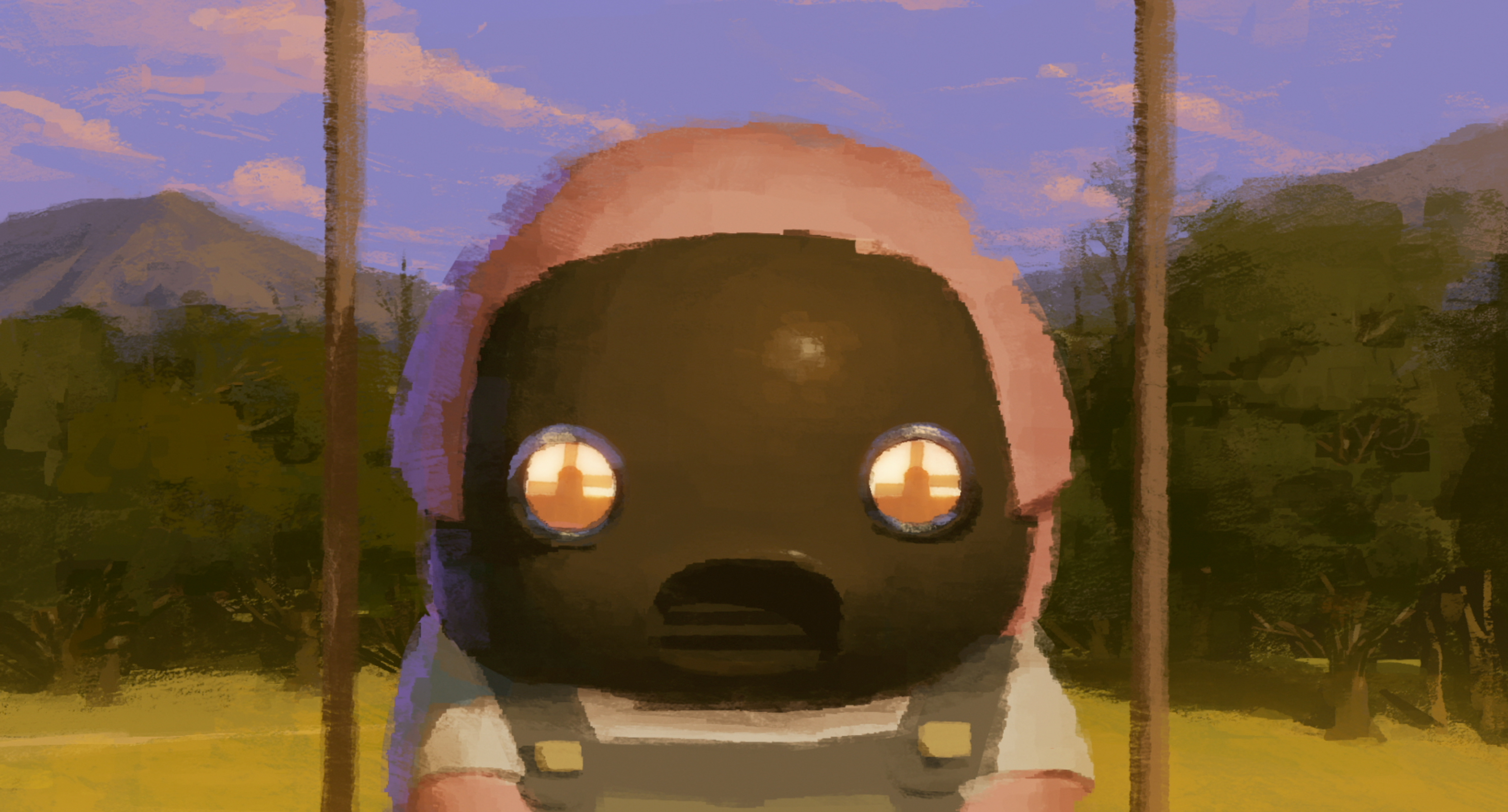
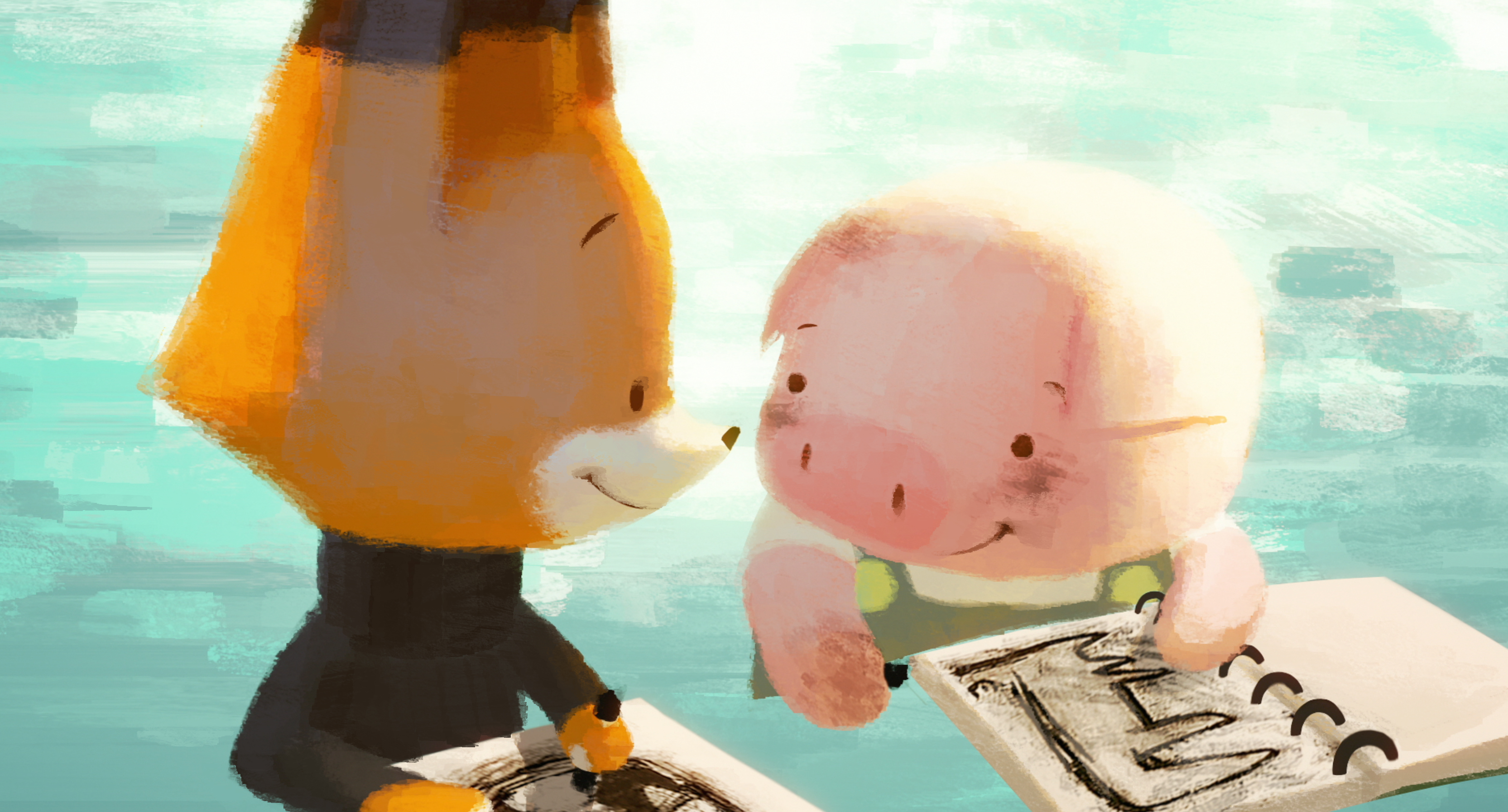
In one of the most visually and emotionally striking films nominated for Best Animated Short Film at this year’s Academy Awards, The Dam Keeper has garnered a lot of well-deserved praise. The creators, Robert Kondo and Daisuke “Dice” Tsutsumi, have worked as art directors on such films as Toy Story 3, Ratatouille, and Ice Age, but got together to create The Dam Keeper as a very personal short film, and it shows. The film, done in a gorgeous painted style with almost no words, is unique and heartbreaking despite its short running time of only 18 minutes. What’s more exciting than such a great short? Why, how about a series of graphic novels by the creators, published through First Second, that explores this world?
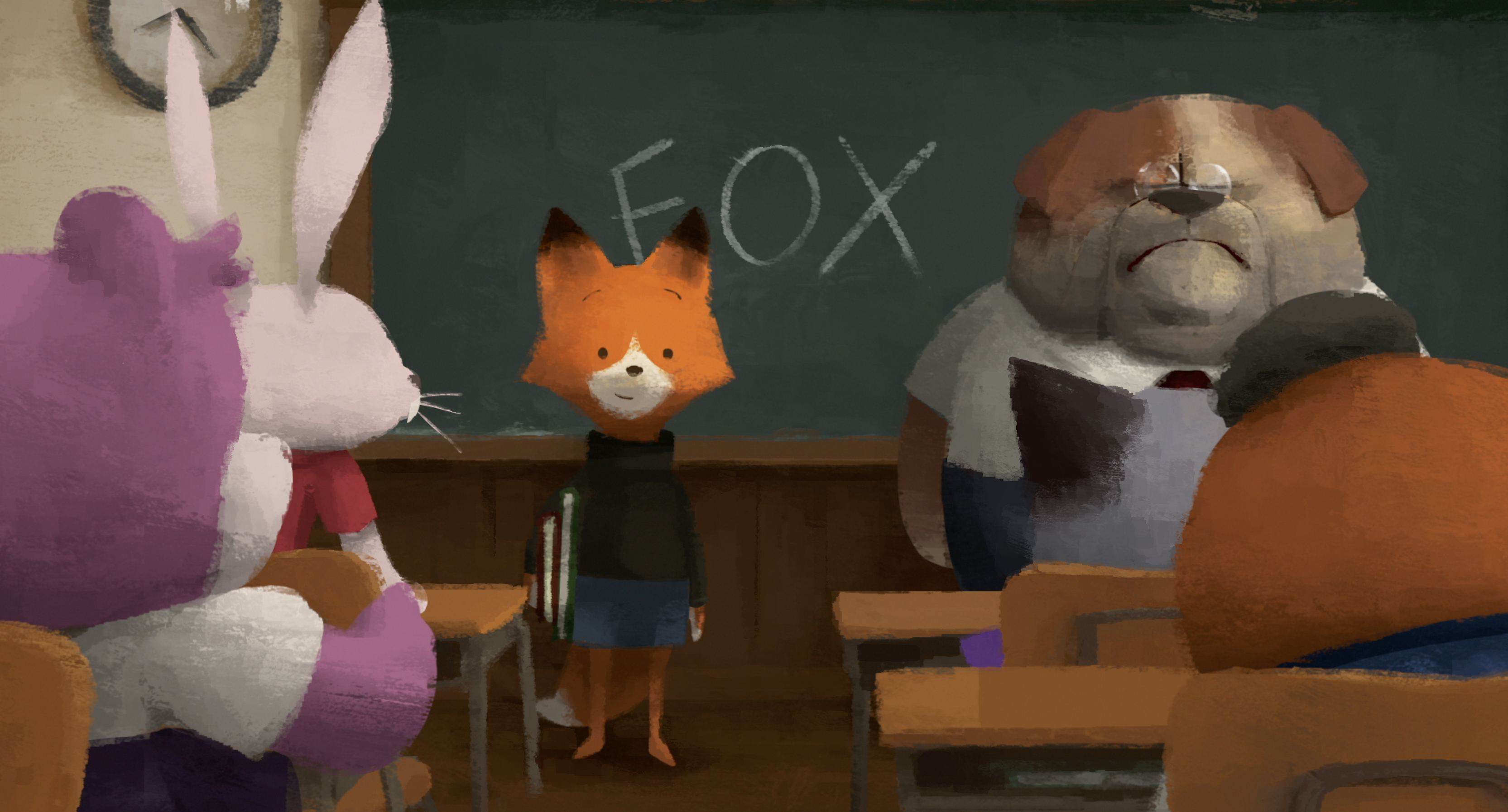
The Dam Keeper is set in a sort of post-apocalyptic world with anthropomorphic people living in a valley, the only safe haven from the dark and dangerous clouds that surround it. Keeping this darkness at bay is Pig, a young boy with no family who must wind the windmill every day to blow back the clouds. In the short, he meets a girl his age, Fox, and through a series of wordless interactions, they become friends. However, a misunderstanding causes a rift between the two that has drastic consequences for the entire valley, which leads to the dramatic climax. Kondo and Tsutsumi recently announced that they plan to elaborate on the world of The Dam Keeper through a series of new graphic novels. I got a chance to speak with both creators to hear about this interesting cross-media expansion on their celebrated short film. The below answers come from the team collectively.
Where did the initial idea for the short film spring from?
The Dam Keeper was our first effort to write and direct together as a team. Initial ideas of an unsung hero in a polluted world went through different variations in discovering our creative process. Along the way, we rediscovered a childhood folktale, The Little Dutch Boy, about a boy whose little act of sacrifice ended up saving his town. We wondered, “What if our character held the responsibility of saving his town not just once but every day?”How did you decide on the very unique visual style for the short film?
We spent time thinking about what might distinguish us as a team. Because we worked closely together for over seven years at Pixar and had influenced each other’s artwork, we actually could paint like each other. This made us unique within the art department there and it felt like the unique thing we could apply to our film. Not to mention, creating a painted look seemed a more natural route for us at the time than building a 3D CG pipeline.
With over 8,000 painted stills, it must have been a painstaking process! How long did the film take to create?
 The actual production and post-production ran for 9 months — a long process, but considering we all had full-time jobs during the day, it was an extremely well run production thanks to our producers Megan Bartel and Duncan Ramsay.
Part of what makes the short so interesting is how little we as an audience really know about the circumstances in this world where a dark cloud constantly threatens the valley beneath. What made you decide to explore this world more deeply?
For us, on one level, the dark cloud represents our character’s internal demon. On another level, it also speaks to us quite literally, and so we have always imagined other cities and people living on the other side of the dam. It feels natural for us to explore how different societies might deal with this deadly fog and how the particular inhabitants of each civilization would have their own respective social issues, just as we saw with Pig’s idyllic-seeming town in the short.
Speaking of, will the book series focus primarily on Pig’s future as he grows up, or will there be a look into the past of this world as well?
There will be elements of both, with a very emotional storyline for Pig and his friends set against the ticking time bomb of their polluted world. But there will be a lot of laughter along the way, too.
One of the many things that makes The Dam Keeper so endearing is its lack of dialogue…do you plan to keep the companion graphic novels in the same silent style?
Dialogue will be an important addition to the story and we hope to use it while maintaining the feeling and tone of the short.
Will these companion pieces be graphic novels in a comic book style, or more along the lines of illustrated novels?
Much as we did with the short, we are exploring different ways to execute this new form of storytelling, not just in terms of format but as a team, since we haven’t done a book together before.
Why a graphic novel series to continue the stories in this whimsical world instead of, for example, an animated series?
We are concurrently pursuing an animated feature adaptation of The Dam Keeper. Our company, Tonko House is open to telling stories in different formats. We believe graphic novels are different than films, but are great vehicles for narrative just the same. We are inspired by stories like Mariko Tamaki and Jillian Tamaki‘s This One Summer and Gene Luen Yang‘s American Born Chinese.
What kind of adventures can we hope to see Pig, Fox, and Hippo get into?
Pig and Fox’s adventures will be epic, wondrous, revelatory and daunting all at the same time — they will be taken out of their element and challenged as they come of age. And they will be joined on this journey by a most unexpected ally or enemy, depending on whose point of view it is.
What inspired you to jump the story ahead to their teen years rather than continuing to explore their youth?
The early teen years are such an interesting rite of passage, when innocence challenged by one’s awareness of the world forces growth in character. The underlying story is based upon a personal anecdote that fits well at this point in our characters’ lives as they are forced to engage with who they are and who they want to be.
While the short covers some darker territory, it maintains a childlike tone that is both charming and quite beautiful; can we expect the story to get a little more adult in tone in the continued story as the characters grow older?
 We believe in the balance of light and darkness, and we will strive to capture both to connect with international audiences of all ages. We want the choices our characters make to have real consequences, whether it is neglecting your responsibility and letting the darkness in, or something new and possibly more far-reaching. We feel that if our characters and their motivations ring true, then this journey of boys becoming men will be enjoyable by many regardless of age.
How did you come to choose First Second as the publisher for this series?
We are big fans of First Second first and foremost as readers. As creators, since conceiving the larger story of The Dam Keeper, we have been searching for the right people to work with in both film and publishing to help protect it and take it to the highest level of work we are capable of. When we met our editor, Mark Siegel, there was an instant connection and the kind of partnership we had sought after. We feel we are in great hands to learn this new medium for Tonko House.
How many books do you foresee being in the series?
It’s a bit of wait and see!
Do you feel that you may hand the reins over to a different writer or artist at some point to let them explore this world, or will this always be a personal project for the two of you?
We would most likely always be involved with how the world of The Dam Keeper expands. The story we are working on now is based on our own personal life experiences, and we hope any artists or writers we work with will bring the same level of personal investment and motivation into this world. Coming from big feature animation studios where teamwork is essential, we hope always to collaborate with and learn from other artists since those experience have proven to be extremely rewarding time and time again.
When can we expect the first book to release? Where can fans follow both of you and your work?
We’ll be working around the clock to have the books ready as early as possible.
Any news related to The Dam Keeper will be found here:
https://www.facebook.com/TheDamKeeper
http://www.simplestroke.com
https://instagram.com/robertkondo/
The first of two graphic novel sequels to The Dam Keeper will arrive in 2016 from First Second.
 By: Darcy Pattison,
on 3/3/2015
By: Darcy Pattison,
on 3/3/2015
As I watched the Academy Awards last week, I was struck by how little the winners trusted their works of art. The ceremony was peppered with political statements for one cause or another. (Don’t misread: I have sympathies for these causes, but not for taking over the ceremony to smash us over the head with the cause.) There were pleas for women’s rights, civil rights, gay rights, and disability rights. Really? Their work of art, the film that was being recognized, had already said what needed to be said in poignant, touching, and life-changing ways. Why didn’t they trust their art?
In the 1970s, children’s book publishers put out a lot of “problem novels,” which addressed social issues. The backlash against them was huge and still has echoes today in how easily some manuscripts are rejected. Since then, though, we’ve learned how to include our passions in our stories in ways that shine as art. We don’t stick it in our reader’s faces.
Morality. If you’re passionate about a cause, though, what should you do? First set up a moral dilemma around the cause because that will allow you to explore multiple perspectives. Moral dilemmas force characters to make a choice, which allows your readers to feel the weight of the issues and either agree or disagree with the character’s choices. You almost have to include someone making wrong choices–usually as the villain.
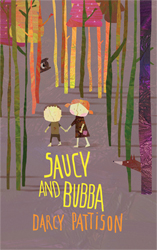 Emotions. For example, in my book, Saucy and Bubba: A Hansel and Gretel Tale, Saucy runs away from an alcoholic step-mother. She must decide whether to live with an aunt or go home to live with her father and the step-mother. It’s a moral choice, but also an emotional choice, complicated by the question of where will her little brother go.
Sometimes you have to help yourself before you can help someone else, but if you mark your trail, you can always find your way home. That’s what the spunky main character of Darcy Pattison’s Saucy and Bubba learns in this modern day Hansel and Gretel tale. Saucy is a real character dealing with real stuff—hard stuff that doesn’t have easy answers, not in real life and not in fairy tales, either. This is a really compelling and ultimately hopeful story. Highly recommended.
— Debby Dahl Edwardson, National Book Award finalist
and author of My Name is Not Easy
Trust your art. In the end, I choose to trust my art. Growing up, I had an alcoholic step-father; today, about 11 million children live with a caregiver who is an alcoholic. I could rant; instead, let me tell you a story. Read a sample chapter or listen to the audio of Chapter 1 of Saucy and Bubba.
By: Jerry Beck,
on 2/25/2015
The Disney Corporation has won the Oscar seven of the last eight years, and that's not healthy for the art form.
Add a Comment
By: Heidi MacDonald,
on 2/24/2015
There’s snow on the ground here in Atlanta, and I can’t wait for Spring to finally arrive. Seriously.
Here are the big updates for this morning:
– This is not a big surprise, given that probably every actor that signs up for a superhero film these days has a multi-picture contract, but Suicide Squad star Margot Robbie has confirmed that she has one too. Get used to seeing lots of Harley Quinn in future DC movies, provide all goes well for the studio.
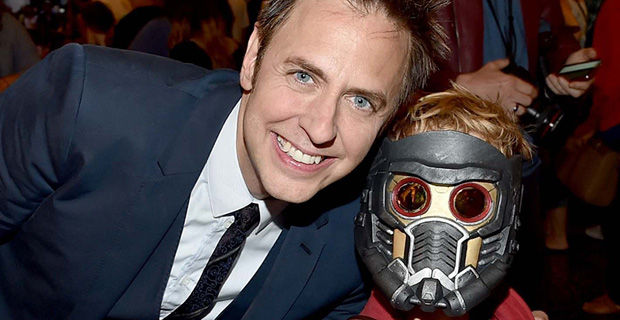
– Making the rounds yesterday was James Gunn‘s Facebook post regarding the awards-season/Birdman-birthed narrative that superhero movies are the death-knell of creativity in Hollywood, it’s pretty wonderful:
Whatever the case, the truth is, popular fare in any medium has always been snubbed by the self-appointed elite. I’ve already won more awards than I ever expected for Guardians. What bothers me slightly is that many people assume because you make big films that you put less love, care, and thought into them then people do who make independent films or who make what are considered more serious Hollywood films.
I’ve made B-movies, independent films, children’s movies, horror films, and gigantic spectacles. I find there are plenty of people everywhere making movies for a buck or to feed their own vanity. And then there are people who do what they do because they love story-telling, they love cinema, and they want to add back to the world some of the same magic they’ve taken from the works of others. In all honesty, I do no find a strikingly different percentage of those with integrity and those without working within any of these fields of film.
If you think people who make superhero movies are dumb, come out and say we’re dumb. But if you, as an independent filmmaker or a “serious” filmmaker, think you put more love into your characters than the Russo Brothers do Captain America, or Joss Whedon does the Hulk, or I do a talking raccoon, you are simply mistaken.
At this point, I have a hard time imagining that a comic-book based superhero film will ever win a live-action Best Picture Oscar (if The Dark Knight couldn’t even be nominated), but does it actually matter? Not really. Let’s just continue to hope for more Avengers, Dark Knights, Winter Soldiers and films with a nice personal stamp on them and less of the Amazing Spider-Man 2 variety.
– Telltale Games has, over the the past few years, sparked a revival of the adventure game genre with comics-based titles like The Walking Dead and Fables (along with Game of Thrones and Tales from the Borderlands). Today, Lionsgate Films and Telltale announced the former’s investment into the burgeoning game developer. What does it mean for Telltales’ output? We may see some television and video game co-development soon, particularly in terms of an original property. At the very least more Lionsgate properties will surely be headed into the development cycle.
– Former Bat-Mite voice actor Paul Reubens is bringing his famous Pee-Wee Herman character back to television, as Netflix has announced that the feature, Pee-Wee’s Big Holiday, will be coming to the streaming service. The new film is co-written by Reubens and Paul Rust (Comedy Bang Bang), with John Lee (Inside Amy Schumer) directing. Judd Apatow will produce under his Apatow Productions banner.
By: Heidi MacDonald,
on 2/23/2015
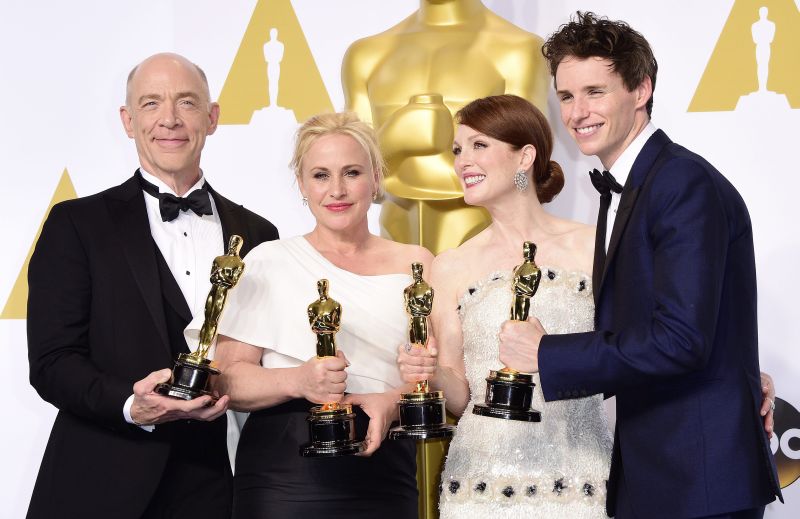
Last night’s Academy Awards ceremony has come and gone, and below you can find the complete list of winners (with links to reviews my team over at GeekRex have written for a few of the selections). There aren’t too many surprises this year, though I will grouse a bit about Best Director, Best Actor, and Best Adapted Screenplay (I lean towards Richard Linklater, Michael Keaton, and Whiplash there). Regardless, it was a tough night for the Boyhood camp. I think the Academy may regret that one in future years. Or maybe not, this is the same body that handed over the top prize to The King’s Speech just a few years ago (let’s not even get into what it beat).
On a much more positive note, J.K. Simmons (General Eiling from Justice League Unlimited!) and Julianne Moore both finally got their long deserved dues! Additionally Interstellar won for Best Visual Effects, and The Grand Budapest Hotel took home some serious hardware in the craft categories. It’s hard not to be happy with that.
Best Picture
“Birdman,” Alejandro G. Iñárritu, John Lesher and James W. Skotchdopole
Best Actress
Julianne Moore, “Still Alice”
Best Actor
Eddie Redmayne, “The Theory of Everything”
Best Supporting Actor
J.K. Simmons, “Whiplash”
Best Supporting Actress
Patricia Arquette, “Boyhood”
Best Director
Alejandro González Iñárritu, “Birdman”
Best Adapted Screenplay
“The Imitation Game,” Graham Moore
Best Original Screenplay
“Birdman,” Alejandro G. Iñárritu, Nicolás Giacobone, Alexander Dinelaris, Jr. & Armando Bo
Best Original Score
“The Grand Budapest Hotel,” Alexandre Desplat
Best Song
“Glory” from “Selma“; Music and Lyric by John Stephens and Lonnie Lynn
Best Documentary Feature
“CITIZENFOUR,” Laura Poitras, Mathilde Bonnefoy and Dirk Wilutzky
Film Editing
“Whiplash,” Tom Cross
Best Cinematography
“Birdman,” Emmanuel Lubezki
Production Design
“The Grand Budapest Hotel,” Adam Stockhausen (Production Design); Anna Pinnock (Set Decoration)
Best Animated Feature
“Big Hero 6,” Don Hall, Chris Williams and Roy Conli
Short Film, Animated
“Feast,” Patrick Osborne and Kristina Reed
Visual Effects
“Interstellar,” Paul Franklin, Andrew Lockley, Ian Hunter and Scott Fisher
Sound Editing
“American Sniper,” Alan Robert Murray and Bub Asman
Sound Mixing
“Whiplash,” Craig Mann, Ben Wilkins and Thomas Curley
Documentary Short Subject
“Crisis Hotline,” Ellen Goosenberg Kent and Dana Perry
Short Film, Live Action
“The Phone Call,” Mat Kirkby and James Lucas
Best Foreign Film
“Ida,” Pawel Pawlikowski
Makeup and Hairstyling
“The Grand Budapest Hotel,” Frances Hannon and Mark Coulier
Costume Design
“The Grand Budapest Hotel,” Milena Canonero
By: Jerry Beck,
on 2/22/2015
 By: Kate Guenther,
on 2/22/2015
By: Kate Guenther,
on 2/22/2015
Millions of Americans are eagerly anticipating this year’s Academy Awards ceremony. For over a century, motion pictures have been a dominant cultural and leisure medium. There are, however, two aspects worth highlighting: the sheer novelty of motion pictures and the medium’s initial democratic nature. Twenty-first century Americans have difficulty imagining the wonder and awe motion pictures inspired in the early 1900s.
The post The audience screams; people duck appeared first on OUPblog.
By: Jerry Beck,
on 2/22/2015
By: GeorgiaM,
on 2/22/2015
After what feels like a year's worth of buzz, publicity, predictions, and celebrity gossip, the 87th Academy Award ceremony is upon us. I dug into the entries available in the alphabetized categories of The Dictionary of Film Studies-- and added some of my own trivia -- to highlight 26 key concepts in the elements of cinema and the history surrounding the Oscars.
The post An A-Z of the Academy Awards appeared first on OUPblog.
With 20 acting nominees, they couldn’t find one person of color to nominate? Sigh.
I was hoping Sam Jackson (Hateful Eight) and Michael B. Jordan (Creed) would get nods. Tessa Thompson and Phylicia Rashad were also also excellent in Creed. And Chiwetel Ejiofor was great in a not-so-great movie, Secret in Their Eyes.
I am glad to see Stallone nominated for Creed, but I’m sure he’ll lose to Mark Rylance or Tom Hardy, because American actors always lose to Brits. Jennifer Jason Leigh was fantastic in Hateful Eight. Kudos to Tarantino for casting a 53-year-old actress in the lead female role, when his financial backers would probably have been happier with Jennifer Lawrence.
Looks like the supporting races will provide the real interest here. I just wish Oscar Isaac had been nominated for Ex Machina, and Steve Carrell for The Big Short. And Alicia Vikander deserved her nom for Ex Machina, not The Danish Girl. Sicario also deserved some major nominations.
Get ready for the Star Wars geeks to complain LOUDLY about Force Awakens not getting a Best Picture nomination.
My understanding is that Warner was too slow on the draw to campaign strongly behind Creed, and a lot of its awards potential got nixed because of that. Sadly, the campaign is often as important as the actual quality of the film in matters such as these. But I think Jackson or Jordan easily could have slipped in past Redmayne or Cranston. Idris Elba had a shot in Best Supporting Actor, but unlike Best Actor, that category was stacked to the gills (Carrell was being pushed for Lead). I wouldn’t count Sly out though, not unless The Revenant catches fire and Tom Hardy rides that wave to gold, but Stallone is probably the front-runner at this point.
For about two minutes there, after it got its editing nod, I figured Star Wars might have gotten in. I’m willing to bet it was next in line.
Chris Rock should have some interesting comments when he hosts the Oscars next month.