new posts in all blogs
Viewing: Blog Posts Tagged with: encouragement, Most Recent at Top [Help]
Results 1 - 25 of 200
How to use this Page
You are viewing the most recent posts tagged with the words: encouragement in the JacketFlap blog reader. What is a tag? Think of a tag as a keyword or category label. Tags can both help you find posts on JacketFlap.com as well as provide an easy way for you to "remember" and classify posts for later recall. Try adding a tag yourself by clicking "Add a tag" below a post's header. Scroll down through the list of Recent Posts in the left column and click on a post title that sounds interesting. You can view all posts from a specific blog by clicking the Blog name in the right column, or you can click a 'More Posts from this Blog' link in any individual post.

By:
Monica Gupta,
on 11/24/2016
Blog:
Monica Gupta
(
Login to Add to MyJacketFlap)
JacketFlap tags:
types of motivation,
प्रशंसा करना,
प्रशंसा करने,
प्रशंसा का विलोम,
प्रशंसा के अर्थ,
प्रशंसा प्रमाण पत्र,
Videos,
Articles,
motivation,
encouragement,
encourage,
how to encourage,
how to encourage someone who is depressed,
motivation story,
motivation theories,
Add a tag
प्रशंसा करना – अगर कोई हमारी प्रशंसा न करे तो – प्रशंसा करना – किसी की प्रशंसा करना कितना जरुरी , how to encourage, how to encourage someone who is depressed, motivation , motivation story, types of motivation ,motivation theories प्रशंसा करना – अगर कोई हमारी प्रशंसा न करे तो. क्या करें हम कुछ काम […]
The post प्रशंसा करना – अगर कोई हमारी प्रशंसा न करे तो appeared first on Monica Gupta.

It takes courage to be a painter. I always felt I walked on the edge of a knife. On this knife I might fall off on either side. But I’d walk it again. So what. So what if you do fall off? I’d rather be doing something I really wanted to do.
— Georgia O’Keeffe
The post Walking on the Edge of a Knife originally appeared on Caroline Starr Rose

I ran an earlier version of this post right after selling my first book. Because it’s one of my favorites, and because I so often need to hear these words myself, I’m sharing them again today.

It was 2004. While driving to meet my writing group, I happened to catch an interview on NPR with Adrienne Young, a folksinger just starting out. She talked about her first album, inspired by some advice she’d gotten while struggling to make it as a musician:
If you want to do this with your life, stay focused and see this through. You’ve got to plow to the end of the row, girl.
That simple phrase – plow to the end of the row – was enough to push Adrienne to continue. It became the title of both her album and lead song. I can’t quite explain what that interview meant to me, hearing an artist choose to create despite the struggle, to push against fear and sensibility and make it “to the end of the row.”
I’ve carried this image with me for years, the plant metaphor standing in for artistic endeavor, the plow the unglamorous slog needed to dig deep and make it to the end. Sometimes I find it funny I’d choose a profession so bent on forcing me to wait, so full of uncertainty and disappointment. An almost foolish optimism has kept me working, trusting that the next editor or the next agent or the next story would be the one to launch my career. I’ve haunted mailboxes and inboxes, waiting for something positive to come through. I’ve ceremoniously sent off manuscripts, chanting, “Don’t come back!” (entertaining postal workers, for sure). I’ve journaled again and again “this next editor is a perfect match!”, managing somehow to keep on plowing in midst of little validation.
After twelve years of writing and hundreds of rejections, I sold my first book, May B., a historical verse novel about a girl with her own challenging row to hoe. May’s determination carried me through a rocky publication experience: losing my first editor; the closing of my Random House imprint, Tricycle Press; the weeks when my book was orphaned, with no publishing house to claim it and its future uncertain; the swooping in of Radom House imprint, Schwartz and Wade; edit rounds seven, eight, and nine with editor number two; and finally, May B.’s birth into the world only three months behind its original release date.
I made it to the end of a very long, mostly lonely row, one that wasn’t very straight and was loaded with stones. But the soil got better as I worked it, and each little sprout was stronger than the last. The beauty of the writing life is I got to transplant the hardiest seedling and start again, this time working alongside others who nurtured it into something better than I could have ever created alone.
What is the dream of the artist-gardener? That our art will sprout and grow one day stand apart from us to thrive on its own.
But first we must reach the end of the row. Keep plowing, friends.
The post Plowing, Planting, Hoping, Dreaming originally appeared on Caroline Starr Rose


They get it. They see improvement. They push us toward our best work. Here’s a little message from my dear critique group member, Uma Krishnaswami:
Congratulations on turning Jasper in. He grew into a fine young man on our watch, and I’m thrilled I got to be one of those who ran alongside him cheering.
The post One more reason to be a part of a critique group originally appeared on Caroline Starr Rose


I ain’t going to lie. This round of edits has been really tough. So I was encouraged to find these good words waiting for me on Monday.
As soon as we realize that there is a difference between right now and what might happen next, we can move ourselves to the posture of possibility, to the self-fulfilling engine of optimism.
— Seth Godin
I’m an optimist. I don’t know why. But it has made things easier.
— Geoff Herbach (…wise words from his grandmother)
Place your attention on what is occurring now, not anticipating the future.
— Ennea Thought for the Day
In life, it’s impossible to always feel like everything is going well and that you’re exactly where you want to be in terms of success. It’s like the tide – it ebbs and flows. Sometimes you’ll feel successful, like the high tide, and other times, the tide will go out and you’ll feel dissatisfied with the way things are going. You just have to ride it out. Eventually, the tides will turn again.
— Lisa Schroeder (…from the podcast Millennial)
And this one came through on Tuesday —
Optimism is true moral courage.
– Ernest Shackleton
The post Five Bits of Encouragement from My Inbox originally appeared on Caroline Starr Rose


“May fear, discouragement, doubt, comparison, envy, and failure not have the final say in our homes, our work, our relationships, our souls, or our plans for the future. Instead, may we live into our truest calling as people who give and receive grace, forgiveness, and love in the small moments of our lives.”
The post More Wisdom from Simply Tuesday originally appeared on Caroline Starr Rose


Jefferson “Soapy” Smith was an unsavory sort who worked Skagway, Alaska when Jasper passed through.
I can’t wait to introduce you to Jasper next spring. For now, I’ll give you a peek into the way he thinks. (Coming across this section during edits has encouraged me. It might feel like I don’t know how to write a whole darn book, but this reminds me I don’t have to have it all figured out straight away. I’m responsible for showing up and doing my daily work to the best of my ability.)
Since leaving home I’ve stowed away and tracked down Mel and climbed a mountain and traveled the Yukon on a flimsy raft, and tackled a whole pile of other things I ain’t never done before. Now ain’t the time to start believing I got to have things figured out before I try.
Now, back to work on the editing…
The post That Jasper Johnson originally appeared on Caroline Starr Rose


I’ve written often about Valerie Geary around here, my critique partner I met when we both started blogging in 2009. We’ve seen each other through a number of manuscripts, a million emails about the writing life, and one glorious writing retreat that included mid-morning runs, lots of good conversation, and a bottle of wine I received when May B. sold (thanks, Helen Theriot!).
I don’t know how I’d keep chugging away without friends who understand this weird and wonderful process, who encourage me when I need it and let me do the same.
Here’s a recent exchange:
me: I’m tinkering with the new book. Very slowly. Long hand and then some typing. Two and a half hours gave me something like 200 words.
Val: Keep tinkering, friend. No rush, no urgency. Breathe, find small moments to create. These first few steps are so small and feel like they take us nowhere, but they are important to building a book. We’ll take bigger steps later on down the road. For now…play.
The post Tinker, Breathe, Create, Play originally appeared on Caroline Starr Rose


“…What you said, you reminded me so much of Grandpa Joshua. The way you keep faith in people, even though so many awful things have happened to you.”
“That’s because Grandpa Joshua and I bother to do the math.”
“What math?”
“For every big, bad, attention-getting thing that happens, there are thousands of small good ones, acts that might even seem ordinary but really aren’t, so many that we can forget to notice them or to count them up. But it’s what has always amazed me: not how terrible people can be to each other, but how good, in spite of everything.”
Click through to sign up for my quarterly newsletter and you’ll receive a free printable from my novel, Blue Birds. Enjoy!
The post Wisdom from Saving Lucas Biggs originally appeared on Caroline Starr Rose


After six and half years of blogging, I thought it would be fun to revive some oldies but goodies. The plan is to do this once a month. You can see the first, Top Posts of All Time, here.
The posts I’m sharing today have struck a deep chord in me. Whether they made me feel like I was part of something important (the Donalyn Miller interview), were an out-of-the-blue email from a reader, or were reflections on the writing process (pretty much everything else), these are the words I want to return to, that feel familiar and right and brave. I hope you enjoy them, too.
The Book Whisperer: An Interview with Donalyn Miller
Plowing, Planting, Hoping, Dreaming
Ode to a Research Notebook
Sometimes You Get an Email That Takes Your Breath Away
Step by Step, Word by Word
The Then and the Now: Reflections Over Chicago
5 Ways I’m Learning to Write Smart and Not Scared
Click through to sign up for my quarterly newsletter and you’ll receive a free printable from my novel, Blue Birds. Enjoy!
The post My Favorite Posts of All Time originally appeared on Caroline Starr Rose

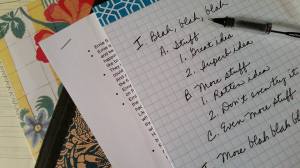
I hate outlining
“Planning to write is not writing. Outlining, researching, talking to people about what you’re doing, none of that is writing. Writing is writing.” Right you are E.L. Doctorow. I can’t argue with you.
Up until recently, I’ve been a writing pantser–someone who flies by the seat of her pants like a magic carpet. Weeeeeee!!! It was a fun, exhilarating, spontaneous, surprising, unfettered, chaotic, halting, sputtering, who-knows-how-the-heck-I-got-here way to write.
When I’ve considered a popular alternative, outlining, my skin literally crawled. No kidding. It wriggled clean off muh bones. (See why I can’t outline? I can’t even write without doubling back and making silly asides.) SO, anyway, outlining was not attractive to me. What a time and fun-sucker. Why not just jump in? I wanted to be surprised! At the same time, I liked the idea of pre-planning as a means of making steadier writing progress.
But as a card-carrying AntiOutlineist, I yearned for a way to enjoy the benefits of outlining without actual doing it. There were plenty of alternatives involving Post-it Notes, index cards or oversized sheets of paper, but I wanted something even simpler. It if could involve my adoration for list-making, that would be a bonus. That’s why I chose bullets. Round. Simple. Readily Accessible. Inexhaustible in supply.
Now, my little warm cinnamon crumb cake, you know I mean these kinds of bullets. . .
When I recently approached an extensive novel revision, I chose bullets to help me compile the sequence of events and actions of my characters. I didn’t write long descriptions of each scene. I wrote just enough to ensure I’d have what I needed when I returned to my list later. As I compiled this list, naturally, I’d identify roadblocks. But then, I could easily scan back to see, and then change, the sequence of events to release that blockage. I was able to think through each character’s actions or responses and their natural consequences. I could think proactively about how to crank up the story’s tension or humor or tenderness.
And now, armed with my bullets (hardy har har), I’ve had an easier time approaching the revision process. Plus, I’ve felt energized and encouraged because the bullets serve as an assurance that it’s going to be okay. Keep going. You know you can work this out. You’ve already untangled your plot and mapped out a path for your characters. And I know they won’t fail to surprise me, so there’s still fun to be had.
E.L. Doctorow is right–we can’t just yack about writing, we need to actually do it. But, before you do, see how you like writing with a batch of bullets by your side. G’head. Give it a shot. (Ouch.)
I’m one of those writers who tends to be really good at making outlines and sticking to them. I’m very good at doing that, but I don’t like it. It sort of takes a lot of the fun out. ~ Neil Gaiman


By: Vicky L. Lorencen,
on 3/25/2016
Blog:
(
Login to Add to MyJacketFlap)
JacketFlap tags:
Giveaway,
Encouragement,
Add a tag
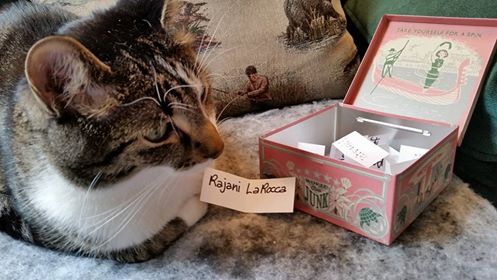
Finny picked our winner!
Congratulations to Rajani LaRocca–

Rajani is the winner!
winner of the Frog on a Dime Spring Giveaway!
Many thanks to everyone who entered.
You shared so many reading suggestions and
words of encouragement. You made me feel like the winner.
Wishing you all a beautiful spring, time to read and reflect–and hopefully some chocolate bunny ears to nibble tomorrow!
Rajani, please send me your address via the Contact Me page and I’ll whisk your froggy goodie bucket off to you this week. Congrats and thanks again for entering!
Come come! Come out!
From bogs old frogs command the dark
and look…the stars. ~ Kikaku, Japanese haiku


For whatever reason God chose to make man as he is— limited and suffering and subject to sorrows and death—He had the honesty and the courage to take His own medicine. Whatever game He is playing with His creation, He has kept His own rules and played fair. He can exact nothing from man that He has not exacted from Himself.
He has Himself gone through the whole of human experience, from the trivial irritations of family life and the cramping restrictions of hard work and lack of money to the worst horrors of pain and humiliation, defeat, despair and death. When He was a man, He played the man. He was born in poverty and died in disgrace and thought it well worthwhile.
— Dorothy Sayers
The post Subject to Sorrows and Death originally appeared on Caroline Starr Rose

By: Vicky L. Lorencen,
on 3/21/2016
Blog:
(
Login to Add to MyJacketFlap)
JacketFlap tags:
Giveaway,
Encouragement,
Add a tag
Oh, that William Shakespeare. He sure knew how to sling a syllable, didn’t he . . .

Photo by Vicky Lorencen
This carol they began that hour,
With a hey, and a ho, and a hey nonino,
How that a life was but a flower
In springtime, the only pretty ring time,
When birds do sing, hey ding a ding, ding;
Sweet lovers love the spring.
In that same silly spirit of spring-inspired giddiness, it’s time for a Frog on a Dime Spring Giveaway.
You can win a glorious froggy gift bucket filled with daily inspiration–Don’t Be Afraid to be Amazing by Andy Offutt Irwin, a packet of my favorite Uniball pens, a stuffy bookmark, treats, and of course, more treats.
To enter to win this bucket o’ goodies galore, simply tell me the title of the next book you plan to read or offer a word of encouragement. Just plop your comment after this post. (Facebook comments are cool, but they doesn’t count for this contest. My giveaway. My rules. You dig?)
The deadline for entering is Friday, March 25 at Noon. I will draw a name from all of the entries and then whisk the fun-filled prize off to the winner! Easy kneesy, lemon squeezy, huh?
Enter to win!
Okay, my little glitter jitter bugs, hop to it! Hey, and invite a friend to take a chance too. (Only one entry per, mm-kay?)
Wishing you a can’t-recall-a-lovelier-spring kind of spring!
Photo by Vicky Lorencen


 My husband likes to watch Prospectors on the Weather Channel. Prospectors follows real, modern-day diggers of gold and gem stones. I like The Voice, a reality show/singing competition. Recently, I recognized these two shows intersect.
Prospectors endure extreme cold, looming storm fronts and other dangerous conditions to find the prize—a smoky topaz, a ruby, an aquamarine or even gold. Judges on The Voice listen to some lackluster auditions while searching for someone with golden pipes. So, the singers and the smoky topaz are treasures. That’s the obvious comparison, but there’s something more.
 Were the stones beautiful while still encased in layers of limestone? I would say, yes. It wasn’t the touch of a prospector’s pick or palm that made them precious. And what about the hopefuls who appear on The Voice? It’s certainly not the judge’s ears or their feedback that make those singers amazing. The vocalists were outstanding before they ever walked on stage.
Here’s what I want you to know my fragile little tea cups—you and your writing have intrinsic value before you receive a single word of praise. Think of all of the painters and poets who never received acclaim during their lifetimes. How sad to think they thought of themselves as “almosts” and even failures. You don’t need to have your name on a dust jacket to be a writer of worth. Interested editors or agents are simply recognizing what’s already there—like a prospector uncovering a lump of turquoise or a judge discovering a brilliant performer. Okay, okay, you make a good point. Like the unearthed gemstones or a singer’s vocal range, your work (and gosh, yes, mine) could benefit from a good polishing to bring out its true luster and make it all it could be. But just because something can be improved doesn’t mean it was extraordinary to begin with.
Yes, I can hear the b-b-b-BUT coming. But I waaaaant an agent to love my work. I waaaant an editor to offer me a contract. I waaaaant readers to send me fan mail. Of course you do (and so do I). That kind of validation is wonderful, but remember–your work isn’t valued because it’s recognized. It’s recognized because it’s valuable–regardless. And first and foremost, you have to recognize that for yourself, my little lemon square.
After nourishment, shelter and companionship, stories are the thing we need most in the world. ~ Philip Pullman


I listened to this book on my way to Mosquero and was so taken by its closing lines I checked out the hardcopy to share them with you:
There are so many ways to fail that it’s hard to pick which one is right for you. The possibilities are limitless, and the world is your failure playground. You can fail in ways you won’t even be able to predict. You’ll dive into things you’ll never finish, and finish stuff that stinks. Sometimes you’ll try really hard, and that won’t be enough.
Some people have good intentions, and end up failing anyway…but that’s not true for everyone. There’s no way to succeed at failing either. So fail the best you can: try something new, be brave, make mistakes*.
*This reminds me of Neil Gaiman’s “make glorious and fantastic mistakes,” part of his exhortation to those who wish to make great art.
Click through to sign up for my quarterly newsletter and you’ll receive a free printable from my novel, Blue Birds. Enjoy!
The post Wisdom from How They Choked: Failures, Flops, and Flaws of the Awfully Famous originally appeared on Caroline Starr Rose


The Remarkable Journey of Charlie Price
genre: contemporary with magical realism
age range: 8-12
setting: Cincinnati
Jennifer Maschari’s website
discussion guide
Jennifer Maschari’s debut novel is a work-out for the heart. Charlie Price has to make a terrible choice between what has been and what could be, and readers will stick with him every poignant, suspenseful step of the way. Charlie’s journey is more than remarkable. It’s unforgettable.
–Tricia Springstubb, author of Moonpenny Island
What a beautiful book Jen Maschari has written—a brave and big-hearted exploration of the sustaining power of friendship and the infinite treasure of memory our loved ones give us.
— Anne Ursu, author of Breadcrumbs and The Real Boy
Beautifully crafted sentences read almost as if they were poetry…Fans of both fantasy and realistic fiction will appreciate this painful but ultimately triumphant, multilayered novel.
— School Library Journal, starred review
A beautifully written meditation on grief … Reminiscent of Neil Gaiman’s Coraline”
— Booklist
Please tell us about your book.
My book is a middle grade novel about a boy named Charlie who thinks he is doing okay after the death of his mother. He has Mathletes, he has school, and he has his friends. But then his little sister, Imogen, finds a passageway under her bed to a world very much like their own, with one key difference: Mom is alive. But things are not as they seem. Charlie needs to find out the truth of this alternate world before he loses himself, the true memory of their mother and Imogen, forever.
My book has a little bit of everything: magic, math, hope, and a really great dog named Ruby.
What inspired you to write this story?
There are a lot of things that inspired the writing of Charlie’s story. My father passed away when I was younger so I think a lot of those feelings of loss and sadness and trying to find a new “okay” gave this story roots. I wrote the book that my younger self needed.
I also tutor students in math and used to teach fifth grade science. Charlie’s always been a mathematician to me. It was really interesting to contrast Charlie’s love of math (and its unchanging nature) with his constantly evolving feelings, hopes and understandings. Charlie wants there to be concrete answers, but life doesn’t always give them to you.
What are some interesting things you learned when researching for this book?
I did a lot of interesting research for this book. This research involved both using books and the internet to find answers.
Even though I grew up in Cincinnati where the book takes place, I made sure to look at maps of the area where Charlie lived. This added an extra layer of authenticity to his comings and goings (though I did take a few liberties). Google Maps was a great resource for this. Not only did I get to look at the street layouts but I also could look at pictures of the area. I researched the stars, constellation stories, different mathematical terms, and telescopes. An observatory in Cincinnati plays an interesting role in the story, and I e-mailed with the director to get the floor plans and discuss what could actually be seen by the telescopes. I love learning new things.
What are some special challenges associated with writing magical middle grade?
Defining the rules of magic was certainly a special challenge I had to face in writing this book. In an early draft, all kinds of magical things just happened at different times. I had to take a step back and actually write the rules down so I could refer to them as I was revising. It’s just like in real life. For example, take gravity. We know if we jump up, that we will come back down to earth. It’s what we expect. I had to build in that level of expectation with the magic. If this one thing happens, it causes this magical thing to happen, and I had to be consistent throughout.
What topics does your book touch upon that would make it a perfect fit for the classroom?
I truly believe that books act as mirrors (reflecting back our own experiences) and windows (allowing us to see into the lives of others). I hope that this book would reach kids who are facing difficult things in their lives – whether it be a death of a loved one or something else entirely – and let them see it’s possible to come out the other side. Books build empathy and allow safe spaces for kids to experience different emotions and situations. I hope that my book allows for that as well.
I think my book also has a lot of opportunities for cross-curricular connections:
-outer space (stars, orbits)
-math (variables, equations, Möbius strip)
-the constellations (stories and history behind them)
Click through to sign up for my quarterly newsletter and you’ll receive a free printable from my novel, Blue Birds. Enjoy!
The post Classroom Connections: The Remarkable Journey of Charlie Price by Jennifer Maschari originally appeared on Caroline Starr Rose


I love all things Gretchen Rubin, writer and podcaster extraordinaire who’s an expert on habits and happiness. She reads extensively and daily shares a Moment of Happiness quote to “remind you to make choices in your ordinary routine that will boost your happiness.” Here’s a recent favorite:
Happiness is essentially a state of going somewhere wholeheartedly, one-directionally, without regret or reservation.
-W.H. Sheldon
Click through to sign up for my quarterly newsletter and you’ll receive a free printable from my novel, Blue Birds. Enjoy!
The post Wholehearted in One Direction originally appeared on Caroline Starr Rose


Photo by Vicky Lorencen
My little lemon-scented moist towelettes, you know how I like to keep Frog on a Dime upbeat and encouraging.
Well, this post is intended to be encouraging, but y’all best buckle up because it’s about to get real real. We’re going to talk about depression and suicide.
Yes, seriously.
Hey, hey, hey now. Come back.
Please?
This isn’t fun for me either, but it matters because you matter.
(Full transparency: I wrestled with this blog topic for weeks and the more I resisted, the more it insisted.)
So, here we go.
Creative folks in general are known for being angsty. And if we’re pursuing publication, we also ride that Acceptance/Rejection Emo-coaster. But that doesn’t mean all writers or artists are truly depressed. Feeling sad or discouraged periodically only means you’re human. It’s not fun for sure, but it’s not a clinical condition. All the same, many even high functioning, creative people struggle with depression.
True things:
- Depression is a thief and a liar.
- Depression thwarts your creativity, pollutes your work and evaporates your energy. It’s not an asset. It’s not your muse.
- Depression is treatable.
- If the first treatment you try doesn’t help, seek other options. I mean, if your first “romantic” experience wasn’t mind-blowing or your first taste of Chicago style pizza didn’t blow your socks off, would you swear off sex or deep dish for the rest of your life? Well, okay then.
- Depression will limit your ability to recognize choices. You always have choices for making things better–with one exception. (Please see the next bullet point.)
- Suicide is NEVER an option. Just take it off the table. Do not devote a second to deliberating the topic. There are many choices open to you–some better than others–but you must consider suicide as permanently an out of stock item. Period.
- You are not your depression. Let me explain it this way: a friend of mine who wore glasses all of her life finally switched to contacts. But then, she felt self-conscious about it. She’d worn glasses for so long, she’d come to think of her glasses as a part of her anatomy, and to have those “removed,” meant she was being fake. What? Uh. Think hard now. Have you ever seen a just-born baby wearing spectacles? That’s silly, you say. Of course not. So, my friend’s glassesless face wasn’t fake–it was her real face. AND you without the weight of depression is the real you. Getting help isn’t cheating, it’s simply a way to get real.
Help is all around you. For starters, consider talking to your primary doctor. She already knows you and could refer you to a counselor in your area. Or talk to a close friend or family member. Open up to your spiritual leader. If this sounds too difficult right now, check out these resources:
If you’ve read this far (and thank you for that) and you’re thinking, I understand this is an important topic, but I’m not dealing with depression: first, be grateful, and two, be aware, you may have depressed people in your life and not recognize it, especially if their symptoms are well-managed and they are high functioning. So, it’s important for all of us to be sensitive about the comments we make. It’s easy to unwittingly harm someone who’s already hurting. We can, instead, be an advocate, a shoulder and a safe place.
Phew. We did it–we had “The Talk.” Thank you for letting me share this with you. I think we deserve a cookie. (And next time, let’s talk about how to incorporate more rainbows and kittens into next novel, okay?)
I think the saddest people always try their hardest to make people happy because they know what it’s like to feel absolutely worthless and don’t want anyone else to feel like that. ~ Robin Williams


This quote isn’t necessarily about the writing life, but it certainly could be. One of the biggest writing lessons I learned last year had to do with mistakes — not avoiding them but working through them. My experience echoes Neil Gaiman’s advice:
I hope that in this year to come you make mistakes. Because if you are making mistakes, then you are making new things, trying new things, learning, living, pushing yourself, changing yourself, changing your world. You’re doing things you’ve never done before, and more importantly, you’re Doing Something.
Here’s similar advice from Seth Godin.
Don’t be afraid of mistakes. They lead you one step closer to finding the best way.
The post On Writing in the New Year appeared first on Caroline Starr Rose.


Here are a few posts that tie in perfectly with the writing theme I adopted last year. Let’s keep approaching our work in an intentional, life-giving way — even if it feels counter-productive.
To this my doctor responded, “So basically you use sugar and caffeine to whip yourself into a manic frenzy in order to write a book?” After I nodded grimly at her assessment, she went on, “Well, we either need to figure out how to completely overhaul your writing process or you need to find a new career, because being an author is literally killing you.”
My doctor’s pronouncement was both devastating and a big “duh” moment for me. Rather than give up the career I love, I decided to dedicate myself to creating healthier (and happier) writing habits.
— Beating Deadlines with Healthy Writing Habits by Bree Despain :: Publishing Crawl
If you’re a somewhat neurotic and anxiety prone writer like myself, you probably have a voice inside your head that likes to tell you that you’re not good enough, or your writing isn’t good enough, or that everything you put on a page is crap and you’re never going make your deadline on time (or finish this book, or sell this book, etc.). For me, this voice goes into hyperdrive when I’m on deadline. I start questioning all of my plot choices and second-guessing every word I type. It can be crippling if I don’t either turn it off or change the words that it’s telling me.
—Beating Deadlines with Healthy Writing Habits Part 2: Write Happy by Bree Despain :: Fiction University
I now approach writing focused on what could be instead of what I think it should be. Instead of expecting results NOW, I accept that writing is a long journey, where going slow is the norm.
—Author Overwhelm: Five Ways You Can Stay Away from Despair :: Children’s Writer’s Guild
But I am learning more and more, especially over the past year, that being nonproductive is actually essential to mindful, intentional living. In fact, being nonproductive is one of the most productive things we can ever do—even if the behavior wars against every inclination in our body.
— The Productivity of Being Non-Productive :: Becoming Minimalist
The post Links to Help You Write Smart and Not Scared appeared first on Caroline Starr Rose.

Kicking off and getting back into the groove of blogging is the monthly post for the Insecure Writer's Support Group - #IWSG.
A great big round of applause for our co-hosts....
L.G. KeltnerDenise CoveySheri LarsenJ.Q. RoseChemist KenMichelle Wallace
and don't forget to visit the #IWSG participants through their links at....
and be sure to check out the announcement of the anthology winners!
What better way to celebrate #IWSG then with a word of encouragement...
A simple act of giving a few words of encouragement go a long way. When you share your positive words of someone's accomplishments or struggles, watch them stand a wee bit taller when you offer your encouragement.
Something as simple as saying...
"good job"
"I'm here for you"
"I like how you are developing this scene, may I offer a suggestion"
will often change a person's self-doubt to a positive. Try it, today and everyday and brighten someone's day!
Thanks for visiting and commenting. You have certainly brightened my day!
~~~~~~~~~~~~~~~~~~~~~~~~~
Best wishes,
Donna M. McDineMulti Award-winning Children's Author
Ignite curiosity in your child through reading!Connect with
Donna McDine on Google+Dee and Deb Off They Go Kindergarten First Day Jitters ~ December 2015 ~ Guardian Angel Publishing, Inc.
A Sandy Grave ~ January 2014 ~ Guardian Angel Publishing, Inc. ~ 2014 Purple Dragonfly 1st Place Picture Books 6+, Story Monster Approved, Beach Book Festival Honorable Mention 2014, Reader's Favorite Five Star Review
Powder Monkey ~ May 2013 ~ Guardian Angel Publishing, Inc. ~ 2015 Purple Dragonfly Book Award Historical Fiction 1st Place, Story Monster Approved and Reader's Favorite Five Star Review
Hockey Agony ~ January 2013 ~ Guardian Angel Publishing, Inc. ~ 2015 Purple Dragonfly Book Award Honorable Mention Picture Books 6+, New England Book Festival Honorable Mention 2014, Story Monster Approved and Reader's Favorite Five Star Review
The Golden Pathway ~ August 2010 ~ Guardian Angel Publishing, Inc. ~ Literary Classics Silver Award and Seal of Approval, Readers Favorite 2012 International Book Awards Honorable Mention and Dan Poynter's Global e-Book Awards Finalist

by Sally Matheny
 |
| When Life Isn't Going the Way You Expected |
Are you discouraged because you thought things would be different by now? While many people reflect on their accomplishments of the past year, we also may focus on our unmet goals. How do we avoid disheartenment when life events didn’t go the way we expected?
Perhaps we thought we’d be farther along in our work. Or we wonder why we can’t go back to the way things used to be. We expected barriers in relationships lowered, and our incomes increased. Our physical health, emotional condition, or social status are not anywhere near the levels of what we had hoped. Like the 1970’s singers in the cornfield on The Hee Haw Show we sing, “Gloom, despair, and agony on me…oh!”
Read more »
View Next 25 Posts



.jpeg?picon=2982)