new posts in all blogs
Viewing: Blog Posts Tagged with: rants, Most Recent at Top [Help]
Results 1 - 25 of 227
How to use this Page
You are viewing the most recent posts tagged with the words: rants in the JacketFlap blog reader. What is a tag? Think of a tag as a keyword or category label. Tags can both help you find posts on JacketFlap.com as well as provide an easy way for you to "remember" and classify posts for later recall. Try adding a tag yourself by clicking "Add a tag" below a post's header. Scroll down through the list of Recent Posts in the left column and click on a post title that sounds interesting. You can view all posts from a specific blog by clicking the Blog name in the right column, or you can click a 'More Posts from this Blog' link in any individual post.

By: Thomas Scott McKenzie,
on 4/4/2016
Blog:
Slushpile.net
(
Login to Add to MyJacketFlap)
JacketFlap tags:
Rants,
Add a tag
The news of a completed auction for a 1990 Harper Lee letter about Donald Trump made me contemplate the whole notion of selling correspondence.
Maybe after decades have passed, maybe after I die and heirs and Sackville-Baggins type looters pick through the Slushpile library, then possibly some pieces of correspondence might hit the market. But right now? It just seems odd to sell personal letters.
 This post originally ran as this week’s Monday Motivation for Writers email. If you’d like to get an email full of writing advice and insights in your inbox every Monday, plus two free e-books for writers, you can join here.
Also, this email generated a TON of great responses, and many of them had helpful insights that I hadn’t thought of myself…so I got the authors’ permission to include their comments with this post. (They’re at the bottom. Apparently there’s a limit to the length of a WordPress post so I couldn’t include all of them. However, I am opening the Comments on this post in case you have something you’d like to share! Thanks!)
Enjoy!
Why I killed my social media accounts (+ why you may want to too…and what to do instead)
You’ve probably read a lot of those “Why I Quit Social Media” posts all over the Internet, and the arguments usually run along the lines of “Twitter is a time-suck” and “Why is it that everyone on Facebook is madly in love with their spouses, taking amazing vacations, landing lucrative (and fun!) freelance writing jobs, and gazing for hours at their perfect, adorable children? I must be a huge loser.”
This post will be different. And it starts, ironically, with an amazing vacation. (Sorry!)
My family and I just spent two weeks traveling around Germany, Belgium, The Netherlands, and France.
I decided this would be a non-working vacation — my first EVER since starting my freelance writing career in 1997. I can’t remember a single trip where I didn’t bring my laptop and stress out over the availability of public wifi. I was determined that this time would be different.
So, we visited old friends and a former exchange student, climbed the tallest church tower in The Netherlands, went to a genever festival and tried Belgian gin in chocolate cups (gin = yuck. chocolate = yum), toured an abbey that was founded in the 1100s, went on a food tour of Paris, and climbed to the top of the Arc de Triomphe at night.
I love my work and thought it would be damn near impossible to keep my mind off of email, the blog, the classes I teach, marketing, writing, and so on. But, shockingly, I felt ZERO urge to do any work for the entire two weeks. I didn’t even take notes, write a to-do list, or check email. That was…different.
In the middle of the trip, I noticed something funny: My Tourette’s tics had completely disappeared, and the persistent heartburn I had been suffering from for the last few months had vanished as well. Hell, I even LOOKED better. (See that photo of us at the Notre Dame? Guess how old I am. I’m not trying to brag…I’m trying to say I DON’T USUALLY LOOK LIKE THAT.) I felt amazing, my skin glowed, and I even lost weight. I wondered if this was the result of actually, you know, relaxing. (Which is kind of a foreign concept for me, no pun intended.)
Then It All Came Back…And Ended with Social Media Suicide
On the drive from Paris back to the Düsseldorf airport for the flight home, it was like some switch went off in my brain: The tics came back, the heartburn returned in full force, and the stress eczema I sometimes get on my feet cropped up. This all occurred DURING the 5-hour drive to the airport. I won’t fuel your nightmares with a photo of what I looked like at this point. Let’s just say it wasn’t pretty. 
As much as I enjoy what I do for a living, and have a wonderful home and family life, clearly something about returning home was stressing me out enough to cause strong physical symptoms. The body is sometimes so much smarter than the brain! But what was it telling me?
On the long plane trip back home, I did a lot of thinking and researching. (I had brought my iPad and paid for wifi on the plane.)
I normally work just six hours per day, Monday through Friday, which doesn’t seem like a lot…but I am such a productive Type-A person that I manage to get more done in my 30-hour workweek than most people can in 50 hours per week. (And I know this because they always tell me, “I work 50 hours per week and don’t get done half what you do!”)
However, I am also easily overwhelmed by the sheer number of things I should/could be doing. We business owners have to do it all!
I got to wondering — are there any activities in my work life that I don’t really need to be doing? Activities that are crowding out more important tasks that will have more of an impact?
An obvious one to look at was social media. It’s like a monster that you can never feed enough:
- “I should post on Facebook.”
- “I need to check Twitter in case someone sent me a DM.”
- “How can I get more followers?”
- “I better find some posts to fill my Buffer with.”
- “Oh my God, I haven’t checked LinkedIn in DAYS.”
- “I better respond to all those @replies!”
Social media takes only a few minutes per visit, but the overwhelm wasn’t about the amount of time I spent there — it was about the number of times I felt the need to stop what I was doing, check into one of the many social media platforms, respond to messages/add posts/share/etc….and then try to get back on track with my original activity.
Then there’s the matter of being at people’s beck and call in three more formats (outside of email). Not to mention feeling the need to learn about and implement every new social media marketing strategy some Internet guru comes up with. (Facebook ads! Tweet chats! LinkedIn posts! Twitter contests!)
I can’t sleep on planes, so on this lengthy Lufthansa flight, I started reading blog posts and articles from people who had quit social media, and ran across a post on the Forbes blog about how the author discovered that his tweets actually brought very little return in the form of clicks onto his articles.
Hmmm.
I checked analytics.twitter.com and noticed that while many of my tweets were shared, few were actually clicked on. Then I checked analytics.google.com and realized something much more shocking: Of the 15,000+ unique monthly visitors to the Renegade Writer Blog, just 200 of them come from Twitter. That’s about 1.3% of my visitors.
Then I remembered the last tweet chat I did, which was hosted by a large media company. My tweet chat was not only promoted by the company in social media and on their blog, but it was also splashed across a huge electronic sign in Times Square.
To prepare for the chat, I wrote questions for the host to ask me, and planned out my answers in 140-character increments. I dug up helpful posts from my blog that illustrated the points we were chatting about so participants could click to get more info. I promoted the chat in email and on social media. And I took an hour out of my already-short workday to actually do the chat.
I watched my Google Analytics during the chat…and noticed that during the hour-long event, a big THREE people followed the links in my tweets. Three total. It’s not that the host company did anything wrong — they were amazing and I love them. And I think I did a fine job preparing for and promoting the event. But for some reason, potential Renegade Writer readers were not interested in or motivated by the chat.
Okay, so I was pretty convinced that Twitter was not very useful for me, business-wise. But what about Facebook?
While Twitter is more of a marketing platform for me, Facebook is mostly personal. Lately, my experience on Facebook has been people with clearly fake names and photos sending friend requests; me scrolling endlessly through political rants, click-bait posts, and photos of abused animals every time I felt a modicum of boredom or was stuck on a word while writing a newsletter; and feeling anguish every time I received a friend request from a student or reader. (A year or so ago I trimmed my FB friends list to IRL friends, but still felt bad saying no to requests from writing acquaintances and clients.)
The people whose news and photos I really wanted to see, and who were interested in MY news and photos — we are connected by phone, email, or in real life. At the point when I was considering shutting down my account, I hadn’t posted in three weeks, and let me tell you — I was NOT inundated with messages from Facebook friends asking, “Where have you been? We miss your cat photos, brags about your son’s ballet performances, and musings on the writing life!”
Then, the kicker: There’s a woman who annoys the hell out of me on Facebook, and I came to realize that every time I posted a photo or update, I secretly hoped she would see it and be in awe about how great my life was going.
LIFE IS TOO SHORT to spend time and psychic energy making spite-posts on Facebook.
As for LinkedIn, every time I thought to check it — which was once a week or less — I would have to sift through a load of messages from people I don’t know very well asking me to connect them to other people I don’t know very well. (Early on in LinkedIn, I accepted every connection request even if I didn’t know the person. I realize now that’s the wrong way to do it.) Not to mention mass messages from people asking me to buy, read, or do something that I was 100% not interested in. And InMails from PR reps pitching me clients in industries I have never written about in my life.
The upshot: While most other people on the flight from Germany to Chicago snoozed, watched movies, or drank booze — I made the crazy decision to kill my social media accounts.
I deactivated my Facebook account (not too drastic, since you can always re-activate it later). Shut down my Twitter account. And closed out my LinkedIn profile.
The Results So Far
It’s only been a few days since I killed my social media accounts, but I feel much more peaceful knowing there are three fewer things I need to think about. Much more than three, actually, because now I don’t have to worry about tweet chats, direct messages, friend requests, @messages, Buffering posts in advance, scrolling through my feed reader looking for posts to Buffer, social media marketing, learning about social media marketing, and much, much more.
And strangely, it’s a really nice feeling to do, see, or experience something amazing and not immediately think, “I should put this on Facebook.” Experiencing something in real life and not through the lens of a camera — ahhhh. It gives you a sense of quiet confidence, knowing you can do something cool and not need to show it off to the world. It feels…classy. Confident. Peaceful.
What About Marketing?
Most of my business these days is teaching classes; mentoring writers; and writing books, blog posts, and newsletters to help freelance writers succeed. The little writing I do these days for clients such as magazines and blogs…well, I have enough contacts in the industry at this point that they come to me offering gigs.
I’m no longer on the prowl for writing clients, and I’m not looking for a full-time job, so dinging clients on Twitter, networking on FB pages, and updating my LinkedIn profile are not the best forms of marketing for me.
I maintain an email list of about 7,000 writers, and have 15,000 monthly blog readers, and these people — the ones who trust me with their time, who come to me of their own volition seeking help and advice — are my priority. For them (you!) I write newsletters, blog posts, and books, teach classes, and create new products such as meditations and mugs (coming soon!). I simply focus on producing the best, most helpful content I can, and my lovely readers read and share. Creating amazing value for writers — that’s my marketing.
But I know that YOU, my reader, are looking for freelance writing jobs…and every writing guru on the Internet is imploring you to network with editors on Twitter, connect with corporate clients on LinkedIn, comment on magazines’ Facebook pages, and update your accounts daily with the freshest, wittiest posts to keep your lovely face top of mind with whatever potential clients happen to be online at that time.
But here’s the thing: When writers ask me what forms of marketing they should do, I always tell them to focus on the marketing technique they like enough that they’ll do a LOT of it.
For example, when I was starting out as a freelance writer, I really enjoyed writing and sending query letters and sales letters. So I wrote and sent out a ton of these things — like dozens every week. I didn’t do cold calls, or send emailed introductions, or go to networking events. I just sent queries and sales letters, over and over and over. Because I didn’t like those other things, but I liked this.
And it worked. I launched my freelance writing career in July 1997, and within a few months realized I would be earning 50% more than I had at my last office job. Three years in, I was earning $80,000 writing only for magazines and corporate clients — and my ONLY form of marketing was writing and sending queries and sales letters.
Eventually, as social media grew — and marketing gurus decided everyone absolutely, definitely needed to tweet, comment, post, and friend — I ventured onto Facebook, Twitter, and LinkedIn. While I did get a few freelance writing jobs from these platforms, the vast majority of my gigs came from good old pitching. It’s one of those Pareto Principle things: 80% of your results come from 20% of your activities.
So in my experience, it’s better to pick ONE form of marketing you love and feel good at, and really work it. Maybe you:
- Make 50 cold calls per day.
- E-mail letters of introduction to dozens of prospects every week.
- Write and send queries until your fingertips bleed.
- Go to every networking event in your area, speak at as many of them as you can, and invite prospects and colleagues out for coffee every week.
- Work consistently to build a Twitter presence, hire someone to craft a beautiful background for your profile page, write and post many compelling tweets every day, and connect with prospects via DM and @replies.
- Really do your LinkedIn profile up right, spring for a Premium account and send InMails to prospects, write amazing posts, and become an expert presence in the Q&A forums.
So maybe your one thing is a social media platform. But maybe it’s not. Whatever the situation, you should NOT feel like you need to be proficient and active in every possible type of marketing in the known universe. That just dilutes your power. If you’re really good at networking and not as good at LinkedIn, you know which will be the more effective marketing tactic for you. Every minute you spend on your LinkedIn profile is a minute you’re not taking an editor out for coffee.
What About Staying Relevant?
I know…we writers fear that if we’re not visible in all the social media, the world will rush right by us and we’ll be seen as old fogeys without a clue.
But think of this: I’ve been on Facebook, Twitter, and LinkedIn for years, and I can’t think of a single time this fact gave me more cred with clients and prospects. One of my best friends writes for some big-name magazine and corporate clients and she has never been on ANY kind of social media.
If you think high-quality editors and copywriting clients are trolling around the Internet and judging your lack of a Facebook page, you’re madly overestimating how much time they have. These people barely have time to answer their email, much less wonder if you’re using Facebook effectively.
And consider this: I had 300+ FB friends, 500+ LinkedIn connections, and over 6,000 Twitter followers. I had not been on social media for weeks before I killed my accounts, and not one of these close to 7,000 people noticed.
We’re all busy. When you’re following hundreds of people on social media, it all becomes a blur, and you’re not likely to even notice when someone stops posting unless they’re power posters and you’re a hardcore fan.
We have enough to think and worry about in our freelance writing careers to spend time contemplating whether we’re no longer “relevant” because we’re not posting links to cat videos. Focus on your core values: Your writing skill, your compelling ideas, and your professionalism.
If you have a website, even a simple one, you’re good to go.
Should YOU Quit Social Media?
This is a highly personal decision. Many people get great pleasure from connecting with friends on Facebook, or land a quality freelance writing jobs through Twitter or LinkedIn. If that’s you, great!
Also, if your main complaint is that social media is a time-suck and you’re kinda-sorta addicted to it, you can always block your bête-noir sites with an app like anti-social.cc when you need to focus on a project.
I challenge you to think hard about what social media does for you. Does tweeting 20 times a day really help your writing career? Could your time be better used elsewhere? Do you truly enjoy being on Facebook, or does your blood pressure rise every time you scroll through the posts?
If you’re on the fence, try taking a social media sabbatical. Have your partner change your passwords and hide them away from you. Or try one of the social media-blocking apps.
Don’t announce it…just do it. Block or log off of the offending sites and see how that changes your productivity, your emotions, and your day. And consider: Has anyone noticed you’re gone? If so, are these people you really care to stay in touch with on a daily basis? Are you able to find another way of marketing your writing — one you feel good at, and like to do?
And if you discover you really don’t like social media, and you don’t need it, and you’re more productive in your writing without it — consider pulling the plug for good.
Do your research before taking the final step. You’ll learn, for example, that you can deactivate your Facebook account without actually deleting it, which could be a good intermediary step. And supposedly you can reactivate your Twitter account within 30 days, but I’ve heard that some things, like your favorited tweets, don’t come back.
I hope I’ve planted a seed in your brain that will help you get more out of your writing time, boost your freelance writing career, and create more peace in your life. If you enjoyed this Monday Motivation, please forward it along to your writing friends!
COMMENTS FROM SUBSCRIBERS:
From Dana:
THANK YOU! THANK YOU! THANK YOU!!!!!
This post is exactly what I needed at this stage of my freelance writing career. I am just starting out. My business is in the gestational stage with the birth coming soon. The thought of marketing on social media has been a huge obstacle for me in terms of just-getting-going.
I am happy to report that at 48 years of age I have finally figured out what I really want to do “when I grow up” and am thrilled to focus on getting paid for my writing — something I have always longed to do but have been too afraid to try — until now!
Then, bam! As I am tooling about getting my website ready, finishing a business plan, and brainstorming on marketing ideas and niches, I read all over the place about the importance of social media for marketing purposes. My heart sank into my stomach. My gut aches now as I type just thinking about having to spend time on these platforms. I really do not like social media, huh? And to admit that makes me feel old and out-of-date. And brings angst that I cannot be successful without these.
A year ago I took down my Facebook account because reading through endless posts made me dizzy and wanting to scream at myself for spending time on this or at others for sharing yet another bliss-filled day in their lives. I accepted LinkedIn requests from people I barely knew and never looked back. Great networking!
I realize I will need to venture back into this area at some point but simply knowing that I can focus my efforts on the marketing I enjoy and am good at brings a smile back to my face. And gives me a desire to place butt back in chair, fingers on keys, and get going!!!
As someone just starting out, I had the notion to ignore what my inner wisdom and knowledge about myself and how I operate (having had a different successful small business prior to embarking on this one) simply on the merit and drumbeats of the online gurus/masses.
So thank YOU for nudging me in a direction I know is best for me in this particular here and now.
Time to get this baby kicking!!
Keep up the great work! The Renegade Writer blog and site — what a find!
*****
From Barbara:
I love this, Linda. Experiencing life in real time? What a concept.
*****
From Kristy:
Just want to say thank you so much for your email today. (Why I killed my social media accounts …)
I am a freelance journalist from Kentucky. I now have so many story assignments that I have to pace myself. I haven’t taken any of your classes, but I HAVE gleaned from your emails and I have watched/listened to some of your podcasts. I am appreciative of your enthusiasm and your expertise. I lead a writers group and I routinely refer to your wisdom.
I am going on vacation on Friday and will have the chance to be unplugged (mostly) from social media for over a week. I have made a conscious decision to NOT work on work while I am at the beach. (We will see how the guilt works on that one!)
Anyway, thank you so much. I am a small voice from the Bluegrass, but let this small voice encourage you as well. You are doing good things and I am ever so glad.
*****
From Geniece:
Wow, Linda, this is such an enlightening post. I’m on five social media platforms but need to be as I do social media work for clients. This does serve as a great reminder for me to really focus more on the platform that actually brings me clients which is LinkedIn and I understand LinkedIn well and like networking there.
*****
From Justine:
Linda. This is so insightful! Actually, this morning, I realized I hadn’t logged into my Twitter account in awhile and started to feel “irrelevant” as you say. I quickly looked you up for an RT and found some old accounts of yours! I was thinking, IMPOSSIBLE.
Thanks for sharing. This is definitely something I need to think about!! I want to be a writer and not a slave to social media!
*****
From Steve:
WOW! My daughter, wife and I talked til 2 AM this morning about this very topic!
I told my daughter to stop staying up til 5 AM and tweeting and posting. Cease or at least seriously cut back.
She tells me that, in addition to wanting to be a writer — and she does have clients — she wants to act. I said, “Well, eliminate the tweets, FB, etc and take acting classes. Get rid of the negatives and add a positive.”
*****
From Kaitlin:
Fascinating, Linda! I actually went to look for your Twitter feed a few days ago, because the Pitch Clinic handout that goes over how to sniff out editor email addresses references being able to find yours via your Twitter feed, and I wanted to give it a shot. After a bit of digging, I noticed all your accounts were gone, and I wondered why!
I wish more people would make this decision. I run social media for clients, and I can’t tell you how often I’ve counseled people to give up all but one or two social accounts that they like or know they get engagement from. It’s just not sustainable to try to be on five, six — sometimes ten! — social media sites. And for some people, like you found out, it’s not worth it at all. Business and individuals would be a lot happier if they would stick with what really works for them, rather than trying to fit the mold of what “marketers” or “society at large” says you should do.
Anyway, hope you don’t mind me replying — this was a very inspiring post and congrats to you for pulling the plug for your personal peace! And hoorah for a wonderful vacation!
*****
From Christianna:
Thank you for this thoughtful and insightful post, Linda. As a writer with 15 years of experience and a decent career established, I still worried at night that my lack of a twitter account (not to mention my lack of interest in stalking people through their instagram photos!) was making me less relevant, that I was somehow missing out, even though my career didn’t seem to be lacking because of my lack of social media participation. This post made me feel better about my choice and confirmed things I’d often thought were true — in our busy world, nothing replaces beating the pavement with solid queries and/or choosing the method of marketing where you’ll be most effective.
*****
From Raspal:
Superb!
SO, I did the RIGHT thing!
I already kinda killed my social accounts a couple of months ago.
Well, didn’t delete Twitter and LinkedIn accounts but deleted the FB profile, completely.
BUT I never logged into any of the social accounts – so it’s like I killed them when I took an oath not to use any of them.
You may or may not be aware that in Europe and Asia, people use WhatsApp on their mobiles phones more than they use other social apps. I deleted that one last year after trying it for 2 months and it was eating my time.
I love my work and thought it would be damn near impossible to keep my mind off of email, the blog, the classes I teach, marketing, writing, and so on. But, shockingly, I felt ZERO urge to do any work for the entire two weeks. I didn’t even take notes, write a to-do list, or check email. That was…different.
I also usually can’t live off of e-mail and my computers and Internet, but when I’m doing spiritual service and am with my group, the happiness I get is so so much, that I forget everything else. At times, this can be a week or more. This last August, it was about a month. No internet and no e-mail checking at all. I didn’t have my lappy even. 
Without any doubt, like you said, our diseases go away, we don’t know where. So, it’s like freelancing brings into us some diseases?
I hope you get better with your small/big ailments. But, please know one more thing – these things are also internal and at the sub-conscious level. You’re into yoga so I’m sure you’ll at least listen, even if not believe me. There are MANY diseases and ailments which go into the next births because they’re in the subconscious mind, mind is a part of us (us being souls).
If you would like more on the above, do let me know. I’ll be glad to give more info.
Thanks for the interesting post with your experiences and the tour. Seemed like I was with you on the tour, to those countries too. So, thanks a ton.
BTW, if you wish to know why I stopped using social media, it was a determined decision I made with about 3,000 other youths in a spiritual class, when we were asked whether social media wastes time and we all had raised our hands. I’m glad I’m very strong on the decision and won’t revert back or change it. No excuses at all.
Even though you had to research and read about how to stop using social media, you made a super wise decision and God’ll bless you for that too!
Thanks a TON and stay social-media-less forever, like me. I’m writing an article in my institution’s spiritual mag, in Hindi, though, to help my spiritual brethren stop using social media.
*****
From Patricia:
This newsletter of yours struck a chord with me. Social media’s great because, at its core, it helps you connect and reconnect with people you care about. It’s been morphing into more than that, however, and in a very stressful way. People you don’t know, people you just met once (and ever-so-briefly!), batch mates from your kindergarten class whom you don’t even remember and whom you know don’t even care if you don’t even remember… they all request to be Facebook friends. I tried to limit my network to those just nearest and dearest to me. Unfortunately, I failed miserably at that. It’s just hard to reject people, especially when it’s the likes of that co-worker who you see daily and who must be secretly wondering when you’d accept his friend request.
That’s partly why I’ve limited the frequency I check my Facebook feed from once a day to just once a week. It’s a huge time-suck. It also doesn’t make sense to check the posts of all your contacts when you’re not even close with half of them. It results in a disconnect on a platform that’s supposed to connect.
Wow. I should write a blog about the stresses brought about by social media relationships.
Anyway, re: your tip about focusing on that one thing you’re good at, marketing-wise, well… that’s given me food for thought as well. I have an active presence on Facebook, Twitter, LinkedIn, and Google Plus. I also blog twice a week and manage my social media posts thrice a week. It’s a lot of work, and so far it’s not working so well. Most of my Twitter followers just favorite my tweets; they rarely retweet them. Most of my Facebook page followers just like my page because they like me, and not necessarily because they like what I advocate, which is wellness. Needless to say, I rarely get post likes there. It’s on Google Plus where I seem to have the most meaningful engagement, and it’s something that surprises me endlessly. I need to lessen the frequency of my posts elsewhere and just focus on that one marketing strategy and that one media platform that really works for me. I can’t give up social media, but I can work towards limiting my social media time whilst maximizing its benefits.
I’m very happy that you had a great European holiday! Europe is beautiful!
More power to The Renegade Writer!
*****
From K:
Thanks for writing this email. It’s refreshing to hear someone who is as well known online as you are say that social media is a waste of time. I did a lot of marketing on social media a few years ago for a software company and generated a lot of sales leads for them doing that. But since I went out on my own doing marketing consulting and freelance copywriting, I’ve been doing social media and seriously wondering if it is a waste of my time, as even though I have solely focused my content on marketing-related topics to attract VPs and directors of marketing (my main target audience), I appear to have a lot of followers who definitely aren’t my target audience. But I suppose that’s because everyone wants good info about marketing. However, the one exception is having a LinkedIn profile, which has been invaluable to me because I’ve already gotten two clients that way.
In addition, I have been wondering how realistic freelance copywriting is. I know there is plenty of work out there. But I do seem to be hearing a lot of stories about people who tried to make a go of freelance copywriting and failed. And since so much of what is written about freelance writing (not yours, but a lot of other content) is written in such a hype way (i.e., make a million dollars writing from home in your bare feet, and get rich working only one to two hours a day while you sit back and royalty checks roll in), it seems too good to be true/not believable.
But I’m still going to pursue it, because I do believe, being a marketer myself and working in companies where the marketing departments have been short on staff, that there is plenty of work out there. The key is identifying which companies you want to work with, finding out if they even work with freelancers (I’ve worked at some that do and some that don’t) and whether they meet your ideal client criteria (e.g., will pay you what you are worth, have ongoing work/projects, are easy to work with, etc.), and then proactively going after them. To me, the difference between those who succeed and those who fail in this business comes down to those who are willing to be a true business owner by working hard and wearing multiple hats at one time (e.g., the writing hat, the new business development hat, and the marketing hat) and those who aren’t. Those three things are the only true/real recipe that I’ve found for success anyway.
*****
More to add? Please leave a comment below!


Should I write this article even though I don’t know what the payment is?
The editor said she was going to assign this idea, and two weeks later I still haven’t heard back about an assignment. Should I ding her?
Will I be a pest if I nag the editor about a payment that’s 30 days past due?
The magazine wants me to write a 1,500-word feature that will require six interviews, tons of research, and photos — but they can only pay $75. I’m afraid if I say no I won’t get any work at all. What should I do?
Should I ask for a First North American Serial Rights contract instead of All Rights? I’m scared!
Freelance writers are always posting to forums and email lists with questions like these. And I find a good way to answer many of them is with this acronym: WWYED?
What Would Your Editor Do?
(You know, kind of like WWJD, except Jesus probably never negotiated terms with a magazine editor.)
- For example, if you’re asking “Should I go ahead and write this article because the deadline is looming near, even though I don’t know yet what the payment is?” — would your editor work even a single day at her job without knowing what she would be getting paid?
- If you want to know, “Will I be a pest if I nag the editor about a payment that’s 30 days past due?” — what do you think your editor would do if his paycheck were even one day late, much less a whole month?
- You’re worried about asking for a FNASR contract? Well, your editor wasn’t afraid to ask YOU to give up all your rights, in all media, in perpetuity, for 25 cents a word.
- You’re offered an assignment for a heavily-researched and interviewed feature, including photos — a week’s worth of work — for $75. Would your editor work for $75 per week?
- You don’t want to be a nag, but the editor told you two weeks ago she was going to assign you this idea, and it’s been radio silence since then. What would the editor do if her boss were interested in an idea of hers and then forgot all about it?
WWYED?
You Are Not a Supplicant
It’s appalling the way writers are treated sometimes, but even more appalling is the way writers often let themselves be treated.
You are not a supplicant. You are providing a valuable service — the very writing people pick up a publication to read! The ideas that give magazines their enticing coverlines! The research that brings credibility to a publication!
Writers assume that because they’re doing work that many perceive as fun, or passion work, they don’t deserve good pay or good treatment. So they’re afraid to ask to be treated with respect.
But as much fun as you may be having as a writer, the publication is profiting from your work. The fact that writing an article is fun doesn’t discount the fact that it brings in clicks (for which the publication is being paid) or readers (who advertisers pay to reach).
Writing is a business. No matter how fun it is, no matter how passionate you are about writing, it is a business. You are an entrepreneur. A business owner.
You’re in a business just like your editor is. So if you’re ever wondering whether you should stand up to shoddy treatment or push for what you need, just as yourself:
WWYED?
P.S. The next Write for Magazines e-course starts on Monday, June 8! Want to join the class that’s helped writers break into magazines like Woman’s Day, Writer’s Digest, and E: The Environmental Magazine? Here’s where you can check it out.
 Here’s a phrase I hear from a lot of Internet/business/marketing guru-types:
“To be more productive, choose one hour per day where you’ll process your inbox.”
Or: “To process your inbox quickly, respond to every email in five sentences or less.”
These are very smart businesspeople, and many of them take pride in how accessible they are and how quickly they respond to emails — but the phrase “process your inbox” belies the truth of the situation: Many entrepreneurs think of emails as random widgets that pile up in their inbox that need to be removed as quickly and efficiently as possible.
Emails are a distraction from their “real” work.
But here’s the thing: Emails are not widgets. Emails are PEOPLE. Each email represents a real, live, breathing human who is trying to reach out to you.
If your business involves selling something to the public, then emails are not a distraction from your work — they are your work. Well, part of it, at least.
Sure, sometimes these people want something you don’t want to give, like a book’s worth of advice or to let them write a “totally original” post for your blog in exchange for a bio that mentions their Dubai dating service. At times, you get people who write you scathing emails because you dared to try to sell something. And sometimes you’re super busy and looking at the 500 emails in your inbox makes you want to cry. But you can’t deny that each email is in fact an actual person who needs you for something.
The New Rules of Email
I developed these rules to help writers and entrepreneurs remember the importance of their audience, while keeping them from becoming overwhelmed with all the people clamoring for their attention.
1. Emails Are People
Okay, we just talked about this: A full inbox is not a pile of detritus that needs to be shoveled out as quickly as possible. It’s a crowd of people who want to get in touch.
2. People Can Wait
Just because people can email you quickly doesn’t mean you have to respond quickly. You set your priorities for the day, and sometimes that means the people emailing you will have to wait.
A lot of emailers don’t consider that everyone has stuff in their life — but just like them, the people they’re emailing have a lot going on. For example, last week my husband was in Tokyo all week and my 6-year-old son had 3-hour ballet rehearsals almost every evening — and at the end of the week, we had a guest and then spent an entire Saturday at the theater for the two dance shows. And on top of that, Carol Tice and I are launching a new class, and we spent hours and hours last week working with our team on making the class a reality.
While I fully recognize that the emails in my inbox are people, do you think I responded to each person within minutes, or even hours last week? No — it was more like days, and is turning into weeks.
Hey, stuff happens. Your people understand that. If you’re feeling bad about delayed responses, you can always set an autoresponder letting your peeps know you’re underwater and will be slow in getting back to them. Or mention on your website’s Contact page that you can’t respond to every email, but here are some great resources that can answer your questions! (I’ve done both.)
3. Not Every Person Needs (or Deserves) a Response
You do need to recognize the fact that emails are people, but that doesn’t mean every person deserves a response. If you’re walking down the street and a gang of construction workers catcalls you — do you feel bad for giving them the side-eye as you walk on by?
If it’s clear that person is wasting your time — by, say, asking you to share their infographic that has nothing to do with your niche — or is just baiting you for a fight, then no response is needed.
For example, a member of my mailing list responded to my Monday Motivation for Writers email today with nothing but a single link. When I clicked on it, it took me to an Amazon page with all of his novels. Do ya think I responded to that?
Marketing emails and newsletters obviously don’t require a response, unless you really feel moved to say something.
And sometimes, a situation will resolve itself if you just wait. If it’s clear this is the case, then why respond?
4. If It’s Important, They’ll Come Back
As the News Editor at BoardGameGeek, my husband gets a ton of email. He’s had upwards of 1,300 emails in his inbox at one time. I keep trying to get him to simply delete all the emails that he is obviously never going to be able to get to.
Here’s why: If it’s important and absolutely requires a response or an action on his part, the people will follow up.
No one wants to declare email bankruptcy, but sometimes that’s the kindest thing you can do. Yes, emails represent people, but if it becomes clear you’ll never have the time to respond to everyone, you’re only stressing yourself out and creating a guilt complex every time you open your inbox.
When it gets to this point, delete them all, and you’ll discover that many of these people didn’t need you after all.
An Attitude Adjustment
This may seem like just semantics — what does it matter if you look at your emails as annoyances that need to be dealt with, or as people who are looking to connect with you?
I think the way you think about your emails says a lot about the kind of businessperson you are. Do you care about your audience, or are you just looking to make a quick sale?
Or maybe you’re just misguided and feel like everyone needs and deserves a quick response, and the only way to do that is to “process” your inbox. That says a lot about a businessperson, too.
And your people can tell. When you respond to every single email within two minutes with a super-short sentence or nothing but an emoticon, people sense you’re thinking, “I need to process this email as quickly as possible and get it off my plate.” No one wants to be “processed.”
You’ve probably heard some gurus say that to process your email as quickly as possible, you should respond to every email in five sentences or less. Personally, I’d rather have someone wait and get the response they deserve. Sometimes that’s a longer, more thought-out email, and yes, sometimes that’s a simple “Thanks!”
Emails are people. And people are your business.
 P.S. Hey, are you a content mill writer, or a writer who is earning way less than you’re worth? You’ll want to come to Carol Tice’s and my FREE webinar on Tuesday, May 19 at 11 am PDT/2 pm EDT: 8 Ways Content Mill Writers Can Earn More — Fast. When you go to this page you’ll also get a copy of our 37-page case study report: Escape the Content Mills: 6 Writers’ True Stories of Breaking Out and Earning More. Here’s where you can go for those goodies!
 By Jennifer Lawler
I can always tell when a writer isn’t going to make it as a freelancer.
The secret is easy. I just listen for the phrase “churning it out” — as in “I’m churning out a lot of work today” or “I churned out two articles over the weekend.” I hear that phrase, and I know they’re going down. Maybe not today, but eventually, and probably sooner than they think.
Related phrases include “cranking it out” and “grinding it out.”
Why is this such a foolproof method for gauging a writer’s likely success? Not because I think slow equals better. Sometimes slow is just slow. But because the phrase itself indicates a mindset that is the exact opposite of the one you need to succeed.
Churning work out means you don’t care about the work, you’re just doing it for the reward. It means you’re perceiving your efforts as being not much different from a machine at a factory. You’re a robot on an assembly line, producing widgets.
The problem with being a robot on an assembly line is it’s boring and dreary and it doesn’t pay very well. Also, you’re interchangeable with every other robot that can be programmed to insert tab A into slot B. Which means your competition is basically everyone in the universe.
I’ve been a freelancer for more years than I want to admit to in public, and I’ve survived — thrived! — this long because I love what I do, even on the days when it drives me nuts. When you love what you do, you don’t perceive it as “churning” things out. You think of it as a craft, one you care about getting right. You want to find the best example, the right turn of phrase, the most credible source to interview.
Your Editor Wants a Revise? This Is a GOOD Thing.
People who churn things out bitch about edits (for example) not because the edits are wrong or misguided but because the edits affect their bottom line. They seem to think that any time spent on making a piece of writing better is time that could be spent writing something else and (by their misguided calculations) making more money.
I like edits because I like becoming a better writer. Have I occasionally had questionable edits? Sure. Still, I think of edits as a fact of freelance writing and as an opportunity to grow as a writer. But to hear the churn-it-out writers talk, all edits are questionable and every aspect of freelancing that doesn’t involving depositing a check is of little value and should be ignored or completed as quickly as possible.
Instead of looking for ways to deliver value to their clients they complain about every small thing they’re asked to do. The editor says, “Can you ask the source if she has photos?” and you’d think Rumpelstiltskin had demanded their newborn child.
This wrongheaded approach will burn you out faster than just about anything else you could do to yourself.
Your Writing Is Not a Commodity
Now, I’m not saying you should work 80 hours on a 300-word piece for which you’ll earn $50. I am saying that you need to recognize that you are a craftsperson, not an assembly line. I’m saying turn down the 300-word pieces for $50 that require 80 hours of work.
I’m a prolific writer, and being able to write fast has certainly helped me make a decent income over my years as a freelancer. But “being prolific” and “churning things out” are two different things.
I’m prolific because I love to write and because I’ve set my life up so that writing is easy to do. I have dedicated time, space, and materials for it. I have spent a long time learning the craft — and practicing it. I know how to focus to get the job done instead of endlessly procrastinating and then having to rush to finish by deadline. I don’t over-research. I plan interviews ahead of time to keep them on target (and limited in duration). I have areas of specialization so that writing a new article isn’t like learning a new language. I have learned how to vet clients so I’m not wasting my time on “opportunities” that aren’t opportunities.
All of this takes time and effort, and it can’t be accomplished if all you ever focus on is the bottom line. If the choice is between researching potential clients to identify a few new possibilities that might pay well and writing two badly paying blog posts in an hour, the churn-it-out writer will pick the latter when the former is in her best interests over the long term.
A Bad Rate Will Never Be a Good Rate
People who churn it out often think they can turn a bad rate into a good one by doing the project as quickly as possible. But a bad rate is a bad rate — and you won’t improve your situation by having your name attached to crap work. However, even people who are earning decent rates for their work get suck into the churn-it-out mindset. They could get more if they went faster, right?
Either way, churning it out can lead to boredom, dissatisfaction, and burnout. The kinds of work that you can churn out are never the interesting projects. If you’re constantly working at warp speed just to tread water, you’ll end up giving up before too long. But mostly the work will dissatisfy you because you’re focusing too much on the reward instead of the process.
I get that we’re all doing this out of the profit motive, but if that were our only consideration, we’d be painting houses or fixing plumbing. The truth is, the more you focus on money-money-money, the less you focus on Am I doing work that’s worth doing? And yet it’s work that’s worth doing that inspires us, helps us enjoy our jobs, and makes our lives better. And interestingly enough, the work that’s worth doing is usually the better-paying kind.
The next time you find yourself thinking, “Yeah, I could churn that out in an hour,” stop and ask yourself why you’d ever want to evaluate the work of your life that way.
Jennifer Lawler is sponsoring a one-day-only fundraiser (May 15, 2015) for the Tuberous Sclerosis Alliance. Buy any of her romances at the special fundraiser price of just 99 cents (Kindle edition) and she’ll donate her royalties to the TSA. Here’s where to go for more information.
Jennifer is a writer and editor whose articles and essays have appeared in print and online publications such as Family Circle, Cooking Light, Writer’s Digest, and Bankrate.com. She is the author or coauthor of more than fifty books.
 When I started my Write for Magazines e-course around 10 years ago, I had one student who emailed me to ask if I would take a quick look at a query she had written. I did, and told her, “This part is wrong, and I would change this other part, and no way should you leave that phrase in there. Oh, and your formatting — what??”
The writer emailed me shortly after that and said, “Oh, never mind about the critique…I sent out the query because I was feeling impatient, and someone bought it.”
Wait, what? Someone bought her article idea even though her lede was like one I had never seen, and she used a formatting style I would definitely not recommend?
Oh, and guess what…this student pulled the same stunt the following week: Asked what I thought, sent it out before I could tell her it was all wrong, and immediately landed a sale.
That experience taught me a very valuable lesson: There is more than one way to do this thing.
Is your writing “fill in the blanks”?
Carol Tice and I recently finished up a session of our Pitch Clinic class, where we (and three magazine editors) critiqued hundreds of article ideas and dozens of queries and Letters of Introduction.
We showcase a way of creating LOIs that has worked well for us…and I was dismayed to see that many writers used this as a template of sorts to churn out quick and easy LOIs, minimal thought required.
You could almost hear the writers thinking, “This is where I add some flattery of a recent article…I’ll pull a title from their website archives.” And “This is the space where I fill in my benefit to the client.” And “This is where I ask ‘May I send you some clips?'”
Some writers hewed to the structure so closely that they copied some of the tried-and-true phrases that I use in my own LOIs, such as “I’m easy to work with (no diva here!), professional, and fast.”
You are a key ingredient.
Your writing should be a reflection of you.
Not of a writer you admire. Not of your writing teachers. You.
You’re being paid to not only place words on a page — anyone can do that — but also to tinker, think, and brainstorm the best possible way of saying what you want to say — and to do it with style
If there were only one way to do things, with no room for personality and new ideas, a client wouldn’t need to hire you, because they could open up a handy-dandy fill-in-the-blank template of “the right way to write a blog post” (or article, or case study, or white paper) and do it themselves.
Sure, there are some key things that never change: For example, in an LOI, you want to show you know and understand the market. You want to make it clear who you are and why you’re writing. You want to show (not tell) the benefit you’ll offer the client. You want to make sure to get an “ask” in there somewhere.
But there are infinite ways to do this that reflect your thought process, your personality, and your writing style.
One student of ours just sent out a query that made liberal use of the word “dick.” Another was pitching an organization that researches medical cannabis and this writer, who uses medical cannabis herself, told the prospect that marijuana makes her a more creative writer. And at a writers’ conference I spoke at this weekend, one writer in my audience told me he likes to end his pitches with “What’s the deadline for this article?” — a super-ballsy move that I would never try, but it’s worked for him.
Writers like these are not afraid to put themselves into their writing, and to make everything they send their own. What they’re doing is the opposite of using a template.
Sure, if you get creative with your pitching and writing you may not appeal to every client — but that’s okay. You don’t want to appeal to every client, because by trying to be everything, you become nothing. A commodity. You want clients who want to work with you, not clients who want a robot that stings together words into sentences.
The next time you go to write a pitch, an article, or anything else, stop and think. What’s the very best way to do this? How can you show who you are as a writer? How can you make that personal connection with an editor or a potential client? This sentence you just wrote — could it be even better?
How can you make this writing your own?
 I recently read a post by one of my favorite marketers, Naomi Dunford of Ittybiz, called “What If You Tried Really Hard?”
This concept of trying hard immediately resonated with me as the owner of a business that helps writers. I’m always getting emails from writers who tell me they’re having trouble making it work even though they’re trying really hard, really-really. But when I ask them what they actually did this week towards building their writing business, they draw a blank.
Naomi pointed out that you’re only trying hard in the moment, well, when you are physically trying. You’re not trying hard when you think about doing something, or worry about it, or plan it, or contemplate it. If you were to watch someone on a screen when they’re trying hard, you would know that’s what they’re doing. There would be visual clues that would make you say, “Wow, they’re really working hard.”
For example, if you want to get articles published in magazines or on blogs, “trying hard” means actively, physically being in the act of generating ideas, writing pitches, editing pitches, and sending pitches. It doesn’t mean reading books about writing, or taking courses on writing, or planning your writing schedule for next week, or going to therapy to rid you of your deep-seated fear of rejection. It means doing those activities that will get you published in magazines (or wherever you want to be published), and trying your very best at them.
How many of us really try our very best…at anything? How many of us truly work hard?
Sure, we SAY we’re trying hard, but that’s because we’re expending so much mental effort in doing everything BUT the thing that will get results, that it feels like hard work. It exhausts our brains!
But the only way to get actual results — money, assignments, clips, bylines, fans — is to do actual work.
What Does Working Hard Look Like?
It may be difficult to recognize what trying hard looks like, since we’re so used to creating mental smoke and calling it “work.” So let’s do a thought experiment and imagine what working hard as a writer would look like in each of these areas:
- If you’re trying to come up with an idea for an article or blog post, what would it look like if you were working super hard? What would you PHYSICALLY be doing? If someone were watching you on a screen, what would they see that proves to them that you’re really trying? Would you have a stack of magazines nearby, and be scribbling furiously into a notebook? How is this different from the way you usually look when you need to come up with an idea?
- If you want to break into your dream publication, how would it look if you worked really hard at it? Where would you be, and what would you PHYSICALLY be doing? (And no, thinking doesn’t count.) Maybe you’d be pre-interviewing sources for a query, or calling editorial offices to get an editor’s contact info, or actually stringing words together to complete a query or letter of introduction. How is this different from the way things usually look when you’re trying to crack a juicy market?
- When you have an assignment to write an article or blog post (yay!), what would trying hard look like? Would you be spending more time tweaking your word choices to make sure the cadence of your writing is just right? Would you be on the phone calling source after source until you get the interviews you need? Would you be transcribing interviews? How is this different from the way you usually look when you’re working on an assignment?
- If you’re building your writing business, what would THAT look like if you were trying really hard? Not staring off into space planning what you’ll do with your future riches, or telling yourself you really, really need to write a business plan, or beating yourself up because once again didn’t get around to writing — but actively trying hard to build your business. How is this different from the way it usually looks when you’re building your business?
A Mantra and the Screen of Reality
For the last several days, I’ve adopted the mantra “Work hard.” Not just for my business, but in every aspect of my life. When I’m working out I tell myself, “Work hard.” When I pass a kitchen counter that’s piled with dishes destined for the dishwasher, and I’m tempted to just keep walking, I think, “Work hard.” As I’m critiquing ideas and queries in the forums of Pitch Clinic class, and am ready to throw in the towel for the day, I remind myself, “Work hard.”
I find that with this mantra, I can eke out a few more reps, I can keep my house and life in order, I can get a lot of work done.
What if you adopted this mantra for yourself, or one like:
“Always do your best.”
“Could I be doing something better right now?”
“What would it look like if I were trying really hard right now?”
“Am I trying my hardest…really?”
Or: Tweet: What if you figured out what trying hard really looks like, & made sure you always look that way when working on your writing business? Or if you imagined someone is always watching you on a screen (creeper!) and you wanted them to KNOW without a doubt that you’re trying your best?
Try it…and let me know how it goes! I’d love to create a post out of the stories I get from writers who push themselves, try really hard, and see what happens. I’m at [email protected].
Linda

“To believe a thing impossible is to make it so.”
–French Proverb
A short while ago I wrote a guest post for Copyblogger on how to earn $250 per hour. It got an amazing response from readers.
Except…
…for one reader who thought I was selling writers a false bill of goods by suggesting they could possibly earn that much.
He was so upset that he started trolling the reviews on Diana Burrell’s and my e-books, trying to bait writers who left positive reviews by posting inflammatory comments.
In one of those comments, he wrote something like, “By Linda’s reasoning, you should be able to make six figures working 10 hours per week.” He said this as if it was clearly in the realm of the ridiculous.
Ahem.
Last year I earned six figures working an average of 10 hours per week. (Some weeks I worked more, some less. Some I worked a ton, some I didn’t work at all.) 2014 was a banner year for me. In previous years, I’ve earned anywhere from $70-90,000 working those same hours. (And you have to remember that not all working hours are billable writing hours.)
When I saw this disconnect between the troll’s belief and the reality, I realized this is a HUGE problem for freelance writers (and people in general). Everyone feels as if their own experiences are the rule. If THEY can’t imagine themselves earning super well, then they believe that NO ONE can do it.
“It always seems impossible until it’s done.”
–Nelson Mandela
The Two Kinds of Writers
Writers are split into two camps:
On one side, we have the writers who see someone who says they’re doing great, and they become angry. “That can’t be true! They’re scamming us! It’s impossible! No one makes THAT much writing! Prove it!” And at the same time they’re crying foul, they’re a little jealous.
On the other side, we have writers who see people doing well and are INSPIRED. They hear another writer is earning six figures and they become determined to do it themselves.
Not only that, but the writers in this camp are happy for the freelancers who’re out there kicking ass. They know writing is not a zero-sum game and one writer’s success doesn’t take away from THEIR chances. In fact, it makes their chances even greater: A writer who’s doing well proves it can be done, and that’s a good thing.
Guess which writer is going to be more successful — the one who feels it’s impossible to do amazingly well, or the one who’s inspired by other freelancers’ successes to work harder and achieve more?
If you believe it’s impossible to make a good living as a freelance writer, then you almost certainly are not going to earn well. That’s what we call a self-fulfilling prophesy. And it’s also flat-out wrong. For every writer who grouses that it’s impossible to earn well, there are dozens of writers who are making it a reality.
But if you see someone doing what you thought was impossible and use it as motivation, you can do anything.
“Because a thing seems difficult for you, do not think it impossible for anyone to accomplish.”
–Marcus Aurelius
Write, Don’t Gripe
I have a writer friend who makes three times what I do. Hearing that just makes me want to work harder. Another friend — who had never written anything before — wrote his first novel, pitched it to an agent, and just received an almost-6-figure advance from a major publisher. YES!
Many writers would say these people are lying. They would demand to see the novelist’s contract, or the freelancer’s tax forms. And they would work themselves into a lather trying to prove these feats are impossible — while the writers in question are laughing all the way to the bank.
Which writer do you want to be? The one who believes making a good living writing is impossible? Or the one who shows the world it IS possible?
As a publisher, I subscribe to a lot of book publishing and marketing newsletters. Yesterday, I received the following email from two of those newsletters:
Ever wanted to write a children’s book?
If so, publishing your work as an e-book on Amazon’s Kindle platform is a great way to go – and now is a great time to get started.
The children's e-book market is up 475% this year alone, which makes it one of the fastest-growing book categories on Amazon.
Plus, once you know a simple formula, children’s books are one of the easiest types of books to write.
To discover how to get started writing and publishing your own children’s e-books, join Steve Harrison for a free webinar this Wednesday, April 1. (link redacted)
Steve will be interviewing an author who wrote a silly little 26-page Kindle children’s book in less than seven days, which, more than two years later, still produces more than $1,000 in royalties each month!
The idea that anyone can write a children's book using a "simple formula" is offensive and misleading. Writing a good children's book is not easy, it's
hard! It takes dedication, hard work and a willingness to educate yourself about children's writing.
A common misconception is that writing for children is easy, because the writing in children's books appears simple. But that simplicity is deceptive; it takes skill and experience to know how to write for children in a way that's appealing without talking down to them. Writing good children's books is harder than writing good adult books. That book your children beg you to read every night? It was probably the result of many rounds of edits trying to get exactly the right words and the right tone. Of course, good adult writers do the same thing, but they don't have to agonize over every word, every sentence the way children's writers do.
Simplicity is
hard! Theodor Geisel, better known as Dr. Seuss, is one of the most well-known and beloved children’s writers. The seemingly simple rhyming text of his stories has fooled many writers into thinking that it’s easy to write such books, but Geisel labored over each book, writing and rewriting, sometimes for a year or more.
Encouraging people to write a "silly little" children's book using a "simple formula" does no one a service, least of all the writers themselves. The marketing copy above leads people to believe that fame and riches are just around the corner and easy to achieve, when in reality nothing could be further from the truth. There are thousands of new children's books published every year, probably even more than that when you count all the self-published books. Many of those will languish in obscurity, many others will sell a decent number of copies and sit solidly midlist, and very few will sell a large number of copies. I personally know many, many children's authors, both traditionally published and self-published, and very few are getting rich. (Actually, I don't think any of my author friends are rich. If you are, let's talk!)
If you want to write a children's book, great! I admire anyone who pours their heart, soul, time, and effort into writing a book. But don't do it in expectation of making money. Yes, you might get lucky like the author mentioned in the ad above, but that's the exception, not the rule, and unless you are very, very lucky you won't achieve that. There is no magic formula that guarantees success - believe me, if there were, the big publishers would be using it! If you're going to write for children, do it for love, not for money. For most authors I know, the letters they receive from children mean much more than the royalty check. There's nothing wrong with wanting to make money from your writing, but if you go into it with that as your primary goal, there's a good chance that you're in for disappointment.
As a book blogger and
Cybils Awards organizer/judge, I'm active in the children's book blogging community. Self-published books have developed a bad reputation in the community, and many bloggers now have review policies that exclude self- or indie published books. For years, I've advocated for indie publishing among my peers. Authors self-publish for many reasons, and self-publishing by itself is not an indicator of the level of quality.
Self-publishing gives a voice to those who are disenfranchised by the traditional publishing industry. As one of the leaders of the Cybils Awards, I continually advocate to keep self-published books eligible and judged fairly and impartially. There are excellent self-published books, and a few have even been finalists or winners in the Cybils Awards.
But I sometimes feel that advocating for self-publishing is an uphill battle, when for every excellent book there are hundreds of others that are poorly done. People like Steve Harrison are making the situation worse by encouraging people to take the easy road, to produce more dreck that will further drag down the reputation of self-publishing. Not only that, but it misleads authors to believe that there is an easy road to success. There is no easy road that guarantees success! You might get lucky, but then, someone wins the Publishers Clearing House, too.
If you want to write a children's book, go for it! But rather than looking for easy formulas, take the time to learn what makes a good children's book. To start with, read a great many children's books. (If you have children, this isn't hard!) Read them critically, with an eye to what works well and what doesn't. (I've learned so much about children's books from nearly ten years of reviewing them for the blog, and nine years of being a Cybils judge). Read books about writing children's books. Take classes from reputable institutions or teachers. Join the
Society for Children's Book Writers and Illustrators (SCBWI) and your regional chapter of it. Attend writing conferences. Join or form a critique group. Check out any potential agents, publishers, promotional companies, contests, and more on the excellent
Preditors and Editors.One of my good friends,
Anne Boles Levy, has her first book coming out in August, a
YA fantasy published by independent publisher
Sky Pony Press. For Anne, it's been at least a fifteen year journey: writing, editing, revising, and submitting the book. Anne works regularly with a critique group that includes multiple award-winning authors; I believe that the group has been working together since before any of them were published. During that fifteen years, in addition to writing Anne also invested a lot of time into things that helped her to be known in the children's book community: blogging, attending conferences, and even founding a children's book award. None of that guarantees any good reviews, of course, but it does mean that Anne has a better than average chance of getting bloggers to take a look at it. I haven't yet seen the book (although I can't wait!) but I assume that all the work she put into writing it has paid off in the form of an excellent book.
Now, I'm not saying that everyone needs to invest fifteen years. That's a lot of time to wait to achieve your dreams. But I am saying that true success does not come overnight in most cases, and if you want to succeed, you need dedication, perseverance, hard work, and a willingness to learn.
Don’t give in to the siren call of get-rich-quick schemes. Instead, invest your time and money in learning the craft and trade of children’s writing and publishing.
 Stuck writing for the content mills and struggling to pay your bills? Yeah, you and a TON of other writers!
Content mill owners and misinformed writers have been spreading the word that if you want to make a living as a freelance writer, you need to start out by writing for cheap-o content mills, bidding sites, and revenue share sites that pay you pennies for your hard work.
And even worse, after spouting this lame advice, they offer no tips on moving on up out of the mills to start earning some REAL money as a freelance writer! So too many writers keep slaving away at the mills for $5 per article, and they burn out before they can rack up a decent amount of pay.
Well, I’m here to change that. One of my passions is helping writers earn a decent living, so I scoured the web for 50 posts that will help you escape the content mills — from motivational posts to basic articles on how to break into more lucrative forms of writing.
So…let’s begin!
Not Convinced You Want to Leave the Mills?
Lots of writers are afraid that if they leave the content mills, they’ll be left with nothing at all — and even $5 per article is better than that, right?
Not so. I rounded up a bunch of posts that will convince you to kick the mills once and for all. They show why content mills aren’t a valid “step up” to real freelancing, how the numbers don’t add up, and more.
1. The Science of Undervaluing Yourself (And How To Overcome It)
Blog: Psychotactics
Author: Sean D’Souza
A cautionary take about undervaluing yourself as a businessperson…plus great stories about clients who complained about spending $250 on one of his products, only to go out and blow $2,500 on a vacation or $30,000 on a new car. You think you can’t command high rates? This post will make you think again.
2. Writers Explain What It’s Like Toiling on the Content Farm
Blog: MediaShift
Author: Corbin Hiar
A telling quote from this enlightening post: “‘I was completely aware that I was writing crap,’ she said. ‘I was like, I hope to God people don’t read my advice on how to make gin at home because they’ll probably poison themselves.’ […] ‘Never trust anything you read on eHow.com, she said, referring to one of Demand Media’s high-traffic websites, on which most of her clips appeared.” Be sure to read the comments!
3. Why You’ll Fail at Freelancing if You Suck at Math
Blog: Profitable Freelancer
Author: Jen Mattern
You may be thinking you can make the numbers work as a low-paid content mill writer, but they just don’t add up. Read this post and you’ll stop fooling yourself.
4. The High Cost of Earning Little
Blog: Ask MetaFilter
Not a blog post per se, but this thread will show how U.S. freelancers pay more in taxes than the employed — which makes writing for the content mills even less worth the effort than you thought!
5. The Reality of Writing for Content Mills: 14 Writers’ True Stories
Blog: Make a Living Writing
Author: Carol Tice
Carol put a ton of investigative work into this post, and the result is a real eye-opener. If you’re not quite sure the content mills are something you want to avoid, reading this will MAKE you sure.
6. Why You Shouldn’t Write for Content Mills
Blog: The Matador Network
Author: Michelle Schusterman
Michelle writes, “Still…work hard on queries and send them out daily on the off-chance of getting a response months from now, or write the toilet vent piece for a guaranteed, immediate $15? I went the mill route. Here’s why I shouldn’t have.”
7. Content Mills: Why Aspiring Writers Should Avoid Them
Blog: Make a Living Writing
Author: Carol Tice
Not only do content mills not give you the experience you need to become a better — and better paid — writer, but the whole content mill model is at risk of dying. Carol offers these and more reasons why you should steer clear of content mills.
8. 3 Things Writing for Content Mills Can Teach You About Freelance Writing
Blog: The Writing Base
Author: Samar Owais
One lesson learned from this post: “There’s nothing like earning $5 an article to make you realize you’re never going to achieve your goals if you keep writing for these rates.”
9. 6 Crucial Lessons from Writing for Content Mills
Blog: Be a Freelance Blogger
Author: Shannon Cutts
What writing for content mills has given you: You have a thick skin, good self discipline, and a warrior mentality. Now, Shannon wants you to use those winning traits to land decent paying work!
10. 5 Pros and 5 Cons Using Content Mills to Start Your Freelance Writing
Blog: Freelance Writers: Expertise for Newbies
Author: Melony Candea
One notable “con” of writing for the mills: “It is a plain, hard truth that you can’t use a lot of your content mill experiences to sell yourself to quality sites once you’re ready. It doesn’t matter how well written the pieces are, the sites themselves have a slight smear on them within the writing community.”
11. Quit Getting Paid Peanuts: 10 Tips for Freelance Writers
Blog: SuccessWorks
Author: Heather Lloyd-Martin
A big takeaway from this post is that if you don’t think your writing is worth much, clients won’t either. Here’s what to do about it.
13. So You Want To Make A Living Writing? 13 Harsh Truths.
Blog: Write on the River
Author: Bob Mayer
Think everyone’s doing better than you, and it makes you want to just give up and stick with the mills? Love this quote: “People lie. Writers are professional liars. I’ve listened to keynotes from writers and known they weren’t telling the truth. I’ve seen ‘deals’ posted in Publishers Marketplace and known the agent was grossly exaggerating the sale. No one blogs about ‘my career has gone down the crapper.’ Nope. People talk about good things. So don’t let it discourage you when everyone seems to be doing better than you.”
14. How I Make a Living as a Writer and You Can Too
Blog: James Altucher Confidential
Author: James Altucher
Learn the realities of writing for money, including Altucher’s revelations that platforms are shit and bookstores suck. An eye-opener!
15. The 7 Things Writers Need to Make a Living
Blog: Copyblogger
Author: Sonia Simone
Here are all the intangibles you need to make a living writing, from love to confidence to support. But don’t be fooled — this post goes beyond touchy-feely sentiments to share some key real-world insights.
16. How To Make A Living As An Author: Joanna Penn With Mark McGuinness
Blog: The Creative Penn
Author: Joanna Penn
Here’s how bestselling author went from writer to successful author-entrepreneur. My favorite line from this post: “Stop thinking like needy artists or freelancers living hand to mouth, and start thinking and acting like creative entrepreneurs.”
17. 3 Ways to Escape the Content Mills & Earn More as a Freelance Writer
Blog: The Renegade Writer
Author: Linda Formichelli
I think it’s important for writers to know there is a VAST, good-paying market in between content mills and hard-to-break-into magazines and businesses.
18. 8 Strategies to Building Your Freelance Writing Career
Blog: The Writer’s Dig at Writer’s Digest
Author: Brian Klems
Lots of good, solid nuts-and-bolts advice that will help you pitch your way to success in a market Brian says is getting easier to break into — thanks to email and the Internet.
19. So You Want to Be a Freelance Writer
Blog: Freelancers Union
Author: Kate Hamill
Kate, head of the Freelancers Union, gives the scoop on starting a freelance writing business.
20. Creating a Stronger Freelance Writing Business
Blog: Words on the Page
Author: Lori Widmer
A sample of the “why didn’t I think of that?” advice you’ll find in this post: “Look where others aren’t–right at the doorsteps of the companies and people you want to work with. Suppose you write about organic gardening. What associations cover that industry? Who are the experts? The PR firms? What publications support the growers, suppliers, manufacturers, or organic landscapers? Go to the sources themselves with your pitch. Do your homework, write your introductory letter, and follow up in a few weeks.”
21. To Become a Successful Freelance Writer, Start Here
Blog: Make a Living Writing
Author: Carol Tice
Are you one of those aspiring writers who says, “I’ll get started as soon as I determine my niche/decide on a business name/learn this fancy word processing program”? Carol tells you how and why you need to just take action NOW.
22. How to Stay Sane While Building Your Writing Career Part Time
Blog: The Write Life
Author: Ali Luke
Some core takeaways from this post: Be realistic, look into cutting down on your non-writing activities, and create systems that work for you.
23. 3 Secrets to Quickly Grow Your Freelance Writing Income
Blog: Make a Living Writing
Author: Carol Tice
Spoiler alert: Use your job and educational background to score gigs, even if these aren’t the topics you’re passionate about right now.
Yeah, But How Do I Actually GET These Lucrative Writing Assignments?
Somehow I knew you would ask that. So I gathered posts that outline the very basics on breaking into several different kinds of writing that can pay well. If one type calls out to you, you can do some Google-fu to dig deeper into the details.
First, a couple posts that outline all your options for writing niches that are worth pursuing:
24. What Kind of Writer Do You Want to Be?
Blog: Writing-World.com
Author: Terje Johansen
Wow! Get all the details on 25 types of writing to choose from — from technical writing to resume writing to journalism.
25. 105 Ways to Make a Living Writing in 2015
Blog: All Indie Writers
Author: Jenn Mattern
From ad copy to write papers, this list offers 105 ways for writers to make money, well, writing. My fave quote: “If you aren’t sure where to start, or if you’re worried that there aren’t enough potential writing gigs to go around, consider this: Just about everything involves a writer in some way.”
And now, the newbie guides to breaking into better writing niches:
Copywriting 101
Freelance copywriters can earn $50, $100, and more per hour for writing ad copy, brochures, newsletters, product descriptions, and more.
26. How to Become a Master Copywriter in Just One Year
Blog: The Write Life
Author: James Chartrand
I love how this post doesn’t promise instant riches, and also delves into some of the mental aspects of becoming a copywriter.
27. How to Become a Freelance Copywriter
Blog: CopyHackers
Author: Joanna Wiebe
Solid details on how to build a portfolio, find clients, and more.
28. The Freelance Copywriter’s Unfair Marketing Advantage
Blog: Copyblogger
Author: Brian Clark
Being a successful copywriter is about a LOT more than knowing how to write well. Brian discusses how to differentiate yourself from all the other copywriters out there.
Online Writing 101
Basically any writing for an online market counts here: Web copy, online newsletters, articles, and other types of writing that appear on the web. Pay varies widely, but bigger businesses tend to pay more moolah.
29. How I Make My Living as an Online Writer (And How You Could Too)
Blog: Aliventures
Author: Ali Luke
Ali earns not just from her writing online, but from affiliated activities like coaching and running a membership site. Here’s the scoop on how, why, and how much each earns.
30. How to Make Money Writing for the Web
Blog: The Writer’s Dig at Writer’s Digest
Author: Brian Klems
Brian leaves nothing out of this informative post — from websites that list paying freelance jobs to tips on the craft of writing for the web.
Content Marketing 101
Content marketing is writing that’s meant to entertain and educate with an eye to garnering readers, loyalty, and sales — and can include blog posts, e-mail newsletters, and more. Pay varies, but many businesses are learning it’s worth it to pay more for good content.
31. How Freelancers Can Break Into Content Marketing Writing
Blog: WordCount: Freelancing in the Digital Age
Author: Jennifer Gregory
Jennifer outlines the steps to becoming a content marketing writer in this post that includes a load of great resource links.
32. Getting Started as a Content Marketer
Blog: The Content Marketing Institute Blog
Author: Joe Pulizzi
Not exactly a blog post, but a web page by industry pro Joe Pulizzi that offers up a list of resources for newbies who want to break into content marketing.
33. Epic Content Marketing: How Business Writers Can Profit From The
Content Megatrend
Blog: High-Income Business Writing with Ed Gandia
Author: Ed Gandia
Ed interviews content marketer extraordinaire Joe Pulizzi (does that name sound familiar? to get the scoop on what content marketing is and why it’s a good market for freelance writers.
Magazine Writing 101
This is MY baby, and let me tell you: Some magazines pay zilch, while top markets can pay $2 per word and up. I’ve actually been paid well over $2,500 for a single article for a newsstand magazine. Other magazine markets that pay include trade publications, custom publications, and online magazines. If you’re interested in breaking into this market, you may want to check out Carol Tice’s and my upcoming Pitch Clinic class. We show you how to write a killer query or letter of introduction, and we two magazine editors on staff to critique your homework!
34. How to Get Paid to Write for Magazines: The Ultimate Guide
Blog: Boost Blog Traffic
Author: Linda Formichelli (Who is that chick, anyway?)
I know this is one of mine, but it really is an ultimate guide! Get the details on who will buy your articles and how to pitch them.
35. How to Write for Major Magazines
Blog: AboutFreelance.com
Author: Allena Tapia
Allena has some great tips on which editors to pitch and how to flatter your way to success as a magazine writer.
Blogging 101
Want write blog posts for clients? Lots of businesses are realizing the value of maintaining an interesting updated blog, and they’re looking for writers who can make it happen. Pay varies, but $50-$75 per post is common, and you typically don’t have to do all the research and interviewing you’d do for a magazine article. You can also earn money from your own blog through selling products, running ads, and doing affiliate marketing.
36. How to Start Earning from Your Blog – Right Away
Blog: Write to Done
Author: Carol Tice
Carol lists a bunch of ways to attract blogging clients — but notes that if clients aren’t coming to you, you need to reach out to them. (And she has tips for that too!)
37. How to Become a Highly Paid Freelance Blogger
Blog: Writing Happiness
Author: Marya Jan
Choose a niche, gather testimonials, and blog your butt off! These and more tips will help you get started as a paid blogger.
38. How to Become a Freelance Blog Writer
Blog: Freelance Switch
Author: Leo Babauta
Lots of advice for the blogging newbie. One great tip: “Once you’ve got some subscribers (a couple hundred would be awesome), don’t submit your stuff to the social media — let your readers do it for you. And they will, if the article is worthy. If it’s not worthy, you don’t want to submit it anyway. The effect of a popular article — or more accurately, a few popular articles — is big, in terms of becoming a freelancer. It gets you noticed by other blogs, and they’re your real market.”
Self-Publishing E-books 101
Self-publishing is tough to earn a lot from, but even so it beats the hell out of the content mills. You own your content and can sell it wherever and however you like, and online booksellers like Amazon and Barnes & Noble make the selling process simple. My Amazon titles earn me a few thou in royalties every year.
39. How Can the Average Writer Make Money Self Publishing E-Books?
Blog: The Writer’s Dig at Writer’s Digest
Author: Brian Klems
A very thorough discussion of the ins and outs of publishing e-books, especially hitting that sweet spot with pricing.
40. Self Publishing Podcast 116: What We’d Do If We Were Just Starting Out
Blog: The Self-Publishing Podcast
Author: Jacob Tullos
This podcasts addresses such newbie questions as: Should I start a blog? What should I blog about? Should I write a full novel or focus on shorter books? Should I break in with a series or release a standalone title first?
41. How to Make Money on Ebooks
Blog: A Newbie’s Guide to Publishing
Author: JA Konrath
JA Konrath makes a living from self publishing, and in this post he gives an overview of what it takes — including a Q&A of common newbie questions and a pro/con list for traditional vs. self publishing.
Ghostwriting 101
Ghostwriters can make a mint penning books, articles, and blog posts under their clients’ names. I’ve ghostwritten a couple of small Chicken Soup books that paid $5,000 each, and know from experience that series like Idiot’s Guides and Dummies books (though you’re technically a “co-author,” not strictly a ghostwriter, because your name appears under the subject matter expert’s name on the cover) can pay $10,000 and up.
42. How I Ghostwrite Other Writers’ Books
Blog: The Write Practice
Author: Joe Bunting
Joe offers a thorough discussion on the ethics of ghostwriting, how to land gigs, and the process for ghostwriting a book.
43. How to Be a Ghostwriter
Blog: Standout Books
Author: Robert Wood
I love how this post outlines the different types of ghostwriting you can get into, and gives advice on breaking into this niche.
44. So You Want My Job: Ghostwriter
Blog: The Art of Manliness
Author: Brett & Kate McKay
The authors interview Dean Zatkowsky , who averages $150 per hour for ghostwriting. Lots of great info on what to expect if you want to get into this field.
And that’s 44 posts to help you break out of the content mills, say buh-bye to writing for peanuts, and make a good living as a freelance writer. If you enjoyed this post, please share with all your writer friends via email, on Twitter, and on Facebook!
Happy writing,
Linda Formichelli
 I’ve been working on a new e-book called Control: Take Charge and Live the Life YOU Want, and this essay grew out of one of the chapters I’ve been writing. This book won’t be out for a while because, well, I just started it…but if you want to read something great, check out my top-rated new e-book Commit: How to Blast Through Problems & Reach Your Goals Through Massive Action. One writer committed her way into lining up $29,700 worth of work in one month!
Why the Phrase “It Is What It Is” Makes Me Want to Punch People in the Throat
There’s been a cultural shift towards all things Zen — accepting what is, being happy no matter what the circumstances, expressing gratitude for our blessings, and greeting irritating situations and people with a compassionate smile. The phrase “It is what it is” has invaded the vernacular.
That is wonderful. There are many things we can’t control, and it makes sense to accept them rather than rail against what you can’t change.
But in some cases, we put on our Zen faces for things we can and should change, because we’re feeling under-confident about taking charge. We’re afraid that we’ll upset other people if we insist on getting what we want, even if we’re perfectly justified in doing so…or sometimes, we’re feeling lazy or unmotivated and it’s just easier to pretend to accept the way things are.
The Gratitude Trap
In early 2008 I suffered from daily, debilitating panic attacks, and I complained to my therapist that I hated being on antidepressants…and while I was at it, I wasn’t thrilled with my Tourette’s medication either. They made me tired, and both boasted a long list of scary-sounding side effects; for example, the Tourette’s med can cause tartive dyskinesia, a permanent condition that causes — wait for it — uncontrollable movements such as “wormlike motions of the tongue.”
The therapist said, “Instead of being angry that you’re on these medications, why not feel grateful that medications like this exist that can help people live normal lives?”
I couldn’t argue with that, so for years I practiced gratitude. “Hey, I just saw a report that my Tourette’s med is causing men to grow breasts. Oh well, I’m grateful this medication is out there helping people.” And “Wow, I just read an article on how antidepressants aren’t nearly as effective as we think, but tapering off them can cause horrible withdrawal symptom — but I’m grateful because who knows…this medication may be what stopped the panic attacks.”
After reading one too many articles about the dangers of these medications, it suddenly hit me that “be grateful” can be just another phrase for “suck it up,” and decided to wean myself from the drugs. I researched methods for tapering them down to minimize withdrawal symptoms, and bought books on natural Tourette’s relief. These are actions I could have taken in 2008 and saved myself a lot of grief, but instead I was placated by the Zen-like idea of gratitude. Now, I feel like I am the one in control of my body and my health.
Being thankful for our blessings is important, but gratitude can be dangerous if it’s used to keep us stuck and take away our control over our lives. Think of the unhappy worker who says, “I’m lucky to have any job in this economy.” Or the wife who says, “I’m grateful to have any husband at all, with all these kids to take care of…so what if he’s emotionally abusive once in awhile?” Or the writer who says, “This content mill pays me only $10 per article, but I’m lucky to make money doing what I love.”
Not Accepting What Is
Accepting what is can translate as settling for less than you deserve or making do with less than you need. When you settle or make do, you’re giving up and letting the situation control you. You’re saying other people are in charge of you, and you’re going to just roll over and learn to deal with it. The philosophy of accepting what is, when used at the wrong times, results in a sense of loss of control. And my philosophy is that what we humans most desire is a feeling that we’re at least somewhat in charge of our lives and what happens to us.
Instead of trying to impress others with our Zen-like attitude when faced with a challenge, we should make sure that what we do and what we get is what we want and need.
An example: My web hosting service (I’m looking at you, WP Engine) was dinging me an extra $50 per month in overage charges due to search engine web robots that were indexing my site hundreds of times per day, which pushed my site over its visitor limit. I worked with the web host for months to block the bots, and the best they could do was offer a lame suggestion to sign up for their next-higher plan, which cost $70 more per month than the one I was paying for. I finally gave up, thinking “Oh, well. You’d think that a web host that charges premium prices wouldn’t be so petty as to penalize me for every bot that visits my site, but I’ll just learn to live with the $50 per month overage fee. It is what it is. Ohm.”
Finally, one morning I woke up with yet another $50 invoice sitting in my inbox and I had the sudden realization that I don’t have to deal with this. It took all of 30 minutes to research cheaper web hosts that allowed unlimited visits, to sign up with a new host, and hire them to move my websites over to their service.
The sense of control and satisfaction I felt when I was done was enormous. Before, I was letting my web host control my money, my time, and my emotions. Now, I was in charge again. Never again would my morning be ruined when I checked my email and found a $50 invoice waiting for me.
The phrase “It is what it is” often means “Shut up and deal with it” when someone says it regarding a situation we can change. If we want to gain a sense of control over our lives, we need to insist on getting what we pay for, being treated well, and feeling worthy of other people’s best efforts. We need to speak up confidently, though kindly, when we’re getting less than we deserve. Saying “It is what it is” when something you bought doesn’t work the way it should, or you’re asked to sign a contract that goes against your best interests, or someone mistreats you, or you receive something that’s not up to par…that’s handing over control of your money, time, and self respect to people who don’t deserve it.
When your favorite contestant on American Idol comes in second place, that’s a good time to say “It is what it is.” When you are, say, cheated out of money by someone or asked to sign an onerous contract, saying “It is what it is” is a sign of laziness and lack of control couched in Zen terminology.
Here are a bunch of clichés, all of which are apt: You are in charge of your life. You hold the steering wheel. Why should you settle for less in your life because you don’t want to rock the boat? Zen platitudes like “It is what it is” and “be grateful for what you have” work when you’re facing the inevitable…they don’t work when you have even the smallest possibility of making a change for the better. [lf]

By: Linda Formichelli,
on 1/8/2015
Blog:
The Renegade Writer
(
Login to Add to MyJacketFlap)
JacketFlap tags:
Rants,
Money,
Add a tag
 This was a super-popular post Diana wrote in 2013 that inexplicably disappeared from the blog soon afterward. (Hmm…a conspiracy?) Searches didn’t bring up the post and we thought it was lost forever, but miraculously, Diana just found the text of the post in an old email. So here it is again — as relevant now as it was in 2013. Enjoy! –Linda
This weekend I took on the arduous task of getting my receipts, pay stubs, and financial records in order for that shiteous day in April that shall not be named. I made such swift progress that I was able to begin inputting my earnings data into Turbo Tax, whose developers should win a trio of Nobel Prizes for Economics, Mathematics, and Peace.
I was cheerfully typing away, trying to avoid eye contact with that little box up in the left-hand corner that tells me how much I’m going to owe, when I got to the section where I input income not included on a W-2. For those of you outside the U.S., a W-2 is a wage and tax statement that employers file with the Internal Revenue Service, or IRS for short. Most freelance income isn’t reported this way. If you’ve made more than $600, the vendor must report it on a form called a 1099-MISC. If you’ve made less than $600 per year with the vendor, that income isn’t reported at all.*
So here I am, typing in the figure from one of my 1099-MISCs, and Turbo Tax starts asking me questions about it with answers I can click. Like “What is this payment for?” and “What did I get the money for?” My answers lead me to a screen that read, “You have a business. Congratulations! The payment you received from X is considered business income to you. This means that you own a business, even if you received payments from only one payer.” Then Turbo Tax informed me I could deduct qualified expenses relating to my business.
Well, duh. I know I’ve been a business for almost 15 years, and I continued inputting the stacks of 1099s. Um, just kidding on that last bit.
Earlier this month, journalist Nate Thayer posted an exchange he’d had with an editor at The Atlantic, who wanted to “repurpose” an article he’d written elsewhere for their magazine in exchange for a form of payment many professional writers abhor called “exposure.” He had asked for cash payment to fulfill their request, which The Atlantic declined to pay; many blogs and writers more eloquent than I have backed Thayer or told him to get off his high horse. I don’t have much to add to that conversation, so I’ll stop here.
(Full disclosure: I’ve written for The Atlantic and wasn’t paid. Unlike Thayer, I approached the editors with my idea, knowing fully I wouldn’t be paid. My reason for writing was to attract readers to one of my blogs, which was mentioned in the piece, and as far as that goes, I walked away satisfied with the “payment” I’d received. In short, I exposed myself. And I liked it.)
What I take issue with is a comment from a Gawker article (another site that doesn’t pay writers) called “When People Write for Free, Who Pays,” which was written in response to Thayer’s post, and that blogger Amy Gutman noted on her blog, Plan B Nation:
“My friend spends hours upon hours working on his model trains which he displays and are enjoyed by many people who see them. He never once asked to be paid for his efforts. Don’t act like your calling is so much more noble and worthy than his.”
This is the kind of attitude I run into far too often when I tell people I’m a writer. They assume writing is hobby for me, like knitting or sewing or genealogy, and that I must love it so much that I leap at every opportunity to express myself in print — for free! I think it’s pretty clear from reading Nate Thayer’s blog (and Gawker’s post) that Thayer isn’t a hobbyist on par with a guy screwing around with his toy trains all weekend. Not that there’s anything wrong with screwing around with toy trains … or knitting, sewing, or researching one’s family history, three hobbies of mine that are actually businesses for other people I know. Yes, my hobbies are a lot of work and I don’t expect to be paid for them, but none of them are my JOB, like writing is, which is what these dumb-asses don’t understand. (P.S. Please don’t ever ask me to knit you a sweater. Yes, I knit for fun. Yes, I want to keep it that way.)
When I run into this attitude, I have to point out that my father, a chemist, absolutely loves his work. You could say chemistry is his calling. Today, he’s in his mid-70s and still runs his laboratory and tests municipal water supplies for harmful pathogens and soil for chemicals that will poison your family. You can’t sit down to dinner with my dad without him going into some long monologue about bottled water and what a racket it is, and how he goes out on the weekend and buys Perrier, Poland Springs, and Pellegrino and tests them all (for fun!) and it’s all just tap water in pretty bottles. But because he loves chemistry and sometimes does crazy little experiments for fun in his lab, by the Gawker guy’s logic, maybe he should be offering his services to municipalities for free because he loves chemistry so and because his calling isn’t any more worthy than that of a guy who builds toy trains on the weekend.
Then there’s my husband. He’s a brilliant MIT-trained computer scientist who runs a consulting company. He loves writing code as much as I love entertaining readers with my rants. He writes code on the weekend, just for the fun of it or when he’s bored, unlike I, who would rather eat chocolate ice cream — or knit! — than write anything. So hey, rather than bring home cash next week, maybe he should just donate his code to the well-funded Cambridge startup that hired him. My stomach growls at the thought. Here’s something else: I actually have more academic training in my field than he has in his. But maybe because I’m just a writer, and we know practically anyone over the age of 10 can construct a sentence on paper, his calling is more noble?
Then there’s my friendly mechanic down the street. OMG, this guy is awesome. Don’t ask him about Subarus, though. He loves them but he can go on for hours about the ongoing problems he’s seen with their head gaskets, especially in models older than 2008. Like mine, unfortunately. This guy is all cars, all the time. So next time I bring my car over, I think I’m going to ask him for an oil, lube, and filter — on the house. I’ll tell him in exchange I’ll tell all my friends he gives the best lubes. I know he’s going to love and appreciate that exposure almost as much as he loves working on Subarus, even though he complains about them sometimes.
For almost 15 years, I’ve filed a form called a Schedule C with the IRS, where I declare the income I’ve made, as well as the tax-deductible expenses I’ve incurred, for my job. Yes, that’s right…in the eyes of the IRS, my writing is simply a job. There’s nothing noble or that noteworthy about it.
I just checked Turbo Tax as well as my Schedule C. Neither includes a checkbox asking me if I enjoyed the work I got paid for. Wouldn’t that be nice, a tax break for those of us who don’t orgasm every time our fingertip hits a keyboard!?! The IRS couldn’t give a shit whether I love my work or not, how long I trained for my work, where I trained, who reads me, what I write, if anyone likes what I write, if I give away my writing for free sometimes or hold onto it for the highest bidder, if I write on the weekends, or how many hours a week I write. In their eyes, I’m just a business, an entity that earns taxable income from writing, a portion of which they’re entitled to.
If that’s good enough for the IRS, it should be good enough for the rest of the world. — Diana Burrell
*PSA. If you have unreported income, report it. I know writers who squeeze every expense out of their tax return but willfully leave off unreported income they believe will never be detected. Au contraire. If you get audited, the IRS will scrutinize every detail of your financial life until they’re satisfied, then hand you a bill for the pleasure, complete with fines, penalties, and interest on that unreported income. It hasn’t happened to me, but it has happened to people I know. So don’t be stupid to save a couple hundred dollars. End PSA.
 I’ve been noticing something weird from aspiring writers lately.
And it’s not the fact that we’re always starting forum threads about their favorite type of pen, though that does weird me out a bit. I mean, who’s doing writing assignments and blog posts with a pen? It also seems like a stalling tactic…hey, let’s have a rousing conversation about writing tools instead of actually writing!
No, it’s that they’re always asking me (and Carol, the Den Mother at the Freelance Writers Den) how they can break into the Huffington Post.
Why, for the love of all that is good and holy…WHY?
So we ask these writers why they want to write for a market that doesn’t pay its writers, and they reply that it will be good exposure. They think if their writing appears on this particular site, editors of paying pubs will see it and burn up the keyboard to offer lucrative writing assignments.
When I hear this, I want to turn into your grandma. Women writers, has your grandmother ever told you, “It’s just as easy to fall in love with a rich man as a poor man”? Well, the same philosophy applies to writing: It’s just as easy to fall in love with a rich mag as a poor mag.
If you can break into the Huffington Post or some other market that pays in exposure only, then you have what it takes to land assignments from markets that pay actual money. The same amount of effort can bring you a poor mag…or a rich one. You still need to craft a killer query. You still need to write a kick-ass article. Why not do it for pay?
The whole idea of writing for free for a poor mag to eventually attract a rich mag doesn’t fly, anyway. Because, you know what? You can find a metric buttload of paying pubs that have as large a readership as the Huffington Post. So if your goal is to write for, say, health magazines, you could go after the poor mag with a big audience, like HuffPo — or you can pitch a rich mag with a big audience, like Health. (And which one do you think the editors of Fitness, and Women’s Health, and WebMD are more likely to be scoping out?)
The poor mag tries to entice you with exposure, hoping you don’t realize you can do the same writing for pay AND exposure. Don’t fall for it. [lf]
Also, a BIG announcement: Carol Tice and I will be running our Article Writing Masterclass again in January. This 10-week class includes five info-packed lessons on everything from nailing a mag’s style to dealing with revisions; plenty of free resources and extras; and assignment critiques by actual editors. (Last session, we had a Redbook editor and a former Entrepreneur editor.) Carol and I will be offering a special deal just to people on the class’s waiting list, so sign up for the waitlist now!
 So recently I got a complaint from someone that said — and I’m paraphrasing:
I love your Monday Motivations for Writers and free goodies, but every time you start marketing something, I need to unsubscribe from your list and re-subscribe again when the campaign is over.
Every so often I hear from someone who is shocked and appalled that I market products and services to the people on my mailing list. Their entitled attitude is that I should maintain a list of 5,000+ subscribers, pay $70 per month in email hosting fees, and spend hours of my valuable time churning out informative content — for nothing.
The feeling is apparently that I (and other writers) should be providing information and products purely out of the goodness of our hearts. To actually expect to earn money from our skills, knowledge, and effort sullies this sacred profession.
Well, let me deliver a shocker right now: I’m in business to earn money, and you should be, too. Luckily for me, this goal coincides with something I’m passionate about and good at: Helping freelance writers make a living doing what they love.
If I can provide valuable information and products that help other people live the life of their dreams, I feel pretty good about asking for money for it.
You know why? Because if I didn’t accept payment for this service, I simply wouldn’t have the time, money, or bandwidth to help others. I’d be working 40+ hours per week for someone else, with no energy left over to create helpful content, build classes, write blog posts, or maintain a mailing list.
The attitude that we should provide labor for free out of a sense of love for what we do is bad, bad, bad for freelancers. Isn’t this the stance we get from content mills and various magazines and runners of Craigslist ads that say, in essence, “We don’t pay, but isn’t writing fun?”
If you provide a valuable service to society, you should have no problems asking to be paid for it. And yes, your ideas, your writing, and your knowledge are valuable to society. Also: Just because you love something, doesn’t mean you shouldn’t ask for money for it.
My view is, we’re all salespeople. When you pitch magazines, you’re selling an article idea. When you apply for a full-time job, you’re selling your skills and your time. When you start a blog, you’re selling your ideas to an audience that you hope will do something for you — whether it’s buy an info product, click “follow this blog,” or hire you as a writer.
So seeing as how we’re all salespeople when it comes to our professions: How would it feel if an editor asked you to keep pitching and pitching so she could use your ideas, but told you she had no intention of ever hiring you to write an article? (But please don’t stop the ideas!) That’s how I felt when this writer said she consumes my newsletter and freebies, but unsubscribes every time I have something to sell.
(I certainly don’t mind people hanging out and enjoying my newsletter, blog posts, and occasional freebies without buying from me. Many people do that, for their own reasons. It’s when they complain about the fact that I market to my subscribers that it crosses the line.)
If the idea that someone would market to you sends you screaming in the other direction — or if you feel someone is pulling one over on you by providing freebies and then daring to try to sell something — this could be pulling you down, professionally. Marketing is not something to be afraid of. It’s not a dirty trick. In most cases, it’s someone asking to receive value in return for providing it — so they can provide even more.
How about you: Have you ever gotten complains when you tried to market yourself or your writing? What happened? Bonus points if it’s funny! [lf]
 The other day I was chatting with my Renegade Writer co-author, Diana Burrell, and she mentioned something that horrified me.
Diana teaches the fabulous Become an Idea Machine workshop that’s helped students land in the New York Times, Parenting, Success and other publications. She told me that more frequently than you would expect, she’ll suggest a student read through some magazines to help spur ideas, and they’ll reply:
“Oh, I don’t read magazines.”
Or, even worse:
“I hate magazines!”
I know this is not an uncommon scenario because when I do query critiques, sometimes it’s clear to me that the writer has not cracked open a magazine. Believe me, you can tell! For example, they’ll be pitching an edgy men’s publication and their query sounds like a government report, complete with 5-dollar words, passive case overdrive, and footnotes.
I’m not even sure how to respond to what I’m seeing out there. Why would anyone think that magazine writing is the only job in the known universe where you don’t need to know anything about the medium you hope to make money from, your clients’ products, or the marketplace?
It’s like if you were applying for a job as an accountant and you told your interviewer, “Well, I don’t know what accountants do and I don’t much like numbers, but will you give me a job?”
Of if you wanted to work at McDonald’s and you told your interviewer, “Oh, I’m a vegan and I’m morally against eating meat. I refuse to learn about your menu or serve burgers, but I want you to give me a job.”
This sounds ridiculous in all contexts — except, for some people, when talking about a freelance writing career.
Why?
I think there are a lot of Internet-famous business “gurus” out there who like to plug writing as an easy work-at-home gig where all you need is a laptop and the ability to string sentences together. After all, it’s FREElance, as in FREE to do whatever you want.
And that’s true IF you want to write $10 articles for the content mills.
But if you want to earn some decent money writing for top-notch trade, custom, and consumer magazines, for the love of all that is good and holy, you need to actually familiarize yourself with the magazine market.
When you want to become a magazine writer, reading magazines becomes a full-time job for you.
- You read magazines you want to write for from cover to cover and study the writing, the departments, how articles are structured, and even the ads.
- You read magazines you don’t want to write for, just for the hell of it.
- You read Writer’s Market in its entirety every year.
- You browse magazine directories online.
- You become known as the crazy person who carts away stacks of outdated magazines from your hairdresser’s and doctor’s waiting rooms. (Yes, I have done this!)
- You ask your neighbors to put their old to-be-recycled magazines on your porch. (Yep…done that too.)
When you go to the effort required to get to know the market, eventually it becomes ingrained in your brain. It becomes part of you.
So, for example…
- When your kid’s school bus driver mentions she’d like to get into writing, you say, “Oh, you should try School Bus Fleet magazine.”
- When you have an article idea about how to handle your tween’s hormonal temper tantrums, you know Family Circle may be a good market, but Parents is not.
- Your article ideas become sharper and more focused because you’ve read hundreds of magazine articles and know what’s been done and how you can do it differently.
- You’ll know that Inc. magazine ran an article two issues ago on a topic you want to pitch, so you’ll need to come up with a fresher slant if you want to query them.
This is not optional, folks. If you want to write for magazines, you need to read them. No, you need to study them. Lots of them.
Here’s your challenge: Today, right now if you can, read a magazine from cover to cover, studying every part. Or, if you have a copy or are near a bookstore or library, start browsing through Writer’s Market and read all the magazine guidelines.
How about you: Do you love magazines? Do you read them? Why or why not? (Hey, does this sound like a high school essay question?)
 Last spring a writer (let’s call her Jill) emailed me that she was pitching a profile of me to a UK writing magazine — and would I be available for an interview?
Here’s how the conversation went:
*****
Jill:
I’m interested in interviewing you for [magazine]. If you are agreeable, I’d need to ask you a few questions in order to prepare my pitch.
Me:
Hi, Jill! Did you want to ask your questions via email or phone?
Jill:
I live in Australia, Linda, and find email is simplest because of the different time zones.
Will just ask a few questions to start with. If my editor at [magazine] likes the proposal, I’ll be in touch again. If he’s already accepted something similar, I’d like to pitch the interview to [two other magazines] if you’re happy with that.
Here goes -
* You list Redbook, Woman’s Day, Family Circle and Writers’ Digest as magazines you’ve sold to. I’m wondering how many you’ve sold to each. What’s the most number of commissions you’ve had from any one magazine that you’ve broken into by initially breaking rules?
* Are there any rules you definitely wouldn’t break?
* What’s the most daring way you’ve broken a rule and gained a commission?
How many magazines have you broken into by breaking rules?
Me:
[I answer all the questions, which takes about 300 words.]
Jill:
My editor at [Magazine] is interested in the interview. I’ll need to slant it to UK writers subbing internationally, and also point out if any of the advice is wrong for the UK market. [Following are 11 questions, many of which are actually composed of two or three separate questions.]
Me:
Hi, Jill! That’s good news!
This is a LOT of writing. Can we do a phone interview? I’m available outside of business hours since we’re in opposite time zones.
Jill:
I’ve been thinking what the best way to proceed might be, Linda. I didn’t mean to swamp you with questions.
One thing I’m wondering is whether you’ve already written pieces that I could read and draw on, that might cover some of this.
Then perhaps we could Skype?
What are your thoughts?
Me:
I’m sorry, but I don’t have the time to write or research for you on this project. I think you will be better off finding someone else to profile.
*****
Okay, so what went wrong in this process?
Let me start off by saying that unless you are just looking for bare facts — data mining, basically — email interviews are less than ideal. I do them for a column where I’m asking for dates, prices, and workshop names for events, but in all other cases I rely on the phone.
But to be fair, I did give Jill the option, thinking there would be just a few questions. Instead she slammed me with 15+ questions (which actually ended up being more like 20 questions). I spent 300 words on the first set, and estimate it would have taken me another 1,200 words at the very least to answer the second set.
Hmm, does that sound to you like I’m writing an entire article?
Then, when I offered to make myself available at some weird time of the day to make it easy for this writer to do a phone interview, she responded by asking if I had ever written anything she could basically lift for her article. Because God forbid a writer should have to do an interview outside the 9-5, right? Much better to ask your source to spend a couple hours writing and researching your article for you.
It reminds me of the writer who interviewed me, and when I asked her to send me a link to the article when it went online, replied, “Oh, just Google your name and the name of the magazine and it should come up.” Um, no. I just took half an hour out of my workday talking to you for no benefit to myself so YOU can earn a few hundred bucks — you can spend 10 seconds emailing me a freaking link.
As a freelance writer, I have done interviews after my normal bedtime and before my usual wake time with people in opposite time zones. I have paid for a Skype phone number and added funds to be able to call overseas to people who don’t have Skype. And I ALWAYS let my sources know when an article I interviewed them for has been published, and try to get them a copy if it’s not available on the newsstands.
In short, I never put the onus on my sources to make it easier for me to do my job.
Too many would-be writers have the impression that freelance writing is a cakewalk — and when they find out to their horror that they have to do actual work, and that it (gasp!) may not be 100% convenient for them, they look for shortcuts.
I’ve earned up to $85,000 per year writing (and yes, this was before I started earning income from my classes) because, well, I worked my ass off. Freelance writing is a job. It’s not all sitting at cafes with a laptop and a cup of joe, typing away as the muse strikes. I really can’t fathom why any person would think that this is the world’s only job where you can put in little effort and reap great returns.
As a freelance writer, you need to put in the hours and shoe leather to get gigs, do great work, keep your clients happy, and deal with sources in a way that they’ll want to help you again in the future. In other words, it’s work.
Enough of the vent. How about you: Can you tell us about a time you went above and beyond in your freelance writing career? Or how about describing a time you dealt with a lazy writer? Let us know in the Comments below! [lf]
By: Thomas Scott McKenzie,
on 7/1/2014
Blog:
Slushpile.net
(
Login to Add to MyJacketFlap)
JacketFlap tags:
Rants,
Add a tag

Well, I’m probably exaggerating a bit with that “sucks” choice of words. But suffice it to say, Slushpile’s John Biggs isn’t a fan of digital rights management (DRM) technology used by publishers. He doesn’t employ DRM with his own book Mytro and suggests that the paradigm shift so that indie writers “think in terms of what we can give back to readers rather than what they can give to us.”
Check out his thoughts, along with some audio from Cory Doctorow here.
By: Thomas Scott McKenzie,
on 6/23/2014
Blog:
Slushpile.net
(
Login to Add to MyJacketFlap)
JacketFlap tags:
Rants,
Add a tag

Under normal circumstances, I would be ecstatic that the great Barry Hannah gets a mention — any mention — in Newsweek magazine. But this article of Gordon Lish in decline just rubs me the wrong way. I know a number of people who took Lish’s workshop and a couple who were edited by him. So I’ve never been under any illusions about his strong personality and opinions.
Nonetheless, his comment that Raymond Carver was “a fraud. I don’t think he was a writer of any consequence.”
Just a sad article about a once literary icon.
There’s been a lot of press given to a certain article that ran in the Slate last week (no, I refuse to link to it – Google it if you haven’t seen it yet), calling out adults who read young adult novels. The author of the article berates them, and emphatically states that they should be embarrassed to read YA. This is not the first time I have heard this. First, the fact that anyone feels superior enough to mock someone else’s reading preferences really pushes my shit-o-meter. Really? What makes what you read so much better than what I read? Here’s the funny thing. When I was a young adult, all I read were adult books. Now that I’m an adult, I read everything. Well, pretty much everything. I still avoid pompous literary works like the plague. Mock Dick?? Crime and Punishment?? Really? Did someone somewhere actually enjoy these dull, ponderous novels that are best relegated to nighttime sleeping aids?
 I have been made fun of for the books I read for decades. DECADES. And I’m tired of being judged by what I read. Or because I read. (Yeah, that always a fun one. I read, therefore I must be the most boring person on the planet.) I have always loved books, but after reading the Chronicles of Narnia in grade school, I was a reading addict. My uncle pointed me to Alexander Lloyd and John Christopher, and once I discovered sci-fi and fantasy, forget it. It was all over. I quickly read anything I could get my hands on – The Sword of Shannara, The Stainless Steel Rat. Nine Princes in Amber, The Maker of Universes. The list goes on and on. What was wrong with these books? Well, apparently those books were written for males. Since I don’t have a penis, there must be something wrong with me for reading them. Again – really??
Then my friend introduced me to Harlequin Romances. This was in middle school. I loved them! They were quickly added into my reading rotation. Then, suddenly, I was made fun of, publically, for reading romances. By whom? My high school English teacher, right there in the middle of one of my elective classes – I can’t remember exactly what it was called, but the whole point of the class was to read books of your own choosing and write up little papers about them, in addition to some “literary” classics of the teacher’s choice. I think we were supposed to read a book a week. I was reading about a book a day then. I think the class was more for reluctant readers, but back then, I jumped on any excuse to get an extra hour a day to read. Wouldn’t you?
 Anyway, during one class, I happily pulled out my latest HR, The Ice Maiden by Sally Wentworth. I loved this book. It was funny and cute, and the heroine was a walking disaster. (I recently found a copy of this old treasure, and I’ll share my adult impressions of it soon!) The teacher noticed that I was reading a Harlequin Romance, and promptly began it ridicule the book, and by extension, me. I was mortified. My teenage self abhorred any kind of attention in class, and being made fun of by a teacher was a terrible blow to my self-esteem. I was already bullied by classmates (you know, because I was always reading and was therefore the biggest dork in school), and the fact that I still seethe with anger over this should tell you how much it hurt me. I avoided confrontation back then, and still do to a certain extent, but how I wish I could have told her how much her mockery bothered me. So, to that incredibly thoughtless teacher, whose job was to encourage learning and reading – was it in your teaching contract to make fun of your students, especially the quiet ones who never would have dreamed of being a problem in your class? I hope you enjoyed all of the John Norman and Sharon Green book reports that I turned in after you mocked my sweet Harlequin Romances. If you were trying to move me down a feminist path, making fun of me and my reading choices, was not the way to influence me or let me know that you thought romances were worthless bits of drivel.
When I moved on to college, I discovered comic books. I had a heavy workload, was working, and didn’t have much time to read. But! I couldn’t just give up reading for pleasure! That would be like sticking needles under my nails. So I started reading X-Men and Superman, and all of those delightful Image Comics titles that started peppering the shelves. Then I bought Ranma 1/2, and oh, my! I started reading any manga I could get my hands on. This was before the big “manga revolution,” (thanks, TokyoPop, for both kick starting the revolution, and for also bringing it to its knees) so there wasn’t much to choose from. And guess what? I was not treated well when I went comic store hopping, looking for manga. Dean didn’t have to deal with any sort of blowback for shopping for superhero books. Only I got the guff, and I don’t know, to this day, if it was because I was a woman venturing into a comic book store, or whether manga was the weak link there. Ugh! Thank goodness for online shopping! Amazon doesn’t make fun of me for my purchase decisions!
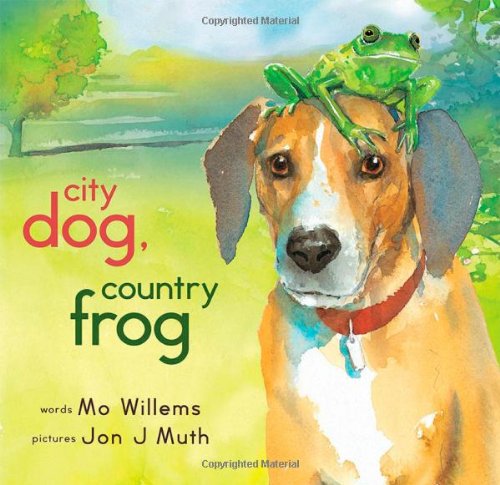 I have another confession to make. I love to read picture books. I will go park in a chair at the library and read them one after another. Some of them have moved me to tears (City Dog, Country Frog, I am looking at you!), and that is why I read in the first place. I want to feel an emotional attachment to the characters breathing within the pages of a book. If I am so engaged in the story that I think about the characters when I’m not reading it – then it’s a winner! I rarely feel that involved in literary fiction, which the exception of The Red Tent and The Kite Runner, and I’m not even certain our YA bashing journalist would approve of those titles. (One was, after all, clearly written with a female audience in mind, and we all know what kind of respect women readers and authors have been getting last week!)
I will be fifty years old in December. I have earned the right to read whatever the hell I want. Without judgment. Without flak. So if you don’t like it, young adult critics, start writing books that are as appealing to today’s readers as the young adult tripe you ridicule. In a day when there are so many other methods of entertainment competing with reading, and as readership continues to decline, stop being jealous of the success of other writers. Labeling their work as beneath the notice of older readers is not only rude, it’s the mark of a snob. A good book, a “classic,” if you will, transcends gender, age, and social station. Get over yourselves.
{RANT OFF}
The post My Reading Rant: I Can’t Read What?? appeared first on Manga Maniac Cafe.
I've been getting a lot of email lately with subject lines that start: NOT A (query) (question) (something else.)
I've tried not to be annoyed by this because really, it's pretty minor, but c'mon guys. Do you really think I need to be told that something isn't a query? That it isn't a deal memo? That's not a notice from Shark Week that I've been selected as guest of honor?
Do you think I can't actually read sentences in English?
Amazingly enough, if you tell me what the email is actually ABOUT, it's more helpful than telling me what it's NOT.
It's not a zebra.
It's not a golden ticket.
It's not helpful.
By: Thomas Scott McKenzie,
on 4/7/2014
Blog:
Slushpile.net
(
Login to Add to MyJacketFlap)
JacketFlap tags:
Rants,
Deals,
Add a tag
Little more than two weeks after a widely circulated article on the fading of a genre, “Killing Conservative Books: The Shocking End of a Publishing Gold Rush that discussed “the gutting of the conservative book market” and that too many books and too many publishers “made the economics of their genre much tougher, with an ever-increasing number of books competing for an audience that hasn’t grown much since the ’90s”, came news that Texas Senator Ted Cruz agreed to a $1.5 million dollar advance from HarperCollins.
[Disclaimer: Different imprints of HarperCollins published both of my books.]
In a Washington Post article, Paul Bedard writes that Cruz’s advance is even more than Sarah Palin’s check after her entrance onto the national stage.
Let’s go back to the BuzzFeed piece, authored by McKay Coppins…
The crux of the piece is that publishers are basically obligated to sign up books by presidential hopefuls, in the event that they are eventually elected to the White House. However, in the chase for those politicians, many publishers sign deals with conservative politicians that don’t pay off in terms of sales. Coppins’ article points out that Jeb Bush’s book has only sold about 4,600 copies and that Rick Santorum’s 2012 book American Patriots only sold about 6,500 copies.
For example, Tim Pawlenty, a short-lived presidential candidate in 2012, received an advance of around $340,000 for his 2010 book Courage to Stand. But the book went on to sell only 11,689 copies, according to Nielsen Bookscan, which tracks most, but not all, bookstore sales. What’s more, Pawlenty’s political action committee bought at least 5,000 of those copies itself in a failed attempt to get it on the New York Times best-seller list, according to one person with knowledge of the strategy.
So what happens when you have a genre in decline? Pay a shit ton of money to someone in that genre.
Now, it should be stated that Cruz is a giant name in the conservative movement and Coppins’ article specifically states that some books do perform well and that it’s the midlist that struggles. Certainly, Cruz isn’t going to be a midlist author.
Nevertheless, this kind of news is what leaves many aspiring authors and publishing industry observers shaking their head, and more than a few critics applauding the so-called “death of publishing.” This isn’t about left or right, liberal or conservative politics. It’s about an industry observation that got a large amount of discussion about the struggles to recoup advances that face a genre and then, two weeks later, a giant advance is paid out in that same genre.
By: Thomas Scott McKenzie,
on 3/12/2014
Blog:
Slushpile.net
(
Login to Add to MyJacketFlap)
JacketFlap tags:
News,
Rants,
Add a tag
We write poor lines because of rushed deadlines, screaming babies in the background, hangovers, and just general human fallibility.
Other times, we write poor lines because we have to, because even though they may sound off or awkward, they are, technically, accurate. Such is the case with this Scientific American article republished on Salon.com.
The article states several times that systems didn’t fail air traffic control and oversight in the case of Malaysia Airlines Flight MH370 because ” the plane’s location was known before it disappeared.” No criticism for the writer because that is undeniably true.
But damn it seems odd to state, “We had it until we didn’t have it and so everything worked fine.”
By:
Donna Earnhardt,
on 9/5/2013
Blog:
WORDS
(
Login to Add to MyJacketFlap)
JacketFlap tags:
kids,
school,
teaching,
rants,
students,
homeschooling,
class,
homeschool,
writing for children,
concord,
concord nc,
homeschool in NC,
homeschool teachers,
public school,
NC,
homeschooling in NC,
NCDNPE,
Add a tag
I have had several conversations lately about the state of homeschooling in our lovely state of NC. And as a homeschooling mom, I am more than glad to discuss this issue with anyone who asks. Here are a few things to help answer any questions in case more folks want to know: 1. I homeschool […]

Finances are rarely as they seem.
The sports media blasts $100 million dollar deal headlines on an almost daily basis. But it’s only been in recent years that they began drawing the distinction between the guaranteed portions versus the purely imaginary Monopoly money the player will never actually receive. While basketball and baseball contracts are locked in, football contracts can be broken at any time by the team.
The entertainment media reports huge recording contracts, without referencing that the deal also covers merchandising and tour support. A band might “receive” a certain amount of cash in their agreement, but that pays for their studio time and tour bus rental, as opposed to pure profit.
Of course, lawyers, agents, assistants, and everyone else takes their cut as well.
As a result, we often assume that people have more money than they do. Just because TMZ and other outlets reported that Farrah Abraham “struck a deal” for almost a million dollars for fucking in a fake amateur sex tape doesn’t mean the Teen Mom star is depositing a check for exactly seven figures any time soon.
All of which is to say, I get it. You might seem like a big time player in a particular industry, but that doesn’t mean you’ve got piles of cash buried in the backyard, ready to be invested at a moment’s notice. Whatever your accomplishments may be, your bank account might not line up accordingly. Once again, I get it. But I’ll be goddamned if I can understand why we should subsidize a self-described successful Hollywood producer’s efforts to publish a book about becoming a successful screenwriter.
GalleyCat reported that Gary W. Goldstein, producer of Pretty Woman, The Mothman Prophecies, and other movies launched a Kickstarter campaign to raise $12,000 to self-publish a book described as a “practical roadmap of every insider strategy I’ve learned on how to make it in Hollywood as a successful screenwriter.”
Let’s highlight the keywords and phrases in that description: “insider” and “make it” and “successful.”
In fact, the word “successful” is used about five times in the Kickstarter profile. Doesn’t this conjure images of someone who can make an investment in their own business and product? Maybe he’s not cruising a Bentley up and down the PCH on the way to his Malibu pad, but at least you’d think someone choosing to self-publish would, ya know, cough up the money to pay for self-publishing. I suppose you could argue that Goldstein’s fundraising effort is, on a small scale, precisely what a producer does: he seeks and puts together money from a variety of sources. Leveraging other people’s cash is old hat to Hollywood folks (and Wall Street) so maybe that’s what’s going on here.
Goldstein’s IMDB profile doesn’t show any projects since 2002 so maybe he’s hit a dry spell. Which doesn’t necessarily negate his knowledge and expertise on the subject. We’ve all gone through fallow periods or maybe changed careers and direction.
But the whole online fundraising thing is simply out of hand. No longer relegated to truly indie projects, charitable efforts, low budget start ups, and outrageous, outlandish flights of fancy, now Kickstarter and Indiegogo are employed to make a success of how-to-be-successful book from a success guru?
 |
| Most images grabbed off the internet are terrible. |
A few days ago, I wrote a draft of this post that was a snarky attack on
a badly thought-out essay by J. Robert Lennon at Salon. It would be nice if sites like Salon would expend more of their energies in bringing attention to some good writing that doesn't get noticed rather than running yet another quick-and-dirty "contrarian" takedown.
After writing the snarky draft, I realized my problem wasn't with Lennon or the essay per se. My problem was more with the people who seemed so desperately to want to like his essay.
Lennon sets himself up against
some comments by Dan Chaon that have been bouncing around the internet for a while (for some unfathomable reason, that website doesn't clearly date its material). These comments by Chaon are intelligent and accurate. He says writers need to read widely and eclectically, and he even suggests some good things to read. Specific, helpful advice.
Lennon decides to contradict Chaon's advice. And that's where he goes off the rails, making vague accusations that something called "literary fiction" is "terrible" and "boring".
Here was my original first paragraph:
J. Robert Lennon proves himself to be the latest person who needs to have Sturgeon's Law tattooed on his arm so he can be reminded of it every day. Yes, Mr. Lennon, most contemporary literary fiction is terrible. Most everything is terrible.
Lennon provides little evidence and little analysis, just yammering for the knee-jerks in the peanut gallery. (For a vastly better discussion of "literary fiction", with evidence and analysis and all that jazz, listen to
this podcast with Nick Mamatas. The set-up of "literary vs. genre fiction" is inane, but Nick actually knows what he's talking about, has read widely, is not a "SCI FI RULZ!" kind of guy, and in any case is mostly discussing one of the strongholds of adorable My Literature Is The One Ring cosplay, the AWP Conference.)
After writing on and on about Lennon's vapid essay, I realized I didn't care about what he had written, nor did I care if he'd made an idiot of himself in public. Go for it. We all do it now and then. God invented the internet so we'd all have an easier way to parade our stupidies for the world to see.
What really annoyed me, I realized, was seeing Lennon's piece linked to approvingly by people on Twitter and Facebook, those machines of social infestation. Clearly, it wasn't Lennon's argument that was appealing to people, because his argument is about as strong as homeopathic water. What appealed to people was, it seems, the impulse to clan identification that Michael Chabon described so well in
his 2004 Locus interview:
It's quite obvious to me that so much of what goes on in the world of science fiction has analogies with a ghetto mentality, with a sense of clannishness and that ambivalence that you have: on the one hand wanting to keep outsiders out and identify all the insiders with a special language and jargon so you can tell at a glance who does and doesn't belong, and on the other hand hating that sense of confinement, wanting to move beyond the walls of the ghetto and find wider acceptance. It's a deep ambivalence. You want both at the same time: you feel confined, and you feel supported and protected.
People who spread around the most bombastic and attention-seeking sentence from Lennon's essay — "Let’s face it: Literary fiction is fucking boring." — likely did so for reasons of clannishness and
ressentiment. In Lennon's construction of the sentence, there's the audience-flattering opening:
Let's face it. Like the guy at the bar who says, "Let's face it, we all know the Yankees suck." (The difference here is that "the Yankees" is an identifiable thing.) Anyone passing this sentence around is excluded from its claims. Are you a self-published writer who identifies with genre fiction of some sort or another? Lennon's sentence, then, was built to make you feel good about yourself. Are you somebody who's been rejected by all the major university-sponsored lit mags? You are loving that sentence, because you know your own writing is just too interesting for the tweed-spattered boringheads who edit those publications. Anybody who nurses a grudge about their writing career, anybody who doesn't feel appreciated, anybody who thinks the institutional They is enforcing boredom so as to keep the individual, interesting You outside the gates raises a fist in solidarity with that sentence. Every unpublished, highly-rejected, destitute writer can love that sentence in just the same way that Stephen King can love that sentence. No matter what, it's not about you. You are not boring.
Except you probably are. To somebody, at least. Maybe to J. Robert Lennon. (Full confession: I thought Lennon's
Castle was sometimes boring. Not as boring as lots of other books, but sometimes, yes, boring. To me.)
The problem is not that most
x is boring. It is. Stories, books, poems, movies, food, appliances, bunny rabbits, sex, drugs, rocknroll. Fill in the
x and the equation will always be true for somebody. (A person once even said to me, "Cocaine is boring." I have no experience with the drug myself, but while I'm sure many things could be said about cocaine, this statement surprised me.)
The problem is that saying, "Most
x is boring" or "Most
x is terrible" lets you off the hook. It's easy. It makes knees jerk and fists rise in the air. It creates a hierarchy in which you stand in the superior position. How's it feel up there at your exalted heights?
While saying, "
X bores me," is an incontrovertible statement of personal experience and taste, making a universal ontological statement ("
X is boring") is indefensible. You can say, "William Gaddis novels and Andrei Tarkovsky movies bore me," but once you say, "Gaddis novels and Tarkovsky movies
are boring," you have entered dangerous territory in which you have set yourself up as superior not only to Gaddis and Tarkovsky, but to anyone interested in their work. You are saying, "If you enjoyed and appreciated
x-that-bored-me, you are wrong."
Are you really that much of an egomaniac that
your lack of engagement with something must become universal?
What Sturgeon's Law really gets at is not that most everything is terrible, but that most of us experience most everything as terrible. A person who likes everything is a person who likes nothing (and other banal and obvious statements). Our experiences in life condition us to appreciate some things and not appreciate others. Somebody who finds everything interesting is somebody who probably has trouble getting out of bed in the morning because the potential for absolute awesomeness is too overwhelming.
Even that, though, is not really what most bothered me about Lennon's essay and people's support for it. We all say stuff is boring all the time, it's a rhetorical claim rather than a statement of fact, whatever dude.
What really, truly, deeply bothered me is that Lennon's claims are so broadly dismissive when in reality there's all sorts of varied work being published that could be tagged "literary fiction".
If Lennon had said, "Most of the anthologies used in Introduction to Literature classes for undergraduates are created with a pretty conventional and quite narrow definition of 'literature'," he'd be on solid ground. If he said, "In my experience, lots of writing workshops define what is 'acceptable' for students to write in narrow, conventional ways," he'd also be on perfectly solid ground, just as he's on relatively solid ground in implying that the
Best American Short Stories volumes are ruled by quite conventional and conservative standards, ones enforced by the publisher and series editor even, it seems, occasionally against the will of individual guest editors (the brand must be protected).
Anyone who uses the term "literary fiction" as anything other than an admittedly unsatisfactory placeholder for an undefinable something-or-other ought to feel some obligation to get specific. Do you mean
Tin House and
Conjunctions and
Ninth Letter and
Denver Quarterly? Do you mean books from
Dalkey Archive and
Dzanc and
Coffee House and
Melville House and
Open Letter and...? Do you mean
Pulitzer winners or
Sukenick Award winners or
Booker winners or
PEN Faulkner winners or
Nobel winners or
Whiting Award winners or...?
What are you talking about when you talk about "literary fiction"?
Are you sure that your view of fiction isn't narrow, provincial, and more based on your own limited assumptions rather than any actual evidence? Are you primarily annoyed that you didn't get a good review in the
New York Times and nobody has nominated you for a major award and your books are taught in college classes and you got dropped by your publisher and Dan Brown sells more books than you? Are you still angry about your 9th grade English teacher making you read
The Scarlet Letter?
Instead of blathering on about how terrible literary fiction is, instead of sharing links to vapid essays about the evil conspiracy of boredom committed against you, instead of ra-ra-ing for your clan and salving the wounds of your ego with the balm of drivel — why don't you try 1.) reading more broadly, and 2.) pointing to interesting work that isn't getting noticed?
Most literary fiction is terrible.
Most fiction is terrible. Most nonfiction is terrible. Most blog posts are terrible.
Most everything is terrible.
Big deal. Get over it. Go read something that interests you, and if nothing interests you, then the problem is not with other people and other writers, but with you.
View Next 25 Posts





.jpg?picon=160)

Donna,
Such passion! Such drive! Such lucky children! You’re definitely on a mission and you should feel very good about it. Thanks for sharing your take on homeschooling and general information about its accountability piece.
I say “ditto” to everything Linda says. You are equipping those kids to be the people God wants them to be.
Jean
Thanks for sharing! We are now in our 18th year of homeschooling in NC and still loving it! While there are many misconceptions about homeschooling (especially the old socialization thing), I think that today there are fewer misconceptions by the general public than there used to be. Homeschooling is going mainstream! When we first started and would go out to the park or store during the day, we’d often be questioned as to why the kids weren’t in school. I’d say it’s been about 10 years now since we’ve had anyone question us while we were out during a school day. I remember our relatives expressing concern early on and we tried to honestly and sincerely answer their questions. They had our kids’ best interests at heart and so did we; they deserved thoughtful answers. I always thought to myself, “The proof is in the pudding.” Once our two oldest graduated from college (one with a 4.0, triple majoring in engineering) they didn’t ask anymore questions! BUT, the high academic standards were not the main reason we chose to home school. We chose homeschooling because we thought it was the best way we knew to teach them what God tells us to teach them.
I really appreciate you — you’re such an encourager!
thank you for sharing, too! The proof is in the pudding… I like that!
Thank you, my friend. I am trusting in His provision and grace!