JacketFlap connects you to the work of more than 200,000 authors, illustrators, publishers and other creators of books for Children and Young Adults. The site is updated daily with information about every book, author, illustrator, and publisher in the children's / young adult book industry. Members include published authors and illustrators, librarians, agents, editors, publicists, booksellers, publishers and fans. Join now (it's free).
Login or Register for free to create your own customized page of blog posts from your favorite blogs. You can also add blogs by clicking the "Add to MyJacketFlap" links next to the blog name in each post.
Blog Posts by Tag
In the past 7 days
Blog Posts by Date
Click days in this calendar to see posts by day or month
Viewing: Blog Posts Tagged with: First Drafts, Most Recent at Top [Help]
Results 1 - 25 of 71
How to use this Page
You are viewing the most recent posts tagged with the words: First Drafts in the JacketFlap blog reader. What is a tag? Think of a tag as a keyword or category label. Tags can both help you find posts on JacketFlap.com as well as provide an easy way for you to "remember" and classify posts for later recall. Try adding a tag yourself by clicking "Add a tag" below a post's header. Scroll down through the list of Recent Posts in the left column and click on a post title that sounds interesting. You can view all posts from a specific blog by clicking the Blog name in the right column, or you can click a 'More Posts from this Blog' link in any individual post.
Do you write your novels? Or do you sculpt it out of words?
I’ve been working with Scrivener for about two years now, and on my current WIP, it’s finally starting to feel normal. In fact, it’s changed the way I work.
My working method in the before Scrivener days was a mixture of outlining and pantster. I outlined the story, wrote about half of it, stopped to re-outline and then wrote some more. Sometimes, I had to re-outline several times before I made it through a full draft.
After Scrivener
For a while, the same process carried on. But my current WIP has been different.
Scrivener is a complicated, multi-faceted program. It’s such a different program from writing in a word processor like MSWord, and so complex, that when I bought the program, I immediately took an online class with Gwen Hernandez (NOT an affiliate link, just a satisfied customer!). She takes you through the many elements that are possible when you use Scrivener.
One of the best things that Gwen said to me was to keep an open mind about how to use the program. She said don’t decide how to use some element of Scrivener. Instead, just work. As you’re working, when you need something – THEN decide how to accomplish what you want, using one of the available options.
The program has so many possibilities, for example, on how to mark up a file so you can find it later: file name, synopsis or summary of the contents, color-coding, notes and so on. You can look at it as if the chapter were file cards, or look at each discrete file, or look at them as a continuous text. What makes sense to one person would confuse another.
It reminds me of my daughter in Algebra class in high school. Her teacher required the dreaded notebook check. My daughter was required to keep every piece of paper given as notes or homework and organize them interleaved in a daily fashion. However, to her, it made more sense to keep the notes in one section by date, and the homework in another section by date. When she turned in her notebook–even though she had every single piece of paper required and organized in a logical way–she was given a zero. She refused the opportunity to reorganize it because, to her, it didn’t make sense.
That’s the beauty of Scrivener. You can organize it YOUR WAY!
How Scrivener is Changing My Writing Process
The biggest change is working in the Scrivener Binder. This time, it feels like I’m sculpting a story. Using the binder, I created 4 acts and set up files with names of what I expected to happen. Using either the Hero’s Journey or Blake Snyder’s Save the Cat outline method–sometimes a combination of both–I knew that at a certain point in the story, the main character had to face the villain. In another place, he could relax a bit and enjoy the new world into which he’d traveled. And so on.
That means the binder was a sort of loose outline for what should happen in a well-plotted story.
For a couple chapters (or maybe they’ll be scenes and be combined into a chapter–everything is loose right now), I wrote. But then, I started working all over the binder. I’d write a scrap of dialogue in one place, then jump down to another section and write a reaction to that dialogue. Exciting descriptions were added in appropriate places, then revised to fit the action that was added later.
Without Scrivener’s Binder, I’d be totally lost! With it, I’m able to walk around the story and look at its shape. It feels rather like a sculptor who takes a wire frame and adds clay to rough out a figure. Then, the sculptor refines a bit on the hands, skips to shape of the head, and approximates the way the clothing drapes the body. All the while, I”m walking all around the story, looking at it from different angles and seeing where things connect. Taking off bits here and adding bits there.
For example, an important plot point at one spot was that a supporting character was sick because of anemia. There was an Ah-Ha! moment when I realized that the anemia would get worse. In fact, it could get so bad that she’d need a blood transfusion. Who would be available for that? Since the main character is an alien, he couldn’t donate blood! Her estranged mother, of course, would be the poignant choice. But it had to all happen in the midst of a hand-to-hand combat. Can you see the scene? The doctor–under less than ideal conditions–is trying to put a needle in the mother’s arm to collect blood and as soon as there’s a full bag, well–you know that in fiction, everything has to get WORSE for the main character, right–so the fight gets too close and the bag of blood is split open and they have to start over again. Because the girl is so sick that she needs the blood NOW, or else.
That connection was amazing. The choice of anemia as the illness was a spur of the moment choice, in the midst of trying out some ideas about illnesses. Then, when the anemia needed to worsen (or she needed a different symptom of the illness), it made sense to take it to the extreme and to plop it down in the midst of an action scene to make it more urgent. The estranged mother made it more poignant.
Ah, but where did the estranged mother come from. In other words, I had to track her throughline in the story and account for her movements in every scene. Or else her presence in this crucial scene would feel wrong. How could she contribute to the ongoing scenes I had planned. Obviously, she’s a supporting character and not the main character. When and how would her presence make the story stronger? The question sent me skipping around the scenes in the Scrivener binder again.
The point is that this process is leading me to see things afresh and find unexpected options, which make perfect sense in the context of the story. Had I been writing chronologically, the connection may or may not have happened. I think not.
This method of working is fascinating.
It’s been hard to give myself permission to skip around like this. I’m really enjoying writing this story and hopefully, one day, you’ll enjoy reading it.
The death of a villain can inspire a wide range of emotions, from happiness and gratitude, to sorrow and remorse. I love me a good villain, and some of my favourite story moments are the amazing death scenes some villains are granted. That is, of course, assuming the death is indeed amazing and not an affront to their character arc. I am so in love with the closure of a good villain death that a bad one can ruin the entire story for me.
So without further ado, here are some pet peeves of mine: cheap villain death tropes I’d love to see gone forever, and how they can maybe be flipped around.
Accidental Death
Oftentimes a cheap villain death is the result of a deus ex machina: the hero doesn’t actually have the means to kill the villain because they’re too damn awesome, so the villain accidentally dies when they slip and fall off a cliff during the final fight. Unless the hero has actual control over how the villain dies, such as a clever plan to lure them to the edge, this is the cheapest of cheap deaths.
Accidental death can only work if the villain is immediately replaced by an even greater threat to the hero that has somehow been vaguely hinted at or foreshadowed beforehand so it doesn’t come out of nowhere. Perhaps they’re fighting on an active volcano that suddenly explodes and kills the villain. The foreshadowing is in the fact that it’s active, and the bigger threat is the indiscriminate firebombing and hot ash the hero now has to escape—bigger, because volcanoes don’t think, so the hero can’t guess what its next move might be. This will still feel a little cheap if it’s not well done, however, because as it’s your story, you can choose when the volcano blows, and choosing to kill an antagonist with a natural disaster over which the hero has no control is underwhelming. The other problem in this kind of scenario is that as soon as the hero is out of the volcano’s range, safety is within reach even if the volcano hasn’t been destroyed, compared to the hero still being in constant potential danger if the villain were still alive.
The only good kind of accidental death is when the new threat is worse than the old, it has an active agenda, and it’s not directly connected to the villain. In fact, in these situations, this big annoyance of mine can be totally turned around into something brilliant. If the new threat is something which even the old villain had no concept of, you’re not only effectively upping the ante by making the old villain look like a schoolyard bully, you’re also vastly expanding your universe. If you set up your story well, dropping hints here and there of all the possible people (or monsters) in such a way that a new threat is plausible, you can follow up the old villain with a new, terrifying and vast enemy that will make your hero feel incredibly small and will eventually make the victory that much sweeter. But in this case, the old villain isn’t the true villain of the story; they’re more of a stepping stone. And since stepping stones are not an ending but part of the journey, the old villain’s accidental death won’t feel cheap: it’ll lead to something bigger.
Convenient Stupidity
Death is also cheap when the villain’s intelligence is insulted. More than any, I hate this kind of death the most. If the villain is really smart, the hero’s going to have a hell of a time luring them to a cliff. Unless they have no choice, the odds that smart characters would willingly put themselves in dangerous positions are very low. There is nothing more frustrating than watching an otherwise remarkable and cerebral villain suddenly become a half-wit so that the hero can defeat them. Not to mention it makes the hero’s victory completely hollow. The most satisfying time to defeat an enemy is when their faculties are at full power, anyway. Why blunt their intellect if you’ve worked so hard to write them as smart, effectively making the reader anticipate an ending where they’re finally outsmarted?
The only time this convenient stupidity can be forgiven is in comedy. This kind of thing can make for a good punchline. However, it also relies on your story being a parody. Otherwise, it’s a glaring continuity error and an unfair way of treating both your villain and hero, because following the kill, the hero will develop a reputation of only being able to defeat enemies when they mysteriously become very weak.
Hubris
My final pet peeve is a classic villain trait: arrogance. It’s a frustrating reason for a villain’s death, mostly because it isn’t very original, but also because I have a personal bias toward villains that don’t think of themselves as unbeatable, since people act in more interesting ways if they think they’re being threatened. If we revisit the accidental death scenario, and consider again why it’s better for the new, bigger threat to have little to no connection to the old villain, another reason would be that if the new threat were the villain’s fault, their character becomes an archetype for hubris: “His ego made him blind,” “He thought he could control the strain.” This isn’t a terrible thing, but if manmade threats are the worst possible ones in your world, you could argue that you’re restricting yourself.
They also make for really annoying characters. The ones that yell “I’m invincible!” as they’re dying are pathetic, and I always thought they cast a shadow over the hero’s victory. Not to mention, defeating a villain whose fatal flaw is hubris tends to involve a formulaic take-down by people who ultimately come across as preachy and say things like “You can’t play God,” or “He flew too close to the sun.”
However, hubris can be a genuinely interesting character trait. And there are times when I really enjoy it. But I’ve noticed that every single one of those times, the hubris was something I discovered afterwards upon reflection; something that wasn’t told to me, but that I began to understand as I considered the story from start to finish. In other words, if you’re going to give your villain a god complex, no need to shout it from the hills. Subtlety is a pretty nice touch.
So there they are. Three massive and common villain death pet peeves of my very own. Obviously, they are tailored to my personal tastes. I’d love to hear yours.
I’ve been fiddling with the opening of the second book of a trilogy, Blue Planets, for several weeks, trying to plot, trying to think of new and exciting ways to tell the story. I KNOW the story. It’s bringing it down to specifics that’s hard.
Part of my problem is that Book 1 in this trilogy opens with a scene that echoes the movie “Jaws.” That book and movie has a powerful, action packed opening image and scene that sets up the stakes clearly. My Book 1 opening echoes the action, and twists the meaning into a new, surprising direction. I like the opening I create there.
But it also set up a problem: How can I echo the “Jaws” opening for Book 2?
I’ve struggled for a couple weeks with this question and finally found the answer.
Don’t. Find another image that works.
Using a Mentor Text or Story
Perhaps, though, the process I used in the opening for Book 1 can be repeated for Book 2. I used “Jaws” as a mentor text, echoing its action and setting the stakes very high. What if I found a different mentor text/movie for the next book?
At Blake Snyder’s Save the Cat site, they’ve done a series of analyses of movie plots that are called Beat Sheets under his system. I decided to go through them and write a short summary of how I could or couldn’t echo the different movies for this opening. I knew that I had to approach it as a writing exercise and just go overboard and let the ideas flow.
In an hour, I wrote the summaries for the following twenty possible opening scenes. After, I went back and wrote a sentence of how the closing scene might echo back to the opening scene. That closing scene ideas — only written after all the opening scene summaries were completed — helped me evaluate how well this opening fit my story. Note also that I drew a blank on about three of the movie openings and couldn’t figure out how it would fit my story.
The Grunt Work: Writing 20 Possible Summaries of Opening Scene
Note: You won’t understand what some of this means, since I’m not explaining all the background, setting, characters, etc. That’s OK. The point is to see how I echoed the mentor text/story in some way. The link for each movie title goes to the Save the Cat plot analysis for that movie, where you can read the opening image synopsis and compare it to mine. You may think some of my opening as strangely at odds with the mentor text. That’s fine. I consider the mentor text/story as merely a starting point and go where the story takes me.
A la Ultron.
The opening image is of a huge conch shell that is blown and echoes throughout the ocean. Jake is swimming and hears it—has to stop up his ears it’s so loud. But no human hears it—at a weird frequency. It’s an emergency call to the Mer, but Jake doesn’t know that yet. The umjaadi plague is spreading and they still don’t know what it is. Final Echo: A hospital ward full of sick patients and the doctor telling someone that unless someone finds a cure, they’ll all die. The Mer will be gone.
A la The Conversation .
The opening image is Edinburgh, Scotland the castle with a full moon overhead. Home of Harry Potter, the setting is almost mythical. But the reality of walking the seven hills, and climbing up the highest pulls Jake back to Earth (so to speak). From the top, he sees the Frith of Forth and the bridge—with the aquarium under it, where they’ll go tomorrow. Final echo: back on the hill, Jake now understands what is beneath the waters he sees.
A la Whiplash.
Jake is swimming laps in a pool—with no one around—when Cy Blevins walks in. You’re not related to the Commander, you’re the Ambassador’s son—we know all about you. OK. So, what? You can’t live here.
Jake swims, but wants to jump out and beat up Cy. Final echo: No. Doesn’t work.
A la Birdman.
Jake is swimming and keeps asking himself, “How did we wind up here? Am I Earthling or Risonian?” He turns sharks into tour guides, he is thrilled with electric shock from eels, he talks to octopuses.
Final echo: I am Earthling.
A la Tommy Boy.
Jake is a toddler swimming on Rison and when a camouflaged creature (octopus-like) unfurls, he is startled and starts to cry. Turns to Swann for comfort, but Swann turns him around and says, SEE. Watch. Learn to see. Final echo: Swimming and points out a camouflaged creature to Swann.
A la Ratatouille.
B/w documentary about octopuses, compared with what we know today. They were once feared as monsters, but we now know they are very intelligent (playing with toys to get crabs). We see what we expect to see, and that changes slowly. (Or: what’s alien comes from what’s in OUR heads, not what we see in front of us.) Final echo: B/W Risonain documentary on first contact Earth—from the Risonian POV. We now know Earthlings are much more complicated and intelligent than we thought at first.
A la Babadook.
Go for a memory and emotion. Jake relives a moment with Em where they kiss—or almost kiss. But then shakes himself. No. She didn’t want to be friends. Final echo: A final kiss.
A la Star Trek (2009).
The camera moves along an underwater ship and reveals it to be a U-Boat. Follow with the scene of the DCS dive. Final echo: Maybe Mom is sick from something on Earth?
A la American Sniper.
(Scene with dramatic first kill – will he shoot a kid?)
Scene with dramatic first ______?
Clearly, this one didn’t work.
A a Lego Movie.
From a boat, Dr. Max Bari lowers a figure on a stretcher into the ocean, then dives in after her—without scuba gear. He tugs the stretcher deeper and deeper until there are lights in the distance. . . Final echo: Jake lifts off in a rocket ship and watches Earth get smaller and smaller in the distance, and turns his face toward Rison and hopes. . .
A la Big Hero 6.
Setting: Sanfransokyo
My Setting: Aberforth Hills
Final echo: Earth leaders touring Aberforth Hills
A la Liar Liar.
In a classroom, they are going around telling what their fathers do. A young Jake says his father is a test tube. No, it’s the Leader of our People. No, it’s really a test tube. Final echo: Jake with Dad.
A la Fury.
(Ambush of triumphant soldier by vanquished.) No ideas. Didn’t work for me.
A la Gone Girl.
(Sharp contrast of emotions: head on shoulder of husband contrasted with his thoughts of killing her. Result: Worry for her safety)
Contrasting emotions? Invade Earth and just take it! Take the long, slow route to a long-term healthy relationship.
Mom is giving a speech to the world leaders about Rison’s needs. Jake is drawing pictures of skulls and wishing he could blast all of Earth so Risonians could take over. How can they ever live together on the same planet and not kill each other? Final echo: Fight that ends in a truce.
A la Guardians of the Galaxy.
Sitting alone, Jake is listening to a cd mix that Em gave him and wishing they hadn’t quarreled. He gets a call from Marisa, who says she wants to meet with him. I hear you’re going to Edinburgh. Mom and Dad aren’t saying much—but I think Em has been kidnapped and they know who did it, but they won’t go after her. I think she’s somewhere near Edinburgh. Final echo: Jake gives Em a cd of Risonian operas and says, I’ll be back with the cure.
A la How to Train Your Dragon 2.
Jake is spinning a globe of the world and narrating for his class (OR Swann) back home-videoconference call. He tells of how Earthlings/US once put it’s citizens in jail because they “might” have been traitors. How they questioned the loyalty of citizen merely because of their heritage. How unfair it is and how he’s worried that the Risonians will be even more feared and how suspicion will abound. Final echo: Suspicious news reports: There are fears that Jake Quad-di is returning home with intelligence that will allow the Risonians to attack. His mother, Ambassador Dayexi Quad-di assures us that he only returns to bring back a cure for the Phoke. But why would he risk his life for them?
A la Twilight Zone.
The camera pans across oceans, racing across the seas, until it zooms in on a conference room where Mom is talking to world leaders, a clear image of politics/diplomacy. Final echo: Not emotional enough to pursue.
A la Muppets Most Wanted.
Start with pan down from The End—the last movie—and sing about how the studio ordered a sequel. Final echo: No. Don’t like this metadata stuff.
A la Her.
Jake is writing a letter to the editor, or editorial or something—and we pull back to see that he’s writing it for Mom. He’s her assistant now, and she trusts his knowledge of English and culture. (Not emotional enough. HER is a love story, so the emotions there are about truly falling in love. It’s not going to work in this story.)
A la Inside Llewyn Davis.
The scene opens on a rowdy swimming pool with kids taking bets. Jake lines up with another guy and when the whistle blows, the other boy dives in and races away. When that guy touches the opposite wall, Jake dives in, velcroes his legs and swims. He almost beats the other guy back, but is won out by a touch.
I win! Says the other swimmer.
Jake shakes his head. He swam almost twice as fast—and the Earthling says he won? That’s crazy.
We’re never letting you compete in the Olympics! Says one kid.
Final echo: Argument: You think I can do miracles. Sure, I can outswim any human boy, but on Rison, I’m nothing. I’m just a normal kid. How can I find the cure to the umjaadi in time? I can’t. But I have to try.
Notice that I didn’t hold myself to an impossible standard. If the movie’s opening didn’t spark something almost immediately, I moved on. Further, I didn’t stop at just one try. I persevered, knowing that I needed to fully explore my options.
Evaluate the Possible Openings
After writing all of these, I had to evaluate which one fit my story best. First, I went back and added the Final Echo to each, so I’d know if it fit the theme/plot/characters well enough to carry through the whole story. In other words, I double checked my ideas about the story, my intentions.
Then I asked these questions of each opening:
Which sets the tone I want?
Which sets the emotional problems?
Which sets the themes?
Which one sets up the stakes as very high?
Results of Opening Images Writing Exercise
I found several good images that took me in new and different directions than I’d previously been trying—and that’s exciting.
Warning conch shell – warning comes true, all Mer sick.
Jake as toddler scared by octopus-like creature un-camouflaging – Watches old Risonian documentary and realizes that Earthlings are complicated.
Dr. Max lowers a patient into the water and goes into a foreign world – Jake lifts off in rocket for a foreign world.
Listens to Em’s cd – gives her a cd when he leaves.
Jake narrates the globe – a news show narrates Jake’s trip to Rison.
Jake outswims Earthlings – but realizes he’s just a normal kid on Rison.
Which one did I choose? Actually, several. Because I have a main plot and several subplots, I realized that several of these can work in sequence to open the different subplots.
Sometimes, I approach a story methodically, just doing a writing exercise. This time, I was stuck, and the exercise unstuck me. That was a valuable hour of writing!
Last Friday, I wrote 4000 new words on my WIP novel. That’s a great day for me. But it was only possible because Thursday was a planning day.
When I work with students and teachers, I encourage lots of prewriting. My book, Writing for the Common Core, is essentially a book of prewriting activities. Here’s the thing: as professional writers, we know that our best writing comes with revision. That’s what students need to do, also: revise. However, that often devolves into merely copying a piece and cleaning up handwriting, especially in the lower grades. True revision, a re-envisioning of how to word something or the content to include/exclude, is hard to achieve in a 50-minute class.
Instead, I ask teachers to provide multiple prewriting activities. By giving students a rich and varied prewriting experience, they come to the first draft more likely to produce something worthwhile.
That’s what I did last Thursday, lots of prewriting.
Setting. One important thing for me was to locate my story on the slopes of Mt. Rainier. I used Google Earth to track the roads where my characters would be traveling. Using the program’s tools, I measured distances as the crow flies and distances along roads, so I knew how long each drive (and potentially chase scene) would take. I switched to the aerial view to look at the landscape–mostly wooded with some open areas.
Sensory Details. Once I knew where this section of the story would happen, I concentrated on the sensory details. What would they see, hear, touch, taste and feel? What would the day’s weather be like? Rainy, snowy, sunny, windy? Along with that, I thought about the mood of the events. Would the characters be frantic, excited, hopeful, angry, or bored?
Scenes. I also took time to sketch out the structure of a couple scenes. Scenes need a beginning, middle, end; add in conflict and a pivot or turning point; stir with some great emotional development. By planning ahead, I knew the general outline of what would happen.
Flexibility. With all the planning, though, I approached the writing with flexibility and let the moment carry the story forward. I “mostly” knew what I would write, but it always surprises me how much it changes and develops as I write. It’s never exactly what I planned; it’s usually better.
I’m not really an outliner; but I don’t write by the seat of my pants either. Instead, I need this half-way place, where I do rich prewriting activities and halfway plan, and then see where it all takes me. HOW you say something is everything. It’s not just what the story is or how well you plot. For me, the important thing is how you say it. What word choices do you make and why? What sentence structures and why? What pacing and why? The true writing happens when I write. But I love the prewriting because it enables me to get 4000 words done in a single day. Well, really, that was two days work: one to prewrite and one to write. Either way you count it, that was a couple great chapters to put behind me.
Fourteen months ago I started an ambitious writing project — ambitious because it would be set in a foreign country; one where I have not lived or even visited: The Dominican Republic.
It was supposed to be about an aspiring baseball player growing up on the streets of San Pedro de Macorís, “The Cradle of Shortstops.” It is still about him, but it is also about a sensitive American girl named Maya who takes an interest in the same player, years later when he is in the minor leagues and struggling. It is about a baseball blogger named Grace, and a Haitian girl named Bijou, and it’s about bees.
I’ve learned a lot from the writing. I’ve learned a bit of Spanish and a heck of a lot about the D.R. I’ve come to think of it with the same fondness and familiarity as places I’ve lived.
It’s really different from my other books. I was inspired by the likes of Beverly Cleary and Gary Paulsen to write with more emotional frankness, abandoning the masters-program-learned habit of using subtle hints at hidden feelings. I wrote in the third person instead of the first person, and there are two point-of-view characters instead of one. I let the characters and their decisions drive all the plot turns, and it makes for a less eventful book than the last few, with their marauding robots and invasive fungi, but there are still some twists and turns and reveals. And, for what it’s worth, there is not a single white boy in the story.
I don’t know if the rest of the world will love this book, but it’s I’m glad I wrote it and I think it’s the best thing I’ve ever done and in any case I’m stuck with it now. I finished it last night.
Writing from multiple perspectives is often a very rewarding way to convey the complexity of a plot. In stories that involve a lot of world-building, like high fantasy, it’s a good way of expanding the world you’re creating. You can better develop concepts like the reality of social status if your story that includes slaves isn’t entirely written from the viewpoint of a princess. You can also mess with readers. You can have a blacksmith plan to manipulate a swordsman, but when the actual manipulation is happening, it’s told from the swordsman’s oblivious perspective. There are few better ways to create those exciting situations where the reader knows what will happen but the character does not. There are even fewer better ways to orchestrate an event in such a manner that even the reader is unsure if what they’re reading is true, which of course keeps them reading.
Platitudes aside, there’s a massive, massive trap that everybody can fall into (and I mostcertainly have in the past) concerning multiple perspectives: too many viewpoints.
Consider this. You’ve come up with a world, you have your map, you mostly know what you want to happen, and you start writing. The general gist is a classic “Let’s overthrow the Villain,” where a whole cast of characters is developed through the archetypes of Hero’s support, Villain’s support, collateral damage, etc.
First we meet the Hero. This is where you describe the Eastern Flatlands the Hero’s living in. Then we meet the Thief, who’s out picking pockets in the Central Capital. Then comes the Villain, scheming in a remote castle on the Northern Coast, then the Mercenary trudging through the Western Alps, the Hunter in the Ancient Forest in the south, the Peasant in the Bread Bowl that’s consuming said forest…
Well that’s a wonderful lesson in geography, but I can almost guarantee you that people reading won’t give a damn about a single person from whose perspective the story has been told so far. That means there will be no investment, and when bad things start happening, they won’t care.
Why? Because the story’s being spread too thin.
When people invest in something, they expect returns. The first thing introduced is the Hero. The Hero will obviously be important. Afterwards, we have the Thief, Villain, Mercenary, Hunter, and Peasant. That’s five people established in their own separate geographical locations. If each person gets around 1500 words, then that’s at least seven thousand words about random people we don’t care about in places we can’t relate to, because the places are all new and the people are not the Hero. Before you know it, nearly 10k of your story has already gone by and you still haven’t even gotten around to the point where the Hero’s mentor dies. Not that we’ll care, because the last time we met the hero was thirty pages ago. By now, we’re already in love with the idea of a romantically attractive killer-for-hire in the mountains and wondering why he was replaced so quickly by boring hunters and peasants trying to feed their families.
So what happened here? It could just be that kind of story: you have six or seven big players around the edges of the world symbolically traveling towards the centre where they will find each other, interact, and blow our minds with how masterfully their stories end up weaving together. After all, in the grand scheme of things, 10k isn’t that many words, and if you develop the other voices well enough and make us invest in all of them, we probably won’t care as long as it’s good.
Ooooooor you spent so much time coming up with your world that your plot fell by the wayside. Moving on to a different character is less of a conscious decision and more of a way to procrastinate. Less, “This is excellent! I know exactly what will happen when I come back to the Hero!” and more “Mmmmmlet’s see…what does the Hero want now…I wonder what the Thief is doing…”
Because you know your world better than the people in it, you’re taking more time exploring it than your characters, and you end up writing about what it’s like to live in the Flatlands, on the Coast, or near the Alps, instead of focusing on your Kill the Villain plot. There isn’t anything necessarily wrong with this, just that it results in you writing an exploration of a land instead of writing what you originally wanted: a gripping tale of adventure and intrigue.
The point isn’t to explore the world. …Well, it is. But the bigger point is to explore the plot, and then what you see of the world through that is the icing on the cake. Focus too much on your world and you risk making your plot stagnate.
Admittedly, what I’m saying heavily relies on all of those perspectives being disjointed travel diary entries by characters of various vocations. It’s difficult to explain this without actually showing you a piece of fiction, because the skeleton of the work still has potential. But in the event that the cause of all these perspectives is, in fact, the helpless floundering of a writer with a world too large for the plot, there are a few things you can do about it.
First, admit it. That’s always the toughest, because by this point, you probably like all the character’s you’ve come up with along the way.
Second, kill off those characters. Or at least tuck them away for now. Keep them alive in your notes, but cut them down for the moment.
Third, and most important. Choose one character that will be the theme of your story.
Say the Hero is your theme. Spend time establishing that character so that we have some understanding of their life and motivations. Give them dreams and goals, and then gradually, gradually, LIKE REALLY GRADUALLY, start introducing more and more characters. But only if their story can somehow relate back to the story of the theme character. For example, the Hero needs to find X, and the Mercenary needs to find X. However, the first hint we hear that the Hero needs to find X isn’t until 10k into the story, and then we don’t find out what that X is until 50k in. So when would you introduce the Mercenary? After 10k, when the Hero has discovered that X must be found.
The Mercenary, who was once just a random hot dude wandering the Alps, is suddenly the Hero’s direct competition for X. That’s what makes us care about him. Now, slotting him in from time to time to break up the voice of the Hero will not only be an effective way to develop the western part of your land, but also a way to tease the reader with what the hell X could be and how it relates to the Hero.
As your plot develops, do the same with the other perspectives. If the Hero’s reading a rare book 4k into the story, and the book is one the Thief, all the way in the Capital, desperately needs, there’s your in for introducing the Thief. Then 35k later when the Hero’s finally visiting the Capital with the book in hand, let the Thief be a Thief and have them make contact. This will also give you the fascinating opportunity to recreate the city from the eyes of the country bumpkin Hero after dozens of scenes of the city through the eyes of the savvy Thief.
The idea is that even though these characters are so far away from each other, even though they have no clue who the other is, they’re all connected to the theme character through their desires and ambitions. They all relate back to something about the Hero whose influence, like a catchy hook of a good piece of music, can be found even in the parts of the story focused on other characters.
Another thing this will do (just by virtue of it being done) is drastically improve the flow of your story.
Alternatively, if you don’t approve of the idea of a theme character, you scrap everything I’ve said above and do this instead: make it so that the multiple perspectives are from characters who know each other. This usually depends on them being in the same geographical location, but if you don’t want a theme character and you have the luxury of the characters being in the same place, here is a different way to write your multiple perspectives.
Pick up all your characters: Hero, Thief, Villain, Mercenary, Hunter, Peasant. Drop them all into one place. Create relationships between them: the Hero and the Thief are friends, the Thief buys meat from the Hunter, the Hunter also sells meat to the Mercenary, who works for the Villain, who owns the land the Peasant tills. This way, they all indirectly know each other. Which means that the first scene with the Hero can maybe include the Thief. The next scene with the Thief can include the Hunter, etc. If the Hero’s perspective includes a character who later contributes their own perspective, at best it’ll be freaking awesome to know what that character was thinking while you were in the mind of the Hero, and at worst it’ll be an interesting addition that adds depth to the complexity of your story. Also, in this way, you don’t have to worry about how people will remember who’s who since they’re ever-present within the perspectives of the others, not only within their own.
But, like I said, it depends on their geographical location. It also depends on if they know each other at all. It depends on the kind of story you want to write, and if you’re at all willing to bend to the idea of a theme character.
Moreover, it depends, as always, solely and entirely on your plot.
—
Biljana Likic is working on her fantasy WIPs and has nearly completed her MA in Medieval Studies, from which she can’t wait to graduate so she’ll finally have all the time in the world to write. You can follow her on Twitter.
One of the problems with regular blogging is that you sometimes feel like every single post should be breathtaking, new, insightful, and most of all exciting. But, truly, none of us has anything new or exciting to say. Maybe different ways to say the same thing. Or new-to-us insights into the same old material. Disclaimer: this is one of those mundane posts that may not have anything new to say, but perhaps it at least offers a new twist on the same old stuff.
Random Thought #1: Strategies for first draft writing come in all different sizes. Some like outlines, some prefer complete plot diagrams, some are pantsers (writing by the seat of your pants). I'm usually a pantser. I frequently know where I'm starting and where I'd like to end up, and maybe a few scenes in the middle, but beyond that, my first drafts are where I discover how I'm going to get from start to finish. I have a lot of fun with rough drafts, even though it's agonizing to create something out of nothing. Here's one thing I've discovered that helps me keep the momentum going--I stop writing before the scene or chapter is over. I send the character into the midst of the problem of the moment, build the tension, and then leave the character there while I go make dinner or whatever. A lot of my writing takes place in the synapses of my brain while I'm doing other stuff, so I let the character be in trouble for a day or two or three and when I come back to the writing, often the character has figured out a great maneuver or solution. I can write that scene, which moves me into the next one, and then I leave the character hanging off the edge of the cliff for a while again.
Random Thought #2: Things not to say to writers. Most of you reading this are writers, so if you'd like to cut and paste this section into an email to all your family and friends, you have my blessing.
"That's cute." No, cute isn't what I was going for. I don't do cute. So "cute" to me just means you're not getting what I'm writing. Or else you're illiterate and have no idea what you read. Or maybe you didn't really read it at all. Typically for me, the people who describe what I've written as cute are, in this order: 1) my mother, and 2) any of my mother's friends. So I don't show them my writing anymore. It is now my policy that anyone who calls my writing "cute" will never again have the privilege of reading it.
"How's your great American novel coming?" I hate this for several reasons. First, it implies that I am ignorant of the publishing industry and I think my novel is the ONE and ONLY important piece of literature of my age. Second, it assumes that I have only one novel in me, ignoring the many others I have already written. Also, it suggests that I'm never really going to finish this thing (despite the fact that I have already completed others), because I'm not really working at it, nor do I really have any serious intent of writing professionally.
"I like it." Okay, I know, we all like to hear this--once the thing is published and public. But until then, if I'm sharing my writing with you, it's because I want your feedback, your critique. When you have nothing useful to say, I know you aren't a helpful critiquer, which means, again, that I probably won't be sharing with you anymore. I need critique, by golly, not admiration. I'll call you when the book is for sale, since I know you'll "like it."
Random Thought #3: Why do others want characters to act consistently? People aren't consistent, are we? Nobody I know is consistent. Sure, someone might highly value honesty, say, but they sometimes fudge the truth or tell a "white lie," rationalizing it by saying it spares the feelings of others. I know some people who are definitely one persona when out in public and quite another when they're at home. I think the secret of writing characters who aren't consistent is to make sure the inconsistency doesn't appear just at the moment of highest tension or just jump up when it suits the situation. You have to build the character's inconsistency into the persona and voice of that character from the beginning of the book, so that when the moment comes for that inconsistency to rear its ugly head, it is not a surprise to the reader. Plus, most of us here are children's writers, and kids are constantly changing--sometimes for the better, but not always. So the characters in kid lit should be, I think, inconsistent too. It's a way for them to learn about themselves, see ways that the characters grow, and contemplate their own path.
There you have it--all the wisdom floating around in my brain today. Well, I do have lots of other wisdom about all kinds of other things, but I don't think you want to here that right now.
by Neysa CM Jensen
up in Boise, Idaho
0 Comments on Random, Possibly Helpful, Thoughts as of 12/22/2014 10:56:00 PM
Two years ago, I wanted to write a story set in Campinas, Sao Paolo, Brazil.
I had never been there.
I only knew the name of two people who lived there.
Yet, I could convincingly write about the setting. Here’s the secret.
Google Earth
The free app, Google Earth, is immensely helpful to writers. I use the free, desktop version.
View satellite imagery, maps, terrain, 3D buildings, galaxies far in space, and the deepest depths of the ocean.
In 2011, Google Earth added the street view. They send out cars that drive along a certain road and take a 360 view of the landscape. That means you can put Google’s orange man on the street and look around. Today, the street view is available on all seven continents. See more on the background, scope and how to use Street View.
WhereisTheGoogleCar.com asks people to take a photo of the Google car when they see it and post the picture. It’s a “social experiment” to track the location of the car(s) on any given day.
Thank You, Google Earth, for Helping Me Write!
GPS Coordinates: Context.
When I wrote Abayomi, the Brazilian Puma, about a mother puma who died in a chicken coop trap near Campinas, Brazil, I was lucky enough to have an incident report that included GPS (Global Positioning System) coordinates. Google Earth immediately zoomed me into the right position, so that I was visually hovering right above the chicken coop. The context of the coop was crucial: Brazil has increased sugar cane production for use in making ethanol for automobile fuel, and the coop was nestled amidst the sugar cane fields. Pulling out some, though, it was also apparent that the sugar cane plantations were very close to large urban areas. This wasn’t a remote rural area. Instead, the pumas lived within sight of skyscrapers. How did I know this?
Abayomi was recently named a 2015 National Science Teacher’s Association Outstanding Science Trade Book.
Google Photos: Visual Details.
Google allows users to upload photographs that are marked with GPS information. On the maps, these are shown as tiny rectangles that when clicked open up the photos. Very near the chicken coop was such a photo that showed a skyline of skyscrapers of the city of Campinas.
Google Street Man and Maps: Topography
Google Earth also allows you to see the topography, or the terrain, of a setting. Is it hilly, flat, or somewhere in between? You can use the Street Man or simply fly around. We have a friend from India who flew us–through the miracle of Google Earth–over his parent’s house in the foothills of the Himalayas.
Distances: Measuring the Earth
I love the extra tools of Google Earth,too. For example, you can use the ruler to measure distances in kilometers or miles. I learned, for example, that a drone in a story would have to fly about 5 miles–as the crow flies. Very valuable information! I can then answer so many questions:
Is that within a drone’s range? Yes.
How long would the flight take, figuring 50 mph? 6 minutes.
That gives my hero a very narrow time window to locate the villain and disable the drone.
Other Options
Google Earth has in impressive area of other specialities: historical maps, Mars, the Moon, 3-D buildings, favorite places, maps about climate change and much more. See the range of services at their showcase.
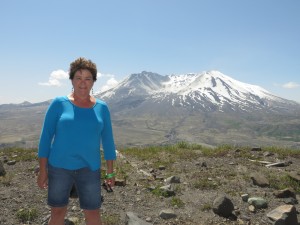
I’m researching Mt. Rainier for a story: through Google Earth, I’ve gotten context, followed trails, found fantastic photos, and almost feel like I’ve been there. No, I haven’t felt the wind on my face or heard the chatter of birds. I’m adding to the Google Earth info such things as the flora/fauna of the region. I’ve hiked other areas in the Pacific Northwest, and I’ve hiked in mountainous areas. I’m pretty confident that I’ll be able to recreate this landscape for a reader. It won’t hurt to have a beta reader from the area vet it for me, but I think it will be close. For me, Google Earth is the next best thing to being on-site myself. Add to that Flickr Photos that are Creative Commons licensed, and my story take on an added weight of reality.
(Click the photos to go to the original flckr.com sites.)
I’ve always been a planner; the idea of starting a novel and ‘seeing where the story took me’ was anathema to me. After all, I was the writer; I was in charge.
Despite this, my last novel, Still Falling, out in February 2015, was a mettlesome beast, running to nine drafts before I and my editor were happy. But I’d begun it without a contract, shelved it for nine months to write a commission (Too Many Ponies), and besides, the subject matter took me into darker psychological places than I’d ever gone before – so maybe it was natural that it shouldn’t bend to my will as easily as previous books.
the best-laid plans
The work-in-progress, Street Song, would be completely different. Because my agent wanted a full outline for this year’s London Book Fair, I’d thought through the story and knewexactly where it would go. It was a simpler story than Still Falling and for once I hadn’t had to struggle with the main female character – I’ve always found boys easier to write – as she’s very like me as an eighteen-year-old.
I’d promised the couple of interested publishers that the novel would be ready by the end of the year. Challenging, but not impossible. I set a tight schedule – 80,000 words in three months, July to September. I knew I’d over-write – I always do in a first draft; but I told myself I wouldn’t over-write much this time, because of my great outline. By 30th September the first draft would be done; I could fit in something else in October, and get back to it with plenty of time to redraft.
What could possibly go wrong?
On the first page the male protagonist, Cal, announced he was a recovering addict. Unexpected, but it went well with the story, so that was OK. In fact, it made some of his later choices much easier to justify. I don’t tend to get fanciful about the creative process, but it really was as if I hadn’t made that fact up; it was part of the character’s history that he hadn’t been able to tell me until I actually let him speak.
As for Toni, my female MC – what a cow. If I really was as smug as that as an eighteen-year-old, it’s a wonder I had any friends. Her epiphany is meant to be the moment she realises that she doesn’t want to go to Oxford; it was her mum’s dream rather than hers. When I found Cal telling her that it was her dream, she was just scared of failure, I was annoyed at his cheek. I was the writer; he was simply a not-very-perceptive boy (and a made-up one): who was he to tell Toni what she was thinking when even I hadn’t known that?
But he was right.
Listen, guys -- I'm kind of in charge here...
my low-tech approach to word count
As July moved into August, and September loomed, the word count grew. At first it was all about hitting those magical targets. Then, on a week’s retreat to finish the draft, just before the climax, another unexpected thing happened. A minor character, meant to be just a random girl in a bar, turned out to be something more. She needed to be rescued by Cal. He won’t be up to the task, I thought: and anyway, I hadn’t planned this. Maybe I should just delete her? After all, I was now at 85,000 and no end in sight. But you know what? She was right too. I’d underestimated Cal, and in fact the ending (when I get there) will be improved by his actions.
It’s all just a bit… inconvenient. My characters are behaving like – well, like people.
And now my meticulously-planned 80,000 word draft is a huge messy long thing well over 100,000 (I’ve stopped checking). I’m two weeks late in starting my next project for which the deadline is – well, it’s too scary to type here but SOON.
have stopped checking the scary word count
But you know what? Every surprise, though tiresome, has made for a better story in the end. Like an unexpected but essentially welcome visitor. She might throw your routines out, and need a bit of looking after, but it’s so much fun to have her in the house.
And if the book has outstayed its welcome in my carefully-worked-out life, well, maybe that’s taught me something important about the creative process too.
Though I do need to finish it TODAY.
0 Comments on The Best-Laid Plans, or Down, Characters, Down! as of 10/13/2014 12:21:00 AM
Subplots are a connected sequence of events, just like any other plot; the difference is that this is a minor plot with fewer developments. It should affect the main plot in some important way–or else you should delete it–but it doesn’t need the same development of a main plot.
I am still plotting my trilogy, and I’m taking a different strategy this time. I am working on the plot line for the entire trilogy before I start writing. Each book focuses on a different aspect of the overall story problem, so in some respects, each book is a subplot. Yet, overall, the story needs a throughline, or a question that overshadows everything.
In my sff trilogy, the overriding question is will the Risonian planet blow up, killing all Risonians? Or, will they find a new home and refuge?
The subplots will focus on different characters in the story and how they answer different parts of the overall problem. There are three romance subplots, various political subplots, and a couple survival subplots. Characters are motivated by revenge, by a quest of power, or by a sense of desperation.
That’s all good! In a long story–such as a series or even just a trilogy–the story needs to have some depth and breadth, and subplots have the potential to help.
As I say in START YOUR NOVEL, it helps to look over 29 different plot templates and decide on the overall plot for your story. Clearly, my story is about survival, and I can echo that with other smaller stories or subplots of survival. I can also contrast with someone who is out for revenge and cares nothing for survival; revenge at all costs makes for desperate–and potentially compelling–drama. Romance plots: OK, these should be a given in most stories, even if it’s just a love story between a boy and his dog.
What Happens Next?
It often happens that I am trying to work out the main plot but get stumped. What happens next? I’ve no idea.
Then, it’s time to turn to the subplot that has been patiently awaiting notice. What happens next in the subplot? Part of getting stuck is the fear that if I make a major decision about the trajectory of the story, I’m stuck with it. If it’s wrong, it will mean a major revision. Subplots, though, are small and contain fewer scenes. Make a mistake there and it’s much easier to revise later. By focusing on a smaller problem, you put less at risk.
Sometimes I have to go down the list and answer the “What next?” question for each subplot before I get inspiration for a better setting, more compelling emotions, or a larger conflict.
Often, figuring out the next logical step for a minor plot shakes loose a detail that will make everything connect better. Oh! So, she’s the main character’ sister, and that’s why she wants revenge.
The new revelation sends me back to the main plot with a new twist on the action.
When I’m really stuck, I repeat this process with every subplot from action to romance. For example, a romance subplot implies that tension and conflict permeates the man-woman relationship. How does the betrayal, the attraction, the hate, the love, and the self-sacrifice relate to and affect the main plot?
Progress is slow on this huge plot. Thanks to subplots, though, it is progressing! What happens next? My story gets plotted!
A common trope in stories is the merciless ruler whose reign must be toppled by the hero. I admit to being guilty of shameless adherence to this archetype. My current fantasy WIP features a villainous tyrant on the throne, and boy, am I having a tough time making him convincing.
What are the first things you think of when you think of a tyrant? Madness? Cruelty? Lust for power? A god complex? All possibilities, all easy to come up with on the spot during a lazy bout of brainstorming. After these character flaws might come the political implications of what a tyrant is: an absolute ruler, a leader of vast armies, an arbitrary judge. When I started thinking about the things my tyrant might do, I came up with capricious murder, genocide, induced famine, city-razing, and general disregard towards the value of a human life. Personally, thinking about tyranny leaves me in desperate need of rainbows and cupcakes, so when I approached my fantasy, I perhaps hadn’t given my villain enough thought, and it wasn’t until recently that I forced myself to confront it.
I started with the character flaws. Madness, cruelty, lust for power, and a god complex. In no time, my tyrant was a caricature. But there was nothing wrong with that, as long as I worked towards fixing it. It’s always good to start with base flaws and virtues when trying to flesh out a character. Once you have those, though, you have to begin adding depth. The shock value of mindless murder wears off very quickly. What never becomes dull is the potential for logical reasoning behind the tyrant’s twisted actions. So we venture into the realm of “whys”.
Backstory
Every tyrant starts small. After all, I believe a god complex is created through experiences. Perhaps there’s a string of eerie coincidences and close calls with death that lead him (male, because my tyrant is male) to believe that somebody is watching over him. Following that, he starts comparing himself to others, and if his intelligence is above average, begins to truly believe that he’s better. Already suspecting his divine status, he just needs one friend to tell him what he wants to hear to become brainwashed by the seductive prospect that maybe he actually is a god. And since gods know better than people about what’s right and wrong, it’s a god’s job to guide them in the proper direction. And if that has to be done through absolute rule, so be it.
The idea is that the tyrant actually believes that what he’s doing is for the good of the people. He’s driven by what he thinks is right. Nobody views their own self as an evil person. He has a set of values by which he abides, shaped by his childhood and relationships, and everybody against them is in the wrong.
But he can’t just waltz into a palace and plop down onto a throne. He has to convince everybody else that he’s a god first; he has to earn his power. And he can’t earn his power until he has some kind of control over the people. Fear works, of course, but even then he needs soldiers to confirm it throughout the countryside. And the way he gets those soldiers is…
Charisma
A charismatic person is someone who displays magnetism and charm in everything they do: someone you would follow off a cliff if you didn’t stop and think about it. No tyrant gets to where he wants to be without the ability to lead an army. But armies aren’t stupid. Of course, mob mentality sometimes makes them act in questionable ways, but they wouldn’t follow just anybody. A tyrant is a person who has successfully won over a massive amount of people to do their bidding. You have to have insane talent for public speaking to pull that off, and you have to value the people around you who do their jobs well. So often, tyrants in media are portrayed as baby-killing cracks who behead their irreplaceable right-hand man when he accidentally bumps into them. And while he might end up doing that eventually (especially if he boards the crazy train) it’s important to remember that throughout history, those events were the beginning of the end of a tyrant’s career. Somebody always ends up killing him off. So unless you want your story to last about two pages, don’t make everybody hate the tyrant.
A more convincing reason for not making everybody hate the tyrant is that the hero has to have opposition, and the opposition has to be great. If everybody agrees that the world would be a better place without Emperor Quintus the Bat-Shit Insane, chances are somebody else will kill him before your hero can even walk.
But most importantly, a tyrant with charisma is disturbing. They make the reader feel like maybe they’re rooting for the wrong person. A charismatic villain is one that you dislike not necessarily because of the bloodbaths they cause, but because they trouble you by forcing you to challenge your own beliefs on things you thought you knew. They’re the kind of villain that you love to hate. You’re relieved when they’re gone, but you also miss them.
Doubt
Bringing this back to the characteristics of your tyrant, doubt is one that is essential. Doubt is the root of power lust. If the tyrant is a god, he should have no problem taking over the land. So why is it so much trouble? Probably because he still doesn’t have enough power. If the doubt is “Maybe I’m not a god,” the answer is to continue taking over lands until you prove that you are. If the doubt is “Maybe I’m wrong,” the answer is change the laws until they prove that you’re right.
There’s the old saying that absolute power corrupts absolutely, but the truth is, power corrupts those who don’t have it. If you want a corrupt tyrant, never give him absolute power, because then nothing would have to change. He would be satisfied. Instead, you have to always make sure to keep the tyrant unsatisfied with what he has by making him riddled with doubt over the sustainability of his empire. If he has full control over the people, don’t give him full control over himself, too. Don’t give him confidence in his own abilities to keep the people in his sway. If confidence is hidden from him, he’ll struggle to find it by going to extremes, and he’ll take it out on his people in an attempt to assert his rule. As time passes and his fist tightens, the penalty for tax evasion eventually turns from a few days in the stocks to death by stoning. Hunting on royal grounds slowly becomes punishable by the chopping off of limbs instead of a simple fine. The gradual increase in brutality has to be just that: gradual. A continuous one-upmanship against himself to see how far he can go. As the tyrant’s doubt rises, as madness settles in, the times change to reflect his state of mind, but the people’s memory of his greatness stalls any action against him. Because remember: the tyrant has charisma. There are people that like him, and might be blind to the changes until they begin to directly affect them. And as long as they don’t steal or hunt on royal grounds, the people think they’re safe. But because the tyrant is crazy, that’s not quite the case.
Eventually, the tyrant’s enemies become his own people. As a conqueror, when it was his armies against foreign armies, the distinction was clear. But as it turns into his armies against his own people, what does he do? How can he make the right decision? How far can he push until they turn against him? How much more control does he need until he can be sure that civil unrest will never happen? Who can he preemptively kill for the good of the peaceful state?
Commitment
Finally, we get to the most important point of all. Commit to your tyrant. As you continue to explore the possibilities within his character, you’ll be tempted to turn him into a victim. I did this in my fantasy WIP. Twice. With two separate characters that had started out as villains. Now they’re both misunderstood good guys. And it was when I almost did it a third time that I had to stop myself, because it would’ve made conflict impossible, and a story with no conflict is boring.
Always remember: your tyrant is a bad person. He kills. He destroys. He threatens humanity. Because you’re a fantastic writer and you developed his character so well, your knowledge of his motives will trick you into feeling empathetic towards him.
Don’t. He is a bad person.
You want to show his side of the argument, and you want to show it well enough to make the reader conflicted over his eventual defeat, but you have to maintain the status quo: He is the villain, and the hero has to defeat him. When he and the hero meet, they can’t just sit around and talk about their feelings over copious amounts of chocolate cake and then decide to hold hands and start over. Even if your hero ends up understanding him, they cannot agree. Because as soon as they agree, poof goes the conflict. The best stories are the ones where the differences in ideology are understandable, but irreconcilable.
And ultimately, how do you forgive cold-blooded murder? How do you forgive genocide? How do you forgive systematic oppression and mutilation of a people by their own leader?
You can’t. And even if, in the end, the tyrant is repentant, it’s too late. He must pay for his sins.
That’s the tragedy of a perfect villain: they are beyond saving, beyond any hope for atonement. But regardless of all their terrible actions, you are able to understand and pity them, because you can see the forks in the road at which they took the wrong turns.
Well. I don’t know that I’ll be able to write my tyrant like this. It takes quite a bit of skill, and I’m not sure I’m there yet. But this is my goal, and I hope these ramblings were useful to others struggling through the same obstacles as I am.
—
Biljana Likic is working on her fantasy WIPs and has just started her MA in Medieval Studies, from which she can’t wait to graduate so she’ll finally have all the time in the world to write. You can follow her on Twitter.
Plotting is probably the hardest thing I do. I can explain to you 29 different plot templates. And I often write about plotting a novel. Theory, I know. And I know that I can plot a story pretty well. It’s just HARD.
The problem is that there are a series of inter-connected scenes which build to a climax. The structure of events, though, needs to progress from an introduction of a character goal, dramatizing problems and obstacles to getting that goal, and then, finally some resolution, either a happy or sad ending.
OK. I can slot events into a novel structure from a structural viewpoint. For example, at the mid-point of a story, the hero’s journey, the Snowflake method and other plot paradigms might ask you to provide a bleak moment for the main character. There should be a mini-death: the death of hope–the character will never reach your goal; the death of a feeling of safety, and so on.
Knowing that is easy. The exact type of mini-death that is best for the current WIP, and figuring out how to dramatize that event (Show, Don’t Tell), is hard.
Storytellers Statue on Buena Vista Street in Disney California Adventure Park. One of the most amazing American storytellers that ever lived.
We are in the Business of Storytelling
What’s my answer to this straight-laced method of working? Storytelling.
Several articles recently reminded me that I am not just a writer, but a writer of stories. I am getting way to hung up on the theory and I am forgetting that i can just tell the story and have fun with it. Sure–I know that certain plot elements will make the story stronger, but those things are killing my joy in writing. So, I started telling my story.
Once upon a time, there were two water worlds. One world—Rison by name—was dying, the result of misguided scientists trying to act as God and control the natural forces of the planet. The inhabitants knew their time was limited and sought a refuge, a new home. The other water world—called Earth—caught the Risonian’s attention because the inhabitants only lived on land. Surely, they could share their water, the only place the creatures from the dying world would ask for.
Ah, but therein lies the problem. Sharing.
How do creatures put aside their own fears and self-interest and share? And, how can creatures do so willingly? When would the long-term benefits outweigh the short-term problems.
This could cause a war: if you don’t give us room on your planet, maybe we’ll just take over your planet.
The voice isn’t right. There’s not an opening scene. But right now, none of that matters because I don’t know the story. The first draft is to tell you the story; every draft after that is the question of how to craft the story in the most dramatic and compelling way for your readers. Right now, I’m just trying to tell a story. Crafting that into a novel will come later. Come. Listen to my story. . .
A side note: Did you know that if you have an iPhone, you can ask Siri to tell you a bedtime story. She’s told me so many bedtime stories, that she refuses to do it again–unless I beg.
Stories often begin with a lone kernel of an idea. Mine tend to begin when a few characters appear in my mind and don’t want to leave me alone. A single interaction between them can cause an entire book to be built around it. Generally, that’s how I plot, too. My process is basically just me figuring out how to construct a story around scenes that must happen.
But when I first started writing seriously, it would trip me up. I’d be writing the scene I’d been waiting a year to write, and all would be great. I’d create a setting in which the interaction would take place and go nuts pounding out the words that had been living in my head for so long. It’d be done before I knew it and after a night of sleep and letting it rest I would come back to it and realize I’d made a grave, grave error.
My characters would be so influenced by my neurotic imaginings of their interaction that they wouldn’t at all be influenced by the actual environment in which they were. Outside the sky would be heavy with clouds but they would still squint against the sun to see things better. Loud music would be playing but soft conversations from across the room would still be overheard. The room would be so dark only silhouettes should’ve been clear but for some reason the colour of the wallpaper would be discernable.
It was a result of the scene not evolving in my mind along with the rest of the story. I would have strong plot reasons for it to be a very cloudy day, but because the scene in my mind had always been an arbitrarily sunny one, I would subconsciously impose a completely different kind of weather. It was an issue of continuity.
Since becoming aware of the issue, I came up with a way to resolve it. It’s juvenile in its simplicity.
Keep a list of logistics. These can include light quality, temperature, weather, sound, and architecture.
Here’s an example. First, the wrong way to do it.
Cold rain came down in sheets, gathering on the leaves above and falling in big fat splotches onto his head. He was soaked in seconds. He fled, deafened by the sound of the storm around him and blinded by the darkness. He tripped and tumbled to the ground with a grunt of surprise. He heard her approach quietly behind him.
“Are you alright?” she whispered. She was probably afraid they’d hear her. “Are you hurt?”
“I’m fine,” he said.
She hurried to him and helped him up before he could stop her. Prompted by an ingrained memory of his strict mother, he automatically brushed dirt off his knees.
“Leave,” he said.
He went to keep going but was stopped by her tugging on his sleeve. His breath caught at her beauty. Tears streaked down her flushed cheeks, and her dark hair billowed and flowed in the breeze. Before he could change his mind, he shook off her grip, and ran.
There are a number of problems here. Taking the first paragraph where I describe the environment, these are our logistics: it’s a dark forest, it’s wet, and the pouring rain is loud and cold. So how does he hear her approach quietly? How does he hear her whisper when she’s nowhere near close enough to be heard through the storm? How can he brush dirt off his knees when he was soaked in seconds? It’d be mud and it would seep into his clothing. When he sees her beauty, how can he see? He’s blinded by darkness. On that note, how does she even see him fall? And why is her hair billowing and flowing when it should be slick against her head? How does he know those are tears on her face when it could just be rain?
These are the kinds of continuity errors that come up very often in first drafts, but they’re easily avoidable. All you have to do is keep in mind the main aspects of the environment. It’s a dark forest, it’s wet, and the pouring rain is loud and cold. Add occasional lightning to the storm and suddenly you have a source of light. It does nothing to change your actual story; the weather’s already bad. If she approaches him quietly, have her surprise him with a hand on his shoulder while he’s still on the ground. Now she’s close to him, which means he’d be able to hear her even if her voice isn’t very loud. When she helps him up, have him wipe his muddy hands on his pants and cringe at his mother’s memory instead of trying to respect it.
Cold rain came down in sheets, gathering on the leaves above and falling in big fat splotches onto his head. He was soaked in seconds. He fled, deafened by the sound of the storm around him and blinded by the darkness. He tripped and tumbled to the ground with a grunt of surprise. Lightning flashed weakly and the forest floor glowed, tangles of vines and roots glistening.
He felt a hand on his shoulder and jerked away. He stilled at the familiar voice by his ear.
“Are you alright?” she whispered, voice carrying over the din of the rain, her warm breath puffing against his skin. She was probably afraid they’d hear her. “Are you hurt?”
“I’m fine,” he said.
She hooked an arm under his and helped him up before he could stop her. He wiped his muddy hands on his wet pants with a grimace and a silent apology to his mother.
“Leave,” he said, raising his voice to make sure she could hear.
He went to keep going but was stopped by her tugging on his sleeve. Lightning forked across the sky and his breath caught. Even with her hair plastered to her head, cheeks wet with what he told himself was only rain, she was beautiful. Before he could change his mind, he shook off her grip, and ran.
Fundamentally, the scene hasn’t changed. All I did was tweak a few actions to make it plausible. But another thing you’ll notice is that the scene was actually made more intimate. He heard her whisper above the rain because she was so close to him, which wouldn’t have had to be true if it hadn’t been raining or if, as in the first attempt, I hadn’t followed the rules of the logistics I’d set. What I’m left with is a scene that not only takes into account the environment so it can play out naturally, but also gave me an opportunity to flesh out a more meaningful interaction.
And it doesn’t stop there. This scene could be even more tellingly intimate. Again, it comes down to logistics.
The rain is cold. She puts a hand on his shoulder. Her hand is warm. Instant awareness. Even if he jerks away, maybe the warmth could be familiar. Of course, warmth in and of itself isn’t only applicable to humans, but having him think of a certain someone in the moment of that warmth tells quite a bit about his psychological state of mind. When she’s that close to him, does he really want to run? What is he remembering when her breath is puffing into his ear? When she hooks an arm under his to help him, that human contact in a time of desperation would maybe be comforting. When she tugs at his sleeve, do her fingers graze the skin of his wrist?
We know how the environment affects him. How does she affect him? How do her actions impact his state of mind?
Cold rain came down in sheets, gathering on the leaves above and falling in big fat splotches onto his head. He was soaked in seconds. He fled, deafened by the sound of the storm around him and blinded by the darkness. He tripped and tumbled to the ground with a grunt of surprise. Lightning flashed weakly and the forest floor glowed, tangles of vines and roots glistening.
He felt a hand on his shoulder. It was nearly hot in contrast to the rain. In the split second before he instinctively jerked away, he thought of her. He froze when she spoke into his ear.
“Are you alright?” she whispered, voice carrying over the din of the rain, her warm breath puffing against his skin. She was probably afraid they’d hear her. She’d always been afraid they would hear. He shivered when she spoke again and blamed it on the wind. “Are you hurt?”
“I’m fine,” he said and quickly bowed his head away from her.
She hooked an arm under his and helped him up before he could stop her. The contact made his knees weak with longing. He needed comfort, wanted heat, and at that moment he felt she was the only thing that could banish the damp from his bones. He stepped away and wiped his muddy hands on his wet pants with a grimace and a silent, desperately out-of-place apology to his mother for dirtying his clothes.
“Leave,” he said, raising his voice to make sure she could hear. He hoped she hadn’t heard it crack, too.
He went to keep going but was stopped by her tugging on his sleeve. Lightning forked across the sky and his breath caught. Even with her hair plastered to her head, cheeks wet with what he told himself was only rain, she was beautiful.
The night succumbed to darkness once more and his only awareness of her became the brands that were her fingers brushing against the skin of his wrist. Before he could change his mind, he shook off her grip, and ran.
The people around your main character are also part of the environment. So now, your new logistics are: it’s a dark forest, it’s wet, and the pouring rain is loud and cold. He is greatly in love with the woman, and she keeps touching him.
Keeping all this in mind is how you go from point A to point B. What was at first a rough draft passage, a bare-bones scene, has turned into a psychologically important event necessary for the growth of the main character. All just by considering where things are, why they’re there, what the weather’s like, and how he feels about it.
—
Biljana Likic is working on her fantasy WIPs and just completed her BA, soon to be starting her MA in September, where she can’t wait till she’s done so she’ll finally have all the time in the world to write. You can follow her on Twitter.
Note from Sooz: I am so excited to share this post from critically acclaimed Ben H. Winters, author of seven novels, including Countdown City (an NPR Best Book of 2013 and the winner of the Philip K. Dick Award). He has a great post for you today, in honor of his upcoming release, the third book in the Last Policement series: World of Trouble.
Now take it away, Ben! (And don’t miss the giveaway at the end!)
—
From Vonnegut: Start the Story
The legendary Kurt Vonnegut came to Washington University in St. Louis in May of my senior year, and I got to interview him for the school paper. Two things he said stuck with me. The first was that the internet was just a fad, and he was wrong about that, although sometimes I wish he hadn’t been.
The other thing he said was, when you’re done with your first draft, take the first 30 pages and throw them away. Like a lot of great writerly advice it was hyperbolic (see also Elmore Leonard’s much-quoted and rarely obeyed “rules”), but built around a gem of pure truth: we writers, especially novelists, have a tendency to start slow, to clear our throats, to give all the background at the beginning—which is exactly where it <span “>doesn’t belong, if indeed it belongs anywhere. Start with the story in motion , is what Vonnegut was saying, and let the reader run to catch up.
I live in Indianapolis now, where Vonnegut is a hometown hero, and where a mural of him towers over hip Massachusetts Avenue. Every time I walk past I thank him for teaching me how to to start my books.
From Terkel: Don’t be a fancy-pants writer jerk
As a young journalist working at a free weekly in Chicago, I got to interview Studs Terkel, at his house. Studs told me that one of his tricks to gaining the confidence of the ordinary people he chronicled so vividly in his oral histories was to pretend that his tape recorder was broken. Then he would fuss with it for a while, cursing and mopping his brow, letting them see that he wasn’t some egghead, but just an average fella, like them. Then they’d be comfortable and open up.
In the innumerable interviews I have done since, both as a journalist and now as a novelist, when I’m interviewing cops and astronomers and pathologists and insurance salesmen—and please, for the love of God, if you’re writing a book, hang out with actual humans with relevant experiences, and let them inform the truth of your text—I have done some version of this maneuver over and over. By doing something foolish and klutzy—drop my phone, borrow a pen, forget my questions—I enter into a sort of conversational intimacy with my subject, which is the kind of place that real deep truth comes out of.
And unlike Studs Terkel, I am a total klutz, and I always do forget to bring a pen, so I rarely have to pretend.
From William Penn: Get to Work
This one is kind of a cheat, because the founder of Pennsylvania died three centuries ago, and I just got this quote from a magazine article or something. But it’s the best piece of advice I’ve ever gotten, as a writer and as a human being: Time is what we want most, and use worst.
Because here’s what we writers always do—we complain about not having enough time to write. When will I get to write? Oh, man, I have no time to write. If only I had time to write!
And then when we do have time, when that magical hour or two hours appears, when a plan-free Saturday miraculously turns up on the calendar, what do we do? We waste all that time. Check email, check Facebook, clean the house, read the newspaper, check email again, and then it’s Oh, God, where did all the time go! If only I had time to write!
Take it from someone who wrote a whole series about civilization’s impending destruction: time is a precious resource. Embrace Penn’s dictum; train your mind (and you can train it) to get to work, even when it’s hard, even when you don’t feel like. There is no other way to be a writer.
—
Wow. I can’t believe Ben met Kurt Vonnegut. Also, Vonnegut’s advice is perfectly timed for me right now (I just spent >1 month “clearing my throat” with a new beginning). Thank you SO MUCH for sharing this, Ben!
Now, for our dear Pub Crawl readers, there’s an awesome World of Trouble pre-order campaign going on here. Basically, if you pre-order you get all sorts of cool extras. AND, of course, we’re doing a giveaway for all 3 books in the Last Policemen series right here on Pub(lishing) Crawl! WOOHOO! Just fill out the Rafflecopter form below to be entered to win!
Ben H. Winters is the author of seven novels, including most recently Countdown City (Quirk),an NPR Best Book of 2013 and the winner of the Philip K. Dick Award. Ben grew up in suburban Maryland, went to college at Washington University in St. Louis, and has subsequently lived in six different cities—seven if you count Brooklyn twice for two different times. Presently he lives in Indianapolis, Indiana, with his wife Diana, a law professor, and their three children.
Today, I stare failure in the face.
Today, I am scared.
Today, I see possibilities as the possibility of failing.
In other words, I have finished all my self-imposed deadlines on other projects and cleared my plate of other tasks, so that I can start a new novel. And it terrifies me.
It’s an ambitious project, something I expect to turn into a trilogy. I have such hopes for this project: hopes that it will reach new readers; hopes that it will be fun to write and promote; hopes that it will be (I’m afraid to even say it!) a breakout novel for me.
And I am scared.
I’ve done my homework. Volcanoes feature large in this story, so last month while I was in the Pacific Northwest, I visited Mt. St. Helens.
I recently visited Mt. St. Helens for research on the background for a new novel.
I’ve written samples for this story from different points of view, and even sold a short story based on the back story.
And yet–I am scared to sit down and start this. Yes, I’ve written the book on starting a novel and I’m still scared to start again. As ART AND FEAR puts it, I am scared that my fate is in my own hands–and that my hands are weak.
I SHOULD see the great possibilities of success.
I SHOULD approach this with excitement.
I SHOULD be so ramped up by now that the words would flow, as if bestowed from above, with angelic music swelling and…
No. Writing is work. It’s the hardest work I’ve ever done or ever hope to do. But it’s also the most exciting, most fun, and most rewarding work I will ever do.
So, at 8:30 this morning, I’ll turn on my Freedom app, giving myself three hours of uninterrupted time. I will make a start. A messy start. But a start. And that will be enough for today. Just make a start, that’s my goal for today.
The topic of critique partners is something that’s been covered several times on Pub Crawl. But today I want to talk specifically about giving feedback.
The best critique partner relationships occur when there is trust and respect between the two writers. If you’re working with someone whose work you despise, you’re never going to trust their feedback about yours. Similarly, if you don’t respect them as a writer, or if they don’t seem to be respectful in how they give you feedback, that relationship is going to crash and burn.
Last summer I was on the Young Authors Give Back Tour with fellow Pub Crawlers. Part of our tour included free writing workshops with young aspiring writers. When we talked about the necessity of finding a good critique partner, Pub Crawl alum Sarah Maas suggested giving your CP feedback in what she coined a “critique sandwich.”
I’m not sure if this is a term of her invention, or something adapted from other advice she’s heard, but her advice to the young writers stuck with me. Essentially, your feedback should be a balance of good and bad, and crafted with care; a delicious crit sandwich, if you will.
You open with with something positive about your CP’s story – What’s working, what you loved, elements you thought were done especially well. Think of this as the bottom roll of a deli sandwich.
Then the bulk of your critique should focus on the less-than-positive aspects of the story — What’s not working, plot holes, character inconsistencies, world building issues, and so on. This is the meat of the sandwich. You can layer on some toppings too (mention smaller issues), but as a critique partner (rather than a beta reader), you want to focus most of your energy on big picture issues.
Finally, end your critique with additional positive remarks — Something else you loved, or better yet, cheerleading. You want your CP to feel motivated and encouraged about making the story better, not overwhelmed and lost. Think of this last bit of positive feedback as the top roll of your sandwich.
And just like that, you have a delicious, carefully crafted crit sandwich for your CP. (I can still picture Sarah holding an invisible sandwich in the air and pretending to bite into it as I say this.)
Here’s a real-world critique sandwich example. Sooz recently read my first draft of VENGEANCE ROAD. (Well, more like the 20th draft, but it was her first time reading, and I’d revised the book as far as I could on my own.) Sooz’s feedback (paraphrased and simplified), went something like this:
First of all, your world is fantastic. I could picture everything, feel the dust and the plains and the heat. Really great.
I think you need to take a closer look at your characters and their emotional arcs. Kate has this mission of revenge, but she’s so focused on it that she almost becomes one-dimensional and selfish in her goals. Why are so many people helping her when she offers nothing in return? Maybe there’s a way to make her more sympathetic. [Sooz threw out some ideas] Similarly, [more thoughts on secondary characters and their motives]
Lastly, I think you have the bones of a greatstory here. The plot is there, and the world-building is great. Making the characters more nuanced and realistic is only going to make the story as a whole that much more compelling.
This feedback was actually given to me by video chat, so we spent several hours on point #2, brainstorming together and bouncing ideas back and forth. (If you have the means, I highly suggest this route when working with a CP. Beta reading feedback is usually fine via email, but for the heavy lifting, it is so nice to hash things out in real-time, face-to-face.)
As you can see, Sooz, whether she meant to or not, provided me with a delicious critique sandwich. If you’ve been working with a dedicated CP for awhile and have a good rapport, there’s a good chance you subconsciously give each other feedback like this, too.
But if you’re new to critiquing, or working with a new critique partner for the first time, I highly recommend keeping the “critique sandwich” in mind as you provide your feedback. It’s the perfect balance of encouragement and criticism. No one writes a perfect first draft (or book for that matter), but feedback that focuses entirely on negative or broken aspects of the book is a sure way to kill someone’s drive. As writers, we know 99% of writing is revision, but it so inspirational to hear what is working in any given draft. I can’t stress enough how important it is to cap your feedback with these positive aspects.
Before you go, I’m curious: Do you give your CP feedback (subconsciously or purposely) in a sandwich format? What other tips do you have providing tactful feedback?
Erin Bowman is a YA writer, letterpress lover, and Harry Potter enthusiast living in New Hampshire. Her TAKEN trilogy is available from HarperTeen (book three out 4/14/15), and VENGEANCE ROAD publishes with HMH in fall 2015. You can visit Erin’s blog (updated occasionally) or find her on twitter (updated obsessively).
We all know that showing is generally better than telling. How you do it is a trickier question, and passages that establish setting have the highest risk of suffering from info-dumping. It’s a dilemma, because setting is one of the most important things in writing. Not knowing where a character is is extremely distracting and can lead to confusion. The obvious solution to that is to describe the setting.
But you can’t just say the character’s in a kitchen. It wouldn’t be very dynamic. You have to give details. But you can’t just give any details, you have to only give details that are pertinent to the story.
This, for example, is pure “telling”, a massive info-dump:
The back room was a small parlour. A thick creamy carpet covered the floor. The oval rosewood coffee table was surrounded by a loveseat and two chairs, and a small pianoforte sat in the corner by the window. The pianoforte’s white keys were yellowing ivory with a few chips from years of use. They were illuminated by the sunlight streaming through the floor-to-ceiling windows looking out to the gardens, whose heavy red drapes had been pulled back by hefty gold cords of silk. The mirror between the two windows was old and smoky, reflecting the fireplace on the opposite side of the room.
Well I’ve established setting, all right, but that’s all I’ve done. I haven’t made clear why you would need to know what’s in this parlour. I don’t have a single character using it, so all I’ve ended up with is a room with a bunch of stuff in it.
This is where the principle of Chekhov’s gun comes in handy. According to Chekhov, only the things that are relevant to the story should be in it. Everything extra is dead weight. In other words, as he said, “If you say in the first chapter that there is a rifle hanging on the wall, in the second or third chapter it absolutely must go off. If it’s not going to be fired, it shouldn’t be hanging there.” So by this logic, in this parlour, somebody must use the carpet, the furniture, the pianoforte, the drapes, the mirror, the fireplace, etc. in a way that drives the plot. If one of these things isn’t being used, take them out of your descriptions. They’re not important.
But then you still have to be careful, because too few details can put your character in setting limbo and confuse the reader. You can also lose a lot of your world’s richness. If your world is set in a historical time drastically different from ours, talking about the sunlight lighting up the chipped ivory keys of a pianoforte in a parlour is pretty romantic, and gives a clear sense of an older time. So how do you tell us about the piano? Make your character use it in a significant way. They don’t have to play it; they just have to interact with it.
However, then you have the problem where an entire chapter is just a character wandering around a parlour using and touching things and experiencing revelations about themselves and their quandaries through contemplation of window drapes. In that case, you stop, take a deep breath, and accept that this parlour can’t be adequately described all at once. The key is in breaking it up. Have several scenes that happen in the parlour, and each time, give it new details. If you don’t have several scenes in the parlour, then it’s likely not important enough to be so heavily described. It’s not the lavish tomb your character finds at the end of the story whose riches will end world hunger. It’s just a parlour.
The first time your character enters the parlour might go like this:
Their tour took them to the back of the house.
“This is the private parlour,” he said, opening the door for her.
She took a few steps inside. Her slippers sank into the lushness of the cream carpet. It felt especially soft after the hardwood of the hallway. She went past the furniture and stepped up to the large windows to look out to the gardens.
What she saw made her uneasy. In the middle of a paved circle surrounded by rose bushes, a person was standing with his back to her, arms outstretched, face to the sky.
“Who’s that?” she asked.
“Pardon?”
He looked where she was pointing, paled, and said, “Nobody.”
She shifted on her feet.
“He’s just the landscaper,” he said with a reassuring smile. “Let me show you the second floor.”
In the first scene, the parlour isn’t important. The man in the garden, however, is. Waxing lyrical about the contents of the room would divert attention and power away from the man, so you leave it for the next time she’s there.
The next time your character enters the parlour might look like this:
She went into the parlour and shut the door behind her. It was very dark. She tossed the sheet music onto the bench of the pianoforte and heaved the red drapes away from the windows, securing them with their gold silk cords. Sunlight poured into the room.
Lifting the lid of the pianoforte, she ran a finger along the edges of the white keys. Chips in the ivory bit into her skin. She rubbed the ache away, sat down, and began to play.
She hadn’t been practicing long before someone knocked.
“Come in,” she said.
In was the man from the rose garden. He gave her a small smile.
“Coffee?” he said.
She nodded, clasping her hands in her lap. A servant was ready at the door and entered to set up the coffee table. Delicate porcelain clinked against the polished surface of the rosewood. The man moved with a cool grace and eased himself into one of the dark pink chairs. She stood and went to the loveseat opposite him.
This scene focuses more on the furniture in greater detail. I’ve pretty effectively furnished the parlour by now. The only things I still haven’t mentioned are the mirror and the fireplace. I have, however, given my character a reason to become familiar with the room: the piano. By the time she needs to use the parlour to save herself from whatever dangers Creepy Garden Man is cooking up, the reader will know its layout as well as she will, including whatever stuff she can use to fight back, or what might be a hindrance to her safety. By pointing out new details each time the parlour is introduced, the compounding information builds a room with a rich setting.
The last thing that must be taken into account with setting is your character’s mood. How your character is feeling will affect what the character notices. If they’re anxious, they notice the ticking clock on the mantle. If they’re self-conscious, the mirror looks blotchier and older than usual, marring their appearance—or they can’t stand their reflection at all and actively avoid looking at it. The sun that made everything bright will just expose dirt and grime if they’re in a bad mood, and heavy drapes stop being elegant when they’re preventing them from opening a window to make a desperate escape.
Each and every thing in the parlour can be manipulated towards the character’s state of mind. Yesterday the parlous was rustic, quaint, and loved with its chipped-keys pianoforte. Today it’s dusty, old, and out of style, trapping them in a past they can’t escape. Tomorrow it’s a comforting safe haven of the known protecting them from the dangers of the unfamiliar.
And exactly that is the difference between showing and telling. Showing is borderline clinical. No matter how well you describe something, if you info-dump like I did in the first example, you’ll be locking the description of the setting into place. But if you make the reader experience it through your characters and their moods, and build the parlour up from scratch by adding new details each time you revisit the setting, you create a space that’s alive. It goes through transformations parallel to the growth of the character, giving you a setting whose fullness rivals reality.
—
Biljana Likic is working on her fantasy WIPs and just completed her BA, soon to be starting her MA in September, where she can’t wait till she’s done so she’ll finally have all the time in the world to write. You can follow her on Twitter.
When writers get together, sometimes we talk about which we like better: first drafts or revisions. It seems that most of us like revising more, and there are many good reasons for this. I personally have a "grass is always greener" response: I like whichever one I'm not doing.
Currently, I'm in the midst of a revision on one YA novel and the first draft of another. While it feels and sounds somewhat schizophrenic, it kind of works for me.
I really love first drafts. Maybe everyone does. I mean, it's usually a fairly new idea, which means exciting, intriguing, fresh, not yet muddied with many critiques and different ideas about where it should go. You can experiment with voice and format, structure and characters. It's play time. No one can take their first draft seriously. And that's why I like it so much. I allow myself to be completely free to write crap, to not make sense, to not censor my ideas, and to just let it all be so very messy. How much fun is that? I can leave large gaps in narrative with just a note to myself that I need to add a scene here that is interesting. I don't actually have to write the interesting scene. I am getting to know my characters and their back stories. I get to create the world they will inhabit.
The hard thing about first drafts for me is that you have to create something out of nothing. While I find this creatively fulfilling and stimulating, it's also extremely hard. It's like being pregnant. You have to create one cell at a time until the whole being is there. It's exhausting and exhilarating at the same time. Sometimes the creative spirit is there and the writing seems to fill the page almost magically. Oftentimes, the writing feels like concentrating on each single breath you take in a day, as if you have to make yourself breathe instead of it being an involuntary act your body does automatically.
But when all is said and done, you have a mess of a first draft. Ugh. Now you have to make it into something that other people might want to read. This is really hard work. It's so natural to look at this beautiful baby we've created and think it is just perfect and needs no additional work. But we all know that's not true at all.
However, revisions can be a playful time as well. I love to get critiques from my writing group, from editors at workshops, from my daughters who are also writers. There are so many wonderful ideas and possibilities. I get to look at them all and decide which ones fit the story I'm trying to tell. It's a collaborative time for me. A social time.
The comforting aspect of revisions for me is that at least I have something already there to work with. However, much of it will be cut by the time I finish revising. I always save those sections, just in case I decide to use a certain turn of phrase or save the scene for some other book. So I never really delete things--just save them for another day. For example, one of the characters in my current revision project came to me more than 25 years ago, and waited around patiently until her turn came. Sometimes I cut several chapters completely. Less experienced authors sometimes gasp when I tell them this, but I never regret having written those scenes--or having to cut them. They were a piece I needed to write in order to know something important about my characters or my story. It just doesn't work in the storytelling.
Usually, for me, the first draft is fast and dirty. I just want to get the whole thing out so it's all there on the page. I rush too much and don't include enough detail. Structure and meaning often fall by the wayside. And I skip a lot of internal and emotional plot in order to get the bare bones set up.
So revision is my change to go back and add the rest of the parts to that skeleton, the sinew and the connective tissue. The guts and the muscle. It's often a layering process. I usually end of up a layer of skin first to keep it all held together, and then I add the internal organs to keep the life force flowing. Bit by bit, until I get the teeny nerve endings in there in the final revision, the ones that help it all make sense and transfer imagery and meaning. This part is more like raising the child you gave birth to--it takes a long time and a lot of work (hopefully not 18 years, though). Eventually, you launch it into the world.
My favorite part of all is the having done it. Being done, knowing I put my best into it. It's such a satisfying feeling to see what I have made. Just like the baby I raised into an adult--it is so amazing, beyond my imagination actually, what came from my efforts.
What happens after that is out of my hands.
by Neysa CM Jensen (in Boise, Idaho)
0 Comments on The Life Cycle of a Book as of 1/1/1900
Never cry over first drafts! Instead, take heart in Katherine Paterson’s wise words: Make ice cream.
Once again, I am writing a really, really bad first draft.
That’s OK.
I know that I can clean it up.
But every time I do this, I am slightly embarrassed. Really? That’s the best I can do?
I have avoided the draft of the last two chapters of this story for over a month, but finally, deadlines loomed and I had to buckle down and do this.
I tried my best to write two good chapter. Instead, they are very bad.
I knew that was going to happen!
That’s why I put it off.
But putting it off doesn’t change the reality. Sometimes, no matter how you try, you must just write the draft, even if it’s bad. Then, you can revise and refine ad nauseam. But you can’t revise what isn’t written. It’s a cold reality.
I should have embraced the bad.
Just done it a long time ago.
But I want so badly to write well. (That’s really all I ever want–to write well.)
The writing process is crazy. But it works. Bad first draft is done today! Now, for the joy of revising.
My growth as a writer included a phase of what might be termed hyper-realism. Or maybe just plain realism, depending on how you define it. Either way, during this phase, my writing was full of overly detailed description to make sure the reader saw exactly what I saw in my mind. Contrived punctuation abounded in attempt to better mimic a person’s speech. Inner monologues of a character took up pages of space that I considered crucial because if I didn’t write them, the reader wouldn’t have all the same opinions on the character as I did.
No surprise that sometimes it read more like a scientific paper than a freaking novel.
It took a while (and a few critique partners) for me to admit to myself that what I write will not always be read the way I want it to be read. Not everybody will catch clues I mistake as universal about a character’s state of mind. To me a blue dress is calming, to another it’s cold, to yet another it’s just a plain blue dress. Once I accepted this, I was able to reign in the amount of banal facts that my obsessive nature had a tough time omitting.
I still wanted my writing to reflect real life, though, regardless of my inability to have it done to my satisfaction. When I felt like life was gritty and unfair, I wrote about people who were forced to cut throats to survive. When I thought generously of thieves, I explored misunderstandings surrounding the events of a theft. When I held love in low regard, I wrote of its talent for cruelty. After all, desperate cutthroats, framed thieves, and twisted romances all exist in real life, which automatically made them fair game.
But damn, was it still limiting. I could write about anything in the world, anything at all—as long as it existed. That was the catch. I used to not be able to write any kind of fantasy. Creating a different world aside from Earth and coming up with altered laws of physics was way beyond anything I could do, because they weren’t real. In my quest for an untarnished mirror of truth, I had boxed myself into a place where nothing could exist that didn’t already exist, and where even if I wrote about it, nobody understood how I meant it, anyways. If I couldn’t accurately write about real things, how was I supposed to write about invented things?
Then it hit me. The most obvious thing about fiction: it’s fiction. Nothing exists in fiction. There is no such thing as real life in fiction. Everything, everything, is a literary construct created by an artist to tell whatever story they think is worth telling in a way they think appropriate.
Here is the single truest thing about the creation and consumption of fiction: There is no such thing as being unbiased.
I couldn’t tell you what it’s like to kill in order to survive. All I know about it is what I’ve soaked up from years of reading, listening, and watching. What I’ve read, listened, and watched was filtered through my life experiences, twenty-two blessed years of living in Toronto with a fine family and great friends. If I’ve ever met a misunderstood thief, I don’t know it, and what cruelty I see in love is likely just a fraction of what some warped relationships out there really experience. That’s not to say I don’t think I can write from these perspectives, but they will definitely be coloured by what I think is reality.
In other words, they will be coloured by my reality. The reason why I will never be able to say exactly, completely, 100% what I want to say when I write is because the thought process that led to it is unique to me. Just as I write with bias, readers read with bias and see things through their customized, one-of-a-kind filter. Now we’re all human, so assuming I have even a modicum of talent, I’ll be able to write in such a way that no matter what, readers will understand and relate to it at least objectively. But this bias is the ultimate source of both conflict and beauty in the relationship between writer and reader: I write what I want to write, you read what you want to read. My reality is not your reality, but since they’re both a reality, that exist here on Earth, no less, we’re able to work together in the giving and receiving of great art to create a new reality. A fictional one.
Once I realized that real life in fiction doesn’t exist, every single closed door was thrown open to me. Letting go of these anxieties, accepting the difficulties inherent in writing, I was finally able to relax into my role as a literal god of my fictional world. Writing fantasy isn’t beyond me anymore. I’m okay with different interpretations of my characters and I’ve come to terms with altered readings of actions and events. In return, I get the most passionate, remarkable, and profound thing that writing fiction has to offer:
Freedom.
—
Biljana Likic is working on her fantasy WIPs and finishing up her fourth year of university, where she can’t wait till she’s out so she’ll finally have all the time in the world to write. You can follow her on Twitter.
Some fear the blank page. I fear the half-written page.
I was writing along, doing great on a story when life interrupted (how dare it!). Has that happened to you? You know where the story is going, you’re in the drafting mode and going strong and BANG! Something happens. You have to set the story aside for a while.
Momentum is lost.
The story almost seems lost, too.
When life interrupts your story, how do you get back into it?
Picking up the Threads of an Abandoned Story
The first thing I’ll do this week is re-read the story. It’s important to see what I actually put on the page.
Next, I’ll try to recapture the excitement and recreate my mindset. This means looking at notes, images, reference material or anything else that will help remind me of my place in the story. Maybe I’ll need to write a letter to myself about how excited I was when I was writing the story.
Retype a chapter. If that doesn’t help, I’ll retype a chapter and make small edits as I go.
Move the pen across the page. When I taught freshman composition, I used a technique that always worked. I insisted that the student move the pen across the page and write words. In other words, they had to go through the motions of writing.
“What do I write?” they moaned.
“Doesn’t matter.”
“I don’t know what to write.”
OK. Write this sentence and keep writing it until you want to write something else:
I don’t know what to write, so I am writing this dumb sentence.
Inevitably, after writing that sentence once or twice, the student segued into something else.
If all else fails to get me back into the story. I’ll do the same thing. I’ll sit and go through the motions of writing until I get so bored with the drivel that I’ll start to get creative and something will happen. I only hope what happens on the page is magic!
I used to do a lot of acting. I went to an arts high school, my major being drama. Acting isn’t a very big part of my life anymore, but the things I learned in drama class were a massive influence on my development as a writer. Writing is similar to acting, in that you have to connect to the characters you’re creating and that usually involves putting yourself in their shoes. This can be difficult. Motives aren’t always easy to decipher, and I there are times where I just plain don’t know why a character is doing something. Times like these, I remember drama class.
My teacher had this method. It was an all-encompassing method that she gave to us in answer to any issue we had with motives or tactics. What was it?
Find the love in the scene.
The man loves the woman, and the woman is indifferent. Why is she indifferent? She doesn’t love him back.
Boring! Negation doesn’t leave a very good impression compared to agreement. In acting, the first rule of improvisation is that you’re not allowed to negate what your partner says. Granted, a woman’s love isn’t improv, but the point here is that negation isn’t very interesting. It can’t go anywhere. If she doesn’t love him, then who does she love? Someone else? Her work? Her independence? A flat no, without reason, will stagnate. Find the love in her life, and suddenly her reasons for not loving him are clear, and they create deeper conflict that you can develop.
Since conflict makes the story-world go round, it’s fortunate that love is the kind of emotion that is strong enough to start wars. Somebody flying in the face of your love is a serious offense and if it’s bad enough, it will move you to defend your love with everything you have. Characters in a novel are no different. If you find yourself struggling with a plot hole made from a character’s lack of reasons for action, find the love in the scene. If they’re reacting with an anger or hate you can’t explain, all you have to do is consider why they might be angry or have hate. Which is so obvious, I know, but the simplest way of doing that is having the characters love the opposite of what they hate and building the scene around that. If you have a girl glaring at a guy for tossing her a wolf whistle, don’t make it about how she hates bigotry. Make it about how much she loves equality and respect. After that, the hate comes naturally, and its depth is exponential.
Another reason love is so damn important is because from love you can create nearly every kind of relationship or reaction possible. There are three big questions when it comes to acting that you have to ask yourself while developing your character: What does the character want? Why did the character move? Why did the character say that? It’s not a coincidence that those are the exact same questions that I ask myself when I’m struggling with a scene. In the end, the most effective method of answering them is by figuring out what they love. Their loves can be numerous. They can extend away from people and reach into the realm of both abstract and concrete concepts: I love humour, I love music, I love freedom. Take those away from me, and I will fight you. Give them to me and I will appreciate you. Tease me with them, string me along, and I’ll follow, because just the glimpse of those things, just the possibility of possessing them to a greater extent, will seduce me into a state of obedience.
Suddenly, I have three relationships, all three extremely different, all built around what I love, all with perfectly explicable motives that are true to myself and make me consistent about being who I am.
Consider this with your characters, and clarity will follow.
Find the love in the scene.
—
Biljana Likic is working on her fantasy WIPs and in her fourth year of university, where she can’t wait till she’s out so she’ll finally have all the time in the world to write. You can follow her on Twitter.
How do you take an idea to a book? I am just starting the process again and every time, it overwhelms me. I know the process works, but it seems so daunting at this first stage. So, I only look forward to the next task, knowing that taking the first step will lead me onward.
For this story, I’ll approach it on several levels at once:
Outlining. This is the fourth book in an easy-reader series, so I know the general pattern that the book will follow over its ten chapters. Chapter one will introduce the story problem and chapter ten will wrap it up. That leaves eight chapters and each has a specific function in this short format. Chapter 2 introduces the subplot, chapter 4 intensifies it and chapter 6 resolves it. That leaves chapters 1, 3, 5, 7-10 for the wrap-up. Chapters 9 and 10 are the climax scene, split into two, with a cliff hanger at the end of chapter 9. In other words, I can slot actions into the functions of each chapter and make it work. Knowing each chapter’s function makes it easier–but not automatic. I’ll still need to shift things around and make allowances for this individual story.
Character Problem. Making my characters hurt is the second challenge. Squeezing them, making them uncomfortable, making them cry, dishing out grief and mayhem–it’s all part of the author’s job. I tend to be a peace-maker and find this to be quite difficult. But if I can manage to bring my character’s emotions to a breaking point by chapter 8, I’ll be able to move the reader. I’ll be searching for the pressure points for the character as the outline progresses. Hopefully, the emotional resolution in chapter 9-10 will be a twist, something unexpected by the reader.
Back and Forth Between Outline and Characters. The nice thing about focusing on just this much at first is that it is interactive. I’ll go back and forth between plot, character and the structure demanded by this series until the story starts to gel. Will it be easy and automatic? Oh, no. I’ll be pulling out my hair (metaphorically) for a couple days. But by the end of the week (I hope) there will be progress.
How do you start your story? Do you free-write, create a character background, or outline? Which parts interact as you create the basis for a new story?
What Character Are You? Click to Enlarge. Photo Credit: http://www.flickr.com/photos/bk/12392396893/





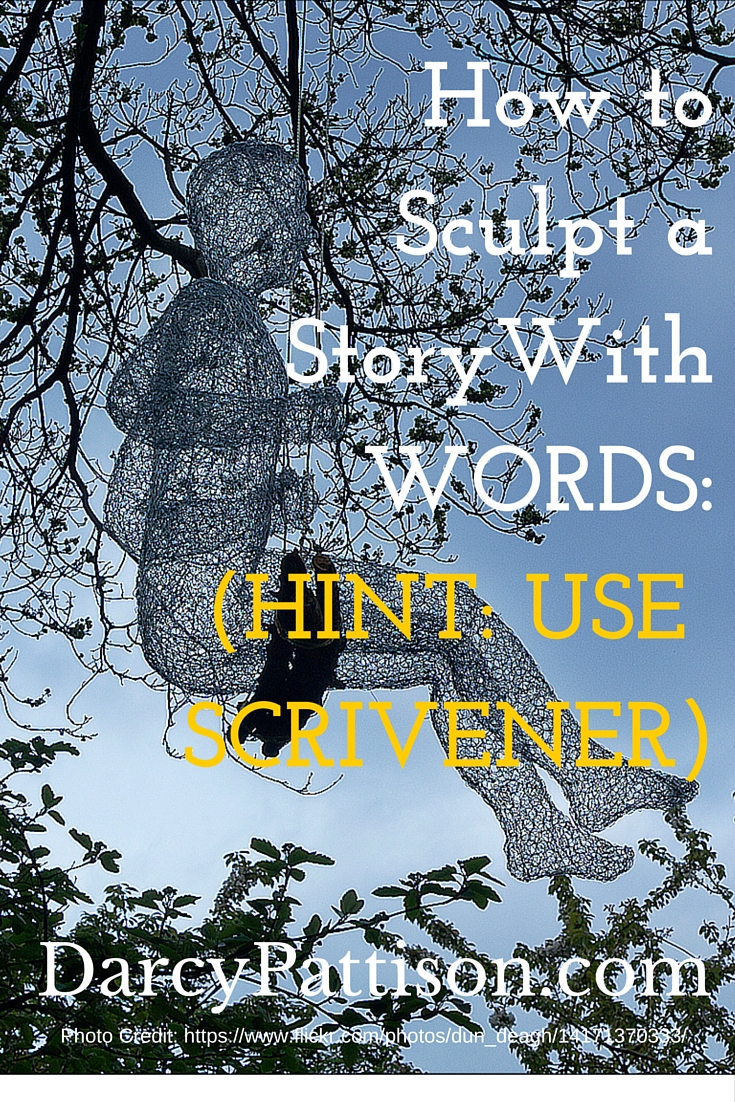


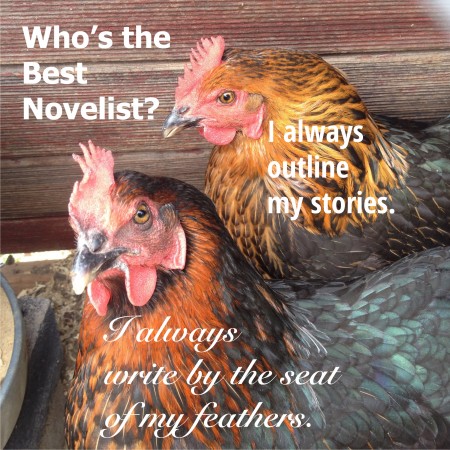


 Writing from multiple perspectives is often a very rewarding way to convey the complexity of a plot. In stories that involve a lot of world-building, like high fantasy, it’s a good way of expanding the world you’re creating. You can better develop concepts like the reality of social status if your story that includes slaves isn’t entirely written from the viewpoint of a princess. You can also mess with readers. You can have a blacksmith plan to manipulate a swordsman, but when the actual manipulation is happening, it’s told from the swordsman’s oblivious perspective. There are few better ways to create those exciting situations where the reader knows what will happen but the character does not. There are even fewer better ways to orchestrate an event in such a manner that even the reader is unsure if what they’re reading is true, which of course keeps them reading.
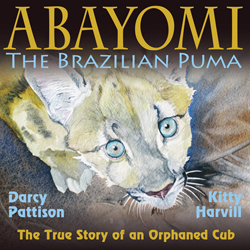
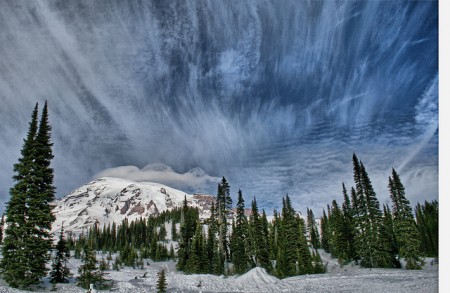

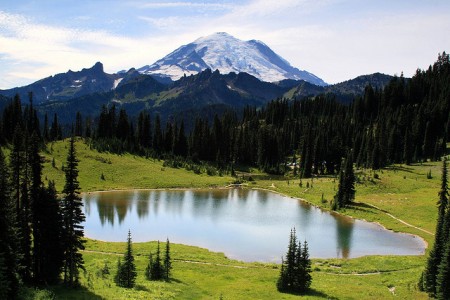

.jpg?picon=1806)


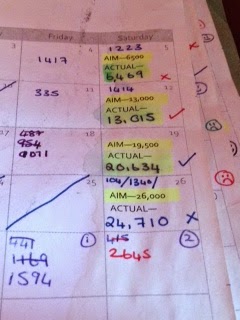







 Wow. I can’t believe Ben met Kurt Vonnegut. Also, Vonnegut’s advice is perfectly timed for me right now (I just spent >1 month “clearing my throat” with a new beginning). Thank you SO MUCH for sharing this, Ben!